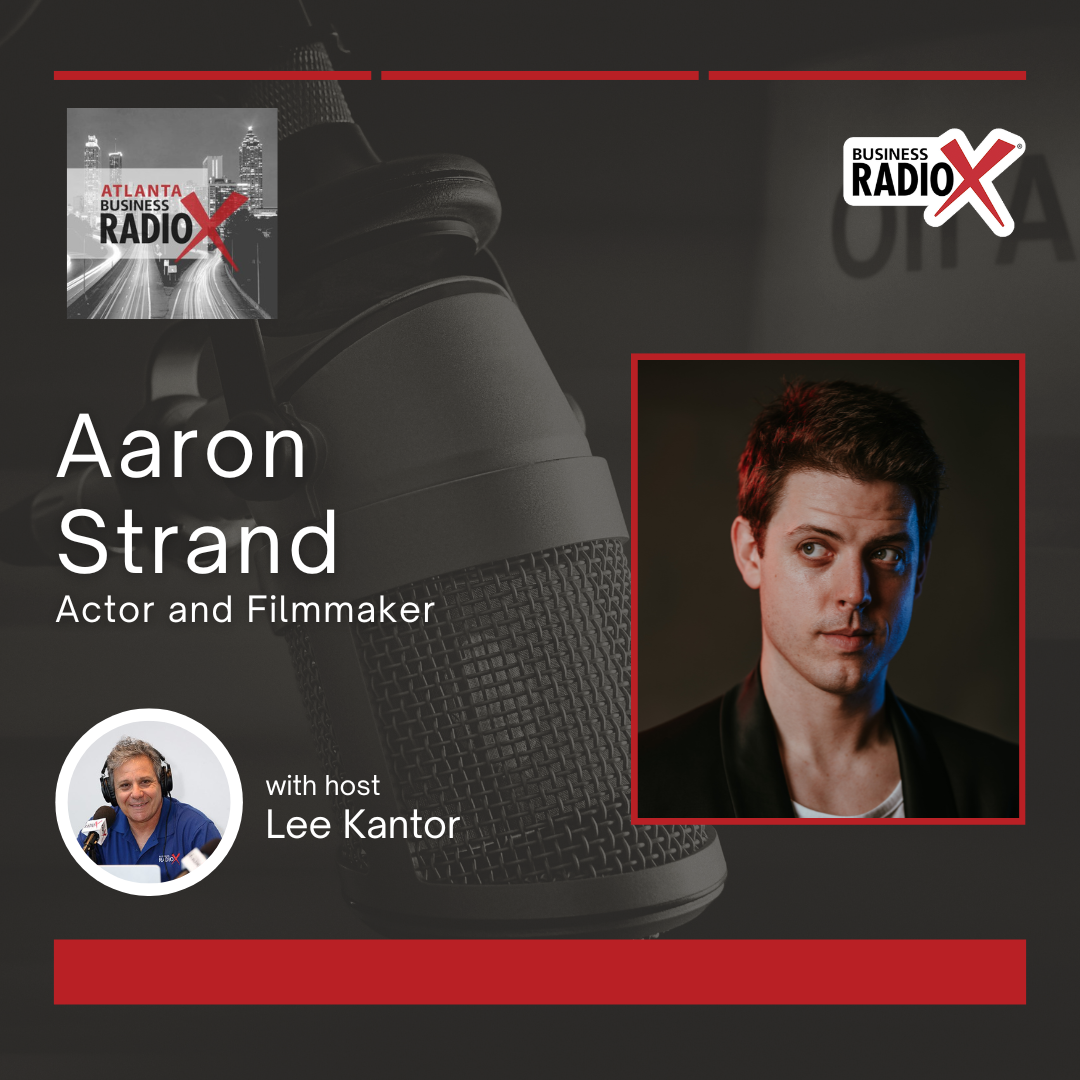

 In this episode of Atlanta Business Radio, Lee Kantor interviews Aaron Strand, actor, filmmaker, and podcaster. Aaron shares the journey behind his award-winning debut feature film, Withdrawal, from grassroots fundraising and micro-budget production to a self-distributed North American theater tour. He discusses the realities of independent filmmaking, the power of community-driven cinema, and the entrepreneurial mindset required to build an audience and sustain a creative career in today’s entertainment landscape.
 Aaron Strand is an award-winning filmmaker and actor based in Atlanta. He is the writer/director/editor of the feature film, Withdrawal, which had its world premiere at the Atlanta Film Festival 2025 and has won twelve awards in film festivals across the world including Best Feature (Art of Brooklyn Film Festival, Athens Film Festival, Macon Film Festival, Golden Isles Film Festival), Best Georgia Film (Rome International Film Festival, Atlanta Underground Film Festival), Best Director (Art of Brooklyn Film Festival, Art is Alive Film Festival), Best Actress (Kanazawa Film Festival, Art is Alive Film Festival), and Best Cinematography (Queens World Film Festival).
He has also directed and produced short films that have been featured on No Budge, Film Shortage, and the Bitter Southerner and was the recipient of the Willson Center for Humanities and Arts Shelter-Project grant.
He hosts the live film history podcast ‘Behind the Slate,’ which hosts classic film screenings in Atlanta and Athens, Georgia. With the mission of making the greatest films ever made accessible to all audiences, Behind the Slate frequently sells out theatres for classic directors such as Akira Kurosawa and Agnes Varda, as well as cult classics such as The Warriors and Battle Royale.
In 2026, Behind the Slate is focusing its Atlanta programming on ‘Films Against Fascism’ – a special year-long screening series of cinema confronting authoritarianism at the Plaza and Tara Theatres.
A graduate of NYU Tisch, Aaron’s work focuses on contemporary stories dealing with themes of love, addiction, alienation, and politics. The founder of Behind the Slate Productions, he is known for community engagement throughout the artistic process.
Connect with Aaron on LinkedIn and Instagram.
What You’ll Learn In This Episode
- Building a successful film project through grassroots funding and resourcefulness.
- Navigating modern film distribution with an entrepreneurial mindset.
- Creating sustainable audience growth through community engagement and partnerships.
- Leveraging storytelling to address meaningful social issues and connect with viewers.
- Building a loyal fan base through authentic audience experiences.
- Balancing creativity, business strategy, and long-term career development.
- Strengthening independent cinema through local communities and collaboration.
- Turning passion, persistence, and adaptability into creative success.
 This transcript is machine transcribed by Sonix.
TRANSCRIPT
Intro: Broadcasting live from the Business RadioX Studio in Atlanta, Georgia. It’s time for Atlanta Business Radio, brought to you by My Global Presence, the award winning Atlanta public relations agency that elevates brands and non-profits through authentic storytelling and national media campaigns. Find them at myglobalpresence.com. Now, here’s your host.
Lee Kantor: Lee Kantor. Hear another episode of Atlanta Business Radio, and this is going to be a good one. But before we get started, it’s important to recognize our sponsor, My Global Presence. If you want global visibility and meaningful impact, go to myglobalpresence.com. Today on the show, so excited to be talking to Aaron Strand, actor, filmmaker, podcaster. Welcome to the show.
Aaron Strand: Thank you so much for having me.
Lee Kantor: Well, let’s get started. What what have you been up to? I a big movie came out. You got some distribution. Tell us about what you got going on.
Aaron Strand: Yeah. This is I would say this is probably the busiest time of my life. So my debut feature film, withdrawal, it premiered at the Atlanta Film Festival in 2025. We then went on the festival circuit throughout the rest of that year. We had a really great festival run, won a number of awards. We ended up winning about 12 boards in total, played all over the country and abroad. But I was also really itching to get this film out and to get it distributed. And, uh, the environment of distributing a small independent feature like this one, because we shot this film and completed it for only $60,000, which in movie terms is, you know, minuscule. Um, the market is really, really tough right now, but there’s a lot of new opportunities in Self-distribution and in taking your film to this incredible patchwork of independent cinemas across the country, and I was very excited to do that. So we jumped into that process at the beginning of this year. We are now self-distributing through our own North American tour. We’re calling it the broke sober and Non Detour. Non-d stands for Independent Filmmaking, and I can talk about that a little bit more later. We have booked, uh, over, I think we’re coming up on over 20 dates in cities across North America and Canada. So I’m flying around all over the country attending these screenings, doing Q and A’s, interfacing with people, and really trying to embrace this, the magic of cinema as a, as a, as a communal in real life kind of experience, which is something that a lot of the big studios don’t really appreciate as much these days.
Lee Kantor: Yeah. And it sounds like a very, um, it’s, it’s appropriate for the time. And it’s turning, I think, filmmaking into the kind of the, the boots on the ground entrepreneurial hustle venture that a lot of folks are doing and other kind of industries, and now it’s coming into the world of film. So can you talk about kind of before you got started? Walk us through what that looked like to. Did you think that you would go this route, or was it planned to be picked up by a large distributor? Like what was kind of the thought process and the pivot you had to make along the way?
Aaron Strand: Yeah, you know, I didn’t I didn’t exactly know what to expect. I would say that I went in with an open mind, but with a cautious mind. You know, I’ve been working as, as, as either an actor or just in various forms of entertainment for about 20 years now. So, you know, I, you know, you know, enough to know that like, you know, luck and timing has a lot to do with it. Um, we were optimistic. I mean, I was very confident that the film could stand up to really any film made, uh, in 2025. And then the audience reactions that we were getting further justified that, and I think that was the biggest motivator. You know, it’s like you want to of course you want to do things for yourself, but you can’t do it if the audience hunger isn’t there for it. And the results that we were seeing from that, those very first festival runs, the reviews that we were seeing, both from, uh, you know, critics on Rotten Tomatoes, but also on Letterboxd were really just exceptional people loved this seeing this film and particularly loved seeing it in a theater. And so that’s what really sharpened our resolve. Had it been a sort of different response than we would have looked for alternate options, be it through a more traditional distributor or just, uh, self-distributing with a streaming release right away. But there was something about the in-person experience, that communal coming together that that really unlocked the magic of this film. And so we wanted to try to chase its strengths and really highlight that.
Lee Kantor: Well, can we go back a little further to maybe the screenplay stage or the idea stage? Um, because you said it was self-funded, right? It was not. You didn’t get, um, someone funded this for you on your behalf. This was you kind of hustling and making it happen on a limited budget.
Aaron Strand: Yeah, absolutely. So we ended up, we, we had a $40,000 shooting budget, which is like, that’s like a whole other story. I ended up, I was raising money for a different film years earlier. I couldn’t finish that film. I went back to the people who had given me that money and said, here’s your money back. I can’t complete this movie. And they said, just keep it till the next one. And it literally sat in a recurring certificate of deposit for seven years until I was ready. Uh, I felt I was confident that I had a script that I could execute for that dollar amount. And fortunately, we were able to execute the script for that dollar amount. We then had to go out and raise additional funds for our post-production. Uh, we did that through a crowdfunding campaign where we raised an additional $27,000. We teamed up with a fabulous nonprofit in Athens, Georgia, where the movie was shot and set, called Cheese Face that came on as a fiscal sponsor and helped us out. Um, so, so yeah, this was all, you know, this was all grassroots sort of by our bootstraps type of filmmaking. Uh, you were asking a little bit about the script.
Aaron Strand: This story is it’s a story of love and addiction. It follows two young star crossed lovers, uh, who must withdrawal from heroin to save their relationship. Um, and it’s set, you know, it’s a love story set in the modern opioid epidemic. It is inspired by my own experience. I am a former addict who’s been in long term recovery. I’ve been sober for 13 years. Um, and, uh, I wanted to tell a story, you know, somewhat inspired by, by what I know and, and share that a humanist and empathetic perspective on that addiction experience, um, uh, on film, because I don’t think, I think a lot of our addiction movies are sort of set in the past and sort of in bygone eras and this opioid epidemic that we’ve been dealing with in this country now, you know, for 20 plus years. Um, there’s a lot of stories and rich drama and people relate to it because at this point in America, almost everybody has knows somebody or has a family member that has struggled with addiction. And so we really wanted to, to, to lean into that as both a audience touchpoint and as just an important story to tell.
Lee Kantor: So then the film gets made on a limited budget. And then are you at that point, are you thinking, oh, now I just have to get in the hands of somebody? Or did you always think that, okay, this is going to be a hustle? Now I’m going to be the one that’s going out there and knocking on doors and going to film festivals and doing what I got to do to get this, you know, to the next level.
Aaron Strand: Well, you know, it’s one of those things where it’s like, you always hold out hope that, um, that a collaborator will come on. And there have been tremendous collaborators that have come along and helped us. But at the same time, the modern landscape of film distribution, particularly for independent films. And I want to be very careful when I use the word independent, because at this point, independent film is basically just a marketing tool to make low budget star vehicles feel more authentic. And the entire independent film industrial complex is built on that premise. We use the term non-dependent, which is a term that’s created by a producer named Ted Hope, uh, which basically says the old the old version of independent film no longer has any meaning. We need to rebrand and use new language to describe the kind of micro-budget cinema that’s taking place in this country right now, and really highlight it as different from the quote unquote, independent films of this day. Now, I knew going in that the market was brutally tough, and if you don’t have an A-list actor, if you don’t have some sort of A-list attachment, or if you don’t have a family tie into the industry, you’re fighting an extreme uphill battle.
Aaron Strand: Um, and we always embrace that. We always knew that we were sort of a scrappy underdog. Um, we always we the door is always open, uh, to, to find collaborators and, and to, to, to work with other people. But we knew at the end of the day, it would probably be upon ourselves that we were the ones who were gonna, um, carry this movie forward. And it’s so much about just introducing the films to audiences, uh, make putting it on their radar. It’s so hard to get somebody out of their couch and into a cinema for a film that they’ve never, ever heard of. So that requires a whole new level of storytelling, of marketing, of like, how to touch people and make it feel important to them. And, um, we, even though we, we continue to have an open door to anyone that wants to come along and help us. Um, and we have great collaborators throughout our touring process. Uh, we always felt that we were, we were the ones that understood this story the best.
Lee Kantor: So once you kind of make the mindset shift to, okay, this is an entrepreneurial venture that I’m going to be the one that is the engine that gets it in front of eyeballs. Are you thinking. So film festivals became that’s the okay, that’s where I have to do this. Or did you ever consider. Or did you do you are you doing it now? Like, okay, what about recovery programs? Or what about support groups or, you know, kind of using other where people are already gathering, thinking about this topic, maybe that’s a place for an audience to kind of organically grow within that ecosystem.
Aaron Strand: Yeah, absolutely. So the film festivals at this stage of, of, of development, you know, film festivals, I think that they serve a really important role in terms of bringing film communities together. But in terms of like, you know, um, really launching a film or, or, you know, certainly getting it distribution That’s not really happening so much at film festivals outside of. Like 2 or 3 festivals anymore. Um, and so we actually kind of cut our film festival run short. We felt that we had sort of hit our ceiling on the film festival circuit, and we wanted to explore those more entrepreneurial ventures. Um, we have a ton of amazing, uh, nonprofit partnerships throughout the state of Georgia and beyond. Uh, through the recovery community, um, both through Georgia Harm Reduction Coalition, the American Addiction Recovery Association has been a great advocate for us. We’ve hosted several free screenings of with them and we continue to, to explore those partnerships as we expand across the country. Um, you know, so many of these groups are very, are very separated. And unfortunately, so many of these groups are, you know, they are stretched so, so thin in terms of the incredible work that they’re doing. We always want to be a value add to them and not an administrative burden. And so that’s been one of the challenges in terms of coordinating and working with those groups. But, you know, I was like, just up in Philadelphia, uh, where we did a screening at a theater and we had this amazing group called Savage Sisters Recovery come out. They gave out free Narcan, free test strips to the whole, uh, the whole audience. There are the ones who are out there saving lives every day on the front line. And it’s moments where we get to partner with organizations like that, that, you know, we are really, really proud.
Lee Kantor: And is that what this tour is? You’re going around partnering with them, going around the country and showing the movie.
Aaron Strand: We’re partnering with all sorts of different groups throughout the country now. Usually we’re playing in a more traditional cinemas. Um, because, you know, that is also sort of our other key demographic is, is cinephiles, people that regularly go to the movies. Um, you know, there’s, I find it kind of funny, you know, whenever you’re submitting a grant in the film world or you’re whenever you’re trying to like get some money for the film world, there’s always a question on the, on the grant application about who is your audience. And it seems like programmers and the grant, the people that approve grants are really interested in, you know, they want you to sort of paint this beautiful picture of this undiscovered, untapped audience, that this film is somehow going to magically make everybody in that audience, you know, come to a cinema and, and pay the ticket fee and see the movie. And by and large, I think that’s a little bit of a fantasy. There is an incredible community of people that regularly go to the movies. And when you’re touring a film, the easiest audience to get to is the ones that are regularly going to the movies. Uh, so, so that is another one of our core demographics that we try to hit. Now we partner with people. Every event we do is a whole new, it’s a whole new array of partnerships. We partner with recovery organizations. We partner with other filmmakers. We’ve helped other filmmakers raise money for their films that they’re trying to get made. We’ve partnered with various film groups in cities across the country. There’s all these little pockets of of these incredible communities that are so passionate about cinema, about the future of cinema, who are trying to get their movies made, and by working together and really stitching together a mutual aid network across the country. Um, you can really, really make some special events happen and, and connect to localized audiences.
Lee Kantor: Now it sounds like we’re going back in time a little bit to that, uh, when the internet first came about and there was the thousand fans kind of thinking around that, if you can just find your thousand superfans that, uh, you know, will support whatever you’re doing, then that’s a path to kind of launch a business or a career. Are you finding that that’s part of what you’re trying to build here is a community of superfans that like your work, that appreciate kind of what you’re doing and want to come along for the ride.
Aaron Strand: Yeah, absolutely. Um, you know, I’ve done a lot of work here in Atlanta sort of building that community. I have a, a live podcast show that I do at the cinemas here in Atlanta and in Athens called Behind the Slate Podcast. The mission of that show is about making the greatest films ever made accessible to everybody. I program older films and then do a brief introduction before the movie, and sometimes we’ll have a special guest afterward, or do an audience discussion all about trying to celebrate, but most importantly, make cinema culture accessible to everyone. It’s been I’ve been really humbled and really grateful that so much of that audience have sort of crossed over to follow my own filmmaking. Um, and that those two projects get to talk to one another and, and there’s audience crossover and yeah, and now it’s about, uh, taking that nationally and, and building up that national reputation. You, you, yeah, you definitely need at least a thousand fans to make a sustainable artistic life. Uh, but you also have to take advantage of the, you know, of the scale of the internet, uh, and the scalability that the internet provides to you to try to reach as many people as possible.
Lee Kantor: So now, like, how does the math of all of this work, how do you kind of keep having the funds to keep growing and going to new markets and partnering with new people? Like, like what is the the funding engine behind this?
Aaron Strand: Yeah. Well, right now we’re sort of we are, we are, we are profitable by the skin of our teeth on paper right now. And I kind of figure as long as we are not as long as we are not bleeding money, you know, we’re, we’re better than most and we’re, we’re just barely sort of sustainable. Of course, I still have other jobs on, on the side. You know, this I’m even though this is taking full time hours, I still need other jobs to support myself and support my family. Um, so, so that that is definitely a part of the equation. But right now, between ticket splits with the theaters, merch sales, particularly DVD sales, which has been our best selling merch item, we’ve already sold over 200, uh, and made DVDs, which I have printed by hand. I like label them by hand. I number them all individually. That has been our number one best seller, uh, around the country. And, um, uh, and with all that, together we can offset the travel expenses that go into attending all of these different screenings. And we’re as of right now, we are still operating in the black. Um, it’s a thin margin, but I think pretty much everything in theatrical exhibition is a pretty thin margin.
Lee Kantor: So now, um, what’s what, what do you see in the future is this, I know you’re kind of wringing out all the juice when it comes to this first film, but are you, do you have plans of another film, the next film, and are you beginning to fundraise around that?
Aaron Strand: Absolutely. So I’ve got a couple. I’ve got a couple projects of my own that I’m very excited about. I’ve also signed on to another, uh, horror film that’s going into development right now as a, as a work for hire, but that I’m really, really excited about. Um, the goal is certainly like you, we this is just the first wave of engaging with audiences showing what, what our team here in Georgia is all about and the kind of stories that we are capable of telling. And, and the idea is absolutely to build upon that with the next film, we are going to be going back to these same theaters. We are going to be hitting this circuit again. We want to, you know, we want to enhance our relationship with the theaters that have given us the chance to play a movie and to bring an audience to that theater. So we want to nurture all of those relationships and really build something sustainable. I do believe that this will continue to get easier as we go forward, and as more audiences are introduced to the work that we do.
Lee Kantor: Now, just for our audience sake, can you give a just maybe a ballpark idea of how many independent theaters are in America? Is this something like you hear about, you know, what’s happening across movie chains. But what about the independent theaters? Do they have a different model than the some of the, you know, larger players do. And and are they thriving or do they or are they struggling as well?
Aaron Strand: I think it really depends on the theater. You know, here in Atlanta, we are very lucky because we have two theaters, the Plaza and the Terra, both owned by the same ownership group, um, who are incredibly successful. You know, some of the most successful theaters within the region. And so we can look to them as sort of really the model that’s working. And that model is a mixture of new releases with older repertory films, a lot of special events, a lot of community partnerships. It is absolutely a community based theatrical experience. And you see theaters across the country that are embracing this now. There are some built in disadvantages when it comes to operating an independent theater. You do not get you do not have the negotiating power of an AMC or a Regal. Amc and Regal or get exclusivity of certain studio films and independent cinemas are have to have to accept worse ticket split, uh, deals with the studios because of that lack of negotiating power. So it’s, it can be a really, really tough road. And inflation has hit theaters exceedingly hard. The cost of goods, the cost of electricity, uh, you know, heating or cooling, a large cinema is a pretty expensive undertaking. Um, and then also just general rent. Many of these theaters are, are still beholden to landlords and don’t own their own buildings.
Aaron Strand: And, and rent has often skyrocketed within the last decade. So there are a myriad of issues facing that, that these independent theaters have to overcome. The ones who lean into the community, the ones who prioritize both local films and the filmmakers like me, who are out here grinding, but with a proven track record of going above and beyond what a studio will do to interact with a localized audience. They’re the ones who are, who are succeeding and who are are able to keep the doors open and be a true pillar of the community. The the influx of people coming to the cinemas that we’ve seen post Covid has been beautiful. I really can’t describe how magical it’s been to see so many more people, and particularly so many more young people, coming to the cinema hungry for not just an artistic experience, but a social one. You know, for the majority of of American history, cinemas were a third space, a place to gather with your friends, a place to meet with your loved, your, your loved ones or your lovers. It was a place to go on dates. It was a place. It was a place to gather. And in the last 20 years, particularly as the big chains have kind of hollowed out that that communal experience, people are hungry for that and they are really looking for it.
Aaron Strand: And so these independent cinemas are really stepping in and, and filling that void. Now, as far as the exact number of independent cinemas. It’s it’s honestly really hard to say. I know I have contacted about 470 of them across the US and Canada. There’s more than what I’ve contacted. And there’s another movement that’s happening right now, which is these things called micro cinemas, where it’s usually just a group, a guy or a girl or a group of people have set up like a sort of DIY screening room and, and, and they are actually cutting deals with major studios and distributors to play films because distributors like neon and A24 are recognizing the value of that hyper local community aspect in getting their films to audience members. So, so the number of micro cinemas is growing every day, so it’s kind of impossible to actually get a real head count of how many of these things are out here in the United States. But I can say that cinema culture, despite what the headlines of many major newspapers and trades is saying is is in a better place than it has been, I would say, over the last 15 years.
Lee Kantor: It kind of reminds me of how, um, minor league baseball teams, um, market themselves. You know, you’re trying to really embrace the community and doing whatever it takes to get a crowd. You know.
Aaron Strand: You’re absolutely savannah bananas, right? You know. Exactly. And yeah.
Lee Kantor: And that’s where we’re at right now. And to me, I, I’m for that. That sounds like a good idea and a great way to gather people together because like you said, people are hungry. They’re tired of the experience of even in their home watching a streaming thing, pausing it, coming back. Like that’s not a movie experience. Like that’s not what it used to be. You used to be immersed. It used to have your undivided attention. That’s a different kind of experience than watching something in your house or your phone. I mean, you can’t even compare the two.
Aaron Strand: Absolutely. And look like we’re not I’m not delusional. Like we’re at a stage where everything is available and, and we want to engage with people both digitally, but we also do want to protect the value of this in-person space and how, how wonderful it is to be able to find out about a brand new story as you scroll on Instagram or TikTok. But then by finding it going and having this, yeah, this I mean a communal experience, sometimes an almost spiritual experience to be able to put your phone away, go sit down in the quiet, the solitude, be be put into darkness with a bunch of strangers and led through a story that you yeah, that you do not have control over when it stops and starts and pauses and all the things that’s beautiful. It’s it’s powerful. And people are beginning to rediscover it. I think it’s also something that people, you know, over the years and generations, we, we took for granted. And, and, and so finding new ways to excite people and get them back into that space and just reintroduce to reintroduce them to that core value is, uh, is, is a beautiful thing. It’s something that I take a great deal of pride in with my, uh, repertory programing. And I mean, I just played Bob Fosse’s cabaret last night and the number of people that were coming out of that cinema saying, wow, I’ve never seen it on the big screen before. Or a few audience members that said, I saw it on the big screen when it came out in 1972, and my God, I completely forgot how incredible this movie was. Like, that’s you just can’t beat that. There’s there’s nothing that will replicate that experience.
Lee Kantor: Right? And it’s like you said, it’s an and not an or you’re not saying the other thing shouldn’t exist, but this should exist and there should be ways to experience it if you want to.
Aaron Strand: Absolutely, absolutely. And, um, you know, it’s, look, it’s, it is, uh, it is a, it’s, it’s tough to, to summon the activation energy to convince people to come out to the theater, particularly for a brand new film. Uh, that’s why with withdrawal, we’ve, we’ve, we’ve really sort of explored all these different ways to tell our own story, to let people know where this film came from, let people know what the reactions to the film have already been and, um, and really try to get them excited to come out to the theater. And so far it’s been working and that’s been really, really cool.
Lee Kantor: So what advice do you have for, uh, maybe, um, aspiring filmmakers out there or people who are kind of worrying your boat when you first started this adventure, what are some of the dos and don’ts that you recommend doing in order to, you know, have a successful launch like you, you’ve had?
Aaron Strand: Yeah. For sure. Well, if you’re, if you’re playing, if you’re playing the low budget micro-budget game, then you gotta commit to the low budget, micro-budget game. Every dollar you add to your initial budget, it just makes it that much harder to sort of recoup and get over that hump. You know, I’m very excited because I we are headed towards profitability probably by either the end of the year or, uh, some early next year. Um, which is a really, which is something I’m going to be really, really proud of when we cross that boundary. Um, uh, so I would say keep your budget low and the, the biggest thing is that you, a low budget is no excuse to not treat every single person you work with with the utmost respect and to take care of all the people that come on board. Because doing a project like this, it does involve a labor of love. You are not able to pay people as much as you would like to, so you have to make up for that gap in pay, with meaning, with respect, with care, with consideration, and, and you. This has to be a group effort. It has to be a big tent. So you want to get as many people into the tent as possible. You want to share your vision with them, and then you want to empower them to sort of move in their own direction. And that’s the only way you can move forward as a group. And you only get to do that if you’re treating people the right way. Uh, staying humble and staying committed to that collaborative spirit that is the essence of filmmaking. Um, so I would just say, yeah, you know, keep budgets low and, and keep treating people the right way and they’ll keep showing up for you.
Lee Kantor: So if somebody wants to see the movie or connect with you, what is the best way to do that?
Aaron Strand: Absolutely. Well, the easiest way to connect with me is to follow me on Instagram or TikTok. You can follow me at both at withdrawal film. Uh, you can shoot me a message. I’m the one who’s manning the DMs, so I’m always happy to respond. Um, we have some great upcoming shows. Uh, I’m not, I’m not exactly sure when this will air. I know tomorrow I’m going to be heading up to Charlotte, North Carolina. That’s Friday, June 26th. I’ll be heading up to Charlotte, North Carolina for a show at Visit Video. Then I’ll be heading out to Los Angeles on July 9th for our for LA premiere, Big La premiere at the Lumiere Theater in Beverly Hills. Very, very excited for that. We’ve got a bunch of special guests coming out. It’s going to be a really, really great show. Um, from there we are going places all over the summer. Uh, let’s see, we’re heading up to the Revue Cinema in Canada. We are going to all the way from Syracuse, New York, uh, all the way down to Texas to a venue in Austin, Texas that I actually can’t announce yet because we have not, uh, we have not, uh, it has not been that date has not been announced. We’re playing, we’re playing all over the country. Uh, and so you can follow us and stay up to date on all the places withdrawal will be going in the near future.
Lee Kantor: Well, Aaron, thank you so much for sharing your story today. You’re doing such important work and we appreciate you.
Aaron Strand: Thank you so much for having me.
Lee Kantor: All right. This is Lee Kantor. We’ll see you all next time on Atlanta Business Radio.















