Business RadioX ®

  • Home
  • Business RadioX ® Communities
    • Southeast
      • Alabama
        • Birmingham
      • Florida
        • Orlando
        • Pensacola
        • South Florida
        • Tampa
        • Tallahassee
      • Georgia
        • Atlanta
        • Cherokee
        • Forsyth
        • Greater Perimeter
        • Gwinnett
        • North Fulton
        • North Georgia
        • Northeast Georgia
        • Rome
        • Savannah
      • Louisiana
        • New Orleans
      • North Carolina
        • Charlotte
        • Raleigh
      • Tennessee
        • Chattanooga
        • Nashville
      • Virginia
        • Richmond
    • South Central
      • Arkansas
        • Northwest Arkansas
    • Midwest
      • Illinois
        • Chicago
      • Michigan
        • Detroit
      • Minnesota
        • Minneapolis St. Paul
      • Missouri
        • St. Louis
      • Ohio
        • Cleveland
        • Columbus
        • Dayton
    • Southwest
      • Arizona
        • Phoenix
        • Tucson
        • Valley
      • Texas
        • Austin
        • Dallas
        • Houston
    • West
      • California
        • Bay Area
        • LA
        • Pasadena
      • Colorado
        • Denver
      • Hawaii
        • Oahu
  • FAQs
  • About Us
    • Our Mission
    • Our Audience
    • Why It Works
    • What People Are Saying
    • BRX in the News
  • Resources
    • BRX Pro Tips
    • B2B Marketing: The 4Rs
    • High Velocity Selling Habits
    • Why Most B2B Media Strategies Fail
    • 9 Reasons To Sponsor A Business RadioX ® Show
  • Partner With Us
  • Veteran Business RadioX ®

Angel Investors – An Interview with Brianna McDonald, Keiretsu Forum

November 10, 2021 by John Ray

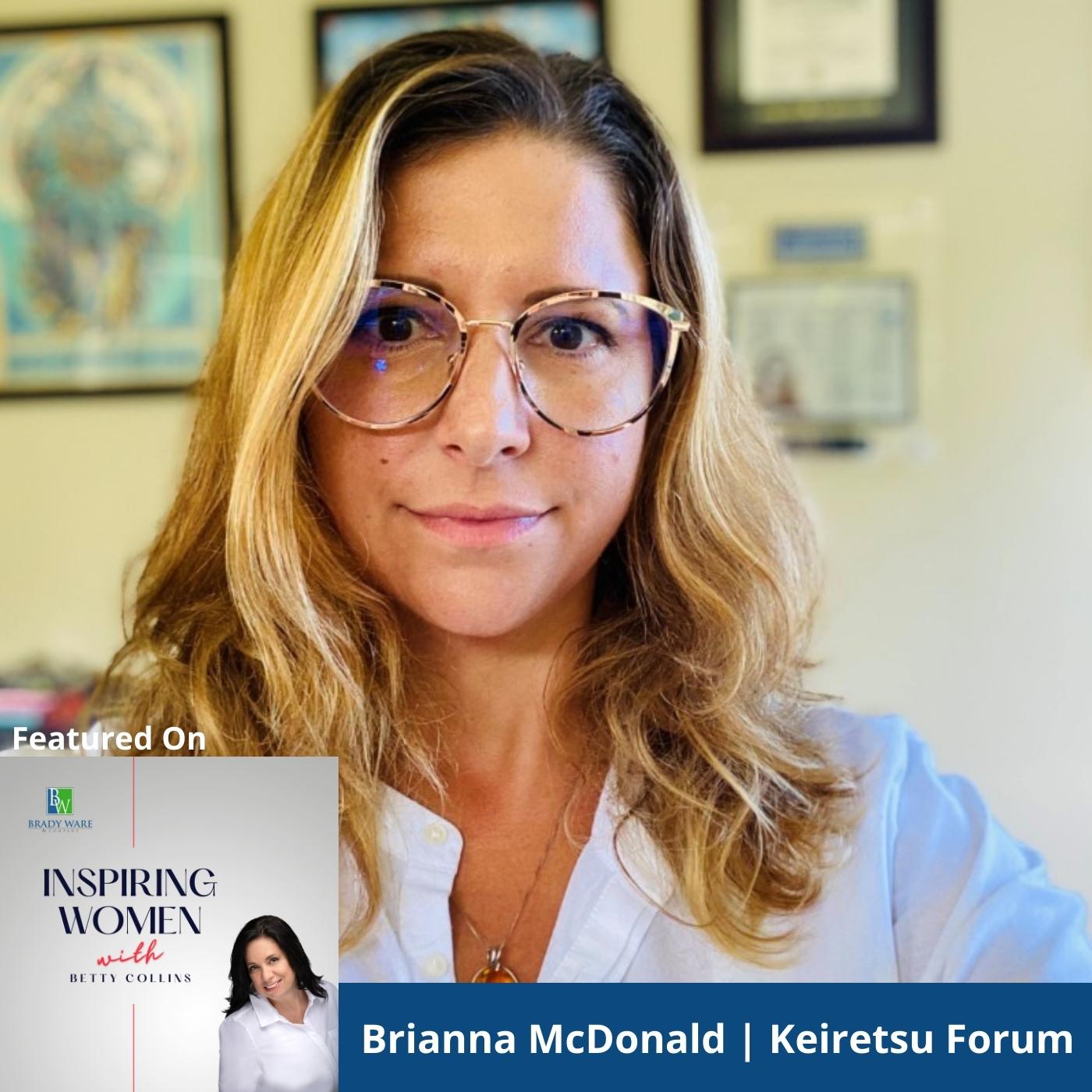
Brianna-McDonald-Keiretsu-Forum
Inspiring Women PodCast with Betty Collins
Angel Investors – An Interview with Brianna McDonald, Keiretsu Forum
Loading
00:00 /
RSS Feed
Share
Link
Embed

Download file

Brianna-McDonald-Keiretsu-Forum

Angel Investors – An Interview with Brianna McDonald, Keiretsu Forum (Inspiring Women, Episode 38)

It’s time for more women to become angel investors. That’s the message from Brianna McDonald of the Keiretsu Forum, one she offers in this interview with Betty Collins. Brianna discusses why the time is right for women to make angel investments, how to find angel investment groups, the importance of doing your research, diversification, and much more. Inspiring Women is presented by Brady Ware & Company.

Betty’s Show Notes

I have an amazing guest who is a top female investor. She offers a way to get started in angel investing and diversify your portfolio.

This is a smart way you can also help women.

Startups and entrepreneurs struggle. Because they lack capital a lot of the times.

They may have a lack of sense of how to run a business. But they have this passionate idea that they really want to get out there. And so capital is a huge issue.

An angel investor is someone who provides funding for small startups or entrepreneurs. The funding can be any amount, really, and sometimes the angels will get an ownership stake in the company for their investment, while other times there will be an agreement drawn up for getting your money back — plus profits — once the company gets off the ground.

You may sometimes hear angel investors referred to as “private investors,” “seed investors,” or “angel funders,” but one thing is clear — no matter what you call them, angels can make a huge difference in the life of an entrepreneur, and they can also make some serious money in the process.

With me on this episode is Brianna McDonald. She is the President of the Northwest Region of the Keiretsu Forum angel investment community, the largest and most active venture investor globally, comprising over 50 chapters with over 3,000 active members investing over $450 million annually into over 600 companies.

She’s an active leader and angel investor with Keiretsu Forum and has been a part of the organization since it launched in Seattle in 2005 and supporting its growth to become the largest and most active group globally.

She’s proven over time to be adept at screening companies for angel investment, coaching companies on presentation and investor relations, sales strategy execution, relationship management, and leading due diligence teams.

Listen in as Brianna McDonald gives us all a crash course in what angel investing really is, and breaks down how angel investing differs from crowdfunding and venture capital.

Brianna talks about how angel investors can find successful rates of return, and why now is a great time for women to consider becoming angel investors. Brianna also walks us through how she got started investing, how to find angel investing groups around the country and the importance of doing your research.

She offers up 7 tips.

  1. Is this something you want to do?
  2. Find female support
  3. Sit in on meetings (a great question to ask – rather than “how are things going?”, ask “what challenges are they going through?”)
  4. Pick the brains of the experts
  5. Find something that is interesting to you
  6. Stay active with the investment
  7. Reach your financial goals

This is THE podcast that advances women toward economic, social and political achievement. Hosted by Betty Collins, CPA, and Director at Brady Ware and Company. Betty also serves as the Committee Chair for Empowering Women, and Director of the Brady Ware Women Initiative. Each episode is presented by Brady Ware and Company, committed to empowering women to go their distance in the workplace and at home.

For more information, go to the Resources page at Brady Ware and Company.

Remember to follow this podcast on Apple Podcasts and Google Podcasts.  And forward our podcast along to other Inspiring Women in your life.

TRANSCRIPT

[00:00:00] Betty Collins
So, today, I want to talk about angel investing, and hopefully, you can learn how to be an angel investor or even use one. Hopefully, this will intrigue your attention. I have an amazing guest who is a top female investor, and offers a way to get started in angel investing, and diversify that portfolio. What a great thing to do. You should always be doing that, but this is a way you can also help women. So, startups and entrepreneurs struggle, not because of they have an idea or a passion, but it’s because they lack capital a lot of the times.

[00:00:38] Betty Collins
And there is that they have, maybe, a lack of sense of how to run a business, but they have this passionate idea that they really want to get out there. And so, capital is a huge issue, and you’ve got to get the right capital, though. I’ve heard plenty of people start businesses with credit cards, do not do that. You will never win, you will never get ahead. Or they get too much capital, or they don’t have enough, and they run out quickly. It’s all over the place. So, that’s why I like the angel investing, because they can help and guide you in a different way that maybe a bank can’t, or a private equity.

[00:01:14] Betty Collins
But you can get that right capital, and then diversify your portfolio by being an angel investor. So, startups and entrepreneurs, they struggle, but not because of a great idea or passion, but really it’s the lack of capital most of the time, and maybe some entrepreneurship skills. So, you got to get the right capital, and then you’ve got to get partners with you who can help you know how to navigate through your times. So, you could also be the capital, and get the capital, be the capital. And if you if you get to do that, you could diversify your portfolio.

[00:01:49] Betty Collins
So, what is it? Well, the dictionary says, an angel investor; it’s a private investor, maybe a seed investor, maybe that high-net worth person who’s providing financial backing. Sometimes we think of them as family and friends that come in, you always want to do that, for sure. But the funds that those angel investors provide is probably a one-time investment to help that business get off the ground, depends on how it goes. Or maybe it’s an injection to support and carry the company through it’s difficult, early stages. Or maybe you’re five, and you’re going to go to the next level, and it’s going to be some tough doing.

[00:02:30] Betty Collins
So, you know me if you’ve listen to my podcast, I’m passionate about the marketplace and its success, especially for women. Women are dominating the marketplace, but they don’t go as far faster. They have a longer uphill battle, sometimes. And I see women in business all the time struggle. It holds them back, and it slows down their progress when they don’t have that capital, or their frustration, and they can’t give any more, mentally and everything. I hate seeing that. And angel investing can be a way to solve that, whether starting up or investing, you can play a role in it. My guest today is Brianna McDonald.

[00:03:09] Betty Collins
She’s coming with this amazing experience, with an amazing company, and she has an amazing role in it. Their mission is very simple, I’m going to let her talk about what some of that is, but it’s to fund companies, and provide excellent investment opportunities for their members. And she’s going to talk a little bit about overview of investing, what it means to be an angel investor, or her experience as a woman investor in a very male-dominated industry. And then she’s going to drill down the seven tips. That’s something the accountants love, the steps, the numbers, seven tips.

[00:03:45] Betty Collins
So, I’m going to let her talk a little bit about her company, and introduce herself in that way. And then I want her just to really talk a little bit about her, not necessarily what we do. So, welcome, Brianna, to my podcast. Tell us about what you do, and your company.

[00:04:02] Brianna McDonald
Well, thank you so much, Betty, for having me on today to talk a little bit more about this topic. I’m super passionate about it. I’m currently the president for Keiretsu Forum, Northwestern Rockies region. I have been in this role now, four years, but I’ve been a part of the organization for 15 years. So, I participated a lot as an investor, as a member, learning, doing that for many years prior to stepping into the role that I’m in today. But where I really come from is a long line of entrepreneurs. My father had his own business, his father had his own business.

[00:04:41] Brianna McDonald
And I didn’t really realize that at the time, because in the ’90s you just didn’t talk a lot about entrepreneurship. It just wasn’t a word you heard very often. And I went into business for myself, I began selling real estate after I finished college, and worked with executive relocation, with Microsoft and all their Aqua hires that they were bringing on, and had a very successful business doing that, and thoroughly enjoyed it. I love to work hard and play hard. And my husband started Keiretsu Forum in Seattle in 2005.

[00:05:18] Brianna McDonald
And, essentially, when he started it here, we were the eighth chapter, we are, so we have the Northwest and the Rockies region. There’s over, now, 55 chapters globally, on four continents, and over 3000 investors in our network, which is really amazing, the work that everybody does. But when he started it here, we were number eight, and he said, “Come, come to a meeting.” And I was like, “Why would I go to this meeting? I’m busy. I’m busy doing other stuff.” And he’s like, “No, no, no, you’d be great. Come come to the meeting, come sit down.” And I was like, “Alright, fine.”

[00:05:52] Brianna McDonald
So, I wanted to be a supportive partner, and so, I went to the meeting, and I was 26 years old, and I sat at the table with a bunch of gray-haired men. And I listened to the company’s speech, and I thought, “What on earth am I doing here?” And I was trying to figure it out, and so, I am nice and friendly, I’m n the real estate business, I can just start- I’m personable, and can talk to people. And the first company goes, and I’m like, “What is this product, and what is this market, and what is your price point, and how do you make money? And I’m like, “Gosh, I don’t belong here.”

[00:06:34] Brianna McDonald
This is my internal thought process going on. All of us women, we have this internal critic that goes, “You don’t belong here. Why are you here?” So, I’m writing these questions down, but then these men started going, “Well, how do you make money, and what is your product, and what do you do?” And I’m like, “Oh, well, maybe I might be on to something.” And then the next company went, the next company went, and I sat and I listened, and it was really fascinating being part of it. And so, when the next meeting came up, I was like, “Hey, can I come to that meeting again? Can I come? That was interesting. I learned some things, and there were some cool people there, and I liked it.”

[00:07:15] Brianna McDonald
And Ethan was like, “Sure come along.” And it took me about a year. So, I sat and actually observed for a year, and I didn’t ask a single question in the room. Just being so young, and being the only woman at the table, I didn’t really feel like I fit. And one day, I finally mustered up the courage to ask a question. And the adrenaline was rushing, I was nervous, and it was just this tiny, little question, I don’t even know what it was. But what I do remember is, one of our investor members, who is still a member today, after I asked the question, leaned over to me and said, “That was a good question.”

[00:07:54] Brianna McDonald
And that was all the reinforcement that I needed to know, I was in the right place. I actually deserved to sit at this table, and I had something of value to bring. And over the course of my many years of being in this industry, and really being one of few women who participate, and really working to bring more women in, is that women are highly beneficial here. They understand markets, they understand pricing, we do most of the shopping. There is a lot of things that come into play with women, and how businesses get up and off the ground, how you pick your target market, how you pick your customers.

[00:08:34] Brianna McDonald
All of this is really important. We just think differently about it than men do. And it’s that togetherness that makes it really work. So, it took me over a year, and I wrote my first check in a company. I did receive a return, I can talk about that later, but I had some lessons I learned along the way of engagement and things. And so, even though I’ve been in this industry 15 years, the thing I love about it is, I’m still learning. You don’t know everything. And being able to be in an organization like Keiretsu Forum, we lean on each other. We don’t have to be experts in everything. We work together, the men and the women. But we need more women coming in.

[00:09:15] Betty Collins
And I think if there were more women coming in, there would be- it’s just a different perspective at the table. I know in Brady Ware, when I came there, there was about between 22 and 25 partners. And I came in, there were two of us there. And the discussion is different in the room, now that we have seven there. And it’s not because we’re maybe smarter, maybe we are, or it’s not because we’re better, maybe we are, we just think differently. And as women dominate starting businesses and getting them up, I know you see this every day, they get to a point, and men are going right past them because they have different skill sets, maybe, I don’t know.

[00:09:58] Betty Collins
Some of it is the type of businesses women go in, it’s hard to get lending. It’s hard to get that capital from a traditional bank, even private equity. So, I love your passion behind it because that’s what’s got to be there. And the marketplace is crucial in this country. If we don’t have the marketplace, it means employers don’t pay employees, and employees are families, and households, and communities. And when the US doesn’t work, the world doesn’t work. So, entrepreneurship has to work.

[00:10:31] Betty Collins
And this is just a way I wish more women who have had their success, they don’t have to have multimillion-dollar success, but when they have their success, they become that angel investor, and say, “I’m going to give someone a chance, because I’ve been there, I’ve done that.” So, obviously, you talked about your ‘why’, behind the passion behind that. Do you find yourself more attracted to the women-owned businesses that you’re hearing, or does it matter? It’s entrepreneurship, and business is business. Is there a difference for you?

[00:11:05] Brianna McDonald
So, every investor has their own investment thesis, and it’s really developed over time. It’s what moves you. And so, if any woman is thinking about getting into this space, I really encourage them to listen, to learn and to figure out what that is for them. For me, it’s team. And I need a good team. Now, team does not necessarily mean, for me, in my investment thesis, that it needs to be a female CEO, but the team better be diverse. I want to see diversity, and not just between men and women.

[00:11:38] Brianna McDonald
I want to see diversity across the board, across ethnicity, because that is going to be where the differences are made in terms of thoughts and opinions, and how they come together, and how that team culture works. Because at the end of the day, you can have the greatest product in the world with the best market, and if you have a team that fails to execute, the investment still goes to zero. That said, I’ve invested in some amazing women that lead teams, but I didn’t invest in them because they were a woman, I invested in them because they were awesome.

[00:12:12] Betty Collins
And as much as I am pro-business, pro-entrepreneurship, pro-woman for sure, it’s got to be the right mix. Everything, from the product to the execution. It can’t just be this passion idea, it has to all work together. Let me just follow up with one last question with what we’re discussing, and that is, would you commit as an angel investor, and you come in at 10 percent, or you come in at 50 percent depends on how much money you give, it depends on once you’re there. What generally happens? Is it more, you write the check and you wait and see, or is it, “No, we’re really hearing, we’re there, we’re on the ground, and we get to play a role.”? Because I think people think, “I’m writing a check and I’m done.”

[00:13:04] Brianna McDonald
So, I think that is something that is a big misconception about- if you want to be a passive investor, and you want to invest in early- stage companies, I would really recommend a fund vehicle, if that’s the direction you want to go. Because you’ll be able to diversify, and you’ll be able to take that passive role in what you’re doing. For me, what I love is, I love being engaged. I’m advisors to the businesses I invest in. I call them up, I text them, I ask them how things are going. And I usually ask them what challenges they’re having, because if I ask them how things are going, they’ll always tell me it’s great.

[00:13:40] Brianna McDonald
So, I’m like, “Hey, what challenges have you had the last month, and what can I do to support you in those challenges?” If you stop hearing from companies, that’s typically when things have gone south, and when the communication stops, and that’s when you need to reach out. And so, that was one of the big lessons I learned early on, was that the more you communicate, the more you understand, with what’s going on with your private investments, the better and safer you’re going to be. Lines of communication are super important, and I feel like, especially over the last five years, culturally, through the busyness, through all of the things that have gone on in our world, we just don’t communicate like we used to.

[00:14:18] Brianna McDonald
And we really should, we’re here to help and support one another. And when you get a private investor’s money, you also get their expertise. We’re here to help you figure out those problems. We’re alongside of you, we’re bought into you, we believe in you, let’s do this together. Let’s push forward innovation, and make the world a better place.

[00:14:43] Betty Collins
And I like how you talk about the advisory role. Because when I talk about small businesses having that hard time or they need capital, and they think everything’s about capital and lack of it, sometimes it’s just really, you’ve had bad advisors or lack of advising. So, when you, maybe, tap into an angel investor, or you become the angel investor, you have a role to play in that; of advising, and not controlling, but advising. Those are two different things.

[00:15:19] Brianna McDonald
Yeah, definitely not- it’s up to the CEO to make decisions. But knowing that you care, and that you’re engaged is good. It’s, definitely, also- through the due diligence process, we can get into that too, here, but through the due diligence process, prior to writing a check, you really get to know who that person is, how they operate, how they respond. And through that process, you’ll begin to understand what the rules of engagement are for you, as you go forward with that investment, if you choose to make that investment choice.

[00:15:54] Betty Collins
And I definitely want to get into the- let’s get to the seven tips, because now I have my steps, I have my tips, I love all that. I just went on a sales call with a company who just went through a purchase. And, boy, I wish they would have had advisors helping them get through the whole thing. And so, I took one of my senior people with me, and they said, “What are we going to do today?” I said, “We’re going to listen, we’re going to ask them who they are, and how many kids you have, and where do you like to travel, and we’re going to learn why they wanted to buy the business.” That’s a huge factor, I don’t think you can underestimate, especially when you’ve been in the marketplace and entrepreneurs for 20, 30 years, you have a lot to give to someone. But let’s get to the seven tips, let’s talk about that.

[00:16:43] Brianna McDonald
Well, so the first tip I have, tip number one, is getting started. So, the first thing you need to do is really think like, “Hey, is this something I really want to do?” And you have to start. If you don’t ever start, and take that first step, and that first leap, you’re not going to do anything with it. So, it is just something you’re interested in exploring, there’s lots of different investment groups. I would really encourage any woman who was thinking about doing this, to get involved in a group, so you don’t have to go into alone.

[00:17:15] Brianna McDonald
You can really lean on other people in the group, and the groups in your region all have different investment theses. So, it gives you some time to do some research, and as you sit in, and usually, if you just want to come sit in on a meeting or two, they’ll let you do that. They’ll let you come in, and try it on, and see. One thing, I just got off of a call today with a woman who was interested in becoming a member of my organization, and she’s like, “Well, I need to go fill out the accreditation form for the SEC.”

[00:17:46] Brianna McDonald
There is no accreditation application for the SEC. It is just, these are guidelines that are put in place by the Securities Exchange to make sure that you are qualified to lose money, because this is risky business and and that could happen. So, typically, you make more than $250,000 per year salary if you’re single, $300,000 if you’re married, or you have more than a million in assets. Last year, they expanded that out a bit to be able to include different areas of study. So, if you got your degree in biology, and you want to go invest in a biology company, you should know enough, that if you make a decision there, if you’re gonna lose your money or not.

[00:18:34] Brianna McDonald
So, they did expand that out a bit, so if you’re interested in looking into that, there is some information there. But go online, look at your regional groups, your local groups, they tend to invest locally. My organization’s a little bit different, we invested a little bit later- stage companies, not super-early. There’s more due diligence, and we are global. And so, wework together. So, we have our regional deal flow in our regions we work in, but we also work collectively with the other chapters, especially in North America, but across the world as well.

[00:19:07] Brianna McDonald
So, do your research, is the first step. The next one is tip number two, is find female support. Super, super important. Even reach out on LinkedIn, I have women reach out to me on LinkedIn, and they’re like, “Hey, I see we have similar backgrounds. Can we just have a call?” I love that. I will take those calls. I don’t usually take a lot of cool things off of LinkedIn, but if there’s women out there looking to get into angel investing, they want to chat with me, I’m always more than happy to do so. So, for any of the women who are listening in right now, and please don’t all bombard me at once, but reach out, I’m happy to.

[00:19:50] Brianna McDonald
Or find someone in your area, and they’ll share their experiences with you, and the things that they’ve learned, and how they got into it. But having a seat at this table is important, because we are driving forward innovation, and when things are cloudy and uncertain, that is the time when you actually have the greatest ability to make a lot of money, because you’re betting on the uncertainty. So, not everything- certainly, it’s a little uncomfortable for us ladies, sometimes. We like to be very pragmatic in our approach, and be very thoughtful about how we do things, which is also why I like investing in women entrepreneurs.

[00:20:31] Brianna McDonald
So, once you target those groups, reach out to them, talk to them, do some diligence on those groups, talk to some of the members, sit in on the meetings to see how they ask the questions. Are they nice? Are they kind? Are they mean? Is this a group that you want to be a part of? Do you find them engaging? And even online, it’s really opened up a whole new world of us being able to sit in on lots of different types of meetings. So, that’s been one silver lining of COVID. We had to pivot our entire business from in-person to to virtual, which was difficult last year, but I feel like we did it pretty well, and we’re able to- and we’ve created different programs to allow people to be heard.

[00:21:17] Betty Collins
Talk about- I had more people reach out to me this year to be on my podcast, because we don’t think about, “I got to go somewhere in Columbus. I could have a West Coast interview or an East Coast.” It’s been an amazing thing. And this is a great- I’m glad to hear you say that. It didn’t sound like it was maybe a hard pivot, you just had to pivot. You just had to do it, right?

[00:21:42] Brianna McDonald
Well, and we had to make sure it worked, because we are very professional organization, and the things that we do, and the steps, and the process. So, trying to recreate that was not easy, but anything that is worthwhile in this life shouldn’t be easy. But I feel like we’ve done a really good job keeping the professionalism, keeping it running on time, respecting people’s time, and respecting our processes, and how they all work. So, as you sit in on the meetings, my fourth tip is, to really pick the brains of the experts.

[00:22:18] Brianna McDonald
So, even if you’re on Zoom on a meeting, and you hear someone ask a really thoughtful question, message them say, “Hey, I really like that question, what’s your background? And I’m thinking about getting into angel investing, and I’d love to know a little bit more. Maybe we can have a quick call.” There’s so much we can learn from other people’s backgrounds and experiences. We do not need to be the experts in everything. And I firmly believe that in a collective-working together, and this is why a group is so important, being able to do that. Our members throughout Keiretsu Forum in our meetings message each other all the time, throughout the meetings, and they have private chats going, and things like that.

[00:23:01] Brianna McDonald
It’s our way to connect with one another, and talk about the deals that we’re seeing. My big one is, find something that’s interesting to you. And this comes back to the investment thesis that I mentioned earlier; what really perks your interest? I firmly believe in being able to diversify your portfolio. I do not believe in putting all of your eggs in one basket. So, at Keiretsu Forum, we look at a wide array of opportunities. We look at biotech, we look at technology, we look at medtech and medical devices. We look at consumer goods.

[00:23:35] Brianna McDonald
We even look at real estate, and being able to have a wide range of items in your portfolio is really important, because they offset the others in terms of the risk profile, and when you’re going to be able to see that return. Now, what works for you? And, really, figuring that out. And it’s not something you’re going to have the answers to overnight. It’s going to just take time, and sitting and learning.
Six, we already covered this, Betty, is staying active. So, if you do run through the diligence and choose to invest, staying active with that investment. Communicating with the CEO, even if you reach out every couple of months, just say, “Hey, how’s it going? What challenges do you have today?”

[00:24:19] Brianna McDonald
That should be a tip that we take, that’s a good question to start with; “What challenges do they have this month?” Because they will always tell you everything’s great, and when you approach it that way, it’s a little bit disarming. And then the final one is to be able to reach your financial goals. And there’s a lot of opportunity here. If you do the research right, if you mix up with the right groups that are good fit for you, and are thoughtful about how you go about diversifying, and even taking off, carving off 10 percent of your portfolio to these higher-risk investments, you can really do a lot of well and good, at the same time.

[00:25:03] Betty Collins
I like that. [CROSSTALK]. Well and good at the same time, I love that, because there’s nothing wrong with, “Here’s $100,000, and I want it back, and I’d like to get, actually, more than $100,000 back.” At the same time, probably, you’re injecting some energy in someone that needs it. And it’s all good. I was fortunate to be on a Shark Tank type of thing, I was a judge. And it was five young women who- and they had criteria to be there, so they weren’t completely startups. I was never so energized to do it. It was the fun, it was great. Now it’s an annual event, and I love doing it so. But I’d love for you to tell us a success story. End with a success story, and maybe then, we’ll talk about one take-away, because I would love to hear just where [INAUDIBLE] went so well.

[00:25:54] Brianna McDonald
Well, so, I will tell you, we’ve had a lot of success in life sciences. And life sciences is something that has been, it’s not easy to understand, and definitely having some good experts in the room for you to learn from is good. My first due diligence medtech device, I’ll never forget calling up one of my members who runs a medical device, he builds medical devices. And I was like, “Okay, they’re contract manufacturing in China, what are the 10 questions I need to ask, and what are the answers that I need to receive, if this is a good deal or not. So, being able to look at that, and see, and looking at the FDA process, it’s complicated, and it’s high risk, but it’s super rewarding.

[00:26:41] Brianna McDonald
We invested in the company Immunotherapeutics, and they worked on a vaccine for red cedar allergy in Japan. So, I guess the US went there during World War II, and they planted a whole bunch of red cedar trees, and it turns out Japanese are very allergic to red cedar, and it’s debilitating allergy. But they’ve also been able to work as a drug platforms, so they’ve been able to work in the multiple different allergies. And after a couple of years, they received $500 million purchase order. And we received our first return from that. And they didn’t divest us, they just gave us the return from that purchase order.

[00:27:25] Brianna McDonald
And then we kept our stock, and we got a second exit again last year, if we wanted it. There are opportunities, even with my first company, with my first investment, that I was able to get a 2X return out of, which isn’t awesome. It was a food company, and I probably would be more cautious investing in a food company again, lessons learned along the way. Because I do include some of the things that I have learned to be just as much success as the capital I received back. So, looking at food deals is hard; there’s a lot of competition, there’s a lot of things that go into the space.

[00:28:05] Brianna McDonald
I also thought it was going to be the most amazing thing in the world, and I put my my money in, and walked away, like what you talked about the beginning, Betty, and didn’t stay in touch. And they had an opportunity to exit in 2010, and if they would have done that, it would have been great. But they didn’t. And so, Idid receive a return later, that I was able to roll up into another investment that I’m super excited about. But there was lots of really good lessons along the way. And just as long as I’m not losing money, I consider it a win. And then my final company is the company, it’s called Vita Inclinata.

[00:28:43] Brianna McDonald
I’m an advisor, I’ve been an advisor for over three years now to this company. I invested at $8 million, they’re just closing $150 million-dollar round right now. And so, being able to be a part of that effort as they continue to grow, as they deal with their challenges, have a really good relationship with the CEO, it’s been so great to watch their success. You got Forbes 30 under 30 two years ago. It’s been so fun to watch them create this device that it just didn’t follow a formula for me, and that’s what made it exciting. It’s a system for helicopters, it’s a load stabilization system for helicopters.

[00:29:28] Brianna McDonald
I know diddly-squat about that, but I do know a lot about people, and about safety, and about our markets, and selling into that. So, pulling that expertise out, I know go-to market strategy has been really helpful. But they’ve been able to close some big military contracts, and really accelerate growth. So, I have a wide range of things that I invest in, but it’s exciting to be a part of. And then my last, my takeaway would be, if you are interested in learning, one, you can always come, reach out to me on LinkedIn, or you can go to my website, k4northwest.com.

[00:30:07] Brianna McDonald
You’re always welcome to come in, and sit in as a guest at one of my forum meetings. I do six per month, and you can see what goes on there. But if you are interested in learning more about angel investing, just go sit and learn. Just go join a group and learn for a year. We spend lots and lots of money on education, and it’s okay to spend this on your financial education, and be able to do that, and learn from others. And if it’s something that suits you after a year, then maybe think about writing a check. But there’s so much to learn.

[00:30:39] Betty Collins
And as you said from the beginning, tip one is, just get started. Just get going, do something, especially if it intrigued you. So, I would tell my audience today, if you want to get into angel investing, you’ve got your person. Or if you want to be, “Hey, I need an angel investor,” you probably got your person. So, I so appreciate you being here today. You just have been- I could talk to you for another hour, honestly. But I know your time is valuable, and, of course, you’re on the West Coast, and I’m in the Midwest, and I’ve never been, actually, to Oregon or Seattle, or let’s see, you’re in Idaho as well?

[00:31:20] Brianna McDonald
I’m in Seattle, yes, though I’m based in Seattle. Our region is Vancouver, B.C., Washington State, Oregon, Idaho, Montana, Utah, Colorado and New Mexico.

[00:31:33] Betty Collins
I’ve been to Montana, and I’ve done the whole California thing. I just needed to expand a little bit more, but it was great just having you on today. So, audience, if you want to be an angel investor, or you need an angel investor, don’t rule it out. Challenge yourself, and maybe get out there and get started, like we talked about today.

[00:31:53] Betty Collins
So, I’m Betty Collins, and so glad you joined me. Inspiring women, it’s what I do. And I’m going to leave you with this; being strong speaks of strength, but being courageous speaks to having a will to do more and overcome.

Automated transcription by Sonix www.sonix.ai

Betty CollinsIW8-2021square is the Office Lead for Brady Ware’s Columbus office and a Shareholder in the firm. Betty joined Brady Ware & Company in 2012 through a merger with Nipps, Brown, Collins & Associates. She started her career in public accounting in 1988.
Betty is co-leader of the Long Term Care service team, which helps providers of services to Individuals with Intellectual and Developmental Disabilities and nursing centers establish effective operational models that also maximize available funding. She consults with other small businesses, helping them prosper with advice on general operations management, cash flow optimization, and tax minimization strategies.

In addition, Betty serves on the Board of Directors for Brady Ware and Company. She leads Brady Ware’s Women’s Initiative, a program designed to empower female employees, allowing them to tap into unique resources and unleash their full potential.  Betty helps her colleagues create a work/life balance while inspiring them to set and reach personal and professional goals.

The Women’s Initiative promotes women-to-women business relationships for clients and holds an annual conference that supports women business owners, women leaders, and other women who want to succeed. Betty actively participates in women-oriented conferences through speaking engagements and board activity.

Betty is a member of the National Association of Women Business Owners (NAWBO) and she is the President-elect for the Columbus Chapter. Brady Ware also partners with the Women’s Small Business Accelerator (WSBA), an organization designed to help female business owners develop and implement a strong business strategy through education and mentorship, and Betty participates in their mentor match program.

She is passionate about WSBA because she believes in their acceleration program and matching women with the right advisors to help them achieve their business ownership goals. Betty supports the WSBA and NAWBO because these organizations deliver resources that help other women-owned and managed businesses thrive.

Betty is a graduate of Mount Vernon Nazarene College, a member of the American Institute of Certified Public Accountants, and a member of the Ohio Society of Certified Public Accountants. Betty is also the Board Chairwoman for the Gahanna Area Chamber of Commerce, and she serves on the Board of the Community Improvement Corporation of Gahanna as Treasurer.

Inspiring Women Podcast Series

This is THE podcast that advances women toward economic, social and political achievement. The show is hosted by Betty Collins, CPA; Betty is a Director at Brady Ware & Company. Betty also serves as the Committee Chair for Empowering Women, and Director of the Brady Ware Women Initiative. Each episode is presented by Brady Ware & Company, committed to empowering women to go their distance in the workplace and at home. For more information, go to the Resources page at Brady Ware & Company.

Remember to follow this podcast on Apple Podcasts and Google Podcasts. And forward our podcast along to other Inspiring Women in your life.

The complete Inspiring Women show archive can be found here.
Tagged With: Angel Investing, angel investment, Betty Collins, Brady Ware, Brianna McDonald, Inspiring Women podcast, Inspiring Women with Betty Collins, Keiretsu Forum

Decision Vision Episode 136: Should I Hire a Finder to Raise Capital? – An Interview with Karen Rands, Kugarand Capital Holdings, LLC

September 30, 2021 by John Ray

Kugarand Capital Holdings
Decision Vision
Decision Vision Episode 136: Should I Hire a Finder to Raise Capital? - An Interview with Karen Rands, Kugarand Capital Holdings, LLC
Loading
00:00 /
RSS Feed
Share
Link
Embed

Download file

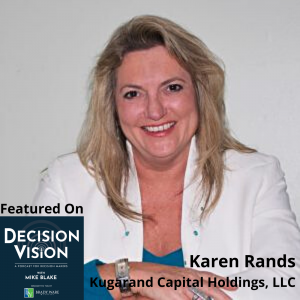
Karen Rands

Decision Vision Episode 136:  Should I Hire a Finder to Raise Capital? – An Interview with Karen Rands, Kugarand Capital Holdings, LLC

The task of raising capital for a startup is challenging at best, and outsourcing to a finder is often one avenue founders consider to attract investors. Host Mike Blake is joined by Karen Rands, President of Kugarand Capital Holdings and host of The Compassionate Capitalist Show, to cover how to find and evaluate a finder, regulations, fees, contracts, and much more. Decision Vision is presented by Brady Ware & Company.

Kugarand Capital Holdings, LLC

Karen is the President of Kugarand Capital Holdings where her extended team offers coaching and services to entrepreneurs help companies with capital strategy and investor acquisition through the Launch Funding Network and investors education, screening, due diligence, and syndication services through the National Network of Angel Investors.

Register at the contact page on the website to receive her Compassionate Capitalist Coffee Break mini video tutorials and have an opportunity to schedule a time to chat with Karen directly.

Company website | LinkedIn | Facebook | Twitter

Karen Rands, President, Kugarand Capital Holdings, LLC

Karen Rands, the leader of the Compassionate Capitalist Movement, is an authority on creating wealth through investing and building successful businesses that can scale and exit rich.

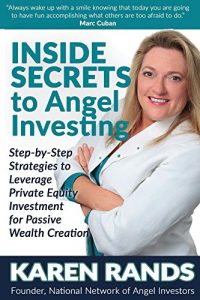
Karen turned the knowledge she gained from her corporate experience of working with startups and innovation at IBM, and the 12 years she spent managing the Network of Business Angels & Investors, one of the top 50 angel groups in the US at its peak, into the best-selling primer “Inside Secrets to Angel Investing.” Her book and the accompanying resource portal teach savvy investors how to diversify their investment portfolio to include private equity ownership in entrepreneur endeavors.Karen Rands
Karen hosts the popular business podcast: The Compassionate Capitalist Show. The weekly show is available on all the major platforms, with a library of over 240 episodes. Her chats with angel investors, VCs, business industry leaders have been downloaded over 145,000 times.

Karen also speaks to economic development, community, and corporate groups to spread the word about Compassionate Capitalism as a way to strengthen and grow our economy. Economics is a passion for Karen having received her Bachelor’s in Economics & English from Emory University before earning her MBA in Marketing from the University of Florida.

LinkedIn

Mike Blake, Brady Ware & Company

Mike Blake, Host of the “Decision Vision” podcast series

Michael Blake is the host of the Decision Vision podcast series and a Director of Brady Ware & Company. Mike specializes in the valuation of intellectual property-driven firms, such as software firms, aerospace firms, and professional services firms, most frequently in the capacity as a transaction advisor, helping clients obtain great outcomes from complex transaction opportunities. He is also a specialist in the appraisal of intellectual properties as stand-alone assets, such as software, trade secrets, and patents.

Mike has been a full-time business appraiser for 13 years with public accounting firms, boutique business appraisal firms, and an owner of his own firm. Prior to that, he spent 8 years in venture capital and investment banking, including transactions in the U.S., Israel, Russia, Ukraine, and Belarus.

LinkedIn | Facebook | Twitter | Instagram

Brady Ware & Company

Brady Ware & Company is a regional full-service accounting and advisory firm which helps businesses and entrepreneurs make visions a reality. Brady Ware services clients nationally from its offices in Alpharetta, GA; Columbus and Dayton, OH; and Richmond, IN. The firm is growth-minded, committed to the regions in which they operate, and most importantly, they make significant investments in their people and service offerings to meet the changing financial needs of those they are privileged to serve. The firm is dedicated to providing results that make a difference for its clients.

Decision Vision Podcast Series

Decision Vision is a podcast covering topics and issues facing small business owners and connecting them with solutions from leading experts. This series is presented by Brady Ware & Company. If you are a decision-maker for a small business, we’d love to hear from you. Contact us at decisionvision@bradyware.com and make sure to listen to every Thursday to the Decision Vision podcast.

Past episodes of Decision Vision can be found at decisionvisionpodcast.com. Decision Vision is produced and broadcast by the North Fulton studio of Business RadioX®.

Connect with Brady Ware & Company:

Website | LinkedIn | Facebook | Twitter | Instagram

TRANSCRIPT

Intro: [00:00:02] Welcome to Decision Vision, a podcast series focusing on critical business decisions. Brought to you by Brady Ware & Company. Brady Ware is a regional full-service accounting and advisory firm that helps businesses and entrepreneurs make visions a reality.

Mike Blake: [00:00:36] Welcome to Decision Vision, a podcast giving you, the listener, clear vision to make great decisions. In each episode, we discuss the process of decision making on a different topic for the business owners’ or executives’ perspective. We aren’t necessarily telling you what to do, but we can put you in a position to make an informed decision on your own and understand when you might need help along the way.

Mike Blake: [00:00:58] My name is Mike Blake, and I’m your host for today’s program. I’m a director at Brady Ware & Company, a full-service accounting firm based in Dayton, Ohio, with offices in Dayton; Columbus, Ohio; Richmond, Indiana; and Alpharetta, Georgia. My practice specializes in providing fact-based strategic and risk management advice to clients that are buying, selling, or growing the value of companies and intellectual property. Brady Ware is sponsoring this podcast, which is being recorded in Atlanta per social distancing protocols.

Mike Blake: [00:01:26] If you like to engage with me on social media with My Chart of the Day and other content, I am on LinkedIn as myself and @unblakeable on Facebook, Twitter, Clubhouse, and Instagram. If you like this podcast, please subscribe on your favorite podcast aggregator and please consider leaving a review of the podcast as well.

Mike Blake: [00:01:44] Our topic today is, Should I hire a finder to raise money? And according to Carta, it takes about two years on average to secure funding for a startup. And according to the corporate finances to the chances of being funded by a bulge bracket venture capital fund, are less than one percent, and that’s probably being generous.

Mike Blake: [00:02:04] So, I’ve been around the startup world a little bit. And our guest who’s coming on today has really been around the startup world a lot, more than I have. And, you know, raising money for a startup is not easy and it’s not fun. Raising money for a startup means a lot of rejection, means a lot of unsolicited advice, some of which is good, some of which isn’t very good. And, you know, I think for many startups CEOs, it’s probably the part of the job that most of them like the least.

Mike Blake: [00:02:41] And, therefore, it’s not unexpected that one might anticipate that it would be tempting to outsource that task to somebody, and that somebody is typically called a finder. And we’re going to talk about specifically what a finder is. But if you’re in the startup world, you already know what a finder is. If you’re not in the startup world, but will be at some point, this conversation is going to come up, I promise, because a finder can perform, not just a very important, but actually an existentially important service for a startup. But the choice is not without its pitfalls.

Mike Blake: [00:03:20] And joining us today in this conversation is Karen Rands, who is President of Kugarand Capital Holdings. Karen’s extended team offers coaching and services to entrepreneurs to help companies with capital strategy and investor acquisition through the Launch Funding Network in investors education, screening due diligence, and syndication services through the National Network of Angel Investors. Karen Rands is the leader of the Compassionate Capitalist Movement, is an authority on creating wealth through investing and building successful businesses that can scale and exit rich.

Mike Blake: [00:03:52] Karen turned the knowledge she gained from her corporate experience of working with startups and innovation at IBM and the 12 year she spent managing the Network of Business Angels and Investors, one of the top 50 angel groups in the U.S. at its peak, into the best selling primer Inside Secrets to Angel Investing. Her book and the accompanying resource panel teaches savvy investors how to diversify their investment portfolio to include private equity ownership into entrepreneur endeavors.

Mike Blake: [00:04:21] Karen hosts the popular business podcast, The Compassionate Capitalist Show. The weekly show is available on all the major platforms with a library of over 240 episodes. Her chats with angel investors, venture capitalists, business industry leaders have been downloaded over 145,000 times. Karen also speaks to economic development community and corporate groups to spread the word about compassionate capitalism as a way to strengthen and grow our economy.

Mike Blake: [00:04:50] Economics is a passion for Karen, having received her Bachelor’s in Economics and English from Emory University before earning her MBA in Marketing from University of Florida. Karen Rands, welcome to the Decision Vision podcast.

Karen Rands: [00:05:03] Thank you, Mike. Great to be here.

Mike Blake: [00:05:05] And I’m going to try to not study here. I don’t know what the heck is wrong with me. I probably need another sip of my Earl Grey tea, but we will [inaudible]. So, Karen, again, thanks for coming on the show. I think our listeners are going to get a lot out of this. And and I want to start, for those in our audience who maybe don’t know exactly what we’re talking about so they have a shot of hanging into the conversation, what is a capital or a money finder?

Karen Rands: [00:05:31] So, typically, the finder will offer to locate investors for a company in exchange for a success fee, and that’s the commission based on what they’re able to raise. They’re most often not registered with the SEC, and that’s where it becomes a problem. But finders are also used for angel investors in startups and raising capital, but also could be a part of reverse mergers and also with merger acquisitions, trying to find people to buy a company or fund an acquisition of a company.

Mike Blake: [00:06:07] And why do companies find it attractive to work with a money finder?

Karen Rands: [00:06:12] Okay. Well, you know, the common perception, particularly with startups, is that finders are a cheap way to find capital. Because, you know, actually, if you’re only paying for a success, then it doesn’t actually cost the entrepreneur anything, right? The traditional type of finder that’s in this context, they don’t have the same types of retainers and fees like broker dealers, and the percentage that they charge on the money they raise is a lot less than a licensed broker dealer.

Karen Rands: [00:06:39] They also have the idea that multiple finders working on their deal because, since they have no skin in the game for that entrepreneur, why not have a bunch of people trying to find its capital. But the risk in this is this false sense of expectation that those finders are actually doing the work. But what can happen on the investor side, particularly in a community like Atlanta where we live in, if there’s a lot of finders working it, it might pass an investor’s desk a couple of times or they see it someplace. And they start to think, “Well, what’s wrong with this deal? This deal must stink because so many people are shopping it.” So, you know, that’s always the way that you should consider it. There’s a different way to approach it and we’ll get into talking about, but most often it doesn’t work out near as well as entrepreneurs think it will.

Mike Blake: [00:07:30] Yes. I want to pause on both those points you raised because I think they’re both interesting. And one of them, frankly, I hadn’t thought of. The first point being that, you know, it can be tempting to wish your problems away because you hire a consultant, right? And that was a lesson that my first full time boss, John Noel, taught me was never let a consultant wish your problems away. And it’s easy to let a finder wish your problems away, right? I mean, you know the deal. Raising capital is not hard and it is not typically self-esteem building either.

Karen Rands: [00:08:05] Right. Yeah. It’s very hard. And you got to have Teflon in order to deal with all the nodes and rejection that you get in the process. Exactly.

Mike Blake: [00:08:15] Right. So, I mean, it’s tempting to say, “Well, who needs it? And you’re going to take this off my plate. Yes, please. And thank you.” Now, the other part I hadn’t thought about, but I think makes perfect sense – I love you to elaborate on it, if you can – is that if you do have multiple finders in the market – and I agree with you, that’s a strategy you should do – if everybody’s on contingency, it’s all about from the finder standpoint, which is the deal that’s closest to getting close and therefore my fee. So, you want to have it out there.

Mike Blake: [00:08:49] And we both know the deals that are circulating in the marketplace and we both know instances of “those entrepreneurs who seem like they’ve been raising money for 19 years and they’re still a startup”. And there’s that deal staleness. But I hadn’t thought of the fact that finders can actually create that as well if you have the same deal coming from different angles.

Karen Rands: [00:09:12] Yeah. Right. Right. Because, you know, sometimes what ends up happening, to your point about the paid advice, if a company goes through an incubator and accelerator and they get some information, and through that process of doing that, because of the mentors, the kind of finder you want is the person that loves your deal, is mentoring you on the deal, and is happy to share it with other people because they like your deal. They like you and they’re considering investing themselves in it. So, that’s not the finder that we’re talking about.

Karen Rands: [00:09:47] The finder that we’re talking about is, oftentimes – and I, myself, have been in this position back when I was running the angel group and working with screening deals and working with entrepreneurs and investors – is that you tell them that they have to do X, Y, and Z to be investable. They might have to pivot. They might have to do more research on their marketplace, their go-to market, how they’re going to scale. They might have something fundamentally wrong, but they don’t want to hear that.

Karen Rands: [00:10:14] So, it’s much easier to go to a finder that says, “Hey, I can raise you that capital. I know these guys. I’ll put it together at lunch or at dinner or this or that. Give me five grand or pay for the big hoo ha this stuff and five percent.” And then, when that finder doesn’t raise the capital, they get to blame the finder. And the finder is just doing a side gig because, come on, if you’re not really paying them, you’re not paying the 5,000 and you’re just doing the percentage of, well, how are they paying their bills? It’s not their core thing. And they will work with the ones that are paying them.

Karen Rands: [00:10:50] And you just become the one, if I come across an investor that didn’t like the deal that I’m getting paid for and they’re in your industry, then I might introduce you because I’m not leaving everything on the table. I might get a little something, something.

Mike Blake: [00:11:02] So, that brings up so many points here. We could probably make a whole podcast just out of that last two minutes. But one thing you bring up that I think is important – and correct me if I’m wrong – my impression of the finder market is that it’s very informal. We both know it’s unregulated or quasi-regulated by the SEC, and we’ll get to that in a little while, I think. But there isn’t, like, some storefront that says finders are us.

Karen Rands: [00:11:34] No.

Mike Blake: [00:11:34] If you do a Google search, you’re not going to find, like, capital finder generally. It’s often somebody that’s doing something else kind of for their living, isn’t it?

Karen Rands: [00:11:44] Yes.

Mike Blake: [00:11:45] It could be an attorney. It could be an accountant. It could be somebody else. Or, like you said, somebody that is genuinely interested in the deal, but they want to be paid for helping to close out the round. And so, how does that change the dynamic of the relationship as opposed to most service providers where you kind of own them after you pay the fee. I perform a service as a consultant. My client, to a certain extent, owns me rightfully so. That relationship with a finder is going to be a little different, isn’t it?

Karen Rands: [00:12:19] Oh, yes. Oh, yes. Because there’s really no skin in the game on the entrepreneur side. The only skin in the game is on the finder’s side because they’re the one that’s doing all the work. And for finders that have kind of played in that space, because I’ll come across young people that haven’t been burned by any of this stuff and they think, “Oh, I know people. I was a participant in X, Y, Z incubator. I met these investors. Now, I’m going to turn around and go and help you connect it, and you’re going to give me a percentage.” And so, they have a little bit of skin in the game.

Karen Rands: [00:13:00] But if they don’t get a hit in the first half-a-dozen conversations, then they will just not keep working on it. They’re looking for a low hanging fruit. And you don’t know that they’re not working on it because they think, “Well, maybe this guy will get back to me,” or maybe whatever kind of a thing. And so, you get a false sense of stuff getting done as an entrepreneur that don’t get done.

Mike Blake: [00:13:26] You know, that’s interesting. It approaches that sort of a different angle. Something I say a lot, whereas, in a way, a deal pitch is like a joke. If the person doesn’t get it right away, no amount of explaining after that makes the joke funny. It just never happens, right? Nobody says, “Now, I get it” and just hyperventilating. I mean, they may laugh politely, so a golf applies kind of thing or people will laugh, but they’re not really laughing.

Mike Blake: [00:13:47] And deals are kind of the same way, right? And I guess from a finder’s perspective, when a finder takes that on, they probably have in mind some small group of a handful of people they think would have an interest if it’s all knows. They’re not going to make it their life’s mission, like Indiana Jones to the jungle, to find those investors. Because that’s just not their thing.

Karen Rands: [00:14:17] Right. You know, the exception is if they have to have a vested interest. Somehow there’s got to be a vested interest. And I guess we’ll get into that and how that works.

Mike Blake: [00:14:27] Now, I think a lot of people, initially, if they don’t understand the finder market, they’re often turned on to or find themselves – what we would call – broker dealers of some kind, business brokers, investment bankers, and so forth. They don’t generally like to take on fundraising deals, which is a reason I think that finders have the niche that they do. Is that also your experience? And if so, why do you think that is?

Karen Rands: [00:14:55] Okay. So, this one is one to unpack because broker dealers have historically been the only people that were licensed to be able to raise capital for projects, deals, whatever. And there’s a bunch of licenses. It’s not just one license. But they not only have the ability to find investors but handle the transaction, structure the transaction, and the exchange of capital money for the stock. They can do all of that stuff.

Karen Rands: [00:15:31] And so, sometimes when a finder or a person acts as a finder and they’re not licensed, there’s this term that they were acting as a broker dealer, or acting as an investment banker that is licensed, or acting as a business broker when they really weren’t. And so, because they weren’t licensed to do that, so they can’t act as something that they should be licensed for. That’s illegal. And that’s where you get into who goes to jail and who pays fines and those kind of things when things like this blow up, which oftentimes they don’t because it’s not really something that the SEC is chasing after.

Karen Rands: [00:16:07] So, you know, it really happens when the company doesn’t perform the way the investor expected it to perform and they file a complaint with the broker dealer. The FINRA – which is a quasi not quite a government agency bureaucracy that I’m not a big fan of because I think they’ve done more harm to the financial markets than they’ve done to protect investors – they then go in and investigate, so the broker dealer is held accountable for all of that stuff.

Karen Rands: [00:16:39] And there’s a couple of different things that broker dealers are beholden to. One is what they call, it’s basically a fair – I forget the exact terms, but it’s like a fair disposition. So, that means that they have to make that opportunity available to all of their clients and all of their dealers. So, the deal has to be big in order to get spread out, particularly if you’re dealing with a giant company like Ameritrade or Raymond James or something like that, that a wire houses. Even a small, independent broker dealer who probably has a thousand clients that they manage money for. And so, they have to make it available. It has to be fair and equitable. So, if it’s not big enough to make available to everybody, then it’s not worth doing.

Karen Rands: [00:17:36] And the fees associated with that, they usually will have between $5,000 to 10,000 a month plus fees to do their offering documents, plus big percentages. They’re allowed to charge up to 15 percent. So, if a company is needing to raise capital, a startup that raises a million, 2 million, 3 million, maybe another series A round of 5 million or something like that, that’s all still small for broker dealers. So, broker dealers just won’t really touch it.

Karen Rands: [00:18:02] And because of the regulatory investigation environment of FINRA, it’s really easy if a deal goes south and they take on the responsibility of that due diligence and an investor, “Oh. You put it into my mom’s stuff.” The son says, “She should never have invested in that deal.” Then, they can say, “Well, it was too risky for that particular investor.” And, therefore, it’s a violation of their broker dealer, there’s another rule for that.

Karen Rands: [00:18:32] And then, one of the things that an independent broker dealer or independent financial planner that just has their license hanging with somebody, there’s this fear, uncertainty, and doubt, the FUD, that comes along with what FINRA can do and not do. There’s real rules.

Karen Rands: [00:18:52] And then, there’s this idea – they call it – selling away. So, where that financial planner that has clients that might want to be angel investors gets into a bind is that even if they’re not taking a commission on that transaction – unlike real estate, because a broker dealer doesn’t do buy and sell real estate – they can disclose that they helped this investor do a commercial investment in real estate that’s part of their portfolio, and it’s not considered selling away.

Karen Rands: [00:19:24] But if they help this person do an angel investment deal put 50 grand into some startup, then it might be considered selling away because technically the broker dealer could have – even though they wouldn’t have – handled that transaction. And that independent can lose their license. And so, they steer away from it. So, there’s really no way for companies to really go to the people in the financial services sector to get that. And that’s one of the big reasons why the Jobs Act was passed bipartisanly.

Mike Blake: [00:19:59] So, you touched upon this – this is a great segue into the next question, which is that, there are risks to hiring a finder and they go beyond simply sort of the stale deal syndrome, don’t they? I mean, there are instances where a finder deal could potentially blow up if things aren’t done correctly, right?

Karen Rands: [00:20:21] Right. Absolutely. So, the SEC has these rules that, as I mentioned, if a deal has milestones and they expect and say they went through a regular or private placement memorandum, which is the document that entrepreneurs prepare to disclose the risks of their offering. And in that, it doesn’t fully disclose, let’s say. And that investor thinks that they asked all the questions, but they don’t ask all the questions.

Karen Rands: [00:20:51] And they think that this company is going to get that big deal with Microsoft. And, therefore, they’re going to make all of those projections. And in reality, they never actually had a real deal with Microsoft. They just had a conversation at a trade show, let’s say. And so, they don’t get that deal, the deal fails or the deal stumbles. And they don’t raise the next round of capital or they don’t do their stuff and they don’t fully reach the objectives.

Karen Rands: [00:21:17] And that investor can sue because they can say, “That was fraud. They said they were going to get this deal. They didn’t get this deal.” And then, under those terms, when the SEC investigates, they’ll say, “Oh, that person did commit fraud. They didn’t fully disclose the risks of that investment.” Or they used their money in a wrong way, or they used a finder that wasn’t licensed.

Karen Rands: [00:21:43] And when the SEC finds out that they used a finder, they might also find this out when that company goes to sell to a public company and the public company has to do the disclosure, or they go to go public and the SEC is looking at all their stuff and they find that. In any of those circumstances, the deal can go south and the investors have the right of rescission – they call it – where they can get all their money back that they put into the company at whatever they put it in. They don’t make any money on that.

Karen Rands: [00:22:11] But that is a recipe for the company to go out of business because they have to pay back this money that they don’t have that they spent. And that founder or that executive office that did that has the potential to go to jail, too, depending on how serious the nondisclosure are or the fraud is. And they get labeled a bad actor. And so, a bad actor is one of those things that is now in all of the Jobs Act offerings, is that, you cannot have a bad actor in that company that owns more than ten percent of the company and that kind of stuff.

Karen Rands: [00:22:46] And so, those are all kinds of things that is all new language to people that are investing in some of these companies. But that’s what happens. So, the finder usually gets a slap on the wrist unless they’ve been doing it a lot and a lot. And I got some horror stories of people that have defrauded people all over in Georgia but never got held accountable because of the fragmentation of security laws when it comes down to a state level. But then, also, the big thing is that it really hurts the company when they use finders and it gets found out.

Mike Blake: [00:23:15] So, when typically do companies use finders? In your mind, do they typically find them at the pre-seed level, or the seed level, or when they get into more institutional capital? What stage of the company’s development do they typically engage with finders?

Karen Rands: [00:23:36] It’s usually when they don’t know how to go raise with friends and family round, or when they’re raising their first seed round outside of a friends and family round. So, it’s still really early on. Because once you have real investors in your deal, because you raise money from an angel investor group and stuff like that, if you maintain good communications with those people, those investors have a vested interest to help you find other capital. Because, otherwise, their investment doesn’t grow the way they expect it to grow.

Karen Rands: [00:24:06] And so, it’s really before there are real serious accredited angel investors involved in a deal. And that an entrepreneur doesn’t know where to go, and they’ve not been able to qualify to get to an angel investor group, for lots and lots of different reasons. It doesn’t necessarily mean that the deal is not meritable. It could just be the industry that that local angel investor invests in, and they’re not in that same industry. So, they get desperate to try to find investors. And then, they’ll go and they’ll ask people and they’ll say, “Hey, I need you to go help me find investors and I’ll pay you a commission.” I mean, that’s the conversation. And they really ask that.

Karen Rands: [00:24:45] The difference is that somebody that’s professional, such as myself, that knows investors, that knows how to structure what makes an entrepreneur investable, we’re professionals. And just like a lawyer or an accountant is professional, they rarely will go file patents and do all that stuff hoping that Wednesday you’ll raise capital and then be able to pay me. They don’t do that work thinking that they might get paid in the future. They do the work for the work they’re doing right now.

Mike Blake: [00:25:15] So, we talked about some of the pitfalls here. How do you mitigate those risks? I mean, the risks are obviously out there. You still want to use a finder. I mean, do you just have to sort of accept those risks? Or are there things you can do to lessen the probability that those things will happen to you?

Karen Rands: [00:25:33] So, part of it is really validating doing your own due diligence on a finder, if you’re going to be serious. Now, first of all, you’re not going to want to do it on 100 percent commission, we already covered that. You’re not going to want to have a whole bunch of people shopping your deal, we covered that. So, what you want to do is find somebody that really has relationships with funding sources, whether they’re angel investors, private equity funds, family offices, VCs, whatever it is. They’ve got relationships with people and know how to talk the talk of investors.

Karen Rands: [00:26:06] And the second thing is that you want to compensate them for the work that they’re doing. You need to put a contract in place. And the best way to avoid the pitfalls of what the SEC might do is to be able to give them some kind of equity ownership in the company, give them a title in the company, have some kind of compensation plan, that’s based, or come up with a fixed fee, “This is what it’s worth if you raise this amount of money” so it’s not a percentage. And then, you pay them for the work they’re doing and they’re reporting to you just like a consultant does, just like anybody else does.

Karen Rands: [00:26:40] They have a Google Doc spreadsheet where they’re listing the investors that they’re talking to, the status, the meetings, and all that stuff. And that unlicensed person isn’t acting like a broker dealer. So, they’re not selling the deal. They’re making the introduction. The founder has to sell the deal. The founder has to create the documents that one of the things that that person might be, that investor acquirer, the investor introducer rather than a finder, is, they know what kind of documents those investors are expecting to see to market the deal.

Karen Rands: [00:27:16] So, the entrepreneur has created it under the guidance of this person. And then, that person takes that document. And the document sells the company to have a conversation with the founder. Or to go to a due diligence portal. So, all that information and directing it back to the entrepreneur. And that person that’s helping you will validate their level of being accredited or validate their level of interest. And then, give them access to this portal to do due diligence and keep driving, overcome the objections of the company. But, really, it’s ultimately up to the founder, that entrepreneur.

Karen Rands: [00:28:01] But the entrepreneur should have people that are in their board, people that are in their company that all have a vested interest in the success of the company. So, in that situation, everybody in the company is acting as a finder. Because everybody in the company is trying to find the capital to help the company go to that next level. And somebody you might bring on is a board of advisor, because you want to hire them. They’re a top gun in an industry that’s really going to open up doors for other capital. So, what you want to tell that person to do is say, “Look, I’m going to hire you for 100 grand -” or whatever that is “- plus stock. But you’ve got to go find an investor that’s going to put a hundred grand in this company to pay your salary.”

Mike Blake: [00:28:45] Actually, before I go on, there’s one comment I want to make because I think that’s really important. I think it’s really smart. People are surprised when I tell sometimes my clients that, “You’re actually better off, I think, paying somebody like a finder, a retainer, or at least a modest retainer in addition to their finder’s fee.” And they say why? And my answer to that is, “Well, because if you fire them, you want it to hurt them, basically.” If you fire somebody that’s on 100 percent contingency, it really doesn’t matter. And, again, whichever deal is at the top of the pile, they’re going to serve a little nibble on the line. That’s what the finder is going to go after, right?

Mike Blake: [00:29:31] But that retainer gives you a little bit of skin in the game. If I’m that finder, if I want to keep that gravy train going to keep paying some of the bills in addition to that bonus I get at the end in terms of raising capital, then I need to be doing something every month to show that I’m earning that money. And I think that you do get and are entitled to more sustained, focused effort on your deal if you do pay a retainer.

Karen Rands: [00:29:59] Yeah. It’s shared risk. It’s a shared risk model. That company is risking some capital, some of their cash flow, or something for that. And the finder is risking not getting the money that it’s really worth for their time, and knowledge, and resources, if they don’t perform, if they’re not able to do that. And it becomes a really shared value model because you want that entrepreneur to fully disclose.

Karen Rands: [00:30:28] Because if you bring a real investor to the table and the deal gets blown because of something silly, or stupid, or something that wasn’t disclosed, then all that work that that finder did is for naught because the founder couldn’t close it, it’s a term structure, all kinds of stuff, your documents, everything about it becomes more of a win-win and a collaborative approach to finding the capital.

Karen Rands: [00:30:55] Because the SEC is really clear on what finders should not be doing. And that’s the stuff that gets in trouble when you have them do that stuff purely on commission and acting at stuff. And somebody that isn’t familiar with those rules can jeopardize the company in the long run.

Mike Blake: [00:31:13] Yeah. And those things include, for example, don’t talk about valuation, right? Don’t go around with a securities price because that’ll make something look like an offering, for sure.

Karen Rands: [00:31:24] Yeah. I mean, you can share the offerings, because that’s through due diligence. You know, you’re doing the introduction and once they’re qualified that they have an interest and they have the ability to invest, then you give them the offering memorandum that the lawyer developed or somebody else developed for that company to do.

Mike Blake: [00:31:46] So, we’ve talked about finder compensation, and it’s probably an unfair question but I’m going to ask it anyway because I think you can handle it. And that unfair question is, when you’ve encountered, or maybe worked with finders, or maybe you’ve been a finder yourself at some point in the past, what sort of fee should I expect to pay? You know, typically if it’s a percentage of the deal, what percentage of the deal is going to that finder typically?

Karen Rands: [00:32:14] So, the formula that they usually use is called a Lehman Formula – I’m not even exactly sure how you spell that.

Mike Blake: [00:32:24] Lehman Scale.

Karen Rands: [00:32:24] Lehman. Lehman. There you go. So, it’s typically the same sort of thing that says it’s five percent on the first million, four percent on the next one to two million, three percent on the next two to three, and two percent on everything above that.

Mike Blake: [00:32:38] Okay. And you find that’s fairly consistent in the marketplace?

Karen Rands: [00:32:42] Yeah. Because most finders don’t raise more than a million dollars. And so, they’re going for the five percent. And most entrepreneurs that are hiring a finder, they balk at a large amount. So, sometimes a finder, some of the quasi-angel groups that let companies pitch for a a success fee, they will have a straight up five percent kind of a thing.

Mike Blake: [00:33:11] You know, that’s interesting. I just haven’t followed that market enough, so I wasn’t aware. But what’s interesting is that, that’s actually cheaper than paying a broker dealer to sell an existing business, right? They’ll charge between eight to ten percent for a business with a value of about a million dollars. So, interesting. I would argue that being a finder isn’t actually harder but the fee is lower, so I’m surprised to hear that.

Karen Rands: [00:33:39] And the other thing about it is that, if that entrepreneur chooses not to pay the finder, there’s really no recourse. Because technically the finder, if they were operating as a broker dealer and trying to sell the deal, not under some of the ways that we couched it before, then they’re going to go to court and try to get their money. Particularly if there’s not a real contract of here’s a services that were being offered and why I’m being compensated other than finding capital, then they don’t really have it.

Karen Rands: [00:34:16] And then, they also have to judge if their fee was going to be like, say, they were going to collect, you know, $5,000. Well, is it worth going and hiring a lawyer to try to go get that? So, it’s a risky world for finders out there if they don’t have the right structure or they’re trying to really fly underneath the radar of what’s legal and not legal and in the gray area.

Mike Blake: [00:34:40] Yeah. And that brings up my next question, actually, which on the surface sounds weird, but given what you just described, I think it’s very apt. Are finder’s agreements typically in writing?

Karen Rands: [00:34:55] Yes. Yeah.

Mike Blake: [00:34:57] They are. Okay.

Karen Rands: [00:34:57] I mean, there’s some. Like, if you’re doing this to test the waters, then you’ll say, “I’ll put an agreement in place with you when I find this investor that wants to invest.” And you have a verbal agreement on the fees and stuff like that. And then, you’re really involved. But like in the case of, you know, if you’ve worked with them and you did do investments and it’s 60 days or 90 days is the minimum engagement for an exclusive on that. And an entrepreneur is willing to do an exclusive because they’re going to have this committed focus and compensation on these three months with that person that’s going to acquire investors for them.

Karen Rands: [00:35:46] At the end of that, you want to have something that’s a non- circumvent because deals take time. So, if somebody you invested that you introduced them to in month two, invest month six, you still want to get paid because it happened as a result of that, even if you weren’t getting paid in month four or five and six. And so, that’s where that nonpayment comes because they might continue to work with them.

Karen Rands: [00:36:09] And if you’re not staying in touch with both the investor and the entrepreneur – because the investor doesn’t know. The investor, you know, isn’t expecting that. And investors don’t like to pay finder’s fees. And that becomes a big problem on the investor side if a finder doesn’t disclose, that’s one of the no-no’s at the SEC. If you don’t disclose that you’re collecting a fee for that introduction, then that’s a no-no.

Mike Blake: [00:36:32] So, I’m glad you brought that up. That segues right into another question I want to make sure to ask, which was, my experience is that, at least angel investors don’t love finders, don’t love paying finder’s fees. You know, you have lot more experience, much broader experience, than I do. How do investors react to finder’s fees? You do have to disclose them, as is often the case in finance. You can do almost anything you want as long as you disclose it. How do investors react to this?

Karen Rands: [00:37:08] I mean, because it’s their money, and so it’s not disclosed as a use of funds and it’s five percent of their money. Then, that’s a big chunk out of that pie chart of whatever they said, you know, is their thing. Or they’ve got it on there, say, even when they do their performance. A line item, consulting fees – you know what I mean? If it’s not in there as a use of funds, then they are in effect. It’s no different than – well, it’s a little different, but it’s almost like buying a sailboat with the money. Five percent of their money because I feel like I’m going to take a tiki vacation or something, right?

Karen Rands: [00:37:42] And so, they don’t like it. Now, if that person is bringing value to the company, like we described where they’re helping them create their documents, they’re helping them figure out what their go-to market strategy is going to be, what their capital needs are going to be over time based on their cash flow, validating the cash flow, they’re doing all that stuff and helping find capital, they have no problem paying the fees. Because it made the deal more investable and it’s helping them get that deal scalable so that the investment that they put in is most likely to produce a return on investment.

Mike Blake: [00:38:22] So, we’ve talked about kind of the regulation around this, and under the best of circumstances, financial regulation is Byzantine around finders. It’s borderline maddening. But I guess the SEC has proposed a limited exemption for finders starting last year. Where is that? Is that still under consideration? And are you familiar with this limited exemption? And if so, can you comment on what might be the impact on capital finding if it is in fact enacted?

Karen Rands: [00:38:55] So, I think it’d be terrific. I think there’s still rules, they’re still gathering info on that. They usually take a while to do that. They took a long time on the Jobs Act to work all that stuff out. And I think in some states, they’ve gone ahead and said that people can work with finders in those state, particularly on intrastate exemptions, which is one of the offerings with the Jobs Act.

Karen Rands: [00:39:26] And most lawyers and accountants and those kind of people, because they’re licensed in a different area, they may do introductions, but they don’t take any compensation because it would jeopardize their license and their field of choice. But they have relationships. And people, for whatever reason, because they’ve been around in these areas. They’ve been somebody that has mentored folks because they’re successful business person and they’ve mentored this. Or they exited out of a deal and they have a bunch of investors that they had originally raised money for and all of that stuff.

Karen Rands: [00:40:09] So, I think it would really help to open up Rolodexes for people to register as a finder. So, you would be able to know who those people are, and probably at a state level. And then, you know, it would remove that additional barrier between companies and potential investors, and it becomes a two-way street for those investor people to find deals that they may not get through their limited funnel of how they they get access to deals now based on that. So, I think it is really good and I’m hoping it gets official here soon. If it hasn’t already. I haven’t heard that it is, and I think I would have heard, but I also haven’t gone out searching to see if I could legally become a finder in such a way.

Mike Blake: [00:40:57] Yeah. I don’t think it has. I had a false start. There’s one law firm that posted some sort of blog that implied that it was. But since I couldn’t verify with a second source, I did some more digging and it was just either I’m just going to give them the benefit of the doubt to say it was a badly written blog. I think it’s all out there.

Karen Rands: [00:41:17] So, like, I know Florida, their financial commissioner – I forget the official title – he is trying to rewrite legislation down there because of these limits that their interstate has. And for your listeners, an interstate exemption is when a company in a state can generally solicit to investors within that state, accredited and unaccredited. Usually, every state has their specific rules. But the SEC modified the Reg D504 exemption to allow companies to raise up to $5 million in their state. And that works really well for established businesses that want to franchise or want to do this stuff and reach out to people that may not be traditional angel investors.

Karen Rands: [00:41:58] And the way sometimes it’s written, because legislators don’t often understand business, they may have put rules in place that really cause more of a barrier than it. And one of the things is, like, requirements of certain financials, and requirements of certain history, and requirements of certain people in the business. And so, he’s trying to fix that and then also enable people to use finders, because that way it’s a low cost way without going through a broker dealer to get access to capitals on people’s Rolodex’s legally.

Mike Blake: [00:42:38] I’m talking with Karen Rands. And the topic is, Should I use a finder to raise capital? Let me pull a 180 here. Who shouldn’t use a finder? Who’s not a good candidate to use a finder or work with a finder?

Karen Rands: [00:42:52] Yeah. I really think it is the people that do. So, there’s this thing that happens a lot of times with entrepreneurs where they’ll go, “Those investors, they just don’t get it.” And the problem is, is that the reason why the investors don’t get it is because that entrepreneur doesn’t know how to communicate their unique value proposition. Or they have real gaps that an experienced investor sees as a red flag that’s going to not have that company be successful.

Karen Rands: [00:43:31] And if the attitude of the founder is, “I know everything. So, it’s just these stupid investors that don’t get it, I’m going to go get a finder to find me the the investors that do get it.” And the investors that do get it are ending up going to be people that don’t have that same knowledge and level and skill of those sophisticated investors that know to avoid that deal. So, those are the ones that then, when it goes south, are going to be the ones most impatient about getting their money back and most likely to cause a legal action against that company.

Karen Rands: [00:44:06] So, it all kind of centers around if a company is struggling to raise capital, then there’s something that they’re not doing right within their business, or the way that they’re approaching their capital, the way they’re not doing a license. Because you get general solicit investors. You could be your own finder and find investors just by advertising legally that you’re raising capital. And so, you need a finder if you do that, but that costs money, too. So, it’s people that are trying to avoid paying money for the knowledge and the experience and the effort it takes to raise capital. And it doesn’t usually work out that way in the long run very well.

Mike Blake: [00:44:48] So, not all of these stories end well, right? You may retain one or more finders who are ultimately not successful in raising capital. How easy or hard is it to terminate the relationship with that finder?

Karen Rands: [00:45:06] Well, if you don’t have an agreement, there’s nothing. Nothing gets done. There’s no skin on either side, so it really doesn’t matter. You can just forget them. If you have a contract, then there’s usually terms. There should be terms in the contract of how you would in that contract based on non-performance. And then, if the finder is savvy, they’ll have a provision for a non-circumvent on the ones that they did find it in there. And you just would go through the procedure, that might be a 30 day cure period or something like that.

Karen Rands: [00:45:49] You might need to unravel to reach out to the investors that they talked to, to make sure that finder doesn’t say something bad about you. You know, that would be a good thing to do to make sure you now established that relationship because you’re not going to be able to depend on that finder from following up with them. And so, that’s a big thing that you need to make sure you’ve got the relationship.

Karen Rands: [00:46:11] I mean, the entrepreneurs that make mistakes are the ones that are naive about the process of raising capital, the time and materials and effort it takes to do that. And they’re trying to outsource that. Or they don’t have the skills to talk to investors. So, you could hire a coach to help you with that stuff. I mean, I offer programming and I have offered programs for that. You know, you can learn how to raise capital and talk about your business. That’s the beauty of these incubators and accelerators. And there’s a gazillion of them. There’s like over 35 of them in Atlanta. So, you could go get help on learning how to raise capital and find investors yourself.

Karen Rands: [00:46:52] And then, just accept that it’s going to take time, like you said, two years. It’s going to take time to do that. So, do what you have to do. It’s really difficult sometimes to build a business and find capital. That’s why it becomes something that all of your team can work on as part of their assignments and be in the company vested in the company, finding capital, but not operating as an unlicensed finder.

Mike Blake: [00:47:19] You mentioned all the accelerators. Now, we go back long enough where there’s basically one accelerator in town. And it’s like the new state bird of Georgia, right? It’s the business accelerator, basically. This isn’t criticism by the way. It’s awesome.

Karen Rands: [00:47:35] Well, they’re not all created equal. So, you got to, also, as an entrepreneur, do a little due diligence to make sure that they’ve got the right skillset and community that’s right for your business.

Mike Blake: [00:47:48] So, a couple more questions before we let you go. I know you’re busy. I want to be respectful of your time. But can finders be used to find capital other than seed capital? Are finders ever used to find debt or SBA lending or a purchase order financing anything of that less conventional financing form?

Karen Rands: [00:48:10] Yes. They are. So, it’s interesting about that, because I actually asked the SEC about finders through VCs. And they came back in a noncommittal sort of way that VCs are [inaudible]. But, you know, it’s all capital that regulated by FINRA rules. Well, broker dealers are the only ones. VCs are not regulated by broker dealers. And there is no investor interest. Like, there’s no harm to investors because the investors that invest the VC funds, you’re not finding investors for the VC. You’re finding a VC for the company. So, the only thing that the SEC and FINRA care about are those investors and what they put their money in.

Karen Rands: [00:49:05] So, technically, you can use a finder to go find VCs and VCs oftentimes will have a core group of people they trust to source deals that they’ve worked with. They might have been entrepreneurs and residents. They might be companies that they previously invested in. Or they got to know professional as a result of that particular company that they had invested in so they have a relationship with them. And they will pay a fee to that person that brought them the deal. And they have an agreement on that.

Karen Rands: [00:49:40] So, finders can go to VCs, also SBA. You can go find loans for entrepreneurs because, again, it’s not investor capital. It’s not regulated by the SEC. You could go to family offices. You can go to private equity funds. You can go to all of those other types of capital and find capital for an entrepreneur and it not be subject to SEC regulations.

Mike Blake: [00:50:09] I’m glad I made time to ask that question, because I didn’t know any of that, so that’s awesome. Karen, we’re out of time and I’m sure there are questions that either our listeners wish we had gone into more depth with or questions we didn’t ask at all and they wish we had asked. If somebody wants to contact you to talk more about this, can they do so? And what’s the best way to do that?

Karen Rands: [00:50:31] Well, a best way to have a live conversation like this would be to go to my website, karenrands.co, I think it’s in your show notes. And on the contact page, fill out and you say I’m an entrepreneur, I’m an investor, whatever. And it will send you a confirmation email with a link to my calendar. And you can set up a half-hour call. If you want to just ask a question, you can hit me up on Twitter, @karen_rands. Everything’s Karen Rands. On Facebook, the best way would be @TheKarenRands. That’s my public business profile. And you can just put in a comment there or send me a message.

Karen Rands: [00:51:06] And I’m happy to have a conversation or a dialogue with anybody that has questions about this topic or any other topic when it comes to raising capital, or doing due diligence for trying to validate a deal because you don’t have time, you’re not part of an angel group, and you want to validate a deal, any of those kind of things. I’m all about the compassionate capitalism of getting more companies funded, more people educated, and how to do that so our economy becomes bulletproof.

Mike Blake: [00:51:33] Well, that’s going to wrap it up for today’s program, I’d like to thank Karen Rands so much for sharing her expertise with us.

Mike Blake: [00:51:40] We will be exploring a new topic each week, so please tune in so that when you’re faced with your next business decision, you have clear vision when making it. If you enjoy these podcasts, please consider leaving a review with your favorite podcast aggregator. It helps people find us that we can help them. If you like to engage with me on social media with My Chart of the Day and other content, I’m on LinkedIn as myself and @unblakeable on Facebook, Twitter, Clubhouse, and Instagram. Once again, this is Mike Blake. Our sponsor is Brady Ware & Company. And this has been the Decision Vision podcast.


Tagged With: Angel Investing, Brady Ware & Company, Decision Vision, finders, Inside Secrets to Angel Investing, investors, Karen Rands, Kugarand Capital Holdings, Mike Blake, obtaining investors, raising capital

Business RadioX ® Network


Our Most Recent Episode

CONNECT WITH US

  • Email
  • Facebook
  • LinkedIn
  • Twitter
  • YouTube

Our Mission

We help local business leaders get the word out about the important work they’re doing to serve their market, their community, and their profession.

We support and celebrate business by sharing positive business stories that traditional media ignores. Some media leans left. Some media leans right. We lean business.

Sponsor a Show

Build Relationships and Grow Your Business. Click here for more details.

Partner With Us

Discover More Here

Terms and Conditions
Privacy Policy

Connect with us

Want to keep up with the latest in pro-business news across the network? Follow us on social media for the latest stories!
  • Email
  • Facebook
  • Google+
  • LinkedIn
  • Twitter
  • YouTube

Business RadioX® Headquarters
1000 Abernathy Rd. NE
Building 400, Suite L-10
Sandy Springs, GA 30328

© 2025 Business RadioX ® · Rainmaker Platform

BRXStudioCoversLA

Wait! Don’t Miss an Episode of LA Business Radio

BRXStudioCoversDENVER

Wait! Don’t Miss an Episode of Denver Business Radio

BRXStudioCoversPENSACOLA

Wait! Don’t Miss an Episode of Pensacola Business Radio

BRXStudioCoversBIRMINGHAM

Wait! Don’t Miss an Episode of Birmingham Business Radio

BRXStudioCoversTALLAHASSEE

Wait! Don’t Miss an Episode of Tallahassee Business Radio

BRXStudioCoversRALEIGH

Wait! Don’t Miss an Episode of Raleigh Business Radio

BRXStudioCoversRICHMONDNoWhite

Wait! Don’t Miss an Episode of Richmond Business Radio

BRXStudioCoversNASHVILLENoWhite

Wait! Don’t Miss an Episode of Nashville Business Radio

BRXStudioCoversDETROIT

Wait! Don’t Miss an Episode of Detroit Business Radio

BRXStudioCoversSTLOUIS

Wait! Don’t Miss an Episode of St. Louis Business Radio

BRXStudioCoversCOLUMBUS-small

Wait! Don’t Miss an Episode of Columbus Business Radio

Coachthecoach-08-08

Wait! Don’t Miss an Episode of Coach the Coach

BRXStudioCoversBAYAREA

Wait! Don’t Miss an Episode of Bay Area Business Radio

BRXStudioCoversCHICAGO

Wait! Don’t Miss an Episode of Chicago Business Radio

Wait! Don’t Miss an Episode of Atlanta Business Radio