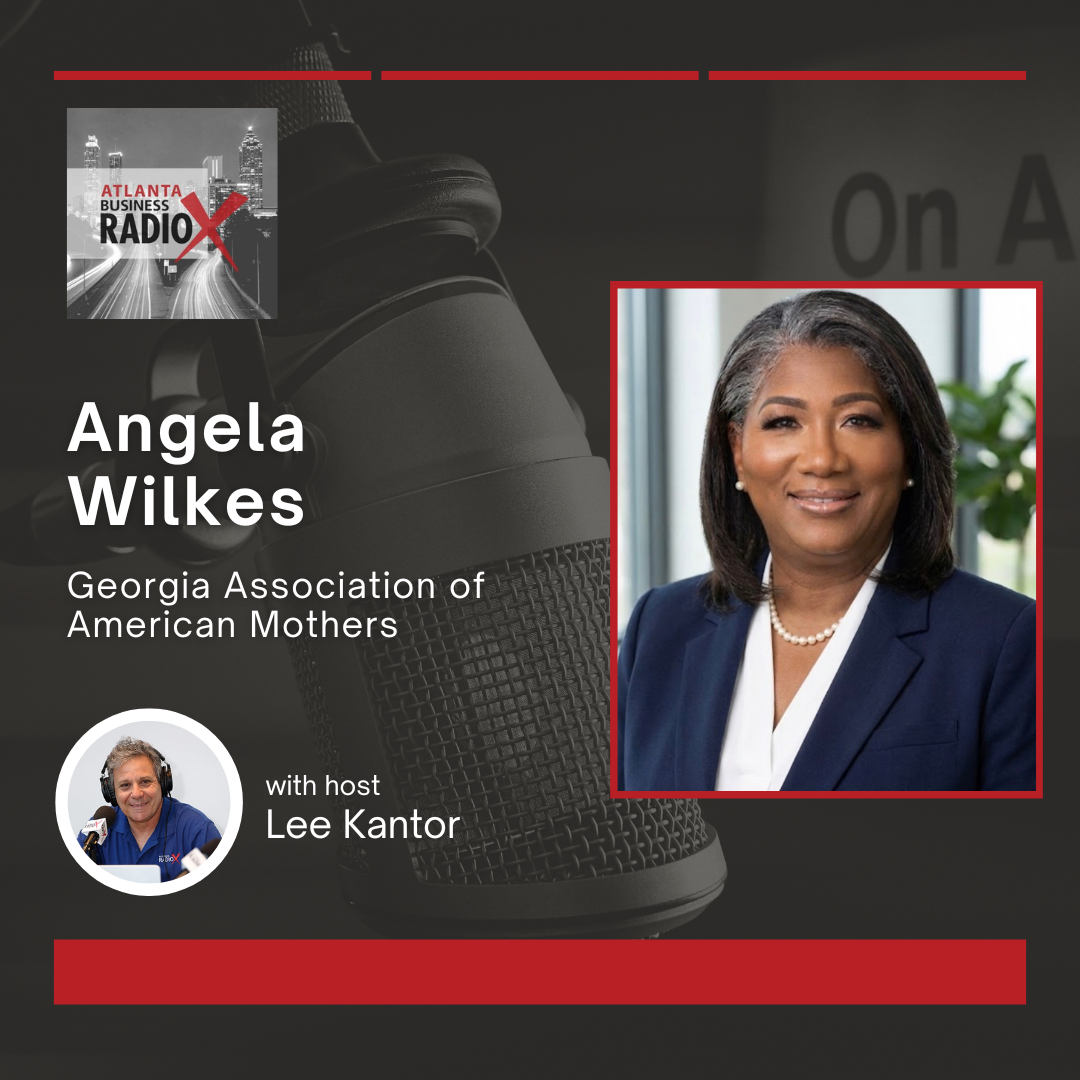

 In this episode of Atlanta Business Radio, Lee Kantor interviews Angela Wilkes, Co-Founder and President of the Georgia Association of American Mothers. Angela shares the organization’s mission to honor, educate, inspire, and support mothers through community engagement, educational programs, volunteer initiatives, and meaningful connections. She discusses the importance of building a supportive network for mothers, creating opportunities for leadership, and extending a helping hand to families and communities. Angela also highlights how shared experiences, self-care, and strong support systems can empower mothers through every stage of motherhood.
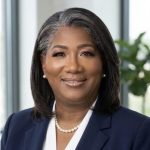
Angela Wilkes was a 2024 Georgia Mother of the Year and co-founded the Georgia Association of American Mothers with Teresa Wright-Johnson.
Recently retired as a lead training strategist for AT&T, Angela also recently was recognized as Ms. Corporate America for Rockdale County, GA. She is the proud mom of 6 children and grandmother of 14.
Follow Georgia Association of American Mothers on Facebook.
What You’ll Learn In This Episode
- The mission of the Georgia Association of American Mothers and its commitment to supporting mothers.
- The importance of building a strong support network and creating a village for mothers.
- Ways educational programs, webinars, and community initiatives empower women.
- The value of self-care, personal growth, and maintaining balance through motherhood.
- How volunteer projects and shared experiences create a lasting impact on families and communities.
- Opportunities for mothers to develop leadership skills, build connections, and make a difference.
 This transcript is machine transcribed by Sonix.
TRANSCRIPT
Intro: Broadcasting live from the Business RadioX Studio in Atlanta, Georgia. It’s time for Atlanta Business Radio, brought to you by My Global Presence, the award winning Atlanta public relations agency that elevates brands and nonprofits through authentic storytelling and national media campaigns. Find them at myglobalpresence.com. Now, here’s your host.
Lee Kantor: Lee Kantor. Here are another important episode of Atlanta Business Radio. But before we get started, it’s important to recognize our sponsor, My Global Presence. If you want global visibility and meaningful impact, go to myglobalpresence.com. I am so excited to be talking to my guest today, co-founder president with Georgia Association of American Mothers, Angela Wilkes, welcome.
Angela Wilkes: Thank you. Happy to be here.
Lee Kantor: Well, I am excited to learn about your group. Tell us about the Georgia Association of American Mothers. How you serving folks?
Angela Wilkes: Yeah. So the Georgia Association is a part of the National Organization of American Mothers, Inc. it’s one of the oldest nonprofits here in the US. And it was designed to honor, um, educate, inspire, and support mothers. So we definitely do, um, a, a great job doing that around all of the states here in the US.
Lee Kantor: So what made you want to found a chapter here in Georgia?
Angela Wilkes: Well, I was, I was actually nominated and won the 2024 um, mother of the year, which is our national program that honors mothers in each state. Um, when I went to convention in Omaha, Nebraska, it was just refreshing. And I learned so much about the history, how the American Mother’s was started by Eleanor Roosevelt and the Golden Rule Foundation, which was sponsored by J.C. Penney all those years ago. And it just gave me the idea that, hey, this is something that Georgia needs because Georgia has a lot of smaller counties and we have mothers all over, and mothers truly do need support. And we do need education because and we do need to be inspired and honored because we’re the glue that kind of holds the family together and the community. A lot of times we see ourselves as last, you know what I mean?
Lee Kantor: Right now, I 100% anything to elevate and support and celebrate mothers we should be doing. Can you talk about what is kind of the day to day work of the association in order to educate and honor and appreciate mothers?
Angela Wilkes: Sure. So since we know that mothers are busy, we pretty much meet six times a year. So we have a monthly well, we have a monthly interest meeting just for those that are interested and want to know more about the organization. We actually do a PowerPoint walkthrough, let people answer questions, help them join if they want to join. But during that time, we also provide many webinars. So we might do something on budgeting. We might do something on self-care. Just give them a couple of tips and tidbits to help them through their day to day. Right? Then we meet virtually three times a year for the actual membership group. And that’s where we decide kind of what are our volunteer projects going to be, um, what communities we’re going to help, um, how we can grow the organization, things of that nature. Then we actually have three in-person meetings. So actually, we just came back Saturday from being in Albany, Georgia. So we, um, had a, I had an interest meeting at the um empowerment center for training, um and education down in Albany. We also, it was time for our volunteer project. So we donated a bunch of perishables that can be used for Thanksgiving baskets to the rescue mission, which is there in Albany, which happens to be a men’s shelter. But, you know, men are a part of the family too. So sometimes they get overlooked. So we were able to, um, bless them with a bunch of, um, stuff for their Thanksgiving baskets for the community.
Lee Kantor: So now, um, between the virtual and the in-person events is the education around, um, parenting and, or does it kind of expand beyond that in terms of, um, you know, maybe there’s some, uh, mothers that are working out of the house and it helps them with the business side of things like, like what are the kind of some of the topics you’ve covered in your either virtual or in-person events.
Angela Wilkes: So topics we covered, um, like we just did one on, um, tweens, teens and young adults. So how does a mother transition with their child? How do you prepare your child for the transition? Um, like I said, we also do budgeting. We do self-care. We do, um, trying to think what some of the other topics that we’ve done. Oh, um, we’ve got one coming up on exercising as you age. Um, because you know, there are people with children with disabilities that they need to, you know, mom needs to stay strong to be able to take care of that adult child. You know what I mean? So we do all kind of things of that nature. And then individually, we still let each other know, kind of like, um, let’s say the Nami walk is coming up, which is the, you know, the National Association of um, um, mental health. Um, so we might participate in that yearly walk or um, like, um, so we do purpose with purses with a purpose for Mother’s Day. So what we did is we all got together, people donated purses and toiletries, we bagged them all up, and we took them to domestic violence shelters. Um, if they allow us in to talk to the women, we’ll share stories with them to encourage them. If they don’t, then, you know, of course we have to just drop off the products, but we also go to, um, like, um, what do you say into the, um, other, other nonprofit organizations that have, um, where they do giveaways as well, where they can give people the purses. And again, if we can talk to them, we do. If not, then, you know, we leave it to that organization to hand them out. So we try and do a lot of stuff in the communities as well. And because, you know, Georgia has so many, you got the cab, you got Rockdale, you got Newton, you got all these counties. So we kind of do a divide and conquer sometimes.
Lee Kantor: So now there’s a state chapter that you’re in charge of? Are there local county chapters as well, or is it just one big umbrella?
Angela Wilkes: So we’re just one years old here in Georgia. So that’s what we’re doing now is we’re working to grow, um, local local chapters, like city chapters underneath us. So that was one of the reasons we went to Albany to kind of recruit and see if we can open a chapter there in Albany, but we’re open if there’s somebody in DeKalb, Gwinnett, um, any of the other counties surrounding metro Atlanta, South Georgia, North Georgia, we would love to have a chapter, and they only need ten people to start a chapter. And we will walk them through the whole process.
Lee Kantor: And then, um, when you’re working with the mothers that are members, is it also that the mothers can network amongst each other and then call on each other for help or if they need.
Angela Wilkes: Yes, yes. So they do individually network. So, you know, when we come together, we come together as the group. However, if any of the members see a need for another member, then yes we are. They will jump in and help. Mhm. Because most of our members right now are business owners or work in corporate America or in the education sector. So we might be on a call and let’s say your child needs an IEP or something like that, and somebody else has experience. They’ll do that. Or if it’s a case where there’s something with child, early childhood education and you’re trying to figure out, do you need your child tested? We have we have women of all different professional levels as a part of the organization, as well as those that are, you know, less fortunate. So we’re here to welcome all moms. It doesn’t matter about your race. Um, you know, any of those kind of things, just that you’re a mom, right?
Lee Kantor: And it’s a great resource for especially a new mom. Um, that if they don’t have the support, this is a great way to plug into a bunch of moms that have been there and done that.
Angela Wilkes: Yes, yes. Because you have those of us that are new moms, and you have those of us that run the gamut, like myself, that say 80% empty nester because my child is in college. My baby. But I’ve had experience with a whole bunch. I actually have six children altogether.
Lee Kantor: Wow.
Angela Wilkes: Mhm. So they range from the 40s on down to that 21 year old.
Lee Kantor: You almost have enough for your own chapter.
Angela Wilkes: I do. Almost.
Lee Kantor: So now, um, some of the other things you do is, uh, you mentioned you were a mother of the year. How does that mother of the year, um, celebration happen?
Angela Wilkes: Oh my goodness. So it is just phenomenal. So what happens is, um, you know, someone nominates you, you have to complete the portfolio. There’s a committee that reviews it, you know, um, and then within that they name who’s going to be the person for that state. Um, once that’s announced, you get a call from the actual national organization, alerting you that you’re the representative for whatever year. So we’ll be having the 2027, um, mother of the year. Uh, and sometime in December, we’ll know who it’s going to be. And their reign will start in January. So what happens is we have a national convention to honor all those women. So you go, so. This 2027 convention will be held in Salt Lake City, Utah. Um, when I became mother of the year, it was in Omaha, Nebraska. Um, since then, I’ve gone to the convention in Puerto Rico, and the 2026 convention was in, um, Tysons Corner, Virginia. So the convention goes different places. Um, when you get there, you do a, they, they have a whole orientation for the moms. They have a, um, a gala for the moms and, and their moms and your spouse and family can come.
Angela Wilkes: But the important piece of it is you get on stage and you have three minutes to give a speech. They give you the topic when you’re named and then you, um, do a speech on that topic. And the stories are just phenomenal. I mean, they some will have you laughing, some will have you in tears, but just to see the women connect from all the states and hear their stories and know that you’re not alone was very inspirational to me. And then we also do the United Nations in March. So there’s a, um, let me think what it’s called. I’m going to give you the right name. It’s the oh my goodness, I’m drawing a blank. But it’s the like consortium on the status of women throughout the world that they hold at the UN every year. Um, in March that the American mothers is a part of also. So it was exciting to go to the UN, be on the floor, um, hear how other countries are progressing or at a standstill for where they’re at with helping women progress. And I met women from all over the world.
Lee Kantor: And then, um, so, so all over the country, this organization is serving their communities statewide just like you are.
Angela Wilkes: Yes. So we have some states that don’t have associations, but may have a chapter and they’re trying to grow into an association. Mhm.
Lee Kantor: So what do you need? What do you need more of? How can we help you?
Angela Wilkes: Oh, we need more moms. Of course. And we need some funding if there’s some out there for us. Because, of course, you know, we’re nonprofit organization. Um, so just trying to tap into the resources on where we can do that so that we can help moms that are, you know, maybe, maybe you’ve been named mother of the year, but you know, you can’t afford the airfare and hotel to go to, um, you know, wherever the convention is being held or even if we can just help you, you know, get your gown for the gala or something like that. We just want to be able to help moms, you know, make sure that the families and the communities are good.
Lee Kantor: Now to join, is there a fee to join? Uh, the association.
Angela Wilkes: Yes. So there’s the the main level is the national organization, which is $40. And what that does is that gives you a year membership into the National. And out of that $4,010 comes back to the Georgia Association.
Lee Kantor: So then is there an additional membership to be part of Georgia or that’s included in the National.
Angela Wilkes: That’s included in the $40? Mhm.
Lee Kantor: And then you get access to all of that education that you mentioned earlier and all the events.
Angela Wilkes: Yeah. Yeah. So we have a mom to mom podcast that anybody can, you know, review the topics throughout the years I’ve been on it. My co-founder, Teresa Wright Johnson has been on it. Um, I think I spoke about, we spoke at the convention, we’ve done roundtables. So I did a roundtable on um. Creating memories that last forever. So just teaching moms about those everyday things that can create memories for you and how to capture them and store them for the future to share. Um, Teresa does a lot of work with early childhood and parenting. She’s a parent peer coach. Um, so yeah, so we do a lot of that plus, um, okay, so there’s the mom to mom podcast. There’s the, um, they actually do the education committee does some other webinars and stuff for moms. We have the Golden rule Foundation. Um, oh, we have the fifth grade essay contest and it is the sweetest thing. So that’s at the national level. However, since we’re a state association there, you can every state can submit people. Um, well, the fifth graders can submit their essays. And what happens is once everything’s tallied and national decide who is the actual winner. They actually fly them to convention. Them in one parent, and they actually get to read their essay out about their mom to the gala.
Lee Kantor: Wow, that.
Angela Wilkes: Was a question. It’s usually something like, well, why my mom is the best or why I love my mom or something like that.
Lee Kantor: So now.
Angela Wilkes: Program.
Lee Kantor: Yeah, it sounds like an amazing, uh, I mean, the parents, the moms must be just over the moon with that.
Angela Wilkes: Yes, yes, yes they are.
Lee Kantor: So now in, in, um, do you have any advice for a mom that might be feeling overwhelmed? I mean, there’s so much chaos in the world right now. Is there any advice you can give to a mom listening?
Angela Wilkes: Yes, definitely. Remember to take a deep breath. Um, because this too shall pass. Um, be sure that you’re doing something to take care of yourself daily. And I know we have hectic lives, busy schedules and all. But even if it’s just 510 minutes to go into the bathroom to deep breath, um, deep breathe or to just have silence. Um, those kind of things help exercise, you know, to create those endorphins. Um, and then find if, um, if, even if it’s not the American mothers group, find a moms support group because they’re out there. Um, we prefer for you to join American mothers, but if not, um, they have all different organizations for moms. They have, um, they have mocha moms, which are moms that choose to stay at home. Um, and, you know, put the family first. Um, we know everybody can’t do that. So even if you’re a working mom, see if you can connect to an ERG group at your job that may meet at your lunch time or something, um, just do something for you. Does that make sense? Even if you take five, ten minutes to just read, um, something that’s funny. Um, I know for me, um, like listening to audiobooks helps the library will do them. You can download them from free for from the library now.
Lee Kantor: So why is there a story you can share maybe, uh, about being a member? Or maybe it’s your story about, um, the impact that being a member has helped you?
Angela Wilkes: Oh yes, for sure. So for me, it was the, it was the, the, the transition piece. Because when I became, I became a mother at 40 number one. Well, the final mother at 40 for the for the last child and um, just being like climbing the corporate ladder, having a child, having to travel, having daycare and that stuff, I had to develop a village from the time she was in pre-K three literally to help help me and my husband, um, with her. Um, so when I joined American Mothers, um, it was just like, wow, you know, I can pass my experience on and I thought, this organization cannot die. It has to have a legacy. I want my daughter to be able to join when she has children and my grandchildren to be able to join when they have children. I wanted to see the organization stay around just for all the knowledge and the inspiration, all the connection to the women I still talk to, to my sisters in other states, you know, that are American mothers. Um, from the ones that I met in 2024 to legacy ones that I might have met at convention. That was a mother in, in 2020. Uh, 2020. Um, you know, and, and before that, so it’s, it’s just hearing people’s stories and knowing that there’s somebody there that shares something with you and you’re learning as you go and you can volunteer and be a part of it. It’s not a case where you join and you’re just there. You know what I mean? You have the opportunity to learn leadership. Um, you can join committees, anything from the convention to membership to fifth grade essay to Golden rule. All of these projects you can be a part of. And if you think of something else that we might be missing, you’re welcome to present that idea and be a chair of it.
Lee Kantor: Yeah. It’s so important to have community like this. Um, not just from an education standpoint, but just from a community standpoint. Everybody’s helping everybody. It’s bigger than you. The and the impact is real. I mean, the impact you’re making on the moms, on their families, on the community, it’s one of those things, I think Maya Angelou talked about the ripple effect, about how this one action is impacting so much around you that you may not even see.
Angela Wilkes: And that’s that is very true, very true. Um, you know, I’ve run into people that said, hey, I saw, you know, you’re doing A, B, C, and D and I thought it was awesome. And that helped me. So for instance, I, I gave her a talk about, um, the journey of infertility, right? Um, um, and, uh, one person reached out to me from American mothers and was like, oh, that was so great. She said, because it, it taught me what not to say to people and what questions to ask. If I understand that they’re going through that issue, you know, so it’s, it’s a learning experience for everybody. We all have stories to share. We can always inspire somebody. Even when we went to the, um, the domestic violence shelter, just being able to share. I’ve been homeless before. Um, for a brief second, even though I stayed with family, I was still homeless, you know what I mean? I didn’t have a place of my own with my name. I was going through some transitions. And, you know, that helped us identify with with the ladies there. And I mean, they really appreciate it.
Lee Kantor: Yeah. I mean, everybody has stuff they’re going through. And just because it may not be obvious, it still could be happening. And yeah, and it’s important that we all give each other grace and, um, and appreciate, you know, everybody for what they’re doing. Everybody’s doing the best they can.
Angela Wilkes: Exactly, exactly, exactly. So yeah, so building that support and that village is extremely important for moms. Um.
Lee Kantor: So if somebody wants to learn more, is there a website? What’s the best way to connect?
Angela Wilkes: Yes. So we have www.americanmothers.org is one that’s for national.
Lee Kantor: And then the Georgia one is georgiaassociationofamerican mothers.org.
Angela Wilkes: Yes. Um, try.com. the .org is having some issues right now. Right. So if they don’t if the .org doesn’t open, open up, open that same, um, link but with.com.
Lee Kantor: Okay. Good stuff. Well, Angela. Thank you.
Angela Wilkes: Yeah. And then we have an email as well.
Lee Kantor: And then on social media, are you on Facebook?
Angela Wilkes: Yes. We do have a Facebook group. Um, it is Georgia American Mothers, I believe.
Lee Kantor: Well, Angela, thank you so much for sharing your story today. You’re doing such important work and we appreciate you.
Angela Wilkes: Thank you, thank you. It’s been my pleasure to talk to you. Um, regarding the Georgia Association of American Mothers, we appreciate you.
Lee Kantor: All right. This is Lee Kantor. We’ll see you all next time on Atlanta Business Radio.