
Business RadioX ®

  • Home
  • Business RadioX ® Communities
    • Southeast
      • Alabama
        • Birmingham
      • Florida
        • Orlando
        • Pensacola
        • South Florida
        • Tampa
        • Tallahassee
      • Georgia
        • Atlanta
        • Cherokee
        • Forsyth
        • Greater Perimeter
        • Gwinnett
        • North Fulton
        • North Georgia
        • Northeast Georgia
        • Rome
        • Savannah
      • Louisiana
        • New Orleans
      • North Carolina
        • Charlotte
        • Raleigh
      • Tennessee
        • Chattanooga
        • Nashville
      • Virginia
        • Richmond
    • South Central
      • Arkansas
        • Northwest Arkansas
    • Midwest
      • Illinois
        • Chicago
      • Michigan
        • Detroit
      • Minnesota
        • Minneapolis St. Paul
      • Missouri
        • St. Louis
      • Ohio
        • Cleveland
        • Columbus
        • Dayton
    • Southwest
      • Arizona
        • Phoenix
        • Tucson
        • Valley
      • Texas
        • Austin
        • Dallas
        • Houston
    • West
      • California
        • Bay Area
        • LA
        • Pasadena
      • Colorado
        • Denver
      • Hawaii
        • Oahu
  • FAQs
  • About Us
    • Our Mission
    • Our Audience
    • Why It Works
    • What People Are Saying
    • BRX in the News
  • Resources
    • BRX Pro Tips
    • B2B Marketing: The 4Rs
    • High Velocity Selling Habits
    • Why Most B2B Media Strategies Fail
    • 9 Reasons To Sponsor A Business RadioX ® Show
  • Partner With Us
  • Veteran Business RadioX ®

Decision Vision Episode 170: Should I Integrate Cryptocurrency into My Business? – An Interview with Daren Hebold, LUX Companies

May 26, 2022 by John Ray

cryptocurrency
Decision Vision
Decision Vision Episode 170: Should I Integrate Cryptocurrency into My Business? - An Interview with Daren Hebold, LUX Companies
Loading
00:00 /
RSS Feed
Share
Link
Embed

Download file

cryptocurrency

Decision Vision Episode 170: Should I Integrate Cryptocurrency into My Business? – An Interview with Daren Hebold, LUX Companies

Daren Hebold, CEO of LUX Companies, was Mike Blake’s guest on this episode of Decision Vision. He explained the basics of cryptocurrency and how it works, its history, apps for businesses to use cryptocurrency, use cases for crypto, the risks, and much more.

Decision Vision is presented by Brady Ware & Company and produced by the North Fulton studio of Business RadioX®.

LUXOLO Financial, a division of LUX Companies

LUXOLO is your best-in-class concierge cryptocurrency service, located on the beautiful coastline of Portland, Maine. Their team believes in “own your keys, own your coins”. At LUXOLO they advocate self-custody of your digital assets. They will guide you through the process of securely storing your private keys, granting you direct and sovereign control over your wealth.

Company website | LinkedIn

Daren Hebold, Founder and CEO, LUX Companies

Daren Hebold, Founder and CEO, LUX Companies

Mr. Hebold is the Founder and CEO of the LUX Companies, a regional commercial real estate asset management company as well as LUXOLO Financial, the innovative in-person cryptocurrency exchange and digital asset wealth management firm.

He has cultivated a broad reputation of trust within the industry and community given his command of confidentiality, fiduciary duty and financial skills in the handling of high value commercial real estate and digital assets. After getting financially thrashed by the Great Recession in 2008-09 and closely studying the US central bank and government responses, he began seriously questioning the composition, integrity and sustainability of our financial system which at its core includes a central bank that is privately owned, centralized and granted the outrageous right to unlimited emission of new currency at their sole discretion.

Needless to say, after critical analysis, research and discussions with friends, he stumbled upon bitcoin, blockchain and cryptocurrency. Seeing and participating in the extraordinary, freedom enabling benefits of this new parallel financial system together with its technological superiority, he founded LUXOLO Financial to broadly deliver cryptocurrencies and blockchain technology benefits to individuals and small businesses alike for everyday use in commerce.

LinkedIn

Mike Blake, Brady Ware & Company

Mike Blake, Host of the “Decision Vision” podcast series

Michael Blake is the host of the Decision Vision podcast series and a Director of Brady Ware & Company. Mike specializes in the valuation of intellectual property-driven firms, such as software firms, aerospace firms, and professional services firms, most frequently in the capacity as a transaction advisor, helping clients obtain great outcomes from complex transaction opportunities. He is also a specialist in the appraisal of intellectual properties as stand-alone assets, such as software, trade secrets, and patents.

Mike has been a full-time business appraiser for 13 years with public accounting firms, boutique business appraisal firms, and an owner of his own firm. Prior to that, he spent 8 years in venture capital and investment banking, including transactions in the U.S., Israel, Russia, Ukraine, and Belarus.

LinkedIn | Facebook | Twitter | Instagram

Brady Ware & Company

Brady Ware & Company is a regional full-service accounting and advisory firm which helps businesses and entrepreneurs make visions a reality. Brady Ware services clients nationally from its offices in Alpharetta, GA; Columbus and Dayton, OH; and Richmond, IN. The firm is growth-minded, committed to the regions in which they operate, and most importantly, they make significant investments in their people and service offerings to meet the changing financial needs of those they are privileged to serve. The firm is dedicated to providing results that make a difference for its clients.

Decision Vision Podcast Series

Decision Vision is a podcast covering topics and issues facing small business owners and connecting them with solutions from leading experts. This series is presented by Brady Ware & Company. If you are a decision-maker for a small business, we’d love to hear from you. Contact us at decisionvision@bradyware.com and make sure to listen to every Thursday to the Decision Vision podcast.

Past episodes of Decision Vision can be found at decisionvisionpodcast.com. Decision Vision is produced by John Ray and the North Fulton studio of Business RadioX®.

Connect with Brady Ware & Company:

Website | LinkedIn | Facebook | Twitter | Instagram


TRANSCRIPT

Intro: [00:00:02] Welcome to Decision Vision, a podcast series focusing on critical business decisions. Brought to you by Brady Ware & Company. Brady Ware is a regional, full-service accounting and advisory firm that helps businesses and entrepreneurs make visions a reality.

Mike Blake: [00:00:21] Welcome to Decision Vision, a podcast giving you, the listener, a clear vision to make great decisions. In each episode, we discuss the process of decision making on a different topic from the business owners or executives perspective. We aren’t necessarily telling you what to do, but we can put you in a position to make an informed decision on your own and understand when you might need help along the way.

Mike Blake: [00:00:43] My name is Mike Blake, and I’m your host for today’s program. I’m the Managing Partner of Brady Ware Arpeggio, a data-driven management consultancy which brings clarity to owners and managers of unique businesses facing unique strategic decisions. Our parent, Brady Ware & Company, is sponsoring this podcast. Brady Ware is a public accounting firm with offices in Dayton, Ohio; Alpharetta, Georgia; Columbus, Ohio; and Richmond, Indiana.

Mike Blake: [00:01:07] If you would like to engage with me on my social media with my Chart of the Day and other content, I’m on LinkedIn as myself and @unblakeable on Facebook, Twitter, Clubhouse, and Instagram. I also host a LinkedIn group called Unblakeable’s Group That Doesn’t Suck, so please join that as well if you would like to engage. Today’s topic is, should I integrate cryptocurrency into my business? And this is a topic I’ve wanted to do for a while.

Mike Blake: [00:01:35] Haven’t really been able to sync up with the right guest who, I just thought, would give us a great and in-depth perspective on it, and we can sort of make schedules sync up. And I feel almost apologetic about that, because this is a topic that’s long overdue, but that having been said, I think the timing is actually propitious. Cryptocurrency has always, of course, been a little bit of a roller coaster ride, and right now, as of late, cryptocurrencies, I think in a way that’s surprising to me anyway, have been retrenching quite a bit over the last several weeks, which frankly I find surprising, which probably reflects my own ignorance of the dynamics of cryptocurrency.

Mike Blake: [00:02:24] I would have bet a couple of months’ mortgage that cryptocurrencies would have become stronger after the Russian attack on Ukraine and suing financial sanctions that I think would have motivated a lot more activity to circumvent conventional and national banking systems. And maybe that is happening, but not enough to overcome other forces that are at play here. So, because of what’s going on in the crypto markets, I think this really, really as well timed a topic as any to talk about this, and I hope that you’ll agree.

Mike Blake: [00:03:00] I think it’s also important because I think everybody by now has heard the word or term, cryptocurrency, they have heard of Bitcoin, but it really is remarkable how few people actually know what it is. As it happens, I happen to do a lot of work in the cryptocurrency e-wallet exchange space, some work with crypto miners and valuing or appraising their businesses.

Mike Blake: [00:03:27] But many of my peers really still don’t have any idea how cryptocurrency works, what the value proposition is, et cetera. And I think that—I don’t think they’re an outlier. I think there are a lot of people that still need to be educated. And if you’re one of those people, I think you’re going to find this a very good use of your next 45 minutes or so.

Mike Blake: [00:03:49] And so, joining us today to help us out with this topic, who is an expert, because I’m not, is Daren Hebold, who is Founder and CEO of the LUX companies, which offer specialized asset management services for commercial real estate, together with financial asset management of cryptocurrency. He has cultivated a broad reputation of trust within the industry and community given his command of confidentiality, fiduciary duty and financial skills, and the handling of high value commercial real estate and digital assets.

Mike Blake: [00:04:20] After getting financially thrashed, his words, by the Great Recession of 2008 and ’09, and closely studying the US Central Bank and government responses, he began seriously questioning the composition, integrity, and sustainability of our financial system, which, at its core, includes a Central Bank that is privately owned, centralized and granted the right to unlimited admission of new currency at their sole discretion.

Mike Blake: [00:04:43] After critical analysis, research, and discussions with friends, he stumbled upon Bitcoin, blockchain, and cryptocurrency, seeing and participating in the extraordinary freedom-enabling benefits of this new parallel financial system together with its technological superiority. He founded LUXOLO Financial to broadly deliver cryptocurrencies and blockchain technology benefits to individuals and small businesses alike for everyday use in commerce. Daren, welcome to the Decision Vision podcast.

Daren Hebold: [00:05:12] Thank you, Mike, and great intro. I appreciate that.

Mike Blake: [00:05:16] So, as I said in my opening, a lot of people listening to this, I think, at this point ,don’t want to admit it, so what we’re going to do is we’re not going to crypto shame people and we’re going to let people address their lack of knowledge in a safe space, the privacy of their own headphones, their own car, whatever it is they’re listening to. What is cryptocurrency, and how does cryptocurrency come about?

Daren Hebold: [00:05:45] Great. Yeah, and we’ll keep it real simple to begin with, and then we’ll branch out. So, a Bitcoin, what is a Bitcoin? It’s electronic money. It is a peer-to-peer payment system. It’s a store of value. It’s a new financial system. It’s many things and it ticks many boxes. And this is something that we saw come out of the ashes of the last financial collapse after ’08. I think it was January 2009, the group, Satoshi Nakamoto, officially released Bitcoin and it’s just been branching out since then. I just wonder where we start, maybe, Mike, to keep it simple. I think-

Mike Blake: [00:06:45] Well, I think what people—I mean, the question I’m asked a lot, and I probably give a barely adequate answer, is how is cryptocurrency created? Right? We know about crypto miners. Most people have never seen a crypto mining rig. They don’t understand why people are buying PC gamer hardware to create this virtual or cyber currency. So, maybe talk a little about that. How does cryptocurrency get created, and why does that translate into a fungible value?

Daren Hebold: [00:07:15] Yes. Yeah. And yes, how is that valuable, and why do people recognize that great place? Okay. So, not all cryptocurrencies are created equal. So, Bitcoin was the very first one. And since then, I think, literally, there are over 17,000 cryptos out there.

Mike Blake: [00:07:34] Wow. I didn’t know that.

Daren Hebold: [00:07:34] Yeah, it’s just insane. And frankly, it’s a little bit of a junkyard out there. And I think we, in the industry, would probably agree that you could probably count literally on maybe one hand how many of those 17,000 cryptos could be reasonably considered money. The balance of them have other uses and utilities for smart contracts, and for programming, and for other functions, but probably aren’t considered money.

Daren Hebold: [00:08:06] Bitcoin is clearly the winner as far as recognition and global adoption, where people say, Yeah, that’s money and I’m going to use it as such and treat it as such. So, it’s unique because it requires a great expenditure of electricity to print or mint or mine, I guess we would call it, a Bitcoin. So, if you or I wanted to do it, we could do it tomorrow. You pop online, and for several thousand dollars, there’s an entry-level mining machine, and you don’t need any real skills, it’s a plug-and-play device.

Daren Hebold: [00:08:45] You plug it into your electricity and it juices it. Your bill goes through the roof and you start printing or mining Bitcoin rewards right away. So, anybody can do it. It just costs a lot of money. And we can talk about it later. We’ll unpack it. But the cost to mine one Bitcoin sort of sets the floor for the price, because it’s many thousands of dollars to mine one Bitcoin. Whereas, some of these other cryptocurrencies involve what’s called pre-mining or really just pressing a button and 10 billion units of some certain token appear.

Daren Hebold: [00:09:30] And so, there’s not a lot of intrinsic value in those projects, and the market determines that. No one person points and decrees which cryptos have value. The market decides, which I love. I love Mr. Market. And the market says [making sounds] that coin was pre-mined and it’s proof of stake, and I could create another one of those tomorrow morning, and that doesn’t have much value to me. That’s why that’s trading for a penny. Whereas, a Bitcoin is trading for $30,000 these days.

Mike Blake: [00:10:05] And what is the guts of how mining happens? Is it solving equations? Is it random number generator? Is it something else? I mean, how does that—and I understand we’re limited to Bitcoin, but I think Ethereum kind of works the same way. You can still mine Ethereum, and maybe Dogecoin, and others. How does that work that it proves that there’s an algorithm that effectively proves that you have produced somehow a piece of cryptocurrency?

Daren Hebold: [00:10:39] Sure, sure. I’ll keep it simple. So, Bitcoin was the first birth of a blockchain. And a blockchain simply means that there is a public ledger that everybody can pop online and view, and it just shows that I gave today here on May 18th, I gave Mike one Bitcoin from this wallet to that wallet, and that gets codified into a ledger. And what the mining does is it proves that. The mining network of all the global miners performs calculations and proves cryptographically that, yeah, Daren’s wallet gave Mike’s wallet one bitcoin on said date and time. It’s indisputable, it’s immutable, meaning nobody can go back in time and change it. It’s auditable. And everybody agrees that it happened.

Daren Hebold: [00:11:38] So, it’s a very crucial—it sounds trivial just to prove that I gave you money, but how else does a financial system work without a ledger that everybody can agree on? And mining is the way to secure that. And so, the people that have these rigs and spend not just thousands, but I mean, there are industrial scale mining facilities where people have invested $300 million, as you probably know, and they get paid to run those machines in the form of Bitcoin rewards. So, they run these machines. And then periodically over time, every 10 minutes, actually, the Bitcoin network kicks out some Bitcoin rewards to the miner who successfully hashed that particular transaction. And there’s an even distribution. So everybody gets their fair share of the Bitcoin rewards, everybody who is mining.

Mike Blake: [00:12:34] Okay. Now, I have to admit, and I’m supposed to know this, but I didn’t. 17,000 different cryptocurrencies, right? And most people do well if they can name one or more than one. How do they differ? We think of currencies, of course, national currency, the euro, the dollar, the yen, et cetera, but how do 17,000 different cryptocurrencies differentiate and how do you decide which one or ones is a business you want to trade in or deal in?

Daren Hebold: [00:13:05] Yeah, it’s a great question. Okay. I would say just broadly, I would call them coins and tokens, is kind of what the industry has settled upon. Coins generally refer to if something can be identified as money. And again, I think there’s probably five, maybe 10 tops that people would agree are coins/money. All the other ones are considered tokens and they each have their own separate blockchain.

Daren Hebold: [00:13:36] Again, they’re usually all free to use. Nobody owns them. Anybody can use them for the most part, and they just have different utilities, Mike. So, for example, Ethereum is a smart contract platform. It kind of straddles the fence. It’s the one unique one where Ethereum is kind of considered money right now and it’s trading for $2,000 per coin. But then, simultaneously, it’s a smart contract platform where you can program your Ethereum or your other tokens to do things that you want them to do.

Daren Hebold: [00:14:11] So, you can mirror legal contracts with a smart contract on a blockchain. So, that’s a huge, huge use case out there for crypto, is programmable money. And so, imagine every legal contract where a tenant has to pay a landlord, a supplier gets paid by a corporation, an employee gets paid by an employer, all these can get codified into a smart contract, and really, greatly simplify accounting, bookkeeping, auditing, payroll. Any number of industries are going to be certainly disintermediated by this.

Mike Blake: [00:14:57] So. We talked a little bit about this in your intro, but I’d really like to get your in-depth take on this, because I think it’s really important. And that is, why has cryptocurrency a currency that was invented, now, less than 15 years ago? Why has cryptocurrency found the market and the traction that it has? We’ve never seen anything like this in our lifetimes, have we?

Daren Hebold: [00:15:22] It’s a great point. Yeah. We have not seen new money, God, in centuries, right? I mean, way back there were several forms of money, coffee beans, large stones, wampum, parcels of real estate. You could probably name more. But no, we have not seen new money in a while. We’ve just been kind of going along with gold and silver up until it was made illegal by governments of the world, who, that did not fit their narrative, and they wanted to introduce central bank fiat debt currencies, and they have successfully run with that for quite some time now.

Daren Hebold: [00:16:09] But look what’s happening. Maybe they didn’t do such a great job. We had a great run with fiat currencies, but if you pop on the imf.org right now, it’s nothing short of a death procession of every single fiat currency out there that are experiencing hyperinflation as we speak. So, Central Banks invented these currencies, and then they got themselves into a pickle when they started printing more, and more, and more, almost without discretion. And in the last two years alone, the US dollar has printed—40% of the dollars in circulation were printed, meaning the Central Bank in the US pressed the button, and dollars, electronic dollars came out, and that comes with consequences.

Daren Hebold: [00:17:00] So, even our beloved dollar is now eight-and-a-half-plus percent inflation. And so, circling back to your question, the reason that we need to consider new forms of money is people are getting eaten alive with the fiat currencies that are tanking in value. Turkey, 54% inflation. If you have $1,000 in your bank account, by Christmas, it’ll be half of that. I mean, that’s catastrophic. I mean, can you imagine that? So, we, citizens in different countries in the world, that have been forced to use fiat currencies are being forced to come up with alternatives, and I think Bitcoin ticks a lot of boxes there.

Mike Blake: [00:17:47] Earlier in my life, I actually did live in a hyperinflationary environment. I lived in Belarus and Ukraine shortly after the fall of the Berlin Wall, and they were struggling to launch their own currencies as their currency just died, right? The Soviet ruble was just gone overnight. And the last time that I was over there for any length of time, the exchange rate was 200,000 Belarusian rubles to the dollar. And about 80,000—the currency that was existing, where it’s used to be called the karbovanets, 80,000 of them to the dollar.

Mike Blake: [00:18:21] And I remember paying for lunch with bags of money and the server would have to come over with one of those banknote counters to make sure that I paid the correct amount. And it was just so chaotic, because the prices couldn’t even keep up. You see a Snickers bar that would be for sale in the morning for 3,000 rubles, you come down at the end of the day, be 7,000. It was crazy, and I wonder if cryptocurrency could have helped those economies achieve some stability back then.

Daren Hebold: [00:18:56] Interesting. Well, I’ll tell you, another thing that’s important is just governance. So, I think part of the reason Bitcoin has floated to the top is just that. There’s only ever going to be 21 million Bitcoins. That is huge. So, we’re controlling. We, collectively, all the miners, have signaled that we want a cap on Bitcoin, and that tends to preserve its value, whereas governments have unlimited emission. So, we’ve got to have governance in place to govern emission, use, just kind of equity and the fact that it cannot be censored, or revised, or reversed.

Daren Hebold: [00:19:42] All these are important things. And and if we can keep those favorable attributes in place, which they are, for Bitcoin specifically, then absolutely. It’s a great use case. You touched on Belarus and Russia. Let me just read you something here. Granted, this statement’s a couple of weeks old, but with the advent of Russia being internationally sanctioned, where people cannot bank with any Russian. Not just the prime minister of Russia or the 2,000 oligarchs who have been tagged as being criminals, but everybody in Russia is being equally penalized. Here’s a statement here from CryptoSlate magazine.

Daren Hebold: [00:20:25] “Russian citizens are justifiably fearing the seizure of their retail deposits and naturally want to protect their capital. Purchasing digital assets is an effective means by which ordinary citizens can move savings out of the financial system in order to preserve capital.” What a powerful statement. I mean, that is quite a use case if I’ve ever heard one. Another one was the Canadian truckers who did not break any law, were never convicted of a crime, but their banks froze their accounts, just politically. They just didn’t appreciate truckers driving around talking about freedom. That’s a threat.

Daren Hebold: [00:21:09] So, they froze bank accounts left and right, and citizens were left without legal recourse other than accepting donations via cryptocurrency, so another use case. I guess more and more, we’re seeing that it’s become cool for governments to become tyrannical and sort of take matters into their own hands, including their Central Bank money policies. And it’s really not funny to the average person who has worked their whole life to establish some savings and is starting to see it just melt away via inflation and such.

Mike Blake: [00:21:47] So, a key feature of cryptocurrency, I think, and correct me if I’m wrong, please, is that there is no king or queen of Bitcoin. There is no Bitcoin chairperson, There is no czar. It’s just out there, right? And it’s self-regulating, self-trading, and that’s it.

Daren Hebold: [00:22:08] That’s it. No one owns it. Everyone can use it. Exactly. And it is literally free. You can be a dirt farmer in a foreign country, and you can download a wallet, and begin using it immediately. And no one can stop you, or ask you what you’re doing or why, and that’s just fantastic. There’s no intermediaries, too, or it’s direct peer-to-peer payments.

Mike Blake: [00:22:37] Are you familiar with FATCA, the relatively new regulation about disclosing international payments? It’s an acronym for something. I forget what it’s called, but you probably would know it.

Daren Hebold: [00:22:48] Yeah.

Mike Blake: [00:22:50] Is that driving cryptocurrency, too? Because, man, what a pain. What a pain that regulation is not. Not that it costs that much, but the burden of complying with that paperwork, I’ve ridden shotgun with people that are doing it when they’re buying or selling businesses, transferring assets. It is a monster.

Daren Hebold: [00:23:10] The notion of borders literally becomes foolish when you start working in cryptocurrency. You say, why? Why do I have to stop, get frisked, hassled, taxed, chipped, and tracked, just because I want to give Mike some money, because he’s over that border over there, be it a federal state or international border? It’s silly. And there are very few instances when I think it’s a legitimate hassle, to be honest with you. So, there are people that are going to violate laws, and no matter what type of money is in use at the contemporary time, yeah, certain number of people are going to violate laws. But just the fact that I’m sending money over a border, I’m not sure how that entitles all manner of authorities to hassle me, and possibly censor and resist my transaction.

Mike Blake: [00:24:12] Yeah. And for those of you scoring at home, FATCA, F-A-T-C-A, stands for Foreign Account Tax Compliance Act. Sorry, I didn’t have that prepared. That was an off-the-cuff question I thought of. But take a look at it. It is burdensome. Whether you agree with it or not, I don’t think anybody disagrees that it’s burdensome. So, Daren, this is a business podcast, what is the killer app for a business person to start using or expand the use of cryptocurrency in their business?

Daren Hebold: [00:24:49] Great. Awesome question. Let’s get right to it. So, okay, so here we are, we’re 12 years into Bitcoin. There are two killer apps right now for business, and I’m using them both. First one is hold bitcoin specifically on your balance sheet of your business. Okay. That serves several purposes. First of all, it’s balanced on your balance sheet. It’s owner’s equity that you can carry short, medium, or long term as just additional equity within your company that tends to grow over time.

Daren Hebold: [00:25:30] I mean, if you look at the long haul, it generally is going to appreciate over time passively, without doing anything. The second thing you can do with that Bitcoin on your balance sheet is it’s lending collateral. So, we and your listeners out there can become your own bank. So, you can post—for every bitcoin you post—well, let me back up. Okay. So, you’re holding a tranche of Bitcoins on your corporate balance sheet.

Daren Hebold: [00:26:03] Those are Bitcoins. You say, okay, great, but I need USD to operate my business, I need some working capital, I need a revolving line of credit. You usually go to the bank to get that. Now, crypto banks have emerged, where they say, Hey, Mike, post your bitcoins with us as collateral and we’ll give you up to a 50% loan in US dollars that you can use for whatever purpose you want, you don’t need underwriting, it’s just simply a balance sheet loan, and we can offer you a very competitive interest rate of about 4.95%.

Daren Hebold: [00:26:41] How’s that sound to you? Well, it sounds fantastic to me, and I use it all the time. So, we’ve taken a portion of our corporate treasury and post it as collateral in some of these trusted crypto banks who have lent us US dollars that we can use for working capital. It’s a fantastic instrument. And what happens is as time goes on, the value of my collateral goes up, and we say to ourselves, I look at my partner, and we say, alright, you know what, let’s retire that loan and go get a new 50% loan based on an increased value of our Bitcoins that we own.

Daren Hebold: [00:27:19] So, that’s the first killer use for businesses, Mike. The second one, we haven’t mentioned this phrase yet, but one cryptocurrency that we believe in is USDC. USDC is issued by Circle Financial in Boston. It is a digital version of a dollar. It’s pegged 1 to 1 with the dollar with audited reserves. And what you can do with that digital dollar is go to the same crypto banks that I was describing and earn a meaningful interest rate. So, the savings account is back. I mean, when’s the last time we were getting 4, 5, 6, 7% interest rate in a bank account, perhaps the early ’90s.

Mike Blake: [00:28:09] Ages ago.

Daren Hebold: [00:28:10] Ages ago. And now, it’s gone. Now, it’s a fraction of 1%, and with inflation, you lose. So, now, you can take your US dollars, convert them to USDC which we believe is the forerunner of stable coins, and post them on deposit with these crypto banks, and earn something in that range that I just said, 4 to 7% is kind of the prevailing rate, and you say, wow, how can they afford to pay depositors that much? That’s fantastic.

Daren Hebold: [00:28:46] I mean, how can they do that? They’re a lender. So, they turn around and lend that money out with about a 2% spread. And then, you say, well, how does that interest rate compute? Because a minute ago, you said you’re a borrower at about 5%, and then on the other hand, you’re a lender at about 6 or 7%. Well, the way they work it is small LTVs, so internal to their banks.

Daren Hebold: [00:29:15] They’re only lending out a very small percentage of their assets that they’re holding as collateral. And additionally, when you post collateral, you’re no longer earning interest. So, they’re only paying interest on a very small percentage of the assets they’re holding in custody. That’s how the math works out for them. But those are the two killer apps that I can bring to you guys today. There are going to be many more, and we can unpack those if you’d like.

Mike Blake: [00:29:49] One I’ve thought about, you tell me if I’m wrong, but I wonder if international payment settlement would also be a killer app, because moving money in between countries is still, amazingly enough, a 7 to 10-day exercise, and that’s just too long.

Daren Hebold: [00:30:08] Agreed. And I’m almost out of school in saying this, but I think this probably addresses your question. I believe BRICS, the BRICS consortium of Brazil, Russia, India, China, I believe when they conduct their international trade, they’re settling in gold, I believe, right? I don’t know if it’s physical or if it’s promissory notes of gold, but yeah, think about that. If they could settle in Bitcoin, you can send $20 billion and it cost you a mining fee of just over a dollar right now. So, it’s just a fantastic medium of exchange in that regard. And again, yes, borderless, to your point, and you don’t have to gain permission.

Daren Hebold: [00:31:02] It’s entirely up to the sender and the recipient to conduct their business as they will. So, I think that’s a great use case. You’re also going to see Bitcoin—perhaps, before you see it as an international settlement device, you’re going to see it—right now, it’s an individual settlement. You gave me a car, I gave you a Bitcoin. Then, you’re going to see it as an intercorporate settlement. I owe you $5 million, I’m going to settle in Bitcoin. Then, you’re going to see it governmental, and then international. So, it’s scaling up. It’s no longer a tool for geeks to trade on the web with and nobody else cares about it.

Mike Blake: [00:31:49] Now, I know you have a background in real estate as well, so I’m curious about your view on this question, is that, I wonder if cryptocurrency, in general, and Bitcoin, in particular, has a role to play for real estate, especially given the velocity of transactions, right? And my own personal story, we’re considering property in Portugal for retirement, but properties are going as fast, they’re just as fast as they are here, right? Telling somebody, hey, I want to buy the house, but you’ve got to wait 7 to 10 days before the money shows up, you’re going to lose real estate opportunities if you have to wait that long for the money to show up.

Daren Hebold: [00:32:27] Yeah, you got it. So, boy, there’s a lot of boxes that crypto ticks as far as real estate transactions. So, where do we start? Let’s see. I guess I would start by saying, yeah, it’s very fluid and liquid. If you find a property you like, you can escrow your deposit with a title company in 30 seconds. It’s done. Boom. And in the future I think you’re going to see, associated with that deposit, Mike, you’re going to see a smart contract replace title agencies.

Daren Hebold: [00:33:08] Like here’s a transaction, you log into a web-based console, and there are 14 steps required. And step one is sign a purchase agreement. Step two is here’s the Bitcoin address for your deposit. Step three is attorneys conduct title work and upload their results, et cetera, et cetera. So, there will be essentially an algorithmic title closing agency of the future. I’d love to do it. It’s another startup I don’t have time for right now. Maybe somebody else can do that.

Mike Blake: [00:33:40] Yeah, that’s plenty of room. So, we’ve talked about all the positives about cryptocurrency. What are the pitfalls or the risks? What is somebody somebody thinking about deepening their relationship with crypto in their business? What do they need to be aware of? What are the potential gotchas if you’re not careful?

Daren Hebold: [00:34:00] Sure, sure. Yeah. Okay. First of all, I would start with just like selection of coin. There’s just all too few cryptocurrencies that will be around five or 10 years from now. So, at our exchange, when we’re advising desk clients, we say, listen, just stick with this short list of five potential coins to put into your portfolio. So, number 1 would be selection and longevity. Number 2, everybody’s very focused on the price, and right now, it’s kind of a buzz saw.

Daren Hebold: [00:34:42] The prices of all cryptos, and frankly, even Wall Street and commodity assets are just all over the map, and there’s been a big drawdown in the last six months. It’s like a 35% drawdown across like all commodities, and securities, and cryptos in the last six months. And there’s a lot of forces at play and not everybody wants to see Bitcoin succeed. There’s just a lot of vested interests who would much rather that it be uninvented and go back where it came from, because they like earning 3% transaction fees.

Daren Hebold: [00:35:15] They like having unlimited Central Bank fiat emissions. They like having total control over everybody’s movements. And there are instruments to bring cryptos down, like derivatives and shorting. And so, there’s that. And then, thirdly, I would say storage. So, the beauty of cryptocurrency, one piece we haven’t touched on, is just custody. You no longer have to place your money in custody with someone else. You can engage in 100% self-custody, meaning you hold your wallet, or you can do what we have chosen after four years of careful planning, which is collaborative custody, which is Mike holds a key, and our firm, LUXOLO Financial holds the other key, and then we send you home with a backup key.

Daren Hebold: [00:36:07] So, you hold two of three keys to your crypto wallet and we hold one. And unless there’s unanimous consent across the key holders, no money can leave the wallet. So, it’s a fantastic method of enjoying the beauty of self-custody, but also having someone holding your hand, so you don’t lose your shirt when you forget your passcode or your private key. So, not having a custodian is a very, very large advantage, particularly, today, when we’re seeing banks and governments, again, go tyrannical and just decide that we’re going to seize your assets.

Daren Hebold: [00:36:47] If I’ve got time, I’ll read you one other thing. There’s a very large online exchange that I’m sure we’ve all heard of, and they just released in their latest 10-Q SEC filing the following statement. “Because custodially held crypto assets may be considered to be the property of a bankruptcy estate, in the event of bankruptcy, the crypto assets we hold in custody on behalf of you, our customer, could be subject to bankruptcy proceedings, and such customers could be treated as general unsecured creditors.” Wow. Think about that.

Daren Hebold: [00:37:26] That is called a bail-in, if you guys aren’t familiar with it. That’s when a bank or company becomes insolvent due to a run on withdrawals, and they say, well, we got to take 40% of your Bitcoins and you can probably have the rest. So, unbelievable, that that’s a statement made by a publicly traded cryptocurrency exchange. We might take your Bitcoins if we run into trouble. So, that’s why you don’t want custody. That is exactly why. So, consider holding your crypto in your own wallets or in a collaborative custody environment. You can set up your attorney, or your accountant, or your trustee with a key. There are many ways to mirror legal frameworks with the signatories on a wallet.

Mike Blake: [00:38:15] That custody question brings an idea that’s half-baked and maybe it’s totally stupid, so you can feel free to tell me that, it’s just the internet, and that is this, that for good or ill, I do a lot of work with partnerships that are not working out, and one partner’s going to buy the other out, and they just couldn’t agree on stuff. And one of the issues that comes up often is simple governance, right? Who has the right to sign that check? Who has the right to make a distribution? Who has the right to take out that loan or repay a loan? That sort of thing.

Mike Blake: [00:38:57] And historically, companies, just for expediency, have had to give one shareholder kind of the keys to the kingdom, and hope that obey the rules and do the right thing, because trying to put two or three signatures in the same check, and get everybody in the same room, and the technology is not there to do that in a very real way. But it occurs to me, of cryptocurrency, where, literally, all you have to do is everybody just kind of put their thumbprints on the phone to authorize a transaction or not authorize a transaction, could actually be a fantastic governance tool.

Daren Hebold: [00:39:34] Absolutely. You nailed it. So, you’re able to take what was an informal governance plan, like the two dudes have to both sign all checks over five grand, well, that’s not enforceable and it’s impossible to-

Mike Blake: [00:39:49] Hard to implement in practice, for sure.

Daren Hebold: [00:39:50] Yeah. Whereas, with cryptocurrency, you can strictly enforce all this with software. And that’s how I run my company. My partner and I require unanimous consent for all withdrawals, both fiat and crypto, and it’s just a fantastic advent. And yeah, and it applies not just to businesses, Mike, but I mean, I’m just thinking of, yeah, real estate transactions, with these lawyers, title agents, trustees, various adverse parties, just things where you need an absolutely objective and bulletproof governance, you can implement that without trouble. It’s built right in to the Bitcoin blockchain functionality. You don’t need to be a software programmer. That functionality is built in.

Mike Blake: [00:40:40] Can you think of a kind of business that shouldn’t be fooling with cryptocurrency? Is there somebody that, yeah, this isn’t for you?

Daren Hebold: [00:40:48] Yeah, it’s interesting. I mean, both individually and corporately, you probably have to have some risk tolerance. You probably have to have a longer view on your treasury assets. And you probably—yeah, I’d say those are the two major factors. And so, for a very, very conservative person or company, it might not tick the boxes. It might not work. I’d say that, and as I’m saying that, though, like mass mutual insurance, one of the most conservative companies I can think of, bought $100 million of Bitcoin to put on their balance sheet.

Daren Hebold: [00:41:31] And that news came out maybe a year-and-a-half ago, and you can see the transaction on bitcointreasuries.org. And so, I said, why would a hyper conservative insurance company do something like that? And it turns out they did it to buttress some of their negative yielding bonds, actually, so they saw it as a partial solution to bolster their profitability over time.

Mike Blake: [00:41:59] So, I’m going to ask you to put on your fortune teller costume for a minute, because I think the future of cryptocurrency is really interesting, and I would argue it’s sort of an inflection point. And one of the things I’d like you to opine on is, do you see cryptocurrency ultimately replacing conventional national currencies, or do they find a way to co-exist?

Daren Hebold: [00:42:26] Wow. That’s a fantastic question. Look no further than Central America, which is becoming the cradle of governments adopting Bitcoin as national legal tender, and look at the reasons for that. They are forced to either use the dollar, which is experiencing significant inflation, but they’re not experiencing any of the benefits of like the Joe Biden airdrop monies, the cheap debt, the COVID rent relief checks, the PPP, they don’t get any of those benefits, but they have to suffer the indignity of the high inflation of the dollar, and they say, no more.

Daren Hebold: [00:43:12] We’re adopting Bitcoin in El Salvador, and Panama, in Mexico. This is the roster of countries moving forward for that reason, and that train didn’t stop at any time soon. And I think absolutely, you’re going to see them coexist, much to the chagrin of the IMF, who comes out with heavy-handed penalizing statements each time a country decides to do this. And so, that tells you it’s good. It tells you that the country did the right thing by increasing their options for their citizens, which, that makes the IMF mad when citizens have options.

Mike Blake: [00:43:52] Well, Reggie Jackson is famous for saying, they don’t boo nobodies.

Daren Hebold: [00:43:57] Yeah, you got it. Yeah. So, crystal ball, yeah, you’re going to see it being a permissible legal tender in increasingly more countries. In so doing that, it’s no longer subject to capital gains tax in whatever country does that. You’re going to see retailers accepting cryptos. You’re going to see hybrid neobanks and financial service firms, such as mine, appearing. Legacy banks are just, in no way, going to adapt and build infrastructure for this.

Daren Hebold: [00:44:37] It’s just not happening and I don’t think it is going to happen. They will make desperate attempts to pay consultants to bolt things on, but I think you’re going to see a whole new industry of neobanks, cryptobanks, and crypto financial service providers, such as us, providing all financial services in the future, including allowing you to become your own bank, your own lender. You’ll be able to deposit your paycheck, invest in cryptos, take out a loan against those cryptos, convert back, all seamlessly within one app.

Mike Blake: [00:45:15] Some countries have said that they’re exploring launching digital currencies. The US has talked about it. I think Sweden, to my recollection, is probably the most advanced in their thinking on this. I think they’re beta-testing an e-krona at this point. I don’t know if you’re familiar with them, but if you are, are those in the cryptocurrency family, or are they kind of something different?

Daren Hebold: [00:45:44] Stay away from Central Bank digital currencies, yeah. They’re a tool of control and manipulation. They’re most popular among communist governments, namely People’s Republic of China has started the digital one program. And I can get into all of the very unfortunate attributes that the users of that currency suffer, but I will say this, it’s not a cryptocurrency. It’s a centralized database, and it is not a public ledger. It is not a consensus-based protocol, where people can democratically vote and get involved. Absolutely not. It’s an enhanced layer of control for central banks to administer their debt-based fiat currencies. So, that’s my stern warning against these, yeah.

Mike Blake: [00:46:47] Okay. I’m talking with Daren Hebold, and the topic is, should I integrate cryptocurrency into my business? Keeping you in your fortuneteller’s costume, what is it—and you may or may not agree with the premise, I don’t think cryptocurrency is quite mainstream yet. I think it’s close, but I’m not sure I would characterize it as mainstream yet, simply because I can’t go to Kroger yet and pay for groceries with cryptocurrency. So, that would be kind of cool. So, what do you think it’s going to take? Is it just gradual adoption? Is there a day of reckoning or an inflection point? What is it going to take when we’re going to recognize cryptocurrency as a mainstream medium of exchange and storage of wealth?

Daren Hebold: [00:47:34] Yeah, you got it. We’re not far. Money requires adoption, use, portability over time and space, durability, yeah, store of value, medium of exchange. And we are moving up that adoption curve rapidly as almost a one—I think it’s just over a $1 trillion market cap of all cryptos, the vast majority of that value being Bitcoin, specifically. More to the heart of your question, we, in the industry, believe that there could be a seminal moment coming, where as traditional assets classes continue to burn down in value, we strongly believe there’s a likelihood Bitcoin can serve as an ultimate hedge.

Daren Hebold: [00:48:30] Now, that’s yet to be proven, because everybody’s saying that’s correlated with the stock market, et cetera, but we see a seminal moment when there is the next Lehman Brothers moment of this era. We think Bitcoin is going to play a crucial role in preserving, enhancing value during said crisis, and that might not be that far away. We’ve got a lot of people out there talking about Lehman Brother-type analogies with modern day companies these days.

Mike Blake: [00:49:02] So, if someone listening to this podcast is on board, they believe the thesis that like, yeah, cryptocurrency got to start doing it, how does someone get started? How do you dip your toe? How do you open the door?

Daren Hebold: [00:49:16] You got it. Alright. Good question. So, we recommend starting small. So, anybody considering investing in Bitcoin, I would start with that coin. It’s probably the most reliable over time. Buy small amounts weekly, monthly, over time, recurring basis, you’ll be able to dollar cost average in that way. You can come to an exchange either online, but you’ll have to help yourself and figure it all out yourself in that regard, or you can come to an in-person, over-the-counter concierge exchange like my firm, for example.

Daren Hebold: [00:49:50] I’m one of just a handful in the country that does this, where you can walk or phone in LUXOLO Financial here in Portland, Maine, right on Marginal Way, or phone in, and we will walk you through the process of setting up a wallet, and funding your exchange transaction, either on a one-time or a recurring basis. And one of the wealthiest persons I know, you’re going to like this, in 2016, he started buying $21 a day of Bitcoin, and he hasn’t let up, and he’s a millionaire right now.

Daren Hebold: [00:50:28] So, I think that’s a pretty reasonable investment, and there are people who can afford to sink a lot more than that into it. So, give it a try. I think you’ll be thrilled with how it functions and how it can be used as collateral for lending, and money, for purchases. And there’s quite a lot of good people working in the industry. It’s a lot of fun.

Mike Blake: [00:50:54] Daren, it’s been a great conversation, but unfortunately, we’re running out of time. There are probably topics that our listeners would have wanted me to cover, but we didn’t or wish we would have spent more time on. If somebody wants to contact you for more information about how to integrate cryptocurrency into their business, can they contact you to follow up with questions, and if so, what’s the best way to do that?

Daren Hebold: [00:51:15] Thank you. Yes. Whether it’s me or one of my skillful team members, yeah, please do reach out to us with no obligation here at LUXOLO Financial. The website’s luxolo, L-U-X-O-L-O, .io, and you can either telephone us, email us, or chat with us on a little chat on our screen website there, and we’ll be happy to lay out some options, and see if it’s a match for you.

Mike Blake: [00:51:47] And that’s going to wrap it up for today’s program. I’d like to thank Daren Hebold so much for sharing his expertise with us. We’ll be exploring a new topic each week, so please tune in, so that when you’re faced with your next business decision, you have clear vision when making it.

Mike Blake: [00:52:00] If you enjoy these podcasts, please consider leaving a review with your favorite podcast aggregator. It helps people find us so that we can help them. If you would like to engage with me on social media with my Chart of the Day and other content, I’m on LinkedIn as myself and @unblakeable on Facebook, Twitter, Clubhouse, and Instagram. Also, check out my LinkedIn group called Unblakeable’s Group That Doesn’t Suck. Once again, this is Mike Blake, our sponsor is Brady Ware & Company, and this has been the Decision Vision podcast.
 

Tagged With: Bitcoin, Brady Ware & Company, Crypto, cryptocurrency, Daren Hebold, Decision Vision, Lux Companies, LUXOLO Financial, Mike Blake, mining bitcoin

Robert Swarthout, Teton Crypto Capital

April 20, 2022 by John Ray

Teton Crypto Capital
Business Beat
Robert Swarthout, Teton Crypto Capital
Loading
00:00 /
RSS Feed
Share
Link
Embed

Download file

Teton Crypto Capital

Frazier & Deeter’s Business Beat: Robert Swarthout, Teton Crypto Capital

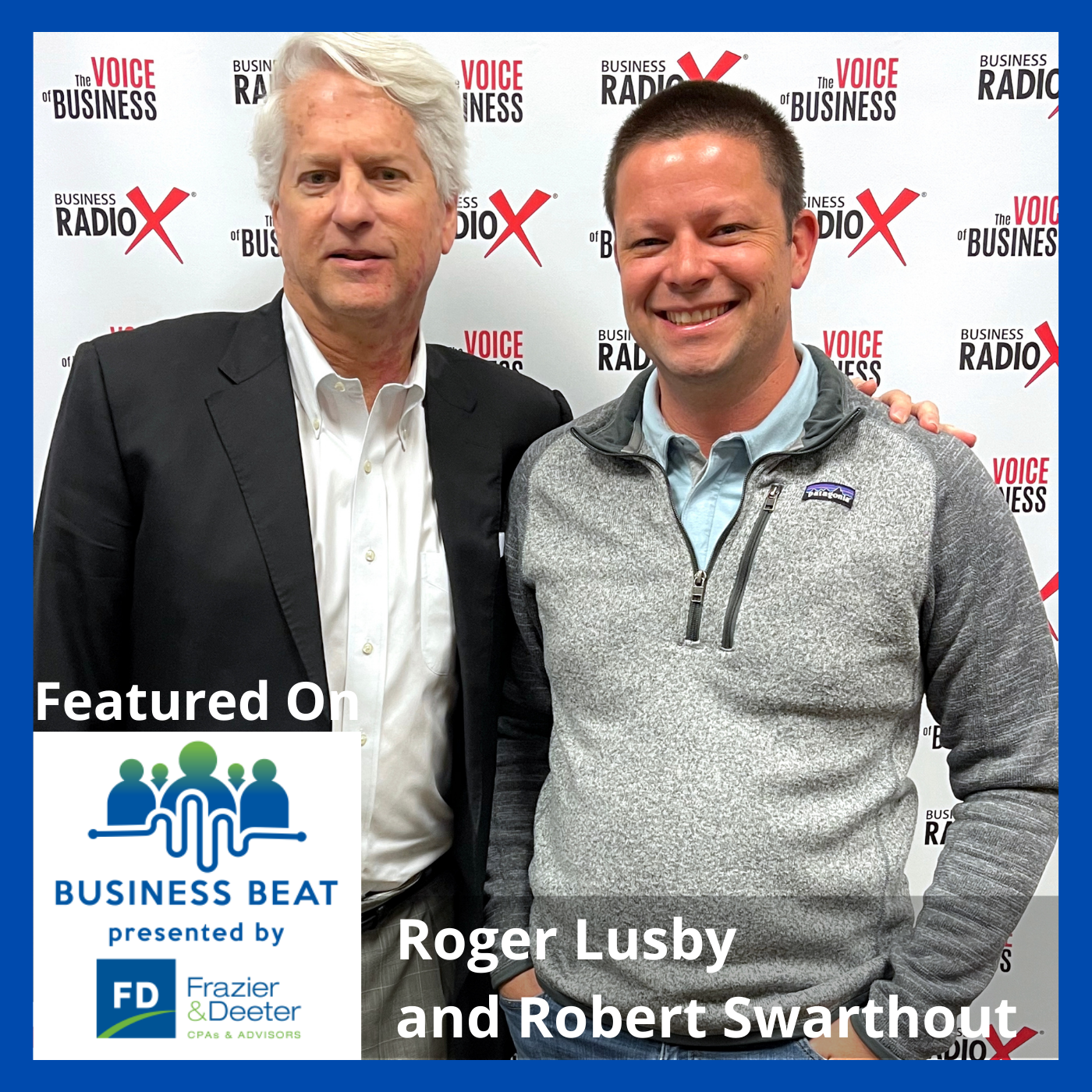
Robert Swarthout, Principal at Teton Crypto Capital, was Roger Lusby’s guest on this episode of Business Beat. Robert discussed the basics of cryptocurrency, its characteristics, the prospects of regulation in the future, the return cycle of crypto, stablecoins, the basic details of his new fund, and much more.

Business Beat is presented by Alpharetta CPA firm Frazier & Deeter and is produced by the North Fulton studio of Business RadioX®

Teton Crypto Capital

Teton Crypto Capital is a cryptocurrency investment management business focused on making investments in cryptocurrencies that have a commercial use case.

Robert Swarthout, Principal, Teton Crypto Capital

Robert Swarthout, Principal, Teton Crypto Capital

Robert is the principal of TCC. Everyone that meets Robert quickly sees his passion for all things crypto. Whether that is investing in cryptocurrencies or other problems that blockchain tech can solve, he is never shy to have a conversation with others.

Robert has over 15 years of experience being a bootstrapped founder. He has successfully launched and grown two SaaS businesses, the most recent being an exit to private equity.

He knows what it takes to find product-market fit, ideate around business models, and build a world-class team.

LinkedIn

Frazier & Deeter

The Alpharetta office of Frazier & Deeter is home to a thriving CPA tax practice, a growing advisory practice and an Employee Benefit Plan Services group. CPAs and advisors in the Frazier & Deeter Alpharetta office serve clients across North Georgia and around the country with services such as personal tax planning, estate planning, business tax planning, business tax compliance, state and local tax planning, financial statement reviews, financial statement audits, employee benefit plan audits, internal audit outsourcing, cyber security, data privacy, SOX and other regulatory compliance, mergers and acquisitions and more. Alpharetta CPAs serve clients ranging from business owners and executives to large corporations.

Roger Lusby, Partner in Charge of Alpharetta office, Frazier & Deeter
Roger Lusby, Partner in Charge of the Alpharetta office of Frazier & Deeter

Roger Lusby, host of Frazier & Deeter’s Business Beat, is an Alpharetta CPA and Alpharetta Office Managing Partner for Frazier & Deeter. He is also a member of the Tax Department in charge of coordinating tax and accounting services for our clientele. His responsibilities include a review of a variety of tax returns with an emphasis in the individual, estate, and corporate areas. Client assistance is also provided in the areas of financial planning, executive compensation and stock option planning, estate and succession planning, international planning (FBAR, SFOP), health care, real estate, manufacturing, technology, and service companies.

You can find Frazier & Deeter on social media:

LinkedIn | Facebook | Twitter

An episode archive of Frazier & Deeter’s Business Beat can be found here.


Tagged With: Bitcoin, Business Beat, CBCC, cryptocurrency, Frazier and Deeter, Robert Swarthout, Roger Lusby, stable coin, stablecoins, Teton Crypto Capital

Decision Vision Episode 72: Should I Leverage Blockchain in my Business? – An Interview with Linda Goetze, Blockchain Chamber of Commerce

July 2, 2020 by John Ray

blockchain in my business
Decision Vision
Decision Vision Episode 72: Should I Leverage Blockchain in my Business? - An Interview with Linda Goetze, Blockchain Chamber of Commerce
Loading
00:00 /
RSS Feed
Share
Link
Embed

Download file

blockchain in my business

Decision Vision Episode 72: Should I Leverage Blockchain in my Business? – An Interview with Linda Goetze, Blockchain Chamber of Commerce

How can blockchain lower my costs? What’s the risk? On the other hand, how does blockchain lower my risk? Linda Goetze, President of the Blockchain Chamber of Commerce, answers these questions and much more with “Decision Vision” host Mike Blake. “Decision Vision” is presented by Brady Ware & Company.

The Blockchain Chamber of Commerce

The Blockchain Chamber of Commerce, Inc. (BCC) is an international association supporting the emerging blockchain, distributed ledger technologies, and crypto currency industries. BCC is a membership-based organization comprised of professionals, individuals, corporations, blockchain companies, vendors, partners, non-profits and government agencies.

MISSION: “Awareness – Adoption – Advocacy” Their mission is to raise awareness, facilitate adoption, and insipire advocacy in 3 core areas: a) blockchain for commerce b) blockchain for consumers c) blockchain for careers

CHALLENGES (SOLUTIONS):

1) AWARENESS: Blockchain technology and crypto currencies are new and are cumbersome to understand. The mainstream community is entering into this market and needs to be aware of the risks, challenges, and rewards. (EDUCATION, EVENTS, COACHING, NEW CHAPTERS)

2) ADOPTION: Millions of individuals and new companies will join the blockchain ecosystem; new startups, new careers, or investors. Standards and best practices are needed.

3) ADVOCACY: a) Blockchain industry needs a proper balance of regulations for technological advancements, prevention of market scams, and protecting individual and corporate privacy/rights. (SMART REGULATIONS, INDUSTRY ORGANIZATION, DECENTRALIZED SOLUTIONS)

The https://blockchainecosystem.io/ platform is an initiative of the Chamber and a place for the community to organize, be seen, and collaborate.

Linda Goetze

Linda Goetze, M.Ed., is the President and CEO of the Blockchain Chamber of Commerce and has served on the Blockchain Association Board of Directors. An educator and connector, Linda has been engaged with blockchain technology since 2012. A member of Mensa and CEO of Balancing Health, Linda helped establish the Atlanta Neurotherapy Institute after spending 13 years as an award-winning educator. An advocate for the safe mass adoption of blockchain and cryptocurrencies, she led the team that launched the BlockchainECOsystem.io platform to give the community a place to get rewarded for their contributions in a synergistic environment (where privacy is respected.) Proud mother of twins birthed as the Bitcoin whitepaper was completed, she is passionate about cutting edge technologies, her family and her favorite charity, BloomintheDark.org.

Michael Blake, Brady Ware & Company

Mike Blake, Host of the “Decision Vision” podcast series

Michael Blake is Host of the “Decision Vision” podcast series and a Director of Brady Ware & Company. Mike specializes in the valuation of intellectual property-driven firms, such as software firms, aerospace firms and professional services firms, most frequently in the capacity as a transaction advisor, helping clients obtain great outcomes from complex transaction opportunities. He is also a specialist in the appraisal of intellectual properties as stand-alone assets, such as software, trade secrets, and patents.

Mike has been a full-time business appraiser for 13 years with public accounting firms, boutique business appraisal firms, and an owner of his own firm. Prior to that, he spent 8 years in venture capital and investment banking, including transactions in the U.S., Israel, Russia, Ukraine, and Belarus.

Brady Ware & Company

Brady Ware & Company is a regional full-service accounting and advisory firm which helps businesses and entrepreneurs make visions a reality. Brady Ware services clients nationally from its offices in Alpharetta, GA; Columbus and Dayton, OH; and Richmond, IN. The firm is growth minded, committed to the regions in which they operate, and most importantly, they make significant investments in their people and service offerings to meet the changing financial needs of those they are privileged to serve. The firm is dedicated to providing results that make a difference for its clients.

Decision Vision Podcast Series

“Decision Vision” is a podcast covering topics and issues facing small business owners and connecting them with solutions from leading experts. This series is presented by Brady Ware & Company. If you are a decision maker for a small business, we’d love to hear from you. Contact us at decisionvision@bradyware.com and make sure to listen to every Thursday to the “Decision Vision” podcast.

Past episodes of “Decision Vision” can be found at decisionvisionpodcast.com. “Decision Vision” is produced and broadcast by the North Fulton studio of Business RadioX®.

Visit Brady Ware & Company on social media:

LinkedIn:  https://www.linkedin.com/company/brady-ware/

Facebook: https://www.facebook.com/bradywareCPAs/

Twitter: https://twitter.com/BradyWare

Instagram: https://www.instagram.com/bradywarecompany/

Show Transcript

Intro: [00:00:02] Welcome to Decision Vision, a podcast series focusing on critical business decisions brought to you by Brady Ware & Company. Brady Ware is a regional full-service accounting and advisory firm that helps businesses and entrepreneurs make visions a reality.

Mike Blake: [00:00:22] And welcome to Decision Vision, a podcast giving you, the listener, clear vision to make great decisions. In each episode, we discuss the process of decision making on a different topic from the business owner’s or executive’s perspective. We aren’t necessarily telling you what to do, but we can put you in a position to make an informed decision on your own and understand when you might need help along the way.

Mike Blake: [00:00:42] My name is Mike Blake and I’m your host for today’s program. I’m a director at Brady Ware & Company, a full service accounting firm based in Dayton, Ohio. With offices in Dayton, Columbus, Ohio, Richmond, Indiana, and Alpharetta, Georgia. Brady Ware is sponsoring this podcast, which is being recorded in Atlanta for social distancing protocols. If you like this podcast, please subscribe on your favorite podcast aggregator. And please consider leaving a review of the podcast as well.

Mike Blake: [00:01:09] So today’s topic is showing leverage blockchain in my small business. And blockchain, I think, has been on everybody’s radar screen to some extent for, I’m going to say, at least the last five years or so, maybe a little bit longer, depending on how much the bleeding as you are in terms of technology. And blockchain so far seems to be one of these things that’s always on the horizon. We haven’t really hit that inflection point where a blockchain appears to be everywhere. Although, I’ll bet you, it is more prevalent than we realize. It’s just not one of those things that you drive by somebody’s office building and say, “Hey, they’ve got a blockchain.” So it’s not necessarily all that visible, right?

Mike Blake: [00:01:55] And the media’s attention only lasts for so long, right? They’re only going to really get behind and publicize something for so long. And they don’t really like gradual improvements or gradual incarnations or intrusions upon the status quo. They like to report the Big Bang because that’s kind of what grabs headlines and click-throughs and so forth. But it’s a mistake to think that blockchain, I think, has gone away. It’s not going away. It is, I believe, much more prevalent in Europe and Asia. And in fact, there’s increasing regulation that is requiring blockchain to accomplish certain things in Europe that we do not have in the United States yet.

Mike Blake: [00:02:47] But I promise you, all of the big four accounting firms, all the major consulting firms, continue to have blockchain on their radar screen and continue to train their people on not just the tactical implementation of blockchain, but also that the strategic implications and opportunities that blockchain provides. Because it is coming. But this is one of these things that’s gonna be, I think, top down because the level of knowledge is so specialized. And also because, I think, frankly, blockchain has the biggest monetary impact on large businesses. When you think about one of the applications, say, smart contracts of blockchain, blockchain becomes a lot more interesting if you have 10,000 contracts than if you’re a small business that has four of them. So the fact that you have something that makes four contracts more efficient, “Nuh,” right? That’s not going to get your attention. At least not yet, especially, if it’s a five or ten percent increase of efficiency.

Mike Blake: [00:03:53] But eventually that’s going to become – it’s either going to become law. You’re either going to see either legal ramifications or, in certain cases, large suppliers and customers saying, “I want to do this in blockchain and we just can’t do business together.” Or the cost benefit relationship is going to change. And maybe the cost savings instead of ten percent or 90 percent. And that’s going to have an impact on small businesses wanting to flip over to blockchain.

Mike Blake: [00:04:31] So now, of course, I understand we’re recording this on May 21st, 2020. This likely is not going to be published, I think, until a month later. So mid to late June, if everything kind of holds up. And I understand that everybody here is still, in some way or another, responding to coronavirus. And we’ve published a number of podcasts. I think we’ll do one or two more that talk about specific tactical responses to blockchain. And if you haven’t listened to these, I’d encourage you to do so. We’ve done about five or six of this special episode. And you may find that even now they give you some helpful tips.

Mike Blake: [00:05:16] But a lot of people, whether you agree with it or not – and I know there’s a lot of disagreement out there – are ready, frankly, to put coronavirus behind them and get back to some semblance of normalcy. And I’m not going to comment on whether that’s the right thing or not. I’m not an expert. I can’t tell you whether that’s the right thing or not.

Mike Blake: [00:05:39] But what I do know or, at least, I strongly believe, is that there are a lot of companies that are chomping at the bit to get back to business as usual. To not think about masks, and infection vectors, and vaccine, clinical trials, and constant sanitation, which turns everybody into an OCD patient. But get back to kind of the strategic elements that that make business interesting and stimulating and in some cases fun. And, really, COVID has been fun for, I think, exactly zero people. And so, with respect to this topic, this is sort of a small step in that direction as well.

Mike Blake: [00:06:25] So, I’m well read on blockchain, but I’m hardly expert. And if you’re a listener to this program with any regularity, you know that what we do is we bring in experts. And boy, we’ve got a good one. So, today, joining us is Linda Goetze. Linda is President of the Blockchain Chamber of Commerce. The Blockchain Chamber of Commerce is leading the grassroots effort to bring collaborative connectivity throughout the blockchain ecosystem in order to raise awareness, facilitate adoption, and inspire advocacy for commerce, consumers, and professionals building careers in blockchain technology. Linda, thanks for joining us on the program.

Linda Goetze: [00:07:03] My pleasure, Mike. Happy to be here.

Mike Blake: [00:07:06] So, before I get to the first question, we’re going to have question zero instead of question one because I just thought of something. How long has the  Blockchain Chamber of Commerce been around?

Linda Goetze: [00:07:15] We were established the end of 2017. And if you know your blockchain history, that was right at the peak of the hype cycle. And Abraham Xiong actually was the ideator of the Chamber. And he was actually educating about blockchain technology and cryptocurrencies to people who are coming to classes that he was doing through the Government Contractors Association. And he found that there was a real dearth of good information.

Linda Goetze: [00:07:43] And if you know anything about hype cycles, you know that that’s a lot of people putting out as much noise as they can to get you to look at them and invest in their token, their coin. That was happening in spades in 2017. And because Abe saw that and he was trying to provide quality education to the community that was connecting with him through the Government Contractors Association, he’s like, “Something needs to change. We need to have some trust in source. Some resource base to be able to come to a place for the community to gather.” And that’s how the the Blockchain Chamber of Commerce was born.

Mike Blake: [00:08:20] So, I’m glad you used that term. I didn’t want to use the hype cycle because I didn’t want to, frankly, be pejorative. But I think –

Linda Goetze: [00:08:30] Were very open about it. No worries.

Mike Blake: [00:08:32] But I certainly give – that’s fair. And I think in some ways I wonder if the hype cycle maybe hurt blockchain a little bit because it raised expectations well ahead of where blockchain could reasonably be expected to penetrate industry.

Linda Goetze: [00:08:49] Yeah. The hype cycle is just a natural sequence of events that’s happened in the adoption of just about every new technology. So, it is really part of the adoption cycle. And when you have things hyped up that aren’t true value ads, then, yes, it’s detrimental. Absolutely. But it’s just part of the process. And one of the good things of having a hype cycle and then having, I guess, they called it crypto winter after the 2017, 2018 timeframe it roots out the bad actors. And it shows them for what they are. And then the people that are really doing good things with the technology that continue moving forward and continue building are able to showcase the end result of their work.

Linda Goetze: [00:09:35] And so, the hype cycle is just part of the process of mass adoption. And we’ll have another one, basically, run by the increasing price of Bitcoin that will fundamentally bring a greater adoption. And the goal is to have mass adoption through education. Not through the fear of missing out. Just to share my perspective, we’ve had an issue where fear has been the major driver. And at first, it’s fear of the unknown. People experience that with every new technology. They don’t understand  it. They don’t know it.

Linda Goetze: [00:10:16] Remember when people first used credit cards on the internet? Like, “Wow.” You can just read all the commentaries around that, right? But as people got comfortable with it, then you had mass adoption occur. The same thing, we have fear of the unknown with blockchain. And the only thing that has pushed people past the fear of the unknown is the fear of missing out. So, we actually have two fears at play here. And that’s what drives the hype cycle. People see their buddy 10x-ing in their money and they’re like, “I don’t want to miss out on that.” They don’t have a clue about the technology but they jump in. They’re like, “I’m just gonna get my piece of this action.” And that’s been what we’ve seen.

Linda Goetze: [00:10:55] But I believe that education is truly the key to help us go into mass adoption. Not necessarily having to have the fear of missing out being the motivator. Actually, having people educated about what blockchain is, what value-add it can bring to their business, what level of diversification it can help them bring to their portfolio. There’s so many different value-adds and potential pain points that people need to be educated around, so that they can make informed decisions. And we can have a smoother mass adoption cycle.

Mike Blake: [00:11:32] Yeah, in fact, I would speculate – and you tell me if I’m wrong, but I would speculate that when a FOMO or fear of missing out person jumps into blockchain and then it doesn’t work out, as it probably won’t because they don’t really know why they’re doing it or how to maximize the value once they’re in there. That’s even more damaging to the reputation. Because then you have one person and is, “Ah. You know what? I put X number of thousand dollars into blockchain or a cryptocurrency.” We’ll get into that distinction in a second. “And it didn’t work out, the whole thing is vaporware,” which is grossly unfair, right?

Mike Blake: [00:12:08] That’s like saying, “Well, I got into a plane. I sat in the cockpit. And it didn’t go anywhere.” Well, because you don’t know how to fly. But Bombardier is going to take the hit. So, let’s dive in and sort of level set here. Because blockchain, I’m sure to you it’s second nature. But it is a little bit of a complex concept to somebody, especially if they’re not kind of really into technology, if you know what I mean. I’m sure you know there’s nobody better to define this. So, what’s sort of the simplest, kind of easiest layman’s way to convey blockchain and its value to somebody listening to this podcast?

Linda Goetze: [00:12:50] Well, that’s a great question. And I’m going to assume that the majority of people on this call will have heard or participated in, let’s say, a group text. So, you think about you get a group text. And you can look at it. You can see it. You can forward it. But you can’t pretend that something was sent in that group text that wasn’t actually sent. You can’t make one person think that that was – say, you send – like, you take the text and you switch it around and then you send it to someone who was in the group text previously. And say, “Hey, this is really what happened.” They can look back  at their previous text and go, “You’re totally spinning this. And that’s not what happened.” Anyone in that group text can validate the actual sequence of messages that were sent in that group text. And you can’t pretend it was any different.

Linda Goetze: [00:13:58] So, that’s a little bit what the value of blockchain is, is you have data and it can be transactions, it can be hashes of songs, or evidence that you are the creator of a piece of content. And once it is put into one of these blocks – and I am going to use a kind of a generalized blockchain because there are literally thousands of different blockchains. And they all have variances in how they function. So, I don’t want anyone to hear what I’m saying and be like, “No. That’s not how the theory of blockchain works.” Because they very well may be right. It may not be how the Bitcoin blockchain works.

Linda Goetze: [00:14:42] But the overarching aspect of what makes blockchain blockchain is that there are a series of blocks where each one has the hash of the previous block in it. And there’s a lot of nuances that can go into that. But if you try to change something in any of the previous transactions, everybody who’s in that group text, everyone that’s a node or a validator on that blockchain can say, “Nuh-uh. That’s not correct. That didn’t really happen.” And your attempt to change the past is invalidated and the blocks continue forward.

Linda Goetze: [00:15:25] One of the things that’s a potential pain point is you can put faulty data in to a block when it is originally formed. Okay? So, when I say faulty data, I’m saying, for instance, with the Bitcoin blockchain, one of the first things that was put on it was an article that was talking about the 2008 meltdown. And you could have had someone, instead of putting something that was real news, put in a piece of fake news. And that fake news would have been held immutably in the Bitcoin blockchain for the last 11 plus years. So, it’s an immutable record.

Linda Goetze: [00:16:06] It is a way for multiple parties to interact with each other without having to know or trust each other. They trust the code and how it works. And they work within the rules of that blockchain. So, I don’t know if that was a good explanation or not. But if you understand a group text and you know that, “Hey, everybody knows what really happened and can look back to see it,” that’s kind of how it is with blockchain.

Mike Blake: [00:16:32] I think the group text is a great analogy, right? Because you can’t erase all the records of history. And that’s really the key is that, there’s no one single point of failure that would enable you to call and to question the veracity of the reliability – yeah – the reliability of the information. It’s just there.

Linda Goetze: [00:16:57] The reliability of the information that it’s there. Not necessarily the reliability of the information.

Mike Blake: [00:17:02] Yes. That is there.

Linda Goetze: [00:17:04] The cool thing about that, though, is it gives a really high level of accountability. Because if you are the one that put that information there and it gets proven out as being false, then you can’t pretend you didn’t put it there. It’s on you. So, it does create a level of trust, and accountability, and responsibility within the ecosystem.

Mike Blake: [00:17:32] So, we talked about cryptocurrencies a little bit, what is the difference between blockchain and cryptocurrency such as Bitcoin? I hear those terms often used interchangeably. And I’m not sure that’s right.

Linda Goetze: [00:17:45] Yeah. One of the first things I learned was that blockchain was not spelled B-I-T-C-O-I-N. And that’s a very important distinction to draw. But the Bitcoin blockchain was the first iteration of something built on blockchain that the majority of people have heard about.

Linda Goetze: [00:18:07] There may be some deep devs that might have heard of blockchain previous to that. But that was the first instance that the majority have been exposed to. So cryptocurrencies need blockchain to function. Like, they function on blockchains. But blockchain as a technology does not require cryptocurrencies to exist or to do its job of having an immutable record.

Mike Blake: [00:18:40] If a dollar is a currency, and then we have the Fed and we have the U.S. Mint, is blockchain more like the Fed or is it like the Mint? Just pick one.

Linda Goetze: [00:18:50] I really don’t want to get political on this answer.

Mike Blake: [00:18:54] Well, no. It’s not political. It’s not a question of what they should do. But a question of what their current function is. Right? I mean, they’re not regulating it. But the blockchain effect really issues it and just sort of keeps track of who has what, right?

Linda Goetze: [00:19:10] Right. The blockchain is just the record. Right? So, you can have a blockchain that one person can take. And issue a billion coins on that blockchain. You can have a blockchain like the Bitcoin blockchain that its design enables a deflationary aspect. So, with the Fed, we have an institution that can print dollars at will. With the Bitcoin blockchain, that’s impossible. The code just mandates that only 21 Bitcoin will ever exist.

Linda Goetze: [00:20:03] And we just had the happening that occurred where the block reward that’s given to minors for supporting the Bitcoin blockchain went from 12.5 Bitcoin every ten or so minutes to 6.25. So, it’s actually a deflationary supply that is being provided over time. And that’s something that is just inversely – I mean, it’s so, I guess, polar opposite is the best way to describe it compared to how we’ve seen the U.S. dollar function and the inflation that has occurred with that. It’s a staggering difference.

Mike Blake: [00:20:53] Okay. So, I think when most people think of blockchain, of course, they think of cryptocurrency as the application. Let’s set that aside for the moment. What are some of the more common applications of blockchain aside from a cryptocurrency?

Linda Goetze: [00:21:12] Yeah. That’s a great question, because we have loads of them. There is, in FinTech, a lot of implementations. And to a certain extent you might say that still includes cryptocurrencies because you’re transferring value digitally, quickly using cryptocurrencies. But those can be stable coins. There’s a lot that’s been done in the financial services sector. So, that’s a huge vertical that has been impacted just by the use of the technology, but also using the cryptocurrency side of things.

Linda Goetze: [00:21:48] In agriculture. we actually just did an event the Chamber hosted where AgriLedger was one of the guests. Gen Leveille, I believe, is the CEO’s name, a beautiful lady. That has just worked with Haitian’s to bring their mangoes to market using blockchain technology. And it doesn’t use cryptocurrency at all. But what it effectively did is took farmers that we’re getting about two percent of the value of their mangoes back to them, to getting 20 percent of the final value of the mangoes back to them. Huge positive impacts. Supply chain is a really huge vertical that we’ve seen fantastic impact through blockchain implementation.

Linda Goetze: [00:22:43] And just going digital with the bills of lading is a really key reducer in cost. And really raises transparency and allows for a lot more seamless interaction between parties that may not know each other well or trust each other. You can have smart contracts in place that just put rules around the transaction that if you don’t meet them, then you don’t get paid. And it’s just built into the code. It’s not something that you have to go chase somebody across the world and try to get your money back or force them to pay you. It’s just executed automatically through a blockchain. So, yeah, those are just a couple of avenues. But there’s a lot that I can talk about.

Mike Blake: [00:23:40] So, what was the mechanism? I’m curious about this Haitian mango trade. What’s the mechanism by which blockchain enable the farmers to capture more of their value? Is it because it took the need away for intermediaries? Is that what happened?

Linda Goetze: [00:23:55] The intermediary aspect of it was huge. Yes, they were able to disintermediate the intermediaries. But yeah, it allowed for the payment to everybody in the supply chain at the time of the final purchase. So, if you can imagine how that is a value add. It also was set up in the smart contract to penalize different parts of the supply chain that didn’t meet the requirements that they were supposed to. And there’s certain, like, temperature and timeframes that are mandated by the FDA in regards to food that can be sold in the U.S.

Linda Goetze: [00:24:36] So, any piece in the supply chain that did not manage the temperature effectively or deliver in a timely manner had a penalty that actually gave back to the farmer directly. So, even if their mangoes couldn’t go to market, they at least got that two percent that they would have made in the traditional flow of supply chains. So, to be able to guarantee that you’re going to get at least your two percent, but then have the potential to get 20 plus percent over, it’s going to change a lot of farmer’s lives.

Mike Blake: [00:25:19] So, where are you seeing blockchain? Again, putting cryptocurrency aside. So, I think this is just sort of a different animal. Where are you seeing blockchain have the most impact in the U.S. or, if you prefer, maybe among your Chamber of Commerce members?

Linda Goetze: [00:25:37] I would point to supply chain. Right now, we have – and this is gonna be showcased probably three weeks before this show comes out. The last Thursday of this month, which is May. We are going to be showcasing DFM Data Corp., which is a member of the Chamber.

Linda Goetze: [00:25:55] And a fun story there, you have Michael Darden, who is the president and CEO of that organization. He’s been a member of the Chamber for about a year. But the story starts back in 2004 when he wrote a patent. And that patent defined digital freight matching. It’s been cited over 100 times and it has – I mean, the Walmart’s, the Uber freight’s, the big boys that are doing digital freight matching now all reference back into that patent. And he wrote it after he actually managed the logistics for Coca-Cola during the 1996 Olympics. So, he has an interesting background in supply chain starting with his work with Coke.

Linda Goetze: [00:26:42] And that coming forward, interestingly, he wrote the patent while working for another company. And because he did, the company held that patent. But right at the time, I was initially meeting him a little over a year ago, that patent was reacquired by Michael. And so, it’s one of those things that at the time that he wrote it, there weren’t even cell phones in people’s cars. And he envisioned a time where every driver would have a digital device that could showcase where they were that could allow them to get information about where they should go to pick up their load.

Linda Goetze: [00:27:23] And blockchain really wasn’t a thing that he was aware of. But what he’s come to recognize – and it was neat being part of the process with him – is that he can use blockchain technology to really bring together a brand new marketplace and facilitate the most efficient digital freight matching. And the numbers that we’ve seen, I think we’re going to be able to see a reduction of about 30 percent of carbon emissions by empty trucks on the roads. So, that’s carbon that shouldn’t be being burned. And having efficient matching of those loads to the available drivers that have the certifications for that specific type of load and have the license for the different states and all of that. Those complexities can be managed by the code. And you can have consistent matching of the most efficient combination of driver, tractor, trailer, load. And, yeah, blockchain enables that.

Linda Goetze: [00:28:23] So, it’s definitely one of those if you want to say, “Where have you seen this potential?” I think that’s one of the biggest areas that you’re going to really see a lot of benefit and value add, both for the drivers, for the companies, and for the environment.

Mike Blake: [00:28:45] So, this is probably an unfair question, but I’m in the unfair questions business. And that is, can you think of an application of blockchain that has surprised you? Maybe somebody has done something with blockchain who said, “You know what? Huh. I don’t think that would be something you’d use blockchain for.” But there they are and they’re kind of making a go of it. Is there anything like that out there that you can think of?

Linda Goetze: [00:29:14] Your listeners can look up SpankChain and have an idea of some of the things that have shocked me.

Mike Blake: [00:29:19] Okay. It sounds like we’ll just leave it at that.

Linda Goetze: [00:29:22] I would. Yes, sir.

Mike Blake: [00:29:25] Maybe not do it from your work computer it sounds like. In your observation, what industries are being disrupted the most by blockchain?  I guess supply chain logistics. And if that would be your answer, is there a particular part of supply chain? Is it freight management? Is it something else? What industry is really having to undergo or is undergoing a sharp change because blockchain has come on the scene?

Linda Goetze: [00:29:57] As much as I’d love to point back to the supply chain side of things, because that’s our focus this month at the Chamber. I really have to point to financial services and banks. And the good thing is they have been disrupting themselves. They have recognized what this implementation of blockchain through cryptocurrencies, through almost instant value transfer for not even pennies. Like hundreds of pennies per transaction. They realized that that was going to just what it does, shake up their model of charging.

Linda Goetze: [00:30:40] I’ve heard ridiculous numbers. But you send a hundred bucks, it ends up costing you 30 dollars to get it to where you want it. That just is untenable. When I can take my digital wallet and send it to the digital wallet of anybody in the world in seconds for almost nothing. So, the banks saw that they would be disrupted. And they are also established institutions. They have relationships, they have reputations, some positive, some not. And they realized that they would have to shift.

Linda Goetze: [00:31:18] The majority – it’s very interesting. I think Bank of America probably has the most blockchain patents of any organization I’m currently aware of. And that may have changed since I saw those numbers. But we have a lot of banks that have put a lot of effort into figuring out how they could use blockchain technology for their benefit and for the benefit of their customers. And really try to stay ahead of this adoption cycle, so that they weren’t the ones disintermediated.

Mike Blake: [00:32:00] Is there an emerging application? I’m going to go back, I just want to react  It’s interesting how banks – the thing you said how banks have really taken a lead in blockchain adoption. Because they are not known for being the most forward thinking, an industry that’s willing to self-disrupt. So, that’s interesting that they have embraced this. To me, that means that they see that the economics are quite compelling. That has to be it, right?

Linda Goetze: [00:32:28] Well, absolutely. And I mean, the JP story, Jamie Dimon, basically, threatened that he would fire anybody who bought Bitcoin that was on his staff. And then next thing you know, JP Morgan is leading the charge. And the story that I heard was that it was an internal – I think it was a VP that showcased the power of blockchain in some transactions. I believe it was with the Royal Bank of Scotland. And when they saw the reduction in fees that was possible based on making it a blockchain transaction, I think that won over the administration. So, it was a very interesting transition. And now, obviously, they’re leading in a lot of different aspects there and building network.

Linda Goetze: [00:33:17] And yeah, I mean, they saw the writing on the wall against their will in many cases. But you can’t deny that it’s a disruptor. And then, you either just say, “Hey, like Polaroid. We’re just going to keep making this film.” Or you go, “Hey, we’re going to bring out a better digital camera.” So, anyway, I think it’s a good thing. But it hasn’t been an easy road necessarily during this transition time.

Mike Blake: [00:33:53] How important is regulation for a blockchain adoption? And how important do you think it’s going to be?  Is widespread – I mean, aside and fair, is increased blockchain adoption going to continue to be led by the private sector in the U.S. just simply seeing the value of adopting it and maybe some customers forcing their providers to adopt it? Or do you think regulation has a significant role to play here?

Linda Goetze: [00:34:23] I think we’re in a really, really interesting time in history. And COVID-19 is playing part of the role of making this even more interesting. But we’ve seen a lot of RFPs coming from government, both on the national and state level. And not just here in the U.S. India, Australia. There’s been a lot of outreach from government into the private sector looking for blockchain based solutions to help deal with the current issues.

Linda Goetze: [00:34:52] That said, there needs to be kind of a catch up done with the regulatory and legislative side of things to make sure that the things that are in place are not going to – I mean, just think about when being able to have a digital signature was a big deal. And was it valid? Would it stand up in court? We’re getting that same stage now with blockchain-based technologies. Is you signing with your private key tantamount to you validating personally and then you’re legally responsible for that? Those are the questions that need to be answered.

Linda Goetze: [00:35:33] And there’s standards bodies. GS1 has been working towards bringing standards to bear our global standards. I think they’re right around now completing the blockchain and supply chain standards. And it’s a process. And because the technology is so nascent and because there’s so many iterations of it, building a standard that actually speaks to all of the possibilities is challenging. And we’re moving in to the graph of things timeframe. And that’s a whole another way of the world working that’s almost going past blockchain and enabling digital agency.

Linda Goetze: [00:36:24] And digital agency is something that another one of the members of the Chamber is bringing to the table. And they have a phenomenal technology stack. Just to give you a quick awareness point, Charlie Northrup is the gentleman that owns the technology stack. And he’s the guy that saw an instance of the internet when it was just in between universities. And his buddy was a professor. Charlie sees this and he said, “That’s gonna be commercialized.” And his buddy is like, “No. Man, this is just how we share research.” Charlie went home and wrote ten patents that defined e-commerce.

Linda Goetze: [00:37:01] And I got to sit at lunch with him a couple of months ago when he was hanging out with the guys who had helped broker the sale of his first patent stack. And one of them said, “Hey, Charlie. Did we tell you about that email we got from the winning broker after the bids got wrapped up?” And Charlie is like, “No. What did it say?” And it was in response to the broker’s request for how much more he could bid. And the email said, “Whatever it takes.” And it was signed Bill Gates. And so, that’s the start point. And the winning bid basically has been what has funded the development of this new technology stack.

Linda Goetze: [00:37:43] And at that same lunch table, Charlie said, “You know what? My current patent stack will dwarf my first one.” And I believe it will. He has a way of approaching digital identity and provisioning people into the digital space, into the digital world, into digital ecospheres and ecosystems that is unique and is empowered by digital agents that are a brand new form of A.I..

Linda Goetze: [00:38:16] So, I mean, it can be spun up on a raspberry pie. This isn’t, like, super complex tech, but it’s 500,000 lines of code that empower his digital agent. And that agent can learn. And it can learn nouns, verbs, and modifiers. And it is going to, I believe, usher in the fourth industrial revolution and empower us, as humans, to actually have agency in the web, in the digital world. And right now, what do we do? We provision ourselves into someone else’s website using a username and password. We get tracked all our activities by cookies while we’re on that site. And then that information that’s gleaned from our activities is then sold to sell us more. And we don’t benefit from that.

Linda Goetze: [00:39:12] I’m really happy that because my daughter searched up something on my phone, I start getting advertising for slime or whatever the little 10, 11 year old thing is that she’s looking at. That’s not the way we should have our data managed, for us as human beings, to be able to take control of our data and be able to provision it at our own benefit to whoever we think it’s most appropriately provisioned to, I think, should be part of our digital rights.

Mike Blake: [00:39:51] We’re talking with Linda Goetze, who is President of the Blockchain Chamber of Commerce. And one thing I want to make sure we get to for this interview is, there’s a concept of a private blockchain and a public blockchain. What are the differences between the two?

Linda Goetze: [00:40:10] Yeah. Private blockchain is nodes are spun up by, say, an institution. It could be – I don’t want to name names – but you guys know the big boys. They can spin up 20 nodes. And they can provision them to other companies that are in their trusted network. And it’s distributed. But it’s not decentralized. So, DLT stands for Distributed Ledger Technology. And that’s blockchain and DLT get thrown back and forth, usually as synonymous but there are variances. So, you have this distributed ledger that is shared by multiple trusted parties. That’s a private blockchain.

Linda Goetze: [00:41:00] And one central entity is responsible for determining the governance of the blockchain. And sometimes that central entity can actually be a consortia. So, there’s a group of companies that are in the decision making process, but it’s centralized. Nobody from anywhere can just tap into it and interact on it.

Linda Goetze: [00:41:25] But a public blockchain does have the capacity for anybody, like for instance, the Bitcoin blockchain. You could spin up a Bitcoin node today if you wanted to participate in the blockchain. You can go purchase Bitcoin on public exchanges. It’s not only reserved for an elite group of people to transact on their specific business implementation blockchain instance.

Linda Goetze: [00:41:59] So, the main difference is, one is publicly accessible and is distributed to the public. And anybody can go and look at the blockchain. So, you can use a block explorer and go see all of the different wallets and how much they hold. And have an awareness of what’s happening on a public blockchain in a way that you can’t unless you’re provisioned into a private blockchain. So, it’s the provisioning into it, who is able to do that provisioning, who has the right to see the data. That’s very different in a public and private blockchain.

Mike Blake: [00:42:38] Are there used cases in small businesses today? And we’ve talked about supply chain a little bit  We’ve talked about banks, I don’t think are necessarily small businesses. But the main street kind of businesses that we think of in terms of retail, restaurants, bars, things of that nature, is there a use case or creative firms, consulting firms? Is there a use case for blockchain for firms like that?

Linda Goetze: [00:43:11] There are multiple use cases. And one of the things that we’re seeing in the ecosystem at large is the building out of platforms that are low code or no code. And they’re basically taking the business functions that a blockchain could make better, faster, cheaper. And allowing a small business to take advantage of those functions without having to create their own blockchain, spin up all their own nodes to participate. So, that’s happening more and more.

Linda Goetze: [00:43:44] So, it’s going to be how creative do you want to get. And which of your business processes do you think would benefit from the automation of a blockchain implementation. But for businesses in general, anybody can benefit from starting to engage with cryptocurrencies. Taking payment in cryptocurrencies, paying their suppliers. You reduce costs across the board. You’re not having to pay, possibly, a MasterCard or a Visa one to three percent on every transaction.

Linda Goetze: [00:44:23] It can reduce costs for anybody who’s willing to say, “Hey, I’m interested in starting to explore this. I’m interested in a deflationary currency rather than an inflationary currency. I’d like to diversify.” There’s a lot of ways to approach it. But I believe every business and any human being gets value from diversification. And that’s what I see both the cryptocurrency side of things and the blockchain implementation. It’s diversifying. It’s saying, “All my eggs aren’t in the same basket. I’m not dependent on just one way of doing business. I am making the choice to diversify.” And I think diversification is going to determine our destiny. And that’s as individuals and as companies.

Mike Blake: [00:45:18] So, we’re running out of time. But I have a couple more questions I do want to get to. And one is, in your view – and I’ll bet you see this a lot – how is blockchain most frequently misunderstood?

Linda Goetze: [00:45:38] How is it most frequently misunderstood?

Mike Blake: [00:45:43] Yeah. Is there a common misconception around what blockchain can do or can’t do that you find yourself having to or needing to educate people about?

Linda Goetze: [00:45:54] I think probably saying that it is a trustless way of doing business is something that’s just saying that it’s confusing. But the way that some people take that and say, “Hey, if it’s on the blockchain, it’s immutable and it’s correct.” And it’s like, “No. No. That doesn’t necessarily mean it’s correct.” Going back to the example I gave near the beginning around the fake news. If you put fake news on any blockchain, it’s still fake news. And it doesn’t engender trust. And the fact that it is immutable does give a responsibility point to whoever posted it. But it doesn’t make it truth and it doesn’t make it trustworthy. So, that’s something that has been a kind of scratch your head when you hear people talking about that aspect of blockchain.

Mike Blake: [00:47:01] Okay. I think that’s a great point. And I would agree with that. I think that is the most widely misunderstood other than blockchain and Bitcoin being the same thing. I think the other misunderstood part is that because it’s blockchain, therefore it’s true. When, in fact, it’s only as true as the veracity of the data when it was first entered into the blockchain ledger. It was false to begin with. It’s false all the way through.

Linda Goetze: [00:47:27] Yeah. And it’s provable that somebody put it in false.

Mike Blake: [00:47:30] Yeah. That’s right.

Linda Goetze: [00:47:30] And that’s a value add for sure.

Mike Blake: [00:47:32] There is that accountability that you’re talking about, right?

Linda Goetze: [00:47:36] Absolutely.

Mike Blake: [00:47:36] So, there’s no dilution there. Linda, this has been great. There’s more to this topic than we can possibly cover in an hour. How can people contact you for more information?

Linda Goetze: [00:47:47] Yeah. Blockchainchamber.org is our website. The blockchainecosystem.io platform is another one I’d like to welcome all of your listeners to come to. It’s a great place to connect with people. I don’t like calling people experts, but experienced contributors to blockchain technology can be found there. And I would be happy to have anyone reach out to me. I’m on LinkedIn. My name is spelled G-O-E-T-Z-E. So, Linda Goetze. I’m one of the few on there. I don’t think you’ll have any trouble finding me. So, I would be happy to connect with your audience and the community that’s listening to this podcast today.

Mike Blake: [00:48:30] Well, thanks very much. That’s going to wrap it up for today’s program. I would like to thank Linda Goetze of Blockchain Chamber of Commerce so much for joining us and sharing her expertise with us. We’ll be exploring a new topic each week. So, please tune in, so that when you’re faced with your next executive decision, you have clear vision when making it. If you enjoy this podcast, please consider leaving a review with your favorite podcast aggregator. It helps people find us that we can help them. Once again, this is Mike Blake. Our sponsor is Brady Ware & Company. And this has been the Decision Vision podcast.

Tagged With: Bitcoin, blockchain, Blockchain Chamber of Commerce, Brady Ware, Brady Ware & Company, cryptocurrencies, cryptocurrency, Linda Goetze, Michael Blake, Mike Blake, Supply Chain

Business RadioX ® Network


Our Most Recent Episode

CONNECT WITH US

  • Email
  • Facebook
  • LinkedIn
  • Twitter
  • YouTube

Our Mission

We help local business leaders get the word out about the important work they’re doing to serve their market, their community, and their profession.

We support and celebrate business by sharing positive business stories that traditional media ignores. Some media leans left. Some media leans right. We lean business.

Sponsor a Show

Build Relationships and Grow Your Business. Click here for more details.

Partner With Us

Discover More Here

Terms and Conditions
Privacy Policy

Connect with us

Want to keep up with the latest in pro-business news across the network? Follow us on social media for the latest stories!
  • Email
  • Facebook
  • Google+
  • LinkedIn
  • Twitter
  • YouTube

Business RadioX® Headquarters
1000 Abernathy Rd. NE
Building 400, Suite L-10
Sandy Springs, GA 30328

© 2025 Business RadioX ® · Rainmaker Platform

BRXStudioCoversLA

Wait! Don’t Miss an Episode of LA Business Radio

BRXStudioCoversDENVER

Wait! Don’t Miss an Episode of Denver Business Radio

BRXStudioCoversPENSACOLA

Wait! Don’t Miss an Episode of Pensacola Business Radio

BRXStudioCoversBIRMINGHAM

Wait! Don’t Miss an Episode of Birmingham Business Radio

BRXStudioCoversTALLAHASSEE

Wait! Don’t Miss an Episode of Tallahassee Business Radio

BRXStudioCoversRALEIGH

Wait! Don’t Miss an Episode of Raleigh Business Radio

BRXStudioCoversRICHMONDNoWhite

Wait! Don’t Miss an Episode of Richmond Business Radio

BRXStudioCoversNASHVILLENoWhite

Wait! Don’t Miss an Episode of Nashville Business Radio

BRXStudioCoversDETROIT

Wait! Don’t Miss an Episode of Detroit Business Radio

BRXStudioCoversSTLOUIS

Wait! Don’t Miss an Episode of St. Louis Business Radio

BRXStudioCoversCOLUMBUS-small

Wait! Don’t Miss an Episode of Columbus Business Radio

Coachthecoach-08-08

Wait! Don’t Miss an Episode of Coach the Coach

BRXStudioCoversBAYAREA

Wait! Don’t Miss an Episode of Bay Area Business Radio

BRXStudioCoversCHICAGO

Wait! Don’t Miss an Episode of Chicago Business Radio

Wait! Don’t Miss an Episode of Atlanta Business Radio