Business RadioX ®

  • Home
  • Business RadioX ® Communities
    • Southeast
      • Alabama
        • Birmingham
      • Florida
        • Orlando
        • Pensacola
        • South Florida
        • Tampa
        • Tallahassee
      • Georgia
        • Atlanta
        • Cherokee
        • Forsyth
        • Greater Perimeter
        • Gwinnett
        • North Fulton
        • North Georgia
        • Northeast Georgia
        • Rome
        • Savannah
      • Louisiana
        • New Orleans
      • North Carolina
        • Charlotte
        • Raleigh
      • Tennessee
        • Chattanooga
        • Nashville
      • Virginia
        • Richmond
    • South Central
      • Arkansas
        • Northwest Arkansas
    • Midwest
      • Illinois
        • Chicago
      • Michigan
        • Detroit
      • Minnesota
        • Minneapolis St. Paul
      • Missouri
        • St. Louis
      • Ohio
        • Cleveland
        • Columbus
        • Dayton
    • Southwest
      • Arizona
        • Phoenix
        • Tucson
        • Valley
      • Texas
        • Austin
        • Dallas
        • Houston
    • West
      • California
        • Bay Area
        • LA
        • Pasadena
      • Colorado
        • Denver
      • Hawaii
        • Oahu
  • FAQs
  • About Us
    • Our Mission
    • Our Audience
    • Why It Works
    • What People Are Saying
    • BRX in the News
  • Resources
    • BRX Pro Tips
    • B2B Marketing: The 4Rs
    • High Velocity Selling Habits
    • Why Most B2B Media Strategies Fail
    • 9 Reasons To Sponsor A Business RadioX ® Show
  • Partner With Us
  • Veteran Business RadioX ®

Decision Vision Episode 178: Hitting Pause, with host Mike Blake

August 4, 2022 by John Ray

Mike Blake
Decision Vision
Decision Vision Episode 178: Hitting Pause, with host Mike Blake
Loading
00:00 /
RSS Feed
Share
Link
Embed

Download file

Mike Blake

Decision Vision Episode 178: Hitting Pause, with host Mike Blake

Mike Blake, the host of Decision Vision, announced that the show will pause for a bit. He mentioned several reasons, including wanting to revamp the format, the increasing time demands he’s experiencing heading up Brady Ware Arpeggio, and wanting to refocus the content in new directions.  Mike noted that the show will return with fresh content and format soon.

Decision Vision is presented by Brady Ware & Company and produced by the North Fulton studio of Business RadioX®.

Mike Blake, Brady Ware & Company

Mike Blake, Host of the “Decision Vision” podcast series

Michael Blake is the host of the Decision Vision podcast series and a Director of Brady Ware & Company. Mike specializes in the valuation of intellectual property-driven firms, such as software firms, aerospace firms, and professional services firms, most frequently in the capacity as a transaction advisor, helping clients obtain great outcomes from complex transaction opportunities. He is also a specialist in the appraisal of intellectual properties as stand-alone assets, such as software, trade secrets, and patents.

Mike has been a full-time business appraiser for 13 years with public accounting firms, boutique business appraisal firms, and an owner of his own firm. Prior to that, he spent 8 years in venture capital and investment banking, including transactions in the U.S., Israel, Russia, Ukraine, and Belarus.

LinkedIn | Facebook | Twitter | Instagram

Brady Ware & Company

Brady Ware & Company is a regional full-service accounting and advisory firm which helps businesses and entrepreneurs make visions a reality. Brady Ware services clients nationally from its offices in Alpharetta, GA; Columbus and Dayton, OH; and Richmond, IN. The firm is growth-minded, committed to the regions in which they operate, and most importantly, they make significant investments in their people and service offerings to meet the changing financial needs of those they are privileged to serve. The firm is dedicated to providing results that make a difference for its clients.

Decision Vision Podcast Series

Decision Vision is a podcast covering topics and issues facing small business owners and connecting them with solutions from leading experts. This series is presented by Brady Ware & Company. If you are a decision-maker for a small business, we’d love to hear from you. Contact us at decisionvision@bradyware.com and make sure to listen to every Thursday to the Decision Vision podcast.

Past episodes of Decision Vision can be found at decisionvisionpodcast.com. Decision Vision is produced by John Ray and the North Fulton studio of Business RadioX®.

Connect with Brady Ware & Company:

Website | LinkedIn | Facebook | Twitter | Instagram

TRANSCRIPT

Intro: [00:00:01] Welcome to Decision Vision, a podcast series focusing on critical business decisions. Brought to you by Brady Ware & Company. Brady Ware is a regional, full-service accounting and advisory firm that helps businesses and entrepreneurs make visions a reality.

Michael Blake: [00:00:22] And welcome to Decision Vision, a podcast, giving you, the listener, a clear vision to make great decisions. This is Michael Blake, your host, and I’m going to talk to you a bit, not as a podcast delivering content necessarily, but more news, I guess, is the way to put it. So, I wanted to put this episode out there to let you guys know that I’m putting this show on hiatus for a while.

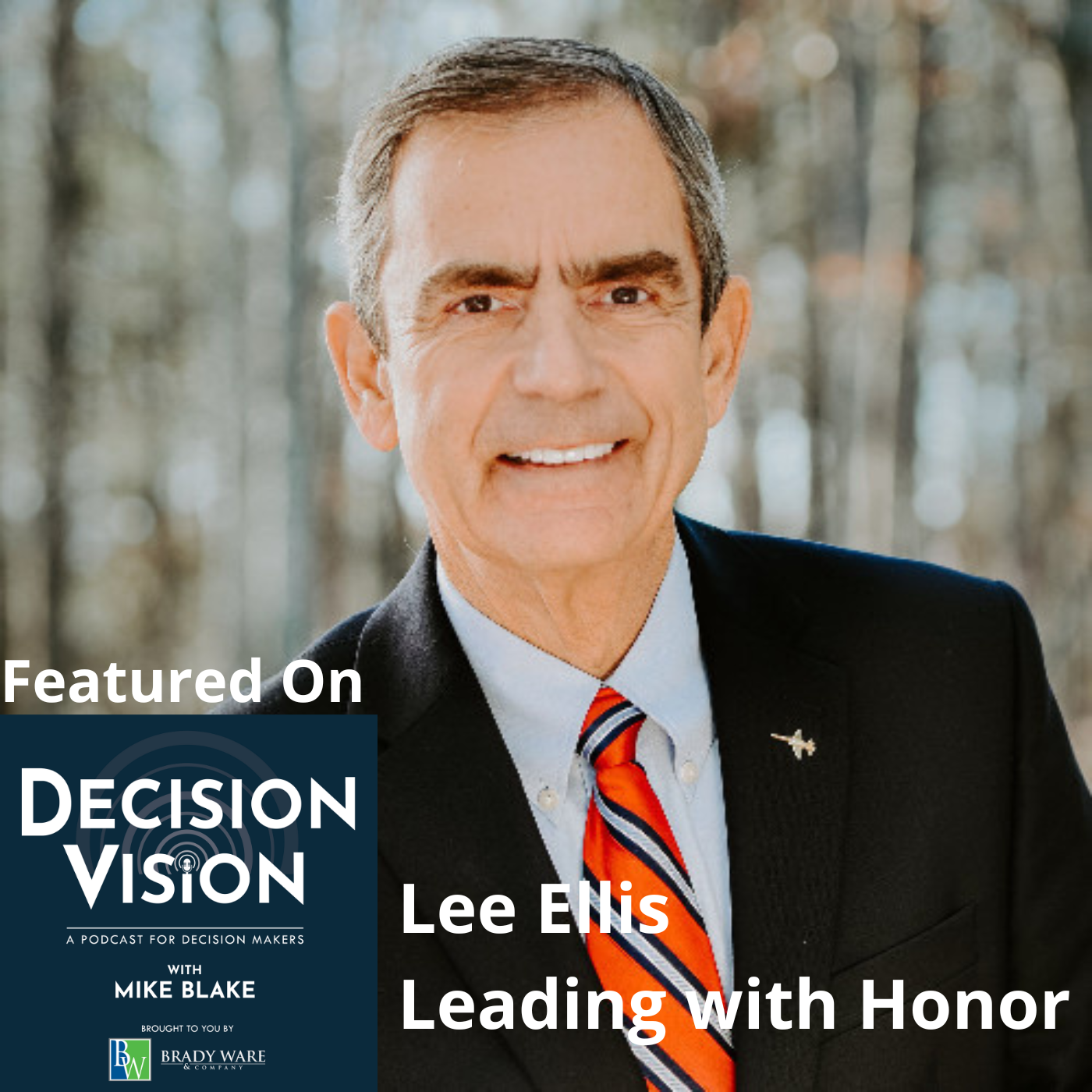
Michael Blake: [00:00:49] I don’t think it will be too terribly long, but it’s probably going to be, I’m guessing, about a couple of months. And we’ve done 177 shows, I’m not going to consider this a show, but if we are going to put this on hiatus, I think a way to pause on top with Lee Ellis, in Should I Resist, I think, was about as good a way to do it as possibly could be imagined.

Michael Blake: [00:01:13] Certainly, again, pausing on a high note, I’m being very careful to say I’m not going out on a high note, because it is my intention that the show will be back, but we do need to pause it and for a couple of reasons. The first is that, to be candid, I need a break. We’ve been doing this show consistently for about three-and-a-half years now or close to it, not missing a week, and it’s difficult.

Michael Blake: [00:01:43] This is not my day job. It’s a hobby. It’s a side gig. And in my new role as managing partner of Brady Ware Arpeggio, frankly, my time demands have become less forgiving, not more. You think as you become promoted and you serve at the top of the pyramid, you like to think you work for fewer people, you actually work for more. That’s one of the lessons you learn as you kind of go through this journey, and I’m concerned that the quality of the show will suffer.

Michael Blake: [00:02:17] And there are lots of podcasts out there you can listen to. You’ve all been such loyal listeners over the years that I owe it to you, I owe it to our guests, I owe it to my firm to make sure that the product we put out is good. Second, I want to change things up a little bit. The show format has been, for the most part, me interviewing a guest, and I think that’s fine as far as it goes, but Brady Ware & Company and Brady Ware Arpeggio, the part that I’m in charge of, is so much more than just me, but you never really get much of a chance to see it or hear about it, except on the rare occasions that we bring in somebody from the Brady Ware ecosystem as a guest.

Michael Blake: [00:03:06] And frankly, it’s not fair to the firm, and I’m not comfortable with having the brand of the show be all about me. I thought that there was a chance that we might kind of rotate hosts, somebody might take over, shove me out of the chair, and say, I’m going to take this thing over for a while, that hasn’t happened. So, I do think that creating a little bit of space for somebody else to come in and do something that they want to do, I think it’s simply the right thing to do.

Michael Blake: [00:03:40] And third, I think that we need to take a step back and we have some decisions we have to make. We have to be a little bit more strategic and intentional about how we think about the content in terms of serving an audience well. And with 177 shows, we’ve covered a lot of ground, everything from show one, Should I Get a Patent, to show 177, Should I Resist, to one of our more fun shows, Should I Get Captive Insurance, to Should I Sell my Business, Should I Buy a Business, Should I Invest Venture Capital, Should I Raise Venture Capital, Should I sue my partner, that sort of thing.

Michael Blake: [00:04:30] We’ve covered a lot of ground, and there’s an extensive library for you to go back through, and I think most of those topics are still very much evergreen. And we also stepped up our—we also stepped up our production schedule for COVID to try to give people the best information we could to enable people to make the best decisions they could, and frankly, in an impossible environment.

Michael Blake: [00:04:55] And so, I’m proud of the show that we put together, but I would like it to be a little bit more focused, because I do think maybe we’ve run too far afield. And I really do enjoy talking about business. I’m very fortunate that I’m on a job that I love to get up and work at every day with people that I love and for clients that I love in a way that makes a difference.

Michael Blake: [00:05:25] And I want to take a step back, and make sure that our show reflects that and share with you the blessings that I have in terms of doing that and share with you in a more concrete way the impact that our clients have earned and have generated for themselves by becoming better decision makers. Now, that does not mean we’re going to become an infomercial. No way that’s going to happen as long as this guy is behind the microphone. Never going to happen. But I do think we’re missing opportunities because we’re going a little bit too broadly and not as deeply as we could.

Michael Blake: [00:06:03] And I do like to go deep, maybe even Aquaman deep. I do like to go deep in topics whenever I can, which is why we do long podcast shows, and I want to do that. And then, finally, I would like to expand this show to a new platform. Video is an important platform. Now, we’re all watching video. It’s remarkable how democratized video has become. I’m old enough to remember the days of three VHF channels, and if you’re lucky, three more UHF channels, and you sort of had to do ballet in front of the rabbit ears to get Channel 68 WQTV in Boston, where I was growing up, but, man, I sure do remember Candlepins for Cash, which is a great show at 4:30 PM every weekday, candlepin is a form of bowling, by the way, in New England, but that’ll be for a different show.

Michael Blake: [00:06:59] Maybe there’s a candlepin podcast out there. There probably is. But once you record an audio, it’s hard to kind of make that video. It’s a lot easier to start with video and make it audio. So, it just gives us an opportunity to reach a wider audience. And for people that aren’t into podcasting, there are plenty of people that don’t like podcasts, but will watch videos all day long. And so, we want to experiment with that.

Michael Blake: [00:07:27] So, those are the reasons that we’re going to put the show on pause. Like I said, I fully anticipate it will come back, but it will come back after I’ve had a chance to re-energize. It’ll come back after I figured out a way to make the show more inclusive. It will come back after we find a way to make the topics, I think, more focused and more consistent over time. And it’ll come back when we figured out a way to make the show more accessible across a wider variety of platforms so that we can impact more people.

Michael Blake: [00:08:02] And I fully expect that by next quarter, we’re going to be back at it again in some fashion. My guess is it will probably be a roundtable of some kind. You’re going to hear other perspectives than mine, and probably more fun, freewheeling conversations. Maybe we’ll introduce liquor into the conversation, I’m not sure if we’ll do that yet, but it will lead to some interesting content if we do that.

Michael Blake: [00:08:25] And I think we can get people to pour themselves a tumbler of scotch when we do that, but no promises, I don’t want to put them out there yet. So, this is not goodbye. This is simply until the next time we see or hear one another. I would like to thank Brady Ware, though, for the opportunity to have done this podcast for three-and-a-half years. It’s been a tremendous opportunity and I’m grateful for it and for the support of the partners of the show.

Michael Blake: [00:08:53] I’m grateful to the guests who have come on, and given freely of their time and their expertise to share it with me and our audiences. I’ve learned something in literally every podcast, and that’s one of the things that kept me doing it as long as we did. And I’d like to thank our business partners at Business RadioX and John Ray. They’ve been not good, they’ve been great. Without them, the show would have lasted maybe an episode-and-a-half.

Michael Blake: [00:09:17] And I say that half, because I probably would have just thrown the headphones off, and turned the microphone off, and said, This show is over, I’m going back to my trailer. So, if not for them, we would not have had the listenership we’d have had. We would not have had the discipline that we’ve had. We would not have had the overall show quality. So, I’m just going to give them a free plug, because it’s the right thing to do. If you’re thinking of publishing a podcast, and by the way, they’re experimenting with video, but I’m not supposed to say that, give John a call, give his Business RadioX a try.

Michael Blake: [00:09:53] They are a terrific partner. If you believe in the medium, as I do, you really can’t ask for any better. So, with that, as I’m recording this on 29th, July 2022, it is 4:05 on a Friday, and so I don’t know when you’re going to be listening to this, but I know that I’m about to start my weekend, and so is John. So, again, I’m going to say thank you very much for patronizing the program. I do hope you’ll go back and find other shows.

Michael Blake: [00:10:25] And I guess, the last thing, if you have any ideas of what you like us to cover, what you’d like us to do with the show, or maybe ways to get you engaged, because I think that’s a way that—that’s the thing we’re missing. The thing that I haven’t figured out with podcasting yet is how to create real engagement with an audience. So, I’d really like to do that. Send me an email to msblake@bradyware.com and no reasonable idea will be brushed off. This is your show, I just happen to be the steward of it. So, again, thank you, again, for everything. I’m so grateful for the opportunity and you will hear from me again in a couple of months. Take care.
 

Tagged With: Brady Ware & Company, Brady Ware Arpeggio, Business Radio X, Decision Vision, Mike Blake, podcast

Decision Vision Episode 177: Should I Resist? – An Interview with Lee Ellis, Leading with Honor

July 21, 2022 by John Ray

Lee Ellis
Decision Vision
Decision Vision Episode 177: Should I Resist? - An Interview with Lee Ellis, Leading with Honor
Loading
00:00 /
RSS Feed
Share
Link
Embed

Download file

Lee Ellis

Decision Vision Episode 177: Should I Resist? – An Interview with Lee Ellis, Leading with Honor

Lee Ellis, a decorated veteran of the Vietnam War and President of Leading with Honor, was Mike Blake’s guest on this episode of Decision Vision. From his harrowing experience as a prisoner of war and his military career, Lee brings a wealth of wisdom to the question of resistance. He and Mike talked about his POW experience, the code of honor he adheres to that guided his actions, how resistance looks in business, the role of resistance in effective leadership, ethical considerations, and much more.

Decision Vision is presented by Brady Ware & Company and produced by the North Fulton studio of Business RadioX®.

Leading with Honor, Leadership Freedom LLC

Leadership Freedom LLC is the original consulting, coaching, and training organization founded by Lee Ellis.

The goal isn’t perfect leadership, but it’s agreeing that we all want to authentically lead with honor. Leading With Honor helps leaders grow in character, courage, and commitment and learn new skills based on their natural behavior that will help them develop the next generation in the areas of responsibility, accountability, and resilience.

Their leadership development training methods are based on principles learned in some of the most challenging circumstances of POW life. They also have more than 25 years of experience in the research, development, and deployment of leadership resources including behavioral assessments.

In 2017, they made the transition from Leadership Freedom LLC to the new organizational name, Leading with Honor®, to further emphasize the importance of training leaders in character, courage, and commitment

Company website | LinkedIn | Facebook

Lee Ellis, Founder and President, Leading with Honor

Lee Ellis, President, Leading with Honor

Lee Ellis is President and founder of Leading with Honor®, a leadership and team development training and coaching company, and FreedomStar Media®, a publishing company that provides leadership resources and training. A popular media personality and high-profile human performance expert, Lee focuses on organizational integrity, operational effectiveness, and personal accountability for enterprise, government, and not-for-profit leaders.

His prior experience was as a founding partner and senior vice president of a leadership assessment and human capital management consulting company headquartered in Atlanta, GA. For over 20 years, he has served as an executive coach and a corporate coach in the areas of hiring, team building, leadership, human performance development, and succession planning. His approach to maximizing leadership performance has been implemented by Fortune 500 clients, senior executives, and C-Level leaders in telecommunications, healthcare, insurance, energy, IT, automotive, military, and not-for-profit sectors.

As the Director of Career/Life Pathways from 1990 – 1998, Lee led the development team that researched, developed, and validated Career Direct®, a vocational assessment package and two personality assessments with software applications. From 1998 – 2008, he was responsible for product development of three more behavioral and leadership assessments as well as the launch and Internet deployment of these resources. Most recently, he has developed and released his latest assessment tool, the Leadership Behavior DNA® Discovery Process (formerly N8Traits® Profile). In total, these assessments have been used worldwide by more than 200,000 individuals and are the instrument of choice in many organizations, including Fortune 500 companies and nationally recognized not-for-profits. Lee’s point of view on maximizing leadership performance and organizational leadership during crisis is framed by his extensive research and experience in the assessment of human behavior.

A prolific writer, blogger and thought leader, Lee’s latest book is entitled Leadership Behavior DNA: Discovering Natural Talent and Managing Differences. His last two award-winning books, Leading with Honor®: Leadership Lessons from the Hanoi Hilton and Engage with Honor™: Building a Culture of Courageous Accountability, share his POW experiences and the leadership principles that helped him and his compatriots resist, survive, and return with honor. Additionally, Lee co-authored three books and workbooks on career planning. He is a nationally-recognized Certified Speaking Professional* (CSP), Certified Virtual Presenter (CVP), and expert on the subjects of leadership and performance, team building, mentoring, and career planning. Some of his appearances include interviews on networks such as CNN, CBS This Morning, C-SPAN, ABC World News, Fox News Channel, plus hundreds of engagements in various industry sectors throughout the world.

Lee holds a B.A. degree in History from the University of Georgia and a M.S. degree in Counseling and Human Development from Troy University in Alabama. He is a graduate of the Armed Forces Staff College and the Air War College. Lee supervised, educated, and trained officers for the last 17 years of his Air Force career. He served as the Vice Commandant of the Squadron Officer School, the Air Force’s leadership school for captains. He completed his Air Force career as Professor of Aerospace Studies and Commander of Air Force ROTC at the University of Georgia. More recently he has developed and presented leadership curricula in numerous organizations including Fortune 500 companies, and major sectors of the Department of the Defense focusing on management performance, leadership accountability and principle-based management strategies.

A native of Commerce, Georgia, Lee graduated from the University of Georgia in 1965 and began a career in the Air Force. During the Vietnam War, Lee’s aircraft was shot down over enemy territory and he was held as a POW in various prisons in the Hanoi area for over five years. As a military officer, his experiences as a POW piqued his interest in leadership performance in difficult situations, leading to further research and academic pursuit in the area of measuring and optimizing human performance and leadership effectiveness.

After repatriation, he returned to flying duties with increasing positions of leadership. Rising to the rank of colonel before retirement, Lee’s assignments included duty as a pilot, flight instructor, staff officer, chief of flight standardization and evaluation, flying squadron commander, and supervisor in higher education. He was awarded two Silver Stars, the Legion of Merit, the Bronze Star with Valor device, the Purple Heart, the Air Medal with eight Oak Leaf Clusters, and the Prisoner of War Medal for his service in Vietnam. In addition, he was awarded four Air Force Commendation Medals and four Meritorious Service Medals for performance excellence. Lee is also a 2014 inductee into the Georgia Military Veterans Hall of Fame and the 2015 DAR Medal of Honor Recipient for a lifetime of patriotic service as a military officer and spokesman for leading with honor.

Lee and his wife Mary have four grown children and six grandchildren. They reside in the metro area of Atlanta, GA.

LinkedIn

Mike Blake, Brady Ware & Company

Mike Blake, Host of the “Decision Vision” podcast series

Michael Blake is the host of the Decision Vision podcast series and a Director of Brady Ware & Company. Mike specializes in the valuation of intellectual property-driven firms, such as software firms, aerospace firms, and professional services firms, most frequently in the capacity as a transaction advisor, helping clients obtain great outcomes from complex transaction opportunities. He is also a specialist in the appraisal of intellectual properties as stand-alone assets, such as software, trade secrets, and patents.

Mike has been a full-time business appraiser for 13 years with public accounting firms, boutique business appraisal firms, and an owner of his own firm. Prior to that, he spent 8 years in venture capital and investment banking, including transactions in the U.S., Israel, Russia, Ukraine, and Belarus.

LinkedIn | Facebook | Twitter | Instagram

Brady Ware & Company

Brady Ware & Company is a regional full-service accounting and advisory firm which helps businesses and entrepreneurs make visions a reality. Brady Ware services clients nationally from its offices in Alpharetta, GA; Columbus and Dayton, OH; and Richmond, IN. The firm is growth-minded, committed to the regions in which they operate, and most importantly, they make significant investments in their people and service offerings to meet the changing financial needs of those they are privileged to serve. The firm is dedicated to providing results that make a difference for its clients.

Decision Vision Podcast Series

Decision Vision is a podcast covering topics and issues facing small business owners and connecting them with solutions from leading experts. This series is presented by Brady Ware & Company. If you are a decision-maker for a small business, we’d love to hear from you. Contact us at decisionvision@bradyware.com and make sure to listen to every Thursday to the Decision Vision podcast.

Past episodes of Decision Vision can be found at decisionvisionpodcast.com. Decision Vision is produced by John Ray and the North Fulton studio of Business RadioX®.

Connect with Brady Ware & Company:

Website | LinkedIn | Facebook | Twitter | Instagram

TRANSCRIPT

Intro: [00:00:01] Welcome to Decision Vision, a podcast series focusing on critical business decisions. Brought to you by Brady Ware & Company. Brady Ware is a regional, full-service accounting and advisory firm that helps businesses and entrepreneurs make visions a reality.

Mike Blake: [00:00:21] Welcome to Decision Vision, a podcast giving you, the listener, clear vision to make great decisions. In each episode, we discuss the process of decision making on a different topic from the business owners’ or executives’ perspective. We aren’t necessarily telling you what to do, but we can put you in a position to make an informed decision on your own and understand when you might need help along the way.

Mike Blake: [00:00:43] My name is Mike Blake, and I’m your host for today’s program. I’m the managing partner of Brady Ware Arpeggio, a data-driven management consultancy which brings clarity to owners and managers of unique businesses facing unique strategic decisions. Our parent, Brady Ware & Company, is sponsoring this podcast. Brady Ware is a public accounting firm with offices in Dayton, Ohio; Alpharetta, Georgia; Columbus, Ohio; and Richmond, Indiana.

Mike Blake: [00:01:07] If you would like to engage with me on social media with my Chart of the Day and other content, I’m on LinkedIn as myself and @unblakeable on Facebook, Twitter, and Instagram. I also host a LinkedIn Group called Unblakeable’s Group That Doesn’t Suck, so please join that as well if you’d like to engage.

Mike Blake: [00:01:24] Today’s topic is, Should I resist? And what does that mean? Well, in my 52 trips around the sun, we are in an unprecedented time of social and economic upheaval. Certainly, I think you have to go back to the 1970s – and I was only a kid then and didn’t care about that stuff – to encounter anything like this. And interestingly enough, that’s going to be a recurring theme for today’s show, as a matter of fact.

Mike Blake: [00:02:01] But now we’re put in a position of resisting toxic relationships. We’re in a position of resisting toxic employers. We’re always in a position at some point of resisting people who want to manipulate us into doing or accepting bad things. And we could apply this, of course, to the political arena, which seems to be becoming more polarized by the day. And I don’t know what the solution is there. We’re certainly seeing it in business as people – as we have covered many times in the show – have redefined their relationship with work and, frankly, with a lot of the rest of the world.

Mike Blake: [00:02:55] And there’s even a decision as to whether or not we’re going to resist COVID or how we’re going to resist COVID. Are we going to resist it by being vaccinated? The resistance, are we going to resist vaccination mandates? And some people are doing that, in many cases at great personal cost to them, in some cases the cost of their lives. So, the resistance there, while some of us may disagree with it – I happen to disagree with it. I don’t think that that’s a trivial exercise – I think that one of the things, as I kind of reflect upon our society right now and our country, is not that it’s a good or bad place, but I do think it’s an angry place. It’s a much angrier place that I can ever remember.

Mike Blake: [00:03:51] And the first president that I can remember was Ronald Reagan. And whether you voted for him or not – and I’m certainly not one of these guys that lionizes him or really almost any president, every president that I’ve grown up with has been flawed in some way – and whether you agree with the politics or not, the one thing that he was, I think, always was a positive voice. And our political landscape has changed, where negative voices are being heard more. There’s an economic argument for negative voices. Negativity right now, I think you can argue, sells. And there’s a resistance that I think is required to just resist to avoid being overwhelmed by that sense of pervasive anger and negativity.

Mike Blake: [00:04:50] And so, I’ve wanted to do this show for a long time. This is not a new phenomenon. But not everybody can talk to this authoritatively. But I think I found the right guy who can talk about resistance authoritatively, and I think that you’re going to agree. This will probably be the longest introduction I’ve made of a guest, and too bad because he’s earned it.

Mike Blake: [00:05:16] Joining us today is Lee Ellis, who is President and Founder of Leading With Honor, a leadership and team development, training, and coaching company; and Freedom Star Media, a publishing company that provides leadership resources and training.

Mike Blake: [00:05:30] For over 20 years, Lee has served as an executive coach and a corporate coach in the areas of hiring, team building, leadership, human performance development, and succession planning. His approach to maximizing leadership performance has been implemented by Fortune 500 clients, senior executives, and C-level leaders in telecommunications, health care, insurance, energy, I.T., automotive, military, and not-for-profit sectors.

Mike Blake: [00:05:55] Lee and his wife, Mary, have four grown children and six grandchildren, and they reside in the Metro Area of Atlanta. During the Vietnam War, Lee’s aircraft was shot down over enemy territory, and he was held as a prisoner of war in various prisons in the Hanoi area for over five years. He was awarded two Silver Stars, the Legion of Merit, the Bronze Star with Valor Device, the Purple Heart, the Air Medal with eight oak leaf clusters, and the Prisoner of War Medal for his service in Vietnam. In addition, he was awarded four Air Force Commendation Medals and four Meritorious Service Medals for Performance Excellence. And by the way, after being released, he went back into active service.

Mike Blake: [00:06:34] Leadership Freedom is the original consulting, coaching, and training organization founded by Lee Ellis in 2017. Since then, they’re making the transition from Leadership Freedom to the new organizational name, which you now know as Leading With Honor. First, Lee Ellis, thank you for your service to our country and welcome to the Decision Vision podcast. It’s an honor to have you.

Lee Ellis: [00:06:55] Thank you, Mike. Great to be with you. And I always enjoy hearing what you have to say about things. I’ve seen you on several interviews on our CEO Netweavers, and I admire your wisdom. So, good to be with you.

Mike Blake: [00:07:09] Well, I appreciate that. So, you have, I think, the ultimate perspective of resistance. And we talked about you were in the same prison camp as the late Senator John McCain, correct?

Lee Ellis: [00:07:25] Yes.

Mike Blake: [00:07:26] Right. So, I just can’t imagine, it’s even hard to formulate the questions even though I have them written down. You’re shot down. You’re over enemy territory. You’re taken into custody. And you’re put in a position where you’re in prison as a hostile, as an enemy combatant. And my question, I guess, is, in that moment, how do you decide that it’s worth resisting?

Mike Blake: [00:07:58] Because your captors didn’t just want you to be there. They weren’t just feeding you for their health or, certainly, not even yours necessarily. But they wanted you to do things for them. And you had to make a conscious decision to resist that, decide it’s worth to do so at great personal suffering. How do you come to a point where it’s worth doing that, where it’s worth resisting?

Lee Ellis: [00:08:23] Well, we had memorized, actually, the code of conduct, which I think it’s about six articles in ROTC at the University of Georgia, it’s where I memorized that. And those six articles describe what is the role of a person who’s been captured as a prisoner of war. Basically, you commit to serving your country honorably, not sharing anything with the enemy that you shouldn’t other than your name, rank, service number, date of birth, and things that are very generic are okay. But anything that would have to do with military intelligence, and especially making oral or written comments that would be harmful to your country and its allies. That’s right there in there.

Lee Ellis: [00:09:09] So, those six articles were the foundation of what I really wanted to stand for and stand by. I had committed to that when I took the oath. So, my goal is to live up to that. And so, that’s how I resisted. I said no. They asked me to share this, I said no. They said fill out this, I said no. And of course, that was a battle. And sometimes I got tortured out of it.

Lee Ellis: [00:09:37] And, eventually, I did give them something, but it was nothing of value to them. I remember I had to fill out a three page biography one time and I resisted, and eventually I gave in and said, “Yes. I’ll do it.” And I want you to know that I was in leg irons and handcuffs and blindfolded on the filthy floor in the torture room, and I cried like a baby because I was so ashamed. I felt like the lowest scum that had ever worn the uniform of the United States. Well, I gave them nothing that was true of any value except my father’s first and last name. But I still felt like I wasn’t tough enough to beat them. And that was my disappointment.

Lee Ellis: [00:10:18] Well, when I get back to my cell, I found out the other guys had been through similar things, and some lasted longer than I did, and some didn’t last as long as I did. So, that helped. But it was still a pretty big shocker that I wasn’t tough enough. But that was our commitment right upfront, and that got reinforced by our leadership.

Mike Blake: [00:10:38] So, I’m curious, I want to kind of unpack some of this because I can see many angles in terms of determining that you’re going to resist. And I’m not saying this is true, but just one path to saying you’re going to resist is, “Well, they’re the enemy. And I don’t like these guys. They’re not treating me and my comrades very well, so I’m not going to help them.” Another path is, “Well, I signed an oath where I made a personal commitment to my country, to my government, to the people I’m trying to protect, and it says Lee Ellis on it, and, by golly, that’s going to be my path to resistance.”

Mike Blake: [00:11:18] Or it could be something entirely different. Maybe you’re just resisting because – I don’t want to say just – it could be as simple and as foundational that you’re with a group of other guys that are resisting as well, and you don’t want to be the guy, the weak bat in the lineup, so to speak. Was it any one of those things that dominated? Was it a combination of three? Am I totally missing it and there’s something else? What’s the calculus like?

Lee Ellis: [00:11:42] I think those are the main points that influence us all. First of all, because you might not be able to see another person for a week or a month, in some cases it was six months to a year, although we did have covert communication, but it might be weeks and months before you actually was able to talk to somebody and you might be that isolated. So, you had to stand on your own footing, so to speak, your own foundation. And that’s where that code of conduct came in and your commitment to it.

Lee Ellis: [00:12:15] And then, the other thing, I think, just generally knowing that you are up against an enemy, the Communists, and they were working with the Russians and the Chinese. Actually, they were almost the hand of the Russians and Chinese pushing against the U.S. And so, the Communists all kind of work together. So, wanting to resist them was a big part of it too. And then, some of it was just personal pride, “I’m the good guy. You’re the bad guy. I don’t want to give in to you.”

Mike Blake: [00:12:45] Well, and that’s what I want to ask you about next, when you were in the moment, did you think of yourself as a resister or did you think of yourself as something else, good guy versus bad guy or something else?

Lee Ellis: [00:13:00] We saw it as duty. Our duty is to resist the enemy. And so, yes, I saw myself as a resister. But it was a piece of pride that the line was drawn. And when they stepped over the line, I was going to push back.

Mike Blake: [00:13:23] So, in the movies, they talk about people being given training to resist torture, interrogation, and so forth. I mean, is that true? Is that a thing? Were you given that sort of training? And if so, did you find the training helpful in practice?

Lee Ellis: [00:13:39] Yeah, it was helpful. Absolutely, it was helpful. In fact, I was thinking about that this past week. I was thinking about I’ve been blessed with a nature that I can tolerate things without getting too panicky. And so, they put me in a little box about the size you put a pig in. And I was cramped up like this and left me in there for 30 or 40 minutes in the dark, where I couldn’t even move my elbows out or move my head up. Well, a lot of people would panic with that. And I just said, “Okay. I’m hanging in here.”

Mike Blake: [00:14:16] “I’m doing this now.”

Lee Ellis: [00:14:16] And then, they put me in another vertical, it was like a locker in a gym. You walk in, you hang up the clothes. Well, they locked me up in there for a day or so. And I had to stand up, it’s about a-day-and-a-half and I just think about things to think about. And I could hear there was a guy down the hall from me crying, and I’m thinking, “Well, I’m not going to cry yet.”

Lee Ellis: [00:14:45] So, you know, I think as an air crew member, you’ve gone through both psychological and physical screening and you have a pretty strong ego. It takes a lot of confidence to fly a fighter. And I think the average age and the POWs was [inaudible], the long term guys was like 30, 31. And I just turned 24, so that’s why I was a kid there. But, you know, we were not 18 year olds or 19 year olds. We’d been out on our own. We’d been to a lot of training. I’d been through survival school, the one you just mentioned. I’ve been through water survival training. I’ve been through jungle survival training. So, all that builds you up and prepares you to be ready for very difficult situations.

Mike Blake: [00:15:35] So, you know, if you haven’t been there, I just don’t think you can imagine it, obviously. But you’re in a scenario under which, I mean, at some level, it has to be terrifying. You just don’t know what they’re going to do.

Lee Ellis: [00:15:52] Oh, yeah. Oh, yeah.

Mike Blake: [00:15:53] And your power is limited, to put it mildly. That’s sort of the whole point.

Lee Ellis: [00:15:59] I got a story about being terrified, if I can jump in here.

Mike Blake: [00:16:03] Please. I want to hear you and they want to hear you. Go.

Lee Ellis: [00:16:05] When I got to the first English speaker on the way to Hanoi, it was a holding camp. It’s a bamboo prison. They put you in leg irons and handcuffs or rope tied until they got enough of you there, four or five or six in a truck, and then take you on to Hanoi. And so, they had this one arm interrogator there who spoke very broken English. And I can’t remember, we all have names for all these guys, and I can’t remember his name now.

Lee Ellis: [00:16:33] But he asked me a question about the kind of airplane I was flying and where I was based out of. Well, he asked me what kind of airplane I was flying, and I wouldn’t tell him. But I saw he had my checklist over there behind him on the table. They’d picked it up when I jumped out of the airplane. And I said, “I’ll give you name, rank, service number, date of birth, answer no more questions.” And he just started screaming at me and he yelled at the guard behind me.

Lee Ellis: [00:17:04] There were a couple of guards there. And that guard – I’ve shoot rifles and shotguns – I heard him crank in a bullet, and he yelled at the guy, and the guy put it right up to the side of my head. He said, “You answer or I kill you now.” Well, I just got captured. I didn’t know whether he was truthful and honest and would. Later, I learned he probably wouldn’t have. But then, I didn’t know.

Lee Ellis: [00:17:31] So, I told him I was flying an F-4 Phantom. Well, he had my checklist there, so I didn’t really give him any. So, I answered three or four questions but I didn’t give him anything that was not obvious already or that he didn’t already know. I didn’t give him anything else. And so, I really felt bad about that. But I really didn’t feel like I had a choice. I was scared, by the way.

Mike Blake: [00:17:55] I mean, there’d be something wrong with you if you weren’t. So, when you’re in that situation – and that’s really a perfect example – at any point, they can just decide to put a bullet in you. There’s no recourse. That’s just it. How do you conceive of ways to resist when the power dynamic is so against you?

Lee Ellis: [00:18:18] I think you have to evaluate that. I make these kind of decisions all the time. I have to evaluate, is this worth me resisting? I have business partners. I have friends. I have clients. And I have to decide if this is worth me taking a stand. And most of the time it’s not, but sometimes it is. And so, if they say, “Well, I’m out of here.” Well, okay.

Lee Ellis: [00:18:53] Once you’ve been a POW for five-and-a-half years, you don’t worry about a lot of things that most people worry about day to day. When I came home, I never worried about getting promoted again. I just said, “I’m going to do my job. I’m going to do the very best I can. I will be the person I want to be. And if I get promoted, fine. And if I don’t, hey, that’s okay. I’m home. I’m better off than I was locked up, up there.”

Mike Blake: [00:19:21] So, in the moment as you think about, I guess, we would now almost call them microaggressions, if you will, even resisting the simplest, it must have been very frustrating to your captors because you’re resisting to comply with, even what to them, must have seemed like the simplest comment, the simplest task. In that moment, do you think of the consequences of resisting or do you have to kind of put that aside to give you the mettle to resist?

Lee Ellis: [00:19:51] Well, I think, Mike, the biggest issue here that we’re talking around is really character, honor, integrity. I think that’s where we need to clarify is what is my character, what I believe has integrity, what I believe is honorable. And then, at what level I’m willing to sacrifice for that, and how much risk am I willing to take. I mean, I battle this all the time because I’m a pretty opinionated person. And I see stuff on social media that I just want to jump in there. And I have to coach myself it’s not worth it right now. You’ll have another time at another level. This is not going to matter to hill of beans what you say in that social media. And they’re just cranking you up to respond.

Lee Ellis: [00:20:43] And so, one approach to this issue, from the higher level of character and integrity where you can sit down and talk with others who are on the other side and let’s work through this. I mean, our country was founded basically with two parties, because I think we need two parties, we need accountability. So, if one party holds the other one accountable to our Constitution and our values, then I think that’s a good thing. It helps keep us in line.

Lee Ellis: [00:21:11] Just like my wife and I, we kind of help keep each other in line. My business partners, my managing director, we sit down and talk about it. And I’ll say, “Well, I think we should do this.” And he said, “Well, I think that’s not a good idea.” And I say, “Well, tell me why.” And we analyze it. And, really, it’s a day to day battle for honor and character and integrity. And you’ve got to evaluate what is the risk versus reward, and is there a better place for me to play this battle.

Mike Blake: [00:21:43] Let me ask you this and I’m going to go off script here, because I don’t know you that well, but I’ve interacted with you enough to know that you’re a very positive guy. And I don’t know if you were brought in to the Hanoi Hilton that way or not, but you certainly emerged that way, or at least that’s the finished product that I’ve seen. Does positivity make you a more effective resister? Does it make you more effective than negativity?

Lee Ellis: [00:22:09] Absolutely, man. Absolutely. It does. You got to focus on the positive and be able to identify the negatives that creep in around you and how are you going to handle them in a positive way. Because I can get very negative, by the way. My personality is I don’t mind arguing. Because if I’m off base, I want you to show me the logic and I’ll get on your side, so I don’t mind that, and I can get a little critical. But the reality is, that doesn’t work very well for very long. And so, for me, I have to coach myself how can I take a positive approach to this where I show respect for the other person.

Lee Ellis: [00:22:54] Here’s the bottom line, the truth is every human being wants to be loved and cared for. They want to be accepted. In coaching leaders, I talk about, yes, you have to accomplish the mission. You have to get results. But you also have to connect with your people. You have to acknowledge their existence. You have to accept them for who they are. You have to affirm them on specifics. And you have to show them that you appreciate having them on your team.

Lee Ellis: [00:23:22] And when you do that, you know what’s going to happen? They’re going to believe in themselves, and they’re going to perform better, and they’re going to stay with you longer, and they’re going to grow more. Because now they’re less insecure and they’re more secure and they’re going to perform more healthily and more effectively. So, as a leader, I coach myself, I coach other leaders. Men, it’s probably hard for you. It is for a lot of us. But when you do it and intentional about it, it builds the culture that you want to be in.

Mike Blake: [00:23:57] Does it make a difference that you’re resisting in a group versus an individual?

Lee Ellis: [00:24:03] Oh, yeah.

Mike Blake: [00:24:04] The guy standing in front of the tank in Tiananmen Square in ’89 versus a whole group of protesters. And I guess maybe that’s why they separated you in the prison system.

Lee Ellis: [00:24:13] Yeah, it does. Camaraderie and teamwork and collaboration, that feeling of I’m not in this alone, it’s huge. That’s why we would take great risks to have that covert communication. And I was a good risk taker, so I would reach out to guys in solitary confinement. Now, I had people protecting me by watching, we called it clearing. They’d be looking through the cracks in the doors and listen out the back for a guard coming. And when the guard came, [coughs], they do like that or they’d bump the wall with their elbow. And we’d all do like this and act like we’re just snoozing there.

Lee Ellis: [00:24:50] But, yeah, it’s critical to be connected to others. You don’t want to fight this battle alone. Fighter pilots, we don’t ever want to fight alone.

Mike Blake: [00:25:02] Now, one of the issues of resisting – and we see this unfolding in Russia and Ukraine right now – is that when you resist, it’s not necessarily just you that suffers the consequences of your resistance, but others around you that may not want you to resist necessarily, that they can suffer. We’re seeing in Russia and Ukraine, if you are resisting the propaganda, the party line, or if you’re a soldier and you refuse to fight, it’s not just you that gets shot, but your family’s going to suffer. And that’s how they maintain leverage. That’s their system, unfortunately. You must have recognized also that there were sort of consequences to others, and this happens in business too. How do you think about that? How do you reconcile those things? Can you reconcile them?

Lee Ellis: [00:25:56] Going back to what I said earlier, you always have to evaluate what is the gain versus the loss. And sometimes the gain is good, what you want, but the loss may be greater. And so, you just have to back up and keep your mouth shut and wait until another time and another situation, maybe more evidence builds up or more people see the world the way you do. So, I think you have to evaluate that all the time.

Lee Ellis: [00:26:25] And going back to the community and the group, you know, I feel like I’m very confident about myself. But I know myself well enough that sometimes what I think is right and wise, it’s off a step. So, you got to have mentors, friends. And my wife, for instance, is one of those, in certain areas she say, “I don’t really think about that.” But I have business mentors that I reach out to when I’m going to make a decision where I know I’m too emotionally connected that I’m afraid I can’t make a wise decision, and I’ll say, “Let me run this by you and you tell me how you see it.” And then, I’ll sit there and listen. I’m not giving up my decision to them. I just want to hear is there something I’m missing that I need to know. So, I think that’s so important.

Mike Blake: [00:27:17] So, I want to pivot a little bit more to a more direct connection with business here. And you’re not just a former POW, I mean, you’re a successful, highly influential leadership trainer. So, I’d like to switch and talk about that a little bit. I’d like to start with, first of all, have you seen cases where, in fact, there are employees that do try to resist things that are happening in a company? And if so, what do companies do to try to break that resistance? If I’m thinking of resisting something in my company, for example, what are some tactics you see that management tries to implement to break that resistance?

Lee Ellis: [00:28:06] Well, that’s a little bit of a difficult one for me, because here’s what happens, most of the time, really good leaders bring me in. Bad leaders don’t ever bring in a leadership consultant. And so, most of the leaders I’ve worked with have been really good leaders that would listen, and they cared about their people, they’re mission focused but they cared about their people. So, I don’t have a lot of experience, and I’m sure I’ll think of something here in a minute.

Lee Ellis: [00:28:34] But I think life is that way. You have to constantly evaluate the risk versus reward in light of your character and your life purpose and your mission. And that’s why I say sometimes you’ve got to be able to discuss that with somebody else. Don’t do that just by yourself in secret. You’ve got to have somebody who can look at it slightly different, give you some feedback and discuss it, and take it around. And then, you make your decision about what you’re going to do.

Lee Ellis: [00:29:10] I think that really good companies, they realize that people are important and they listen to them. I was saying about this the other day, creativity in the POW Camp came from the bottom up. It didn’t come from a top down. Strategy comes from the top down. Creativity and innovation and practical fixes and money savers come from the bottom up. And so, leaders have to learn to build a culture where you can set the boundaries and the culture, and then let your people operate, let them go after it. And you have to really re-communicate those boundaries periodically. But it’s so much better because you’re going to have people take ownership and responsibility and be accountable at the lower levels, and that makes for a much better organization and work environment.

Mike Blake: [00:30:05] So, let me phrase the question a different way, because your point about good leadership teams is well taken. But for most people we report to somebody else. It’s rare. There are some people that don’t report to anybody else. You’re a sole proprietor and maybe you’ve raised no outside capital. Maybe you have no obligations to anybody else. But that’s sort of rare. But even successful leadership of companies may have boards to which they need to report. And there’s a resistance that may need to arise against an aggressive board, for example. Or there’s a resistance against a market trend. Or maybe there’s a resistance, for example, to manage quarterly earnings. Or there’s a resistance to “cut costs” that’s going to hurt people in your organization.

Mike Blake: [00:31:05] So, I think my last question was phrased badly. That’s a long preamble to reconstitute the question, in that, would you agree that good leaders are actually good resisters because they often have a lot of things they need to resist?

Lee Ellis: [00:31:21] Yes. I think so. But I think listening is a powerful way to actually resist.

Mike Blake: [00:31:27] Tell me more about that.

Lee Ellis: [00:31:30] Instead of just stomping your fist and saying, “No. We’re not doing that. Get out of here.” It tells you if they’re resisting that there’s something they don’t see that you see. They don’t understand and so clarifying over and over. You know, for all his good and bad, Jack Welch at G.E. used to say, “Everywhere I go, I preach the same sermon.” And he was saying over and over again what their mission was from the high levels and that sort of thing.

Lee Ellis: [00:32:01] As a leader, you have to continually clarify and re-clarify your mission, the boundaries of it, what your expectations are, and those kind of things. And when you come out with a new idea or change or you’re meeting resistance, then you probably need to listen to them and hear their reasons for resisting and then help them see why we can’t do that. And I think they’ll respect that. And they’re much more likely to fold up and stay with you for a while and support you. And then, you may reach a point and say, “Well, this is what we’re going to do, so you have a choice. You can join us and work with us or you can go somewhere else.”

Mike Blake: [00:32:47] So, in a collective resistance – and you sort of hinted at this at the start of the conversation – some people seem to have an endless capacity for resistance and others don’t. And I would imagine a fact of life is that people who are initially committed to the resistance are simply going to get broken. It simply just becomes too difficult and that individual just cannot summon the wherewithal to continue the resistance against the adverse consequences, call it the pressure that they’re facing.

Mike Blake: [00:33:30] I have two questions based on that. The first question is, I think everybody sort of feels like they’re reaching their breaking point. I’m sure that must have happened to you at some point. You might have felt like you’re reaching a breaking point. How do you see yourself to saying, “I’m reaching a breaking point, but I’m going to bend and not break”? How do you do that?

Lee Ellis: [00:33:50] Well, I think you have to sort it out in your head. And so, I thought of something while you were talking there and then I’ll come back to that, this will fit into it. When you go to someone who’s putting something on you and they’re your boss and you don’t like it, then I think you owe it to them to go sit down and talk to them and tell them why you don’t like it, why you don’t think it’s good for the company, or if it’s unethical.

Lee Ellis: [00:34:19] See, this could be a big issue here if they want you to do something that’s unethical. And you’ve got to evaluate that and have that discussion with them. And they say, “No. This is okay. We have to do this. We have to tell a lie. We have to make up stuff and put it out there,” which that’s happening a lot nowadays. Then, you have to decide.

Lee Ellis: [00:34:41] For me, the decision is, is it ethical, is it honorable? And if it’s not dishonorable and it’s not unethical, then I’m probably going to say, “Hey, this is your decision. If it works, great. I’m going to do it. I’m going to give it all I got. But if it fails, you take ownership. I’m going to do my best, but I don’t think it’s going to work.” But I’m going to do my best, you might even have to say that. You just say, “It’s ethical. It is your responsibility. If you want to decide to do that, I will support you. I’ll do my best.”

Lee Ellis: [00:35:17] And then, you’ve helped them the best way you can and now it’s the leader’s responsibility. If it fails, they can come back to you and say, “Hey, this was your fault. I told you it wasn’t a good idea but I’ve done my best to make it happen and it didn’t work.”

Lee Ellis: [00:35:34] I think that’s very important, and I do that. I’ve gone to leaders and said, “I don’t think it’s a good idea. I think we ought to do this.” And they said, “Well, I think we ought to do this.” And I said, “Well, you’re the boss. Yes, sir. We’re going to go do it. I’m going to do it to the very best of my ability, because it’s not illegal, it’s not unethical. And you’re the boss and you own this decision.”

Mike Blake: [00:35:59] And I think what you’re really getting at is, everybody sort of has has a line, at least most people have a line that you’re not going to cross. And in many of our professions, we have rules, regulations, or just professional standards that try to give clarity to that line.

Mike Blake: [00:36:19] But what I want to get to – and this may be an unfair question. If it is, we’ll just move on – I’m close to the Ukraine situation because I lived there for a couple of years. I spent a lot of time in that part of the world. I still have friends that have either fled or they’re now serving in Ukrainian military. And one of the issues they’re now facing is collaborators. You know, the Russians have come in. There’s new management in town. And the Russians, as is widely known, when they say you’re under new management by the Russians, that is not good news. They’re not a kinder, gentler management.

Mike Blake: [00:37:01] And I think about the people that have chosen to collaborate, they’re faced with a horrible choice. And some people are breaking. Some people may be welcoming them. Maybe they want the Russians all along. But at least some subset of them just looked around and said, “You know what? My resistance makes no difference if I’m dead and my family’s dead, so I may as well play along. I may as well ‘work within the system.'” And I’m sure that sentiment must have come up among at least some POWs. How do you react to that? How do you combat that kind of mentality? Or is it unfair to call it a rationalization?

Lee Ellis: [00:37:49] Well, I think we did not have to face a decision where our family was going to be involved. But we did have faced decisions – the leaders did – where their people were going to be tortured or whatever. And so, I think we all knew what the effort was to do your very best. And some people are tougher than others. Some people could draw that. Some people could go five days. Some people could go five hours. And some people couldn’t go much more than five minutes. That’s just the way human beings are different.

Lee Ellis: [00:38:29] And so, our leaders learned to accept that. And they knew if the person had done their best and was committed to that, then whatever that came out, they were going to be okay with. So, there are some people, if you’re talking about killing your family, that would be a little bit different than other decisions. If I thought it’s going to kill my family, the first thing I’d do is I would retreat and get with some more people and get an army together and go back and defend and whatever, you know.

Lee Ellis: [00:38:59] But I think you’ve got to measure – I keep going back risk versus reward – what is at risk and what’s the reward if we come through this? What’s the right thing to do here? And how much risk do we have to take it?

Lee Ellis: [00:39:20] And going back to the one where I tell somebody I don’t think we ought to do this and they decide to do it, I’m going to support them 100 percent. But if that happens a lot, I’m probably going to start looking for a new job somewhere else. I’m going to be leaving. And I think good people are going to leave. I mean, it always showed, bad leaders, they run all the good people off. And the poor performers hang around because they’re afraid they can’t get a job somewhere else. Now, that may be changing with young people today because they don’t care. “Mom and dad will take care of me. If I don’t make it, I’ll just go home live with mom and dad for a while.”

Mike Blake: [00:39:57] Yeah. There may be some of that. So, I want to bring it back to sort of a different kind of discussion, but I had a thought and I’d love to hear your reaction to it. Is there a connection between resistance and radicalization? And I’m not even sure what I mean by that, but going back to my introductory remarks where America has become an angry place. And I have a theory that one of the reasons it’s become an angry place is that radicalization and resistance are being confused. They’re being confounded with one another. Do you have to be a radical to be a resister, I guess? Or when you’re a resister, does that automatically make you a radical?

Lee Ellis: [00:40:55] Well, I think that’s the natural reaction. Yes. I think what we need are people that can rise above that. You know, I’ve been thinking for five or six years because I pay attention to a lot of this stuff, how good it would be to get some senior leaders from all areas together – we changed our brand, our company is still Leadership Freedom, but we changed our brand to Leading With Honor in 2012 when the book came out – if we could have an honor group come together from all parties all around the country to talk about what does honor look like, and how does it serve our country right now, how can we disagree and work together, and sit down and listen to each other and focus on certain things.

Lee Ellis: [00:41:46] And that would be a great idea, I know a lot of people, CEOs and generals and admirals and these kind of people, but I hadn’t had time to do that. But what’s happening is that we’ve been radicalized primarily through social media. If we didn’t have social media – I don’t know if you’ve seen that movie about the social dilemma about the tech, Silicon Valley. And they’ve got a lot of these programmers on there who got paid to build programs that would make a lot of money. And they talk about when we did this, we did not write this to divide the country.

Lee Ellis: [00:42:26] But now, if we don’t change something, we’re going to be in a civil war within 30 years because this is going to continue to multiply and divide us, because the more we can separate people into groups, the more money we make. “You like this? I got other people coming in.” And so, the truth is, if we don’t somehow learn to sit down and work through the important issues, the radical is going to increase.

Lee Ellis: [00:42:56] Now, here’s the other truth. You know I can prove to you if I had to indirectly, that Russia and China appointed millions, if not billions, into social media and other places to divide us. They’re funding different organizations to. They don’t care. They just want to divide us. Obviously, they would like for the socialists to take over. But they just want to divide us and that opens it up for the socialists to take over. And whether it’s race, gender, politics, anything they can do to divide us.

Lee Ellis: [00:43:35] I have a friend here in Atlanta who was a KGB agent who defected. He’s a brilliant guy who grew up in East Germany. He said, “You know, growing up in East Germany, I just hated the West because they were so evil and the U.S. was the most evil because that’s what I was taught. That’s what I heard on the radio. That’s what I saw on T.V.”

Lee Ellis: [00:43:56] And that’s the people in Russia and Communist countries, they control the media and the message. In Hanoi, we had propaganda three times a day, morning, noon, and night. The people in Vietnam, even if you work in the rice field, they had a speaker that would blast the propaganda to you over the rice fields. It was incredible how propaganda is intended.

Lee Ellis: [00:44:22] In the schools, they were taught certain things. I was talking to a young fellow who’s a guard, English speaker though – most of them were English speaker – he spoke a little bit, and we were talking about something. He said, “Yeah. World War II, Japan surrendered when Russia declared war on them. Within five days, Russia saved us. Russia won World War II.” Because that’s what he’d been taught. Well, Russia didn’t join the war until after we dropped the big bombs over there. And Japan was ready to surrender. But he had never been taught that.

Lee Ellis: [00:44:56] See, it’s all how you share that information and get people over to your side. And the bottom line, all of this is power. What’s going on right now is all about power. I want to be more in charge politically, financially, whatever it is. I want to be more. I want more power.

Mike Blake: [00:45:18] You know, that reminds me of my first couple of apartments, my first one in Minsk, and then in Kiev a couple of years later, they are both Soviet built apartments. And in those old Soviet apartments, they always had a radio built into the kitchen. And you could not turn the radio off, you could turn the volume down. But the only way to turn it off is to rip the damn thing out of the wall.

Lee Ellis: [00:45:43] That’s what they do in Communist countries.

Mike Blake: [00:45:45] It was fascinating that it went even to that level.

Lee Ellis: [00:45:48] Yeah. Yeah.

Mike Blake: [00:45:50] I’m talking with Lee Ellis. And the topic is, Should I resist? So, you mentioned something that I think is maybe an interesting connection. I don’t know, maybe it’s totally dumb. But it seems to me there’s actually potentially a connection between communication and resistance. And I think there are two dimensions to that. One dimension is, as you talked about before with your fellow POWs, your ability to communicate to create sort of a cohesive strength –

Lee Ellis: [00:46:24] Essentials.

Mike Blake: [00:46:25] Yeah. But, also, I think the opportunity to communicate with your oppressor, for lack of a better term – there’s a better word than that, I just can’t think of it right now – the person who wants to make you resist, the opportunity to communicate with them and have some constructive communication of some kind probably tends to defuse resistance a little bit.

Lee Ellis: [00:46:51] Probably what?

Mike Blake: [00:46:52] It tends to defuse resistance a little bit, make it less, make you want to resist less if you can actually have a conversation. For example, you probably couldn’t even talk to most of your captors, at least not initially, unless you learn Vietnamese from them.

Lee Ellis: [00:47:06] Yeah, sometimes. But what it really was for us, they did not understand the subtleties of the English language. So, we would pull their chain a little bit if we could. We just tried to outsmart them. Even in those conversations, we were generally trying to outsmart them. Now, if you had just been tortured and you were suffering, they would use the good guy, bad guy.

Lee Ellis: [00:47:37] So, the bad guy is threatening you. You know, “We’ll do this and kill you. We’re going to wear you out. We’ll blah, blah, blah.” And then, the good guy comes in and said, “Oh, I’m so sorry they’re doing this to you. Just fill out these two pages, I’ll get them off your back,” you know, that kind of thing. And so, we were always alert for that sort of thing. And most of our communications were either we were telling them the way we saw the world or we were laying some groundwork to pull their chain later.

Mike Blake: [00:48:12] Lee, this has been a great conversation, but I got to be respectful of your time, even though I could do this for another three hours but that’s not fair to you. There’s a very good chance we didn’t get to questions that our listeners would have liked us to cover, or we didn’t stand up long enough. If somebody wants to contact you for more information about your leadership services or your perspectives on leadership, what’s the best way to do so?

Lee Ellis: [00:48:34] Just go to leadingwithhonor.com, and we have a place there where they can just check in and we’ll follow up directly right there.

Lee Ellis: [00:48:40] I want to say one more thing in closing out. We have an honor code we developed in 2014. It’s free. It’s a nice, colorful graphic, one page. It has seven articles on it. I’ll send you one, and you could put it out there on your website if you want to.

Lee Ellis: [00:49:01] But when you battle with that honor code to be the person that you think you ought to be and others ought to be, it’s probably one of the most helpful things. Like the code of conduct was for the POWs, the honor code can be that for us. And when we work to be the honorable person, then it takes away a lot. It gives us the ability to fight off a lot of this temptation to be sarcastic and demonizing of others, and helps us to see what’s a respectful, honorable thing to do here. I may not like you, but I need to be able to show you respect, because being disrespectful is probably not going to help at all, and it’s just not who I am. I need to fight to be the person I am to treat others with respect.

Mike Blake: [00:49:51] Well, I can’t any better than that, so I’m not going to try. That’s going to wrap it up for today’s program. And I’d like to thank Lee Ellis so much for sharing his expertise with us.

Mike Blake: [00:50:01] We will be exploring a new topic each week, so please tune in so that when you’re faced with your next business decision, you have clear vision when making it. If you enjoy these podcasts, please consider leaving a review with your favorite podcast aggregator. It helps people find us so that we can help them.

Mike Blake: [00:50:15] If you would like to engage with me on social media with my Chart of the Day and other content, I’m on LinkedIn as myself and @unblakeable on Facebook, Twitter, and Instagram. Also, check out my LinkedIn Group called Unblakeable’s Group That Doesn’t Suck. Once again, this is Mike Blake. Our sponsor is Brady Ware & Company. And this has been the Decision Vision podcast.


Tagged With: Brady Ware & Company, Brady Ware Arpeggio, Decision Vision, Leadership, Leadership Freedom, Leading With Honor, Lee Ellis, Mike Blake, prisoner of war, resist, resistance, survival training, Vietnam veterans

Decision Vision Episode 174: Should I Fight the IRS? – An Interview with Bruce Wood, Brady Ware Arpeggio, LLC

June 23, 2022 by John Ray

Bruce Wood
Decision Vision
Decision Vision Episode 174: Should I Fight the IRS? - An Interview with Bruce Wood, Brady Ware Arpeggio, LLC
Loading
00:00 /
RSS Feed
Share
Link
Embed

Download file

Bruce Wood

Decision Vision Episode 174: Should I Fight the IRS? – An Interview with Bruce Wood, Brady Ware Arpeggio, LLC

The decision to dispute, negotiate or litigate with the IRS is a difficult one, given its reputation and power. Bruce Wood, a principal at Brady Ware Arpeggio, is a business appraiser specializing in tax issues and a former CPA tax advisor. He and host Mike Blake looked at many of the considerations surrounding a tax issue with the IRS, from how to avoid them in the first place through how your returns are prepared, to what to expect from an IRS agent, the importance of having a professional interface with the IRS for you, the appeals process, the costs of litigating, and much more.

Decision Vision is presented by Brady Ware & Company and produced by the North Fulton studio of Business RadioX®.

Brady Ware Arpeggio, LLC

At BWA, they value your business – literally. They recognize the gravity and complexities of decisions facing individuals and businesses, and that bad decisions are often consequential and difficult to repair. BWA’s evidence-based decision systems enable businesses and their owners & executives to avoid pitfalls and blunders and accordingly successfully capture value opportunities more effectively than via mundane approaches to decision making.

They ultimately deliver decision clarity and confidence in decision-making based on well-analyzed, relevant data. Brady Ware’s team consistently delivers decision clarity via our proven processes for evaluating critical decisions. This unique insight to help make decisions has a profound impact on the result. Incorporating this decision process creates an advantage from what used to be pain points and barriers.

Company website | LinkedIn

Bruce Wood, Principal, Brady Ware Arpeggio, LLC

Bruce Wood, Principal, Brady Ware Arpeggio, LLC

Bruce’s business appraisal practice focuses primarily on tax-specific areas such as: (1) Tax Controversy – executing business appraisals and litigation support in United States Tax Court cases, as well as settlement efforts between the IRS and taxpayer, under the direction of tax and estate litigation attorneys from national and local law firms. These cases most often arise out of IRS audits of estate, gift, and trust tax returns, as well as IRS challenges of C corporation reasonable officer compensation, etc. (2) Estate, Gift and Trust Tax & business transactions -planning and compliance. Closely held businesses (S corp, C corp, LLC, and family limited partnership issues), M&A, etc.

Bruce brings over 30 years of experience to the marketplace, spending the last 20 years in business appraisal after 12 years as a CPA/tax adviser. Often faced with decisions or situations impacting the value of a transaction or business, Bruce helps navigate the complexities of those situations. He has helped in industries such as meat processing, professional services, manufacturing, distribution, food service, mining, technology, retail, and other business sectors.

While he can assist clients nationwide, most of his career has been spent in and throughout the Atlanta metropolitan area including Atlanta’s southside. With an exceptional network of contacts, Bruce can also help clients connect with other areas of expertise such as within the legal community.

LinkedIn

Mike Blake, Brady Ware & Company

Mike Blake, Host of the “Decision Vision” podcast series

Michael Blake is the host of the Decision Vision podcast series and a Director of Brady Ware & Company. Mike specializes in the valuation of intellectual property-driven firms, such as software firms, aerospace firms, and professional services firms, most frequently in the capacity as a transaction advisor, helping clients obtain great outcomes from complex transaction opportunities. He is also a specialist in the appraisal of intellectual properties as stand-alone assets, such as software, trade secrets, and patents.

Mike has been a full-time business appraiser for 13 years with public accounting firms, boutique business appraisal firms, and an owner of his own firm. Prior to that, he spent 8 years in venture capital and investment banking, including transactions in the U.S., Israel, Russia, Ukraine, and Belarus.

LinkedIn | Facebook | Twitter | Instagram

Brady Ware & Company

Brady Ware & Company is a regional full-service accounting and advisory firm which helps businesses and entrepreneurs make visions a reality. Brady Ware services clients nationally from its offices in Alpharetta, GA; Columbus and Dayton, OH; and Richmond, IN. The firm is growth-minded, committed to the regions in which they operate, and most importantly, they make significant investments in their people and service offerings to meet the changing financial needs of those they are privileged to serve. The firm is dedicated to providing results that make a difference for its clients.

Decision Vision Podcast Series

Decision Vision is a podcast covering topics and issues facing small business owners and connecting them with solutions from leading experts. This series is presented by Brady Ware & Company. If you are a decision-maker for a small business, we’d love to hear from you. Contact us at decisionvision@bradyware.com and make sure to listen to every Thursday to the Decision Vision podcast.

Past episodes of Decision Vision can be found at decisionvisionpodcast.com. Decision Vision is produced by John Ray and the North Fulton studio of Business RadioX®.

Connect with Brady Ware & Company:

Website | LinkedIn | Facebook | Twitter | Instagram

TRANSCRIPT

Intro: [00:00:02] Welcome to Decision Vision, a podcast series focusing on critical business decisions brought to you by Brady Ware and Company. Brady Ware is a regional, full service accounting and advisory firm that helps businesses and entrepreneurs make visions a reality.

Mike Blake: [00:00:23] Welcome to Decision Vision. A podcast giving you, the listener, clear vision to make great decisions. In each episode, we discuss the process of decision-making in a different topic from the business owners or executives’ perspective. We aren’t necessarily telling you what to do, but we can put you in a position to make an informed decision on your own and understand when you might need help along the way.

Mike Blake: [00:00:43] My name is Mike Blake, and I’m your host for today’s program. I’m the managing partner of Brady Ware Arpeggio, a data driven management consultancy which brings clarity to owners and managers of unique businesses facing unique strategic decisions. Our parent, Brady Ware & Company, is sponsoring this podcast. Brady Ware is a public accounting firm with offices in Dayton, Ohio, Alpharetta, Georgia, Columbus, Ohio and Richmond, Indiana.

Mike Blake: [00:01:07] If you’d like to engage with me on social media with my Chart of the Day and other content, I’m on LinkedIn as myself and at #Unblakeable on Facebook, Twitter and Instagram. I also host a LinkedIn group called Unbreakable’s Group that doesn’t suck, so please join that as well if you would like to engage.

Mike Blake: [00:01:24] Today’s topic is, “Should I fight the IRS?” And I’m actually surprised at myself that we haven’t had this topic before because I think this is topical for everybody. It’s clearly an evergreen topic. I’m not sure that anybody is more feared in our government than the Internal Revenue Service.

Mike Blake: [00:01:47] You can make an argument that outside of the armed forces of the most powerful government agency. And, you know, the fact of the matter is that hundreds of thousands, if not millions of people have interactions or people and businesses have interactions with the Internal Revenue Service every year involving some dispute over the amount of taxes that they owe.

Mike Blake: [00:02:14] And I think for many of us, the goal if the IRS approaches us with any kind of controversy is we just, kind of, want to make them go away. Most of us don’t necessarily have an appetite to fight the IRS, but that calculus may change. You may not have the money to pay what the IRS wants you to pay, or it may be just an unreasonable demand, or it may be in effect if it goes in front of a court. It may wind up being an illegal demand.

Mike Blake: [00:02:50] But how do you know that? And I think that is difficult to know. And even CPAs will give you a nuanced answer here, because fighting the IRS is hard and fighting the IRS is scary and fighting the IRS has an uncertain outcome. Notice I didn’t say, should I beat the IRS? I said, “Should I fight the IRS”? There’s no guarantee of victory. And so, I think this will be a very interesting topic, even if you haven’t been the target of an IRS investigation or action or principle of an action.

Mike Blake: [00:03:25] You may be in the future and forewarned is, of course, forearmed. And so joining us today is my new colleague, actually, Bruce Wood, who is a principal at Brady Ware Arpeggio. He is a business appraiser whose practice focuses primarily on tax-specific areas, including tax controversy, which means executing business appraisals and litigation support in US tax court cases. As well as settlement offers between the IRS and taxpayer under the direction of tax and estate litigation attorneys from national and local law firms.

Mike Blake: [00:03:59] Bruce is also an expert in estate, gift, and trust, tax and business transactions, planning and compliance. He works with closely held businesses such as S-Corp, C-Corp analysis, family partners, and et cetera.

Mike Blake: [00:04:13] He brings over 30 years of experience to the marketplace. Spending the last 20 in business appraisal after 12 years as a CPA tax adviser. Often faced with decisions or situations impacting the value of a transaction or business, Bruce helps navigate the complexities of those situations. He has helped in industries such as meat processing, professional services, manufacturing, distribution, food service, mining technology, retail, and other business sectors. And I can’t tell you how delighted we are to have him join the team and I’m equally delighted to have him on the podcast. Bruce Wood welcome to the Decision Vision podcast.

Bruce Wood: [00:04:50] Thank you so much for having me, Mike. And I am equally thrilled, not only about being here, but about being with our company. It’s been a really good, really good match.

Mike Blake: [00:05:03] So, let’s start with the basics. The IRS doesn’t challenge every tax return that comes through. In your experience, what – why does the IRS challenge tax returns at all?

Bruce Wood: [00:05:17] Well, anything else out of estate and gift, as far as I know, they’re selected first by a computer scoring system that is set up to determine anomalies. And then managers go through those returns that are selected to see which ones are audit worthy. Then this – when it comes to estate tax returns, when somebody files one, it’s going to be looked at. And more automatically, it’s not random – if you have enough estate to file an estate tax return, they’ll look at it and they’ll either send a closing letter. Once you got the closing letter then that’s saying they’re going to leave you alone. Otherwise, if they think it’s audit worthy, you know, they’ll look at it more closely, may inquire, may do an audit.

Mike Blake: [00:06:24] Now, that’s interesting. I didn’t realize they sent the closing letter. So, no news is not necessarily good news. You either get an affirmative notification that your estate appraisal has been accepted or or there’s some sort of other action that will be taken.

Bruce Wood: [00:06:41] Right.

Mike Blake: [00:06:42] Interesting. Okay. And for purposes of this discussion, I think it’s important that our audience understand, and you and I have talked about this prior to the conversation, you know, you specialize in a specific area of tax controversy. You’re not necessarily challenging or working on income tax returns, that’s what more conventional CPAs do.

Bruce Wood: [00:07:03] That’s right.

Mike Blake: [00:07:03] But rather a fairly specialized area where wealth is being transferred from one party to another, whether it’s a gift or an estate or charitable contribution, things of that nature.

Bruce Wood: [00:07:15] That’s right.

Mike Blake: [00:07:17] So, you know, when the IRS decides they’re going to raise an issue. And then they send – they say, you owe us X number of dollars. What usually goes into that? How are those numbers of dollars calculated from the IRS perspective?

Bruce Wood: [00:07:40] What they’ll do is what’s called an adjustment or first will be a proposed adjustment. And so, for example, they may disallow a discount – well, you go to a background. In business appraisals, for non-controlling interests, especially there are control in marketability discounts because people wouldn’t pay for as much for us. A block of stock that’s non-controlling.

Bruce Wood: [00:08:09] And the IRS has a serious issue with that. It’s very common that they’ll make an adjustment to the discount. So, it may – we make a proposed adjustment. So, say it’s $10 million. So, that means you owe tax in their mind on an additional $10 million-plus interest and penalties for underpayment. It may be $40 million. But they may make several adjustments in one return so it can get expensive pretty quickly.

Mike Blake: [00:08:41] And how does the IRS decide on interest and penalties to those formulas? Do they get to make up what those things are? How do those work?

Bruce Wood: [00:08:50] No, those are in the – either in the code or statutory. They’re – I mean, I’m not using the right word but they’re predetermined. They don’t get to decide.

Mike Blake: [00:09:01] Okay. So, they’re rules-based. They’re not just —

Bruce Wood: [00:09:03] That’s right, rules-based

Mike Blake: [00:09:04] Not just the IRS says, well, we think you’re a jerk. So, you have to pay more dollars. That’s —

Bruce Wood: [00:09:09] Yes, you can pay credit card interest. It’s the same.

Mike Blake: [00:09:09] There’s a rule that has to be followed.

Bruce Wood: [00:09:11] That’s right.

Mike Blake: [00:09:12] Okay. So, if you’re in the unlucky group, for lack of a better term, that does not get that all-clear notification. Instead, they’re going to challenge and propose an adjustment. What does that look like procedurally? And then, how long does that – can that process takes in trying to resolve an IRS challenge?

Bruce Wood: [00:09:39] I’m not sure there’s a limit on how long it can take. They have – a there’s generally a three-year statute for them to make changes. But litigation can go on for years. I’m dealing with a 2018 case right now. So, it’s hard to put a cap on either the time or the professional fees that would be spent.

Mike Blake: [00:10:11] So, years of litigation, that sounds expensive.

Bruce Wood: [00:10:15] Very much so.

Mike Blake: [00:10:17] So, it’s safe to say that you’re probably looking at the hundreds of thousands of dollars. And if the matter is large enough, like, say, the Michael Jackson case that recently resolved maybe millions of dollars.

Bruce Wood: [00:10:30] Exactly.

Mike Blake: [00:10:33] So –.

Bruce Wood: [00:10:34] And there are —

Mike Blake: [00:10:34] Go ahead.

Bruce Wood: [00:10:35] There are situations where it’s the best thing to do but you really – but making the decision of what we’re talking about. Analyzing and making the decision is key. Are you going to fight this or not? What’s it worth in terms of losing sleep, stress, distracting you from other things you need to do whether it’s work or play. You know, what’s that worth to you?

Mike Blake: [00:11:08] Yeah. So, you know, in a way, I mean, the IRS does that cost of prosecuting or challenging does give the IRS a particular element of leverage, doesn’t it? And that, you know, if the IRS is asking you to pay another $10,000, for example, they probably wouldn’t do that, but just for an example. They’re making an adjustment of 10,000 on an estate. Probably, most of the time, you’re going to say, you know what, just write the check and move on.

Bruce Wood: [00:11:41] I would think so.

Mike Blake: [00:11:43] A boss of mine once said, you know, you cheated me fair and square.

Bruce Wood: [00:11:48] Right. Is it worth – right. In a situation like that, typically – maybe negotiate with the agents and see what you can get. But I wouldn’t go – get heavy into litigation hiring professionals for $10,000, no.

Mike Blake: [00:12:06] So, let’s talk about the negotiating with the agent, because I’d like our audience to understand, and candidly, I don’t fully understand kind of how it works. So, you know, from a day-to-day or practical perspective, when the IRS proposes an adjustment, you decide that, as a taxpayer, you want to challenge that adjustment. What happens then?

Bruce Wood: [00:12:31] Well, first thing to do is talk to the IRS agent on your case. And get him to explain why – or get him or her to explain why the adjustment. They’ll usually – they’ll document that usually. And then, make sure they have all the facts. They may be missing facts. Well, did you know this, this, and this?

Bruce Wood: [00:12:59] So, it’s good to talk with him. A good IRS agent will talk to you about the adjustment before they make it. And that way, if there’s a – if it’s based on a misunderstanding or something, you can catch it early. But if they do propose an adjustment, one thing to keep in mind is their manager has given them this case and say, go out to this taxpayer. You’ve got to make it easy for the IRS agent to take into account what you’re saying, whether it’s you personally or through your professional. Knowledge is power.

Bruce Wood: [00:13:43] A professional should be advising the taxpayer on what to do, giving the agent the relevant law. Keep in mind these agents are – the IRS is understaffed, according to them. And there are so many things they can’t get to. So, they’re going to go for the low-hanging fruit. Don’t give them low-hanging fruit to the extent possible.

Mike Blake: [00:14:10] And then, you know, there’s an – so, there’s an agent involved, right? And I think it’s important for the – for audience to know this. It’s not like you disagree with the IRS and bang, you’re in tax court. There’s likely going to be a lot of things that need to happen before appearing in tax court is even a realistic possibility. And that’s before we even entertain the discussion as to whether or not that’s even a desirable outcome, right?

Bruce Wood: [00:14:38] Right.

Mike Blake: [00:14:39] So, Where does that conversation with the agent go? If you’re not able to get a resolution with the agent, what happens then? Is there an escalation to a manager or something or how does that work?

Bruce Wood: [00:14:55] Yes, she can request to talk to the agent’s manager next. And if you exhaust it, if you exhaust that kind of option, there’s IRS appeals. And it takes at least several months to get on their calendar, but this is just what I’ve heard in several places, but appeals will give away about half of the cases or half of the issues, I should say. Because if the IRS agent hasn’t documented it property, the agent thinks they are or that appeals agent thinks the agent is wrong, they don’t have the bandwidths to redo it for them. They’ll just, typically, I think, decide right there. Okay, we’re going to throw this issue out. We’re going to fight for the IRS for this issue.

Bruce Wood: [00:15:53] And then even if – and then lawyers talk back and forth. And it is – and then, of course, getting it heard in tax court it takes, God only knows how long. So, you would be basically held hostage. If you were – if that was a big issue to you, waiting to go to tax court, they may or may not hear your case. It may take years. There’s a lot involved.

Mike Blake: [00:16:24] So, and it’s important to understand, I think in that process, the meter’s still running to an extent, right? You’re still accruing interest and potentially additional penalties while that process is playing out, right?

Bruce Wood: [00:16:40] It depends. There are cases where you – I don’t know, I’m right offhand, but there – this would be an attorney question. But there are cases where you have to pay the tax upfront and then seek a refund.

Mike Blake: [00:16:55] Interesting.

Bruce Wood: [00:16:55] Depending on the retort you’re going to. And so, that would stop the interest and penalties from accruing.

Mike Blake: [00:17:00] Right, but of course, the downside is the IRS already has your money.

Bruce Wood: [00:17:04] Right, and you may or may not get it back.

Mike Blake: [00:17:06] Right. I mean, this may or may not apply, but they say the possession is 9/10 of the law, right? It’s —

Bruce Wood: [00:17:14] Exactly.

Mike Blake: [00:17:14] You know, I don’t know if this is true with IRS matters, but it certainly feels like I have less leverage if I’ve already written the check.

Bruce Wood: [00:17:21] It does, that never helps.

Mike Blake: [00:17:22] I don’t know if it’s actually true. But it certainly feels uncomfortable. So —

Bruce Wood: [00:17:26] Sure.

Mike Blake: [00:17:28] So, in this conversation – and let’s kind of go back to the agent level. How does having a CPA and a business appraiser, like you, and specialized tax legal counsel, how does having a team like that impact the likelihood of getting the matter resolved in a way that’s positive for the taxpayer?

Bruce Wood: [00:17:52] Well, they have – these professionals know the law. They can – you know, when the agent proposes an adjustment, they can assess the validity of the adjustment. Check out the law and provide the agent more information. There may be something the agent missed. And they can say – they can communicate if they disagree with the agent on the issue.

Bruce Wood: [00:18:22] And another – and they’re not emotionally wrapped up in the case like a taxpayer is. That’s another key element. It’s – a lot of times it’s best for the taxpayer not to talk unless he’s directed to and let the professionals do the talking.

Mike Blake: [00:18:44] And that brings up, I think, a very important point in that. You know, not speaking at all to the dedication or professionalism of the IRS agent or individuals involved. But the fact of the matter is, it’s not their money they’re playing with –.

Bruce Wood: [00:19:02] Right.

Mike Blake: [00:19:03] — on any level, right? And so —

Bruce Wood: [00:19:04] That’s right.

Mike Blake: [00:19:06] You know, I do think that there’s an inherent negotiating advantage with the IRS that is in favor of the IRS because, you know, at the end of the day, the entire exercise is depersonalized, right?

Bruce Wood: [00:19:20] Right.

Mike Blake: [00:19:20] It’s not like an IRS agent gets a bonus if they collect more tax.

Bruce Wood: [00:19:25] They’re not on commission, you’re right.

Mike Blake: [00:19:27] They’re not on commission, exactly. And so, you know, just like in my practice and transactions, we do have clients say, you know, we’re we’re too close because we don’t want to negotiate our own sale and we’ll, sort of, be that buffer. It sounds like there actually is a parallel with an IRS negotiation.

Bruce Wood: [00:19:47] There is. And another value of having the professionals there is this is not unique to IRS agents. Lawyers do this. And gaining somebody’s trust, getting them to talk. The IRS agent may go, wow, this is a really cool business. How did you do this and how did you do that? Get the guy talking. Some people love to hear themselves talk, love to talk about themselves, and they can get all kinds of information that way. And they don’t even realize, you know, what’s happened until it’s too late.

Mike Blake: [00:20:27] Well – and you know, that’s negotiating 101, too, right?

Bruce Wood: [00:20:30] Right.

Mike Blake: [00:20:30] If you can build some sort of relationship with the other party, some way of connecting and make the relationship somewhat less adversarial.

Bruce Wood: [00:20:40] Right.

Mike Blake: [00:20:40] It’s more likely you’re going to achieve some kind of resolution.

Bruce Wood: [00:20:44] Right, I agree that people skills are important. And good professionals know how to do that because IRS agents are people, too. You know, they go home. They don’t want to be screamed at or told they’re idiots, you know, anymore than anybody else does. And they have families. They go home to their families or, you know, they – after a rough day, they get upset, that kind of thing. So, they want they want respect just like the rest of us. That doesn’t mean you have to agree with them.

Mike Blake: [00:21:27] So – you touch on a point that I want to actually ask is the next question, which is, I think some people are tempted to stereotype IRS agents, or really any government employee as as somebody that may or may not necessarily be competent because they’re working for the government, right? We hear about, I’m from the government, I’m here to help, et cetera, et cetera. You know, is that true or do you find a lot of IRS agents, in fact, are very competent professionals?

Bruce Wood: [00:22:05] Sometimes, what you’re saying is true. But other times, I’ve known some that left big for CPA firms to go to work there because they wanted the work life balance. And my guess would be that they love to be underestimated, you know, they probably have fun with that.

Mike Blake: [00:22:28] Interesting.

Bruce Wood: [00:22:31] So, it – and the agent may act like they’re from a sticks. They don’t know anything. But that’s always dangerous. Underestimating people is dangerous, including IRS agents.

Mike Blake: [00:22:48] Yeah, I think that’s right. Years ago, I used to be a fairly serious chess player, decades ago now. But one of the hardest things to do is to play somebody who is new to the tournament scene because you had to make sure to not underestimate them. And because they were new, you couldn’t exactly predict what they were going to do

Bruce Wood: [00:23:11] Hustlers, perhaps.

Mike Blake: [00:23:12] Yeah, yeah. Kind of, hustlers or just, you know, they weren’t indoctrinated with conventional thinking necessarily. So, you weren’t exactly sure, kind of, what the move sequence is going to be, even if you kind of thought that you had that all figured out. And, you know, I can see that. I can see people, sort of, liking the position of being underestimated and being the underdog because if, you know, from the other side of the table, if your counterparty is overconfident, right, maybe they’re going to make a mistake, right?

Bruce Wood: [00:23:49] Right.

Mike Blake: [00:23:49] And maybe they’re going to say something dumb or damaging or compromising that if I’m the agent, that’s going to make my life a little easier.

Bruce Wood: [00:23:59] Right, that’s exactly right.

Mike Blake: [00:24:00] And you know also, I’m curious, I have – I don’t have that much experience with the government, but I’ve read enough about, in particular, SEC actions. And one thing that strikes me about the SEC anyway, is that, for the most part, they really – for the most part, they’re going to give you a lot of ways out. They’re going to give you a lot of off-ramps. But if you’re a jerk and if you’re condescending and if you’re sort of deliberately confrontational and not listening to any kind of reason, the SEC will then turn around and make an example of you.

Bruce Wood: [00:24:46] Sure.

Mike Blake: [00:24:47] There’s a point at which the door to a resolution, sort of a peaceful solution sort of closes. And now you’re going – not only you’re going to court, but you’re probably going to jail if you lose. In your experience, is that the way with the IRS, too, that you can sort of, you know, sort of, get in the ref’s face for a little bit. But at a certain point, there’s a technical foul and you’re thrown out of the game.

Bruce Wood: [00:25:14] Right. And you – well, it’s a little different. You probably won’t go to jail, but it’s – it can make your financial life hell. So, it’s not a good idea.

Mike Blake: [00:25:29] So, you know, we talked about the agent level, the manager level, and then the appeals level, and then presumably after that, there’s tax court level. In your mind, where is the optimal stage to settle a tax controversy?

Bruce Wood: [00:25:45] Well, the IRS is under pressure. Some kind of pressure to settle things at the lowest possible level. So, and to the extent, you can best get advice to follow. Because every time you decide to go over the next step, it’s more time, more stress, or more meetings with your professionals, more strategizing, work produced, and less attention to other things in your life.

Bruce Wood: [00:26:27] So, if you can get something reasonable agreement with the actual agent, that’s certainly the easiest appeals, you have a 50/50 shot. So, if you think, you know, in certain cases where it’s a lot of money, the IRS agent is being unreasonable, you don’t think they did their homework or really have a leg to stand on, that might be a good option.

Mike Blake: [00:27:03] So, in your experience, how often do challenges on – and I’m just saying limit this to your world because I know that’s the place you know. How often do challenges happen on gift and estate tax returns? What would you estimate as a percentage of, you know, given, say, 100 or 1,000 gift or estate tax returns that are filed? What number of those are likely to face a challenge?

Bruce Wood: [00:27:31] We probably – I don’t know a number but it would probably – I can tell you the start where I think the starting point would be though. The larger estates would likely be able to be looked at more closely. And they’re looking for low-hanging fruit. They don’t have – I’ve heard IRS appraisers talk. They came to the TSCPA one time and gave us a presentation. They don’t have time to look at every report. They’re overwhelmed. We have fundamental disagreements about whether control and marketability discounts even apply at all, much less the amount. But they’re going to go after the low-hanging fruit.

Bruce Wood: [00:28:20] The reports that aren’t documented that take leaps of faith that say, based at marketability discount on an average of interest studies instead of what’s going on with that company. When there’s – in time their analysis where they have an analysis when they have a conclusion and they don’t tell you how they got from one to the other, when they leave holes like that, my goal is – in my report, is always to make it easy for the user to go through and duplicate my work.

Bruce Wood: [00:29:03] They could take the same information I had, you know, access to the same databases that I have referenced in the report. So, even if the IRS doesn’t agree with it, they can duplicate my report and see how I got my answers. When they can do that, when there’s not a leap of faith somewhere, well, there’s no patrol here. So, we think it should be 20% or something like that. So, document, document, document. Make it – you’d make their job easier by making the report easier to read. And give them less gray area to jump on.

Mike Blake: [00:29:47] And you know, I’m a big fan of that approach. It’s one of the reasons I think, you know, you and I worked so well together and that we’re of the same cloth there. You know, we don’t like those holes. And in fact, one thing I regret about our profession, you know, I’m sure you know this, but not everybody does. We used to have another credentialing body, the Institute of Business Appraisers.

Mike Blake: [00:30:13] And one thing that stood out in their series of professional standards, that I think was unique, and has not been adopted since. But under IBA professional standards that, you know, a business appraisal report should be replicable by a competent professional given the same information set, basically. And again, it doesn’t mean that they agree with it, but it should be able to be replicated.

Mike Blake: [00:30:43] And, you know, we can and I truly wish the Appraisal Foundation and the National Association of Certified Valuation Analysts. I truly wish they would both – and the NACPA, the third one, would adopt that into their set of professional standards because it really should not be exceptional that we do that. But unfortunately, it is. But it’s really high class, I think, to put a report that an IRS agent or one of their valuation analysts or called engineers, still to this day, you know, that they can actually reverse engineer the report. And I think that’s really important.

Bruce Wood: [00:31:26] It is. And there is no – in our recourse, there’s no ball to hide. So, why wouldn’t we be transparent about how we did it?

Mike Blake: [00:31:37] Yeah, well, and you and I could go down a different rabbit hole. Maybe we will, but not on this particular podcast. But yes, it does sometimes – I see some reports that sometimes make me think that the appraisers are intentionally trying to ensure that their report is just unreadable and taking their chances in the chaos.

Bruce Wood: [00:31:58] Some people fall asleep, you know. I’ve seen than.

Mike Blake: [00:31:59] But, you know, actually, you touched on the next question already. So, why don’t I just go ahead and slide into it which is, you know, when the IRS looks at a return. And the return basically is going to be based on a report like somebody would – you would do. What are the most common flags in your experience that the IRS looks for?

Bruce Wood: [00:32:25] Well, they want – if a report is not logical. If it contradicts yourself, make contradictory statements, for example. The company only pays distributions to cover tax liabilities and then you see something contrary to that. If the report looks, like it was – you know, if sections of the report, kind of, looked like they were copied and pasted from different sources. If it doesn’t flow. If it’s not logical. If there are holes in the analysis, there’s no segue from the analysis to the conclusion or there’s no analysis at all. The conclusions need to be based on something to show that the appraiser did his or her due diligence and follow through and came up with a reasonable conclusion.

Mike Blake: [00:33:31] So, you know, to me, the IRS seems like a different animal. Of course, we have lots of regulatory bodies the Securities Exchange Commission, Environmental Protection Agency, OSHA, Department of Justice, you name it, we’ve got it. But the IRS seems like a different animal to me. In particular in that I think I think more than any other agency, there is a, sort of, a presumption of guilt. You have to, kind of, prove to the IRS why you’ve paid the appropriate amount. Not to the IRS, what they’re suggesting you pay is inappropriate. Is that a fair observation or do you disagree with that?

Bruce Wood: [00:34:23] Well, yes and no. The IRS has to prove income. And you have to create your expenses. So if they think your income was –.

Mike Blake: [00:34:36] Interesting.

Bruce Wood: [00:34:36] Right, if they think your income was more than you reported, they’re obligated to prove that. And any expenses, you know, you’re obligated to show documentation of those.

Mike Blake: [00:34:48] But in your world where an appraisal for the estate or for the gift or has been filed, to me, it seems, again, like the burden of proof is actually on the estate of the gift or not the IRS.

Bruce Wood: [00:35:06] Right, and that’s why documentation, explanation is so key. And at the end of the day, they still have certain mandates, like, for one thing is tax affecting earnings and evaluation. Which means accruing, you know, pass through entity accruing taxes that will be paid at the shareholder level. Because the earnings that are capitalized or discounted should be what you keep, not what you make and they disallow tax affecting.

Bruce Wood: [00:35:47] There are several cases that came up and Michael Jackson, as you mentioned. And the IRS has a national mandate to disallow tax affecting. Regardless of all these court cases now. But most of them say, the tax code is not against tax affecting. But you’ve got to do a good job of it. You’ve got to do a reasonable analysis because they’re not there to recreate it. They’re going to throw it out if your analysis was not reasonable or you made assumptions that weren’t true.

Bruce Wood: [00:36:33] Like, for example, an assumption that the buyer would be a C corporation. Hanging your head on things like that will get it disallowed. But the IRS is starting to position, that’s a huge issue for them is that no tax affecting is allowed.

Bruce Wood: [00:36:51] And so, they probably have other mandates, too. Oh, and one of the IRS appraisers told me that to the IRS all discount evaluations, family and partnerships, LLCs, et cetera, all of them are abusive tax avoidance transactions. That’s their starting gate position. So, they prefer to start at zero. And discounts, generally speaking, unless you prove every percent.

Mike Blake: [00:37:20] So, that’s a very adversarial position to take. And just for our audience, when we say tax affecting, we mean that when you’re, in particular, appraising a business that you’re determining the value of the company on an after-tax basis in terms of profits rather than pre-tax basis. And there are technical reasons why that’s important when you get into things like pass-through entities. It can become very complex.

Mike Blake: [00:37:47] But it’s interesting that – I’m sort of vaguely aware of this. Again, you know, you do a lot more of this than I do. But I am vaguely aware of the fact the IRS, at least they’ve been trying to take this position of starting with zero discounts. They’ve been trying to take the position of assuming that no tax is paid by the company. That everything is a pass through entity.

Mike Blake: [00:37:47] How much have you actually seen that in practice? Because I have to say, knock on wood, I haven’t seen it a lot in my practice. But again, you do more of this and you do it deeper than I do. So, I’m curious how much the reputation is matching the practice on the road, in your experience.

Bruce Wood: [00:38:35] I just had a meeting this week where the agent actually said that. He said that it was a national mandate. They would not allow tax-affecting. And after you said that, I thought back to some other conversations in the past with IRS agents. It seems like sometimes they’re reluctant to say that if they’ve been told, they just can’t do it. And sometimes that comes out as, you know, I’m going to disallow that. And they won’t really explain. So, this is a theory, that maybe that’s why. That they’re uncomfortable saying they’ve been told not to.

Mike Blake: [00:39:17] Yeah. And I mean, it’d be interesting. If those actually get to tax court, I think the IRS is in trouble because when you take that position, you’re actually violating professional standards. You’re basically pre-determining to a large extent, in some cases, you’re actually pre-determining the appraisal outcome.

Bruce Wood: [00:39:40] That’s a good point.

Mike Blake: [00:39:40] And that may be why. Maybe there’s a national mandate, but they’re probably going to play soft with that because, you know, tax judges, generally speaking, know what they’re doing. I’ve actually been very impressed with their reasoning and how they articulate how they got to where they got. And they seem to understand complex financial discussions with actually a fair amount of fluency. Tax judges are going to pick up on that pretty quickly.

Bruce Wood: [00:40:10] Oh, sure. They don’t buy the smoke and mirrors, that’s for sure. They’ve seen enough of it.

Mike Blake: [00:40:20] And they understand, I mean, they get the professional standards. Of course, in every place there are good judges and bad judges. And every profession, there are good appraisers and bad appraisers. But there are enough good judges that, you know, they take the time to understand professional standards and amazing to see how that goes. But anyway, I can tell you about that stuff all day.

Bruce Wood: [00:40:45] Right, and they do. The tax court has disallowed tax-affecting but they make a point of saying but it’s not because they think tax-affecting is wrong, it’s because it wasn’t done correctly. And, you know, they think it’s not their job to recompute it for you.

Mike Blake: [00:41:04] Yes, that’s right. And I’ve seen the same thing that there’ve been a, you know, they’ll do what you’re supposed to do, which is rule and/or make a valued judgment based on the prevailing facts and circumstances. Not a blanket ideological statement, which is what you’re describing.

Bruce Wood: [00:41:27] Right.

Mike Blake: [00:41:28] A question I want to make sure we get to here is, there’s been a fair amount of press to this and you’ve indicated it yourself that the IRS is understaffed, or at least they say they are. I think they’re in the midst of a big hiring push right now. Good luck. But, you know, when the IRS is understaffed, how does that impact their reaction to tax controversies? Does that mean that taxpayer might be able to get away with more or they’re simply going to be a longer queue towards resolution or are there other ways in which understaffing by the IRS, kind of, impacts the the tax controversy conversation?

Bruce Wood: [00:42:14] Well, I think they certainly do have to pick and choose. You know, the IRS certainly has to pick their battles. Because of it – another theory I have is that taxpayers hear that news that the IRS is understaffed and that sometimes they get emboldened. Certain taxpayers will get emboldened to do to push the envelope and they might end up being the ones who stick out and get audited. I don’t have data to quantify that. It’s just a theory.

Mike Blake: [00:42:47] Yeah, and I suspect that is the case, right? A key distinction here that you’ve pointed out. I just want to come back to because I think it is critical, is that with income tax returns, there’s at least a semi-random element as to whether or not your return will be flagged for some sort of closer examination. But in terms of gift or estate, if you’re a taxable estate, i.e., roughly $11 to $12 million, I think the number range for a married couple. If you’re much more than that, it’s really a case-by-case basis where somebody actually is taking the time to carefully read your documentation.

Mike Blake: [00:43:28] And then if your documentation is dubious, then you’re probably going to get that call you don’t want. And if your documentation is solid, then they’re going to move on to that low-hanging fruit, as you said.

Bruce Wood: [00:43:38] Exactly.

Mike Blake: [00:43:41] Let me ask, in your experience, the other side of that coin is, one, picking sort of the lucky few of the returns that will ultimately be audited or more closely examined. But then the other part is, once you’re in that phase, what is the motivation to negotiate, right? We’ve talked about the motivation on the part of the taxpayer, cost time, distraction, lost sleep, et cetera. In your experience, has a short-staffed IRS made the IRS more motivated to dispense with matters?

Bruce Wood: [00:44:24] I would think they would be. Since they are overwhelmed, the agent will be getting more cases from their manager or the manager – again, I’m theorizing. The manager says, Have you finished the Smith case yet? No, I have these stacks worth of filing with me, no. And I would think that the manager would be under pressure from even above them to say, settle it. Give them more. See if you can work it out.

Bruce Wood: [00:44:53] So, I think the IRS is so overwhelmed that I would think that. And They do have some pressure from the top, at least to settle at the lowest level possible. Because at some point, if they litigate too much and ask for too much more money from Congress, the taxpayers are going to start to get irritated. I think that’s how it would play out.

Mike Blake: [00:45:18] OK. Now, when we think about the IRS, we’re most of us anyway. you’re different because you’re so close to it. But most of us think of the IRS. we think of it as a pretty powerful agency. And that means that there can be concerns as to whether or not there could be an abuse of that power.

Mike Blake: [00:45:42] And what I’m getting at is there a recourse? Does a taxpayer have any recourse? If they feel like, for whatever reason, the person they’re talking to at the IRS is biased or is being unreasonable as being is not negotiating effect, not bargaining in good faith. Do taxpayers have recourse or are they kind of just stuck, they get who they get?

Bruce Wood: [00:46:11] Well, there are – the taxpayer advocate is another arm of the Treasury. And I think that’s more on the individual side. Honestly, I’ve never seen them get involved in what I do or whether business. And there are three arms of the Treasury. There is the IRS, the Taxpayer Advocates Office, and there’s TIGTA, the Treasury Inspector General for Tax Administration.

Bruce Wood: [00:46:45] And what TIGTA does is they protect the others from each other. So, nothing strikes fear in the heart of an IRS agent like TIGTA. The IRS agents fear them, kind of, like other people fear IRS agents. Because if there is some kind of abuse, if an IRS agent does an offer – engages in unauthorized access to taxpayer information, one they weren’t assigned or unauthorized disclosure. Those are examples where they can get into a tigta investigation pretty quickly if they’re not careful.

Bruce Wood: [00:47:36] And on the other hand, if a taxpayer harasses an IRS agent, like, shows them their weapons collection or something like that, TIGTA will show up very quickly to defend the IRS agent. So.

Mike Blake: [00:47:59] Okay. I’m talking with Bruce Wood and the topic is, “Should I fight the IRS?” We’re running out of time, but there are a couple more questions I do want to make sure I get in. And one of them is, can you countersue the IRS? You know, in conventional civil litigation, you can countersue for damages or at least you can seek compensation for the cost of litigating a lawsuit that might have been improper, frivolous, or whatever. Does any kind of mechanism like that exist with respect to a controversy with the IRS?

Bruce Wood: [00:48:44] Yes, I’ve heard the tax attorneys I work with that they call those administrative expenses. They can add those on as additional damages and they can be professional fees and any other direct costs of the litigation or the dealing with the IRS.

Mike Blake: [00:49:10] OK. So, Bruce, as we sort of wrap up here, there may be questions that some of our listeners would wish that I would have asked, or maybe we might have spent more time on. If somebody wants to contact you about a potential IRS controversy, just want some advice. can they do so? And if so, what’s the best way to contact you?

Bruce Wood: [00:49:33] Absolutely, they can. My cellphone is 770-310-5347. And my e-mail address is bwood@bradyware.com.

Mike Blake: [00:49:54] And that’s going to wrap it up for today’s program. I’d like to thank Bruce Wood so much for sharing his expertise with us. We’ll be exploring any topic each week. So, please tune in so that when you’re faced with your next business decision, you have clear vision when making it.

Mike Blake: [00:50:08] If you enjoy this podcast, please consider leaving a review with your favorite podcast aggregator. It helps people find us that we can help them. If you would like to engage with me on social media with my “Chart of the Day” and other content, I’m on LinkedIn is myself and at Unbreakable on Facebook, Twitter, Clubhouse and Instagram.

Mike Blake: [00:50:26] Also, check out my LinkedIn group called Unbreakable Group that doesn’t suck. Once again, this is Mike Blake. Our sponsor is Brady Ware & Company and this has been the Decision Vision podcast.


Tagged With: Brady Ware & Company, Brady Ware Arpeggio, Bruce Wood, Decision Vision podcast, IRS, IRS Appeals, Mike Blake, tax issues, tax returns, Taxes

Business RadioX ® Network


Our Most Recent Episode

CONNECT WITH US

  • Email
  • Facebook
  • LinkedIn
  • Twitter
  • YouTube

Our Mission

We help local business leaders get the word out about the important work they’re doing to serve their market, their community, and their profession.

We support and celebrate business by sharing positive business stories that traditional media ignores. Some media leans left. Some media leans right. We lean business.

Sponsor a Show

Build Relationships and Grow Your Business. Click here for more details.

Partner With Us

Discover More Here

Terms and Conditions
Privacy Policy

Connect with us

Want to keep up with the latest in pro-business news across the network? Follow us on social media for the latest stories!
  • Email
  • Facebook
  • Google+
  • LinkedIn
  • Twitter
  • YouTube

Business RadioX® Headquarters
1000 Abernathy Rd. NE
Building 400, Suite L-10
Sandy Springs, GA 30328

© 2025 Business RadioX ® · Rainmaker Platform

BRXStudioCoversLA

Wait! Don’t Miss an Episode of LA Business Radio

BRXStudioCoversDENVER

Wait! Don’t Miss an Episode of Denver Business Radio

BRXStudioCoversPENSACOLA

Wait! Don’t Miss an Episode of Pensacola Business Radio

BRXStudioCoversBIRMINGHAM

Wait! Don’t Miss an Episode of Birmingham Business Radio

BRXStudioCoversTALLAHASSEE

Wait! Don’t Miss an Episode of Tallahassee Business Radio

BRXStudioCoversRALEIGH

Wait! Don’t Miss an Episode of Raleigh Business Radio

BRXStudioCoversRICHMONDNoWhite

Wait! Don’t Miss an Episode of Richmond Business Radio

BRXStudioCoversNASHVILLENoWhite

Wait! Don’t Miss an Episode of Nashville Business Radio

BRXStudioCoversDETROIT

Wait! Don’t Miss an Episode of Detroit Business Radio

BRXStudioCoversSTLOUIS

Wait! Don’t Miss an Episode of St. Louis Business Radio

BRXStudioCoversCOLUMBUS-small

Wait! Don’t Miss an Episode of Columbus Business Radio

Coachthecoach-08-08

Wait! Don’t Miss an Episode of Coach the Coach

BRXStudioCoversBAYAREA

Wait! Don’t Miss an Episode of Bay Area Business Radio

BRXStudioCoversCHICAGO

Wait! Don’t Miss an Episode of Chicago Business Radio

Wait! Don’t Miss an Episode of Atlanta Business Radio