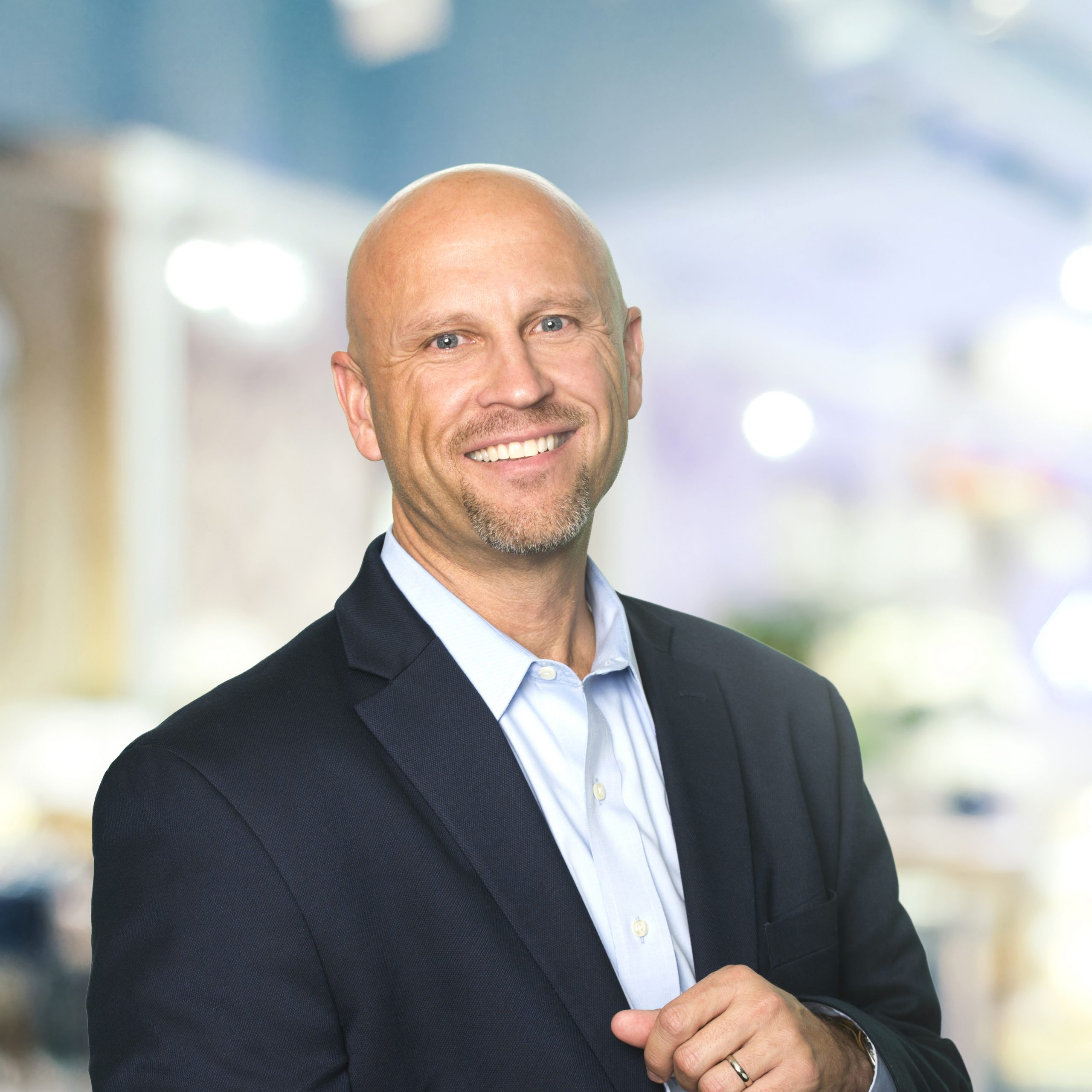



 Brian L. Johnson is the current City Manager of Peachtree Corners, Georgia. As City Manager, he is the Chief Executive Officer of the city and is responsible for the management of all city departments and of all city affairs. He is currently one of only 1,379 local government management professionals worldwide to have earned the prestigious Credentialed Manager designation from the International City/County Management Association.
During Mr. Johnson’s current tenure, Peachtree Corners has gained international attention for its construction of Curiosity Lab at Peachtree Corners, a city-owned and operated 3-mile autonomous vehicle test facility and smart city living laboratory. He has presented nationally and internationally on the economic benefits of creating a public technology laboratory and has provided advisory assistance to numerous cities considering similar projects.
He is a frequent public speaker and has delivered remarks about Curiosity Lab from the main stage at transportation, smart city, and technology conferences around the world. Mr. Johnson’s professional career began in the military where he served as both a Cryptologist in the U.S. Navy and as an Infantry Officer in the U.S. Army. He has also previously served as City Manager of Garden City, Georgia and Anniston, Alabama.
Mr. Johnson holds a Bachelor of Arts degree in Political Science as well as a Master of Public Administration from the University of Georgia. He is a graduate of Harvard University’s Program for Senior Executives in State and Local Government as well as the Leadership Savannah, Leadership Gwinnett, and Leadership Georgia programs. He is a Georgia Trend 40 Under 40 “Best & Brightest” honoree and a two-time recipient of the Bronze Star Medal for Valor.
Connect with Brian on LinkedIn.
What You’ll Learn In This Episode
- Peachtree Corners’ move towards developing into a smart city
- The relationship between the City of Peachtree Corners and the Curiosity Lab
- About Peachtree Corners’ smart city environment
- The Curiosity Lab
- Past and/or current projects going on at the Curiosity Lab
This transcript is machine transcribed by Sonix
TRANSCRIPT
Intro: [00:00:04] Broadcasting live from the Business RadioX studios in Atlanta, Georgia. It’s time for Atlanta Business Radio brought to you by on pay Atlanta’s new standard in payroll. Now here’s your host.
Lee Kantor: [00:00:24] Lee Kantor here, another episode of Atlanta Business Radio. And this is going to be a fun one. But before we get started, it’s important to recognize our sponsor on pay. Without them, we couldn’t be sharing these important stories. Today on Atlanta Business Radio, we have Brian Johnson and he’s the city manager for the city of Peachtree Corners. Welcome, Brian.
Brian Johnson: [00:00:44] Hey, Lee, how are you?
Lee Kantor: [00:00:45] I am doing well. I’m excited to learn what you’re up to for the folks who aren’t familiar. Talk a little bit about what a city manager does, and specifically for the city of Peachtree Corners.
Brian Johnson: [00:00:57] Well, in general, a city manager does for cities that have this type of government. We run the city on behalf of mayor and council, and by this time it kind of government. What I mean is this is cities in in this country basically have two options on how they run. They can either run by a strong mayor form of government. City of Atlanta is an example of that, where the mayor, when he or she is elected, they become the chief executive officer of the city. They run the city, but they are not a voting member of the governing lawmaking body called city council. And those meetings are run by the president of council. Or there’s the other model. And that’s really taken it’s the corporate model, more like corporate America, where the city council is the board of directors and the chairman of that board is the mayor, he or she. And this form of government does in fact vote on things, but he or she is not an employee of the city and has no individual roles, responsibilities or authority. And so that board of directors hires a CEO to run the organization on their behalf. And in this case, that position is called city manager. So I, the CEO of Peachtree Corners, I run the city on behalf of the mayor and Council, may write the laws and provide the guidance. And it’s actually the most common form of government in the US and certainly in metro Atlanta. I’m joined by cities like Sandy Springs, Johns Creek, you know, cities like that that are run it very similar to this one. So not not uncommon, but that is my job and that’s what I sometimes am amazed that I get paid to do it in other days. I’m amazed that I do this to get paid for the day.
Lee Kantor: [00:02:58] So now, you know, looking at the government or the city as a corporation, part of a corporation is the culture of the corporation. How does kind of your role help instill some culture or some true north of what you’re trying to accomplish in terms of what the city could be or and is?
Brian Johnson: [00:03:22] Well, certainly I’m the senior person that’s here day to day managing all the different departments and staff within there. So when it comes to what we’re learning, trends, what we’re capable of, what are best practices? Part of my job is to be an advisor to Mayor and Council on Emerging Trends Best Practices, and they of course, in turn are a conduit between the community and myself. So they’ll be telling me things that the community is kind of talking to them about is, hey, we should do more of this and more of that. So it’s a great what we call a healthy tug of war between the community and maybe the paid practitioners and the best practices there. So my job is to advise them on those kind of things. And so we’re no different here. I have certainly been talk to contemporaries, been to conferences, read professional periodicals about certain innovative things happening out there. And then I have I try to surround myself with a bunch of people who are way smarter than me, and I’ve been successful with that here and they do the same thing. And so they’ll come to me and say, hey, you know, we could do it a little bit different and we’ll kind of vet it at the staff level. And if it makes sense, we’ll push it to the mayor and council at a meeting and we’ll get together and say, Hey, is this a policy direction we need to take? Do we need to appropriate money for it? Do you guys like where this is headed? And it’ll be a value add to the community? And if mayor and council say yes, then will we do it? If not, then we continue going with what we had at the time. So that’s kind of how how we’ll we’ll both provide perspective that ultimately decides which direction the city is is moving and whether we’re in between the solid lines or in the ditch or not.
Lee Kantor: [00:05:22] So how did the Smart City initiatives take place? Like what? It sounds like a chicken and egg thing. Was that from leadership saying, hey, Peachtree Corner should be known as a smart city? That’s important. That’s a priority. We’re going to do certain things to be attractive to business, and we’re going to do certain things that make us move towards being a smart city. Or was that something that Petrie Corner’s already had that kind of bubbling up within it? And then then that kind of inspired the leaders to say, okay, let’s lean into this.
Brian Johnson: [00:05:55] Great question. So a little bit of both here. So I’ll tell you the organic part first organically, we do actually have maybe an advantage over a lot of cities when it comes to being smart and technology. And here’s why. Even though the city is actually from a government standpoint, from an actual or an official city with corporate limits and everything, as a city, we’re only ten years old, but we are really. This area of metro Atlanta started to get populated back in the late sixties when a guy named Paul Duke, a Georgia Tech graduate turned developer, decided to do something about at the time the brain drain that was happening in metro Atlanta, and that was Georgia Tech graduates not having enough technology jobs in metro Atlanta to stay here after they graduated. So he took inspiration from what was happening in North Carolina at the time and what ultimately has become research triangle, and that is commercial office parks being built and filled by companies that are within the same ecosystem. So like North Carolina started with a biomedical park. And so all these office buildings were all filled with biomedical companies. And there was this synergy and connectivity between these these these offices and these companies that were created. And so he decided to do the same thing here. So he came at way out here 20 miles from downtown. Of course, at the time in the late sixties, it probably was way, way out there.
Lee Kantor: [00:07:34] People thought, he’s crazy. Are you crazy moving out?
Brian Johnson: [00:07:38] That came out here. And he started buying up property and constructing commercial office building and only filling them with tech companies. He wanted to check and he built Metro Atlanta’s very first technology park and he aptly named it Tech Park, Atlanta. And over the decades since then, up until now, it has grown to over 500 acres. We’ve got 10,000 people who work in Tech Park, Atlanta. We’ve got over 2000 people who live in it. It’s a real ecosystem in and of itself, but it also has been very successful and creating a population that understands tech. Now, mind you, back in the day, technology park was it was actually where the modem was invented. I mean, the modem that helped create the Internet, the connectivity, the Hays modem was invented here in Tech Park Scientific Atlanta, which is now Cisco, was founded here in Tech Park. And so it has certainly provided its value to the evolution of technology. But because of that, as jobs grew here, people want to live close to where they work. And so our population grew. So as a municipality, we’re about 50,000 people and we have about 50,000 jobs. So we’re very unique in that regard. Jobs and people kind of population grew, but that was a long way of saying organically our population understands technology.
Brian Johnson: [00:09:12] They oftentimes work in it, they grew up in it, or plenty of people who grew up with parents who worked in Tech Park, Atlanta, and so they understand technology. So that’s a really advantageous position to be in as a city when you want to try to push the envelope on technology, because sometimes in other locations they don’t understand that. What they do is for every dollar you spend on technology, a conventional city can often population can oftentimes be like, why are you spending it on tech when you could be punching or excuse me, patching an additional pothole or adding an additional police officer, which are legitimate things to spend money on. But some communities don’t understand anything but that. So it’s a delicate balance. But anyway, that is one half of the equation. The other half is certainly leadership and an elected body who wants to use technology to look at ways to improve our community, whether it’s a direct value add to our residents or an indirect economic development value that technology can provide to our residents. And we can talk about that, how this is morphed in a second. But that is how the idea of pushing the envelope on tech to do make our community unique.
Brian Johnson: [00:10:42] Those are the ingredients that allowed us to do it. And I’ll add one last thing, and that is as a new city, we don’t have a lot of legacy costs, meaning old cities oftentimes at the. Beginning of a budget year are immediately moving money over to pay for things that were decisions made by city councils from decades or sometimes centuries ago. No city owns a golf course or an airport or 20 community centers, or on and on. Even if they’re no longer needed, it’s oftentimes hard to stop paying for it. So those legacy costs can add up and it can choke a budget down to where there’s not a lot of discretionary resources to play with. We don’t have that. And so as a result, we have opportunities to do things that other cities don’t and so much so that our we’re the second largest municipality in Georgia with no property tax. So we very much value our business climate and the fact that we don’t have those legacy costs. So all of those ingredients were thrown into that pot mix together and the result allowed us to do some of the things that we’re going to talk about in a second.
Lee Kantor: [00:12:00] Now in some cities and especially in the metro area. Obviously, there’s a lot of tech happening there. And because of that, there’s a lot of collaboration among a variety of different services, one being incubators. And Georgia Tech obviously has AC DC or is affiliated with DC is Peachtree Corners have some sort of a partnership with any entity that is an incubator slash kind of a place to birth startups.
Brian Johnson: [00:12:34] Without a doubt. In fact, just to that specific point, our own incubator, which is your right, is not uncommon anymore. And there are other tech parks in metro Atlanta, even though ours was the first. But our incubator, because of our partnership and we have a bunch of of unique partnerships with Georgia Tech, but one of them is as an ATC affiliate. So we are officially our incubator is an HRDC affiliate. So any of our company member companies in our incubator are also, by virtue of our affiliation with ATC, have the have the benefits or can utilize the benefits even at the ATC property down at at Tech Square. So partnerships are a big deal. Rising tide lifts all boats. Peachtree corners cannot be everything to everybody. No city can. But when you put them together, you ultimately can get certain things that happen, including there is you know, they’re starting to become a trending term based on some of our partnerships and collaborations with other companies and cities in north metro Atlanta. That this came from an analyst that was on a phone call with us to talk about Curiosity lab, and we were done talking about it. He was like, That’s amazing. You guys are doing stuff that I would have assumed were happening in Silicon Valley. But you guys are not Silicon Valley. You’re in Georgia where there are peach orchards. And so maybe you’re more like Silicon Orchard. And so that that is kind of starting to take off, just that we all have to collaborate. City of Alpharetta, city of Johns Creek, you know, other locations like the Ray down in south metro Atlanta, all these collaborations together form what is often being a driving force within tech coming to Metro Atlanta.
Lee Kantor: [00:14:39] And I think that that’s part of Atlanta’s secret sauce compared to some of these other markets, is that there is so much collaboration and people really do believe in helping each other out. And and as simple as connecting people and actually really connecting them, not just saying you’re going to connect this, you know, just kind of the basic blocking and tackling of relationship building. I think in the South and in Atlanta specifically, the metro Atlanta is really good at that. And it’s part of our DNA and part of our culture as a city in a market that we collaborate and work together.
Brian Johnson: [00:15:15] Well, we don’t have a choice in. You’re right, Lee, very much. We don’t have a choice here, because what most people don’t realize when they think Atlanta, they oftentimes think Atlanta is going to be like some of these other cities, like, say, a Chicago or LA or whatever, where the city itself has a massive population and the suburbs are not as integral of a part. Well, metro Atlanta as city of Atlanta does not have from a from a population standpoint, a lot of people I mean, not even a million. And that’s not that that’s pretty rare when it comes to big cities, at least big, you know, fighting above its weight class like Atlanta does. Atlanta is a metro. Atlanta is a conglomeration of a lot of suburbs working together. So I do think you’re right that we have learned very well, very early, that for all of us to benefit, we better play pretty well together. Or if not, we will not be able to fight in the weight class that we are. City of Atlanta cannot do it by itself, and none of the other suburbs certainly can’t either. We’ve got to work together and we do. I mean, a good example of that would be and this isn’t a city, but the Ray is the name of a nonprofit that is doing research down on a section of I 85 up near West Point, Georgia, from the Alabama state line, about 18 miles section of interstate.
Brian Johnson: [00:16:54] And they do some pretty unique stuff down there, some pretty innovative testing on the interstate system. But they actually had a partner who is doing solar roadways, creating creating solar roads by putting photovoltaic cells, solar panels on top of the existing pavement and creating a solar field, solar field that cars can drive over. And with the intent here of, hey, if you can put a solar field on a road or on top of a road, it’s not shaded all that much. If the weather is good, the only time it’s shaded is for that split second. Vehicle is over it. We could generate a lot of power. Well, one reason that there needs to be a partnership is despite them having doing some testing with this company. The company did not have permission to put it on the travel lanes of the interstate because Georgia Department of Transportation and the Federal Highway Administration don’t want it in the travel lanes yet because they don’t know enough about it. So the REA was kind of stuck with only doing something in the parking lot of the welcome center coming in from Alabama.
Brian Johnson: [00:18:10] And so our partnership with them is such that they said, hey, you guys in Curiosity lab on all the roads there, can you guys let this company come up and create a solar field up there and do the testing up there? And then maybe we can gather enough data that one day we can come back down and do it. We’re like, absolutely. And so as a result, we have some really bleeding edge testing going on in that area only because two organizations, Curiosity Lab and the REA got together and said, Hey, one of us can scratch the back of the other. And we are. And there are examples of it going the opposite way as well. But we we can’t afford not to do that in our area. It’s a cutthroat area. We’ve got to compete with some areas of this country that are doing some really awesome stuff as well. So we’ve got to join forces and really, like you said, really get into the blocking and tackling of what it takes to attract and retain and expand technology companies here. And I think we’re doing a decent job of it.
Lee Kantor: [00:19:15] Now, you mentioned Curiosity Lab. Can you tell our listeners what that is, how it works? And you mentioned one of the things that they’re involved with, but talk about kind of their mission and purpose.
Brian Johnson: [00:19:27] So Curiosity Lab is a result of Peachtree Corners, the city with those ingredients I talked about earlier about tech saying, you know what, maybe we can do something to leverage technology park Atlanta, Tech Park, Atlanta. And we ultimately did a bunch of research assessment and it came to it. We came to the conclusion or the realization is better word that the evolution of technology kind of had three steps. The first step was and of course, this is a little bit of an oversimplification, but essentially the first step is technology initially gets tested in a closed, controlled laboratory environment and you test all that tech, some of it passes, some of it you go back to the drawing board, but the ones that you are passing, all the tests that you can throw at it in a controlled environment at some point need to graduate from that to a living environment, one where there are people and there are variables you can’t control, because that’s ultimately the world that this tech will be scaled into. Well, you can’t go from a closed lab to, say, midtown Atlanta in one jump. And we notice that because of that, there were temporary arrangements that companies would have with the the public sector, a city or a county.
Brian Johnson: [00:20:44] And it would say, hey, we want to test this tech out in the public right of way. Will you let us do it for this period of time? And so these temporary arrangements would be set up, testing would happen, company would leave, shut it down, and it was accrued but effective. But the kind of square peg round hole thing. While it worked, we noticed that it wasn’t ideal and it occurred to us that maybe we can take Tech Park Atlanta and the right of way inside of Tech Park Atlanta, which the city owns in its entirety. And maybe we can leverage it and create a purpose built intermediate step so that technology could come to this living laboratory first, which is not as complicated, challenging and even go so far as safe, potentially unsafe of an environment as you would get if you try to go to, say, North Avenue in downtown Atlanta. Come here. Next, this being, say, the walk phase of crawl, walk, run. And if you can if your tech can get introduced to the public here and go to and graduate, you know, pass all the tests here, then maybe it really is ready for North Avenue. And so we created we decided to create a living laboratory, and we took a bunch of area within Tech Park, Atlanta.
Brian Johnson: [00:22:12] Then we created a three mile autonomous and advanced vehicle test track on an existing public road that humans are driving on. And then we created the city street of the future, where all of our infrastructure can talk to everything else, street lights can talk to, cars can talk to a video, cameras can talk to. Traffic signals can talk. To your phone if you’re walking on the sidewalk here. And we tied it all together in a 25,000 square foot building that has our incubator in it, but it also has a command and control center. It’s got, you know, corporate innovation space down to incubation space. And we created an ecosystem that’s a living laboratory, but that’s purpose built. And the result of that has been an unbelievable amount of economic development, which is the primary goal of this as a result of this ecosystem we’ve created, companies have been really companies from the US and overseas have been really interested and have moved and expanded here because of this ecosystem and this public infrastructure that we’ve created and made available to them. So that’s what Curiosity Lab is.
Lee Kantor: [00:23:28] And then you mentioned it’s now kind of a magnet for of interest for a lot of other folks. Was that something that has gone beyond your expectations, like this type of interest and this type of kind of attraction you’re now getting? I know that was probably the goal, but the amount of it was that surprising?
Brian Johnson: [00:23:49] Without a doubt. So within the first six months, it was only open for business, if you will, for six months till the pandemic hit. Even in that first six months, we had a number of global headquarters moved here because of Curiosity Lab, some biomedical companies, the professional organization for mechanical and HVAC engineers. Ray They said, we want to be a part of that. We want to be in there. And so it was playing pretty well. But then we have had some really big, if you want to call it, benefits from Curiosity lab. Two of note would be we were actually named one of six locations in the US by the French government to be a landing pad for French tech companies to come to the US in a program called LA French Tech. And while it’s theoretically metro, Atlanta, is the overall location, the exact location within metro Atlanta, these companies are landing is our is Curiosity lab. The French American Chamber moved their offices out of the French consulate into our innovation center here at the Curiosity lab. Because of that, because they’re like, we want to be at the exact point where these French companies are coming. So that was a win. And then the other one was about three, about four months ago, four or five months ago, we were announced as the location for the expansion or call it the they call it the East Coast headquarters of a company called Intuitive Surgical.
Brian Johnson: [00:25:32] They are a robotic assisted surgical manufacturer. They make The Da Vinci system, and that’s robotic assisted surgery. They’re headquartered out of Sunnyvale, and they are putting in a $600 million medical campus here, expanding it here in Peachtree Corners, creating over 5500 jobs. Average salary, 150,000. And they chose here. In fact, the final two is us in Durham, North Carolina, research triangle itself. We won for a lot of reasons. I won’t put it all just I’m curious. Curiosity lab for sure. The state was involved. The county was involved. The city government was involved. But what they said ultimately kind of potentially made that final push for them was Curiosity lab, our partners here, the activity that’s here, the fact they wanted to be close to something like that. So just think about the largest economic development project in Gwinnett County’s 200 plus year history. One of the largest medical ones in Georgia’s history was here is here. It’s underway right now for lots of reasons. But Curiosity Lab had a role. So long way of answering your question of yes, it has exceeded our economic development activity expectations. We created this sandbox for technology companies to come play. We put a bunch of toys in it. We got out of their way and we said, Come play. And man, have they have they been coming to play?
Lee Kantor: [00:27:09] Well, congratulations on all the success and thank you for your leadership on this so important. And the ripples are real, as you’re saying. I mean, it’s it’s you know, once you give people a place to play, they they kind of come and play and they do what you imagine they could. And at a level that it’s hard to even imagine, I’m sure you’re getting a lot of attention around the country from other people who would like to have a similar situation in their region or town. If somebody is an entrepreneur, I would imagine Curiosity Lab has a lot of events and a lot of opportunity for them to plug in. If you’re interested in this type of technology or just want to plug into this kind of ecosystem, is the can you share a website for Curiosity Lab and for Peachtree Corners?
Brian Johnson: [00:27:56] Absolutely. So the city and the city’s got a page and a link to Curiosity Lab. And mind you, Curiosity Lab is owned. The ecosystem is the city’s right of way. We own it, we constructed it. But we have a nonprofit that was created and it’s got an operating agreement to run it. So the Curiosity Lab is a separate organization in that. In that regard, the city’s website is Peachtree Corners. Gov. You can go to Curiosity lab from there or see our other economic development initiatives from that website. And then Curiosity Labs website is Curiosity lab etsy.com. And that’s directly to the the ecosystem and the nonprofit itself. Both are great. And again, we all win because all these jobs that we’re creating are not going to be the employees aren’t going to only live in Peachtree Corners, they’re not going to only spend money in Peachtree Corners. You know, they’re they’re going to spend money in metro Atlanta. They’re going to live in neighboring municipalities. They’re going to use all those services so that rising tide lifts all boats. Thing really is in play here as well.
Lee Kantor: [00:29:13] Well, Brian, thank you so much for sharing your story. You’re doing important work and we appreciate you.
Brian Johnson: [00:29:18] Lee. Thanks for having me.
Lee Kantor: [00:29:19] All right. This is Lee Kantor. We will see you all next time on Atlanta Business Radio.
About Our Sponsor
OnPay’s payroll services and HR software give you more time to focus on what’s most important. Rated “Excellent” by PC Magazine, we make it easy to pay employees fast, we automate all payroll taxes, and we even keep all your HR and benefits organized and compliant.
Our award-winning customer service includes an accuracy guarantee, deep integrations with popular accounting software, and we’ll even enter all your employee information for you — whether you have five employees or 500. Take a closer look to see all the ways we can save you time and money in the back office.