Business RadioX ®

  • Home
  • Business RadioX ® Communities
    • Southeast
      • Alabama
        • Birmingham
      • Florida
        • Orlando
        • Pensacola
        • South Florida
        • Tampa
        • Tallahassee
      • Georgia
        • Atlanta
        • Cherokee
        • Forsyth
        • Greater Perimeter
        • Gwinnett
        • North Fulton
        • North Georgia
        • Northeast Georgia
        • Rome
        • Savannah
      • Louisiana
        • New Orleans
      • North Carolina
        • Charlotte
        • Raleigh
      • Tennessee
        • Chattanooga
        • Nashville
      • Virginia
        • Richmond
    • South Central
      • Arkansas
        • Northwest Arkansas
    • Midwest
      • Illinois
        • Chicago
      • Michigan
        • Detroit
      • Minnesota
        • Minneapolis St. Paul
      • Missouri
        • St. Louis
      • Ohio
        • Cleveland
        • Columbus
        • Dayton
    • Southwest
      • Arizona
        • Phoenix
        • Tucson
        • Valley
      • Texas
        • Austin
        • Dallas
        • Houston
    • West
      • California
        • Bay Area
        • LA
        • Pasadena
      • Colorado
        • Denver
      • Hawaii
        • Oahu
  • FAQs
  • About Us
    • Our Mission
    • Our Audience
    • Why It Works
    • What People Are Saying
    • BRX in the News
  • Resources
    • BRX Pro Tips
    • B2B Marketing: The 4Rs
    • High Velocity Selling Habits
    • Why Most B2B Media Strategies Fail
    • 9 Reasons To Sponsor A Business RadioX ® Show
  • Partner With Us
  • Veteran Business RadioX ®

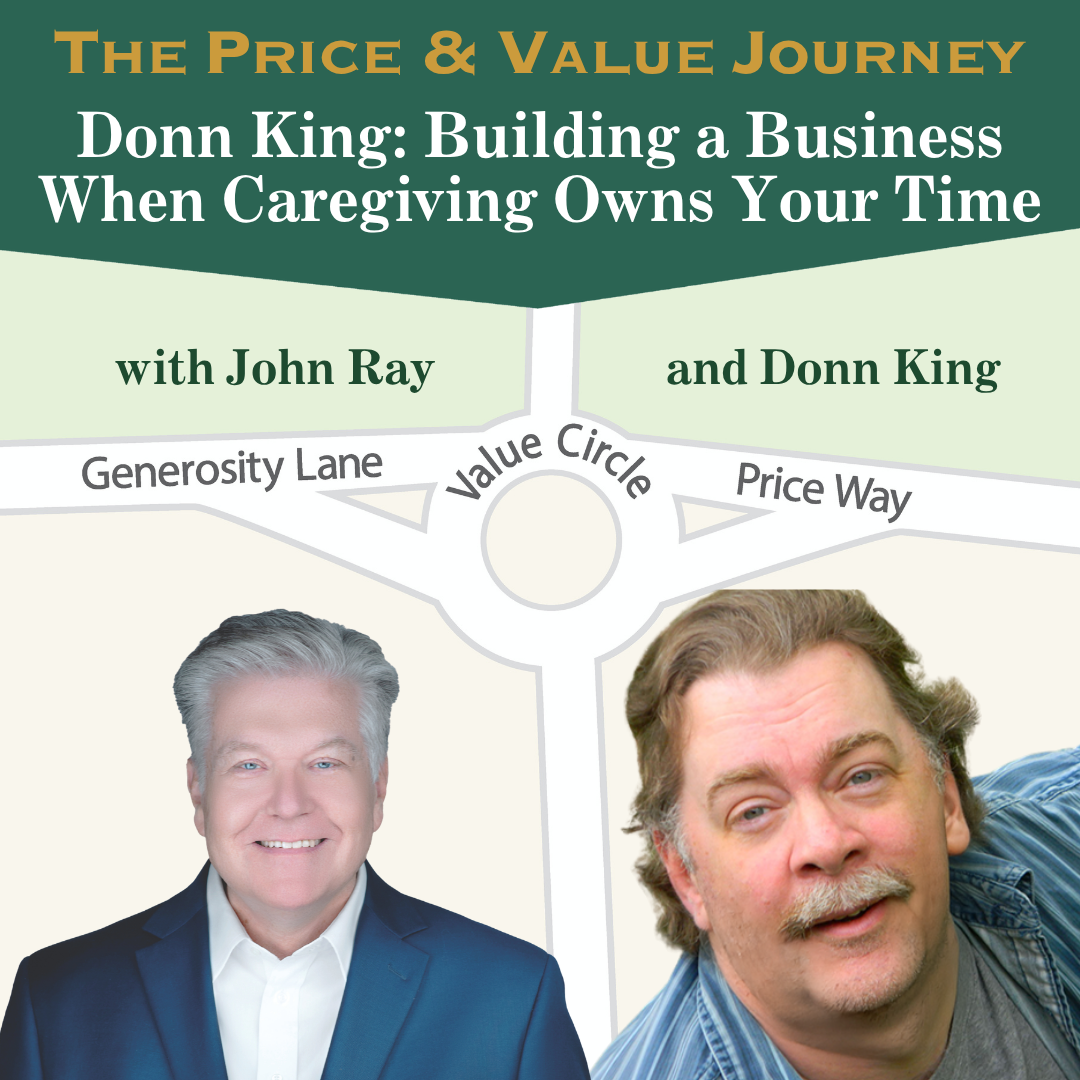
Donn King: Building a Business When Caregiving Owns Your Time

April 1, 2026 by John Ray

Donn King on Protecting Your Professional Identity, Defeating Perfectionism, and Keeping Your Business Alive Through Caregiving (The Price and Value Journey, Episode 167) with host John Ray
North Fulton Studio
Donn King: Building a Business When Caregiving Owns Your Time
Loading
00:00 /
RSS Feed
Share
Link
Embed

Download file

Donn King on Protecting Your Professional Identity, Defeating Perfectionism, and Keeping Your Business Alive Through Caregiving (The Price and Value Journey, Episode 167) with host John Ray

Donn King on Protecting Your Professional Identity, Defeating Perfectionism, and Keeping Your Business Alive Through Caregiving (The Price and Value Journey, Episode 167)

Donn King joins host John Ray on The Price and Value Journey to discuss one of the most underserved challenges facing solo practitioners and expert service providers: how to maintain a professional and creative identity when caregiving takes over your life.

Donn spent more than two decades caring for his daughter Hannah, who had a rare neurological condition requiring round-the-clock attention, while also caring for his partially disabled wife Janet. During that time, he continued writing, podcasting, pastoring, coaching other authors, and teaching college. His book Creating While Caring is a field guide for the roughly 50 million unpaid caregivers in the United States, many of whom are trying to run an expertise-based business at the same time.

Donn and John explore the genuine challenges that caregiving poses for professionals accustomed to managing their time in this conversation. Donn explains why standard productivity advice falls apart under the weight of a caregiving life and what it actually takes to keep going. Topics include distinguishing your identity from your methodology, why perfectionism is a thief rather than a virtue, the critical difference between consistency and persistence, and the practice of treating your schedule as aspirational rather than a measure of success or failure. Donn also shares the personal chapter he navigated after Hannah’s death in December 2024 and what it means to suddenly face open time at age 70 when you spent two decades simply doing what had to be done.

The Price and Value Journey is presented by John Ray and produced by North Fulton Business Radio, LLC, an affiliate of the Business RadioX® podcast network.

Key Takeaways You Can Use From This Episode

  • Separate your professional identity from the way you carry it out. When caregiving changes what is possible, the methodology has to flex while the identity holds.
  • Perfectionism is a thief. It steals joy, it steals time, and most importantly it steals value from the people you could be serving. “Done is better than perfect” is not a cliché here; it is a survival principle.
  • Treat your schedule as aspirational, not as a pass-fail test. When life interrupts, dragging a task to tomorrow is a tool, not a defeat.
  • The difference between consistency and persistence matters. Consistency demands a regular pattern. Persistence simply requires that you keep showing up. For caregivers and for many solo practitioners, persistence is the more honest and more achievable standard.
  • Decide what to protect, not just what to pursue. Knowing which professional activities are essential to your identity helps you make the hardest trade-off: what not to do.
  • You have more resilience than you realize. Donn tells caregivers that their coping skills are often better than they think.

Topics Discussed in this Episode

00:00 John Ray introduces the show and guest Donn King
02:21 Donn on why caregivers are more likely to run expertise businesses than traditional jobs
05:08 How Donn kept his professional and creative identity intact through two decades of caregiving
06:05 Accepting you won’t accomplish everything you’re capable of
08:11 The apocryphal Warren Buffett story: 25 goals, pick five, scratch off the rest
09:14 Focusing on one project at a time instead of scattering energy
10:06 The subtle perfectionism caregivers face and the 10-year writing shutdown
11:21 The reversal: he was not depressed because he stopped writing, but stopped writing because he was depressed
11:52 Why this is an identity issue, not just a productivity issue
12:31 Separating identity from methodology: same writer, different work style
13:39 Background on daughter Hannah and wife Janet and the round-the-clock care demands
17:14 The decision to move Hannah to a specialized nursing home
19:08 The typical day exercise from the book and what it revealed
19:53 How Hannah’s birth ended Donn’s professional speaking career
21:27 Why standard productivity advice doesn’t apply to caregiving lives
22:06 What actually works: aspirational scheduling, bite-sized tasks, bags packed for ER visits
24:34 Separating principle from application: dependability as the principle, flexibility in execution
26:10 Flexibility is not weakness; it is resilience
28:45 Consistency vs persistence: why persistence is the more honest standard for caregivers
32:09 Perfectionism as a thief of joy, time, and value
34:24 On dignity and identity: more than a caregiver, still a writer
35:01 The oxygen mask principle applied to professional identity
39:51 Adam Grant’s research on creative procrastination
42:19 Life after Hannah: open time at 70, Medicaid financial constraints, finding new priorities
47:03 Tools and tips are examples, not answers
49:26 On AI: “I want the AI to do dishes so I have more time to write.”
53:34 What Donn most wants caregiving professionals to hear: you are not alone and more resilient than you think
55:42 Where to find Donn and Creating While Caring
57:51 John’s closing thoughts for the audience

Donn King

Donn King
Donn King

Donn King is an emeritus professor of communication studies at Pellissippi State Community College in Knoxville, Tennessee, a pastor in the United Methodist Church, a speaker, and a communication coach. He calls himself “The Confidence Cultivator,” and for good reason: his work consistently comes back to helping people show up fully, speak clearly, and build a professional life that reflects what they actually value.

He is the author of several books, including two business fables in The Sparklight Chronicles series and Creating While Caring: Practical Tips to Keep Creating While Caring for a Loved One, which grew from his own experience as a family caregiver. He hosts The Alignment Show podcast and runs Hidden Mentor Media, where he helps independent authors publish with confidence. He has spoken to audiences across the United States and spent more than 40 years teaching college students and business leaders the skills of effective communication.

Donn and his wife Janet live on the quiet side of the Great Smoky Mountains.

Website | LinkedIn

John Ray, Host of The Price and Value Journey
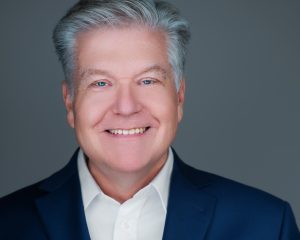
John Ray, Author of The Generosity Mindset and Host of The Price and Value Journey

John Ray is the host of The Price and Value Journey.

John owns Ray Business Advisors, a business advisory practice. John’s services include business coaching and advisory work, as well as advising solopreneurs and small professional services firms on their pricing. John is passionate about the power of pricing for business owners, as changing pricing is the fastest way to change the profitability of a business. His clients are professionals who are selling their expertise, such as attorneys, CPAs, accountants and bookkeepers, consultants, coaches, marketing professionals, and other professional services practitioners.

John is a podcast show host and the owner of North Fulton Business Radio, LLC, an affiliate of Business RadioX®. John and his team work with B2B professionals to create and conduct their podcast using The Generosity Mindset® Method: building and deepening relationships in a non-salesy way that translates into revenue for their business.

John is also the host of North Fulton Business Radio. With over 900 shows and having featured over 1,300 guests, North Fulton Business Radio is the longest-running podcast in the North Fulton area, covering business in its region like no one else.

John’s book, The Generosity Mindset: A Journey to Business Success by Raising Your Confidence, Value, and Prices

John Ray at Barnes & Noble with his book, The Generosity MindsetJohn Ray is the author of the five-star rated book The Generosity Mindset: A Journey to Business Success by Raising Your Confidence, Value, and Prices, praised by readers for its practical insights on raising confidence, value, and prices.

If you are a professional services provider, your goal is to do transformative work for clients you love working with and get paid commensurate with the value you deliver to them. While negative mindsets can inhibit your growth, adopting a different mindset, The Generosity Mindset®, can replace those self-limiting beliefs. The Generosity Mindset enables you to diagnose and communicate the value you provide to clients, which allows you to price your services more effectively in order to receive a portion of that value.

Whether you’re a consultant, coach, marketing or branding professional, business advisor, attorney, CPA, or work in virtually any other professional services discipline, your content and technical expertise are not proprietary. What’s unique, though, is your experience and how you synthesize and deliver your knowledge. What’s special is your demeanor or the way you deal with your best-fit clients. What’s invaluable is how you deliver outstanding value by guiding people through massive changes in their personal lives and in their businesses that bring them to a place they never thought possible.

Your combination of these elements is unique in your industry. There lies your value, but it’s not the value you see. It’s the value your best-fit customers see in you.

If pricing your value feels uncomfortable or unfamiliar to you, this book will teach you why putting a price on the value your clients perceive and identify serves both them and you, and you’ll learn the factors involved in getting your price right.

The book is available at all major physical and online book retailers worldwide. Follow this link for further details.
Connect with John Ray:

Website | LinkedIn | Email

Business RadioX®:  LinkedIn | Twitter | Facebook | Instagram

Tagged With: book writing, Caregiver, caregiver entrepreneur, caregiver experience, caregiving, consultants and coaches, Creating While Caring, creative professionals, disability caregiving, Donn King, expert service providers, imposter syndrome, John Ray, mindset, perfectionism, persistence vs consistency, productivity for caregivers, professional identity, resilience, small business mindset, solo practitioners, The Alignment Show podcast, The Confidence Cultivator, The Price and Value Journey, time management, work-life integration, writing under constraints

DeWayne & LaToya Griffin and Kaye Ginsberg on Family Legacy

March 16, 2026 by John Ray

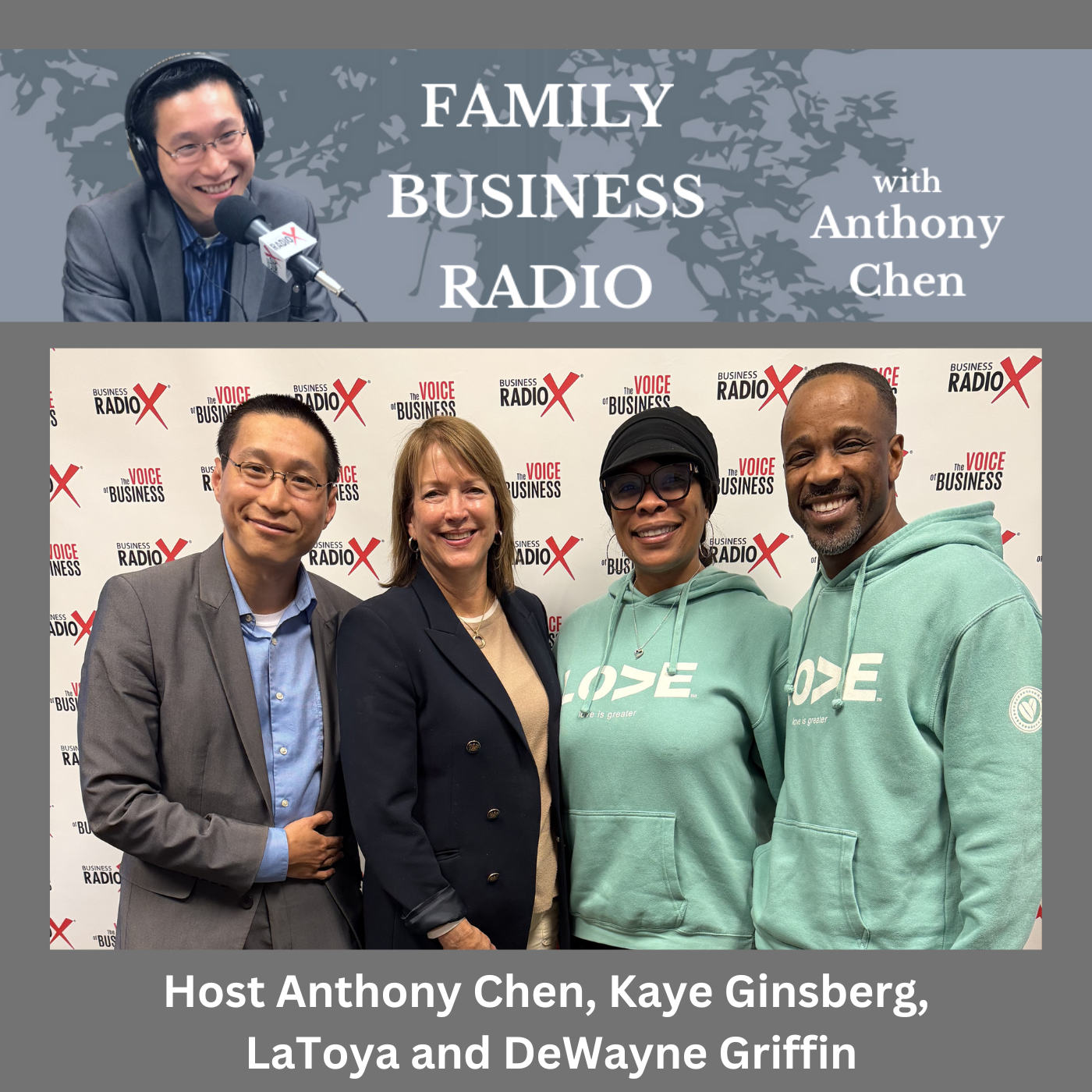
Building Family Legacy, Community, and Life Transitions with DeWayne and LaToya Griffin of Just Love Coffee Cafe Alpharetta and Kaye Ginsberg of Peace of Mind Transitions (Family Business Radio, Episode 73) with host Anthony Chen
Family Business Radio
DeWayne & LaToya Griffin and Kaye Ginsberg on Family Legacy
Loading
00:00 /
RSS Feed
Share
Link
Embed

Download file

Building Family Legacy, Community, and Life Transitions with DeWayne and LaToya Griffin of Just Love Coffee Cafe Alpharetta and Kaye Ginsberg of Peace of Mind Transitions (Family Business Radio, Episode 73) with host Anthony Chen

Building Family Legacy, Community, and Life Transitions with DeWayne and LaToya Griffin of Just Love Coffee Cafe Alpharetta and Kaye Ginsberg of Peace of Mind Transitions (Family Business Radio, Episode 73)

In this episode of Family Business Radio, host Anthony Chen welcomes DeWayne and LaToya Griffin of Just Love Coffee Cafe Alpharetta and Kaye Ginsberg of Peace of Mind Transitions for a conversation centered on legacy, care, and the kind of service that leaves people better than you found them.

DeWayne and LaToya Griffin share how an annual planning tradition led to the dream of opening a coffee shop and how that dream became a family business designed not only as a community gathering place but also as a legacy opportunity for their children. They discuss their transition from long corporate careers at State Farm into entrepreneurship, the role their son Trey now plays as general manager, and the realities of building a café that feels more like an extension of home than a transactional business.

Kaye Ginsberg brings a complementary perspective through her work as founder of Peace of Mind Transitions. She explains how her own experience helping her mother through a late-life move inspired her to build a business that supports older adults and their families through downsizing, relocation, and emotionally difficult transitions. Her work is rooted in compassion, logistics, and a commitment to helping families navigate overwhelming moments with clarity and care.

Anthony closes the episode by reflecting on a thread that ties both conversations together: the importance of family connection, trust, and the role businesses can play in serving people during some of life’s most meaningful moments. His commentary reinforces the idea that whether a business is built around hospitality or helping families through transition, lasting impact comes from putting people first.

Together, these conversations reveal a common thread: whether serving coffee or guiding a family through a major life transition, meaningful businesses are often built on love, attention to detail, and a desire to make life better for others.

Family Business Radio is underwritten and brought to you by Anthony Chen with Lighthouse Financial Network. The show is produced by John Ray and the North Fulton affiliate of Business RadioX®.

Key Takeaways from This Episode

  • Career transitions allowed DeWayne and LaToya Griffin to transform a long-discussed family dream into Just Love Coffee Cafe Alpharetta.
  • The Griffins built the café with family legacy in mind, creating an opportunity for their children, especially their son Trey, who now serves as general manager.
  • Their vision for the café was never just coffee. They wanted a true community space where people could gather, connect, and feel known.
  • Running a family business requires boundaries and rhythm. The Griffins talk about weekly family meetings and intentional guardrails to protect both family relationships and the business.
  • Kaye Ginsberg explains that senior move management is about far more than logistics. It is deeply emotional work that helps families navigate downsizing and relocation with compassion and expertise.
  • Peace of Mind Transitions grew out of Kaye’s own experience helping her mother, which gave her firsthand insight into how overwhelming these transitions can be for families.
  • Legacy is framed as both what is built and how people are cared for along the way.

Topics Discussed in this Episode

00:24 Anthony Chen opens the show and introduces DeWayne and LaToya Griffin of Just Love Coffee Cafe Alpharetta
00:59 DeWayne Griffin shares how an annual family planning trip led to the dream of opening a coffee shop
02:23 The Griffins explain their corporate transitions from State Farm and how the business opportunity became real
03:00 Why Just Love Coffee stood out: the brand matched their family values and long-term vision
03:41 LaToya Griffin explains why the café was really built as a legacy play for their children, especially their son Trey
05:25 The Griffins tell the story of how they met at church and then reconnected at State Farm through a football team
07:44 The couple reflects on when they knew the relationship was serious, including the September 12, 2001 story
09:34 DeWayne shares the New Year’s Eve proposal story, including the “light” Christmas gift exchange that almost backfired
11:27 How Trey got pulled into the coffee shop vision and why the business became a development opportunity for him
13:42 The Griffins discuss first-year realities: staffing, waste, inventory, margins, and why the restaurant business is not for the faint of heart
15:23 LaToya says “build it and they will come” is not true, and explains the marketing lessons they learned the hard way
15:32 DeWayne explains their goal of creating a true “third space” for connection, not just another coffee stop
17:36 Why doing the business as a family gives them the bandwidth to network, grow, and stay involved in the community
18:29 The Griffins talk about protecting family time, setting guardrails, and using a weekly family business meeting to keep the café from taking over home life
22:39 LaToya describes the experience they wanted to create in the café: not transactional, but relational, comfortable, and community-centered
23:52 “Cheers meets Love Jones”: LaToya explains the vibe, hospitality, and intentional customer connection they wanted the café to embody
24:34 DeWayne says the café is really an extension of their home and of LaToya’s Southern hospitality
26:06 The Griffins share where the café is located in Alpharetta and why practical details like parking matter to the guest experience
27:05 “Eat, Drink, Love”: DeWayne explains the shop’s values, specialty coffee focus, and why the food surprises people
28:26 Anthony transitions to Kaye Ginsberg of Peace of Mind Transitions and frames the second half around care, legacy, and love
28:44 Kaye Ginsberg explains what senior move management is and why it is both logistical and deeply emotional work
29:12 Kaye shares the personal story of helping her mother after her father’s sudden death and discovering the need for this kind of service
30:06 The Maryland move-manager experience shows Kaye what compassionate, expert transition support can look like
31:12 Kaye describes becoming an empty nester, trying to reenter the workforce, and deciding instead to build her own company
32:28 Why Peace of Mind Transitions began simply with the goal of helping people, even before there was much of a formal business plan
47:31 Kaye shares an early client story that confirmed she was doing the right work, including helping a woman downsize while her daughter was dying of cancer
49:33 Kaye explains why families should not try to handle these transitions alone and how people can reach Peace of Mind Transitions
50:03 Anthony brings all three guests back together and asks what legacy and values they hope to pass on to the next generation
51:40 LaToya says her legacy is leaving everything better than she found it, through hard work, discipline, and love
52:26 DeWayne says he wants to leave family and community better, and to be remembered for his smile and passion for people
53:17 Kaye says her legacy is doing the right thing, leaving the world a little better, and building on resilience, hard work, and kindness
54:10 Anthony closes with a reflection that true wealth is not dollars and cents, but purpose, community, and values passed to the next generation

DeWayne and LaToya Griffin, Just Love Coffee & Cafe Alpharetta

DeWayne and LaToya Griffin, Just Love Coffee & Cafe Alpharetta, on Family Business Radio with host Anthony Chen
DeWayne and LaToya Griffin, Just Love Coffee & Cafe Alpharetta

Get ready to feel the love, Alpharetta, Milton, and the surrounding areas! Just Love Coffee & Cafe Alpharetta is brewing up something special, and it’s all thanks to DeWayne and LaToya Griffin and their amazing family. This dynamic duo, known for their warm hospitality (friends call them the ultimate “hosts”), are bringing their passion for community and delicious coffee to town.

Their journey to Just Love Coffee & Cafe began back in their 30s when they discovered their love of coffee while frequenting various coffee houses in Central Illinois. This newfound love sparked the dream of one day opening their own coffeehouse. Their dream started to become a reality after the pandemic. Both experienced unexpected shifts in their professional careers post-pandemic, leaving them feeling uncertain about the future and seeking a more fulfilling path. The pandemic, with its lockdowns and social distancing, highlighted the importance of human connection and the role local businesses play in fostering a sense of belonging. It was then that DeWayne and LaToya decided to turn their long-held dream into a reality. Drawn to Just Love Coffee & Cafe’s mission of spreading love and building community, they felt it aligned perfectly with their own values and aspirations. It was May 2023 when a family adventure at Discovery Day to learn about the coffee brand in Brentwood, Tennessee, solidified their decision. With their son Tre’on, a coffee aficionado with many years of barista experience, joining the team, the project is truly a family affair.

The Griffins are eager to create a space where everyone feels welcome, from the first-time coffee drinker to the seasoned connoisseur. Stop by, grab a cup of joe or tea, enjoy some delicious food, and experience the love for yourself. Just Love Coffee & Cafe is open in Alpharetta, your new favorite spot to connect, recharge, and feel the love.

Website

Kaye Ginsberg, Peace of Mind Transitions

Kaye Ginsberg, Peace of Mind Transitions, on Family Business Radio with host Anthony Chen
Kaye Ginsberg, Peace of Mind Transitions

Kaye Ginsberg is the Founder and Owner of Peace of Mind Transitions, a senior and specialty move management company dedicated to helping older adults and their families navigate the often overwhelming process of relocation. The company specializes in guiding clients through downsizing, organizing, moving, resettling, and estate clear-outs with care and efficiency.

Kaye understands that a move later in life is far more than a change of address. It is an emotional transition filled with memories, milestones, and important decisions. Peace of Mind Transitions provides compassionate, hands-on support to ease both the physical and emotional challenges of moving from a longtime home into a new living space.

Moving has been a constant throughout Kaye’s life. As the daughter of an Air Force father, she relocated every three to four years, developing early adaptability and resilience. After earning a degree in Advertising and Marketing from the University of Kansas, Kaye built a successful career in New York City’s advertising and publishing industries, including serving as Marketing Director of Condé Nast Traveler magazine.

Her professional path took on new meaning when she personally guided her own mother through a senior move. That experience inspired her to found Peace of Mind Transitions, combining her organizational expertise, marketing leadership, and deep empathy to support families during life’s major transitions.

Kaye and her team are committed to delivering not just a well-managed move but true peace of mind throughout the entire process.

Website

Anthony Chen, Host of Family Business Radio

Anthony Chen, Host of Family Business Radio

Family Business Radio is sponsored and brought to you by Anthony Chen with Lighthouse Financial Network. Securities and advisory services are offered through OSAIC, member FINRA/SIPC. RAA is separately owned, and other entities and/or marketing names, products, or services referenced here are independent of OSAIC. The main office address is 575 Broadhollow Rd., Melville, NY 11747. You can reach Anthony at 631-465-9090, ext. 5075, or by email at anthonychen@lfnllc.com.

Anthony Chen started his career in financial services with MetLife in Buffalo, NY, in 2008. Born and raised in Elmhurst, Queens, he considers himself a full-blooded New Yorker while now enjoying his Atlanta, GA, home. Specializing in family businesses and their owners, Anthony works to protect what is most important to them. From preserving to creating wealth, Anthony partners with CPAs and attorneys to help address all of the concerns and help clients achieve their goals. By using a combination of financial products ranging from life, disability, and long-term care insurance to many investment options through Royal Alliance, Anthony looks to be the eyes and ears for his client’s financial foundation. In his spare time, Anthony is an avid long-distance runner.

Follow this link to access the complete show archive of Family Business Radio.

Tagged With: Alpharetta coffee shop, Anthony Chen, cafe ownership, caregiving, coffee shop business, community business, compassionate service, customer experience, DeWayne Griffin, downsizing, Family Business, Family Business Radio, family care, family entrepreneurship, family legacy, hospitality business, Just Love Alpharetta, Just Love Coffee, Just Love Coffee Cafe Alpharetta, Kaye Ginsberg, LaToya Griffin, life transitions, move management, older adults, Peace of Mind Transitions, relocation services, senior move management, senior transitions

Caring to the End: Inside Endeavor’s Compassionate Approach

April 9, 2024 by Karen

Caring-to-the-End-Inside-Endeavors-Compassionate-Approach
Phoenix Business Radio
Caring to the End: Inside Endeavor's Compassionate Approach
Loading
00:00 /
RSS Feed
Share
Link
Embed

Download file

Caring-to-the-End-Inside-Endeavors-Compassionate-Approach

Caring to the End: Inside Endeavor’s Compassionate Approach

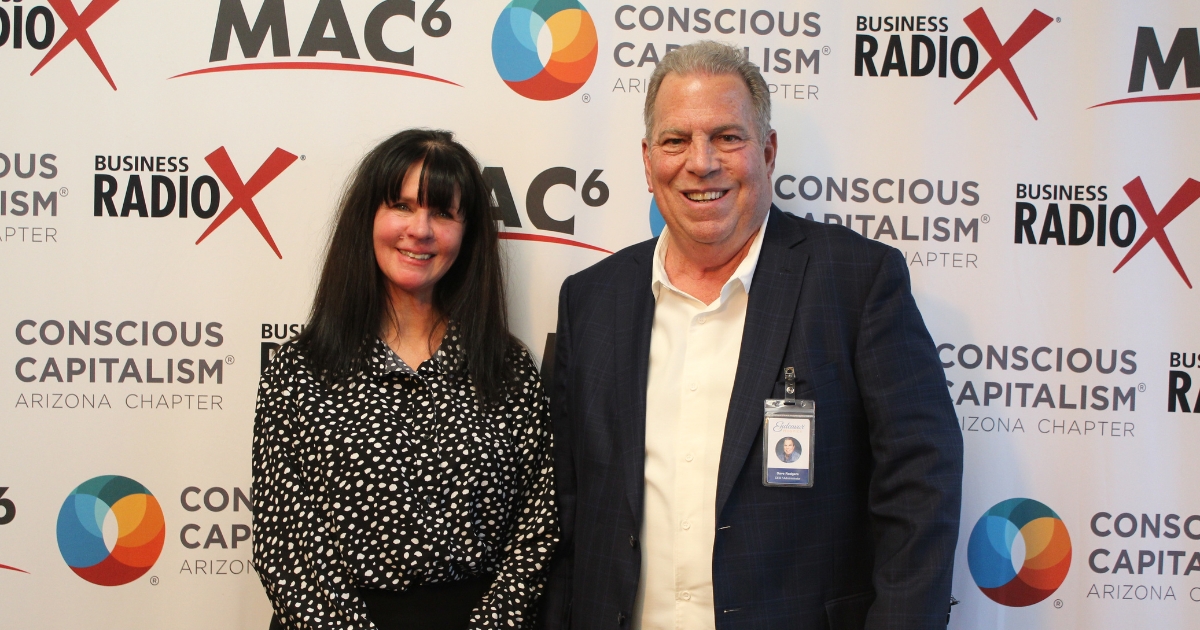
In this episode of Phoenix Business Radio, Karen Nowicki is joined by Sandy Smith and Dave Rodgers with Endeavor Hospice. Together, they stress the vital role of hospice care, breaking down misconceptions and shining a light on the genuine, compassionate approach that sets Endeavor Hospice apart.

Sandy and Dave also share the unique services and structure offered by Endeavor Hospice, including personalized care, getting more medical professionals involved, and offering a safety net of support that goes above and beyond. Whether it’s palliative care or the convenience of Endeavor Care Now for short-term assistance, they’ve got it covered. Through it all, the essence of Endeavor shines through—a team devoted to providing not just medical care, but genuine comfort and compassion to those in their final journey.

HomeCareGroupsmall

Endeavor Hospice is a family-owned hospice founded after the owners own family experience with end-of-life care. Every patient is treated with the love and care that a family member would offer. Endeavor Hospice weaves this philosophy into the very fabric of their services, creating an atmosphere of trust and compassion.

Endeavor Hospice is part of Endeavor Home Care Group which is made up of Endeavor Hospice, Endeavor Home Care , and Endeavor HCBS. Each division is tied to the same mission which is “To Serve and Enrich the Lives of their Patients, their Staff, and the Community”.

Endeavor Home care serves the senior community by providing a variety of non-medical care services including assisting with activities of daily living, transportation, companionship and much more.

Sandy-Smith-Dae-Rodgers-Phoenix-Business-RadioSandy Smith was born and raised in Tempe, AZ and moved to Seattle, WA after high school to attend UW. She stayed in Seattle for 14 years then returned to AZ where she met her husband.

Sandy has a step daughter and an 18 year old son who is graduating high school and attending ASU, and just broke state record for his DMR race at RMHS. She has had a few start up companies of her own and is helping the hospice side of Endeavor grow.

Sandy loves gardening, football, and quality time with her family.

Dave Rodgers started working in a motorcycle shop in California at the age of 13. He was a Pro Motocross Racer from 1969-1972, then led and built companies for 30 years.

In 2000, he transitioned into merger & acquisitions, with a private equity group before doing his own deals.

After the loss of his wife in 2013,  Dave was too young to retire, but felt inspired to do something other that just make money again. After a few more personal experiences with loved ones, he was inspired to help others through the challenges of their later years. Endeavor Home Care Group was launched in 2015 to be a company based on serving others.

Follow Endeaver Hospice on LinkedIn and Facebook.

Tagged With: caregiving, Endeavor Hospice, Family Owned, give back, hospice

Care for Caregivers of Special Needs Children, with Stacy Georges, Special Needs Respite

July 31, 2023 by John Ray

Special Needs Respite
North Fulton Business Radio
Care for Caregivers of Special Needs Children, with Stacy Georges, Special Needs Respite
Loading
00:00 /
RSS Feed
Share
Link
Embed

Download file

Special Needs Respite

Care for Caregivers of Special Needs Children, with Stacy Georges, Special Needs Respite (North Fulton Business Radio, Episode 685)

Stacy Georges, Founder of Special Needs Respite, was the guest on this episode of North Fulton Business Radio discussing the care for caregivers that her nonprofit offers. She talked with host John Ray about the needs of caregivers who have children who need round-the-clock care.  Stacy shared stories of families who have benefitted from having care so they can take a break, what happens when parents don’t get a break, adult special needs children, coming events, and more.

North Fulton Business Radio is broadcast from the North Fulton studio of Business RadioX® inside Renasant Bank in Alpharetta.

Special Needs Respite

Respite care is a form of short-term substitute care for children with special needs, be it mental, emotional, or physical, and is provided by someone other than parents or the usual 24/7 caretakers of the child. It gives parents a break from their exhausting job.

As a group, parents of special needs children are more stressed, and even more at risk for divorce, or worse. Also, according to ARCH National Respite network, three-fifths of family caregivers age 19-64 surveyed recently by the Commonwealth Fund reported fair or poor health, one or more chronic conditions, or a disability, compared with only one-third of non-caregivers.

Respite is something that parents of special needs children desperately need. Although programs in Georgia exist to help these parents, such as the NOW waiver, there is a very long waiting list and very little money available. Many families, as a result, don’t have funds available for such an essential service, putting a strain on them physically, emotionally, and financially.

Special Needs Respite helps bridge the existing funding gap that many parents have when trying to get childcare for their special needs child. They can provide funds that will pay qualified caregivers to care for these children when no other way to pay is available to the parents.

Website | LinkedIn | Facebook| Instagram

Stacy Georges, Founder, Special Needs Respite

Stacy Georges, Founder, Special Needs Respite

Stacy Georges has been serving the disability community for 32 Years. The last 15 years have been focused on serving families here in Metro Atlanta. Even in a densely populated area such as Metro Atlanta, there are families isolated and decimated due to their children’s special needs. This results in loss if hope, and frequently ends in murder suicide. These are the families we can give hope.

Stacy holds a B. A. in Therapeutic Recreation from Purdue University.  Becoming a parent was her real education with all its challenges, and especially interacting with parents who had even more challenges with children with special needs. Founder of YourRespite special needs child care, Stacy started Special Needs Respite to help meet the needs of even more parents of children living with special needs.

She is available for speaking engagements to  churches and civic groups to further the community  understanding of how to minister to Special Needs families.

Stacy and her husband, Tom, reside in Roswell, GA.

LinkedIn

Questions and Topics in this Interview:

  • What is Respite?
  • Why is Respite important?
  • What happens when parents DON’T get Respite?
  • Shouldn’t my Taxes pay for this service?
  • How can we help?

North Fulton Business Radio is hosted by John Ray and broadcast and produced from the North Fulton studio of Business RadioX® inside Renasant Bank in Alpharetta. You can find the full archive of shows by following this link. The show is available on all the major podcast apps, including Apple Podcasts, Spotify, Google, Amazon, iHeart Radio, Stitcher, TuneIn, and others.

RenasantBank


Renasant Bank has humble roots, starting in 1904 as a $100,000 bank in a Lee County, Mississippi, bakery. Since then, Renasant has become one of the Southeast’s strongest financial institutions with over $13 billion in assets and more than 190 banking, lending, wealth management, and financial services offices in Mississippi, Alabama, Tennessee, Georgia, and Florida. All of Renasant’s success stems from each of their banker’s commitment to investing in their communities as a way of better understanding the people they serve. At Renasant Bank, they understand you because they work and live alongside you every day.

Since 2000, Office Angels® has been restoring joy to the life of small business owners, enabling them to focus on what they do best. At the same time, we honor and support at-home experts who wish to continue working on an as-needed basis. Not a temp firm or a placement service, Office Angels matches a business owner’s support needs with Angels who have the talent and experience necessary to handle work that is essential to creating and maintaining a successful small business. Need help with administrative tasks, bookkeeping, marketing, presentations, workshops, speaking engagements, and more? Visit us at https://officeangels.us/.

Tagged With: Caregivers, caregiving, caring for the caregiver, disability community, John Ray, North Fulton Business Radio, Office Angels, renasant bank, Respite, special needs children, Special Needs Respite, Stacy Georges

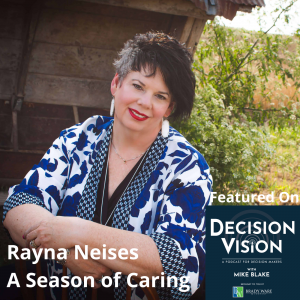
Decision Vision Episode 115:  Should I Become a Caregiver? – An Interview with Rayna Neises, A Season of Caring

May 6, 2021 by John Ray

A Season of Caring
Decision Vision
Decision Vision Episode 115:  Should I Become a Caregiver? - An Interview with Rayna Neises, A Season of Caring
Loading
00:00 /
RSS Feed
Share
Link
Embed

Download file

A Season of Caring

Decision Vision Episode 115:  Should I Become a Caregiver? – An Interview with Rayna Neises, A Season of Caring

Caregiving might seem like a topic which doesn’t fit a business podcast, yet when the need to act as a caregiver to a parent or other family member arises, a career or business is affected. Rayna Neises, who journeyed through her own seasons of caring with parents affected by Alzheimer’s, joined host Mike Blake to address issues and questions which arise for caregivers in these circumstances. Decision Vision is presented by Brady Ware & Company.

Rayna Neises, Certified Coach/ Author, A Season of Caring

A Season of Caring
Rayna Neises, Coach/Author, A Season of Caring

A Season of Caring is owned and operated by Rayna Neises an ICF Associate Certified Coach with certifications in both Life and Leadership Coaching from the Professional Christian Coaching Institute. She specializes in supporting those who are in a season of caring for an aging parent.  A Season of Caring offers private coaching, monthly online support groups, a variety of workshops with a membership option coming soon.
Caregivers don’t need to aimlessly wander through this season, they can have the guidance and support they need in order to be able to look back with no regrets once they have walked their parent all the way home.

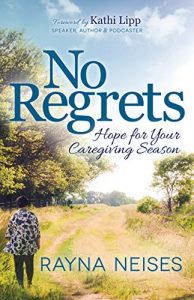
Rayna has also published a book with Morgan James Publishing sharing heartwarming stories and practical takeaways from her experience of caring for her father in the last years of his journey with Alzheimer’s.  No Regrets: Hope for Your Caregiving Season is a must-read.

Rayna is the host of “A Season of Caring”, a weekly podcast where she interviews family caregivers and caring professionals to offer Hope for Living, Loving and Caring with No Regrets to her listeners.

Rayna lost both of her parents to Alzheimer’s disease twenty years apart. After her season of caring for her dad through his journey, she founded A Season of Caring Coaching where she offers encouragement, support, and resources aimed at preventing family caregivers from aimlessly wandering through this important season of life.

Rayna lives on a farm in southeast Kansas with her husband, Ron, and a small pack of dogs. She is the baby of her family, but most would never guess that. She is a former teacher and enjoys crafts of all kinds and spending time with her grandkids most of all.

Mike Blake, Brady Ware & Company

Mike Blake, Host of the “Decision Vision” podcast series

Michael Blake is the host of the Decision Vision podcast series and a Director of Brady Ware & Company. Mike specializes in the valuation of intellectual property-driven firms, such as software firms, aerospace firms, and professional services firms, most frequently in the capacity as a transaction advisor, helping clients obtain great outcomes from complex transaction opportunities. He is also a specialist in the appraisal of intellectual properties as stand-alone assets, such as software, trade secrets, and patents.

Mike has been a full-time business appraiser for 13 years with public accounting firms, boutique business appraisal firms, and an owner of his own firm. Prior to that, he spent 8 years in venture capital and investment banking, including transactions in the U.S., Israel, Russia, Ukraine, and Belarus.

Brady Ware & Company

Brady Ware & Company is a regional full-service accounting and advisory firm which helps businesses and entrepreneurs make visions a reality. Brady Ware services clients nationally from its offices in Alpharetta, GA; Columbus and Dayton, OH; and Richmond, IN. The firm is growth-minded, committed to the regions in which they operate, and most importantly, they make significant investments in their people and service offerings to meet the changing financial needs of those they are privileged to serve. The firm is dedicated to providing results that make a difference for its clients.

Decision Vision Podcast Series

Decision Vision is a podcast covering topics and issues facing small business owners and connecting them with solutions from leading experts. This series is presented by Brady Ware & Company. If you are a decision-maker for a small business, we’d love to hear from you. Contact us at decisionvision@bradyware.com and make sure to listen to every Thursday to the Decision Vision podcast.

Past episodes of Decision Vision can be found at decisionvisionpodcast.com. Decision Vision is produced and broadcast by the North Fulton studio of Business RadioX®.

Connect with Brady Ware & Company:

Website | LinkedIn | Facebook | Twitter | Instagram

TRANSCRIPT

Intro: [00:00:01] Welcome to Decision Vision, a podcast series focusing on critical business decisions. Brought to you by Brady Ware & Company. Brady Ware is a regional full-service accounting and advisory firm that helps businesses and entrepreneurs make visions a reality.

Mike Blake: [00:00:21] Welcome to Decision Vision, a podcast giving you, the listener, clear vision to make great decisions. In each episode, we discuss the process of decision making on a different topic from the business owners’ or executives’ perspective. We aren’t necessarily telling you what to do, but we can put you in a position to make an informed decision on your own and understand when you might need help along the way.

Mike Blake: [00:00:40] My name is Mike Blake, and I’m your host for today’s program. I’m a director at Brady Ware & Company, a full-service accounting firm based in Dayton, Ohio, with offices in Dayton; Columbus, Ohio; Richmond, Indiana; and Alpharetta, Georgia. Brady Ware is sponsoring this podcast, which is being recorded in Atlanta per social distancing protocols. If you like to engage with me on social media, with my Chart of the Day and other content, I’m on LinkedIn as myself and @unblakeable on Facebook, Twitter, Clubhouse, and Instagram. If you like this podcast, please subscribe on your favorite podcast aggregator, and please consider leaving a review of the podcast as well.

Mike Blake: [00:01:14] Today’s topic is, should I become a caregiver? And this may seem like a strange topic for a business podcast, but, you know, I think this is one of these topics where personal life and corporate life necessarily merge into one another, or maybe collide – might be the better term – into one another. According to estimates from the National Alliance for Caregiving, during the past year, 65.7 million Americans or 29 percent of the U.S. adult population served as family caregivers for an ill or disabled relative. So, that means that there’s a three out of ten chance in a given year that we are going to find ourselves, at a minimum, a caregiving opportunity, if not ultimately a caregiving position.

Mike Blake: [00:02:13] And while some of us may be in a position to simply retire or leave the workforce, not all of us will be. And even if you are in that position, you are going to be forced to make a difficult decision. But the fact of the matter is, I think for most people – I don’t know if it’s a fact. But I certainly think it’s hard to argue – the sudden responsibility that you assume to become a caregiver for another human being is potentially all consuming, all absorbing. And by necessity, just as we do when we are parents, we are going to have to balance the priorities of caring for, if you’re a parent, your children, or as a caregiver for the people under your charge, and your professional responsibilities. And the reality is that on some occasions somebody’s going to lose. Somebody is just not going to get your best because you’re choosing to give your best elsewhere based on whatever your priorities are at that particular time. So, for many of us, this is going to become a real thing.

Mike Blake: [00:03:26] And I have a personal story to share, not nearly on the on the level of that of our guest. But about four years ago, I was visiting my parents in Boston. And the day before I was going to leave, I thought I was going to go take on a Red Sox game. At the very last second, I said, “You know what? It’s just the Tampa Bay Rays anyway, I’m not going to bother. I’ll watch the game at home.” And so, I sat down to watch the game at home. My dad was going to join me. Long story short, he basically had a stroke right in front of me. And, I’ve never seen somebody – frankly, I didn’t know he had a stroke. I just knew something was not right.

Mike Blake: [00:04:09] And my parents live in a fairly large house. My mother was on an entirely different floor. And, you know, long story short, because I was there, an ambulance was at our house within ten minutes. And that, at a minimum, saved his life and also probably saved him from massive brain damage as well. And I believe I’m not the hero of the story. I just happened to be in the right place at the right time and I hit the panic button. That’s all I did.

Mike Blake: [00:04:34] But it did sort of drawn a very sharp focus that, had things gone differently, that I could have been put in a position of being a caregiver. My mother, she’s still independent, but I don’t know that she’d be in a position to do that entirely on her own. But the point is, there before the grace of God, I still have my father, thankfully. And there before the grace of God, I may have been in a caregiver position for a long time. And I live in Atlanta doing that from Boston and it could have been a lot of upheaval.

Mike Blake: [00:05:04] So, it did sort of ram home that that day may be coming for me. At some point, it may be coming for all of us. And as I said, there are business implications to that. So, that’s why I’m doing this topic on a business program, because the decision to care for a family member or not is, perhaps, one of the most consequential decisions you may ever make in your professional life because it will have such far ranging impacts.

Mike Blake: [00:05:33] So, joining us today is Rayna Neises, who is literally one of the nicest people I’ve ever met. And that’s how I remember how to pronounce the name. But she’s founder of a coaching company called A Season of Caring. And she is an ICF, International Coaching Federation, Associate Certified Coach with certifications in both life and leadership coaching from the Professional Christian Coaching Institute. She specializes in supporting those who are in a season of caring for an aging parent. A Season of Caring offers private coaching, monthly online support groups, and a variety of workshops to the membership option coming soon.

Mike Blake: [00:06:09] Rayna has also published a book with Morgan James Publishing, sharing heartwarming stories and practical takeaways from her experience of caring for her father in the last years of his journey with Alzheimer’s Disease. No Regrets: Hope for Your Caregiving Season is a must read, especially if you find yourself as a potential or actual Alzheimer’s caregiver. Rayna is the host of A Season of Caring, a weekly podcast where she interviews family caregivers and caring professionals to offer hope for living, loving, and caring with no regrets to her listeners.

Mike Blake: [00:06:40] Rayna lives on a farm in southeast Kansas with her husband Ron and a small pack of dogs. She is the baby of her family, but most would never guess that. She is a former teacher and enjoys crafts of all kinds and spending time with her grandkids, most of all. I think you’re our first guest from Kansas, so thank you for representing the great State of Kansas. Rayna. welcome to the program.

Rayna Neises: [00:06:59] Thank you. It’s great to be here.

Mike Blake: [00:07:01] So, Rayna, I’ve not had a chance to read your book, and I don’t want you to give us spoilers necessary. But I’d like to invite you to share with our listeners your caregiving journey and how that prompted you then to be an advocate for caregivers and someone who teaches other caregivers how to be the best caregivers they can be.

Rayna Neises: [00:07:27] Well, I have the story actually nobody wants to have. I’ve actually lost both of my parents to Alzheimer’s Disease. I was 16 years old when my mom was diagnosed, she was just 53. And she was able to live at home for the 12 year journey through the disease with my dad, who took the option of early retirement to take care of her in the home. And so, just seven years after her passing, my dad was diagnosed with Alzheimer’s. He lived 14 years with the disease and passed away in his home just in June of ’18.

Rayna Neises: [00:08:04] So, we’ve had caregiving a part of our lives. My sister and I, most of our lives. But definitely for me, when dad was diagnosed, we sat down and had a conversation where he asked to stay at home as long as possible. And so, that was something that we kind of had to define and figure out. And about nine years into his diagnosis, he had cancer, skin cancer, had surgery, and the recovery was just really difficult. He had MRSA and some other complications. And his ability to care for his own daily needs just declined quickly. He was living with his sister at the time and she just couldn’t handle it all.

Rayna Neises: [00:08:45] So, we reached a point as a family that we had to make the decision, what are we going to do? And so, looking at memory care units and just trying to decide what was going to work best. Thankfully, my husband just said, “You know, if you don’t see your dad doing well there, then if you need to move here -” which was 220 miles away from our farm “- to care for him, then you need to do that.” And so, I was able to then stop and say, “Okay. What does this look like?” And make plans to do that and recruit help. And so, with my sister, his sister, and paid caregivers, we were able to keep my dad at home for the last four-and-a-half years of his life.

Rayna Neises: [00:09:21] And through that journey, just like you said, so many times, it’s, you know, how do I do this and be a good employee? How do I do this and be a good boss? There’s so many pieces because it impacts everything of your life. And really being able to navigate that without losing your life and losing things that are important to you, your marriage, your job, your career, all of those things, you have to do it intentionally. And so, after my season of caring for my dad, I just really decided to pivot my business and start to focus in on others that are finding themselves in that place. And that’s how I came up with the book as well, as just really what’s the most important things I need to tell people who are walking this journey or just starting out this journey.

Mike Blake: [00:10:08] So, I’m going to go off script a little bit here, because I think I have a better question than the one I originally thought of, and that is, how do you describe to somebody who isn’t already a caregiver what that experience is like? Is it even possible without a common frame of reference? Or do you have to be in that position to really have any hope of understanding what that means?

Rayna Neises: [00:10:33] I think it’s a really tough line to walk, because, first of all, you hate to paint this horrible picture of what it’s going to look like. But the reality is, it’s not easy. There’s really nothing easy about it. And so, I think it is difficult for people to understand. Number one, majority of people just don’t even want to think about it. They don’t want to think about their parents getting older. If their parents get older, they’re getting older. And it’s just a lot. It impacts every area of your life. And so, unless you’re in the middle of it, it is difficult.

Rayna Neises: [00:11:06] But I guess my goal is to help people start thinking about it now. Because the more conversations you have with your family, your parents, whoever it is that needs you to care for them, the more you talk about what they really want, what’s important to them, the more you understand and the more you can make steps in that direction.

Mike Blake: [00:11:26] So, can you describe whether it’s from your client’s or your own perspective, or however it is you choose to approach it, what are the physical and mental tolls that becoming a caregiver takes on that person?

Rayna Neises: [00:11:45] You know, again, every situation is different, you know that. And, really, I think just watching someone age is difficult. I mean, your parents are the people who have known you your whole life. And they’ve always been there for you. And they’ve done things for you. They provided for you. They’ve been support, but they’ve also been that one that kind of shows you how to do it, who taught you to walk, who taught you to talk. You know, all of those things came from them.

Rayna Neises: [00:12:10] So, emotionally, there are so many emotions that are involved in caregiving. There’s that grief, it’s anticipatory grief is what they call it. And it’s anticipating things that are no longer going to be the same that you experienced all the time. They’re little things, like mom can’t make the same pumpkin pie that you’ve always had for Thanksgiving, because she doesn’t remember, or it’s not safe for her to cook anymore, or she’s gone.

Rayna Neises: [00:12:38] You know, my dad and I were in business together, and we found that those business meetings that he had always been – he was an accountant – where he was able to bring his expertise of people management and money management to our business together, which I was doing the hands-on running, he just got to a point where it was too confusing. There was too much for him to be able to really take the information in and problem solve with me. That was a loss. I mean, you’re losing the normal relationship that you’ve had, no matter what the situation is.

Rayna Neises: [00:13:11] And physically, there’s just a lot of stress involved, whether it be physical stress of needing to physically – you know, there were times that my dad’s blood pressure would drop and he would collapse, and physically getting him off of the floor into a safe place. Lack of sleep as a caregiver. Oftentimes, when you’re caring for someone, you’re on the alert. Just like you are when you have a young infant, you’re listening for every little thing to be able to come in. So, lack of sleep, eating habits, just all of those things can really fall to the wayside unless we’re intentional. And that’s where, you know, I feel that I can provide the most support for caregivers, is, asking them to check in, asking them to be able to really see where they are, and if they’re taking care of themselves or not.

Mike Blake: [00:13:58] So, as somebody comes to you and looks for coaching and maybe they’re in mid-caregiver mode, or maybe they realize they’re about to embark upon that responsibility, what sort of the beginner’s crash course – when you have that first conversation, how do you prepare them for the awesome responsibility that they’re considering or maybe they’re about to take on, whether considering or not or maybe they just have to? How do you prepare them for that?

Rayna Neises: [00:14:28] So, the main thing is to start with an inventory of where is your life right now. You know, when I stepped into this caregiving role of driving 220 miles one way to my dad’s home, I was teaching four-and-a-half days a week, I had a high school or at home, I had volunteer responsibilities at my church, and kids getting married. There were all kinds of things happening in our lives that are really full plates. So, adding this additional responsibility on top of what I already had really didn’t make sense.

Rayna Neises: [00:14:55] And so, for a period of time, I needed to ride out those responsibilities. But, eventually, I had to move some of those things off of my plate to really make room for caregiving and at the same time have some white space. Because if we don’t have margin in our life, we’re not going to make it. So, really having that conversation of what’s most important to you right now, and what can you let go of, and how are you going to make room in your life for this important role.

Mike Blake: [00:15:23] Now, I suspect, but I don’t know. But I suspect that also another part of this equation is that, you know, as a caregiver or as a caregiver to a new individual, if you will, I may also already have some sort of caregiving responsibilities, right? You mentioned you are a mom of a high schooler. And we know right now, for good or ill, mom, still, they really carry the meal in the household. And what sort of toll does it take on the family that, all of a sudden, has to share and is not going to get – for lack of a better term – the level of service they’re used to from somebody who now has an entirely new caregiving responsibility? And that caregiving responsibility may be more labor intensive than the one they’ve already got.

Rayna Neises: [00:16:17] Important key, you have to get everybody on board and you have to make them understand what we’re looking at. And I would say, the most important thing, the first step is to evaluate where you are and what you have room for. But the other thing is, it doesn’t mean that you have to do it all. You have got to build your team. You have to find the people to support you. So, yes, I went, but I went three days a week. And I brought people in to take care of the other three days so I could be with my family the other three days. So, I brought in help at home. I brought in someone to help clean my house. I brought in someone to clean my dad’s house.

Rayna Neises: [00:16:54] You know, just because it needs to be done, doesn’t mean you have to put your superhero cape on and do it. In fact, you need to take that super hero cape off and find people to help you. Everybody needs their sidekicks. And the more that you build into your team, the better you’re going to be, the healthier you’re going to be, and the longer you’re going to be able to sustain it.

Mike Blake: [00:17:13] I think that’s a really important point. And I want to kind of pause on that for a second, because, again, going back to the parenting model, because that’s the only one that I know in this kind of context. We’ve heard that it takes a village to raise a child. And there is at least a notion, whether or not it’s implemented all the time – again, not this podcast – that good child raising is a community responsibility. If we can, we look out for each other’s children. We try to impart a certain culture, a certain ethos, certain values system, sense of community, et cetera. And your notion that it takes a team to be a caregiver, I think is so important. Where does that team typically come from? Who are the team members?

Rayna Neises: [00:18:05] That’s a great question. I think part of what the struggle is that people assume it’s going to be family. We’re going to all just come together, and we’re all going to get along, and we’re all going to do the same thing, and we’re all going to contribute the same amount. And that is not true. It doesn’t happen. My family was very unusual. And then, I have one sister, and she and I both, we really worked together, we made a lot of sacrifices together. We did not find a lot of conflict. In fact, in my book, again, I say, we found a new relationship, a stronger relationship when we came together to care for my dad.

Rayna Neises: [00:18:38] But, typically, people find that they have these expectations that no one lives up to. And so, there’s a lot of frustration, a lot of feeling dumped on often. And that’s because they’re not looking beyond the family. Point blank, not everyone has the same natural capacity to be a caregiver as others. And so, if you find yourself being that person, great. But don’t expect everyone to be you. So, you have to look outside.

Rayna Neises: [00:19:06] So, I mentioned someone to clean my house. Yard people, I think, are part of the team. Medical people are definitely part of the team. Paid caregivers are part of that team. I believe your employer needs to be a part of that team, because they need to understand what it looks like and what your responsibilities are. The person you’re caring for needs to be a part of that team, because they need to be cooperative and they need to be helpful in that situation. As well as legal and financial professionals. I think we have to build this full capacity team to really help us to meet all of the needs.

Mike Blake: [00:19:40] And, you know, you bring up an interesting point that it doesn’t necessarily have to be family members. In fact, a lot of those team members probably won’t, right? I am qualified to mow a lawn. I’m even qualified to cook to a limited extent, as long as your standard is that it won’t kill you, but it won’t taste all that great. But, you know, I’m not qualified to provide legal advice. I don’t think I’d ever want to manage my parents money, because I have a sister. And there are all kinds of just bad things that can happen just optically when one family member sort of manages money, and that can get very ugly, as I’m sure you’ve seen or heard about.

Rayna Neises: [00:20:23] So, it’s interesting that a lot of that team may very well come from outside of the family. And, you know, I wonder if, in fact, there’s another touch point here with business that, probably some of your skills that may have led one to be successful in business, life management, time management, motivation, coaching, prioritizing resources, et cetera. You know, maybe there are skills from the business world that actually help make this more effective. What do you think about that?

Rayna Neises: [00:20:59] Definitely, 100 percent. I think the more that you realize that this is a team and that you’re managing a team, the stronger you’re going to be. You have to hire, you have to fire, you have to make sure that all of those needs are met. People are working within their strengths and that they are pulling their weight. If they aren’t, then you need to make an adjustment to that team.

Rayna Neises: [00:21:19] And I think that brought a lot of strength to our team, is, my background in business in the comfort level of interviewing, whether it be companies that we were hiring to provide help or individuals. And then, also, I think that business perspective, we aren’t successful individually. We have to have the support that we need. And even if we’re a solopreneur, we need support. And you’re smart enough to know that what’s not your strength is not where you need to be. And so, hire. It’s just like you do in the office.

Mike Blake: [00:21:54] So, one question I’m curious about is, of course, becoming a caregiver is a life changing experience – life altering experience. Not life changing. Though it could be, I guess, from a spiritual perspective. But just life altering in terms of how you’re going to live your life for some possibly indefinite period of time. How long do you find it takes people to adjust to that new reality? And I think that question is important so that people understand, maybe if they’re not perfect right away, they should cut themselves some slack. Because it seems to me this is life shift that would require some sort of breaking in period.

Rayna Neises: [00:22:40] Yeah. I think it definitely does. And it totally depends on the situation. Sometimes people have a slow, gradual step into needing to support their parents. They’re starting to see things like needing help around the yard or cleaning the gutters, those types of things. Some people, it’s a sudden stroke or an accident that suddenly demands a lot of time. And so, I think initially, like anything, we have to just respond. If it’s a crisis, we’ve got to realize it’s a crisis and we’re going to respond in that. And it’s going to take a lot of our time initially. And then, as we find that we build that team that we need to have, we bring in others and we can find more of that balance that we need in life in general to make it.

Rayna Neises: [00:23:27] So, that’s a part of life. We have to integrate caregiving. We cannot allow it to become all of our lives or we’re going to regret that. And so, you know, making sure that we’re integrating it in and we’re making our lives what we want them to be. Both honoring those that were caring for and ourselves and our other family members, I think, is a really crucial piece of that.

Rayna Neises: [00:23:49] The other part that I think oftentimes people overlook is, at the end of life, how important it is to understand this is going to be unlike any other time. It’s going to last as long as it takes. But at the same time, it’s going to take a lot out of our lives, and a lot of our time, a lot of our energy. I know at the time when I lost my mom, it was a six week process of just finally saying goodbye. And at the same time, I had a job and I had other things that I needed to do. But it’s a matter of realizing that some seasons within this caregiving are going to be more demanding than others.

Mike Blake: [00:24:31] A question I want to make sure that I get to is this, caregiving, of course, is one of the ultimate acts of service. And the thought going on in my mind is, I wonder if everybody is really cut out to be a caregiver. And what I’m really getting to is that, are there people in certain circumstances that maybe shouldn’t be a very active caregiver unless they absolutely have to? Are there certain personality profiles? Are there certain physical limitations? You know, frankly, are there people that just have a hard enough time taking care of themselves and then adding somebody else’s wellbeing is just not a good match for that person? Is that a profile or do you think that anybody can adapt with sufficient motivation and time to becoming a caregiver?

Rayna Neises: [00:25:24] I think it’s actually a really wise thing to realize that there are different personalities and there are some that are going to do and respond better than others. Again, different types of illnesses require different types of personalities, probably, or physical strength. You know, if a person is bed ridden, then obviously not everyone is physically able. Someone has a bad back, they’re not able to do some of the things that need to be done for a person who’s aging to make sure that they’re safe – the person they’re caring for is safe, successfully get them off of the floor or stop them from falling.

Rayna Neises: [00:26:02] Another piece of that I think is just, if you’re looking at someone who has dementia – which the numbers are high, that over 35 percent of the people over the age of 65 have some form of dementia – it is very trying to take care of them at times. The repeated questions, the lack of processing, they’re non-ability to understand what’s happening. You know, you really do have to be a certain type of personality to find the way to interact with them.

Rayna Neises: [00:26:37] That being said, I think that people think of caregiving as the hands-on piece only. And I think that that’s where we missed the boat a lot of times. The physical needs of the person we’re caring for are important, and definitely we want someone who’s competent and compassionate doing that. But if you are a child, you have a role in your parents life, no matter if you’re the hands-on person or not. No one can replace you as their daughter or son.

Mike Blake: [00:27:07] So, what are some tips that an individual who finds himself in that position – and you’ve hinted at it, but I’m confident that it’s a highly stressful, emotionally demanding position to be in. What are some tips that you give to people in terms of their own selfcare so that they can, frankly, hold up under that stress?

Rayna Neises: [00:27:35] It is definitely a stressful situation. And I think realizing, number one, that’s part of why I encourage people to take on the caregiver name. Because I think when we realize that we are a caregiver, we do then embrace the fact that there’s more stress in our lives than just being a daughter or son supporting an aging parent. But, you know, like anything dealing with stress, there’s definitely things to do that you need to do, get good sleep, drink plenty of water, get those exercise.

Rayna Neises: [00:28:05] But that’s where the emotional side comes in. I find that most people need to really take time to process the emotions, to grieve the losses, the changes in life, the things that will never look the same again because their parents are not able to be that same person that they were when they were younger. And really take the time to reflect. So, I say you need to be intentional with the commitments that you make and with the things that you choose to keep in your life during the season. And then, at the same time, you need to be reflective. So, each time, once a week, whatever it is, schedule time to stop and check in with yourself. How am I doing? What do I need to do differently? And a lot of times just the question, how am I doing?

Rayna Neises: [00:28:53] I might have had a really rough weekend with my dad. I might have had a time where I was not patient with him or as patient as I wanted to be. Or I might have gotten frustrated with another caregiver and the fact that they didn’t write down that something was used up in the house. And so, we didn’t have catch up when we needed it for our hotdogs, whatever it was. That frustration, that irritability, usually, when I really took the time to step back and look at it, it was because there was something else going on. Either I wasn’t getting enough rest or I was frustrated with myself and didn’t respond well.

Rayna Neises: [00:29:28] Really reflecting, and understanding those emotions, and taking the time to work through the emotions, ride through the emotions, and get the support that you need. I’m a huge advocate for support groups. I think that they can bring a lot of encouragement and normalcy to your life in that season. And so, really finding the support that you need, whatever that looks like, if it’s a coach or support group, counselor, making sure that you’re caring for yourself in that way.

Mike Blake: [00:29:55] So, you mentioned the emotional toll – and maybe I’m putting words in your mouth – but it sounds like it can be something of a roller coaster.

Rayna Neises: [00:30:03] Definitely.

Mike Blake: [00:30:05] I’d like to talk about one emotion in particular, and that is, at the end of that season. All caregiving stints are going to end one way or the other. And I have some thirdhand experience with this because I’ve been involved as a volunteer with Lou Gehrig’s disease advocacy groups. And of course, that’s basically Alzheimer’s of the body.

Mike Blake: [00:30:32] And, you know, something that I’ve heard from caregivers in that scenario is, the most difficult or one of the most difficult emotions that those caregivers have to address or confront is their sense of relief and the guilt that they face around that relief. That, yes, they’re sad that their loved one has died and they miss that person terribly. But on the other hand, suddenly their obligation, a massive obligation, has ended and they can resume their lives. So, their lives have become significantly unburdeneAll right. And, again, thirdhand, I’ve heard that, that in itself can be a different kind of trauma, if you will. Have you heard or experienced something similar? And if so, how do people kind of deal with and work through that?

Rayna Neises: [00:31:29] I think that that’s a normal piece of grief. And society today, I don’t think we really acknowledge grief or understand grief. We think of it as these stages and steps. And really, that’s not what it is. It’s those steps, those stages, that we hear about are pieces of the grief. But they can happen simultaneously. You can move forward. You can move backwards. You dance within the grief throughout the season.

Rayna Neises: [00:31:56] So, I think definitely it is unsettling when you have spent so much of your time and so much of your energy focused in on one person or one activity. And especially by the point in time when you lose that person, because like I mentioned earlier, it’s one of those things that that amount of time, that commitment, is going to increase at the end of your loved one’s life. It just is. And so, that’s something that you have spent a great deal of time with them there at the end. And then, suddenly, like you said, they’re gone.

Rayna Neises: [00:32:33] For me, personally, I called it an untethering. The best description I had was, my dad was my last parent. He was kind of my always come back to home place and then he was gone, and that was very difficult. I did not expect grief to be as overwhelming for me as it was. I knew that I agreed throughout my season. I knew that it was coming. I mean, we’re taking care of someone with a terminal illness, but it is still surprising when you reach the end. And at the same time, I think it can be very unsettling.

Rayna Neises: [00:33:15] I called it grief brain. I found myself not being able to accomplish tasks that I had accomplished in the same period of time. Sometimes it took twice as long. It was exhausting. I found myself tired when I didn’t do anything. And so, it was a long period of time that I was thankful I had counsel to just rest, and to allow it to be what it was, and to be in the grief, and not to try to push through it or to try to ignore it.

Rayna Neises: [00:33:45] So, I think for everybody, it’s different. Like, all emotions, I think, it definitely is a time where it’s surprising. And, for me, honestly, that’s where the name of my book came from. As I looked back, I didn’t regret what I did. I didn’t regret investing as much of my time and energy in my dad, and building the memories, and having the opportunities of the joy that we experienced during that four-and-a-half years that I spent with him. I was able to look back and say, “I don’t regret any of those things that I did.”

Rayna Neises: [00:34:15] And, for me, taking that experience and pivoting with my business was part of what helped me move forward. So, I think it’s important to find what you can take from that time. And, for me, it was important for me to give to others and that really helped to move me forward and out of that grief.

Mike Blake: [00:34:37] And I wonder also if one is in that position for, you know, years, that that becomes part of your identity as well. And part of your identity is passing away right along with the relative.

Rayna Neises: [00:34:55] Definitely.

Mike Blake: [00:34:55] And, again, I’m being amateur psychologist here. But that does sound like that would be jarring.

Rayna Neises: [00:35:03] And I think that’s part of why I think it’s so important to teach people, just like anything else, just like workaholism, all of those things can become extreme. Even as a caregiver, if that is all that you have in your life, you’re going to find yourself even more in a depth of depression and struggling with how to go forward. If you maintain a healthy life with caring, being integrated into part of it, then you’re going to find yourself having a marriage to walk back into, having a relationship with your children and other friends. You know, those things are still there. If you neglect them for the entire time that you’re in a caregiving season, you’re going to find that they aren’t there and you’re going to be, you know, in a lot worse shape.

Mike Blake: [00:35:49] We’re talking to Rayna Neises. And the topic is, Should I become a caregiver? I want to switch gears a little bit to talk a little bit more directly about managing the professional side of one’s life in this kind of scenario, the caregiver scenario. And one question I’d like to cover is, if you have an employer, how do you approach that conversation with an employer about being a caregiver? And I guess giving them a heads up that this is going on and you just want to make your employer aware of it. How do you approach that? And what do you hope to achieve with your employer by having that conversation?

Rayna Neises: [00:36:36] So, in my employee/employer situations, I think I’ve been as a teacher and then, also, working in other industries that just having that personal relationship with my boss. So, I just made sure that I made an appointment, went in and just said, “This is where we’re at. My mom is progressing in her disease. We’ve reached a point where we think we’re going to lose her. I just want you to be aware that we’re probably talking within weeks that she’s going to pass away. And remind me again the policy of how long I can be gone and those kinds of questions.”

Rayna Neises: [00:37:11] If you’re not at the end, then I think just letting them know that this is something that’s going on in my personal life, and that I have the support that I need to be able to continue to do what I need to do here at work. But I do want you to know there might be emergencies that come up here or there and that I’ll do the best I can to juggle as I need to.

Rayna Neises: [00:37:31] But I think knowing that you have family leave time or a leave time to be able to take those loved ones to the doctor’s appointments or do those things that you need to do, it’s important to be communicating that those are going to be needed. At the same time, I think as an employee, it’s really important to honor your responsibilities and make sure that you have the support that you need to be able to continue to do the best you can at your work.

Rayna Neises: [00:37:56] And, also, to deal with your emotional needs. You know, just because you’re in this season doesn’t mean it’s okay to not be healthy. So, if you need to get the support of a counselor or other people in that way, too, I think that’s important. Because your job, they need you to perform the best that you can at that point.

Mike Blake: [00:38:15] So, on the other side of the coin, how can employers be supportive of caregivers – assuming this is desired – so that they can remain employed by the company and still deliver the value or at least most of the value that they have been delivering?

Rayna Neises: [00:38:31] I think at this time with COVID, we’ve learned that working from home actually can have a good productivity. And so, being flexible and open to options that are available for your employee, I think, is an important piece of that. Realizing that emergencies are going to creep up. And just like you have a new mom who has a tendency to have a sick child and need to be at home more than a person who’s in this season of their life is probably going to find themselves needing to go to doctor’s appointments, needing to take off at last minute a little bit more than they probably did before they took on this role.

Rayna Neises: [00:39:08] So, I think there’s just an understanding of them being willing. They are trying to do the best that they can and not feeling like they’re using that as an excuse. But rather being supportive and that helping to problem solve, being flexible with their schedule as far as allowing them to come in and make up hours or stay late on another day if they need to leave for a doctor’s appointment, those types of things. I think just even as the boss asking the question “How’s mom doing?” can really help that employee feel appreciated, understood, and just build that loyalty even more.

Mike Blake: [00:39:43] Rayna, this has been a great conversation. We could go so much more in depth, but probably the best thing to do is to refer people to your book. You certainly can learn a lot of lessons from that, I’m sure. But aside from that, if people have questions we haven’t addressed or if there’s something they’d like to go into more depth than we were able to today, can they reach out to you? And if so, what’s the best way to contact you for more information?

Rayna Neises: [00:40:06] Definitely. So, my website is aseasonofcaring.com. And there’s a contact form on there, you can make a time to schedule a time to talk. I would be more than happy to answer any questions to try to support people in any way that I can. You can also find out more about the book at noregrets-book.com. And there’s some preorder offers available here for the next month or so. And then, you can just find it at all major retailers after June 1st.

Mike Blake: [00:40:34] Well, that’s going to wrap it up for today’s program. I’d like to thank Rayna Neises so much for joining us and sharing her expertise with us.

Mike Blake: [00:40:41] We’ll be exploring a new topic each week, so please tune in so that when you’re faced with your next business decision, you have clear vision when making it. If you enjoy these podcasts, please consider leaving a review with your favorite podcast aggregator. It helps people find us that we can help them. If you like to engage with me on social media with my Chart of the Day and other content, I’m on LinkedIn as myself and @unblakeable on Facebook, Twitter, Clubhouse, and Instagram. Once again, this is Mike Blake. Our sponsor is Brady Ware & Company. And this has been the Decision Vision podcast.


Tagged With: A Season of Caring, Brady Ware, Brady Ware & Company, Caregivers, caregiving, elder care, Michael Blake, Mike Blake, No Regrets, Rayna Neises

Business RadioX ® Network


Our Most Recent Episode

CONNECT WITH US

  • Email
  • Facebook
  • LinkedIn
  • Twitter
  • YouTube

Our Mission

We help local business leaders get the word out about the important work they’re doing to serve their market, their community, and their profession.

We support and celebrate business by sharing positive business stories that traditional media ignores. Some media leans left. Some media leans right. We lean business.

Sponsor a Show

Build Relationships and Grow Your Business. Click here for more details.

Partner With Us

Discover More Here

Terms and Conditions
Privacy Policy

Connect with us

Want to keep up with the latest in pro-business news across the network? Follow us on social media for the latest stories!
  • Email
  • Facebook
  • Google+
  • LinkedIn
  • Twitter
  • YouTube

Business RadioX® Headquarters
1000 Abernathy Rd. NE
Building 400, Suite L-10
Sandy Springs, GA 30328

© 2026 Business RadioX ® · Rainmaker Platform

BRXStudioCoversLA

Wait! Don’t Miss an Episode of LA Business Radio

BRXStudioCoversDENVER

Wait! Don’t Miss an Episode of Denver Business Radio

BRXStudioCoversPENSACOLA

Wait! Don’t Miss an Episode of Pensacola Business Radio

BRXStudioCoversBIRMINGHAM

Wait! Don’t Miss an Episode of Birmingham Business Radio

BRXStudioCoversTALLAHASSEE

Wait! Don’t Miss an Episode of Tallahassee Business Radio

BRXStudioCoversRALEIGH

Wait! Don’t Miss an Episode of Raleigh Business Radio

BRXStudioCoversRICHMONDNoWhite

Wait! Don’t Miss an Episode of Richmond Business Radio

BRXStudioCoversNASHVILLENoWhite

Wait! Don’t Miss an Episode of Nashville Business Radio

BRXStudioCoversDETROIT

Wait! Don’t Miss an Episode of Detroit Business Radio

BRXStudioCoversSTLOUIS

Wait! Don’t Miss an Episode of St. Louis Business Radio

BRXStudioCoversCOLUMBUS-small

Wait! Don’t Miss an Episode of Columbus Business Radio

Coachthecoach-08-08

Wait! Don’t Miss an Episode of Coach the Coach

BRXStudioCoversBAYAREA

Wait! Don’t Miss an Episode of Bay Area Business Radio

BRXStudioCoversCHICAGO

Wait! Don’t Miss an Episode of Chicago Business Radio

Wait! Don’t Miss an Episode of Atlanta Business Radio