Business RadioX ®

  • Home
  • Business RadioX ® Communities
    • Southeast
      • Alabama
        • Birmingham
      • Florida
        • Orlando
        • Pensacola
        • South Florida
        • Tampa
        • Tallahassee
      • Georgia
        • Atlanta
        • Cherokee
        • Forsyth
        • Greater Perimeter
        • Gwinnett
        • North Fulton
        • North Georgia
        • Northeast Georgia
        • Rome
        • Savannah
      • Louisiana
        • New Orleans
      • North Carolina
        • Charlotte
        • Raleigh
      • Tennessee
        • Chattanooga
        • Nashville
      • Virginia
        • Richmond
    • South Central
      • Arkansas
        • Northwest Arkansas
    • Midwest
      • Illinois
        • Chicago
      • Michigan
        • Detroit
      • Minnesota
        • Minneapolis St. Paul
      • Missouri
        • St. Louis
      • Ohio
        • Cleveland
        • Columbus
        • Dayton
    • Southwest
      • Arizona
        • Phoenix
        • Tucson
        • Valley
      • Texas
        • Austin
        • Dallas
        • Houston
    • West
      • California
        • Bay Area
        • LA
        • Pasadena
      • Colorado
        • Denver
      • Hawaii
        • Oahu
  • FAQs
  • About Us
    • Our Mission
    • Our Audience
    • Why It Works
    • What People Are Saying
    • BRX in the News
  • Resources
    • BRX Pro Tips
    • B2B Marketing: The 4Rs
    • High Velocity Selling Habits
    • Why Most B2B Media Strategies Fail
    • 9 Reasons To Sponsor A Business RadioX ® Show
  • Partner With Us
  • Veteran Business RadioX ®

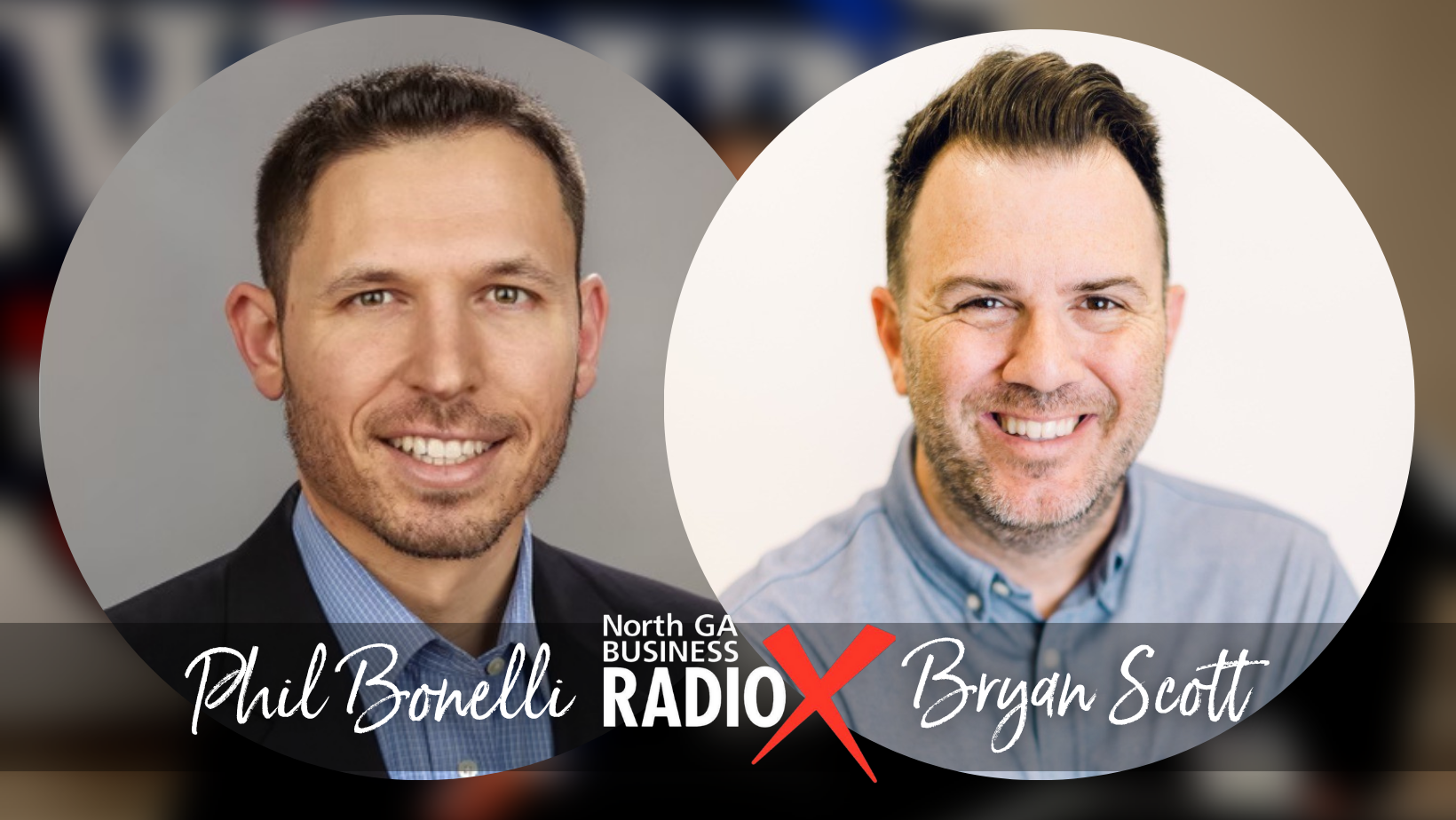
Bryan Scott | Go Fight Win – Gainesville

June 30, 2025 by Rose

North Georgia Business Radio
Bryan Scott | Go Fight Win - Gainesville
Loading
00:00 /
RSS Feed
Share
Link
Embed

Download file


Designing Business Systems with Purpose and AI Power

When it comes to helping businesses thrive in today’s digital world, Brian Scott doesn’t just talk systems — he builds them. As founder of Go Fight Win, Brian joins host Phil Bonelli on North Georgia Business Radio to break down how his team transforms ideas into fully functioning digital realities, combining high-level design thinking, AI tools, and an unwavering commitment to people-first solutions.

Brian shares the philosophy behind his company’s energizing name, “Go Fight Win,” which stems from a lifelong calling to champion others’ dreams and talents. Whether it’s building apps from scratch, integrating AI into workflows, or designing full-scale customer experiences, his work is grounded in the belief that every brand has a story worth telling — and that story deserves smart, thoughtful execution.

With over two decades of experience in digital agencies working for Fortune 500 clients, Brian brings deep expertise in user experience design, interface systems, and human-centered automation. From Delta’s seat-back screens to digital drive-thru menus at Burger King, he’s helped shape how we interact with tech in everyday life.

But the real magic? Brian’s work demystifies the tech world for small and mid-sized business owners.

He explains how tools like ChatGPT, Claude, and automation platforms such as Zapier and n8n can streamline operations, cut manual busywork, and boost profitability. Brian’s message is clear: AI is not here to replace people; it’s here to empower them.

Listeners will also enjoy personal anecdotes — from nostalgic iPod playlists to bedtime story hacks using AI — and find encouragement to embrace curiosity, creativity, and intentional design in their businesses and lives.

Phil and Brian wrap up with real talk about business integrity, building trust-based client relationships, and the power of simply asking the right questions. Whether you’re a tech-savvy entrepreneur or an old-school operator with a big idea, this episode is packed with insights, inspiration, and actionable wisdom.

Connect with Bryan and the Go Fight Win Team:

Learn more about Brian’s work at GoFightWin.co, and discover how designing better systems can lead your business to real, sustainable victories.

https://www.linkedin.com/in/bryanscottcreative/

https://www.linkedin.com/company/gofightwin/

Connect with Phil Bonelli:

https://www.facebook.com/Hopewell-Farms-GA-105614501707618/

https://www.instagram.com/hopewellfarmsga/

https://www.hopewellfarmsga.com/

Connect with Beau Henderson:

https://RichLifeAdvisors.com

https://www.facebook.com/RichLifeAdvisors

https://www.facebook.com/NorthGARadioX


This Segment Is Brought To You By Our Amazing Sponsors

Hopewell Farms GA
Roundtable Advisors

RichLife Advisors

Regions Bank

 

Highlights of the Show:

00:31 – 01:05 – Phil introduces Brian Scott and breaks down the power behind the phrase “Go Fight Win.”

01:05 – 02:34 – Brian explains his mission to build tools that help others’ ideas take flight—literally.

03:45 – 05:08 – The role of design beyond marketing: systems, apps, and delivering real business results.

05:08 – 06:16 – Brian’s history in digital experience design for major brands like Delta and Burger King.

08:29 – 09:28 – Why curiosity and asking better questions are the keys to unlocking innovation.

17:14 – 18:51 – How Brian uses AI to transform meeting transcripts into proposals, pitches, and solutions.

22:32 – 24:38 – A breakdown of AI tools (Claude, Zapier, n8n) and how they create powerful business automations.

25:03 – 25:58 – Where beginners can start with AI, and how even Brian’s kids use it for quick health checks.

28:46 – 29:57 – How AI and robotics may change farming, assembly lines, and more—without replacing humanity.

36:26 – 37:50 – What it means to build people-first systems using tech, not to replace people but to free them.


Tagged With: AI Tools, Bryan Scott, business systems, ChatGPT, Go Right Win, people-first business solutions

Melanie Cook, Veritas Management Group, and Jeremy Sisemore, ASAP Talent Services

December 15, 2023 by John Ray

Veritas Management Group, ASAP Talent Services
North Fulton Business Radio
Melanie Cook, Veritas Management Group, and Jeremy Sisemore, ASAP Talent Services
Loading
00:00 /
RSS Feed
Share
Link
Embed

Download file

Veritas Management Group, ASAP Talent Services

Melanie Cook, Veritas Management Group, and Jeremy Sisemore, ASAP Talent Services (North Fulton Business Radio, Episode 731)

On this episode of North Fulton Business Radio, John Ray welcomed Melanie Cook from Veritas Management Group and Jeremy Sizemore from ASAP Talent Services. The discussion highlighted the recent merger of the two companies and how they are working towards creating a more diverse, geographically dispersed client base. Melanie discussed Veritas Management Group’s significant role in public health data analytics and IT, citing their global presence in nine countries and close ties with the CDC. Sizemore shed light on ASAP Talent Services’ accomplishments in IT talent recruiting and their customer-oriented approach to delivering customized staffing solutions. Both touched upon how AI and ChatGPT are expected to shape the future of their industries and the steps they’re taking to ensure fair representation in AI data collection. Looking ahead, both Melanie and Jeremy expressed optimism for the year 2024, with plans for further expansion and benefiting from favorable economic indicators.

North Fulton Business Radio is broadcast from the North Fulton studio of Business RadioX® inside Renasant Bank in Alpharetta.

Melanie Cook, CEO, Veritas Management Group

Melanie Cook, Veritas Management Group

As CEO, Melanie is responsible for providing strategic and operational leadership to VMG while driving company growth. She has over 20 years of management experience in the government and corporate sectors as a corporate attorney, senior consultant, and business development executive. She has been widely recognized for organizing and transforming startup enterprises.

In the past, Melanie has held positions as Sr. Consultant to a Wall Street investment bank, Sr. Adviser to the US Secretary of Commerce and the Under Secretary for Technology, Attorney at the Securities and Exchange Commission, and Sr. Consultant supporting the Centers for Disease Control and Prevention (“CDC”).

Melanie is a co-author of Business Success Secrets, an honest, raw, and real look at some of the best-kept entrepreneurial secrets. Business Success Secrets is now a best seller on the Wall Street Journal and USA Today Best Seller lists.

Melanie is a graduate of Spelman College and Harvard Law School.

LinkedIn

Veritas Management Group (VMG)

VMG is a leading management consulting firm offering solutions to complex challenges involving public health, technology, and military domains. They serve government and commercial sector organizations, academic institutions, and non-profit organizations, both domestically and globally. Their diverse team of experts stays on top of the details, so their clients can focus on the big picture.

They specialize in research and evaluation, international support, administrative support, leadership development, health communication, health equity, diversity and inclusion, and military support services.

VMG is proud to be SBA 8(a) certified, MBE, FBE, and SBE certified with the City of Atlanta, and an SBA woman-owned small business.

Website | LinkedIn

Jeremy Sisemore, President, ASAP Talent Services

Jeremy Sisemore, ASAP Talent Services

Jeremy Sisemore has been one of the leading IT executive recruiters throughout North America for the past 20 years.  He started his career with MRI, was Rookie of the Year in 2000, and quickly became the go-to resource for SAP, ERP, and cybersecurity talent acquisition needs nationally.  ASAP Talent serves over 75 major Fortune 500 clients throughout North America and internationally in Hong Kong, Singapore, Germany, and the UK.

Today, Jeremy is President at ASAP Talent Services, a Veritas Management Company.  He serves on the board of The Pinnacle Society and is the Outreach Chair.  He speaks regularly at industry conferences such as NAPS, NCASP, The Fordyce Forum, HAAPC, and MASA, among others.

Jeremy is a content creator, influencer, and writer who has been quoted in CIO magazine.

LinkedIn

ASAP Talent Services

ASAP Talent Services, a Veritas Management Group (VMG) company, is a leading IT executive search firm specializing in SAP and cybersecurity talent. Since 1999, our team members have been trusted recruiting partners for Fortune 500 to Fortune 1000 clients. Their search team has a track record of success in SAP, S/4 HANA, Salesforce, Workday, Hybris, Qualtrics, Callidus Cloud, CoreSystems, and Cyber Security searches at all levels. Hiring managers and IT professionals trust us to get the cultural fit right as well as the technical fit and choose ASAP Talent when quality is a critical factor.  ASAP Talent is a trusted partner for building world-class SAP delivery teams, bringing on SAP consultants on a staff-augmentation basis, or even building teams with a contract-to-hire model.

Website | LinkedIn | Facebook | YouTube

Questions and Topics in this Interview:

00:05 Introduction and Welcome
01:18 Welcoming Guests: Melanie Cook and Jeremy Sizemore
01:47 Discussion on Veritas Management Group
02:48 Importance of Data in Public Health
04:20 Introduction to ASAP Talent Services
05:09 Merger of Veritas Management Group and ASAP Talent Services
05:29 Future Plans and Diversification
08:47 Discussion on Workforce Trends
17:33 Impact of AI and ChatGPT on Workforce
25:37 Success Stories and Future Outlook
31:42 Contact Information and Closing Remarks

North Fulton Business Radio is hosted by John Ray and broadcast and produced from the North Fulton studio of Business RadioX® inside Renasant Bank in Alpharetta. You can find the full archive of shows by following this link. The show is available on all the major podcast apps, including Apple Podcasts, Spotify, Google, Amazon, iHeart Radio, and many others.

RenasantBank


Renasant Bank has humble roots, starting in 1904 as a $100,000 bank in a Lee County, Mississippi, bakery. Since then, Renasant has become one of the Southeast’s strongest financial institutions, with over $13 billion in assets and more than 190 banking, lending, wealth management, and financial services offices in Mississippi, Alabama, Tennessee, Georgia, and Florida. All of Renasant’s success stems from each of their banker’s commitment to investing in their communities as a way of better understanding the people they serve. At Renasant Bank, they understand you because they work and live alongside you every day.

Tagged With: AI, artificial intelligence, ASAP Talent Services, ChatGPT, cybersecurity, data analytics, it executive recruiter, Jeremy Sisemore, John Ray, Melanie Cook, North Fulton Business Radio, public health, Veritas Management Group

ChatGPT for Professional Services Providers: An Interview with Isabella Bedoya, Fame Hackers

April 5, 2023 by John Ray

Fame Hackers
North Fulton Studio
ChatGPT for Professional Services Providers: An Interview with Isabella Bedoya, Fame Hackers
Loading
00:00 /
RSS Feed
Share
Link
Embed

Download file

Fame Hackers

ChatGPT for Professional Services Providers: An Interview with Isabella Bedoya, Fame Hackers

Fame Hackers Founder Isabella Bedoya joined host John Ray on The Price and Value Journey for an overview of ChatGPT and other AI Tools. Isabella shared the insights she had as she learned ChatGPT, results she has experienced on behalf of clients, making the best use of this tool in a professional services business, how it serves marketing and content creation needs, and much more.

Find Isabella’s AI Tools and ChatGPT prompts database mentioned in the interview here. Also mentioned in the interview:  a live workshop, “Master AI and ChatGPT For Your Business,” on April 12, 2023. More information and registration here.

The Price and Value Journey is presented by John Ray and produced by the North Fulton studio of Business RadioX®.

Fame Hackers

Fame Hackers is an AI-powered marketing agency which helps grow and monetize personal brands leveraging LinkedIn and YouTube. In addition, they assist in AI deployment for organizations who want to integrate AI into their operational workflows in order to make their teams more efficient, while saving on labor costs.

Find Isabella’s AI Tools and ChatGPT prompts database mentioned in the interview here. Also mentioned in the interview:  a live workshop, “Master AI and ChatGPT For Your Business,” on April 12, 2023. More information and registration here.

Company website | LinkedIn

Isabella Bedoya, Founder, Fame Hackers

Isabella Bedoya, Founder, Fame Hackers

Isabella Bedoya is founder of Fame Hackers, an AI-powered marketing agency. She has generated over 98M views on TikTok, Youtube, and Instagram leveraging short-form videos, UGC, and influencer marketing for Fortune 500 including Fortune Top 10 – Google & United HealthCare. Now she is building in public exploring the AI space and its advanced use cases to make our lives easier in business.

Fame Hackers is an artist accelerator that helps independent artists establish profitable and sustainable music careers so they can get paid doing what they love.

After working as an A&R for a label under Sony Music, Isabella now uses industry experience coupled with cutting-edge strategies to help musicians monetize their music careers, attract their loyal fan base, and reach the levels of success they desire.

During her time as an A&R she discovered that as long as an artist knows social media marketing and e-commerce strategies, they can create wildly profitable careers without signing record deals.

Shortly after, Isabella set off to learn digital marketing and invested close to six-figures in coaches and consultants to accelerate her knowledge and her growth.

In the meantime, she worked for an award-winning influencer marketing agency where she had the opportunity to work with multiple Fortune 500 brands including but not limited to Snap, Google, Bud Light, United Healthcare, and more. She also managed two TikTok accounts for Sony Music LATAM, and so much more!

Isabella has worked with many celebrities, influencers, and award-winning industry professionals over the past 6+ years, and has also helped independent artists become viral sensations.

Isabella has been invited to speak at the Musicians Institute, BoldTV, Ticker News, iHeartRadio, NBC, KCAA Radio, Beat The Clock Podcast, and published on Medium, Thrive Global, and many more.

LinkedIn

TRANSCRIPT

John Ray: [00:00:00] And hello again, everyone. I’m John Ray on the Price and Value Journey. Welcome. I’m delighted to welcome Isabella Bedoya. She is the founder of Fame Hackers. And Fame Hackers is an AI powered marketing agency that helps grow and monetize personal brands, leveraging both LinkedIn and YouTube. They assist in AI deployment for organizations who want to integrate AI into their operational workflows in order to make their teams more efficient and saving on labor costs. And I think part of that involves getting some clients along the way too, because I see that in your work as well. Isabella, thank you so much for joining us on the Price and Value Journey.

Isabella Bedoya: [00:00:47] Thank you so much for having me, John.

John Ray: [00:00:49] Yeah, It’s a pleasure. So let’s talk a little bit about you and your background first and how you got your journey and what’s taken your work in this direction.

Isabella Bedoya: [00:01:01] Sure. So I started in the marketing realm. I used to do influencer marketing campaigns, digital marketing. And in the process, you know, I started a coaching business, and I was helping other people do this for themselves. And earlier this year, even like towards the end of last year, I came across ChatGPT as the whole world, right, I think got released in November.

And that kind of made the big shift because at first, I kind of like dismissed it. I had used tools like, you know, Jasper and whatever. And so at first, I was like, okay, that’s cool. But then when I actually tested it to work on a client project, that just changed my life completely. Ever since then, I’ve been like obsessed with ChatGPT, with AI. It’s just one of those things I can’t stop talking about.

John Ray: [00:01:53] Well, I love that. I love that that’s the case because we need to talk to you. And folks need to hear from you about that work. So I’m curious about that project. You don’t have to mention names, of course, but just the nature of that project, the insights that came out of that for you and that gave you a sense of the power of ChatGPT and AI generally.

Isabella Bedoya: [00:02:21] Yes. I think for everyone, from what I’ve been understanding as I talk to people, everybody has that kind of like aha moment that it just clicks and all of a sudden, they become obsessed with it. And in my case, I was working on a digital marketing campaign for one of our clients who’s doing like a Taylor Swift giveaway. He’s giving like tickets away for a Taylor Swift concert.

So I had to come up with like the whole entire marketing plan. You know, how are we going to do this? How are we going to target what the videos are going to be about? Like all of the things that normally would have taken us about a week and like at least three people involved, I did the whole thing in like two hours from start to finish, sent in an email. Here’s what we’re going to do.

John Ray: [00:03:10] Wow. And so, but how did that happen, though? I mean, because you — I mean, you developed the insights along the way while you were working on this to be able to do all that?

Isabella Bedoya: [00:03:27] Yeah. So it’s basically like what it comes down to with ChatGPT, it’s about how good of a prompt you can write, the more precise. So prior to this, you know, using it for this client application in particular, I had already been playing around with it for like single use cases, like, you know, write that line of a book. Or every time I thought of like a possible use case, I would run to ChatGPT and try it and see what came out.

So when I did this whole marketing strategy for this particular project, like it was just basically a lot of just tweaking the prompt until I got the output that I wanted. And once I got that output, I was like, okay, I need to replicate that. I probably also Googled a little bit like, you know, what kind of, how to type the prompt. That’s very important. Also, like what to include in the prompt. But yeah, just kind of, you know, in the beginning I was just kind of like everything that was in my head, I was just putting it as a prompt. No real strategy and just seeing what came out.

John Ray: [00:04:33] Yeah. Yeah, that makes sense. So what’s been the — or maybe it’s too early to know, but what’s been the outcome of this marketing strategy outline that you put together?

Isabella Bedoya: [00:04:45] Yeah. So far, we’re just in the midst of it. Just started actually putting this maybe about two or three weeks ago, like actually putting the videos out. From what I saw, we still have to put the month one campaign report together still. But from what I did see, some of the videos did get some traction. I think there was one video that got like over 11,000 views.

And it was really interesting because it was the headlines generated from maybe little tweaks to make sure it’s not like super robotic, but the headlines that were generated from ChatGPT that we turned into TikTok videos.

John Ray: [00:05:23] Wow, that’s impressive. So you talked about the prompt being the key. That really knowing the instructions to give and how to give those are the key. This sounds a lot like the garbage in, garbage out thing. Right?

Isabella Bedoya: [00:05:46] Exactly.

John Ray: [00:05:46] Yeah. Yeah. So say more on that.

Isabella Bedoya: [00:05:50] Sure. So when you write a prompt, normally, like the first thing that you should start your prompt with is what do you actually want it to act as? So when you want like better outputs, for example instead of saying like write 10 hooks for a TikTok video, you would start by saying like, act as a social media strategist. We’re going to create a TikTok marketing plan, right? And then you just give it like direct, very precise, what you want it to come up with. And you could even tell the format, the output of how you want the information presented. Bullet points, in a table format, you can get really precise.

John Ray: [00:06:36] So the key is learning the prompts.

Isabella Bedoya: [00:06:41] Yeah. Well, not necessarily having to memorize them, but more so like at least being familiar with the structure, right? So it’s like, what role does it take or it has to like act into? What is the question? Or like, what is it that you actually want it to do for you? Creating some sort of format, giving it context, giving it guidelines of specifically what you want the AI to do.

And you could even add in like things like tone of voice or how many words you wanted to put out. You could give it like examples to say like, you know, this is an example, I want you to create something like this. So you can definitely like train it and guide it in your direction. But it should always be a little bit more of a, I want to say like more of a bulky prompt, because that way you can include a lot of information for the AI to be more specific.

John Ray: [00:07:44] So all this goes into that one search bar. I don’t know if that’s the term we’re talking, using here for ChatGPT, but that that bar, right, that you put it all in there and cut and paste it, whatever you want to do, you put it right in there.

Isabella Bedoya: [00:08:01] Yep.

John Ray: [00:08:01] And yeah. So what — a lot of the criticism, and I think it comes from a lot of people that have probably never been on it. But they read what other people criticize and they want to glom on to that, right, is they talk about AI being artificial. That’s an original thought. That it’s plain vanilla. And it has no tone of voice. So address those criticisms.

Isabella Bedoya: [00:08:40] Sure. Yes. I think what’s important, especially when you’re dealing with AI for content in this case, like as an example, it’s too generic. It’s very shallow. It lacks the human emotion, perspective, insights, all of that. So I think the first step is that people have to understand that just because they gave you a content idea, doesn’t mean that you have to copy and paste it into LinkedIn or whatever the case is.

You should still do your due diligence and like make sure that you’re optimizing the content to still sound like you. If anything, for content use case specifically, it’s more so just using it as an inspiration or a guideline of what’s something that you could talk about. But what would make your perspective refreshing for people to read is your unique experiences tied to that subject? So in content sense, I would use it more of a inspirational rather than just copy pasting.

John Ray: [00:09:41] Yeah. And that seems like pretty elementary to me. But I mean, you actually have to say that, you know, it’s just like plagiarism, right? I mean maybe it’s not the same kind of plagiarism, but copying and pasting never works, turns out real well, right? So are there some use cases that are better than others in your experience?

Isabella Bedoya: [00:10:14] So I mean it’s really mind blowing because even, for example, I had just last year, I did a sales training where I actually invested in coaching for sales training. And it was interesting because I tried it with ChatGPT and I was like let me see if ChaGPT can act as my sales coach. So I gave it a prompt, I told her to act as a sales coach, that we’re going to role play, we’re going to go through a discovery call, and then at the end provide me feedback. And I thought this was really interesting because I gave it like all the context, like, you’re the buyer, this is what you do.

So from a training perspective for companies, it’s mind blowing because if you can give specific instructions on how you want to be trained, this is saving so much time for companies of having to train their staff on whatever task they need to do because they can just be trained to AI. ChatGPT can pick up on the prompt and run through the exercise with you, and I thought that was very powerful. But I’m sorry, go ahead.

John Ray: [00:11:26] No. No, I didn’t say anything. But since you stopped, let me ask you a question about that specifically. Give an example out of that sales training where you had that live individual, I guess it was, that helped you. Give an example of maybe a specific part of that training that you got out of ChatGPT that you felt was just as robust as what you got from the human being.

Isabella Bedoya: [00:11:57] Sure. Well, what it was, was the one-on-one roleplay. Even though in the live course, there was a group thing and there was a lot of roleplay calls, and it was very efficient and effective. The cool thing about ChatGPT is that I didn’t have to wait for that call. I didn’t have to wait in line to raise my hand in the Zoom and say, can I go next? Right. It was in that sense, it was very effective.

In addition to that, it was like instant. It was like on my own time, and I got the feedback. I also was very precise with the prompts, so I told it like what style of sales conversation I wanted to have. And but now this is where it’s kind of like with a grain of salt because I knew what the correct process, I knew that the flow that was happening with ChatGPT was correct. Had I not known, I was just kind of leaving that to chance.

So I still think like this is where it’s important where AI is still very new to the whole world, that we’re still in that stage where it still relies on humans. And eventually, it’s going to be even more powerful. But as of right now, it still requires a human interaction with it.

John Ray: [00:13:12] Yeah. And that’s where I was going. I was going to ask you, like what — you obviously had the live sales training, and you must have found value in tha at that time, right? So but you knew, because of that training, you knew exactly kind of how, how to craft the prompt that you used in ChatGPT or the prompts that you used in ChaGPT.

Isabella Bedoya: [00:13:40] Yes.

John Ray: [00:13:40] Okay. So that’s really where the magic is, I suppose, in terms is really knowing what instructions to give. So what you put in doesn’t result in garbage out.

Isabella Bedoya: [00:13:56] Yeah. And it’s crazy because I saw an article on Bloomberg earlier this week that some companies are paying up to over 300,000 a year to be able to put in the right prompts into AI.

John Ray: [00:14:09] I saw that. And it suddenly made me think, Isabella may cancel my interview because she desn’t need to talk to me. But that was my first thought. Isabella. But let’s talk about you have developed an entire library of tools and use cases for ChatGPT. So let’s give everyone a sense of the breadth of that.

Isabella Bedoya: [00:14:46] Sure. Yeah. So this is something that just for like my own, it became like, for my own sake. And then it was like, wait, this is very helpful for everyone else because I had been using ChatGPT and all these like different creative ways. I started keeping track of the prompts that I was using, how I was getting like certain things. And then I said, you know what, let me actually compile a database. Let me just give it away to, initially it was to the LinkedIn community and it just kind of took off. So I was like, all right, well, everyone can have it. That’s not a problem.

It has a ton of prompts and I’m continuously adding. Every time I go in and create new prompts, I add them into the library so that you don’t have to memorize. You can just copy and paste it into ChatGPT. And in addition to that, there’s a lot of AI tools because it’s not just ChatGPT. There’s also, Google has Bard.

So in terms of like the ChatGPT sense, those are like the prompts. But there’s over I think in there we’ve compiled I think over 120 AI tools already, depending on, it’s crazy. You can even use it for like DEI, you can use it for HR, you can use it for sending emails. Like it’s really wild how fast the AI space is moving, and the products are coming out to make everyone’s lives easier.

John Ray: [00:16:12] Yeah, that’s what’s struck me about your library. That’s what it is, because it’s that robust. I mean, you’ve got all this library of all these prompts in all these different categories. Let’s talk about, well, let’s talk about HR. I mean, since you brought that up. So like you’ve got, for example, and I’m sitting here looking at it, folks, so you’ve got leadership and employee development, communication and collaboration, recognition and rewards, just to name three of them.

So and one of them talks about — let’s take recognition and rewards. So one of them talks about what steps you would take to provide employees with meaningful incentives and rewards. So how did you come up with that? Why did you come up with that? And how did you assess the quality of the results you got out of that particular prompt?

Isabella Bedoya: [00:17:19] Sure. So a lot of the building as of lately has been talking to professionals and asking them like what are the things that you normally think about or what are things that you normally have to like type up when you’re working or things like that. So it was a mixture of that. It was also a mixture of Googling what kind of questions HR professionals in this case would be asking themselves.

And that prompt in particular, that one is to just get the conversation flowing. But then as the conversation starts evolving with ChatGPT, you can then give it more commands. Like my company does this or we have this in place. What about, you know, so those prompts and in that case are more for like to interact back with ChatGPT until you get the customized answer for your organization.

John Ray: [00:18:14] It’s really a conversational funnel, it sounds like. I mean, you continue to funnel down the results until you get what you’re looking for.

Isabella Bedoya: [00:18:25] Yeah, exactly.

John Ray: [00:18:26] Yeah. Yeah. So one of the — well, again, I mean, and we’ll put the link in the show notes, but you’ve got Facebook related like ads and posts and whatnot. Same for LinkedIn graphic design. That one stood out to me because a lot of people don’t think, haven’t gotten turned on to that quite yet. In terms of, well, the Canva, for example. Why don’t you describe what’s going on there?

Isabella Bedoya: [00:19:13] Yes. When it comes to the graphic design side of things, it’s more of image to text. I mean, text to image. So crafting a prompt to get the image that you like. In addition to that, though, there’s also one thing that I use just for like for own purposes. And I was like, that’s actually very helpful. I asked it to help me with color psychology for branding and to provide the hex codes because obviously it’s a text, right? You’re going to get a text, you’re not going to get an image from ChatGPT.

And yeah, and it provided me the hex codes. And then I went on Canva and I put in all that information and I was just like that’s pretty cool. It also tells you kind of like how your branding should look like the elements, and all of that. So in that use case, it was really interesting. And again, it just speeds up the process that you would normally have to go in and do that research of the color psychology in that case, for example.

John Ray: [00:20:14] What about infographics? And this is another one, or your section is infographics or visuals. So that’s a situation where you’re putting in text and creating some sort of image out of that, right?

Isabella Bedoya: [00:20:32] Sure. You can ask for the text in that case. Like it’s just the — what ChatGPT will provide is the context, the content. So same with like Instagram, LinkedIn, Carousels, it will provide the content for you, but then you still have to do that manual piece of fitting it into the infographic.

John Ray: [00:20:49] Right, right. And it sounds like though that that step may not be far away from being eliminated at some point. All this is going to get stitched together, right? That —

Isabella Bedoya: [00:21:07] That will be amazing.

John Ray: [00:21:07] Yeah, that will be.

Isabella Bedoya: [00:21:09] Infographics in particular.

John Ray: [00:21:10] Yeah. That will move the cheese for a lot of people, that’s for sure. So let’s — I want to talk about how you’ve developed, how this works for you. I mean, you talked about how you’ve developed all these prompts. You’re pretty jazzed up about it, obviously, and really been going after it with intention. I love the way you describe how you’ve talked to various people in various industries to do that. Yeah, that’s, I would think an essential part of this. But talk about how you’re monetizing this work on your behalf. And at the end, folks, I want to give some shout outs to some opportunities that Isabella has for you to learn, but go ahead, Isabella.

Isabella Bedoya: [00:22:04] For sure. So it’s really interesting because it kind of in a sense, the idea behind it was we’re going to create this whole community around AI, ChatGPT, specifically for like business use cases. Just because I was so excited about how much impact it had on my own marketing agency. And it’s interesting because it’s kind of like a dual thing. The more attention that we get on LinkedIn, the more people want to learn more about the marketing agency. But there’s also a new side of things that people are asking more about specific prompt engineering for their companies, SOP developments and stuff like that.

So it’s really interesting. If anything, it’s just continuing to help us grow our business and adding this new leg. And also, in terms of like the monetization, it’s also brands. We’re starting to have some AI brands approach us and say like, hey, can we, you know, pay you to put this on the database?

And that’s kind of how I pictured — that was kind of like the strategy behind why I was giving the database for free to help the community as a whole, but then monetize it through brand partnerships and UGC. And just because I come from that background, I thought that was like the most beneficial. So that way it can be super valuable to the community as well.

John Ray: [00:23:33] Yeah. So let’s let’s talk directly to services providers. So our consultants, our attorneys, our accountants, what have you out there that they’ve got a practice to run, they’ve got their own discipline, whatever that is. And of course they’ve got all that goes into that, whether it’s marketing or running their back office or whatever. So where do you suggest someone that fits that category start with the capabilities of ChatGPT because it’s so overwhelming. It’s like a fire hose.

Isabella Bedoya: [00:24:15] Yes, the best suggestion is to start with one department at a time. So if you have like your marketing team. Or just the other day, I was helping one of my cousins who does work with like a finance company and they’re starting this whole like in-house underwriting department. So we were just creating like underwriting SOPs for the underwriters.

So it really just depends on like what your, I would say like the most, maybe like the most challenging in terms of time. Start there because if you can optimize that to be easier with AI, not just ChatGPT but any AI tool, if you can make that deployment easier for the flow of things, then that’s going to be like, first of all, a huge pain point that’s been lifted in your company and then start working towards the other departments.

John Ray: [00:25:13] And so you’re talking about what part of your company you’re spending way too much time on in terms of a process flow? Is that what you’re saying?

Isabella Bedoya: [00:25:26] Yeah. Like, for example, like for us, a lot of the time that we were spending on was on the actual research of like market research, SEO, audience persona. That was like the biggest thing that took us forever to do all the research and create ideal audiences. And not just from our point of view, but also from like our clients. That’s always like such a challenging question Who’s your target audience? What are the pain points?

And with ChatGPT, just asking it like I want to create an audience persona for someone that would buy something like this. Include pain points, include desires, include buying behaviors, include specific brand names that they buy from you. Get all of that in like a minute.

Speaker3: [00:26:16] All I can do is laugh at that. I mean, that’s amazing to me. But again, see, what happens is people hear that and immediately their trust factor goes like way down. Right? I mean, they think, how can you trust results that you get in a minute.

Isabella Bedoya: [00:26:35] Yeah. And not just the trust factor, but also like I’ve seen people kind of go through like an existential crisis of like, why am I even here? Like everything I’ve worked for, I no longer –I’m being replaced by a machine. But this is one of those things that I really believe that humans are still very essential in the process. I think it’s just going to be a matter of — I kind of have this perspective on it where, sorry about that.

John Ray: [00:27:07] That’s okay.

Isabella Bedoya: [00:27:08] I have this perspective of how, when we used to do, you know, Microsoft Word, we had to learn Microsoft Word. Especially I was in school, so I didn’t really have to like go through that. But I remember like my grandparents, my parents, they all had to learn this new technology if they wanted to be either more effective at their job or get a raise or stuff like that. And I think that’s kind of what’s happening with AI, where if you don’t adapt, it’s going to be one of those things that you’re going to be replaced by someone that has adapted.

It’s just a skill. It’s an added skill to add to your resume and it makes you super powerful and super, you know, it gives you a lot of leverage within your company. The way that I see it is if you alone as a marketing, let’s say as a marketer, right? You alone as a marketer, you have to then hire a copywriter, a funnel builder, a web designer, a graphic designer. But with AI, you have your own team of experts. So now the company can have, like you become a powerhouse for the company, and that allows you to also ask for raises and be way more valuable.

And the same for like the actual owners of these organizations, the owners of service firms. If you have AI in your processes, you get results for clients a lot faster or you get client service delivery faster, which means that your clients are going to be super happy and they’re going to see results faster, they’re going to stick with you versus the person that’s still doing market research for three weeks. It’s just one of those things that it makes you more competitive.

John Ray: [00:28:44] Yeah, that makes sense. Do you worry about or have you confronted this, the fact that you can get results so quickly that the client across the table looks at you and says, well, I don’t know that I ought to pay a tremendous price for this because it’s so “easy”, right?

Isabella Bedoya: [00:29:09] So that’s where you price in the value. Right. In the positioning.

John Ray: [00:29:13] Thank you for that.

Isabella Bedoya: [00:29:13] It’s the same thing as like, do you remember that graphic of a carpenter that there’s like a nail on the wall and then the carpenter’s like, yeah, I’ll charge you like $100 for that. And the other person’s like, I’ll charge you hourly. And the person is just like, why would I pay you $100 for that? And it’s because I have the specialized skill to be able to know where to put the nail on the wall to not cause any issues.

And that’s exactly the positioning and the branding that service firms, attorneys, that’s kind of like what you need to align yourself with. I’ve had some people on LinkedIn comment on my post saying specifically for attorneys that they’re doing like cross-examination questions within minutes. And it’s really wild. It’s really wild.

John Ray: [00:30:09] Well, yeah. And again, it gets back to prompts, right? So I mean, you can get very specific about the prompts. And I mean, in that case, you can put some sort of like profile of that individual. You may, if that individual is a public figure, you may actually put their name in there, right?

Isabella Bedoya: [00:30:32] Yeah, yeah. If they’re celebrities, I know that you can do like write it in the tone of voice of Kevin Hart, for example. It will be a humorous output. So yeah, you can definitely insert celebrities. And if they’re not that well known, ChatGPT will just say, like, you know as a language model, I don’t really know who that is. And it’s okay. You just can keep trying and it’s not going to explode or anything that.

John Ray: [00:31:03] Yeah. And again, it’s, I guess the visual that comes to my mind is the funnel. I mean, you keep funneling down until you get through prompts, until you get the results that you’re looking for.

Isabella Bedoya: [00:31:19] Yeah, even for funnel. Like speaking of funnels. Even for funnels, we had a client that we helped do a virtual event like a boot camp. And the same thing, normally the boot camp set up would have taken me about two or three weeks to put the emails together, to put the funnel together, the promotion materials, everything. And in like two or three days, we had the whole thing up and running, launched.

It’s really, speed is what it does. Of course, I still have to go through the answers and like modify it to actually make sense and sound like a human. But that’s why it’s not 100 percent replacing you, it’s just making your life a whole lot easier. And then you just have to go in and do the tweaks.

John Ray: [00:32:03] So let’s talk about the results that I think some have commented on, where there’s inherent bias, where there’s ethical issues, that kind of thing. Talk about filtering the results to filter that kind of stuff out.

Isabella Bedoya: [00:32:23] Yeah. So that’s one of those things that we kind of have to like keep in mind that it’s all learning from somewhere. So it will naturally tend to sway one way or the other. But for like things in particular, like business use cases, it’s not necessarily — I mean, maybe if you’re in like legal where it can get a little political. But for like traditional use cases like customer service, marketing, sales, that kind of thing, it’s not really like that impactful in that sense. If you do want it to be a little bit more inclusive, you can say like act as a DEI, act as a head of DEI and make this paragraph more inclusive or whatever the case is.

But I think for like the typical business case, at least so far, I haven’t encountered too much of how it could be biased. But again, it depends on the prompts. It depends on the prompts. Like if you’re coming from like a certain angle, you just have to say that. You could also tell it to be like a devil’s advocate. Like using that word, that’s a command. Be a devil’s advocate about this. You can say, what was the other one? Analogous. Like to give you an analogous response. So you can kind of like get it to — when you get a response, you can kind of tweak it so that it actually shows you both sides. But it just comes down to the prompts not taking the first, you know, the word for it.

John Ray: [00:34:08] So let’s talk about ChatGPT versus Google and Google’s Bard. Talk about if you’ve dived in to both and what kind of conclusions do you have about both?

Isabella Bedoya: [00:34:28] Sure. Yes. I did start using Bard. I think you still have to be on a wait list. But yeah, I did start using Bard and it’s just very new that so far I think ChatGPT has been giving better answers. From what I understand, though, Bard has access to the internet like it actually has access to like, real time data, whereas ChatGPT 3.5 is all the way through the end of 2021 and ChatGPT 4 which just released, that, from my understanding it was as a random number, but just kind of paint the picture.

I think it’s like 100 billion data points, whereas in ChatGPT 4, it’s like this massive, like in the trillions of the amount of data that it actually is pulling from. So ChatGPT 4 is massive. The prompts and the output that you can get from ChatGPT 4 is also a lot better than ChatGPT 3.

But Bard, when I tried it, it was still too generic. Like I asked it to do the same market audience prompt and it was just very generic, like pick a target audience, pick your social channels. And it’s like, that’s not what I was asking, you know?

John Ray: [00:35:50] Right. Yeah, it was very high level results.

Isabella Bedoya: [00:35:56] Yeah.

John Ray: [00:35:56] Got it.

Isabella Bedoya: [00:35:57] Yeah, exactly.

John Ray: [00:35:58] And do you recommend at this point, and I mean, look, we’re in March 31st as we do this interview and who knows what’s going to happen just two months from now. But you’ve got to be a paid subscriber to ChatGPT to get version four, right?

Isabella Bedoya: [00:36:18] Yes.

John Ray: [00:36:19] So do you recommend that the average person out there be a paid subscriber or the results that they get from version 4 that much better than 3.5?

Isabella Bedoya: [00:36:31] Yeah, this is a really good question. I have the paid version, but I have the paid version because I started just using it every day in my daily activities that around noon, it would just start crashing because everybody — it would just be an influx of people. So it would be really slow and start crashing. So when you upgrade, it’s like $20 a month, it’s not anything crazy. And that meant that I didn’t have that lag time.

In the process, of course, then I got access to ChatGPT 4. For the average person though, I think ChatGPT 3.5 is fine. It’s something that the downside right now with ChatGPT 4 is that you can only use 25 prompts in three hours. So they have a limit because it’s new. They’re rolling it out. It’s probably a lot more technology on the back end.

So whereas on ChatGPT 3, you don’t have that limit. And also ChatGPT 4 is slower, so you can just see it like type and it takes forever. Whereas version 3.5, it’s very fast. Like you just see it like sip through. So if you do decide to upgrade, I would upgrade based more on like the speed of the usage and not having that limit. But it doesn’t hurt to try ChatGPT 4. It’s way more powerful.

John Ray: [00:38:01] Yeah. Yeah, that makes sense to me. Well, I mean, I’m a paid subscriber, just for that very reason. So for $20 a month, why not? So let’s — I want to, as we kind of wrap up here, I want to make sure we talk about you and kind of the services that you offer, Isabella. And you’ve got a workshop coming up that I noticed. So you’ve given us a lot of great information. Let’s give you a chance to talk about how folks can connect with you and learn more from you.

Isabella Bedoya: [00:38:47] Thank you. Yes. Best way to connect right now is on LinkedIn. Like my name on there is Isabella Bedoya. And other ways to connect with me, I also have the AI database library and a Slack channel inside of that database, which we’ll probably link it at the end of the video, right, in the show notes. And yes, I do have the workshop coming up. It’s on April 12th at noon Eastern. So 12 to 2 p.m. it’s a two-hour workshop.

And the purpose of that workshop is to actually go through business use cases, you know, how to actually monetize it, discover a little bit more on like the different roles and the different operational workflows that you could create with it. So it will be very interactive. And also since it’s live, it’s not necessarily like this it’ll be live in the sense also of we get to interact with it. So if anyone has any like prompts that they want to see or any things that they actually want to talk through, we can, there’s time for that.

John Ray: [00:39:56] That’s terrific. Isabella Bedoya. Folks, she is with Fame Hackers. That’s her firm. And just in general, ChatGPT aside, talk about your work at Fame Hackers. Let’s get that out there as well, Isabella.

Isabella Bedoya: [00:40:17] Sure. Yes. Our Fame Hackers, we help with building personal brands. And a lot of the things that we do is short film video marketing, creating monetization strategies like virtual events or whatever the case is. And in addition, excuse me, in addition, this is where AI is amazing because we have figured out ways to integrate AI into like the video editing. So the videos are super fast and super high quality too, and very engaging following all the engagement tactics that short film video creators use.

So that’s essentially what we help with. I have worked with organizations as well with like just their marketing strategies. But right now, like I mentioned, we’re having this whole influx of people asking us to help them with their AI SOPs internally. So that’s in a nutshell essentially like what we do.

John Ray: [00:41:15] Yeah. I am sure you have been busy. And congratulations on that. I love stories like this where someone with your ingenuity is taking advantage of an opportunity in the market, which you obviously have done. So congratulations on that and your success.

Isabella Bedoya: [00:41:34] Thank you.

John Ray: [00:41:35] Yeah. And thanks for sharing your time with us. But one more time just to make sure people have the information on how they can connect with you.

Isabella Bedoya: [00:41:46] Yeah. On LinkedIn. My name is Isabella Bedoya. And I think the handle is Izzword, I-Z-Z-W-O-R-D.

Speaker3: [00:41:57] Terrific. Isabella Bedoya with Fame Hackers. Isabella, this has been enlightening, fun, and I’m sure for some scary. But I think it all adds up to something good. And I really appreciate you taking the time to come on.

Isabella Bedoya: [00:42:15] Of course. No, thank you. And if anyone has any questions or want to chat further, feel free to reach out. And thank you so much, John, for having me here.

John Ray: [00:42:24] Absolutely. Thank you. I appreciate you. And folks, just a quick reminder, if you want more information on this series, this podcast series, go to PriceValueJourney.com. You can find the show page or the show archive there. And of course, you can also find that on your favorite podcast app pretty easily. If you want to find it there, you can also sign up to receive updates on my book that’s coming out later this year called The Price and Value Journey Raising Your Confidence, Your value, and Your Prices using the Generosity Mindset method. And if you’d like to send me a note directly, please do so. John@John+Ray.ceo, thank you again for joining us. Thanks again to Isabella Bedoya for joining us on this episode of The Price and Value Journey.


About The Price and Value Journey

The title of this show describes the journey all professional services providers are on:  building a services practice by seeking to convince the world of the value we offer, helping clients achieve the outcomes they desire, and trying to do all that at pricing which reflects the value we deliver.

If you feel like you’re working too hard for too little money in your solo or small firm practice, this show is for you. Even if you’re reasonably happy with your practice, you’ll hear ways to improve both your bottom line as well as the mindset you bring to your business.

The show is produced by the North Fulton studio of Business RadioX® and can be found on all the major podcast apps. The complete show archive is here.

John Ray, Host of The Price and Value Journey

John Ray The Price and Value Journey
John Ray, Host of “The Price and Value Journey”

John Ray is the host of The Price and Value Journey.

John owns Ray Business Advisors, a business advisory practice. John’s services include advising solopreneur and small professional services firms on their pricing. John is passionate about the power of pricing for business owners, as changing pricing is the fastest way to change the profitability of a business. His clients are professionals who are selling their “grey matter,” such as attorneys, CPAs, accountants and bookkeepers, consultants, marketing professionals, and other professional services practitioners.

In his other business, John is a Studio Owner, Producer, and Show Host with Business RadioX®, and works with business owners who want to do their own podcast. As a veteran B2B services provider, John’s special sauce is coaching B2B professionals to use a podcast to build relationships in a non-salesy way which translate into revenue.

John is the host of North Fulton Business Radio, Minneapolis-St. Paul Business Radio, Alpharetta Tech Talk, and Business Leaders Radio. house shows which feature a wide range of business leaders and companies. John has hosted and/or produced over 1,700 podcast episodes.

Coming in 2023:  A New Book!

John’s working on a book that will be released in 2023:  The Price and Value Journey: Raise Your Confidence, Your Value, and Your Prices Using The Generosity Mindset. The book covers topics like value and adopting a mindset of value, pricing your services more effectively, proposals, and essential elements of growing your business. For more information or to sign up to receive updates on the book release, go to pricevaluejourney.com.

Connect with John Ray:

Website | LinkedIn | Twitter

Business RadioX®:  LinkedIn | Twitter | Facebook | Instagram

Tagged With: AI, artificial intelligence, ChatGPT, Fame Hackers, Human Resources, Isabella Bedoya, John Ray, Price and Value Journey, pricing, professional services, professional services providers, solopreneurs, value, value pricing

Effective Copywriting for Professional Services: An Interview with Gloria Russell, Russell Resources, LLC

March 29, 2023 by John Ray

Effective Copywriting
North Fulton Studio
Effective Copywriting for Professional Services: An Interview with Gloria Russell, Russell Resources, LLC
Loading
00:00 /
RSS Feed
Share
Link
Embed

Download file

Effective Copywriting

Effective Copywriting for Professional Services: An Interview with Gloria Russell, Russell Resources, LLC

Copywriter Gloria Russell joined host John Ray to discuss the elements of effective copywriting for professional services providers. Gloria talked about the problem of services providers talking too much about themselves, uncovering their unique brilliance, the rise of AI and what it means for copywriting, why reading makes for better copywriting, and much more.

The Price and Value Journey is presented by John Ray and produced by the North Fulton studio of Business RadioX®.

Russell Resources

How you show up and serve your clients is more important now than ever.

At Russell Resources and writer.mn, they help U.S. business owners who are bogged down with ineffective website content and unclear marketing messages.

They know that you would like to finally feel confident that you are sending the right message to the right audience. They understand that successful messaging must authentically resonate with your ideal clients. With their marketing and writing expertise, they would love to talk with you about helping you attract more of your ideal clients to increase revenue and profit.

Russell Resources can help you extend your reach, so it delivers value to you and your clients. They provide the strategic, client-focused, written content that sends your unique message to those you most love to serve.

Website | LinkedIn | Instagram

Gloria Russell, Founder and Lead Copywriter, Russell Resources LLC

Gloria Russell, Founder and Lead Copywriter, Russell Resources LLC

Nine years ago, Gloria Russell launched Russell Resources LLC to help entrepreneurs upgrade their marketing strategy and copywriting. She works with service-based businesses to gain clarity on their preferred markets, ideal clients, and services that provide in-demand solutions. Her compelling content enhances visibility, credibility, and marketability by reaching the right audience through engaging topics on websites, blogs, and LinkedIn posts.

After a lengthy corporate career, Gloria now enjoys working with clients across the country from her office in west central Minnesota. She treasures all the special times with her children and grandchildren who live out of state. Her son, Ryan, and family live in Virginia, and Michigan is home to her daughter, Odessa, and family.

Gloria enjoys travel, music, adventure or mystery books and movies, home improvement projects, and the cheery sound of birds chirping.

LinkedIn

TRANSCRIPT

John Ray: [00:00:00] And hello again, folks. I’m John Ray on The Price and Value Journey. And I’m delighted to welcome my friend Gloria Russell. Gloria is based in Minnesota, but she works all over the country and she works with a number of different verticals, you might say, performing copywriting services, giving them copywriting that they need for their website. It might be for brochures or social media posts or maybe LinkedIn or what have you.

But I’ve known Gloria for a while now and I really love her work. I love her perspective. And I thought she would be a great person to talk to about effective copywriting for professional services firms. Gloria, thank you so much for joining me.

Gloria Russell: [00:00:50] Thank you so much. It’s a pleasure. Thank you for the invitation.

John Ray: [00:00:54] Absolutely. So I didn’t do your background justice because you’ve done so much great work. But I’m going to turn it over to you and tell the listeners a little bit more about your background and how you became a copywriter.

Gloria Russell: [00:01:15] Well, I think, John, it actually started kind of a young age, at least for the writing part of it. When I was a young girl, I used to actually rip pictures out of a magazine and then I’d write my own story. I had quite the imagination. And I’m a reader and I think readers make good writers a lot of time. And it’s probably just because you have that exposure to the written word and the spelling and word usage, just all of that. And of course, you love the impact and the adventure. But I do feel like readers oftentimes make good writers.

And so that’s kind of how I began. I used to like to write. I always been a reader. But if you fast forward to my corporate career, there I had a variety of responsibilities. But part of it was I wrote internal and external communications. And for some of them I was the author, but for others I was writing for other people. It might have been the owner of the company, the VPs, the CEO, the C-suite, whomever.

And so I learned, and I feel like some of it might have been a little bit of a natural tendency. But I learned through years of practice how to write in the voice of many different people. And it was really fun for me. So I enjoyed that a lot.

John Ray: [00:02:49] You said something there I want to follow up on. You talk about the connection between reading and writing. Talk about how important it is to read in order to develop your writing skills.

Gloria Russell: [00:03:06] I think it is, most definitely, because and I think that’s one of those things that really helps. When you read, and I’ve got the whole bookshelf, when you read, you really see how stories develop. You see different styles of writing, but you can also recognize the good patterns and even just the words and the spelling and all of that. I’m one that finds the mistakes in books. And I’m always thrilled when I read a book and there are no mistakes, but I think it is important.

It’s kind of funny, John, because in my corporate days when I did a lot of writing, I didn’t call myself a copywriter. Even though I certainly was, but that was just one of my many duties. And I didn’t call myself a copywriter. It wasn’t until I decided to leave the corporate campus and start my own business that I realized, oh, now I’m a copywriter.

Because what I was trying to do, I wanted to help business owners with their copywriting, with their content, with how they projected themselves. And that’s what they told me they needed the most. So the things I love to do, that’s what I decided. And I do love it because it offers me a lot of freedom and flexibility at this stage of my career. But now I indeed do call myself a copywriter because that’s what I do all the time. So I’ve owned up to it now.

John Ray: [00:04:45] Okay. Well, I want to talk about that term for just a second, because the term itself, I understand why you use it because that’s what people are looking for. So you have to call yourself that, right? But the writing itself is the task, and you do so much more than that. And really, and this is true for any good copywriter, right? I mean, it does not start with the writing. It starts with something bigger than that. Talk more about that.

Gloria Russell: [00:05:20] Yeah, absolutely. Well, so there is the writing thing, and that’s the part where I say I kind of came by that early and came by that honestly. But when I talk about the content, really, it’s the marketing. And sometimes people don’t know that’s what they need and they’re asking for the writing, which is definitely the product. But a lot of times, it’s the marketing and they don’t quite understand that.

So when clients come to me, typically what they’ll say is they need the content, they need the writing, but they don’t have time, they don’t know how to write, they can’t write. Some of them just say it would be torture. So they want something professional, something that’s really going to serve them well, represent them well, but they’re not sure how to provide that for themselves.

So a lot of times, even I do use the word copywriting because you need to, but a lot of times I use the term marketing content. So I’ll say I write marketing content, or I create marketing content. And I think sometimes people understand that a little bit better.

John Ray: [00:06:33] You know, I think I’m qualified to judge a bad copywriter from a good one because I’ve had bad ones and I’ve had good ones, and that means you. And I think the difference is the copywriters that play into people’s point of view, right? I mean, and I think your talent, it seems to me, is giving professional services providers and other companies you work with a point of view makeover that it’s not about them and what they do per se.

Gloria Russell: [00:07:14] This is so true. I think what you need to do and what people want, sometimes they’re just not really able to express it. But really, we need to uncover their unique brilliance and how they’re different and how they relate to the client. Because in the writing and in the copy that people are going to read, it needs to be all about the client.

There are many different types of copywriters. There are some and they are professionals as well. But there are some that will write for a particular industry, and they will maybe create companies that will create a website and the copy that goes with it, and they sell that same thing to everyone in that niche or all the same.

So there’s really no way to differentiate when you see that. And if that’s something that works for you and that’s what you need, that’s great. You have to know what your objectives are and what your goals are. For me, I like to provide original content. And so that means I really need to get to know the business and who their ideal clients are.

John Ray: [00:08:22] Yeah. And I guess this also comes around to a lot of professional services providers have, they’ve gotten trained too. Right? I mean, they’ve done a lot of writing along the way, particularly attorney’s verticals like that. Right? They’ve done a lot of that. So. If you’re a good writer, why do you need to hire a copywriter?

Gloria Russell: [00:08:55] Well, there’s usually two reasons. People will come to me, and they’ll say, I am a good writer. And they are, but they don’t have time. They absolutely do not have the time. And that’s not where they want to focus their energy. But most of them are good, they’re good writers, but they don’t really understand the marketing side of it. And you need to really love the outcome.

So once you have new content, say for your website, your blogs, your LinkedIn profile, bios, whatever it is, you want to feel really good about that and proud of it because I feel really bad when people say, yeah, I wrote it but it doesn’t really do the company justice. It doesn’t really help me. People aren’t attracted to it.

And the whole thing is you need to speak to the clients. You need to show what’s in it for them and you need to do it pretty quickly. So I think a lot of times the real reason is it’s just a matter of the marketing side of it. People have trouble talking about their own, talking about themselves or their own business a lot of times.

John Ray: [00:10:06] Well, my sense of it is they talk too much about themselves. So maybe they’re too good at talking about themselves as opposed to talking about what’s going on in the heads of the potential client that they have, right?

Gloria Russell: [00:10:20] Right. Well, that’s absolutely true. And that’s one of the things that I see as probably the biggest, well, I would say undoubtedly the biggest mistake that people make when they write their own content. And a lot of people will do that, especially when they’re starting out. But they talk too much about themselves and too much about the company and we do this and we do that.

But the truth is, when someone comes to your website or looks at some marketing materials, whatever it is, they want to know what’s in it for them. And people don’t have a very long attention span anymore. I don’t either. So they want to see it and they want to see it quickly. So you really need to talk about the client and what’s in it for them. That’s what gains you the outcome that you’re really looking for.

John Ray: [00:11:11] Well, let’s talk about the, I guess, the piece of this that involves how you work with a client and how you get to that point. So dig into that for us. Take us through what that looks like for you as you unpack all that with a client.

Gloria Russell: [00:11:33] Well, when there’s a new client, the first thing always is to get to know them. So I will spend time with them to really understand what drives them their why, why are they in it? I’d like to know about their business, the mission, the vision, what they’re hoping to achieve. And so we have some discussions on that. Some of them will go pretty deep to see what’s it all about. I want to know what’s important to them.

But the second thing we’ll talk about is who is their ideal client? Who are they really looking for? Who do they want to serve? And those are the people that we want to attract because we want them to fall in love with you so that you can serve more of those type of people. So we discuss all of that with an understanding of what their goals are and who they’re really going to be basically a hero to. And then we decide what needs attention and where we can show the client some love. So it might be their website, it might be their LinkedIn, it might be blogs. Sometimes it’s video, video scripting, case studies, whatever they need. But you need to start with those elements first.

John Ray: [00:12:49] Do you find that you discover more about the clients of a service provider than maybe they knew themselves?

Gloria Russell: [00:12:59] It happens sometimes. Yeah. The interesting thing is when I talk with business owners, most of them know a lot about their business and what their goals are and what they’re trying to achieve, who they want to serve. Some of them are very clear on who their preferred clients are and who they can really make a difference for. But some of them are not so clear, especially if they’re a little earlier on in their business.

Or during the pandemic, a lot of people change their focus or do a little bit of a switch and they might have added services or just they’re doing their work differently. They might even be looking for a different set of clients. So we would talk about that. And sometimes we need to have a little bit more discussion on that to really understand who it is they’re looking for. Because until I know who those clients are that they really want to serve, I can’t write for them. I need to know who they are so that I can write directly to them, and it will speak to them and resonate with them.

John Ray: [00:14:11] Yeah, that makes sense, Gloria. Now, so you go through — and I know this from working with you. You go through a pretty extensive interview process, right? And you record that interview, so you have access to that later, right?

So I guess what are the big — are there surprises that come out of that? I’m just curious if your clients sometimes have epiphanies about their own business that maybe they didn’t fully appreciate? And just because you’re an independent third party and looking for their special sauce that you find things they didn’t know they had.

Gloria Russell: [00:15:01] This is true. It does happen sometimes. And it turns out to be a delightful journey for the business owner, I feel. And they’ll say, oh my gosh. And sometimes I think they’re a little bit worried about it, like, well, it will be too overwhelming, depending on where they are at. It depends really on how deep we go into that and how much we have to do.

But typically, at the end, they’ll just say, oh my gosh, I learned so much and I’ve narrowed things down and I have much more clarity now. And they realize that actually the exercise was fun. And so, I really love that because I don’t want anybody feeling nervous about it or like it’s going to be too much work. But you do have to ask the right questions so that you can uncover the essence of their business goals and what they’re really trying to accomplish.

John Ray: [00:15:57] Yeah, that makes sense. So what are the services businesses that you find maybe the most challenging to write for and why?

Gloria Russell: [00:16:13] That one’s pretty easy for me. And every copywriter might have a different answer. But for me, the most challenging are legal and financial. And it doesn’t mean that I don’t write for them. I do. I will write things like ads. I’ll do their LinkedIn profiles to make sure it really represents them well. I will do some website content, or it could be blogs or posts.

What I won’t do is I won’t do white papers or something that really gets deep into the topic. And the reason is I’m not the expert on the legal and the financial. That’s not my main focus. And there are a lot of things in those industries that you can’t say or certain ways you can’t say it. There are certain words you can’t use. And so, I just avoid that. And if there is someone who needs that type and that depth of copy for legal or financial, I refer them to someone who only works with that group.

John Ray: [00:17:23] Okay, cool. So let’s say we’ve got some someone listening to this, and they’ve decided, okay, I give up, I’m going to hire my own copywriter. So one question that I get a lot from people is I don’t know how to judge. I don’t know how to judge who’s a good fit for me and who’s not, because it all kind of sounds the same to me when I go to their website or what have you. So how do you counsel someone on how to make a good selection of a copywriter for their business?

Gloria Russell: [00:18:03] Well, I think there are ways that you can go about that. And first thing I would do is you have to have an idea of what you need. But you can go to the copywriters, look for their LinkedIn. And when you look at their LinkedIn profile, you can gain a little bit of an idea of who they are, what they do, what it might be like to work with them. And you can see a little bit about their style.

The other thing you can do is you can look at their recommendations and that will tell you something I think that’s valuable. And the LinkedIn recommendations are awesome. You can see who said what. You can even see the date that it was posted. So I think that’s really good. You can also go to their website and just see how they wrote their own website and who they seem to be speaking to, that kind of thing.

So I think those two. And then if it seems like something that speaks to you, you can ask for a conversation. I’m sure that any copywriter would be very happy to have a chat and you can decide if it’s a good fit.

John Ray: [00:19:22] Yeah. Okay. So I want to get to the topic of the day, which is AI and ChatGPT and Google has Bard coming out. Well, it’s already out right now, but talk about just how you view AI and copywriting and your ability to do what you do.

Gloria Russell: [00:19:52] Yes. It certainly is the topic of the day, isn’t it?

John Ray: [00:19:55] Oh, yeah.

Gloria Russell: [00:19:57] For me, I love technology, so I don’t think of AI or any kind of techno innovative happenings as any kind of a threat. If you think about over the years, all the technology changes we’ve had, it’s exciting and we have capabilities now that we never had before. And this is another thing. I mean, it’s ever-evolving and it will continue to evolve.

I know there are people who aren’t as fond of technology. Probably they think, oh, now we have to learn another thing. Or some people just don’t like change. And so that impacts how people feel about things. I’m one of those that really embraces change and technology. I mean, as long as it can do something for me that might be productive, it’s great. So change doesn’t bother me.

I mean, even in my personal life, John, I, like a lot of people don’t like to move and I have moved many times. For me, that’s just an adventure. I don’t have to clean my closets. I can just move. And I kind of take that same perspective with technology. And I think AI can really help a lot of business owners and it can help a lot of career professionals in many ways that might not have been available to them before. And it will keep getting better.

I’ve seen a lot of my clients use AI effectively for writing emails. Some of them, especially if they’re a little concerned about how to structure the sentence or which words to use, they find it very valuable. I’ve seen others use AI as they start projects, maybe to outline something or to gain some other ideas. That is another benefit.

And then of course, there are some people who are using AI to write their posts in their blogs and their eBooks and all of that. And it’s amazing if you just watch it unfold, it’s just like, oh my gosh, look at this, it’s amazing to just see it happen so quickly.

But here’s the caution. And this is my view, but here’s the caution. This is like anything, I believe the output is only as good as the input. And so to use it well, you really need to spend some time with it and improve the questions you ask, and you need to know when to use it and basically create a strategy.

John Ray: [00:22:35] Yeah. There’s something beguiling about getting the results as quickly as you get them. And what I mean by that is it’s kind of like if you, well, I’m dating myself. Probably not you, but I’m dating me. So, I mean, when, I guess it was VisiCalc, came out and the old spreadsheet software and because everything was so well organized and so forth, I mean, you maybe took a little bit of a, had more confidence in the results than you should. Right. Just because of the way the output looked. Right. And it strikes me that something like ChatGPT is very similar.

Gloria Russell: [00:23:28] Yes. Yes, I think so. I don’t believe for a minute that it would replace humans for exceptional copywriting, but it can help speed up the process a little bit if really learn how to use it to your benefit. And on the other hand, I’ve had clients come to me in the last weeks saying they don’t want to use AI for their content because they don’t feel that it gives the personality, or it doesn’t add to their branding, and it just doesn’t pull it all together. So that’s why they would like for me to do it so that they know that that’s they’ll get the outcome that they want.

But the whole thing is fascinating. And I think the other caution that I would have is it’s like anything else, it’s not perfect. And so when you use ChatGPT or the others, it will create content that can sometimes be inaccurate and there can be mistakes. It’s like any software actually even if — well, it’s because I know I guess. But if I use the grammar software, I can see it make mistakes or I can see it use a word that changes the meaning basically of what I want to say. And it’s not going to be a good thing for me.

So you have to be aware that all the information might not necessarily be accurate and some of it might be a little bit biased. So you have to, when you’re using it, I feel like you need to, in the end, really make it your own and edit it. Make sure that it has the proper content, grammar, tone and flow that you’re looking for. In other words, what you really want is something original, not strictly machine generated.

John Ray: [00:25:21] Right. Yeah. And so do you use ChatGPT or its equivalents? Do you use AI yourself?

Gloria Russell: [00:25:33] I do to a point. I do to a point. But I certainly don’t write my clients content with ChatGPT. No.

John Ray: [00:25:45] Okay.

Gloria Russell: [00:25:46] N-O.

John Ray: [00:25:47] So I got it. So are you using it for like research, outlining, prompts, or that kind of thing? Is that the extent of your usage?

Gloria Russell: [00:25:57] Pretty much. I would say, honestly, I’m using it just to see what it can do.

John Ray: [00:26:02] Okay. Okay.

Gloria Russell: [00:26:03] Really, I feel like we’re really at the beginning stages of this. And so I use it to see what it can do, but it does not replace the original content for me at all. So, but it’s very interesting. It’s fascinating.

John Ray: [00:26:20] Yeah, for sure. So let’s talk about tone and getting someone’s voice because I can hear someone saying it’s a valid point. That may be a problem with ChatGPT, but how do I get a copywriter that gets my tone and my voice, right, that makes it sound like me? So how do you accomplish that?

Gloria Russell: [00:26:50] Well, I don’t know that there’s really a class I could teach on that one. But again, I feel a little bit like I had maybe a little bit of a natural tendency there, but also probably just because I’ve done it for so long. That was part of my corporate work. And again, you need to really know your client and you need to know who you’re speaking to. So that’s the key to it right there, I think.

And it’s very important to have those conversations with the client, to understand their personality and their brand, what they’re trying to accomplish, their focus. And in working with them over time, if that changes, then you have those discussions again. But if you’re working with someone for the first time, like I will look at what has been created before and I’ll ask them how they feel about it. Sometimes they’re really happy with it, sometimes they’re not. They understand that that did not represent them the way they wanted. And so we talk about those kinds of things. But I think if you ask the right questions, you can really understand better who they are and how they would speak to their client.

The other part is knowing the client and how would they speak to those marvelous clients that they love to serve, and how do those clients want to be spoken to, what do they want to know? And again, you don’t want to use too much technical jargon or acronyms. You don’t want to get too technical. So there’s a lot to it, but it’s really fun. And I just am thrilled when I hear the comments that people say, oh, I don’t know how you can write so that it sounds like I wrote it, but you do a great job. And that really makes me feel good.

John Ray: [00:28:46] Yeah. And that really gets over the objection I think a lot of people have toward hiring a copywriter in general, right. And they put this in a category. They kick the can down the road because that’s what they’re afraid of and they’re waiting for a time they’ll be able to do it themselves. And they never get to that point, right?

Gloria Russell: [00:29:07] Yeah, it’s true. I have had a few, not many, but a few say, well, I don’t know that you could write my content because you don’t totally understand my business. Well, we have conversations so that I can understand enough. And I think what helps me too is that I have that corporate background and I was involved always from the strategy all the way through to the implementation.

So I do understand business and that probably helps me too. But sometimes it’s maybe better not to know all the details because you can write then in a way that more people will understand rather than when you’re really in the thick of it and you’re getting a little bit too detailed or too technical. It’s interesting.

John Ray: [00:29:54] Yeah. Sometimes knowing too much makes you a captive of all that, right?

Gloria Russell: [00:29:58] Yeah.

John Ray: [00:29:59] Yeah, yeah. Yeah, that makes perfect sense to me. Gloria, this has been great. And I can’t imagine that there aren’t some folks that would like to know more about you and your services. So can we give them your contact information and allow them to get in touch with you?

Gloria Russell: [00:30:18] Absolutely. Thank you so much. So they could Google Gloria Russell copywriter and they would find my LinkedIn and my website for Russell Resources. That’s one way. But I have a shortcut. The shortcut is you can just Google writer.mn. I’m based in Minnesota, so the MN is easy to remember. So writer.mn goes directly to my Russell Resources website.

John Ray: [00:30:44] Terrific. And you were again, work with clients really all over the place. You may be in Minnesota, but in terms of your clients, you’re all over the place.

Gloria Russell: [00:30:54] All over the country. I don’t do international anymore, but all over the country.

John Ray: [00:30:59] There you go. Gloria Russell. Gloria, this has been great. Thank you so much for joining me and our listeners and talking about your work and the copywriting profession. Thank you so much.

Gloria Russell: [00:31:14] Thank you so much. I appreciate it. It’s a pleasure.

John Ray: [00:31:18] Hey, folks, just a quick reminder that you can find the show archive for this series at pricevaluejourney.com, as well as your favorite podcast app. So whichever makes the most sense to you, just search pricevalujourney.com or go to pricevaluejourney.com or search Price Value Journey and you’ll find it.

Also, if you go to pricevaluejourney.com, you can find updates on my upcoming book. It’s called The Price and Value Journey, Raising Your Confidence, Your Value and Your Prices Using the Generosity Mindset Method. Be out later this year in 2023. So for my guest, Gloria Russell, I’m John Ray. Join me next time on The Price and Value Journey.


About The Price and Value Journey

The title of this show describes the journey all professional services providers are on:  building a services practice by seeking to convince the world of the value we offer, helping clients achieve the outcomes they desire, and trying to do all that at pricing which reflects the value we deliver.

If you feel like you’re working too hard for too little money in your solo or small firm practice, this show is for you. Even if you’re reasonably happy with your practice, you’ll hear ways to improve both your bottom line as well as the mindset you bring to your business.

The show is produced by the North Fulton studio of Business RadioX® and can be found on all the major podcast apps. The complete show archive is here.

John Ray, Host of The Price and Value Journey

John Ray The Price and Value Journey
John Ray, Host of “The Price and Value Journey”

John Ray is the host of The Price and Value Journey.

John owns Ray Business Advisors, a business advisory practice. John’s services include advising solopreneur and small professional services firms on their pricing. John is passionate about the power of pricing for business owners, as changing pricing is the fastest way to change the profitability of a business. His clients are professionals who are selling their “grey matter,” such as attorneys, CPAs, accountants and bookkeepers, consultants, marketing professionals, and other professional services practitioners.

In his other business, John is a Studio Owner, Producer, and Show Host with Business RadioX®, and works with business owners who want to do their own podcast. As a veteran B2B services provider, John’s special sauce is coaching B2B professionals to use a podcast to build relationships in a non-salesy way which translate into revenue.

John is the host of North Fulton Business Radio, Minneapolis-St. Paul Business Radio, Alpharetta Tech Talk, and Business Leaders Radio. house shows which feature a wide range of business leaders and companies. John has hosted and/or produced over 1,700 podcast episodes.

Coming in 2023:  A New Book!

John’s working on a book that will be released in 2023:  The Price and Value Journey: Raise Your Confidence, Your Value, and Your Prices Using The Generosity Mindset. The book covers topics like value and adopting a mindset of value, pricing your services more effectively, proposals, and essential elements of growing your business. For more information or to sign up to receive updates on the book release, go to pricevaluejourney.com.

Connect with John Ray:

Website | LinkedIn | Twitter

Business RadioX®:  LinkedIn | Twitter | Facebook | Instagram

Tagged With: AI, artificial intelligence, business writing, ChatGPT, copywriting, Entrepreneurs, Gloria Russell, John Ray, Price and Value Journey, Price Value Journey, pricing, professional services, professional services providers, Russell Resources, solopreneurs, value, value pricing, Write.mn

Business RadioX ® Network


Our Most Recent Episode

CONNECT WITH US

  • Email
  • Facebook
  • LinkedIn
  • Twitter
  • YouTube

Our Mission

We help local business leaders get the word out about the important work they’re doing to serve their market, their community, and their profession.

We support and celebrate business by sharing positive business stories that traditional media ignores. Some media leans left. Some media leans right. We lean business.

Sponsor a Show

Build Relationships and Grow Your Business. Click here for more details.

Partner With Us

Discover More Here

Terms and Conditions
Privacy Policy

Connect with us

Want to keep up with the latest in pro-business news across the network? Follow us on social media for the latest stories!
  • Email
  • Facebook
  • Google+
  • LinkedIn
  • Twitter
  • YouTube

Business RadioX® Headquarters
1000 Abernathy Rd. NE
Building 400, Suite L-10
Sandy Springs, GA 30328

© 2025 Business RadioX ® · Rainmaker Platform

BRXStudioCoversLA

Wait! Don’t Miss an Episode of LA Business Radio

BRXStudioCoversDENVER

Wait! Don’t Miss an Episode of Denver Business Radio

BRXStudioCoversPENSACOLA

Wait! Don’t Miss an Episode of Pensacola Business Radio

BRXStudioCoversBIRMINGHAM

Wait! Don’t Miss an Episode of Birmingham Business Radio

BRXStudioCoversTALLAHASSEE

Wait! Don’t Miss an Episode of Tallahassee Business Radio

BRXStudioCoversRALEIGH

Wait! Don’t Miss an Episode of Raleigh Business Radio

BRXStudioCoversRICHMONDNoWhite

Wait! Don’t Miss an Episode of Richmond Business Radio

BRXStudioCoversNASHVILLENoWhite

Wait! Don’t Miss an Episode of Nashville Business Radio

BRXStudioCoversDETROIT

Wait! Don’t Miss an Episode of Detroit Business Radio

BRXStudioCoversSTLOUIS

Wait! Don’t Miss an Episode of St. Louis Business Radio

BRXStudioCoversCOLUMBUS-small

Wait! Don’t Miss an Episode of Columbus Business Radio

Coachthecoach-08-08

Wait! Don’t Miss an Episode of Coach the Coach

BRXStudioCoversBAYAREA

Wait! Don’t Miss an Episode of Bay Area Business Radio

BRXStudioCoversCHICAGO

Wait! Don’t Miss an Episode of Chicago Business Radio

Wait! Don’t Miss an Episode of Atlanta Business Radio