Business RadioX ®

  • Home
  • Business RadioX ® Communities
    • Southeast
      • Alabama
        • Birmingham
      • Florida
        • Orlando
        • Pensacola
        • South Florida
        • Tampa
        • Tallahassee
      • Georgia
        • Atlanta
        • Cherokee
        • Forsyth
        • Greater Perimeter
        • Gwinnett
        • North Fulton
        • North Georgia
        • Northeast Georgia
        • Rome
        • Savannah
      • Louisiana
        • New Orleans
      • North Carolina
        • Charlotte
        • Raleigh
      • Tennessee
        • Chattanooga
        • Nashville
      • Virginia
        • Richmond
    • South Central
      • Arkansas
        • Northwest Arkansas
    • Midwest
      • Illinois
        • Chicago
      • Michigan
        • Detroit
      • Minnesota
        • Minneapolis St. Paul
      • Missouri
        • St. Louis
      • Ohio
        • Cleveland
        • Columbus
        • Dayton
    • Southwest
      • Arizona
        • Phoenix
        • Tucson
        • Valley
      • Texas
        • Austin
        • Dallas
        • Houston
    • West
      • California
        • Bay Area
        • LA
        • Pasadena
      • Colorado
        • Denver
      • Hawaii
        • Oahu
  • FAQs
  • About Us
    • Our Mission
    • Our Audience
    • Why It Works
    • What People Are Saying
    • BRX in the News
  • Resources
    • BRX Pro Tips
    • B2B Marketing: The 4Rs
    • High Velocity Selling Habits
    • Why Most B2B Media Strategies Fail
    • 9 Reasons To Sponsor A Business RadioX ® Show
  • Partner With Us
  • Veteran Business RadioX ®

The Future of Returning to Work with Dr. Scott Ostdiek and Eddie Fredericks E27

March 4, 2021 by Karen

The-Future-of-Returning-to-Work-with-Dr-Scott-Ostdiek-and-Eddie-Fredericks-E27-feature1
Phoenix Business Radio
The Future of Returning to Work with Dr. Scott Ostdiek and Eddie Fredericks E27
Loading
00:00 /
RSS Feed
Share
Link
Embed

Download file

The-Future-of-Returning-to-Work-with-Dr-Scott-Ostdiek-and-Eddie-Fredericks-E271

The Future of Returning to Work with Dr. Scott Ostdiek and Eddie Fredericks E27

On this episode of The Future of Work we are joined by Dr. Scott Ostdiek and Eddie Fredericks, Co-Founders of WorkingAware. They share their fascinating story of how they met and how their mutual love of great local restaurants brought them together to start WorkingAware. WorkingAware provides customized post-pandemic workplace infection control planning solutions and Safer Workspace Certifications. Dr. Scott Ostdiek shares his experience as an infectious disease doctor and how he wants to leverage his knowledge and experience to help businesses get back to work and do it safely. Eddie brings his business background and a powerful partnership was formed.

This is a great episode for business owners who are looking for information and resources on what strategies to put into place to create a healthy work environment. If you are swimming in the recommendations and are unsure which protocols are effective and what things apply to you and your business – this is a great episode, packed full of advice and offers listeners ideas on first steps.

WorkingAware provides customized post-pandemic workplace infection control planning solutions and Safer Workspace Certifications. They help your company meet and exceed all the relevant WAsquarelogov21 guidance in a way that works right for your own unique business operation, utilizing the knowledge of an infectious disease physician with over 20 years of experience in the management and development of infection control planning. From providing education and training, to onsite assessments or full certification, WorkingAware helps businesses work safer for their employees, partners and customers.

Dr-Scott-Ostdiek-on-Phoenix-Business-RadioXDr. Scott Ostdiek is the Chief Medical Officer and co-founder of WorkingAware. He leads the workspace evaluation and authors the customized recommendations in our reports, incorporating all of the guidelines that are relevant to a particular business setting. He grew up and went to college and medical school in Nebraska before moving to Phoenix to start his pediatric training in 1990. He went on to do three years of specialty fellowship training in pediatric infectious diseases and then came back to serve the children of Arizona in 2000.

He is a Board-Certified Pediatric Infectious Diseases physician with over 22 years in practice and has had 18 years of experience as the Medical Director of the Infection Prevention Department at Phoenix Children’s Hospital. He is currently the Section Chief of Pediatric Infectious Diseases at Phoenix Children’s Hospital and is a Clinical Associate Professor in the Department of Child Health at the University of Arizona College of Medicine (Phoenix).

He is an active member of national infection prevention and infectious diseases organizations and spent four years on the Steering Committee for the Infection Prevention Directors Forum of the Children’s Hospital Association, an international organization of over 200 of the largest children’s hospitals from around the world.
Eddie-Fredericks-on-Phoenix-Business-RadioXEddie Fredericks is Managing Director and co-founder of WorkingAware. He manages the business operations, with a focus on business development and partner relationships.  He is integrally involved in our reporting process, ensuring that WorkingAware always provides best-in-class quality of content in a manner that results in an excellent experience for our customers.

Eddie has spent most of his career in business development and sales management, creating business-to-business solutions that are equally high in integrity as they are business-friendly. His experience consulting and advising local and national businesses of diverse sizes, from Fortune 500 companies to startups, helps guide our services so that they are readily actionable and easier for companies to implement. He has worked in or supported a broad range of businesses, including, manufacturing sectors, retail, and the food service industry.

Eddie moved to Arizona in 1993 to attend Arizona State University and lives in Tempe, AZ with his wife and family. He is passionately committed to supporting local Arizona businesses in his community.

Follow WorkingAware on LinkedIn, Facebook, Twitter and Instagram.

ABOUT THE FUTURE OF WORK: WATER COOLER CONVERSATIONS

Welcome to Future of Work: Water Cooler Conversations Radio Show and Podcast – where business leaders share how they integrate humanity and technology through innovative approaches, healthy culture, flexible workspaces and seamless virtual technology.

ABOUT YOUR CO-HOSTS

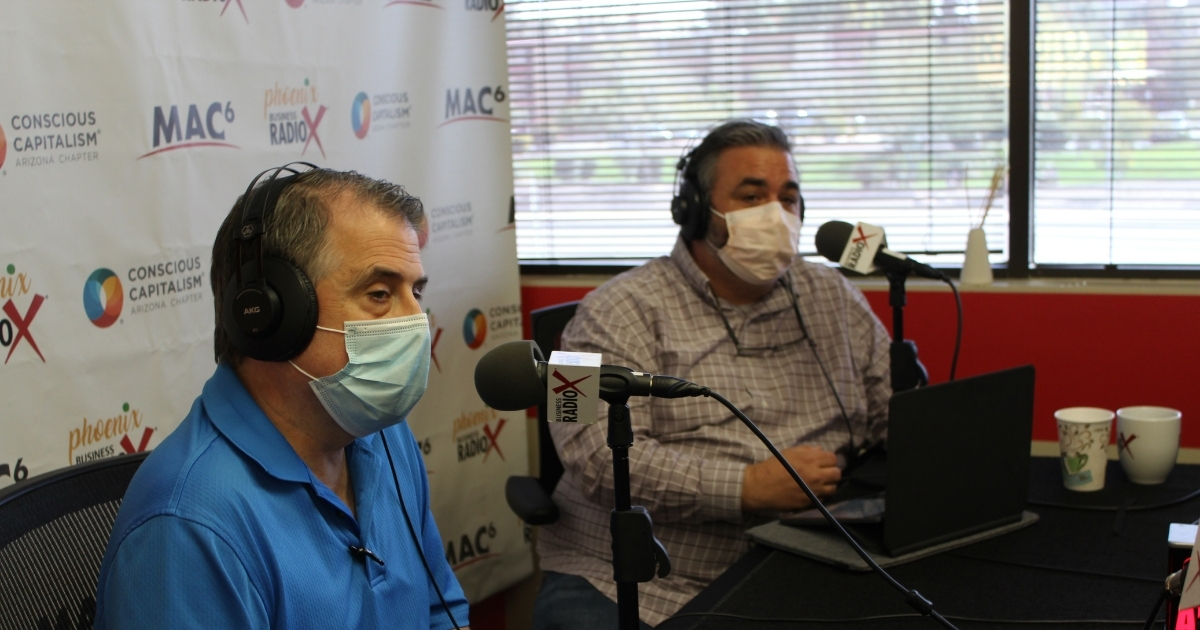
KyleMcIntoshWith a background in marketing, in various for profit and not for profit companies, Kyle McIntosh wondered, “How can I pair the passion and commitment to community progress of a non-profit with the sustainability and reach of a for profit company?” From this question and perspective a mission evolved to tear down the false distinction between the two sectors and to promote companies with Conscious Capitalism® business models through MAC6.

Kyle is the President and Creative Excitant of MAC6.  Day to day, his main operational role is on the “spaces” side of the business, focusing on creating thriving communities in the commercial office buildings, the co-working space, and the co-manufacturing space.  The other role that he plays is that of EOS implementer, working with clients to bring the Entrepreneurial Operating System, from the book Traction® to their businesses.  Additionally, he sits on the boards of Conscious Capitalism Arizona, telling the stories of good businesses in Arizona, and The Tempe Chamber of Commerce, sustaining Tempe’s quality of life and keeping our community and economy vibrant.TheFutureofWorkApplePodcastandSpreakerheader-1

Kyle loves Arizona and wants to see us all collectively find great success based on the awesome things that are happening here every day.

Follow MAC6 on Facebook and Twitter.

Jennifer-BurwellJennifer Burwell, joined MAC6 in 2013. Jennifer is their VP and Director of Programs.

She uses her experience in real estate, team development and management to seamlessly integrate each of the MAC6 business units to assure they are all focused on the long-term company vision. She is also a student of human behavior.

As a Certified Professional Behavioral Analyst, she uses her knowledge to facilitate culture-focused leadership programs with organizations of all sizes to integrate the company’s values and create higher-performing teams.

To learn more about MAC6 Communities, call 480-293-4075 or find them on Facebook

ABOUT OUR SPONSOR

MAC6 offers flexible spaces and programs to help your team grow, and a community of thriving businesses, just like yours.  Advocating Capitalism as a Force for Good, MAC6 is Accelerating the shift to Conscious Capitalism (where Purpose and Profit Unite) through Creativity, Collaboration, Community and Change.

 

Tagged With: Certified Safer Workspace, COVID-19, infection control, infection control planning solutions, infectious disease, Post Pandemic Workspace, safe workspace

Exercise in a Pandemic, with Andrew Abernathy, Focal Fitness – Episode 50, To Your Health with Dr. Jim Morrow

February 12, 2021 by John Ray

Focal Fitness
North Fulton Studio
Exercise in a Pandemic, with Andrew Abernathy, Focal Fitness - Episode 50, To Your Health with Dr. Jim Morrow
Loading
00:00 /
RSS Feed
Share
Link
Embed

Download file

Focal Fitness

Exercise in a Pandemic, with Andrew Abernathy, Focal Fitness – Episode 50, To Your Health with Dr. Jim Morrow

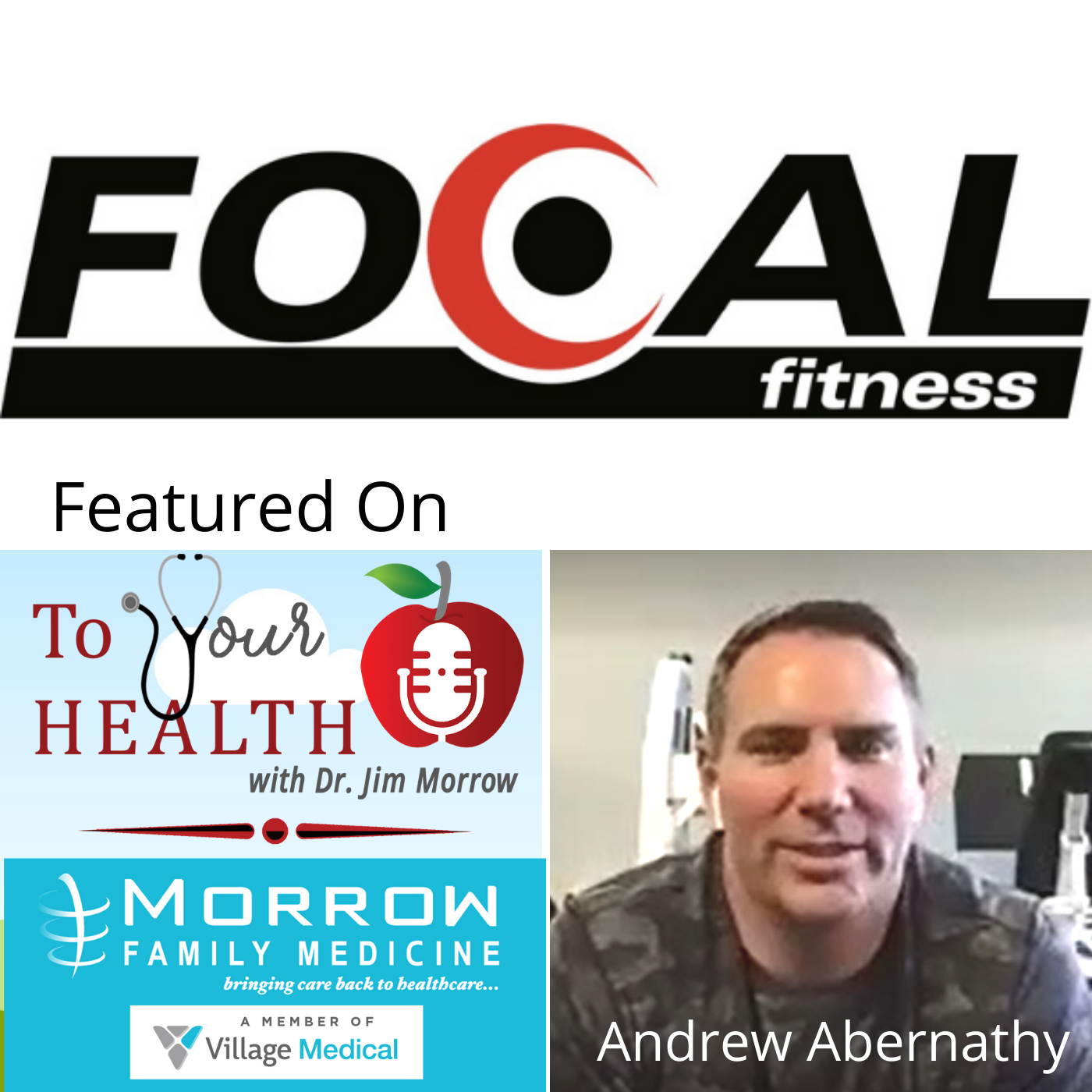
Focal Fitness Owner Andrew Abernathy is welcomed by host Dr. Jim Morrow to discuss exercise and physical fitness challenges and solutions for a pandemic. Dr. Morrow also offers a Covid-19 update on the new vaccines and the latest information on Covid-19 mutations. “To Your Health” is brought to you by Morrow Family Medicine, which brings the care back to healthcare.

Andrew Abernathy, Owner, Focal Fitness

At Focal Fitness their goal is to inspire people to change their lives by becoming passionate about their health, having a positive attitude, and implementing fitness into their everyday lives.

Andrew Abernathy is the owner and operator of Focal Fitness. He grew up in Gainesville, GA, and attended the University of Georgia where he received a B.S. in Exercise Science. Andrew is a certified Personal Trainer with extensive work with post rehab, sports specific, and weight reduction clients. He also is a certified Super Slow© instructor. Andrew’s intensive academic study of anatomy, exercise physiology, kinesiology, biomechanics, fitness screening and testing, training principles and techniques, sports injury, and motivation, allow him to offer clients highly researched and tailored fitness programs.

Andrew chose to become a trainer because he has a passion for educating and helping people achieve healthy, active lifestyles, and creating real and lasting change. This work is the culmination of a life of athletic training, a tailored college education, and his entire work experience. Some of his objectives are to encourage people to make exercise a part of their lifestyle, through motivation, teaching correct technique and improving strength, coordination and balance. The professional challenge of creating effective workout routines that fit in with a person’s unique lifestyle, schedule, and needs is what he strives to achieve for each client.

Outside of Focal Fitness, Andrew enjoys running, camping, hiking, golf, Univ. of Georgia football, just about anything on water or in water, and socializing with friends and family. Andrew and his wife Melissa live in Cumming GA, located in beautiful Forsyth County. They have a daughter, Tatem, son, Myles, and one dog, “Neo”. They both attend Mountain Lake Church.

Focal Fitness Company website

About Morrow Family Medicine, A Member of Village Medical

Morrow Family Medicine, a Member of Village Medical, is an award-winning, state-of-the-art family practice with offices in Cumming and Milton, Georgia. The practice combines healthcare information technology with old-fashioned care to provide the type of care that many are in search of today. Two physicians, three physician assistants and two nurse practitioners are supported by a knowledgeable and friendly staff to make your visit to Morrow Family Medicine, A Member of Village Medical one that will remind you of the way healthcare should be.  At Morrow Family Medicine, a Member of Village Medical, we like to say we are “bringing the care back to healthcare!”  The practice has been named the “Best of Forsyth” in Family Medicine in all five years of the award, is a three-time consecutive winner of the “Best of North Atlanta” by readers of Appen Media, and the 2019 winner of “Best of Life” in North Fulton County.

Village Medical offers a comprehensive suite of primary care services including preventative care, treatment for illness and injury, and management of chronic conditions such as diabetes, congestive heart failure, chronic obstructive pulmonary disease (COPD) and kidney disease. Atlanta-area patients can learn more about the practice here.

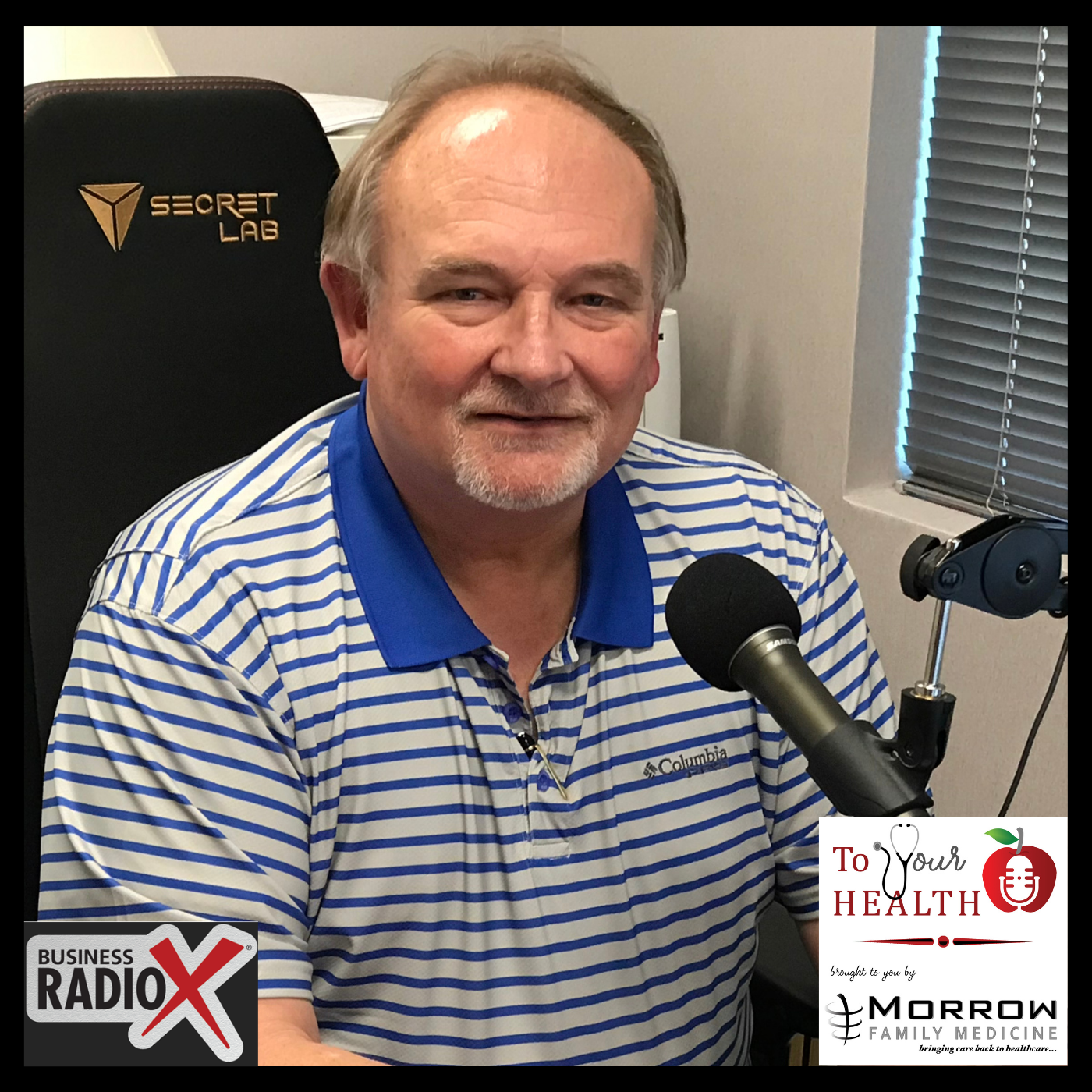
Dr. Jim Morrow, Morrow Family Medicine, and Host of “To Your Health with Dr. Jim Morrow”

Covid-19 misconceptionsDr. Jim Morrow is the founder and CEO of Morrow Family Medicine. He has been a trailblazer and evangelist in the area of healthcare information technology, was named Physician IT Leader of the Year by HIMSS, a HIMSS Davies Award Winner, the Cumming-Forsyth Chamber of Commerce Steve Bloom Award Winner as Entrepreneur of the Year and he received a Phoenix Award as Community Leader of the Year from the Metro Atlanta Chamber of Commerce.  He is married to Peggie Morrow and together they founded the Forsyth BYOT Benefit, a charity in Forsyth County to support students in need of technology and devices. They have two Goldendoodles, a gaggle of grandchildren and enjoy life on and around Lake Lanier.

Facebook: https://www.facebook.com/MorrowFamMed/

LinkedIn: https://www.linkedin.com/company/7788088/admin/

Twitter: https://twitter.com/toyourhealthMD

The complete show archive of “To Your Health with Dr. Jim Morrow” addresses a wide range of health and wellness topics, and can be found at www.toyourhealthradio.com.


Show Notes

Covid-19 Vaccines and Mutations 

Why does the coronavirus change?

  • Variants of viruses occur when there is a change (mutation) to the virus’s genes. 
    • it is the nature of RNA viruses such as the coronavirus to evolve and change gradually. 
  • Mutations in viruses — 
    • including the coronavirus causing the COVID-19 pandemic — 
      • are neither new nor unexpected. 
      • All RNA viruses mutate over time, some more than others. 
      • For example, flu viruses change often, 
      • which is why doctors recommend that you get a new flu vaccine every year.
  • We are seeing multiple variants of the SARS-CoV-2 coronavirus that are different from the version first detected in China
  • one mutated version of the coronavirus was detected in southeastern England in September 2020. 
    • That variant, now known as B.1.1.7, quickly became the most common version of the coronavirus in the United Kingdom, accounting for about 60% of new COVID-19 cases in December. 
    • Other variants have emerged in South Africa, Brazil, California and other areas.

COVID-19 Variants: How are they different?

  • There are 17 genetic changes in the B.1.1.7 variant from England. 
  • There’s some preliminary evidence that it’s more contagious. 
    • Scientists noticed a surge of cases in areas where the new strain appeared.
  • some of the mutations in the B.1.1.7 version seem to affect the coronavirus’s spike protein, 
    • which covers the outer coating of SARS-CoV-2 and give the virus its characteristic spiny appearance. 
    • These proteins help the virus attach to human cells in the nose, lungs and other areas of the body, causing COVID-19 illness.
  • Researchers have preliminary evidence that some of the new variants, including B.1.1.7, seem to bind more tightly to our cells
    • This appears to make some of these new strains ‘stickier’ due to changes in the spike protein. 
    • Studies are underway to understand more about whether any of the variants are more easily transmitted.

Is there a new variant of the coronavirus that is more dangerous?

  • so far, the news is somewhat reassuring. 
    • Although mutations may enable the coronavirus to spread faster from person to person, 
      • and more infections can result in more people getting very sick, 
      • overall, there is not yet clear evidence that any of these variants are more likely to cause severe disease or death. 
  • it may be more advantageous for a respiratory virus to evolve so that it spreads more easily. 
    • On the other hand, mutations that make a virus more deadly may not give the virus an opportunity to spread efficiently. 
      • If we get too sick or die quickly from a particular virus, the virus has less opportunity to infect others. 
  • One of the main concerns is whether any of the variants could affect treatment and prevention. 
    • Mutations may allow the coronaviruses to escape the antibodies in currently available therapies and those induced by vaccines. 
      • More data are needed to investigate this possibility.

Will there be more new variants of the coronavirus?

  • Yes. 
    • As long as the coronavirus spreads through the population, mutations will continue to happen. 
      • in 2020, several mutations caught researchers’ attention and raised concern, but further study revealed no major changes in how the coronavirus behaves.
  • New variants of the SARS-CoV-2 virus are detected every week
    • Most come and go — some persist but don’t become more common; some increase in the population for a while, and then fizzle out. 
    • When a change in the infection pattern first pops up, 
      • it can be very hard to tell what’s driving the trend: 
        • changes to the virus, 
        • or changes in human behavior. 
        • It is worrisome that similar changes to the spike protein are arising independently on multiple continents.”

Will the COVID-19 vaccine work on the new strains?

  • There is new evidence from laboratory studies that some immune responses driven by current vaccines could be less effective against some of the new strains.
  • Whether that means that people who have gotten the COVID-19 vaccines could get sick with the new variants is not yet known. 
    • The immune response involves many components, 
      • and a reduction in one does not mean that the vaccines will not offer protection.”
  • People who have received the vaccines should watch for changes in guidance from the CDC ,and continue with coronavirus safety precautions to reduce the risk of infection, such as mask wearing, physical distancing and hand hygiene.”
  • “We deal with mutations every year for flu virus, and will keep an eye on this coronavirus and track it,” says Bollinger. “If there would ever be a major mutation, the vaccine development process can accommodate changes, if necessary, but we’re not yet at the point when we need to consider that,” he explains.

Regarding coronavirus variants, how concerned should we be?

  • “Most of the genetic changes we see in this virus are like the scars people accumulate over a lifetime — incidental marks of the road, most of which have no great significance or functional role,” Ray says. “When the evidence is strong enough that a viral genetic change is causing a change in the behavior of the virus, we gain new insight regarding how this virus works.”
  • “As far as these variants are concerned, we don’t need to overreact,” Bollinger says. “But, as with any virus, changes are something to be watched, to ensure that testing, treatment and vaccines are still effective. The scientists will continue to examine new versions of this coronavirus’s genetic sequencing as it evolves.”
  • “In the meantime, we need to continue all of our efforts to prevent viral transmission and to vaccinate as many people as possible, and as soon as we can.”

Source:  Johns Hopkins

Tagged With: Andrew Abernathy, athletic training, COVID-19, Covid-19 vaccines, Dr. Jim Morrow, Exercise, Fitness, Focal Fitness, Morrow Family Medicine, To Your Health With Dr. Jim Morrow, Village Medical

Morrow Family Medicine Affiliates with Village Medical – An Interview with Andrew Thompson, Village Medical

January 29, 2021 by John Ray

Village Medical
North Fulton Studio
Morrow Family Medicine Affiliates with Village Medical - An Interview with Andrew Thompson, Village Medical
Loading
00:00 /
RSS Feed
Share
Link
Embed

Download file

Morrow Family Medicine Affiliates with Village Medical – An Interview with Andrew Thompson, Village Medical (Episode 49, To Your Health with Dr. Jim Morrow)

Dr. Morrow welcomes Andrew (Andy) Thompson to the show to discuss Morrow Family Medicine’s affiliation with Village Medical and the enhancements to patient care this partnership will bring. Dr. Morrow also addresses several myths on the Covid-19 vaccine. “To Your Health” is brought to you by Morrow Family Medicine, which brings the care back to healthcare.

Village Medical

Village Medical believes healthcare should be personal, accessible and coordinated. They treat your relationship with your primary care provider as the foundation to your health. Their doctors and staff partner with you to understand your needs, and work together to focus not just on treatment, but also education and preventative care. They combine the tools, technology and people needed to help create healthier, happier patients. More connected care means more complete care. Their clinics located at Walgreens pharmacies are bringing their vision of exceptional and compassionate primary care even closer to you. With several clinic locations throughout Houston and Phoenix, they are in your neighborhood. And that network means you can visit a doctor at any of their locations, and they’ll have your records available. With Village Medical at Home, they provide at-home visits designed to give eligible patients the attention they need, in a way that’s best for them and their caregivers. At Village Medical, the future of healthcare is more personal than ever. To learn more, go to their website.

Andrew Thompson, National COO, Village Medical

Andy Thompson is National Chief Operating Officer at Village Medical based in Cincinnati, Ohio.  He is an experienced Chief Operating Officer with a successful history of working in integrated delivery systems. Andy has also worked in healthcare consulting, nonprofit organizations, budgeting, performance improvement, and Medicaid.

Andy has a Masters in Healthcare Administration from Missouri State University.

About Morrow Family Medicine, A Member of Village Medical

Morrow Family Medicine, a Member of Village Medical, is an award-winning, state-of-the-art family practice with offices in Cumming and Milton, Georgia. The practice combines healthcare information technology with old-fashioned care to provide the type of care that many are in search of today. Two physicians, three physician assistants and two nurse practitioners are supported by a knowledgeable and friendly staff to make your visit to Morrow Family Medicine, A Member of Village Medical one that will remind you of the way healthcare should be.  At Morrow Family Medicine, a Member of Village Medical, we like to say we are “bringing the care back to healthcare!”  The practice has been named the “Best of Forsyth” in Family Medicine in all five years of the award, is a three-time consecutive winner of the “Best of North Atlanta” by readers of Appen Media, and the 2019 winner of “Best of Life” in North Fulton County.

Village Medical offers a comprehensive suite of primary care services including preventative care, treatment for illness and injury, and management of chronic conditions such as diabetes, congestive heart failure, chronic obstructive pulmonary disease (COPD) and kidney disease. Atlanta-area patients can learn more about the practice here.

Dr. Jim Morrow, Morrow Family Medicine, and Host of “To Your Health with Dr. Jim Morrow”

Covid-19 misconceptionsDr. Jim Morrow is the founder and CEO of Morrow Family Medicine. He has been a trailblazer and evangelist in the area of healthcare information technology, was named Physician IT Leader of the Year by HIMSS, a HIMSS Davies Award Winner, the Cumming-Forsyth Chamber of Commerce Steve Bloom Award Winner as Entrepreneur of the Year and he received a Phoenix Award as Community Leader of the Year from the Metro Atlanta Chamber of Commerce.  He is married to Peggie Morrow and together they founded the Forsyth BYOT Benefit, a charity in Forsyth County to support students in need of technology and devices. They have two Goldendoodles, a gaggle of grandchildren and enjoy life on and around Lake Lanier.

Facebook: https://www.facebook.com/MorrowFamMed/

LinkedIn: https://www.linkedin.com/company/7788088/admin/

Twitter: https://twitter.com/toyourhealthMD

The complete show archive of “To Your Health with Dr. Jim Morrow” addresses a wide range of health and wellness topics, and can be found at www.toyourhealthradio.com.

Tagged With: Andrew Thompson, Andy Thompson, COVID-19, Covid-19 vaccine, Covid-19 vaccines, Village Medical

COVID-19 Update from Eastside Medical Center

December 21, 2020 by Mike

Gwinnett Business Radio
COVID-19 Update from Eastside Medical Center
Loading
00:00 /
RSS Feed
Share
Link
Embed

Download file

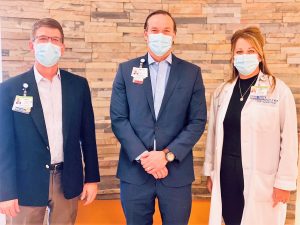
Dr. Stephen Higgins, Trent Lind and Tracey Smithson

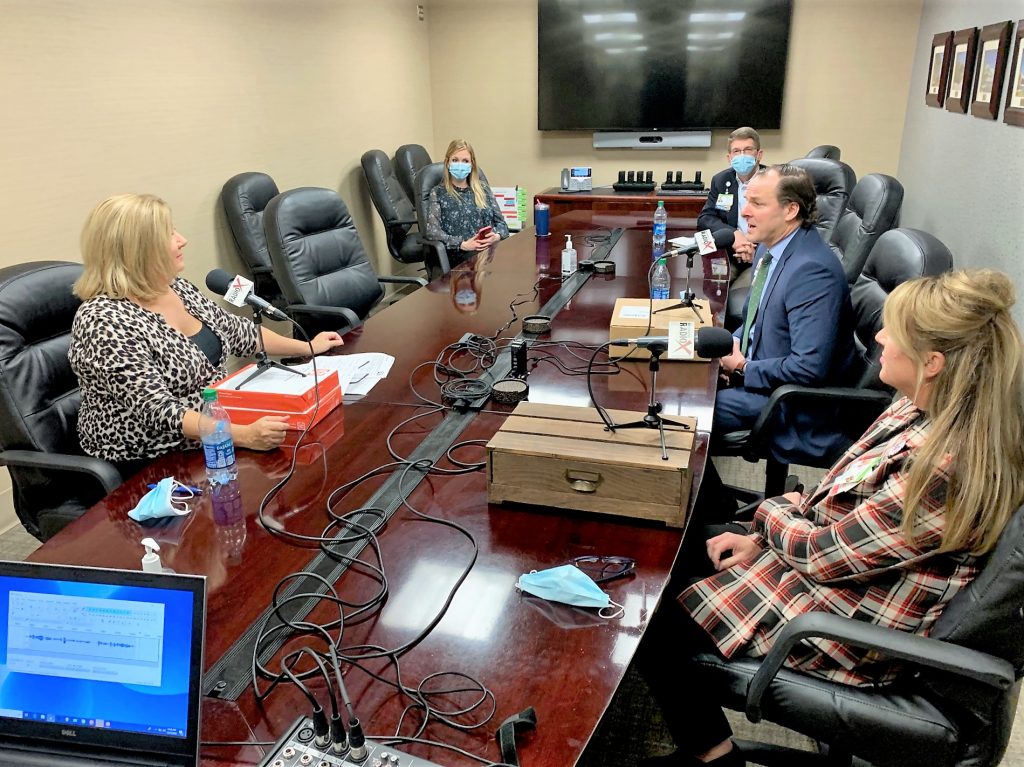
On this special end-of-the-year edition of “Gwinnett Business Radio”, host Duffie Dixon visits Eastside Medical Center in Snellville, GA to hear from three of the top hospital executives on the front lines of the COVID-19 pandemic: Chief Executive Officer Trent Lind, Chief Medical Officer Dr. Stephen Higgins, and Chief Nursing Officer Tracey Smithson. They discuss how the staff at Eastside Medical Center continues to care for patients several months into the crisis, and what has changed now that a vaccine is available for hospital staff, patients and the public. They also share some heart-warming and heart-wrenching stories from inside the hospital.

About Eastide Medical Center

Eastside Medical Center has been a healthcare leader for over 40 years, providing quality care to patients in Gwinnett and surrounding counties. Nationally recognized for patient safety, Eastside focuses on delivering quality care with exceptional outcomes by utilizing the most advanced technology and experienced physicians.

Eastside is a 310-bed, multi-campus system of care offering comprehensive medical and surgical programs including cardiovascular, neurosciences, oncology, orthopedics, robotic surgery, rehabilitation, maternity with neonatal intensive care, behavioral health, bariatric, urgent care, and 24-hour emergency care at two locations. Their medical staff of 500 board-certified physicians, 1,200 employees, and 400 volunteers is committed to providing the community a healthcare system of excellence. For more information, visit www.EastsideMedical.com.

Gwinnett Business Radio is presented by


Tagged With: chief medical officer, chief nursing officer, COVID-19, dr. stephen higgins, eastside medical center, EMC, Gwinnett Business Radio, gwinnett hospital, pandemic, regions bank, snellville hospital, stephen higgins, tracey smithson, trent lind

The Status of Covid-19 Vaccines – Episode 45, To Your Health With Dr. Jim Morrow

November 30, 2020 by John Ray

Covid-19 Vaccines
North Fulton Studio
The Status of Covid-19 Vaccines - Episode 45, To Your Health With Dr. Jim Morrow
Loading
00:00 /
RSS Feed
Share
Link
Embed

Download file

The Status of Covid-19 Vaccines – Episode 45, To Your Health With Dr. Jim Morrow

Three different Covid-19 vaccines are in late stage development, and the companies who have developed them may be seeking approval for distribution very soon. On this edition of “To Your Health,” Dr. Morrow examines each of these vaccines and discusses whether they are safe and effective. “To Your Health” is brought to you by Morrow Family Medicine, which brings the CARE back to healthcare.

About Morrow Family Medicine and Dr. Jim Morrow

Morrow Family Medicine is an award-winning, state-of-the-art family practice with offices in Cumming and Milton, Georgia. The practice combines healthcare information technology with old-fashioned care to provide the type of care that many are in search of today. Two physicians, three physician assistants and two nurse practitioners are supported by a knowledgeable and friendly staff to make your visit to Morrow Family Medicine one that will remind you of the way healthcare should be.  At Morrow Family Medicine, we like to say we are “bringing the care back to healthcare!”  Morrow Family Medicine has been named the “Best of Forsyth” in Family Medicine in all five years of the award, is a three-time consecutive winner of the “Best of North Atlanta” by readers of Appen Media, and the 2019 winner of “Best of Life” in North Fulton County.

Dr. Jim Morrow, Morrow Family Medicine, and Host of “To Your Health With Dr. Jim Morrow”

Covid-19 misconceptionsDr. Jim Morrow is the founder and CEO of Morrow Family Medicine. He has been a trailblazer and evangelist in the area of healthcare information technology, was named Physician IT Leader of the Year by HIMSS, a HIMSS Davies Award Winner, the Cumming-Forsyth Chamber of Commerce Steve Bloom Award Winner as Entrepreneur of the Year and he received a Phoenix Award as Community Leader of the Year from the Metro Atlanta Chamber of Commerce.  He is married to Peggie Morrow and together they founded the Forsyth BYOT Benefit, a charity in Forsyth County to support students in need of technology and devices. They have two Goldendoodles, a gaggle of grandchildren and enjoy life on and around Lake Lanier.

Facebook: https://www.facebook.com/MorrowFamMed/

LinkedIn: https://www.linkedin.com/company/7788088/admin/

Twitter: https://twitter.com/toyourhealthMD

The complete show archive of “To Your Health with Dr. Jim Morrow” addresses a wide range of health and wellness topics, and can be found at www.toyourhealthradio.com.

Dr. Morrow’s Show Notes

How Vaccines Work

  • The Immune System—
    • To understand how vaccines work, it helps to first look at how the body fights illness.
    • When germs, such as bacteria or viruses, invade the body, they attack and multiply.
    • This invasion, called an infection, is what causes illness.
    • The immune system uses several tools to fight infection.
    • Blood contains red blood cells, for carrying oxygen to tissues and organs, and white or immune cells, for fighting infection.
      • These white cells consist primarily of macrophages, B-lymphocytes and T-lymphocytes:
        • Macrophages are white blood cells that swallow up and digest germs, plus dead or dying cells.
          • The macrophages leave behind parts of the invading germs called antigens.
          • The body identifies antigens as dangerous and creates antibodies to attack them.
        • B-lymphocytes are defensive white blood cells.
          • They produce antibodies that attack the antigens left behind by the macrophages.
        • T-lymphocytes are another type of defensive white blood cell.
          • They attack cells in the body that have already been infected.
        • The first time the body encounters a germ, it can take several days to make and use all the germ-fighting tools needed to get over the infection.
          • After the infection, the immune system remembers what it learned about how to protect the body against that disease.
          • The body keeps a few T-lymphocytes, called memory cells, that go into action quickly if the body encounters the same germ again.
          • When the familiar antigens are detected, B-lymphocytes produce antibodies to attack them.

Current State

  • In the United States, there is not yet an authorized or approved vaccine to prevent coronavirus disease 2019 (COVID-19).
    • The federal government, through Operation Warp Speed, has been working since the pandemic started to make one or more COVID-19 vaccines available as soon as possible.
    • Although CDC does not have a role in developing COVID-19 vaccines,
      • CDC has been working closely with health departments and partners to develop vaccination plans for when a vaccine is available.
    • With the possibility of one or more COVID-19 vaccines becoming available before the end of the year, here are some things you need to know about where those plans currently stand.
      • The safety of COVID-19 vaccines is a top priority.
        • The U.S. vaccine safety system ensures that all vaccines are as safe as possible.
      • Many vaccines are being developed and tested, but some might be ready before others—CDC is planning for many possibilities.
      • At least at first, COVID-19 vaccines might be used under an Emergency Use Authorization (EUA) from the U.S. Food and Drug Administration (FDA).
      • There may be a limited supply of COVID-19 vaccines before the end of 2020, but supply will continually increase in the weeks and months that follow.
        • The goal is for everyone to be able to easily get a COVID-19 vaccine as soon as large quantities are available.
          • The plan is to have several thousand vaccination providers available, including doctors’ offices, retail pharmacies, hospitals, and federally qualified health centers.
        • If there is limited supply, some groups may be recommended to get a COVID-19 vaccine first.
        • Experts are working on how to distribute these limited vaccines in a fair, ethical, and transparent way.
      • At first, COVID-19 vaccines may not be recommended for children.
        • In early clinical trials for various COVID-19 vaccines, only non-pregnant adults participated.
          • However, clinical trials continue to expand those recruited to participate.
          • The groups recommended to receive the vaccines could change in the future.
        • Cost will not be an obstacle to getting vaccinated against COVID-19.
          • Vaccine doses purchased with U.S. taxpayer dollars will be given to the American people at no cost.
            • However, vaccine providers will be able to charge administration fees for giving or administering the shot to someone.
            • Vaccine providers can get this fee reimbursed by the patient’s public or private insurance.

The Possibilities

  • Pfizer and Moderna used the same basic design to build their vaccines. Both vaccines contain a genetic molecule called messenger RNA, which is wrapped in an oily bubble. The bubble can fuse to a muscle cell and deliver the RNA. Encoded in that molecule are instructions for building a single coronavirus protein called spike protein. When a vaccinated cell releases copies of the spike protein, the immune system learns to make antibodies against it.
  • While scientists have investigated mRNA vaccines for years, no vaccine has yet been licensed as safe and effective to use in people. When Moderna and other vaccine makers began designing mRNA vaccines for coronaviruses, skeptics wondered how well they would work. The two preliminary reports from both Moderna and Pfizer suggest this type of vaccine may work very well. Neither trial has uncovered serious side effects from the vaccines, although studies on their safety are continuing.

 Moderna Vaccine

  • Covid-19 can lead to a mild illness, or it can lead to a severe case that requires hospitalization and oxygen support. Out of the 95 people who got sick in the Moderna study, 11 experienced severe disease. None of those 11 people were vaccinated. In other words, the five vaccinated people who got sick experienced only mild symptoms, and all of the severe cases were participants from the placebo group.
  • “It couldn’t be a more favorable split,” said Natalie Dean, a biostatistician at the University of Florida.
  • The split suggests that Moderna’s vaccine doesn’t just block the virus in most cases, but also shields the people who do get sick from the worst outcomes of the disease. It also eases concerns that a vaccine for Covid-19 may make the disease worse, not better.
  • Moderna took a billion dollars from Operation Warp Speed.
  • Pfizer did not take money from OWS, but they do have a distribution agreement with the government.

Pfizer – BioNTec Vaccine

  • The drug maker Pfizer said on Wednesday that its coronavirus vaccine was 95 percent effective and had no serious side effects — the first set of complete results from a late-stage vaccine trial as Covid-19 cases skyrocket around the globe.
  • The data showed that the vaccine prevented mild and severe forms of Covid-19, the company said. And it was 94 percent effective in older adults, who are more vulnerable to developing severe Covid-19 and who do not respond strongly to some types of vaccines.
  • Pfizer, which developed the vaccine with its partner BioNTech, said the companies planned to apply to the Food and Drug Administration for emergency authorization“within days,” raising hopes that a working vaccine could soon become a reality.
  • The trial results — less than a year after researchers began working on the vaccine — shattered all speed records for vaccine development, a process that usually takes years.

Astra Zeneca – Oxford Vaccine

  • AstraZeneca’s vaccine is a different type. It uses a virus from chimpanzees, an adenovirus, to carry protein into the cells to make them produce spike proteins.
  • Developed by the University of Oxford, this vaccine is effective at stopping people developing Covid-19 symptoms, a large trial shows.
  • Interim data suggests 70% protection, but the researchers say the figure may be as high as 90% by tweaking the dose.
  • The results will be seen as a triumph but come after Pfizer and Moderna vaccines showed 95% protection.
  • However, the Oxford vaccine is far cheaper, and is easier to store and get to every corner of the world than the other two.
  • So, the vaccine will play a significant role in tackling the pandemic, if it is approved for use by regulators.

The Bottom Line

  • A vaccine is on the way.
    • It will be safe when released and
    • apparently will be much more effective than we first thought it might be.
    • People need to have an open mind about this and realize that politicians did not make these vaccines.
    • When the time comes, and you are offered the vaccine, TAKE IT!

Source:  www.cdc.gov

Tagged With: Astra Zeneca, BioNTec Vaccine, COVID-19, Covid-19 vaccine, Covid-19 vaccines, Dr. Jim Morrow, Moderna vaccine, Morrow Family Medicine, Oxford Vaccine, Pfizer, To Your Health With Dr. Jim Morrow, vaccines

Covid-19 and Sports – Episode 41, To Your Health With Dr. Jim Morrow

September 25, 2020 by John Ray

Covid-19 and Sports
North Fulton Studio
Covid-19 and Sports - Episode 41, To Your Health With Dr. Jim Morrow
Loading
00:00 /
RSS Feed
Share
Link
Embed

Download file

attention deficit disorder
Dr. Jim Morrow, Morrow Family Medicine, and Host of “To Your Health With Dr. Jim Morrow”

Covid-19 and Sports – Episode 41, To Your Health With Dr. Jim Morrow

Dr. Morrow discusses various considerations around Covid-19 and sports, questions of safety, and much more. Dr. Morrow also offers an update on the Covid-19 vaccine. “To Your Health” is brought to you by Morrow Family Medicine, which brings the CARE back to healthcare.

About Morrow Family Medicine and Dr. Jim Morrow

Morrow Family Medicine is an award-winning, state-of-the-art family practice with offices in Cumming and Milton, Georgia. The practice combines healthcare information technology with old-fashioned care to provide the type of care that many are in search of today. Two physicians, three physician assistants and two nurse practitioners are supported by a knowledgeable and friendly staff to make your visit to Morrow Family Medicine one that will remind you of the way healthcare should be.  At Morrow Family Medicine, we like to say we are “bringing the care back to healthcare!”  Morrow Family Medicine has been named the “Best of Forsyth” in Family Medicine in all five years of the award, is a three-time consecutive winner of the “Best of North Atlanta” by readers of Appen Media, and the 2019 winner of “Best of Life” in North Fulton County.

Dr. Jim Morrow, Morrow Family Medicine, and Host of “To Your Health With Dr. Jim Morrow”

Covid-19 misconceptionsDr. Jim Morrow is the founder and CEO of Morrow Family Medicine. He has been a trailblazer and evangelist in the area of healthcare information technology, was named Physician IT Leader of the Year by HIMSS, a HIMSS Davies Award Winner, the Cumming-Forsyth Chamber of Commerce Steve Bloom Award Winner as Entrepreneur of the Year and he received a Phoenix Award as Community Leader of the Year from the Metro Atlanta Chamber of Commerce.  He is married to Peggie Morrow and together they founded the Forsyth BYOT Benefit, a charity in Forsyth County to support students in need of technology and devices. They have two Goldendoodles, a gaggle of grandchildren and enjoy life on and around Lake Lanier.

Facebook: https://www.facebook.com/MorrowFamMed/

LinkedIn: https://www.linkedin.com/company/7788088/admin/

Twitter: https://twitter.com/toyourhealthMD

The complete show archive of “To Your Health with Dr. Jim Morrow” addresses a wide range of health and wellness topics, and can be found at www.toyourhealthradio.com.

Dr. Morrow’s Show Notes

Covid-19 and Sports

  • To date, limited data are available on COVID-19 and its effects on children and adolescents.
    • We know that those with severe presentations
      • (hypotension, arrhythmias, requiring intubation or extracorporeal membrane oxygenation [ECMO] support, kidney or cardiac failure)
      • or with multisystem inflammatory syndrome in children (MIS-C)
      • must be treated as though they have myocarditis
      • and restricted from exercise and participation for a duration of 3 to 6 months.
      • These athletes must be cleared to resume participation by their primary care physician
        • and appropriate pediatric medical subspecialist, preferably in consultation with a pediatric cardiologist.
        • Cardiac testing (EKG, echocardiogram, 24-hour Holter monitor, exercise stress test, and if warranted, cardiac resonance imaging) must have returned to normal, before return to activity.
      • Those with moderate symptoms must be asymptomatic for at least 14 days
        • and obtain clearance from their primary care physician before return to exercise and competition.
        • Any individual who has current or a history of positive cardiac symptoms,
          • who has concerning findings on their examination,
          • or who had moderate symptoms of COVID-19, including prolonged fever,
          • should have an EKG performed and potentially be referred to a pediatric cardiologist for further assessment and clearance.
  • The question still remains about what to do with others infected with SARS-CoV-2
    • or who had close contact with an individual with COVID-19.
    • Because of the growing literature about the relationship between COVID-19 and myocarditis,
      • all children and adolescents with exposure to SARS-CoV-2, regardless of symptoms,
        • require a minimum 14-day resting period
        • and must be asymptomatic for >14 days before returning to exercise and/or competition.
        • Because of the limited information on COVID-19 and exercise, the AAP strongly encourages that all patients with COVID-19 be cleared for participation by their primary care physician.
        • The focus of their return to participation screening should be for cardiac symptoms,
          • including but not limited to chest pain,
          • shortness of breath,
          • fatigue,
          • palpitations,
          • or syncope.
        • All individuals with a history of a positive test result for SARS-CoV-2 should have a gradual return to physical activity.
          • If primary care physicians have any questions regarding their patients’ readiness to return to competition,
            • they should not hesitate to consult with and refer individuals to the appropriate pediatric medical subspecialist.

What Could Happen?

  • There are complications that will stay with a Covid-19 patient for the rest of their lives.
    • The severe complications are
      • pulmonary fibrosis
      • and myocarditis.
      • The likelihood is that in order to develop these complications,
        • a patient will likely have to be moderately ill,
        • that is, having been hospitalized
        • and likely to have required supplemental oxygen therapy.
      • But there is still not a lot of data about this.
    • What is obvious now, that was not obvious at all obvious early on, is that young people are at risk.
      • They are at risk of contracting the virus
      • and they are at risk of having a moderate or severe case.
      • We have already had one football player, in California, die from complications caused by Covid-19.
        • There could be many more.
      • Because of these possibilities,
        • two conferences in the Power 5 decided not to play football this year.
        • They felt that it might be safer in the Spring of 2021.
        • I am not sure what they thought was going to change by then.
      • Recently, the Big Ten conference has reversed their position and decided to play.
        • The main reason cited is advances in availability of testing.

Testing, Covid-19 and Sports

  • The ACC is conducting coronavirus testing three times per week
  • The updated Medical Advisory Group report requires all team members to be tested
    • within three days of game day.
    • one test must be performed the day before kickoff, and must be conducted by a third party the ACC office selects.
    • another test must be done 48 hours after the game.
    • In addition, every student-athlete who tests positive for COVID-19 will undergo a cardiac evaluation that includes an
      • electrocardiogram,
      • a troponin test
      • and an echocardiogram before a phased return to exercise.
      • Many ACC schools already had procedures in place to screen for any possible heart issues.

Should parents and other spectators attend their children’s sports practices and games?

  • Parents/guardians should follow current local regulations for social distancing and use of cloth face coverings when considering game attendance.
    • Attending outdoor events may bear less risk than indoor events with less space and ventilation.
      • No one should attend any sports function as a spectator if they are exhibiting signs or symptoms of COVID-19.
      • Parents and other spectators with high-risk health conditions should strongly consider not attending indoor events or events held outdoors where appropriate social distancing cannot be maintained.
      • Live streaming or recording of athletic events, when available, may allow individuals who are unable to attend to participate in viewing events.

Tagged With: adolescents, children, coronavirus, COVID-19, Dr. Jim Morrow, live sports, Morrow Community Foundation, Morrow Family Medicine, sports

Amber Schmidtke, PhD., Microbiologist, Public Health Educator, and Science Writer – Episode 40, To Your Health With Dr. Jim Morrow

September 9, 2020 by John Ray

Amber Schmidtke
North Fulton Studio
Amber Schmidtke, PhD., Microbiologist, Public Health Educator, and Science Writer - Episode 40, To Your Health With Dr. Jim Morrow
Loading
00:00 /
RSS Feed
Share
Link
Embed

Download file

Amber Schmidtke, PhD., Microbiologist, Public Health Educator, and Science Writer – Episode 40, To Your Health With Dr. Jim Morrow

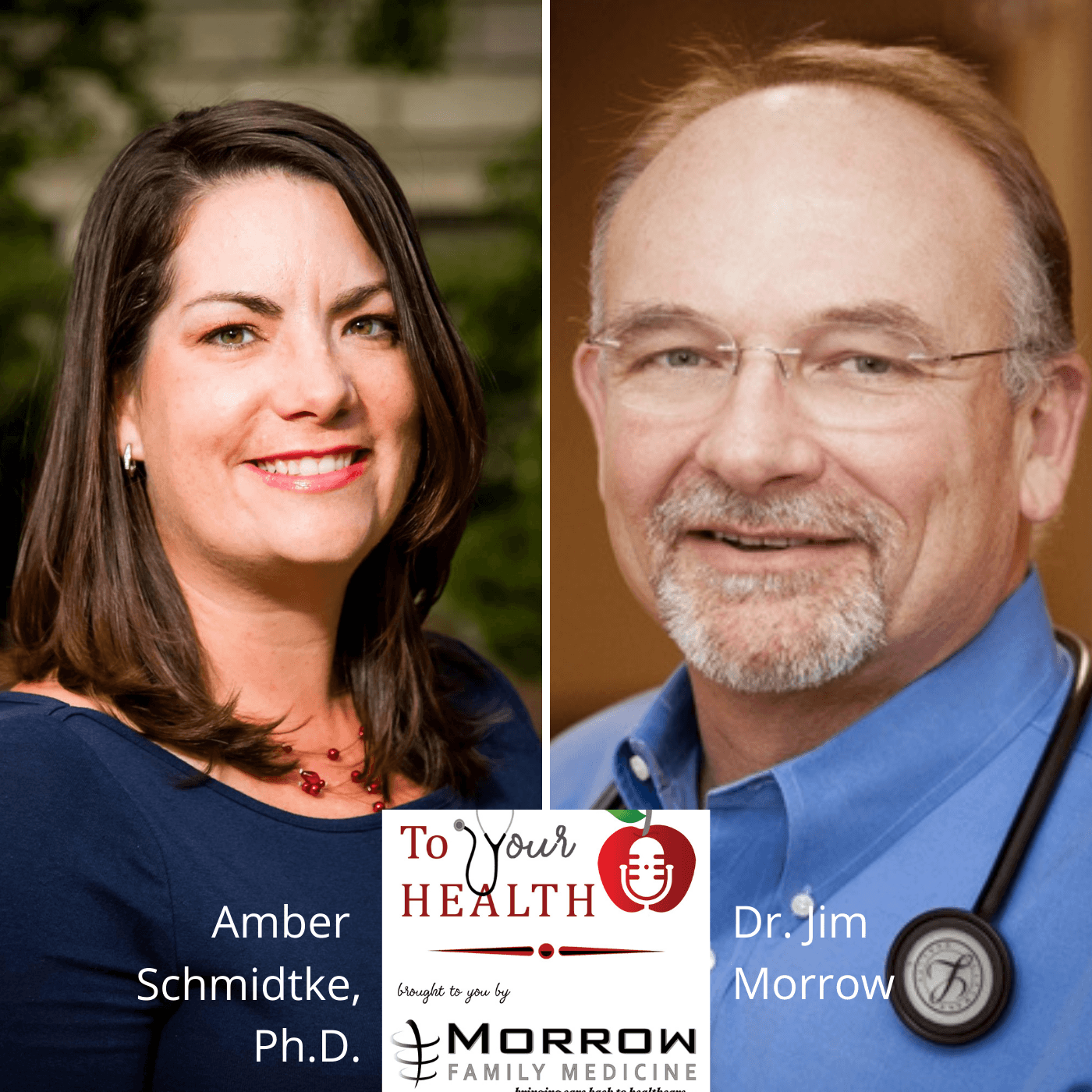
Dr. Amber Schmidtke has been a leader in following the Covid-19 outbreak in Georgia from its beginnings. As a microbiologist, public health educator, and science writer, Dr. Schmidtke brings much need clarity and expertise to the subject, as evidenced in this interview with Dr. Jim Morrow. “To Your Health” is brought to you by Morrow Family Medicine, which brings the CARE back to healthcare.

Amber Schmidtke, PhD., Microbiologist, Public Health Educator, and Science Writer

At the start of the COVID-19 pandemic, Dr. Amber Schmidtke recognized there was a large gap between the way that scientists communicate and how non-scientists receive information. She has combined her roles as a public health microbiologist and college educator to provide meaningful analysis and explanation of disease trends to the public through a popular newsletter and podcast. As a result of these communication efforts she was invited to serve as a member of the Georgia COVID-19 Data State Task Force, advising government agencies on how to package their complex data to meet the needs of the public. Dr. Schmidtke holds a Ph.D. in medical microbiology and immunology from Creighton University.

Dr. Schmidtke also hosts her own podcast, “Public Health for the People,” available on Apple, Spotify, Google, and other major podcast platforms.

Connect with Dr. Amber Schmidtke:

Newsletter (Georgia Covid-19 Updates)

LinkedIn

Facebook

Twitter

About Morrow Family Medicine and Dr. Jim Morrow

Morrow Family Medicine is an award-winning, state-of-the-art family practice with offices in Cumming and Milton, Georgia. The practice combines healthcare information technology with old-fashioned care to provide the type of care that many are in search of today. Two physicians, three physician assistants and two nurse practitioners are supported by a knowledgeable and friendly staff to make your visit to Morrow Family Medicine one that will remind you of the way healthcare should be.  At Morrow Family Medicine, we like to say we are “bringing the care back to healthcare!”  Morrow Family Medicine has been named the “Best of Forsyth” in Family Medicine in all five years of the award, is a three-time consecutive winner of the “Best of North Atlanta” by readers of Appen Media, and the 2019 winner of “Best of Life” in North Fulton County.

Dr. Jim Morrow, Morrow Family Medicine, and Host of “To Your Health With Dr. Jim Morrow”

Covid-19 misconceptionsDr. Jim Morrow is the founder and CEO of Morrow Family Medicine. He has been a trailblazer and evangelist in the area of healthcare information technology, was named Physician IT Leader of the Year by HIMSS, a HIMSS Davies Award Winner, the Cumming-Forsyth Chamber of Commerce Steve Bloom Award Winner as Entrepreneur of the Year and he received a Phoenix Award as Community Leader of the Year from the Metro Atlanta Chamber of Commerce.  He is married to Peggie Morrow and together they founded the Forsyth BYOT Benefit, a charity in Forsyth County to support students in need of technology and devices. They have two Goldendoodles, a gaggle of grandchildren and enjoy life on and around Lake Lanier.

Facebook: https://www.facebook.com/MorrowFamMed/

LinkedIn: https://www.linkedin.com/company/7788088/admin/

Twitter: https://twitter.com/toyourhealthMD

The complete show archive of “To Your Health with Dr. Jim Morrow” addresses a wide range of health and wellness topics, and can be found at www.toyourhealthradio.com. “To Your Health with Dr. Jim Morrow” is produced virtually from the North Fulton studio of Business RadioX® in Alpharetta.

Tagged With: Amber Schmidtke, COVID-19, Creighton University, Dr. Amber Schmidtke, microbiologist, public heath

Alpharetta Tech Talk: Anas Sawaf, CirrusLabs

June 26, 2020 by John Ray

Alpharetta Tech Talk
Alpharetta Tech Talk: Anas Sawaf, CirrusLabs
Loading
00:00 /
RSS Feed
Share
Link
Embed

Download file

“Alpharetta Tech Talk,” Episode 17:  Anas Sawaf, CirrusLabs

CirrusLabsIn a pandemic environment, businesses and other employers are suddenly in need of technology and analytics which monitor potential virus spread and help ensure proper social distancing and other risk mitigation efforts. Anas Sawaf, Director of IoT and Analytics for CirrusLabs, joined the show to discuss the company’s technology and analytics solution, PHOTONE4. It’s a fascinating discussion. The host of “Alpharetta Tech Talk” is John Ray and this series is the show is produced virtually by the North Fulton studio of Business RadioX® in Alpharetta.

Anas Sawaf, Director, Emerging Tech – IoT & Analytics

Anas Sawaf is the Director of Emerging Tech, IoT and Analytics, at CirrusLabs.

The COVID-19 pandemic is a global health and societal emergency that requires effective and accelerated actions by all governments, businesses and communities across the world. Government agencies and businesses have found it challenging to operate in a normal or optimum environment. Many individuals don’t know that they are infected with COVID-19. Social-distancing is not strictly enforced and many people are unknowingly spreading the virus.

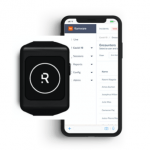
CirrusLabsPHOTONE4 is CirrusLabs’ Temperature Detection & Social-Distancing solution. It was developed to enable and enhance risk mitigation efforts. The goal is to help government agencies and businesses detect, alert, & report on human body temperature, social grouping & proximity, in addition to facial personal protection.

CirrusLabs is a fast growing full-service digital transformation company with offices in the greater Atlanta and Northern Virginia areas.  They help clients focus on emerging opportunities, value creation, and innovate on new lines businesses by harnessing the power of their digital framework. They have successfully helped their clients disrupt their business models via their digital strategy, modernizing their technology, and aligning better with their customer needs.

Their services are designed to create Digital Strategies, Agile Organizations, Modernized Technology, Data, Emerging Technology and help their customers launch new innovative products to attain a competitive advantage. CirrusLabs provides customized training for organizations embarking on Digital Transformation through Scrum Alliance, ICAgile, SAFe and other certified organizations. Their clients include start-ups to Fortune 500 companies.
For more information, you can visit the company website. To connect with Anas directly, you can email directly or contact through LinkedIn.
CirrusLabs

Question/Topics Covered in this Interview

  • The focus for many businesses in manufacturing and retail is to prevent infectious diseases impacting their bottom line in the present and the future.
  • What role is IoT technology taking in regards to supporting risk mitigation efforts?
  •  Can organizations protect their businesses from health risks by relying solely on temperature detection methods?
  • What role does corporate safety compliance play in risk mitigation efforts for businesses?
  • How important is proximity detection for preventing the spread of infectious diseases?

About “Alpharetta Tech Talk”

“Alpharetta Tech Talk” is the radio show/podcast home of the burgeoning technology sector in Alpharetta and the surrounding GA 400 and North Fulton area. We feature key technology players from a dynamic region of over 900 technology companies. “Alpharetta Tech Talk” comes to you from from the North Fulton studio of Business RadioX®.

Past episodes of “Alpharetta Tech Talk” can be found at alpharettatechtalk.com.

Renasant Bank has humble roots, starting in 1904 as a $100,000 bank in a Lee County, Mississippi, bakery. Since then, Renasant has grown to become one of the Southeast’s strongest financial institutions with approximately $12.9 billion in assets and more than 190 banking, lending, wealth management and financial services offices in Mississippi, Alabama, Tennessee, Georgia and Florida. All of Renasant’s success stems from each of their banker’s commitment to investing in their communities as a way of better understanding the people they serve. At Renasant Bank, they understand you.


Tagged With: analytics, Anas Sawaf, CirrusLabs, COVID-19, IoT, pandemic, PHOTONE4, risk mitigation, social distancing

Decision Vision Episode 71: What Decisions Do I Have to Make For My Business to Survive Covid-19? – An Interview with Zahir Ladhani, Velocity Strategic Consulting

June 25, 2020 by John Ray

Brady Ware
Decision Vision
Decision Vision Episode 71: What Decisions Do I Have to Make For My Business to Survive Covid-19? - An Interview with Zahir Ladhani, Velocity Strategic Consulting
Loading
00:00 /
RSS Feed
Share
Link
Embed

Download file

Decision Vision Episode 71: What Decisions Do I Have to Make For My Business to Survive Covid-19? – An Interview with Zahir Ladhani, Velocity Strategic Consulting

As the timing and shape of an economic recovery remains uncertain, many business owners are asking themselves what decisions they must make for their business to survive this Covid-19 environment. Host Mike Blake explores these issues with Zahir Ladhani, Velocity Strategic Consulting.  “Decision Vision” is presented by Brady Ware & Company.

Zahir Ladhani, Velocity Strategic Consulting

Zahir Ladhani

Zahir Ladhani is a seasoned executive with 30+ years of experience leading the growth of companies, products and teams. He played a crucial role on a senior executive team facilitating the $1.3 Billion sale of a company to a Fortune 50 Company. Additionally, he has overseen leadership teams in multiple publicly-traded organizations, in the capacity of President, Vice President of Sales, Vice President of Business Development, Marketing Director, and Director of Finance.

Zahir is a talented communicator and proven leader who understands corporate culture, the collaborative process, and how to assist organizations and their leadership teams optimize the balance between people, performance and profit.

Zahir Ladhani is currently the managing director of a business coaching firm, Velocity Strategic Consulting, and teaches Strategy at Kennesaw State University’s EMBA Program.

Michael Blake, Brady Ware & Company

Mike Blake, Host of the “Decision Vision” podcast series

Michael Blake is Host of the “Decision Vision” podcast series and a Director of Brady Ware & Company. Mike specializes in the valuation of intellectual property-driven firms, such as software firms, aerospace firms and professional services firms, most frequently in the capacity as a transaction advisor, helping clients obtain great outcomes from complex transaction opportunities. He is also a specialist in the appraisal of intellectual properties as stand-alone assets, such as software, trade secrets, and patents.

Mike has been a full-time business appraiser for 13 years with public accounting firms, boutique business appraisal firms, and an owner of his own firm. Prior to that, he spent 8 years in venture capital and investment banking, including transactions in the U.S., Israel, Russia, Ukraine, and Belarus.

Brady Ware & Company

Brady Ware & Company is a regional full-service accounting and advisory firm which helps businesses and entrepreneurs make visions a reality. Brady Ware services clients nationally from its offices in Alpharetta, GA; Columbus and Dayton, OH; and Richmond, IN. The firm is growth minded, committed to the regions in which they operate, and most importantly, they make significant investments in their people and service offerings to meet the changing financial needs of those they are privileged to serve. The firm is dedicated to providing results that make a difference for its clients.

Decision Vision Podcast Series

“Decision Vision” is a podcast covering topics and issues facing small business owners and connecting them with solutions from leading experts. This series is presented by Brady Ware & Company. If you are a decision maker for a small business, we’d love to hear from you. Contact us at decisionvision@bradyware.com and make sure to listen to every Thursday to the “Decision Vision” podcast.

Past episodes of “Decision Vision” can be found at decisionvisionpodcast.com. “Decision Vision” is produced and broadcast by the North Fulton studio of Business RadioX®.

Visit Brady Ware & Company on social media:

LinkedIn:  https://www.linkedin.com/company/brady-ware/

Facebook: https://www.facebook.com/bradywareCPAs/

Twitter: https://twitter.com/BradyWare

Instagram: https://www.instagram.com/bradywarecompany/

Show Transcript

Intro: [00:00:02] Welcome to Decision Vision, a podcast series focusing on critical business decisions. Brought to you by Brady Ware & Company. Brady Ware is a regional, full-service accounting and advisory firm that helps businesses and entrepreneurs make vision a reality.

Mike Blake: [00:00:21] And welcome to Decision Vision, a podcast giving you, the listener, clear vision to make great decisions. In each episode, we will discuss the process of decision making on a different topic from the business owner’s or executive’s perspective. We aren’t necessarily telling you what to do, but we can put you in a position to make an informed decision on your own and understand when you might need help along the way.

Mike Blake: [00:00:41] My name is Mike Blake, and I’m your host for today’s program. I’m a Director at Brady Ware & Company, a full-service accounting firm based in Dayton, Ohio, with offices in Dayton; Columbus, Ohio; Richmond, Indiana; and Alpharetta, Georgia. Brady Ware is sponsoring this podcast, which is being recorded in Atlanta per social distancing protocols. If you like this podcast, please subscribe on your favorite podcast aggregator, and please consider leaving a review of the podcast as well.

Mike Blake: [00:01:07] And so, today’s topic is another in our series of COVID survival topics. But this one is going to be a little bit different. And the question, really, is actually a number of questions all rolled up and mashed up into one. And so, the topic is, what are the decisions I have to make, so that my business survives COVID? And by now as we record this in early June and Happy Father’s Day in advance to everybody who is a father listening to this podcast, and as we record this, we are now, more or less, in something approximating recovery phase of this pandemic at a time, also, of tremendous social unrest and potentially change. We’re just in an environment now where there is no textbook, there is no wise man or woman to tell us exactly what to do based on experience. It’s all about kind of feeling our way through.



Mike Blake: [00:02:25] And so, whereas most of our topics do address a high-level strategic decision, the reality is that many businesses are not really in a strategic posture. As I was talking to our guest and our producer a little while ago as we were setting this thing up, and we talked about when you have a loaded gun pointed right to your head, your thought process at that point is not strategic. Your thought process at that point is not, “What is happening to my retirement plan and my 401(k)?” It’s, “How do I get out of this situation now? Get out of the building.” We’re going to figure everything else out at that point.

Mike Blake: [00:03:08] Now, I understand that’s a dramatic and it’s a graphic image, but I do think that there’s some truth and there is some relevance to that. But we are now, you know, after sort of huddling ourselves, at least certainly, I was, away from the pandemic to reaching a point where we are kind of have our hands wrapped around the bars and shaking them, being asked or asking to be let out of our mass house arrest, and now, all of a sudden, the doors open with differing speeds depending on what state you’re in. State, meaning geographic location.

Mike Blake: [00:03:58] And, you know, when that happens, I think to some extent, we’re sort of the dog that catches the car or what would happen if Wile E. Coyote actually captured the Road Runner? I’m not sure he’d know what to do with it. And so, now, this next phase is, okay, you know, what is this checklist? And you’ll read a lot of stuff that talk about, well, you know, let some of your employees continue to work from home and everybody’s going to walk around like they’ve got OCD and wash their hands all the time and creating distance between office and cubicles.

Mike Blake: [00:04:36] And that’s all well and good. It’s important. There’s plenty of information out there. There’s nothing that we’re going to do it. But then, you know, as a decision maker, you’re now going to be faced with many, many micro decisions if you are or even not so many micro decisions, but they’re all tactical decisions. And tactical decisions can take on equal or superior importance relative to a strategic decision.

Mike Blake: [00:05:07] And so, that’s a long preamble to saying that if this episode seems a little bit different, it is, and that’s by design. And the reason is because when you reopen your business and you expose yourself to the wide, weird world out there, it’s not about one decision anymore. It’s really about probably 92, at least. Well, we’re not going to go over 92 decisions, but we are going to go over probably about a dozen or so, and hopefully that this will be something that—or we hope is that, this will be something that you can you can take pieces from, and apply to your own situation as is, you know, what we try to do here are the Decision Vision podcast.

Mike Blake: [00:05:53] And helping us work through this is my friend, Zadhir Ladhani who is Managing Partner of Velocity Strategic Consulting. And Zadhir brings more than 30 years of, in the trenches, experience with software, the service companies, consumer companies, services and human capital companies, pharmaceutical companies, and management consulting. As you’ll hear, he’s a very talented communicator and he’s a proven leader whose drawn businesses and product lines and was a key member of an executive leadership team that led the sale of its company to a Fortune 100 acquirer.

Mike Blake: [00:06:34] Zadhir works with senior executives and leadership teams to scale up businesses by improving their discipline around people, strategy, execution, and accountability for sustainable growth. He has worked with numerous clients and using the complexity that growth often brings, allowing leaders to focus more time on building their businesses by leveraging transformative tools, processes, and principles. He holds a bachelor’s degree in mathematics and accounting from the University of Waterloo in Canada and a master of arts in international relations from the Fletcher School of Law and Diplomacy at Tufts University in Boston, Massachusetts. Zadhir, welcome to the program.

Zadhir Ladhani: [00:07:10] Thank you. Thanks, Mike.

Mike Blake: [00:07:12] So, I’m going to ask you the question that I have to ask or everybody has to ask, every guest ever who comes on any program in the world, which is, are we in a recovery now? If not, when do you think it’s going to happen? And are you on the V side recovery camp, or are you on the slow slogging recovery camp, or somewhere in between?

Zadhir Ladhani: [00:07:33] So, Mike, I appreciate the introduction, and I am on the slow recovery side. I’m not on the V recovery side and I actually don’t think we’re in the recovery phase yet. If you look through what we’ve gone through, and I look at this from a lens of three phases, we went through the lockdown phase where we were trying to flatten the curve. And some parts of the country never flattened the curve. We would continue to grow it. But we decided to get into the second phase, which is the recovery phase, as you called it, but I think I call it the fight phase, that we’re going to go fight this.

Zadhir Ladhani: [00:08:10] And then, when the vaccine or a therapeutic is available is when, potentially, the full final phase of this comes in. So, I think we’re in this middle phase, which I called the fight, where the infections and the number of people who interact with this disease will increase, decrease, increase, decrease. And we’re going to see spotty places in the country, spotty places around different states and different parts of the state in different phases.

Zadhir Ladhani: [00:08:45] So, they’re going to be brush fires we’re going to have to put up around the country. If you look at why I say that and why I think it’s a long U, until a vaccine is available, there is no surety of how we will fight this. There are so many unknowns about this COVID-19 that every other day, we’re hearing something new and we’re learning something new. And so, anything somebody is forecasting, it’s coming out to be different. And so, I would say, we plan for the worst, and then hope for a better one. And businesses work on that well. Look, people are saying there’s a vaccine coming up, right?

Zadhir Ladhani: [00:09:23] Normally, vaccines take 20 years, and now, we’ve got a prognosis that we’re going to have a vaccine by the end of this year. I really hope we do. And I know there were over 150 candidates in the work, and we’re taking every piece of red tape out, and we’re trying to shorten the cycle as much as possible, and we got the best scientists we’ve ever had around the world working on it. And globally, humanity has gained. But sometimes, things take time. And we hope we can get through this. But my view is it’s a long U with ups and downs as we go through it.

Mike Blake: [00:09:59] You know, I think your observation is very smart, that the fact of the matter is, we don’t understand everything there is about the coronavirus. And the knowledge is evolving. And, you know, it reminds me, I think coronavirus is sort of the eggs of the disease realm. What I mean by that is for years, I think it’s still going on, is that doctors are telling us eggs are terrible for us, but now, they have the right kind of cholesterol, so they’re great for us. But then, maybe that kind of cholesterol, it has a limit, so they’re bad for us again. And frankly, I don’t know. So, I just see the eggs now and I roll the dice, right? But I mean, COVID is kind of like that.

Zadhir Ladhani: [00:10:50] Yeah.

Mike Blake: [00:10:50] You know, there’s even some there’s even some real discussion as to whether or not, not just ideological, but medical as to, again, how necessary masks are.

Zadhir Ladhani: [00:11:04] Yeah.

Mike Blake: [00:11:04] And, you know, we just don’t know. And I’m not going to make a statement as to whether or not somebody should wear a mask or not, but the fact of the matter is that whichever position is out there, there’s plenty of information, and frankly, some good information that supports one way or the other, right?

Zadhir Ladhani: [00:11:22] Yeah.

Mike Blake: [00:11:22] So, I guess maybe I want to go right off the script here, and that is that maybe the first decision you have to make is, do I think it’s a V recovery or slow recovery, right? Because if I think it’s a V recovery, then the other things we’re going to talk about today may have a different answer or a different spin to them as opposed to if I think there’s going to be a two-year recovery, say, that, you know, the Fed thinks is out there. Is that fair too or am I making too much of it?

Zadhir Ladhani: [00:11:54] No, you’re not making too much of it, but my pushback would be, if you make a decision that it’s a V recovery, what are the decisions you’ll make in your business? And what if it’s a U recovery, what would happen to you? Plan that out and forecast. And then, do that if you work towards a U recovery, forecast out that, what if then it’s a V? Which one gives you the higher probability of survivability? And my supposition to you would be plan for a U, hope for a V, you have a better chance of success versus you plan and act on a V, And it becomes a U. You see where I’m going? And so-

Mike Blake: [00:12:35] I do. And then, to that end too, we’ll talk about this a bit later, we may very well have a W kind of recovery.

Zadhir Ladhani: [00:12:44] Yes. And if you look at the stock market in the day we’re recording this, the stock market was way up, and then yesterday, dropped. And this morning, it just started to go back up again. Like I think we’ve got to be cautious and not get carried away with the fad of people jumping up and down and most people starting to get out there and what you see in a very quick manner. Think of it a little bit of a longer term because of the unknowns. One of the biggest things of this is the unknowns that we have is the thing we need to keep in mind.

Mike Blake: [00:13:15] So, how to lie? And I am a business owner, I’m a shareholder in my company, so how do I assess my own company as to one that’s likely to recover as opposed to one maybe that isn’t likely to recover?

Zadhir Ladhani: [00:13:33] So, I think you’ve got to do the scenario planning around the U. And so, what I recommend to my clients is do a scenario planning that says you will have a 20%, a 50% or an 80% drop in revenue over the next year and a-year-and-a-half. And then, do your net income in a cash flow on those three scenarios. You put your expenses towards the 50 to 80 and run your business. And go forward with that planning phase, and that will give you as much opportunity to survive as possible.

Zadhir Ladhani: [00:14:15] The other thing you need to do is conserve cash as much as possible and reduce any frivolous expenses or even potentially some expenses that you just are nice to have versus need to have, and that will ensure. Now, the next key thing you need to do is what we’re seeing in COVID is a lot of trends that were happening pre-COVID have accelerated. And what you want to do is how do you evolve your business to get on those trends and make sure your business is essential in getting on those trends. And we can talk more, I’m sure, when you get to that level.

Mike Blake: [00:14:57] You know, that 80% drop in revenue, that’s a jarring number to me, right? I mean, I understand where you’re coming from, to me, that says an absolute catastrophic business scenario. I mean, realistically, how many businesses can survive an 80% drop in revenue for any period of time?

Zadhir Ladhani: [00:15:18] Depends on their cash reserves and depending on their things they have, right?

Mike Blake: [00:15:23] Okay.

Zadhir Ladhani: [00:15:23] So, I’m not suggesting that will happen, but would you rather do a premortem or a postmortem on your business? And so, we’re asking people to do a premortem which visualizes which it will be. So, therefore, before you get there, you can avoid that, right? If you know what will happen if you get to an 80%, then you start to think, what are some of the actions I do need to take today? And then, we start to talk about the customer. Who are our customers? How do we retain them? How do we become essential to them? How do we go after different other customers and go capture them? What is the evolution of our business we’re doing?

Zadhir Ladhani: [00:16:00] We have a client in Atlanta who has restaurants and they evolved from they were never a delivery, they were never a takeout service, and this is nothing new, but they figured out an interesting way of doing delivery and take out service because a lot of restaurants have done nothing shocking, but if they hadn’t been ahead of it, they could have been impacted by that thing. One—yeah.

Mike Blake: [00:16:25] So, we’ve talked about expense management and we talked about cash management. What are a couple of other specific things that businesses should be looking at to make sure that they’re in the survival group and not on the not survival group?

Zadhir Ladhani: [00:16:40] I think what you want to do is in your customers that you have today, you want to be close to your customers and understand what they are going through. And before they react to you, one, if you’re close to them, you will know where they’re going. So, because you’re starting to predict how your business is going to impact and you figure out how you become essential to them. As soon as you start to get hints and ideas that you may not be kept on, you need to start to see what businesses you need to evolve to. I’ve got a client who was in a particular business and they figured out there was an adjacent business that they could evolve to. They were never in that, but due to COVID, it was a revenue stream, and it was bringing in cash, and they added that onto it, and move that on. And it became a great revenue stream for them.

Mike Blake: [00:17:33] You know, that essential nature, I think, is a really important point. And a former guest on this program, Rod Burkert, has been preaching to people in my profession, business appraisal, to figure out how do they turn themselves from a vitamin into medicine, right? That nice to have, should have versus something that makes pain go away that is truly essential.

Zadhir Ladhani: [00:18:01] Right.

Mike Blake: [00:18:01] And, you know, candidly, that can be very painful thinking because what if what if you sort of look at your business in the cold-heart light of day, you’re just not medicine, right? Your business model has been built on selling vitamins, right? You’re GNC, for example, right? You cannot convert to a drugstore overnight. You are in the vitamin business, and that’s where you’re going to stay. And so, maybe one of the decision points then is not only, even before you get to, how do I make myself medicine, but is that even realistic, right? And maybe that gets to the premortem, the 80% drop in revenue.

Zadhir Ladhani: [00:18:46] Right.

Mike Blake: [00:18:47] I’ve yet to scale my business to a—you know, the world will still need vitamins. They still want some vitamins and vitamins don’t go away.

Zadhir Ladhani: [00:18:54] Right.

Mike Blake: [00:18:54] But clearly now, they’re taking a backseat to the medicine, I guess.

Zadhir Ladhani: [00:18:59] Exactly. And what you do also is look at the trends COVID is causing, do know that every time we’ve had a major event in the world, be it The Depression, be it the oil crisis in the ’70s, be it the 2008, we’ve never reverted back and there’s a new norm that happens. And what is the new norm that would happen post this? And we’re starting to see some trends of this. And can you evolve or pivot? I’m trying to resist using the word pivot, but can you pivot towards that addition to your business and move away from some of these businesses? Like I would say, look, if you’re a retailer, if you don’t have an e-commerce strategy or a digitization strategy, you’d better be thinking about this, right?

Zadhir Ladhani: [00:19:47] Because the demise of retail has been, and I’m not saying it’s going to go away, but I think it’s been precipitated. In every business, be it a doctor, or an accountant, or a lawyer should have and need strategy because whatever we’ve done in the last eight weeks or something, we’ve moved to telehealth in the fastest way possible when there was so much resistance from the hospitals and the doctors. And now, overnight, we’re speaking to our doctors and doing telehealth or teleappointments. Now, we’re going to be used to it as consumers. Now, my doctor better have that service available because I may not want to go and wait in the waiting room. I can get it done through my laptop.

Mike Blake: [00:20:25] And speaking of retail, you know, I got to tell you, I love the curbside service. You know, this microphone that I have now, that John, our producer, begged me to get because the other one made me sound so lousy, you know, I barely slowed my car down, and they just chucked the thing in the back, I lowered the window, and like in a football passing drill, they just sort of chucked it through, right?

Mike Blake: [00:20:53] I mean, that was great. I love that. I mean, even if we kill coronavirus tomorrow, I hope they don’t get rid of that because, you know, saving the time of even having to park, and get out of the car, walk in, yeah, I get it, I can walk in, I get it, I feel like I want to be treated like Cleopatra, and they sort of lift me up on one of those thrones that the servants carry around town and stuff, but I love that, right?

Mike Blake: [00:21:23] Frankly, I’d pay a premium for that. As somebody said, you know, if I bought us a 50-dollar item, we got to pay two more dollars to have the thing put in your car for you, yeah, I’m in. So, you’re right. I mean, I think there are some emerging business models and we’re not even close to being there yet. I cannot imagine what’s going to happen in education. You know, schools are not opening. And when they do, a lot of the students aren’t going back unless there’s no other choice, I think.

Zadhir Ladhani: [00:21:54] No, I hear you. I ask who is sending us information, saying, what will you do with your child? And my response back would be, you tell me what safety precautions you’re taking to make that decisions accordingly.

Mike Blake: [00:22:06] Yeah. So, you know, a fascinating thing has happened. A lot of this, I think, is now going away, but it could come back if we go into a W-shaped recovery, which I think there’s a good chance it will happen. I don’t think it’s drop dead, but I think there’s a good chance. How did businesses survive just not being able to operate for three months? And what lessons do you think businesses are taking from that so that if we do go into a second trough, that they can survive that second halt?

Zadhir Ladhani: [00:22:48] I think in the first instance, a lot of businesses were caught by thinking it’s going to be a short-term close. And I think the government acted very, very quickly in all the incentives and money that came through, and the speed that it came through helped the companies. I think businesses are learning to conserve their cash now even more than they were before. And even consumers are learning that. What we’re hearing in some reports that consumers are really not spending as much money as we were. Our bank account seems a little bit inflated because we’ve been sitting at home.

Zadhir Ladhani: [00:23:23] And so, we seem to have some extra dollars in our bank balances. And businesses are that. I think businesses have learned to conserve cash. Some businesses moved a little slow in cutting expenses. Now, I think they’re being cautious in increasing them back. So, I think businesses are learning from this and will not revert back to the old days. I’ve heard companies and CEOs tell me, I’m not bringing my travel budget back to the norm it was. I’m not bringing my people back yet to the offices, right? And so, I’m going to keep my nonessential expenses down.

Zadhir Ladhani: [00:23:58] Now, you go to how long can they survive? I think that’s a predicament on the business and in the amount of money. We’ve got rent abatement going on. That leaves in July. We’ve got many things that are issues about to drop in July, August, September, and we’ll have to watch what happens to those businesses then, and how effectively they work. We’ve seen very large chains send letters to their landlords, and saying, we need rent abatements and we need you to work with us, right?

Zadhir Ladhani: [00:24:31] One of the largest chains out there in the world has sent that letter and they’re asking for those for a long period of time, not just until now. And I think businesses need to do that. The other aspect is I love using this, is the old military strategist, Colonel John Boyd used the OODA, meaning is O-O-D-A, right? You observe what’s the situation around you, orient yourself, and then decide, and then act quickly. And when you act, you start observing again. You orient, decide, and act.

Zadhir Ladhani: [00:25:07] And it’s similar to Jim Collins’ view around, and I hate to use this, but Jim Collins, he wrote, before you act, throw some bullets before you fire your cannons. Meaning, find your target with a few bullets. And I would ask businesses as they’re evolving and trying to survive this, you need to evolve. You can’t just stand still. And as you evolve, you want to test and fail fast, to learn fast, and keep testing, and be a testing organization because this is an evolution, and we’re going to have to evolve. You can’t stay the same and you can’t stay stagnant.

Mike Blake: [00:25:42] You know, I need to ask another question. This is not one that we’ve really talked about. But I know you can catch up with a fastball here. And again, our producer, John, is going to love this question, and that is, how do you navigate pricing in this environment? And what I mean by that, you know, a friend of mine who also happens to be my dentist was talking to me about what it’s going to take to reopen his practice and start filling cavities, drilling, and doing whatever it is a dentist do, right?

Mike Blake: [00:26:24] You cannot deliver those services for the same price today that you could 90 days ago, right? My wife just went to the dentist, and then face shields and two masks on at the same time. And I’m sure they were also sterilizing the thing, like they’re using some sort of disinfectant like those old sorts of pump-operated DDT and insecticide things they used to have in the old-time cartoons, right? But at the same time, there are other businesses that are desperate—actually, let me go back.

Mike Blake: [00:27:03] You know, restaurants. You know, I ventured into a restaurant last week for some takeout and, you know, half the tables are gone. You know, so now, they’ve got half of their serving capacity, but they’ve got the exact same overhead they had 90 days ago, right? The way the math works is that their prices must go up, you would think, right? Maybe not. So, on the same token, you know, if you’re an attorney right now and a lot of some legal services are considered medicine, others are considered vitamins, right?

Mike Blake: [00:27:39] Maybe you considered lowering your prices for a minute because you just want to get work in the door, right? And I can’t even imagine what airlines must be doing. Their pricing mechanisms have been so Byzantine anyway, what they’re doing now has got to be some form of calculus. And I’m talking too long, but I’m thinking about this question kind of real time, I mean, how do you think about pricing in this kind of environment? And do you agree, that’s a really critical micro decision or decision that a business has to make as they reopen here?

Zadhir Ladhani: [00:28:14] It’s a very, very, very important decision. And I would first want to take something off the table when you talk about pricing. Most companies have very good core values of their business. And some of them call for integrity. Some of them call for, we’ll take care of our customers. Some of them call for, we do what’s right, et cetera, et cetera. So, number one thing I want to take off the table is this is not the time to price cap, right? And then, if you’re a leader who’s thinking, I’m going to take advantage of this, look, this is a time for your values to be in action. We, as human beings, are naturally good people, live those values, and be good human beings. So, take that part out of the question.

Mike Blake: [00:29:00] So, you’re saying, I should cancel that hundred-dollar for Lysol can auction off of eBay?

Zadhir Ladhani: [00:29:05] Absolutely.

Mike Blake: [00:29:05] Okay. I’ll do that as soon as we’re done.

Zadhir Ladhani: [00:29:09] Yeah. And so, next one I would come is at any time, how do you develop your price? You develop your costs, you look at your competitor, and you look at your market dynamics, right? And what the market’s willing to bear. However, if you just do it like the old way, and yes, you bring your costs in trying to make it, you need to decide in this world, will the consumer come? And is a competitor going to figure out a different way? As you rightly said, will a competitor figure out a very cheap way?

Zadhir Ladhani: [00:29:41] And this is the time for businesses to be disrupted. And especially if you’re an accountant or a lawyer, there’s an e-business. I’m sure there’s an e-business out there that’s about to disrupt all the accountants and lawyers out there and other service providers. And so, you increase your prices. You’ve got to figure out your strategy, how you manage the costs. If we go down to the dentist line, you’ve got to look at how you cut your other overheads and stuff, because sometimes, people may just say, I want to not do my cleaning in six months, I’m going to delay for 12 months, right?

Zadhir Ladhani: [00:30:13] And then, go down that way unless it’s hurting and I need really my filling done and it’s killing me, it becomes essential. Then, if you gouge me, you know I’m not coming back, right? I’m going to find somebody else because that trust will be broken forever. So, it’s a very dicey situation. And this may not be the time to increase your margins. It may be the time for your survivability to continue the revenue while not losing money, yet, not increasing the margin business is where I would be today.

Mike Blake: [00:30:45] So, when we talk about pricing, and we’re touching upon this now, this is a good segue to the next question, which is, you know, we’ve talked about expense management, let’s talk a little bit about the sales side. And I want to talk about observing what your competitors are doing. And one of the things that really interests me about this period of times, is I’m trained as an economist, and economists have a favorite term called revealed preferences, which means that people say whatever they want, but if you want to find out what people actually care about, look at how they act and look at how they spend their money, right? And the fascinating thing about this time from an economist’s perspective is the revealed preferences and people’s tolerance for risk, right? At the end of the day, you know, I think the decision of whether you wear a mask or not, I think, boils down to a revealed preference of risk, right?

Zadhir Ladhani: [00:31:56] Yeah.

Mike Blake: [00:31:56] And so, why does this relate to competitors? Because, you know, talking about pricing and talking about how you become more efficient, I think there’s another lever to that, which is, what if my competitors are comfortable taking more risk than I am, right? Maybe the restaurant down the street is going to cram people maybe six inches closer and get a couple more tables or they’re going to—I don’t know the business wound up, but I think you get my point, is that out of out of desperation or they think they’re being clever, but they’re not or that, you know, they just simply have a higher risk tolerance.

Mike Blake: [00:32:40] You know, competitors are going to do things. Some competitors will do things that other businesses wouldn’t necessarily feel comfortable with. But then, they’re going to have to make the decision, do I mimic the risk profile of my competitor because I don’t know or do I use that as an opportunity to differentiate myself somehow? And how do I do that in a way that is, you know, civil and appropriate?

Zadhir Ladhani: [00:33:12] So, I would answer it with a nuanced way, is one, it depends on the market you’re in and the risk tolerance of your consumer. And you let your consumer’s risk tolerance also help you make that decision because if you’re in a risk-tolerance level where the consumer is looking for the safety at the highest level, then you want to be careful, because then, you won’t get those. But if you’re in a market where the consumer is willing, now, do you go there and take that risk tolerance because of your competitor?

Zadhir Ladhani: [00:33:43] I would say also depends on what you’re looking for. Is it a short-term gain or a long-term gain? And I go back to your values. And as an organization’s values that, would you be willing—when big companies develop their core values, one of the questions I ask them is, are you willing to take a financial hit to live your core values? Then, only are you sure about your core values. Otherwise, they’re just words, right?

Mike Blake: [00:34:10] That’s revealed preferences right there.

Zadhir Ladhani: [00:34:12] There you go, right? And this is the time that that core value is being tested. If it is your core values to go with that risk tolerance, yes, go, but if you stated to your employees that this is how we’ll behave and this is who we are, and all of a sudden, at a time of crisis, you evolve, you think your employees are going to believe you as life goes on, right? And trust is broken. So, I would think be living true to who you are and don’t change is a very key thing. Now, do you evolve with the market? Absolutely. But you’ve got to decide on that mechanism in that.

Mike Blake: [00:34:51] So, we touched on this a little bit, but I want to come back and hit it explicitly, is that, let’s assume that this is, in fact, going to be some sort of W-shaped recovery. In fact, there is a possibility that COVID is just with us for a long time. There’s no guarantee that we’ll find a silver-bullet vaccine. It could be partially effective, like the flu. It could be completely effective against the or it could be something entirely different, right? How do you think a typical business or how are you advising your clients to prepare for a world that may very well be sort of on again, off again, on again, off again?

Zadhir Ladhani: [00:35:38] So, we’re continuing—you know, I initially said the postmortem, that idea, we’re continuing to do that. So, in the past, before COVID, we would develop a three-year strategy, and then develop a quarterly annual plan and the quarterly plan, and reassess it every quarter. Now, we’re actually going in and assessing our strategy every month because things are changing so fast. And sometimes, we do it more often or because there’s a necessity to do that and there’s a crisis coming.

Zadhir Ladhani: [00:36:08] So, we recommend to our clients have a monthly review of your strategy, monthly review of your forecasts, not just your profit and loss, but then, take it to a cash flow level. And actually, weekly or biweekly, let’s look at our cash levels. And we continue to evolve that. We don’t get exuberant when sales go up or revenues come up as this V, or W, or a squiggly line continues, we stay cautious. And you can see people start to say, okay, we’re back. Let’s bring these things back. And we always become the naysayers to the organization, said, let’s put the, what if we’re going to go down?

Zadhir Ladhani: [00:36:49] Until you see a major long-term trend, let’s keep to this level and continue to evolve because do know, we’re not going back. It will be a different world that we’re living in and it will continue. And especially, Mike, as you said, if this is going to be a long-term fight level, we’re going to be a whole different type of people in how we live. You know, it’s acceptable for me and you to meet and talk with masks on now, which, you know, eight weeks ago, we would have never done that, you know. We would have sat-

Mike Blake: [00:37:20] They wouldn’t let you into most places of business with a mask.

Zadhir Ladhani: [00:37:24] True.

Mike Blake: [00:37:24] I mean, can you imagine going into a bank right now? Right? I mean, really, 90 days ago, right? Now, it’s expected to go in with a mask, right? But if you do that 90 days ago, you would have been stopped at the door.

Zadhir Ladhani: [00:37:39] Exactly.

Mike Blake: [00:37:40] So, it would be interesting to see if there’s some sort of facial recognition technology that somehow accounts for masking.

Zadhir Ladhani: [00:37:49] Yeah.

Mike Blake: [00:37:49] So, we’ve talked mostly tactical, but I do want to draw back a little bit and get into a little bit of a strategic discussion.

Zadhir Ladhani: [00:37:58] Yeah.

Mike Blake: [00:37:58] And that is, you know, it could be tempting, I think, should be tempting to use the current environment as an opportunity to expand, right? Money is as close to free as it’s ever going to get. The government, by hook or by crook, and I’m not going to comment on what I think the soundness of the policy is, but the fact of the matter is that they’re knocking us over the head and stuffing our pockets full of cash, right?

Mike Blake: [00:38:33] They want us to have cash. And it would be tempting then to sort of take that cash or go after free or very close to free money and borrow maybe with the goal of expanding or maybe renewing your technology or production capabilities. What do you think about that? Is that a temptation that a lot of companies should give into or do you think most companies are going to resist that?

Zadhir Ladhani: [00:39:02] My gut says no. It’s counter-intuitive.

Mike Blake: [00:39:05] No, they’re going to resist it?

Zadhir Ladhani: [00:39:07] I’m telling my companies, don’t do CapEx right now. This is not the time to invest money in your business. Meaning, don’t take on more debt. Conserve cash, conserve your expenses. I may be an anomaly, but this is like no other time we’ve seen in recent history of businesses. The thing it is, we just don’t know what’s going to happen. You know, normal certain crisis, the short-term is known, the long-term is not known.

Zadhir Ladhani: [00:39:37] In this crisis, the short-term is not known, right? And so, it’s such anomaly time that, what will you do with that CapEx? So now, let me then nuance it for you. If your CapEx is for normal expansion, and you do your normal IRR, and all that, I would say no. If your CapEx is going to reduce your short-term expenses, which I know there’s a couple of business out there that are reinstalling their telephone systems from the copper wire telephone systems and their monthly system costs are much lower, now, that’s a different discussion, right?

Zadhir Ladhani: [00:40:13] So, it’s a nuanced answer. I had a very good friend last night called me, and said, I want to upgrade my software in my retail business. And we went through this analysis with him, actually. And the end decision was, yes, because now, this new software was enabling him to go do delivery, which his old system was not. And his staff was having to do manual work to do delivery. That cost benefit made sense. So, it really depends. It’s not the cheap money, it’s what the efficiency, and the new business opportunity you’re able to do, and the revenue increase you’re expecting from it, then it’s a big difference. Yeah?

Zadhir Ladhani: [00:40:50] So, it’s not, money is cheap, let’s invest because we have it. I would be very, very resistant. I’ll give you an answer, when COVID started, I had a luxury car. I actually took it back on the beginning of March just before the lock down happened. And as a personal business, I said, do I need to conserve cash? I had my cash reserves, but I felt that I need to even conserve more in case this is longer than I’m anticipating, right? And so, even a small business like myself, I kind of drank my own Kool-Aid.

Mike Blake: [00:41:23] Now, let me come back to you. One of the things that I think is going to increase that temptation is the capital equipment sellers, for the most part, computers are different. But I think just out in that machine or because they just need to get inventory out the door are going to make me coming back and saying, hey, look, we’re going to offer you a once-in-a-lifetime 40% discount or I’ll let you finance the thing over 19-and-a-half years. You know, you’re going to see some pricing, and I’ll bet you, when you return that car, they probably tried to entice you to keep it with some special financing one-time deal, right?

Zadhir Ladhani: [00:42:07] Right.

Mike Blake: [00:42:07] So, is there any point at which you might be talked into the CapEx of that commitment because that price is so attractive, and you think two years from now, you are going to have to make that expenditure anyway, so why not take advantage of it now?

Zadhir Ladhani: [00:42:27] If it’s for the same business I’m doing, I would resist it again. If you’re adding more services and opportunity of business that I don’t do now and it helps me add to the trends that I’m seeing and it gives me a new revenue opportunity, then I’m looking at it. But I would be very resistant on, if it’s the same business, it’s just a good deal right now. I’m very, very cautious and maybe I’m too conservative in that way, but I’m still very cautious on the short-term.

Mike Blake: [00:42:58] So, we don’t have much more time, unfortunately, but there’s a lot more we could talk about. But a question I want to work in here is about talent. And given what you said, I think I can anticipate your answer, but I don’t want to assume, you know, I’m guessing that probably goes the same for hiring talent, too. I’ll give you an example. A resumé was sent to me by a friend of mine for an individual in my industry that’s looking for a job, has fantastic qualifications.

Mike Blake: [00:43:33] You know, that person probably would not be available, but for this recession that’s going on. And it would be very tempting to try to hire somebody opportunistically, but the business case would be very thin, would be a very speculative hire. So, I don’t think that we’re going to proceed with that. But, you know, what do you think about that? Because I think a lot of companies are going to see opportunistic hiring opportunities where they may feel like they’re getting access to talent they would not ordinarily have. Do you think about that the same way as you think Cap Ex as well or is there a different thought process that goes on there?

Zadhir Ladhani: [00:44:16] This one is slightly different.

Mike Blake: [00:44:18] Okay.

Zadhir Ladhani: [00:44:18] When you’re doing your 80% and 50% scenario planning, one of the aspects I missed saying was your own talent. Identify your own key A players. And once you identify them, let them know you know they’re your A players. Even though they don’t have a place to go today, but the better the player, the more love they need. Give him the love, show them the love because they’re the ones who are going to come up with good ideas for you. So, that’s point one. Now, in your rest of your organization, if you have B, C players, and there’s A player talent available, I would swap it.

Mike Blake: [00:45:02] Okay. So, instead of adding, you’d upgrade.

Zadhir Ladhani: [00:45:05] I would upgrade. And I would say this is the time companies can upgrade because there’s going to be amazing A players available unfortunately for them. But as more and more companies have difficulty, as I think our fourth quarter is going to see many, many companies. And so, A players will be available, I would say upgrade. And when I say upgrade, I say your B, C players, when you swap them, do it with the most dignity and let them move on with dignity, living your core values. That’s also very important. But this is the time to upgrade. Absolutely.

Mike Blake: [00:45:42] Zadhir, this has been a great conversation. We’ve covered some really good nuggets and really specific nuggets too. It’s something I’m trying to do a better job of as I do the interviews of this podcast. I’ll bet you, listeners are writing down a lot of questions. How can people contact you for more information or if there’s a question we did not cover they’d like your insight on?

Zadhir Ladhani: [00:46:06] Sure. So, they can call me on my cellphone. And my contact number is 610-453-8461. Identify that they’ve heard, you’re in my podcast, and go from there, or look me up on LinkedIn, or email me, and we’ll put that on the podcast. Catch up and they can email me. And if they reference that they heard this and from our podcast, we’ll go from there. Happy to do that.

Mike Blake: [00:46:31] Well, why don’t you give us your email because somebody may not go to the show notes necessarily if they’re driving in their car, jogging, then they want to just hear it.

Zadhir Ladhani: [00:46:38] Sure. It’s zladhani, so Z-L-A-D-H-A-N-I, @velocitystrategicconsulting.com.

Mike Blake: [00:46:46] Very good. Well, that’s going to wrap it up for today’s program. I’d like to thank Zadhir Ladhani of the Velocity Strategic Consulting so much for joining us and sharing his expertise with us today. We’ll be exploring a new topic each week, so please tune in so that when you’re facing the next executive decision, you have clear vision when making it. If you enjoy this podcast, please consider leaving a review with your favorite podcast aggregator. That helps people find us so that we can help them. Once again, this is Mike Blake, our sponsor is Brady Ware & Company, and this has been the Decision Vision podcast.


Tagged With: Brady Ware, Brady Ware & Company, Business Development, business strategy, consulting, COVID-19, Decision Vision, Mike Blake, Velocity Strategic Consulting

  • « Previous Page
  • 1
  • 2
  • 3
  • 4
  • 5
  • 6
  • Next Page »

Business RadioX ® Network


Our Most Recent Episode

CONNECT WITH US

  • Email
  • Facebook
  • LinkedIn
  • Twitter
  • YouTube

Our Mission

We help local business leaders get the word out about the important work they’re doing to serve their market, their community, and their profession.

We support and celebrate business by sharing positive business stories that traditional media ignores. Some media leans left. Some media leans right. We lean business.

Sponsor a Show

Build Relationships and Grow Your Business. Click here for more details.

Partner With Us

Discover More Here

Terms and Conditions
Privacy Policy

Connect with us

Want to keep up with the latest in pro-business news across the network? Follow us on social media for the latest stories!
  • Email
  • Facebook
  • Google+
  • LinkedIn
  • Twitter
  • YouTube

Business RadioX® Headquarters
1000 Abernathy Rd. NE
Building 400, Suite L-10
Sandy Springs, GA 30328

© 2025 Business RadioX ® · Rainmaker Platform

BRXStudioCoversLA

Wait! Don’t Miss an Episode of LA Business Radio

BRXStudioCoversDENVER

Wait! Don’t Miss an Episode of Denver Business Radio

BRXStudioCoversPENSACOLA

Wait! Don’t Miss an Episode of Pensacola Business Radio

BRXStudioCoversBIRMINGHAM

Wait! Don’t Miss an Episode of Birmingham Business Radio

BRXStudioCoversTALLAHASSEE

Wait! Don’t Miss an Episode of Tallahassee Business Radio

BRXStudioCoversRALEIGH

Wait! Don’t Miss an Episode of Raleigh Business Radio

BRXStudioCoversRICHMONDNoWhite

Wait! Don’t Miss an Episode of Richmond Business Radio

BRXStudioCoversNASHVILLENoWhite

Wait! Don’t Miss an Episode of Nashville Business Radio

BRXStudioCoversDETROIT

Wait! Don’t Miss an Episode of Detroit Business Radio

BRXStudioCoversSTLOUIS

Wait! Don’t Miss an Episode of St. Louis Business Radio

BRXStudioCoversCOLUMBUS-small

Wait! Don’t Miss an Episode of Columbus Business Radio

Coachthecoach-08-08

Wait! Don’t Miss an Episode of Coach the Coach

BRXStudioCoversBAYAREA

Wait! Don’t Miss an Episode of Bay Area Business Radio

BRXStudioCoversCHICAGO

Wait! Don’t Miss an Episode of Chicago Business Radio

Wait! Don’t Miss an Episode of Atlanta Business Radio