Business RadioX ®

  • Home
  • Business RadioX ® Communities
    • Southeast
      • Alabama
        • Birmingham
      • Florida
        • Orlando
        • Pensacola
        • South Florida
        • Tampa
        • Tallahassee
      • Georgia
        • Atlanta
        • Cherokee
        • Forsyth
        • Greater Perimeter
        • Gwinnett
        • North Fulton
        • North Georgia
        • Northeast Georgia
        • Rome
        • Savannah
      • Louisiana
        • New Orleans
      • North Carolina
        • Charlotte
        • Raleigh
      • Tennessee
        • Chattanooga
        • Nashville
      • Virginia
        • Richmond
    • South Central
      • Arkansas
        • Northwest Arkansas
    • Midwest
      • Illinois
        • Chicago
      • Michigan
        • Detroit
      • Minnesota
        • Minneapolis St. Paul
      • Missouri
        • St. Louis
      • Ohio
        • Cleveland
        • Columbus
        • Dayton
    • Southwest
      • Arizona
        • Phoenix
        • Tucson
        • Valley
      • Texas
        • Austin
        • Dallas
        • Houston
    • West
      • California
        • Bay Area
        • LA
        • Pasadena
      • Colorado
        • Denver
      • Hawaii
        • Oahu
  • FAQs
  • About Us
    • Our Mission
    • Our Audience
    • Why It Works
    • What People Are Saying
    • BRX in the News
  • Resources
    • BRX Pro Tips
    • B2B Marketing: The 4Rs
    • High Velocity Selling Habits
    • Why Most B2B Media Strategies Fail
    • 9 Reasons To Sponsor A Business RadioX ® Show
  • Partner With Us
  • Veteran Business RadioX ®

Point of Service Plans with Patrick O’Rourke, Host of Dental Business Radio

April 27, 2023 by John Ray

point of service plans
Dental Business Radio
Point of Service Plans with Patrick O’Rourke, Host of Dental Business Radio
Loading
00:00 /
RSS Feed
Share
Link
Embed

Download file

point of service plans

Point of Service Plans, with Patrick O’Rourke, Host of Dental Business Radio 

Patrick O’Rourke, the host of Dental Business Radio, uses an automobile analogy to explain Point of Service Plans available to dental patients.

You can find the video of this episode here.

Dental Business Radio is underwritten and presented by Practice Quotient: PPO Negotiations & Analysis and produced by the North Fulton studio of Business RadioX®.

About Dental Business Radio

Patrick O'Rourke
Patrick O’Rourke, Host of “Dental Business Radio”

Dental Business Radio covers the business side of dentistry. Host Patrick O’Rourke and his guests cover industry trends, insights, success stories, and more in this wide-ranging show. The show’s guests include successful doctors across the spectrum of dental practice providers, as well as trusted advisors and noted industry participants. Dental Business Radio is underwritten and presented by Practice Quotient and produced by the North Fulton studio of Business RadioX®. The show can be found on all the major podcast apps and a complete show archive is here.


Practice Quotient

Dental Business Radio is sponsored by Practice Quotient. Practice Quotient, Inc. serves as a bridge between the payor and provider communities. Their clients include general dentist and dental specialty practices across the nation of all sizes, from completely fee-for-service-only to active network participation with every dental plan possible. They work with independent practices, emerging multi-practice entities, and various large ownership entities in the dental space. Their PPO negotiations and analysis projects evaluate the merits of the various in-network participation contract options specific to your Practice’s patient acquisition strategy. There is no one-size-fits-all solution.

Connect with Practice Quotient

Website | LinkedIn | Facebook | Twitter

TRANSCRIPT

Patrick O’Rourke: [00:00:00] Hi. This is Patrick O’Rourke. We’ve been getting some questions and I’ve been asked about dental insurance, Point of Service Plans or the acronym POS.

Patrick O’Rourke: [00:00:13] Point of Service Plans sort of look like a PPO. They’re a hybrid between a PPO and HMO. Interestingly enough, in the medical world, these are very popular, particularly in metropolitan areas, but it looks like a PPO and then it’s put on an HMO chassis. Where, in the dental insurance world, it looks like, more often than not, they’re trying to make an HMO and cram it onto a PPO chassis, albeit a very low reimbursing PPO in most cases. All right.

Patrick O’Rourke: [00:00:00] So, the POS or the Point of Service Plan in dental insurance looks like a PPO, but the out of network benefits are going to be skewed heavily, so it’s going to incentivize or steer you in network. And then, if it says something like when you go out of network, the out of network allowable is going to be whatever we want it to be, then you’re going to get dinged again.

Patrick O’Rourke: [00:01:16] So, it’s not just the percentages are less, but also whatever they decide the allowable rate is for that plan, which probably will not be disclosed to you until the transaction or the insurance transaction is complete, is very likely to be even less, which is going to hurt the provider and cause a big balance bill for your patient.

Patrick O’Rourke: [00:01:45] I like analogies, so let me use another analogy. So, POS means something in the automobile world too. And it is not altogether uncommon for companies to give a company car as a perk, as a way to attract and retain talent. Much like dental insurance is a benefit for the employees, for them to come in and say, “Look we got great dental insurance and so here’s our point of service.”

Patrick O’Rourke: [00:02:19] If I’m using an analogy for the layperson out there that’s listening to this for whatever reason, it would your new boss is, “Welcome to the team. We’re going to give you that company car.” And then, he walks you out there to the car lot outside in the parking lot and it’s a Yugo. That’s a POS in the automobile world.

Patrick O’Rourke: [00:02:46] I hope that’s helpful. Until next time.
Tagged With: Dental Business Radio, dental insurance, Dental Practice, HMO, Patrick O'Rourke, Point of Service Plan, pos, PPO, Practice Quotient, Yugo

HR Hot Buttons for 2023

January 6, 2023 by John Ray

HR Hot Buttons for 2023
Advisory Insights Podcast
HR Hot Buttons for 2023
Loading
00:00 /
RSS Feed
Share
Link
Embed

Download file

HR Hot Buttons for 2023

HR Hot Buttons for 2023 (Advisory Insights Podcast, Episode 25)

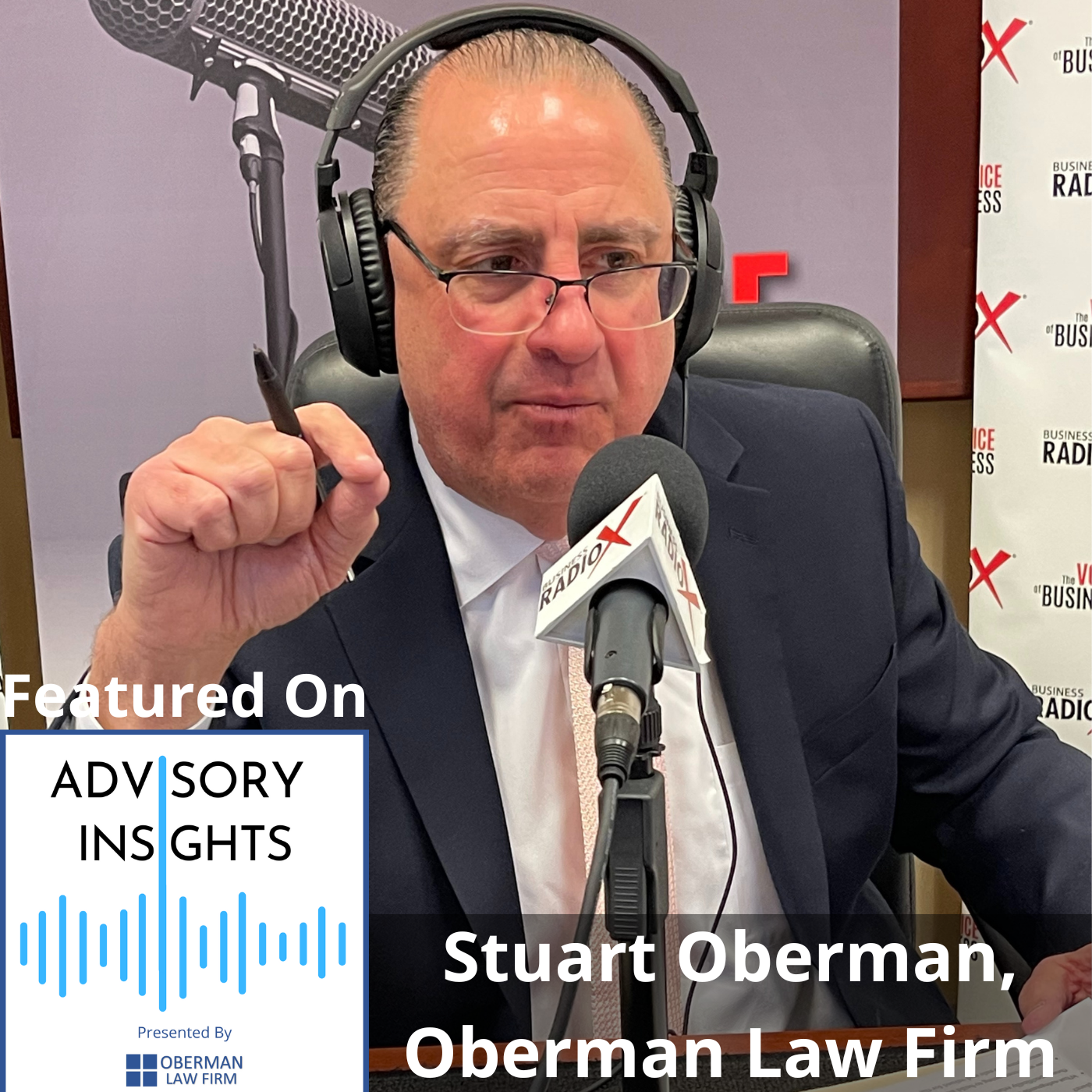
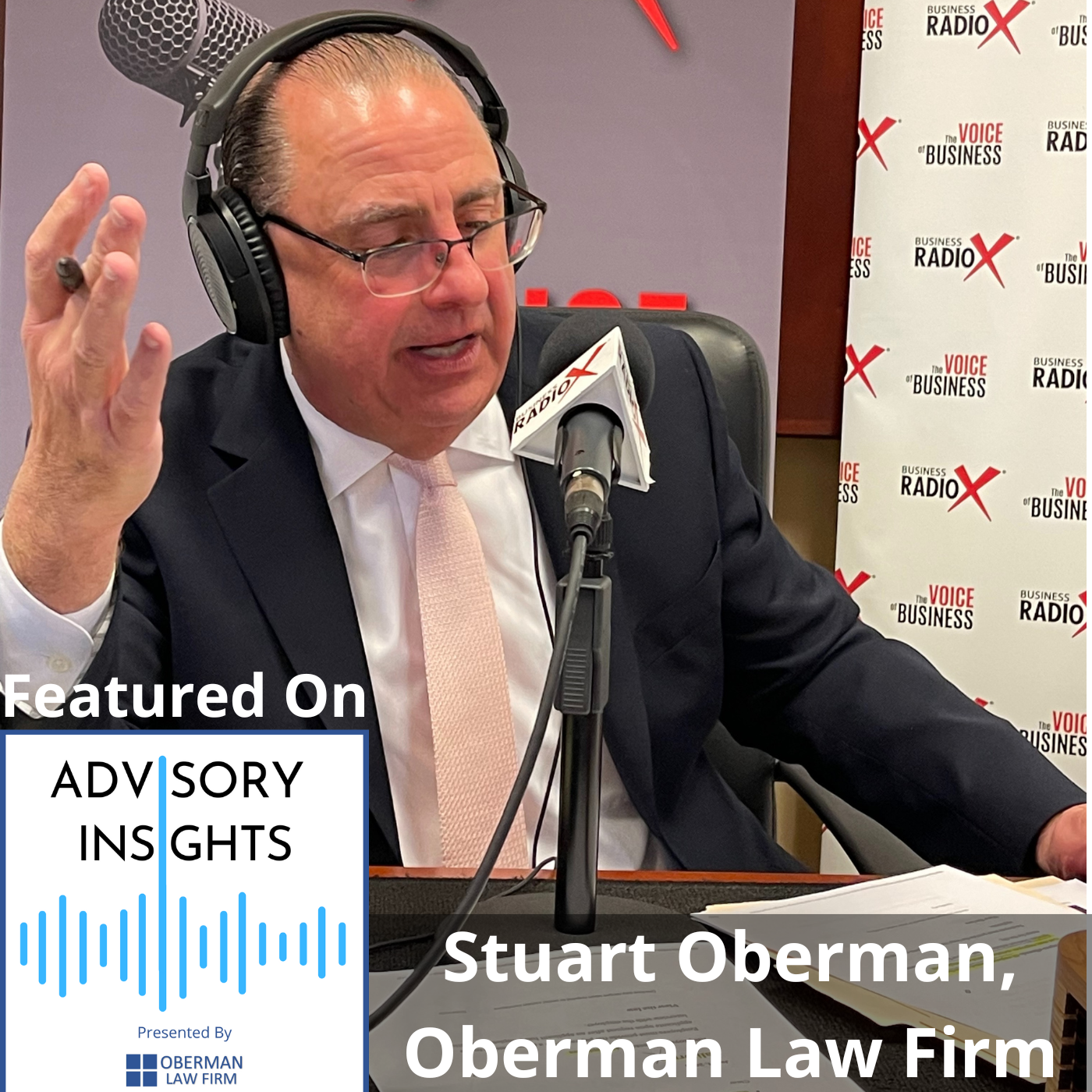
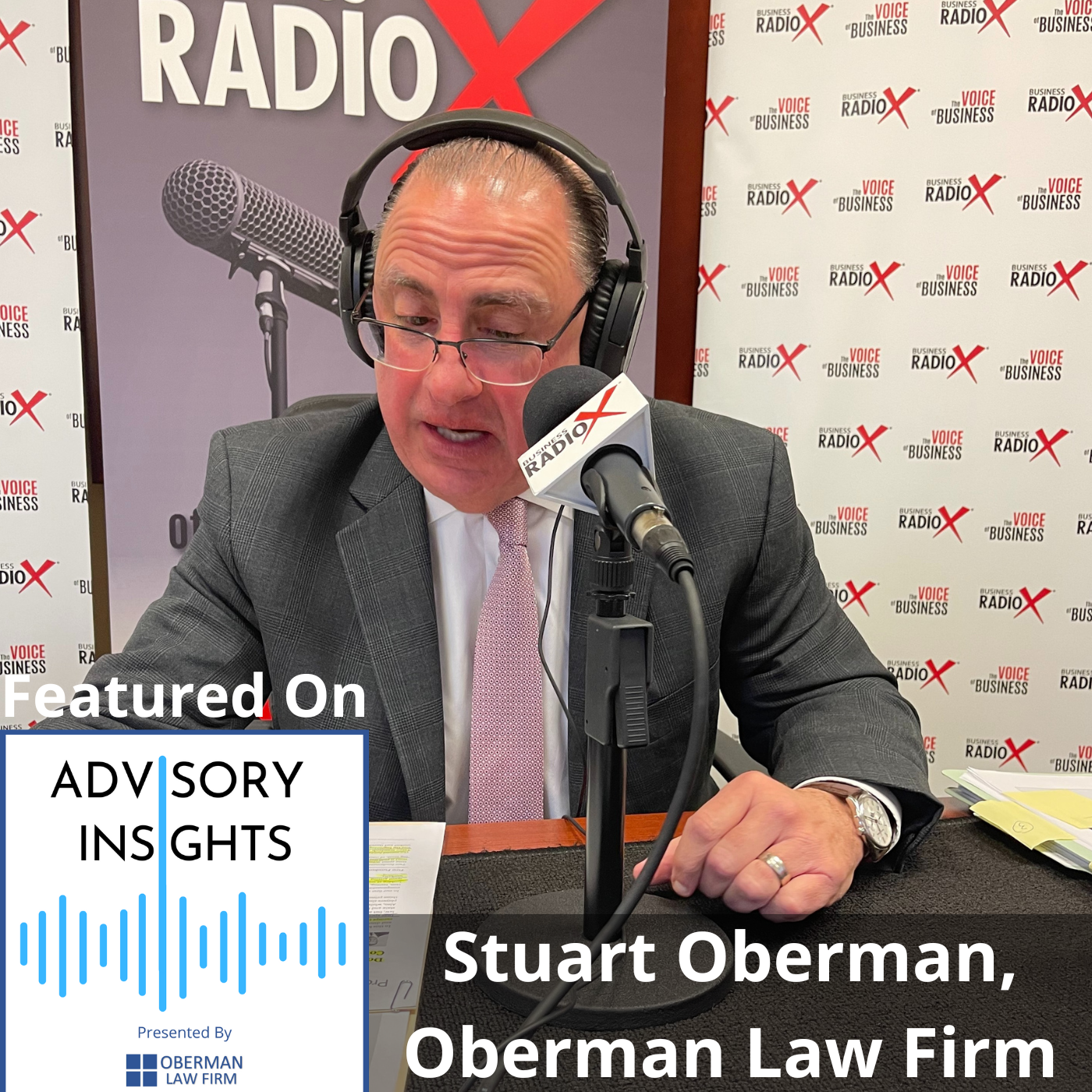
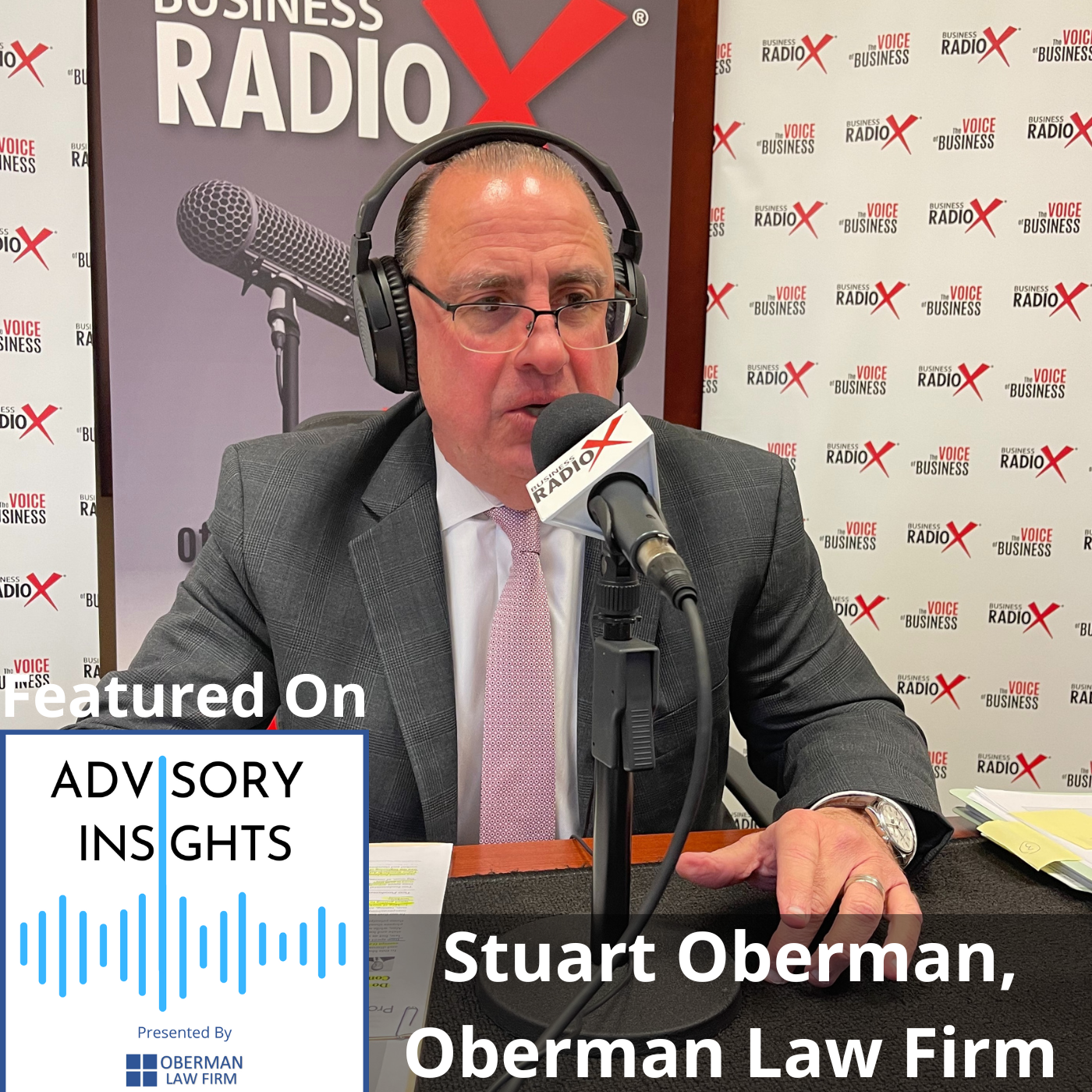
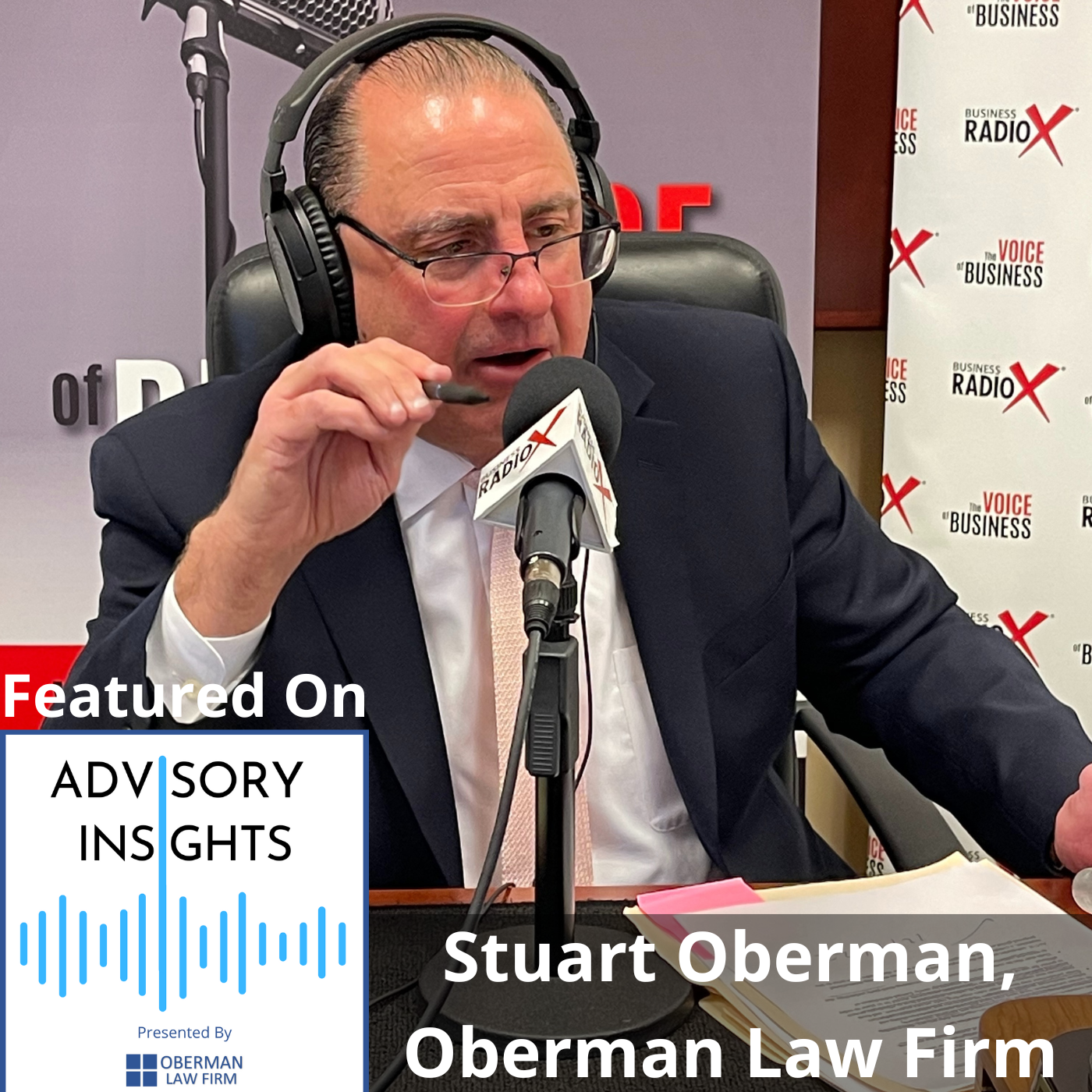
On this episode of Advisory Insights, Stuart Oberman of Oberman Law Firm discussed some of the key HR issues that businesses will need to be aware of in 2023. He covers topics such as layoffs, severance packages, onboarding, and employee policies, and stresses the importance of being prepared for these potential problems in order to avoid any legal or financial difficulties down the road.

Advisory Insights is presented by Oberman Law Firm and produced by the North Fulton studio of Business RadioX®. The series can be found on all the major podcast apps. You can find the complete show archive here.

TRANSCRIPT

Intro: [00:00:01] Broadcasting from the studios of Business RadioX, it’s time for Advisory Insights. Brought to you by Oberman Law Firm, serving clients nationwide with tailored service and exceptional results. Now, here’s your host.

Stuart Oberman: [00:00:20] Hello everyone, and welcome to Advisory Insights. Stuart Oberman here. All right, folks, we’re going to keep drilling it down. I want to cover today, HR Hot Topics for 2023. We’re going to talk about it. We’re going to talk about it. We’re going to talk about it, because I know what’s going to happen is it’s going to be 2025 and the people that listen to this podcast are not going to do what I tell them to do. And we’ll be saying the same thing for 2025. So, we’re going to keep drilling this down until our guys get it 100 percent.

Stuart Oberman: [00:00:51] All right. Look, I’ll take a look at Hot Buttons here. Number one, employee benefits. You’ve got to look at the packages. In today’s market, the packages are competitive. I want you to look at what your health benefits are. I want to look at whether or not you need to do a 25 percent gross up to cover salaries for budgetary purposes. What are your benefits? Where do you need to cut? By some accounts, we are either in a recession or going into a recession, but it’s still a tight labor market. Do we need to make adjustments, plus or minus, on these packages?

Stuart Oberman: [00:01:29] Employee handbooks review. I’m going to tell you right now, I want everyone to review their handbooks every year because your people change, your culture changes, your company values change, which I hope go up. And then, what are the needs of your business? You know, goodness gracious, the needs of 2019 in COVID were a lot different than they are today. So, take a look at where you’re at business-wise. Are you expanding globally? Are you expanding in states?

Stuart Oberman: [00:01:56] In our previous podcast, we talked about different localities. We talked about different laws that affect pay equity. Are you up to date on those things? Now, folks, this is either going to be into bonus season or first quarter next year is going to be bonus season, deferred profit sharing. You have to look at what your numbers are. Are you looking at plus bonuses, minus bonuses, no bonuses? Are you looking at retirement plans? You have to look at your bonuses and deferred comp for your profit sharing.

Stuart Oberman: [00:02:28] I would urge all of our listeners, take a look at what your CPA has told you through the year. As for deferred profit sharing, are you going to declare all your income in 2022? You’re going to roll it over to 2023? Of course, I didn’t say that. So, you’ll just have to have that between your conscience and your CPA. I’m not getting into that one.

Stuart Oberman: [00:02:51] So then, we want to take a look at, I want compensation structures, number four. It is an absolute turbulent market right now for pay structures. It is all over the map. You’ve got talent that’s facing layoffs, but yet you still got a tight labor market because a lot of our employers can’t find qualified people. You’ve got pay transparency laws to look at affecting the states. You’ve got internal equity and market positions that need to be analyzed on either a quarterly, at least every six months to make sure everything is understood, perceived – and I’m going to use the buzzword of today – equitable. If you can define equitable in less than 97 paragraphs, you’re doing better than I am.

Stuart Oberman: [00:03:41] Let’s take a look at number five. I want to take a look at merit salary reviews. Are you doing reviews? Or are you sort of chugging along and letting your staff and letting your team members sort of like, “Well, I got a 3 percent raise, but I have no idea where I’m at in the marketplace today.” Inflation is running rampant. By all accounts, we’re going to be somewhere between 7 and 9 percent for a while. Fluctuations, variables, we’ve got to look at that.

Stuart Oberman: [00:04:12] Six, I want to look at promotions. Do you have a promotion policy in place? Are you prepared to take your staff, your team, your leaders to the next level? Do you have a succession plan for the next year? Do you have a plan if your key employees leave? What happens if your key employees leave? Do you have nondisclosure agreements? Are you prepared? With promotions become more responsibilities, is that outlined? How are you going to outline that? Where are you at on that?

Stuart Oberman: [00:04:47] A similar thing, I want to take a look at performance development considerations. So, employees have got to be connected. And what’s the opportunity for them to connect? What are the conversations? If you are remote, where are the cooler chats? Where’s the fireside chats? Where are these current roles? How are you dealing with exchange and feedback? Critical, critical, critical. You know, are you cutting out platforms? Are you adding platforms? Do you need to expand platforms? How are you doing this?

Stuart Oberman: [00:05:23] Eight, employee feedback. Absolutely critical. How in the world do you know whether or not your employees are happy, whether or not they have problems, whether or not you’ve got management problems, whether your management is really too big, too fat? You’ve got to shed the meat a little bit, how do you know? What’s the feedback? Do you have one-on-one conversations? When’s the last time you took your employees out to lunch or employee out to lunch to figure things out? Again, where are we at in today’s world inside the organization? What’s going on? How do you keep touch? What’s the pulse? Or is that pulse dead? Or is the business bleeding and they don’t even know it?

Stuart Oberman: [00:06:11] Last but not least, I want to take a look at workforce planning. I know these HR matters are a little bit on the structure side, not necessarily drilling down on the legal side, but it is all circular and tied together.

Stuart Oberman: [00:06:26] So, workforce planning, now is the time you should be budgeting. What are your estimated headcounts? Are you going to lay off? How do you lay off? Are you laying off properly? Are you giving them severance packages? Is your employee manual dictating how you sever employees? Are you adding employees? What is your onboarding process? Do you even have an onboarding process? Are all your employees signing non-disclosures, social media, cell phone policies? What new products are you going to invest in? Is that technology protected?

Stuart Oberman: [00:07:04] In our podcasts, [inaudible] podcasts or we may even jump ahead on this one, but our global, we’re thinking of global technology, is that being protected? Vacancies. Again, manpower. These are things you got to look at.

Stuart Oberman: [00:07:21] I know we jumped into the procedural matters a little bit more than we usually do in our conversations. But I’m telling you, folks, the title HR Hot Buttons for 2023, these are landmines waiting to happen unless you drill down on these and get specific.

Stuart Oberman: [00:07:39] Folks, that’s going to wrap it up for today. Again, Stuart Oberman. Thank you so much for listening. If you have any questions, please feel free to give us a call, 770-886-2400, or send me an email, stuart, S-T-U-A-R-T, @obermanlaw.com. Folks, thanks for listening and we hope you have a fantastic day. Take care.

Outro: [00:08:03] Thank you for joining us on Advisory Insights. This show is brought to you by Oberman Law Firm, a business-centric law firm representing local, regional, and national clients in a wide range of practice areas, including health care, mergers and acquisitions, corporate transactions, and regulatory compliance.

About Advisory Insights Podcast

Presented by Oberman Law Firm, Advisory Insights Podcast covers legal, business, HR, and other topics of vital concern to healthcare practices and other business owners. This show series can be found here as well as on all the major podcast apps.

Stuart Oberman, Oberman Law Firm

Oberman Law Firm

Stuart Oberman is the founder and President of Oberman Law Firm. Mr. Oberman graduated from Urbana University and received his law degree from John Marshall Law School. Mr. Oberman has been practicing law for over 25 years, and before going into private practice, Mr. Oberman was in-house counsel for a Fortune 500 Company. Mr. Oberman is widely regarded as the go-to attorney in the area of Dental Law, which includes DSO formation, corporate business structures, mergers and acquisitions, regulatory compliance, advertising regulations, HIPAA, Compliance, and employment law regulations that affect dental practices.

In addition, Mr. Oberman’s expertise in the healthcare industry includes advising clients in the complex regulatory landscape as it relates to telehealth and telemedicine, including compliance of corporate structures, third-party reimbursement, contract negotiations, technology, health care fraud, and abuse law (Anti-Kickback Statute and the State Law), professional liability risk management, federal and state regulations.

As the long-term care industry evolves, Mr. Oberman has the knowledge and experience to guide clients in the long-term care sector with respect to corporate and regulatory matters, assisted living facilities, continuing care retirement communities (CCRCs). In addition, Mr. Oberman’s practice also focuses on health care facility acquisitions and other changes of ownership, as well as related licensure and Medicare/Medicaid certification matters, CCRC registrations, long-term care/skilled nursing facility management, operating agreements, assisted living licensure matters, and health care joint ventures.

In addition to his expertise in the health care industry, Mr. Oberman has a nationwide practice that focuses on all facets of contractual disputes, including corporate governance, fiduciary duty, trade secrets, unfair competition, covenants not to compete, trademark and copyright infringement, fraud, and deceptive trade practices, and other business-related matters. Mr. Oberman also represents clients throughout the United States in a wide range of practice areas, including mergers & acquisitions, partnership agreements, commercial real estate, entity formation, employment law, commercial leasing, intellectual property, and HIPAA/OSHA compliance.

Mr. Oberman is a national lecturer and has published articles in the U.S. and Canada.

LinkedIn

Oberman Law Firm

Oberman Law Firm has a long history of civic service, noted national, regional, and local clients, and stands among the Southeast’s eminent and fast-growing full-service law firms. Oberman Law Firm’s areas of practice include Business Planning, Commercial & Technology Transactions, Corporate, Employment & Labor, Estate Planning, Health Care, Intellectual Property, Litigation, Privacy & Data Security, and Real Estate.

By meeting their client’s goals and becoming a trusted partner and advocate for our clients, their attorneys are recognized as legal go-getters who provide value-added service. Their attorneys understand that in a rapidly changing legal market, clients have new expectations, constantly evolving choices, and operate in an environment of heightened reputational and commercial risk.

Oberman Law Firm’s strength is its ability to solve complex legal problems by collaborating across borders and practice areas.

Connect with Oberman Law Firm:

Company website | LinkedIn | Twitter

Tagged With: Advisory Insights, Advisory Insights Podcast, Dental Practice, employment law, HR, HR Hot Buttons for 2023, Oberman Law, Oberman Law Firm, Stuart Oberman

Employee Pay Inequity: The New Frontier

December 30, 2022 by John Ray

Employee Pay Inequity The New Frontier
Advisory Insights Podcast
Employee Pay Inequity: The New Frontier
Loading
00:00 /
RSS Feed
Share
Link
Embed

Download file

Employee Pay Inequity The New Frontier

Employee Pay Inequity:  The New Frontier (Advisory Insights Podcast, Episode 24)

On this episode of Advisory Insights, Stuart Oberman of Oberman Law Firm discussed laws regarding employer disclosure of pay ranges and how they differ in various states and municipalities. He also offered advice to employers on how to avoid potential problems with these laws.

Advisory Insights is presented by Oberman Law Firm and produced by the North Fulton studio of Business RadioX®. The series can be found on all the major podcast apps. You can find the complete show archive here.

TRANSCRIPT

Intro: [00:00:02] Broadcasting from the studios of Business RadioX, it’s time for Advisory Insights. Brought to you by Oberman Law firm, serving clients nationwide with tailored service and exceptional results. Now, here’s your host.

Stuart Oberman: [00:00:20] Hello everyone, and welcome to Advisory Insights. Stuart Oberman here, your host. All right, folks, we’re going to drill it down right now. Some ongoing legislation, big items going on, employee pay inequity. The new frontier.

Stuart Oberman: [00:00:38] So, a new front has emerged in state and local governments, and the federal government to a certain extent, regarding their attempts to qualify inequity in compensation. So, what’s happening is, is pay disclosure laws are taking several forms now. Some require employers to provide the minimum and even maximum pay or pay range for a given job application upon request. So, other states are now mandating the practice without even requirements that candidates ask first.

Stuart Oberman: [00:01:19] So, I want to take a look at a couple of states that they always seem to be out and frontal things that really affect employee compensation. So, I want to go through a couple of states, and this will give you an idea of where things are going with this.

Stuart Oberman: [00:01:36] First off, let’s take a look at California, all over the map, all over the map. They’ve got a new effective law coming in January 1, 2023 regarding all employers with 15 or more employees. So, if you don’t know what that is, I would strongly suggest that you pull that particular legislation. So, what we’re looking at, really across the board, is a lot of the same scenarios are going on across the states and states are picking up and copying what other states are doing.

Stuart Oberman: [00:02:10] Again, Colorado in January 1, 2021 enacted a new law affecting all employees. Again, in Colorado, do you know what that is? Connecticut, October 1, 2021 enacted legislation affected all employees. Maryland going back to October 1, 2020, again, legislation affecting all employees. Nevada, trailing a little bit as far as time goes, October 1, 2021 affected all employees.

Stuart Oberman: [00:02:45] Jersey – now get this one, Jersey. So, you got to love New Jersey. I mean, you’ve got to love those guys, right? – so April 13, 2022 – get a load of this – Jersey City, they got now laws that all employees in the city with five or more employees. Again, Jersey City, new law, April 13, 2022, all employers in the city with five or more employees. You got to know it.

Stuart Oberman: [00:03:14] I’m going to New York. New York is fantastic. You have to love New York City. The heartbeat of America. All employers in a city with four or more employees. New York City, November 1, 2022. Oh, now we’ve got a new law in Ithaca. I can’t make this up. September 1, 2022, Ithaca, all employers in the city with four or more employees. Or Chester County, New York – you got to love those guys – November 6, 2022. Again, you’ve got different cities enacting different laws as far as employees go.

Stuart Oberman: [00:03:49] So, in Westchester County, all employers in the county with four or more employees. Great. So, now your company, you work in three different cities in New York and you got a problem. Let’s look at our friends out in the Midwest. Ohio, I love Ohio. Cincinnati got their own set of laws. All employers located within the city with 15 or more employees, including referral and employment agencies.

Stuart Oberman: [00:04:20] So, now, we jump right on up to Toledo. Again, one state. We’ve got different laws. June 25, 2020, all employers located within the city with 15 or more employees, including referral and employment agencies. You have to love the Midwest. Again, folks, I know I’m sort of picking on those guys. But, again, let’s look at Rhode Island, January 1, 2023 enacted a law, all employers. Washington, Northwest – here we go – all employers in the state with 15 or more employees.

Stuart Oberman: [00:04:57] Why am I reviewing this? Why am I reviewing this? In today’s world, where you have remote employees everywhere, some of our clients have employees in 15 or 30 states, some employers probably have employees in every state. If you’re an employer, you have got to know where your people are at, what the law is, what the state, what the county law is, and what the municipality laws are.

Stuart Oberman: [00:05:29] Because otherwise you’re going to run into different problems, different payrolls. You’re going to have to revise. If you’re a city like New York and you’re a city like Ohio, and you have three or four different employer issues, you’ve got to understand where these things are going.

Stuart Oberman: [00:05:46] So, a couple of things to look at. So, what are we going to look at as far as requirements go? Look at what the disclosure requirements are. Look at disclosure pay or pay ranges upon request or certain conditions that employers and employees are referred to. Look at the disclosure pay ranges. Look at the disclosure upon all job listings. Are you required to list the pay now for job descriptions on a locality level, statewide level? Again, folks, you got to understand this.

Stuart Oberman: [00:06:26] Again, this is for our employers on a national basis. So, just be aware. These are all hot buttons. Pay inequity, literally, it’s a smoldering fire waiting to explode. And I think we’re probably not too far from that area.

Stuart Oberman: [00:06:43] Folks, I appreciate your time listening to me today. Again, what do we need to do as far as localities go? Let’s look at that. If you have any questions, please feel free to give me call, Stuart Oberman, 770-886-2400 or stuart, S-T-U-A-R-T, @obermanlaw.com. Folks, thanks for listening. Join our additional podcasts to follow. Have a fantastic day.

Outro: [00:07:11] Thank you for joining us on Advisory Insights. This show is brought to you by Oberman Law Firm, a business-centric law firm representing local, regional, and national clients in a wide range of practice areas, including health care, mergers and acquisitions, corporate transactions, and regulatory compliance.

About Advisory Insights Podcast

Presented by Oberman Law Firm, Advisory Insights Podcast covers legal, business, HR, and other topics of vital concern to healthcare practices and other business owners. This show series can be found here as well as on all the major podcast apps.

Stuart Oberman, Oberman Law Firm

Oberman Law Firm

Stuart Oberman is the founder and President of Oberman Law Firm. Mr. Oberman graduated from Urbana University and received his law degree from John Marshall Law School. Mr. Oberman has been practicing law for over 25 years, and before going into private practice, Mr. Oberman was in-house counsel for a Fortune 500 Company. Mr. Oberman is widely regarded as the go-to attorney in the area of Dental Law, which includes DSO formation, corporate business structures, mergers and acquisitions, regulatory compliance, advertising regulations, HIPAA, Compliance, and employment law regulations that affect dental practices.

In addition, Mr. Oberman’s expertise in the healthcare industry includes advising clients in the complex regulatory landscape as it relates to telehealth and telemedicine, including compliance of corporate structures, third-party reimbursement, contract negotiations, technology, health care fraud, and abuse law (Anti-Kickback Statute and the State Law), professional liability risk management, federal and state regulations.

As the long-term care industry evolves, Mr. Oberman has the knowledge and experience to guide clients in the long-term care sector with respect to corporate and regulatory matters, assisted living facilities, continuing care retirement communities (CCRCs). In addition, Mr. Oberman’s practice also focuses on health care facility acquisitions and other changes of ownership, as well as related licensure and Medicare/Medicaid certification matters, CCRC registrations, long-term care/skilled nursing facility management, operating agreements, assisted living licensure matters, and health care joint ventures.

In addition to his expertise in the health care industry, Mr. Oberman has a nationwide practice that focuses on all facets of contractual disputes, including corporate governance, fiduciary duty, trade secrets, unfair competition, covenants not to compete, trademark and copyright infringement, fraud, and deceptive trade practices, and other business-related matters. Mr. Oberman also represents clients throughout the United States in a wide range of practice areas, including mergers & acquisitions, partnership agreements, commercial real estate, entity formation, employment law, commercial leasing, intellectual property, and HIPAA/OSHA compliance.

Mr. Oberman is a national lecturer and has published articles in the U.S. and Canada.

LinkedIn

Oberman Law Firm

Oberman Law Firm has a long history of civic service, noted national, regional, and local clients, and stands among the Southeast’s eminent and fast-growing full-service law firms. Oberman Law Firm’s areas of practice include Business Planning, Commercial & Technology Transactions, Corporate, Employment & Labor, Estate Planning, Health Care, Intellectual Property, Litigation, Privacy & Data Security, and Real Estate.

By meeting their client’s goals and becoming a trusted partner and advocate for our clients, their attorneys are recognized as legal go-getters who provide value-added service. Their attorneys understand that in a rapidly changing legal market, clients have new expectations, constantly evolving choices, and operate in an environment of heightened reputational and commercial risk.

Oberman Law Firm’s strength is its ability to solve complex legal problems by collaborating across borders and practice areas.

Connect with Oberman Law Firm:

Company website | LinkedIn | Twitter

Tagged With: Advisory Insights, Advisory Insights Podcast, Dental Practice, employee law, Employee Pay, employee pay inequity, Oberman Law, Oberman Law Firm, Stuart Oberman

Employee Handbook Sections to Overhaul in 2023

December 23, 2022 by John Ray

Employees Handbook
Advisory Insights Podcast
Employee Handbook Sections to Overhaul in 2023
Loading
00:00 /
RSS Feed
Share
Link
Embed

Download file

Employees Handbook

Employee Handbook Sections to Overhaul in 2023 (Advisory Insights Podcast, Episode 23)

On this episode of Advisory Insights, Stuart Oberman of Oberman Law Firm discussed which sections in your employee handbook to overhaul in 2023. He stressed addressing changing technology, making changes to account for alternate work arrangements, modifying sick leave policies, and more.

Advisory Insights is presented by Oberman Law Firm and produced by the North Fulton studio of Business RadioX®. The series can be found on all the major podcast apps. You can find the complete show archive here.

TRANSCRIPT

Intro: [00:00:01] Broadcasting from the studios of Business RadioX, it’s time for Advisory Insights. Brought to you by Oberman Law Firm, serving clients nationwide with tailored service and exceptional results. Now, here’s your host.

Stuart Oberman: [00:00:20] Hello everyone, and welcome to Advisory Insights. Stuart Oberman here as your host. All right, folks, it’s 2023. HR is in the house. Now is the time. I want to go over a couple of things. Today’s topic, Employee Handbook Sections to Overhaul in 2023.

Stuart Oberman: [00:00:40] We have some clients that have not overhauled their employee manuals for ten years. Now, it’s time to rethink the entire process, especially in today’s world, in today’s economy. Look, what’s happening is we have the workers of today. The new workers are clashing with the old employer policies and procedures. And what’s happening is that the employers are losing.

Stuart Oberman: [00:01:05] So, I want to run through a couple of things that seem to be sticking out as sort of a poke in the ribs, if you will, as to where things are going and what needs to be looked at and changed.

Stuart Oberman: [00:01:17] Number one, I know a lot of our clients have very, very strict appearance rules. So, if you have a particular rule or policy that you are wanting to enforce, folks, you’ve got to get it in writing. And another thing you got to take a look at in today’s world is the new reality as far as appearance goes.

Stuart Oberman: [00:01:43] One particular thing I want to bring up is you have to look at legislation and where things are at today. So, let me give you an example.

Stuart Oberman: [00:01:50] The Crown Act, for example, bans race-based hair discrimination in the workplace. So, the CROWN Act or similar legislation has been enacted – get this – 19 states. And a bill is currently pending before Congress. Who knows what will happen as far as Federal legislation goes? And it’s set at the Senate level to regulate hair and appearance. So, you better jump on the bandwagon now. Adjust things that you need to adjust knowing what we know as far as hair discrimination. The next thing you know, we’re going to work on tattoos and everything else.

Stuart Oberman: [00:02:31] So, look, at the end of the day, what people do with their bodies is up to them. If you’re going to have a policy and procedure, be ready for some pushback on it, be ready to explain why you need it, and be ready to review federal and state law as it comes down the pike.

Stuart Oberman: [00:02:47] Let’s take a look at number two, the work arrangements. Folks, we’re in a different world. We’re in a hybrid workplace. Our communications have changed. Our performance has changed. Everything about what we do on the work side has changed. So, what does that mean? That means your HR teams have to provide opportunity, tools, guidelines, and make it easier. Do you have a remote policy? Do you have a nondisclosure policy? Are your employees working with sensitive data along with the same computer that they’re using for their kid’s recreation facility and baseball teams? So, you’ve got to look at all these things.

Stuart Oberman: [00:03:28] Now, another area – huge – technology. So, policies have to outline technology and how a company’s handbook should be remote workplace. Does your technology require multifactor authentication for employees to use their own devices? Your data, your confidential data that could literally sink you as a company is now on your employees cellphones. What do you do if the cellphone is lost? What do you do if the cellphone is hacked? What do you do if data is lost? What is the policy and procedure for that? Does your company provide the cellphones? Does your employer or employee have an automatic shutdown and wipe out on their cellphones if you lose it?

Stuart Oberman: [00:04:25] So, I think you’ve got to address safety and technology concerns along with security now as the technology grows and as the workplace becomes blended between work, play, and family.

Stuart Oberman: [00:04:41] One of the things we’re looking at now is sick leave. And there’s a lot of discussion regarding this. States now are mandating certain leave policies. Certain companies are now being subject to jurisdictional issues that they never thought they would be before. The localities are now handling sick leaves. So, you really have got to take a look at where your states are, what’s on a local basis, what’s the trends.

Stuart Oberman: [00:05:11] You know, if you’re in Georgia or if you’re in North Carolina or if you’re in Massachusetts, what’s coming down the pike as far as from Cleveland, Ohio, or from California, or from Texas, where are these things coming from? Because everything trends and you’ve got to know the trends.

Stuart Oberman: [00:05:31] Next one – I’ve talked about this over and over and over again – marijuana use and testing. So, the law hasn’t changed. Marijuana is still illegal on the federal law. But what’s happening is, is that the states are adding protection for workers use of marijuana. Folks, I can’t make this up.

Stuart Oberman: [00:05:53] So, example in California, for instance, employers cannot discriminate against employees for legal marijuana use outside of work. Now, what do you do if on the way to work, an employee is toking on the way to work and they’re not a health safety welfare hazard to other employees? How do you address that? You know, they’re inebriated, but they’re in no danger to other employees.

Stuart Oberman: [00:06:25] So, you’ve got to understand what the trends are. So, you’ve got to get out in front of this. You’ve got to have descriptions as to what’s acceptable, what’s not acceptable. You’ve got to have safety concerns. The use of marijuana is not a carte blanche on the workplace. There are restrictions. There are protocols that employers can follow. And we have to get ahead of this, because I always say what happens in the West comes East. It’s just a matter of what direction it comes.

Stuart Oberman: [00:06:59] So, again, these are a couple of things that we want to take a look at. We’ve got communication issues. We’ve got technology issues. We’ve got employee handbook issues. We have appearance issues, work arrangements. We have remote responsibilities now that employers have to really be aware of. So, I don’t think any of this is earth shattering. There’s been a lot of commentary on these issues.

Stuart Oberman: [00:07:25] But, again, we keep seeing the same problems over and over and over, which is in summary, (1) employers are not addressing appearance; (2) employers are not revising the work arrangement, policies, procedures; (3) employers are not getting ahead of technology; (4) employers are not modifying their sick leave; and (5) marijuana usage, employers are not adjusting what they need to do.

Stuart Oberman: [00:08:00] Folks, there’s a lot of things that really, really we need to look out for 2023. We’re going to have some more discussion on this. If you have any questions, please let me know, Stuart Oberman, Oberman Law Firm, stuart, S-T-U-A-R-T, @obermanlaw.com, phone number 404-630 – excuse me – 770-886-2400. Again, 770-886-2400. Please stay tuned for other issues of Advisory Insights. Have a fantastic day.

Outro: [00:08:36] Thank you for joining us on Advisory Insights. This show is brought to you by Oberman Law Firm, a business-centric law firm representing local, regional, and national clients in a wide range of practice areas, including health care, mergers and acquisitions, corporate transactions, and regulatory compliance.

About Advisory Insights Podcast

Presented by Oberman Law Firm, Advisory Insights Podcast covers legal, business, HR, and other topics of vital concern to healthcare practices and other business owners. This show series can be found here as well as on all the major podcast apps.

Stuart Oberman, Oberman Law Firm

Oberman Law Firm

Stuart Oberman is the founder and President of Oberman Law Firm. Mr. Oberman graduated from Urbana University and received his law degree from John Marshall Law School. Mr. Oberman has been practicing law for over 25 years, and before going into private practice, Mr. Oberman was in-house counsel for a Fortune 500 Company. Mr. Oberman is widely regarded as the go-to attorney in the area of Dental Law, which includes DSO formation, corporate business structures, mergers and acquisitions, regulatory compliance, advertising regulations, HIPAA, Compliance, and employment law regulations that affect dental practices.

In addition, Mr. Oberman’s expertise in the healthcare industry includes advising clients in the complex regulatory landscape as it relates to telehealth and telemedicine, including compliance of corporate structures, third-party reimbursement, contract negotiations, technology, health care fraud, and abuse law (Anti-Kickback Statute and the State Law), professional liability risk management, federal and state regulations.

As the long-term care industry evolves, Mr. Oberman has the knowledge and experience to guide clients in the long-term care sector with respect to corporate and regulatory matters, assisted living facilities, continuing care retirement communities (CCRCs). In addition, Mr. Oberman’s practice also focuses on health care facility acquisitions and other changes of ownership, as well as related licensure and Medicare/Medicaid certification matters, CCRC registrations, long-term care/skilled nursing facility management, operating agreements, assisted living licensure matters, and health care joint ventures.

In addition to his expertise in the health care industry, Mr. Oberman has a nationwide practice that focuses on all facets of contractual disputes, including corporate governance, fiduciary duty, trade secrets, unfair competition, covenants not to compete, trademark and copyright infringement, fraud, and deceptive trade practices, and other business-related matters. Mr. Oberman also represents clients throughout the United States in a wide range of practice areas, including mergers & acquisitions, partnership agreements, commercial real estate, entity formation, employment law, commercial leasing, intellectual property, and HIPAA/OSHA compliance.

Mr. Oberman is a national lecturer and has published articles in the U.S. and Canada.

LinkedIn

Oberman Law Firm

Oberman Law Firm has a long history of civic service, noted national, regional, and local clients, and stands among the Southeast’s eminent and fast-growing full-service law firms. Oberman Law Firm’s areas of practice include Business Planning, Commercial & Technology Transactions, Corporate, Employment & Labor, Estate Planning, Health Care, Intellectual Property, Litigation, Privacy & Data Security, and Real Estate.

By meeting their client’s goals and becoming a trusted partner and advocate for our clients, their attorneys are recognized as legal go-getters who provide value-added service. Their attorneys understand that in a rapidly changing legal market, clients have new expectations, constantly evolving choices, and operate in an environment of heightened reputational and commercial risk.

Oberman Law Firm’s strength is its ability to solve complex legal problems by collaborating across borders and practice areas.

Connect with Oberman Law Firm:

Company website | LinkedIn | Twitter

Tagged With: Advisory Insights, Advisory Insights Podcast, Dental Practice, employee handbook, employment law, Oberman Law, Oberman Law Firm, Stuart Oberman

Considerations When Expanding Globally

December 16, 2022 by John Ray

Considerations When Expanding Globally
Advisory Insights Podcast
Considerations When Expanding Globally
Loading
00:00 /
RSS Feed
Share
Link
Embed

Download file

Considerations When Expanding Globally

Considerations When Expanding Globally (Advisory Insights Podcast, Episode 22)

On this episode of Advisory Insights, Stuart Oberman of Oberman Law Firm discussed some of the challenges businesses face when expanding globally, including compliance with various laws and regulations. He stressed the importance of getting expert legal counsel to advise on these matters.

Advisory Insights is presented by Oberman Law Firm and produced by the North Fulton studio of Business RadioX®. The series can be found on all the major podcast apps. You can find the complete show archive here.

TRANSCRIPT

Intro: [00:00:01] Broadcasting from the studios of Business RadioX, it’s time for Advisory Insights. Brought to you by Oberman Law Firm, serving clients nationwide with tailored service and exceptional results. Now here’s your host.

Stuart Oberman: [00:00:20] Welcome everyone to Advisory Insights. Stuart Oberman here as your host. I want to talk a little bit about going global. So, as a law firm, we are very, very fortunate. We have clients that are growing globally. We have clients that are coming across border into the United States. And it’s got its own twists and turns. So, I want to drill down a little bit on considerations when expanding globally.

Stuart Oberman: [00:00:53] So, look, as we enter 2023, as we go into it, companies are anticipating and increasing international business activity. That’s just the way it is, whether it’s products, whether it’s services. Everything now, it seems, is going cross-border, whether it’s across the pond to Europe or to our friends up north to Canada. So, a lot of our clients think that going globally is necessary in order to maintain long term growth.

Stuart Oberman: [00:01:25] And a lot of those markets are Western Europe and China. But I will tell you, the emerging markets are Mexico, Brazil, and India. So, I think that you’ve got to take a look at some of those opportunities. Now, I will tell you, once you get into those countries and once those countries come into us, on the expansion side, you’ve got mandated compliance that is very different.

Stuart Oberman: [00:01:58] But I want to talk about our clients going globally. So, you’ve got absolute mandated regulatory compliance that is required. For every different country, you’re going to have a different regulation. You look at Canada, you’ve got providences. A lot of providences are absolutely separate. They’ve got their own rules, regulations, they’ve got their own regulatory boards. So, you’ve got to know this.

Stuart Oberman: [00:02:23] So, I want to take a look at a couple of considerations going global expansion, corporate governance. One is that, in a lot of jurisdictions, you have to have a physical presence. You have to have a registered agent. You have to have, in some cases, actual subsidiaries. And in some jurisdictions, you have to look at the regulatory compliance and tax considerations.

Stuart Oberman: [00:02:52] So, if you have an expansion that requires in a foreign jurisdiction forming a subsidiary, you’ve got to look in multiple corporate structures for that. Are they going to have shareholders? Are they going to have members? Are they going to comply with certain regulatory matters as far as registration goes? How’s the names?

Stuart Oberman: [00:03:19] Another area you have to look at is regulatory compliance. Folks, you know, some jurisdictions absolutely require import and export licenses. Do you know what that is? And that includes technology and products. So, are you exporting your technology into another country? What’s the compliance? Are you importing into another country products? What is the taxes? What are the tax stamps? So, depending on your service, your product, your facility, you’re going to have regulatory compliance issues and they are very, very complex.

Stuart Oberman: [00:04:03] Now, of course, we all know there’s tax considerations. So, some laws, depending on jurisdiction, are very, very strict, some are very high, some are very favorable tax structures. You have to know what your tax structure is, what your tax liability is before you start getting into the export of services and products. You have to retain counsel. You have to retain a CPA, if you will, that is well-versed on those particular regulations. What are the direct taxation rules? What are the antideferral rules? If you don’t know what antideferral rules are, you have to take a step back and understand that.

Stuart Oberman: [00:04:56] Now, I want to take a look at employment, area number four. In a foreign country, there are some cases where you have to enter into and adhere to strict collective bargaining requirements. Some require work permits for non-local nationals. What are your requirements if you have members of the company that are from the states, if you will, going into China, into Western Europe, into Mexico, Brazil, India? What are the local national requirements? You have to understand what the benefits are if you are hiring personnel from that particular country. What are the mandated benefits? Folks, there’s mandated benefits that are different in Canada, in Europe, Asia, South America.

Stuart Oberman: [00:05:49] Now, one of the biggest concerns that you should always have in any kind of expansion globally is trade secrets, privacy and non-compete agreements. What are you going to do if, all of a sudden, your models, your technology, your outsourcing is being stripped of its privacy? And all of a sudden you’ve got duplicates flooding the market. What are you going to do? How are you going to deal with it? Are you going to lose money? Just think of the counterfeit luxury brands that come into the states. Well, what’s going to happen if you’re over there and your brand, your product is hijacked? And then, you’ve got duplicates. You’ve got counterfeit. What do you do?

Stuart Oberman: [00:06:45] I also want to look at a couple things regarding global equity. So, certain security laws in certain countries may have very strict corporate equity distribution models. Some are unique. Some involve fund remittance limits. Some involve reporting. Some involve repatriate of funds and requirements. Do you know what those requirements are? Do you know the structure for the corporate equity distributions? You have to understand the accounting mechanisms for that as far as the tax benefits and the replacement or awarding of equity to the employees.

Stuart Oberman: [00:07:25] Again, I want to drill down a little bit on data privacy, intellectual property technology, and information law. So, again, each country is going to have different privacy, data transfer, customer employee notification laws, data monitoring, payment obligations. What happens if they are found to be liable for your stripping of ideas, they’re counterfeiting?

Stuart Oberman: [00:07:52] So, not only do you have state and federal law, if you will, going into different global jurisdictions, but you’ve got local laws regarding the enforcement and validation of intellectual property assignments. How are you going to transfer various company policies, procedures, and assignments to different entities that you create in a different country? Do you have those particular trade secrets protections in order? Are you training your staff, your team members, your office, or your directors who are located in that country and are national to that particular jurisdiction and country? Have you trained them? Are you training them?

Stuart Oberman: [00:08:40] And then, from an accounting standpoint, what are the tax or replacement benefits for, again, awarding equity to employees? Is that confidential? What about relevant technology regarding newly formed subsidiaries? How are you training your people? What are the restrictions on third party technology due to territorial restrictions? Do you know what those are?

Stuart Oberman: [00:09:09] Folks, these are just a mirror of some things you can run into. You’ve got corporate governance, regulatory compliance, tax considerations, employment matters, global equity distributions, data privacy, intellectual property, technology, information law. Those are the things you have to have a really, really expert grasp on before you’re ready to expand.

Stuart Oberman: [00:09:35] Folks, again, I can’t stress enough if you’re going to expand globally, you have to understand those ramifications and you’ve got to get appropriate legal counsel to outline those things.

Stuart Oberman: [00:09:47] Folks, thanks again for joining us on Advisory Insights. Stuart Oberman here. If you have any questions, give us a call, 770-886-2400, or send me an email, stuart@obermanlaw.com. Thanks a lot. Have a fantastic day.

Outro: [00:10:07] Thank you for joining us on Advisory Insights. This show is brought to you by Oberman Law Firm, a business-centric law firm representing local, regional, and national clients in a wide range of practice areas, including health care, mergers and acquisitions, corporate transactions, and regulatory compliance.

About Advisory Insights Podcast

Presented by Oberman Law Firm, Advisory Insights Podcast covers legal, business, HR, and other topics of vital concern to healthcare practices and other business owners. This show series can be found here as well as on all the major podcast apps.

Stuart Oberman, Oberman Law Firm

Oberman Law Firm

Stuart Oberman is the founder and President of Oberman Law Firm. Mr. Oberman graduated from Urbana University and received his law degree from John Marshall Law School. Mr. Oberman has been practicing law for over 25 years, and before going into private practice, Mr. Oberman was in-house counsel for a Fortune 500 Company. Mr. Oberman is widely regarded as the go-to attorney in the area of Dental Law, which includes DSO formation, corporate business structures, mergers and acquisitions, regulatory compliance, advertising regulations, HIPAA, Compliance, and employment law regulations that affect dental practices.

In addition, Mr. Oberman’s expertise in the healthcare industry includes advising clients in the complex regulatory landscape as it relates to telehealth and telemedicine, including compliance of corporate structures, third-party reimbursement, contract negotiations, technology, health care fraud, and abuse law (Anti-Kickback Statute and the State Law), professional liability risk management, federal and state regulations.

As the long-term care industry evolves, Mr. Oberman has the knowledge and experience to guide clients in the long-term care sector with respect to corporate and regulatory matters, assisted living facilities, continuing care retirement communities (CCRCs). In addition, Mr. Oberman’s practice also focuses on health care facility acquisitions and other changes of ownership, as well as related licensure and Medicare/Medicaid certification matters, CCRC registrations, long-term care/skilled nursing facility management, operating agreements, assisted living licensure matters, and health care joint ventures.

In addition to his expertise in the health care industry, Mr. Oberman has a nationwide practice that focuses on all facets of contractual disputes, including corporate governance, fiduciary duty, trade secrets, unfair competition, covenants not to compete, trademark and copyright infringement, fraud, and deceptive trade practices, and other business-related matters. Mr. Oberman also represents clients throughout the United States in a wide range of practice areas, including mergers & acquisitions, partnership agreements, commercial real estate, entity formation, employment law, commercial leasing, intellectual property, and HIPAA/OSHA compliance.

Mr. Oberman is a national lecturer and has published articles in the U.S. and Canada.

LinkedIn

Oberman Law Firm

Oberman Law Firm has a long history of civic service, noted national, regional, and local clients, and stands among the Southeast’s eminent and fast-growing full-service law firms. Oberman Law Firm’s areas of practice include Business Planning, Commercial & Technology Transactions, Corporate, Employment & Labor, Estate Planning, Health Care, Intellectual Property, Litigation, Privacy & Data Security, and Real Estate.

By meeting their client’s goals and becoming a trusted partner and advocate for our clients, their attorneys are recognized as legal go-getters who provide value-added service. Their attorneys understand that in a rapidly changing legal market, clients have new expectations, constantly evolving choices, and operate in an environment of heightened reputational and commercial risk.

Oberman Law Firm’s strength is its ability to solve complex legal problems by collaborating across borders and practice areas.

Connect with Oberman Law Firm:

Company website | LinkedIn | Twitter

Tagged With: Advisory Insights, Advisory Insights Podcast, Dental Practice, doing business globally, employment law, Expanding Globally, Oberman Law, Oberman Law Firm, Stuart Oberman

2023 HIPAA Updates

December 9, 2022 by John Ray

2023 HIPAA Updates
Advisory Insights Podcast
2023 HIPAA Updates
Loading
00:00 /
RSS Feed
Share
Link
Embed

Download file

2023 HIPAA Updates

2023 HIPAA Updates (Advisory Insights Podcast, Episode 21)

On this episode of Advisory Insights, Stuart Oberman of Oberman Law Firm discussed HIPAA updates coming in 2023, avoiding HIPAA violations, and the increased penalties for violators. He explained that patients’ access to their health care records will be more direct and timelier. Practices should know, however, that there is a potential for increased exposure if records are not properly secured.

Advisory Insights is presented by Oberman Law Firm and produced by the North Fulton studio of Business RadioX®. The series can be found on all the major podcast apps. You can find the complete show archive here.

TRANSCRIPT

Intro: [00:00:01] Broadcasting from the studios of Business RadioX, it’s time for Advisory Insights. Brought to you by Oberman Law Firm, serving clients nationwide with tailored service and exceptional results. Now, here’s your host.

Stuart Oberman: [00:00:20] Welcome everyone. Stuart Oberman here, your host for Advisory Insights. All right. We know that 2023 is right around the corner. Folks, I’m going to tell you, for my health care clients – and we have, as a firm, a lot of health care clients – our clients are not prepared for the new HIPAA changes. I want to run through a couple of these. I could spend three days talking about this particular topic, but I just want to hit the highlights and give our clients a view as to what’s expected and potential exposure.

Stuart Oberman: [00:00:57] So, from our area, we see a lot of violations. I want to walk through some what we call reoccurring violations. In plain English, it happens way too much. Where are some exposure? One, lost or stolen cellphones or tablets provide an extensive amount of sensitive data in our health care practices. Our doctors, they get information on their cellphones, they get information on their tablets, they get information that is easily extracted. What are you doing to secure that data on your cellphone or your tablet?

Stuart Oberman: [00:01:43] Number two, our medical providers do not train their staff. I’m going to go out on a limb to say 80 to 90 percent of all of our health care offices across the board do not properly, thoroughly provide training to their employees.

Stuart Oberman: [00:02:06] Number three – a common violation that keeps reoccurring, reoccurring, reoccurring – data breaches. Now, what happens is, on those breaches, a lot of times doctors don’t know what to do as far as the violations go. Who do they report it to? Do they report it to the government, to the FTC? Do they have to do a credit reviewer check? Do they have to set up a 1-800 number? Do they have breached notification rules? No, they don’t.

Stuart Oberman: [00:02:39] So, I just ran through three very quick topics and violations that could literally, literally shut down a practice if an investigation occurs. Now, I want to take a look at some other things. I want to take a look at some key changes in 2023. Key changes, first, more direct and timely patient access to electronic health care records.

Stuart Oberman: [00:03:08] There has been a dramatic increase in the time that patients can obtain their data from providers. Do you even know what that time period is? If you do not know what that time period is and you do not know the violations, then I would urge you to either give us a call, take a look at our website, take a look at some of our articles, because that is a huge, huge issue.

Stuart Oberman: [00:03:39] Folks, I’ll guarantee you, you deny patient access to their medical records within a timely manner, you will be getting a very nice I love you letter from the government, which is about 17 pages, and they will crawl up every nook and cranny in your office.

Stuart Oberman: [00:04:01] Now, one thing we have to look at is what is the increase in penalties. Yes, they increased the penalties. Now, they look at what’s involved in guidance, technical assistance. They’re looking at correction action plans.

Stuart Oberman: [00:04:17] You know, what happens is that a lot of these aren’t intentional. Our doctors just rely on the wrong people year after year who have no idea what they’re doing. Unfortunately, they’re not properly trained, so you really can’t blame them. You know, whether it’s office managers, compliance officers – well, let me back up on that. Every medical office should have a compliance officer.

Stuart Oberman: [00:04:43] So, under the new 2023 HIPAA changes, there’s been an increase in penalties. Are you even aware that there’s now a Tier 1, a Tier 2, a Tier 3, and a Tier 4? So, what’s Tier one? Lack of knowledge, “I just didn’t know.” I’ll be honest, that is hard to sell. Reasonable cause and not willful intent, “Look, I knew that I probably needed to do it, but I didn’t mean not to do it.” Willful neglect, “Basically, I don’t really care. I’ve got 30 days to correct it.”

Stuart Oberman: [00:05:24] Now, you get into willful neglect and you not corrected within 30 days, folks, the fines and fees become astronomical once you get into those particular tiers. Again, do you even know the Tier 1, Tier 2, Tier 3, Tier 4 structure? And have you even told your staff of that?

Stuart Oberman: [00:05:46] So, let’s take a look at do’s and don’ts. How do you avoid HIPAA violations and penalties? Now, HIPAA is also criminal penalties. Yep, criminal penalties. Let’s look at what we need to do. Conduct regular audits, spot check potential violations. If you’re not auditing your files – and I’ve been saying this for years on the speaking circuit – at least 15 or 25 a month, which won’t take you long, you have some potential exposure that you don’t want to have, obviously.

Stuart Oberman: [00:06:32] Let’s look at do. Regular employee training. Folks, you cannot train your employees enough on HIPAA. So, I’m going to have an article coming out that I was quoted in and had the pleasure of being a part of the Academy of General Dentistry. And it’s going to be a topic regarding cybersecurity. And in preparing for that, I did an awful lot of research. And I will tell you, it is shocking as to how many breaches there are and how unprepared the doctor is, the team is, the compliance officer is.

Stuart Oberman: [00:07:17] Next, set clear policies and procedures to all employees. Do they know what that is? Do you have a checklist? Do you have an up to date checklist? Are you still using the one from 1996? It’s a different world. Establish in your office a privacy officer. And you’ve got to be careful with this. If you’re a small office, you’re appointing a compliance officer who’s going to answer on your behalf, and you’re going to expect them to cover you with HIPAA issues.

Stuart Oberman: [00:07:52] My suggestion, if you have a small office, you are the compliance officer. If you get bigger, you have a compliance officer, you got to train them. Now, they could be part of your HR – I don’t necessarily like that. I want separation there. But if you have to do it, you’ve got to be both trained.

Stuart Oberman: [00:08:19] Don’ts. Goodness gracious to don’ts. Do not ever disclose or share login credentials. That is an absolute recipe for disaster. Two do not – maybe one of the biggest things – do not leave portable devices or documents unattended anywhere in your office, in public. Look, again, our cellphones are now our offices – our tablets, our laptops. If you go on HHS website and you look at how many fines are due to lost tablets, lost hardware, it’s amazing. Never, ever, ever take flash drives out of your office. Do not do that.

Stuart Oberman: [00:09:11] Folks, I could talk about HIPAA for 20 days here, but I just want to go through, again, some things that we just talked about, HIPAA 2023 updates. Listen to this podcast. Understand where you’re weak at. Fill the gaps. If you’re strong in areas, build on it. If you’re weak, fill it out.

Stuart Oberman: [00:09:32] Folks, thank you as always for joining Advisor Insights. Stuart Oberman. If you have any questions, please give us a call at 770-886-2400, or email, stuart, S-T-U-A-R-T, @obermanlaw.com. Have a fantastic day. Thank you everyone.

Outro: [00:09:53] Thank you for joining us on Advisory Insights. This show is brought to you by Oberman Law Firm, a business-centric law firm representing local, regional, and national clients in a wide range of practice areas, including health care, mergers and acquisitions, corporate transactions, and regulatory compliance.

About Advisory Insights Podcast

Presented by Oberman Law Firm, Advisory Insights Podcast covers legal, business, HR, and other topics of vital concern to healthcare practices and other business owners. This show series can be found here as well as on all the major podcast apps.

Stuart Oberman, Oberman Law Firm

Oberman Law Firm

Stuart Oberman is the founder and President of Oberman Law Firm. Mr. Oberman graduated from Urbana University and received his law degree from John Marshall Law School. Mr. Oberman has been practicing law for over 25 years, and before going into private practice, Mr. Oberman was in-house counsel for a Fortune 500 Company. Mr. Oberman is widely regarded as the go-to attorney in the area of Dental Law, which includes DSO formation, corporate business structures, mergers and acquisitions, regulatory compliance, advertising regulations, HIPAA, Compliance, and employment law regulations that affect dental practices.

In addition, Mr. Oberman’s expertise in the healthcare industry includes advising clients in the complex regulatory landscape as it relates to telehealth and telemedicine, including compliance of corporate structures, third-party reimbursement, contract negotiations, technology, health care fraud, and abuse law (Anti-Kickback Statute and the State Law), professional liability risk management, federal and state regulations.

As the long-term care industry evolves, Mr. Oberman has the knowledge and experience to guide clients in the long-term care sector with respect to corporate and regulatory matters, assisted living facilities, continuing care retirement communities (CCRCs). In addition, Mr. Oberman’s practice also focuses on health care facility acquisitions and other changes of ownership, as well as related licensure and Medicare/Medicaid certification matters, CCRC registrations, long-term care/skilled nursing facility management, operating agreements, assisted living licensure matters, and health care joint ventures.

In addition to his expertise in the health care industry, Mr. Oberman has a nationwide practice that focuses on all facets of contractual disputes, including corporate governance, fiduciary duty, trade secrets, unfair competition, covenants not to compete, trademark and copyright infringement, fraud, and deceptive trade practices, and other business-related matters. Mr. Oberman also represents clients throughout the United States in a wide range of practice areas, including mergers & acquisitions, partnership agreements, commercial real estate, entity formation, employment law, commercial leasing, intellectual property, and HIPAA/OSHA compliance.

Mr. Oberman is a national lecturer and has published articles in the U.S. and Canada.

LinkedIn

Oberman Law Firm

Oberman Law Firm has a long history of civic service, noted national, regional, and local clients, and stands among the Southeast’s eminent and fast-growing full-service law firms. Oberman Law Firm’s areas of practice include Business Planning, Commercial & Technology Transactions, Corporate, Employment & Labor, Estate Planning, Health Care, Intellectual Property, Litigation, Privacy & Data Security, and Real Estate.

By meeting their client’s goals and becoming a trusted partner and advocate for our clients, their attorneys are recognized as legal go-getters who provide value-added service. Their attorneys understand that in a rapidly changing legal market, clients have new expectations, constantly evolving choices, and operate in an environment of heightened reputational and commercial risk.

Oberman Law Firm’s strength is its ability to solve complex legal problems by collaborating across borders and practice areas.

Connect with Oberman Law Firm:

Company website | LinkedIn | Twitter

Tagged With: 2023 Hipaa Updates, Advisory Insights, Advisory Insights Podcast, Dental Practice, employment law, HIPPA, Oberman Law, Oberman Law Firm, Stuart Oberman

One Quick, Easy Way to Evaluate a Dental Insurance Company Contract, with Patrick O’Rourke, Host of Dental Business Radio

December 6, 2022 by John Ray

evaluate a dental insurance contract
Dental Business Radio
One Quick, Easy Way to Evaluate a Dental Insurance Company Contract, with Patrick O'Rourke, Host of Dental Business Radio
Loading
00:00 /
RSS Feed
Share
Link
Embed

Download file

evaluate a dental insurance contract

One Quick, Easy Way to Evaluate a Dental Insurance Company Contract, with Patrick O’Rourke, Host of Dental Business Radio 

What’s one quick, uncomplicated way for a dental services provider to evaluate an insurance company contract? Dental Business Radio host Patrick O’Rourke suggests checking to see if there’s a non-disparagement provision, and if so, how one-sided in their favor it is.

Dental Business Radio is underwritten and presented by Practice Quotient: PPO Negotiations & Analysis and produced by the North Fulton studio of Business RadioX®.

TRANSCRIPT

[00:00:00] Patrick O’Rourke: One of the frequent questions that I get when I’m lecturing or from clients is, Hey, Pat, what’s a really easy way to look at a contract and see what’s adverse to my interests? When you see non-disparagement and that is irreparable harm and it’s kind of vague and one-sided, like they can talk all the smack they want about you, but you can’t say anything back to them.


About Dental Business Radio

Patrick O'Rourke
Patrick O’Rourke, Host of “Dental Business Radio”

Dental Business Radio covers the business side of dentistry. Host Patrick O’Rourke and his guests cover industry trends, insights, success stories, and more in this wide-ranging show. The show’s guests include successful doctors across the spectrum of dental practice providers, as well as trusted advisors and noted industry participants. Dental Business Radio is underwritten and presented by Practice Quotient and produced by the North Fulton studio of Business RadioX®. The show can be found on all the major podcast apps and a complete show archive is here.


Practice Quotient

Dental Business Radio is sponsored by Practice Quotient. Practice Quotient, Inc. serves as a bridge between the payor and provider communities. Their clients include general dentist and dental specialty practices across the nation of all sizes, from completely fee-for-service-only to active network participation with every dental plan possible. They work with independent practices, emerging multi-practice entities, and various large ownership entities in the dental space. Their PPO negotiations and analysis projects evaluate the merits of the various in-network participation contract options specific to your Practice’s patient acquisition strategy. There is no one-size-fits-all solution.

Connect with Practice Quotient

Website | LinkedIn | Facebook | Twitter

Tagged With: commentary, contracts, Dental Business Radio, Dental Practice, non-disparagement, Patrick O'Rourke, Practice Quotient

Simple Steps to HR Compliance

November 18, 2022 by John Ray

Simple Steps to HR Compliance
Advisory Insights Podcast
Simple Steps to HR Compliance
Loading
00:00 /
RSS Feed
Share
Link
Embed

Download file

Simple Steps to HR Compliance

Simple Steps to HR Compliance (Advisory Insights Podcast, Episode 18)

On this episode of Advisory Insights, Stuart Oberman of Oberman Law Firm discusses the importance of compliance with state and federal hiring laws, and simple steps businesses can take to be HR compliant. He advises that interviews and telephone conversations should be recorded, and that organizations should have a process in place to ensure equal pay for equal work.

Advisory Insights is presented by Oberman Law Firm and produced by the North Fulton studio of Business RadioX®. The series can be found on all the major podcast apps. You can find the complete show archive here.

TRANSCRIPT

Intro: [00:00:01] Broadcasting from the studios of Business RadioX, it’s time for Advisory Insights. Brought to you by Oberman Law Firm serving clients nationwide with tailored service and exceptional results. Now, here’s your host.

Stuart Oberman: [00:00:20] Welcome everyone to Advisory Insights. Stuart Oberman here. All right, folks, we’re going to jump right into H.R. We’re going to have a series of H.R. podcasts coming through because it is such a topic going into 2023, and what’s being done in 2022 that lead into 2023. But I want to keep this really simple, because there’s only a handful of things you really need to do in H.R. side in order to stay in compliance and stay out of trouble.

Stuart Oberman: [00:00:52] So, what are we going to do? Topic today, simple steps to H.R. compliance. Simple steps. I’m not talking about reinventing the wheel. I’m talking about looking at things you’re doing internally, what you need to improve, what the map is that you need to follow to the compliance.

Stuart Oberman: [00:01:10] So, let’s take one of the first steps we need to do. First and foremost, folks, your managers have to be trained. A lot of companies, big, small, global do not have managers. They’re not trained. And they’re not really up to date for the challenges that lie ahead.

Stuart Oberman: [00:01:27] You know, look, I don’t care whether you are a startup or Fortune 500 company, H.R. compliance checks are mandatory nowadays. But there’s a couple of things that I want to take a look at. I don’t care whether you have a state, local, or federal issues you’re looking at or you’re a federal contractor or you are doing business with big or small companies, I want you to listen to a couple of regulatory issues from the federal government we want to take a look at that you just have to know.

Stuart Oberman: [00:02:00] One, Fair Labor Standards Act, FLSA. We talked about that on the previous podcast, but now we’re going to look at I want to know what your minimum wage requirements are. Are you paying overtime? Have you reviewed your Affordable Care Act? Now, all that’s going to be jumping into recruiting and hiring as we jump into our next section. American with Disabilities Act, do you even have a guideline for that? A little bit overlap from our last one, but still, I want to follow this trend. OSHA, you know, OSHA violations are very, very stiff. They come with a lot of fines, especially if you are in the healthcare area.

Stuart Oberman: [00:02:39] The Family Medical Leave Act, so what we’re seeing now is are there policies? You know, when couples are having babies, now they’re taking 12 longer weeks off. Are you prepared for that? EEOC, so we’re going to do a statistics with EEOC in, probably, next podcast or two that you’re not going to believe the statistics on those. So, that is why you have to be aware of what’s coming local, what’s coming national, and what’s coming into your area as far as what you’re doing, what you’re located at.

Stuart Oberman: [00:03:14] Recruiting and hiring, I’ll be honest, most of these issues that we’re going to talk about are an absolute disaster when it comes to company organizations. They’re not prepared. They don’t know. They just simply hire anyone who walks across the street and somebody in today’s world. We’re seeing a little bit of a pullback. But, still, you know, they’re hiring bodies and their H.R. compliance is a mess as far as recruiting goes.

Stuart Oberman: [00:03:37] So, as we move quickly into 2023 – again, I don’t care whether you’re a startup or Fortune 500 companies – we have some very, very, very big companies that I will assure you are substantial revenue companies, billion-dollar companies, half-a-billion companies, they are not where they need to be. And this is a great time for them to take a look at some things.

Stuart Oberman: [00:04:00] So, what are we doing? I want to look at recruiting. I want to run through some things that you have to have for recruiting or should at least take a look at, because now it’s down to H.R. And if H.R. doesn’t have the tools to go forward with these, then really the C-suites are going to have more headaches down the road. I want to see that my companies have use of non-discriminatory job descriptions.

Stuart Oberman: [00:04:22] Well, first and foremost, does anyone of you have an employee manual? Two, do they even have job descriptions that are non-discriminatory? You have to look at those. You have to put those guidelines up. Two, are there proper questions that you are asking for the interview process? Are you complying with the salary issues? Are you complying with records requests? Are your people even trained on asking questions for that?

Stuart Oberman: [00:04:51] I know we’ve said some stuff in the past about proper interview questions. I would urge all of our H.R. people, C-suites, employees that are listening to this, I don’t care whether you are on a dental office or you sell major manufacturing to global industries, you’ve got to understand what these questions are and where to stay away from.

Stuart Oberman: [00:05:12] Three, I’m going to tell you right now the questions you want to stay away from, marital status, religion – why you would want to get into religion on an interview is beyond my comprehension -sexual preference, citizenship, date of birth, age. Again, let me repeat those. Those are basics. So, when you have your questions all lined out for your candidates or employees, monitoring these questions regarding marital status, religion, sexual preference, citizenship, date of birth, age – I’m gonna throw one more at you – residence – residence.

Stuart Oberman: [00:05:52] Number four, I want you to keep all application forms and interview evaluations in order to document a reason for rejecting a candidate if you have an EEOC complaint regarding that person that was not hired. Yes, I did say that. If you reject a candidate, why did you reject them? And are you prepared to answer to the EEOC that you did not have discriminatory matters for rejecting that client?

Stuart Oberman: [00:06:30] And I will tell you, we’re seeing more and more of that. I’m going to tell you right now, I would assume that your interviews are being recorded by your candidates, so I think you need to be real careful about that. I would assume your telephone conversations are being recorded. And I will assure you, Zoom is being recorded. So, you need to be really, really, really careful and you need to be really based on your H.R. compliance issues as to what questions not to ask.

Stuart Oberman: [00:06:59] So, I want to make sure you provide equal compensation for equal work regardless, regardless of the internal job descriptions. Equal pay for equal work. Do you have guidelines for that? Is there a process for that. Now, obviously, you’re not going to have that as much detail as if you’re a small company versus a big company. Again, whether you make $1,000 or 100 million, do you have that process?

Stuart Oberman: [00:07:29] Now, what you have to show is that your payment structure is compliant with State and Federal guidelines. That’s a list of five things that you must look at before you do anything else. Before you overhaul anything else, take a look at those things. Are you in compliance? Are they in process? Are you in violation of any State, Local, Federal laws?

Stuart Oberman: [00:07:57] Now, folks, you really got to understand that in today’s world – and look, you can read The Wall Street Journal, you can read the local newspaper, you can watch your local news, I don’t care what you watch or what you read – H.R. is just no longer an option. You’ve got to comply with these things. And our hiring managers have got to keep up with this, and they’re not. You know, some great organizations out there, there’s the SHRMs of the world that are unbelievable great organizations. Get involved in those organizations and figure out what you need to do, and what you do not need to do, and what you need to change.

Stuart Oberman: [00:08:34] Folks, that’s the end of our podcast today. Stuart Oberman, Advisory Insights. If you have any questions, please feel free to give us a call at 770-886-2400 or email me at stuart, S-T-U-A-R-T, @obermanlaw.com. Folks, thank you so much. I hope you take a look at what you’re doing H.R.-wise and then we’ll wish everyone a fantastic day. Thank you.

Outro: [00:09:01] Thank you for joining us on Advisory Insights. This show is brought to you by Oberman Law Firm, a business-centric law firm representing local, regional, and national clients in a wide range of practice areas, including health care, mergers and acquisitions, corporate transactions, and regulatory compliance.

About Advisory Insights Podcast

Presented by Oberman Law Firm, Advisory Insights Podcast covers legal, business, HR, and other topics of vital concern to healthcare practices and other business owners. This show series can be found here as well as on all the major podcast apps.

Stuart Oberman, Oberman Law Firm

Oberman Law Firm

Stuart Oberman is the founder and President of Oberman Law Firm. Mr. Oberman graduated from Urbana University and received his law degree from John Marshall Law School. Mr. Oberman has been practicing law for over 25 years, and before going into private practice, Mr. Oberman was in-house counsel for a Fortune 500 Company. Mr. Oberman is widely regarded as the go-to attorney in the area of Dental Law, which includes DSO formation, corporate business structures, mergers and acquisitions, regulatory compliance, advertising regulations, HIPAA, Compliance, and employment law regulations that affect dental practices.

In addition, Mr. Oberman’s expertise in the healthcare industry includes advising clients in the complex regulatory landscape as it relates to telehealth and telemedicine, including compliance of corporate structures, third-party reimbursement, contract negotiations, technology, health care fraud, and abuse law (Anti-Kickback Statute and the State Law), professional liability risk management, federal and state regulations.

As the long-term care industry evolves, Mr. Oberman has the knowledge and experience to guide clients in the long-term care sector with respect to corporate and regulatory matters, assisted living facilities, continuing care retirement communities (CCRCs). In addition, Mr. Oberman’s practice also focuses on health care facility acquisitions and other changes of ownership, as well as related licensure and Medicare/Medicaid certification matters, CCRC registrations, long-term care/skilled nursing facility management, operating agreements, assisted living licensure matters, and health care joint ventures.

In addition to his expertise in the health care industry, Mr. Oberman has a nationwide practice that focuses on all facets of contractual disputes, including corporate governance, fiduciary duty, trade secrets, unfair competition, covenants not to compete, trademark and copyright infringement, fraud, and deceptive trade practices, and other business-related matters. Mr. Oberman also represents clients throughout the United States in a wide range of practice areas, including mergers & acquisitions, partnership agreements, commercial real estate, entity formation, employment law, commercial leasing, intellectual property, and HIPAA/OSHA compliance.

Mr. Oberman is a national lecturer and has published articles in the U.S. and Canada.

LinkedIn

Oberman Law Firm

Oberman Law Firm has a long history of civic service, noted national, regional, and local clients, and stands among the Southeast’s eminent and fast-growing full-service law firms. Oberman Law Firm’s areas of practice include Business Planning, Commercial & Technology Transactions, Corporate, Employment & Labor, Estate Planning, Health Care, Intellectual Property, Litigation, Privacy & Data Security, and Real Estate.

By meeting their client’s goals and becoming a trusted partner and advocate for our clients, their attorneys are recognized as legal go-getters who provide value-added service. Their attorneys understand that in a rapidly changing legal market, clients have new expectations, constantly evolving choices, and operate in an environment of heightened reputational and commercial risk.

Oberman Law Firm’s strength is its ability to solve complex legal problems by collaborating across borders and practice areas.

Connect with Oberman Law Firm:

Company website | LinkedIn | Twitter

Tagged With: Dental Practice, HR, HR Compliance, Oberman Law, Oberman Law Firm, Stuart Oberman

Regulatory Concerns for 2023

November 11, 2022 by John Ray

Regulatory Concerns for 2023
Advisory Insights Podcast
Regulatory Concerns for 2023
Loading
00:00 /
RSS Feed
Share
Link
Embed

Download file

Regulatory Concerns for 2023

Regulatory Concerns for 2023 (Advisory Insights Podcast, Episode 17)

On this episode of Advisory Insights, Stuart Oberman of Oberman Law Firm looked ahead to 2023 and covered some of the basic HR-related compliance reviews businesses should conduct at year end 2022, including manuals and checklists, time tracking and overtime policies, employee vs. contractor classification, and more. Stuart also urged employers use this time to verify their compliance with the FLSA, the Affordable Care Act, the Americans with Disabilities Act, OSHA, and EEOC.

Advisory Insights is presented by Oberman Law Firm and produced by the North Fulton studio of Business RadioX®. The series can be found on all the major podcast apps. You can find the complete show archive here.

TRANSCRIPT

Intro: [00:00:01] Broadcasting from the studios of Business RadioX, it’s time for Advisory Insights. Brought to you by Oberman Law Firm, serving clients nationwide with tailored service and exceptional results. Now, here’s your host.

Stuart Oberman: [00:00:20] Welcome everyone to Advisory Insights. This is Stuart Oberman. Well, I’ll tell you, folks, 2023 is almost here. So, at this time of year, it is a mad, mad scramble to get everything organized, closed out for 2022, and then see what we have for 2023. So, this is a perfect, perfect time that our clients, big or small, whether you make $100,000 a year or whether you’re half-a-billion to a billion dollars, it’s all, all, all regulatory time. So, what are we going to cover?

Stuart Oberman: [00:01:30] As we review regulatory concerns for 2023, it’s a mad scramble now. Our clients, whether they’re big, they’re small, whether they make $1,000 a year or half-a-billion dollars or a billion dollars, it is all regulatory time. So, what I want to do is really take a look at what are the basic things that you need to really look at on an H.R. Process, whether it is local, regional, national landscape. Human resources is an extremely, extremely hot topic right now.

Stuart Oberman: [00:02:01] You know, when you have states that are regulating hair color, when you have states that are regulating non-compete agreements, when you have states regulating background checks, whether we have employee classification issues, whether we have IRS issues, let’s take a quick look at some of the things that we need to look at and what everyone needs to look at as a checklist for 2023 starting today.

Stuart Oberman: [00:02:28] One, I want everyone to do a complete compliance review. What does that mean? That means all your manuals, all your checklists, all your personnel issues, all your tax forms, whatever you need to do to make sure that those personnel files are absolutely in order we need to take a look at.

Stuart Oberman: [00:02:50] Second step in this wonderful world that we live in of the revolving employee coming and going, boomeranging, the great resignation. I forgot the biggest term now is a great – I don’t know, where employees just sort of float along and they really don’t check in or check out. They just float and, eventually, wait to be fired.

Stuart Oberman: [00:03:13] I want you to take a look at hiring and recruiting, you know, what is your onboarding process. That’s the next one, employee onboarding. Do you have the regulatory matters? Do you have the offer letters, which we’re going to cover in another episode. Do you have the background checks? Are you granted permission to do background checks? Are you granted permission to do criminal checks? I mean, these are the things that you really, really have to take a look at as far as onboarding goes.

Stuart Oberman: [00:03:42] Do you have a training process in place for the employees or are they just sort of floundering? Have they received non-disclosure agreements? Have they received social media, cell phone, internet policy agreements? These are all the things that you need to handle right when they start the first day.

Stuart Oberman: [00:03:58] So then, let’s take a look at our payroll and time keeping measures. Huge topic issue. Are you properly paying your employees for overtime? We’re going to cover that issue as it relates to commuting employees in a couple episodes down the road. But how are you paying your employees? Are they W-2? Are they 1099? Are you paying them for travel time to the job, paying spending the night? Are you traveling?

Stuart Oberman: [00:04:25] You know, we’re going to get into a little bit of the The Portal-to-Portal Act. You’re probably thinking, what in the world is that? Well, that’s an early, early law that’s been around for about 60 or 70 years that, honestly, most H.R. people do not know about. So, timekeeping measures. Are you tracking time? How are you tracking time? Is it manual? Is it by computer? Is it by software?

Stuart Oberman: [00:04:48] Because what happens is we have some employers that will not pay their staff overtime until they reach 46 hours. Now, there’s a five hour gap there every week. That can be very, very costly. Do you have a policy in place? Is your OT policy, whatever that may be – I’ll use the word defensible – defensible? Is it defensible against the IRS? Is it defensible against the Department of Labor, no matter where your state is, or federal? What do those things look like?

Stuart Oberman: [00:05:26] Classification, independent contractor or employee. Do you pass the simple smell test? I think it was back in ’84, I believe, or the early ’80s, the IRS set up 20 checkmarks, if you will, on what you need to look at to determine whether a person is an employee or independent contractor. Are we looking at the control test? The old saying, if you control the time, place, and manner of an individual, they are an employee. So, that could be a very, very, very costly mistake.

Stuart Oberman: [00:06:05] Next question is proper record considerations. Are you keeping track of those? So, there’s a couple of things you need to look at when you’re saying you’re tracking those. So, I want you to take a look at do you comply with the Fair Labor Standards Act, FLSA, the minimum wage, overtime? Should that be reviewed? Absolutely. Are you looking at the Affordable Care Act? Do you comply with that? Simple things. Do you have enough employees to comply with those areas? American with Disabilities Act, the ADA, are you looking at those? Occupational Safe and Health Act, OSHA – OSHA, the big guys. Family Medical Leave Act, are you looking at that, FMLA, 50 employees or over?

Stuart Oberman: [00:06:53] Do some of your employees that are 15 or some of your companies that are 15 and more employees, do they qualify for that? And then, the beloved agency, the EEOC, which is a nasty, nasty governmental organization that, really, I say nasty, but they do a lot of good things. And we’re going to cover some areas on that down the road.

Stuart Oberman: [00:07:15] So, what are the next things? EEOC retaliation. So, if your employee reports you to a governmental agency or state agency or even a local agency, and you retaliate, well, what does that mean? You can’t fire, you can’t demote, you can’t reprimand, you can’t punish your employees because they simply went ahead and reported you, which they are allowed to do. The question is, how do you deal with that internally and do you have a retaliation process? That has to be reviewed. You’ve got to look at your H.R. You have to have specific guidelines for non-retaliation.

Stuart Oberman: [00:07:57] And, lastly, I’m going to take a look at federal guidelines for 15 or more employees. Now, have you even looked at whether or not the FLSA even applies to you? The question is it will. Affordable Care Act, Medical Disabilities Act, OSHA, FMLA, EEOC, do those even apply to you if you have 15 or more employees? If you don’t know the answer to that question, you’re way out of compliance.

Stuart Oberman: [00:08:24] And I would urge everyone to take a look at what their guidelines are, ask questions, seek counsel, go to the C-suites of your company. And if you are not in compliance, now is an absolute great time because people wait to the second, third, fourth quarter to do this. Now’s the time to deal with it going into 2023.

Stuart Oberman: [00:08:49] Folks, that is our H.R. concerns for 2023 entering. I want you to really take a look at these things and make sure because it is really a trap for the unwary if you are not.

Stuart Oberman: [00:09:02] Folks, Stuart Oberman, Oberman Law Firm and Advisory Insights. If you have any questions, please feel free to contact me at 770-886-2400 or email stuart, S-T-U-A-R-T, @obermanlaw.com. We’re going to have some great, great topics to follow on our next podcast. So, everyone, have a fantastic day. Thank you.

Outro: [00:09:25] Thank you for joining us on Advisory Insights. This show is brought to you by Oberman Law Firm, a business-centric law firm representing local, regional, and national clients in a wide range of practice areas, including health care, mergers and acquisitions, corporate transactions, and regulatory compliance.

About Advisory Insights Podcast

Presented by Oberman Law Firm, Advisory Insights Podcast covers legal, business, HR, and other topics of vital concern to healthcare practices and other business owners. This show series can be found here as well as on all the major podcast apps.

Stuart Oberman, Oberman Law Firm

Oberman Law Firm

Stuart Oberman, Founder, Oberman Law Firm

Stuart Oberman is the founder and President of Oberman Law Firm. Mr. Oberman graduated from Urbana University and received his law degree from John Marshall Law School. Mr. Oberman has been practicing law for over 25 years, and before going into private practice, Mr. Oberman was in-house counsel for a Fortune 500 Company. Mr. Oberman is widely regarded as the go-to attorney in the area of Dental Law, which includes DSO formation, corporate business structures, mergers and acquisitions, regulatory compliance, advertising regulations, HIPAA, Compliance, and employment law regulations that affect dental practices.

In addition, Mr. Oberman’s expertise in the healthcare industry includes advising clients in the complex regulatory landscape as it relates to telehealth and telemedicine, including compliance of corporate structures, third-party reimbursement, contract negotiations, technology, health care fraud, and abuse law (Anti-Kickback Statute and the State Law), professional liability risk management, federal and state regulations.

As the long-term care industry evolves, Mr. Oberman has the knowledge and experience to guide clients in the long-term care sector with respect to corporate and regulatory matters, assisted living facilities, continuing care retirement communities (CCRCs). In addition, Mr. Oberman’s practice also focuses on health care facility acquisitions and other changes of ownership, as well as related licensure and Medicare/Medicaid certification matters, CCRC registrations, long-term care/skilled nursing facility management, operating agreements, assisted living licensure matters, and health care joint ventures.

In addition to his expertise in the health care industry, Mr. Oberman has a nationwide practice that focuses on all facets of contractual disputes, including corporate governance, fiduciary duty, trade secrets, unfair competition, covenants not to compete, trademark and copyright infringement, fraud, and deceptive trade practices, and other business-related matters. Mr. Oberman also represents clients throughout the United States in a wide range of practice areas, including mergers & acquisitions, partnership agreements, commercial real estate, entity formation, employment law, commercial leasing, intellectual property, and HIPAA/OSHA compliance.

Mr. Oberman is a national lecturer and has published articles in the U.S. and Canada.

LinkedIn

Oberman Law Firm

Oberman Law Firm has a long history of civic service, noted national, regional, and local clients, and stands among the Southeast’s eminent and fast-growing full-service law firms. Oberman Law Firm’s areas of practice include Business Planning, Commercial & Technology Transactions, Corporate, Employment & Labor, Estate Planning, Health Care, Intellectual Property, Litigation, Privacy & Data Security, and Real Estate.

By meeting their client’s goals and becoming a trusted partner and advocate for our clients, their attorneys are recognized as legal go-getters who provide value-added service. Their attorneys understand that in a rapidly changing legal market, clients have new expectations, constantly evolving choices, and operate in an environment of heightened reputational and commercial risk.

Oberman Law Firm’s strength is its ability to solve complex legal problems by collaborating across borders and practice areas.

Connect with Oberman Law Firm:

Company website | LinkedIn | Twitter

Tagged With: 2023, Dental Practice, HR, Human Resources, Oberman Law, Oberman Law Firm, regulatory changes, regulatory concerns, Stuart Oberman

  • 1
  • 2
  • Next Page »

Business RadioX ® Network


Our Most Recent Episode

CONNECT WITH US

  • Email
  • Facebook
  • LinkedIn
  • Twitter
  • YouTube

Our Mission

We help local business leaders get the word out about the important work they’re doing to serve their market, their community, and their profession.

We support and celebrate business by sharing positive business stories that traditional media ignores. Some media leans left. Some media leans right. We lean business.

Sponsor a Show

Build Relationships and Grow Your Business. Click here for more details.

Partner With Us

Discover More Here

Terms and Conditions
Privacy Policy

Connect with us

Want to keep up with the latest in pro-business news across the network? Follow us on social media for the latest stories!
  • Email
  • Facebook
  • Google+
  • LinkedIn
  • Twitter
  • YouTube

Business RadioX® Headquarters
1000 Abernathy Rd. NE
Building 400, Suite L-10
Sandy Springs, GA 30328

© 2025 Business RadioX ® · Rainmaker Platform

BRXStudioCoversLA

Wait! Don’t Miss an Episode of LA Business Radio

BRXStudioCoversDENVER

Wait! Don’t Miss an Episode of Denver Business Radio

BRXStudioCoversPENSACOLA

Wait! Don’t Miss an Episode of Pensacola Business Radio

BRXStudioCoversBIRMINGHAM

Wait! Don’t Miss an Episode of Birmingham Business Radio

BRXStudioCoversTALLAHASSEE

Wait! Don’t Miss an Episode of Tallahassee Business Radio

BRXStudioCoversRALEIGH

Wait! Don’t Miss an Episode of Raleigh Business Radio

BRXStudioCoversRICHMONDNoWhite

Wait! Don’t Miss an Episode of Richmond Business Radio

BRXStudioCoversNASHVILLENoWhite

Wait! Don’t Miss an Episode of Nashville Business Radio

BRXStudioCoversDETROIT

Wait! Don’t Miss an Episode of Detroit Business Radio

BRXStudioCoversSTLOUIS

Wait! Don’t Miss an Episode of St. Louis Business Radio

BRXStudioCoversCOLUMBUS-small

Wait! Don’t Miss an Episode of Columbus Business Radio

Coachthecoach-08-08

Wait! Don’t Miss an Episode of Coach the Coach

BRXStudioCoversBAYAREA

Wait! Don’t Miss an Episode of Bay Area Business Radio

BRXStudioCoversCHICAGO

Wait! Don’t Miss an Episode of Chicago Business Radio

Wait! Don’t Miss an Episode of Atlanta Business Radio