Business RadioX ®

  • Home
  • Business RadioX ® Communities
    • Southeast
      • Alabama
        • Birmingham
      • Florida
        • Orlando
        • Pensacola
        • South Florida
        • Tampa
        • Tallahassee
      • Georgia
        • Atlanta
        • Cherokee
        • Forsyth
        • Greater Perimeter
        • Gwinnett
        • North Fulton
        • North Georgia
        • Northeast Georgia
        • Rome
        • Savannah
      • Louisiana
        • New Orleans
      • North Carolina
        • Charlotte
        • Raleigh
      • Tennessee
        • Chattanooga
        • Nashville
      • Virginia
        • Richmond
    • South Central
      • Arkansas
        • Northwest Arkansas
    • Midwest
      • Illinois
        • Chicago
      • Michigan
        • Detroit
      • Minnesota
        • Minneapolis St. Paul
      • Missouri
        • St. Louis
      • Ohio
        • Cleveland
        • Columbus
        • Dayton
    • Southwest
      • Arizona
        • Phoenix
        • Tucson
        • Valley
      • Texas
        • Austin
        • Dallas
        • Houston
    • West
      • California
        • Bay Area
        • LA
        • Pasadena
      • Colorado
        • Denver
      • Hawaii
        • Oahu
  • FAQs
  • About Us
    • Our Mission
    • Our Audience
    • Why It Works
    • What People Are Saying
    • BRX in the News
  • Resources
    • BRX Pro Tips
    • B2B Marketing: The 4Rs
    • High Velocity Selling Habits
    • Why Most B2B Media Strategies Fail
    • 9 Reasons To Sponsor A Business RadioX ® Show
  • Partner With Us
  • Veteran Business RadioX ®

Keys to a Smooth Practice Transition, with Danielle McBride, Oberman Law Firm

January 7, 2022 by John Ray

Oberman Law Firm
Dental Law Radio
Keys to a Smooth Practice Transition, with Danielle McBride, Oberman Law Firm
Loading
00:00 /
RSS Feed
Share
Link
Embed

Download file

Oberman Law Firm

Keys to a Smooth Practice Transition, with Danielle McBride, Oberman Law Firm (Dental Law Radio, Episode 30)

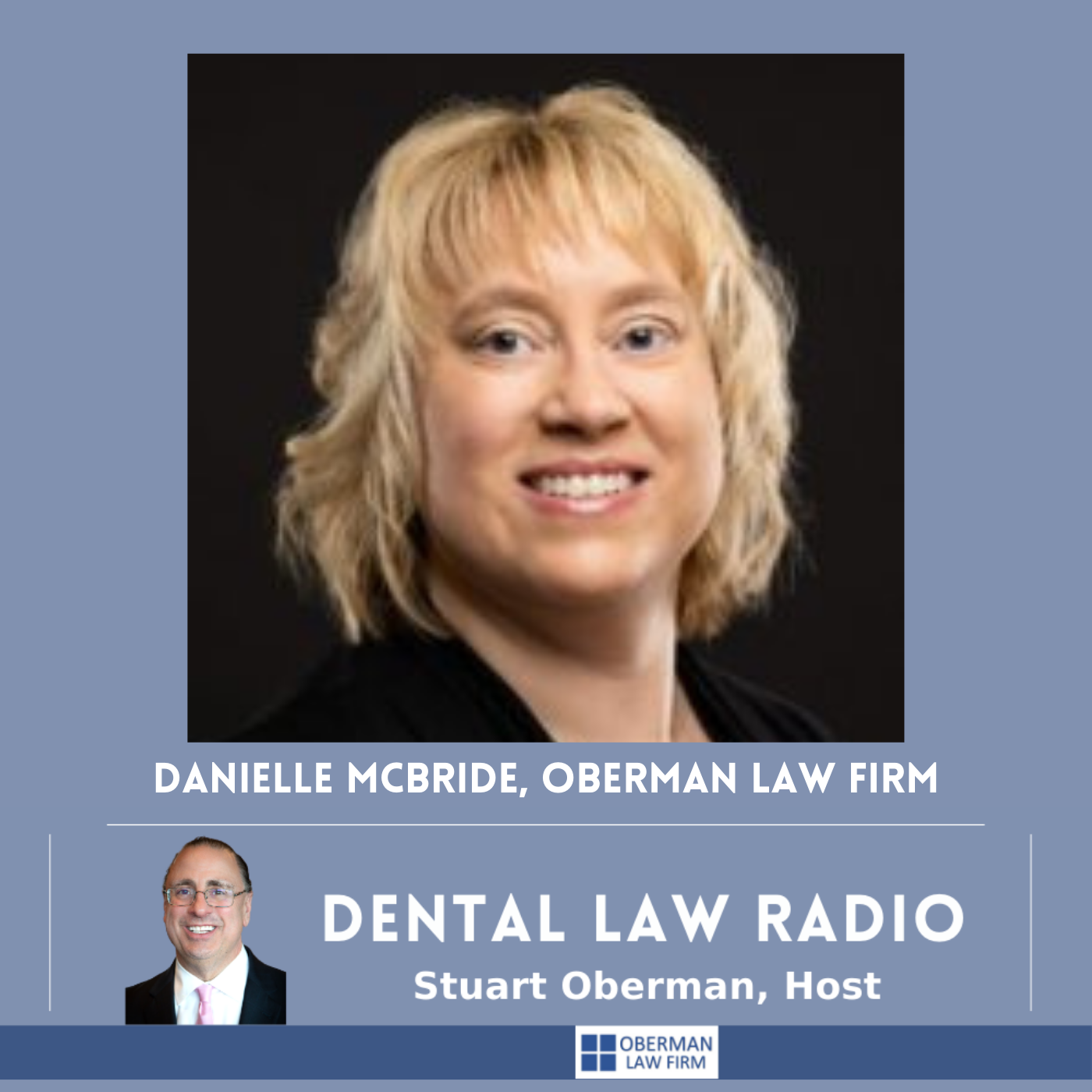
Danielle McBride, Partner at Oberman Law Firm, talks with host Stuart Oberman about the elements needed for a successful and smooth sale of a dental practice. Danielle discusses ingredients like having the best advisors in the dental industry, detailed financials, quality of earnings, and much more. Dental Law Radio is underwritten and presented by Oberman Law Firm and produced by the North Fulton studio of Business RadioX®.


Danielle McBride, Partner, Oberman Law Firm

Danielle McBride
Danielle McBride, Partner, Oberman Law Firm

Danielle McBride has been practicing law for over 21 years, and her primary focus is representing healthcare clients on a local, regional, and national basis. Ms. McBride regularly consults with clients regarding simple to complex healthcare transitions, including mergers and acquisitions, employment law, governmental compliance, tax strategies, practice valuations, DSO formation and structures, employee compensation, associate and partnership contracts, joint ventures, and partnership buy-in/buy-outs.

In addition, Ms. McBride brings a wealth of knowledge and experience preparing practice valuations for clients, as well as formulating simple to complex tax strategies, and entity formations.

Ms. McBride holds a Bachelor of Arts in Sociology/Criminology from The Ohio State University, a Juris Doctor (J.D.) from Ohio Northern University Pettit College of Law, and a Master of Laws (LL.M.) in Taxation from Case Western Reserve University.

LinkedIn

TRANSCRIPT

Intro: [00:00:02] Broadcasting from the Business RadioX Studios in Atlanta, it’s time for Dental Law Radio. Dental Law Radio is brought to you by Oberman Law Firm, a leading dental-centric law firm serving dental clients on a local, regional, and national basis. Now, here’s your host, Stuart Oberman.

Stuart Oberman: [00:00:26] Welcome everyone to Dental Law Radio. We have a very, very special guest today, Danielle McBride, Partner in Oberman Law Firm. And a little background on Danielle – she’s very busy right now – Danielle has been practicing for 21 years and her primary focus is health care transactions, mergers, acquisitions on a local, regional, and national basis. Big, big in M&A transactions, employment law compliance, tax strategies – as you heard on a previous podcast. And we’re going to have some subsequent podcasts that Danielle is going to join us on – practice valuations, DSO formation. Lord, everything is DSO. Everything is scaling nowadays.

Stuart Oberman: [00:01:13] A little education background on Danielle, she graduated from Ohio Northern University with her law degree. And she has a Masters in Taxation from Case Western University. And we are absolutely delighted to have you in the studio, as we say, Danielle. And I know today you’re going to talk about keys to ensure a smooth practice transition, and you could maybe elaborate on this. It is an amazing market. It is a hot market like I’ve never seen in my years of practicing. Valuations are out the roof. Private equity is throwing money at transactions.

Stuart Oberman: [00:01:58] But there’s a lot of misconceptions about what it takes to have a smooth transition, and I really want to drill down on your expertise. You’ve been doing this for over 21 years, and I want to hear what you have to say and your thoughts all the way from due diligence to leveraging advisors. So, give me your thoughts on some matters regarding what it takes to have a smooth transition, as we say.

Danielle McBride: [00:02:29] Well, thanks, Stuart, for having me on the podcast. And, yeah, this is Keys to a Smooth Practice Transition. I kind of call this my ABCs. A is for advisors. One of the best things that you can do for yourself is to surround yourself with the best advisors you can. And they should be specialized, you know, professionals in this area, in the dental industry.

Danielle McBride: [00:02:57] Leverage your advisors that have the experience in these transactions. I mean, there are dental specific lawyers like us. There are dental accountants. There are dental finance lenders. There are dental brokers. All of these people, all of these advisors have a ton of experience. This may be your one and only transaction, buying a practice or selling a practice or merging going in with a DSO. We’ve done hundreds, if not thousands, of these transactions, these advisors have.

Danielle McBride: [00:03:29] So, you know, it’s important to get those specialized professionals to work with you. And they’re out there. And if you have at least one of those advisors, they can help you find others. If you’re in need of a dental specific lender, if you’re a buyer of a practice, if you’re in need of a dental specific accountant, there are lots of other financial business and consultants that have specialized knowledge in the dental field. And that’s my A, you know, my ABCs.

Danielle McBride: [00:04:04] The second is your business. You’ve got to know your business. And it’s important whether you’re looking to sell to a third party or to a DSO in these transactions. Knowing your business, knowing the numbers, having the data that’s going to be requested through all of the due diligence is going to be one of the most important things that you do in these transactions.

Stuart Oberman: [00:04:25] I got a question for you. I got a question for you. You do valuations. We hear –

Danielle McBride: [00:04:30] Yes. I do practice valuations. And so, one of the keys in those valuations is profitability in the practice transition.

Stuart Oberman: [00:04:37] We hear this all the time, “Know your numbers,” what does that mean? When someone says, “Well, I got to know my numbers.”

Danielle McBride: [00:04:47] Know your numbers.

Stuart Oberman: [00:04:48] What does that mean? I mean, our guys, it doesn’t seem like they understand that a lot of times.

Danielle McBride: [00:04:55] Yeah. So, knowing your numbers means a couple of different things. One is being able to get the data on new patients, and insurance plans, and how much of your practice is PPO plans versus fee for service. Those kind of numbers are important. But the key numbers are profitability.

Danielle McBride: [00:05:17] Or sometimes in these DSO transactions you hear being thrown around EBITDA, E-B-I-T-D-A, Earnings Before Income Taxes, Depreciation, and Amortization. It’s essentially, not just the net income, it’s profitability, it’s the cash flow in the practice. You got to look beyond W-2 compensation or net profit. It’s that plus add back. Discretionary expenses, I like to call them. The perks that the doctor runs through the practice.

Danielle McBride: [00:05:49] It can also be things like family on the payroll, if they’re being paid more or less than what would be fair salary for someone doing the work that they’re doing in the practice. It can also be rent. You know, looking at fair rent and whether you’re paying yourself above or below what fair market rent is on a piece of property or your office building that you also own along with the practice.

Stuart Oberman: [00:06:13] Is your specific profit margin? You hear like, “Well, you should be netting out 20 percent profit or 40 percent profit.” Is there a magic number that’s sort of advisable for those things?

Danielle McBride: [00:06:26] Well, it varies based on the specific type of practice. So, your general dental practice might be running an overhead of 60, 61 percent, 40 percent profitability. And that 40 percent of profitability is your W-2 income, your profit, your discretionary add backs, adjustments for paying yourself high rent on your building, non-recurring expenses, if you hired a consultant to come in one year, those sort of things. It’s going to vary if you’re an oral surgeon or if you’re an orthodontist or a pediatric dentist. There are different percentages for those different specialties.

Stuart Oberman: [00:07:11] Huh? Now, I know we do a lot of DSO transactions as a firm, so if they’re getting ready to sell their practice, how should they prepare due diligence? Should they say, “Hey, Danielle. I’m ready to sell my practice. I know there’s a lot of due diligence on the DSO side. Can you send me a due diligence checklist so I can start preparing for this?” How do they prepare for due diligence, which will wear them out a lot of times?

Danielle McBride: [00:07:42] Yeah. It’s going to wear them out and you’re going to get asked for stuff over and over again.

Stuart Oberman: [00:07:46] The same stuff.

Danielle McBride: [00:07:46] You’re going to send them all of your quarter one, quarter two, quarter three, quarter four financial statements and tax returns. And every insurance provider you take in the practice. Some of the banks even ask for monthly profit and loss statements for the year, especially after COVID.

Danielle McBride: [00:08:13] COVID kind of changed things from a financial perspective. From the lender’s perspective, it used to be that you could get away with sending them the years worth of financial statements and tax returns. And then, we had COVID and then they wanted to see month by month. So, we wanted to see every month of 2019, and every month of 2020, and every month of 2021 so far.

Danielle McBride: [00:08:36] So, having the ability to get at least quarterly financial statements is an important part of the due diligence. And then, they’re just going to ask you for every business insurance, every business license, every license for every staff member and doctor in the office. They’re going to ask for balance sheets.

Danielle McBride: [00:08:56] And if there are liens on the practice, which is often one thing that people forget. So, if you had an SBA loan, for instance – a lot of people had this. I just had this with a transaction – SBA EIDL Loans, you can pay those off. My client actually got an email from the SBA saying, “This is your authorization to file a UCC termination on the lien that we have on your practice.” And we needed to get that termination statement filed to clear it for the lender so that the buyer’s lender would actually fund the transaction. So, there are things like that.

Stuart Oberman: [00:09:36] Do you see a lot of PPP problems right now? Loans are not being authorized to pay back and items are being withheld on the transaction?

Danielle McBride: [00:09:48] I did earlier in the year. So many of the PPP loans have finally gotten forgiven. That that problem has started to get a little bit easier to deal with. Usually, it’s some document references on the PPP loans and that it’s been forgiven and some sort of proof to the lenders or the buyer that it’s actually been forgiven.

Danielle McBride: [00:10:12] But I did have to do a lot of escrows. And back in 2021, I first started doing transactions again after COVID opened back up and the lenders started lending again. I was having to escrow funds for PPP because the guidance came out from the IRS saying that you had to escrow the amount of the PPP loan with the bank. And the banks were like, “We don’t know how to do this.” So, you know, I was actually escrowing funds into attorney escrow accounts and holding it because the bank wasn’t prepared to do it.

Stuart Oberman: [00:10:44] Wow. So, do you recommend from an expedient standpoint smooth transaction that we have sort of a due diligence checklist, whether it’s us or whomever, provide that due diligence checklist information to whoever the adviser is and then put that information – we’ll call it a data room? And then, this way the seller or the buyer can get in there and start plucking that information. Is that something that you thought?

Danielle McBride: [00:11:16] A lot of times, if you’re working with these bigger DSOs, they will do exactly that. They’ll have some sort of service where you’re uploading your documents and they will have a checklist that they have to go through. Because a lot of the private equity lenders, they’ve got checklists and they want to see each and every one of those items checked off before they will give the green light to fund the transaction.

Stuart Oberman: [00:11:36] Now, some of these bigger deals, we hear the term quality of earnings. Quality of earnings, what does that mean? Because a lot of the buyers on the corporate side will spend a lot of money on quality of earnings. Our doctors, I don’t think, really understand what that means and how that affects their practice.

Danielle McBride: [00:11:58] Well, I think the quality of earnings is really going back to the profitability in the EBITDA of the practice and the better the cash flow is. It’s sort of like when you hear the old adage, “Okay. Well, what is my practice worth as a percentage of collections?” And everybody says, “Oh, it should be 75 percent of collections or 65 percent of collections.” Well, that’s great.

Danielle McBride: [00:12:19] But if you have two $1 million practices and one has a 65 percent overhead and the other one has a 50 percent overhead, they’re both not worth 65 percent of gross revenues. One has a better quality of earnings. One has a better cash flow. One has higher profitability. And the practice is going to support that buyer and provide a higher profit ratio for that buyer, that DSO, that corporate purchaser.

Danielle McBride: [00:12:53] And especially for a private party, too, I mean, that’s what you want to look for, a practice that has a better cash flow, higher profitability. And you can clearly see that in the tax returns. That’s another thing, too, that a lot of sellers have to think about this. A lot of them have been aggressive with their deductions, but they’ve also maybe been a little lax about putting the documentation together and being clear on that. And so, sometimes when you get a practice like that where they’re just running a ton of things through the practice, you got to sometimes do a little bit clean up because the buyer is going to ask those questions and they’re going to want to see, “Well, where is the cash flow?”

Stuart Oberman: [00:13:30] That never happens. You mean doctors are running their personal stuff through the practices? Are you kidding me?

Danielle McBride: [00:13:34] That never happens, right?

Stuart Oberman: [00:13:39] Are you saying the house payment, and the kids, and the trip – wow. Well, they call this add backs. Is that what they call those?

Danielle McBride: [00:13:51] Add backs. I like to refer to them as discretionary expenses.

Stuart Oberman: [00:13:55] Or having their six year old child, son or daughter, make $10,000 a year –

Danielle McBride: [00:14:02] Yeah. They model for the website. They got to pay them something.

Stuart Oberman: [00:14:05] Or the flyer for the office. Wow. That’s a lot of stuff. And this could be a conversation for hours and hours and hours. Well, I think that if our doctors take this information, figure out when they’re going to sell, how they’re going to sell, who their advisors are, what do they need to do to get prepared, I think this is great advice. How do they reach you if they have any questions on the sale, the due diligence?

Danielle McBride: [00:14:38] They can reach out to Oberman Law Firm at 770-886-2400. My email is danielle@obermanlaw.com. And you can go on our website, too, obermanlaw.com for information. There’s some blog posts and lots of information about the practice on there. And, yeah, reach out. Give us a call. We’ll help you. The other key to a smooth transition is not waiting until the last minute to plan for it.

Stuart Oberman: [00:15:11] Well, that never happens either, huh? Well, I know you’re a regular contributor to the firm’s newsletter, Advisor Insights. Great information coming in there. And I know in a previous podcasts, you had a great, great information on tax. I know you got some other podcasts that you’ll be on the air for. Amazing. Danielle, thank you. Thank you so much.

Stuart Oberman: [00:15:36] Ladies and gentlemen, thanks for joining us on Dental Law Radio. If you have any questions, please feel free to give us a call, 770-886-2400. And email me directly, stuart@obermanlaw.com.

Stuart Oberman: [00:15:49] Guys, ladies and gentlemen, thank you very, very much. Danielle, thank you again. Amazing job as always. We rely on you a lot on the acquisition, and tax side, and general guidance on compliance. So, thanks everyone and have a great day.


About Dental Law Radio

Hosted by Stuart Oberman, a nationally recognized authority in dental law, Dental Law Radio covers legal, business, and other operating issues and topics of vital concern to dentists and dental practice owners. The show is produced by the North Fulton studio of Business RadioX® and can be found on all the major podcast apps. The complete show archive is here.

Stuart Oberman, Oberman Law Firm

Stuart Oberman
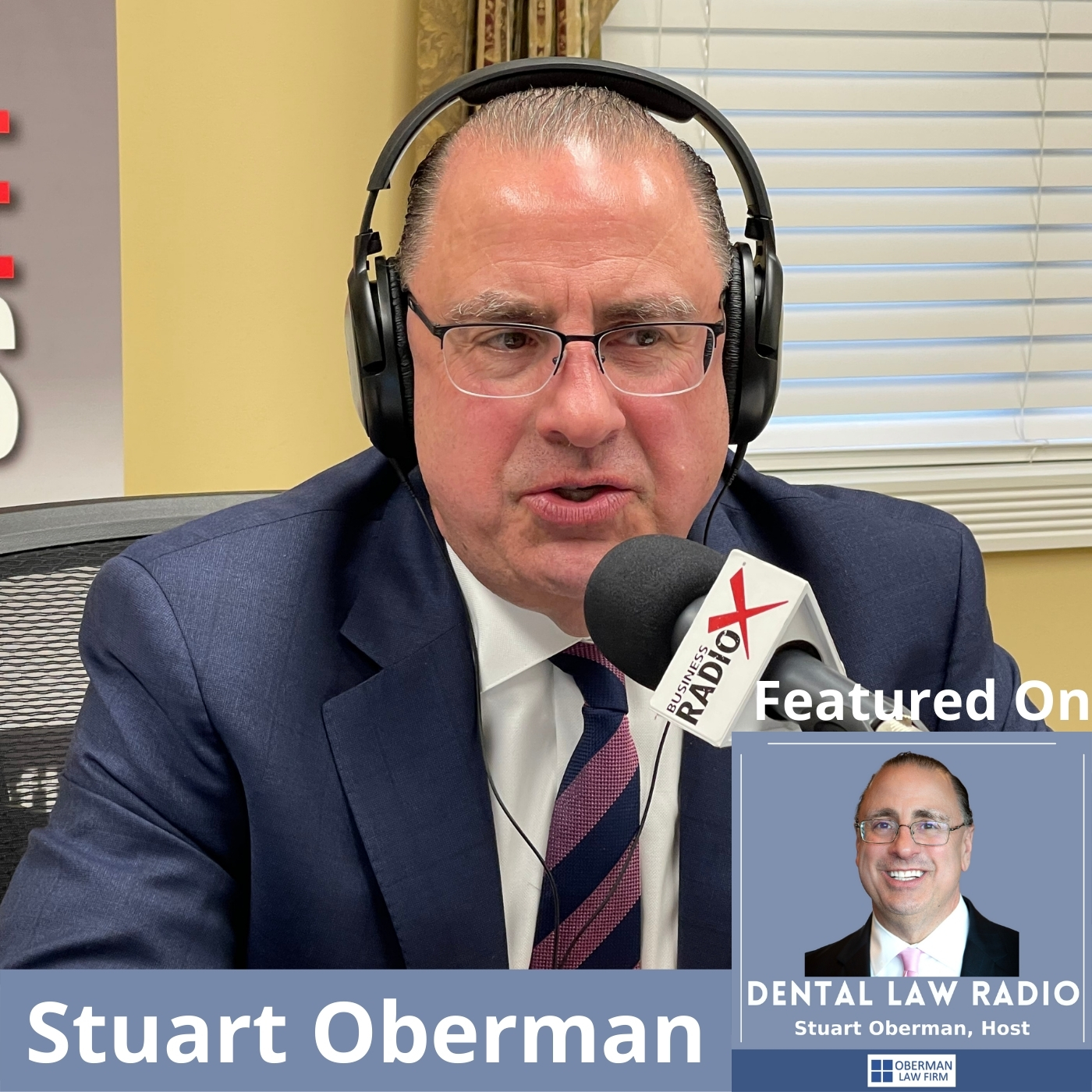
Stuart Oberman, host of “Dental Law Radio”

Stuart Oberman is the founder and President of Oberman Law Firm. Mr. Oberman graduated from Urbana University and received his law degree from John Marshall Law School. Mr. Oberman has been practicing law for over 25 years, and before going into private practice, Mr. Oberman was in-house counsel for a Fortune 500 Company. Mr. Oberman is widely regarded as the go-to attorney in the area of Dental Law, which includes DSO formation, corporate business structures, mergers and acquisitions, regulatory compliance, advertising regulations, HIPAA, Compliance, and employment law regulations that affect dental practices.

In addition, Mr. Oberman’s expertise in the health care industry includes advising clients in the complex regulatory landscape as it relates to telehealth and telemedicine, including compliance of corporate structures, third-party reimbursement, contract negotiations, technology, health care fraud and abuse law (Anti-Kickback Statute and the State Law), professional liability risk management, federal and state regulations.

As the long-term care industry evolves, Mr. Oberman has the knowledge and experience to guide clients in the long-term care sector with respect to corporate and regulatory matters, assisted living facilities, continuing care retirement communities (CCRCs). In addition, Mr. Oberman’s practice also focuses on health care facility acquisitions and other changes of ownership, as well as related licensure and Medicare/Medicaid certification matters, CCRC registrations, long-term care/skilled nursing facility management, operating agreements, assisted living licensure matters, and health care joint ventures.

In addition to his expertise in the health care industry, Mr. Oberman has a nationwide practice that focuses on all facets of contractual disputes, including corporate governance, fiduciary duty, trade secrets, unfair competition, covenants not to compete, trademark and copyright infringement, fraud, and deceptive trade practices, and other business-related matters. Mr. Oberman also represents clients throughout the United States in a wide range of practice areas, including mergers & acquisitions, partnership agreements, commercial real estate, entity formation, employment law, commercial leasing, intellectual property, and HIPAA/OSHA compliance.

Mr. Oberman is a national lecturer and has published articles in the U.S. and Canada.

LinkedIn

Oberman Law Firm

Oberman Law Firm has a long history of civic service, noted national, regional, and local clients, and stands among the Southeast’s eminent and fast-growing full-service law firms. Oberman Law Firm’s areas of practice include Business Planning, Commercial & Technology Transactions, Corporate, Employment & Labor, Estate Planning, Health Care, Intellectual Property, Litigation, Privacy & Data Security, and Real Estate.

By meeting their client’s goals and becoming a trusted partner and advocate for our clients, their attorneys are recognized as legal go-getters who provide value-added service. Their attorneys understand that in a rapidly changing legal market, clients have new expectations, constantly evolving choices, and operate in an environment of heightened reputational and commercial risk.

Oberman Law Firm’s strength is its ability to solve complex legal problems by collaborating across borders and practice areas.

Connect with Oberman Law Firm:

Company website | LinkedIn | Twitter
Tagged With: Danielle McBride, Dental Practice, dental practice management, dental practices, DSO, due diligence, Oberman Law Firm, selling a dental practice, Stuart Oberman

Employee Embezzlement

November 5, 2021 by John Ray

EmployeeEmbezzlementDLREpisode24Album
Dental Law Radio
Employee Embezzlement
Loading
00:00 /
RSS Feed
Share
Link
Embed

Download file

EmployeeEmbezzlementDLREpisode24Album

Employee Embezzlement (Dental Law Radio, Episode 24)

While industry statistics indicate about 40% of all dental practices are embezzled, Stuart Oberman believes the actual number is 60% or more, based on his work with clients and his conversations with other industry experts. So what are the most common employee embezzlement schemes, and how do you protect your practice? Stuart has answers in this episode. Dental Law Radio is underwritten and presented by Oberman Law Firm and produced by the North Fulton studio of Business RadioX®.

TRANSCRIPT

Intro: [00:00:02] Broadcasting from the Business RadioX Studios in Atlanta, it’s time for Dental Law Radio. Dental Law Radio is brought to you by Oberman Law Firm, a leading dental-centric law firm, serving dental clients on a local, regional and national basis. Now, here’s your host, Stuart Oberman.

Stuart Oberman: [00:00:26] Hello, everyone, and welcome to Dental Law Radio. Today’s topic is not a pleasant topic, but we are seeing a rise. Now, I have not talked about this topic in probably a couple of years because there has not been a necessarily need to but now it is rearing its ugly head.

Stuart Oberman: [00:00:48] Employee embezzlement. That’s right, folks. Employee embezzlement. And, the reason why I have not talked about this in a couple of years is because [inaudible] COVID-19. Our guys got hit number-wise. But we’re seeing an enormous rebound in our practices. Many, many, many of our practices, I’m going to say about 80% of our dental practices, had a record year. They’re busy. They’re having staff problems. They can’t keep up with the work. And, what happens is they’re simply losing track of what in the world they’re doing internally. I don’t have any other, I had no other explanation for it, is that they have no idea and can’t keep track what they’re doing internally.

Stuart Oberman: [00:01:33] So, employee embezzlement, and I will make this general statement. If you think your employees are not stealing from you, you are grossly mistaken. I’m going to give you some statistics, then I’m going to give you sort of what I think the real world is. Statistically, 40% of all dental practices are going to be embezzled, 40%. I’m going to tell you right now I believe it’s 60 to 70%. From what I’m seeing, from what I discover, when I talk to our consultants and industry experts, it’s about 60%. So, the average embezzlement statistically is about $110,000.

Stuart Oberman: [00:02:18] Now, I will tell you that statistically our average embezzlement that we handle is about 200,000 and has actually gone up to $500,000. Folks, if you don’t know where $500,000 is going, you’ve got a huge problem. You got a huge, huge problem.

Stuart Oberman: [00:02:46] So, the question is, you know, how, again, this is a relatively short podcast. This is a two-day seminar on the how’s, the why’s, the what’s, the reasons, and what you are not doing for employee embezzlement.

Stuart Oberman: [00:03:04] So, let’s take a look at some basic things here, without getting into white-collar crime to a great extent, numerous ways employees may embezzle. Take petty cash, [inaudible] you just shouldn’t have, you just shouldn’t have cash laying around. Altering deposit statements, where your deposit ticket is going. Do you even know what is being deposited in the bank?

Stuart Oberman: [00:03:32] Practice writing checks. Your practice writing checks for personal expenses. Your employees are paying their own credit cards with your money. Your office manager is writing fictitious invoices and diverting payments. And, let me tell you this, I will not give this speech, this podcast, this information to any organization that has dental office managers in it. Because that’s, I’m going to go very broad on this statement, but that is where most of the embezzlement is taking place on the management side because of the trust. So, I am not going to give this speech to that kind of audience.

Stuart Oberman: [00:04:21] So, you got phony bank accounts in a practice name and diverting payments, issuing fake refunds and taking refunds, paying their own medical expenses, bills, labs, supplies, drugs under the patient’s name. Do you even know what is being issued check-wise? So, those are just a few scenarios.

Stuart Oberman: [00:04:47] So, you know, how do you prevent this? You got to have a system in place. First and foremost, you have to have a system in place. The days are gone where you’re just running willy-nilly, you’re not paying attention and you’re trusting everyone under the sun that they’re not going to steal you blind.

Stuart Oberman: [00:05:08] So, how do you prevent it? First and foremost, you’ve got to screen your employees. In today’s world, in today’s tight labor market, our doctors are hiring bodies. Now, there are some agencies that will allow you to post for employment. Our doctors will go on those websites. And, I will guarantee you that if you pick 10 names today, and in a year you go back and say, I wonder what those employees are doing. Probably a good percent of them are going to be back looking for a job because our doctors don’t screen employees. They don’t have a hiring package. They don’t do background checks, which you have to have. For $100, your life can be very, very easy as far as background checks. They don’t check credit references. That’s a whole another area of fraud. You don’t verify information.

Stuart Oberman: [00:06:14] Good friend of mine has a recruiting agency for dental staffing. Amazing statistic, 70% of all application information, résumés are fraudulent. Seventy. You got to have procedures in place. You’ve got to implement internal controls. That’s going to vary practice to practice. But I would urge you to take a look at your system.

Stuart Oberman: [00:06:44] So, how do we prevent this? One thing you have to start doing is you’ve got to encourage employees and mandate employees to take days off for vacation because what happens is employees who are embezzling do not want to take time off because that’s where problems develop. They don’t take vacation days because that’s when problems develop. That’s when it seems to hit the proverbial fan if you will.

Stuart Oberman: [00:07:10] Rotate jobs among your employees. You want to cross-reference job descriptions. You want to have multiple people. Now, you’re going to have everyone under the sun have access to confidential information, your financials for sure, but cross-train. Enforce your regular hours. Why in the world is a team member in your office coming in at 6:00 in the morning and leaving 9 o’clock at night on a Friday or Monday through Thursday? And, why is your employee coming in on Saturdays and Sundays? And, are you checking your alarms for access? Are you checking your logs? Who’s coming in, who’s coming out? You may want to cross-reference and divide your financial responsibilities.

Stuart Oberman: [00:07:58] For goodness sakes, check your bank statements. If you are a solo practitioner, recommendation would be to have those sent to your home. After you look at them, then you could give them to the team member, or if you’re a small practice, you’re the sole owner, maybe multiple locations, have them sent to your house or your P.O. Box.

Stuart Oberman: [00:08:19] I said before eliminate petty cash. So, we could just question, you know, Stuart, you know, how do we know? What are the signs that employees may be embezzling? Flag giveaway. Failure to receive financial information in a timely manner. Let me tell you this. It’s not your employees are too busy, they don’t want to give you information. You’re asking, you’re asking and you’re asking for information, you’re not getting it. There’s a really good reason why in the world you are not getting your financials.

Stuart Oberman: [00:08:53] Employees resist change to an accounting system. Bingo. Accountability. We run into this a lot when our younger doctors who are all tech, all tech, are buying well-established practices who are not as tech. The well-established employees in those practices are kicking and screaming to change the accounting system. Why? It’s not because they don’t like you. It’s because they’re stealing their doctor blind.

Stuart Oberman: [00:09:30] Unexplained accounting adjustments. Let me tell you this. You better check, you better audit your files once a month. I don’t care if it’s 25 or 50. You better understand adjustments. Why are adjustments being made or do we make it for? Is it because Aunt Sarah was a great customer or is it because your employee, the front desk, is stealing you blind by adjustments?

Stuart Oberman: [00:09:55] In today’s world we used to say, well, you know, our collections have slowed if you’re drilling and feeling like no tomorrow, and all of a sudden you’re figuring out where your revenue’s at. Your billing cycle is good, you’ve got a huge problem.

Stuart Oberman: [00:10:10] So, what do you do? What do you do? What do you do? What do you do? First and foremost, you never, ever, ever confront the employee. You’re going to say, are you stealing from me? What are they going to say? Yes, I’m stealing you blind. So, you never confront the employee. First and foremost, hire a counselor who understands employee embezzlement on the dental side. And then, get a forensic accountant that understands auditing, that understands the Dentrix, that now understands open-source systems under today’s technology world. Do they understand the software? Do they understand Eaglesoft? So, those are just things you have to keep in mind.

Stuart Oberman: [00:11:00] Spot audit if you suspect there’s employee embezzlement. Take 25, take 30 files. Audit those files like there’s no tomorrow. Where’s the money going? Where’s the money staying? Is it coming into credit card accounts? Do you even know where your money is going? Are you looking at your EOBs? Are you reconciling your day sheets, your credit cards? What are you doing? How are you looking at it?

Stuart Oberman: [00:11:24] I will tell you, your CPA has absolutely no clue regarding embezzlement. If you think that you’re relying on your CPA to catch your embezzlement, you are grossly and sadly mistaken. Your CPA, on average the general CPA that does dental work has absolutely no clue regarding employee embezzlement or how to handle it.

Stuart Oberman: [00:11:48] So, what do you do? First and foremost, again, obtain legal counsel. Get a strategy. Work with an outside CPA or on a forensic audit. Figure out what you have, what you don’t have, and then confront. If you suspect embezzlement, everyone in your office is in play including, I’m going to say this and I’m sorry ladies and gentlemen, but your spouses. Your spouses. That is right, your spouse.

Stuart Oberman: [00:12:19] I will never forget. One of our doctors was missing about 60 to $80,000 in funds. Come to find out, the doctor was having an affair and the wife was stealing off the top to build a war chest for divorce. And then, that’s where our doctor’s 60 to $80,000 went. You can’t buy this information. So, everyone is in play, including your partners, spouses, partner’s spouses, the longtime assistants. You cannot believe who will be stealing from you.

Stuart Oberman: [00:13:00] So, overall, if you suspect that there is employee embezzlement, chances are you’re probably correct. Start with an internal audit. Start with what don’t I know. Get help immediately. Get access to information quickly. And then, formulate a game plan before you confront the employee who’s never ever in their life going to tell you, yeah, I’m stealing you blind.

Stuart Oberman: [00:13:33] And, if you think for one second that your local police department is going to help you recover 2 or $300,000, guess again. One, they’re under enormous pressure. Our police departments on a local level are under enormous pressure. They’re understaffed. During a working environment that I’ve never seen before in my life, they’re dealing with gangs, murderers, rapists, large-time thieves. Do you think they, I’m not going to say they don’t care but they don’t have the time to worry about a dentist who’s had a couple of $100,000 stolen from them.

Stuart Oberman: [00:14:19] So, again, it’s a five-hour broadcast that I could talk with all day. Take a look at what you have. If you suspect you have embezzlement, your gut instinct is probably right. Take the steps on what you need to do to get it under control and move forward.

Stuart Oberman: [00:14:36] Folks, thank you very much for joining the podcast on employee embezzlement. If you have any questions or concerns, please feel free to give us a call, Oberman Law Firm. My name is Stuart Oberman, 770-886-2400, or email me at stuart, S-T-U-A-R-T, @obermanlaw.com. Thanks for joining us and have a fantastic day.


About Dental Law Radio

Hosted by Stuart Oberman, a nationally recognized authority in dental law, Dental Law Radio covers legal, business, and other operating issues and topics of vital concern to dentists and dental practice owners. The show is produced by the North Fulton studio of Business RadioX® and can be found on all the major podcast apps. The complete show archive is here.

Stuart Oberman, Oberman Law Firm

Oberman Law Firm
Stuart Oberman, host of “Dental Law Radio”

Stuart Oberman is the founder and President of Oberman Law Firm. Mr. Oberman graduated from Urbana University and received his law degree from John Marshall Law School. Mr. Oberman has been practicing law for over 25 years, and before going into private practice, Mr. Oberman was in-house counsel for a Fortune 500 Company. Mr. Oberman is widely regarded as the go-to attorney in the area of Dental Law, which includes DSO formation, corporate business structures, mergers and acquisitions, regulatory compliance, advertising regulations, HIPAA, Compliance, and employment law regulations that affect dental practices.

In addition, Mr. Oberman’s expertise in the health care industry includes advising clients in the complex regulatory landscape as it relates to telehealth and telemedicine, including compliance of corporate structures, third-party reimbursement, contract negotiations, technology, health care fraud and abuse law (Anti-Kickback Statute and the State Law), professional liability risk management, federal and state regulations.

As the long-term care industry evolves, Mr. Oberman has the knowledge and experience to guide clients in the long-term care sector with respect to corporate and regulatory matters, assisted living facilities, continuing care retirement communities (CCRCs). In addition, Mr. Oberman’s practice also focuses on health care facility acquisitions and other changes of ownership, as well as related licensure and Medicare/Medicaid certification matters, CCRC registrations, long-term care/skilled nursing facility management, operating agreements, assisted living licensure matters, and health care joint ventures.

In addition to his expertise in the health care industry, Mr. Oberman has a nationwide practice that focuses on all facets of contractual disputes, including corporate governance, fiduciary duty, trade secrets, unfair competition, covenants not to compete, trademark and copyright infringement, fraud, and deceptive trade practices, and other business-related matters. Mr. Oberman also represents clients throughout the United States in a wide range of practice areas, including mergers & acquisitions, partnership agreements, commercial real estate, entity formation, employment law, commercial leasing, intellectual property, and HIPAA/OSHA compliance.

Mr. Oberman is a national lecturer and has published articles in the U.S. and Canada.

LinkedIn

Oberman Law Firm

Oberman Law Firm has a long history of civic service, noted national, regional, and local clients, and stands among the Southeast’s eminent and fast-growing full-service law firms. Oberman Law Firm’s areas of practice include Business Planning, Commercial & Technology Transactions, Corporate, Employment & Labor, Estate Planning, Health Care, Intellectual Property, Litigation, Privacy & Data Security, and Real Estate.

By meeting their client’s goals and becoming a trusted partner and advocate for our clients, their attorneys are recognized as legal go-getters who provide value-added service. Their attorneys understand that in a rapidly changing legal market, clients have new expectations, constantly evolving choices, and operate in an environment of heightened reputational and commercial risk.

Oberman Law Firm’s strength is its ability to solve complex legal problems by collaborating across borders and practice areas.

Connect with Oberman Law Firm:

Company website | LinkedIn | Twitter
Tagged With: Dental Law Radio, dental practice management, dental practices, embezzlement, Employee Embezzlement, employee theft, Oberman Law Firm, Stuart Oberman

2021 HR Internal Audit Checklist

June 18, 2021 by John Ray

DLREpisode10DSOsAlbum
Dental Law Radio
2021 HR Internal Audit Checklist
Loading
00:00 /
RSS Feed
Share
Link
Embed

Download file

DLREpisode10DSOsAlbum

2021 HR Internal Audit Checklist (Dental Law Radio, Episode 9)

Does your dental practice have an employee manual with up-to-date provisions addressing bullying? Workplace violence? Do you have a cell phone policy? An internet policy? Have these policies been examined and updated recently? If not, your practice is at risk. Host Stuart Oberman offers a checklist all dental practices should review to ensure their HR processes and policies are adequate. Dental Law Radio is underwritten and presented by Oberman Law Firm and produced by the North Fulton studio of Business RadioX®.

TRANSCRIPT

Intro: [00:00:02] Broadcasting from the Business RadioX studios in Atlanta, it’s time for Dental Law Radio Dental Law Radio is brought to you by Oberman Law Firm, a leading dental centric law firm serving dental clients on a local, regional and national basis. Now, here’s your host, Stuart Oberman.

Stuart Oberman: [00:00:27] Hello, everyone, and welcome. Today’s topic, HR, the favorite topic within a dental practice, human resources. So, a couple of things I want to talk about. As COVID-19 has involved, and I know everyone’s sort of getting COVID-19 out, if you will, but from an HR standpoint, it has taught us an invaluable lesson of how unprepared our dental practices were.

Stuart Oberman: [00:00:52] So, what we’re going to do is we’re going to go through this topic of 2021 internal audit checklist. What do our doctors need to know from an internal HR standpoint? There’s a couple of things that we want to take a look at. First and foremost, employee files and records, critical. Every HR starts with employees’ files and records. So, some basic information, and I know this sounds elementary like, “Yes, I know we do this,” but I will tell you, when things come about, and things hit the fan with the employees, our doctors are missing this information, and sometimes it is absolutely critical.

Stuart Oberman: [00:01:36] So, what do we want to do? First off, employee files and records. First and foremost, employees never, ever in a million years have control of their own personnel file because what happens is employees are terminated, they’re fired, they quit. And I will tell you, the first thing that goes is their own personal records, especially if they have disciplinary problems.

Stuart Oberman: [00:02:00] So, what do we do? So, what should be included in our basic employee files and records? First, from a basic standpoint, we have to review and update the person employee information. What does that include? Home address and mailing address. So, what happens is if you’ve got to send out a termination letter, we’ve got to send out a separation notice, and you have the wrong address. Then, employees complain. 30, 60, 90 days later, they report you because they haven’t received their separation notice. And now, you get a notice from the government, the Department of Labor, that, “Hey, you haven’t said the separation notice out.” Basic information.

Stuart Oberman: [00:02:36] Phone numbers, how do you get a hold of your employees? We have some doctors that their employees, you change your number seem like every week. So, again, if they’re fired, discharged, whatever, how do you get hold of them? So then, take a look at your insurance benefits, your 401(k) benefits and other benefits. Are you in compliance? Are they offered to your employees? Is there a name change?

Stuart Oberman: [00:03:05] We were doing an estate planning the other day and a particular client didn’t realize that she doesn’t know if the Social Security Administration ever changed her legal name. So, we did a will based upon her maiden name, and she’s been married for 20 years. And our client couldn’t tell us what was on file for her legal name. So, those are the simple things that we need to take a look at.

Stuart Oberman: [00:03:39] Emergency contacts. What are you going to do, who are you going to call if one of your employees has a stroke in your office, has a medical issue? Who are you going to call? Dependent information, children. Basic file information. Is this elementary? Yes. “Well, I’ve got all this information,” but you’re going to be surprised of what you don’t have should this case arise.

Stuart Oberman: [00:04:02] So, HR. HR starts – I can’t stress this enough, every HR has to start with a foundation, which is employee manual. I talk about this all the time, I talk about it for years, and it’s amazing to me that our doctor manuals are 15-20 years old. They’re put together because the practice that they purchased 15 years ago, all they did was change the name, they bought it from a friend, they got it online on the Internet, and they paid a couple of thousand dollars for something that’s 25 pages. So, HR is absolutely critical.

Stuart Oberman: [00:04:40] One thing you have to do in today’s world is confirm that you’re manual is up to date, federal and state law. We get calls all the time, the office manager will say, I’ve been working on this manual for six months. I need help. Can you put it together?” And we say, “Within 10 to 14 days, you’ll have it. It’ll be up to date. It’ll be in compliance.” So, if you’re working on putting a manual together for six months to a year, how in the world is your office manager keeping up to date as to what’s going on? The answer is they’re not.

Stuart Oberman: [00:05:18] So, another important issue is dress code. Do you have a dress code policy? Is it defined and acceptable? How do you address tattoos? How do you address non-traditional hair colors? How do you address body piercings? What’s going to happen if you tell that one individual, “Well, you can’t do this. You can’t do that. You can’t wear this. You can’t have that,” now, you’ve singled out an employee. Now, we’ve got all kinds of problems; where if we have it on employee manuals, it’s across the board. Everyone has to comply with it. And if they don’t, then you’ve got a problem, and it’s something you need to address. Or what happens if they choose to, one day, violate it and you have no company policy? How do you handle that?

Stuart Oberman: [00:06:11] Do you have a cell phone policy? I know we talked about this on a previous podcast. What happens if you have data on your cell phone that needs to be destroyed? Can you say whether or not your employees are actually taking pictures of you on their phone that eventually is going to be published? Or are they recording your conversations? What’s the policy?

Stuart Oberman: [00:06:39] Social media policy. Is there restrictions? Internet policy? A pipeline was just hacked. Do you have a policy in place for your employees to log in remotely. Is it a separate computer? Is it a separate line? Internet line. Do you have a policy where they can’t check their emails on your desktop in your practice? Is there a dating policy in the workplace? What’s the policy? If you don’t have a workplace policy, are you setting yourself up for sexual harassment issues?

Stuart Oberman: [00:07:26] And that brings us to the next point. All policy manuals should have an anti-harassment, anti-discrimination, anti-bullying provision. How do you handle workplace violence? And how do you handle drug and alcohol in the workplace? What are you going to do if one of your employees comes back from a state that allows the uses of marijuana but violates your policy? What are you going to do? What are you going to do with violence? You have an employee, male or female, their spouses constantly coming up, their boyfriends coming up, their girlfriends coming up and harassing them in your office, harassing your staff, what are you going to do? Do you have a policy and procedure for that?

Stuart Oberman: [00:08:19] Bullying. Some employees are very aggressive, some are not aggressive, some are overly aggressive, how do you handle it? Anti-Discrimination, do you have a policy and procedure in place where you indicate that you will not tolerate any kind of violation of Title VII, race, color, creed, sexual origin. Anti-harassment, sexual or otherwise, what’s the policy? All these are issues that if you don’t address, the state and federal government will – primarily, federal – and you have EOC issue breathing down your neck very, very quickly if you don’t get this under control.

Stuart Oberman: [00:09:03] So, these are just a couple of things that we need to address from an HR standpoint. Do you have a termination policy? Do you have a review policy? Are your employees reviewed? Do you have a probation policy? Do you have a compliance reporting policy? Do you have a policy and procedure in place where they can report to an outside third party that they have sexual harassment issues, or anti-discrimination issues, or bullying, or workplace violence? What’s the policies in place for that? How do you handle it?

Stuart Oberman: [00:09:38] So, this is a very, very short podcast. Again, I could probably talk about five hours on this entire slide, but I want to make sure that this is a very synced and to-the-point issues. These issues do not involve changing the world of a massive overhaul in your practice. These are very, very simple issues that if addressed and addressed properly, you will save yourself, your staff a lot of headaches down the road.

Stuart Oberman: [00:10:12] So, HR, you got to know about it. You got to appoint someone to oversee this, you cannot do it, should not do it. You should be reviewing your policies and procedures, at least monthly. Implement any change, any security issues that you need. Do you have a policy in place if you are hacked? What do you do? How do you do it? How do you respond? Who are the people you’re going to call?

Stuart Oberman: [00:10:42] So, again, HR, huge issue, huge concern, COVID-19 sort of brought all this out into the forefront, but these are very, very specific things that we need to take a look at. So, if anyone has any questions, concerns, please feel free to give us a call – Oberman Law Firm, my name is Stuart Oberman – 770-554-1400 or send me an email, love to hear from you, stuart@obermanlaw.com. Thank you again. And we so appreciate you listening to our podcast. And I wish everyone to have a fantastic day. Take care.


About Dental Law Radio

Hosted by Stuart Oberman, a nationally recognized authority in dental law, Dental Law Radio covers legal, business, and other operating issues and topics of vital concern to dentists and dental practice owners. The show is produced by the North Fulton studio of Business RadioX® and can be found on all the major podcast apps. The complete show archive is here.

Stuart Oberman, Oberman Law Firm

Oberman Law Firm
Stuart Oberman, host of “Dental Law Radio”

Stuart Oberman is the founder and President of Oberman Law Firm. Mr. Oberman graduated from Urbana University and received his law degree from John Marshall Law School. Mr. Oberman has been practicing law for over 25 years, and before going into private practice, Mr. Oberman was in-house counsel for a Fortune 500 Company. Mr. Oberman is widely regarded as the go-to attorney in the area of Dental Law, which includes DSO formation, corporate business structures, mergers and acquisitions, regulatory compliance, advertising regulations, HIPAA, Compliance, and employment law regulations that affect dental practices.

In addition, Mr. Oberman’s expertise in the health care industry includes advising clients in the complex regulatory landscape as it relates to telehealth and telemedicine, including compliance of corporate structures, third-party reimbursement, contract negotiations, technology, health care fraud and abuse law (Anti-Kickback Statute and the State Law), professional liability risk management, federal and state regulations.

As the long-term care industry evolves, Mr. Oberman has the knowledge and experience to guide clients in the long-term care sector with respect to corporate and regulatory matters, assisted living facilities, continuing care retirement communities (CCRCs). In addition, Mr. Oberman’s practice also focuses on health care facility acquisitions and other changes of ownership, as well as related licensure and Medicare/Medicaid certification matters, CCRC registrations, long-term care/skilled nursing facility management, operating agreements, assisted living licensure matters, and health care joint ventures.

In addition to his expertise in the health care industry, Mr. Oberman has a nationwide practice that focuses on all facets of contractual disputes, including corporate governance, fiduciary duty, trade secrets, unfair competition, covenants not to compete, trademark and copyright infringement, fraud, and deceptive trade practices, and other business-related matters. Mr. Oberman also represents clients throughout the United States in a wide range of practice areas, including mergers & acquisitions, partnership agreements, commercial real estate, entity formation, employment law, commercial leasing, intellectual property, and HIPAA/OSHA compliance.

Mr. Oberman is a national lecturer and has published articles in the U.S. and Canada.

LinkedIn

Oberman Law Firm

Oberman Law Firm has a long history of civic service, noted national, regional, and local clients, and stands among the Southeast’s eminent and fast-growing full-service law firms. Oberman Law Firm’s areas of practice include Business Planning, Commercial & Technology Transactions, Corporate, Employment & Labor, Estate Planning, Health Care, Intellectual Property, Litigation, Privacy & Data Security, and Real Estate.

By meeting their client’s goals and becoming a trusted partner and advocate for our clients, their attorneys are recognized as legal go-getters who provide value-added service. Their attorneys understand that in a rapidly changing legal market, clients have new expectations, constantly evolving choices, and operate in an environment of heightened reputational and commercial risk.

Oberman Law Firm’s strength is its ability to solve complex legal problems by collaborating across borders and practice areas.

Connect with Oberman Law Firm:

Company website | LinkedIn | Twitter
Tagged With: dental practices, dentists, HR, Human Resources, Oberman Law Firm, Stuart Oberman

Hootan Shahidi, CODE and DentFirst

June 3, 2021 by John Ray

Hootan-Shahidi-DBR-Album
Dental Business Radio
Hootan Shahidi, CODE and DentFirst
Loading
00:00 /
RSS Feed
Share
Link
Embed

Download file

HootanandPatrickonDBR

Hootan Shahidi, CODE and DentFirst

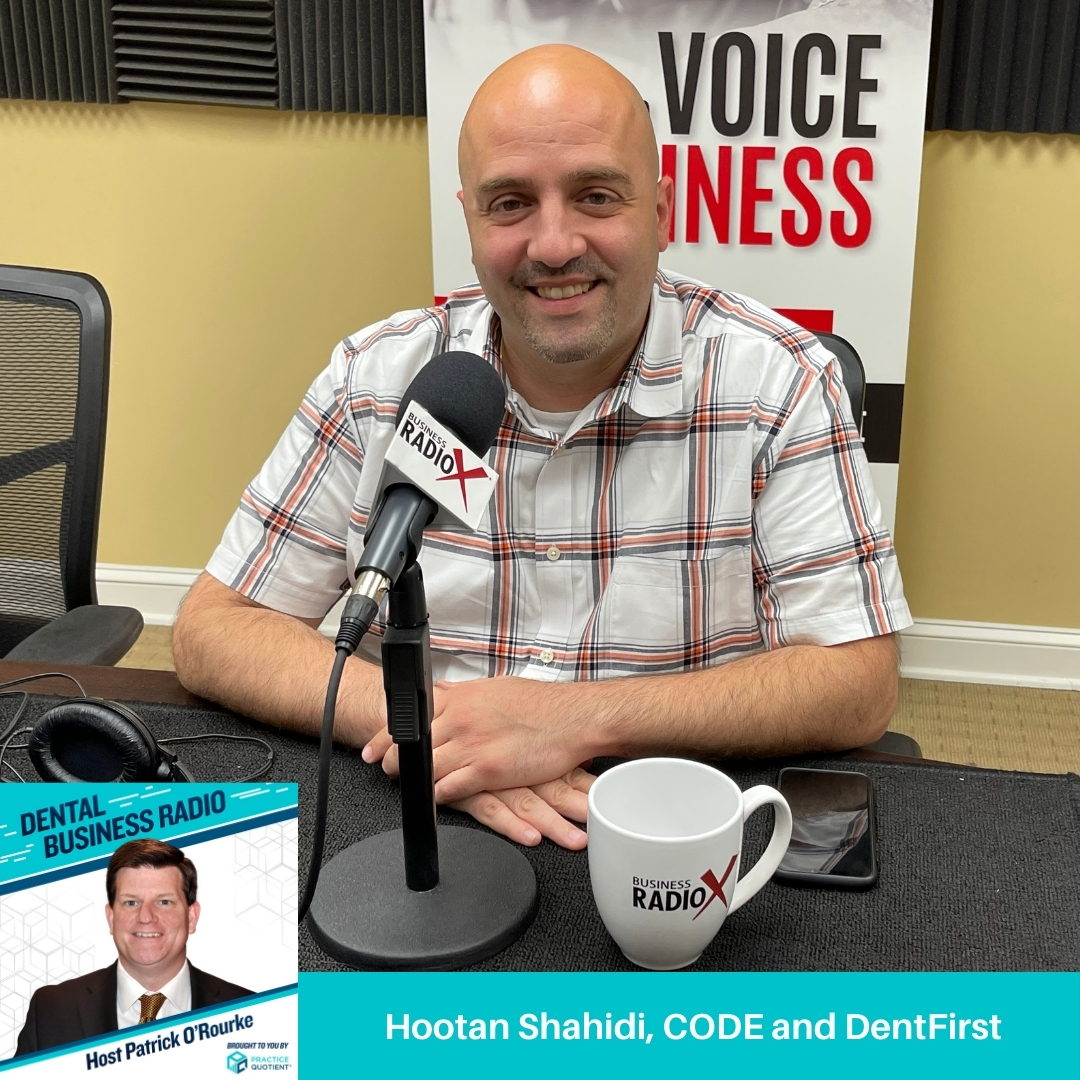
Procedure coding, billing, and reimbursements are not a dentist’s favorite subjects, to say the least, yet successfully navigation of these issues is essential to the bottom-line health of the practice. Hootan Shahidi joins host Patrick O’Rourke on the show to discuss these issues and much more. Dental Business Radio is underwritten and presented by Practice Quotient: PPO Negotiations & Analysis and produced by the North Fulton studio of Business RadioX®.

CODE

Cross Over Dental Enterprises (CODE) specializes in billing medical insurance for dental professionals with unparalleled support and training. CODE’s work enables their dental practice clients to bill to medical insurance at a far greater rate than they are accustomed to.

DentFirst

DentFirst Dental Care has been proudly serving the Greater-Atlanta area for 35 years! What makes DentFirst so incredibly unique is their dedication to making dental care for metro-area residents easily accessible, affordable and dependable. Their patients are their number one priority! DentFirst does everything they can to accommodate their needs while ensuring that the care and customer service they receive is rivaled by none.

DentFirst has 13 convenient locations around Atlanta which are always welcoming new patients. They understand that our patients have busy schedules, but still value easy access to their healthcare providers which is why they offer extended evening hours during the week and Saturday appointments. In addition to this, they want our patients to be able to receive all of their treatment needs under one roof.

Hootan Shahidi, Owner, CODE and Director of Clinical Operations, DentFirst

Hootan-Shahlidi-CODE-DentFirstHootan Shahidi was an office manager and a dental consultant for over 10 years before starting CODE. He is well versed in all matters of the dental field, including medical and dental insurance billing.

Hootan is the owner of Cross Over Dental Enterprises (CODE), a medical billing company for dentists and dental specialists.

He is currently also the Director of Clinical Operations for DentFirst, a regional DSO in metro Atlanta.

Connect with Hootan on LinkedIn.

DBRAfterShow5.28.2021

About Dental Business Radio

Dental Business Radio covers the business side of dentistry. Host Patrick O’Rourke and his guests cover industry trends, insights, success stories, and more in this wide-ranging show.

The show’s guests include successful doctors across the spectrum of dental practice providers, as well as trusted advisors and noted industry participants. Dental Business Radio is underwritten and presented by Practice Quotient and produced by the North Fulton studio of Business RadioX®.

Practice Quotient

Dental Business Radio is sponsored by Practice Quotient. Practice Quotient, Inc. serves as a bridge between the payor and provider communities. Their clients include general dentist and dental specialty practices across the nation of all sizes, from completely fee-for-service-only to active network participation with every dental plan possible.

They work with independent practices, emerging multi-practice entities, and various large ownership entities in the dental space. Their PPO negotiations and analysis projects evaluate the merits of the various in-network participation contract options specific to your practice’s patient acquisition strategy. There is no one-size-fits-all solution.

Connect with Practice Quotient

Website | LinkedIn | Facebook | Twitter

Tagged With: CODE, Cross Over Dental Enterprises, dental practice billing, dental practices, DentFirst, Dentist, dentistry, medical billing, Patrick O'Rourke, PPO Negotiations & Analysis, PPO network contract analytics, Practice Quotient, procedure coding, reimbursement

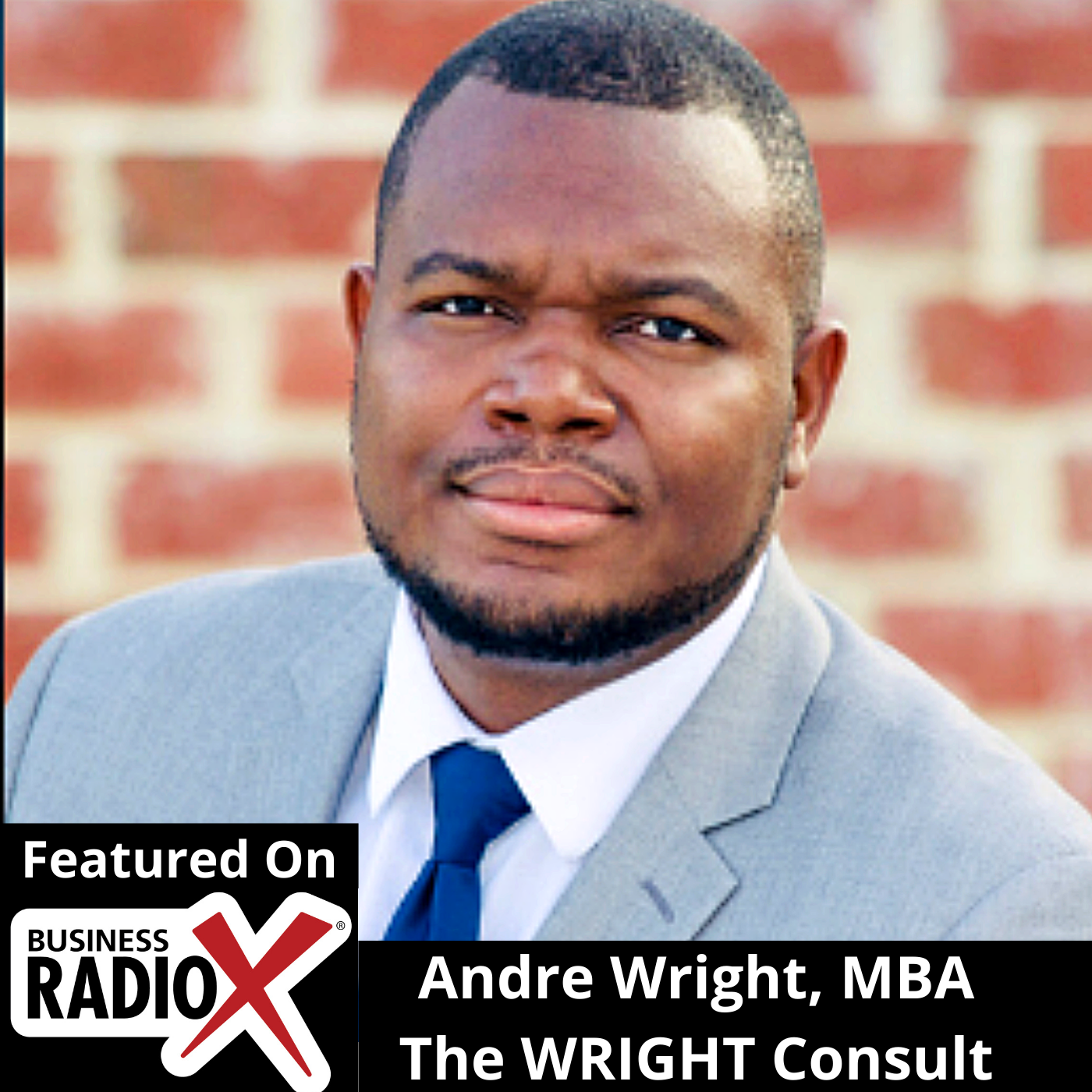
Andre Wright, The WRIGHT Consult

May 28, 2021 by John Ray

North Fulton Business Radio
Andre Wright, The WRIGHT Consult
Loading
00:00 /
RSS Feed
Share
Link
Embed

Download file

Andre Wright, The WRIGHT Consult (North Fulton Business Radio, Episode 360)

Digital marketing is essential for dental, chiropractic, and similar health-specific practices to grow and thrive. Andre Wright of The WRIGHT Consult joined host John Ray to share his tips and success stories in working with such practices, his career journey, and his new book, Visibility. North Fulton Business Radio is broadcast from the North Fulton studio of Business RadioX® inside Renasant Bank in Alpharetta.

The WRIGHT Consult

The WRIGHT Consult is a digital marketing agency located in Atlanta. Its mission is to help organizations leverage the power of digital marketing to increase leads, drive sales and improve market share. At TWC their commitment is to ensure that the job is performed with the highest degree of professionalism at all times. Its staff includes highly skilled professionals who provide great expertise, along with a professional management team providing exceptional project oversight. From a strong player in the industry in web development & design and effective digital marketing solutions, The WRIGHT Consult delivers results and meets and most often exceeds their client’s benchmarks.

They seek to guide customers with an underlying philosophy of “BBC” i.e.

  • BE THERE- With the advancement in digital media, businesses have to ensure they are on the necessary platforms to meet customers.
  • BE VISIBLE- It is not just being on these digital platforms, but an effective digital strategy has to be in place so that companies are actually “visible” and customers are seeing their websites/businesses when they search online.
  • CONVERT- This is what we all want customers to do; whether signing up on a form, downloading an app, or purchasing an item. Whatever the desired action we set out. To this end, we will implement effective digital strategies to influence these desired actions.

Their team will work tirelessly to help strategically position your brand in relevant search results to give optimal results.  Their founder was a part of the formative years of Google Adwords, Adwords Express, Shopping, and Display campaigns.

They distinguish themselves from the competition by providing clients with firsthand digital marketing experience and result-driven services in the online marketing arena to attract potential customers, engage them with SEO, PPC, Social Media, Display/Remarketing ads, and convert leads into sales.

Company website | LinkedIn | Twitter | Facebook | Instagram

Andre Wright, MBA, Founder and CEO, The WRIGHT Consult

Andre Wright
Andre Wright, MBA, Founder and CEO, The WRIGHT Consult

A digital marketer at heart, Andre has a passion to help individuals achieve their goals. Andre Wright

With more than twelve years of digital marketing experience, he has helped various organizations grow exponentially.

It all started with Google. During the infant stages of Google Ads, he was able to lead a group of digital strategists to great success promoting Google Ads to businesses. This led him to launch The WRIGHT Consult (TWC). a digital marketing company that not only helps clients with Google Ads but offers a wide range of other services to include search engine optimization(SEO).

Andre is a public speaker, hosts the Your Company Health Podcast, and is the author of a new book, Visibility: Digital Marketing Secrets to Growing Your Business the Wright Way. 

Andre has a Masters’s in Marketing from the University of Sunderland.  He is an avid golfer, who loves God, family, and his community.

Website | LinkedIn | Podcast | Book

Questions and Topics in this Interview:

  • How did you get into digital marketing?
  • What vertical do you serve?
  • Talk about the importance of digital marketing today
  • Talk to us about your new book, Visibility


North Fulton Business Radio is hosted by John Ray, and broadcast and produced from the North Fulton studio of Business RadioX® inside Renasant Bank in Alpharetta. You can find the full archive of shows by following this link. The show is available on all the major podcast apps, including Apple Podcasts, Spotify, Google, Amazon, iHeart Radio, Stitcher, TuneIn, and others.

Renasant Bank has humble roots, starting in 1904 as a $100,000 bank in a Lee County, Mississippi, bakery. Since then, Renasant has grown to become one of the Southeast’s strongest financial institutions with over $13 billion in assets and more than 190 banking, lending, wealth management and financial services offices in Mississippi, Alabama, Tennessee, Georgia and Florida. All of Renasant’s success stems from each of their banker’s commitment to investing in their communities as a way of better understanding the people they serve. At Renasant Bank, they understand you because they work and live alongside you every day.

Tagged With: adwords, Andre Wright, chiropractors, dental practices, digital marketing, SEO, The WRIGHT Consult, Visibility, Your Company Health

How to Mitigate the Risk of Lawsuits

May 14, 2021 by John Ray

Mitigate Lawsuits
Dental Law Radio
How to Mitigate the Risk of Lawsuits
Loading
00:00 /
RSS Feed
Share
Link
Embed

Download file

Mitigate Lawsuits

How to Mitigate the Risk of Lawsuits (Dental Law Radio, Episode 4)

Host Stuart Oberman covers the basic internal procedures necessary to mitigate the risk of lawsuits in a dental practice.  Dental Law Radio is underwritten and presented by Oberman Law Firm and produced by the North Fulton studio of Business RadioX®.

TRANSCRIPT

Intro: [00:00:02] Broadcasting from the Business RadioX Studios in Atlanta, it’s time for Dental Law Radio. Dental Law Radio is brought to you by Oberman Law Firm, a leading dental-centric law firm serving dental clients on a local, regional, and national basis. Now, here’s your host, Stuart Oberman.

Stuart Oberman: [00:00:27] Hello everyone and welcome to Dental Law Radio. So, today, is going to be an interesting topic. So, as a law firm in the dental space, if you will, we have clients in about 28 states, all the way from California, Maine to Florida, and we get this question over and over and over again. How do I mitigate my risks of lawsuits?

Stuart Oberman: [00:00:55] That’s a wide topic. You got all kinds of issues to look at. You’ve got State Department of Labor, you’ve got Federal Department of Labor, you’ve got IRS, you’ve got EEOC. You have lawyers breathing down your neck for certain regulatory matters because employees’ rights have been violated. So, you know, what is the risks of a lawsuit?

Stuart Oberman: [00:01:25] And I would say it’s probably a failure to have internal proper procedures in place. What does that mean? On a 10,000 foot view, do I have an employee manual? Do I have nondisclosure agreements? Do I have cell phone, internet, policies, social media policies? Am I in compliance with the National Labor Relations Board? Am I in compliance with my State and Federal law? There’s really a couple things that you really need to have. And we’re going to talk about this on subsequent podcasts, but I want to maybe drill down on some specifics regarding employee manual because these are critical.

Stuart Oberman: [00:02:14] Every practice should have an employee manual. “Well, I’ve got one, you know, John gave it to me when I bought his practice. And, yeah, it’s not bad. You know, it’s 29 pages. It’s a little old. But I wrote on it. And I think we got employees sign over good.” Or, “You know, I went on the internet and I bought one.” Great. Great. Well, how’s that working out for you?

Stuart Oberman: [00:02:43] So, if you have an employee manual that you’ve got from someone, trash it. If you bought a practice and you implemented the employee manual that you now scratch outs or had on a Word document that is 15 years old and you decided to put different names on it, scrap it, shred it, it’s garbage. You’re going to need an up to date employee manual that has a couple of things. If your employee manual in today’s world is less than 70, 80, 90 – I think our employee manual that we draft for dental doctors on dental sides is, probably, 100 some pages – job descriptions, acknowledgments, nondisclosure agreements, all that’s got to be included. Social media, cell phone, internet policies got to be included.

Stuart Oberman: [00:03:31] So, what are some of the things that we see really need to be within these employee manuals? Again, we’re just touching on some stuff. So, one of the things that in today’s world, in today’s media world, in today’s society, you have to have non-harassment provisions. There’s no question about it. If you do not have provisions regarding harassment, regarding sex, color, creed, origin, nationality, then you are opening yourself up to a huge, huge problem. Anti-discrimination statute language should be included in your employee manual. Again, these are basics in a world within which we live. Anti-retaliation, a previous podcast we talked about OSHA, HIPAA, whistleblower. What to do if you’re fired?

Stuart Oberman: [00:04:31] In your employee manual, do you have a process for probation? Do you have a process for reporting complaints? Do you have someone in your practice – I don’t care how big you are – that is a go-to person for complaints. If you’re a doctor, chances are they’re not going to want to report to you directly regarding any kind of internal issues. You need to have a point person designated in your practice that has the authority to take down the investigation. Do you have an anonymous reporting process? And, again, I don’t care whether you’re a 20 practice owner or one practice owner.

Stuart Oberman: [00:05:16] Next one, Family Medical Leave Act. How many employees do you have? Does it even apply? There are some instances that you will say I do not need a Family Medical Leave Act. And you have to sign a document to the government that says that you do not comply or do not have to comply with the Family Medical Leave Act, because they just don’t believe you. The Emergency Paid Sick Leave Act. The Emergency Family Act. Especially in today’s world under COVID, a Medical Leave Expansion Act under FFCRA if you’re under 500 employees.

Stuart Oberman: [00:05:58] I could probably talk about this topic for about three hours on this one particular area, what it takes to have an employee manual. But you’ve got to be very careful on this area. So, the next question is, “Well, you know, I got a manual and a company gave it to me and it’s five volumes.” I’m going to be really honest with you, if you can comply with a five volume employee manual, I need to come work for you. Because I have never seen that before. And we’ll look at manuals and it will be three, four, five volumes of employee manual. How in the world can you be in compliance on that side?

Stuart Oberman: [00:06:42] It’s very basic things that will keep you out of trouble. If you’re required under your massive war and peace novel of employee manuals, there’s no way. You got too much liability, you got too many holes that it is impossible for you to comply with. Keep it short. Keep it simple. Basic stuff. Basic information. And that is probably one of the biggest ways that will keep you out of the EEOC, Department of Labor, National Labor Relations Board, governmental investigations.

Stuart Oberman: [00:07:25] So, again, it’s the basic stuff. A lot of times our doctors will get way, way complex. They don’t need it. They’re being sold stuff they don’t need, which happens a lot. So, we need to be real careful with that. So, it’s the little things that will keep you out of trouble. It’s not, you know, recreating the world, but it’s simply one wheel at a time to get you there. So, again, that’s 10,000 foot view.

Stuart Oberman: [00:07:52] We see a lot on our side. We handle as a firm a lot of H.R. issues. We see what works. We see what doesn’t. It’s a moving target between state to state. It’s a moving target between employee to employee. And it’s a moving target in today’s regulatory matters. So, hopefully, you’ve taken away, you know, one thing that you need to look at to avoid H.R. issues, to avoid any kind of compliance issues, which is understanding basic employee manual, why you need it, why you don’t. We talked about HIPAA and OSHA before, so this is all part of that particular puzzle. So, again, quick topic today, just enough to give you a 10,000 foot view, as we say.

Stuart Oberman: [00:08:37] So, I want to thank everyone for joining us today on Dental Law Radio. If you have any questions, if you have any concerns, reach out to us. Give us a call, 770-554-1400. Or send an email, stuart, S-T-U-A-R-T, @obermanlaw.com. And we hope that you will join us on subsequent podcasts. And our goal is to keep you up to date in the industry, leading edge, cutting edge information. So, thank you everyone. Have a fantastic day. And we look forward to talking to you soon. Thank you.


About Dental Law Radio

Hosted by Stuart Oberman, a nationally recognized authority in dental law, Dental Law Radio covers legal, business, and other operating issues and topics of vital concern to dentists and dental practice owners. The show is produced by the North Fulton studio of Business RadioX® and can be found on all the major podcast apps. The complete show archive is here.

Stuart Oberman, Oberman Law Firm

Oberman Law Firm
Stuart Oberman, host of “Dental Law Radio”

Stuart Oberman is the founder and President of Oberman Law Firm. Mr. Oberman graduated from Urbana University and received his law degree from John Marshall Law School. Mr. Oberman has been practicing law for over 25 years, and before going into private practice, Mr. Oberman was in-house counsel for a Fortune 500 Company. Mr. Oberman is widely regarded as the go-to attorney in the area of Dental Law, which includes DSO formation, corporate business structures, mergers and acquisitions, regulatory compliance, advertising regulations, HIPAA, Compliance, and employment law regulations that affect dental practices.

In addition, Mr. Oberman’s expertise in the health care industry includes advising clients in the complex regulatory landscape as it relates to telehealth and telemedicine, including compliance of corporate structures, third-party reimbursement, contract negotiations, technology, health care fraud and abuse law (Anti-Kickback Statute and the State Law), professional liability risk management, federal and state regulations.

As the long-term care industry evolves, Mr. Oberman has the knowledge and experience to guide clients in the long-term care sector with respect to corporate and regulatory matters, assisted living facilities, continuing care retirement communities (CCRCs). In addition, Mr. Oberman’s practice also focuses on health care facility acquisitions and other changes of ownership, as well as related licensure and Medicare/Medicaid certification matters, CCRC registrations, long-term care/skilled nursing facility management, operating agreements, assisted living licensure matters, and health care joint ventures.

In addition to his expertise in the health care industry, Mr. Oberman has a nationwide practice that focuses on all facets of contractual disputes, including corporate governance, fiduciary duty, trade secrets, unfair competition, covenants not to compete, trademark and copyright infringement, fraud, and deceptive trade practices, and other business-related matters. Mr. Oberman also represents clients throughout the United States in a wide range of practice areas, including mergers & acquisitions, partnership agreements, commercial real estate, entity formation, employment law, commercial leasing, intellectual property, and HIPAA/OSHA compliance.

Mr. Oberman is a national lecturer and has published articles in the U.S. and Canada.

LinkedIn

Oberman Law Firm

Oberman Law Firm has a long history of civic service, noted national, regional, and local clients, and stands among the Southeast’s eminent and fast-growing full-service law firms. Oberman Law Firm’s areas of practice include Business Planning, Commercial & Technology Transactions, Corporate, Employment & Labor, Estate Planning, Health Care, Intellectual Property, Litigation, Privacy & Data Security, and Real Estate.

By meeting their client’s goals and becoming a trusted partner and advocate for our clients, their attorneys are recognized as legal go-getters who provide value-added service. Their attorneys understand that in a rapidly changing legal market, clients have new expectations, constantly evolving choices, and operate in an environment of heightened reputational and commercial risk.

Oberman Law Firm’s strength is its ability to solve complex legal problems by collaborating across borders and practice areas.

Connect with Oberman Law Firm:

Company website | LinkedIn | Twitter

Tagged With: dental practice management, dental practices, employees, employment manuals, lawsuits, Oberman Law Firm, Stuart Oberman

Whistleblower Employees

May 7, 2021 by John Ray

Whistleblower Employees
Dental Law Radio
Whistleblower Employees
Loading
00:00 /
RSS Feed
Share
Link
Embed

Download file

Whistleblower Employees

Whistleblower Employees (Dental Law Radio, Episode 3)

On this edition of Dental Law Radio, Stuart Oberman discussed problem employees who file complaints with OSHA and HIPAA, the preemptive actions a practice owner should take, how to handle the situation once a complaint has been filed, and much more.  Dental Law Radio is underwritten and presented by Oberman Law Firm and produced by the North Fulton studio of Business RadioX®.

TRANSCRIPT

Intro: [00:00:02] Broadcasting from the Business RadioX Studios in Atlanta, it’s time for Dental Law Radio. Dental Law Radio is brought to you by Oberman Law Firm, a leading dental-centric law firm serving dental clients on a local, regional, and national basis. Now, here’s your host, Stuart Oberman.

Stuart Oberman: [00:00:27] Hello, everyone. And welcome to Dental Law Radio. We’re going to cover two topics today that really have surfaced in the last couple of months. For the last couple of years, they really have been, I would say, on the rise. But with COVID-19, as I said before in previous podcasts, I don’t necessarily harp on COVID-19, so I think we’re ready to come out of that particular scenario – there’s a lot of lessons learned. And I think that that particular period of time, which is still ongoing, has really taught our doctors a lot of lessons.

Stuart Oberman: [00:01:06] So, one of the things that we’ve really, really want to harp on today is compliance and employees. You know, I’ve said before that the patients are easy. The employees can be very problematic at times. And I’ve heard a saying from one of our employees, practice of dentistry would be a fantastic career. But, again, those are different things that we want to take a look at. So, what are we talking about today? What’s on the topic today? What’s hot? What are we developing? OSHA and HIPAA whistleblower.

Stuart Oberman: [00:01:38] So, I’ve been talking about this for a while on the road, you know, before all this. But what’s happened is that, as I said before in a previous podcast, problem employees are going three places, OSHA, HIPAA, Department of Labor, State and Federal. So, your problem employees are going to file complaints with OSHA and HIPAA. The question is, how do you deal with that? What do you do when you get that nasty letter that says you have committed a whistleblower violation, or an OSHA violation, or HIPAA violation? So, how do you get to an OSHA whistleblower? And what in the world is a whistleblower?

Stuart Oberman: [00:02:24] So, we think a whistleblower, we think massive corporations, you know, the guys in the internal side that are complaining to the government that this is not correct, this is not correct, over expenditures here, this is wrong, this is wrong, compliance issues, violations of the law. But, really, in our dental practices, it’s simply employees who complain for whatever reason. A lot of it is disgruntled employees who are not happy with their pay, their circumstances, and they’re going to get even, and they’re going to file a complaint with OSHA or HIPAA for whatever reason.

Stuart Oberman: [00:02:59] So, the question is, you get these letters – as we talked about on a previous podcast, you have a system in place. And if not, you need to get one very quickly on how to respond to this. So, what happens is, you get this letter from either OSHA or HIPAA. You got a certain time period to respond. You have certain things that you need to do. And you’re going to know – depending on how big your practice is – right away who did it. Who complained to the government, you’re going to know. If not, you’re going to find out very quickly.

Stuart Oberman: [00:03:32] Of course, what’s going to happen is you’re going to be absolutely livid at that employee for filing a complaint against you when you’ve taken care of that employee, you give them all the raises. But for some reason, you got a complaint. Now, you’ve got to deal with it.

Stuart Oberman: [00:03:49] So, provided you have a process in place, you will respond to it. Hopefully, you will get counsel to do that, and not have your consultant do it or have a staff member do it. But you’ll get outside professional counsel to do it on the legal side that understands how to do it.

Stuart Oberman: [00:04:06] So, you will work that investigation. And the question is, you are absolutely livid to this employee who filed this complaint. And you’re going to get even. Bad thing to do. Bad thing to do. Wrong thing to do. Detrimental thing to do. So, under federal rules, the whistleblower statute, you cannot retaliate against an employee. So, what does that mean? That means you can’t fire them. You can’t demote them. You can’t lay them off.

Stuart Oberman: [00:04:38] Now, that does not mean that they have lifetime employment. But if they’re already a problem employee in a perfect world, you’ve already got an HR file on them. And if I don’t touch on it on subsequent podcasts, your employees should never have access to their own personal files. That is your lock and key. They should never take care of their own personnel file.

Stuart Oberman: [00:05:07] So, what happens is, on the whistleblower, you’re going to get mad, you’re going to get even, you want to go fire this employee and say “You’re fired.” Or better yet, “You’re demoted. I’m cutting your hours,” whatever it is. Now, the problem is that, if that occurs solely because they filed a complaint, you now have violated Federal Law under the federal whistleblower statute. So, that becomes a mess.

Stuart Oberman: [00:05:30] So then, what happens is now you get into the Solicitor General’s office where they send you a nasty letter that you now are under federal investigation for violation of the whistleblower statute. Which is, 99 percent of the time, if you handle an OSHA complaint correctly, it’s going to be a process, but usually it’s settled, it’s worked out well. You take the correction action. You go down the road.

Stuart Oberman: [00:05:59] The problem is, is that when you have a whistleblower issue because you fired, demoted, or laid an employee off, or cut hours, whatever it is because they filed a complaint, now you’re in a whole different realm. Now, all of a sudden, you are under the whistleblower statute. So, you’re going to be investigated by the Solicitor General, which is never good. Never good. Now, you’ve got another governmental agency investigating you.

Stuart Oberman: [00:06:28] Look, at the end of the day, a lot of the complaints are dismissed. Investigators get it. It’s a disgruntled employee, there’s no cause. But if they find that you have violated the federal whistleblower statute – now, I will tell you this, this goes to any industry that has OSHA or HIPAA. I know we’re talking dental specific, but this is any industry, whether it’s trucking or whether it’s some other kind of industry or business, this applies. So, this is across career lines.

Stuart Oberman: [00:07:05] So, again, they dismiss complaints or they do the investigation and they dismiss the complaint, and you’re done. But the problem is that, if they find that you violated the federal statute. So, what happens? So, you’re responsible for the employees back wages, which is never good. Or they require that you reinstate the employee. First, you got to understand this, you didn’t like the employee when they were there. You hated them when they filed the whistleblower complaint. And, now, you’ve got to bring them back because the feds say you’ve got to bring them back. And you got to reimburse the employee the attorney’s fees, which is very expensive sometimes, very, very expensive.

Stuart Oberman: [00:07:46] So, what’s the takeaway? Again, we’re looking at a 10,000-foot view as to what occurs. One, if you have an OSHA or HIPAA complaint, first and foremost, as I said in previous podcasts, you’ve got to have process in place to respond to it. Then, what happens is, when you get it, you’ve got to handle it correctly.

Stuart Oberman: [00:08:09] If you’re going to have an employee discipline matter while you have a whistleblower matter going on or OSHA or HIPAA complaint going on, you better have good reason to discipline an employee. That should be well documented previously. All employee problems should be documented. All employee problems should be of record. Signed by the employee on HR side. So, this way, if you are under investigation for OSHA or HIPAA violations and you fire the employee, you’ve got something that says this is not lifetime employment. And that we need to get rid of this employee for a lot of reasons.

Stuart Oberman: [00:08:54] So, the processes is, that once you get it, understand it, do not take a knee jerk reaction and fire the employee, demote. Talk to counsel, get guidance on how to handle this, what to do with it. And proceed with great caution. So, again, that’s a 10,000-foot overview on where we’re going with this and what we wanted to do.

Stuart Oberman: [00:09:17] We’ve talked about this for a lot of time, a lot of years. But we’re seeing an enormous increase in this. Now, one thing you’ll need to do is make sure that you’ve got your HIPAA issues under control for your patient flow of information. Encryptions, authorizations to get medical information, that’s a whole another topic for a whole another day. But we want to keep it on a high level with the whistleblower violation matters.

Stuart Oberman: [00:09:46] So, again, process, process, process, understand what you’re doing, understand the complexities, get guidance on these matters. Do not try to handle it yourself. Do not delegate it. This is something that doctors, or especially sole practitioners, need to get this done. So, that’s going to conclude our podcast today on OSHA and whistleblower allegations.

Stuart Oberman: [00:10:12] So, we want to thank you for joining Dental Law Radio. If you want to reach out to us or contact our firm, please feel free to do so. Please visit also dentallawradio.com, Oberman Law Firm at 770-554-1400. Or if you want to, send me an email, stuart@obermanlaw.com. Thank you again so much for joining us. We hope you just took one bit of information away. And if you did, it’s a complete success. Have a fantastic day. And we’ll look forward to talking to you soon on subsequent podcasts. Thank you very much. Have a great day.


About Dental Law Radio

Hosted by Stuart Oberman, a nationally recognized authority in dental law, Dental Law Radio covers legal, business, and other operating issues and topics of vital concern to dentists and dental practice owners. The show is produced by the North Fulton studio of Business RadioX® and can be found on all the major podcast apps. The complete show archive is here.

Stuart Oberman, Oberman Law Firm

Oberman Law Firm
Stuart Oberman, host of “Dental Law Radio”

Stuart Oberman is the founder and President of Oberman Law Firm. Mr. Oberman graduated from Urbana University and received his law degree from John Marshall Law School. Mr. Oberman has been practicing law for over 25 years, and before going into private practice, Mr. Oberman was in-house counsel for a Fortune 500 Company. Mr. Oberman is widely regarded as the go-to attorney in the area of Dental Law, which includes DSO formation, corporate business structures, mergers and acquisitions, regulatory compliance, advertising regulations, HIPAA, Compliance, and employment law regulations that affect dental practices.

In addition, Mr. Oberman’s expertise in the health care industry includes advising clients in the complex regulatory landscape as it relates to telehealth and telemedicine, including compliance of corporate structures, third-party reimbursement, contract negotiations, technology, health care fraud and abuse law (Anti-Kickback Statute and the State Law), professional liability risk management, federal and state regulations.

As the long-term care industry evolves, Mr. Oberman has the knowledge and experience to guide clients in the long-term care sector with respect to corporate and regulatory matters, assisted living facilities, continuing care retirement communities (CCRCs). In addition, Mr. Oberman’s practice also focuses on health care facility acquisitions and other changes of ownership, as well as related licensure and Medicare/Medicaid certification matters, CCRC registrations, long-term care/skilled nursing facility management, operating agreements, assisted living licensure matters, and health care joint ventures.

In addition to his expertise in the health care industry, Mr. Oberman has a nationwide practice that focuses on all facets of contractual disputes, including corporate governance, fiduciary duty, trade secrets, unfair competition, covenants not to compete, trademark and copyright infringement, fraud, and deceptive trade practices, and other business-related matters. Mr. Oberman also represents clients throughout the United States in a wide range of practice areas, including mergers & acquisitions, partnership agreements, commercial real estate, entity formation, employment law, commercial leasing, intellectual property, and HIPAA/OSHA compliance.

Mr. Oberman is a national lecturer and has published articles in the U.S. and Canada.

LinkedIn

Oberman Law Firm

Oberman Law Firm has a long history of civic service, noted national, regional, and local clients, and stands among the Southeast’s eminent and fast-growing full-service law firms. Oberman Law Firm’s areas of practice include Business Planning, Commercial & Technology Transactions, Corporate, Employment & Labor, Estate Planning, Health Care, Intellectual Property, Litigation, Privacy & Data Security, and Real Estate.

By meeting their client’s goals and becoming a trusted partner and advocate for our clients, their attorneys are recognized as legal go-getters who provide value-added service. Their attorneys understand that in a rapidly changing legal market, clients have new expectations, constantly evolving choices, and operate in an environment of heightened reputational and commercial risk.

Oberman Law Firm’s strength is its ability to solve complex legal problems by collaborating across borders and practice areas.

Connect with Oberman Law Firm:

Company website | LinkedIn | Twitter
Tagged With: dental practices, dentists, HIPAA, HIPAA complaints, HIPAA whistleblower, Oberman Law Firm, OSHA, OSHA whistleblower, OSHAA complaints, Stuart Oberman, Whistleblower Employees

Dr. Richard Madow, The Madow Center for Dental Practice Success

April 5, 2021 by John Ray

Rich-Madow-DBR-Album
Dental Business Radio
Dr. Richard Madow, The Madow Center for Dental Practice Success
Loading
00:00 /
RSS Feed
Share
Link
Embed

Download file

Rich-Madow-DBR-Album

Dr. Richard Madow, The Madow Center for Dental Practice Success (“Dental Business Radio” Episode 17)

Dr. Richard Madow joined host Patrick O’Rourke to discuss his dental consulting practice, why dental practices should focus more on retaining existing patients instead of acquiring new ones, and much more. “Dental Business Radio” is underwritten and presented by Practice Quotient: PPO Negotiations & Analysis and produced by the North Fulton studio of Business RadioX®.

The Madow Center for Dental Practice Success

The Madow Center for Dental Practice Success works with practices from all across North America to help them increase revenues, provide better patient treatment, increase team communication, and make dentistry fun!

Dr. Rich Madow, Principal, The Madow Center for Dental Practice Success

In 1989, Dr. Richard Madow along with his brother Dr. David Madow, founded The Madow Center For Dental Practice Success with the goal of helping their fellow dentists achieve success and happiness in their practices. Having been named a “Leader In Dental Consulting” by Dentistry Today for many years running, his publications, articles and blogs are some of the most popular in the dental profession and have reached over 100,000 practices across the world!

Known for his hilarious and spontaneous style, Rich has lectured to standing room only crowds in practically every major city in The United States and Canada, teaching dentists and team members how to enjoy their careers, supercharge their practices, define and create their own personal success, increase profitability, and have more fun than ever before.

The Madow Center For Dental Practice Success has a unique approach to coaching – instead of modules and pre-written programs, each practice is individually guided to overcome their weaknesses and grow their strengths in order to obtain greater income levels and enjoy dentistry more. For more information, please check out www.madow.com.

On a personal level, Rich is a life-long and award-winning musician, having performed in many venues across North America. He is currently writing and recording new material, and his latest album, “Coming Through With Static,” can be found on Spotify, Apple Music, and all of the regular streaming sites. Among his other achievements, Rich’s book “Is Your Frog Boiling” was an amazon.com bestseller for two full days, and he has traveled to 56 countries.

Join The Madow Center in their Facebook group to hangout with like-minded Docs and team members.

About Dental Business Radio

“Dental Business Radio” covers the business side of dentistry. Host Patrick O’Rourke and his guests cover industry trends, insights, success stories, and more in this wide-ranging show. The show’s guests include successful doctors across the spectrum of dental practice providers, as well as trusted advisors and noted industry participants. “Dental Business Radio” is underwritten and presented by Practice Quotient and produced by the North Fulton studio of Business RadioX®.

Practice Quotient

“Dental Business Radio” is sponsored by Practice Quotient. Practice Quotient, Inc. serves as a bridge between the payor and provider communities. Their clients include general dentist and dental specialty practices across the nation of all sizes, from completely fee-for-service-only to active network participation with every dental plan possible. They work with independent practices, emerging multi-practice entities, and various large ownership entities in the dental space. Their PPO negotiations and analysis projects evaluate the merits of the various in-network participation contract options specific to your Practice’s patient acquisition strategy. There is no one-size-fits-all solution.

Connect with Practice Quotient

Website | LinkedIn | Facebook | Twitter

Tagged With: dental practice management, dental practices, Dr. Rich Madow, Dr. Richard Madow, Patrick O'Rourke, PPO Negotiations & Analysis, Practice Quotient, specialty dental practices, The Madow Center for Dental Practice Success

Dr. Nathan Kupperman, NAK Dental Group

March 8, 2021 by John Ray

Nathan-Kupperman-DBRAlbum
Dental Business Radio
Dr. Nathan Kupperman, NAK Dental Group
Loading
00:00 /
RSS Feed
Share
Link
Embed

Download file

Nathan-Kupperman-DBRAlbum

Dr. Nathan Kupperman, NAK Dental Group (“Dental Business Radio” Episode 15)

In a conversation with host Patrick O’Rourke, Dr. Nathan Kupperman of NAK Dental Group discusses the growth of his multi-office dental provider organization, why smaller cities and towns often offer better opportunities, and why he bought a coffee truck to help with his marketing. (Yes, you read that right.) “Dental Business Radio” is underwritten and presented by Practice Quotient: PPO Negotiations & Analysis and produced by the North Fulton studio of Business RadioX®.

NAK Dental Group

NAK Dental Group is a Dental Provider Organization founded in 2018 by Dr. Nathan Kupperman. NAK Dental currently supports 5 dental locations across Northwest Florida. We offer a variety of management services from their administrative headquarters in Tallahassee, Florida, in addition to Affiliation and Partner Ownership opportunities for Dentists across the United States.

Dr. Nathan Kupperman, Founder and CEO, NAK Dental Group

Dr. Nathan Kupperman decided to expand the reach and services of NAK Dental in order to fulfill his purpose of helping transition ownership of dental practices. This is accomplished by providing Dentists wanting to transition out of their ownership stakes with flexibility and options to do so, and by providing long-term associate positions and equity Partner opportunities to Doctors joining the NAK platform.

Connect with Dr. Kupperman on LinkedIn and follow NAK Dental Group on Facebook.

About Dental Business Radio

“Dental Business Radio” covers the business side of dentistry. Host Patrick O’Rourke and his guests cover industry trends, insights, success stories, and much more in this wide-ranging show. The show’s guests include successful doctors across the spectrum of dental practice providers, as well as trusted advisors and recognized industry participants. “Dental Business Radio” is underwritten and presented by Practice Quotient and produced by John Ray and the North Fulton studio of Business RadioX®.

Practice Quotient

“Dental Business Radio” is sponsored by Practice Quotient. Practice Quotient, Inc. serves as a bridge between the payor and provider communities. Their clients include general dentist and dental specialty practices across the nation of all sizes, from completely fee-for-service-only to active network participation with every dental plan possible. They work with independent practices, emerging multi-practice entities, and various large ownership entities in the dental space. Their PPO negotiations and analysis projects evaluate the merits of the various in-network participation contract options specific to your Practice’s patient acquisition strategy. There is no one-size-fits-all solution.

Connect with Practice Quotient:

Website

LinkedIn

Facebook

Twitter

Tagged With: dental practices, dental provider organization, Dr. Nathan Kupperman, NAK Dental Group, northwest florida, Patrick O'Rourke, PPO Negotiations & Analysis, Practice Quotient, Tallahassee

  • « Previous Page
  • 1
  • 2
  • 3
  • 4
  • Next Page »

Business RadioX ® Network


Our Most Recent Episode

CONNECT WITH US

  • Email
  • Facebook
  • LinkedIn
  • Twitter

  • YouTube

Our Mission

We help local business leaders get the word out about the important work they’re doing to serve their market, their community, and their profession.

We support and celebrate business by sharing positive business stories that traditional media ignores. Some media leans left. Some media leans right. We lean business.

Sponsor a Show

Build Relationships and Grow Your Business. Click here for more details.

Partner With Us

Discover More Here

Terms and Conditions
Privacy Policy

Connect with us

Want to keep up with the latest in pro-business news across the network? Follow us on social media for the latest stories!
  • Email
  • Facebook
  • Google+
  • LinkedIn
  • Twitter

  • YouTube

Business RadioX® Headquarters
1000 Abernathy Rd. NE
Building 400, Suite L-10
Sandy Springs, GA 30328

© 2025 Business RadioX ® · Rainmaker Platform

BRXStudioCoversLA

Wait! Don’t Miss an Episode of LA Business Radio

BRXStudioCoversDENVER

Wait! Don’t Miss an Episode of Denver Business Radio

BRXStudioCoversPENSACOLA

Wait! Don’t Miss an Episode of Pensacola Business Radio

BRXStudioCoversBIRMINGHAM

Wait! Don’t Miss an Episode of Birmingham Business Radio

BRXStudioCoversTALLAHASSEE

Wait! Don’t Miss an Episode of Tallahassee Business Radio

BRXStudioCoversRALEIGH

Wait! Don’t Miss an Episode of Raleigh Business Radio

BRXStudioCoversRICHMONDNoWhite

Wait! Don’t Miss an Episode of Richmond Business Radio

BRXStudioCoversNASHVILLENoWhite

Wait! Don’t Miss an Episode of Nashville Business Radio

BRXStudioCoversDETROIT

Wait! Don’t Miss an Episode of Detroit Business Radio

BRXStudioCoversSTLOUIS

Wait! Don’t Miss an Episode of St. Louis Business Radio

BRXStudioCoversCOLUMBUS-small

Wait! Don’t Miss an Episode of Columbus Business Radio

Coachthecoach-08-08

Wait! Don’t Miss an Episode of Coach the Coach

BRXStudioCoversBAYAREA

Wait! Don’t Miss an Episode of Bay Area Business Radio

BRXStudioCoversCHICAGO

Wait! Don’t Miss an Episode of Chicago Business Radio

Wait! Don’t Miss an Episode of Atlanta Business Radio