Business RadioX ®

  • Home
  • Business RadioX ® Communities
    • Southeast
      • Alabama
        • Birmingham
      • Florida
        • Orlando
        • Pensacola
        • South Florida
        • Tampa
        • Tallahassee
      • Georgia
        • Atlanta
        • Cherokee
        • Forsyth
        • Greater Perimeter
        • Gwinnett
        • North Fulton
        • North Georgia
        • Northeast Georgia
        • Rome
        • Savannah
      • Louisiana
        • New Orleans
      • North Carolina
        • Charlotte
        • Raleigh
      • Tennessee
        • Chattanooga
        • Nashville
      • Virginia
        • Richmond
    • South Central
      • Arkansas
        • Northwest Arkansas
    • Midwest
      • Illinois
        • Chicago
      • Michigan
        • Detroit
      • Minnesota
        • Minneapolis St. Paul
      • Missouri
        • St. Louis
      • Ohio
        • Cleveland
        • Columbus
        • Dayton
    • Southwest
      • Arizona
        • Phoenix
        • Tucson
        • Valley
      • Texas
        • Austin
        • Dallas
        • Houston
    • West
      • California
        • Bay Area
        • LA
        • Pasadena
      • Colorado
        • Denver
      • Hawaii
        • Oahu
  • FAQs
  • About Us
    • Our Mission
    • Our Audience
    • Why It Works
    • What People Are Saying
    • BRX in the News
  • Resources
    • BRX Pro Tips
    • B2B Marketing: The 4Rs
    • High Velocity Selling Habits
    • Why Most B2B Media Strategies Fail
    • 9 Reasons To Sponsor A Business RadioX ® Show
  • Partner With Us
  • Veteran Business RadioX ®

The R3 Continuum Playbook: Imposter Syndrome – How to Understand, Acknowledge, and Overcome It

April 7, 2022 by John Ray

Imposter Syndrome
Minneapolis St. Paul Studio
The R3 Continuum Playbook: Imposter Syndrome - How to Understand, Acknowledge, and Overcome It
Loading
00:00 /
RSS Feed
Share
Link
Embed

Download file

Imposter Syndrome

The R3 Continuum Playbook: Imposter Syndrome – How to Understand, Acknowledge, and Overcome It

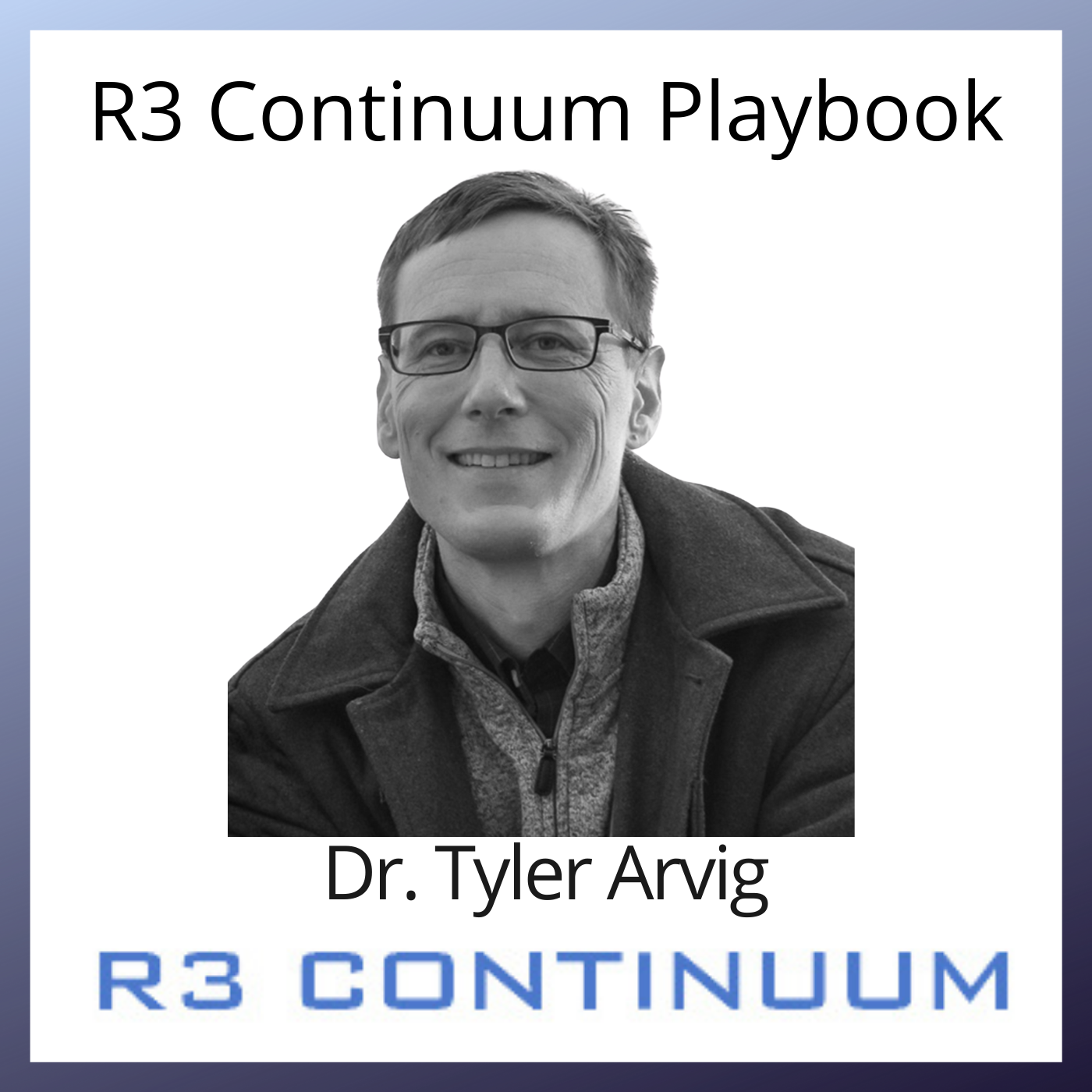
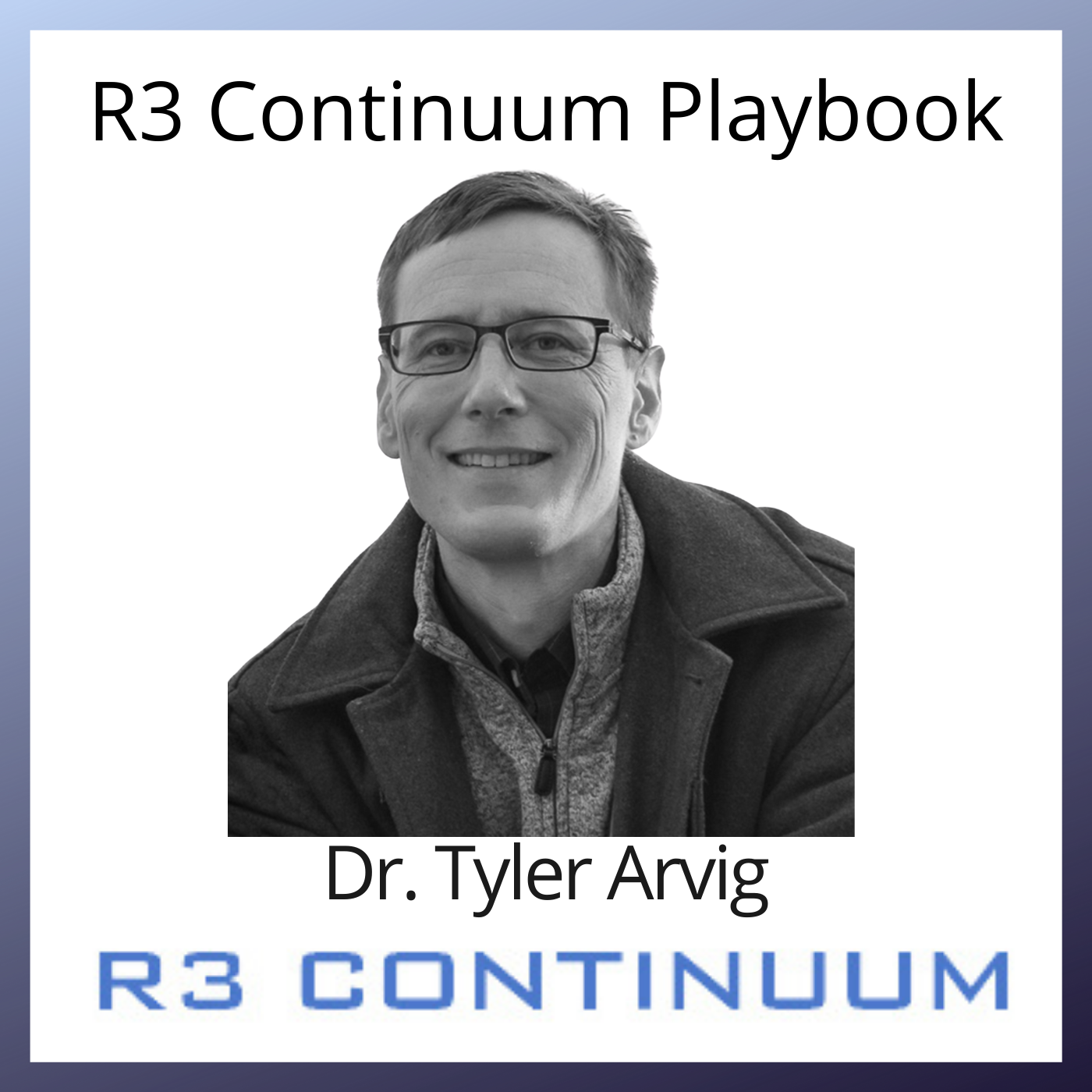
Imposter Syndrome is not something new, but it is a current area of interest for those wanting to overcome the self-doubts that most people experience. In this excerpt from an R3 Continuum webinar, Dr. Tyler Arvig, Associate Medical Director, sheds light on exactly what Imposter Syndrome is, how it can impact your life and career if it is not addressed, and some ways to overcome it.

The full webinar, Imposter Syndrome – How to Understand, Acknowledge, and Overcome It, can be found here.

The R3 Continuum Playbook is presented by R3 Continuum and is produced by the Minneapolis-St.Paul Studio of Business RadioX®. R3 Continuum is the underwriter of Workplace MVP, the show which celebrates heroes in the workplace.

TRANSCRIPT

Intro: [00:00:00] Broadcasting from the Business RadioX Studios, here is your R3 Continuum Playbook. Brought to you by Workplace MVP sponsor, R3 Continuum, a global leader in workplace, behavioral health, crisis, and security solutions.

Shane McNally: [00:00:13] Hi there. My name is Shane McNally, Marketing Specialist for R3 Continuum. On this episode of the R3 Continuum Playbook, we’re featuring a segment from a recent webinar that was done with R3 Continuum’s Associate Medical Director, Dr. Tyler Arvig. This webinar was titled Imposter Syndrome: How to Understand, Acknowledge and Overcome It.

Shane McNally: [00:00:33] In this webinar, Dr. Arvig took a deeper dive into something that most of us have likely experienced at some point, but maybe didn’t even realize what it was. Imposter Syndrome. Imposter syndrome is defined as an internal experience of believing that you are not as competent as others perceive you to be. While it’s perfectly normal to feel this way, it can impact your mental well-being, job performance, and your ability to thrive within your career if it’s left unaddressed.

Shane McNally: [00:00:59] In this segment, Dr. Arvig provides expert advice into what you can do if you find yourself struggling with imposter syndrome.

Shane McNally: [00:01:07] What do you do if you are identifying with some of these traits?

Tyler Arvig: [00:01:12] Yeah. Well, first of all, realize that that’s normal. Humans have this wonderful ability to – we have frontal lobes and we can process things more intellectually and dig into things. But sometimes that can also have a downside, which is we overanalyze things. We worry too much about things. So, if you’re noticing these things in yourself, first of all, realize that it’s normal and it’s not pathological. We aren’t talking about pathology or you’re not sick. This isn’t an illness. It’s just your way of seeing yourself and seeing other people.

Tyler Arvig: [00:01:56] So, these are just some tips. They might work for you. They might not. But really just kind of think about these things as we talk about them. The first thing you do is show your feelings. Be transparent. If I’m having doubt in myself and what I’m feeling or my role or whatever, the first thing I can do is just, you know, talk to someone about that. Share that I’m feeling anxious or I’m feeling like I’m not maybe really part of this group or I’m not good enough. There’s something wrong with that. And everyone has those thoughts, but some people are reluctant to share them. But sharing those feelings can go a long way towards undoing what you might have built up in your mind about some of these things.

Tyler Arvig: [00:02:48] The second thing is, you know, assess your abilities. So, with imposter syndrome, what we’re talking about is, I don’t feel like I’m really good at doing what I’m doing. If the CEO – you know the CEO information that’s out there is interesting because you get these people that are heads of giant, multibillion-dollar corporations and, like, I’m not good enough to do this. Like, I’m not really that good. And, like, well, you must be because you got promoted to that level and that doesn’t happen by accident. But if we think of this as doubting our abilities, the second thing we can do is really assess our abilities. Objectively, how did I deal with that? Oh, actually, maybe I did pretty darn well with it. So, maybe some of my doubt in my abilities is misplaced.

Tyler Arvig: [00:03:46] Again, when it comes to confronting what we think of as faulty beliefs or beliefs that maybe don’t have a basis, in fact, the way you do that is by assessing facts, and then going, okay, here’s what I believe. Here’s what I actually did. What do they match up and what don’t they match up?

Tyler Arvig: [00:04:06] The third point here is to start small, which is don’t try and do everything all at once. Start with one thing. If I’m – I have – let’s say, I guess with this presentation, I’m like, oh, this presentation just didn’t go well. I feel like I didn’t know the topic and I was kind of fooling everyone and I didn’t really say anything that was intelligent. I could do a bunch of different things. I could go do a ton more research on the Internet and compare it to the slides I have and then talk to my boss and talk to this person, talk to that person. Or, maybe I just call Shane, be like, hey, Shane, how did that go? Like, did it go okay? Did it – start small. You don’t always need this big giant reaffirmation, but just a little affirmation. Chip away at it over time. And that can sometimes help to get you out of that mindset.

Tyler Arvig: [00:05:10] The fourth thing is question your thoughts. And if you’ve ever been involved in therapy or mental health treatment of any kind, one of the things we often do is when people have thoughts and those thoughts may or may not be based, in fact, the first thing we do is if someone says, “I think that this person doesn’t like me.” Okay. Well, look at that objectively. That thought, question it. Do I have any basis for that thought? What information confirms that thought? What information disconfirms that thought? Like, question it.

Tyler Arvig: [00:05:50] A thought is not a fact. A thought is thought. Right? So, start questioning your thoughts, especially those thoughts that lead to self-doubt or negativity, which, by the way, doesn’t mean you’re not going to do anything that’s wrong or the things might not happen that are negative because you will and they do. But one of the things we often do is one negative thing can happen, 99 positive things can happen. And what we walk away with is the one negative thing. We don’t walk away with all the other stuff that went really well. So, questioning your thoughts is one way of balancing out your mindset when it comes to some of these things.

Tyler Arvig: [00:06:33] Limiting social media is a big one, particularly when it comes to – well, I was going to say particularly when it comes to social, but I would say actually in relation to everything. I joke with my wife that no one posts on social media, yes, I got drunk last night and my marriage is falling apart, and this, and I’m losing my house. No one posts the bad stuff on social media. What you see is, you know, happy people and smiling people and people on vacation and people getting promotions and people doing this and people doing that. And there’s nothing wrong with that. That’s fine.

Tyler Arvig: [00:07:09] But what that can lead to is, you know, when I look at my life, I’m not happy with a lot of things and I look externally at social media and everyone’s happy about things. And then, you start to feel like you’re less than other people, or they have their stuff together and you don’t. Well, that’s not the case. It’s just, again, people post happy things. They don’t post negative things sometimes. But it leads to a comparison that’s not an accurate comparison. You know, if we get a true apples-to-apples comparison, we’re probably all kind of in the same boat. We have some stuff that’s good. We have some stuff that’s bad. And most of the time, we’re somewhere in the middle. But consuming constant social media is one way to really get yourself mentally in the wrong headspace when it comes to these comparisons with others and comparing your own abilities.

Tyler Arvig: [00:08:09] Don’t let it stop you. This might seem kind of obvious, but, you know, Tom Hanks said every – you know, the first week of every movie, he has his doubts and he thinks he is going to get fired. He doesn’t quit the movie in that first week. Right? He keeps working.

Tyler Arvig: [00:08:30] So, as with most things in our lives that are negative or negative thoughts pushing through, most of the time what we’re going to find is that what we think doesn’t come to fruition. And, we only can figure that out if we keep pushing through. If we stop every time we hit a barrier, we’re never going to move beyond that barrier.

Tyler Arvig: [00:08:57] Most things we worry about never happen, which as a quick aside for any trivia buffs, Tom Petty said the best line he ever wrote in a song is, is most things I worry about never happen anyway. It’s just we worry about things. That’s what we do. Most of the time, those things never happen. So, if we let it stop us, then we’ve created a problem for ourselves in our lives. If those CEOs and those sports stars and all those other people stopped in their tracks because they felt, I’m really a phony, I’m not going to make it, they wouldn’t make it. So, don’t do that. And then, I already talked in social media, really, about comparing ourselves to others, but there’s really not much value in it. So, try not to do that as well.

Shane McNally: [00:09:46] What I really find interesting about imposter syndrome is that it’s something that I think most people could probably relate to at some point, both in the work environment and in personal lives as well. Imposter syndrome can have a negative impact on mental well-being of employees if left unaddressed. R3 Continuum can help. Connect with us and learn about our services at r3c.com or email us directly at info@r3c.com.


Show Underwriter

R3 Continuum (R3c) is a global leader in workplace behavioral health and security solutions. R3c helps ensure the psychological and physical safety of organizations and their people in today’s ever-changing and often unpredictable world. Through their continuum of tailored solutions, including evaluations, crisis response, executive optimization, protective services, and more, they help organizations maintain and cultivate a workplace of wellbeing so that their people can thrive. Learn more about R3c at www.r3c.com.

R3 Continuum is the underwriter of Workplace MVP, a show which celebrates the everyday heroes–Workplace Most Valuable Professionals–in human resources, risk management, security, business continuity, and the C-suite who resolutely labor for the well-being of employees in their care, readying the workplace for and planning responses to disruption.

Connect with R3 Continuum:  Website | LinkedIn | Facebook | Twitter
Tagged With: Dr. Tyler Arvig, imposter syndrome, R3 Continuum, R3 Continuum Playbook, Workplace MVP

The R3 Continuum Playbook: Reducing the Stigma: Ways Leaders Can Support Employee Mental Health

March 3, 2022 by John Ray

employee mental health
Minneapolis St. Paul Studio
The R3 Continuum Playbook: Reducing the Stigma: Ways Leaders Can Support Employee Mental Health
Loading
00:00 /
RSS Feed
Share
Link
Embed

Download file

employee mental health

The R3 Continuum Playbook: Reducing the Stigma: Ways Leaders Can Support Employee Mental Health

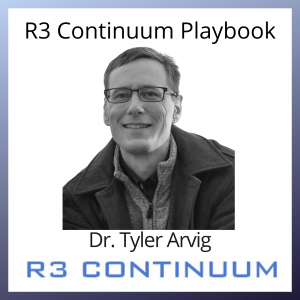
In a recent webinar featuring Dr. Tyler Arvig, Associate Medical Director at R3 Continuum, Dr. Arvig addressed a variety of questions on employee mental health, and how leaders can make it easier for employees to request and receive behavioral health support. Dr. Arvig mentioned not only better communication, but more personal and honest conversation with employees, making modeling self-awareness and vulnerability a priority, being creative in balancing the needs of the organization with the needs of the employees, knowing when to pull in experts, and much more.

The full webinar can be found here. The R3 Continuum Playbook is presented by R3 Continuum and is produced by the Minneapolis-St.Paul Studio of Business RadioX®. R3 Continuum is the underwriter of Workplace MVP, the show which celebrates heroes in the workplace.

TRANSCRIPT

Intro: [00:00:00] Broadcasting from the Business RadioX Studios, here is your R3 Continuum Playbook. Brought to you by Workplace MVP sponsor, R3 Continuum, a global leader in workplace behavioral health, crisis, and security solutions.

Shane McNally: [00:00:14] Hi, there. My name is Shane McNally, marketing specialist for R3 Continuum. On this episode of the R3 Continuum Playbook, we are featuring a segment from a recent webinar that was done with R3 Continuum’s Associate Medical Director, Dr. Tyler Arvig.

Shane McNally: [00:00:28] The webinar was titled Reducing Stigma, Ways Leaders Can Support Employee Mental Health. And it looked into the current workplace climate, what and what employees are currently feeling, ways that leaders can start to notice if their employees may be struggling, what leaders can do to help reduce the stigma of mental health in their organization and resources available to them.

Shane McNally: [00:00:48] During the webinar, we asked our audience the question of what issues are you seeing in those around you right now. And the top three responses were anxiety, work-life imbalance, and changes in productivity. What we can gather from this is that many folks are noticing their employees or colleagues struggling, but may not know how to handle it. In this excerpt from the webinar, Dr. Tyler Arvid gives advice to leaders on what they can do to support their employees and what they should be doing to help their employees that are struggling.

Tyler Arvig: [00:01:17] So, here’s, again, these aren’t in any particular order. The first thing you can do in your organization is, make behavioral health a priority and employee health a priority not just at the H.R. level or at the wellness committee level, but at the very top, you know, your C-suite folks, your president. You know, them indicating, you know, we have a business to run and we have things to do but we care about you too. And, you know, checking me in and showing that it’s something that’s not just on paper. Like the previous slide, 96% of the companies [inaudible] H.R. policy. Most still don’t feel supported. And, we often look for H.R. to be that support and that they should be and that’s wonderful and we want them to do that. But we also want our leaders, people that hired us, that support us, that run our businesses to say, “Hey, this is a priority for us, too.”

Tyler Arvig: [00:02:23] The second point, engaging your employees, we already talked about. But, really, you know, how do you communicate with them? Don’t just do it in emails. You call them. You call them for no reason. You check in with them. Are you – are you keeping them in the fold, or are they just off on an island doing their own thing?

Tyler Arvig: [00:02:42] Modeling strength and vulnerability is a bit of what I talked about before, which is – there is no – saying the great thing about this is a bad choice of words. But, you know, with COVID-19 being what it is, there’s no us in them here. Right? We’re all experiencing these things, whether we’re at a management level or the entry-level or somewhere in the middle. We’re all experiencing those stressors and those challenges, and those things. So being able to be a little bit transparent with your folks not overly so and not over disclosing or, you know, laying out your every personal problem you ever had at their doorstep.

Tyler Arvig: [00:03:31] But, again, I’m struggling with my kid. Like, you know, last year when there was distance learning for a lot of us and a lot of our kids were struggling. Yeah. And you get parents that maybe they’re not as productive because they’re trying to help their kids in school, like, not fail. And it’s a problem, and chances are you felt that too. Share it. So, really, you know, kind of joining with your folks. And also, showing some strength in terms of, you know, effective ways to manage things. You know, they might be looking to you for some level of leadership and modeling in trying to do that.

Tyler Arvig: [00:04:11] The communication I think we’ve already addressed. But, really, it’s – the important part here is your communication is two-way. It’s not just I’m dictating to you what is. It should be a dialogue. “Hey, what do you guys think would be helpful for this problem?” And then, sharing back and forth, having an open conversation. Most really good ideas and organizations don’t come from someone at the very top that dictates something and then commands people to do it. It usually starts organically at the lower level and then gets adopted at the higher levels.

Tyler Arvig: [00:04:50] Same thing when it comes to employee health and organizational health. Make sure there’s an open dialogue there. Show some creativity when it comes to things you can alter. There are things that we can’t alter [inaudible] workday or work environment or work tasks. But there are things that we can. “I got to go pick my kid up for half an hour. You know, I can adjust my schedule or, you know, tweak.” Those kinds of things. Do it. Thinking through not, you know, did you serve your nine to five and punch in and punch out for your lunch break, but did you meet the needs of the organization?

Tyler Arvig: [00:04:50] You know, Jane mentioned earlier everyone is always fearful at the beginning that, well, what if we send everyone home, they work from home and no one is productive? And, really, that fear in our organization, at least in most organizations, didn’t come true. It turns out giving people flexibility and some creativity and changing some things actually made things more likely to get done more effectively.

Tyler Arvig: [00:05:53] You know, know your lane. And, by this, I mean, you know, we can all be better supporting our people. But you’re going to get to a point where you’re like, “This is above my pay grade. This is outside of my wheelhouse. I don’t know.” And, that’s when you want to consult with an expert. I mean, our company does this for a living. It’s what we do, right? It’s our thing. And, it’s because we realize that some of these challenges, there are a lot of them you can do on your own and you can manage on your own. But if it gets to be a bigger challenge, you’re better off trying to pull in an expert who can really give you the guidance of what you need and when you need it.

Tyler Arvig: [00:06:42] The last piece I’m going to mention here is it’s really more of a self-reflective piece. If I’m going to be a leader and I’m going to lead my folks, I need to have a good understanding of myself and what my own vulnerabilities are. Right? So, I think we’ve all found, over the course of the past couple of years and most of our lives if we’ve been leaders for long enough, there’s stuff we’re not very good at. And there are things we’re good at and there are things that we really struggle with. If I don’t have a good sense of this isn’t a strength of mine and I can’t adjust for that, I’m going to struggle to really effectively lead other people. If I don’t have a sense of, you know, what my own pain points are in my personal life, I’m not going to recognize it when I see it in my people.

Tyler Arvig: [00:07:33] So, part of, you know, being a coach or a mentor or a leader or a manager to other people is being able to look internally and go, “How am I doing? What are my strengths and weaknesses? What do I need to work on?” There’s a lot of rich material there that a lot of us haven’t had to sit and think about or deal with. But when do we do, when we try and figure some of that stuff out, we actually get much more effective in what we’re doing for our organization. So, yeah.

Shane McNally: [00:08:12] I loved your point about with be creative. You know, that’s one thing from working from home is. So, you know, for me, it’s like if I’m stumped on creating something, you know I’m having just a tough time, and I can just get up and go out to the living room and go play with my cat for like five minutes and all of a sudden I come back and it’s like, “Oh, I got up. I moved.” You know, it’s a little just different than having to take a walk down the hall or go grab a cup of coffee. It’s a little bit – you know, gives me a little bit more, I don’t know, I don’t know the word, happiness, I guess if that makes sense. So, I thought that was a good point there.

Tyler Arvig: [00:08:48] All right. So, if you have an employee who is struggling, again we’ve already talked about this, ask. You know, be inquisitive in an appropriate way. You know, if you have a good relationship, they’re going to be open. And if you have someone you consider [inaudible], try and connect them with some help. I would say start with your human resources department, know what resources your company has for folks. Maybe you have different programs, different opportunities, maybe even having an understanding of what the different benefits are that people might have, be [inaudible], be that health insurance or employee assistance or whatever it is.

Tyler Arvig: [00:09:35] One of the things people that often need help, often struggle with, is they don’t know where to go or what to do, and so they just don’t do it. So, it’s our responsibility but also kind of our honor to be able to say, “Hey, you’re struggling and here, here are some things I think can help.” And help them. Don’t just say, “Oh, go talk to H.R.” You know, maybe have a conversation and maybe, you know, facilitate it. Do something a little bit more active to get them help.

Tyler Arvig: [00:10:06] And then, you know, directing resources kind of falls within that as well. But, you know, there are a lot of resources out there right now, a lot of the resources, even in private mental health treatment. You know, now telemedicine is not only a thing. It’s been a thing for a long time. It’s becoming the norm. I can see a psychiatrist or a therapist or whoever without leaving my desk. It’s much easier to get access to some of those things than it used to be. So, you know, you have apps on your smartphone, that kind of thing.

Tyler Arvig: [00:10:43] So, there are lots of resources out there. It’s not your job to know what all those are, but do know what’s available to your people and be able to talk to those a little bit. Because, again, a lot of our people are struggling. And if we can do anything we can do to help get them the help they need at that moment, it’s going to help them.

Tyler Arvig: [00:11:07] And by the way, there’s a real business element to this that I think it’s missed, and that is all these things like asking how you’re doing and directing the resources and doing a warm handoff on some of these things. These are things that will ingratiate your employees to your organization in a way that other organizations that don’t do that kind of stuff. Don’t – you know, to them, you’re just – you know, those organizations might be just a paycheck if you can take those extra steps in these cases. You know, even if you don’t pay the highest or even if you make them work a few extra hours, they’re going to do that because you care about them as people. And one of the things with, you know, people talk about the great resignation, it’s not just about pay. I mean, you might leave for a bigger paycheck. You might leave for, you know, personal reasons. A lot of it is, my employer doesn’t care about me. My manager doesn’t care about me. I was struggling and they said they didn’t care. If I’m struggling, [inaudible], it doesn’t mean I won’t leave, but the odds of me leaving are much lower if I feel like I’m in a place where I should be and you value me as a person. So, just things to be aware of.

Shane McNally: [00:12:31] This information is extremely important for leaders, but it’s also good for people at any level in a company. While the best support for an organization starts at the top, it’s important to know how to assist someone that may be struggling.

Shane McNally: [00:12:43] Looking for more information on how you can begin implementing a more supportive behavioral health program for your employees? R3 Continuum can help. Learn more about R3 Continuum services and contact us at www.r3c.com or email us directly at info@r3c.com.


Show Underwriter

R3 Continuum (R3c) is a global leader in workplace behavioral health and security solutions. R3c helps ensure the psychological and physical safety of organizations and their people in today’s ever-changing and often unpredictable world. Through their continuum of tailored solutions, including evaluations, crisis response, executive optimization, protective services, and more, they help organizations maintain and cultivate a workplace of wellbeing so that their people can thrive. Learn more about R3c at www.r3c.com.

R3 Continuum is the underwriter of Workplace MVP, a show which celebrates the everyday heroes–Workplace Most Valuable Professionals–in human resources, risk management, security, business continuity, and the C-suite who resolutely labor for the well-being of employees in their care, readying the workplace for and planning responses to disruption.

Connect with R3 Continuum:  Website | LinkedIn | Facebook | Twitter
Tagged With: anxiety, behavioral health, Dr. Tyler Arvig, employee mental health, employees, HR, R3 Continuum, R3 Continuum Playbook, Workplace MVP, workplace wellness

The R3 Continuum Playbook: Workplace Stress and Burnout

November 4, 2021 by John Ray

Burnout
Minneapolis St. Paul Studio
The R3 Continuum Playbook: Workplace Stress and Burnout
Loading
00:00 /
RSS Feed
Share
Link
Embed

Download file

Burnout

The R3 Continuum Playbook: Workplace Stress and Burnout

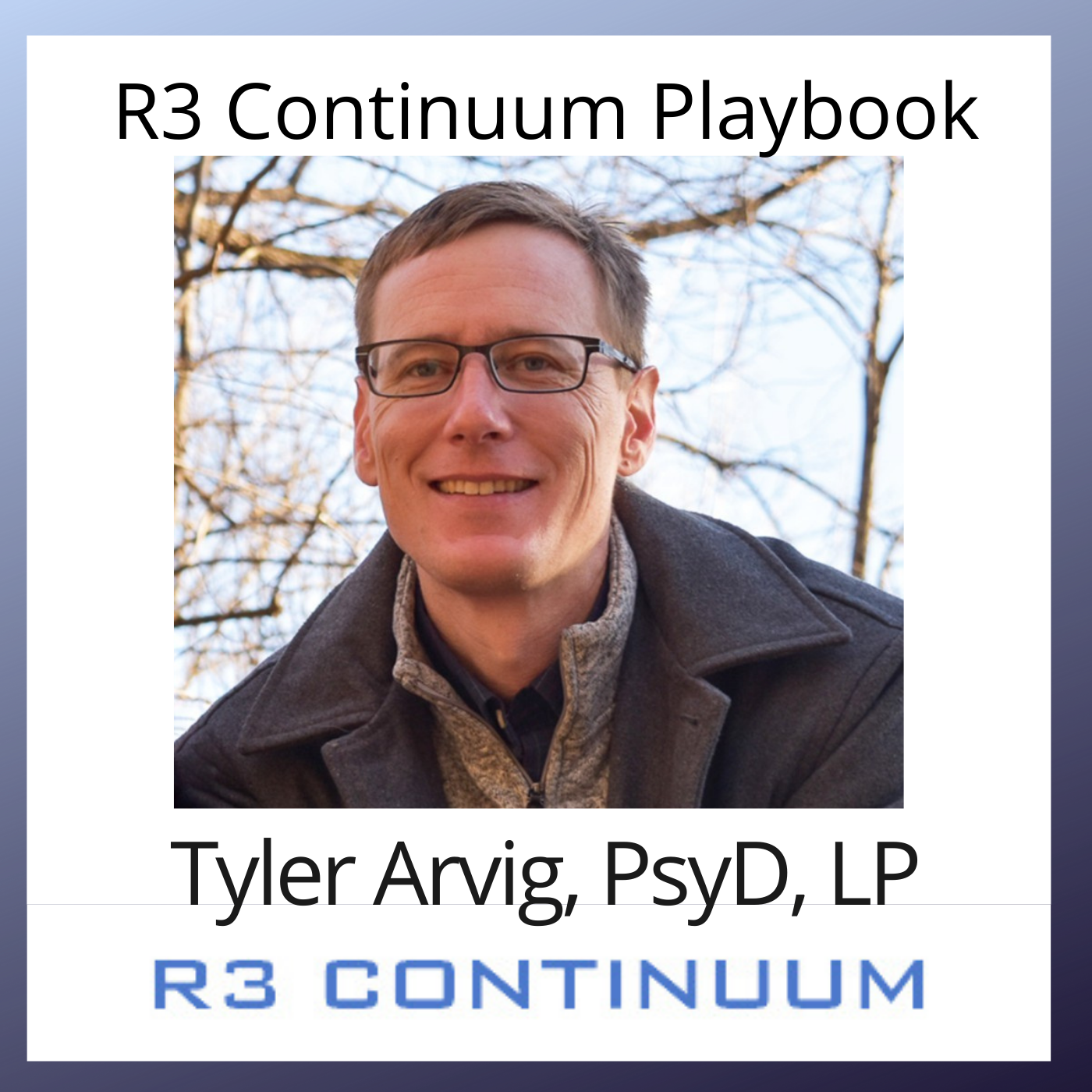
Stress and burnout, says Dr. Tyler Arvig, Associate Medical Director at R3 Continuum, affects not just the health of employees but that of the overall organization. With numerous surveys and studies revealing that employee stress and burnout have risen dramatically over the past year, Dr. Arvig discusses signs to watch for and resources that can be employed to address these conditions. The R3 Continuum Playbook is presented by R3 Continuum and is produced by the Minneapolis-St.Paul Studio of Business RadioX®. R3 Continuum is the underwriter of Workplace MVP, the show which celebrates heroes in the workplace.


TRANSCRIPT

Intro: [00:00:00] Broadcasting from the Business RadioX Studios, here is your R3 Continuum Playbook. Brought to you by Workplace MVP sponsor, R3 Continuum, a global leader in workplace behavioral health, crisis, and security solutions.

Tyler Arvig : [00:00:15] Hi. My name is Dr. Tyler Arvig, Associate Medical Director at R3 Continuum. Over the past two years, we’ve seen a dramatic increase in stress and burnout in employees. Stress and burnout, if left unaddressed, can have a significant impact on the mental health and overall wellbeing of our employees and our organization. There are a handful of challenges that surround stress and burnout in the workplace. Stress and burnout affect every level of an organization, from the executive level on down.

Tyler Arvig : [00:00:51] Stress and burnout affect people really on three different levels, personal, professional, and organizational. They are also often multifactorial, which can make finding the root cause a challenge. Employees have been through a lot over the past two years. While it may seem like working from home, practicing social distancing, masking, temperature checks, and the like, are just second nature these days. Many impacts on employees have yet to be fully realized.

Tyler Arvig : [00:01:26] Over time, stress and burnout can slowly erode employees until that level of stress that they’re feeling just becomes normal to them. And, often, when that happens, it’s simply quite unhealthy. In a recent webinar by R3 Continuum, we asked our audience if they felt an increase in stress due to work over the last year. We’ve received over 800 responses, 94 percent of which indicated they felt an increase in stress over the last year due to work. In that same webinar, we asked our audience if they’ve experienced any form of burnout over the last year. Again, those same 800 respondents, 84 percent said they have.

Tyler Arvig : [00:02:19] We can see just based on these numbers – and by the way, there are several other studies out there that show essentially similar findings – the stress and burnout are real and they’re having significant impact on employees in all industries. Having a better understanding of stress and burnout and knowing different ways to address these are critical to maintain the mental health and wellbeing of our employees and also, parenthetically, ourselves.

Tyler Arvig : [00:02:54] There are many different signs or key indicators of stress or burnout. If you noticed early these individuals, what they’re experiencing can be drastically reduced. Having keen observation skills can help identify some of the signs in employees, such as unusual changes in mood, difficulty getting stuff done, increased cynicism, having constant negative thoughts, or a negative attitude, having difficulty concentrating, sleeping too much or not getting enough sleep, concerns about substance use or abuse, and feelings of hopelessness. If you see these things, that may indicate an employee who is struggling with some level of stress or burnout.

Tyler Arvig : [00:03:50] If you do observe the above in your colleagues or you notice them in yourself, it’s important to recognize and to try and address these things. When it comes to supporting coworkers, there are numerous approaches we can take. But one of the most important and also easiest to do is simply to stay in touch. Communication and having a positive attitude is really important. And positive attitude, in particular, can be infectious and help rub off on others.

Tyler Arvig : [00:04:29] Help a coworker take a break from a project, because that’s also going to help them to have a little bit of a break from the stress they might be experiencing. When connecting, it’s important to not ask invasive questions. But if the coworker is beginning to open up or share, share your own experiences with them if you’ve had a similar situation. This will help them to validate the feelings they might be experiencing and to feel less alone or isolated in what they’re experiencing.

Tyler Arvig : [00:05:02] Make time to connect with others also outside of work. Letting that coworker take a break from work interactions and unwind is also a good way to help support them. But be mindful in any of these things to maintain professional boundaries and, certainly, to keep any information that’s shared privately, private.

Tyler Arvig : [00:05:27] As mentioned earlier, stress and burnout can affect anyone in the organization. Whether you’re at an executive level or you’re an intern, self-care needs to be a priority. Take some time to step back from your work and recognize when you’re feeling stressed or when you’re feeling burned out. This is key to being able to be effective at work and also help those around you.

Tyler Arvig : [00:05:54] Leaders often feel stress and burnout and never address it because they’re too busy supporting others. However, if an executive is no longer feeling motivated or a passion for the organization, that will trickle down through the workplace and through the workforce. Ensuring executives know the importance of addressing mental health for themselves and their employees is a really good way to make sure that your organization is supported from the top down.

Tyler Arvig : [00:06:26] There are many resources available, some through your organization and others that are more open sourced. Your workplace will probably have an employee assistance program or EAP. Most EAPs offers several no cost counseling sessions available for situations just like we’re discussing. Your H.R. department may also have resources available. I would recommend that people consider also engage in psychotherapy if they are struggling.

Tyler Arvig : [00:07:03] It is easier than ever to utilize psychotherapy as telehealth has made it possible to engage in therapy with your computer or even your smartphone. You don’t even need to leave your home or your desk. There are also other options such as free apps you can get on your phone or your computer that might help provide some basic skills or tips for managing stress, anxiety, or depression. You could also consider mutual support groups. An example of this that everyone might be aware of are Alcoholics Anonymous or Narcotics Anonymous. But these are groups were, essentially, people that are going through similar situations can help support each other. There’s lots of them out there, so utilize that. They don’t cost anything.

Tyler Arvig : [00:07:51] The point here is, you have many different options and nobody should hesitate to use anything and everything that’s available to them. Understanding the impact that stress and burnout can have on employees and knowing how to address these things properly can and does make a quantifiable difference on the health of your people and your organization.

Tyler Arvig : [00:08:17] R3 Continuum can help your organization support the wellbeing of your employees in many ways, including a service we call Proactive Wellness Outreach. To consult with an expert regarding your unique situation or to learn more about our custom solutions, you can contact us at www.r3c.com or reach out by email at info@r3c.com. Thank you very much.


Show Underwriter

R3 Continuum (R3c) is a global leader in workplace behavioral health and security solutions. R3c helps ensure the psychological and physical safety of organizations and their people in today’s ever-changing and often unpredictable world. Through their continuum of tailored solutions, including evaluations, crisis response, executive optimization, protective services, and more, they help organizations maintain and cultivate a workplace of wellbeing so that their people can thrive. Learn more about R3c at www.r3c.com.

R3 Continuum is the underwriter of Workplace MVP, a show which celebrates the everyday heroes–Workplace Most Valuable Professionals–in human resources, risk management, security, business continuity, and the C-suite who resolutely labor for the well-being of employees in their care, readying the workplace for and planning responses to disruption.

Connect with R3 Continuum:  Website | LinkedIn | Facebook | Twitter
Tagged With: burnout, Dr. Tyler Arvig, employee mental health, R3 Continuum, stress, Workplace MVP, workplace wellness

The R3 Continuum Playbook: Understanding Your Employee’s Fears About a Return to the Workplace

August 19, 2021 by John Ray

return to the workplace
Minneapolis St. Paul Studio
The R3 Continuum Playbook: Understanding Your Employee's Fears About a Return to the Workplace
Loading
00:00 /
RSS Feed
Share
Link
Embed

Download file

return to the workplaceThe R3 Continuum Playbook: Understanding Your Employee’s Fears About a Return to the Workplace

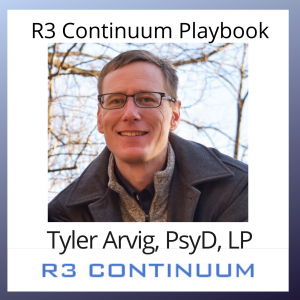
As employers make decisions about requiring employees to return to the workplace and what form that takes, Dr. Tyler Arvig says they need to consider the concerns and fears employees are having about it as well.  He offers ways employers can approach this decision and support their employees’ wellbeing.  The R3 Continuum Playbook is presented by R3 Continuum and is produced by the Minneapolis-St.Paul Studio of Business RadioX®. R3 Continuum is the underwriter of Workplace MVP, the show which celebrates heroes in the workplace.

TRANSCRIPT

Intro: [00:00:00] Broadcasting from the Business RadioX studios, here is your R3 Continuum Playbook. Brought to you by Workplace MVP sponsor R3 Continuum, a global leader in workplace behavioral health, crisis and security solutions.

Dr. Tyler Arvig: [00:00:15] Hello. My name is Dr. Tyler Arvig, the Associate Medical Director at R3 Continuum. As many organizations are beginning to make decisions about going back into the workplace or even deciding if they should return to remote work, I want to provide some information on how to handle the fears that some employees might be feeling at this time. It’s been nearly two years since we heard of the COVID-19 outbreak across the world, and it’s continuing to impact the lives of all of us.

Dr. Tyler Arvig: [00:00:50] While it’s tough to think about now, certain aspects of pre-pandemic life that seemed unimaginable when the virus struck now seemed possible again. As the world continues to evolve and change, businesses are beginning to think about making decisions regarding return to work in the office, going for a hybrid approach or utilizing work-from-home environments. When pondering these decisions, leaders should take a step back and think from the mindset of your typical employee. How are they feeling about their current situation? Are they feeling anxious or distressed? Are they concerned for their safety? What can they expect when they return to the office? And ask yourself if you asked your employees any of these questions or heard their concerns.

Dr. Tyler Arvig: [00:01:49] Over the past 16 months or really more, everything has changed. Most people have transitioned to working from home; and if not, the workplace has drastically changed over that time with health and safety measures being put in place. Those who are parents have had to work through having kids at home and helping teach them in some capacity. As changes in your work, personal and likely financial situations have occurred, this has probably also led to increases in stress. A study done by the Centers for Disease Control in 2020 mentioned that the rate of depression in adults increased almost four times, and the rate of anxiety increased almost three times since the start of the pandemic. Therefore, the pandemic and everything that’s taken place in between has definitely taken its toll.

Dr. Tyler Arvig: [00:02:52] While this may change over time, we are currently seeing a new world or rather a new old world. In most places in the US, masks are no longer required. You might be walking into your convenience store not wearing a mask, while some folks still are. That’s the new old world. For a lot of people, wearing a mask has become part of their day-to-day life. On the topic of walking into a convenience store, we are beginning to see more organizations remaining open again, flights being fully booked, concerts are happening and more. While we are seeing things like this changing back, everyone continues to be hopeful, but also somewhat tentative. As we are getting near the end of summer and vaccination has become more widely available, many employees are starting to think about returning to the office; while, some have already made their decisions and are needing to reanalyze those decisions.

Dr. Tyler Arvig: [00:04:01] As an employee, there are a lot of questions that remain. From the personal side of things they may be asking themselves, how will going back into the office affect my children? What will need to be adjusted in order for me to take care of my family? How’s the commute going to be? And how will it impact my day-to-day life again? Will I be able to maintain a work-life balance. And from a work perspective, a lot of employees are wanting to know things like, will my employer care about my challenges? How will the transition back to work even go? And will it be successful after working from home for so long? Lastly, and not insignificantly, will I be safe at work?

Dr. Tyler Arvig: [00:04:56] As a leader, making this decision for your employees isn’t easy. Whether you decide to have employees returned to the office, go back to working remotely, or continue working remotely, here are some good tips to be sure that you’re providing to your people. To start, be sure to utilize the employee assistance program that you might have. A lot of employees are unaware that they have access to an EAP. Make sure you’re communicating to your employees how they can access your EAP and let them know more information about it. Explore some applications that could potentially help with mental health. There are numerous smartphone apps that can be used to help with things like stress management, anxiety and depression. Do some research and maybe provide some options to your employees. In fact, your EAP might even have something like this. This is something you can do over email, or with links or employees can really access this in whatever way meets their needs. It’s something that you may not have thought of that you can provide.

Dr. Tyler Arvig: [00:06:14] Provide employees with resources from your HR department. HR departments often have different resources they can provide to help employees to support their well-being. Utilize what you already have and be sure to communicate and reach out to your employees about those things. Communication is really key in all of this. While this might seem like a daunting task, I’m reminded of something that’s attributed to Dr. Martin Luther King, the saying that goes, “You don’t need to see the whole staircase. Just take the first step.” The quote is powerful in this day and age as we move forward to the next normal, one step at a time.

Dr. Tyler Arvig: [00:07:02] While there are likely a lot of questions about the future, it’s important for leaders to not only feel prepared to help your employees through these difficult times, but also to support yourself. R3 Continuum can help by providing proactive efforts to maintain the psychological and physical support for your organization. R3C’s tailored solutions can help your organization with crisis prevention and preparedness, crisis response and recovery, proactive employee wellbeing outreach and more. Learn more about our custom solutions and contact us at www.r3c.com or contact us directly by email at info@r3c.com Thank you very much.


Show Underwriter

R3 Continuum (R3c) is a global leader in workplace behavioral health and security solutions. R3c helps ensure the psychological and physical safety of organizations and their people in today’s ever-changing and often unpredictable world. Through their continuum of tailored solutions, including evaluations, crisis response, executive optimization, protective services, and more, they help organizations maintain and cultivate a workplace of wellbeing so that their people can thrive. Learn more about R3c at www.r3c.com.

R3 Continuum is the underwriter of Workplace MVP, a show which celebrates the everyday heroes–Workplace Most Valuable Professionals–in human resources, risk management, security, business continuity, and the C-suite who resolutely labor for the well-being of employees in their care, readying the workplace for and planning responses to disruption.

Connect with R3 Continuum:  Website | LinkedIn | Facebook | Twitter
Tagged With: COVID-19, covid-19 crisis management, Dr. Tyler Arvig, empathy in the workplace, playbook, R3 Continuum, workplace culture, Workplace MVP

Business RadioX ® Network


Our Most Recent Episode

CONNECT WITH US

  • Email
  • Facebook
  • LinkedIn
  • Twitter
  • YouTube

Our Mission

We help local business leaders get the word out about the important work they’re doing to serve their market, their community, and their profession.

We support and celebrate business by sharing positive business stories that traditional media ignores. Some media leans left. Some media leans right. We lean business.

Sponsor a Show

Build Relationships and Grow Your Business. Click here for more details.

Partner With Us

Discover More Here

Terms and Conditions
Privacy Policy

Connect with us

Want to keep up with the latest in pro-business news across the network? Follow us on social media for the latest stories!
  • Email
  • Facebook
  • Google+
  • LinkedIn
  • Twitter
  • YouTube

Business RadioX® Headquarters
1000 Abernathy Rd. NE
Building 400, Suite L-10
Sandy Springs, GA 30328

© 2025 Business RadioX ® · Rainmaker Platform

BRXStudioCoversLA

Wait! Don’t Miss an Episode of LA Business Radio

BRXStudioCoversDENVER

Wait! Don’t Miss an Episode of Denver Business Radio

BRXStudioCoversPENSACOLA

Wait! Don’t Miss an Episode of Pensacola Business Radio

BRXStudioCoversBIRMINGHAM

Wait! Don’t Miss an Episode of Birmingham Business Radio

BRXStudioCoversTALLAHASSEE

Wait! Don’t Miss an Episode of Tallahassee Business Radio

BRXStudioCoversRALEIGH

Wait! Don’t Miss an Episode of Raleigh Business Radio

BRXStudioCoversRICHMONDNoWhite

Wait! Don’t Miss an Episode of Richmond Business Radio

BRXStudioCoversNASHVILLENoWhite

Wait! Don’t Miss an Episode of Nashville Business Radio

BRXStudioCoversDETROIT

Wait! Don’t Miss an Episode of Detroit Business Radio

BRXStudioCoversSTLOUIS

Wait! Don’t Miss an Episode of St. Louis Business Radio

BRXStudioCoversCOLUMBUS-small

Wait! Don’t Miss an Episode of Columbus Business Radio

Coachthecoach-08-08

Wait! Don’t Miss an Episode of Coach the Coach

BRXStudioCoversBAYAREA

Wait! Don’t Miss an Episode of Bay Area Business Radio

BRXStudioCoversCHICAGO

Wait! Don’t Miss an Episode of Chicago Business Radio

Wait! Don’t Miss an Episode of Atlanta Business Radio