
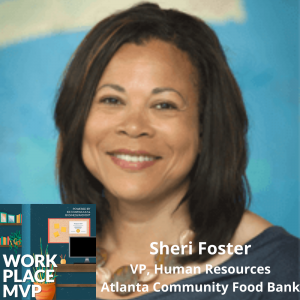
Workplace MVP: Sheri Foster, Atlanta Community Food Bank
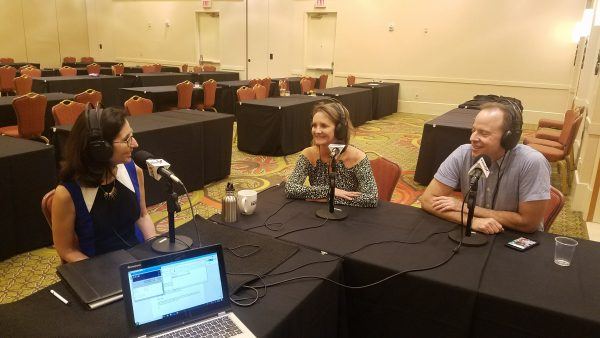
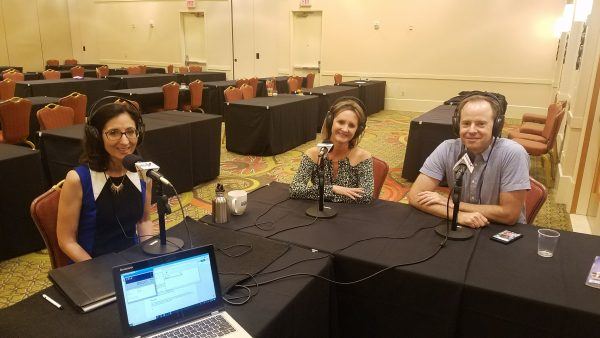
Sheri Foster, Vice President of Human Resources, joined host Jamie Gassmann to share why the Atlanta Community Food Bank created employee-led work teams, the recommendations they solicited from these teams, which included pay and vacation policies, and how these teams have engendered increased employee engagement and aided the organization in navigating momentous change. Workplace MVP is underwritten and presented by R3 Continuum and produced by the Minneapolis-St.Paul Studio of Business RadioX®.
Atlanta Community Food Bank
Atlanta Community Food Bank works with more than 700 nonprofit partners—including food pantries, community kitchens, childcare centers, shelters, and senior centers—to distribute over 67 million meals to more than 1 million people estimated to be food insecure due to COVID-19 in 29 counties across metro Atlanta and north Georgia.
They are a member of Feeding America, the nation’s leading domestic hunger-relief charity.
Atlanta Community Food Bank partners with food pantries, community kitchens, childcare centers, night shelters, and senior centers that receive food and goods from us. In turn, these partners provide food and other critical resources for the more than 1 million people estimated to be food insecure due to COVID-19 in their service area who suffer from hunger and food insecurity.
Atlanta Community Food Bank’s mission is to fight hunger by engaging, educating, and empowering their community. While their core work is food distribution, their efforts extend far beyond that. Their mission is lived out every day by engaging, educating, and empowering both people in need and those who want to help. From volunteering to assisting people in finding economic security, the Atlanta Community Food Bank covers a wide range of opportunities for people to learn and get involved.
Company website |Facebook | Twitter | Instagram
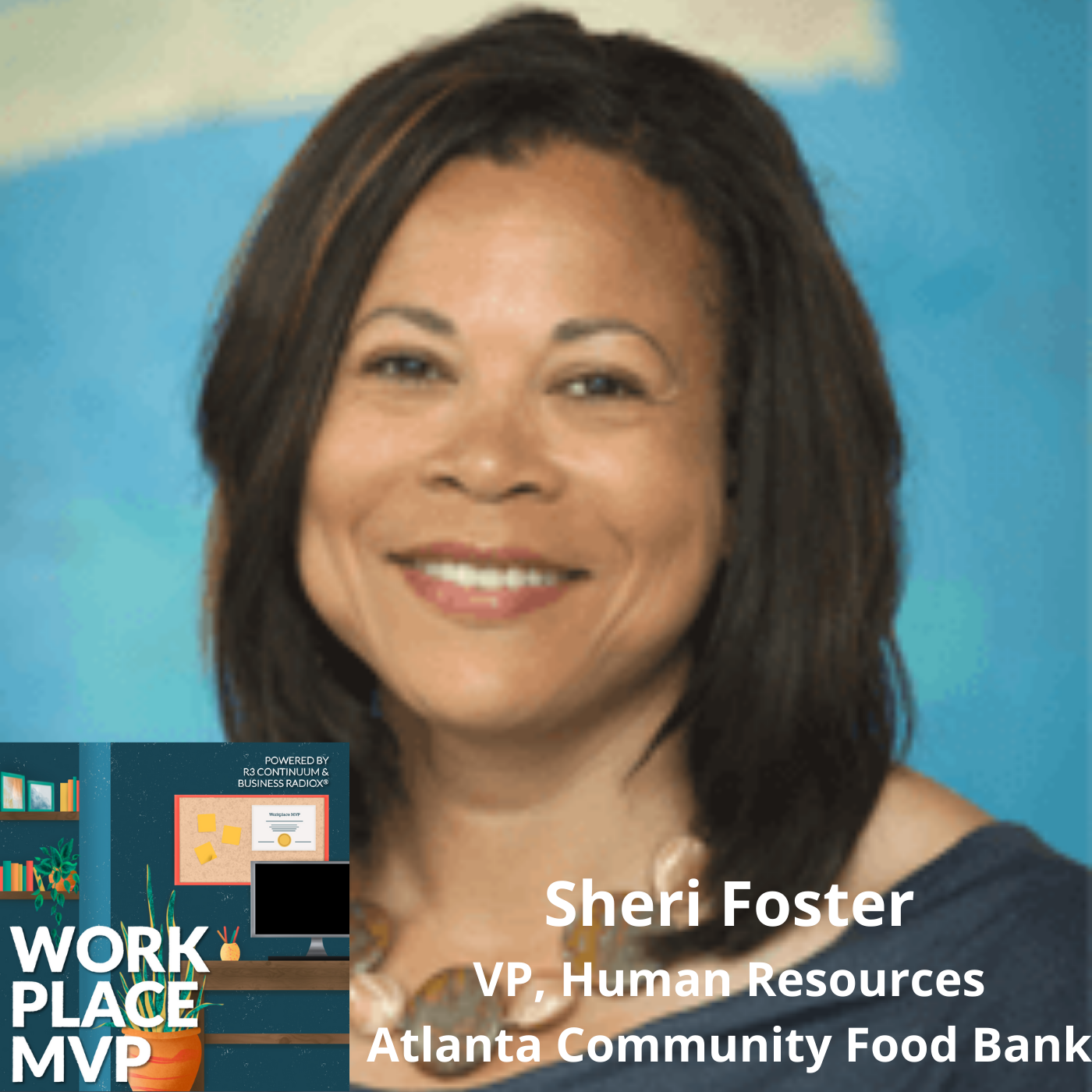
Sheri Foster, PHR, Vice President, Human Resources, Atlanta Community Food Bank

Sheri Foster is Vice President of Human Resources with the Atlanta Community Food Bank. She is a high-energy, transformational leader with extensive experience developing and implementing human capital strategies.
Sheri brings extensive Talent Management experience and has spent more than 15 years advising executive leaders. She has extensive knowledge and experience leading change initiatives that improve the employee work experience and support the achievement of business results.
She has been with Atlanta Community Food Bank since 2016.
R3 Continuum
R3 Continuum is a global leader in workplace behavioral health and security solutions. R3c helps ensure the psychological and physical safety of organizations and their people in today’s ever-changing and often unpredictable world. Through their continuum of tailored solutions, including evaluations, crisis response, executive optimization, protective services, and more, they help organizations maintain and cultivate a workplace of wellbeing so that their people can thrive. Learn more about R3c at www.r3c.com.
Company website | LinkedIn | Facebook | Twitter
About Workplace MVP
Every day, around the world, organizations of all sizes face disruptive events and situations. Within those workplaces are everyday heroes in human resources, risk management, security, business continuity, and the C-suite. They don’t call themselves heroes though. On the contrary, they simply show up every day, laboring for the well-being of employees in their care, readying the workplace for and planning responses to disruption. This show, Workplace MVP, confers on these heroes the designation they deserve, Workplace MVP (Most Valuable Professionals), and gives them the forum to tell their story. As you hear their experiences, you will learn first-hand, real life approaches to readying the workplace, responses to crisis situations, and overcoming challenges of disruption. Visit our show archive here.
Workplace MVP Host Jamie Gassmann
 In addition to serving as the host to the Workplace MVP podcast, Jamie Gassmann is the Director of Marketing at R3 Continuum (R3c). Collectively, she has more than fourteen years of marketing experience. Across her tenure, she has experience working in and with various industries including banking, real estate, retail, crisis management, insurance, business continuity, and more. She holds a Bachelor of Science Degree in Mass Communications with special interest in Advertising and Public Relations and a Master of Business Administration from Paseka School of Business, Minnesota State University.
TRANSCRIPT
Intro: [00:00:05] Broadcasting from the Business RadioX Studios, it’s time for Workplace MVP. Workplace MVP is brought to you by R3 Continuum, a global leader in workplace behavioral health, crisis, and security solutions. Now, here’s your host, Jamie Gassmann.
Jamie Gassmann: [00:00:25] Hi, everyone. Your host, Jamie Gassmann here, and welcome to this edition of Workplace MVP. Throughout businesses across the globe, leaders are tasked daily with making decisions for the betterment of the organization. These decisions could be strategic in nature or are a part of the normal course of business. At times, there are leaders who feel they need to navigate these decisions alone and that it is their sole responsibility to carry the weight of the decision on their shoulders. But they don’t have to shoulder that process alone. In fact, by including their employees into the decision making process can actually hold various benefits to the organization, its people, and ultimately the leader.
Jamie Gassmann: [00:01:05] With us today is Workplace MVP Sheri Foster, Head of Human Resources at Atlanta Food Bank. Roughly four years ago, Sheri was a part of implementing a program at the Atlanta Food Bank that leveraged their employees in what they call Work Teams. As part of their overall decision making and change management process, she is with us today to talk about how the concept evolved, its impact on the organization, and overall benefits she has seen in leveraging employee insights into key decision making. Welcome to the show, Sheri.
Sheri Foster: [00:01:39] Good morning. Thank you for having me.
Jamie Gassmann: [00:01:42] So, before we get started today in talking about the topic, tell me a little bit about yourself and share with us your career journey.
Sheri Foster: [00:01:53] Great. Well, the Atlanta Community Food Bank is a great place and a great organization to work for, partly, because we have great employees. A little about me, I’ve been working in that field for about 20 years. I started off at a small consulting firm where we worked with companies who outsource their H.R. That was a really great place for me to start this work because I had the opportunity to support different types of organizations on a wide range of projects and initiatives. After that, and over the course of the next 18 or so years, I have been working in the nonprofit space and have been supporting mission driven organizations ever since.
Jamie Gassmann: [00:02:37] Wonderful. Wonderful. So, before we dive in a little bit further in kind of looking at these different work teams, prior to implementing them at the Atlanta Food Bank, what was the team morale and overall productivity like, you know, within the organization?
Sheri Foster: [00:02:56] So, I think the food bank has always been an employer that cares about its employees and has tried to implement programs to support and nurture them. The employee survey scores told us that we had employees that were absolutely committed to the mission of the organization. But like most organizations, there were opportunities for us to make improvements that would enhance the work experience for our employees.
Sheri Foster: [00:03:22] For us, it wasn’t necessarily that we had concerns about productivity. It was more that our organization was navigating a lot of change. So, at that time, we had a new president, we were embarking on a new strategic plan, and we were beginning to think about new ways of measuring our success, both at the organizational level and at the employee level. That is a lot of change for employees to process, and we knew that.
Jamie Gassmann: [00:03:49] Yeah. Definitely. I always say, the one thing in life that I know is always going to be constant and a given is change. So, definitely good for your organization to be able to pick up on that and try to be proactive in finding a way to help your team to navigate it. So, it sounds like that’s what led you in creating this work team concept. Were there other elements or how did that come to be? Or, that idea, how was it generated?
Sheri Foster: [00:04:23] So, part of what we understood as a leadership team was that we needed employee input. Again, like we talked about, we were navigating a lot of change and we needed employee help and involvement to sort of helping us to navigate that change. And then, also, to help us come up with ideas to create positive change to affect the areas of opportunity that we had identified in our survey.
Jamie Gassmann: [00:04:54] Great. And it’s always fun when those ideas are generated. So, talk me through, how did you create those Work Teams? What was kind of the design process conversation around how do we build this, how do we roll it out? How did you structure that?
Sheri Foster: [00:05:15] So, I can’t say that when we started this that we had a great, solid framework for what we were doing. I think what we understood was that we wanted employees involved in some various projects, particularly as it related to creating great work experience within the food bank. We formed our first employee work teams in 2016, and that was following our employee survey that year. We have identified three areas where we wanted to create actions to help move the organization forward. We wanted to create meaningful change for employees. So, in order to do that, we needed their help. So, we essentially solicited volunteers, and those volunteers formed our first set of work teams.
Jamie Gassmann: [00:06:08] Wonderful. And I’m sure you’ve probably built off of that from some of the key learnings. And I know we’re going to get at that in just a little bit. But what were some of those key projects that you’ve done so far where the Work Teams were incorporated into the process? And then, tell me about the role that the Work Teams played in those projects.
Sheri Foster: [00:06:29] So, one of the areas that our inaugural Work Team tackled from about 2016 employee survey was around employee pay, benefits, and training. So, as an organization, we laid out some parameters to help guide their work. And then, each team had a leadership team sponsor. From there, though, they operated as a self-direct Work Team. And this particular group conducted some very thorough research on vacation and pay, and ultimately made recommendations to change or modify our vacation policy. And they also wanted to increase the starting pay at Food Bank.
Sheri Foster: [00:07:12] So, they presented their recommendations to the executive leadership team. And long story short, we adopted their recommendations. And so, we made changes to our vacation policy. And early 2017, I think, was when we increased the starting minimum pay rate to $15 an hour. It was really incredible to see how thoughtful and thorough the team was in preparing and presenting their recommendations.
Jamie Gassmann: [00:07:43] Wonderful. And, now, I know when we talked previously, you spoke about how you used these Work Teams last year while you were navigating the COVID-19 pandemic. Talk to me a little bit about how the work groups worked in that capacity as well.
Sheri Foster: [00:07:58] So, we have an ongoing Work Team that we call Team Builders that is responsible for creating engagement activities for the organization. So, we have that team, Team Builders. And then, we have also sort of an Employee Engagement Work Team that sort of collaborated. And so, when COVID hit, those teams really worked together to help continue to create engagement opportunities. And it was challenging because, with COVID, about half of our employees moved to working remotely. So, they were working from home. But then, of course, we still had the other half of our employees who were onsite. And then, in the middle of that, we had some sort of hybrid people, some people who were sort of doing both coming into the office.
Sheri Foster: [00:08:52] And so, their charge was to keep us engaged when we didn’t have everybody in the building. So, they did lots of virtual events. They created virtual coffee breaks. And with those coffee breaks, they asked individuals, including the Leadership Team, to participate in those. We would also walk around with iPads so that our warehouse employees could see and engage with the people who had been working virtually. They did some virtual mixology, where they’re creating different drinks. I mean, so various virtual events. So, it was really great.
Sheri Foster: [00:09:32] And then, we’re just now starting to slowly returning employees back to the building. And so, that group of people has also created activities and have planned activities, really, for over the next 90 days to help us re-engage with each other. So, they have just done a really fantastic job of doing that.
Jamie Gassmann: [00:09:56] Wonderful. Wonderful. It’s probably great to watch how they work together as a team to pull those components together and build on that engagement level while people are in different parts of working environments. So, when looking at a project, some of these projects you’ve mentioned, when you’re looking where you leverage those Work Teams and then thinking back to before you had Work Teams, maybe a project that you had, what are some of the differences in the outcomes in terms of like, you know, change management?
Jamie Gassmann: [00:10:33] A lot of times, you know, from my experience, some of the concerns are the adoption of the change or how people respond to the change. And even in some of the way that they respond to decisions being made in the organization. So, when you look at these two project examples, what are some of the differences in the outcome in terms of employee response to it?
Sheri Foster: [00:10:58] So, I think with these Work Teams, there are a couple of things that are really important. The big thing about the Work Teams is the variety of perspectives. I’ve had the opportunity to work with many of these teams and they have great creative ideas. And they definitely see things from a different perspective than I do. So, there is an opportunity to be able to get ideas and to see things through a different lens, which is really important.
Sheri Foster: [00:11:30] I think that our leadership team is very accessible. And we all do get a lot of feedback from our employees. But employees also spend a lot of time talking to each other. And so, our Work Team members are able to bring that information and — to our discussions, and that has also made a difference.
Sheri Foster: [00:11:50] I have a really good example of that. I have referenced one of the Work Teams that we have is our Employee Development Work Team. And so, that team is charged with helping us to create a real robust employee development sort of career coaching framework. That, again, was feedback from our employee survey. And one of the things that they told me was we need to create a skills repository as part of our employee development effort framework.
Sheri Foster: [00:12:26] They said, we need managers employees to be able to have these really open candid conversations about knowledge, skills, and abilities. And to be able to track systematically the skills and proficiency levels, and that sort of thing. And use that to create development plans, but also for the leadership team to be able to have a view and to the development of these people so that they can consider them for next level assignments. And so, they have told me that probably a year ago.
Sheri Foster: [00:12:58] And then, we had our employee survey at the end of 2020, and one of our key outcomes from that survey related to employee development. And our survey tool, which automatically generates action recommendations, the recommendation from that survey tool was that we create a skills repository. So, I thought, “Well, you know, I could have saved money on the employee survey and just ask the employees.”
Jamie Gassmann: [00:13:34] Yeah. Awesome. Great example. So, we’re going to just take a moment to have a word from our show sponsor. So, Workplace MVP is sponsored by R3 Continuum. Ensuring the psychological and physical safety of your organization and your people is not only normal, but a necessity in today’s ever changing and often unpredictable world. R3 Continuum can help you do that and more with their continuum of behavioral health, crisis, and security solutions tailored to meet the unique challenges of your organization. Learn more at r3c.com.
Jamie Gassmann: [00:14:12] So, looking at your workplace now, and I know you’ve shared kind of that there’s this perspective that you’re getting when you don’t ask, you don’t receive that. And it definitely is different than what they bring – employees bring so much different perspective, which is great, and it can be so beneficial. But what are some of the other benefits that you have seen within the employees that you feel is a direct relation to the utilization of these Work Teams?
Sheri Foster: [00:14:44] Well, the first thing that I would say is that, employees who are involved are highly invested and engaged. So, the employees that are on these Work Teams are really invested. And they are very committed to the work that they’ve been charged to doing. I think employees are very supportive of their peers. So, recommendations made by Work Teams are likely to be accepted by the broader staff or at least the staff are willing to try new things.
Sheri Foster: [00:15:16] And then, Work Teams are helpful. Well, another example is one of the things I have been working on in my role in H.R. was our organizational approach to celebrating cultural heritage type events in a consistent way. So, how do we celebrate cultural events like Asian Pacific Islander Heritage Month, Hispanic Heritage Month, African-American Heritage Month, historical events like Juneteenth, and then things like LGBT Pride, et cetera, those sorts of things. So, we have been doing celebrations, but we wanted to have a real framework for doing it consistently and being able to communicate with the staff how we’re planning to do it.
Sheri Foster: [00:16:00] So, I engaged a subgroup. We have an Equity Steering Committee within our organization, which is one Work Team, and then Team Builders, who I referenced earlier. So, I engaged a subgroup from those two groups. And then, within a week, they had developed a plan, and approach, and a recommendation for how to handle that. So, I think the key is, at the end of the day, these groups are helpful and they have great ideas.
Jamie Gassmann: [00:16:31] Absolutely. Wonderful. And I got to imagine their respect and kind of appreciation to the leadership is probably grown from that. They see the decisions and the types of challenges that you’re navigating within that leadership role. So, talking about that, you know, how has the relationship between your organizational leadership and the staff changed as a result of giving them more of a voice in some of that decision making and change management?
Sheri Foster: [00:17:03] So, the Work Teams are not necessarily a silver bullet, but I do think that it starts to help us move towards trust. And so, I think that’s what we’re moving towards. So, the Food Bank still has opportunities, but I think the great thing about our organization is that we have a president, Kyle Waide, who is committed to employee engagement. He is a huge proponent of utilizing Work Teams to create positive change, and that makes a huge difference.
Sheri Foster: [00:17:36] And our leadership is also supportive. They have sponsored these Work Teams and have been really supportive of their work. One of the things that we are working on organizationally is communication and, specifically, getting people to talk openly and candidly up, down, and across the organization. And so, Work Teams is one of the ways that we are able to do that. Our Work Teams include employees across departments and across levels.
Jamie Gassmann: [00:18:05] Wonderful. So, we know that from research there are various benefits that come from creating more of a voice for employees in the decision making and change management process. But what, from your experience, were some of the challenges that you had to overcome with the rollout of this? Or just the management of the process in general that you’ve experienced?
Sheri Foster: [00:18:29] So, I think there are two big things, and those two big things are level setting expectations and gaining alignment. So, as an organization, we likely cannot implement every idea that an employee has. But I think the message that we’re trying to drive is that, we are willing to listen and to work to make change where we can and when we can.
Sheri Foster: [00:18:52] The other piece is that, we have a diverse organization, so it’s challenging to implement programs and initiatives that everyone loves. So, even within the team, sometimes it’s a negotiation to sort of align our priorities. But there is learning for the staff and for the leadership in that process. So, the big things that I would point to is, really, level setting expectations and, really, working to gain alignment.
Jamie Gassmann: [00:19:21] And if there are leaders that are listening to this episode that feel really good about this concept, feel like it’s going to work well within their organization, what would be your top three – if you were going to identify key best practice suggestions – for how they should approach putting something like this into place within their organization, what would be those key best practice suggestions?
Sheri Foster: [00:19:46] So, leadership buy in is essential. As I mentioned earlier, our president and our executive team, in particular, are supportive of utilizing Work Teams. And we have aligned on the areas where their work can be most impactful, and that’s critical. So, I would say that’s number one.
Sheri Foster: [00:20:05] Number two is, again, setting parameters and mitigating expectations for the staff, that is critical. We have been clear in saying that we are open to listening, but there are organizational constraints by way of policy, resources, and budget, but will also need to be considered in evaluating Work Team recommendations. So, I think level setting expectations is important. And then, the last is communication. So, the two way communication within the Leadership Team, within the Work Teams, and then good communication between the Leadership Team and the Work Teams is also important.
Jamie Gassmann: [00:20:44] Great. Great suggestions. So, when you look at your career, what would you say – if you were going to identify one moment in that career – as your proudest moment? What would that be?
Sheri Foster: [00:21:02] It’s hard to identify one proud moment. I think, the concept and this approach with respect to the Work Teams that we are utilizing at the Food Bank is something that I’m really proud of. I think that we are, right now, working on some really meaningful initiatives using the Work Teams. One of those is our Diversity, Equity, and Inclusion Initiative, and we have an Equity Steering Committee that is leading that initiative.
Sheri Foster: [00:21:34] And so, I actually think that my proudest moments may be yet to come, because I think that we’re going to have some great outcomes for the Food Bank and for the community that come out of our Diversity, Equity, and Inclusion Initiative, which is led by our Equity Steering Committee.
Jamie Gassmann: [00:21:53] Wonderful. And if our listeners wanted to connect with you to learn more about these work group programs, what is the best way for them to do that?
Sheri Foster: [00:22:04] Sure. I mean, they can connect with me on LinkedIn or just email me at sheri.foster@acfp.org.
Jamie Gassmann: [00:22:14] Wonderful. Well, thank you so much, Sheri, for letting us celebrate you today, and for sharing your knowledge and your insights into how these work groups have worked out so well for the Food Bank. It’s been great to listen to those. I was really excited about that concept because there’s just so much value in bringing in your employees into some of that change management and decision making that’s going on within the organization. And we appreciate you coming on the show. And I’m sure your organization and the employees appreciate you as well.
Jamie Gassmann: [00:22:46] We also want to thank our show sponsor, R3 Continuum, for supporting the Workplace MVP podcast. And to our listeners, thank you for tuning in. If you have not already done so, make sure to subscribe so you get our most recent episodes and other resources. You can also follow our show on LinkedIn, Facebook, and Twitter at Workplace MVP. And if you are a workplace MVP or know someone who is, we want to know, email us at info@workplace-mvp.com. Thank you all for joining us and have a great rest of your day.