Business RadioX ®

  • Home
  • Business RadioX ® Communities
    • Southeast
      • Alabama
        • Birmingham
      • Florida
        • Orlando
        • Pensacola
        • South Florida
        • Tampa
        • Tallahassee
      • Georgia
        • Atlanta
        • Cherokee
        • Forsyth
        • Greater Perimeter
        • Gwinnett
        • North Fulton
        • North Georgia
        • Northeast Georgia
        • Rome
        • Savannah
      • Louisiana
        • New Orleans
      • North Carolina
        • Charlotte
        • Raleigh
      • Tennessee
        • Chattanooga
        • Nashville
      • Virginia
        • Richmond
    • South Central
      • Arkansas
        • Northwest Arkansas
    • Midwest
      • Illinois
        • Chicago
      • Michigan
        • Detroit
      • Minnesota
        • Minneapolis St. Paul
      • Missouri
        • St. Louis
      • Ohio
        • Cleveland
        • Columbus
        • Dayton
    • Southwest
      • Arizona
        • Phoenix
        • Tucson
        • Valley
      • Texas
        • Austin
        • Dallas
        • Houston
    • West
      • California
        • Bay Area
        • LA
        • Pasadena
      • Colorado
        • Denver
      • Hawaii
        • Oahu
  • FAQs
  • About Us
    • Our Mission
    • Our Audience
    • Why It Works
    • What People Are Saying
    • BRX in the News
  • Resources
    • BRX Pro Tips
    • B2B Marketing: The 4Rs
    • High Velocity Selling Habits
    • Why Most B2B Media Strategies Fail
    • 9 Reasons To Sponsor A Business RadioX ® Show
  • Partner With Us
  • Veteran Business RadioX ®

Considerations When Expanding Globally

December 16, 2022 by John Ray

Considerations When Expanding Globally
Advisory Insights Podcast
Considerations When Expanding Globally
Loading
00:00 /
RSS Feed
Share
Link
Embed

Download file

Considerations When Expanding Globally

Considerations When Expanding Globally (Advisory Insights Podcast, Episode 22)

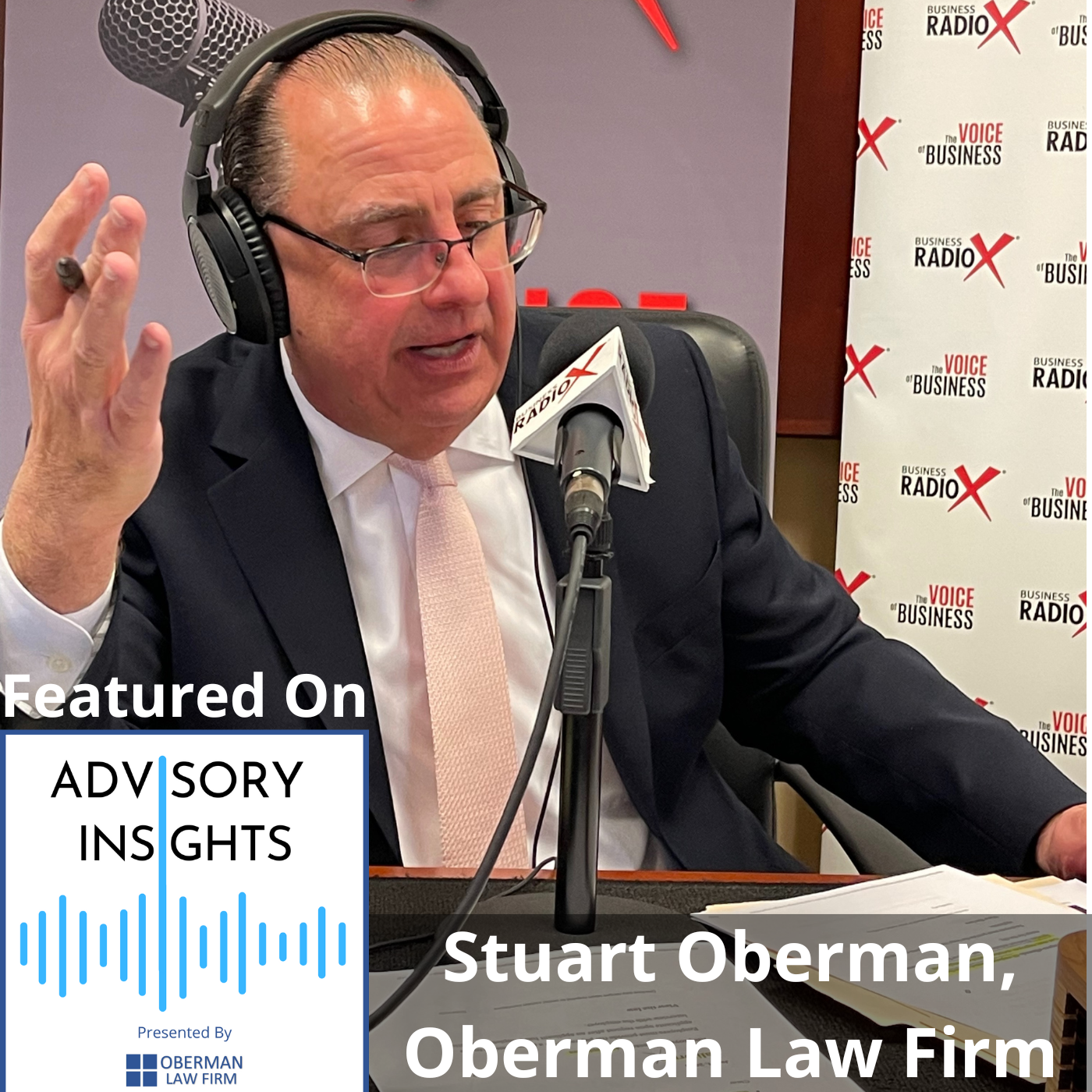
On this episode of Advisory Insights, Stuart Oberman of Oberman Law Firm discussed some of the challenges businesses face when expanding globally, including compliance with various laws and regulations. He stressed the importance of getting expert legal counsel to advise on these matters.

Advisory Insights is presented by Oberman Law Firm and produced by the North Fulton studio of Business RadioX®. The series can be found on all the major podcast apps. You can find the complete show archive here.

TRANSCRIPT

Intro: [00:00:01] Broadcasting from the studios of Business RadioX, it’s time for Advisory Insights. Brought to you by Oberman Law Firm, serving clients nationwide with tailored service and exceptional results. Now here’s your host.

Stuart Oberman: [00:00:20] Welcome everyone to Advisory Insights. Stuart Oberman here as your host. I want to talk a little bit about going global. So, as a law firm, we are very, very fortunate. We have clients that are growing globally. We have clients that are coming across border into the United States. And it’s got its own twists and turns. So, I want to drill down a little bit on considerations when expanding globally.

Stuart Oberman: [00:00:53] So, look, as we enter 2023, as we go into it, companies are anticipating and increasing international business activity. That’s just the way it is, whether it’s products, whether it’s services. Everything now, it seems, is going cross-border, whether it’s across the pond to Europe or to our friends up north to Canada. So, a lot of our clients think that going globally is necessary in order to maintain long term growth.

Stuart Oberman: [00:01:25] And a lot of those markets are Western Europe and China. But I will tell you, the emerging markets are Mexico, Brazil, and India. So, I think that you’ve got to take a look at some of those opportunities. Now, I will tell you, once you get into those countries and once those countries come into us, on the expansion side, you’ve got mandated compliance that is very different.

Stuart Oberman: [00:01:58] But I want to talk about our clients going globally. So, you’ve got absolute mandated regulatory compliance that is required. For every different country, you’re going to have a different regulation. You look at Canada, you’ve got providences. A lot of providences are absolutely separate. They’ve got their own rules, regulations, they’ve got their own regulatory boards. So, you’ve got to know this.

Stuart Oberman: [00:02:23] So, I want to take a look at a couple of considerations going global expansion, corporate governance. One is that, in a lot of jurisdictions, you have to have a physical presence. You have to have a registered agent. You have to have, in some cases, actual subsidiaries. And in some jurisdictions, you have to look at the regulatory compliance and tax considerations.

Stuart Oberman: [00:02:52] So, if you have an expansion that requires in a foreign jurisdiction forming a subsidiary, you’ve got to look in multiple corporate structures for that. Are they going to have shareholders? Are they going to have members? Are they going to comply with certain regulatory matters as far as registration goes? How’s the names?

Stuart Oberman: [00:03:19] Another area you have to look at is regulatory compliance. Folks, you know, some jurisdictions absolutely require import and export licenses. Do you know what that is? And that includes technology and products. So, are you exporting your technology into another country? What’s the compliance? Are you importing into another country products? What is the taxes? What are the tax stamps? So, depending on your service, your product, your facility, you’re going to have regulatory compliance issues and they are very, very complex.

Stuart Oberman: [00:04:03] Now, of course, we all know there’s tax considerations. So, some laws, depending on jurisdiction, are very, very strict, some are very high, some are very favorable tax structures. You have to know what your tax structure is, what your tax liability is before you start getting into the export of services and products. You have to retain counsel. You have to retain a CPA, if you will, that is well-versed on those particular regulations. What are the direct taxation rules? What are the antideferral rules? If you don’t know what antideferral rules are, you have to take a step back and understand that.

Stuart Oberman: [00:04:56] Now, I want to take a look at employment, area number four. In a foreign country, there are some cases where you have to enter into and adhere to strict collective bargaining requirements. Some require work permits for non-local nationals. What are your requirements if you have members of the company that are from the states, if you will, going into China, into Western Europe, into Mexico, Brazil, India? What are the local national requirements? You have to understand what the benefits are if you are hiring personnel from that particular country. What are the mandated benefits? Folks, there’s mandated benefits that are different in Canada, in Europe, Asia, South America.

Stuart Oberman: [00:05:49] Now, one of the biggest concerns that you should always have in any kind of expansion globally is trade secrets, privacy and non-compete agreements. What are you going to do if, all of a sudden, your models, your technology, your outsourcing is being stripped of its privacy? And all of a sudden you’ve got duplicates flooding the market. What are you going to do? How are you going to deal with it? Are you going to lose money? Just think of the counterfeit luxury brands that come into the states. Well, what’s going to happen if you’re over there and your brand, your product is hijacked? And then, you’ve got duplicates. You’ve got counterfeit. What do you do?

Stuart Oberman: [00:06:45] I also want to look at a couple things regarding global equity. So, certain security laws in certain countries may have very strict corporate equity distribution models. Some are unique. Some involve fund remittance limits. Some involve reporting. Some involve repatriate of funds and requirements. Do you know what those requirements are? Do you know the structure for the corporate equity distributions? You have to understand the accounting mechanisms for that as far as the tax benefits and the replacement or awarding of equity to the employees.

Stuart Oberman: [00:07:25] Again, I want to drill down a little bit on data privacy, intellectual property technology, and information law. So, again, each country is going to have different privacy, data transfer, customer employee notification laws, data monitoring, payment obligations. What happens if they are found to be liable for your stripping of ideas, they’re counterfeiting?

Stuart Oberman: [00:07:52] So, not only do you have state and federal law, if you will, going into different global jurisdictions, but you’ve got local laws regarding the enforcement and validation of intellectual property assignments. How are you going to transfer various company policies, procedures, and assignments to different entities that you create in a different country? Do you have those particular trade secrets protections in order? Are you training your staff, your team members, your office, or your directors who are located in that country and are national to that particular jurisdiction and country? Have you trained them? Are you training them?

Stuart Oberman: [00:08:40] And then, from an accounting standpoint, what are the tax or replacement benefits for, again, awarding equity to employees? Is that confidential? What about relevant technology regarding newly formed subsidiaries? How are you training your people? What are the restrictions on third party technology due to territorial restrictions? Do you know what those are?

Stuart Oberman: [00:09:09] Folks, these are just a mirror of some things you can run into. You’ve got corporate governance, regulatory compliance, tax considerations, employment matters, global equity distributions, data privacy, intellectual property, technology, information law. Those are the things you have to have a really, really expert grasp on before you’re ready to expand.

Stuart Oberman: [00:09:35] Folks, again, I can’t stress enough if you’re going to expand globally, you have to understand those ramifications and you’ve got to get appropriate legal counsel to outline those things.

Stuart Oberman: [00:09:47] Folks, thanks again for joining us on Advisory Insights. Stuart Oberman here. If you have any questions, give us a call, 770-886-2400, or send me an email, stuart@obermanlaw.com. Thanks a lot. Have a fantastic day.

Outro: [00:10:07] Thank you for joining us on Advisory Insights. This show is brought to you by Oberman Law Firm, a business-centric law firm representing local, regional, and national clients in a wide range of practice areas, including health care, mergers and acquisitions, corporate transactions, and regulatory compliance.

About Advisory Insights Podcast

Presented by Oberman Law Firm, Advisory Insights Podcast covers legal, business, HR, and other topics of vital concern to healthcare practices and other business owners. This show series can be found here as well as on all the major podcast apps.

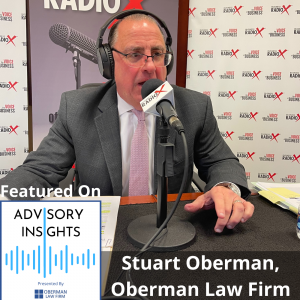
Stuart Oberman, Oberman Law Firm

Oberman Law Firm

Stuart Oberman is the founder and President of Oberman Law Firm. Mr. Oberman graduated from Urbana University and received his law degree from John Marshall Law School. Mr. Oberman has been practicing law for over 25 years, and before going into private practice, Mr. Oberman was in-house counsel for a Fortune 500 Company. Mr. Oberman is widely regarded as the go-to attorney in the area of Dental Law, which includes DSO formation, corporate business structures, mergers and acquisitions, regulatory compliance, advertising regulations, HIPAA, Compliance, and employment law regulations that affect dental practices.

In addition, Mr. Oberman’s expertise in the healthcare industry includes advising clients in the complex regulatory landscape as it relates to telehealth and telemedicine, including compliance of corporate structures, third-party reimbursement, contract negotiations, technology, health care fraud, and abuse law (Anti-Kickback Statute and the State Law), professional liability risk management, federal and state regulations.

As the long-term care industry evolves, Mr. Oberman has the knowledge and experience to guide clients in the long-term care sector with respect to corporate and regulatory matters, assisted living facilities, continuing care retirement communities (CCRCs). In addition, Mr. Oberman’s practice also focuses on health care facility acquisitions and other changes of ownership, as well as related licensure and Medicare/Medicaid certification matters, CCRC registrations, long-term care/skilled nursing facility management, operating agreements, assisted living licensure matters, and health care joint ventures.

In addition to his expertise in the health care industry, Mr. Oberman has a nationwide practice that focuses on all facets of contractual disputes, including corporate governance, fiduciary duty, trade secrets, unfair competition, covenants not to compete, trademark and copyright infringement, fraud, and deceptive trade practices, and other business-related matters. Mr. Oberman also represents clients throughout the United States in a wide range of practice areas, including mergers & acquisitions, partnership agreements, commercial real estate, entity formation, employment law, commercial leasing, intellectual property, and HIPAA/OSHA compliance.

Mr. Oberman is a national lecturer and has published articles in the U.S. and Canada.

LinkedIn

Oberman Law Firm

Oberman Law Firm has a long history of civic service, noted national, regional, and local clients, and stands among the Southeast’s eminent and fast-growing full-service law firms. Oberman Law Firm’s areas of practice include Business Planning, Commercial & Technology Transactions, Corporate, Employment & Labor, Estate Planning, Health Care, Intellectual Property, Litigation, Privacy & Data Security, and Real Estate.

By meeting their client’s goals and becoming a trusted partner and advocate for our clients, their attorneys are recognized as legal go-getters who provide value-added service. Their attorneys understand that in a rapidly changing legal market, clients have new expectations, constantly evolving choices, and operate in an environment of heightened reputational and commercial risk.

Oberman Law Firm’s strength is its ability to solve complex legal problems by collaborating across borders and practice areas.

Connect with Oberman Law Firm:

Company website | LinkedIn | Twitter
Tagged With: Advisory Insights, Advisory Insights Podcast, Dental Practice, doing business globally, employment law, Expanding Globally, Oberman Law, Oberman Law Firm, Stuart Oberman

2023 HIPAA Updates

December 9, 2022 by John Ray

2023 HIPAA Updates
Advisory Insights Podcast
2023 HIPAA Updates
Loading
00:00 /
RSS Feed
Share
Link
Embed

Download file

2023 HIPAA Updates

2023 HIPAA Updates (Advisory Insights Podcast, Episode 21)

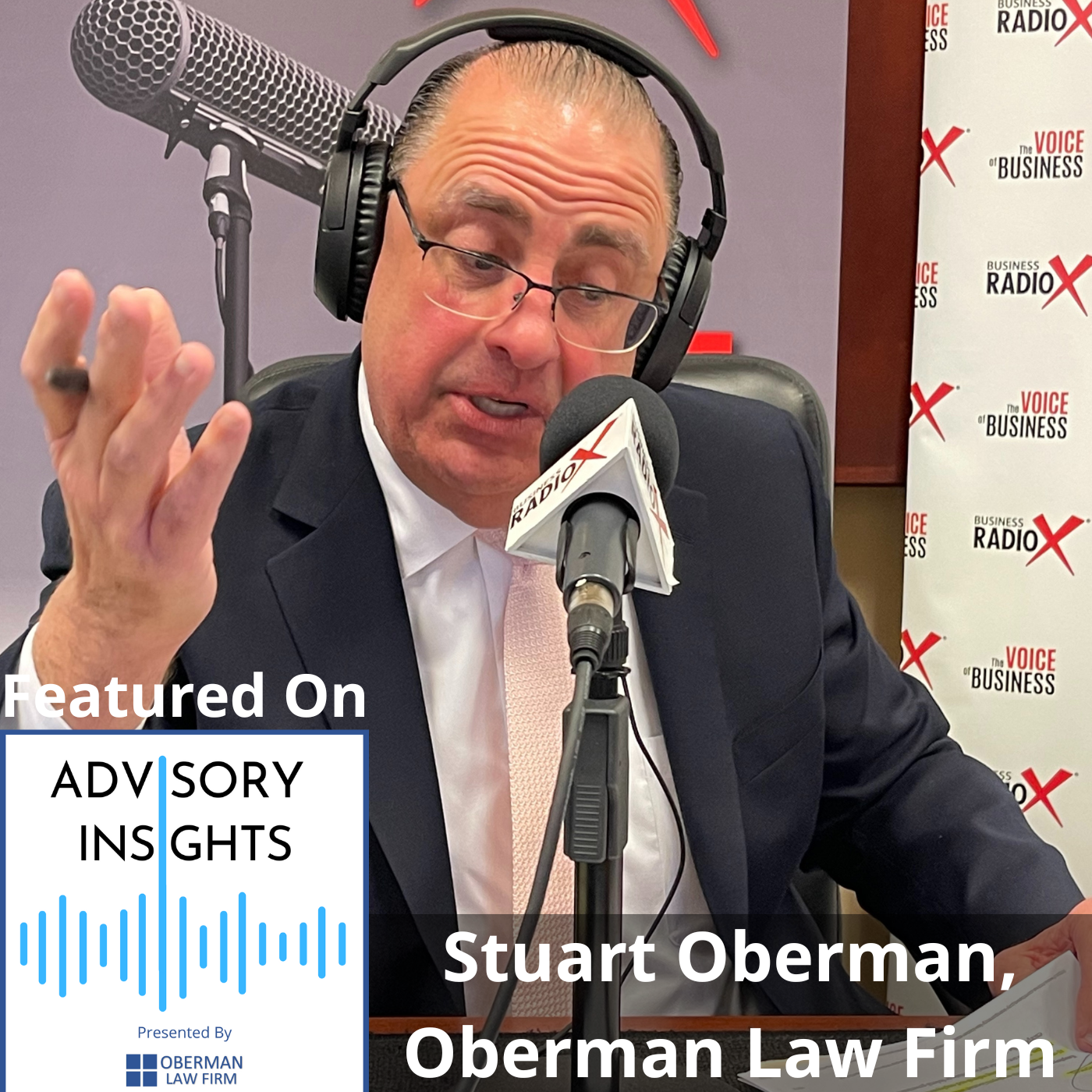
On this episode of Advisory Insights, Stuart Oberman of Oberman Law Firm discussed HIPAA updates coming in 2023, avoiding HIPAA violations, and the increased penalties for violators. He explained that patients’ access to their health care records will be more direct and timelier. Practices should know, however, that there is a potential for increased exposure if records are not properly secured.

Advisory Insights is presented by Oberman Law Firm and produced by the North Fulton studio of Business RadioX®. The series can be found on all the major podcast apps. You can find the complete show archive here.

TRANSCRIPT

Intro: [00:00:01] Broadcasting from the studios of Business RadioX, it’s time for Advisory Insights. Brought to you by Oberman Law Firm, serving clients nationwide with tailored service and exceptional results. Now, here’s your host.

Stuart Oberman: [00:00:20] Welcome everyone. Stuart Oberman here, your host for Advisory Insights. All right. We know that 2023 is right around the corner. Folks, I’m going to tell you, for my health care clients – and we have, as a firm, a lot of health care clients – our clients are not prepared for the new HIPAA changes. I want to run through a couple of these. I could spend three days talking about this particular topic, but I just want to hit the highlights and give our clients a view as to what’s expected and potential exposure.

Stuart Oberman: [00:00:57] So, from our area, we see a lot of violations. I want to walk through some what we call reoccurring violations. In plain English, it happens way too much. Where are some exposure? One, lost or stolen cellphones or tablets provide an extensive amount of sensitive data in our health care practices. Our doctors, they get information on their cellphones, they get information on their tablets, they get information that is easily extracted. What are you doing to secure that data on your cellphone or your tablet?

Stuart Oberman: [00:01:43] Number two, our medical providers do not train their staff. I’m going to go out on a limb to say 80 to 90 percent of all of our health care offices across the board do not properly, thoroughly provide training to their employees.

Stuart Oberman: [00:02:06] Number three – a common violation that keeps reoccurring, reoccurring, reoccurring – data breaches. Now, what happens is, on those breaches, a lot of times doctors don’t know what to do as far as the violations go. Who do they report it to? Do they report it to the government, to the FTC? Do they have to do a credit reviewer check? Do they have to set up a 1-800 number? Do they have breached notification rules? No, they don’t.

Stuart Oberman: [00:02:39] So, I just ran through three very quick topics and violations that could literally, literally shut down a practice if an investigation occurs. Now, I want to take a look at some other things. I want to take a look at some key changes in 2023. Key changes, first, more direct and timely patient access to electronic health care records.

Stuart Oberman: [00:03:08] There has been a dramatic increase in the time that patients can obtain their data from providers. Do you even know what that time period is? If you do not know what that time period is and you do not know the violations, then I would urge you to either give us a call, take a look at our website, take a look at some of our articles, because that is a huge, huge issue.

Stuart Oberman: [00:03:39] Folks, I’ll guarantee you, you deny patient access to their medical records within a timely manner, you will be getting a very nice I love you letter from the government, which is about 17 pages, and they will crawl up every nook and cranny in your office.

Stuart Oberman: [00:04:01] Now, one thing we have to look at is what is the increase in penalties. Yes, they increased the penalties. Now, they look at what’s involved in guidance, technical assistance. They’re looking at correction action plans.

Stuart Oberman: [00:04:17] You know, what happens is that a lot of these aren’t intentional. Our doctors just rely on the wrong people year after year who have no idea what they’re doing. Unfortunately, they’re not properly trained, so you really can’t blame them. You know, whether it’s office managers, compliance officers – well, let me back up on that. Every medical office should have a compliance officer.

Stuart Oberman: [00:04:43] So, under the new 2023 HIPAA changes, there’s been an increase in penalties. Are you even aware that there’s now a Tier 1, a Tier 2, a Tier 3, and a Tier 4? So, what’s Tier one? Lack of knowledge, “I just didn’t know.” I’ll be honest, that is hard to sell. Reasonable cause and not willful intent, “Look, I knew that I probably needed to do it, but I didn’t mean not to do it.” Willful neglect, “Basically, I don’t really care. I’ve got 30 days to correct it.”

Stuart Oberman: [00:05:24] Now, you get into willful neglect and you not corrected within 30 days, folks, the fines and fees become astronomical once you get into those particular tiers. Again, do you even know the Tier 1, Tier 2, Tier 3, Tier 4 structure? And have you even told your staff of that?

Stuart Oberman: [00:05:46] So, let’s take a look at do’s and don’ts. How do you avoid HIPAA violations and penalties? Now, HIPAA is also criminal penalties. Yep, criminal penalties. Let’s look at what we need to do. Conduct regular audits, spot check potential violations. If you’re not auditing your files – and I’ve been saying this for years on the speaking circuit – at least 15 or 25 a month, which won’t take you long, you have some potential exposure that you don’t want to have, obviously.

Stuart Oberman: [00:06:32] Let’s look at do. Regular employee training. Folks, you cannot train your employees enough on HIPAA. So, I’m going to have an article coming out that I was quoted in and had the pleasure of being a part of the Academy of General Dentistry. And it’s going to be a topic regarding cybersecurity. And in preparing for that, I did an awful lot of research. And I will tell you, it is shocking as to how many breaches there are and how unprepared the doctor is, the team is, the compliance officer is.

Stuart Oberman: [00:07:17] Next, set clear policies and procedures to all employees. Do they know what that is? Do you have a checklist? Do you have an up to date checklist? Are you still using the one from 1996? It’s a different world. Establish in your office a privacy officer. And you’ve got to be careful with this. If you’re a small office, you’re appointing a compliance officer who’s going to answer on your behalf, and you’re going to expect them to cover you with HIPAA issues.

Stuart Oberman: [00:07:52] My suggestion, if you have a small office, you are the compliance officer. If you get bigger, you have a compliance officer, you got to train them. Now, they could be part of your HR – I don’t necessarily like that. I want separation there. But if you have to do it, you’ve got to be both trained.

Stuart Oberman: [00:08:19] Don’ts. Goodness gracious to don’ts. Do not ever disclose or share login credentials. That is an absolute recipe for disaster. Two do not – maybe one of the biggest things – do not leave portable devices or documents unattended anywhere in your office, in public. Look, again, our cellphones are now our offices – our tablets, our laptops. If you go on HHS website and you look at how many fines are due to lost tablets, lost hardware, it’s amazing. Never, ever, ever take flash drives out of your office. Do not do that.

Stuart Oberman: [00:09:11] Folks, I could talk about HIPAA for 20 days here, but I just want to go through, again, some things that we just talked about, HIPAA 2023 updates. Listen to this podcast. Understand where you’re weak at. Fill the gaps. If you’re strong in areas, build on it. If you’re weak, fill it out.

Stuart Oberman: [00:09:32] Folks, thank you as always for joining Advisor Insights. Stuart Oberman. If you have any questions, please give us a call at 770-886-2400, or email, stuart, S-T-U-A-R-T, @obermanlaw.com. Have a fantastic day. Thank you everyone.

Outro: [00:09:53] Thank you for joining us on Advisory Insights. This show is brought to you by Oberman Law Firm, a business-centric law firm representing local, regional, and national clients in a wide range of practice areas, including health care, mergers and acquisitions, corporate transactions, and regulatory compliance.

About Advisory Insights Podcast

Presented by Oberman Law Firm, Advisory Insights Podcast covers legal, business, HR, and other topics of vital concern to healthcare practices and other business owners. This show series can be found here as well as on all the major podcast apps.

Stuart Oberman, Oberman Law Firm

Oberman Law Firm

Stuart Oberman is the founder and President of Oberman Law Firm. Mr. Oberman graduated from Urbana University and received his law degree from John Marshall Law School. Mr. Oberman has been practicing law for over 25 years, and before going into private practice, Mr. Oberman was in-house counsel for a Fortune 500 Company. Mr. Oberman is widely regarded as the go-to attorney in the area of Dental Law, which includes DSO formation, corporate business structures, mergers and acquisitions, regulatory compliance, advertising regulations, HIPAA, Compliance, and employment law regulations that affect dental practices.

In addition, Mr. Oberman’s expertise in the healthcare industry includes advising clients in the complex regulatory landscape as it relates to telehealth and telemedicine, including compliance of corporate structures, third-party reimbursement, contract negotiations, technology, health care fraud, and abuse law (Anti-Kickback Statute and the State Law), professional liability risk management, federal and state regulations.

As the long-term care industry evolves, Mr. Oberman has the knowledge and experience to guide clients in the long-term care sector with respect to corporate and regulatory matters, assisted living facilities, continuing care retirement communities (CCRCs). In addition, Mr. Oberman’s practice also focuses on health care facility acquisitions and other changes of ownership, as well as related licensure and Medicare/Medicaid certification matters, CCRC registrations, long-term care/skilled nursing facility management, operating agreements, assisted living licensure matters, and health care joint ventures.

In addition to his expertise in the health care industry, Mr. Oberman has a nationwide practice that focuses on all facets of contractual disputes, including corporate governance, fiduciary duty, trade secrets, unfair competition, covenants not to compete, trademark and copyright infringement, fraud, and deceptive trade practices, and other business-related matters. Mr. Oberman also represents clients throughout the United States in a wide range of practice areas, including mergers & acquisitions, partnership agreements, commercial real estate, entity formation, employment law, commercial leasing, intellectual property, and HIPAA/OSHA compliance.

Mr. Oberman is a national lecturer and has published articles in the U.S. and Canada.

LinkedIn

Oberman Law Firm

Oberman Law Firm has a long history of civic service, noted national, regional, and local clients, and stands among the Southeast’s eminent and fast-growing full-service law firms. Oberman Law Firm’s areas of practice include Business Planning, Commercial & Technology Transactions, Corporate, Employment & Labor, Estate Planning, Health Care, Intellectual Property, Litigation, Privacy & Data Security, and Real Estate.

By meeting their client’s goals and becoming a trusted partner and advocate for our clients, their attorneys are recognized as legal go-getters who provide value-added service. Their attorneys understand that in a rapidly changing legal market, clients have new expectations, constantly evolving choices, and operate in an environment of heightened reputational and commercial risk.

Oberman Law Firm’s strength is its ability to solve complex legal problems by collaborating across borders and practice areas.

Connect with Oberman Law Firm:

Company website | LinkedIn | Twitter
Tagged With: 2023 Hipaa Updates, Advisory Insights, Advisory Insights Podcast, Dental Practice, employment law, HIPPA, Oberman Law, Oberman Law Firm, Stuart Oberman

Best Practices for Employee Offer Letters

December 2, 2022 by John Ray

Best Practices for Employee Offer Letters
Advisory Insights Podcast
Best Practices for Employee Offer Letters
Loading
00:00 /
RSS Feed
Share
Link
Embed

Download file

Best Practices for Employee Offer Letters

Best Practices for Employee Offer Letters (Advisory Insights Podcast, Episode 20)

On this episode of Advisory Insights, Stuart Oberman of Oberman Law Firm discusses why offer letters for employees are so vital and best practices for offer letters. He emphasizes that offer letters can make or break a company, and advises employers to document salary, benefits, performance reviews, and special conditions in their offer letters.

Advisory Insights is presented by Oberman Law Firm and produced by the North Fulton studio of Business RadioX®. The series can be found on all the major podcast apps. You can find the complete show archive here.

TRANSCRIPT

Intro: [00:00:01] Broadcasting from the studios of Business RadioX, it’s time for Advisory Insights. Brought to you by Oberman Law Firm, serving clients nationwide with tailored service and exceptional results. Now, here’s your host.

Stuart Oberman: [00:00:20] Welcome everyone to Advisory Insights, Stuart Oberman. Folks, we’re going to drill it down today. So, in the Great Resignation, in the Great Boomerang, in the great process of I’m going to hang around for the job for a while and see what it does, I’m gonna lay low, assuming that you had an interview that was squeaky clean – as we mentioned on some other podcasts – assume that you did everything correct, you loved your candidate, now you’re going to offer them the job. This is where it gets sort of tricky.

Stuart Oberman: [00:00:53] We’re going to take you through the topic for today, Best practices for employee offer letters. You’re probably thinking, “Well, I really don’t even offer my employees an offer letter.” That’s a big mistake. Every employee that you hire should have some type of offer letter. I don’t care what the industry you’re in, your employees need an offer letter.

Stuart Oberman: [00:01:19] Now, we’ve seen some disastrous offer letters. We’ve seen some good ones. I would walk through some basics. I mean, our offer letters that we offer our employees at the firm, obviously, are very long. Some may be very short. But I want to walk through some basics.

Stuart Oberman: [00:01:36] So, first and foremost, the key is that employee offer letters should never, ever, ever be considered an employee contract. If you have any doubt whether or not your offer letter is an employee contract, I would urge you to call your local council, whoever your general counsel is for the business. Ask them, “Does this have employment contract language in it? Am I going to get burned?” I want all language that creates an employment contract out. I want all that language out. At no time should your offer letters ever, ever, ever have language in there regarding employment contract.

Stuart Oberman: [00:02:23] Now, I want to walk through some basics. You know, for every job, there are so many variables for an employment contract. I get that, but I want an offer letter. What’s the guidelines? What are you doing upfront? What are the obligations of you? What are the obligations of your employee without even entering into an employment contract? There’s millions and millions of people that have jobs that don’t have contracts, but they should have offer letters which outlines certain things.

Stuart Oberman: [00:02:53] I want to know what your start date is, that should be in an offer letter. When you start, do you start two weeks? Is it tentative? Is it depending on whether or not your candidate has to get fired, laid off from the other job, or quit?

Stuart Oberman: [00:03:10] Contingencies – first and foremost, you’ve got to be careful with this one – are you requiring that employee to pass a drug test? Now, why do I say that? Because states are starting to limit drug tests.

Stuart Oberman: [00:03:24] Now, in our previous podcast, we talked about employees and employers that are dealing with the marijuana issue. That’s a huge topic right now. Are employers working around the marijuana issue? Some of them want to test for it, some of them want to go into panels. Drug tests, but you got to be careful. So, people in this podcast are listening not only in different countries but different parts of the region in the States, what does your local state say, what does the federal law say about drug tests?

Stuart Oberman: [00:03:57] Next, background test screening. We’re seeing a lot of pushback on this issue. You’ve got to make sure you understand what your Local and State Law is for this. Job title, “Well, I don’t really have a job title. We just come to work.” That’s not going to work in today’s world. They need a job title. What’s their title? And then, does it correspond with the employee manual? So, I have a job title, but I have no job description. So, really, the title is worthless because you’ve got no description as to what that guideline is. How are you tracking your employees and what their protocols are? Job titles, job descriptions in that employee manual.

Stuart Oberman: [00:04:39] I would tell you, the podcasts we’re doing and articles that we write as a firm, we can’t stress enough employee manuals. And it’s going to vary from industry, but if you don’t have an employee manual, folks, you’ve got to get one. Because, otherwise, you’re going to lose a lot of governmental arguments that relate to employment law and those kind of things.

Stuart Oberman: [00:05:00] So, salary, how are you paid? Are you exempt, non-exempt? Here’s a new one, are your salary non-exempt? Are you hourly non-exempt? How are you categorized? You need to know that. Is what you’re categorizing legal? What are your benefits? Health insurance, paid vacation. What does your employee manual say? PTO, leave. Folks, you’ve got to put your benefits down, 401(k)s matching, simple IRAs matching. What’s the protocols? What do you need to put in there?

Stuart Oberman: [00:05:40] Now, what we see a lot of times missing is performance reviews. How often are you going to do performance reviews once a year, once a quarter, every six months? Now, when a candidate starts, do you have a 90 day review period? Hopefully, the answer to that is, “Yes, I do.” If not, get one.

Stuart Oberman: [00:06:05] Now, the biggest question, employment at will. Every person you hire should be at will. Depending on the state, it will depend on how they define at will. But every, every, every offer letter needs to say at will.

Stuart Oberman: [00:06:21] Next, special conditions, two very hot topics on the local, state, and national level, non-competes. Folks, we’re seeing a lot and a lot of pushback on these areas. We’re starting to see some trends regarding how much you make as an employee. Do you even apply to that non-compete? If you make over 100,000 or 120, you know, what profession are you in? Do you have restrictions on your non-competes? You’ve got to look at that, folks, especially if you are a cross-border company where you may have 20 employees that work in 20 different states.

Stuart Oberman: [00:07:00] You know, sometimes I’ll ask the question to our employers, what states are your employees in and what states do you need guidance on? And their answer is, it’s easier to tell you what states we’re not in than the states that we are in. So, again, what are we looking at? Non-solicitation, I don’t care what your title is or what your job description is if you’re an employee, folks, your employees need non-solicitation. If they leave, they’re taking their stuff, they’re taking their list, they’re taking their confidential information, they’re taking your letterhead, they’re taking everything they’re using because they’re going to the next level, they’re going to the next company, and they’re going to utilize whatever they learned from you or Skyped from you or lifted from you, whatever you want to call the term.

Stuart Oberman: [00:07:50] Folks, I tell you, that’s a quick podcast but it is so very important that, one, you interview your candidate in the proper way, and we’ve discussed that on previous podcasts. Two, that you know exactly what you can do as far as drug tests and background tests. Do you even allow those? Once you get past that step, I want you to do offer letters. Again, if you don’t have an offer letter that you need council to review, get one. I cannot stress that enough. You’ve got to have guidelines for your employees. Salary, benefits, performance reviews, special conditions, folks, they’re all critical. Sometimes they will make or break a company depending on who’s coming and who’s going.

Stuart Oberman: [00:08:39] Folks, that is all for today’s podcast. Offer letters, you got to have them, folks. You got to have them. Stuart Oberman, Advisory Insights. Thank you so much for joining us today. If you have any questions, please feel free to give us a call, Oberman Law Firm, 770-886-2400 or email me, stuart – that’s S-T-U-A-R-T – @obermanlaw.com. Folks, thanks so much. Thanks for listening. Have a fantastic day.

Outro: [00:09:10] Thank you for joining us on Advisory Insights. This show is brought to you by Oberman Law Firm, a business-centric law firm representing local, regional, and national clients in a wide range of practice areas, including health care, mergers and acquisitions, corporate transactions, and regulatory compliance.

About Advisory Insights Podcast

Presented by Oberman Law Firm, Advisory Insights Podcast covers legal, business, HR, and other topics of vital concern to healthcare practices and other business owners. This show series can be found here as well as on all the major podcast apps.

Stuart Oberman, Oberman Law Firm

Oberman Law Firm

Stuart Oberman is the founder and President of Oberman Law Firm. Mr. Oberman graduated from Urbana University and received his law degree from John Marshall Law School. Mr. Oberman has been practicing law for over 25 years, and before going into private practice, Mr. Oberman was in-house counsel for a Fortune 500 Company. Mr. Oberman is widely regarded as the go-to attorney in the area of Dental Law, which includes DSO formation, corporate business structures, mergers and acquisitions, regulatory compliance, advertising regulations, HIPAA, Compliance, and employment law regulations that affect dental practices.

In addition, Mr. Oberman’s expertise in the healthcare industry includes advising clients in the complex regulatory landscape as it relates to telehealth and telemedicine, including compliance of corporate structures, third-party reimbursement, contract negotiations, technology, health care fraud, and abuse law (Anti-Kickback Statute and the State Law), professional liability risk management, federal and state regulations.

As the long-term care industry evolves, Mr. Oberman has the knowledge and experience to guide clients in the long-term care sector with respect to corporate and regulatory matters, assisted living facilities, continuing care retirement communities (CCRCs). In addition, Mr. Oberman’s practice also focuses on health care facility acquisitions and other changes of ownership, as well as related licensure and Medicare/Medicaid certification matters, CCRC registrations, long-term care/skilled nursing facility management, operating agreements, assisted living licensure matters, and health care joint ventures.

In addition to his expertise in the health care industry, Mr. Oberman has a nationwide practice that focuses on all facets of contractual disputes, including corporate governance, fiduciary duty, trade secrets, unfair competition, covenants not to compete, trademark and copyright infringement, fraud, and deceptive trade practices, and other business-related matters. Mr. Oberman also represents clients throughout the United States in a wide range of practice areas, including mergers & acquisitions, partnership agreements, commercial real estate, entity formation, employment law, commercial leasing, intellectual property, and HIPAA/OSHA compliance.

Mr. Oberman is a national lecturer and has published articles in the U.S. and Canada.

LinkedIn

Oberman Law Firm

Oberman Law Firm has a long history of civic service, noted national, regional, and local clients, and stands among the Southeast’s eminent and fast-growing full-service law firms. Oberman Law Firm’s areas of practice include Business Planning, Commercial & Technology Transactions, Corporate, Employment & Labor, Estate Planning, Health Care, Intellectual Property, Litigation, Privacy & Data Security, and Real Estate.

By meeting their client’s goals and becoming a trusted partner and advocate for our clients, their attorneys are recognized as legal go-getters who provide value-added service. Their attorneys understand that in a rapidly changing legal market, clients have new expectations, constantly evolving choices, and operate in an environment of heightened reputational and commercial risk.

Oberman Law Firm’s strength is its ability to solve complex legal problems by collaborating across borders and practice areas.

Connect with Oberman Law Firm:

Company website | LinkedIn | Twitter
Tagged With: Advisory Insights, Advisory Insights Podcast, dental practices, employment law, Oberman Law, Oberman Law Firm, offer letter, Stuart Oberman

Should You Be Paying Employees for Travel Time?

November 25, 2022 by John Ray

Should You Pay Employees for Travel Time?
Advisory Insights Podcast
Should You Be Paying Employees for Travel Time?
Loading
00:00 /
RSS Feed
Share
Link
Embed

Download file

Should You Pay Employees for Travel Time?

Should You Be Paying Employees for Travel Time? (Advisory Insights Podcast, Episode 19)

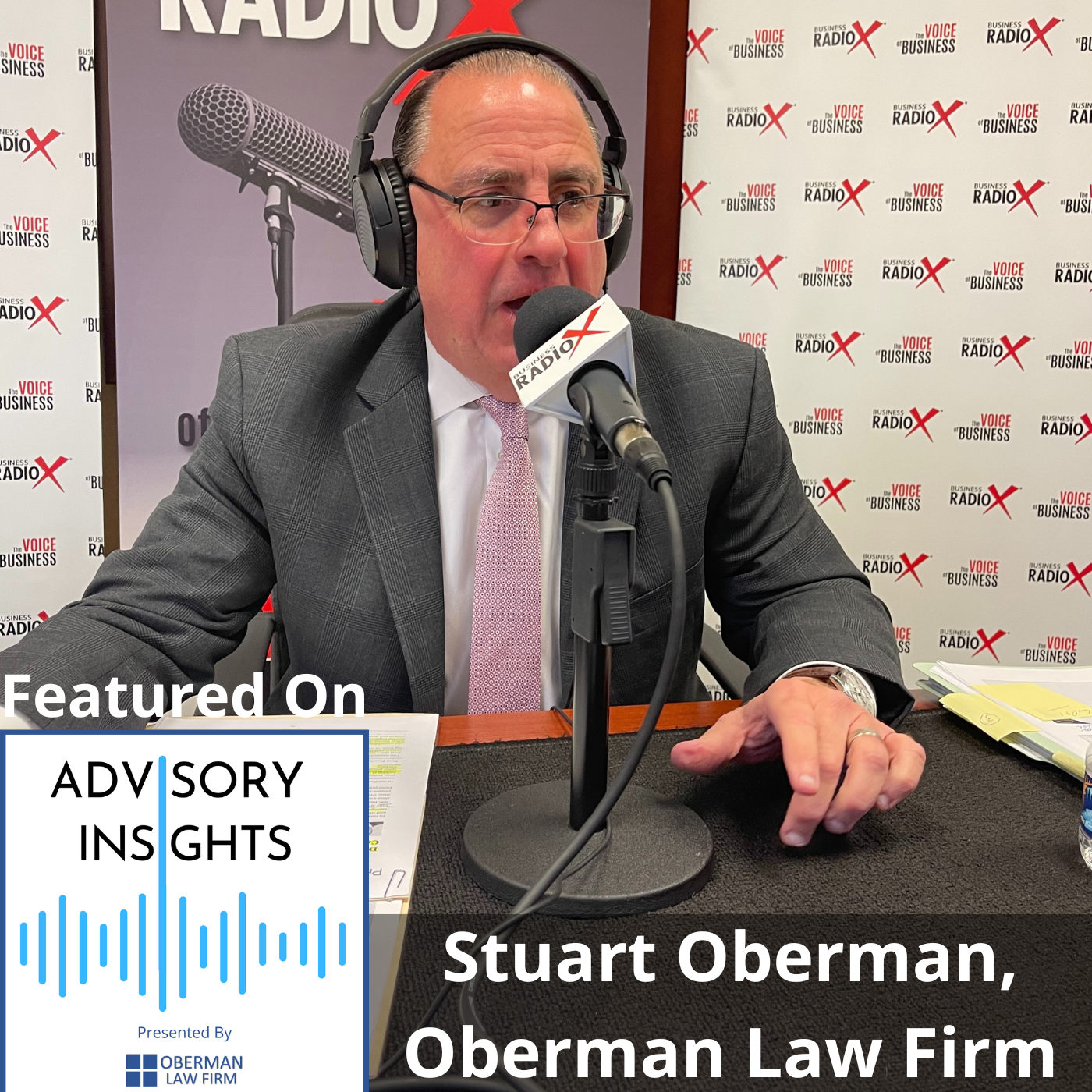
On this episode of Advisory Insights, Stuart Oberman of the Oberman Law Firm discusses the topic of employee travel time, particularly the 1947 Portal-to-Portal Act and how it addresses job to job travel. He advises employers to have a clear policy in place to avoid costly mistakes, and urges them to keep track of travel-related expenses and policy changes.

Advisory Insights is presented by Oberman Law Firm and produced by the North Fulton studio of Business RadioX®. The series can be found on all the major podcast apps. You can find the complete show archive here.

TRANSCRIPT

Intro: [00:00:02] Broadcasting from the studios of Business RadioX, it’s time for Advisory Insights. Brought to you by Oberman Law Firm, serving clients nationwide with tailored service and exceptional results. Now, here’s your host.

Stuart Oberman: [00:00:20] Welcome everyone to Advisory Insights. Stuart Oberman here. All right, folks, we’re going to drill down on some things that is a topic that, really, we didn’t see much during COVID. But now as everything is starting opening up, we’re going to talk about employees that travel. Today’s topic, Do employers have to pay for employee travel or commute time?

Stuart Oberman: [00:00:43] You’re probably thinking to yourself, “No, I do not.” But the question is you’re probably wrong, depending on your business. And two, do you even have a policy for that? And are you even paying overtime? So, I want to hit a couple of topics going down this particular road that I want everyone to take a look at, because at some point your employees do something somewhere for you, whether they’re traveling from their home, whether they’re going to their office. A lot of our clients go on conventions, how are you paying? How are you paying? Travel, no travel, gas, no gas, overtime, no overtime. So, these are things I want to look at.

Stuart Oberman: [00:01:21] First, I want to take a look at whether an employer has to pay its non-exempt employees overtime. Are they even eligible? That’s your first question. So then, we want to look in today’s podcast looking at work related travel. That will include time spent getting to and from office or job sites. What if you’re a construction company and you have people driving from the office to the job site? What about from home to the job site? What about from job site-home? Do you even have a regulation for that? Are they driving company vehicles? These are things you have to ask.

Stuart Oberman: [00:02:10] So, I want to look at really two fundamental principles. One, actually performing work related tasks regardless, regardless of the day of the week, the time, or location. How is it being paid? Do you have employees that work on Saturdays at their home, Sundays at home, after hours, they’re coming home? How are you paying that? How are you verifying that?

Stuart Oberman: [00:02:33] Principle number two, the cornerstone of all this discussion is the 1947 Portal-to-Portal Act and its amendments to the Fair Labor Standards Act. Folks, that will put you to sleep if you read that. But essentially what it is, it’s employees spending time commuting from their home to the workplace, where do they begin the workday, and how do they end? Are they being paid for it going back home?

Stuart Oberman: [00:03:08] So, for those of you that never heard of the Portal-to-Portal Act and how it is related to the Fair Labor Standards Act, which governs what your employees do and what you pay every day, if you say I have no idea, I would advise you strongly to call someone who knows what that is.

Stuart Oberman: [00:03:31] Now, a couple topics. Do you have a policy for midday travel? Under federal regulations that’s considered all in a day’s work rule. You’re going to go down a road on that one. We’re not even going to go down there today because we’re going to go down for hours on that one.

Stuart Oberman: [00:03:52] So, what is it? It’s travel to the job site to job site during the workday. If you have a person that’s going job to job, site to site traveling salesman, construction foreman, whatever it is, do you have a regulatory item that you’re looking at and what are you guided by?

Stuart Oberman: [00:04:11] Next, I want you to look at multiple worksites. So, what if an employee reports to different sites each morning? Does that render the home to work commute not normal or ordinary? That’s a question you’ve got to ask yourself. And is that time spent on the road – big word – compensable overtime? Are you paying for that? How are you paying for it or why aren’t you paying for it? Are you even tracking that employee’s time?

Stuart Oberman: [00:04:47] Another hot topic, pre-commute activities. We have a lot and a lot of people that do work at their home before they even leave. I know I do. I know I do. My day starts at 5:30, and I’m doing work before I leave the house for the office. So, what if an employee brings some work home at night and then goes to the office, are they working at night? Are they working during the day? How are you tracking that? That is what we call a pre-commute activity. Do you have a regulatory item of review for that?

Stuart Oberman: [00:05:24] The next topic I want you to take a look at – these are all things I want you to understand that, again, are much too detailed for this podcast, but at least you know the topic and what it relates to and how it relates to what you do – same day travel to another city.

Stuart Oberman: [00:05:42] I’m located in Atlanta. Suppose I go to Chattanooga. You know, or I’ve got a company that’s in South Atlanta and they travel to Nashville for the day? That’s what we call special one day assignments. Do you have a policy in place for that or do you even track that? Because I will guarantee you, your employees that leave, folks, they’re tracking that. And you better be aware they are tracking it because otherwise they’re going to track it for you, which is never a good day.

Stuart Oberman: [00:06:14] So, let’s take a look at, also, do you have a policy in place for travel involving an overnight stay? Do you even have overtime travel expenses outlined? Are you paying overtime? How are you paying your people that travel? You know, again, through the COVID, everyone was locked down, no travel. And now, folks, it is wide open. If you look at the papers, you listen to the news, travel, it explodes. The airlines can’t keep up with it. Hotels are doing real well, You know, rush hour traffic going to and from on holidays, I mean, it’s amazing. So, how do you have overnight travel? How do you handle that?

Stuart Oberman: [00:06:58] Also, travel from a hotel to a worksite or worksite to hotel. Again, where are your salespeople going? Are they spending the night? How are they spending the night with their time? Are they working on their laptop when they’re at the hotel? How are you tracking that? You better believe they’re tracking that. Are they working at the hotel before they leave? That can be overtime. How are you tracking your job site issues? Is that going to be O.T.?

Stuart Oberman: [00:07:27] Now, question, what if driving is part of the job? You know, the FLSA, it outlines an employee who drives a bus, a car, automobile, boat, plane as part of their job. Do you have anything in place that outlines that, “Hey, we’re not paying you overtime, Mr. Employee or Ms. Employee, because it’s outlined here we’re not doing that.”

Stuart Oberman: [00:07:54] Now, the wonderful world of COVID, remote, flexible, agile – the keyword of today – agile work conditions. What if you have an employee that’s hoteling working remote, flexible hours? A agile working arrangement where they come into some particular place two or three times a week. Or what about two or three times a month? What’s the regulatory matter? Are you requiring them to come into the office? Are you requiring them to come into their location, whether it’s remote, not remote?

Stuart Oberman: [00:08:35] Now, I want to ask you this question, so do you have or do you even know the consequences of compensable travel time? Are you tracking those? Do you know when you must pay the employees? Do you have a process in place to track the time? First and foremost, how are you tracking time? “Well, my employees have logs.” I will tell you, employers are not keeping track of their logs.

Stuart Oberman: [00:09:02] I would venture to say that if you have an employee company car and you say,”Hey, Mr. Employee, Ms. Employee. I want you to produce your logs. I want to see how up to date they are.” I’m going to go out on a limb, I’m going to say at least 80 to 90 percent are not even up to date maybe in a day or two, some even months. So, I think you got to have a process in place of how much you’re paying them. Are they overtime hours? Are they not overtime hours? And what’s the threshold? Do your hours start at 42 hours O.T.? Do your hours start at 46 O.T.?

Stuart Oberman: [00:09:40] Next question is, how are you paying for travel? How much is compensable travel? Folks, you got people on the road and you got guys going to job, to job, to job, to job. You’ve got to ask yourself all these topics we went through today, how am I paying these people? And then, does paying for travel make it hours worked? How are you calculating these things?

Stuart Oberman: [00:10:06] So, employees often wonder, you know, what’s hours worked considered? Do I even have a definition of hours worked? Chances are probably not. I would venture to say that all the topics we listed today, 90 percent that have employees that travel have no guidelines whatsoever regarding this. I’ll go out on a limb and I’ll say 70 to 80 percent don’t even have a policy employee manual. Without a manual, you got no regulatory guidance on these things. So, you’re going to lose. You’re going to lose.

Stuart Oberman: [00:10:37] I want you to keep track of these things. I want you to listen on the topics. If you don’t have an agenda, if you don’t have a bullet point items that you’re looking at, I urge you to find counsel that understands this. Make sure your H.R. people are trained.

Stuart Oberman: [00:10:55] Folks, that’s going to conclude today’s podcast, Advisory Insights, Stuart Oberman. If you need to reach us, please feel free to call at 770-886-2400 or email stuart, S-T-U-A-R-T, @obermanlaw.com. Folks, thanks a lot. Have a fantastic day and we’ll look forward to more podcasts.

Outro: [00:11:19] Thank you for joining us on Advisory Insights. This show is brought to you by Oberman Law Firm, a business-centric law firm representing local, regional, and national clients in a wide range of practice areas, including health care, mergers and acquisitions, corporate transactions, and regulatory compliance.

About Advisory Insights Podcast

Presented by Oberman Law Firm, Advisory Insights Podcast covers legal, business, HR, and other topics of vital concern to healthcare practices and other business owners. This show series can be found here as well as on all the major podcast apps.

Stuart Oberman, Oberman Law Firm

Oberman Law Firm

Stuart Oberman is the founder and President of Oberman Law Firm. Mr. Oberman graduated from Urbana University and received his law degree from John Marshall Law School. Mr. Oberman has been practicing law for over 25 years, and before going into private practice, Mr. Oberman was in-house counsel for a Fortune 500 Company. Mr. Oberman is widely regarded as the go-to attorney in the area of Dental Law, which includes DSO formation, corporate business structures, mergers and acquisitions, regulatory compliance, advertising regulations, HIPAA, Compliance, and employment law regulations that affect dental practices.

In addition, Mr. Oberman’s expertise in the healthcare industry includes advising clients in the complex regulatory landscape as it relates to telehealth and telemedicine, including compliance of corporate structures, third-party reimbursement, contract negotiations, technology, health care fraud, and abuse law (Anti-Kickback Statute and the State Law), professional liability risk management, federal and state regulations.

As the long-term care industry evolves, Mr. Oberman has the knowledge and experience to guide clients in the long-term care sector with respect to corporate and regulatory matters, assisted living facilities, continuing care retirement communities (CCRCs). In addition, Mr. Oberman’s practice also focuses on health care facility acquisitions and other changes of ownership, as well as related licensure and Medicare/Medicaid certification matters, CCRC registrations, long-term care/skilled nursing facility management, operating agreements, assisted living licensure matters, and health care joint ventures.

In addition to his expertise in the health care industry, Mr. Oberman has a nationwide practice that focuses on all facets of contractual disputes, including corporate governance, fiduciary duty, trade secrets, unfair competition, covenants not to compete, trademark and copyright infringement, fraud, and deceptive trade practices, and other business-related matters. Mr. Oberman also represents clients throughout the United States in a wide range of practice areas, including mergers & acquisitions, partnership agreements, commercial real estate, entity formation, employment law, commercial leasing, intellectual property, and HIPAA/OSHA compliance.

Mr. Oberman is a national lecturer and has published articles in the U.S. and Canada.

LinkedIn

Oberman Law Firm

Oberman Law Firm has a long history of civic service, noted national, regional, and local clients, and stands among the Southeast’s eminent and fast-growing full-service law firms. Oberman Law Firm’s areas of practice include Business Planning, Commercial & Technology Transactions, Corporate, Employment & Labor, Estate Planning, Health Care, Intellectual Property, Litigation, Privacy & Data Security, and Real Estate.

By meeting their client’s goals and becoming a trusted partner and advocate for our clients, their attorneys are recognized as legal go-getters who provide value-added service. Their attorneys understand that in a rapidly changing legal market, clients have new expectations, constantly evolving choices, and operate in an environment of heightened reputational and commercial risk.

Oberman Law Firm’s strength is its ability to solve complex legal problems by collaborating across borders and practice areas.

Connect with Oberman Law Firm:

Company website | LinkedIn | Twitter
Tagged With: Advisory Insights, Advisory Insights Podcast, dental practices, employee travel time, employment law, Oberman Law, Oberman Law Firm, Stuart Oberman, Travel Time

Interview Questions to Avoid

August 19, 2022 by John Ray

Interview Questions to Avoid
Advisory Insights Podcast
Interview Questions to Avoid
Loading
00:00 /
RSS Feed
Share
Link
Embed

Download file

Interview Questions to Avoid

Interview Questions to Avoid (Advisory Insights Podcast, Episode 5)

Don’t know what questions you can and can’t ask during an interview? Stuart Oberman has the answers! In this episode of the Oberman Law Firm podcast, Stuart discusses a few topics related to interviews and hiring processes. He starts by talking about the importance of training those who will be conducting interviews, and then goes on to discuss interview questions to avoid as you speak with candidates. These include questions about age, citizenship, and criminal record. If you’re an employer, you need to listen to this episode!

Advisory Insights is presented by Oberman Law Firm and produced by the North Fulton studio of Business RadioX®. The series can be found on all the major podcast apps. You can find the complete show archive here.


About Advisory Insights Podcast

Presented by Oberman Law Firm, Advisory Insights Podcast covers legal, business, HR, and other topics of vital concern to healthcare practices and other business owners. This show series can be found here as well as on all the major podcast apps.

Stuart Oberman, Oberman Law Firm

Oberman Law Firm
Stuart Oberman, Founder, Oberman Law Firm

Stuart Oberman is the founder and President of Oberman Law Firm. Mr. Oberman graduated from Urbana University and received his law degree from John Marshall Law School. Mr. Oberman has been practicing law for over 25 years, and before going into private practice, Mr. Oberman was in-house counsel for a Fortune 500 Company. Mr. Oberman is widely regarded as the go-to attorney in the area of Dental Law, which includes DSO formation, corporate business structures, mergers and acquisitions, regulatory compliance, advertising regulations, HIPAA, Compliance, and employment law regulations that affect dental practices.

In addition, Mr. Oberman’s expertise in the healthcare industry includes advising clients in the complex regulatory landscape as it relates to telehealth and telemedicine, including compliance of corporate structures, third-party reimbursement, contract negotiations, technology, health care fraud, and abuse law (Anti-Kickback Statute and the State Law), professional liability risk management, federal and state regulations.

As the long-term care industry evolves, Mr. Oberman has the knowledge and experience to guide clients in the long-term care sector with respect to corporate and regulatory matters, assisted living facilities, continuing care retirement communities (CCRCs). In addition, Mr. Oberman’s practice also focuses on health care facility acquisitions and other changes of ownership, as well as related licensure and Medicare/Medicaid certification matters, CCRC registrations, long-term care/skilled nursing facility management, operating agreements, assisted living licensure matters, and health care joint ventures.

In addition to his expertise in the health care industry, Mr. Oberman has a nationwide practice that focuses on all facets of contractual disputes, including corporate governance, fiduciary duty, trade secrets, unfair competition, covenants not to compete, trademark and copyright infringement, fraud, and deceptive trade practices, and other business-related matters. Mr. Oberman also represents clients throughout the United States in a wide range of practice areas, including mergers & acquisitions, partnership agreements, commercial real estate, entity formation, employment law, commercial leasing, intellectual property, and HIPAA/OSHA compliance.

Mr. Oberman is a national lecturer and has published articles in the U.S. and Canada.

LinkedIn

Oberman Law Firm

Oberman Law Firm has a long history of civic service, noted national, regional, and local clients, and stands among the Southeast’s eminent and fast-growing full-service law firms. Oberman Law Firm’s areas of practice include Business Planning, Commercial & Technology Transactions, Corporate, Employment & Labor, Estate Planning, Health Care, Intellectual Property, Litigation, Privacy & Data Security, and Real Estate.

By meeting their client’s goals and becoming a trusted partner and advocate for our clients, their attorneys are recognized as legal go-getters who provide value-added service. Their attorneys understand that in a rapidly changing legal market, clients have new expectations, constantly evolving choices, and operate in an environment of heightened reputational and commercial risk.

Oberman Law Firm’s strength is its ability to solve complex legal problems by collaborating across borders and practice areas.

Connect with Oberman Law Firm:

Company website | LinkedIn | Twitter


Tagged With: employment law, Hiring process, HR, Interview process, interview questions, Interviews, Oberman Law, Oberman Law Firm, Stuart Oberman

Workplace MVP LIVE from SHRM 2022: Louis Lessig, Brown & Connery, LLP

July 26, 2022 by John Ray

Brown & Connery
Minneapolis St. Paul Studio
Workplace MVP LIVE from SHRM 2022: Louis Lessig, Brown & Connery, LLP
Loading
00:00 /
RSS Feed
Share
Link
Embed

Download file


Brown & Connery

Workplace MVP LIVE from SHRM 2022: Louis Lessig, Brown & Connery, LLP

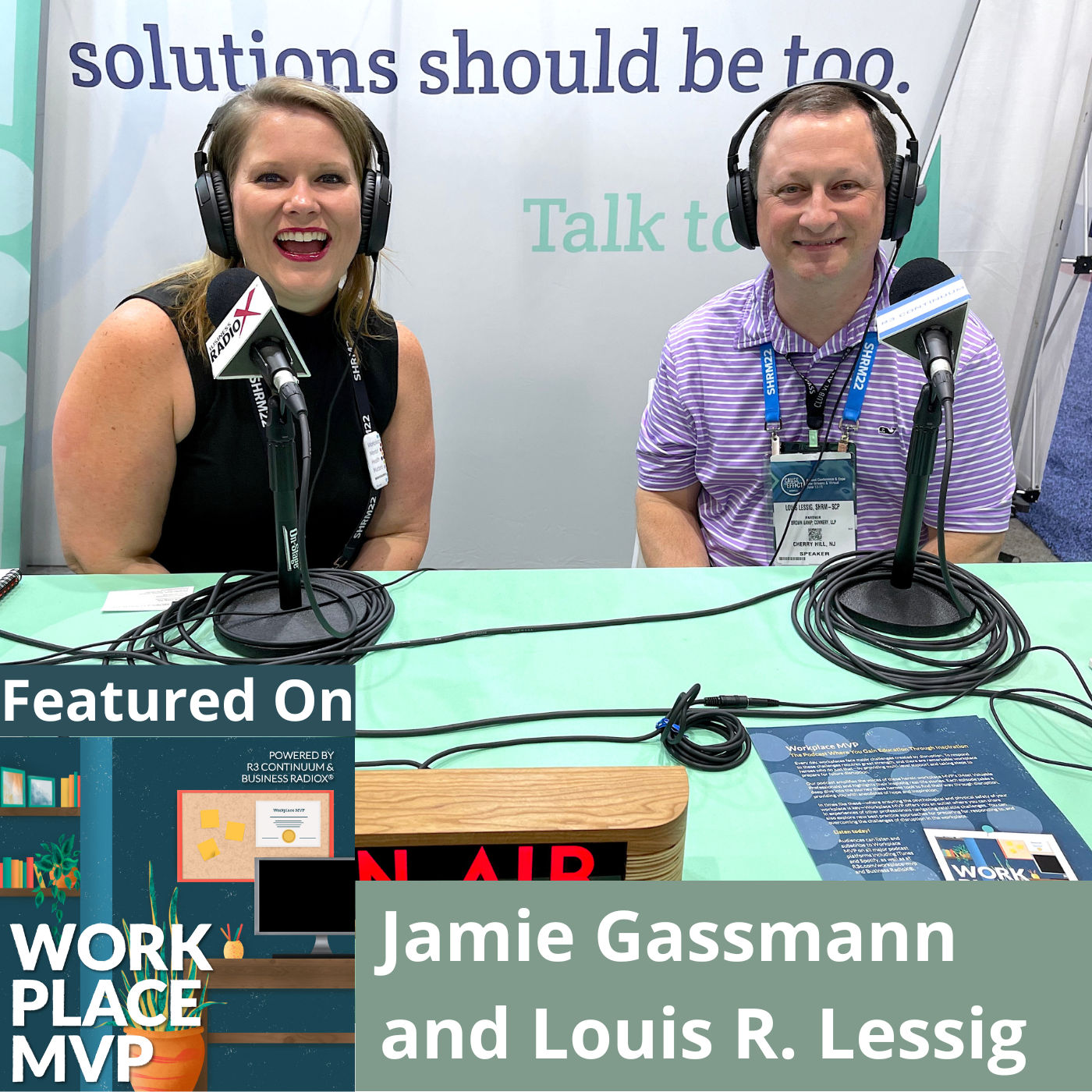
Louis Lessig, a partner with Brown & Connery, LLP, joined Jamie Gassmann on Workplace MVP LIVE from SHRM 2022. Louis is an employment attorney who got his start in HR. He and Jamie talked about his journey, his work, and hot topics in the HR space these days, including marijuana & ADA. He also shared highlights from his presentations on ADA and retention at SHRM and much more.

Workplace MVP is underwritten and presented by R3 Continuum and produced by the Minneapolis-St.Paul Studio of Business RadioX®.

This show was originally broadcast live from the 2022 SHRM Annual Conference held at the New Orleans Convention Center in New Orleans, Louisiana.

Louis Lessig, Partner, Brown & Connery, LLP

Louis Lessig, Partner, Brown & Connery, LLP

Louis Lessig is a partner with the firm of Brown & Connery, LLP.  His practice concentrates in labor and employment counseling, litigation, negotiations, and training.

Mr. Lessig represents clients in all types of employment matters, including but not limited to claims of discrimination, harassment, hostile work environment, wage and hour irregularities, and retaliation in state and federal courts as well as before administrative agencies including the Equal Employment Opportunity Commission, National Labor Relations Board, U.S. Department of Labor, American Arbitration Association, New Jersey Division on Civil Rights, New Jersey Office of Administrative Law, Pennsylvania Human Relations Commission, and Philadelphia Commission on Human Relations.

In 2018, he received the Delaware Valley HR Consultant of the Year Award. In 2016 he was an Honoree for the SmartCEO Centers of Influence Awards.  In 2015, he received the SmartCEO ESQ Industry Practice Award – recognizing the region’s most trusted advisors. Since 2012, Mr. Lessig has been selected each year as a “Super Lawyer” in Labor and Employment law.  In 2010, Mr. Lessig was selected by the New Jersey Law Journal as one of the “Top 40 Attorneys Under 40” in New Jersey.  Mr. Lessig was also selected in 2010 as a Delaware Valley Human Resources Consultant of the Year Nominee.  Mr. Lessig is a nationally recognized speaker and publishes articles that have appeared in periodicals including Westlaw Journal Employment, Westlaw Journal Computer and Internet, the Family and Medical Leave Handbook, Employment Litigation Reporter, Corporate Risk Spectrum, HR Professional, The Tri-State and Labor and Employment Law Quarterly.  He was an adjunct professor at the Comey Institute for Industrial Relations at St. Joseph’s University.  Mr. Lessig was also a principal in the Pinnacle Employment Law Institute (PELI), which conducted training sessions and provided developmental assistance in employment relations.

After graduating from law school, he served as judicial law clerk to the Honorable M. Allan Vogelson, Presiding Civil Judge of the Superior Court of New Jersey in Camden County.

In addition to his professional activities, Mr. Lessig currently serves on the Garden State Council – SHRM as the New Jersey State Director.  He is also immediate Past President of the Board for the National Speakers Association (NSA), Philadelphia chapter.  He is also a member of Tri-State HRMA where he is a Past President of the chapter and serves as Chair of the Legislative Committee. Mr. Lessig is past President of the Muhlenberg College Alumni Board.

Martindale-Hubbell “AV” Preeminent® Rating

LinkedIn 

Brown & Connery, LLP

Brown and Connery is one of South Jersey’s oldest and most well-regarded law firms.  In 1928, Horace G. Brown, a preeminent trial lawyer, and Thomas F. Connery, a distinguished litigator, founded the practice in Camden, New Jersey. The firm has continued to evolve to meet changing times, changing culture and changing client needs. Driven by the ideal of excellence, Brown and Connery is proud to have earned an “AV” rating by Martindale-Hubbell*, its highest rating.

We take our work and our client’s needs seriously, and have built a reputation for quality legal services grounded in our founder’s tradition of thoroughness, hard work and integrity. Our talented attorneys and support staff are committed to our high standards, which means those who turn to our firm can count on us to maintain the highest ethical and intellectual standards when representing their needs.

The firm practices all across New Jersey with offices conveniently located in Westmont, Woodbury and Camden. Our Philadelphia office supports our practice in Pennsylvania.

Brown and Connery provides a wide range of legal services to its clients. These services can be seen listed and more fully described on this website among our Key Practices.

Company website | LinkedIn | Facebook

About Workplace MVP

Every day, around the world, organizations of all sizes face disruptive events and situations. Within those workplaces are everyday heroes in human resources, risk management, security, business continuity, and the C-suite. They don’t call themselves heroes though. On the contrary, they simply show up every day, laboring for the well-being of employees in their care, readying the workplace for and planning responses to disruption. This show, Workplace MVP, confers on these heroes the designation they deserve, Workplace MVP (Most Valuable Professionals), and gives them the forum to tell their story. As you hear their experiences, you will learn first-hand, real-life approaches to readying the workplace, responses to crisis situations, and overcoming challenges of disruption. Visit our show archive here.

Workplace MVP Host Jamie Gassmann

Jamie Gassmann, Host, “Workplace MVP”

In addition to serving as the host to the Workplace MVP podcast, Jamie Gassmann is the Director of Marketing at R3 Continuum (R3c). Collectively, she has more than fourteen years of marketing experience. Across her tenure, she has experience working in and with various industries including banking, real estate, retail, crisis management, insurance, business continuity, and more. She holds a Bachelor of Science Degree in Mass Communications with special interest in Advertising and Public Relations and a Master of Business Administration from Paseka School of Business, Minnesota State University.

R3 Continuum

R3 Continuum is a global leader in workplace behavioral health and security solutions. R3c helps ensure the psychological and physical safety of organizations and their people in today’s ever-changing and often unpredictable world. Through their continuum of tailored solutions, including evaluations, crisis response, executive optimization, protective services, and more, they help organizations maintain and cultivate a workplace of wellbeing so that their people can thrive. Learn more about R3c at www.r3c.com.

Company website | LinkedIn | Facebook | Twitter

TRANSCRIPT

Intro: [00:00:02] Broadcasting live from SHRM 2022 at the New Orleans Convention Center, it’s time for Workplace MVP. Brought to you by R3 Continuum, a global leader in helping workplaces thrive during disruptive times. Now, here’s your host.

Jamie Gassmann: [00:00:19] Hey, everyone. You’re host, Jamie Gassmann here, and I’m coming to you from SHRM 2022 Exhibit Hall. And I’m in R3 Continuum, our sponsor’s booth. And joining me is Louis Lessig from Brown and Connery. Did I pronounce that all correctly?

Louis Lessig: [00:00:36] You absolutely did. Thank you.

Jamie Gassmann: [00:00:38] Awesome. Well, welcome to the show, Louis.

Louis Lessig: [00:00:40] I’m thrilled to be here. Thank you.

Jamie Gassmann: [00:00:41] Oh, we’re excited to have you on. I know we’ve been doing a lot of talking before getting on the actual microphone. So, give us a little background about your career journey into this space and coming into the kind of H.R. perspective. I know you’re not an H.R. person, but talk to me a little bit about how you got here.

Louis Lessig: [00:00:57] So, actually my undergrad is in H.R., and I was a student member of SHRM. We won’t say when, but when I got out –

Jamie Gassmann: [00:01:05] Ten years ago?

Louis Lessig: [00:01:05] Sure. Absolutely. But when I was in my major, I was doing an internship at a hospital and the generalist turned to me and said, “Do you want to do benefits your whole life?” I’m sure no one listening to this does benefits. I said, “Actually, I absolutely do not.” And he said, “Well, then you know what you should do? You should go to law school.” So that’s what I did.

Louis Lessig: [00:01:29] And then, while I was in law school, I gravitated towards the labor and employment kind of work, got out and started – I clerked for a judge and then went to one firm, spent 11 months there, and then went to the firm I’m with now, doing employment labor. Simultaneously, I was also doing a – I had a training company where we were doing harassment sort of stuff, all on the side. So, I was doing both till 9/11 and the training stuff went south and I’ve been doing the whole employment labor stuff since.

Jamie Gassmann: [00:02:01] Wow! And you’re in a great spot here, lots of H.R. leaders. So, what are some of the hot topics you’re seeing with your clients right now in the labor and employment law arena?

Louis Lessig: [00:02:12] Well, it depends on what state you’re in.

Jamie Gassmann: [00:02:14] Oh, okay.

Louis Lessig: [00:02:15] Because the whole medical versus recreational marijuana component is fascinating. The truth is, because of everything around COVID, there’s been a lot of the reasonable accommodation components around the ADA and, of course, how we deal with leave and the desire or shifting desires, if you will, in terms of the workforce and how much do they want to come back to the workplace, do they not want to come back to the workplace? How do we make that happen? Because the law is always trying to catch up. And so, it’s been a bit more of a challenge than one might think. And, of course, everybody dumps all the stuff at H.R.’s feet, which makes sure that the billable hours just keep on rolling.

Jamie Gassmann: [00:02:57] I bet. Yeah. And I got to imagine with a lot of this remote work, people working from home, that’s got to be a whole new kind of caveat with some of the different like Work Comp rules. Like, if I slip in my own kitchen, is that Work Comp because I was on the clock? I mean, like, I’m just so curious and fascinated about that. Like, what are you seeing from that perspective with some of the changes in the work environment that employers are facing?

Louis Lessig: [00:03:22] Well, you can start as early as taking a look at things like how much real estate do they really need anymore? And then, from there, you move into like to your question. You probably don’t know this, but if you own your own home, the comprehensive insurance you currently have in your home already includes part-time Workers’ Comp generally speaking. You can get a rider if you want full comp coverage on top of your homeowners. Most people don’t know this. But when my kids were really young, had like the nanny working full time and I inquired about this, it was a $60 rider a year for full Worker’s Comp coverage.

Jamie Gassmann: [00:04:03] Wow!

Louis Lessig: [00:04:04] That’s 60 bucks I cut every year.

Jamie Gassmann: [00:04:06] Yeah. And that covers you as the worker because you’re inside the home.

Louis Lessig: [00:04:11] Correct.

Jamie Gassmann: [00:04:11] Interesting. Okay. Well, that’s a great lesson for our listeners to be hearing about it. I might have to call my insurance company. So, now I know you’re speaking at this year’s conference and it sounds like you’ve got a couple of different presentations. So, let’s start with you giving kind of the titles of the two, and then let’s dive into each of them and talk a little bit about each one of them.

Louis Lessig: [00:04:30] Sure. So, tomorrow I’ll be talking on “ Adventures in ADA, the Good, the Bad, and the Oh My’.

Jamie Gassmann: [00:04:38] I love that, oh my.

Louis Lessig: [00:04:40] Any time I’m dealing with the ADA, it’s always a function of you cannot make this up.

Jamie Gassmann: [00:04:47] Yeah.

Louis Lessig: [00:04:47] And your jaw would either hit the floor or you’re just going to start dying laughing. The other, on Wednesday morning, the intro to the president speaking actually. I will be talking on “Positive Conversations Using Employment Laws as a Retention Tactic”.

Jamie Gassmann: [00:05:05] Interesting. And I suppose that’s going to be a hot topic with all the labor and the great resignation or the great reshuffle, depending on who you ask. So, let’s dive into your ADA and the oh my. So, looking at that presentation, what are you hoping your attendees come out of that with like a top three takeaways that you want them to get from your presentation?

Louis Lessig: [00:05:27] So both presentations are hybrid. So, the cool part is I’ve designed them to engage both the virtual audience as well as the live audience. When we talk about the ADA, it’s really about having folks understand two things, the lay of the land in terms of some of the court decisions that have come out over the last year but then it’s also what’s in those decisions that are the true takeaways. Because I can tell stories till the cows come home, but it’s really what’s in it for me, right? That’s why everybody’s coming to a session.

Jamie Gassmann: [00:05:58] Yeah.

Louis Lessig: [00:05:59] And a lot of what you see in the ADA is employers end up tripping up because they don’t legitimately go through the interactive process, or they have a manager that says, “Oh, I’m sort of fed up with this person. They’ve got too many issues. I don’t want to play ball”. And it’s as if they want to buy litigation. So, the hope is that you understand the good in terms of good for employers, the bad in terms of did you really want to do that? And the oh my in terms of, seriously, this fact pattern just makes my skin crawl.

Jamie Gassmann: [00:06:32] Yeah.

Louis Lessig: [00:06:33] And, hopefully, what they take away from that is a level of empathy for the people that they work with.

Jamie Gassmann: [00:06:42] Yeah. I love that. And now, let’s look at your Wednesday presentation because I think that that, you know, anything you can do to try to increase retention for some of these organizations, it’s got to be huge, so talk to me a little bit about that one. What are the takeaways of that presentation?

Louis Lessig: [00:06:56] So, that presentation I’m very passionate about. I sort of view the ADA, it’s very nuts and bolts. This other one that’s on Wednesday is really taking the way in which everyone presumes as an employment lawyer I would approach things and flip it on it’s head.

Jamie Gassmann: [00:07:14] Interesting.

Louis Lessig: [00:07:15] And what I mean by that is this, most folks look at employment laws, ADA, FMLA, FLSA, it’s a bunch of acronyms and it’s all about this crazy thought process of compliance, like the most overused word in the H.R. space. That’s not what it’s about. It is a road map to help us, help our employees get what they need, have them understand, look, we’re here for one another. The better we do, the better we do. And really taking a look at those employment laws, appreciating what the parameters are and how you can better your business by sort of following the proverbial path rather than, “Oh, my God. What did we do wrong? I think we got to go run or cut a check.”

Jamie Gassmann: [00:08:00] Oh, yeah. I love that. They’re going to be taking definitely some interesting points from that, something different hopefully than what they’ve probably thought of it before.

Louis Lessig: [00:08:09] Exactly.

Jamie Gassmann: [00:08:11] Amazing. So any other things you want to leave our audience with? You know, you got the microphone here, you know, your expertise in the employment law. What are your thoughts? What do you think that H.R. leaders need to be watching out for?

Louis Lessig: [00:08:25] I think they need to be very unique in their view of the world. We can’t look at -whether you have ten employees or 10,000 employees, we are truly at a point where the level of customization that we need to do in this space is in a way that no one has ever anticipated before. I’m not sure everybody’s really ready for. But that’s why the talk on the ADA makes so much sense right now because it is individualized and most organizations want to be able to say, “Here’s the cookie-cutter approach.” You know, you guys do some behavioral health stuff. And when you think about it, the challenge there is what each person needs is something different. And that’s where life gets hard. Because when you have issues, you try to figure out, well, how do I avoid it or how do I get past it? And if it’s individualized in nature, it can be more challenging. And I’m really here to tell everybody, take the time to figure it out. It’s better to spend a little bit up front to try and come up with those policies and the procedures that are going to allow you to engage with your employees rather than deal with them when they’re complaining and filing litigation.

Jamie Gassmann: [00:09:33] Yeah. It’s kind of like don’t take the one-size-fits-all approach.

Louis Lessig: [00:09:37] Exactly.

Jamie Gassmann: [00:09:38] Look for how you can tailor it. Great advice. Love that. Well, Louis, it’s been an absolute pleasure to have you on our show. Thank you so much for stopping by.

Louis Lessig: [00:09:46] It has been my honor. Thank you so much.

Outro: [00:09:53] Thank you for joining us on Workplace MVP. R3 Continuum is a proud sponsor of this show and is delighted to celebrate most valuable professionals who work diligently to secure safe workplaces where employees can thrive.


Tagged With: ada, Brown & Connery, employment law, Garden State Council – SHRM, Human Resources, Jamie Gassmann, LLP, Louis R. Lessig, New Orleans, R3 Continuum, retention, SHRM 2022, Workplace MVP

HBS Legal Trends: Christopher Grosso, Conner Strong & Buckelew, and Jeffrey Daitz, Hall, Booth, Smith, PC

June 6, 2022 by John Ray

Christopher Grosso and Jeffrey Daitz
Hall Booth Smith Podcast Network
HBS Legal Trends: Christopher Grosso, Conner Strong & Buckelew, and Jeffrey Daitz, Hall, Booth, Smith, PC
Loading
00:00 /
RSS Feed
Share
Link
Embed

Download file

Conner Strong

HBS Legal Trends: Christopher Grosso, Conner Strong & Buckelew, and Jeffrey Daitz, Hall, Booth, Smith, PC

On this edition of HBS Legal Trends, Chris Grosso, Connor Strong, and Jeff Daitz, Hall Booth Smith, discussed how they use their respective expertise in insurance brokerage and employment law to help organizations limit potential claims exposure. Chris and Jeff discussed how they work together, the nature and severity of claims arising from the pandemic and a remote work environment, the value of employment practices audits, the application process for employment practices liability, and much more.

HBS Legal Trends is sponsored by Hall, Booth, Smith, PC and is produced by the North Fulton studio of Business RadioX®.

Conner Strong & Buckelew

Conner Strong & Buckelew is among America’s largest and most admired insurance brokerage, employee benefits, and risk management consulting firms. Its roots trace back to 1959. They have offices all along the East Coast and they serve clients worldwide.

They are also an industry leader in providing high-risk businesses with comprehensive solutions to prevent losses, manage claims and drive growth. Whether providing risk and insurance services to industries ranging from construction to life science or offering employee benefits services ranging from health and wellness programs to strategic advisory consulting, they are intensely focused on getting results for your business.

Conner Strong is proud to be a founding member of BrokerTech Ventures, the first program specifically for investors and innovators building the next generation of tech solutions for insurance agencies and brokerages. For more information, visit brokertechventures.com

Most of all, they are recognized as a passionate community contributor, volunteering thousands of hours and donating to hundreds of organizations every year. With the Norcross Foundation, they have worked to improve youth education, fund disease research, support the arts and culture and lend a hand to the disadvantaged.

Company Website |LinkedIn | Facebook | Twitter

Christopher Grosso, Partner, National Claim Advocacy & Consulting Leader, Conner Strong & Buckelew

Christopher Grosso, Partner, National Claim Advocacy & Consulting Leader, Conner Strong & Buckelew

Christopher assists clients with all aspects of the claim process. He is responsible for receiving, analyzing, and submitting claims to the insurance carrier, and acting as a liaison for our Select market of business across all lines of insurance.

Although his specialty is property, he has experience handling all lines of business. He provides coverage analysis, advice, and direction, and assists in negotiations with the insurance carrier and monitoring of open claims. He works closely with the client to ensure the carrier’s claim representative delivers prompt, fair claims handling and also assists clients with their internal claim management efforts, including conducting comprehensive claim reviews and training. He also acts as the client’s advocate in dispute resolution.

Grosso has held a producer’s license for 17 years and is licensed throughout the country. Prior to his position at Conner Strong & Buckelew in 2004, he was with Hartford Steam Boiler Insurance, an AIG company, for four years. He served as an Underwriting Assistant, before moving into a role as a Senior Technical Claims adjuster, handling commercial property claims.

Christopher has a Bachelor’s from Pennsylvania State University.

LinkedIn

Hall Booth Smith, P.C.

Established in 1989, Hall Booth Smith, P.C. (HBS) is a full-service law firm with six regional offices strategically located throughout Georgia, as well as offices in Birmingham, AL; Little Rock and Rogers, AR; Denver, CO; Jacksonville, Miami, St. Petersburg, Tallahassee, Tampa, and West Palm Beach, FL; Missoula, MT; Asheville and Charlotte, NC; Saddle Brook, NJ; New York, NY; Oklahoma City, OK; Charleston, SC; and Memphis and Nashville, TN.

Experienced across a wide range of legal disciplines, HBS prides itself on providing knowledgeable, proactive, client-specific counsel to individuals, domestic and international corporations, state and federal agencies, and nonprofit organizations.

At HBS they possess the legal knowledge, skill, and experience to meet our clients’ needs wherever they do business. HBS maintains the highest commitment to serve clients ethically and professionally by providing the highest quality legal representation.

Company Website | LinkedIn | Facebook

Jeffrey Daitz, Partner, Hall Booth Smith, P.C.

Jeffrey Daitz, Partner, Hall Booth Smith, P.C.

Jeffrey Daitz is a Partner in the Saddle Brook, New Jersey office, Co-Chair of the Labor and Employment Law Group, as well as Co-Director of the Employment Practices Liability Insurance Defense Department.

He has more than two decades of experience in employment law, labor-management relations, and alternative dispute resolution. Jeffrey’s nationwide practice is focused on defending employers in Employment Practices Liability Insurance (EPLI) matters and Directors & Officers (D&O) claims, and he also monitors claims on behalf of carriers. He is often brought in to coordinate local and co-counsel in multiparty and multi-jurisdiction litigation.

Jeffrey specializes in mediating and litigating all types of employment discrimination claims including sexual harassment, hostile work environment, whistle-blowing, retaliation, wrongful discharge, defamation, misappropriation, and a variety of other employment-related cases in federal and state courts, through appeals and in alternative dispute resolution (ADR) forums. He also defends clients in administrative proceedings before the Equal Employment Opportunity Commission (EEOC) and other federal, state, and local employment practice agencies, as well as wage/hour audits and other regulatory compliance investigations before the federal and state Departments of Labor (DOL), Office of Federal Contract Compliance Programs (OFCCP), Department of Health (DOH), and Office of Inspector General (OIG). Jeffrey also represents employers in labor-management disputes, including collective bargaining negotiations.

Clients routinely engage Jeffrey for day-to-day management counseling on issues such as employment policies, contracts, discipline, terminations, leaves of absence, accommodations, complaints, internal investigations, benefits, proprietary information, restrictive covenants, reorganizations, and executive compensation. Jeffrey is a frequent lecturer and guest speaker throughout the country on ever-changing employment laws and best practices.  He also provides advice on risk management and loss control, such as comprehensive employment practices audits and sexual harassment and other internal investigations, in addition to providing training and prevention counsel on topics such as best workplace practices and EEO compliance training for human resources, management personnel and in-house counsel.

Jeffrey’s clients include employers in for-profit and not-for-profit industries including healthcare, construction, financial services, property management, insurance, technology, transportation, building services, hotel and hospitality, retail, manufacturing, power and energy and pharmaceutical.

Jeffrey earned a Juris Doctorate from Seton Hall University School of Law. He holds a Bachelor of Arts degree from Temple University where he majored in Accounting, Finance, and Economics.

Jeffrey has been selected for inclusion in the list of New Jersey’s Super Lawyers for the past 6 years, 2013-2018, honoring the top 2% of lawyers in New Jersey.

LinkedIn

Tagged With: Christopher Grosso, claims, claims exposure, Conner Strong & Buckelew, employee claims, employment law, Hall Booth and Smith, insurance broker, Jeffrey Daitz

Decision Vision Episode 108: Should I Have My Employees Return to the Workplace? – An Interview with Employment Attorney Jonathan Hyman and Physician Dr. Jim Morrow

March 18, 2021 by John Ray

Dr. Jim Morrow
Decision Vision
Decision Vision Episode 108: Should I Have My Employees Return to the Workplace? - An Interview with Employment Attorney Jonathan Hyman and Physician Dr. Jim Morrow
Loading
00:00 /
RSS Feed
Share
Link
Embed

Download file

Dr. Jim Morrow

Decision Vision Episode 108:  Should I Have My Employees Return to the Workplace? – An Interview with Employment Attorney Jonathan Hyman and Physician Dr. Jim Morrow

Jonathan Hyman, an attorney with Wickens Herzer Panza, and Dr. Jim Morrow of Morrow Family Medicine join host Mike Blake to consider “return to workplace” issues such as requiring a Covid-19 vaccination, safety-related accommodations, and other concerns both employers and their employees are currently wrestling with. “Decision Vision” is presented by Brady Ware & Company.

Jonathan Hyman, Attorney, Wickens Herzer Panza

Jonathan Hyman, Wickens Herzer Panza

Mr. Hyman is a member of the Firm’s Litigation Department and Employment & Labor practice group and serves on the Board of Directors. He focuses his practice on management-side labor and employment law, providing businesses proactive solutions to solve their workforce problems and reactive solutions when they find themselves litigating against an employee or group of employees.

Proactively, Mr. Hyman serves as outside in-house counsel for businesses. He is the voice on the other end of a phone when a business needs advice on firing an employee, a policy or agreement drafted, guidance on a leave of absence, disability accommodation, or internal complaint or investigation, or information on any number of other issues that plague human resources professionals and businesses daily. Mr. Hyman also has extensive experience on more specialized labor and employment law issues, such as wage and hour compliance, social media, cybersecurity, and other workplace technology concerns, affirmative action compliance, and union avoidance and labor relations.

Reactively, Mr. Hyman represents businesses in employment and labor litigation, including discrimination, retaliation, harassment, and claims, non-competition and trade-secret misappropriation disputes, wage-and-hour class and collective actions, and union certification and decertification matters.

He is also the author of the renowned and award-winning Ohio Employer Law Blog (www.ohioemployerlawblog.com, an American Bar Association Blawg Hall of Fame inductee), which he updates daily to provide businesses and human resources professionals breaking news and other updates on the ever-changing landscape of labor and employment law.

Wickens Herzer Panza has been committed to providing sound legal guidance to businesses of Lorain & Cuyahoga Counties since 1932. Wickens Herzer Panza provides legal counsel to family- and privately-owned businesses in the areas of Business Organizations & Tax, Probate & Estate Planning, Elder Law and Business Litigation. We’re more than legal counsel, too. We’re a business partnership, an advocate for our clients and advisors who support, give advice and protect those we work with. We are our clients’​ trusted advisor and make it our mission to be responsive, accountable, proactive and client-centered. Our Firm has offices in Avon, Ohio, and Sandusky, Ohio.

Mr. Hyman joined Wickens Herzer Panza in March of 2021, and was previously with Meyers, Roman, Friedberg & Lewis in Cleveland, Ohio. (Note:  this show was taped prior to Mr. Hyman’s change of firms.)

Wickens Herzer Panza website | Hyman LinkedIn

Dr. Jim Morrow, Morrow Family Medicine

Dr. Jim Morrow
Dr. Jim Morrow, Morrow Family Medicine

Dr. Jim Morrow was the first physician to practice on the Northside Hospital Forsyth campus in Cumming, Georgia. Opening the practice in November, 1998, his practice quickly became a “go-to” practice for Forsyth County residents.

As with that practice, Morrow Family Medicine will be known for its open access policy, same-day appointments and very popular morning walk-in hour. Dr. Jim Morrow’s special areas of interest in medicine are sports medicine, episodic care (care of acute problems and illnesses), chronic disease management and urgent care. He has served as team doctor for various high schools in his many years of practice, most recently at North Forsyth High School and Forsyth Central High School in Cumming.

Dr. Morrow graduated from Clemson University and the University of South Carolina School Of Medicine. He completed his residency in Family Medicine in Anderson, South Carolina in 1985. A 2004 winner of the Healthcare Information Management Systems Society’s (HIMSS) Davies Award for Excellence in EMR Implementation, he was also recognized as the 2006 Physician IT Leader of the Year by HIMSS. He served four years as a commissioner on the Certification Commission for Healthcare Information Technology (CCHIT). Dr. Morrow serves as Vice-Chairman of the Board of Directors of the Georgia Health Information Exchange (GHIE) and is a member of the Advisory Board for Health for the Technology Association of Georgia (TAG-Health). In 2014, Dr. Morrow was awarded the Steve Bloom Award by the Cumming-Forsyth Chamber of Commerce as Entrepreneur of the Year, and he also received a Phoenix Award from the Metro Atlanta Chamber as Community Leader of the Year.

Founded by Dr. Jim Morrow, Morrow Family Medicine, a Member of Village Medical, is an award-winning, state-of-the-art family practice with offices in Cumming and Milton, Georgia. The practice combines healthcare information technology with old-fashioned care to provide the type of care that many are in search of today. Two physicians, three physician assistants, and two nurse practitioners are supported by a knowledgeable and friendly staff to make your visit to Morrow Family Medicine, A Member of Village Medical one that will remind you of the way healthcare should be.  At Morrow Family Medicine, a Member of Village Medical, we like to say we are “bringing the care back to healthcare!”

Dr. Jim Morrow also hosts “To Your Health with Dr. Jim Morrow” on the Business RadioX® network, a radio show/podcast that addresses a wide range of health and wellness topics. It can be found at www.toyourhealthradio.com.

Company website | Facebook | LinkedIn | Twitter

Mike Blake, Brady Ware & Company

Mike Blake, Host of the “Decision Vision” podcast series

Michael Blake is the host of the “Decision Vision” podcast series and a Director of Brady Ware & Company. Mike specializes in the valuation of intellectual property-driven firms, such as software firms, aerospace firms, and professional services firms, most frequently in the capacity as a transaction advisor, helping clients obtain great outcomes from complex transaction opportunities. He is also a specialist in the appraisal of intellectual properties as stand-alone assets, such as software, trade secrets, and patents.

Mike has been a full-time business appraiser for 13 years with public accounting firms, boutique business appraisal firms, and an owner of his own firm. Prior to that, he spent 8 years in venture capital and investment banking, including transactions in the U.S., Israel, Russia, Ukraine, and Belarus.

Brady Ware & Company

Brady Ware & Company is a regional full-service accounting and advisory firm which helps businesses and entrepreneurs make visions a reality. Brady Ware services clients nationally from its offices in Alpharetta, GA; Columbus and Dayton, OH; and Richmond, IN. The firm is growth-minded, committed to the regions in which they operate, and most importantly, they make significant investments in their people and service offerings to meet the changing financial needs of those they are privileged to serve. The firm is dedicated to providing results that make a difference for its clients.

Decision Vision Podcast Series

“Decision Vision” is a podcast covering topics and issues facing small business owners and connecting them with solutions from leading experts. This series is presented by Brady Ware & Company. If you are a decision-maker for a small business, we’d love to hear from you. Contact us at decisionvision@bradyware.com and make sure to listen to every Thursday to the “Decision Vision” podcast.

Past episodes of “Decision Vision” can be found at decisionvisionpodcast.com. “Decision Vision” is produced and broadcast by the North Fulton studio of Business RadioX®.

Visit Brady Ware & Company on social media:

LinkedIn:  https://www.linkedin.com/company/brady-ware/

Facebook: https://www.facebook.com/bradywareCPAs/

Twitter: https://twitter.com/BradyWare

Instagram: https://www.instagram.com/bradywarecompany/

TRANSCRIPT

Intro: [00:00:01] Welcome to Decision Vision, a podcast series focusing on critical business decisions. Brought to you by Brady Ware & Company. Brady Ware is a regional full- service accounting and advisory firm that helps businesses and entrepreneurs make visions a reality.

Mike Blake: [00:00:20] Welcome to Decision Vision, a podcast giving you, the listener, clear vision to make great decisions. In each episode, we discuss the process of decision making on a different topic from the business owners’ or executives’ perspective. We aren’t necessarily telling you what to do, but we can put you in a position to make an informed decision on your own and understand when you might need help along the way.

Mike Blake: [00:00:39] My name is Mike Blake, and I’m your host for today’s program. I’m a director at Brady Ware & Company, a full-service accounting firm based in Dayton, Ohio, with offices in Dayton; Columbus, Ohio; Richmond, Indiana; and Alpharetta, Georgia. Brady Ware is sponsoring this podcast, which is being recorded in Atlanta per social distancing protocols. If you like this podcast, please subscribe on your favorite podcast aggregator, and please consider leaving a review of the podcast as well.

Mike Blake: [00:01:06] So, this week’s topic is, Should I have my employees return to the office? And we’re getting to a point now here, March 2nd of 2021, and this is about the time when everything really started to change. I was just noting that the last time I was in a restaurant was actually St. Patrick’s Day of last year. And in retrospect, I probably should not have done that. But I got away with that. But I have not been to a restaurant since. And in the interim, we’ve had this pandemic as a riding shotgun in our lives in some fashion for the last year. And it has had profound effects on families, our economy, and society, politics as everybody listening to this podcast, I think, knows. But there’s not a light at the end of the tunnel.

Mike Blake: [00:02:08] Now, four companies have had vaccines approved. I think three are in production. One is about to start. I think that’s the one with Johnson and Johnson, if I’m not mistaken. One of our guests who’s an actual doctor may correct me on that. But, you know, we’re seeing a light at the end of the tunnel. As of this date, something on the order of about 60 million Americans have received at least dose one of the vaccine. And the United States is currently fourth among all countries in terms of vaccinations per thousand people. So, in spite of a lot of the doom and gloom that’s been hanging over this issue, you know, we are making progress. And so, I don’t know when the pandemic is going to be behind us. I don’t know if it’s going to be behind us. So, I don’t know if I’m going to use the term post-pandemic decision or a trans-pandemic or co-pandemic decision, meaning that, you know, it’s taking place along either the transition or just, you know, the pandemic sort of being here to stay.

Mike Blake: [00:03:16] But we are coming to a point now where we have new tools to manage the pandemic. And, also, new tools are coming on to treat the pandemic for those of us who fall ill with it. I believe a brand new antiviral cocktail was approved by the FDA either last week or two weeks ago that is showing good promise. So, you know, we’re better treating this as well. Not there out of the woods, but it is appropriate to start thinking about what does this whole thing sort of look like after or as we move into this new phase of the coronavirus pandemic?

Mike Blake: [00:03:56] And one of those topics is, should I have my employees return to the office? And this is such a tricky question. You know, the whole notion of our relationship with labor, I think, to some extent has been called into question. And we’ve discussed this before on the podcast a little bit, what constitutes an essential worker? Should workers be paid hazard pay? And that issue is cropping up, you know, even at this late stage in the pandemic. You know, some employers were adding a hazard pay bonus early in the pandemic and some of them have stopped. And I’m not going to offer an opinion as to one way or the other. That’s just the facts of what’s happening.

Mike Blake: [00:04:51] Some companies have been very aggressive in effectively telling their employees, “Go away. I don’t want to see you at the office. It’s not open.” Others have not let their employees leave because they are not comfortable with their ability to manage such employees remotely. And then, there’s been some hybrid in between. At Brady Ware, for the most part, we’re observing at least our interpretation of best practices from a medical standpoint to keep our employees safe. But we’re also making the office – and we’re certainly providing everything we think is reasonably possible to enable our employees to work from home or some other place they deem safe. But we’ve also kept the offices open for people that want to come into the office. Some people really struggle with working from home. You know, imagine if you’re a single parent, have school aged children, and your schools are closed, and you live in an apartment, and you’re trying to get meaningful work done. I thank God that I am not in that particular position and I have nothing but admiration for anybody who is able to manage that.

Mike Blake: [00:06:00] But, now, we’re in a position where returning to the office is going to become a viable option sometime, I would guess, in the next six months or so, if not sooner. And this is a multifaceted question. I think, two facets in particular. And so, we’re going to have two guests today. One facet of this is, what are the legal ramifications of return to work? For those of us who work in offices, we historically have not had to think all that much about worker safety. Our main concerns would be drink bad coffee, or do we get a million papercuts. Or, worst case scenario, does a disgruntled employee or former employee come back to the office and start making trouble? But, now, we have this virus and people that could be working in close contact in a closed air circulation system that’s going to lead to its own challenges.

Mike Blake: [00:07:06] And then, on the medical side, you know, where do best practices from a medical side mesh with, interact with, or perhaps even contradict what is legally required? So, this is a multifaceted discussion. And there are business issues as well that we could get into. But we’re not going to have the time. But we do have a mini panel of two that can help us at least unwind this in the legal perspective and the medical perspective.

Mike Blake: [00:07:38] So, in no particular order, first joining us today is Jon Hyman, who is a partner at Meyers Roman Friedberg and Lewis up in Ohio. Jon is a nationally recognized author, speaker, blogger, and media source on employment and labor law. Jon’s legal practice provides proactive and results driven solutions to employer’s workforce problems. He also works with businesses to help position them to best combat the ongoing risks of cyber crimes. Jon serves as the outside in-house counsel role for businesses. In this role, he drafts policies and handbooks, audit human resources and technology practices and procedures, advise companies on day-to-day human resource issues, and successfully litigate employee disputes.

Mike Blake: [00:08:21] Jon has written two books, The Employer Bill of Rights: A Manager’s Guide to Workplace Law and Think Before You Click: Strategies for Managing Social Media in the Workplace. Jon has appeared in the Fox Business Network, National Public Radio and, locally, on WEWS – I think that’s in Cleveland. But Jon will correct me. He has also been quoted on workplace issues in publications such as The Wall Street Journal, National Public Radio, MSNBC.com, Business Insurance Magazine, Crain’s Cleveland Business, and The Cleveland Plain Dealer. Finally, Jon appeared on a November 1999 episode of Who Wants to Be a Millionaire? But sadly lacked the fastest fingers. Jon, welcome to the program.

Jon Hyman: [00:09:02] Thanks. It’s great to be here. Thanks for having me.

Mike Blake: [00:09:05] Also, joining us is Dr. Jim Morrow, and I will use the honorific of doctor only once per Jim’s request. Jim was the first physician to practice on the Northside Hospital Forsyth campus in Cumming, Georgia. Opening the practice in November 1998, his practice quickly became a go-to practice for Forsyth County residents. His special areas of interest in medicine are sports medicine, episodic care, i.e. care of acute problems and illnesses, chronic disease management, and urgent care. He has served as team doctor for various high schools in his many years of practice.

Mike Blake: [00:09:39] Jim graduated from Clemson University and the University of South Carolina School of Medicine. Does Clemson University have a football team? I think I’ve heard of them. In 2014, Jim was awarded the Steve Bloom Award by the Cumming-Forsyth Chamber of Commerce as Entrepreneur of the Year. And he also received a Phoenix Award from Metro Atlanta Chamber as Community Leader of the Year. Since 2015, Morrow Family Medicine has been voted Best of Forsyth in Family Medicine every year. The Milton location has been named best of North Atlanta every year since it opened. Jim is also host of the To Your Health podcast, a biweekly podcast produced by Business RadioX. Jim, also welcome to the program.

Dr. Jim Morrow: [00:10:17] Thank you very much. I’m glad to be here.

Mike Blake: [00:10:19] So, gentlemen, I think a question that’s on everybody’s minds, I think, is a subject to a lot of debate. And I’m probably leading off with the most unfair question I could possibly think of, but here it goes, it’s the Internet. How close do you think we are to mass return to offices or at least an option to return?

Jon Hyman: [00:10:42] That’s a hard question.

Mike Blake: [00:10:44] I told you it’s going to be unfair.

Jon Hyman: [00:10:47] I hate to give the stock lawyer answer, which is it depends, but I think it largely does. Because I think every business, I think, has to decide what’s right for it in its particular circumstances, with what its needs are, how it best operates, and what its employees are comfortable doing or not doing under the circumstances. So, I think for the, you know, run of the mill kind of white collar business office where people have been productively and effectively working remotely since the world shut down a year ago, the answer may be much further off in the future if ever the people return to the office full time. For the kind of widget maker manufacturer that needs to get people on a line in order to put out product and sell product and turn a profit, I think it’s a much different type of answer with a much different set of legal issues that business has to consider.

Mike Blake: [00:11:45] Jim, what do you think? As a physician, I’m sure you get asked this all the time. You know, one of our listeners has an office that’s been largely closed or skeleton staffed. How far along do we need to be in this vaccination program before you think it might be medically advisable? Or what condition need to be met for it to be medically advisable to open the gates and allow more people in?

Jim Morrow: [00:12:10] Well, as you started at the beginning talking about vaccines, we’re very fortunate now to have vaccines available. And I think that really is the thing that’s going to make all this possible. But the problem is, most of the people that are doing the work that you’re talking about are not old enough to get a vaccine yet. So, they’re not yet vaccinated. So, they are no different from what they were basically a year ago in that regard. But I think what we’ve got to do is get enough people vaccinated so that we can have herd immunity around the workplace. And that 75 percent of people probably vaccinated or with antibodies – and the problem with the antibodies from illnesses is it just doesn’t last long enough to give you much coverage.

Dr. Jim Morrow: [00:12:48] So, with Johnson and Johnson’s vaccine being approved over the weekend, we suspect that by the end of July, every American who will take a vaccine will have an opportunity to get one. And I think that’s what it’s going to take to get people back in offices, especially like the widget factory that you’re talking about, because, you know, they are next to each other. They are in close contact. They can’t close the door to their office in most cases and separate themselves. So, I think getting some form of immunity through a vaccine is what it’s going to take. I think by fall we’ll be there. I think we’ll be able to do that.

Jon Hyman: [00:13:26] I think the complicating factor is going to be how quickly we can get a vaccine approved for kids. Because part of the issue of getting people back to work is getting parents back to work, particularly if they’re at home managing younger children. And if those children can’t be vaccinated, it makes it difficult for the parents possibly to peel away from the home if schools aren’t open or there’s no child care otherwise available for the kids that they’re comfortable putting the kids in. So, I think part of the equation – I think an important part – is going to be just how quickly we can close out the clinical trials for the vaccines for teens and down so that they can get vaccinated, too, so schools can open up full time, daycare centers can open up full time, which allows kids to get back out of the house full time, which then allows their caregivers/parents to then get out of the home and return to work without worrying about who’s caring for their kids during the day.

Dr. Jim Morrow: [00:14:25] No doubt. And the trials for peds has really just barely started. So, I’m not sure when we’ll have that data. I think, it’s going to be a while now. And that certainly would push things for those people out past the end of the summer.

Mike Blake: [00:14:40] So, I’d like to get both your perspective on the following question, obvious to the seats to what extent they match up or not. When workers do start to return on mass – I understand that’s an amorphous term, but let’s roll with it anyway. When workers do return sort of in sufficient numbers, how would you advise offices to look or change in order to maximize safety or at least balance safety with the business objectives of the business?

Jim Morrow: [00:15:18] From a health standpoint, if you think about the company that has an entire floor – an office building full of cubicles – it makes me wish once again that I’d been in the plexiglass business when this thing started – because I can just envision plexiglass from the top of the cubicle to the ceiling or at least another five feet up and creating a cocoon where these people will sit. I don’t know that that’s something that’s going to be feasible. I don’t know that it’s something that companies are going to want to do or be able to do. And I could just see employees balking at the whole idea. They’re going to be sticking their head around the cubicle, talking to Joe next door. So, the company is going to be wondering why they spend these thousands of dollars on all this stuff? But I think that’s something you may very well see in that situation. I don’t know how you can bring people back into that until you do have the vaccines. I don’t know that you can really prepare for that.

Dr. Jim Morrow: [00:16:18] In the factory setting, the same thing. I mean, you’re not going to put plexiglass between all these people. It’s just not going to happen. And, again, if you did, they would, you know, ignore it pretty much, I’m sure. So, I think, really, it comes down to getting people immune. I don’t see any good way to change things in the work environment that’s going to allow this to happen without people being immune.

Jon Hyman: [00:16:46] I think we’ll be living with masks for a while as well. I think that we will be seeing masks in public, in general, and on a smaller scale in the workplace for the foreseeable future until we have – I’m not sure if there’s ever going to be a magic switch where the CD says, “Masks off today.” So, I think gradually over time, we’ll see a reduction in use. But I think for now, in the foreseeable future, at least through the end of this year, for certain, masks is just something we’re just going to have to to deal with, particularly as people are coming back to work.

Jim Morrow: [00:17:21] Or the employees are going to push back on that and say, “You can’t make me wear a mask.”

Jon Hyman: [00:17:25] I’ll tell them, “You don’t have to work here then.” I mean, we’re at will employees and so my rules. You know, “Go find a job somewhere else.” And there are lots of stories over the last year of employees who have pushed back on that or employers who have pushed back on it, who have had – there was a story I read just the other day of a beer hall in Columbus that had all of their employees walk out in masks. They said, “We feel this is an unsafe workplace. You’re not taking COVID seriously. You’re not protecting our safety adequately.” And every employee quit and they’ve been shut down since.

Jon Hyman: [00:18:07] So, I think one of the lasting stories, I think, that’s going to come out of the pandemic will be, sadly, we know that not every business is going to survive COVID. Some will never reopen. What I hope is that, if karma and the universe works the way I think it should work is that those businesses that don’t survive the pandemic and don’t reopen are the ones that didn’t take COVID seriously, denied that it was a reality, bosses who called it the China virus, didn’t enforce mask rules, didn’t enforce social distancing. Otherwise, didn’t do everything that they needed to do to protect the health, safety, and welfare of their employees, their customers, people they interacted with their business on a day-to-day basis, they’ll be the ones that close. And the ones that are able to open up and thrive in a post-COVID world, whenever that is, are the ones that took the virus seriously and did the things necessary to protect the health and safety of their employees.

Jim Morrow: [00:19:11] And I agree that the masks are going to be around to some degree for the rest of my life probably. But, you know, if just masking was going to be enough to get these people back to work, we could have done that before. So, I think the combination of being smart, getting a vaccine, being smart, wearing a mask, acting like you care about the people around you, and that kind of thing – which is a huge part of this – just that little bit, I think if we can find a way to get those things in combination together, I think, people could go back to work.

Jon Hyman: [00:19:45] Yeah. I agree. That’s the other lasting lesson of this whole thing is just how freaking selfish people are. It’s just appalling the selfishness that this has exhibited in people.

Jim Morrow: [00:19:56] People tell me all the time, you know, “You can’t make me wear a mask. I have a right not to wear a mask.” And I tell them, “Your right stops when your spittle hits me in the face.”

Jon Hyman: [00:20:05] Exactly right. Exactly right.

Mike Blake: [00:20:08] Well, Jon, I want to pause on that because I’m curious. Where is the law right now in terms of does it tend to favor employees right now, or employers, or is it all over the map? What is the posture of the law right now in terms of responsibilities of employers versus freedom to operate versus at will employment?

Jon Hyman: [00:20:37] Yeah. It’s a bit all over the map. There has not yet been a uniform national standard that’s been issued to govern COVID safety in the workplace. OSHA, the Occupational Safety and Health Administration, the federal agency that governs workplace safety, has not issued a uniform national standard on COVID or pandemic safety. They have issued a series of kind of informal best practice guidance to say this is what we think you should be doing in order to provide a safe and healthy workplace for your employees. Employers, even without a COVID standard, have under OSHA a general duty to provide a safe and healthy workplace for their employees.

Mike Blake: [00:21:31] And so, a lot of people, including myself, interpret that general duty as encompassing kind of the best practices that OSHA says employers should do, which is, you know, masking, social distancing, not coming to work when you’re sick, sanitizing surfaces, and things like that. All the things that we think of when we think about COVID safety in public spaces. But there isn’t a uniform national standard. State rules are all over the map. Some states have, for example, uniform masking requirements. Some states don’t. And some states are in the middle.

Jon Hyman: [00:22:12] And then, I think what is really driving a lot of what employers are doing or a lot of what is protecting employees is the PR hit that businesses are suffering when they get called out for not doing this the right way. When the employees quit in masks, when the employee complains about, you know, you’re allowing people to come in without masks, and they complain, and then they’re fired. And then, they hire a lawyer and the lawyer files a lawsuit and issues a press release. And now, you know, that employer has the scarlet letter for not taking COVID seriously. So, a lot of it is PR driven or reputationally driven. Some of it is driven by lawsuits that employees can file for things like, you know, whistleblower protections when they’re fired for raising safety issues. And a lot less of it is driven by what the government has said employers must do, because those rules are, frankly, kind of fuzzy.

Mike Blake: [00:23:07] And what about protections for people that are specifically vulnerable? I had an idea or thought, and I say this as completely a non-lawyer so I’m probably entirely off the reservation. But could we see something along the lines of where employees start to claim that they’re covered effectively under the Americans with Disabilities Act because of their particular vulnerability to COVID and, therefore, employers have a duty to go to extraordinary lengths to protect such individuals, particularly if coronavirus is going to be one of these things like the flu which is going to be with us for a long time.

Jon Hyman: [00:23:44] You’re in the ballpark. You’re in the ballpark. Yes, employees who are at high risk for complications from COVID-19 are protected by the Americans with Disabilities Act. The employer’s obligation is, once they become aware that an employee may need a reasonable accommodation, and that’s the standard. The standard is a reasonable accommodation, not extraordinary lengths. So, once the employer becomes aware of the employee’s need or potential need for a reasonable accommodation for a physical or mental impairment, the employer has to engage in what the law refers to as an interactive process with the employee. That’s a dialogue, a discussion, a conversation. Talk to the employee about how can we accommodate your medical issue.

Jon Hyman: [00:24:34] And then, the accommodations can really run the gamut as long as it’s reasonable and doesn’t impose an undue hardship on the employer. So, it could be a work from home arrangement on a temporary basis. It could be, we will put you in a different work area where you’re not near people, where you’re more isolated from people or where you might not be exposed to the virus from other people. It might be, we’re going to get you a different – instead of a mask, we’re going to get you a respirator or some other kind of gear to wear that’s going to better protect you from an airborne virus.

Jon Hyman: [00:25:09] It may be that the only accommodation you can offer someone is a temporary unpaid leave of absence. And so, you know, there’s no way to restructure your job. We have nowhere else to put you. This isn’t something that can be done remotely. So, the best we can do for you is say go sit on the sidelines for 30 day increments and we’ll revisit this in 30 days. And we’ll see if, at that point, we’re in a situation where you feel comfortable coming back. And in that case, it’s not an indefinite leave. It’s kind of short term temporary. And it may ultimately result in that employee no longer being employed because this thing is just stretching out. Now, it’s stretched out for a year. If somebody went on a temporary leave of absence a year ago because they were at high risk for COVID complications, if they contracted the virus, the employer’s responsibility to accommodate that employee would have expired months ago.

Mike Blake: [00:26:04] So, gentlemen, let me turn back to the medical side. Somebody has an employee that is at particular risk, whatever reason, maybe they’re diabetic, maybe they have one of the other comorbidities. From a medical standpoint, what would be your advice? And let’s assume that working from home is not an option. And I imagine the easiest thing to do is just send people home. We get that. But if sending somebody home to work is not a viable option, in your mind, what are some reasonable and effective steps that emplacing an office environment might be able to take to protect that employee?

Jim Morrow: [00:26:48] That’s really tough because I don’t know that there is a really good way to protect them. Going back to something I said earlier, I think if people could protect them, they would have been working all along. So, if you were going to do anything, I think isolating them, Jon mentioned putting them in a different part of the office or something like that where they’re not around everybody else, if that’s feasible, that can be good. They still got to get in and out of the building without spending much time conversing so that could be a problem.

Jim Morrow: [00:27:18] But, again, in a in a masked world, if everybody is wearing a mask in that situation, it shouldn’t be too bad. But I think isolation, basically, or separation is probably the only way to go about doing that. I can’t think of how else you’d pull that off.

Mike Blake: [00:27:38] Let me ask another question about the vaccines, because the vaccines are great. They’re, in many ways, a miracle of modern medicine. We weren’t supposed to be able to make vaccines like this in a short period of time. Literally, I think that it rivals the moonshot in terms of a technological advance. It’s that big a leap forward in that short period of time. But the numbers I’m seeing is that, the vaccine promises something on the order of 90 percent immunity. And, to me, 90 percent immunity is great. But that’s not a get out of jail free card. That’s not the same thing as a vaccine for measles or polio, which have a much higher immunity, right? And I’m curious, (A) do you see the same data that I do? And (B) do you agree that that requires an additional level of caution that 90 percent is great, but that doesn’t mean you just get a jail free card and go back to normal?

Jim Morrow: [00:28:50] No, it doesn’t. And people don’t think about that a lot of times. The Pfizer and Moderna report 94 or 95 five percent. But that’s still five or six percent chance of getting it. And if you’re in that group of people who could have a really terrible outcome, although anyone can, that you might expect a bad outcome, then that’s a pretty decent risk. And with the J&J vaccine that was just approved, they really show closer to 60 percent preventing infection, but above 90 for preventing severe illness and hospitalization, that kind of thing, which is very important, obviously. But it’s important to remember that this is not 100 percent. And that’s why we still have to distance. We still have to mask. We still have to be smart, use hand sanitizer, and do the things that we don’t like doing that we’ve gotten kind of accustomed to doing. And that’s going to, hopefully, take care of the other five percent of that. But it’s very true that these people are still going to be at risk to some degree. And so, they’re going to have to be careful.

Mike Blake: [00:29:51] I think about that from a personal standpoint. I’m a big baseball fan. I used to go to a lot of Gwinnett Stripers games. And you know, if you’re only 90 percent immune, if you’re surrounded by thousands of people, statistically speaking, that virus is still there, right?

Dr. Jim Morrow : [00:30:09] That’s exactly right.

Mike Blake: [00:30:09] And then, you’re banking on your nine shots out of ten or 19 shots out of 20 that you’re not going to get it. And to me, as much as I love baseball, the numbers don’t add up. If I did 20 games a year, my expected infection rate is one time a year just going to 20 games.

Jon Hyman: [00:30:34] And the numbers add up even worse when we consider that there’s a large percentage of the population that say they’re not going to get the vaccine anyway, what’s available to them. So, when we start adding vaccine hesitancy into the equation, that 95 percent number might be 95 percent for you, but it’s not going to be 95 percent among the population, because 100 percent is not going to get the vaccine. And so, if we’re looking at north of 75 or 80 percent to reach herd immunity, but 40 percent say they’re not going to get the vaccine, there’s going to be a huge gap that may prevent us from ever reaching herd immunity, particularly as these variants ramp up and the virus might becoming more virulent and more contagious. It’s a legitimate concern as we try and navigate our way out of this thing.

Jim Morrow: [00:31:19] Well, more virulent – I mean, more contagious but no sign yet that it’s more virulent.

Jon Hyman: [00:31:24] Correct. Correct.

Jim Morrow: [00:31:25] And that’s been a blessing. That’s been a blessing.

Mike Blake: [00:31:28] So, Jon, you jumped in to a question I want to make sure that I cover. And I think it’s going to be one of the hardest questions in the podcast. And that is, as an employer, can I make you showing proof of vaccination a condition of continued employment for the sake of my other employees or just for the sake of the continuity of my own operations?

Jon Hyman: [00:31:50] The short answer is yes. But the longer answer is, it’s yes, but you must make allowance for those people that cannot get the vaccine either because they have an underlying physical or mental impairment or disability for which the vaccine is contraindicated. They say, “I have a medical issue, so you need to provide me an accommodation for that medical issue to your mandatory vaccination policy.” Or, for an employee that holds a sincerely held religious belief observance or practice for which they can’t get a vaccine, an employer has to consider an accommodation for that as well.

Jon Hyman: [00:32:36] And, you know, in both those cases, the accommodation doesn’t have to be and probably shouldn’t be, “Come to work anyway. We’re requiring proof of vaccination to work. You know, come to work even though you can’t meet this policy.” But you have to go through the same interactive process, as we talked about earlier, talk to the employee, figure out what accommodation you can make. And the accommodation, at the end of the day, might be, “We just can’t accommodate this because we have a legitimate business interest in protecting our other employees from the vaccine. And you just can’t come back to work.” But you have to at least go through the process with the employee to figure out whether there is an accommodation you can make.

Jon Hyman: [00:33:23] But let me also add, I think, what uncomplicates the equation is, I don’t think the question is as easy as, can you require vaccine or proof of a vaccine as a condition of employment? Because I think just because you can do it – the law says you can – doesn’t necessarily mean that you should. I think if you look at the data that’s out there, as I mentioned earlier, we know about 60 percent say they will absolutely under every set of circumstances get the vaccine when they’re able to do so. There’s another 20 percent or so that say they will not get the vaccine, whether it’s because of a medical issue, or a religious belief, or because they wear tinfoil on their heads and they think the government is implanting 5G trackers in them through the vaccine, or for whatever reason.

Mike Blake: [00:34:11] Bill Gates doesn’t have enough money, right? He needs to track what I’m doing here in Chamblee, Georgia.

Jon Hyman: [00:34:16] Exactly. And then, there’s 20 percent that are kind of undecided on the fence. And, to me, I think if an employer has a mandatory policy, “Thou shalt get the vaccine when you can,” I think you are going to lose the 20 percent that are never going to get the vaccine, whether the reason is legitimate or illegitimate. You’re going to lose them as employees. You’re going to risk alienating some percentage of your employees are going to get the vaccine anyway because they’re going to view you as too intrusive, up in their medical business, invading their privacy, what have you. So, you risk alienating a percentage of employees that are going to get the shot anyway.

Jon Hyman: [00:34:54] And so, what I think employers should be doing is, rather than pissing off a whole bunch of your employees and, at the end of the day, not changing any of their behaviors, what you should be focusing on is that 20 or so percent in the middle. And arm them with education, resources, information as to the safety and efficacy of the vaccine and why it’s in theirs and everybody’s best interest for them to get the vaccine. And try and push some of them over to the, “Yeah. We’re going to get vaccinated” side of the equation.

Mike Blake: [00:35:25] Okay. Good. That segues nicely. So, Jim, you know, we all know there’s a big anti-vax movement. It existed before coronavirus, like so many things as just swamped it up. You’re a medical educator as well as a practitioner of medicine, and I’m sure you run into this directly. What have you found is the best way to educate people about vaccines so that, at least, they remain open minded to it? Or conversely, in your experience, once people walk in, they say they’re anti-vax, that conversation’s already over, and you move on?

Jim Morrow: [00:36:09] Well, I think it’s very clear cut. There are very little gray area that I’ve seen in having that conversation. If you’re talking to a patient and they’ve never done vaccines and they certainly aren’t going to do this one, that was developed in one year, which, like you said, is a world record in many, many ways. I don’t think there’s anything that I’m going to say to these people that’s going to convince them to get a vaccine. They’re not going to walk into my office totally against it and me say anything at all that’s going to make them leave and they’re thinking it’s a good idea to go get this. I can’t imagine. I’ve never turned anybody around yet, whether it was about tetanus, diphtheria, it didn’t matter. And I don’t think it’s going to be about this.

Jim Morrow: [00:36:53] And if it were going to be about a vaccine, it wouldn’t be about a vaccine that came out in 12 months. So, I don’t think that’s a problem. But I do think that education is the key to all of this. And all I can do and what I try to do is to let them understand the science as I understand it. And explain it to them as best I can. And then, they leave and don’t get the vaccine anyway.

Mike Blake: [00:37:19] So, an idea might be, maybe a turn around. If we accept the fact that there is going to be a material portion of the population that simply will not get the vaccine, end of discussion. Right? Is instead then maybe the educational path to educate those who are vaccinated, or even those who aren’t vaccinated, to just enable people to protect themselves. At least if you’re not going to get the vaccine, if you’re going to do something that runs against medical advice anyway, at least stack the cards in your favor as much as you can, even though you’re making a decision that is questionable from an evidence based perspective.

Jon Hyman: [00:38:16] Although I would bet you that the anti-vaxxers have a pretty substantial overlap with the anti-maskers, so that’s my gut anyway. I haven’t looked at any data. But my gut tells me the anti-vaxxers and the anti-maskers, if they’re a Venn diagram, it’s going to be pretty close to a circle – just one circle.

Mike Blake: [00:38:33] Well, I do think there’s a lot of overlap. There is certainly a lot of overlap. But, for example, as we just talked about, these vaccines, while miraculous, are only 90 or 95 percent effective. And when I say that, it reminds me, I used to work in Russia and I had a friend who worked for Brink’s in Russia. Brink’s is the armored car company. He told me that, you don’t realize how little of your body a bulletproof vest protects until you put one on. And you don’t realize how little a vaccine protects you until you kind of run the math and you see what 90 or 95 percent is. Now, I get a jail free card.

Mike Blake: [00:39:12] So, maybe the education process is, the people who are not going to mask, who are not going to vaccinate, have simply made a choice. Have simply made a choice that they’re just going to run that risk. And for good or ill, you can judge them if you want, but they’re going to make that choice on behalf of other people that they encounter too. Rightly or wrongly, that’s just the mechanics. We’re not going to lock up 30 million Americans. We don’t have the capacity to do it.

Mike Blake: [00:39:42] So, is then the best ROI and education to just continue to educate the people that are willing to abide by the protocols and listen to advice to say, “Hey, look. This is out there.” Just keep wearing the mask, and keep putting up barriers, and keep socially distancing, and keep being OCD about washing your hands. Is that the path to education that has a chance of being effective?

Jim Morrow: [00:40:10] I think it is. And like Jon mentioned, you’ve got that group that you need to continue to educate and try to push towards a vaccine. But the whole thing is, we’ve got this huge inoculum of coronavirus floating around us. And if we do get a ton of people – whatever percentage it is – vaccinated, then we’re going to reduce that entire inoculum. And so, the amount of virus being spewed at the Gwinnett Stripers game – and they really could have come up with a better name than that, I do think.

Mike Blake: [00:40:40] A different podcast. But I like the Gwinnett Braves as they were.

Jim Morrow: [00:40:46] I did too. But the whole inoculum of virus floating around you is less at that ball game. And that’s what this is all about, it’s about trying to be exposed to this virus. And so, if we can get people to do it, the ones we need to concentrate on, I think, are the ones that have a little bit of a chance are going to get it. And I think it’s enough of a percentage that we’re going to be able to be safe doing things, albeit potentially with masks in the future.

Mike Blake: [00:41:14] So, Jim, a question I have from a legal and business standpoint is, it occurs to me that employers might be a little bit of a no win situation. Because you can’t make people vaccinate. Frankly, I think if you’re really trying to force them, they’ll just falsify the documentation. If it really came down to that, they’d print out something on the Internet. You have no way of verifying it. They’ll say, “Yeah. I’m vaccinated. I’m good.”

Mike Blake: [00:41:42] So, employers have a duty to protect the minority. They have a duty to protect all their employees to some extent. But make special accommodations and also protect, for lack of a better term, human rights. I mean, where’s the part of that Venn diagram where they’re safe? I mean, if I’m an employer, I’m kind of thinking, “You know what? Shut the whole damn thing. Then, everybody can work from home or Starbucks or do whatever we do. And then, we’ll get together for an outdoor picnic once a year if we need to.” I mean, as an employer, where do you find that safe harbor?

Jon Hyman: [00:42:18] I can’t disagree with you. I mean, what I preach to at least my clients that listen to me over the last year is, being as flexible as possible, meeting employees where they are, and just doing the best you can with, you know, being as flexible as you can. And in that case, you might be right. It might be shut the whole thing down if you can shut it down and having people work remote. And then, whenever the CDC says pandemic over, we can talk about how we kind of put the remote genie back into the bottle, if that’s what businesses want to do. Otherwise, I think in large part, it’s never going to go fully back in.

Jon Hyman: [00:42:58] But I think you’re right, employers are in a very tough spot here in terms of, you know, no mandate from the government in terms of what to do or largely no mandates. A lot of employees who are scared to death to come in to work and businesses need to operate if you can operate without operating in person. I see very little downside of doing that, at least in the short term.

Mike Blake: [00:43:25] So, in addition, I mean, are there other kind of tools that companies can manage this? I mean, one of the things has been exposed in the insurance industry – I know you do some work there – is, does a pandemic lead to a legitimate business interruption claim, for example? Is that risk potentially insurable? Does it go through workmans’ comp? Does it go through something else? Get to buy a special kind of insurance? Do you self-insure the captive? Are there financial tools available to do this? Or is that still a work in progress? Or is that just crazy talk?

Jon Hyman: [00:44:06] No. It’s a work in progress. I think the insurance companies will spend, you know, hundreds of millions or billions in legal fees over the next half decade to decade sorting out the issue of to what extent COVID closures fall under business interruption policies. Because there’s a ton of those claims out there. It’s largely unknown. And it’s going to take the court years to sort it out with lawyers. Really, the only ones who get rich in that equation trying to answer that question.

Jim Morrow: [00:44:38] On the workers’ comp side, while a workplace exposure of someone got sick from COVID and they could prove that they got it at work, that would be a coverable claim under workers’ compensation insurance for the employee. But I question, how do you prove that something happened at work? Well, if you look at how widespread this virus is in the community, we’re only at work so many hours a day. They should presumably have protective measures in place in the workplace. And so, you know, if somebody gets sick, how do you establish that that exposure happened at work? Such you can establish the causal connection for purposes of establishing one’s eligibility to collect workers’ compensation.

Jim Morrow: [00:45:19] And so, you know, maybe if there’s 20 people in a conference room and all 20 of them come down with COVID in the span of a couple of days or a week, maybe that’s easier from a causation standpoint. Maybe not. But just the employee who gets sick and then says, “Well, I was at work last week and so-and-so had COVID a week ago. And, now, I have COVID and so I got it at the workplace. But I was also at the grocery store, in Starbucks, at my kid’s little league game. And then, I went to Target three times last week too.” You know, how do you prove where that exposure came from to establish the causation necessary to collect workers’ compensation? So, there’s really no easy answers here, unfortunately.

Mike Blake: [00:46:03] So, I mean, that leads into another question. We’re talking with Jim Morrow and Jon Hyman. And the topic is, Should I have my employees return to the office? Jim, is contact tracing something that, in an ideal world, would be advisable for companies to encourage and implement? Let’s just take Amazon, for example, they certainly have the capacity to build a contact tracing app if they chose to. You know, should companies have a contact tracing app that might help them identify exactly what Jon is discussing? Where is the vector of an infection into an office to establish did it come from the office or someplace else?

Jim Morrow: [00:46:49] I think contact tracing is one of the most important parts of trying to control this entire thing. I’m glad I don’t have to answer the legal question of how do you do that without infringing on people’s rights, and I’ll leave that to Jon. But if you look at the way that we can control the spread is testing and contact tracing. And if we’re doing that right – if we have done that right nine months ago – then we’d have had a lot lower cases and fewer deaths and so forth. I think contact tracing is critical, whether it’s in the work environment or school environment or wherever it might be. I think it’s one of the most important part.

Jim Morrow: [00:47:28] So, we need to be able to do that. People need to allow that to happen. Because this pandemic is really a training ground for the next pandemic. Because it might not be in my lifetime – I’d like to think I’d still be here for the next one. But I don’t want to be here for the next one. If you know what I mean? Kind of a double edged sword there. But I think contact tracing is everything when it comes to trying to control this.

Mike Blake: [00:47:57] So, Jon, again, the hard question to you, if I’m asking my employees to return to the office, but I say, “You can only do it if you agree to put in this contact tracing app,” that at least it’s going to track you while you’re in the office – or maybe not, I’m not sure – is that something a company can impose?

Jon Hyman: [00:48:16] They can and a lot have. As long as it’s done with disclosure and consent. There’s really no privacy concerns. The employee can always choose not to have the app installed and then not return to the office. And if it’s 100 percent in-person work environment, that might mean they’re looking for work elsewhere. But in a country that has at will employment, that’s just the name of the game. So, perfectly within an employer’s right to require it. An employee’s right to agree to accept it or not accept it. And then, live with the consequences that flow from that decision.

Mike Blake: [00:48:52] And we are running out of time and we could easily have made this a two parter or even a three parter. So, obviously, it’s a multilayered question but, you know, the answers are difficult and evolving. If people would like to contact you, maybe those questions that we didn’t cover or follow up, can they do that? And what’s the best way to do that? Jon, let me let you go first.

Jon Hyman: [00:49:14] The best way to find me is through my blog, which really kind of collects all my contact info. I’m not really hard to find. You could just Google Jon Hyman, Employment Lawyer, and you’ll find me everywhere, on Twitter, and LinkedIn, and my law firm, and everywhere else. But if people want information or how to contact me, they can just go to ohioemployerlawblog.com and all the information is collated there.

Mike Blake: [00:49:40] Jim?

Dr. Jim Morrow [00:49:41] You can get me, probably, email is the better way to do it. That’s drjim@toyourhealth.md. Or on Twitter, @ToYourHealthMD.

Mike Blake: [00:49:52] That’s going to wrap it up for today’s program. I’d like to thank Jon Hyman and Jim Morrow so much for joining us and sharing their expertise with us. We’ll be exploring a new topic each week, so please tune in so that when you’re faced with your next business decision, you have clear vision when making it. If you enjoy these podcasts, please consider leaving a review of your favorite podcast aggregator. It helps people find us that we can help them. Once again, this is Mike Blake. Our sponsor is Brady Ware & Company. And this has been the Decision Vision podcast.


Tagged With: COVID-19, Dr. Jim Morrow, employment law, Jonathan Hyman, Morrow Family Medicine, Village Medical, Wickens Herzer Panza, workplace law

Making Sense of the Tax Platforms in the 2020 Election

October 29, 2020 by Mike

JusticeatWorkPodcastcopy
Gwinnett Studio
Making Sense of the Tax Platforms in the 2020 Election
Loading
00:00 /
RSS Feed
Share
Link
Embed

Download file

In this new episode of “Justice At Work”, Partner Kathy Harrington Sullivan is joined by Eric Santos with the North Georgia Low Income Taxpayer Clinic to try and make sense of the tax platforms of each Presidential candidate leading into the 2020 election.

Eric Santos/North Georgia Low Income Taxpayer Clinic

The North Georgia Low Income Taxpayer Clinic (LITC) provides free tax law services to low-income people. They provide effective, compassionate service to those in need and conduct educational outreach activities to inform taxpayers about their rights and responsibilities in order to help better the community, state, and country.

Problems with the IRS can be complex and intimidating, and they can lead to a variety of consequences from lost refunds to garnished wages. The North Georgia LITC helps clients navigate a variety of tax controversy matters, including:

  • Responding to IRS letters
  • Contesting tax adjustments
  • Refund litigation
  • Collections matters

Generally, they do not assist in the preparation of tax returns or Individual Taxpayer Identification Number (ITIN) applications.

Kathy Harrington Sullivan/Partner

Kathy Harrington Sullivan is a Partner at Barrett & Farahany and manages the firm’s case evaluation team. Because knowledge truly is power, Kathy and the Atlanta employment attorneys on her team regularly consult with and empower potential clients by helping them to understand the law, clarifying what their rights are as employees, and determining what steps they can take to protect themselves and their jobs.

Kathy is an active member of the Georgia Association for Women Lawyers (GAWL) and is also a member of the Labor & Employment section of the Atlanta Bar Association. She holds a J.D. from Mercer University School of Law, a B.S. with Highest Honors in Electrical & Computer Engineering from The Georgia Institute of Technology, and a B.S. in Nursing from Georgia College. In addition to being a Georgia-licensed attorney, Kathy is also a Registered Nurse, a trained Equal Employment Opportunity (EEO) investigator, and a mediator registered with the Georgia Office of Dispute Resolution. Kathy has mediated numerous court cases, including civil cases, divorce and child custody cases, and juvenile delinquency and deprivation cases.

About Barrett & Farahany:

Barrett & Farahany is a highly experienced employment law team that believes strongly in helping individuals fight injustice in the workplace. Their skilled Atlanta employment law attorneys have decades of experience helping to defend employee rights and always protect employee victims of harassment, discrimination, and retaliation. They take great pride in providing assistance based on years of experience negotiating and litigating employment matters to protect employee interests.

If you would like to watch episodes of “Justice At Work, please visit their YouTube Channel.

Facebook: https://www.facebook.com/BarrettandFarahany/
Twitter: https://twitter.com/BarrettFarahany
LinkedIn: https://www.linkedin.com/company/barrett-&-farahany-llp/

Tagged With: barrett & farahany, business radio, Business RadioX, employee rights, employment law, employment law firm, eric santos, justice at work, Kathy Harrington Sullivan, low income tax help, north georgia litc, North Georgia Low Income Taxpayer Clinic, Radiox, workplace law

  • « Previous Page
  • 1
  • 2
  • 3
  • 4
  • 5
  • Next Page »

Business RadioX ® Network


Our Most Recent Episode

CONNECT WITH US

  • Email
  • Facebook
  • LinkedIn
  • Twitter
  • YouTube

Our Mission

We help local business leaders get the word out about the important work they’re doing to serve their market, their community, and their profession.

We support and celebrate business by sharing positive business stories that traditional media ignores. Some media leans left. Some media leans right. We lean business.

Sponsor a Show

Build Relationships and Grow Your Business. Click here for more details.

Partner With Us

Discover More Here

Terms and Conditions
Privacy Policy

Connect with us

Want to keep up with the latest in pro-business news across the network? Follow us on social media for the latest stories!
  • Email
  • Facebook
  • Google+
  • LinkedIn
  • Twitter
  • YouTube

Business RadioX® Headquarters
1000 Abernathy Rd. NE
Building 400, Suite L-10
Sandy Springs, GA 30328

© 2025 Business RadioX ® · Rainmaker Platform

BRXStudioCoversLA

Wait! Don’t Miss an Episode of LA Business Radio

BRXStudioCoversDENVER

Wait! Don’t Miss an Episode of Denver Business Radio

BRXStudioCoversPENSACOLA

Wait! Don’t Miss an Episode of Pensacola Business Radio

BRXStudioCoversBIRMINGHAM

Wait! Don’t Miss an Episode of Birmingham Business Radio

BRXStudioCoversTALLAHASSEE

Wait! Don’t Miss an Episode of Tallahassee Business Radio

BRXStudioCoversRALEIGH

Wait! Don’t Miss an Episode of Raleigh Business Radio

BRXStudioCoversRICHMONDNoWhite

Wait! Don’t Miss an Episode of Richmond Business Radio

BRXStudioCoversNASHVILLENoWhite

Wait! Don’t Miss an Episode of Nashville Business Radio

BRXStudioCoversDETROIT

Wait! Don’t Miss an Episode of Detroit Business Radio

BRXStudioCoversSTLOUIS

Wait! Don’t Miss an Episode of St. Louis Business Radio

BRXStudioCoversCOLUMBUS-small

Wait! Don’t Miss an Episode of Columbus Business Radio

Coachthecoach-08-08

Wait! Don’t Miss an Episode of Coach the Coach

BRXStudioCoversBAYAREA

Wait! Don’t Miss an Episode of Bay Area Business Radio

BRXStudioCoversCHICAGO

Wait! Don’t Miss an Episode of Chicago Business Radio

Wait! Don’t Miss an Episode of Atlanta Business Radio