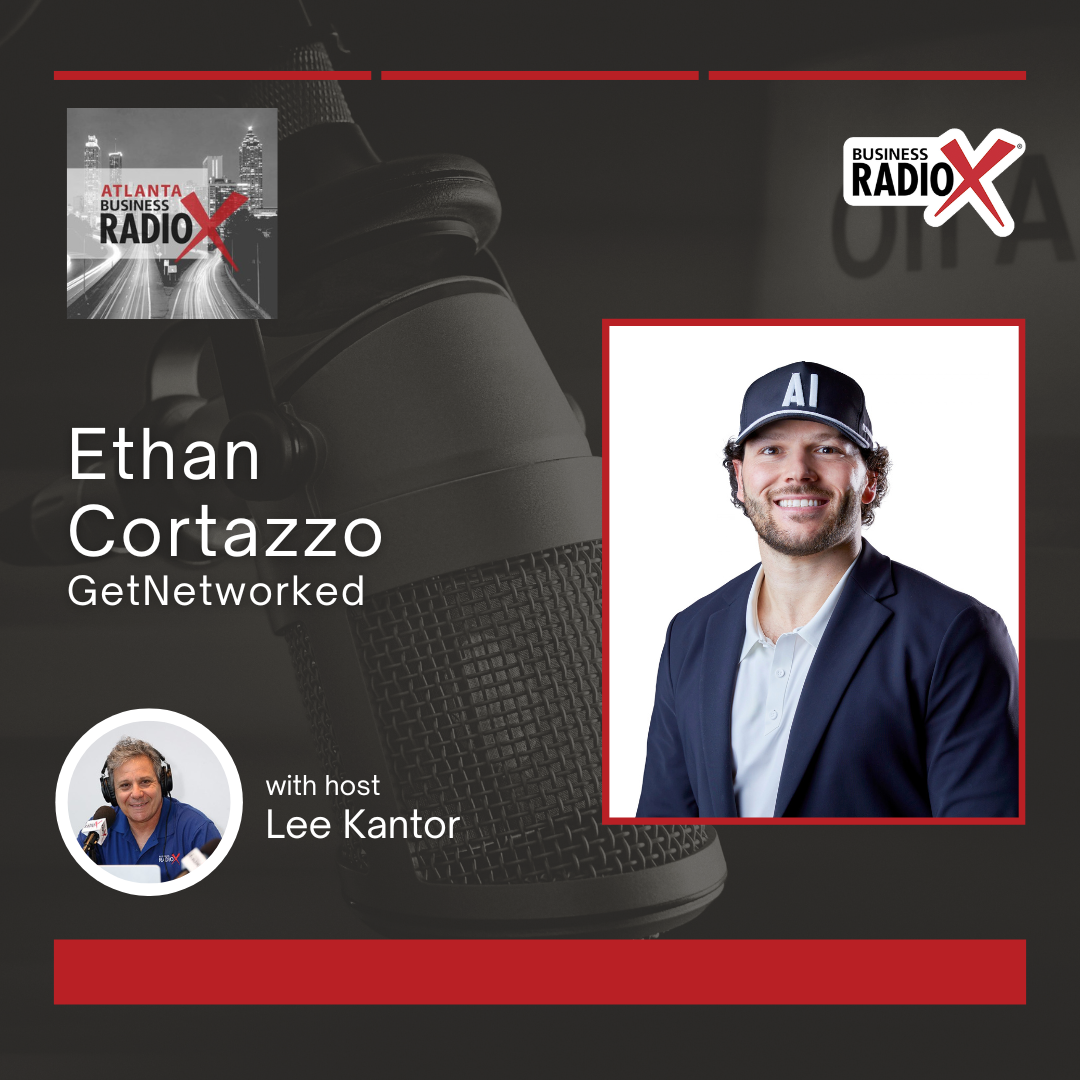

 In this episode of Atlanta Business Radio, Lee Kantor interviews Ethan Cortazzo, founder and CEO of GetNetworked, about using AI-powered event and relationship intelligence to create more meaningful connections at in-person events. Ethan explains how GetNetworked helps event organizers manage registrations, engagement, introductions, networking, and post-event follow-up while using technology to facilitate genuine human-to-human relationships.
 Ethan Cortazzo is the Founder and CEO of GetNetworked, an Atlanta-based technology company building AI-powered event and relationship intelligence software designed to help people make more meaningful real-world connections.
Through GetNetworked, he and his team help event organizers improve registration, check-in, attendee engagement, curated introductions, and post-event insights while giving hosts greater visibility into the relationships and outcomes their events create. The platform has supported more than 500 events and 10,000 professionals.
Before founding GetNetworked, he worked across technology, SaaS, and enterprise sales. A former NCAA football player and team captain, he brings a background in leadership, community building, and relationship development to his work.
Based in Atlanta, he is passionate about entrepreneurship, AI, technology, and building stronger communities through meaningful in-person connection.
Connect with Ethan on LinkedIn.
What You’ll Learn In This Episode
- Using AI to facilitate meaningful connections at events
- Turning event attendance into lasting business relationships
- Creating personalized attendee profiles and strategic introductions
- Centralizing event registration, management, communication, and follow-up
- Designing events around the specific needs of a community
- Increasing engagement through consistent event experiences
- Maintaining attendee engagement before, during, and after events
- Using technology to strengthen rather than replace human-to-human connection
- Building stronger communities through intentional networking and introductions
 This transcript is machine transcribed by Sonix.
TRANSCRIPT
Intro: Broadcasting live from the Business RadioX Studio in Atlanta, Georgia. It’s time for Atlanta Business Radio, brought to you by My Global Presence, the award winning Atlanta public relations agency that elevates brands and non-profits through authentic storytelling and national media campaigns. Find them at my global presence.com. Now, here’s your host.
Lee Kantor: Lee Kantor here, another episode of Atlanta Business Radio. And this is gonna be a good one. But before we get started, it’s important to recognize our sponsor, my Global Presence. If you want global visibility and meaningful impact, go to my global presence.com. Today on the show, we have the founder and CEO with GetNetworked, Ethan Cortazzo. Welcome.
Ethan Cortazzo: What’s up? Lee? How’s it going, man?
Lee Kantor: It is going well. I am so excited to learn what you’re up to. Tell us about getting networked.
Ethan Cortazzo: Yeah. For sure. So GetNetworked is I’m the founder of GetNetwork and CEO, and we’re building an AI powered event and relationship intelligence platform. And it’s designed to, yeah, make real world events more valuable. So most event technologies are really good at registration, you know, ticketing and check in. But once you walk in the room, you still are left asking, you know, what should or who should I actually meet? So that’s the problem we’re trying to solve for.
Lee Kantor: So what was the genesis of the idea? How did this come about?
Ethan Cortazzo: Yeah. So I mean, I’ve spent years bringing people together through events and communities. And I just kept seeing the same problem. You could have 100 incredible people in the room, but if the right ten people never met each other, you missed a huge part of the value of the event. So getting networked started with the idea that technology should help facilitate these connections, right? Not just replace them.
Lee Kantor: So when you first had the idea, what was kind of the version 1.0, what did that look like?
Ethan Cortazzo: Yeah. 1.0. You know, I just had a bunch of subcommunities, right? So I, I was, you know, plugged in with Jim communities. I was plugged in with faith communities, plugged in with technology communities, and no one knew each other. And so when I was on my 27th birthday, I had this idea back in 20. What was it, 2020? Um, yeah. 2023 in April. In April, I threw a birthday party and just invited all my friends together and had a, you know, over 150 people come. And it was just really cool to see. Um, I used a bunch of different tools to kind of bring this plot or this party together. And I just saw a bunch of my friends overlapping and connecting, you know, faith based friends, fitness based friends, technology based friends, social friends of mine. And I just felt like there was a really cool opportunity for people just to meet and connect. So I guess that was kind of the first iteration was, you know, I just had all these subcommunities and it started with hosting my own birthday party. And I realized that none of my friends knew each other. So if I could build, you know, a platform that can help connect people, not just through in-person experiences, but post-event, like I mentioned, I felt like there could be a really cool opportunity to, um, to build some value.
Lee Kantor: So take us through what a GetNetworked event looks like now that you have some technology engine behind it.
Ethan Cortazzo: Sure. Yeah. So I GetNetworked event. So we have a software platform. It’s, it’s in the app store, play store, tens of thousands of users. And if you’re a professional, that’s still going to create high quality connections, highly recommend getting on the platform. So, you know, as the founder, I host my own events. Our company hosts our own, our own events. But the way it works is we allow other organizations to house on the platform as well, so companies can list their event, market it. We have marketing tools manage their event, right with the managed suite. So their staff, their sponsors, organizers can help continue to, you know, manage their event. And then we can monetize, right? So we can monetize the platform. So we’re integrated through payments. And so folks can, you know, transact and ticket through the platform as well. And then, you know, the last part is really the AI part, which is the relationship intelligence. So the intelligence part is growing increasingly valuable amongst the communities that are using our platform. And what’s that doing is it’s actually using technology to help people not miss those high quality connections in the room.
Lee Kantor: So walk me through how this works. Okay? Say, say you do an event. Uh, you’re here in Atlanta. So here in Atlanta somewhere, you’re like, okay, Ethan’s doing a GetNetworked event and say, say hypothetically, 100 people show up at this event. Do the 100 people pay? Like, is that how money’s generated is? They pay to go to the event or is that just one aspect?
Ethan Cortazzo: Yeah, it’s a good question. So GetNetworked. If it’s a get network event, we have a couple of different series. I mean, we have, uh, you know, event models that have sponsors that cover the cost for tickets. And so those are typically free events if sponsors are covering the cost. So if someone registers, you know, they could come to the event. Some events are restricted with approval gates, right? So if someone registers the event host has to approve the attendee. Um, and then and then yeah, we obviously have paid events, right? Some more premium events that help that who gets to participate in these different events, right? So that’s on the get network side. And then on the event hosting side, we have a dozen, dozen, a couple dozen companies using the platform to host their own communities, right? And those communities, you know, spread out between nonprofits, they spread out between, you know, small businesses and enterprise organizations that are using this to help connect their communities or host events using our platform. So now.
Lee Kantor: Yeah, well, I’m just trying to kind of get into the nuts and bolts of this for the listener who might be interested in, you know, checking this out. So now I’m a guest at one of these events. I’m an attendee. How is AI helping me meet the two guys that are women that I want to meet at this event? Like, like, how does that come and help me?
Ethan Cortazzo: Yeah, that’s a great question. So as an attendee, the way event hosting today is it’s just a, it’s a very singular thing. You know, you think about going to a Falcons football game, which I don’t think many people are going to Falcons football games right now. But if you were to buy a ticket on Ticketmaster, you buy a ticket, you get an email confirmation and you get a ticket in your inbox, right? So you go to the event, they scan your ticket and you show up. So 2.0 is actually known who’s at the event. So when you purchase a ticket, go through that same flow, get your confirmation. You actually generate a profile page, right? So we actually create like a social media like profile with interests and it’s specific to that event. So if you registered for, let’s just use that same example Falcons football game, you never know who’s at the game. So on our platform, if you were to purchase that ticket, you create that profile. Now when you get inside that actual event, other individuals that have registered also created profile pages or they had existing profiles. So now you can interact and add people to your network to build your community as an attendee inside of these events on GetNetworked, right? And then the third way that’s really an innovative way I’ve seen right now is our platform is now providing the ability for hosts to use our AI tools to now strategically introduce attendee to attendee based off interest and some other algorithms that we’ve developed at the event level. So as a host, if your job is to create the best experience. We’re helping enable you with that, with our, with our get network platform now.
Lee Kantor: Like instead of a Falcons game, let’s use a chamber of commerce because that’s a business community that, um, they have, um, people that are looking to meet each other where the Falcons game, I don’t know if you know, you want to meet the guy next to you, but, uh, the Chamber of Commerce, I want to meet people that might buy my stuff, right? That’s just natural. So when your model, the chamber is the host of the event.
Ethan Cortazzo: Yeah, they could be the the chamber could be the license or the subscription owner of generic. Right. So they would put the chamber on, GetNetworked.
Lee Kantor: And they say, I have a mixer at, you know, at this restaurant at 6 p.m. everybody that’s a member is invited. So they share the link with all their people. They register and when they register, they, you know, fill out a little profile so they can see who’s who and what, you know, there. And I would imagine they can customize the tags or the, you know, the information that’s captured in that.
Ethan Cortazzo: Yeah. Of course. Yeah. Questionnaires we have, you know, we have themes so you can customize things.
Lee Kantor: So like you could put, I’m hiring or I’m looking for work or I’m, you know, an expert in AI or whatever your specialty is. So that way as the host, I can say, hey, this person’s hiring and you’re looking for a job, you two should meet each other.
Ethan Cortazzo: Yeah, yeah. I mean, to an extent. Yeah, that could definitely, you could definitely do that with our platform. Right? So yeah, the chamber’s a great example. We work with a few. Chambers. Had a meeting with one of the chambers today. The Gwinnett Chamber, and they’re doing a lot of great stuff. They have a directory. But oftentimes when they one of the team members has to go through and, you know, connect with the directory or excuse me, the the members and know who they are has to go through these introductions. They have to spend times, you know, creating introductions or, you know, using our platform. It could, it could do that, you know, through the event itself. Right? So, so yeah, I think that’s a great, great way to look at it, man. Um, what’s been fun? We have a great group. There’s a great amount of communities growing on the platform. And, um, yeah, I mean.
Lee Kantor: Now in that, in that example of the attendee if like, say the chamber is the sponsor, so they’re not charging for the event, does the attendee kind of get a couple of matches included, or does the attendee now have to pay to get a match? Like what, what are the services and how um, is there a fee like a pay per fee at every turn here?
Ethan Cortazzo: Yeah. Great question. So right now as an attendee, there’s no cost to add people to your network, right? So we really gamified the ability for you to grow your network. What’s cool about adding people to your network is you create these like digital profiles and digital business cards on your, on your profile, right? So if you had a profile, you could put, you know, the radio website, you could put your email, your phone number. And until I add you to my network at the event, I’m not going to have access to view that information, right? So if you accept my network to request, then I would be able to then additionally follow up inside of the platform via communications with, you know, in chat communications, peer to peer chat, or I can, you know, click on your email and I can get pulled out to send you a direct email. So yeah, I mean, have you ever been to an event where you go and you forgot to connect with somebody, or you didn’t connect with people you wanted to connect with. So you can always go back to that attendee list at that event and you can add people and continue the conversation. You know, once that event ends, right? So that end is not the start to your experience when you go and show up. It’s actually the beginning, right? Because you can continue the conversation post event.
Lee Kantor: Right? So, but you’re, you’re looking to have get network be kind of the hub of where these interactions take place.
Ethan Cortazzo: Yeah. Correct. Well, I guess it’s, you know, we’re, I believe in, so I’m a fan that human to human connection is going to continue to become harder and harder to do. So it’s going to become a premium over the next couple of years, right? So our goal is to use technology to enable the human to human connection. So our platform is a tool to enable you to continue engaging through in-person events and experiences. So I don’t want to like, I don’t want it to be the central platform. I want to be the central events platform for these organizations to help enable their communities to grow through in-person experiences. But ultimately, we want people to meet face to face. And so our platform is hoping to enable that, right?
Lee Kantor: So you want it to be the jumping off point to have a human to human in real life experience.
Ethan Cortazzo: Precisely. Yeah.
Lee Kantor: Right. So but you want it to be the place where maybe that relationship begins and it’ll end somewhere else, but it’ll begin with GetNetworked.
Ethan Cortazzo: Yeah, absolutely. I mean, one of the events that I host is a, it’s a ministry on the platform, and it’s called Iron City Nights. And so this is an organization that I’ve developed to connect guys in the city, like faith based guys. And so one of the things we do is we do a monthly fitness event at Lifetime Fitness and Perimeter. So I have about 30 to 40 guys come together and we’ll do a 6 to 7 a.m. workout. Seven 730 we’ll cold plunge sauna, steam room, and then 730 to 830 we’ll do programing, right? A small programing with small groups that are intentional for guys to meet. We’ll have sponsors. It’s been a really cool opportunity to use GetNetworked to, you know, market, promote, manage the event and, you know, monetize through sponsors that cover the cost for these attendees to come. And one of the coolest things for me has seen these relationships that have been forming just from building this community. Um, you know, we have guys that are golfing together. We have guys that are doing fellowship together. We have guys that are, uh, you know, doing business together. So it’s just been really cool to help leverage our platform to help do stuff I’m passionate about, like ministry. And so.
Lee Kantor: Now for folks who are business organizations that have tried to do events in the past and may be used. One of those services, you know, like an eventbrite or meetup or one of those kind of things. Those to me seem very limited in the amount of, um, connecting they do. They’re good at, like you said, maybe, you know, being able to keep track of who’s coming or not coming, but it doesn’t do a great job to, um, help relationships become formed.
Ethan Cortazzo: Sure.
Lee Kantor: And that’s where, um, so do you have any advice for those organizations or associations that are putting on an event to get the most out of an event? Are there some do’s and don’ts that you’ve learned from putting on so many events?
Ethan Cortazzo: Yeah, I mean, that’s, that’s a great question. So. I mean, it’s, it’s like, uh, I think as community organizers. Um, I think it’s important to curate a great experience and, you know, meeting your community where they’re at and creating a space for people to, I don’t know, just experience that. So I try not to be super transactional, right? Through these relationships, I think the transaction that I have in these relationships through hosting events is helping people know what they do to connect with the right people. Like there’s some form of value transaction that I want to provide to everyone that comes to the events that are hosted on our platform. And I think oftentimes, you know, that can come from, you know, knowing people, relationships that come from the experience with high quality food or, you know, one of the things that I love doing is has people come in, I try to curate the room. You know, my job is not to, you know, just go meet a bunch of people. My job is to know people and basically germinate the room. Right. So I’d take, you know, Lee, I introduce him to another guy that might be in broadcast or radio or like to talk about sports and create a, you know, super quick introduction between the two. Then I’ll move on to the next, you know, group of people.
Ethan Cortazzo: So I think that’s kind of a due, which would be, is like, as an organizer, your job is to make sure that people are, you know, being seen having value through communication or value through networking or value through introductions. Um, and everyone has different interests, right? So people are coming for socialization. Some people are coming for business development, some people are coming, uh, to have a nice cocktail at a nice restaurant. Right? So I guess just being aware of what your community needs and doing a good job kind of hosting that. Um, I’m trying to think of some other ones, man. Um, what else? Uh, oh, I think one of the ones is post pandemic. I’ve seen People are very last second to register for things. So I think as an organizer, you know, I see I see folks registering up, you know, 72 hours before an event. I see a surplus of, you know, people registering, you know, pre pandemic. I felt like people were super, you know, months in advance to register for events or I feel like now things are very, uh, spontaneous, right? So being top of mind, you know, we built a lot of tools inside the platform with reminders, SMS, email, marketing, different tools to help, you know, adding things to calendars, just to remind organizers or excuse me, attendees and organizers like the events happening where it’s happening.
Ethan Cortazzo: So I feel like one of the dudes is to make sure you continue to, you know, market or push out communications leading up to the event. I’ve seen that help with conversions, with attendants and people coming to the event. Um, and then yeah, I guess post event is also important. Li you know, right. So once you host an event, following up with attendees, making sure they have a great experience, questionnaires are built into our platform. And, um, you know, the other thing is, um, for event organizers that are trying to build community. Consistency is key, right? Like having a great quality room that’s consistent. And that consistency could be time of the month, right? Time of the week. Um, you know, vendor setup, like just having things that are in order so that they’re can build this like momentum where people understand that, you know, every last Monday we host our fitness event, right? Every, every Thursday night, we host our executive dinner, right? These different, uh, nomenclatures, I think, help guests experiences and attendees really, you know, show up to events and be consistent. Um, I gave you a bunch of yeah.
Lee Kantor: Those were great, man. Those were.
Ethan Cortazzo: Great. I, I hope, uh, you know, I, I feel like I’m, there’s some good gems in there.
Lee Kantor: I know there were gold, gold. Um, what about, um, is there a story you can share that maybe illustrates what it’s like for somebody who’s kind of deployed this or taken advantage of it. Anything from the organization or association standpoint, a story that would illustrate maybe what they tried before, and then the better result they got from using GetNetworked. Is there a success story you can share about a group that has used Get Network and it has worked out for them?
Ethan Cortazzo: Yeah. Of course. Yeah. One of the groups, um, that’s on the platform is the ministry, a men’s ministry called Purpose on Tap. It’s been around for a few years and they built this to just connect guys around. You know, once a month or once a quarter or I guess they made every other month. And it was to me to have fellowship around guys drinking beers. Right. So they used, you know, traditional websites, sign up flow, Google sheets. And so oftentimes when it came to the event day, you know, they’d have 60% attendance show up, right? 50, 60% attendance. And so it was a very, I don’t want to say traditional, but, um, you know, what companies either use like a sign up sheet on like Wix or a Google sheet. It’s a very easy registration, first name, last name, email, and just a, you know, just a calendar invite. And so oftentimes people forget they don’t show up. There’s no other tools. So they use their platform, uh, they’ve been using our platform for a few months and they had an event on October 5th with a guy named Jonathan Irons, who, you know, was in the criminal system and he was wrongfully convicted and ended up getting out of prison and spoke to our group. And we had they had over 120 guys show up to this event, right? So they, they doubled or tripled their attendance and occupancy.
Ethan Cortazzo: And one of the biggest events yet using our tool, because it just helped with registration, it helped with. The other thing is like the network effect is, you know, we built a lot of shared features inside the platform. So there’s something called server side rendering. So when you share a URL link, server side rendering is where it renders the actual image card instead of just a link. When you text somebody that could be on WhatsApp, Facebook or SMS. And so when you shared that it shows the actual event link or the event card. Uh, right. Like the event flier. And so, yeah, they, they use this platform. And it helped not only with folks coming in the door, but all the ticketing, the check in for their team. You know, they manage all the name tags and check in and then all the post communication follow ups, they were able to ask specific questions to understand where guys are going to church. Um, how are they plugged into the community? And all that stuff was managed inside of our platform. They’ve been able to follow up with. Yeah, a really good experience. So that’s our hope, man is just like using some of these, what I call frank and stack tools that, you know, these companies are using emails and a bunch of third party tools, and our platform really centralizes it into one, one product. So.
Lee Kantor: So if somebody wants to learn more, get the app or learn more about what you’re up to and support you. Is there a website? What’s the best way to connect?
Ethan Cortazzo: Yeah, man. Um, I do a lot on social media. So you know, Ethan underscore Cortazzo I, you know, host a bunch of stuff or post a bunch of stuff on there. And then getnetwork.com, you know, is our website. And, uh, but yeah, find us on the App store, find us on the play store. And ultimately, if you’re, if you’re an attendee or looking to host, we allow host to host their first event or first couple events for free up to 75 attendees. So you can use the platform, you know, host your community, see if you can grow it. And then, uh, yeah, get out. We always say like, get out and GetNetworked, right? It’s the best way to get on the platform is come to an event and come experience our communities and the communities on our platform yourself.
Lee Kantor: And the ideal, um, prospect for you are people that do events like associations or, uh, communities, any type of group out there that is already kind of doing their own event with kind of like you said, this cobble together a bunch of tools that if they want everything in one place, it’s going to do a better job, then that’s a good prospect for you?
Ethan Cortazzo: Yeah. Of course. You know, small medium businesses or enterprises that are looking to scale their in-person events or communities. Um, you know, they’re having multiple platforms. They’re looking to centralize it or folks that are looking to implement in-person experiences inside their business. Right. We’re doing services for companies now where we’re seeing that you’re 34 times more likely to do business with who you meet in person. So there’s a huge, uh, not only like return to work, but, you know, there’s huge, um, return to people being back in this traditional handshake, the handshake, human to human, um, you know, engagement to really understand who these people are that they’re doing business with. Right? It’s in an AI world where you have the AI avatars and AI bots and AI cold calling systems. People want to know who, who, who, who the heck they’re working with, right? So if you can get in the room, shake a hand. It’s helping convert businesses. Uh, you know, people coming to these events into, you know, business relationships. So yeah, professional association, membership member membership associations, industry communities, networking groups, you know, we have, you know, we’re supporting B2B conferences. So we have multi-day conferences, we have virtual capabilities, hybrid capabilities, chambers, consoles, accelerators. Um, yeah, companies running customer and partner executive ecosystem events. So there’s a bunch of bunch of, uh, lanes that, you know, if folks are looking to use technology like this, they could definitely have some value with our platform.
Lee Kantor: Good stuff man. Well, congratulations on all the success. Uh, you’re doing important work and we appreciate you.
Ethan Cortazzo: Man. Thank you so much for having me.
Lee Kantor: All right. This Lee Kantor. We’ll see you all next time on Atlanta Business Radio.















