Business RadioX ®

  • Home
  • Business RadioX ® Communities
    • Southeast
      • Alabama
        • Birmingham
      • Florida
        • Orlando
        • Pensacola
        • South Florida
        • Tampa
        • Tallahassee
      • Georgia
        • Atlanta
        • Cherokee
        • Forsyth
        • Greater Perimeter
        • Gwinnett
        • North Fulton
        • North Georgia
        • Northeast Georgia
        • Rome
        • Savannah
      • Louisiana
        • New Orleans
      • North Carolina
        • Charlotte
        • Raleigh
      • Tennessee
        • Chattanooga
        • Nashville
      • Virginia
        • Richmond
    • South Central
      • Arkansas
        • Northwest Arkansas
    • Midwest
      • Illinois
        • Chicago
      • Michigan
        • Detroit
      • Minnesota
        • Minneapolis St. Paul
      • Missouri
        • St. Louis
      • Ohio
        • Cleveland
        • Columbus
        • Dayton
    • Southwest
      • Arizona
        • Phoenix
        • Tucson
        • Valley
      • Texas
        • Austin
        • Dallas
        • Houston
    • West
      • California
        • Bay Area
        • LA
        • Pasadena
      • Colorado
        • Denver
      • Hawaii
        • Oahu
  • FAQs
  • About Us
    • Our Mission
    • Our Audience
    • Why It Works
    • What People Are Saying
    • BRX in the News
  • Resources
    • BRX Pro Tips
    • B2B Marketing: The 4Rs
    • High Velocity Selling Habits
    • Why Most B2B Media Strategies Fail
    • 9 Reasons To Sponsor A Business RadioX ® Show
  • Partner With Us
  • Veteran Business RadioX ®

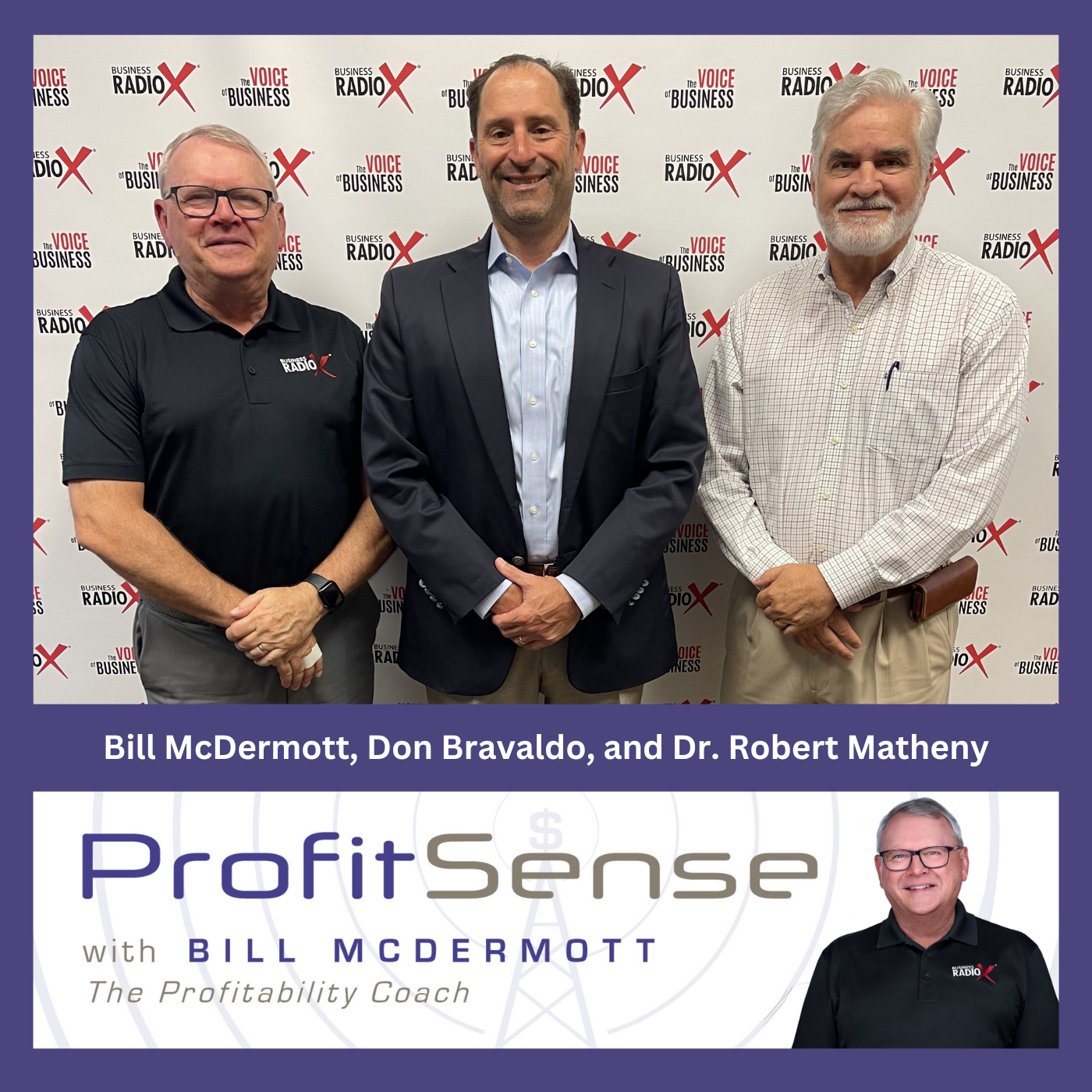
Dr. Robert Matheny, Corvivo Cardio, and Don Bravaldo, Bravaldo Capital Advisors

July 16, 2024 by John Ray

Dr. Rob Matheny, Corvivo Cardio, and Don Bravaldo, Bravaldo Capital Advisors
North Fulton Studio
Dr. Robert Matheny, Corvivo Cardio, and Don Bravaldo, Bravaldo Capital Advisors
Loading
00:00 /
RSS Feed
Share
Link
Embed

Download file

Dr. Rob Matheny, Corvivo Cardio, and Don Bravaldo, Bravaldo Capital Advisors

Dr. Robert Matheny, Corvivo Cardio, and Don Bravaldo, Bravaldo Capital Advisors (ProfitSense with Bill McDermott, Episode 59)

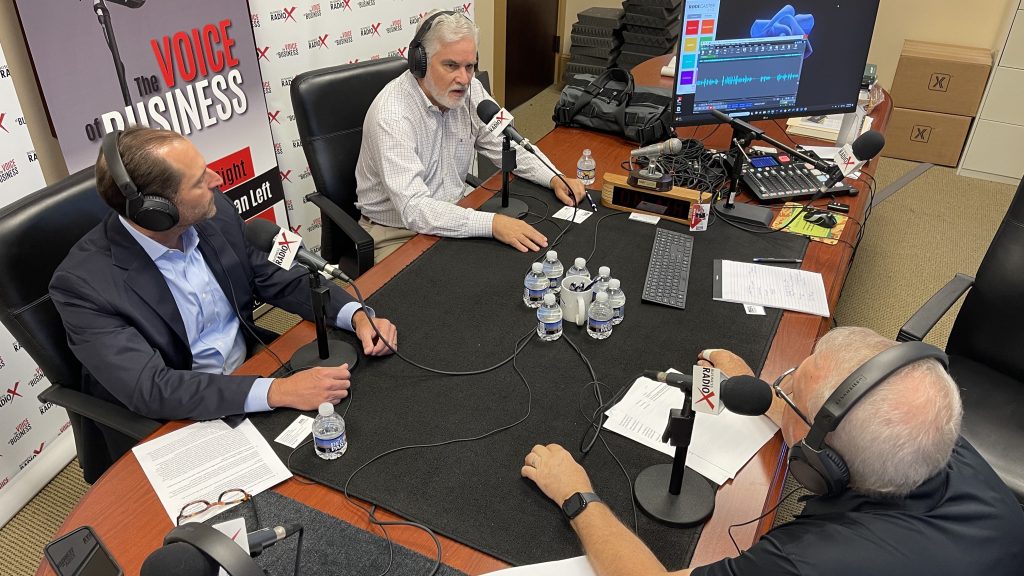
On this episode of ProfitSense, host Bill McDermott delves into the stories of two influential Atlanta businessmen. The first guest, Dr. Robert Matheny of Corvivo Cardio, discusses his transition from a cardiovascular surgeon to an entrepreneur, pioneering groundbreaking extracellular matrix technology for heart tissue regeneration. The second guest, Don Bravaldo, President of Bravaldo Capital Advisors, provides expert insights into the mergers and acquisitions landscape, highlighting recent success stories and advising business owners on how to best prepare for sale.

Bill concludes the show with a commentary on how to de-risk your decisions and ensure you’re making the best choices for your company.

ProfitSense with Bill McDermott is sponsored and presented by Bill McDermott, The Profitability Coach, and the show is produced by John Ray and the North Fulton Studio of Business RadioX® in Alpharetta.

Dr. Robert Matheny, Corvivo Cardio (formerly CorMatrix Cardiovascular, Inc)
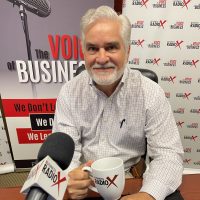
Dr. Rob Matheny, Corvivo Cardio
Dr. Robert Matheny, Corvivo Cardio

Dr. Robert Matheny is a highly experienced cardiothoracic surgery specialist based in Atlanta, GA, with over 41 years in the medical field. He graduated from the University of Louisville School of Medicine and has since dedicated his career to cardiovascular medicine and medical technology innovation.

As the founder and Chief Medical Officer of CorMatrix Cardiovascular, Inc., Dr. Matheny has been instrumental in developing extracellular matrix (ECM) biomaterials for cardiac and vascular tissue repair. His work has led to the creation of innovative products that have been used in over 160,000 cardiovascular procedures across more than 975 hospitals in the United States.

Dr. Matheny’s commitment to advancing regenerative medicine in the cardiovascular field is evident through his extensive research and development efforts. He has overseen numerous studies, including more than 50 at T3 Labs, contributing significantly to the improvement of patient outcomes in the treatment of heart failure and various cardiovascular conditions.

LinkedIn

Don Bravaldo, Bravaldo Capital Advisors

Don Bravaldo, Bravaldo Capital Advisors

Don Bravaldo is the founder and President of Bravaldo Capital Advisors, a boutique investment banking firm based in Atlanta, Georgia, which he established in 2006. As a Certified Public Accountant (CPA) with a strong background in finance and accounting, Don has developed a particular passion for mergers and acquisitions. His firm specializes in serving privately held and closely held companies, typically those with revenues between $10 million and $300 million, primarily located in the Southeastern United States.

Under Don’s leadership, Bravaldo Capital Advisors offers a comprehensive range of transaction and advisory services, including sell-side transactions, exit strategy planning, growth through acquisition, debt restructuring, and corporate recapitalization. The firm has developed extensive expertise across various industries, including industrials, information technology, healthcare, and general business services.

Don’s approach to investment banking emphasizes providing independent economic and financial advice, coupled with execution services. His firm’s engagements have a broad geographical scope, ranging from national to international. In addition to his role at Bravaldo Capital Advisors, Don serves as a Board Member for Pandea Global M&A, further extending his influence in the mergers and acquisitions field.

Website | LinkedIn

Topics Discussed in this Episode

00:00 Introduction to ProfitSense
01:05 Meet Dr. Robert Matheny of Corvivo Cardio
01:26 The Journey from Surgeon to Entrepreneur
05:00 Groundbreaking ECM Technology
09:54 Clinical Trials and Future Prospects
12:51 Meet Don Bravaldo of Bravaldo Capital Advisors
13:38 The Genesis of Bravaldo Capital Advisors
17:53 Current M&A Market Insights
21:37 Success Stories in M&A
27:36 Advice for Business Owners Considering an Exit
30:43 Bill McDermott’s Entrepreneurial Journey
32:49 Closing Remarks and How to Stay Connected
About ProfitSense and Your Host, Bill McDermott

Bill McDermott
Bill McDermott

ProfitSense with Bill McDermott dives into the stories behind some of Atlanta’s successful businesses and business owners and the professionals that advise them. This show helps local business leaders get the word out about the important work they’re doing to serve their market, their community, and their profession.

Follow this link to find the show archive.

The show is presented by The Profitability Coach. The Profitability Coach helps business owners improve cash flow and profitability, find financing, break through barriers to expansion, and financially prepare to exit their business.

Bill McDermott is the Founder and CEO of The Profitability Coach. When business owners want to increase their profitability, they don’t have the expertise to know where to start or what to do. Bill leverages his knowledge and relationships from 32 years as a banker to identify the hurdles getting in the way and create a plan to deliver profitability they never thought possible.

Bill currently serves as Treasurer for the Atlanta Executive Forum and has held previous positions as a board member for the Kennesaw State University Entrepreneurship Center, Gwinnett Habitat for Humanity, and Treasurer for CEO NetWeavers. Bill is a graduate of Wake Forest University, and he and his wife, Martha, have called Atlanta home for over 40 years. Outside of work, Bill enjoys golf, traveling, and gardening.

Connect with Bill on LinkedIn and Instagram and follow The Profitability Coach on LinkedIn.

Tagged With: Bill McDermott, Bravaldo Capital Advisors, cardiovascular medicine, CorMatrix Cardiovascular, Corvivo Cardio, Don Bravaldo, Dr. Robert Matheny, exit strategy, extracellular matrix technology, heart tissue regeneration, M&A, Mergers and Acquisitions, Profitability Coach Bill McDermott, ProfitSense, ProfitSense with Bill McDermott, The Profitability Coach, tissue repair

Future Sight EP 138

January 12, 2023 by Karen

Phoenix Business Radio
Future Sight EP 138
Loading
00:00 /
RSS Feed
Share
Link
Embed

Download file

Future-Sight

Future Sight EP 138

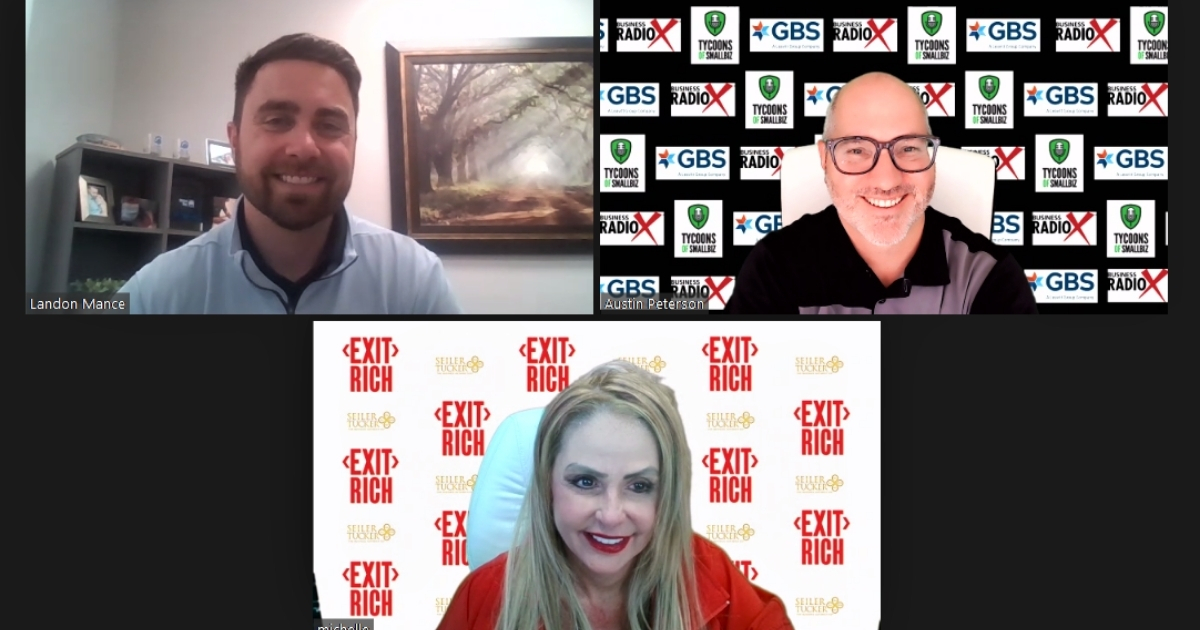
Austin Peterson and Landon Mance, owners of Backbone Planning Partners, joined to talk about the importance of planning for the future and retirement when owning or leading a small business. They spoke about having an exit strategy and what steps you can take to help ensure that your business is taken care of in the future.

Tune in to hear Austin and Landon share about how they work with clients to plan for the future and some of the steps they recommend that business owners and leaders should take. Visit https://www.backboneplanning.com/ to learn more about Austin and Landon.

Landon Mance and Austin Peterson are registered representatives of Lincoln Financial Advisors Corp. Securities and investment advisory services offered through Lincoln Financial Advisors Corp., a broker/dealer (member SIPC) and registered investment advisor. Insurance offered through Lincoln affiliates and other fine companies. Backbone Planning Partners is a marketing name for Registered Representatives of Lincoln Financial Advisors Corp.  Tycoon of Small Biz is not affiliated with Lincoln Financial Advisors Corp.  CRN-5403305-010923

About the Show

Tycoons of Small Biz spotlights the true backbone of the American economy, the true tycoons of business in America… the owners, founders and CEO’s of small businesses. Join hosts,  Austin L Peterson, Landon Mance and the featured tycoons LIVE every Tuesday at 1 pm, right here on Business RadioX and your favorite podcast platform.

About Your Hosts

Autsin-Peterson-on-Phoenix-Business-RadioX

Austin Peterson is a Comprehensive Financial Planner and co-founder of Backbone Planning Partners in Scottsdale, AZ. Austin is a registered rep and investment advisor representative with Lincoln Financial Advisors. Prior to joining Lincoln Financial Advisors, Austin worked in a variety of roles in the financial services industry.

He began his career in financial services in the year 2000 as a personal financial advisor with Independent Capital Management in Santa Ana, CA. Austin then joined Pacific Life Insurance Company as an internal wholesaler for their variable annuity and mutual fund products. After Pacific Life, Austin formed his own financial planning company in Southern California that he built and ran for 6 years and eventually sold when he moved his family to Salt Lake City to pursue his MBA.

After he completed his MBA, Austin joined Crump Life Insurance where he filled a couple of different sales roles and eventually a management role throughout the five years he was with Crump. Most recently before joining Lincoln Financial Advisors in February 2015, Austin spent 2 years as a life insurance field wholesaler with Symetra Life Insurance Company. Austin is a Certified Financial Planner Professional and Chartered Life Underwriter. In 2021, Austin became a Certified Business Exit Consultant® (CBEC®) to help entrepreneurs plan to exit their businesses.

Austin and his wife of 23 years, Robin, have two children, AJ (21) and Ella (18) and they reside in Gilbert, Arizona. He is a graduate of California State University, Fullerton with a Bachelor of Arts in French and of Brigham Young University’s Marriott School of Management with a Master of Business Administration with an emphasis in sales and entrepreneurship.backbone-New-Logo

Connect with Austin on LinkedIn, Facebook, Twitter, and Instagram.

LandonHeadshot01

Landon Mance is a Financial Planner and co-founder of Backbone Planning Partners out of Las Vegas, Nevada. He rebranded his practice in 2020 to focus on serving small business owners after operating as Mance Wealth Management since 2015 when Landon broke off from a major bank and started his own “shop.”

Landon comes from a family of successful entrepreneurs and has a passion and excitement for serving the business community. This passion is what brought about the growth of Backbone Planning Partners to help business owners and their families. At Backbone Planning, we believe small business owners’ personal and business goals are intertwined, so we work with our clients to design a financial plan to support all aspects of their lives.

In 2019, Landon obtained the Certified Exit Planning Advisor (CEPA) designation through the Exit Planning Institute. With this certification, Backbone Planning Partners assists business owners through an ownership transition while focusing on a positive outcome for their employees and meeting the business owner’s goals. Landon is also a member of the Business Intelligence Institute (BII) which is a collaborative group that shares tools, resources and personnel, and offers advanced level training and technical support to specifically serve business owners. In 2021, Landon became a Certified Business Exit Consultant® (CBEC®) to help entrepreneurs plan to exit their businesses by counseling owners about exit options, estimating the value of the business, preparing the business for exit and tax considerations.

Landon enjoys spending time with his beautiful wife, stepson, and new baby twins. He grew up in sunny San Diego and loves visiting his family, playing a round of golf with friends, and many other outdoor activities. Landon tries to make a difference in the lives of children in Las Vegas as a part of the leadership team for a local non-profit. He regularly visits the children that we work with to remind himself of why it’s so important to, “be the change that you wish to see in the world.”

Landon received his B.S. from California State University Long Beach in business marketing and gets the rest of his education through the school of hard knocks via his business owner clients.

Connect with Landon on LinkedIn.

Tagged With: exit strategy, planning for the future, retirement

Right Way to Sell Your Business E51

April 29, 2021 by Karen

Right-Way-to-Sell-Your-Business-Feature
Phoenix Business Radio
Right Way to Sell Your Business E51
Loading
00:00 /
RSS Feed
Share
Link
Embed

Download file

Right-Way-to-Sell-Your-Business-EP-51

Right Way to Sell Your Business E51

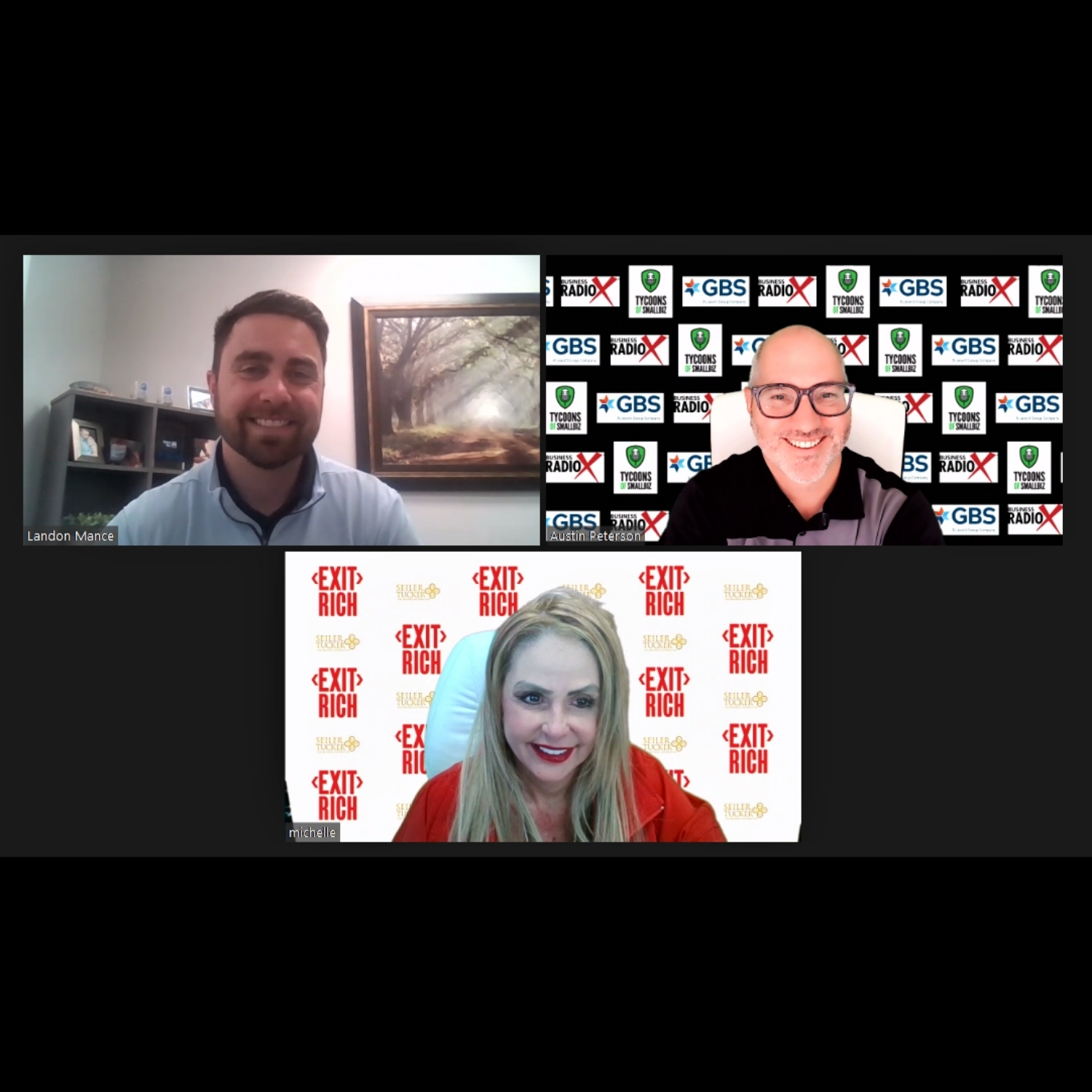
Tycoons welcomed Michelle to the show and she was a breadth of knowledge on preparing to exit your business. Her experience comes from having sold over 1,000 businesses. She provided key attributes to successfully prepare your business such as your business should be able to run without you and having the right people. For more tips you should buy her book, “Exit Rich.”

You will want to listen to Michelle, because she has a lot of information business owners can learn from. You’ll learn about 5 types of buyers and the 10 biggest profit mistakes.

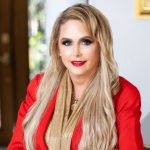
Michelle-Seiler-TuckerMichelle Seiler Tucker is the Founder and CEO of Seiler Tucker Incorporated. She holds the M&AMI (Mergers & Acquisitions Master Intermediary) title, as well as Certified Mergers and Acquisitions Professional (CM&AP) and Certified Senior Business Analyst (CSBA).

Michelle also owns many other businesses in several different industries. As a 20-year veteran in the M&A industry, she is regarded as the leading authority on buying, selling, fixing, and growing businesses. Her and her firm have sold over a thousand businesses in almost every vertical and have a remarkable track record of success, closing 98% of offers she writes.

Connect with Michelle on LinkedIn, Facebook and Twitter.

About the Show

Tycoons of Small Biz spotlights the true backbone of the American economy, the true tycoons of business in America… the owners, founders and CEO’s of small businesses. Join hosts,  Austin L Peterson, Landon Mance and the featured tycoons LIVE every Tuesday at 1 pm, right here on Business RadioX and your favorite podcast platform.

About Your Hosts

Autsin-Peterson-on-Phoenix-Business-RadioXAustin Peterson is a Comprehensive Financial Planner and owner of Backbone Financial in Scottsdale, AZ. Austin is a registered rep and investment advisor representative with Lincoln Financial Advisors. Prior to joining Lincoln Financial Advisors, Austin worked in a variety of roles in the financial services industry.

He began his career in financial services in the year 2000 as a personal financial advisor with Independent Capital Management in Santa Ana, CA. Austin then joined Pacific Life Insurance Company as an internal wholesaler for their variable annuity and mutual fund products. After Pacific Life, Austin formed his own financial planning company in Southern California that he built and ran for 6 years and eventually sold when he moved his family to Salt Lake City to pursue his MBA.

After he completed his MBA, Austin joined Crump Life Insurance where he filled a couple of different sales roles and eventually a management role throughout the five years he was with Crump. Most recently before joining Lincoln Financial Advisors in February 2015, Austin spent 2 years as a life insurance field wholesaler with Symetra Life Insurance Company. Austin is a Certified Financial Planner Professional and Chartered Life Underwriter.

Austin and his wife of 21 years, Robin, have two children, AJ (19) and Ella (16) and they reside in Gilbert, Arizona. He is a graduate of California State University, Fullerton with a Bachelor of Arts in French and of Brigham Young University’s Marriott School of Management with a Master of Business Administration with an emphasis in sales and entrepreneurship.

Connect with Austin on LinkedIn, Facebook, Twitter, and Instagram.

LandonHeadshot01Landon Mance is a Financial Planner and founder of YourFuture Planning Partners out of Las Vegas, Nevada. His firm came to life in 2020 after operating as Mance Wealth Management since 2015 when Landon broke off from a major bank and started his own “shop.”

Landon comes from a family of successful entrepreneurs and has a passion and excitement for serving the business community. This passion is what brought about the growth of YourFuture Planning Partners to help business owners and their families. At YourFuture, we believe small business owners’ personal and business goals are intertwined, so we work with our clients to design a financial plan to support all aspects of their lives.

In 2019, Landon obtained the Certified Exit Planning Advisor (CEPA) designation through the Exit Planning Institute. With this certification, YourFuture Planning Partners assists business owners through an ownership transition while focusing on a positive outcome for their employees and meeting the business owner’s goals. Landon is also a member of the Business Intelligence Institute (BII) which is a collaborative group that shares tools, resources and personnel, and offers advanced level training and technical support to specifically serve business owners.Your-Future-Planning-Partners-logo

Landon enjoys spending time with his beautiful wife, stepson, and new baby twins. He grew up in sunny San Diego and loves visiting his family, playing a round of golf with friends, and many other outdoor activities. Landon tries make a difference in the lives of children in Las Vegas as a part of the leadership team for a local non-profit. He regularly visits the children that we work with to remind himself of why it’s so important to, “be the change that you wish to see in the world.”

Landon received his B.S. from California State University Long Beach in business marketing and gets the rest of his education through the school of hard knocks via his business owner clients.

Connect with Landon on LinkedIn.

About The Tycoons of Small Biz Sponsor

Whether you’re an established local company, or a brand new start-up, you can count on GBS to be a part of your family.
We’re not just any benefits consulting firm, we’re GBS. We have nearly 30 years of experience in group benefits, a strong sense of purpose and it shows.

Austin Peterson and Landon Mance are registered representatives of Lincoln Financial Advisors Corp. Securities and investment advisory services offered through Lincoln Financial Advisors Corp., a broker/dealer (member SIPC) and registered investment advisor. Insurance offered through Lincoln affiliates and other fine companies. Backbone Financial and Your Future Planning Partners are marketing names for registered representatives of Lincoln Financial Advisors

CRN-3557507-042021

Lincoln Financial Advisors Corp. and its representatives do not provide legal or tax advice. You may want to consult a legal or tax advisor regarding any legal or tax information as it relates to your personal circumstances.

The content presented is for informational and educational purposes. The information covered and posted are views and opinions of the guests and not necessarily those of Lincoln Financial Advisors Corp.

Business RadioX® is a separate entity not affiliated with Lincoln Financial Advisors Corp.

Tagged With: exit strategy, Seiler Tucker, Sellable business

Decision Vision Episode 41: Should I Sell My Company to an ESOP? – An Interview with Andre Schnabl, Tenor Capital Partners

November 21, 2019 by John Ray

Decision Vision
Decision Vision
Decision Vision Episode 41: Should I Sell My Company to an ESOP? - An Interview with Andre Schnabl, Tenor Capital Partners
Loading
00:00 /
RSS Feed
Share
Link
Embed

Download file

should I sell my company to an esop
Mike Blake and Andre Schnabl

Decision Vision Episode 41: Should I Sell My Company to an ESOP? – An Interview with Andre Schnabl, Tenor Capital Partners

Is selling my business to employees through an ESOP advisable? What kind of businesses are the best candidates to sell to an ESOP? In this edition of “Decision Vision,” host Mike Blake discusses this question with Andre Schnabl, Tenor Capital Partners. “Decision Vision” is presented by Brady Ware & Company.

Andre Schnabl, Tenor Capital Partners

Andre Schnabl

Tenor Capital Partners is financial advisory firm focused exclusively on the design and installation of Employee Stock Ownership Plans (ESOPs). These transactions use employee ownership as a platform for business owners to realize the value of their businesses through the sale to an ESOP.

Andre Schnabl is a managing partner of TCP and leads the firm’s debt placement practice. Prior to joining TCP, Andre retired as Managing Partner of the Atlanta office of Grant Thornton LLP in 2012. Prior to his retirement he held a variety of positions within the firm in the firm’s offices in Zimbabwe, Montreal, Canada and Atlanta. During his career, he has consulted with mid market companies on a variety of matters, including mergers and acquisitions, debt and equity financings including public offerings. Since joining Tenor in 2013, Andre has been advising companies and shareholders in business succession using ESOP’s, including shareholder advocacy, structuring and leading the financing raises. Andre has a Bachelor of Science degree in Chemistry and Geology from the University of London and is a CPA. He serves on a number of corporate and not-for-profit boards.

For more information, visit the Tenor Capital Partners website or call Andre directly at 404-372-2759.

Michael Blake, Brady Ware & Company

Mike Blake, Host of “Decision Vision”

Michael Blake is Host of the “Decision Vision” podcast series and a Director of Brady Ware & Company. Mike specializes in the valuation of intellectual property-driven firms, such as software firms, aerospace firms and professional services firms, most frequently in the capacity as a transaction advisor, helping clients obtain great outcomes from complex transaction opportunities. He is also a specialist in the appraisal of intellectual properties as stand-alone assets, such as software, trade secrets, and patents.

Mike has been a full-time business appraiser for 13 years with public accounting firms, boutique business appraisal firms, and an owner of his own firm. Prior to that, he spent 8 years in venture capital and investment banking, including transactions in the U.S., Israel, Russia, Ukraine, and Belarus.

Brady Ware & Company

Brady Ware & Company is a regional full-service accounting and advisory firm which helps businesses and entrepreneurs make visions a reality. Brady Ware services clients nationally from its offices in Alpharetta, GA; Columbus and Dayton, OH; and Richmond, IN. The firm is growth minded, committed to the regions in which they operate, and most importantly, they make significant investments in their people and service offerings to meet the changing financial needs of those they are privileged to serve. The firm is dedicated to providing results that make a difference for its clients.

Decision Vision Podcast Series

“Decision Vision” is a podcast covering topics and issues facing small business owners and connecting them with solutions from leading experts. This series is presented by Brady Ware & Company. If you are a decision maker for a small business, we’d love to hear from you. Contact us at decisionvision@bradyware.com and make sure to listen to every Thursday to the “Decision Vision” podcast. Past episodes of “Decision Vision” can be found here. “Decision Vision” is produced and broadcast by the North Fulton studio of Business RadioX®.

Visit Brady Ware & Company on social media:

LinkedIn:  https://www.linkedin.com/company/brady-ware/

Facebook: https://www.facebook.com/bradywareCPAs/

Twitter: https://twitter.com/BradyWare

Instagram: https://www.instagram.com/bradywarecompany/

Show Transcript

Intro: [00:00:02] Welcome to Decision Vision, a podcast series focusing on critical business decisions brought to you by Brady Ware & Company. Brady Ware is a regional full-service accounting and advisory firm that helps businesses and entrepreneurs make visions a reality.

Michael Blake: [00:00:20] And welcome to Decision Vision, a podcast giving you, the listener, a clear vision to make great decisions. In each episode, we discuss the process of decision making on a different topic, rather than making recommendations because everyone’s circumstances are different. We talk to subject matter experts about how they would recommend thinking about that decision. My name is Mike Blake and I’m your host for today’s program. I’m a director at Brady Ware & Company, a full-service accounting firm based in Dayton, Ohio, with offices in Dayton, Columbus, Ohio; Richmond, Indiana; and Alpharetta, Georgia, which is where we are recording today.

Michael Blake: [00:00:53] Brady Ware is sponsoring this podcast. If you like this podcast, please subscribe on your favorite podcast aggregator and please also consider leaving a review of the podcast as well. Our topic today is, should I consider an ESOP? An ESOP is an acronym for employee stock ownership program. And, you know, this is a topic that sort of comes and goes. You kind of see waves of ESOP’s popularity in the marketplace. And I don’t frankly know for it a crust or a nadir of waves right now.

Michael Blake: [00:01:31] But what I do know is that ESOPs are interesting. They are complicated. They can be accompanied by some risk, but I also am convinced, in certain circumstances, they are, flat out, the best way for an owner to exit their business. There are tax advantages to doing so. In some cases, the ESOP is in a position to pay more for a business than any other buyer. And also, there are business owners out there who have an interest in giving their employees an opportunity to share in the wealth that the business has created will generate.

Michael Blake: [00:02:18] And that may be in the ongoing role of the owner or even after the owner sort of drops off the keys and retires some place to Costa Rica. And, you know, I don’t know if this is still true, there’s not tricks have emerged since, but for a long time, I think the largest ESOP in United States was United Airlines. And for a long time, they are an employee-owned company, merged I think with Continental. I can’t keep track now. They’re just all, in the United States, making airlines anyway.

Michael Blake: [00:02:55] But, you know, it’s probably a topic that at least some of you have had arise either as a business owner or an advisory capacity. And once you start getting into regulations, the mechanics, it can be dizzying. And I am far from being an expert on this, as I am with just about every topic that we bring on the program, which is why we do the program. And so, instead of my trying to fumble my way through it, I have brought on my friend and colleague, Andre Schnabl, who is a principal and managing partner of Tenor Capital Partners, a financial advisory firm that is focused exclusively on the design installation of employee stock ownership plans.

Michael Blake: [00:03:38] Prior to joining TCP, Andre retired as managing partner of the Atlanta office of Grant Thornton in 2012. And we’ve known each other long before then. We were sort of friendly quasi-competitors. Prior to his retirement, he held a variety of positions within the firm and the firm’s offices in Zimbabwe, Montreal, Canada, and Atlanta. During his career, he has consulted with mid-market companies in a variety of matters including mergers and acquisitions, debt and equity financings, including public offerings.

Michael Blake: [00:04:10] Since joining Tenor in 2013, again, a very busy retired guy, Andre had been advising companies and shareholders in business succession using ESOPs, including shareholder advocacy, structuring, and even the financing raises. Andre is a bachelor of science in chemistry and geology from the University of London and is a CPA. I did not know that you’re a scientist. He serves on a number of corporate and not for profit boards. He has the passionate belief that the advancement of women into leadership positions is not only the right thing to do, but also a business paradigm. I strongly agree with that.

Michael Blake: [00:04:44] He partnered with Women in Technology to help create the Women of the Year Technology Awards that began 17 years ago. For those of you who are not in Atlanta, that is a big deal. I think it is one of the two or three most important awards ceremonies on the Atlanta tech sector calendar. And I did not know that you helped start that, so good for you. And thank you for doing that. Andre continues his unwavering support for diversity and has been a frequent guest speaker for corporations and associations on the critical importance of diversity within leadership ranks. Women in Technology recognized Andre’s contributions in this regard with their legacy award. Andre, thanks for coming on the program.

Andre Schnabl: [00:05:22] Thank you, Mike.

Michael Blake: [00:05:24] So, let’s start with very basic—this first question I ask in almost every interview, it’s probably the most important interview for which I’m asking this question so we can set the vocabulary. What is an ESOP?

Andre Schnabl: [00:05:37] The acronym literally means employee stock ownership plan. I would like to say that the acronym unfortunately connotes a number of different things for different people. And to some extent, maybe it’s the press that it’s received has been unfortunate. What an ESOP essentially does, it creates a platform for employee ownership. So, this is a mechanism by which a shareholder, a founder, somebody who basically has built a business, it’s time for them to consider a variety of options on how to exit. They can either take it public. They can sell to a competitor. They can sell to a supplier and/or other strategic buyer or they can sell to a financial buyer, such as private equity. They seldom think about this other potential exit strategy, which is selling to an ESOP. And therein I guess is the basis of this conversation.

Michael Blake: [00:06:44] I’m glad you brought that up because in my line of work dealing with many companies, I hear people use the term ESOP in connection with stock options, right? And they’re calling it employee stock option program. And it’s descriptive but factually incorrect, right? So, it’s important because those two things are about as different. In fact, later today, we’re recording a podcast on stock option programs, but that’s not what we’re talking today. So, we’re selling to an ESOP. When we say selling to an ESOP, I mean, what exactly is ESOP? I mean, we talked about, you said that it is a vehicle for employees to own a company or a portion of a company. Can you expand upon that in terms of what the mechanics of an ESOP actually are?

Andre Schnabl: [00:07:34] Yes. Basically, what happens is one creates a trust, an employee stock ownership trust, and you sell all of the shares of the business from the selling shareholders or a portion of the shares to that trust. Can be anything from 1 percent to 100 percent into the trust for the benefit of all of the employees. And so, over time, the trust releases those shares into employee accounts. A little bit like a company’s match on a 401(k) plan. And by releasing those shares into employee accounts, over the years, those employees enjoy the benefit of the equity appreciation of the company.

Andre Schnabl: [00:08:27] And on their retirement, they can essentially sell back those shares at fair market value and have created value for themselves. And on the sell side, here is a way for selling shareholders to sell their shares at full value. They’re not leaving anything on the table or be it that they are doing something wonderful for their employees, they’re going to get full value. And they get paid out over time and the employees ultimately get ownership over time.

Michael Blake: [00:08:59] And the thing that strikes me over the head about an ESOP, one of the things that makes it so unique, is the fact that, in effect, you create your own buyer, when you think about it, right? And that just struck me. When you say you create a trust, you are, in effect, creating a vehicle that is going to be the buyer of your own company.

Andre Schnabl: [00:09:23] That is-

Michael Blake: [00:09:23] I cannot think of any other scenario in which that exists.

Andre Schnabl: [00:09:26] Well, you’re absolutely right. And let’s just think about this. I cannot tell you how many times we get a knock on the door and get brought into a potential ESOP opportunity because the potential selling shareholders have been let down or disappointed or left at the altar by a third-party buyer. There is enormous transactional risk when you start talking to a third party about buying your company. You have risk about whether it’ll ever close. You have risk that the original promise of price is actually met. You have a lot of warranties and reps and escrow.

Michael Blake: [00:10:12] In fact, the price probably won’t be met.

Andre Schnabl: [00:10:14] I was-

Michael Blake: [00:10:14] If we’re really honest about it, chances are that LOI price ain’t going to get paid.

Andre Schnabl: [00:10:18] That is exactly correct. In a case where you’ve created your own buyer, nothing in the business from an operational standpoint changes, whatsoever. So, employees don’t get unsettled that anything negative is to happen and you know the deal terms before you pull the trigger. So, there is no transaction risk. There’s no integration risk. It’s not as if a third party now has to integrate the buy, the business that they’ve just bought into their own business. And as a result, the trustee is prepared to pay total and full value in spite of the fact that the employees get a wonderful benefit over time.

Michael Blake: [00:11:02] And, you know, that last part, I don’t know how relevant it is to the podcast but it does bear highlighting. And that one of the greatest gifts that you can give I think anybody is a functioning operating viable business, right? And I say that I do a lot of work with succession planning and I strongly encourage people, whatever they can, if they have a business that they can keep it in the family to do so and maybe that’ll be a—and we’ve had a topic on succession planning.

Michael Blake: [00:11:38] But anyway, you know, giving that same thing to employees, especially in a time where retirement is very uncertain, right? Depending on your ideology, you may or may not think that Social Security and Medicaid/Medicare are going to be out there in 30 years. I’m not going to go down that rabbit hole. But one thing we do know for certain is that most of us are going to live longer than we ever thought we would, right? And one of the best hedges against that is ownership of a viable going concern.

Andre Schnabl: [00:12:14] Absolutely correct. And in addition to having ownership in a viable concern, there is significant empirical research that supports the fact that employee ownership, as opposed to selling to a third party and in particular, selling to private equity, will in fact create a business that outperforms a business owned by private equity. Productivity, employment, wage rates all move in the wrong direction when purchased by private equity. And I don’t want to be disparaging about private equity. There is a wonderful place in our macroeconomic equation-

Michael Blake: [00:13:02] Sure.

Andre Schnabl: [00:13:02] … for private equity and capital formation. But one of the negatives is that private equity, in order to enhance returns, do things, sometimes, that are very much negative for the performance of that business and the experience of employees.

Michael Blake: [00:13:20] You know, it brings up an interesting point. I’m going to take a little sidebar here. One of the things I’ve been studying a lot is business holding periods and one of the things I’m learning is that basically, the longer you hold on to a business, the better it performs. In fact, there’s data suggest that at a 20-year threshold, the average stock has less risk than the typical bond over the same period. And that’s St. Louis Fed data. And the thing that has struck me about private equity, and this is where this is relevant to the ESOP, is that private equity has a structural problem and that it has a countdown, right? Private equity must sell in some period of time. Very few private equity funds have more than a 10-year vintage.

Michael Blake: [00:14:12] You’re starting to see some 20-year, but those are very much kind of unicorns, which means that depending at what point in the firms, the PE fund’s life cycle the company’s been bought, the holding period may be somewhere between three to seven years. And that creates distortions, as opposed to an ESOP, which is definitionally a long-term owner, a buy and hold structure. If you accept my premise that the time horizon is meaningful to the business outcome, by definition then, the ESOP is structured to build that better outcome not because they’re better, smarter, more noble better motivated, but simply because they have more time.

Andre Schnabl: [00:14:57] Well, I wonder if I could provide a specific data point-.

Michael Blake: [00:15:02] Please.

Andre Schnabl: [00:15:02] … that takes that broad conceptual observation and brings it down to earth. We happen to be in a bank building. I have done about 10 transactions with this bank. This bank has provided the senior debt on a leveraged ESOP transaction. I don’t know the total number of millions of dollars that those 10 transactions aggregate. But the lead ESOP lender for this bank gave me an interesting statistic a few months ago. If you can consider 10 borrowers because essentially, these 10 companies that shareholders sold their stock to a trust, the company borrowed money to pay off the selling shareholders.

Andre Schnabl: [00:16:00] And so, we’ve got 10 companies who are 10 borrowers of this very bank. Of those 10 loans, each quarter, the bank measures covenants. And so, they are acutely tuned into the performance of these 10 companies. One of these borrowers had a covenant breach in one quarter. And so, over the six years that I have been doing this with this particular bank, those ten companies, they have ten performing loans and they are performing not only in accordance with the prescribed documents, but in fact, in every case, they’ve accelerated the delivering process because of this structure that an ESOP provides.

Michael Blake: [00:16:48] So, ESOP sounds great. Why is not every company an ESOP? Should every company be an ESOP?

Andre Schnabl: [00:16:58] No. I think that we design each transaction based on the priorities and strategic objectives of the selling shareholders. And not every company is either performing at the level that one needs in order to accomplish those objectives or the balance sheet of the company may not be strong enough to support the structure that we design. The growth rates may not be appropriate. There may be a number of reasons that a particular business is either not ready or not suited to this particular exit strategy. So, I’m not saying that there are an enormous number of hurdles to jump over in order to be eligible, but there are companies that are far more suitable for this transaction than others. But what I can tell you, for those that do fit nicely into this model, there is nothing that comes close to competing with it.

Michael Blake: [00:18:06] So, let’s dig into that because I think that’s really kind of the main course of this interview. Profile for me the characteristics of a great ESOP candidate, please.

Andre Schnabl: [00:18:20] A great ESOP candidate is a business that employs at least 20, 25 employees, these are general guidelines, is profitable, has been around for several years, so that they are an attractive borrower to a bank. And finally, the value of the business tracks with the business’s ability to throw off cash. In other words, if we have a business that is worth $100 million but isn’t profitable or is worth $100 million and throws off $1 or $2 million dollars in cash, it’s probably not the best candidate for an ESOP. So, we are looking for businesses where the enterprise value of the business is tied very closely to the cash that it throws off.

Andre Schnabl: [00:19:21] Generally, in this market, valuation somewhere between five and 10 times EBITDA, those are the kinds of businesses that really fit very, very well into this ESOP model. I’ll give you an example of something that doesn’t fit. If you’ve got a software company that has built an enormous amount of intellectual property that it hasn’t yet monetized. In other words, it’s early in its market cycle. I don’t think that’s a good ESOP candidate. A business that is a multi-generational manufacturer of widgets that has been profitable, that has got a very strong balance sheet, a perfect example of a wonderful candidate for an ESOP exit.

Michael Blake: [00:20:10] And so, you touched on valuation, which, of course, is a topic near and dear to my heart. And I want to explore that just a little bit with you because what you’re highlighting that I think is very important here is that not all values are alike. And your example I think is very apt. For example, that software company, if I were to perform an appraisal, may very well exhibit a value of say $20 million, right? But the thing may very well be pre-revenue, certainly pre-profit. And the value of that company is derived primarily from a strategic fit for a, you know, potential strategic buyer.

Michael Blake: [00:20:54] Basically, Google, Microsoft, Oracle, Facebook decides that they just sort of have to have it. And there’s nothing wrong with that value but the thesis of that value is inconsistent with the thesis of the ESOP because in effect, that market-based value, this gets in so many interesting questions, I got to keep my mind on topic, that thesis of value is sort of the flipper value, right, as opposed to an ESOP where a cash-driven value implies, again, a buy and hold strategy. And it must be able to support and sustain a buy and hold investment and ownership thesis.

Andre Schnabl: [00:21:33] And that is all correct. There are two elements within it, most ESOP structures and ESOP design transactions. The one is that the selling shareholders get paid over time, but they want a down payment. That down payment generally represents somewhere between 30 and 50 percent of the entire value of the business. And where does that money come from? It comes from a lender. The lender may sell to a software company pre-revenue, but it’s unlikely to. They would love to lend to a business that is cash flowing.

Andre Schnabl: [00:22:17] And so, with the added tax benefits, banks love to lend to ESOPs and that money goes into the pockets of the selling shareholders. And then, the remainder of the selling price will come from the profitability of the business going forward so that the selling shareholders are paid out in total over, let’s say, a five to seven-year period. There are a number of bells and whistles that we haven’t touched upon here that make the transaction even more attractive to the selling shareholder than them getting full and fair value over a multi-year payout.

Michael Blake: [00:22:58] And I want to touch upon that. But before I forget, I want to clarify or bring one issue into the characteristics of an ESOP to your attention or for your comment really. And that is that although the ideal candidate, as you said and I agree with this, certainly that, you know, multigenerational manufacturing company, lots of fixed assets is an ideal candidate, you don’t necessarily have to be that to be a viable ESOP.

Michael Blake: [00:23:25] For example, there is a stereotype that architecture and engineering firms seem to make very good ESOP candidates. And they’re unlikely to—they don’t manufacture things, they’re a professional services firm. But for whatever reason, they seem to find ESOPs as, there seems to be a match there with ESOPs. A, is that true? And B, why do you suppose that is? And then, C, if you can remember all these questions, is can that be applied to other services firms, maybe even accounting firms?

Andre Schnabl: [00:23:56] First of all, it is true. Secondly, the reason is why are ESOPs attractive to professional services? Professional service firm’s primary driver of growth, in addition to market conditions, is the attraction and retention of talent. And ESOP provides a unique opportunity for a future employee to look at two offers and say in one situation, “I’m simply going to get a paycheck”, in the other situation, “I’m going to get the same paycheck plus ownership over time”, which is more attractive.

Andre Schnabl: [00:24:41] And so, ESOP-owned professional service firms have got competitive advantage in attracting and retaining talent, which is the lifeblood of professional services. Now, in terms of what kinds of professional service firms work, in our firm, Tenor Capital, we’ve done architects and engineers, we’ve done general construction, we’ve done intermediaries, and consultants, marketing consultants, for example. And as you may recall, we’ve done one for your firm.

Michael Blake: [00:25:19] Yeah.

Andre Schnabl: [00:25:19] And they were a professional services firm themselves. Whether this would work for an accounting firm or for a law firm for that matter, the answer is yes. But there’s certain regulatory hurdles that one has to consider when you consider a law firm or an accounting firm. Because the regulators of those professions generally require that the shareholder or a principal in an accounting firm is an accountant. In an ESOP, everybody, including support staff, including the person at the front desk who answers the phone will be a shareholder and one has to navigate the regulatory environment, which one certainly can do before one can actually execute an effective transaction for professional services.

Michael Blake: [00:26:18] Now, why are banks interested in lending to such ESOPs? Because the fixed assets are not going to be there, right? The traditional collateral, as we would think about it, is not there. How do banks get comfortable with that?

Andre Schnabl: [00:26:35] Well, the fixed assets are not there in professional services.

Michael Blake: [00:26:39] Right.

Andre Schnabl: [00:26:40] The fixed assets are certainly there for other kinds of ESOP transactions. Banks become comfortable because they lend on collateral, yes, but they also lend on cash flows. And an ESOP transaction, the cash flows are actually enhanced when the owner of a company is an ESOP compared to a traditional individual like you and me. Most smaller businesses in the United States are S corporations.

Andre Schnabl: [00:27:19] And that means that the company itself is not a tax-paying entity, but the shareholders that own the business are. In order for those shareholders to pay their tax liability each year, to make a distribution of cash to those shareholders. Well, if instead of those shareholders, you replace those shareholders with a tax-exempt trust, which is what an employee stock ownership trust is, then overnight, you are no longer required to make tax distributions to your shareholder because your shareholder has no tax liability.

Andre Schnabl: [00:27:58] So, all of a sudden, 100 cents on the dollar that you make, you keep and can be used to pay off the bank as opposed to only 60 cents on the dollar or 70 cents on the dollar. So, you have immediately enhanced the borrowing power of a company, which is obviously very attractive to a lender. And that is why they look at these things and enjoy the possibility of lending to an ESOP, even if it is a professional service firm that doesn’t have hard collateral.

Michael Blake: [00:28:33] Okay. So, let’s say by now, we’ve convinced some of our listeners that an ESOP is a viable vehicle. What’s involved in setting one of these programs up?

Andre Schnabl: [00:28:47] Well, we’ve talked about the formation of a buyer, which is the trust itself.

Michael Blake: [00:28:52] Right.

Andre Schnabl: [00:28:53] And one needs to obtain a trustee. Now, the company itself could nominate an executive to be a trustee. It’s not something that I would recommend, but it can be done. So, let’s assume that you follow my recommendation and get an independent trustee. So, you need a trust and you need an independent trustee. And on an ongoing basis, you need a third-party administrator, who is the person that does a lot of the day to day mechanics, so that an employee, when they want to see how many shares they have in their account, they need an annual statement.

Andre Schnabl: [00:29:38] That annual statement is produced by a third-party administrator. So, those individuals have to be put in place. And there is an annual cost associated with those individuals. The cost is very manageable. And I will say that quite frankly, this is more a misconception than reality that this is a complicated affair to set in place. There is certain costs for a small business, let’s say, worth $25 million and less, the average annual cost is somewhere around $50,000 for all of these activities combined.

Michael Blake: [00:30:25] So, pretty reasonable, right? That’s-

Andre Schnabl: [00:30:27] Pretty reasonable.

Michael Blake: [00:30:28] … a junior employee, basically. And one other feature that I want to bring up, a tip also is that an ESOP, when it’s formed, is typically accompanied by some form of third-party appraisal, right, which is, in effect, a fairness opinion. And the role of that exercise is basically, in effect, to prove to the bank that the asset they’re buying is worth what they’re lending against, I think. And second, I think it also has something to do with communicating to the shareholders now what it is they’re actually receiving, then there’s an ongoing need for that as well. Can you talk a little bit more about that?

Andre Schnabl: [00:31:08] Yes. I apologize that I didn’t bring up the valuation firm at the outset as to their annual running costs. But you’re absolutely right. The trustee that is essentially representing the trust as the buyer, from a legal standpoint, cannot pay more than fair value for the shares. And so, they get a valuation firm to give them a valuation to ensure that they don’t overpay for the business. On an annual basis, that valuation is updated so that the employees know the value of the number of shares that they hold in their account. So that when they retire, they know the value that they’re going to get for those shares, so that they can then take that cash and use it to put bread on the table. So, yes, a valuation is required for the transaction itself, the sale. And it is required on an annual basis to maintain, essentially, the efficacy of the plan.

Michael Blake: [00:32:13] And that valuation on an ongoing basis will also serve as the basis for setting the price at which shares will be repurchased or, in fact, redeemed, correct?

Andre Schnabl: [00:32:24] That is correct. Yes.

Michael Blake: [00:32:25] So, you know, it’s a big deal in my experience that the valuation part is among, if not the most expensive part of the ESOP.

Andre Schnabl: [00:32:36] Well, I can give you some numbers and you know this business better than I do. The cost associated with giving the trustee what they need, that fairness opinion is heavily dependent on the target company. Generally speaking, the larger the transaction, the more expensive the valuation. But also, the complexity of the valuation may be driven by the kind of business that the company is in. The valuation therefore can be anything from $25,000 up, depending on the size and complexity. However, we haven’t talked about all the savings associated with this transaction-

Michael Blake: [00:33:24] Yes.

Andre Schnabl: [00:33:25] … which generally funds all of these expenses. And without getting ahead of myself, when we get to that point, you will very quickly see that selling to an ESOP is less expensive than selling to a third-party.

Michael Blake: [00:33:39] Well, you know what, it’s Friday. Let’s go ahead and get ahead of ourselves. So-

Andre Schnabl: [00:33:43] All right.

Michael Blake: [00:33:43] … let’s talk about what those cost savings look like because they are significant, but they’re also a little bit complicated. So, let’s walk through that a little bit.

Andre Schnabl: [00:33:52] Okay. Well, essentially, an ESOP-owned company gets a unique set of tax deductions that no other entity gets. We’ve already talked about the fact that if it’s an S corp, you don’t even care what tax deductions you’ve got because the company is effectively a tax-exempt entity. But let’s assume that it’s a C corp, the C corp gets a tax deduction equal to 25 percent of its payroll over and above its payroll itself.

Michael Blake: [00:34:31] Wow.

Andre Schnabl: [00:34:31] So, essentially, they get a tax deduction which represents 125 percent of its payroll. So, if a company is a professional services firm, where its primary cost of delivery is salaries and compensation, you can imagine that it’s very easy to drive down your taxable income to zero when you’ve got that tax deduction which represents 125 percent of your primary cost. In manufacturing, same thing, labor cost is huge. So, you’ve got a huge tax deduction. So, what is the value associated with that 25 percent tax deduction? It usually exceeds the cost of that valuation that you were talking about. And so, effectively, it is a very tax-efficient and cost-efficient way of selling your business.

Michael Blake: [00:35:29] Now, do all employees participate in ESOP? Is there an option to exclude some employees either from the owner side or from the employee side, if they choose they don’t want to be a member?

Andre Schnabl: [00:35:40] No, there is no choice.

Michael Blake: [00:35:41] Okay.

Andre Schnabl: [00:35:41] This is a qualified plan and you cannot discriminate. Everybody has to participate. Now, their level of participation is dependent on their personal compensation. So, not everybody participates at the same level, but everybody is required to participate at some level.

Michael Blake: [00:36:04] Okay. So, one of the other features of an ESOP that makes it so different is that it is a government-regulated entity, right, by the Department of Labor, if I’m not mistaken, under ERISA from the 1970’s Employee Retirement Income Security Act, if I did that correctly.

Andre Schnabl: [00:36:25] Well done, Michael.

Michael Blake: [00:36:25] Oh boy. So, what are the implications of that external regulation? Do they add a level of risk? Do they interfere in the business? Is there a lot of activity of the Department of Labor as taking actions against companies? How do you see that environment?

Andre Schnabl: [00:36:45] And let us consider the Department of Labor as you might consider the IRS. As a company that is a taxpayer, you’re always subject to potential audit. And if you’ve been doing something that is untoward or potentially illegal or irresponsible, you may get sideways with the IRS. The same thing with the Department of Labor. The Department of Labor has the right to audit the filings that an ESOP is required to file every year. But in the event that that filing doesn’t raise any questions, you don’t hear from the Department of Labor. If you’ve been doing something a little strange or something that raises a number of questions, then it is true, you’re subject to a Department of Labor audit.

Andre Schnabl: [00:37:37] And if they believe that there is something that is being done that is inappropriate, you are potentially subject to legal risk as a result of that. So, I don’t consider the risks to be enhanced any more than somebody who doesn’t pay their taxes and they should. So, there have been court cases brought against trustees and selling shareholders as a result of litigation brought by employees and third parties, but that is infrequent. And when you look at the history, the chances of that happening is as remote as you being thrown into jail because you were a bad boy by the IRS.

Michael Blake: [00:38:26] Okay. And I actually could touch on one question that I want to make sure we get back to, which is the ongoing role of the trustee, right? And for our listeners, you know, that the trustee’s role in ESOP, as I understand, is that of a fiduciary, meaning that the trustee is there to represent the interests of the employees who are the participants in the ESOP. How involved or engaged is a trustee in the business of the ESOP? Do they effectively serve as a board member? Do they have veto rights over certain corporate actions? What does that role look like?

Andre Schnabl: [00:39:03] That’s a great question, Mike. And we get that question a lot from selling shareholders. The reality is that the selling shareholder, although they have sold a part of their company or potentially 100 percent of their company, they still control the board of directors. The trustee has absolutely no interest in being a board member or in running the board or participating in running the business.

Andre Schnabl: [00:39:32] They know as well as anybody that the people who built this business are the best people to run this business. Having said that, there are certain items where trustee approval is required and where a vote of the shares held in the trust is required. An example would be if an ESOP-owned company is approached by a third party to buy the business, then the board of directors has to consider whether that offer would be good for all the shareholders, which includes the employees who are represented by the trustee.

Andre Schnabl: [00:40:15] And so, in the sale of a business to a third party, the trustee needs to support the transaction. Generally, what would happen, the board would evaluate the transaction, would conclude that this is a deal that they’d like to do and then, they would approach the trustee and show why this is good for all shareholders and the trustee would sign off. But on all operating decisions and most strategic decisions, the trustee has absolutely no interest.

Andre Schnabl: [00:40:48] In the absence of something nefarious occurring, if the trustee became suspicious that, for example, the selling shareholders had granted a bonus or a distribution to themselves outside of the agreed upon deal terms, then the trustee would have a right to demand an explanation. But they are, quite frankly, from a practical standpoint, invisible other than once a year reviewing the annual valuation that we talked about previously.

Michael Blake: [00:41:31] Okay. So, we’re running out of time. We have time for a couple more questions. One question I want to make sure I get out there is how permanent is an ESOP? If I decide, you know, I have a company that decided, “Can we go do an ESOP?” But I’m concerned, maybe five years from now, maybe I don’t like the ESOP so much. Can an ESOP be canceled, terminated like a benefit plan sometimes is or once it’s there, is it pretty much there, carved in stone?

Andre Schnabl: [00:42:07] The answer is once you’ve decided to sell your business to an ESOP, they are now the owners. And in the event that you want to buy back your business, which is absolutely within your power, you need to cut a deal with now the seller who is the trustee. Just as selling to a third party needs a trustee approval, if you want to buy it back, you need trustee approval. So, it is cast in stone in the sense that you can’t just tear up the documents and pretend it never happened. But you can very much reverse it by buying it back or selling to a third party.

Andre Schnabl: [00:42:54] In fact, an ESOP-owned company is a wonderful vehicle for an intermediate step in a roll up. For example, if you were a professional services firm, sell it to an ESOP, you now have a tax-exempt entity that has a lot of cash and a very attractive platform to be a buyer for other professional service firms. So, you can build a business, you can grow your business through acquisitions before you decide to sell the entire shooting match to a third party. So, it is a wonderful way to build wealth and then, flip it out to a third party using an ESOP platform to accelerate that growth because you preserve cash because of the tax efficiency we talked about.

Michael Blake: [00:43:47] So, in effect, it’s really no different than if you have another shareholder in your company to say, “Hey, I’d like to buy your share.” “Okay. Let’s talk” or “I’m not interested.” Same kind of conversation.

Andre Schnabl: [00:43:57] That is correct. That is correct. There is one thing that we haven’t talked about and because we are getting to the end of our time that I want to bring up, that the selling shareholders, they sell their company for fair value. But there is also an opportunity for them to get an amount over and above fair value. And that sounds a little bit too good to be true. Let me tell you how that happens. Because selling shareholders are waiting for all of their money, they get compensated for that wait. And they get compensated by being issued warrants in the business.

Andre Schnabl: [00:44:39] And a warrant is the right to buy shares in the business at a price that is agreed upon. And so, as the business grows after you’ve sold the business, their warrant position becomes more and more valuable. That warrant position can be as much as 20 or 30 percent of the entire business. So, if you just think about this, if you’ve got a growing business, that 20 or 30 percent will grow in a business that is no longer paying taxes. Very often over a decade, that 20 or 30 percent is worth more than the entire business was worth the day you sold it. So, that warrant position should not be forgotten. It is something that is unique to these ESOPs.

Michael Blake: [00:45:31] I’m glad you brought that up because candidly, I did not know that. And you’re right. It does sound too good to be true. It sounds very much like, you know, you’re literally getting two bites of the apple.

Andre Schnabl: [00:45:43] That’s right. This is-

Michael Blake: [00:45:43] You sell your company but you still maintain a foothold in the company so you participate in the upside.

Andre Schnabl: [00:45:49] Absolutely. It is the second bite of the apple. But you’re financing a transaction that is for the benefit of employees, you deserve compensation and you get that compensation through the warrant position we’ve been talking about.

Michael Blake: [00:46:04] Well, we’ve covered a lot of ground here. And thank you, Andre, for helping us work through what is a very technical and complex topic, a lot of moving parts. I suspect a few listeners will find that they want to learn more about ESOPs to see if it’s right for their company. How can they reach you to learn more about this topic?

Andre Schnabl: [00:46:24] Well, my name is Andre Schnabl and my telephone number, 404-372-2759. And pay tenorcapital.com a visit on the web and you’ll see how to get a hold of us by email and you get to learn a little bit more about our firm.

Michael Blake: [00:46:44] Okay. Well, that’s going to wrap it up for today’s program. I’d like to thank Andre Schnabl so much for joining us and sharing his expertise with us. We’ll be exploring a new topic each week. So, please tune in so that when you’re faced with your next business decision, you have clear vision when making it. If you enjoy these podcasts, please consider leaving a review through your favorite podcasts aggregator. It helps people find us so that we can help them. Once again, this is Mike Blake. Our sponsor is Brady Ware & Company and this has been the Decision Vision podcast.

Tagged With: CPa, CPA firm, Dayton accounting, Dayton business advisory, Dayton CPA, Dayton CPA firm, Decision Vision, employee owned business, employee stock ownership plan, ERISA, ERISA Legal Compliance, ESOP, exit strategy, exit strategy planning, fairness opinion, Michael Blake, Mike Blake, private equity, professional services firms, renasant bank, Tenor Capital Partners, United Airlines, warrants

Decision Vision Episode 14: CEO Peer Groups – An Interview with Marc Borrelli, Vistage Worldwide

May 9, 2019 by John Ray

Decision Vision
Decision Vision
Decision Vision Episode 14: CEO Peer Groups – An Interview with Marc Borrelli, Vistage Worldwide
Loading
00:00 /
RSS Feed
Share
Link
Embed

Download file

Marc Borrelli, Vistage Worldwide, and Michael Blake, Host of “Decision Vision”

CEO Peer Groups

What’s a CEO peer group all about? Should I join one? What’s the return on the investment of participating in such a group? In this edition of “Decision Vision” host Michael Blake, interviews Marc Borrelli, Chair of Vistage Worldwide.

Marc Borrelli, Vistage Worldwide

Marc Borrelli, Vistage Worldwide

Marc Borrelli arranges and chairs Vistage Peer Advisory Groups, which have about 16 CEOs in them, meet on a monthly basis to discuss issues and opportunities the members face to provide advice, challenge assumptions, prevent hubris, and then hold the members accountable for the commitments they have made.  The members discuss all kinds of issues in these meetings from profits and cash flow, strategic planning, acquisitions, and sales, and challenges with other owners. The members get the benefit of 15 other CEOs helping them, who are not beholden to them for anything, other than being helped themselves. Members come from a wide variety of industries and the only rules are not customers or suppliers. Vistage has 23,000 members worldwide and 17,000 in the US.

Michael Blake, Brady Ware & Company

Mike Blake, Host of “Decision Vision”

Michael Blake is Host of the “Decision Vision” podcast series and a Director of Brady Ware & Company. Mike specializes in the valuation of intellectual property-driven firms, such as software firms, aerospace firms and professional services firms, most frequently in the capacity as a transaction advisor, helping clients obtain great outcomes from complex transaction opportunities. He is also a specialist in the appraisal of intellectual properties as stand-alone assets, such as software, trade secrets, and patents.

Mike has been a full-time business appraiser for 13 years with public accounting firms, boutique business appraisal firms, and an owner of his own firm. Prior to that, he spent 8 years in venture capital and investment banking, including transactions in the U.S., Israel, Russia, Ukraine, and Belarus.

Brady Ware & Company

Brady Ware & Company is a regional full-service accounting and advisory firm which helps businesses and entrepreneurs make visions a reality. Brady Ware services clients nationally from its offices in Alpharetta, GA; Columbus and Dayton, OH; and Richmond, IN. The firm is growth minded, committed to the regions in which they operate, and most importantly, they make significant investments in their people and service offerings to meet the changing financial needs of those they are privileged to serve. The firm is dedicated to providing results that make a difference for its clients.

Decision Vision Podcast Series

“Decision Vision” is a podcast covering topics and issues facing small business owners and connecting them with solutions from leading experts. This series is presented by Brady Ware & Company. If you are a decision maker for a small business, we’d love to hear from you. Contact us at decisionvision@bradyware.com and make sure to listen to every Thursday to the “Decision Vision” podcast. Past episodes of “Decision Vision” can be found here. “Decision Vision” is produced and broadcast by Business RadioX®.

Visit Brady Ware & Company on social media:

LinkedIn:  https://www.linkedin.com/company/brady-ware/

Facebook: https://www.facebook.com/bradywareCPAs/

Twitter: https://twitter.com/BradyWare

Instagram: https://www.instagram.com/bradywarecompany/

Show Transcript

Intro: [00:00:01] Welcome to Decision Vision, a podcast series focusing on critical business decisions, brought to you by Brady Ware & Company. Brady Ware is a regional, full-service accounting and advisory firm that helps businesses and entrepreneurs make visions a reality.

Michael Blake: [00:00:20] And welcome back to Decision Vision, a podcast giving you, the listener, clear vision to make great decisions. In each episode, we discuss the process of decision making on a different topic. Rather than making recommendations because everyone’s circumstances are different, we talk to subject matter experts about how they would recommend thinking about that decision.

Michael Blake: [00:00:38] My name is Mike Blake, and I’m your host for today’s program. I’m a Director at Brady Ware & Company, a full-service accounting firm based in Dayton, Ohio, with offices in Dayton; Columbus, Ohio; Richmond, Indiana; and Alpharetta, Georgia, which is where we are recording today. Brady Ware is sponsoring this podcast. If you like this podcast, please subscribe on your favorite podcast aggregator and please also consider leaving a review of the podcast as well.

Michael Blake: [00:01:02] So, today we’re going to talk about CEO/executive peer study groups. And these are groups that are entities that have like-minded or ostensibly like-minded decision makers where they, kind of, have group therapy, study issues together, and learn from one another. And there are number of groups that are all over the place, literally, worldwide.

Michael Blake: [00:01:27] And it’s an interesting model because being CEO of any organization is a very lonely place, and everyone expects you to have the answers, sometimes, even unrealistically. And just like we’ve kind of asked, “Who does the therapist talk to when they’re feeling depressed?” who does the decision maker turn to when they need some help making important decisions, but they don’t necessarily know who to turn to, and maybe not warrant engaging in consulting, or may require a different relationship than what a consultant could provide? And it’s a big decision. I know these groups help a lot of people. And for other people, it’s not necessarily the right fit.

Michael Blake: [00:02:10] And joining us to help us work through this is Marc Borrelli. Marc Borrelli arranges and chairs Vistage Peer Advisory Groups, which have about sixteen CEOs in them. They meet on a monthly basis to discuss issues and opportunities the members face to provide advice, challenge assumptions, prevent hubris, and then hold the members accountable for the commitments they have made. The members discuss all kinds of issues in these meetings from profits, to cash flow, strategic planning, acquisitions, and sales, and challenges with other owners. Not necessarily among the other owners, just challenges among the other owners.

Michael Blake: [00:02:46] The members get the benefit of 15 other CEOs helping them who are not beholden to them for anything other than being helped themselves. Members come from a wide variety of industries. And the only rules are not customers or suppliers. Vistage has 23,000 members worldwide and 17,000 in the United States. Marc has 30 years of strategy and investment banking experience. Marc is expertly positioned to offer a range of unique advisory services, and he’s worked across Europe, Africa, and the United States, closing more than 100 transactions worth over $3 billion, and is perhaps best known for his fluency in the language of numbers.

Michael Blake: [00:03:23] He is a current chair of the Technology Association of Georgia’s Corporate Development Board, which basically means M&A advocacy, and is a CFA charter holder. Marc is a sharp, sharp guy who is not afraid to tell you what he thinks and why. And that’s why he’s going to be a great interview today. Marc, thanks for coming on.

Marc Borrelli: [00:03:41] Thank you for having me.

Michael Blake: [00:03:43] So, Marc, you’ve done all this stuff. You do deals, doing deals of very intense, fast-paced, sort of, all out kind of profession. And then, you decide to go and become an educator. Why?

Marc Borrelli: [00:03:57] So, I think, to cut this long story short, way back, when I started my own M&A firm, somebody from Vistage approached me and said, “Are you interested in joining a Vistage Group?” And being a very conceited, young 40-year-old, I turned around and said, “God, no. I know everything. I don’t need you. I’m an M&A expert.” Fast forward about — Actually, I was in my mid-30s. And fast forward 10 years, and I was in my mid-40s, I’d just gone through a divorce. I was in a child custody battle. My business was on the ropes. And another person came along and asked the same question, and I grabbed the lifeline with both hands before I drowned.

Marc Borrelli: [00:04:31] So, I think, yes. I think everybody gets — and I was in the group for years, and then I decided to come and do this. And it’s not really — I like your term educate. I don’t think it’s an educator. And, I think, truly, the groups you get into, the benefit I always say is challenging the assumptions and truly finding out what the underlying question is. It’s not there to provide magic answers. It’s not like we lift up the Magic 8 ball at every meeting and say, “Okay, this is what you have to do.” But it’s really asking questions and deep questions to find out what the real issue is, and then getting the person to commit to do something, and then holding them accountable.

Marc Borrelli: [00:05:07] And that’s what I love about it. I love seeing people succeed and grow. I think the people who don’t like it in a lot of cases, or like I was in my mid 30s, they think they know it all, I always say, to be a great Vistage member, you have to have experienced pain, and suffered, and you realize you don’t know it all, and you need help every day.

Michael Blake: [00:05:25] So, you need to be broken down before you’re ready to join Vistage.

Marc Borrelli: [00:05:28] Absolutely, absolutely. Yes.

Michael Blake: [00:05:33] You mentioned asking the right questions, and it calls to mind an Einstein quote that goes something like, “”Finding solutions is easy. It’s asking the right questions that’s the hard part.” Right?

Marc Borrelli: [00:05:45] Absolutely.

Michael Blake: [00:05:46] And I think that’s what’s drawn me to you and our friendship over the years is that you do ask great questions, and you don’t take anything for granted. Even if it’s something that maybe we thought was true two years ago, that doesn’t necessarily mean it’s true today, right?

Marc Borrelli: [00:06:02] No. And I think that’s the hardest thing for business members, business owners, and CEOs, and for myself is the world is changing so fast. I’ll give you an example. I recently gave every one of my Vistage members Tom Friedman’s book, Thank You for Being Late, which is about how much the world has changed, and technology is changing, everything. And the speed of change is affecting every area of our business. Whatever model got us to here — it’s a great book. What got you to here won’t get you to there. And that’s why we need others to challenge us, and make us think, and just digressing slightly. The common complaint I hear is, “Damn, these millennials, how do we work with them?” And it’s like they’re now the biggest sector of the working population. You got to figure this out.

Michael Blake: [00:06:42] Right.

Marc Borrelli: [00:06:43] You can complain about them, but if you don’t figure out how to make them happy and keep them, you’re going to lose, not them.

Michael Blake: [00:06:48] Right. Really, they’re saying, “Damn, how we’re going to work with these Gen Xer’s and late baby boomers, right?

Marc Borrelli: [00:06:53] Exactly.

Michael Blake: [00:06:54] That’s really the conversation that’s going on. We’re going to be in a position where we’ve got to justify ourselves to them, and we probably seem clinically insane too many of them.

Marc Borrelli: [00:07:04] Totally, yes.

Michael Blake: [00:07:05] And maybe they’re not wrong.

Marc Borrelli: [00:07:07] No. And I think it’s very interesting for those of us, we’re about the same age, we grew up in an environment where you’ve joined a company, you paid your dues, you worked hard, nobody thanked you, and you just accepted that was the norm. And it was interesting in the Vistage Group, somebody posed the question, you have the most perfect employee sitting across from you that you’re interviewing that you really want, and they look at you and say, “Why should I join your organization?” And nobody could answer the question. I mean, they all said, “Because we’re a great company.” And the person who raised it said, “So, all the other companies will say ‘We’re really bad companies. Come here and be abused.'” No, they all say they’re great. So, how do you sell this?

Marc Borrelli: [00:07:45] And I think that’s the challenge that we have to deal with, and that’s what I love about it. It’s always new, and it’s always interesting, and helping people try, and just do it better.

Michael Blake: [00:07:55] I’ve got to have some discipline because if I take the conversation the way I want to, we’ll be here three hours later, and they’re going to cut us off. So, I got to stay on topic. It’s just so hard with you. There’s so many peer executive types of groups out there. Vistage is one. There are others. Some are just informal. Others are formalized. What do you think sets Vistage apart from those other groups, if anything?

Marc Borrelli: [00:08:17] So, I think if you look at all four groups, they all have some component of four things. They’re either networking groups, they are social groups, they are personal improvement groups, and they’re business improvement groups. As I tell people, Vistage is not a networking group. We don’t encourage you doing business with each other. We’re not a BNI group. We don’t want that.

Marc Borrelli: [00:08:39] We’re not really a social group. Yeah, we do get together a couple of times a year, but it’s not our key thing. YPO is probably the greatest and best social group. We are a business improvement and a personal improvement. That’s what we focus on. So, I think when you’re looking it, what do you want out of the group? And then, of course, there are some groups that have specific categories like religious affiliations, which we don’t have. We’re open. We believe the more diverse the members, the better input you get, and the better results you get. But I think that’s what you look at is what is it you want out of the group.

Michael Blake: [00:09:12] So, what kinds of topics have you been covering in your group over the last year? Can you talk about that, or is it confidential?

Marc Borrelli: [00:09:20] No, absolutely. Well, I won’t give names away, so it’s not confidential. So, on some of the more simple things we’ve been talking about is getting lines of credit available and making sure you well banked, so if a downturn comes you can get through it financially. How do we challenge clients who are not paying us on a timely basis and get our receivables down? Some people are looking for a COO to help them grow the business through the next stage, which comes into things like technology systems, implementing ERP systems, for advice on that.

Marc Borrelli: [00:09:54] A common one is my exit strategy. Your exit strategy might be you’re the owner, and you’re going to exit at some point, or even more simply, I’m the key person in the private equity own group, and I don’t want to be sold with the company at the next sale. So, how do I build my exit? Some people, it’s as simple as what does success mean for you in your organization. They haven’t really thought that through. And then, we get into some of the more personal ones. And I’m not going to give names, but I’ve had people deal with issues like children with drug problems, abuse issues. So, we cover a wide gamut of things.

Michael Blake: [00:10:29] So, that’s interesting. So, your discussions do bleed over into the personal-

Marc Borrelli: [00:10:34] Oh totally.

Michael Blake: [00:10:34] … as life part of the work life.

Marc Borrelli: [00:10:36] I come from the assumption that we’re here to help you with anything that affects your business. And as I tell people, having been through a divorce and, now, proudly wear the t-shirt, for a year, you’re useless. Your mind is not focused, you’re distracted, you cannot put the attention you need in. And if that’s one of your issues, or you’ve got a dying parent, or child going through some trauma, you are heavily distracted, which affects your business. Now, we’re not therapists. I’m not going to claim we provide therapy, and we’re not going to tell you, but we’re going to try and give you coping mechanisms.

Marc Borrelli: [00:11:08] So, for instance, one of my members is going through a serious litigation at the moment, very distracted by it, and it’s just simple things like the members reach out to him on a regular basis, see if they can help him. Remind him, “Are you meditating? Are you getting a break from it? Because if you don’t do these things, it will consume you.” And as one member said to him, “Look, don’t worry about the litigation, beat them at business. If you beat them at business, you’ve won.” So, it’s just helping people come at it from different perspectives.

Michael Blake: [00:11:34] So, your group then must get pretty tight pretty quickly I would imagine.

Marc Borrelli: [00:11:41] Yes. You’d definitely see there are two types of people that come in the group, those that get tight, and they get together socially. And I encourage that because you’re not going to care about other people and take care of them unless you know them. And then, there’s some that never really get socially involved for whatever reason, and they tend to drift off.

Marc Borrelli: [00:11:58] So, yes, I try and encourage my group. This is a personal thing. Every Vistage Group is different. As of this year, we try and get together four times a year for dinners. Twice a year, we have spouses. We do retreats, I’m going on a retreat with another group next week. I believe the more you’re entangled with each other, the more you care about each other, the more you’re going to help each other. And that’s what this is about.

Michael Blake: [00:12:21] Okay. Now, obviously, although you’re providing it good, it is a commercial exercise.

Marc Borrelli: [00:12:25] Absolutely.

Michael Blake: [00:12:25] So, if I’m thinking about, “This sounds interesting, I might be able to make use of it,” what are the economics look like? What are the costs look like?

Marc Borrelli: [00:12:36] So, basically, in my main Vistage Groups, it’s about $1600 a month to be a member. It has a 90-day termination clause. So, it’s not payable for a whole year upfront. You just pay monthly. And then, once a month, you have to host a meeting, which means you have to provide all the food and the facilities. Now, we also do retreats and dinners where everybody pays their share. So, if I’m looking at all those numbers, you’re just over 20 grand a year.

Marc Borrelli: [00:13:01] A lot of people look at me and say, “Oh my God. I could never afford that.” Being a business person and investment banker, my mind automatically goes to numbers, as you mentioned. So, I’m looking at it, and I say, “Well, what’s the ROI on it? And if you’re the CEO of a business, what’s your average decision? Now, hopefully you’re not just deciding on paper clips, but if you’re deciding on hiring senior people or new market stand, your average decisions got to be over 100 grand a year. And if the group helps you make one good decision a year, the ROI is 500%. So, where can you go wrong with this?”

Marc Borrelli: [00:13:35] Now, some people say, “Well, the group didn’t help me with their decisions.” And I was like, “Well, you didn’t bring a good question to the group,” or “If you just want them to pat you on the back, that’s not using them effectively,” but yes. So, I think there is cost, as you said, but there should be a return on it.

Michael Blake: [00:13:49] And how many groups do you have?

Marc Borrelli: [00:13:51] I have two CEO groups. My one group is from a million to about 8 million in revenue. My other groups 8 million to 50 million in revenue. And I’ve split them because the bigger companies just have more employees and a different type of issue. And then, I have a third group, which is less expensive, but it’s not for CEOs, it’s for senior executives within organizations that are coming up.

Michael Blake: [00:14:12] Okay. And so, that’s a peer group to help them from a career counseling standpoint?

Marc Borrelli: [00:14:16] Correct, yes.

Michael Blake: [00:14:19] Okay. So, did you have a chance to meet other — is your official title a facilitator? Are you a group leader, are you-

Marc Borrelli: [00:14:29] I’m called the Chair.

Michael Blake: [00:14:29] … the ayatollah?

Marc Borrelli: [00:14:30] I am called the Chair of the group. And I guess if you wanted to say anything, I’m a facilitator.

Michael Blake: [00:14:37] Okay. So, as the chair/facilitator of the group, do you have a chance to meet other chair facilitators? And if so, how much do you differ, or do you tend to have a very kind of consistent profile?

Marc Borrelli: [00:14:52] No, I think we’re all very different. And, at least, I meet within the Vistage community. All the chairs get together once a month to discuss best practices and different things. I think we’re all different. We all bring different skill sets because of our background to the table. I bring a financial background. Other people run HR companies, so they bring an HR background. We’re all different.

Marc Borrelli: [00:15:12] I think having spoken to people who were in other organizations, which didn’t have a “facilitator” or somebody in charge, and they took turns, they have said to me that they didn’t find the issues we run as well because nobody is trained to do it. My job is not to jump and tell everybody the answer. My job is just to keep the conversation, draw people out, and make sure everybody gets — I herd the cats.

Michael Blake: [00:15:36] So, do you find then that you tend to draw people that already have an affinity for numbers, data, analytics, finance, or is it the opposite? Do you tend to draw people that know that that’s a weakness of theirs, and they’re hoping that you’re going to plug that or somehow fill that gap?

Marc Borrelli: [00:15:55] I wish I could say it was one or the other, but it doesn’t seem to be either. I have people who are very numerate, and I have people who have no clue, and I’m trying to educate those that don’t. But, again, it comes back to what do you really want to learn? And, often, I tell people, “Look, as a CEO, it’s not so much what you have to learn on the finance side. It’s actually just knowing the numbers you need to look at to make sure your business is operating.”

Marc Borrelli: [00:16:19] So, I encourage all the CEOs that I work with to get custom dashboards built for them that, at one glance, they can tell what’s going on in their business. They should get them every week or less depending on — I mean, more often than that, depending on what their business is, but they should not be delving into Quickbooks or whatever the accounting package they have spending hours looking at reports.

Michael Blake: [00:16:39] That’s probably got to be music to many of their ears?

Marc Borrelli: [00:16:44] It is, but they can’t resist.

Michael Blake: [00:16:45] Yeah.

Marc Borrelli: [00:16:45] They get sucked back into Quickbooks. And I see them all playing with reports, and I’m like, “You shouldn’t be doing this. This is not good return on your time.”

Michael Blake: [00:16:52] Problem with so many business owners, they’re very heavily — they’re type A detail-oriented people.

Marc Borrelli: [00:16:57] Yes.

Michael Blake: [00:16:57] And, I guess, sometimes, you have to tell them like, “What are you doing this for?” Right?

Marc Borrelli: [00:17:00] Right.

Michael Blake: [00:17:02] Now what about like personality of the facilitator. Would you say they are different personalities? Maybe some are what we call sort of an American football coach, and others are more kind of nurturing, or is there a spectrum of personalities as chair facilitators?

Marc Borrelli: [00:17:18] That’s an interesting question. I think there is a variety. And some chairs have been coaches, and some chairs are maybe more touchy-feely. But I think at the end of the day, we’re encouraged to through Vistage, and I think what really works, is we’re what we call carefrontational. We care about you. We want you to succeed, but we’re not going to let you off the hook. We’re going to hold your feet to the fire. You said you were going to do this. Why haven’t you done it?

Marc Borrelli: [00:17:43] And as I always tell people, in Vistage, there’s no public flogging, but humiliation in front of your peers on a regular basis, it will destroy you. So, you got to stand up. And it’s very hard to turn around to a group of people who are also CEOs and say, “Well, I didn’t do it because I’m busy.” And you just get these looks like, “Really? Tell me about it.”

Michael Blake: [00:18:02] We’re recording this right before April 15th, and I don’t ever use the phrase, “I am busy inside of my firm.” I’ll simply be thrown out of our third=floor window.

Marc Borrelli: [00:18:13] Right.

Michael Blake: [00:18:17] What kind of time commitment is required? Now, we’ve talked about the cost, right? So, I guess you have monthly meetings. Is that right?

Marc Borrelli: [00:18:23] Correct. So, our group meets once a month as a group. And then, I meet with every member for an hour to an hour and a half during the month. What I tell my members is, “Look, there are 12 meetings a year. I expect you to make nine. People have business trips, family events, you get sick, client unexpected issues arise, you make nine.”.

Marc Borrelli: [00:18:43] But your time commitment is, I think, the most interesting question because speaking to those that I think are really engaged, and want to get the most out of it, and those that do get the most out of it actually invest the time preparing for the meeting. So, they think about the issue they want to bring. They think about all the information they need to present to the group. And so, when they come in, they’re prepared, and they think about, “If there’s a speaker, what do I want to learn from it?” So, they do a lot of upfront preparation. And afterwards, they spend time implementing it.

Marc Borrelli: [00:19:10] Those that don’t get much out of it don’t spend any preparation, walk into the meeting, haven’t thought about anything except they’re just walking in. They don’t really have a good issue. They are sure as heck they can’t give you any information about it, and they don’t really pay attention afterward. And, again, I herd the cats, I can’t make them. But I always say to them, “Look, you’ve spent money on this. If you’re meeting with your lawyer or your accountant, would you just walk into the room with no papers, no backup, and sit there, and know that they’re charging you by the hour to sit there and say nothing?” And they say, “No.” And I said, “Well, why don’t you do that? This is your board. These are your advisers. They’re here to help you. If you invest the time, you will get a greater return.” So, I think people should.

Michael Blake: [00:19:50] And probably the people that don’t prepare, that’s probably a symptom of something else.

Marc Borrelli: [00:19:55] Absolutely.

Michael Blake: [00:19:56] Right? Chances are that’s not the only thing in their business life for which they’re routinely systematically unprepared?

Marc Borrelli: [00:20:04] I would say that’s true, but I would say there is a culture, especially in the US, but it’s infecting the rest of the world, is we’re busy, we believe we’re successful. And I’m really fighting that culture to say-

Michael Blake: [00:20:17] I think, that’s right.

Michael Blake: [00:20:17] I think busy is not a sign of success. Success is thinking, if you’re the leader, you don’t need to be busy, you need to be thinking, you need busy people under you, but you need to be thinking about where the ship is going, and how you’re going to get it there. And getting caught up in the daily minutia is not helping. I try encourage members, the best thing you can do is take two weeks off at a time, and go let your brain regenerate.

Michael Blake: [00:20:40] It’s a very interesting point. And I have to admit, I fall into that trap that I think that being busy is ipso facto good, and it isn’t necessarily. And I think it just comes from this puritanical streak that we have as Americans that idle hands are the devil’s playground et cetera, et cetera. But you’re right, being able to sort of take us a step back, it’s amazing what your mind can do if you force it to do nothing.

Marc Borrelli: [00:21:14] Exactly. Well, I think on that. I’m going to throw two things out that I tell my members, and some do, and some don’t, is you should have an automatic reply in your e-mail that says I’ve received your e-mail, I will revert to you within 48 hours.

Michael Blake: [00:21:25] Ha!

Marc Borrelli: [00:21:26] Because all people want to know is, did you get the e-mail? That’s the main thing. And if you give yourself two days to think about it, you will probably come to a better solution than if you just shoot something off on the spur of the moment without giving it true deep thought.

Marc Borrelli: [00:21:42] And then the second thing I say to them is when you go on holiday, putting out of office e-mail which doesn’t just say, “I’m out of the office,” but says, “I will be gone for this date and this date. I’ll check email once a day, but I’m not checking this address. Please email me at this new address.” And the new address is, “I’m terribly sorry to interrupt your personal family vacation at…” whatever your alias. Nobody will ever send you an e-mail to that address. And we just copy people, we send this stuff out, and we all become slaves, and jump to it. And I think it’s a waste of our mental energy and our physical energy.

Michael Blake: [00:22:11] That’s a great point. That’s something I’ve learned and one of the few benefits of getting gray hair and two arthritic ankles is a little bit of wisdom and realizing you don’t have to respond to every email as it comes in, right? And I can’t tell you how many times I felt like I had a much better response by just stepping away, sleeping on it, and often just say, “Look, I got it.” That’s what most people want. What annoys people if you don’t respond and don’t even acknowledge that you’ve got it.

Marc Borrelli: [00:22:43] Correct.

Michael Blake: [00:22:43] If you acknowledge that you received the e-mail, the person that sent it then knows they are in the queue. You’re, at least, important enough to respond in that way. And then, they know they’re not being ignored. Being ignored really pisses people off when you get right down to it.

Marc Borrelli: [00:22:56] Exactly. But as you said, rushed answers are bad. One last point on this is I try and say to people, “Look, when you finish a meeting, don’t rush into the next meeting. Can you set yourself 30 minutes just to reflect on what truly happened, and what’s really important, and what you need to do?” Because we rush, and I’m guilty, I rush all day from meeting to meeting, and I get to the end of the day, I forgot what I promised at the first meeting. And it’s something I’m working on to try and be more effective with my time.

Michael Blake: [00:23:20] Not to mention, the emotional tenor from meeting to meeting may be entirely different, right?

Marc Borrelli: [00:23:25] Right.

Michael Blake: [00:23:25] But if you go from a dispute mediation into a sales meeting, can you imagine? You can’t handle those. Oh sorry, you just wanted the proposal? Got it. Okay.

Marc Borrelli: [00:23:37] Yeah, yeah.

Michael Blake: [00:23:37] So, you’re right, having that time to sort of kind of reset and center, that is part of time management is giving yourself that space to then, kind of, reset because in a different meeting, you have to play a different role, right?

Marc Borrelli: [00:23:51] Correct.

Michael Blake: [00:23:53] So, are there sorts of personalities that tend to do well in peer groups or ones that don’t do well in peer groups? I guess, know-it-all isn’t great.

Marc Borrelli: [00:24:03] I would say, the ones that don’t do well are know-it-alls and people who don’t care about others. You have to go in saying, “Look, I’m going to get stuff out of this, but what I really want to do is help everybody else.” And if you go in there with either, “I’m superior to everybody else, I know more than everybody else, and I don’t really care about these people,” you’re not going to work out. If you go in there saying, “I can learn from everybody…”

Marc Borrelli: [00:24:27] We have a guy in my group, and those who know him would recognize from his description. He has the worst ADHD of anybody I’ve ever met but has more interesting ideas than any human I ever met. He’s who’s got more patents in process. And the more you get to know this character, the more amazing he is. But a lot of people wrote him off in the beginning because he’s all over the place, and he’s not focused, and you think, “How does this guy get by?” But then, as you get to know him, when you peel back the onion, like this is truly an amazing person.

Marc Borrelli: [00:24:55] And so, I think, there are those that come in saying, “I’ve built my business to X, and I don’t need to talk to anybody else because I’ve done it, and I’m so great.” And I think it’s those that have realized that there are great people in many different guises, and they can all add something who will truly benefit from.

Michael Blake: [00:25:12] Now, what does it take when you — presumably, you prepare extensively for one of these meetings, what does your preparation routine look like?

Marc Borrelli: [00:25:23] So, it depends on the meeting. What I try and do is when I meet with my members one on one is to find out what issues are going on in their life. So, if I find an issue, I will say, “You should bring this issue to the group. And here’s a form. This what you need to write down. Try and bring all this information to the group.” I’ll think of exercises to do with them.

Marc Borrelli: [00:25:45] So, to give you an example of one I’m doing right now, and a number of Vistage Chairs are doing it, And I’ll go back to the beginning, Vistage has an event once a year for all the chairs. And Jim Collins who wrote Good to Great was there, and he spoke about Good to Great and the 12 questions for leadership, and we thought this is great.

Marc Borrelli: [00:26:01] So, I’m sitting down with all my group going through each of the questions. So, we start out with the flywheel. What is your flywheel? Define how your flywheel works? How do you confront the brutal facts? How do you know you have the right people regardless where on the bus they are? And then, you put them in. So, thinking through these things, sending them out links to documents, YouTube videos on this stuff, and then saying, “Okay. This is what we’re going to discuss.” And carving aside, anybody presents it. And then, we challenge each other. And I always say, “You’re open to challenge.” So, yeah, things like that.

Michael Blake: [00:26:32] Are there particular industries that you think CEO peer groups tend to serve better than others, or can it be adapted to any industry, whether it’s high tech, e-commerce, or janitorial services?

Marc Borrelli: [00:26:49] I think it can be adapted to any industry. The only place I think it has a bit of a problem, and maybe I’m wrong, because there are people in groups from these companies, but I think a large professional partnership is sometimes more difficult because nobody, even the managing partner, as a managing partner of an accounting firm once said to me, “We have all the responsibility and no authority.” So, they find it hard.

Marc Borrelli: [00:27:11] But I have a lawyer in one of my groups, and he said to me, “Why should I join? I’m a lawyer. I don’t know about selling and marketing.” And I said, “Well, you should. I mean, today, we all have to sell, we have to market, we have to collect. So, yes, your expertise may be in another area, but you still got to do all these business functions to get ahead, and build your model, and think of a different way of doing business.” So, I think everybody can benefit if you go in with an open mind.

Michael Blake: [00:27:36] Yeah. And that advice of having to sell, I mean, I long learned there are people in my industry and finance that are sufficiently technical. They can just be the technical nerd in the corner and thrive. I ain’t that smart. So, I have to develop other skills as a survival path. All right. So, how long does the meeting last?

Marc Borrelli: [00:27:59] That’s an all-day meeting.

Michael Blake: [00:28:00] All-day meeting. So, what happens? Kind of go through the order of battle in a given meeting.

Marc Borrelli: [00:28:07] So, eight times a year, we have a speaker. So, the speaker will come in in the morning. They will talk for about 3-3.5 hours on a subject matter area of expertise to them. And if we don’t have a speaker, we’ll think of either we’ll do what I’m going to describe next for the rest of the meeting, or I may present a topic of discussion.

Marc Borrelli: [00:28:29] So, aside from the speaker, what we’d usually do, we have what we call a check-in. Everybody goes around, says what’s happened since the last meeting personally and privately in their lives, what’s good, what’s bad. Then, we have a host of the meeting who I mentioned is responsible. They get an hour to present their business, their issues, and tell us about what they’re thinking, what are their three-year plans, what’s the business plan, what’s their exit, what challenges they’re facing. And that’s usually an in-depth discussion.

Marc Borrelli: [00:28:58] And then, the rest of the meeting, really, is everybody writes up issues or opportunities they’re facing. And we sit down, and we go through our process of asking, probing questions. When we’ve got no more questions, we then go around and ask everybody what they would recommend they would do if they were the person with the issue.

Marc Borrelli: [00:29:12] When everybody’s told them what they would do – and during this time, they’re not allowed to say anything, they just listen – we basically turn to them and say, “So, what are you going to do?” And they could say, “I like what John said,” or “I like what Mary said,” or “I think you’re all a bunch of idiots, and I’m going to do something else.” And we don’t really care, but we say. “Okay, So, you’re going to do X, and when are you going to do it by?”.

Marc Borrelli: [00:29:31] And when you come to the meeting next month, “Did you do it?” And if you didn’t do it, then we’ll say, “Well, do you want somebody in the group to be a wingman, and remind you, and lead you through it?” And if you repeatedly don’t do it, then there’s an issue that you haven’t really gone into.”

Michael Blake: [00:29:42] Right, there’s a deeper issue. I guess.

Marc Borrelli: [00:29:44] Exactly.

Michael Blake: [00:29:45] So, you have a buddy system, almost like alcoholics anonymous, right?

Marc Borrelli: [00:29:48] Oh totally. There’s a joke in Vistage where AA is for CEOs.

Michael Blake: [00:29:52] Oh, is that right?

Marc Borrelli: [00:29:53] Yeah. Because they need somebody. And the thing I found, and I speak for myself knowing this as my own behavior, is when we’re stressed, we revert back to what we like to do because it’s comfortable. And CEOs, like everybody else, get stressed. They’ve got big decisions, and they don’t know what to do with them. So, they revert back into their comfort zones.

Marc Borrelli: [00:30:12] I have one member who’s very stressed with things going on. I spoke to him the other day, and I’m like, “What have you been doing?” And he’s like, “I was rebuilding our website.” And I’m like, “Why are you rebuilding? You should not be rebuilding a website. This is not your time.” But that’s where he’s comfortable. And so, he’s reverting back. And I think where the group is there is to help pull you out and focus on.

Michael Blake: [00:30:30] Are there certain kinds of questions or challenges that you found a group like this is not particularly adept at addressing?

Marc Borrelli: [00:30:42] I would say the hardest thing with a bunch of CEOs, and this is reflective, again, of being CEOs is you have to train them to go through their probing questions. They’re all ready to jump in and tell you the answer. And it’s only through the questions we truly find the issue and think about what it is. So, the hardest thing when the group starts, and even you’ve got to keep reminding them, “Guys, this is not the time for solutions. We’re working on questions. Wait. Think about it.” And it’s that old adage that we all fall victim to, “When you ask a question. actually, listen to the answer. Don’t prepare your next question.”

Michael Blake: [00:31:17] It sounds like that age old Mars, Venus thing, right?

Michael Blake: [00:31:20] Yeah, absolutely.

Marc Borrelli: [00:31:21] You want to try to solve the problem, but, in fact, until you’ve asked enough questions, you don’t really know what the problem is.

Marc Borrelli: [00:31:28] Exactly.

Michael Blake: [00:31:28] Right.

Marc Borrelli: [00:31:28] Yeah. So, that in itself on that, some of your members may struggle with initially, and that is a skill that they develop.

Marc Borrelli: [00:31:39] Yes.

Michael Blake: [00:31:39] Right? Because if they carry that into their business life, that means they can then seek better and more input in a more honest and vulnerable way from their other resources. It could be their subordinates, their other officers board, and can be more effective in that way too, right? The sort of a sneaky little personality business skill that gets inculcated there.

Marc Borrelli: [00:32:01] Yeah. And hopefully, some of them do. But there are still a bunch who, “I’m the boss.” It reminds me of the classic scene when we’re talking about age things. It’s the Italian Job movie with Michael Caine, the original version. It came out the ’60s. And there’s a great line, and he says, “This job requires team effort, which means you all do exactly what I say.” And it’s breaking that and making them here.

Marc Borrelli: [00:32:23] The thing I found with CEOs, and I’m making a huge generalization, but most of them have one or two skills or both. They either invent something, or they’re great salesman, or they’re great salesmen and they invented it, which means they know their products, and they know their best customers. They have no idea what’s happening in the finances. HR is a mess. Legal doesn’t exist. I’m trying to arrange them to be slightly broad and understand these other parts, especially the HR side. It’s the most common areas motivating people, retaining, people, culture.

Marc Borrelli: [00:32:51] I heard a great line the other day, “Is you’re onboarding process more akin to waterboarding?” And I love that because I think we hire people, we don’t do anything, then we wonder why they leave. It’s this new environment. We’re talking about millennials.

Michael Blake: [00:33:05] We put you through our process. What’s the problem?

Marc Borrelli: [00:33:07] Right, exactly.

Michael Blake: [00:33:07] I mean, yeah, you got waterboarded, but I mean, it’s that sunny area, tropical weather, beach front property you can see.

Marc Borrelli: [00:33:16] Right.

Michael Blake: [00:33:17] Right. So, you mentioned that one of your groups is $1 to $8 million in revenue. And the other is $8 and above basically. I infer from that then, do you need to have a company with a million bucks of revenue to be involved in a Vistage group, or is that just sort of where you’ve carved out your delineations?

Marc Borrelli: [00:33:35] No, you don’t need to be a million bucks and above. But I do find the companies under a million bucks find the financial commitment and the time commitment very hard. Now, the companies that do come in under a million bucks are, usually, professional groups like lawyers, accountants, maybe some engineers, architects, but because they’re more — and I’m not knocking saying the others aren’t professional, but they had that structure, and they have a lot of systems in place.

Marc Borrelli: [00:33:59] But under a million bucks, even my group that’s a million to eight, what I refer them to is my entrepreneurial group or entrepreneurial management group. And what I mean is all spokes feed into the center. And then, my larger group has more of a professional management where they have various functions under them, and the CEO is truly being a CEO. And those where the CEO has everybody feed into them, they’re very distracted, they’re very hard to focus. And, again, companies under a million, the CEO is just getting yanked. They don’t show up for most the meetings. They’re always about the numbers. They’ll sell anything and promise anything. I mean, they’re the people who need it the most, but most can’t commit to it.

Michael Blake: [00:34:37] Probably because they’re so and probably necessarily involved in the tactical-

Marc Borrelli: [00:34:42] Correct.

Michael Blake: [00:34:44] … that they just don’t have the bandwidth to address the strategic.

Marc Borrelli: [00:34:48] Exactly.

Michael Blake: [00:34:48] Right?

Marc Borrelli: [00:34:49] Yeah.

Michael Blake: [00:34:52] Yeah. You don’t think about, “How I’m going to put in a new sprinkler system?” when there’s a four-alarm fire right in front of you, I guess.

Marc Borrelli: [00:34:58] Right.

Michael Blake: [00:34:59] So, let’s say there’s a listener now that that is listening to this thing, “I merely thought about this, but I think I’d like to learn more,” is there a system or a path where somebody can perform due diligence on a peer group before making that commitment? It doesn’t sound like the kind of thing that sells itself, well, kind of shrink-wrapped and off the shelf, right? It sounds like it’s got to be the right fit. So, how can a business owner figure out if a group is right for them without sort of making the big upfront commitment?

Marc Borrelli: [00:35:36] Well, I think, first of all, every group is different. So, there’s no standard. But what I do with my potential members, if I meet somebody that’s interested, I’ll say, “Okay.” First of all, I meet with them, learn about their business tone, learn about Vistage. At the end of that meeting, if I think they’d be a good member, then I say, “Okay. We need another meeting. You cannot sign up today. I’m not selling you anything.”

Marc Borrelli: [00:35:58] I then, go back, and we have a much longer meeting, probe more deeply, and there are questions I want to find out about their caring side, how much they’re willing to try new things. I always ask them. “When was the last time you did something new for the first time?” If you’re not learning and pushing yourself, you’re probably not a good fit.

Marc Borrelli: [00:36:15] If they get through that meeting, then I say to them, “Look, I’m interested. I think you’d be a good member. Now, you have to come and meet the group. While they’re not the final authority, they have a huge input into whether or not you come into this group. And because you have to fit with them, and (A), they have to like you, but (B), you also have to like them.”.

Marc Borrelli: [00:36:33] So, I usually get them to come to a meeting, and they sit through a meeting. And at the end of the meeting, I’m like, “Okay, you can wait, and I’ll ask the group if they want you. And then if they say you’re in, and you decide you want in, then you’re in. And if you’re not, go away and enjoy your life.”

Michael Blake: [00:36:49] Okay.

Marc Borrelli: [00:36:49] And I usually find it helpful too, if they come to a meeting to have the present an issue. I’m like, “Really come with an issue. Present it, and get feedback, and learn new things.”

Michael Blake: [00:37:00] Okay. Now there are probably people out there that have maybe tried a peer group like this in some fashion that, for whatever reason, didn’t work out. Maybe they weren’t emotionally ready to handle it, maybe the company wasn’t mature enough, whatever, or just life happens. Is it possibly worth them circling back and revisiting the issue? Maybe the second time around will be different.

Marc Borrelli: [00:37:25] I think so. I think the best way I can describe it is groups like ours are necessary but not urgent. And so, people put them off or say, “Well, I didn’t have the time.” I think if you put the time and the effort, you will find the reward huge. And it’s like having a gym membership. You got to go, and you got to work hard to make it worthwhile; otherwise, it’s not.

Marc Borrelli: [00:37:48] What happens is people sign up, but they’re passive members, and they don’t get anything out of it. So, if you truly want to be a leader, there are competitors out there all the time. Everybody’s challenging your business. If you want to stay ahead of the crowd, a group like this will help you, but you’ve got to put in the effort and the time.

Michael Blake: [00:38:05] Is there any kind of success story that comes to mind, someone that’s been in one of your Vistage groups, and they’re just a great example of somebody that’s been helped in a clear fantastic way?

Marc Borrelli: [00:38:17] There are quite a few. I think, I look at one gentleman who’s in my Vistage group. He was in a different type of peer group, but he came to Vistage because he wanted a strict facilitator. He said, “We used to meet, but it had no direction.” And he’s basically got to the point. He says, “In seven years, I don’t want to work anymore. That doesn’t mean I’ve sold my business. It just means I don’t want to work. And I’m putting in place all the steps.” So, we met recently, he’s got a COO, he’s got a CFO, he’s putting on an ERP system. His business is growing 30% a year. And his goal is that in seven years, he will not work, but the money will keep coming in. To me, that is a great success story.

Marc Borrelli: [00:38:57] There’s another guy I know who wasn’t in one of my groups but a Vistage member. And he brought in a present, and he said to me, “I have a house out in the country. I’m in my house, country house, Monday through Thursday. I come into Atlanta on Fridays. Meet with the president of my company, figure out what the issues are that we need to discuss, if any. And then, I spend the weekend socializing with my wife and friends. And on Monday morning, I go back to the country and do the stuff I like on my farm.” And he said I make more money now than I ever made before. He sold his private equity group recently and did incredibly well.

Marc Borrelli: [00:39:28] So, I think, yes. I think there’s definitely help there, and people have had great things. There are other people in my group who’d tell you they’ve got more out of this, and it’s saved them more, and helped them more than they can ever imagined.

Michael Blake: [00:39:39] Well, very good. I think you’ve made a very compelling case for why one would consider joining a group like this. How can people contact you to learn more about this?

Marc Borrelli: [00:39:49] The easiest is to reach out to me, marc@marcborrelli.com, which I know is a lot.

Michael Blake: [00:39:55] Two Rs, two Ls.

Marc Borrelli: [00:39:56] Correct.

Michael Blake: [00:39:57] I have to remind myself of that.

Marc Borrelli: [00:39:58] Yeah, or you just go to marcborrelli.com. And there’s information on how to set up a meeting with me. I’d love to meet anybody. If you don’t feel it’s not a fit after we’ve talked, that is perfectly okay. I only want people who are willing to come in and work hard.

Michael Blake: [00:40:14] Okay. Well, very good, Marc. Thanks for joining us. That’s going to wrap it up for today’s program. I’d like to thank Marc Borrelli so much for joining us and sharing his experience with us.

Michael Blake: [00:40:23] We’ll be exploring a new topic each week. So, please tune in, so that when you’re faced with your next business decision, you have clear vision when making it. If you enjoy this podcast, please consider leaving a review with your favorite podcast aggregator. It helps people find us, so that we can help them. Once again this is Mike Blake. Our sponsor is Brady Ware & Company. And this has been the Decision Vision Podcast.

Tagged With: CPA Alpharetta, Dayton accounting, Dayton business advisory, Dayton CPA, Dayton CPA firm, executive coaching, executive coaching group, exit strategy, exit strategy planning, financial dashboard, flywheel, M&A, Marc Borrelli, mastermind groups, Michael Blake, Mike Blake, millennials, peer executive group, peer to peer executive group, personal improvement, probing questions, quickbooks, return on investment, time management, Vistage, Vistage Chair, Vistage International, Vistage Peer Advisory Group, Vistage Worldwide

BUSINESS SOLUTIONS Tim Young Managing Partner with WealthPoint

October 12, 2018 by Karen

BUSINESS-SOLUTIONS-Tim-Young-Managing-Partner-with-WealthPoint2
Phoenix Business Radio
BUSINESS SOLUTIONS Tim Young Managing Partner with WealthPoint
Loading
00:00 /
RSS Feed
Share
Link
Embed

Download file

BUSINESS-SOLUTIONS-Tim-Young-Managing-Partner-with-WealthPoint1
BUSINESS SOLUTIONS Tim Young Managing Partner with WealthPoint

WealthPoint’s Partners are nationally-recognized experts in family business, ownership and management succession planning, exit strategy planning, complex estate planning, key employee retention, business succession and sophisticated life insurance planning. They can also address the perils of procrastination as opposed to proactive planning.

Key Client Demographics:

  • Age 50+
  • Affluent family groups net worth $20M or more
  • Executive $500K or more in annual income
  • Closely held business $30M+ in annual revenue
  • Has children or key employees to succeed them
  • May have some planning or advisors in place

BUSINESS-SOLUTIONS-Tim-Young-Managing-Partner-with-WealthPointAs a partner at WealthPoint, Tim Young provides his clients consultation on family business, wealth transfer, management succession planning, and owner exit strategies.  Tim joined WealthPoint at the end of 2010 through the merger of Liquidity Partners, a firm he co-founded in 2006.

Tim has 20 years of experience building a family owned 2nd generation product and equipment distribution company into a $65 million company that employed more than 120 people operating in three states. Tim has held positions ranging from Sales & Marketing to President and CEO. He has been through each phase of the business life cycle from growth and succession to the successful sale of his business to a fortune 500 company.

Working primarily with business owners and their families who have a large percentage of their net worth in the value of their businesses, Tim’s work at WealthPoint focuses on ultimate life goals and how to plan for wealth transfers in the most tax-efficient and profitable manner.  This comprehensive approach integrates the business owner’s personal and business balance sheet allowing them to focus on their business while we concentrate on building and implementing a plan for achieving their goals.

Tim moved to Arizona in 1977 to attend Arizona State University and has called Phoenix home ever since.  Married with two children, Tim spends his free time with his family and friends. He is an avid baseball fan, musician and loves to contribute time helping others.

ABOUT YOUR BUSINESS SOLUTIONS RADIO HOST

In 2014, Jon Deiter was working on the leadership team of a company which began implementing the Entrepreneurial Operating System® (EOS®). Jon experienced first-hand the value and power of EOS and its simple tools to establish a clear vision, gain traction toward that vision, and grow a healthy team.

He also came to realize his true motivation and passion ….. to help many more companies achieve great things through implementing EOS!  He was trained as a Professional EOS Implementer and since 2015 has been working with organizations to help them implement EOS.  He offers his implementation/coaching services through his company, Jon Deiter Solutions, LLC.

EOS is a people-centric management system that embodies successful, proven ways of working with people and a team. In addition to company growth and achieving the life you desire, implementing EOS has positive impacts to employees, culture and team health.

Jon has worked for over 30 years in leadership/management positions in privately held and family owned entrepreneurial businesses as well as smaller divisions of public companies.  He earned an MBA in Finance from Benedictine University in Lisle, Illinois and he has worked as a licensed CPA with Accreditation in Business Valuation and Certified Global Management Accountant.  He has held positions in a variety of industries as Tax Advisor, Consultant, Controller, Vice President, CFO, and President.

His leadership career in manufacturing, distribution and service businesses, along with experience as both a user and implementer of EOS, give Jon a unique perspective to pursue his passion of helping business owners and leadership teams achieve all they want from their business.

Jon is active in the Conscious Capitalism movement and is a founding member and Treasurer of the Arizona Chapter of Conscious Capitalism.  Jon lives in Chandler, Arizona with his wife Julie, having moved to Arizona from Chicago suburbs in 2003.

www.linkedin.com/in/jondeitereosimplementer
www.eosworldwide.com
www.consciouscapitalismaz.com
Jon’s Direct Line: 480-760-5809

Tagged With: estate planning, exit strategy, exit strategy planning, life insurance, Succession Planning, WealthPoint

Business RadioX ® Network


Our Most Recent Episode

CONNECT WITH US

  • Email
  • Facebook
  • LinkedIn
  • Twitter
  • YouTube

Our Mission

We help local business leaders get the word out about the important work they’re doing to serve their market, their community, and their profession.

We support and celebrate business by sharing positive business stories that traditional media ignores. Some media leans left. Some media leans right. We lean business.

Sponsor a Show

Build Relationships and Grow Your Business. Click here for more details.

Partner With Us

Discover More Here

Terms and Conditions
Privacy Policy

Connect with us

Want to keep up with the latest in pro-business news across the network? Follow us on social media for the latest stories!
  • Email
  • Facebook
  • Google+
  • LinkedIn
  • Twitter
  • YouTube

Business RadioX® Headquarters
1000 Abernathy Rd. NE
Building 400, Suite L-10
Sandy Springs, GA 30328

© 2025 Business RadioX ® · Rainmaker Platform

BRXStudioCoversLA

Wait! Don’t Miss an Episode of LA Business Radio

BRXStudioCoversDENVER

Wait! Don’t Miss an Episode of Denver Business Radio

BRXStudioCoversPENSACOLA

Wait! Don’t Miss an Episode of Pensacola Business Radio

BRXStudioCoversBIRMINGHAM

Wait! Don’t Miss an Episode of Birmingham Business Radio

BRXStudioCoversTALLAHASSEE

Wait! Don’t Miss an Episode of Tallahassee Business Radio

BRXStudioCoversRALEIGH

Wait! Don’t Miss an Episode of Raleigh Business Radio

BRXStudioCoversRICHMONDNoWhite

Wait! Don’t Miss an Episode of Richmond Business Radio

BRXStudioCoversNASHVILLENoWhite

Wait! Don’t Miss an Episode of Nashville Business Radio

BRXStudioCoversDETROIT

Wait! Don’t Miss an Episode of Detroit Business Radio

BRXStudioCoversSTLOUIS

Wait! Don’t Miss an Episode of St. Louis Business Radio

BRXStudioCoversCOLUMBUS-small

Wait! Don’t Miss an Episode of Columbus Business Radio

Coachthecoach-08-08

Wait! Don’t Miss an Episode of Coach the Coach

BRXStudioCoversBAYAREA

Wait! Don’t Miss an Episode of Bay Area Business Radio

BRXStudioCoversCHICAGO

Wait! Don’t Miss an Episode of Chicago Business Radio

Wait! Don’t Miss an Episode of Atlanta Business Radio