Business RadioX ®

  • Home
  • Business RadioX ® Communities
    • Southeast
      • Alabama
        • Birmingham
      • Florida
        • Orlando
        • Pensacola
        • South Florida
        • Tampa
        • Tallahassee
      • Georgia
        • Atlanta
        • Cherokee
        • Forsyth
        • Greater Perimeter
        • Gwinnett
        • North Fulton
        • North Georgia
        • Northeast Georgia
        • Rome
        • Savannah
      • Louisiana
        • New Orleans
      • North Carolina
        • Charlotte
        • Raleigh
      • Tennessee
        • Chattanooga
        • Nashville
      • Virginia
        • Richmond
    • South Central
      • Arkansas
        • Northwest Arkansas
    • Midwest
      • Illinois
        • Chicago
      • Michigan
        • Detroit
      • Minnesota
        • Minneapolis St. Paul
      • Missouri
        • St. Louis
      • Ohio
        • Cleveland
        • Columbus
        • Dayton
    • Southwest
      • Arizona
        • Phoenix
        • Tucson
        • Valley
      • Texas
        • Austin
        • Dallas
        • Houston
    • West
      • California
        • Bay Area
        • LA
        • Pasadena
      • Colorado
        • Denver
      • Hawaii
        • Oahu
  • FAQs
  • About Us
    • Our Mission
    • Our Audience
    • Why It Works
    • What People Are Saying
    • BRX in the News
  • Resources
    • BRX Pro Tips
    • B2B Marketing: The 4Rs
    • High Velocity Selling Habits
    • Why Most B2B Media Strategies Fail
    • 9 Reasons To Sponsor A Business RadioX ® Show
  • Partner With Us
  • Veteran Business RadioX ®

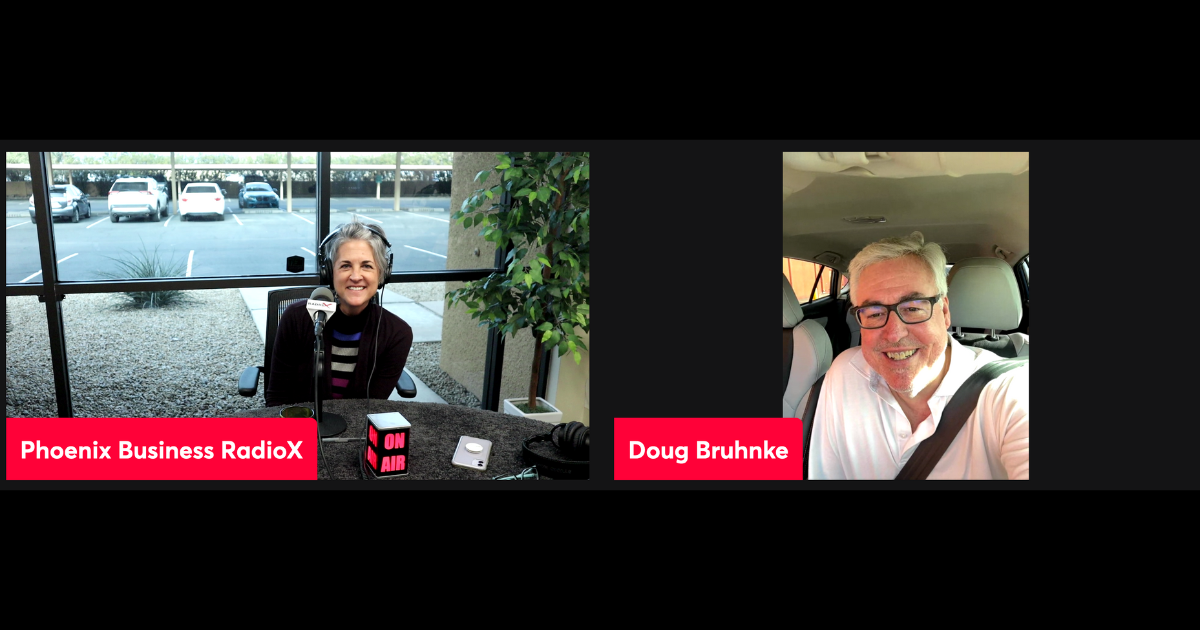
Doug Bruhnke with Global Chamber

January 10, 2023 by Karen

Doug-Bruhnke-Phoenix-Business-Radio
Phoenix Business Radio
Doug Bruhnke with Global Chamber
Loading
00:00 /
RSS Feed
Share
Link
Embed

Download file

Doug-Bruhnke-with-Global-Chamber

Doug Bruhnke with Global Chamber

Global Chamber® is a growing and collaborating community of CEOs, executives and leaders in 525 regions around the world… 525 chapters, led by global business leaders… connecting member businesses to new opportunities and advancing growth and success. Global-Chamber-logo
It’s the only chamber of commerce in the world operating in hundreds of locations that helps exporting, importing and investing members to connect through warm introductions to clients, partners, projects and resources.

Doug-Bruhnke-Phoenix-Business-RadioDoug Bruhnke is Founder/CEO of Global Chamber®. He is a global entrepreneur dedicated to helping members of Global Chamber® successfully reach new markets across 525 metros – everywhere!

He is a two-time ex-pat with Dupont in Tokyo and Singapore with 35 years of global business experience in nearly all countries and segments. Doug is a member of the Arizona District Export Council, British American Business Council of Northern California, U.S. Global Leadership Coalition, and more.

Doug has a B.S. in Chemical Engineering from the University of Utah and an EMBA from Michigan State University and is co-inventor on 5 patents. He was born in Mount Kisco, New York, and now is based in Scottsdale, Arizona, and Palo Alto, California. He’s been married for 40 years, with one wife, one daughter and a superstar grandson named Luca.

Connect with Doug on LinkedIn, Facebook, Twitter and Instagram.
Tagged With: export, exporting, global, global business, grow globally

Decision Vision Episode 23: Should I Export? – An Interview with Gene Plavnik, Heat Technologies, Inc.

July 11, 2019 by John Ray

Decision Vision
Decision Vision
Decision Vision Episode 23: Should I Export? - An Interview with Gene Plavnik, Heat Technologies, Inc.
Loading
00:00 /
RSS Feed
Share
Link
Embed

Download file

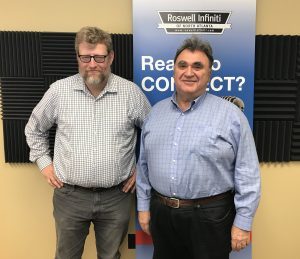
“Decision Vision” Host Mike Blake and Gene Plavnik

Should I Export?

What are the pitfalls of exporting to foreign markets? How do I develop international sales channels? How do I find distributors in other countries? Gene Plavnik of Heat Technologies, Inc. answers these questions and more in an interview with Michael Blake, Host of “Decision Vision.”

Gene Plavnik, Heat Technologies, Inc.

Gene Plavnik, Heat Technologies, Inc.

Gene Plavnik is the Founder and President of Heat Technologies, Inc. Gene has more than 25 years of experience in research, development and commercialization of various high efficiency, low emissions, energy technologies for a cross-section of industries: paper and film converting, printing, boilers and water heaters (HVAC), utilities, incineration, paper production, cement production, steelmaking, etc.

Gene holds an M.S. in Heat and Mass Transfer Engineering. He also hold 6 US and international patents relevant to the field of heat and mass transfer, drying, heat exchangers, boilers and water heaters.

Michael Blake, Brady Ware & Company

Mike Blake, Host of “Decision Vision”

Michael Blake is Host of the “Decision Vision” podcast series and a Director of Brady Ware & Company. Mike specializes in the valuation of intellectual property-driven firms, such as software firms, aerospace firms and professional services firms, most frequently in the capacity as a transaction advisor, helping clients obtain great outcomes from complex transaction opportunities. He is also a specialist in the appraisal of intellectual properties as stand-alone assets, such as software, trade secrets, and patents.

Mike has been a full-time business appraiser for 13 years with public accounting firms, boutique business appraisal firms, and an owner of his own firm. Prior to that, he spent 8 years in venture capital and investment banking, including transactions in the U.S., Israel, Russia, Ukraine, and Belarus.

Brady Ware & Company

Brady Ware & Company is a regional full-service accounting and advisory firm which helps businesses and entrepreneurs make visions a reality. Brady Ware services clients nationally from its offices in Alpharetta, GA; Columbus and Dayton, OH; and Richmond, IN. The firm is growth minded, committed to the regions in which they operate, and most importantly, they make significant investments in their people and service offerings to meet the changing financial needs of those they are privileged to serve. The firm is dedicated to providing results that make a difference for its clients.

Decision Vision Podcast Series

“Decision Vision” is a podcast covering topics and issues facing small business owners and connecting them with solutions from leading experts. This series is presented by Brady Ware & Company. If you are a decision maker for a small business, we’d love to hear from you. Contact us at decisionvision@bradyware.com and make sure to listen to every Thursday to the “Decision Vision” podcast. Past episodes of “Decision Vision” can be found here. “Decision Vision” is produced and broadcast by the North Fulton studio of Business RadioX®.

Visit Brady Ware & Company on social media:

LinkedIn:  https://www.linkedin.com/company/brady-ware/

Facebook: https://www.facebook.com/bradywareCPAs/

Twitter: https://twitter.com/BradyWare

Instagram: https://www.instagram.com/bradywarecompany/

Show Transcript

Intro: [00:00:01] Welcome to Decision Vision, a podcast series focusing on critical business decisions, brought to you by Brady Ware & Company. Brady Ware is a regional, full-service accounting and advisory firm that helps businesses and entrepreneurs make visions a reality.

Michael Blake: [00:00:20] And welcome to Decision Vision, a podcast giving you the listener clear vision to make great decisions. In each episode, we discuss the process of decision making on a different topic. But rather than making specific recommendations because everyone’s circumstances are different, we talk to subject matter experts about how they would recommend thinking about that decision.

Michael Blake: [00:00:38] My name is Mike Blake, and I’m your host for today’s program. I am a director at Brady Ware & Company, a full service accounting firm based in Dayton, Ohio with offices in Dayton; Columbus, Ohio; Richmond, Indiana; and Alpharetta, Georgia which is where we are recording today. Brady Ware is sponsoring this podcast. If you like this podcast, please subscribe with your favorite podcast aggregator and please also consider leaving a review of this podcast as well.

Michael Blake: [00:01:03] Today’s topic is about exporting, and should I export? And I think this is a very interesting topic because we’re bombarded with messaging all the time that we’re in a global economy, and in order to maximize the value of a business that we need to be sending our products abroad, we’d just be selling to different countries, need to be doing things internationally.

Michael Blake: [00:01:34] And, of course, to some extent, international business is sexy. I mean, who doesn’t like the opportunity maybe mix a little bit of business and pleasure going to Brussels, to Paris, or to Hong Kong. But the reality is once you take a look at doing business internationally and exporting, it’s not all that easy. There are all kinds of barriers that have to be overcome. And it turns out that selling into Rome, Italy is very different from selling into Rome, Georgia.

Michael Blake: [00:02:09] And I can’t think of no better person to help us walk through this topic than my dear friend, Gene Plavnik. Gene and I have been friends for I’m going to say going out about 15 years now. I think it’s about that long. I had no gray in my beard at the time. That’s how long ago it was, and I had one son at the time. And Gene is Founder and President of Heat Technologies Inc. He has more than 25 years of experience in research, development, commercialization of various high-efficiency, low-emissions energy technologies for a cross-section of industries, including paper and film converting, printing, boilers and water heaters, utilities incineration, paper production, cement production, and steel making.

Michael Blake: [00:03:01] He’s also originally from my adopted second hometown of Minsk Belarus. He holds a Master of Science in Heat and Mass Transfer Engineering. And Gene founded his company, excuse me, here in Atlanta in 1996. And the company specializes in the development of manufacturing and sales of next-generation commercial and industrial heat drying equipment for both industrial and advanced residential uses. They’re also working on additional technology projects including development of high-efficiency, water-based energy equipment for consumer and commercial applications. And they have several patents on technology both here and across the world. Gene, welcome to the program. Thank you so much for coming on.

Gene Plavnik: [00:03:50] You’re most welcome and thank you for inviting me.

Michael Blake: [00:03:54] So, you’re not a large company necessarily. When we think of companies that do business internationally, especially here in Atlanta, we think of Coca-Cola, we think of Arby’s, we think of Newell Rubbermaid, but you’re not as big as those companies, are you?

Gene Plavnik: [00:04:15] Not at all. We’re a small business concern, S-corporation formed in Atlanta. We have basically two design engineers. We have several contractors that help us to build our equipment here in Atlanta Metropolitan area. We have several electrical contractors that help us to build control systems. And we quality control our equipment, assemble it, quality control it, and sell it in the United States, North America, South America, worldwide.

Michael Blake: [00:04:56] And your global headquarters is just an office in your home, right?

Gene Plavnik: [00:05:01] That is correct.

Michael Blake: [00:05:03] So, what was the first country you started exporting to?

Gene Plavnik: [00:05:06] Germany.

Michael Blake: [00:05:08] And why was that? That’s interesting. I am going to come back to that one. You know why. Why Germany?

Gene Plavnik: [00:05:16] Germany is an engine of Europe. 41% of European GDP is manufactured in Germany. As a country, Germany managed to preserve its works with the global economy, to preserve its workforce. And, also, German culture is in the kind of a very susceptible to innovation. We all know from 15th-14th centuries how many inventions were formed and brought to the world by German inventors, by German explorers.

Gene Plavnik: [00:05:55] Another kind of attached to it was our technology is energy efficient. And energy efficiency, in general, in Europe is more acute, and important, and kind of a true requires attention, and also goes along with German culture. And I can give you later on an example how impressed I was with savings. So, every day, energy savings by ordinary German cities. And so, Germany was our first step. In general, in plain English, if you sell to Germans, then you can sell to the rest of Europe because they are very critical, very conservative customers, very skeptical customers, and very intelligent customers. So, if you can sell to intelligent, skeptical customer, he becomes your best advocate.

Michael Blake: [00:06:55] So, those are a good match that, obviously, Germany is renowned for their engineering. They appreciated and appreciate your engineering because you have some highly engineered, obviously patented, intellectual property there. And so, you knew that there would be a match. And as that driver of Europe, as you said, once you kind of get in Germany, into Germany, what a great reference customer, right? That’s got to be easier to sell to France and Italy and-

Gene Plavnik: [00:07:28] You are correct. You most likely will have a good — you’ll have a good reference, so that if people understand that you sell to Germany, then you can sell to anyone else or. at least, they know that there is installation, there is a reference. Even though that sometimes this reference is confidential, but I guess word of mouth, internet discussions within the industry will open the doors other group, other customers.

Michael Blake: [00:08:01] Now, how did you make that first sale? Did a German customer somehow find you? Did you go to a conference? Did you go door to door someplace in Berlin? I mean, how did you kind of connect with that first German customer?

Gene Plavnik: [00:08:17] You’re absolutely right. Once you make a decision to sell internationally, then you need to worry about distribution somehow. So what we did in our particular case, we went to a trade conference. At the time, it was 2011 in Chicago. And over there, we met a president of European, a similar association in Europe, who happened to have contact right there at the conference, a German-based company that sells here. So, we established the contact there. And after some negotiations, we established a sales agreement with this particular group, and we started selling through them.

Gene Plavnik: [00:09:04] And it’s interesting to note that there are two important strategic sales channels continuously occurred to us. Sales channel number one, it’s internet. We use Google Analytics to look at basically who was visiting our website. And the privacy law does not really allow you to see much but, sometimes, you can get a website name. And at that time, one German company was spending a lot of time on our website. So, that was one channel. We gave this name to our German friends. They approached appropriate parties here. They also need to — you need to select your sales channels appropriately.

Gene Plavnik: [00:09:56] It depends on what you sell, if you sell commodities or if you sell high-end equipment. So, if you start offering or start give representation to a company that sells commodity and ask him to sell high-end equipment while you have that equipment, nothing will happen out of it. So, again, to worry about distribution, you need to find the right agents, so to speak.

Michael Blake: [00:10:20] And in your mind, I mean is selling to a German customer different from selling to an American customer? You touched  on this a little bit, but it’s worth underlining.

Gene Plavnik: [00:10:32] Absolutely.

Michael Blake: [00:10:32] That must have meant that you hired a German distributor that understands the language of selling to Germans, right? It’s got to be different than selling to an American customer.

Gene Plavnik: [00:10:43] It is different, and it is critical. I would say to have appropriate representation, not only someone who understands how to sell technologically from engineering point of view or from industry point of view, but it’s important for someone to know the culture, to know industry culture. Even not like a general culture but industry culture in Germany is different than industry culture in the United States, so the sale is different.

Gene Plavnik: [00:11:19] And you learn as you go. So, you have to trust your partner. You have to spend a lot of time yourself in Germany because if you start selling internationally, your international company partners, whatever, customers, prospect, they want to see you. They want to know you exist. They want not to touch you but know that this is a real person. He is here. And I personally spent so much time in Germany. One of my customers said that he will not allow me to be in his office without German green card.

Michael Blake: [00:11:57] So, there’s also a number of formalities of exporting, of course – customs, freight, other kind of formalities. How do you handle those? Do you take care of those yourself? Is there a separate company you outsource that to? How do you work through that?

Gene Plavnik: [00:12:18] There are some things that one needs to do himself, whether it’s a big company or small company. But there are certain standards that are available or guidelines, I would say, that are available on the website of US Department of Commerce that explain to American companies willing to export its equipment or products what needs to be done. So, in our case, components of our equipment needs to become compliant with certain European standards. And there must be a list of these standards and signature of authorized persons. So, this needs to be done by us. There must be description of equipment with some photographs, also needs to be done by us. It needs to be kept. One file needs to be kept indefinitely at the company and one, as a file, will be with your local distributor in Germany. So, these things need to be done by the company itself.

Gene Plavnik: [00:13:31] The rest of it can be easily done by freight broker, custom broker, your choice. Typically, we select a company that takes care of that. We outsource, completely outsource boxes of freight going through customs, et cetera. We need to help the broker, and everyone needs to help its broker to identify the equipment in national harmonized industrial codes or commercial codes. So, if it’s a mineral water, it should be bottled mineral water in 7-1/2 to 50 milliliters bottles in glass, plastic and et cetera, et cetera.

Gene Plavnik: [00:14:13] In our case, it’s equipment for a specific dryer for printing industry or converting coating industry. This is a harmonized code. This is how much it weighed because the freighter will — you have to insure it. You cannot not to take insurance. So, you have the insurance and that helps your freight provider to appropriately insure the equipment or insure your product. Regardless, it’s a general requirement.

Gene Plavnik: [00:14:44] And then, you can get your quote in. Basically, paperwork is extremely important because your product can get stuck at the custom of destination. We had one case. When it was stuck without any reason in Italy, actually, it was basically in customs for several weeks simply because it was not properly commercially invoiced. One of the documents was not properly filed according to this particular country. So, your freight provider should be skilled and qualified to do that. I think it’s a wise decision to, actually, outsource these services and not to have this headache.

Michael Blake: [00:15:36] Now, you talked about insurance. Well, what kind of insurance? Is that insurance for your equipment and transit in case they were damaged? What kind of insurance are you talking about?

Gene Plavnik: [00:15:45] That’s exactly right. I’m talking about equipment insurance in transit until it reaches destination.

Michael Blake: [00:15:53] And what you make, these industrial dryers, they’re not the largest pieces of equipment in the world, but they’re also bigger than a laptop. So, do you find that you tend to ship more by sea or by air freight?

Gene Plavnik: [00:16:08] In our case, it’s always airfreight to customer.

Michael Blake: [00:16:11] It is? Okay.

Gene Plavnik: [00:16:11] It’s a customer based process. So, you always ask your customer, “How would you like it to be shipped?” And because our equipment are more or less compact, the difference between an airfreight and ocean freight is negligible. So, we offer customer these quotes, what would you like? Because customers, ultimately, is the one who pays for it. So, customer also can say “You know what, don’t worry about the freight. I have my own freighter. He will approach you. All you need to do is provide documentation he requests.” And it could be power of attorney, commercial invoice, some standard. Again, the best information we found was on the website of Department of Commerce, US Department of Commerce. So, once you address it, it’s more or less easy.

Michael Blake: [00:17:05] Okay. So, that’s interesting. So, when you designed your equipment, was that a deliberate feature to make sure it could be compact enough to ship by airfreight or was that just sort of a happy circumstance?

Gene Plavnik: [00:17:20] I would recommend to look into it. By accident, we never had any problems but, yes, there are restrictions by height, and by weight, by size of a container that will be taken by airfreight, or there are cargo planes and passenger planes. So, equipment that’s small enough, it can go into passenger planes. We just don’t know about it. But if equipment is of larger size, it can go to commercial plane. And it’s a different schedule, different delivery, a lot of different things.

Gene Plavnik: [00:17:54] We did ship by ocean, again, at the customer request. And the loading of our equipment on to container was a big deal. And we outsource it to the company who does it for a living. And I do recommend to do so because they will do proper loading, they will do proper — they properly secure equipments. Anything. It’s not specific to our industry. It just needs properly — done properly. And it makes a big difference when equipment is received at the port of destination if you ship it by ocean.

Michael Blake: [00:18:34] So, how many countries are you exporting to now?

Gene Plavnik: [00:18:38] Our main focus was E, and E is European Union. We have installations in Croatia, in Italy, in Germany. We have installation several in Italy actually. We have installation in Malaysia. And right now, we are looking into South Korea, Japan, and Singapore. I can tell you why. These countries respect intellectual property, which is intellectual property theft is a big deal. It’s a big threat, in general, to our economy. I’m not advocating anything. I’m giving you the reality of that. And that’s why we tend to stay away to developing countries such as India and China.

Michael Blake: [00:19:39] But let’s dive into that. You can talk about this at whatever comfort level that you have. But you actually just finished a large intellectual property dispute with a German company of all things, which is not what we would expect, right. The stereotype is, like you said, China, India, other developing countries, without the same legal background, are not as respectful of intellectual property. But of all the places you’ve been, Germany is a source of a big problem. Were you very surprised by that?

Gene Plavnik: [00:20:16] Shocked. It came as a shock because we would never imagine that we will be fighting this particular company, in general. And, again, it came out as this country respects intellectual property, and it’s a lengthy process. We were litigating this company by German law in Germany. And, apparently, we won the case because Germany, as a country is a country of law. It respects intellectual property. So, that’s why.

Michael Blake: [00:20:58] And that took what about two years?

Gene Plavnik: [00:20:59] Three.

Michael Blake: [00:21:01] Three years.

Gene Plavnik: [00:21:02] And it’s not over yet because, by law, in Germany, you lose, a party can file for appeal. And from one appeal to another appeal, but the first step is important. I was actually very much impressed that panel of judges in Germany decided to completely decide to rule the case in our favor. Absolute. There was no left and right.

Michael Blake: [00:21:27] So, even though the starting bad news was that your German partner proved to be unreliable at a country level, at least, you’re able to prevail even though you’re, in effect, the visiting team, right? And I don’t know that companies that go to China and other countries feel like that if they’re a foreign company in a legal process, they wouldn’t necessarily have confidence for being treated fairly. But clearly, you were.

Gene Plavnik: [00:21:58] Yeah, it was a customer actually. It was not a partner. It was a customer. Very reputable company on the outside. On the inside, some of the core industry, so-called, I would say partner, but some of the competitors, if I may say so, call them Chinese of Germany. So, unfortunately. But intellectual property is important; and therefore, the choice of your sales country where you plan to sell is also important because imagine what will happen in huge economy like China or India with unlimited resources and different perception of law.

Michael Blake: [00:22:48] Sure. So I’m curious. You’re born outside of the United States but you’ve been here for over 30 years, if I remember correctly. Do you think that your bicultural, your bilingual nature gives you an advantage in exporting because it gives you sort of a perspective? Maybe not all Americans necessarily have of how other cultures think how they address things.

Gene Plavnik: [00:23:18] No, I wouldn’t say so. It just, I guess, the nature of the beast. By nature, from being a very reserved and quiet boy, I became a fighter. And the only reason that you need to basically keep your fire, you need to keep your spirit high, you need to — don’t let be depressed. Don’t let yourself be overwhelmed by situation, get tough within the situation, and try to make right decisions along with your emotions. That’s lessons, actually, I learned in this country. So, I wouldn’t say that my foreign background somehow influenced. Actually, it’s more or less — for most people, it’s a fear, going outside and et cetera.

Gene Plavnik: [00:24:18] And I would highly recommend to all American companies, start looking outside of the country because very few American companies actually sell. And we have a lot to offer as a country, as in a level of our engineering. We just underestimate. I think our engineers, our industries, and its company underestimate the ability to sell worldwide.

Michael Blake: [00:24:45] Well, I think I’d like to drill down on that a little bit actually because I think the hardest part is getting started. So, in your case, if I understand the story correctly, you identified Germany as a likely customer. Maybe there’s little luck involved because you found out that they were scoping out your website. And so, you thought up on Google Analytics, right. But because you are paying attention to your website, which is, of course, your store front to the entire planet, right, you were able to identify a lead, right. And the hardest thing about businesses is finding that lead. But then, once you have that lead, I’m guessing, then, your first customer, the second one, the third one becomes so much easier because now you kind of have a foothold, you’ve learned some things, you’re generating money from abroad which means it’s easier to make that investment. Is that a fair way to describe it?

Gene Plavnik: [00:25:44] Yes, absolutely. Once you made your first sale, your confidence is up. You can give customer a discount for disclosing the name. Usually, it doesn’t come free. And you may have an agreement with the customer even to show non-compete to other industries because there are common issues – maintenance, energy usage, or reliability, service, and so forth, and so on. They are valid through cross cuts of equipment. You have to know secrets how something is made, but you can ask these questions and see your equipment in operation. So, yes, we’re still working on it. I mean, France is the next frontier. We don’t have anyone and anything in France but we’re working on it.

Michael Blake: [00:26:36] What do you think your first step will be to make that first sale in France? What is your strategy?

Gene Plavnik: [00:26:43] Same. We need to find the right company that would be interested in representing us and would be qualified to represent us. We change our distributors. We had — at some point, we had two personal or in a one big company in Switzerland, and we decided to discontinue the relationship. Why? Very simple reason. They were selling commodities. They were selling parts, inks, coatings, commodities. They were not selling the value-added equipment, and we transferred it to industry experts who became a sales expert because of the knowledge of the industry. And then, things change right in front of us.

Gene Plavnik: [00:27:33] We went through the steps. You need to be prepared to make tough decisions and stand by your words because if someone generates a lead or initiates a sale, and then you’ll fire him, and we give one year, for example, if it happens within a certain period of time, we pay him commission. Even we are not happy, et cetera, we don’t want any bad relationship. So, you need to act responsibly. You need to be tough, and you need to be noble. You need to hold your work. That will create your reputation.

Michael Blake: [00:28:06] And never cheat your sales people out of commission.

Gene Plavnik: [00:28:09] No.

Michael Blake: [00:28:10] Ever.

Gene Plavnik: [00:28:11] No, no, no. .

Michael Blake: [00:28:12] That’s a disaster.

Gene Plavnik: [00:28:13] That is a disaster.

Michael Blake: [00:28:14] So, do you think you’ll find this French distributor at a trade show maybe? Will you go to France and go to a trade and industry show? Or do you think you’ll find them on the internet? How do you think you’ll find something like that?

Gene Plavnik: [00:28:29] I will call a US Embassy in France and ask Dr. Sheikh to help. That’s basically will be my — we try to work with various channels like the Georgia Department of Economic Development to find anything. Unfortunately, it was all they desire. We didn’t get the response we want. And so, my plan is (A), I met some under the trade show in Germany, and he’s a potential customer. He is a user of a technology. So, I’ll call him and tell him, “Jean Pierre, I need your opinion. We need someone to represent us. Do you have a new one that you like in person?” Not necessarily he will sell you, but you would recommend. So, that’s what I would do. You need to know someone in the industry.

Gene Plavnik: [00:29:23] And the second is I believe that today with today’s administration attention to intellectual property and international trade. I think you can get better response if you approach US Embassy in a particular country where you sell. So, these are two channels that I’m planning to pursue.

Michael Blake: [00:29:45] I’m very glad you brought that up because I did want to ask you, of course, that the United States, as every country, would like to increase their exports, right. It’s obviously an economic driver. You mentioned the state level wasn’t all that helpful. You talked about contacting the embassy, which is interesting. I’m not trying to sell what I’ve thought about that. What about national programs, such as Exim Bank or things of that nature, have you found resources like that to be useful?

Gene Plavnik: [00:30:19] Yes, I believe that is useful even though we didn’t use it. We typically base our sales on cash as a secondary, as a letter of credit. So, we prefer cash. And because it’s a high-end, high-value equipment with high-end components in it, we want 90% of the price to be paid before we ship at any conditions. With Customs at 10, 20, 40 and we tell them that’s fine but we will not ship before 90. US overseas, anyway, we will not ship before 90.

Gene Plavnik: [00:30:57] And sometimes, excuse me, if 10% is a sizable chunk of money, if you wish, I would direct highly recommend to go to Exim and use Exim. Exim is a good program. It is kind of a somewhat slow program because there are set certain periods of time you need kind of six months need to expire, you need to approach your customer so many times. And so, then, Exim help you to reimburse some cost, et cetera. But I would recommend to a company that are different than us to use Exim Programs.

Michael Blake: [00:31:34] So, what are some of the key lessons that you’ve learned? What would you do differently knowing now if you had to do it all over again?

Gene Plavnik: [00:31:46] There was one little glitch in one of the sales in Indonesia. And I want to basically — we also sold with a 90 — well, it was LOC, letter of credit. The sale customer insisted, purely insisted, but there was 40% upon delivery, basically, after processing the customs. So, since it was Indonesia, not Germany, he had some connections, and took his chief financial officer to the port and grabbed the equipment before paying 40% of the price. So, letter of credit, you need to be careful. You need to proceed with caution on your sales. I’d probably deviate from the question. What was the question again?

Michael Blake: [00:32:41] Well, I think you’re answering it. So, I asked you about what’s a mistake you learned a lesson from?

Gene Plavnik: [00:32:46] If I would do it again, I would still insist, instead of a letter of credit, I would insist on cash terms. It depends on industry. That’s what we insist, and that’s what we prefer. I don’t know how it is done in different industries But in my point of view, try to get as much money before a customer — customer needs to see that your equipment are ready or your product is ready. At this point, try to get as much money as you can, not because you want to rip them off, it’s a fixed price, but if there is a conflict, then you have more leverage, you have more money left for the equipment or product that you manufacture, or acquire, then to resell, et cetera.

Michael Blake: [00:33:33] Well, as they say, possession is 9/10 of the law, right? That’s probably 9/10 of law for import export as well.

Gene Plavnik: [00:33:39] Yes, So, that’s correct.

Michael Blake: [00:33:42] Gene, this have been great. I’ve learned a lot. I know our listeners will learn a lot. If somebody wants to contact you, maybe find out more about exporting or even they just want to learn more about your equipment, how can they contact you?

Gene Plavnik: [00:33:54] Via our website. There is info, request for information. If they just put subject and provide with appropriate question in e-mail, we will be glad to respond.

Michael Blake: [00:34:08] That’s heattechnologiesinc.com?

Gene Plavnik: [00:34:08] At info@heattechnologiesinc.com.

Michael Blake: [00:34:13] All right. Very good. Well, that’s going to wrap it up for today’s program. I’d like to thank Gene Plavnik very much for joining us and sharing his expertise with us today. We’ll be exploring a new topic each week. So, please tune in, so that when you’re faced with your next business decision, you have clear vision when making it. If you enjoyed this podcast, please consider leaving a review with your favorite podcast aggregator. That helps people find us so that we can help them. Once again, this is Mike Blake. Our sponsor is Brady Ware & Company. And this has been the Decision Vision Podcast.

Tagged With: Dayton accounting, Dayton business advisory, Dayton CPA, Dayton CPA firm, doing business in Europe, doing business in Germany, exporting, exporting to Europe, exporting to Germany, France, Gene Plavnik, germany, Heat Technologies, Heat Technologies Inc., international distribution, international distributors, international sales channels, international shipping, international trade, Michael Blake, Mike Blake, opening a foreign market, patent infringement

Information on International Businesses Coming to Atlanta (10/04/2011 show)

October 12, 2011 by angishields

International companies need help localizing their successes at home here in Atlanta. Now they have it.

10/04/11 Show

Mike Gomez is President of Allegro Consulting. Mike is an aerospace engineer by training and served in that role as a civilian for the U.S. Navy. He is also a former officer in the U.S. Air Force. He has served in an executive capacity with Areospace giants such as McDonnell Douglas, Boeing and Lockheed where he was credited with over 5 billion dollars worth of international military fighter aircraft sales. And as a program manager he led a 4 year – 2.5 million program to design, build and deliver 25 fighter jets to the Israeli Air Force. He’s worked with governments and businesses in over 20 countries including Israel, Kuwait and the Philippines.  As President of Allegro Consulting he advises companies on a wide range of issues that affect growth such as strategic planning and sales process improvement. He led his small business client on a remarkable path from 8 million to 35 million in just under 3 years.  Mike Gomez Segment

John Klausen is President and Managing Director of Noliac North America. He was appointed here in 2009 to open up Noliac’s North American operations. He has a background in marketing from the International Business College in Denmark. He has a background for many years of being country sales manager for international companies, has also ran international consulting companies with strategic logistics. He has been a regional sales manager for Noliac as well in other regions in the world. John Klausen Segment

Tagged With: exporting, International, South America

Big Company Logistics for the Small & amp; Mid-Sized Business (08/23/2011 show)

August 25, 2011 by angishields

Corporate Conversations
Big Company Logistics for the Small & amp; Mid-Sized Business (08/23/2011 show)
Loading
00:00 /
RSS Feed
Share
Link
Embed

Download file

Think your business is too small to get sophisticated logistics support for your international exporting or expansion?  Think again. Companies previously serving just the multi-million & billion dollar businesses are now specializing in serving the small to mid-sized businesses and their needs. Listen here to how.

08.23.2011 Show

Melanie Alavi is a Marketing professional who has worked for UPS for the past 12 years in various Marketing roles, including:  International Marketing, Strategic Account Marketing, and Segment Marketing.  She currently serves as the Small Business Marketing Manager for UPS’s South Atlantic District (servicing North Carolina, South Carolina, and Georgia).

Prior to receiving her MBA at Thunderbird in 1999, she worked and lived in Madrid, Spain for 4 years – working for the U.S. and Foreign Commercial Service and later at a privately held telecommunications company.

Over the years she has travelled throughout Europe, to West Africa (Ghana, Burkina Faso, and Mali), Egypt, Thailand, Vietnam, Malaysia, Indonesia, Peru, Brazil, Venezuela, Argentina, Chile, and Mexico.  She speaks fluent Spanish.   Melanie is married to Shahin Alavi, a first generation Iranian, and they have two daughters, Nadia (5) and Ariana (3). Melanie Alavi Segment

Lilia Postolachi is the Director for International Services and Membership since January of 2007 she has directed international marketing, strategic planning, program development, needs assessment, internal/external communications and implementation of joint go-to-market strategies for WTC Atlanta members.

Lilia has more than a decade of international experience, that includes being the Dossier Coordinator for the 2nd largest facilitator of international Adoptions in the US and the Manager International Tourism Department for “Holiday Service”  Largest Tour operator in Moldova.  She is originally from Moldova and has an Associate Degree In Nursing, Medical College, Tigina, Moldova along with a  BA in Psychology from the State University of Tiraspol, Moldova.  She is also ISF Certified by the World Academy in Export Compliance, Documentation & Procedures.  She  is fluent in Russian, Romanian, English. Lilia Postolachi Segment

Tagged With: exporting, International, Logistics

Business RadioX ® Network


Our Most Recent Episode

CONNECT WITH US

  • Email
  • Facebook
  • LinkedIn
  • Twitter
  • YouTube

Our Mission

We help local business leaders get the word out about the important work they’re doing to serve their market, their community, and their profession.

We support and celebrate business by sharing positive business stories that traditional media ignores. Some media leans left. Some media leans right. We lean business.

Sponsor a Show

Build Relationships and Grow Your Business. Click here for more details.

Partner With Us

Discover More Here

Terms and Conditions
Privacy Policy

Connect with us

Want to keep up with the latest in pro-business news across the network? Follow us on social media for the latest stories!
  • Email
  • Facebook
  • Google+
  • LinkedIn
  • Twitter
  • YouTube

Business RadioX® Headquarters
1000 Abernathy Rd. NE
Building 400, Suite L-10
Sandy Springs, GA 30328

© 2025 Business RadioX ® · Rainmaker Platform

BRXStudioCoversLA

Wait! Don’t Miss an Episode of LA Business Radio

BRXStudioCoversDENVER

Wait! Don’t Miss an Episode of Denver Business Radio

BRXStudioCoversPENSACOLA

Wait! Don’t Miss an Episode of Pensacola Business Radio

BRXStudioCoversBIRMINGHAM

Wait! Don’t Miss an Episode of Birmingham Business Radio

BRXStudioCoversTALLAHASSEE

Wait! Don’t Miss an Episode of Tallahassee Business Radio

BRXStudioCoversRALEIGH

Wait! Don’t Miss an Episode of Raleigh Business Radio

BRXStudioCoversRICHMONDNoWhite

Wait! Don’t Miss an Episode of Richmond Business Radio

BRXStudioCoversNASHVILLENoWhite

Wait! Don’t Miss an Episode of Nashville Business Radio

BRXStudioCoversDETROIT

Wait! Don’t Miss an Episode of Detroit Business Radio

BRXStudioCoversSTLOUIS

Wait! Don’t Miss an Episode of St. Louis Business Radio

BRXStudioCoversCOLUMBUS-small

Wait! Don’t Miss an Episode of Columbus Business Radio

Coachthecoach-08-08

Wait! Don’t Miss an Episode of Coach the Coach

BRXStudioCoversBAYAREA

Wait! Don’t Miss an Episode of Bay Area Business Radio

BRXStudioCoversCHICAGO

Wait! Don’t Miss an Episode of Chicago Business Radio

Wait! Don’t Miss an Episode of Atlanta Business Radio