
Business RadioX ®

  • Home
  • Business RadioX ® Communities
    • Southeast
      • Alabama
        • Birmingham
      • Florida
        • Orlando
        • Pensacola
        • South Florida
        • Tampa
        • Tallahassee
      • Georgia
        • Atlanta
        • Cherokee
        • Forsyth
        • Greater Perimeter
        • Gwinnett
        • North Fulton
        • North Georgia
        • Northeast Georgia
        • Rome
        • Savannah
      • Louisiana
        • New Orleans
      • North Carolina
        • Charlotte
        • Raleigh
      • Tennessee
        • Chattanooga
        • Nashville
      • Virginia
        • Richmond
    • South Central
      • Arkansas
        • Northwest Arkansas
    • Midwest
      • Illinois
        • Chicago
      • Michigan
        • Detroit
      • Minnesota
        • Minneapolis St. Paul
      • Missouri
        • St. Louis
      • Ohio
        • Cleveland
        • Columbus
        • Dayton
    • Southwest
      • Arizona
        • Phoenix
        • Tucson
        • Valley
      • Texas
        • Austin
        • Dallas
        • Houston
    • West
      • California
        • Bay Area
        • LA
        • Pasadena
      • Colorado
        • Denver
      • Hawaii
        • Oahu
  • FAQs
  • About Us
    • Our Mission
    • Our Audience
    • Why It Works
    • What People Are Saying
    • BRX in the News
  • Resources
    • BRX Pro Tips
    • B2B Marketing: The 4Rs
    • High Velocity Selling Habits
    • Why Most B2B Media Strategies Fail
    • 9 Reasons To Sponsor A Business RadioX ® Show
  • Partner With Us
  • Veteran Business RadioX ®

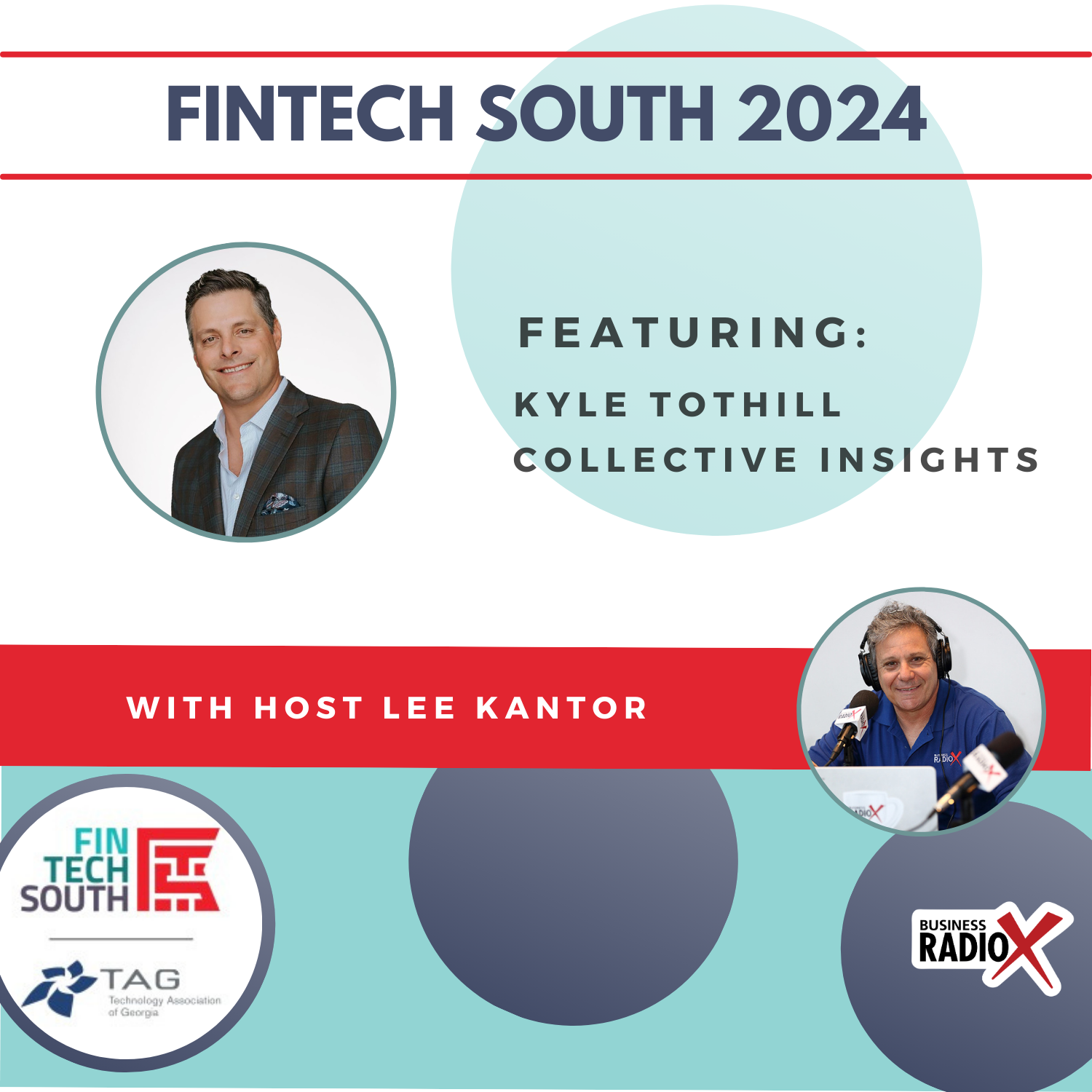
Fintech South 2024: Kyle Tothill with Collective Insights

September 5, 2024 by angishields

FS-Collective-Insights-Feature
Atlanta Business Radio
Fintech South 2024: Kyle Tothill with Collective Insights
Loading
00:00 /
RSS Feed
Share
Link
Embed

Download file

Fintech South 2024, hosted by the Technology Association of Georgia (TAG), took place on Aug. 27-28 at the Woodruff Arts Center and Atlanta Symphony Hall. This year’s theme was “Fintech Lives Here!”

Kyle-TothillKyle Tothill, Co-Founder & Chief Revenue Officer of Collective Insights, is an accomplished entrepreneur and executive leader with a strong foundation in growth enablement. He is focused on driving organizational success and building high-performance teams.

Co-founding and partnering in three successful Atlanta-based business services firms, including eHire, LLC, Make & Build, and Collective Insights, Kyle’s career is marked by the successful launch of four professional services companies and a software firm.

His expertise spans across recruiting and talent acquisition, enterprise technology, and business transformation consulting services, underpinned by a strategic approach to overcoming obstacles and desire to achieve.

Connect with Kyle on LinkedIn.

Transcript-iconThis transcript is machine transcribed by Sonix.


TRANSCRIPT

Intro: Broadcasting live from the Business RadioX studio in Atlanta, Georgia. It’s time for Atlanta Business Radio, brought to you by Kennesaw State University’s Executive MBA program, the accelerated degree program for working professionals looking to advance their career and enhance their leadership skills. And now, here’s your host.

Lee Kantor: Lee Kantor here, broadcasting live from Fintech South 2024 at the Woodruff Arts Center. And so excited to be talking to our next guest, Kyle Tothill, with Collective Insights. Welcome.

Kyle Tothill: Hey, thanks. Happy to be here.

Lee Kantor: Well, for the folks who aren’t familiar, can you share a little bit about Collective Insights? How you serving folks? Sure.

Kyle Tothill: So Collective Insights is a global enterprise management and technology consulting company. We focus on business transformation initiatives as well as technology modernization initiatives. We’re headquartered out of Atlanta, Georgia, and we serve companies all over the globe.

Lee Kantor: And then so what’s the backstory? How’d you get involved in this line of work?

Kyle Tothill: Oh, man, that’s a six beer story. But we can we can talk about it a little bit. I’ve been an entrepreneur since 1999, and I formed a company out of the ashes of a dotcom blow up called Novacon, called Clearpoint Consulting, and we helped build high performance sales and technology teams for for fast growing companies and, uh, over multiple, multiple years of evolution. I met with some folks and we started a bigger company called E higher, which did the same thing on a much larger scale. And out of that organization, we built a couple companies. One of those companies was Collective Insights, which is a management consulting company like we talked about, and that was a natural fit for what we were doing. And over the those years, you know, 15 years or so of e hire, we continued to build and grow that management consulting company, and now it’s our leading brand and the organization where I spend most of my operating time.

Lee Kantor: So who is the ideal client fit for collective insights?

Kyle Tothill: So our ideal client profile really focuses on global enterprise leaders and technology leaders that are driving big transformational change, whether that’s implementing a scaled new technology or ERP system or going through kind of a culture change or shift or, you know, implementing scaled projects, you know, that that affect the entire organization.

Lee Kantor: And why is the Fintech South Conference important to you and your company?

Kyle Tothill: Well, I think, first of all, a lot of our customers are here. Certainly the global financial institutions and some of the faster growing, you know, fintech organizations are in that client profile that we have and some of them of our customers. So outside of, you know, being where your customers are being engaged, you know, we are a community first organization. And so what does that mean? Well, we’re headquartered here in Atlanta, and we’re proud Georgians. And Georgia is, you know, fastly becoming a global innovation hub. And certainly, you know, from a fintech perspective, you know, what’s one of our biggest pillars that we have? In addition to that, I serve as the, you know, board chair for the Technology Association of Georgia. So I have some dignitary duties that I have to do here today, and I love it. Very excited about this community and what it’s become, especially over the last 25 years. And I’m very, very excited about this particular ecosystem over the next 25.

Lee Kantor: Can you share a little bit of context for folks who maybe aren’t in the Atlanta area, but have heard about the Atlanta, uh, technology ecosystem? How is it, you know, kind of explain kind of what makes it special and how it’s different than maybe other tech ecosystems around the country.

Kyle Tothill: Uh, first of all, Atlanta is a very diverse, um, ecosystem, and I mean diverse in terms of business diversity. So we have a lot of the global enterprise organizations that are headquartered here in Atlanta. So very I think almost every single fortune 500 company, you know, around the, around the globe has a presence in this, you know, in this marketplace. So that’s not true for a lot of other marketplaces. But, you know, outside of like the technical reasons, you know, I think it’s different because of the people of Georgia and our unique hospitality and our desire to grow and punch above our weight and want to and aspire to be something bigger than ourselves. This community is, um, dedicated to that. And you hear that at the governor’s office, at the legislature, at the at the mayor’s office, for sure. You hear that with organizations like the Metro Chamber, you know, tag especially. And I think that’s unique. You know, when I travel the country, you know, there’s not really a ton of organizations like Tag and there’s not a lot of ecosystems that are as connected, you know, as, as this community in Georgia.

Kyle Tothill: And you hear this all the time. People say it, people laugh about it. Atlanta is a big, small pond. So it’s a it’s a community that thrives off of personal relationships. And I think that’s I think that’s unique to to the South, and I think that’s specifically unique to Atlanta. We’ve been driving and pushing this marketplace since the 1840s. If you didn’t know that the word, the town name, Atlanta actually comes from a marketing ploy that the Metro Chamber did. This is news, you know, back in the 1840s, we named it Atlanta to make it more appealing to people to move their companies here and move to Atlanta before the Civil War. And they called it Atlanta because it was short for Atlantic. And so they wanted to make the the kind of the marketing ploy that we were close to the ocean, which is probably not true, especially by horse and carriage. But, hey, you know, never let the truth get in the way of a good sales pitch.

Lee Kantor: But there wasn’t a good internet back then. That’s right.

Kyle Tothill: So the net, the net net of everything is, is that I think the people and the commitment to the community is what makes this special outside of the fact that we have this wonderful asset, you know, that continues to drive economic development for us, which is our airport. You know, you can get to 80% of the population in the United States within two hours, which is what Ambassador Young and Maynard Jackson and Ivan Allen really hailed. You know, in terms of attracting organizations to move their headquarters here, which, you know, we have 2000 or 3000 German companies that are here. So if you think about, you know, what makes us special, it’s our our want to, I think really drives it for us.

Lee Kantor: And I think the way I mean, you mentioned the airport, we have the port as well and we have the like you said, the diversity of industries. There are so many industries here. So that if one of them is struggling, someone else is probably not struggling. So with our downturns really aren’t as pronounced as maybe some other markets. Yeah. And then we I think we do a good job of playing nice. You know the government plays nice with the corporations and then they respect the startups. And everybody is kind of very collaborative. I think that’s 100% true.

Kyle Tothill: And it can be better. But you know, this year at the Georgia Technology Summit, we did something that doesn’t happen that often. We had the the red state governor and the blue state mayor, you know, on stage together, collaborating, talking about things that they care about that that are really apolitical, which is, you know, innovation is going to drive a lot of the economic development. I don’t care what side of the aisle you’re on. And that’s the beautiful part about this community. And you just mentioned it. So I don’t want to belabor it, but we’re aligned. And that’s been true for a long time.

Lee Kantor: And business friendly tracks a lot of folks to the the town. I mean, the growth in the population has been crazy probably since you’ve been here. Yeah, I think.

Kyle Tothill: Anybody that’s been in Atlanta longer than ten years recognizes the dynamic growth that we’ve had. And it’s a it’s a special it’s a special place. We’re bringing organizations to to do business here. And it’s because of the people and because of the talent that we have here. And of course, the cost of living, which, you know, was going to pare out at some point. But it’s a special place. If you think about Georgia, I think for the ninth year in a row or eighth, I think it’s nine years has been the best place to do business in the United States. It’s the best state to do business in. So if you figure that we’re in the capital of the best state in the United States and the United States is the best economy in the world, where does that put you? Do the math. You don’t have to think too hard to think about how fortunate people are to be living here right now. It’s not always perfect, as everybody knows, and we have other issues, but from a business perspective, we’re in a pretty good spot.

Lee Kantor: So if somebody wants to learn more about collective insights, where should they go?

Kyle Tothill: Well, they can always connect with me on LinkedIn. And I’m very, you know, open to that as well. As, you know, we have our website which is Collective insights.com. But certainly if you want to know more about it connect with me. Let’s talk about it.

Lee Kantor: And then tag if they want to know about tag. There’s a lot of ways to connect with tag online as well.

Kyle Tothill: We have a lot of tentacles out there in multiple directions. We have our Tag education 501 C3 nonprofit, which does a lot in workforce development. So if you’re an up and comer or you’re looking to advance your career. You know, you can learn about our apprenticeship program. You can learn about our Tech Connect, which is a which is a platform to help entrepreneurs connect with investors. We have access to venture capital groups like Venture Atlanta. So there’s a lot of angles to play if you’re, you know, focused in a specific industry or a specific function, whether that’s sales or marketing or finance or you’re into cloud computing or information security. We have a society for you. We have a place for you to come build your community, you know, and your network, you know, in a in a specialized area. And we’ve learned and one of the great things about Tag is we are great connectors of people. You know, I’d probably bolt that back onto your question. A couple of years ago, we were a very connected, connected ecosystem, and it pays a lot of dividends, you know, for technologists to build and invest in, you know, in their relationship, network and tag.

Lee Kantor: Being around 25 years is a testament to that.

Kyle Tothill: Yeah. I think the, you know, we have a I said this in the board meeting not too long ago. It’s amazing. I think if you think about all of the original founders, which really was a coalition of the willing of a handful of associations coming together to put, you know, an association and govern and manage it and build it what they envisioned. You know, for 2025, I’m pretty happy that that we’re living up to that. And I think that they’d be very proud of us. And some of them are. And what I get really excited about is where we’re going. Right. So we’re a top five technology state today, 25 years from now, a global hub of innovation recognized, you know, by all the attributes that, you know, that kind of are the hallmarks of that.

Lee Kantor: Well, Kyle, thank you so much for sharing your story today. You’re doing such important work. We appreciate you.

Kyle Tothill: Thank you very much. Happy to do it. Love it.

Lee Kantor: All right. This is Lee Kantor back in a few. At Fintech South 2024.
 

Tagged With: Collective Insights, Fintech South 2024

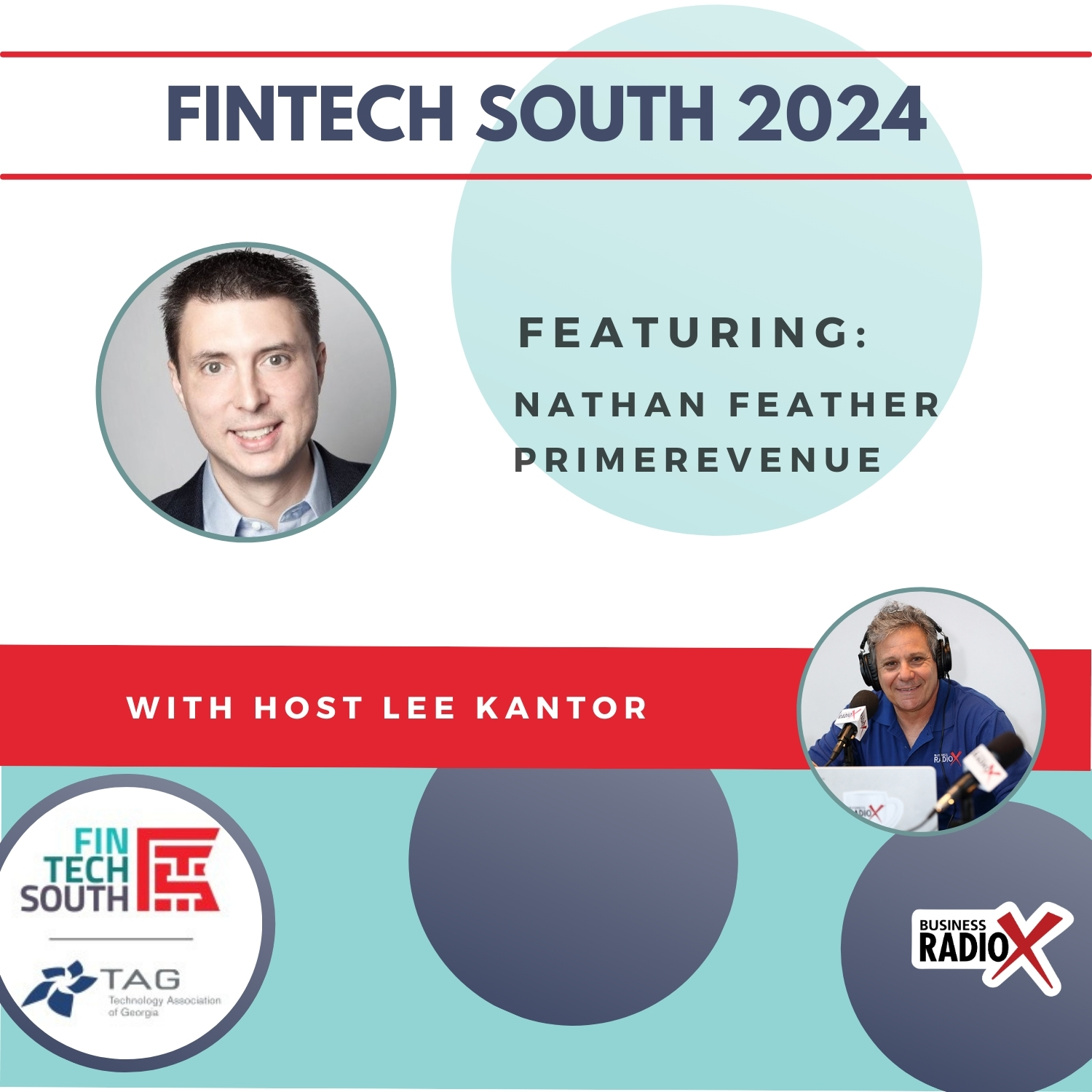
Fintech South 2024: Nathan Feather with PrimeRevenue

September 5, 2024 by angishields

FS-PrimeRevenue-Feature
Atlanta Business Radio
Fintech South 2024: Nathan Feather with PrimeRevenue
Loading
00:00 /
RSS Feed
Share
Link
Embed

Download file

Fintech South 2024, hosted by the Technology Association of Georgia (TAG), took place on Aug. 27-28 at the Woodruff Arts Center and Atlanta Symphony Hall. This year’s theme was “Fintech Lives Here!”

Nathan-FeatherNathan Feather, CFO, PrimeRevenue.

Connect with Nathan on LinkedIn.


Transcript-iconThis transcript is machine transcribed by Sonix.


TRANSCRIPT

Intro: Broadcasting live from the Business RadioX studio in Atlanta, Georgia. It’s time for Atlanta Business Radio, brought to you by Kennesaw State University’s Executive MBA program, the accelerated degree program for working professionals looking to advance their career and enhance their leadership skills. And now, here’s your host.

Lee Kantor: Lee Kantor here, broadcasting live from Fintech South at the Woodruff Arts Center. So excited to be talking to our next guest, Nathan Feather, the CFO of PrimeRevenue. Welcome.

Nathan Feather: Thanks, Lee. Great to be here.

Lee Kantor: Well, I’m so excited to learn what you’re up to. Tell us a little bit about PrimeRevenue.

Nathan Feather: Sure. PrimeRevenue is a global leader in working capital and B2B payment solutions. More than 30,000 customers across the globe use our solutions to connect their financial supply chain, providing enhanced digital payments, visibility and certainty of payment timing, as well as rich remittance advice and improved cash flow.

Lee Kantor: So what’s the how the had the business get started?

Nathan Feather: Sure. So the business is actually a little over 20 years old at this point. And the business got started to solve an inefficiency in accounts receivable finance. For those who are familiar with it, there’s a number of different risks that take place when a company is trying to accelerate payment on accounts receivable. There’s fraud risks, there’s late payment dilution, all sorts of challenges that go into play. But what this does is, is it sort of flips the information flow and it starts with the buyer, not the seller. So we start with an approved accounts payable that really streamlines and makes efficient the financing process.

Lee Kantor: And then have you always been involved with Prime Revenue or how long have you been with the company?

Nathan Feather: I’ve been with the company for 18 years, so I joined in 2006. The very early days, I think there were maybe 15 or 20 people at that point, still looking for that first customer and those first transactions.

Lee Kantor: And then what’s the pain point a customer has where prime revenue is the right solution?

Nathan Feather: Yeah. So really it’s a company that has 1 or 2 particular things that they’re looking to do. One is to optimize working capital. So a focus on accounts payable. A focus on maybe extending payment terms to hold on to their cash longer, but without inflicting pain onto their supplier community. And the second is to provide their suppliers a better experience, to provide their suppliers visibility into what’s been approved, when payments are going to be made, and all of the remittance information that they need to apply those payments in their ERP systems.

Lee Kantor: And then why is this event Fintech South important to you and your firm?

Nathan Feather: Yeah. So I think we were at the first Fintech South, the one over at Mercedes-Benz, I don’t know, seven years ago maybe. It seems like a long time, but for us, we want to support the fintech community here in Atlanta. We’re proud members of Tag And it’s a chance for us to see what’s happening in the space every year, to check in with what’s new and what other folks are up to in in the fintech arena.

Lee Kantor: Now, is your solution kind of industry agnostic? Like you can help anybody in any industry. That’s right.

Nathan Feather: Industry agnostic. Sort of bank agnostic ERP agnostic. The only caveat I would say is businesses need to have a supply chain. So something like a bank or a consulting firm would probably not be a good customer for us. But anything in retail, manufacturing, automotive, consumer packaged goods, etc. are all great targets.

Lee Kantor: Now, is there any trends you’re seeing in the upcoming years?

Nathan Feather: Um, one, I think big trend that we’re seeing, it’s it’s been a kind of strange past couple of years, I think post Covid. There was a period in 2022 where everybody was stocking up on inventory because they were unsure about supply lines and their suppliers. In 2023, we saw a bit of a reversal of that, as well as a pretty sharp rise in interest rates. So now that we’ve settled in a little bit, I think, you know, what we’re actually seeing is more of a business as usual type of approach, to be honest. Folks are getting back to to managing their business with maybe more of a sense of optimism and certainty than they’ve had for the past 18 or so months.

Lee Kantor: So what do you need more of? How can we help you?

Nathan Feather: Um, more. More customers, more partners. Uh, Fintech South is a great place for us, and it’s a great place for us to, to meet, um, other businesses that are in the space that are doing, uh, and selling services that are adjacent to ours that we can partner with. I think I just heard your interview with, with Sarah and, um, you know, we’re looking forward to working with her and Iron Pay in the future. And that’s a relationship that came out of Fintech South.

Lee Kantor: Now, the um, when you talk about partners, what does a good partner like? What’s a good synergy for you guys?

Nathan Feather: Yeah, a good partner is someone who is in the payment space, um, and is connected to mid-market or large corporates, but doesn’t necessarily cover the space we are. So we pick up, um, you know, near the top end of the supply chain, we can go down pretty low. But, um, you know, there are other companies who are better served, probably in indirect goods or in the very small part of the supply chain. So looking to sort of cover the whole of the supplier community with a couple of partners.

Lee Kantor: So if somebody wants to learn more, have more substantive conversation with you or somebody on the team, what’s the website or best way to connect?

Speaker4: Yeah, the best.

Nathan Feather: Way to connect is at prime revenue. Com and you can just click contact us there and someone will get back to you.

Lee Kantor: Well Nathan, thank you so much for sharing your story today. You’re doing such important work and we appreciate you. Okay.

Nathan Feather: Thanks, Lee.

Speaker4: Appreciate it.

Lee Kantor: All right. This is Lee Kantor back in a few. At Fintech South.


Tagged With: Fintech South 2024, PrimeRevenue

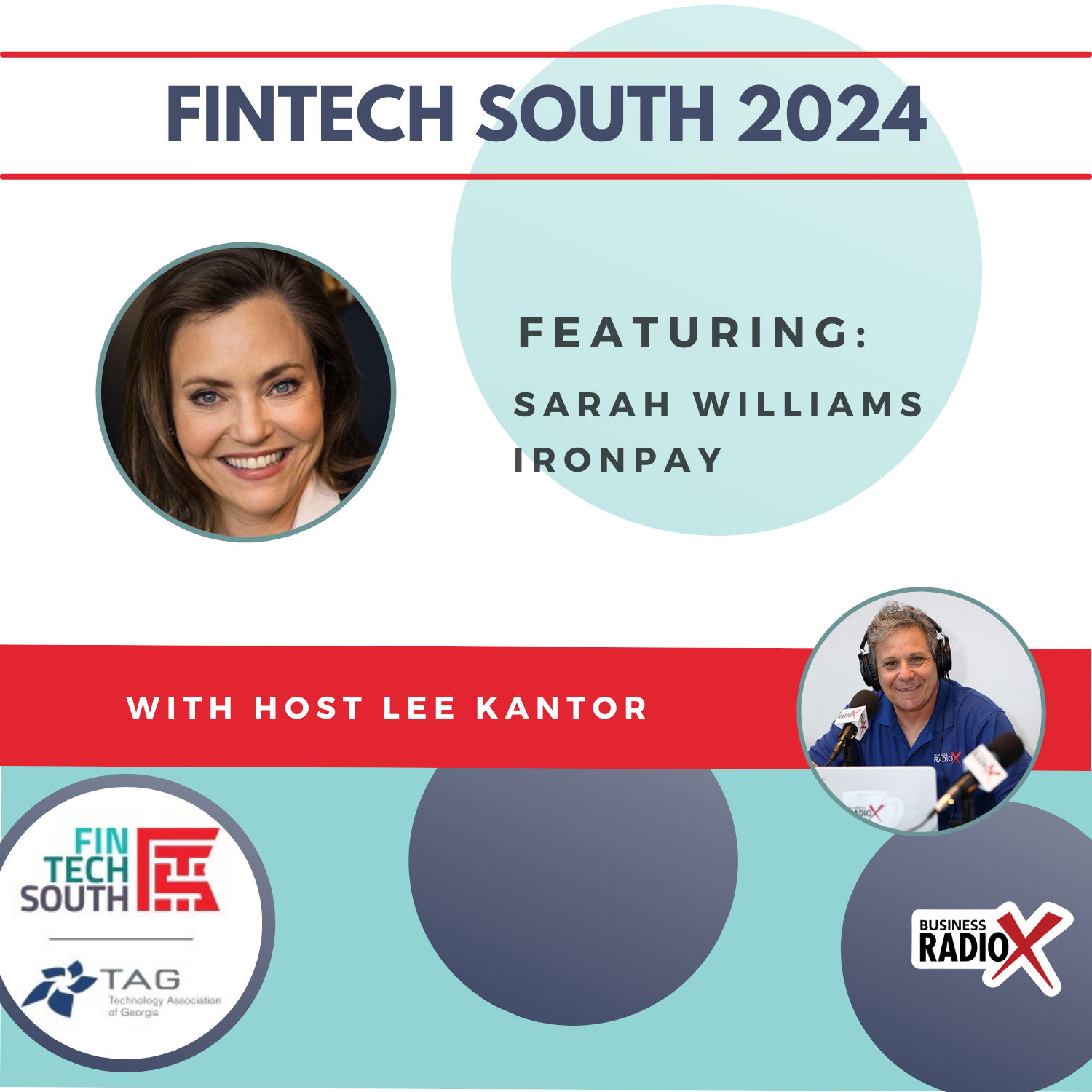
Fintech South 2024: Sarah Williams with IronPay

September 5, 2024 by angishields

FS-IronPay-Feature
Atlanta Business Radio
Fintech South 2024: Sarah Williams with IronPay
Loading
00:00 /
RSS Feed
Share
Link
Embed

Download file

Fintech South 2024, hosted by the Technology Association of Georgia (TAG), took place on Aug. 27-28 at the Woodruff Arts Center and Atlanta Symphony Hall. This year’s theme was “Fintech Lives Here!”

Sarah-WilliamsSarah Williams, Co-Founder of IronPay, is an industry expert in the world of corporate payments.

Sarah’s career has spanned twenty years, managing Strategic Channels and Alliances for several B2B Payment Processing companies, where her combined portfolio across those organizations reached more than $250 MM in annual revenue.

Sarah also acts as a strategic advisor to several Fortune 500 companies.

Connect with Sarah on LinkedIn.

Transcript-iconThis transcript is machine transcribed by Sonix.


TRANSCRIPT

Intro: Broadcasting live from the Business RadioX studio in Atlanta, Georgia. It’s time for Atlanta Business Radio, brought to you by Kennesaw State University’s Executive MBA program, the accelerated degree program for working professionals looking to advance their career and enhance their leadership skills. And now, here’s your host.

Lee Kantor: Lee Kantor here, broadcasting live from Fintech South at the Woodruff Arts Center. So excited to be talking to our next guest, Sarah Williams, the co-founder of IronPay. Welcome.

Sarah Williams: Thank you.

Lee Kantor: Well, before we get too far into things, tell us about IronPay.

Sarah Williams: So IronPay is a B2B payments company. So we work with corporations and enable them to automate their payments And we also work with their suppliers for them to accept different versions of digital payments. So believe it or not, corporate America, especially in the mid-market check, is still the predominant form of payment. We as consumers are so used to being paid electronically and using digital forms of payment, it seems hard to believe that you know, there’s still 70% paper check in the in the in the main middle market business space, and maybe even more so in the smaller business space. So we help to kind of optimize how companies make payments. We digitize those payments for them. And we also generate revenue in the process. And we we actually share some of that revenue back with our clients. So it’s a real win win for companies and AP departments across the country.

Lee Kantor: So what is the fear like? Why? Why aren’t they switching to digital?

Sarah Williams: It’s not a fear. It’s you know several different things. Number one AP in corporate America is not a priority necessarily. It’s not a prime business function. People are in business to do what they do not make a payment, right. And so often it’s neglected as something that they want to invest in. And paper checks still work. The other issue is that it’s a data issue with ACH, which is another form of electronic payment. You can only send about 72 characters in the addendum within an ACH, and that’s not enough information to allow for a company in their accounts receivables department to identify and reconcile that transaction. So in other parts of the world, like Europe, for example, they are almost 100% ACH, because when the euro was created, it was mandated that they had to pay each other electronically, but they also mandated how the data was sent. They had three versions of EDI that they agreed upon. In America, we don’t have any agreed upon standard for data exchange, and the ACH doesn’t allow for data to really be a part of the transaction. So because of those limitations, we’ve, you know, relied on check and continue to rely on check. Um, we as a company will take in invoice based data and we will transmit that information to our supplier clients in a digital format that allows for them to reconcile that transaction, whether it’s an ACH or we have a virtual credit card that also allows for them to receive that information and upload it into their accounts receivable system and auto reconcile. So we kind of we’re middleware that allows for that digital transaction to occur.

Lee Kantor: So now what’s the benefit for them? Like why why if they’re happy with checks. Like what?

Sarah Williams: No one’s happy with checks.

Lee Kantor: No one’s happy. They’re just tolerating it.

Sarah Williams: They’re tolerating it because, you know, it’s fairly low cost. And, you know, it’s it’s still accepted. Um, there has been an instance within the Affordable Care Act. A lot of people don’t know this, but actually the biggest thing that happened with the Affordable Care Act, it was mandated that doctors and, well, health insurance payers like Aetna, Blue Cross Blue Shield, etc., they they had to be able to send information digitally to hospitals and doctors. We call them providers. So this happened in 2011. They created a standard for EDI which was called it’s called an 835. Um, and so everyone was able to transmit data back and forth in an effective way. And then ACH became the standard. And they do charge 1% in that industry. But that is the only iteration in the domestic US where that is. There’s a mandate, there’s a data standard. Um, so that’s why we’re still paying with checks because, you know, there’s no standard and ERPs, you know, financial applications, accounting systems, they don’t have a standard either. Um, it’s this really unique space in the market where we’re still very paper based and ERPs are, you know, are not investing in it because there’s a big service component required to make these payments and, and manage communication between buyers and suppliers and ERPs, as you may know or not know, they don’t really provide services. Um, they sell through Vars, value added resellers. They expect those vars to do the work and the implementation, etc. So, um, it’s a really fascinating Fighting piece of the American business landscape that is still very manual.

Lee Kantor: Right. And but in Europe and now health care are kind of on the same page. They are? Yes. So is this something that eventually is going to switch or is it just, you know, you’re going to be there to help this until it changes?

Sarah Williams: So I think it’s always going to be up to middleware companies to bridge the gap until ERPs start investing in us in our companies. So like SAP bought Ariba and concur. So to a degree they’re doing what we do. Um, you know, in several other ERPs are working with us, but they haven’t bought companies necessarily. So until that occurs, um, we’re here to stay. And I’ve been in this industry since 2005, and I thought it would be over in three years. And it’s not over. It was 90% pay per check in 2005, and now.

Lee Kantor: We’re at 70.

Sarah Williams: And now we’re at 70. Wow. That’s how. That’s the needle that’s moved. But I mean, talk about career security. It’s been awesome.

Lee Kantor: So, um, what do you need more of? How can we help you?

Sarah Williams: Well, look, if you’re if there’s a company out there that is struggling with manual paper based payments, Covid did highlight this issue because the only people that went into the office were were the guys cutting the checks and receiving the mail. Those were the only people in the office. So we have seen a boom in and adoption of, you know, payments solutions like ours in the last few years because Covid really did demonstrate that this is a problem. But, um, if you’re continuing to to struggle with paper based checks you know, work with a company like ours, we do not charge for integrations. Um, we actually pay you back for what we do because we try to send as much money through the virtual card network, which has an interchange of 2.65 associated with it, 265 basis points. And we share that back with the client. So it pays for itself. Um, it’s really a no brainer. It’s just a matter of an organization knowing we exist and other companies like ours exist and and leveraging us.

Lee Kantor: So now from their standpoint, like where is the pain point that you see clearly that they just might be tolerating?

Sarah Williams: Well, it’s paper tracks, right.

Lee Kantor: So if you’re sending a paper check and you don’t have a solution like Iron Pay, then you should call iron Pay.

Sarah Williams: You should call iron pay.

Lee Kantor: Right. Like so. It’s that it’s really that simple. It’s that.

Sarah Williams: Simple. It’s the easiest thing. So when I started working, I worked for Accenture and we were coding ERP. It was Anderson back then, in 1999, we literally had nap rooms. We worked around the clock. Then I sold mainframes for Unisys to banks. So I’ve always been in fintech. Um, when I started working in this industry, I was like, I’ll never have to learn anything new again. This is amazing. I’m in technology, but I don’t have to learn anything. It’s such an antiquated aspect of how companies work in the in the US. It’s fascinating, but we’re here to help. Um, and and, you know, it’s it’s free, guys.

Lee Kantor: So if somebody wants to learn more, have a more substantive conversation with you or somebody on the team.

Sarah Williams: Absolutely. You can find us on our website, ironport inc.com. Or reach out to me directly via LinkedIn. Sarah Williams on LinkedIn ironport inc.com.

Lee Kantor: So now why is this Fintech South Conference important to you?

Sarah Williams: So I’ve been attending this conference for 8 or 9 years, and I actually earlier on when it was used to be at the Mercedes-Benz Stadium, I was on the board to recruit people. What I love about Fintech South is it’s very diverse and it’s representation of technology and certainly fintech. Um, and it really highlights that Atlanta is transactionally. Um, and it’s it really highlights what makes Atlanta so great for our particular industry. And I go to fintech conferences around the country and even in Europe. And this to me, this conference is is the most it gives. It gives us the greatest opportunity to meet people in our specific industry out of any other conference, um, that I attend.

Lee Kantor: Good stuff. Well, Sarah, thank you so much for sharing your story. You’re doing such important work and we appreciate you.

Sarah Williams: Thank you so.

Lee Kantor: Much. All right. This is Lee Kantor back in a few. At Fintech South.


Tagged With: Fintech South 2024, IronPay

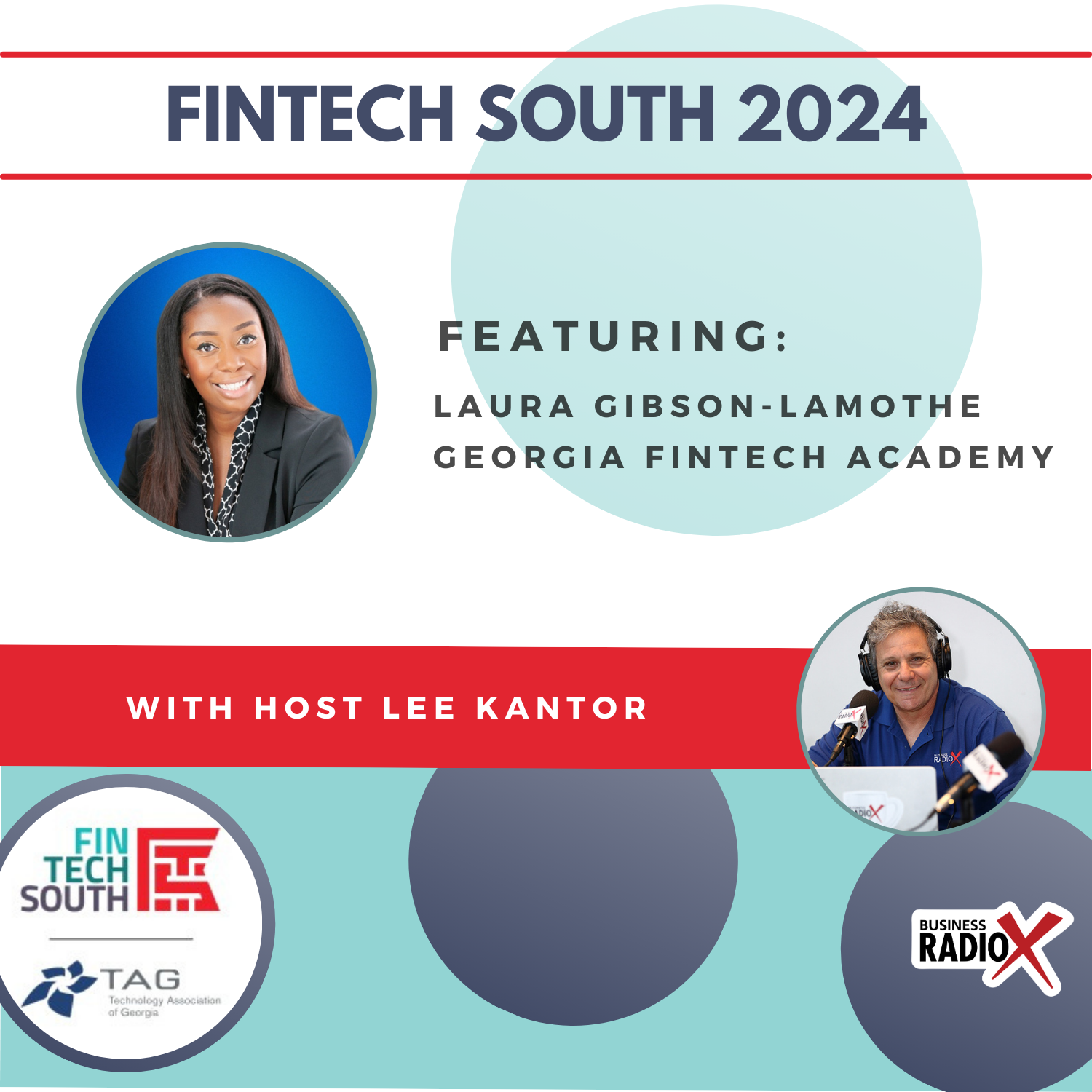
Fintech South 2024: Laura Gibson-Lamothe with Georgia Fintech Academy

September 5, 2024 by angishields

FS-Georgia-Fintech-Academy-Feature
Atlanta Business Radio
Fintech South 2024: Laura Gibson-Lamothe with Georgia Fintech Academy
Loading
00:00 /
RSS Feed
Share
Link
Embed

Download file

Fintech South 2024, hosted by the Technology Association of Georgia (TAG), took place on Aug. 27-28 at the Woodruff Arts Center and Atlanta Symphony Hall. This year’s theme was “Fintech Lives Here!”

Laura-Gibson-LamotheAs the Executive Director of the Georgia Fintech Academy, Laura Gibson-Lamothe’s primary objective is to drive meaningful impact within the industry through the implementation of a comprehensive diverse talent development program.

The Georgia Fintech Academy focuses on educating and empowering the next generation of fintech professionals by fostering collaboration with 26 institutions aligned with the University System of Georgia, as well as private universities and HBCUs. Our commitment extends to creating academic pathways to fintech at the secondary level, strategically cultivating a reservoir of talented individuals poised to shape the future of the industry.

Connect with Laura on LinkedIn.

Transcript-iconThis transcript is machine transcribed by Sonix.


TRANSCRIPT

Intro: Broadcasting live from the Business RadioX studio in Atlanta, Georgia. It’s time for Atlanta Business Radio, brought to you by Kennesaw State University’s Executive MBA program, the accelerated degree program for working professionals looking to advance their career and enhance their leadership skills. And now, here’s your host.

Lee Kantor: Lee Kantor here, broadcasting live from the Woodruff Arts Center for Fintech South. One more time. This is the seventh year, I think, that we’ve been here broadcasting, and I’m so excited to be talking to our next guest, Laura Gibson-Lamothe. And she is the executive director with Georgia Fintech Academy. Welcome.

Laura Gibson-Lamothe: Thank you.

Lee Kantor: Well, I’m so excited to learn what you’re up to. Tell us about Georgia Fintech Academy. How are you serving folks?

Laura Gibson-Lamothe: Yeah, the Georgia Fintech Academy has been around since 2019. We are a academic talent development initiative within the state of Georgia. We support all 26 of the universities and colleges that exist underneath the university system of Georgia, and we provide a curriculum, a fintech curriculum. We also provide experiential learning opportunities, career development services. We do a podcast that’s co-hosted with students, and we pull students in from across the entire state. There’s currently 350,000 students enrolled across the state of Georgia, and 8000 of them we have reached with our fintech curriculum, which is pretty amazing.

Lee Kantor: Now, how did the kind of this idea. What was the genesis of the idea? Like who raised their hand and said, you know what, there should be a fintech academy. You know, that seems very niche. Yes.

Laura Gibson-Lamothe: Back in 2019, it was a combination of industry and academics in the room. The idea stemmed from the fact that Atlanta is and has become a major fintech hub recognized globally for the fintechs that we have in this space. And given the rapid growth economically here in the state of Georgia, the focus has also been on workforce development to support that, that growing demand.

Lee Kantor: So how how does it work? You have your own curriculum teaching fintech kind of skills that young people can get involved with and then learn. Or is it something where you’re partnering with the different education places to build a curriculum so that you’re always kind of teaching them the right things at the right time?

Laura Gibson-Lamothe: Yeah, that’s a good question. I like to I think I coined the term curriculum as a service. If not, I’m going to trademark that eventually in the future. That’s a.

Lee Kantor: Good one. Yes.

Laura Gibson-Lamothe: So what we do is we offer a core set of courses, and over the years that that core has grown. But we enable each university to offer a fintech degree of study. And so we have a variety of those 26 institutions that are on board with the curriculum. And they’ve built their own packages per se. Kennesaw state’s actually one that I would love to reference is an example of evolution of that curriculum. They first onboarded with just the core, so they were offering certificate in Fintech, but now they offer a master’s in digital financial technology, which all is supported through the accreditation process and the curriculum oversight by way of the Fintech Academy.

Lee Kantor: So it’s evolved from a certification to an actual degree. Yes, exactly. Wow. That’s I mean, is that unique in the country? It is.

Laura Gibson-Lamothe: Very unique. And I think from a fintech perspective, if you look at the the market for other universities offering this type of curriculum, it’s still, you know, early days. And so that’s actually drawn some appeal outside of the state of Georgia, you know, for other universities and organizations to to look at what successes we’ve had from a fintech curriculum development perspective.

Lee Kantor: So why is this event, Fintech South important to you in the organization? Yeah, it’s extremely important.

Laura Gibson-Lamothe: I feel like one of the things that we do really well is compliment the the in the classroom education with actual real world experiences. And there is none better than coming to an event hearing in real life. Um, experienced leaders talk about relevant themes and topics, uh, applied to the industry, and then also providing them a one stop access to a very broad network. Um, and today we have 35 students and a few faculty that are joining us from six different universities that we support, uh, Kennesaw State, University of Georgia, Georgia State University, Mercer, Morehouse. I think I covered them all. Oh, middle Georgia, um, University as well. Um, and those students have taken this opportunity by storm. Um, there’s there’s some, you know, institutions that are a little bit further out. So they have kind of band together to, to stay here locally for this event overnight. And they woke up extremely early this morning to make sure they’re connecting with people via the app and other channels so they can schedule in-person meetings at this event.

Lee Kantor: Now, is there any story you can share of a student that’s gone through the program and then was able to take their kind of career to a new level?

Laura Gibson-Lamothe: Yeah, one that I’m really proud about. Astrid, who is a graduate at Kennesaw State University. She is at Truist, and today she is at the Truist Booth in the Expo Hall. And I’ve had students full circle, full circle moment. Right. And I had students approach me and they were so excited. They were like, oh, she’s on the other side. Like she made it on the other side. And I’m like, wow, it’s funny to. And I’ve only been in this role for two years and I’ve already seen that, that cycle, um, uh, across the university system where there’s examples of that. But it’s really fulfilling to see these students look up to other students who have just more recently, you know, made it through, and then they’re now leading the way for the next generation of students coming through as well. So it’s kind of that reciprocated type of perspective for the both of them, thinking about what challenges that that younger student had to navigate to to get, you know, find their way through the industry and then those who have made it, I call them near peers to be able to be mentors for that next generation right there.

Lee Kantor: Showing them what’s possible. Yeah. So what do you need more of? How can we help?

Laura Gibson-Lamothe: Oh, I need everything. So all the things that I kind of outlined need support. So whether it be curriculum, we are constantly looking at evolving the curriculum. And the industry is evolving so fast. So for me coming to these events, I love hearing about some of the emerging trends and some new technology capabilities. And you guys know like AI is a hot topic. And so we’ve been really focused on generative generative AI and incorporating some of that in the curriculum because we’ve been so data science, um, AI and machine learning focused. But that’s just an example of like some of the aspects of the curriculum where we’re really looking to plug into industry to make sure that the training that we’re providing in the classroom is as relevant and current state as possible. The other side is, you know, the services that we offer for students. So we’re always looking for mentors and advisors. We have a mentorship program where we we sync based on background and an area of study for a student or, you know, an interest of a student with some mentors from the industry. And so the mentorship piece is really key for us. We do a speaker series, so twice a week, Monday and Wednesdays. Every night during each semester, we host an event, um, which is virtual because we want to provide accessibility across the university system, across the state of Georgia, where we have industry leaders come in and speak on certain themes and topics. And that one’s really cool because we get a lot of variety of the type of leaders that are willing to dedicate their time to just speak about various topics. And so we’re looking for those types of support mechanisms from the industry.

Lee Kantor: So how does somebody connect with the Academy?

Laura Gibson-Lamothe: Yes. So on our website Georgia Fintech Academy. Org forward slash volunteer. We actually have a volunteer form, which I’m really excited about, because that volunteer form kind of leads into I built like a CRM. I’m a techie in my background and my nature, so I love having solutions that really optimize process. Um, and so this volunteer form is really important because it’s a database that our faculty, we have 20 faculty across the university system teaching these courses. They’re working so close with the students, they need all the support they can get. And so we provide them access to that database for, um, you know, the repository of folks that have volunteered. And so we’re now leveraging that as a resource. And then also at the mothership, the Fintech Academy, we’re using that data as well. Um, and so I would recommend folks to, to sign up out there.

Lee Kantor: Well, thank you so much for sharing your story. You’re doing such important work and we appreciate you.

Laura Gibson-Lamothe: Thank you so.

Lee Kantor: Much. All right. This is Lee Kantor will be back in a few. At Fintech South.


Tagged With: Fintech South 2024, Georgia Fintech Academy

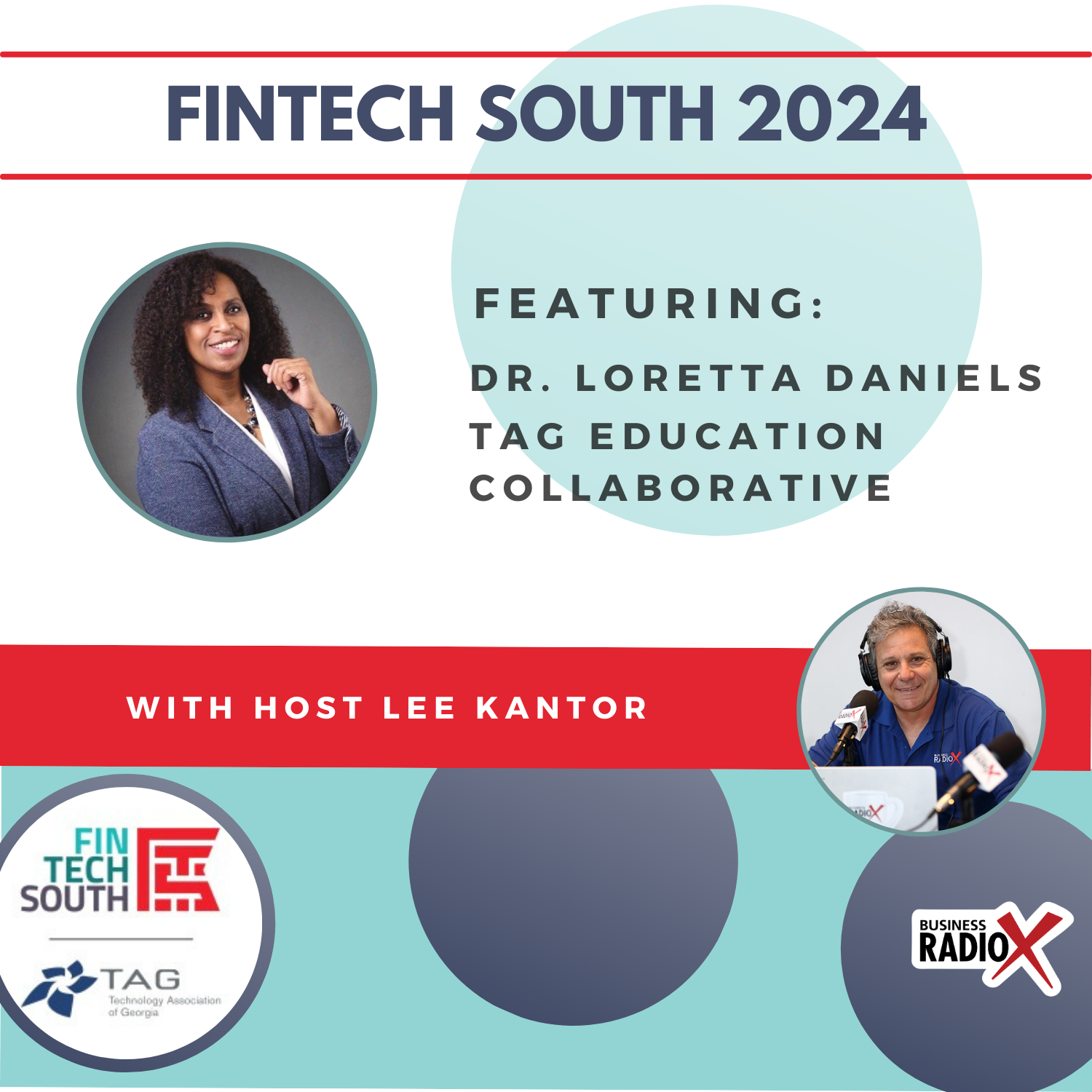
Fintech South 2024: Loretta Daniels with TAG Education Collaborative

September 5, 2024 by angishields

Fintech-South-Loretta-Daniels-Feature
Atlanta Business Radio
Fintech South 2024: Loretta Daniels with TAG Education Collaborative
Loading
00:00 /
RSS Feed
Share
Link
Embed

Download file

Fintech South 2024, hosted by the Technology Association of Georgia (TAG), took place on Aug. 27-28 at the Woodruff Arts Center and Atlanta Symphony Hall. This year’s theme was “Fintech Lives Here!”

Dr-Loretta-DanielsDr. Loretta Daniels, Interim Executive Director, Technology Association of Georgia’, TAG-Ed and CEO and Managing Partner at Kendall and Kendrick Consulting Group, is an expert in organizational Leadership, DEI, conflict management, and communication. As an executive leader in the corporate arena, she has served in executive leadership roles such as Chief Executive Officer, Chief Operations Officer, Vice President of Sales and Marketing, Executive Director of Sales Operations, and General Manager. In addition, she has written corporate training manuals Leading by Example and Fast Track to Excellence. As the former Executive Director of Corporate Relations of Kennesaw State University (KSU), she worked with medium and large organizations to define and deliver leadership growth certificate programs aligned with the company’s vision and objectives.

Dr. Daniels has recently created TAG Bridge Builders, a social justice and equity initiative to promote Georgia’s underrepresented tech professionals advance from mid-level positions to senior-level leadership roles, providing access to funding and customer acquisition for tech entrepreneurs.

Dr. Daniels partnered with C-level Leadership and HR to determine leadership development goals, identify training gaps, enable cultural workplace initiatives, and implement gender pay equality and equitable hiring practices. In addition, she served as the University Office of Diversity and Inclusion CoChair and Presidential Commission on Gender & Work-Life Issues. Also, she advised executive teams, including the President and Chief Diversity Officer, consulted as a subject matter expert on DEI challenges and solutions, and supported DEI’s continuous improvement efforts.

As an adjunct leadership instructor at KSU since 2002, Dr. Daniels delivered in-class and online lectures encouraging students to think strategically by applying fundamentals to real-world problems. Courses taught included Corporate Communication and Conflict Resolution, Human Communications, Public Speaking, Writing for Public Communication, and Foundations of Leadership. Additionally, she has designed a Coursera Specialty Certificate program, Advanced Leadership Skills for the 21st Century Specialization Certificate.

Dr. Daniels received a Doctor of Philosophy (Ph.D.) in Organizational Leadership from Johnson University, a Master of Science (MS) in Conflict Management, a Bachelor of Arts (BA) in Communication from Bradley University, and a Bachelor of Science (BS) in Mass Communication/Media Studies from KSU. She is a Certified Diversity Professional and the author of two books, For Women Only, Women Mean Business (J & W Publishers, 1992), and Unlock Your Success, a Comprehensive Guide for Starting a Successful Business (J & W Publishers, 2006). Dr. Daniels’ upcoming book, Organizational Leadership, published by SAGE Publications, will be available in January 2025 This textbook will offer a new and comprehensive approach to organizational leadership to address the paradigm shift in our global business community.

Connect with Dr. Daniels on LinkedIn.

Transcript-iconThis transcript is machine transcribed by Sonix.


TRANSCRIPT

Intro: Broadcasting live from the Business RadioX studio in Atlanta, Georgia. It’s time for Atlanta Business Radio, brought to you by Kennesaw State University’s Executive MBA program, the accelerated degree program for working professionals looking to advance their career and enhance their leadership skills. And now, here’s your host.

Lee Kantor: Lee Kantor here, broadcasting live from the Woodruff Arts Center at Fintech South. So excited to be here. So excited to be talking to my next guest, Loretta Daniels, who’s the interim executive director of TAG Education Collaborative. Welcome.

Loretta Daniels: Thank you for having me.

Lee Kantor: Well, I’m so excited to learn what you’re up to. Tell us about the TAG Education Collaborative.

Loretta Daniels: Well, we are the charity side of TAG and we focus on providing workforce solutions in the tech workforce.

Lee Kantor: So so what is the kind of the day to day entail when you’re trying to accomplish such a big goal like that?

Loretta Daniels: Yeah. What we do is we take a comprehensive approach. We we take a look at how do we help Georgians get into the tech workforce. And we have programs like the registered Tech Apprenticeship program. We are the first in the state of Georgia for that program. It allows minorities, veterans, women, individuals who may have had a degree in social science or business now to get into tech jobs. So we put them through training. We work with employers. They actually hire them. It’s different from an internship program. This is a program where they’re hired as an employee. We put them through training for positions like software developer or cybersecurity analyst, those kind of jobs.

Lee Kantor: Now, we’ve heard so much about kind of the talent challenges that companies are having in all aspects of the technology industry and the technology industry has, I would imagine, an unemployment rate of like negative because there’s a lot more demand than there is supply in that. Is TAG helping kind of build up that pipeline even at the earlier ages? You know, maybe even elementary, middle school, high school level, or is it just something for adults after they’ve graduated?

Loretta Daniels: Good question. We focus on let’s get them ready now. And so we will have an internship program that we do have this program. It really develops those high schoolers, those 11th graders and 12th graders who are looking to get into the workforce. Our internship program is designed to say, here, let’s get you into a tech world. Let’s, you know, have you take a look at different tech positions, careers so that you can be geared up to go there?

Lee Kantor: Now, is there any initiatives that are kind of you mentioned some opportunities for minorities? Is there any initiatives for women, minorities, people who are big consumers of technology but maybe not have kind of self-selected out of technology as a career path.

Loretta Daniels: Yeah, we do that. We have a mentorship program that focuses on mid-level individuals who may want to go into the tech space or want to be advanced into the tech areas and leadership programs, but that registered apprenticeship program is designed specifically for that. Let’s target those women who may not have thought they’d ever be in a tech position, but now they are.

Lee Kantor: And then is one of the challenges finding like enterprise level partnerships, is that one of the things that you, you work with to create that collaboration between the company that needs the talent and this, you know, aspiring talent?

Loretta Daniels: Yeah, that’s a great question. That’s one of the biggest challenges because so many companies, they have a need to develop this talent pipeline, but there’s just not going to be enough of graduates in tech degrees to fill these positions. So it’s really working with those employers to let them know that TAG is here to help them to have this unique way of filling these jobs. And so that’s what we do. The biggest challenge is just letting them know that they don’t have to rely on those who have graduated with a tech degree. We have to be more strategic. We have to be more creative on how do we fill this talent pipeline. And so the biggest challenge is educating these employers now.

Lee Kantor: Or is this something where the employers are working with universities or maybe TAGged to create like certifications or like customized education that’s going to serve their pipeline specifically? I’ve seen in other industries where enterprise level companies partner with a university or create their own certifications to kind of get that person ready for a job at that company. Like, they’re kind of growing their own talent pool.

Loretta Daniels: Yeah. Um, I have a higher education background And so that was one of the major areas that industry would come in and partner with KSU to create certifications and even to take a look at the curriculum to make sure it was, you know, relevant for what they’re looking for. But for TAG, we create certification certifications as well. We partner with Skill Storm for upskilling and reskilling degrees, especially not degrees but certifications in AI because of the AI workforce. But we also have our own leadership and workforce development certifications that we create.

Lee Kantor: And then an enterprise level organization can come to you and say, hey, we’re interested in this, and together you can create a curriculum that maybe helps them with their specific talent pool, but also gets that person a skill that that is marketable.

Loretta Daniels: Exactly. Like for instance, we have two programs that we’ve developed, Pathways to leadership. It helps with those leaders to be able to lead in technology, lead in the areas. And we designed the curriculum based on what our corporate members said they needed in leadership. We also have a succession planning for tech leaders, because one of the best strategies to, you know, keeping your profit margins where you need them to be is to have people ready to go into leadership positions. 25% of the companies in the United States have a succession plan. That means there’s another 75% that don’t have succession plans.

Lee Kantor: That’s shocking. Yeah. Now, um, so when you’re working with an organization, can you share a little bit about what that looks like? Do they come to you with, hey, we have this challenge, how do we build a curriculum or do they have that kind of baked in? They’re just looking for you to kind of identify the aspiring talent. Like, how does kind of what does that look like when you’re working with TAG?

Loretta Daniels: Yeah. So it’s a couple of different approaches. So when we created our leadership development program, the PTL, we did find out from them. What are you looking for in a leader so that we can add that curriculum. And what works very well is we have industry leaders coming in and teaching portions of the class so that they are all, you know, there’s buy in from them, right?

Lee Kantor: So everybody’s on the same page. Exactly. Now, are you finding that more and more corporations are open to these kind of untraditional ways to learn, like, are they okay with, oh, this person’s got a TAG certification? I’m okay with that. They don’t necessarily have, you know, the Georgia Tech degree.

Loretta Daniels: Yeah, I call that that that degree pedigree. Right, right. But so many companies are getting away from that. They’re they’re waiving the degree requirements. And that’s where our apprenticeship program comes in. So. Well because we identify those talents for them. Because all these companies, at some point they’re going to have to take a look at waiving the degree requirements, because there’s just not enough individuals graduating with tech degrees to fill these positions now.

Lee Kantor: Are you finding the applicants or the prospective employees? Are they open to this path? Like, are they like, oh, this is great. This is it’s almost like a cheat code, right? Like I’m not having to go through that degree, but I’m still getting kind of these key learnings that are going to make me marketable.

Loretta Daniels: Yeah, that is a great point. And here’s what happens. As a as a result of that, not only are they open to it, but employers are seeing a higher retention rate. So individuals who are coming in without a tech degree getting the certifications, their retention rate for these employers are 88% and higher.

Lee Kantor: Wow. So what do you need more of? How can we help you?

Loretta Daniels: Well, we need more employers to be welcome, you know, to welcome these strategies of having us help them to solve their workforce problems, create a tech talent pipeline. Um, that’s how you can help us get those employers coming to us.

Lee Kantor: So how does Fintech South play into all of this?

Loretta Daniels: Well, you know, because in Fintech South we have so many companies being represented. We even have people here looking for positions. And so, you know, just getting the word out and sharing with our sponsors, sharing with our attendees that um, TAG is about, you know, taking care of those tech workforce pipelines.

Lee Kantor: And if somebody wants to connect with you or somebody on the team, what’s the coordinates?

Loretta Daniels: Just give me a call. You know, my email is Loretta at TAG online.org. And just ask for Doctor Loretta. And then.

Lee Kantor: Can they go to the website.

Loretta Daniels: TAG. They can always go to the website TAG online. It’s TAG ed online. Org and they can find us.

Lee Kantor: Well Loretta, thank you so much for sharing your story today. You’re doing such important work and we appreciate you.

Loretta Daniels: Thanks for having.

Lee Kantor: Me. All right. This is Lee Kantor. We’ll be back in a few. At Fintech South.


Tagged With: Fintech South 2024, Tag Education Collaborative

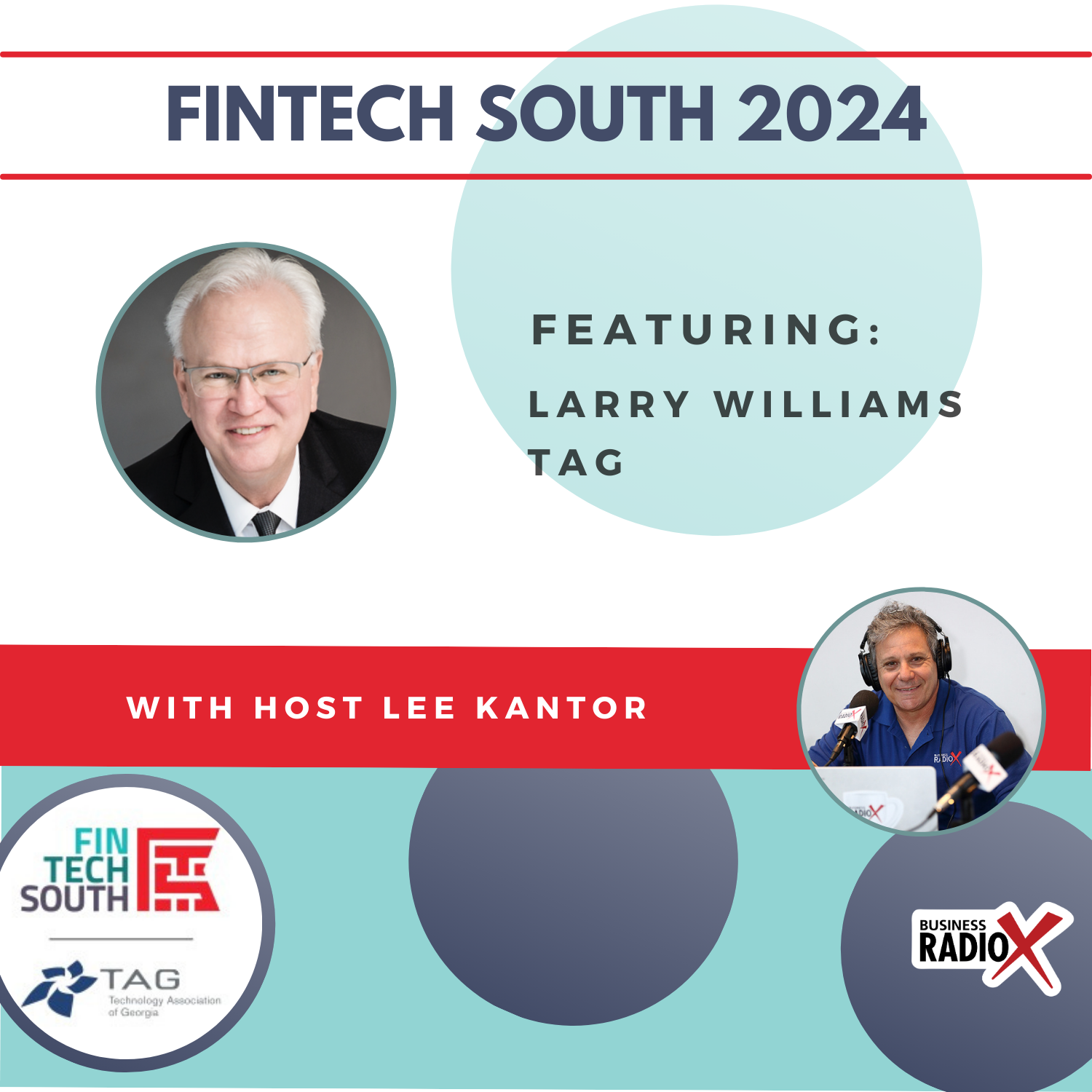
Fintech South 2024: Larry Williams with TAG

September 5, 2024 by angishields

Fintech-South-Larry-Williams-Featurev2
Atlanta Business Radio
Fintech South 2024: Larry Williams with TAG
Loading
00:00 /
RSS Feed
Share
Link
Embed

Download file

Fintech South 2024, hosted by the Technology Association of Georgia (TAG), took place on Aug. 27-28 at the Woodruff Arts Center and Atlanta Symphony Hall. This year’s theme was “Fintech Lives Here!”

Larry WilliamsLarry Williams is President and CEO of the Technology Association of Georgia. He brings more than 25 years of experience in global branding, international trade and finance, public and industrial policy, and administration and management to TAG.

As the former president and CEO of The Beacon Council, Miami-Dade County’s official economic development partnership, he helped facilitate local, national and international business growth and expansion programs.

Under his leadership The Beacon Council created and executed a new economic development framework to help the area grow and secure investments in today’s innovation economy. This is resulted in $687 million in new investment, 119 company relocations or expansions, and more than 4,500 new jobs. From 2011 to 2014, he helped shape the vision for Atlanta’s tech sector as vice president of technology development at the Metro Atlanta Chamber.

He provided leadership and direction to the Chamber’s Mobility Task Force, positioning Atlanta as a global hub of mobile technology, and to the Technology Leadership Council.

Connect with Larry on LinkedIn.

Transcript-iconThis transcript is machine transcribed by Sonix.


TRANSCRIPT

Intro: Broadcasting live from the Business RadioX studio in Atlanta, Georgia. It’s time for Atlanta Business Radio, brought to you by Kennesaw State University’s Executive MBA program, the accelerated degree program for working professionals looking to advance their career and enhance their leadership skills. And now, here’s your host.

Lee Kantor: Lee Kantor here, another episode of Atlanta Business Radio. So excited to be broadcasting live from the Woodruff Arts Center because we are here for Georgia Fintech South. And I’ve got with me today Larry Williams. He is the grand poobah of TAG Technology Association of Georgia. Welcome, Larry.

Larry Williams: Good morning Lee.

Lee Kantor: Well, Larry, do you mind sharing a little bit about TAG first and then we’ll get into Fintech South and why this event is so critical to the Atlanta ecosystem.

Larry Williams: Certainly TAG is the Technology Association of Georgia. We are 30,000 members strong, and we are really the place that nexus that brings together everything that is technology and innovation. So everybody that wants to be a part of this great prosperity that we’re experiencing in this state, that’s all driven by technology. They want to be a part of TAG.

Lee Kantor: And this is TAG’s 25th anniversary?

Larry Williams: This is our 25th anniversary. And we are super excited about what’s going on this year. And we’re also excited about the next 25.

Lee Kantor: So how has it you’ve been around for a minute? Tell us about kind of how you’ve seen the evolution of the technology ecosystem here in Atlanta, maybe from the early days to where it is now.

Larry Williams: You know, one thing that’s interesting, and Lee, you’ve heard me say this before, is I really do believe that Georgia is where technology meets the real world. So if we think about some of the things and, you know, historically that helped build this, you know, we got to go back to the Hayes Modem, Scientific Atlanta. All of these great companies that help build and really build a reputation, and a lot have been fueled by these great educational institutions that we have research institutions that help develop products and services that people have been able to commercialize and really affect the landscape of the technology globally. So that’s if we go back to the beginnings of it. But if we go through sort of a timeline, then we can look to things like cybersecurity, great innovations that came out that helped create great companies like ES, that’s now a part of IBM. And those functions still stay here in Georgia. Secureworks with became part of Dell, still still here, and then even Airwatch. Airwatch was the first mobile security application that the iPhone led onto its platform. With that and the partnership with AT&T mobility here in Atlanta, it’s the business.

Larry Williams: It’s the company that really put the BlackBerry out of business. If you remember the BlackBerry leaf. I know. And so there’s great stories. And I tell this because it’s like fintech. And while we’re here today, fintech, you know, we used to do the check processing here. And then we were part of the industry and the ecosystem that digitized that process that created this great transaction in fintech community that we have here today. And what’s important about this, Lee, and the way I tell it this way is because when it comes to the change in what I’ve seen over the last 25 years, Georgia has been a part of this evolution of technology and innovation every step of the way, and we’re going to continue to be a part of that for the next 25. But we didn’t just stand up and say, hey, we’re a fintech capital. We actually built every, um, every part of this industry. And as I say, you know, and with cybersecurity as well, we help build every layer of the onion. So we know how it’s built. And so we’re in a position to build the next phase as well.

Lee Kantor: And because and I don’t think you can really separate TAGs efforts in connecting everybody and having kind of this cohesive, uh, mosaic of different companies and different verticals within technology. Um, but you’ve fostered such a collaborative environment where people aren’t necessarily, you know, learning here at the great universities and leaving. We’re keeping a lot of the talent here, and then the talent wants to give back, and then they keep reinvesting in here. So it’s really kudos to you for creating that kind of environment that people want to stay after they’ve exited, and they want to help kind of build this and keep the momentum going for the next 25 years.

Larry Williams: Lee, it’s a great point. And, you know, one, our skyline has transformed. You drive through Midtown today. You really do see you know, it’s a technology skyline today. Um, and it is a great thing now people see opportunities here so they can stay here. The other part of that Lee, is there are so many people that have moved out of market that want to come home, and they want to come home. They, they they miss Atlanta. They miss Georgia. There are so many opportunities for them here now. And so even if they left and had to, you know, be young and be adventurous, they’re ready to come back home and be a part of this great community.

Lee Kantor: So now let’s talk a little bit about this conference. Um, how many years has it been since we’ve been doing fintech? I know we’ve been around since the beginning.

Larry Williams: Seventh. This is our seventh year.

Lee Kantor: Seventh year. Um, how have you seen kind of the fintech community evolve over this seven years? And, you know, with the pandemic mixed in the middle of that.

Larry Williams: You know, we’re 260 fintech companies in the community today. Um, it continues to grow. We are the place where people are, you know, moving their companies. They’re building their companies. The entrepreneurial community is is very strong. We’re also seeing there’s a lot more private equity venture capital that looks to our companies here that are growing up in Georgia as places to invest. So it’s the whole ecosystem about what makes it work. So there are large companies here. You know, we have the largest, uh, transaction processors in the world are based here. Um, we have a lot of the banks that are connected to it as well. And then we have the capital that are fueling the entrepreneurs. Um, and then also the education that’s so important for us, so proud that we helped create the Fintech Academy, uh, several years ago and that skyrocketing as well. But fintech continues to be strong. And it continues. You know, it’s a global industry for us here. And it touches everything. Trillions, trillions of dollars are processed through Georgia every day.

Lee Kantor: Yeah, it’s it’s mind boggling the amount of transactions that occur. Right. You know, right where we’re standing pretty much. That’s right. Now, um, for people who haven’t been to Fintech South. Can you share a little bit about what they can expect from an event like this?

Larry Williams: You know you can. It’s really about bringing people together. So there’s a lot of learning. The content that we have on the sTAGe is world class people talking about everything, about what’s now and what’s next in fintech. It’s about, you know, how that connection with cybersecurity privacy and making sure that we’re securing our transactions all the way up to the opportunities to have frictionless payments and make that process much more, um, much easier. Um, so you’re going to learn about all of that. You’re going to you’re going to see one of the most connected marketplaces that you can see, people that can come here and do business with each other. I love seeing people sit down and make deals. I was able to make some introductions last night. Uh, people that are really, uh, are excited about getting together and do business with each other, uh, mutually beneficial. And then you see great things. We. I had the honor of doing a fireside chat with Barry McCarthy. Yesterday we inducted him into the Georgia Fintech Hall of Fame. Such a great leader, someone. He’s the CEO of deluxe, but he has been a part of this ecosystem and has helped build every part and help really be a convener to really be to coalesce this fintech industry here. So there are all things like that, you know. Another highlight yesterday, Lee, is we did our innovation challenge and there was a great company that actually got a $25,000 award. And that’s cash and that’s a young company. And they’ll be able to grow fast because of that. You know, you talked about seven years. We’ve given almost half $1 million away on sTAGe at the Innovation Challenge now over the last seven years. So that’s really meaningful. One of the former recipients, I saw him yesterday and he said, Larry, we’re not for that $25,000. I wouldn’t be where we are today.

Lee Kantor: Yeah, the impact is real. Um. So what do you need more of? How can we help?

Larry Williams: What do we need more of? Hey, listen, it’s just if you’re not part of this great community, then come be a part of it. Come be a part of TAG. We do fintech, we do cybersecurity. We do all the industries and we do all the functions data governance, AI, quantum, all of this is part of our ecosystem. We need people to be plugged in. Let’s let’s get together. Let’s be a part of it. Let’s get involved with the things that we have now, or think of something creative that we can do in the future. And from you, Lee, just keep telling the great news and keep, uh, um, broadcasting what we’re doing, as well as what a lot of our members and partners are doing.

Lee Kantor: Well, Larry, thank you so much for sharing your story today, doing such important work. We appreciate you. Thank you. Lee. All right. This is Lee Kantor will be back in a few. At Fintech South.


Tagged With: Fintech South 2024, TAG

  • « Previous Page
  • 1
  • 2

Business RadioX ® Network


Our Most Recent Episode

CONNECT WITH US

  • Email
  • Facebook
  • LinkedIn
  • Twitter
  • YouTube

Our Mission

We help local business leaders get the word out about the important work they’re doing to serve their market, their community, and their profession.

We support and celebrate business by sharing positive business stories that traditional media ignores. Some media leans left. Some media leans right. We lean business.

Sponsor a Show

Build Relationships and Grow Your Business. Click here for more details.

Partner With Us

Discover More Here

Terms and Conditions
Privacy Policy

Connect with us

Want to keep up with the latest in pro-business news across the network? Follow us on social media for the latest stories!
  • Email
  • Facebook
  • Google+
  • LinkedIn
  • Twitter
  • YouTube

Business RadioX® Headquarters
1000 Abernathy Rd. NE
Building 400, Suite L-10
Sandy Springs, GA 30328

© 2025 Business RadioX ® · Rainmaker Platform

BRXStudioCoversLA

Wait! Don’t Miss an Episode of LA Business Radio

BRXStudioCoversDENVER

Wait! Don’t Miss an Episode of Denver Business Radio

BRXStudioCoversPENSACOLA

Wait! Don’t Miss an Episode of Pensacola Business Radio

BRXStudioCoversBIRMINGHAM

Wait! Don’t Miss an Episode of Birmingham Business Radio

BRXStudioCoversTALLAHASSEE

Wait! Don’t Miss an Episode of Tallahassee Business Radio

BRXStudioCoversRALEIGH

Wait! Don’t Miss an Episode of Raleigh Business Radio

BRXStudioCoversRICHMONDNoWhite

Wait! Don’t Miss an Episode of Richmond Business Radio

BRXStudioCoversNASHVILLENoWhite

Wait! Don’t Miss an Episode of Nashville Business Radio

BRXStudioCoversDETROIT

Wait! Don’t Miss an Episode of Detroit Business Radio

BRXStudioCoversSTLOUIS

Wait! Don’t Miss an Episode of St. Louis Business Radio

BRXStudioCoversCOLUMBUS-small

Wait! Don’t Miss an Episode of Columbus Business Radio

Coachthecoach-08-08

Wait! Don’t Miss an Episode of Coach the Coach

BRXStudioCoversBAYAREA

Wait! Don’t Miss an Episode of Bay Area Business Radio

BRXStudioCoversCHICAGO

Wait! Don’t Miss an Episode of Chicago Business Radio

Wait! Don’t Miss an Episode of Atlanta Business Radio