

 As Founder and CEO of Keeper Solutions for over 13 years, Stephen Walsh leads our team in developing products and platforms for fintech companies at all stages in the US, UK, and Ireland.
We support clients from their initial prototypes through significant growth by delivering tailored solutions that address real market needs.
Our AI Lab advances automation both internally and for clients, helping them identify, build, test and deploy valuable AI features specifically designed for financial technology applications.
Stephen’s core focus is helping founders build sustainable, valuable businesses.
Connect with Stephen on LinkedIn.
 This transcript is machine transcribed by Sonix.
TRANSCRIPT
Intro: Broadcasting live from Fintech South 2025 at the Woodruff Arts Center in Atlanta, Georgia. It’s time for Atlanta Business Radio. Now. Here’s your host.
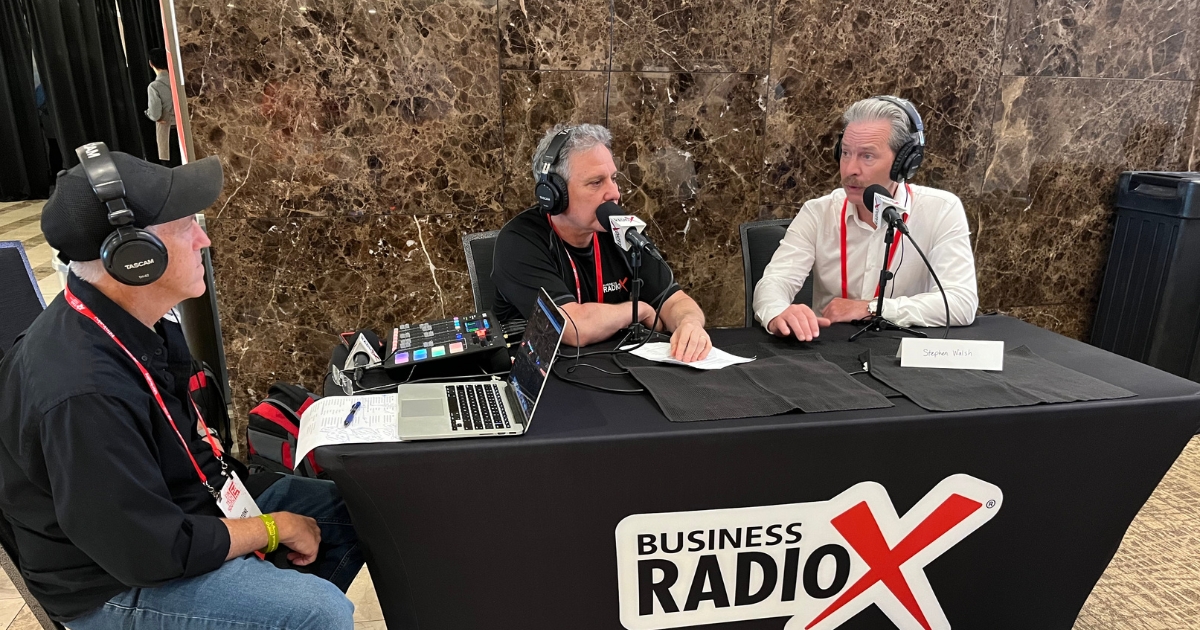
Lee Kantor: Lee Kantor here, broadcasting live from Fintech South 2025. So excited to be talking to my next guest, Stephen Walsh with Keeper Solutions. Welcome.
Stephen Walsh: Thanks, Lee, and great to be here.
Lee Kantor: Well I’m excited to get caught up. Tell us about Keeper Solutions. How are you serving folks?
Stephen Walsh: Sure. Well, uh, we’re we’re a software services company. We work with fintechs. We’re 14 years old now, and we’ve been helping fintech founders to design, develop an AI, enable their platforms across payments, lending, wealth management, SaaS, P2P and more.
Lee Kantor: So you were involved with AI before was cool?
Stephen Walsh: Yeah, yeah, absolutely. Machine learning and that kind of stuff. Yeah. And, uh, we’ve been leaning into the gen AI since, uh, that’s really hit the scene as well.
Lee Kantor: So, um, how do you help the folks that are maybe new to AI?
Stephen Walsh: Well, um, I think everybody is everybody’s grappling with AI and how to how to generate value out of it right now. We’re really working, I suppose, with, uh, with fintech startups, early stage startups, and also with scale ups. And I think that the challenges that those two communities face are slightly different. So what we’re seeing with, with the startups is that they need to be AI native. They need to be building out their platforms, you know, getting prototypes, getting MVP’s live, getting customers using them before they can really expect to get that that seed round. That’s what the investors are looking for. So they need to do more, faster, better to get that investment. And so we’ve got an AI lab, an AI lab workbench that really helps accelerate that journey. Uh, from from zero to, you know, working products out there and investable.
Lee Kantor: So what about the companies that maybe aren’t AI natives? How do you help them?
Stephen Walsh: Sure. Well great question. And we we work with a number of scale up fintech scale ups now. And they’re they’re really startups from a few years back that have been super successful. They’ve they’ve been able to get their product out into the market. They’ve got traction. They’ve got a you know, they’ve they’ve got a market share. And the challenge that they face is different to to the new ones because they’re technology by definition. If it’s pre the last couple of years has got some legacy in there. Um and they have the risk that their business model might be disrupted by new entrants that are AI native coming at their market share. So that doesn’t mean to say that they can’t, you know, that they can’t move forward into the next generation is just that they need help developing that strategy. Um, about transformation, getting, you know, AI transformation, but also getting the culture right, getting clear objectives and the message across the organization so that they’re driven by inspiration rather than fear. And, and then that we can help them find that strategy, implement it and get them into the into the next gen. Uh, so that’s, that’s what we’re doing there.
Lee Kantor: So, uh, how important is kind of the right talent fit? Um, when they’re making that kind of transformation?
Stephen Walsh: Yeah, it’s very important. Um, and I think that it’s worthwhile that organizations look at their existing skills and capabilities and their gaps, and that they go and actively make sure that their teams have their, you know, are trained up, have access to the right AI tools, um, and, you know, are filling those gaps. But at the leadership level, I think one of the one of the dynamics that we see is that the the leaders are very taken with their business as usual, with their day to day challenges, and that they need to get some time and some headspace to step back and to formulate their strategy. Um, and that’s a that’s another challenge for them. So it can be helpful to have an external mentor, uh, advisor to help them to develop that strategy and get their head out of the day to day.
Lee Kantor: So are they kind of leaning into it, or is this something that they’re going to just kick the can down the road and think that this is going to solve itself?
Stephen Walsh: Yeah. Well, it it varies. Uh, some of them are really leaning into it, and then I think others are not so much, um, that they, you know, they don’t don’t feel the imperative. And you can you can get that from speaking with them. And certainly we’re seeing we’re seeing some that are really actively looking at the impact of AI across different parts of their business, but also across the different parts of the software development lifecycle. Um, and I would encourage, um, scale ups, um, as well as fresh start ups really to, to, to lean into it because there’s a lot of value and there’s a lot of opportunity, but there’s a lot of risk out there too.
Lee Kantor: So where is kind of the low hanging opportunity for folks who aren’t kind of there yet?
Stephen Walsh: Well, I, I think, um, I think one thing is, um, getting the message right. Getting the culture right across the organization, but also getting just across the whole team, getting access to the right tools in a secure way. So like Innkeeper Solutions, we’ve created a, um, a multi-modal hub, which is a gateway for all the people in our company and with our clients. They can access whatever sets of LMS or private models, um, in a safe way. It’s not training other foundational models. Um, and, and that, that, that giving people the tools and the training so that they can, they can have, uh, you know, a space to develop how they can apply them to their particular areas.
Lee Kantor: So how are you attacking, uh, the, uh, conference today, uh, Fintech South and your relationship with tag?
Stephen Walsh: Well, you know, we’ve been we’ve been actually sponsors. This is our third consecutive year as sponsors of the innovation challenge. Uh, we, um, last year we we gave a prize to, uh, good agriculture. And we actually had them build out their design, their MVP, which they have deployed, uh, just, uh, Just earlier this summer. They’ve gone on to get $1 million seed round, so we’re going to help them with the next stage. And then we were delighted to to sponsor the uh, winner this year, uh, which is uh, thrift, uh, ship. And, um, we’re very excited to we can even do more now with AI tools to help them develop out, uh, segments of their product, um, uh, as part of the prize for the innovation challenge. But, uh, so I we’re really we’re we’re we’re here each year and we’re chatting to people. We kicked off the week, actually, we we we ran a, um, an AI fintech roundtable with some of the, some of our, uh, some of our colleagues here in Atlanta. And we had a super interesting, um, conversation, actually, we created a white paper, and I have a, um, a very interesting podcast that we’ve created from that. So maybe I can put a link to that also in your show notes, if that’d be okay.
Lee Kantor: Sure. Why don’t you just give it to us and we’ll make sure it’s posted.
Stephen Walsh: And it’s about trying to scrape back the hype. Like, there’s been a lot of hype out there. I think we’re hearing even the markets that a lot of the AI stocks have come back a lot because there’s irrational exuberance. So the topic of our of our roundtable was really how do you scrape back the hype and see what’s actually happening? Uh, that’s of use with AI right now, today. And people might find that interesting.
Lee Kantor: Now, regarding the integration challenge, are you seeing kind of more depth? Is it harder to pick the finalists than it has in previous years? Like how are you seeing kind of the quality?
Stephen Walsh: Yeah. Well like obviously, uh, the the winners last year, the winner last year, Alex and good uh, good agriculture super strong. And I think the the top three in their last year were very strong. I thought maybe that uh, some of the, some of the other, uh, you know, lower, lower ranked ones last year weren’t as strong. But what I see this year is very strong cohort in the last three, but also outside of that very strong. I see.
Lee Kantor: The depth.
Stephen Walsh: As the depth and strength is good. We’re seeing traction. I think they’re doing more. They’re leaning into it and they’re yeah, so I’m very impressed with it.
Lee Kantor: So do you think that AI contributes to that depth, that it’s allowing people to do more with less people?
Stephen Walsh: Yeah, I think so. For sure. People are doing so much more. Um, and they’re able to get further down, down the tracks with, uh, I think, I think, uh, companies are being smart, you know, they’re, they’re relying on human thought inspiration, uh, to be very focused. But that’s been supported by, uh, you know, AI tools, LMS, genetic frameworks and that kind of thing. When you combine the two of them together and keep real focus on on the human in the loop and on the customer, uh, we’re, we’re seeing startups getting further at that pre-seed stage, and, uh, it’s great to see it.
Lee Kantor: So who is the ideal client for you?
Stephen Walsh: Well, we’re you know, we’re working with early stage startups, companies like good agriculture and and pre-seed startups. But we actually work with a lot of, um, scaled up fintechs as well. Um, you know, we’re we’re working with moment. We’re working with other accounting and finance, mid-market, uh.
Lee Kantor: Primarily in fintech.
Stephen Walsh: It’s all in fintech. And, uh, actually, we estimate that we’ve helped fintech founders create nearly $2 billion worth of shareholder value over the life of our company. So we’re very focused on, on on helping our clients to succeed.
Lee Kantor: So what’s kind of the pain that your prospective client is having? You know, the day before they reach out and contact you or somebody on your team?
Stephen Walsh: Well, a lot of times it is that they’ve, um, you know, they need they they might have some vision and they need some help to, uh, to turn a vision into a designed product are they might have, um, you know, they might have some market opportunity and they need to they need to build out their product, or they need to scale up their product, and they need a trusted partner that can be a platform for their success right through their their life cycle. So our focus is not transactional, it’s relationship. And it goes right through the business cycle. And we’re very committed to the success of our clients.
Lee Kantor: So if somebody wants to learn more, have a more substantive conversation with you or somebody on the team, what’s the website? What’s the best way to connect?
Stephen Walsh: It’s uh WW solutions.com, or you can link out. Link up with me on on LinkedIn Stephen Walsh.
Lee Kantor: Well, Stephen, thank you so much for sharing your story today. You’re doing important work and we appreciate you.
Stephen Walsh: Thank you very much, Lee, and it’s a pleasure to get the message out with you. Thank you very much.






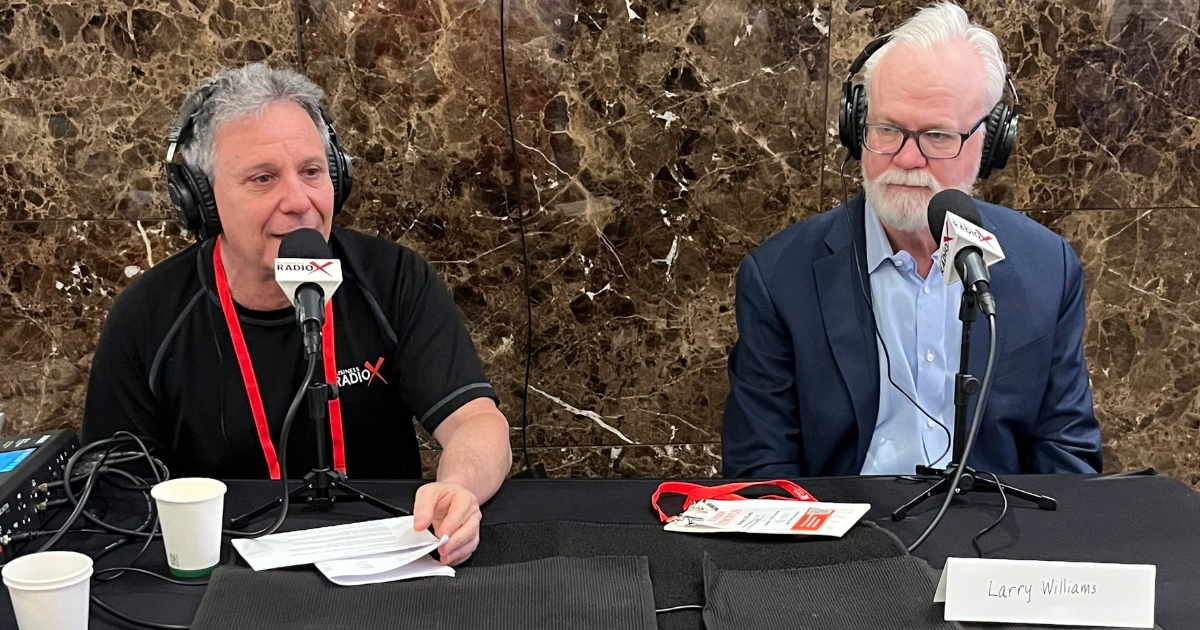
 Larry Williams is President and CEO of the