Business RadioX ®

  • Home
  • Business RadioX ® Communities
    • Southeast
      • Alabama
        • Birmingham
      • Florida
        • Orlando
        • Pensacola
        • South Florida
        • Tampa
        • Tallahassee
      • Georgia
        • Atlanta
        • Cherokee
        • Forsyth
        • Greater Perimeter
        • Gwinnett
        • North Fulton
        • North Georgia
        • Northeast Georgia
        • Rome
        • Savannah
      • Louisiana
        • New Orleans
      • North Carolina
        • Charlotte
        • Raleigh
      • Tennessee
        • Chattanooga
        • Nashville
      • Virginia
        • Richmond
    • South Central
      • Arkansas
        • Northwest Arkansas
    • Midwest
      • Illinois
        • Chicago
      • Michigan
        • Detroit
      • Minnesota
        • Minneapolis St. Paul
      • Missouri
        • St. Louis
      • Ohio
        • Cleveland
        • Columbus
        • Dayton
    • Southwest
      • Arizona
        • Phoenix
        • Tucson
        • Valley
      • Texas
        • Austin
        • Dallas
        • Houston
    • West
      • California
        • Bay Area
        • LA
        • Pasadena
      • Colorado
        • Denver
      • Hawaii
        • Oahu
  • FAQs
  • About Us
    • Our Mission
    • Our Audience
    • Why It Works
    • What People Are Saying
    • BRX in the News
  • Resources
    • BRX Pro Tips
    • B2B Marketing: The 4Rs
    • High Velocity Selling Habits
    • Why Most B2B Media Strategies Fail
    • 9 Reasons To Sponsor A Business RadioX ® Show
  • Partner With Us
  • Veteran Business RadioX ®

From Burnout to Breakthrough: Transforming Leadership with Britt Hunter

March 24, 2025 by angishields

HVR-Britt-Hunter-Feature
High Velocity Radio
From Burnout to Breakthrough: Transforming Leadership with Britt Hunter
Loading
00:00 /
RSS Feed
Share
Link
Embed

Download file

HVR-Britt-Hunter-Banner

In this episode of High Velocity Radio, Stone Payton talks with Executive Coach Britt Hunter with Focal Point. Britt discusses her mission to empower servant leaders, emphasizing the balance between empathy and business acumen. She shares her decision to join Focal Point for its structured support, her use of AI tools like ChatGPT for marketing, and her plans for free webinars and an eight-week leadership program. Britt also reflects on her journey, the importance of mental health over job security, and her passion for continuous learning and cultural experiences. The episode underscores Britt’s commitment to fostering leadership growth and personal development.


Focal-Point

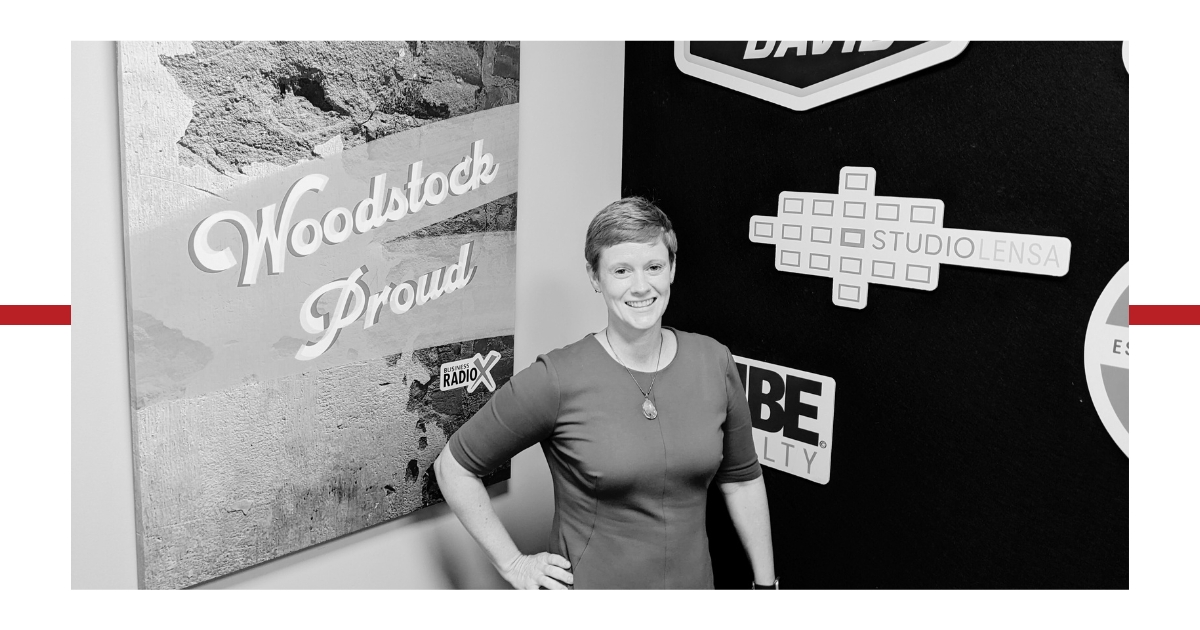
Britt-Hunter-micBritt Hunter is a dynamic leader, speaker, and executive coach dedicated to empowering future changemakers. With a background that spans elite athletics, education, and corporate leadership, she brings a unique perspective on resilience, mentorship, and innovation.

As the former #1 basketball recruit in the nation, Britt played at Duke and UConn before an injury abruptly ended her career. Facing identity loss and depression, she discovered a new passion—mentoring and leadership.

This led her to education, where she spent seven years shaping young minds before transitioning into the corporate world, now thriving as a leader at Microsoft.

Britt is known for her candid storytelling, humor, and ability to make complex leadership lessons accessible. She speaks nationally on topics like innovation, self-leadership, and team dynamics, delivering engaging, interactive sessions that leave a lasting impact.

Through her executive coaching practice, she helps corporate leaders, educators, and student-athletes sharpen their leadership skills and navigate their careers with confidence.
A Vanderbilt MBA graduate, Britt is also the creator of the podcast “Thanks But No One Asked You”, where she and her guests offer unfiltered insights on leadership and career growth.

Whether in the boardroom, on stage, or behind the mic, Britt’s mission remains the same: to equip leaders with the mindset and tools to inspire, innovate, and make an impact.

Connect with Britt on LinkedIn and find out about upcoming events and workshops here.

Transcript-iconThis transcript is machine transcribed by Sonix.


TRANSCRIPT

Intro: Broadcasting live from the Business RadioX studios in Atlanta, Georgia. It’s time for High Velocity Radio.

Stone Payton: Welcome to the High Velocity Radio show, where we celebrate top performers producing better results in less time. Stone Payton here with you this morning. You guys are in for a real treat. Please join me in welcoming back to the Business RadioX microphone executive coach with Focal Point, Britt Hunter. How have you been?

Britt Hunter: I’ve been good. Well, let me not say that, um, my kids used to say I’m doing good. You don’t. Superman does good. You’re doing well, so I’m doing well, Stone.

Stone Payton: I am delighted to hear it. And I’m so excited to get caught up on your activities. I’ve thoroughly enjoyed our on air conversation. I don’t know, it’s been months now, I think, and knowing you, you’re probably up to all kind of new stuff. Have some exciting news. But before we go there, uh, maybe let’s get grounded in fundamental mission. Purpose? What are you really out there trying to do for folks as an executive coach?

Britt Hunter: Yes, yes. So I want to pour into servant leaders, period. That’s the tweet. You know, servant leaders. You think of servant leaders, think of executive directors of a nonprofit. Think of a head of a school. Um, think of an empathic leader of an organization. These are people who are constantly pouring into others, and typically no one’s pouring back into them. And it’s it’s not something that they think about. People who are empathic are typically thinking about themselves. Last, but when you’re running an organization, you’re going to need coaching because you have to balance so much. You know it’s not enough to care. You do need to have a little bit of acumen. And so that’s where I come in to say, you know what? I’m also an empathic leader. But there’s a business to run here, right? And you want to stay a leader. So let’s get back to the basics of running this business. Delegating work, um, giving people the empowerment to do their best job all the time and also make some money for your foundation and your school, you know? So that’s what I do. I pour into servant leaders.

Stone Payton: So why focal point you could have just hung out your your shingle right. Yeah. But you decided to go with a, with an outfit that has some discipline, some rigor, some structure. Yeah, yeah. Say more about that.

Britt Hunter: Yeah. So I found out last year, the last time we were on the show, I was kind of doing my own thing. I built three workshops and two keynotes, and I delivered those across about 10 or 12 universities. Talk to college students. And it’s fun because I’m storytelling and I love to story tell. Storytelling is just storytelling. Sometimes you need like a framework, sometimes you need some data. You just need a little bit more concrete stuff. Some people need that, and I wanted that structure and focal point had that. Brian Tracy is called to the point, you know, focal point get to the point because it’s simple, simple, basic. You know, here’s a short story and here’s the point. And I love that. You know, just be clear. Keep it simple silly. You can’t say stupid anymore. Maybe we can keep it simple. Stupid. Um, keep it basic, you know, and it just fit perfectly. And talk about talk about collaboration. I’m already starting to collaborate with other coaches, and that’s in me to do naturally. So, um. Yeah, I mean, I think even day one of meeting somebody in my cohort, they reached out right after the call and said, we got to work together. And I said, great, let’s set it up.

Stone Payton: Sweet. So yeah, that is one of the benefits of, uh, of of an organization that has that kind of brand equity, that kind of reputation. There’s a what would you call it, a community of practice that, uh, and if you, if you run into something, an opportunity or a challenge. Chances are one or more people in that system have been there and can really help, either formally through a collaboration or just, I don’t know, over a beer and a sandwich or a phone call. Just.

Britt Hunter: Yeah, that’s that’s how I did it. That’s how. Oh, Stone, you’re speaking my language. So having most recently worked at Microsoft, you know, you learn very quickly. It’s a behemoth of a company. And no matter what great idea you have, somebody probably already had it in another org. So we always say don’t reinvent the wheel. Go find somebody who has it and just leverage their work. That’s actually a core pillar of Microsoft is part of your review is whose work did you leverage and who leveraged your work? Those are two of the three core pillars. So, um, it came it came natural for me to say, hey, you did this already. Can I have it? I’d like to. You know, I’m happy to give you credit, but I don’t really want to do this from scratch. Um, and so a perfect example, Todd Masters, if he’s not been on the show, he’s got to get on the show. I’m going to get on him about it. I said, Todd. Todd is a ChatGPT whiz. He has created about eight different chatgpt’s. One for marketing, one for time management. I mean, and he’s just he gave him to me. I said, Todd, I will buy you beer if you sit down with me for 90 minutes and explain it to me. And we sat down for about almost three hours and we, you know, he shared his, um, his skill set. And I said, okay, great. I’m going to run these workshops and I’d love to funnel people to you if they’re not a good fit for me. So let’s, let’s, let’s do work, you know. And so it’s really just that easy.

Stone Payton: So what are you learning about AI like ChatGPT? Is it helping you frame up a conversation? Is it helping you in the sales and marketing? Is it like, where are you? Where are you choosing to use it so far?

Britt Hunter: So I have um, I’ve the first thing is just doing my LinkedIn posts. I have a very specific tone. You know, I’m I like to be. I like to be candid. You know, I don’t I don’t if you ask ChatGPT the free version and you say, hey, write me a post, it’s going to sound like, um, I don’t know, a commercial from 1995. No offense to 1995, but I am not a commercial from 1995. I speak a certain way, I talk a certain way. And what I love about the AI is, you know, once you pay for it and you start training it and you start talking to it and, um, it, it starts to absorb how you are and it makes some of the more administrative things much easier. Right? If you’re thinking of the best way to frame an intro to an email, you kind of sit there and think, oh, how do I want to do this? Oh, I don’t want to say that. Oh, is that weird? Those questions that you’re asking yourself, just ask ChatGPT. I tell my friends this all the time. They’re like, well, I was wondering if like, this sounded bad. Ask ChatGPT. It’ll just do it for you. And takes a lot of the guesswork out of some of the more mundane tasks. So you can start thinking about, like, bigger fish.

Stone Payton: Well, and speaking of paying for it, our experience so far has been we’re not talking about a crazy investment either.

Britt Hunter: It’s $20 a month. Yeah, $20 a month. And it is. I mean, you got to use it. Yeah, but I think it’s that it’s that reflex. I don’t know that a lot of people have that reflex of I’m going to ask ChatGPT. Um, I think people need to kind of shift to, I don’t know if I’m allowed to do this, but I’m doing it, people. I’m not going to say don’t use Google anymore. But those questions that you used to ask Google once you asked ChatGPT, you’re going to get a more comprehensive answer that’s going to answer the questions that are behind the question that you that Google wasn’t going to give you. It was going to give you links. Chatgpt is like, look, here’s the thing. You know, I know what you asked me. So I’m going to answer all the five questions that you didn’t ask me that I know you’re asking. And that’s that’s super helpful.

Stone Payton: Well, I have very high hopes for it and for our Business RadioX Academy, because we have a community of practice around people who run studios like this. And we, you know, we’ve got 21 years of, you know, thought leadership and IP that I want them to be able to tap into. And it’s one thing to go search in a big pile for how to conduct a pre-call conversation. It’s another because it’s our understanding we can make one that just, uh, like a large language model, I think.

Britt Hunter: There you go.

Stone Payton: Lm and it just talks to our stuff if we want it to.

Britt Hunter: That’s exactly right.

Stone Payton: So it’s it’s an exciting time.

Britt Hunter: That’s exactly right. Todd Masters did just that. He put the focal point material in it so that I can say, hey, hey, ChatGPT. Well, actually, it’s called Marketing Masters because this last name is Masters. I can’t believe we’re talking about Todd Masters this much, but.

Stone Payton: Yeah, I’m gonna send him an invoice.

Britt Hunter: But, uh, he he put our focal point information in it so that when I want to build a workshop, I can say, hey, these are the three things I want to talk about in my workshop. Where is this material? It tells you the name, what folder it’s in, where to get it, and what you can draw from it, and it’ll give you some other options in case you don’t like those. It’s like it just cuts down your time of sifting through, you know, just sifting. And it’s especially great for people who are who are typically CEOs or CEOs and had administrative assistants. You forgot how to schedule stuff on your calendar. You probably forgot how to write an email. You know, you that’s not something you did. And now if you’re going out on your own, you have an administrative assistant right here. You just you need to upskill and learn it. But I mean, spend two days in it. You’ll be hooked.

Stone Payton: So talk about workshops. So this is one expression of your work. You’re doing probably one on one work maybe group work workshop. Tell us about the work a little bit. And then I’d love to hear a little bit about what one might expect if they participate in a in a workshop.

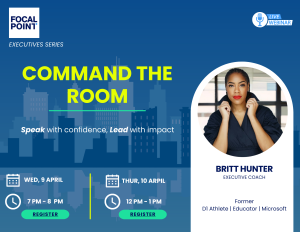
Britt Hunter: Yeah. So I’m going to do a few things. So first I’m going to I’m going to host a series of three free webinars okay. Because one you know we talked about this stone I like I like to share things. And sometimes even in spite of my wallet, I will share things for free because I just like, you know, I don’t I don’t a lot of people share things with me. That’s how I got to where I am is people seeing potential and pouring into me. So it’s only right that I pay it forward. So I’m hosting three free webinars starting next Wednesday. Oh my. And so they’re going to run concurrently on Wednesday Thursday. Same topic the following week Wednesday Thursday same topic. So we’re going to talk about a few things that I think are very timely. One is time management right. It’s called Master Your Minutes. It’s not a Todd Masters reference. It’s called Master Your Minutes. The next one is Command the Room. So I love public speaking. People always say oh you have a presence. And yes, I’m six three. So I do have presence. But I also have have studied a lot of really good speakers. A lot of really great storytellers. Um, and there are some things that they do that make them impactful. And the last one is disk decoded. And this is a yeah.

Stone Payton: That’s the assessment thing. Right.

Britt Hunter: Assessment. And I’m going to show parts of my assessment. You know, um, there may be people out there like me, but it’s not so much just my assessment. But it’s like, how do you leverage this to figure out how to work better with people who are a little different than you or people who are just like you, right? And so I’ll show, uh, how I leverage the disk to think about my business moving forward. And so in case people want to also get curious about their disk, they should. So those things will happen, um, for three weeks in a row. And what I want is to build a cohort. And so I’ll start to host a eight week long program. Um, one is called Executive Essentials. And so for eight weeks we’re going to talk about those same topics and a few more in depth across eight weeks. So once a week for 90 minutes, a cohort of ten people will come together virtually on zoom. You’ll get worksheets, you’ll get an assessment. You’ll get two, one on one calls with me and you will walk away. One if not being more confident about your abilities, but you’ll walk away with some tangible next steps. How do I get Ahold of my time today? How do I trust people to start delegating more? How can I ensure that when I show up in a room, I’m respected by how I sound, by how I look, by how I move, right? Things that are very important to a leader.

Britt Hunter: And then we have a signature series. Now this is going to be for people who are in the Georgia area. And I love a signature series because at the end of the eight weeks we have an on hand, a hands on experience, and this one will be a cooking class with Chef Zach. So Zaza’s kitchen. She is an incredible chef. I met her at the Cooks warehouse where I volunteer. We got to talk about that. You should volunteer at the Cooks Warehouse. It’s amazing, amazing chefs in there. And after eight weeks, that cohort, we’re going to get together and we’re going to do a cooking course. Everybody’s going to get a hands on experience cooking something that Chef Zach has prepared for her. So, you know, I’m a very experiential person. Um, maybe that’s because I like field trips from my teaching days. But, you know, I want people to be able to come into a group, be surrounded by like minded people, and get it done. We don’t need to spend 18 months learning a new habit. You do need accountability, which is where I come in, but you just need a few weeks of consistent communication about and drilling the same thing. And you can’t change everything all at once. But you can change at least one thing.

Stone Payton: Now, these initial webinars you’re describing, you’re doing those at no fee. Is that accurate?

Britt Hunter: That’s 100% true because it’s 100% free. Wow.

Stone Payton: Because the reason I ask it strikes me as this easy entry opportunity that you’re providing is. And with the objective of creating a cohort that then wants to go in and do deeper work. Number one, it certainly is living into your mission, um, of, of of wanting to, to pour into servant leaders. But it also strikes me as a very savvy, uh, sales and marketing strategy to do that, build the cohort, do the work with the people who want to do the the work. And I mention all of that because I am interested and continue to be fascinated and try to be a student of the business side of coaching as I’ve been doing this series. I think a lot of coaches, at least in the early going, really struggle with the getting that first handful of clients. The the whole sales and marketing thing. Do you agree?

Britt Hunter: Yeah. So I think it’s it’s a few things. Right. I think it’s putting yourself out there. Um, I think when you become a business owner and I say this to my, my black owned businesses on the west side of Atlanta, you know, I’m on the board of the Northwest Business Association. And I tell them, when you become a business owner, you are chief of marketing and sales. Just to be clear, I know you have a passion. I know you have a vision. I know you have this dream you have to be selling. You have to be selling, right? You’re in charge of sales. That is your job now. And, um, I just I have no fear. You know, I’ve embarrassed myself enough times. Um, I’ve seen myself flop enough times, and I’m still here. I’m still surviving. And so I really want to just kind of inspire people and share my story as I go through this journey of, like, listen, I’m going to do this webinar, okay? Five people could show up, right? It better not be five, y’all. Somebody better show up to this webinar. But if five people show up, five people show up. I hope those I hope that those five people really enjoyed their time. I’m not going to be bogged down by numbers because it’s a long game, and I know that just from life, you know, nothing is built in a day. We say that and we agree with that sentiment. But then when we don’t see immediate gratification, we we kind of falter. No no no no no no no. I’m going into this assuming the number will be low. I’m always blown away. But I want to go in humbly saying, you know what? No one has to come to this. There’s a million people offering services. There’s a lot of noise out there. You could go on YouTube University. No one has to come to this. But the people that do come, I’m going to make sure that they leave satisfied, because that’s more what I’m concerned with. And if I’ve done my job right, they’re going to tell their friends and someone else is going to come.

Stone Payton: Absolutely. So what else are you learning about the the whole the business side of being a practitioner? Because, I mean, you’re out there, you’re practicing your craft, you’re learning different ways to serve even more effectively. And oh, by the way, to your point, you got to run a business. Yeah. So, uh, anything else surprise you or something that you’ve learned about? Just the business side of the coaching business?

Britt Hunter: I would say, you know, I think when it comes back to the selling side, I am not a sales person. I don’t want to force anything on anybody. I know that, you know, ABC always be closing. Always be closing. But what I have found is it’s much easier to sell something that you actually care about. So if I’m, you know, I don’t know, selling a workshop on how to get rich quick, it’s not going to go very well. It’s not going to go very well. I’m going to feel bad for charging you for that, you know, because I’m not going to fully believe in that. I don’t really believe in getting rich quick. I don’t know, and I don’t really know how you define rich. Right. And so there’s levels to it. I care about what I’m talking about because I care about, um, those kind of servant leaders. Because I’ve been one. I’ve been a vice principal. I’ve been a dean. I’ve been a teacher in Harlem. And it’s. You need people to pour into. You need people to develop you. And if you don’t have access to.

Britt Hunter: That that can’t be the reason you don’t get better. That cannot be the reason you don’t get better. Especially if you’re serving children. If you’re serving elderly people, if you’re. If you’re serving vulnerable populations, as you say you are, you have to get better. Period. Full stop. There’s no exception. And I feel passionate. I’m doing it now, Stone. I’m selling now it’s selling, but it’s actually I’m just excited about it. Yeah. And so I would I would tell people, you know, if you’re not like, really excited about it, you’re actually not going to sell, you’re going to withdraw from it. You’re not going to want to do it. So maybe it’s it’s not that you need to get out of the business. You need to pivot it and really find your why step. Take a step back and think about what is my why here? And I know it sounds corny, and I hate to sound corny, but it is. Um. It’s just true. You know, it comes much easier when you. When you wake up thinking about it.

Stone Payton: So you got to tell me more about this. Cooks warehouse.

Britt Hunter: Cooks warehouse. Okay, so I’m just marketing everybody else’s business, but my own. Apparently, Cooks warehouse has this incredible program where you can volunteer. You have to go to little training for, like, 90 minutes, and then you become, um, you know, a chef’s assistant. And so about eight of us will be in a kitchen, and the chef is going to teach a class. It could be eight people. It could be 30 people. It holds up to 30 people in this kitchen, man. And complete strangers could be date night. You know, it could be a corporate team. And they’re coming in. Now, I will say there are some people who I’m looking and I’m like, I don’t think this person has ever held a knife before, and I’m concerned, but I can’t say that out loud. You could just observe, but you go in and, you know, you help, you help the chef prepare the food. You cut things up, you put them in the bowls. You. You also assist the people who are learning to cook that day. You’re following the chef’s guidelines. Now, the reason I like it is because I don’t have to do any of the cooking, but I can watch and learn, um, how to use a knife properly. How to cut. I did not know how to cut a bell pepper properly to remove the seeds in one one fell. Just one cut.

Stone Payton: I’m pretty sure I don’t either.

Britt Hunter: No one does except for the chefs. And so you have all these different chefs coming in to teach, you know, sushi making steak night, uh, pasta from scratch. Oh, wow. And it’s it’s fun. It really is fun.

Stone Payton: So as you, as you practice starts to unfold, are you going to focus primarily locally, regionally, or are you going to have that effort going and some national stuff, or have you have you mapped all that out yet?

Britt Hunter: Oh honey, I’m all over the place. So I’m only thinking nationally and I need to be thinking internationally. Stone I need to think bigger. But right now I’m aligning some some keynotes. So I have a keynote in Denver with Forte Foundation that is a women’s focused MBA prep program. So women who are going to get their MBA, it’s a it’s an accelerator to get you started. Right. They’ll help you get an internship before you go to business school, which is so important because when you go to business school, you’re going to drown. You haven’t been to school in a in a while, and it’s intense. And the objective is to get a job. So they give you that mental support you need to get back into it. So I’ll be doing a keynote there in Denver. Um, and I’m going to continue to do that. Right. I definitely want to still reach out to my colleges and universities with their student athlete programs. As a former student athlete, I, I definitely want to pour back into those people because I remember being lost thinking, well, all I’ve done is my sport. Am I good at anything else? And the fun fact is, y’all, you’re the best at a lot. Turns out you have the most amazing soft skills that you can’t you can’t pay for. And they don’t know that. And so I like to go around and prove it to them. Given my experience in education and corporate. Um, I also want to focus, you know, on the D2 and D3 schools. The D1 schools have resources. Yeah, they can bring in, you know, a Dale Carnegie somebody, somebody. Um, I want to go in and, and also a lot of student athletes look like me anyway. So I want to go talk to them and and let them know you got it. Just get focused. But you got this. So yeah, I want to go all over the country and run my mouth as much as I can.

Stone Payton: So in, in the local market, where I have every confidence that you will own your backyard, as some marketing folks say, uh, it have you, have you kind of landed on a descriptor or set of descriptors for an ideal client like this is really the person I want to work with, you know, here and here in the local market. Yeah.

Britt Hunter: So, um, it’s so funny when I introduced myself. People see me and they see a six foot three black female who’s, you know, pretty confident, pretty confident in how she speaks, sounds. And so they immediately go, oh, you must be working with women owned businesses, women, women leaders, black leaders. And I’m like, look, if you met my friend group, it’s a rainbow. Um, and the only thing that ties us together is our mindset. We all want to get better at something. We’re all striving to get better at something. That’s the only commonality that I’m looking for. I when I go to a university and I’m working with student athletes and the ad says, well, who who’s your audience? I said, kids that want to be there, please don’t volunteer for any student athlete to come hear me speak, because it’s not going to go well. I might change their mind, but that’s not. That’s not my focus. My focus is to pour into people who want to get better. So that is my ideal client. I don’t care how old you are. I don’t care where you come from. I don’t care what you look like. You could be shorter than me. You could be taller than me, I don’t care. Do you want to get better? Because if so, I’m your person. That’s my ideal client. I hope that’s clear.

Stone Payton: And since you don’t really have enough going on, you decided to go ahead and get a get get a radio show up and running as well. Right.

Britt Hunter: I got a podcast coming out, y’all. It’s coming out in May. Um, the podcast is called thanks, but No One Asked You, and there’s an eye roll in there in case you didn’t see it. That’s after the thanks. And it’s where storytelling meets unsolicited advice. And I am a professional advice giver. Um, unsolicited specifically. My friends know this. You know, I like to tell people I’m not the person you call day one after your breakup. You know, you want someone to, like, coo and rub your back and say, it’s okay. I’m the person you want to call when it’s seven weeks in, and you kind of are just tired of lamenting and you want to get over that hump. Call my phone. I’m going to get you there. Let’s, let’s let’s move forward. You’re absolutely right. This has gone on too long. None of that made any sense. I’m glad you’re here with us. Now let’s move forward. So, um. Yeah, I’ll be giving unsolicited advice about just my experiences. Right? Working in corporate, working in education, being a student athlete at Duke and UConn, um, all of the things. And I’m really want to target my early career people, my early career people have a lot of advice coming at them. Unfortunately, most of it is on TikTok.

Britt Hunter: Um, some of the things that people are telling me, I’m not on TikTok or Instagram, by the way, y’all, y’all can’t find me there. You can find me on LinkedIn. But, um, I got off social media in 2019 because I did feel like I didn’t have any control over what I was taking in, and I felt overwhelmed all the time. And I’m like, why do I feel overwhelmed? Like my life is fine? Why am I feeling like this? Well, I didn’t have any real control over what was coming into my eyes because I’m constantly picking up my phone. So I want to just be the person that’s like, listen, listen, listen here, shut it down, okay? This is the real skinny. There’s no get rich quick schemes. There’s no feel better tomorrow it’s you got to go through it period. Full stop. You have to go through life and no one can tell you how to do that better than your own experience. And so I want to share my experiences to prove that I’m excited about it. It’s going to be fun. I’m going to have some animations so that people, you know, I know our I know our attention span is a little low. So I got some animations I got going on. It’ll be fun.

Stone Payton: Well, I can’t wait to see it. It’ll be fantastic. So, speaking of advice, what do you think is is maybe one of the best pieces of advice you’ve ever received and maybe one of the worst. Does anything stand out?

Britt Hunter: Honey, you know, I’ve been thinking. I thank you for asking me that question, because I have been thinking about the worst advice that I recently got. Um. Some of the. I’ve had a lot of really good advice, um, especially from my coaches growing up, but some advice that I’ve kind of gotten here and there that now I share with everybody is, I call it the power five. And when you get older, as you get older, you things happen, right? You could come from a small town and you go to college and then four of your closest friends don’t. That’s fine. It doesn’t really matter, but something shifts. You’ve been exposed now to a whole new world of people in this university because that’s colleges. That’s what college is about. It’s not really about the credits and the schoolwork. It’s about acclimating to other people that you otherwise would never meet. And so your your mind has expanded in a different way, but your friends from back home are still kind of doing the same things, and that’s okay. But you slowly start to see that rift. That rift is going to happen over and over and over again in your life, especially if you continually want to do more and more and more. If you want to travel, if you want to climb the ladder, if you want to own a business, and there are people that you know and have known for a long time but aren’t necessarily on that same wavelength. So the advice that I like to give people is find a power five.

Britt Hunter: These are five people that are running faster than you. They’re smarter than you, and they want to achieve a lot more than you do. One person at the top should be your mentor. The two people to the side should be your peers, right? They don’t manage you. You don’t manage them. They’re just your peers. They work alongside you or they’re just your friends. And then you should always be mentoring two people below you. Now these are going to be really I have two mentees that are beyond impressive. Right. And one of them goes to Georgia Tech. And Georgia Tech kids are so impressive. It’s crazy. They think I’m impressive. And I’m like, honey, you’re you’re at Georgia Tech doing biomechanical whatever. I don’t know what. And you’re 21, like, you’re so far ahead of where I was at 21. You’re incredible. But they they keep me eager to do better because they’re watching me. And so get a power five so that when you’re ready to do the next thing, you’re already surrounded by that energy. You’re already surrounded by that energy. Let’s talk about the worst advice that I most recently got stoned because wow. So I was at, um, I just recently left my employer, Microsoft. Um, And it’s not quite public knowledge why I left, but a lot of people are like, oh, she wanted to do her own thing. I left a toxic. I left a toxic manager, and it was toxic for a very long time. Um, over a year, I did all the things that I needed to do to handle it, and it didn’t work out.

Britt Hunter: And so I kind of just got to this point of like, all right, no one’s coming to save me. You know? I got to save myself. So what am I going to do? And so here we are. Um, but I reached out to a lot of women who, you know, some I, some I confided in and a lot of I didn’t confide in too many people, but one of the women who I wasn’t really friends with, you know, she was just newer to the team. She kind of gave me her rendition of. Listen, you know, I do what I do because I like my lifestyle. I like, you know, pretty much I like the money that I make. And that’s my reason for putting up with the nonsense. And I was just kind of like, well, that’s weird, but okay. Like, immediately I said that, well, we’re not aligned because I don’t I’m not going to do too much of any of that for paycheck. And her suggestion was to just put my head down, figure out my why, and keep going. And I thought, that is the worst advice I have ever heard. And I hope that she never gives anyone advice like that again. I you should never feel disrespected and depraved at work. Never never never never. My parents. Your parents. Right? Sure, they they felt like maybe that was the option that they had. Maybe it’s a little bit of entitlement on my end, but there’s just a level of respect.

Britt Hunter: And I’ve had harsh managers. I mean, I played for Geno Auriemma, so I know what harsh looks like. I know what nurturing, no nonsense nurturing looks like. This was different. And her advice to me was like, yeah, these things happen. Keep it. Keep it going. Uh, no, I’m not going to do that. I’m going to leave because no. And some people will say, well, that’s a very privileged thing to say, you know, leaving your job. Sure. I mean, sure, I think there are people who have less than me, though, who have left their job because what’s more important to you, your paycheck or your mental health? How you show up around your family, how you show up around your friends because you’re just so drained. And I was I was drained, I had I picked up a smoking habit. Shout out to the smokers out there. No offense to the smokers, but I just, I don’t smoke. I picked up a smoking habit. I, you know, have an anxious tic where I pull my hair and I was pulling, I created a bald spot like, I’m sorry, no, I don’t need to stay anywhere where I’m causing myself harm to get through the day. So that was the worst advice. I would never tell anyone to do that. I would actually say, what is your plan to get out? Let’s talk about action Step. Let’s not sit in it. Let’s talk about what’s your plan to move out of this situation. Um. That’s it. That’s the tweet.

Stone Payton: Well, no, you kind of. And now I’m beginning to believe it was a little bit tongue in cheek. You talked about early in the conversation about giving unsolicited advice, and it’s like, I don’t know that you really do on a day to day basis. I think you created an environment where someone can kind of discover the next few steps in their path. The more I’m hearing you talk.

Britt Hunter: Yeah, I do both, I do both. Okay, okay. So, you know, I try to do a little breadcrumbing. Let’s talk about how you want to get there. And then there comes a point where it’s like, all right, cut it out. Like, let’s let’s stop. You know, this is the pattern I’m hearing. This doesn’t make any sense. Don’t do this. Sometimes you just need to be told, don’t do this or this is not helpful for you. And I’ve had a lot of mentors do that for me and I’m so appreciative.

Stone Payton: So I got to know. I don’t even know where it would be on your calendar, but I’m interested to know what, if anything, do you do when you’re not assistant cheffing doing webinars? You know, building cohorts, doing one on one coaching, anything like just out there that you do that we might not? Or do you still play a little basket, a little sandlot basketball?

Britt Hunter: I can’t play basketball anymore. Um, but I do, I like running, I go to the gym a lot. I play with my dog a lot. I’m a regular at fetch. Um, I don’t think people at fetch know my name, but they know my dog’s name. His name is ace. They’re like, oh, that’s Ace’s handler. Um, I don’t I’m not a dog, mom. Y’all didn’t have puppies. Um, I’m ace handler, and, um. Yeah, I go to all the fetches. The fetches are amazing. Alpharetta. One is beautiful. If you’ve never been.

Stone Payton: I’ve not been. But I’ve heard dog owners talk about these places. And apparently, in the last time I heard someone talk about it was at a young Professionals of Woodstock gathering. Believe it or not, I’m in the young professionals of Woodstock. But someone was saying, we need to fetch out here in Woodstock.

Britt Hunter: You do? This would be the perfect place. You could just open up, you know, a fake. Fetch a stone, fetch or something. A stone’s throw away. All right. That was bad. Edit that out. Um, yeah, I, I, you know, I like to also, my friends know I like to just go to completely different things, so I, I love going to the symphony. The symphony is actually has some of the most incredible shows. We also have the Atlanta Symphony Orchestra also has one of the only female principal conductors in in the world. Oh, um, don’t ask me her name because I’m going to say it wrong, but look her up. Um. Pretty fascinating. Um, I love going to the high museum. Of course. Um, any kind of any kind of thing that’s just like, a different cultural experience. That’s not something that, you know, I would wake up and just naturally do is something that I want to do.

Stone Payton: I believe that about you. I think I feel like you are the kind of person that is you just ready, willing and able to jump into another culture for a little while. A different arena. Something foreign to you? Immerse yourself. Take it in. Not be judgmental, but. But be observant.

Britt Hunter: Yes.

Stone Payton: You’re that person, aren’t you?

Britt Hunter: Yeah. I think it should be mandatory in high school that every high schooler spend 60 days in another country.

Stone Payton: Amen.

Britt Hunter: 60 days?

Stone Payton: Yeah.

Britt Hunter: You know, and then come back home and tell me what’s hard.

Stone Payton: Yeah.

Britt Hunter: Come back and tell me what’s challenging. You know, like, just. I love traveling solo. You learn a lot. And then when you travel solo, you’re forced to talk to strangers. When you travel with your friends, you only talk to your friends.

Stone Payton: Oh, that’s a good point.

Britt Hunter: But when you go out, I mean, and for the first day, I don’t really meet anyone because, you know, it is a little awkward. Um, and I realized for 24 hours I’m not talking. Wow. Because I have no one to talk to. I’m not going to talk to myself. Um, but by day two, I found a group and I’m running my mouth. So, yeah, I think people, you know, take a risk, go do something new. Go somewhere new.

Stone Payton: So what’s the best way for our listeners to continue to tap into your work and reach out? And it’s going to be a long list because you got a lot going on. I gotta make sure that people know how to get to all of this stuff. Or maybe there’s a hub that’ll that’ll help them.

Britt Hunter: There’s a few hubs, so the first place you should definitely find me is on LinkedIn. I’ll make sure that stone has stone. You have that link. That’s my only social media platform for now. I will eventually be on YouTube in May, but the next thing is I’ve created a collection of events on Eventbrite. And so through that collection you can find the free webinars, you can find the cohorts that I’m building. I’m building several at a time. And yeah, I want to make it super easy. And of course you can go on my website and all of those things will be there. So, uh, Britt Hunter, Dot focal point Coaching.com that is my website.

Stone Payton: Britt, I so appreciate you coming to the studio. This has been a blast. I knew it would be because of our earlier conversation, but no, you just you you just have an energy about you and I’m sure it comes across over the airwaves as well. You just want me to go experience more and do better and pour into more people and all of those all of those things. Thank you so much for coming in.

Britt Hunter: Thanks for having me.

Stone Payton: My pleasure. All right. Until next time. This is Stone Payton for our guest today, Britt Hunter with Focal Point and everyone here at the Business RadioX family saying, we’ll see you in the fast lane.
 

Tagged With: Focal Point

Business Coach and Political Candidate Danielle Bell

August 15, 2024 by angishields

CBRX-Danielle-Bell-Feature
Cherokee Business Radio
Business Coach and Political Candidate Danielle Bell
Loading
00:00 /
RSS Feed
Share
Link
Embed

Download file

CBRX-Danielle-Bell-Banner

Brought to you by Diesel David and Main Street Warriors

CherokeeSponsorImageDieselDavidMSW

Danielle-Bell-BWDanielle Bell is running for Georgia State House of Representatives to build a stronger, more compassionate community. Our current legislature has been the least productive and most gridlocked in U.S. history. As a social worker and business leader in mental health settings, Danielle possesses a unique ability to connect with people of different perspectives and backgrounds. She will seek out and rely on common values—not popular ideologies—to overcome division and drive results.

Danielle grew up on a family farm in Indiana and learned the value of hard work and compassion from her parents—a small business owner and a waitress. Whether helping informally at home or volunteering with organizations in school or advocating in her community, Danielle’s heart has always led her to step up, roll up her sleeves, and work collaboratively to help others. She understands the transformative power of service and will represent the needs of her constituents with transparency, honesty, and commitment. Danielle-Bell-logo

Throughout her career as a clinical therapist, she has listened to countless stories and has observed that many of her clients face universal challenges: (1) Families are struggling to achieve financial security because of economic forces beyond their control; (2) Parents and guardians are frustrated by the ways our education system is failing our children; (3) People of all ages are having difficulty accessing adequate healthcare. These issues shaped her priorities for creating meaningful change. It’s time to send someone to the Georgia House who will really fight to improve the quality of life for all Georgians.

Danielle has been married to Jason Bell since 2011. Their journey led them to Georgia in 2015 after Jason’s military retirement. She and Jason enjoy raising their beautiful daughters as Georgia natives. Danielle is also an active member of her local Catholic church.

Connect with Danielle on LinkedIn, X and Facebook.

Transcript-iconThis transcript is machine transcribed by Sonix.


TRANSCRIPT

Intro: Broadcasting live from the Business RadioX studios in Woodstock, Georgia. It’s time for Cherokee Business Radio. Now, here’s your host.

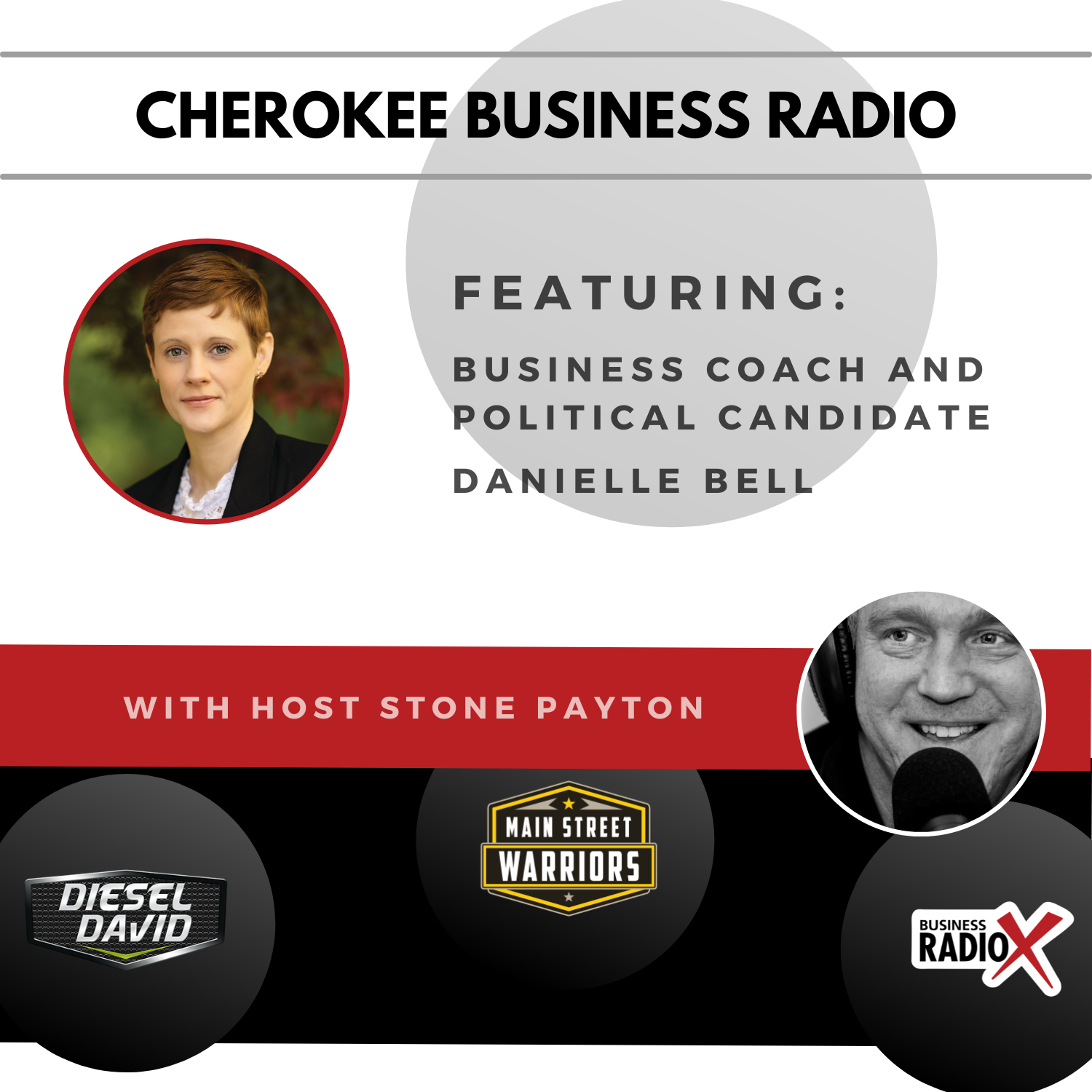
Stone Payton: Welcome to another exciting and informative edition of Cherokee Business Radio. Stone Payton here with you this morning. And today’s episode is brought to you in part by our Community Partner program, the Business RadioX Main Street Warriors Defending Capitalism, promoting small business, and supporting our local community. For more information, go to. Main Street warriors.org and a special note of thanks to our title sponsor for the Cherokee chapter of Main Street Warriors Diesel David, Inc. Please go check them out at diesel. David. Dot com. Now please join me in welcoming to the broadcast business coach and political candidate. She’s a business coach with Focal Point Ms. Danielle Bell. How are you?

Danielle Bell: Hey there. It’s great to be here. Thank you. I’m doing well.

Stone Payton: Well, it is a delight to have you on the show. I got a thousand questions. I know we’re not going to get to them all, but I think maybe a great place to start would. Would be if you could share with me in our listeners mission. Purpose. What is it that you and your team are really out there trying to do for folks in the, in the coaching to to serve them?

Danielle Bell: Yeah. So it’s kind of an interesting story. I’m a clinical therapist by trade. I’ve been a licensed clinical social worker for 15 years, started with helping kids, actually, and families at risk youth kids with behavior issues. And then it grew from there. I worked with women’s trauma. I’ve worked with addictions and through my career I moved up into clinical leadership. I worked at a hospital as a clinical director and then worked for a startup company, telehealth, out of California, where they specialized in chronic pain and complex health and loved what I was doing for that company. It was really powerful, and I thought I was going to retire there, that that was my passion and my calling. But being a startup, when they went under, um, a couple of things. Um, I had to figure out again what was my purpose. Like, I thought that was it. And now I’m trying to find. Okay, what’s my next pathway? Um, so, uh, as a spiritual person prayed for direction of, like, what’s next? How can I have an impact, be involved in my community and make a difference? Um, my dad was a small business owner, so when my husband came to me soon after that and said, you enjoyed doing this internally for this company, let’s start our own business and do that. Um, and he’s also a certified executive coach, so it went very well. We found actually it was kind of a funny story that when he would come home, when he was taking his classes and I had already been a therapist for ten plus years, he was like, this is how you help people reach their goals.

Danielle Bell: And I was like, oh, really? So that worked really well for us. And I thought, that’s our new direction. And at the same time, I sent that prayer up, I got a call from one of the caucus recruiters from the Democratic Party who said, um, would you be interested in running? And I thought, is a social worker and somebody who cares about her community, who just sent up a prayer that says, what’s my opportunity? How can I have an impact and help people and be involved in my community? I have to at least see this through. So that, um, gave me the courage. He introduced me to different people and organizations. I took a candidate training program to learn how to do this because I’m a social worker and, you know, an entrepreneur, not a political candidate. So it’s all new territory. I’m learning a lot. I’m really hopeful. I think that my favorite part, as you said, my mission is really that community focused Advocacy of what do people need? What do people in our community need? They need jobs. They need, um, ability to drive here on the way. You know, we’ve we’re talking about traffic. And just like that, infrastructure support and how fast our communities are growing and they’re great and they’re vital. And it’s a really great place to live. But we have to make sure that we’re planning and supporting people.

Stone Payton: So I have to confess, before we began talking, I sort of envisioned today’s episode to go down two very disparate tracks. That’s not the case at all. Your work, your mission, is so wholly integrated. All of it. It serves. Both of those tracks serve each other, don’t they?

Danielle Bell: I feel like when I tell people I’m a business coach, I help businesses grow and I’m running for office, that it sounds like I’m all over the place going in seven different directions. But you’re absolutely right. I really feel like my mission, my purpose is very aligned in moving forward, this community integration and how can I help and be involved.

Stone Payton: So you touched on it but what do you feel like is, uh, been the most rewarding about all of this so far? What’s the most fun about it for you?

Danielle Bell: The most fun for me, I think, is being able to connect in unexpected ways. I think especially at the federal level of where politics is and where we can even be in our communities is separation division. You know, we think about political division. Most people that I talk to are tired of the pettiness and the name calling. And when I talk to people on both sides of the aisle and I say, I’m here and we have a lot of common values and really want the same things, we can connect on a deeper level and see eye to eye. And it’s not just like, oh, well, you have this different perspective than me, so we can’t talk. My most rewarding moments have been when I’ve been able to talk to people across the aisle and really find common value and areas where we align and really want what’s best for our neighbors.

Stone Payton: I got to believe Having the mental health background that you do certainly gives you for me, in my mind, street cred. Right? Like like so. But I also have to believe it really serves your ability to be effective for your clients and the coaching work and to communicate, like you said, across the aisle and to those of us. And I’m sure I’m not the only one, I am very much ready to get back. Can’t we just have a conversation about an issue as opposed to, you know, I’m a gun toting redneck and you’re, you know, no, I mean, yeah, and.

Danielle Bell: My parents are Republican, you know, very much gun owning. I grew up on a farm in the middle of nowhere. Like, I can really relate to a lot of rural values, you know, we or what are traditionally red values. I’m very spiritual, religious. I, um, care about my community. I want to help people. I think that those are commonality, things that are not just, you know, right or left aligned.

Stone Payton: So I often will ask because we have a lot of entrepreneurs. Small business owners come through here and I’m almost always asking them, well, how does the whole sales and marketing thing work for a practice like yours? And I learn a lot. Guys, if you want to learn, get yourself a radio show. You get a lot of good advice, but I’m fascinated at the at the political path because in my nomenclature, you’ve got some serious sales and marketing to do on on that path. What is that? I can’t imagine.

Danielle Bell: Um, something that you said earlier about my therapy background affecting where I am now, and it absolutely does. I talk to business owners every day that have stress and anxiety. They’re juggling a lot of plates, and it’s really hard to figure out, okay, what’s most important and how do I move forward. So helping business owners to learn some business acumen to develop those skills and then deal with the stress. Find out some work life balance. Because ultimately we work for our families. We work to provide. We work to, you know, reach those goals and dreams that we had when we set out. And just because the day to day stress gets so high, sometimes business owners lose focus of that. So that’s what I really love, is bringing that focus in. And on the political side, my mental health background really helps me with I compare it to I’ve done marriage therapy right, sitting on a in a room, a married couple on a couch, you know, husband on the right, wife on the left, whatever. And nobody’s willing to listen. Nobody’s willing to talk, nobody’s willing to work together. And it feels hopeless. And because I sat there and I know how to deal with those situations, that’s exactly how it feels in our political divide of, like, the right and the left seem so extreme, so far apart. But when we find those commonalities and we learn to trust, we’re all just people. We just have different views and ideas on how to get where we’re going. We can find way more common ground where we agree. And when. Research actually shows that when you find those connections and you establish that baseline, oh, government starts working for the people and policy is effective in more people approve of the job that their government is doing for them. It’s an act of service. It’s not. It’s not supposed to be for power and prestige. I want to get into this because of that servant heart.

Stone Payton: So when you leapt off the cliff and decided to go from a little bit more of a corporate kind of environment to a coaching practice, I’m sure you had lots of choices in the type of path you chose. You chose to go with an established system, a focal point. Can you talk a little bit about that decision and. Yeah, okay.

Danielle Bell: This is a joke. But I honestly had this conversation with my husband of like, okay, we’re going to go into business together. I need a model. I need some kind of outline of what it’s going to look like. And if you can show me that, then I will say yes, because I didn’t want it to say I turn or I say turn right. He says, turn left. And then there’s conflict because I actually enjoy being married to him and I don’t want to have to fire him. So that was my joke.

Stone Payton: So you wanted something, a proven model, a structure, exactly. That you could bring all of your talents and meld it and mold it and make it your own to serve. But you wanted to have some sort of structure to it. Yeah.

Danielle Bell: And Focal Point has done that. So they are founded on the business acumen and success of Brian Tracy. And he’s written lots of books and I know that name. Yeah, right. He’s amazing. I’ve seen him present. He’s 80 and still just, like, rocking out amazing stuff. Wow. Yeah. So he’s our founder and really began with helping other entrepreneurs achieve the levels that he has. And because they’ve worked to create an entire curriculum of the materials that I have available to me to help business owners be successful so I can offer them those research based, scientifically proven skills, techniques and strategies that will work through and what I bring to the table. It’s more than just getting a book, because I can flip through the pages and really tailor my approach to a business owner’s specific needs and where they are in their growth of their business cycle.

Stone Payton: So let’s dive into the work just a little bit on that front, if we could. And I’m particularly interested in the front end of, I guess you would call it an engagement cycle, like those first few conversations. Now that I’m saying this out loud, it strikes me that it may not be a heck of a lot different than early conversations in your in your therapy practice, but what are some of the first few things that happen in a in a coaching relationship with you?

Danielle Bell: Yeah, that’s a good question. Um, first I would I like to call it a discovery conversation. Um, what’s your business about? What are your goals? Because I don’t want to take anybody’s money. If I don’t feel that I’m a good fit or that they don’t, you know, trust that this, this professional relationship is going to help them get where they want to go So I want to have at least 2 or 3 conversations before we talk about any kind of money. And that’s very much a rapport building, get to know you kind of phase. So first start with very general, um, what’s your business, what’s your goals, what’s important to you, what motivates you, what drives you. And then we can get more specific where I want to teach you a couple strategies. Even if you don’t choose me as your business coach, I want you to be able to take something away from our time and put into use. That’s going to help you in your business. So I’ll teach maybe a couple strategies. For example, I missed or mentioned earlier the life cycle of a business. So having an understanding of where you are in that can help me to understand how I can help you. What kind of, um, obstacles are likely to come up and what kind of strategies we can use to overcome them, to help you to continue to grow where other businesses might fail, you’re more prepared for dealing with those things.

Stone Payton: Sounds to me like it would be a very productive conversation and a tremendous amount of value you? Whether the person chose to work with you formally or not? Are you starting to get to the point? Or maybe you’ve been there where more of these opportunities to serve are kind of coming in over the transom? Or do you find yourself having to shake the trees a little bit on your own, just like you do on running for office? Do you have to? Do you find that you do some sales and marketing activities?

Danielle Bell: I think the again, very overlapping in my direction is showing up is half the battle.

Stone Payton: Amen.

Danielle Bell: Mhm.

Stone Payton: Absolutely.

Danielle Bell: So I’ve been going to business networking, talking with people, listening to their stories better, understanding what’s going on with them so that I can relate, understand and help. So I think yeah, I think that about covers it showing up and proving that you’re reliable and trustworthy. If you say you’re going to do something, then you should do it.

Stone Payton: So I was sharing with our observer who’s here this morning that goes to Georgia Tech in June that I wasn’t sure at all that I had the temperament to be a coach. I occasionally have an opportunity to coach some people within the Business RadioX, uh, network, but I began to share with her there are some fundamental assumptions or myths or misconceptions that people have about utilizing this medium to help people and make money. I got to believe that’s the that’s the case about coaching. And I got to believe that’s the case about trying to serve in political office. Can you speak to either or both of those?

Danielle Bell: Um, I think boiling it down to, to trust of you want a good relationship with people and being able to listen, really understanding. Um, goes back to my therapy history of listening to people connecting with what’s important to them. Um, because what you want for your business, it may be millions and millions of dollars, or it might be I’m stressed to the max, and I want to spend more time taking my kid out and playing baseball and whatever it is, then I can work with you on those specific goals, and we’re going to figure out strategies that get you there.

Stone Payton: So I don’t. Know when you’d have the time, but I’m going to ask anyway. Uh, passions, interests, pursuits, hobbies outside the scope of of the work we’re. Describing. Or is it just a all hands on deck heads down for right now.

Danielle Bell: Right now it’s a lot. Of work. But I still think that balance and self-care are important. So every morning I try to. Get out in my garden. I have a cantaloupes and sunflowers and squash and pumpkins. So just little things that make me happy. The squash bugs do not make me happy. Um.

Stone Payton: Have you been able to grow tomatoes? We’ve had it. We had such success with tomatoes last year, and we just. We’re not. We haven’t cracked the code this year.

Danielle Bell: They’re smaller this year. I don’t know if it’s a weather thing or what. Maybe my seeds were defective. That’s what I thought.

Stone Payton: Well, as you probably know, the vast majority of our listener base, the folks who tap into our content across the network, but particularly Cherokee Business Radio, small business owners, maybe they are mid-level managers in a small to mid-size company entrepreneurs, but people with a very vested interest in the in the business environment. So as a candidate, let’s speak to them a little bit just to would love to hear what you have to say about everything from how you intend to try to serve that community. And let’s be fair and right. And just about this, what we should be doing as small business owners.

Danielle Bell: Um, yeah. Being invested in the community in terms of how I want to serve. Um, I think that my highest priority is being an accurate reflection of my community. I’ve knocked on over a thousand doors. Wow. And that’s not just, you know, just Democrats or just Republicans. I want to hear the voice of everyone, because when I am elected, I’m going to represent everyone. And I think that people deserve leadership and representation That reflect their values and care about their concerns. So knocking on doors, really listening to people, connecting with people wherever I can, whenever I can, um, is my top priority for that. And the same thing with helping people in the business world. Um, as I said earlier, my dad was a small business owner and I saw him work really hard. He got up at 6 a.m. and he’d work all day and, you know, run the guys. He had a construction business, had a few guys that worked for him, and he would, you know, come home tired and collapse on the couch. And it was often, you know, he was late for dinner because he had to go get ready for the next day. And so as just a witness to a small business owner who was successful, but who who worked really hard and nothing came easy, and it was a tough climb up to that being successful. So, uh, really being able to help people to connect with what’s important and maybe make that journey a little bit easier.

Stone Payton: So I failed to ask, uh, but what specific seat See? Is that the right term? See? Have you chosen to to run for Wednesday election? Some of the logistics on this? Yeah, absolutely.

Danielle Bell: Um, I’m running for state House of Representatives for district 44, which is Woodstock. And then it goes down along canton, um, to, like, north of Marietta Square. So it stops just shy of the square. And, um, I’m new to politics, as I said. You know, I’ve told you a lot about my background. The incumbent has been in office for 30 years, so since 1995. And where I’m different is I’m engaged in the community, I show up, I host events, I have events, I attend to other people’s events. Um, like I said, knocking on doors and, um, trying to do a very much grassroots organization. So donations are small dollar donations coming in from my community to help fuel what I’m able to accomplish, um, versus being funded by the party and super PACs.

Stone Payton: So day to day, um like small business people. What should we be doing? Like, I know to go vote. I know to read up a little bit. I have the benefit of getting a chance to have real conversations with people and kind of a little bit of a controlled environment. But, you know, so the election will be in November, early November. But okay, so on any given Thursday in February, what should I be doing to stay informed? How appropriate is it to reach out and have a conversation with your local rep? That’s sounds like you’re really open to that, right?

Danielle Bell: I would really love that. Absolutely. Uh, talking to people, I talked with a gentleman last week while canvasing, and he happens to be a Republican, but we both had a passion for healthcare. His wife was a nurse, his son was an EMT. And we actually talked at the hospital where I used to work or talked about that hospital where I used to work and, um, just being able to talk to him. And he at the end shook my hand and said, this has been a breath of fresh air and inspiration, like, thank you for showing up. I’m glad we had these conversations. I think that for years we’ve been told not to talk about it. You know, don’t talk about politics, don’t talk about religion because those are taboo and you’re going to offend somebody. And I think we’ve forgotten how to talk about it. Um, and then when we do, it’s like I have to stomp my feet. And, and because I know that I’m going against the grain of what’s socially acceptable, I have to be offensive and, like, stake my claim. And what happens is we just, like, are on edge and looking for arguments because we’re not we know we’re not doing what’s like quote unquote, okay. Um, so I think that we need to get to a point of we can talk about things that are really important to us because our political beliefs and how we see it is really important to us. But if we’re in a in a silo of I only get my news from one source, I only talk to people who believe like I do, then I can’t see that there are other people with different experiences. Um, and that we have a lot more in common than the news would like us to believe.

Stone Payton: That has got to be true. And I have to believe that you and I could have a conversation and maybe cover the breadth of 6 or 8 topics, and we just may not be in the same place on one topic. I don’t think you throw the baby out with the bathwater on that, right? You know, just have a real conversation.

Danielle Bell: There are there is no candidate that you are going to agree with 100%. But what I like to do when I’m going to the ballot box is say, is this somebody that I trust their values? And is this someone that I believe would have my best interest at heart if I won, have them voting for me or to like if I have a conversation and say, hey, I have this need. Am I going to trust them to to listen and care about my experiences?

Stone Payton: Amen.

Stone Payton: All right. What’s the best way for our listeners to tap in to your work, learn more about your candidacy, what you stand for, what you’re hoping to accomplish, and let’s also give them some coordinates to connect with you on the on the coaching front, whatever you feel like is appropriate website, email, whatever.

Danielle Bell: Okay, great. So let’s see where to start. As I said, my big passion is community on the political front. If you want to check out where I am in terms of, you know, policy, I haven’t have really cute pictures of my family. I have three kids. I haven’t mentioned them yet, but they’re on my website. I have three girls, Diana, Avery and Aaliyah. So they’re nine, seven and four. No, she just turned five last week. Nine, seven and five. Uh, and uh, so check out my website. You can see all of my contact information if you’d like to meet me in person. I’m actually having a networking dinner on Thursday night. So come. It’s in Kennesaw. You can, um, find. Let’s see what’s the best way I can put a link to that on my website? I’ll do that as soon as we get out of here, because I don’t have it on my website. It’s in a different place, but that way it’s findable. Um, and email is also there on my website. So you can find that in terms of business coaching. Same. I have, um, Danielle Bell dot focal point coaching.com. Uh, so you can find me on there. So Danielle for georgia.com or Danielle Bell dot focalpoint Coaching.com.

Stone Payton: Fantastic. Well Danielle, it has been an absolute delight having you in the studio. I hope you won’t be a stranger after you are elected. I hope you’ll come in periodically and get us caught up with what’s going on. But you’re doing such important work and we sure appreciate you.

Danielle Bell: Thank you so much. This has been an absolute pleasure. Thank you.

Stone Payton: Well, it’s my pleasure. All right, until next time. This is Stone Payton for our guest today, Danielle Bell, and everyone here at the Business RadioX family saying we’ll see you again on Cherokee Business Radio.


Tagged With: Danielle Bell, Focal Point, Georgia State House of Representatives

Anders Lillevik With Focal Point

January 26, 2023 by Jacob Lapera

Atlanta Business Radio
Anders Lillevik With Focal Point
Loading
00:00 /
RSS Feed
Share
Link
Embed

Download file

Anders Lillevik is the CEO and Founder of Focal Point – a company providing an end-to-end enterprise procurement orchestration platform. For more than 20 years as a Chief Procurement Officer, Anders has helped organizations such as Fannie Mae, QBE Insurance, and Webster Bank optimize their procurement operations. In these roles, he has managed teams of 120+, including $8bn annual spend and $5m annual procurement software expenditures.

As an industry veteran, Anders had a vision for procurement departments to shift from pure cost centers to strategic contributors to the top and bottom lines.

In 2020, he set this vision in motion and founded Focal Point to address the unmet need for a complete solution that connects the tools for every aspect of procurement orchestration across siloed data and processes. Focal Point empowers Chief Procurement Officers to move up the digital maturity curve across the entire procurement process.

Connect with Anders on LinkedIn.

What You’ll Learn In This Episode

  • Inspiration to go from a CPO at large financial services institutions to founding Focal Point
  • Enterprise procurement faring today
  • Focal Point’s objective

This transcript is machine transcribed by Sonix

TRANSCRIPT

Intro: [00:00:04] Broadcasting live from the Business RadioX studios in Atlanta, Georgia. It’s time for Atlanta Business Radio, brought to you by on pay. Atlanta’s new standard in payroll. Now, here’s your host.

Lee Kantor: [00:00:25] Lee Kantor here another episode of Atlanta Business Radio. And this is going to be a good one. But before we get started, it’s important to recognize our sponsor on pay. Without them, we couldn’t be sharing these important stories. Today on the Atlanta Business Radio, we have Anders Lillevik with Focal Point. Welcome.

Anders Lillevik: [00:00:43] Welcome. Thanks for having me, Ali.

Lee Kantor: [00:00:45] So excited to learn what you’re up to. Can you update us a little bit about focal point? How are you serving folks?

Anders Lillevik: [00:00:50] Yeah, so focal point is A B to B SAS solution in the procurement space. What that means is we are facilitating the processes that are currently under served in the procurement space, specifically as it pertains to how selection processes and supplier management activities are done. And we’re basically our biggest competitor at the moment are Excel and Email, which is an exciting space for us to get into.

Lee Kantor: [00:01:16] So what’s your backstory? How did you get involved in this line of work?

Anders Lillevik: [00:01:19] Well, I have been in procurement for 25 years. The last 20 or so I was leading large global and complex procurement organizations and I have implemented a slew of systems in my time. And the challenging part for me, like I said earlier, was that regardless of how much money I spent on procurement technology, my team and I were working predominantly in Excel and email to to facilitate things like collaborate, collect data, consolidate data and so on. And I had this epiphany that there’s a lot of good technology out there, but there’s a connective tissue that is missing, and that’s why I decided to build focal point, really to help bridge that gap.

Lee Kantor: [00:02:02] So were you the technologist who put the software together or did you partner with other folks?

Anders Lillevik: [00:02:07] No, no. So the origin story there is I created a wireframe and a PowerPoint deck, and I walk that around to a bunch of people in procurement, and we got our first two customers before we actually started developing the product. I’ve got two large global brands said, Yeah, we have this problem too, and if you build this, we sure would love to try it with that. I went to my wife, we just got married actually, and I said, Hey, I’ve got this crazy idea. I want to leave the corporate world and start my own company. So I guess you can say she was my first investor. So we bootstrapped the company on a higher set of Ukrainian developers to build a first prototype. Went live at the in December of 2020. So I’m not a technologist and I don’t pretend to be one either.

Lee Kantor: [00:02:51] So when you were making that transition, was it something that you had always wanted to be an entrepreneur and this was just the opportunity Was there or was this kind of a big, you know, map out the pros and cons of this decision and play out different scenarios? Was this really a hard choice for you or was this something like a calling that you were like, I got I’m the right person to do this.

Anders Lillevik: [00:03:12] It’s a it’s a mix of a few of those things. Like I never set out to be an entrepreneur. To me, it was always scary and always sort of, you know, I got my MBA, I, I was on the path of, you know, I was a senior vice president at a very large global organization. So for me, it certainly wasn’t a financial calling for me. It was a real problem that I think the industry needs to be solved. And I kind of sat down and looked at it and said, look, I’m not of a certain age now. I’ve been I’ve had a long career and if I don’t do this now, I will never do it. And, you know, having having done this for a very long time, I really felt that I was the right person to to solve the problems And certainly with the validation of having customers pre development was was also a good sort of benchmark for me to say, yeah, I got something here. And it wasn’t really until I went live with two national global brands where I realized like, holy smokes, now I have to build a company around this because it’s literally just me and a bunch of folks in the Ukraine on contract. And that’s when things started sort of really ramping up.

Lee Kantor: [00:04:22] Was that the point where you’re like, okay, this is real now? Like, this is I have to really start, you know, having systems and processes like I’m really running a business now. And this isn’t just like this clever idea that’s solving a problem. This is like now a complex business.

Anders Lillevik: [00:04:38] Yeah, absolutely. And that’s when I realized, like, I have to get some, some money to sort of fund the operation because the two first customers, when they sign up pre product, they’re not willing to pay a lot of money for this. Right. So in in 2021, it was kind of a pivotal year to to start dipping my toe into the venture capital arena, getting some some VC funding, hiring a CTO, bringing a team on site and not on site, but in the company. So when you have to stand up against things like security reviews and process mappings and so on, that it’s not just a bunch of outsource folks is literally we have a team we can, we can show them the team, we can show them our processes. So yeah, that’s when things really started getting real and it’s. It’s been a journey ever since.

Lee Kantor: [00:05:24] Now, has that part been as rewarding? Like to me having an idea and seeing it kind of bubble to life, that’s exciting. You know, a lot of the administrative side and operational side is the stuff that’s super important that makes, you know, the trains run on time, but that’s not as, you know, romanticized maybe as that aha moment and then making something come to life.

Anders Lillevik: [00:05:49] Well, having having been on the other side of of of buying technology, I knew this was a necessary evil so to speak. Right. So you don’t get into a Fortune 500 company and processing their data without having all these things buttoned up fairly tight. So I knew that all along that if I’m going to play in that arena, this is something that we needed to do. And it’s it’s kind of when all the trains come in, right? When you’re able to get in front of the customer, sell them on the value proposition, get them to see the vision. And then going through the security review, the legal review, the insurance review and all the other stuff they make you do. And when they finally go live, that’s that’s the thing that really makes me excited about it. Like one more customer. A couple of hundred people in procurement and in the organization using our solution. That’s really cool to me. And it’s all of it. Not just the epiphany moment where it’s like, Oh, someone should go fix this.

Lee Kantor: [00:06:48] So now you’re finding the joy in the actual kind of keeping everything, all those plates spinning at the same time. Now that’s the the rewarding part for you, knowing that you have a solution that is getting traction, that is providing value, and it’s just now a matter of just kind of scaling.

Anders Lillevik: [00:07:05] Yeah, Yeah. I mean, it’s it’s, it’s never ending, right? Because what you realize is that your requirements are different for different industries. So, for example, we have a very large hotel brand that’s using our solution. And their complexity is very different than a pharmaceutical company that we’re just onboarded. And you kind of I never run out of things to do on the operational side that’s going to help us become stronger and be able to grow faster and scale faster. So I kind of lean into it. I think a lot of startups fight the the need to to build a robust operation and kind of deal with that as as they scale Eileen right into it and say, look, it’s better that we deal with these things upfront than try to kick the can down the road and deal with it two years from now. I’d rather fix it now then then when things go wrong. And I think that’s going to serve us well in this industry.

Lee Kantor: [00:07:59] So when you started, you focused on financial and then now have expanded to other verticals.

Anders Lillevik: [00:08:05] So it’s interesting. So our first two customers, one was a very large recruitment recruiting company based in Austin, Texas, and the second one was a gaming company in California. And now we have hotel chains, we have pharma companies, we have insurance companies. So it’s a bit of everything. But all of our customers have in common is that they are large and complex and they have legacy systems that are disconnected and and we bring that to the table and help them structure their their processes, structure how they work with their customers and become that connective tissue. So I wouldn’t say that we are specifically connected to verticals. We we deal with large, complex organizations and regardless of the vertical they’re in.

Lee Kantor: [00:08:54] So how quickly do they notice that things have improved?

Anders Lillevik: [00:09:00] Yeah, it’s an interesting question. A lot of these large companies are very resistant to change, right, because some of these folks have been in the company for 20 plus years and they love their Excel spreadsheets, for example. And some customers like are the recruiting company that I keep referencing. They went live globally and to end in two weeks and they saw they saw the benefits immediately. Some of the larger companies that are are on ramping in, say, 6 to 9 months. That’s when things are really coming to the forefront, when you can actually see everything in one spot. Hence the name of the company focal point. You can manage everything in one spot and that’s when things become real for them. So it really depends on your risk appetite and how much you’re willing to bite off.

Lee Kantor: [00:09:46] Now, how does the you know, I know you’re solving a problem with software. How is the change management part of this solved with the humans?

Anders Lillevik: [00:09:58] Yeah. Showing them how the new how the new thing can work in in the new environment is really, really helpful. So the software itself is fairly easy to use. It’s you get notifications, you get told what to do and how to do it, and it’s just a matter of following the prompts. It’s kind of like paint by numbers, right? So we demystify some complex processes by making them more accessible and user friendly for even non procurement practitioners. So the change management is kind of twofold. Like number one, you show them how to do it. Number two, you’re always available if and when they need help. And I think that helps a lot as well because we have a chat bot, for example, or a phone phone number, they can call and we’re always very responsive to make sure that if there is a need we can address it head on and very early so that it takes away the fear factor of trying something new.

Lee Kantor: [00:10:50] So they’re able to kind of ease into it. And then knowing that there’s always someone kind of watching their back.

Anders Lillevik: [00:10:58] Correct 100%. So again, back to our original question of having infrastructure, right? So our helpdesk can see which screens customers are on and sort of pick it up from there today. Or you should click here, click there, and it becomes easy to to to shepherd people through the process.

Lee Kantor: [00:11:14] So now when you’re selling this in, is this like you’re selling it into the C suite and they’re deploying it, or is it somebody that’s kind of the boots on the ground that’s kind of dealing with this day to day that’s like kind of pushing this from the bottom up and saying, hey, we need a better solution and here’s one.

Anders Lillevik: [00:11:33] It’s a mix. So I would say that the process owners are the folks that typically bring us in to say, Alright, there’s a better way of doing this process, whatever that process is, whether that is managing suppliers or managing projects in procurement or managing supplier risk or whatever. Right. And they will say, Well, we’re doing this manually today. This is something that we can use to create visibility and workflow and visibility to to the process, and they can bring us into the C-suite or the organization’s procurement office or head of procurement can bring us in and realize like I can manage my entire department with more visibility, more transparency and better customer service if I just implement something that can manage that. This process beginning from from beginning to end. Sorry.

Lee Kantor: [00:12:19] Now is there you know, people don’t like change and this sounds like something new. And like you said, some people’s identity are built on how good they know Excel. And that’s, you know, part of their brand is I’m the person to go to, you know, if you got a problem. Is that a difficult change to manage when it comes to, you know, just having a better mousetrap here that solves things better? But do you the emotional connection that people have to legacy systems and the fear of, you know, I don’t want to be the one that’s pulling the trigger on this, this thing explodes?

Anders Lillevik: [00:12:55] Yeah, it’s an interesting question because some of these larger organizations have those folks right, that I’m the gatekeeper of this particular information and making it visible to other folks is not necessarily a good thing for me. Those are not typically the people that are going to lead the change. But once the rest of the organization comes down the system and realize that there’s benefits to it, it’s hard to resist. Right. And I think ultimately it comes down to the leadership of the organizations we’re selling into. We need strong leaders to be able to, like you said, deal with the change management process and push the organization along. And if there’s not an impetus for change at the top, you know, this is probably not the solution for folks, right. If they want to if you want to keep doing the same thing over and over again, but this is not your type of solution.

Lee Kantor: [00:13:42] Now, do you think that you again, it seems like you were just at the right person at the right time for this type of solution, having kind of lived through all of this and knowing where all the landmines are, it helps you kind of communicate the value proposition more effectively and efficiently with more kind of street cred than maybe some technologists who develop the software know.

Anders Lillevik: [00:14:03] Absolutely right. And you find as I’m as I’m starting to navigate the startup community and also the procurement startup community, there’s a lot of technologists that have developed a thing that solves a problem, a very specific problem, and they leverage the heck out of it and they start scaling it. And that’s kind of the the anti focal point solution. They essentially they’re building a point solution that does one thing and does it really well, and it’s disconnected from the rest of the systems that are in the organization. We we bring this together end to end and we’re looking at things more holistically rather than just a point solution. And this is probably why I took we have 30 engineers working on the solution and it’s been quite a while now and we’re very development focused and product focused. So yeah, I believe you’re right. It’s the right person solving the right problem at the right time and also the advent of and the normalization of using APIs to push and pull data is necessary for us to do what we do.

Lee Kantor: [00:15:10] Now with the recent supply chain issues and logistics issues, does your solution have made things better or more efficient or made things more obvious, like where the problems were? Like, How would your solution impact any of that stuff or would it?

Anders Lillevik: [00:15:27] It would, but it necessitates you from actually doing the work, right? So we can say, let’s call it aluminum. Let’s say a category of spend is aluminum, and your organization is critically dependent on the supply of aluminum using using focal point. You can drill down to say, how many aluminum providers do I have and where in the world are they? And am I am I covered? Like if, for example, if you have two providers that are both in the same geographical location. Then you potentially could have risk there. So what we do helps organizations map out where they have problems or where the potential problems could be. And if they have, if the, God forbid, something happens, you can very quickly respond to and say, all right, I only had one provider. They went down, how can I find another one? So but it necessitates you from doing the work you actually actually have to do the work or else is not. That’s no good, right?

Lee Kantor: [00:16:22] Right. But it it kind of gives you a view of things maybe more holistically and where you can see where there might be a potential problem down the road a lot more efficiently than a huge spreadsheet.

Anders Lillevik: [00:16:35] Exactly right. Exactly right.

Lee Kantor: [00:16:37] Now, are there any kind of trends in procurement that we should be keeping our eyes on in 2023 that you you all are well positioned to leverage.

Anders Lillevik: [00:16:49] Right? So, I mean, procurement is a is a is a discipline that continues to evolve, right? So 20 years ago, it was all about saving money and trying to negotiate the best deals possible. Ten years ago it became save money while reducing supply risk. Make sure that they have a secure environment, make sure that they can handle your data properly. And now I would like to say a procurement is also trying to save the world. So it’s not just the best price with less risk, but also with the least amount of carbon footprint, least amount of waste and energy usage and so on. So so now procurement is really getting into the ESG space, getting into the supplier diversity space. So you have to make sure that a certain percentage of your spend goes to diverse suppliers and that that continues to reflect the environment that you’re in. So focal point can can now start measuring and tracking supplier diversity as well as supplier ESG initiative. So, for example, if you’re looking for a ways to reduce your carbon footprint, we can benchmark your current footprint and come up with solutions for how you can reduce that carbon footprint either through supplier innovation or through switching to closer supplier, for example.

Lee Kantor: [00:18:12] Now, as you grow, are you finding that you’re kind of developing a marketplace of suppliers that focal point will have knowledge about?

Anders Lillevik: [00:18:24] Absolutely. So we because we are connecting to so many different, you know, different supply chain partners. So we connect with the large organizations like SAP or Oracle, but also the smaller startups that provide data services, for example. And we’re becoming, like I said, the focal point for all these things where the processes kind of come together. And it’s it’s kind of intimidating about all of the data connections and APIs that we have to build and maintain. But it’s it’s really exciting stuff.

Lee Kantor: [00:18:56] But it becomes a situation where you’re solving a problem for an individual company, but you’re also have the opportunity to build a marketplace for all people within that industry at some point.

Anders Lillevik: [00:19:08] Correct? I mean, obviously downstream we’re looking at crowdsourcing a lot of these different data sources and figuring out what are the best suppliers in a specific field, in a specific region, for example. And I think that’s going to become even more valuable than than what we imagine it is today.

Lee Kantor: [00:19:27] So what do you need more of? How can we help? Do you need I would imagine talent is near the near the top of your list, but also customers, maybe customers in certain industries. I know you said your industry agnostic, but there’s probably some places that are more available than others.

Anders Lillevik: [00:19:45] Yeah, large services organizations are prime or prime leaves for us always looking for more customers to deploy technology to. We love helping people save money and reduce risk while making better customer service and the organization talents. We’ve been very lucky. We found really good talent here in Atlanta. We have a team of 12 people here now, plus our development staff offshore. So we’ve been very lucky, but we’re continuing to grow and we’re probably going to be racing an around later on this year. So a lot of things happening.

Lee Kantor: [00:20:25] So if somebody wants to learn more, maybe get on your calendar or maybe somebody on your teams, is there a website.

Anders Lillevik: [00:20:31] Yeah, get focal point dot com.

Lee Kantor: [00:20:33] And that’s get focal point dot com.

Anders Lillevik: [00:20:38] You got it.

Lee Kantor: [00:20:39] Well thank you so much for sharing your story today. You’re doing such important work and we appreciate you.

Anders Lillevik: [00:20:44] Thank you, Lee. Thanks for having me.

Lee Kantor: [00:20:45] All right. This is Lee Kantor. We’ll see you all next time on Atlanta Business Radio.

Tagged With: Anders Lillevik, Focal Point

Business RadioX ® Network


Our Most Recent Episode

CONNECT WITH US

  • Email
  • Facebook
  • LinkedIn
  • Twitter
  • YouTube

Our Mission

We help local business leaders get the word out about the important work they’re doing to serve their market, their community, and their profession.

We support and celebrate business by sharing positive business stories that traditional media ignores. Some media leans left. Some media leans right. We lean business.

Sponsor a Show

Build Relationships and Grow Your Business. Click here for more details.

Partner With Us

Discover More Here

Terms and Conditions
Privacy Policy

Connect with us

Want to keep up with the latest in pro-business news across the network? Follow us on social media for the latest stories!
  • Email
  • Facebook
  • Google+
  • LinkedIn
  • Twitter
  • YouTube

Business RadioX® Headquarters
1000 Abernathy Rd. NE
Building 400, Suite L-10
Sandy Springs, GA 30328

© 2025 Business RadioX ® · Rainmaker Platform

BRXStudioCoversLA

Wait! Don’t Miss an Episode of LA Business Radio

BRXStudioCoversDENVER

Wait! Don’t Miss an Episode of Denver Business Radio

BRXStudioCoversPENSACOLA

Wait! Don’t Miss an Episode of Pensacola Business Radio

BRXStudioCoversBIRMINGHAM

Wait! Don’t Miss an Episode of Birmingham Business Radio

BRXStudioCoversTALLAHASSEE

Wait! Don’t Miss an Episode of Tallahassee Business Radio

BRXStudioCoversRALEIGH

Wait! Don’t Miss an Episode of Raleigh Business Radio

BRXStudioCoversRICHMONDNoWhite

Wait! Don’t Miss an Episode of Richmond Business Radio

BRXStudioCoversNASHVILLENoWhite

Wait! Don’t Miss an Episode of Nashville Business Radio

BRXStudioCoversDETROIT

Wait! Don’t Miss an Episode of Detroit Business Radio

BRXStudioCoversSTLOUIS

Wait! Don’t Miss an Episode of St. Louis Business Radio

BRXStudioCoversCOLUMBUS-small

Wait! Don’t Miss an Episode of Columbus Business Radio

Coachthecoach-08-08

Wait! Don’t Miss an Episode of Coach the Coach

BRXStudioCoversBAYAREA

Wait! Don’t Miss an Episode of Bay Area Business Radio

BRXStudioCoversCHICAGO

Wait! Don’t Miss an Episode of Chicago Business Radio

Wait! Don’t Miss an Episode of Atlanta Business Radio