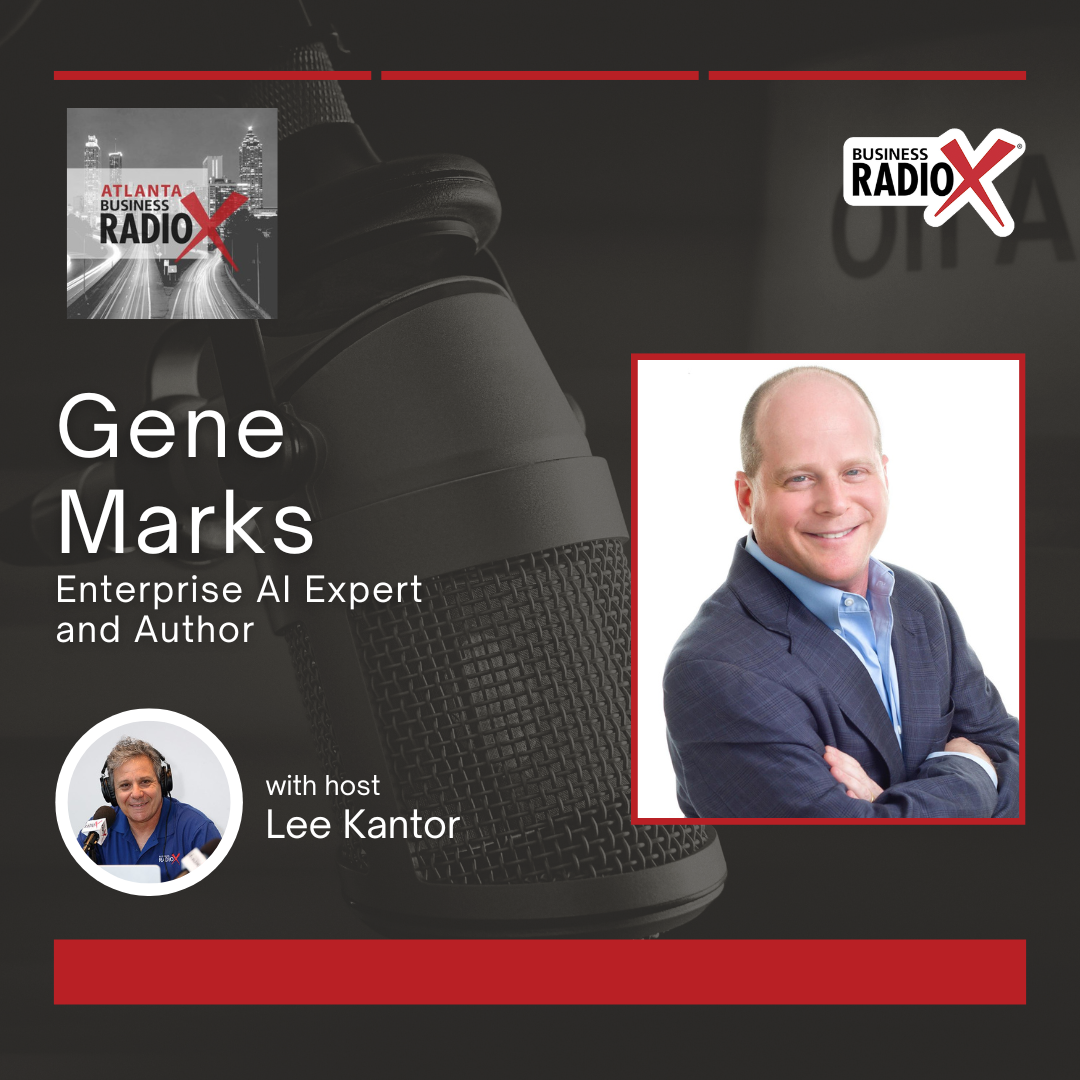

In this episode of High Velocity Radio, Lee Kantor interviews technology journalist and Forbes contributor Gene Marks about how small and mid-sized businesses can successfully adopt AI in 2026. Gene shares practical insights from his AI Business Playbook, explaining how business leaders can move beyond AI hype and focus on measurable outcomes. The conversation covers employee training, department-specific AI applications, ROI measurement, change management, and real-world examples of businesses using AI to improve productivity and profitability.

 Gene Marks has been covering business technology for Forbes for over 20 years where he writes 6-8 times per month. He also runs a 10-person technology consulting firm outside of Philadelphia and has been writing and consulting almost exclusively on AI over the past few years.
Connect with Gene on LinkedIn.
What You’ll Learn In This Episode
- Successful AI adoption begins with a clear business strategy and defined objectives.
- Department-specific AI training increases employee effectiveness and productivity.
- AI performance can be measured through profitability, efficiency, and productivity metrics.
- Proactive communication helps employees navigate concerns about AI and job security.
- Low-risk, high-impact AI applications provide the fastest path to measurable results.
- AI strengthens customer service by enhancing human capabilities rather than replacing them.
- Business-focused AI consulting aligns technology investments with organizational goals.
- Real-world AI implementations demonstrate measurable returns on investment and operational improvements.
 This transcript is machine transcribed by Sonix.
TRANSCRIPT
Intro: Broadcasting live from the Business RadioX Studios in Atlanta, Georgia. It’s time for High Velocity Radio.
Lee Kantor: Lee Kantor here another episode of High Velocity Radio and this is going to be a good one. Today on the show, we have Technology Journalist with Forbes, Gene Marks. Welcome.
Gene Marks: Hi, Lee, how are you?
Lee Kantor: I am doing well. I’m so excited to talk to you today. I thought we could be digging in on how to approach AI in 2026. If you’re running a small to midsize business, you got any opinions on that?
Gene Marks: Uh, 1 or 2, you know, I’ve, I’ve been writing about technology on Forbes now for about 20 years and, uh, you know, write about 4 to 6 times a month. And it should come as no surprise to anybody. Over the past few years, it’s really been almost entirely about AI. My, um, my coverage is for businesses and business owners. And so my, my columns are focused on that. And it’s the driving reason behind my new book that I wrote with Cox Business called the AI Business Playbook, because AI is really having a big impact on a lot of businesses. And a lot of people have, um, a lot of, uh, questions as to how they can use it in their business, how not to waste money on it, how to prepare their employees for AI and you know, how to secure their data. So, um, lots of opinions on, on lots of these different issues that I’ve been covering over the past few years.
Lee Kantor: All right, so let’s dig in a little bit. A lot of folks, a lot of business owners are, in my opinion, kind of treating it as kind of a blunt instrument. So they’re like, okay, everybody’s going to get AI and go go for it. And they don’t have a lot of direction, and everybody’s just kind of figuring things out on their own without a lot of strategic direction. Do you find that as well?
Gene Marks: Yeah, there’s a lot of confusion and a lot of business owners are getting, you know, becoming terrified that if they don’t adopt AI, they’re going to go out of business or their competitors are going to beat them, or they’re just going to fall behind the times. And a lot of people when they, um, you know, they have a hard time defining exactly what AI is. Lee you know, I mean, like, you know, they’re like, oh, you need to use AI. And then, you know, people are like, I don’t even know what that means. Like, how does that get applied? So, you know, I always, you know, here’s what I’m seeing and here’s what I’m covering. Okay. First of all, most business people, uh, particularly small and midsize businesses already have AI in their business. If they, uh, you know, if they are using either Microsoft Office or Google workspace, which, uh, most businesses are using either 1 or 2 of those platforms. They come included with AI tools, Microsoft has copilot and Google has Gemini. And those tools themselves can enable employees and teams and workers in a business to create. You know, you know, email’s easier to create documents, easier to automatically create, you know, PowerPoint, you know, documents and presentations.
Gene Marks: Ai itself can not only to better manage files and folders and data within your OneDrive or your Google Drive, but also it can be used for security and IT management as well as helping you translate phone calls. I guess my point is, is that, um, a lot of businesses have this functionality already. Um, Microsoft and Google are, they’ve been rolling it out. It’s all there. So I’ve been telling a lot of my clients to do what I’m seeing other smart business owners do, which is get training. Um, you know, most of us use such a small percentage of our office platforms to begin with. Um, that, you know, it’s like they own this and it’s like they’re driving around in Texas in the summer and they’re not using the air conditioning because they don’t know, you know, where the air conditioning button is, you know, so with AI, you know, what I’ve seen my smartest clients do is invest, um, you know, a few bucks into getting a Microsoft or a Google consultant, uh, in front of their employees and showing them all the AI capabilities and features that their platform has to help them do their jobs better.
Lee Kantor: Now, are you finding that there that you need kind of coaching in whatever your area of specialty is, instead of kind of a general AI training, you need accounting needs an AI accounting coach and marketing needs an AI marketing coach, because each one of those, um, groups has, has different tools at their disposal now.
Gene Marks: It’s 100% right. And, you know, that is what you’re bringing up is, uh, you know, really what separates the good trainers in this world, the good consultants and the average ones, um, good consultants realize that, you know, in a, in a group, different people perform different functions and generalize. Training has a purpose, but most people want to know, well, how do I use this for my job? What do I do to improve my productivity and my value for my business? So you’re 100% right. If you hire that Google consultant or that Microsoft consultant, you should be asking him exactly or her the exact question that you just posed, which is how are you going to tailor your training to the different teams in my business so they can maximize the AI for their uses? And a good consultant will come right back to you with what their approach is to doing that. Uh, ones that, you know, aren’t offering you a good answer to that question. Um, should be ones that could be, you know, reconsidered before you hire them.
Lee Kantor: Now, um, when it comes to deploying AI in an organization, there’s a lot of fear from the employee standpoint that, oh, all I’m doing is just training my replacement here. How do you, how do you kind of, um, help that employee understand that it’s really in their best interest to kind of be as good at AI as you possibly can be, because whether this job may be, uh, a good opportunity, you’re gonna, you’re, you’re probably not going to be replaced by AI, but you might be replaced by somebody like you that is a ninja with AI.
Gene Marks: Well, that’s, that’s certainly a true statement. But I’ll tell you what also is true is that technology replaces people. And I think that, um, employees, if you want to, you know, you should be treating them like grown ups. I mean, there used to be people that climbed up on light poles in London to turn them on and off on the street every day. And there were people in Paris that would shoot pebbles and peas at people’s windows to wake them in the morning, because there was no alarm clocks, you know. Um, there are very few blacksmiths in this country. There are very few typing pools, if any, in this country. Watch an episode of Mad Men and you’ll see, you know, you know, where technology is compared to today. And I just think that it’s important to tell your employees that, you know, you know, AI is going to replace, you know, you know, the work that you’re doing right now. And it very well could be replacing people that are doing digital type of work and work. That doesn’t mean that you have to be replaced. You have to not only use these tools to be as productive and as valuable for your company as possible, but I think the onus is on you as a grown up, as a human being to, you know, figure out like, well, what else are you going to be doing to provide value? Um, you know, for your employer and, you know, li I mean, I own my own business.
Gene Marks: You know, I have ten employees. We serve our clients. We do, you know, AI and technology projects every single day. I have to prove my value to my clients in order to get paid. And I don’t think that’s any different than an employee working in a firm. If AI is taking away doing, um, you know, then, you know, if it can be digitized that easily, I think it’s on the honest individuals to, to look at what they’re doing, look at their jobs and say, okay, now that I’ve got some free time, how else can I be providing value to my employer? So that’s, that’s the way that I think people should be approaching this change. And it’s a big change.
Lee Kantor: Now, when we were talking earlier about, okay, if you’re giving training to each of your teams and getting them to be as good at leveraging AI as possible to help them be as productive as possible in your organization, that’s a great thing. So how do you recommend kind of the leader of the organization, the C-suite? Uh, Valuate kind of the ROI from AI when it is deployed like that.
Gene Marks: It’s a nothing like that is, is easy to evaluate all that. Um, it should be no different than the return on investment that they’re getting right now from their employees. I mean, if an employee has the right attitude, if they are productive, if they are meeting their deliverables, if they are, you know, making sure that they are getting to their job responsibilities and exceeding those responsibilities. That’s the best way to evaluate. And I think that, um, you know, if you’re a C-suite person, you have to be smart enough to realize what work can be automated and replaced by AI and what work can be done by a human to fill that gap. And you know, you should be it’s on you as the C-suite executive to be ever changing that employee job description so that they are, you know, making sure that they are still delivering value for your customers and your organization. Um, and those tasks that description will, it is going to change because of AI. And I think that’s important that, you know, employers recognize that and, and, and adapt to that. Um, and be clear as to what it is for their employees, but I don’t think AI is, is, is this kind of thing that it’s going to be very tough to, to measure.
Gene Marks: And I’ll give you an example. You know, there’s, um, You know, there was this big surge, and I covered this for Forbes and many companies that were replacing their customer service reps with AI. And they’re, you know, they’re literally firing people because of it. And now it’s coming back 180 degrees because a lot of organizations are realizing that their customers, you know, people want to speak to humans when they have a problem, most problems. And they look at their AI tools now as supplementing their customer service reps, maybe answering some questions in advance so that the rep can handle more work and they’re looking at the reps now, um, as you know, as taking on more responsibilities and leveraging those AI apps to do a much better job. So in the end, it is all about what you’re delivering to your customer. And it’s going to be a combination of human involvement and technology involvement. And I think C-suite executives have got to, you know, quantify their their metrics based on how happy and satisfied their customers are and how they’re growing their business.
Lee Kantor: So how would you recommend them going about doing that? Like we said early on, that if all the teams are getting this specialized coaching and understanding how to leverage it within their just their daily workflow. The CEO obviously is hiring people to accomplish a task, and now they have this tool that these people should be able to do more things. So how, how, how? Like what steps do they have to take in order to kind of say, okay, this group, we need more help with AI, or maybe they should pull back and we need more human intervention. Like how do they kind of stay on top of things? Because they’re not going to have kind of that, uh, specialized training that their people are, but they still need that generalized information of, is this thing moving the needle in the right places in the right ways?
Gene Marks: So you are I don’t know how much you read in my bio, but I’m actually a certified public accountant. Okay. So, um, because I’m, I’m, I’m an accountant. Um, I do take pretty black and white mathematical approach to a lot of, you know, a lot of these types of challenges. And your question is a perfect example of that. You know, in the end, um, any organization, um, is, is measured by the profits of that organization. And in the end, um, depending on how many people you have in this organization, each of your employees, and it’s as simple as this can be measured by the profits that they are delivering to their organization. So if you’re, if you’re a small business with maybe 20 people or 30 or 40 people, you should be able to know what your profit is per employee. You should be able to know what your overhead is per employee and even your sales by employee, I mean, that’s your benchmark that you’re looking at. If you then start moving towards more AI, which basically means your employees are going to be getting more services and products delivered to your customers, more efficiencies in your organization because of it. That should play out in the numbers and the numbers is that if your profit per employee at the end of 2026 was $10, and then you’re going to make some investments in AI, you should be looking at 2028 or even 2029 saying, I expect that number to rise to $12 or $15 or $18 per employee. That is a specific black and white, measurable metric that you can gauge to make sure that not only is AI producing that extra productivity and profits in your business, but that your employees are adapting to it. That to me is an accountant is is how I’m going about it in my business. We’re attempting to take more work on and get more work done with my existing headcount. I know what the profits are in my company, and if I am successful in implementing AI and other technologies, I should be seeing my profits per employee increase. It’s as simple as that.
Lee Kantor: But when you’re forecasting it, are you? How are you even picking the number to forecast?
Gene Marks: Well, I mean, you can set goals as to what you think that can be accomplished. But honestly, that kind of depends on the company. I mean, you know, I mean, if you again, are looking at profitability or overhead or sales by employee, you’re going to just have to make some assumptions that if you’re going to be implementing an AI application or an AI solution, that your employees are going to be able to save X, you know, hours more a year, which should flow through right to your bottom line. Or if you’re doing this for your sales group, they should be able to generate X amount of more quotes to customers during the year or reach more prospective customers during the year using these AI tools, which will then convert into quotes, which then converts into actual sales volume. So you can take a mathematical approach and you should be doing it, I think, on a department or a team by team basis. And then ultimately that should all roll into an overall organization’s profitability. So again, to answer your question, I mean, you have to make some assumptions. And I think you break down those assumptions by team by group or department, however your company is organized.
Gene Marks: Um, and then those assumptions should roll into one, you know, consolidated, uh, profitability per employee number that you can then aim to as a target. I also think that any adopting of any of the AI tools, um, at least the ones that I’m covering and looking at, it doesn’t happen overnight. It shouldn’t be something that you’re gonna, uh, you know, have to make unreasonable expectations or push your employees into doing something that is going to completely stress them out and cause them to leave your business. Um, so you should set reasonable goals and say, okay, you know, we’re going to be rolling out these workflow and AI and automation, you know, features in this software or Microsoft Office or in our accounting system, whatever it is. Um, and then say, okay, by the end, you know, in the next 18 months, where we have profit per employee at this or overhead per employee. Is it that I would expect to see it at something else? And you will determine those numbers based on your assumptions.
Lee Kantor: And then what’s your kind of time frame on when you should have an inkling of this is going in the right direction?
Gene Marks: I mean, again, that depends because it depends on how big a role it is and how many people are involved. I’m not going to say you’re going to see immediate results. I think what you’re going to see is you want to give yourself a period of time, six months or so, to roll these changes out, get your employees used to it, get them trained, make sure they can adapt, or people just don’t like change. So they’re going to need some, you know, some time to, to understand what’s going on. But I would think, you know, I mean, again, this is just anecdotally, but, you know, I would think after, you know, nine months or so to a year, you should be seeing progress towards your profitability goals by rolling out this technology. And as someone who’s been implementing technology for a long time, I just know, I mean, you want to set your expectations low so you can exceed them easily. And I think you have to also realize that things usually take longer than you expect.
Lee Kantor: Now, what about the unintended consequences that you mentioned earlier? Like when things, uh, start? When do those things start showing up? Is that something that’s pretty immediate?
Gene Marks: What do you mean by unintended consequences?
Lee Kantor: Well, like, you know, they’re deploying you mentioned the customer service and all this with chatbots. And all of a sudden then this was not going as planned.
Gene Marks: Yeah. That’s a great that’s also a great point and super important. I mean, as much as you might give rope to your employees and take a deep breath and have patience for to make sure things are going in the right direction, you definitely do want to be keeping an eye out to make sure you’re not going backwards. And, um, some of the companies that I feature, I wrote about a company called Klarna, uh, they do buy now, pay later, applications in retail stores, and they were one of the first people that jumped in and started replacing customer service reps. And, you know, within a few months. I mean, it did not take them long to realize that that was the wrong decision. Uh, it’s just, you know, out and out fire people and replace them with bots and credit. Uh, they, you know, they sort of ate their crow, turned around and, uh, started rehiring people and admitted it publicly. So I, you know, I do think that you should be keeping a close eye out on, you know, anything that you might be doing that might be having a negative impact. You should be able to see something like that with, you know, you know, months, you know, very less than 6 to 9 months and be prepared to pivot if that’s the case.
Lee Kantor: Now is do you think that they should be doing kind of these, like maybe smaller scale beta testing experiments rather than a wholesale change?
Gene Marks: Yes. So I’m glad, you know, I’m glad you bring that up, because I do have some examples to share with you, because I think that that is where where things are headed. And by the way, these are the things that I talk about in my AI playbook because I’m seeing a lot of businesses. And by the way, you can you can download that playbook, everybody at cox.com/a-playbook. I give examples and use cases in 2026. How people are using AI and the smartest ones are doing exactly what you just said, which is they’re plucking low hanging fruit and taking advantage of it. And I’ll give you an example. Um, you know, I was talking before about using office or workspace and, you know, leveraging those AI tools. But, you know, then I have one client that’s like a windows and doors company. Um, and, you know, they’re in Missouri, they, uh, the guy has a showroom. He’s got like a half a dozen salespeople in the showroom. Uh, they, you know, they meet with customers. He spent about $10,000 and he created his own AI application. He hired a developer, which we can talk about where to go for that. Um, and then they developed something over the course of a couple of months so that his sales people, when a new customer or prospect walks into the showroom, the salespeople is talking to the customer and they immediately engage the app on their phone. So the app is listening and transcribing the whole conversation, just like, you know, Zoom and Teams and Otter and a bunch of applications do today. However, when they’re done with the conversation, the salesperson has been trained to sort of summarize what they’ve learned and confirm it, what the customer is.
Gene Marks: Okay, just to conclude, you want this type of window with this type of molding and this type of glass and whatever. And then, you know, the application immediately generates a quote based on the conversation. Just just creates it. And then the salesperson reviews the quote, of course, and approves it and then sends it out. And the owner of this business is like, now I’ve got my salespeople. They’re not taking notes. Um, which by the way, has its, you know, they make mistakes when they do that. They’re leaning on their AI application to just listen to the conversation. They can just spend most of their time just engage with the customer, and then they don’t have to go sit there for an hour and generate a quote. They can just get on to the next customer. And you mentioned earlier about like return on investment, the sales by employee, the sales by salesperson in his showroom has increased like 40% since they implemented this AI solution because it’s freed them up to do that much more. So that was a low hanging fruit application, custom developed, leveraging AI that just provided significant return on investment in a, in a, you know, in a short period of time. And I’m seeing more and more of my clients engage firms like ours to develop small applications like that, that just deliver that return on investment. So to your point, it’s not like a business has to turn themselves completely upside down to adopt AI. They can do it piecemeal throughout their business and get a lot of return on investment for doing that.
Lee Kantor: So who is kind of the ideal client profile for your consulting firm?
Gene Marks: Usually it is. Um, it’s funny. First of all, it’s not even demographics. I mean, we have clients that are in their 60s and clients that are in their 30s. So you would think like, oh, it’s a younger persons game, but we’re actually finding that like more older people are more excited and into trying things and working with AI than even younger generations, because they’ve had years of being frustrated with their existing technology solutions, that they’re kind of blown away by what AI can do for them. Um, you know, we look for people that get excited by some of these applications. And we also look for people that are very profit minded that, um, you know, that want to do something because it’s got a specific business need with a specific return on investment. You know, for doing that. Um, usually if we’re working with somebody, um, that is, is, is willing to understand that it’s a process. It will take a little bit longer. Mistakes will be made, it’ll need to be adapted. And it’s a long term relationship. Um, that one, you know, example, the mobile application for the salespeople that’s sold. And then there’s like a, you know, a maintenance that they pay ongoing because they understand that it’s going to continue to evolve and need to be, you know, you know, adapted and supported. So, you know, again, doesn’t really depend that much on demographics, although I do see a lot of older people, you know, you know, skewing towards AI just because of their experience. We like clients that are really excited by what this stuff can do. We like clients that really have a straight out return on investment, real profit as to why we’re, why we’re doing this. Um, and then we like clients that know this is a long term relationship because one, one application is going to bleed into another. Those are the kind of clients that we look for.
Lee Kantor: But is there a specific pain they’re having right before they call you. Or is this just a, uh, they they’re curious.
Gene Marks: So every business has their specific pains. Many of the people that we do don’t know what that pain is. So what we wind up doing is spending, you know, hours doing a little discovery, um, and looking at what they’re doing. And then we can ask them like, you know, you know, you’re managing your inventory in this way. Wouldn’t you be much better off if whenever this, you know, inventory item gets below a certain point, you know, an automatic order goes out to your supplier, you know, and then with a confirmation. Yeah. Okay. Well, we can develop a little AI application to do that. Or, um, you know, sometimes, you know, you’re traveling, you’re in your office, you’re out of your office. And, uh, you know, you wouldn’t, you want more information, just how your business is doing during the week, who’s calling in, what quotes went out, um, what problems there might be with customers. Okay. We can take your, you know, and like Claude or ChatGPT and connect it into all of your systems and generate a weekly insights report as to how your business is doing, you know? So it’s really, um. Most of the clients I’m talking to, they haven’t gotten their arms around like how AI can be used. So they look towards AI consultants like us to spend some time with them and then say, you know, you could be doing this, you could be doing that. We could solve this problem. We could solve that problem. And a lot of the cases, they’re like, oh my God, we even realize that that’s even possible. Please, let’s, let’s do that.
Lee Kantor: So you kind of look at it holistically, and then you show them where the kind of the low hanging fruit are.
Gene Marks: We do and the best AI consultants that are out there, and I’ll put ourselves among them is that we have business backgrounds. So, um, it’s not like we’re trying to sell them tech. I mean, we’re looking at, we will spend time looking at, well, let’s your order entry process or your scheduling process or your financial reporting process or your customer service process. We walk through it and then we can say, okay, we walked through this for a couple of hours. Here’s ten different ways that we could be employing AI to help, you know, in this specific department. You know, um, it’s good to have an AI consultant that has a good knowledge of overall business and then can start making those kinds of recommendations.
Lee Kantor: So if somebody wants to learn more, have a more substantial, um, conversation with you or somebody on the team, what’s the website? What’s the best way to connect and what’s the best way to get ahold of that book one more time?
Gene Marks: Yeah. I’m going to drive them to, to download the book. You can also email me from that website, but it’s cox.com, cox.com/ai-playbook. And my website is marksgroup.net. So you can always reach out to me through there as well or on LinkedIn.
Lee Kantor: All right. Well, Jean, thank you so much for sharing your story today. You’re doing such important work and we appreciate you.
Gene Marks: Lee. Thank you. That was a really fun conversation. Appreciate it.
Lee Kantor: All right. This is Lee Kantor. We’ll see you all next time on High Velocity Radio.















