

Georgia Technology Summit brings together 1000+ Georgia-focused technologists to network, learn, and engage with the latest trends in Georgia innovation. This year’s summit was held at the Woodruff Arts Center, a stunning and iconic cultural landmark located in the heart of Midtown Atlanta.
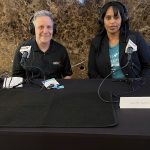 Dr. Loretta Daniels, Interim Executive Director, Technology Association of Georgia’, TAG-Ed and CEO and Managing Partner at Kendall and Kendrick Consulting Group, is an expert in organizational Leadership, DEI, conflict management, and communication.
As an executive leader in the corporate arena, she has served in executive leadership roles such as Chief Executive Officer, Chief Operations Officer, Vice President of Sales and Marketing, Executive Director of Sales Operations, and General Manager.
In addition, she has written corporate training manuals Leading by Example and Fast Track to Excellence. As the former Executive Director of Corporate Relations of Kennesaw State University (KSU), she worked with medium and large organizations to define and deliver leadership growth certificate programs aligned with the company’s vision and objectives.
Dr. Daniels has recently created TAG Bridge Builders, a social justice and equity initiative to promote Georgia’s underrepresented tech professionals advance from mid-level positions to senior-level leadership roles, providing access to funding and customer acquisition for tech entrepreneurs.
Dr. Daniels partnered with C-level Leadership and HR to determine leadership development goals, identify training gaps, enable cultural workplace initiatives, and implement gender pay equality and equitable hiring practices. In addition, she served as the University Office of Diversity and Inclusion CoChair and Presidential Commission on Gender & Work-Life Issues. Also, she advised executive teams, including the President and Chief Diversity Officer, consulted as a subject matter expert on DEI challenges and solutions, and supported DEI’s continuous improvement efforts.
As an adjunct leadership instructor at KSU since 2002, Dr. Daniels delivered in-class and online lectures encouraging students to think strategically by applying fundamentals to real-world problems. Courses taught included Corporate Communication and Conflict Resolution, Human Communications, Public Speaking, Writing for Public Communication, and Foundations of Leadership. Additionally, she has designed a Coursera Specialty Certificate program, Advanced Leadership Skills for the 21st Century Specialization Certificate.
Dr. Daniels received a Doctor of Philosophy (Ph.D.) in Organizational Leadership from Johnson University, a Master of Science (MS) in Conflict Management, a Bachelor of Arts (BA) in Communication from Bradley University, and a Bachelor of Science (BS) in Mass Communication/Media Studies from KSU. She is a Certified Diversity Professional and the author of two books, For Women Only, Women Mean Business (J & W Publishers, 1992), and Unlock Your Success, a Comprehensive Guide for Starting a Successful Business (J & W Publishers, 2006). Dr. Daniels’ upcoming book, Organizational Leadership, published by SAGE Publications, will be available in January 2025 This textbook will offer a new and comprehensive approach to organizational leadership to address the paradigm shift in our global business community.
Connect with Dr. Daniels on LinkedIn.
 This transcript is machine transcribed by Sonix.
TRANSCRIPT
Intro: Broadcasting live from the Georgia Technology Summit 2025 at the Woodruff Arts Center. This is Business RadioX. And now here’s your host.
Lee Kantor: Lee Kantor here broadcasting live from Georgia Technology Summit 2025. So excited to be talking to my next guest, Loretta Daniels with TAG Education Collaborative. Welcome, Loretta.
Loretta Daniels: Oh, thanks for having me.
Lee Kantor: Well, I’m so excited to get caught up. Uh, for folks who aren’t familiar, can you tell us about TAG Education Collaborative? How are you serving folks?
Loretta Daniels: Yeah. Um, we are the 501 C3 charity side of TAG. The Technology Association of Georgia.
Lee Kantor: So, what’s your backstory? How’d you get involved with TAG?
Loretta Daniels: Uh, it’s been about two and a half years now, and, um, I got involved by coming in and creating a program for the workforce. It was a program really designed to help the underserved population enter into the tech workforce. Also to help businesses acquire customers and capital.
Lee Kantor: So, uh, how’s it going?
Loretta Daniels: It’s going extremely well since then. Um, now I have, um, received a promotion, and I. I manage the entire tag editor collaborative. And so our focus there is workforce development, leadership development and entrepreneurial success.
Lee Kantor: So, um, how do you work with kind of the universities and the I would imagine you’re also kind of dipping into maybe high schools and middle schools and, and even do you go down to elementary as well?
Loretta Daniels: Right. There are a couple of our programs. We we do like to focus on immediate workforce needs. So we do have a program, a couple of programs like Georgia Stem day and Day of Day of Code, which introduces K-12, more of the younger students to an experience of, um, AI and other technology. What our focus is how do we help high schoolers, uh, be prepared to enter into the workforce? Some may want to go to college, some may not. Um, but we do have a high school internship program that’s starting, um, next month. Uh, for that. Um, also, we work with colleges. We we understand the most important thing is for college curriculum to be designed to help to meet the needs for the workforce. As a professor, um, of leadership, I think it’s really important that we address that now.
Lee Kantor: Are you getting a lot of kind of collaboration with the university? Because I would imagine that’s in their best interest to be as up to date when it comes to this type of learning and knowledge.
Loretta Daniels: Yeah, exactly. Like the business school at KSU. Um, they help to collaborate to make sure that the curriculum is designed to meet the needs. Um, companies like, um, Again, like Tag and companies like Honeywell and other type of industry leaders, it’s important for them to go into the classroom. So Georgia State, Georgia Tech, Kennesaw State, these are all schools that allow these companies to come in to say, here’s what curriculum looks like. Let’s talk to your students. Let’s make sure that we have a prepared workforce.
Lee Kantor: Now, is it something that the the the enterprise organizations, are they kind of leaning into this? Because in my mind, it’s common sense. Like you, you’re getting a chance to shape your, your next employee in a way that that’s going to solve some training problems down the road. If we can kind of get them at least beginning their training at the university level.
Loretta Daniels: Yeah, I think we have to take it to a next level, right. So many are accustomed to going in for career days saying, here’s what we have. We have internships.
Lee Kantor: So they think they’re done there. Right. And it’s more than that. Right.
Loretta Daniels: It’s more than that. It’s being involved.
Lee Kantor: So how would you recommend like? Like if you had a chance to have a conversation with somebody at enterprise? What how would you communicate to them on how to best leverage this opportunity to work with Tag in this way?
Loretta Daniels: I would say meet with your department leaders, establish exactly what you’re going to need, especially with AI and all the new technology. What are you going to need? Don’t make assumptions that the curriculum is going to meet your needs. So then schedule a meeting with the dean of the university to say, here’s what we’re looking for. Here are our job descriptions. Let’s align this with your curriculum. And if your curriculum aligns, that’s great. If not, let’s take a look at how we can enhance it and allow our leaders to come in and speak to your students.
Lee Kantor: So it can be kind of customized to what they need. I think that they’re not connecting the dots, and they’re not understanding the full scope of what is possible.
Loretta Daniels: Exactly. Customization is possible. We’re not looking for, um, enterprise to come in and change the curriculum just to enhance the curriculum. So it’s meeting the need. Again, with AI and technology, it moves at a rapid pace. So the curriculum needs to change and adjust accordingly.
Lee Kantor: Right. This is one of the things that university, if they remember, is there to serve their students and to give them the best possible chance of success. And this is a chance to really kind of not wait until this is dribbled down to a textbook. Right? Like you can get this in real time. Almost.
Loretta Daniels: Yeah, that’s one of the reasons I left the corporate world. I was a C-suite executive in the medical device industry, but always teaching adjunct, you know, at KSU. Right. And one of the things I wanted to do was to go full time with the university to say here, not everyone wants to go out and be a PhD, right? They’re there to get a job.
Lee Kantor: Exactly.
Loretta Daniels: How do we prepare them to get a job today? Exactly.
Lee Kantor: So, uh, now. So what do you need more of? Do you need more kind of, uh, enterprise level organizations to want to take this kind of leap and work together, or is that the challenge or the biggest rock that you’re kind of dealing with?
Loretta Daniels: Yeah, for us, we are establishing more partnerships. So the more, um, educators can work through us, we can be that middleman, right? So that the industry leaders can come to us, tell us what their challenges are. We will help to connect them with the universities to make that change. We have a very unique program now where the first in the state of Georgia to have a registered tech apprenticeship program, and that’s very unique because it helps these employers tap into untapped talent. These are individuals who may or may not have a college degree. Right. Um, and it allows them to have training. But before they even go into training, like cybersecurity or software developer, um, they are hired by the companies. So they are full time employee. It’s different from an internship program, but it’s one of the most effective workforce gap fillers right now.
Lee Kantor: Because once they go through that, the company has an employee. The company is an employee throughout the whole process.
Loretta Daniels: Yeah, you have a company employee, but you don’t have someone who’s just coming out of college. Because if when you look at the numbers, there is simply not enough college graduates in tech in, in the tech arena to fill these jobs. Right. And so we have to look at those who may have a degree in business or may have a degree in nursing or English and get them trained into tech jobs. And now you’re filling that gap that you would not have had that talent to fill.
Lee Kantor: Right. But it requires you to kind of think outside the box here a little bit and really expand what you’re defining as that prospective student. Right. Like this is a it sounds like a little bit of a leap of faith.
Loretta Daniels: Yes. But you have to companies have to be more innovative in their approach to filling the jobs.
Lee Kantor: Because they’re not going to fill themselves. So you better be doing the work.
Loretta Daniels: Mhm. Exactly.
Lee Kantor: So if somebody wants to connect with you um, or learn more about how to collaborate, what is the best way to do that.
Loretta Daniels: Visit our website. Tag online.com.
Lee Kantor: And then uh, they can go there and then they can just find the appropriate program.
Loretta Daniels: Yes. And the what they want to look for are programs. If they’re looking for leadership development, professional development, upskilling or reskilling for AI. Um, whether they’re looking for steam or just how do I prepare now to get into the workforce.
Lee Kantor: Now, is there a story you can share, maybe that, um, illustrates or gives the listener an idea of what’s possible?
Loretta Daniels: Yeah, I’ve got two stories real quick. Um, one is the registered tech apprenticeship program. We have. We’ve just, um, placed a couple of apprentices in one of our organizations around board organizations. They are doing very well. They’ve gone from not having a tech career to one was working, I think, in a restaurant, and now they are cybersecurity analysts with a real job making real money. Right. Another is on the entrepreneurial side, um, we have invest connect. Um, and that’s where we allow these, um, tech entrepreneurs to present for, for, for, um, pitch competition funds. But not only that, half of the room are, are, um, investors. So we’ve just got a report that three entrepreneurs were able to get funding through Invest Connect.
Lee Kantor: Wow. The impact is real.
Loretta Daniels: Yes it is.
Lee Kantor: Well, thank you, Loretta, for sharing your story today. You’re doing such important work and we appreciate you. All right. This is Lee Kantor back in a few a Georgia Technology Summit 2025.