Business RadioX ®

  • Home
  • Business RadioX ® Communities
    • Southeast
      • Alabama
        • Birmingham
      • Florida
        • Orlando
        • Pensacola
        • South Florida
        • Tampa
        • Tallahassee
      • Georgia
        • Atlanta
        • Cherokee
        • Forsyth
        • Greater Perimeter
        • Gwinnett
        • North Fulton
        • North Georgia
        • Northeast Georgia
        • Rome
        • Savannah
      • Louisiana
        • New Orleans
      • North Carolina
        • Charlotte
        • Raleigh
      • Tennessee
        • Chattanooga
        • Nashville
      • Virginia
        • Richmond
    • South Central
      • Arkansas
        • Northwest Arkansas
    • Midwest
      • Illinois
        • Chicago
      • Michigan
        • Detroit
      • Minnesota
        • Minneapolis St. Paul
      • Missouri
        • St. Louis
      • Ohio
        • Cleveland
        • Columbus
        • Dayton
    • Southwest
      • Arizona
        • Phoenix
        • Tucson
        • Valley
      • Texas
        • Austin
        • Dallas
        • Houston
    • West
      • California
        • Bay Area
        • LA
        • Pasadena
      • Colorado
        • Denver
      • Hawaii
        • Oahu
  • FAQs
  • About Us
    • Our Mission
    • Our Audience
    • Why It Works
    • What People Are Saying
    • BRX in the News
  • Resources
    • BRX Pro Tips
    • B2B Marketing: The 4Rs
    • High Velocity Selling Habits
    • Why Most B2B Media Strategies Fail
    • 9 Reasons To Sponsor A Business RadioX ® Show
  • Partner With Us
  • Veteran Business RadioX ®

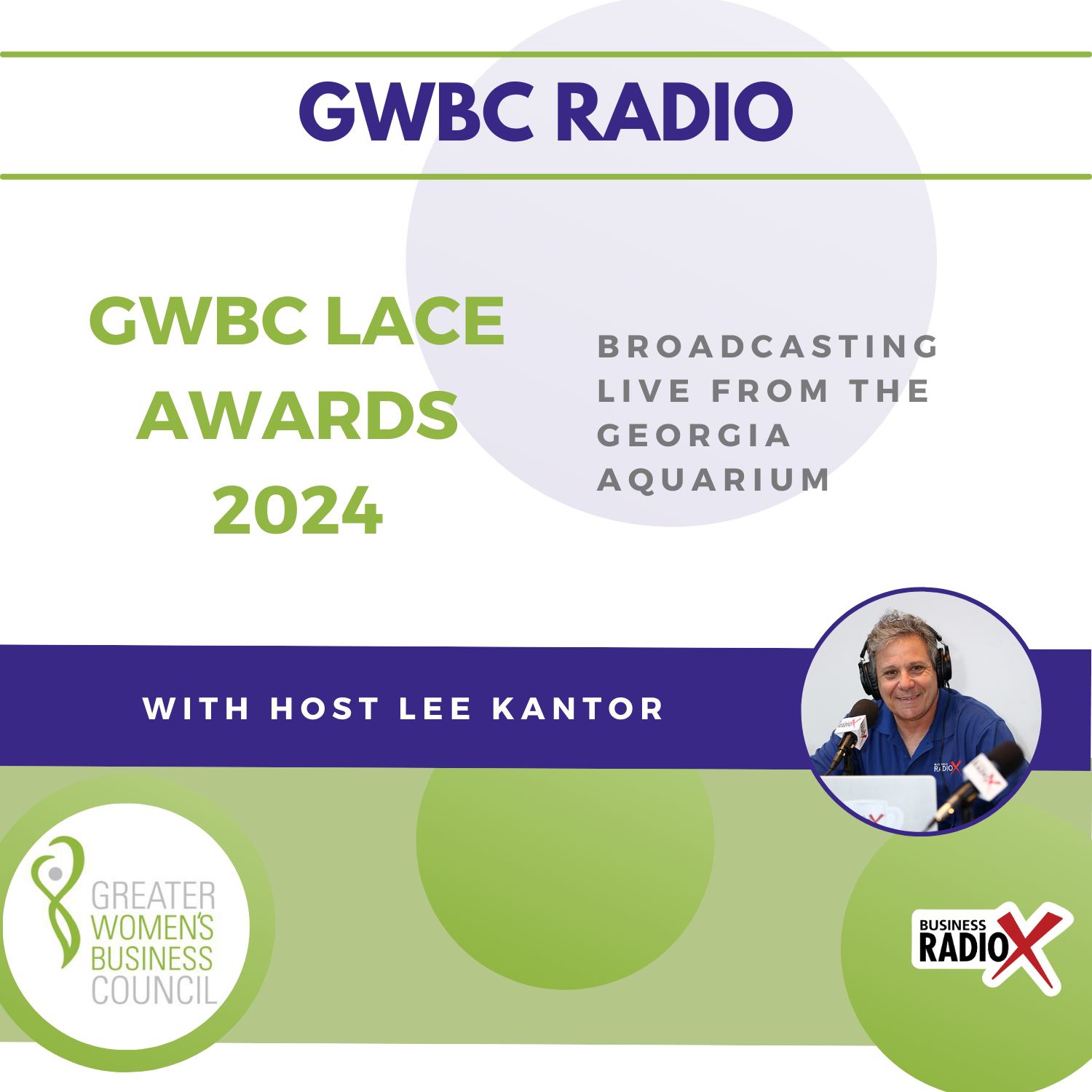
2024 GWBC LACE Awards

November 11, 2024 by angishields

BRX Onsite
BRX Onsite
2024 GWBC LACE Awards
Loading
00:00 /
RSS Feed
Share
Link
Embed

Download file

GWBC-LACE-banner

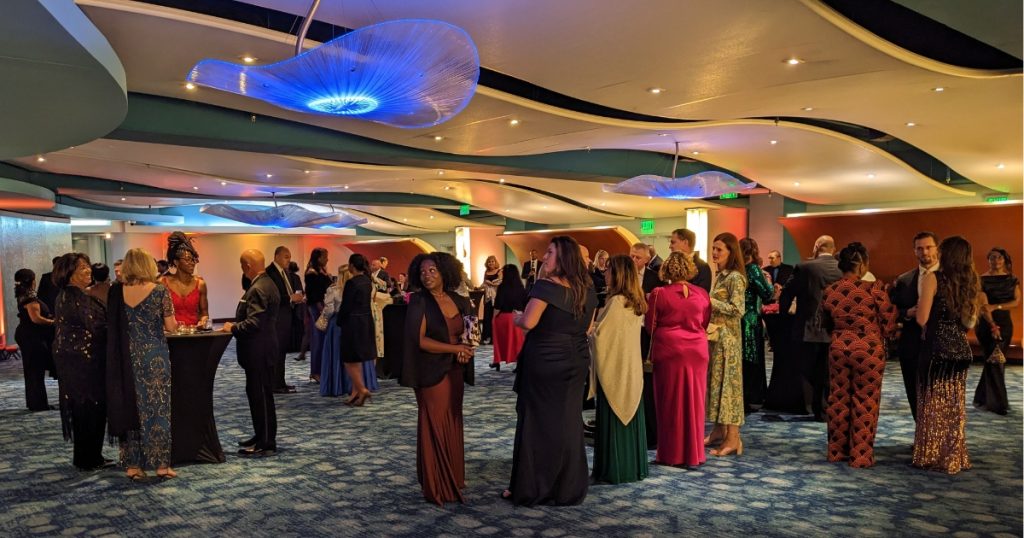
The Greater Women’s Business Council LACE (Ladies Achieving Continuous Excellence) Awards is a black-tie event that celebrates, recognizes and awards both corporate partners and women business enterprises (WBEs) that made major contributions to the mission of GWBC.

LACE Awards are given to companies or individuals for their outstanding contributions in supporting women-owned businesses through mentoring, coaching, world-class supplier diversity initiatives and providing procurement opportunities. The 2024 LACE Awards took place on Friday, November 1, at the Georgia Aquarium.

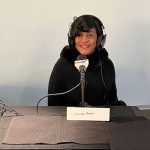
Meredith Moore, Artisan Financial Strategies

https://stats.businessradiox.com/41191.mp3

DOWNLOAD HERE

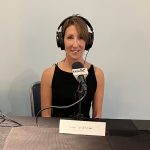
Annita Golatt, with Bee Collaborators Project Management Group

https://stats.businessradiox.com/41192.mp3

DOWNLOAD HERE

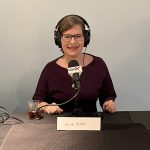
Sed Joseph, Founder and CEO, StageWing

https://stats.businessradiox.com/41194.mp3

DOWNLOAD HERE

Nazeera Dawood and Veni, Vendorship

https://stats.businessradiox.com/41195.mp3

DOWNLOAD HERE

Tammy Cohen, Founder, InfoMart

https://stats.businessradiox.com/41196.mp3

DOWNLOAD HERE

Olivia Rios, CEO of Cold Mountain Consulting
https://stats.businessradiox.com/41197.mp3

DOWNLOAD HERE


Tagged With: GWBC, GWBC Lace Awards 2024

GWBC LACE Awards 2023: Matielyn Jones with GWBC

December 13, 2023 by angishields

Matielyn-Jones
GWBC Radio
GWBC LACE Awards 2023: Matielyn Jones with GWBC
Loading
00:00 /
RSS Feed
Share
Link
Embed

Download file

Matielyn-JonesMatielyn Jones

GWBC

TRANSCRIPT

Intro: [00:00:04] Broadcasting live from the Business RadioX studios in Atlanta, Georgia, it’s time for GWBC Radio’s Open for business. Now here’s your host.

Lee Kantor: [00:00:18] Lee Kantor here, broadcasting live from the Georgia Aquarium Oceans Ballroom for 2023 GWB Lace Awards Gala, Ladies Achieving Continuous Excellence. So excited to be talking to my guest right now. Matielyn Jones, Director of Operations at GWBC. Welcome.

Matielyn Jones: [00:00:38] Thank you so much. Thank you for having me.

Lee Kantor: [00:00:39] Now, are you excited about tonight’s event?

Matielyn Jones: [00:00:42] I am excited, I’m always excited to spend time with our women, business owners and corporate sponsors, so it’s going to be great.

Lee Kantor: [00:00:48] So what can people expect? What are some of the things that you’re looking forward to this evening?

Matielyn Jones: [00:00:53] Well, I am responsible for the team that manages the certification process. And so we have tons of applications that come through every single week, every day of the year. And I’m looking forward to putting faces with the names of all the.

Lee Kantor: [00:01:07] That’s right, because you’ve probably seen them or heard through email and over zoom or something like that. But you may not have met him in person.

Matielyn Jones: [00:01:14] Right, exactly. And so I we received their actual documents. So that would be all of their legal documents. And so we literally feel like we know them. Exactly. So, you know, the history of the business. Who started it. Where were they? You know, we’re looking at, you know, financial documents. We’re looking at who the owners are, all their resumes, all the things, the criteria for certification. So I literally feel like by the time an event like tonight comes around, I’m so excited because we get to put these faces with the names of people who, again, we memorize the details in our head of who these people are. So I’m excited.

Lee Kantor: [00:01:49] Now what for somebody who isn’t certified, what, like, what can they expect to go through the certification process? Like what are some of the things that they need in order to, you know, get through this process because it is arduous, because they’re it’s important to get it all right. And you can’t no one just because you say I’m a woman owned business doesn’t mean that you are really you got to jump through some hoops, right?

Matielyn Jones: [00:02:10] That’s right. And so we certify women owned businesses that can legally demonstrate that they are at least 51% woman owned, controlled, operated, and that they operate in a way that’s independent of any other business. And so we look through those legal documents to make sure that they are legally woman owned, 51% minimum. We my team, the certification team, does all the vetting of those applications. So we do the initial intake of those applications. We do the auditing, which is the line by line of every single piece of paper that comes in, which is which is very, very rigorous and tedious. However, we want to make sure that there is integrity in our process and that if we give someone that seal of approval saying they are a woman owned business, that we’ve gone through the process of making sure that they are legally so, and that process takes 60 to 90 days. Part of the reason why is because we do look at every single sheet of paper for every business that submits. Right now, we sit at around 1245 applications or certified businesses between Georgia and North Carolina and South Carolina. And we’re looking for ways to continue to make the process more efficient so we can certify more women do more outreach, things like that. So, yes, the process it takes about up to three months, but usually once people have submitted their applications and they’re good to go, we roll right along.

Lee Kantor: [00:03:30] And it’s important because a lot of the value that you’re going to get from being a certified business is that you’re going to have access to maybe some enterprise level organizations that are looking for these specific types of people to do business with, right? So you get fast tracked, and this could really change the trajectory of your business if you do this.

Matielyn Jones: [00:03:49] Absolutely. One of the things that is important to remember is that our certification process does not guarantee that anyone will secure a contract, but what it does do is it makes them competitive in the market for the contract. And so we are looking to certify because there are companies, corporations and the government that are both looking to spend money with women owned businesses, also with minority owned businesses, also with veteran owned businesses and whatnot. But for us, for women owned businesses, and they access our database to make sure that that vetting process is really done for them. And so they can search the database of all of our women owned businesses, because we this is a national certification that we process locally. And so they can use it nationally even though we process it locally. And so they look into our database to see who are the staffing agencies, who are the construction companies, who are, you know, whatever the business need is. And we take the vetting of that, you know, making sure that if they have this set aside for two to spend with women owned businesses, that at least this group of women owned businesses they know have been vetted as such.

Lee Kantor: [00:04:56] And that spend isn’t just a little bit of money, right? It’s. Billions and billions of dollars.

Matielyn Jones: [00:05:03] It’s billions last. Earlier this year in April, I went to the top corporations luncheon, and it was Maria and I who was the director of programs. It was our second day on this job. We both started in April. And you know the numbers in the room. 2 billion here, 4 billion there. It starts at 5 million money.

Lee Kantor: [00:05:22] Right.

Matielyn Jones: [00:05:22] It added up and I said, I said, I’ve never been in a room where it was like a flex. How much you spend with women owned businesses. It was exciting and it was a great welcome and introduction to the organization. But it was very exciting and I’m very proud of all the companies that come together to really support women owned businesses in this way.

Lee Kantor: [00:05:41] And for people who want to learn more about getting certified themselves or getting re certified, if maybe they have done it in the past, what’s the best kind of way to connect with you?

Matielyn Jones: [00:05:51] Sure, I think the best way is to go to our website. It is for the Greater Women’s Business Council. So that is GW, BC. Org, our certification team. Photos and pictures are there. You can email us directly at certification at GW PBS.org. You can also reach out to me directly at M Jones at GW PBS.org. But we would love to hear from you. I’m always open to questions and walking you through as best I can, high level through your application, but just know that our goal is to make sure that we audit these documents well, and that we really set people up for success who want to compete in this market.

Lee Kantor: [00:06:28] Well, congratulations on all you do. I mean, you’re doing such important work and we appreciate you.

Matielyn Jones: [00:06:32] Thank you so much. And thank you for having me.

Lee Kantor: [00:06:34] All right. We’ll be back in a few at GW. Bc Lace Awards Gala 2023.


About GWBC

The Greater Women’s Business Council (GWBC®) is at the forefront of redefining women business enterprises (WBEs). An increasing focus on supplier diversity means major corporations are viewing our WBEs as innovative, flexible and competitive solutions. The number of women-owned businesses is rising to reflect an increasingly diverse consumer base of women making a majority of buying decision for herself, her family and her business. GWBC-Logo

GWBC® has partnered with dozens of major companies who are committed to providing a sustainable foundation through our guiding principles to bring education, training and the standardization of national certification to women businesses in Georgia, North Carolina and South Carolina.

Tagged With: GWBC

GWBC LACE Awards 2023

November 7, 2023 by angishields

GWBC Radio
GWBC Radio
GWBC LACE Awards 2023
Loading
00:00 /
RSS Feed
Share
Link
Embed

Download file

GWBC-LACE-Awards-2023-banner

The GWBC LACE (Ladies Achieving Continuous Excellence) Awards is an annual black-tie celebration for GWBC members, recognizing our outstanding corporate partners and women business enterprises (WBEs) for their commitment and contributions to the mission of the GWBC.

Matielyn-JonesMatielyn Jones, GWBC

https://stats.businessradiox.com/39645.mp3

DOWNLOAD HERE

TRANSCRIPT

Intro: [00:00:04] Broadcasting live from the Business RadioX studios in Atlanta, Georgia, it’s time for GWBC Radio’s Open for business. Now here’s your host.

Lee Kantor: [00:00:18] Lee Kantor here, broadcasting live from the Georgia Aquarium Oceans Ballroom for 2023 GWB Lace Awards Gala, Ladies Achieving Continuous Excellence. So excited to be talking to my guest right now. Matielyn Jones, Director of Operations at GWBC. Welcome.

Matielyn Jones: [00:00:38] Thank you so much. Thank you for having me.

Lee Kantor: [00:00:39] Now, are you excited about tonight’s event?

Matielyn Jones: [00:00:42] I am excited, I’m always excited to spend time with our women, business owners and corporate sponsors, so it’s going to be great.

Lee Kantor: [00:00:48] So what can people expect? What are some of the things that you’re looking forward to this evening?

Matielyn Jones: [00:00:53] Well, I am responsible for the team that manages the certification process. And so we have tons of applications that come through every single week, every day of the year. And I’m looking forward to putting faces with the names of all the.

Lee Kantor: [00:01:07] That’s right, because you’ve probably seen them or heard through email and over zoom or something like that. But you may not have met him in person.

Matielyn Jones: [00:01:14] Right, exactly. And so I we received their actual documents. So that would be all of their legal documents. And so we literally feel like we know them. Exactly. So, you know, the history of the business. Who started it. Where were they? You know, we’re looking at, you know, financial documents. We’re looking at who the owners are, all their resumes, all the things, the criteria for certification. So I literally feel like by the time an event like tonight comes around, I’m so excited because we get to put these faces with the names of people who, again, we memorize the details in our head of who these people are. So I’m excited.

Lee Kantor: [00:01:49] Now what for somebody who isn’t certified, what, like, what can they expect to go through the certification process? Like what are some of the things that they need in order to, you know, get through this process because it is arduous, because they’re it’s important to get it all right. And you can’t no one just because you say I’m a woman owned business doesn’t mean that you are really you got to jump through some hoops, right?

Matielyn Jones: [00:02:10] That’s right. And so we certify women owned businesses that can legally demonstrate that they are at least 51% woman owned, controlled, operated, and that they operate in a way that’s independent of any other business. And so we look through those legal documents to make sure that they are legally woman owned, 51% minimum. We my team, the certification team, does all the vetting of those applications. So we do the initial intake of those applications. We do the auditing, which is the line by line of every single piece of paper that comes in, which is which is very, very rigorous and tedious. However, we want to make sure that there is integrity in our process and that if we give someone that seal of approval saying they are a woman owned business, that we’ve gone through the process of making sure that they are legally so, and that process takes 60 to 90 days. Part of the reason why is because we do look at every single sheet of paper for every business that submits. Right now, we sit at around 1245 applications or certified businesses between Georgia and North Carolina and South Carolina. And we’re looking for ways to continue to make the process more efficient so we can certify more women do more outreach, things like that. So, yes, the process it takes about up to three months, but usually once people have submitted their applications and they’re good to go, we roll right along.

Lee Kantor: [00:03:30] And it’s important because a lot of the value that you’re going to get from being a certified business is that you’re going to have access to maybe some enterprise level organizations that are looking for these specific types of people to do business with, right? So you get fast tracked, and this could really change the trajectory of your business if you do this.

Matielyn Jones: [00:03:49] Absolutely. One of the things that is important to remember is that our certification process does not guarantee that anyone will secure a contract, but what it does do is it makes them competitive in the market for the contract. And so we are looking to certify because there are companies, corporations and the government that are both looking to spend money with women owned businesses, also with minority owned businesses, also with veteran owned businesses and whatnot. But for us, for women owned businesses, and they access our database to make sure that that vetting process is really done for them. And so they can search the database of all of our women owned businesses, because we this is a national certification that we process locally. And so they can use it nationally even though we process it locally. And so they look into our database to see who are the staffing agencies, who are the construction companies, who are, you know, whatever the business need is. And we take the vetting of that, you know, making sure that if they have this set aside for two to spend with women owned businesses, that at least this group of women owned businesses they know have been vetted as such.

Lee Kantor: [00:04:56] And that spend isn’t just a little bit of money, right? It’s. Billions and billions of dollars.

Matielyn Jones: [00:05:03] It’s billions last. Earlier this year in April, I went to the top corporations luncheon, and it was Maria and I who was the director of programs. It was our second day on this job. We both started in April. And you know the numbers in the room. 2 billion here, 4 billion there. It starts at 5 million money.

Lee Kantor: [00:05:22] Right.

Matielyn Jones: [00:05:22] It added up and I said, I said, I’ve never been in a room where it was like a flex. How much you spend with women owned businesses. It was exciting and it was a great welcome and introduction to the organization. But it was very exciting and I’m very proud of all the companies that come together to really support women owned businesses in this way.

Lee Kantor: [00:05:41] And for people who want to learn more about getting certified themselves or getting re certified, if maybe they have done it in the past, what’s the best kind of way to connect with you?

Matielyn Jones: [00:05:51] Sure, I think the best way is to go to our website. It is for the Greater Women’s Business Council. So that is GW, BC. Org, our certification team. Photos and pictures are there. You can email us directly at certification at GW PBS.org. You can also reach out to me directly at M Jones at GW PBS.org. But we would love to hear from you. I’m always open to questions and walking you through as best I can, high level through your application, but just know that our goal is to make sure that we audit these documents well, and that we really set people up for success who want to compete in this market.

Lee Kantor: [00:06:28] Well, congratulations on all you do. I mean, you’re doing such important work and we appreciate you.

Matielyn Jones: [00:06:32] Thank you so much. And thank you for having me.

Lee Kantor: [00:06:34] All right. We’ll be back in a few at GW. Bc Lace Awards Gala 2023.

Chef-MariaChef Maria Kemp, Beyond Decadence

https://stats.businessradiox.com/39646.mp3

DOWNLOAD HERE

TRANSCRIPT

Intro: [00:00:04] Broadcasting live from the Business RadioX studios in Atlanta, Georgia, it’s time for ABC Radio’s Open for business. Now here’s your host.

Lee Kantor: [00:00:18] Lee Kantor here, broadcasting live from the Georgia Aquarium Oceans Ballroom for the 2023 GWBC Lace Awards Gala, Ladies Achieving Continuous Excellence. And one of those ladies here right now, Chef Maria Kemp. Welcome.

Chef Maria Kemp: [00:00:34] Thank you so much, Lee. Hey, it’s finally great to meet you in person.

Lee Kantor: [00:00:38] I know we did an interview virtually, and now we’re meeting in person. For those who don’t know, tell us a little bit about your business.

Chef Maria Kemp: [00:00:43] Well, I own Beyond Decadence, and I am the D and B pastry chef, which stands for diversity, equity, Inclusion and belonging. And I create a fusion between desserts and diversity, equity, inclusion and belonging training.

Lee Kantor: [00:00:59] There you go. And then backstory how you got into this line of work.

Chef Maria Kemp: [00:01:02] Oh goodness, I went to pastry school. Let’s just round up and say a million years ago, after spending, you know, 1,000,000.5 years in the IT world, went to the prestigious French pastry school in Chicago and became professionally trained and had a brick and mortar business, a couple pop up bakeries through the years in Illinois and now North Carolina, and then during the pandemic, ended up morphing. I like that word instead of pivot, because pivot was the most overused word of the pandemic.

Lee Kantor: [00:01:30] It’s an evolution.

Chef Maria Kemp: [00:01:31] It is, it is. But I like the word morphed. So I ended up morphing. And, you know, combining two of my passions, you know, to be an advocate and an ally in the diversity space and baking, because I had done production, baking and catering for a long time and needed a change and something that was more impactful.

Lee Kantor: [00:01:49] Now, what’s your number one tip for that home? Baker?

Chef Maria Kemp: [00:01:53] Um, probably similar to some of the trades where they say, what is it? Measure twice, cut once.

Lee Kantor: [00:02:01] Because baking is like chemistry, right? It’s not like yeah, just throw a little bit in. It’s not like cooking where you can just sprinkle stuff in or eyeball things.

Chef Maria Kemp: [00:02:08] Yeah. The whole bam thing, you know that that doesn’t work in baking. No. You definitely need to make sure that you measure accurately, whether you’re using a scale or whether you’re using a liquid measuring cup or regular traditional dry measuring cups. Accuracy is key.

Lee Kantor: [00:02:23] Now, what about when it came to developing your programs involving baking and Di? How did that come about?

Chef Maria Kemp: [00:02:31] It came about through a request from a client who said, you know, we really want to work with you, but we’ve been watching you and we work with the safe of Savory Chef last year, and we’d love to do something with you. And so that started and developed something for Juneteenth that paired together a bourbon sweet potato pie with marshmallow meringue and the messaging. But then it kept evolving through another client, Flagstar Bank and Amerihealth Caritas. Then there was Kimberly-Clark, and there was probably one other one in there I’ve missed too, but it really came together full scale when I got asked to or approved to be a speaker, a breakout session speaker at the 11th annual BMW Supplier Diversity Exchange and Conference, which is held every year for 11 years, ten, 11 years down in Greenville. And I led a breakout session, 100 people in each session two times, about 45 minutes, and just knocked it out of the park because people didn’t understand. They’re like, how are you going to merge together? Baking and pastry. Are you a pastry chef or your trainer? Are we going to cook something? Then other people are like, well, I heard you mention desserts from the podium. And is it bad that I came because I knew I’d get dessert? I said, no, it’s all part of my evil plan. That’s right. I just need to get you in here, and then I can explain it to you and help educate you.

Lee Kantor: [00:03:47] And then when you do your talk, they also. There is a dessert involved.

Chef Maria Kemp: [00:03:51] No, I just tell them. No. I do know after I do the demonstration and walk through the experience of how desserts can be used to show diversity, equity versus inclusion, inclusion. Excuse me. Equity versus equality, inclusion versus exclusion, belonging versus not belonging. After we walk through that and they experience firsthand and say, you know, I didn’t like the way that felt or I felt bad for them because they didn’t get anything, I was going to give them mine. When you experience it firsthand, then it resonates. It becomes real. It becomes real. Then you can go out and be an ally, and then you can say, I remember how that felt and I didn’t like it. So after all of that, then they do get to eat their dessert. And that’s the best part.

Lee Kantor: [00:04:35] And that’s the beauty of this is they get to learn something, but they also get a sweet treat. Right?

Chef Maria Kemp: [00:04:40] And food resonates. I mean, don’t we all wake up or fall asleep to Food Network every night or, or the Greatest British Baking Show? So when people, you know hear that they’re going to get dessert, but then they experience and get the lesson out of it, then get to, you know, enjoy the dessert as well, then that makes it stick. And it’s powerful. I mean, food is power.

Lee Kantor: [00:05:00] Now for folks who maybe aren’t certified yet, how has being certified helped you kind of have these conversations with those kind of folks?

Chef Maria Kemp: [00:05:09] It’s opened me up to an audience that I would not have had access to otherwise. It’s easy to open any periodical and see who the major companies, the major players are in any city or any state that you live in. But to have events that take place where you have an opportunity to meet them and interact with them, but most importantly, build a relationship. Just being certified and saying, I’m certified, hire me now.

Lee Kantor: [00:05:35] Doesn’t work.

Chef Maria Kemp: [00:05:35] That doesn’t work. That doesn’t work.

Lee Kantor: [00:05:37] Paying your dues and just waiting by the phone is not a good strategy, right?

Chef Maria Kemp: [00:05:40] That’s that’s that’s that’s being hopeful. But building the relationships and them getting to know you, you getting to know them, understanding the problem they’re trying to solve and the solution that you can bring to it, but them also watching you. I know there’s people who watch me on LinkedIn. They’re watching me, what I’m doing, how my career is growing, what I’m getting involved in, the people I’m meeting, the exposure, the response, the reaction from the crowd reading the facial expressions like, wow, they were really enjoying what she was doing. So being certified has done nothing but catapult that and the people, if I started naming them. But I’m not going to name drop that I’ve had access to and exposure to and discussions with and discussions that are coming is mind blowing.

Lee Kantor: [00:06:27] So what do you look forward most to this evening? How are you going to get the most out of this evening?

Chef Maria Kemp: [00:06:33] I don’t know, I’m so shy. I’m going to hide in the corner. I don’t think so. No, I’m a greeter. So you can’t hide. No, no, there’s no hiding. No, I don’t want to hide. Just interacting with people. I’ve met a lot of them, but there’s a lot that I have not met and just, you know, enjoying the experience and just expanding my network and building new relationships and furthering ones that are already established.

Lee Kantor: [00:06:57] Yeah, GWB does a great job of connecting people together and matchmaking and really putting names to faces that maybe you’ve met virtually, but now you can meet them in person, right?

Chef Maria Kemp: [00:07:08] And we’ve a lot of us were just down at National in DC, but then we were in Greenville together, and I think there was something else in the middle. No, it was just those two. So I recognized some of the names. Right. Yeah. They’re going to be here tonight and they’re all friends tonight. They’re old friends. I’ve already emailed them. Absolutely.

Lee Kantor: [00:07:26] So if somebody wants to get a hold of you, what’s the website?

Chef Maria Kemp: [00:07:29] Website is WW beyond decadence.com. That’s w-w-w beyond decadence.com. Or you can find me on LinkedIn. Very active on LinkedIn under Chef Maria Kemp.

Lee Kantor: [00:07:41] Good stuff. Well Chef Maria, thank you so much for sharing your story, doing such important work. And we appreciate.

Chef Maria Kemp: [00:07:45] It. Thank you. Thank you for having me. It’s good to meet you in person.

Lee Kantor: [00:07:48] All right. This is Lee Kantor back in a few at the 2023 GW Black Lace Awards Gala.

Lashunda-BrownLashunda Brown, Odyssey Training Solutions

https://stats.businessradiox.com/39647.mp3

DOWNLOAD HERE

TRANSCRIPT

Intro: [00:00:04] Broadcasting live from the Business RadioX studios in Atlanta, Georgia, it’s time for ABC Radio’s Open for business. Now here’s your host.

Lee Kantor: [00:00:18] Lee Kantor here. Broadcasting live from the Georgia Aquarium Oceans Ballroom. It’s the 2023 GWBC Lace Awards Gala, Ladies Achieving Continuous Excellent. And our guest right now is Lashunda Brown with Odyssey Training Solutions. Welcome.

Lashunda Brown: [00:00:36] Thank you. I’m happy to be here.

Lee Kantor: [00:00:38] Well what are you most excited about seeing at this great event?

Lashunda Brown: [00:00:42] Oh my. So excited to just join in the women who will be receiving their great awards for all their achievements, and to just join in and just accelerate them and edify them and just enjoy this fabulous evening.

Lee Kantor: [00:01:00] I know everybody’s all dressed up. The aquarium is looking great. Beautiful venue.

Lashunda Brown: [00:01:05] Absolutely. Thank you.

Lee Kantor: [00:01:06] Are you looking to connect with some folks? Maybe you’ve met virtually, but you haven’t seen in person?

Lashunda Brown: [00:01:11] I have, as a matter of fact, some of the folks that we were in sessions with this week for productions and things of that nature, being able to connect those faces with voices, it’s been exciting.

Lee Kantor: [00:01:21] Well, tell us a little bit about your business Odyssey Training Solutions. How you serving folks?

Lashunda Brown: [00:01:26] Yeah. So Odyssey Training Solutions is a full cycle really one stop shop for all your training needs. We provide professional management workforce development solutions. We have a array of training. And we provide not only virtual, but we also are doing a lot of in-person training again, which has been super excited. And we can pretty much customize and provide the solution that you need.

Lee Kantor: [00:01:52] Is there a kind of a sweet spot for an ideal client? Is there a size or the industry that you work in, or are you pretty industry agnostic?

Lashunda Brown: [00:02:00] We are across all verticals, all industries, and we have multiple subject matter experts.

Lee Kantor: [00:02:05] So now how did you get involved with GW, BC and get certified?

Lashunda Brown: [00:02:09] Oh well, I’ve been certified for over a year now and as a woman owned business, it was the obvious most progressive next step to make that connection. And one of my mentors was kind of like, you’ve got to be part of this now that you’re in Georgia. And here we are.

Lee Kantor: [00:02:29] Here we are. Have you met some interesting folks?

Lashunda Brown: [00:02:32] Always. I just love the wonderful array of just intelligence and the different fields and the line of businesses and industries that everyone bring to the table is simply a joy.

Lee Kantor: [00:02:44] Now, any advice for somebody, maybe who isn’t certified yet about getting certified? Is it something that you found beneficial for your company?

Lashunda Brown: [00:02:52] I believe that you, you know, certainly make sure that you are have your due diligence on paperwork and making sure that because, you know, it is a pretty lengthy process. So you want to make sure that you have your paperwork together. And I would recommend that, you know, if you’re doing it alone, perhaps connect with someone, maybe a mentor or mentee or even another WB that’s already certified so that they can, you know, provide you guidance to ensure that you get everything in properly.

Lee Kantor: [00:03:22] Now when it comes to getting involved in the business association like GW, BC how do you kind of wring out the most value? Like what do you do to kind of get the most out of your membership? Because it’s not you don’t want to just pay money to join something and then just sit back and wait for the phone to ring. That doesn’t usually work.

Lashunda Brown: [00:03:40] Oh, absolutely. I believe that, you know, if you’re going to put forth the effort, you need to be prepared to do the work, right. There are a lot of opportunities. There are a lot of events, the the wealth of information and the knowledge and the networking and the events that are available. You certainly have to take advantage of it. But again, once you get certified, you do have to do the work. You want to make the best of it. So it does become an individual decision to make that decision to go further.

Lee Kantor: [00:04:11] And then part of your decision was to come here and help out for this event.

Lashunda Brown: [00:04:15] Absolutely. I’ve been providing you know, I’ve been attending some events in the past and it was a need for volunteer. And I’m thinking, yeah, absolutely, I’ll help out. I love helping out in the community. I’m in other community service events and do other community service volunteer. So of course I wouldn’t have missed the opportunity to do so.

Lee Kantor: [00:04:39] And then if somebody wants to connect with you and learn more about Odyssey, what is the website?

Lashunda Brown: [00:04:45] Oh, absolutely. So you can find us at WW Dot Odyssey Training Solutions. And that’s with an S plural dot net. Or you can reach me personally at lashonda at Odyssey Training Solutions dot net.

Lee Kantor: [00:04:59] Good stuff. Well. Thank you so much for sharing your story today. You’re doing such important work and we appreciate you.

Lashunda Brown: [00:05:04] Thank you. Thank you for your time.

Lee Kantor: [00:05:05] All right. This Lee Kantor back in a few at 2023 GW BC Lace Awards Gala.

Vince-The-Voice-BaileyVince “The Voice’ Bailey, Vince the Voice

https://stats.businessradiox.com/39648.mp3

DOWNLOAD HERE

TRANSCRIPT

Intro: [00:00:04] Broadcasting live from the Business RadioX studios in Atlanta, Georgia, it’s time for ABC Radio’s Open for business. Now here’s your host.

Lee Kantor: [00:00:18] Lee Kantor here, broadcasting live from the Georgia Aquarium Oceans Ballroom for the 2023 GWBC Lace Awards Gala, Ladies Achieving Continuous Excellence. Right now we have Vince the Voice Bailey, the emcee of tonight’s event. Welcome, man.

Vince “The Voice” Bailey: [00:00:35] Hey, thanks a lot, man. Great being here with you.

Lee Kantor: [00:00:37] That voice is just it’s instantly recognizable.

Vince “The Voice” Bailey: [00:00:42] Oh, thank you so much. Yes, yes. Great to be here. Great to be here with you.

Lee Kantor: [00:00:46] So when did you know you had the voice?

Vince “The Voice” Bailey: [00:00:48] You know what, man? I’ve been doing this kind of thing for quite a while, and I just love to read it as a kid, to the point where the nuns were like anybody but Vince. Come up and read, and I haven’t stopped talking yet.

Lee Kantor: [00:01:02] So is it just years of smoking? What is your secret?

Vince “The Voice” Bailey: [00:01:06] Well, that, to be honest with you, but I got into this world of media production at a young age and never, never let go.

Lee Kantor: [00:01:15] So what’s your favorite part of production?

Vince “The Voice” Bailey: [00:01:17] You know what? Actually, it’s things like this tonight. I mean, I do commercials and shoot and all that and editing. But like tonight you have the affair and it’s over and the check is good and it’s a wrap as opposed to, you know, having to do some post-production stuff.

Lee Kantor: [00:01:33] Now, any advice for folks out there that are looking to do production? Because so many people I’m sure you’ve seen think they can do this themselves?

Vince “The Voice” Bailey: [00:01:42] Well, I taught and I teach privately. Voiceover and I taught at Clayton State for 12 years. And so I’ll hit that because a lot of people, you know, how do you get into voiceover and what do you do. And so I’m going to drop some nuggets on you first of all, and that is that you begin 99 times out of 99in the world that you live in. So if you’re in education, if you’re in aviation, if you’re in medical, if you’re whatever you’re in, the first opportunities will present themselves in that arena before you go out there. Everyone wants to do the McDonald’s commercials, but who’s going to do Mike’s hamburgers down the street, if you know what I mean? And so I’ve had some success with that, more of a blue collar approach to this whole world of entertainment, and it keeps you working. So I think another thing along those lines, you mentioned productions here in Atlanta is such an entertaining environment, but it’s also a very, as you guys know, corporate environment and corporate entities need just as much production as as the singers and dancers and party people.

Lee Kantor: [00:02:42] So so that might not be as sexy, but there’s a lot of money being made in that space.

Vince “The Voice” Bailey: [00:02:47] Look at me right now. I got on this suit and tie. The ladies is taking pictures with me. I mean, you know, I’d rather do it like this.

Lee Kantor: [00:02:55] So now, what about when it comes to video production? A lot of folks think, you know, I’ve got a camera on my phone, so why do I need to hire somebody?

Vince “The Voice” Bailey: [00:03:03] Yeah, well, I hear that a lot. And people have gone to that. And then they come back to you because you as a professional, you know, I go into a situation. My first question to a client is what do you want people to do after they watch this. And that will dictate the flow? You know, the appeal. It’s got to be for a purpose. You know, I don’t we’re not just taking pretty pictures. We’re trying to get people to either buy this product or investigate this organization or donate or something. There needs to be a purpose. So that’s where the challenge comes in. And that’s why they need to hire somebody like me instead of your cousin with the cell phone.

Lee Kantor: [00:03:45] Now, what is kind of your ideal client? Who is it? Somebody corporate. You know what is what’s the ideal client for your production company? Well, I tell.

Vince “The Voice” Bailey: [00:03:54] You what, this I this is, I want to say, my 10th year, I started in the back of the room as the voice of God. With this, I had met Ross Lewis through the Atlanta Business League back when. And so his voice of God. And then for probably the past seven, eight years, I’ve been on the on the stage and it has been a great relationship and so much so because, you know, the audience is is is a tremendous audience. And as a result, opportunities, some major opportunities have presented from from being in this room. And so events like that, you know, these ties and the bling bling that I have on, I emcee, believe it or not, guys, as a licensed National Dance Council of America ballroom dance competitions professional, I’m talking Russians and all over the country and outside of the country. And it’s amazing that, first of all, I have to pinch myself that I’m even in that environment. But when it comes to that, I think that part of the success has been I. Said, you know that a lot of Russians. I’m a stickler about names. So if her name is Oksana Zolotarev Skya, you need to say Oksana Zolotarev Skya. And a lot of times people, oh, you know, no, that’s their name. And there’s many names like that. That’s just a little thing, a little something different. And it enamors them to you and say, hey, you know, you want to make people feel good. So even though Sally weighs 430 pounds, that purple is popping girl, you know. And that was a great shot shot.

Lee Kantor: [00:05:34] So if somebody wants to learn more about your production company or hire you to emcee their event, what is the website?

Vince “The Voice” Bailey: [00:05:40] Well, I appreciate that. They can look me up at Vince the voice.com. You can Google me. Vince the voice. I’ve been doing a lot of this. Like I say, the nuns are proud of me. I was a good speller and a good reader, and I appreciate the good enunciator and a good dancer.

Speaker5: [00:05:56] But I can break it down now for me too. It depends on what we’re selling.

Lee Kantor: [00:06:01] Well, thank you so much for spending some time with us this evening. You’re doing important work and we appreciate you.

Vince “The Voice” Bailey: [00:06:06] It’s truly an honor. Thank you guys at Business RadioX.

Lee Kantor: [00:06:09] All right. This is Lee Kantor back in a few at the 2023 GW Lace Awards Gala.

Keya-Grant-Rachael-HumphreyKeya Grant, Constellation Brands and

Rachael Humphrey, Metro Records Management

https://stats.businessradiox.com/39649.mp3

DOWNLOAD HERE

TRANSCRIPT

Intro: [00:00:04] Broadcasting live from the Business RadioX studios in Atlanta, Georgia, it’s time for ABC Radio’s Open for business. Now, here’s your host.

Lee Kantor: [00:00:18] Lee Kantor here. Broadcasting live from the Georgia Aquarium Oceans Ballroom for the 2023 GWBC Lace Awards Gala, Ladies Achieving Continuous Excellence. Keya Grant and Rachael Humphrey here, the co-chairs of this great event. Welcome, ladies.

Rachael Humphrey: [00:00:36] Hello, hello, hello.

Lee Kantor: [00:00:38] So for the folks out there who aren’t familiar with the event, tell us what you got planned.

Keya Grant: [00:00:42] So this is a night to celebrate corporations and clubs who have done exemplary work in their respective companies and fields. So we are looking forward to celebrating those phenomenal people.

Lee Kantor: [00:00:57] And then there’s also a silent auction.

Keya Grant: [00:00:59] There’s a silent auction.

Lee Kantor: [00:01:02] Go ahead.

Rachael Humphrey: [00:01:02] Yes. No.

Lee Kantor: [00:01:03] Jump in there, Rachael.

Rachael Humphrey: [00:01:04] No, no, that’s exactly right. Us. But Keya and I are the co-chairs of the awards committee. So we’re a subcommittee of the subcommittee?

Lee Kantor: [00:01:15] Yes, but you’re co chairs.

Rachael Humphrey: [00:01:16] Yes.

Keya Grant: [00:01:16] Correct.

Rachael Humphrey: [00:01:17] Yes.

Lee Kantor: [00:01:17] And then so for people who aren’t familiar with an event like this, so they can expect awards for great work throughout the year, but there’s also a silent auction to raise money, correct.

Rachael Humphrey: [00:01:27] Yes. This is a non for profit. Right. So there are wonderful items up for auction and trips and trips. Trips. Yeah.

Lee Kantor: [00:01:36] And those power lunch power lunches right. Awesome. That’s awesome. Whose idea was that? The committee. Yes, I know, but you got great roster of folks to have power lunch with, correct?

Rachael Humphrey: [00:01:48] Yes.

Lee Kantor: [00:01:49] And how do you pull something like that off?

Keya Grant: [00:01:52] People are just really excited to support WBS and making sure that they are empowered and mentored. And what better way to do that than to have a power lunch now?

Lee Kantor: [00:02:02] How long have you been working with GWBC?

Rachael Humphrey: [00:02:06] Oh my goodness, I have been I have been a WBE, so I am a small business where Keya is a corporation right. So I’m a small business and I’ve been around for I’m just going to say many many many years.

Lee Kantor: [00:02:19] But what inspired you to get part of this great organization?

Rachael Humphrey: [00:02:22] I became a part because I wanted to network, I guess is a word which I don’t like the word network, but I wanted to be around women who are like minded, those who were looking for business just like I was, and the corporations that were looking for people like me. Right. So that is a partnership that you need, not just meeting people, but a partnership. You want to meet people who are looking for you and you’re looking for them. And that’s what this organization allows.

Lee Kantor: [00:02:50] And it’s it’s almost like a cheat code for a small business to get in front and build relationships with folks that would be very difficult to meet if they weren’t part of this organization.

Rachael Humphrey: [00:03:00] Exactly. And like you said, that there’s an opportunity for you to have lunches and to also partners. That’s one of the things that in the auction, people love that part of this, of this, this event, the event. Yeah. Right.

Lee Kantor: [00:03:13] Well it’s relationships now. Absolutely. Keya talk about from your lens about the importance of WBC. Yeah of course.

Keya Grant: [00:03:20] So I have been involved with GWBC for probably 18 years, and it has been through the capacity of working for a major corporations that support WBEs and this amazing organization. So I help to help my company, the companies I work for, find qualified WBEs to fulfill our goals and needs. Right. Yeah. And so and diversify our supply chain.

Lee Kantor: [00:03:49] And then how are you seeing, you know, being involved for so many years. Are you seeing an evolution of that women business owner. Sure.

Keya Grant: [00:03:56] Absolutely. I’ve mentored I can’t tell you how many women business owners in my career. And I can tell you what my my current company now, our largest spend is WBE spend.

Lee Kantor: [00:04:07] Wow. Yeah. So that’s inspiring to hear from a lot of the folks in this room, I’m sure. Yes.

Rachael Humphrey: [00:04:13] And he is being modest because I’ve been around a long time. And even if you’ve been around a long time, if you have someone like Keya in your corner, she’s going to introduce you to somebody and that’s what you want, right? And if it’s not something that I’m doing, then I know somebody who is doing something that she might need. Right? So continuous apart, like you said, not only mentoring but partnering, but also just referring each other. And that’s what it’s all about. You know, just people doing business. I tell people all the time, I may not know somebody, but I know somebody who knows somebody.

Lee Kantor: [00:04:45] And that’s that’s just as good.

Rachael Humphrey: [00:04:47] That’s important.

Lee Kantor: [00:04:48] Yeah. And a lot of folks get impatient. I think they think that, oh, I’m here for. Here’s my business card. Where’s the money? And it’s not like that. This is about relationships. And it takes time.

Keya Grant: [00:04:58] Exactly. And I try to I try. To mitigate expectations. And it is about timing and it’s divine timing. Right. And it is about just and I always tell people just because you’re certified does not guarantee you business. Yes, you have to be involved with the organization, right. You have to come to events, show.

Lee Kantor: [00:05:18] Up and volunteer here. Absolutely. Yeah.

Rachael Humphrey: [00:05:20] Exactly. Exactly. Because it’s not like Keya, you know, people like to pass out the card and think, oh, I’m gonna get new business. It doesn’t happen like that, right? I was with Coca-Cola and some other big names that that I had, but it took years right before it was my time. Right.

Lee Kantor: [00:05:37] Years to be an overnight success, right?

Rachael Humphrey: [00:05:39] Yeah. Exactly. Exactly. So. And you have to be patient.

Lee Kantor: [00:05:43] So let’s talk about your businesses for a minute. You want to talk about your firm.

Keya Grant: [00:05:48] Sure. So I work for Constellation Brands. We are the number one beer company now in the world. We are based in Rochester, New York. In Chicago, our portfolio includes modelo, Corona, Pacifico, Svedka vodka, we’re Bridge Wine, Robert Mondavi, Meiomi. We have a huge portfolio of brands.

Lee Kantor: [00:06:08] And then so folks can talk to you at GWBC you’re involved in hiring, like, what are the typical hires?

Keya Grant: [00:06:16] No, do not call me.

Lee Kantor: [00:06:17] Don’t call you.

Keya Grant: [00:06:18] I’m not hiring. But of course we’re looking for a WBE right.

Lee Kantor: [00:06:22] Like to partner with correct. There are certain niches that you look for.

Keya Grant: [00:06:25] So logistics marketing and it good stuff.

Lee Kantor: [00:06:30] Yeah. And then Rachel yes.

Rachael Humphrey: [00:06:32] Well I’ve been in business since 1998. It’s woman owned minority owned and I do mail copy print I do it managed services. I have a partner. And having a partner allows you to expand what you do. So I have a managed service partner that I’ve been with for over 14 years. And we do equipment. We do like we we are the ones who do the excuse me, your office, if you need an equipment to do your copiers and your right.

Lee Kantor: [00:07:04] So yeah, any type of equipment.

Rachael Humphrey: [00:07:06] Any type of equipment, we can do that. And we do phone services as well. We do what you get when your phone. So it’s been a good partner. But I learned in this and not only just as a person in a business, it’s good to partner with people. That’s right. And it’s not only in as a corporate but also a WB. I partner with WB because I may not be able to fulfill with the right partner.

Lee Kantor: [00:07:30] You can do anything correct.

Rachael Humphrey: [00:07:31] You can expand what your needs and it helps to build capacity and scale. Right. Exactly, exactly.

Lee Kantor: [00:07:37] All right. So before we wrap up website for Constellation Brands.

Keya Grant: [00:07:40] W-w-w dot C brands.com.

Lee Kantor: [00:07:42] All right. And Rachel?

Rachael Humphrey: [00:07:43] WW dot w metro records management.com.

Lee Kantor: [00:07:48] All right. Well thank you both for participating. You’re doing important work and we appreciate you know thank.

Rachael Humphrey: [00:07:53] You for having us.

Keya Grant: [00:07:54] Thanks for having us.

Lee Kantor: [00:07:55] All right. This is Lee Kantor back in a few at 2023 GW BC Lace Awards Gala.

Sharon-GoldmacherSharon Goldmacher, C21PR

https://stats.businessradiox.com/39650.mp3

DOWNLOAD HERE

TRANSCRIPT

Intro: [00:00:04] Broadcasting live from the Business RadioX studios in Atlanta, Georgia, it’s time for ABC Radio’s Open for business. Now here’s your host.

Lee Kantor: [00:00:18] Lee Kantor here, broadcasting live from the Georgia Aquarium Oceans Ballroom for the 2023 GWBC Lace Awards Gala, Ladies Achieving Continuous Excellence. And one of those ladies is here tonight Sharon Goldmacher with Communications 21. Welcome.

Sharon Goldmacher: [00:00:36] Hi, Lee.

Lee Kantor: [00:00:37] So for the folks who don’t know, tell us a little bit about communications 21.

Sharon Goldmacher: [00:00:41] Absolutely. We are a digital marketing and PR firm based here in Atlanta. We have clients across the country. We do a wide range of services, including creation of websites. We manage all social media. We do email marketing, anything digital and online that we can measure. We typically do, including videos. We love to work with folks like yourselves to get the word out. We do traditional PR as well event planning and execution, media relations, executive media training, and more.

Lee Kantor: [00:01:17] And full disclosure, one of your clients is GW.

Sharon Goldmacher: [00:01:20] They are one of our best clients.

Lee Kantor: [00:01:22] And then talk about an event like this. How does this fit into someone’s kind of marketing plan?

Sharon Goldmacher: [00:01:27] Well, this is the culmination of an entire year of events and programing for Greater Women’s Business Council, in part because they are crowning the achievements of both corporate partners and women business enterprises that they work very hard with all year. And we’re happy to be a small part of it in terms of promoting it on social media, doing videos as part of the program, and really and we’re also actually honored because we are entered for a Trailblazer Award this year. So we’re excited about that. But yeah, it’s Roz Lewis and her team work very hard to both increase the number of women owned businesses in our region, and then honor those people who have worked really hard to achieve the mission of WBC.

Lee Kantor: [00:02:15] Now. Any advice for the maybe the women business owners that are listening here on how to, if they can’t afford their own PR firm like yours? What is some of the low hanging fruit they can do to help them get the word out?

Sharon Goldmacher: [00:02:28] Social media is a very powerful tool. Instagram, TikTok, LinkedIn those are great ways to self publish and really get their expertise out there. In addition, going to their local newspapers and magazines and just saying, hey, you should know that I do this and I may be the only person in town that does this, and I’d be happy to talk to you. So what we do and what I tell my team is what we do is not rocket science, but we love doing it. And there are many of our clients who just don’t have time to do it and don’t really know where to begin. So we try to make it easy for them and give them advice.

Lee Kantor: [00:03:10] Now, when you’re saying to reach out to local media that’s in their area, that means to actually reach out and build a relationship, right? Like this isn’t something you just spam them with emails about, hey, you know, I’m doing this thing right? You’re right. Really. Invest in relationship. That’s the only way that this really works for any length of time in our.

Sharon Goldmacher: [00:03:30] Industry, it’s called media relations. And that’s why it’s called building a relationship with media.

Lee Kantor: [00:03:35] It’s a key component to that.

Sharon Goldmacher: [00:03:36] It is the component. Absolutely. So, you know, understanding what a reporter writes about and what interests them is also really important because you can’t just, as you said, spam them with information that they have no clue or it doesn’t make sense to their audience. So you have to know who you’re talking to and then make it relevant to them.

Lee Kantor: [00:03:57] Now for what’s kind of your elevator pitch for WBC. Like, how would you kind of synopsize what they do for people who aren’t familiar.

Sharon Goldmacher: [00:04:07] They educate and empower women business owners.

Lee Kantor: [00:04:12] And then any women business owners should seriously consider being certified. For what reasons?

Sharon Goldmacher: [00:04:18] It really does get you in front of a large audience of corporations and businesses that are looking to meet their supplier diversity goals, and they know that with the certification from Webbank and WBC, that you already meet the gold standard for doing business with them. So they’re not going to waste your time because you’ve gone through and done the hard work to get certified.

Lee Kantor: [00:04:46] And then the amount of money that’s available for women owned businesses or minority owned businesses or veteran owned businesses, can you give them the listener an idea of the quantity of money that’s out there? It’s it’s not just it’s in the millions.

Sharon Goldmacher: [00:05:01] If not more. Yeah, there’s a very intentional focus on trying to lift up women owned businesses as well as minorities and veterans. But it’s a maze to really understand how to access that. And organizations like GW, BC and Webbank work hard to simplify that for women owned businesses because they build the relationships with the corporations like BMW or Truist, who are looking to meet those supplier diversity goals. And they rely on GW, bc to make those relationships happen.

Lee Kantor: [00:05:41] Right. And they’re kind of the bridge between a lot of these enterprise level companies and these small businesses.

Sharon Goldmacher: [00:05:47] Yes, they are the bridge. Absolutely.

Lee Kantor: [00:05:50] So if somebody wants to learn more about your PR firm, what’s the website?

Sharon Goldmacher: [00:05:54] Our website is C 21 pr.com. And you can find us on the web and on social media. And we’d love to talk to anybody who is interested.

Lee Kantor: [00:06:04] Well, Sharon, thank you so much for sharing your story today. You’re doing such important work and we appreciate you.

Sharon Goldmacher: [00:06:08] Thanks, Lee. You as well. We appreciate Business RadioX. Thanks.

Lee Kantor: [00:06:12] All right. This is Lee Kantor back in a few at the 2023 GW BC Lace Awards Gala.

Moira-VetterMoira Vetter, Modo Modo Agency

https://stats.businessradiox.com/39651.mp3

DOWNLOAD HERE

TRANSCRIPT

Intro: [00:00:04] Broadcasting live from the Business RadioX studios in Atlanta, Georgia, it’s time for ABC Radio’s Open for business. Now here’s your host.

Lee Kantor: [00:00:18] Lee Kantor here, broadcasting live from the Georgia Aquarium Oceans Ballroom for the 2023 GWBC Lace Awards Gala, Ladies Achieving Continuous Excellence. And one of those ladies is here right now Moira Vetter. Welcome.

Moira Vetter: [00:00:34] Thank you so much.

Lee Kantor: [00:00:35] It’s been a hot minute since we’ve last chatted, I think. Would you say seven, ten years ago?

Moira Vetter: [00:00:39] Something like that.

Lee Kantor: [00:00:41] We’re still here.

Moira Vetter: [00:00:42] I’m still hear going strong all these years later.

Lee Kantor: [00:00:44] And you’re up for a Trailblazer Award. Talk about it. How did that happen?

Moira Vetter: [00:00:48] You know, we have had a really good year. You know, I think any time you’re doing well as a business, you know, you talk about your blessings and the team that you have. We’re really fortunate. You know, the world is still very interesting. There’s a lot of change and turmoil, but we are just really committed and flexible. And, you know, I think we have really resilient people and we have very close relationships with our clients. And that, you know, enables us to, you know, at times like these when it gets interesting, really kind of hunker down and focus on the stuff that matters. And so it’s really it’s paid off for us. We’ve had a lot of wins in the last year. We’re an Inc 5000 company for the fourth time this year and an Inc power partner, which is a B2B award that they have and have had all kinds of other things. But, you know, those are the ones that really speak to us because they come directly from the work we’re doing with our clients.

Lee Kantor: [00:01:44] So talk about your firm. Who do you serve and what’s the pain that your clients are having when they call you? Yeah.

Moira Vetter: [00:01:51] So we are Moto Moto Agency. We are a creative and media agency here in Atlanta, heavily serve B2B clients, not exclusively B2B, but often very complex global businesses. It’s very difficult to manage your brand and your position in a world that is in turmoil. And then you think about all of the changes in the the workforce and all the all the labor challenges and the economic challenges. It gets really hard to plant a flag, you know, and, and to sort of be your brand and be consistent about it when it needs to be changing all the time. And so our clients, you know, sometimes they come to us because their whole industry has changed and they want to lead that effort. Right. They want to be at the forefront and they want to be very visible for the leadership that they provide. Other times, it really is about being an extension of their team and partnering with them. So if I think about last year, last year was heavily about we are down, we’re down, men, women, children, you know, like we just don’t have the people that we need. And we don’t just need doers. We need thinkers who can come in, assess and go. And so, you know, last year was a lot of that. It was a and it was also about helping them recruit and find team members this year because the economy has been so, you know, uncertain. That’s everybody’s favorite word or the headwinds. Right.

Lee Kantor: [00:03:21] Everybody because there’s always certainty in the economy. Right. Sure.

Moira Vetter: [00:03:24] Right. That’s yeah. Somebody said to me today it feels kind of uncertain like like every other day. Yeah. But you know, I feel like this year it’s been more about how do we get quicker returns, how do we convert sales, how do we focus on the activities that correlate directly to revenue because the pressure has come back? I think people had a little more flex in coming through the pandemic. Everybody was surviving, and I think the focus on KPI lifted a little and it was, you know, keep the wheels on, keep going. And 2023 has been the year of don’t keep going, only keep going on the things that are delivering. Right. Yeah.

Lee Kantor: [00:04:05] And it’s hard to prioritize in a world like this. Right. Is this where you’re kind of expertise and the thought leadership and the trusted advisor role that you have? It really comes in handy to give them that, that third party fresh eyes looking at this stuff.

Moira Vetter: [00:04:20] Yes, yes. And you know, one thing I will say, you know, agencies are infamous for high turnover and short tenure. You know, the agency industry is very dynamic and fast moving and, you know, perhaps has a higher, you know, transiency. And we’ve been able to buck that curve. Our average team member has been with us over four years. We’ve got people that have been at the company 14 years, 12 years, you know, which is kind of, you know, outside the ordinary. And the benefit of that is when our clients come. It’s not just that we have, you know, somebody that writes well or, you know, hey, I need a good designer. It’s. I need a team that knows how to work together to solve problems like this, and they can just leave it at that. And so, you know, I feel like that’s people want people to know what they need. They don’t want to have to tell you what they need. They just want to be able to frame challenges. And so that’s really where we try to put more senior people in front of our clients, who are typically more senior people and just, you know, think as creatively as possible and be here, right, and have that same team here to deliver that.

Lee Kantor: [00:05:37] Now any advice for that woman business owner when it comes to building a culture like that? Because that doesn’t happen accidentally. That’s because you’re a visionary. And and the culture is where the rubber hits the road. There’s a lot of people that would like to have a culture as strong as yours, but you’re actually delivering this, obviously, with the success and recognition you’re getting here and, and all those other places you mentioned. So how do you build a culture that can kind of last and stand the test of time like you have?

Moira Vetter: [00:06:06] You know, one of the things is you have to keep telling people what that culture is and why it’s important to people. I think, you know, lots of people have, you know, mission and vision statements and they’re interchangeable.

Lee Kantor: [00:06:19] Like, you can you can’t.

Moira Vetter: [00:06:21] Tell the brand, say those things. Right. But, you know, we try to really show people what the benefit of those things are, both to our to us internally and to our clients. You know, I think part of it is just intending to scale. I gave a talk recently to the Cobb Executive Women’s Group and part of the Cobb Chamber, and one of the things I was doing, I was looking at statistics on businesses that scale, and I was looking at SBA insights on small business. And the average small business in the country has 1.9 employees, which means small businesses on average are a job, right? It’s one person with a job and their cousin. Right. So, you know, scale is a challenge. It’s not just a challenge for women. It’s a challenge for lots of businesses. And I think being intentional about having a plan is really important. I think one of the hardest things for women is when you know someone doesn’t fit the plan, help them find something else, right? Which doesn’t come second nature to a lot of women. I think women are comforters and, you know, try to make it work, right. We’re going to make it work and we’ll find the thing. And if you’re really serious about scale, you also have to be able to accept that sometimes you can’t do that.

Lee Kantor: [00:07:46] Right. And it’s one of those things where you’ve got to know when to say yes and when to say no. Yeah, and it’s important to cut people loose. If it’s not, if it’s not an ideal fit, then let’s there’s a big world out there.

Moira Vetter: [00:07:57] Exactly, exactly. And you know, I think that also, you know, we were talking about we’ve been around a while. It’s something that you don’t know early on. Right. Early on the idea of maybe having someone that’s not a fit and having to let them go seems like the end of the world until you get to a place in your career where you meet somebody that you, that your paths diverged and you realize, oh my God, they’re in the perfect place. Like they thank God we got to this place where we realized that we weren’t perfect together, because look at who they are now or look at what they’ve become. And that doesn’t happen when everybody just keeps trying.

Lee Kantor: [00:08:35] Now talk a little bit about why it was important for you to get involved as a certified woman business owner and be part of Jdbc and this event.

Moira Vetter: [00:08:45] So I’d love to say before it was cool to be on a supplier diversity list. We did this, but we specifically did this because we had a client Southwire company actually years ago was getting very serious about their supplier diversity. It was in the one, I don’t know, 2008 nine ish timeframe. And so Moto was new at the time and our client said it is critical to our leadership team that we diversify our vendor list. And in order to prove that, you know, we need people that are certified. And I said, well, if it matters to you, it matters to me. And so, you know, initially it happened because it mattered to our customer. Increasing it has also been a benefit to us. You know, we have had times where we would have had very extended payment terms. And I know that is a very that’s real difficult thing right now. The the US Chamber of Commerce has just advanced something on a quick payment pledge for large corporations that bring in small businesses because.

Lee Kantor: [00:09:53] Their time frames the 30, 60, 90, 120. And it’s crazy.

Moira Vetter: [00:09:57] Yes, yes. And it’s coming up more and more. And to I’m not. I’m going to say it’s nothing to them, but it is more a line item on a on a sheet and a.

Lee Kantor: [00:10:06] Spreadsheet for them, a spreadsheet. It’s their, you know, their family’s life. Exactly. Small business.

Moira Vetter: [00:10:12] So, you know, we’ve been able to use our Webbank certification before when someone wanted us to have 90 day payment terms and get, you know, 30 day payment terms. So it was hugely advantageous to us. You know, we have used referrals that have come through the network. We have used education. I was able to benefit from a education program that we Bank and Bank of America put together with Cornell University, which was a certificate in entrepreneurship specifically for women. And so, you know, there’s really been so many ways that that being involved and being certified within Webbank and with, you know, Georgia Women’s Business Council has really paid off for us.

Lee Kantor: [00:10:59] And if somebody wants to learn more about Minamoto, what’s the website?

Moira Vetter: [00:11:03] All right. So first of all, Moto Moto is not moto. So we’ll start there. It’s Moto Moto Agency. So m o d as in dog o m o d o agency.com. Everybody thinks of the animated movie with the moto character and so that that that that t is going to be the death of me.

Lee Kantor: [00:11:24] But so Moto Moto.

Moira Vetter: [00:11:26] Agency.com is the website and of course we’re on LinkedIn and all the things, but very active on LinkedIn with some good thought leadership there too.

Lee Kantor: [00:11:35] Well, congratulations for all that you do and good luck this evening. And thank you so much for taking part of this. You’re doing important work and we appreciate you.

Moira Vetter: [00:11:44] Thank you so much and thanks for sharing everybody’s story.

Lee Kantor: [00:11:46] All right. This is Lee Kantor back in a few at 2023 GW Lace Awards Gala.


Tagged With: GWBC, GWBC LACE Awards 2023

2022 WBENC National Conference

June 15, 2022 by angishields

WBENC-National-Conference-feature
GWBC Radio
2022 WBENC National Conference
Loading
00:00 /
RSS Feed
Share
Link
Embed

Download file

WBENC-National-Conference-Logo

GWBC Radio broadcasted from the 2022 WBENC National Conference at the Georgia World Congress Center. 

The Women’s Business Enterprise National Council (WBENC) provides the most relied upon certification for women-owned businesses and the tools to help them succeed.

Each year, our dynamic and diverse network comes together to fuel opportunities for women entrepreneurs. The WBENC National Conference is the largest event of its kind for women business owners, welcoming thousands of women entrepreneurs and corporate executives ready to make connections and do business.


Pam-Prince-Eason-GWBC-WBENC-National-ConferencePam Prince-Eason, President, WBENC

TRANSCRIPT

Intro: [00:00:04] Broadcasting live from the Business RadioX studios in Atlanta, Georgia, it’s time for GWBC Radio’s Open for Business. Now, here’s your host.

Lee Kantor: [00:00:18] Lee Kantor here, broadcasting live from the WBENC National Conference 2022 inside the GWBC booth, booth 1812, if you want to come by and check us out. We are proud to have Pam Prince-Eason. Welcome, Pam.

Pam Prince-Eason: [00:00:31] Oh, thank you for having me. I’m super happy to be here with you.

Lee Kantor: [00:00:34] Well, I’m excited to be talking to you. You’re the President of WBENC. When you look around at this conference, is this a few weeks ago, a few months ago, it was kind of chaotic, and now, here we are with just literally thousands of your closest friends around you.

Pam Prince-Eason: [00:00:49] Yeah. So, we have 3,800 people that are registered for it. And I’m sure on any given day, there might not be quite 3,800 people, but we’re definitely over 3,000 every day. Yesterday was the first day, and today, it just keeps getting more and more excitement going. So, we’re glad to be here in Atlanta. What a great place to be for an event like this. We’re at the GWCC, as you said, wonderful venue for what we’re trying to do here. You can see we’ve got a new concept going on. After COVID, things are changing, right? And so, we had to change with it. When we booked this property, we were supposed to have been here in April of 2020. And so, they were gracious enough to work with us to rebook. But when you rebooked, you didn’t know like the virus was staying with us or what. So, we opted to come out of your normal format, where you have a lot of smaller rooms and that sort of thing, and take all this wonderful space.

Lee Kantor: [00:01:45] Right. This big, open air space.

Pam Prince-Eason: [00:01:47] It’s great, isn’t it? And so, then we could make it what we wanted it to be. Even with that, the chaos has been real, right? Because it was really January 1st when we decided we think we can pull this off safely. So, will COVID occur? I would imagine that it would in any large group, but are we going to be this huge super spreader? I don’t think so, right? And people are being super careful. We’ve got a lot of precautions in place. And so, you can do business and do it safely.

Lee Kantor: [00:02:13] Right. And this is living testament to that. I mean, you’re seeing right here, it feels like a reunion, doesn’t it?

Pam Prince-Eason: [00:02:19] It does, doesn’t it?

Lee Kantor: [00:02:19] It feels like we’ve been so kind of locked in for a year-plus, and then seeing people, little squares on your computer, and now, you’re here, and the hugs are real, they feel real, right?

Pam Prince-Eason: [00:02:31] They sure are.

Lee Kantor: [00:02:31] The first time probably you’ve seen some of these people maybe in person, right?

Pam Prince-Eason: [00:02:35] Three years, it’s the first time I’ve seen people I knew pretty much in person in three years, because our last event was in another state three years ago in June, right? And so, that’s very real. And then, there’s been very little opportunity since then to be in person. So, as you said, it’s all been Zoom, and now, we’re finally here, and we have 200 new corporate members, right? So, we’re up well over 500 active corporations wanting to make a difference.

Lee Kantor: [00:03:04] Isn’t that amazing? I mean-

Pam Prince-Eason: [00:03:06] So, those 200 people, I’ve only seen them via Zoom, right?

Lee Kantor: [00:03:09] Right.

Pam Prince-Eason: [00:03:09] And so, now, I’m seeing them and the teams that they have with them, and I’m seeing their commitment come to life. It’s amazing.

Lee Kantor: [00:03:15] Yeah. Now, for you as the leader of this organization, what’s kind of your dream of dreams? How do you want to leave this at the end of your tenure? What do you see? Is it more corporate, more WBEs? How do you want to see the growth of the organization?

Pam Prince-Eason: [00:03:28] So, just this week, our overall.

Lee Kantor: [00:03:30] Overall. You’re kind of over your dream of how this could be at the end of your tenure.

Pam Prince-Eason: [00:03:35] Okay. There are millions of women-owned businesses out there, and those businesses could be Caucasian businesses. They could be women of color. They could be disabled businesses. They could be veteran businesses. They could be LGBT businesses. And those are all women businesses. I want to see every business that wants to grow in scale be certified by this organization, because we are by far the best at connecting you with Corporate America, and, oh, by the way, with the federal government as well. The women-owned small business program is one that we support with our certification. And so, the opportunities are there. I have 14 great regional partners, one of which is Roz Lewis, who you know here in Atlanta, and they work with us all during the year to make sure that we’re getting opportunities available to women-owned businesses. So, what I’d love to see is millions of people certified.

Lee Kantor: [00:04:27] Right. And that’s what you’re talking about. A universe of it could be hundreds of thousands of women-owned businesses. That’s not a dream that’s impossible, it’s possible.

Pam Prince-Eason: [00:04:35] It’s not impossible.

Lee Kantor: [00:04:37] Right. But I mean, we’re at—it seems like there’s a lot of people here, and there are, and there seems like there’s a lot of certified businesses, and there are, but there’s tremendously, a vast majority are not certified, and they should be considering it at least to go through the process. I mean, it’s for their own good.

Pam Prince-Eason: [00:04:54] Yes, exactly. And I hope that you’re getting the opportunity while you’re here to talk to new corporate members who had not been a part of anything like this before, as well as new WBEs. The new WBEs that I talked to yesterday, there were just a plethora of them, and they all said, I had no idea that getting certified would lead to this type of connection.

Lee Kantor: [00:05:18] Right. It’s game-changing.

Pam Prince-Eason: [00:05:18] It is game-changing.

Lee Kantor: [00:05:19] I’ve interviewed enough people to know, I’ve interviewed small businesses, I’ve interviewed corporates, the budgets that corporates have are tremendous, and if they could just take a small sliver of it, it’s pennies on the dollar or even fractions of pennies, it makes a world of difference to these small business people. I mean, it’s not like these small business owners are saying, here, give me $50 Million, I mean, $50,000, $25,000, $10,000 is game-changing for a lot of these folks.

Pam Prince-Eason: [00:05:48] Absolutely. And that’s what we want, right? Every one of us really cares about making an impact with either our customer base or our community in which we live in, right? We want to see that impact. It is much easier for a small business to add just one employee than it is for any of these large businesses to add 10, right?

Lee Kantor: [00:06:09] Right.

Pam Prince-Eason: [00:06:09] And so, if we can get some of that money flowing toward smaller businesses, so that it can impact the community, so that they can spend it in those communities, it’s amazing. And what you see when you look around here at the great large corporations here supporting this, that’s what they’re trying to do, right? They’re trying to—if you’re not large enough to take those large orders yet, then they’re working on executive education programs with us, right? They’re working to scale those businesses. So, we’re super proud about being the representative for all women-owned businesses.

Lee Kantor: [00:06:37] Well, it’s more than a representative. I mean, you’re kind of the community builder for both sides of this kind of matchmaking marketplace that you’ve created here, because in order for the small business to do business with a large business, they have to be trained, and educated, and certified, and be legit so that they can really serve them. And these large businesses have to kind of learn how to work with the small businesses, and they have to get together, and everybody has to kind of communicate, and there has to be kind of this center part, where everybody can go in one place like this and learn how to work together.

Pam Prince-Eason: [00:07:09] Yeah. Over a decade ago, I was vice president of global sourcing at Pfizer. And I’ll admit that initially, I mean, Pfizer was very smart, they recognized that I was great at large business interaction. But I’ll be honest, I wasn’t great at recognizing all the innovation that’s there with a small business, how much of an impact they can make, how quickly they can pivot for something needed. And really, that fluidity that those businesses have make great solutions for us, right?

Lee Kantor: [00:07:38] Right.

Pam Prince-Eason: [00:07:38] And so, luckily, they put me on the board of this organization and it’s led to being here all the time.

Lee Kantor: [00:07:42] Right. It probably changed the trajectory of your career.

Pam Prince-Eason: [00:07:44] It did. Never would I have imagined this, but I’ll tell you, there’s no more work that you can be so gratified by than seeing a small business owner get an order.

Lee Kantor: [00:07:55] Right. Look, every large business start as a small business, right?

Pam Prince-Eason: [00:07:59] They sure do.

Lee Kantor: [00:07:59] So, they need an opportunity. They need the chance to meet that kind of corporate that says, hey, I can do this, I can solve this need. And a lot of these corporate, I’m seeing are very creative in the sense that they’re using these smaller businesses as kind of beta testers of ideas, and, hey, I’m doing this thing, you might be able to use this. It’s like their R&D budget for some of these folks.

Pam Prince-Eason: [00:08:22] That is absolutely true. We have—I won’t out any names right now, but we’ve got some pretty progressive corporations here right now who have their innovation department here, right?

Lee Kantor: [00:08:31] Exactly. It’s not an accident. That’s on purpose.

Pam Prince-Eason: [00:08:34] Yeah, it’s not. We have two great pitch competitions going on. One is with our college students. The other one is with other women business owners who are here. And those innovation teams are watching these pitch competitions, and they’re saying, oh, is that something that can happen in my industry? Is that something that would be totally different if I brought it into my industry? So, again, I think that we are a wonderful organization, and throughout the year, we have about 850 things available either nationally or with my 14 regional partners. And every one of those gives a WBE the opportunity to interact with corporate partners who care about them becoming part of the supply chain.

Lee Kantor: [00:09:13] And it’s important for every business out there, every woman-owned business to get certified. I know it’s a bit of a pain. There’s paperwork, there’s stuff, hoops you got to jump through, but the payoff is so large, it can be game-changing. And one account from one of these corporates, where you would never get to meet them in real life unless you were certified and working with one of your RPOs, it can change the trajectory of yourself, your business, your community. It can really—it’s big if you do it and take the time to do it. Do you have anything actionable that you can share with that women business owner that may be kind of heard of certification? Is it clear how to do it? What should they be doing to get involved?

Pam Prince-Eason: [00:09:53] Yes. So, the easiest thing that I can say is our website is wbenc.org. So, that’s wbenc.org. Again, wbenc.org. When you go there, there’s a tap for certification. If you go to that, it will simply say, if you need to be certified, this is what it requires to be certified. It is laid out there step by step on what you need. And there are questions at times, about do you need that much paperwork? Do you really need my minutes of this? Do you need various parts of what we ask for? Well, we do, right? We need to know you’re owned, operated, and controlled by a woman or women. And so, what I would say about that is we intend to grow you, and as we grow you, you’re going to potentially need a loan. Well, the paperwork you do for me to get certified, you just keep it in a little file, and you’re going to be able to just walk right into the bank with that, and have everything you need. So, we get you organized. And so, yes, it can be daunting if you’re one of the people who’s had a business, and you don’t know where any of your records are, and that sort of stuff, but once you’ve done that, it is well worth it.

Lee Kantor: [00:10:58] Absolutely. And you have to do that to get certified, but once you’ve done it, you’ve done it, and the next time is easy.

Pam Prince-Eason: [00:11:04] That’s exactly right.

Lee Kantor: [00:11:06] Alright, Pam. Thank you so much for sharing your story. You’re doing such important work and we appreciate you.

Pam Prince-Eason: [00:11:10] Thank you for covering us. We really appreciate it.

Lee Kantor: [00:11:12] Alright. This is Lee Kantor, broadcasting live from WBENC National Conference 2022 inside GWBC booth 1812. We’ll be back in a few.


https://stats.businessradiox.com/36419.mp3

DOWNLOAD HERE


WBENC-National-Conference-featureAllison O’Kelly, Corps Team

TRANSCRIPT

Intro: [00:00:04] Broadcasting live from the Business RadioX studios in Atlanta, Georgia, it’s time for GWBC Radio’s Open for Business. Now, here’s your host.

Lee Kantor: [00:00:18] Lee Kantor here. Another episode of GWBC Open for Business. And we’re broadcasting live at the Georgia World Congress Center for WBENC’s National Conference. I think this is their 25th year of doing this. It’s a great event. The conference floor is humming with people getting set up. And our first guest today is Allison O’Kelly with Corps Team. Welcome, Allison.

Allison O’Kelly: [00:00:41] Hi. Thanks for having me.

Lee Kantor: [00:00:42] You got to get in there, rock star close.

Allison O’Kelly: [00:00:44] Alright. Rock star close.

Lee Kantor: [00:00:45] There you go.

Allison O’Kelly: [00:00:46] Thanks for having me.

Lee Kantor: [00:00:46] Well, I’m so excited to learn what you’re up to. Tell us a little bit about Corps Team. How are you serving folks?

Allison O’Kelly: [00:00:51] Yes. So, we are a professional staffing and search firm, so we help companies find talent, which, as you know, today is kind of difficult to do.

Lee Kantor: [00:01:00] That’s right. So, you’re probably a leading indicator of when the economy is doing great and when employment’s kind of full.

Allison O’Kelly: [00:01:07] You’re absolutely right. We know pretty quickly when our mix of contract labor and direct hire labor starts shifting, it shows that things are happening.

Lee Kantor: [00:01:17] Things are happening. So, where are we at right now?

Allison O’Kelly: [00:01:20] It’s still wild. People are looking for both, contractors and direct hire. And more direct hire than typical, which is a good sign for the economy, but you’re starting to hear a little bit of layoffs, but we haven’t seen any yet.

Lee Kantor: [00:01:37] Now, is it across all industries? Is this kind of industry agnostic growth, or is it kind of, oh, it’s only like you’re coders, you probably never have enough coders in technology, things like that, but is it across the board?

Allison O’Kelly: [00:01:49] It really is across the board. I mean, of course, you had some industries slow with the pandemic, travel, hospitality, that kind of stuff, but other than that, I mean, everything is really taking off. I mean, you are starting to hear of layoffs in the tech sector. We’re not hearing that in our other clients at all.

Lee Kantor: [00:02:10] And then, are you saying the rate that people are being paid, is that increasing a little bit?

Allison O’Kelly: [00:02:17] Very much so, yeah, which is a real struggle for companies, because the pay rates are going up a ton and maybe they haven’t been able to increase their prices as much yet, so it’s a challenge. You hear a lot of hiring managers saying, but this person isn’t worth that amount of money, and you’re like, well, if that’s the going rate, they are worth that amount of money.

Lee Kantor: [00:02:38] Guess what, that’s the new rate

Allison O’Kelly: [00:02:39] That’s right.

Lee Kantor: [00:02:40] Now, what about the work from home? Are you finding kind of push-pull in that regard as well in terms of our people saying, hey, look, I’ll take the job, but I’m working out of my house, like they’re kind of adding that into the negotiation now?

Allison O’Kelly: [00:02:53] Yes and no. I would say companies at this point are pretty much saying what they’re doing, but the more flexible the companies are being, the more talent is going to be interested in their opportunities.

Lee Kantor: [00:03:08] Right. Are people switching to a hybrid? Are you finding that where it’s like they’re making them come in the office for some, but then it’s back and forth?

Allison O’Kelly: [00:03:16] We have a lot of hybrid. Our clients who want all in-office are few and far between at this point. Most have some sort of hybrid or what they’re calling now remote first. Meaning, remote.

Lee Kantor: [00:03:31] Right. Exactly.

Allison O’Kelly: [00:03:31] Yeah.

Lee Kantor: [00:03:32] Because people are like, no, I want to only go in the office, but that’s a short list, right?

Allison O’Kelly: [00:03:36] Where you find it, and this is a challenge, is for people who are newer in their careers, younger people right out of college because they need the training. So, it’s really tough for them to-

Lee Kantor: [00:03:49] Do that remotely.

Allison O’Kelly: [00:03:50] Right. Absolutely.

Lee Kantor: [00:03:51] Now, so what’s it like when you’re working with a client? So, they come to you, they’re like, hey, I need five, blah, blah, blahs, and they’re like, okay, Allison, my team are going to jump in there and find you. Those folks, like how does it work?

Allison O’Kelly: [00:04:03] Those five, blah, blah, blahs?

Lee Kantor: [00:04:05] Right.

Allison O’Kelly: [00:04:05] Yeah, exactly. I mean, it really depends. So, for larger clients, they tend to work through a large staffing firm. And then, we support those large staffing firms for their regular contractor needs. For the smaller and mid-sized growing firms, yes, they’ll come to us and ask for the specific roles, and we’re helping with those.

Lee Kantor: [00:04:26] And then, so you’re just kind of do that—you’re part of their team?

Allison O’Kelly: [00:04:31] Yeah, absolutely.

Lee Kantor: [00:04:32] And then, do you have a specialty, a niche that you’re like, okay, we’re great at this type of person?

Allison O’Kelly: [00:04:38] Everything.

Lee Kantor: [00:04:39] Everything?

Allison O’Kelly: [00:04:39] We do—our history has always been in professional staffing, so that would be your accountants, marketing, HR, strategy, higher-level admin. We don’t do low level, but maybe like an executive assistant. And then, about three or four years ago, we added engineering and IT, which of course, as you can imagine, is our fastest-growing area. So, we do a lot in financial services, we do a lot in logistics, but as far as industry goes, it really doesn’t matter. It’s more the functions within the industry.

Lee Kantor: [00:05:13] Now, how would a candidate stand out to you? Like how do you find those candidates, because a lot of them right now, I would imagine, have jobs?

Allison O’Kelly: [00:05:20] They do. And so, that is why companies are coming to us more now than they had in the past, because people are not applying to jobs as they once had. And if they are applying, sometimes, that’s not a good sign. Why is somebody actively looking for a job at this point unless their company decided to be all in person or whatever? But we are actively sourcing those candidates. So, we have our own talent pool of over 300,000 employees—not employees, candidates who we have access to, as well as all sorts of subscriptions with LinkedIn Recruiter, and CareerBuilder, and Indeed, and Dice, and everything else, so we’re going to go out and actively search for candidates.

Lee Kantor: [00:06:05] So, now, if you’re a candidate out there or you’re working and you’re like, I want to be—I want to know what’s out there, what can I do on LinkedIn specifically to stand out so that Allison and her team call me?

Allison O’Kelly: [00:06:17] Yeah. I mean, there’s a couple of things. Number 1, and this, it all depends if you’re employed, if you want to do this or not, but you can flag yourself as open to work. So, recruiters definitely sort by who’s open to work and who’s not. But again, if you have a job, you might not want to do that. But the biggest thing is keywords. Everything is done by keywords these days. So, if you’re looking for a particular type of job, even if that’s not in your history, putting in your summary, looking for a job in X field, and putting words as often as you can without being completely obnoxious, they’re going to come up.

Lee Kantor: [00:06:54] That helps?

Allison O’Kelly: [00:06:55] Yeah, they’re going to come up in the search.

Lee Kantor: [00:06:56] So, you’re doing a search, like what would be a search term you would look for if you’re looking for somebody?

Allison O’Kelly: [00:07:01] Maybe I’m looking for somebody from a big four accounting firm, right? So, I might look up big four, I might look up audit, I might look up KPMG specifically, and maybe that person really wants to go into finance and that’s not where they were, then they should put in there, seeking financial analyst position, something like that.

Lee Kantor: [00:07:23] Right, because you might search for a financial analyst and that would bubble up.

Allison O’Kelly: [00:07:27] That’s right.

Lee Kantor: [00:07:28] So, now, what brings you to this show? Why is it important for you to be here?

Allison O’Kelly: [00:07:32] Well, we are an Atlanta-based woman-owned business. And so, we have been WBENC-certified for pretty much since our inception 17 years ago. And so, we’re part of the host committee for the Atlanta market, who is bringing this conference.

Lee Kantor: [00:07:49] Right. So, welcome all these people, because this conference is for people all over the country, right?

Allison O’Kelly: [00:07:53] Absolutely. So, part of it is to welcome, and part of it for us is we do a lot of work with large companies, so meeting new large companies and seeing some of our clients as well.

Lee Kantor: [00:08:03] So, now, what has been the biggest impact from being part of GWBC?

Allison O’Kelly: [00:08:09] I think the big thing is events like this where you’re able to meet people in procurement and supplier diversity who are really going to look out for women-owned businesses. I think for us, especially in search and staffing, it’s not as rare as it may be in some organizations, so it gives us a leg up, but it certainly isn’t going to open the doors necessarily, but it helps.

Lee Kantor: [00:08:35] Sure. But they have programs in place that help you kind of have conversations with enterprise-level organizations?

Allison O’Kelly: [00:08:42] Absolutely. Yeah, most of them, and these are the people who are exhibiting here or if they might have a whole supplier diversity department or certainly part of procurement, where they’re looking, if they’re going to do business with 10 staffing companies, they want to make sure a certain percentage of them are women-owned, diverse, whatever else that might be.

Lee Kantor: [00:09:04] And you’re getting conversations, and building relationships, and you can’t have too many of those, right?

Allison O’Kelly: [00:09:08] That’s exactly right.

Lee Kantor: [00:09:09] So, if somebody wants to get a hold of you and learn more about Corps Team, what’s the website?

Allison O’Kelly: [00:09:15] It’s corps like Marine Corps, corpsteam.com.

Lee Kantor: [00:09:20] Well, Allison, thank you so much for sharing your story today.

Allison O’Kelly: [00:09:23] Thanks for having me.

Lee Kantor: [00:09:24] Alright. This is Lee Kantor, broadcasting live from the WBENC National Conference in the GWBC booth.

https://stats.businessradiox.com/36420.mp3

DOWNLOAD HERE


Kayla-Dang-GWBC-WBENC-National-ConferenceKayla Dang, GMI Group, Inc. 

TRANSCRIPT

Intro: [00:00:04] Broadcasting live from the Business RadioX studios in Atlanta, Georgia, it’s time for GWBC Radio’s Open for Business. Now, here’s your host.

Lee Kantor: [00:00:17] Lee Kantor here, broadcasting live from the 2022 WBENC National Conference, and we’re in the GWBC booth, booth 1812, if anybody’s listening, and wants to come on by and check us out. Right now, our guest today is Kayla Dang and she is with GMI Group. Welcome, Kayla.

Kayla Dang: [00:00:37] Thank you.

Lee Kantor: [00:00:39] So excited to have you here. Before we get too far into things, tell us about GMI Group. How are you serving folks?

Kayla Dang: [00:00:45] We are commercial janitorial, cleaning services, and serving through the southeast of the US.

Lee Kantor: [00:00:50] Now, how did you get involved with GWBC?

Kayla Dang: [00:00:53] My company was certified back in 2005 as a WBE certifications, and since then, I’ve been involved with GWBC.

Lee Kantor: [00:01:02] Now, what drew you to getting certified and getting involved?

Kayla Dang: [00:01:06] Well, I found out about the organization and how I could leverage my—I guess, in the to-do business with corporations and with government agency. And so, I did the researching in the organizations, and so it drew me to that, and I have certifications then.

Lee Kantor: [00:01:23] Did that help you actually—like you hope that that would happen, did that really happen?

Kayla Dang: [00:01:27] It did. At the beginning, it did not serve the purpose, because I was not involved and I did not use the certification like it should. And then, once I found out more about the certifications and what it can do for me, so I really leveraged that as my marketing tool, my proposal tool, and then target that, and it has helped me—my growth.

Lee Kantor: [00:01:51] And that’s a great lesson for other women-owned businesses to not just sign up and join, but to actually immerse yourself in it, get involved, and you’ve taken on a variety of leadership positions over the years you’ve been with them, right?

Kayla Dang: [00:02:04] That is correct. In the beginning, I mean, the certifications was not widely known as before, but now, it has a lot of leverage, has a lot of benefits to that. And you really have to get in, and be active, and be involved in organizations, and find out what is there, and what corporations, what government agency is using that, the percentage set aside, and you really need to do your homework. And once you do that, your sort of location is a great benefit.

Lee Kantor: [00:02:30] So, when you started and you weren’t getting the results you wanted, what kind of was the clue? Like, okay, let’s try to really get involved and let’s really give this a fair shot.

Kayla Dang: [00:02:41] Well, in the beginning, I didn’t know a lot of—as I tend and got more involved in the GWBC, that’s the IPO I’m with ,is the southeast, so once I jumped in, and find out about the certifications, and find out about what government agency is using it, what kind of percentage is set aside for a WBE like myself, so when I found that out, and then that’s more eye-opener for me, is for me to target that.

Lee Kantor: [00:03:07] And then, at that point, you started getting traction and started getting better results?

Kayla Dang: [00:03:12] That is correct.

Lee Kantor: [00:03:13] And then, when that happened, you were like, oh, this is fantastic now, right? This is worth my time.

Kayla Dang: [00:03:17] That’s correct. Because when I was awarded one of the contract, it was set aside for like a shelter contract, and it set aside for like a 5% for WBE like myself. And then, when the price comparisons, when you take that off, I became the lowest bidder, so I was awarded a contract.

Lee Kantor: [00:03:34] Wow. Congratulations. So then, that really kind of opened the doors, and now, you’ve kind of figured out the system and how to operate, and then that’s kind of helped catapult you to this great success that you are today?

Kayla Dang: [00:03:45] That’s correct.

Lee Kantor: [00:03:46] So, now, when you started getting involved in the leadership role, talk about your role here at this conference. What are some of the stuff you’re doing?

Kayla Dang: [00:03:54] Well, I’m one of the co-host for the southeast for the GWBC. I’m one of the eight of our organizations. So, I have a booth. My booth is 2113, so anyone’s looking for me. So, we have—we don’t just do janitorial services, we also do painting, and then we also have products, mosquito big shot products that we have pivoted during the COVID. So, we’re providing other products, and then include it with our company.

Lee Kantor: [00:04:20] So, now, who’s the ideal client for you now?

Kayla Dang: [00:04:23] Everybody is my ideal client, who’s-

Lee Kantor: [00:04:25] Any size?

Kayla Dang: [00:04:26] Any building that needs cleaning, so yes. And anyone looking for products or any services, so everybody’s my client.

Lee Kantor: [00:04:35] So, you’re based here in Atlanta. Are your clients only in the metro area or are you all over the place?

Kayla Dang: [00:04:40] The southeast.

Lee Kantor: [00:04:41] Southeast?

Kayla Dang: [00:04:41] Yes.

Lee Kantor: [00:04:42] So, anywhere in the southeast as a business that has a need is prospect for you?

Kayla Dang: [00:04:48] That’s correct.

Lee Kantor: [00:04:49] So, if somebody wants to learn more and get a hold of you, what’s the website?

Kayla Dang: [00:04:52] It’s gmigroupinc.com. Gmigroupinc.com.

Lee Kantor: [00:04:59] Well, thank you so much for sharing your story today and congratulations on all the success.

Kayla Dang: [00:05:04] Thank you.

Lee Kantor: [00:05:05] You’re doing important work and we appreciate you.

Kayla Dang: [00:05:07] Thank you very much.

Lee Kantor: [00:05:07] Alright. This is Lee Kantor, broadcasting live from the WBENC National Conference in the GWBC booth, booth 1812. We’ll see you in a few.


https://stats.businessradiox.com/36421.mp3

DOWNLOAD HERE


Nino-Campos-GWBC-WBENC-National-ConferenceNino Campos, Randstad

TRANSCRIPT

Intro: [00:00:04] Broadcasting live from the Business RadioX studios in Atlanta, Georgia, it’s time for GWBC Radio’s Open for Business. Now, here’s your host.

Lee Kantor: [00:00:18] Lee Kantor here. Another episode of GWBC Open for Business, but this is a special one because we’re broadcasting live from 2022 WBENC National Conference, and we’re in the GWBC booth 1812 if you want to come by and check us out. Right now, on the show, we have Nino Campos and he’s with Randstad. Welcome.

Nino Campos: [00:00:39] Thank you. Thank you for having me.

Lee Kantor: [00:00:41] Well, for the two people out there who don’t know, tell us a little bit, kind of the elevator pitch for Randstad. I know you guys are serving people all over the world.

Nino Campos: [00:00:50] All over the world, globally. So, we are the leading, in the top 50 in Diversity Inc as the top staffing company in the world right now, diversifying the world as well.

Lee Kantor: [00:01:03] So, this is a perfect conference for you to be at. Talk about your involvement as a corporate partner. Why was it important for you to kind of lean in and immerse yourself in the WBENC world?

Nino Campos: [00:01:13] Yeah. So, I’ve been in this industry for the past 13-plus years, serving the supplier diversity, the diversity and inclusion world. Very important being part of the GWBC is that they are not only the leading organization here in Georgia, but one of the ones that are very—where the rubber meets the floor or the rubber meets the street, right?And really advocating for the women businesses, business entrepreneurs out there, and making us work, making us think, making us be creative, making us go out there and serve the right way as well.

Lee Kantor: [00:01:48] So, now, any advice for a small business that wants to do business with Randstad, what do they have to do to to be ready for you to say, okay, this might be a good partner for us?

Nino Campos: [00:02:01] Well, it used to be a difficult—that’s a difficult question, usually. Usually, there’s a gantlet of things for a small, diverse business or a woman-owned business to get an opportunity, what they call a Fortune 500 business, get those opportunities, get that million-dollar revenue. And so, Randstad leading and best in class in providing opportunities has opened the doors in digitizing their supply chain.

Nino Campos: [00:02:28] So, offering opportunities to all comers, meaning these women businesses who have an idea, or have the opportunity or services that they could provide large businesses like Randstad to come and develop a digital portfolio for themselves. In doing so, getting mentored and developed on working with big large companies, not just ourselves, but with our client base as well.

Lee Kantor: [00:02:51] So then, it’s that simple, they go to a website portal, and then they can sign up and put their information, and then they kind of have the chance?

Nino Campos: [00:02:58] Yeah, believe it or not, it is that easy. It is going to our register on our external website. Enter your business name, see if you’re already there. If you’re not, you will meet supplier diversity immediately. There is no black hole or lag time. It is quite quick. So, immediately, you’ll start developing a digital portfolio at no cost and have a live consultant, someone on my team that will start to build out your portfolio to be able to network, if not mentor you for opportunities.

Lee Kantor: [00:03:24] So, that’s game-changing, because one account for a small business that could change the whole trajectory of their business.

Nino Campos: [00:03:31] Oh, of course, because now, we don’t have to network or market these suppliers to a line of business, or even a buyer or procurement, we’re going to the executive c-suites to introduce these suppliers for an immediate decision, find those opportunities immediately.

Lee Kantor: [00:03:47] So, if there’s other kind of enterprise level companies that want to streamline their process and create this kind of elegant solution that you have, are you talking to them as well, because I would imagine this is almost a competitive advantage for you?

Nino Campos: [00:04:01] Yeah, there’s really no one that I know of yet that is doing what we’re doing. We are digitizing the complete diverse supply chain, so that means every diverse supplier that’s certified, actively certified, and doing successful work has a digital portfolio. That digital portfolio, that information is on 340-plus databases to be located.

Lee Kantor: [00:04:21] Oh, so it’s not just Randstad?

Nino Campos: [00:04:23] Not just Randstad. When we say socioeconomic growth, we don’t mean only Randstad, we mean for the world.

Lee Kantor: [00:04:29] Uh-huh. And then, so how do the enterprise-level companies get involved and get their kind of information in part of this portal?

Nino Campos: [00:04:36] So, they would, hopefully, with the right third-party solutions that is accurately scrubbing their data, and those suppliers or the supplier that we utilize would be able to provide them that access to that database.

Lee Kantor: [00:04:50] Okay. So then, you’re all kind of in it together and you’re all sharing the information, sowhen like one of the WBENC folks or the GWBC folks puts their name in the portal, it’s giving them access to Ronstadt, but also several hundred other companies that kind of believe what you believe in, that this is important.

Nino Campos: [00:05:09] Yeah. So, what we’re doing with these digital portfolios, so let me give you a picture of it. Historically, what we would do, would give somebody an opportunity, would be they’ve come to us ,and say, I have something in IR. And so, you have a buyer, you have lines of businesses, and you have to sell.

Lee Kantor: [00:05:24] And it’s like on a one-on-one and it’s a one-off kind of thing.

Nino Campos: [00:05:27] Right. And you have those RFPs and you have multiple suppliers. Those preferred suppliers are on that RFP, right? If you want that business, continue business, how do you introduce a new business to that? How can you provide credibility, accessibility, all those things that would make it easy to make a decision? So, this digital portfolio is relationship-building, too, meaning that you put their capability statements in here, you put their NICS cost, you upload their certificates, their active certificates.

Nino Campos: [00:05:55] They’re being validated immediately through a third-party solution to certify that they are certified, and they can actually put their video, they can actually put their photos. It actually gives you a demographic of who they are ethnically, gender-wise. And so, it’s an enhanced way of doing an interview, per se, a presentation. So, here you are-

Lee Kantor: [00:06:15] And it’s so much more efficient. They don’t have to do this 300 times. They do it one time and it’s going out to 300 people.

Nino Campos: [00:06:21] It’s a URL, right? So, I directly report to the chief diversity officer of Randstad. Now, she’s the global equity officer of Randstad, the first of her. She now only expects a URL, right? And so, that URL provides a visibility to her best suppliers that are out there.

Lee Kantor: [00:06:42] Right. And then, this makes it easy for the Randstads of the world to say, okay, who do we need? And we can say, okay, we want to attract more Hispanic-owned businesses, so we can kind of target that, right? You can get as granular as you want to get, because it’s digital.

Nino Campos: [00:06:59] Yeah, it’s also instant governance or what we call scorekeeping. There’s an opportunity to score there. Actually, it needs notes.

Lee Kantor: [00:07:04] So, it’s almost a dashboard, too, where you can see everything, and see where you’re at, where you need, hey, maybe we should put a little more emphasis over here and less over here?

Nino Campos: [00:07:14] That is correct. And it’s also able to provide as visibility onto how much spending we’ve had with them already, finally, so we have a good visibility of what we have. And so, the scorekeeping that we do is non-corrective criticism, meaning that we only add in success and achievements to it. Now, if there isn’t any, that means—or they have dropped expenditures like we see-

Lee Kantor: [00:07:36] The trends, right?

Nino Campos: [00:07:37] … we go back and mentor them. We don’t just drop them. We go back, and mentor them, and find out what has happened on the client side or internally, and then mentor them. And we have now—developing right now, we’re creating a mentorship development-certifying program that will certify three curriculums of phases for the supplier. So, those top tier ones won’t get something they already have known for years.

Lee Kantor: [00:07:57] Right. But then, these newer, these emerging brands get an opportunity to learn and grow.

Nino Campos: [00:08:02] Correct.

Lee Kantor: [00:08:03] And then, everybody wins again when all the people are working together like this, it’s amazing. Congratulations on this. It’s a big initiative.

Nino Campos: [00:08:12] Thank you. Well, I want to level the playing field a little bit. I want everyone to understand that we are inclusive of all. Everybody has a thumbprint, right? Everybody has a niche service. Let’s not to call it an umbrella of things that you do, but what do you do best, and how can you do it best for us?

Lee Kantor: [00:08:26] Right. What’s your superpower, and how can we kind of match you up with the right person on our team, so we can kind of create this win-win?

Nino Campos: [00:08:33] Yeah, because we don’t have the time to play. We don’t have time for RFP these days, right?

Lee Kantor: [00:08:37] Right.

Nino Campos: [00:08:37] When someone says a new normal to me, I think like, well, then we’ve got to take away this RFP process and just put the right person in place, right?

Lee Kantor: [00:08:43] Right.

Nino Campos: [00:08:44] So, we’re in talent management, we’ve got to put the best talent in place.

Lee Kantor: [00:08:47] Right. And that removes a lot of bias and it removes a lot kind of the I know a guy kind of situation.

Nino Campos: [00:08:55] Exactly. And you start removing the tearing, right? If you remove the tearing and you put in the best possible service or individual, you’re going to have success.

Lee Kantor: [00:09:05] Right, and you get that win-win outcome that everybody’s looking for. Well, if somebody wants to learn more about this process, what’s the coordinates? Should they just go to the Randstad website and they can kind of find it from there?

Nino Campos: [00:09:15] Yeah, it’s very easy. Randstad.com, supplier diversity, and there is a registration there for you to just register your name, and you immediately will be entered into creating a digital portfolio.

Lee Kantor: [00:09:26] Well, thank you so much for sharing your story. You’re doing important work and we appreciate you.

Nino Campos: [00:09:30] Thank you very much for having me.

Lee Kantor: [00:09:31] Alright. This is Lee Kantor, broadcasting live from WBENC National Conference in the GWBC booth.


https://stats.businessradiox.com/36422.mp3

DOWNLOAD HERE


Tammy-Cohen-GWBC-WBENC-National-ConferenceTammy Cohen, Infomart

TRANSCRIPT

Intro: [00:00:04] Broadcasting live from the Business RadioX Studios in Atlanta, Georgia, it’s time for GWBC Radio’s Open for Business. Now, here’s your host.

Lee Kantor: [00:00:18] Lee Kantor live from WBENC’s National Conference in the GWBC booth, Booth 1812, if you want to stop by real quick. Right now, we’ve got an old friend, Tammy Cohen, with InfoMart. Welcome, Tammy.

Tammy Cohen: [00:00:30] Thank you.

Lee Kantor: [00:00:31] I’m so excited to see you. Before we get too far into things, just a brief elevator pitch for InfoMart, tell us how you’re serving folks.

Tammy Cohen: [00:00:39] InfoMart is a global background screening company, so we do background checks for new hires, we do vendor screening, and we also do continuous monitoring on your current employees.

Lee Kantor: [00:00:50] So, there’s a lot of job security in that service. There’s a lot of folks that need that.

Tammy Cohen: [00:00:55] Definitely, over and over again.

Lee Kantor: [00:00:57] Now, how has it changed since you started? You’ve been doing this for a minute.

Tammy Cohen: [00:01:02] Oh, wow. Well, see, I’m going to date myself, but you can probably remember this, when there was no internet and no email and there was just fax machines, so it was just a paper shuffle. And it was even on the fax paper that was thermal.

Lee Kantor: [00:01:16] The rolls.

Tammy Cohen: [00:01:17] Yeah. It would lose its color after so long. So, I’ve been doing it a very long time. So, mainly just, you know, everything is electronic now.

Lee Kantor: [00:01:25] And then, now, I’m sure people demand this service faster. The speed is an important component of this.

Tammy Cohen: [00:01:33] Just like the mail. You remember when you used to send something out, you had three or four days? Now, you send something out and they email right back. So, it’s the same thing. So, we generally get information out to our clients in a day.

Lee Kantor: [00:01:45] So, here we are at the WBENC National Conference. Have you been to these before?

Tammy Cohen: [00:01:51] Oh, yes.

Lee Kantor: [00:01:52] Because with the pandemic, there hasn’t been an in person one like this.

Tammy Cohen: [00:01:56] No, there hasn’t. But, you know, I’ve gone to the ones years before. I go to a lot of tradeshows, and this is actually my favorite every year.

Lee Kantor: [00:02:06] And the energy seemed so high. Everybody is so optimistic and looking forward to this and connecting. It seems like there’s hugs happening everywhere. Everybody’s been holding in all these hugs for two years and it’s kind of exploding out on the conference floor.

Tammy Cohen: [00:02:19] Yes, it is. It’s so good to get to see people and be able to hug them, and everybody’s excited. You know, this is one of those few shows you really do business at this show, especially for women. I mean, you walk in knowing you’re going to get business, and so it’s exciting.

Lee Kantor: [00:02:39] So, how do you attack the show?

Tammy Cohen: [00:02:41] I basically create my strategy before.

Lee Kantor: [00:02:45] All right. So, what’s the Tammy strategy?

Tammy Cohen: [00:02:47] Well, my strategy is, I focus on a vertical. I’ve had verticals that I’ve made friends, so I’m going to go drop in on those verticals, say hi. And then, I’ve got a couple of new verticals that I want to start building relationships. Because, really, if you want a larger account, you have to build a relationship. It takes many years, and get to know you and your integrity. So, I just take my time and get to know people.

Lee Kantor: [00:03:11] So, you pick out a vertical and then spend time kind of getting to know the players and who’s here. Obviously, if they’re here in a booth, they think this is important, too.

Tammy Cohen: [00:03:21] Yes. And I spend time getting to know that vertical, the lingo, what is happening in the industry, what is their pain point, what types of background checks are they going to need. Are they doing retail where, you know, theft is really important or do they have drivers? So, I try to look really deep and focus on that so I can really be a benefit to the organization.

Lee Kantor: [00:03:45] Now, what about from an educational standpoint, is there any kind of speaker you’re excited to see or hear?

Tammy Cohen: [00:03:50] I always like the fireside chats because you get to really know somebody. And I think I just love that and I love panels. I always get so much out of a panel and a fireside chat.

Lee Kantor: [00:04:04] Right. Because this is stuff where you can get some actionable information that you could just put back into your business tomorrow.

Tammy Cohen: [00:04:09] Yes. And learn something that, “Wow. I need to contact them because I’ve got a solution for them.”

Lee Kantor: [00:04:17] Right. Now, talk about GWBC a second. Why should a woman business get involved with GWBC? Why should they kind of invest the time it takes to get certified and actually go through the process?

Tammy Cohen: [00:04:29] So, you know, a lot of people always think, “Oh, you’re just here to get contracts.” And I think everybody joins for that reason. But what you really take away is, you learn how to sell, you learn how to pitch on the fly. You know, a lot of the corporates here I have had that have been great mentors that would say at the beginning, like, “That was horrible.” And you’re like, “What?” “You know, that was a horrible pitch.”

Tammy Cohen: [00:04:54] So then, actually my very first WBENC meeting was a meet and greet table, and I sat down and everybody pitched. And I was nervous and I did horrific. I walked away so embarrassed. And I was like, “I will never do that again.” So, I really refined, refined, refined. Two years later, I end up being in the final five on the perfect pitch competition on the big stage. And I thought, “That all came from WBENC.” You know, they have so many webinars and meetings, and you get a chance to constantly pitch.

Lee Kantor: [00:05:28] Now, any advice for the listener about that perfect pitch? What are some of the most important do and the most important not do?

Tammy Cohen: [00:05:35] I think, first of all, keep it short, keep it sweet, keep it factual. And don’t say, “Oh. We’ve got the best quality.” No. No.
“Our turnaround time is a day.” You know, give them the facts. Especially here, I mean, this is a tough sell because the corporate see so many pitches and they talk to so many people, they have an expectation. But the benefit is when I go to do a sales meeting outside of WBENC, I’ve got it. I know what I’m doing.

Lee Kantor: [00:06:08] So, if somebody wants to learn more about InfoMart, what’s the website?

Tammy Cohen: [00:06:11] backgroundscreening.com.

Lee Kantor: [00:06:14] Well, Tammy, thank you so much for sharing your story today. You’re doing important work and we appreciate you.

Tammy Cohen: [00:06:19] Thank you, Lee. Well, so do you, we appreciate you.

Lee Kantor: [00:06:21] All right. This is Lee Kantor broadcasting live from WBENC National Conference 2022. And we’re inside the GWBC booth.


https://stats.businessradiox.com/36423.mp3

DOWNLOAD HERE


Anita-Davis-GWBC-WBENC-National-ConferenceAnita Davis, Praxis Strategic Solutions

TRANSCRIPT

Intro: [00:00:04] Broadcasting live from the Business RadioX studios in Atlanta, Georgia, it’s time for GWBC Radio’s Open for Business. Now, here’s your host.

Lee Kantor: [00:00:18] Lee Kantor here, broadcasting live from WBENC National Conference 2022. And we’re inside the GWBC booth, booth 1812 if you want to stop by and see us. Right now, we have a great guest, Anita Davis, President, Chief Funding Matchmaker with Praxis Strategic Solutions. Welcome, Anita.

Anita Davis: [00:00:38] Thank you so much for having me. I’m excited to be here.

Lee Kantor: [00:00:40] So, how’d I do with the name? You challenged me.

Anita Davis: [00:00:43] I did. I did. Don’t get tongue-tied, so say it slow. You did excellent.

Lee Kantor: [00:00:47] Alright. Well, tell us a little bit about Praxis. How are you serving folks?

Anita Davis: [00:00:51] So, I serve clients that are ready to scale and grow their companies. I work with clients that need capital to be able to fund the growth of their business strategic growth.

Lee Kantor: [00:01:04] So, there’s one or two people out there that probably need capital. Does anybody say, no, I have enough capital, I don’t need anymore?

Anita Davis: [00:01:11] You’d be surprised, some people like to grow organically, and I think organic growth is fine if you want to grow slowly, but I believe that women business owners, in particular, need to consider rethinking growth and to think about growing through acquisitions or maybe growing through a expansion of territory, buying a competitor, doing things like that that make them accelerate their growth. And here at the conference, we’re focusing on corporate contracts. And so, they really do need to have some funding secured to be able to execute on those contracts.

Lee Kantor: [00:01:50] So, let’s think about this from a strategic standpoint. I’m a small business owner. I always thought, oh, I’m going to just grow organically. You’re saying think bigger than that, because maybe I’m aiming too low, maybe there’s a lot of opportunity out there if I just kind of open my eyes to what’s around me, talk about that conversation you’re having with that person who hadn’t even considered strategic growth and using capital to grow in that manner.

Anita Davis: [00:02:13] Those are great questions, and that conversation is my favorite conversation to have with clients. I want you to rethink the way you think about debt. In most cases, most companies think, oh, debt is bad, and debt can be a dirty word for some people if you’re not a smart business owner. But these women here at WBENC, they are brilliant business owners, and they have thought about how to scale their companies, and that’s why they’re looking at corporate contracts, but you do need to have resources available to you to fund that growth.

Anita Davis: [00:02:49] And so, sometimes, you may need to consider, what would it be like if I bought another company that can give me those complementary services or solutions that a corporate officer may be looking for, but I don’t have in-house right now, and that can allow you to accelerate your growth, versus someone who’s saying that, okay, this year, I’m going to grow 5% year over year, it may not enable you to execute on a corporate contract.

Anita Davis: [00:03:20] And some clients don’t really even think about, well, what would it be like if I strategically purchased another company and made an acquisition? What would it be like if my competitor is thinking about retiring, because they’re in that silver tsunami and they haven’t even thought about it, but they’re ready to exit. And then, if you position yourself with the right capital, then you might be able to make a strategic acquisition, buy a new territory, get into a new market. So, those are the solutions that Praxis will help a client work through.

Lee Kantor: [00:03:55] So, your clients, what could they be doing today to make them a perfect fit for you tomorrow? What are some of the activities they have to do to kind of clean up their books, maybe to show that, hey, you can trust me with this capital, I’ll use it wisely?

Anita Davis: [00:04:11] What a great segue, because at the conference, we have a solution called our financial funding assessment. And assessment basically walks the client through, are you ready for funding now? Are you close, but not quite there, or are you not ready for funding? And then, we will—through either one of those scenarios, we can walk a client through the process of positioning their company for funding. So, we help you either with some education, some financial literacy education, some strategies, some tools in our tool kit, so we offer a resource kit. So, if you come by booth 2312 here at the conference, then you can talk with our team about strategic growth.

Lee Kantor: [00:05:04] And talk about the show for a second. Is this the first WBENC show for you or you’ve been coming to these for a while?

Anita Davis: [00:05:10] So, I actually launched my business at WBENC in 2016, didn’t know what I was doing. I just used to be a banker, and I’m like, oh, these people must need money. Yeah, this must be my jackpot. Okay. Life doesn’t work that way. And so, I have come to—I think this is my fourth or fifth conference, and I’m on the host committee with Roz Lewis. And so, the host committee, we basically are here to help anybody who is from out of town and sponsoring this event, but also to make sure that they know what’s happening here in Atlanta.

Lee Kantor: [00:05:44] And then, for folks that are from out of town, how would you kind of attack the show? And maybe around town, what are some things you’d make sure to see?

Anita Davis: [00:05:55] I think at the show, you need to be prepared for who you want to meet. You can’t meet everybody, and everybody is not necessarily a fit for your company, even though they may have a big corporate name. So, you really need to decide, do you have the solutions that the corporations are looking for and have a strategic plan on how you’re going to convey that in a brief nanosecond, because that’s about all the time you’re going to get?

Anita Davis: [00:05:55] And when you do that, then that’s the best strategy for being prepared to be able to address what the conference is going to mean to you. And also, make a plan to meet all of these other brilliant business women owners around here. So, I tell people, it’s the 25th anniversary, make a plan to meet 25 people a day. If it’s not 25 people a day or that’s too aggressive for you, but make a plan for the whole conference to meet at least 25 people. Just go with the theme.

Lee Kantor: [00:06:55] Yeah, it’s right there for you. So, now, talk about GWBC. For women who haven’t joined yet, tell them why they should join.

Anita Davis: [00:07:04] I would tell you that this whole organization here, GWBC, from Roz, who is the president, all the way down to her team, the certifying team, they all want us to be successful. And I’ve had nothing but really great support from the organization and the people in it. They know me. I know them. And they want to see us grow. And if you’re in business here in Atlanta, you need to join GWBC. I just brought somebody over here with me just now to introduce her, because she wasn’t certified. I said, let’s go over here and let’s meet the team.

Lee Kantor: [00:07:40] That’s right. It’s one of those things. There are a lot of women businesses out there that haven’t taken the time to be certified. Talk to that. That’s an investment worth making. It is strategic solution.

Anita Davis: [00:07:52] It is a great investment. It was hard because I’m in the financing business, and I’m like, maybe these corporations don’t need me, but I’ve strategically figured out how to be able to provide solutions for them, for their suppliers that are in their supply chain that need—that might be creating some financial risk to the supply chain. So, you really just need to be able to think through, how can you serve the client? And it’s really about the client. With GWBC, they help you move along that track to be able to offer solutions for corporate, and then tell you how to make that strategy work for you.

Lee Kantor: [00:08:32] So, if somebody wants to get ahold of you, learn more about Praxis, what’s the website?

Anita Davis: [00:08:37] The website is, it’s a brand new fancy website, you guys, but it’s under Praxstra, P as in Paul-R as in Robert-A-X as in Sam-S-T-R-A. So, we, praxstra.com. If you go to praxstra.com, it’s a little bit unique, then you can have access to our site and see what we have to offer you as a business owner.

Lee Kantor: [00:09:05] Well, Anita, thank you so much for sharing your story, doing important work. We appreciate you.

Anita Davis: [00:09:09] Thank you very much for having me. It’s a pleasure to be here.

Lee Kantor: [00:09:12] Alright. This is Lee Kantor, broadcasting live from 2022 WBENC National Conference, live from the GWBC booth, booth 1812. We’ll be back in a few.


https://stats.businessradiox.com/36424.mp3

DOWNLOAD HERE


Jill-Frey-GWBC-WBENC-National-ConferenceJill Frey, Cummins Facility Services, LLC

TRANSCRIPT

Intro: [00:00:04] Broadcasting live from the Business RadioX studios in Atlanta, Georgia, it’s time for GWBC Radio’s Open for Business. Now, here’s your host.

Lee Kantor: [00:00:18] Lee Kantor here, broadcasting live from the WBENC National Conference 2022. And we’re inside the GWBC booth and we’re joined with Jill Frey with Cummins Facility Services. She is with the Ohio River Valley. What is it, the group?

Jill Frey: [00:00:36] Yeah.

Lee Kantor: [00:00:36] What do they call them?

Jill Frey: [00:00:37] Yeah, it’s an RPO and it’s the Ohio River Valley. RPO.

Lee Kantor: [00:00:40] And then, you’re the co-hosts, right, of this whole event?

Jill Frey: [00:00:44] Yes, we are. We’re co-hosting with the Atlanta RPO and we are rocking it out. We’re having so much fun. So, we all have these awesome scarves that we’re wearing.

Lee Kantor: [00:00:51] I heard the scarf’s the giveaway.

Jill Frey: [00:00:52] Yeah, yeah.

Lee Kantor: [00:00:53] Only special people get the scarves.

Jill Frey: [00:00:55] You are right, Lee. Only special people get to wear them.

Lee Kantor: [00:00:58] Well, before we get into that side of what you’re here for, talk about Cummins for a second.

Jill Frey: [00:01:03] Thanks, Lee. I appreciate your time. Thanks for asking me to be on your show. Super fun.

Lee Kantor: [00:01:07] Sure.

Jill Frey: [00:01:08] So, Cummins Facility Services, we’re actually celebrating our 50th year in business this year, so it’s a really great year for us. It’s also the 25th anniversary for WBENC, so they’re half of our age. Anyway-

Lee Kantor: [00:01:21] It’s not a competition, but if it was, you’d be winning.

Jill Frey: [00:01:25] I’d be the oldest. That means, I have more wisdom, right? Anyway, so we are a national facilities management company. We just branched off about four years ago, started doing technology, and we make buildings smarter. So, after COVID, that’s really been a popular thing. We can tell you how many people are in your building, how to better use your building during the hybrid situations that are going on now, how much food to make, how much energy to have every day. So, we let your building talk to us, so we can tell kind of what’s going on, what’s the temperatures in your building? What do you need more of? What do you need less of? How can we make it run better, cheaper, stronger, faster?

Lee Kantor: [00:02:04] So, 50 years ago, how smart were the buildings?

Jill Frey: [00:02:07] Oh, my, they weren’t very smart at all. That’s a really good question, Lee. So, a lot has changed. Actually, not a lot has changed in facilities management, in terms of technology, but now, really, with COVID and those new hybrid situations, we’re really trying to take advantage of that and show how we can offer more solutions in a building so they can be smarter. Because 50 years ago, everybody came into work, dressed in their ties, they smoked 50 years ago.

Lee Kantor: [00:02:35] Yeah, different problems to deal with then.

Jill Frey: [00:02:37] Right. The ceilings were black, right?

Lee Kantor: [00:02:39] You don’t have that problem anymore.

Jill Frey: [00:02:40] No. It’s amazing how evolution happens.

Jill Frey: [00:02:44] We’re all safer and we’re all healthier.

Lee Kantor: [00:02:47] Healthier. Wow. It’s a win-win.

Jill Frey: [00:02:49] That’s exactly right.

Lee Kantor: [00:02:50] So, now, how do you attack a conference like this WBENC Conference?

Jill Frey: [00:02:53] Oh, my gosh. We’ve had so much fun. So, I’ve got about six people here and we all have matching tennis shoes.

Lee Kantor: [00:02:59] Yeah. That’s a thing. What is that?

Jill Frey: [00:03:02] Yeah, they’re blue and pink. They’re really fun. So, that’s been awesome. We’re called the Blue Shoe Crew.

Lee Kantor: [00:03:07] Uh-huh. That makes sense.

Jill Frey: [00:03:07] Yeah. But we’ve really worked hard on making sure we’re targeting the people that we want to do business with, the people that are in our footprint, right? And we’ve been working every week for the last three months figuring out the booth setup, who we’re attacking, our marketing. We have these fun wristbands that tell you our booth number, and then we’re having happy hour every day at our booth 513 from 3:00 to 4:00. So, we’re having wine, and beer, and everything. We have couches, people can sit. So, we’re making it very easy to do business with us.

Lee Kantor: [00:03:39] That’s right. They’d hang out at least.

Jill Frey: [00:03:41] Yeah. We’ve got this beautiful green wall with flowers on it, so people can do like their TikToks, and their pictures, and things like that.

Lee Kantor: [00:03:50] You’re right.

Jill Frey: [00:03:50] Yeah. So, I’m going to give you guys one, so if you want to come for a happy hour, you can.

Lee Kantor: [00:03:52] Thank you. We’ll be there.

Jill Frey: [00:03:54] Yeah, you have to have one of these to get in.

Lee Kantor: [00:03:56] Oh, you can’t just walk in?

Jill Frey: [00:03:58] No.

Lee Kantor: [00:03:59] Someone’s got to invite you in?

Jill Frey: [00:03:59] It’s VIP.

Lee Kantor: [00:04:00] I can see that. Alright.

Jill Frey: [00:04:02] Thanks, Stone.

Lee Kantor: [00:04:04] So, now, at the conference, Ohio Valley decided to partner with Atlanta to co-host this. How did that come about, because there’s 14 of you vying for this co-host spot, I’m sure?

Jill Frey: [00:04:14] Well, it’s a really good question, Lee. Thank you for asking. So, we hadn’t been together for three years, because the-

Lee Kantor: [00:04:22] I know. It’s been a minute.

Jill Frey: [00:04:22] Yeah.

Lee Kantor: [00:04:22] There was a pandemic.

Jill Frey: [00:04:23] Yeah, I don’t know if you heard. Yeah. So, Columbus was supposed to host the event in 2020, and then that got canceled. And so,, Atlanta was on the ticket for 2022, so they said, Hey, Atlanta, we’re just going to split you up with Columbus—or I’m sorry, with Cincinnati, with the Ohio River Valley Group. And so, that’s how we got to share the hosting committee.

Lee Kantor: [00:04:44] So then, how do you share it here in this building today? Like do you split duties or is it kind of a free for all?

Jill Frey: [00:04:50] Yeah, we get to do it—we all do it together, so it’s really fun. So, the scarf has both cities on it. It has Cincinnati and has Atlanta skyline on it. And then, like today, for lunch, we were up on the stage. And so, both host committees from Georgia and from Ohio were both up there. So, it’s more fun. It’s more of a party. It’s more of a sisterhood. We get to know more people and we get to do fun things.

Lee Kantor: [00:05:14] And it gives you a chance to really get to know the folks, right?

Jill Frey: [00:05:17] Exactly.

Lee Kantor: [00:05:19] There are 14 around the country, and they’re kind of doing your own thing in your own area, and this just kind of brings you together.

Jill Frey: [00:05:25] Yeah, that’s very good, Lee. We have 14 RPOs, and then we have our national convention. So, it’s been really fun to get to know the other RPO and they’re just like a sisterhood, so it’s really great that we’ve got to enjoy that and get to know another city. It’s kind of like our second city.

Lee Kantor: [00:05:42] So, now, here at the event, are there speakers you are excited to see? Are there panels you’re excited to hear?

Jill Frey: [00:05:48] Yeah. So, we had the CEO of Accenture speak today at lunch and he was fantastic, so that was really great. And there’s just a lot of people that are just so happy to be here. And so, they’re just—there’s, I think, five different stages, and we have to download this app to hear each person speak. So, it’s not like they’re speaking-

Lee Kantor: [00:06:09] They had to give you headphones in order to do it right.

Jill Frey: [00:06:11] Yeah. So, I really love it that WBENC is utilizing new technology to be safer and to make sure that we are getting everybody involved. And it’s just such a huge space, and we get to really throw all that technology into it, but yet just be one-on-one, so you can really feel like you’re in the space.

Lee Kantor: [00:06:30] Right, because relationships are important and this is the first time in forever that we all got together face-to-face.

Jill Frey: [00:06:35] I know. There’s a lot of girlfriend hugging going on, right? You’re just like, oh, my God, I miss you, I love you, right? I haven’t seen you forever. I have seen probably five people, and they didn’t know who I was, and I walked up to them like, oh, my God, you’re Jill Frey? Like, Yes. I talked to them on conferences like for years. They’re like, oh, my God, you’re Jill.

Lee Kantor: [00:06:55] There is a real Jill Frey.

Jill Frey: [00:06:57] Yeah. So, it’s been really fun to like—that’s what I’ve been doing, is just going around kind of meeting people that I’ve been talking to about the conference, or about different committees I’m on, or things like that. So, that’s been really wonderful, because my badge, you can’t really see my name or you don’t like want to stare at it, right? But then, I’m like, hey, Michelle Smith, I was just talking to her at Nationwide, so it’s just fun. You get to like meet an old friend that you never met, that it’s like a pen pal or something.

Lee Kantor: [00:07:25] Right. Now, talk to the women that haven’t got certified yet, talk about why that’s important and what you’ve gotten out of it yourself.

Jill Frey: [00:07:31] Yeah. So, that’s a really great question. There’s a new scholarship program that went on here called the Collegiate Scholarship Women, and they’re here, and they’re just out of college, and they have women-owned businesses, but they’re not certified. And so, I was really pushing hard for them, I’m like, hey, they’re here on a scholarship, but I’m like, yu guys got to take that next step and get certified.

Lee Kantor: [00:07:53] Right. You’re almost at the finish line.

Jill Frey: [00:07:54] Exactly. Yeah.

Lee Kantor: [00:07:55] But you’re not there yet.

Jill Frey: [00:07:56] Yeah. So, even if you’re not just coming out of college, if you’re a woman-owned business, it’s so important, because that’s going to give you that documentation that that building needs, or that facility or that business needs to get you that business. So, it’s just kind of dotting the I and crossing the T. It’s just really important to get that certification. But then, it opens your doors so much to new women, and new friends, and new people to collaborate with, and just a whole new world out there. So, it’s worth getting your certificate and getting involved.

Lee Kantor: [00:08:26] So, if somebody wants to learn more about Cummins, what’s the website?

Jill Frey: [00:08:30] Oh, thanks for asking. It’s cumminsfs.com. And then, we also have Cummins—well, we have Facility Genius. You’ll see all those other companies on the Cummins website, but there’s a lot going on in the tech world of how to utilize the buildings with the hybrids and all that fun stuff. But go to cumminsfs.com. Cumminsfs.com.

Lee Kantor: [00:08:55] Good stuff. Well, Jill, thank you so much for sharing your story.

Jill Frey: [00:08:59] Lee, you’re awesome. Stone, you’ve been great, too. Thank you. So fun.

Lee Kantor: [00:09:02] Alright. This is Lee Kantor. We will see you in a few at the WBENC National Conference.


https://stats.businessradiox.com/36425.mp3

DOWNLOAD HERE


Shelly-Heller-April-Pollack-GWBC-WBENC-National-ConferenceApril Pollack and Shelly Heller, Tempagenix, LLC

TRANSCRIPT

Intro: [00:00:04] Broadcasting live from the Business RadioX Studios in Atlanta, Georgia, it’s time for GWBC Radio’s Open for Business. Now, here’s your host.

Lee Kantor: [00:00:18] Lee Kantor here on another episode of GWBC Open for Business. But this is a special one because we’re broadcasting live from the 2022 WBENC National Conference. And we are live from the GWBC booth, Booth 1812, if you want to stop by and see us. Today on the show, we have the folks from Tempagenix. We have Shelly Heller and April Pollock. Welcome.

Shelly Heller: [00:00:44] Thank you.

April Pollack: [00:00:44] Hi.

Lee Kantor: [00:00:45] So, one of you – you guys can arm wrestle for this – tell us a little bit about Tampagenix. How are you serving, folks?

Shelly Heller: [00:00:51] We have a line of temperature regulating and monitoring products for the retail market.

Lee Kantor: [00:00:59] And then, how did you get into this line of work? What was the genesis of the idea?

Shelly Heller: [00:01:05] What year was it, April?

April Pollack: [00:01:06] 2015.

Shelly Heller: [00:01:07] 2015. So, we –

Lee Kantor: [00:01:08] She remembers. It must have left a mark with her.

April Pollack: [00:01:13] Trust me, there’s a lot.

Shelly Heller: [00:01:16] We have a temperature company that’s real close to our office. And we were thinking that we needed a thermometer that you could just put on your forehead and use no batteries, nothing like that. And one had already kind of existed, but we wanted to make it ours. So, we went over to our thermometer company – that we know – and we invented it. And by the grace of God, I will say this, the world shutdown. You couldn’t get any thermometers from anywhere all over the country and all over the world. And so, we sold – how many thermometers, April?

April Pollack: [00:02:05] Eight million in 2020. They’re made in the USA. They’re paper-based with a medical grade adhesive. So, they’re are a forehead thermometer strip.

Lee Kantor: [00:02:14] So, your book is called Timing is Everything.

Shelly Heller: [00:02:17] You know what? Honestly, what we’re doing right now, it’s going to be timing. We should do that. Absolutely. That’s a great idea.

Lee Kantor: [00:02:24] So, that was just pure random luck that that happened like that?

April Pollack: [00:02:29] It was. We both own separate businesses. So, I own a marketing, advertising and web design firm in Dayton, Ohio.

Shelly Heller: [00:02:36] And I own a shipping and packaging company in Dayton, Ohio.

Lee Kantor: [00:02:39] Okay. So, unrelated businesses and how do you know each other?

April Pollack: [00:02:43] We’ve been friends and partners. And she’s been a client of ours for almost 20 years. And we were actually at another woman-owned business conference in Columbus in 2015, and it was at that show we came up with the idea for the thermometer strip. And decided, “You know, this is something we should give it a go and see if there’s any interest.” And we called it our side hustle, until 2020 when it overtook our lives.

Lee Kantor: [00:03:13] It became your main hustle. So, were you certified businesses prior individually?

Shelly Heller: [00:03:20] Oh, yeah. Oh, yeah.

Lee Kantor: [00:03:20] And so, this has always been part of the DNA of both of your businesses?

April Pollack: [00:03:24] Absolutely.

Shelly Heller: [00:03:24] Absolutely.

Lee Kantor: [00:03:25] Now, why was that important?

Shelly Heller: [00:03:27] Well, honestly, I mean, I don’t know how many years I’ve been coming, maybe 10, 15.

April Pollack: [00:03:32] Or longer than that.

Shelly Heller: [00:03:33] Yeah. And I learned more from women in here than I do from anybody that we do business with. I mean, the women in here are very intelligent. And when they say, “Oh, you’re going to be around a bunch of women.” No, no, no. It’s a different ballgame in here. We all want to help each other’s business. There’s no jealousy. There’s no you got more than me. It just doesn’t exist here. And so, we got a lot of ideas here, didn’t we?

April Pollack: [00:04:06] Absolutely. And our certification is the primary reason we were as successful as we were, because we were able to make it into national retailers through their supplier diversity channels. We’re in over 5,600 CVS locations. Were in Kroger’s.

Shelly Heller: [00:04:25] Target.

Shelly Heller: [00:04:25] We started in Target, Walmart.com.

Lee Kantor: [00:04:29] Because I’m trying to communicate – obviously, the folks that are GWBC folks, and people that are in this kind of inner circle that know what the deal is – there’s a lot of women-owned businesses, there’s a lot of businesses that don’t understand the importance of this.

Lee Kantor: [00:04:45] And how when you partner with a group, like GWBC or the Ohio River Valley Group, that you’re able to kind of have this edge that enables you to meet these enterprise level corporations and have conversations face to face, and talk to them, and get to know them, and do business with them. They can take your business to new levels that you almost couldn’t dream of. That you wouldn’t have access as a regular, “Hey, I’m going to knock on the door and see if these big companies are going to do business with me because I’m a small company and I have an idea.”

Lee Kantor: [00:05:21] Talk about that because I think that just that alone is worth it. You know, because it’s kind of a hassle to do all this stuff to get certified. But it’s worth it in the end because it can change your business.

April Pollack: [00:05:32] Well, two examples we can think of right off are, due to our certification and being active in this group, we get preferred payment terms from one of our national retailers. We get paid in ten days instead of 45 or 60. And another of our national retailers, we did not have to pay the $50,000 shelving, the slotting fee to be on shelf, because we were certified.

Lee Kantor: [00:05:56] And that 50,000, those add up, right?

April Pollack: [00:05:57] And those add up.

Shelly Heller: [00:05:59] Actually, really quick. Right. And another thing, too, is that, I think people misunderstand that when you become a women-owned business that you automatically get into these places.

Lee Kantor: [00:06:12] “Look, I’m a woman-owned business.”

Shelly Heller: [00:06:15] “Can you get me in?” No.

Lee Kantor: [00:06:18] It doesn’t work like that.

Shelly Heller: [00:06:18] No. I mean, yes, granted we get to go talk to some people and say, “Hey, we have this available. We have this available.” They’re either going to say yes or no. Or they’re going to say, “We’ll put you off for another year. Or, we’re going to do that kind of thing.” The fact that we’re allowed to be here is the blessing. It’s what we do with it. Then, the bigger companies decide to do with us. Does that make sense?

Lee Kantor: [00:06:39] Right. But the beauty of this organization is, not only do they give you access, they teach you how to get the most out of the access. This isn’t one of those associations or groups where you’re like, “Oh, I pay the fee and then I’ll get business.” It’s not an ATM machine. You have to do work in order to win. But they teach you how to do the right work so you can win, and you can win big if you do this right.

April Pollack: [00:07:04] Absolutely. At our last show, at our last national conference in 2019, we were connected with CVS. And they have an executive leadership series that over 2,000 businesses apply to. And we were invited as one of 15 businesses, and we did a five month course with CVS in their ELS program, where they led us by the hand and taught us about our product, how to pitch it. I mean, we still to this day – and that was 2019 – use our CVS pitch deck that they helped us handcraft in that series. And we use that for every buyer meeting we have.

Lee Kantor: [00:07:43] Right. And that’s the thing, in order to get the most out of it, you have to be coachable, you have to be willing to say, “I don’t know. I want to learn. I have to be vulnerable. I have to kind of be the authentic me in order to get the most out of it.” But if you do this, the win can be tremendous.

April Pollack: [00:08:00] Absolutely. And we always make fun of ourselves. Like, don’t be afraid to ask the dumb questions. Because, I mean, the first time we were trying to get on walmart.com, it took us weeks. Like, “What is a POD?” And we’re Googling. Because we did not have the retail background. And we’re not afraid to be ourselves and ask the questions. And people are more than willing to step up and help teach you.

Shelly Heller: [00:08:26] And it’s amazing. I mean, when we were at CVS giving our presentation to everybody, we’re not afraid to embarrass ourselves. That’s all I’m going to say. We had the entire room dying of laughter in the first sentence when I gave our presentation. I mean, I thought it was good presentation. But you can’t be afraid of these. They’re just people. I mean, they can say no. And we can say no.

Shelly Heller: [00:08:54] So, you really have to realize that if you have something great to pitch, pitch it. If they don’t want it right now, they may come back in two years. So, I mean, that’s the thing. I think what it’s taught us is that, it’s not always, “Oh, we’re going to put you in next week.” That never happens. So, yeah, we’ve learned a ton, for sure.

April Pollack: [00:09:12] We were invited out to Bentonville to Walmart headquarters, and it was our first manufacturing samples off the line, our first stab at packaging. And we went in thinking we had the best thing.

Lee Kantor: [00:09:25] We got this figured out. We’re going to be blown away.

April Pollack: [00:09:26] And Walmart, they saw it and they said, “We like the idea, but your packaging really needs work. And this is what you need to do, A, B, C, and D. And then, maybe we’ll talk to you.” And we took their advice and the packaging that’s on retail shelves today are by Walmart. Like, you can’t take offense or get your feelings hurt.

Lee Kantor: [00:09:47] Well, they might know a thing or two about selling in that environment.

April Pollack: [00:09:52] Absolutely.

Lee Kantor: [00:09:52] So, if somebody wants to learn more about Tempagenix, where should they go? What’s the website?

April Pollack: [00:09:58] The website is tempagenix.com, and that’s T-E-M-P-A-G-E-N-I-X.com.

Lee Kantor: [00:10:06] Well, thank you both for sharing your story today. You’re both doing important work and we appreciate you.

Shelly Heller: [00:10:10] Thank you so much. We appreciate it.

April Pollack: [00:10:11] Thank you so much.

Lee Kantor: [00:10:12] All right. This is Lee Kantor. We’ll be back in a few at WBENC National Conference 2022.


https://stats.businessradiox.com/36426.mp3

DOWNLOAD HERE


Kanchana-Raman-GWBC-WBENC-National-ConferenceKanchana Raman, Avacend

TRANSCRIPT

Intro: [00:00:04] Broadcasting live from the Business RadioX studios in Atlanta, Georgia, it’s time for GWBC Radio’s Open for Business. Now, here’s your host.

Lee Kantor: [00:00:18] Lee Kantor here, broadcasting live from the WBENC National Conference inside the GWBC booth, booth 1812, if you want to come by and check us out. Right now, we have Kanchana Raman with Avacend. Welcome.

Kanchana Raman: [00:00:31] Thank you for having me.

Lee Kantor: [00:00:33] Well, I’m so excited to learn what you’re up to. Tell us a little bit about Avacend. How are you serving folks?

Kanchana Raman: [00:00:38] So, we have—this is our 25th year, just like WBENC.

Lee Kantor: [00:00:42] 25 years old as WBENC, congratulations.

Kanchana Raman: [00:00:44] Thank you. So, WBENC is celebrating for us and vice versa. So, it’s great. So, we have been in the ICT industry, so basically, primarily in telecommunications and technology, and serving Fortune 100 customers. And many of our customers are here today, so it’s exciting to stop by at everybody’s booth, and customers are also stopping by at our booth. So, it’s great to catch up with everybody after, I think, two years.

Lee Kantor: [00:01:15] A little pause. So, now, 25 years ago, were you always—were you targeting those Fortune 500 and Fortune 100 companies, or did you kind of work your way up the ladder?

Kanchana Raman: [00:01:27] So, if you look at the kind of skill sets that we have, we have always worked with Fortune 100 customers, so even my first customer was a Fortune 100 customer in 1996.

Lee Kantor: [00:01:39] Wow. And you’ve stuck—so they’ve stuck with you for all this time?

Kanchana Raman: [00:01:43] Well, what has happened in our industry is there is a lot of mergers and acquisitions going on, so many of my customers have been acquired, have gone through name changes, but they are still around, I think, in a different version or a different avatar.

Lee Kantor: [00:01:59] Right. Some part of them is still around.

Kanchana Raman: [00:02:01] Yes.

Lee Kantor: [00:02:01] Now, why is it important to you to be a certified woman business owner?

Kanchana Raman: [00:02:07] So, first of all, awareness. I wasn’t aware that I was a woman-owned business for-

Lee Kantor: [00:02:13] Well, you do, you’re a woman-owned business.

Kanchana Raman: [00:02:14] … almost 10 years. I know. So, I got certified, I would say, about 10, 15 years now. And one of our customers wanted us to get certified, and that’s when we knew that there was a certifying body, and you can be part of this.

Lee Kantor: [00:02:31] So, you weren’t aware of it. You were just going about your business, and then someone said, hey, if you’re certified, then this opens up other doors for you and it might be worth your time.

Kanchana Raman: [00:02:40] Absolutely. We would like for you to get certified, and I think that’s how we got into this. I’m just so thankful for that guidance, because I think one of the main things is somebody to educate us on what is out here. And so, that’s how we got certified, and I was on the board. Somehow, as soon as I got certified, I was on the board of the Georgia Women’s Business Council for three years, and I guess that also gave me a great insight as to how things work over here, and the partnerships, and the sisterhood. And also, I’m part of the forum here at WBENC, so it’s a national forum, so I’ve been part of the forum for about 10 years as well.

Lee Kantor: [00:03:20] So, once you got—once you joined, then it was like you really immersed yourself in it and you got really involved.

Kanchana Raman: [00:03:27] Yeah, it was instant bonding.

Lee Kantor: [00:03:30] Right. Like there’s a lot of business associations out there or business groups that you can become part of, but is this one of the ones, where you’re like, you’re kind of looking forward to going, where some of them, you’re like, oh, well, I got to go to that one.

Kanchana Raman: [00:03:43] I think most of them, I look forward to going, but this especially is about sisterhood, about friendship, about a support group, if you would, right?

Lee Kantor: [00:03:53] Mm-hmm.

Kanchana Raman: [00:03:53] I mean, everybody is very kind over here. And between the WBEs, we are always sharing lessons learned, best practices, and we’re always there for each other. I mean, even today, it’s like, like Roz said, the need of the day is support and kindness.

Lee Kantor: [00:04:11] That’s right, and grace. Sure. Now, for you, what is one of the lessons learned that you can share with maybe a younger person who is just launching their career?

Kanchana Raman: [00:04:23] So, this is not something that’s going to get you a contract instantly, right? You have to invest in the organization, invest in the relationships, prove yourself. And with time, magic happens.

Lee Kantor: [00:04:38] And then, you’ve seen that happen?

Kanchana Raman: [00:04:40] Yes, absolutely. I have gotten some of my big customers from these events. And again, for me, since I’ve been in business for a long time, this is a great opportunity for me to visit with a lot of my customers. Everybody is here under one roof.

Lee Kantor: [00:05:01] You can find them pretty easily.

Kanchana Raman: [00:05:02] Yeah. So, definitely—especially post-pandemic, with the travel restrictions and everything, this is really great that you can meet everybody here.

Lee Kantor: [00:05:10] And it’s in your backyard.

Kanchana Raman: [00:05:12] Yes.

Lee Kantor: [00:05:13] You’re down the road.

Kanchana Raman: [00:05:13] At home in Atlanta, yes.

Lee Kantor: [00:05:16] Now, is there anything at the event that you’re most looking forward to, any speaker or panel that you’re most excited about?

Kanchana Raman: [00:05:22] There are a lot of great panels all throughout the day, but it’s just that between meeting people that you haven’t met in two years, I’m pretty busy, so I’m hoping that there is a recording of everything that’s going on, and we can go back and learn from that because there are some great panelists and great speakers here today.

Lee Kantor: [00:05:43] So, if somebody wants to learn more about Avacend, what is the website?

Kanchana Raman: [00:05:48] It’s avacend.com. Avacend.com, and we are here in booth 1813.

Lee Kantor: [00:05:55] Alright. Well, Kanchana, thank you so much for sharing your story today. You’re doing an important work and we appreciate you.

Kanchana Raman: [00:06:00] Thank you. We appreciate the Radio Business X-

Lee Kantor: [00:06:04] Thank you.

Kanchana Raman: [00:06:04] … for being supportive of the women’s organization.

Lee Kantor: [00:06:07] Alright. This is Lee Kantor. We will see you in a few at the 2022 WBENC National Conference here in the GWBC booth.


https://stats.businessradiox.com/36427.mp3

DOWNLOAD HERE


Kimberly-Bunton-GWBC-WBENC-National-ConferenceKimberly Bunton, TKT & Associates, Inc.

TRANSCRIPT

Intro: [00:00:04] Broadcasting live from the Business RadioX Studios in Atlanta, Georgia, it’s time for GWBC Radio’s Open for Business. Now, here’s your host.

Lee Kantor: [00:00:18] Lee Kantor here broadcasting live from the 2022 WBENC National Conference at the Georgia World Congress Center. We’re inside the booth of GWBC, Booth 1812, if you want to stop by and see us. Right now, we have Kimberly Bunton with TKT & Associates. Welcome, Kimberly.

Kimberly Bunton: [00:00:36] Well, welcome to me. Thank you.

Lee Kantor: [00:00:38] Well, I’m excited to learn what you’re up to. Tell us about TKT. How are you serving folks?

Kimberly Bunton: [00:00:43] TKT is a national full-service diversity firm. We have a whole suite of services and products, beginning with DEI, supplier diversity. We have a staffing organization called Astute Sourcing that does talent acquisition, full-service staffing. And then, we have another arm called TKT Connect that does workforce development and spin management.

Lee Kantor: [00:01:07] So, what’s your back story? How did you get into this line of work?

Kimberly Bunton: [00:01:11] The back story is that we were founded by this incredible woman named Tierra Kavanaugh. She was the Affirmative Action and Chief Diversity Person for the State of Kentucky. Once she left that appointment, she started TKT with the largest construction contract in the nation at that time, which is the Indiana and Kentucky Bridges Project. And from there, TKT has grown into what is TKT today, which is, in 2020, we were an INC. 5000 number 20 company, and we’re six years running on the Women Presidents Organization Fastest 50.

Lee Kantor: [00:01:53] So, now, for you, personally, what has kind of been the most impactful thing where you’ve seen real change?

Kimberly Bunton: [00:02:01] That’s a good question. There are several changes. I mean, obviously, all businesses are going through the changes in the last two years. We lost our founder. However, we didn’t lose our footing. And so, for us, it was a shift in how we did our staffing organization and then actually adding new products to our repertoire, particularly in our consulting business with doing influencer marketing.

Lee Kantor: [00:02:25] So then, how did that kind of evolve? Like, was the customer telling you, “Hey, we need help in this area”? Or was this something that just leadership said, “Hey, you know what? We should get into this area”?

Kimberly Bunton: [00:02:36] Well, you know, we were going through the pandemic, but we were also going through a racial crisis at the time. We had George Floyd going on. And then, in Louisville, Kentucky, where we’re headquartered, we had the Breonna Taylor incident going on. And so, while we were based in DEI, we hadn’t done much of that up until 2020. We had kind of backed away from that, spend more time doing talent acquisition and supplier diversity.

Kimberly Bunton: [00:03:02] But once the civil unrest came upon us, we were forced into really coming out to do more of the DEI work, particularly with our chamber. And trying to help other companies and corporations that were already in our client base do more with DEI. And found a niche in influencer marketing, because social media was so big anyways. But during the shutdown, social media became such a powerful force that DEI was expanded into that area.

Lee Kantor: [00:03:33] So, how do you kind of bring that service into your clients kind of sphere of influence where they see like, “Hey, maybe this is something that we should take advantage of”?

Kimberly Bunton: [00:03:44] We literally started with pitching with one of our largest clients. We formed a partnership with a smaller influencer marketing agency. We established a new area called the TKT Collab, where we partnered with small and mid-sized black and brown agencies across the country that would not normally have the opportunity to work with some of the Fortune 500 companies that we worked with. And we said, “Hey, we’ve got a new product that we think that you can benefit from that can help you with getting out there, getting your word out there, and getting the more diverse clients.” And literally started with one major client and started moving from there.

Lee Kantor: [00:04:21] So, how does it work? How does a firm kind of dip their toe into influencer marketing?

Kimberly Bunton: [00:04:29] You need to know influencer marketing, so we literally had an end with a smaller influencer marketing agency that had a niche that is in black and brown influencers over the age of 40. And so, we didn’t start, you know, trying to take on the big boys in influencer marketing. We really started with a gap and said, “Okay. This is a gap.” And we had a client that had a need in that particular area.

Kimberly Bunton: [00:04:54] And we had a niche in the types of events – we were doing events activations as well – in the events that we had access to and we just kind of made a marriage of it. It was very successful. And then, we just kind of stepped and repeat, and did it again and again.

Lee Kantor: [00:05:08] And then, what is kind of the biggest win in that area?

Kimberly Bunton: [00:05:12] The biggest win is being able to put other black and brown creative agencies in front of major, major corporations. That’s the big win. And that actually goes with our mission of continuity of commitment. And what we’ve defined continuity of commitment is, is providing diversity in every aspect of a corporation. So, we were finally able to add that creative piece that we had not done before. We were able to service every other area but not creative until 2020.

Lee Kantor: [00:05:44] And then, here at the WBENC National Conference, how do you go about getting the most out of your time here?

Kimberly Bunton: [00:05:51] Oh, wow. Every moment here is getting the most of our time. I mean, this is the first time in over two years that we’ve been able to get together, so it’s really more like a reunion, if you will, of seeing people that we haven’t seen before. We’re sick of seeing each other on Zoom. And so, it’s just been amazing to go, “Hey, that’s what you really look like. Or, hey, that’s what you look like now.”

Lee Kantor: [00:06:12] “You’re much taller than I thought you were.”

Kimberly Bunton: [00:06:14] Yeah. Exactly. I get that a lot, “You’re much taller or your hair has grown so much since I saw you last,” or whatever that is. But that, and then we are strategically situated next to some of our biggest clients. And so, being able to connect and have that access to them is also very powerful.

Lee Kantor: [00:06:31] So, at this event, are there certain panels or speakers that you’re excited to see or is this just kind of the reunion, like you said, just getting to see a bunch of folks that you hadn’t seen in a while?

Kimberly Bunton: [00:06:41] Well, they’ve got some amazing speakers and there’s some great topics, I can tell you that. But, for us, it really literally is connecting to those individuals and those corporations who have been supporting us all along. That has been our biggest excitement about being here, is to say thank you to the people that have been supporting us all along.

Lee Kantor: [00:06:59] Now, any advice for a young person that maybe has started their own business, a woman-owned business, and hasn’t gotten certified yet, is there some advice for them to encourage them to get certified?

Kimberly Bunton: [00:07:12] Yes. You know, the certification process can be tedious. And in some instances, you know, the paperwork can be daunting. But it’s worth it. It’s worth it to make sure that you’re registered with those corporations so that you can be in the room to be able to receive those opportunities. Those RFQs, those RFPs have specific designations sometimes, and you can’t receive them if you aren’t registered with that company to do business with them, particularly if they are looking to do business with women-owned businesses.

Lee Kantor: [00:07:44] So, if somebody wants to learn more about TKT, what’s the website?

Kimberly Bunton: [00:07:47] tktandassociates.com.

Lee Kantor: [00:07:50] Well, Kimberly, thank you so much for sharing your story. You’re doing important work and we appreciate you.

Kimberly Bunton: [00:07:54] Thank you for having me.

Lee Kantor: [00:07:56] All right. This is Lee Kantor. We will see you all in a few at the WBENC National Conference 2022.


https://stats.businessradiox.com/36428.mp3

DOWNLOAD HERE


Kittie-Watson-GWBC-WBENC-National-ConverenceKittie Watson, Innolect, Inc.

TRANSCRIPT

Intro: [00:00:04] Broadcasting live from the Business RadioX Studios in Atlanta, Georgia, it’s time for GWBC Radio’s Open for Business. Now, here’s your host.

Lee Kantor: [00:00:18] Lee Kantor here live from the WBENC National Conference 2022. This is the 25th Annual Conference for WBENC. And we’re inside the Georgia World Congress, and we’re inside of GWBC’s booth, Booth 1812, if you want to stop by and check us out. Today on the show, we have Kittie Watson with Innolect. Welcome, Kittie.

Kittie Watson: [00:00:41] Thank you. It’s great to be here.

Lee Kantor: [00:00:42] Well, I’m excited to learn what you’re up to. Tell us a little bit about Innolect.

Kittie Watson: [00:00:47] Well, Innolect is an executive and organization development consulting firm. And what we do is, we prepare leaders for the future. We also ensure that you have the right kind of culture to address the great resignation.

Lee Kantor: [00:01:00] So, your tagline says “growing leaders”.

Kittie Watson: [00:01:03] That’s right. We grow the leader in everyone.

Lee Kantor: [00:01:05] So, you believe that there is a leader in everyone, that’s the premise, right?

Kittie Watson: [00:01:10] That is the premise. And it may not always be seen easily or it might need to be refined, but every person has that ability.

Lee Kantor: [00:01:18] Now, when did you start believing that to be? So, is that something since you were a kid, you were like, “Oh, everybody can be a leader. I can see that. I see that kid over there in the playground eating the rocks, I think somewhere in there, there’s a leader.”

Kittie Watson: [00:01:32] I think it actually started when I started teaching at Tulane University. I was chair of the Department of Communication, and is working with students. And then, moving into the corporate arena, I began to see where a lot of people just didn’t have confidence, particularly women. And, initially, I was working with a lot of women to help them move up the corporate ladder and think about that differently.

Lee Kantor: [00:01:52] So, now, internally they have to have a mindset shift, right? They have to stop self-sabotaging themselves and really have these self-limiting beliefs.

Kittie Watson: [00:02:02] Or other people sabotaging. Yes. Definitely.

Lee Kantor: [00:02:05] But, also, they have to believe that they are the leader. They have to take that first step because you can’t want it more than them.

Kittie Watson: [00:02:12] Well, I think in some cases, really, people just have never had an opportunity. They haven’t been put in roles where they’re actually maybe leading. And they think that leading is the same thing as management. And so, we all can have a voice and say the right thing. And I see this particularly within the inclusion and equity and diversity space where people can be a leader, and show up, and express what they think is right in that particular environment.

Lee Kantor: [00:02:42] And that’s where the importance of representation is, to see that it is possible for a person of all types of people.

Kittie Watson: [00:02:51] It’s true. And all of us want to be seen and heard. And there’s an opportunity now because, as I just mentioned a while ago, there’s this Great Resignation and 26 million people have left their jobs in the last six months. And it used to be that people left for pay and benefits. But, now, they’re leaving because they want flexibility. They want to work with an organization that has purpose and meaning where they feel like they’re doing something worthwhile. They also want to learn, and grow, and have advancement possibilities. But the biggest one is to be included and to have a manager who cares. So, what we’re doing often is helping develop those leadership skills so that employees want to stay.

Lee Kantor: [00:03:34] So, now, what are some symptoms that a company is having that they might have a problem but they don’t know it yet?

Kittie Watson: [00:03:41] Well, there are a lot of examples of that, but most of the time they don’t know it and people leave, and so they haven’t realized it.

Lee Kantor: [00:03:48] So, turnover or something like that could be a clue that maybe something is wrong internally. That maybe it isn’t that we can’t find the right people. It’s just maybe something internally is happening that we’re not attracting or we’re turning away people.

Kittie Watson: [00:04:04] Well, what we know is that people want to be listened to, understood, and they want what they’ve said to be acted on in some way. So, organizations have gotten so involved in doing another survey, but then they don’t respond to the survey. And so, employees keep waiting and nothing happens. Or they have managers where they’re not included in decision making. So, they don’t get to impact things that might impact them. And so, we really try to help the organization think, both quantitative and qualitative, about what they can do to become listening leaders, really, and to demonstrate that they care.

Lee Kantor: [00:04:44] Right. Because it’s one thing, I think, that employees are getting, kind of been there, done that, “I’ve heard you say that a million times. You say that people are your most important asset, but then you’re treating me the same as you treated me five years ago. So, you’re not walking the walk.”

Kittie Watson: [00:05:00] Right. Well, and even today, there was an article that came out in McKinsey and just talked about the wage gap from the CEO C-suite to the worker that’s making the difference in the business. And that gap is widening. And, now, with the cost and inflation and all those things, people are thinking, “People don’t really care about me.” So, they’re beginning to look for those organizations that truly live the values, don’t just put them up on a piece of paper on the wall. And they are included. They are involved. They are given opportunities. They’re given feedback, tough feedback sometimes. But they are given opportunities to grow and learn and make a difference.

Lee Kantor: [00:05:42] So, what’s an example of a client that you’ve had that you’ve helped get to this new level, that maybe they were struggling? You don’t, obviously, name the name of the company. But what is their issue they were struggling with and then how did you help them get to this new level?

Kittie Watson: [00:05:55] Well, with one company, they brought us in because they were having a lot of litigation and discrimination.

Lee Kantor: [00:06:02] That’s a clue, right?

Kittie Watson: [00:06:03] Yeah. A clue, yeah.

Lee Kantor: [00:06:05] We’re getting screwed a lot, is that normal? Does everybody get screwed this much?

Kittie Watson: [00:06:10] And it was a culture that had been created and that finally just blew up. And so, we were brought in to begin to understand what was happening in leadership, or lack of happening in leadership or management. And got involved with focus groups and interviews and a survey that we listen to. And then, we were able to begin at the top to help leaders see what they were doing that might be getting in the way. Then, we engaged through a cascade, all people in the organization, and had their voices heard. And there were times where some employees were not a good fit for the organization and the culture they wanted. So, not everyone got to stay.

Lee Kantor: [00:06:54] Sure. And it works both ways, right? They can self-select out and then the company can decide they’re not a good fit.

Kittie Watson: [00:07:03] Exactly.

Lee Kantor: [00:07:03] And that’s the empowering thing that every individual has. They have the power to say, “Yeah. This isn’t the right fit for me.”

Kittie Watson: [00:07:10] And I think a lot of times, you know, something else that we’re working on right now and have been, as you know, after George Floyd was killed, there were a lot of organizations that gave money externally, but they really didn’t do much internally. And so, what we’ve been doing is really helping those organizations look at the kinds of training that can stick not just, “Okay. Check the box, we did that.”

Kittie Watson: [00:07:34] But really thinking about what could we do differently, what kind of dialog, what skills do people need so that they can talk about what’s going on with them. We’re working with the city government right now that had a lot of racial issues in the city. And so, bringing the community together with city workers and city employees to have a voice and talk about what made them feel less than, and how can we do things differently and equitably for all employees.

Lee Kantor: [00:08:04] It’s kind of a version of that think locally, act globally. You have to start within first, try to change what you can change and control internally. And then, kind of broaden it rather than, “Oh, yeah. We cut a check to this big national organization. See, we’re good guys.”

Kittie Watson: [00:08:18] Yeah. The optics were great. And yet people then thought, “All right. They’re doing this, what are they going to do for us?” I mean, “What about the manager that said this to me last week?”

Lee Kantor: [00:08:29] Right. “What about Mary? What about her issues? What are we doing for Mary, who’s on our team?” And they’re like, “No. We’ve already donated. Then, you see, there was a press conference.”

Kittie Watson: [00:08:38] And there are a lot of people that they don’t know what they don’t know. And so, we’ve done a lot of what we call change guide coaching and helping really move through those changes that they need to make. Or we’ve worked with teams to have them talk together and look at purpose and why they’re there. And even with the hospital systems, for example, where they have been so discouraged, we’ve had to remind them about why they went into health care to begin with.

Lee Kantor: [00:09:05] They kind of lose sight of that, right?

Kittie Watson: [00:09:06] Oh, my goodness. Especially in the last two-and-a-half years.

Lee Kantor: [00:09:09] Right. They’re just kind of running. They don’t know where they’re running or where they’re running to.

Kittie Watson: [00:09:13] And so, we are seeing a lot of good people leave.

Lee Kantor: [00:09:17] Right. They’re just so frustrated.

Kittie Watson: [00:09:19] Exactly.

Lee Kantor: [00:09:20] And then, the event here today, the WBENC National Conference, what brings you here? Do you go to all of them?

Kittie Watson: [00:09:28] I go to most of them. I mean, there are several things that bring me here. I mean, GWBC, I’ve been on the board before and very committed to that, of course. And I’ve met a number of good clients through this process that I’ve gotten to have conversations with and opened doors. I also am a mentor for the Collegiate Accelerator Program, so I love being able to mentor young leaders as they’re starting, and that always gives me kind of a jolt to be able to do that.

Lee Kantor: [00:09:57] Sure.

Kittie Watson: [00:09:57] So, there are lots of reasons. I have many friends here that I’ve made through the years. And it’s a great way to stay in contact with clients, particularly after we haven’t seen them in so long.

Lee Kantor: [00:10:08] Right. This is the first time in forever that we’ve seen people face to face like this, especially this quantity at one place.

Kittie Watson: [00:10:14] Yes. But it’s so spread out here, though. It’s so different than in the past, but it’s great.

Lee Kantor: [00:10:19] Now, for you, any advice for that young person that says, “You know, I’d like to be a leader. I think I could be a leader,” what are some action steps they can be taking today so they can become a better leader tomorrow?

Kittie Watson: [00:10:31] Well, the first thing that I usually say to anyone is an area I’ve done a little research in, and that is learn to listen. Listen to what the organization needs and your management needs. And if you can listen and meet some need, you’ll be recognized for that. Because most people want to talk as opposed to really listen.

Kittie Watson: [00:10:52] The second thing I say, is, to ask for that. Tell people what you want, what your aspirations are, and ask how they might help you for that development. And to create your own individual development plan. Even if your manager is not supportive, think about what are the skillsets that you could use that would help you move to the next level. Also, get feedback. Ask for it, ask for the feedback that will help you learn and grow. We know that when people come out of an education system, they’re at one level of maturity. And we see maturity grow in people when they start asking for feedback and really want it.

Lee Kantor: [00:11:30] And not everybody has the confidence to do that. You have to be vulnerable and you have to be ready to hear things that maybe you don’t want to hear.

Kittie Watson: [00:11:39] Exactly. And that’s a tough thing. I mean, because we are sensitive that way. And, often, it’s difficult to get that feedback. But it truly is a gift, and we learn from it, and we can be better for it.

Lee Kantor: [00:11:52] Now, a lot of young people dream of having a mentor, somebody that’s going to guide them throughout their careers, are there any tips you have for them on how to get a mentor and how to be a good mentee?

Kittie Watson: [00:12:04] We’ve actually developed mentor and mentoring programs, and, again, it’s clarity at the beginning of expectations and roles. And I know that there are a number of organizations that have formal mentoring and they match. I think that can work really well. We see it working extremely well at WBENC within supplier diversity.

Kittie Watson: [00:12:26] Yet, also, it is watching people within your organization that you admire and respect. And asking them questions, and eventually asking if they’d be willing to meet with you maybe once a month or once a quarter. But be very specific, but honor who they are. And, generally, people are pretty honored when you ask them to guide, or to give advice, or something like that.

Lee Kantor: [00:12:52] So, be bold. Take the risk.

Kittie Watson: [00:12:54] Be bold, yes. Take that risk.

Lee Kantor: [00:12:56] And if somebody wants to learn more about Innolect, what’s the website?

Kittie Watson: [00:12:59] It is innolectinc.com, and that’s I-N-N-O-L-E-C-T-I-N-C.com.

Lee Kantor: [00:13:07] Well, Kittie, thank you so much for sharing your story today. You’re doing important work and we appreciate you.

Kittie Watson: [00:13:12] Thank you. Thank you. It’s great to be here. I appreciate it.

Lee Kantor: [00:13:13] All right. This is Lee Kantor. We are broadcasting live from WBENC National Conference inside the GWBC booth. We’ll be back in a few.


https://stats.businessradiox.com/36429.mp3

DOWNLOAD HERE


Re-Nauta-Bell-Teresa-Williams-GWBC-WBENC-National-ConferenceTeresa Williams and Re’Nauta Bell,  Cushman & Wakefield

TRANSCRIPT

Intro: [00:00:04] Broadcasting live from the Business RadioX studios in Atlanta, Georgia, it’s time for GWBC Radio’s Open for Business. Now, here’s your host.

Lee Kantor: [00:00:18] Lee Kantor here. Here we are live at WBENC’s National Conference and we’re inside the booth of GWBC, at booth 1812, if you want to come by and check us out. Right now, we have Re’Nauta Bell and Teresa Williams with Cushman Wakefield. Welcome, ladies.

Teresa Williams: [00:00:33] Thank you.

Re’Nauta Bell: [00:00:34] Thank you for having us.

Lee Kantor: [00:00:35] Well, I’m so excited. For the one person out there who doesn’t know about Cushman Wakefield, why don’t one of you give a little bit of an elevator pitch of how you’re serving folks?

Re’Nauta Bell: [00:00:44] We are a commercial real estate company and we are here to support the Greater Women’s Business Council with finding diverse vendors.

Lee Kantor: [00:00:53] And how did you guys get into this line of work? Were you always working in diversity or HR, or how did that come about?

Teresa Williams: [00:01:02] Well, I’ll dive in. I kind of fell into the industry. Maybe more appropriately, I think I kicked my way into the industry. I basically took a leap of faith. I sold my business and I decided that I wanted to do commercial real estate after being exposed to it. And I have had my husband set up some meetings for me and I basically crashed a couple of them, and this is where I landed. And it’s been a beautiful, beautiful experience. And I’m here today, because of an amazing woman, Kayla Dang, who is the CEO of GMI Group, who’s also a member of the Greater Women’s Business Council. So, so happy to be here.

Lee Kantor: [00:01:39] So, now, did you start in residential real estate and move to commercial or?

Teresa Williams: [00:01:44] So, actually, I started—I was in the residential sector, but on the finance side, so I was doing home mortgages, and then we ventured off into commercial mortgages, and that’s when things got interesting.

Lee Kantor: [00:01:57] It’s a different world, right?

Teresa Williams: [00:01:58] Yeah. Yeah. I really loved it. And it was just—it made sense to me. So, doing what I do today, representing occupiers who are looking for office space made a lot of sense.

Lee Kantor: [00:02:09] Now, in residential, a lot of women are involved in that. Is that the same in commercial or is that a more male-dominated industry?

Re’Nauta Bell: [00:02:18] Very, very good call out. It is at some point in time, so that’s why we would like to change that footprint, right? So, we’re here at this conference and we’re looking for diverse suppliers, not just women, but all genres, of course.

Lee Kantor: [00:02:33] Well, because it’s such an opportunity for folks. I would think that this is something that there’s a lot of people that if they would just open their mind to it and become aware of the opportunity, there would be a lot of people flocking to you.

Re’Nauta Bell: [00:02:44] Very much so. And actually, that’s why we’re here. So, with Cushman & Wakefield, we want to expand our diversity within all of our—sorry, with all of our business lines. So, if there are companies out there that do any type of roofing, electrical maintenance, anything within that building envelope, we need those suppliers.

Lee Kantor: [00:03:06] Right. And you have to become aware of them and they have to become aware of you. Now, it’s fascinating to me because people may not be aware of all the different kind of ways that Cushman Wakefield serves a market. Can you talk about, like you mentioned, some of the services, but there’s a whole plethora of services that address this market, right? It’s not the obvious ones. oh, I’m going to rent somebody’s space. There are lots of people that touch a building.

Re’Nauta Bell: [00:03:30] Like janitorial services. Move and change, so that’s like moving services. We also janitorial, already said that, landscape and snow removal. Anybody who does any HVAC, we have so many different categories and we need the diversity throughout. And it can even be a sub. They don’t have to be the first tier.

Lee Kantor: [00:03:57] So, any service that touches any of the work done in the building is somebody you want to get to know, right?

Re’Nauta Bell: [00:04:05] Exactly.

Teresa Williams: [00:04:06] Inside and outside the building.

Lee Kantor: [00:04:07] Right. It’s not just the person, like I said, that rents the space.

Re’Nauta Bell: [00:04:11] Exactly.

Lee Kantor: [00:04:12] And I think that people—I think some small businesses sell themselves short. They think too small. They’re not kind of expanding their mindset of, well, I do this one thing, but there’s lots and lots of people that might benefit from knowing that I do that.

Re’Nauta Bell: [00:04:26] Exactly. And I don’t know how this is going to be broadcast, but if they can find us as we’re walking through this conference today, what they can do is we’ll allow them, we’ll scan our barcode, and then they can go into our database.

Lee Kantor: [00:04:44] And so, they can add their name to a directory, so that-

Re’Nauta Bell: [00:04:46] Exactly.

Lee Kantor: [00:04:48] And then, let people know that Cushman Wakefield’s all over the place. There’s not just one office right there.

Re’Nauta Bell: [00:04:54] We’re national. We’re actually global.

Lee Kantor: [00:04:55] Global, right.

Teresa Williams: [00:04:56] Yes. We have over 450 employees. Shoot, I can’t remember how many offices we have, but we are located in 60 different countries. Actually, that was 450 offices, 53,000 employees, 60 countries.

Lee Kantor: [00:05:12] Yeah. So, you have—the world is really your oyster when it comes to this. And if I—like say I’m a janitorial service provider, and I partner with Cushman Wakefield, and say I’m in Minneapolis, is that something that, now, I’m in the database, so if somebody needs me in an adjoining market, they might call me as well, right?

Re’Nauta Bell: [00:05:31] They will search for that region, they’ll search for that service, and it’ll connect us to the right folks, the managers that lead that.

Lee Kantor: [00:05:39] Right. So, there’s really no reason not to put your name in the hat.

Re’Nauta Bell: [00:05:43] Exactly.

Teresa Williams: [00:05:44] It’s a great opportunity for you to expand your business as well. Say you serve just the Atlanta market, you’re interested in expanding, contracts can afford you that opportunities.

Lee Kantor: [00:05:54] Now, how do you attack an event like this WBENC National Conference? Are you just kind of walking around meeting people? Are you doing those kind of things?

Re’Nauta Bell: [00:06:04] Actually, we have clients here.

Teresa Williams: [00:06:04] Yeah, it’s very targeted.

Re’Nauta Bell: [00:06:06] Very targeted, right. So, it is speed dating. If someone sees our brand or our name on our-

Lee Kantor: [00:06:12] You want to meet people.

Re’Nauta Bell: [00:06:13] Exactly, we do, right? But we also have clients here that we are working with. And so, we’ll be at their booth and we’ll speak to people as they come up as well.

Lee Kantor: [00:06:23] Right. So, are you divide and conquer, or you are a team here?

Teresa Williams: [00:06:27] We divide, we conquer, we come back together, and then we do it all over again, so yeah.

Lee Kantor: [00:06:33] Now, it’s been a minute since these conferences have happened. Everything’s been virtual. How has that been for you to kind of go around? And I’m sure there’s been a lot more hugging today there’s been in probably months.

Re’Nauta Bell: [00:06:43] I know.

Teresa Williams: [00:06:44] Yeah. I saw some people I haven’t seen since before the pandemic, and it’s been a huge love fest, so I’m so happy to be here.

Lee Kantor: [00:06:52] Right. It’s like the world has opened up. It’s wild. So, if somebody wants to learn more about Cushman Wakefield, what’s the website, what’s the best coordinates to kind of learn about this program?

Teresa Williams: [00:07:03] You can reach us at www.cushmanwakefield.com.

Lee Kantor: [00:07:08] And then, kind of drill down to supplier diversity, where would they go in the website, do you know?

Re’Nauta Bell: [00:07:12] I would say supplier diversity or category management. That will lead you to our category managers for each category that I named earlier in the program, janitorial services.

Lee Kantor: [00:07:25] Right. So, you can put your information in the appropriate place?

Re’Nauta Bell: [00:07:29] Exactly.

Teresa Williams: [00:07:30] And we do have champions for our partners, so it’s not a situation where our partners sign up and-

Lee Kantor: [00:07:37] I know, forgotten, right?

Teresa Williams: [00:07:38] Exactly.

Lee Kantor: [00:07:38] There’s somebody on the team that’s going to come back behind there and really help them be successful.

Re’Nauta Bell: [00:07:43] Absolutely. Exactly.

Teresa Williams: [00:07:44] And that’s the whole point.

Lee Kantor: [00:07:46] Well, thank you both for sharing your story today. You’re doing important work and we appreciate you.

Teresa Williams: [00:07:50] Thank you.

Re’Nauta Bell: [00:07:50] Thank you for having us. We appreciate it.

Lee Kantor: [00:07:52] Alright. This is Lee Kantor. We’re broadcasting live from the WBENC National Conference 2022 inside the GWBC booth. We’ll be back in a few.


https://stats.businessradiox.com/36430.mp3

DOWNLOAD HERE


TJ-Lewis-GWBC-WBENC-National-ConferenceT.J. Lewis, Ally

TRANSCRIPT

Intro: [00:00:04] Broadcasting live from the Business RadioX studios in Atlanta, Georgia, it’s time for GWBC Radio’s Open for Business. Now, here’s your host.

Lee Kantor: [00:00:18] Lee Kantor here, broadcasting live from WBENC’s National Conference 2022. This is the 25th annual conference here. So, we’re excited to be here and we’re inside the GWBC booth, booth 1812, if you wanted to stop by and see us. Right now, we have TJ Lewis with Ally Financial. Welcome, TJ.

TJ Lewis: [00:00:37] Thank you. Thank you very much. Happy to be here.

Lee Kantor: [00:00:39] Well, you’re a partner here with GWBC. Talk about why that’s important for Ally to be partners with GWBC.

TJ Lewis: [00:00:46] Yeah. So, Ally, just to give a little bit of background on myself and Ally, I joined Ally in January 2020 actually to launch our supplier diversity program. So, we’re a relatively new program. And in doing that, we knew we needed to really partner with some of the best councils in the area, and we have some key markets in the southeast, as well as the Midwest, and we immediately contacted Roz. I’ve known Roz from previous roles and knew that we wanted to kind of jumpstart our program engaging with the GWBC, and it’s it’s been a fabulous partnership that we’ve had over the last two-and-a-half years.

Lee Kantor: [00:01:36] So, you started this from scratch for Ally?

TJ Lewis: [00:01:38] We did. I did. So, I joined in. Ally’s known for very strong DE&I culture efforts, our corporate citizenship work that we had as a team. We had just gotten to the point where it was time for us to launch the supplier diversity program and I was honored to be selected-

Lee Kantor: [00:01:58] To champion that.

TJ Lewis: [00:01:59] … to champion that. And it’s been a joy. But keep in mind, I gave you the timeline, January 2020.

Lee Kantor: [00:02:07] I know. That was an interesting starting point.

TJ Lewis: [00:02:08] Right. Exactly.

Lee Kantor: [00:02:10] Like, hey, do you know that there’s a pandemic going on here?

TJ Lewis: [00:02:12] Well, it just—we didn’t know, and that was the thing. So, a couple of months in, less than three months in, we’re in the middle of the pandemic. And actually, one of the first things we did was we sat down with like the GWBC and some of the other councils, in particular, on the local side, and said, okay, we knew we had to reach a lot of the businesses that were being impacted the most.

Lee Kantor: [00:02:40] Right. And they needed the services of Ally and they needed the Ally to be an ally.

TJ Lewis: [00:02:45] Yeah, that’s right. And they needed the opportunities. And how do we do that? All of a sudden, WBENC, the national conference is going to be canceled. Everything’s canceled, right? And so, actually, we sat down, we talked with Roz and team, and we came up with some pretty innovative things, where we brought the access through virtuality, virtual events.

Lee Kantor: [00:03:05] Right. You had to figure out a way to make it happen, because business didn’t stop for everybody.

TJ Lewis: [00:03:09] Exactly. And that’s what’s been meaningful. So, it’s funny because being here today, I’ve worked—my team has worked with a lot of the the folks at GWBC for years, and we had never met them in person.

Lee Kantor: [00:03:22] And you never met them, right?

TJ Lewis: [00:03:24] That’s right. So, it’s exciting just to be here.

Lee Kantor: [00:03:27] It’s like a reunion.

TJ Lewis: [00:03:28] Yes, that’s exactly right. Exactly right. I joke that we’re not just a square box with a photo, right?

Lee Kantor: [00:03:34] Right.

TJ Lewis: [00:03:34] It’s real people.

Lee Kantor: [00:03:35] It’s hard to believe.

TJ Lewis: [00:03:36] Right. And so, it’s just been really exciting to be here, and the partnership and things that we’ve been able to do. We got involved in their mentorship program, where we were able to mentor a couple of women-owned businesses, and we’re doing that again this year.

Lee Kantor: [00:03:52] And the impact is real. Like this isn’t just something that a corporate higher ups are talking about, like, yeah, that’d be a nice thing. You’re seeing the real results of that relationship and the impact that makes not only on the individual business owner, but also their family, their community. I mean, the impact really trickles out and ripples out well beyond that individual.

TJ Lewis: [00:04:13] Without a doubt, and that’s what keeps us charged. And partnering and working with the GWBC and organizations like this just keeps us going. And we figure out ways to be more innovative and creative.

Lee Kantor: [00:04:29] Right. More creative and to make things happen, because you have to—you can’t stop innovating, or else, you’re going to die on the vine here. You got to keep kind of changing to adapt to what’s happening, because the world is so chaotic and changing so rapidly, you have to help them kind of dream bigger, really.

TJ Lewis: [00:04:48] That’s right. And just kind of tying it in, I mean, so Ally, if you know anything about Ally Financial, we’re a digital financial institution. And so, that’s kind of a disruptor. It’s kind of an innovator in this space.

Lee Kantor: [00:05:02] So, how do you kind of—as having a digital footprint, but you’re serving individuals locally and hyper locally, how do you kind of thread that needle to be available to them as they need you every day in a local market, but also have this kind of global really presence?

TJ Lewis: [00:05:20] Yeah. I mean, well, it’s the principles of the company. Well, we’re able to serve anyone everywhere.

Lee Kantor: [00:05:28] Right. But also you want to be hyper local so that you can serve the community.

TJ Lewis: [00:05:32] And that’s just in the communities that we operate and serve and across the 11,000 employees that we have. We are very active in those communities across the board. And so, it’s just part of that.

Lee Kantor: [00:05:46] That’s the culture and the DNA of the organization.

TJ Lewis: [00:05:48] Absolutely right. Absolutely right. And it’s actually why it was so fruitful starting the program here. It was—we already had a good culture, so it wasn’t about it’s just the right thing to do, everyone’s like, what can we do to help?

Lee Kantor: [00:06:02] Right. How can we do more?

TJ Lewis: [00:06:03] Yeah, exactly. Exactly. And that’s been exciting, working with Roz and team to, to really come up with those things. They’ve been really instrumental. We started a couple of things. Like we have—we do an annual symposium that we hosted virtually, and that all came out of the pandemic. We probably wouldn’t have done that, but we had to.

Lee Kantor: [00:06:24] Right. It’s kind of forced your hand there, but it’s one of those things, where after the pandemic, you’re like, well, let’s keep doing that, why not?

TJ Lewis: [00:06:31] That’s right. And then, that turned into then we do quarterly spotlight events, where we have a lot of the women-owned businesses are getting involved. They’ll pitch to our our teams. And what we found was in addition to how we we come to conferences like this, we actually do virtual events, where they’re able to talk directly to our buyers internally in house, and they’ve loved it. So, again, it’s just—the innovation that we’ve been able to get creative around is really exciting.

Lee Kantor: [00:06:59] And it must be so rewarding, too.

TJ Lewis: [00:07:01] It is. It is.

Lee Kantor: [00:07:02] Now, how do you attack an event like this, conference? Like there are so many people, like you said, it’s like a reunion where these are the first time you’ve seen in person probably a lot of these folks. What’s the strategy for you personally? Are you speaking and are you on a panel or are you doing any speaking? Are you kind of just going into booths and introducing yourselves?

TJ Lewis: [00:07:21] Yeah. So. A lot of the work that we’ve done was kind of on the forefront. A lot of the companies that we’ve met with and we know that they’re here, we actually scheduled a lot of time to try to follow up, meet with them in person.

Lee Kantor: [00:07:34] Because it’s an efficient way to really do a lot of face-to-face conversations.

TJ Lewis: [00:07:38] That’s right. Because everything else we’ve been doing for the most part has been virtual. And so, we’re taking that—the time to have that human touch. There’s always ad hoc meetings. I’ve been in this industry a while, so knowing a lot of people, a lot of companies that it helps. And so, we really, as a team, have kind of—we did our homework upfront, came in with a game plan. We do certain engagements.

Lee Kantor: [00:07:59] So, that’s great advice for someone that is new to this industry and had to work a conference is you’d better be doing some upfront work and plan this out, or else, it’s overwhelming. There’s too many people and too many things happening if you just show up and think you’re going to just wing it.

TJ Lewis: [00:08:14] That’s right. That’s right. Now, you’re 100% right. The homework is done. You’re almost in execution mode when you get here, not like wandering around.

Lee Kantor: [00:08:20] Right. You better be because you’re invested so much to get here, so you might as well get the most out of it.

TJ Lewis: [00:08:24] Absolutely. So, it’s been really fun. And I have a few team members that it’s their first conference here. And seeing that and with the changes, and it’s interesting, because it’s almost you couldn’t say like, how is it going to be, because it was all new for all of us, again, than what it was three years ago.

Lee Kantor: [00:08:42] Now, for the folks that should be connecting with you in terms of supplier diversity, are there certain niches that you want to work with or any women business is fair game here?

TJ Lewis: [00:08:54] Yeah. Our approach is if you have a product or service that you believe can help our institution, we’re here to listen. And so, because sometimes, we have a focus in certain areas, but our foundation is being a disruptor, and sometimes, disruptors, they come from areas you’re not thinking about.

Lee Kantor: [00:09:13] You couldn’t have anticipated.

TJ Lewis: [00:09:15] Right. Exactly. So, we keep an open mind around. So, really, I’m interested in companies that I may have never think that, we’re a financial institution, this isn’t going to, sometimes, they’re the ones that

Lee Kantor: [00:09:28] Surprise you.

TJ Lewis: [00:09:29] … can surprise you and be that supplier you really want to engage with.

Lee Kantor: [00:09:33] Right.

TJ Lewis: [00:09:33] Yeah.

Lee Kantor: [00:09:33] So, now, if somebody wants to learn more about Ally, what’s the website?

TJ Lewis: [00:09:38] Yeah. So, our ally.com, you can—you’ll hit the supplier diversity page as well. But one of the things, if people are interested, they can actually send an email to us in supplierdiversity@ally.com.

Lee Kantor: [00:09:53] And that’s A-L-L-Y?.

TJ Lewis: [00:09:55] A-L-L-Y, yes. And our team, we respond to that. We do—when we look for suppliers to potentially pitch us, we do have like a one pager that we would send to those companies, and they can fill that out, and we can get information on them to learn more.

Lee Kantor: [00:10:15] And that just gets the ball rolling.

TJ Lewis: [00:10:16] Gets the ball rolling. And so, you send an email there and our team will respond.

Lee Kantor: [00:10:22] Alright. Well, TJ, thank you so much for sharing your story today. You’re doing important work and we appreciate you.

TJ Lewis: [00:10:26] Thank you. Thank you. Thank you for having me.

Lee Kantor: [00:10:28] Alright. This is Lee Kantor. We’re broadcasting live from WBENC National Conference 2022 inside the GWBC booth and we’ll be back in a few.


https://stats.businessradiox.com/36431.mp3

DOWNLOAD HERE


Randy-Brown-GWBC-WBENC-National-ConferenceRandy Brown, Emory University

TRANSCRIPT

Intro: [00:00:04] Broadcasting live from the Business RadioX studios in Atlanta, Georgia, it’s time for GWBC Radio’s Open for Business. Now, here’s your host.

Lee Kantor: [00:00:18] Lee Kantor here, broadcasting live from WBENC’s National Conference 2022 at the Georgia World Congress Center. We’re inside the booth of GWBC, and that’s booth 1812 if you want to come by and see us. Right now, we have Randy Brown with Emory University Manager, Supplier Diversity Program. Welcome, Randy.

Randy Brown: [00:00:37] Thanks. I appreciate it. Looking forward to the conversation.

Lee Kantor: [00:00:39] Well, I’m excited to learn what you’re doing at Emory. Talk about the Supplier Diversity Program over there. How are you serving folks?

Randy Brown: [00:00:47] Well, first of all, Emory is listed as the largest employer in the metro area for the last two years. We’re the largest healthcare in the metro area. Prior to the pandemic, our economic impact was 14.8 billion, including health care.

Lee Kantor: [00:01:00] Starts adding up to real money, right, after a while?

Randy Brown: [00:01:03] Yeah. Well, that’s the economic impact, not spend. The thing for us is that we spent the last couple of years, about 20-plus years, focused mostly on our government contracts that we get from NIH, and research contracts, and also CDC. We have about $2 billion in research contracts. Bringing me on in 2020, December 2020, my current boss, Scott Schachter, and our CPO, Kevin Nash, and then our VP of Finance, Debbie Mowry, wanted to expand the program to survive diversity and inclusion.

Randy Brown: [00:01:36] So, in the first year, we were able to increase our spend exponentially. I think it’s around $10 million from me coming on and including the fact of adding more diverse vendors. One that we talk about the most is the fact of even having a diverse vendor for our sanitation that we deal with. It helps us from a sustainability standpoint and increasing visibility for Emory as well to be more inclusive within the metro area.

Lee Kantor: [00:02:04] And it’s one of those things when the enterprise-level organizations like yours come into play and start thinking about, hey, let’s see if we can engage with the more of the diverse suppliers, the impact is huge for them. Like a contract for them of 20,000, 50,000, 100,000 it’s game-changing. You can change their individual—them as an individual, their family, their community. And for you to be thinking like that and to opening kind of a wider net for folks, it must be very rewarding for you.

Randy Brown: [00:02:39] It is. I think that we look at it from a standpoint of what our mission is. Our mission is to create, teach, preserve, and apply knowledge in the service of humanity. Emory is really no more so for some of the research or the educational pieces that we do, but I talk about the fact that as we continue to do this work, we’d be in the business already of students, research, and patients, and health care. By being more inclusive and diverse vendors in the metro area, we’re able now to expand those areas, where people are going to come to Emory for those things that I just mentioned.

Randy Brown: [00:03:13] The best thing about my job is the fact of seeing businesses that mature as they grow. Now, I’ve only been there a year-and-a-half, but however, we’ve accomplished a lot, even using for—since the pandemic, we usually have a staff fest in the spring right after graduation, hadn’t had it in two years, had it this year. The first time ever we used a certified woman-owned minority business and we sold more t-shirts that we have in the last—any staff as we have prior to me coming.

Lee Kantor: [00:03:42] Right. So, the impact is real. Like this is not kind of this hypothetical, I wish this could happen. This is something you’re seeing it happen. You’re seeing the results, and then the impact you’re making is real. Now, as you’re moving forward, why why was it important to partner with GWBC?

Randy Brown: [00:03:58] Well, previously, Emory was members of the Georgia Supplier Development Council, but I felt that expanding our reach into other areas and other councils. So, the first was Greater Women’s Business Council. Then, this year, we expanded the Georgia Hispanic Chamber, and then OUT Georgia. The more that we’re able to expand our reach and engagement, it allows us to get more diverse vendors in, because we can’t reach them.

Lee Kantor: [00:04:22] Right. You don’t know everybody.

Randy Brown: [00:04:23] We don’t. I try my best, though. I’ve been here a lot. But yeah, that’s basically the goal, is to try to at least be able to reach out to those that we don’t know or get the word out.

Lee Kantor: [00:04:32] So, now, if there’s somebody that wants to partner with Emory, do you have a directory? Is there a way to kind of let them know they exist and to get on your radar?

Randy Brown: [00:04:41] So, one thing I would suggest is going Google, in the sense of Emory Supplier Diversity Program. We’re revamping the site, so at some point by August, we hope to have it changed. But you can email supplier.diversity@emory.edu. Again, supplier.diversity@emory.edu. Send us your capability statement. I always ask that they include at least 2 to 3 things that they feel they can do for Emory. The reason I say that is my background originally was working with an MBE, but also worked in various other positions.

Randy Brown: [00:05:18] But from a sales standpoint, you should already know the customer you’re trying to get and you should know some information about them. You also leverage the fact of Emery’s name being a very prominent figure in the metro area. However, I also recommend to vendors that come in, don’t try to eat a whale. They assume when they see Emory, they’re like, oh, it’s huge, we’ve got the Oxford campus, our research, everything else. Focus on what you do. So, we’ve had companies that say they do light bulbs, but they do other—that’s it. Focus on the lightbulbs.

Lee Kantor: [00:05:49] Lightbulbs, right.

Randy Brown: [00:05:50] Stay in your lane.

Lee Kantor: [00:05:51] Start small, dream big.

Randy Brown: [00:05:52] And that’s it, because we understand that. And the other thing is don’t look at it as your pipeline for all your business. Focus on continuing to do it, because the advantage for us is the fact that we’re willing to increase and do this work in the last year-and-a-half. And the other piece is, as mistakes happen, things happen, we want to make sure that we are addressing that through a process so that people don’t get a bad taste in their mouth.

Randy Brown: [00:06:16] Average employee at Emory is around 15 years. We’ve got people on staff that have been there 30 years. So, you imagine them in these cycles of being used to working in the same way, some complacent maybe in the sense of, I’m doing my job, habit-forming, so we started a new acronym that we use called PREP. So, PREP is something I brought along that basically means pause, reflect, evaluate, proceed. Pause before any engagement, reflect on what you’ve done in the past, and then go ahead and evaluate it from a standpoint if there’s an opportunity for a diverse vendor or sole source.

Randy Brown: [00:06:54] We do, do a lot of scientific, so that would mean that we do. And then, the other one is proceed. We don’t want to delay the pipeline of work that needs to be done. And in our case, we’re also decentralized. Because we’re such a big university, some business units that have their own procurement department. So, I try to focus a lot of that through central procurement, but I also do a road show.

Lee Kantor: [00:07:13] Right. So, you have to go around to introduce these vendors to maybe different groups that wouldn’t have been aware, because they have their own system internally. So, now, it was great advice, I think, for folks out there that are listening when it comes to when you’re selling yourself to an enterprise level of organization, start small, do a great job, prove yourself, make everybody comfortable, learn how to work together. And then, over time, you can expand, but don’t try to rush into things and try to do 14 different things for somebody, even though that you know you could.

Randy Brown: [00:07:45] Yeah, I agree with that. I think that I look at it from a standpoint of when we bought a house that had a fireplace, it was a traditional fireplace, not a gas logs or gas starter. So, I kept having problems trying to build this fireplace—I mean, build the fire. And so, I looked it up, Googled it, and then looked on YouTube. So, look at it from a standpoint of igniting your business, right? So, in other words, when you’re doing it, do you need fuel heating air?

Randy Brown: [00:08:08] The fuel is usually the newspaper. The heat is the kindling, which is new wood, thin, and you stack it close together, and then spread it out to allow air to come in. That creates a flame. And that’s kind of how you want to look at it from the standpoint coming into Emory. The advantage is as you continue to do that, at some point, you find a log that will push you other places, because I am not that person that’s authorized to do that. All I could do is be an advocate. And so, in doing so, you know that if you put a new piece of log on to cook, it’s getting cooked.

Lee Kantor: [00:08:41] You’re not going to heat anything.

Randy Brown: [00:08:42] Didn’t need to heat anything.

Lee Kantor: [00:08:43] You’ll just be frustrated.

Randy Brown: [00:08:43] But it has to be something weathered. It’s been through some things. The advantages, you get someone with the wisdom that’s been at Emory that is your advocate that, now, can basically say, hey, we’re going to push this forward. And I think that’s where you develop your relationship.

Lee Kantor: [00:08:58] Right. You have to be patient and let it evolve, and you earn your way up the ladder.

Randy Brown: [00:09:02] Yeah, that’s definitely true. And the one thing I’ll say is that, also, continue to do your research on whoever you’re working with. So, if we’re not in the news, find out where you can find news about us. Use the student paper, use the Emory Report, which is our university paper, but engage with areas of Emory to try to do that. However, I will say, continue to work with the supplier diversity manager, because they are your advocate. So many times, we developed a relationship, and then months later, I’m hearing, oh, well, we’re having a problem, I wasn’t on the email, I didn’t know about it.

Lee Kantor: [00:09:39] Right. You couldn’t help.

Randy Brown: [00:09:40] I couldn’t help. The other thing is having developed those processes in the background that we want to do, quarterly meetings, making sure that we’re doing what we need to do on our part, but also doing the same for the vendor.

Lee Kantor: [00:09:51] Right. The communication is important. I mean, you’ve got to check all these boxes, and that’s why you can’t fast-forward these things even though you’d like to. You just got to let it play out. It’s going to take as long as it takes. Do the best you can, earn your way up the ladder, and do a great job, and then you’ll see it evolve and you’re going to have more opportunities.

Randy Brown: [00:10:11] I think about it from the standpoint of the pandemic. The pandemic put the country on pause for about two years. However, prior to that, everything was microwaved. We’re coming out of the pandemic, now, you’re trying to accelerate that microwave, because you’re like, oh, I’ve had two years.

Lee Kantor: [00:10:26] Right. I’ve been waiting.

Randy Brown: [00:10:26] But instead of basically going back, to steal the PREP analysis, pausing, so you can basically make sure, because things have changed and evolved, technology has changed, however, the opportunities are going to be there if you’re willing to wait, but also be patient and consistent in your communication.

Lee Kantor: [00:10:43] Well, Randy, if somebody wants to learn more about the program, what’s the best way again?

Randy Brown: [00:10:46] Again, Google it. It’s under Emory Supplier Diversity, but also be able to send an email to supplier.diversity@emory.edu. And we ask that you send your capability statement. If you don’t know what that is, get with Greater Women’s Business Council, they’ll be happy with that.

Lee Kantor: [00:11:04] Right. They’ll be happy with that.

Randy Brown: [00:11:05] The other one is that you also need to make sure that you are a certified minority vendor. We definitely ask that. The other one is that as you do that, make sure you give us one or two items that you feel you can provide for Emory, but stay in a smaller-

Lee Kantor: [00:11:18] Right. The super power, the thing you do best.

Randy Brown: [00:11:22] Yes.

Lee Kantor: [00:11:22] Well, thank you again for sharing your story. You’re doing important work and we appreciate you.

Randy Brown: [00:11:26] Thank you.

Lee Kantor: [00:11:27] This is Lee Kantor. We’ll be back in a few. Broadcasting live from WBENC’s 2022 National Conference inside the GWBC booth.


https://stats.businessradiox.com/36432.mp3

DOWNLOAD HERE


Charlette-Wynn-GWBC-WBENC-National-ConferenceCharlette Wynn, P3 Delivery

TRANSCRIPT

WBENC_060822_CharletteWynn_2.mp3
Intro: [00:00:04] Broadcasting live from the Business RadioX studios in Atlanta, Georgia, it’s time for GWBC Radio’s Open for Business. Now, here’s your host.

Lee Kantor: [00:00:18] Lee Kantor here, broadcasting live from WBENC’s National Conference 2022. This is the 25 years of WBENC. It flew by. And we’re inside the GWBC booth, booth 1812, if you want to stop by and see us. Right now, we have Charlette Wynn and she is with P3 Delivery. Welcome.

Charlette Wynn: [00:00:38] Well, thank you.

Lee Kantor: [00:00:39] So, tell us a little bit about P3. How are you serving folks?

Charlette Wynn: [00:00:43] P3 Delivery is an award-winning management consulting firm that provides services in the area of project program management, business process improvement, and performance management, including organizational change and change in training.

Lee Kantor: [00:00:59] So, there were three Ps in there, right? That’s where they-

Charlette Wynn: [00:01:01] It’s P to third power, yes.

Lee Kantor: [00:01:03] So, if you’re looking for a fourth P or we’re going to stay with the 3 P?

Charlette Wynn: [00:01:07] We’re going to stay with the 3 Ps.

Lee Kantor: [00:01:09] So, how’d you get into this line of work? Were you always an entrepreneur?

Charlette Wynn: [00:01:13] I always had an entrepreneur spirit. I got into this work after leaving Deloitte Consulting for a year, management consulting career, and decided to branch out on my own.
Lee Kantor: [00:01:25] So, how’s it been? Do you enjoy your own adventure rather than the big corporate?

Charlette Wynn: [00:01:31] I do. I do. And I was actually back and forth for a period of time, and it was 2016 when I decided to focus on growing the business, as opposed to working in the business.

Lee Kantor: [00:01:42] Right. So, that’s a different mindset, right?

Charlette Wynn: [00:01:44] Absolutely.

Lee Kantor: [00:01:45] Did they teach you that in school or do you have to kind of learn that on your own?

Charlette Wynn: [00:01:48] I kind of learned that in my own.

Lee Kantor: [00:01:50] Right. I wish they’d cover that.

Charlette Wynn: [00:01:52] I wish they did, too. I have a lot of lessons learned that I can share with individuals.

Lee Kantor: [00:01:56] So, how did you get involved with GWBC?

Charlette Wynn: [00:01:58] I met Roz actually at a WBENC Conference about four years ago, and she shared me more about GWBC, and from that point on-

Lee Kantor: [00:02:07] And certified, getting started.

Charlette Wynn: [00:02:09] And getting certified and participating.

Lee Kantor: [00:02:13] And has it impacted your business?

Charlette Wynn: [00:02:15] Yeah, absolutely. I think that’s what led us to win our last two awards, through some of the connections I’ve made over the years.

Lee Kantor: [00:02:21] Wow. It’s so important for the women out there that have their own business to take that step to become certified. It can really take your business to a new level.

Charlette Wynn: [00:02:31] Yes, it can.

Lee Kantor: [00:02:33] So, now, how do you attack a conference like this one, where it just seems like it’s a family reunion, everybody’s getting together seeing people that they’ve never seen?

Charlette Wynn: [00:02:41] Well, you do your homework. You do your homework. For me, I had a more targeted approach this time, and actually, I’m using this also to do a survey on a couple of things that I’m working on. So, yesterday, I spent that time, because I knew it wasn’t going to be that busy meeting with the four companies that I wanted to have seen.

Lee Kantor: [00:02:59] So, you targeted four?

Charlette Wynn: [00:03:00] I talked—I had four that I was targeting for yesterday, yes.

Lee Kantor: [00:03:04] And that’s important for the newer business person out there. You come into this event, you can’t just wing it, like that’s a rookie mistake.

Charlette Wynn: [00:03:14] It is.

Lee Kantor: [00:03:15] Right? You got to kind of be strategic. You got to do your research.

Charlette Wynn: [00:03:19] And realistic. It’s hard and overwhelming, because you see so many great businesses, but I’m learning to go what I call deeper than wider. And then, even today, I followed up on two of the contacts that I made from yesterday. They told me to come back.

Lee Kantor: [00:03:35] Because you went even deeper, right?

Charlette Wynn: [00:03:38] I went even deeper. And so, it seems like I’ll get closer to an opportunity now as a result of this focus.

Lee Kantor: [00:03:43] Right. So, it seems like, oh, four out of there are hundreds here, that seems, oh, well, I missed a lot, and you don’t care. You care about, let me go deeper with these four, and now, that, maybe one of them will-

Charlette Wynn: [00:03:57] And then, balance the time with more of the classes and events.

Lee Kantor: [00:04:03] The education and networking.

Charlette Wynn: [00:04:03] Educational series like in the past. And I think most small businesses are so anxious to get a contract, and so they use these industry trade shows of way of what they think is connecting. And so, this year, I just chose to have a little bit more balance, and getting a little more education out of it, and do the survey that I want to do to get some primary information.

Lee Kantor: [00:04:24] And be more patient and not look at this as a quick fix solution. This is a long-term investment.

Charlette Wynn: [00:04:30] Yes. Yes. That’s a great way to phrase it.

Lee Kantor: [00:04:33] So, now, what’s been the most rewarding part of being involved with GWBC and kind of immersing yourself in this community?

Charlette Wynn: [00:04:41] Well, this is my second time on the air, so of course, it gives me exposure.

Lee Kantor: [00:04:44] That helps.

Charlette Wynn: [00:04:45] Yes. And I even delivered a webinar for them during the COVID time. We had the special series. And so, I believe that gave me some extra exposure as well.

Lee Kantor: [00:04:57] So, now, are you finding that when you’re working an event like this and you’re getting deeper in those relationships that—are you starting to see maybe some sprout, some like, hey, this is going to work out, you feel like this is a better approach?

Charlette Wynn: [00:05:11] I think it’s a better approach. Even a couple of companies that I boost, I stopped at, I actually knew a few of the individuals, and they were connecting with other people that were focused more in the area that I am pursuing.

Lee Kantor: [00:05:26] So, now, at P3, who is an ideal customer for you.

Charlette Wynn: [00:05:32] A UPS, a Coca Cola, a federal government agency, anyone that’s looking to improve upon their business processes, looking at efficiencies within their organization, that’s the ideal client.

Lee Kantor: [00:05:48] Right. So, an enterprise-level organization.

Charlette Wynn: [00:05:50] Enterprise-wide level or a large federal government agency. Probably 70% of the work we do today is with federal government, so our ideal client would be in that space.

Lee Kantor: [00:06:03] So, now, if somebody wants to learn more, what’s the website?

Charlette Wynn: [00:06:06] www.p3delivery.com.

Lee Kantor: [00:06:09] And it’s the letter P, the number 3?

Charlette Wynn: [00:06:11] P3delivery.com

Lee Kantor: [00:06:14] Alright. Well, thank you so much for sharing your story today.

Charlette Wynn: [00:06:17] Thank you for having me.

Lee Kantor: [00:06:18] Alright. This is Lee Kantor. We’ll be back in a few at the 2022 WBENC National Conference inside the GWBC booth.


https://stats.businessradiox.com/36433.mp3

DOWNLOAD HERE


Jennifer-Barbosa-GWBC-WBENC-National-ConferenceJennifer Barbosa, International Supply Partners

TRANSCRIPT

Intro: [00:00:04] Broadcasting live from the Business RadioX studios in Atlanta, Georgia, it’s time for GWBC Radio’s Open for Business. Now, here’s your host.

Lee Kantor: [00:00:18] Lee Kantor here, broadcasting live from WBENC’s National Conference 2022 inside the booth of GWBC, booth 1812, if you want to come by and see us. Right now, we have Jennifer Barbosa and she is with International Supply Partners. Welcome, Jennifer.

Jennifer Barbosa: [00:00:35] Thank you.

Lee Kantor: [00:00:36] So, how’s the conference been for you so far?

Jennifer Barbosa: [00:00:38] It has been amazing. We’ve made some awesome connections. So, opened up some new opportunities, solidified some great relationships. It’s more than I had anticipated.

Lee Kantor: [00:00:50] It’s overwhelming, isn’t it? You walk in and it just-

Jennifer Barbosa: [00:00:52] Oh, my goodness. All of it, it’s way more than I expected, but I love that the way they have the system, the schedule on the app, it helps you to navigate.

Lee Kantor: [00:01:07] Right. Because you could get—if you just came in here and thought you were just going to wing this, good luck.

Jennifer Barbosa: [00:01:12] No, no. I would not recommend that.

Lee Kantor: [00:01:14] I would not recommend that.

Jennifer Barbosa: [00:01:15] Have a plan of action.

Lee Kantor: [00:01:17] Exactly. Now, talk about International Supply Partners. How are you serving folks?

Jennifer Barbosa: [00:01:22] Sure. So, International Supply Partners was founded in 2016 here in Atlanta. We are a full supply company where we leverage our relationships with manufacturers, international as well as domestic, supplying office, medical, janitorial, industrial supplies and equipments. We are really good at very innovative products new to the market and we are really good at sourcing products that are in high demand but maybe in low inventory. So, we can call up our manufacturer partners who produce those products, and say, hey, can you do me a favor?

Lee Kantor: [00:02:03] So, relationships are important, right?

Jennifer Barbosa: [00:02:04] Absolutely. Yes. And that’s-

Lee Kantor: [00:02:06] And you have a lot of relationships in a lot of important areas.

Jennifer Barbosa: [00:02:09] Hence, the name Partners.

Lee Kantor: [00:02:10] Exactly. So, now, how did you get into this line of work?

Jennifer Barbosa: [00:02:14] Well, the funny story is I was a stay-at-home mom, former military spouse, and I had six kids at home, a new baby, and I was bored.

Lee Kantor: [00:02:25] Bored. So, let me just start this brand new business. It’s connecting lots of people all over the globe.

Jennifer Barbosa: [00:02:30] Yes. I was just like, I want to supply, and my goal originally was to supply to the federal government. And it slowly started to expand, and now, we supply—we just finalized our partnership agreement with Overstock Government and the GSA marketplace. So, we will be supplying PPE to GSA, which both federal agencies and state governments will have access to. We also have served hospitals. We have hospital health centers that we serve on a regular basis. We have served state counties and local city governments, as well as nonprofit organizations. And we are steadily working on our relationships with corporate and Fortune 500 companies, which we are actively building up on those as well. So, we have a partnership, a master agreement with AT&T. We are working to leverage our relationships with CVS and some of the other major corporations so that we can be of service to them as well.

Lee Kantor: [00:03:39] So, how has the GWBC helped you?

Jennifer Barbosa: [00:03:43] Well, aside from the amazing network that I’ve made, the relationships with other women owners, the cohorts, the programs, the webinars, I’ve received a lot of valuable information, some valuable skill sets, and just opened up my eyes to what I didn’t know.

Lee Kantor: [00:04:08] And what’s possible.

Jennifer Barbosa: [00:04:10] And what is possible. Absolutely. Absolutely.

Lee Kantor: [00:04:12] Now, any advice for that stay-at-home mom out there that maybe has that itch, that entrepreneurial itch to take that leap, and to kind of trust your gut and to go boldly forward?

Jennifer Barbosa: [00:04:24] Well, I’ll tell you this, if you have—if you are a stay-at-home mom, you have a lot of management skills, organization skills.

Lee Kantor: [00:04:34] Don’t discount that.

Jennifer Barbosa: [00:04:34] Do not discount that, because it comes into great value and purpose when you’re running your business. And I always say if you feel that in your gut and your heart, and it keeps bothering you, then it means that you need to go ahead and do it. And you don’t need to necessarily have all of the tools or all of the plan in action, just start. You’ve just got to start somewhere.

Lee Kantor: [00:04:59] Uh-huh. And is that what you did? You started maybe small, and then were able to-

Jennifer Barbosa: [00:05:02] Yeah, I started—I registered the business with the state. I started—I went ahead and immediately registered and got my company certified as a minority-owned business.

Lee Kantor: [00:05:12] So, you knew that that was important?

Jennifer Barbosa: [00:05:13] Oh, absolutely, especially when you’re serving the governments. But right now, the trend also is a lot of major corporations, they’re really big in supplier diversity and inclusion. So, having these certifications is essential.

Lee Kantor: [00:05:29] It’s not a nice to have, right?

Jennifer Barbosa: [00:05:30] It’s not a nice to have. No, it’s an essential. It’s absolutely must have. So, I went ahead and started that process immediately. And I’m glad that I did, because it really set us apart very quickly.

Lee Kantor: [00:05:41] And then, it helped probably take you to a new level faster than if you had not done that.

Jennifer Barbosa: [00:05:46] Absolutely. Absolutely. I mean, conversations were a lot easier to have. You were able to get the decision maker’s attention a lot faster, because like I said, DE&I are big topics and it’s really important to a lot of organizations. And then, the federal government has mandated opportunities for women-owned, minority-owned businesses, and you have to take advantage of that.

Lee Kantor: [00:06:13] It’s like a fast pass.

Jennifer Barbosa: [00:06:14] It is. It is.

Lee Kantor: [00:06:16] And it’s true. It’s one of those things where if you’re a woman-owned business or minority-owned business, you should really consider investing the time, because it’s not easy to get the certificate. It’s not like something you just check a box, and they go, here’s your certification, you have to do some work, but it’s work-

Jennifer Barbosa: [00:06:31] You got to do the work, and it’s not hard work, i’s tedious work. It’s paperwork and it’s a lot of back and forth, and some certifications take a lot longer than others, but it is well worth the time and investment for it. Absolutely. And there are free certifications and there are membership organizations that you can get certified through, which I highly recommend as well, like WBENC, like the Greater Women’s Business Council. There are so many out there.

Lee Kantor: [00:07:01] Right. And it’s worth—even if you just meet a person that’s a member of them, just ask them questions. It’s such a collaborative community. Everybody’s trying to help everybody. It’s not this cutthroat, dog eat dog situation.

Jennifer Barbosa: [00:07:12] Not at all. Not at all.

Lee Kantor: [00:07:14] People are rooting for each other and they want everybody to succeed.

Jennifer Barbosa: [00:07:17] And then, also, one great thing to consider is a lot of the decisionmakers in these major corporations sit on the board or are part of some committees of these organizations that do the certifications. So, the level of networking and connections you’re going to have are invaluable.

Lee Kantor: [00:07:38] Right. And it’s efficient, because like you said, these people are on the board. You can meet a lot of people quickly. And these people are the right people in the right organizations.

Jennifer Barbosa: [00:07:46] Exactly.

Lee Kantor: [00:07:47] So, if somebody wants to learn more, what is the website for your organization?

Jennifer Barbosa: [00:07:51] Well, you can visit us through internationalsupplypartners.com or you can also go to queensupplier.com. That’s what they call me.

Lee Kantor: [00:08:00] That’s what they call you.

Jennifer Barbosa: [00:08:01] The Queen Supplier. And reach out to us. We love to partner up with other businesses that do the similar thing, or if we can support you and make sure that you look good to your clients, that’s what we’re going for. We’re here to be a partner on every aspect.

Lee Kantor: [00:08:18] Well, Jennifer, thank you so much for sharing your story. You’re doing important work and we appreciate you.

Jennifer Barbosa: [00:08:22] Thank you. I appreciate the opportunity.

Lee Kantor: [00:08:24] Alright. This is Lee Kantor, broadcasting live from WBENC National Conference 2022 inside the GWBC booth. We’ll be back in a few.


https://stats.businessradiox.com/36434.mp3

DOWNLOAD HERE


Linda-Denny-GWBC-WBENC-National-ConferenceLinda Denny, Linda Denny Consulting

TRANSCRIPT

Intro: [00:00:04] Broadcasting live from the Business RadioX studios in Atlanta, Georgia, it’s time for GWBC Radio’s Open for Business. Now, here’s your host.

Lee Kantor: [00:00:17] Lee Kantor here, broadcasting live from WBENC’s National Conference 2022. It’s been 25 years for WBENC, and congratulations to them for that big achievement. Right now, we are proud to be having an interview with Linda Denny, past president of WBENC. Welcome, Linda.

Linda Denny: [00:00:37] Thank you very much. It’s a pleasure to be here.

Lee Kantor: [00:00:39] So, 25 years, it’s pretty amazing, isn’t it?

Linda Denny: [00:00:42] The WBENC founding story is very amazing.

Lee Kantor: [00:00:46] So, share with us.

Linda Denny: [00:00:47] It’s just amazing that this organization came into being, and actually has prospered and impacted women’s businesses as much as it has. It’s exciting to think about. The organization was in the works for many years. Originally, women business owners were being certified by the minority counsel. And so, there were quite a number of women in certain locations around the country that were certified through the minority councils.

Linda Denny: [00:01:21] But when the minority council had a new president come in, and she said, well, White women aren’t minorities, this is for minorities, this is not for White women. And so, she literally just made them leave, even though many of them were very active in their councils and all. So, they basically got kicked out. But it was a blessing. I have thanked her many times, because-

Lee Kantor: [00:01:51] There was unintended consequences, right?

Linda Denny: [00:01:52] An Unintended consequence, that’s right. And what happened is there were women, of course, that were kicked out, were very upset about that, but there was a group down in Dallas, Texas that were particularly upset about it. And so, since there was a core group of corporate members down in that area or corporations down in that area that supported that particular council, they asked, would you, in fact, help us start a women’s council?

Linda Denny: [00:02:23] There needs to be a women’s council doing certification and replacing what we’ve just lost. And so, they hemmed and hawed around about that for, well, maybe we can do that, I don’t know, for quite a few years, frankly. So, these ladies just finally got to the point where they’d had enough. And so, they started being very aggressive about it. They went to the newspapers, they were on television. They were saying, this is not right.

Linda Denny: [00:02:57] And after a while, I think, frankly, they just shamed them into coming together to do it. But from the corporate side, also, they needed a council, such as WBENC, because they were—many of them wanting to start using women’s enterprises in their supplier diversity programs. But in order to do that, they were having to send their own staff out to review these businesses and to be sure that this really was a woman-owned business, not a man-owned business with a woman’s name on it.

Lee Kantor: [00:03:33] Right.

Linda Denny: [00:03:34] Because WBENC is looking at the ownership operation and control of a company. The certification does. So, in fact, they needed this. And so, finally, 11 corporations came together and decided that, yes, we should do this. And so, long story there, too, but to make it brief, they, over time, came together. They all put in a few bucks, and said, okay, we can start this. Susan Berry, the first president of WBENC, was hired to write the business plan and to help launch the organization.

Linda Denny: [00:04:21] And she eventually then became the first president of the organization. And the organization started with a certification standard that was very similar to what the minority counsel uses, but they did that because that’s really how—there’s regulations in federal law about how you can classify a business as minority-owned, women-owned, whatever. And so, those standards had to be very similar anyway.

Lee Kantor: [00:04:51] Consistent.

Linda Denny: [00:04:52] Consistent, absolutely. And they’re still consistent throughout the entire certification arena, regardless of its veterans, or people with disabilities or whatever. All the organizations that certify do so based on the same standards. And so, because these several hundred women had gone through certification already, they grandmothered about 500 businesses.

Lee Kantor: [00:05:22] Kind of got a jumpstart.

Linda Denny: [00:05:23] Got a jumpstart, that’s right, into the organization. They went out to many of the women’s business development centers. And then, there were other organizations that had been working with minority councils or were supporting women’s businesses, and they became, eventually, the regional partners of WBENC, and WBENC is the national council that oversees the certification standards, et cetera, but it’s the local organization.

Lee Kantor: [00:05:56] Right, the 14 RPOs.

Linda Denny: [00:05:57] That’s right.

Lee Kantor: [00:05:58] What were they at the beginning?

Linda Denny: [00:05:59] The Greater Georgia Business Council is the certification body for WBENC or they actually do the physical process.

Lee Kantor: [00:06:08] Right. They’re the boots on the ground in there.

Linda Denny: [00:06:09] They’re the boots on the ground and it couldn’t happen without them, believe me.

Lee Kantor: [00:06:13] Right. Exactly. But was there always 14 or was that something that just kind of grew over time?

Linda Denny: [00:06:19] There’s always been about 14. At one time, there was 15. And during my tenure as president, we kind of rearranged some of the territories a little bit. One of the original councils had more states than they could really manage. Georgia, for example, was just one state. Well, that didn’t make a lot of sense, because they were adjoining some of the states that they really needed to process and that weren’t getting as much services maybe they should have.

Lee Kantor: [00:06:48] Right. You got to spread the love.

Linda Denny: [00:06:50] That’s right. So, in fact, the Georgia Women’s Business Council became the-

Lee Kantor: [00:06:55] The Greater Women’s.

Linda Denny: [00:06:56] … Greater Women’s Business Council, because-

Lee Kantor: [00:06:58] Yeah, they used the G.

Linda Denny: [00:06:59] That’s right. Branding, who wants to redo all those logos.

Lee Kantor: [00:07:03] We don’t want that.

Linda Denny: [00:07:03] So, anyway, that is how the Georgia Women’s Business Council, including both or all Georgia, North and South Carolina came into being. And it’s been a really good change for all of the councils and it functions much better with the arrangement that we have at this point in time.

Lee Kantor: [00:07:28] So, now, what is the kind of the state of women’s business in your mind? You’ve seen this evolve over the years, obviously, you’ve been doing this for a minute. How has women’s business changed or has it?

Linda Denny: [00:07:41] I think it has, and I think it’s changed because people are more aware of it. Certainly, there’s been women’s businesses since ancient times.

Lee Kantor: [00:07:50] Right, beginning of time.

Linda Denny: [00:07:51] The beginning of time. And women are very entrepreneurial, and they’re very creative, and they have a lot of focus and drive if they want to. Just ask any child or many children.

Lee Kantor: [00:08:06] But to have this community where it’s so collaborative and everybody is helping everybody kind of get to a new level if possible, are you finding that more and more women businesses are taking a leap to becoming certified, or is this something still, you’re fighting this fight of, hey, this is worth it to the certification, get certified? It’s great that you’re a woman-owned business, but this is important not only for yourself, but also for every—the greater good for the whole.

Linda Denny: [00:08:34] I think that story is being told, and we’re seeing a lot of growth. WBENC, again, started with 500 certified businesses.

Lee Kantor: [00:08:45] Sure. And where are we at now about?

Linda Denny: [00:08:46] And I heard Pam say yesterday that it’s almost 17,000 today.

Lee Kantor: [00:08:51] Wow.

Linda Denny: [00:08:51] And during my tenure as president, we went from a little under 5,000 to right at 10,000. And so, the momentum was really starting to grow. And in the last 11 years, then we’ve gone to nearly 17,000. But what’s exciting too is that we’ve seen certification work. Just yesterday, I had a conversation with a woman who was telling me about what an impact certification has had on her company. And I’ve seen businesses go from not even quite $1,000,000 in revenue to now $1,000,000,000 in revenue. And not every business has that capability.

Lee Kantor: [00:09:35] Or that dream.

Linda Denny: [00:09:35] Or that dream. That’s right. Not everybody wants a business of that size. But the people that do can do it. And certification has been a really important part of that, because it opens the doors to contracts. And you still have to go and win the business the old-fashioned way through service, and price, and all of the things that it takes to compete in a contract of opportunity, but in fact, women are blending those opportunities. And suppliers that are the corporate supply professionals have told me so often, we love women business owners, because we find so much better service, sometimes, so much better communication, et cetera. And so, that’s exciting.

Lee Kantor: [00:10:27] So, what does WBENC need more of? Do they need more of the business that’s already a million. that wants to be the billion or do they need more of the just getting started, and hope, dreams of being a million?

Linda Denny: [00:10:37] I think WBENC’s always going to have a variety of those businesses. We have certified businesses that were already well over $1,000,000,000 now. That’s a job, I got to have to tell you.

Lee Kantor: [00:10:50] Right. Well, it’s hard to even put them in the same category.

Linda Denny: [00:10:54] But then, the brand new businesses, sometimes, use this as one of their first marketing tools, which it certainly can be, depending on what the business is. Now, the local dress shop, that’s not going to work. But in fact, if you’re a business that will eventually have a B2B type of customer base, a business customer base, not consumer customer base so much, but it’s amazing what this can do, but you have to have the right expectations about that also. And that expectation, if you’re a brand new business, is that you have to take baby steps. And that means you’re not going to walk into some big corporation, and get a great, big contract. That’s not going to happen. Maybe you’re going to do business with other WBEs. Many of our our women’s business enterprises do business with each other.

Lee Kantor: [00:11:54] And that’s okay, though.

Linda Denny: [00:11:55] Oh, it’s wonderful. I mean, I always look for women business owner when I’m buying something. I love that women-owned logo, because it sure makes it a lot easier. But in fact, that may be the first step that a brand new business would take, is seeking to do business with other smaller businesses, not maybe the giant corporations.

Lee Kantor: [00:12:21] But that’s part of the-

Linda Denny: [00:12:22] But that’s the building process.

Lee Kantor: [00:12:23] Right. And this is something you learn when you immerse yourself in the community. It’s not like this lottery ticket that you join, and you’re like, where is my million-dollar contract? I’m here now. It’s not like that. You got to look at this as this is now part of my culture, and I am part of the community, and I got to kind of earn my way up the ladder. So, I’m going to start here, and I’m going to do the work, and I’m going to volunteer, I’m going to be a part of the group, so you can see I am a leader, I am a person that you can trust for this kind of work. And then, work your way up the ladder. And then, the opportunity is really, you can dream as big as you want to.

Linda Denny: [00:13:00] That’s exactly right. And that’s what’s so exciting about WBENC, is that as the leader of this organization or a leader in this organization throughout many years, really, almost from the very beginning, I could see those businesses come in, and I could see the growth and the excitement. And again, the businesses that were those million-dollar businesses today are those 800 million, $900 million, billion-dollar businesses. And you stand back and you think about the impact that those businesses have had on not just their employees, but their customers, their people that they work with. I mean, the-

Lee Kantor: [00:13:49] The ripples are real.

Linda Denny: [00:13:51] The ripples are real. There’s a little—I spent 23 years in the financial services industry and in a corporate career as part of that. And we used to tell insurance agents that a dollar spent in a community will multiply itself at least seven times. And so, you think about those billion-dollar businesses, just their payroll, the seven times that that dollar turns over in every community, those small businesses are where business growth comes from in this country, and that’s exciting to help that.

Lee Kantor: [00:14:33] Now, at this stage in your career, what is the most rewarding part of your journey? To see these people, like you said, starting out, where they were just a person with a dream, and now, they have this entity, and they’re impacting thousands and thousands of people. Do you have your own adventure or are you on your own—a new entrepreneurial journey?

Linda Denny: [00:14:51] I worked so hard for so many years for all of this. When I retired from WBENC, I did quite a lot of consulting with various kinds of companies and organizations.

Lee Kantor: [00:15:04] Large and small or?

Linda Denny: [00:15:07] Large and small. I helped what was, at that point in time, called the United States Business Leadership Network, which today is called Disability:IN. And they were wanting to start a certification program of their business owners that were disabled, and because they were not having any way of reaching into those corporate markets and the bigger markets that they wanted to be able to reach to.

Linda Denny: [00:15:37] So, I was hired as a consultant and worked very closely with the organization for several years. Establishing that, we established the service-disabled veterans part of that program also. And so, it was very exciting to work with them. And then, also, just structurally, how the organization was organized, and how their board was organized, and some of those kinds of things. I just did-

Lee Kantor: [00:16:06] So, the foundational structure of the organization.

Linda Denny: [00:16:08] The structure of the organization along with the certification program, and helped bring them some good people that I knew would do a great job in leading some of those sections of their adventure, too. And I also worked with the National Veteran—NVOBA, National Veteran-Owned Business Association. I always have to stop and think about how to say that.

Linda Denny: [00:16:33] And helped them start their certification programs and also helped that organization be launched as a nonprofit organization, because corporate members were really interested in making sure that an organization that they supported with their corporate dollars was one, and the certification organization, I should say, was one that had the standards that are pretty standard throughout the industry or the certification industry, if you want to call it that.

Lee Kantor: [00:17:07] It’s becoming an industry. Like now, there’s a lot of them out there doing this kind of work.

Linda Denny: [00:17:13] The certification community, let’s call it that.

Lee Kantor: [00:17:15] Alright.

Linda Denny: [00:17:17] Anyway, I’ve assisted them in launching both the organization and the certification program. Again, helped them find some great people. We thought about that one very differently. And so, that certification program is done in a little different manner than what some like WBENC is. It doesn’t have regional partners or that kind of thing.

Lee Kantor: [00:17:38] But the standards are similar, right?

Linda Denny: [00:17:40] The standards are the same.

Lee Kantor: [00:17:41] That’s the key, right? The consistency of the standards. So, how they kind of do what they do is less important than as long as at the end of the day, they’re getting the result that everybody desire.

Linda Denny: [00:17:53] Well, the standard has to be the same. It has to be the same across the board. And I’m very happy to say that NVOBA today and Disability:IN with their service-disabled veteran designations, they have agreed to just make that—to make reciprocity between the two. So, if you’re in the database for NVOBA and you’re a service-disabled veteran, then you can be in the database for Disability:IN.

Lee Kantor: [00:18:22] So, you don’t have to kind of create the wheel again.

Linda Denny: [00:18:23] So, you don’t have to go through it all again, because frankly, the certification process is a pretty arduous one.

Lee Kantor: [00:18:29] But it has to be. Like it can’t be something where just check-

Linda Denny: [00:18:31] That’s exactly-

Lee Kantor: [00:18:32] … four boxes and you’re done. It can’t be like that.

Linda Denny: [00:18:35] That’s exactly right.

Lee Kantor: [00:18:35] We want to keep those standards as high as you want to keep them.

Linda Denny: [00:18:38] Exactly right. We inspect what we expect, and that’s a key management tool I learned long ago.

Lee Kantor: [00:18:45] It seems to be bearing fruit. It seems to be working pretty well.

Linda Denny: [00:18:48] So, it’s been wonderful to see those organizations really grow and prosper, and the impact that they’re having also. And certification has been kind of one of the things that I’m very proud of in my career. When I first came to WBENC, one of the very first things that Susan Berry assigned me to do was to work with the Gay Lesbian Chamber of Commerce or National Gay Lesbian Chamber of Commerce, because they were wanting to set up their certification program. And it’s mature. It’s been going for many years now. They’ve got thousands of businesses certified. And so, it’s great to stand back and just look at all of that chaos that I helped cause.

Lee Kantor: [00:19:35] Well, if somebody wants to get ahold of you, are you available on LinkedIn? Are you still doing consulting?

Linda Denny: [00:19:40] I am still doing some consulting. I basically am retired and play in my garden, except when I break my arm, as I have now. But other than that, yes, I most definitely am on LinkedIn and I’m available to-

Lee Kantor: [00:19:56] Have conversation to help people.

Linda Denny: [00:19:57] Have a conversation. I love promoting women’s businesses, and veterans’ businesses, and businesses with persons with disabilities, and it’s just been such a rewarding thing for me throughout all these years.

Lee Kantor: [00:20:12] Well, congratulations on all the success and thank you so much for sharing your story. You’re doing such important work and we appreciate you.

Linda Denny: [00:20:18] Oh, thank you so much. And it’s been a pleasure to be with you.

Lee Kantor: [00:20:21] Alright. This is Lee Kantor, broadcasting live from WBENC National Conference inside GWBC’s booth, booth 1812. We’ll be back in a few.


https://stats.businessradiox.com/36435.mp3

DOWNLOAD HERE


Billie-Schultz-GWBC-WBENC-National-ConferenceBillie Schultz, CECSO, Inc.

TRANSCRIPT

Intro: [00:00:04] Broadcasting live from the Business RadioX studios in Atlanta, Georgia, it’s time for GWBC Radio’s Open for Business. Now, here’s your host.

Lee Kantor: [00:00:18] Lee Kantor here, broadcasting live from WBENC National Conference 2022. This is the 25th annual conference, and we are proud to have with us, Billie Schultz, one of the founders of the organizations or one of the early participants. Billie, welcome.

Billie Schultz: [00:00:33] Yes, thank you. I’m so excited to be here celebrating the 25 years.

Lee Kantor: [00:00:40] 25 years.

Billie Schultz: [00:00:40] Yes.

Lee Kantor: [00:00:40] Is it a blink? Did it go by fast for you?

Billie Schultz: [00:00:45] No, it’s going by faster, because at first, it was kind of clogged up, but now, it’s really a very unique organization and growing, 18,000 and growing. So, we’re excited about that.

Lee Kantor: [00:01:04] When you were at the beginning stages, is this how you imagined it could be or is this better than you imagine? Where is it in your mind?

Billie Schultz: [00:01:12] It is better than I ever imagined, because we were just a few women knowing that we needed a certification process that really helps weed out all of the know—helps weed out the fronts as we were called in the day. So, it’s amazing. I can’t say enough good words about it. Pam Easton and the awesome staff that she has today is doing great things, and we just know that we’re going further to spotlight what women are doing throughout America and beyond, so it’s a great adventure.

Lee Kantor: [00:02:00] Absolutely. Now, are you seeing that women today are a different type of entrepreneur and business owner than they were 25 years ago? Are they dreaming bigger, or where do you see them?

Billie Schultz: [00:02:12] Yes, we are dreaming bigger. I think a lot of people have started really reflecting, and some of the things maybe that happened to us in COVID, and now, the supply chain, but we are becoming more and more innovative. I am in technology myself, and so we have to become more innovative to keep up. And so, we are doing significant things in technology and I hope that we will be able to have a technology committee within the WBENC family very soon that spotlights all of what we do.

Billie Schultz: [00:02:55] I represent 10 major manufacturers in the technology industry, so there is a lot going on in each one of those manufacturers. I am here at this conference to spotlight one of the things that I have done in developing a particular application for logistic and manufacturing companies. It is a print, ship, and return label that is only about flipping over the label. It is cost savings and it is sustainable. It does not have any plastic on it. And so, very innovative.

Lee Kantor: [00:03:40] Now, have you found that technology now, it’s so ubiquitous that every company is, in essence, a technology company in some regards?

Billie Schultz: [00:03:49] Yes. Yes. When I assumed the leadership role of this company, it was just a service organization, and I knew immediately that I had to move toward getting manufacturers to look at my service business and see how good we were, and then be willing to partner with us to perform certain things in the technology industry. Been with some of my manufacturers for over 25 years.

Lee Kantor: [00:04:21] And then, being a certified woman business owner, that’s part of, I’m sure, the DNA and the organization you’re with now. Any advice for that women business owner that hasn’t taken the leap to be certified?

Billie Schultz: [00:04:35] Well, I would just encourage them to give it a try. First of all, if you’re in any kind of business, there are opportunities at WBENC. And so, we women want to do business with women, and one of the things that I’m talking about here today is the second tier. Some of the large corporations, if they can’t reach us on the first tier, what about the second tier? And what about us building a collection of those second tier women business owners that are very credible, like my service business was years ago. But now, I can represent, in fact, I do represent some manufacturers first tier, and then I’m free to go out there and find women that can help in the second tier position.

Lee Kantor: [00:05:28] Right, and partner with them?

Billie Schultz: [00:05:30] Mm-hmm. It is about the pooled power of women right now, I believe. And Susan Barry, who was the first president of WBENC or CEO of WBENC actually said, Billie, always say something about the pooled power of women when you speak, because we do need to pool our power, we do need to prove who we are and speak out. And so, that’s what we’ve been doing and it is working.

Lee Kantor: [00:06:00] Absolutely. Look around. There’s lots and lots of folks here.

Billie Schultz: [00:06:03] Really, it’s just awesome. I can’t say enough good word.

Lee Kantor: [00:06:07] Now, when you started, there was a few hundred women that had pulled together to to form the group, and now, you’re up to, like you said, 18,000. How much—what do you think—the the sky’s the limit, obviously, but how many women businesses are out there that aren’t certified? There has to be hundreds of thousands, right?

Billie Schultz: [00:06:24] Yes. It is all about communication and connections, and that’s what we’re doing right now, is we’re connecting with not only corporation, but women, and we’re connecting in their skills, and then furthering our skills as we partner together.

Lee Kantor: [00:06:44] Right. Pooled resources. It’s the same as it was, same as it ever was, right?

Billie Schultz: [00:06:48] Yes, same exact thing.

Lee Kantor: [00:06:49] 25 years ago, the rules are the same in that regard.

Billie Schultz: [00:06:51] The rules are the same. And I believe there’s a value in connecting with corporate women, because I think they’re kind of at the same place that we were maybe some time ago. They need to have more opportunity to speak out on their skills and to further their career, because lots of things happen. My late husband passed away. I had to do significant things. I had to be bold. I had to go out and get a new bank, because the bank that we had the credit line in wouldn’t accept my signature. I mean, it’s like, what’s wrong with this-

Lee Kantor: [00:07:33] What world is this? I mean, how is that possible?

Billie Schultz: [00:07:38] It was. And now, I have two wonderful banks.

Lee Kantor: [00:07:41] I bet you do.

Billie Schultz: [00:07:44] And they never questioned my signature. They just want me to pay it back.

Lee Kantor: [00:07:48] Exactly. When we focus on what’s important, then things get done.

Billie Schultz: [00:07:52] Yes, it does get done. And then, I had no manufacturers to represent. So, tell you a quick story there. My service people found out there was a fax machine bid out on the street, some large corporation that we were servicing in Dallas. And so, they said, do you know anybody, this was my service person talking to me, that would partner with you to do this bid on this contract? And I said, well, I don’t know them, but I’m going to call them.

Lee Kantor: [00:08:26] I’m not going to wait and hope they find me, I’m going to go out and take some action.

Billie Schultz: [00:08:30] Yes.

Lee Kantor: [00:08:31] I make the relationship that happened.

Billie Schultz: [00:08:32] Yes, that way, it did happen. I’ve called up the biggest manufacturer at that time, and I said, I have a bid that one of my customers is going out to bid for and I want to bid it, but I want to be the prime, and you could beat the sub. Well, after he got through choking, because he didn’t know me, okay, we’ll do the deal, let’s bid, and we won. I’m still with that manufacturer today.

Lee Kantor: [00:09:03] Well, congratulations on all the success, and thank you so much for all that you’ve done to help this organization and so many—the ripples are real and the businesses you’ve impacted. You look around here and a lot of this couldn’t be here if it wasn’t for your efforts. Thank you so much.

Billie Schultz: [00:09:18] Thank you, and thank Roz for recommending that I do this interview, because I was kind of blown away.

Lee Kantor: [00:09:24] Well, before we wrap, let’s get your website for your organization, because that’s important.

Billie Schultz: [00:09:30] Okay.

Lee Kantor: [00:09:30] Or to say the name of your organization.

Billie Schultz: [00:09:33] Well, it’s CESCO Inc. We are an IT equipment, software, solutions, supplies, value-added reseller in 10 major manufacturers for those sales and service.

Lee Kantor: [00:09:47] Yeah. So, Google that and you can find out more, because you can help a lot of people, and get involved and help those manufacturers get their goods out there to the world.

Billie Schultz: [00:09:56] Exactly. We are partnered together to make new business. I look forward to connecting with more people here. I already had some good meetings, so yes, continue your work. Thank you.

Lee Kantor: [00:10:10] Well, thank you for sharing your story. You’re doing important work and we appreciate you.

Billie Schultz: [00:10:13] Oh, I didn’t say one thing. I do mentoring for young girls in The Harmony School for Underserved Kids.

Lee Kantor: [00:10:22] Is that in Dallas or that’s national?

Billie Schultz: [00:10:25] It is Texas wide.

Lee Kantor: [00:10:28] Texas wide.

Billie Schultz: [00:10:28] And then, it’s 56, I think, schools throughout Texas, and I happen to be in the business park where they are, one of them. And so, they invited me to breakfast. I wanted to know what I did, and then I took—there was an opportunity at the Go for the Greens Conference, which is one that I serve on the board of. And so, I told my husband, I said, I need to do something right now, because I was faced with meeting these girls, and I just want to make some kind of impression in letting them see what’s out there. So, he said, well, let’s just take three of the girls to this conference. And so, we took three, paid their airfare, and their hotel, and all of that, and they went to where Disney actually does a presentation on how to get an internship at Disney. And then, UPS does something about corporate. So, these girls just completely changed their lives.

Lee Kantor: [00:11:43] They ended up—I’m sure they were so hungry for that type of information, an opportunity.

Billie Schultz: [00:11:48] They couldn’t hardly say their name when I first met them, and now, they’re just—you can’t stop them talking. In fact, there’s an interview on Go for the Greens website and somebody might look at it.

Lee Kantor: [00:11:59] Yeah. Well, thank you for doing that and be the change you want to be in the world. That’s the lesson here. I mean, you’ve made such a difference, because you’ve stepped up, and more, the change that needed to be happening.

Billie Schultz: [00:12:12] Well, the girls are part of the next gen’s employee availability.

Lee Kantor: [00:12:20] Sure. So, well, thank you, Billie, so much. We appreciate you. This is Lee Kantor, broadcasting live from WBENC National Conference 2022 in the GWBC booth.


https://stats.businessradiox.com/36436.mp3

DOWNLOAD HERE


Gabrielle-Christman-GWBC-WBENC-National-ConferenceGabrielle Christman, Hunter International Recruiting

TRANSCRIPT

Intro: [00:00:04] Broadcasting live from the Business RadioX studios in Atlanta, Georgia, it’s time for GWBC Radio’s Open for Business. Now, here’s your host.

Lee Kantor: [00:00:18] Lee Kanter here, broadcasting live from the WBENC National Conference 2022. And we’re inside the GWBC booth, booth 1812, if you want to stop by. And I’m excited to welcome Gabrielle Chrisman. Welcome, Gabrielle.

Gabrielle Christman: [00:00:31] Thank you. Happy to be here.

Lee Kantor: [00:00:32] Now, she’s the president and CEO of STEMHUNTER and Hunter Recruiting.

Gabrielle Christman: [00:00:38] Yes.

Lee Kantor: [00:00:39] So, tell us about STEMHUNTER. How are you serving folks?

Gabrielle Christman: [00:00:42] Okay. Great. So, STEMHUNTER launched in May of 2022. We are a STEM-focused job board. So, general job boards, 94% of the jobs posted are not STEM-related, so STEMHUNTER, 100% of the jobs are STEM-related, and we are the only WBENC-certified job board in the US.

Lee Kantor: [00:01:02] Now, how did you get into this line of work?

Gabrielle Christman: [00:01:04] So, my first business was Hunter International Recruiting. I had a life sciences background, working at Eli Lilly in the Cleveland Clinic. And I started Hunter Recruiting in 2006, looking for scientific, technical, and engineering talent. And so, for the past 16 years in business, we haven’t found a job board that works how we want it to work to find technical professionals in science and engineering. And so, we built one. About two-and-a-half years ago, we set out to build one, and we’re really excited to be launching for the first time publicly to WBENC.

Lee Kantor: [00:01:35] Now, why was it so difficult, do you think, to have a job board the way that you wanted it to be, because job board’s been around forever, but there was nothing in this specific niche that you wanted it to do what you wanted it to do?

Gabrielle Christman: [00:01:47] Right. So, as technical recruiters, we search for talent differently, and as STEM professionals, STEM professionals search for work differently. And so, there is no system in place that honors how that happens, how we want it to happen, and also gives us the technical functionality to allow us to layer our searches to literally find the needle in the haystack fast. So, from a technical perspective, we were able to make that happen. We have two features that are currently patent-pending, and in booth 512, we have a live demo going on, so we can demo some of those features to those attending the conference.

Lee Kantor: [00:02:22] Now, in this world, the unemployment rate, I’m sure, is like zero, right? You’re finding people that already have jobs and they’re working somewhere else. How do you kind of—if I’m the candidate, how do I—what do I have to do to catch your eye? What are some of the kind of clues that I have to—the breadcrumbs I have to lead so that you’re like, hey, I’m going to call Lee, he’s the exact fit for what I’m looking for?

Gabrielle Christman: [00:02:48] Right. So, on the Hunter side of the business, Hunter Recruiting, that’s what we’re known for, tapping people on the shoulder. We call those passive candidates, the ones happily working for your competitor that haven’t done their resume in 10 years. Those are the types of talent that we want to find and bring to you. And there’s a lot of ways in which we do that. One of the best ways we do that is by hiring technical recruiters who have a background. So, our IT team, our folks that had an IT background, our scientific team, they worked in a lab, they understand formulations, same with our engineering team and so on.

Gabrielle Christman: [00:03:19] And so, when they’re calling candidates about technical roles, first of all, they speak the technical language, they know the jargon, they understand what the job is, and they’re likely to be able to engage that candidate to, hey, maybe let’s just put feelers out. A great way to engage candidates right now is saying, hey, update your resume, let’s get a pulse on the market. The market is changing. There’s a price for staying with your employer through the great resignation. And so, let’s see what the value of your skill set is in the market.

Lee Kantor: [00:03:46] Right. But from a candidate standpoint, what do I have to do as a candidate to catch your eye? Is there something I should be doing? Is there—should I be getting more involved in the association world? Should I be publishing more? Should I—what can I be doing to you that are like, wow, this is the right one, this person is standing out?

Gabrielle Christman: [00:04:04] I think that you can, first of all, put yourself out there, right? If you don’t have a resume updated once a year, it’s, first, put yourself out there.

Lee Kantor: [00:04:11] So, once a year, I should be updating my resume, which is kind of a rule.

Gabrielle Christman: [00:04:14] Yes, you should be updating your resume once a year. If you haven’t updated your resume for five-plus years, you should scratch it and start again. And actually, on our website, we have a great downloadable tool to help you build your resume called a Resume Builder. And so, you should be building out a resume that is easy to read. Recruiters read resumes, what we call above the fold. Just like in the news industry, you read above the fold, recruiters do the same thing.

Gabrielle Christman: [00:04:36] You’ve got to make us page down on that resume. So, we need to see what you’re doing most recently, what types of roles you’re most interested in quickly, and that has to be relevant, and very readable and usable, just like any website that we’re interfacing like would be. Right now, the employer market is not as strong as the employee market, so if you’re a candidate and you’re looking for a job, you should be visible, you should have a strong resume, and you should be pushing it out there.

Lee Kantor: [00:05:00] Should I say I’m looking for new opportunities?

Gabrielle Christman: [00:05:04] That’s a great question. It’s a little bit of a double-edged sword. It’s great to open up your network and tell people that you’re starting to look, you’re starting to think about opportunities, you’re open to things that might be worth exploring. There are ways in which you can kind of send a signal to recruiting teams that you’re actively looking, and then you’re opening up the floodgates for a lot of phone calls in the market we’re in.

Lee Kantor: [00:05:26] So, now, from the job board standpoint, what should I be doing in that regard? Should I—is that like table stakes, any candidate should be putting their name in that hat?

Gabrielle Christman: [00:05:35] I think if you’re a STEM professional, and you want to be notified when roles open up that are right for you and understand what the value of your skill set is, absolutely. You should come to STEMHUNTER, you should upload your resume and be notified when a job that’s right for you opens up, and then decide if you want to apply from there. One of the great features we have for candidates that is only on STEMHUNTER is called Messaging that Matters.

Gabrielle Christman: [00:06:00] And for the first time, candidates can ask questions to a hiring team before they apply. So, a lot of times, we know, the data shows that women don’t apply for jobs that they don’t meet 100% of the job requirements, and diverse candidates don’t apply if they don’t meet requirements either. So, we’re seeing that feature used hugely on the board. You can ask questions to the employer, hey, you said four years of experience, I have three, but I did this other thing in my last project, can I still apply? The answer is yes, but male candidates get that, and they apply, right? They’re like, whatever.

Lee Kantor: [00:06:31] Close enough.

Gabrielle Christman: [00:06:31] Right. Me see job, me get job, it’s like, right? But women aren’t that way. And so, they’re asking questions anonymously. They’re getting those answers, and then they’re feeling comfortable to apply, which is what it’s all about for employers right now. You just want to cast a wide net. You want as many applicants that you can put in front of your hiring team, and then find the best fit for the culture and the organization.

Lee Kantor: [00:06:50] Now, what brings you to this conference? What are you trying to get out of this conference?

Gabrielle Christman: [00:06:54] So, this conference, I’m part of the host committee representing WBENC ORV. We’re headquartered in Cleveland, Ohio. And I’ve been to WBENC National Conferences since 2016. I’ve been certified since 2008. So, for me, the national conference is like Christmas, the week of Christmas and trade show day.

Lee Kantor: [00:07:14] So, you’re going every year?

Gabrielle Christman: [00:07:16] Every year.

Lee Kantor: [00:07:17] Doesn’t matter where it is?

Gabrielle Christman: [00:07:17] It’s always on my calendar. I’m always there. The ability to see our current customers, to meet new customers, to connect with other WBEs. In my industry and some incredible industries you didn’t even know was an industry until you get here, just the energy is unmatched that was kind of nuts.

Lee Kantor: [00:07:33] So, you’re coming for the networking or you’re coming for the education. Has being certified helped you think your business get to the level it is? Like if you weren’t certified, do you think you would have achieved what you’ve achieved thus far?

Gabrielle Christman: [00:07:45] I think that to answer your first question, I come for both the networking and the education. There’s some great educational opportunities that will take place this afternoon, that’ll take place tomorrow that are unparalleled to hear from those kind of thought leaders all on one stage at the same time. From our certification, absolutely. We’ve seen value out of our certification, but it’s like anything in life, what you put into it, you get out. So, to be here, and be present, and take those opportunities to introduce yourself to new people, to take risks within the network, to get involved in volunteering within your region has what have made the WBENC experience for me and my company so much more fruitful than it would have been if we hadn’t been involved on a national level?

Lee Kantor: [00:08:28] Now, for the folks that are getting involved in your RPO in Ohio, you can’t just join, right? You can’t just say, oh, I’m going to join, I’m going to pay the money, and then I’ll just wait by the phone and business is going to come my way, right? This is one of those things that you got to kind of do the work, you’ve got to volunteer, you have to take leadership roles if you want to get the most out of this.

Gabrielle Christman: [00:08:53] Yes. Yeah. I always say you have to show up, right? You have to show up. You have to put yourself in the room. You have to sit down at a table where you don’t know anyone at that table. And if you do that, it’s amazing what kind of road can be revealed to you through WBENC. And I found that throughout my experience, I remember coming to the conference as a first-time attendee and what that felt like, how brave these women have to be to come here in a platform like this, not knowing anyone.

Gabrielle Christman: [00:09:19] And so, I feel for our first-time attendees, but I also see the excitement on the other side of that, that they’re getting to meet all of these prospective customers. You couldn’t meet this many people in a year in business development. And so, having this opportunity is tremendous, but you have to put yourself in the room and into those situations. And some of the most fruitful relationships I’ve had through WBENC have been by the accident of who I was sitting at, at a table, who I was waiting in line with to get my lunch. Yes.

Lee Kantor: [00:09:45] You’ve got to make the serendipity happen, though.

Gabrielle Christman: [00:09:47] Absolutely.

Lee Kantor: [00:09:48] Good stuff. Well, congratulations on all the success and thank you so much for sharing your story today. What’s the website or the best way to get a hold of you or somebody on your team in either STEMHUNTER or Hunter Recuiting?

Gabrielle Christman: [00:10:00] So, you can find us, STEMHUNTER, in the app store. We have an app, STEMHUNTER. It’s in the business section of the App Store or on stemhunter.com. And then, Hunter International Recruiting, you can find us on the web or at hirecruiting.com.

Lee Kantor: [00:10:14] Well, thank you again, Gabrielle, for sharing your story. You’re doing important work and we appreciate you.

Gabrielle Christman: [00:10:18] Thank you. Thanks for having me.

Lee Kantor: [00:10:19] Alright. This is Lee Kantor, broadcasting live from WBENC National Conference 2022 inside GWBC’s booth.


https://stats.businessradiox.com/36437.mp3

DOWNLOAD HERE


Leslie-Zinn-GWBC-WBENC-National-ConferenceLeslie Zinn, Arden’s Garden

TRANSCRIPT

Intro: [00:00:04] Broadcasting live from the Business RadioX Studios in Atlanta, Georgia, it’s time for GWBC Radio’s Open for Business. Now, here’s your host.

Lee Kantor: [00:00:18] Lee Kantor here live from the WBENC National Conference inside GWBC’s booth, Booth 1812, if you want to come by and see us. I’m so excited for our guest right now. It’s Leslie Zinn with Arden’s Garden. Welcome, Leslie.

Leslie Zinn: [00:00:32] Thank you. Glad to be here.

Lee Kantor: [00:00:34] Now, you’ve been keeping me hydrated and keeping me energized with a variety of potions and concoctions. How did you get involved with Arden’s Gardens?

Leslie Zinn: [00:00:43] Arden is my mother.

Lee Kantor: [00:00:45] Arden is your mother? Really?

Leslie Zinn: [00:00:47] So, I was brought in for free labor.

Lee Kantor: [00:00:48] So, you’ve been in that garden since birth.

Leslie Zinn: [00:00:49] That’s right.

Lee Kantor: [00:00:52] So, talk about, you know, kind of the genesis of the idea. How did that –

Leslie Zinn: [00:00:56] Yeah. Sure. So, my mom was a huge health nut all my life. She fed my brother and I the grossest combinations. And she always wanted a juicer called a Norwalk but it costs too much money. So, to make herself feel better, she got out her credit card and she bought it and she called all her friends and said, “I bought this incredible juicer. I want to use it. I’m going to give you juice.” So, that was how we started.

Lee Kantor: [00:01:19] And so, it started out just with a juice recipe she just invented?

Leslie Zinn: [00:01:23] She invented lots of different recipes, some that you would never, ever put in your mouth, like broccoli.

Lee Kantor: [00:01:30] So, you put it in your mouth.

Leslie Zinn: [00:01:31] I have. You will know when broccoli juice is being made from a mile away. There’s no doubt about that. But she came up with a lot of different combinations. Yep.

Lee Kantor: [00:01:40] So, she was involved in this kind of holistic health and wellness before it was cool.

Leslie Zinn: [00:01:45] Yeah. 1993.

Lee Kantor: [00:01:47] So, now, talk about the evolution of Arden’s Garden from her, I guess, juicer, her blender to what it is today.

Leslie Zinn: [00:01:55] So, a health food store opened in her neighborhood and they heard about her and they said, “Hey, come to the back of our store, we’ll give you the produce, you make the juice, and we’ll split the sales.” She thought, “Well, this is a homerun because I’m buying the produce and I’m giving the juice away. So, this is great.” But that little cold press was very, very labor intensive. So, she brought my brother and I in to help out with free labor. And that’s how we began.

Leslie Zinn: [00:02:19] But about nine months into that, we were not selling a lot of juice in that health food store, so we said to our mom, “Hey, go into Buckhead where people have money and try and sell this.” And she went to hair salons, which was not our idea. We were thinking like stock brokerage houses, lawyers offices. But my mother doesn’t think like normal people, and that decision turned our whole business around. Because hairstylists are stuck in their stations, they like things that are new and trendy. They always have a different customer in their chair and they have cash from tips. So, in three weeks she was selling 300 times the amount outside of that little health food store as we were and a business was born.

Lee Kantor: [00:02:59] So, now, the evolution of the business, is it a franchise? Is it you’re selling through other –

Leslie Zinn: [00:03:07] Yeah. So, we are totally family-owned, 100 percent woman-owned. We have 16 of our own retail stores in the Atlanta area and we also partner with Publix all throughout the southeast, Kroger in Atlanta, Whole Foods, Sprouts, a lot of different retailers.

Lee Kantor: [00:03:26] So, you decided not to be a franchise?

Leslie Zinn: [00:03:28] No. We’re not a franchise.

Lee Kantor: [00:03:29] Your eyes light up, obviously it was a strategic decision, but is there a reason behind that you wanted to be in more control over the entire operation and the brand?

Leslie Zinn: [00:03:41] Yes. We wanted to stick true to our mission, which was to make healthy products convenient and affordable. And we felt if we kept it in the family, we would drive my mother’s mission, which was to promote wellness.

Lee Kantor: [00:03:53] So, it’s family-owned still?

Leslie Zinn: [00:03:55] And it’s family-owned still.

Lee Kantor: [00:03:57] So, how do you see it kind of evolving and expanding? Or is it okay you’re just here in the local footprint and that’s okay?

Leslie Zinn: [00:04:04] I think we’re very happy where we are. But being at this conference has been eye opening for us. A lot of people have never heard of our company. We’ve been in business 27 years, they’re like, “Well, how can I get it in New Jersey? How can I get it in Texas? How can I get it in Chicago?” So, that’s going to be our next step, to figure out how we can provide them.

Lee Kantor: [00:04:23] And do you have any ideas?

Leslie Zinn: [00:04:24] Yes. We have new innovations. So, for example, we now introduced HPP, which is High Pressure Processing, which gives you a much longer shelf life without killing nutrients and keeping the taste. So, we have a lot more distribution capabilities, so we’re going to grow.

Lee Kantor: [00:04:42] So, you’re obviously starting it here in the southeast and then just expanding.

Leslie Zinn: [00:04:47] We are in six states right now. So, we want to get up to Virginia, up to D.C., up to New York, go along the eastern seaboard.

Lee Kantor: [00:04:56] Are you still partnering with hair salons? Is that still part of your –

Leslie Zinn: [00:05:00] No. We are not partnering with hair salons. We love them. We will be forever grateful to those hairstylists, but we are not partnering there.

Lee Kantor: [00:05:08] So, through grocery stores and things like that?

Leslie Zinn: [00:05:10] Grocery stores, specialty stores, and then we also have our own retail stores. So, when you walk into one of our stores, we have a lot of plant-based foods that are very perishable. And we like to pride ourselves on being an oasis of health. So, if you don’t know how to start your health journey, come to one of our stores and we’re going to help you.

Lee Kantor: [00:05:29] So, education is part of the mission as well.

Leslie Zinn: [00:05:32] Huge. Huge.

Lee Kantor: [00:05:33] Now, why was it important to get certified and be part of GWBC?

Leslie Zinn: [00:05:38] Well, we had been women-owned for 26 years.

Lee Kantor: [00:05:42] I know. But to be certified is another thing.

Leslie Zinn: [00:05:44] That’s right. We didn’t really know, honestly. And we didn’t know the benefits of being woman-certified. And a juice company kind of fills a different little niche, but it’s been very helpful. We’ve been introduced to some partners that we would not have had an introduction to, so it opened the door.

Lee Kantor: [00:06:00] Did it help in regard to getting into, like, the grocery stores and the larger chains and things like that?

Leslie Zinn: [00:06:05] It did. What it did is it opened the door and then we got the interview.

Lee Kantor: [00:06:11] The product, that’s going to sell itself, right? It’s just the opportunity –

Leslie Zinn: [00:06:16] Right. That’s exactly what it did, is, it open doors for us.

Lee Kantor: [00:06:20] So, how has the conference been? So, you said you’re meeting people. Was that a no-brainer to actually have a booth here as opposed to walking around?

Leslie Zinn: [00:06:28] It was a no-brainer because we’re an Atlanta-based business and it was in Atlanta.

Lee Kantor: [00:06:33] So, that is why.

Leslie Zinn: [00:06:33] Yes. I mean, in 27 years, we’ve done one conference. This is our second.

Lee Kantor: [00:06:40] Right. So, that’s a big change, though, for you to do a conference in this manner.

Leslie Zinn: [00:06:44] Yeah. It’s a big change. It’s very exciting. Because we’re used to selling to the same people, so to have new eyes –

Lee Kantor: [00:06:51] Right. Your regulars, right?

Leslie Zinn: [00:06:52] Exactly. So, to have new eyes on our product, be really enthusiastic. It pumps us up.

Lee Kantor: [00:06:57] Right. It gets you fired up. The opportunity is endless, really. Now, in the booth, I got to taste a tiramisu concoction. Talk about that. That is a new offering of yours. Or is it just being tested here?

Leslie Zinn: [00:07:13] It’s going to go into our stores, into our retail stores. So, our major push is to offer more plant-based foods because we cannot live on juice and smoothies alone. And I’m plant-based, I don’t like to cook, I want to go somewhere and just be able to buy something that’s healthy. So, we have a major initiative to expand our product offerings in our retail stores.

Lee Kantor: [00:07:36] And then, how did you pick tiramisu as the recipe?

Leslie Zinn: [00:07:41] We tried a lot of different ones.

Lee Kantor: [00:07:43] What are some of the ones that didn’t make it?

Leslie Zinn: [00:07:47] Strawberry cheesecake.

Lee Kantor: [00:07:48] Strawberry cheesecake couldn’t?

Leslie Zinn: [00:07:50] No.

Lee Kantor: [00:07:51] No broccoli cheesecake? It didn’t make it either?

Leslie Zinn: [00:07:53] Not yet. But, listen, there’s a juice over there that hasn’t made it yet, but it’s going to make it, and it’s called the Kalenator.

Lee Kantor: [00:08:01] Kalenator. Okay. Keep your eyes open for the Kalenator in a market near you.

Leslie Zinn: [00:08:05] That’s right. That’s right.

Lee Kantor: [00:08:06] So, right now, can people buy Arden’s Garden online or it’s only in the store?

Leslie Zinn: [00:08:11] They can. They can buy online. They can come into a grocery store. They can come into one of our retail stores.

Lee Kantor: [00:08:16] And then, the website?

Leslie Zinn: [00:08:18] The website is ardensgarden.com.

Lee Kantor: [00:08:20] Well, Leslie, thank you so much for sharing your story today. And I’m so fortunate to be next door to you here in the booth and get to sample some of the great stuff over here. And for any of the folks listening, make sure you check out an Arden’s Garden near you, even if you just have a question about plant-based kind of what’s out there.

Leslie Zinn: [00:08:38] Please. We would love to have you, for sure.

Lee Kantor: [00:08:38] You want to be a resource to the community. It’s not just about selling juice.

Leslie Zinn: [00:08:44] That’s Arden 100 percent.

Lee Kantor: [00:08:46] All right. Well, Leslie, thank you again for sharing your story.

Leslie Zinn: [00:08:48] My pleasure.

Lee Kantor: [00:08:49] All right. This is Lee Kantor broadcasting live from WBENC National Conference 2022 inside GWBC booth, right next door to Arden’s Garden. Back in a few.


https://stats.businessradiox.com/36438.mp3

DOWNLOAD HERE


Clovice-Vaughn-Crystal-King-GWBC-WBENC-National-ConferenceCrystal King and Clovice Vaughn, Grady Health Systems

TRANSCRIPT

Intro: [00:00:04] Broadcasting live from the Business RadioX Studios in Atlanta, Georgia, it’s time for GWBC Radio’s Open for Business. Now, here’s your host.

Lee Kantor: [00:00:18] Lee Kantor here broadcasting live from WBENC’s National Conference 2022 inside the Georgia World Congress Center, inside the GWBC booth, Booth 1812, if you want to come by and see us. I’m so excited to have the guest we have right now, Crystal King and Clovice – Clovice?

Clovice Vaughn: [00:00:35] Clovice. There you go.

Lee Kantor: [00:00:36] … I screwed up. Clovice Vaughn – sorry about that – with Grady Health System. Crystal and Clovice, welcome.

Crystal King: [00:00:45] Thank you.

Clovice Vaughn: [00:00:45] Thank you.

Lee Kantor: [00:00:46] So, how’s the show been for you?

Crystal King: [00:00:48] It’s been really good. Lots of great exhibits, great conversation. So, it’s been awesome.

Clovice Vaughn: [00:00:54] It’s been great. It’s just been good just to get out and see –

Lee Kantor: [00:00:57] And see a lot of people at one place.

Clovice Vaughn: [00:00:59] And see real people, yeah, exactly.

Lee Kantor: [00:01:01] Spend a minute. Talk about GWBC, why is it important for you to be involved?

Crystal King: [00:01:06] It’s important for us at Grady. We have a really robust program at Grady for diverse suppliers, and women suppliers have come through for us in major ways, especially during COVID, staffing companies providing nurses and PPE. We just believe that women always make the world better. And we find the same with our women-owned business partners.

Lee Kantor: [00:01:31] Now, at Grady, you use a variety of services, and want the women business owners to kind of think bigger and broader, right? Because there’s a lot of things they might be able to help you with that they may not be thinking. They might be self-selecting out before they even have a chance to have a conversation with you. What are some of the maybe different types of things that you need from the women business owners that maybe they’re not thinking that they might be a good resource?

Clovice Vaughn: [00:01:59] Well, from my perspective, it’s business as usual. You know, being a hospital, you don’t really think about certain things in that capacity, because in a hospital we bill construction-wise, marketing, IT. I mean, all of those that you see in some of the other big name corporations, the hospital industry using them as well. Well, now we have our specialties like medical devices, durable medical equipment, things of that caliber. But for the most part, we use some of the same service levels as some of the other big name corporations.

Lee Kantor: [00:02:38] Right. So, anything that you would do for any large company would be appropriate for Grady. But a lot of times people think, “Oh, Grady. I don’t have a medical device or I don’t know anything about medicine. They’re not in my list of people to even have a conversation with.”

Crystal King: [00:02:55] That’s right. And we try to really change the conversation about that. Don’t think of health care as health related things all the time. Anything it takes to run your house, anything it takes to run a city, a school, any other business. We have printers, we have everything, janitorial service.

Lee Kantor: [00:03:15] Every business need you have.

Crystal King: [00:03:17] Every business need we have.

Lee Kantor: [00:03:18] And, plus, the medical stuff. So, it’s not an or, it’s an and.

Clovice Vaughn: [00:03:21] In addition to, correct.

Crystal King: [00:03:23] That’s right. And we would love to see more women-owned businesses on that medical side, on the clinical side of the house, with medical devices, with medical technology. Those are places where we we see that women pull the shrink tremendously. And so, we would love to help grow and develop women-owned businesses on that side of the business.

Lee Kantor: [00:03:46] So, now, when you say grow and develop, what does that mean? Like, say, I’m a woman-owned business and I want to partner with Grady, how do I even get started?

Crystal King: [00:03:53] So, if you’re listening to this podcast, hopefully you’re tuned in to WBENC, and we really use GWBC, the Greater Women’s Business Council, where Roz Lewis is the CEO and Chair, as our main resource to reach women-owned suppliers. Because it’s so many people, Clovice and I can’t possibly meet everybody. So, we have a level of comfort that if you’ve come through WBENC and you’ve gone through that certification process, it puts a stamp of approval on you.

Lee Kantor: [00:04:23] Right. You’ve been vetted. We know that you’re legit. Just because you’re a woman doesn’t mean you’re a certified woman-owned business. Those are two different things.

Crystal King: [00:04:31] That’s right. And we don’t get to count you for our spin reports if you’re not certified, so get certification.

Lee Kantor: [00:04:36] You better get certified.

Crystal King: [00:04:37] And so, we attend all of the WBENC events, the GWBC events, and that’s where you will meet us and most corporates, because we can’t be everywhere. So, we use them as our conduit to the people.

Lee Kantor: [00:04:53] Right. They’re the first line of defense.

Crystal King: [00:04:55] That’s right.

Clovice Vaughn: [00:04:56] And just to add to that conversation part, you mentioned about the certification piece and that vetting process, so that eliminates some of the fieldwork or trenchwork that we would normally do by identifying business that’s associated with GWBC and WBENC.

Lee Kantor: [00:05:13] Right. So, you don’t have to kind of vet them because they’ve already been vetted in order to be part of that organization.

Clovice Vaughn: [00:05:20] True.

Crystal King: [00:05:21] That’s right.

Lee Kantor: [00:05:21] And then, that enables you to focus on the most important part, the relationship building part, to making sure it’s the right fit for you and your team. And they have what you need and you have what you need from them.

Clovice Vaughn: [00:05:33] Very much so.

Lee Kantor: [00:05:34] That’s an education process, right? Just because someone sells something or has a service, that doesn’t mean they’re the right fit. You have to kind of learn how to work together, right?

Clovice Vaughn: [00:05:43] No. There’s a combination of things. It has to be a need for that product, goods, and services. You know, once you identify that need, then you can have that opportunity to identify women-owned businesses that can bring forth that value for those opportunities. So, yeah, it has to be a handshake for the need, for the products, goods, and services needs. Once that has been identified, then that’s where you can always start and develop those relationships that you have.

Lee Kantor: [00:06:13] Now, does it work best when they maybe start small with a small need just to get to know each other or get to work together so you can say, “Okay. These people are a good fit. They know how we operate. They know what to do in order to be successful in our ecosystem.” Because the way you do business may not exactly be the way that some other big business does business.

Crystal King: [00:06:32] Yeah. And we’ve been spending a lot of time educating our suppliers about what it means to work in health care, because health care is different than energy or telecom. So, we work with group purchasing organizations. For instance, Grady works with Vizion, our group purchasing organization. We use distributors, Medline is our distributor. So, while you might not be able to come in to sell something to Grady today, we make those introductions so you can get on Vizion contract or get on Medline contract. And they don’t just deal with Grady. They deal with all the hospitals.

Lee Kantor: [00:07:06] Right. Then, they’ll open the door to other things.

Crystal King: [00:07:07] So, we’re really trying to educate people on not minimizing what you do and making them understand what it really means to work in health care, being on GPO contract, being on distributor contract, and then bringing new technology to the table. Because I’m putting it out in the universe, there’s a huge need for hospital at home services right now. The technology and the connections to do it effectively.

Lee Kantor: [00:07:33] So, there’s opportunity there that isn’t being tapped and you have a need. And if somebody is out there listening –

Crystal King: [00:07:38] We know we have the need, but we know we haven’t met the person with the technology yet. But we need a way to monitor patients once they go home, that transition of care. Grady is great about we don’t send people home if we’re not comfortable that they will get the same level of care that we’ve been providing in the hospital. So, that makes our average length of stay a little longer than some other hospitals. But if we can send you home and know that you can be monitored, and get the food you need, and the outcome is going to be the same as if you were in the hospital, that’s a huge opportunity right now.

Lee Kantor: [00:08:15] Huge. Now, is there a story you can share maybe with a woman-owned business that you worked with that you, you know, helped and then it was impactful?

Crystal King: [00:08:24] We have so many.

Lee Kantor: [00:08:26] We don’t have to name the name of the company, but maybe tell the story about what they came to the table with. Maybe they were small and grew or something like that.

Clovice Vaughn: [00:08:33] Well, yeah, I have an excellent story in that aspect. One of the woman-owned certified business that is here at the event today. At that time they were highly into the IT profession. Of course, the pandemic happened. They had to pivot because not many businesses was doing a great deal in IT. They pivot to the nursing aspect. I was one of the responsibility. Crystal and I brought them to the team for the nursing aspects of it. And that really saved their company’s life.

Lee Kantor: [00:09:09] Because if they didn’t have that, then they would have gone out of business, probably, because there wasn’t any opportunity for a period of time.

Clovice Vaughn: [00:09:16] And every time that lady sees –

Lee Kantor: [00:09:18] She hugs you and thanks you.

Clovice Vaughn: [00:09:19] Yes, she does.

Lee Kantor: [00:09:19] I mean, I can’t emphasize enough, especially to the corporates out there, the account that you give them, even if it’s a small account, it could be life changing for them. It could be an individual with their family that makes a difference between them eating this month or not eating this month, or they’re in business or they’re not in business. So, the impact is real.

Crystal King: [00:09:41] It is. And we really have tried to help the suppliers understand our needs and help our internal customers understand the suppliers needs. Because we have to meet in a certain place.

Lee Kantor: [00:09:53] Right. They got to work together.

Crystal King: [00:09:54] So, in health care, you’ll find that a lot of things are streamlined. Like, for instance – I don’t know if I should say the name – but we use an MSP, I will say that. But during COVID, we have several women-owned businesses who made millions of dollars through that MSP, because nurses were writing their own ticket. But our internal customer only had to deal with that one person, right? They didn’t have to manage 15 different companies.

Lee Kantor: [00:10:26] Right. That became someone else’s problem.

Crystal King: [00:10:28] Right. And so, to understand the needs of the customer, but understanding that, “Hey, if you can just give a slither of that pie to this small or women-owned company, that’s life changing for somebody.” We’re really teaching supplier diversity at Grady from a standpoint of economic empowerment and economic impact that the more we employ the diverse women-owned businesses then those are people who give people in our communities jobs who don’t show up with no insurance in the ER, so it’s a win-win.

Lee Kantor: [00:11:05] Everybody wins, though. This is a situation that everybody wins.

Clovice Vaughn: [00:11:08] Yeah. There’s a trickle down effect.

Lee Kantor: [00:11:09] And a lot of these folks just need the opportunity.

Crystal King: [00:11:12] That’s it. That’s it. And we are opportunity givers. We love it.

Lee Kantor: [00:11:19] So, how does someone get on the supplier list? Is it through GWBC as the first step and then they get certified there, and then that’ll get them connected with Grady? Or does Grady have a place on the website or somewhere that they can go and raise their hand and say, “Hey, I’m here”?

Clovice Vaughn: [00:11:34] Well, I’ll say D, all of the aforementioned. Of course, I mentioned previously there has to be that need for that process –

Lee Kantor: [00:11:42] Right. There has to be a need and all that. But if everything is there, the best way to go to the website and kind of poke around, there’s a supply there or –

Clovice Vaughn: [00:11:50] We do have on our website contract opportunities. So, if you see a need out there that fit your bill or fit the opportunity skillsets that you provide, then, yeah, by all means respond to that.

Clovice Vaughn: [00:12:01] But it goes back to what you mentioned earlier, the relationship building. So, if you build the relationships with a woman-owned business and then an opportunity comes about, you’re going to instantly think about that conversation that you have. You reach out to them, ask them about their skillsets, and provide information pertaining to the RFP or RFI or RFQ, whatever, are reflected. And then, the next steps come into play where you make the introduction to the subject matter experts. The subject matter experts learn more about what those businesses do and kind of fits within that pipeline.

Crystal King: [00:12:40] We’re not big on the dropping your name in a bucket and then we try to fish you out. We want to know you. So, we are very involved with WBENC, with GWBC, we’re members at the national level and at our local level. And the best way to see us is to see us.

Lee Kantor: [00:12:57] Relationships are important.

Crystal King: [00:12:58] Relationships matter for us. Because I’ve worked in organizations and we’ve had instances where fishing somebody name out of a hat doesn’t let you know if it’s a good match.

Lee Kantor: [00:13:10] You got to do the work and you got to invest in the relationship.

Crystal King: [00:13:14] That’s right. So, supplier diversity at gmh.edu is a place they can send capability statements.

Lee Kantor: [00:13:23] But reach out to a human being, get to know you, and then let it evolve from there.

Crystal King: [00:13:28] That’s it.

Clovice Vaughn: [00:13:28] Yeah. It’s not a black hole.

Lee Kantor: [00:13:30] There are humans there, promise.

Clovice Vaughn: [00:13:32] Yes. We are not a robot.

Crystal King: [00:13:34] Yeah. We really do. We go through them all. And we’re not afraid to tell you it’s not a good fit. And we make so many introductions to other health care systems who are bigger than us, who have different needs. But I tell everybody, Grady is a very old hospital, so if you’re a construction, you should definitely be talking to us. We always have something broken, busted, leaking, need fixing.

Lee Kantor: [00:13:57] Well, thank you both for sharing your story today. You’re doing important work and we appreciate you.

Crystal King: [00:14:01] Thank you.

Clovice Vaughn: [00:14:02] Thanks for having us.

Lee Kantor: [00:14:03] All right. This is Lee Kantor. We’ll be back in the few at WBENC National Conference 2022 inside GWBC’s booth.


https://stats.businessradiox.com/36439.mp3

DOWNLOAD HERE


Lakesha-White-GWBC-WBENC-National-ConferenceLaKesha White, Vice President, Certification, WBENC

TRANSCRIPT

Intro: [00:00:04] Broadcasting live from the Business RadioX Studios in Atlanta, Georgia, it’s time for GWBC Radio’s Open for Business. Now, here’s your host.

Lee Kantor: [00:00:18] Lee Kantor here live from the Georgia World Congress Center at the WBENC National Conference 2022, inside GWBC’s booth. We have LaKesha White. Welcome.

LaKesha White: [00:00:30] Thank you.

Lee Kantor: [00:00:31] Now, you’re one of the big shots at WBENC, right, LaKesha? Rumor has it. Probably, one of the founding mothers of the organization. Now, really, talk about your work at WBENC.

LaKesha White: [00:00:46] So, my work at WBENC spans almost two decades. I started within the WBENC family back in 2003.

Lee Kantor: [00:00:59] Before it was cool.

LaKesha White: [00:01:00] Before it was cool. Before anyone knew what certification was. At our regional partner organization in Louisiana. And then, because I am a military spouse –

Lee Kantor: [00:01:14] You might travel a bit.

LaKesha White: [00:01:15] … prior military, he is actually retired now. So, clearly, I had to leave.

Lee Kantor: [00:01:22] Periodically, that happens, right?

LaKesha White: [00:01:24] Yes. Just a little bit. So, no one can keep up with where I am. And, luckily, I was able to land in the hands of Roz because I moved to her territory in North Carolina. So, I spend a couple of years there, and then I had to move again. So, you know, that’s the life of a military spouse.

Lee Kantor: [00:01:48] A little nomadic.

LaKesha White: [00:01:49] Yeah. Sometimes you have to start over. So, I had to leave Roz. I moved back to Texas, to San Antonio, Texas, and actually did some things for the RPO in Houston because they covered that territory.

Lee Kantor: [00:02:06] So, you collect all the RPO –

LaKesha White: [00:02:08] Pretty much. I almost call myself, like, the RPO stepchild because I go all around.

Lee Kantor: [00:02:14] You’ll get there. You get a punch card, right? You get at all 14, you win a prize.

LaKesha White: [00:02:17] Yes. So then, finally, there, I got a call from the national office, because WBENC had been approved as a third party certifier for the WOSB certification and they were looking for someone to pretty much launch that, and offered me a position. So, enter LaKesha into the actual WBENC staff in 2011. So, this year will be 11 years of being with the national office.

Lee Kantor: [00:02:50] So, how is this event? I know you haven’t had the event for a year or so because of the pandemic, and now you’re doing this event here in person. And it’s pretty exciting to have everybody all together like this, right? It’s kind of like a reunion.

LaKesha White: [00:03:02] It is. I think it exceeded our expectations because, you know, with COVID, you don’t know how comfortable people are going to be. So, to know that we have over 3,000 attendees, clearly we’re doing something right. They wanted to come.

Lee Kantor: [00:03:21] People are so hungry for this, right?

LaKesha White: [00:03:21] Yes. And they just want to be together. And I’m shocked because I just didn’t think I would ever see this again in one space.

Lee Kantor: [00:03:28] This many people.

LaKesha White: [00:03:29] But that’s been our number one priority, is, you know, trying to make it as safe as possible, which is why we changed the entire structure of the conference. You know, no longer having the workshops kind of in closed in rooms. We’re just in this big open space so people can feel a little more comfortable moving around. But it’s been great.

LaKesha White: [00:03:57] And, you know, we’ve seen each other over the last years in the squares, like I call it Hollywood Squares. So, it’s so nice to see people. And some people just walk by you because you may look a little bit different than you look in that square.

Lee Kantor: [00:04:10] You’re a lot taller in real life.

LaKesha White: [00:04:12] So, thank God for the the name badges. Like, “Oh, that’s really you.”

Lee Kantor: [00:04:18] So, over the years of seeing the evolution kind of WBENC, do you feel positive about the trend of women certified businesses? Is this something that you feel optimistic about?

LaKesha White: [00:04:31] Absolutely. It’s funny to say that I think it’s in to be a woman, like, it’s finally our time. And I’ve seen that kind of transition over the years. And I hope it’s creating more opportunities for our WBEs. And I’m so glad those who made the decision to come, I’m sure it’s going to pay off for them. So, I’m like, “Use it to your advantage.”

Lee Kantor: [00:04:59] Sure. Now, is there a story you can share or maybe something impactful of a woman that you helped certify or got certified that, you know, it changed maybe the trajectory of their family or their life or their community?

LaKesha White: [00:05:15] I have one. So, from my first RPO in New Orleans, her name is Teresa Lawrence. She’s the owner of Delta Personnel. And she started the process. You know, I was the certification manager. And it was all in the midst of Katrina. And so, clearly, after Hurricane Katrina, we were all displaced. Like, I was in Texas. I’m from Texas, but evacuated to Texas for a month. And then, even when we moved back, working from home. That was my first experience of working from home way back in 2005 because of Katrina. And I just kept after her, because people’s lives were in shambles. They’re trying to figure out how they’re going [inaudible].

Lee Kantor: [00:06:06] [Inaudible].

LaKesha White: [00:06:07] You know, forget about this company. I don’t know where my family is.

Lee Kantor: [00:06:11] I have to eat tomorrow.

LaKesha White: [00:06:11] And things like that. And so, you know, just kept after her. And I’m sure she had some choice words for me, like, “She keeps bothering me.” But she’s like, “She changed my company because if she wouldn’t have kept after me, I wouldn’t have had all these opportunities.”

Lee Kantor: [00:06:33] She wouldn’t have done it. Right.

LaKesha White: [00:06:33] And so, that is my joy in all of this is to see, you know, small business when they’re sponsoring events and things like that, they’re up on the panels giving that advice and being the mentor. So, that makes all of this work that – I always say – back in 2003, I answered an ad in the newspaper job interview and it turned into a career.

Lee Kantor: [00:07:01] Yeah. And the passion. It’s a life’s work. It’s almost a calling.

LaKesha White: [00:07:05] Yes. You know, it’s like you feel like you are are changing the world.

Lee Kantor: [00:07:12] Well, you are one business at a time, one business person at a time. It’s true. I mean, it sounds silly in some ways, but it’s real. I mean, to that person, their life changed, their family changed. They have a better tomorrow because of what you did yesterday.

LaKesha White: [00:07:27] Yes. And it makes it all worth it. And people ask me like, “Oh. Does it inspire you to be a business owner?” And I’m like, “Oh, well.” Like, Look, we all have our place.

Lee Kantor: [00:07:38] We got our lane. I’m helping you.

LaKesha White: [00:07:38] I’m going to be the champion for you, but I like taking vacations. So, that’s what my calling is, you do the hard work and you inspire me, but I don’t know if I want that seat.

Lee Kantor: [00:07:52] So, the conference has, you said, 3,000-ish people here.

LaKesha White: [00:07:58] Yes.

Lee Kantor: [00:08:00] When you were drawing this up on the chalkboard of, “Okay. We got Atlanta.” And I know you had to go higher, River Valley was the one before this, and then that got postponed, and they combined the two host committees for this one.

LaKesha White: [00:08:14] Well, no. It was always supposed to be combined.

Lee Kantor: [00:08:17] Oh, it was supposed to be combined.

LaKesha White: [00:08:19] Yes. So, we were coming here and because of kind of the territories bordering, you know, decided to combine it. So, it wasn’t a missed opportunity. We came back.

Lee Kantor: [00:08:27] So, they just made sure that they hit them and didn’t skip them.

LaKesha White: [00:08:32] Yeah. No skip.

Lee Kantor: [00:08:33] So then, it’s here in Atlanta, so everything was kind of touch and go for a while almost to the last minute.

LaKesha White: [00:08:40] Yes. We didn’t know. And you have to fill it out.

Lee Kantor: [00:08:47] You have to be bold. It’s the theme, right? You have to be bold.

LaKesha White: [00:08:47] And, look, we just had to go with it because after a certain point, you have to commit. Like, we had a very small kind of boutique event in November to where we could fill things out, and it really was depending upon the corporate members, because for a long time they couldn’t travel and that’s the concern.

Lee Kantor: [00:09:08] Budgets were cut.

LaKesha White: [00:09:09] Yeah. The WBEs, we absolutely promote doing business with one another, but they also want to meet the corporate members.

Lee Kantor: [00:09:16] Right. It’s an ecosystem here that every part has a role.

LaKesha White: [00:09:21] Yeah. So, the November meeting, it was nice and definitely the WBEs were all in.

Lee Kantor: [00:09:28] Yeah. They’re in no matter what was happening.

LaKesha White: [00:09:30] And then, when we got kind of the green light from the corporate members like, “Yeah. I’ll be able to travel.” We’re like, “Okay. We’re full steam ahead now. We’re going to make this happen.”

Lee Kantor: [00:09:40] Game on. So, now, what’s kind of your view of next year, like next conference? Is this just bigger and better? Is that the plan?

LaKesha White: [00:09:49] I think so. We’re going to Nashville next year. So, yeah, it’s always a little competition. Like, each year, we want it to be bigger and bigger and bigger. And then, the RPOs, because they host, they have a little competition going, so it makes it interesting. But we’re always going to top it going forward.

Lee Kantor: [00:10:15] So, one action step before we wrap, for a woman business that isn’t certified, what should they be doing to think about to get ready to go through certification and why should they be doing certification?

LaKesha White: [00:10:25] So, I say, certification is a marketing tool for your company. It’s not a guarantee for business, but it can possibly give you the leverage that you need to get that opportunity that you want. And it’s really about having all your ducks in a row. Clearly, we know the process is a little intrusive. However, it really is a learning experience for a number of our WBEs to see that, “Oh. I didn’t realize I needed that in place.”

LaKesha White: [00:10:57] So, reading your bylaws, making sure you have those things in place to protect you, and to ensure that it mirrors your actual operations of the company. And if you have all the documents together, you’re operating according to our standards, then absolutely apply. And if you have questions, we are available to answer them. Don’t assume, because that could be a waste of your time.

LaKesha White: [00:11:24] So, contact us, email us. We are very responsive. I hear that some organizations aren’t. So, I pride us on having excellent customer service, gold standard customer service. So, please, we will respond to you. We even have someone responding now. We’re here at conference and a couple of our team members had to stay back because of COVID, but still operating.

Lee Kantor: [00:11:50] Because customer service is important.

LaKesha White: [00:11:51] Yes. It’s customer service, so we don’t stop.

Lee Kantor: [00:11:54] Right. And that’s the thing, you don’t want to just think that you fill out a form and this is going to take care of itself. If you have a question, ask the question. There’s no dumb questions. It’s important. And be bold. Take the steps. Be certified. You can catapult your business to a new level if you just do everything right, and play by the rules, and be at the standard that’s needed in order to get certified.

LaKesha White: [00:12:19] Yes. And get involved. The people here are involved. That’s what it takes.

Lee Kantor: [00:12:25] You got to show up and do the work.

LaKesha White: [00:12:26] Yes. You can’t just think that you’re going to have the certificate and then everybody’s going to want to do business with you.

Lee Kantor: [00:12:32] It doesn’t work like that.

LaKesha White: [00:12:33] It doesn’t work like that. We do business with people we know.

Lee Kantor: [00:12:35] Well, thank you so much for sharing your story. What’s the website someone can go to for more information?

LaKesha White: [00:12:39] It is wbenc.org, www.W-B-E-N-C.org.

Lee Kantor: [00:12:46] All right. Well, thank you again for sharing your story. You’re doing important work and we appreciate you.

LaKesha White: [00:12:50] Thank you for having me.

Lee Kantor: [00:12:51] All right. This is Lee Kantor. We’ll be back in a few at WBENC’s National Conference 2022.


https://stats.businessradiox.com/36440.mp3

DOWNLOAD HERE


Cheryl-McCants-GWBC-WBENC-National-ConferenceCheryl McCants, Impact Consulting Enterprises

TRANSCRIPT

Intro: [00:00:04] Broadcasting live from the Business RadioX Studios in Atlanta, Georgia, it’s time for GWBC Radio’s Open for Business. Now, here’s your host.

Lee Kantor: [00:00:18] Lee Kantor here broadcasting live from the WBENC National Conference 2022, inside the Georgia World Congress Center, inside the GWBC booth, Booth 1812. So, stop by and see us if you want to catch up and tell your story. And right now, we’re excited to talk to Cheryl McCants, and she is with Impact Consulting Enterprises. Welcome, Cheryl.

Cheryl McCants: [00:00:40] Thank you. Glad to be here.

Lee Kantor: [00:00:43] Well, before we get too far into things, tell us about Impact Consulting Enterprises. How are you serving folks?

Cheryl McCants: [00:00:49] So, Impact is a communications company that I founded 33 years ago, back in 1989. And we specialize in telling stories that inspire smiles, trust, and confidence.

Lee Kantor: [00:01:02] And so, 33 years overnight success kind of story.

Cheryl McCants: [00:01:07] Yeah. A long 33 year overnight success. Exactly.

Lee Kantor: [00:01:11] So, how has the business evolved over the years?

Cheryl McCants: [00:01:14] Well, as most people would guess, the business started before things like what we’re doing now existed.

Lee Kantor: [00:01:22] Like, before the internet.

Cheryl McCants: [00:01:24] Before the internet. So, what’s very interesting is I moved our offices not too long ago, and so I had an old pile of business cards that didn’t have email addresses on it, that didn’t have cell phone numbers on it. And my daughter says, “Mom, these cards, why do you have them? They’re not complete.” So, things have evolved.

Cheryl McCants: [00:01:45] What I would say, however, is, as much things change, they still stay the same. So, it’s all about communicating. And we now have different channels of communication. So, we’ve got our podcast, we’ve got our internet, and it’s really all about connecting with people.

Lee Kantor: [00:02:00] So, that part hasn’t changed. The storytelling part is the same. It’s just the way you do it might have changed a bit.

Cheryl McCants: [00:02:06] Absolutely. It’s the channel of communication.

Lee Kantor: [00:02:09] So, now, who is the ideal client for you?

Cheryl McCants: [00:02:13] So, ideally, we work with organizations, for profits, not-for profits, government agencies that need to connect and communicate with diverse audiences. It used to be called multicultural marketing. You know, it’s been called a lot of other things. Since the unfortunate murder of George Floyd, lots of corporations have stepped up their commitments to work with businesses that are black-owned or business owners of color. And we work with them to help make sure that their messages are respectful, to make sure that the imagery that they use is not offensive, to make sure that there’s culturally competent communication in all that they do.

Lee Kantor: [00:02:54] So, what is kind of the pain that they’re having where they should be calling Cheryl and her team? Like, what’s a symptom that you’re the solution to?

Cheryl McCants: [00:03:03] So, anybody that’s looking to connect with diverse audiences, if you’ve got a product that you want to sell and you realize that you want to connect with the African-American community, or the Latino community, or the Asian, or the LGBTQ+, or the female audience, and you want to ensure that you don’t have faux pas that we’ve seen in some advertising campaigns that have taken place recently, my team comes on as added bench to your ad agencies. We come on as added bench to your internal comms team. And then, we come on as strategists for those organizations that are really looking to fulfill their commitments 100 percent.

Lee Kantor: [00:03:45] Now, are you looking for more kind of enterprise level companies as a client, or are you looking for more agencies for you to kind of take that bench role for them or a combination?

Cheryl McCants: [00:03:57] We are really looking for more enterprise, like in industries or agencies. We’re currently doing some work with Bristol-Myers Squibb. That’s one of the reasons why we’re here today. And we’re working with them on helping to tell the story about the impact that their investment in diverse suppliers has, not just on that women-owned business or on that minority-owned business, but the communities that the employees and the other partners of those businesses live, work, and play in. So, really looking for other organizations that either need help telling that story, don’t know how to get it together, we can work with them as well.

Lee Kantor: [00:04:36] And that’s something important for the corporates to realize that their budgets in some ways are so huge to throw some money at these groups. It’s pocket change for a lot of these folks. But the impact is dramatic.

Cheryl McCants: [00:04:51] The impact is huge.

Lee Kantor: [00:04:52] And I don’t think they really can empathize to the level to understand that that’s the case.

Cheryl McCants: [00:04:57] Right. No, absolutely. So, we also have an initiative called The Great Football Sunday. And the idea is that, if one-tenth of a percent of the Super Bowl campaign budget could be put towards a nonprofit or for-profit, but an organization that works to end homelessness in the city that the Super Bowl is taking place, if we turnkey that around, then I call it the Great Football Sunday, because then everybody would be able to watch the Super Bowl. And in order to watch the Super Bowl, you got to have a T.V. And, hopefully, the T.V. is in a home. So, yes, one-tenth of a percent goes a long way when you’re talking about billions of dollars.

Lee Kantor: [00:05:41] Right. And it’s so important for the corporates to really let that sink in. And then, you help them tell those stories and help them reach the people that need to be reached.

Cheryl McCants: [00:05:50] Right. We help them tell those stories internally and externally. During my work with Nike, for example, we know that your strongest and largest pool of advocates are your employees. So, you want to make sure that when people go home and they’ve got Thanksgiving dinners or they’ve got Mother’s Day celebrations and people say, “Oh, so how’s work?” You hopefully want them to say work is grand, work is great, and here is why.

Lee Kantor: [00:06:14] It’s a story they tell about.

Cheryl McCants: [00:06:15] Exactly. So, we work on preparing internal communication support, key messages, video productions, social media management, the media buying, the full spectrum. However, it all ties back to making sure that people know who they should be talking to, when they should be talking to them, and what they should be saying.

Lee Kantor: [00:06:39] So, how is this show working for you? You said you’re here for Bristol.

Cheryl McCants: [00:06:42] Here with Bristol-Myers Squibb. I’ve set up an appointment with Amazon for the week after next when I get back to New York.

Lee Kantor: [00:06:50] There you go.

Cheryl McCants: [00:06:51] I’m going to be connecting with Target, 1:00 tomorrow. So, so far, so good. And I’m also really excited about the new energy trends that are coming. And I do believe that offshore wind technology is the next big it.

Lee Kantor: [00:07:10] You heard it here first.

Cheryl McCants: [00:07:10] And so, I’ll put it out there. There you go, offshore wind.

Lee Kantor: [00:07:15] So, if somebody wants to learn more and get a hold of you, what’s the website?

Cheryl McCants: [00:07:18] So, you can reach us online at eimpactconsulting.com. I’ve got a podcast, Marketing McCants. You can get some marketing tips. We’re on Facebook. We’re on Instagram. We’re on Twitter. We’re out there. Just look for Impact Consulting Enterprises and Cheryl McCants.
Lee Kantor: [00:07:37] All right. Cheryl, thank you so much for sharing your story. You’re doing important work and we appreciate you.

Cheryl McCants: [00:07:41] Thank you for having me.

Lee Kantor: [00:07:42] All right. This is Lee Kantor broadcasting live from the WBENC National Conference 2022 inside GWBC Booth 1812. We’ll be back in a few.

 

https://stats.businessradiox.com/36441.mp3

DOWNLOAD HERE


Sara-Webb-GWBC-WBENC-National-ConferenceSara Webb, Intandem Promotions

TRANSCRIPT

Intro: [00:00:04] Broadcasting live from the Business RadioX Studios in Atlanta, Georgia, it’s time for GWBC Radio’s Open for Business. Now, here’s your host.
Lee Kantor: [00:00:18] Lee Kantor here broadcasting live from the WBENC National Conference 2022 inside the Georgia World Congress Center. And we are inside the GWBC booth, Booth 1812, if you want to come by and check us out. I am so excited to have with us right now Sara Webb. She is the CEO of InTandem Promotions. Welcome, Sara.

Sara Webb: [00:00:40] So glad to be here in person.

Lee Kantor: [00:00:43] In person.

Sara Webb: [00:00:44] After all this time. Love It.

Lee Kantor: [00:00:46] After multiple Zoom interviews, we are now here in person.

Sara Webb: [00:00:48] Thank God.

Lee Kantor: [00:00:50] I didn’t see you here yesterday, but I saw your work. I saw all of these beautiful GWBC tennis shoes that have been roaming around here, and I heard that you might have played a part in that.

Sara Webb: [00:01:02] Aren’t they so fun? So, we get to create emotional connections through tangible products. So, as the team is walking around, you’re seeing their logo, you’re seeing the brand, and it creates that connection that draws them in to both the booth as well as to what do you do. It creates those conversation opportunities.

Lee Kantor: [00:01:22] Right. It’s a surprise and delight moment because you don’t expect to see that there.

Sara Webb: [00:01:28] A hundred percent.

Lee Kantor: [00:01:28] And so, how did this whole tennis shoe idea come about?

Sara Webb: [00:01:33] It’s so fun. Well, you know, we knew that we were going to do a lot of walking. There’s just a few steps a day. I haven’t tracked where I am today, but yesterday I was up to about 25,000 steps. So, yes, my high heeled shoes just were not going to cut it. So, it was a great opportunity for us to leverage both branding as well as comfort.

Sara Webb: [00:01:53] And what’s really cool is that you can do as little as one version. So, just an order of one. There’s lots of different styles, lots of different imprint. And what’s really great is that we get to custom create them. So, we can do full color, we can dye sublimate. And what I really, really, really like about it is that I don’t have to have the same style for every single team member. You can have Vans, you can have sneakers. And that’s what’s really cool about what I do is actually making product that fits the demographic that you’re trying to attract.

Lee Kantor: [00:02:26] And in the environment that they’re going to be using it.

Sara Webb: [00:02:29] A hundred percent.

Lee Kantor: [00:02:30] So, now I would imagine you created this for the GWBC folks. Has every single place been calling you and saying, “Hey, how did they get that? How do I get that?”

Sara Webb: [00:02:43] We have gotten some great business, so we definitely appreciate GWBC’s support as we’re continuing to draw people too. But we have a booth here, we’re Booth 2212.

Lee Kantor: [00:02:53] 2212, down a few rows away.

Sara Webb: [00:02:55] Down just a couple of rows. But we’re also doing onsite, on demand t-shirts. And it’s crazy right now. They literally had to pull me out of my booth to come and talk.

Lee Kantor: [00:03:07] Sorry. Sorry.

Sara Webb: [00:03:07] I mean, not that I would never want to. I mean, I love talking to you, Lee.

Lee Kantor: [00:03:11] I thought you like to talk.

Sara Webb: [00:03:11] You’re one of my favorites, but, like, we had a line that was wrapped around.

Lee Kantor: [00:03:15] People like shirts.

Sara Webb: [00:03:17] They love shirts. And then, being able to have that custom personalized experience, that’s what’s so cool about what we do in our online stores, is that, employees are able to pick product based off of what they like. And the corporates aren’t having to house this huge inventory quantities. We’re shipping globally as well as domestically. We’re in multiple locations. And so, it really creates this personalized experience for clients.

Lee Kantor: [00:03:42] They’re done at scale.

Sara Webb: [00:03:43] Done at scale.

Lee Kantor: [00:03:43] That’s the beauty.

Sara Webb: [00:03:44] And it’s here.

Lee Kantor: [00:03:45] It feels personalized. It feels like a one off. But it can be done for everybody.

Sara Webb: [00:03:49] A hundred percent. And that’s what’s so cool about where we are in this industry and in this time.

Lee Kantor: [00:03:53] Yeah. Well, technology allows that to happen. Because it wasn’t too long ago that would have been impossible or you would have to be a gazillionaire to afford this stuff.

Sara Webb: [00:04:01] Well, the craziest thing is that when I started in this business, I literally had proofs come across on a fax machine on my desk. I mean, I was too, but besides that.

Lee Kantor: [00:04:12] Right. So, now, how has being involved with GWBC and the WBENC impacted your business? Has it opened the doors for these large corporate kind of clients? Has that opportunity kind of presented itself because of that?

Sara Webb: [00:04:28] Absolutely. There’s no way that we would be where we are without the support of GWBC and WBENC. Between the two organizations, their connections, and then we’re also a member of We-Connect as well globally. So, having the opportunity to be in front to show what we do, to have the conversations, and to really have those opportunities, not even from a business perspective in terms of buying and selling, but understanding what the market actually needs and is looking for and how we scale our business going forward. And that’s really been pivotal for us as we continue to build and grow in the next decade.

Lee Kantor: [00:05:05] And that’s an important thing for people who are not members yet or are considering being a member. You learn so much from the other business people that are part of the community, right? Like, they can open doors for you or just make you aware of things that are happening in industries maybe you’re not as familiar with, that that’s you’re kind of sweet spot. And then, you can kind of say, “Oh, that idea, if that’s working over there, why don’t we try it over here?” Like, just from a community and education standpoint, the value of being part of the organization is worth it.

Sara Webb: [00:05:35] Absolutely. So, I’m having the opportunity to talk to different companies as they’re standing in line waiting for their free shirt. And while I’m doing that, I’m hearing all sorts of stories, their own personal journeys and things that they’ve experienced, and talking about pitfalls and opportunities where they’ve shown, and how they managed and who to contact. And that’s from other WBEs just here at this conference.

Lee Kantor: [00:06:00] That are in line. This random serendipitous conversations.

Sara Webb: [00:06:05] Yes. Yes.

Lee Kantor: [00:06:05] And you learn just from that. I mean, imagine if you put energy and kind of worked it on purpose, then strategically, I mean, the sky’s the limit.

Sara Webb: [00:06:13] Exactly. Exactly. So, you know, having the corporates here helps, but having the WBEs and the support, it’s so great.

Lee Kantor: [00:06:19] Don’t sleep on that part of the membership.

Sara Webb: [00:06:22] It’s so great. It’s so great. I mean, in my booth, they saw how slammed we were. And I had fellow WBEs come and help support us pulling shirts. True story. True story.

Lee Kantor: [00:06:32] Wow. True story. I mean, that’s the power of the community. It isn’t one of those organizations where everybody’s kind of angling to get one step ahead of each other. We’re all working together and we’re trying to hold each other up.

Sara Webb: [00:06:42] Absolutely. Absolutely.

Lee Kantor: [00:06:44] So, now, any story you can share from your work in creating these promotions for folks that you helped. You came up with an idea, maybe it was silly, maybe it was an out there idea. And then, someone said, “Yeah. Let’s go for it. Let’s be bold,” because that’s a theme here. And then, they did something that kind of was a game changer for them.

Sara Webb: [00:07:05] I think one of the cool projects that we just completed was for a large company, and they were looking for a solution in terms of we don’t want to ship all the products. We don’t want the clients to have to come to the event and then have to take it back home with them. How do we run and manage this?

Sara Webb: [00:07:24] And so, we created individual kiosks for this client. And where this was really a game changer for us, is that, as I shared, we’re creating emotional connections from tangible products. So, when you have that experience, when you go to an event and you’re taking something away, how does that make you feel? And so, we created these individual kiosks. They were able to go in and customize. So, having that personal touch, being able to pick the product. And then, at our warehouse and fulfillment center, the orders were being received and it’s going to be delivered when they get home.

Lee Kantor: [00:07:57] So, it’ll be there when they get home?

Sara Webb: [00:07:59] They’re not having to pack it, they’re not having to worry about shipping it or any of that. And that’s really a game changer for us. And the thought concept of how do we –

Lee Kantor: [00:08:09] Exchanging the paradigm, right?

Sara Webb: [00:08:10] Exactly.

Lee Kantor: [00:08:10] You were thinking of, “I got to make something and hand it to them and they take it.” But it doesn’t have to be that way.

Sara Webb: [00:08:15] It doesn’t. It doesn’t. And that’s what’s so great about, like you said, technology and how things are growing. And then, having the connections and the partnerships and the warehouse and the fulfillment. And that was huge and game changing for us during the pandemic, because when that happened, nobody was home. Corporates weren’t keeping product in their house or at their corporate location.

Lee Kantor: [00:08:40] In the warehouse. Right.

Sara Webb: [00:08:41] We were having to ship it. And so, really leveraging some of those learnings of what has happened from the pandemic and then actually moving them.

Lee Kantor: [00:08:48] Having used that moving forward.

Sara Webb: [00:08:50] Yes.

Lee Kantor: [00:08:51] Yeah. I mean, it shows when you’re in kind of this chaos or a crises, there’s opportunity even in there. And there could be a silver lining that’s going to pay off down the road if you just open your mind to it.

Sara Webb: [00:09:04] Well, I have a very funny story that happened, and it’s funny now because I’m on the other side.

Lee Kantor: [00:09:08] It’s funnier now on the other side. Right. It wasn’t funny when it was happening.

Sara Webb: [00:09:11] So, we knew that we were going to do on-site custom printing. We had partnered with a company to help us to have the screen printer run the machine and support us from that avenue. Supply chain, all the crazy things, all those scary words that we’ve all heard. 4:00 a.m. on Tuesday morning, I got a text saying this isn’t going to happen. And I had purchased 2,000 t-shirts.

Lee Kantor: [00:09:34] Yeah. As one would.

Sara Webb: [00:09:36] Every one of my shirts is tagged with our brand. We had the logo. Whole half of my booth was shirts that I wasn’t going to give away not imprinted. And so, to your point, as an entrepreneur, you just make it happen.

Lee Kantor: [00:09:50] Make it happen.

Sara Webb: [00:09:51] So, literally, I bought the equipment. I found an individual that has saved my soul, that I will make sure it’s very well taken care of. And they’re on site. We’re doing it. And that’s what it takes.

Sara Webb: [00:10:08] I actually just posted this on my Instagram, I read this quote where it said, “All of this that you’re going through is the universe trying to test you to see if this is what you really want.” And I’m like, “Yes. I still want this.” You know, we’re nine years in as a company and organization. This is my 22nd year of being in this industry. And every day it’s a new challenge, but being able to, you know, leverage and learn and continue to grow and just keep making it happen.

Lee Kantor: [00:10:37] Well, one of my favorite books is called The Obstacle Is The Way. And if you reframe it to the obstacle isn’t there to be in my way, it’s just part of the journey. And part of the journey means I have to climb over this big rock that’s in the middle of the road, or I have to go around it, or I have to go under it, or I have to go through it. That’s just part of the journey. It’s not there to sabotage me. It’s there for me.

Lee Kantor: [00:11:00] So, that’s one of my favorite books. You should check it out. Ryan Holiday, The Obstacle Is The Way. It really reframed how I thought of these type of challenges when they come up. It’s nothing personal. It’s just part of the journey.

Sara Webb: [00:11:10] And I think to your point, it’s creating those new connection points that I’m not sure that I would have had if the obstacle hadn’t been there.

Lee Kantor: [00:11:17] Right. Exactly. And I’m going to use that moving forward.

Sara Webb: [00:11:20] Yeah. Absolutely.

Lee Kantor: [00:11:21] Well, if somebody wants to learn more, where should they go, Sara?

Sara Webb: [00:11:24] Check us out at intandempromotions.com.

Lee Kantor: [00:11:27] All right. Thank you so much for sharing your story. You’re doing such important work and we appreciate you.

Sara Webb: [00:11:31] Thank you. Thank you for having me as always.

Lee Kantor: [00:11:33] All right. This is Lee Kantor. We’ll be back in a few at the WBENC National Conference 2022 inside GWBC’s booth.


https://stats.businessradiox.com/36442.mp3

DOWNLOAD HERE


Fran-Biderman-Gross-GWBC-WBENC-National-ConferenceFran Biderman-Gross, Advantages

TRANSCRIPT

Intro: [00:00:04] Broadcasting live from the Business RadioX Studios in Atlanta, Georgia, it’s time for GWBC Radio’s Open for Business. Now, here’s your host.

Lee Kantor: [00:00:18] Lee Kantor here broadcasting live from the 2022 WBENC National Conference inside the GWBC booth, Booth 1812, if you want to come by and see us. I’m so excited to have our guest, Fran from Advantages. I just followed your lead, Fran, so don’t give me a hard time. Don’t start second guessing not telling me your last name.

Fran Biderman-Gross: [00:00:37] Fran Biderman-Gross.

Lee Kantor: [00:00:38] You could do that. That’s on you.

Fran Biderman-Gross: [00:00:40] I’m just Fran. I’m good.

Lee Kantor: [00:00:41] You said Frantastic.

Fran Biderman-Gross: [00:00:43] I did.

Lee Kantor: [00:00:43] You gave me a lot of options, so don’t blame me.

Fran Biderman-Gross: [00:00:45] I’ve been called a lot of things.

Lee Kantor: [00:00:48] So, tell us about Advantages. How are you serving folks?

Fran Biderman-Gross: [00:00:50] Sure. We drive profit with purpose through marketing performance. So, we are a purpose-based, values-based organization that helps purpose-driven leaders.

Lee Kantor: [00:01:03] Other purpose-based organizations.

Fran Biderman-Gross: [00:01:04] Yeah. Exactly. Get their message out from the branding and marketing perspective.

Lee Kantor: [00:01:07] So, what’s your backstory? How’d you get into this line of work?

Fran Biderman-Gross: [00:01:09] Oh, my gosh. You ask the fun questions. So, my late husband and I started a mere kind of printing company, and we just kind of kept –

Lee Kantor: [00:01:19] A printing company?

Fran Biderman-Gross: [00:01:20] Yeah.

Lee Kantor: [00:01:20] For authors? Or printing, like, brochures.

Fran Biderman-Gross: [00:01:25] No. No. Brochures. Authors. No. The book came much later. So, we were helping companies get noticed. We’ve really been very true to that message for the last, literally, October is going to be 30 years. Today is actually his an anniversary. I lost him 21 years ago, just before 9/11, after a two year battle. But long live the dream of visionary in Visionary Land of helping purpose-based individuals or very intentional leaders do the really great things that they do. So, we did start in printing.

Lee Kantor: [00:01:57] So, the heart of it was always around that purpose-based, values- based?

Fran Biderman-Gross: [00:02:00] I was going to say, you know, good people want to want to work with good people. That’s really the bottom line. And we really love working with good people. And we want to attract good people to them. And we want to help them lead great cultures that are really intentional. And we want to help them with the clarity of their message, hence the brand component to what we do.

Lee Kantor: [00:02:22] But was that a strategic choice or was this something that, “Hey, this is just how we are, why don’t we just hang out with other folks like us?” Like, how did this come about? Like, did you start out that that is the mission?

Fran Biderman-Gross: [00:02:35] Definitely not. We wanted to really help other companies get noticed. We wanted them to stand out from their competition. But when we started to really build the relationships, and good people just tend to stick with good people, good people doing good things. Look, we buy stuff from people we like, right?

Fran Biderman-Gross: [00:02:54] So, we tend to do business with people that are similar to us, and what we believe in, and realizing that there is a communication strategy called purpose. And really diving into that got us going from goods to services, and really helping build the internal side of how I’ve dissected a brand which is into your three keys, which is really how you lead your culture from an internal perspective. And the agency just does it on the external side.

Lee Kantor: [00:03:24] So, the heart of it was you noticed some characteristics and you’re like, “Hey, instead of just hoping the next client has some of these characteristics, let’s just hone in on people who believe what we believe.”

Fran Biderman-Gross: [00:03:41] Exactly.

Lee Kantor: [00:03:41] “Who think like we think and let’s serve them.”

Fran Biderman-Gross: [00:03:44] Exactly. So, when you think about it, why do you exist? Why do I exist? I know this can get into a very interesting conversation. But we think about, Why am I here? Why is this business here? What am I willing to fight for? What am I willing to stand for?

Lee Kantor: [00:04:03] And what am I willing to say no to? Well, that’s part of it, too, right?

Fran Biderman-Gross: [00:04:06] A hundred percent. When you think about the theory of purpose in general or why, you want to actually repel the wrong people as much as you want to attract. So, to me, it’s a two for one. Because you don’t want a ton of people in the funnel. You don’t want to attract a thousand people. I actually want a hundred people in the funnel because they’re more likely to be more like me. So, I don’t want to attract the mass. I want to attract the people that believe the things that I believe, we have a much better shot of building a really great emotional connection.

Lee Kantor: [00:04:38] And building a business that matters about the things that matter to me.

Fran Biderman-Gross: [00:04:43] Exactly.

Lee Kantor: [00:04:43] And that’s really at the heart of it. And especially with these professional services and the service-based businesses, they don’t need a million customers that they burn and churn through. That isn’t a good model for them. It’s not efficient. It’s not effective. It doesn’t make them feel good at the end of the day. These folks need a handful of new clients. That’s it. They don’t need a million.

Fran Biderman-Gross: [00:05:01] A hundred percent. I mean, you walk away from a conference this big, if you walk away with just a couple of really good connections, it could completely be life changing. So, it’s not about let’s pound the pavement, stop at every booth, figure out who every supplier is, and who’s the decision maker. Yes, you need a strategy to come here. But you need to leave with the strategy at the same time, because otherwise you’re just putting a lot of stuff in the funnel.

Lee Kantor: [00:05:25] And that’s going to take up time, distract you, and maybe get you even off course.

Fran Biderman-Gross: [00:05:29] Exactly. I like to say, we flip the funnel and make a megaphone. Amplify your one message so that you can attract and repel at the rate. And then, you can just spend a lot more of your time talking to people who most likely believe you’ll find the alignment somewhere, whether you’re a perfect fit or they need my service right now, it just doesn’t matter. You’re building the world.

Lee Kantor: [00:05:52] So, when you were doing this and you were starting out doing, you know, brochures or whatever you were doing at the beginning, when did you start feeling, “Hey, you know what? This attraction and getting the right people, this is a better fit.” Like, when did you start kind of getting the hint that maybe we’re onto something here?

Fran Biderman-Gross: [00:06:08] You know, that’s a great question. So, for ten plus years, I was the printing princess, getting noticed, carrying a wand, all these things, and I have a pretty outgoing personality, so people would remember me. And it was just too many people.

Fran Biderman-Gross: [00:06:22] And then, I met Simon Sinek long before his TEDx Talk at an event. And this might sound really bad, but it was an event at the Entrepreneurs Organization and it was, like, bring your marketing and bring your best piece. So, I did. And we have award winning graphic design and award winning blah, blah, blah. And I brought my best piece and then he just ripped it apart. And I’m like, “Do you not know me?” I was insulted beyond control, thinking in my chair.

Lee Kantor: [00:06:52] I’m a princess.

Fran Biderman-Gross: [00:06:52] I know. I was like, “Just, whatever, bleep,” all over me. But I was curious about, like, what does this magnetic connection really mean? And we began a phenomenal friendship of exploration. And we worked together for a long time just exploring, you know, how does this start with why things work? Oh, there’s a whole communication theory of purpose. And that really put me on a ten year trajectory of breaking it down and saying, “Oh. There’s a place in Y, and there’s three keys, and there’s what’s your purpose? Okay. Well, that’s your cause, purpose and belief.” But inside of that is your mission and your vision, your cause and your impact.

Fran Biderman-Gross: [00:07:32] Like, we could get all business-y and everything, but the bottom line is, human beings are here for a reason. And just because you’re making money at something as a result of what you’re doing for your company, you are making the world a better place in some way, shape, or form by connecting people for the right reasons. And as long as you get really, really clear at what that is, it makes it easier to do it better and faster with more people you like. And that started me on that trajectory.

Lee Kantor: [00:08:00] Now, when you’re talking to folks and they maybe aren’t thinking as deep as that, and they are more superficially looking at their business and the nuts and bolts of business, because we wanted all the time here in our business, sometimes they focus on metrics and they use the word metric like it’s some magic thing. It’s a number, so then it’s real. And so, it’s real, it must be important. And if it’s important, I better track it. But they don’t know how to discern the metrics that matter versus the metrics that can be counted. So, just because something that can be counted doesn’t necessarily mean it’s worth counting.

Fran Biderman-Gross: [00:08:37] First of all, you are a great interviewer because that is a fantastic question. Counting things that really matter is really important. And most of the times, actually unconventional things that you need to really look at, which really make the difference. So, when we think about metrics that matter, it’s like, What’s going to help me move the needle? What’s going to help me go further, faster? What’s actually going to be aligned?

Fran Biderman-Gross: [00:09:02] We talk about qualifications and why are we even talking to this type of person if it’s not really going to suit what we’re doing, and keeping everybody on track. Like we start working with companies all the time and like, “Great. Who’s your ideal?” And they start listing them. And then, we go – we call it – hand-to-hand combat, when we’re actually providing that lead gen to sales, I’m like, “Okay. Wait a minute. You told me he had to look like this, or she had to look like, or they had to look like this, this.” But when it came down to it, that wasn’t really right.

Fran Biderman-Gross: [00:09:40] So, what are we actually measuring? So, let’s redo the qualifications. Let’s really look at the data. Well, all these people took six months to convert, and da, da, da, da, da. What do we learn from that? So, you have to really look at things with a different lens very often to get the juice of what is really going to get to connect you. So, metrics are great. Vanity metrics are a whole other discussion.

Lee Kantor: [00:10:03] Well, we call them cost-metrics.

Fran Biderman-Gross: [00:10:05] Cost-metrics. I love that. That’s awesome. But you’re right, it’s hard to cut to the chase of which metrics really matter. And it’s really important to actually dissect the unconventional things. Dissecting that is really key.

Lee Kantor: [00:10:20] That might take work. And a lot of times they don’t want to do that. They want to look at a dashboard and say, “Oh, there’s 14 greens, so we’re having a good month while I don’t have money in the bank. But I have 14 greens.”

Fran Biderman-Gross: [00:10:31] You know, you can’t skip doing the work.

Lee Kantor: [00:10:34] I know.

Fran Biderman-Gross: [00:10:35] You can’t skip doing the work. I mean, like if I had a magic wand –

Lee Kantor: [00:10:38] That’s why we’re doing this, it’s for the work. Believe it or not, the work is what matters.

Fran Biderman-Gross: [00:10:42] Every step of the work matters. Making the decision, like marketing, our job is to fail things faster. But enough time that it’s fast enough. I still need to gather data. So, don’t say, “Oh, two weeks of gathering data is enough.” No, it’s not. You can’t get a critical mass of anything. I can’t get to a baseline. Everybody wants to get to the steady state without doing the testing, and you can’t do that.

Lee Kantor: [00:11:06] But the calendar I built two months ago said it would be done by today.

Fran Biderman-Gross: [00:11:10] Uh-huh. That’s nice. And how many things did you not account for that we ran into that we actually had to adjust for? But it is about testing and taking the period of time that it needs. I like to say it’s four to six months in one channel when you actually create a hypothesis that you need to prove. But, honestly, that’s the right way. You can’t get to a steady state unless I can prove something in one channel. I couldn’t scale it unless I can prove it somewhere.

Lee Kantor: [00:11:38] Right. So, talk about your book. What was the impetus of writing it all down? Because that’s fun. That’s a job by itself.

Fran Biderman-Gross: [00:11:47] It was a very long job. It was a really, really hard job. If you told me how much – nevermind. I wrote the book as a gift because I really believe that entrepreneurs, whether you’re in professional services or not, you really deserve to understand the anatomy of your own brand. And when you can harness the clear communications, it really unlocks a lot of things.

Fran Biderman-Gross: [00:12:16] And when you think about the most successful people in the world, we can talk about Oprah. She sits down in a meeting and asks for clarity, what’s the intention of the meeting, which always is trying to get to clarity. As leaders, it’s our responsibility to get to clarity. It’s our responsibility to lead with clarity. So, marketing strategist, it’s a leadership book as a gift for CEOs going, You can be profitable in every aspect of your business if you have clarity. So, how do you get to clarity? And I give you the baseline. I mean, the appendix is actually the process we take people through. I gave it away.

Lee Kantor: [00:12:49] Don’t tell anybody that.

Fran Biderman-Gross: [00:12:50] No. Go by the book. But if you want to help, reach out, and all that’s great. But everybody’s always happier when there’s more clarity. People understand where they’re going. Why do they matter? Everybody deserves to be safe at work, to feel valued for their contribution. And it’s the leader’s responsibility to do that.

Lee Kantor: [00:13:13] Right. To help them be seen and heard.

Fran Biderman-Gross: [00:13:15] Absolutely. And valued. And valued. And given the opportunity to grow and given the opportunity to advance the company.

Lee Kantor: [00:13:24] Right. Have bigger expectations and bigger dreams.

Fran Biderman-Gross: [00:13:27] Exactly.

Lee Kantor: [00:13:28] So, if somebody wants to learn more, get a hold of the book, what’s the coordinates?

Fran Biderman-Gross: [00:13:32] You can Google Fran Biderman-Gross on Amazon.

Lee Kantor: [00:13:36] You can spell it.

Fran Biderman-Gross: [00:13:38] B-I-D- no. You can go to 3keysbook.com and, really, you’ll link everything from there, from the podcast that I do to – I don’t know, – just learn more about it.

Lee Kantor: [00:13:49] All your good stuff there.

Fran Biderman-Gross: [00:13:51] Yeah. Well, that’s a good video.

Lee Kantor: [00:13:52] Thank you so much for sharing your story. You’re doing important work and we appreciate you.

Fran Biderman-Gross: [00:13:56] My pleasure. Thank you so much for being such a great host with incredible questions. It was super engaging. Thank you.

Lee Kantor: [00:14:02] All right. This is Lee Kantor. We’ll be back in a few at the 2022 WBENC National Conference.


https://stats.businessradiox.com/36443.mp3

DOWNLOAD HERE


Michelle-Murdock-GWBC-WBENC-National-ConferenceMichelle Murdock,  Core Green Technologies

TRANSCRIPT

Intro: [00:00:04] Broadcasting live from the Business RadioX Studios in Atlanta, Georgia, it’s time for GWBC Radio’s Open for Business. Now, here’s your host.

Lee Kantor: [00:00:18] Lee Kantor here, broadcasting live from the 2022 WBENC National Conference at the Georgia World Congress Center, inside the GWBC Booth, Booth 1812, if you want to come by and see us. I’m so excited to be interviewing Michelle Murdock with Core Air Solutions. Welcome, Michelle.

Michelle Murdock: [00:00:35] Hi. Thanks for having us.

Lee Kantor: [00:00:36] Well, tell us a little bit about Core Air Solutions. How are you serving folks?

Michelle Murdock: [00:00:40] Okay. So, we actually offer a holistic way of cleaning the air, it’s called Ionization Technology. And we have wearable technology that you can take with you anywhere you go. And it cleans the air in a three foot radius using ionization technology, which is what you get outside at the beach, you get lots of negative ions. So, negative ions also improve your mood, increase your cognizant ability, and improves your energy levels. So, it’s actually a really good technology and it also repels dust, dander, and pollen. So, it kind of helps protect you when you’re out and about. And, also, it’s great for people with allergies, which is me.

Lee Kantor: [00:01:16] And me. And how about the show? How has the show been working for you? Are you exhibiting or are you here wandering around?

Michelle Murdock: [00:01:23] We’re exhibiting. And it’s very amazing. Honestly, it’s so much to learn and do. So, this is really fascinating for us.

Lee Kantor: [00:01:30] So, now, you decide to do it because the event is here in Atlanta, you’re in Atlanta, so you said, “Hey. There’s a bunch of women-owned businesses. Let me -”

Michelle Murdock: [00:01:39] Right. It’s like learning from other women. It’s amazing. So, there’s so many people, and not just the women, but the corporate people here are telling you so much that you just don’t know. So, this is something new for us. We’ve never really done a product. And I found this technology a couple of years ago and it’s amazing. Two years, not a single sinus infection, or a single antibiotic, or a single puff of an inhaler. And so, I just want to take that technology to everybody, because if I can feel good, anybody can feel good.

Lee Kantor: [00:02:07] So, now, when you’re working a show like this, you’re in your booth, you have a booth, how are you kind of letting the corporates know about the booth and getting them to kind of learn more about the product?

Michelle Murdock: [00:02:18] We have tutus on.

Lee Kantor: [00:02:21] Tutus. You’re the only people with tutus, I believe, here.

Michelle Murdock: [00:02:24] Yes. We are always the only people with our costumes on and they’re just way of life for us. You know, we like to be different. We understand there’s a billion people here, so you have to do something that sets yourself apart a little bit. And what more fun than tutus.

Lee Kantor: [00:02:42] That’s part of the brand?

Michelle Murdock: [00:02:43] Well, it’s just our fun way of, you know –

Lee Kantor: [00:02:46] Well, the quirkiness and fun is part of the brand, right? That’s the culture of the company.

Michelle Murdock: [00:02:49] Yes. Our culture is very, very hands-on, fun. And, you know, we’re a green company, green technology. And then, our other side is a service organization that actually does green, we refurbish signage. So, we’re superheroes and it kind of bleeds over into our green technology side, where we’re also saving lives by saving them air. Breathing clean air is the first step to being healthy.

Lee Kantor: [00:03:14] Now, with the organization, did you get certified right away? Like, how did the certification come about?

Michelle Murdock: [00:03:21] So, we certified a little over a year ago – no. Oh, my gosh – almost two years ago, so right before or right after COVID, I think. I can’t remember. So, yeah, we got certified. We’re certified WSP as well. Really, this is awesome. I’ve done a lot of trade shows in my 26 years of being in commercial, and I’ve never had one that was just this kind of neat and different and, you know, full of women supporting other women, and even the guys supporting the women. So, it’s really neat to see.

Lee Kantor: [00:03:53] And it’s something that you can really feel it, right? It’s a different vibe inside here. I, too, have been to lots of trade show and this one feels different. You can feel the level of collaboration and people rooting for each other and wanting everybody to succeed.

Michelle Murdock: [00:04:08] Yes. I mean, I just had one of the guys from Target who’s amazing. I, you know, was not expecting, he was helping me understand how to really kind of put the product out there. And it was amazing because I’ve talked to quite a few people in the past before the show and it was just really hard to kind of understand what you needed to do and he was amazing. So, everybody has been, though. Everybody we talked to has just been very encouraging.

Michelle Murdock: [00:04:35] We do have a technology that’s really more of a science. And it’s interesting but it’s a health benefit, and nobody’s really heard of it, which is sad, because it’s actually a really good way to help yourself be healthy.

Lee Kantor: [00:04:49] And so, education has to be part of the product, right? Because you have to explain it. It’s not kind of intuitive. They see it and they’re like, “Oh, I want one of those.”

Michelle Murdock: [00:04:57] They’re like, “That’s so pretty. It lights up. What does that do?” And I’m like, “Oh, my God. It cleans the air.” Actually, also, yes, it does like the bacteria and viruses and mold, but also repels dust, dander, and pollen, which is what caused most of us to have our asthma attacks or allergies and sinus infections. And a lady just walked up because she doesn’t have a voice because she said her hotel is full of dust, and so she woke up without a voice this morning. I was like, “Oh. This is helpful.”

Lee Kantor: [00:05:22] Right. There’s a technology that might be able to help you.

Michelle Murdock: [00:05:26] Yes.

Lee Kantor: [00:05:28] So, here at the show, have you been doing any of the panels? Have you been doing any of the education? Or you’re just trying to stay above water with all the people that are probably flooding to your booth trying to check out one of those?

Michelle Murdock: [00:05:41] Well, we’re in a weird position because we’re not really in our category because we have two companies that are kind of both green. So, they kind of put us in the sustainability, which is awesome. But, you know, we’re a little different, so we’ve been really busy. Every time I try to leave the booth, somebody walks up. And, really, this is my passion, so I just really need to help people understand it.

Michelle Murdock: [00:06:08] So, it’s been great. I haven’t been able to go to the meetings or to sit down. But I’ve had so many people who are doing those that I’ve gotten to talk to that are, like, telling me things and helping because they see that I can’t even leave the booth most of time.

Lee Kantor: [00:06:21] Well, we appreciate you coming here. If somebody wants to learn more, is there a website to get more information?

Michelle Murdock: [00:06:26] Yes, coreairpurification.com.

Lee Kantor: [00:06:30] And coreair.green and core.green.

Michelle Murdock: [00:06:34] Yes. There’s lots of ways to find us.

Lee Kantor: [00:06:35] There’s lots of ways to get a hold of you. And Core Air is kind of the heart of the brand, right?

Michelle Murdock: [00:06:39] Yes. So, our green technology kind of pivoted back during COVID based on my senior living communities actually having a really big need, and so, I covered this technology. We were originally doing EV charging stations and things like that, and LED retrofits and things. But this, I mean, it changed my life. So, if it changed my life, it can change other people’s lives.

Lee Kantor: [00:07:02] Right. You got to get the word out to more people.

Michelle Murdock: [00:07:03] I got to get the word out. Yeah, that’s what we’re trying to do.

Lee Kantor: [00:07:05] Well, Michelle, thank you so much for sharing your story. You’re doing important work and we appreciate you.

Michelle Murdock: [00:07:09] Thank you for having us.

Lee Kantor: [00:07:11] All right. This is Lee Kantor. We’ll be back in a few at the WBENC National Conference 2022.


https://stats.businessradiox.com/36444.mp3

DOWNLOAD HERE


Catherine-Veal-GWBC-WBENC-National-ConferenceCatherine Veal, Paradigm

TRANSCRIPT

Intro: [00:00:04] Broadcasting live from the Business RadioX Studios in Atlanta, Georgia, it’s time for GWBC Radio’s Open for Business. Now, here’s your host.

Lee Kantor: [00:00:18] Lee Kantor here broadcasting live from the 2022 WBENC National Conference inside the Georgia World Congress, and are inside GWBC’s booth, Booth 1812. So, come on by and check us out. I’m so excited to be interviewing Catherine Veal with Paradigm. Welcome, Catherine.

Catherine Veal: [00:00:35] Thank you.

Lee Kantor: [00:00:36] So, tell us about Paradigm. How are you serving folks?

Catherine Veal: [00:00:39] We are a clinical toxicology lab down in South Georgia, on the coast in Saint Simons Island. And we do testing for physicians, for providers, for their patients to make sure that they are being compliant with their medication plans that the providers have put them on, they’re taking their medications, they aren’t taking anything that the physicians aren’t aware of, or anything that’s too fun.

Lee Kantor: [00:01:09] Some extra help.

Catherine Veal: [00:01:10] Yeah. So, that’s what we do. So, we’ve got a national client base. We service providers out as far as Arizona, as north as Maryland, and then south as Florida, and everywhere in between.

Lee Kantor: [00:01:24] So, how’d you get into this line of work?

Catherine Veal: [00:01:27] I was in the pain management world with a provider and ran a couple of his practices and a couple of surgery centers. And we were using these services that we provide from a few of our competitors now. And there are just some holes in their offerings.

Lee Kantor: [00:01:46] You saw some ways it could be improved.

Catherine Veal: [00:01:48] Yeah. So, we ended up using about three or four of them, and took the pros of all of those, and added some of our own, and opened the first lab back in 2009. And then, I opened Paradigm in 2014.

Lee Kantor: [00:02:05] And then, it’s been an overnight success.

Catherine Veal: [00:02:08] It’s been great. It’s been hard work.

Lee Kantor: [00:02:10] Seven years.

Catherine Veal: [00:02:10] Yeah. It’s been hard work, but it’s been great. We have about 140 employees and over 90 percent of them are women. So, it’s kind of cool.

Lee Kantor: [00:02:20] Wow. Is that by design or by accident?

Catherine Veal: [00:02:23] You know, it wasn’t intentional at all.

Lee Kantor: [00:02:26] You just looked one day and you’re like, “There’s a lot of women here.”

Catherine Veal: [00:02:28] Yeah. Yeah. Well, we’re like, wow. But, yeah, it just happened that way. But we’ve just got a lot of diversity within our employee group, our team members. So, it really benefits us because we’re able to connect with the providers and the patient bases that they have because they are all so diverse being in treatment, substance abuse management, and behavioral medicine. And the areas that we’re in, it’s kind of nice to have our team be so diverse because we can relate really well.

Lee Kantor: [00:03:04] Now, did you get certified right away or was this something that you said, “You know, we’ve been doing this and why don’t I get certified?” Like, how did that come about?

Catherine Veal: [00:03:11] Just recently, so we’re newbies. We’re three weeks now.

Lee Kantor: [00:03:18] So, certification newbie to be –

Catherine Veal: [00:03:18] Yeah. We just started hearing more and more about supplier diversity and what some of the other vendors are trying to do with their spins in that regard. And we didn’t really understand a lot about it. But we’re like, “Wait. We may drop into that bucket.”

Lee Kantor: [00:03:35] “Why are they doing this? Why are they doing this?”

Catherine Veal: [00:03:35] Yeah. We’re like, we probably qualify being owned by a woman. So, we just started researching it. And then, we started this process kind of at the tail end of COVID. And it just took a while because of COVID.

Lee Kantor: [00:03:48] To end, it takes a while. It’s not something you do in an afternoon.

Catherine Veal: [00:03:49] Yeah. Yeah. No. We didn’t realize how in-depth the process was.

Lee Kantor: [00:03:56] Well, it’s important to have a certification standard that is thorough.

Catherine Veal: [00:04:00] Yeah. Exactly. That’s what we said once we got it this month. We were like, “Well, they’re not handing these out left and right.” So, this is great that we –

Lee Kantor: [00:04:09] Let’s not check three boxes and you’re good.

Catherine Veal: [00:04:11] Exactly.

Lee Kantor: [00:04:12] So, now, that you’re here, do you have a booth here or you’re just here kind of wandering around?

Catherine Veal: [00:04:17] We’re just wandering around. We’re in health care, obviously, and there are some payors here, Cigna and Centene, that we either do have contracts with and we’re just trying to add. So, it’s been nice. I mean, we got here today and it’s been very productive and we’re coming back for some of the roundtable meet and greets in the morning.

Lee Kantor: [00:04:40] It’s overwhelming, you walk in and it’s like wall-to-wall.

Catherine Veal: [00:04:44] It’s a lot. We didn’t know what to expect. And the gal that took us to committee to get certified did a little orientation last week to kind of orient us –

Lee Kantor: [00:04:58] To prep you.

Catherine Veal: [00:04:58] … to prep us, and we missed it. My youngest daughter graduated from high school that day and so I missed the orientation. So, I wasn’t sure what to expect, but it’s been a pleasant surprise. It’s a lot of vendors, a lot of booths.

Lee Kantor: [00:05:11] It’s neat to see all the women business owners together also in one place.

Catherine Veal: [00:05:16] Yeah. Yeah. Definitely. And just like trying to figure out what everyone’s purpose and goal is in attending. So, we’ve just stopped at booths that we really probably don’t have any –

Lee Kantor: [00:05:27] Are just curious about.

Catherine Veal: [00:05:27] Yeah. I’m just like, “Tell me what your goals are in attending.”

Lee Kantor: [00:05:32] “What do you do?”

Catherine Veal: [00:05:32] So, we’ve learned a lot just by, you know, networking and talking to people.

Lee Kantor: [00:05:37] Yeah. This is going to be a good association for you. I’m sure you’re going to get a lot out of this over the years that you’re going to be here.

Catherine Veal: [00:05:43] I think so. I was very excited to see some of the staffing companies and logistics companies because we ship all of our samples from all of those areas I said, and we use FedEx, UPS, and we have some great pricing with them. But it was just nice to see some other options that we could maybe partner with.

Lee Kantor: [00:06:03] Right. There might be some partners and collaborators here that you don’t know yet in this room.

Catherine Veal: [00:06:08] Exactly. Yeah.

Lee Kantor: [00:06:08] So, if somebody wants to learn more about Paradigm, what’s the best way to do that?

Catherine Veal: [00:06:14] We have a website, that’s www.paradigm.healthcare. And that’s the easiest way to learn more about us. And, also, there’s a Contact Us tab that you can reach out, as far as being a team member and joining us or using our services, there’s information there for whichever way you want to go.

Lee Kantor: [00:06:35] Well, thank you for being part of GWBC and getting certified. And we wish you the best of luck.

Catherine Veal: [00:06:42] Thank you so much.

Lee Kantor: [00:06:44] All right. This is Lee Kantor. We’ll be back in a few at the WBENC National Conference.


https://stats.businessradiox.com/36445.mp3

DOWNLOAD HERE


Louise-Lascik-GWBC-WBENC-National-ConferenceLouise Lascik, Travel Leaders

TRANSCRIPT

Intro: [00:00:04] Broadcasting live from the Business RadioX Studios in Atlanta, Georgia, it’s time for GWBC Radio’s Open for Business. Now, here’s your host.

Lee Kantor: [00:00:18] Lee Kantor here, broadcasting live from the WBENC National Conference 2022 inside GWBC’s booth. I’m so excited, we have Louise Lascik with Travel Leaders. Welcome, Louise.

Louise Lascik: [00:00:29] Hi. How are you?

Lee Kantor: [00:00:30] Get in there close, Louise.

Louise Lascik: [00:00:31] Okay. I’m in.

Lee Kantor: [00:00:32] All right. So, tell us about Travel Leaders. How are you serving folks?

Louise Lascik: [00:00:35] We are a corporate travel management company and we work with companies trying to reduce their travel spend. And that encompasses quite a bit of different things, beginning with centrally purchasing all of your air card and hotel reservations. And then, we do contracts with all their top vendors. And then, all of that would integrate into their expense report. So, we focus on larger pieces of business because it’s very detail oriented. There’s a lot of reporting as well. And we also partner with various expense reporting tools. So, that’s kind of what corporate travel management is all about.

Lee Kantor: [00:01:10] But it’s important, though, to have a partner like you in travel. Even though a lot of people try to do this themselves, it’s just impossible at the level you’re talking about for those kind of people to keep track of everything accurately, to have the reports you need, and to kind of get the expenses where they need to go when they need them.

Louise Lascik: [00:01:27] Yeah. That’s correct. I mean, if you’re a larger piece of business and you’re doing anywhere over 300,000 in travel, you need to have some kind of manage program. People tend to buy what’s best for them, not always what’s best for the company. So, you need to have that transparency. So, we kind of showed the whole picture of what was purchased to what actually ends up on the expense report.

Lee Kantor: [00:01:49] Right. And sometimes that’s eye-opening for the company.

Louise Lascik: [00:01:52] Yes, very much so.

Lee Kantor: [00:01:53] Right. Now, what’s a story you can share, maybe don’t name the company, but where they thought one thing and then something else was really happening in real life?

Louise Lascik: [00:02:00] Well, a lot of times, let’s say, you have a per diem, a hotel you can book whatever you like within, let’s say, it has to be under $125 a night. But in the meantime, by the time it hits the expense report, it’s $150. And you don’t have that information and you have no way of knowing. But by using a managed program, those are the things that we will expose and show you. Because people aren’t always buying what you want them to buy. So, we control that. We also will expose and support whatever the company’s travel policy is. And if somebody is booking out of policy, we will stop them from doing that.

Lee Kantor: [00:02:34] Right. And do you give them a portal or some sort of place where they can go online and book the travel and that goes through your system?

Louise Lascik: [00:02:43] Yes. We partner with a lot of different expense reporting tools, and with that is an online booking tool. So, they would book on the online booking tool, or if it was a more complex booking, they’d probably want to call in and have an agent, or if they’re going to Europe or something like that. And then, once that’s all done, it’s sent to somebody to approve or disapprove. So, make sure that everything’s within policy. And then, it all ends up on the expense report. So, it’s a whole streamlined process.

Lee Kantor: [00:03:11] So, now, you’re exhibiting here at the WBENC Conference, how has that been for you?

Louise Lascik: [00:03:16] Very good. We’re very excited. This is our first time. We were certified two years ago as a woman-owned travel management company. And we have made quite a few contacts. I’m very excited because I was just at a conference two weeks ago. And I think this one’s been excellent.

Lee Kantor: [00:03:32] Now, what’s it been like to be around all these women business owners? That must be exciting.

Louise Lascik: [00:03:36] Oh, I like it. I like the whole thing. I like the energy. It’s been good.

Lee Kantor: [00:03:40] And did you see on the row on the other side, there’s chocolate? Have you been over there?

Louise Lascik: [00:03:44] I’ve been over there. I’ve got some samples because we give our larger corporations gifts.

Lee Kantor: [00:03:49] Gifts? Well, that’s a perfect gift. So, now, at Travel Leaders, you said you just got certified recently.

Louise Lascik: [00:03:56] Two years ago.

Lee Kantor: [00:03:57] Was that something that it came to your attention that there might be some benefit? How did you even kind of become aware of it?

Louise Lascik: [00:04:02] Well, we’re always trying different marketing things, and we’re part of Travel Leaders, so there’s quite a few different marketing things that we go to. But I’ve gone to conferences, gosh, for the last ten years, and I would pay to participate, have our booth and things like that. And decided to try something new, and I like this niche. And before the conference, I’ve been reaching out to different –

Lee Kantor: [00:04:26] You’ve been strategic. It hasn’t been just showing up.

Louise Lascik: [00:04:28] No. I’ve been working it. And making appointments, I’ve had three luncheons. And as I said, we go for larger pieces of business because of what we do.

Lee Kantor: [00:04:36] It’s a better fit for the larger one.

Louise Lascik: [00:04:38] Yes. Yes. Absolutely.

Lee Kantor: [00:04:40] So, a company, I would imagine, are they going to you after they work with somebody else or is this sometimes their first time working with a kind of corporate partner to help them with their travel?

Louise Lascik: [00:04:53] Well, bigger pieces of business. We recently signed a very large Fortune 500 company. And, yes, most large companies have a managed program.

Lee Kantor: [00:05:02] So, they had had somebody else then switched to you?

Louise Lascik: [00:05:05] Well, this company, we call it very fragmented.

Lee Kantor: [00:05:09] So, maybe a division.

Louise Lascik: [00:05:10] We had one division and we recently consolidated 35 other locations across the country. And it’s a very large piece of business.

Lee Kantor: [00:05:18] So, what’s kind of a pain that they’re having where your company is a good solution for it? Is it something that they’re noticing on the expense? Or something’s out of whack? Or the budget all of sudden is through the roof and they didn’t expect it?

Louise Lascik: [00:05:28] Well, firstly, I think people booking out a policy and booking on their own –

Lee Kantor: [00:05:35] That’s more common than you think, because, look, I’m on Hilton, so I’m staying at a Hilton, and I don’t care –

Louise Lascik: [00:05:40] And we would correct that.

Lee Kantor: [00:05:42] It’s like, “Well, if you’re going to stay there, then you’re paying for it. Do you still want to stay there?” You’re like, “No. I don’t want to stay there.”

Louise Lascik: [00:05:46] Yeah. We would correct that behavior. Like, this large company, they had what we call leakage, and we would expose that leakage.

Lee Kantor: [00:05:53] It becomes obvious when you show them the report, right?

Louise Lascik: [00:05:55] Yeah. If somebody’s information is not there, why isn’t it there? That’s not being captured. They’re doing something they shouldn’t be doing.

Lee Kantor: [00:06:01] So, if somebody wants to learn more about your work, what’s the website?

Louise Lascik: [00:06:06] www.fscorporatetravel.com.

Lee Kantor: [00:06:11] fscorporatetravel.com.

Louise Lascik: [00:06:13] Yes.

Lee Kantor: [00:06:13] Well, Louise, thank you so much for sharing your story. You’re doing important work and we appreciate you.

Louise Lascik: [00:06:17] Thank you so much.

Lee Kantor: [00:06:18] All right. This is Lee Kantor broadcasting live from the WBENC National Conference. We’ll be back in a few.


https://stats.businessradiox.com/36446.mp3

DOWNLOAD HERE


Zoe-Oli-GWBC-WBENC-National-ConferenceZoe Oli, Beautiful Curly Me

TRANSCRIPT

Intro: [00:00:04] Broadcasting live from the Business RadioX studios in Atlanta, Georgia, it’s time for GWBC Radio’s Open for Business. Now, here’s your host.

Lee Kantor: [00:00:18] Lee Kantor here, broadcasting live from the 2022 WBENC National Conference inside the GWBC booth, booth 1812, so come by and see us. So excited. Been waiting all day for this interview. Zoe Olie.

Zoe Olie: [00:00:18] Olie.

Lee Kantor: [00:00:33] Olie. Close, close. 50/50 chance. Sorry, I screwed it up. Zoe Olie with Beautiful Curly Me. Welcome, Zoe.

Zoe Olie: [00:00:42] Thank you for having me.

Lee Kantor: [00:00:44] So excited. For our listeners who can’t see, Zoe is a little younger than some of the folks we have had here and I haven’t asked anybody their age, but I’m going to ask you yours. How old are you, Zoe?

Zoe Olie: [00:00:54] I am 10.

Lee Kantor: [00:00:56] Ten years old, and you are a certified women-owned business.

Zoe Olie: [00:01:00] Yes.

Lee Kantor: [00:01:01] Congratulations on that.

Zoe Olie: [00:01:02] Thank you.

Lee Kantor: [00:01:03] What made you get certified?

Zoe Olie: [00:01:07] Because I own—I am the CEO and co-founder with my mom, Ivana, of Beautiful Curly Me, which is my company. And Beautiful Curly Me is a brand on a mission to instill and inspire confidence in young Black and Brown girls through toys and empowering content. And we are also a social impact brand, so for every dollar that’s bought on our website, beautifulcurlyme.com, we give one to a young girl in need.

Lee Kantor: [00:01:36] Very nice. So, now, what was—how did the idea come about?

Zoe Olie: [00:01:40] So, when I was six years old, I did not-

Lee Kantor: [00:01:42] Way back then.

Zoe Olie: [00:01:43] Yes.

Lee Kantor: [00:01:43] That was four years ago. That was forever.

Zoe Olie: [00:01:47] So, when I was six, I did not like my hair and I wished it was straight, like my classmates. And so, my mom did everything she could to help me, including getting me a Black doll. And I really like that doll, but she did not have hair that looked like mine, and I still did not feel good about myself because of that. And so, when my mom went back to the stores and came up short, I decided I wanted to start my own business and do something about this.

Lee Kantor: [00:02:12] And the business is dolls with curly hair?

Zoe Olie: [00:02:15] Yes. So, we have a line of dolls, Layla and Mika, with curls and braids, and we also sell the books that I have written, as well as puzzles and haircare accessories.

Lee Kantor: [00:02:26] So, having an idea, and then having a doll are two different things. So, what did that first doll—how did you kind of create that first doll?

Zoe Olie: [00:02:36] Well, we did a lot of research, because my mom did not know anything about the doll or toy manufacturing.

Lee Kantor: [00:02:41] What about you? You’re the doll person. Your mom probably doesn’t have a lot of dolls, I would guess.

Zoe Olie: [00:02:47] No, not really.

Lee Kantor: [00:02:48] I bet you have more.

Zoe Olie: [00:02:50] Yes, I did.

Lee Kantor: [00:02:50] I want to know about your dolls. How did you say I want the doll to look like this, I want it to have this kind of dress, I want it to have this kind of a face? How did that happen?

Zoe Olie: [00:03:01] Well, I knew that I wanted a doll with curly and relatable hair, so we first decided the texture of hair we wanted. We decided the skin color as well. And then, we decided about the outfit, which we were all about affirmations and being proud of who you are. So, we chose curly and confident as like our kind of statement.

Lee Kantor: [00:03:25] That’s your catchphrase?

Zoe Olie: [00:03:25] Yes.

Lee Kantor: [00:03:26] Curly and confident.

Zoe Olie: [00:03:27] And so, that’s actually on the doll’s t-shirt.

Lee Kantor: [00:03:29] Do you have t-shirts that I can buy that say curly and confident? My hair gets very curly. It doesn’t look curly now, but it will get curly.

Zoe Olie: [00:03:38] We actually do have women’s t-shirts on sale on our website, beautifulcurlyme.com.

Lee Kantor: [00:03:44] Alright. Beautifulcurlyme.com. We’ll get a shirt hopefully in my size at some point. So, when you’re doing this kind of work, and you think about, oh, I’d like to have a doll, and you design the doll, did you look at—how did you tell the person to make it? Like did your mom make the first doll or did you make it? Did you sew a doll like or do you go and get—where do you go to get dolls?

Zoe Olie: [00:04:10] Well, we looked online for a supplier in China who currently helps us make and manufacture the dolls to us. And then, we also found someone to get our boxes, as well as all the other things that the doll comes with.

Lee Kantor: [00:04:26] But isn’t that the fun part, saying, picking, I like that, I don’t like this? Did you have fun doing that?

Zoe Olie: [00:04:31] Yes, I actually did have fun. We had a lot of trial and error.

Lee Kantor: [00:04:35] Did you have your friends help? Did you all get together, and go, okay, do you like this? I don’t know, I like this one better.

Zoe Olie: [00:04:41] Well, it was mostly me and my mom. We had a lot of conversations of what we liked about the dolls, and we continued to have a lot of strategy.

Lee Kantor: [00:04:50] Yeah, your way or did she get her way?

Zoe Olie: [00:04:54] I think we both compromised, and we also—our customers send us a lot of feedback, so we use that as well to continue to grow our business.

Lee Kantor: [00:05:05] So, what’s your favorite part?

Zoe Olie: [00:05:07] My favorite part is probably the reviews that we get and the customers saying they love our products.

Lee Kantor: [00:05:12] Not the money?

Zoe Olie: [00:05:15] Well, most of the money we get goes back into the business, but I do enjoy seeing the fruits of my labor and all the revenue that we receive.

Lee Kantor: [00:05:24] You don’t have to be embarrassed about it. There’s nothing wrong with, when that money comes in, you’re like, oh, I can buy more dolls, I can help more people, right?

Zoe Olie: [00:05:33] Yeah.

Lee Kantor: [00:05:33] The more money that comes in, the more people you can help and get more dolls to more folks.

Zoe Olie: [00:05:37] Exactly.

Lee Kantor: [00:05:38] So, what was it like when you gave that first doll to a child in need? How did you feel?

Zoe Olie: [00:05:45] I felt very empowered and I just like to see all that other little kids look up to me who want to start a business, and looking at this doll, really, a mark of confidence to them is just really empowering.

Lee Kantor: [00:06:03] So, has some kid come up to you, and saw you like a celebrity, asked for your autograph? Does that happen?

Zoe Olie: [00:06:09] Actually, no.

Lee Kantor: [00:06:10] Not yet?

Zoe Olie: [00:06:11] Not yet.

Lee Kantor: [00:06:12] So, I’ll be the first person to ask for your autograph?

Zoe Olie: [00:06:14] Yes.

Lee Kantor: [00:06:15] Okay. Good to know. So, now, what advice would you give other kids that are going to start a business? And they have dreams, a lot of kids have dreams, oh, I wish I had this, I wish this could happen, wishing and doing are different things.

Zoe Olie: [00:06:29] I would say, number 1, don’t be afraid to fail up. And again, there are always people that are there to help you along the way, your parents, teachers, counselors, and there are always people that are willing to help you and support you along your journey. Yeah.

Lee Kantor: [00:06:48] So, with the right team, you could do anything, right?

Zoe Olie: [00:06:51] Exactly.

Lee Kantor: [00:06:52] And you feel like you got a good team?

Zoe Olie: [00:06:54] Yes. And one more thing, always don’t be afraid to get started. I like to say don’t wait for the perfect wave, just swim. So, don’t be afraid, if you’re waiting for the perfect time, just get started.

Lee Kantor: [00:07:09] So, is that coming on a t-shirt soon?

Zoe Olie: [00:07:12] Maybe.

Lee Kantor: [00:07:12] Maybe.

Zoe Olie: [00:07:13] I’ll keep you posted.

Lee Kantor: [00:07:14] Keep me posted. And the website one more time?

Zoe Olie: [00:07:17] Beautifulcurlyme.com. And we also have Instagram, TikTok, LinkedIn, and Twitter @beautifulcurlyme.

Lee Kantor: [00:07:26] Alright. Well, thank you so much for sharing your story today, Zoe.

Zoe Olie: [00:07:29] Thank you for having me.

Lee Kantor: [00:07:30] Alright. You’re doing important work and we appreciate you.

Zoe Olie: [00:07:33] Yes. Thank you.

Lee Kantor: [00:07:34] Alright. This is Lee Kantor. We will see you in a few at the WBENC National Conference 2022 inside the boot of GWBC.


https://stats.businessradiox.com/36447.mp3

DOWNLOAD HERE


Charday-Oldacre-GWBC-WBENC-National-ConferenceCharday Oldacre, Nue Way Studios

TRANSCRIPT

Intro: [00:00:04] Broadcasting live from the Business RadioX Studios in Atlanta, Georgia, it’s time for GWBC Radio’s Open for Business. Now, here’s your host.

Lee Kantor: [00:00:18] Lee Kantor here broadcasting live from the WBENC National Conference inside the GWBC booth. I’m so excited, we have Charday Oldacre with NueWay Studios. Welcome.

Charday Oldacre: [00:00:29] Thank you for having me. I’m excited to be here.

Lee Kantor: [00:00:31] I am so excited to learn what you’re up to. Tell us about NueWay. How are you serving folks?

Charday Oldacre: [00:00:35] Absolutely. So, we’re a full-service brand development and video content marketing company. So, we do everything from helping you with your brand strategy, helping you figure out the best way to position it with, let’s say, your website or your messaging. But we also can help you amplify your story by creating a video for you, and then putting that in front of the right audience by advertising. So, we can put that video in front of, let’s say, Hulu audiences, other type of streaming audiences as well. And so, everything from help you figure out who you are as a business to helping you amplify your vision and getting it out there is what we do.

Lee Kantor: [00:01:09] So, are you exhibiting here or you’re wandering around? How are you [inaudible]?

Charday Oldacre: [00:01:11] So, I’m not exhibiting this year. However, we have been able to just kind of get on the ground and talk to people face to face, and that’s been amazing.

Lee Kantor: [00:01:21] So, now, how did you get into this line of work? What’s your backstory?

Charday Oldacre: [00:01:24] So, this really kind of found me, I would say. Originally, this was birth because my mom is an entrepreneur, and so as a kid, always seeing her grow up and wanting to really build her business, but didn’t have the team or the knowledge to really go out there to build it from a creative standpoint, and also be able to market it with some of these larger corporations, some of these bigger people out here. And so, that was what initially started me to kind of get down this road.

Charday Oldacre: [00:01:53] And then, as I really started getting into it, it kind of grew into me saying, “Well, if I can do this for business like my mom, there’s also a need for other corporations and larger businesses who are wanting to kind of innovate.” They may have been in the industry for years and they may have been doing it serving their audience for decades, but they may need a new creative idea to kind of refresh –

Lee Kantor: [00:02:19] Like a crash, right.

Charday Oldacre: [00:02:20] … absolutely – to do something that really allows them to stay at the forefront in their market. And so, that’s how we’ve been able to really stay on the cutting edge for helping some of our clients.

Lee Kantor: [00:02:31] So, now, what spurred you to get certified? Why was it important to be part of GWBC community and really become a certified woman in business?

Charday Oldacre: [00:02:41] It’s the networking. GWBC allows me and people like me the opportunity to speak with these face to face corporations. It also allows us to get in the door to have those conversations. No, it’s not the thing that will help you win the business. But it is the thing that allows these other corporations to know that you are serious about your business. And that has been one of the game changers for us.

Lee Kantor: [00:03:08] And then, have you been able to leverage the relationship to get that opportunity?

Charday Oldacre: [00:03:12] Absolutely. Absolutely. So, you know, our business has grown significantly because GWBC has certified our business. And so, literally, our very first time of coming to a WBENC Conference right after we got certified, we landed UPS as a client. It doesn’t happen all the time. And I do know that’s a very unique situation, but it happened. And those opportunities can actually happen. And then, from there, we landed The Federal Reserve Bank, The Board of Governors. And so, we started doing more federal contracts and more corporations. And it’s because they said, “Oh, you’re woman certified and you have great services and products. Let’s do business together.”

Lee Kantor: [00:03:53] See, how easy business is. People make it seem like it’s so hard.

Charday Oldacre: [00:03:58] Yeah. Absolutely.

Lee Kantor: [00:04:00] Show up, shake a few hands.

Charday Oldacre: [00:04:02] Yeah. You know, that’s it.

Lee Kantor: [00:04:04] That’s it. So, how’s your mom’s business?

Charday Oldacre: [00:04:06] She has several businesses. She’s a serial entrepreneur. However, I can just kind of help her. She does it. And so, she says she doesn’t want to do that anymore. Like, she’s on the age of retirement now. So, she’s like, “I’m 62. I got to sell the business.”

Lee Kantor: [00:04:26] Saturday is my 401K, right?

Charday Oldacre: [00:04:29] Exactly. So, real quick funny story. So, I told my mom about this proposal that I’m going after. I said, “Mom, I think we got it. It’s a really big proposal.” And my mom said, “Oh, my God. We are so good.” And I was like, “We?” And she’s like, “We’re going to celebrate. We’re taking care of it.” So, she’s like, “My retirement plan is in the bag.” So, she’s good.

Lee Kantor: [00:04:52] She feels good now. So, if somebody wants to learn more about NueWay and get on your calendar, what’s the best way?

Charday Oldacre: [00:04:58] Absolutely. The best way is to go to our website, nuewaystudios.com, and that’s N-U-E-W-A-Y-S-T-U-D-I-O-S.com. And then, there’s a contact form, there’s several contact forms. You can just fill one out and then one of my sales people will get in contact with you, and we’ll go from there.

Lee Kantor: [00:05:17] All right. Well, Charday, thank you so much for sharing your story today.

Charday Oldacre: [00:05:20] Thank you.

Lee Kantor: [00:05:20] You’re doing important work and we appreciate you.

Charday Oldacre: [00:05:22] Absolutely. Thank you so much for having me. I appreciate the opportunity.

Lee Kantor: [00:05:24] All right. This is Lee Kantor. We will see you in a few at the WBENC National Conference inside the GWBC booth.


https://stats.businessradiox.com/36448.mp3

DOWNLOAD HERE

About WBENC

The Women’s Business Enterprise National Council (WBENC) is a leading non-profit organization dedicated to helping women-owned businesses thrive. WBENC-Logo

We believe diversity promotes innovation, opens doors, and creates partnerships that fuel the economy. That’s why we not only provide the most relied upon certification standard for women-owned businesses, but we also offer the tools to help them succeed.

About GWBC

The Greater Women’s Business Council (GWBC®) is at the forefront of redefining women business enterprises (WBEs). An increasing focus on supplier diversity means major corporations are viewing our WBEs as innovative, flexible and competitive solutions. The number of women-owned businesses is rising to reflect an increasingly diverse consumer base of women making a majority of buying decision for herself, her family and her business. GWBC-Logo

GWBC® has partnered with dozens of major companies who are committed to providing a sustainable foundation through our guiding principles to bring education, training and the standardization of national certification to women businesses in Georgia, North Carolina and South Carolina.


Tagged With: 2022 WBENC National Conference, GWBC, WBENC

Roz Lewis With Greater Women’s Business Council

May 24, 2022 by Jacob Lapera

GWBC Radio
GWBC Radio
Roz Lewis With Greater Women's Business Council
Loading
00:00 /
RSS Feed
Share
Link
Embed

Download file

RozLewisRoz Lewis is President & CEO at Greater Women’s Business Council (GWBC®), a regional partner organization of the Women’s Business Enterprise National Council (WBENC) and a member of the WBENC Board of Directors.

Previous career roles at Delta Air Lines included Flight Attendant, In-Flight Supervisor and Program Manager, Corporate Supplier Diversity.

During her career she has received numerous awards and accolades. Most notable: Atlanta Business Chronicle’s 2018 Diversity & Inclusion award; 2017 inducted into the WBE Hall of Fame by the American Institute of Diversity and Commerce and 2010 – Women Out Front Award from Georgia Tech University.

She has written and been featured in articles on GWBC® and supplier diversity for Forbes Magazine SE, Minority Business Enterprise, The Atlanta Tribune, WE- USA, Minorities and Women in Business magazines. Her quotes are published in The Girls Guide to Building a Million Dollar Business book by Susan Wilson Solovic and Guide Coaching by Ellen M. Dotts, Monique A. Honaman and Stacy L. Sollenberger. Recently, she appeared on Atlanta Business Chronicle’s BIZ on 11Alive, WXIA to talk about the importance of mentoring for women.

In 2010, Lewis was invited to the White House for Council on Women and Girls Entrepreneur Conference for the announcement of the Small Business Administration (SBA) new Women Owned Small Business Rule approved by Congress. In 2014, she was invited to the White House to participate in sessions on small business priorities and the Affordable Care Act.

Roz Lewis received her BS degree from Florida International University, Miami, FL and has the following training/certifications: Certified Purchasing Managers (CPM); Certified Professional in Supplier Diversity (CPSD), Institute for Supply Management (ISM)of Supplier Diversity and Procurement: Diversity Leadership Academy of Atlanta (DLAA), Negotiations, Supply Management Strategies and Analytical Purchasing.

Connect with Roz on LinkedIn.

TRANSCRIPT

Intro: [00:00:04] Broadcasting live from the Business RadioX studios in Atlanta, Georgia, it’s time for GWBC Radio’s Open for Business. Now, here’s your host.

Lee Kantor: [00:00:18] Lee Kantor here. Another episode of GWBC Open for Business. And this is going to be a good one. Today on the show, we have the president of the GWBC, Roz Lewis. Welcome, Roz.

Roz Lewis: [00:00:28] Hello, Lee. How are you? Hello, everyone. Hope everyone’s having a great week.

Lee Kantor: [00:00:35] I am doing well. I’m so excited to catch up with you. As the president of GWBC, you’re over — all the markets GWBC serves Georgia, North Carolina and South Carolina, you must have been pretty busy these last several months since the last time we connected.

Roz Lewis: [00:00:52] Absolutely. You know, I thought that during COVID, you know, with all the pivoting and swiveling, that that was a challenge. But actually, the biggest challenge, I think, for everyone is how do we transition to the next normal. And so, that has been interesting. As a matter of fact, I just got back from being out of town in South Carolina at a Sonoco supplier diversity event and supplier event that was actually very good of how they’re encouraging their prime suppliers to join our organization and identify women’s businesses to do business with. So, it’s always great to have those type of corporate champions with us.

Lee Kantor: [00:01:41] And I think that’s what makes GWBC unique, for any women-owned business to have an advocate and a partner that’s helping connect you with these enterprise-level organizations. It can catapult your business into a whole new level just by being part of, you know, the team and getting involved with GWBC in your area.

Roz Lewis: [00:02:03] Absolutely. You know, and I just mentioned Sonoco, but there’s a host of corporate champions that are a part of our organization, as well as our phenomenal board of directors, our staff, you know. And, you know, we often talk about doing business with corporations, but it’s also important for our women businesses to support each other, you know. And with Greater Women’s Business Council, we have about 1100 now, over 1100 certified women businesses throughout the three states, with revenues up to almost half a billion dollars. So, when you look at that, all of that experience is really great to share in building this phenomenal community of women businesses. So, we encourage women businesses to help other women businesses too.

Lee Kantor: [00:02:57] Right. And it’s businesses of all sizes. And I think that throughout the pandemic is really where the benefits of being part of a community like that really come into — become clear, because you have the association kind of giving information, education, and the latest and the truest information to their members. And you have the women helping each other kind of, you know, collaboratively get through this pandemic together. And then, now, like you said, we’re in this new phase where it’s critical, where everybody is kind of rowing in the same direction, and everybody is helping each other get through this.

Roz Lewis: [00:03:36] Yeah, you’re absolutely right. You know, just — here’s the interesting thing, a part of all of this too. Lee, when you think about it, it’s the supply chain challenges that are occurring. You know, no one is immune to them, right? Whether you’re a large corporation, or a small or diverse business, everyone is being affected by the supply chain, including the consumer, right? So, how do we connect, get innovative, think of ways in order to bring that product or service to market?

And, you know, I constantly say our women businesses are very smart, intuitive, understand, they’re also consumers, too. You know, we can’t forget that. And they are probably one of the best focus groups for any corporation to have in understanding how do we manage all the challenges that we are dealing with today. And that, we have to realize is just a norm. It’s just different challenges that we’re facing. So, I just think this time is a great opportunity for people to reinvent themselves, look at other opportunities out there in order to grow their business, elevate their business or product or service.

Lee Kantor: [00:05:01] And I think that there needs to be really a lot of evangelizing about the importance of becoming a certified woman-owned business. It’s fine you’re a woman-owned business, but take that step to become certified so you can tap into communities like GWBC and reap all of the benefits that a member gets by being part of this.

Roz Lewis: [00:05:24] Absolutely. You know, women network differently, you know, in the sense. And the certification is just a tool. It is just so that we know that you are who you say you are as far as operating, controlling and being independent in your business. And it doesn’t mean that we don’t certify women businesses who have male partners. You know, that is fine, that’s okay. But at the end of the day, she has to have that final decision regarding the trajectory of her business and the decisions that are made in her business.

And more importantly, what GWBC provides is that environment of being able to build relationships, because that was key more than anything else in the procurement arena is your relationship with that target customer, your relationship with that strategic partner, you know, or that joint venture? All of those are very key in how you maximize your opportunity to become a supplier of that target corporation or partner with that other woman-owned business or minority-owned business or small business.

Lee Kantor: [00:06:46] And I think another-

Roz Lewis: [00:06:47] Or even sometimes — and sometimes, you’re partnering with another corporation.

Lee Kantor: [00:06:52] Right. And I think another benefit that people don’t talk about is having a place, a community of people that are going through a similar thing you’re going through, so that you can ask them a question that you might be uncomfortable asking maybe a male business owner that you can ask another female business owner that maybe has navigated that same water and has kind of gone through that before you. And you know, you don’t have to have that learning curve that is so steep for so many people. You have a safe place to kind of collaborate, and to communicate and to educate.

Roz Lewis: [00:07:29] You’re absolutely right. You know, the one thing I always remember, there’s a church marquee that I would pass by on my way home, and I’ll never forget this one statement it had on it, “There are enough mistakes that have been made. You don’t have to create new ones,” you know. And when I saw that, I thought, “Oh, my goodness,” you know. So, how do we, to your point, capitalize on all of the challenges or issues that the businesses have gone before you, and being in a safe zone to be able to talk about what your challenges are? And do they have any solutions to that, so that you aren’t trying to navigate other landmines that may be coming down the road for you? How do you prepare, you know, for them?

And so, I agree with you, too, is that this is an opportunity for you to share information about what you feel were the success initiatives. But I will also say it’s important to talk about what I call your failures, right, which is actually just failing forward. It’s another opportunity for you to understand how in going through that experience, you’re going to be able to come out on the other side just fine. And I think that’s what’s important than anything else, is people being able to look long term at how they’re going to be successful.

Lee Kantor: [00:09:01] Yeah, I like to look at failure. I try to reframe it to learning that you’re — everybody is constantly learning. And just because something didn’t work out, you’ve learned something, and how can you take that learning and move forward with it, and not let it just stop you? You know, that’s the key.

Roz Lewis: [00:09:18] Exactly.

Lee Kantor: [00:09:18] The stopping is the problem. It’s the learning and moving forward is the objective. You can’t stop. Nothing should be insurmountable. And especially when you have a community like the folks at GWBC behind you and with you, it makes it a lot easier not to stop because to me, you only fail when you stop.

Roz Lewis: [00:09:38] I agree. You know, they always say just when you’re about to give up, success is around the corner. So, those are the things you have to get up every morning. And I would tell you, that’s the one thing that I admire so much about our women businesses. They are risk takers. And, you know, they’re strategic risk takers, but they are. Anyone that goes into business is one. And the fact that they also care about their communities because they’re also employers, they’re hiring, they’re giving back their leaders, you know, in their community, but at the same time, they are also human beings.

And if COVID didn’t teach us that more than anything else, there were so many other challenges that took place, you know, with women businesses as it relates to their families and then also trying to keep their business above water, you know, as well. So, I agree with you. It is continue to get up every morning and look at it as a new day. You know, look at it as a gift in order for you to be able to go ahead, and work on that business plan, and actualizing it, so that you can also be successful.

And successful, you know, I see success is at different levels. So, it’s not always about thinking that, “I’m successful when I reach $10 million.” You can be successful at a million dollars. You can be successful at half a million dollars. You can be successful at $100,000. So, it just depends on how you view that and look at, you know, the big picture of what you’re trying to do.

Lee Kantor: [00:11:27] Now, you mentioned earlier about the community the GWBC kind of brings together. GWBC is part of a larger organization, WBENC, and they’re having their national conference here in Atlanta June 7th through 9th. Can you talk about why — first of all, that’s probably the first conference they’ve had in a few years in person, I would think. And then, why any woman-owned business should think very strongly about attending this event.

Roz Lewis: [00:12:00] Well, you know what, I’m so glad we’re talking about this. In a few weeks, yes, we’re going to be welcoming over 3000 women businesses and major corporations here in Atlanta, Georgia, at the Georgia World Congress Center. And that’s June 7th through the 9th. And you’re absolutely right, this is the first in-person conference that has been held since 2019. The last conference was held in Baltimore. What WBENC does is rotate their national conference across the country, giving visibility to the local or regional women businesses as well.

So, we’re very excited about hosting this event, and we’re actually co-hosting this with the Ohio River Valley Council. So, it’s the Women’s Business Enterprise Council Ohio River Valley. WBEC ORV is who we’re going to be hosting that with. So, Sheila Mixon is the executive director of the WBEC ORV. And so, we’re looking forward to welcoming all of these WBEs and corporations who have not seen each other in person in over two years. We’ve only seen each other in a box, you know, through a Zoom or Microsoft.

And so, I would say this is going to be an exciting time for you to come to this event. We’re doing something a little bit different than we have in the past. We have designed an ecosystem of a huge arena where there a re going to be several activities going on over the three day period. So, as far as exhibiting, it’s exhibiting all three days, so you don’t have to worry about trying to get to that target corporation in one day. You’ll now have three days to be able to access them. There will be a business networking opportunity where you’ll be networking with women businesses and major corporations from all over the country and international as well who comes to this conference because it is the largest women’s business conference in the country.

And so, we’re very excited about all the opportunities we’re going to have. There’s going to be different learning labs and stages that are going to be giving subject matter information and experts. And the arena, is what we’re calling it, the WBENC arena – excuse me – WBENC arena is going to be divided up as well into industries. So, if you are targeting one industry, you’ll be able to go in that area and talk to corporations or other WBEs.

But the other thing I want to share is the fact that we are not doing all of this without the assistance of our co-chairs who are Accenture, AT&T, The Coca-Cola Company and UPS. Those are our corporate co-chairs, as well as our WBE co-chairs, and they are Accel, ALOM, Ampcus, and BoldHaus. And so, we’re going to be welcoming all of those women businesses here.

And then, we have what’s called our Regional WBE Host Committee. And on those committees, we have here at GWBC, we have Avacend, who is led by Kanchana Raman, and she’s also co-chair. Other WBE host committee, Kayla Dang of GMI, Anita Davis of Praxis, Paula Edwards of Lexair Electronics, Marlene Kelly of Exhibit South, Sarah Webb of InTandem Promotions, Tammy Cohen of InfoMart and Alison O’Kelly of Corps Team. So, we are going to have a huge welcoming committee as well for all of the WDEs. And guess, what? You don’t necessarily have to be certified. We’re hoping that by you coming and enjoying this experience, you will see the value of why certification is a tool, a resource to give you access to the opportunities to grow your business.

Lee Kantor: [00:16:39] Yeah, this is a chance for you to get to know thousands of women business owners, hundreds of exhibitors. There’s going to be speakers, dozens of speakers. You are going to be — the people that kind of make the decisions in supplier diversity and procurement, and get to know these people, and see them face to face for the first time in years. So, if you’re thinking about owning a business, and you’re a woman, or you’re a student, or you’re anybody that’s thinking to go along this path, this is a must-attend event. This isn’t something that’s going to come along next year. They travel around the country. So, for it to be in your backyard today or even in the southeast, you’re going to have to wait a period of time for this to happen again. So, if you’re in the Southeast, I would highly recommend making the trip to Atlanta to attend this event. It’s a three-day event. And you’re going to learn stuff, you’re going to meet people, and this could change the course of your business.

Roz Lewis: [00:17:43] I agree. You know, it’s interesting that you said that. I always take it from the economic standpoint. Just think how much it would cost you to travel to meet that target customer, where you’re going to have all of these corporations and women businesses under one roof. And again, to your point, Lee, it’s in our backyard, right? It’s right here in our backyard. It’s a short distance travel from the Carolinas as well, or even the bordering states, right, of Alabama, or Tennessee or Florida. So, I would highly encourage any woman business that’s even thinking about the fact that she’s looking at expanding and growing, especially beyond the local market to attend this event. It’ll be well worth your marketing dollars.

Lee Kantor: [00:18:36] Yeah, this is — I mean, just think about it, if you just meet one contact that can give you business over the three days or learn one thing that can help your business, it pays for the whole event. I mean, it doesn’t take a lot to make this financially make sense to attend this event.

Roz Lewis: [00:18:57] No. And you will be able to identify and look online as well, you know, to map out. It’s called map your show, where you’re going to be able to even map out where those particular customers are that you’re targeting. That’s the beauty of it. You’ll get to experience pitch sessions that are going to take place, you know, as well.

The other thing, too, because I know people are thinking, “Well, wow, if all of this is happening in one space, you know, what about the noise?” Well, thank goodness for technology, we will have that taking care of too, where you’re going to basically receive an app and then earbuds, so that you can listen to the different inspiring and innovative, you know, keynote speeches that are going to take place at the different stages as you walk around.

So, again, I think more importantly, what you need to prepare for besides your capability statement is your energy level, because that’s something you’re going to need in order to navigate through the next three days. Or if your calendar doesn’t allow you to attend all three days, we do have day passes. But we encourage you to register. And registration for online closes on May 30th. So, keep that in mind. And if you miss that date, of course, we have on-site registration as well. So, please visit our website for more information about the conference, and that is www.gwbc.org for more information or wbenc.org for more information about the conference. But we hope we’re going to see you there.

Lee Kantor: [00:20:57] Yeah, G-

Roz Lewis: [00:20:57] We look forward to seeing you there.

Lee Kantor: [00:20:59] GWBC.org will get you to the GWBC website, and you can easily — on the front page is the link to get you over to the WBENC website to register for the event. And like I said before, if you’re a woman-owned business, if you are thinking about, you know, getting into your own business, maybe you’re in a corporate side right now and you’re thinking about getting into a business as a second act of your career, you have to attend this event. This is an event that can change your business. So, I highly recommend you go to GWBC.org, register for the event, and meet this wonderful community that’s so supportive, that’s so collaborative that it’s a bunch of women that are trying to help each other be better and be successful.

Roz Lewis: [00:21:48] Exactly. And, you know, one of the things, I know we’re constantly on women, women, women. You know, we have a he’s for she’s to lead. So, I want men to also understand and know, you know, this is information, yes, they can share with their wives or their significant others, their sisters, you know, or other female business partners. But, you know, this is an inclusive environment. So, we want to make sure that people understand that as well, is come and experience this opportunity right here that’s going to be held in Atlanta June 7th through the 9th, you know, this year. And again, to your point, it will move around the country. So, this would be the most economical time for you to take that opportunity to find out more about the Greater Women’s Business Council, the WBENC network of fabulous women businesses and corporate champions.

Lee Kantor: [00:22:52] Well, Roz, thank you so much for the work that you do. It’s so important to this community, to the GWBC members, to just — it’s so inspirational to be able to chat with you today and to hear your story. Thank you so much for the work you do. It’s important and we appreciate you.

Roz Lewis: [00:23:13] Well, thank you, Lee. And one more note I’m going to say, Business RadioX will be there at the conference.

Lee Kantor: [00:23:22] That’s right. We’ll be broadcasting, telling the stories of the members, sponsors and the key leaders that are going to be part of this event. So, we’re excited to be there, but this is a must-attend event. I can’t emphasize it enough. I’ve been telling so many people about it. I just hope people take advantage of this opportunity because, you know, when it comes to your backyard, this is when you’ve got to take action.

Roz Lewis: [00:23:47] Exactly, I agree. So, thank you, Lee.

Lee Kantor: [00:23:50] All right.

Roz Lewis: [00:23:51] I really appreciate it. And thank you to your audience.

Lee Kantor: [00:23:53] All right. This is Lee Kantor for GWBC Open for Business. We’ll see you all next time.

Tagged With: GWBC, Roz Lewis

GWBC Radio: Tammy Cohen with InfoMart

October 16, 2020 by angishields

InfoMart-square-logo
GWBC Radio
GWBC Radio: Tammy Cohen with InfoMart
Loading
00:00 /
RSS Feed
Share
Link
Embed

Download file

Tammy-Cohen-InfoMartTammy Cohen (SHRM-CP, PHR), a background screening pioneer with three decades of experience, is a nationally honored entrepreneur, a successful businesswoman, and a recognized thought leader.

Founder and Chief Visionary Officer of InfoMart, one of the top 10 largest background check and identity screening companies in the industry, Cohen is known professionally as the Queen of Screen and was named among “Atlanta’s Top 20 Women-Owned Firms” and “Top 500 Women-Owned Businesses in the US.” Recently, she was recognized as a WBE Star, the Most Influential Woman in Background Screening, and “Maverick of the Year” by the Stevie Awards. She lends her expertise to renowned publications, including contributions to Forbes, Entrepreneur, HR Executive, and HR Technologist.

Driven by Tammy’s passion, InfoMart continues to be instrumental in the development of processes and technology that are now the industry standard, including ASAP ID, a mobile ID authentication application that utilizes biometric technology to simplify onboarding. Tammy’s drive has modernized hiring and given her clients a competitive edge when recruiting top talent.

Connect with Tammy on LinkedIn and follow InfoMart on Facebook and Twitter.

Transcript

Intro: [00:00:04] Broadcasting live from the Business RadioX studios in Atlanta, Georgia, it’s time for GWBC Radio’s Open for Business. Now, here’s your host.

Lee Kantor: [00:00:18] Lee Kantor here. Another episode of GWBC Open for Business. And this is going to be a good one. Today, we have with us Tammy Cohen with InfoMart. Welcome, Tammy.

Tammy Cohen: [00:00:29] Thank you. I’m glad to be here.

Lee Kantor: [00:00:31] Well, before we get too far into things, tell us about InfoMart. How are you serving folks?

Tammy Cohen: [00:00:36] So, right now, we’re getting back to doing business, which is exciting. We were pretty slow there for a while, but background checks are back, and people are hiring again. Hopefully, we will be back to norm in the next year.

Lee Kantor: [00:00:50] So, you’re kind of a leading indicator, I guess, in some respects for hiring, huh?

Tammy Cohen: [00:00:55] Very much so. Any time a recession happens, we’re always one of the first ones to see it. And in this case, we were definitely. As soon as the hiring stopped, background checks stopped. But they’re starting up again, so that’s a good sign.

Lee Kantor: [00:01:09] So, now, tell us about the genesis of InfoMart. How did you get started in this line of work?

Tammy Cohen: [00:01:15] So, 30 years ago, I was an administrative assistant, and we had an employee that came in, and basically just showed up for a day, and left, and was basically getting unemployment from multiple states because you could do it at that time. And I found out a background check was about $150. So, about six months later, I decided I would start my own business because I could do a background check. And that’s sort of how we got going.

Lee Kantor: [00:01:43] So, you thought, “$10, surely, I’ll be able to do it for less than that”? Like there must be a better way?

Tammy Cohen: [00:01:50] Absolutely, yes. So, I’ve worked for banks, and I had worked for real estate company. So, I understood public records, and I understood credit reports, and I had already done verifications of education and employment over the phone. So, I sort of had all the components in different positions.

Lee Kantor: [00:02:09] Then, what kind of gave you the courage to say, “You know what? I’m going to do this on my own, and I’ll leave my kind of secure job for this kind of the world of the entrepreneur”?

Tammy Cohen: [00:02:20] Well, I was 25. So, let’s start there. And I was working for a real estate company, and we built a building, and the owners gave us a handguns. Southern swag at the time if you go back 25 years ago. And I didn’t get a gun, so I walked in crying and quit. So, I was like, “Well, if I’m going to start a business, I guess, this is the time.” And I think starting a business when you’re younger, it’s a lot easier because, in my mind, I was like, “Okay, I can always catch back up by the age of 30 if things don’t work out.”

Lee Kantor: [00:02:55] Right. I think there’s a song that says, “When you’ve got nothing, you’ve got nothing to lose.”

Tammy Cohen: [00:03:01] That is so true.

Lee Kantor: [00:03:03] So, then, when the pandemic hit seven months ago, did business just kind of go to a stop, and you had to kind of navigate that water?

Tammy Cohen: [00:03:15] Yes. When it first happened, like everybody else, I ran up Home Depot, got everything to do my plants and my tools to do crafts. I thought this is going to be a vacation. And about three weeks in, we had no business. It was like, “Wow, we’ve got to figure this out. And we’ve got to figure it out fast.” So, very interesting. It stopped within two weeks. I mean, it was an amazing plummet.

Lee Kantor: [00:03:41] So, what did you do? Like how did you gather your team and lead them through this kind of a tricky situation?

Tammy Cohen: [00:03:49] So, in our situation, we have a long tenured team. And because of that, we were sitting there pushing. As you can tell, I am working from home today with my IT girl in the background. So, with my team, we’ve had a lot of experience. I’ve put it out there, “We’ve got to figure out something.” And I was watching a webinar, and I decided that, “Hey, I’m the queen to screen. I can also be the queen of screen for COVID-19.” And put my team together.

Tammy Cohen: [00:04:19] And that’s what’s amazing when you work with a really tenured, experienced team. There was no politics like normal. And politics are when getting to innovation because everybody’s giving their opinion, and you’re making it better. But everybody just sort of said, “He’s the best. Give it to him. Let’s get this going.” So, we stood it up in two months, which is amazing. Amazing.

Lee Kantor: [00:04:43] And then, you built this app and platform that helps people get back to work. And even beyond work, go back to school. And to be able to crank that out so quickly, that’s really a testament to your team.

Tammy Cohen: [00:05:01] Beside having the tenured team, I think we have had a lot of experience in innovation. And when we go through those types of sprints, we know who is going to be focused over here on operations and make sure everything’s going great. And then, the other team, we know, is solely focused on whatever sprint we have at that moment. So, we’re really built and experienced in being able to do it. So, that was a great benefit to us.

Lee Kantor: [00:05:34] So, now, building, it’s one thing. How did you get kind of adoption?

Tammy Cohen: [00:05:39] It was amazing. I have never, in all of my 31 years of InfoMart, had a situation where we sent out an email campaign. And on the first email campaign, we got 40 email responses wanting to see our platform. And it’s just continued to roll like that. Daily, we’re getting people that want to see it. Right now, I already have 5600 people that are being screened every day on it, and we’re onboarding 15,000 employee company this next week.

Lee Kantor: [00:06:10] Wow! It’s amazing story.

Tammy Cohen: [00:06:14] It is. It’s great. And what’s really cool about this, why people are really attracted to it is that we’ve all seen the employee assessment, the daily symptom assessment that you can take all over the Internet. So, what ours does is, (1), we have an app that the employee can do that with a lot of other features in it for employers, but what we’ve done is built a platform for the employer.

Tammy Cohen: [00:06:38] So, the employer can see who is available to work that day, who can’t work that day. It lets you do contact tracing. It lets you identify hotspots. Employers can request their PPE, and it automatically goes to the person who does that fulfillment. And the janitorial is closely working with HR in the platform where they can close the part of the building, clean that part of the building, and then let everybody know it’s back open again. And all that has automated messages to the employees that work in that section. So, it’s pretty amazing stuff.

Lee Kantor: [00:07:13] And it’s one of those things where you’re not just identifying a problem, you’re giving them, also, the solution to the problem that’s being identified.

Tammy Cohen: [00:07:20] Yes. HR has taken on a huge load with this pandemic. It’s amazing. So, that was a little of our thought. All these years, we’ve worked with security and HR knowing that we need to automate as much as we can. So, the customization to set it up is pretty intricate but it’s purposeful, so that it really works for each individual company as detailed as you want it to be.

Lee Kantor: [00:07:50] And then, right now, so you started rolling out just kind of your own email list. And then, have you got, now, I guess, kind of more strategic distribution or getting it out there to the public? Like, did you build a campaign, a marketing campaign around it?

Tammy Cohen: [00:08:10] So, yes, we’ve been marketing it, and we have a campaign, and we’ve been using our database as well as building on others. But I would say we’re doing our normal marketing. And we’re pros and experts at background checks. I wouldn’t say we’re an expert at marketing, but I think we do a really good job.

Lee Kantor: [00:08:30] And then, like you said, now that it seems like the market has turned around a little bit, so the state of the market is more positive, and people are going about hiring, is that across the country or just in select states?

Tammy Cohen: [00:08:44] Well, based on our business – and we work with all industries – we’re seeing across every industry, but we are highly concentrated in staffing, which I think is even more of a testament that things are picking up because we have over 650 staffing companies that we do their background checks, and some of them are the largest in the world. So, it’s picking up all over.

Lee Kantor: [00:09:09] Now, is your business primarily in the United States or is it global?

Tammy Cohen: [00:09:14] Actually, we are global, and we actually are one of the few in the industry that have a global platform. So, we actually do the background checks, global background checks for some of our competitors.

Lee Kantor: [00:09:26] That’s probably not on their brochure.

Tammy Cohen: [00:09:29] I don’t know. We’re a pretty friendly industry because we’re actually sort of small.

Lee Kantor: [00:09:37] So, now, what’s the most rewarding part of your job nowadays?

Tammy Cohen: [00:09:42] So, right now, what is really up my alley that I am so excited about – and this is my term here – is pioneering the new world of work because it’s a new world. Everything from how we engage our employees to how we communicate, how we manage them, how we measure performance, just everything has changed, and we have the opportunity to build the perfect scenario. So, pioneering that new world of work is what I really have my eye and heart in.

Lee Kantor: [00:10:12] So, then, that goes beyond just the background screening?

Tammy Cohen: [00:10:16] Well, I’m talking about internally for my employees. Yes. I think everybody is going to have this opportunity to rebuild their workforce and focused on our number one asset, our employees, how are we going to work from home or work remote given those opportunities? InfoMart was 100% in the office. I really did not believe we could work remote. I never would let anybody work remote. I just didn’t think it would work. So, I have been the first one to say I was totally wrong. And our performance numbers are actually higher than when we were in the office.

Lee Kantor: [00:10:54] Now, what are the metrics you’re measuring for performance?

Tammy Cohen: [00:10:58] So, because we’re doing background checks, we’re sort of information in and out. So, we have different measurements as far as how many of, say, a criminal history you process. And then, there’s a matrix of how in-depth was the criminal record on it. Was there five charges? Where there 15 charges? So, our system is pretty, pretty sophisticated in how it performs and gives us the daily performance numbers on everybody.

Lee Kantor: [00:11:25] And that, you’re seeing more performance when people are working from home?

Tammy Cohen: [00:11:30] Yeah. So, somebody did say it’s an easy way to sort of get it and, say, somebody who’s calling on employers for employment verification, they’re actually doing more of those at home than they did when they were sitting at the office.

Lee Kantor: [00:11:46] Wow! So, now, this affecting your clients? Are they working from home more? Does that change anything in terms of the screening?

Tammy Cohen: [00:11:57] So, it hasn’t really changed anything because we are automated, and they were requesting things automated. And what we’ve done is we’ve sort of put some new services out that are built around screening for the remote workforce. So, we have an identity application that is touchless. So, you can send a link to your perspective candidate, and they can fill out all the forms, and all the information, and it comes to us, and we do our background check, and it’s back to the customer, and whoever wants to access it at the customer site through their user access.

Lee Kantor: [00:12:31] Now, do you help the customer, if they had to? Like, maybe they are going remote for the first time and having a work from home workforce, is there any kind of consulting you do to help them make that easier or you stay in your lane in terms of just handling the screening part?

Tammy Cohen: [00:12:49] It’s funny. We are experts and background checks. Through the years, people have asked, “Will you do private investigation and different things?” And I have found just to be focused on background checks. But what we have done is, say, for somebody that’s now hiring remotely, we have a whole new list of verification questions that we can interview that candidate asking, “Who’s going to have access? Have you work remotely? Are you comfortable in front of the camera?” All these different verification questions to make sure that this is the person you want to be working for that type of position.

Lee Kantor: [00:13:27] Now, let’s talk a little bit about you as a woman-owned CEO of a woman-owned firm, and you’ve won multiple awards regarding that. How important has GWBC and maybe WBENC been in terms of the growth of your company?

Tammy Cohen: [00:13:47] Wow! I can’t even come up with the words on how impactful WBENC and GWBC has been in building InfoMart, especially the past five years. It amazes me the women that don’t get certified, but it’s just like anything you get involved in, right? Like a Chamber of Commerce. If you don’t get involved, and go to meetings, and engage, and get to know people, you’re not going to get anything out of it. But as soon as you just start showing up, it is remarkable in how these corporations are supporting women-owned businesses. Amazing really. Is. And these organizations make it happen.

Lee Kantor: [00:14:29] Now, I’ve been working with GWBC for a while now, and I get to hear these stories from the women-owned business folks. And just the amount of collaboration and support that they get from the association is phenomenal. And are you finding that that was helpful during a pandemic? Like when there was at the beginning of this, there was so much information out there, to have a trusted place that’s kind of watching your back. That can make the difference between sticking around and not sticking around.

Tammy Cohen: [00:15:06] Oh!  WBENC came out with their COVID provider list and were sending out regular information on PPE and different things. And I had an entire team. So, InfoMart has 150 employees. So, I had a good team that was researching and keeping up with everything. And it was amazing how I could send a GWBC email or WBENC email with links, and they we get more information out of that than they would any place else. So, they did a great job in supporting us.

Tammy Cohen: [00:15:39] But not just in supporting us with information; a number of the organizations had virtual meetings where they would give you 15 minutes in front of a company that you got to talk. And the supplier diversity people right now are so committed to diverse businesses and getting us in their organizations. And so, those opportunities that they’ve given us has been … if anything, it gives you hope and keeps you motivated that, “Yes, I can do this, we’re going to survive.

Lee Kantor: [00:16:10] And then, a lot of cases, I mean, I’ve interviewed folks where they’ve gotten important pieces of business from these larger enterprise firms that they would never have been able to get in front of in any other way.

Tammy Cohen: [00:16:22] Absolutely, absolutely. And I think though, it’s important for people that are listening, it just doesn’t happen overnight. Again, you have to get involved. But as soon as you get involved, it happens and it really does happen. I mean, Fortune 500 companies that you would have a really hard time getting to somebody, they’re very open to listen and and even help you improve. I mean, if you’re not ready, they’ll say, “Hey, you need to figure this out before I take you on to my stakeholders.” So, they really work at not just getting your business but helping you be a better business person.

Lee Kantor: [00:17:01] Right. And they’re telling you what you need to do in order to get their business. Like, that’s hard. You usually don’t get that feedback from prospective clients.

Tammy Cohen: [00:17:11] No, no. I mean, they’ll tell you, “Hey, I want to hear a differentiator. I don’t want to hear you just give good customer service. I want to know why.” They train you on how to really sell your business and where you need to improve. And there’s really nobody else out there that gives you that other than … Like me, I learned from the school of hard knocks, but it’s a lot quicker to the top when you don’t have to do it that way.

Lee Kantor: [00:17:39] You got that right. It’s hard enough to do it without help, but when you have an association that’s willing to watch your back and help you, I recommend everybody to take advantage of it.

Tammy Cohen: [00:17:49] Yes. And women are really good about helping each other in a very honest and raw way. It’s amazing to people that I’ve had, that I’m friends with that are women business owners that might be very active in Michigan in the automotive industry and letting me know, “Hey, if you can get this, this, this together, then I can take you in.” It’s amazing how the women work together through WBENC.

Lee Kantor: [00:18:18] Yeah. We find that to be the case. It’s very collaborative. Everybody’s kind of rooting for everybody, and they’re willing to share kind of best practices, and they share what it takes in order to be successful. And just to get that inspiration is important, and to learn from other people’s mistakes can help you. But I also find, it’s like you said, in terms of an association, any association, whether it’d be GWBC or any of the chamber, any of the other ones, it isn’t something you just pay your dues and then business happens. You got to get involved. You got to volunteer. You got to take leadership positions. You got to kind of invest into the association if you want to really reap the rewards.

Tammy Cohen: [00:19:03] Exactly. And right now, I keep telling everybody, it’s like we aren’t face to face. So, make sure your camera’s on. Make sure you dial in early, so you’re on the front page. Chat, know what you’re going to say, put out your LinkedIn and chat, so you can meet new people and follow up with them in a LinkedIn message. So, it’s a whole new way of doing business, but there is ways to still connect.

Lee Kantor: [00:19:34] Right. Because that’s what people do business with people. So, act like a human. It’s-.

Tammy Cohen: [00:19:40] Yes!

Lee Kantor: [00:19:40] It’s really not that hard. Now, Tammy, so what’s next for you? It sounds like you’re going to be able to incorporate some of these things that you’re doing during the crisis into your future business when the pandemic wanes.

Tammy Cohen: [00:19:54] Yes. So, SymTem is morphing into a wellness type of platform that we feel that is going to be very, very important. And we’re starting to … well, there’s companies that are coming to us right now that want to integrate to add our product into theirs. So, I think that’s going to be an exciting future in 2021 for SymTem.

Tammy Cohen: [00:20:17] And then, as far as background checks, coming up with this whole new world of work background screening, we’ve been spending a lot of time in developing new services, new products and, of course, looking at how can we give you a better service, better information for less money, because everybody is watching their budgets right now, and we realize that. We want to help our customers in that way.

Lee Kantor: [00:20:41] So, now, who’s the ideal prospect for you? You mentioned you work with a lot of agencies. Are they the best prospect? Do you get most of your work through them or do you go directly to the companies?

Tammy Cohen: [00:20:53] We work directly with the companies. So, yes. So, we have a number of Fortune 500 companies. I think one of the exciting companies we work with is the NFL, and we do the NFL Combine, and that’s really exciting. That’s a little different than the norm. But we do work with major corporations across the United States. And we do everything from screening their candidates for employment, as well as we screen the employees of their vendors. So, we have a healthcare platform. So, we have some different things that we do. But we really have a good hold in the staffing industry. So, our system is sort of customized and very specific to help staffing. Because at the end of the day, staffing needs to get somebody in there quick. So, we have to get that person screened quickly for them.

Lee Kantor: [00:21:47] Now, do you have any advice for the business owner that may be is too small for you or can’t afford you at this point in their kind of life cycle? Is there any low-hanging fruit they can be doing to protect themselves and get the right person in?

Tammy Cohen: [00:22:02] So, I think to protect yourself is to understand what you can and cannot use in a background check. So, going on LinkedIn and Facebook and hiring somebody, you should not be doing that. And a lot of people don’t realize, a criminal history is going to cost you around $10. That is not that expensive. Verifications cost about that much. I mean, most of our employers spend about $30. It’s not a lot when you start looking at the quality of person or just lawsuits, what trouble you can get in for hiring the wrong person.

Lee Kantor: [00:22:42] So, it’s something that everybody should make a priority.

Tammy Cohen: [00:22:46] It really is. And it’s not about screening out people. It’s about screening to get the right person in that position because we’re very supportive of second chances and that the way we assist our customers in setting up their programs is that when we’re going through helping them set up what they’re going to hire and not hire, we really make sure that they’re looking at giving people a second chance because there’s a lot of success out there with people that have had a past criminal history.

Lee Kantor: [00:23:15] Good stuff. Well, congratulations on all the success and thank you so much for sharing your story. If somebody wants to learn more and have more substantive conversation with you or somebody on your team, what’s the website?

Tammy Cohen: [00:23:27] It is infomart-usa.com.

Lee Kantor: [00:23:34] Well, thank you again for sharing your story today, Tammy.

Tammy Cohen: [00:23:37] Thank you. I appreciate it.

Lee Kantor: [00:23:39] All right. This is Lee Kantor. We will see you all next time on GWBC Open for Business.

About GWBC

The Greater Women’s Business Council (GWBC®) is at the forefront of redefining women business enterprises (WBEs). An increasing focus on supplier diversity means major corporations are viewing our WBEs as innovative, flexible and competitive solutions. The number of women-owned businesses is rising to reflect an increasingly diverse consumer base of women making a majority of buying decision for herself, her family and her business. GWBC-Logo

GWBC® has partnered with dozens of major companies who are committed to providing a sustainable foundation through our guiding principles to bring education, training and the standardization of national certification to women businesses in Georgia, North Carolina and South Carolina.

Tagged With: GWBC, InfoMart, Tammy Cohen

GWBC Radio: Rose Battle with UMMI Agency

October 9, 2020 by angishields

Rose-Battle-UMMI-Agency
GWBC Radio
GWBC Radio: Rose Battle with UMMI Agency
Loading
00:00 /
RSS Feed
Share
Link
Embed

Download file

UMMI-Agency

Rose-Battle-UMMI-AgencyRose Battle is President and CEO of Ultimate Model Management Inc. (UMMI). Now UMMI AGENCY, located in the heart of Atlanta, GA with offices located in 5 major cities to include Chicago, Las Vegas, Los Angeles, New York with its home office and headquarters located in Buckhead, Atlanta, Georgia.

Born in Rocky Mount, N.C. she has always had a passion for modeling. When she and her husband moved to Atlanta she decided to try modeling and became very successful landing jobs with Coca-Cola, Macy’s, Saks, Belk, BET and later ventured into film and television.

She built a strong working relationship with The Coca-Cola Company over the years and worked as a print and trade show model with the company’s publication. In observation of her great passion and perseverance it was suggested to her that she become an agent. She enlisted in Coca-Cola’s mentoring program for a year and graduated from FastTrac, a growth venture program for small businesses at Georgia State University.

Now, with over 20 years of experience in the industry, Rose Battle has gained a reputation with clients like Tyler Perry Studios, Stilwell Casting, Pierre Casting, Macy’s, Belk, Porsche, and Turner Broadcasting, to name a few.

Early on Rose applied herself to gain affiliations with agencies serving minorities and women and was granted certifications with both NMSDC (National Minority Supplier Development Council), GMSDC (Georgia Chapter and WBENC) GWBC (Women Business Enterprise National Council) Georgia Chapter, and was honored on a few occasions for her outstanding achievements.

In 2016, as noted in an article in the esteemed Essence Online Magazine, Rose Battle and UMMI Agency was recognized and nominated by the Coca Cola Company as one of the top 83 African American women owned businesses in Georgia successfully doing business with corporations. UMMI Agency was also branded as the sole provider of professional models for all awards ceremonies credited for providing elite models for the LACE AWARDS with GWBC, the Diamond Awards for Entrainment, The Coca-Cola Awards and the Spirit of Alliance Awards with GMSDC.

She currently teaches a modeling boot camp at Cause of Elegance at Phipps Plaza for young girls and women to prepare them for runway modeling while offering industry information and guidance.

She is a wife, mother and grandmother of five and loves spending her private time with family. She loves cooking, hosting gatherings for family and close friends, biking and walking at Stone Mountain Park.

Follow UMMI Agency on Facebook, Twitter and Instagram.

UMMI Agency Transcript

Intro: [00:00:04] Broadcasting live from the Business RadioX studios in Atlanta, Georgia, it’s time for GWBC Radio’s Open for Business. Now, here’s your host.

Lee Kantor: [00:00:18] Lee Kantor here, another episode of GWBC Open for Business. And this is going to be a good one. Today, we have with us Rose Battle with Ultimate Model Management. Welcome, Rose.

Rose Battle: [00:00:29] Oh, thank you very much. I’m happy to be here.

Lee Kantor: [00:00:32] Well, before we get too far into the things, tell us about UMMI Agency. How are you serving folks?

Rose Battle: [00:00:39] Well, UMMI Agency is a full-service talent and modeling agency. We’ve been around for about 14 years. We do a variety of things including but not limited to training models and preparing them for the modeling industry, but we do commercials and print advertisement. We service the cast and directors here in Atlanta for those commercials and even the film industry as well.

Lee Kantor: [00:01:07] Now, when you got into the business, was the film industry kind of thriving as it is now?

Rose Battle: [00:01:15] It wasn’t initially but, of course, for the last several years, Atlanta has been the hot spot for film. So, it took me a few years to get something that they call breakdown services. It’s the process of getting letters from, say, casting directors. And I was fortunate enough to be able to obtain these submissions for film projects. And we’ve done many film projects with people like Tyler Perry and George Pierre with Pierre Casting.

Rose Battle: [00:01:53] One of our little child actresses recently landed a role on Underground Railroad and was shooting for 30 some days. So, it’s just exciting to be able to know that we are the agency that’s allowing the talent to do the things that they love and help them build their career in acting and modeling.

Lee Kantor: [00:02:15] Now, maybe you can share some of the behind the scenes? Like from the talent standpoint, what are some of the things that you’re doing on their behalf that maybe they don’t understand or fully appreciate?

Rose Battle: [00:02:28] Well, number one, because I am a former model and actress myself, I’ve been there and I’ve seen things behind the scenes that I needed to know, and the things that I bring to the table to the talent is to make sure that they know where to go. And I make sure that they get through security clearances. And I’m the behind-the-scenes person to make sure that they get everything they need from the casting director, including their fitting information. If they’re going on a job for a commercial, what they have to be fitted for an outfit, making sure that especially in the times of COVID-19, I had to make sure that they have all the valuable information that they need in terms of staying safe and getting their COVID protocols.

Lee Kantor: [00:03:27] Now, speaking of COVID, how has the business changed during this pandemic? There must have been less things being done, like shooting and things like that. How do you help your-

Rose Battle: [00:03:38] Everything, yeah.

Lee Kantor: [00:03:39] How do you help your folks through that?

Rose Battle: [00:03:42] Well, so far, the film industry is starting to pick back up fortunately. I’m very happy to hear that and know that the talent is starting to get jobs again. But because of COVID, we’re not sending the talent in like they normally would go in and audition in front of the cast and directors. So, to keep them safe, everyone has resulted to Zoom auditions.

Rose Battle: [00:04:11] So, they have their camera equipment set up in their home. Even when we are doing things for real families, those families gather together, they always use someone that is already living together in the same house. Sometimes, they will meet actors and real families together. If there isn’t a father in the home and they need a mother and a father, they may add an actor to play that role. But because of COVID, they are typically just only booking people that are living in the same household, so that they can remain safe.

Lee Kantor: [00:04:49] Now, do you have any advice for the actors out there that are having to do some of these auditions or self tapes on their own without being face-to-face? Is there are some tricks and tips you can share to help somebody get a successful audition?

Rose Battle: [00:05:04] Well, there are lots of successful people that we work with as well that have camera equipment and we always make sure that we know that they are following the safety guidelines. They invested the equipment in their own home. They should rely on a reliable source that can give them something that’s quality because casting directors, they are short of time, and they want to see something with clarity and with good sound. So, they are not going to set their equipment up on their own, they need to make sure that they get with a reliable resource. We do have some resources on our website that I’m sure you’ll probably share later of some people that we use that will be able to assist them in doing those video recordings.

Lee Kantor: [00:05:59] Now, as a woman-owned business, you chose to be part of the Greater Women’s Business Council. Can you speak to why that was important for you to go that route?

Rose Battle: [00:06:12] Well, initially, I joined the Georgia Minority Supplier Development Council. I needed to be sort of certified with one of the certifying agencies. And a lot of great things came from that association. But Rosemary Jones, which is no longer with us, she told me a few years ago, she said, “You need to join the Greater Women’s Business Council.” And she really integrated the fact that I needed to join that organization.

Rose Battle: [00:06:42] And I’m really very happy that I did, because there’s nothing like the sisterhood. Women-owned businesses typically help other women-owned businesses. And it’s almost like we’re like a family. So, when we get together and we go to networking events, we see the same business owners and we’re wishing them well. Our hearts are always to be there to help each other. And it’s important, especially in these times, that women-owned businesses help the women-owned businesses. And that’s not just in Atlanta but across the country.

Lee Kantor: [00:07:21] Now, can you share maybe some ways that they can help each other that maybe that you have found in your career?

Rose Battle: [00:07:30] Well, sometimes, I have just found that, now, GWBC is actually having Zoom meetings and networking events through Zoom. So, I attended those networking events. My suggestion is that even relying back to some of those business cards of people that we’ve met that we know that our certified members of GWBC that we reach out and see how we can help each other. I reached out to someone recently that she bakes great cakes, pound cakes from a recipe from her grandmother. And we reached out, and we’ve come up with some ways that we can help each other. And right now, it’s all about helping each other. There’s strength in numbers.

Lee Kantor: [00:08:23] Absolutely. And I always say that with the right partners, you can do anything.

Rose Battle: [00:08:29] Absolutely. I believe that wholeheartedly.

Lee Kantor: [00:08:33] Now, part of the benefits of being part of GWBC is the ability to connect to other kind of enterprise level resources. Have you been able to take advantage of that?

Rose Battle: [00:08:46] Yes, I have. I have taken advantage of so many resources through GWBC. Even, I’ve landed a couple of contracts with Walmart within the last several years. I got my first big contract with Walmart in 2016. It helped to sustain me over the years and it worked out very, very well. I’ve done things with L’Oreal, and Delta Airlines, and Coca-Cola. And Coca-Cola, it’s been one of my supporters because I used to model for Coke for many years. And so, having those conditions and being able to continue to connect with those corporate connections is always good and especially in terms of business owners connecting with contracts with the corporate world.

Lee Kantor: [00:09:45] Right. And if you’re not certified, you’re not getting kind of a chance to get those accounts a lot of the time.

Rose Battle: [00:09:50] Absolutely. So, it’s important that you have those certifications. A lot of people don’t want to go do the paperwork, and it’s a small fee, but it’s important. You get what you put into it. It’s important that you go to the network in advance. And this is important that you keep those certifications going because it makes me and it makes the other business owners that are certified stand out from the rest.

Lee Kantor: [00:10:20] Right.

Rose Battle: [00:10:20] Instead of just opening a business and get a business license, I went through the process of getting certifications and making myself stand up and above other agencies that may be doing the same thing that I’m doing.

Lee Kantor: [00:10:36] Right. This isn’t something where you just pay money, and you join, and expect things to happen. You got to get involved. You volunteer, and take leadership positions, and network and put yourself out there, right?

Rose Battle: [00:10:49] Yeah, you do. You do. And those people that are working, and volunteering, and giving their time. Just like with anything, how can you get if your hand is closed? So, you have to put yourself out there, and let people know who you are, and always with a positive attitude because if you’re meeting with people and you’re telling them what a bad time you’re doing the business, then negative bring negative. You’ve got to stay positive. And here’s a good one, you always got to keep that positive energy going to people that you meet as you do those networking events and tell people about your business.

Lee Kantor: [00:11:31] Right. And I would imagine, in your business, that’s really important to keep all your folks that are kind of relying on you to get them work to keep them pumped up and positive.

Rose Battle: [00:11:40] It is. And I think a lot of people, a lot of talent stay with me for that very reason because I tell them to keep it moving. Don’t give up.

Lee Kantor: [00:11:50] Now, can you-

Rose Battle: [00:11:53] And so, that helps keep them motivated. And I always give them opportunities that come to me when somebody needs some photographs, and they don’t have money to pay for their photographs. Like we recently had a connection with a photographer, when to hear photography, photographers at Disney, and we were able to do a wonderful photo shoot. It was absolutely beautiful. It’s on our website too. He and Mike Moreland did some photographs of the talent. And it’s a great thing to have in their portfolio and in their profile. It brings more work to them.

Lee Kantor: [00:12:32] Now, can you share a story maybe of one of your clients that you were able to help them maybe either get started or maybe took their career to another level?

Rose Battle: [00:12:43] Yes, there’s one particular one that she came to me when she was 14 years old. And she she had never done any modeling. Her mom had gone to a lot of the bigger agencies and they all turned her down. And so, she sent me some photographs, and she was standing out in the grass with kind of red curly hair. And I said, “That’s the cutest little girl I’ve seen in a while.” And I lost her in my email. You get so many emails, I lost her.

Rose Battle: [00:13:18] And about two months later, her mother sent me the picture again. I said, “Okay, there she is.” So, I picked up the phone, and I called her. And her mom registered her in about three or four of my modeling bootcamps. And she was so nervous when she got on the runway. Her little knees was just trembling. And I sent her on her first job with Macy’s on the runway. From there, she connected with someone that taught her photo-posing. She get fabulous photographs. My connections with Macy’s, they loved her. She had she had great personality too. She had a mom both were just good people.

Rose Battle: [00:14:03] And from that, she did some things. She worked with me. Because I am certified with both the Georgia Minority Supply Development Council and WBENC, we’re one of the agencies that have supplied the trophy models for all the awards. So, we did the Lace Awards, the [Damon] Awards and the Spirit of Alliance Awards with GMSDC. And so, Erika was the model, I booked her every one of those awards, and she built her self-confidence up so much that she was really starting to excel in their career. By the time she was 17, she landed a contract in Milan for runway and worked for the entire summer.

Rose Battle: [00:14:55] So, that’s my success story. Her mom sent me an e-mail and said, “Rose, if it wasn’t for you,” she said, “Erika wouldn’t be where she is today,” because no one saw it in her until she came to me. And I told her and I gave her instructions on photography sessions, I gave her instructions on the modeling industry, and her comp card, and then the runway instruction. And she went to another agency at 17 that had contracts in Milan. At the time, I didn’t have overseas contract. I do now. So, she went and I wished her well. And that’s how much she was on her way with the contract.

Lee Kantor: [00:15:40] Wow. That must be so rewarding to see all of that payoff for the hard work that was done by everybody in order to have her be the success she is.

Rose Battle: [00:15:50] Yeah, it was because one of my designers, Edouard Johnson, he passed away the first of the year, he allowed her to use some of his fabulous gowns. He had fabulous gowns. So, the ones that we used at the awards to do her photo shoots. And so, it all played it together for her success.

Lee Kantor: [00:16:14] Right? It’s rarely a person is a success all by themselves. It’s usually a whole bunch of people behind the scenes that are helping make that person a success.

Rose Battle: [00:16:23] Yeah. And my daughter and my son both work in the agency. When I started UMMI Agency, I wanted to leave a legacy for my children. And so, my daughter, Naja, and my son, Aldrick. She’s a professional makeup artist and he’s a professional photographer. So, I had them trained both in the industry to work in the business.

Lee Kantor: [00:16:47] What a gift that is for them.

Rose Battle: [00:16:50] Yes, yeah. We have a lot of exciting stories and memories over the years of things that have happened with the business.

Lee Kantor: [00:16:59] Well, what do you need more of? How can we help you? Do you need more talent? Do you need more opportunities to work with film companies or magazines?

Rose Battle: [00:17:10] Well, I need both. I need both. I need better talent. My goal is to become a union franchise agency. That opportunity would open more doors for better talent. I can get talent now but with the film project, George is a right to where it states. So, I do get set projects and I’ve worked it over the years. But to get star-name actors, I need to have that union franchise agency symbol under my portfolio.

Lee Kantor: [00:17:53] So, you’re working on that, huh?

Rose Battle: [00:17:55] I’m working on it now. I’m almost finished. Stays a little slow because of COVID because people are short-staffed, but that’s my latest still.

Lee Kantor: [00:18:07] Well, congratulations on all your success. You’re making a real impact, and people need to know more about what you’re up to.

Rose Battle: [00:18:15] Oh, thank you so much. I appreciate it. I’m excited to do it. I mean, it’s a fun business to be in, but you have to have a passion for it.

Lee Kantor: [00:18:22] Right, absolutely.

Rose Battle: [00:18:23] You really need to have a passion for it.

Lee Kantor: [00:18:25] And if somebody wanted to learn more about UMMI Agency, or submit, or to get a hold of you, what’s the website?

Rose Battle: [00:18:33] It’s wwww.ummiagency.com.

Lee Kantor: [00:18:35] Well, Rose, thank you again for sharing your story.

Rose Battle: [00:18:43] You’re so welcome. I’m so happy to have been able to share my story with you. And I hope that others that see the success that I have done in working with GWBC that it will bring other women-owned businesses to GWBC for certification.

Lee Kantor: [00:19:03] Yeah, more women-owned businesses should be taking advantage of GWBC. It’s an important association and it helps a lot of folks.

Rose Battle: [00:19:11] It really does. And I’m happy to be a part of it.

Lee Kantor: [00:19:15] All right. This is Lee Kantor. We’ll see you all next time on GWBC Open for Business.

About GWBC

The Greater Women’s Business Council (GWBC®) is at the forefront of redefining women business enterprises (WBEs). An increasing focus on supplier diversity means major corporations are viewing our WBEs as innovative, flexible and competitive solutions. The number of women-owned businesses is rising to reflect an increasingly diverse consumer base of women making a majority of buying decision for herself, her family and her business. GWBC-Logo

GWBC® has partnered with dozens of major companies who are committed to providing a sustainable foundation through our guiding principles to bring education, training and the standardization of national certification to women businesses in Georgia, North Carolina and South Carolina.

Tagged With: GWBC, UMMI Agency

GWBC Radio: Kathleen Marran and Debra Wilson with UPS

September 19, 2019 by angishields

GWBC-Feature-9-19
Atlanta Business Radio
GWBC Radio: Kathleen Marran and Debra Wilson with UPS
Loading
00:00 /
RSS Feed
Share
Link
Embed

Download file

GWBC-Group-9-19

Kathleen Marran enjoys living in a world where people push themselves to experience life’s many diverse possibilities, expect more from each other, and help others reach their highest heights.

As UPS’s VP Marketing for Diverse Customer Segments, she draws upon her 25-plus years of experience in Marketing and Logistics optimizing UPS’s global Diversity and Inclusion efforts in order to be the logistics partner of choice for underserved, diverse owned & operated enterprises. With experience in launching products and campaigns, overseeing critical revenue plans, project management and leading marketing teams globally, she is primed to initiate and drive this new marketing division to mutually beneficial growth.

Her career has been fostered by the exposure to a myriad of business challenges and solutions and has benefited by living and working in cities in Asia, Europe and the US. She delights in supporting customers’ growth objectives in new and unique ways. Reward for her comes from the team members she has helped promote and develop, the charitable groups she has sponsored and confidence in her ability to adapt to changing situations and environments.

When she is not hard at work at UPS, you might find her with her high-school sweetheart husband traveling, cooking, volunteering, or supporting her alma maters (University of Georgia and University of South Carolina). If not there, she will be with Leadership Atlanta friends or Board colleagues of the Greater Women’s Business Council or the Girl Scouts of Greater Atlanta.

Her passions are in creating new experiences for herself and her teams wherever that may be while continuing to work on ways to advance the position of women in business, politics and society as whole.

Connect with Kathleen on LinkedIn.

Debra Wilson has been with UPS for 14 years and is currently the Director of Marketing for the Diverse customer Segment – a newly created role for UPS. Prior to this position, Debra held several roles in US Marketing and Marketing Research. Before joining UPS she worked for several family owned businesses, and eventually started her own business and was a UPS vendor.

Debra is a passionate leader dedicated to the ongoing development of individuals, teams, and herself to achieve effective partnerships and business results. She has taught 100’s of UPS employees as a trainer in UPS’s Global Marketing Capabilities courses and currently leads UPS’s Diversity Growth Council.

Debra is a lifelong learner and has been described as almost annoyingly curious. She enjoys cooking with her 17yr old son, reading, gardening, paddle boarding and walking her 2 dogs.

Connect with Debra on LinkedIn.

TRANSCRIPT

Intro: [00:00:02] Broadcasting live from the Business RadioX Studios in Atlanta, Georgia, it’s time for Atlanta Business Radio, spotlighting the city’s best businesses and the people who lead them.

Lee Kantor: [00:00:17] Lee Kantor here with Roz Lewis. Another episode of GWBC Radio. Roz, you have put together quite a crew today. But before we get too far into things, let’s recap a little bit for the folks who weren’t at the POP of that.

Roz Lewis: [00:00:32] What an exciting event.

Lee Kantor: [00:00:33] Right?

Roz Lewis: [00:00:33] Right? And more importantly, for the first time, we were broadcasting live-

Lee Kantor: [00:00:39] That’s right.

Roz Lewis: [00:00:39] … from this event with Business RadioX. So, it was so much fun. I know you all were exhausted. There’s been what?

Lee Kantor: [00:00:46] It was a long day for us.

Roz Lewis: [00:00:46] 18 interviews-

Lee Kantor: [00:00:46] Right.

Roz Lewis: [00:00:50] … with our women businesses, and corporate members, and attendees that were attending there. We have heard great things about, one, people love being on the radio.

Lee Kantor: [00:01:02] We’ve established that. But more importantly, the impact that that event had for all the members. We were just overwhelmed by the amount of folks that came through our studio there, kind of mobile studio, and told us how important GWBC was to them and their business, and the impact it’s made for them, for their community. It was a really inspiring event.

Roz Lewis: [00:01:23] Yeah, I think, always, what we try to do is engage our women businesses, giving them opportunity to meet with other corporate members, and also support other women businesses as well. And while they’re in that networking environment that they also walked away with a couple of nuggets of information that’s going to help them grow their business. So, we had several workshops as we did our radio show, the previous radio show on cash flow. Well, we had that as well along with wealth, how to grow your business through entrepreneurship, or how to grow wealth through entrepreneurship were some of the workshops that we had. And that keynote speaker-

Stone Payton: [00:02:06] Oh, she rocked it. I love that.

Roz Lewis: [00:02:08] Oh my gosh.

Stone Payton: [00:02:08] And I’ve seen a lot of keynote speakers in my time. She was fantastic.

Roz Lewis: [00:02:12] Yes. Well, you always try to get someone—people engaged especially after lunch, right?

Lee Kantor: [00:02:17] Right.

Roz Lewis: [00:02:17] So, people don’t go to sleep, but she was. She was active, engaging. So, if you thought you were coming into an event where you were going to be just a audience, participant, no, she got you engage into understanding how do you receive the apology. Get the apology you never received.

Lee Kantor: [00:02:38] Right.

Roz Lewis: [00:02:39] Right? Or accept the apology that you never received, so.

Lee Kantor: [00:02:41] Yeah, it was a great life lesson.

Roz Lewis: [00:02:43] Yes.

Lee Kantor: [00:02:44] And today’s show will be no different. There’ll be a lot of education inspiration happening here today. Who’d you bring with you?

Roz Lewis: [00:02:50] This morning, we brought Kat Marran, who’s Vice President, Diverse Customer Segments at UPS, and Debra Wilson. She’s the Director of Marketing, Diverse Customer Segments for UPS. And we’re gonna be talking a little bit about exporting, right, about the export business, because we do have an event coming up on the 18th of October on Women and Exporting. And what better company to give us information about that than UPS?

Lee Kantor: [00:03:22] Yeah, they might know a thing or two.

Roz Lewis: [00:03:24] Just a thing or two.

Lee Kantor: [00:03:26] So, who wants to kick it out? So you want talk about your roles at Diverse Customer Segment?

Kat Marran: [00:03:30] Sure. Good morning, everybody.

Lee Kantor: [00:03:34] Kat.

Kat Marran: [00:03:34] This is this is Kat Marran from UBS. Roz, it’s great to see you again this morning. Roz and I also share responsibility. I’m on the board of the GWBC. So, I get two hats today-

Lee Kantor: [00:03:45] Oh, wow!

Kat Marran: [00:03:45] … which is fun. So, I kind of feel like an entrepreneur too who has to wear multiple hats. I’ve got multiple on today. But my normal day job is one that supports women-owned businesses and diverse-owned businesses across the globe. And our objective is to find the solutions that make the most sense to help those businesses grow faster. And as they grow faster, the economics get better for the communities, which means, again, in a for-profit world, which is what I think many of us are are looking to improve upon, we actually see an uplift in employees. We see an uplift in brand management. We see an uplift in growth for everybody. So, we’re really excited about this segment that we own and that we learn from every single day by being on conference calls, by being in conferences, by talking to people like Roz, and all the other weebees that we have out there. It’s an exciting, dynamic space of innovation. And I’m very happy to have this role.

Lee Kantor: [00:04:43] Now, how did you get involved with the GWBC?

Kat Marran: [00:04:47] It’s a longstanding relationship that UPS has had, actually, with the GWBC and Roz, in particular. I’m not sure I’ve got all the years but I think 20 plus, if I’m not mistaken.

Lee Kantor: [00:04:56] Oh, wow!

Roz Lewis: [00:04:56] Yeah.

Kat Marran: [00:04:56] We were one of the-

Roz Lewis: [00:04:56] We’re coming up on 20 years.

Kat Marran: [00:04:56] We were one of the founding companies to help GWBC kind of start its mission. We did that through our Supplier Diversity Program in particular. So, how do we, as a good standing corporate partner, find innovation and business opportunities that exist out there and diverse-owned and women-owned businesses that can be our suppliers, so they help us to be successful every single day, and we believe that we help them be successful. And that happened through GWBC to a large extent.

Roz Lewis: [00:05:26] Yes. And, again, I want to thank UPS for taking that opportunity to support our organization and its growth. So, it was wonderful. It’s been a great relationship and experience, and they’re still here still.

Lee Kantor: [00:05:40] Still here 20 years later.

Roz Lewis: [00:05:41] Yes.

Kat Marran: [00:05:41] And we still put people on these radio programs to support.

Roz Lewis: [00:05:45] Yes.

Lee Kantor: [00:05:45] And keep showing up.

Roz Lewis: [00:05:45] Yes.

Lee Kantor: [00:05:47] So, now, when you look at the business opportunities globally, how is that—how do you even kind of a wrap your arms around that? That seems so large.

Kat Marran: [00:05:56] It is huge. Again, as UPS is pretty large, we do service 220 countries around the world. We do have solutions that fit any market that’s needed. But in recent years, there has certainly been an uptick in what societies, what cultures, and what governments, to some extent, want to do to help diverse communities strengthen their ability to grow and to create more business opportunities; and therefore, stabilize the market. So, when we look at it globally, there is a very vast difference on what diversity means around the globe.

Lee Kantor: [00:06:29] Like culturally in the different countries?

Kat Marran: [00:06:29] Yes, exactly. So, we don’t want to be presumptive in that. We don’t dictate what that is. We work within what’s defined by the communities and what the governments have started to support. And we try to align with that to offer things that cultivate what the culture is and what the governments are kind of putting out, which means, for the most part right now, the best place to do that is women-owned businesses globally. They are on the rise in tremendous numbers. And so, we have launched many programs outside of the US, as well as inside the US to support women exporters, in particular, because we firmly believe that if you can extend an opportunity to grow your business outside of your own community, you actually can grow far faster. We’ve seen stats that show that. So, we focus on women outside of the US to a large extent. In the US, we have a much larger diverse program as well on top of what we do for women-owned businesses.

Roz Lewis: [00:07:27] The line with some of the other corporations too, like Coca-Cola, has a 5by20 Initiative Program, meaning five million women businesses by the year 2020. And so, they are pretty much on track to achieving that. But it’s a great marketing, I think, initiative as well of how you increase your market. And so, the question I have is, is UPS working with some of those customers, corporate customers as well, to kind of bill that and align with it because I always say it’s good to partner, at times, in order to create that community of growth for women businesses?

Kat Marran: [00:08:07] So, you’re talking about, does UPS align with other large enterprises? So, we do. A few big ones that—I’ll move to both corporate and government. So, let’s start with, again, we have strong relationships with USAID. We signed a pretty large agreement with the US government earlier in this year to help fund a lot of infrastructure changes in global markets to help women businesses, in particular. We do that through an organization called SheTrades as well, which is part of part of the UN, and how it reaches out to developing markets.

Kat Marran: [00:08:39] In broader sense, from a corporation perspective, we are closely aligned with organizations such as WEConnect as well. So, WEConnect helps women-owned businesses, in particular, to find alternatives to find support outside of the US. So, whether it’s the legal needs when you expand and export, or you’re trying to build infrastructure to resources and labor, to marketing support in different languages that you might need if you’re starting to explore in different countries. So, we have connected with both the facilitators, with the government regulators, if you will, and we advocate on behalf of those things. We also are connected with other large companies like Delta, like BP, and some others that are doing supplier diversity efforts outside of the US. So, we can all learn from each other in a way that brings up all organizations in these space.

Lee Kantor: [00:09:32] Now, when you’re working with other large corporates, is it open where you’re like, what are you doing here with diversity? There’s some best practices that maybe we’re not aware of, or we’re doing this, this works. Are they open to those kind of conversations?

Kat Marran: [00:09:46] Everybody, it seems—my experience in this diversity and inclusion space is everybody seems to be very open to share what’s working, what’s not working. We—I won’t say we have a formal coalition of any kind, but we have an informal one with fellow board members from GWBC and other groups that my team circles in. I feel total confidence, if I picked up the phone, and said, “Hey, what is your company doing in this space, and how is it working, or what are the challenges? Internal, sometimes, through bureaucracies of big companies. And then, externally, how do you do that? And nobody has refused that call, and everybody has been very open. Debra, have you felt the same way when you’ve connected?

Debra Wilson: [00:10:22] Oh, absolutely. We’re in really good company. And there’s a lot of collaboration and partnership among the large corporations. But, also, in our work that we’re doing with the small and medium businesses too, there’s a partnership and a willingness to learn from one another, which I think is really exciting.

Lee Kantor: [00:10:38] Now, do you think that that collaboration is what is kind of allowing this acceleration of more and more female businesses to grow as rapidly? You think that that’s kind of adding fuel to this fire that it’s kind of expanding?

Kat Marran: [00:10:51] There is certainly, again, whether you—when you do the psychological studies of of what motivates women, you’ll find that a lot of it does kind of come back to collaboration, and teamwork, and a nurturing of each other, and, at least, a general philosophy of a rising tide rises all boats kind of philosophy. And so, I think that that is starting the momentum. I think it doesn’t preclude men from this conversation at all because, quite candidly, more men who hear the voices and bring their own to this equation too create that tide as well. So, I won’t say it’s absolutely exclusive, but I think what I’m starting to see is just the willingness to talk more openly about what drives us, what motivates us, what challenges us, and there’s more organizations out there than ever that are stepping in to kind of help feed gaps when we’ve identified them.

Lee Kantor: [00:11:40] Now, when you are talking to the small business owner in, let’s just say in America because we’re in America right now, is—like exporting, is that even on their radar a lot of the time? Is this something that maybe it’s—do you—you see it every day, and you’re like, “Everybody should be exporting. This is obvious to us.” Like, “Come on. What are they thinking?” But you see the person that’s in a market, they’re just out there battling in their own market, they can’t even see going outside the State sometimes, let alone internationally.

Debra Wilson: [00:12:10] It can be daunting, right? I mean, thinking about shipping your products outside of the US can be very complicated.

Lee Kantor: [00:12:16] Right. And forget about your product. What about the money coming back to me? Like that’s a whole other kind of can of worms.

Debra Wilson: [00:12:22] Yeah.

Roz Lewis: [00:12:22] So, the commerce, right?

Lee Kantor: [00:12:23] Right.

Roz Lewis: [00:12:23] The e-commerce of it.

Kat Marran: [00:12:24] Right.

Debra Wilson: [00:12:25] Right, absolutely.

Kat Marran: [00:12:26] When you look at it, I mean, part of the compelling, I think, point about revenue generation, for even the smaller businesses, is 95% of the world’s population exists outside of the US.

Lee Kantor: [00:12:37] Right.

Kat Marran: [00:12:38] 95% of it. So, it’s going to-

Stone Payton: [00:12:40] That’s important perspective that I think we should all regain from time to time.

Kat Marran: [00:12:43] Yes. So, as well as you might be doing in this market there, there’s obvious potential outside of the US to take advantage of. And the other piece of it is with e-commerce, and with just general globalization, and information that’s so free flowing, more and more companies, more and more people can find products anyplace in the world. That wasn’t necessarily true 20 years ago. So, if you only think about staying in your one physical market, you are limiting yourself and your customers are telling you this. We’ve got many tools, we’ve got many websites that we help our customers to even just show them how many times they get pinged from somebody else in another country who’s curious about their product. How do you actually, then, take advantage of that and fulfill that? They’re not as complicated as it has to be, but just the first recognition, the awareness is where we start is, there’s plenty of wonderful things to do outside of the US, and many people want to buy your stuff, so.

Debra Wilson: [00:13:40] Right. And then-

Kat Marran: [00:13:41] Everybody should be exporting, Lee. That’s the message.

Lee Kantor: [00:13:42] That’s the bottom line.

Roz Lewis: [00:13:43] But where do they start, right?

Lee Kantor: [00:13:45] Right. What is-

Roz Lewis: [00:13:45] Where does a small business start as far as that expanding. How far-

Lee Kantor: [00:13:52] Right.

Roz Lewis: [00:13:52] … should they extend? And what countries? If you think about it that you consider, I would say, safe harbors.

Lee Kantor: [00:13:59] Right. Some baby steps.

Debra Wilson: [00:14:00] Baby steps, absolutely. Yeah. So, the first most important thing is to understand your product, right? There’s a lot that goes into where you can sell your product, how you can ship your product. Fortunately, as complex as all of this is, there are a lot of really great tools and resources to help businesses learn about what it takes, right? You need to think about where you’re going to export to. Some people might be very adventurous and want to go to all of the countries that they can go to as they expand all of a sudden. Sometimes, it’s good to stay in your comfort zone initially, right? Find some countries where we have free trade agreements. You’ve got 20 countries to choose from. Work with company—work with countries where someone in your business can conduct business fluently in the language, and someplace where you have some idea about business customs and just customs in general. These are some of the things to help you get started.

Kat Marran: [00:14:54] Then, also, as indicated, there’s some really good web analytic tools out there as well. Simpleweb, I think is just one that’s not—it’s one of many, but they will quickly, for your website, just tell you, again, what’s happening outside of what you think is happening. And if you see that there is an uplift in a country that you hadn’t thought about before, then that’s your starting point too is to see just who’s naturally, organically coming your way in the first place. Debra indicated, obviously, some proactive things that you can look at but there’s also the reactive side too. More people are connecting and seeing what you are putting out there than you may realize.

Roz Lewis: [00:15:32] Wow. Well, given that, so you’re talking about the product, know your product, but do have to adapt my product in order for shipping or to go overseas because-

Lee Kantor: [00:15:45] Right, like having translation in a language.

Roz Lewis: [00:15:49] Right.

Kat Marran: [00:15:49] Again, there’s lots of alternatives to think through. I, actually, put a small plug in here for the US Commercial Services Group, which is a government agency that sole purpose is to help US businesses figure out what and where they should sell outside of the US. So, they are here to help you grow your business through opening up new markets. They have tons of information both on products that are viable in other markets, things that people want to buy in businesses that need those products that US companies make. But they also will tell you the restrictions on them. So, they’ll help you figure out what the compliance is in those countries.

Kat Marran: [00:16:29] We have tools as well that can help you figure out some of that, as well as the taxes, and the duties, and things that will be applicable. And there’s lots of other consulting organizations. Again, WEConnect is another who’s right there to help figure out as you step into this, whether you put your little toe in there, or whether you’re ready to actually build out facilities. There’s a whole myriad of steps that can happen in between. And I think, Roz, that it might seem overwhelming at first but know that there’s plenty of organizations who will come and help you figure out how to get through some of those.

Roz Lewis: [00:17:00] Well, that’s always good to know that you have access to those resources. I guess, they just go to the website and look that up. So, can you just repeat the name of that organization again, so that we can0—the listening audience will be able to, hopefully, tap into that resource. And then, there’s the Department of Economic Development. That’s also a Department of Commerce also because they do trade missions. And keep in mind, businesses, you can always go on trips with them to these countries that give you-

Kat Marran: [00:17:33] Often funded by the government-

Roz Lewis: [00:17:35] Right.

Kat Marran: [00:17:35] So, it’s not under your-

Roz Lewis: [00:17:36] Exactly.

Kat Marran: [00:17:36] … revenue pocket.

Debra Wilson: [00:17:37] Right, right. So, the organization that we partner with most frequently is the US Commercial Service when we’re working with small businesses here in Atlanta. They have a fantastic local office here. But the website that they’ve put together with unlimited educational materials and tools, one of my favorite tools is a market diversification tool where you can go in and look at your products that you’re shipping, and it will help you to identify some of the countries where it would be viable for you to expand to. But that website as export.gov. And a lot of really fantastic resources for all sizes of businesses.

Lee Kantor: [00:18:12] Can you share a story maybe of a small firm here in town or somebody that you personally dealt with or heard about that has dipped their toe in, and then had some level of success?

Debra Wilson: [00:18:25] Wow!

Lee Kantor: [00:18:26] You don’t have to name names but just like, “Oh, they were an apparel company, and they did this, and they’ve never done that.”

Kat Marran: [00:18:31] There’s many, again, that-

Lee Kantor: [00:18:33] Sure.

Kat Marran: [00:18:33] … go the exporting side. Some of them had to start first with thinking about just the basic nature of fulfillment. So, I’ve got an example of a—it’s a New York based company who creates flip flops.

Lee Kantor: [00:18:46] Okay.

Kat Marran: [00:18:47] And they were challenged with thinking-

Lee Kantor: [00:18:47] Not high tech. This is-

Kat Marran: [00:18:49] Not high tech. Yeah. So, it doesn’t always have-

Lee Kantor: [00:18:49] It could be anything, right?

Kat Marran: [00:18:52] It doesn’t always have—they’re cool flip flops.

Lee Kantor: [00:18:53] Right.

Debra Wilson: [00:18:53] They’re really nice flip flops.

Kat Marran: [00:18:56] They’re really nice flip flops, but it doesn’t have to be overly-

Roz Lewis: [00:18:58] [Indiscernible].

Kat Marran: [00:18:58] Yeah. And they’re sustainable. And, well, actually, they’re good stewards of the community as well. So, we were proud to work with them and solve, not only how they wanted to fulfill here because they were starting to get orders that were coming in fast and furious. And they had almost moved from the quintessential in their garage, and they were ready-

Lee Kantor: [00:19:18] Right.

Kat Marran: [00:19:18] … to start expanding. So, we helped them to figure out how they were going to fulfill, in general, and how they were going to get to more marketplaces to do that. So, some of our products, you know, something we call UPS eFulfillment gets you 21 marketplaces in one fell swoop. And it allowed them to boost their sales. Well, when the sales boosted, then they had to fulfill, and they didn’t want to have to put capital up. And so, they didn’t want to have to find warehouses around the country. Again, this is what our eFulfillment does. It allows, if they’re ready, to have the UPS environment store it in the warehouses across our country, and pick, and pack it, and get faster time in transit, and lets the flip flop company focus on flip flops-

Lee Kantor: [00:19:55] Right.

Kat Marran: [00:19:55] … as opposed to supply chain. Leave the supply chain, to some degree, to those of us who can work it better in different ways. So, as they were continuing to grow in the US, they caught the eye of international people as well who want these lovely flip flops. And so, then, they have that added challenge of, “Where do we go next? How do we do that?” So, we have, again, information tools. We have contacts through the US Commercial Services Group and WEConnect, and we put them in contact with how to find those right markets and for them to grow faster by getting into them. And then, we help them fulfill it, so they didn’t have to put the capital into the countries they wanted to fulfill.

Kat Marran: [00:20:31] I believe they started first in—they actually started, I think, in a few Asian markets. I think the Chinese were actually looking at there, which is not necessarily always the norm. Sometimes, you start in language.

Lee Kantor: [00:20:43] Maybe language can be like you’re selling to people that speak the same language.

Kat Marran: [00:20:45] Yeah. If your website is in English, oftentimes, you’ll find it easier for other people around the country or around the globe to find you first in English. So, you see an uptick, obviously, in Canadian buyers, and UK, and Australia, et cetera, but that doesn’t preclude the rest of the world who clearly also studies English-

Lee Kantor: [00:21:00] Sure.

Kat Marran: [00:21:00] … and can figure out a website what a flip flop looks like.

Lee Kantor: [00:21:02] Right, actually.

Kat Marran: [00:21:03] So, they were getting pinged by other countries a lot. And they-

Lee Kantor: [00:21:08] That’s where the analytics where you can start saying, “Wow! There’s a lot of people in Japan that seems to be, at least, going to our website.”

Kat Marran: [00:21:16] Correct. So, how do we want to do that?

Lee Kantor: [00:21:17] Right.

Kat Marran: [00:21:18] How on earth do I, then, do this? So, with some tools that we’ve got that allowed them them to figure out how to predict what was going to be the duty and tax, so that their consumer would have the information upfront, we help them to revise their website. So, although it may not have been in every language around the globe, it, at least, took into account the internationalization of the duty and tax of the exchange rates, et cetera, so that it made it so far so much easier for them to communicate what they needed too to their buyers. So, they’ve seen an uptick, obviously, in their international growth. They’re very happy with both their business, and, quite honestly, they’re happy with the relationship they have with us. So, just one example for sure.

Lee Kantor: [00:22:00] But that’s where UPS is really partnering with them? Like they didn’t have to hire a supply chain guru. They just called UPS, and somebody, a human being, help kind of work-

Kat Marran: [00:22:10] The human being can help. If you’re not ready for the human being and the intensity that we bring, sometimes, we actually have on ups.com, there’s a knowledge center that we have as well. And if you’re a small business or in whatever industry, there’s both articles and things that we put out that help give better guidance on what fulfillment means, what it doesn’t mean, what marketplaces are, what they aren’t, how they help you, how you need to watch. And then, at the same time, there’s places where you can say, “And I need help.” So, if you put your information in, then we can set up either a a free 15-minute consultation with somebody who can help you with whatever is your solution you’re looking for.

Lee Kantor: [00:22:44] Because you don’t know what you don’t know.

Kat Marran: [00:22:45] Correct. Just come ask the question.

Lee Kantor: [00:22:46] Like this is uncharted territory, right.

Roz Lewis: [00:22:48] But that also saves then if you think about it,.

Lee Kantor: [00:22:50] Right.

Roz Lewis: [00:22:50] They’re not paying—they’re not having to worry about funding a warehouse. There is on at-needed basis. So, to me, it’s a great just-in-time system throughout the supply chain and more cost effective to sell those, the jewel.

Lee Kantor: [00:23:09] Right.

Roz Lewis: [00:23:09] … flip flops.

Lee Kantor: [00:23:10] Sustainable-

Roz Lewis: [00:23:11] Sustainable-.

Lee Kantor: [00:23:11] … flip flop.

Roz Lewis: [00:23:13] … flip flops.

Lee Kantor: [00:23:13] And it’s kind of an honest broker. It’s not somebody with an agenda that is—might—there’s a lot of people that are not—I wouldn’t say disreputable. There’s people out there that may not have the best interests of this mom-and-pop flip flop company at heart. And you know that with UPS, you’re giving somebody that’s a trusted resource.

Kat Marran: [00:23:32] A trusted brand, we hope. I think that that’s a valid point. So, I guess our best suggestion is go find organizations that legitimately are looking to help you.

Lee Kantor: [00:23:41] Right.

Kat Marran: [00:23:41] Now, certainly, we do believe that we are the best in the business when it comes to logistics and supply chain solutions, but we know that there are other partners out there. So, we bring in other solutions that may not have been readily available to you.

Lee Kantor: [00:23:54] Right.

Kat Marran: [00:23:54] So, we have partners that help our customers create revenue. Although I am a marketer, this is not my company’s core. We don’t sell marketing products. We sell transportation logistics.

Lee Kantor: [00:24:05] Right.

Kat Marran: [00:24:05] But guess what? We have contacts because we can leverage our assets, if you will, to bring in other partners. So, whether it’s the net elixirs of the world or search engine optimization companies, we can—we have mechanisms by which we provide those to our customers, so that they have another third party they can trust to go to, to develop what they need to develop. So, if it’s not what you want from your UPS directly in terms of moving package from A to B, or putting it on a boat coming in from China as your source, we still have other things that you can leverage from us is the point.

Debra Wilson: [00:24:40] If we’ve done our job well, we walk away from some of these conversations with businesses saying, “Hey, I didn’t know UPS could help me figure that out.”

Lee Kantor: [00:24:47] Right. But from marketing in the same way, that must be frustrating because you want them to know all the stuff that you offer. Price is a double-edged sword.

Kat Marran: [00:24:54] Right. Someday, someday. But—and I don’t want to wax philosophical but I think as I started the conversation, and Debra and I take this to heart, there is something very compelling and something very rewarding about finding a way to have any business be able to find greater strength and growth. Would I love them to be a diehard UPS user? Absolutely, but you know what, at the same time, if I’ve found a way to make them happy, they’ll eventually come back-

Lee Kantor: [00:25:19] Right.

Kat Marran: [00:25:19] … and have a conversation with us, or they’ll advocate for us in another way indirectly.

Lee Kantor: [00:25:24] Sure.

Kat Marran: [00:25:24] And I can live with that because I think that that’s a positive way for us to look at diversity and inclusion as well.

Roz Lewis: [00:25:30] It’s also a way of paying it forward, right? And so, it always comes back or circles back to you. And women are loyal. They’re loyal to those corporations and companies that support them. So, I think, having this information. So, what I might take away from this just now is basically, UPS is also in the business of growing other businesses, right? And marketing that as well of saying, “We are looking at you in totality, not just as a shipping customer.”.

Debra Wilson: [00:26:05] Right. Our partnerships are with companies as suppliers to UPS, as customers of UPS. I mean, at some point, even if you’re not doing business with us right now, we hire a lot of people as well. And so, having those business relationships and helping grow the businesses that are strengthening the communities that we’re in provides us better access to really qualified employees who can help us continue to do the work that we do.

Kat Marran: [00:26:32] It’s mutually beneficial to see, again, economic uplift by small and medium businesses. So, even the big companies out there, I think, more and more frequently, are recognizing this and doing something about it. So, we’re not just talking about it anymore. I think we’re actually putting practical solutions out there in a more direct and more intentional way that we have in the past.

Lee Kantor: [00:26:53] Now, are you seeing more and more companies kind of take the leap into exporting? Like is that something a trend that you’re seeing more and more of, or is it flat? Like, where is it right now?

Kat Marran: [00:27:04] The export market is on the rise in general. And I say that over a probably a five or seven-year period. With that said, the last year and a half has been a little bit of a challenge-

Lee Kantor: [00:27:15] A little whacked. A little whacked.

Kat Marran: [00:27:15] … to say the least.

Roz Lewis: [00:27:15] What do you think could have contributed to that?

Kat Marran: [00:27:18] There’s a lot of conversations, obviously, about the globalization, and trade, and certainly policies. So, the short answer is I think we’re seeing a little bit of a dip because there’s some concerns about what that really looks like. And not telling everybody on the radio what they already know, but when you’re trying to make your margins hold true and as tight as you can, and, all of a sudden, you have a supplier who’s got to pay a very different tax scenario than they used to because the policies have changed in whatever direction by whatever country-

Lee Kantor: [00:27:50] Right.

Kat Marran: [00:27:50] … it’s a major impact to you. So, companies like us are, at least, aware of that. So, we are starting to see more conversations about, how do I export to the right markets? So, again, some of the support we give is although this might be a lucrative market, maybe this is not the time perhaps-

Lee Kantor: [00:28:07] Right, the timing of it.

Kat Marran: [00:28:07] … to find another one. And the inbound is just as important to look at. So, as more and more companies, regardless of size, are sourcing outside of the US, because it’s smart to do, it’s economically viable to do, some of that is closing a little bit and tightening. And as a company who’s thinking about it is always trying to be flexible about where they can find those suppliers too. So, some of the things that the US Commercial Services does as well, and we help where we can, is if your supplier base outside of the US has kind of dried up for cost reasons, where else can you go? Where is another viable supplier to you maybe in another market that’s not currently having the same policy change or tax scenario? And having that flexibility to figure out how to do that is really critical to keep a company alive.

Lee Kantor: [00:28:53] And the uncertainty is what? Small business, they don’t like uncertainty. Everybody wants as much kind of understanding the lay of the land as possible. And when it’s turbulent, it just makes it difficult.

Kat Marran: [00:29:05] Indeed. Indeed. I think all businesses face that, whether it’s in fuel prices that-

Lee Kantor: [00:29:11] Right.

Kat Marran: [00:29:11] … we’re seeing these days. I mean, when you fly a fleet that’s as big as ours, 13th largest in the globe, yeah, you don’t like the uncertainty.

Lee Kantor: [00:29:19] You pay attention to that, right.

Kat Marran: [00:29:19] You pay attention to all kinds of uncertainty. So, it’s not missed on companies like ours that when you put it down to the micro levels too that it’s highly impactful for continuity.

Lee Kantor: [00:29:28] Right. And people don’t realize kind of when one domino falls, kind of the ramifications of that foir dominoes away from that.

Kat Marran: [00:29:36] Absolutely right. It’s trying to predict and plan for that too. And we often talk about if you don’t plan, and you don’t forecast, and you don’t measure it, then, obviously, you’re not going to move the mark where you need to. But in a time of uncertainty, it really gets even more complicated to forecast. So, having abilities to see what is going on in your business is also important. So, if I can take this just along that path for a second, we are big at UPS about data, and we are big about dashboards. We talk about them all the time. I’m sure many of you guys out there have thought about your business dashboards too. And it all comes down to the data that you have that drives that, so that you can, as close to real time, see the impacts that are happening to you. And therefore, be able to pivot and move as quickly as you can.

Kat Marran: [00:30:22] And in the supply chain, that’s really critical, especially when we come to trade, and we come to fuel prices, and everything else. It’s, how do you know what’s about to hit you as a small business? If you can see that even a day or two in advance, you can adjust for it. You can’t fix the past. So, dashboards and tools that are available to you, you should seek out. And again, where we can help, we’re happy to try and build those with you.

Lee Kantor: [00:30:45] Now, a company that’s thinking about exporting, is that something that if they partner with UPS, they have access to some of those tools for themselves, so they don’t have to go, and invest, and create these kind of tools for themselves-

Kat Marran: [00:30:58] Absolutely.

Lee Kantor: [00:30:58] … and their export business?

Kat Marran: [00:30:59] Absolutely. And what we’ve just launched in the last few months, after a lot of years of learning with our consumers, we have something that we call My Choice for consumers. It’s where it started. And it was giving them visibility. Hopefully, many people have used that. But we’ve now advanced that into the B2B world. So, it’s My Choice for business. And it does, it allows you to see real time what’s coming into you, how that’s coming in. It helps you to figure out your inventories and maybe your finances relative to your ordering process. And then, it figures out with you your outbound and where that’s going to play. And if we close this whole circle on e-commerce, most companies have to have a solution of returns of some kind. And if you have that ability, you can see what’s coming your way, and going out, and the whole full circle. That’s an easy downloadable program by UPS. It’s a simple registration. My Choice for business, see if it works for you. It’s ready and available.

Roz Lewis: [00:31:57] Well, I really don’t think—I’m a proponent of not reinventing the wheel. And when you have resources such as UPS, and granted, the listening audience, yes, you have other options out there, but why not make sure you’re focusing on what’s core to your business and leave that type of information to the experts who do this day in and day out and partner with them on that? And how do we encourage more small businesses to utilize these products and services?

Debra Wilson: [00:32:34] Right. That’s what we like to say, right? Let us be the trade compliance and customs experts, so you don’t have to be. You’re running your business every day, you’re doing business development, you’re training your people, you’re hiring your people, you’re looking for suppliers. Let us solve those complicated problems for you. One of the ways that we’re helping small businesses to explore their export opportunities, and if they’re already doing it, get better at it, get more efficient at it, is through a series of workshops.

Debra Wilson: [00:33:01] I don’t know if you want to talk about the one that we have coming up soon. You mentioned it just a bit earlier in the beginning, but we’re putting together a growth workshop for small businesses. And this is one of the workshops that we’ve done in several parts of the country, but we’re particularly fond of our Atlanta area partners in the GWBC. So, we have the honor of hosting this group at our beautiful corporate offices. So, it’ll be a lot of fun.

Debra Wilson: [00:33:24] It’s Friday, October 18th. It’s 9:30 in the morning until 3:30 in the afternoon. And this is intended to be a growth workshop for those businesses who have a product that they’re interested in exporting. And so, the agenda is broader than exporting. It’s going to include facilitated sessions with our subject matter experts on knowing your customer, finding the right marketplace partner, understanding your supply chain, and also gaining access to capital. So, in addition to getting to spend some time with our subject matter experts, and to ask your questions, and to network with one another, I think you’ll also find that you’ll get to spend the day with a whole lot of really great people.

Lee Kantor: [00:34:06] Now, are these first time exporters? Are they veteran? Like who’s invited?

Debra Wilson: [00:34:10] You can—yeah, you can be what we call the accidental exporter, right? You’ve got an order on your website, and, all of a sudden, you’re trying to figure out how to ship to Mexico.

Lee Kantor: [00:34:19] Does that happen? That must happen all the time.

Debra Wilson: [00:34:21] Oh, it happens all the time. It happens all the time.

Lee Kantor: [00:34:23] So, what do they do? Because that’s the thing-

Roz Lewis: [00:34:26] They call you, don’t they?

Stone Payton: [00:34:26] Oh, right.

Debra Wilson: [00:34:26] They muddle-

Roz Lewis: [00:34:26] They call UPS.

Debra Wilson: [00:34:26] They muddle through. If you get lucky, it’s a good experience for you and your customer. More often than not, it’s a little bumpy for you and your customer. And that’s an area where we can help you get more intentional about preparing yourself to be able to do that, to accept orders, but also be more intentional about marketing. That’s-

Lee Kantor: [00:34:46] Because that’s the—in this online world, and you have a website, and you sell something, and the internet is the world, so anybody can access it from anywhere. And then, they go to your website, and they’re from another country, and they’re like, “Send me your widget,” and you’re like, “Huh?” Like, where-

Roz Lewis: [00:35:01] Now, what do I do?

Kat Marran: [00:35:03] Yeah. And unfortunately, a lot of times, you—we find that companies say no. They have to turn it down because-

Lee Kantor: [00:35:08] They say no?

Kat Marran: [00:35:08] They say no because they don’t know what to do.

Lee Kantor: [00:35:10] Wow!

Kat Marran: [00:35:11] You have another set, to Debra’s point, who will try. And maybe they don’t know how to fill out the customs document properly, so the product gets stuck-

Lee Kantor: [00:35:19] Right.

Kat Marran: [00:35:19] … or gets returned back to the US. And so, not only did you spend a lot of money to get it there, your customer didn’t even get it.

Lee Kantor: [00:35:25] And they’re mad, right.

Kat Marran: [00:35:25] And then, they’re mad, and they’ve gone someplace else. So, what Debra is trying to describe too is this—this is an opportunity for those to take that surprise moment out of the small and medium businesses, so that when they see that order from Mexico, they’re like, “Yes. Now, we know what to do.” And even if it’s not an intentional marketing campaign for them, at least, they can respond in a way that still keeps the revenue and profit moving.

Lee Kantor: [00:35:48] Right.

Kat Marran: [00:35:48] But we are glad to support anybody who’s moving up from that phase too-

Lee Kantor: [00:35:52] Right.

Kat Marran: [00:35:53] … and is wanting to be more intentional about this, and find more markets, and actually create growth strategies around it.

Lee Kantor: [00:35:59] Right. So, you’re not the accidental exporter.

Kat Marran: [00:36:02] Correct.

Debra Wilson: [00:36:03] Exactly.

Kat Marran: [00:36:03] Accidents happen.

Lee Kantor: [00:36:05] Right.

Kat Marran: [00:36:05] But you try the next time to-

Lee Kantor: [00:36:07] To kind of plan for it.

Kat Marran: [00:36:07] To keep them from being detrimental.

Lee Kantor: [00:36:09] Isn’t it ironic though? They have a website. I guess they don’t think like this is the world. Like they think their website is just for them or the people around them, but it’s the world. Every time you put something out there, the world can find it. And then—so, it’s just surprising that if they would do some sort of an online marketplace, they would think like, “Oh, no one’s going to order from outside of the country.” Like it wouldn’t—and so, they would be surprised, but I guess that happens.

Kat Marran: [00:36:34] It does happen.

Debra Wilson: [00:36:35] And some companies will be intentional in saying on their site, “We can’t ship outside of the US,” because they haven’t figured out how to do it. Maybe it’s—they haven’t figured-

Lee Kantor: [00:36:43] Right.

Debra Wilson: [00:36:43] … out how to do it cost effectively, or how to ship their products to protect them, or how to get them there in a timely manner. And these are all things that we can help businesses who are just starting to think about this do and people who are already doing it do it better and more efficiently.

Lee Kantor: [00:36:59] Right, because that’s a clue. Like if somebody from outside the country wants your stuff, that—it’s hard to get customer [indiscernible]. So, it’s—you know.

Kat Marran: [00:37:07] It’s hard. So-

Lee Kantor: [00:37:07] So, you got a customer outside, it’s like, “Hey, there might be other ones out there too.”

Kat Marran: [00:37:11] Well, especially—and I talk a lot about this when I meet with women-owned businesses and other diverse—actually, all small businesses quite candidly, is where do I find more companies or customers who want to buy my things, and how do I compete with the big guys out there who are dominating in lots of ways because they can? How do I compete with that? Well, one of those pieces is, we would argue, is don’t miss out on a market that’s untapped for you first and foremost. So, it may not be in your backyard anymore. It may be someplace overseas.

Lee Kantor: [00:37:41] Right.

Roz Lewis: [00:37:41] Well, we just said, right, 95% of the population is outside of the US, not inside the US. So, it would almost behoove small businesses to really seriously consider and think about, especially with online capabilities of how do you target that customer outside of the US.

Debra Wilson: [00:38:03] And customers outside of the US will to buy products from US companies. We’re known for the quality of our products. We’re known for the uniqueness of our products.

Lee Kantor: [00:38:12] Right.

Debra Wilson: [00:38:12] But we’re also known for creating products that are going to be healthy, and safe, and sustainably produced. And that’s very appealing to to consumers outside the US and businesses outside the US.

Lee Kantor: [00:38:22] Now, what-

Kat Marran: [00:38:22] Especially a growing millennial market outside the US too-

Debra Wilson: [00:38:25] Right.

Kat Marran: [00:38:25] … because that 95% includes an awful lot of younger people who, to Debra’s point, have different views on what’s the value proposition of a product these days. And it may be more than the actual product itself. It may be all the other pieces surrounding it. So, there’s markets to be explored.

Lee Kantor: [00:38:42] Now, Roz, we kind of promoted this episode throughout social media, and we have somebody from the audience, I think, that has asked a question-

Roz Lewis: [00:38:53] Yes.

Lee Kantor: [00:38:53] … because I knew that some gurus of exporting were going to be in the room here today.

Roz Lewis: [00:38:57] Yes, we do. And this is coming off of Facebook. And this is one of the questions from Julie Weldon. And that is, what are some of the pitfalls to be aware of in exporting? And there’s actually a two-part question. And what are some of the tactical steps, or tools, resources a business owner can take use when considering exporting?

Debra Wilson: [00:39:24] I know a really great workshop you can come to.

Lee Kantor: [00:39:26] But she’s outside. We got the pleasure to interview her at the POP event, and she’s outside of Georgia, but she should come because it’s open to everybody.

Kat Marran: [00:39:38] It’s just a short jaunt from North Carolina. We gladly welcome—we’ll gladly have them come into it. This is not exclusive.

Lee Kantor: [00:39:44] All right, [crosstalk]. Peer pressure for her.

Kat Marran: [00:39:46] But in answer to her broader question—I’m sorry, Debra. In answer to her broader question, some of the pitfalls, I think we’ve covered a few of them, but just to kind of re-emphasize a few of them. Number one, knowing whether or not your product is legally viable for another country is, I think, one of the key points first. And again, using sources like the US Commercial Services to confirm that. We find that, sometimes, with all the the goodness that happens online, people stumble into some things that cause them longer-term challenges when they send something they shouldn’t be.

Kat Marran: [00:40:19] And then, the other pitfall is once you know that you can do it, it’s how do you do it? And there are smarter ways to do it because you can’t avoid duty in taxes. You do not want to do that. None of us want to see that happen because it’s a bad customer experience across the board. The product doesn’t get where it’s supposed to be. You get charged more, or there’s fees that can be involved, et cetera.

Kat Marran: [00:40:41] So, learning about these things upfront is the smartest thing that you can do to mitigate all of those risks as you think about exporting because the pitfalls on a tactical level can happen really quickly. Long-term strategy is about actually figuring out how far you want to grow and how you want to create new sales opportunities, and warehousing, and things like that are much larger conversations but, again, there’s resources, like WEConnect who can take companies who are ready to go do those things as well.

Lee Kantor: [00:41:10] And this is one of those things where these are some unknowns for these people that have never done it before. And it sounds like that’s a lot, or it’s hard, or there’s penalty. Like there could be fear around it. But once you have some trusted partners, and you kind of get your systems down, then it’s just normal business. There’s a learning curve, but once you get through it, the payoff could be huge.

Kat Marran: [00:41:31] It should be huge. And again, you’re right. Like anything, you’ve got to dabble and learn a little bit.

Lee Kantor: [00:41:36] Right.

Kat Marran: [00:41:37] And maybe you revert, and fix, and then go forward. But with the right solutions, with the right support, you can certainly get through all and any of that pain. Most companies who are growing faster and, in fact, we show that women, women businesses who are exporting, actually, they produce higher than women, businesses who don’t. They hire more people than women business that don’t because they’re growing faster. They provide higher wages for their employees when they do this. So, there is, again, a halo effect of forcing yourself to learn what you need to learn because, again, it, hopefully, suits not only your growth objectives, but it also supports maybe your principles of what you want to be as an economic stimulator too.

Lee Kantor: [00:42:18] Right. And the payoff is so high that the risk reward is so in the favor of reward for taking the leap, I think. Just go for it.

Kat Marran: [00:42:28] Go for it. You don’t have to go by yourself.

Lee Kantor: [00:42:30] Right.

Kat Marran: [00:42:31] Come with us. We’ll be okay. Or go with somebody. Again, there’s other support factors out there that will take this from being something daunting to something that is, sometimes, really fun.

Lee Kantor: [00:42:43] Right.

Kat Marran: [00:42:44] You get to open up a new communication with people around the globe.

Lee Kantor: [00:42:46] Around the world, right.

Kat Marran: [00:42:47] And they give you new insights as to what they want to see from you. And I got to imagine that with the creative people that we’ve got on the phone and who want to do new things in innovation, it isn’t just limited to the US market by any stretch.

Roz Lewis: [00:43:02] Well, almost, the question is, too, how much education you will you need to have about these other countries and knowing what’s happening in there> Because there’s so many things that can impact your business when it comes to exporting. And I know we’ve been talking about exporting, but even importing. So, Debra, what happens? What is it that I need to know as a business owner, or how far do I—can I just rely on my transportation partner?

Debra Wilson: [00:43:36] You need to do your research, right? So, this is not an area where you want to fly by the seat of your pants, right? You want to plan in order to be successful. When I’ve worked with small businesses who are kind of looking at taking the first steps, I always recommend going to export.gov. They have some really fantastic tools that I’ve mentioned before. One of the tools that I really like is the—it’s called the market diversification tool that I mentioned earlier. That’s your starting point for thinking about, “Okay, you know what, I’m gonna look at Canada, Mexico, and Australia.” Well, then you can find market guides specific to each of those countries that, then, will help you dig into what the rules and regulations are, and what the barriers might be, and what the considerations would be for your product. And then, it just helps you create that very intentional pathway and strategy to say, “This is what I’m I’m gonna do next and how I’m gonna go about doing it.” And it helps you avoid some of those pitfalls.

Lee Kantor: [00:44:29] And then, each—no matter what the person is selling, there’s going to be different kind of challenges associated, right? So, an apparel company might have a different challenge than a manufacturing company that might have a different challenge than a high-tech company, right? There are different rules and different kind of pitfalls that each one of those provide. But when you go to those kind of governmental resources or UPS, you can kind of help them stay within the lanes of whatever it is.

Kat Marran: [00:44:56] Correct. Whatever compliance is necessary.

Lee Kantor: [00:44:58] Right, because all different, right?

Kat Marran: [00:44:58] They can be very different. I think, with the amount of emphasis that we’ve placed over the years on learning more about the total industries and what’s happening in there, we monitor the trends, whether it’s health care or high tech and the subsegments below them. What is actually going to be an advantage for companies as they trade? And what’s going to be the disadvantages, or what’s going to be the challenges and the changes? And to the degree that we can—we bring those forward to our customers, we’re doing a better and better job of forecasting them ourselves, so that we can be that consultant if you want to think about that to our own customers to say, “Watch out for this. This is coming your way.” So, even if you started down a path, and you feel really comfortable, things change, right?

Lee Kantor: [00:45:42] Right.

Kat Marran: [00:45:42] So, watching the politics, watching the physical side, I mean, for goodness sakes, even watching weather, you wouldn’t maybe believe it, and if anybody ever comes to Louisville to visit us at UPS< we'll show you our huge meteorological society that we have in there because you got to imagine, when you're moving aircraft and vehicles- Lee Kantor: [00:45:59] You got to know where the hurricane is. Kat Marran: [00:46:00] ... you got to know where the hurricanes are coming and how you- Roz Lewis: [00:46:03] Right. Kat Marran: [00:46:03] ...how you continue to do it. And maybe some of you in different places have even seen our package cars and the flight still moving when others aren't. And that's because we know how to work the network well. Same thing happens in small businesses. Predictability, figuring out what you can identify ahead of time is far smarter. So, you have consultants, you have advisors through UPS who help to do that by industry, by geo, and by product to some degree. Lee Kantor: [00:46:31] Now, Roz, having relationships with UPS and these other corporate partners that you have really gives the small and midsize business owner, the members of GWBC kind of a leg up. It's almost kind of a secret weapons to help them grow. Roz Lewis: [00:46:47] It is. And more importantly, even though you're small, and these are for, I would say, the women businesses who are certified through our organization, and I'm going to put in a plug, we offer a discount on the shipping that is available. So, you may not be that large corporate customer for UPS, but it still doesn't mean you can't take advantage and utilize how you increase your gross margin, right, on your products or services that you're shipping. And so, we encourage you to do that. And that's one of the reasons when we were talking about this subject and knowing that this was coming up that we wanted to expand this opportunity for people to get more insight as to what all that UPS does. And granted, they market themselves as logistics, but what does that mean- Lee Kantor: [00:47:42] Right. Roz Lewis: [00:47:42] ... because it's so broad, right? Lee Kantor: [00:47:44] Right. Because if you're a flip flop company, like what does—how does that pertain? But then, you realize it pertains in lots of ways that you may not have even guessed could occur. And then, once you have conversations, and, all of a sudden, that leads to more or more opportunity. Roz Lewis: [00:47:59] Right. But if you think about it, we're always shipping. Lee Kantor: [00:48:01] Right. Roz Lewis: [00:48:02] Whether it's for business or for personal. Lee Kantor: [00:48:03] It's common. You are going away from- Roz Lewis: [00:48:05] Right, We're always moving a product somewhere. And. of course, the holidays are coming up. And so, that is just going to be overload. I love it when they do, "This is the last day that you're going to be able to ship—" Lee Kantor: [00:48:19] If you want it there. Roz Lewis: [00:48:19] "... if you want it there on Christmas Day," right? Or any of those holidays, you got to realize that you do have to plan ahead in order to get that. And that's a supply chain effect as well. But I think more importantly, I've learned so much more on the inside of what they do, what they offer. And I think that, to me, is the broader message of all the tools and resources that you, as a small business, don't have to have, but it's a plethora of opportunities for you to gain that assistance in order to move that product outside of the US to the over 95% of population- Lee Kantor: [00:49:04] Of the rest of the world, right. Roz Lewis: [00:49:04] ... and to the rest of the world. So, see, man, yes, you're a customer here in the US, but also think about and plan of how you can gain additional customers. Lee Kantor: [00:49:15] Right. It's a big world out there, and think big, aim high, right? Roz Lewis: [00:49:19] It is. Also, it's generative, right? If you think about it, Kat mentioned earlier, we talk about millennials and how they are cause-driven and looking to be more engaged, but their online buying is growing, of course, as a market. Well, guess what? It has to get to me, right? So, it's not that I'm going in the store and picking up, but even then, they've got to ship the product. They've got to even get it to the stores. So, I just think that's an opportunity there as well for them to look at how do they utilize a company like UPS to help improve their shipping to their customers. Kat Marran: [00:50:02] A really quick short thing that can be done by anybody is take the time, take 10 or 15 minutes in your business, and get a piece of paper in front of you, as best as you can, draw the globe, draw the US where you wanted to be and the other countries around the world, and just map out. We call it supply chain map. Just map out how your products are created, how they move, how your customers need to return them, and then overlay on top of the physical movement. Think about the information that you need. So, how do you think about the information from your suppliers to your customers, and then back around? And then, how, quite honestly, does the money move? If you think about just those three things in your supply chain - goods, funds and information - and you draw it on in piece paper, you're going to find places where you've got weak spots. And as you do that, you can solve for them. And so, that kind of mapping session you can do on your own or, again, we have people who can certainly help to do that, including Debra myself. Debra Wilson: [00:51:00] And you can come do it at the workshop on October 18th. Lee Kantor: [00:51:02] That's right. Kat Marran: [00:51:02] Final plug. Roz Lewis: [00:51:03] When is that workshop again? Debra Wilson: [00:51:05] That would be Friday, October 18th. Roz Lewis: [00:51:07] At UPS- Lee Kantor: [00:51:08] UPS. Debra Wilson: [00:51:08] At UPS. Roz Lewis: [00:51:08] ... headquarters. Debra Wilson: [00:51:11] And there'll be more information available about that and how to register on the GWBC website very shortly. So, be looking out for that. Lee Kantor: [00:51:18] And that's one of those things where the opportunity is there. It's there for you to take if you want it. And there's information and people who want to help you be successful. So, I mean, it's silly not to, at least, explore it at the minimum. And earlier, you mentioned that the analytics on your website can give you some clues. Like if there's a lot of people from another country hit your website, you may want to consider trying to sell something, right? Roz Lewis: [00:51:44] Agreed. Lee Kantor: [00:51:46] So, now, Roz, if somebody wanted to learn more about GWBC, some of the events like this, what's the coordinates? Roz Lewis: [00:51:52] Well, we always encourage you to visit our website at gwbc.biz. And more importantly, go to our calendar page because on our calendar page, it's going to show you some of the events of programs that we will be hosting such as the one this on October 18th, right? The UPS on exporting. But if—whatever you have on your schedule, if you can move it, I would encourage you to change it and come to this event. Roz Lewis: [00:52:23] We also have another event that's coming up on Monday, Cash is Queen. Once again, we want to talk about and really deep diving into those financials for you because that is key. That is important. In other words, you've got to have cash flow in order to be able to export those products or services, export those products. So, that. And more importantly, along with aside from your other homework that you just got from Kat of looking at a global map and outlining that supply chain effect, and you mentioned something else tied to this Cash is Queen is currency. So, that might be another segment that, Lee, we need to talk about- Lee Kantor: [00:53:05] Right, to learn about that. Roz Lewis: [00:53:05] ,,, is learn about the type of currency because that, also, will impact your bottom line. Lee Kantor: [00:53:12] And then shout out and thanks to Julie Waldon for her question. And be on the lookout for the GWBC Facebook page because as soon as we have the topics for next month, there's going to be an opportunity to ask questions of the guests, so that you can get your question answered here on the show. Thank you all for sharing your story today. Kat Marran: [00:53:33] Thank you very much, Lee and Business RadioX, for helping us out. Debra Wilson: [00:53:35] Well, it's always a pleasure. Lee Kantor: [00:53:37] And thank you, Roz. Roz Lewis: [00:53:38] Thank you. Lee Kantor: [00:53:39] You have any words of wisdom for our crew out there? Roz Lewis: [00:53:41] I do. I always have my parting thoughts, right? And my party thought for it today is ignoring online marketing is like opening a business but not telling anyone. So, keep that in mind. And that's anonymous actually. So, I can't even give credits. Lee Kantor: [00:53:59] That's you. You say- Stone Payton: [00:53:59] As Roz always says- Roz Lewis: [00:54:01] Roz always says- Kat Marran: [00:54:01] It's to be quoted 1500 times today. Debra Wilson: [00:54:08] So, hopefully we've gotten someone really fired up today about wanting to figure out how they can export. So, we've got the workshop available to you. I also wantA to give you are our email address, so that you can contact us if there's something that Kat and I can do for you to help you think about, what is your next best step. Please reach out to us. It's diversitygrowth@ups.com. We'd love to hear from me, and we'd love to connect with you, and help you figure out what that next step is. Lee Kantor: [00:54:34] And the website for UPS too for—is it just ups.com? Kat Marran: [00:54:39] ups.com. Debra Wilson: [00:54:39] ups.com. Lee Kantor: [00:54:39] And they could- Kat Marran: [00:54:40] Go to the Knowledge Center, in particular. Lee Kantor: [00:54:41] The Knowledge Center has a whole bunch of resources. Kat Marran: [00:54:44] Agreed. Lee Kantor: [00:54:45] Good stuff. Thank you again for putting this together, Roz, GWBC Radio. So important to serving the community. Roz Lewis: [00:54:51] And thank you, Lee and Stone. We love the partnership. Lee Kantor: [00:54:55] All right. This is Lee Kantor for Stone Payton, Roz Lewis, and all our guests here today. We will see you all next time on GWBC Radio.

About Your Host

Roz-Lewis-GWBCRoz Lewis is President & CEO – Greater Women’s Business Council (GWBC®), a regional partner organization of the Women’s Business Enterprise National Council (WBENC) and a member of the WBENC Board of Directors.

Previous career roles at Delta Air Lines included Flight Attendant, In-Flight Supervisor and Program Manager, Corporate Supplier Diversity.

During her career she has received numerous awards and accolades. Most notable: Atlanta Business Chronicle’s 2018 Diversity & Inclusion award; 2017 inducted into the WBE Hall of Fame by the American Institute of Diversity and Commerce and 2010 – Women Out Front Award from Georgia Tech University.

She has written and been featured in articles on GWBC® and supplier diversity for Forbes Magazine SE, Minority Business Enterprise, The Atlanta Tribune, WE- USA, Minorities and Women in Business magazines. Her quotes are published in The Girls Guide to Building a Million Dollar Business book by Susan Wilson Solovic and Guide Coaching by Ellen M. Dotts, Monique A. Honaman and Stacy L. Sollenberger. Recently, she appeared on Atlanta Business Chronicle’s BIZ on 11Alive, WXIA to talk about the importance of mentoring for women.

In 2010, Lewis was invited to the White House for Council on Women and Girls Entrepreneur Conference for the announcement of the Small Business Administration (SBA) new Women Owned Small Business Rule approved by Congress. In 2014, she was invited to the White House to participate in sessions on small business priorities and the Affordable Care Act.

Roz Lewis received her BS degree from Florida International University, Miami, FL and has the following training/certifications: Certified Purchasing Managers (CPM); Certified Professional in Supplier Diversity (CPSD), Institute for Supply Management (ISM)of Supplier Diversity and Procurement: Diversity Leadership Academy of Atlanta (DLAA), Negotiations, Supply Management Strategies and Analytical Purchasing.

Connect with Roz on LinkedIn.

About GWBC

The Greater Women’s Business Council (GWBC®) is at the forefront of redefining women business enterprises (WBEs). An increasing focus on supplier diversity means major corporations are viewing our WBEs as innovative, flexible and competitive solutions. The number of women-owned businesses is rising to reflect an increasingly diverse consumer base of women making a majority of buying decision for herself, her family and her business. GWBC-Logo

GWBC® has partnered with dozens of major companies who are committed to providing a sustainable foundation through our guiding principles to bring education, training and the standardization of national certification to women businesses in Georgia, North Carolina and South Carolina.

Tagged With: Greater Women's Business Council, GWBC, UPS

GWBC Radio: Power of Partnering Marketplace 2019

September 4, 2019 by angishields

Power of Partnering Marketplace 2019
Atlanta Business Radio
GWBC Radio: Power of Partnering Marketplace 2019
Loading
00:00 /
RSS Feed
Share
Link
Embed

Download file

Power of Partnering Marketplace 2019

Power of Partnering Marketplace (POP) is an annual conference in Atlanta bringing together hundreds of women entrepreneurs, business leaders, corporations and procurement professionals. This two-day conference delivers valuable connections, training, innovative thinking and takeaways designed to help you reach your procurement and business goals.

Interviews

Tina Weede and LeeAnne Canecchio / Peerless Performance

https://stats.businessradiox.com/30209.mp3

DOWNLOAD HERE

Sahnya Shulterbrandt 

https://stats.businessradiox.com/30210.mp3

DOWNLOAD HERE

Adam Moore / Suntrust Bank

https://stats.businessradiox.com/30211.mp3

DOWNLOAD HERE

Chinyere Gonzalez / First Impressions

https://stats.businessradiox.com/30212.mp3

DOWNLOAD HERE

Littie Brown / SpeedPro Imaging

https://stats.businessradiox.com/30213.mp3

DOWNLOAD HERE

Paula Edwards / Lexair

https://stats.businessradiox.com/30214.mp3

DOWNLOAD HERE

Nancy Williams / ASAP

https://stats.businessradiox.com/30215.mp3

DOWNLOAD HERE

Debra White and Steve Charles / Sonoco

https://stats.businessradiox.com/30216.mp3

DOWNLOAD HERE

Julie Weldon and Stacey Pierce / O.M.E Gear

https://stats.businessradiox.com/30217.mp3

DOWNLOAD HERE

Karen Caruso / Mind Your Business

https://stats.businessradiox.com/30227.mp3

DOWNLOAD HERE

Deborah Mackins and Glenda Thomas / Southern Company

https://stats.businessradiox.com/30228.mp3

DOWNLOAD HERE

Kittie Watson / Innolect

https://stats.businessradiox.com/30229.mp3

DOWNLOAD HERE

Raj Verma / GoProcure

https://stats.businessradiox.com/30231.mp3

DOWNLOAD HERE

Sara Webb / intandem

https://stats.businessradiox.com/30232.mp3

DOWNLOAD HERE

Tangela Davis / Trinity Strategic Consulting

https://stats.businessradiox.com/30233.mp3

DOWNLOAD HERE

Susan Gravely / Gravely and Associates

https://stats.businessradiox.com/30234.mp3

DOWNLOAD HERE

Marlene Kelly / Exhibits South

https://stats.businessradiox.com/30235.mp3

DOWNLOAD HERE

About GWBC

The Greater Women’s Business Council (GWBC®) is at the forefront of redefining women business enterprises (WBEs). An increasing focus on supplier diversity means major corporations are viewing our WBEs as innovative, flexible and competitive solutions. The number of women-owned businesses is rising to reflect an increasingly diverse consumer base of women making a majority of buying decision for herself, her family and her business. GWBC-Logo

GWBC® has partnered with dozens of major companies who are committed to providing a sustainable foundation through our guiding principles to bring education, training and the standardization of national certification to women businesses in Georgia, North Carolina and South Carolina.

Tagged With: Greater Women's Business Council, GWBC, Power of Partnering Marketplace 2019, women business leaders, women entrepreneurs

  • 1
  • 2
  • Next Page »

Business RadioX ® Network


Our Most Recent Episode

CONNECT WITH US

  • Email
  • Facebook
  • LinkedIn
  • Twitter
  • YouTube

Our Mission

We help local business leaders get the word out about the important work they’re doing to serve their market, their community, and their profession.

We support and celebrate business by sharing positive business stories that traditional media ignores. Some media leans left. Some media leans right. We lean business.

Sponsor a Show

Build Relationships and Grow Your Business. Click here for more details.

Partner With Us

Discover More Here

Terms and Conditions
Privacy Policy

Connect with us

Want to keep up with the latest in pro-business news across the network? Follow us on social media for the latest stories!
  • Email
  • Facebook
  • Google+
  • LinkedIn
  • Twitter
  • YouTube

Business RadioX® Headquarters
1000 Abernathy Rd. NE
Building 400, Suite L-10
Sandy Springs, GA 30328

© 2025 Business RadioX ® · Rainmaker Platform

BRXStudioCoversLA

Wait! Don’t Miss an Episode of LA Business Radio

BRXStudioCoversDENVER

Wait! Don’t Miss an Episode of Denver Business Radio

BRXStudioCoversPENSACOLA

Wait! Don’t Miss an Episode of Pensacola Business Radio

BRXStudioCoversBIRMINGHAM

Wait! Don’t Miss an Episode of Birmingham Business Radio

BRXStudioCoversTALLAHASSEE

Wait! Don’t Miss an Episode of Tallahassee Business Radio

BRXStudioCoversRALEIGH

Wait! Don’t Miss an Episode of Raleigh Business Radio

BRXStudioCoversRICHMONDNoWhite

Wait! Don’t Miss an Episode of Richmond Business Radio

BRXStudioCoversNASHVILLENoWhite

Wait! Don’t Miss an Episode of Nashville Business Radio

BRXStudioCoversDETROIT

Wait! Don’t Miss an Episode of Detroit Business Radio

BRXStudioCoversSTLOUIS

Wait! Don’t Miss an Episode of St. Louis Business Radio

BRXStudioCoversCOLUMBUS-small

Wait! Don’t Miss an Episode of Columbus Business Radio

Coachthecoach-08-08

Wait! Don’t Miss an Episode of Coach the Coach

BRXStudioCoversBAYAREA

Wait! Don’t Miss an Episode of Bay Area Business Radio

BRXStudioCoversCHICAGO

Wait! Don’t Miss an Episode of Chicago Business Radio

Wait! Don’t Miss an Episode of Atlanta Business Radio