Business RadioX ®

  • Home
  • Business RadioX ® Communities
    • Southeast
      • Alabama
        • Birmingham
      • Florida
        • Orlando
        • Pensacola
        • South Florida
        • Tampa
        • Tallahassee
      • Georgia
        • Atlanta
        • Cherokee
        • Forsyth
        • Greater Perimeter
        • Gwinnett
        • North Fulton
        • North Georgia
        • Northeast Georgia
        • Rome
        • Savannah
      • Louisiana
        • New Orleans
      • North Carolina
        • Charlotte
        • Raleigh
      • Tennessee
        • Chattanooga
        • Nashville
      • Virginia
        • Richmond
    • South Central
      • Arkansas
        • Northwest Arkansas
    • Midwest
      • Illinois
        • Chicago
      • Michigan
        • Detroit
      • Minnesota
        • Minneapolis St. Paul
      • Missouri
        • St. Louis
      • Ohio
        • Cleveland
        • Columbus
        • Dayton
    • Southwest
      • Arizona
        • Phoenix
        • Tucson
        • Valley
      • Texas
        • Austin
        • Dallas
        • Houston
    • West
      • California
        • Bay Area
        • LA
        • Pasadena
      • Colorado
        • Denver
      • Hawaii
        • Oahu
  • FAQs
  • About Us
    • Our Mission
    • Our Audience
    • Why It Works
    • What People Are Saying
    • BRX in the News
  • Resources
    • BRX Pro Tips
    • B2B Marketing: The 4Rs
    • High Velocity Selling Habits
    • Why Most B2B Media Strategies Fail
    • 9 Reasons To Sponsor A Business RadioX ® Show
  • Partner With Us
  • Veteran Business RadioX ®

The Future of Home Services: Embracing AI and Integrated Solutions with Housecall Pro

October 15, 2025 by Jacob Lapera

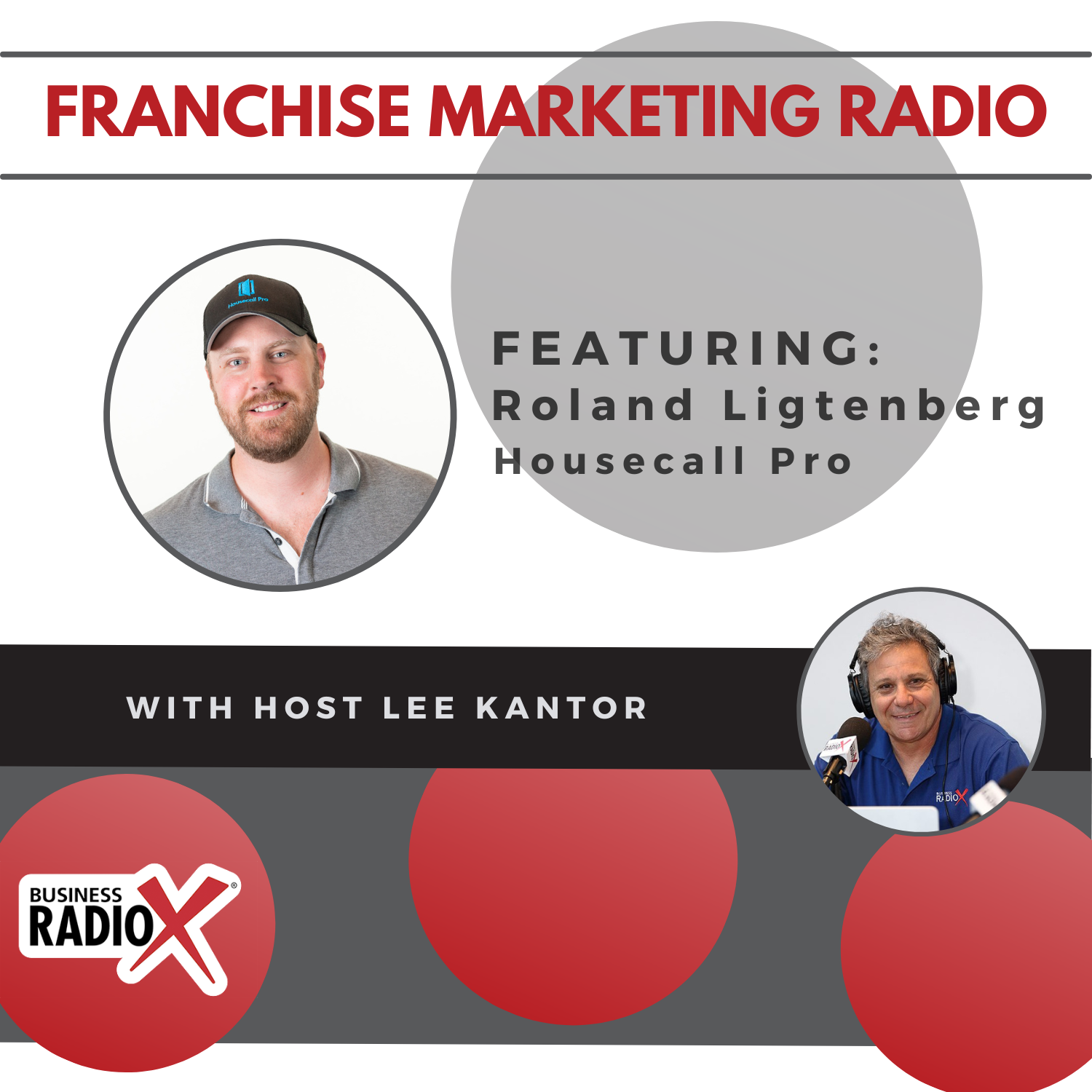
Franchise Marketing Radio
The Future of Home Services: Embracing AI and Integrated Solutions with Housecall Pro
Loading
00:00 /
RSS Feed
Share
Link
Embed

Download file

In this episode of Franchise Marketing Radio, Lee interviews Roland Ligtenberg, Senior VP of Innovation and Co-founder of Housecall Pro. Roland discusses how Housecall Pro’s mobile-first software empowers home service professionals—like HVAC, plumbing, and electrical trades—with integrated tools for scheduling, invoicing, payments, and customer management. He highlights the platform’s in-house AI features for tasks like call answering and bookkeeping, rapid adoption among small businesses, and the measurable growth users experience. The conversation explores how Housecall Pro’s technology streamlines operations, enhances customer service, and supports the success of independent service providers and franchises.

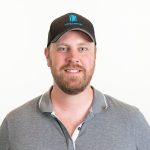
Roland Ligtenberg is a co-founder of Housecall Pro, the best field service management platform serving over 45,000 home service companies.

Housecall Pro’s comprehensive suite of features, solutions, reports and state-of-the-art AI capabilities empower home service professionals to save time, sell bigger jobs and provide best-in-class service so they can discover new opportunities to grow and effectively outpace the competition

Follow Housecall Pro on LinkedIn and Facebook.

What You’ll Learn In This Episode

  • Skilled trades jobs are “standing jobs” – AI complementary, not replacement
  • Developing AI team members for non-competitive advantage tasks:
  • Call handling
  • Scheduling
  • Invoice chasing
  • Data analysis
  • Goal: repurpose human talent for complex, nuanced work
  • New CSR AI can answer calls for pros

Transcript-iconThis transcript is machine transcribed by Sonix.


TRANSCRIPT

Intro: Coming to you live from the Business RadioX studio. It’s Franchise Marketing Radio.

Lee Kantor: Lee Kantor here. Another episode of Franchise Marketing Radio. And this is going to be a good one. Today on the show we have the senior VP of innovation and Co-Founder of Housecall Pro, Roland Ligtenberg. Welcome.

Roland Ligtenberg: Hey, thanks. How are you, Lee?

Lee Kantor: I am doing well for folks who aren’t familiar, can you tell us a little bit about Housecall Pro? How are you serving folks?

Roland Ligtenberg: Sure. So Housecall Pro is a software designed and used by all kinds of different home service professionals that are doing residential work. So think HVAC, plumbers, electricians, power washers, garage doors, septic cleaning, you name it. Anyone that services someone’s home that provides a house call, uh, we are the software for them, so we help them.

Lee Kantor: Go ahead.

Roland Ligtenberg: I was gonna say we help them. Everything from scheduling, invoicing, payments, build their websites for them. We’ve got AI, we’ve got all kinds of fun stuff. But essentially, you know, we handle a lot of the back office and also some of the front, front of house stuff as well.

Lee Kantor: So what’s your back story? How’d you get involved in this line of work?

Roland Ligtenberg: Uh, well, that’s a really long story. But, you know, we started this company about 12 years or so ago, and when we first started it, we were really looking for, um, a way to connect, uh, home service professionals with with homeowners. And what we found while we were building that as that, no one was building software for the trades. Um, definitely not mobile friendly. And so, uh, we launched Housecall Pro back in 2015. Uh, but we’d all previously worked together at a company called Qualcomm. And, uh, and that’s kind of where it grew from.

Lee Kantor: So it grew as kind of a SaaS, uh, technology, uh, solution for folks in this industry.

Roland Ligtenberg: That’s right. Yep. So it’s it’s software as a service, you know, it’s a it’s a monthly subscription. And, uh, you know, for us, we keep on developing and and releasing new features and new ways to help our pros either save time or, or make more money or both.

Lee Kantor: Now, was anybody in kind of the founding team, a tradesman?

Roland Ligtenberg: Uh, so one of my co-founders, his dad was a painter, uh, growing up, um, you know, his dad was. And then, you know, I had a painting business in college, but none of us were tradespeople. You know, we all came from that technology world, uh, which is kind of our profession. And, you know, specifically the mobile, mobile tech side of things, which is where, you know, most of our pros that are always out in the field, out and about. And so back in 2013, when we started the business, you know, that was maybe iPhone, I forget what version it was, maybe 6 or 5 even probably even less. Um, and that was when things were still relatively new and there was enough, you know, compute power and processing power to be able to deliver a solution like this where you can run the entire part of your business just from your back pocket. So that’s that’s how we came to market.

Lee Kantor: Now, was there any kind of initial hypothesis that you had about what they would need or want, and then you kind of learn differently after kind of putting it out there for the market to decide.

Roland Ligtenberg: Uh, you know, we just stayed really close with our customers in the early days. We would do, uh, lunch and learns with them every single Wednesday at Fuddruckers, and we’d invite them to come and they would show us, uh, the app they were using. And then they’d say, hey, I wish you could do X or Y. And we just started building it, uh, by just listening to our kind of our customers. But we knew that if we helped strengthen the relationship between their customer, which is the homeowner, and themselves, by providing just a more clean, efficient, transparent way to communicate, then that would be the the first step, the first kind of the thesis, if you will, uh, to allow them to run a better business.

Lee Kantor: Now, what kind of percentage of the people in trades are using kind of a technology solution like this as opposed to, you know, having a human being answer the phone and write things down, you know, kind of old school.

Roland Ligtenberg: Sure. So I’d still say a majority of the people that come to Housecall Pro are coming from what I call pen and paper, but it’s a little more advanced than pen and paper at this point in 2025. They might be using like Google Calendar with QuickBooks and maybe square or like, you know, like a MailChimp or.

Lee Kantor: So they just cobbled together kind of their own solution based on tools they’re comfortable with or familiar with.

Roland Ligtenberg: Yeah, exactly. And they’re not using something, which is what we were called, which is like a field service management solution or a CRM. And so, you know, most people are still coming from some sort of legacy system, but I will say that, you know, in the last ten years or so that we’ve been in the market, it’s changed dramatically, where in the beginning it was just everybody. There was just nothing. And now, you know, there are solutions out there. They’re still not all the pieces, but we try to make it so that we’re more than just a software piece. We have a full solution. So we have, you know, if you want a bookkeeper, we’ve got bookkeepers, we’ve got an accounting solution, we’ve got a payroll solution, we’ve got a call answering solution, both humans and AI, you know, we’ve got a lot more other things other than just, you know, the software in your pocket to help them run their businesses.

Lee Kantor: Now, are all those ancillary services stuff that’s all in-house of House Call Pro or is that something where you kind of have a partner network or you built a community around your core service?

Roland Ligtenberg: No, that’s all within House Call Pro. So it’s all in one place. You don’t have to connect things together, which is the the beauty of it. And I’d say in particular to for, uh, you know, franchises that use us and all those, those types of businesses, just having everything, uh, all in one place, uh, really helps streamline things rather than having to figure out how you connect things, and data is not going in the right place, etc. so all of that is in-house right at house called Pro, which is one of the value props that we offer.

Lee Kantor: So that was kind of a mindful point of differentiation that you said that everything’s going to be kind of in-house, and that way it’ll be less confusion and it’ll be more seamless.

Roland Ligtenberg: Yeah, I think our pros have always just told us, you know, it’d be nice if it was all in one place. But the ability to do that, you know, you have to become quite a big company to.

Lee Kantor: Right. Exactly. It’s a double edged sword.

Roland Ligtenberg: Yeah. To build all of the things. And so, you know, you really because we service, you know, 55 different trades. There’s different uh things that each trade needs. And so you really have to kind of really figure out across all what are the basic necessities and then customize each little thing a little better. Uh, a trade by trade basis. So, so it makes sense for HVAC. So it makes sense, you know for for cleaning company. So it makes sense for a pest control company for example. And so those are things we’re continually working on because you know there’s just so much opportunity here. Just even United States alone and Canada, which is what we serve now.

Lee Kantor: What what are kind of the main features that people like? The main benefits are they’re kind of a top 2 or 3 that people are like, okay, once this is, you know, the 80 over 20 rule, if we get this, then anything else is kind of a bonus.

Roland Ligtenberg: Every company is a little bit different why they come to us. But I’d say, you know, the core part of Housecall Pro is the customer relationship component, which allows you to schedule, invoice and accept payments. And it’s really keeping track of all the people out in the field, making sure that the jobs and things that they do are going well, making sure that you’re able to monetize them and collect your payments. And then at the end of the day, pay your guys. So, uh, that full loop is, is the primary, uh, set of usage that Housecall Pro has. That’s where we started, you know, and being able to do it from both the mobile and the web is another big differentiator. A lot of people say they do mobile, they have a mobile solution, but it’s kind of an afterthought tacked on. When we started the business, we were mobile, mobile only. So that’s the difference. And the reality is, is if it’s hard for the folks out in the field to to use the app, they’re not going to add the notes, they’re not going to add the tags, they’re not going to do the things they need to do. If you make it easy for them, then becomes just kind of second nature, just like any other tool they have in their in their tool bag. So that’s the real differentiator. Is that kind of that mobile first approach really that ease of use. Everything’s got a design that’s very familiar. And so the training, even for people that are coming from something like pen and paper or some other system, there’s not a lot of need to, you know, all right, we’re gonna spend a couple months learning how to do this thing, you know, and they can get up and running the same day.

Lee Kantor: And then it works for, uh, you know, kind of one man bands as well as, like you said, franchises.

Roland Ligtenberg: Yeah. So we, we service, uh, even before it’s a one man band. You know, we service folks that are doing work on the side, you know, that or have other jobs and just looking to get in the trades or, you know, they’re working for someone else, you know, and so it can start even before their, their own official company and then all the way up to, you know, really big franchises, um, you know, in the US that everyone would recognize. And so for us, we really try to focus in that, that 0 to $10 million a year business range. That’s kind of our bread and butter right there. And so for each trade it’s a little bit different in terms of employee size. But that that represents probably 95% of the US home services market. And so those are the folks that we really try to serve. And and previously we’re underserved. You know, from a software perspective.

Lee Kantor: Now, is that group kind of one of the last bastions of mom and pop individual, just small, uh, players that haven’t been gobbled up by maybe private equity or these larger entities.

Roland Ligtenberg: Uh, I would say that some are already participating, you know, within that band on the private equity side. But I would say in general, the, the people that we try to serve, you know, are family owned and operated and that kind of stuff. And so I think that, you know, when when you’re out there and you’re shopping for software, there’s some other software out there that’s more like Salesforce and very enterprisey and very expensive and hard to maintain and clunky, and you can configure the heck out of it. But, you know, you.

Lee Kantor: You gotta hire a consultant to configure it for you.

Roland Ligtenberg: That’s right, that’s right. And then and then us, which is just like, you know, you can self serve. We’ve got an onboarding team that can help you do it. If you’re somewhat savvy you can do it. It’s whatever you know you kind of need. But I would say, you know, our primary user is, you know, someone that probably, maybe even has a husband and wife team, uh, with another family member, son or daughter working for them, and then a couple of technicians under them and a couple of, you know, trucks on the road. And those are the ones you actually want in your personal home. You know, I would not want a Benjamin Franklin in my home or, you know, I wouldn’t want, you know, a Roto-Rooter or something like that where they don’t really have a connection to the community. I want someone in in my community that sponsors my kid’s little league, uh, whose name and face I can shake hands with that I know will do a good job, uh, and will come back, you know, in case anything is wrong. That’s who I really want to have come. And those are our customers.

Lee Kantor: So that was kind of your avatar when you started. And then obviously, over time, it evolved into some of these larger entities.

Roland Ligtenberg: That’s right. Yeah. And so the larger entities, if you think about it, they’re still small entities. There’s just more of them. So it’s not as if it’s like this, you know, $100 million private equity owned, you know, massive, you know, plumbing company, you know, in the area. Um, but uh, but franchise typically are still smaller locations that are sub $10 million. So it really is kind of those community fail, um, types of shops that, that use Housecall Pro.

Lee Kantor: So early on, you mentioned AI, how how does AI kind of work in your system? And, uh, you know, I know it’s a hot button issue for some folks. I mean, I think that this area is probably an area where it’s not as hot button issue. But can you share a little bit about your take on AI and how you use it, and how your folks and your users can use it?

Roland Ligtenberg: Sure. It’s funny that you mentioned that as hot button for us. It’s really not. It’s, you know, Home Services is very well insulated and complimentary with AI because AI is really good at taking jobs like your job and my job, which is sitting jobs. Right. But not very good at taking standing jobs where you have to crawl.

Lee Kantor: Exactly. They haven’t figured that. I haven’t seen Elon Musk work on that robot that goes underneath in the crawl space yet.

Roland Ligtenberg: Yeah, I saw that. I saw that robot Optimus Prime or whatever his name doing kung fu. But I still think going from kung fu to crawling and crawl spaces and all that kind of stuff and not breaking stuff is going to be a whole different level. So I think, you know, by and large, people will want to welcome other people into their homes to help them troubleshoot. And, you know, they’re all unique things. So I think on our side, uh, the our AI strategy has been around what kind of team members can we enable for our customers, our pros, so that they can focus on doing what they do best, which is the work in the field. And so we have a slew of different team members you can add, but one of our most popular ones is our CSR AI, which answers the phone. A lot of times our small businesses, you know, they they want to be able to not have to worry about the phone after 6 p.m., you know, or on the weekends, uh, or even during the day, because they might be in the crawl space with zero service. And they, you know, they don’t want to miss that call. And so our CSR, AI will handle the calls for them. It’ll book the calls for them. It’ll reschedule things, uh, if there’s existing customers, it has all the knowledge of the work that’s been done. So our CSR is one of our popular ones. But just to kind of give a flavor, you know, we have a coach AI that helps coach you with your business.

Roland Ligtenberg: We have an analyst that helps you with your numbers. So if you’re trying to figure out, oh, you know, how much commission do I have to pay Lee for the month of October here for all the water heaters he’s installed, you can ask a question in natural language versus having to be a CSV Excel junkie to try to pivot the tables to get to what you need. Um, you know, and from from there we have, you know, an accountant. Um, we also have all kinds of different, um, eyes more on the kind of the sales side and bookkeeping. So, uh, within Housecall Pro, you know, our, our AI team members allow our pros to, to really focus on what they really want to do versus things that they might have to be doing today, but they don’t want to be doing. Um, and so rather than having to hire a full time human, you know, you could either delay that for a little bit because you’ve got a great AI sidekick here instead of inside of pro, or you just maybe don’t need them anymore. And so then you can really focus on on building up, you know, and hiring technicians and training them, uh, rather than having to figure out how to run an office staff or, you know, bring an accountant in-house. You know, those are all things that maybe might not be needed in the future.

Lee Kantor: Now, when you tell your folks about, uh, these customer service reps that are virtual. Is that something? They’re like, oh my God, where’s this been all my life? Or are they like, I don’t know about this. Like what’s kind of the like take the temperature of the room when you’re offering something like that.

Roland Ligtenberg: Yeah. I think there’s a couple different, uh, I’ll call them maybe like cohorts or baskets. There’s those that just adopt it right away because they’re already using AI. They’re already using ChatGPT. They’re doing whatever, you know, um, even in their personal lives. And so those ones are just no brainers and they’re like, oh my gosh, thank God this is here now. And and the value is, is, you know, there’s a lot of different answering AI things out there. But this is fully integrated into your Housecall Pro data that no other, you know, AI could, could access. And so it’s just a lot smarter. It has a lot more context. And if you know anything about AI. Ai is all about giving it the right context. Um, and then you have another group which maybe starts off a little slower. They might say like, hey, you know what? Maybe we can have the AI handle just after hours because I’m not answering those calls anyways. Those are going to waste. And everybody knows, you know, if someone’s out there calling, if someone doesn’t pick up, they’re not leaving a message. They’re probably going to the next one, the next one until someone picks up, you know. And so I still would say, uh, almost a majority of our pros, uh, are using, uh, one or more of our AI team members already in their business. And really, it’s been just about maybe like a year and a half or so since we first started releasing our AI team member. So the adoption has been really, really great. But I think it’s because, you know, people use Housecall Pro to help their business become more efficient. And if there’s more ways to make your business more efficient, why wouldn’t you do it right?

Lee Kantor: You’re open to that. You’re more open to it as if you as opposed to if you just kind of heard about heard about it on the internet or something.

Roland Ligtenberg: That’s right. And look, it’s already connected to all of your data. So there’s no setup. And that’s oftentimes the other barrier of entry where, you know, you have to train it and you have to give it to your SOPs and you have to spend time with it. You have to babysit it. And, you know, there’s just all this other overhead that normally comes with, you know, if you’re using third party AI tools. And so with Housecall Pro, it’s just all bundled in your in your account. You can click it on and it’s there. It’s just sitting in kind of the right rail side of your house called Pro Account. You can chat with it just like you chat with another team member. You just, you know, if you’re using slack or teams or other things, you do the At symbol and then you just hit up whichever team member you want, which is, you know, either human or AI.

Lee Kantor: Now when the human is calling in. So this works for like a phone call, like if somebody makes a phone call, uh, an AI can answer the phone and, and answer, I would imagine kind of basic questions.

Roland Ligtenberg: Yeah. I mean, it answers almost any question really. And that’s the beauty of it.

Lee Kantor: Well, it’s not fixing anything, right. Like it’s taking a message or it’s booking a scheduling a call or is it actually triaging? Hey, water is pouring into my basement, you know, what do I do?

Roland Ligtenberg: It’s it’s it. It will not. It’ll give very light advice. Um, because, you know, the the hard thing is, is that for a lot of home services, you may be like, there’s no heat or there’s water here. And so you know the symptom, but you don’t know the root. You don’t know what’s really happening, you know, as a homeowner. And that’s why you’re calling. And so, you know, Ray will be able to detect whether, hey, is this something I need to escalate is something we’re going to look into the future. You know, where the time slots do we have availability with the technicians, all of those things. So it’s handling all of the kind of the upfront triaging as you kind of put it, but it’s not actually going out and fixing anything itself.

Lee Kantor: Right. And it’s not giving advice to, oh, you see that red knob? Turn it to the left like it’s not.

Roland Ligtenberg: It’ll just give basic advice, maybe like shut off the water to your house. You know, anything else that you might expect, right. Uh, you know, and any one out of plumbing business that’s answering the phones to say, hey, Lee, go turn off the water at your house right now. Hold on. We’re gonna send someone out, you know?

Lee Kantor: And then then the pro gets to decide, hey, if it’s at this level, you know, put it through to me and I’ll talk, you know, I’ll get. Can they get on the actual line there or do they have to call him back?

Roland Ligtenberg: Yeah. We’ve got different, different loops, different ways that that our pros want to configure it. Sometimes they want to get one of our humans a loop. So we have humans that can also answer the phone so we can triage to there if they want to have it patched directly to them. That can also happen if they’re not available to be patched, you know, or um, afforded to. Then it just goes to take a message or book a time in the future. So it’s just it’s however, you know, our pro wants to configure it. Think about, you know, if you were to hire someone just coming out of high school, what would you tell them to do? And that’s probably the level of intelligence that it’s at right now. So it’s it’s definitely good enough for this job.

Lee Kantor: That’s amazing. I mean, you guys are just really found an important need and really filled it elegantly. Congratulations on all the success.

Roland Ligtenberg: Thank you. Yeah. I mean, our mission is to champion our pros to success. So anything we can do to help them become successful will make us successful. And from there, everything else stems, you know, our product decisions. You know, how we build our team, uh, to better serve our pros. What kind of, you know, features and add ons they might need or want? Um, but, you know, with that as the basic mission, it helps, uh, orient the entire company to, to make sure we’re always serving our customers.

Lee Kantor: And that’s a great lesson for anybody listening right now when you have that clear, true north. Decisions aren’t that difficult. It’s either helping you get there or it’s not.

Roland Ligtenberg: And the beauty of it, too, is that if you’ve got employees that are new or might not know what to do in a certain situation because there is no process, you just have them reflect back on the mission. Is this championing our pro to success? Right? If it is, they’ve got the full autonomy to go do it. Um, they can always be, you know, uh, what’s the phrase? You know, ask for forgiveness, not for permission. Right? Um, if you know, if they’re following the mission, then that’s totally the right direction they should be doing.

Lee Kantor: Good stuff. Well, um, any advice for a pro out there that, uh, might be struggling in a day to day basis? Do you, like, share marketing, like, best practices? Because I would imagine some of your I mean, you must learn so much from all of your clients out there all around the country. Um, is there some do you give advice like that? Like sharing? Hey, this is working in Portland. This might work here in Wichita.

Roland Ligtenberg: Absolutely. I’m glad you I’m glad you mentioned that. So, uh, both our coach and analyst AI and our marketing AI can help our pros price better, for example. And they can let them know, hey, are they kind of under the curve, you know, or are they at the higher end of the curve? Uh, are they priced appropriately for any given line item? Uh, or our AI learns from successful marketing campaigns inside a house called Pro, you can send out, uh, email blasts, you know, to your homeowners, you can send out text blasts to your homeowners, uh, or campaigns, I should call them. And, um, those those you can generate and type yourself, or you can have our marketing AI help draft them. And so our marketing AI knows what converts really well for whatever given industry in a particular area. So your AI and this is what’s unique about Housecall Pro. It’s not just learning from your account and what you’re doing. It takes into account the 100 million jobs on our platform, with 50,000 pros all across the United States and what they’re doing. And so you kind of get this hive mind effect or this network effect, where you really get the best of the best and you have access to this knowledge independent of even being told it, because it all lives in the AI mind. So that’s what’s really unique, and I think helps a lot of these pros. And if they’re out there struggling, like am I pricing too high or pricing too low, they can just ask analysts or coach AI, hey, what do you think I should price this thing at? And it will, it will tell you where you are in that curve for that area, which is a really unique and interesting feature.

Lee Kantor: So what do you need more of? How can we help you? Do you need more pros? Do you need more, um, funding? Are you looking to go public? Like what is your what do you need more of?

Roland Ligtenberg: Uh, we just need more people to help. So if there are any pros out there, if you’re in the residential home services space and you need or you feel like you’re using something that maybe isn’t quite optimal, or you’re really looking to figure out, how do I implement AI into my business? Come check out a demo of Housecall Pro we have. You know, you can just go to the home page. You can always text me directly as well. My cell phones (858) 215-1512 and I can connect to one of our a couple thousand employees here that we have now to, to help you based upon what you’re looking for and housecall.

Lee Kantor: Com they can go online and find you and I’m sure in all the socials Housecall Pro is the way to get there.

Roland Ligtenberg: Yeah. You can just search us or you can search for for my name as well. I’m pretty easy to find and track down, but we’re here to help you. If you want to do a demo, we can do a demo. If you want to just set it up yourself, you can set up yourself. There’s a free trial, so, you know, if you feel like you’re tech savvy enough, you don’t need anybody to walk you through. You can get started today for free and just go play around with some stuff. So yeah, feel free to reach out to us or to myself if you feel like you know you’re looking at 2026 and thinking, what else can I do different here? How can I grow? On average, our pros will grow about 35% in the first year. And so that’s, you know, some growth that that happens because people uncover a lot of inefficiencies. Um, and they also uncover a lot of costs that maybe they might not need to have or the AI can help them with. And that’s what we’re here for.

Lee Kantor: And if you’re an emerging franchise or who is in the trades, this is definitely a group you should be connecting with. Housecall Pro Roland, thank you so much for sharing your story. You’re doing such important work and we appreciate you.

Roland Ligtenberg: Thank you, Lee, for having me on. This is a pleasure talking to you guys and best of luck to everyone else out there listening in.

Lee Kantor: All right. This is Lee Kantor. We’ll see you all next time on Franchise Marketing Radio.

Tagged With: Housecall Pro, Roland Ligtenberg

Roland Ligtenberg with Housecall Pro

March 20, 2025 by angishields

Denver Business Radio
Roland Ligtenberg with Housecall Pro
Loading
00:00 /
RSS Feed
Share
Link
Embed

Download file

housecall-pro-logo-vector

Roland-LigtenbergRoland Ligtenberg is a co-founder of Housecall Pro, the best field service management platform serving over 45,000 home service companies.

Housecall Pro’s comprehensive suite of features, solutions, reports and state-of-the-art AI capabilities empower home service professionals to save time, sell bigger jobs and provide best-in-class service so they can discover new opportunities to grow and effectively outpace the competition.

Connect with Roland on LinkedIn.

Transcript-iconThis transcript is machine transcribed by Sonix.


TRANSCRIPT

Intro: Coming to you live from the Business RadioX studio. It’s Franchise Marketing Radio. Ready to revolutionize your franchise with AI? Franchise now empowers franchises with advanced AI solutions, automatic processes, and enhanced marketing strategies. From personalized customer interactions to predictive analytics, we help you harness AI to drive growth and efficiency. Transform your franchise with the power of AI. Visit Franchise Now to learn more and take your business into the future. Now here’s your host.

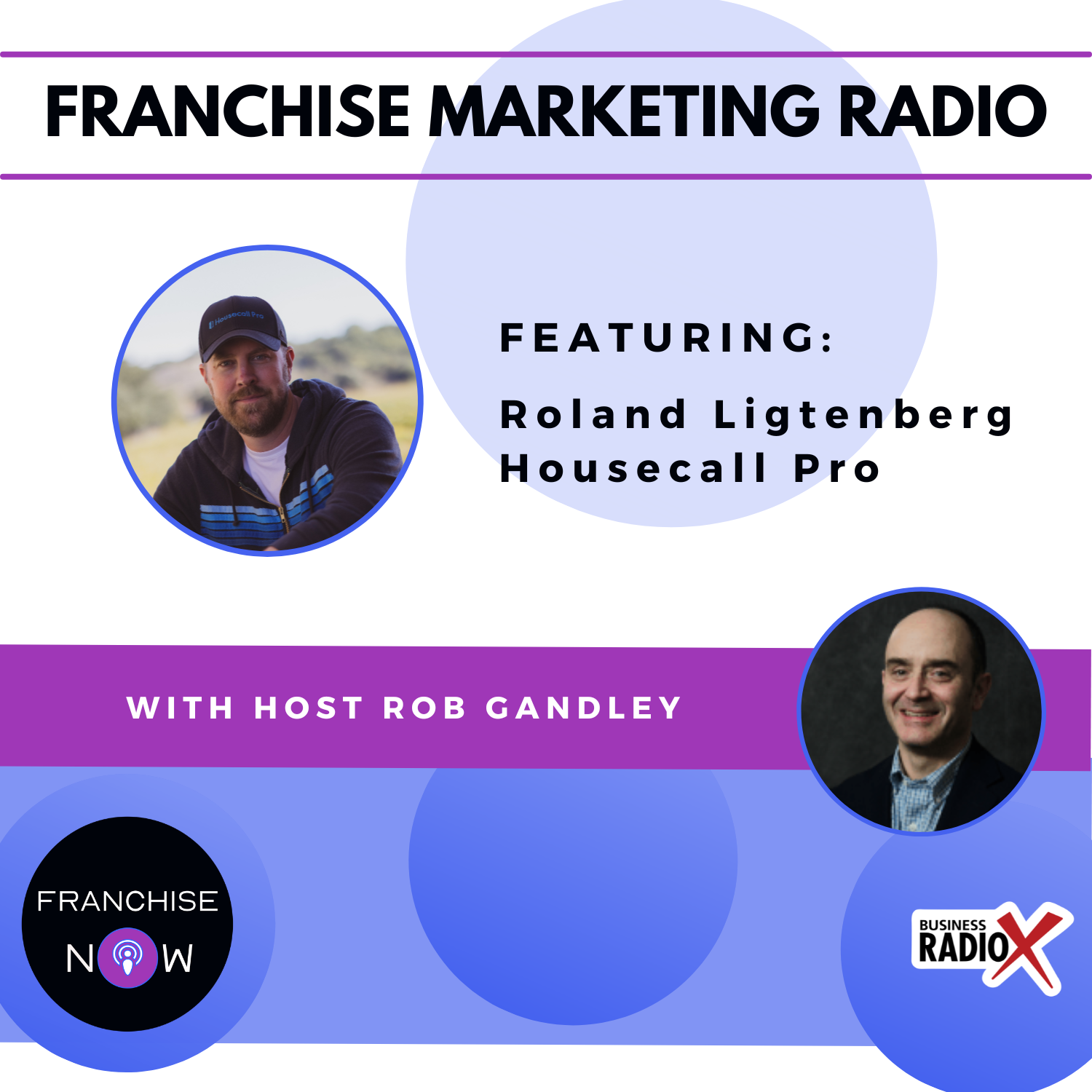
Rob Gandley: Welcome everybody to Franchise Marketing Radio, where we explore the latest strategies and innovations driving success in the franchise world. I’m your host, Rob Gandley, and today we have a special guest with us. I have Roland Ligtenberg. He is the founder or co-founder of Housecall Pro, and so Housecall Pro specializes in the home services market in the franchise space as well. And they have an amazing SaaS platform and are innovating with AI every single day. Welcome to the show, Roland. It’s good to have you.

Roland Ligtenberg: Thanks, Rob. I’m super excited to be here.

Rob Gandley: Great to have you. So just ask before we jump in. I wanted you to have an opportunity to introduce us to Housecall Pro for anyone who’s listening may be familiar, but tell us a little bit about the platform and then who you’re serving. I know franchising is a big part, but tell us a little bit more about who you’re serving overall.

Roland Ligtenberg: Yeah, sure. Great. So Housecall Pro, we were founded in 2013 and we launched Housecall Pro in 2015 out into the market. So it’s been a decade now, which has been crazy, but we serve the residential home service pros that are out there. So think HVAC, plumbers, electricians, you know, people doing fiber seals like smaller roofing In companies, all kinds of different home service repair, just service businesses. And so we provide them with a tool that helps them run their business. Both grow with it, make it more efficient. We talk about AI. There’s all kinds of fun stuff that we do. We have accounting, we’ve got payroll, we’ve got websites, we’ve got marketing. We just have the full gamut. So think of us as like an all in one shop to help you do the things that normally you probably don’t want to do, which is get back to, you know, turning the wrench, talking to customers, getting a new business, you know, making connections, and then we’ll handle all the rest.

Rob Gandley: Yeah. So that’s pretty, you know, you made something that’s pretty complex. Pretty pretty simple there. But tell me the inspiration. You know, you found your co-founder in the company. So that’s interesting right. So you got a chance to what was that inspiration with you and your, your partners that kind of led to this amazing platform?

Roland Ligtenberg: Sure. So, you know, when we when we first started the company, you know, back in 2013, Uber was just one of those companies that was coming out. Uber obviously now everybody knows about. But we were we were thinking, hey, can we build Uber for home services? And really what that turned into is this like, hey, really the pros. So the drivers pros, they didn’t have an app. You know, they were just using pen and paper or a combination of free products like Google Calendar and Square or QuickBooks. And so we thought, hey, why don’t we build an app for them? And so we really focused on Housecall Pro. We launched that in 2015 and we’re kind of off to the market. But we just saw an opportunity where it was underserved and there weren’t a lot of great mobile native apps out there because our pros are on the go. You know, they’re not sitting at home in front of computers like me and you. We don’t have fancy podcast setups. None of that cool stuff. They’re out in the truck or they’re they’re in the attic or, you know, they’re under the crawl space. So they’ve got their mobile phones with them constantly. And why couldn’t they run their entire business from their pocket? So that’s what we built. And from there now we have over 50,000 or so home service professionals serving 99% of all Zips in the United States. Just everywhere across 55 different industries. And then we have a whole bunch of franchise companies that use us as well, that have gone out there that have really systemized their business. And, you know, it probably comes as no surprise when, you know, you get into the franchise world, you need to have a playbook that works and you need to have something that is like a standard operating procedure. And you click this, you do this and you know, you got to make it repeatable. And so with Housecall Pro we help franchises do that, you know, and deliver that same experience regardless of which location they’re on. And so that’s why I’m just excited to be here talking to you.

Rob Gandley: Yeah. Yeah. No. And what you just said again is difficult. Like when you think about franchising, it was certainly around way before technology or not all technology, but internet technology. And then the internet came along in the last 30 years. And it’s like, how do we get technology to help us do what you just said? Have stay in line with this process and this step by step procedures and operations and not easy to do, right? Uh, especially over time, technologies have evolved but weren’t always easy to talk to each other and, and, you know, expensive. And you needed certain skills and, and it’s gotten easier to use technology. But we’ve also now gotten just so much of it. Right. Such an explosion of resources. Right. So for for industries like home services, to have a platform like yours is unique because you guys have kind of addressed that fact that, you know, it’s kind of that all in one platform that can help a business model like the companies you serve. And it is hard to get that, get that systemized, uh, process. So tell me, tell me a little bit about your journey here. So started in 2013, what were some of the pivotal, pivotal, pivotal, um, events, uh, that kind of shaped your product? Like, I’m sure there have been times where you thought, okay, it’s going to be this and maybe you adjusted and, you know, the market gave you feedback, but how has that kind of what are some things you can point to that have helped you shape the product? And they kind of led to the features that you have today.

Roland Ligtenberg: Yeah. So when we first launched, we were mobile and mobile only because that was our thesis. And so the core part of the market that we addressed were the folks that are always out and about, and they didn’t have access to a desktop or, you know, a bigger iPad or something, you know, so they, they, they needed a mobile app only. And as we started to grow as a business, we really started to see a lot of folks would have office managers, you know, or or admin folks or spouses, you know, at home that would run some of the back end operations. And so, you know, we pivoted from being mobile only to having both mobile and web. And for anybody that’s listening, that’s in the software development. Building for mobile is much more difficult than building for web, because you have to ship it to the stores and then they have to approve it, and it takes some time. So you have to be a little more thoughtful in how you how you go to market versus web. If you make a mistake, boom, you can ship another update real quick. Fix live, you know. Uh, and there’s no gates, per se, to get through. And so for us, uh, once we started addressing the larger part of the market, which were bigger companies, you know, we really need to pivot. And having just more of a holistic approach, whether you’re at home or in the truck, on a computer or wherever you are.

Roland Ligtenberg: We had to have a web experience plus a mobile experience. But together those two work really well because you’ve got a lot of space on on web. So if you’re doing dispatching, for example, in the office, and you need to look at different routes and different people across a big calendar, it’s nice to have that real estate. But if you’re out in the phone in the field, you know you’re using that, having your own jobs just really easily visible and boom, boom, boom. This is my route for today. Just having that at your fingertips is really important. So you kind of get the best of both worlds. One which is you’ve got all the space in the world to kind of look at things on a map. And then the other one is very, uh, just focused on, hey, these are the tasks I need to accomplish today? The customers I need to go see, the things I need to go do. I just need to get that done. So those two things, that was just one one moment that we had that kind of aha, we got to build both. And now, you know, we’ve got so many different pros using it. And it’s probably half the pros are on the web and half the pros are using mobile.

Rob Gandley: Yeah. Well and you know certainly the mobile explosion occurred in the 20 tens. And if you didn’t have ways to serve people in front of a mobile screen, it. And of course with your business, it totally makes sense. There was so much of their team is mobile and moving around and looking at a small screen. So very cool, very, very cool. So, so thinking about operations, thinking about when I think of your name like Housecall Pro. Um, and I think you could almost say that’s a Housecall Pro brand, right? I kind of think of like, they’re running, they’re powered by kind of you see that a lot with softwares and platforms. But I think of you guys, what you said earlier about, you know, operations and really building a software tool that aligned with with an operational procedure, right. That allowed people to work step by step, thinking of every role, every team member. How do you feel your software has reshaped or how would you look at it? How has it kind of reshaped the franchise brands and or other brands you work with? How do they change how they now serve the public? I’m sure it’s been a big transformation for those that don’t use or aren’t powered by something like what you guys do.

Roland Ligtenberg: Sure. Look, I still think that when a homeowner gets on my way, text notification with the picture of the technician that’s going to enter the home. It seems like such an obvious idea, but the reality is, is, you know, in the home services, even in the franchise world, that’s still a novelty, but it should be standard place. You know, you’re entering someone’s home. Wouldn’t that be nice? I know for my wife, like, just if some random person pulls up our driveway, it’s like, what the heck is this? Who is this? You know? Or they say who they are And so simple things like that. From an operational standpoint, if you didn’t have software to do that, that’d be very difficult to do. You know, imagine how many, even if you’ve got a handful of trucks doing a handful of jobs per day, you know, you got to be on it. If you were to do that by hand. And so when you think about the value that that brings and the customer perceived value, wow. This is a professional company that’s entering my home. If you are a franchise style company, you’re not using software like Housecall Pro. You are falling way behind, way behind. And it’s really hard to stay on top of small things like that. Now imagine cashflow is king, especially in the home services. When you’re dealing with the residential market, most people are getting paid cod, which means they do the job.

Roland Ligtenberg: They get paid the same day. But now imagine if you weren’t able to accept credit cards out in the field. Now you have to get cash and a check, and that guy might get lost in the truck. And then you got to bring it to the office, and then someone’s got to do a bank run. But you don’t have time to do a bank run. They only go to bank run once on Friday. And now all of a sudden they don’t have cash for payroll. And oh my gosh. So same things there. You know for franchise. All those things should just be a part of what your technician can do out in the field within a second. And that takes a bunch of burden off of a lot of the operational nightmare that often comes with just trying to collect and keep track of all this stuff. Three trucks on the road and four trucks a day, 1212 jobs a day, 60 jobs a week. All of a sudden, pretty quickly imagine the stack of paperwork, the stack of checks or cash you’re trying to chase down. If you’re an awful person, that’s a lot of work. That’s a lot of work. It doesn’t have to be that way. It doesn’t have to be that way. Um, I’d say the biggest feature is a checklist feature, especially for, uh, for our franchise companies that that use our software because they have found a method that works and works great, which is hopefully why you bought into the franchise.

Roland Ligtenberg: Right? And so they’ve got those pre-loaded into Housecall Pro. So as a franchise, you can set it up and a perfect account, a golden account. And then you can hand over those accounts. You can just duplicate and just give them to different locations. And that comes with all of your preloaded checklists, processes, all the things that you do, all the messaging, the price book, the the way that your product name looks like, the, the descriptions, you know, take all that work off of, you know, your, your your, your franchisees because they don’t know they’re looking for you for this. This is why they pay you the royalties. You know, this is why they’re buying into your service. All of those things make for a very consistent approach. This is why, hopefully, you know, as a franchisor, you set up an amazing system here. And so inside Housecall Pro, you can set each one of those up. So that way it’s always followed. You’re delivering that consistent experience regardless of the location that you’re in. And that’s that’s really what’s key to using Housecall Pro. And and you know, if you’re a franchisor looking to systematize, you know, what your process is that you’ve figured out that you invented.

Rob Gandley: Yeah. And as you said earlier and I being more I’ve been on both sides where I’ve served franchises as a, as a vendor. And then and have also worked internally to consult for, you know, technology and operations and things. And yet this is so key. I mean, that’s exactly right. People buy into franchises, especially as they first learn about it. They think a lot about systems and processes and checklists. And so like just your whole platform is built to make that turnkey. And it’s hard to do that. Well you can’t. Some franchisors may be big enough to have teams big enough, but very few. And even if they were, would it be strategic right, to really focus the way you guys do and to have the capabilities your platform has? It’s really the key is just finding the alignment, finding the right tool so that your franchisees do have that success. And think about what you just said with cash flow, we have, you know, making the client feel better, the customer feel better. Just good customer service check box, right. Just things you think are pretty common sense. But it’s the little details pile up. Right. They just too much to do. So another aspect of your industry that I’m sure comes up is that skilled trades professionals obviously are in demand, and it’s not an easy thing for your clients to, to manage, uh, whether it’s hiring, recruiting and then retaining and things. How do how do you guys look at that? How have you sort of tried to serve your clients and deal with that reality that there’s this constant demand and challenge to keep quality people? How does that impact you guys and how do you.

Roland Ligtenberg: So I’ll say this. If you are a skilled trades professional and you are working for a business that does not have software like ours in place, I would go find one or start your own because it makes your life so much easier and gets rid of all the paper headache and all of that. So when your question is like, how do you retain these people that are high in demand, franchises that focus on having a work environment that does not include a lot of monotony and just overhead and just annoying processes to follow, especially because our software is cloud based, real time, updated in the field, allows everyone to communicate all at once, all in one place. You know, it’s a lot easier to keep employees happy, especially skilled tradespeople that just want to do their trade and solve customer issues and work on the job, rather than the tedium of, you know, filling out triplicate papers, you know, checking the boxes on a bunch of things by hand. You know, there’s so little time that they have between one job from the next. They’ve got some windshield time, whatever the drive time is, and then boom, they’re on to the next. And really, they shouldn’t be doing anything when they’re having windshield time. They shouldn’t should be feeling it. And so how can you make it really easy for them to get their job done so that they’re not feeling that administrative burden that you’re kind of putting onto them. So I think long term happy employees is the key to delivering an exceptional customer service to this homeowners and delivering your core values.

Roland Ligtenberg: And if you don’t have happy employees, you’re going to struggle and then you’re going to have struggle retaining them. And I think those two things are highly, highly related. When you’re hiring someone, bringing someone on board, if they see that you’re using modern systems, they’re going to feel much more supportive, much more inclined to stay and go through the onboarding process as long as it’s easy. There is software out there that’s very calm, like it’s just complicated, takes a long time to learn, you know? And that’s frustrating to skilled trades because they’re like, I just want to do my trades. I don’t want to have to learn a piece of software and have to figure out where all the buttons are and all this. And so there’s expensive software out there that promises the world you have to be thoughtful and careful in what you select. Because if it’s not easy for them to use out in the field, they’re not going to do the things you want them to do because it’s too complicated. So I think it serves many different ways in terms of retention, whether it’s onboarding and hiring new people and impressing them in the way in and then the retention side, just making it easy on them overall so they don’t have to do, you know, the tedium, the boring work, the stuff that they never signed up to do in the first place? So keep that in mind when you’re selecting software, when you’re thinking about that for for your business, whether you’re a franchisee, franchisor, whatever it is.

Rob Gandley: Yeah. No. That’s key. I mean, what you said about people, I mean, think about like just the feeling we all have when we want to get go to work and produce a great product and serve somebody or do the work you’re called to do, it’s very hard to do when technology doesn’t cooperate. We already know that. Right? And so, like if you have a work environment where people are struggling with tech all day, it is what an impact it will have to not customer service, employee retention, probably how much work is getting done. All of that is impacted by that one thing. So how important is that? It’s just everything, almost, um, it.

Roland Ligtenberg: Is. It really is.

Rob Gandley: So, um, now I’m going to get ready to get into some interesting stuff. Now, you had mentioned earlier before we got on that you’re part of the innovation team, right? You’re a co-founder and a big part of driving this platform. Um, I wanted to ask you a two part question. One, I wanted to get into AI. Right. I wanted to talk about how are you guys evaluating AI and how that can serve your client. Again, going back to the principles you’re just sharing, it’s like what will help them, what will make their job easier? What will make them happier, that kind of thing. Uh, but before you get into AI and describing what you guys are doing, how do you manage your innovation process like so much you could do right? How do you zero in what is sort of that lens or that rubric you look through to try to, you know, figure out where do we prioritize, especially with AI happening. Tell me a little bit about that and then tell me, what are you doing in your platform with with AI and innovative things that are a little cutting edge and things?

Roland Ligtenberg: Sure. So I’d say in general, our framework is simply built around our mission, which is championing our paths to success, because if we make them successful, then they’ll be successful, right? And we’ll be successful. So for us, the more we can align with their needs, we’re going to win. So what does that mean when it comes to AI? Uh, our pros are in an industry that is very AI resilient from a job replacement standpoint. The jobs mean you have any job where you’re sitting high replacement likelihood jobs were standing. You know, we’re not going to have Ellen’s robots jumping around in the attics or those crazy dogs, you know, from Black Mirror. If you ever seen on Netflix, you know, running around the crawl spaces. Now, any time soon carrying tools. Although who knows, but still probably not for some time. And so I think as we look at what should we do to help champion our personal success? One of the first things we really take a look at is, okay, what’s one of the first jobs? You know, if you’re a skilled trades person and you go build a business, what’s kind of the first job that you need to abdicate or delegate? The first job is answering your own phone when you’re on the job in a crawlspace, in the attic, whatever you’re doing and you can’t get to that phone, you know that that customer is going to call the next one.

Roland Ligtenberg: Call the next one, call the next one until someone picks up. Get some schedule. So the first thing is, how can you get someone to answer your phone? Well, there’s two ways. One is you hire somebody and all they do is answer the phone, maybe hire an office manager. I don’t know, depending on where you are, maybe that’s a 50 to $70,000 a year job. Uh, but why can’t we use AI to do that for you. And so one of the agents, we call them team members at Housecall Pro, one of the team members that we have is called CSR AI. And this is someone that will never call in sick will work 24 over seven. Answer your phone on the first ring every single time and then helps that customer, that homeowner get into your calendar, get on to to onto get on to your calendar. And what’s why does that matter? Because now they’re done. They’re not going to go call anybody else, right? You still should call them back at a certain point. Say, hey, hey, Rob, you spoke to my assistant. You know, Roland, I’m glad to got you on the books.

Roland Ligtenberg: I see some of the notes. It seemed like you’re having trouble with, you know, the noise of the AC. Tell me a little bit more about it. Can you tell me, like, when it happens or how cold it is outside when that happens? You know, so I think of it as just like an extra layer that allows you to, to capture the business that is yours to begin with. Because for some reason, they’re calling you. And so now you can focus on doing the work that you like best, which is talking to the customer, troubleshooting, solving problems, turning the wrench, doing those things versus being tethered to your phone 24 over seven. You know, I know that most pros don’t answer the phone because I can see the missed calls that happen after hours. Um, and it’s a wild statistic. It’s about 40% of work comes in after hours. But you can probably imagine why. Because the people that are calling for you have to work themselves. And so when they have time off is when it’s time off of everyone’s calendar, quote unquote. And so, you know, when we think about what do we build next? How can we impact our pros? The first one is let’s untether them from their phone.

Roland Ligtenberg: Let’s let them have their weekend off so they can go spend it with their family. Let’s have, you know, if they want to clock out at five, but not have the fear of losing that job, let’s give it to them and do it at a cost that’s like 1/100 or 1,000th of the cost of a human to do it. So I think that’s where standing jobs are very resilient. Sitting jobs are much more prone to disruption. And for pros, our pros, it’s one of the easiest things that they can implement into their business and have returns right out of the gate, because it just makes sense and I can handle it. And they’re never going to call in sick. So anyways, that’s a that’s a long winded answer, but that’s kind of how we think about, you know, we we always try to make our pros successful. We champion our pros to success. And one of the first things that is making them not successful or keeping their eye off the ball is having to answer their phones. So that’s where we diverted a bunch of AI energy to to go to fix that. Now we have a CSR AI team member. Our pros can add to their business click of a button and boom! It just works.

Rob Gandley: It just works. I love that, and I know you have some other team members in that AI platform, right? So you want to just highlight a few of those?

Roland Ligtenberg: Sure. I mean, look, when you’re running a successful business, it’s difficult to sometimes know. For example, um, hey, how many condensers did Rob install in the month of February so I can pay him his commission check? It’s a simple question, but in the old world, you’d have to log in. You’d have to sort it by February, you’d have to sort it by employee type. You’d have to sort it by condenser installs. Right. You really have to kind of pivot a table on a pivot on a report, and you have to drill down to get to that answer. But a human would take, I don’t know, maybe ten, 15 minutes to go do that for all of your employees every single month. That adds up. Yeah, I you can just ask it and it’ll do that for you. It’ll build a report and give you the answer. So that’s our analyst. I, uh, and, you know, there’s lots of other great ideas we’re working on under the cover. Both our coach I. So this is just. Hey, you’re running the business a little hot. Your your books, your your schedule looks a little empty. Uh, your your marketing spend of your total gross is running a little low based upon what your goal was for the year. I suggest you spend an extra $1,000 on your Google LSA ads.

Roland Ligtenberg: You know, this month. Okay. Wow, that’s that’s interesting insight. Thanks, coach. And so coaches designed so that our pros can focus on their business and the product they deliver versus oh man do I have enough ad spend for this given week. It seems a little light, but maybe not. This thing is constantly monitoring everything for your business 24 over seven running so many calculations every single minute just to make sure that your business is on track. So having these extra superpowers, these extra team members on your team for such a small fraction of the cost of what a human would cost, no, no home service business. All right, I’m going to hire a business analyst. Like, at what size do you have to be to hire a business analyst? Big trucks. 40 trucks. I don’t even know. Um, but now imagine you can put the power of that in the hands of someone that’s maybe, you know, running a family business with 3 to 4 trucks, only doing a couple million dollars a year, right? And so, um, now it’s possible. And so across, you know, what we have at Housecall Pro, whether it’s the coach guy, the analyst or the CSR, I, you know, we’re building out accountant, AI, all of these kind of functions that are eating into these sitting jobs to help our pros do more of their standing job is really important because our pros, they love getting out there in the field, talking to customers, solving problems, turning the wrench, doing the work, but coming home to a stack of invoices, trying to figure out how to pay taxes.

Roland Ligtenberg: What can I deduct or not deduct, and just all of these other things. They didn’t really want to become a full business owner and learn all the things. They just wanted to be a tradesperson and make a great living. And because there’s such demand for the supply, it makes it really easy for them to adopt a tool like Housecall Pro to help them with all these other things that they didn’t really want to do in the first place. And same applies to franchisees and franchisors, right? Like they want to build a better, you know, roofing glue product or something. You know, that they want to install across all the roofs in the United States. Like focus on that. Don’t focus on trying to help your your franchisees figure out their books, like keep that off their plate, you know. And so that’s when they come to us to Housecall Pro to help with, you know, running running their business.

Rob Gandley: It’s as I’m listening to you, I’m just thinking that I was going to ask, as you were, and you kind of started to talk about it like the, the, the Non-franchise market. Right? Just the independent market. I mean, man, what an opportunity for them to, to to have a platform like yours. Like, and I’m going to assume it’s affordable, right. For, like you said, a small operation, a family business. And many of them don’t have the advantage of a franchisor. Right. Which is why we always talk about how great franchising is because of what it provides you, the, you know, the again, allowing you to focus on what matters most and alleviating some of the grind. Right. But you guys, you have that you can make that available to almost anyone, right? I mean, and then I is taking that even further, like you were saying things that I don’t think, as you said, you just would never think to do it because it wouldn’t be practical. But if you said, well, if it was free, would you do it? You’d be like, yeah, it’d be great. It’d be great to have that, you know? And it’s like, you’ve got a bunch of those tools now available and affordable built in to the platform. So as I said, I’m almost tempted to pick up a hammer. It seems so streamlined.

Rob Gandley: I don’t know, I don’t know, um, I did a little of that. I’m a little older, so I got a little of that in me, uh, but, uh, but yeah, no, that’s amazing to hear and good work on that. Um, I would say you guys are definitely out there. You’re you’re cutting edge. You’re a lot of folks are starting to do an AI first SaaS platforms, but not not a lot of softwares. Or as far as what I could see on your side. It was really good that you built all that in, so that’s amazing. I think that’s important with you guys, right? For your business future. So thinking about what we just talked about is there and as a, as a, as a co-founder and a owner of this platform, I know you are proud of it. And I know what that feels like. You know what I mean? And, um, is there any stories that you would want to share, like just an aha moment with a customer? They were just like blown away, but how it it turned their business around or changed their day or made things work better for them. Anything you want to share that just kind of you just kind of touched your heart as an owner and or as a founder and just proud of of what this thing could do.

Roland Ligtenberg: Sure. I think, um, maybe it’s more of a somber story, but you said touched, touched my heart. But I think a lot of people are like, wow, you’ve been doing this now for 12 years. That’s a long time. How could you how could you continue to do that? I remember during Covid when it hit, um, there was one of our pros, um, Steve Maldonado. He’s in. He’s in Texas. Um, Maldonado plumbing. But, um, he he called me. Um, and when he was in the hospital before he went on the ventilator and he said, you know, and he could barely talk, you know, because he he could he could barely breathe. Um, and he said, you know, thank you so much for everything Housecall Pro did for me and my business and my family. Will, will, will. Thank you. Um, after I’m gone. I was like, whoa. That’s wild. He called.

Rob Gandley: You? Yeah.

Roland Ligtenberg: Yeah, yeah. From the hospital. You know, and on his on his effective deathbed. And so, you know, that’s just such a crazy story. That’s so touching. And there’s so many different. There’s so many different stories. Um, but, you know, that one is something I still think about. Um, and so knows, like you talk.

Rob Gandley: About, do you talk about that much or is this kind of like brought it out? I mean, just that’s really impactful. Yeah. I mean.

Roland Ligtenberg: Yeah, I think, um, you know, I talk about it sometimes, but not often enough, I guess, um, because it’s sometimes hard to to share and even think about, you know, uh, because it was so much political controversy around that kind of stuff. Um, not the story itself, but just around Covid. Um, but, um, you know, it’s stuff like that or, you know, we’ve had pros come out to our headquarters, um, and get house called Pro Tattoos. You know, it’s just like.

Rob Gandley: That’s pretty cool.

Roland Ligtenberg: That people are doing that, you know, and, and, uh, so, so that’s what we know, like the impact that you’re having really matters. And I think because it’s a product that allows people to go spend more time with their family and things that really matter in life, I think that time back is worth you can’t even measure it. And so building tools that can help, uh, you know, our pros be successful, but not just their professional lives, but just their personal lives and the way that it touches them and the way that it helps their family and get that time back. And that’s that’s a really fulfilling part of of the job for sure. And it makes it easy to do this, you know, because you’re you’re making a real impact on people’s lives. Um, and getting calls like that and having experience with people like, you know, doing tattoos, those are just like things you never would have imagined when you, when you go to start a business. Yeah. And so, you know, that’s really, really, really touching and, and it and it helps, you know, do the grind, you know to go build a business like ours. So um, and then working with great brands now, you know, there’s, there’s so many different franchises, you know using, using our software um, that that’s, that’s out there to help systemize ties, things, you know, brands, veteran service brands, empower brands, fiber, SEO, quick dry just like a massive amount of franchises use, you know, our software. Um, yeah.

Rob Gandley: Yeah.

Roland Ligtenberg: So it’s it’s it’s pretty neat to see.

Rob Gandley: Yeah. No, the tattoo you got me at the tattoo and the. And I’m sorry, but someone to think of you at that stage at that point. That’s amazing. And you know what? You did say it like, if something is impacting your day, day to day, every day, whether it’s helping you make earn more money, helping you spend more time with your family, taking the stress out, allowing you to be happier. That’s everything. And that’s what that gentleman understood. And that’s why he called you. And that’s amazing. Uh. Amazing stuff. I know we’ll both start getting choked up if we keep talking, but you.

Roland Ligtenberg: Know.

Rob Gandley: What? What I want because I love software. I get passionate about, you know, you and me, we could probably talk about software, like, you know, something that works well and helps you do what you do better. It’s just really in lifting. And so you’re you’re part of that. But so like when you think about just kind of a final question here as we as we wrap things up as you think about the future. I know for me, I’m in the in the tech space too. And AI is at the forefront of what we’re focused on. It is coming quickly. Right. And it’s sort of this new way of sort of how do you sort of sort and sift and deal with everything coming at you? There’s a lot of noise and you’ve got a great team, I’m sure, and you and everybody else that that is over there are being exposed right to what’s coming at you. What do you see happening? What is your priority for, say, five years, ten years for Housecall Pro? How do you deal with this rapid change? And and do you have sort of a vision where you think things will go? How are you seeing it right now?

Roland Ligtenberg: Yeah, I think first, only, you know, um, growth and comfort, they don’t co-exist. And so, you know, with this rapid change, I feel like there’s an increased opportunity for those that want it. Um, which means you can stand on the sidelines and just kind of think it’s a toy. Um, you know, I’m referring to AI and kind of use it for silly things, or you can really start to kind of dig in and how would you use it? And I think it’s sometimes hard when you’re bombarded with like, oh, this is the new best model. Now this is the new best model. Oh, the end of the day, all that matters is that you have a growth mindset and that you’re always taking an opportunity from anything that you do, uh, to to learn from failure. Because there is no failure. There’s only failure to learn. And so I think in this next 5 to 10 years, it’s important to remember that. And as business owners, as entrepreneurs, it’s even more important. And it’s also even even more important that your employees see you think and behave and operate in this way. Because the best thing that you can do is get leverage through people, through leadership that can become autonomous and behave and model your own behavior.

Roland Ligtenberg: And if they’re constantly learning, then they’re not going to leave you if they have the room to learn. If they have the room to be autonomous, they’ll learn like just the the opportunity. Um, now in the next five, ten years, things are going to move fast. Really fast. So maybe set aside some time. I suggest people, you know, can you do something once a week or once a month where everyone gets together and just shares ideas or shares things that they’ve tried and not ridicule? Those celebrate the failures. You know, you know, know, know what did you learn from that? You know, how can you collectively become better? So if you build your companies in such a way, you’re going to put yourself in a great position to reap a lot of the benefits that are going to come from the people that are actively continuing to be curious and actively learning, versus those that are just settling or feel like, oh, this is this is moving too fast. I’m just going to get left behind at some point. So yeah.

Rob Gandley: So I just had a little follow up. I was just thinking, as you were sharing, that the demand for these pros is increasing. We are in this world now with AI encroaching on all industries. And you have these young folks, right? A lot of them probably think about, should I get into the business of being a trades skilled trades person professional. Um, do you have any advice for that market? Because obviously that’s a big part of your platform and the future franchisees or future business owners, you know, what would you say? Because I think a lot of people are wondering, what do I focus on? What do I what do I invest in for my career? Like my kids are at that age and even just giving them advice. But what would your advice be to someone who’s leaning in that direction?

Roland Ligtenberg: Try to find somebody that you admire and appreciate and you would trade places with to take advice from. So if you can find somebody that you like, that might be me in five, ten, 20, whatever it is, years, and you’d be willing to trade places with them, follow and see what they do. You know, what are they talking about? What are they looking at? What are they reading? What are they listening to? Um, I think that having that as a an extra source of inspiration is really key, regardless of the trade, regardless of what you’re trying to do from your career, regardless of whether you’re your own business owner or a franchisee or whatever it is. Um, but but I feel like that’s always helped me, regardless of what time we’re in or what tools are available to us. Um, I think our time is finite. And so having great inspiration is important to making sure that, you know, you’re holding yourself accountable and living up to your potential. And so, you know, you might see glimpses of things in multiple different people that you admire. And so I think, you know, you have to stay curious and you have to constantly learn. You have to have that growth mindset. You have to make sure there’s no sacred cows. Meaning? You know, if you have a belief, you should be willing to change your belief presented the right evidence. And as long as you maintain a healthy, skeptical, but healthy mind, I think you’ll be fine. But don’t focus too much on like, meta things that are going around you politics, all those things, all of that’s just like a distraction and likely will have very little impact on you. So focus on what you can control and the stuff that you can’t. Don’t let it bother you, because if you do, it’s just wasted energy that you could be putting towards something much more meaningful. So hopefully that helps.

Rob Gandley: No, I loved it. It’s good advice. I love asking questions like that is to traders. Yeah. Trading places. I love that idea. Emulating who you want to become. It’s, uh. I think it’s a pretty common idea, but very well said. And, uh, well, I do appreciate, uh, the impact that your brand is making. Um. It’s cool. Very cool. I love cool software. I love cool business ideas, especially when they transform customers and and and their customers. Um, so appreciate your work there. And thank you for your insights today. Um, before I let you go, is there just one you want to share the best way to get Ahold of your brand, and maybe anyone who would be interested in in learning more about the platform and product.

Roland Ligtenberg: Sure. I always I always put my number out there. Um, you’d be surprised at how little people actually call or text me, but my number is (858) 215-1512. If you’re interested in Housecall Pro, you can obviously go to our website. You can Google us, you can Google my name. You can figure out who I am. Um, but shoot me a text if you want a deal on it. Or if you think you’ve got a great idea. Whatever it is, I’m open. I’m mostly in zoom meetings most of the day, but, uh, you know, if you call, I might not pick up, but, um. But but but shoot me a text. Um, be happy to connect you to the right folks on my team, given your circumstances or whatever you’re trying to accomplish. So, uh, feel free to reach out, but house, call Procom. Shoot me a text. Whatever you want. I’m easy to find and happy to talk to anybody.

Rob Gandley: Wow, I missed you guys. A lot of you guys do that. And I always say, take them up on that bad boy. Roland Littenberg is the co-founder of Housecall Pro. He’s the guy you should text or call. He’ll help you, guide you. So if you have any questions, do that. But again, Roland Littenberg, thank you for being on Franchise Marketing Radio today. Appreciate you.

Roland Ligtenberg: Thanks, Rob. This is this is awesome. I’m happy to jump on again in a future date. Um, and like I said, uh, keep keep at it. And, uh, see you guys on the on the flip side.

Rob Gandley: Absolutely. We’re going to keep telling the stories. And I would love to have you back because I know you’re going to keep innovating, so we’ll go from there. Good deal.

Roland Ligtenberg: Bye, all.

Speaker4: Boom boom boom.


Tagged With: Housecall Pro

Business RadioX ® Network


Our Most Recent Episode

CONNECT WITH US

  • Email
  • Facebook
  • LinkedIn
  • Twitter
  • YouTube

Our Mission

We help local business leaders get the word out about the important work they’re doing to serve their market, their community, and their profession.

We support and celebrate business by sharing positive business stories that traditional media ignores. Some media leans left. Some media leans right. We lean business.

Sponsor a Show

Build Relationships and Grow Your Business. Click here for more details.

Partner With Us

Discover More Here

Terms and Conditions
Privacy Policy

Connect with us

Want to keep up with the latest in pro-business news across the network? Follow us on social media for the latest stories!
  • Email
  • Facebook
  • Google+
  • LinkedIn
  • Twitter
  • YouTube

Business RadioX® Headquarters
1000 Abernathy Rd. NE
Building 400, Suite L-10
Sandy Springs, GA 30328

© 2025 Business RadioX ® · Rainmaker Platform

BRXStudioCoversLA

Wait! Don’t Miss an Episode of LA Business Radio

BRXStudioCoversDENVER

Wait! Don’t Miss an Episode of Denver Business Radio

BRXStudioCoversPENSACOLA

Wait! Don’t Miss an Episode of Pensacola Business Radio

BRXStudioCoversBIRMINGHAM

Wait! Don’t Miss an Episode of Birmingham Business Radio

BRXStudioCoversTALLAHASSEE

Wait! Don’t Miss an Episode of Tallahassee Business Radio

BRXStudioCoversRALEIGH

Wait! Don’t Miss an Episode of Raleigh Business Radio

BRXStudioCoversRICHMONDNoWhite

Wait! Don’t Miss an Episode of Richmond Business Radio

BRXStudioCoversNASHVILLENoWhite

Wait! Don’t Miss an Episode of Nashville Business Radio

BRXStudioCoversDETROIT

Wait! Don’t Miss an Episode of Detroit Business Radio

BRXStudioCoversSTLOUIS

Wait! Don’t Miss an Episode of St. Louis Business Radio

BRXStudioCoversCOLUMBUS-small

Wait! Don’t Miss an Episode of Columbus Business Radio

Coachthecoach-08-08

Wait! Don’t Miss an Episode of Coach the Coach

BRXStudioCoversBAYAREA

Wait! Don’t Miss an Episode of Bay Area Business Radio

BRXStudioCoversCHICAGO

Wait! Don’t Miss an Episode of Chicago Business Radio

Wait! Don’t Miss an Episode of Atlanta Business Radio