Business RadioX ®

  • Home
  • Business RadioX ® Communities
    • Southeast
      • Alabama
        • Birmingham
      • Florida
        • Orlando
        • Pensacola
        • South Florida
        • Tampa
        • Tallahassee
      • Georgia
        • Atlanta
        • Cherokee
        • Forsyth
        • Greater Perimeter
        • Gwinnett
        • North Fulton
        • North Georgia
        • Northeast Georgia
        • Rome
        • Savannah
      • Louisiana
        • New Orleans
      • North Carolina
        • Charlotte
        • Raleigh
      • Tennessee
        • Chattanooga
        • Nashville
      • Virginia
        • Richmond
    • South Central
      • Arkansas
        • Northwest Arkansas
    • Midwest
      • Illinois
        • Chicago
      • Michigan
        • Detroit
      • Minnesota
        • Minneapolis St. Paul
      • Missouri
        • St. Louis
      • Ohio
        • Cleveland
        • Columbus
        • Dayton
    • Southwest
      • Arizona
        • Phoenix
        • Tucson
        • Valley
      • Texas
        • Austin
        • Dallas
        • Houston
    • West
      • California
        • Bay Area
        • LA
        • Pasadena
      • Colorado
        • Denver
      • Hawaii
        • Oahu
  • FAQs
  • About Us
    • Our Mission
    • Our Audience
    • Why It Works
    • What People Are Saying
    • BRX in the News
  • Resources
    • BRX Pro Tips
    • B2B Marketing: The 4Rs
    • High Velocity Selling Habits
    • Why Most B2B Media Strategies Fail
    • 9 Reasons To Sponsor A Business RadioX ® Show
  • Partner With Us
  • Veteran Business RadioX ®

How to Ensure a Deal is Compliant, with Scott Oliver, Lewis Kappes

February 21, 2023 by John Ray

Scott Oliver
How to Sell a Business
How to Ensure a Deal is Compliant, with Scott Oliver, Lewis Kappes
Loading
00:00 /
RSS Feed
Share
Link
Embed

Download file

Scott Oliver

How to Ensure a Deal is Compliant, with Scott Oliver, Lewis Kappes  (How To Sell a Business Podcast, Episode 12)

On this episode of How To Sell a Business Podcast, Scott Oliver, Director at Lewis Kappes, joined host Ed Mysogland to talk about how to make sure a deal is compliant. They covered the process of reviewing proposed deals and preparing them for SBA compliance, the importance of using a seasoned SBA legal counsel, factors that can create problems, how to best work with SBA counsel, standby notes, and more.

How To Sell a Business Podcast is produced and broadcast by the North Fulton Studio of Business RadioX® in Atlanta.

Lewis Kappes

Headquartered in downtown Indianapolis, Lewis Kappes offers the depth and experience you would expect from a large law firm, with the responsiveness and attention you would receive from a small firm.

They take a team approach to help you achieve your goals. This allows them to adapt to developments and react quickly and efficiently to pressing matters, while placing the diverse experience and expertise of the entire firm at your disposal.

Lewis Kappes is a proud member of the Law Firm Alliance (LFA).

Website | LinkedIn | Facebook | Twitter

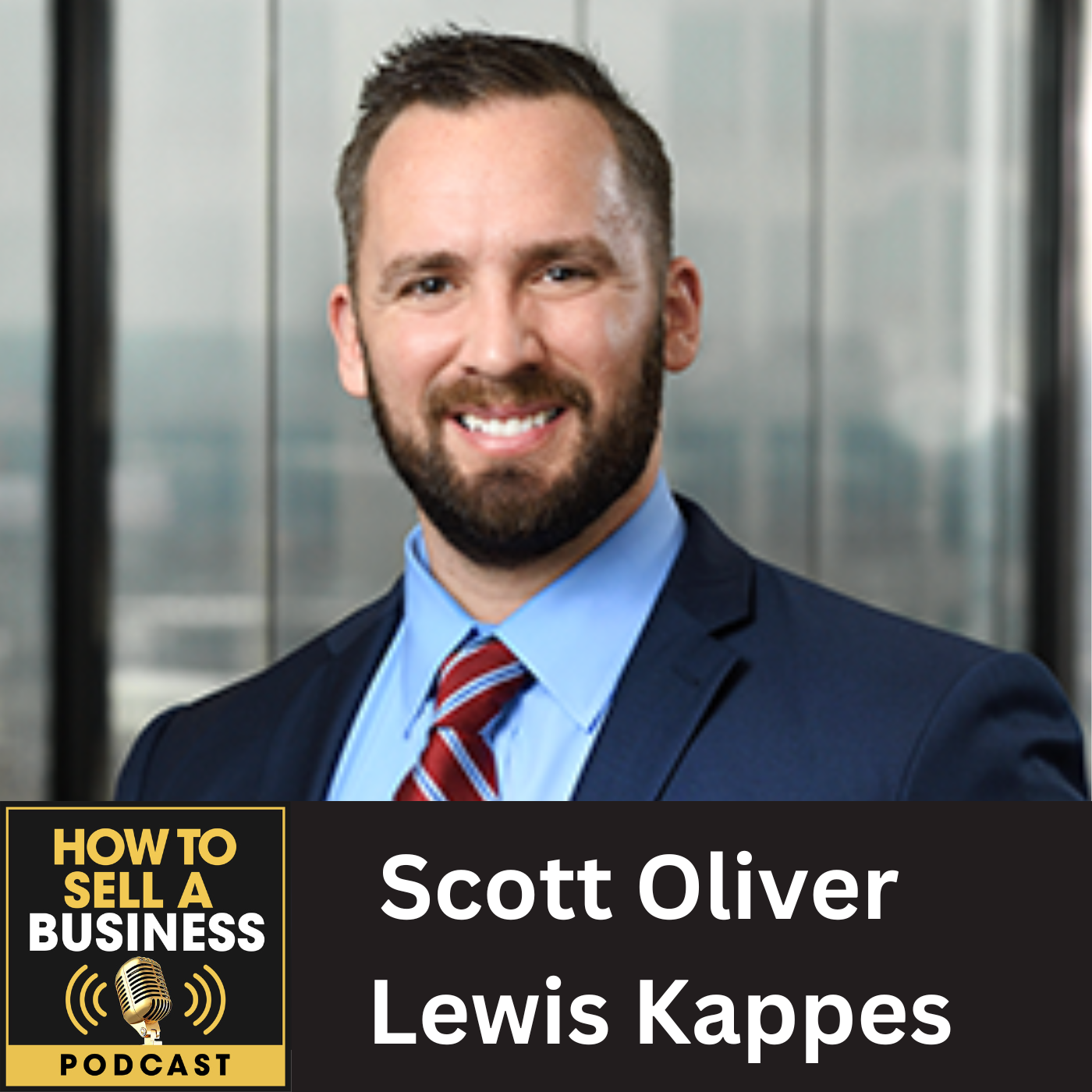
Scott Oliver, Director, Lewis Kappes
Scott Oliver, Director, Lewis Kappes

Scott Oliver practices in the areas of commercial finance, real estate, and corporate transactions. He represents state and national banks involved in commercial financing, as well as clients involved in business/real estate transactions, including: real estate acquisitions/sales, business acquisitions/sales, leases, entity formation and governance, commercial issues, contract preparation, contract negotiations, and compliance.

As a closing attorney, Scott represents banks and non-bank lenders involved in SBA and conventional financing. He works in all stages of the lending process, including credit review, compliance, eligibility, lien perfection, title review/negotiations, preparation of security instruments/loan documents, subordination/intercreditor agreements, workouts, collections, foreclosure, and bankruptcy. Over the course of his career, Scott has closed hundreds of SBA 7(a) loans, SBA 504 loans, SBA CAPLine loans, and a wide range of conventional facilities. While stationed in the heart of Indianapolis, his team has closed transactions throughout the country in all 50 states.

Through his corporate practice, Scott represents a variety of businesses, from closely held corporations to multi-million dollar entities. He advises clients in transactions involving real estate matters, acquisitions, sales, partner buyouts, and general commercial contracts and disputes. His representation also involves guiding new and emerging companies through entity selection, formation, growth, and governance.

Outside of his traditional practice areas, Scott is an Adjunct Professor at the Indiana University Robert H. McKinney School of Law, teaching Legal Communication and Analysis. He is an active member of the Indianapolis Bar Association where he holds various leadership positions and manages small and large-scale events for the local community.

Scott earned his B.A. from Purdue University, where he graduated with highest distinction and served as the graduation commencement speaker. He earned his J.D., cum laude, from the Indiana University Robert H. McKinney School of Law. During law school, Scott was the President of the Student Bar Association, a member of the Moot Court Executive Board, Vice Magister of Phi Delta Phi, a legal research and writing tutor, and a student teacher at Shortridge High School in Indianapolis, Indiana.

LinkedIn

Ed Mysogland, Host of How To Sell a Business Podcast

Ed Mysogland, Host of “How To Sell a Business”

The How To Sell a Business Podcast combines 30 years of exit planning, valuation, and exit execution working with business owners. Ed Mysogland has a mission and vision to help business owners understand the value of their business and what makes it salable. Most of the small business owner’s net worth is locked in the company; to unlock it, a business owner has to sell it. Unfortunately, the odds are against business owners that they won’t be able to sell their companies because they don’t know what creates a saleable asset.

Ed interviews battle-tested experts who help business owners prepare, build, preserve, and one-day transfer value with the sale of the business for maximum value.

How To Sell a Business Podcast is produced virtually from the North Fulton studio of Business RadioX® in Alpharetta.  The show can be found on all the major podcast apps and a full archive can be found here.

Ed is the Managing Partner of Indiana Business Advisors. He guides the development of the organization, its knowledge strategy, and the IBA initiative, which is to continue to be Indiana’s premier business brokerage by bringing investment-banker-caliber of transactional advisory services to small and mid-sized businesses. Over the last 29 years, Ed has been appraising and providing pre-sale consulting services for small and medium-size privately-held businesses as part of the brokerage process. He has worked with entrepreneurs of every pedigree and offers a unique insight into consulting with them toward a successful outcome.

Connect with Ed: LinkedIn | Twitter | Facebook

TRANSCRIPT

Intro: [00:00:00] Business owners likely will have only one shot to sell a business. Most don’t understand what drives value and how buyers look at a business. Until now. Welcome to the How to Sell a Business podcast where every week we talk to the subject matter experts, advisors and those around the deal table about how to sell at maximum value. Every business will go to sell one day. It’s only a matter of when. We’re glad you’re here. The podcast starts now.

Ed Mysogland: [00:00:36] On today’s podcast, I had the opportunity to visit with Scott Oliver. And if you’ve ever wondered who is in the deal beyond buy side, sell side, who’s the bank’s counsel? This is that guy. So any SBA loan has a attorney that’s looking out for the bank’s interest. And I thought it would be prudent for buyers and sellers to understand somebody that deals with how to make sure that your deal is compliant.

And Scott Oliver, he is everywhere. If you’re on LinkedIn, he writes all the time on it. He is a partner at Lewis Kappes and just one of those generous guys of information. And I can tell you that having met him now and talking about deals, he is the real deal as it relates to this segment of the SBA process. So I hope you enjoy my conversation with Scott Oliver.

I’m your host, Ed Mysogland. On this podcast, I interview buyers, sellers, advisors and all kinds of other people about what creates value in a business and how they take that information and make that business more valuable and ultimately be able to sell for a premium value. On today’s show, I’ve been looking forward to this interview for a couple of months now. It’s Scott Oliver of Lewis Kappes. So welcome, Scott.

Scott Oliver: [00:02:18] Hey. Thanks for having me on. I’m looking forward to it.

Ed Mysogland: [00:02:20] So in my introduction, I kind of gave a little bit of an overview of you, but and I guess like we were talking in the pre-show, I wanted you to talk about all the things that go on behind the scenes that most sellers and buyers don’t understand. So can you talk a little bit about your practice and how you’re doing that?

Scott Oliver: [00:02:44] Yeah, So I’ve been in SBA for about a decade. As you said, I work at Lewis Kappes. I’m a partner here now, and we really like to call it a lean, mean, oiled machine of getting deals done. So we have a good bench of attorneys and dedicated paralegals who are solely closing deals for SBA lenders in all 50 states. So all across the country. And while we’re doing that, there’s really systems in place to get those deals done. Some of the clients are having us interact directly with the buyers and sellers, while others have specific tasks that they want us to do that doesn’t involve any communication with the buyer or seller.

Ed Mysogland: [00:03:23] So what do you think your practice is made up between represented deals? My understanding is that there’s about a I don’t know, 10 percent come from represented deals like meaning from deal guys, M&A brokers, so on and so forth. I mean what is that what you see or no?

Scott Oliver: [00:03:43] Yeah, that’s pretty common. Normally, if there’s a broker involved, sometimes the brokers are fantastic. Other times, they can be a bit of a pain to deal with. But the big one that we see differences in are deals that are either representative of people who have counsel for the buyer or counsel for the borrower. And honestly, I’d say it’s probably 60-40. Sixty percent will have counsel, forty percent won’t. And depending on which attorney is involved, those deals can be walks in the park. As long as everybody’s communicating and being a real deal team with the same goals in mind of getting the deal done quickly organized, and also in compliance with the SBA regs, which is what I’m really looking at on my client side.

Ed Mysogland: [00:04:29] So how did you find — out all the different services that an attorney can provide, how did you find SBA work? I mean, yeah, I guess that’s what I’m asking is just how did you — I mean, because it is really a niche. There’s not a whole lot of people doing it right or am I wrong?

Scott Oliver: [00:04:47] There’s not a ton. I mean, there’s only a handful of law firms in the United States that have a fully dedicated team that closes SBA deals. Some people will dabble in it, and those people are more or less successful in that. But from my front, I initially went to law school thinking that I wanted to be a litigator. I like to talk. Everybody says that I like to argue and things like that. But I realized very, very quickly that that really wasn’t first off, what I was good at or to what filled my cup, what I was interested in.

So I started exploring options where I could put my knowledge of business, finance, communication skills and things like that to the test. In a way that’s the happy side of law, helping people get something done. So my second year of law school, I ended up getting one of those coveted summer associate positions at Lewis Kappes. I’ve been here my entire career. And during that time, I met with a couple of the partners who said, hey, I see what you’re interested in. Do you like business? You’re good at this sort of thing. Why don’t you try SBA?

And at that time, I said, like Student Bar Association. Oh, I’m in the Student Bar Association. Yeah, I’m good at that. And they said, no, no, no, Small Business Administration. Right? And so, they handed me files that were closed and said, look at these. Take a look, see what you think, read about the credit memos and then come back and talk with us and see if this is something you’re interested in doing. So I did that. And honestly, it sounds super cliche, I fell in love with the practice area, mainly because you were seeing deal after deal after deal of these entrepreneurs that have these goals and you’re figuring out how the deal structures are put together and what these entrepreneurs are doing to either start or scale their business. Fascinating.

Ed Mysogland: [00:06:32] Yeah. Well, and you just gave me about four other questions I didn’t think about, but can you start with your process? So a deal comes, it’s an SBA candidate. The SBA lender, I’m assuming, makes their pitch. Here is the letter, the credit letter, basically their letter of intent. And then I’m assuming that’s when you get involved or do you get involved prior to that? So can you take me from start to finish.

Scott Oliver: [00:07:09] Yeah. So most of our clients are institutional clients. So we’re basically the partner in their pocket where they can bounce ideas off of us at any sort of point. But a deal comes into our office when there is a signed commitment letter and a signed credit memorandum. So we’ll usually get a deal from one of the banks and we’ll look at it and we’ll say, okay, here are the basic terms. And then in that credit memo, that’s usually 50 plus pages, that is the deal. And the nice little packet is what we start with.

I personally prepare what we actually dubbed here at the office as a DLP. It stands for Digital Legal Pad. We can go down that rabbit hole if you’d like, but it was during COVID. I put together this basically a smart form checklist of any deal type that you could possibly imagine. And when we get those two documents in, we take that master version, and we’ll chop it down. And it will literally tell you everything that your buyer needs or the borrower in this instance needs to do in order to comply with the SBA standard operating procedure. So SOP 5010 sticks. And then it tracks communications with that bank with that closer throughout the life of the deal. So we can cut out some of the gut of the email correspondence and say, here’s what we’ve done, here’s what we need to do and here’s where we’re at when we’re getting ready to sit down at the closing table and close this thing out.

Ed Mysogland: [00:08:28] So, okay. So the smart pad, I mean what was the vehicle that — I’ve never heard of the smart pad. I mean, was it a Google doc? What does that mean?

Scott Oliver: [00:08:42] The way you’re putting it makes it sound more impressive than it is. So it’s a document that I put together actually when COVID hit, because we still have a big physical presence in Indianapolis in One American. Whenever a deal would come in, we’d have these big, they call them bankers files, tab documents where we print every single document, every operating agreement, franchise agreement and all that. And we put them in there and then we have this big box basically for every single deal.

COVID happened. And it’s almost comical, like lugging in like briefcases and backpacks, all these things, saying two weeks to flatten the curve, I’m going to have all my stuff at home. We’re going to take care of this. Well, two weeks, as you guys know, did not turn into two weeks. And at that point, I couldn’t do the physical paper anymore. It was getting so cumbersome, and deals were starting to pile up. And I was saying, this doesn’t work. So I got a Microsoft Word template out and essentially plug and play every single requirement and made a master version that takes, you know, if I had 100 deals on my desk, it condenses that so that I can send this document to any of my associates, any of my paralegals, they can look at it and know exactly what needs to be done for the client, electronically.

Ed Mysogland: [00:09:55] Nice. I mean, and similarly, in our shop, I mean same thing. I mean, the COVID hit, and we needed a means to effectively communicate on how we were going to continue to do deals. So that’s yeah, that’s fascinating. So what what version of SOPs are we on? We’re on G?

Scott Oliver: [00:10:23] SOP 50 10 6.

Ed Mysogland: [00:10:25] And they’re like an A, B, C, D, E, F?

Scott Oliver: [00:10:31] H, I, J, K, L, M, N, O, P. Let me see. I can’t recall what number it is, but it’s the one that came out in a couple of years back. And they’re saying that another version will be coming out, supposed to be in November, but it’s still anticipated in Q1 of this year.

Ed Mysogland: [00:10:44] So it’s funny that like in USPAP. So Uniform Standards of Professional Appraisal Practice, I know you know what that means, but for our listeners, in their documentation, they have guidance, different types of situations where this is how you should handle that. And I’m just wondering, with all the deals, I mean do they defer to you for interpretation of the SOP or is there someone that has authored the SOP that can give you guidance when you’re stuck?

Scott Oliver: [00:11:18] Most of the time, they’re deferring to legal counsel if they have legal counsel to interpret the SOP. That’s why it’s so important for when you hire counsel to hire counsel that doesn’t just dabble in it. If you haven’t seen multiple, multiple, multiple deals over a period of time, been in the space over a period of time, you don’t know how the SBA has interpreted things in the past. You haven’t seen how deals shake out in the event of default and all of that. So legal counsel, we’re usually asked, hey, what does the SOP say about this or how do we handle this?

But the SOP, at least 50 10 6, is going to be your eligibility guideline. So it’s almost like that baseline of what lenders must follow. Throughout that document, you’ll see prudent used a lot because the SOP provides these regs. But at the end of the day, the lender also has to be prudent, and the prudent lending standard is gray. Lawyers like gray because it requires to interpret but then the bank has to make these decisions, which are sometimes business decisions. And we’ll see a lot of banks get caught up and they’ll say, oh, well, we have this firm. And they said, no, we can’t do this no matter what. Draw a line in the sand where in many instances, depending on the deal, that’s not the answer. It’s here’s what the SOP says. You have to have an eligible deal. Of course. Here’s what the borrower is asking. Here’s the type of deal. Here’s the collateral. Here are your risks. Now, Bank, how do you want to proceed given this information?

Ed Mysogland: [00:12:50] When you say the bank, who at the bank is making that decision?

Scott Oliver: [00:12:56] So when we’re working with people, it’s usually a closer that’s on the other side. Most banks have closers. They’re the ones that are kind of on the ground level working with counsel. But if it comes to a business decision like that, that really requires additional input, you’re looking at the senior credit underwriter, you’re looking at bank management and depending on their, I guess, hierarchical structure, who is actually making a business/risk assessment based on counsel’s recommendation.

Ed Mysogland: [00:13:22] When the package gets to you, so they’ve already — has due diligence concluded or is it in process or where are they at in the spectrum of the deal?

Scott Oliver: [00:13:38] Usually, it has the due diligence, legal due diligence. Is that what you’re referring to?

Ed Mysogland: [00:13:42] Yep.

Scott Oliver: [00:13:42] Usually, they don’t have that in.

Ed Mysogland: [00:13:44] Legal — I’m sorry, accounting, regular accounting due diligence.

Scott Oliver: [00:13:49] Your underwriting is usually complete. So they have a credit memorandum. They’ve taken a look and said, okay, this collateral is available, here’s what we have to take. Here’s what we might take, depending on the specifics of the deal. All of that is usually taken care of. Unless there’s a trailing requirement. And as you know, through your work, deals change, circumstances change. Maybe I get a document in, and I say this is ineligible. We can’t do this. That requires a restructure of the deal. That can happen. And if it does, they’ll document their file with a change memo or they’ll have to get an update signed commitment letter from the client, what have you. So it’s an everevolving process throughout.

Ed Mysogland: [00:14:29] I get it. So does the — we keep on seeing all this stuff about like quality of earnings and things like that. So when credit — and again, I guess it is a business decision, but does your work, is it ever influenced by the, I suppose, the comprehensiveness or like let’s just say, you know, a credit — this comes from you get a deal and it has a quality of earnings report. It has all of maybe audited financial statements. I get that it is a business decision, but does that necessarily influence you at all based on the risk associated with the deal? Or is it just total — you know, this I’m doing compliance work and if you guys like the quality of earnings because it makes you happy, then have at it. Is that it?

Scott Oliver: [00:15:20] Yeah, that’s usually separated. And so what I like to tell my associates that are coming up through SBA too is we always have to remember which hat we’re wearing. That’s to protect and to benefit our firm, of course, but it’s also to protect the bank. We can’t be getting involved in the bank’s policies and procedures and underwriting credit box, things like that. If we get a deal in and credit says that it is good, we’re not looking at financials, we’re not looking at things like that. But if we get something across our desk and it violates the SOP, we’re required to point that out or we see an issue in a purchase agreement or resolutions, title work, searches. All of the different things that we do through our scope of services, we’re partnering with the bank and pointing those types of things out.

Ed Mysogland: [00:16:06] I got it. So but at the same time, if you see a structure that doesn’t comply and I’m trying to think of a situation where it doesn’t comply, and you just flag it. And now, it becomes either you have to change the deal in order for compliance purposes. And you’ve got an example of a situation where here’s the deal structure and yeah, this isn’t going to work. And by the way, I guess the bigger question is why wouldn’t the lender know the rule, you know?

Scott Oliver: [00:16:43] And most of the time, we’re not going to get a deal in where there is a glaring issue, especially if we’re working with some of our more experienced lenders in that space. They have goalposts. They have certain aspects within their underwriting process where they’re going to catch most of that. But at the same time, you might get a deal and the deal is approved with one borrower, let’s say. And the borrower isn’t formed yet. It’s an entity to be formed. I call that an ETBF on my DLP. There’s a lot of acronyms, right?

So let’s say that it’s approved in that manner. The borrower then gets an attorney, and the attorney is a brilliant tax attorney/corporate attorney. And they say, well, for such and such reasons, we actually want you to form a real estate holding company to buy the real estate, and we want you to form an operating company to run the business. And the borrower says, all right, lawyer, you said this, I trust you. I want to proceed in this fashion.

Well, that’s not what was approved with the bank. That doesn’t kill the deal, but they have to go to the bank and say, look, my lawyer said I need to have two entities, one for the real estate and one for the operating company. At that point, I would be getting involved because what that’s called is an EPC/OC transaction, eligible passive company/operating company transaction. That triggers some very, very strict requirements from the SBA. So we’d have to structure it that way.

And I’d be talking with the underwriter saying, look, we have to have this eligible passive company. This eligible passive company has to lease 100 percent of the real estate that it purchases to the eligible operating company. We have to have requirements in the SOP with the lease, the rent payments and things like that. And we need to make sure that when we get to the closing table, that eligible passive company is not receiving the working capital because you’d have a guarantee, at least a repair, probably a denial in that situation.

Ed Mysogland: [00:18:41] I get it. So I was wondering, because I had never heard of the term eligible passive company rule. And we’ve done lots, lots of SBA deals where there’s an operating entity and a real estate entity. So I’ll be a lot more eloquent these days on that. So are there other provisions that you see that are so underutilized that you just kind of shake your head on, if you only knew about this, you would run toward it and say, yeah, this really works pretty well.

Scott Oliver: [00:19:21] From a buyer perspective?

Ed Mysogland: [00:19:22] Yeah. Buyer or seller. Yeah, let’s go buyer.

Scott Oliver: [00:19:26] So I think most of the time that what we see with buyers or buyers counsel is not that they structure it in a way that’s not advantageous to the buyer, it’s that they are drafting documents and they don’t have an understanding of what is required by the SBA. And if they were to either have that understanding initially or consult with somebody who does know the SBA, whether that’s the lender or another attorney, they could draft documents that are compliant at the outset or at least have an understanding of what those need to look like so that they can start talking with, let’s say, the seller. Or another good example is talking with the landlord, right? Talking with the landlord early and saying this is the type of business we have. Here are the lenders requirements. Here’s what the SOP says. And by the way, we need this landlord waiver signed and doing that early. I see so many deals where counsel is involved for a month and then they just start talking about the purchase agreement and the landlord waiver a week before they want to close. Doesn’t work.

Ed Mysogland: [00:20:26] No. And again, it’s a reflection. I know in situations where where we’ve dragged our feet, it’s, all right, this deal is teetering. And it’s funny, it’s either it happens to either be at the quarter where financials are going to come out or it’s going to be at the year, and everybody wants to see that. So I get it. So I wanted to ask about do you guys ever make concessions? Do you see banks ever make concessions on risk? Because I’m sitting here going, all right, most banks, so they’re going to get 75 percent guarantee. They have, I don’t want to say little exposure, but certainly they don’t want it to default. But at the same time, they want that loan. But do they ever make any kind of concessions or it’s like, yeah, you know what, we’ll wait for the next one?

Scott Oliver: [00:21:27] Yeah, I don’t deal in absolute. So I could never say no, they will never make a concession, right. And that’s not my place to say for those banks in those instances. But at the same time, a bank is not going to waive something that jeopardizes its guarantee. So there are aspects of any sort of deal where the SOP or the SBA has came in and said, if you do this or if you do not do this, you are either looking at a repair or you’re flat out denied for your SBA guarantee. Those types of things, I mean, I personally never seen a bank give in on that, but there are other things that also from our perspective, recommendation wise, they shouldn’t give in to, but they might make some concessions just depending on the specifics of the deal.

So you and I were talking a little bit offline, just kind of shooting the breeze about different deal structures. But one example that I’ve seen before is when you have a situation with, let’s say there’s a borrower and they just have a little satellite office, right? So homebased businesses are becoming more common. And let’s say everything about the deal is approved, but we find out, hey, they rent space two days a week out of One American. Complete example. And they go there and there is a computer. They sit down and they just want to get away. And we look at it and the requirement is that you need to have a lease for the term of the loan.

Ed Mysogland: [00:22:49] I get it.

Scott Oliver: [00:22:50] And if that happens, the borrower might say, well, that’s not working. We have a we work agreement and I can’t get that. The lender will tell them it should be, the lease should be the term of the loan. But they might make a business decision and say, okay, given the circumstances, the fact that there’s no collateral other than a 1997 LG computer screen right on a desk that they don’t own, we’re okay making this concession here and we’ll close the deal without requiring you to have a ten-year lease.

Ed Mysogland: [00:23:19] Yeah, I can see that one. So I guess where I wanted to head next is where are the, or better yet, who are the biggest hassles that you face? Because I mean certainly, well, yeah, who are the who? We’ll start there. Who gives you the greatest amount of heartburn and deals?

Scott Oliver: [00:23:47] Normally, you’re going to see landlords are hard to deal with, but I think the the more direct answer to that is if we have buyer or sellers counsel who is operating outside of their wheelhouse. And I’m not putting down any attorneys, but if we get a deal in and it is a let’s say a $4.5 million business acquisition, so it’s an M&A transaction and buyer either hires a criminal law attorney or a family law attorney that’s never seen an M&A transaction in his or her life, that will be very difficult to have a smooth transaction there because they just haven’t experienced. It’d be like asking me to represent somebody in a DUI case. You would never do that because that doesn’t make sense for me. That’s one side of that coin.

The other side is actually probably what you wouldn’t think. It’s when we get a deal and they have insert law firm’s name where the law firm and the attorneys are used to doing $100 million, $200 million, $1 billion deals and maybe it’s your buddy. And they said, we’ll take this case, and we’ll not charge you $1500 an hour. We’ll take it, but we’re really, really experienced, sophisticated attorneys. And the reason those deals will sometimes have more headaches is because they treat it like a billion-dollar transaction when it’s a $4.5 million transaction.

At that point, you’re arguing for the sake of arguing, they’re not understanding how SMB, small to medium sized business, transactions operate. And those can end up being really, really difficult. Mixing the egos with some of those folks that can be very, very hard. So you have to hire somebody who is right for the job, somebody who knows lower to middle market types of deals and preferably somebody who knows those deals and also knows SBA lending. If you have that, I mean that’s a walk in the park. And we’ll close those deals all day every day.

Ed Mysogland: [00:25:43] Well, I’ll tell you, and we face that same hurdle. I mean, we had a deal and it was half that. And at the end of this thing, they had $100,000 plus legal fee, and they’re total sticker shock. And it was like how in the world did you not think that this was going to happen? You saw the marquee, you’ve been to the office, you knew what you were getting into. But anyway, it is what it is.

So along the hassle factor, I was curious to know from the preferred lenders versus the homegrown banks, I mean is there any difference? Or I suppose volume probably helps, but I’m just curious to know whether or not, I know from our standpoint, when we’re battling somebody, like you said that doesn’t do a whole lot of SBA work, it really elongates the process. It becomes substantially more complicated than it necessarily needs to be. So do you find the same or no?

Scott Oliver: [00:26:53] Well, we deal with both, PLP lenders, preferred lenders, and then also GP lenders. Both of them, you will find quality banks and non-bank lenders on both sides. All that means is that when you have a PLP lender, they have a lot more flexibility in decisions that they can make on their own without having to ask the SBA or get approval from the SBA. So that does result usually in a much quicker closing timeline. It will sometimes result in better certainty to close, which is usually a big, big, big want from borrowers.

And generally, those are the ones that have met certain guideposts throughout the process. They’ve closed a certain number of deals. They’ve done certain things. They’ve met quality standards. So that’s usually what you see with PLP lenders. But GP lenders are usually in the plight to obtain their PLP license. So I’ve seen, in my opinion, some of the best banks have started as GP. They’ve worked their way through it, they’ve obtained their license and then it’s game on and they’re crushing it. So I wouldn’t look to that necessarily from a borrower’s perspective but it’s a factor to consider.

Ed Mysogland: [00:28:06] You know, one of the things about SBA lending and you used to hear a lot of the default rates, I don’t think that there’s nearly the level of SBA default. Is that an accurate statement or do you guys not track that or ever hear of it?

Scott Oliver: [00:28:22] I don’t look at the default rates as often because I’m more of a closer on the closing side. Our litigation team for creditors rights would probably have those types of statistics, and I’d be interested to know that as well.

Ed Mysogland: [00:28:32] Yeah, because to me, I think the whole system is a lot better at using the SBA as a tool to finance as opposed to the Wild West. So I was just curious. So I know we were talking about the SBA coming out with whatever next version is supposedly in November. But I mean, to me, I look at that document and I mean, it’s pretty comprehensive. And you just wonder, what else can you throw in? And I’m not asking you to provide commentary. I guess that is a living document.

And where I’m heading with it is who do you turn to for guidance on it? And I know I touched on it a little earlier, but prudent is one thing, but it’s a whole nother thing that it’s a big document for people that don’t know. I mean, there’s a ton in there. So I guess that was kind of my question is, even the best practitioner has to defer to somebody. Who would that be for you?

Scott Oliver: [00:29:51] Yeah. So we study that document, of course, and it’s a document in and of itself. But then you also have CFRs and various links throughout it that will really give you even deeper detail into what you look at. So if we’re going outside of that document, right, we’re usually looking to being plugged in with trade associations such as NAGGL, some of the other local associations, the SBA directly, other law firms, other lenders and things like that to keep up on the types of trends that are going on and to get clarifications when things come out.

I mean, I mentioned names, but if something comes up and I’m really scratching my head here and I’m thinking, what does the SBA think? Well, I’ll call somebody and say, hey, have you seen this before? What do you take away from this? So that’s part of it, just developing a knowledge base outside of the document and making sure you’re up to date with procedural notices, too. Have you read the procedural notices that come out from time to time, too?

Ed Mysogland: [00:30:50] Yep. Well, I’ll tell you, one guy and granted, you’re a nationwide guy, but here in Indiana, Eric Armacost. I don’t know if you’d know what a great resource. He has helped us immensely on so many different occasions and he is just, as far as the SBA goes, they are really fortunate to have a guy like him because he is so generous with time as well as the information he’s providing. So brokers differ widely. I mean, I know we talked about the seller’s counsel and landlords being probably the ones that give you the greatest heartburn. But in our profession, how can we better work with folks like you?

Scott Oliver: [00:31:45] With brokers specifically?

Ed Mysogland: [00:31:46] Yeah. I mean, from the standpoint of how can — from a brokerage standpoint, I mean we put — hopefully, we’ll put together a sound deal. We’ll have all the information. All the forms are going together. But from the time you get all the underwriting, your underwriting package and now we’re heading toward closing, is there anything, any tripwires that we can be aware of that you know what, if you were just smart enough to listen to me, this is what will make your deal go a lot smoother. Anything come to mind?

Scott Oliver: [00:32:23] Yeah. So in those situations, if I’m directly dealing with a broker, it’s usually because there’s not another lawyer involved, right? So it’s somebody who — buyer doesn’t have counsel, seller doesn’t have counsel, we’ve got a broker and we’re dealing with them. The best thing that they can do is to communicate effectively with our office. Many times, broker forms, not putting them down, but sometimes broker forms can have some glaring issues that will cause repairs and denials for the banks.

If something like that comes up, and I as counsel reach out to the broker and say, hey, we can’t have this or we need this, this way, and we’re met with absolutely not, we’ve seen this before and we’re never going to do this, that is not the way to approach it. And I will get that sometimes. They’ll say, I’ve closed a thousand transactions and I’ve never had counsel ask me for this. Well, you’re being asked now, and I don’t know which transactions you closed for who, but you probably closed them incorrectly and the bank took a risk. My client needs it this way. And if we can get on the phone or even on email and just walk through it, talk through what it needs to look like, usually it’s done within a matter of five minutes. And snappy, buyer’s happy and the broker looks great and usually I’ll use that broker in the future as well.

Ed Mysogland: [00:33:36] You know, the tough part is and again, there is — and I preach that to our younger guys. I mean, there’s a certain role that you play, and everybody wants to get the deal across the finish line. Everybody. There’s no one that’s sitting here trying to dump on your deal. But at the same time, you have to understand that all these people that are loaning you millions of dollars, they have to understand the risk that they’re taking. And it’s not a reflection of you professionally to come back and say, look, we have to do it this way. And again, and if your client doesn’t like it, then he doesn’t like it, and he has options. He can pull the deal and start over. But, oh, by the way, knowing what I know about you, we’re probably going to bump into you again. And the bank is probably going to be in the same position for the same client. So why not just address it now. Go ahead.

Scott Oliver: [00:34:43] Most banks have a similar approach. I mean, there are differences in lenders and you can figure those out on your own. But at the end of the day, if I’m asking a broker or whoever it is for a very specific revision, there’s a reason. And sometimes they’ll get upset and say, well, we’ll pull the deal, we’ll go somewhere else. Well, you go somewhere else, you’re going to have the same issue. Assuming that the lender understands the SOP and understands the transaction.

So we’re never trying to step on anyone’s toes. Like you said, we’re all kind of super cheesy, but we’re in this together and we want to get this done in a way that protects all parties. I’m obviously looking out for the bank, but at the same time, I’m also looking out for a buyer in a way, because that buyer, if something goes wrong, that buyer is not going to be able to repay its note. And then I have a client who has a defaulted loan. I don’t want that. The bank doesn’t want it either.

Ed Mysogland: [00:35:37] Sure. And you would think that that would be self-evident. And yeah, we bump into that periodically where the seller has dug their heels in, and this is the way I want it kind of like a kid. I’m not going to change. Well, okay, well, but at the same time, you’re not going to get a deal. It doesn’t work that way. And I know that you think that you have all the leverage. And this is what — you know, we’ve been counseling this for years. The closer you are to completing the deal, the less leverage you have over everybody. And you just need to understand that this is just part of the process. It’s not a reflection of your business. It’s just the way it is, especially when, oh, by the way, somebody is loaning your buyer 80, 90 percent of your purchase price. And you would think that it would resonate. But boy, sometimes it is a real, real challenge. Speaking of 80 or 90 percent, standby notes, that seems to be the vehicle of choice these days to get deals across the line, the seller standby notes.

So I guess what is your opinion — I mean granted this is back to risk. I understand that the bank has to make that decision. But some of the provisions that you have seen, like for example, standby note is great to bridge that equity gap. Totally get it. But where I was heading with it is not only that, but now earnout used to be a lot of the deals we had, especially service businesses. And now they’re in favor of self-canceling notes. I mean, are you — I guess what I’m asking is, are you familiar or have you seen any deal structures where service-related businesses are able to mitigate their risk through some sort of, yeah, I mean, you got the self-canceling notes, you can’t do earnout, but any other vehicles that you’ve seen or no?

Scott Oliver: [00:37:55] I’ve seen some of those unique vehicles in non-full standby seller notes. And usually when there is a seller note that’s not on full standby, meaning it’s not being used as equity injection. The ball is a lot more in the lender’s court because they’re looking at it and they’re saying, okay, how is this going to impact my borrower? What does the bottom line look like here? What types of provisions in here are either compliant or are there any concerns about eligibility in here? There’s more flexibility when it’s not being used in injection.

But the opposite side of that is when it’s being used as injection, there is very little to no wiggle room there. And that is what — you see people talk about this a lot on the Internet and other places, but the full standby note is what it is. If your seller is going to be taking back a note for any amount of money and it’s being used as a full standby seller note, there are no payments. There are no payments of principal and interest during the term of the loan. And there’s a bunch of other provisions in there as well, such as not being able to act on any of the collateral that the seller might be taking that’s securing the note. It is just that a full standby note, no deviation, because then you have equity injection that’s out of whack. And equity injection is a big hot topic with the SBA that cannot be violated in any instance.

Ed Mysogland: [00:39:16] Well, one of the things that I guess is a myth is that you can petition the SBA to release principal or interest or both on those standby notes. I have never seen it happen ever, ever, ever. But I think it’s somewhere in the SOP that that you can do that, but I’ve never seen anyone get any kind of payment. You? I saw you shake your head. Yeah.

Scott Oliver: [00:39:47] I have not seen that either because when you have a deal that’s structured and they say, hey, Ed, you’re going to have to inject $500,000 into this deal. And you say, I can’t. Can I take at least $100,000 of my equity from a seller note? And the bank says yes. Well, in that instance, yeah, you’re getting credit for that $100,000 seller note, but that seller is not getting paid until the SBA is paid in full. And that is the whole purpose of that note, that vehicle, because they are strictly subordinate to the SBA. It’s a very bright line approach that they take. So short answer no, I have not seen that on those types of deals.

Ed Mysogland: [00:40:24] I get it. All right. So my last question, I ask of all of my guests, but unfortunately, you’re going to get the three-part one. So the question is, if you had one piece of advice to give our listeners, what would in your case be most valuable in getting a deal done? And so the three parts are what would you tell a buyer, what would you tell a seller, and what would you tell an attorney representing either of them?

Scott Oliver: [00:40:54] I’m going to take the easy way out here and give you one answer for all three.

Ed Mysogland: [00:40:57] All right.

Scott Oliver: [00:40:58] And it is make sure that your deal team is in order or whatever you want to call it. Some people will call it their board of directors. Some people call it their deal team. And what I mean by that is when you are heading into the LOI stage or really any stage in your search, make sure that you’re thinking about who is going to be my counsel on this transaction, who is going to be my lender, who is going to be my broker if there is one, who is going to be my accountant, who is going to be my emotional support, right?

Ed Mysogland: [00:41:29] Sure.

Scott Oliver: [00:41:29] Whether it’s a spouse, a friend or somebody else who’s going to be my mentor, all of this sort of things, if you have those solidified going into it, you will have such an easier time getting that deal to close. And I preach this a lot when I’m talking to buy side counsel or if I’m by side counsel, I’m saying who has experience in what? How is this going to be organized? And how are we getting to the closing table? If you have that in order, you’re sitting pretty on that deal and much more likely to close and much more likely to close without copious amounts of Advil.

Ed Mysogland: [00:42:06] I got it. All right. Well, what’s the best way we can connect with you?

Scott Oliver: [00:42:10] Yeah, so I’m really active actually on LinkedIn, which is something that people on Twitter don’t like to hear. But you can find Scott Oliver on LinkedIn. You can find me on Twitter, @SAOliver_Atty or send me an email. My firm is Lewis Kappes and my email address is SOliver@LewisKappes.com. I’m always open to chat, whether it’s SBA, M&A or any of the topics we’ve discussed today. I’m a bit of a nerd, if I must say so.

Ed Mysogland: [00:42:39] I don’t think you’re a nerd. I think you’re right in the sandbox I like. So I totally appreciate you and what you do. Everything that we’ve talked about is going to be in the show notes, including where to find you and where. So, Scott, thanks so much for hanging out with me this morning.

Scott Oliver: [00:42:57] Thank you so much, Ed. I appreciate it.

Outro: [00:43:00] Thank you for joining us today on How To Sell Your Business podcast. If you want more episodes packed with strategies to help sell your business for the maximum value, visit howtosellabusinesspodcast.com for tips and best practices to make your exit life changing. Better yet, subscribe now so you never miss future episodes. This program is copyrighted by Myso Inc. All rights reserved.


Tagged With: attorney, business brokerage, Business Owners, business value, commercial finance, corporate transactions, Ed Mysogland, How to Sell a Business, How to Sell a Business Podcast, how to sell your business, Lewis Kappes, Scott Oliver, valuations

How To Maximize Your Value Using a Quality of Earnings Report, with Elliott Holland, Guardian Due Diligence

January 10, 2023 by John Ray

Quality of Earnings
How to Sell a Business
How To Maximize Your Value Using a Quality of Earnings Report, with Elliott Holland, Guardian Due Diligence
Loading
00:00 /
RSS Feed
Share
Link
Embed

Download file

Quality of Earnings

How To Maximize Your Value Using a Quality of Earnings Report, with Elliott Holland, Guardian Due Diligence (How To Sell a Business Podcast, Episode 6)

Elliott Holland, Managing Partner of Guardian Due Diligence, joined host Ed Mysogland to discuss how a Quality of Earnings report maximizes the value of a business in a sale, reduces the risk of buyer objections, and helps secure completion of the transaction.

How To Sell a Business Podcast is produced and broadcast by the North Fulton Studio of Business RadioX® in Atlanta.

Guardian Due Diligence

Guardian Due Diligence provides Quality of Earnings for Self-Funded Searchers. They have three options to choose from, including a “Done for You” financial diligence service.

Guardian’s 21 accountants are from the top 3% of CPAs from the past 15 years of interviewing.

How are they different & better? Alongside each Quality of Earnings, they advise their clients on how to execute better deals leveraging their 20+ years acquiring small and medium sized businesses. They are deal guys who manage accountants who help entrepreneurs buy better businesses.

Want to know if a CPA firm or a full-service diligence firm like Guardian is the right choice for you? Take their 5-question assessment here.

Company website | LinkedIn | YouTube

Elliott Holland, Managing Partner, Guardian Due Diligence

Elliott is an expert in the acquisition of small and medium sized businesses. He helps first-time buyers like you manage through the challenging and nuanced due diligence process. He’s been in this space since before they called it ETA. His burning desire is to take you through a comprehensive diligence process and guard you from expensive mistakes based on his vast experience in the deal business.

He’s worked for the nation’s best business acquisition firms like The Watermill Group and Linx Partners and then started his own acquisition firm where he apprenticed under an industry veteran. He hasn’t seen it all but he’s seen a lot. His Harvard MBA doesn’t hurt either.

Elliott started Guardian because the diligence solutions for smaller deals frankly stink. He created a better solution to help buyers avoid doing bad deals and help buyers execute deals with confidence. We all want confidence when making million-dollar investments.

He caught the acquisition bug in 2009 – his first year of business school, then worked in private equity (PE) in order to gain skills from the nation’s best business acquirers. Like you, Elliott started his own firm to go out and buy companies in the automotive, industrial, and healthcare space.

LinkedIn

Ed Mysogland, Host of How To Sell a Business Podcast

Ed Mysogland, Host of “How To Sell a Business”

The How To Sell a Business Podcast combines 30 years of exit planning, valuation, and exit execution working with business owners. Ed Mysogland has a mission and vision to help business owners understand the value of their business and what makes it salable. Most of the small business owner’s net worth is locked in the company; to unlock it, a business owner has to sell it. Unfortunately, the odds are against business owners that they won’t be able to sell their companies because they don’t know what creates a saleable asset.

Ed interviews battle-tested experts who help business owners prepare, build, preserve, and one-day transfer value with the sale of the business for maximum value.

How To Sell a Business Podcast is produced virtually from the North Fulton studio of Business RadioX® in Alpharetta.  The show can be found on all the major podcast apps and a full archive can be found here.

Ed is the Managing Partner of Indiana Business Advisors. He guides the development of the organization, its knowledge strategy, and the IBA initiative, which is to continue to be Indiana’s premier business brokerage by bringing investment-banker-caliber of transactional advisory services to small and mid-sized businesses. Over the last 29 years, Ed has been appraising and providing pre-sale consulting services for small and medium-size privately-held businesses as part of the brokerage process. He has worked with entrepreneurs of every pedigree and offers a unique insight into consulting with them toward a successful outcome.

Connect with Ed: LinkedIn | Twitter | Facebook

TRANSCRIPT

Intro: [00:00:00] Business owners likely will have only one shot to sell a business. Most don’t understand what drives value and how buyers look at a business. Until now. Welcome to the How to Sell a Business Podcast, where, every week, we talk to the subject matter experts, advisors, and those around the deal table about how to sell at maximum value. Every business will go to sell one day. It’s only a matter of when. We’re glad you’re here. The podcast starts now.

Ed Mysogland: [00:00:36] On today’s show, I got to interview, and it was my pleasure and it really was, because I got to interview Elliott Holland. I’ve been following him on Twitter for quite some time, and he always has some thoughtful comments about due diligence, and in particular quality of earnings. And you may not know that term, but it’s becoming more and more prevalent in the deal making lexicon.

Ed Mysogland: [00:01:04] And so, I think what you’ll find, and certainly I did, is just how important establishing quality of earnings is, whether you’re a buyer or seller or an institution, relying on financial data that’s being shared is imperative to the success of a deal. And Elliot – oh, my gosh – he shared so much and so many good stories about its application and the value that he brings to a transaction. So, I hope you enjoy my conversation with Elliott Holland of Guardian Due Diligence.

Ed Mysogland: [00:01:44] I’m your host, Ed Mysogland. I help business owners learn what creates value in their business by interviewing people and advisors and buyers and sellers who have been in the trenches of acquiring and selling businesses.

Ed Mysogland: [00:02:04] Today, you know, it’s going to be a special episode because one of the things that, in my world, we’re seeing more and more is a thing called QoE. And I have been following this guy along on Twitter for quite some time. His name is Elliott Holland. And you heard his bio before we got started. But he’s the guy for this work. And I have learned so much. And I’m certain you will, too. So, Elliott, welcome to the show.

Elliott Holland: [00:02:33] I’m glad to be here. It’s exciting information and I’m going to make it lively. We’re going to have some fun.

Ed Mysogland: [00:02:38] Right on. Well, like I said, I talked a little bit about your background before we got started, but is there anything you want to talk just at high level about Guardian?

Elliott Holland: [00:02:49] Yeah. We do lower middle market and main street deals, I believe, better than anyone, because I come from the buy side where I used to be making acquisitions in that part of the market. And what I mean is sort of under $30 million in purchase price or enterprise value. And so, it’s not just an accounting firm with CPAs used to audit who are doing these analyses, but it’s a deal guy who used to sit for, work with, execute transactions, now managing a team of accountants. Which means that the report is not just a piece of paper, but I can actually explain to the client what’s important, what’s not, how are they going to use it. And I think that increases the value of the work product substantially.

Ed Mysogland: [00:03:36] Well, one of the things that I was telling you before we got started is, a lot of people don’t know what QoE is, where it came from. And why now? Why are we seeing so much of it now? So, you might start from the beginning?

Elliott Holland: [00:03:53] Sure. So, in public deals, if I’m buying Coca-Cola, Pepsi, Home Depot, Ford, those companies get audited every single year by two top four accounting firms. So, when I go buy a share or if I want to buy the whole thing, there’s infinitely well-known financial information at all times on these companies.

Elliott Holland: [00:04:16] For small private companies, there is zero of that. There’s no audit requirement. I’m an owner. Other owners know this. Taxes are meant to be efficient and we make them very efficient. Financials are our best representation of what happened in the business.

Elliott Holland: [00:04:40] So, the quality of earnings is no more complicated than an audit-like tool to help owners, buyers, and advisors in these lower middle market deals understand the cash flow and the financials of a business, particularly ahead of a big transaction.

Elliott Holland: [00:04:59] So, why do they call it quality of earnings? The reason people call it quality of earnings is because businesses are valued off of a multiple of earnings. Earnings is no more complicated than profit. So, if you’re in business, depending on the size, you know, three to maybe ten or eleven times earnings is what you will fetch in a price.

Elliott Holland: [00:05:20] And so, for a buyer or a seller in a transaction, it’s very important to understand what the true earnings are, which means unraveling some of the good enough stuff that can be in financials of all owners to make it specific enough so a financially inclined buyer can very quickly get to the price of a business and pay owners the big checks that come with these deals.

Ed Mysogland: [00:05:49] So, I’m curious to know whether or not by doing this if risk changes.

Elliott Holland: [00:06:00] Tremendously.

Ed Mysogland: [00:06:02] Right. So, a multiple just reflects risk. And I’m curious to know – and we’ll talk about it down the road here – how the conclusion of your services changes the risk profile of the acquisition target.

Elliott Holland: [00:06:24] Sure. So, my average deal is typically a sort of sub $5 million enterprise value transaction. But we do many deals that are up to $30 or 40 million. For most of my buyers, they are first time buyers. So, I work primarily for buyers buying companies, and 75 percent are first time buyers. So, they come into the market saying, “I want to buy a business. I think it’s a wise investment. I’m not a financial person. I see a lot of risk around this financial area I don’t understand.”

Elliott Holland: [00:07:04] And even my buyers who are very financial, private equity buyers, experienced buyers, they know that the packet of information they saw from the business owner or from the broker is going to be in a very favorable state. So, let’s just say tremendous risk because it’s a $5 million transaction. It’s $5 million worth of risk.

Elliott Holland: [00:07:24] After you do a quality of earnings and you know that the earnings, and so therefore the multiple you’re going to put on the earnings are within a very, like, small tolerance, the $5 million risk goes down to, I think, this is plus or minus 5 percent or 10 percent. So, now, we’re talking a-quarter-million dollars or a-half-million dollars of risk. And I could get more complex than that, but it goes from the full 100 percent of enterprise value to 5 or 10 percent or less.

Elliott Holland: [00:07:54] And so, now, as a buyer or my client, I’m not worried about should I do the deal or not. It’s should I ratchet the thing up or down a-quarter-million dollars? Should I structure it differently plus or minus a-quarter-million dollars? And that just puts everybody to sleep.

Ed Mysogland: [00:08:09] Well, it’s not going up. If I’m with the buyer, it’s not going up.

Elliott Holland: [00:08:15] Well, that’s where your job is, Ed. I mean, I got to be honest, it all depends on the negotiation. I have seen it go both ways. But yeah, for my clients I would not mean negotiating for the up on that.

Ed Mysogland: [00:08:28] You know, one thing that comes to mind – and I know I’m going out of order of kind of my talking points – I’m curious to know whether or not does doing a quality of earnings report, if I’m a buyer and I’m using SBA financing, does this count as buyer’s equity toward the transaction? That’s a real interesting dynamic if I’m the buyer and I can apply this to my deal.

Elliott Holland: [00:09:00] So, my understanding is it doesn’t apply to equity. However, about half of my clients end up paying for the quality of earnings service through the transaction. So, they added on as an expense a cost in the transaction so that when the transaction goes for 5 million, they may tack on an extra couple of hundred grand for expenses and you can pay that fee through the deal.

Ed Mysogland: [00:09:27] Yeah. I get it.

Elliott Holland: [00:09:30] Well, here we go even further. So, to your point, Ed, and I didn’t see through it as quickly. Sorry, man.

Ed Mysogland: [00:09:37] It’s early.

Elliott Holland: [00:09:38] You’re wiser than me. Yeah, I need another cup of coffee.

Ed Mysogland: [00:09:41] I doubt it.

Elliott Holland: [00:09:41] If I’m a buyer and I pay for the quality of earnings, so I pay the 20 or 30 grand for a quality of earnings out of pocket. And then, I get reimbursed for that because I do that quite often and the transaction pays my provider. Then, essentially, that money that I would have paid out of pocket I can now put into the deal as equity. So, effectively you do move an out of pocket expense to equity. Yes.

Ed Mysogland: [00:10:07] Well, I’m just curious because if I’m a buyer and if I can apply this, you know, scrutinizing what I’m buying to my equity as opposed to tacking it on, on the backend, I would have to imagine the SBA and the powers that be would find that a favorable strategy by most buyers.

Elliott Holland: [00:10:30] And here’s what happens that people don’t recognize. So, over half the deals – I’m just going to say your, Ed, as if you’re the buyer – your SBA lender is calling me early and saying, “What’s up with this? What did this mean? Why is this represented here in the financials?” So, what happens when there’s not a quality of earnings in your deal?

Elliott Holland: [00:10:58] What it means is your bankers are making up negative answers to all these questions and docking either the price of your deal, the interest rate, the speed of your deal, how quickly it can get closed, or whether they want to do your deal at all. And so, I think there’s the equity piece of it, but it’s also the SBA does not always require a quality of earnings. Sometimes they do. But even when they don’t, the reality is the SBA can ingest a quality of earnings so much easier than the typical stack of financials from a private business.

Ed Mysogland: [00:11:35] So, do you have any kind of exposure for doing this kind of work? I mean, I’ve got to imagine, you know, just your normal errors and omissions and negligence kind of thing, right?

Elliott Holland: [00:11:47] Yeah. I think there’s two or three types of exposure. I think there’s the absolute legal exposure. And that is, in my engagement letter, I clearly state that there’s no way in 30 days I’m going to get to the bottom of 30 years of financials for 0.1 or 1 percent of the transaction value. I will do my best given what the clients are willing to pay for. So, that’s kind of the strict legal liability.

Elliott Holland: [00:12:17] Then, there’s like the document liability. So, this document travels, your lender sees it, your equity investors see it. And the first two pages kind of say, “Hey, look. We did these procedures, but we didn’t do these procedures. So, you should understand that had we done more procedures, we would have gotten a more accurate answer.”

Elliott Holland: [00:12:36] Then, I think there’s reputational risk, which is, if you start doing poor work and you’re in the market as often as I am, people start questioning your work, and then the value of the work diminishes. So, there’s liability.

Elliott Holland: [00:12:53] And it’s also, for me, I’m an entrepreneur, I’ve been on the buy side, now I’m an advisor. All of my clients are putting up over $1,000,000 based on my advice, I take all of that seriously.

Ed Mysogland: [00:13:05] A hundred percent. And I’m with you. And my point from the exposure standpoint was procedurally. I mean, as an appraiser, I conform to USPAP, the Uniform Standards of Professional Appraisal Practice. I got to adhere to this is how I build a report or how I can deviate. So, I was just curious to know the process and where does the level of assurance stop for someone like you? You know what I mean?

Elliott Holland: [00:13:44] Sure. Yeah. No, I do. That’s a great question. Here’s what I would say, and I’ve been an expert witness on cases where fraud has been claimed in transactions against other QoE providers and testified to the help that a quality of earnings provides, but that is not a silver bullet solution. The assurance level is a lot of times tied to how good your provider is and how many procedures you have done, which typically also implies a cost.

Elliott Holland: [00:14:24] So, what I would say after doing this for almost 15 years, you know, for most providers, if you get a good referral, you’re going to get at least like a C valuable piece of analysis. If you are sort of financially inclined or you get someone who has really good ratings, you’re probably at a B level. I think to get to an A level, you really just need to be sure the procedures that you’re getting done match the risk in the business that you’re buying.

Elliott Holland: [00:14:57] So, like, a business with a lot of inventory, you need to make sure that your provider is good with inventory. For a business that has, you know, upfront payments for quarterly services, you need to make sure that that provider understands prepays and unearned revenue. And when you get to that level – and here’s where I love entrepreneurship and acquisition because it doesn’t have to be audit accuracy – you just need to know is the business earning plus or minus 5 percent relative to what you thought, given all the risks you know as a buyer and the multiple you apply to the business.

Elliott Holland: [00:15:37] So, within that sort of 5 percent – and I’m using five, maybe it’s three or seven – I think any good provider can get to that level of insurance minus, what I would say, 1 percent that are out there, that if someone’s been spending 25 years to be fraudulent in their financials, you have to be wary that some things are just really hard to catch.

Ed Mysogland: [00:16:01] A hundred percent. Yeah. So, what is the process? I mean, I’m certain some people had reviews and audits, but what generally is the process for a quality of earnings report?

Elliott Holland: [00:16:17] Sure. So, we’ll send out a due diligence list that has information about the financials. It’ll have bank statements, we’ll ask for those, financials, taxes, payroll statements, and other pieces of data inventory lists, org charts. And what we do in our process is sort of triangulate data through different sources of the same information.

Elliott Holland: [00:16:41] So, what does that mean, Elliot? So, on a recent deal, ecommerce business in the Midwest. So, their revenue is coming through their financial statements. You can see revenue. It’s the deposits in their bank statement. Not a lot of transfers. And it’s represented on their taxes, net of tax stuff that you can do from that perspective. It’s also in their operating system from sales aggregated across all their customers. So, now I’ve got four different areas to see revenue.

Elliott Holland: [00:17:12] And what I do is, you know, there’s typically always two to four areas where I can get any particular number of importance. And we’re triangulating the data to see if all the different pieces of information are saying the same thing. And when they don’t or when they’re a little off, we start asking questions to dig into more data to validate. When they all say the same thing, we feel more confident that they’re accurate.

Ed Mysogland: [00:17:33] I got it. So, I’m assuming everybody that you work with tends to use virtual data rooms.

Elliott Holland: [00:17:45] Oh, yeah.

Ed Mysogland: [00:17:45] I can only fathom, you know, here I’m going to start emailing you all of that.

Elliott Holland: [00:17:51] Although, I have to tell a funny story. When I started years ago on the buy side, I had a partner who was in his upper 50s and the buyers can be, you know, at their retirement age. And the guy was like, “All right. Well, what’s your address?” “Like, what?” “Oh, you want me to send all this data, what’s your address so I can send it?” And I’m on the phone, I’m like, “Flash drive.” And my partner is like, “No, Elliot. He wants to send all the financial through the mail so you can scan them.” So, every once in a while, you get an old school situation. Ninety-nine percent of the time virtual data room.

Ed Mysogland: [00:18:29] So, I know when we have been faced with quality of earnings or someone has requested it, everybody’s like, “Well, I’ve got a CPA.” So, tell me the difference. You know, how do you respond to that? Because you are a CPA, right?

Elliott Holland: [00:18:55] I’m not.

Ed Mysogland: [00:18:56] No, your team is.

Elliott Holland: [00:18:57] I have 20 plus that work for me. I’m a Harvard MBA, so people tend to give me a pass. I know a little bit about it.

Ed Mysogland: [00:19:03] Yeah. You know your way around the books.

Elliott Holland: [00:19:05] So, I tend to use an example in their industry. So, I’ll say, “You know, divorce attorneys could do your contracts in your business, but do you have a divorce attorney doing your contracts? And estate planning folks could draw up your real estate trust, but is that who you have do it? I mean, a runner in the 100 meters could also run a marathon, would you bet on 100 meter sprinters to do your marathon? Now, would the person know general how to run a race? Sure.”

Elliott Holland: [00:19:42] But what ends up happening is, and this is my general point of view on this, there’s always the cost basis bottoms up. Like, why would I spend any incremental dollar on anything, which is the entrepreneur’s first disposition. But I push them on bottoms down. So, this is a $20 million paycheck and they’re squabbling over 20,000 bucks, 0.1 percent.

Ed Mysogland: [00:20:04] But they do. And you sit there and you’re like, “How in the world?” And, again, understanding that the business owner likely has pinched and saved and scrimped and made those types of decisions. And it doesn’t matter how many zeros it is, it’s just the prospect I’m spending money.

Elliott Holland: [00:20:32] Ed, I think when I started Guardian, I used to lay out the logical based argument. And I started realizing, like, who am I talking to? These are people who have, in a rugged way, made their own decisions their whole career. And then, what I started doing is making one or two statements.

Elliott Holland: [00:20:51] So, say, a person is doing HVAC. I’m like, “Oh. Well, I can just get my plumber handyman to do my AC system in my new house.” And I tend to just stop now. And, typically, the person will argue why it’s too expensive, rah, rah, rah. And then, a huge portion will come back a couple of days later when they have had a chance to think about it and realize the error in their ways. And that was one random example.

Elliott Holland: [00:21:20] But people who are experts in their craft, it’s like, “Hey. You’ve been doing professional excavating services for 30 years. How about I go get a guy that’s been out for two years to do the same job? What would you say to me about that?”

Ed Mysogland: [00:21:37] A hundred percent. And I do something similar. I sit there and, like, I’ve never gone wrong going first rate no matter what I’ve bought. And it’s the same thing here, but the risk is so much greater. And it’s astounding that you would even consider going on the cheap when there’s so much at stake.

Elliott Holland: [00:22:01] Ed, I can’t tell you how many times this year somebody went with a cheaper QoE provider or their own financial analysis or somebody’s best friend’s cousin CPA or accountant, wink, wink, with no designation. And then, 30 days before they closed, they’re ringing me, “Hey, man. Can you fix all this crap that I screwed up?” And it’s always like, “Hey, I just got this one question about working capital.” And I get on the phone with them, it’s like, “No. Your whole analysis is off, buddy. And you’re supposed to close in 30 days.”

Elliott Holland: [00:22:36] And I think some folks believe that, “Hey, I’ll go as far as I can with X resource, and then if I get stuck, I can always – ” no. Ed, you make sure these deals move at a healthy pace. And when the pace starts slowing down for any reason in these deals, everybody starts getting nervous. But they’re not getting nervous about $20,000. They’re getting nervous about my $20 million check that I don’t think buyer X has the money or – what we call – the heart to bring to the table. And now you’ve created $20 million worth of risk buyer by skimping on $20,000.

Elliott Holland: [00:23:16] The other reality is a third of my clients, Ed, are probably smarter than me in this stuff, investment bankers, private equity folks, industry experts. But in a 60 to 90 day process to close, they need to go understand the seller, get to know the seller, get to know the operations, get to know the industry better, find a house in this new area, convince their family, wife, and kids to move. And their highest and best use isn’t sitting in a bunch of financials doing accounting work.

Ed Mysogland: [00:23:46] Yeah. Well, the funny thing is that you sit there and you’re like, “How is it that you do not see this? If you can minimize risk, why wouldn’t you do that?”

Elliott Holland: [00:24:01] I think I have a hypothesis.

Ed Mysogland: [00:24:04] Hit it.

Elliott Holland: [00:24:05] Because people always call different folks in this business unsophisticated. Ed, you’ve heard it. Brokers, sellers, buyers, everybody is stupid. No. I think everybody goes by their incentives even when they’re skewed. I think a lot of owners have minimized their payment to accountants and lawyers for 30 years. And they have not paid a cent more than what they absolutely have had to in these areas where an extra 1,000 bucks or 3,000 bucks in any given year could have minimized $10,000 or 100,000 worth of risk.

Elliott Holland: [00:24:45] And so, they’ve got no way with those $1,000 lack of investments and maybe I have $3,000 of risk or 10,000. Now, it’s a $20 million deal and nobody calibrated that the new risk on the table was 20 million. The maximum risk most business owners have is the sum of their profit for that year. Now, it’s not the sum of the profit. It’s four, six, eight times that. And I think people just don’t recalibrate.

Ed Mysogland: [00:25:11] Oh, so far that might be the best thing that’s come out of your mouth. That’s a good one, because you’re right. I mean, most business owners look at this kind of work – not this kind of work – their CPA and attorney, it’s a toll booth. I got to pay to get to the other side. Now, it’s, no, we’re sizing up risk. This is quantifying and justifying the risk associated with your business and the earnings, obviously, that go along with it.

Elliott Holland: [00:25:42] Or something like this, how much would you pay? And people don’t do this, but if there was a service to really get, like, a ten year go forward read on a potential business partner or some other thing of that huge magnitude – I won’t talk about other partnerships with personal nature – but if you could actually really do this level of work, most of those things don’t have anyone or don’t have data at the level that you do in this.

Elliott Holland: [00:26:09] I think the other thing that gets people caught up, Ed, is they have lost faith in their accountant, but they’re still paying them. And they may not tell you that. They’re definitely not going to tell my client, the buyer, that. Their accountant may not even know that. But a huge portion of my friends that owned businesses call me because they’re trying to figure out whether a quality of earnings will help straighten out their accounting stacks.

Elliott Holland: [00:26:36] So, they’re paying a couple of grand, 10 grand, 20 grand a year for the stack of accountants that they still don’t trust. And so, now you’re asking the owner to pay another sum of money to a group of people who have messed up their trust over years. And I think that may be a secondary reason that we don’t pry into enough around why folks try to skimp on this, what I would almost call, mission critical service.

Ed Mysogland: [00:27:02] And the funny thing is, I guess the way I was looking at it is I just don’t understand that – for example, a couple of weeks ago, my kid, she was having abdominal pain. And I didn’t ask how much it was costing. I wanted to make sure whatever was wrong with her was going to get fixed.

Elliott Holland: [00:27:31] You had a better example than me. Do you go to a head doctor about your abdomen? Do you go to a foot doctor about your heart?

Ed Mysogland: [00:27:39] Right. Well, I don’t know if it was better, but I was thinking about from a cost standpoint – oh, my gosh – it mattered nothing. All I wanted to do was make sure that whatever happened to her, she was okay. And the same thing from a deal standpoint that if this is the deal you want, you should be willing to pay in order to ensure that you’re getting the deal that you think you’re getting.

Elliott Holland: [00:28:06] Well, let me tell you a couple of examples, because I think people love stories. So, I had a client about a year ago. This was a sell side quality of earnings. So, this is where I was working for a person who was selling their company and they had had a friend who was in private equity who said, “Dude, you do not want to be fighting the equivalent of me without your numbers buttoned up. Go get a guy to do quality of earnings. I know this guy Elliot of Guardian.”

Elliott Holland: [00:28:30] So, we’re doing his work and he was gunning for a certain EBITDA mark because somebody had given him above 10X multiple. I mean, he was going to get paid, you know, $30 million plus for this business. And he was kind of meandering through with a slow bookkeeper, and limited access, and didn’t want to make himself available.

Elliott Holland: [00:28:53] And then, we got closer to the end of the year and instead of this $3 million EBITDA mark he thought he was going to hit, it was almost questions of whether the efficacy of his whole accounting stack was even reliable. So, now he’s like, “Well, I just need to get a number so I can get these private equity folks to give me a valuation.” And then, he has a conversation with one of the private equity buyers and he’s like, “Look, Elliot. If I can just get this to $2.1 million of EBITDA, they’ll still pay me the above 10X multiple and I can get this thing done in 30 days.”

Elliott Holland: [00:29:24] In that case, had that person just been real about their true situation, gotten their numbers in order quickly and been more available, they would have gotten a bigger paycheck sooner.

Elliott Holland: [00:29:36] Let me tell you another example. So, on the buyer side representing a buying client, and a good advisor on the sell side would never do this. It was a Canadian company operating probably 100 miles north of the U.S. Canadian border. But they had financials and, of course, Canadian dollars and they had reported to the Canadian equivalent of IRS.

Elliott Holland: [00:30:02] Well, this broker thought it was a wise idea to instead of asked a Canadian accountant to do a U.S. dollar set of books, to ask a brand new friendly to the business brokerage U.S.- based accounting firm to completely redo the books, not using the old books as a basis, but going back to bank statements. What they said was invoices and the rest. So, initially, we’re thinking, “Oh, it’s just two versions of the same truth.” No. These financials were completely different. And oh, by the way, the U.S.-based firm hired by the brokerage had left out 35 percent of the expenses, such that EBITDA was affected by a bigger percentage than that.

Elliott Holland: [00:30:47] And so, when we’re looking at them apples to apples, just Canadian to U.S. dollars, they’re 40 percent off. Now, here’s the issue with that. Now, do I believe the Canadian version, the U.S. dollar version, or something else? Now, you have seller, broker, Canadian account, U.S. account on the same phone call, and none of them can say, “Hey, the other person is lying.”

Elliott Holland: [00:31:14] And so, for my buyer, what they earned by paying for their quality of earnings was they walked away from a $5 million catastrophe. I mean, those folks would have been able to tell him cash basis accounting, accrual basis accounting, Canadians, the U.S. dollar, Forex adjustments, EBITDA adjustments. They could have ran circles around my client with enough excuses than any person that was reasonably going through the process would have given up. But the quality of earnings said, “Hey, there’s no way this set of financials and this one can be true at the same time. Stop.”

Elliott Holland: [00:31:54] And so, that’s what people are actually buying. They’re buying how do I get my behind out of $5 million, $10 million of risk. Or as a seller, how do I keep my $5 million or $20 million check coming without a bunch of shenanigans.

Ed Mysogland: [00:32:12] Yeah. Oh, man. Did you ever follow it? Did it ever close? Not necessarily with your client, but did it ever close ever?

Elliott Holland: [00:32:21] I’m almost scared to ask because I’d have to call the brokerage.

Ed Mysogland: [00:32:25] I get it. I get it.

Elliott Holland: [00:32:26] And my client didn’t buy it, I’d say that.

Ed Mysogland: [00:32:29] Well, so I’ve got four CPAs on staff here. And the funny thing is they all run around and say the CPA is the most trusted advisor to the business owner, and there’s statistics about that. But at the same time I think an accountant has a lane. And I hate to dump my accountants in with generalists, but I think there’s specialists in this kind of accounting.

Elliott Holland: [00:33:13] Ed, you’re so right.

Ed Mysogland: [00:33:15] I’m getting ready to jam it to them. This isn’t for you. This is for me. Because I’m going to walk down and I’m going to say you may be the trusted advisor for QuickBooks, but – I’m just kidding.

Elliott Holland: [00:33:27] That’s it. For QuickBooks, for taxes, for valuation opinions, for audits, absolutely. But accountants and lawyers have terrible abilities to process any non-zero risk.

Elliott Holland: [00:33:44] At the top of the call, I said I’m a deal guy entrepreneur who manages accountants. So, what that says is I manage a group of people who cannot do well with any non-zero risk. And I’m a person who I’m used to paying, you know, $2 and dealing with a dollar or two of risk.

Elliott Holland: [00:34:04] And so, I think when they come to this trusted advisor piece, I think what accountants, lawyers, and other conservative compliance based advisors miss, is, a lot of business is taking risks and there’s not really an advisor that can help people understand risk.

Ed Mysogland: [00:34:21] Yeah. And as we’ve been in our sell side work – and I’m the Grim Reaper of business valuation – we sit down and we talk about this is the mechanics of how this deal is going to work just on a high level. You’ve got to warm up to the fact that these are the risk areas and someone is going to scrutinize them and suppress your value. That’s just the way the program works. So, you have a choice. You can go back and fix it and reduce that risk and then come back to the market. Or, you can go to the market and understand how the buyer is going to see it. And, to me, that is at least on the frontend.

Ed Mysogland: [00:35:07] And where I’m heading with this is, if I’m a sell side person – and we started to talk about this earlier – if I can minimize the backend re-trade after your work is done, why wouldn’t I do that? I mean, your fees, I’m certain they get scoped depending on the size and complexity. But generally speaking, I have to assume that whatever I’m going to pay is going to be less than the consequence of the re-trade on the backend, I have to imagine.

Elliott Holland: [00:35:43] Oh, by orders of magnitude. So, very quickly – and I’m sure you tell people this all the time – let me walk through a typical process of selling to private equity. They come in, they give valuations, and they know they’re competing with other firms so they’re going to give the most favorable valuation that they think that they can actually stand up and not laugh about to get the deal locked up. And they’re going to say subject to due diligence.

Elliott Holland: [00:36:10] They’re going to know that most often their team of due diligence providers, both on staff and folks like me that work for them, are going to be way more sophisticated, have way more time, are going to be better at finding nuanced things and talking about the risk of them than the seller’s representation will be typically only because of manpower. So then, they’re going to start not just finding real things, which I think any of us would say, “Hey, we should find the real stuff.”

Elliott Holland: [00:36:36] But what private equity will often do is to start nickel and diming about stuff and doing things like, “Well, when I thought the top customer was 15 percent, I was okay. But now, they’re 17-1/2 and I’m having trepidations about this. And I need to go back to my committee and see if we can still -” and it’s bull crap. But what it does is it delays the deal two weeks and you’re talking about 2.5 percent of your revenue as if it was, you know, God coming to Earth and then putting in some stones and breaking them apart.

Elliott Holland: [00:37:11] And then, also, what’s happening is, it can be a situation where a deal closes or doesn’t close, not because of real risk on a real deal, but because somebody was allowed to talk themselves out of a deal over some funky nuance thing that didn’t really matter.

Elliott Holland: [00:37:27] Let me talk about a different process for seller gets quality of earnings. It’s almost like airing your dirty laundry before the thing starts. So, it’s like, “Hey, I’m 30 pounds overweight. I’m probably going to have gout in my foot in a couple of weeks. I snore when I sleep. And here’s the stuff that you need to know.”

Ed Mysogland: [00:37:50] “Don’t you love me? You still got to love me. That’s who I am.”

Elliott Holland: [00:37:54] That’s who I am. But I make good money. I’m consistent. I go to church every Sunday. I take care of my kids. I’m funny. Look at all these great people that spoken about me. So, here’s the packet of real information. Do you want to deal with me or not?

Elliott Holland: [00:38:10] And in the business context, what that does for the seller is, here’s the money I’ve spent to give you a clear look at my business. Here’s the revenue by customer. Here’s how our income statement should look, how the balance sheet should look. So, now, when that same private equity buyer comes and says, “Oh, well. I thought it was 15 percent and it really was 17-1/2.” We say, “Oh, no. We said we were doing this deal on an accrual basis. The accrual basis is 15 percent. If you’re telling me a 17.5 on a cash basis, then we’re blowing up the whole deal because you’re going against your contract. Is that what you’re telling me, Mr. Private Equity Guy?”

Elliott Holland: [00:38:48] And so, we are $20,000 to 30,000 without having to do any incremental work on a Tuesday. And when you got some crazy call, you push them right back to the page in the analysis like, “No. You knew this going in.” And it makes it so much easier for, like, my sell side QoE clients, their process can go so quick because they already have the playbook.

Ed Mysogland: [00:39:10] Well, that was one of my questions, is, how much faster does it go when you can have this as an amendment or an addendum to your SIM and you just hand it? I mean, I got to imagine it goes substantially.

Elliott Holland: [00:39:24] Tremendously quicker. And it’s months. Here’s why. I had two deals in this past year where I get called, “Hey, I’m going to be selling my business later this year. I think I want to, but I’m not sure, blah, blah, blah. I’m going to try to go it alone. I already got a buyer that sent me a letter of intent. We’ve signed up. We’re good to go. We’re good to go.”

Elliott Holland: [00:39:47] So, I’ve marked the calendar because it always comes back. And it’s like, “Okay. So, how long is your deal, 60 days? Cool. Got it.” So, day 50, I’m like, “Hey, how’s the deal going?” “Oh. Well, they found this all. Oh. Well, they found that. Their quality of earnings said this. They said my income statement is totally that.” And then, they’re like, “Hey, man. I should have got you in. Can you come in here now and do something?”

Elliott Holland: [00:40:10] And the reality is, some of those times I am able to get in there and help kind of reconcile sort of buy side QoE to sell side QoE and get all the stuff going. But here’s what the delay is, so out of the 60 days, 30 days into the 60, somebody said, “I smell something I don’t like.” So, now they stop their 60 day process at 30 days. And until you justify that what they thought going into the deal is actually true, that deal doesn’t pick back up. So, that may be two months, four months.

Elliott Holland: [00:40:43] And oh, by the way, here’s how deal psychology works. If I think I’m buying A grade property on Park Avenue and I find out that there’s one leak in one bathroom on the third floor, now I want to check everything as a buyer. So, you’ve given me carte blanche. And that’s why those deals slow. It can be two, three, four months, six months quicker when you do the work upfront.

Ed Mysogland: [00:41:09] So, if I’m a seller, I mean, how long does a QoE – what’s the shelf life?

Elliott Holland: [00:41:15] So, that’s a great question. Probably a year, but let me tell you why. It’ll take us 30 days to do. Let’s say I had a full data room today. And that just means access to your QuickBooks, taxes, bank statements, which somebody should be able to get in 24 hours. Let’s say I do the quality of earnings. That’s a 30 day process, one month. What the quality of earnings does is it goes back three years.

Elliott Holland: [00:41:45] So, as a buyer, let’s say I get a quality of earnings through November of 2022. A couple of those I just finished. It can be June of 2023. What I know is through November of 2022, the numbers were good. And all I need to do now is check December through June. Let’s say, I go all the way to next October. What I know is through November 2022, the numbers are good. I know all the adjustments. I know all the ways, the way a buyer according to GAAP would look at the business is different than how they recorded in their QuickBooks. So, it can sit on shelves for a year or more.

Elliott Holland: [00:42:27] When I was a buyer I would see – and you’ve seen this all the time – there’s a data packet that was done in November of 2022. They had projections for the full year, 2022. And it’s November of 2023 and you’re still looking at the same data. So, that gives you a year of coverage for that one fee. And, also, we do roll forwards for cost. So, I’ve got a couple of guys where each month we do a roll for and we just charge them time and materials.

Ed Mysogland: [00:42:53] I get you. Well, and that’s what I was saying, so I’m looking at, say, it’s from engagement to close, let’s say, average six to nine months. And at the beginning of the process, how does somebody do this and have the assurance that it’s still good when I get to the backend of this. I get it.

Ed Mysogland: [00:43:17] Well, I want to be sensitive to your time, so just tell me, I guess – I don’t want to say the elevator pitch, but tell me about Guardian, all the stuff that you’re doing, where you’re doing it, how someone can work with you. All the things that I should have asked you before.

Elliott Holland: [00:43:38] No. So, we made this business to be the most transparent, easy to work with firm out there because none of our clients have time to play around. Our sell side clients are making a bunch of money. Our buy side clients have a bunch of money to invest, so they need to be able to deal with us quickly.

Elliott Holland: [00:43:54] So, you can go to guardianduediligence.com or type in Google, Elliott Holland or Guardian Due Diligence, or anything close. I think I’ve done enough work on Google to get me up there first. And on our website, you can see all about me. You can download our sample reports. You can not only see what services we do, but we have our prices transparently stated on our site, so there’s no guesswork there. You can set up a call with me or you can tell me to call you within 24 hours, all on my website.

Elliott Holland: [00:44:25] In terms of how we function and different, I mentioned that we bring sort of a deal lens to quality of earnings and accounting products. So, what that means is whether you’re a sell side owner or a buy side investor, I’ll be speaking to you because I still talk to each of my clients as a risk understanding individual talking to you about an accounting service that I help you make a business decision.

Elliott Holland: [00:44:49] And then, I think particularly for your audience, Ed, we wanted to do something special. So, we have a 25 percent discount for anybody who’s listening to this podcast or you end up referring to us. And I think what that is to do is just, you know, it’s one thing to say, “Hey, it’s worth your investment to do my service.” What I’m saying is I’m willing to invest 25 percent if you’re willing to put up the other 75 percent, and let’s protect your $10 million and do the right thing.

Ed Mysogland: [00:45:17] That’s sweet of you. And I really do appreciate it. And I’m sure the audience does too. And I jumped ahead and I shouldn’t have and I’m not going to make you say it all over again. But one of the things, we started talking about the SBA, SOPs, and the business valuations. And having done them for years, you know, way back early in the career, I mean, does it pay for itself? Does it pay a salary? CapEx? And do I get the debt coverage ratio? To me, I read a statistic, like, 97 percent of the business valuations that are done actually make it.

Elliott Holland: [00:46:10] Right. Eureka.

Ed Mysogland: [00:46:11] Yeah. Imagine that.

Elliott Holland: [00:46:14] Which is way smaller than the percentage of deals that don’t do well. So, what happened?

Ed Mysogland: [00:46:17] Right. And that’s where I’m heading with this, I mean, do you ever foresee that this becomes kind of the standard of deal making? You know what I mean?

Elliott Holland: [00:46:30] I think it will. I think what’s happening, Ed, is it used to be the buyers and the sellers were all millionaires. And so, people didn’t feel so bad about either one of them losing money, particularly the buyers. And the banks, if you lend 100 bucks, you’re only going to do it if somebody on the equity side is putting up, you know, 50 bucks. So, typically, the banks could look at a private equity firm, a very well capitalized, known capitalized entity to say they’re backstopping.

Elliott Holland: [00:47:05] In 2022, we’re getting a lot of independent sponsors, independent business buyers, search funders, and the rest that are coming into the market. And so, these lenders, they may still get, you know, 20 percent equity, but it’s from a single person who can declare bankruptcy, who can be hard to collect from, who you don’t know how well capitalized they are.

Elliott Holland: [00:47:27] So, I think what’s going to happen is SBA and other lenders over time are going to say, “Hey, look. We used to be able to not worry about QoEs for deals under 20 million, 30 million. But now, why would we not put ourselves behind the eight ball to not require these things.” And oh, by the way, they take too much time for a bank to do on every deal they look at because the bank only does some portion of those deals. Let somebody else manage their take on that risk so that when we get at the bank, it’s a clean set of financials, it’s cleanly knowing what’s up. And we can make better credit decisions as a lender and less risk.

Elliott Holland: [00:48:09] And I think the other piece that’s come in, Ed, we’re getting so much better data as online systems and tax systems get aggregated and people are AI and everything. How can you go by these old school standards and not take into account some of this data that’s available?

Ed Mysogland: [00:48:27] A hundred percent Well, and the point of the question was, I mean, at least two times a year, we got a commitment letter from a bank that said, “Oh, by the way, you’re going to supply us a QoE.” And we hadn’t seen that before and we’ve been doing it a long time.

Elliott Holland: [00:48:44] Well, I’ll tell you this, on Twitter you’ve seen it. I wasn’t a fan of Twitter. I thought it was all fake. And some buddies in the small and medium business world said, “Hey, there’s a whole community here you got to check out.” So, I got on Twitter a little under a year ago. And when I first got on, the general consensus was you don’t need to do QoEs on deals under 2 million bucks, 5 million bucks, and purchase price. And that’s what everybody was saying.

Elliott Holland: [00:49:11] And I kept asking people, “So, who out here can lose a million bucks?” Who out here can lose a million bucks? Can you lose a million bucks, particularly when it’s personally guaranteed, personally you got your family’s house, your kid. You can’t even take your kid to the abdomen doctor because you got to pay the bank. And now the top lenders have also said you need to get a QoE. So, they’ve said it in terms of their favorable and that’s what they desire.

Elliott Holland: [00:49:37] I think soon it’s going to get written into standards because here’s the other thing, Ed, and you know this. A novice will call a banker a financial expert. But a banker that most people interact with is a salesperson who works at a bank. So, they’re not super financially inclined like my CPAs are. And so, I think as that information starts getting out and people start realizing that some of the promises bankers are making are only to the depth of their financial understanding, they’ll start realizing, I need to protect myself.

Ed Mysogland: [00:50:10] Well, and at the same time, I mean, as a taxpayer, if you’re lending my taxpayer money for somebody to buy a business, I don’t want you to default. I mean, as a taxpayer, am I really grateful for the cost of capital and thumbs up all the way? You know, as a deal maker, thumbs up. As a taxpayer, it’s like, oh, man. I really would like some assurances.

Elliott Holland: [00:50:38] I don’t want people taking risks with my money. And, you know, right now the SBA is only requiring a 10 percent equity. So, 90 percent debt on all these deals. And the government is back in guaranteeing 90 percent of that. You’re absolutely right, I don’t want to do that on speculative transactions. I want to do that on homeruns on sure things.

Ed Mysogland: [00:50:59] All day long. All right. Well, as I finish this thing up, I always ask everybody one final question. So, what is the one piece of advice you could give listeners that would have the most immediate impact on their business?

Elliott Holland: [00:51:13] You know, so I got to say something that’s related to my business and not general. But I would say, don’t be cheap on a $10 million transaction. Just go home and think about all the times that you were cheap on a transaction way bigger than the other ones you typically do and how did that work out. Not well. Buyer, seller, anyone. When you’re doing stuff of this magnitude, make sure you get it right.

Ed Mysogland: [00:51:43] So, you shared a little bit about where we can find you. I’ll make sure that’s in the show notes. You know, I’ve been following you a long time – well, certainly the last year. And, you know, it was just great to talk with you, man. I appreciate you going way over time, but I really enjoyed it and I’m certain the listeners will, too.

Elliott Holland: [00:52:08] Ed, I’ve enjoyed this. You can hear it on my voice I love what I do. These stories aren’t just accounting spreadsheet things. These people’s real lives, real money. And I built this thing to help people get paid on these deals, but also make wise investments, and I stand by that every day that we go to work. So, I’m excited to work for any and all of you and serve you in your transactions. And I’m glad you gave me a chance to be on this podcast.

Ed Mysogland: [00:52:36] Oh, man. You’re the real deal. You never really know, but you absolutely blew it out of the water, so I appreciate your time.

Elliott Holland: [00:52:46] Thank you, Ed.

Outro: [00:52:48] Thank you for joining us today on the How to Sell a Business Podcast. If you want more episodes packed with strategies to help sell your business for the maximum value, visit howtosellabusinesspodcast.com for tips and best practices to make your exit life changing. Better yet, subscribe now so you never miss future episodes. This program is copyrighted by Myso, Inc. All rights reserved.

 

Tagged With: audit, business acquisition, business brokerage, Business Owners, business value, due diligence, Ed Mysogland, How to Sell a Business, How to Sell a Business Podcast, how to sell your business, multiples, quality of earnings report, revenue, valuations

How to Modernize Your Business to Sell at Maximum Value, with Jason Beutler, RoboSource

January 3, 2023 by John Ray

RoboSource
How to Sell a Business
How to Modernize Your Business to Sell at Maximum Value, with Jason Beutler, RoboSource
Loading
00:00 /
RSS Feed
Share
Link
Embed

Download file

RoboSource

How to Modernize Your Business to Sell at Maximum Value, with Jason Beutler, RoboSource (How To Sell a Business Podcast, Episode 5)

Jason Beutler, CEO of RoboSource, joined Ed Mysogland to discuss various kinds of business automation, why RoboSource uses bots, what’s involved in automating processes, what industries benefit from it most, how it maximizes value and reduces overhead, the return on investment, and much more.

How To Sell a Business Podcast is produced and broadcast by the North Fulton Studio of Business RadioX® in Atlanta.

RoboSource

RoboSource bots work 24 hours a day, completing monotonous tasks for their clients.

Process Automation is the future of work. Soon every business will have a digital workforce alongside its human workforce. Automated processes get work through faster, more efficiently, and more accurately.

So what is process automation? Think of all the jobs around the office that your team has to complete every day (or week) to keep the business operational – things like entering information into multiple systems, manning email inboxes, pulling down the same information from a website over and over again. With Robotic Process Automation (RPA), software engineers teach digital bots how to perform those jobs for you.

RoboSource can provide process-writing and support for those using RPA on premises. But with their “as-a-service” model, they can also do it all in house, for a low monthly payment, eliminating the usual expense associated with investing in the infrastructure, software, and training. Your cloud-based solution will scale with you, as you find new ways to save time and increase accuracy.

With their “as-a-service” model, process automation is more affordable than you’d think.

Company website | Instagram | LinkedIn

Jason Beutler, CEO, RoboSource

Jason Beutler, CEO, RoboSource

Several years ago, Jason Beutler was teaching a college computer engineering class when he realized that his students were writing better code than an outsourced team he was supervising at the same time. And that’s how RoboSource was born.

With almost 20 years of professional programming experience, you might expect Jason to spend his free time reading fantasy fiction, playing board games, or drinking Mountain Dew. He does. But he also spends a fair amount of time playing competitive sand volleyball and fanning hard-core at Notre Dame football games. His passion for Notre Dame extended to completing his MBA there in 2009.

Professionally, Jason is passionate about process improvement and using accountability to grow young developers. He speaks often on this topic, to audiences as diverse as coding conference attendees, classes full of university students, and computer science educators.

LinkedIn

Ed Mysogland, Host of How To Sell a Business Podcast

Ed Mysogland, Host of “How To Sell a Business”

The How To Sell a Business Podcast combines 30 years of exit planning, valuation, and exit execution working with business owners. Ed Mysogland has a mission and vision to help business owners understand the value of their business and what makes it salable. Most of the small business owner’s net worth is locked in the company; to unlock it, a business owner has to sell it. Unfortunately, the odds are against business owners that they won’t be able to sell their companies because they don’t know what creates a saleable asset.

Ed interviews battle-tested experts who help business owners prepare, build, preserve, and one-day transfer value with the sale of the business for maximum value.

How To Sell a Business Podcast is produced virtually from the North Fulton studio of Business RadioX® in Alpharetta.  The show can be found on all the major podcast apps and a full archive can be found here.

Ed is the Managing Partner of Indiana Business Advisors. He guides the development of the organization, its knowledge strategy, and the IBA initiative, which is to continue to be Indiana’s premier business brokerage by bringing investment-banker-caliber of transactional advisory services to small and mid-sized businesses. Over the last 29 years, Ed has been appraising and providing pre-sale consulting services for small and medium-size privately-held businesses as part of the brokerage process. He has worked with entrepreneurs of every pedigree and offers a unique insight into consulting with them toward a successful outcome.

Connect with Ed: LinkedIn | Twitter | Facebook


TRANSCRIPT

Intro: [00:00:00] Business owners likely will have only one shot to sell a business. Most don’t understand what drives value and how buyers look at a business. Until now. Welcome to the How To Sell A Business Podcast, where every week we talk to the subject matter experts, advisors, and those around the deal table about how to sell at maximum value. Every business will go to sell one day. It’s only a matter of when. We’re glad you’re here. The podcast starts now.

Ed Mysogland: [00:00:35] In today’s podcast, I had the opportunity to interview Jason Beutler of RoboSource. I’ve known him for a while. He’s a friend and we’ve known each other through an organization called Truth at Work. So, I know him professionally as well as personally. And I can tell you he is probably one of the smartest people I have ever, ever plowed into.

Ed Mysogland: [00:01:01] And so, today we’re going to be talking about automation and what that means for a seller to sell the company or a buyer that may be buying the company and how to maximize that investment. He talked a lot about where to identify those opportunities to automate the business. So, I am certain that you will get a lot from this episode. So, enjoy my conversation with Jason Beutler of RoboSource.

Ed Mysogland: [00:01:40] Welcome to another episode of How To Sell A Business Podcast. I’m your host, Ed Mysogland. I help business owners identify what creates value in their companies so that one day that they can sell at maximum value. Today, I have a good buddy of mine, Jason Beutler from RoboSource. So, Jason, tell us a little bit about RoboSource, and not too long because I got lots of questions for you.

Jason Beutler: [00:02:07] Thanks, Ed. So, RoboSource is a process automation company. We basically help businesses automate mundane, repetitive tasks within their business to maximize their time and get their people working on things that are more important and strategic to the business.

Ed Mysogland: [00:02:25] Well, as I was saying when we first got started, you know, there’s so much here and I guess I’m looking first, define automation for everybody.

Jason Beutler: [00:02:40] So, automation is essentially taking the work out of a human’s hands. So, letting the computer do the task that needs to be accomplished. So, it can be simple things such as one of our clients puts invoices into QuickBooks and they need to classify those invoices by salesperson. So, instead of having a human go through and classify that, the computer automates that process and does that for them.

Ed Mysogland: [00:03:10] Okay. So, from the standpoint of that automation, because like I was telling you, I was beating up on one of our guys here today on you and I had an opportunity to work together and I couldn’t sell it to my partners. They were just fearful of what this meant to the business and the risk associated with it. So, where we ended up with was offshoring a lot of what we were talking about with automation.

Ed Mysogland: [00:03:43] So, I know like Zapier and If This Then That, and then you have your custom work, and then, in our case, offshoring. Is that kind of the lifecycle of automation that I’m scared to automate so I’m going to hire somebody at a lower cost and then I’m going to back into automation? Because at least I think that is our trajectory, you know what I mean? Go ahead.

Jason Beutler: [00:04:21] And I would say a lot of companies are doing that. So, let’s talk specifically about the different kinds of automation. So, there are three specific kinds, and RoboSource does all of them. So, to start, first, we’ve got the traditional software. So, traditional software is what we’ve been doing since, like, the ’50s, right? It’s building software that manages data and processes and helps you sort of automate the day-to-day. That’s where the warehouse systems, the ERPs, all of those came about. That was a form of automation and it’s still something that’s done a lot today.

Jason Beutler: [00:04:52] The second and more recent form of automation that’s come about are these low-code and no-code tools that you talked about, the Zapiers, the If This Then That, the Microsoft Make or Power Automate platforms. Those tools are, essentially, drag and drop so that you don’t have to have any concept on how to code, but you can still kind of automate and build in. They operate off of triggers. So, if something happens in one system, it will trigger this automation to happen and do something from there. So, you could say watch an inbox for an incoming email and trigger it to do something for you.

Ed Mysogland: [00:05:24] I got it.

Jason Beutler: [00:05:26] The last form of automation is what’s referred to as robotic process automation, and that’s a very new technology that’s come about where essentially you can mimic clicking on a desktop the way that a human would click on the desktop. So, if a human can click on buttons and move around on a website or an application, you now can write a software bot that will automate that for you.

Jason Beutler: [00:05:50] So, I say all of that in answering your question around how do we have these conversations and what’s the trajectory of adopting automation. Most people already are adopting automation in some way, shape, or form because they’re using software as a traditional form of software. It’s an area that they feel comfortable because we spent the last 20 years looking at it and dealing with that kind of automation. Where people get uncomfortable is when they see the bot clicking on the buttons for a human. That’s when they start to think, “Oh, where are humans making decisions that I would be uncomfortable having a bot make a decision.”

Jason Beutler: [00:06:29] And the problem is most people don’t know that. They don’t know the decisions that are being made, that a human’s being made when they’re clicking those buttons. And as a result they get a little bit uncomfortable. And so, that’s really where I start in those conversations, is, digging into what are the real decisions that are being made when you’re clicking these buttons.

Ed Mysogland: [00:06:46] Yeah. Give me an example of that. And I’m totally transparent, you can beat up on us all you want. I mean, when we were talking, I’m sitting here going, “All right. I can see it, but am I willing to risk it?” You know what I mean? I can see what you’re talking about, but am I willing to put, in this case, we were talking about inbound confidentiality agreements. We get about a thousand a month and we’re using DocuSign and this, that, and the other. And it’s like, “Okay.” What’s the risk and how do I understand what you’re talking about as far as the bot doing what it does to replace the person that is physically doing it for us now. So, how do I get comfortable with that?

Jason Beutler: [00:07:40] So, some of it is just mindset. The reason you’re comfortable having a human do that is because you trust the human’s decision making process. What’s interesting is the bot is going to make the same decision every time because it’s software. So, there are rules going to be defined around that that are going to have the bot make the same decision. It’s just uncomfortable for us because we’re not used to it.

Jason Beutler: [00:08:03] And this is the transition that’s happening I think in the ’20s right now, is, there’s starting to become more and more comfort with the fact that computers can actually make the decisions that humans have been making on issues like what you’re dealing with. And so, at the end of the day, those NDAs are vital to your organization and your business. It’s like a cornerstone of what you’re doing. Having the human click that button gives you a sense of warm fuzzies that you know someone had to sit there and make the right decision.

Ed Mysogland: [00:08:33] You’re right. But at the same time, I mean, after I hear you say that, I’m like, that is such a nice guy that’s doing it. But, you know, I’m sitting here going, “Well?” Because I can’t remember what the savings was. I mean, it was probably – I don’t know – ten bucks an hour or whatever doing all the processing. And I can’t remember what the financial mechanics were, but it was about a 95 percent savings, I think, something like that.

Jason Beutler: [00:09:11] Yeah. Probably.

Ed Mysogland: [00:09:11] And so, hearing myself say this, I’m like, “Oh, my gosh.” But you’re totally right. And I wanted to feel better about the decision. Like, if there was a problem, that guy was going to call me. And I’m afraid with a bot, the whole damn place falls apart before I know it. And so, how does that work? Where’s the tripwire to prevent my infrastructure to fall apart?

Jason Beutler: [00:09:49] Yeah. So, when looking at automation, one of the first things you want to look at is what happens on – what we call – the non-happy path, what happens in the exception cases. And really that’s where we plan our automations around, is, we know that the happy path, that’s going to work. But what happens when it’s not following that. So, that’s how you build the process. That’s where you want to make sure you’ve got the automation defined.

Jason Beutler: [00:10:15] So, in this instance, it would have been like here are the boundaries. Here are the scenarios, where if it falls within these boundaries, we’re going to go ahead and send out the NDA because we feel confident that we’re operating effectively. If it’s outside of this range, either there’s some form of maybe AI decision making we can go through to come to a better decision or we’re going to send it to a human to click the button for us.

Ed Mysogland: [00:10:39] Okay.

Jason Beutler: [00:10:40] Because not all automation has to be 100 percent hands off, and I think that’s another area that people don’t understand. The 80/20 rule applies here. How much more time would you get if we could get rid of 80 percent of the scenario and you only have to deal with 20 percent of it?

Ed Mysogland: [00:10:58] You’re right. I mean, you’re totally right. But at the same time, I’m looking at it like in our process. The NDA came in, RoboSource was going to write the NDA to our CRM, but that’s where it stopped. Because we had 16 people, whose client does that belong to? And that’s where the rub was, was how does the bot know? And now, after I’ve gotten away from it, you were like, “Well, simple. You just see whose client was tagged and you’re off to the races and then it’ll do it for you.” And that leads me to my next question of, how much of a process can this be automated? I mean, how many steps is a typical automation?

Jason Beutler: [00:12:04] So, we’ve done automations that are as small as two to three steps, just because they do them in high volume, to we’ve done automations that have as many as about 400 steps, and that’s more on the mortgage side. And we’ve also done some work with a nonprofit processing incoming transcripts, where they’re extracting content out of a high school transcript and putting it into a system and running them through some approval processes. So, those are massive processes that are very long running, potentially running three, four months even.

Ed Mysogland: [00:12:43] Okay. So, you just said, a bot is scanning a transcript and extracting the paragraph. What are they extracting?

Jason Beutler: [00:12:55] It’s extracting the semester, the class, and the grade, as well as the grade point average, what school they went to.

Ed Mysogland: [00:13:02] I got it. I got it. But it’s not, like, reading the essay and pulling –

Jason Beutler: [00:13:09] Oh. No.

Ed Mysogland: [00:13:10] I got it. I was like, “Oh, my gosh.” So, one of the biggest reasons I wanted you on here was we have the baby boomers that are looking to sell businesses, and you hear it all the time. And the challenge we have is coming from the other side, the buyers are looking at it on, “Hey, I want a really well operated business.” But at the same time, I got to figure out, not only how I get my money back from the acquisition, but how do I grow this.

Ed Mysogland: [00:13:55] And they’re finding good companies, and that’s part of the problem. When I say problem, that’s part of the challenge. From the buy side, it’s like, “Okay. I want a really good company. But at the same time, I’m trying to elongate a business that is perhaps on the mature side of the company lifecycle.” From the seller’s side, I’m sitting here saying, “Okay. If I have enough runway, I want to put some of this in so I can maximize, not only the earnings pre-sale, but also it’s already set up for the next guy.”

Ed Mysogland: [00:14:34] I mean, you can look at it both ways. Well, from my standpoint, I think I would look at it from the buyer standpoint. When I’m looking at a business, how do I look at automation? Are there industries that are ripe for it? Are there processes that this is the low lying fruit that you can have immediate value impact?

Jason Beutler: [00:14:58] Yeah. Talking to that specifically, I have a client that ended up selling their business in the industry they were in. And the reason being is there was a PE firm that was coming in and looking to buy something in their industry. And because we’d been working with them, their overhead was 35 percent less than their competitors. And they got sucked up as a result of it and he had a pretty good exit.

Jason Beutler: [00:15:22] So, it is something that’s of a lot of value. And you can create scenarios where the automation is actually a differentiator. I think from the buy standpoint, the things that I would be looking for are places where there is human repetitive action. I mean, at the end of the day, computers are going to be better at that. Computers are really good at doing repetitive tasks, that’s what they’re made to do.

Jason Beutler: [00:15:50] And so, if we’re seeing things where people are taking paper and keying it into systems or people are having to key in two or three different systems – which is common. I run into that probably three or four times a week – where we’ve got to put it into our inventory system, our CRM, and our ERP in some way, shape, or form, or our finance system. So, we’re literally putting the same client in three different places. Those are areas where you’re going to see a lot of automation opportunities show up very quickly and you’re going to save quite a bit of time and money off of that.

Ed Mysogland: [00:16:19] So then, it begs the question, what do I deploy? Like, for example, I am a Mac guy. I have Text Expander. I’ve got this thing called Hazel that moves my files and stuff like that. When do you say, “You know what? I need custom. I need somebody to come in, evaluate, and build this thing out.” As opposed to, “I think I’m going to try this Zapier thing. I’m going to click on it and here’s my trigger and here’s the next step.” But it’s just one step. So, how do I – I don’t want to say work with someone like you, but how do I know what I don’t know? Because, truly, most people don’t have no clue about this stuff.

Jason Beutler: [00:17:21] Yeah. So, tools like Zapier are extremely powerful and they do make it available for individuals who don’t understand necessarily all the intricate behind the scenes working of a computer to be able to do some basic automations. It’s when you start to get into the more complex decision making processes that you’re probably going to want to bring in somebody who understands.

Jason Beutler: [00:17:44] Automation is the intersection between data, business, and software. You’ve got to understand data analytics, which gets into artificial intelligence. You’ve got to understand how to build software. Because at the end of the day, a computer is going to operate in a different way than a human would operate, and understanding how that works makes sense. But if you don’t understand business, then automation is just going to be a waste of your time. So, you’re at that intersection point.

Jason Beutler: [00:18:10] I would say if you’re doing automation and you’re getting to the point where you’re like, “Wow. There are acronyms coming up that I don’t know what they mean. Things like O off, things like APIs, they’re starting to show up because I’m trying to do more complicated things.” That’s when you probably want to bring in somebody who’s been there.

Ed Mysogland: [00:18:27] I got it. And for somebody like me mixing and matching a RoboSource with my dabbling of Zapier and stuff like that, that’s probably a bad idea, isn’t it?

Jason Beutler: [00:18:47] There’s some advantage to putting it all into a single location, but there’s nothing that’s going to keep you from being successful in that environment. So, a lot of automations are now operating inside the Cloud. And by the Cloud, we basically just mean someone else’s computer on the internet, which is really all that that’s meaning. So, as a result, you can use Zapier to do some of your more basic things.

Jason Beutler: [00:19:11] And when you get into what we refer to as intelligent automation or hyper automation, where you’re really trying to accelerate some things or make some decisions, you might want to send it off to maybe an Azure with a cognitive services behind the scenes. And I just went all geeky on people, but, you know.

Ed Mysogland: [00:19:25] I got it. And, again, this isn’t an ad for Zapier even though it sounds like it. It’s more from the standpoint of I don’t know what I don’t know, but I read all this. And not many people are saying these are the people that will come in, evaluate your process, and automate it. Versus, “Hey, gain five hours to your day by using Zapier.” So, I’m with you.

Ed Mysogland: [00:20:10] So, one of the things that I was writing about is, in business valuation, recurring revenue is pretty high up on the value hierarchy. Conversely, if I look at automation, I am optimizing, basically, the engine of the company. So, I know you were saying what’s a human doing, the data entry, and so on and so forth. I’m assuming accounting is right off the bat because I heard you mentioned QuickBooks. Where else should I be looking? Let’s just take a manufacturing company. Where am I looking for a manufacturing company?

Jason Beutler: [00:21:13] Work orders, what that work order process look like, how is that coming through. We do a lot with purchase orders. We do a lot on invoice processing. Finance comes up quite often. And specifically also, when you start getting into debt reconciliations across banks, credit card processing across banks, making sure that you’re standardizing all those accounts and everything all lines up, that’s a lot of manual work that can be automated and those decisions can be made.

Ed Mysogland: [00:21:46] I got it. I was interviewing a guy that optimizes CPA practices. And one of the things that he was saying that was coming down the pike is taking a person’s tax return, scanning it in, extracting the tax return for the next guy to do their analysis. And I assume the IRS does something like that already. I mean, from a procedural standpoint, it’s looking at the image and it’s looking at a particular area and it’s extracting what is in that pixel. I mean, is that how it does it?

Jason Beutler: [00:22:45] So, that’s hard to explain without getting into the science behind it all. But, essentially, yes, that’s basically what it’s doing, is, it is looking at the image structure and it’s an array of pixels, so it’s an array of colors. And it’s looking at those colors and it’s identifying patterns around those.

Jason Beutler: [00:23:06] Now, something to note on PDFs is not all PDFs are scans. A lot of PDFs are actually printed. And that’s actually a different underlying structure. So, if it’s a printed PDF from, like, an application and you print it to file, that actually has the text embedded in it and that text is a lot easier to pull out.

Ed Mysogland: [00:23:28] That’s the OCR or no?

Jason Beutler: [00:23:31] OCR is going to work off of the scanned images because that’s doing optical character recognition. And that’s where you’re going to take a scan or a picture and it’s going to figure out what the words are. And that’s pretty accurate but it’s going to run into some issues. Then, I’d say most PDFs that are received these days now are in QuickBooks. You hit print a PDF and it comes out as a really pretty formatted PDF. That’s actually not an image. That’s actually a text embedded document that you can go behind the scenes and pull that text out directly.

Ed Mysogland: [00:24:03] I had no idea. And that’s how you’re able to do it with purchase orders. I get it.

Jason Beutler: [00:24:14] Yes.

Ed Mysogland: [00:24:15] Okay. So, everybody gets all shook up about employees that the employees are being replaced by robots. I mean, I know it’s true. But I’m trying to figure out whether or not that’s a bad thing, you know?

Jason Beutler: [00:24:40] Yeah. And one of the thoughts I’ve had around that recently is we’ve had recently The Great Resignation, and now we have quiet quitting. So, we’ve got our workforce saying, I don’t want to do things that I don’t feel are important. I don’t want to work in a place or work on work that isn’t meaningful and impactful. I want my day to matter. And then, we say, “Okay. Let’s automate some of the meaningless work.” And everyone’s up in arms about we’re replacing jobs. I’m not seeing it line up. And I see the workforce basically begging to work on more important things. So, why wouldn’t we automate away the things that, basically, they’re already saying they don’t want to do?

Ed Mysogland: [00:25:24] Wow. Out of everything you’ve said, that’s probably the most impactful for me. Because you’re exactly right, you know, if you can take away the mundane and give them the opportunity to maximize whether it be creativity or whatever, I got to imagine it’ll improve corporate culture and retention. I never looked at it that way. That’s a great way to look at it.

Ed Mysogland: [00:26:02] So, I’m trying to determine if I have two businesses and one has automation, one has people doing it. I’m trying to determine risk. You follow? I mean, on the automated side, you’re saying, “Look. I got a bot doing all this. There is no risk. The only risk is it breaking.” On this side, I have people, and they do break, they make mistakes. But yet I’m trying to determine if I’m the buyer looking at the business, am I intuitively thinking that the business with people is less risky than the automated one? You know what I mean?

Ed Mysogland: [00:26:57] Like, if you have a buyer that shows up and they see the automation, am I sitting here going, “You know, I think that’s a business for me” versus I got these people. I’m great at managing people. I’m great at maximizing their efficiency, and so on and so forth. What do you say to that? I mean, that’s a hard one, right?

Jason Beutler: [00:27:27] Yeah, it is. And, to me, I guess it comes down to how far out you’re looking. So, if you’re looking out just a couple of years, then, yeah, go with what you’re comfortable with. But if you look back at history, and let’s just take Stud, Studebaker, Duesenberg, they could build cars, but they’re not around. Why? Because someone came along and made it more efficient and figured out how to do things more efficiently than they were able to do things. And, eventually, it got to the point where, competitively, they couldn’t keep up.

Jason Beutler: [00:28:04] And I guess the question I would have is, if you’re looking at a business that is primarily people driven versus one that has a lot of automation driving it, how long out are you looking? Because if you’re looking at long term, your competitive advantage is going to come with automation. And why is that? It’s an asset you own and it’s an asset that’s scalable. So, if you need to go twice as fast, it’s a bot. You literally can push buttons and have it go twice as fast.

Jason Beutler: [00:28:31] If you all of a sudden are like I need to scale way back because recession or something’s hit, you can push buttons and scale it way back. You’ve got flexibility that you wouldn’t have with people necessarily. Not to say that the people aren’t vital because there’s strategic and relational and things that really only people can do that you want to make sure you got the right people doing that. But in terms of the day-to-day operations, I would say it depends on your duration.

Ed Mysogland: [00:28:57] You know what? It’s fascinating that you say that, because the holding period for a business tends to be long. And you talk about getting financing to buy companies and you’re talking about a ten year amortization. And if you think about what has transpired in the last ten years – and I can’t remember what the term is about technology, how fast it’s changing – but there’s some —

Jason Beutler: [00:29:30] Doubles every seven years.

Ed Mysogland: [00:29:31] Yeah, that too. So, if I’m a buyer, I mean, you’re exactly right. As I look at business owners, especially the ones that are looking to retire, buyers are evaluating where are they on that lifecycle. And I would imagine that there’s a lot of businesses that aren’t marketable because of where they’re at in the life cycle as opposed to, “Hey. I think I can fix this.”

Ed Mysogland: [00:30:07] Now, I’ll tell you, there’s some guys that are rolling up foundries. And these guys, I love watching what they’re doing and that’s exactly what they’re doing. I mean, the foundries, that business hasn’t changed in decades. And they’re coming in and just retooling it, make it more efficient economies of scale. Those are the type of buyers, I think, are probably we’re going to see more of over the next half-a-decade or so.

Ed Mysogland: [00:30:46] As a vendor, it’s one thing for me to hire you to fix my stuff. It’s another thing having somebody on site to be – I call it and I’m seeing more and more – chief automation officers. Do I need that or is an outsourced vendor like yourself adequate? You know what I mean?

Jason Beutler: [00:31:11] Yeah. I would say, right now you’re not going to find a lot of people that are going to be qualified to be a chief automation officer. It’s a relatively new concept. And it is going to be a unique skill set, as we talked earlier about that blend between data analytics and AI, having software development background and process orientation, but also having enough business acumen to know how to automate and run the business.

Jason Beutler: [00:31:37] So, what I find works best is to take the AI and software component and outsource that, but keep the business acumen in-house. So, take a subject matter expert, somebody operationally that understands what’s going on, and partner them with somebody, like us, that can provide the technical oversight and the technical aspects. Most businesses will have some form of technology on staff, but not necessarily the automation technology. And these days you don’t need it to be in-house. You can leave that outsourced. Personally, I think you’ll be better served that way because you’ll be able to get some economies of scale off of that.

Jason Beutler: [00:32:18] So, with a partnership between your in-house subject matter expert and outsourced or consultative help on the technology front, I think you can accomplish the technology and the support of it in a very effective manner without having to go bring in a chief automation officer, which is frankly going to increase all your infrastructure costs as well.

Ed Mysogland: [00:32:42] I got it. So, I’m certain every buyer that is listening to this is going to say, what are the industries that are ripe for me to go target? And you said, those that are heavy in paper. But are there any particular businesses or industries or the types of businesses that – I know you said – paper heavy, but any industries that come to mind that if I’m a buyer, because you may be a buyer, Jason, where are you looking to buy?

Jason Beutler: [00:33:27] Right now, the clients I’m running into the most often are insurance. Mortgage is actually coming up all the time right now. I’m running into mortgage applications and mortgage underwriting almost daily on that front. So, those are two areas that I’m hitting often. Banking is starting to show up a lot more, though they do have more of their internal systems that they’re able to run on. The other on I’m hitting is health care, health care billing. It is the Wild West out there. And the opportunity to standardize and automate on that is huge.

Ed Mysogland: [00:34:07] I also heard HOA, so that was one that kind of caught me by surprise. I didn’t think of that in my research for our talk. It seems as though anything that has an application, whether some use Google forms and that will bring it in. Others, especially like apartments, where somebody comes in and actually fills out an application. Those are our candidates. We talked a little bit about manufacturing. CPAs are definitely trying to automate. Yeah, so that’s really interesting.

Ed Mysogland: [00:35:03] So, you said something earlier about you own this process. Does it have to be updated? What’s the security? How do I protect, like whatever, open source? You know, that’s open to the world, right? So, I have this proprietary. I engage you. I have a proprietary process. How do I protect that? And is it really mine or is it yours?

Jason Beutler: [00:35:37] So, the process is yours. That being said, it is implemented inside of a piece of software. So, most of these tools nowadays are built inside of tools. You’ll hear things called UiPath, Blue Prism, Microsoft Power Automate, Logic Apps. There’s a whole series of these tools that you will implement the automation inside of. So, while the process is your intellectual property and how it executes is specific to you, it is somewhat proprietary to the software that it’s been built inside of. That being said, you could take that software, implement it in another location, and move that process into that, and have no trouble at all running it.

Jason Beutler: [00:36:20] So, just to make sure we’re clear on that, security, that is a challenge. Now, we talked about the different kinds of automation, right? The low-code, no-code, the traditional software, and the RPA. RPA security, which is the desktop automation, that’s a little more straightforward because it’s literally logging in like a human one. So, it’s the same security that you have. If you put a username and password in and navigate a site or navigate an application, that’s the way the software bot is going to go. So, you can control the security the same way you would on a user.

Jason Beutler: [00:36:52] When you get into the traditional software and some of the low-code stuff, security gets to be pretty challenging. There are what are referred to as application programming interfaces or APIs. Those have a series of security, they’re called tokens. You use tools like OAuth, which is open authentication to integrate with them all. If you’re starting to get into a lot of that, you probably want to call a software guy because you’re getting into some pretty low level security type of things. But those are all built into these tools these days, so you’re not having to necessarily figure it out. You just have to know how to implement it.

Ed Mysogland: [00:37:31] So, I’m a consumer and I sit here and go, “All right. Exactly what does RoboSource do for me? What does a guy like Jason do?” You know, it’s being protected, so it’s design. So, I know you’re designing it. I don’t know why I’m talking for you. So, let me turn it over to you, what is Jason doing in my world? What are you doing for me?

Jason Beutler: [00:38:05] So, first and foremost is, we’ve built a ton of these, so we understand the pitfalls. So, when we sit down and work with on a process with you, we’re going to essentially know how to make this process operate and we’ll build from that standpoint. Second is we build it. Most of our clients do not know how to build out software. They don’t know the appropriate ways, the best way to build that automation. So, with our architects and our experience, we build that out for you.

Jason Beutler: [00:38:31] So, not only do we plan out how it should look, we build it for you, and then we support it. Meaning, you don’t have to worry about it at all. We just take care of it. We’ll specifically give you an app that shows you real time what your software bot is doing. And if anything breaks, we’re looking at it. So, we’re writing software and tools to handle all those scenarios you said earlier where it’s like, “I want to know this thing broke before it breaks. I want to be ahead of it.” We’re doing all of that.

Jason Beutler: [00:38:59] That’s the monitoring and systems that we put in place, and that’s the platform that we’re building out, is to make sure that all that is safe and secure and that somebody is looking at it. We can catch the anomalies before they happen. If something breaks, we got it fixed as quickly as we can to keep your business up and running. So, that’s what we’re doing on that front is we’re essentially providing automation as a service for you so you don’t have to know anything about how to automate. You just have to know that you’ve got something that you want automated, and we’ll take it from there.

Ed Mysogland: [00:39:27] And if I’m not mistaken, how you get paid is based on the automate the event, right.

Jason Beutler: [00:39:37] Correct. Yeah. So, similar to electricity, we scale by usage.

Ed Mysogland: [00:39:45] Okay. I get it. So, have you done any studies on the ROI to this stuff? Knowing you, you probably have. So, what kind of ROI should someone expect by doing it?

Jason Beutler: [00:40:02] So, the ROI that we’ve seen, let’s kind of break down how the costs look. Typically, there’s an upfront cost that comes into building out the process in some way, shape, or form. Similar to if you were to onboard somebody, you’re going to have an upfront training cost, right? Getting up to speed. You’re going to have that same type of cost with getting the software built or getting the automation built. After that, then there is sort of the monthly recurring usage based fees that come out of it.

Jason Beutler: [00:40:30] What we’ve seen is we’re saving anywhere between 35 and 50 percent from a human on that monthly recurring level. Depending upon the automation, it can get as high as, like, 80, 90 percent. But conservatively, we’re saying between 35 and 50. So, given that, what I see across most of my clients is about a six month payback period, six to nine months at the most in year one. But, remember, that includes the implementation fee. So, by year two, your savings are phenomenal. And so, we’re seeing in the second year, you’re often spending a quarter of what you were the year before.

Ed Mysogland: [00:41:10] I got it. All right. I want to be sensitive to your time, so at the end of every episode I always ask, what’s the one piece of advice that you could give our listeners that would make the most immediate impact on their business? Go ahead, I dare you to say automate.

Jason Beutler: [00:41:32] I mean, along those lines, though, I guess I would say busy is the new broke. So, when you’re broke, you don’t have enough money to focus on and to put towards the things you should, let alone the things you want to do. The same is true when you’re busy. So, if you’re busy, you don’t have enough time to focus on the things you should be focusing on, let alone the things that you want to be focusing on.

Jason Beutler: [00:41:57] And you really only have two options. You can delegate and you can automate. Those are your only two options in order to get your time back. And really, at the end of the day, time is the resource we’re managing as business owners and business leaders. So, I guess automation is a new thing. You need to learn it. It’s half your solution. It’s half the possible solutions that are out there. And I think that’s an important aspect and something to think about.

Ed Mysogland: [00:42:24] Yeah, you’re exactly right. And I really appreciate how you look at that, that this is not so much about costs as it is about time. I get it. So, what’s the best way that we can find you?

Jason Beutler: [00:42:49] Website, robosource.us. You can always email me, jason.beutler@robosource.us. And then, my phone number as well.

Ed Mysogland: [00:43:01] Okay. And we’ll have all of that in the show notes. Super easy. All right, oh, buddy. Thanks for taking the time. I know this is the future. And I’ve been following along for quite some time about buyers and what’s inducing them to buy businesses. And so, I am so grateful for your generosity to spend some time with us today and and talk about how we can make businesses either more marketable, or post sale, how to maximize the buy. So, thanks so much for hanging out with me.

Jason Beutler: [00:43:45] Hey, it was fun. I appreciate it. And I look forward to talking to you again soon.

Ed Mysogland: [00:43:49] Sounds good. Thanks, buddy.

Outro: [00:43:52] Thank you for joining us today on the How To Sell A Business Podcast. If you want more episodes packed with strategies to help sell your business for the maximum value, visit howtosellabusinesspodcast.com for tips and best practices to make your exit life changing. Better yet, subscribe now so you never miss future episodes. This program is copyrighted by Myso, Inc. All rights reserved.



Tagged With: automation, bots, Business Owners, business process, business value, Ed Mysogland, exit planning, How to Sell a Business Podcast, how to sell my business, how to sell your business, Jason Beutler, Notre Dame, process improvement, RoboSource, Sell my business

Business RadioX ® Network


Our Most Recent Episode

CONNECT WITH US

  • Email
  • Facebook
  • LinkedIn
  • Twitter
  • YouTube

Our Mission

We help local business leaders get the word out about the important work they’re doing to serve their market, their community, and their profession.

We support and celebrate business by sharing positive business stories that traditional media ignores. Some media leans left. Some media leans right. We lean business.

Sponsor a Show

Build Relationships and Grow Your Business. Click here for more details.

Partner With Us

Discover More Here

Terms and Conditions
Privacy Policy

Connect with us

Want to keep up with the latest in pro-business news across the network? Follow us on social media for the latest stories!
  • Email
  • Facebook
  • Google+
  • LinkedIn
  • Twitter
  • YouTube

Business RadioX® Headquarters
1000 Abernathy Rd. NE
Building 400, Suite L-10
Sandy Springs, GA 30328

© 2025 Business RadioX ® · Rainmaker Platform

BRXStudioCoversLA

Wait! Don’t Miss an Episode of LA Business Radio

BRXStudioCoversDENVER

Wait! Don’t Miss an Episode of Denver Business Radio

BRXStudioCoversPENSACOLA

Wait! Don’t Miss an Episode of Pensacola Business Radio

BRXStudioCoversBIRMINGHAM

Wait! Don’t Miss an Episode of Birmingham Business Radio

BRXStudioCoversTALLAHASSEE

Wait! Don’t Miss an Episode of Tallahassee Business Radio

BRXStudioCoversRALEIGH

Wait! Don’t Miss an Episode of Raleigh Business Radio

BRXStudioCoversRICHMONDNoWhite

Wait! Don’t Miss an Episode of Richmond Business Radio

BRXStudioCoversNASHVILLENoWhite

Wait! Don’t Miss an Episode of Nashville Business Radio

BRXStudioCoversDETROIT

Wait! Don’t Miss an Episode of Detroit Business Radio

BRXStudioCoversSTLOUIS

Wait! Don’t Miss an Episode of St. Louis Business Radio

BRXStudioCoversCOLUMBUS-small

Wait! Don’t Miss an Episode of Columbus Business Radio

Coachthecoach-08-08

Wait! Don’t Miss an Episode of Coach the Coach

BRXStudioCoversBAYAREA

Wait! Don’t Miss an Episode of Bay Area Business Radio

BRXStudioCoversCHICAGO

Wait! Don’t Miss an Episode of Chicago Business Radio

Wait! Don’t Miss an Episode of Atlanta Business Radio