Business RadioX ®

  • Home
  • Business RadioX ® Communities
    • Southeast
      • Alabama
        • Birmingham
      • Florida
        • Orlando
        • Pensacola
        • South Florida
        • Tampa
        • Tallahassee
      • Georgia
        • Atlanta
        • Cherokee
        • Forsyth
        • Greater Perimeter
        • Gwinnett
        • North Fulton
        • North Georgia
        • Northeast Georgia
        • Rome
        • Savannah
      • Louisiana
        • New Orleans
      • North Carolina
        • Charlotte
        • Raleigh
      • Tennessee
        • Chattanooga
        • Nashville
      • Virginia
        • Richmond
    • South Central
      • Arkansas
        • Northwest Arkansas
    • Midwest
      • Illinois
        • Chicago
      • Michigan
        • Detroit
      • Minnesota
        • Minneapolis St. Paul
      • Missouri
        • St. Louis
      • Ohio
        • Cleveland
        • Columbus
        • Dayton
    • Southwest
      • Arizona
        • Phoenix
        • Tucson
        • Valley
      • Texas
        • Austin
        • Dallas
        • Houston
    • West
      • California
        • Bay Area
        • LA
        • Pasadena
      • Colorado
        • Denver
      • Hawaii
        • Oahu
  • FAQs
  • About Us
    • Our Mission
    • Our Audience
    • Why It Works
    • What People Are Saying
    • BRX in the News
  • Resources
    • BRX Pro Tips
    • B2B Marketing: The 4Rs
    • High Velocity Selling Habits
    • Why Most B2B Media Strategies Fail
    • 9 Reasons To Sponsor A Business RadioX ® Show
  • Partner With Us
  • Veteran Business RadioX ®

Regulatory Concerns for 2023

November 11, 2022 by John Ray

Regulatory Concerns for 2023
Advisory Insights Podcast
Regulatory Concerns for 2023
Loading
00:00 /
RSS Feed
Share
Link
Embed

Download file

Regulatory Concerns for 2023

Regulatory Concerns for 2023 (Advisory Insights Podcast, Episode 17)

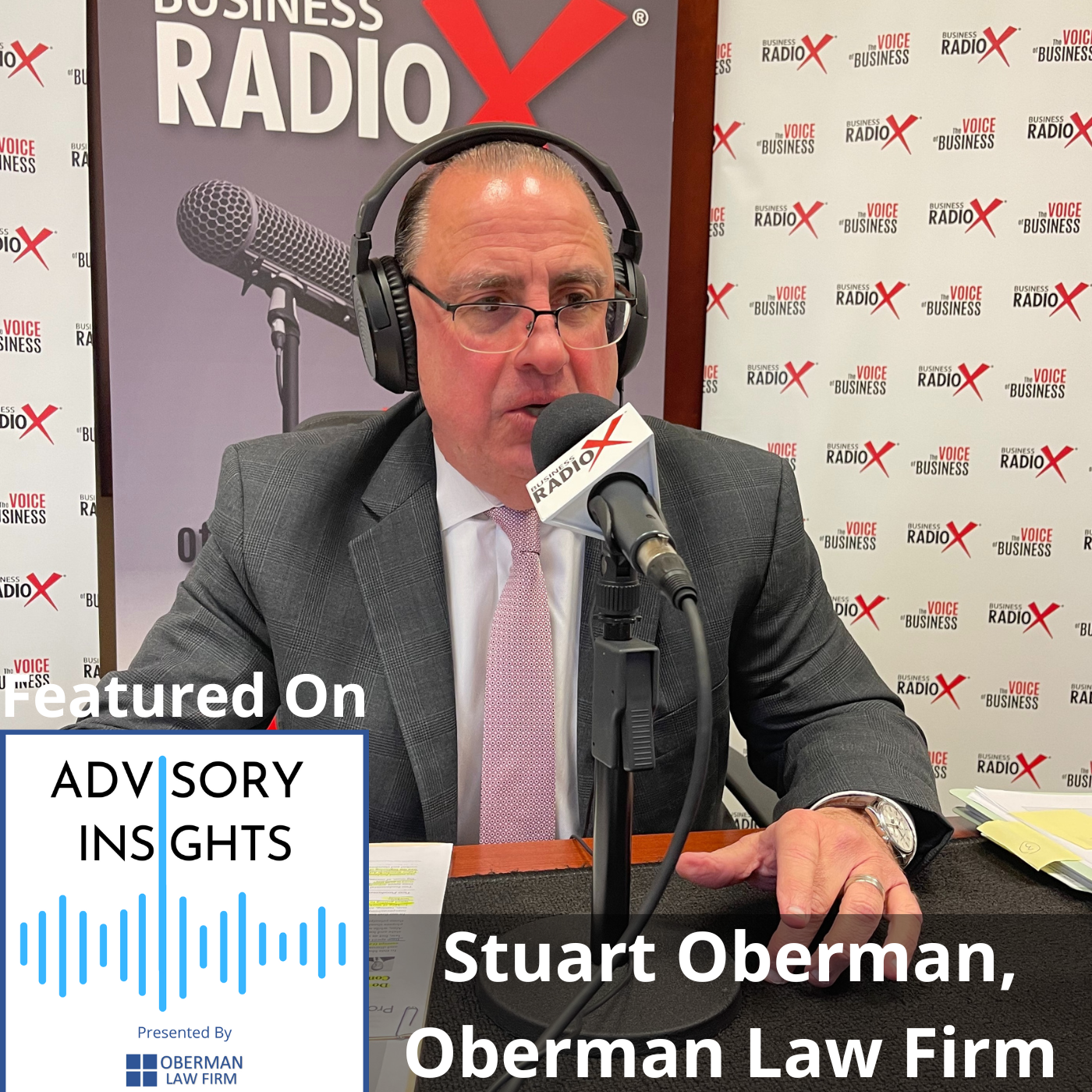
On this episode of Advisory Insights, Stuart Oberman of Oberman Law Firm looked ahead to 2023 and covered some of the basic HR-related compliance reviews businesses should conduct at year end 2022, including manuals and checklists, time tracking and overtime policies, employee vs. contractor classification, and more. Stuart also urged employers use this time to verify their compliance with the FLSA, the Affordable Care Act, the Americans with Disabilities Act, OSHA, and EEOC.

Advisory Insights is presented by Oberman Law Firm and produced by the North Fulton studio of Business RadioX®. The series can be found on all the major podcast apps. You can find the complete show archive here.

TRANSCRIPT

Intro: [00:00:01] Broadcasting from the studios of Business RadioX, it’s time for Advisory Insights. Brought to you by Oberman Law Firm, serving clients nationwide with tailored service and exceptional results. Now, here’s your host.

Stuart Oberman: [00:00:20] Welcome everyone to Advisory Insights. This is Stuart Oberman. Well, I’ll tell you, folks, 2023 is almost here. So, at this time of year, it is a mad, mad scramble to get everything organized, closed out for 2022, and then see what we have for 2023. So, this is a perfect, perfect time that our clients, big or small, whether you make $100,000 a year or whether you’re half-a-billion to a billion dollars, it’s all, all, all regulatory time. So, what are we going to cover?

Stuart Oberman: [00:01:30] As we review regulatory concerns for 2023, it’s a mad scramble now. Our clients, whether they’re big, they’re small, whether they make $1,000 a year or half-a-billion dollars or a billion dollars, it is all regulatory time. So, what I want to do is really take a look at what are the basic things that you need to really look at on an H.R. Process, whether it is local, regional, national landscape. Human resources is an extremely, extremely hot topic right now.

Stuart Oberman: [00:02:01] You know, when you have states that are regulating hair color, when you have states that are regulating non-compete agreements, when you have states regulating background checks, whether we have employee classification issues, whether we have IRS issues, let’s take a quick look at some of the things that we need to look at and what everyone needs to look at as a checklist for 2023 starting today.

Stuart Oberman: [00:02:28] One, I want everyone to do a complete compliance review. What does that mean? That means all your manuals, all your checklists, all your personnel issues, all your tax forms, whatever you need to do to make sure that those personnel files are absolutely in order we need to take a look at.

Stuart Oberman: [00:02:50] Second step in this wonderful world that we live in of the revolving employee coming and going, boomeranging, the great resignation. I forgot the biggest term now is a great – I don’t know, where employees just sort of float along and they really don’t check in or check out. They just float and, eventually, wait to be fired.

Stuart Oberman: [00:03:13] I want you to take a look at hiring and recruiting, you know, what is your onboarding process. That’s the next one, employee onboarding. Do you have the regulatory matters? Do you have the offer letters, which we’re going to cover in another episode. Do you have the background checks? Are you granted permission to do background checks? Are you granted permission to do criminal checks? I mean, these are the things that you really, really have to take a look at as far as onboarding goes.

Stuart Oberman: [00:03:42] Do you have a training process in place for the employees or are they just sort of floundering? Have they received non-disclosure agreements? Have they received social media, cell phone, internet policy agreements? These are all the things that you need to handle right when they start the first day.

Stuart Oberman: [00:03:58] So then, let’s take a look at our payroll and time keeping measures. Huge topic issue. Are you properly paying your employees for overtime? We’re going to cover that issue as it relates to commuting employees in a couple episodes down the road. But how are you paying your employees? Are they W-2? Are they 1099? Are you paying them for travel time to the job, paying spending the night? Are you traveling?

Stuart Oberman: [00:04:25] You know, we’re going to get into a little bit of the The Portal-to-Portal Act. You’re probably thinking, what in the world is that? Well, that’s an early, early law that’s been around for about 60 or 70 years that, honestly, most H.R. people do not know about. So, timekeeping measures. Are you tracking time? How are you tracking time? Is it manual? Is it by computer? Is it by software?

Stuart Oberman: [00:04:48] Because what happens is we have some employers that will not pay their staff overtime until they reach 46 hours. Now, there’s a five hour gap there every week. That can be very, very costly. Do you have a policy in place? Is your OT policy, whatever that may be – I’ll use the word defensible – defensible? Is it defensible against the IRS? Is it defensible against the Department of Labor, no matter where your state is, or federal? What do those things look like?

Stuart Oberman: [00:05:26] Classification, independent contractor or employee. Do you pass the simple smell test? I think it was back in ’84, I believe, or the early ’80s, the IRS set up 20 checkmarks, if you will, on what you need to look at to determine whether a person is an employee or independent contractor. Are we looking at the control test? The old saying, if you control the time, place, and manner of an individual, they are an employee. So, that could be a very, very, very costly mistake.

Stuart Oberman: [00:06:05] Next question is proper record considerations. Are you keeping track of those? So, there’s a couple of things you need to look at when you’re saying you’re tracking those. So, I want you to take a look at do you comply with the Fair Labor Standards Act, FLSA, the minimum wage, overtime? Should that be reviewed? Absolutely. Are you looking at the Affordable Care Act? Do you comply with that? Simple things. Do you have enough employees to comply with those areas? American with Disabilities Act, the ADA, are you looking at those? Occupational Safe and Health Act, OSHA – OSHA, the big guys. Family Medical Leave Act, are you looking at that, FMLA, 50 employees or over?

Stuart Oberman: [00:06:53] Do some of your employees that are 15 or some of your companies that are 15 and more employees, do they qualify for that? And then, the beloved agency, the EEOC, which is a nasty, nasty governmental organization that, really, I say nasty, but they do a lot of good things. And we’re going to cover some areas on that down the road.

Stuart Oberman: [00:07:15] So, what are the next things? EEOC retaliation. So, if your employee reports you to a governmental agency or state agency or even a local agency, and you retaliate, well, what does that mean? You can’t fire, you can’t demote, you can’t reprimand, you can’t punish your employees because they simply went ahead and reported you, which they are allowed to do. The question is, how do you deal with that internally and do you have a retaliation process? That has to be reviewed. You’ve got to look at your H.R. You have to have specific guidelines for non-retaliation.

Stuart Oberman: [00:07:57] And, lastly, I’m going to take a look at federal guidelines for 15 or more employees. Now, have you even looked at whether or not the FLSA even applies to you? The question is it will. Affordable Care Act, Medical Disabilities Act, OSHA, FMLA, EEOC, do those even apply to you if you have 15 or more employees? If you don’t know the answer to that question, you’re way out of compliance.

Stuart Oberman: [00:08:24] And I would urge everyone to take a look at what their guidelines are, ask questions, seek counsel, go to the C-suites of your company. And if you are not in compliance, now is an absolute great time because people wait to the second, third, fourth quarter to do this. Now’s the time to deal with it going into 2023.

Stuart Oberman: [00:08:49] Folks, that is our H.R. concerns for 2023 entering. I want you to really take a look at these things and make sure because it is really a trap for the unwary if you are not.

Stuart Oberman: [00:09:02] Folks, Stuart Oberman, Oberman Law Firm and Advisory Insights. If you have any questions, please feel free to contact me at 770-886-2400 or email stuart, S-T-U-A-R-T, @obermanlaw.com. We’re going to have some great, great topics to follow on our next podcast. So, everyone, have a fantastic day. Thank you.

Outro: [00:09:25] Thank you for joining us on Advisory Insights. This show is brought to you by Oberman Law Firm, a business-centric law firm representing local, regional, and national clients in a wide range of practice areas, including health care, mergers and acquisitions, corporate transactions, and regulatory compliance.

About Advisory Insights Podcast

Presented by Oberman Law Firm, Advisory Insights Podcast covers legal, business, HR, and other topics of vital concern to healthcare practices and other business owners. This show series can be found here as well as on all the major podcast apps.

Stuart Oberman, Oberman Law Firm
Oberman Law Firm

Stuart Oberman, Founder, Oberman Law Firm

Stuart Oberman is the founder and President of Oberman Law Firm. Mr. Oberman graduated from Urbana University and received his law degree from John Marshall Law School. Mr. Oberman has been practicing law for over 25 years, and before going into private practice, Mr. Oberman was in-house counsel for a Fortune 500 Company. Mr. Oberman is widely regarded as the go-to attorney in the area of Dental Law, which includes DSO formation, corporate business structures, mergers and acquisitions, regulatory compliance, advertising regulations, HIPAA, Compliance, and employment law regulations that affect dental practices.

In addition, Mr. Oberman’s expertise in the healthcare industry includes advising clients in the complex regulatory landscape as it relates to telehealth and telemedicine, including compliance of corporate structures, third-party reimbursement, contract negotiations, technology, health care fraud, and abuse law (Anti-Kickback Statute and the State Law), professional liability risk management, federal and state regulations.

As the long-term care industry evolves, Mr. Oberman has the knowledge and experience to guide clients in the long-term care sector with respect to corporate and regulatory matters, assisted living facilities, continuing care retirement communities (CCRCs). In addition, Mr. Oberman’s practice also focuses on health care facility acquisitions and other changes of ownership, as well as related licensure and Medicare/Medicaid certification matters, CCRC registrations, long-term care/skilled nursing facility management, operating agreements, assisted living licensure matters, and health care joint ventures.

In addition to his expertise in the health care industry, Mr. Oberman has a nationwide practice that focuses on all facets of contractual disputes, including corporate governance, fiduciary duty, trade secrets, unfair competition, covenants not to compete, trademark and copyright infringement, fraud, and deceptive trade practices, and other business-related matters. Mr. Oberman also represents clients throughout the United States in a wide range of practice areas, including mergers & acquisitions, partnership agreements, commercial real estate, entity formation, employment law, commercial leasing, intellectual property, and HIPAA/OSHA compliance.

Mr. Oberman is a national lecturer and has published articles in the U.S. and Canada.

LinkedIn

Oberman Law Firm

Oberman Law Firm has a long history of civic service, noted national, regional, and local clients, and stands among the Southeast’s eminent and fast-growing full-service law firms. Oberman Law Firm’s areas of practice include Business Planning, Commercial & Technology Transactions, Corporate, Employment & Labor, Estate Planning, Health Care, Intellectual Property, Litigation, Privacy & Data Security, and Real Estate.

By meeting their client’s goals and becoming a trusted partner and advocate for our clients, their attorneys are recognized as legal go-getters who provide value-added service. Their attorneys understand that in a rapidly changing legal market, clients have new expectations, constantly evolving choices, and operate in an environment of heightened reputational and commercial risk.

Oberman Law Firm’s strength is its ability to solve complex legal problems by collaborating across borders and practice areas.

Connect with Oberman Law Firm:

Company website | LinkedIn | Twitter
Tagged With: 2023, Dental Practice, HR, Human Resources, Oberman Law, Oberman Law Firm, regulatory changes, regulatory concerns, Stuart Oberman

Workplace MVP: Nicole Roberts, Forta

September 29, 2022 by John Ray

Forta
Minneapolis St. Paul Studio
Workplace MVP: Nicole Roberts, Forta
Loading
00:00 /
RSS Feed
Share
Link
Embed

Download file

Forta

Workplace MVP: Nicole Roberts, Forta

Nicole Roberts, Senior Vice President of People at Forta, joined Jamie Gassmann in an insightful conversation about the current work culture, including the phenomenon known as “quiet quitting,” the impact of remote work on workplace culture, indications of employee disengagement, how to handle exits with empathy, and much more.

Workplace MVP is underwritten and presented by R3 Continuum and produced by the Minneapolis-St.Paul Studio of Business RadioX®.

Forta

Forta is clearing the path to quality healthcare. Forta continuously improves the patient journey and delivers personalized care by applying AI and machine learning. The first care vertical Forta is improving is Autism ABA therapy. Care is difficult to access, and the delivery model must be reinvented to provide early access to families. 1 in 44 children [CDC, 2021] is diagnosed to be on the autism spectrum.

Forta has a team of driven, innovative, patient-focused individuals working together to reinvent the care and tools available to neurodiverse families.

Company website | LinkedIn | Twitter
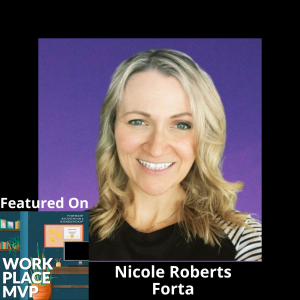
Nicole Roberts, Senior Vice President of People, Forta

Nicole Roberts, Senior Vice President of People, Forta

Nicole is the Senior Vice President of People at Forta and is responsible for the overall people and culture strategy, fostering and strengthening a culture of collaboration, recognition, empowerment, and initiative. Nicole has a passion for service-first and people-first leadership – inspiring others to bring their best, most authentic selves to work each day.

She has extensive proven experience throughout Human Resources, specifically in the manufacturing, energy, telecommunications, and veterinary and behavioral health industries. Nicole’s expertise includes HR consulting, leadership, strategic workforce planning, building and developing high-performing teams, change management, recruitment and retention, and coaching.

Nicole is a proud member of the SHRM A-Team, and she is the former Social Media Director for the Ohio SHRM State Council and her local SHRM Chapter, GCHRA. She is a member of the SHRM Annual Conference and Exposition Influencer team. She is a contributing member of the Forbes HR Council, the 3Sixty Insights Global Executive Advisory Council, the Select Software Reviews Expert Council, and Moguls in HR.

HR Without Ego Website | LinkedIn | Twitter
About Workplace MVP

Every day, around the world, organizations of all sizes face disruptive events and situations. Within those workplaces are everyday heroes in human resources, risk management, security, business continuity, and the C-suite. They don’t call themselves heroes though. On the contrary, they simply show up every day, laboring for the well-being of employees in their care, readying the workplace for and planning responses to disruption. This show, Workplace MVP, confers on these heroes the designation they deserve, Workplace MVP (Most Valuable Professionals), and gives them the forum to tell their story. As you hear their experiences, you will learn first-hand, real-life approaches to readying the workplace, responses to crisis situations, and overcoming challenges of disruption. Visit our show archive here.

Workplace MVP Host Jamie Gassmann

Jamie Gassmann, Host, “Workplace MVP”

In addition to serving as the host to the Workplace MVP podcast, Jamie Gassmann is the Director of Marketing at R3 Continuum (R3c). Collectively, she has more than fourteen years of marketing experience. Across her tenure, she has experience working in and with various industries including banking, real estate, retail, crisis management, insurance, business continuity, and more. She holds a Bachelor of Science Degree in Mass Communications with special interest in Advertising and Public Relations and a Master of Business Administration from Paseka School of Business, Minnesota State University.

R3 Continuum

R3 Continuum is a global leader in workplace behavioral health and security solutions. R3c helps ensure the psychological and physical safety of organizations and their people in today’s ever-changing and often unpredictable world. Through their continuum of tailored solutions, including evaluations, crisis response, executive optimization, protective services, and more, they help organizations maintain and cultivate a workplace of wellbeing so that their people can thrive. Learn more about R3c at www.r3c.com.

Company website | LinkedIn | Facebook | Twitter

TRANSCRIPT

Female: [00:00:03] Broadcasting from the studios of Business RadioX, it’s time for Workplace MVP, brought to you by R3 Continuum, a global leader in helping workplaces thrive during disruptive times. Now, here’s your host, Jamie Gassmann.

Jamie Gassmann: [00:00:20] Hi, everyone. You’re host Jamie Gassmann here and welcome to this episode of Workplace MVP. As we look at the current workforce of today, a common theme I am hearing from business leaders is that they are not the same as the workforce of yesterday. And realistically, that would be likely true of any timeframe.

But what makes now so different is the surge of change following the pandemic. Employees are looking for something more, particularly in how workplaces look at work-life balance, flexibility and schedules, the ability to work from anywhere, and the benefits offered for mental health, physical health and creative out-of-the-box benefits.

This shift is one that, for leaders caught flat footed, can lead to employees jumping ship to work for organizations that can offer the benefits they are looking for or the work lifestyle they want to have. Gone are the days of status quo and the classic this is how we have always done it. That approach impacts a lot of areas within your organization, your culture, employee happiness and satisfaction, and ultimately the success of your business.

Well, joining us today, we have a special guest, SHRM influencer and senior vice president of People — Senior Vice President of People for Florida, Nicole Roberts, who’s going to share her perspective on how employers can navigate the changes in today’s workforce, keeping them satisfied while driving needed business results and what are some of the watch outs you should consider? So, let’s get this conversation going. Welcome to the show, Nicole.

Nicole Roberts: [00:01:55] Good morning.

Jamie Gassmann: [00:01:56] I’m so excited to have you joining us. I know we’ve talked a couple of times at SHRM National. So, this is really exciting to have you on your own episode here at the show. So what —

Nicole Roberts: [00:02:06] [Inaudible]

Jamie Gassmann: [00:02:07] Yeah, absolutely. So, let’s just start out. Talk to us about your career journey. I know you just came on board with Forta. So, why don’t you share with our audience your career journey that you’ve taken from the beginning to where you’re at now?

Nicole Roberts: [00:02:21] Sure. So, I started my career in HR over 18 years ago. I was actually a dual major in finance and accounting and switched to HR. I started in benefits and then moved into roles that would further expand my skillset and challenge me, earning my PHR and my SHRM-CP along the way. I didn’t actually complete my bachelor’s degree until 2018. And I’m currently earning my Master’s in Management and Leadership, so I certainly don’t have a conventional path.

Leadership and culture is my passion. And I’ve been in a cycle of continuous improvement on how I show up as a leader and sharing that with others for about ten years now. Recently, I joined Forta, as you mentioned, as the Senior Vice President of People supporting a fully remote distributed workforce.

Jamie Gassmann: [00:03:15] Wow. Wow. And so, tell us a little bit about what Forta does and what they what they provide to their clients.

Nicole Roberts: [00:03:23] Sure. So, at Forta, we are reinventing how we deliver ABBA support so that families impacted by autism can get the care that they need without these months, year-long waitlists. One in forty-four children has been identified with autism spectrum disorder, according to the CDC.

And so, they are facing these — one, they get this diagnosis and there’s so much uncertainty. But then even in addition to that, they’re scrambling to find care and to find help and to find resources and to find support. And the waitlists are just insurmountable.

So, our ABA Parent Training course empowers families to work directly with BCDAs to deliver quality certified care. And we’re also improving the future of ABA experience for families by creating software and predictive algorithms that help clinicians work smarter with the latest and most effective care knowledge.

Our tech empowered care personalizes the child’s ABA therapy plan so that they can thrive. And it’s just really fascinating and exciting to be part of it.

Jamie Gassmann: [00:04:35] Yeah, I bet. That’s such a great opportunity to help families. And as a parent, I mean, my kids don’t have autism, but I just know when you need support for something, having a resource that you can lean on in a timely way is so important. That’s awesome. Great work.

Nicole Roberts: [00:04:51] Absolutely.

Jamie Gassmann: [00:04:52] So, let’s dive in. I wanted to start today’s conversation today talking about the shift in employee expectations and what you as an HR leader, what is your perspective and what have you been seeing from employers?

Nicole Roberts: [00:05:08] So, one thing that I love is seeing the partnership that people are seeking. You know, they’re not just, you know, oh, it’s a job and it is what it is. You know, that’s not what I’m seeing anymore.

Work isn’t just something that people do. They want to know that the companies that they join are investing in their growth and their development. They’re wanting to see career plans and be supported in furthering their skills and knowledge. At the same time, people do want that flexibility to have balance and be present with their friends and loved ones as well.

And from a leadership perspective, people want to know that they have support with clear direction, but also autonomy. They want to be trusted to do their best work and have clear expectations and deliverables that are realistic and that matter. And also, corporate social responsibility is huge. People want to know more about the company and where they stand on a myriad of issues. And with the technology and the access that we have today, they have the ability to get that information.

Jamie Gassmann: [00:06:17] Absolutely. I’ve seen it even in our own work environment, but that classic term you hear a lot of work is just work is not, you know, if you’re passionate about what you do, work is not just work. Work is a part of you. And so, it’s finding — I love that, finding that balance between your life and work, because if you’re passionate about it, consumes it too, and trying to drive your career success.

So yeah, definitely seeing some of that from what I’ve been hearing so that’s interesting. So following 2020, we started to experience what some are referring to as the great resignation. I’ve also — John Baldino called it the great re-shift. There’s a term for it that he was using that was like it’s like the shuffle, the great reshuffle.

And now in 2022, we’re starting to see what they’re calling the quiet quitting. And I kind of think that quiet quitting has probably been going on for a while now. They’ve just created a term for it. I don’t know that’s any different than an employee looking for something elsewhere. But what’s your perspective and your thoughts of what might be driving some of the shift in people really looking at work in a different lens?

Nicole Roberts: [00:07:33] So, you know, the great resignation was that bottled up mobility. And people who had already planned to leave their organization were already thinking of making a change, looking for a different job. They had a lot of uncertainty with everything, work, personal, their families, you name it. And also, companies held off on hiring because they have so much uncertainty or they were cutting back or just kind of holding still.

And so, when things opened up, you know, as John mentioned, people made moves. There was a reshuffle. And so, now that there’s this quiet quitting, I see this from a couple of perspectives. So, one, people are navigating a whole new world of work that includes an integration into their personal lives as well as their professional lives. And they may have been perpetuating that culture of exhaustion for so long that they just can’t sustain that any longer.

And now, it finally feels safe to breathe. So, the past two years have changed all of us in such a way that I don’t think we even fully realize yet. And people are trying to rebuild. They’re trying to nurture their mental health and really just survive in a lot of ways.

And so, we have a mental health crisis in this country and throughout the world. And many people just don’t have the energy to give 200 percent at work anymore. And we need to make it safe for them to feel that way and for them to not feel pressured in that way.

Then there’s also the aspect of people meeting expectations, which is honestly what we ask of people. I mean, we say, hey, don’t be upset if you didn’t meet expectations on your performance review. That’s what we’re asking of you because we’ve got this bell curve that we’re trying to make. And so, some people are going to get to meet expectations. but then we shame them if they’re just meeting expectations.

So, you know, we don’t need all of our teams to be full of people who are fighting like The Hunger Games for that next promotion. It’s okay to have people that are just rock steady. They get stuff done, they’re reliable, they do their job, and they don’t live to work. And that’s okay because there’s plenty of people that are like next in line for The Hunger Games that are going to make up for them.

And then we also have people who are fully remote. And they never see their manager. They never see their teams. And maybe those managers are not leading them well. They don’t communicate with them. They don’t set expectations and hold their teams accountable, and they don’t keep them engaged and dialed in to the culture and why they should care and why it matters and why their contributions are so important to the organization.

So for those people, they’re going to be more tempted to see if the grass is greener elsewhere. There’s plenty of companies lining up to compete for that talent and take those people off their hands. And the technology makes it so much easier to do it.

Jamie Gassmann: [00:10:47] You know, and you hit on something that’s really interesting where managers that might have been used to managing and being able to observe productivity and, you know, end results, you know, right inside the workplace. And then shifting over to being a manager that’s remote where you don’t have visibility. I mean, they could be out walking their dog all day long and you have no idea.

So, what are some of — what some suggestions that you have when somebody does have this remote work environment and they feel like they might be struggling to manage them effectively and they want to or even gauging, you know, are these people enjoying their job? What are some of the things they can watch for to kind of help be that leader that they want to show up as?

Nicole Roberts: [00:11:35] I mean, the number one thing is having a strong relationship with the people that report to you. I mean, I cannot emphasize strongly enough the importance of having weekly, regularly scheduled kept one-on-one meetings where, you know, your direct report goes first. They tell you about what’s going on and it’s safe to talk about work and life and kids and pets and, you know, aging parents and just, you know, whatever they want to talk about. And also, to ask for help on projects or to give a status update on something.

But that meeting should not ever be where we are on this. Where are we at on this? Where are we at on this? That’s a relationship focused meeting. If you don’t ever talk about work in that meeting, that’s even still a successful meeting. And when you can start to identify changes in people, if you’ve done the work ahead of time, you’ve built that strong relationship, you’ve built that trust, that’s when you can say, hey, you know what kind of noticed that you’re not participating as much in our teams chat or you used to be somebody who would be first to volunteer to champion a project or even co-sponsor it. And I’m not seeing that anymore.

Like, do you first of all, see that in yourself? And is there anything that’s driving that I can help you with? Because it may be, hey, I need to shift and focus on something in my personal life right now and I’ll get right back to that. Or there may be something else that’s going on that has nothing to do with you as the manager, with the team, with the organization, with how they feel about the company. Maybe they just need to rotate that priority list for a second and they need to know that they’re supported by their manager to be able to do that.

Jamie Gassmann: [00:13:30] Yeah, absolutely. Because there’s still a lot of personal stuff that people are navigating. So, with quiet quitting, what I’m hearing is that they’re still meeting expectations of their job and but while they’re searching for something new. And so, if you’ve got that employee who’s been going like 200 percent and now, they’ve scaled it back to like 100 percent, well, how is this really any different than before the pandemic and people doing that, then, you know, why is it getting a new term now? And what do you think is driving some of that?

Nicole Roberts: [00:14:04] So, I don’t think it’s new. I think it’s just different and I think it’s way more accessible. And I think that maybe people are paying attention more to it now just because it’s impacting their businesses more. So, it’s more visible. It’s more accessible for sure. I mean, whether you’re in an office or not, most interviewing is being done virtually.

And so, the time to go through a process is dramatically reduced. And you don’t have to take time off for an interview. You’re not driving anywhere. You’re not, you know, I mean, people can integrate this so much easier and so much more efficiently into their day. And it’s not a matter of, oh, I need to take a sick day and spend all this time half day interviewing with people. Like that’s just not the state of recruitment and interviewing and with this super high, competitive nature of talent right now.

And so, you know, if you aren’t keeping your teams engaged and we’re all competing for talent, I think that you’re going to see a lot more of this.

Jamie Gassmann: [00:15:13] Yeah, it’s just showing up a little bit different, just in the fact that it’s a lot more accessible to be able to. What I think too like with LinkedIn, you have more access to jobs across the country than ever before. And for some, that could mean a significant pay increase compared to what they’re getting in their current marketplace. So, it definitely is creating a lot more opportunity for people.

Nicole Roberts: [00:15:39] Well, and you know, to your point about improving your income potential and all that, I mean, with inflation, what it is, if your company didn’t do everything in their power to try to help offset that and some of them couldn’t. I mean, you know, I’m certainly not shaming businesses in their budgets. But there are companies out there that have certainly built that into their budget, and they are happy to attract your people away. And they’re maybe offering a full remote culture like we are. We have our pick of anywhere in the country, even international, that we can find talent. And I mean, that’s just — it is the state of what we’re dealing with. And companies need to be aware of that.

Jamie Gassmann: [00:16:26] And employees are demanding it in some cases. So, I know culture is a passion area for you as well. So, talk to me about how the great resignation or the quiet quitting can impact the culture of the workplace. Or is culture what is driving the employee to make that decision to quit?

Nicole Roberts: [00:16:45] So, all factors aside, such as, you know, I have some circumstance in my life where now I need to dramatically change my circumstances. People don’t leave cultures where they feel seen, supported, and appreciated. When someone says that they’re leaving for more money, better benefits, better opportunity, unless they were cold called and offered a job, that curiosity to look elsewhere did not happen overnight.

I can recall times in my own career and actually in speaking to other people and preparing for this when if you’re perfectly content and a recruiter contacts you, you say, “Hey, you know what? Thanks so much for thinking of me. I’m actually going to refer you to somebody else. But I’m not interested in making any moves right now. But, you know, feel free to keep me in mind in the future.”

People that see the impact that they’re making in the organization, that know that they are impacting the future, that they’re part of plans, that they have a plan, and they know what next steps are for them in their career, they’re not quiet quitting.

Jamie Gassmann: [00:16:45] Yeah. They’re content and happy with everything that they’re getting and don’t need to make that move. Yeah, absolutely. That’s great. Great, great points to call out for any leaders that might be listening in. So, what can leadership do to lessen the likelihood of quiet quitting, great resignation, of that happening within their actual own workplace?

Nicole Roberts: [00:18:18] So, this is kind of a passion project of mine right now, which is understanding that you need to put as much focus, if not more, into onboarding and acclimating somebody as you did in getting the person in the door and on the team. You need to get them from the beginning interwoven into your culture, dial into what they’re doing, understanding how important their role is.

Your work is not done when the person enters orientation. The organization has put trust in you to take care of this person and to help them do their best work. And it’s your responsibility to ensure that they acclimate in the organization, that they’re introduced to people that they’re going to be doing business with.

And for those people that may push back and say, I don’t really have time to meet your new hire, you don’t not have time to teach somebody new how to best do business with you. You’re teaching them right away, hey, this is how we do things in this area of the business, and this is how you can be most successful when it comes time for us to interact, and when I might need something from you or when you might need something from me. Like you don’t not have time for that.

Share company specific systems, processes. There are only gains to be made with getting someone dialed in, promoting your brand, and feeling like part of the team sooner, and then focus on communication, building the relationship, building trust, learning about their specific needs to do their best work.

You know, people need to be seen, supported, and appreciated. And it’s simple, but it’s not easy and it takes work. And you need to prioritize that. And then have other people cross-functionally check in with them and see how they can best help them succeed.

I mean, if you have a situation in the organization where maybe the manager changes, you don’t want to feel like you’re going to lose that entire team because all of their relationship and all of their connection to the organization is that manager. And if they leave, they’re either going to take their entire team with them or you’re going to start to see people resigning left and right.

So, get other people in the organization involved in them and make sure that they know who are additional people that they can reach out to for support and then get feedback and data from people.

How was your experience with us so far? Did the expectation match the reality? If not, why? What can we do better? Do you have the tools you need to be successful? Do you have the appropriate resources and training? What suggestions do you have for us?

You know, be curious and follow up on any action plan so that people know that you’re truly listening to them and you’re not just hearing them. If you send out a survey and you don’t do anything with it, it’ll be the last survey somebody takes.

And then if they do leave because they are not sworn to life to your organization, thank them for their contribution to the mission thus far. Wish them well. Ask them what’s exciting them about this new role or this new opportunity. What are they getting there that they couldn’t get here? Did they not even realize that they could have gotten that in your organization and you either didn’t communicate it well or they didn’t feel comfortable asking?

And then treat them with as much respect, care, compassion, and grace as possible in their exit. You know, it’s not only the right thing to do as a human and as a leader, but all those remaining team members are going to pay attention to how you treat people that give notice.

So, if you shame them, if you treat them like they’re not loyal to the organization and take it personally, you want people on your teams that are proud to be on the team based on how we treat people that are going to be moving on to another organization and proud of how we treat people at every stage in their journey.

We’re seeing a lot of boomerang employees. And how wonderful would it be to have that really amazing person want to come back because they have such a positive, lasting impression of your team and how you treated them.

Jamie Gassmann: [00:22:39] Absolutely. I mean, there’s always — you got to keep that bridge unburned because they might know somebody who say okay, I saw you worked there, what was your experience like? So, you never know who they might be connecting with in terms of future employees to or connections they might have.

So, we’re going to take a quick commercial break so, to hear from our sponsors. So, Workplace MVP is sponsored by R3 Continuum. R3 Continuum is a leading expert in providing behavioral health support to people and organizations facing disruption, violence, and critical incidents. Through their evidence-based interventions, specialized evaluations and tailored behavioral health programs, they promote individual and collective psychological safety and thriving. To learn how they can help your workplace make tomorrow better than today by helping your people thrive, visit R3C.com today.

So, now going into some additional questions, we’re continuing on with that culture and employee expectations. What, in your opinion, would be some common red flags that leaders should be watching out for that might signal an employee is quietly quitting?

Nicole Roberts: [00:23:52] So, one thing for sure is a lack of engagement, a declined interest in wanting to be part of projects. I mean, if you’re setting quarterly goals and let’s say you have three or four people on your team and you’re divvying up goals among the team. And you’ve got somebody who is not volunteering, who normally would who doesn’t seem to be interested in it, I mean, if you’re them and they’re thinking, well, I’m not going to be here for that, so I don’t want one, the team to be counting on me to take that through and to push that initiative forward. Those are some of those indicators.

And again, if you’ve built that trust, then in your one-on-one, you can be like, hey, you know something going on? Because I kind of noticed that normally you’re all about championing these projects and I just, you know, is there something else going on? Is somebody else asking you for something that you feel like you don’t have the time for? Or I really would love to see you be the person that drives this project. Like, what is there that’s going on either personally or professionally that’s interfering with that and how can I help?

Another thing for sure is people who were more engaged before, and you start to see that change, people who were maybe really, really quick to respond before and you’re starting to see a decline. I mean, it’s not just people that are in remote environments that can get distracted or that can feel like they’re not really, you know, kind of motivated and dialed in. I mean, that can happen when somebody is sitting in their office as well. And you have to notice those subtle nuances with people when that behavior starts to change.

Jamie Gassmann: [00:25:47] And I would imagine a manager who’s very involved in multiple place — I’m hearing a little bit of an echo. Hopefully it’s not coming through. But you know, who has created that safe environment where employees can feel, you know, safe to talk about their personal lives and, you know, create kind of almost that opportunity where they can be vulnerable and it’s okay. They would start to pick up on some of the cues that somebody might be — so, you know, going back to a point you made earlier. You know, having that manager that’s really engaged with both that kind of that some of the personal for what they want to share and then also that person’s professional growth, you know, really can play well into being able to pick up on some of those concern areas. Would you agree?

Nicole Roberts: [00:26:34] Yeah, for sure. I mean if someone starts to really see that kind of lack of engagement or lack of engagement and they are wanting to try to either reinvigorate the engagement or get that person kind of back on the team, I mean, you know, you’ve got to let people know that you’re paying attention, right?

If somebody is like, oh, man, my manager really noticed that I maybe not participating as much as I did before or maybe it doesn’t feel like my heart’s in it as much as it was before. I mean, that really says a lot to somebody like, hey, you are not just my manager, but you really care about me and you’re noticing differences with me. And you not only notice it, but you’re taking action too. And we have that trust built, right?

So, it doesn’t feel unsafe. If you’re asking me, I don’t feel like my job is on the line because you’re having a conversation with me about my performance, right? Because I mean, we see it all the time on social media and whatever where people are like, oh my gosh, this pit in my stomach. When my manager says they want to talk to me. Like that’s the same as like being the principal’s office, right? Like that’s that perspective and that’s that lack of trust.

And that I mean, you got work to do if you’re giving people that pit of despair when they want to talk to you. And if you’re doing regular one on ones, you don’t have to say like, hey, do you have a second? Can we talk? Because, you know, you’ve got scheduled time coming up, at least in the next set of days to have a conversation with somebody.

Jamie Gassmann: [00:28:12] Yeah, and that’s scheduled time is so important. You know, I travel occasionally, and I try to if you need me to reschedule it later in the week or if you need to get a hold of me for whatever reason while I’m on the road, I’m at your disposal, just let me know.

So, you kind of hit on this a little bit with my next question around how a leader can help to reengage the employee. And you touched on some ways that they can do that. But if you’ve got somebody who’s really checking out, is it worth it? I mean is it worth trying to bring them back in? I suppose it really would depend on the situation. But what are some of your thoughts around that that a leader should consider?

Nicole Roberts: [00:28:50] I think that it depends for sure. And of course, that’s like HR’s favorite answer, right? It depends. But it really does depend. I mean, you can tell when you’re having a conversation with somebody, if this is going to be somebody that you’re going to be able to reengage. Or I mean, if they’re already super excited about the next chapter, there’s nothing that you can say.

And we have to make sure that from a workforce planning perspective, all of those different aspects that have we cross-trained our teams, are we making sure that we’re not holding on to people simply because there’s nobody else to do the work? We want people who want to be there and don’t feel obligated to be there. And we want to have teams that are not going to be just overburdened if somebody leaves unexpectedly or planned, right.

And so, we need to make sure our recruiting processes are strong and that we have a really strong employer brand, so people want to come and join us and that it’s not going to take six months to fill that job because it’s really unfair to the rest of the people on the team. They’re trying to do their best work to be doing this, this job of this other person simply because we fail to plan.

Jamie Gassmann: [00:30:13] Yeah. And I mean, looking at kind of some then you talk a little bit about some of the common mistakes, but, you know, there might be reasons that an employee is trying to leave that an employer cannot feel. You know, there might be some things that they’re just really want for themselves.

And so when you’re looking at an employer who’s identifying that there might be somebody who’s on the verge of quitting or looking to make a move, what are some of the mistakes that they make when an employee is in that role that could be detrimental to maybe their reputation, of the organization, or cause the employee just to be like, well, I’m just going to resign without having anything in place because I’m done. What are some of the mistakes that that you’ve heard of?

Nicole Roberts: [00:30:54] So, the number one thing and I kind of touched on it a little bit earlier with my soapbox on treating people with respect and compassion is, you know, if somebody has made the decision that they are going to move on from your organization, don’t treat them like a pariah, like they are not personally out to sabotage your organization. And if they are, like you have way bigger problems to worry about than that, you know,

But if somebody gives notice, I mean, congratulate them, thank them for everything that they’ve done, ask them if they know anybody that would be a great fit for that role or hopefully you’ve worked some kind of informal or formal succession plan. There’s cross-training that’s going on. I mean, I always tell people that you should always know 50 percent of the job above you because you should always be prepared for that next promotional opportunity.

But if somebody gives notice, let them plan their transition. Let them tell the organization. The worst thing that I can see is when a company does not let somebody handle their own exit. And all of a sudden there’s this message that goes out says, so-and-so is no longer with the company. You have just triggered so much anxiety and fear and just unnecessary upheaval in your organization from either a personal perspective or it’s just a lack of EQ, right.

And now, you’ve got people in the organization that are like, oh my gosh, well, I thought that person was awesome and doing a great job. Like, are we going to have layoffs? And, you know, is this like the beginning of something? Or, oh my gosh, did something really crazy happen?

Like, was there — I mean, now all of these people that received this message, they’re not focused on your customers. They’re not focused on your services. They’re not focused on doing their best work. They are either panicked. They’re now going to answer those calls from the recruiters because they don’t know what the future holds for them.

Like if somebody is leaving because they have found another opportunity, let them share like, “Hey, company. I wanted to let you know I’m leaving in the next few weeks. It has been my privilege to support you during this time that I’ve been here. Thank you so much.” You know, I mean, just treat people with grace and dignity. I mean, it’s really not that hard. And that’s why I always say that like the strength of an organization and the success of an organization is going to rise and fall with the strength of their leadership. If you have people in positions that don’t understand the impact of their actions to the culture, I mean, you’re going to struggle.

Jamie Gassmann: [00:33:54] Yeah, that’s such great advice. And giving them that opportunity to kind of tell why they left, where they’re headed, you know, the opportunity that they’re seeking and give some reasoning behind it. Because I know those empty, they no longer work here, you’re going to fill with lack of information answers for yourself.

So, looking to the future, is it expected that the workforce was going to continue to stay consistent with what we’re seeing today? Or do you think that we’re going to go through even more changes of evolution in terms of how employees want to show up or the benefits they want from an employer?

Nicole Roberts: [00:34:35] I mean, I think that it’s always going to change and that’s what’s so exciting and wonderful about HR, right. I mean, if you look at even how it’s changed over — I mean, it was personnel, and then HR, and now people operations because we’re shifting from being this administrative support to being the people who are putting out fires and are solving problems to being the people who are partnering at the business level and looking at, hey, what’s the business trying to do? Okay, this is how people operations can help support that, right?

So, we have seen work change and really for the better. I mean, obviously, if you ask me. And I think it’s going to continue to change, and I’m really excited to see how that is. But what I love the most is that CEOs are embracing it. And there are world-class organizations that are out there helping businesses to relate better to your people and to get people dialed into your culture and to communicate and to engage.

And all of those things that used to be like the nice to haves. Like, oh, we’re going to try to put it in our budget this year to have a party or we’re going to try to, I mean like the fact that it’s not a one-time event anymore to get people together and to engage them is I’m so proud of us that we’ve gotten this far.

Jamie Gassmann: [00:36:06] Yeah. It’s actually a core focus of pretty much every workplace I’ve been at is how do we get people to know the rest of the organization, be involved, be a part of a team, you know, because really, I like to think of work as like the home away from home. Even though now, you know, in this remote work environment still, yeah, in my home. But we’re still interacting with them all day, our families, you know.

So, it’s just — and now it’s even more of an integration because, you know, I know my daughter is at school right now, but she’s notorious for being in the background of any call that I’m usually on. So, it’s kind of fun to see how some of those integrations and the kind of the acceptance of different things than what before the pandemic would have been like oh, no, no, no, that’s not okay. If a dog barked on a webinar, it was like, whoa, I’m so sorry. Now, it’s like, there’s my dog.

Nicole Roberts: [00:37:04] Your animal that has no regard for the fact that you’re on a call to stop doing what animals do. Oh, yeah, I’ll get right on that.

Jamie Gassmann: [00:37:17] Yeah.

Nicole Roberts: [00:37:17] Yeah. My all-time favorite makes my day is if I’m on a video call with somebody and a child interrupts, a spouse that has no idea they’re on a call interrupts, or a pet like makes my whole day, right? Because we get to, for just a second, relax. Remember that we’re human. I want to know. I want to meet the pet. I want to meet the child.

I want, you know, I know the names of all the people on my team. I know the names of their kids and their spouses and their pets. And we share — we have a Teams channel that is called fur to fur babies and we share pet pictures all the time. I mean –.

Jamie Gassmann: [00:37:57] Love it.

Nicole Roberts: [00:37:58] I mean people want to share to the extent that they’re comfortable with that they do have a life and they do have passions. I mean, if you look at TikTok and Instagram and the Reels and whatever, I guarantee you the number one thing people are looking at is kitties and puppies and some kind of furry thing and because it’s that welcoming rush, right. People love that and they want to connect on that too. And there’s absolutely nothing unprofessional about taking a minute to share in that humanity.

Jamie Gassmann: [00:38:29] Yeah. And you hit it when you said humanity. It makes us humans, not just workers. Like it gives us that connection into who they are as a person fully. And I think as a leader, it allows you to be a better leader because you can have more empathy, compassion. You understand their world a little bit more.

And you know, because the person you know, as a whole person, you’re then — you can see how they work. You start to kind of understand like how you can even better lead them and coach them because you can see their vulnerabilities. You can see where their confidence might be weakening and you can go, hey, no, you, I got you, you got this, you know.

So, I think there’s just so much that leaders have access to today that the leaders of before maybe didn’t. And, you know, but it’s okay now where before it might have been like, no, don’t ask them about their home life. Like just it’s all about work, you know. And I think that that shift is just such a great change that just helps us be better humans, but also better leaders.

So talking about our listeners and the leaders that might be kind of chiming in on this episode, you know, what piece of advice would you want to leave them with as it relates to ensuring that they’re creating that culture of employees who want to stay in the now and into the future?

Nicole Roberts: [00:39:54] So, the number one thing that I can say is invest time and resources into your people, find out what they’re interested in and what would help them do their best work. Ask people what they want to be involved with at work. I mean a lot of the times we can get siloed in our communication and even in our projects and have no idea that there’s something going on over here with this team that you can really add a lot of value to.

So, ask people what they want to be involved with at work. Ask people what they want to do more of or who they would want to learn from. One of the really amazing things about virtual environments and about the technology that we have is you can have a conversation with somebody who is not down the hall from you or is not directly part of your immediate team or even in a cross-functional team. And you can learn so much more from them and maybe get somebody a coach, if that’s possible. I’m seeing a huge surge in people wanting coaches to further their development.

You cannot ever overinvest in your people, that there’s never a downside to investing in your people. And I cannot think of any leader or manager that I’ve ever had that I was like, man, he just cared too much about me, you know? I mean, it’s like I have a thing on my phone that says you’ll never look back and think you spent too much time with your kids. You’ll never look back and think that you invested too much in your people either.

Jamie Gassmann: [00:41:24] Yeah, I love that. That’s a great, great advice to end the interview on. It’s wonderful. So, this obviously, great conversation. I’m sure our listeners are going to be taking away some great tips and information from you. So, if they wanted to get a hold of you, learn a little bit more, maybe ask a question about something you shared, how could they do that?

Nicole Roberts: [00:41:46] So, I am active on LinkedIn and Twitter professionally. I kind of saved Facebook and Instagram for my personal life. And so, @NRobertsHR, can’t get easier than that. And if you send me a note on LinkedIn, please, if you send me a connection, please send me a note with why you’re wanting to connect so that I have some source of context of where it’s coming from.

I am always happy to help. I am never too busy. I’m very busy, but I’m never too busy. But I need to be able to prioritize that time and also prioritize connections because we do get a lot of cold call, you know, people trying to sell us stuff. And I would love to listen to all of them. I just simply don’t have time.

Also, I have a blog that I’m not as active as I used to be, especially since working on my Masters, and that is HRwithoutego.com. But I was super engaged with it and writing all the time for a period of time. So, if you ever want some insight into my point of view, that’s a great place to go.

Jamie Gassmann: [00:42:54] Wonderful. Well, thank you again so much, Nicole, for being on our show. It’s been such a pleasure to have an opportunity to celebrate all the great work that you do and your expertise. And thank you so much for sharing all of your great advice with our listeners.

Nicole Roberts: [00:43:09] Thank you so much.

Jamie Gassmann: [00:43:10] So, we also want to thank our show’s sponsor R3 Continuum for supporting the Workplace MVP podcast. And to our listeners, thank you for tuning in. If you’ve not already done so, make sure to subscribe to subscribe so you get our most recent episodes and other great resources that we share on those feeds.

You can also follow our show on LinkedIn, Facebook and Twitter, @WorkplaceMVP. And if you are a Workplace MVP or you know someone who is, we want to hear from you. Email us at info@WorkplaceMVP.com. Thank you all for joining us and have a great rest of your day.

Female: [00:43:50] Thank you for joining us on Workplace MVP. R3 Continuum is a proud sponsor of this show and is delighted to celebrate most valuable professionals who work diligently to secure safe workplaces where employees can thrive.


Tagged With: Forta, HR, HR Without Ego, Human Resources, Jamie Gassmann, Nicole Roberts, quiet quitting, R3 Continuum, Workplace MVP

Workplace MVP: Robyn Smith, Jackson Healthcare

August 25, 2022 by John Ray

Jackson Healthcare
Minneapolis St. Paul Studio
Workplace MVP: Robyn Smith, Jackson Healthcare
Loading
00:00 /
RSS Feed
Share
Link
Embed

Download file

Jackson Healthcare

Workplace MVP: Robyn Smith, Jackson Healthcare

Robyn Smith, Executive Vice President of Human Resources for Jackson Healthcare, was the Workplace MVP on this episode. Robyn detailed the challenges Jackson Healthcare has faced throughout the pandemic and those that are ongoing, and the steps her company took to support the mental and physical well-being of its associates. She and host Jamie Gassmann discussed the creative solutions Jackson Healthcare has implemented, including virtual events, in-person events when they returned to the office, support for the challenges associates may be facing, the need for empathy, and much more.

Workplace MVP is underwritten and presented by R3 Continuum and produced by the Minneapolis-St.Paul Studio of Business RadioX®.

Jackson Healthcare

The Jackson Healthcare companies provide healthcare systems, hospitals, and medical facilities of all sizes with the skilled and specialized labor and technologies they need to deliver high-quality patient care and achieve the best possible outcomes — while connecting healthcare professionals to the temporary engagements, contract assignments, and permanent placement employment opportunities they desire.

Headquartered in metro Atlanta, they’re powered by more than 1,700 associates and over 15,000 clinician providers covering all 50 U.S. states.

Their mission is to improve the delivery of patient care and the lives of everyone we touch. This includes the patients, clinicians, and healthcare executives they work with through their companies every day, as well as their communities, the nonprofit organizations they support and each associate who is part of their family.

Company website | LinkedIn | Facebook | Twitter

Robyn Smith, Executive Vice-President of Human Resources, Jackson Healthcare

Robyn Smith, Executive Vice-President of Human Resources, Jackson Healthcare

As executive vice president of human resources, Robyn Smith brings more than 25 years of experience to her role leading Jackson Healthcare’s corporate HR team. In her position, she sets strategy for talent acquisition, benefits, training and development, career pathing, succession planning, compensation, reward programs, and workplace policies. Since joining the organization, she has been a driving force in expanding its extensive associate professional and well-being offerings. During her tenure, Jackson Healthcare became Great Place to Work certified, has appeared in consecutive years on Fortune’s Best Workplaces in Healthcare and debuted as a Best Workplace for Women and Best Workplace for Millennials.

In 2020, Robyn received the “Great Place to Work For All Leadership Award” – and on the speaker circuit, she addresses wellness and culture topics at various events each year. She serves on the board of Connections Homes, is active in Peer 150’s Human Resources Group and Atlanta CHRO leadership, and volunteers with Open Hand Atlanta and Junior Achievement.

Robyn joined Jackson Healthcare following a successful HR career in the enterprise software space and in national healthcare and staffing firms. She is a graduate of Kennesaw State University and serves on the board of Coles Business School.

LinkedIn

About Workplace MVP

Every day, around the world, organizations of all sizes face disruptive events and situations. Within those workplaces are everyday heroes in human resources, risk management, security, business continuity, and the C-suite. They don’t call themselves heroes though. On the contrary, they simply show up every day, laboring for the well-being of employees in their care, readying the workplace for and planning responses to disruption. This show, Workplace MVP, confers on these heroes the designation they deserve, Workplace MVP (Most Valuable Professionals), and gives them the forum to tell their story. As you hear their experiences, you will learn first-hand, real-life approaches to readying the workplace, responses to crisis situations, and overcoming challenges of disruption. Visit our show archive here.

Workplace MVP Host Jamie Gassmann

Jamie Gassmann, Host, “Workplace MVP”

In addition to serving as the host to the Workplace MVP podcast, Jamie Gassmann is the Director of Marketing at R3 Continuum (R3c). Collectively, she has more than fourteen years of marketing experience. Across her tenure, she has experience working in and with various industries including banking, real estate, retail, crisis management, insurance, business continuity, and more. She holds a Bachelor of Science Degree in Mass Communications with special interest in Advertising and Public Relations and a Master of Business Administration from Paseka School of Business, Minnesota State University.

R3 Continuum

R3 Continuum is a global leader in workplace behavioral health and security solutions. R3c helps ensure the psychological and physical safety of organizations and their people in today’s ever-changing and often unpredictable world. Through their continuum of tailored solutions, including evaluations, crisis response, executive optimization, protective services, and more, they help organizations maintain and cultivate a workplace of wellbeing so that their people can thrive. Learn more about R3c at www.r3c.com.

Company website | LinkedIn | Facebook | Twitter

TRANSCRIPT

Intro: [00:00:04] Broadcasting from the Business RadioX Studios, it’s time for Workplace MVP. Workplace MVP is brought to you by R3 Continuum, a global leader in workplace behavioral health and security solutions. Now, here’s your host, Jamie Gassmann.

Jamie Gassmann: [00:00:23] Hi, everyone. Your host, Jamie Gassmann, here and welcome to this episode of Workplace MVP. Since early 2020 and now into 2022, the workforce and work environments continue to experience shifts and changes. And that shifting and changing, for some, continues at a rapid or frequent pace. And some industries, such as healthcare, are experiencing shortages of staff and a limited candidate pool. While other industries are experiencing a delayed great resignation or, as some have called it, a reshuffle.

Jamie Gassmann: [00:00:56] Disruption has become a constant in our workplaces, resulting in leaders having to take a closer look at the support and resources they’re making available to employees. The workforce is not the same as it was pre-pandemic. Their view on work-life balance has shifted. Their expectations of their employer have grown. And what they need for support from their work life is different than what they would have needed pre-pandemic.

Jamie Gassmann: [00:01:22] How can employers keep up with the changes and move to a work environment employees can thrive in? How can they be creative to ensure the resources and tools they are making available to employees feels a value and appreciated?

Jamie Gassmann: [00:01:34] Well, joining us today to share the out-of-the-box resources and tools her workplace has put into place for their workforce is Workplace MVP and Executive Vice-President of Human Resources at Jackson Healthcare, Robyn Smith. Welcome to the show, Robyn.

Robyn Smith: [00:01:50] Great. Thank you. It’s so wonderful to be with you today, Jamie. Thanks for having me.

Jamie Gassmann: [00:01:55] Yeah. We absolutely appreciate you being on. And I just want to start out by having you kind of walk us through your career journey, share with us how you got into H.R. and kind of that journey you’ve taken to becoming the Executive Vice-President of Human Resources at Jackson Healthcare.

Robyn Smith: [00:02:11] Sure. So, when I graduated from college, I always knew that I wanted to be in human resources. My mother was in human resources, and I loved people, so I thought that would be a great career for me. So, I started out my career in the staffing industry, and then I moved from there into the medical field and worked for a large physician group here in Atlanta doing a lot of merger and acquisition work. And then, I moved to an international publicly traded software company, and I had a large international team and we were in 17 different countries, so that was a wonderful experience.

Robyn Smith: [00:02:56] Then, the opportunity at Jackson Healthcare came up and I just thought, what a great match for me having the staffing industry experience, having the medical industry experience, and then having software and high tech experience. So, to me, it was the perfect marriage.

Jamie Gassmann: [00:03:15] Yeah, it sounds like it. And so, talk to me a little bit about what Jackson Healthcare does. What does it provide your clients with?

Robyn Smith: [00:03:22] Jackson Healthcare is a family of highly specialized healthcare, staffing search and technology companies. The mission is to improve the delivery of patient care and the lives of everyone we touch. Our companies provide hospitals and healthcare systems with the labor and technologies they need to deliver high quality patient care and achieve the best possible outcomes, while also connecting healthcare professionals to employment opportunities that they desire. Each year, we help thousands and thousands of healthcare facilities serve more than ten million patients across all 50 states.

Jamie Gassmann: [00:04:04] Wonderful. And so, looking at kind of the conversation you and I had before, your organization, you’ve seen a lot of growth over the last few years, even before COVID. And I think you’ve even had some even more growth since COVID. So, can you talk a little bit about what that growth has looked like and the impact that’s had in your role at Jackson Health?

Robyn Smith: [00:04:27] Sure. You know, being in the healthcare industry, the needs have been more and more, especially over the last two years specifically. And our business continues to grow. And I’ve been blessed to work for an organization that continues to grow. Since I’ve been here, Jackson has tripled in size. And so, what it means for our people, it’s just wonderful to see them grow and learn new things and new skills and prosper and share that. And we’re continuing to grow because healthcare is not going away. And if anything we’ve learned in the last couple of years, is, it’s at the forefront of everything.

Jamie Gassmann: [00:05:13] Yeah. And, you know, when I start these conversations with a new guest, I’m always looking at areas that really inspire passion and get you excited about the work that you do in kind of driving these conversations. And when we were talking in our pre-show call, you talked about being really proud of the work that your team has done. And there’s a lot of great work that you shared, and we’re going to be touching a lot on it as we kind of move through the show. But tell me a little bit about the work that you’re most proud of with your team. Let’s talk a little bit about that.

Robyn Smith: [00:05:50] Sure. I am unbelievably proud of our people, and our clinicians, and our physicians that we put to work each and every day. A lot of our associates and clinicians worked around the clock. And our people worked to deploy physicians and nurses to the frontline. They were actually saving lives. These were unprecedented times. And they continue to go above and beyond to help the physicians and the clinicians get to where they needed to be to help their coworkers. Everyone leaned into the process and they worked quickly to pivot from what maybe their normal day to day job was.

Robyn Smith: [00:06:34] We found new ways to meet ongoing needs and growing needs. A few examples of this is that we had receptionists, and because the business closed for a couple of months, we cross trained them to credential clinicians and put more and more clinicians out to work on the frontlines. And other associates took on multi-specialties in the healthcare arena so that they could ramp up quickly and get more clinicians to work to care for more patients.

Robyn Smith: [00:07:09] And then, our frontline workers, they were just amazing. They worked shift after shift, overtime, just helping when the pandemic hit its peak. Not complaining. They are our unsung heroes and we owe so much to them.

Robyn Smith: [00:07:31] Our mission is to improve patient care and the lives of everyone we touch. We met our mission on patient care and pivoting to saving patient’s lives each and every day. And during COVID, we really saw the impact of all this great work that was going on.

Robyn Smith: [00:07:49] Some of the things we did, we were first to set up an emergency department outside of a hospital in the epicenter in Georgia, which the outbreak was in Albany. We set up the World Congress Center for Overflow from hospitals for more patients. We set up drive-thru vaccine centers. All of these things have never been done, so we are learning and deploying and executing at real time each and everyday.

Robyn Smith: [00:08:20] The word proud does not do it justice for all of our people and everything that they have done. Their unyielding dedication and commitment to taking care of patients and saving lives has been unprecedented.

Jamie Gassmann: [00:08:35] Wow. That’s just really impressive. And the innovation, and the project management, and the kind of forward thinking and the immediate thinking that you had to do during that time to pull that off is is absolutely impressive. I can see where it’d be something you’d be proud to say you were a part of and able to support. That’s incredible.

Jamie Gassmann: [00:08:58] And so, looking at it and in addition to that, I mean, all the great work that your employees were doing as an organization, you were all so heroic in being able to put some amazing benefits in place to support your employees so that you could keep them helping with that by giving them aid for the school.

Robyn Smith: [00:09:22] I think you said that you brought in some tutors for the children for the schoolwork. And then, you had daycares that were shut down. Can you talk through the educational and childcare resources that you did put in place for your employees, that support that you gave them to kind of lift that strain off of them as they were navigating that so that they could stay focused on supporting patients.

Robyn Smith: [00:09:51] Sure. Sure. You know, when the pandemic first started, things were changing daily, sometimes hourly. And we realized very quickly that we really needed to lean in and help our associates and their families.

Robyn Smith: [00:10:07] So, what we did is we added part-time and drop in hours at our onsite childcare center. We had some extra space available, so that’s where we set up little pods so they could bring in tutors to help. There was a cluster of three or four or six students that they could learn, of course, social distancing. But the cubes were set up enough that they could do that, that they could help each other.

Robyn Smith: [00:10:39] We deployed teachers into associates’ home from our childcare center, which had never been done in the history of that company. So, we really worked hard to get that done because we needed to continue to deploy clinicians and physicians to the frontline. Our people still needed to work but their kids needed to be taken care of. We reserved spots at distant learning centers for older students so that they could continue to learn and be in a safe environment.

Robyn Smith: [00:11:10] We did Zoom calls to engage children who were home. There were stories that came out of this. We did story time. We did arts and crafts. We did kids yoga at a specific time every week so the parents could learn to depend on that time that their children would be occupied. So, if they had an important call to be scheduled or something along those lines, that would take care of it for them. We waived tuition and offered reimbursement for added virtual school costs.

Robyn Smith: [00:11:47] You know, nobody could have anticipated any of this. So, our workforce is 70 percent female, so we have a lot of families. And so, it was really important to us to pivot and come up with creative, out-of-the-box ways to think about things and think about it differently.

Jamie Gassmann: [00:12:06] Wow. I know when we talked and I’ve shared this with you, you know, I have school-aged children and I was that working mom juggling. And, of course, my spouse was home as well. But juggling that schoolwork, and learned very quickly that was not my calling to be a teacher. I do have a whole new level of appreciation for that job.

Jamie Gassmann: [00:12:31] But just the thought of having that lift, it brought back memories to me of navigating that. And then, I teared up just thinking of how wonderful that had to have been for the employees to be able to have that lift off their shoulders and they could just focus on their work. So, kudos to you. I think that’s absolutely impressive and amazing.

Robyn Smith: [00:12:53] Thank you.

Jamie Gassmann: [00:12:54] So, additionally, in your tenure at Jackson Healthcare, you had a clinic put onsite. So, I know you talked a little bit about the clinical resources that you’ve had onsite, but you put a clinic onsite, how did that help with supporting your employees during the highest point of COVID outbreak? And even now, what are you experiencing by having that clinic put onsite? How does that come to fruition of this support system that you probably maybe didn’t think of when you initially had the idea of putting that onsite?

Robyn Smith: [00:13:24] That’s absolutely correct. We put the clinic in a few years ago, and the onsite clinic, it provides both primary and preventive care to our associates and their families. So, as we pivoted into COVID and not knowing what we were dealing with everyday and, not only finding it difficult to get into the hospitals, but some doctor’s offices even closed.

Robyn Smith: [00:13:52] And so, we made a conscious decision early on that we wanted a safe place for our associates and their families to come that was non-COVID, if you will, so they could continue to get their prescriptions filled for their maintenance meds. If they had something other than COVID, they could come and they could be treated. And they were familiar with the staff. And so, even when the office closed for just a couple of months, the utilization on the clinic stayed up around 85 percent, which is just unheard of. And so, those clinicians came in everyday to serve our population.

Robyn Smith: [00:14:37] We also offered 24/7 telemedicine services. The clinic had to pivot to some telemedicine services, and they would do COVID diagnosis over telemedicine so that they could keep seeing the other patients in the actual clinic itself. And this allowed the associates and their families to connect with the physicians from home. And so, I think it really propelled the telemedicine journey forward.

Robyn Smith: [00:15:13] We were very purposeful not to provide COVID testing in the clinic. I bet I got that question everyday, why don’t we have COVID testing. And once again, it was because we wanted a safe place for our associates and their families to get continuous, ongoing care during the time when options were very, very limited.

Robyn Smith: [00:15:35] And then, when the vaccine came out, we started offering the Moderna vaccine to associates and their families, as well as the boosters. So, that was the only thing that we pivoted on with COVID is to help them, because in the early days, it was hard to get the vaccine. So, we were constantly looking at different things that we could do to provide more services to our associates and their families.

Jamie Gassmann: [00:16:03] And has putting that in place and kind of keeping it as a clinic that people can go to that’s non-COVID, has that helped to keep your utilization of it up at this point now too? I mean, did it create kind of knowledge of it?

Robyn Smith: [00:16:22] Yes. Yeah. So, it stays around 80 to 85 percent. It’s probably one of the number one benefits that we have here on campus, because there’s just such value. And we have a partnership with a local pharmacy, so if the physician or the clinician write a prescription, they can get a same day delivery of their prescription. So, it’s not like they have to leave work and go out and pick it up because that takes a lot of time to do that. And sometimes if they’re really busy, they’ll deliver twice a day so that they’re getting the medications that they need.

Jamie Gassmann: [00:17:06] Wow. So, there’s been other creative and out-of-the-box measures that you’ve put in place to show support for your people. So, can we talk about some of those approaches? I know some of them was like therapy dogs, counselors onsite, a COVID response team. You also were prepping your managers. Can you dive into a little bit of some of these other out-of-the-box measures that you’ve done?

Robyn Smith: [00:17:30] Sure. Sure. So, we also have an onsite fitness center, so we reopened that as soon as we possibly could with limited availability and COVID-19 protocols put in place to provide the associates with the opportunity to safely exercise. Because if you think about it, everything was shut down. And so, part of our philosophy is mind, body, and spirit, and working out is part of that as well.

Robyn Smith: [00:17:59] We added some emotional wellbeing webinars, and we broke it up. We did one for the associates to talk about what issues they may be addressing. We had our onsite counselors actually do this via Teams call and answer any questions that they might have. And then, we also had a session for the managers. Because these were unprecedented times, how do you manage through all of this? How do you support your associates? And so, the counselors really speaking towards that and helping them.

Robyn Smith: [00:18:40] And we also did recorded webinars with local and national experts on topics ranging from stress management and emotional wellbeing tied to nutrition and physical health. And how parents can help their children receive better emotional support and health during this pandemic.

Robyn Smith: [00:19:02] So, there were multiple layers in there, and we just kept our pulse on it through spot surveys and kind of seeing how people were actually doing to see if we needed to add more sessions or we needed to pivot to a new topic.

Robyn Smith: [00:19:20] The executive team, we met every morning to talk about, “Okay. What’s going on today? What do we need to address today?” We also reimagined our Jackson Healthcare University, which included traditional professional development, leadership training, networking, and cultural awareness, sensitivity curriculum to better serve our associates during the pandemic. So, we moved everything to virtual and on demand. And we saw participation rate increase of up to 16 percent compared to other years. So, they were hungry for the knowledge and so we just needed to pivot and get it to them in a means that they could digest it.

Robyn Smith: [00:20:06] We also recognized the need to help our associates stay emotionally connected during the physical separation. We — our traditions. We launched virtual events and activities. We had a virtual Halloween costume contest, and we judged it, and gave away awards that we later sent to people’s homes online. We had virtual holiday decor. We did Zoom pictures with Santa, that was very creative. So, we were constantly looking at what was in our normal DNA and how could we adapt it to our associates.

Robyn Smith: [00:20:54] Also, our associates worked diligently from the onset of the pandemic to help ensure that our healthcare professionals were mobilized nationwide to provide critical lifesaving care for patients suffering from COVID-19. We looked at ways to say thank you and show appreciation for one another. And in recognition of the work our associates were doing to fight against the pandemic, we mailed a COVID-19 response team item to them. They can have a hat or a t-shirt or some type of memorabilia. And it was neat because on a lot of the Zoom or the Teams calls, they would be wearing their memorabilia very proudly that they were part of that COVID response team.

Robyn Smith: [00:21:43] We held town hall meetings with one of our physicians, the medical director from our onsite clinic. And he answered a lot of the science behind COVID because things were changing rapidly, you know, when we were thinking about coming back. Why do we have to wear masks? What’s the purpose of a mask? Why do we have to quarantine? And then, when the vaccine came out, well, what’s the best vaccine? Why do we need the vaccine? Which is constantly ongoing, whatever the flavor of the week might have been. So, we were just trying to educate and adjust for their needs and to help get the latest and greatest out to them. And our medical director was on the frontline. He was also practicing. So, he was giving real life examples of what was going on.

Robyn Smith: [00:22:44] We also decided to set up a privacy officer to report exposures or cases. And we hired a registered nurse to do this because we wanted to take it out of the hands of H.R. or managers because we’re not medical professionals. We actually wanted the nurse making those decisions. So, by August of 2021, we had over 6,000 COVID questions or inquiries that had been answered by the nurse, and she was amazing from that.

Robyn Smith: [00:23:21] Some of the other things, we talked about the Halloween costume contest, we also had an online pumpkin carving contest. So, we just tried to think about things that we could do differently. And this year, we added onsite pet therapy. So, they bring in the dogs and that’s to support the mental and wellbeing of our associates.

Robyn Smith: [00:23:47] Our company also signed the Global Mental Health Pledge through the Society for Human Resource Managers and Thrive Global, reaffirming our long standing commitment to mental health and wellbeing of our associates. And that’s really taken off.

Jamie Gassmann: [00:24:03] Wow. That’s a big list. You’ve done a lot. That’s impressive. In looking at them, you mentioned spot surveys to kind of get a gauge of employees response to that and really identify if there’s other areas that you might need to be looking into. So, how have your employees responded to that support and the continued support? You know, what are you seeing amongst your employees?

Robyn Smith: [00:24:30] Yeah. So, I’d say from my observation, for the most part, it’s been welcomed and positive. You know, when we first started to come back on campus, there were still some fear factor around that. Because, listen, some people had some extenuating medical conditions, and for those that were still unsettled, we made accommodations. There was an accommodation form they had to fill out for the nurse. And if the nurse needed to ask more medical questions, which was totally confidential, we did not have any of that information. Then, the nurse could make a proper call on what they needed.

Robyn Smith: [00:25:09] But we really tried to meet people where they were and what they were experiencing. Because then, all of a sudden, you might have had other family members living with you, other people other than your children that you were having to take care of. So, we were constantly adapting.

Robyn Smith: [00:25:28] But once we got started coming back on campus, we heard more positive feedback because they just missed each other. They missed that connectivity, that human interaction. And our campus was built around collision points just to have an impromptu conversation or an impromptu meeting. And so, a lot of that started to come back after that.

Jamie Gassmann: [00:25:59] Wow. I know. I’m in the office today and I generally am working from home still myself, but being able to be around people, it does make a difference. You know, we had lunch together. It was fantastic. I haven’t done that for a while. So, you really see things that you appreciated about that in office setting when you’ve been out of it for a while.

Jamie Gassmann: [00:26:19] So, we’re going to take a break here and hear from our sponsor. So, Workplace MVP is sponsored by R3 Continuum. R3 Continuum is a leading expert in providing behavioral health support to people and organizations facing disruption and critical incidents. Through our evidence-based interventions, specialized evaluations, and tailored behavioral health programs, R3C promotes individual and collective psychological safety and thriving. To learn more about how R3 Continuum can help your workplace make tomorrow better than today by helping your people thrive, visit www.r3c.com today.

Jamie Gassmann: [00:26:59] So, I know in talking with you in our pre-show call, you talked about a mix of employees, some working from home and some who have come back into the office. And this has kind of just shifted and changed kind of throughout the pandemic. What does your current office mix look like now?

Robyn Smith: [00:27:16] Well, it’s still a mix. So, we empower the presidents to make the decision for each one of their companies. And it’s a mix, and I would say most people are in the office Monday through Thursday. And we see a lot of uptick probably Tuesday, Wednesday, and Thursday. But I think in this day and age, it’s always going to be a hybrid model from this point forward.

Robyn Smith: [00:27:50] But, you know, back to those collision centers, they rely upon each other to get their jobs done. And when you’re credentialing a physician or a provider to go to work, there’s multiple steps, and you’ve got to find housing, and you’ve got to get their credentials done. And so, it takes a team to get that done. And so, they are really enjoying being connecting, but then they still have some times that they can work from home as well.

Jamie Gassmann: [00:28:22] So, what’s interesting about the hybrid model that we’re seeing today or the remote work versus people in the office, if you think back to before COVID, so many workplaces were strictly in the office. There was no remote work. There were no hybrid. But then, you had some where it was like, “Okay. These people can work from home because they live in a different state” or “You’ve been here a while, we’ll let you work Fridays.” You know, the reality is similar to a lot of things, I think that this was already probably something that was coming our direction and that COVID just expedited the implementation of it, really.

Robyn Smith: [00:29:00] Yes.

Jamie Gassmann: [00:29:00] I’d be interested in your thoughts on that, because we’ve already kind of had some of that happening before and this just, like, basically, you didn’t have a choice but to get comfortable with it, really.

Robyn Smith: [00:29:13] Yeah. And I think you’re right, I think it accelerated everything. But, you know, we got really good at it because we had to in a short period of time. And so, we’ve continued to refine it and perfect it, if you will. And I think you’ve got to meet your people where they’re at and you’ve got to listen to them as well. It’s important.

Jamie Gassmann: [00:29:39] Yeah. I mean, I think that the generation of workers now across the mix, if you look at people in work settings, in a lot of cases, they’re not even going to apply for a job unless they’ve got that flexibility because they know they can go somewhere else to get it. So, it’s definitely become a different work environment.

Robyn Smith: [00:29:58] Yes. I think you’re right on that. And, also, what we’re seeing is that you either have some people, to your point, that want 100 percent remote. But then, there’s a lot of people on the flip side of that that want that connectivity and need that human interaction. And that’s a real thing.

Jamie Gassmann: [00:30:17] Absolutely. And so, kind of this leads into my next question. You know, you made a comment in our call earlier, and I loved the comment, because you mentioned that we need to think out-of-the-box that this new workforce is not the workforce of pre-COVID. So, we had to look at it, kind of think out-of-the-box of how we approach that. So, can you share your thoughts and perspectives around that?

Robyn Smith: [00:30:55] Yeah. I think it’s a new day. What worked three years ago or two years ago is not working now. And to get people to return to the office and make it an enjoyable and easy experience for them, we started a Better Together Campus Connection event. And when we first came back, we did a family reunion. And we set up tables and it was all outside. And we had food and a band just to start to reconnect. We had a photo booth that they could use the different things and take pictures with people that they hadn’t been together with in a long time.

Robyn Smith: [00:31:49] We’ve done other events where we’ve brought food trucks onsite. We have a not-for-profit partnership fair that we did. We did it outside in the atrium so they could just go from place to place and ask about the nonprofits and see if they wanted to partake and volunteer there. We have done a celebration for a great place to work. We brought back Family Fun Day, which was like a carnival onsite and everybody could bring their families. We’ve done things for Earth Day and Farmer’s Market.

Robyn Smith: [00:32:31] We’re having ongoing focus groups. We listen to our associates, what they want, what’s changing, what needs to make their transition easy. And that’s one of the reasons we started with the therapy dogs, too. We just started that this past May, and now it’s a permanent fixture once a month. Everybody loves when the therapy dogs are coming.

Robyn Smith: [00:32:58] I think I talked a little bit earlier about we do pulse surveys just to see what’s going on. We do skip level meetings to see how people are feeling. We also recently launched a new initiative to help associates that are facing unexpected financial hardships. It’s called the LoveLifts Associate Relief Fund, and associates can contribute to that fund to help their fellow associates in their time of need.

Robyn Smith: [00:33:30] Unfortunately, we had an associate that passed away very unexpectedly, and they’re using that fund to help pay for some of the funeral expenses because they didn’t anticipate that. And a lot of that was feedback from our associates and what they wanted to do and what they needed.

Jamie Gassmann: [00:33:49] Wow. Like a work family and taking care of each other and really reconnecting with each other. That’s like if you go to your first family get together. You know, I can just visualize it. I bet that’s a lot of fun.

Jamie Gassmann: [00:34:05] Listening to all the different things that you’ve put into motion, a lot of your out-of-the-box thinking, for organizations, for leaders that might be listening to this who don’t have an exponential amount of resources or the finances that are available to put some of those ideas into motion, what would you say they could do at an absolute minimum, you know, that is maybe a lower cost or lower resource intensive that would be your recommendation for where they can even start to do some of that out-of-the-box ideas?

Robyn Smith: [00:34:39] There’s a few things that don’t cost any money. Listen to your people and follow through. If there’s an ask, follow through with the ask. Be authentic on your core values of your organization, that’s the lens that you view everything through. Lead with empathy. I mean, you just don’t know what that person is going through personally. You’re only seeing parts of it.

Robyn Smith: [00:35:12] Some of, maybe, the tactical things that you can do, flex the work hours or the work day. Write handwritten notes of affirmation or thanks. Giving them opportunities to connect to something bigger, like volunteer work. Give them some time off to serve at a charity of their choice. So, there’s quite a few things that you can do if you don’t have money in the budget. And lead with kindness also.

Jamie Gassmann: [00:35:44] Yeah. Kindness and empathy. I just saw a post on LinkedIn, somebody had the picture of an iceberg of leading with empathy and the importance of that. And it shows the top of the iceberg is what you can see. But what’s down below is all the things you don’t know that your employee might be going through. And just being really aware that there might be a lot of things they’re not willing to share with you.

Robyn Smith: [00:36:08] Absolutely.

Jamie Gassmann: [00:36:09] So, you’re hitting spot on with a lot of what I’ve seen other leaders really kind of honing in on, especially recently. I mean, a lot of people are still navigating interesting challenges that are kind of lingering as we continue to move into this. You know, we’re halfway through 2022, but just some things that still continue to peak for people.

Robyn Smith: [00:36:32] And then, looking at your opinion, what is the impact if you have a organizational leadership team that isn’t focusing on their work environment or monitoring that emotional state of their teams, what is the impact that they’re likely to face in today’s current kind of work environment?

Robyn Smith: [00:36:53] Yeah. Listen, the pandemic changed everything for employers and employees. And monitoring your people’s mental wellbeing is mission critical more now than ever. They’re dealing with so much more and we need to give them ongoing tools in their toolbox to be able to maneuver work, life, everything that is going on. And as the workforce is shrinking overall, we need to continue to monitor the wellbeing of employees. I think that’s going to set you apart and be a differentiator and that’s what people are looking for. I think it’s a huge miss and they’ll go seek employment elsewhere if you’re not looking out for their mental being.

Jamie Gassmann: [00:37:44] Yeah. And they’re not even holding back anymore with that. You have people just resigning without anything in place so that they can make that move. And then, along with that, you kind of touched a little bit on it, you know, the benefits to a workplace of being conscious and intentional about caring for their employees. You mentioned that you become like an employer of choice, and it really is a differentiator for you. What are some of the other benefits? I know that you’ve probably experienced from all the great work that your team has done.

Robyn Smith: [00:38:16] Yeah. So, when you focus on it, everyone reaps the rewards of those actions and those behaviors. It’s the right thing to do. A little caring goes a long, long way. And it does help you become and stay at a great place to work, which is advantageous for your associates and your customers. So, the whole ecosystem benefits from all of that, you know, from all the caring that you do.

Robyn Smith: [00:38:47] And I’ve seen it throughout the years. I’ve been in H.R. for quite a few years, and the people who have always benefited most, and even more so after the pandemic, is those that lead with the empathy and the kindness and the caring. I think that is spot on what we all need to be continuing to do ongoing.

Jamie Gassmann: [00:39:11] Yeah, absolutely. And so, if a leader is listening in, you know, looking at this constant continued disruption and challenges that workplaces are facing, what piece of advice would you give them about this new workforce that they need to be aware of or intentional in supporting?

Robyn Smith: [00:39:31] I would say, be intentional about how you lead. Servant leadership is what people are seeking. Be open to listening and really hearing what your people are saying. Look for the verbal and the nonverbal and what they mean. And lead with empathy. Your people are the most important part of your organization. Ensuring they know that you care about them and you care about them as a leader, you cannot go wrong with it.

Jamie Gassmann: [00:40:10] Yeah. Great words of advice. This has been such a great conversation, Robyn. If our listeners wanted to get a hold of you or get more information about some of the great kind of ideas and resources you’ve put in place for your team, how can they go about doing that?

Robyn Smith: [00:40:28] Thanks, Jamie. It’s been my pleasure. They can reach out to me on my email, it’s rsmith@jacksonhealthcare.com.

Jamie Gassmann: [00:40:38] Yes. Awesome. Well, again, thank you so much for being on our show and letting us celebrate that great work that you and your team have done through the pandemic and even into today. There’s just some great ideas and wonderful out-of-the-box thinking that I know I appreciated listening and learning from. But I’m sure your employees very much appreciated that level of support that you give and continue to give. So, thank you for being a part of our show and being a guest.

Jamie Gassmann: [00:41:05] And we also wanted to thank our show sponsor, R3 Continuum, for supporting the Workplace MVP podcast. And to our listeners, thank you for tuning in. If you’ve not already done so, make sure to subscribe so you get our most recent episodes and other resources. You can also follow our show on LinkedIn, Facebook, and Twitter at Workplace MVP. And if you are a workplace MVP or you know someone who is, we want to hear from you, email us at info@workplace-mvp.com. Thank you all for joining us and have a great rest of your day.


Tagged With: COVID-19, Disruption, empathy, Healthcare, Human Resources, hybrid work, Jackson Health Care, Jamie Gassmann, remote work, Robyn Smith, Workplace MVP

LIVE from SOAHR 2022: Andriana Arnold, Green Circle Life

August 17, 2022 by John Ray

Green Circle Life
North Fulton Business Radio
LIVE from SOAHR 2022: Andriana Arnold, Green Circle Life
Loading
00:00 /
RSS Feed
Share
Link
Embed

Download file

Green Circle Life

LIVE from SOAHR 2022: Andriana Arnold, Green Circle Life (North Fulton Business Radio, Episode 499)

Green Circle Life was represented at SOAHR 2022 by Andriana Arnold, Senior Business Development Consultant. She sat down with host John Ray to describe their SmartFHR™ platform, a comprehensive app that improves employee engagement in company benefits and wellness. They discussed how the app works, the size of companies they serve, the benefits for employees and employers, and more.

This show was originally broadcast live from SOAHR 2022, the annual conference of SHRM-Atlanta, held at the Cobb Galleria Centre in Atlanta, Georgia on July 27th and 28th, 2022.

North Fulton Business Radio is broadcast from the North Fulton studio of Business RadioX® inside Renasant Bank in Alpharetta.

Andriana Arnold, Senior Business Development Consultant, Green Circle Life

Andriana Arnold, Senior Business Development Consultant, Green Circle Life SmartFHR™

Andriana Arnold is a Senior Business Development Consultant for Green Circle Life. She’s based in Germantown, Tennessee.

Green Circle Life’s mission is to help millions of people optimize their health and wellness. Through a software as a service – SaaS – platform, individuals can aggregate their healthcare information in one place.

Green Circle Life built a single company-branded app and web portal, SmartFHR™, which integrates all Human Resources (HR) benefits and services and health and wellness services with Single Sign-On (SSO) capabilities. Their team believes the integration of these services leads to better employee engagement and satisfaction, which in turn improves overall health and wellness.

Similar to other point solutions on the market, components of their service can be used separately to achieve cost savings and improve employee health and wellness. However, only SmartFHR™ provides comprehensive communication, benefits information, engagement, and management of multiple chronic conditions and holistic wellness in one platform. By integrating the components, organizations achieve optimal results at a lower cost.

The Green Circle Life SmartFHR™ platform is designed for a multi-generational workforce offering employees and family members a company-branded app. The platform has a powerful administrative console to allow communications and HR teams to manage the service and analyze results. SmartFHR™ has tools for chronic disease management, includes wellness programs, and provides a team of health coaches to improve health awareness, education, and self-monitoring, which can lead to behavioral changes to achieve desired outcomes. SmartFHR™ is a HIPAA and EEOC-compliant platform.

Green Circle Life is a minority-owned company headquartered in Pensacola Beach, Florida with a presence in Indiana, California, Illinois, Texas and Tennessee.

Website |LinkedIn | Andriana Arnold LinkedIn

Questions and Topics in this Interview:

  • What does SmartFHR™ do?
  • What are the benefits for employees and employers?
  • How do you measure success?
  • Do you white label the app?
  • Who are your clients?

North Fulton Business Radio is hosted by John Ray and broadcast and produced from the North Fulton studio of Business RadioX® inside Renasant Bank in Alpharetta. You can find the full archive of shows by following this link. The show is available on all the major podcast apps, including Apple Podcasts, Spotify, Google, Amazon, iHeart Radio, Stitcher, TuneIn, and others.

RenasantBank


Renasant Bank has humble roots, starting in 1904 as a $100,000 bank in a Lee County, Mississippi, bakery. Since then, Renasant has grown to become one of the Southeast’s strongest financial institutions with over $13 billion in assets and more than 190 banking, lending, wealth management and financial services offices in Mississippi, Alabama, Tennessee, Georgia and Florida. All of Renasant’s success stems from each of their banker’s commitment to investing in their communities as a way of better understanding the people they serve. At Renasant Bank, they understand you because they work and live alongside you every day.


Special thanks to A&S Culinary Concepts for their support of this edition of North Fulton Business Radio. A&S Culinary Concepts, based in Johns Creek, is an award-winning culinary studio, celebrated for corporate catering, corporate team building, Big Green Egg Boot Camps, and private group events. They also provide oven-ready, cooked-from-scratch meals to go they call “Let Us Cook for You.” To see their menus and events, go to their website or call 678-336-9196.

Tagged With: Andriana Arnold, Benefits, Green Circle Life, Human Resources, North Fulton Business Radio, renasant bank, SHRM Atlanta, SmartFHR™, SOAHR 2022

LIVE from SOAHR 2022: Jordan Alley, NetTax

August 17, 2022 by John Ray

NetTax
North Fulton Business Radio
LIVE from SOAHR 2022: Jordan Alley, NetTax
Loading
00:00 /
RSS Feed
Share
Link
Embed

Download file

NetTax

LIVE from SOAHR 2022: Jordan Alley, NetTax (North Fulton Business Radio, Episode 497)

Jordan Alley, Director of Client Success for NetTax, was the guest on this episode of North Fulton Business Radio, LIVE from SOAHR 2022. Jordan and host John Ray talked about the work NetTax performs in recommending valuable tax credits for their clients, particularly the COVID Employee Retention Credit and Work Opportunity Tax Credit.

This show was originally broadcast live from SOAHR 2022, the annual conference of SHRM-Atlanta, held at the Cobb Galleria Centre in Atlanta, Georgia on July 27th and 28th, 2022.

North Fulton Business Radio is broadcast from the North Fulton studio of Business RadioX® inside Renasant Bank in Alpharetta.

Jordan Alley, Director of Client Success, NetTax

Jordan Alley, Director of Client Success, NetTax

Jordan Alley is Director of Client Success at NetTax and joined the company in June 2020.

NetTax is a tax credit and incentive consulting firm that helps you make more money and pay less tax.

Since 2008, our team has been helping companies across the country secure over 2 billion dollars in tax credits and incentives.

Every year corporate America leaves billions in unclaimed incentives and tax credits from various government agencies. Many corporations are not aware they are eligible for these tax credits and incentives or do not have a system in place to effectively pursue all available opportunities both retroactive and prospective. NetTax is here to identify and help you take advantage of all applicable incentives and credits.

NetTax is comprised of an experienced team of Economic Development and Tax Credit consultants who are ready to help you earn more revenue and pay less tax. Combined, we have over 30 years of experience in Economic Development, Government Programs and Tax Credits and Incentives. Our team members have worked as a Real Estate Site Incentives Manager for a Fortune 50 company and as an Internal Revenue Service Revenue Agent for the US Department of the Treasury. This past experience has provided invaluable knowledge in a wide array of industries including but not limited to manufacturing, distribution, retail, call centers, and hospitality spanning all 50 states. We are committed to maximizing your savings while upholding excellent levels of customer service in the timeliest manner possible.

Website |LinkedIn | Jordan Alley LinkedIn


Questions and Topics in this Interview:

  • What NetTax does
  • COVID Employee Retention Credit
  • Why not just use a CPA?
  • Alliances with NetTax
  • What other tax credits are available?

North Fulton Business Radio is hosted by John Ray and broadcast and produced from the North Fulton studio of Business RadioX® inside Renasant Bank in Alpharetta. You can find the full archive of shows by following this link. The show is available on all the major podcast apps, including Apple Podcasts, Spotify, Google, Amazon, iHeart Radio, Stitcher, TuneIn, and others.

RenasantBank


Renasant Bank has humble roots, starting in 1904 as a $100,000 bank in a Lee County, Mississippi, bakery. Since then, Renasant has grown to become one of the Southeast’s strongest financial institutions with over $13 billion in assets and more than 190 banking, lending, wealth management and financial services offices in Mississippi, Alabama, Tennessee, Georgia and Florida. All of Renasant’s success stems from each of their banker’s commitment to investing in their communities as a way of better understanding the people they serve. At Renasant Bank, they understand you because they work and live alongside you every day.


Special thanks to A&S Culinary Concepts for their support of this edition of North Fulton Business Radio. A&S Culinary Concepts, based in Johns Creek, is an award-winning culinary studio, celebrated for corporate catering, corporate team building, Big Green Egg Boot Camps, and private group events. They also provide oven-ready, cooked-from-scratch meals to go they call “Let Us Cook for You.” To see their menus and events, go to their website or call 678-336-9196.

Tagged With: COVID Employee Retention Credit, employees, federal tax credits, Human Resources, Jordan Alley, NetTax, North Fulton Business Radio, SHRM Atlanta, SOAHR 2022, Work Opportunity Tax Credit

LIVE from SOAHR 2022: Karilyn Greene and Nicole Jackson, City of Thomasville

August 16, 2022 by John Ray

Thomasville
North Fulton Business Radio
LIVE from SOAHR 2022: Karilyn Greene and Nicole Jackson, City of Thomasville
Loading
00:00 /
RSS Feed
Share
Link
Embed

Download file

Thomasville

LIVE from SOAHR 2022: Karilyn Greene and Nicole Jackson, City of Thomasville (North Fulton Business Radio, Episode 496)

Karilyn Greene and Nicole Jackson, both with the City of Thomasville in Human Resources, joined host John Ray LIVE at SOAHR 2022. They shared their excitement to be at the conference, their work in Thomasville and all the city offers its employees, their experience with SHRM-Atlanta, and much more.

This show was originally broadcast live from SOAHR 2022, the annual conference of SHRM-Atlanta, held at the Cobb Galleria Centre in Atlanta, Georgia on July 27th and 28th, 2022.

North Fulton Business Radio is broadcast from the North Fulton studio of Business RadioX® inside Renasant Bank in Alpharetta.

City of Thomasville, Georgia

Thomas County was formed in 1825 by legislation introduced by Thomas J. Johnson, owner-builder of Pebble Hill Plantation. One year later, on December 22, 1826, a location was established for the new county seat, Thomasville. The city and county are believed to have been named for Major General Jett Thomas, a member of the State Militia during the war of 1812. Without a railroad until 1861, Thomas County residents became largely self-sufficient. Agriculture was diversified and business methods were modernized. As the terminus for the railroad, Thomasville was accessible from the north and, during the late 1800s, became known as the “Winter Resort of the South.” In the beginning of this era, Northerners and other visitors came to Thomasville for their health, breathing the pine-scented air as a curative for pulmonary ailments. They were soon joined by friends to enjoy hunting, fishing, and an active social life, including golf, horse racing and bicycling. Thomasville came to represent the best of Southern hospitality with the lavishness of the resort lifestyle.

Thomasville’s luxurious hotels regularly hosted America’s wealthiest families as their guests. Once they discovered that it cost less to purchase land than rent hotel rooms, these wealthy families bought property and built grand Victorian mansions and plantation homes. Many of these plantations are still owned by the families who built them and are visited year-round. Many of the “winter cottages” built during the 1880s have been lovingly restored and are included on the Historic Walking and Driving Tour of Thomasville’s Historic Districts. Although the grand hotel era ended with the extension of the railroad into southern Florida, Thomasville and Thomas County have continued the long-standing tradition of cultural and economic diversity and the preservation of the area’s rich heritage.

Website |Facebook | Instagram

City of Thomasville Human Resources

Karilyn Greene, Benefits & Wellness Coordinator, City of Thomasville
Nicole Jackson, Human Resources & Community Relations Specialist, City of Thomasville

Karilyn Greene is the Benefits and Wellness Coordinator and Nicole Jackson is the Human Resources & Community Relations Specialist for the City of Thomasville.

The HR staff provides personnel services to employees, and applicants through recruitment, staffing, organizational and employee development, training, policy development and implementation, compensation, performance evaluation, employee events and employee relations. Employment information is available on our 24-hour job line: (229) 227-7019 and at hrjobscityofthomasvillega.com. The HR staff has affiliations with the Society of Human Resource Management (SHRM), the Georgia Local Government Personnel Association (GLGPA) and the International Personnel Management Association (IPMA).

The staff works with the Thomasville Police Department and Thomasville Fire Rescue to coordinate several neighborhood and community events throughout the year to promote goodwill and community engagement.

Their Community Oriented Revitalization and Education (CORE) events offer food, fun and education through events.

Website | Karilyn Greene LinkedIn | Nicole Jackson LinkedIn


Questions and Topics in this Interview:

  • Karilyn Greene and Nicole Jackson’s roles at City of Thomasville
  • Benefits package for city employees
  • Events for the community
  • Their individual career paths
  • Their experience with SHRM-Atlanta

North Fulton Business Radio is hosted by John Ray and broadcast and produced from the North Fulton studio of Business RadioX® inside Renasant Bank in Alpharetta. You can find the full archive of shows by following this link. The show is available on all the major podcast apps, including Apple Podcasts, Spotify, Google, Amazon, iHeart Radio, Stitcher, TuneIn, and others.

RenasantBank


Renasant Bank has humble roots, starting in 1904 as a $100,000 bank in a Lee County, Mississippi, bakery. Since then, Renasant has grown to become one of the Southeast’s strongest financial institutions with over $13 billion in assets and more than 190 banking, lending, wealth management and financial services offices in Mississippi, Alabama, Tennessee, Georgia and Florida. All of Renasant’s success stems from each of their banker’s commitment to investing in their communities as a way of better understanding the people they serve. At Renasant Bank, they understand you because they work and live alongside you every day.


Special thanks to A&S Culinary Concepts for their support of this edition of North Fulton Business Radio. A&S Culinary Concepts, based in Johns Creek, is an award-winning culinary studio, celebrated for corporate catering, corporate team building, Big Green Egg Boot Camps, and private group events. They also provide oven-ready, cooked-from-scratch meals to go they call “Let Us Cook for You.” To see their menus and events, go to their website or call 678-336-9196.

Tagged With: City of Thomasville, Human Resources, Karilyn Greene, Nicole Jackson, North Fulton Business Radio, renasant bank, SHRM Atlanta, SOAHR 2022

LIVE from SOAHR 2022: Rachael Boomershine, Ameris Bank

August 11, 2022 by John Ray

Ameris Bank
North Fulton Business Radio
LIVE from SOAHR 2022: Rachael Boomershine, Ameris Bank
Loading
00:00 /
RSS Feed
Share
Link
Embed

Download file

Ameris Bank

LIVE from SOAHR 2022: Rachael Boomershine, Ameris Bank (North Fulton Business Radio, Episode 490)

Rachael Boomershine, HR Business Partner Manager at Ameris Bank, joined John Ray LIVE at SOAHR 2022 to chat. They talked about Ameris Bank, Rachael’s role at the company, her experience at SOAHR 2022, and more.

This show was originally broadcast live from SOAHR 2022, the annual conference of SHRM-Atlanta, held at the Cobb Galleria Centre in Atlanta, Georgia on July 27th and 28th, 2022.

North Fulton Business Radio is broadcast from the North Fulton studio of Business RadioX® inside Renasant Bank in Alpharetta.

Ameris Bank

At Ameris Bank, their bankers are empowered at the local level to make decisions, so you don’t have to jump through hurdles or endure endless red tape. This empowerment, combined with their strength, means that they can get things done right.

In person, on the phone, or on a screen, they provide seamless — and personalized — interactions so you can choose how, when and where you interact with Ameris.

From corporate banking to personal finances, they treat every deal and every account like it’s the most important. At Ameris Bank, you’re a priority, not a number.

Website | LinkedIn | Facebook | Instagram | Twitter

Rachael Boomershine, SHRM-CP, HR Business Partner Manager, Ameris Bank

Rachael Boomershine, SHRM-CP, HR Business Partner Manager, Ameris Bank

Rachael Boomershine is HR Business Partner Manager at Ameris Bank. She manages the HR Business Partner team. Rachael has been a member of SHRM-Atlanta for ten years.

She has a degree in Human Resources Management from Auburn University.

LinkedIn

Questions and Topics in this Interview:

  •  About Ameris Bank
  • Rachael’s role at Ameris
  • Rachael’s experience with SHRM-Atlanta

North Fulton Business Radio is hosted by John Ray and broadcast and produced from the North Fulton studio of Business RadioX® inside Renasant Bank in Alpharetta. You can find the full archive of shows by following this link. The show is available on all the major podcast apps, including Apple Podcasts, Spotify, Google, Amazon, iHeart Radio, Stitcher, TuneIn, and others.

RenasantBank


Renasant Bank has humble roots, starting in 1904 as a $100,000 bank in a Lee County, Mississippi, bakery. Since then, Renasant has grown to become one of the Southeast’s strongest financial institutions with over $13 billion in assets and more than 190 banking, lending, wealth management and financial services offices in Mississippi, Alabama, Tennessee, Georgia and Florida. All of Renasant’s success stems from each of their banker’s commitment to investing in their communities as a way of better understanding the people they serve. At Renasant Bank, they understand you because they work and live alongside you every day.


Special thanks to A&S Culinary Concepts for their support of this edition of North Fulton Business Radio. A&S Culinary Concepts, based in Johns Creek, is an award-winning culinary studio, celebrated for corporate catering, corporate team building, Big Green Egg Boot Camps, and private group events. They also provide oven-ready, cooked-from-scratch meals to go they call “Let Us Cook for You.” To see their menus and events, go to their website or call 678-336-9196.

Tagged With: Ameris Bank, Human Resources, North Fulton Business Radio, Rachael Boomershine, SHRM Atlanta, SOAR 2022

Workplace MVP LIVE from SHRM 2022: Shari Arends, Rollout Systems

August 10, 2022 by John Ray

Rollout Systems
Minneapolis St. Paul Studio
Workplace MVP LIVE from SHRM 2022: Shari Arends, Rollout Systems
Loading
00:00 /
RSS Feed
Share
Link
Embed

Download file

Rollout Systems

Workplace MVP LIVE from SHRM 2022: Shari Arends, Rollout Systems

At her third SHRM conference, Shari Arends visited with Jamie Gassmann in the R3 Continuum booth. Shari is Human Resources Manager for Rollout Systems and has been in HR for seven years. She talked with Jamie about her journey in HR and her passion for it, her work with SHRM, the sessions she attended, and much more.

Workplace MVP is underwritten and presented by R3 Continuum and produced by the Minneapolis-St.Paul Studio of Business RadioX®.

This show was originally broadcast live from the 2022 SHRM Annual Conference held at the New Orleans Convention Center in New Orleans, Louisiana.

Shari Arends, SHRM-CP, aPHR, Human Resources Manager, Rollout Systems

Shari Arends, SHRM-CP, aPHR, Human Resources Manager, Rollout Systems

Shari Arends is the Human Resources Manager at Rollout Systems. She has been involved with HR for seven years.

Currently, she sits on the board of the Human Resource Association of Southern Maryland (HRASM), her local Chapter which is an affiliate of SHRM, and the MD SHRM board as the MD State HR Conference Committee Chair.

She volunteers at her church, the local rescue squad as a fundraiser, and manages the squad store.

LinkedIn

Rollout Systems

Rollout Systems is a California, Maryland-based, highly regarded information technology and training solutions provider specializing in Cyber Security, Application Development, Network Operations, Cloud Services, and Mission-Focused Training Support. Rollout Systems is an agile government technical services provider; delivering cost-effective solutions in rapidly changing technology and warfare landscapes.

They continue to provide innovations through in-depth experience in global and complex enterprise environments and their mission-critical technical capabilities.

Founded in 2001, Rollout Systems has operating offices nationwide (Northern VA, San Diego CA, PAX River MD) with approximately 65 employees throughout the U.S.

Website | LinkedIn | Twitter
About Workplace MVP

Every day, around the world, organizations of all sizes face disruptive events and situations. Within those workplaces are everyday heroes in human resources, risk management, security, business continuity, and the C-suite. They don’t call themselves heroes though. On the contrary, they simply show up every day, laboring for the well-being of employees in their care, readying the workplace for and planning responses to disruption. This show, Workplace MVP, confers on these heroes the designation they deserve, Workplace MVP (Most Valuable Professionals), and gives them the forum to tell their story. As you hear their experiences, you will learn first-hand, real-life approaches to readying the workplace, responses to crisis situations, and overcoming challenges of disruption. Visit our show archive here.

Workplace MVP Host Jamie Gassmann

Jamie Gassmann, Host, “Workplace MVP”

In addition to serving as the host to the Workplace MVP podcast, Jamie Gassmann is the Director of Marketing at R3 Continuum (R3c). Collectively, she has more than fourteen years of marketing experience. Across her tenure, she has experience working in and with various industries including banking, real estate, retail, crisis management, insurance, business continuity, and more. She holds a Bachelor of Science Degree in Mass Communications with special interest in Advertising and Public Relations and a Master of Business Administration from Paseka School of Business, Minnesota State University.

R3 Continuum

R3 Continuum is a global leader in workplace behavioral health and security solutions. R3c helps ensure the psychological and physical safety of organizations and their people in today’s ever-changing and often unpredictable world. Through their continuum of tailored solutions, including evaluations, crisis response, executive optimization, protective services, and more, they help organizations maintain and cultivate a workplace of wellbeing so that their people can thrive. Learn more about R3c at www.r3c.com.

Company website | LinkedIn | Facebook | Twitter
TRANSCRIPT

Intro: [00:00:02] Broadcasting live from SHRM 2022 at the New Orleans Convention Center, it’s time for Workplace MVP. Brought to you by R3 continuum, a global leader in helping workplaces thrive during disruptive times. Now, here’s your host.

Jamie Gassmann: [00:00:19] Hi, everyone. Your host, Jamie Gassmann here, coming to you from SHRM 2022’s Exhibit Hall and I am in R3 Continuum, our show sponsor’s booth. And joining me is Shari Arends from Rollout Systems. Welcome to the show, Shari.

Shari Arends: [00:00:35] Hi. Thank you. It’s good to be here.

Jamie Gassmann: [00:00:37] So, tell me a little bit about your background in getting into H.R. and a little bit about Rollout Systems, the company that you work for.

Shari Arends: [00:00:46] So, I’ve been in H.R. for a little over seven years. My husband was about to retire from the Navy and I was a stay-at-home mom and it was like, “Okay, it’s time to do something else now. Time to go back to work.” And kids were in school full day, and a friend of mine worked for a company that was looking for an H.R. generalist. So I got talking with her and she became my mentor and the company hired me on and I’ve been with them since, Rollout Systems, a government contractor. We have 66 employees today working in seven states.

Jamie Gassmann: [00:01:17] Wow! That’s an interesting story because I can totally relate. I grew up an Army brat and so my mom was that stay-at-home Army mom and, and then went into banking. You know, my dad wasn’t retired, but went into banking when we got into grade school. So, that’s very interesting. So, now you’re here at SHRM. So, is this your first time coming to the conference or is this – have you come multiple times or?

Shari Arends: [00:01:39] This is my third conference. I went last year, we were in Vegas, it was just in September. And then, a few years ago we had the conference in D.C. So that was my first time. That one was overwhelming. You’ve got to experience it once, just like eyes open, deer in headlights, kind of like, wow.

Jamie Gassmann: [00:01:53] Yeah.

Shari Arends: [00:01:55] It’s huge with just thousands of people and hundreds of exhibitors and all of these things to learn. And so, being here now, it’s like, okay, they have the app that makes it a lot easier. You walk around, you meet people. I’ve connected with people from my home state here that I’ve never met before and met people from all over the country.

Jamie Gassmann: [00:02:16] Yeah. And you’re really involved in SHRM if you wear several hats within the SHRM community. So, tell me a little bit about some of the different things that you’re involved with and that you do for the organization.

Shari Arends: [00:02:29] So, I work with my local chapter in Southern Maryland, Charles, St. Mary’s and Calvert County. We’re in a group called HRASM. It’s a lovely acronym, Human Resource Association of Southern Maryland. And I am the membership director with them. I sit on the board. So, I help, you know, drag in people to come and and sit with us and hang out with us and learn and network. And we recently had a conference too for that, so that was awesome. And then, I also work with the State Council as the chairman for the state conference for Maryland SHRM.

Jamie Gassmann: [00:03:04] You seem very busy in that SHRM kind of H.R. space, which is great.

Shari Arends: [00:03:08] I do, yeah. It’s a lot of fun. I get to work with amazing people from all over the state and we put on a great conference in October, so really looking forward to it.

Jamie Gassmann: [00:03:20] So now, obviously, at SHRM, there’s like so many different types of sessions, lots of different topics in between benefits and FMLA and DE&I and mental health. So, what are some of the challenges that you’re here to learn more about for your organization?

Shari Arends: [00:03:38] So, I sat through earlier today a really good conversation on influence, how to speak and how to direct the conversation to focus on the positives rather than the negatives. You can do anything from choosing a new platform service, you know, to having communication with an employee who may be not doing so well in their work. You know, why? Why are they – why is it that way? Have conversations, dig deeper and show empathy. And so, a lot of things that we do, my company right now, is mostly remote. So then, there’s engagement, keeping people engaged, keeping people involved, keeping them connected, not just to us but to one another with their teams when they’re working from home in various locations.

Jamie Gassmann: [00:04:28] That remote work, you know, making sure they’re coming into a meeting on your Zoom call and prepared and productive.

Shari Arends: [00:04:34] Yes, absolutely.

Jamie Gassmann: [00:04:36] So along with influence, are there other areas that you’re exploring here at the show? Because there’s so much.

Shari Arends: [00:04:44] Yeah. So, I have several different types of sessions that I’ve selected to attend, and it’s everything from FMLA to, you know, communicating better and trying not to be too dry, but, you know, following the laws, right? You gotta follow the laws.

Jamie Gassmann: [00:05:07] Yeah. Well, and they keep changing over the last three years.

Shari Arends: [00:05:07] It’s important, right?

Jamie Gassmann: [00:05:07] Yeah.

Shari Arends: [00:05:08] There’s a special session just for California employees, which we have. And so, you know, it’s just important to keep up to date on all of those things. And with employees living and working in eight states total but contracts in seven states, it’s a lot to keep track of. It’s a lot to manage. It’s a lot to do. But I love it. Yes, it’s a great work every day. And then, my volunteer work on top of that, it’s just – it’s very satisfying.

Jamie Gassmann: [00:05:37] Yeah. You find your passion and work. Yeah.

Shari Arends: [00:05:39] Yeah, yeah.

Jamie Gassmann: [00:05:39] Very cool.

Shari Arends: [00:05:40] One of my swag badges says I heart H.R.

Jamie Gassmann: [00:05:43] Love it. Yeah. That’s awesome. You know, it’s a great badge to have it sounds like. And we’re so excited that you joined us on the show today and shared your expertise and your background and what you’re excited for here at the show and all that great involvement that you do. Thanks for joining us.

Shari Arends: [00:05:58] Thank you. I appreciate being here.

Outro: [00:06:04] Thank you for joining us on Workplace MVP. R3 Continuum is a proud sponsor of this show and is delighted to celebrate most valuable professionals who work diligently to secure safe workplaces where employees can thrive.


Tagged With: HR, Human Resources, Information technology, Jamie Gassmann, R3 Continuum, Rollout Systems, Shari Arends, SHRM 2022, Workplace MVP

LIVE from SOAHR 2022: Jason Cline and Liz Beltramini, SHRM-Atlanta

July 28, 2022 by John Ray

SOAHR
North Fulton Business Radio
LIVE from SOAHR 2022: Jason Cline and Liz Beltramini, SHRM-Atlanta
Loading
00:00 /
RSS Feed
Share
Link
Embed

Download file

SOAHR

LIVE from SOAHR 2022: Jason Cline and Liz Beltramini, SHRM-Atlanta (North Fulton Business Radio, Episode 478)

SHRM-Atlanta’s Jason Cline and Liz Beltramini joined host John Ray live from SOAHR 2022 to sum up what proved to be a fantastic conference. Jason and Liz shared conference highlights, the enthusiasm of attendees, the collaboration and helpfulness SHRM-Atlanta chapter members offer each other, and more. They also announced that SOAHR 2023 will be held at the Gas South District in Duluth on March 28th-29th. Save the date!

This show was originally broadcast live from SOAHR 2022, the annual conference of SHRM-Atlanta, held at the Cobb Galleria Centre in Atlanta, Georgia on July 27th and 28th, 2022.

North Fulton Business Radio is broadcast from the North Fulton studio of Business RadioX® inside Renasant Bank in Alpharetta.

SHRM-Atlanta

SHRM-Atlanta is one of the largest chapters of SHRM and shares its purpose of elevating the HR profession. As a leader in the Atlanta metro business community, SHRM-Atlanta strives to be the premier resource for those working in and supporting the human resource function. SHRM-Atlanta’s predominant goal is to be the voice of HR in metro Atlanta and be the first contact for those seeking information and solutions.

This will be achieved through the growth and diversity of members, education, and delivery of content, and by strengthening partnerships with organizations that share its vision.

Website | LinkedIn | Facebook | Instagram 

Jason Cline, CAE, Chief Executive Director, SHRM-Atlanta

Jason Cline, CAE, Chief Executive Director, SHRM-Atlanta

Jason Cline brings over 18 years of association management and leadership experience to SHRM-Atlanta. Previously, Jason was the President & CEO of the Printing & Imaging Association of Georgia. There, Jason spearheaded the development and execution of a strategic plan and led a highly profitable insurance arm of the organization. Prior to that role, he was the Strategic Initiatives Executive at the Association of College Unions International, the Section Membership Development Manager at the American Bar Association, and he began his association career as the Director of Membership at the Roller Skating Association International.

Jason earned both his undergraduate degree in Elementary Education and a graduate certificate in Nonprofit Management from Indiana University. He also holds the Certified Association Executive (CAE) credential from ASAE: The Center for Association Leadership. Jason has called Atlanta home since 2016 when he moved here from Indianapolis.

LinkedIn

Liz Beltramini, Chief Content Officer & DEI Advisor, SHRM-Atlanta

Liz Beltramini, Chief Content Officer & DEI Advisor, SHRM-Atlanta

Elizabeth Beltramini leads SHRM-Atlanta in providing members with content they need to advance as HR professionals. In joining the team, Liz hopes to grow the Association’s efforts related to equity and inclusion. Previously, Liz was a director and senior diversity officer for the Association of College Unions International. She also served as a consultant and project manager for Atria association management services. During her 20 years working with associations, Liz has overseen conferences and events, publications, websites, assessment and research, marketing, and membership.

Liz has a bachelor’s degree in journalism from Indiana University, a certificate in diversity and inclusion management from Cornell University, and is a qualified administrator of the Intercultural Development Inventory.

LinkedIn

Questions and Topics in this Interview:

  • Highlights of SOAHR 2022
  • Remaining events for SHRM-Atlanta 2022
  • Looking ahead to SOAHR 2023

North Fulton Business Radio is hosted by John Ray and broadcast and produced from the North Fulton studio of Business RadioX® inside Renasant Bank in Alpharetta. You can find the full archive of shows by following this link. The show is available on all the major podcast apps, including Apple Podcasts, Spotify, Google, Amazon, iHeart Radio, Stitcher, TuneIn, and others.

RenasantBank


Renasant Bank has humble roots, starting in 1904 as a $100,000 bank in a Lee County, Mississippi, bakery. Since then, Renasant has grown to become one of the Southeast’s strongest financial institutions with over $13 billion in assets and more than 190 banking, lending, wealth management and financial services offices in Mississippi, Alabama, Tennessee, Georgia and Florida. All of Renasant’s success stems from each of their banker’s commitment to investing in their communities as a way of better understanding the people they serve. At Renasant Bank, they understand you because they work and live alongside you every day.


Special thanks to A&S Culinary Concepts for their support of this edition of North Fulton Business Radio. A&S Culinary Concepts, based in Johns Creek, is an award-winning culinary studio, celebrated for corporate catering, corporate team building, Big Green Egg Boot Camps, and private group events. They also provide oven-ready, cooked-from-scratch meals to go they call “Let Us Cook for You.” To see their menus and events, go to their website or call 678-336-9196.

Tagged With: HR, Human Resources, Jason Cline, Liz Beltramini, North Fulton Business Radio, renasant bank, SHRM Atlanta, SOAHR, SOAHR 2022

  • « Previous Page
  • 1
  • 2
  • 3
  • 4
  • 5
  • …
  • 11
  • Next Page »

Business RadioX ® Network


Our Most Recent Episode

CONNECT WITH US

  • Email
  • Facebook
  • LinkedIn
  • Twitter
  • YouTube

Our Mission

We help local business leaders get the word out about the important work they’re doing to serve their market, their community, and their profession.

We support and celebrate business by sharing positive business stories that traditional media ignores. Some media leans left. Some media leans right. We lean business.

Sponsor a Show

Build Relationships and Grow Your Business. Click here for more details.

Partner With Us

Discover More Here

Terms and Conditions
Privacy Policy

Connect with us

Want to keep up with the latest in pro-business news across the network? Follow us on social media for the latest stories!
  • Email
  • Facebook
  • Google+
  • LinkedIn
  • Twitter
  • YouTube

Business RadioX® Headquarters
1000 Abernathy Rd. NE
Building 400, Suite L-10
Sandy Springs, GA 30328

© 2025 Business RadioX ® · Rainmaker Platform

BRXStudioCoversLA

Wait! Don’t Miss an Episode of LA Business Radio

BRXStudioCoversDENVER

Wait! Don’t Miss an Episode of Denver Business Radio

BRXStudioCoversPENSACOLA

Wait! Don’t Miss an Episode of Pensacola Business Radio

BRXStudioCoversBIRMINGHAM

Wait! Don’t Miss an Episode of Birmingham Business Radio

BRXStudioCoversTALLAHASSEE

Wait! Don’t Miss an Episode of Tallahassee Business Radio

BRXStudioCoversRALEIGH

Wait! Don’t Miss an Episode of Raleigh Business Radio

BRXStudioCoversRICHMONDNoWhite

Wait! Don’t Miss an Episode of Richmond Business Radio

BRXStudioCoversNASHVILLENoWhite

Wait! Don’t Miss an Episode of Nashville Business Radio

BRXStudioCoversDETROIT

Wait! Don’t Miss an Episode of Detroit Business Radio

BRXStudioCoversSTLOUIS

Wait! Don’t Miss an Episode of St. Louis Business Radio

BRXStudioCoversCOLUMBUS-small

Wait! Don’t Miss an Episode of Columbus Business Radio

Coachthecoach-08-08

Wait! Don’t Miss an Episode of Coach the Coach

BRXStudioCoversBAYAREA

Wait! Don’t Miss an Episode of Bay Area Business Radio

BRXStudioCoversCHICAGO

Wait! Don’t Miss an Episode of Chicago Business Radio

Wait! Don’t Miss an Episode of Atlanta Business Radio