Business RadioX ®

  • Home
  • Business RadioX ® Communities
    • Southeast
      • Alabama
        • Birmingham
      • Florida
        • Orlando
        • Pensacola
        • South Florida
        • Tampa
        • Tallahassee
      • Georgia
        • Atlanta
        • Cherokee
        • Forsyth
        • Greater Perimeter
        • Gwinnett
        • North Fulton
        • North Georgia
        • Northeast Georgia
        • Rome
        • Savannah
      • Louisiana
        • New Orleans
      • North Carolina
        • Charlotte
        • Raleigh
      • Tennessee
        • Chattanooga
        • Nashville
      • Virginia
        • Richmond
    • South Central
      • Arkansas
        • Northwest Arkansas
    • Midwest
      • Illinois
        • Chicago
      • Michigan
        • Detroit
      • Minnesota
        • Minneapolis St. Paul
      • Missouri
        • St. Louis
      • Ohio
        • Cleveland
        • Columbus
        • Dayton
    • Southwest
      • Arizona
        • Phoenix
        • Tucson
        • Valley
      • Texas
        • Austin
        • Dallas
        • Houston
    • West
      • California
        • Bay Area
        • LA
        • Pasadena
      • Colorado
        • Denver
      • Hawaii
        • Oahu
  • FAQs
  • About Us
    • Our Mission
    • Our Audience
    • Why It Works
    • What People Are Saying
    • BRX in the News
  • Resources
    • BRX Pro Tips
    • B2B Marketing: The 4Rs
    • High Velocity Selling Habits
    • Why Most B2B Media Strategies Fail
    • 9 Reasons To Sponsor A Business RadioX ® Show
  • Partner With Us
  • Veteran Business RadioX ®

How Veteran Entrepreneurs Can Build Successful Businesses Through Effective Leadership

July 18, 2025 by angishields

VBR-Mike-Kozlik-Feature
Veteran Business Radio
How Veteran Entrepreneurs Can Build Successful Businesses Through Effective Leadership
Loading
00:00 /
RSS Feed
Share
Link
Embed

Download file

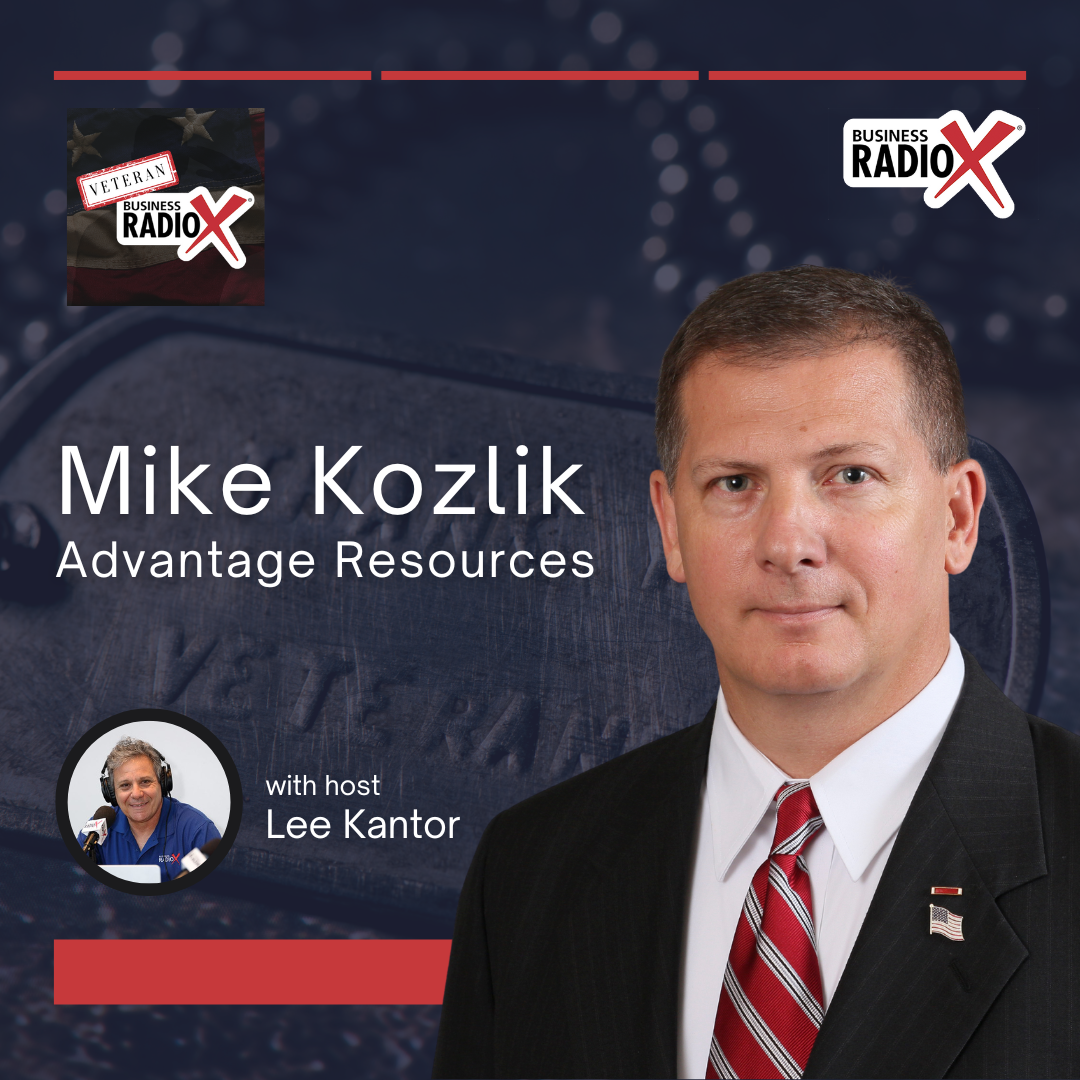
In this episode of Veteran Business Radio, Lee Kantor is joined by Mike Kozlik , owner of Advantage Resources and an Army veteran. Mike shares insights from his military and business experience, emphasizing the importance of leadership, strategic planning, and standardized business development systems. He discusses common challenges faced by entrepreneurs, the value of coaching versus consulting, and practical delegation strategies. Mike also offers resources for business owners and highlights the foundational elements necessary for long-term success, providing actionable advice for veterans and entrepreneurs looking to grow and strengthen their businesses.

Advantage-Resources-logo

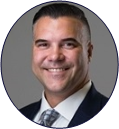
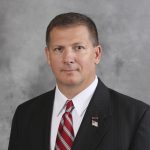
Mike-KozlikMike Kozlik is President of Advantage Resources, Inc., a business coaching and services firm based in Birmingham, Alabama providing individualized Business Coaching, and customized business development services to privately owned businesses.

Mike is focused on helping privately owned businesses and their owners become More Efficient, More Effective and More Profitable, by providing Business Development support, Strategic Analysis, Strategic Planning, Strategic Plan implementation, Business Development training; project and program management, and business operations management consulting.

As part of Advantage Resources Inc., Mike uses the techniques from his first and second books to help business owners craft strategies that are exceptionally effective in developing more clients and bringing more “Dollars-In-The-Door”.

The “secret sauce” is to connect these techniques together to get an exponential ROI, not just an arithmetic one! These unique, customizable, and cost-effective methods provide privately owned businesses with the Advantages enjoyed by large businesses.

Mike’s 30(+) year career spans the commercial, military, and government services sectors where he built and grew companies and operations for small businesses, as well as large multi-national corporations.

He has also started and built three companies of his own, with ARI being the most recent. Industry sectors included Business Development, training and training development, logistics and logistics engineering, Recruiting Process development, and Leadership Development.

Mike has an extensive 20+ year experience in Government Contracting both as a Military Officer and as a Government Contractor himself. He has also served 32 years as an Officer in the Army, serving in the National Guard, Regular Army, and Army Reserve, retiring as a Colonel. His expertise has been in Business Development and Business Development training, strategic planning, and operations. He has helped many businesses, including specifically veteran owned businesses, become more successful and more profitable.

Follow Advantage Resources, Inc. on LinkedIn and Facebook.

Episode Highlights

  • Importance of leadership in organizations
  • Transitioning from military to civilian business environments
  • Challenges faced by small business owners, particularly in growth and client acquisition
  • Development of standardized business systems for consistent results
  • Distinction between business coaches and consultants
  • Creation of personal and business visions for strategic alignment
  • Simplifying business planning in a fast-changing environment
  • Delegation strategies for effective business management
  • Foundational elements necessary for business success
  • Personalized coaching approach and ongoing support for clients

Transcript-iconThis transcript is machine transcribed by Sonix


TRANSCRIPT

Intro: Broadcasting live from the Business RadioX studios in Atlanta, Georgia. It’s time for Veterans Business Radio. Brought to you by ATL vets, providing the tools and support that help veteran owned businesses thrive. For more information, go to ATL. Now here’s your host.

Lee Kantor: Lee Kantor here another episode of Veterans Business Radio and this is going to be a good one. But before we get started, it’s important to recognize our sponsor, ATL vets, inspiring veterans to build their foundation of success and empowering them to become the backbone of society after the uniform. For more information, go to ATL vets.org. Today on the show we have Mike Kozlik. He is the owner President of Advantage Resources. Welcome, Mike.

Mike Kozlik: Well, hello.

Lee Kantor: Well, I’m excited to learn what you’re up to. Tell us a little bit about Advantage Resources. How are you serving folks?

Mike Kozlik: Well, we are a, uh, where I am a business coach, and we provide a variety of services to business owners to help them create a business that is efficient, effective, and profitable.

Lee Kantor: So what’s your backstory? How did you get involved in this line of work?

Mike Kozlik: Well, I was in the commercial world for a number of years. I’ve been I was in the Army for 32 years. The last 17 of that. I was a reservist, so I had to have a real job, you know, when I wasn’t on weekends. And I entered the commercial world and I got mobilized back in 2003, and I was working for a firm, and it was an eight month mobilization that turned into three years mobilized and deployed. So when I came back, they had had a little Enron problem type problem when I was gone and there was no job for me to come back to. So I started my own business, and Advantage Resources has gone through, you know, a couple of variations since that time. All of it still being focused with a core competency of providing privately owned small businesses with the resources they need to become successful.

Lee Kantor: Now, is there any kind of commonality that you find when you begin an engagement with one of these businesses? Is there some like a number one thing that these business owners look to you for help with?

Mike Kozlik: Yeah, I think number one, the number one thing that I get talked, I talked to business owners about initially is their desire, their need. They’re very focused on business growth, bringing, you know, more clients and, you know, having a business development process. So I help them design and implement business development system, which is a standard set of procedures that creates consistent and predictable results for them, that allows them to manage the system, to either dial it up or dial it down as they need. It also allows them to be able to troubleshoot very precisely when the process isn’t delivering, which is really in the beginning. It’s more important than anything else, because if if you’re not, what you’re doing is not providing the results you need, you get to figure out why. So most clients today, they don’t use a standardized system. The ones I talk to, the entrepreneurs and the privately owned business owners. Generally when I talk to them, what I get is this explanation of what I call spaghetti on the wall, throw spaghetti on the wall and see what sticks. And that’s not really an effective way to generate consistent and predictable results. They have more than one person doing business developing with or for them. There are as many ways as there are people doing the business development tests. Well, this is impossible to track. It’s impossible to measure or adjust. So the number one thing I think business owners asked me to help them with is create a system that they can. They can rely on. To present that consistent and predictable results so they can make business decisions, good business decisions.

Lee Kantor: So when you’re helping them with this, creating the this system, what is the first thing you do in order to make sure that the system is going to deliver the outcome that the client desires?

Mike Kozlik: Well, we go through a number of let’s just call it exploratory processes. And we look at what they’re doing and how they’re doing it, what tools they’re using to do it. And we decide, you know, together whether these are effective for what they’re trying to do. You know, sometimes guys will buy a Cadillac when all they needed was a Yugo to get to work. And sometimes a guy is riding a bike when he needs a pickup truck. So we have to make sure that we look at what they’re doing, how they’re doing it, and the tools they’re using to do it, so we can adjust that to kind of be aligned. So it’s a a standardized system. Everybody that’s going to be involved in business development will use the same systems, the same tools, and that allows the owner of the business to. Uh, those are the kind of things that we work on initially. We kind of look at, you know, what are the means, the methods and the processes that they have in place to generate the kind of new clientele that they need on an, on a consistent basis.

Lee Kantor: Now, a lot of times you’re working with people who have never had a coach before, or these people who have gone from having a coach to just trying something new with you.

Mike Kozlik: Well, it’s about 5050. Um, I would say that a lot of the people that I’ve talked to have used some form of, uh, professional help, and they’re not always coaches. Uh, there’s a big difference between a coach and a consultant. And many times they would have gotten engaged with a consultant and they were expecting a coach, or they hired a coach and what they really needed was a consultant. So it’s about 5050. But either way, you know, we kind of I kind of lay out a very simplistic, uh, easy to understand process that we will follow as, as a team, uh, to kind of get them wherever they want to go.

Lee Kantor: So how do you kind of differentiate between the consultant and the coach?

Mike Kozlik: Well, um, there’s one big differentiator that, that I use is that a consultant generally will come in and they will do something specific for a business. Um, and they’ll do it as a project. It may last a couple of weeks, a couple of months, but generally it’s a it’s a point in time activity that is just gets done. And when they’re done they’re gone. Okay. Their process is over. They hand it off to the owner. Uh, and it’s their it’s their responsibility to continue it. A coach, on the other hand, is a a long term personal relationship with someone that you trust. That you can ask anything of. And have a, you know, a deep discussion about what’s best. What. Have you seen it before? What can I do? I’ve tried all this. What else is there? And a coach is is there on on a long term basis? Now I have a, um, a guide that I wrote several years ago based on my experience in the last 20 years helping businesses. And that guide is, um, will help a business owner decide whether it’s a coach they need or a consultant. It’ll also help them understand, um. What kind of questions they need to ask to ensure that the person that they’re engaging is the right person for them.

Mike Kozlik: So if any of your listeners want a copy of that, um, that guide, they can text me at 053325524. Say they heard me on Veteran Business Radio. Provide their email and I’ll send them a PDF copy that they can have and enjoy. It is their pleasure reading. And then I’ll also be open for discussion of specific questions they might have after that reading. But the bottom line is, as a business owner, you have to make sure that you’re you’re engaging the right kind of person and that they are aligned with you, that they’re going to match your personality. Um, some of that is, are they going to tell you what to do, or are they going to lead you to different ways to do it? And then you pick one. But you got to be comfortable with that person or it’s never going to work. So my little guide kind of lays all that out and helps people develop the questions they need to ask anybody that they’re talking to about, uh, providing them, you know, more professional health.

Lee Kantor: Now, when you’re working with, uh, a client. And you mentioned usually the first point of interaction is around business development. Are there any other kind of fundamentals that you cover when you’re working with a client at the beginning stages?

Mike Kozlik: Uh, yeah. In the very beginning, one of the things we have to do, and I’m a big believer and my, my clients have begun to call them, uh, Mike isms. All right. So the first Mike ism they learn is it’s better to plan, uh, you know, failure to plan is planning to fail. It’s better to plan and and adjust than it is to try to, uh, do something every day when the, you know, uh, something happens. So the very first thing that we do with our clients is this we look at, at fundamental elements that makes a good company, and then I help them understand what the secret sauce of that is. So the two fundamental elements that they start with are vision. And there’s two kinds of vision. The first vision is your personal vision. That’s where you decide what it is you want, really want in life. You know, everybody starts out with the, you know, the objective things they want to, you know, the great house on the beach, they want the Lamborghini. They want the trophy wife. But after we get to talking, we generally come up with a different set of things that they want in their life, about their achievements, about what? How they want to be known, the legacy they want to leave.

Mike Kozlik: Then we take that. And what’s important is that paints a kind of a word picture of what they want in their life. And then we craft a business vision that will build a business that gives them that. And that’s the secret sauce. You just don’t do a business vision. You know, a generic business vision isn’t going to get you to, um, you know, ground zero. So you have to have that business vision nested in something that’s important, and that is what you want in your life. So then we go through great detail about creating a business vision that that lays out the plan, as it were. Uh, to provide you with that life that you painted in that vision, that personal vision. So that is kind of one of the most important parts. It’s the very first thing that we do. We start with the end in mind. I’m a big Stephen Covey guy and we start with the end in mind. So when you build the foundation elements and you integrate them to work as a system, you begin to gain consistent and predictable results. That’s a mantra I use with my clients all the time.

Lee Kantor: So when you’re how do you help the client that, um, is dealing kind of with the chaos of today where there’s, uh, you know, so much talk of AI replacing jobs, um, how to leverage these new technologies fast. How do you kind of marry that with, uh, you know, kind of staying the course?

Mike Kozlik: Well, you know, one of the things that we, we talk about again is planning. You know, and I’m not talking about building a strategy or a plan that’s like equivalent to the complexity of the invasion of Europe on D-Day. I call it a blueprint. Okay. So we craft a simple to understand, um, overarching plan that identifies some of the major muscle movements that are going to have to happen in order for that business to achieve the vision that the business owner, um, you know, create, we create it together. So you get the business vision and the personal vision. You got to know what you want, and then you got to build what your type of business to get it. You cannot take every day. And here’s the big problem. Here’s the thing that happens with all of my clients in the beginning. Every day they try to take each day as it comes with no planning, no looking over the horizon, no understanding, you know, being positioned for what comes next. We call that getting smacked in the face with the tsunami of now every day. And if that happens, your business will fail. You cannot deal with a business on a day to day basis as the owner, as the strategic planner. You’ve got to be like I tell my clients, you may be doing today, today, but in a month from now you’re going to be doing next week, and in six months from now, you’re going to be doing next year. And that’s what a business owner needs to be thinking about. Some percentage of his time or her time needs to be focused on that. If you’re not going to do that, you’re not going to be successful at all, ever.

Lee Kantor: So is there a story you can share? Um, don’t name the name of the client, but maybe explain the challenge they came to you with and how you helped them get to a new level.

Mike Kozlik: Uh, yeah. I mean, there’s I could, boy, we could be here all day. Um, so one of the one of the challenges that clients face, you know, they’re all entrepreneurs. I work with privately owned business owners. They’re all entrepreneurs. And as such, They’re raging personalities, just like myself. And because of that, it’s very hard for them to let go of the things that they have always done in their business. They have difficulty in trusting anyone to do those things. So let me tell you a story about one of my clients. So I had a client. We’ll call him Tony. Uh, he was third generation owner of a construction company. And, uh, he started working in that company when he was a teenager for his grandfather. And he did everything from sweep to floors, uh, worked his way up to, you know, making the coffee and up to ordering, you know, materials for the superintendents on the projects and blah, blah, blah. So one day I came in for one of our weekly meetings, and, um, he was on the phone. I sat down and I waited, and he was on the phone. On the phone, on the phone. He was 30 minutes on the phone and he was ordering supplies for two, two of his projects that he had out there. And when he hung up the phone. It was about 34, 35, 40 minutes into our program. We started our meeting and I ended it right when I was supposed.

Mike Kozlik: He said, wait a minute, we just got started. I said, well, you just got started. I was here on time. You elected to do basic, you know, work that your office manager does, by the way, better than you. And she’s sitting out there reading a magazine while you wasted 40 minutes here. And so we have this kind of a come to Jesus meeting about what is important for a business owner to be doing and ordering a length of pipe or, you know, whatever is not an effective use of their time. So he had to let go of that. He’d been doing that since he was 16 years old, and he had to let go of that and just hand that off to his office manager, and his superintendents would talk, tell her what she needed and when they needed it on the site, and she would do it. So I teach my clients this this simple process. There’s three ways things get done in a business source. Resource, outsource and end source. And in that order. So the main thing is to move from the resource where the business owner is doing something or all things to a point where someone else is doing it for them. That’s outsourced. And a good example of that is not everybody is an accountant. And the very first thing that most businesses outsource is bookkeeping, because it takes up a lot of time.

Mike Kozlik: And business owners tell me they hate doing bookkeeping, they hate paying the bills. They hate doing payroll, they hate calculating all this crap. So that’s the first thing that they outsource. As an example, over time, as the business gets bigger, you bring that that capability back in-house with an in-house bookkeeper, maybe part time to begin with and full time as the business is larger. So you go through this series of source, outsource and source. The main goal is to free up the business owner to do things that are strategically more important than everyday busywork, so they’re not doing. The doing someone else is doing it, but they don’t lose control. I teach them a way of delegation that’s not a shovel pass. They still get the process done. They’re still on top of where they are, you know, in the process of getting it done. And they get to make decisions. And but they’re not actually physically doing the doing every day. And that’s important because that’s a major challenge with with entrepreneurs is when they start their business, they’re doing everything and it’s very hard for them to let go. It really is. So that is that’s a key consideration that I talk to my clients about ahead of time. And sometimes we get into, let’s just say heated discussions. We’ll just call it that.

Lee Kantor: So now is there anything you can share with our listeners about maybe some of the leadership that you learned from your time in service and how it pertains to the business world?

Mike Kozlik: So leadership is one of the four foundational elements that we help our clients create for their companies. And in it. We call it the glue. And, you know, our audience today is largely composed of veterans. So they’ll understand a little bit better than those who have not lived in a military discipline life. But leadership is not a soft skill. It is very hard, but when you do it correctly, it’s a force multiplier in an organization. Basically, it makes two plus two equals six or more. So leadership is an intrinsic part of every aspect of a business. It doesn’t matter whether it’s the marketing, the business development. Hr doesn’t matter. Every element of the business is affected by the leadership environment and the way that people that are put in charge of other people. Actually do leadership. Now we make a big deal in our, uh, you manage things, you lead people program where we, we show that management is not something that you do with the the living beings that are you’re entrusted with. That is something you do to make sure the copy machine has enough paper or toner or whatever that has. Leadership, on the other hand, is a way is a responsibility where and we teach this at three different levels, where if you’re a leader in an organization and we we shy away from the word manager, you’re responsible for for teaching, coaching, training, mentoring and developing those people that are placed in your care and under your responsibility, just like we do in the military. That is one of the main aspects of of the fourth foundational element, which is leadership, is that a leader can only be chosen not because they’ve been there longer, but because they’ve demonstrated the ability to lead and demonstrated the ability to handle responsibilities at the next higher level. If they’re not doing that, then a company is going to have trouble. Uh, from a morale perspective, from a consistency see. Perspective and leadership basically affects everything. Everything in a company, everything from, uh, you know, when people come to work to how people are promoted.

Lee Kantor: So is there a niche that you work in primarily, or is this kind of industry agnostic your work?

Mike Kozlik: Well, pretty much industry agnostic if it’s a small, privately owned business. I’ve worked with, uh, startup companies, entrepreneurial startup companies in every, uh, market and industry. You can you can name. I’ve had builders, architects, engineers, I’ve had marketing, PR, uh, website development companies, website management companies, social media companies. Um, I’ve had manufacturing companies. And basically every business has the same foundation. It doesn’t matter what the business is. You have to build. And we use the the analogy of a building in order to build a building, you have to have a strong foundation. The stronger you make that foundation, you can build anything on it. If you don’t build a strong foundation to begin with, you’re not even going to be able to build a one storey edifice on it. So we talk about the foundational elements that all businesses, every business in the world, whether they’re Apple or Microsoft or, you know, bombs, lawn service, have the same foundational elements that they have to make sure are in place and functioning synergistically together in order for that business to be successful.

Lee Kantor: Now, how do you deliver your services? Is it one on one coaching group coaching? Do you form cohorts?

Mike Kozlik: Uh, it’s one on one coaching. I meet with all my clients one one hour a week, minimum, at a designated day and time that we we kind of coordinate together. I’m available if we’re working on a project. Uh, there’s clients that I meet two and three times a week. And, you know, there’s no unlike a consultant, there’s no extra cost to that. If we’re working on a project that is in the in their, uh, their strategy or in their plan. Uh, and they run up on a brick wall then. Then I afford whatever time I have that week. For anybody who wants it. So I meet once a week, every week with our clients. Um, and, and we walk through in the beginning, we’re kind of building it. We’re building an airplane while we’re flying in it. So in the beginning, uh, we’re talking about our vision. We’re laying out the framework of the strategy. We’re looking at the processes we we need to create and implement, starting with the business development process, followed by the build a world class team. That’s our 90% solution, uh, process. And then then, uh, total quality customer service and then leadership. So those are the four bases. There’s others, but those are the four basic ones. So I work once a week for an hour minimum more if they need it.

Lee Kantor: And if somebody wants to learn more, have a more substantive conversation with you. Is there a website? Is there a best way to connect?

Mike Kozlik: The best way to connect Really is, is call me or text me. Uh (205) 332-5524. If you’re going to text me, just tell me. Hey, I heard you on Veteran Business Radio, and I’d like to learn more about, you know, I’d like to get your, your, uh, guide for how to pick a coach or. I like, I like to know more about this or that. And they can they can reach out to me and we’ll set up a zoom meeting. And that’s what I do with everybody.

Lee Kantor: And the business is Advantage Resources, Inc. and the website is Advantage Resources, Inc. Com.

Mike Kozlik: That is correct. Yes.

Lee Kantor: Well, Mike, thank you so much for sharing your story today. You’re doing such important work and we appreciate you.

Mike Kozlik: Well, I appreciate you for having me today. Thank you very much.

Lee Kantor: All right. This is Lee Kantor. We’ll see you all next time on Veterans Business Radio.


 

Tagged With: Advantage Resources, Inc.

Gary Stokan With Peach Bowl, Inc.

April 4, 2025 by Jacob Lapera

Atlanta Business Radio
Gary Stokan With Peach Bowl, Inc.
Loading
00:00 /
RSS Feed
Share
Link
Embed

Download file

Gary P. Stokan is CEO and president of Peach Bowl, Inc., a position he has held since 1998. Under his management, Peach Bowl, Inc. events have generated an economic impact of $1.53 billion and $96.7 million in direct government tax revenue for the city of Atlanta and state of Georgia since 1999.

He has positioned the Peach Bowl as one of the best bowl game organizations in the nation, and earned the Chick-fil-A Peach Bowl a position as a New Year’s Six bowl game in the College Football Playoff (CFP) and will host future CFP Semifinal games in 2022 and 2025. He also inked contracts with Mercedes-Benz Stadium through 2025 and with Chick-fil-A to continue its title sponsorship of both the Bowl and Kickoff Games through 2025.

During his tenure, the Bowl has enjoyed sellouts in 22 of the past 25 years, and earned the second-longest sellout record in the Bowl business. Peach Bowl, Inc. has also distributed more than $281 million in team payouts under him and is college football’s most charitable bowl organization – having donated $58.8 million since 2002 – which garnered Peach Bowl, Inc. the Atlanta Small Business Philanthropic Award.

In 2019, Peach Bowl, Inc. donated a record $20 million to Children’s Healthcare of Atlanta creating the Peach Bowl LegACy Fund to find cures for childhood cancer. As result of this effort, the organization was named a finalist by ESPN for its 2020 Corporate Community Impact Award – a category in the annual Sports Humanitarian Award.

Recently, Peach Bowl, Inc. was also named to Atlanta Business Chronicle’s 2021 Best Places to Work list, as well as a Best Employers in Sports by Front Office Sports, a Top 10 Small Business in Atlanta by Business Leader Media, and was presented by the Mayor of Atlanta with the Phoenix Award, the highest honor an individual or group can receive from the city of Atlanta.

He has created major events that bring exposure, economic impact and charitable donations to Atlanta by creating the Chick-fil-A Kickoff Game in 2008, which is the leader in opening weekend games. Stokan’s innovation of the Chick-fil-A Kickoff Game helped change the college football season by elevating opening weekend and placing a focus on scheduling nationally ranked, out-of-conference opponents.

Since its creation, the Chick-fil-A Kickoff Game has distributed a cumulative $83.5 million in team payouts and has sold out 12 of 15 games. He also created the Peach Bowl Challenge charity golf tournament, which since 2007 has given $8.73 million for scholarship and charity to its participating universities and coaches charities is the preeminent coaches golf tournament in the country.

It was his relationships that led to the 2006 Sugar Bowl being moved to Atlanta after Hurricane Katrina hit New Orleans. Peach Bowl, Inc.’s addition of the management of The Dodd Trophy presented by PNC, college football’s most coveted national coach of the year award, is due to Stokan’s leadership.

He has also inspired the creation of the Peach Bowl College Corner at the Tour Championship and Peach Bowl Touchdown for Children’s which have raised and donated more than $1.5 million to Children’s Healthcare of Atlanta. These accomplishments have prompted national media to label Atlanta the Capital of College Football.

What You’ll Learn In This Episode

  • Peach Bowl, Inc. events
  • Backstory on the bowl being created in the spirit of giving back,  and how the organization is continuing to implement this philosophy by donating more than $65.4 million since 2002.

Transcript-iconThis transcript is machine transcribed by Sonix.


TRANSCRIPT

Speaker1: Broadcasting live from the Business RadioX studio in Atlanta, Georgia. It’s time for Atlanta Business Radio, brought to you by Kennesaw State University’s Executive MBA program, the accelerated degree program for working professionals looking to advance their career and enhance their leadership skills. And now, here’s your host.

Lee Kantor: Lee Kantor here, another episode of Atlanta Business Radio. And this is going to be a good one. But before we get started, it’s important to recognize our sponsor, CSU’s executive MBA program. Without them, we wouldn’t be sharing these important stories today on Atlanta Business Radio. We have Gary Stokan, and he is the president and CEO with the Peach Bowl. Welcome.

Gary Stokan: Hey, Lee, how are you?

Lee Kantor: I am doing well. I am so excited to get caught up with what’s happening at the Peach Bowl. But for the two people out there who don’t know what the Peach Bowl is, kind of share a little bit about mission purpose and how you’re serving the community.

Gary Stokan: Sure. I appreciate you having us. We, uh, we were founded back in 1968 as the first bowl game founded for charity and the ninth bowl game founded overall. And it’s always been our mission to be the most charitable bowl organization in the country. And we’ve done that by, uh, donating $64 million since 2002 to various charities around the country and here, mainly here in Atlanta. And that makes us by far the most charitable organization in the country. So by being a part of the CFP now, the College Football Playoff and being the most charitable bowl game, we’ve met our mission to to welcome people to Atlanta using college football for the greater good.

Lee Kantor: Now, can you talk about maybe the genesis of the idea? What kind of was the thinking to tie charity along with this bowl game? Because bowl games had been going around for decades, if not now, over probably a century. What was the thinking there?

Gary Stokan: Well, there was there was eight bowl games already in the United States. And George Crumbley, who was leading the Lions Lighthouse at the time, said, well, we need to create a fundraiser to raise money for what our mission is. And Atlanta is a football crazy town. So let’s start a bowl game. And so he tried three different times with the NCAA to get a license to create a bowl game. And finally, on the third time in 1968, he was successful and he started the Peach Bowl. And so we’ve had a great run. It was tough in the beginning. They didn’t make any money for a lot of years. But now we’re very, very successful, very successful financially as well as nationally. And we’ve been able to help the Lions Lighthouse grow as well with our charitable contributions.

Lee Kantor: Now, how did the bowl kind of evolve to get into the CFP? Like you mentioned, because as you mentioned, it was the the at that time, it was the new kid on the block. And then now there’s it seems like there’s dozens of bowl games. How did the Peach Bowl kind of earn its way up the ladder into one of the Premier Bowls?

Gary Stokan: Yeah, I have to laugh because my first year in 1998, uh, I, I was in charge of selecting the teams, and I selected Georgia to play Virginia. And Virginia was ranked 12th in the country, and Georgia wasn’t ranked but the head headline of the AJC sports section that day said that, uh, Georgia going to Peach Bowl, a third tier bowl game. So our own newspaper thought of Atlanta as a third tier bowl game. And, um, you know, back in 1985, I guess we were, uh, because we had Army in Illinois and there were 22,000 people in old Atlanta-Fulton County Stadium. And, uh, the weather was terrible. And Dick Bestwick, who had my position at the time, said that unless the business leaders in this city get involved, the Peach Bowl is going to go out of business. And so he rallied. Um, uh, uh, Ron Allen, who was the CEO then of Delta Airlines, and he was the incoming chair for the Chamber of Commerce. And, uh, he said, well, we can’t let the Peach Bowl fail, so we’re going to put up $100,000 check, and we’re going to sell a bunch of tickets. And, uh, so he had Bob Coggin, his chief marketing officer, go out to all their vendors and have them buy tickets to the Peach Bowl, and they sold 3300 tickets. And financially, that helped the Peach Bowl along with that $100,000. And then Ron rallied, you know, the Coca-colas and the other corporations in the city. And, um, the Peach Bowl stayed in business and slow, but sure, moving into the Georgia Dome, getting a contract with the ACC to play the SEC, uh, getting on ESPN.

Gary Stokan: And then subsequently, in 1997, chick fil A signing on as a title sponsor for the game. It gave us the the underpinnings, uh, financial success with chick fil A, uh, with the ACC and SEC ticket buyers. And we were off and running and, um, in 2006 when the, uh, commissioners said, we’re going to start a, uh, you know, a national championship game. We need another bowl game beyond the Rose, sugar, orange and Fiesta. Us in the Cotton Bowl made great bids, but neither of us won as the commissioners decided to let the four bowls have their game on January 1st, and then take the national championship game and rotate it between the rose, the sugar, the orange and the Fiesta. And so in 2007, the NCAA legislated a 12th game to the schedule. And I said, well, being a competitive son of a gun, I said, well, if they’re not going to let us in the BCS on the on the backside of the season, we’re going to start the BCS on the front side of the season. And so I started the kickoff game and had Alabama and Clemson come to play. Sold out us the game in the Georgia Dome. And uh, you know, we basically recreated what now is the front side of the season in college football with great matchups because prior to that teams would play non-directional schools and get easy wins.

Gary Stokan: It was kind of everybody looked at it as an exhibition season to get three wins and then start your conference schedule. Well, now you have the likes of Notre Dame playing Ohio State in the first game of the year. And, you know, we’ll have two kickoff games this year with Syracuse and Tennessee on Saturday. And then on Sunday, uh, we’ll have Virginia Tech play South Carolina. And that’s never been done. Two games within 24 hours in one city. Um, but the kickoff game really elevated our brand to a lot of people around the country because we had blockbuster sellout games with huge TV viewership. And then, uh, we went after the College Football Hall of Fame. I was just coming out of working the Atlanta Sports Council and using Bob Costas famous statement around the 96 Olympic Games that, you know, Atlanta is becoming the sports capital of the world. So in 98, based on the foundation that was put in place by the Olympics, we went out and, um, you know, we got all the NBA, Major League Baseball, NHL all star games. We brought a lot of Olympic type events back into town. And, um, so we made Atlanta the sports capital of the world. And then I said, well, why not make Atlanta the football capital of the world? Because we have huge football fans in this, in this city from all over the country. They they emanate to Atlanta and get jobs and they follow their teams.

Gary Stokan: And so in 285, it would look like a NASCAR race with flags from all kind of ACC and SEC teams and even Big Ten teams driving around to get to their to their games on a Saturday. And so we, uh, we went after the College Football Hall of Fame and we moved it from South Bend to Into Atlanta. And I think those two things, along with the success we were having of selling out Peach Bowl’s, uh, the commissioners looked at what we were doing in Atlanta and said, hey, they deserve a chance. And in 2014 over 15 season, when the CFP was created, uh, they took Atlanta and the Peach Bowl, along with the Cotton Bowl, added to the four bowls of the Rose, sugar, orange and Fiesta. And we became the new year six bowl games. And now we’re currently involved in running the CFP playoff, which started this past year, where we host quarterfinals for two years and then a semifinal. Um, and so this year, we’ll host the semifinal of the College Football Playoff. So, you know, having the College Football Hall of Fame here, having the kickoff games, having successful Peach Bowl has allowed us to recruit the national championship game here twice since 2017 And, uh, have quarterfinals and semifinal games. So now we are looked at as the, uh, the shining light in college football is, uh, a lot of media have called us the capital of college football in Atlanta, Georgia.

Lee Kantor: And do you see any, um, is there any trends you’re seeing with regarding the Nil and the portal systems, uh, with the player transfers? Is the popularity of the game, I’m sure in game day and especially in Atlanta at those games that you’re describing, it’s full house and and they’re always sold out. But is it impacting kind of the, um, popularity of the sport or is it just growing the sport more and more?

Gary Stokan: Yeah, I think the College Football Playoff was responsible this year for increasing the viewership of college football as well as attendance, uh, primarily because you had interest from around the country longer into November and early December with teams that could vie to make up the 12 team playoff. So you had more interest across the country. Number one, that led to more viewership. And secondly, because you’re probably 30 to 40 teams were still vying for those 12 slot slots to make the playoff in in December late December. Um, attendance was increased all throughout the year instead of in the old playoff where you had four teams. There was no team that had two losses that ever made the 14 playoff. And so if you got an early loss in September by, you know, October, November, a lot of people, you know, didn’t follow the team as much because they knew they were out of the playoffs. So I think the playoff has really created a new opportunity for college football to grow. Uh, we’re currently the second most favorite sport in the country, uh, only behind the NFL. Uh, I think we’ve taken a hit with the transfer portal and nil a little bit, uh, that some people have been turned off by, you know, kind of a pay for play for players. Um, uh, by players transferring. They don’t know the players as well because the players aren’t staying for years. Um, but we need some guardrails. We need some regulation from Congress. Uh, I think that’s going to happen. And, um, you know, we’ve got to we’ve got to remain, uh, a collegiate experience where kids are offered a scholarship, uh, get an education, get a degree, because most of these kids are not going to play pro sports. Um, the advent of the Pell Grant and and helping now nil money give these kids an opportunity to start out their career in life and in business, uh, successfully, without any debt. And, uh, with with a great opportunity. So, uh, college football is meeting its mission and will continue to do so.

Lee Kantor: Now, um, do you think that the fact that the Peach Bowl started I mean, we got to the point where it was ACC versus SEC, um, and Atlanta, they have Georgia Tech and Georgia Tech has a stadium, but the there’s so much activity at, uh, at Mercedes-Benz now with these big college games like that you’re bringing in now there’s two kickoffs. Now the Peach Bowl there just seems to be it’s almost I don’t want to say it’s a neutral site, but it’s it’s kind of, um, maybe college agnostic spot for the SEC and the ACC to just create big events. Are you finding that because of your efforts that more and more people are going and attending these kind of college games downtown?

Gary Stokan: Yeah, certainly the the Peach Bowl back in, uh, 1992. I guess it was when the Georgia Dome was built. Uh, the SEC had started a championship game and played the first two years in Birmingham, Alabama. Uh, but they had bad weather. And with the Georgia Dome being, you know, 72 degrees and indoors, obviously, uh, the Peach Bowl worked with the SEC to bring the SEC Championship game to Atlanta. So a lot of tickets for it. Um, and, uh, so the SEC, along with our two kickoff games and the chick fil A Peach Bowl and the national championship that was played in January, late January, uh, they’ll comprise five of the top six conventions in the city of Atlanta this year. And if you think about Atlanta, Atlanta is the fourth largest convention town in the United States, behind Las Vegas, Chicago, Orlando and then Atlanta. So to think about five of the top six conventions in the fourth largest convention town in the United States. Our college football games. The SEC Championship. The two kickoff Aflac kickoff games, the chick fil A Peach Bowl, and the national championship game. So, um, the economic impact and the tax revenues that flow back to Atlanta and Georgia through college football are unlike any other city in the country. And that’s the reason why a lot of people call Atlanta the capital of college football.

Lee Kantor: Now, how important is it to have kind of this really collaborative public private entities working together for kind of the the common good? Atlanta, to me, seems like that’s part of the secret sauce of why, um, so much gets done here.

Gary Stokan: Lee, you’ve hit on it. There’s no doubt about it. When I talk to people around the country and they ask me that same question, uh, it all started with the Olympic Games. There was a perspective and a feeling after the Olympic Games, through the volunteers, through the city and the state, working together through the corporate leaders that we could do anything. And so that’s one one of the reasons we’ve been very successful. It is the secret sauce in the recipe of our success. Um, a lot of lot of cities have stadiums. Um, we have great stadiums, close proximity to our, our hotels with 16,000 hotel rooms downtown, easy walking distance to the facilities, great restaurants and things to do, like the College Football Hall of Fame and aquarium around the hotels and our and our facilities for people to entertain themselves. Um, we have the most effective and efficient airport in the country, probably in the world. Um, with hourly flights from a lot of the major markets like Chicago, New York, DC, LA, etc. so you can get to town easy. You can, um, you know, you can be in the middle of downtown in 15, 20 minutes. Uh, you don’t even have to rent a car. You can get on Marta and be in downtown Atlanta. You can walk around the city to our facilities, our entertainment, our restaurants, um, and all that is important. The infrastructure, the having three interstates that intersect into downtown. So people from the east and west and north and south can get here. Uh, all that infrastructure makes for the opportunity. But at the end of the day, it takes people, it takes strategy, it takes, uh, people willing to commit, uh, volunteer hours, uh, corporations willing to commit money. And, uh, we’ve been able to rally all of that together, uh, to make Atlanta very, very successful in, in the world of sports.

Lee Kantor: And it seems like we’re just scratching the surface with the advent of the gulch. Uh, what’s happening in south downtown, uh, with, you know, with the Georgia Tech and Georgia state campuses being right there in the midst of things, it seems like we’re just now about to begin again.

Gary Stokan: Yeah, it really is. It’s it’s interesting. Um, the World Cup in 2026 is basically going to mirror what happened, uh, and elevate the city. Um, maybe not to the tune of what the Olympics did, because back in 1990, when Atlanta was selected to to host the Olympic Games, a lot of people around the the world, um, thought Atlantic City had won the rights. Uh, because Atlanta was not a well-known, uh, international city at the time. And then when by the time 1996 got here and the Olympic Games, it made Atlanta an international city. And I think the World Cup is going to take that to the next level in 2026 when we host the World Cup.

Lee Kantor: So what do you need more of? How can we help you?

Gary Stokan: Well, we’re very, very blessed to have great volunteers, a wonderful board that supports what we’re doing, uh, tremendous support from the business community in sponsoring a lot of the, the headquarters, uh, companies like Delta and Chick fil A and Home Depot and Kia and, uh, Georgia Power. Uh, support what we’re doing. Um, the city leaders and the state have been tremendous. The facilities, like Arthur Blank and, uh, what he’s been able to do with Mercedes-Benz Stadium. So everything there, it’s just a matter of creating the next, uh, whatever it is. And we’ve been very exciting to do it in college football and make Atlanta such a prevalent, uh, hotbed and capital of college football, but yet still maintaining our mission of donating, uh, you know, $64 million back to charities to help charities in Atlanta and in, uh, cities where teams come from, you know, our, uh, around the country to play in our game, we donate $100,000 scholarship under our John Lewis Legacy of Courage scholarship. And those scholarship monies, which are over $9 million now, $9.5 million, I believe, uh, all around the country, they’re earmarked for kids from Atlanta and or Georgia, title one kids to get those scholarships.

Gary Stokan: Um, so we’ve been able to look out for the education purposes of kids that in their whole generation of their families, no one’s ever gone to college. And some of these kids now are able to go to college. Uh, they’re underprivileged, uh, to get an opportunity to get a degree and hopefully change the self-fulfilling prophecy of not only their family, but their communities. Um, and then to, uh, work with Children’s Healthcare of Atlanta and with Aflac to, uh, now have 14 trials, uh, in five different, uh, uh, states. Um, and uh, creating hopefully, uh, cure to eradicate childhood cancer with, uh, certainly with, uh, whether it’s neuroblastoma or leukemia. We have trials going on that people, you know, hopefully will come up with a cure for a kid for a day. Another day, another month, another year or maybe a lifetime to eradicate childhood cancer. So those are a couple of our big initiatives that we’re working on by using college football to do the greater good.

Lee Kantor: And if somebody wants to learn more, What’s the website to get tickets or just to learn more about what’s happening over at the Peach Bowl?

Gary Stokan: Yeah, we’re on Facebook. We’re on Instagram. Um, we’re on X. Uh, our website is, uh, chick fil A Peach bowl.com. So, um, yeah, if you want to volunteer and be a part of the, uh, the great success we’re doing and helping people by using college football, please join us. Um, and whether you want to sponsor, whether you want to volunteer, we’d love to have you involved. And it’s it’s a great feeling to give back to the city that’s, uh, meant so much to all of us.

Lee Kantor: Well, Gary, thank you so much for sharing your story today. You’re doing such important work, and we appreciate you.

Gary Stokan: Sure, Lee, thanks for having us. Appreciate it.

Lee Kantor: All right. This is Lee Kantor. We’ll see you all next time on Atlanta Business Radio.

Tagged With: Gary Stokan, Inc., peach bowl

Christa Rollock with C Rollock Photography, Inc.

February 7, 2025 by angishields

HBR-Christa-Rollock-Feature
Houston Business Radio
Christa Rollock with C Rollock Photography, Inc.
Loading
00:00 /
RSS Feed
Share
Link
Embed

Download file

C-Rollock-Photography-logo

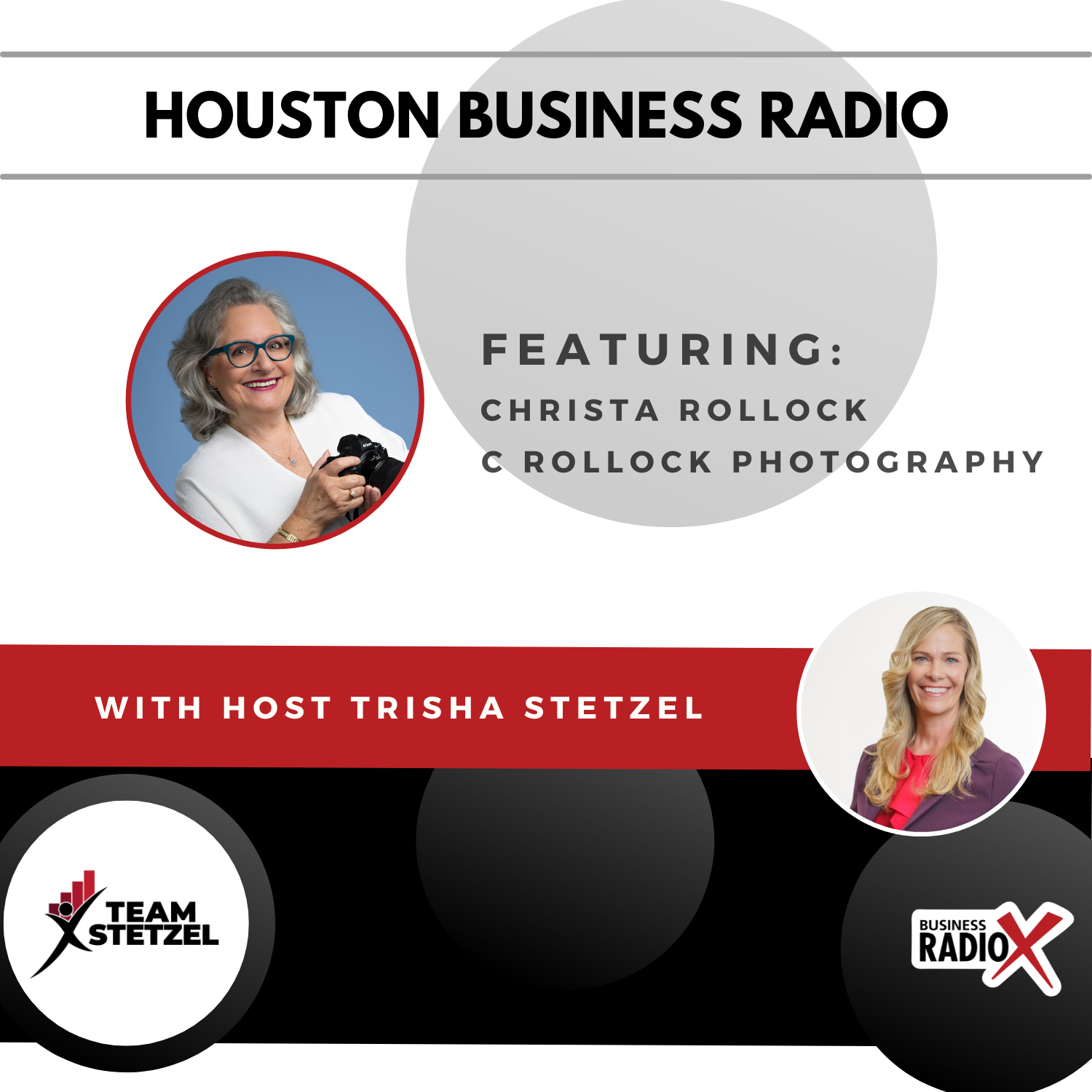
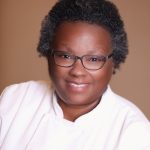
Christa-RollockFrom Bavaria, Germany, to Houston, Texas, Christa Rollock’s life has been a journey of love, family, and artistic discovery. After marrying a U.S. Army soldier in Denmark, she embraced a life of frequent moves, raising two children while navigating military life.

Following her husband’s retirement, her deep-rooted love for Houston brought them back, where she transitioned from a successful career in insurance to fully pursuing her artistic passions. A lifelong creative, she explored painting, drawing, singing, and theater before discovering her true calling in portrait photography.

At 58, she returned to college to study graphic design but was ultimately captivated by the power of light in photography. Earning a certificate in digital photography, she launched C. Rollock Photography, a business dedicated to capturing individuality and authentic expression in both personal and professional portraits.

In her discussion with Trisha, Christa shared insights into her approach to photography, emphasizing the importance of personal branding, regularly updating professional headshots, and capturing life experiences with authenticity. She is deeply passionate about building relationships with clients and creating meaningful portraits that reflect their true essence.

With the unwavering support of her husband, Christa continues to pursue her dream, using her artistic vision to tell powerful visual stories—one portrait at a time.

Connect with Christa on LinkedIn and follow C Rollock Photography on Facebook and Instagram.

Transcript-iconThis transcript is machine transcribed by Sonix.


TRANSCRIPT

Intro: Broadcasting live from the Business RadioX studios in Houston, Texas. It’s time for Houston Business Radio. Now, here’s your host.

Trisha Stetzel: Hello, Houston. Trisha Stetzel here bringing you another episode of Houston Business Radio. Really excited about this guest coming by way of an introduction from Uguanda Simpson. Thank you, Uguanda, for the amazing introduction to Christa Rollock. She’s the owner of C Rollock Photography. Christa, welcome to the show.

Christa Rollock: Hello. Thank you.

Trisha Stetzel: So excited to have you on today. Okay. Let’s start with tell us a little bit about who you are and why you’ve ventured into this space of photography.

Christa Rollock: So, um, so my name is Christa, as you said. You know, I am someone who was born in Germany. I moved to the United States because I met my husband, and he was in the military at the time in the army. And so we moved to Milwaukee. We moved all over the place because he was an Army recruiter, and I was always there supporting him all the time, you know, raising the children, being there for him. And so my kind of my professional life took always a little bit of a step back. Right. And so finally at one point, I, um, I started in the insurance business, Life and Health for a long time, you know, and, um, enjoyed it because I am a people person and I like to help people. I like to be with people. So I enjoyed it. But there came a time in my life especially, that was when Covid hit. I, um, I found that because I was always a very creative person all my life. So I always did photography from a, from a, from a young age on, starting with, um, you know, push camera, like the cameras that you just push together to get a picture or the ones that just printed something out. You know, it was from very young on.

Christa Rollock: I did that, and I loved it. And I also loved drawing. Painting. But all of this, you know. Yeah, it just never really came out during all these years following my husband around. And then when that Covid hit, all of this came back to me. It it was like an eye opener. And I said, what is happening with all my creativity that I have? And, um, and so as I took a deep look at what I was doing right, I think a lot of people did it back then, you know, to take that deep look into their lives. And I went back to college. So I went back to college, to Houston Community College and, uh, started with, uh, graphic design, Lightroom, Photoshop and photography. And I learned everything about lighting. You know, how to light a human face. You know how to how to pose them. What light actually can do to a face. You know, when you really, really how it can shape somebody, how the eyes can pop. And I just I fell so hard for portrait photography. And I said, this is it. This is absolutely it. And from that moment on, there was no holding me back. And I started my business.

Trisha Stetzel: That’s that’s beautiful. So for those of you who aren’t watching the video, you need to go to the YouTube channel and see how amazing Christa’s light is on her right now. Because it’s beautiful. You you definitely have a knack for that. And by the way, I am old enough to remember Polaroids and flashbulbs. I’m just saying. I’m just saying. Wow, what a journey. Thank you. First off, I want to say thank you for doing the hard duty of being a military spouse. It’s not an easy thing to do. And moving all of the time and starting over all of the time can be very taxing. So I’m so glad that you’ve settled in and found the love that you have for photography. I want to talk about your motto because I love it. I mentioned it to you before we started recording this morning. So can you share what your motto is?

Christa Rollock: So my motto is every face has a story to tell. Let me help you tell yours because I am focusing on faces. This was always my passion. I went on my mother’s nerves and my whole family’s nerves back then because I always did these close ups. Right? Because faces, they tell a story. They really do. They I, you know, the older we get, actually, the more powerful a face becomes, because every, every wrinkle that we might have, every every gray hair we might have, you know, and the expression, you know, that we have I think that our life experiences can show in a face. You know, and it it to me, it always shows up great no matter what somebody’s life experiences were. But they made us who we are. And I, I want to show that because I think every face is so beautiful, and we live in a time where people think, oh my God, I am not the beauty standard. I am not looking like what I see out there. Right? And I want to tell people that’s not what it’s about. It’s about you. You are special and your image is special. And so that is that is the reason why this is my motto.

Trisha Stetzel: I love that that’s so beautiful, Christa. I love your story. I love your passion for the business that you’re in and what you bring to faces. And it’s can sometimes be challenging or even rewarding. So what are some of the unique challenges and rewards of capturing different personalities on camera?

Christa Rollock: So I think the, the, the biggest challenge is when somebody when you photograph someone who had, for instance, a headshot done before or and it was a, it was a three minute thing in a, in a, in an event, you know, where there was no time to really spend with that person, you know, to find out who are you, you know, well, how is your smile really working for you? Right? And does it reach your eyes? You know, and and so a lot of people come with that notion already. Oh, my God, I look so terrible in front of the of the camera and and my image will look so terrible. So this is a big challenge to overcome. But I feel that, um, because the way I work with people just, you know, really chilling, listening to music, talking, laughing and just getting people involved in the photo shoot itself. It makes people realize, hey, it’s actually great to do something like this. You know, it’s kind of a treat, you know? So this is the biggest challenge. Uh, I think that to overcome the, the preconceived, the way how people see themselves, you know?

Trisha Stetzel: Yeah. I don’t like the way I sound. I don’t like the way I look, all the things. Right? Yeah. We hear it all the time. Um, can we talk just a little bit about just the production? So who do you work with and how do you work with them?

Christa Rollock: So I call myself a headshot photographer because I do so many headshots. Right? I, um, I love showing business people the strengths that they have, the the tenacity that shows up in their face, you know, the, the spunk that they have. I really love that because of the fact that I have been self-employed for so many years. And I think that we need to show, you know, who we are as business people, um, and what we represent, you know, and so that is something that I really like to do. Portraits is just all for me. It portraits is my. Yeah. It’s my passion. It’s that is what I do. So I you know, I always say this, you know as a photographer, yes. We can shoot a lot of different things, you know, we can shoot. Yeah. But where is your passion? Where is your niche? Where is it? Where you absolutely feel excitement. And for me, the excitement is a phase.

Trisha Stetzel: Yeah. I can see that. You light up when you talk about what you do. You have such a such a passion for it. So, Christa, uh, are you in studio? Do you come to your clients? How does that work?

Christa Rollock: So I work in my studio where people can come and have that extended session. You know, where they really get, you know, where they can relax more. And I also go to businesses where I spend time with with people there. And because not every business owner can send their employees to me, you know, so I go to them, I have my equipment and I take the lighting with me and have fun there and just get to know the people that are working there and, and have fun with them and, and create that headshot for them there.

Trisha Stetzel: Okay. Fantastic. Tell me location wise, how far do you go and where is your studio?

Christa Rollock: So my studio is in Richmond, and, um, but because I have all my equipment, I can travel it. I travel basically anywhere, you know, to, you know, in Houston, Galveston. I mean, um, yeah, I mean, it really doesn’t matter, you know, because of the fact that unless it is, you know, out of state, that is something I don’t do. I use I don’t travel out of state.

Trisha Stetzel: Okay. All right. Fantastic. So if someone’s already interested in meeting you and finding out more, what’s the best way to connect with you?

Christa Rollock: The best way to connect with me is by giving me a call or emailing me. Um, but the best thing is get in touch with me, shoot me a text, you know, and I call you back or call me. Um, so that way we can find out more about what it is that you need, because that’s very important to have that conversation beforehand. What is your expectation? What do you want out of this photo shoot? You know, what do you want to show? What do you want to present? And, um, so that way, it makes it already easier to understand a little bit more about you before you even come to me.

Trisha Stetzel: Oh that’s lovely. So I’ll put all of Christa’s contact information in the show notes. If you’re listening or watching, you can just click on the link and get in touch with Christa if you’re interested in having a conversation. So you do a lot of headshots, and I know I may be a dirty word, but what really sets the professional images that you’re putting together apart from someone using a cell phone or even creating an AI image online.

Christa Rollock: So let’s just talk about AI first. Uh, yes, there is a lot of these programs out there. You can, you know, you post so many images and then they put it all together into one. Who is there to coach you about how to how to lean in, how to you know about your smile about is your smile reaching your eyes. For instance, you know, how are you turning your head. How? How do you. Nobody is there to coach you, you know, for that. And, um, nobody is talking to you maybe about. Hey, what would look great about, you know, what do you wear? How about your backdrop that you have what goes well with you, the colors. Um, and, you know, and then the filters that are put on there, this is often not even looking at the person anymore that they are, you know. And so I’m thinking always, if you want to have a portrait of yourself, then why not show who you are instead of having it all that tons of filters on it and really not not, you know, and then somebody sees you and it’s like, is that really her or him?

Trisha Stetzel: Yes. It’s very hard to build trust with your audience if you’re not putting your real face forward and having someone like you really assist in that space can make it so much easier, right? Uh.

Christa Rollock: Yes. I think it’s a it’s a challenge. You know, when you sometimes meet someone and you saw them first on LinkedIn, and it is actually not who you’re expecting to see?

Trisha Stetzel: I agree. Yes, absolutely. All right. So, Christa, what would you say to those nice people out there that have a picture that’s 20 years old on their LinkedIn profile?

Christa Rollock: So, so.

Trisha Stetzel: Well.

Christa Rollock: You know, it’s great how we look 20 years ago. Ten years ago. Right? But I am someone who is very proud of how what who we are who are we’re becoming, like I said earlier, who are we? Right. And so I think that as a professional, you really should. Every year you should have it on your calendar, get a new headshot every year, because that way you have every year an updated headshot. You keep your you keep it fresh. Do you need branding for your website because what you know, do you not just need a headshot? Do you need to know for people to see who are you? What are you doing now? Right. And updated yearly. So that way it’s always fresh content. I think that’s really important.

Trisha Stetzel: Wow. I’ve never heard anyone give that advice before. Get it done every year. And I was thinking back to when we were in grade school. We would have a photo every year. Right. To see, uh, how we had grown each year I love I think it’s a fantastic idea. Can we just talk a little bit? I’m not talking about dollars and cents, but the investment in having good headshots and marketing for your business. Can you talk a little bit about how important that investment is?

Christa Rollock: I think that as a business you look into marketing, right? What do I put out there? Do I pay my Google ad? What do I, you know, how do I what kind of advertising that I do? And you are putting the putting the money in there because you know it’s important. You have to get your name out, right? But isn’t it the same important to also get out how you’re looking, you know, so people realize who you are. They feel comfortable when they are meeting you. They feel like they’re already knowing you a little bit when they’re looking at this headshot. And that is why. Or your branding image on your website. That is why this investment is very important, not just putting the advertising out and putting the money aside for that, but also investing in your, um, in your profile profile is the wrong word, probably. But in your in your who you are. So people get to know you.

Trisha Stetzel: Yeah. Your personal brand. Right. Your personal brand. Absolutely. So important whether you’re a leader for another company or you’re the owner of your business, that personal branding is so important. Absolutely. Okay, so if you could Photograph any person, living or dead, who would it be and why?

Christa Rollock: So it is not somebody famous that I am thinking of, because there’s a lot of famous people that are very interesting, right? And that have a lot of images out there. I would love to be able to go back and photograph my grandparents, because when I hear people saying, oh, I don’t want to be photographed, you know, then I think about how it is for me. I have no images of them or or the ones that I have are so awful I can barely see them. See them, you know, and I would love to go back and just show their life experience and show what they were about. So it is for my memory, for my personal thing and for the family, for my for my brothers and my sister, you know, so we can look back and see and and see more about them. And we don’t have that. And I think that’s sad. So if I could, I would go back and say, yes, that is absolutely what I want to do.

Trisha Stetzel: I love that. And and each picture portrait, photo tells a story. How important is that storytelling through the work that you do?

Christa Rollock: It’s for me, it’s very important to tell that story because we are so different from each other, and we should show to people who we are. Who are we? And and, uh, not. Well, yes, we can always pretend. Right. But I always like to tell the real story about someone, you know? And, um, because it comes across, it comes across to people instead of, you know, the, the filtered images, you know, that show nothing, uh, the real, the real images have really come across to people and say, wow, I want to get to know this person.

Trisha Stetzel: I love that. So as we get to the back end of our conversation today, Christa, I’m going to drop a fun question on you. Can you tell us a story or a time of someone that you’ve worked with that was really enjoyable for you, being behind the camera?

Christa Rollock: You know, I, I have just recently, um, did a photo shoot for a very interesting company, uh, here in Richmond. They are a veteran owned as well, you know, disability. Veteran owned. Right. And, um, it’s a very and and I learned about this company so much because I’ve wanted to it was a photo shoot that the images went into Forbes and in fortune magazine, you know. And so I wanted to show the business owner. Right. You know, and he was told me, he said, no, this is not what it is about. My company is not about me. My company is about the people that work for me. So my company is all about them. And I loved that photo shoot because it was such a inspiring time to work with them and to see how they are, you know, how they’re working together, how they are, how they really like each other. You know, uh, it’s just I love that photo shoot. I loved I loved it very much. I love to get to. I love the people that I met there. I love the the commitment that he had to his people. I also love the nonprofit organization that they started, you know, um, uh, and it’s just everything was inspiring about them. So that’s just what hit me right off the top.

Trisha Stetzel: I love that. So lots of headshots. Lots of business people. You do personal photo shoots as well. You kind of have it all. Everything all encompassing. Right. Um, how do you find your clients? How do they find you? Normally.

Christa Rollock: So I network a lot, you know, in, in, in, you know, I’m out there a lot, shaking hands, meeting people at networking events, and, um, so people get to know me and then. Yeah, certainly, I, you know, make the connection by phone afterwards, you know, and, um, hopefully also by people referring me then, you know, saying, you know, I had that photo shoot with her, I loved it, you know, maybe you should get in touch with her. So that’s that is what I that is what I do mainly.

Trisha Stetzel: Awesome. I’m so excited that you came on the show with me today, Christa.

Christa Rollock: Thank you.

Trisha Stetzel: I know you got. Yeah. I’m glad that you had fun. So if you guys are looking for Christa, she and I are connected on LinkedIn, so if you and I are already connected, then you can find her that way. You can find her on LinkedIn at Christa dash dash 992675. And her first name is spelled c h r i s t a. You can also find her on Facebook at Sea Relic Photography and her website so you can go see some of her beautiful work is Sea Relic photography.com. Christa, thanks again for being with me today. It’s been my pleasure.

Christa Rollock: Thank you so much. It was so much fun.

Trisha Stetzel: I’m glad you had fun today and that’s all the time we have for today’s show. Join us next time for another exciting episode of Houston Business Radio. Until then, stay tuned, stay inspired, and keep thriving in the Houston business community.


Tagged With: C Rollock Photography, Inc.

Mastering Social Media: Insights from Norel Mancuso on Digital Marketing Success

October 3, 2024 by angishields

WIM-Norel-Mancuso-Featurev3
Women in Motion
Mastering Social Media: Insights from Norel Mancuso on Digital Marketing Success
Loading
00:00 /
RSS Feed
Share
Link
Embed

Download file

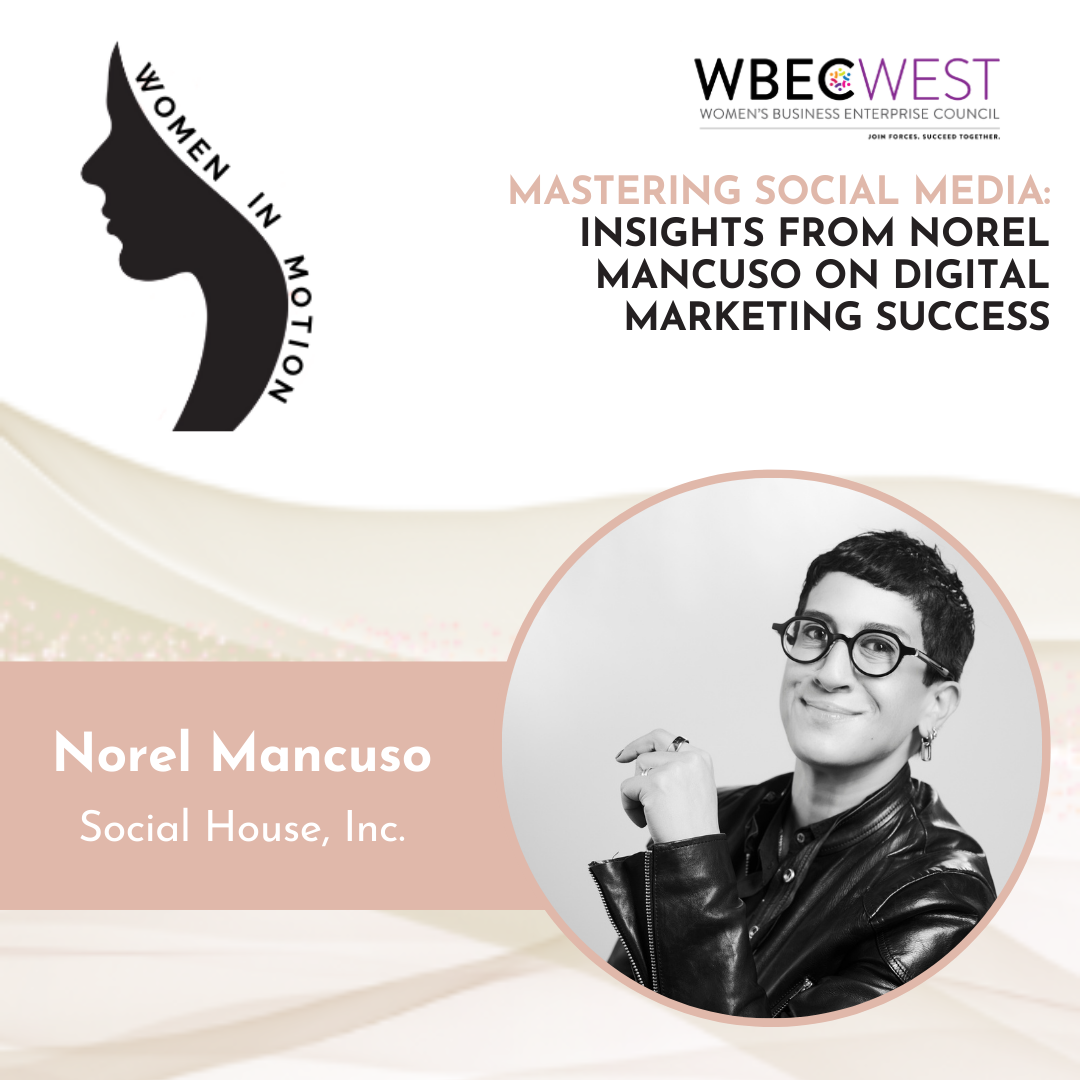
In this episode of Women in Motion, host Lee Kantor interviews Norel Mancuso, founder of Social House, Inc., a digital growth agency. Norel shares her journey from the beauty industry to establishing her agency, focusing on the evolution of digital marketing and social media strategies. She discusses the importance of a solid social media strategy, the role of AI in marketing, and metrics for success. Norel also highlights a success story of significantly growing a beauty brand’s social media presence and offers practical advice for smaller brands.

Norel-MancusoNorel Mancuso is the CEO of Social House, Inc., a globally recognized digital growth agency with an impressive reach spanning over 182 countries.

Under her leadership, Social House, Inc. has become synonymous with innovation and excellence, crafting cutting-edge distribution strategies, compelling creative content, and highly effective paid media campaigns for an array of high-profile clients, including Pepsi, Revlon, Harry Winston, LORAC Cosmetics, SONOS, Playboy, and J Brand.

With a wealth of experience in global marketing and a deep passion for the digital landscape, Norel has established herself as a prominent voice in the industry. Social-House-logo

Her insights and expertise are regularly featured in leading publications such as AdWeek, Forbes, and Social Media Week, where she is celebrated as a thought leader driving the conversation around the future of digital marketing.

Connect with Norel on LinkedIn.

Music Provided by M PATH MUSIC

Transcript-iconThis transcript is machine transcribed by Sonix


TRANSCRIPT

Intro: [00:00:07] Broadcasting live from the Business RadioX studios, it’s time for Women in Motion. Brought to you by WBEC West. Join forces. Succeed together. Now, here’s your host, Scott Brown.

Lee Kantor: [00:00:27] Lee Kantor here. Another episode of Women in Motion. And this is going to be a good one. But before we get started, it’s important to recognize our sponsor, WEBC West. Without them, we couldn’t be sharing these important stories. Today on Women in Motion, we have Norel Mancuso with Social House, Inc. Welcome.

Norel Mancuso: [00:00:47] Hi. Great to be here. Thank you.

Lee Kantor: [00:00:48] Well, I am so excited to learn what you’re up to. Tell us about Social House. How are you serving folks?

Norel Mancuso: [00:00:53] Yeah. You know, Social House is a digital growth agency. And really, our whole M.O. is to transform brands via strategy, creative content and media campaigns that really push the needle for the brands that we work with.

Lee Kantor: [00:01:07] So what’s your backstory? How’d you get involved in this line of work?

Norel Mancuso: [00:01:11] Yeah. You know, I, um, I came from L’Oreal in my past life and from the beauty industry. And at the time, which was in 2010, I saw this incredible opportunity to bridge the gap of communication between brands and their audiences via the medium of social media. At the time, Instagram didn’t exist. I mean, there was YouTube. There was Facebook was in its fledgling stages, there was even Myspace. But I do know that I saw the medium as a place to connect with audiences and have that two way dialog, which we hadn’t before as marketers in the corporate space. So that’s kind of how I got started. I left, you know, my my life in New York City and started social House and were based in LA now.

Lee Kantor: [00:01:54] Now, how have you seen kind of marketing and especially digital marketing evolved since that time where when you’re at the beginning of a media like social media and then you see it kind of evolve. How have you seen the marketing aspect of it and the brands embrace of this evolved?

Norel Mancuso: [00:02:13] Yeah, I mean, it’s changed so much. And remember when I started there was no advertising, there was no Instagram. There was certainly not a TikTok. So the way that it’s changed is really just through, you know, hyper personalization through AI and through other like, you know, ad and paid media avenues where it’s become so tailored and specific and so personalized. Whereas before you were reaching a broad audience and if they engaged, it was great. You got a lot more engagement. It was much more open for that kind of opportunity for brands. But it’s gotten much, much, much more competitive. You know, there’s over I believe it’s over like 150. Um, I think it’s like 150 million brands or businesses that are currently. And don’t quote me on that, guys. I’m just kind of throwing it out. But I do know that there are so many different brands across multiple multitude of platforms. So what my point is, is that as a brand, you’re not just competing against other brands, you’re also competing against friends, family, colleagues, everybody that’s vying for share of feed across social. So you have to get creative. So the world has changed, engagement rates have diminished. It’s become an interesting territory for sure.

Lee Kantor: [00:03:19] Now, how do brands kind of lean into this? Like on one side, I’m sure they see it as an opportunity is, oh, I can get, you know, personal and I can talk to my the people that matter most to me in this kind of direct way. But then it becomes in some ways inefficient. Whereas back in the day you used to run one ad somewhere and then you kind of check that box that I’m done there, and now you’ve got to kind of work harder for that same bang for your buck.

Norel Mancuso: [00:03:45] Well, it comes down to segmentation strategy. So there’s different aspects of social and at social house, our belief is that you can’t just think of social as content. It’s always strategy first, content second, and paid media third. So we operate with a methodology called the tri vision approach. And it’s basically our kind of IP and how we work. But essentially what it means is that we look at social through the lens of strategy first, and then we create the content, and then from there we’re creating the content and, you know, putting it out via paid media. But paid media also is involved in strategy. So you can’t have these three thought processes work in a mutually exclusive manner. They must work together to make social media work for you in today’s day and age. For example, as I mentioned, engagement rates, let’s say on Instagram, are at 0.47% versus on TikTok they’re at 0.57 or excuse me, they’re at 5.7%. So there’s still a significant amount of opportunity in TikTok. And versus, you know, I guess you could say Instagram and meta platforms. So there’s a lot of opportunity to still get out there. But what has changed is the platform’s ability to create hyper personalized feeds and also for, you know, consumers to kind of be a part of an algorithm versus having that organic reach that we once did. So that has changed. I think that’s the biggest kind of thing that makes brands scratch their heads is how do I break through? And so I hope that answers the question there.

Lee Kantor: [00:05:12] Well, how you put a strategy kind of at the forefront of this. So what are some kind of do’s and don’ts when it comes to strategy for brands out there?

Norel Mancuso: [00:05:21] I think, you know, there’s so many interesting case studies right now with brands that are succeeding on social. You look at Duolingo, an app that is a it’s a basically a language learning app that just broke the internet on TikTok, specifically by doing things out of the box. Nutter butter is the most recent case study with a very interesting approach to the way that they’re approaching their their content on Instagram. Um, you know, you have to do what feels right for your brand and to break through in today’s clutter, you can’t just worry about bottom line. Social media is not going to carry all of your marketing efforts. Okay. It’s there to really support your marketing efforts. And I think that’s a misconception, is that social media will bring all this revenue and all of that. That’s not always the case. But what it does do is it brings awareness to your brand, it brings recall, and you’re able to kind of address attribution issues that might make you have more data than you would with other traditional media outlets, you know. So I think the bottom line is that you have to look at social as an opportunity to create brand awareness. And to do that strategically, you need to have a clear vision of what you’re trying to create. Now, what that means is things like creating content buckets and understanding what it is that you’re trying to say. What are your core messages that you want audiences to know, and then how do you rinse and repeat that to hit content outputs 24 over seven 365. It doesn’t stop in social. It’s like a the ocean. You don’t want to turn your back on it. You want to keep the funnel fed. So a lot of people find that exhausting. And I understand why, but there’s ways to kind of gamify that and make it not so cumbersome to your business, which I’m happy to talk through as well.

Lee Kantor: [00:07:02] Now, you mentioned kind of measurable. What how do you help your clients, uh, kind of identify the metrics that matter? Because in digital, a lot of things can be measured, but some things are more important than others.

Norel Mancuso: [00:07:18] Yeah. And see, that’s the thing. There’s not a one size fits all for KPIs. I think when you look at a KPI, let’s say, you know, your KPI is awareness. Okay. Well how do you measure awareness? Um, you drill it down to things like engagement, likes, comments, shares, saves. Um, those are kind of like the golden ticket metrics for engagement, which if people are engaging, they’re becoming aware and they’re sharing it with other people, which is spreading reach and awareness. So I think the main thing is, is to think about what it is that you’re trying to create. Are you trying to create an awareness play for your brands on social? Are you trying to create more of a, you know, bottom of funnel approach to drive people to shop, like through Tick Tock Shop or whatever it may be. You just need to establish what those KPIs are ahead of time. But don’t forget the metrics. How are you measuring it and what are your benchmarks? Set benchmarks before you begin any any social endeavors across the space and revisit them monthly.

Lee Kantor: [00:08:14] Now, earlier you mentioned I, um, what’s your take on AI and how it’s impacting the industry?

Norel Mancuso: [00:08:23] Yeah, I don’t see AI as a threat to our industry. I see AI more of a as a companion tool rather than a threat to businesses in general. And AI has so much potential to really advance the way we work. It helps us streamline the mundane tasks that slow down true innovation. And I think that in some ways, also, it’s important to remember that there’s only so much value we as humans can get from automation. So if we look at it as a tool to streamline the mundane, there’s a couple of things that it does. Number one is like efficiency and productivity. It can streamline operations. It can reduce errors. It can free up employees time to focus on more strategic or creative tasks. You know, it also offers an opportunity as a second kind of benefit in the realm of like personalization, for example. I learned your behavior, and it can enhance customer experiences by analyzing data patterns that really tailor those true recommendations and predict trends for your brand and for your kind of purchasing cycle. Um, and lastly, I think to answer your question about AI is that it truly drives innovation. Um, you know, in some ways it’s created new business models for certain companies, new services, products that people haven’t thought of before. It’s helping companies remain competitive in an evolving market. But as I mentioned, there is only so much value we can get from automation. We need to keep evolving as human Beings. And as we evolve, of course, the software, the AI, you know, kind of capabilities out there will also evolve. But it’s it’s a symbiotic process between us and the machine, so to speak.

Lee Kantor: [00:10:03] Now, who is the ideal client for your firm? Is it B2C, B2B, um, industry agnostic?

Norel Mancuso: [00:10:12] Yeah. You know, we’re really focused on lifestyle brands. We love partnering with clients in the mid to enterprise level that are in love with their brands. We want people who are passionate about their brands and want to achieve greatness. Um, and that is because we put so much of our energy and our heart into becoming an extension of those brands. Um, we work with everybody from, you know, the realm of fashion, beauty all the way to healthcare to even, you know, climate change technology. So we really do kind of span the gamut, but it really is focused more on the lifestyle build of it. We are focused on B2C consumers, primarily In terms of creating audience work. We have done B2B, but I would say it’s probably a 90% split with B2C and a 10% knowledge base of B2B.

Lee Kantor: [00:11:02] Um, is there a story you can share of how you helped a client get to a new level? Obviously don’t name the name of the organization, but maybe share the problem they came to you with and how you helped them get to this new level.

Norel Mancuso: [00:11:15] Yeah, I can, and also I recommend checking out our website as well. There’s many case studies on there that you can peruse, but I think the main thing is that we we did have a beauty company come to us once. This was like one of my most favorite stories, and it always makes me smile every time I think of it. Because we had a 20 year old beauty brand come our way with in an independent owners, and they were the most lovely human beings I’ve ever met. And essentially they wanted to get to acquisition and social House helped them do that. We took their social media from 25,000 cumulatively, cumulatively across meta platforms, which includes Facebook and Instagram to just over 2.6 million in the span of three and a half years. And so for me, that’s an amazing case study, because it wasn’t just about us creating great content and using our tri vision approach, it was about the fact that we were able to collaborate with a team that trusted us and trusted in the experience of social and what we could potentially bring to, you know, their organization. So it was very meaningful. It was very amazing kind of client experience and one that I’ll remember for my, my lifetime.

Lee Kantor: [00:12:21] Now, why was it important for you and your firm to get involved with WebEx West?

Norel Mancuso: [00:12:27] Webex West was an opportunity. First of all, I want to just express this is that it has changed our business in so many ways. You know, social House is a women, minority and LGBTQ owned agency. We are triple certified, but WebEx specifically has put us in front of businesses, corporate businesses who are our target clients that we probably would never have had a chance to be in front of before. And the reason is, is that I don’t know if it’s if it’s, um, you know, I don’t want to just blame it on the fact that, you know, I’m triple diversely certified or whatever you want to call it, you know? But it’s like, I just haven’t had those opportunities to get in the room and shake hands with those people. But Quebec has put us in front of so many amazing clients, so many amazing businesses through our matchmakers, through the conferences, etc., that it’s just been a really tremendous experience and I find the most value from that. In addition to, I’ve met so many amazing small businesses, just like social House who are really smart, amazing women who are. We’re working together. We’re working together to support one another and to give each other advice and to listen because we understand the challenges of being a business owner. Um, not only that is that, you know, we’re also women. So there’s also, you know, that layer to it. There’s a lot of different aspects to it. So I’m very, very honored to be a part of we back. We’ve been a member, I believe our company has been a member for, I believe, ten years certified, and we’re really proud of that. And yeah.

Lee Kantor: [00:13:55] Now, before we wrap, is there any advice you can give brands out there? Maybe they’re smaller than your target that you’re going after, but any kind of low hanging fruit for brands to really get the most out of social. Is there some easy things that people can be doing or or mistakes you see that they’re making that they shouldn’t be?

Norel Mancuso: [00:14:17] I think that smaller brands need to understand the power of content and paid media, and strategically thinking about how they make them work for their business. I call it mailbox money. If you want to make mailbox money, which means you walk outside and your slippers and your robe in the morning, and you open up your mailbox and there’s money, so to speak. Now, we know that all comes through like Squarespace or other things like that, but, um, Shopify, things like that. But, you know, if you want to do that, really think about investing dollars and solidifying your marketing budget to, uh, allocate dollars towards paid media across different platforms. Um, understand what native features are. Understand TikTok shop. Go. They have they have many online resources for TikTok and for agencies, for individual businesses. There’s so many resources out there. You have to invest in your business. You have to learn how to understand the language of social media. If it’s not for you, hire someone that can, um, you know, social house. We do have a small business service which basically places media for, for our clients. It’s called QT society. Um, so we place that media spend for our clients, but I just really recommend just educating yourself, knowing what things are and don’t being averse to it. It’s not going away. You have to throw yourself into it. And if you have already and you’re still not finding results, relook at the way that you are formulating your narrative. Is your narrative story of the content that you have going out? Does it make sense? Is it clarifying who you are? Your brand values, your mission, your personality, your brands products, the efficacy of your products? Make your content problem and solution driven and you’ll win. But it takes time and it takes consistency.

Lee Kantor: [00:16:00] And one more time before we wrap the website and the best way to connect.

Norel Mancuso: [00:16:05] Of course our website is social House inc.com, and that’s Inc.com. You can reach out to us on there through our contact page and we would love to connect with you.

Lee Kantor: [00:16:19] Well, thank you so much for sharing your story. You’re doing such important work and we appreciate you.

Norel Mancuso: [00:16:24] It’s my pleasure. Thank you so much for the interview. Have a great.

Lee Kantor: [00:16:27] Day. All right. This is Lee Kantor. We will see you all next time on Women in Motion.

[00:16:32] God help us. Don’t kick me when I’m down. Oh, me. Up!


Tagged With: Inc., Norel Mancuso, Social House

Leslie Licano With Beyond Fifteen Communications, Inc.

February 26, 2024 by Jacob Lapera

High Velocity Radio
High Velocity Radio
Leslie Licano With Beyond Fifteen Communications, Inc.
Loading
00:00 /
RSS Feed
Share
Link
Embed

Download file

Leslie Licano, co-founder and CEO of Beyond Fifteen Communications, is an award-winning public relations strategist, renowned for her ability to spotlight individuals and companies as trendsetters, innovators and newsmakers.
As leader of client strategy, she steers her team toward breakthrough work through high-concept thinking while serving as chief counsel to the company’s extensive roster of wide-ranging clients.

Connect with Leslie on LinkedIn and follow Beyond Fifteen Communications on Facebook and Twitter.

What You’ll Learn In This Episode

  • Key milestones and challenges the company has overcome
  • Beyond Fifteen is described as a progressive and full-service PR, digital marketing, and social media agency. How has the landscape of these industries evolved over the past 15 years, and how has Beyond Fifteen adapted to these changes
  • Strategies that she have employed to ensure Beyond Fifteen continues to provide powerful and goal-driven communications solutions for their clients
  • Some success stories or notable client achievements that highlight Beyond Fifteen’s commitment to delivering measurable results
  • With the rise of digital communication, how does Beyond Fifteen balance the use of traditional PR methods with modern, digital strategies to create a comprehensive approach for clients
  • Innovations or new initiatives that we can expect from Beyond Fifteen in the coming years

This transcript is machine transcribed by Sonix.


TRANSCRIPT

Intro: [00:00:04] Broadcasting live from the Business RadioX studios in Atlanta, Georgia. It’s time for High Velocity Radio.

Lee Kantor: [00:00:15] Lee Kantor here. Another episode of High Velocity Radio, and this is going to be a good one. Today on the show we have Leslie Licano with Beyond Fifteen Communications. Welcome.

Leslie Licano: [00:00:27] Thank you. Happy to be here.

Lee Kantor: [00:00:29] I am so excited to learn what you’re up to. Tell us about beyond 15 communications. How are you serving folks?

Leslie Licano: [00:00:35] Beyond 15 communications is a full service marketing firm based in Southern California. Uh, we do paid, earned and owned media, really full funnel omnichannel marketing services, trying to bring people from the top of the sales funnel from awareness down through consideration and ultimately conversion.

Lee Kantor: [00:00:54] Now, I heard that now you’re you’ve just achieved your 15th year anniversary. So you’re you’re really beyond 15 now.

Leslie Licano: [00:01:02] Yeah, we have some big campaigns uh, to play with that this year because it is it’s pretty great. We were our name is all about that old Andy Warhol quote where once in your life everyone will have 15 minutes of fame. So we bring our clients, you know, beyond that 15 minutes to lasting recognition. But it’s a it is a real milestone. We’re we’re excited to celebrate.

Lee Kantor: [00:01:22] Now, can you talk about what got you into this line of work? How did this all begin and evolve?

Leslie Licano: [00:01:28] Yeah, yeah. You know, I wanted to be a journalist. I was a talented writer growing up and loved that way of expressing myself through the written word. As I got through school, I kind of realized, oh, journalism may not be be for me. And so on the flip side of journalism is PR, right? And it’s the, you know, helping the businesses get their stories heard, using the journalists to kind of help be that conduit, right, and to be a partner to those journalists as well. And so that was the path that I studied. And then that really started to evolve. Right. Pr has evolved a lot over the, you know, 20 years since I’ve been, you know, doing what I’m doing or 25 year, I think at this point and it’s evolved into a whole lot of digital marketing now as well. And so those skill sets just parlayed right over into, you know, social media marketing at first and then SEO services and then pay per click. And so now we’re doing full service marketing, starting with that skill set, you know, that began at the written word and began with, how can I get a client’s message translated in a way that, you know, media and consumers will see value, and also that really, you know, helps them meet their goals?

Lee Kantor: [00:02:37] Now, you mentioned that over the course of those, you know, couple of decades in this industry, things have changed. And to me, there’s been a blurring of the lines of like, where does advertising begin and where does PR begin? Or are they kind of now two sides of the same coin? How do you see kind of the difference between PR or communications company and an ad agency or a marketing agency?

Leslie Licano: [00:03:03] Yeah, it’s really just not serving people to do just, you know, one trick anymore, right? Where, you know, in past, you could just use PR that could be sort of the only, you know, thing that you’re doing, and you’d really move the needle. Now, I think there’s just so much noise. There’s so many ways to reach people. We need lots of different touch points in order to, you know, get people through the funnel to the conversion you’re looking for via sales or something else. So yeah, it’s changed. It’s changed a whole lot. Pr you know, it used to be, you know, you’re doing door drops, right? You’re bringing press kits to journalists, newsrooms. You know, we were faxing press releases. That’s just not how it works anymore. And so that that’s changed dramatically. I mean, now sometimes we’re even using social media to pitch journalists. We’re definitely using it to help identify stories on the on the digital side. You know, we began just thinking, gosh, we could get these PR messages out. Instead of having to rely on third party media, we could get them out direct to the consumer. You know, we can skip the middleman, you know? Um, and so that’s how we first started using social media, was really to kind of broadcast our message to targeted audiences or our clients messages, um, and, and quickly sort of realized, oh, that’s a two way conversation as well.

Leslie Licano: [00:04:20] And so then it becomes a whole, you know, a whole evolution. We added, um, social media advertising, you know, to be able to, uh, get to just the right person with just the right message. Uh, we still want to use the PR for that sort of broad mass appeal. Then we’re using social media to get 1 to 1. We’re layering in SEO so that we can answer the questions that people are searching and their their Google search bar. And that client can land on our, our content. The content still feels like the PR content that we did 20 years ago, right? It’s it’s high quality blogs and articles and listicles that are going to engage people. Um, so that that feels like traditional PR, but the way that we’re getting people to that content and getting people to kind of be aware of who our clients are, what they stand for, what they do, and why they’re a leader in the space that’s changed completely.

Lee Kantor: [00:05:14] Now, you mentioned that, um, this is kind of multichannel omnichannel. Um, how do you, uh, have these conversations with your clients? Are they coming to you initially with kind of looking at you with your PR hat on, or are they looking to just solve a problem of, hey, I need more clients, or hey, we have a new product launch and we’re having a difficult time kind of articulating, um, you know, what makes it different and special?

Leslie Licano: [00:05:45] Yeah, yeah. It varies. Um, so, so certainly we’ve had very specific challenges. We had a, you know, a publicly traded company overseas that wanted to, you know, meet the US market where it’s at. And so that’s a whole kind of thing in and of itself. Uh, we have people who come and say, hey, I just want to be in the news or I just want to, you know, fill my lead funnel for my new sales team. So we absolutely have people who know exactly what they want. Sometimes that becomes a bigger conversation because, again, it’s hard to do just one piece of any of this and have success. Um, there’s a lot of people who have been burned by Google ads, for instance, because they tried to do them themselves. You know, they didn’t know how to put in, you know, cross negatives or, you know, they didn’t know how to not cannibalize their own ad spend. Right. There’s a lot of things you can you can, uh, you know, kind of muck up if you’re a novice and you can just say, all right, I’m going to throw the baby out with the bathwater, and Google ads don’t work for my business. And that may be true.

Leslie Licano: [00:06:44] We have encountered times where that is the case, but more often than not, we say, let us give it a try for 90 days. You know, let us just get in there. I can see what’s going on in your account. We can see the errors that were made and how they could be, um, rectified. And we’ve had really major turnarounds that way. Um, and so, you know, a lot of times people, you know, think that they need one thing, they really need others, um, or they think, hey, it’s just an instant conversion from that Google ad. You know, people click, they’re going to come to me, they’re going to see I’m great, and they’re going to become a client. Um, and we don’t think about, okay, what about that mid-funnel content, right. The Google ads are at the top of the funnel. In the middle is all of that content marketing so that people know who you are, right? They’re not just going to, you know, shake your hand and say, okay, I’m in. Um, they need to really get a feel for who you are, what you do, why it’s important you know your stuff. You’re not just walking the walk. You’re talking the talk. Um, and that’s where that mid-funnel content comes in.

Leslie Licano: [00:07:42] And so, you know, if you’ve got someone who says, ultimately I want sales, but I just want this one top of funnel strategy, we’ve got to do some counsel in there to talk about, okay, well what’s going to pull them through. And are we going to do retargeting at the bottom of the funnel too, for the people who couldn’t make up their mind, you know, on day one, uh, which happens a lot, especially in B2B, right. If you’re doing. High ticket B2B marketing play. No one’s going to click an ad, see you and go, yep, I’m going to spend, you know, $30,000 a month on your service or, you know, whatever it is, it’s just not not how it works. They’re going to need some nurturing along the way. Um, so yeah, it’s become a more evolved conversation. We’re not, um, you know, what do they say? Like, if you sell, sell, uh, hammers, everything you see becomes a nail, right? So we can’t just say, here’s our solution, you know, um, you need it. Uh, we really have to, to do an audit and take our step back and see what’s going to make sense for each individual client.

Lee Kantor: [00:08:38] Yeah. And I think that a lot of people think that just because you’re messaging someone with the perfect message, which it might be the perfect message, they just not may not be in the mode to buy today, but they might be in the mode to buy in three months or six months. I mean, even the best product is or service isn’t going to work if the timing’s wrong.

Leslie Licano: [00:08:57] Yeah, yeah. And that’s where that retargeting really comes in. And some people, you know, experience it as creepy. And I think if you overdo it, it can be I know it was, uh, shopping for a rug recently, and I mean, the amount of rugs that are in my inbox or in my social feed right now, um, and just, you know, the fact that if I go onto any website, I see that rug, you know, it’s in the sidebar ads. Um, you know, that’s that’s sort of how the retargeting works, right? You wanted this at one point. If I expose you to it over time, you know, will you come back? Um, and there are companies that I think really overdo that to a point where it feels creepy. It feels, um, you know, just, you know, lay off already. If I want the rug, I’ll come back, you know? So we really try to time things well, too. And there’s, there’s algorithms and data in that that will help you kind of play it. Right. How many touches do I want? How often do I want them to be spaced out. And then the AI that’s integrated into some of those platforms will kind of help you like this is this is a person who has, you know, behaviorally, you know, their data shows that when they see something three times, they are more likely to swipe up to buy. And so you show it to that person three times. And this is a person who needs a week or two, you know, to mole. And if you show them something with longer stretches of time in between, um, then they’re better suited to it. And so the, you know, the advantages of AI being integrated into some of these tools, um, just can’t be understated. It’s it’s really up to the game for, for meeting people where they are, um, and, and helping to move people through.

Lee Kantor: [00:10:34] Now, um, how do you have kind of the conversation with ROI and metrics, like back in the day when they hired a PR company, they’d say, you know, I want to be on the Wall Street Journal or some big magazine, and you’d be like, well, we’ll try. And, you know, you work your relationships and contacts and hopefully that happens. What are the expectations in today’s world when it comes to, um, you know, metrics and ROI when it comes to this kind of work?

Leslie Licano: [00:11:01] Yeah, yeah. I mean, with with PR, it’s still really is about where do you want to be and can we get you there? You know, so it’s about your goals and our ability to help you meet those goals. Um, you know, we we use advanced measurement tools. We look at, you know, for, for PR, we look at a lot of the ad valuation as well. You know, if you were going to buy an ad in this publication, it would cost you, you know, X dollars, you know, but you’re getting it through earned media. And so here’s what that value is when you tally it all up at the end. So that’s that’s still pretty straightforward. Um, from a PR measurement side of things. Some of them you can tell like how much traffic, you know, came into the website from the PR. So that’s another nice metric. Um, but with the digital really the digital program is aligned to the client’s goals. So, you know, we have a big, uh, client that we basically serve as their, their full service, um, their marketing team. Right. We work almost like an in-house agency for them because we’re just we’re doing everything soup to nuts. Um, and they work through a distributor model. So their goal is to create awareness, um, and to get folks to this where to buy.

Leslie Licano: [00:12:08] And after that, you know, we can’t really track the conversion. And so they’re able though to, to use our where to buy data to see that it actually does correlate with their sales. And so now they’re really looking at our metrics of okay, you know, here’s how much traffic we drove to where to buy. And that’s going to correlate with next month’s sales figures. So that’s been a nice nice thing to look at. Um, but with folks where an immediate sale is the conversion, that’s a lot more straightforward. Um, and so really it’s about setting the CTA or the call to action to what it is that we want to measure. And then with digital, it’s it’s really straightforward. I mean, you can measure everything. You know, if I want awareness I can see how many people follow me, view my videos, engage with my content, visit my website. You know, so the measurement on the digital side is actually. Slate. A really neat thing, because then we can start making data driven decisions about what to do next, you know, based on on what worked. And we have all that data at our fingertips, which is really nice.

Lee Kantor: [00:13:14] Now, just because things are easy to measure doesn’t mean it’s the most appropriate thing to measure. How do you kind of help your client discern what is the right metric to be paying attention to, and and using that as the lever to help them get the outcome they desire?

Leslie Licano: [00:13:31] That’s a really good question. Yeah, we get a lot of folks who want followers, you know, or they want to be they just want to have more followers than their competitor. Um, and, and we definitely have to counsel away from, from those things that we kind of call vanity metrics. It’s just a number that feels really good, but it’s not going to help your business. Um, and it’s also much harder. Just on a side note tangent to get followers these days. That’s not how we consume media anymore, right? In the early days of, say, Facebook, you’d follow the brands you wanted to hear from. Now you don’t have to do that. If if I engage with that brand, if I even just linger for a moment on that Instagram video, the algorithm is going to know to serve me more of it. And so I don’t, you know, personally, I follow very, very few brands on, on Instagram. Yet I see lots of great ones and I swipe up to buy all the time, you know, um, and so I think just kind of making sure that the, the metric correlates with the business goals and that it changes as the business goals change.

Leslie Licano: [00:14:37] Right? So I think there’s a lot of firms that kind of look at this, set it and forget it program. Like we’re going to execute these five tactics on an ongoing basis. We’re going to measure these five KPIs. That’s it. You know that’s your program. Set it and forget it. Rinse, repeat. Um, and that doesn’t always work. Sometimes, you know, you find okay, I’ve got a lot of top of funnel traffic. And that’s what I was hired for. It was to generate top of funnel traffic. Great. I’m good. But if you haven’t talked to them about what’s happening next, you know, where’s it going after. Are you doing the follow through on it? You know, is it the right traffic? How can we tell? Um, then then, you know, you think you’re aligned with the business objective because you’re aligned with the initial statement that they made? Um, but really, you know, it goes deeper than that and it can shift over time. So I think staying engaged in a two way conversation about what’s happening, what it means, and what we do next, um, that should really never end. Um, in a, in a marketing engagement.

Lee Kantor: [00:15:35] Now, what’s the sweet spot in terms of an ideal client for beyond 15?

Leslie Licano: [00:15:42] Yeah. Um, you know, I think that the client that has a story to tell is pretty important. There are some, you know, heavily commoditized industries where there’s not a whole lot of innovation happening. Um, so it’s where it’s really difficult to set one brand apart from another and where there’s not a whole lot going on internally that we can kind of shout from the rooftops. Those tend to be a more difficult client. Um, for us, because there’s just, you know, there’s less to leverage. Um, the ideal client has a lot going on. You know, they’re busy. They’re they’re building relationships. They have exciting client engagements that they want to tell people about. Um, they’re innovating. They’ve got new products that have been upgraded or, you know, are exciting to the market, and they want to get those out. Um, so, so those, those clients that are, um, really feeling enthusiastic and are doing things that they’re excited about are the ones that that we get most excited about to the ones who say, yeah, there’s not really anything going on, but just, you know, I just need more business. Those are the tougher ones, you know? Um, depending on the, the industry. So we’re doing a lot in B2B right now. Um, a lot in high tech. Um, you know, that’s that’s always been a really growing market and one that we’re, um, excelling in. But we also love a great consumer brand. Um, we have a major tire brand, is one of our clients, and we started their Instagram and YouTube channel, I think, six years ago, and they’re now the number one tire brand on Instagram and YouTube with over 4 million followers, you know? So it’s really exciting, I think, to kind of span the gamut to have, you know, high tech client, to have an education, a law, a consumer product, you know, sort of really kind of mix it up, I think makes sure that, you know, no day ever gets boring and you can really apply the lessons you’ve learned across industries to helping helping other clients as well.

Lee Kantor: [00:17:41] Now, um, I would imagine a lot of your clients are already have some relationship with either marketing, PR or advertising firms. What’s kind of their frustration with them or where they’ve maybe plateaued in a result where they’re saying, you know what, why don’t we give at least some of the work to be on 15 and let’s see what they can do. So what’s usually that kind of point of entry for you on an initial client?

Leslie Licano: [00:18:09] Yeah, I mean it’s either not getting results. That’s a that’s a big one. Right? I’ve been doing it and paying the money month over month. Um, but I’m not getting the business result I want. That’s, that’s, you know, that’s frustrating. Frustrating. Um, the other is just a lack of new ideas. Um, and so we really drive our team, right? You can’t rest back on your laurels. There’s never a point where we can stop hustling. And our, uh, I’ll tell you a little bit about our client contracts. A lot of, uh, companies will lock you in to, like, a six month or year long contract. We’re doing 90 days, um, on a rolling out. So that means we’ve always got to earn our keep, right? We’ve always. You know, we’re really only as good as our last month’s results. Um, and if those aren’t where they need to be, then it’s really easy for our client to disengage. And we did that intentionally because we don’t ever want, um, an unhappy client. Um, but for those who are locked in and they’re sort of writing things out until they can, can switch over and work with us again, it’s often a lack of results or just a lack of fresh ideas.

Leslie Licano: [00:19:10] You know, we we do beautiful 12 month plans, omnichannel plans that, you know, big Gantt chart that shows every month the omnichannel theme, all the different buckets of earned, owned and paid media that we’re going to touch on how they’ll all work together. I mean, you spend a lot of time creating these big old 12 month plans, but they can’t be set in stone. You know, they need to be living, breathing documents that react to what’s working and what doesn’t. Um, and, you know, have that flexibility. And also, if we see something really cool bringing that to our clients, hey, here’s an opportunity you should participate in. Here’s a speaking engagement. I know speaking is not in our scope of work, but I think you should have this stage, you know, really just staying excited. Um, and, and continuing to maintain the hustle, I think is a great way to kind of keep a client longer. Terme. And what we see, uh, folks coming to us kind of coming out of, um, lacking.

Lee Kantor: [00:20:06] Now, is there a story you can share? Uh, you don’t have to name the client, but, um, maybe the most rewarding where you were able to take a client that and exceeded their expectations and maybe gave them a result they didn’t even think was possible.

Leslie Licano: [00:20:23] Yeah, yeah, I think that the tire brand is one that we’re really, really, you know, very excited about, kind of that those numbers because 4 million followers just doesn’t happen in today’s today’s market for most companies. But you know, it’s also really fulfilling to work with smaller brands too. I mean, I think about beyond 15. Is my baby right. This this business I’ve been running for 15 years is how much does it matter to me that it succeeds or fails? I mean, everything, right? And so when you’re working with a smaller company too, you know, you know, they’re looking at that as their baby too. And so, you know, especially if they’ve got kind of a shoestring budget. And, you know, I, we had a client that had six months of budget and that’s really all they could do. And they were, you know, pinching pennies in order to do it as a husband and wife duo. And we built an award winning campaign. I got the Gold Produce Award for best Media relations program and won the Bulldog PR award. Um, and it’s, you know, for a for a company that’s just two people, you know, basically being able to build a thought leadership plan program that got them in like Askmen, MSM, Men’s Health. I mean, really just got I think it was like 60 some earned media placements and a readership of over 1.8 billion. It was it was a massive, massive success, um, and an award winning program for, for these folks who have just pinched their pennies to, to only be able to do six months. Right. And so that was really exciting and rewarding too. So I think there’s just a lot that’s rewarding about the work that we do in marketing. We’re helping other people’s businesses succeed every day, big and small. Um, and so it doesn’t get much better than that.

Lee Kantor: [00:22:07] Now, if you looked in your crystal ball about trends, maybe upcoming in the next year or two, in marketing and in communications, like where does I fit in? Where where do you see the most opportunity for folks out there to leverage some of the new technologies and what’s, you know, your opinion on what’s, you know, kind of going to make it and what may be just the fad.

Leslie Licano: [00:22:32] Yeah, yeah. I mean, there’s a lot of fads that come and go. I mean, any time there’s a new social media platform we’ve got to hop to and really, you know, become experts quickly figure out who needs to be there, who doesn’t. One of the recent ones was like threads, you know, there’s a lot of hype and it’s quieted down quite a bit. Um, there’s not a whole lot of action on threads. We’re not recommending a whole lot of clients, you know, go there. So, you know, a lot of times our recommendation is to kind of be ready, you know, have your strategy built, potentially dip a toe in. But, you know, it’s better to be amazing in the 4 or 5 channels that you can really own versus to spread yourself so thin, you know, trying to be everything to everybody, um, that you barely make a dent. So, um, you know, it’s hard with so many different things coming out all the time. Um, as far as what’s impacting us most, uh, right now and expected to the the whole conversion to Ga4, the Google Analytics, um, um, shift that has been a big, uh, a big deal for kind of how we’re doing content marketing, how we’re trying to structure, um, websites and tracking. Um, also at the same time, that idea of the cookieless future, uh, you know, I don’t know how much you know about that, but the, you know, first, the GDPR came up, right? There’s all this stuff about privacy, and they’ve been saying it’s coming. It’s coming for a really long time. Um, we almost, you know, worry about being the boy who cries wolf.

Leslie Licano: [00:23:56] We’re trying to prepare for this cookieless future that we keep thinking is around the corner, and the platforms keep delaying. But that’s going to be a big one. Um, and it’s going to really mean that we’ve got to think about more privacy centric methods for data collection and analysis, which we’re already doing, so that we are ready, um, first party data collection, you know, using more contextual targeting. Um, in our advertising, thinking about consent management platforms, thinking about collecting your own data. Right. Asking people to fill out a form fill. It sounds old school, but I think, you know, getting really good at that, uh, you know, is is going to be big when this eventually does come. Um, and then, yeah, AI is a game changer for sure. I’m excited to see what the next generation brings. I think it’s really important to use it responsibly. Uh, we just did a blog on that and kind of. Uh, what works and what doesn’t. Right. And and some of the stuff that’s coming out with right now is, is not real. You know, it’ll source, um, scholarly articles that were never written. And, um, it’ll do things that could get you in some trouble. Um, from a Marcom perspective, um, so I think, you know, using it to support you, but not to do your job for you is is really important. Um, and, and just, you know, being careful there. Right? You can’t you can’t be, um, relying on it as the be all, end all holy grail of truth. You know.

Lee Kantor: [00:25:28] Now, if you were giving advice to somebody, uh, maybe an entrepreneur that isn’t ready for you today, but might be tomorrow, what are some actionable things they can do in and around communications, you know, today? What are what? Some low hanging fruit for firms out there right now?

Leslie Licano: [00:25:47] Yeah. Yeah. I mean, the way that the most recent, uh, core algorithm shift on Google, uh, impacted things really has prioritized content, uh, especially content that answers the questions that people are searching. So I think writing articles, you know, figuring out what folks are searching online that has to do with your industry and that you can really speak to as an expert, um, and then developing that content and optimizing it on your site, I think, is a really, you know, that is kind of some, some low hanging fruit, because the more that your site is seen as a powerful answer to client or to the questions that people are googling, um, the better your authority is going to be and the more likelihood you show up at the top of the search, which is a huge goal for for many, many client businesses. Um, so I think focusing on quality content marketing, um, you know, writing some pieces on, on things that you are an authority in the field on is a great starting point. Um, and then, you know, down the line or even, you know, sooner if you’ve got the resources, can do a lot with that. I mean, we, we talk about how we can take a single piece of content. We can make a whole campaign out of it if it’s if it’s strong. Right. And we could slice and dice it up for social media content. Uh, we could use social ads to drive people over to it. We could pitch it to press as a byline article, you know, with your headshot and bio on it. Um, there’s just so much you can do with it. You can send it out in your newsletters or email marketing to kind of follow up with warm leads. Um, I probably a dozen other things that we would do to sort of slice and dice content to make it go further. So I don’t think that will ever be a wasted effort, especially the way that the search engines are moving, um, to have a body of work that you’re just building that way.

Lee Kantor: [00:27:39] So if somebody wanted to learn more, have a more substantive conversation with you or somebody on the team, what’s the website? What’s the best way to get Ahold of you?

Leslie Licano: [00:27:46] We would love that. Uh, it’s beyond 15.com with the 15 spelled out. Um, so beyond 15.com. Uh, we blog, by the way, so much we do our own blogging program. Uh, I think we’re doing four for a month right now, and we have been for a decade. Um, so a lot of the topics that you’re talking about right now, we actually have articles about on our website. So if anyone wants to dig into any of that, um, it’s likely there as well.

Lee Kantor: [00:28:16] Well, Leslie, thank you so much for sharing your story today. You’re doing such important work, and we appreciate you.

Leslie Licano: [00:28:22] Thank you so much for having me on. I really enjoyed this, uh, this call.

Lee Kantor: [00:28:25] All right. This is Lee Kantor. We’ll see you all next time on High Velocity Radio.

Tagged With: Beyond Fifteen Communications, Inc., Leslie Licano

Nic Yeomans With Yeomans Consulting Group, Inc

December 21, 2023 by Jacob Lapera

Atlanta Business Radio
Nic Yeomans With Yeomans Consulting Group, Inc
Loading
00:00 /
RSS Feed
Share
Link
Embed

Download file

Nicholas “Nic” Yeomans is President of Yeomans Consulting Group, Inc., a registered investment advisor (RIA) based in Marietta, Georgia serving pre-retirees, retirees, family businesses, and professional real estate investors with tax, estate, and retirement planning services. He also serves as the Chief Executive Offer and Chief Compliance Officer of the firm.
During his more than 20 years in the financial industry, he has been driven by a calling to serve his community and uplift others as they work together to make a generational impact. As someone who considers himself a “retirement coach,” he sees financial planning as another form of ministry and mentorship. What he loves most about his role is the ability to provide guidance to clients seeking lasting financial security by finding opportunities to build financial legacies that benefit them for years to come.

He brings a unique, first-hand perspective to succession planning and all that comes with it as he continues to work alongside his father, Randy Yeomans, CFS,CEP®, BCAA, BCM. Randy always dreamed of having his son join the family business. But after a career in media, he made the decision to join his father and carry on his legacy. Now, Yeomans uses the lessons learned from his father and his own succession experience to guide business-owner clients as they navigate the same process.

Throughout his career, Yeomans has achieved various designations and been involved with several organizations, including a former role as the VP of Marietta Business Association, and member of The Academy of Preferred Financial Advisors. As a CERTIFIED FINANCIALPLANNER™ practitioner, he is part of an elite group of advisors who have completed the necessary training and requirements to hold the CFP® designation, and is a fiduciary committed to complying with the designation’s continuing education and ethics standards.

Connect with Nic on LinkedIn and follow Yeomans Consulting Group, Inc. on Facebook.

What You’ll Learn In This Episode

  • What does it look like to own a 100-year old company
  • About Yeomans Consulting Group and who they serve
  • Why he prefer the term “retirement coach” over “financial advisor”

This transcript is machine transcribed by Sonix

TRANSCRIPT

Intro: [00:00:04] Broadcasting live from the Business RadioX studios in Atlanta, Georgia. It’s time for Atlanta Business Radio. Brought to you by On pay. Atlanta’s new standard in payroll. Now, here’s your host.

Lee Kantor: [00:00:25] Lee Kantor here, another episode of Atlanta Business Radio, and this is going to be a good one. But before we get started, it’s important to recognize our sponsor, Onpay. Without them, we couldn’t be sharing these important stories. Today on Atlanta Business Radio, we have Nick Yeomans. He is the president of Yeomans Consulting Group. Welcome, Nick.

Nic Yeomans: [00:00:45] Hi. Thanks so much for having me, Lee. Glad to be here.

Lee Kantor: [00:00:47] I am excited to learn what you’re up to before we get too far into things. Tell us about Yeomans Consulting Group. How you serving folks?

Nic Yeomans: [00:00:54] Yeah, yeah, so we have a family business. My dad started in October 1983. He came into the business to start his career in financial services. And what we do is we help coach and advise people who are pre-retirement to retirement age making really important decisions. And we have a niche where we also serve family businesses and professional real estate investors. So in context, we help them make decisions around taxation, estate planning, succession planning and portfolio management and how you tie it all together. And it’s an incredible firm, and I have the best team I’ve had in over 20 years. It’s awesome.

Lee Kantor: [00:01:40] Now, what’s your backstory? Is this something you always dreamed of when you were younger to get involved in this firm, or was this did you take some turns?

Nic Yeomans: [00:01:48] Oh, Lee, I think God has a sense of humor. Uh, growing up in the family business, uh, you know, I really didn’t see myself being a part of this. As a matter of fact, when I was getting ready to go to college, my dad said, son, what do you think you want to do? And I said, no offense, dad, but not this. Anything but this, you know, he said, that’s fine, that’s fine. What do you want to do? And I said, you know, dad, uh, I want to be a disc jockey. I want to be on radio. And he said, good luck with that, son. And, uh, so I went away to school for, uh, broadcast journalism and fell in love shortly after with public relations and advertising and, uh, was running, uh, marketing campaigns for a financial planner in Chattanooga, Tennessee. And, uh, I had what I could only describe as a God moment where I’m sitting in the office one day and, uh, a friend of mine, the owner of that practice, uh, was walking a new, uh, widow. She was newly widowed, uh, and they had just met for the first time since her husband had passed. And she looks at my friend, the financial planner, and says, you know, looks at him and she’s crying and said, I just couldn’t do it without you. And she squeezes him and she looks at me and says, I don’t really know what you do, but I know I can’t do it without you either. And she leaves. Well, for the first time in my entire life, I have a sleepless night. I go into the office the next morning, and, uh, here she comes shortly after me. She had been baking all night. She had brought in a couple of pies, cookies and all these things and said, I couldn’t think of any other way to really say thank you. And I knew immediately what I wanted to do with the rest of my life. So that’s that’s my back story as to how I actually got back into the business. But, uh, yeah.

Lee Kantor: [00:03:40] So what? Why do you think it took that, um, moment to kind of have you, uh, reset your priorities and, and what you saw, you know, I guess your mission in life now.

Nic Yeomans: [00:03:54] Uh, you know, um, I’m wired as a helper and a pleaser. I like to help people. It’s, uh. You know, that is my ultimate calling is to be a help. And it just so happens that personal finance happens to be an area where so many people need help. They don’t, you know, especially in the middle class. I mean, if you are Uber, Uber, Uber wealthy, you probably have somebody like me in your life. Uh, but if you’re like that middle class millionaire, the millionaire next door kind of person, first generation, have anything? Um, you probably don’t have somebody like what we do. And so to be able to be a help to those people, uh, that that it just feels so, so rewarding and fulfilling for me, you know, to match, you know, your, your purpose, you know, the qualitative part of your life and the quantitative part of your life and have them work together. I mean, for me, there is nothing better than that. Um, you know, and to be able to work with my father, I mean, that’s just a bonus. I mean, uh, to be a part of a family business where we’ve had different, uh, family members over the years be a part of our practice that also has been really, really rewarding. So, uh, and I think that’s probably why we feel, uh, so led to helping family businesses today.

Lee Kantor: [00:05:17] Now, um, what are what are those people like? You mentioned these millionaire next door, the people that are just grinding every day, and then all of a sudden they look up and they’re like, wow, I have a significant amount of money here. What are they doing if they’re not working with, uh, financial advisor or, um, a wealth management person?

Nic Yeomans: [00:05:37] Yeah. So, you know, many times, you know, they’re so busy in the grind, uh, it’s hard for them to take, you know, a second and look up, um, you know, their to to pause and to realize you got to stop swinging your ax. It’s time to sharpen the ax. Sometimes there’s a triggering moment that occurs that, you know, causes somebody to say, you know what? I probably should go talk to somebody or, you know, uh, like some of our clients have literally started their businesses in their basement and they look up and now they have a couple of warehouses, and now they have, you know, they’re they’re employing 100 people, you know, and they’re looking at their payroll and they realize their payroll is, you know, 500 times what their best, you know, income was 15 years ago. You know, it’s like they have that aha moment of, um hmm. I need to talk to someone. And sometimes it’s their tax bill, to be quite honest with you. It’s they’re they’re taking a look at their taxes and they, they have this kind of aha. Like there’s got to be something else I could do to alleviate this pain. I love my uncle but I don’t love them that much. Right. So you’ve got some of those moments. And then finally, uh, you have the business owner that he, uh, has built something, and it’s been really, really wonderful. But, you know, he’s tired. Maybe, you know, he doesn’t know either what his next calling is or the next thing he’s going to do, but he knows there’s got to be something next and he doesn’t know how to wind it down, find a successor, position the business for his next chapter, his next phase. And so they’re looking for advice around those things. So typically there is a trigger that occurs. And then they set out to find somebody perhaps like us.

Lee Kantor: [00:07:29] Now are these people are they trying to do it themselves do you think or are they just kind of just doing their job working? And all of a sudden they they realized, hey, I have certain things that are maybe outside of my scope because there are so many kind of do it yourself ways to handle a lot of, you know, what a financial advisor or a wealth management person does.

Nic Yeomans: [00:07:54] Yeah.

Nic Yeomans: [00:07:55] Well, I think that I think there’s two things there. I mean, there’s there’s a lot of nuance. But, uh, first off, I mean, the people we work with are really smart people. It’s not that they can’t do that themselves, but is that in line with their passion, their purpose, or are they best suited to try to understand all the tax rules and the estate planning, you know, documents that they need to put in place and, and how to best arrange a portfolio. Like, is that the best use of their time? You see, most successful business owners that we work with, they understand the value of time, and most of them choose to delegate to competent people that they bring on because they want a collaborative approach. They want to work with someone who gets them, who understands their mission, understands what their complexities are in life, and like, so if I know you, I really, really know you. Then we can tailor and custom, you know, make a plan that is suited towards your needs, but it’s also looking out for your best interest. It’s trying to help you avoid your dangers, your landmines, looking for your opportunities, your strengths. So I think most people, they reach a level of success where they’re looking for that partner that’s going to work with them.

Nic Yeomans: [00:09:08] But you know, I hate the Terme, you know, financial advisor and and wealth management and, you know, financial planner and and you know these there’s so many like fiduciaries the new key word of the day. The reality is the general public has no, no idea what the difference is between all of these people. And I don’t think it’s the general public’s fault. I think it’s our profession’s fault. I think we’ve done a really lousy job of educating people, the general consumer, as to what the difference is between all of these different people. I mean, to everyone assumes already that you should be a fiduciary. However, we’ve got so much legislation today that says you’re operating as a fiduciary and you need to disclose that to a client. Well, I don’t think a client goes into a financial person’s office thinking that they’re going to just, you know, steal from them and give them really, really bad advice, or else they probably won’t go into that office. But now I’m disclosing that I’m a fiduciary in 13 different ways. But what is a fiduciary. Right. And what is a financial advisor today from Edward Jones to Merrill Lynch to, you know, the independent registered investment advisory firm. I mean, there’s so many different companies and the public has a really, really hard time telling the difference between all these different companies.

Nic Yeomans: [00:10:28] And there’s wonderful people at all these companies doing really, really, you know, solid, valid work. But we as a firm chose to go a different path. We try to actually create almost like a moniker of more of who we are. And so we call ourselves your retirement coach. You know, we’ve done a lot of studying. And, you know, people generally don’t like being told what to do. However, most people can look back to a time in their life where they can look back and see a coach that might have made a difference in their life. You see, a coach comes up with a game plan and a strategy to help you win. And that’s what we’re doing. We’re helping people as your retirement coach retire from the things that you don’t want to do that’s keeping you from your your purpose, your calling, your mission, helping you eliminate those things, retire from those things so that you’ve got a clear view and you’ve got a plan to move forward to really do the things that you love and you care about and that call you cause you fulfillment. So that’s why we call ourselves your retirement coach.

Lee Kantor: [00:11:34] So now what does a coaching engagement look like? So say I am a which I am, I’m a business owner. I’m towards the, uh, the back nine of my career, and, um, I haven’t done much, but I realized, hey, maybe I should start thinking about these things. I hear you speak. You’re very passionate, very intelligent. I say, okay, Nick, let’s have a call. Um, tell me what it would be like working with you. You know, give me the first 30, 90, you know, 365 days of an engagement with your firm.

Nic Yeomans: [00:12:12] Sure, sure. Um, you know, I know this is going to sound a little weird, but, um, we start with, uh, do you remember the book Seven Habits of Highly Effective People? Sure. You know, so I love that book. It’s an oldie but a goodie, and I think it should be revisited. We actually do team trainings around that book and, uh, you know, written by in the back in the 90s, but it’s so good. Well, one of my favorite habits is the fifth habit. And the fifth habit is seek first to understand, then to be understood. So, you know, not to be cheesy, but the reality is we have a consultation together for an hour generally, and I give you a list of things that you can bring in to talk about. Could be employment agreements, buy sell agreements, could be your estate planning document, tax return, etc. and we just have a general conversation where I’m trying to really understand. Lee, you know what drives Lee? What keeps Lee up at night? What are the things that really, really, you know, is maybe a big opportunity for Lee? Or maybe there’s something in your tax return where I found a aha! You know, Lee, if you just change these two things, it might save you $10,000 this coming year, you know? So we kind of had this back and forth dialog in our first meeting of one, me really trying to understand Lee and then setting out a game plan like Lee, if we were to engage, this is the scope of work.

Nic Yeomans: [00:13:36] And, you know, we believe that everything affects everything else. So your portfolio, retirement accounts, I mean beneficiary designations, titling of assets. So from real estate to your bank account like all of these things matter and they all can potentially impact your taxes, good or bad. They can impact your estate planning. I mean, the reality is nine out of ten estate plans I review they’ll fail. They will not work the way that clients think they will work. It’s it’s, you know, the real numbers ten out of ten. But that’s hard for people to believe. But I’ve never met anybody in 20 years that had estate planning documents that they fully understood how they worked and, uh, they, they end up with either they think they have a springing power of attorney, and I review it and find out it’s an immediate power of attorney. Well, that’s not what they wanted, you know. And you look back, their biggest assets are retirement accounts like 401 and IRAs. And you look at the beneficiaries and they all say one thing, you know, you’ve got one tiny line to write out what you want with your biggest asset. And then you look at the will and the trust and it says something completely different.

Nic Yeomans: [00:14:48] So we really need to understand. So instead of doing a financial plan, I, you know, and I know this is going to sound hypocritical, I’m a certified financial planner that doesn’t believe in financial plans. Okay. So here’s been my experience with financial plans. We put together, you know, 150 pages, really nice paper, leather bound book looks great. I’ve got all the supporting evidence for all the recommendations. I give it to you, you pay your fee. And here’s what happens. Lee, you take it home, it goes on a bookshelf, or it goes in a safe and you don’t do anything with it. I feel like I did you a disservice. So instead, what we’ve chosen to do as a firm is put together a financial action checklist. It’s basically your personal playbook, and it’s to 2 to 3 pages in various financial topics that matter to you. Here’s where the customization comes in. So tax planning, estate planning, retirement planning legacy planning and charity. Um it could be debt management uh risk management etc.. So again tailor made to you business succession. What that looks like. Here’s what we understood. Here’s what we found. Here’s the recommendation. Here’s how you implement it. And it’s a checklist. And so then Lee, we have a follow up meeting that says with you, me, your business partner, uh, your bride, if you’re married and we’re sitting down and we say, here’s the found findings, here’s the triage, we put it in order of either biggest opportunity or biggest danger.

Nic Yeomans: [00:16:31] And we have, again, a collaborative meeting that says, hey, here’s everything. Now, you might look at it and say, Nick, I understand why you put number one up front, but number three is really the one that keeps me up at night. That’s the one that is my biggest pain point greatly. No problem. This is your stuff. We move number three to number one. And then if we agree that this is the order of things that we want to tackle, then we walk hand in hand with you. We help you check off all those boxes, and that will generally take anywhere from 3 to 6 months to get through it. You know, we’d rather do things right than fast, but, you know, it generally gives us enough time and you enough time to both. You know, you’ve got to live your life and run your business. And at the same time, we’ve got a lot of homework behind the scenes that we’re doing to help you get everything done. So that’s a general scope. Once we get everything checked off of that list, then we go into maintenance, where we’re meeting routinely 2 to 3 times a year.

Lee Kantor: [00:17:30] So then what’s happening during those meetings? So once I have the plan in place and it’s being executed, obviously life is not static. It’s dynamic. Things change all the time. Is this where we’re reevaluating to make sure the needs that I thought I had six months ago are still my needs for today.

Nic Yeomans: [00:17:50] Yeah. So good question. Um, yeah. So one, we’re going to have regular meetings on uh, some topics that just stay on our agenda. So we build an agenda specifically for in this example, Li and so on that agenda. There’s going to be some studies on there. So you know, as an example, if somebody was wanting to exit their business in let’s say three years, then there’s going to be some nuances that we need to understand about. Either they’ve already found a buyer. It’s going to be an internal transition, you know, whatever it is. So that’s the kind of thing that’s going to stay on the agenda that we’re always talking about. You know, the second thing is going to be at least one meeting a year. We’re going to have a tax focused meeting. And here’s what we know. Taxes are a matter of fact. Investments are a matter of opinion. Everyone’s got a shinier whistle when it comes to investments. However when it comes to taxes, taxes are taxes. And so what we want to make sure that, you know, someone like Li has is a dynamic tax plan that understands what are the rules of today, and how does someone like Li take advantage of those. Then we’ve got, you know, a meeting that’s generally more focused on estate planning or the business itself that is, you know, here’s, you know, we start a new 401 K, did we title our beneficiaries correctly? Uh, you know, I’ve got a new grandchild. Should I set up a 529 plan, etc.. So we have a static built agenda that is built towards Li, but we have a few things that stay on there because we know they’re going to be important each and every year.

Lee Kantor: [00:19:31] Now, um, are you replacing my current team of trusted advisors? Do I now get rid of my CPA? Do I get rid of, uh, my financial advisor? Do I get rid of, you know, the parts of my team might be my attorney. Is this something your firm handles all of this holistically, or are you helping me navigate all of these people? And if so, are you the quarterback of this new team?

Nic Yeomans: [00:19:58] Yeah. No. Great.

Nic Yeomans: [00:20:00] Great question. You’re full of great questions, Lee. So, uh, you know, really what we’re doing is we’re coming alongside you as the coach. You are the quarterback. So you’re the hero. We’re we’re we’re the guide. Okay? So everything is about you, and our focus is 100% on you. And so what we found is most people might have a few pieces of a team that could be a trusted advisor. But many times the folks that we’re working with, they might have a really good CPA relationship as an example, but they might not have the other parts. So, um, an example might be, um, maybe you’ve worked with an attorney in the past, but you don’t have, uh, a good relationship with an estate planning attorney. You, your cousins, uncles, nephew, know somebody at church, right. And they could do your will. Uh, so that’s not what we’re doing. We’re. What we’re going to do is we’re going to evaluate the relationships you already have in place. We’re going to communicate with them, and we’re going to make sure that everybody’s talking together. Right. Because that’s really how Lee wins. When the financial person talks to the tax person, and the tax person talks to the legal person, the legal person talks to the insurance person, and everybody’s talking together with one common thing in place, which is what gets lead the best result. That’s what we do. We we collaborate and bring all those professionals together. Now we do have a portfolio management arm to our firm. We are set up as a registered investment advisory firm. So for most of our clients we become their ongoing, uh, investment manager. Uh, but really what we’re doing is we’re looking for the holes in your life where you’re not getting competent advice, and we’re helping you fill those holes and having everybody talk on your behalf.

Lee Kantor: [00:21:57] Now, you mentioned that, um, family owned businesses are kind of a niche for you. Um, is that because you have a family owned business and you kind of understand the pains of that? Or is it just because, you know, that’s where a lot of people with a lot of wealth and challenges live?

Nic Yeomans: [00:22:15] Yeah.

Nic Yeomans: [00:22:16] Yeah. So, um. I have a heart for family businesses because I want to see them win. Uh, growing up in one, um, we have had a lot of coaches over the years, and we’ve been very fortunate to, uh, navigate some gaps that a lot of family businesses have struggled with. And so I think my passion within the family business is just this understanding that most family businesses now, depending on what studies you read, you can easily Google this. Some say 50% of businesses fail going to the second generation. Other statistics say 70% of businesses fail going to second generation. That’s huge. And it doesn’t have to be that way. It doesn’t have to be that way. Um, you know, and then there’s other statistics. Again, the almighty Google at your fingertips. You can look this up. Over 90% of businesses fail going to third generation. That’s unbelievable. Unbelievable. And I think there’s two huge things that people can do as business owners, especially if you’re the head of the business that you could do to help set up your family for success, especially in the context of your business. Number one, having a communication policy with the next gen, that’s huge. That is so, so underrated and yet so important. Number two is setting the right expectations. You know, that is one thing my father did extremely effectively when I first came to work.

Nic Yeomans: [00:23:55] When, you know, after I had that experience with the financial planner in Chattanooga, I said, you know, call up dad. And I say, hey, I think I want to do this for the rest of my life. So he was going to a conference in Scottsdale, Arizona. He says, why don’t you come with me and we’ll talk. So he and I are talking. And he said, look, in order for this to work, you and I have to be on the same page. He and I are both very type A, very driven people. And, uh, but he was my wrestling coach when I was younger, and I had to look at him like my wrestling coach. Like my coach. My coach is looking out for me and he is trying to coach me to win the match. Okay. So if he if he’s got my best interest in mind, I’ve got to submit and listen to the coach. So that’s what I was able to do. I was able to have that mindset. But he said this and this was powerful. He said, I’m going to pay you what you’re worth. And you’re not worth a whole lot right now. Great expectation.

Nic Yeomans: [00:24:54] Right? Yeah.

Nic Yeomans: [00:24:55] And I said, you know, I’m like.

Lee Kantor: [00:24:57] Probably not what you wanted to hear.

Nic Yeomans: [00:24:59] Well, I didn’t even know what that meant. And he said, you know, I’m going to pay you just above poverty. Okay. And he gave me a list of things he wanted me to do. He gave me a checklist of books he wanted me to read. He gave me a list of certifications. He wanted me to achieve, licensing he wanted me to get, etc. he gave me. Like, I don’t remember if the list was 30 things or 50 things, but I had to check off each thing. He said. When you complete this, you’ll be a value. You’ll you’ll add value and we can readdress your compensation. So I show up my first week of work and he hands me a business card. Now, you got to think I’m a young guy at the time. I’m excited, man. It’s a big deal. I’m getting a business card, right? Like this is a big deal. Big moment. I look at the card and it says CFM chief Fecal Monitor. I was in charge of the bathrooms, so. So, you know, Randy, my dad, you know, he set expectations early on. But then we communicated about the policy of my future at the firm, and that’s where a lot of family businesses kind of miss it. They don’t set the expectations up front and they don’t have they don’t communicate about what the future is for that young professional that might be coming into the business.

Lee Kantor: [00:26:23] Yeah. I’ve had the privilege of hosting a show about or co-hosting a show about family businesses, and I was totally unaware of it. I don’t have a family business, and I didn’t ever work in one. And the when we were interviewing the different family, um, business leaders, it was just so fascinating to me. At first, I wasn’t aware of just how many there are out there. There are so many of them out there, and so many firms that you’ve heard of are family businesses, but also just the the day to day challenges to separate, you know, their life as a family and their life as business people. And what do you do with the kid that doesn’t want to be part of the business? But then something happens and all of a sudden there’s a lot of money and they’re like, well, I want to be part of the business now. You know, like there’s so much challenges that just a regular business that isn’t family run doesn’t have to deal with, you know, even in terms of growing your talent within your organization. You know, if a person who’s a great, uh, employee, there isn’t a family member and sees a family member come in, you know, then it starts, how do you manage that person’s ego? And, you know, knowing that they may never get that, you know, big seat at the table because of who they are. There’s just so many challenges. And to have somebody that’s kind of living it, I would think is such a gift and an advantage for you to help your clients.

Nic Yeomans: [00:27:47] Yeah, yeah.

Nic Yeomans: [00:27:49] Well, Lee, um, gosh, there’s so much to unpack there. Um, one it is. You know, it is so much better to, I think, uh, receive, uh, advice and instruction and counsel, wise counsel from somebody who’s been in the trenches than somebody who knows, you know, they’ve read about it and they have some philosophy, but they’ve never actually done it. I think you could just speak to it differently when you’ve been in those trenches. Um, and I think the second part there is, you know, when you are evaluating your talent, um, you know, so I’ve got a brother and sister as an example. Okay. And my brother and sister, they, they chose different paths. They both had an opportunity to come into the business and both chose differently. Um, which is cool. We have a great, great relationship, but there are a few boundaries that we had to set up in place. So hopefully this is helpful to some listener out there. But you know, when I’m in the office for the purposes of what our clients here, what our team hears, I don’t call my dad dad in the office, it’s Randy in the office. However, when I leave the office, you know, and I, you know, check out on the clock.

Nic Yeomans: [00:29:12] There it goes to dad again. It’s dad. And early on I had a challenge with that. The first couple of years working here were my siblings. Very quickly reminded me, it’s not Randy, it’s dad. Right. So, you know, we set the boundaries that, you know, it’s business talk, you know, 8 to 6, 7 p.m.. But after that, you know, we try to shut down the business talk. And when we’re at family functions like family dinners and birthdays, you know, we have we set some rules. We don’t talk business. We you know, we want that that family life to still exist. And sometimes if we have stress going on in the business, it could be because he and I, you know, we’re both owners. We could want to different directions in the business. Well, I don’t want to bring that stress into a family birthday and neither does he. He and I have a common mission that, you know, the stress needs to stay with the business, not with the personal. And so, again, setting those boundaries and those expectations, um, and I think communicating to also your team and that person who’s coming into the business here is your career path, you know, so that when you do have that person that says, you know, am I ever really going to be in a position to be an owner? You know, he’s got a son, he’s got his daughter in the business.

Nic Yeomans: [00:30:37] Will I ever be able to be as, uh, have the same career path and same opportunity? Well, I think you got to set that expectation with the whole team. Here’s my expectation for Nick. Here’s my expectation for Jane. You know Smith over here. Here’s here’s our expectations. Here’s our career paths. Here’s what your opportunities are in the companies. And so many times where I see some business owners fail, they don’t set those roadmaps very clearly for the family member coming into the business. So the family member comes in and they either think one of two things. You know, one, they’re going to hand over the keys and I’m going to be the top dog now, or they think they’re going to get maybe some special privileges or nuances. Right. And then if the team starts seeing that, that could really weaken the team. So you do have to be really, really careful. And communication is super important.

Lee Kantor: [00:31:30] Yeah. And I think that that’s, um, kind of a competitive advantage, I would think you have is that you kind of lived this and you’re, you’ve learned it from by doing, not by, you know, like you said, reading a book about it. Um, or, you know, reading six case studies when you were in college. So, I mean, I think that you’re the you’re what you’re sharing with your clients is just super helpful. And it’s set you apart from other firms doing what might look like a similar thing.

Nic Yeomans: [00:32:04] Yeah.

Lee Kantor: [00:32:04] Now, if somebody wants to connect with you and learn more. Um, and, um, you know, get some coaching from the retirement coach. Uh, where should they go?

Nic Yeomans: [00:32:15] Yeah.

Nic Yeomans: [00:32:15] Uh, great question. So you can find us at WW dot your retirement coach. Com um, and we are working on uh, releasing in the new year of 2024, uh, podcast that will be called coffee with Your Retirement Coach. And that’s where Randy, aka dad and I are going to be sharing different nuggets of wisdom, keeping it short, 25 to 35 minutes, uh, on various topics that might matter to you individually or as a family business, uh, but that will be released on all the major, uh, podcast carriers. So those would be two places you might be able to find us.

Lee Kantor: [00:32:53] Good stuff. Well, Nick, thank you so much for sharing your story today. You’re doing such important work, and we appreciate you.

Nic Yeomans: [00:32:59] Yeah.

Nic Yeomans: [00:32:59] Lee, thanks so much for having me. It’s been.

Nic Yeomans: [00:33:01] Fun. All right.

Lee Kantor: [00:33:02] This is Lee Kantor. We’ll see you next time on Atlanta Business Radio.

About Our Sponsor

OnPay’sOnPay-Dots payroll services and HR software give you more time to focus on what’s most important. Rated “Excellent” by PC Magazine, we make it easy to pay employees fast, we automate all payroll taxes, and we even keep all your HR and benefits organized and compliant.

Our award-winning customer service includes an accuracy guarantee, deep integrations with popular accounting software, and we’ll even enter all your employee information for you — whether you have five employees or 500. Take a closer look to see all the ways we can save you time and money in the back office.

Follow OnPay on LinkedIn, Facebook, and Twitter

Tagged With: Inc., Nic Yeomans, Yeomans Consulting Group

Mandy Aran With Insight Food Group, Inc.

October 11, 2023 by Jacob Lapera

South Florida Business Radio
Mandy Aran With Insight Food Group, Inc.
Loading
00:00 /
RSS Feed
Share
Link
Embed

Download file

DTLLogo-Blue-Bannerv2Mandy Aran is the CEO of Insight Food Group. He is sought out as an industry expert in the food & beverage category.

With more than 40 years of experience, he has spent his career building, executing and creating brands for a host of companies, including The Coca-Cola Company, ARAMARK and Naturipe Farms.

He has developed long-term professional relationships and leverages these connections. At Insight Food Group, he brings together all facets of the food & beverage industry. From the color on the package to the quantity in the carton, his obsession with product perfection drives success for his clients.

Connect with Mandy on LinkedIn.

What You’ll Learn In This Episode

  • Learnings of year one
  • Understanding the power of relationships
  • The importance of organizational alignment – Sales and Ops
  • Giving back time to help others

This transcript is machine transcribed by Sonix

TRANSCRIPT

Intro: [00:00:01] Broadcasting live from the Business RadioX Studios in South Florida. It’s time for South Florida Business Radio. Now, here’s your host.

Lee Kantor: [00:00:14] Lee Kantor here another episode of South Florida Business Radio, and this is going to be a good one. But before we get started, it’s important to recognize our sponsor, Diaz Trade Law, your customs expert today on South Florida Business Radio, we have Mandy Aran and he is with Insight Food Group. Welcome.

Mandy Aran: [00:00:33] Thanks, Lee. Thanks for having me on the show.

Lee Kantor: [00:00:35] Well, I’m excited to get caught up with you. But for the folks who don’t know, tell us a little bit about Insight Food Group, how you serving folks?

Mandy Aran: [00:00:42] Well, you know, it’s funny because. 15, 16 months ago, I made the decision of going out into the business world on my own and use those years of expertise that I have in the food and beverage industry and kind of offer that specialized service to customers. So what we do, it’s on really three different fronts if we think about it. Number one is I buy and sell broker raw material to suppliers. We further manufacture it. I also represent brands in the marketplace as far as presenting to supermarket chains, wholesalers, distributors, etcetera. And then there’s the consulting piece where I help companies that need a little help on whether it’s general business consulting, management, consulting or, you know, how do I get my international item into the US? What do I need to know and how do I get there? And those are kind of the services that I’ve been offering for the last 15.

Lee Kantor: [00:01:45] So now what are some of the learnings of having been in business now for these 15 months? Was it as easy as you thought? Was it as simple as putting your shingle out? And then, you know, you build it and they will come? What have you learned?

Mandy Aran: [00:01:58] Well, you know, it’s been a humbling time, to say the least. First of all, happy birthday to Inside Food Group. We are officially a year old now after many months of trials and tribulations. But, you know, the first year of operation has been kind of humbling and inspiring at the same time. You know, you start with a vision and work to execute that vision, and then the business starts to grow and evolve. And it’s nothing like you plan for, okay? That’s also the beauty of being an entrepreneur As your presence in the marketplace starts to expand, you make those informed decisions and you might end up in a different direction than you would plan. But that’s part of the learnings and the experience of year one, right? And I wouldn’t want it any other way. There’s been a lot of support from family and friends, colleagues and most importantly to my wife who’s put up with me the last 31 years that I’ve had her unwavering support. So it’s a team effort on the home front. It’s a team effort with your relationships and how you bring them opportunities that since you have that relationship, you’ve cut down that time cycle of trying to introduce an item or a product or a service because you’ve targeted them specifically and they trust you to bring them only items or opportunities that work in their realm.

Lee Kantor: [00:03:19] Well, you mentioned that you have been doing this for a minute. It’s not like you had this idea one day and said, Hey, let me start offering this to people. So you had a network already. How important was that network in terms of getting feedback from them in terms of, you know, hey, this is a great idea. I’ll think of you the next time. And for them to open the doors and kind of advocate for you and say, Hey, I got a guy that knows how to do this. Has that been paying off for you?

Mandy Aran: [00:03:51] It happens every day. Okay. I have got a short list of folks that I call colleagues. Many of them are friends. I mean, I’ve been in the business for over 40 years, and I can tell you 5 or 6 people that I still have as business partners and business opportunity folks that are also my friend. So they’re going to give you not only the good and the bad, but the ugly. They’ll tell you, listen, if you do it this way, things might be a little better for you or think about this. So when you talk about learnings and experience, that’s where you get a lot of your learnings and experience from those relationships that you’ve built up over the years. And it doesn’t make it any easier. But at the end of the day, if it comes to a tie and it’s you and somebody else, seven out of ten times you’ll come out winning. You’re not going to win every time, but you have a leg up because of those relationships and that they know the way you do business is the right way to do business. There’s a lot of folks out there that, you know, don’t don’t preach it. I preach it and I live it.

Lee Kantor: [00:05:09] And that’s great advice for other people that are looking to go out on their own. It isn’t like a sign of weakness to ask the people, you know, for help and and to just say, hey, I’m out here doing this. You know, think of me next time you have that need because you already know me. I might have been somewhere else, but I’m the same person where I’m at today. 100%. 100%. Now, a kind of a corollary to that is listening to your clients, are you finding that the people that you are doing business with, when you really kind of immerse yourself into their business and helping them be successful, that that also bubbles up opportunities that maybe neither one of you had thought of initially.

Mandy Aran: [00:05:56] 100% agree with you on that one as well. You know, I remember having a simple breakfast meeting with a dear friend of mine who recommended that I reach out to a gentleman at the Latin American Chamber of Commerce here in South Florida called Carmichael. Now. They are a membership based organization. So I obviously became a member. But, you know, it’s not always being at the right place, at the right in the right time, but it’s also trying to give back to the folks in the community that you live in. Okay, So I’ve done a couple of workshops for them, both in English and Spanish because I am bilingual, you know, And that in turn led me to be a participant at a couple of trade shows as a presenter. Again, you’re giving your time, You’re giving your your expertise. Not only for the health of the organization, but in turn to help yourself. You know, there’s been plenty of opportunities where I’ve done some community outreach, gone to farmers markets, for example, where those start up brands start, you know, and get to know the folks and hear their passion about their business and their brand and what makes them a little bit different. That is eye opening When you get down into the grassroots of people that this is what they do all day, every day. It’s a little humbling when you can help them, when you can take them to the next step, when you can get them slotted into a small store opportunity where only, you know, the organization may only have 4 or 5 stores, but to them that leap into retail, into that marketplace is a tremendous opportunity. So, yes, to your point, there are learnings that come from all of this, but a lot of it comes from putting yourself out there, giving your time to others and helping them as much as you can.

Lee Kantor: [00:07:54] Now, as an entrepreneur now, and I’m assuming that a lot of your business is you, right? It relies on you to acquire the business and a lot of times it relies on you to execute the business. How do you kind of balance that, you know, your daily or or weekly workflow in terms of how much how often are you wearing that business development hat and how often are you wearing that consultant? Do the work hat.

Mandy Aran: [00:08:26] Well, thank God there’s 24 hours in a day. Lee You know, the most important thing for my organization, for Inside Food Group is to generate revenue, period. It’s if we don’t generate revenue, none of this helps. So I tend to spend and block hours of the day to do nothing else. But. Obviously, if there’s a, you know, a dumpster fire somewhere, you go and you solve it and you fix it. But I organize my day by blocking hours of time to dedicate my entire focus to that particular task. If it’s business development, then that’s what it is. If I am engaging with customers and following up on emails and phone calls, then that’s what I do. It’s getting yourself into a routine that you make, the time that you need to make the time some days or more, some days or less. There are no weekends and there are no holidays. You work and I have found that that recipe so far has worked well for my customers, my prospective customers, and for my work life balance. Okay. You make the time. You do what you need to do when it needs to be done and good things will come in the long run.

Lee Kantor: [00:09:44] Now, when anybody is starting any venture, it’s very tempting to just take business from wherever it it kind of bubbles up. Have you gotten to the point where you feel confident that you know that ideal client for yourself, the one that you wish you could clone, The one that if you had more of them, you could really serve the heck out of them. And that becomes the sweet spot for your business. Is there an ideal client persona for you?

Mandy Aran: [00:10:13] Well, the biggest thing that I’ve seen over time is a lot of folks think that they’re ready to take that leap. Okay. Of having someone represent their brand or having someone have someone help them generate all the necessary paperwork to come into the country. And more chances that than not, you find that those folks are just not quite ready. Because once you start peeling that onion and looking at the different things that the organization has done and that the organization needs to do, and you bring this to life to them, they start thinking about, Oh, you mean I needed to do this before I manufactured all that product? Yes, sir, you do. And that’s why it’s important to count on a consultant like myself that knows those steps in the progress and knows that step in the systems so that when you say you’re ready, you’re ready. There’s no worse feeling than, you know, going through the whole rigorous process of getting your brand approved and having it ready to go. And then you find something else over here on the side that you didn’t think about or you should have thought about and you weren’t ready. So part of that consultancy piece is make sure your customers are ready to go to market with everything, full guns blazing.

Mandy Aran: [00:11:42] You’re ready to go. And that in turn generates. The interest coming from the retailers when you tell them, listen, I’m licensed, here’s my distribution point. This is my marketing budget. This is how we plan to strategically place our products in your store. And here is an ad calendar, for example, of what our thoughts in because the leading presence in this marketplace, you’ve got to support your brand and there’s no backup. Yes, the brand is wonderful. The product is what you say it is. The retailer sees value and what you’re bringing to them, but there isn’t a plan behind it. The product just isn’t going to sell itself on the shelf. You have to create the excitement. And that’s what inside food groups and the other companies that I use to assist me in my business, you know, add that level of seriousness and integrity. You have to have all your ducks in a row. Everything has to be pristine because as I mentioned the last time on the show, you don’t get a second chance to make a first impression. And that first impression is critical.

Lee Kantor: [00:12:54] Now, is your ideal or an an ideal client fit for you, somebody that’s here in America that wants to expand in America? Or would it be somebody in another country that’s trying to get into America and then expand into America?

Mandy Aran: [00:13:12] It’s a little bit of both, Lee. There are folks that are have a presence in other states, for example, in Florida and are looking to break into the Florida market. Then that’s one opportunity. The second opportunity, obviously, is the international customers. Now, those take a little bit more time because there’s regulations that have to be met in labeling requirements. And, you know, something as simple as a UPC code. A lot of folks don’t think about that. But if you don’t have a UPC code, you can’t come to this country because there’s no way to distinguish what categories are coming in. So it’s a little bit of both. I’d like to call it a little piece of humble pie, for lack of a better term, where you got a little bit of a mix. You’re not, you know, depending on one category of business to run the entire business. So it’s good to have a nice mix of both and both opportunities exist and are being carried on every day.

Lee Kantor: [00:14:12] So what is happening in your prospective client’s business right now, where they should be going? You know what? I got a call, Mandy, at Insight Food Group. I think they can really help me. What is the challenge that they’re facing? What are the things that are keeping that person up at night when in terms of growing their business where they’re at today?

Mandy Aran: [00:14:38] Well, a lot of it has to do with with prior planning, right? The retail sector in the US is very strategic. It’s planned out your typical life cycle of entering a product into the US and getting it on the shelf is somewhere between 12 and 18 months. And that’s just the reality of the process, right? By the time you find that retailer that you’re interested in pursuing because it’s a geographical winner or whether it’s close to a port or something like that, you have to have somebody in place that really knows how to manage that process, that knows the process on the back end, so that when you’re guiding your customer, you’re giving them 100% solid information. Now, some customers insist on going another way. My job as a consultant is not to tell them what they want to hear, but tell them the realities. And that’s where folks learn to like you. That’s where folks learn to respect your opinion. And it’s a matter of guiding them in the right direction. Do I bring on every customer that I deal with? I wish. But that’s not the reality of this world. The reality is you’ve got to give them a reason to like you and seriousness, your experience in the marketplace. Anyone that comes in that wants to know what I do and how I do, the first thing I like to do is give them a reference to an existing customer. Here’s a number, here’s a name. Call them up and talk to him about what I’ve done for them. And I have that relationship with my customers where they’re excited to tell two people about me.

Lee Kantor: [00:16:24] Now, you mentioned going to these farmers markets and seeing all these people that are just out there taking a shot and grinding a lot of them. And a lot of times this is their first time, you know, they might have a day job and this is just a passion for them. They want to, you know, put it out there and see what the public thinks. Is there any advice for that person that is aspiring a food and beverage entrepreneur that you can share that can help them maybe get to a new level? You know what, Some of that low hanging fruit that these folks that you see that if they would just do a little more of this, maybe that would help them a lot.

Mandy Aran: [00:17:05] Well, the one thing I can tell you is when I go into these farmers markets and I talk to these startups or entrepreneurs, however we call them, I don’t come in there with a standard corporate grade. Okay? Many of them are working hand to fist, hand to mouth on keeping their business alive and keeping their dreams alive. So. I do. So I’m not going to say it’s free, but I do so at a much reduced cost so that they can take the expertise that I have and the experiences that I have with these organizations and elevate it a little bit. At the end of the day, they have to be committed to it. And yes, it’s going to require a little bit of an investment, but much less than if it were a standard organization coming in from an international organization just because of the level of work. Number one. Number two. You get to feel their passion. A lot of what we do when we’re out there selling is we tell a story. We tell a story about how that organization is, how it started. What’s driving them to get to where they are. And there is no better feeling than going to one of these markets on the weekend, talking to someone engaging and then two, three, 4 or 5 months later, you’ve got product on the shelf for them. That can be the next piece of sliced bread that America wants to buy. And you never know. And I want to give them that opportunity to succeed and be that Amazon of product of the week or what have you. That’s what gets me going. That’s what wakes me up every day saying, let’s make a difference for them. And I feel that with my expertise and the folks I know and the relationships I’ve built, I can give them that shot. And when this shot hit, the sky is the limit for them. And then in turn, I’m sure things will work out nicely for me as well.

Lee Kantor: [00:19:10] Well, mainly if somebody wants to learn more, have a more substantive conversation with you. What is the website? What is the coordinates to get a hold of you?

Mandy Aran: [00:19:21] Okay. My coordinates are w w w dot insight food group.com. There’s a button down the bottom that says to link up or let’s chat with me or hello insight food group and I can take it from there.

Lee Kantor: [00:19:39] Well thank you so much for sharing your story today. You’re doing such important work and we appreciate you.

Mandy Aran: [00:19:46] Lee, I thank you for the opportunity and hopefully I’ll get back on the grid next year and give you an update on year number two.

Lee Kantor: [00:19:53] Sounds good. All right. This is Lee Kantor. We will see you all next time on South Florida Business Radio.

Tagged With: Inc., Insight Food Group, Mandy Aran

Chef Maria Kemp With Beyond Decadence, Inc.

October 5, 2023 by Jacob Lapera

GWBC Radio
GWBC Radio
Chef Maria Kemp With Beyond Decadence, Inc.
Loading
00:00 /
RSS Feed
Share
Link
Embed

Download file

Maria Kemp is an award-winning French-trained Pastry Chef specializing in DEI&B (diversity, equity, inclusion and belonging) baking demonstrations and speaking engagements.

Her love of baking remained a hobby while learning the ropes of corporate America as an Information Technology Consultant for Fortune 100 companies. She left her 20-year IT career in 2007 to enroll full-time at the prestigious French Pastry School’s L’Art de la Patisserie program in Chicago.

After graduating, she immediately took a leap of faith and opened her first brick & mortar bakery. But two years into her venture, her aging mother needed care. Maria prioritized family and made the difficult decision to close her bakery.

By 2014, she refocused on entrepreneurship and launched Beyond Decadence, Inc. in Illinois. Maria relocated the company to Cornelius, North Carolina in 2017, becoming the first and only artisan pop-up bakery specializing in handcrafted gourmet desserts.

She secured certifications as a small/minority-owned business with the City of Charlotte, Mecklenburg County, NC Department of Transportation, Historically Underutilized Businesses (HUB), Carolinas-Virginia Minority Supplier Development Council (CVMSDC), and Women’s Business Enterprise National Council (WBENC).

Local retail sales and corporate catering kept her busy, but everything changed when the pandemic hit. Tapping into her resilience, she transitioned Beyond Decadence from selling desserts with nationwide shipping to launching interactive baking experiences for corporate team-building.

Her virtual and on-site baking experiences improved morale at Lowe’s Home Improvement, American Tire Distributors (ATD), CVMSDC, and IDEO-U. Adding DEI&B training into baking demonstrations allowed her to service additional corporate clients at AmeriHealth Caritas, Flagstar Bank, and Kimberly-Clark.

She has received awards from the City of Charlotte, a $10,000 website redesign courtesy of Marcus Lemonis, and a $5,000 ATD scholarship for the University of Richmond’s MBE Executive Management Program.

Maria has been featured on the NBC TODAY show, in live TV cooking demos, an ATD video, radio segments, podcasts, small business seminars, and digital/print magazine covers.  She spoke at the 2022 NMSDC conference, 2023 BMW Supplier Diversity Xchange conference, and teaches continuing education for various community colleges.

Certified ACDBE, DBE, HUB, MBE, MWSBE, SBE, WBE

Connect with Maria on LinkedIn and follow Beyond Decadence on Facebook.

What You’ll Learn On This Episode

  • How Maria “morphed” aka “pivoted” Beyond Decadence
  • What is DEI&B
  • Why diversity matters
  • About merging DEI&B and Maria’s pastry background
  • How clients use Maria’s unique skill of merging desserts and diversity
TRANSCRIPT

Intro: Broadcasting live from the Business RadioX Studios in Atlanta, Georgia. It’s time for ABC Radio’s Open for Business. Now, here’s your host.

Lee Kantor: Lee Kantor here. Another episode of Wbrc Open for Business. And today’s guest is Chef Maria Kemp with Beyond Decadence. Welcome, chef.

Chef Maria Kemp: Well, thank you. I love the emphasis you put on chef. That was very.

Lee Kantor: Cool. Well, that’s it. I’m a big fan of Chef, so I want to give you your due.

Chef Maria Kemp: Oh, thank you. Thank you. I’m really excited to be here.

Lee Kantor: Well, I’m so excited to learn what you’re up to. Tell us a little bit about Beyond Decadence, how you serving folks?

Chef Maria Kemp: Oh, yeah, absolutely. Well Beyond Decadence started as a dessert catering company. And then in 2020, when the world blew up or imploded, the most common word was the word pivot. But I adapted. The word morphed because I thought pivot was so overused. And so I morphed the business to focus on providing services in the form of D, E, and B, which stands for Diversity, Equity, Inclusion and Belonging, Training and team building Activities for Corporations.

Lee Kantor: So what have you always been a chef? Has this been a lifelong pursuit or is this also a morph?

Chef Maria Kemp: I love that you used my word already. No, I didn’t start as a chef, actually. I spent about 20 plus years. I usually round up and say a million in the IT world. And then when I was becoming an empty nester, it was time to make a transition and to follow my passion. And I enrolled at the French pastry school in Chicago and left it behind.

Lee Kantor: So what was that like, that transition to go from corporate, which I would imagine has a lot of rules and a certain lifestyle to chef, which is a different, different set of rules and a different lifestyle?

Chef Maria Kemp: Right. It was a huge transition because I had spent, you know, 20, 25 years working as a consultant for Fortune 100 Fortune 500 companies as a senior IT consultant. So you go from all that structure and rigor and processes and procedures, you know, work being a contractor, but also working for some really large corporations to now you’re in your, you know, your student uniform. It wasn’t called your chef whites you know, yet at that point and learning all the ins and outs do’s and don’ts about becoming a pastry professional. So you go from the I wasn’t in the board room, but you almost say like the board room to the kitchen. So it was totally, totally different.

Lee Kantor: Now, what drew you to pastry? Was that something you were always doing on the side that was like kind of a one of your own passions for yourself throughout your life? And you said you want to go all in or what attracted you to that industry?

Chef Maria Kemp: Yeah, I don’t think I was much different than most little girls. You know, I started in the kitchen with my mom, you know, as a kid, you know, learning how to bake and, you know, lick the beater and you know, you’re going to get some vanilla. There’s raw eggs and that. And I’m still here today. And, you know, spending all that time in the IT world and then just, you know, being at a point in my career where I was becoming an empty nester and can pursue something I was passionate about instead of being, you know, as focused on providing for my daughter. And it was it was a huge transition. But I’d always loved to bake. And I had actually baked, you know, as we call it, on the side, just for fun and hobbies. All through that time I was an IT consultant and I was like, Wow, I really love this. But you know, I needed to stay the course to be a to provide for my daughter as a single parent the best way that I could. And contracting was the best way to do that in the IT industry.

Lee Kantor: Now, were you afraid that transitioning from a love of something so much to a profession of that same thing was going to, you know, maybe make you not love it as much? Because a lot of times the business stuff isn’t the fun part. You know, the baking is the fun part and the creating is the fun part. But running a business around it isn’t as fun.

Chef Maria Kemp: Oh, I love how you delicately put that. It’s the best way to kill a hobby is to turn it into a business. And yeah, I mean, at first I wasn’t as worried about that. But then when I got into it and saw there was so much more than just, you know, baking an occasional pie or cake or cookies or cheesecake and taking it into the office. Now, you know, I’m providing customer service. I’m dealing with deadlines and trying to get customers to adhere to deadlines, especially in holiday seasons and then all the back end business, part of it going out, finding customers and courting them and wooing them and pricing and just all the ins and outs that, you know, you don’t have to deal with when you’re doing it as a hobby became, become, became and become front and center. When you’re an entrepreneur and it’s now your livelihood.

Lee Kantor: So going through that. Did you have any experiences that were like, okay, I can do this? Or were there some kind of epiphany moments where you’re like, okay, this is the right path for me to go on?

Chef Maria Kemp: I knew it was the right path for me to go on, but I learned a lot. And you the best way to learn what to do and what not to do is just to dive in and do it, you know, because you can either jump into something. And I believe with my faith, you know, you make you God will either bless it or correct it, but you have to make a step and take an action with the information that you have at the time, the best possible choice. So I had lots of gotcha moments. Some were good and some were not. But I can see now, now that I’m many years past that initial bakery, how those became woven into the fabric of who I am and have absolutely bailed me out and saved me in situations I faced, you know, now in my business in general.

Lee Kantor: So how has wearing that it hat for so long impacted your, you know, your pastry business? Is that where this emphasis in the D and B came in where you’re trying to kind of morph them those two careers together somewhat?

Chef Maria Kemp: Well, the IT background saves me every day because I’m you know, I’m very comfortable, you know, doing a lot of the technical things behind the scenes that, you know, other entrepreneurs, you know, may not be because I spent so many years in that. But the D and B came in through actually, it began with the request of a client at the time. I always have to stop back and remember where it started, where they said, you know, we really want to work with you this year as a pastry chef, and we’re doing this celebration for Juneteenth, and we would love it if you could figure out a way to bring in, you know, the desserts into our Juneteenth celebration and kind of give us a history lesson, too. And so that’s where it started. And then it grew from there as I had my ear to what was going on in, you know, in society, in the business world, where diversity, equity, inclusion and belonging were starting to come to the foreground. I said, okay, you know what? I’m kind of tired of baking for production and doing catering and dealing with orders. So the first customer had this idea, I think I can take it even further. And I walked away from the catering side onto the services side. And it’s it’s been really a rewarding experience.

Lee Kantor: But you must have been doing something, though, for them to even approach you about this. Was there something that you were doing that was attracting that type of a client to you?

Chef Maria Kemp: I believe it started. I go, I’m going back because that’s back a few years now. I was starting to do the team building when the pandemic hit, and I was aiming those. At first I was doing private baking experiences virtually online to the general public, and then when I got certified through an organization, I started offering it to corporate clients for team building. And then that particular client latched on to, you know, you’re a little bit out of the box thinker, a divergent thinker, and we want to think divergently and do something a little different this year. And it was just a marriage that came together and didn’t end in divorce.

Lee Kantor: So. So what are those conversations look like when you’re you’re explaining to your clients that we’re going to take pastry and baking and then we’re going to combine them with D and B, and this is what the outcome will be when we you know, when I hand this over to you or we do this together.

Chef Maria Kemp: Right. First, it’s a little bit of confusion. You know what my daughter and I call the puppy dog head tilt where they tilt their head and they’re kind of like, Mm hmm.

Lee Kantor: Interesting.

Chef Maria Kemp: Yeah. They’re like.

Chef Maria Kemp: Are we going to bake something or are we going to cook something? Are you. Are you a French trained pastry chef or a trainer or both? Yeah, there’s just yeah, there’s all the confusion, like, how are you going to merge the two together? But I just did it for the BMW Supplier Diversity Exchange. They hold that every year. This was year 11 and I was a breakout session speaker, so it was the first time I got to do the full program where it’s very interactive and people were confused walking in. They weren’t sure, but they knew there was going to be dessert, so that was enough to lure some in. So part of my master plan, but when they went through the session, then they they got it. They understood it. So basically what it involves is I call it a dessert presentation, interactive dessert presentation to help bring new understanding to diversity, equity, inclusion and belonging. Because I found when I use the word baking, then people think we’re going to bake, we’re in a kitchen and they’re trying to wrap their head around it. Their brain is going down a rabbit hole trying. Trying to figure out how are you going to do that? I’m looking at my chef jacket and then they’re not dialing into how it’s actually going to take place.

Chef Maria Kemp: So I start calling it a dessert presentation where I use the desserts to help bring that new understanding. And people still are a little bit confused because it sounds like a shark tank idea, but no one’s ever done this before and there’s not anybody doing it in the marketplace. So it is new and it is very hard for people to figure out how are you going to do that? But you can show diversity, equity versus equality, inclusion versus exclusion, belonging versus not belonging through desserts and make that an interactive experience. Because when you bring food into it, you know, adults are just as excited as a kid getting a lollipop or a balloon. They’re like dessert, what are we going to eat? You know, and very involved and engaged and interactive and enthusiastic and focused on what’s going on. What am I going to get? Did they get more than I did? What did they get? And they they it helps the concept resonate because I can show all of those aspects of diversity, equity, inclusion and belonging through desserts. And that’s what no one is doing now.

Lee Kantor: Can you share how that occurs, like in the session, or is it some proprietary methodology you only reveal at sessions?

Chef Maria Kemp: I’ll share. I’ll share a little snippet. How about that?

Lee Kantor: All right. I don’t want to give it away, but I also want to make people understand that this is a different way to achieve the same outcome, right?

Chef Maria Kemp: Absolutely. Absolutely. I have a video clip which I’m going to be sharing on LinkedIn, which shows part of the session, the same one I’m going to share with you because people do need to see it or they don’t understand it for a diversity, for example, you can show diversity. If I give, if I give a group desserts, maybe they don’t all have the same dessert, they don’t all have the same flavor. They may have different amounts of desserts. They may have different tools to eat that dessert with. And you might think, well, that’s kind of simplistic. Well, no, not really, because think about when you’re putting food in front of people and a luscious dessert, they’re looking around to see, oh, what did you get? What? What? Oh, you got more than I did. It’s a very simple way. Just that’s just the diversity piece. There’s still the other pieces, the E, the I and the B that that can be done with as well. And let me tell you, food resonates. Don’t we all fall asleep watching the Food Network most nights or the greatest British baking show. So when you put dessert in the hands of individuals and then start bringing the concept and the definition together with it, it starts to take on more meaning because then they start to experience what individuals may feel like based on work situations, teams, departments and what’s happening under, you know, in those areas. And it’s just a tip that’s just the tip of the iceberg.

Lee Kantor: And that’s something that people learn better when they connect the dots themselves. And you’re having breadcrumbs lead them to a place, but they have to connect the dots and they’re seeing it and that that will help them get that. Aha. Oh, I get it Now you know where it resonates and it kind of sinks in a little bit more I think, than as opposed to being told.

Chef Maria Kemp: Exactly. Exactly. And that’s what was so rewarding. After spending four months putting together this presentation and and mapping out and planning, there’s that it background coming in for detail, you know, of mapping it all out of the flow and how everything had to work together. So it was seamless and the message was understood and watching those light bulbs go on above people’s head like, Oh my goodness, I get it. I understand it now I know how it feels. And that didn’t feel good. And we felt bad for them and we were going to do. And hearing the conversations that resulted was just amazing. And you know, in the presentation I had what I call a three ingredient recipe or three ingredient approach, where I started with dictionary definitions because there’s so much misunderstanding or lack of understanding of what diversity is, what equity is, what inclusion is, what belonging is. People think they know, but they don’t always know. And sometimes they’re afraid to say that they don’t know because we’re all supposed to get it. But it is very confusing. So it started with the definitions then did the audience participation section, which is what I just explained about distributing the the desserts and then wrapped up with the little short baking demonstration to help further illustrate why it’s so. Port and why you have to do things correctly in order to reap the benefits of a diverse and inclusive workforce and the benefit actually that it has to the corporation. And there’s real dollars and cents behind that.

Lee Kantor: Now, who have you determined who that ideal client, that perfect fit client is for you yet?

Chef Maria Kemp: You know, that’s a really tough question to answer. And I’m digging into that even further because as I look at the different industries that have expressed interest or, you know, that I’m beginning to work with and have conversations with, they don’t follow any particular industry. Like, I can’t say it’s all banking, it’s all automotive, it’s all this, it’s all that. But starting to look at what are those common threads between them. It’s typically going to be an organization that, you know, has someone in a Dei leadership manager or I can’t think of the other term right now capacity and is active in their efforts and is bold enough to say, you know, what we’re doing may not be working and we may need a fresh approach. And that’s where the beginning of where I can come in to help them. The other common threads will start to reveal themselves as I get a little bit deeper into conversations with the corporations.

Lee Kantor: Now, is this a presentation or is it an ongoing training? Is it both, or are you still kind of figuring all that out?

Chef Maria Kemp: No, it’s no, I’ve got that figured out. I figured that out in the four months of planning. And then when I did the two back to back sessions at BMW, I saw very clearly then. It’s kind of funny you ask that because I was having a conversation with the client about doing it for them and we thought we could do it virtually. But then after I did it in person, I’m like, There’s no way this can be virtual. It has to be in person because this isn’t about me making desserts and shipping them to someone and telling them what to do. It’s my expertise, my background, my experience and everything that I bring into the equation that helps helps it be effective. Um, but yeah, it definitely has to be in person to have that interactive experience. I like to call it an interactive dessert presentation because when I put the word dessert in there, people’s ears perk up. They’re like, Ooh, I think I’m interested in that. Even if I’m just hungry, I’m interested. But then they get the additional benefits when they attend. So it is an interactive presentation. It’s not a keynote speaking opportunity. It’s not packaged it up and send it to them. It’s not virtual. It’s an interactive presentation or breakout session.

Lee Kantor: And then how many people does it work optimally for that?

Chef Maria Kemp: Can that can vary. Like for BMW, we planned on 100 per session because, you know, there’s there’s certain logistics that I have to make sure or are planned for in advance. And when all the planning is done, then it’s, you know, it’s easy from there and planning is easy and a comfort area for strength for me. So that was that was the easy part. But you know, we did 100 there. Could it go a little bigger? Yeah, it definitely could. I wouldn’t want to do, you know, like 500, 600 or anything like that, maybe 150, possibly 200. But that also depends upon the the venue and the space that the organization or corporation has the event taking place in as well, and the limitations that they may have on time. Because the more people you have, the more time it’s probably going to take. So there’s a lot of factors that would play into that.

Lee Kantor: And then the people who are attending, they’re going to eat something and yes, but they’re not necessarily going to make something, right?

Chef Maria Kemp: No, exactly. Thank you. Good question. No, they are going to eat it. You know, when I tell them they can, because we have to go through all the all the information and the teaching portion of it. And then then they do get to eat it and they love that part the best. But no, they’re not making anything at all. This is not that’s why I call it an interactive dessert presentation. So it doesn’t, you know, have the air that you’re going to bake something, you’re going to cook something, you’re going to get your hands in there and do anything to create anything. It’s a presentation. And then I share the recipe for the dessert they enjoyed via my link tree after. So if they want to go home and make it, they can. But it’s not in the session.

Lee Kantor: Now, what compelled you to get certified through BBQ and be a certified business owner? Oh yeah.

Chef Maria Kemp: Absolutely.

Chef Maria Kemp: I actually contacted I don’t remember if I contacted someone from there or one of my friends was certified through. Through GW BC and I was able to attend the national conference last year in. Or was it was it Nashville?

Chef Maria Kemp: Nashville. Right.

Chef Maria Kemp: Nashville. Yeah. And I attended the conference even though I wasn’t certified yet, You know, I was like, oh my goodness, this is phenomenal. You know, it’s a sea of women business owners or, you know, businesses that are primarily, you know, the majority of women owned and making all the connections, going to the expo, going to the events. And it just the engagement and even the webinars and seminars and all these things that they had available, I was plugging into, you know, as I was going through certification, maybe even before I was, you know, finally fully certified has been phenomenal. It’s just it was another opportunity to meet other women who, you know, are kind of pioneers like me. We’re all charging for it and selling a product or a service and believe in what we do and love finding individuals who are on that same journey and same path as we are. And it’s just been phenomenal. I can’t tell you how many things I’ve attended and the connections I’ve made. There were actually women that I met at an event in Charlotte, the tables of eight at Ally, and I wasn’t even certified yet. Then I got certified in July of this year and they came to Greenville and came to my session at BMW. So that was really very cool.

Lee Kantor: Wow, That’s very supportive and collaborative. Right now, if somebody wants to learn more about Beyond Decadence, what is the website? What is the best way to connect with you?

Chef Maria Kemp: The best way to connect with me is you can always go to the website, which is beyond decadence, dot com. It’s the word beyond and then the word decadence, which is on the screen behind me. I’ll tilt a little bit so people can see it if they’re watching the video or you can connect with me on LinkedIn. I’m all over social media, especially LinkedIn, and I’m under Chef Maria Kemp, and I would love to connect with you and tell you more about these interactive dessert presentation. The title I’m still running with right now because I do like it is Die and Be Powered by Dessert. Kind of had a little automotive theme for BMW, but I like it and I think I’m going to stick with that title for a while.

Lee Kantor: Well, chef, congratulations on all the success and the momentum. You’re doing such important work and we appreciate you.

Chef Maria Kemp: Thank you. Thank you.

Lee Kantor: Thank you. All right. This is Lee Kantor. We will see you on the next time on GW BBQ. Open for business.

Tagged With: Beyond Decadence, Chef Maria Kemp, Inc.

Start Living Like an Everyday Entrepreneur E1

April 27, 2023 by Karen

Start-Living-Like-an-Everyday-Entrepreneur-feature
More Details, Please
Start Living Like an Everyday Entrepreneur E1
Loading
00:00 /
RSS Feed
Share
Link
Embed

Download file

Start-Living-Like-an-Everyday-Entrepreneur

Start Living Like an Everyday Entrepreneur E1

Emmanuel and Angela meet up with AC Brown and Jo Latham to discuss how we can start living more like everyday entrepreneurs if we want to be happier and more fulfilled.

Jo is a senior sales director at Mary Kay Cosmetics. And AC is a certified public accountant who runs a successful transport company with his brothers. Jo and AC share a wealth of knowledge on pursuing goals with passion and maximizing opportunities if you want to start
making things happen.

Tune into this episode if you need help turning challenges into opportunities for growth and learning. You’ll also pick up tips on working with families, including the importance of growing together in business, instead of growing apart. Other inspirational advice touches on resilience and the “bounce back” ability to help you succeed. And the importance of not giving up on yourself even if there are setbacks along the way.

An iconic brand isn’t built in a day. For more than 50 years, Mary Kay Inc. has empowered women while changing the world of business.

Jo-Latham-More-Details-PleaseJo Latham is highly favored by God, goal-oriented, frank, honest, loyal, motivated, successful, high integrity, and fun.

Her objective is to become a National Sales Director with Mary Kay Cosmetics.

Jo also serves as the Co-Chairman for Top Ladies of Distinction.

The John L Group, Inc. is a HUBZone Certified company and National Minority Supplier Development Council Member, offering a level of service that exceeds expectations in the areas of logistics and finance.

Whether it is commercial or government entities, The John L Group can effectively design, manage, and execute a multi-level approach to its clients’ needs.

Antonio-Brown-More-Details-PleaseMr. Antonio Brown is a native of Flint, Michigan. He is the husband to Mrs. Edythe Brown and the father to 4 sons, Antonio Jr., Ethan, Evan, and Elijah Brown.

Antonio is a graduate of the University of Michigan-Flint, receiving a Bachelor’s degree in Business Administration, concentrating in Finance in 2004.

In 2009, he received a Masters degree in Business Administration from the University of Michigan-Flint. Antonio earned a Master’s of Education in Educational Psychology from Wayne State University in 2020.

Mr. Brown has received his professional license as a Certified Public Accountant in 2007 and has been the Chief Financial Officer of the Detroit Public Library since 2014.

In 2019, Antonio, along with his brothers, Luther and Jermaine Brown, launched The John L Group Inc., a family-owned company which offers services in Logistics, Financial Services, and Construction in the City of Flint.

About the Show DetailXPerts-more-details-please-podcast-tile

“More Details, Please” is a podcast about entrepreneurship and all its related aspects.

Each week sit down with inspirational people who share their stories of triumphs and failures, their unique perspectives, passion for innovation, and their thoughts on what it takes to make it in business.

Join us if you want to hear ALL the details from those in the know!

About Your Hosts

Emmanuel-Williams-2x2Emmanuel Williams, CEO and co-founder, DetailXPerts

With a background in engineering, Emmanuel built DetailXPerts around a sophisticated steam cleaning process that saves water and sanitizes.

As a leading authority on green cleaning practices, Emmanuel has dedicated his career to promoting environmentally friendly cleaning methods in the auto detailing and commercial cleaning industries.

He is also passionate about supporting local communities and mentoring entrepreneurs seeking sustainable franchise opportunities.

Angela-Williams-2x2Angela Williams, President and co-founder, DetailXPerts

Angela has a deep understanding of business and all things entrepreneur related. Her expertise includes Information Technology, Financial Systems, and Accounting.

She is a certified Project Management Professional, too. Her insights and experience drive the success of DetailXPerts, a thriving eco brand. Angela is always active in an evolving business landscape, from championing green tech to building strong client relationships. She’s also dedicated to mentoring franchisees from startup to success.

Together, Emmanuel and Angela bring a wealth of knowledge and experience to the table and are excited about talking to other entrepreneurs and leaders who share their passion for inspiring listeners on More Details, Please.

About Our Sponsor

DetailXPerts is a mobile detailing, truck wash, and commercial cleaning company that brings eco-friendly and efficient services to socially conscious customers. Its unique steam cleaning technology guarantees a deeper clean and continues to drive innovation in three competitive markets.

The company started as a steam cleaning car wash in 2002 and established its first car wash franchise in 2008. Now DetailXPerts has franchise units operating nationwide and in other water-stricken areas in the world.

At DetailXPerts’ core is the triple bottom-line philosophy of people, planet, and profits. Every day, the company strives hard to make the world a better, greener place while providing jobs to those in need and earning some profit in the process. 

The company motto is “We bring a greener clean”. And it fulfils its promise thanks to green tech, mobile units, and on-demand services prioritizing customer convenience and sustainability.

Follow DetailXPerts on LinkedIn, Facebook, Twitter and Instagram.

DetailXPerts-logo

Tagged With: Inc., mary kay cosmetics, The John L Group

  • 1
  • 2
  • 3
  • …
  • 7
  • Next Page »

Business RadioX ® Network


Our Most Recent Episode

CONNECT WITH US

  • Email
  • Facebook
  • LinkedIn
  • Twitter
  • YouTube

Our Mission

We help local business leaders get the word out about the important work they’re doing to serve their market, their community, and their profession.

We support and celebrate business by sharing positive business stories that traditional media ignores. Some media leans left. Some media leans right. We lean business.

Sponsor a Show

Build Relationships and Grow Your Business. Click here for more details.

Partner With Us

Discover More Here

Terms and Conditions
Privacy Policy

Connect with us

Want to keep up with the latest in pro-business news across the network? Follow us on social media for the latest stories!
  • Email
  • Facebook
  • Google+
  • LinkedIn
  • Twitter
  • YouTube

Business RadioX® Headquarters
1000 Abernathy Rd. NE
Building 400, Suite L-10
Sandy Springs, GA 30328

© 2025 Business RadioX ® · Rainmaker Platform

BRXStudioCoversLA

Wait! Don’t Miss an Episode of LA Business Radio

BRXStudioCoversDENVER

Wait! Don’t Miss an Episode of Denver Business Radio

BRXStudioCoversPENSACOLA

Wait! Don’t Miss an Episode of Pensacola Business Radio

BRXStudioCoversBIRMINGHAM

Wait! Don’t Miss an Episode of Birmingham Business Radio

BRXStudioCoversTALLAHASSEE

Wait! Don’t Miss an Episode of Tallahassee Business Radio

BRXStudioCoversRALEIGH

Wait! Don’t Miss an Episode of Raleigh Business Radio

BRXStudioCoversRICHMONDNoWhite

Wait! Don’t Miss an Episode of Richmond Business Radio

BRXStudioCoversNASHVILLENoWhite

Wait! Don’t Miss an Episode of Nashville Business Radio

BRXStudioCoversDETROIT

Wait! Don’t Miss an Episode of Detroit Business Radio

BRXStudioCoversSTLOUIS

Wait! Don’t Miss an Episode of St. Louis Business Radio

BRXStudioCoversCOLUMBUS-small

Wait! Don’t Miss an Episode of Columbus Business Radio

Coachthecoach-08-08

Wait! Don’t Miss an Episode of Coach the Coach

BRXStudioCoversBAYAREA

Wait! Don’t Miss an Episode of Bay Area Business Radio

BRXStudioCoversCHICAGO

Wait! Don’t Miss an Episode of Chicago Business Radio

Wait! Don’t Miss an Episode of Atlanta Business Radio