Business RadioX ®

  • Home
  • Business RadioX ® Communities
    • Southeast
      • Alabama
        • Birmingham
      • Florida
        • Orlando
        • Pensacola
        • South Florida
        • Tampa
        • Tallahassee
      • Georgia
        • Atlanta
        • Cherokee
        • Forsyth
        • Greater Perimeter
        • Gwinnett
        • North Fulton
        • North Georgia
        • Northeast Georgia
        • Rome
        • Savannah
      • Louisiana
        • New Orleans
      • North Carolina
        • Charlotte
        • Raleigh
      • Tennessee
        • Chattanooga
        • Nashville
      • Virginia
        • Richmond
    • South Central
      • Arkansas
        • Northwest Arkansas
    • Midwest
      • Illinois
        • Chicago
      • Michigan
        • Detroit
      • Minnesota
        • Minneapolis St. Paul
      • Missouri
        • St. Louis
      • Ohio
        • Cleveland
        • Columbus
        • Dayton
    • Southwest
      • Arizona
        • Phoenix
        • Tucson
        • Valley
      • Texas
        • Austin
        • Dallas
        • Houston
    • West
      • California
        • Bay Area
        • LA
        • Pasadena
      • Colorado
        • Denver
      • Hawaii
        • Oahu
  • FAQs
  • About Us
    • Our Mission
    • Our Audience
    • Why It Works
    • What People Are Saying
    • BRX in the News
  • Resources
    • BRX Pro Tips
    • B2B Marketing: The 4Rs
    • High Velocity Selling Habits
    • Why Most B2B Media Strategies Fail
    • 9 Reasons To Sponsor A Business RadioX ® Show
  • Partner With Us
  • Veteran Business RadioX ®

Employee or Independent Contractor?: Analyzing New Department of Labor Guidelines

January 31, 2024 by John Ray

Employee or Independent Contractor: New Labor Department Guidelines, Jacqueline Voronov, Shylie Bannon, Hall Booth Smith
Hall Booth Smith Podcast Network
Employee or Independent Contractor?: Analyzing New Department of Labor Guidelines
Loading
00:00 /
RSS Feed
Share
Link
Embed

Download file

Employee or Independent Contractor: New Labor Department Guidelines, Jacqueline Voronov, Shylie Bannon, Hall Booth Smith

Employee or Independent Contractor?: Analyzing New Department of Labor Guidelines (Litigators Lounge, Episode 5)

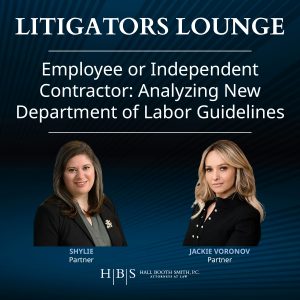
On this edition of Litigators Lounge, hosts Shylie Bannon and Jackie Voronov discuss the recently announced final rule by the U.S. Department of Labor on the classification of a worker as either an employee or independent contractor under the Fair Labor Standards Act. The conversation explores the impact of the rule, which rescinds a Trump Administration regulation that made it easier for employers to categorize workers as independent contractors. Jackie and Shylie elaborate on the six-factor test to determine whether a worker is an independent contractor or an employee, touching on aspects like control over work performance, opportunity for profit and loss, and the nature of the work relationship. They also express views on the rule’s implications and advise employers to consult legal counsel to ensure compliance.

You can find the final Department of Labor rule on employee or independent contractor classification under the Fair Labor Standards Act by following this link. This rule goes into effect on March 11, 2024. For further commentary on the rule change and its implications from Hall Booth Smith partners Jackie Voronov and Jeffrey Daitz, follow this link.

Litigators Lounge is underwritten and presented by Hall Booth Smith. The show is produced by John Ray and the North Fulton studio of Business RadioX®.

Topics in this Episode

00:01 Introduction to Litigators Lounge
00:49 The Age-Old Decision: 1099s vs W2s
01:36 The Latest on Independent Contractors
03:59 Impact of the New Rule
04:36 Industries Affected by Independent Contractor Agreements
05:23 Understanding the New Rule: The Six Factor Test
15:12 The Role of Control in Determining Employment Status
20:23 The Curious Case of Pizza Chains
20:53 Understanding the Integral Part of Employer’s Business
22:16 The Intricacies of Outsourcing
23:41 The Role of Skill and Initiative in Classification
25:05 The Mysterious Seventh Factor
26:04 The New Rule: A Blessing or a Curse?
27:53 The Impact of the New Rule on Different Sectors
33:16 The Dilemma of Independent Contractor Agreements
34:33 The Final Verdict: A Call for Legal Consultation
35:59 Closing Remarks and Future Discussions

About Litigators Lounge

Jackie Voronov and Shylie Bannon, attorneys at Hall Booth Smith who specialize in labor and employment law, are the hosts of the engaging podcast Litigators Lounge. Listen as they delve into the intricate world of workplace legal issues as they explore real-life examples, unpack legal scenarios, and offer expert insights to help organizations and employees navigate the ever-changing legal landscape. With engaging discussions, diverse viewpoints from expert guests, and an ample touch of humor, Litigators Lounge is the go-to source for in-depth analysis and expert advice on law and the workplace.

Litigators Lounge is underwritten and presented by Hall Booth Smith. The show is produced by John Ray and the North Fulton studio of Business RadioX®.

If you have questions or feedback for Jackie and Shylie, feel free to follow this link and email them.

Jackie Voronov, Partner, Hall Booth Smith

Jackie Voronov, Partner, Hall Booth Smith

Jackie Voronov is a Partner in Hall Booth Smith’s office in Paramus, New Jersey, and she represents management in a wide variety of employment matters and litigates employment claims before administrative agencies and state and federal courts. Her clients include major hotels, retailers, shipping companies, assisted living facilities and nursing homes, manufacturers, and national fast-food franchisees.

Jackie’s litigation experience includes the defense of employers in single and multi-plaintiff actions on claims of wrongful discharge, sexual harassment, race, national origin, gender, disability and age discrimination, breach of contract, family medical leave, failure to accommodate, retaliation, wage/hour laws, and related tort claims.  Jackie also works with her clients to prepare various employment agreements (including non-compete, confidentiality, independent contractor, and separation agreements). She has extensive experience before various administrative tribunals, including the Equal Employment Opportunity Commission (EEOC), the State Division of Human Rights (SDHR), the Division of Civil Rights (DCR), and other state, federal, and local agencies.

In addition, Jackie frequently conducts management training for employers on a wide variety of employment law topics, such as:

  • EEO/anti-harassment
  • employee recruiting and hiring practices
  • family and medical leave
  • reasonable accommodations for disabilities and religion
  • preventing and investigating harassment, discrimination, and whistleblower claims
  • wage and hour compliance
  • discipline and termination of employees
  • privacy in the workplace

Jackie is regularly invited to speak nationally on best practices and other employment-related issues. Before joining Hall Booth Smith, she worked for one of the country’s largest law firms, where she defended employers in a wide range of labor and employment matters, including wage and hour class actions under the Fair Labor Standards Act (FLSA), claims related to the New York State Human Rights Law (NSHRL), the New Jersey Law Against Discrimination (LAD), the Americans With Disabilities Act (ADA), the New Jersey Conscientious Employee Protection Act (CEPA), and Title VII.

Jackie was selected for inclusion as a New Jersey Rising Star by Super Lawyers® for six consecutive years (2010-2016), which honors the top 2.5% of young lawyers in New Jersey.

LinkedIn

Shylie Bannon, Partner, Hall Booth Smith
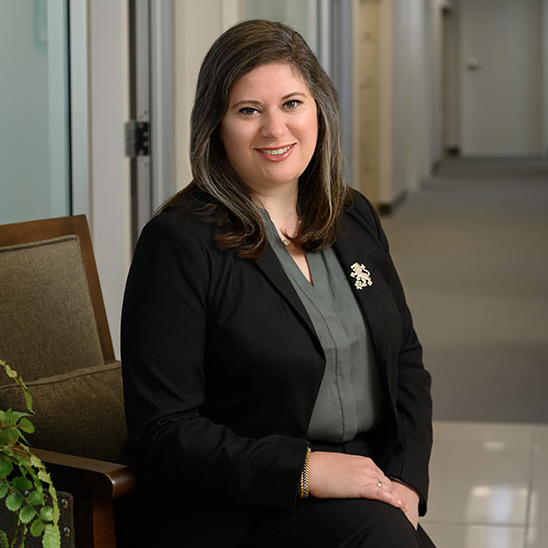
Shylie Bannon, Partner, Hall Booth Smith

Shylie Bannon is a Partner in Hall Booth Smith’s Jacksonville, Florida, office. She also serves as Hiring Partner for the region of Florida, where she oversees associate attorney hiring endeavors. Prior to joining Hall Booth Smith, Shylie was a partner in both a multi-state, multi-specialty firm and a boutique practice.

At Hall Booth Smith, Shylie continues to represent physicians, mid-level providers, and health care providers in high-exposure medical negligence claims and in administrative proceedings before the Florida Department of Health. She also represents national retailers in high-exposure premises liability, negligent security, and transportation litigation with our National Trial Counsel team.

In addition to litigating matters involving personal injury and negligence, Shylie also represents management in all aspects of employment-related litigation arising from allegations of sex, disability, race, and pregnancy discrimination; whistleblower actions; and alleged violations of the National Labor Relations Act and Fair Labor Standards. She does so in administrative proceedings before both the Florida Commission on Human Relations and the US Equal Employment Opportunity Commission, as well as in all of the state and federal courts in Florida. She also provides employment-related counsel to clients, helping them avoid employment-related litigation through the implementation of best employment, investigation, and risk management practices.

Shylie earned a Juris Doctor from the University of Florida Levin College of Law, cum laude, and graduated magna cum laude from Tulane University with a Bachelor of Arts in Political Science and History.

Shylie volunteers with the Guardian Ad Litem program and supports child welfare advocacy efforts in Northeast Florida. She is also a Member of the Board for the Jewish Federation & Foundation of Northeast Florida.

LinkedIn

About Hall Booth Smith, P.C.

Established in 1989, Hall Booth Smith, P.C. (HBS) is a full-service law firm headquartered in Atlanta, Georgia, with regional offices strategically located throughout Georgia and the United States. Experienced across a wide range of legal disciplines, HBS prides itself on providing knowledgeable, proactive, client-specific counsel to individuals, domestic and international corporations, state and federal agencies, and nonprofit organizations.

HBS possesses the legal knowledge, skill, and experience to meet their clients’ needs wherever they do business. HBS maintains the highest commitment to ethically and professionally serve their clients by providing the highest quality legal representation.

They deliver quality legal services in a variety of service areas. Experience across legal disciplines combined with a focus on the unique business or personal requirements of the client is the hallmark of the firm. Their clients receive the attention, expertise, and cost-effectiveness of a smaller law firm with the full-service and strong regional presence typical of a larger one.

Company website | LinkedIn | Facebook | Instagram

Disclaimer

Litigators Lounge is a production brought to you by Hall Booth Smith, PC. This podcast is published for the purposes of providing general information and education on topics which include those related to the law and legal issues, but the contents of the podcast do not constitute legal advice. Listening to this podcast or utilizing the information contained in it in any way does not constitute nor does it create an attorney-client relationship between you and Hall Booth Smith or its lawyers. The contents of this podcast should not be used as a substitute for competent legal advice from a professional attorney licensed in your jurisdiction.
Tagged With: 1099, employee, employees, Hall Booth Smith, Hall Booth Smith P.C., Independent Contractor, independent contractor classification, independent contractors, Jackie Voronov, outsourcing, Shylie Bannon

IRS Employee or Independent Contractor Classification

April 14, 2023 by John Ray

IRS Employee or Independent Contractor Classification
Advisory Insights Podcast
IRS Employee or Independent Contractor Classification
Loading
00:00 /
RSS Feed
Share
Link
Embed

Download file

IRS Employee or Independent Contractor Classification

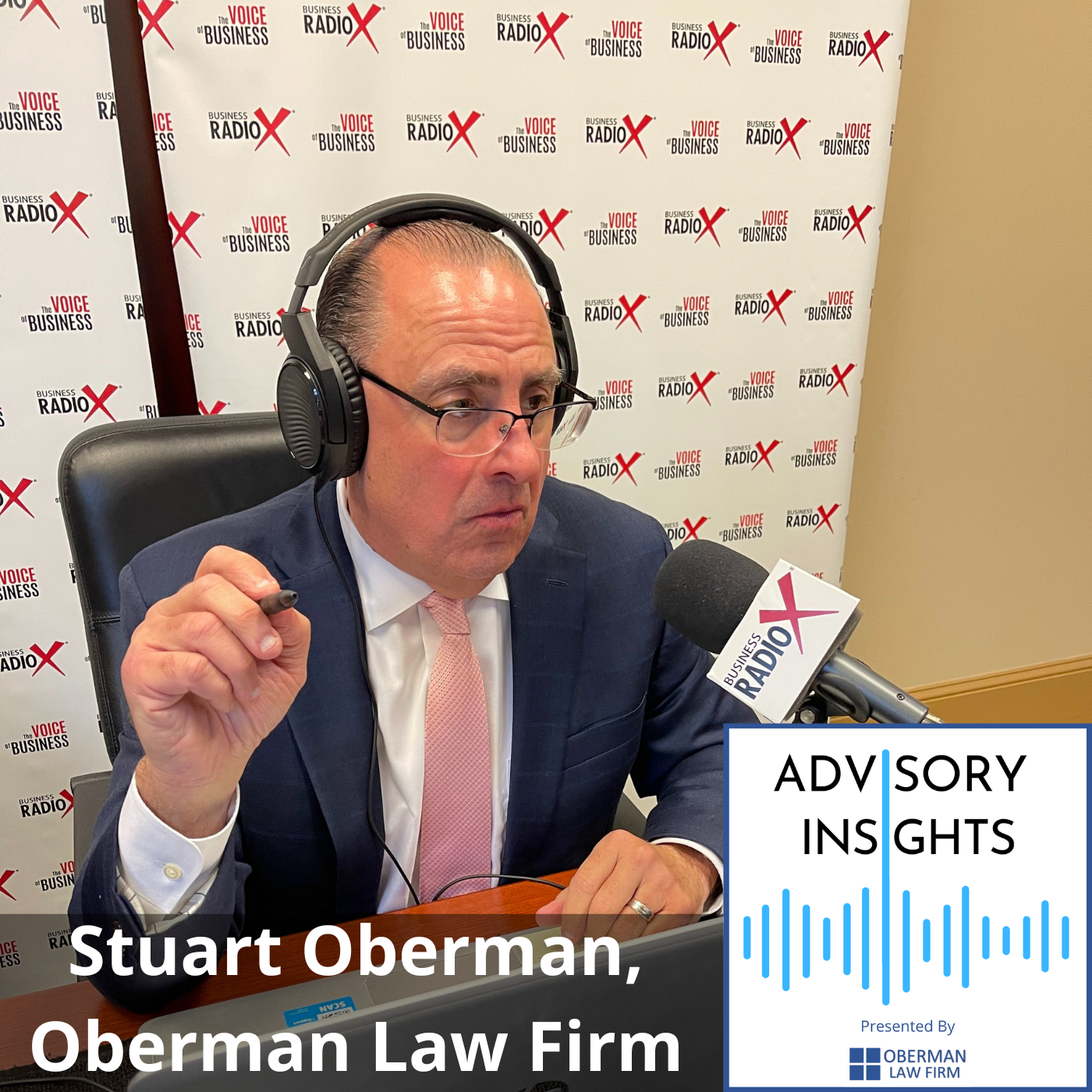
IRS Employee or Independent Contractor Classification (Advisory Insights, Episode 39)

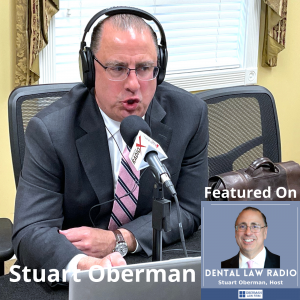
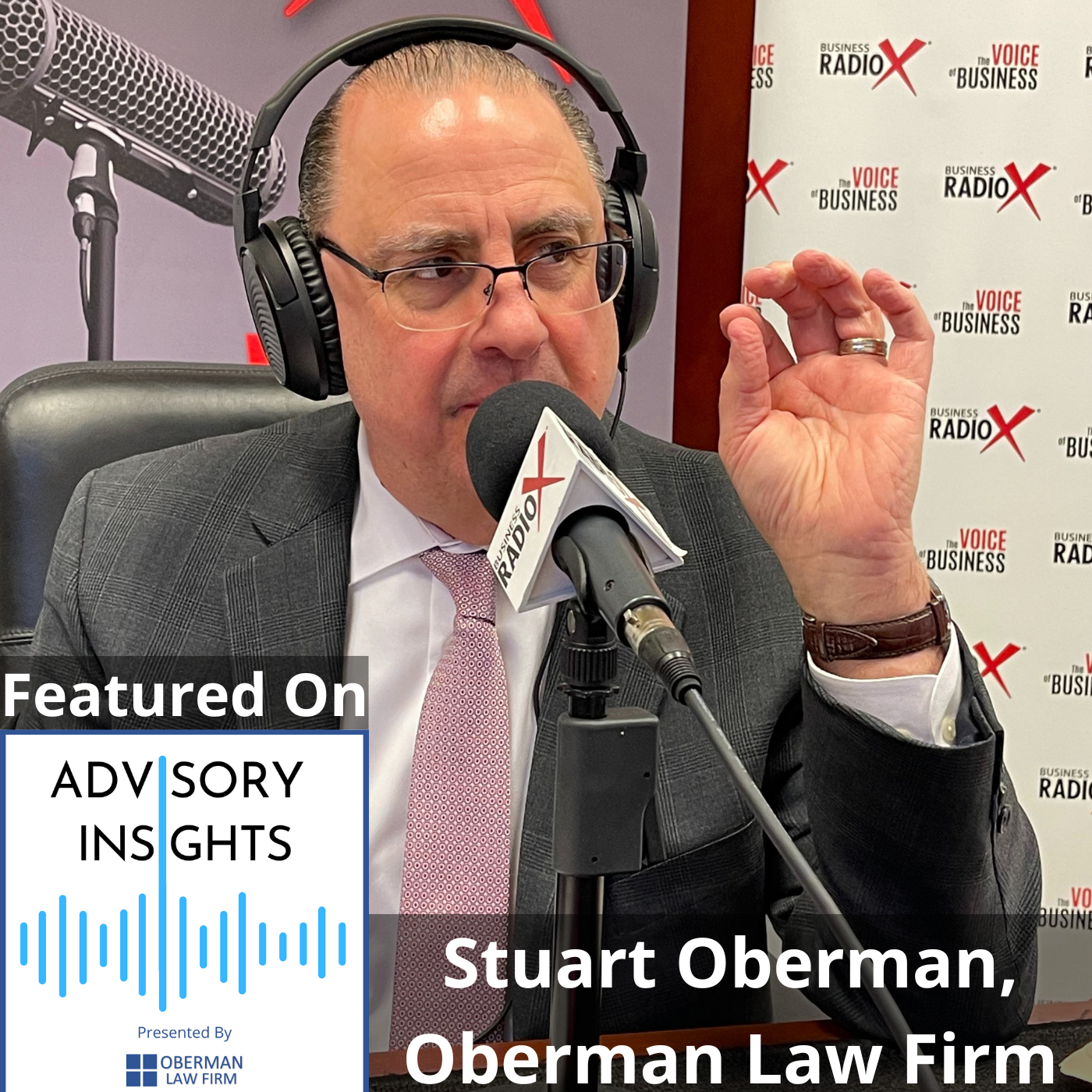
On this episode of Advisory Insights, Stuart Oberman of Oberman Law Firm discussed the IRS’s Independent Contractor Test and how it can be used to determine the status of workers. He also explained that there is a presumption that independent contractors are employees in most states, how that can be overcome, and much more.

Advisory Insights is presented by Oberman Law Firm and produced by the North Fulton studio of Business RadioX®. The series can be found on all the major podcast apps. You can find the complete show archive here.

TRANSCRIPT

Intro: [00:00:01] Broadcasting from the studios of Business RadioX, it’s time for Advisory Insights. Brought to you by Oberman Law Firm, serving clients nationwide with tailored service and exceptional results. Now, here’s your host.

Stuart Oberman: [00:00:20] And welcome everyone to Advisory Insights. Stuart Oberman here, your host. All right, folks, we’re going to talk a little bit about IRS, the government. So, today’s topic, IRS: Employee or Independent Contractor Classifications.

Stuart Oberman: [00:00:37] I can’t tell you how many times I get this request for information on a weekly basis, hot topics during speeches. But I want to run through some basics as to whether or not you are on the professional side doing working interviews – which is a no-no – or you are right on the edge of that employee contractor relationship, or you know it should be employee but you don’t want to pay taxes on that person, or whether that person just wants to be either an employee or independent contractor.

Stuart Oberman: [00:01:13] But I want to pass the test in case you’re audited. I want to write out some clear guidelines as to what you need to look at to determine if that particular person is either an employee or independent contractor. So, the IRS has numerous, numerous things they look at, but I want to drill it down to the simplest form. Because there’s always variations., the economic test, the reality test, and need tests, there’s 20 million tests, but they all come back to the same thing, and I want to work on these scenarios.

Stuart Oberman: [00:01:52] So, there’s three things the IRS look at. I don’t care what the FTC has put out, what the government has put out on advisories, they’re looking at three things. Behavioral. Does the company control behavior? Do they have the right to control the worker? How does the worker do the job? Test one.

Stuart Oberman: [00:02:18] Test two. Financial control. Does the business have direct or control of the finances and the business aspects of the worker’s job? Finances, how are they paid? Economically, what’s the schedule? Are expenses reimbursed? Are tools or supplies provided?

Stuart Oberman: [00:02:46] Test three. Relationship of the parties. Is there a written contract? Benefits. I often sort of chuckle when I see independent contractors’ agreements coming to our office that are written by the business owner, and every phrase in that agreement, although it’s supposed to be an independent contractor agreement, says employee. How can you have an independent contractor agreement and everything in that agreement says employee, employee? And then, the employee is getting benefits, insurance, vacation pay. Folks, that’s not an independent contractor. There’s certain wording you need to look at and employee is not one of them in those contracts.

Stuart Oberman: [00:03:41] So, that’s a three part test. Behavior control, financial control, relationship of the parties.

Stuart Oberman: [00:03:49] Now, I want to drill this down just a little bit more. Well, in Georgia or Florida or Mississippi or Kansas, each state has their own requirements as to what they also think is an independent contractor. And most of the time, the State Department of Revenue departments are much more vindictive and aggressive than the IRS. So, each state has different laws, rules, criterias, and you have to know what those are in addition to what the IRS overview is.

Stuart Oberman: [00:04:36] So, I want to take a look at a couple of historical things for you guys to consider with independent contractors. First and foremost, what’s the control an employer exercises over the individual? Does the individual provide services for other clients, other companies? Or is that “independent contractor” the only person that works for you? If they are, potential problem. If they’re working with five other companies, two other companies, and they’re not necessarily economically dependent on you, your criteria gets a little bit better.

Stuart Oberman: [00:05:25] The level of education and training. What is the training of that particular person as an independent contractor? Generally, someone who is of a professional degree, CPA, attorney, what have you, architect will probably have a little bit more leeway as to whether or not they’re an independent contractor because of their education and training.

Stuart Oberman: [00:05:55] So, I want to look at tools, equipment. Is that person coming to your office? Is that person coming to your job site? Is that person working in your warehouse? Are you providing the backhoes? Are you providing the trucks, equipment, bobcats, whatever it is?

Stuart Oberman: [00:06:16] The timing of the performance. Are you telling them, “John, Mary, I want you there at 9:00 to 5:00. I want you there at 8:30 to 5:00. You get an hour lunch or half hour lunch and then you’re back to work.” Are you going to punch in? Are you going to punch out?

Stuart Oberman: [00:06:32] And I may or may not pay you overtime, I don’t know. But because you’re an independent contractor, I may or may not pay you overtime. I don’t care if you work 60 hours a week. You’re an independent contractor, I’m paying you $100 a week and that’s all. You need to look at that really, really close. Are they hour-based requirements or are they project-based – project? Or is it performance and service-based?

Stuart Oberman: [00:07:02] Agreement. Is there an agreement between the parties? Is there a contract? If not, you need one. The length of time. You’re going to be an independent contractor for three days, you’re going to be an independent contractor for three years, not so much. Is the term open-ended? Are the terms of the contract open-ended?

Stuart Oberman: [00:07:29] And then, one of the things that I always look at, is, how essential is that person to your continued operation of the business? If they are absolutely critical to your infrastructure, your revenue, your ongoing process, it’s going to be an employee. You got to look at that. So, the less control you have over that person, the better off you’re going to be. Now, the more control, obviously, you’re going to be closer to an employee status.

Stuart Oberman: [00:08:06] Now, the IRS has listed out 20 factors, 20 factors. At some point, every independent contractor is going to hit at least one of those factors. I don’t care what it is. They’re going to hit something. You’ve got to take a look at, “Okay. John and Mary is coming in as independent contractor.” Do they pass or how much of that test of the 20 factors do they pass what the IRS put out?

Stuart Oberman: [00:08:36] I believe it was in 1987, so this is nothing earth shattering. They revised it. Things come in. Things come out. But you look at the guts of it, the three factors. You look at the control, the financial and relationship, you look at those 20 factors, and then you have to determine the statuses of the parties.

Stuart Oberman: [00:08:57] Folks, that’s a long, long 20 explanation matter. But, again, keep it basics. We’re going to have tweaks. We’re going to have three or four parts or test or whatever it is. The bottom line is, is that the courts are going to decide whatever they want to decide, the IRS is going to decide whatever they want to decide, and so is the State Department of Revenues, but you got to have a background.

Stuart Oberman: [00:09:23] There’s a presumption, presumption in most states that an independent contractor is an employee. Presumption. Overcome it. Overcome that obstacle if you wanted to. Folks, that’s the IRS in its simplest.

Stuart Oberman: [00:09:39] Advisory Insights. Thanks for joining us today. Feel free to reach out, phone number 770-886-2400, or email me, stuart, S-T-U-A-R-T, @obermanlaw.com. Thanks, folks. Have a fantastic day.

Outro: [00:09:57] Thank you for joining us on Advisory Insights. This show is brought to you by Oberman Law Firm, a business-centric law firm representing local, regional, and national clients in a wide range of practice areas, including health care, mergers and acquisitions, corporate transactions, and regulatory compliance.

About Advisory Insights Podcast

Presented by Oberman Law Firm, Advisory Insights Podcast covers legal, business, HR, and other topics of vital concern to healthcare practices and other business owners. This show series can be found here as well as on all the major podcast apps.

Stuart Oberman, Oberman Law Firm

Stuart Oberman
Stuart Oberman, Founder, Oberman Law Firm

Stuart Oberman is the founder and President of Oberman Law Firm. Mr. Oberman graduated from Urbana University and received his law degree from John Marshall Law School. Mr. Oberman has been practicing law for over 25 years, and before going into private practice, Mr. Oberman was in-house counsel for a Fortune 500 Company. Mr. Oberman is widely regarded as the go-to attorney in the area of Dental Law, which includes DSO formation, corporate business structures, mergers and acquisitions, regulatory compliance, advertising regulations, HIPAA, Compliance, and employment law regulations that affect dental practices.

In addition, Mr. Oberman’s expertise in the healthcare industry includes advising clients in the complex regulatory landscape as it relates to telehealth and telemedicine, including compliance with corporate structures, third-party reimbursement, contract negotiations, technology, healthcare fraud, and abuse law (Anti-Kickback Statute and the State Law), professional liability risk management, federal and state regulations.

As the long-term care industry evolves, Mr. Oberman has the knowledge and experience to guide clients in the long-term care sector with respect to corporate and regulatory matters, assisted living facilities, and continuing care retirement communities (CCRCs). In addition, Mr. Oberman’s practice also focuses on healthcare facility acquisitions and other changes of ownership, as well as related licensure and Medicare/Medicaid certification matters, CCRC registrations, long-term care/skilled nursing facility management, operating agreements, assisted living licensure matters, and health care joint ventures.

In addition to his expertise in the healthcare industry, Mr. Oberman has a nationwide practice that focuses on all facets of contractual disputes, including corporate governance, fiduciary duty, trade secrets, unfair competition, covenants not to compete, trademark and copyright infringement, fraud, and deceptive trade practices, and other business-related matters. Mr. Oberman also represents clients throughout the United States in a wide range of practice areas, including mergers & acquisitions, partnership agreements, commercial real estate, entity formation, employment law, commercial leasing, intellectual property, and HIPAA/OSHA compliance.

Mr. Oberman is a national lecturer and has published articles in the U.S. and Canada.

LinkedIn

Oberman Law Firm

Oberman Law Firm has a long history of civic service, noted national, regional, and local clients, and stands among the Southeast’s eminent and fast-growing full-service law firms. Oberman Law Firm’s areas of practice include Business Planning, Commercial & Technology Transactions, Corporate, Employment & Labor, Estate Planning, Health Care, Intellectual Property, Litigation, Privacy & Data Security, and Real Estate.

By meeting their client’s goals and becoming a trusted partner and advocate for our clients, their attorneys are recognized as legal go-getters who provide value-added service. Their attorneys understand that in a rapidly changing legal market, clients have new expectations, constantly evolving choices, and operate in an environment of heightened reputational and commercial risk.

Oberman Law Firm’s strength is its ability to solve complex legal problems by collaborating across borders and practice areas.

Connect with Oberman Law Firm:

Company website | LinkedIn | Twitter

Tagged With: employee, employment law, employment law firm, employment lawyer, Independent Contractor, IRS classifications, Oberman Law, Oberman Law Firm, Stuart Oberman

Overview of Potential HR Employer Violations

July 29, 2022 by John Ray

HR Employer Violations
Advisory Insights Podcast
Overview of Potential HR Employer Violations
Loading
00:00 /
RSS Feed
Share
Link
Embed

Download file

Overview of Potential HR Employer Violations (Advisory Insights Podcast, Episode 2)

On this episode of Advisory Insights, Stuart Oberman gave an overview of potential HR employer violations he’s seeing with clients. Several of these violations can prove to be quite costly.

Advisory Insights is presented by Oberman Law Firm and produced by the North Fulton studio of Business RadioX®. The series can be found on all the major podcast apps. You can find the complete show archive here.

TRANSCRIPT

Intro: [00:00:01] Broadcasting from the studios of Business RadioX, it’s time for Advisory Insights. Brought to you by Oberman Law Firm, serving clients nationwide with tailored service and exceptional results. Now, here’s your host.

Stuart Oberman: [00:00:19] Welcome everyone to Advisory Insights Podcast. I am your host, Stuart Oberman.

Stuart Oberman: [00:00:25] Well, you know, for those that know me, I tell you, we do a lot of H.R. as a firm. We see a lot of problems locally, nationally, regionally, globally on H.R. violations. So, I want to talk a little bit about H.R. violations, really an overview of potential H.R. employer violations. That is such a wide area. I mean, we’re talking about employment law. We’re talking about State, Federal regulatory issues. We’re talking about EEOC. And we’re talking about audits. We’re talking about, you know, employee complaints.

Stuart Oberman: [00:00:57] So, what I want to do is to just talk about a couple of things top of mind that can really get you into trouble. And I’ll tell you, we see a lot of these areas of concern that can really, really be avoided. But it’s going to take some soul searching. It’s going to take some drilling down. It’s going to take some hard decisions. Look, you can’t turn a ship around overnight. You’ve got to make small steps.

Stuart Oberman: [00:01:23] And if you do anything on these podcast, it’s take a look at what we’re talking about and apply it to what you have, whether you’re a health care practice, whether you are a startup, whether you are a billion dollar construction company. It doesn’t matter, the same law applies. So, let’s take a look at some of the most common ways that we feel that employers violate the law.

Stuart Oberman: [00:01:47] It this Great Resignation world that we’re in, our employers use prohibited questions during job interviews. You have to be very, very careful. And we’re going to cover this in future podcasts. So, a lot of these areas we’re going to expand upon, but we’re just going to have top of mind issues. Job interviews, questions, are you prepared? The answer is probably not. Are your candidates recording your conversations? You bet they are.

Stuart Oberman: [00:02:21] So, one of the things that we take a look at also is not allowing employees, depending on the size of the business, a lot of ramifications of employees discuss their pay. Now, we’re looking at National Labor Relations Board issues. So, yeah, the National Labor Relations Board, you bet, will apply to small businesses.

Stuart Oberman: [00:02:42] Overtime, one of the biggest, biggest errors that our employers get in trouble with are overtime. And I say this all the time when I speak, when I talk, overtime is a lot of things. You’re working 40 hours a week, so you’re texting your employees after hours. Yeah, that’s overtime. Your emailing your staff, overtime, yeah. You’re calling your office manager, depending on where they’re located at, if they make $100,000 hours or more, they are still subject to overtime. You’ve got to be careful with this. We’re going to take a look at some of the issues coming forward also.

Stuart Oberman: [00:03:17] Huge issue, independent contractor versus employee. The IRS loves these kind of reviews. Key, are you controlling a time, place, and manner? That’s a whole topic for discussion on employee versus independent contractor. It is very tough to win that argument. It is very tough to win an audit on that.

Stuart Oberman: [00:03:37] So, one thing, this great, great social media world that we live in, are you disciplining your employees who are complaining about you – small, medium, large company – on social media? Do you have restrictions? Are you following them on social media? Are you looking for things that they’re saying about you?

Stuart Oberman: [00:04:07] How to prevent also a hostile work environment, and I’m talking about gender neutral. I’m talking about harassment. I’m talking about all forms of harassment, bullying. I can’t believe what some of our clients tell us happens in their employment situations. I’m talking about Title VII violations. I’m talking about sexual orientation issues. I’m talking about gender identity. I’m talking about religion. I’m talking about race, color, national origin. These are all the things that occur on a hostile work environment that are a violation of Federal Law.

Stuart Oberman: [00:04:45] Look, I could probably take any one of these topics and discuss an hour on them. Again, what do we do with Advisory Insights Podcast? What are we doing? We’re taking the high level topics with a 10,000 foot view and are you looking at these particular areas. Six, seven, eight areas, are you looking at them? Again, short, sweet bullet point topics that we could talk an hour on. That’s the goal on Advisory Insights Podcast. That’s what we want to do. We want to take things at a very high level, apply it to what you’re looking at, whether you’re, again, small, startup. Are you looking at these things?

Stuart Oberman: [00:05:24] We’re going to continue talking about these things in greater detail. We’re going to continue talking about what affects our employers on a regional, national, local basis – excuse me – global basis. I want to talk about also some of these things on future podcasts. And, also, don’t forget, we also cover these on our newsletter, Advisory Insights. If you want to get a copy of our newsletter, please let us know.

Stuart Oberman: [00:05:49] Folks, thank you very much for joining us on our Advisory Insights Podcast. Please visit us at advisoryinsightspodcast.com. If you want to reach me, please feel free to call the office, 770-886-2400 or visit Oberman Law Firm, obermanlawfirm.com, or send me an email, stuart, S-T-U-A-R-T, @obermanlaw.com.

Stuart Oberman: [00:06:14] Thank you, everyone for listening to us. Keep listening to our podcast. If you have any questions, let me know. Have a fantastic day, everyone. Thank you.

Outro: [00:06:24] Thank you for joining us on Advisory Insights. This show is brought to you by Oberman Law Firm, a business-centric law firm representing local, regional, and national clients in a wide range of practice areas, including health care, mergers and acquisitions, corporate transactions, and regulatory compliance.


About Advisory Insights Podcast

Presented by Oberman Law Firm, Advisory Insights Podcast covers legal, business, HR, and other topics of vital concern to healthcare practices and other business owners. This show series can be found here as well as on all the major podcast apps.

Stuart Oberman, Oberman Law Firm

Oberman Law Firm
Stuart Oberman, Founder, Oberman Law Firm

Stuart Oberman is the founder and President of Oberman Law Firm. Mr. Oberman graduated from Urbana University and received his law degree from John Marshall Law School. Mr. Oberman has been practicing law for over 25 years, and before going into private practice, Mr. Oberman was in-house counsel for a Fortune 500 Company. Mr. Oberman is widely regarded as the go-to attorney in the area of Dental Law, which includes DSO formation, corporate business structures, mergers and acquisitions, regulatory compliance, advertising regulations, HIPAA, Compliance, and employment law regulations that affect dental practices.

In addition, Mr. Oberman’s expertise in the healthcare industry includes advising clients in the complex regulatory landscape as it relates to telehealth and telemedicine, including compliance of corporate structures, third-party reimbursement, contract negotiations, technology, health care fraud, and abuse law (Anti-Kickback Statute and the State Law), professional liability risk management, federal and state regulations.

As the long-term care industry evolves, Mr. Oberman has the knowledge and experience to guide clients in the long-term care sector with respect to corporate and regulatory matters, assisted living facilities, continuing care retirement communities (CCRCs). In addition, Mr. Oberman’s practice also focuses on health care facility acquisitions and other changes of ownership, as well as related licensure and Medicare/Medicaid certification matters, CCRC registrations, long-term care/skilled nursing facility management, operating agreements, assisted living licensure matters, and health care joint ventures.

In addition to his expertise in the health care industry, Mr. Oberman has a nationwide practice that focuses on all facets of contractual disputes, including corporate governance, fiduciary duty, trade secrets, unfair competition, covenants not to compete, trademark and copyright infringement, fraud, and deceptive trade practices, and other business-related matters. Mr. Oberman also represents clients throughout the United States in a wide range of practice areas, including mergers & acquisitions, partnership agreements, commercial real estate, entity formation, employment law, commercial leasing, intellectual property, and HIPAA/OSHA compliance.

Mr. Oberman is a national lecturer and has published articles in the U.S. and Canada.

LinkedIn

Oberman Law Firm

Oberman Law Firm has a long history of civic service, noted national, regional, and local clients, and stands among the Southeast’s eminent and fast-growing full-service law firms. Oberman Law Firm’s areas of practice include Business Planning, Commercial & Technology Transactions, Corporate, Employment & Labor, Estate Planning, Health Care, Intellectual Property, Litigation, Privacy & Data Security, and Real Estate.

By meeting their client’s goals and becoming a trusted partner and advocate for our clients, their attorneys are recognized as legal go-getters who provide value-added service. Their attorneys understand that in a rapidly changing legal market, clients have new expectations, constantly evolving choices, and operate in an environment of heightened reputational and commercial risk.

Oberman Law Firm’s strength is its ability to solve complex legal problems by collaborating across borders and practice areas.

Connect with Oberman Law Firm:

Company website | LinkedIn | Twitter

Tagged With: Advisory Insights Podcast, employee, federal violations, HR employer violations, HR violations, Independent Contractor, Oberman Law Firm, overtime, Stuart Oberman

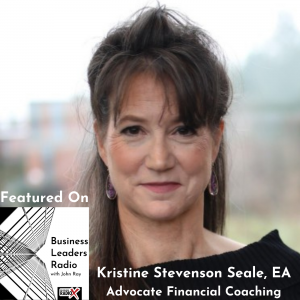
Kristine Stevenson Seale, EA, Advocate Financial Coaching

April 20, 2022 by John Ray

Kristine Stevenson Seale
Business Leaders Radio
Kristine Stevenson Seale, EA, Advocate Financial Coaching
Loading
00:00 /
RSS Feed
Share
Link
Embed

Download file

Kristine Stevenson Seale

Kristine Stevenson Seale, EA, Advocate Financial Coaching

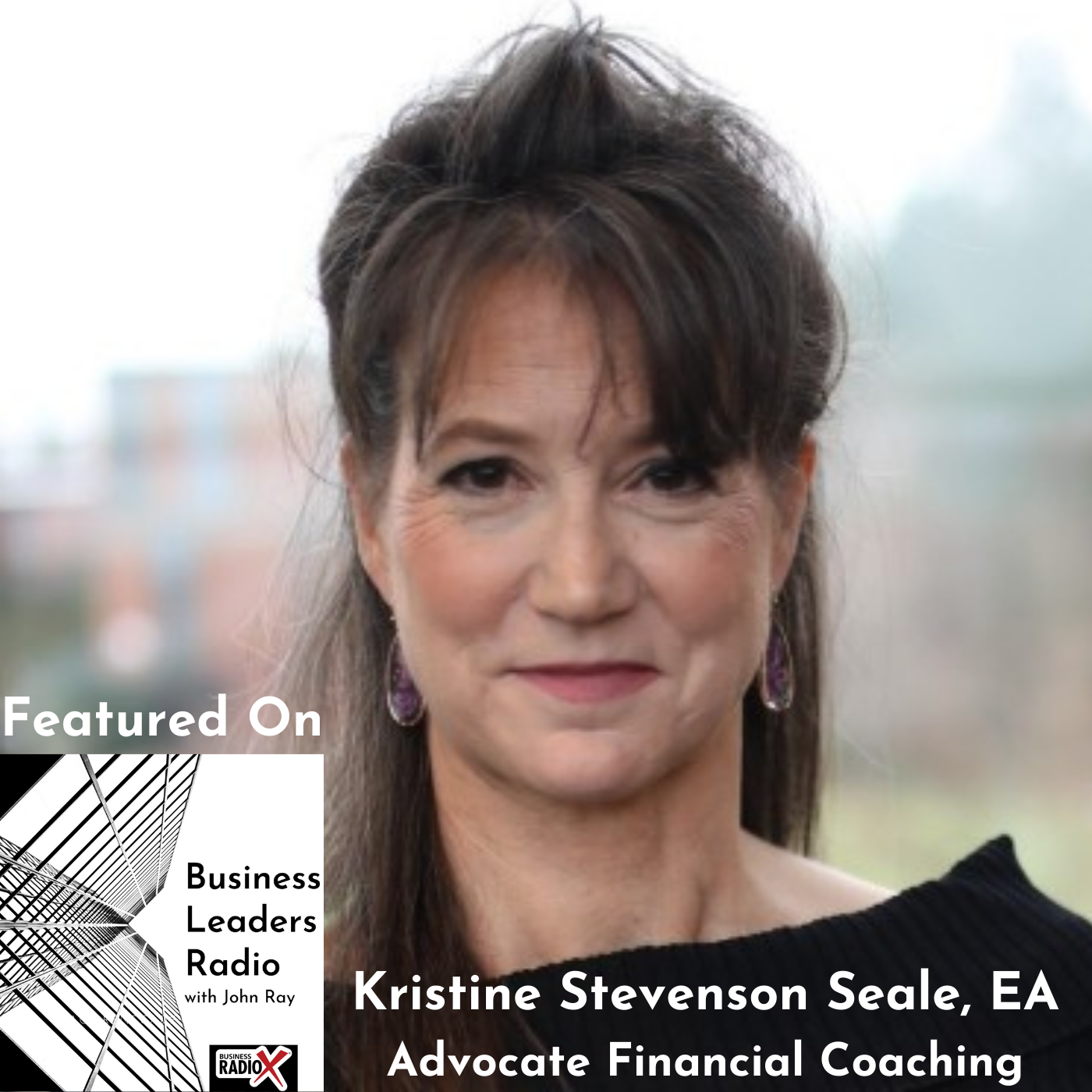
Kristine Stevenson Seale is a financial coach and an IRS Enrolled Agent with a brand-new book, How to Avoid Trouble with the IRS: 10 Best Tax Tips for the Self-Employed, Gig Worker, and Indie Contractor.  She and host John Ray talked about her journey of preparing taxes, working for the IRS (which she loved!), becoming a financial coach, to now publishing a book full of her advice on the basics of getting your finances in order as a self-employed or independent contractor, and so much more.

Business Leaders Radio is produced and broadcast by the North Fulton Studio of Business RadioX® in Atlanta.

Kristine Stevenson Seale, EA, Advocate Financial Coaching

Kristine Stevenson Seale, EA, Advocate Financial Coaching

Kristine Stevenson Seale is a Personal Finance Coach, Tax Resolution Specialist, and host of the weekly radio segment, “Dollars and $ense” ℠ with Kristine”.

She is also the author of How to Avoid Trouble with the IRS: 10 Best Tax Tips for the Self-Employed, Gig Worker, and Indie Contractor.

She is on a mission to help families, individuals and businesses solve their personal and business finance problems. She is empowering individuals to win by connecting their behavior with money to their success with money. Clients unleash the power of their income through budget prioritization, saving for emergencies, and eliminating debt. Long-term wealth and retiring with dignity become a reality

Kristine is an IRS Enrolled Agent and specializes in the field of Tax Resolution, negotiating settlements for individuals and businesses that find themselves in trouble with the IRS.

Her radio segment, “Dollars and $ense” ℠ with Kristine”, airs on a popular Central Texas radio station, educating her listening audience with tax tips and personal finance strategies.

LinkedIn | Facebook

Questions and Topics

  • When did you become an IRS Enrolled Agent and what is that?
  • What kind of tax problems do people have? What is it you negotiate?
  • There’s a common theme of helping people with their money issues in all you do, Kristine. Everything from personal finance coaching to helping people solve their tax debt issues with the IRS. How did all this start?
  • You’re a personal finance coach. What is coaching and how does that differ from being a financial advisor?
  • How do you help people pay off debt, learn to budget, and save for the future?
  • Tell us about your new book

Business Leaders Radio is hosted by John Ray and produced virtually from the North Fulton studio of Business RadioX® in Alpharetta.  The show can be found on all the major podcast apps and a full archive can be found here.

Tagged With: Advocate Financial Coaching, Business Leaders Radio, enrolled agent, gig worker, How to Avoid Trouble with the IRS, Independent Contractor, IRS, John Ray, Kristine Stevenson Seale, self employed, Taxes

Should My Staff Be Independent Contractors?

May 21, 2021 by John Ray

Independent Contractors
Dental Law Radio
Should My Staff Be Independent Contractors?
Loading
00:00 /
RSS Feed
Share
Link
Embed

Download file

Independent Contractors

Should My Staff Be Independent Contractors? (Dental Law Radio, Episode 5)

The question of whether to classify workers as independent contractors or not just got thornier. Recently issued U.S. Department of Labor guidelines have tightened the eligibility definition for independent contractors. If this is news to you, then you’ll want to listen to host Stuart Oberman explain the guidelines and their implications for your dental practice. Dental Law Radio is underwritten and presented by Oberman Law Firm and produced by the North Fulton studio of Business RadioX®.

TRANSCRIPT

Intro: [00:00:02] Broadcasting from the Business RadioX Studios in Atlanta, it’s time for Dental Law Radio. Dental Law Radio is brought to you by Oberman Law Firm, a leading dental-centric law firm serving dental clients on a local, regional, and national basis. Now, here’s your host, Stuart Oberman.

Stuart Oberman: [00:00:27] Welcome everyone to Dental Law Radio. And we’re going to jump on a topic pretty quick today that has been an ongoing issue for years, and this was brought to the forefront even more with COVID-19, independent contractors. So, near and dear to our dentist hearts. So, you know exactly what is it? What’s the issues?

Stuart Oberman: [00:00:53] So, you know, with independent contractors, we get a lot of questions. We’ll get a question, should my employees be independent contractors? Well, you can’t have an employee that’s an independent contractor. They’re either an employee or an independent contractor. Two separate contracts, two separate concepts. So, as a general rule, it is very, very difficult for staff members, if you will, to be independent contractors.

Stuart Oberman: [00:01:21] So, we get this question a lot regarding hygienists, are my hygienists independent contractors? I don’t want to pay them. They have certain work they need to do, certain qualifications. And I will tell you that as a general rule on a national basis, the areas that we have been involved in, commentary, research, consulting with other members throughout the country, that will be a losing argument. Just about every jurisdiction that we have reviewed, discovered, run across, will determine that a hygienist is not an independent contractor. They’re an employee. The key is time, place, and manner. If you control the time, place and manner, as IRS puts it, then you’ve bought that employee, then they are yours.

Stuart Oberman: [00:02:19] So, the question is, you know, working interviews. Well, if you look at the strict interpretation of a working interview, I would tell you, you’ve got to be very, very careful with working interviews. In a technical sense, working interviews are considered temporary employment. Now, there’s certain things that you can do with those to mitigate that risk. But as a general rule, working interviews are considered employees from the time they start that particular working interview. Period. Again, that’s a general rule. If you follow that rule, that’s going to keep you out of trouble.

Stuart Oberman: [00:03:02] But then, the question is, I got doctors that I pay 1099. Problematic. What do we do? Well, I pay them individual. Problematic. That’s a really bad thing to do. If you have a doctor that is working for you – I don’t care if it’s one day a week or five days a week – that doctor, if you’re going to qualify him as an independent contractor, you should not be paying that doctor individually on a 1099.

Stuart Oberman: [00:03:31] A doctor needs to get an entity formed. You need to pay that entity, a couple hundred thousand dollars or whatever it is, and that will look much better if an audit should occur. We’ve been involved in audits and investigators have told us that, literally, if you are paying an LLC, a professional corporation, depending what state you’re in, “We would not be sitting here.” That’s pretty strong. So, I would not hire a contractor dentist unless they have an entity. Pay that entity and let them do whatever they need to do with their taxes.

Stuart Oberman: [00:04:12] So, what brought all this out and why are we talking about this today? So, January 6, 2021, through all the COVID good stuff, the U.S. Department of Labor issued what they call a final rule. Well, the final rules have been ongoing, it seems like, for 20 years. But they have a very consistent theme as to what they’re looking at, what they need to do. And I would tell you that if you have a question whether or not a person is an independent contractor employee, err on the side of caution, make him an employee, talk to your CPA, give us a call. We’ll try to walk you through it.

Stuart Oberman: [00:04:55] So, on January 6, 2021, the Department of Labor, what was the rule? What came out? So, they reaffirmed the Economic Reality Test. So, one of the things they looked at is, is this independent contractor in business for himself or herself? Is that particular individual economically dependent on potential employer for work? Do they need you? Who needs who more, you or them?

Stuart Oberman: [00:05:31] There’s two core factors that they also cited and reviewed, the degree of control – which has been ongoing for 30 years – time, place, and manner, what is the workers opportunity for profit or loss. What basis of initiative and/or investment are we looking at? So, again, we got two, reaffirms the Economic Reality Tests and then we’ve got two factors, degree of control and the opportunity for profit or loss.

Stuart Oberman: [00:06:10] So then, the Department of Labor, infinite wisdom, went on to offer three other guidepost factors. Again, this is a whole topic for a whole another day that we could talk about for five hours with independent contractor status, time, place, manner. Does it fit, does it not fit, does it apply to my practice, not apply.

Stuart Oberman: [00:06:33] So, what are the three other guidepost factors that the Department of Labor indicated that we should consider? The amount of skill required for the work, what is that skill level, degree of performance of the working relationship, and whether or not the work is an integral part of your unit of production. Now, if you look at these three guideposts, that’s an enormous, enormous umbrella. So, again, all this came about during a period of COVID. But if you look at where this has been for the last 30 or 40 years, really nothing has changed. It goes back, like I said before, time, place, and manner.

Stuart Oberman: [00:07:27] And this looks at the Fair Labor Standards Act. Now, if you’re hearing that term for the first time, I would also urge you to reach out to us, get us to put you on our newsletters. This is what essentially guides the employees, the independent contractors, Fair Labor Standards Act. That is critical to the operation of a dental practice. It doesn’t matter if you’re one practice, three employees, or you’ve got 100 employees, 30 practices. It doesn’t really matter.

Stuart Oberman: [00:07:58] But these are key things that you should be consulting with your CPA on, your financial advisers, on a yearly basis to understand what you’re doing, where you’re going with it. Because the ramifications are really huge on the penalty side, on the economic side, on the expansion side, and on the operational side if you get hit with an audit. Because I will tell you, once they discover this, they may go back 12 months. But once you get the Department of Labor, State or Federal, dig it in, they’re going deep because one thing leads to another, leads to another.

Stuart Oberman: [00:08:38] And another thing we look at, a lot of times our doctors will employ family members. So, are you employing your family members? Are you employing that ten-year-old child and giving them $8 or $10 an hour check because they took pictures for your pamphlet? Are they on your internet? How are you doing this? Are you paying your personal services through the company? Again, as an independent contractor, how are you paying? It all goes back to what are you doing with your books? What shouldn’t be there, and whether or not you’re going to get caught. Because I will tell you, if you get a complaint to Department of Labor from an employee, they’re coming in and they’re going to look at who’s an independent contractor, they’re going to dig deep on all 1099s. They want to know, 1099s.

Stuart Oberman: [00:09:41] So, take a look at that. That’s the new development. But, conceptually, it’s been out there for many, many years. Do not get a contract for an independent contractor that you pulled off the internet or got from someone who didn’t know what they were doing. And, all of a sudden, you’re using terms like an independent contractor, employee, employees, control, those things are the death kill of an independent contractor agreement.

Stuart Oberman: [00:10:06] Again, some of these things or just, you know, what we discovered what’s sort of the hot areas, if you will, what’s coming down the pike with Department of Labor, what to expect. Sometimes there’s no guidance as to really how these are going to be interpreted. So, we just have to go from prior history, which is, you know, never necessarily good. But, you know, take a look at where you are on the practice, who’s your independent contractors, who are you paying, who’s on the payroll, who’s not on the payroll, who should be on the payroll, what are you doing internally, what are you doing with family members, what are you doing with everyone that’s not business-related, and how hard will you get hit if there’s an audit.

Stuart Oberman: [00:10:45] So, concluding, we’re going forward on some other internal matters with employment issues at a very high level on this, 10,000 foot view. We’re going to take a look at it. So, I want to thank you for joining us today, Dental Law Radio. And if you have any questions, please feel free to give us a call, Oberman Law Firm, 770-554-1400. Visit us, obermanlawfirm.com. Send me an email, certainly fine, Stuart, S-T-U-A-R-T, @obermanlaw.com – excuse me – that was obermanlaw.com. Have a fantastic day. And we’ll look forward to visiting with you on other podcasts. Thank you very much. Bye.

About Dental Law Radio

Hosted by Stuart Oberman, a nationally recognized authority in dental law, Dental Law Radio covers legal, business, and other operating issues and topics of vital concern to dentists and dental practice owners. The show is produced by the North Fulton studio of Business RadioX® and can be found on all the major podcast apps. The complete show archive is here.

Stuart Oberman, Oberman Law Firm

Oberman Law Firm
Stuart Oberman, host of “Dental Law Radio”

Stuart Oberman is the founder and President of Oberman Law Firm. Mr. Oberman graduated from Urbana University and received his law degree from John Marshall Law School. Mr. Oberman has been practicing law for over 25 years, and before going into private practice, Mr. Oberman was in-house counsel for a Fortune 500 Company. Mr. Oberman is widely regarded as the go-to attorney in the area of Dental Law, which includes DSO formation, corporate business structures, mergers and acquisitions, regulatory compliance, advertising regulations, HIPAA, Compliance, and employment law regulations that affect dental practices.

In addition, Mr. Oberman’s expertise in the health care industry includes advising clients in the complex regulatory landscape as it relates to telehealth and telemedicine, including compliance of corporate structures, third-party reimbursement, contract negotiations, technology, health care fraud and abuse law (Anti-Kickback Statute and the State Law), professional liability risk management, federal and state regulations.

As the long-term care industry evolves, Mr. Oberman has the knowledge and experience to guide clients in the long-term care sector with respect to corporate and regulatory matters, assisted living facilities, continuing care retirement communities (CCRCs). In addition, Mr. Oberman’s practice also focuses on health care facility acquisitions and other changes of ownership, as well as related licensure and Medicare/Medicaid certification matters, CCRC registrations, long-term care/skilled nursing facility management, operating agreements, assisted living licensure matters, and health care joint ventures.

In addition to his expertise in the health care industry, Mr. Oberman has a nationwide practice that focuses on all facets of contractual disputes, including corporate governance, fiduciary duty, trade secrets, unfair competition, covenants not to compete, trademark and copyright infringement, fraud, and deceptive trade practices, and other business-related matters. Mr. Oberman also represents clients throughout the United States in a wide range of practice areas, including mergers & acquisitions, partnership agreements, commercial real estate, entity formation, employment law, commercial leasing, intellectual property, and HIPAA/OSHA compliance.

Mr. Oberman is a national lecturer and has published articles in the U.S. and Canada.

LinkedIn

Oberman Law Firm

Oberman Law Firm has a long history of civic service, noted national, regional, and local clients, and stands among the Southeast’s eminent and fast-growing full-service law firms. Oberman Law Firm’s areas of practice include Business Planning, Commercial & Technology Transactions, Corporate, Employment & Labor, Estate Planning, Health Care, Intellectual Property, Litigation, Privacy & Data Security, and Real Estate.

By meeting their client’s goals and becoming a trusted partner and advocate for our clients, their attorneys are recognized as legal go-getters who provide value-added service. Their attorneys understand that in a rapidly changing legal market, clients have new expectations, constantly evolving choices, and operate in an environment of heightened reputational and commercial risk.

Oberman Law Firm’s strength is its ability to solve complex legal problems by collaborating across borders and practice areas.

Connect with Oberman Law Firm:

Company website | LinkedIn | Twitter

Tagged With: dental law, Fair Labor Standards Act, Independent Contractor

Katharine Chestnut with Alkaloid Networks, Lisa Laday-Davis with Kennesaw CPA and Nikkita Gordon with Cute and Cocky

June 11, 2019 by angishields

ABR-6-10-19-Feature
Atlanta Business Radio
Katharine Chestnut with Alkaloid Networks, Lisa Laday-Davis with Kennesaw CPA and Nikkita Gordon with Cute and Cocky
Loading
00:00 /
RSS Feed
Share
Link
Embed

Download file

ABR-6-10-19-Group

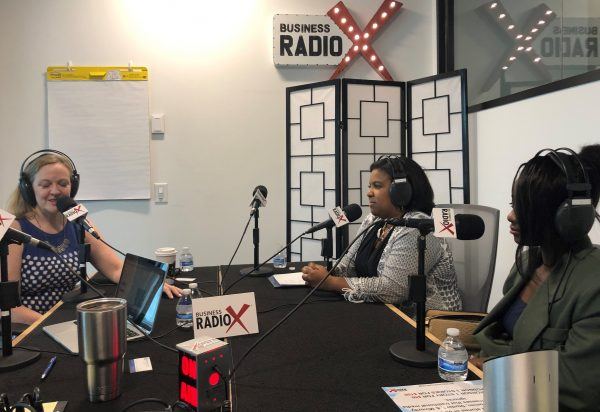
Katharine Chestnut spent 30+ years focused on marketing strategy continues to provide marketing consulting along being active as a speaker and mentor. She opened Alkaloid Networks, an Atlanta coworking office, four+ years ago and recently launched the Atlanta Coworking Alliance.

Connect with Katharine on LinkedIn, follow Alkaloid Networks on Twitter and Facebook, and Atlanta Coworking Alliance on LinkedIn, Twitter and Facebook.

Lisa Laday-Davis has been a CPA for over 18 years Specializing in Accounting, Tax and Business Planning. She started Kennesaw CPA with the goal of assisting small business owners and entrepreneurs in creating and maintaining thriving businesses. She creates educational webinars, programming and products specifically for business owners.

Laday-Davis is a graduate of Louisiana State University and is licensed in the field of accounting, insurance and risk management. She lives in the Metro Atlanta area.

Follow Kennesaw CPA on LinkedIn, Twitter and Facebook.

Nikkita Gordon, CEO of Cute and Cocky. Never Be Compromised with Cute & Cocky Firearm Accessories and Apparel.

Tagged With: coworking, CPa, Diverse, emote Worker, entrepreneur, Executive Protection Security, FRS-1, Independent Contractor, Law Enforcement, planning, Solopreneur, Tax Guide, tlanta Coworking Alliance, Women Holster Manufacturer

Business RadioX ® Network


Our Most Recent Episode

CONNECT WITH US

  • Email
  • Facebook
  • LinkedIn
  • Twitter
  • YouTube

Our Mission

We help local business leaders get the word out about the important work they’re doing to serve their market, their community, and their profession.

We support and celebrate business by sharing positive business stories that traditional media ignores. Some media leans left. Some media leans right. We lean business.

Sponsor a Show

Build Relationships and Grow Your Business. Click here for more details.

Partner With Us

Discover More Here

Terms and Conditions
Privacy Policy

Connect with us

Want to keep up with the latest in pro-business news across the network? Follow us on social media for the latest stories!
  • Email
  • Facebook
  • Google+
  • LinkedIn
  • Twitter
  • YouTube

Business RadioX® Headquarters
1000 Abernathy Rd. NE
Building 400, Suite L-10
Sandy Springs, GA 30328

© 2025 Business RadioX ® · Rainmaker Platform

BRXStudioCoversLA

Wait! Don’t Miss an Episode of LA Business Radio

BRXStudioCoversDENVER

Wait! Don’t Miss an Episode of Denver Business Radio

BRXStudioCoversPENSACOLA

Wait! Don’t Miss an Episode of Pensacola Business Radio

BRXStudioCoversBIRMINGHAM

Wait! Don’t Miss an Episode of Birmingham Business Radio

BRXStudioCoversTALLAHASSEE

Wait! Don’t Miss an Episode of Tallahassee Business Radio

BRXStudioCoversRALEIGH

Wait! Don’t Miss an Episode of Raleigh Business Radio

BRXStudioCoversRICHMONDNoWhite

Wait! Don’t Miss an Episode of Richmond Business Radio

BRXStudioCoversNASHVILLENoWhite

Wait! Don’t Miss an Episode of Nashville Business Radio

BRXStudioCoversDETROIT

Wait! Don’t Miss an Episode of Detroit Business Radio

BRXStudioCoversSTLOUIS

Wait! Don’t Miss an Episode of St. Louis Business Radio

BRXStudioCoversCOLUMBUS-small

Wait! Don’t Miss an Episode of Columbus Business Radio

Coachthecoach-08-08

Wait! Don’t Miss an Episode of Coach the Coach

BRXStudioCoversBAYAREA

Wait! Don’t Miss an Episode of Bay Area Business Radio

BRXStudioCoversCHICAGO

Wait! Don’t Miss an Episode of Chicago Business Radio

Wait! Don’t Miss an Episode of Atlanta Business Radio