Business RadioX ®

  • Home
  • Business RadioX ® Communities
    • Southeast
      • Alabama
        • Birmingham
      • Florida
        • Orlando
        • Pensacola
        • South Florida
        • Tampa
        • Tallahassee
      • Georgia
        • Atlanta
        • Cherokee
        • Forsyth
        • Greater Perimeter
        • Gwinnett
        • North Fulton
        • North Georgia
        • Northeast Georgia
        • Rome
        • Savannah
      • Louisiana
        • New Orleans
      • North Carolina
        • Charlotte
        • Raleigh
      • Tennessee
        • Chattanooga
        • Nashville
      • Virginia
        • Richmond
    • South Central
      • Arkansas
        • Northwest Arkansas
    • Midwest
      • Illinois
        • Chicago
      • Michigan
        • Detroit
      • Minnesota
        • Minneapolis St. Paul
      • Missouri
        • St. Louis
      • Ohio
        • Cleveland
        • Columbus
        • Dayton
    • Southwest
      • Arizona
        • Phoenix
        • Tucson
        • Valley
      • Texas
        • Austin
        • Dallas
        • Houston
    • West
      • California
        • Bay Area
        • LA
        • Pasadena
      • Colorado
        • Denver
      • Hawaii
        • Oahu
  • FAQs
  • About Us
    • Our Mission
    • Our Audience
    • Why It Works
    • What People Are Saying
    • BRX in the News
  • Resources
    • BRX Pro Tips
    • B2B Marketing: The 4Rs
    • High Velocity Selling Habits
    • Why Most B2B Media Strategies Fail
    • 9 Reasons To Sponsor A Business RadioX ® Show
  • Partner With Us
  • Veteran Business RadioX ®

Angel Investors – An Interview with Brianna McDonald, Keiretsu Forum

November 10, 2021 by John Ray

Brianna-McDonald-Keiretsu-Forum
Inspiring Women PodCast with Betty Collins
Angel Investors – An Interview with Brianna McDonald, Keiretsu Forum
Loading
00:00 /
RSS Feed
Share
Link
Embed

Download file

Brianna-McDonald-Keiretsu-Forum

Angel Investors – An Interview with Brianna McDonald, Keiretsu Forum (Inspiring Women, Episode 38)

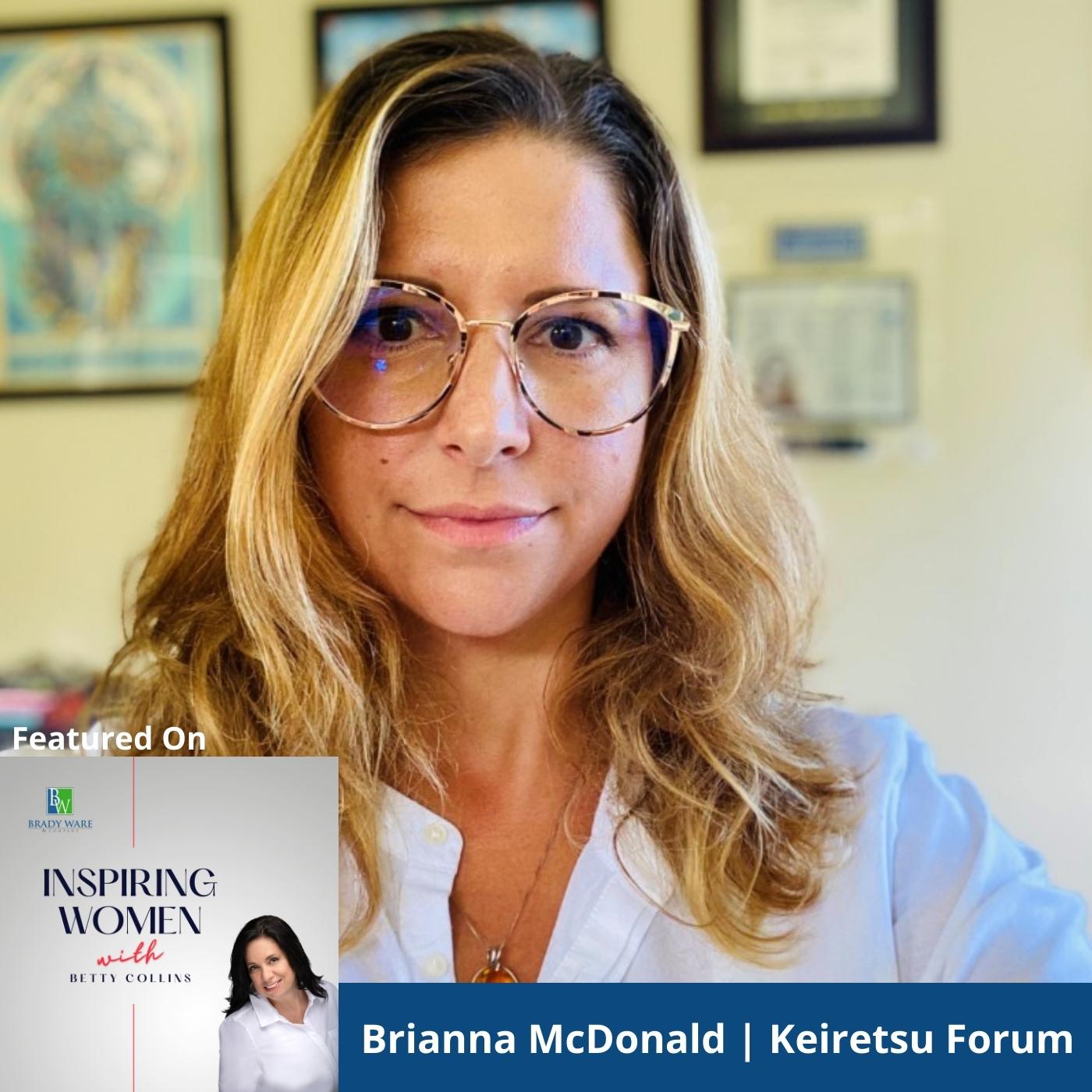
It’s time for more women to become angel investors. That’s the message from Brianna McDonald of the Keiretsu Forum, one she offers in this interview with Betty Collins. Brianna discusses why the time is right for women to make angel investments, how to find angel investment groups, the importance of doing your research, diversification, and much more. Inspiring Women is presented by Brady Ware & Company.

Betty’s Show Notes

I have an amazing guest who is a top female investor. She offers a way to get started in angel investing and diversify your portfolio.

This is a smart way you can also help women.

Startups and entrepreneurs struggle. Because they lack capital a lot of the times.

They may have a lack of sense of how to run a business. But they have this passionate idea that they really want to get out there. And so capital is a huge issue.

An angel investor is someone who provides funding for small startups or entrepreneurs. The funding can be any amount, really, and sometimes the angels will get an ownership stake in the company for their investment, while other times there will be an agreement drawn up for getting your money back — plus profits — once the company gets off the ground.

You may sometimes hear angel investors referred to as “private investors,” “seed investors,” or “angel funders,” but one thing is clear — no matter what you call them, angels can make a huge difference in the life of an entrepreneur, and they can also make some serious money in the process.

With me on this episode is Brianna McDonald. She is the President of the Northwest Region of the Keiretsu Forum angel investment community, the largest and most active venture investor globally, comprising over 50 chapters with over 3,000 active members investing over $450 million annually into over 600 companies.

She’s an active leader and angel investor with Keiretsu Forum and has been a part of the organization since it launched in Seattle in 2005 and supporting its growth to become the largest and most active group globally.

She’s proven over time to be adept at screening companies for angel investment, coaching companies on presentation and investor relations, sales strategy execution, relationship management, and leading due diligence teams.

Listen in as Brianna McDonald gives us all a crash course in what angel investing really is, and breaks down how angel investing differs from crowdfunding and venture capital.

Brianna talks about how angel investors can find successful rates of return, and why now is a great time for women to consider becoming angel investors. Brianna also walks us through how she got started investing, how to find angel investing groups around the country and the importance of doing your research.

She offers up 7 tips.

  1. Is this something you want to do?
  2. Find female support
  3. Sit in on meetings (a great question to ask – rather than “how are things going?”, ask “what challenges are they going through?”)
  4. Pick the brains of the experts
  5. Find something that is interesting to you
  6. Stay active with the investment
  7. Reach your financial goals

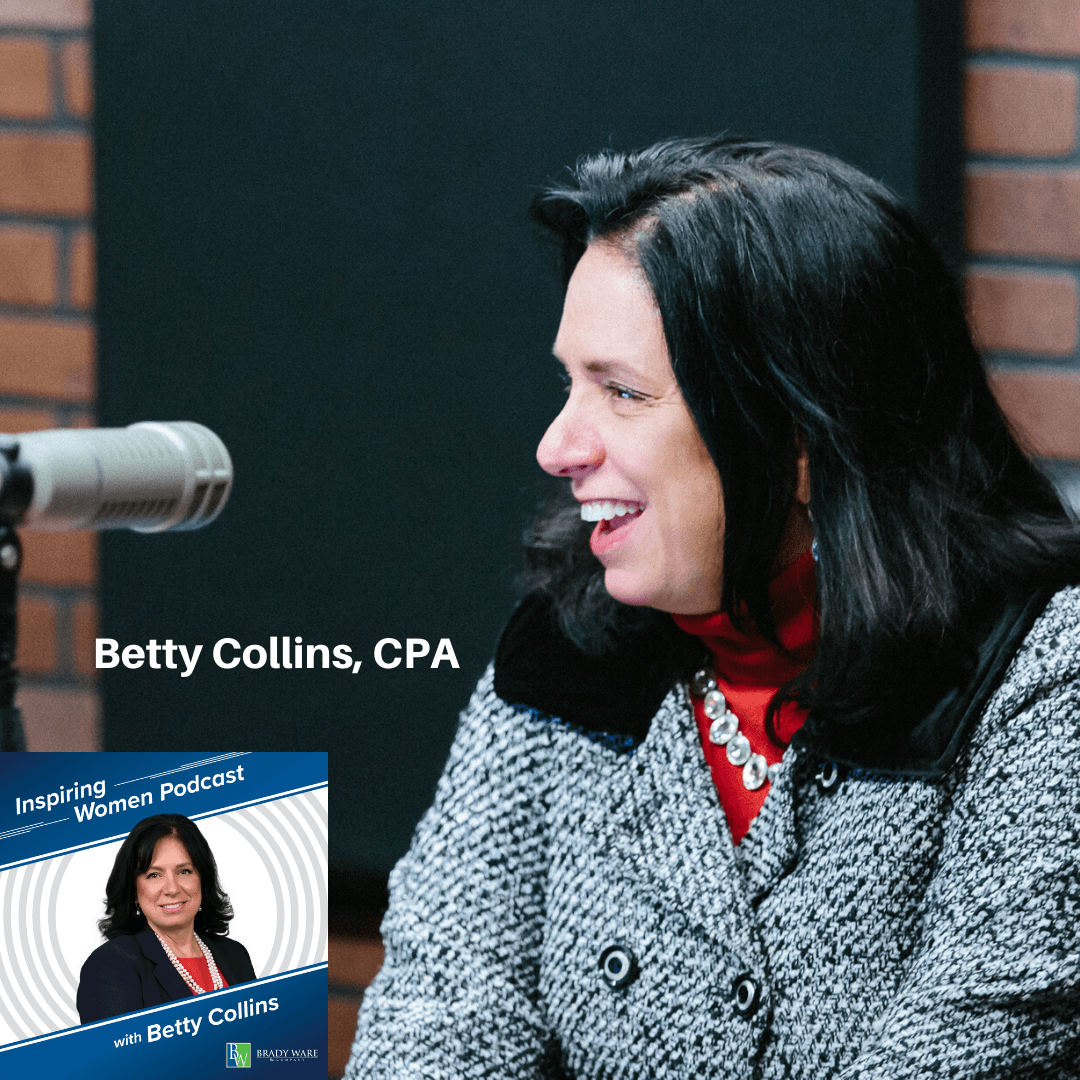
This is THE podcast that advances women toward economic, social and political achievement. Hosted by Betty Collins, CPA, and Director at Brady Ware and Company. Betty also serves as the Committee Chair for Empowering Women, and Director of the Brady Ware Women Initiative. Each episode is presented by Brady Ware and Company, committed to empowering women to go their distance in the workplace and at home.

For more information, go to the Resources page at Brady Ware and Company.

Remember to follow this podcast on Apple Podcasts and Google Podcasts.  And forward our podcast along to other Inspiring Women in your life.

TRANSCRIPT

[00:00:00] Betty Collins
So, today, I want to talk about angel investing, and hopefully, you can learn how to be an angel investor or even use one. Hopefully, this will intrigue your attention. I have an amazing guest who is a top female investor, and offers a way to get started in angel investing, and diversify that portfolio. What a great thing to do. You should always be doing that, but this is a way you can also help women. So, startups and entrepreneurs struggle, not because of they have an idea or a passion, but it’s because they lack capital a lot of the times.

[00:00:38] Betty Collins
And there is that they have, maybe, a lack of sense of how to run a business, but they have this passionate idea that they really want to get out there. And so, capital is a huge issue, and you’ve got to get the right capital, though. I’ve heard plenty of people start businesses with credit cards, do not do that. You will never win, you will never get ahead. Or they get too much capital, or they don’t have enough, and they run out quickly. It’s all over the place. So, that’s why I like the angel investing, because they can help and guide you in a different way that maybe a bank can’t, or a private equity.

[00:01:14] Betty Collins
But you can get that right capital, and then diversify your portfolio by being an angel investor. So, startups and entrepreneurs, they struggle, but not because of a great idea or passion, but really it’s the lack of capital most of the time, and maybe some entrepreneurship skills. So, you got to get the right capital, and then you’ve got to get partners with you who can help you know how to navigate through your times. So, you could also be the capital, and get the capital, be the capital. And if you if you get to do that, you could diversify your portfolio.

[00:01:49] Betty Collins
So, what is it? Well, the dictionary says, an angel investor; it’s a private investor, maybe a seed investor, maybe that high-net worth person who’s providing financial backing. Sometimes we think of them as family and friends that come in, you always want to do that, for sure. But the funds that those angel investors provide is probably a one-time investment to help that business get off the ground, depends on how it goes. Or maybe it’s an injection to support and carry the company through it’s difficult, early stages. Or maybe you’re five, and you’re going to go to the next level, and it’s going to be some tough doing.

[00:02:30] Betty Collins
So, you know me if you’ve listen to my podcast, I’m passionate about the marketplace and its success, especially for women. Women are dominating the marketplace, but they don’t go as far faster. They have a longer uphill battle, sometimes. And I see women in business all the time struggle. It holds them back, and it slows down their progress when they don’t have that capital, or their frustration, and they can’t give any more, mentally and everything. I hate seeing that. And angel investing can be a way to solve that, whether starting up or investing, you can play a role in it. My guest today is Brianna McDonald.

[00:03:09] Betty Collins
She’s coming with this amazing experience, with an amazing company, and she has an amazing role in it. Their mission is very simple, I’m going to let her talk about what some of that is, but it’s to fund companies, and provide excellent investment opportunities for their members. And she’s going to talk a little bit about overview of investing, what it means to be an angel investor, or her experience as a woman investor in a very male-dominated industry. And then she’s going to drill down the seven tips. That’s something the accountants love, the steps, the numbers, seven tips.

[00:03:45] Betty Collins
So, I’m going to let her talk a little bit about her company, and introduce herself in that way. And then I want her just to really talk a little bit about her, not necessarily what we do. So, welcome, Brianna, to my podcast. Tell us about what you do, and your company.

[00:04:02] Brianna McDonald
Well, thank you so much, Betty, for having me on today to talk a little bit more about this topic. I’m super passionate about it. I’m currently the president for Keiretsu Forum, Northwestern Rockies region. I have been in this role now, four years, but I’ve been a part of the organization for 15 years. So, I participated a lot as an investor, as a member, learning, doing that for many years prior to stepping into the role that I’m in today. But where I really come from is a long line of entrepreneurs. My father had his own business, his father had his own business.

[00:04:41] Brianna McDonald
And I didn’t really realize that at the time, because in the ’90s you just didn’t talk a lot about entrepreneurship. It just wasn’t a word you heard very often. And I went into business for myself, I began selling real estate after I finished college, and worked with executive relocation, with Microsoft and all their Aqua hires that they were bringing on, and had a very successful business doing that, and thoroughly enjoyed it. I love to work hard and play hard. And my husband started Keiretsu Forum in Seattle in 2005.

[00:05:18] Brianna McDonald
And, essentially, when he started it here, we were the eighth chapter, we are, so we have the Northwest and the Rockies region. There’s over, now, 55 chapters globally, on four continents, and over 3000 investors in our network, which is really amazing, the work that everybody does. But when he started it here, we were number eight, and he said, “Come, come to a meeting.” And I was like, “Why would I go to this meeting? I’m busy. I’m busy doing other stuff.” And he’s like, “No, no, no, you’d be great. Come come to the meeting, come sit down.” And I was like, “Alright, fine.”

[00:05:52] Brianna McDonald
So, I wanted to be a supportive partner, and so, I went to the meeting, and I was 26 years old, and I sat at the table with a bunch of gray-haired men. And I listened to the company’s speech, and I thought, “What on earth am I doing here?” And I was trying to figure it out, and so, I am nice and friendly, I’m n the real estate business, I can just start- I’m personable, and can talk to people. And the first company goes, and I’m like, “What is this product, and what is this market, and what is your price point, and how do you make money? And I’m like, “Gosh, I don’t belong here.”

[00:06:34] Brianna McDonald
This is my internal thought process going on. All of us women, we have this internal critic that goes, “You don’t belong here. Why are you here?” So, I’m writing these questions down, but then these men started going, “Well, how do you make money, and what is your product, and what do you do?” And I’m like, “Oh, well, maybe I might be on to something.” And then the next company went, the next company went, and I sat and I listened, and it was really fascinating being part of it. And so, when the next meeting came up, I was like, “Hey, can I come to that meeting again? Can I come? That was interesting. I learned some things, and there were some cool people there, and I liked it.”

[00:07:15] Brianna McDonald
And Ethan was like, “Sure come along.” And it took me about a year. So, I sat and actually observed for a year, and I didn’t ask a single question in the room. Just being so young, and being the only woman at the table, I didn’t really feel like I fit. And one day, I finally mustered up the courage to ask a question. And the adrenaline was rushing, I was nervous, and it was just this tiny, little question, I don’t even know what it was. But what I do remember is, one of our investor members, who is still a member today, after I asked the question, leaned over to me and said, “That was a good question.”

[00:07:54] Brianna McDonald
And that was all the reinforcement that I needed to know, I was in the right place. I actually deserved to sit at this table, and I had something of value to bring. And over the course of my many years of being in this industry, and really being one of few women who participate, and really working to bring more women in, is that women are highly beneficial here. They understand markets, they understand pricing, we do most of the shopping. There is a lot of things that come into play with women, and how businesses get up and off the ground, how you pick your target market, how you pick your customers.

[00:08:34] Brianna McDonald
All of this is really important. We just think differently about it than men do. And it’s that togetherness that makes it really work. So, it took me over a year, and I wrote my first check in a company. I did receive a return, I can talk about that later, but I had some lessons I learned along the way of engagement and things. And so, even though I’ve been in this industry 15 years, the thing I love about it is, I’m still learning. You don’t know everything. And being able to be in an organization like Keiretsu Forum, we lean on each other. We don’t have to be experts in everything. We work together, the men and the women. But we need more women coming in.

[00:09:15] Betty Collins
And I think if there were more women coming in, there would be- it’s just a different perspective at the table. I know in Brady Ware, when I came there, there was about between 22 and 25 partners. And I came in, there were two of us there. And the discussion is different in the room, now that we have seven there. And it’s not because we’re maybe smarter, maybe we are, or it’s not because we’re better, maybe we are, we just think differently. And as women dominate starting businesses and getting them up, I know you see this every day, they get to a point, and men are going right past them because they have different skill sets, maybe, I don’t know.

[00:09:58] Betty Collins
Some of it is the type of businesses women go in, it’s hard to get lending. It’s hard to get that capital from a traditional bank, even private equity. So, I love your passion behind it because that’s what’s got to be there. And the marketplace is crucial in this country. If we don’t have the marketplace, it means employers don’t pay employees, and employees are families, and households, and communities. And when the US doesn’t work, the world doesn’t work. So, entrepreneurship has to work.

[00:10:31] Betty Collins
And this is just a way I wish more women who have had their success, they don’t have to have multimillion-dollar success, but when they have their success, they become that angel investor, and say, “I’m going to give someone a chance, because I’ve been there, I’ve done that.” So, obviously, you talked about your ‘why’, behind the passion behind that. Do you find yourself more attracted to the women-owned businesses that you’re hearing, or does it matter? It’s entrepreneurship, and business is business. Is there a difference for you?

[00:11:05] Brianna McDonald
So, every investor has their own investment thesis, and it’s really developed over time. It’s what moves you. And so, if any woman is thinking about getting into this space, I really encourage them to listen, to learn and to figure out what that is for them. For me, it’s team. And I need a good team. Now, team does not necessarily mean, for me, in my investment thesis, that it needs to be a female CEO, but the team better be diverse. I want to see diversity, and not just between men and women.

[00:11:38] Brianna McDonald
I want to see diversity across the board, across ethnicity, because that is going to be where the differences are made in terms of thoughts and opinions, and how they come together, and how that team culture works. Because at the end of the day, you can have the greatest product in the world with the best market, and if you have a team that fails to execute, the investment still goes to zero. That said, I’ve invested in some amazing women that lead teams, but I didn’t invest in them because they were a woman, I invested in them because they were awesome.

[00:12:12] Betty Collins
And as much as I am pro-business, pro-entrepreneurship, pro-woman for sure, it’s got to be the right mix. Everything, from the product to the execution. It can’t just be this passion idea, it has to all work together. Let me just follow up with one last question with what we’re discussing, and that is, would you commit as an angel investor, and you come in at 10 percent, or you come in at 50 percent depends on how much money you give, it depends on once you’re there. What generally happens? Is it more, you write the check and you wait and see, or is it, “No, we’re really hearing, we’re there, we’re on the ground, and we get to play a role.”? Because I think people think, “I’m writing a check and I’m done.”

[00:13:04] Brianna McDonald
So, I think that is something that is a big misconception about- if you want to be a passive investor, and you want to invest in early- stage companies, I would really recommend a fund vehicle, if that’s the direction you want to go. Because you’ll be able to diversify, and you’ll be able to take that passive role in what you’re doing. For me, what I love is, I love being engaged. I’m advisors to the businesses I invest in. I call them up, I text them, I ask them how things are going. And I usually ask them what challenges they’re having, because if I ask them how things are going, they’ll always tell me it’s great.

[00:13:40] Brianna McDonald
So, I’m like, “Hey, what challenges have you had the last month, and what can I do to support you in those challenges?” If you stop hearing from companies, that’s typically when things have gone south, and when the communication stops, and that’s when you need to reach out. And so, that was one of the big lessons I learned early on, was that the more you communicate, the more you understand, with what’s going on with your private investments, the better and safer you’re going to be. Lines of communication are super important, and I feel like, especially over the last five years, culturally, through the busyness, through all of the things that have gone on in our world, we just don’t communicate like we used to.

[00:14:18] Brianna McDonald
And we really should, we’re here to help and support one another. And when you get a private investor’s money, you also get their expertise. We’re here to help you figure out those problems. We’re alongside of you, we’re bought into you, we believe in you, let’s do this together. Let’s push forward innovation, and make the world a better place.

[00:14:43] Betty Collins
And I like how you talk about the advisory role. Because when I talk about small businesses having that hard time or they need capital, and they think everything’s about capital and lack of it, sometimes it’s just really, you’ve had bad advisors or lack of advising. So, when you, maybe, tap into an angel investor, or you become the angel investor, you have a role to play in that; of advising, and not controlling, but advising. Those are two different things.

[00:15:19] Brianna McDonald
Yeah, definitely not- it’s up to the CEO to make decisions. But knowing that you care, and that you’re engaged is good. It’s, definitely, also- through the due diligence process, we can get into that too, here, but through the due diligence process, prior to writing a check, you really get to know who that person is, how they operate, how they respond. And through that process, you’ll begin to understand what the rules of engagement are for you, as you go forward with that investment, if you choose to make that investment choice.

[00:15:54] Betty Collins
And I definitely want to get into the- let’s get to the seven tips, because now I have my steps, I have my tips, I love all that. I just went on a sales call with a company who just went through a purchase. And, boy, I wish they would have had advisors helping them get through the whole thing. And so, I took one of my senior people with me, and they said, “What are we going to do today?” I said, “We’re going to listen, we’re going to ask them who they are, and how many kids you have, and where do you like to travel, and we’re going to learn why they wanted to buy the business.” That’s a huge factor, I don’t think you can underestimate, especially when you’ve been in the marketplace and entrepreneurs for 20, 30 years, you have a lot to give to someone. But let’s get to the seven tips, let’s talk about that.

[00:16:43] Brianna McDonald
Well, so the first tip I have, tip number one, is getting started. So, the first thing you need to do is really think like, “Hey, is this something I really want to do?” And you have to start. If you don’t ever start, and take that first step, and that first leap, you’re not going to do anything with it. So, it is just something you’re interested in exploring, there’s lots of different investment groups. I would really encourage any woman who was thinking about doing this, to get involved in a group, so you don’t have to go into alone.

[00:17:15] Brianna McDonald
You can really lean on other people in the group, and the groups in your region all have different investment theses. So, it gives you some time to do some research, and as you sit in, and usually, if you just want to come sit in on a meeting or two, they’ll let you do that. They’ll let you come in, and try it on, and see. One thing, I just got off of a call today with a woman who was interested in becoming a member of my organization, and she’s like, “Well, I need to go fill out the accreditation form for the SEC.”

[00:17:46] Brianna McDonald
There is no accreditation application for the SEC. It is just, these are guidelines that are put in place by the Securities Exchange to make sure that you are qualified to lose money, because this is risky business and and that could happen. So, typically, you make more than $250,000 per year salary if you’re single, $300,000 if you’re married, or you have more than a million in assets. Last year, they expanded that out a bit to be able to include different areas of study. So, if you got your degree in biology, and you want to go invest in a biology company, you should know enough, that if you make a decision there, if you’re gonna lose your money or not.

[00:18:34] Brianna McDonald
So, they did expand that out a bit, so if you’re interested in looking into that, there is some information there. But go online, look at your regional groups, your local groups, they tend to invest locally. My organization’s a little bit different, we invested a little bit later- stage companies, not super-early. There’s more due diligence, and we are global. And so, wework together. So, we have our regional deal flow in our regions we work in, but we also work collectively with the other chapters, especially in North America, but across the world as well.

[00:19:07] Brianna McDonald
So, do your research, is the first step. The next one is tip number two, is find female support. Super, super important. Even reach out on LinkedIn, I have women reach out to me on LinkedIn, and they’re like, “Hey, I see we have similar backgrounds. Can we just have a call?” I love that. I will take those calls. I don’t usually take a lot of cool things off of LinkedIn, but if there’s women out there looking to get into angel investing, they want to chat with me, I’m always more than happy to do so. So, for any of the women who are listening in right now, and please don’t all bombard me at once, but reach out, I’m happy to.

[00:19:50] Brianna McDonald
Or find someone in your area, and they’ll share their experiences with you, and the things that they’ve learned, and how they got into it. But having a seat at this table is important, because we are driving forward innovation, and when things are cloudy and uncertain, that is the time when you actually have the greatest ability to make a lot of money, because you’re betting on the uncertainty. So, not everything- certainly, it’s a little uncomfortable for us ladies, sometimes. We like to be very pragmatic in our approach, and be very thoughtful about how we do things, which is also why I like investing in women entrepreneurs.

[00:20:31] Brianna McDonald
So, once you target those groups, reach out to them, talk to them, do some diligence on those groups, talk to some of the members, sit in on the meetings to see how they ask the questions. Are they nice? Are they kind? Are they mean? Is this a group that you want to be a part of? Do you find them engaging? And even online, it’s really opened up a whole new world of us being able to sit in on lots of different types of meetings. So, that’s been one silver lining of COVID. We had to pivot our entire business from in-person to to virtual, which was difficult last year, but I feel like we did it pretty well, and we’re able to- and we’ve created different programs to allow people to be heard.

[00:21:17] Betty Collins
Talk about- I had more people reach out to me this year to be on my podcast, because we don’t think about, “I got to go somewhere in Columbus. I could have a West Coast interview or an East Coast.” It’s been an amazing thing. And this is a great- I’m glad to hear you say that. It didn’t sound like it was maybe a hard pivot, you just had to pivot. You just had to do it, right?

[00:21:42] Brianna McDonald
Well, and we had to make sure it worked, because we are very professional organization, and the things that we do, and the steps, and the process. So, trying to recreate that was not easy, but anything that is worthwhile in this life shouldn’t be easy. But I feel like we’ve done a really good job keeping the professionalism, keeping it running on time, respecting people’s time, and respecting our processes, and how they all work. So, as you sit in on the meetings, my fourth tip is, to really pick the brains of the experts.

[00:22:18] Brianna McDonald
So, even if you’re on Zoom on a meeting, and you hear someone ask a really thoughtful question, message them say, “Hey, I really like that question, what’s your background? And I’m thinking about getting into angel investing, and I’d love to know a little bit more. Maybe we can have a quick call.” There’s so much we can learn from other people’s backgrounds and experiences. We do not need to be the experts in everything. And I firmly believe that in a collective-working together, and this is why a group is so important, being able to do that. Our members throughout Keiretsu Forum in our meetings message each other all the time, throughout the meetings, and they have private chats going, and things like that.

[00:23:01] Brianna McDonald
It’s our way to connect with one another, and talk about the deals that we’re seeing. My big one is, find something that’s interesting to you. And this comes back to the investment thesis that I mentioned earlier; what really perks your interest? I firmly believe in being able to diversify your portfolio. I do not believe in putting all of your eggs in one basket. So, at Keiretsu Forum, we look at a wide array of opportunities. We look at biotech, we look at technology, we look at medtech and medical devices. We look at consumer goods.

[00:23:35] Brianna McDonald
We even look at real estate, and being able to have a wide range of items in your portfolio is really important, because they offset the others in terms of the risk profile, and when you’re going to be able to see that return. Now, what works for you? And, really, figuring that out. And it’s not something you’re going to have the answers to overnight. It’s going to just take time, and sitting and learning.
Six, we already covered this, Betty, is staying active. So, if you do run through the diligence and choose to invest, staying active with that investment. Communicating with the CEO, even if you reach out every couple of months, just say, “Hey, how’s it going? What challenges do you have today?”

[00:24:19] Brianna McDonald
That should be a tip that we take, that’s a good question to start with; “What challenges do they have this month?” Because they will always tell you everything’s great, and when you approach it that way, it’s a little bit disarming. And then the final one is to be able to reach your financial goals. And there’s a lot of opportunity here. If you do the research right, if you mix up with the right groups that are good fit for you, and are thoughtful about how you go about diversifying, and even taking off, carving off 10 percent of your portfolio to these higher-risk investments, you can really do a lot of well and good, at the same time.

[00:25:03] Betty Collins
I like that. [CROSSTALK]. Well and good at the same time, I love that, because there’s nothing wrong with, “Here’s $100,000, and I want it back, and I’d like to get, actually, more than $100,000 back.” At the same time, probably, you’re injecting some energy in someone that needs it. And it’s all good. I was fortunate to be on a Shark Tank type of thing, I was a judge. And it was five young women who- and they had criteria to be there, so they weren’t completely startups. I was never so energized to do it. It was the fun, it was great. Now it’s an annual event, and I love doing it so. But I’d love for you to tell us a success story. End with a success story, and maybe then, we’ll talk about one take-away, because I would love to hear just where [INAUDIBLE] went so well.

[00:25:54] Brianna McDonald
Well, so, I will tell you, we’ve had a lot of success in life sciences. And life sciences is something that has been, it’s not easy to understand, and definitely having some good experts in the room for you to learn from is good. My first due diligence medtech device, I’ll never forget calling up one of my members who runs a medical device, he builds medical devices. And I was like, “Okay, they’re contract manufacturing in China, what are the 10 questions I need to ask, and what are the answers that I need to receive, if this is a good deal or not. So, being able to look at that, and see, and looking at the FDA process, it’s complicated, and it’s high risk, but it’s super rewarding.

[00:26:41] Brianna McDonald
We invested in the company Immunotherapeutics, and they worked on a vaccine for red cedar allergy in Japan. So, I guess the US went there during World War II, and they planted a whole bunch of red cedar trees, and it turns out Japanese are very allergic to red cedar, and it’s debilitating allergy. But they’ve also been able to work as a drug platforms, so they’ve been able to work in the multiple different allergies. And after a couple of years, they received $500 million purchase order. And we received our first return from that. And they didn’t divest us, they just gave us the return from that purchase order.

[00:27:25] Brianna McDonald
And then we kept our stock, and we got a second exit again last year, if we wanted it. There are opportunities, even with my first company, with my first investment, that I was able to get a 2X return out of, which isn’t awesome. It was a food company, and I probably would be more cautious investing in a food company again, lessons learned along the way. Because I do include some of the things that I have learned to be just as much success as the capital I received back. So, looking at food deals is hard; there’s a lot of competition, there’s a lot of things that go into the space.

[00:28:05] Brianna McDonald
I also thought it was going to be the most amazing thing in the world, and I put my my money in, and walked away, like what you talked about the beginning, Betty, and didn’t stay in touch. And they had an opportunity to exit in 2010, and if they would have done that, it would have been great. But they didn’t. And so, Idid receive a return later, that I was able to roll up into another investment that I’m super excited about. But there was lots of really good lessons along the way. And just as long as I’m not losing money, I consider it a win. And then my final company is the company, it’s called Vita Inclinata.

[00:28:43] Brianna McDonald
I’m an advisor, I’ve been an advisor for over three years now to this company. I invested at $8 million, they’re just closing $150 million-dollar round right now. And so, being able to be a part of that effort as they continue to grow, as they deal with their challenges, have a really good relationship with the CEO, it’s been so great to watch their success. You got Forbes 30 under 30 two years ago. It’s been so fun to watch them create this device that it just didn’t follow a formula for me, and that’s what made it exciting. It’s a system for helicopters, it’s a load stabilization system for helicopters.

[00:29:28] Brianna McDonald
I know diddly-squat about that, but I do know a lot about people, and about safety, and about our markets, and selling into that. So, pulling that expertise out, I know go-to market strategy has been really helpful. But they’ve been able to close some big military contracts, and really accelerate growth. So, I have a wide range of things that I invest in, but it’s exciting to be a part of. And then my last, my takeaway would be, if you are interested in learning, one, you can always come, reach out to me on LinkedIn, or you can go to my website, k4northwest.com.

[00:30:07] Brianna McDonald
You’re always welcome to come in, and sit in as a guest at one of my forum meetings. I do six per month, and you can see what goes on there. But if you are interested in learning more about angel investing, just go sit and learn. Just go join a group and learn for a year. We spend lots and lots of money on education, and it’s okay to spend this on your financial education, and be able to do that, and learn from others. And if it’s something that suits you after a year, then maybe think about writing a check. But there’s so much to learn.

[00:30:39] Betty Collins
And as you said from the beginning, tip one is, just get started. Just get going, do something, especially if it intrigued you. So, I would tell my audience today, if you want to get into angel investing, you’ve got your person. Or if you want to be, “Hey, I need an angel investor,” you probably got your person. So, I so appreciate you being here today. You just have been- I could talk to you for another hour, honestly. But I know your time is valuable, and, of course, you’re on the West Coast, and I’m in the Midwest, and I’ve never been, actually, to Oregon or Seattle, or let’s see, you’re in Idaho as well?

[00:31:20] Brianna McDonald
I’m in Seattle, yes, though I’m based in Seattle. Our region is Vancouver, B.C., Washington State, Oregon, Idaho, Montana, Utah, Colorado and New Mexico.

[00:31:33] Betty Collins
I’ve been to Montana, and I’ve done the whole California thing. I just needed to expand a little bit more, but it was great just having you on today. So, audience, if you want to be an angel investor, or you need an angel investor, don’t rule it out. Challenge yourself, and maybe get out there and get started, like we talked about today.

[00:31:53] Betty Collins
So, I’m Betty Collins, and so glad you joined me. Inspiring women, it’s what I do. And I’m going to leave you with this; being strong speaks of strength, but being courageous speaks to having a will to do more and overcome.

Automated transcription by Sonix www.sonix.ai

Betty CollinsIW8-2021square is the Office Lead for Brady Ware’s Columbus office and a Shareholder in the firm. Betty joined Brady Ware & Company in 2012 through a merger with Nipps, Brown, Collins & Associates. She started her career in public accounting in 1988.
Betty is co-leader of the Long Term Care service team, which helps providers of services to Individuals with Intellectual and Developmental Disabilities and nursing centers establish effective operational models that also maximize available funding. She consults with other small businesses, helping them prosper with advice on general operations management, cash flow optimization, and tax minimization strategies.

In addition, Betty serves on the Board of Directors for Brady Ware and Company. She leads Brady Ware’s Women’s Initiative, a program designed to empower female employees, allowing them to tap into unique resources and unleash their full potential.  Betty helps her colleagues create a work/life balance while inspiring them to set and reach personal and professional goals.

The Women’s Initiative promotes women-to-women business relationships for clients and holds an annual conference that supports women business owners, women leaders, and other women who want to succeed. Betty actively participates in women-oriented conferences through speaking engagements and board activity.

Betty is a member of the National Association of Women Business Owners (NAWBO) and she is the President-elect for the Columbus Chapter. Brady Ware also partners with the Women’s Small Business Accelerator (WSBA), an organization designed to help female business owners develop and implement a strong business strategy through education and mentorship, and Betty participates in their mentor match program.

She is passionate about WSBA because she believes in their acceleration program and matching women with the right advisors to help them achieve their business ownership goals. Betty supports the WSBA and NAWBO because these organizations deliver resources that help other women-owned and managed businesses thrive.

Betty is a graduate of Mount Vernon Nazarene College, a member of the American Institute of Certified Public Accountants, and a member of the Ohio Society of Certified Public Accountants. Betty is also the Board Chairwoman for the Gahanna Area Chamber of Commerce, and she serves on the Board of the Community Improvement Corporation of Gahanna as Treasurer.

Inspiring Women Podcast Series

This is THE podcast that advances women toward economic, social and political achievement. The show is hosted by Betty Collins, CPA; Betty is a Director at Brady Ware & Company. Betty also serves as the Committee Chair for Empowering Women, and Director of the Brady Ware Women Initiative. Each episode is presented by Brady Ware & Company, committed to empowering women to go their distance in the workplace and at home. For more information, go to the Resources page at Brady Ware & Company.

Remember to follow this podcast on Apple Podcasts and Google Podcasts. And forward our podcast along to other Inspiring Women in your life.

The complete Inspiring Women show archive can be found here.
Tagged With: Angel Investing, angel investment, Betty Collins, Brady Ware, Brianna McDonald, Inspiring Women podcast, Inspiring Women with Betty Collins, Keiretsu Forum

Keeping Emotion Out of Difficult Conversations – An Interview with Jen Grant, Appify

October 11, 2021 by John Ray

Jen-Grant-Inspiring-Women-Album
Inspiring Women PodCast with Betty Collins
Keeping Emotion Out of Difficult Conversations - An Interview with Jen Grant, Appify
Loading
00:00 /
RSS Feed
Share
Link
Embed

Download file

Jen-Grant-Inspiring-Women-Album

Keeping Emotion Out of Difficult Conversations – An Interview with Jen Grant, Appify (Inspiring Women, Episode 37)

Some emotions can be positive, Appify CEO Jen Grant observes, such as the passion which drives us in our business or career journey. Other emotions, however, particularly those in highly charged conversations, can cause both short- and long-term damage. In this conversation with host Betty Collins, Jen discusses when emotions need to be harnessed, how to diffuse negative emotions which arise in difficult conversations, and much more. Inspiring Women is presented by Brady Ware & Company.

Betty’s Show Notes

When I think of emotions, I think of passion and drivers. It’s that ‘why’ of something.

So, in this episode, I want to talk about when we keep emotions out of something, especially a difficult conversation.

Why do we want to do that?

With me is Jen Grant. She is the CEO at Appify.

She has spent the last 15 years building companies from the ground-up and taking multiple companies to over a billion-dollar valuation. Recently, Jen was recognized as one of the Top 100 Princeton Technology leaders in 2021 as well as a Woman of Influence in Silicon Valley from the SVBJ.

When someone says something, you disagree with, ask them to “tell me more” and look for the gold — the thing they say that you CAN agree with. More often than not, you realize that you do actually agree with some of what they are saying and finding that point of connection is all you need to collaborate and move forward together.

Why is this more of a topic for women? Jen goes deep into that.

Bottom line. In a difficult situation, keep asking questions to get to the crux of the matter at hand. Keep being curious, and this will help you stop judging.

Jen highly recommends this for you to read – Leaders Eat Last By Simon Sinek.

This is THE podcast that advances women toward economic, social and political achievement. Hosted by Betty Collins, CPA, and Director at Brady Ware and Company. Betty also serves as the Committee Chair for Empowering Women, and Director of the Brady Ware Women Initiative. Each episode is presented by Brady Ware and Company, committed to empowering women to go their distance in the workplace and at home.

For more information, go to the Resources page at Brady Ware and Company.

Remember to follow this podcast on Apple Podcasts and Google Podcasts.  And forward our podcast along to other Inspiring Women in your life.

TRANSCRIPT

[00:00:00] Betty Collins
So, today, we’re going to talk about keeping emotion out of difficult conversations. Not always something that easy, and I hate that when they say, “Well, women are so emotional,” it’s somewhat irritating. But okay, I like emotion, okay? And I want to feel something or be moved, or I look to sometimes, really, that emotions are obviously positive. When I think of emotions, I think of passion and drivers, and it’s that ‘why’ of something. So, today I want to talk about when we keep emotions out of something, especially a difficult conversation.

[00:00:37] Betty Collins
Why do we want to do that? So, that you’ll have some success as you navigate, and it could be easier for you. So, also, I want to do this, so you don’t spend 10 minutes, or so, you can spend 10 minutes instead of 10 hours or 10 weeks, it just works better when you do that. So, sometimes emotions during difficult conversations, oh, can really hold you back. So, I’m interviewing on a really amazing woman today. Her name is Jen Grant. Her resume is so impressive. Obviously, her success is evident. It’s everywhere, when I read her articles and see her interviews, very inspiring.

[00:01:16] Betty Collins
And when I read her journey about how she spent the last 20 years building companies from the ground up, and taking multiple companies to over a billion-dollar valuation, I get excited about that as a CPA. Who’s a passionate- I’m passionate about the marketplace, and having success in it. And I love being around women in business who love just the game of business. So, when I read and listened, and interviewed women who have success like Jen Grant, I’m pretty sure that they understand the importance of keeping emotions out of those difficult conversations.

[00:01:52] Betty Collins
It really is a crucial skill set. I’m also sure that they have applied it more than one time. So, I want to talk to a very successful woman about this skill set, and get her insight. So, today, again, my guess is Jen Grant, and she is the CEO of Appify; by the way, where convenience is at your fingertips. She’s led three successful billion-dollar IPOs, and she is constantly looking at the bigger picture and has a passion for building brands from the ground up. In her past, she spent time working with Google, where she was part of the Google- I’m sorry, the Google Apps, edu, Gmail and Books search marketing teams.

[00:02:34] Betty Collins
And in 2007, she received the Founder’s Award, which is a pretty big award at Google, it’s the most prestigious award for her marketing leadership. So, I want to welcome Jen Grant to my podcast, and I thank you so much for being here today, and talking with my audience. Which a lot of it’s- I have men that listen to this, but a lot of women in business, or women who are business owners.
Now, Jen, I had made a big assumption that when you are building something from the ground up, that there is, sometimes, not a lot of time for emotion. And I’m confident that you have the skill set of keeping those emotions out of difficult conversations. But first, I want to get to know you a little bit. So, tell me a little bit about you, and being the CEO at Appify.

[00:03:22] Jen Grant
I’m excited to be here, excited to talk about it. This is actually one of my favorite conversations, because I think it’s so critical for for women, and how they show up in business. But yes, first, let me tell you a little bit about myself. So, I actually started as CEO at Appify, February of last year. So, it’s been a wild year. It’s my first CEO position after being CMO at many companies before that. And so, we have ridden through the pandemic ups and downs, and crazy times.

[00:04:00] Betty Collins
Good for you.

Certainly, emotions and difficult conversations are all over the place, and it’s actually been wonderful. At Appify, what we are doing is making it easy for anyone to build business applications or business apps. So, we have no-code technology, so similar to way back when if you wanted a website, you had to get a developer, and then all of a sudden Wix and Squarespace came along, and made it easy. And that’s what we’re doing for business apps, so that anyone and their business can avoid manual tasks, get rid of paper, be more efficient, be more agile, be able to pick up and change their business model at the drop of a hat, if they need to. So, we’re really passionate about helping businesses get the kind of agility they need to deal with what just happened to us this last year. To shift quickly and change. And that’s what we’re all about.

[00:05:03] Betty Collins
Well, I was really good until you said, “We help people get rid of their paper.” I still have a lot of that in my life, that I shouldn’t have. I know that, okay? There’s just comfort, sometimes, when I do that. But I’ve learned a little bit about, this year, that I don’t have to have as much paper in my life.

[00:05:21] Jen Grant
For sure.

[00:05:21] Betty Collins
But I was really- when I was drawn to this topic, because women struggle with it, and then I saw your success. I couldn’t help but think you would have amazing insight and experience with it, especially when you’ve built something from the ground up. So, help women who struggle with this, give us your insight. What have you seen?

[00:05:44] Jen Grant
And I’ll start by telling a story of early in my career. So, I was much younger, and when we’re younger, we’re very passionate about, “This is how it should be,” and, “Why are you saying that dumb thing?” And of course, also, I wasn’t the CEO. I wasn’t even a CMO, I was just a member of the team. And this was when I was at Google, I was a part of the Google Books search team, which was incredibly inspiring because we were making books searchable on Google, and also incredibly crisis-focused.

[00:06:28] Jen Grant
So, there were authors and publishers, there was all sorts of, is this fair use of the Copyright Act, or is this illegal? There was a lot of action, and it came down on the team, and certainly on the marketing side, which is what I led. And so, heightened emotion, in crisis, everyone is very driven, solved the problems, there’s a lot going on. And I remember having conversations where my passion and my feelings got out ahead of me, where, effectively, someone would say something that was just not a good idea. And I would say, “Well, that doesn’t make sense. What we need to do is…”

[00:07:17] Betty Collins
Foot in mouth, but okay.

[00:07:20] Jen Grant
That’s exactly right. And I started to realize that I was, I don’t know, leaning too far forward, if there’s a way to talk about it like that. And I had this wonderful- I was very, very lucky at Google, and in much of my career, that I was reporting to a woman. So, in my early career, I had managers who understood me to some extent. And she ended up joining some of our meetings, seeing what was going on. And I watched her take on calmly this- and by the way, these are all men with very emotional about all this crisis that we were going through.

[00:08:04] Jen Grant
“We need to do this. We need to do that. Why are we doing this?” This whole sea of stress. And I watched her very calmly manage the situation in a way that I hadn’t thought of before. And it was one of those moments where I went, “Okay, wait a minute. This worked out way better.” And they all walked out of the meeting thinking, “Wow, that Michelle, she’s really got a hold of the situation, and driving through.” And what I started to think is, “Okay. So, clearly I am not handling this in the best way possible. What can I learn from this situation?” And so, that was the start of my journey in thinking about emotion in business, step one is the impact of remaining calm cannot be overstated.

[00:09:00] Betty Collins
But you know what was great about that is, you probably, maybe, didn’t see that in yourself till you saw another woman mentor you, and she didn’t know she was doing it. And you saw, that’s how you can be impactful with your emotion, or no emotion, or everyone thinks. And she probably went back to her office screaming, who knows? But in that moment, she kept it there. So, you were fortunate to see that, because a lot of people don’t get to see that side.

[00:09:35] Jen Grant
That’s absolutely right. And it was, certainly- and I think it’s fair to say we all struggle. And I don’t know why, if it’s nature, or nurture, or society, or whatever. I do think it’s a lot easier for a man to get emotional and people not to react negatively.

[00:09:58] Betty Collins
No, that’s absolutely a true statement. And I want to take it one step further with you. And I don’t have that in our questions, so I’m going to improvise here. But my question really is, why is this more of a topic for women, and why do we struggle with the skill set? But really, it’s not even just in that moment she was calm, if a man would have gotten emotional afterwards, everyone wouldn’t have thought anything about it.

That’s right.

[00:10:33] Betty Collins
So, it’s also how we clean up the mess or respond. I don’t know if that makes sense when I say it like that. But why is it more of a topic for women, besides men get away with this? Women just don’t have the skill set at times. I see it over and over again in my own company. And so, I just really wanted to talk about it today.

[00:10:56] Jen Grant
And I’m not entirely sure why, but I do agree with you. I think maybe it’s how we were nurtured, that it’s okay to have feelings. And, of course, I’m of a generation where it was okay for girls to cry, but it was not okay for boys to cry. There were definite gender differences that were somewhat ingrained in our culture. And I do think, now I have young people on my team, I do think there is a shift and a change, and there is more openness to men sharing more emotions. And who knows? Maybe as they come up in business, they will start encountering these same moments, where, like, “Maybe I shouldn’t let it out at this moment.”

[00:11:46] Betty Collins
You just said the key thing, “At this moment.” There’s a time to have emotions, like I talked to at the beginning, I think they’re good. I like passion, they’re drivers. They’re things that navigate and change us. but we just have to know when to use them.

[00:12:04] Jen Grant
Yes, exactly.

[00:12:04] Betty Collins
So, it’s hard not to get worked up emotionally when you’re in that difficult conversation, you can’t help it. And defensive just sets in, you’re feeling threatened, or there’s the four-letter F word called fear. You’ve been there more than once. What is the common response to getting worked up, and what should it be? Can you give us some insight on that?

[00:12:30] Jen Grant
Yeah, absolutely. And I think I had a coach say this to me once, where I was in a situation where I had a difficult boss. He was very forceful and always, “Well, this is how it is.” And my instinct would be to say, “No, you’re wrong.” And then he would say, “Well, you get very defensive, Jen.” And I’d be like, “God.”

[00:12:59] Betty Collins
Okay, so what?

[00:13:02] Jen Grant
So, I was like, “Okay, this is not working. How do I get this to work?” And one of the things this coach, who’s actually also a good friend of mine, said to me was, “You need to ask questions. You need to get them to continue to share their point until you can find something you agree with, and then zero in on that.” And it was really a transformational moment for me to get this very simple piece of advice, that instead of saying, “No, you’re wrong,” to say, “Well, tell me more, because I don’t totally understand your point of view, and I really want to make sure I’ve got it, so that I can understand where you’re coming from.”

[00:13:50] Jen Grant
And just keep saying that until you get to this moment where you go, “Yes. That, I do agree with that. I do think we should do that, and you’re absolutely right.” And that was a big turning point for me in being able to manage more aggressive people around me, or emotional men around me, is, at that point, it sucks the emotion, not just out of yourself in your staying calm, but you use this deep curiosity about, “I really want to understand your point of view,” and it disarms the person that you’re talking to. So, the emotion starts to seek out of them as well.

[00:14:34] Jen Grant
And they start to think, “Oh, she’s interested in what I have to say. Oh, she’s listening to what I have to say.” Because in some cases, I found that even though they were saying all these things, they really just wanted me to acknowledge that I’d hurt them, but there wasn’t necessarily an action item that I needed to take. Other than, “I hear you. I hear what you’re saying, and I deeply understand it, because I asked you lots of questions. And now we agree on this one little point over here.” Which may not be anywhere near where they started, but it gets you back into, “Okay, now, let’s talk about this thing that I agree with and how do we make that better in the business?”

[00:15:15] Betty Collins
I did have a situation where I had to take- someone gave me the advice similar to yours. The end result was, “Take the wind out of the sail, but they’re not going to know that you’re doing that.” And it really was defining, very non-emotional, what my boundaries was. But then he was able to, as I did ask more questions and things, he was able to respond, and then it became a conversation.

[00:15:51] Jen Grant
Yes, exactly.

And I had a lot of success, and I was able to let go of that. And my emotions were saved for when I got home to my husband, instead of right there in that moment where it shouldn’t have been there, because it would have been, instead of a 10-minute conversation, 10 hours or 10 weeks of just playing this game. And I’m reading a book that it talks about, ask the question, and it’s by, he used to be a Congressman, Trey Gowdy. I think he’s from the Carolinas, and if you saw him on TV all the time, he’s just angry, he seems to be angry. So, when they had- for some reason, I was flipping channels, and there he is talking about this book about asking questions, change the conversation when you ask questions.

[00:16:39] Betty Collins
And I don’t really- didn’t care for him when I saw him as a congressman on TV angry, but when I saw him in this interview, he’s selling his book on how he’s been successful in changing the conversation and influencing, it was really, really good. So, I like that insight that you’re giving us, ask the questions. Very, very good. So, from a CEO’s perspective, as you take over in a pandemic and do these things, you’re leading a team, and, obviously, you got to leverage. And that’s the best trait a CEO can have, in my opinion, to succeed. When you see the people that you’re just letting go to that senior team, or even below them, and you see them struggling with emotions in difficult conversations. And you know it’s not going to end well, because you can see it, right? You’ve been there.

[00:17:31] Jen Grant
Right.

[00:17:31] Betty Collins
How do you try to help them? What’s the fix?

[00:17:35] Jen Grant
I think the first thing I usually try to do is diffuse. So, if we are clearly in disagreement about something, and people are starting to get heated, to be able to sometimes, “Okay, let’s take this offline, and we’re going to go to the next agenda,” to, a little bit, just diffuse, give everyone time to calm down a little bit. So, that’s definitely one thing I’ve tried. And I think there have been other times where I have stepped in, I leaned in a little bit. Because sometimes things like that will happen, and you can see that there is, maybe, one person that’s a little bit too strong, and a little bit leaning into someone else unfairly.

[00:18:23] Jen Grant
And so, there are, also, those situations where I’ve very subtly said, “Okay. Well, we can think about that, and you make a good point. But we also need to make sure we understand the such-and-so’s point.” So, there’s the the art of deciding whether this is just a diffuse situation, or if this is a situation to make sure that everyone feels that their voice is equally heard. And so, there is a personality that is more aggressive, to make them understand that, “Yes, they’ve made their point, we’ve heard them, and everyone else’s point also needs equal time.” So, I’ve seen both situations where there’s a little bit of a guess, just what feels right in the moment.

[00:19:16] Betty Collins
But it sounds like, probably, your best skill set as the CEO, is really the example of that person you saw in the meeting.

[00:19:25] Jen Grant
Yes.

[00:19:25] Betty Collins
And knowing that, “I got to portray that in work. Because at the end of the day, I want to influence and impact. If I’m going to do that, I have to have that skill set.” And it’s a hard one for women, it really is.

[00:19:39] Jen Grant
It really is, yeah. And then being able to take whatever is happening into a one-on-one conversation. Because that’s, really, where you can get a little bit- you get a little more emotional when you’re one-on-one, if it’s a more of a coaching-mentoring conversation to say, “Hey, I saw you were very passionate about this, let’s talk it through, and tell me more.” And often, then, I will give the person, or if it’s in particular, a woman, advice around, “Okay, so here’s the way to diffuse the situation that you can do, if I’m not around.” And try to help.

[00:20:18] Betty Collins
I just had someone who got- she’s another woman, and she got very emotional in a meeting, and she just made herself look ridiculous. And I said to her a couple of days later, I waited a few days, I said, “You have to understand how you’re being perceived sometimes.” And everybody wants to be at the table, and there’s three types of people at the table; there are people who come there and they eat, there are people who never pick up the menu, never had an intention of being engaged to order food, and then there’s people who throw the food. And they don’t know if you’re going to eat or throw the food.

[00:21:00] Betty Collins
And that’s why they walk around you on eggshells, it’s not because, necessarily, they’re men, okay? It has everything to do with they don’t know if you’re going to throw the food or eat the food. And you have to know that your perception- you still got to be you, and you still got to communicate, but if you want to be heard. I’ve tried to do with that, and I could be pretty levelheaded, or I know where I need to do… I’ve still had those moments of emotion that made it worse, but we all have, so we all have. We just [CROSSTALK].

[00:21:32] Jen Grant
We all have those days.

So, can you give the audience, just to take away, something that you would apply to them, regarding this topic, as we wind down, and then we’ll talk about something, one other thing I want to ask you.

[00:21:48] Jen Grant
I would roll it all up into curiosity, is really working on your ability to be curious, even when people come at you with emotion, or things that are wrong, or you disagree with, is just keeping that curiosity in your head, so that you’re not judging, or assuming they have a bad intention. Just curious, like, “Tell me more.” To me, that, “Tell me more,” my husband even says, “Oh, when you say that word, I know I’m pissing you off.”

[00:21:48] Betty Collins
That’s right.

[00:22:26] Jen Grant
But he’s my husband.

[00:22:27] Betty Collins
I love it. I love it. Well, I cannot thank you enough for being willing to come today. You’re an extremely busy person running a large company, a very, very, just inspiring woman that we need to see out there. So, I’m truly grateful. But one last thing I would ask, is there another podcast or a book that you would recommend for my audience today? I always love to get resources to people.

[00:22:56] Jen Grant
Totally. I’m a huge fan of Simon Sinek, and Leaders Eat Last, for me, was- I, actually, listened to the audio of it, which was, I believe, Simon reading. So, it is even more inspiring. So, I drive the same drive, and I think, “Oh, this is the moment when he explained this in the book.” But to me, that was a very inspiring book, and I highly recommend it to anyone who is a leader.

[00:23:22] Betty Collins
Yes, he’s wonderful. He changed my world when he- the Start With Why, or Start With Why. That was just- I went from, “I can do your QuickBooks and taxes, and we can do these things,” to, “I care about the marketplace, because when the marketplace works in this country, it works for the world.” And I care about employers paying their employees, because those are households and families that form communities.

[00:23:48] Jen Grant
I love that.

[00:23:49] Betty Collins
That whole mindset just changed. And I still do QuickBooks, I still do taxes, and I still advise people. It’s just, I figured out why I really do it. So, he’s good. He’s good. Thank you for that today. I appreciate it.

[00:24:03] Betty Collins
Well, I’m Betty Collins, and so glad you joined me today. Inspiring women, it’s what I do. I leave you with this being strong speaks of strength, but being courageous speaks to having a will to do more and overcome.

Automated transcription by Sonix 

Betty Collins, CPA, Brady Ware & Company and Host of the Inspiring Women Podcast

Betty CollinsIW8-2021square is the Office Lead for Brady Ware’s Columbus office and a Shareholder in the firm. Betty joined Brady Ware & Company in 2012 through a merger with Nipps, Brown, Collins & Associates. She started her career in public accounting in 1988.

Betty is co-leader of the Long Term Care service team, which helps providers of services to Individuals with Intellectual and Developmental Disabilities and nursing centers establish effective operational models that also maximize available funding. She consults with other small businesses, helping them prosper with advice on general operations management, cash flow optimization, and tax minimization strategies.

In addition, Betty serves on the Board of Directors for Brady Ware and Company. She leads Brady Ware’s Women’s Initiative, a program designed to empower female employees, allowing them to tap into unique resources and unleash their full potential.  Betty helps her colleagues create a work/life balance while inspiring them to set and reach personal and professional goals.

The Women’s Initiative promotes women-to-women business relationships for clients and holds an annual conference that supports women business owners, women leaders, and other women who want to succeed. Betty actively participates in women-oriented conferences through speaking engagements and board activity.

Betty is a member of the National Association of Women Business Owners (NAWBO) and she is the President-elect for the Columbus Chapter. Brady Ware also partners with the Women’s Small Business Accelerator (WSBA), an organization designed to help female business owners develop and implement a strong business strategy through education and mentorship, and Betty participates in their mentor match program.

She is passionate about WSBA because she believes in their acceleration program and matching women with the right advisors to help them achieve their business ownership goals. Betty supports the WSBA and NAWBO because these organizations deliver resources that help other women-owned and managed businesses thrive.

Betty is a graduate of Mount Vernon Nazarene College, a member of the American Institute of Certified Public Accountants, and a member of the Ohio Society of Certified Public Accountants. Betty is also the Board Chairwoman for the Gahanna Area Chamber of Commerce, and she serves on the Board of the Community Improvement Corporation of Gahanna as Treasurer.

Inspiring Women Podcast Series

This is THE podcast that advances women toward economic, social and political achievement. The show is hosted by Betty Collins, CPA; Betty is a Director at Brady Ware & Company. Betty also serves as the Committee Chair for Empowering Women, and Director of the Brady Ware Women Initiative. Each episode is presented by Brady Ware & Company, committed to empowering women to go their distance in the workplace and at home. For more information, go to the Resources page at Brady Ware & Company.

Remember to follow this podcast on Apple Podcasts and Google Podcasts. And forward our podcast along to other Inspiring Women in your life.

The complete Inspiring Women show archive can be found here.
Tagged With: Appify, Betty Collins, Brady Ware, Brady Ware & Company, Difficult Conversations, emotion mastery, emotions, Inspiring Women, Inspiring Women podcast, Jen Grant, Leaders Eat Last By Simon Sinek

Inspiring Women, Episode 24:  Strategies For Success Using Your Own Leadership Style

August 13, 2020 by John Ray

Betty Collins, Brady Ware
Inspiring Women PodCast with Betty Collins
Inspiring Women, Episode 24:  Strategies For Success Using Your Own Leadership Style
Loading
00:00 /
RSS Feed
Share
Link
Embed

Download file

Betty Collins, Brady Ware
Betty Collins, Brady Ware & Company

Inspiring Women, Episode 24:  Strategies For Success Using Your Own Leadership Style

As host Betty Collins explains, successful leadership requires a mix of knowing your values, understanding your strengths, and defining your uniqueness. This edition of “Inspiring Women” is presented by Brady Ware & Company.

Betty’s Show Notes

What does successful leadership look like? There’s so many definitions out there, but we’re well aware we’re desperate for good leadership.

When you look at successful leadership, you look at people who are pretty open and honest; good communication skills; they connect with that team member; they encourage personal and professional growth; they don’t just think that they are the only ones that should be learning and doing.

They make others better around them for sure, keeping that positive attitude. Nothing worse than working for a downer, right?

They teach employees instead of giving orders. It’s a huge, huge mindset. Some people just don’t have that ability, but that’s a successful leader. That’s what they look like.

But what about your own style in your leadership? Not everyone should be doing it the same. If you’re going to be a good leader, and you’re trying to be somebody else, you’re probably not going to be effective. You’ve got to find your style in the midst of all of it.

You’ve got to know your values. They’re traits upon which your reputation is built. They affect how you will consciously and subconsciously lead.

You’ve got to know what your strengths are. Chances are, you’re a leader because you have those certain strengths. A lot of times those strengths, too, are your weaknesses, so you have to be careful, but leverage them.

You’ve got to define your uniqueness. What sets you apart? Why are you so special?

What are your true-to-the-core motivations? In fact, what would people say you’re motivated by? When you’re figuring out your style, find out your motivation. Then, you’ve got to observe the leaders and peers around you. Who do you admire right now? Who do you look up to? But you’ve got to be you at the same time. It’s not that impossible.

Successful leadership is all about influence. It’s having followers and getting it done. But doing it on your terms, with your style, is even better. It’s the only way to do it.

Betty Collins, CPA, Brady Ware & Company and Host of the “Inspiring Women” Podcast

Betty Collins, Brady Ware & Company

Betty Collins is the Office Lead for Brady Ware’s Columbus office and a Shareholder in the firm. Betty joined Brady Ware & Company in 2012 through a merger with Nipps, Brown, Collins & Associates. She started her career in public accounting in 1988. Betty is co-leader of the Long Term Care service team, which helps providers of services to Individuals with Intellectual and Developmental Disabilities and nursing centers establish effective operational models that also maximize available funding. She consults with other small businesses, helping them prosper with advice on general operations management, cash flow optimization, and tax minimization strategies.

In addition, Betty serves on the Board of Directors for Brady Ware and Company. She leads Brady Ware’s Women’s Initiative, a program designed to empower female employees, allowing them to tap into unique resources and unleash their full potential.  Betty helps her colleagues create a work/life balance while inspiring them to set and reach personal and professional goals. The Women’s Initiative promotes women-to-women business relationships for clients and holds an annual conference that supports women business owners, women leaders, and other women who want to succeed. Betty actively participates in women-oriented conferences through speaking engagements and board activity.

Betty is a member of the National Association of Women Business Owners (NAWBO) and she is the President-elect for the Columbus Chapter. Brady Ware also partners with the Women’s Small Business Accelerator (WSBA), an organization designed to help female business owners develop and implement a strong business strategy through education and mentorship, and Betty participates in their mentor match program. She is passionate about WSBA because she believes in their acceleration program and matching women with the right advisors to help them achieve their business ownership goals. Betty supports the WSBA and NAWBO because these organizations deliver resources that help other women-owned and managed businesses thrive.

Betty is a graduate of Mount Vernon Nazarene College, a member of the American Institute of Certified Public Accountants, and a member of the Ohio Society of Certified Public Accountants. Betty is also the Board Chairwoman for the Gahanna Area Chamber of Commerce, and she serves on the Board of the Community Improvement Corporation of Gahanna as Treasurer.

“Inspiring Women” Podcast Series

“Inspiring Women” is THE podcast that advances women toward economic, social and political achievement. The show is hosted by Betty Collins, CPA, and presented by Brady Ware and Company. Brady Ware is committed to empowering women to go their distance in the workplace and at home. Other episodes of “Inspiring Women” can be found here.

Show Transcript

Betty Collins: Today, we’re going to talk about strategies for success with your own leadership style. What does successful leadership look like? There’s so many definitions out there, but we’re well aware we’re desperate for good leadership. When you look at successful leadership, you look at people who are pretty open and honest; good communication skills; they connect with that team member; they encourage personal and professional growth; they don’t just think that they are the only ones that should be learning and doing. They make others better around them for sure, keeping that positive attitude. Nothing worse than working for a downer, right? They teach employees instead of giving orders. It’s a huge, huge mindset. Some people just don’t have that ability, but that’s a successful leader. That’s what they look like.

Betty Collins: Chances are they’re going to set clear goals with their employees, definitely expectations. People would rather know, “I’ve got to run up the hill today,’ rather than, “Well, let’s just see where we’re going to go.” Running up the hill doesn’t sound fun to me, but at least it’s clear, and I got it, and I know that’s what’s expected. Chances are they’re going to ask for feedback, as they are leader. That’s not always easy to take because you’re always going to have somebody with an opinion. A successful leader definitely looks like they’re open to new ideas. They understand their own motivation. By the way, the others around you know, probably, what you’re motivated by, so you’d better be careful with it. Good, successful leadership, they focus on impact, not just for themselves, but the whole team. They go even further. It’s about the whole organization.

Betty Collins: Those are things that successful leadership looks like, but what about your own style in your leadership? Not everyone should be doing it the same. If you’re going to being a good leader, and you’re trying to be somebody else, you’re probably not going to be effective. You’ve got to find your style in the midst of all of it. You’ve got to know your personality traits, right? I live in a very technical world at Brady Ware. It’s generally not a personable world, where I live. That happens to be something that is my strength. I can relate to people. I can talk with people. I have to be taking that style of leadership and applying it. It sets me apart. You’ve got to know a little bit about your personality. I’m not a technical person. If you had me sit in front of a computer all day, I’d be pretty tired. But, you know what? Accounting needs technicians, and entrepreneurs need advisors. Those are two very different things. So, as I understand who I am and what I’m best at, I really fit in that nice ‘entrepreneurs need advisors’ category. When you’re finding your style, you’ve got to understand those things.

Betty Collins: You’ve got to know your values. They affect how you will consciously and subconsciously lead. In my prior firm, I had a partner for many years who valued work flexibility. Well, his work flexibility … He would come in, 9:00, 9:30-ish, in that timeframe, because he enjoyed breakfast with his kids and driving them to school. Great. For the people who wanted to come in at 7:00 and leave by 4:00, he didn’t have the same respect for them, necessarily. He didn’t really value flex time because he didn’t hesitate to sit, while they were packing up their bags and even walk out to the door with them and to their car. Values are really important. No matter what you say … I love flex time … Not that that’s a value necessarily, but it’s my example. You only really enjoy flex time if you allow the others around you; you really don’t only believe it for yourself. He didn’t believe it for the employees that were there.

Betty Collins: Values, they’re traits upon which your reputation is built. I had another situation, where always talked about church, and faith, and family. That’s great, and his reputation was very, very much like that. But the close circle around him also knew that he was having an affair. So, everything that he was talking about, all those traits his reputation was built on, meant nothing. You’ve got to know your values. You can gauge someone’s personality and understand how that person thinks when you understand what they value. You really do. If my past person would have understood that the people who came in at 7:00, who wanted to leave by 3:00 because they also had families, if he would have understood they also were thinking just like him; his was just morning time, and theirs were evening. You’ve got to know that.

Betty Collins: Core values, the real core stuff – respect, impact, being authentic, courage, and integrity – those are the things that you take and put that into your style. How other ways do you find your style? Well, you’ve got to know what your strengths are. You’ve really got to look back, and go, “These are my strengths.” By the way, I would get a second opinion to make sure that those are really your strengths, because when you’re trying to find your own style, I’m going to lead completely different than my partner since 1995. We just are two very, very different people.

Betty Collins: His strengths are details, and his strengths are making sure, and driving, and all those things. My strengths were totally talking with people. “Where do you think we are? How do you think we can do this?” I just had a different approach. That was my strength. I could listen. He was more of a telling guy. There’s a time for both of those things, but you’ve got to know those strengths, and, again, get a second, maybe third opinion to make sure they really are your strength. There’s nothing worse than seeing a leader think they know how to do something, and they think it’s really good, and it’s not.

Betty Collins: Chances are, you’re a leader because you have those certain strengths. A lot of times those strengths, too, are your weaknesses, so you have to be careful. What I found at Brady Ware, truly, was as I began to really like that, hey, I’m not this technical crazy person. I’m really about entrepreneurship and advising. I’m really a personable person. I realized, too, that I started uptapping different strengths within me that have helped me be a better CPA, and they’ve helped me be a better business advisor. You’re going to have to look in … I really went through the book of, “What’s You’re Why?” by Simon Sinek. That totally changed my entire way I started doing business, how I started treating people, how I started leading. I took the “know your why” thing, which most accountants would not, and I applied that to: hey, these are my these are my characteristics and strengths that I could use and totally set myself apart.

Betty Collins: So, know those strengths, but know your weaknesses and leverage them. What does that mean? Well, when you know your weaknesses, they will affect your leadership style. Don’t be stubborn and prideful and go, “I’ve got this!” Instead, be transparent. It speaks volumes to your team, speaks volumes to your company. By the way, the people already know this about you, that you have these weaknesses … So, overcome them, great, or just realize you’re not going to and make sure you have a team member who can compensate that around you. That’s finding your style. It’s okay that you’re not going to do this part of the leadership because it’s probably not going to go well.

Betty Collins: You’ve got to define your uniqueness. What sets you apart? Why are you so special? There’s three tough questions that I think you have to really answer honestly. First one, what do I really do for the people around me? I’ll say it again. What do I really do for the people around me? I had to really think about that. So, what do I do for my team as I’m leading it? Because I kind of have a team within Brady Ware. What am I genuinely passionate about? For sure, the client experience; for sure, small business. I have to take that and go, “Okay, boom …” How does what I do and what am I passionate about- how do you combine that to make a fantastic difference to another person, or another client, or the peers in your office? How do you do that?

Betty Collins: I came across this formula, which I think is hilarious. What I’m just saying can be wrapped up beautifully like this: My brilliance – what I do – plus my passion is your gain. How does that sound? I read that, and went, “That’s perfect!” Really, when you’re defining your uniqueness, it isn’t just that, “Hey, I’m just loud and I talk too much.” I’m not talking about that uniqueness. I’m talking about what sets you apart to add to your success when you’re trying to be a leader, and you’re trying to do it with your own style. What do you do, and what are you passion about, and how are you going to combine those to really have impact? Again, my brilliance plus my passion is your gain. I love it.

Betty Collins: When you’re talking about your own style, you’ve got to come up with a few things. What are your true-to-the-core motivations? In fact, what would people say you’re motivated by? My children, this Mother’s Day, decided to give me a coffee cup, or actually, it was for was my birthday, that was huge. It’s probably, honestly, a half a gallon. On the outside of it, it says, “More.” So, I would say, easily, that my true-to-the-core motivation, according to my children, is I always want more. They got me this big cup; they think they’re so funny.

Betty Collins: Those around you think they probably know what your motivation is, but I would tell you, motivation is the reason behind all of your actions. It’s behind every desire, thought, needs. Hopefully, you can relate to this example. I’m working with a new training client at the gym, and they tell me they want to burn fat, and they want to lose weight. I ask immediately, why? The first answer is usually something like this: “Oh, because I want to be healthy. I want to look better.” So, I continue on. I want to know, why are they really motivated to be here, and that’s a really generic answer. So, I continue on, and I say, “So, why do you want to be healthy and look better?” At this point, they usually get a little embarrassed because, well, why wouldn’t I want to look better? So, at this point, I sit back in my chair, I take a breath, and I try to make them comfortable, but I’m going to dig deeper. I’m going to get to that. “What motivated you to come all the way to the gym, set an appointment with me, and you want to dedicate all this time to losing weight?” Again, I’m not letting them off the hook.

Betty Collins: After some squirming and a few more attempts to brush me off, the truth usually comes out. They might want to lose some fat, but it could be that they haven’t been asked out in a long time. They haven’t had some intimacy. They want to be more attractive. Their parent recently died of obesity that’s related to disease; or maybe they want to have a baby and they have to be healthier. I know, for me, I went through a weight loss this year, and I did have to dig down. I had to get a better reason than I’ve got to get on a diet; I can’t do this. Part of my reasoning, really, at the end of the day, was twofold. I have a grandson who I want to keep up with, and I have 10 more years to work. I’m very healthy, and I have so many people around me who are not. I have this gift, so, I’m motivated to take care of it.

Betty Collins: What are your true-to-the-core motivations? I mean, not just weight loss – everybody can do that – but in business, as you want to be that successful leader, as you want to do it with your own style, you really have to ask what those motivations are, and you have to keep digging deeper til you get to the real ones. Then, the people around you that you’re leading, probably, will follow differently. So, keep asking why til get to the truth. I’ve got to make money. Okay, why do you have to make money?

Betty Collins: Honestly, probably, one of the biggest time periods of my career in accounting was when I had the motivation to put my children through college. I did not work harder than those years because I wanted them to have that experience, and I didn’t have a lot of time. So, you’ve got to get to that. My core motivation- I rose up, and I became much more of a leader. I needed people to follow me to be successful. It’s just a point I want- when you’re figuring out your style, find out your motivation. Then, you’ve got to observe the leaders and peers around you. I mean, who do you admire right now? Who do you look up to? But you’ve got to be you at the same time. It’s not that impossible.

Betty Collins: Strategies to bring success and style together- we’re talking about leading success, whatever you put your success in. Then, I want to do it on my terms. By the way, if you think, “I’m really not a leader,” you are. We all lead. You’ve got to do continual assessment of where you are. Disengagement and stagnant? Man, game over, if there’s no new players or plays, right? I would tell you, a continual assessment is key to success. Try something different. Don’t do the norm. Is this part of your style now? You should maybe try these things. You’ve got to pay attention to the people around you that you’re trying to lead and not just be talking and telling. You’ve got to provide purpose and sense of belonging.

Betty Collins: One of the things I really emphasize with the team that I work with is not so much: did we get this done? Did we meet the deadline? It’s did the client get served? That’s a different purpose. Strategies to bring that success and style together … Also, you’ve got to try sometimes just some radical transparency. I’m not telling you to tell your story and divulge everything, but secrecy can really create a basis of mistrust. When you just put enough cards on the table just to get by instead of just putting it all out there, it can do a lot of mistrust and confusion.

Betty Collins: Then, another thing we don’t see a lot today – this is not of the norm – is what can I do for you? What can I do for you to make this day easier? What can I do for you to make sure this gets done? I’m not an admin person, but if I need to do admin work to make it easier to get where we need to go, I’m going to do it. Then, you’ve got to create a safe place. Those are different things that you don’t see a lot when you’re talking about your style, and leadership, and success, because those are more things about you giving than, “This is my team, and I’m going to run this, and I’m going to lead.” So, think about those things.

Betty Collins: Another strategy is just honest feedback from you. If you’ve got to have those conversations in your head, it’s okay. Maybe from your team, from your peers, certainly from mentors. Feedback is huge. Another strategy is recognize signs of poor leadership strategy. What does that mean? If nobody on your team has criticized you about one of your ideas in the past month, you probably don’t have any ideas. You really need to think about that. You maybe need to spend more time planning your own career progression than theirs. Their career is theirs; yours is yours. Poor leadership generally is trying to direct somebody so that they are doing what you want them to do. Poor signs of leadership: you haven’t had at least three completely non-work-related conversations with your team members. When’s the last time you heard about the kids and another things?

Betty Collins: I had this client who, part of their leadership strategy – he was the CFO – is how you approach people. I went into his office, and it said, “Before we talk business, I want to do these things. Ask me about my wife and my kids.” That was a top priority for him. That’s a good sign of someone who’s successful. Your team members, if they’re afraid to fail and live in fear, you’ve got some work to do. You’ve got some poor leadership strategy that’s not happening. I would tell you to recognize those signs and look around.

Betty Collins: You know what? You don’t know everything. In fact, you don’t know what you don’t know. When you want to succeed, one of the strategies – you especially want to succeed with your style, right? – ask yourself, how is this working? If you’re drawing a blank, it’s probably not working. I had somebody who was so funny; they kept talking about wanting to be a spiritual person. He’s Muslim, and he was reading the Koran. I said, “So, why aren’t you spiritual? You’re reading the Koran,” and he said, “I don’t know.” I said, “Well, is it working for you?” He goes, “It really isn’t.” I said, “You might want to read something else, you know?” The strategy comes back to how is it working? You really assess that and say, “I’ve got to do something different.” We all know what the definition of insanity is, right? You keep doing the same things over.

Betty Collins: Here’s one of the things that you have to … If you feel like you’re not being taken serious, what’s the strategy? Well, here’s what I would tell you. If you don’t want to end up at the circus, stop acting like a clown. Two great examples of this is Susan Boyle. Love her voice. She was on America’s Got Talent with Simon. I remember watching that, when she came out on stage. She looked completely- she didn’t own the stage. She came out just goofy. She had no presence. She mumbled around. Of course, the judges are all looking … We don’t know what’s reality TV and what isn’t. Then, she sang. Wow. I mean, everyone was mesmerized. For her- there’s a lot of singers. It takes beyond just being talented.

Betty Collins: Now, you see her, it’s nothing like that. She went through a whole thing. It was a big appearance, and her demeanor, and how she talked, and unfortunately … I don’t know why I always remember her coming out like that. Then you look at how far she came because she got the right direction; she got the right guidance. So, if you want to be taken seriously, sometimes you have to do that. Obviously, she did that. She also won a million dollars, and she’s probably beyond. But I will just never forget, how would anyone take her seriously? Now, when she sang, they took her seriously.

Betty Collins: Then I think of another singer, Aretha Franklin, who’s really my favorite. I watched her sing to President Obama, and her stage presence, her talent was like she was 20; yet she’s in her 70s. She had a lifetime of experience and she showed it. It was a completely different thing. I hadn’t really seen any clips of her, or I haven’t been that interested in her. Now, of course, everything’s on YouTube and Facebook. So, my first seeing of her really singing like that, I was like, wow. I don’t have a bad impression or anything, but I took her seriously because she owned the stage from the time she got on there.

Betty Collins: So, if you want to be taken seriously as a leader, even if you have … Susan Boyle’s style was just to kind of be goofy and come out and do her thing and then, she just figured singing would be enough. Now, in her case, it was because she was beyond talented. Successful leadership, at the end of the day, it’s all about influence. It’s having followers and getting it done but doing it on your terms with your style is even better. It’s the only way to do it.

Tagged With: Betty Collins, Brady Ware, Brady Ware & Company, influence, Inspiring Women, Inspiring Women podcast, Inspiring Women with Betty Collins, Leadership, strengths, successful leadership, uniqueness, values

Inspiring Women, Episode 21: Finding and Owning Your Voice

May 12, 2020 by John Ray

finding and owning your voice
Inspiring Women PodCast with Betty Collins
Inspiring Women, Episode 21: Finding and Owning Your Voice
Loading
00:00 /
RSS Feed
Share
Link
Embed

Download file

finding and owning your voice

Inspiring Women, Episode 21: Finding and Owning Your Voice

Finding and owning your voice is a necessary skill for women to learn, so that they can express their unique identity, add value in any situation, and contribute to the greater good. Host Betty Collins explains in this edition of “Inspiring Women,” presented by Brady Ware & Company.

Betty’s Show Notes

Finding and owning your voice.

Strengthening your inner confidence.

It’s your identity expressing itself. It’s your personality, and it’s your individual message to the world.

I believe that there is power in that feminine voice, and it’s missing in too many conversations. From the business environment – your office, the marketplace, the boardroom, to politics, and in our homes. If we are there, it’s so crucial that the voice is heard.

In this episode, I hope to help you to move forward in owning your voice, and claiming that power.

Of course, if it’s only for the greater good.

You first have to recognize you probably have something valuable to say. You have to be strategic, though, about what you say and when you say it. Don’t speak for the sake of speaking. Be sure that you speak thoughtfully, in an engaging manner, when you want to be heard.

Words really matter.

People’s perception and how they’ve heard you is your of choice of words. Speaking isn’t just saying what you want. Speaking isn’t just having your voice. Words matter to make things happen.

You must be willing to speak up when something goes against what has a deep value for you. Silence in those moments really talks about your character. And be prepared for possible backlash when you do. Criticism comes with being a leader, regardless of your gender. The labels, and the name-calling have very little to do with you, personally. It’s really about how uncomfortable you’re making some people. Don’t take it personally, and just move on.

When you’re finding your voice, it’s one step at a time. Slow and steady.

Betty Collins, CPA, Brady Ware & Company and Host of the “Inspiring Women” Podcast

Betty Collins, Brady Ware & Company

Betty Collins is the Office Lead for Brady Ware’s Columbus office and a Shareholder in the firm. Betty joined Brady Ware & Company in 2012 through a merger with Nipps, Brown, Collins & Associates. She started her career in public accounting in 1988. Betty is co-leader of the Long Term Care service team, which helps providers of services to Individuals with Intellectual and Developmental Disabilities and nursing centers establish effective operational models that also maximize available funding. She consults with other small businesses, helping them prosper with advice on general operations management, cash flow optimization, and tax minimization strategies.

In addition, Betty serves on the Board of Directors for Brady Ware and Company. She leads Brady Ware’s Women’s Initiative, a program designed to empower female employees, allowing them to tap into unique resources and unleash their full potential.  Betty helps her colleagues create a work/life balance while inspiring them to set and reach personal and professional goals. The Women’s Initiative promotes women-to-women business relationships for clients and holds an annual conference that supports women business owners, women leaders, and other women who want to succeed. Betty actively participates in women-oriented conferences through speaking engagements and board activity.

Betty is a member of the National Association of Women Business Owners (NAWBO) and she is the President-elect for the Columbus Chapter. Brady Ware also partners with the Women’s Small Business Accelerator (WSBA), an organization designed to help female business owners develop and implement a strong business strategy through education and mentorship, and Betty participates in their mentor match program. She is passionate about WSBA because she believes in their acceleration program and matching women with the right advisors to help them achieve their business ownership goals. Betty supports the WSBA and NAWBO because these organizations deliver resources that help other women-owned and managed businesses thrive.

Betty is a graduate of Mount Vernon Nazarene College, a member of the American Institute of Certified Public Accountants, and a member of the Ohio Society of Certified Public Accountants. Betty is also the Board Chairwoman for the Gahanna Area Chamber of Commerce, and she serves on the Board of the Community Improvement Corporation of Gahanna as Treasurer.

“Inspiring Women” Podcast Series

“Inspiring Women” is THE podcast that advances women toward economic, social and political achievement. The show is hosted by Betty Collins, CPA, and presented by Brady Ware and Company. Brady Ware is committed to empowering women to go their distance in the workplace and at home. Other episodes of “Inspiring Women” can be found here.

Show Transcript

Today, we’re going to talk about finding and owning your voice; strengthening your inner confidence. It’s really not about how your voice sounds, or it’s not really about finding the perfect way to say something. Really, do you have something to say, but you maybe choose to be silent? Maybe you’re at the table. You finally got there, and you want to have some kind of impact, and you want to speak up, but you don’t. Maybe you’re confident, but you’re just not courageous with what you’re wanting to say, when the time comes. Maybe you’re using your voice, and you’re talking, but you’re not being heard. I hate to say it like this, but could it be that you’re not saying anything? That’s kind of an ouch, but …

So, your voice – it’s your authentic self speaking. It’s your identity expressing itself. It’s your personality, and it’s your individual message to the world. That world is what for you, professionally and personally? Your voice is what you have to say, and it takes confidence, and you have to be courageous. It takes really some strategy. It takes you stepping back, looking into the mirror, and being honest; strengthening that inner confidence, and shutting down the voices in your head. Then, it’s just action time.

Your voice is your power. It’s yours. It’s not anyone else’s. You should not give it up for any reason. There are people all around you who have used their voice for good and for bad. Think about it – if they had not used their voice, if they had not stood, if they had not said what needed to be said, what differences would be going on, right now, around you, in your company, in your career, in your family, et cetera? Who are you thinking of right now that spoke up? They spoke up and they communicated a very needed message. You have to think of those who did it negatively, though, and not for the greater good; always speaking, always saying something … Today is a tough environment. We have this P.C. world, and the tones, and the agendas, and all these opinions. At time, it’s shutting down our voices due to differences, and that’s not good either.

As this is a podcast for inspiring women, I believe that there is power in that feminine voice, and it’s missing in too many conversations, from the business environment – your office, the marketplace, maybe the boardroom; in politics; our homes. In a lot of those arenas, we’re not even there, so how could our voice be heard? So, if we are there, it’s so crucial that the voice is heard. Today, I hope to help you to move forward in owning your voice, and claiming that power; of course, if it’s only for the greater good. So, let’s get started.

You first have to recognize you probably have something valuable to say. Do you believe that you have something to say? Is there something on that tip of your tongue or maybe at the very core of who you are, something you have had … There’s a tremendous passion and yet, no one knows it. You have to start first with knowing that you are capable of adding value to a conversation.

I struggle with this, at times, because I think who would really care about this, or I think, even in my podcast, who’s really going to listen to what I have to say? But a lot of times, these are the things that I think matter. So, you matter, and your words matter. You have to avoid measuring the worth of your words against other people at the table, sometimes, or in the room. If you’re playing the comparison game, you’re just devaluing yourself. Don’t let the original of who you are conform to just being another copy. Believe in yourself and what you have to say. That’s your starting point. You’ve got to recognize that you have something valuable to say.

You have to be strategic also, though, about what you say and when you say it. I hate to break it to you … Here’s the bad news – shooting from the hip and spouting off is probably not overly strategic. Sometimes, it’s very effective. Do not get me wrong. Sometimes, you’re just in that moment, and it’s the choice that needs to be made. You certainly found your voice, and you used it, but was it effective, or did it just set you back because shooting from the hip can also do that? Your credibility is gone, and you can’t go back, because that’s what people are going to remember.

Do not speak for the sake of speaking. Be sure that you speak thoughtfully, in an engaging manner, if you want to be heard. Speak as you would like to be spoken to. That’s really huge. Sometimes we tend to be very brash people, or we tend to be very strong personalities, so we think everyone gets that. Sometimes, we want to be spoken to with respect, so if you don’t do that to the other person, how are you going to be heard? Your voice is just noise. Think on that because that can be pretty hard.

Think of it this way – when you have listened to somebody, it’s probably because they spoke; they were prepared; they were … The influence of what they were trying to get across was probably ignited within you. Again, it took strategy, and they thought it through.

We really need to figure out how to be inclusive and not decisive in our message. What does that mean? It means, really, sometimes, words really matter. As much as I don’t like the P.C. world in which we live right now, words matter, and how they are said matters. People’s perception and how they’ve heard you is probably because of choice of words. Speaking isn’t just saying what you want. Speaking isn’t just having your voice. Words matter in the things that have to happen. Then, just getting angry is counterproductive, so try to keep out of that kind of conversation, when it becomes heated, and you disagree.

If we use the right inclusiveness and decisiveness in our message, we can say the tough things; we can say the things that we want to say and, in some environments, it would be heard. The hardest thing in today’s environment is we can’t even have the discussion, no matter how we even choose our words. It’s not the greatest place to be, but that matters.

I think we have to be confident and not defensive. There is a time to be defensive. That is pretty much defending your abilities and your potentials, and sometimes, that happens. It’s more reactive. Then, there’s a time to be offensive. “Hey, these are my abilities, values. I’m going to score. I’m going to show you that potential!” That’s being proactive.

No matter which side you’ve chosen because of the circumstance, you got to do it with confidence. Then, you have nothing to prove. If somebody comes to you, and they’re very defensive, and they’re very timid, or meek, or apologizing, you’re not going to listen. So, when you do that, why would somebody? A defensive posture instinctively says you have something to prove, and maybe you do; but the offensive posture says, “This is my ability.” Either way, when you’re confident when you execute, you will have nothing to prove. You only have to show everyone else what already is known to be true. Being confident, and being on the offense, and not being defensive is usually the better strategy.

Stay in integrity with yourself. You must be willing to speak up, when something goes against something that is a very deep value for you. Silence in those moments really talks about your character. You have to stay in integrity. You have to stay in that mode. Silence or backing down in those moments probably is not an option. It’s far more important for you to look at yourself in the mirror and sleep well at night. Your voice can change that environment, maybe; standing up for what is right, or staying with a value, a core value. But don’t waste your energy where you won’t find yourself doing that. Find another place. You’re too valuable for that.

I think of two men who had two different beliefs. One was a very, very progressive, left side – those are what he valued, and those are what he believed – and he did not compromise those. He did it with … He led with those beliefs and those values. You never saw him compromise. Then, I will speak of a very, very conservative man who, these were his beliefs, and he met with anyone who didn’t believe that, and tried to convince them, and tried to help them understand. Neither gentleman ever compromised, or said, “I’m going to just go ahead and go what’s against everything I believe.” Those two people are President Ronald Reagan, and President Barack Obama. Two very different belief systems, two very different ways, but they both had the same way, in my opinion, of execution. They stayed with what they believed, and their integrity relied upon it. Doesn’t mean you had to believe either side, but they were both very effective in communicating their messages, and their voices were heard to two different audiences, but they were heard.

Speaking of those two individuals, be prepared for possible backlash when you do these things. While I want to believe that things are improving for women, and they are, there are still some environments where women leaders are penalized for speaking up. We’re labeled … When we’re aggressive, there are certain names that are said. I’m not going to say them … Or you’re told, “You’re too much.” Kind of like my kids do. “Mom, you’re great, but you’re a lot.”.

But remember these two things. Criticism comes with being a leader, regardless of your gender, by the way. The words are just nastier, sometimes, when they’re attached to a woman who is leading. So, you have to be prepared for that backlash. When you want your voice heard, and you’re trying to find that in today’s environment, it’s not easy. Two, the labels, and the name-calling have very little to do with you, personally. It’s really about how much you’re probably making some people feel uncomfortable. Don’t take it personally, and just move on. Again, I always go back to – if I want my voice heard, how am I going to use it?

You’ve got to have some safe places. I have my sounding boards, where I just let down. It’s a place. It’s a person. It’s an environment. I have to trust that those people, in those places, at the very core. At times, your voice is going to be criticized beyond, and you’re going to need to do that. It may be harsh, and it may take a toll on you emotionally, but no woman should be an island. We shouldn’t feel like we’re all in this alone because we’ve chosen to maybe take a stand somewhere.

When you’re finding your voice, it’s one step at a time. Slow and steady. It can be scary, and it can be risky, and you’ve got to put yourself out there. You’ve got to allow your voice to be heard and see what happens. You may not be able to do it all at once, or in a really big way, but that’s okay. Find a small way that you can begin today. Maybe start by saying no more, or intentionally apologizing less.

I would challenge you … My son is a minister in a church, and there’s just certain things that he believes in that he’s really into. Then, there are things that he just really isn’t about. He said, “Why are these things happening?” I’m not going to go into all that … I told him very clearly, pretty quickly, and he kind of just … We talked about it for a while, and I said it’s because people have believed what they needed to say, and they kept saying it. And after a while, people either got on board; they believed it. They got engaged, and there was conversation.

At Brady Ware, I’m fortunate enough to be a shareholder, lead a women’s initiative, and be on the board of directors. The greatest thing about that is – in all three of those arenas, as an owner of a business and in the leadership of the business – I get to have a voice, and I get to speak for many around me. So, you got to take your voice, and your message, and finding it very seriously, in no matter what it is you do. So, I hope this was challenging for you today and that you’ll think about it.

Tagged With: Betty Collins, Brady Ware, Brady Ware & Company, Finding your voice, inner confidence, Inspiring Women, Inspiring Women podcast, Inspiring Women with Betty Collins, voice

Inspiring Women, Episode 20: Becoming The Authentic Leader You Envision

April 15, 2020 by John Ray

Inspiring Women with Betty Collins album cover
Inspiring Women PodCast with Betty Collins
Inspiring Women, Episode 20: Becoming The Authentic Leader You Envision
Loading
00:00 /
RSS Feed
Share
Link
Embed

Download file

Inspiring Women with Betty Collins album cover

Inspiring Women, Episode 20: Becoming The Authentic Leader You Envision

There’s almost a crying desire for leadership in our society which is genuine. In this episode of “Inspiring Women,” host Betty Collins discusses the characteristics of authentic leadership. “Inspiring Women” is presented by Brady Ware & Company.

Betty’s Show Notes

It’s everywhere; books, coaches, seminars on the why, the what, the who, and the how.

It’s really, in my mind, almost overkill. But the sad truth is, with all of that help, we are desperately looking for leadership that is authentic.

In our society, in politics, to corporate America, to education systems, within our homes, within professional organizations, authentic leadership is really tough to find.

Authentic leadership works on the principle that leaders can prove their legitimacy, their credibility, by nurturing sincere relationships with whomever they’re leading. Notice I did not say “I am the leader, follow me!” It isn’t about the title. It really is nurturing sincere relationships.

How do you do that?

An authentic leader encourages their followers to be more open. They appreciate their support in the success of the organization. When you want to be an authentic leader, it’s pretty tough. It’s a pretty high standard, and it takes a while to do.

This is something you have to be pretty intentional about. If you are a true authentic leader, you’ll have certain characteristics. You probably can’t have all 10 that I’ve come up with, but you’ve got to have some of these, or you’ve got to be working on them.

  • Self-awareness
  • Integrity
  • Vision
  • Focus On Long-term Results
  • Listening Skills
  • Speaking Carefully
  • Transparency
  • Consistency
  • Drawing On Experience
  • Sharing Success With Your Team

Betty Collins, CPA, Brady Ware & Company and Host of the “Inspiring Women” Podcast

Betty Collins, Brady Ware & Company

Betty Collins is the Office Lead for Brady Ware’s Columbus office and a Shareholder in the firm. Betty joined Brady Ware & Company in 2012 through a merger with Nipps, Brown, Collins & Associates. She started her career in public accounting in 1988. Betty is co-leader of the Long Term Care service team, which helps providers of services to Individuals with Intellectual and Developmental Disabilities and nursing centers establish effective operational models that also maximize available funding. She consults with other small businesses, helping them prosper with advice on general operations management, cash flow optimization, and tax minimization strategies.

In addition, Betty serves on the Board of Directors for Brady Ware and Company. She leads Brady Ware’s Women’s Initiative, a program designed to empower female employees, allowing them to tap into unique resources and unleash their full potential.  Betty helps her colleagues create a work/life balance while inspiring them to set and reach personal and professional goals. The Women’s Initiative promotes women-to-women business relationships for clients and holds an annual conference that supports women business owners, women leaders, and other women who want to succeed. Betty actively participates in women-oriented conferences through speaking engagements and board activity.

Betty is a member of the National Association of Women Business Owners (NAWBO) and she is the President-elect for the Columbus Chapter. Brady Ware also partners with the Women’s Small Business Accelerator (WSBA), an organization designed to help female business owners develop and implement a strong business strategy through education and mentorship, and Betty participates in their mentor match program. She is passionate about WSBA because she believes in their acceleration program and matching women with the right advisors to help them achieve their business ownership goals. Betty supports the WSBA and NAWBO because these organizations deliver resources that help other women-owned and managed businesses thrive.

Betty is a graduate of Mount Vernon Nazarene College, a member of the American Institute of Certified Public Accountants, and a member of the Ohio Society of Certified Public Accountants. Betty is also the Board Chairwoman for the Gahanna Area Chamber of Commerce, and she serves on the Board of the Community Improvement Corporation of Gahanna as Treasurer.

“Inspiring Women” Podcast Series

“Inspiring Women” is THE podcast that advances women toward economic, social and political achievement. The show is hosted by Betty Collins, CPA, and presented by Brady Ware and Company. Brady Ware is committed to empowering women to go their distance in the workplace and at home. Other episodes of “Inspiring Women” can be found here.

Show Transcript

[00:00:00] Becoming the authentic leader that you envision and making sure you can build that team … Authentic leaders, being an authentic leader, the 10 steps of all of it … It’s everywhere; books, coaches, seminars on the why, the what, the who, and the how. It’s really, in my mind, almost overkill, but the sad truth is, with all of that help, and with all of those things, and with all that can be thrown at you, we are desperately looking for leadership that is authentic, in all aspects. From our society, from politics, to corporate America, to education systems, within our homes, within professional organizations, authentic leadership is really tough to find.

[00:00:46]  Part of it is because it’s hard to be an authentic leader. Authentic leadership works on the principle that leaders can prove their legitimacy, their credibility, by nurturing sincere relationships with whoever they’re leading. Notice I did not say I am the leader, follow me! It isn’t about the title you finally got. “Get over it. Do as I say.” It really is nurturing sincere relationships. How do you do that?

[00:01:19]   The word authentic also is way overused everywhere, but an authentic leader encourages their followers to be more open. They appreciate their support in the success of the organization, so they really want to hear from them. It doesn’t just promote them as the leader, or it doesn’t just promote individuals. It’s a team performance.

[00:01:41]   When you want to be an authentic leader, it’s pretty tough. It’s a pretty high standard, and it takes a while to do. You’re not going to do that because you got your MBA, or something, or you’re just getting out of college, or even if you have years of experience. This is something you have to be pretty intentional about. If you are a true authentic leader, you’ll probably have certain characteristics. You probably can’t have all 10 that I’ve come up with, but you’ve got to have some of these, or you’ve got to be working on them.

[00:02:09]   Who is the person in your life, at your company, in your career, in your past, maybe in your local government? In the professional organization, when you’re thinking authentic leader, who comes to your mind immediately? And then, I have to ask this – do you think you are an authentic leader? But, probably, the real question is do others see you as that?

[00:02:34]   I want to talk about how do we get there, and what does it mean to be an authentic leader? These are just some basic ideas that I came across, and read about, and looked … I think I narrowed it down to 10 because I don’t know how you could do all 10 of these but let me go through them.

[00:02:50]   Self-awareness. An authentic leader reflects upon their actions and some of their decisions, and they examine; all along their career, they’re examining how they’re doing those things, so they can try to not be biased, and, again, being open. You lead with your heart. You focus on the long-term results, integrity. That could be an entire podcast. You’ve got to lead with vision. You’ve got to listen, and carefully speak. Of course, transparency and consistency. Those are some things that I think have to be there for you to get the title – authentic leader.

[00:03:30]   Let’s start with the first one – self-awareness. You’re reflecting on your actions, your decisions. You’re examining your own strengths and weaknesses. Then, you put a lot of effort to overcome the fears around … The people who fear maybe those things that are not going well, and you use your strengths to maximize. Self-awareness is not obsession with every aspect of your life so it’s all perfect, and it is not constantly analyzing yourself and then asking everyone’s opinion about it. Again, it’s really reflection; examination. I don’t know that you have to do it every day, but authentic leaders don’t really hide behind their flaws. They talk about them, and they acknowledge them. A lot of times they get people around them that can maybe fill in where they are not that way.

[00:04:24]   Being an authentic leader is hard work and it takes years of experience, and you’re going to fail. But everyone behaves inauthentically – is that a word? – at times, and they say things and do things they regret. So, the key is to have self-awareness; to recognize those times where you listen, and you listen to your colleagues, and wherever you’re leading as this authentic leader, who can point them out to you, and you can go, “Okay, I get that.”

[00:04:54]   If you’re going to be an authentic leader, you’ve got to lead with your heart. Probably not afraid to dig deep. Those people that can go, “Let’s just get to the core of it.” They lead their team with courage. There’s a lot of empathy, because if you’re going to really lead from the heart and listen, it takes empathy. I’m not always an empathetic person. It’s a skill that I really have to work on. Being all heart also doesn’t mean you just lead with your emotions, or you feel good, therefore, that must be coming from the heart; or you feel bad, and that’s really coming from the core.

[00:05:31]   Two situations. One, I had someone … We always had kind of a flex time in one of the companies that I worked with. One of those things was as long as you got your eight-hour day in, you were good. This was well before everybody now has flex time or works out of your house. We had somebody who really loved flex time, because they wanted to eat breakfast with their kids every morning and take them to school. The problem with his authentic leadership, though, was when it came 5:00, and he still had two more hours, he didn’t hesitate to go into someone’s office at 3:00, 4:00, or 5:00, and sit there and talk and even follow them to their car. He really wasn’t authentic. Liked it for himself. Didn’t let others do it.

[00:06:18]   I will say, of course, I’m either very egotistical, or very insecure, but I will say this with as much humbleness as I can … The success of the women’s initiative at Brady Ware, my CEO directly said this to me from the beginning; he said, “You are a leader for this because you wear the emotions on your sleeve. Your passion is there for everybody to see, and it comes out at the very core, and that’s why the Brady Ware women’s initiative is successful.” For me to have a legacy and to pass this on to someone, I’ve got to find someone with that same thing. You lead with the heart. We’ve had some success with that. It was a very nice compliment, for sure, and I’ve tried to use that in other areas, if I have that much passion. When I don’t have that kind of, where I can lead from the heart, I kind of question should I be doing this?

[00:07:14]   You’ve got to focus on long-term results, when you are an authentic leader. You don’t waste a whole lot of time worrying about maybe temporary setbacks or things that just didn’t go well. You cannot always have a stellar month. You cannot always have a stellar year. You’ve got to look long term. You know this is the right thing. It takes patience, and it takes hard work, but you can yield some rich results in the long run. So, looking forward by learning from the past generally results in good. But, again, everything can’t be stellar and huge all the time.

[00:07:50]   I hope you get the correlation; I’m going to try to describe this … I ran in a 5K only one time. It was time to get my health in order, and the book I was reading at the time said, “Find the exercise you like, and you exercise.” I said, okay, I’m going to run. I’m going to be a runner. I prepped for the 5K, somewhat, and I loved more buying the shoes, and the matching gear, and being part of the big day more. It was a community thing. At the end of the day, the race was kind of tough, but I kept my focus because I did know – when I was tired – it’s like everyone else is doing this. We can get there. There is a finish line. I met the goal. I was part of the community. It’s all really good. I finished about mid-pack, which I didn’t think was bad because I was in my 50s. I wasn’t in first place. It wasn’t this big result, but it was all part of my health plan.

[00:08:51]   So, instead of going, “Well, that didn’t work,” I just moved on to something that maybe did work. It led me to the next part of my physical health, which was really just getting a trainer. I lost, over four, or five months’ time, about 19 pounds, 13 inches. Now, those habits are really in place. I wasn’t about what I was going to look like, when I worked out at the gym with her, or whatever it was. So, I took that and learned from my past; didn’t get buried down in that one more thing didn’t work about weight. Instead, I said I’m going to look at this long term.

[00:09:25]   I prep now; I focus; I’m more patient. If I would have just said, “No more 5ks. I’m done,” I wouldn’t have the amazing results I have right now. I didn’t waste time focusing on what I didn’t accomplish in that race. Instead, I found another way to move forward and applied that somewhat to how I lead in business. It’s okay that something didn’t work. If it doesn’t, don’t keep doing it over. I wasn’t going to keep running races that I wasn’t prepared for, but I am going to, day by day, deal with my health. So, focus on the long-term results.

[00:09:58]   Integrity … Just not there today. I had a great book back in the day about President Ronald Reagan, “When Character was King,” and it was all about integrity. I would still vote for him today. That would be who I’d write in on the ballot. He was authentic to me. He wasn’t perfect, but integrity mattered to him. Of course, I’m a pretty conservative person, so, of course, I’m going to be drawn to him, but integrity was key. He just didn’t say things to say them. Generally, hat he said he meant. I kind of look that way with Barack Obama, as well. President Obama was a progressive left; he said that. He also said, “This is what I believe, and this is what I’m going to do.” There wasn’t any- What’s the word I want? There wasn’t any delusion about it. They both had different ways about their character, and integrity, because they were doing what they believed, and what they said, they meant. They were respected, yet two very, very different men.

[00:10:59]   Chances are, two people can say the same thing. The one who’s listened to probably has integrity and probably has some credibility, especially with the world we have today. If you really step back and go, “I want to understand more about integrity. I’ve got to figure that out, and character, that matters in my character …” you will be a leader, far past a lot of people.

[00:11:26]   You have to lead with vision. Authentic leaders lead with purpose and vision. Chances are, they’re going to add value to the people that they interact with, the team, and they’re going to help people also be part of the vision. They are not just the vision. That’s why I say- that’s only five, and I’m exhausted thinking about all the things I have to do to be the leader. We’ve got five more … We’ll finish up.

[00:11:50]   Listening skills and carefully speaking. What a mess we are in today with the ability to not listen and the ability to say whatever we think, and we call that freedom. Well, I look at it as a good leader … As we are making decisions right now about a next president, a good authentic leader is a good listener. Even when they don’t like your views, or you don’t like theirs, there’s listening involved.

[00:12:22]   Authentic leaders also monitor their words. They’re very careful to how they say things to the audience. Not because of political correctness, which has gone beyond, they do it because maybe they’re sensitive to the person who’s going to hear those; the impact, the actions. They’re not just messaging the right talking points. People can read right through that. Too much of today, and not just in politics, but our culture, in general, is we don’t listen, and we speak way too quickly. You want to be a better leader? People will gravitate to you, if you have listening skills and carefully speak. It’s definitely part of being that authentic leader.

[00:13:09]   Transparency … Authentic leaders obviously believe in open communication and combine their directness with empathy. I hope you heard that. They combine their directness with empathy. Transparency doesn’t mean, “Well, I told you, and I spilled my guts, and now everyone knows everything.” That might be transparency. It also might be maybe a little stupidity. “What you see is what you get” – that can be dangerous. “Well, this is just who I am!” Those things are not transparency.

[00:13:37]   We had somebody who, years ago, they were my client and always talked about his faith; always talked about transparency, and open, and honesty. Yet everyone knew he was having an affair with the administrative assistant. Everyone knew it. He didn’t know that everyone knew it … So, his transparency, no matter what, wasn’t there. It just wasn’t there. We really need it today. Transparency is about open communication; being direct with some empathy; and not just saying what you think needs to be said. People see who you are, most of the time, or they at least have some idea.

[00:14:18]   Consistency … Consistent people in your life. I want you to be thinking, who is that, and why do you go to that person on your team? It’s because they’re consistent, and you can count on them. Well, they need the same thing from you as a leader. They’re not probably going to be allured into things and allow things that just don’t … They’re not with the plan. They’re not with the steps. They’re not with what needs to happen. Consistency is a huge important thing. Sometimes, you need to divert; sometimes, you need to take another fork in the road. I get that, but, generally, in business and when you’re leading, and you want a team to follow, you can’t live in too much ‘let’s just shoot from the hip and go over here.’ You’ve got to stay with some things, and consistency is part of that.

[00:14:57]   Probably the hardest things for leaders, especially authentic, but this is one you could really just say, “I’m going to make an effort on this,” is sharing your success with your team. Everybody wants to take the credit for it. Really, when you build the team around you, and give credit, and you do it as a team, you have so much- so much more different results.

[00:15:17]   Drawing on experience … I’m 56, and I have a lot to say, and I probably have a lot of good stories to tell you. It doesn’t mean, because I tell them, and I learned the hard way, it makes me authentic. But stellar leadership will absolutely share their experiences and really have compassion that you don’t experience that. Or they might have compassion for you to experience it because you need to.

[00:15:39]   Rhett Ricart is a common name in Columbus. Of course, they have Ricart Ford, which is a- many years, it’s been number one in the country. It’s a huge, huge organization. He’s a great speaker, and he does a great presentation on his 13 mistakes. He takes that experience, and he throws it out there and says, “This is what I did.”

[00:16:02]   One of the ones I loved, he talked about ‘Don’t teach your employees to steal.’ I’m like, wow … He said, because, you know, if you were a Ricart, you could fill up your gas tank and get your tires changed, and no one ever paid for any of that. You just ate lunch on the … All the different things you do as an owner. Then, when your employees start doing that, you’re kind of mad, because you’re like, “What are you doing?” “Well, you guys do it. You’re employees here. Okay, you’re owners, but …” He just talked very, very openly about, “These are the things I didn’t do well, and I don’t want you to do that.” He’s very authentic about it. He doesn’t talk about he was perfect the whole way and that’s why they’re number one.

[00:16:40]   Authentic leadership – I’ll end with this. Your team deserves it. It’s next to impossible to do all 10 of these, but I would certainly look at the ones where you’re struggling in and make an effort to put some change there; to get your mindset differently and to really get some open, honest communication about it because your team deserves it. They need you to strive towards becoming the authentic leader. Then, one day, you’ll probably create authentic leaders around you. I’m Betty Collins. Thank you for listening today.


Tagged With: authentic leadership, Betty Collins, Brady Ware, Brady Ware & Company, compassion, Inspiring Women, Inspiring Women podcast, Inspiring Women with Betty Collins, integrity, lack of transparency, Leadership, listening, self-awareness, Transparency, vision

Inspiring Women, Episode 19: Stop Networking and Start Connecting (An Interview with Frank Agin)

March 10, 2020 by John Ray

Frank Agin
Inspiring Women PodCast with Betty Collins
Inspiring Women, Episode 19: Stop Networking and Start Connecting (An Interview with Frank Agin)
Loading
00:00 /
RSS Feed
Share
Link
Embed

Download file

Frank Agin
“Inspiring Women” Host Betty Collins, CPA, and Frank Agin

Stop Networking and Start Connecting

In this edition of “Inspiring Women,” host Betty Collins encourages connecting (knowing people more) over networking (knowing more people). The show also includes an interview with master networker Frank Agin.

Betty’s Show Notes

Networking is about knowing more people. Something amazing happens when you network and connection happens. That is the moment of success because . . .connecting is about knowing people more.

What is your goal when you network? When you make connections?

Most connected people are often the most successful. Statistics support that statement. When you invest in your relationships — professional and personal — it can pay you back in dividends throughout the course of your career. The key word was “Investment”. That means you are going to give or put forth effort and resources FIRST, then ROI.

Who is the goal for you in networking and connections?

The what determines the who. Most importantly – figure out who matters. Sometimes you have to network with many to find the few solid connections. Think about the relationships you have right now that started with a person you met one year ago, five years ago, 20 years ago. How you network to make true connections is key.

Frank Agin, the President and Owner of AmSpirit, is just simply the best at networking and connecting. I have learned so much from him over the past 19 plus years. The number one thing I learned? Networking is more about connecting and engagement than to “know” everyone or be known. I am so thankful to have him as a guest on this podcast.

Are you networking, or are you connecting. There is a difference—make sure you know.

Frank Agin, AmSpirit Business Connections

Frank Agin
Frank Agin

Frank Agin is the founder and president of AmSpirit Business Connections, where he works to empower entrepreneurs, sales representatives and professionals around the country to become more successful through networking. In addition, he is a sought after speaker and consultant to companies and organizations on topics related to professional networking and business relationship development.

Frank has written numerous articles on professional networking and is the author of several books, some of which include Foundational Networking: Building Know, Like and Trust to Create a Lifetime of Extraordinary Success, The Champion: Finding the Most Valuable Person In Your Network, and Chase Greatness: Life Lessons Revealed Through Sports. He is also the host of the weekly Networking Rx podcast, which provides insights and advice for becoming more successful through networking as well as the host of the daily micro podcast Networking Rx Minute, which provides short messages of inspiration and recommended action.

Frank has a law degree and MBA from the Ohio State University, a B.A. in Economics and Management from Beloit College, and continues his professional development through a variety of programs and sources.

For further information on Frank or to be in touch, go to his website.

Betty Collins, CPA, Brady Ware & Company and Host of the “Inspiring Women” Podcast

Betty Collins, CPA

Betty Collins is the Office Lead for Brady Ware’s Columbus office and a Shareholder in the firm. Betty joined Brady Ware & Company in 2012 through a merger with Nipps, Brown, Collins & Associates. She started her career in public accounting in 1988. Betty is co-leader of the Long Term Care service team, which helps providers of services to Individuals with Intellectual and Developmental Disabilities and nursing centers establish effective operational models that also maximize available funding. She consults with other small businesses, helping them prosper with advice on general operations management, cash flow optimization, and tax minimization strategies.

In addition, Betty serves on the Board of Directors for Brady Ware and Company. She leads Brady Ware’s Women’s Initiative, a program designed to empower female employees, allowing them to tap into unique resources and unleash their full potential.  Betty helps her colleagues create a work/life balance while inspiring them to set and reach personal and professional goals. The Women’s Initiative promotes women-to-women business relationships for clients and holds an annual conference that supports women business owners, women leaders, and other women who want to succeed. Betty actively participates in women-oriented conferences through speaking engagements and board activity.

Betty is a member of the National Association of Women Business Owners (NAWBO) and she is the President-elect for the Columbus Chapter. Brady Ware also partners with the Women’s Small Business Accelerator (WSBA), an organization designed to help female business owners develop and implement a strong business strategy through education and mentorship, and Betty participates in their mentor match program. She is passionate about WSBA because she believes in their acceleration program and matching women with the right advisors to help them achieve their business ownership goals. Betty supports the WSBA and NAWBO because these organizations deliver resources that help other women-owned and managed businesses thrive.

Betty is a graduate of Mount Vernon Nazarene College, a member of the American Institute of Certified Public Accountants, and a member of the Ohio Society of Certified Public Accountants. Betty is also the Board Chairwoman for the Gahanna Area Chamber of Commerce, and she serves on the Board of the Community Improvement Corporation of Gahanna as Treasurer.

“Inspiring Women” Podcast Series

“Inspiring Women” is THE podcast that advances women toward economic, social and political achievement. The show is hosted by Betty Collins, CPA, and presented by Brady Ware and Company. Brady Ware is committed to empowering women to go their distance in the workplace and at home. Other episodes of “Inspiring Women” can be found here.

Frank Agin

Show Transcript

Betty Collins: [00:00:00] Today, we’re going to talk about a topic called networking, right? Well, I’m going to say stop networking and make connections. What does that mean? Well, networking is really about knowing more people, and connecting is knowing people more. I’m going to just say that again – networking is about knowing more people and connecting is about knowing people more. You need to think about that as we talk today.

Betty Collins: [00:00:29] Networking, some people think bigger is better. How many friends, how many likes, how many business cards, what’s your contacts like? For some businesses, that’s not the worst. You want volume; you want a ton of followers, especially when you’re really transactional. Networking is not always easy for people. It can be pretty awkward and, sometimes, just draining. You’re in entertainment mode way too much. Networking is- it’s often associated with just selling; so, if you don’t think you can sell, you don’t think you can network.

Betty Collins: [00:01:03] There truly is power in having a strong network, especially when you’re in business, and you’re in the marketplace. Something really amazing happens, when you network and connection happens. This is the moment of success because true connections- when you really connect with someone, you’re going to make up a community.

Betty Collins: [00:01:25] When you think of your community that you live in, or maybe the camaraderie of your office place, or maybe the associations we’re in, the ones that are the best are kind of like Mayberry; everybody gets along; everyone is in it together; they want success; there’s relationships; there’s mutual trust; there’s respect, which all has to be earned, but that’s the kind of network, and it becomes an actual connection. When I say stop networking and making connections, that’s kind of what I’m trying to get you to think about.

Betty Collins: [00:02:01] You have to really look at what is the goal for you in networking connections. Is it name recognition? Are you trying to just generate revenue? You get into hanging with the big dogs because you’re a little pup, right? How about you want introductions to certain people, or maybe you want to be at the table? There’s nothing wrong with any of those things, but you have to go, “What is the goal?” Because you could be consumed, out in the marketplace, networking all day long.

Betty Collins: [00:02:32] It’s shown that most people that are connected are generally more successful … Not bigger networks. People who are connected are often more successful. When you invest in your relationships, whether they’re professional or personal, it usually can pay a pretty big dividend back throughout the course of your career, but you have to realize what I just said – investment. That means you have to put the effort; you have to probably give first; and then, you’re going to get some return on that giving.

Betty Collins: [00:03:04] One of the missed goals, when you’re thinking about what is the goal of connecting and networking, is you can develop and improve your skill sets, when you do that, and you’re out in the marketplace, and you’re seeing how other people do things, or challenged by something you just didn’t think about.

Betty Collins: [00:03:23] Another goal, when you’re out networking, and connecting, and making those connections, is you’ve got to probably stay on the top of those latest trends, whether it’s in the market, or in your industry. I was recently at an event where they talked about the different aspects of Columbus and what was going on in the Columbus market. Of course, within probably a couple days, we were announced that we were the number-one place in the country …

Betty Collins: [00:03:48] I was able to just take a few of those tidbits, when I was out talking with people or trying to have conversations with clients. They looked at me like, “How did you know this?” Maybe it was something they didn’t know. Just like when I was at the marketing event, and I didn’t know that.

Betty Collins: [00:04:05] I think another missed goal, when you’re thinking about this whole thing of networking connection, is it keeps a pulse on the job market because you never know when you’re going to need that. I always go back to- I love this one guy who was in … He was a payroll rep for ADP, years, and years ago. He was like a lifer, because he had been there three or four years. I completely relied just on him. One day, he leaves. Now, I had nobody to really … I had no other relationships. I didn’t have any- I was not on the pulse of those connections. So, keeping the pulse on the job market, I look at that as, too, the [contact] market, when you’re trying to connect with people, but most certainly, you meet prospectives, and mentors, and partners.

Betty Collins: [00:04:48] The other thing we miss in goals, sometimes, with networking, and connecting, is your clients can gain access to your network, and then that gives them some necessary resources that will definitely foster a long relationship with them. Again, you have to go, what is the goal? Do you have one? If you don’t, you probably need to really rethink that. What am I doing? As we end the decade, and you go into 2020, what is the goal going to be for me in networking, so that I can make connections?

Betty Collins: [00:05:22] Then, after you determine that – it’s not like it’s a hard exercise, right? – who is the goal for you in networking? Who is the goal that you want to actually have connections with? Of course, the what determines the who, right? So, most importantly, but you have to figure out who matters in your network. I have a fairly large network. It’s always funny when I get happy birthday on LinkedIn. I’m like, “Now, who is this, and why did I accept this relationship? I don’t even know who they are.” You have to figure out, though, who matters in your relationship.

Betty Collins: [00:05:54] I always use this example – if you are servicing small clients, then why are you meeting with bankers who service large clients? Who is important? Who is going to meet your goals with you? Chances are, that probably isn’t, except that you could say, “I met with this big banker,” or “I know this big banker that everyone knows and wants to know.”

Betty Collins: [00:06:16] Now, there are times that you have to network before you find some really solid connections. You might have to meet a lot of people before you do. Think about, now, the relationships you have right now that started with a person, and now you don’t even know that person that connected you. I have plenty of those in my life, where it’s like, man, if I wouldn’t have met so-and-so, I wouldn’t know so-and-so, who introduced me to so-and-so.”

Betty Collins: [00:06:39] So, I don’t want to minimize the fact of liking everybody and connecting with a ton of people because you never know where that’s going to lead you, but it still has to go back … Who is the goal that you are trying to make a real connection with and have community? Also, when you’re thinking about your goal of who that is, it’s not just an external relationship, who your audience should be. I would tell you, very clearly, you need to internally make sure, in your organization …

Betty Collins: [00:07:07] I work for a organization that has 150 people, and I have four offices. I can’t just know the person sitting next to me. I’ve got to know more people in my company, especially as I’m navigating through … Because one day, I just might need people to be helping me with something, or I might want to be growing, and all the sudden, I only know this person.

Betty Collins: [00:07:28] It’s simple things about taking advantage of lunches with those internal people. Welcoming the new people. You might welcome a new person much more than someone else. It’s easier to kind of be with who you know, but you never know who that person is going to be and how they’re going to fit into the mix; into your outside and inside place.

Betty Collins: [00:07:47] I would accept and be part of office invites. It’s interesting when you’re linked to your peers. That’s one way I do with Brady Ware. I’m a link to a lot of the different offices, and then I kind of see what they’re involved with, in Atlanta, or Richmond, Indiana. When you’re thinking about networking and setting connections, you really need to think about the internal ones, not just the external. Maybe you work for five people. It’s a little bit easier. When you work for 150, it’s kind of different.

Betty Collins: [00:08:17] So, how … We talked about what is the goal, and who is the goal, and you’re defining those things. Now, it’s how do you network? How do you make those true connections? I could go to lunch three times a day, year round. Well, I don’t need lunch three times a day … You have to make it well worth your time, because, in my industry, client service is really important in my industry, making sure that the bigger I become with that, I have to really watch how much time I’m out having lunches, versus really making connections. It really comes down to I could eat lunch anywhere, but the connection part is what’s important.

Betty Collins: [00:08:54] I would suggest to you to really look at your calendar. I do it three weeks out, to go, “Why am I meeting with this person? Why is this calendar invite here? Should I even be taking the time to do that? Maybe it’s a better relationship for someone else around me than me,” and you try to do some of that.

Betty Collins: [00:09:12] The other thing is when you’re at an event, you need to look around and determine is this who I want to be around? If you’re at an event where you really don’t fit in; you’re not comfortable; you’re kind of out of the loop; or this isn’t my client; this isn’t my sweet spot; this is not connected to my industry, then you just went to another event that was really cool.

Betty Collins: [00:09:34] So, I just went to an event recently that was very interesting. It was on a Friday, and they made it very clear in the invitation, “Please be casual. This is really going to be just a time of getting to know some people in our network.” What they made sure happened was … First, there was a whole slew of professionals that they use. But the other part they did was the location was awesome. It was at the Italian Club – I think is what it was called – downtown. Cool place. Very cool. The food was easy, but phenomenal. You were carbed out on a Friday afternoon. There was no ‘fold the napkin, use the right fork’ situation. There were no suits on in the room.

Betty Collins: [00:10:14] The greatest thing they did was they brought clients that would really benefit the professionals. Then, they brought professionals that would really benefit the clients. It was really a lunch that was worth going to because there was such connection and there was such synergy. The room was filled with who you wanted to be with. That’s a really important thing, when you’re looking at events, and as you’re signing up to go.

Betty Collins: [00:10:43] I’ve been in public accounting since 1988, so I’ve been in the marketplace a long time, but I didn’t start networking till 2000; 12 years later. I was really good inside. I was really good with running … My firm, at that time, was small. I was good with just being behind my computer, talking with people that I already knew. Then, I became a shareholder. “Oh, you need to go get business.” Oh? I have no clue … Most of you who know me would think, “Oh, well, that would be simple for you. That would be easy for you.” No. There’s very few people, I think, in the marketplace that just love the idea of, “I’m going to go out and get new clients today and make relationships. I’m going to close the deal,” and the art of the deal, and all those things. That’s not usually the comfort level of people.

Betty Collins: [00:11:28] So I did join a group called AmSpirit Business Connections. It was the first time I had to tell people who I was, and what I did, and what I liked, and it was very nerve-wracking. I just was like, “Oh, my goodness!” I had to really think through that, “30-second commercial,” let alone just demonstrate to a group of people that I could take care of their clients. Never had to do that before. Never was out there. Don’t wait 12 years into your career to do that.

Betty Collins: [00:11:56] It took me a few years, too, to be comfortable. It wasn’t all success from day one. I still connect with people from that group. I’m not currently in AmSpirit Business Connections, but Frank Agin, the president and owner of AmSpirit, is just simply the best at networking that I’ve known. I’ve learned a lot from him over the last 19-20 years. The number-one thing I learned is more about connecting engagement than “knowing” everyone or to be known. It was really about be engaging and work on your relationship, not get to know everyone as much as you can.

Betty Collins: [00:12:35] I kind of went to the next level, when I joined a local chamber in Gahanna; became very involved. Then, I also got involved with NAWBO. Those two places were places where it became definitely connections. I was connected to it. This became relationships. Gahanna is my community, where I live, so there was a little bit more ownership there. It just really got me out.

Betty Collins: [00:13:00] In that organization, people started asking me to speak or be on panels, which was something I was just terrified of. But that really helped me become connected, and networking, and connected with people. So, it was really kind of a gift, even though, at the time, it was like, “Oh, my goodness!” The more I networked that led to actual connection, I began having, finally, success in the marketplace; in building my business, and connecting my clients to the right people. And just, then, at the end of the day, having a different kind of impact.

Betty Collins: [00:13:32] What were the lessons I learned over that timeframe? Again, I go back to if you serve small clients, why are you networking with bankers who serve large ones? You follow up. You thank the person you met that you really want to have a connection with. If you don’t have more than one meeting, you’re probably not going to make …  It’s not probably going to be a connection, as much as it’s just going to be, “I networked today.” If you got somebody’s business card, and met him once, would you …?  If you got my business card and met me once, would you say, “I’m going to be … I’m going to do accounting with her”? Probably not.

Betty Collins: [00:14:08] Then, I really learned to quit focusing on the sale aspect. You always know when you’re selling too much because people immediately retreat. If you’re perceptive at all, you kind of see it. Then, some connections, you know what? They’re just not meant to be. It’s okay. I’ve gone to some things, where I’m like, “Oh, my gosh, that was awful.” Even when they emailed me back and said, “Can I have an appointment?” sometimes you ignore them, and you delete them. I just know enough, now, who I am going to spend time with and who I’m going to really make a connection with.

Betty Collins: [00:14:41] Tips, to me, that take networking to connection levels, where you’re really making some connections? You’ve got to be yourself. You’ve got to be fairly open. Let me rephrase that – you’ve got to connect … You’ve got to be yourself, and open, but do not be telling your life story the first time you meet somebody. Be infectious, when you’re personable, which is really spreading your influence in a pretty rapid manner, and people are drawn to you. That kind of takes time to develop. If you’re too infectious- again, if you’re too personal, if you’re too much in selling, all those things backfire on you.

Betty Collins: [00:15:19] Be inquisitive. It’s not all about you. Here’s the typical question – “So, who do you work for?” or, “Hey, what do you do?” You could say, “How do you like working for your company?” and, “Well, tell me a little bit more about your company.” Of course, if they say, “I don’t like working there,” then you probably need to move on. “How did you get in this position? What drew you to this field?” Think about a different way to ask some questions, where it’s a little more inquisitive, and it really reflects on them. You could even take it a step further and ask them some advice in their industry; see what they’re made of on their feet like that.

Betty Collins: [00:15:54] Be generous when you’re out there. When I meet someone that I pretty, pretty connect with really well, and I could see a future in that relationship, I try to be generous, and like give them tickets to events. How many events do you have in your life, where you’re trying to get rid of a ticket? I did this with NAWBO lunch. I mean, guests are $20. When there’s a really good event, I try to take a couple people for 20 bucks, and they get to be in a roomful of 100 women. They may not even know who NAWBO is, let alone think they can afford that, or maybe they can’t afford it. You take them. You be generous in that, and they’ll be grateful. They’ll give something back to you, probably; or it’s just another way to make connection with them.

Betty Collins: [00:16:37] I would tell you that speaking, being on panels, or getting people in speaking gigs, or getting them on panels only when they have something really good to say, and they can say it well. Do not recommend somebody that cannot get out there and do it. Trust me, it’s never, never good because the reflection is on you when they really get on front of the stage, and they’re horrible; or they’re on a panel, and they don’t stick to a two-minute response time. But it is a good way to network. That is a way to make connection, where you’re placing people in the right place.

Betty Collins: [00:17:11] Then, think people. Get over positions. Sometimes, it’s, “I want to know the CEO of that company.” Maybe you need to know the children of the CEO in the company, because if you’re the same age as that person, guess what? They could be retiring a lot sooner than you maybe, or not be there as long. Sometimes, getting some younger people in your network, where you’re helping them, and they love your knowledge, and they love what they’re getting from you. They kind of think you’re a big dog, right? If you help them with certain steps in their career, or in their business that has lasting impact, you’re going to have some different generations behind you, as well. It’s a great way to go, plus, it gives you a little energy; gives you a little step, versus hanging out with the old people like us, right?

Betty Collins: [00:17:59] You help them because you know what to do. They have to want the help, but it could end up being a lifetime relationship for you, for sure. As I get older, my clients are selling, so if I don’t have some younger client behind me, to some degree, or younger people surrounding me, or younger connections who are starting to retire, your network could easily shrink pretty quickly. So, think position, yeah, but, really, I would think the person. Think the people.

Betty Collins: [00:18:26] This is one … You all know somebody like this. Stop treating the schmoozing like your busines-card contest collection. Start over with some new goals and think about quality over quantity. I look at that person and think they really are into, “I’ve got this collection of business cards, and I know everyone in town.” And then, you talk to that person in town, and they’re like, “Who are you talking about?” Name droppers; people who are totally about the collection – those are people you probably don’t want to connect with. If you are that person, you need to probably really go back to the who, the what, and say, “Let’s set some new goals with quality over quantity.”

Betty Collins: [00:19:11] Networking or connecting? Networking that leads to good connection … There is a difference, and you need to make sure you know that. You’re either green and growing, or you are ripe and you’re rotting. There is a difference. When you’re out there in the marketplace trying to make connections, and trying to grow, and trying to be different, you have to think differently. Knowing what to do and doing it are not the same thing. So, I would challenge you, today, to change your mindset on networking or connecting.

Betty Collins: [00:00:00] I hope you enjoyed the podcast today on “Stop Networking, Start Connecting.” I did this podcast because I could network and be out and about all day long but have no fruits from it; no results that I like. When I talk about the connection piece, I’m really talking about it’s got to … Networking is not a bad thing. It’s not like you stop that, obviously, but it’s got to make a connection that goes into a relationship.

Betty Collins: [00:00:30] There’s no one who can talk about this better than Frank Agin, who is the president and founder of AmSpirit Business Connections. Over my career, for sure, and through my business journey, Frank has been very influential in my networking and connection abilities. He’s simply the best at it. His organization and all the connections that have led to relationships have been there. So, I welcome you today, Frank, and thank you for taking the time to spend with me today. First, why don’t you just tell about you, the organization – that 30-second commercial thing that we talk about.

Frank Agin: [00:01:03] Sure.

Betty Collins: [00:01:04] It can go longer. It can go longer.

Frank Agin: [00:01:05] Yeah, I used to be an attorney, and I got into a networking organization … I’ll make the long story really short. I got into a networking organization; liked it so much, I bought it. I haven’t practiced law since 2004; it’s been a long time. What we do at AmSpirit Business Connections is we help entrepreneurs, sales reps, and professionals get more referrals through networking. It’s a for-profit membership-based type organization, where they come together with other like-minded individuals on a consistent basis to go through a consistent meeting program to learn about each other, and establish relationships, and exchange referrals.

Betty Collins: [00:01:47] I know I’ve benefited greatly from it. I can remember my first meeting, going back to those days, and I just thought, “I’ve never had to tell anyone a thing about myself, let alone ask anything.” Most people would think that Betty Collins could do this in her sleep; she’s personable, and on and on. It was a huge challenge for me. But, all the sudden, business development became this top, top thing that I had to do. So, it really, truly helped me through those times. I have some of my younger generation now in AmSpirit from Brady Ware, and they’re really enjoying it, for sure. I talk about stop networking and start connecting, but I want you to tell me what you think all that means. Tell me the difference between networking, connection, and leading to relationships.

Frank Agin: [00:02:34] Networking gets a bad rap. It does. People kind of think of networking as the aluminum-siding sales guy, used-car salesmen, or … We’re picking on men here. Perfect show for it, right? It gets a bad rap because people think of it so much as sales. They really kind of align those two. I look at networking this way – networking is a verb. It’s an action. Networking is really about getting out there and being amongst other people. From that, you make connections. People that you learn their names, they learn you, but really, the end game to it all is establishing relationships.

Frank Agin: [00:03:14] We do business with those that we know, we like, and we trust. All things being equal, we do business with those sorts of people. All things being unequal, and the example I always use is insurance … I pay too much … Well, I could pay less for my car insurance. I know I could. I just know I could, but I really like my auto-insurance guy. He’ll go to bat for me. He will do things. I can speak to lots of professionals in my life that I have this relationship with them. I can get it cheaper, but I wouldn’t have the relationship. There’s something about that relationship that just kind of pulls us together. So, it’s really about the relationships.

Betty Collins: [00:03:55] Sure, sure. I have had this same scenario. From the very first AmSpirit group I was in, my car-insurance guy has been there, and my house … I’ve never had a reason to change, and it was just because there was a relationship that was forged. I don’t have a reason to go look for 10 bucks a month or call an 800 number. Generally, who is the successful networker/connector? Who is that? What do they look like?

Frank Agin: [00:04:27] I don’t know about actual look. It’s more actions, and it’s really people who are focused on trying to help others, providing value to the world, providing value to others. In their mind, they ask … We all ask this question- the question we ask when we meet somebody new is, “What’s in it for me?” That’s very primitive. That’s a very primitive question to ask: “Okay, I’ve met this person. What’s in it for me?” Because we’re in a survival mode.

Frank Agin: [00:04:55] But the person who’s successful in networking is able to push beyond that question and ask the second question. The second question is, “What can I do for this person? What can I do for the person I’m meeting?” If you stop and think about it, everybody I encounter, probably about two percent will benefit me. Two percent can be a member of my organization, or a franchisee, or client, however you want to look at it. But 100 percent, I can help somehow, some way. The successful networkers, they’re kind of driven by that. I can tell, when I talk to somebody, it doesn’t take long to find out, by the questions they ask, where their mind is. If it’s constantly, “Hey, what’s in it for me? What’s in it for me?” I know they’re not a good networker. Doesn’t mean they’re a bad person, just that they’re not operating at that networking level.

Betty Collins: [00:05:42] Right. Well, I know that was probably the thing I learned the most is you … Especially when you’re saying, “What am I going to do for this person?” That’s the mindset you have to be in. It can be simple things, such as inviting them to events, or getting them on a panel, or getting them a speaking gig, or any of those type of things. It’s not necessarily leading to business, but you’re helping them get there. It’s not getting me any business because I got someone on a panel. But you just never know where that will lead to, because it’s truly helping them to connect where they need to be, or a place that they could really help your client, and that’s valuable to the client.

Frank Agin: [00:06:23] Right.

Betty Collins: [00:06:23] I just recently had somebody who … I said, “Who’s your …” They’re frustrated all the time with the bank, and I said, “Well, who’s your banker?” They go, “We love the teller.”.

Frank Agin: [00:06:35] Yeah, that’s the problem.

Betty Collins: [00:06:37] I said, “Who’s your banker? You want loans, and you want lines of credit, and you want these things, and you don’t have a banker.” So, I got them connected to a banker, and they have just been so grateful. I didn’t get anything out of that … You’re right in the terms of ‘but it helped my client.’ It definitely helped them. So, what are those common mistakes in networking …? I have those moments where I dread going to networking things because I know who’s going to be there, and I don’t want to deal with that.

Frank Agin: [00:07:07] Right.

Betty Collins: [00:07:07] Help the audience understand – this is probably what you shouldn’t do when you’re trying to network, and connect, and making that relationship really work.

Frank Agin: [00:07:17] Well, I think some of the common mistakes that people run into and probably the reason that keeps people away from networking events is they go in with the mindset of, “Okay, what am I going to try and get out of this?”  What I always say … I call it my cloak of invincibility; when I walk into a networking event, I am there to help people. I’m a superhero. I’m here to help. If you don’t want my help, that’s okay, but very few people are going to reject somebody who’s trying to help them.

Frank Agin: [00:07:45] People get stuck with small talk; don’t know how to make small talk because they’re always so worried about what they have to say. What I tell people is, “Don’t worry about what you have to say. Get them talking. Allow them to talk; explore where they’re coming from.” Then you can just relax and let it come to you. I think people have, with respect to networking, they just- they think it’s got to work according to some preordained schedule, and you just don’t know. You know, in your life, there are things that have come out of the woodwork that you set in motion years ago. I hear that’s a common theme. “I ran into this person at a wedding 10 years ago. Now, they’re finally a client.” That happens.

Betty Collins: [00:08:30] Well, I know I was appreciative for some of those things that I learned early on, when I realy had to get into the business-development world. Now, I’m kind of in a world where I want to have impact more. I say the word ‘legacy’ probably too much because I’m 56 but having connections and relationships where you can really have some impact is huge. It’s not even just about building my business at this point. That’s why it’s so important to just stop the networking thing. Utilize that as a venue to make real connections that end up in lasting relationships. So, wrap it up for me. What is the takeaway, today, to the audience, that you would love to communicate to them?

Frank Agin: [00:09:13] You need to find ways to help other people. One of my many sayings … My kids will roll their eyes if they hear this. One of my many sayings is that everything you get out of life is tied to what you do in life. You just can’t see the string. It’s so true because things will happen, and you don’t know how they were set in motion.

Frank Agin: [00:09:33] You just need to focus on trying to find ways to help other people. I’m not talking about pulling your wallet out of your pocket and giving to charity. I’m talking about being encouraging to others. Introducing to people that don’t know each other is huge. Me being on this show is huge. There’s lots of ways that we can help one another. Just focus on helping one another, and don’t worry how it all pieces together. You just have to kind of trust the process. It does work.

Betty Collins: [00:09:59] Well, I appreciate you being here today, taking the time to be part of my podcast. I will tell you, if you’re an entrepreneur, or a sales rep, a professional, and you would like to generate a greater percentage of your business from referrals, you should consider AmSpirit Business Connection as an option for doing that. If you’d like to become better at building your network and making those connections that end up building relationships, you need to reach out to Frank, via his LinkedIn, or through his website, FrankAgin.com. Agin is A-G-I-N, And it’s all one word. So, FrankAgin.com. I can’t encourage you enough to stop networking. Make connections that build relationships.

Tagged With: connections, effective networking, Frank Agin, Inspiring Women, Inspiring Women podcast, Inspiring Women with Betty Collins, networking

Inspiring Women, Episode 16: Becoming a Woman of Influence

December 11, 2019 by John Ray

Betty Collins, Brady Ware
Inspiring Women PodCast with Betty Collins
Inspiring Women, Episode 16: Becoming a Woman of Influence
Loading
00:00 /
RSS Feed
Share
Link
Embed

Download file


Betty Collins, Brady Ware
Betty Collins, Brady Ware & Company

Inspiring Women, Episode 16:  Becoming a Woman of Influence

Influence is merely the capability to have an effect on the character, development or behavior of something. Do you want to be that woman of influence? Host Betty Collins discusses what it takes to expand your influence on this edition of “Inspiring Women,” presented by Brady Ware & Company.

Betty Collins, CPA, Brady Ware & Company and Host of the “Inspiring Women” Podcast

Betty Collins, Brady WareBetty Collins is the Office Lead for Brady Ware’s Columbus office and a Shareholder in the firm. Betty joined Brady Ware & Company in 2012 through a merger with Nipps, Brown, Collins & Associates. She started her career in public accounting in 1988. Betty is co-leader of the Long Term Care service team, which helps providers of services to Individuals with Intellectual and Developmental Disabilities and nursing centers establish effective operational models that also maximize available funding. She consults with other small businesses, helping them prosper with advice on general operations management, cash flow optimization, and tax minimization strategies.

In addition, Betty serves on the Board of Directors for Brady Ware and Company. She leads Brady Ware’s Women’s Initiative, a program designed to empower female employees, allowing them to tap into unique resources and unleash their full potential.  Betty helps her colleagues create a work/life balance while inspiring them to set and reach personal and professional goals. The Women’s Initiative promotes women-to-women business relationships for clients and holds an annual conference that supports women business owners, women leaders, and other women who want to succeed. Betty actively participates in women-oriented conferences through speaking engagements and board activity.

Betty is a member of the National Association of Women Business Owners (NAWBO) and she is the President-elect for the Columbus Chapter. Brady Ware also partners with the Women’s Small Business Accelerator (WSBA), an organization designed to help female business owners develop and implement a strong business strategy through education and mentorship, and Betty participates in their mentor match program. She is passionate about WSBA because she believes in their acceleration program and matching women with the right advisors to help them achieve their business ownership goals. Betty supports the WSBA and NAWBO because these organizations deliver resources that help other women-owned and managed businesses thrive.

Betty is a graduate of Mount Vernon Nazarene College, a member of the American Institute of Certified Public Accountants, and a member of the Ohio Society of Certified Public Accountants. Betty is also the Board Chairwoman for the Gahanna Area Chamber of Commerce, and she serves on the Board of the Community Improvement Corporation of Gahanna as Treasurer.

“Inspiring Women” Podcast Series

“Inspiring Women” is THE podcast that advances women toward economic, social and political achievement. The show is hosted by Betty Collins, CPA, and presented by Brady Ware and Company. Brady Ware is committed to empowering women to go their distance in the workplace and at home. Other episodes of “Inspiring Women” can be found here.

Show Transcript

Betty Collins: [00:00:00] Today, becoming a person of influence … In fact, today, because this is Inspired Women, I’m going to say becoming a woman of influence, right? I’m going to start with this. I love a certain movie, and I bet I’ve watched this a hundred times; I’m not kidding. My husband will come home and can’t believe I still have this on, but it’s “Two Week Notice,” with Sandra Bullock, who plays Lucy Kelson, and Hugh Grant, who plays George Wade. Sandra Bullock is an activist and she is a “cause” – I’m putting that in quotes – per Hugh Grant in the movie.

Betty Collins: [00:00:32] He says that, at some point. She is very passionate about architecture and preserving historical buildings that have meaning. They’ve been in the community forever. How dare you take this down? Right? On the other hand, he’s a developer, and he tears down buildings, and he puts up new ones that are nothing like the historical buildings, of course, that she loves. He’s that big corporate America; she works for all these legal aid things and does all the good work. They are night and day. He grew up wealthy. She grew up poor. I mean, they have nothing in common, really.

Betty Collins: [00:01:08] Needless to say, her method is that she would protest, and take her protesters, and they would stand in front of buildings when they were trying to tear them down. For a while, it would work, and all three people that she had protesting with her … Then they would take them, and she would go into jail, and her parents would bail her out. One of those times, the parents were- they were coming, of course, out of the building- or out of jail, actually. The parents had paid her bail, and she looked at her parents and said, “Did they tear the building down?” They didn’t say yes. They didn’t have to. She just looked at her parents and said, “I’m just not getting through.” They said, “Let’s just go to dinner …” She goes, “No. I gotta go home and think about this one.” That line stayed with me – “I’m just not getting through.” In other words, she wasn’t influencing anything.

Betty Collins: [00:02:03] How many times have you had that passion, something in your heart and soul, right? And you have no results? You have that “I’m not getting through.” In reality, no influence. Influence can be applied to many things. Maybe you to influence and have a following. Maybe you want to push an agenda, be impactful. You have a passion. You have a cause, like Lucy Kelson. Today, we’re going to talk about becoming that person of influence.

Betty Collins: [00:02:31] Influence is merely … It’s the capability to have an effect on the character, development, or behavior of something. Do you want to be that woman of influence? I hope so. We’re counting on you, actually. The movie is not real life, of course it’s not. It’s not. It’s fictional. But Sandra Bullock acted out and was determined to have influence about historical buildings. She really wanted the community center where she grew up to stay intact. But she had enough insight in that moment, when she saw her parents look that they had torn down another building, that it was not working, so she changed the way or the approach to influence her agenda of historic preservation.

Betty Collins: [00:03:18] I don’t know what your historic preservation issue is, but I’m sure there’s something out there that you would like to have more influence on. Well, the approach was very uncomfortable, and she had a mindset change to her method to her madness. Instead of having her and three people go protest, she ends up approaching Hugh Grant, as George Wade; the rich kid, the playboy, the guy who’s kind of everything she can’t stand. She ends up working for the guy who’s tearing down the buildings. Now, it’s a movie, and I get that, and I would call … But if that was real life, and you decided, “I’m going to now get in and get with that person,” like I talked in my last podcast – the decision maker, the person who makes things happen – that’s exactly what she did. It was bold. It was tenacious. She wasn’t comfortable. Confidence- she was confident in her passion, but it took a lot of … She’d be courageous now.

Betty Collins: [00:04:18] Okay, it’s a movie, but it could be real if you applied it to your situation. How are you going to change your mindset? How are you going to change your method? Are you going to do something a little more bold and tenacious to make it happen? Of course, Lucy Kelson did that. More on Lucy Kelson later. But before we continue, I want to think about the influence you have now or that you would like to have. Are you just not getting through to some aspect of your life or a situation, maybe in your family, with your kids? You know how that is. Bosses, customers, the career path. Think on it. Don’t just listen to my podcast, but really think on it. Define it, put it on the table, write it down, and then say it out loud. “I want to influence …” and make some change to becoming that influencer, so you get through where you need to.

Betty Collins: [00:05:12] To influence others, in other words, it’s not really optional to do these things, and it’s a lot. So, listen closely and get the transcript on these next few things, because this is not for the weak; it is not for the weary. You must go beyond general expectations, and you must reach for limits above the norm. You must have total confidence in yourself and what you are attempting to achieve, but you also have to be courageous. It’s one thing to be confident, but to stand up in the room and say what you need to say, that takes courage. You’ve got to provide words and wisdom to others who are seeking to obtain it. Then, you have to understand the impact, yourself, of maybe that historical preservation/community center staying. I don’t know. Show others that these things can be realized. Again, this is not for the weak, and it is not for the weary.

Betty Collins: [00:06:07] I’m going to give you some tips on how do I get through? How do I become that woman of influence? Well, first, you’ve got to focus on resonating with the audience. You’ve got to know the person or the group you’re trying to influence. I think, in the movie, that’s what she was doing. “I’ve got to get to know George Wade, and who he is, and get beside him …” Of course she got … It’s a movie, so it’s kind of … Go watch it, and you’ll see what I’m talking about. In her case, she said, That’s what I got to do. It’s no longer enough. I got to get to know this person and figure it out.”

Betty Collins, Brady Ware: [00:06:40] Begin with your audience and create generosity for them. I know that when I speak publicly, if I don’t get to know that audience, I will not connect, I will not resonate, and they will be on their phones. You have to benefit. You have to give them some kind of positive experience. That’s really just called you’ve got to make a resignation. Here’s a great quote, when you’re figuring out that audience or that person of who you’re trying to get to. “If you talk to someone about themselves, they’ll listen for hours.” I’m going to say that again: “If you talk to someone about themselves, they’ll listen for hours.” People will immediately like you, if you show interest in them first. We don’t do that well, often, today.

Betty Collins: [00:07:27] You’ve got to learn about who they are, what they are, what they dislike, what their favorite sports are. Make yourself more likable, and maybe you’ll gain some trust. I have a great example that. I was interviewing a very large client, and I really wanted this client. I went in there not really having any ability to resonate with this person. The more I tried to sell myself, and sell my company, and talk about myself and all those things, the interview was over before it started. Fortunately, I was perceiving that. I had good perception.

Betty Collins: [00:08:12] Then, I realized I just need to wind this down. She’s not interested. I saw two pictures on her desk, and one of them was … It looked like a place I had gone to. So, I said, “Hey, do you travel a lot?” She goes, “We love to travel. We live to travel.” I said, “Oh, is that St. Lucia? She goes, “It is.” Completely different conversation. We talked travel for 10 minutes, and we talked about everywhere we had been. She talked about all over, and it was personal for her, because it was with her husband, and her children, and a lifetime of those things. I was able to now resonate with that audience. I made a connection. Then, at the end, she said, “Get me the contract, and let’s get started.” It was the most bizarre thing I’ve ever …

Betty Collins, Brady Ware: [00:09:01] But I learned from that, that first thing, I went in … I try to do this now. I look around the room. What is the audience? Even if it’s one person, what is in their office? What are they – what resonates with them? If you want to influence, you’ve got to resonate. You got to know your stuff. If you want to be an influential person, you’ve got to know your stuff, and you’ve got to be incredible.

Betty Collins: [00:09:23] Lucy Kelson, played by Sandra Bullock, knew her stuff about historical preservation. She just did. She could go on, and on, and on about it. Now, Hugh Grant didn’t hear her, but she knew her stuff. She gained knowledge. She knew her research. When it really came to the moment where she could actually work for somebody like him and be there, he then began to go, “She knows. She’s credible. She might be a liberal, and I’m a conservative. She might be frugal, and I’m excessive,” but she knew her stuff; she had credibility; that took her a long way, and it kind of- she gained some authority because of that.

Betty Collins: [00:09:58] It’s funny, in the movie, now, he can’t make a decision without her. Everything is what she thinks, right? But knowing and research, you have to do that. You have to know, if you want to be an influencer, and it doesn’t matter what it is. If you want to help someone at your church, and you want them to know the Bible; if you don’t know it, it means nothing that you’re trying to help them. If you are in a situation where you’re trying to help someone sell something, and you’ve never sold anything in your whole life; doesn’t help. You’ve got to know your stuff to be credible.

Betty Collins, Brady Ware: [00:10:27] It’s our nature to listen to those who know more. It also is our nature to not listen to people who know more. Sometimes, the smartest person in the room is “the expert,” and they get attention because you’re stuck with them, because they’re expert. You don’t want to be in that but know your stuff and be credible.

Betty Collins: [00:10:47] Build your strategy and process first. To become influential, you’ve got to be intentional. I’m sure you’ve heard that. But those who plan, influence; those who think first, influence; those who are paralyzed by the plan, don’t influence, by the way, so don’t get too wrapped up in that, because if the plan sits on a shelf and collects dust, it means nothing. In order to have a real plan, you’ve got to think it through, but then you’ve got to go, “Here’s how I’m going to process this,” and then you will influence.

Betty Collins: [00:11:16] I know in Brady Ware, with our women’s initiative, I really did sit back and go, “What is the purpose? What is the mission? How do I want this to go? What is it I really want to achieve at the end of the day?” Then, I began executing things in pieces, and in five years, Brady Ware can’t believe how we’ve grown this to what it is. But it took a lot of that. Now, I’m pretty influential in Brady Ware, when I go in and say, “I think we should do this for women.” A lot of times, it’s just a given, because I’ve done my homework, I know my stuff, and I have a credible reputation. But then, I build a strategy, and I continue to change the strategy.

Betty Collins, Brady Ware: [00:11:53] The other piece is you’ve got to find your unique voice, when you want to influence. You can be the norm. You can be like everybody. You can be a copy, or you can be original. You’ve probably heard that. The key difference between influencers who make it and those who don’t is really not about how hard you work. That’s good stuff. It may not be that you are the big producer … People wear that badge of honor and thump their chest – “I’m the biggest! I’m the best! I’m doing all this!” – but it doesn’t mean that they are always going to be heard. In fact, sometimes people don’t want to hear about how hard you work and how good you are. They will be inspired by you, if you have a unique voice or method in how you communicate or how you do something.

Betty Collins: [00:12:38] There’s a funny part in the movie. It’s the envelope part of the movie. Now, of course, Hugh Grant can’t make one decision without Sandra Bullock. She knows her stuff. She’s credible. She’s on it. She’s gained his trust. On and on … So ,he brings her these two envelopes, and she’s like, “These are the same envelopes. I don’t know what the debate is?” He’s describing it to her, and she’s still going, “I don’t know what the debate is? They’re both not made with recycled paper, so I wouldn’t buy either of them.”

Betty Collins: [00:13:07] Then she goes, and she licks the envelopes, and see how they seal. He goes, “What are you doing?” And she goes, “Well, you’ve got to see if they seal well,” and she’s licking to see how they taste. He was like, “I’ve asked a hundred people this same question, and you’re the only one who came up with this answer.” That stuck with me, because I just think about these things. I don’t know why … She just had a unique way of helping him make decisions or getting him to where he needed to go. Again, it’s a movie, but the principle is there. Never underestimate the uniqueness of how you leverage; your voice will be heard differently, versus just, “I work hard, so I should be heard,” or, “I’m the biggest producer, I should be heard.” Those are things that are out there.

Betty Collins: [00:13:48] You’ve got to be consistent, period. To create trust and connection, you’ve got to be consistent. Deviation is okay, but consistent rules the day. I’m sure you’ve heard this – if you want to be influenced … You want to be the influencer, and not be influenced. Not that that’s bad but being authentic and building trust; you’ve got to be the real deal. People can read through that. It’s critical to stay that way. It’s critical to be transparent. People want to connect with people who are the real deal and are trustworthy. I see that in all levels and positions at Brady Ware. When you have somebody who just- you know that they are going to be authentic, and you can trust them, you’ll deal with them a lot more, you’ll use them a lot more, and you’ll probably support them when they need it a lot more.

Betty Collins, Brady Ware: [00:14:37] Another thing I didn’t … As I was doing my research for this podcast today, focusing on the metrics that matter … It seems like all I hear about right now are metrics and measuring, but influencers having impact need to measure metrics, and they need to measure the right ones. My good friend, Sheri Jones, she has a company, Measurement Resources, that measures outcomes. She has convinced me, over and over, it’s important, and it’s valuable, because I see results with it. But, at times, as an influencer, you think if you are dealing with metrics like ‘I have this many employees, and my company’s bigger, and now I’ve gotten to this revenue; my office is now the corner, and it’s the biggest; or my LinkedIn connections have hit 1,500; or, hey, I make more money …’

Betty Collins: [00:15:27] Those are all good metrics and things to shoot for. But you probably will have better results as an influencer if you focus on two things. Engagement; engagement with employees, engagement with customers, people that totally … You’re engaged and, no matter what, there’s a strength in that. So, engagement is huge. You can do all you want for employees; if they aren’t engaged and own it, and they’re … It’s not nearly as effective. So, measuring engagement is proven to be something that’s huge. It’s not just that I saw five people and have five contacts; It’s did I engage with them? Did I make a connection with them? Going again back to I knew my audience, and I was able to talk about St. Lucia, and it all came to full circle. That’s engagement; not talking about what I do, and how hard I work, and what we can do for you.

Betty Collins: [00:16:20] Then, the return on your investment. There are things that you can do in any organization, where you might put a lot of metrics on volume and sales. If it’s the wrong sale, and you don’t make any money, it doesn’t matter. So, measure what is bringing back to you. I can make this much money on these things, so obviously, it’s adding to my cash, or paying off my debt, or it’s I now have reinvestment money. People who are pretty influential measure those things that matter. The two metrics are engagement, and the other one is return on investment.

Betty Collins: [00:16:59] You’ve got to be vulnerable but smart. Opening up about your struggles and fears; some people do that better than others, but it’s tough. Doing so, though, helps you connect to that audience. It definitely humanizes you, because we all are. I’m not saying that you need to tell your life story every day. Please don’t. The difficulties you share could be really relatable to that person. You never know. It also can be real negative, if you overdo it.

Betty Collins: [00:16:59] In the movie, Hugh Grant, who is more of a playboy, not over-serious, successful, living on his dad’s money, but yet, he’s influential because he’s successful. Of course, the activist of Sandra Bullock’s very harsh about him. Then, in this one moment in the movie, they’re in her favorite place, and they’re talking about expectations, and they’re going on and on. Then Hugh Grant just says, “Or maybe no one having any expectations at all …”

Betty Collins: [00:17:59] She understood, in that moment, because her parents had such high- that his parents probably had such low, so no wonder he didn’t get it. He didn’t get what she was totally driven with, right? I just found that an interesting line, because she heard him, and, at that point in the movie – again, this is not real – but she listened to him differently. She treated him differently, because she saw something in him. For her, for parents, or anyone around you to not have expectations of you was very, very foreign to her, because that was all her parents were about. So, she heard, and it changed her view – again, influence.

Betty Collins: [00:18:42] Don’t take shortcuts when you’re trying to be an influencer. In fact, it might put you three steps forward, two steps back. You can’t do it faster and easier. It has to be at a pace that works. Don’t put your reputation at risk. Definitely don’t do that. To become an influencer, you probably have built a lot of authority and trust that we’ve talked about. Do not lose that investment by going rogue or just dipping into something that you shouldn’t. In this movie, both characters were so opposite, but they really never compromised who they were, at the end; they just didn’t. She loved historical buildings, and he loved new ones, and there was nothing wrong with either side. They didn’t ever put their reputation at risk, because that’s who they are and it’s what they did.

Betty Collins: [00:19:28] Lastly, but not leastly, it’s not about you. When you’re trying to influence, it cannot be about you. It may be about you, in the end; it might be somebody you’re trying to influence to build a bigger company or influence your family to be a better- all those things. But it really is about the person. It’s less about you, and it’s more about cheering on the cause, or cheering on the people that you’re trying to influence. Becoming a woman of influence is not for the weary. It is not just for the strong, either. I’ve seen all kinds of women in all kinds of positions in all stages of life influence.

Betty Collins: [00:20:01] These are just a few quotes that I found. I always love to find quotes, and so I’m out there googling, but I thought some of them were interesting. “If you’re going to influence, associate yourself with people of good quality, for it’s better to be alone than in bad company.” Two, “You can be much more influential if people are not aware of your influence.” Again, I go back to my friend Caroline Worley, who’s such a master at being political savvy and such a master at influence and using it for the good. She was fantastic. “Influence is like a savings account. The less you use, the more you got.” Let that sink in. And, “The ability to influence people without irritating them is probably the best skill that you can ever learn.”.

Betty Collins: [00:20:45] So, today I’ve said a lot. Get the transcript. Get my notes, because there’s a lot there that you need to dig into. Influencing, becoming that person of influence is something that you can do. It takes work, and it takes intentionality, but it would be worth it in the end of whatever that you’re trying to accomplish. I’m Betty Collins. Thank you for listening today.

Tagged With: CPa, CPA firm, Dayton accounting, Dayton business advisory, Dayton CPA, Dayton CPA firm, influence, Influencers, Inspiring Women, Inspiring Women podcast, woman owned business, women entrepreneurs, Women in Business, women of influence, women-owned businesses

Inspiring Women, Episode 15: Being Politically Savvy

November 16, 2019 by John Ray

Inspiring Women with Betty Collins album cover
Inspiring Women PodCast with Betty Collins
Inspiring Women, Episode 15: Being Politically Savvy
Loading
00:00 /
RSS Feed
Share
Link
Embed

Download file

Inspiring Women with Betty Collins album cover

Being Politically Savvy

How do you successfully navigate office politics? On this edition of “Inspiring Women,” host Betty Collins discusses the skills needed to be politically savvy. “Inspiring Women” is presented by Brady Ware & Company.

Betty Collins, CPA, Brady Ware & Company and Host of the “Inspiring Women” Podcast

Betty Collins, Brady Ware & Company

Betty Collins is the Office Lead for Brady Ware’s Columbus office and a Shareholder in the firm. Betty joined Brady Ware & Company in 2012 through a merger with Nipps, Brown, Collins & Associates. She started her career in public accounting in 1988. Betty is co-leader of the Long Term Care service team, which helps providers of services to Individuals with Intellectual and Developmental Disabilities and nursing centers establish effective operational models that also maximize available funding. She consults with other small businesses, helping them prosper with advice on general operations management, cash flow optimization, and tax minimization strategies.

In addition, Betty serves on the Board of Directors for Brady Ware and Company. She leads Brady Ware’s Women’s Initiative, a program designed to empower female employees, allowing them to tap into unique resources and unleash their full potential.  Betty helps her colleagues create a work/life balance while inspiring them to set and reach personal and professional goals. The Women’s Initiative promotes women-to-women business relationships for clients and holds an annual conference that supports women business owners, women leaders, and other women who want to succeed. Betty actively participates in women-oriented conferences through speaking engagements and board activity.

Betty is a member of the National Association of Women Business Owners (NAWBO) and she is the President-elect for the Columbus Chapter. Brady Ware also partners with the Women’s Small Business Accelerator (WSBA), an organization designed to help female business owners develop and implement a strong business strategy through education and mentorship, and Betty participates in their mentor match program. She is passionate about WSBA because she believes in their acceleration program and matching women with the right advisors to help them achieve their business ownership goals. Betty supports the WSBA and NAWBO because these organizations deliver resources that help other women-owned and managed businesses thrive.

Betty is a graduate of Mount Vernon Nazarene College, a member of the American Institute of Certified Public Accountants, and a member of the Ohio Society of Certified Public Accountants. Betty is also the Board Chairwoman for the Gahanna Area Chamber of Commerce, and she serves on the Board of the Community Improvement Corporation of Gahanna as Treasurer.

“Inspiring Women” Podcast Series

“Inspiring Women” is THE podcast that advances women toward economic, social and political achievement. The show is hosted by Betty Collins, CPA, and presented by Brady Ware and Company. Brady Ware is committed to empowering women to go their distance in the workplace and at home. Other episodes of “Inspiring Women” can be found here.

Show Transcript

[00:00:01] So today I’ve chosen kind of an interesting topic. Maybe when you hear the title, you’ll understand politically savvy. Oh, yes. Politics. You know, today it’s always had a negative tone. But in today’s environment. Wow. Just not good, right? But, you know, if you take politics in in politically correct or just say politically savvy, maybe I’ll get you to listen. Politically savvy. The why and the how. I will tell you, is it really necessary? Because some people really don’t like that idea of that. I’m going to say a firm. Yes. If you truly want to get where you want to go, you’ve got a you’ve got to learn the art of being politically savvy. So let me set the stage. The term politics is based on words, Polly, and ticks. Poly meaning many and ticks, meaning blood-sucking parasites, totally fits in today’s environment, right? It’s why we don’t like it maybe I don’t know. But whenever people’s priority, their values and their interests come together, chances are some type of politicking is going to take place. So where are your priorities right now? Can you easily define those values? Hopefully it should be quick, you know. What are your interests? So, yeah, you know, it’s necessary if you’re going to make sure that those priorities, values and interests are really going to become reality. Being politically savvy just might have to be in order.

[00:01:36] But no matter where, you know, your office, family, maybe you maybe you volunteer a nonprofit, you’re involved in your local community, talk about politics or politics, politicking. It’s just inevitable. And they involve intentional acts to you and by you to influence and enhance, you know, protect those priorities and those values and interests. So we’re going to talk about today. So, yeah, it’s necessary to be politically savvy to have as the best desired outcomes that you’re looking for. I think the major intention of office politics is about. It’s about positioning yourself. It’s about vested rights that can be dangerous, maybe resources and careers, influence and power. And when all those things are done the right way, it can be really amai amazing. And when it’s done the wrong way with wrong motives, though, it can be pretty dangerous. So be careful when you’re talking in wanting to position yourself, investing yourself and tapping into resources, advancing your career, which can all lead to some good influence and power. Political savvy is the only way to go and it’s a positive connotation. Necessary, my opinion totally the true secret to being politically savvy is that it’s a secret skill. To be successful if the best it’s the best trader ability you have that’s just kind of natural and and you don’t talk about being politically savvy and nobody talks about it.

[00:03:07] e-justice. It’s who you. It’s it’s who you are. It’s how you can can work the room and work the situation to do what you need to do. Navigating an office or, you know, an organization, even your own household. You know, you got to get comfortable with and then duty, you know, those unknowns. Right? You’ve got to get comfortable with some alliances. Not everyone is easy to align with and be authentic with. That’s why you got to be political savvy. By the way, you know, the thing that we don’t really see a lot in today’s politics is, is those things that people are trying to come together with. But with practice, you know, you can decipher what is often unspeakable and not easy. If you decide the right course of action and just a side note, authenticity is not telling the truth without spilling every single. Your gut every single time. That’s not an authenticity. But truth always wins and it doesn’t have to be dramatic. So as we talk about political competence today and being politically savvy. Really, political competence is the ability to understand what you can and cannot control. You’ve got to know when you take action. And you’ve got to figure out who’s going to resist your agenda.

[00:04:25] I remember it being in a class once for CPE and it was a long, long time ago in my career and she was such a dynamic speaker. If you can imagine, all of us really love talking about managing compilations. OK. Not an exciting subject, but she or I never have forgotten this for her. She said Always figure out who’s going to resist what you want to do when you’re managing. Always figure out and be prepared for it because it will happen. So I’ve always remember that advice from this woman. I couldn’t tell you who it is on compilations of how exciting. You have to know who’s on your side. Absolutely. You know, there is that saying out there, keep your friends close, keep your enemies closer. So there’s some truth in that. But you really do have to know who’s on your side, who’s in that circle that will help you through it. And then you have to know about how to navigate through that, the map, the political terrain where you are to get others on your side. So, you know, I’ve said a lot of things that you probably already knew, but being politically savvy is really, you know, for me, I’ve got to make sure that if I’m going to get what I want or I’m going to get what I think the organization needs or do what’s best and align my values and all those things, I’ve just got to learn this skill set. So how do I do that? I’m going to give you some Howse today. Here’s the number one think before you speak. Let me say that again. Think before you speak. You know, to be truly politically skilled. You’ve got to have some impulse control even over this past weekend. I had a situation where I got a a face book message, p_m_, whatever it’s called.

[00:06:01] And it was a very I could have taken that message a hundred ways, but I stepped back and said, nope, I’m going to think about this and try to not hash it over all weekend. But before I speak, I’m going to take my time. It kind of paid off because when I actually had the conversation and step back and wait for a real conversation, not text, it turned into something different.

[00:06:24] So you need to choose your organizational battles wisely. You know, those conversations that size things up before you decide how you’re going to present to others. You have to consider whether or not to voice a thought or a feeling. And timing is everything. Have you ever seen someone try to get something done because they’re passionate. They want to do it. They’re ready. They’re prepared. It’s just not the right time because the person maybe or the situation they’re trying to change. It’s not time. It’s not a good time. You’ve got to think before you speak and you’ve got to think there’s going to be a time when I can do this.

[00:06:58] You have to consider that your communication of yourself, your ideas, your opinions, sometimes look back and see where you said something. And in that prior time, it worked and learned from that. Probably it was the circumstance and the timing that made it work.

[00:07:17] The result that you can have can be pretty ideal if you wait and think before you speak. And chances are you’re probably not going to go off and be real rogue or this situation goes rogue. And you definitely are politicking at that point, but the results are likely be more positive when you think before you speak. Especially when it’s not something simple, especially when it’s something that could be controversial or it could go either way in. So be careful too. You got to manage up to some point. When you are savvy, you must be able to skillfully communicate with the layers above you.

[00:07:52] What does layers mean then? Sound very fun, does it? But it’s your boss, the supervisor. Sometimes I’m referring to even higher up decision makers. Your boss might not be the decision maker, but then you have to look at that layer and say, boy, if I go to his boss or her boss, is that going to be good? So you’ve got to figure out how to manage up to a point. I was just in a meeting where there were two people with the same position and they both had such different approaches. They both managed up, but two to one really did it to the wrong person and one did it to the right person and that person who knew skillfully enough to go, Hey. Think before you say say it, well, that person was making such more headway than the other person over here thinking, I’ve chosen the right person, I’m going to work the room over here and I’m going to. I’m gonna be savvy on this side on the right person to be savvy with. So you have to think about those things.

[00:08:48] Also, political skill involves maintaining good relationships with people, though, in the entire organization. Nearly as good as that team around you. We always hear that.

[00:08:57] So I’m not saying put all your all your energy and your resource in layers above you, because if you don’t have the layer below you, that makes it all work as well. You may end up neglecting that entire team around you. So, you know, when you’re trying to be politically savvy, trying to work through your family organization, your church, your community office, your careers. Think before you speak and manage up to a point. Make sure everyone around you that’s involved is treated well, because those people may they may one day rise up above you. You never know. You have to practice influence. How do you do that? I mean, what does that really mean? Because my next podcast is on influence and becoming that so effective influencers. They build strong interpersonal communication and relationships and they have good rapport with other people. When you are skilled, politically, politically savvy, people are comfortable with those interpersonal communications and skillsets that can be somebody that’s very intimate setting. It can be something that’s one on one. But you have to practice that influence. There’s a really good saying that sometimes influences like a savings account. The more you don’t draw out, the more you have.

[00:10:13] So sometimes throwing influence around doesn’t help you. I really got to witness somebody who’s very good at influence and being politically savvy and having really good impact. And that would be Caroline Warley. She’s an attorney in Columbus, Ohio. She has helped tremendous amounts of women’s organizations start from scratch, get them going. And what she really does well with those things is she connects people to the right people because she is a very connected person. She practices her influence. But you don’t even know it. You know, she’s bringing those people in and she’s she’s making sure that they are connected to the right thing for the greater good, not for Caroline morally necessarily. It’s okay that sometimes it’s for Caroline Worthy. Right. But she practices that influence in all kinds of situations and areas in her life. People who practice influence, they tend to have some good judgment about when they assert themselves and that results in cooperative relationships around them. So skilled influences are not always overly political. They just know how to play the game. Don’t you hate that? But it’s true. There are people out there who really know how to do that.

[00:11:26] Number four, this could be an entire podcast. Hone your power of perception. Don’t you love the person in the room that has no, I dieser just. They think they do, but they don’t. So I love number four. What a statement. Really, it’s an action or trait that is key to being skillfully politically savvy. You have to understand that.

[00:11:52] That when you can know what’s going on and be perceptive, there is power in that can, that’s an entire podcast. One day I was in a meeting and room full of great people and I walk in and they said, Here’s your meeting. I sat down and. And I’m pretty personable. So I start talking to everyone because, you know, I think I am in the right meeting. I have no idea that I’m completely in the wrong meeting until I realized and I said out loud, I’m in the wrong meeting.

[00:12:23] Everybody laughed because there’s a dozen people, but they were very entertained. But it didn’t dawn on me till probably three to five minutes into this meeting. I had no idea I was in the wrong meeting, too. I really then started seeing these people had no clue. I’m hitting out my cards to everybody. The funny part of that story was two years later, somebody hired me from that meeting because I handled it so well. Wish them all a good day. Walked out of there completely humiliated, but I laughed all the way out the door.

[00:12:51] So having the ability to understand now, that was a funny situation, obviously, but people who can hone in and have that perception have some. There’s power in it. And you understand you’ve got to. It’s a skill. This is really a natural characteristic in somebody. I think it’s a hard skill to learn. If you can’t see it, you just can’t. And so if you really have that problem where you’re not being able to work a room, well, get someone to help you with that. You’ve got to know who is around you and what this what the circumstances is. But it really is part of being really good savvy. That’s for sure. You got to learn to network. There’s networking and then there’s networking. Right. Actually, my friend Betty Clark at CPM Media says all the time there’s networking and then there’s connecting. So I could go to lunch three times a day. Sometimes I feel like I have or there’s really where you’re connecting with somebody. And so when you’re being savvy, if you are a person who helps small business, but you are meeting with big time, the large client, middle market bankers, that’s that’s networking. It’s not connecting. So you have to learn the difference a little bit and get in there. And of course, it’s not who you are. It’s who you know. That’s just a fact in life. Effective networking goes well beyond passing out your business cards and smoothing. You know, people who possess a strong networking ability, they build friendships and they see that going to be beneficial for both of you. It’s not about networking with a big name. So you can say you networking the big name. What can you do for them and what can they do for you? Skilled networkers know when to call on others and they’re willing to reciprocate.

[00:14:41] There has to be benefit between the two. The relationships have to benefit. Otherwise, it truly is just having lunch. It’s not networking connecting. So you have to invest in them and they will invest in you. Those are just various things that you can do to get that good politically savvy people are. They think before they speak. They manage up to they manage up to a point, but then they practice influence, they hone the power of perception and then they learn to network. Those are things that you have to take those five subject matters and dive into where you don’t have strength. But really, those who demonstrate political intelligence, they probably have a basic strategy. Of course, I’m a CPA and I’m a practical person. So strategy is great. I love it. If it sits down, if it’s in a book that sits on a shelf, it doesn’t really mean anything.

[00:15:33] So when I talk about they demonstrate political intelligence, they’re actually doing something with this strategy. But these are the things that they do. They partner with their boss. Unless you have a unique and irreplaceable knowledge or skill, which very few people do, actually your boss has much more power than you do. Probably your manager has much more access to those key decision makers. So it’s better to have a boss as a cheerleader than as an adversary. And again, I go back to managing up and you find those relationships. If you really want to get to the CEO of a company or a vice president level. You’re probably not going to find that by partnering with the accounts payable clerk of the company. You know, you’ve got to understand partnering with whether it’s a customer or a prospect or in your own company, partner with the boss. The person who’s up. The person who is the decision person. But at the same time, you’ve got to be a team, a 360 team player, which, you know, what does that really mean? I think it means it’s full circle. You must have a wide network of relationships with in your organization. Missy Heimer, who is a director at Brady, where when she first came to Brady, where which is probably 13, 14 years ago, she was a staff accountant. She kind of had started her career later in life.

[00:16:46] But she was very adamant of wanting to be a director and own a company one day. And one of the people gave her great advice. Young, you know, when she became a senior, she started seeing things happen. Get to know every director of Brady where and not just in the office you work in, but in other offices, because one day you’re in need, all those relationships around you. And so, you know, when it came time to vote for her to be a director, she knew everybody shouldn’t work for them necessarily. She she didn’t have that much interaction, but she definitely had this full circle. And on top of that, she made sure all the managers around staff, everyone, she was a kind of a hub centralized person. The other reason had to be a 360 team player and know kind of everyone within your organization. I mean, our Columbus office has 30 people in it. The more you know and have relationships in and work those rooms, guess what? You’re going a better understand what’s going on in the Columbus office. You’re going to know the things that are happening. And you won’t be maybe surprised then when you get those circles in those teams all collaborating. You can do anything. And that’s part of being politically savvy for sure. Then you have to understand the power map. Organizations are pop power hierarchies, right. And from time to time, those things shift.

[00:18:08] So you might have had the relationship with this person for ever and ever thinking that would hold you there. Well, what happens when that person goes? I learned this early on in my career as I was, you know, trying to know more and more people. And I loved one of my partners, which was with the payroll company. And this person gave me a lot of business and I gave them a lot of business. It was great until all the sudden three into three years. Guess what? They go on to something else, like selling medical something. Well, I had no other contacts at that point to refer to me or me refer to them. And so you have to kind of understand that at sometimes, no, that’s not a hierarchy person, but everywhere you have to. I if I would have known his boss, the boss would’ve probably brought me out one of his better reps if I wouldn’t. You know, CEOs come and go, accountants come and go. And you’re in. Really, you’re working for the owner of the company, not the CFO. You have to make sure that your understanding that power map of who has the influence, where you are and where you want to be and making sure that you will always leverage that things could change. So I’ve got to be able to change along with it.

[00:19:16] Then you have to practice subtle self-promotion. That would not be Betty Collins. I tell people on my podcast all the time. And really, if I don’t mean why wouldn’t I promote that? I mean, I work hard at it. It takes time to do. I was at a lunch and we were with a table, people we didn’t know. And so we’re going around introducing ourselves.

[00:19:38] And so one of the women said, oh, ah. I asked her, actually, I said, so how do you like being in the Narva organization? And she goes, Oh, I love it. And so the person next to her said, Oh, you’re with norvo. And I said, Yeah, you know, I’m on the board and I’m involved. And everyone started laughing at the table that was with me. They said, she’s the president of norvo. I don’t know why she’s not telling you that. And they all kind of laughed about it, you know. But the person I was across the table from actually was a really great connection. And so now I have kind of something she’s going to remember buying. I gave her my card and we talked. I could have just said, yeah, I’m very involved. I love the organization and so much so that I’m on the board and I’m the president right now, blah, blah, blah. And go on into those things. So sometimes you have to do those things and we don’t always do that well. Of course, there are those people that do it way too often and it’s very annoying.

[00:20:29] So politically savvy people can share their information, but chances are they’re going to self-promote and no-one’s. It’s not going to be obnoxious. People are gonna be good with it. OK. Here’s one. And you’ll go, why did you put this in here? Connect with the power people. Well, the big decisions about your career, you know, your company or even in the community will be made by people who endorse you. It’s just true. I mean, it can actually other day with someone because I was a link. She’s a LinkedIn friend. You know, we run in circles, but I’ve never done a business with her until she. She. Person who was trying to get her business said, well, we have a common person that I know. And can you call her? And she will give me a reference. I’m not going to tell her that I’m calling. And she said, we made this connection. And these were pretty high up. Well, I we consider high a powerful people. I up now having. Thank you for giving me a good reference. And by the way, here’s a client for you, because now I learn more about you and the person who I’d really like to get declined that she knows. Now, we had a great conversation about just business in general vs. other things that that I usually talk with her about. So those decision-maker people who endorse you.

[00:21:49] People who will make you happen. That was just a simple thing. But in the case of your company, maybe it’s your boss, you know, in your business, maybe it’s getting to that bigger client or smaller ones. You know, I’d rather have 10 big clients than 100 smaller ones. It depends on what you do. But in your community, you know, it’s one thing to note city council members. It’s another thing to know the mayor. You’re probably going to get a lot more done when you know the mayor. You may not know the mayor to, you know, council, though. So you have to look at both of those politically savvy people. Enjoy talking to folks who have the power, of course. It’s not like sucking up and using their coattails to drag along, but the people who are endorsed, you know, they’re going to help you be politically savvy. Again, remember memory, I started this podcast. I said you don’t really want to be seen as politically savvy. Just wanted to have it be happening. And then you got to commit to the business of the day that you do the passion that you’re doing, the organization that you’re in. Nobody likes an apathetic attitude. No one has ever press with, well, you know, I like the commercial that’s out right now where they say, yeah, my French is just okay. And of course, they interpret French as completely wrong.

[00:22:56] So if you want decision makers to think well of you, you need to be pretty interested and excited in what you do and false cheer will get you. So it will only get you so far. So you have to have some politically savvy. You really got to have the why and the what so that the what is simple in your life. But you’ve got to be committed to whatever it is you’re trying to politically savvy navigate through. So knowing the rules of this unwritten, invisible world politically savviness that no one wants to talk about because no one wants to say they’re political. It will help you gain recognition. It will help you get promotion in. It will get you where you probably want to go. Here’s some other things where you can think of. I’m going to be politically savvy, not sleazy. Right. You find the geek gatekeepers. Keep your eyes and ears open. Who are the real people of influence? Who do you need to get to? Who’s going to really make the difference? Often it’s just like any game you need to connect with the person who shuffles the cards. You have to be careful in that, too, because you can’t just try to get to the top first. I had a very interesting person in my my district ran for mayor. Anybody can run for mayor, but the person had never been on council.

[00:24:04] They’d never even been in the chamber. They had never been in CVB volunteering throughout the city. It was really kind of strange. So politically savvy, you know, when we’re talking about a find the gatekeeper. Sometimes you got a fine before you get there. You got to listen. Listed the coffeemaker. Gossip is a bad thing, right? It’s hard. It should be anyways. But tidbits of information sometimes can get you right to the right person. So sometimes just again, listening, kind of when I talked in the beginning of think before you speak. Right. Know when to be quiet. Tom Cruise is the perfect example of this in Jerry Maguire. So in the beginning, he has this epiphany, right? He writes this big story. Right. He goes in and gives everybody the story. And the whole place is quiet and within, you know, an hour of entering that office. Guess what? He was walking out of that office, had a really lot of good things to say and passion that he wanted to do and influence and change. But, man, he just didn’t know when to be quiet. Really blew it as far as I was concerned. And then building strategic alliances. You know, it’s not all about numbers. It’s not about how many people like you on Facebook. It really is probably gathering up your own board of directors.

[00:25:17] That is about your agenda. Whatever it is to politically savvy, savvy, navigate through. That’s better than well, I know all these people now and you don’t really know them. And they’re liking something good for you.

[00:25:30] And then trust your instincts. You know, learn what pushes your buttons and do it. Do something about it. Navigating office politics means getting comfortable with that ambiguity, the unknowns, alliances and authenticity, I talked about that at first and with practice you can decipher was often pretty unspeakable and decide the right course of action. So gonna end with this statement to be human is to be political. Inspired people help you build the right required skills to navigate, navigate politically in organization. And so make sure that as you start this venture of I’m going to become politically savvy, take hard. Get the transcript, because I just gave you a ton of information about trying to navigate through through being politically savvy, it’s not easy to do, but it’s necessary in the world you live in, probably. I’m Betty Collins. Thanks for listening today.

Tagged With: CPa, CPA firm, Dayton accounting, Dayton business advisory, Dayton CPA, Dayton CPA firm, Influencers, Inspiring Women, Inspiring Women podcast, organizational culture, perception, politically savvy, politics, power hierarchies, power map, woman owned business, women entrepreneurs, Women in Business, women-owned businesses

Inspiring Women, Episode 14: Lifting Up The Next Generation of Women

October 17, 2019 by John Ray

Inspiring Women PodCast with Betty Collins
Inspiring Women, Episode 14: Lifting Up The Next Generation of Women
Loading
00:00 /
RSS Feed
Share
Link
Embed

Download file

Lifting Up The Next Generation of Women

On this edition of “Inspiring Women,” host Betty Collins discusses lifting up the next generation of women. How do you create environments for women to thrive? What’s the best way to encourage the next generation of women? Betty discusses these questions and more in this edition of “Inspiring Women,” presented by Brady Ware & Company.

Betty Collins, CPA, Brady Ware & Company and Host of the “Inspiring Women” Podcast

Betty Collins, Brady Ware & Company

Betty Collins is the Office Lead for Brady Ware’s Columbus office and a Shareholder in the firm. Betty joined Brady Ware & Company in 2012 through a merger with Nipps, Brown, Collins & Associates. She started her career in public accounting in 1988. Betty is co-leader of the Long Term Care service team, which helps providers of services to Individuals with Intellectual and Developmental Disabilities and nursing centers establish effective operational models that also maximize available funding. She consults with other small businesses, helping them prosper with advice on general operations management, cash flow optimization, and tax minimization strategies.

In addition, Betty serves on the Board of Directors for Brady Ware and Company. She leads Brady Ware’s Women’s Initiative, a program designed to empower female employees, allowing them to tap into unique resources and unleash their full potential.  Betty helps her colleagues create a work/life balance while inspiring them to set and reach personal and professional goals. The Women’s Initiative promotes women-to-women business relationships for clients and holds an annual conference that supports women business owners, women leaders, and other women who want to succeed. Betty actively participates in women-oriented conferences through speaking engagements and board activity.

Betty is a member of the National Association of Women Business Owners (NAWBO) and she is the President-elect for the Columbus Chapter. Brady Ware also partners with the Women’s Small Business Accelerator (WSBA), an organization designed to help female business owners develop and implement a strong business strategy through education and mentorship, and Betty participates in their mentor match program. She is passionate about WSBA because she believes in their acceleration program and matching women with the right advisors to help them achieve their business ownership goals. Betty supports the WSBA and NAWBO because these organizations deliver resources that help other women-owned and managed businesses thrive.

Betty is a graduate of Mount Vernon Nazarene College, a member of the American Institute of Certified Public Accountants, and a member of the Ohio Society of Certified Public Accountants. Betty is also the Board Chairwoman for the Gahanna Area Chamber of Commerce, and she serves on the Board of the Community Improvement Corporation of Gahanna as Treasurer.

“Inspiring Women” Podcast Series

“Inspiring Women” is THE podcast that advances women toward economic, social and political achievement. The show is hosted by Betty Collins, CPA, and presented by Brady Ware and Company. Brady Ware is committed to empowering women to go their distance in the workplace and at home. Past episodes of “Inspiring Women” can be found here.

Show Transcript

Betty Collins: [00:00:00] Lifting the next generation of women … No, this is not a podcast on millennials. This is not a podcast on the 20-somethings. For me, I’m 56 years of age. I’m a young 56, but I am 56. And all the sudden, the word legacy starts being said out loud, because it’s kind of in your thoughts. It’s on your mind a little bit more. I think that 65 is a long way off. However, it’ll be here before I probably want it. Then what? I will tell you, without reservation, my CPA life will be completed. There is no question. The empowerment and the advancement of women is something I’m passionate about for many reasons, and it’s not just about success, or the rights; it’s just about a life well-lived on their terms. That can look different for everybody.

Betty Collins: [00:00:53] Lifting up the next generation of women is what I want for me to give and to be part of. It’s just part of my DNA, and it’s certainly something I want as part of my legacy, both in business and personal. There’s nothing like the energy of youth. I know, in my Columbus office, in Brady Ware, we have a lot of younger people, and we all love that. Watching from a distance, just the success of those 20-, 30-, and 40-somethings, just the energy, and just watching from a distance, that’s really not enough. Lifting them up – more, I’m going to talk more about the women part of it – is really a movement that I want to be a part of, and there’s no retirement to that. How do you just feed off that energy, maybe, and how do you maybe direct it; help them direct that energy? Then, how do you really get involved by not just being on the outskirts?

Betty Collins: [00:01:51] Again, this is not a podcast on millennials, although they are a part of the next generation. This is not even a podcast on my life, and now that it’s coming to a close, and it’s all ending, and my CPA career – I will never have to do accounting again … It’s not that. It’s just a podcast about having a discussion on how to lift up that next generation of women. Really, it goes beyond more than just sharing your experiences, because you’ve learned along the way, or mentoring. All that is important. It goes beyond even making sure that they don’t make your same mistakes, because they probably are going to make a lot of them. It’s important, obviously, to teach that. It goes really beyond, sure, that you’re not in this to change them, so that they do it your way; although you might know the way …

Betty Collins: [00:02:38] If you really want to uplift that next generation, you must determine what is the uplift; what is it that you want to uplift? Uplifting women in leadership? Is it about their careers? Is it about the potential? Maybe it’s about big choices in life – the significant other who you marry, parenting – maybe you are really good at that; faith, or core values. Whatever those things are, you’ve got to go, “This is what I really want to help that next generation be successful in.”

Betty Collins: [00:03:13] When you do that, you can start focusing in on that. Some of it is maybe you really help with what you are great at, or maybe what you’re not so great at, because that’s the one that you’d learn probably the most lesson from. You us those to uplift and get that next generation excited. Look around your life. What women uplifted you in the past, or are doing it right now? By the way, who are you uplifting? You need to think on that. If you got nothing, start making it part of your life, ASAP.

Betty Collins: [00:03:47] By the way, you don’t have to be 56 to be an uplifter of the next generation. I think we think it’s for gray-hairs, right? I read a really great article on what 30-somethings want 20-somethings to know. Chances are, a 30-something will resonate more with that 20-something than I would. Here are some examples. Be picky who you spend your time with. high school, it’s a popular contest; maybe even college, and then you start … You probably have some time where you need to whittle down some friendships. There’s only so much time in the day. That’s a 30-something telling that to 20s.

Betty Collins: [00:04:25] The 30-something is telling the 20-somethings to take more risk. I find that kind of comical, but that’s what they see. Here’s a good one – they say save more money. Your 401k is important. If I say, at 56, my 401k is important, like to my children, their response usually is, “Well, you have money to do that. You don’t have the bills I have,” and all that. Where a 30-, and 20-something, if a 30-something is starting to have success in that, the 20-something’s going to relate more.

Betty Collins: [00:04:58] Don’t dismiss your wild dreams. Slow down and be positive. Get rid of skinny jeans. I found that one to be funny, because I will tell you, when I see 56-year-old women looking like they’re trying to be 30, it really drives me crazy, so I found that one very interesting. They even said this in their article, “Don’t judge older women for spending money on eye cream.” They also agree that Sheryl Sandberg was right, you’ve got to have a lot of support. She was where she was because she acknowledged she had a great partner in life. I thought it was very interesting that I found more articles on 30-somethings wanting to give advice to 20-somethings. I didn’t find a lot about what you what 50-year-olds want 40s to know or even what 40-year-olds want 30s to know? I found that interesting.

Betty Collins: [00:05:51] Be aware, they may not want you lifting them up. Chances are, they’re not going to seek you out. Step up but be respectful. What inspires you may not inspire them. When I started a women’s initiative in Brady Ware, I thought, “Oh, Brady Ware’s so generous, they’re gonna let me buy books for all the women to read a book a month, or a book a quarter …” They didn’t want to read books. That was not them. I like a hard book with a highlighter. I always read about half of it. That didn’t interest them. It didn’t inspire them to help them.

Betty Collins: [00:06:26] You really have to figure out, then, too, what motivates them. My children are not motivated at the things I was motivated. They don’t care if they ever, really, a buy a house. They’re more into condo living in the downtown. When I was their age, that was the thing – you’ve got to get that 20 percent saved, so you could buy a house. You’ve got to get the house. What motivated maybe you or me, back in the time that they were their age is not probably the same.

Betty Collins: [00:07:00] These are things you have to be aware of. To uplift, you’ve got to be uplifting. You can’t be Debbie Downer, and go, “I’m gonna inspire you!” I remember one of my friends, her mom was really not doing very well; she was getting ready to pass away. She had cancer; they were in the hospital, and they were going around … They were sitting in the lobby just to get out of the room. Her mom was just a negative, negative person. She was not fun to be around at all. She saw somebody in the waiting room, and she leaned over to my friend, her daughter, and said, “I’m going to go help them. They shouldn’t be smoking, because this is what the result is.” She said, “Mom, you’re not gonna go do that,” because she knew that her mom was going to go over and just … It was not going to be a good conversation.

Betty Collins: [00:07:54] To be uplifting, man, you’ve got to be uplifting. It’s not about making you feel better. It’s about them. I’ll use this illustration – this may not make sense to you – there are preachers who are very preachy, fire and brimstone, and teach you, and tell you, and go on. Then there’s somebody who’s got a pastor’s heart. They’re that caregiver. They have compassion. Those are two different things. You’ve got to know the difference. Yeah, you can figure out what you want to uplift, because you’ve been good at it or you’ve been bad at it, but you’ve got to be aware of those things.

Betty Collins: [00:08:31] Then, you’ve got to be generous. Your mistakes, your barriers, your regrets – figure out a way to teach your life lessons to the next generation and learn from them. I know, with my kids, I was very determined that they were not going to work as much as I worked. They were not going to have to take care of things financially, like I had to do. That was my own little … I’m going to teach them that, man, life is good, and these are the things you can really aspire for, but I’m going to pay for all that and do that. They really kind of missed out on figuring out finances in life, like they should have. It took them a little time to do that, because I didn’t let them experience that. Instead, I was trying to take my mistakes and my barriers that I thought I had and just remove them from their life. Not a good thing.

Betty Collins: [00:09:20] Then, patience is required. You ever had that person in your life, you’ve got to be really patient with? Then, one day, they turn the corner, right? Being a mentor, and sponsoring someone, all those are important, but the informal, sometimes … Just that informal, day-to-day, shoot from the hip … Figure out what motivates them;  figure out what they need; figure out how to communicate to them – you might be surprised. I will tell you, I wish I would have known these things over the last 30 years. I wish I would have had some people in my life that said, “This next generation, man, Betty Collins probably could use this …” but these are things I really wish I would have known more of.

Betty Collins: [00:09:59] Cultivate the right attitude, no matter what you’re seeking. Sometimes, it was just I have to do this because I have to do this. Really? Or, I want to do this because I want to do this. Having that right attitude; that’s just one example of attitude, that I always did the “right” thing. I just always did what I was supposed to, instead of maybe this is what I really would like to do.

Betty Collins: [00:10:25] When all else fails, a plan is a good thing, but it may not always be reality. I was a big five-year planner in some of my years that I could have been a little more freer. Plans are good, and they probably are needed more in today … I see today’s generation behind me, and they really just go from thing to thing, but … Plans are good.

Betty Collins: [00:10:47] I did not learn this til later in life, and no one ever talked to me about it, or inspired me, but passion and the why are first, and then your how and your what. That’s been a big topic. Simon Sinek is big on it. I wish I would have known more about why I do things, or someone would have asked me those questions a little bit more, but they didn’t.

Betty Collins: [00:11:09] Mistakes are fruitful. If you’re not making mistakes, then you’re not doing anything. Okay, this is not my quote – it’s President Theodore Roosevelt – but it really is true. Sometimes, we’re buried in mistakes and just think, “Oh my goodness, how can I go on?” I was that way, and I didn’t want to go further. I would kind of hibernate a little bit more, instead of moving on, or learning from it. I wish, over the last 30 years, someone said, “If you want something, sometimes you gotta ask.” You’re not asking, so why should you … Other people around you are asking, so guess what they’re getting? Whatever that is. I just didn’t do it. I always thought, if you accept everything, accept your stuff around you, accept the position, accept the money, accept the status quo, then it’s a much more peaceful, good road. That’s not always the case. Questions are good. You know why? Because there’s going to be answers, probably, behind them. I wish I would have known that over the last 30 years.

Betty Collins: [00:12:11] Safety and security is awesome. It’s comfortable. It’s the safety net. I’ve never have to worry. There’s nothing to me like a full refrigerator, okay? But reckless, and that thing I call unruly, in my last … It’s not always a bad thing. Sometimes, hot dogs on fire at the last minute are just awesome. I’ve kind of learned to shake it up a little bit more with various things in my life. When I was 40 and went through things that changed a lot in my life, I ended up doing a tremendous amount of traveling from the age 40 to 50.

Betty Collins: [00:12:46] Man, I’m glad I did that. I’m so glad I said, “We’re gonna do this regardless.” We didn’t put as much money in a 401k. We didn’t do as much debt reduction on the house. But I probably can’t do a lot of the things I did, physically, for sure, on those trips and keep up. I’m just glad I was part of … Someone in my life, my husband, who said, “No, let’s go on an adventure. Let’s do something. We work hard all year. Let’s play hard.” Grateful for that. Most of my life, I didn’t ever hear those things. I’ve been married, and I’ve been divorced. I wish someone really would have emphasized the importance of that significant other, that spouse in your life.

Betty Collins: [00:13:32] Those are things that, over my last 30 years, when I was trying to figure out how would I help the next generation, these were things that matter to me now. These are things I would have never seen along the way. Hindsight’s really easy, but I’ve got to know that maybe someone doesn’t want to be married. So, finding your support to be your biggest fan isn’t going to help them. That’s why I go back to being aware in the different things I’ve talked about.

Betty Collins: [00:13:58] These are some things to think about when you’re wanting to uplift other women. Remember, surely, our seasons are all different. Your 20s are not your 30s, which are … Those are very different from your 40s; not to mention your 50s. Not sure what 60 holds, because I’m not 60. I’ve not been there, but I’m sure it’s different. The other thing about those different seasons are you may need to shift who you are being uplifted by or getting help from, because they are different. The 20-somethings can help the 55-year-old. It doesn’t always need to be, “Well, we’ve already been through this generation; we are helping here.” A lot of times, we can learn tremendously from them. It’s not a one-way thing.

Betty Collins: [00:14:44] Be aware of the women in your life that are around you. Start at home, in your extended family. Just sit and go, “Who is not making it? Who is not maybe living out their potential? Who could really use a friend, which can lead to help?” You can’t just go in with help, not knowing somebody. You have to have the relationship there. Be more intentional of it, and then keep it simple.

Betty Collins: [00:15:11] My previous podcast on building up women around you, I talked about that. Simple gestures; how you conduct yourself. Those familiar little simple random acts of kindness. Now, they have a hundred books on that. We live in a tough world with constant challenge; a lot of negativity; a lot of how are we ever going to do this? You’ve got to seize the opportunity now to uplift others. They really are intentional. They’re insightful about pleasure is a daily thing, because you don’t always have tomorrow. It’s not just for special occasions – fun, and pleasure, and contentment – it’s not just for holidays and weekends. Only two weeks out of the year is your vacation. You’ve got 50 other to do. Uplifting in a tough world right now is something that is so needed, and guiding that next generation, getting them where they need to be, even if they don’t know that they … Even if they don’t know that they need you.

Betty Collins: [00:16:07] I’m going to close this with some great sayings, because when I was out there on uplifting, a lot of times when I do podcasts, I Google certain words just to get ideas. Here are some things that you … I’m going to try to uplift you at the end here. “Do not dim your light for anybody. Darkness is no place to live.” I just  the way that quote sounded. This is a Betty Collins quote, by the way, “Leverage your uniqueness in life, but, remember, if you want to be funny and no one is laughing, you probably need to change what you are leveraging. Be aware.” “Today, you could be drinking the wine. Tomorrow, you could be picking the grapes.” You probably need to expect that to happen, so be ready, and learn, and try to enjoy both seasons. “There is power in purpose. Stuff is just stuff, for the sake of stuff.” We need to accept that we won’t always make right decisions, that we will screw up royally, sometimes; understanding that failure is not the opposite of success, it’s part of it.

Betty Collins: [00:17:11] Today, I hope you sit back and think, “Who can I help in that next generation? Who can I uplift, especially women I’m passionate about, if anyone?” Really sit and go, “How can I help, and be effective, and have that impact?” I’m Betty Collins, and I hope you enjoyed today. Thank you.


Tagged With: CPa, CPA firm, Dayton accounting, Dayton business advisory, Dayton CPA, Dayton CPA firm, Inspiring Women, Inspiring Women podcast, woman owned business, women entrepreneurs, Women in Business, women-owned businesses

  • 1
  • 2
  • Next Page »

Business RadioX ® Network


Our Most Recent Episode

CONNECT WITH US

  • Email
  • Facebook
  • LinkedIn
  • Twitter
  • YouTube

Our Mission

We help local business leaders get the word out about the important work they’re doing to serve their market, their community, and their profession.

We support and celebrate business by sharing positive business stories that traditional media ignores. Some media leans left. Some media leans right. We lean business.

Sponsor a Show

Build Relationships and Grow Your Business. Click here for more details.

Partner With Us

Discover More Here

Terms and Conditions
Privacy Policy

Connect with us

Want to keep up with the latest in pro-business news across the network? Follow us on social media for the latest stories!
  • Email
  • Facebook
  • Google+
  • LinkedIn
  • Twitter
  • YouTube

Business RadioX® Headquarters
1000 Abernathy Rd. NE
Building 400, Suite L-10
Sandy Springs, GA 30328

© 2025 Business RadioX ® · Rainmaker Platform

BRXStudioCoversLA

Wait! Don’t Miss an Episode of LA Business Radio

BRXStudioCoversDENVER

Wait! Don’t Miss an Episode of Denver Business Radio

BRXStudioCoversPENSACOLA

Wait! Don’t Miss an Episode of Pensacola Business Radio

BRXStudioCoversBIRMINGHAM

Wait! Don’t Miss an Episode of Birmingham Business Radio

BRXStudioCoversTALLAHASSEE

Wait! Don’t Miss an Episode of Tallahassee Business Radio

BRXStudioCoversRALEIGH

Wait! Don’t Miss an Episode of Raleigh Business Radio

BRXStudioCoversRICHMONDNoWhite

Wait! Don’t Miss an Episode of Richmond Business Radio

BRXStudioCoversNASHVILLENoWhite

Wait! Don’t Miss an Episode of Nashville Business Radio

BRXStudioCoversDETROIT

Wait! Don’t Miss an Episode of Detroit Business Radio

BRXStudioCoversSTLOUIS

Wait! Don’t Miss an Episode of St. Louis Business Radio

BRXStudioCoversCOLUMBUS-small

Wait! Don’t Miss an Episode of Columbus Business Radio

Coachthecoach-08-08

Wait! Don’t Miss an Episode of Coach the Coach

BRXStudioCoversBAYAREA

Wait! Don’t Miss an Episode of Bay Area Business Radio

BRXStudioCoversCHICAGO

Wait! Don’t Miss an Episode of Chicago Business Radio

Wait! Don’t Miss an Episode of Atlanta Business Radio