Business RadioX ®

  • Home
  • Business RadioX ® Communities
    • Southeast
      • Alabama
        • Birmingham
      • Florida
        • Orlando
        • Pensacola
        • South Florida
        • Tampa
        • Tallahassee
      • Georgia
        • Atlanta
        • Cherokee
        • Forsyth
        • Greater Perimeter
        • Gwinnett
        • North Fulton
        • North Georgia
        • Northeast Georgia
        • Rome
        • Savannah
      • Louisiana
        • New Orleans
      • North Carolina
        • Charlotte
        • Raleigh
      • Tennessee
        • Chattanooga
        • Nashville
      • Virginia
        • Richmond
    • South Central
      • Arkansas
        • Northwest Arkansas
    • Midwest
      • Illinois
        • Chicago
      • Michigan
        • Detroit
      • Minnesota
        • Minneapolis St. Paul
      • Missouri
        • St. Louis
      • Ohio
        • Cleveland
        • Columbus
        • Dayton
    • Southwest
      • Arizona
        • Phoenix
        • Tucson
        • Valley
      • Texas
        • Austin
        • Dallas
        • Houston
    • West
      • California
        • Bay Area
        • LA
        • Pasadena
      • Colorado
        • Denver
      • Hawaii
        • Oahu
  • FAQs
  • About Us
    • Our Mission
    • Our Audience
    • Why It Works
    • What People Are Saying
    • BRX in the News
  • Resources
    • BRX Pro Tips
    • B2B Marketing: The 4Rs
    • High Velocity Selling Habits
    • Why Most B2B Media Strategies Fail
    • 9 Reasons To Sponsor A Business RadioX ® Show
  • Partner With Us
  • Veteran Business RadioX ®

Cancers of the Head and Neck

January 28, 2022 by John Ray

Cancer of Head and Neck
North Fulton Studio
Cancers of the Head and Neck
Loading
00:00 /
RSS Feed
Share
Link
Embed

Download file

Cancer of Head and Neck

Cancers of the Head and Neck (Episode 68, To Your Health with Dr. Jim Morrow)

Head and neck cancers refer to cancers that start in the mouth, throat, voice box, sinuses, and salivary glands. On this edition of To Your Health, Dr. Morrow describes their causes, symptoms, causes, treatments, as well as the side effects of those treatments. To Your Health is brought to you by Morrow Family Medicine, a Member of Village Medical, which brings the care back to healthcare.

About Morrow Family Medicine, A Member of Village Medical

Morrow Family Medicine, a Member of Village Medical, is an award-winning, state-of-the-art family practice with offices in Cumming and Milton, Georgia. The practice combines healthcare information technology with old-fashioned care to provide the type of care that many are in search of today. Two physicians, three physician assistants and two nurse practitioners are supported by a knowledgeable and friendly staff to make your visit to Morrow Family Medicine, A Member of Village Medical one that will remind you of the way healthcare should be.  At Morrow Family Medicine, a Member of Village Medical, we like to say we are “bringing the care back to healthcare!”  The practice has been named the “Best of Forsyth” in Family Medicine in all five years of the award, is a three-time consecutive winner of the “Best of North Atlanta” by readers of Appen Media, and the 2019 winner of “Best of Life” in North Fulton County.

Village Medical offers a comprehensive suite of primary care services including preventative care, treatment for illness and injury, and management of chronic conditions such as diabetes, congestive heart failure, chronic obstructive pulmonary disease (COPD) and kidney disease. Atlanta-area patients can learn more about the practice here.

Dr. Jim Morrow, Morrow Family Medicine, and Host of To Your Health with Dr. Jim Morrow

Covid-19 misconceptionsDr. Jim Morrow is the founder and CEO of Morrow Family Medicine. He has been a trailblazer and evangelist in healthcare information technology, was named Physician IT Leader of the Year by HIMSS, a HIMSS Davies Award Winner, the Cumming-Forsyth Chamber of Commerce Steve Bloom Award Winner as Entrepreneur of the Year and he received a Phoenix Award as Community Leader of the Year from the Metro Atlanta Chamber of Commerce.  He is married to Peggie Morrow and together they founded the Forsyth BYOT Benefit, a charity in Forsyth County to support students in need of technology and devices. They have two Goldendoodles, a gaggle of grandchildren and enjoy life on and around Lake Lanier.

Facebook: https://www.facebook.com/MorrowFamMed/

LinkedIn: https://www.linkedin.com/company/7788088/admin/

Twitter: https://twitter.com/toyourhealthMD

The complete show archive of To Your Health with Dr. Jim Morrow addresses a wide range of health and wellness topics and can be found at www.toyourhealthradio.com.

Dr. Morrow’s Show Notes

What are cancers of the head and neck?

    • o Cancers that are known collectively as head and neck cancers 
      •  usually begin in the squamous cells that line the mucosal surfaces of the head and neck 
        • • (for example, those inside the mouth, throat, and voice box). 
      •  These cancers are referred to as squamous cell carcinomas of the head and neck. 
        • • Head and neck cancers can also begin in the salivary glands, sinuses, or muscles or nerves in the head and neck, 
          • o but these types of cancer are much less common than squamous cell carcinomas (1, 2).
    • o Cancers of the head and neck can form in the:
      •  Oral cavity: Includes the lips, the front two-thirds of the tongue, the gums, the lining inside the cheeks and lips, the floor (bottom) of the mouth under the tongue, the hard palate (bony top of the mouth), and the small area of the gum behind the wisdom teeth.
      •  Throat (pharynx): The pharynx is a hollow tube about 5 inches long that starts behind the nose and leads to the esophagus. It has three parts: the nasopharynx (the upper part of the pharynx, behind the nose); the oropharynx (the middle part of the pharynx, including the soft palate [the back of the mouth], the base of the tongue, and the tonsils); the hypopharynx (the lower part of the pharynx).
      •  Voice box (larynx): The voice box is a short passageway formed by cartilage just below the pharynx in the neck. The voice box contains the vocal cords. It also has a small piece of tissue, called the epiglottis, which moves to cover the voice box to prevent food from entering the air passages.
      •  Paranasal sinuses and nasal cavity: The paranasal sinuses are small hollow spaces in the bones of the head surrounding the nose. The nasal cavity is the hollow space inside the nose.
      •  Salivary glands: The major salivary glands are in the floor of the mouth and near the jawbone. The salivary glands produce saliva. Minor salivary glands are located throughout the mucous membranes of the mouth and throat.
      • • If a squamous cell carcinoma of the head and neck is going to spread, 
    • o it almost always does so locally and/or to the lymph nodes in the neck. 
      •  Sometimes, cancerous squamous cells can be found in the lymph nodes of the upper neck when there is no evidence of cancer in other parts of the head and neck, possibly because the original primary tumor is too small. When this happens, the cancer is called metastatic squamous cell carcinoma with unknown (occult) primary. 

What causes cancers of the head and neck?

      •  Alcohol and tobacco use
    • o (including secondhand smoke and smokeless tobacco, sometimes called “chewing tobacco” or “snuff”) are the two most important risk factors for head and neck cancers, especially cancers of the oral cavity, hypopharynx, and voice box (3–7). 
      •  People who use both tobacco and alcohol are at greater risk of developing these cancers than people who use either tobacco or alcohol alone (8, 9). 
      •  Most head and neck squamous cell carcinomas of the mouth and voice box are caused by tobacco and alcohol use (8).
      •  Infection with cancer-causing types of human papillomavirus (HPV), especially HPV type 16, 
    • o is a risk factor for oropharyngeal cancers that involve the tonsils or the base of the tongue. 
      •  In the United States, the incidence of oropharyngeal cancers caused by HPV infection is increasing, while the incidence of oropharyngeal cancers related to other causes is falling. 
        • • About three-quarters of all oropharyngeal cancers are caused by chronic HPV infection. 
        • • Although HPV can be detected in other head and neck cancers, it appears to be the cause of cancer formation only in the oropharynx. The reasons for this are poorly understood.
        •  Other known risk factors for specific cancers of the head and neck include the following:
    • o Paan (betel quid). The use of paan (betel quid) in the mouth, a common custom in Southeast Asia, is strongly associated with an increased risk of mouth cancers  
    • o Occupational exposure. Occupational exposure to wood dust is a risk factor for nasopharyngeal cancer (17, 18). Certain industrial exposures, including exposures to asbestos and synthetic fibers, have been associated with cancer of the voice box, but the increase in risk remains controversial (19). People working in certain jobs in the construction, metal, textile, ceramic, logging, and food industries may have an increased risk of cancer of the voice box (20). Industrial exposure to wood dust, nickel dust, or formaldehyde is a risk factor for cancers of the paranasal sinuses and nasal cavity 
    • o Radiation exposure. Radiation to the head and neck, for noncancerous conditions or cancer, is a risk factor for cancer of the salivary glands (24–26).
    • o Epstein-Barr virus infection. Infection with the Epstein-Barr virus is a risk factor for nasopharyngeal cancer (27) and cancer of the salivary glands (28, 29).
    • o Ancestry. Asian ancestry, particularly Chinese ancestry, is a risk factor for nasopharyngeal cancer (17, 18).
    • o Underlying genetic disorders. Some genetic disorders, such as Fanconi anemia, can increase the risk of developing precancerous lesions and cancers early in life (30).

What are head and neck cancer symptoms?

    •  Head and neck cancer symptoms may include a lump in the neck or a sore in the mouth
    • o or the throat that does not heal and may be painful, a sore throat that does not go away, difficulty in swallowing, and a change or hoarseness in the voice. These symptoms may also be caused by other, less serious conditions. It is important to check with a doctor or dentist about any of these symptoms.
    •  Symptoms of cancers in specific areas of the head and neck include:
    • o Oral cavity. A white or red patch on the gums, the tongue, or the lining of the mouth; a growth or swelling of the jaw that causes dentures to fit poorly or become uncomfortable; and unusual bleeding or pain in the mouth.
    • o Throat (pharynx). Pain when swallowing; pain in the neck or the throat that does not go away; pain or ringing in the ears; or trouble hearing.
    • o Voice box (larynx). Trouble breathing or speaking, pain when swallowing or ear pain.
    • o Paranasal sinuses and nasal cavity. Sinuses that are blocked and do not clear; chronic sinus infections that do not respond to treatment with antibiotics; bleeding through the nose; frequent headaches, swelling or other trouble with the eyes; pain in the upper teeth; or problems with dentures.
    • o Salivary glands. Swelling under the chin or around the jawbone, numbness or paralysis of the muscles in the face, or pain in the face, the chin, or the neck that does not go away.

How common are head and neck cancers?

    •  Head and neck cancers account for nearly 4% of all cancers in the United States (31).
    • o These cancers are more than twice as common among men as they are among women (31). 
      •  Head and neck cancers are also diagnosed more often among people over age 50 than they are among younger people.
      •  Researchers estimated that more than 68,000 men and women in the United States would be diagnosed with head and neck cancers in 2021. 
    • o Most will be diagnosed with mouth, throat, or voice box cancer. 
    • o Paranasal sinus and nasal cavity cancer and salivary gland cancer are much less common.

How can I reduce my risk of developing head and neck cancers?

    •  People who are at risk of head and neck cancers―particularly those who use tobacco―should talk with their doctor about ways to stop using tobacco to reduce their risk.
    •  Avoiding oral HPV infection can reduce the risk of HPV-associated head and neck cancers. In June 2020, the Food and Drug Administration granted accelerated approval of the HPV vaccine Gardasil 9 for the prevention of oropharyngeal and other head and neck cancers caused by HPV types 16, 18, 31, 33, 45, 52, and 58 in persons aged 9 through 45 years. 
    •  Although there is no standard or routine screening test for head and neck cancers, dentists may check the oral cavity for signs of cancer during a routine checkup.

How are head and neck cancers treated?

    •  Head and neck cancer treatment can include 
    • o surgery,
    • o radiation therapy, chemotherapy, 
    • o targeted therapy, 
    • o immunotherapy, 
    • o or a combination of treatments. 
    • o The treatment plan for an individual patient depends on a number of factors, including the location of the tumor, the stage of the cancer, and the person’s age and general health.
    •  Research has shown that patients with HPV-positive oropharyngeal tumors have a much better prognosis and higher chance of complete cure than those with HPV-negative tumors following the same treatment (32). 
    • o Because of this, ongoing clinical trials are investigating whether patients with HPV-positive cancers can be treated with less intensive regimens, such as less intensive radiation or immunotherapy.

What are the side effects of head and neck cancer treatment?

    •  Surgery for head and neck cancers may affect the patient’s ability to chew, swallow, or talk. 
    • o The patient may look different after surgery, and the face and neck may be swollen. 
    • o The swelling usually improves with time. However, if lymph nodes are removed, the flow of lymph in the area where they were removed may be slower and lymph could collect in the tissues (a condition called lymphedema), causing additional swelling that may last for a long time.
    •  Head and neck lymphedema may be visible or internal. 
    • o In most cases, it can be reversed, improved, or reduced if treated promptly. 
    • o Patients with untreated lymphedema may be more at risk of complications such as cellulitis, or an infection of the tissues. Untreated cellulitis, if severe, can be dangerous and could lead to further swallowing or breathing difficulties.
    •  After a laryngectomy (surgery to remove the voice box) or other surgery in the neck, 
    • o parts of the neck and throat may feel numb because nerves have been cut. If lymph nodes in the neck were removed, the shoulder and neck may become weak and stiff.
    •  Patients who receive radiation to the head and neck may experience side effects during and for a short while after treatment, including redness, irritation, and sores in the mouth; 
    • o a dry mouth or thickened saliva; 
    • o difficulty in swallowing; 
    • o changes in taste; 
    • o or nausea. 
    • o Radiation may also cause loss of taste, which may decrease appetite and affect nutrition, and earaches (caused by the hardening of ear wax). Patients may also notice some swelling or drooping of the skin under the chin and changes in the texture of the skin. The jaw may feel stiff, and patients may not be able to open their mouth as wide as before treatment.
    •  Although side effects will improve slowly over time in many patients, others will experience long-term side effects of surgery or radiation therapy, including difficulty swallowing, speech impairment, and skin changes (33).
    •  Patients should report any side effects to their doctor or nurse and discuss how to deal with them.
Tagged With: Cancer, Cancer of the Head, Dr. Jim Morrow, Jim Morrow, Morrow Family Medicine, Neck Cancer, To Your Health With Dr. Jim Morrow, Village Medical

How Do I Know If I Have Heart Disease?

April 15, 2021 by John Ray

Heart Disease
North Fulton Studio
How Do I Know If I Have Heart Disease?
Loading
00:00 /
RSS Feed
Share
Link
Embed

Download file

Heart Disease

How Do I Know If I Have Heart Disease? (Episode 54, To Your Health with Dr. Jim Morrow)

On today’s show, Dr. Morrow outlined who is at risk for heart disease and who should consider getting a Coronary Artery Calcium Scoring scan. “To Your Health” is brought to you by Morrow Family Medicine, which brings the care back to healthcare.

About Morrow Family Medicine, A Member of Village Medical

Morrow Family Medicine, a Member of Village Medical, is an award-winning, state-of-the-art family practice with offices in Cumming and Milton, Georgia. The practice combines healthcare information technology with old-fashioned care to provide the type of care that many are in search of today. Two physicians, three physician assistants, and two nurse practitioners are supported by a knowledgeable and friendly staff to make your visit to Morrow Family Medicine, A Member of Village Medical one that will remind you of the way healthcare should be.  At Morrow Family Medicine, a Member of Village Medical, we like to say we are “bringing the care back to healthcare!”  The practice has been named the “Best of Forsyth” in Family Medicine in all five years of the award, is a three-time consecutive winner of the “Best of North Atlanta” by readers of Appen Media, and the 2019 winner of “Best of Life” in North Fulton County.

Village Medical offers a comprehensive suite of primary care services including preventative care, treatment for illness and injury, and management of chronic conditions such as diabetes, congestive heart failure, chronic obstructive pulmonary disease (COPD), and kidney disease. Atlanta-area patients can learn more about the practice here.

Dr. Jim Morrow, Morrow Family Medicine, and Host of “To Your Health with Dr. Jim Morrow”

Covid-19 misconceptionsDr. Jim Morrow is the founder and CEO of Morrow Family Medicine. He has been a trailblazer and evangelist in the area of healthcare information technology, was named Physician IT Leader of the Year by HIMSS, a HIMSS Davies Award Winner, the Cumming-Forsyth Chamber of Commerce Steve Bloom Award Winner as Entrepreneur of the Year and he received a Phoenix Award as Community Leader of the Year from the Metro Atlanta Chamber of Commerce.  He is married to Peggie Morrow and together they founded the Forsyth BYOT Benefit, a charity in Forsyth County to support students in need of technology and devices. They have two Goldendoodles, a gaggle of grandchildren and enjoy life on and around Lake Lanier.

Facebook | LinkedIn | Twitter

The complete show archive of “To Your Health with Dr. Jim Morrow” addresses a wide range of health and wellness topics and can be found at www.toyourhealthradio.com.

Dr. Morrow’s Show Notes

Do YOU Have Heart Disease

·      Age

  • Men older than 45 years of age and women older than 55 years of age (or who have gone through menopause) are at greater risk for heart disease.
  • Also, the rates of heart attack over the last 20 years have been increasing for women 35 to 54 years of age.

·      Family history

  • It is important for you to know what diseases and conditions run in your family and to tell your doctor.
  • Talk to your parents, grandparents, siblings, aunts, and uncles.
  • Ask them who in your family has had a heart attack, stroke, or other serious health problem.
  • With this information, your doctor can recommend the best kinds of screening tests and preventive treatments.

·      Cholesterol

  • If you don’t know your cholesterol level, ask your doctor if you should have it checked.
    • There are good (HDL cholesterol) and bad (LDL cholesterol) types.
    • To reduce and prevent high levels of bad cholesterol, eat a healthy diet and exercise regularly.
    • Some people who have high cholesterol levels may also need to take medicine to keep their levels under control.

·      Blood pressure

  • If your blood pressure is high, there are things you can do to lower it.
    • Try:
      • Losing weight.
      • Not smoking.
      • Cutting down on sodium (salt).
      • Cutting down on alcohol.
      • Many people may also need to take medicine to control their blood pressure.

·      Smoking

  • Quitting smoking is the single best change you can make for your health.
    • Talk to your family doctor about how to quit and stay tobacco-free.
    • If you live with a smoker, breathing his or her smoke can also affect your health. Encourage the smoker to quit.

·      Diet

  • A healthy diet includes vegetables, fruits, lean meats, fish, beans, whole grains, and healthy fats.
    • Limit the amount of
      • processed foods (such as hot dogs),
      • white flour (such as crackers and white bread),
      • and sweet or sugary foods (such as soda and dessert foods) you eat.
    • You may also need to avoid foods that are high in sodium, which can increase blood pressure.
      • Sodium is found in table salt and many prepared foods, especially canned foods.
    • Although some research suggests alcohol can help protect against heart disease, moderation is the key.
      • Limit how much alcohol you drink.
      • This means no more than one alcoholic drink per day for women, and two alcoholic drinks a day for men.

·      Weight

  • Being overweight puts extra strain on your heart and blood vessels.
    • A healthy diet with portion control, wise food choices, and regular exercise can help you lose weight gradually and safely.
      • It can also help you keep it off.
      • Talk to your doctor about the best ways for you to lose weight.

·      Exercise

  • Exercise can help prevent heart disease and many other health problems.
  • You’ll also feel better and help keep your weight under control if you exercise regularly.
  • If you haven’t exercised for a while or have health problems, talk to your doctor before you start an exercise program.
  • Exercising 30 to 60 minutes, 4 to 6 times a week is a good goal, but any amount is better than none.


Coronary Artery Calcium Scoring

·       Why Get This Test?

  • The calcium that the scan is looking for is part of plaque.
  • This is not the stuff you get on your teeth,
    • but a different kind found in your arteries.
    • It’s made partly of fat and calcium, and it’s not good for your heart.
  • Plaque is waxy at first, and it builds up slowly.
    • But over time, it can harden.
    • You may hear doctors call this “calcified” plaque.
  • It’s a problem for two reasons.
    • First, hard plaque in your arteries is like a clog in a pipe.
      • It slows your blood
      • That means some parts of your body don’t get enough of the oxygen they need.
      • If plaque collects in your heart’s arteries, you may feel chest painand discomfort, called angina.
    • Second, that plaque can break open, which can lead to a blood clot.
    • That could cause a heart attack.
  • The coronary calcium scan tells you how much calcified plaque is in your heart’s arteries.
    • You and your doctor can take the results and decide if you need to make any changes to your medicine or lifestyle.

·       When Would I Get This Scan?

  • The coronary calcium scan isn’t for everyone.
  • Your body is exposed to radiationduring the test.
  • Because of that, you want to get this scan only if it can tell you something useful.
    • First, you need to know how likely you are to get heart disease.
  • Your doctor has ways to figure this out based on:
      • Your age
      • Your blood pressure
      • Your cholesterol level
      • Whether you smoke
      • Your gender
  • Heart scans make the most sense if you have a moderate, or medium, chance of heart diseasebased on these things.
  • If you have only a low chance, the test isn’t likely to show any calcium.
    • If you have a high chance, you won’t learn anything more that can help you.
      • In both of these cases, you’d be exposed to extra radiation for no good reason.
    • But if you have a medium chance, you may be able to take steps to avoid heart diseasebased on the scan results.
    • Insuranceusually doesn’t cover this kind of scan. So it’s a good idea to check on that before you get the test. The cost is usually around $100 to $400.

·       What Do the Results Mean?

  • The scan gives you a number called an Agatston score.
    • Your doctor may get your results the same day of the test, but it can take longer.
  • Zero means the test didn’t find any calcium.
    • The higher the number, the more important it is for you and your doctor to come up with a plan.
    • Your doctor can help you understand what your score means for you. Based on the results, you may need more tests. You might also make changes in:
        • How much exercise you get
        • What medicines you take
        • What you eat
  • Keep in mind that a high score doesn’t mean you’re sure to have a heart attack.
    • But it does signal you may need to make some heart-healthy changes to your lifestyle or consider starting a new medication.


Top three take-home points from the guideline 

  • When to consider CAC testing?

    • In intermediate-risk or selected borderline-risk adults,
      • if the decision about statin use remains uncertain,
      • it is reasonable to use a CAC score in the decision to withhold, postpone or initiate statin therapy.
    • Emphasis on “power of zero:” use of CAC testing to identify low risk patients.
      • As opposed to risk enhancers and screening tools that may be used to identify higher risk patients,
        • CAC testing is now mostly used for identifying lower risk patients among those who would otherwise be candidates for statin therapy but who have a preference to avoid such therapy.
    • Not everyone benefits from CAC testing: selective use encouraged.
      • Many individuals can be treated with statin therapy and do not require CAC testing.
      • However, when there is uncertainly about patient risk or a desire to defer statin therapy,
        • CAC testing may be used to enhance shared decision making.
    • CAC may also be useful in older individuals.
      • The new guideline also supports the utility of CAC measurement in identifying the absence of atherosclerotic plaque in older adults.
        • Specifically, the guideline states that in adults 76 to 80 years of age with an LDL-C level of 70 to 189 mg/dL, it may be reasonable to measure CAC to reclassify those with a CAC score of zero to avoid statin therapy.

·      Results

  • The score reflects the total area of calcium deposits and the density of the calcium.
      • A score of zero means no calcium is seen in the heart.
        • It suggests a low chance of developing a heart attack in the future.
    • When calcium is present, the higher the score, the higher your risk of heart disease.
      • A score of 100 to 300 means moderate plaque deposits.
        • It’s associated with a relatively high risk of heart attack or other heart disease over the next three to five years.
    • A score greater than 300 is a sign of very high to severe disease and heart attack risk.


References: mayoclinic.org and familydoctor.org

Tagged With: Coronary Artery Calcium Scoring, Dr. Jim Morrow, heart disease, Jim Morrow, Morrow Family Medicine, Village Medical

CBD Oil, with Apollon Constantinides, Lakeside Pharmacy & Compounding Lab – Episode 52, To Your Health with Dr. Jim Morrow

March 11, 2021 by John Ray

Lakeside Pharmacy
North Fulton Studio
CBD Oil, with Apollon Constantinides, Lakeside Pharmacy & Compounding Lab - Episode 52, To Your Health with Dr. Jim Morrow
Loading
00:00 /
RSS Feed
Share
Link
Embed

Download file

Lakeside Pharmacy

CBD Oil, with Apollon Constantinides, Lakeside Pharmacy & Compounding Lab – Episode 52, To Your Health with Dr. Jim Morrow

While many are aware of the benefits of CBD oil in alleviating cancer-related symptoms, there are quite a few other health benefits for this compound. Dr. Apollon A. Constantinides, Jr., Owner and Pharmacist of Lakeside Pharmacy joins Dr. Morrow to discuss various uses for CBD oil. “To Your Health” is brought to you by Morrow Family Medicine, which brings the care back to healthcare.

Lakeside Pharmacy & Compounding Lab

Lakeside Pharmacy & Compounding Lab is truly a family business. Apollon is joined by his mother, Doty, his wife, Christy, and their two daughters Athena and Madison as well as a host of nephews and nieces to offer unparalleled customer service to Forsyth County and the surrounding area.

For 21 years, they have offered FREE Delivery in Forsyth County and even state-wide with regards to compounded medications.  They have been voted Best Pharmacy in Forsyth for 7 straight years and voted Best Medical Equipment and Best CBD Supplier on top of that.

Dr. Apollon A. Constantinides, Jr., Owner and Pharmacist of Lakeside Pharmacy

Lakeside Pharmacy
Dr. Apollon A. Constantinides, Jr., Lakeside Pharmacy

Dr. Apollon A. Constantinides, Jr., owner and Pharmacist of Lakeside Pharmacy is honored to serve Forsyth County and surrounding communities. Dr. Constantinides attended Pharmacy School at Mercer University Southern School of Pharmacy. He graduated with his Doctorate in Pharmacy from Mercer in 1996. His Father, A. A. Constantinides, Sr. was also a Pharmacist and owned and operated a chain of seven Pharmacies in Atlanta, GA. Having grown up surrounded by the Profession of Pharmacy, he quickly developed a passion for it. In continuing in his father’s footsteps, Dr. Constantinides will share his experience and passion for the profession of Pharmacy with the addition of Lakeside Pharmacy to the Northside Hospital – Forsyth campus.

Dr. Constantinides insists that Lakeside Pharmacy will be second to none in customer service and pharmaceutical care. He will provide personalized services such as FREE Delivery and a full line of Durable Medical Equipment. Lakeside Pharmacy will also accept over 3,000 insurance plans in order to serve all of North Georgia and Metro Atlanta. In addition, Lakeside Pharmacy will also offer FREE Delivery by boat to Lake Lanier Homeowners.

Company website

About Morrow Family Medicine, A Member of Village Medical

Morrow Family Medicine, a Member of Village Medical, is an award-winning, state-of-the-art family practice with offices in Cumming and Milton, Georgia. The practice combines healthcare information technology with old-fashioned care to provide the type of care that many are in search of today. Two physicians, three physician assistants, and two nurse practitioners are supported by a knowledgeable and friendly staff to make your visit to Morrow Family Medicine, A Member of Village Medical one that will remind you of the way healthcare should be.  At Morrow Family Medicine, a Member of Village Medical, we like to say we are “bringing the care back to healthcare!”  The practice has been named the “Best of Forsyth” in Family Medicine in all five years of the award, is a three-time consecutive winner of the “Best of North Atlanta” by readers of Appen Media, and the 2019 winner of “Best of Life” in North Fulton County.

Village Medical offers a comprehensive suite of primary care services including preventative care, treatment for illness and injury, and management of chronic conditions such as diabetes, congestive heart failure, chronic obstructive pulmonary disease (COPD), and kidney disease. Atlanta-area patients can learn more about the practice here.

Dr. Jim Morrow, Morrow Family Medicine, and Host of “To Your Health with Dr. Jim Morrow”

Covid-19 misconceptionsDr. Jim Morrow is the founder and CEO of Morrow Family Medicine. He has been a trailblazer and evangelist in the area of healthcare information technology, was named Physician IT Leader of the Year by HIMSS, a HIMSS Davies Award Winner, the Cumming-Forsyth Chamber of Commerce Steve Bloom Award Winner as Entrepreneur of the Year and he received a Phoenix Award as Community Leader of the Year from the Metro Atlanta Chamber of Commerce.  He is married to Peggie Morrow and together they founded the Forsyth BYOT Benefit, a charity in Forsyth County to support students in need of technology and devices. They have two Goldendoodles, a gaggle of grandchildren and enjoy life on and around Lake Lanier.

Facebook: https://www.facebook.com/MorrowFamMed/

LinkedIn: https://www.linkedin.com/company/7788088/admin/

Twitter: https://twitter.com/toyourhealthMD

The complete show archive of “To Your Health with Dr. Jim Morrow” addresses a wide range of health and wellness topics, and can be found at www.toyourhealthradio.com.

Tagged With: CBD oil, CBD supplier, compounding pharmacy, Dr. Apollon Constantinides, Dr. Jim Morrow, Jim Morrow, Lakeside Pharmacy, Morrow Family Medicine, pharmacist, pharmacy, Village Medical

Healthy Anxiety – Episode 47, To Your Health With Dr. Jim Morrow

December 23, 2020 by John Ray

health anxiety
North Fulton Studio
Healthy Anxiety - Episode 47, To Your Health With Dr. Jim Morrow
Loading
00:00 /
RSS Feed
Share
Link
Embed

Download file

Healthy Anxiety – Episode 47, To Your Health With Dr. Jim Morrow

Health anxiety, commonly referred to as hypochondria, is an obsessive and irrational worry and concern which can cause real problems for individuals with this condition. On this episode of “To Your Health,” Dr. Morrow discusses health anxiety, its causes and treatments. Dr. Morrow also offers a Covid-19 update and answers several questions on the new vaccines. “To Your Health” is brought to you by Morrow Family Medicine, which brings the CARE back to healthcare.

About Morrow Family Medicine and Dr. Jim Morrow

Morrow Family Medicine is an award-winning, state-of-the-art family practice with offices in Cumming and Milton, Georgia. The practice combines healthcare information technology with old-fashioned care to provide the type of care that many are in search of today. Two physicians, three physician assistants and two nurse practitioners are supported by a knowledgeable and friendly staff to make your visit to Morrow Family Medicine one that will remind you of the way healthcare should be.  At Morrow Family Medicine, we like to say we are “bringing the care back to healthcare!”  Morrow Family Medicine has been named the “Best of Forsyth” in Family Medicine in all five years of the award, is a three-time consecutive winner of the “Best of North Atlanta” by readers of Appen Media, and the 2019 winner of “Best of Life” in North Fulton County.

Dr. Jim Morrow, Morrow Family Medicine, and Host of “To Your Health With Dr. Jim Morrow”

Covid-19 misconceptionsDr. Jim Morrow is the founder and CEO of Morrow Family Medicine. He has been a trailblazer and evangelist in the area of healthcare information technology, was named Physician IT Leader of the Year by HIMSS, a HIMSS Davies Award Winner, the Cumming-Forsyth Chamber of Commerce Steve Bloom Award Winner as Entrepreneur of the Year and he received a Phoenix Award as Community Leader of the Year from the Metro Atlanta Chamber of Commerce.  He is married to Peggie Morrow and together they founded the Forsyth BYOT Benefit, a charity in Forsyth County to support students in need of technology and devices. They have two Goldendoodles, a gaggle of grandchildren and enjoy life on and around Lake Lanier.

Facebook: https://www.facebook.com/MorrowFamMed/

LinkedIn: https://www.linkedin.com/company/7788088/admin/

Twitter: https://twitter.com/toyourhealthMD

The complete show archive of “To Your Health with Dr. Jim Morrow” addresses a wide range of health and wellness topics, and can be found at www.toyourhealthradio.com.

Dr. Morrow’s Show Notes

What is health anxiety?

  • Health anxiety is an obsessive and irrational worry about having a serious medical condition.
    • It’s also called illness anxiety,
      • and was formerly called hypochondria.
    • This condition is marked by a person’s imagination of physical symptoms of illness.
  • Or in other cases,
    • it’s a person’s misinterpretation of minor or normal body sensations as serious disease symptoms
      • despite reassurance by medical professionals that they don’t have an illness.

What’s the difference between concern for your health and health anxiety?

  • If your body is sending you signs that you’re ill,
    • it’s normal to be concerned.
      • Health anxiety is marked by constant belief that you have a symptom or symptoms of a severe illness.
      • You may become so consumed by worry that the distress becomes disabling.
    • If you’re concerned about your health,
      • the rational thing to do is see your doctor.
      • With health anxiety, you’ll feel extreme distress about your real or imagined symptoms
        • even after medical test results come back negative and doctors reassure you that you’re healthy.
      • This condition goes beyond having a normal concern for one’s health.
        • It has the potential to interfere with a person’s quality of life, including their abilities to:
          • work in a professional or academic setting
          • function on a daily basis
          • create and maintain meaningful relationships

What causes people to develop health anxiety?

  • Experts aren’t sure of the exact causes of health anxiety, but they think the following factors may be involved:
    • You have a poor understanding of
      • body sensations,
      • diseases,
      • or both of these things.
    • You may think that a serious disease is causing your body’s sensations.
      • This leads you to look for evidence that confirms that you actually have a serious disease.
    • You have a family member or members who worried excessively about their health or your health.
    • You’ve had past experiences dealing with real serious illness in childhood.
      • So as an adult, the physical sensations you experience are frightening to you.
    • Health anxiety most often occurs in early or middle adulthood and can worsen with age.
      • For older people, health anxiety may focus on a fear of developing memory problems.
    • Other risk factors for health anxiety include:
      • a stressful event or situation
      • the possibility of a serious illness that turns out to not be serious
      • being abused as a child
      • having had a serious childhood illness or a parent with a serious illness
      • having a worrying personality
      • excessively checking your health on the internet

How is health anxiety diagnosed?

  • Health anxiety is no longer included in the American Psychological Association Diagnostic and Statistical Manual of Mental Disorders.
    • It was previously called hypochondriasis (better known as hypochondria).
  • Now, people who had been diagnosed with hypochondria might instead be classified as having:
    • illness anxiety disorder,
      • if the person has no physical symptoms or only mild symptoms
    • somatic symptom disorder,
      • particularly when the person has symptoms that are perceived as distressing to them
      • or if they have multiple symptoms
    • To arrive at a health anxiety disorder diagnosis,
      • your doctor will perform a physical exam to rule out any health conditions you’re concerned about.
      • If you’re healthy, your doctor may refer you to a mental healthcare professional.
      • They will likely proceed by:
        • performing a psychological evaluation,
          • which involves questions about
            • your symptoms,
            • stressful situations,
            • family history,
            • worries,
            • and issues affecting your life
          • asking you to complete a psychological self-assessment or questionnaire
          • ask about your use of
            • drugs,
            • alcohol,
            • or other substances
          • According to the American Psychiatric Association, illness anxiety disorder is marked by:
            • preoccupation with having or coming down with a serious illness
            • not having physical symptoms, or having symptoms that are very mild
            • excessive preoccupation about an existing medical condition or a family history about a medical condition
            • performing unreasonable health-related behaviors, which may include:
              • screening your body for disease over and over
              • checking what you think are disease symptoms online
              • avoiding doctor’s appointments to avoid diagnosis with a serious illness
              • preoccupation with having an illness for at least six months (The illness you’re worried about might change during that period.)

How is health anxiety treated?

  • Treatment for health anxiety focuses on improving your symptoms and ability to function in daily life.
  • Typically, treatment involves
    • psychotherapy, with medications sometimes added.
  • Psychotherapy
    • The most common treatment for health anxiety is psychotherapy,
      • particularly cognitive behavioral therapy (CBT).
      • Cognitive therapy can be very effective in treating health anxiety because it teaches you skills that can help you manage your disorder.
      • You can participate in CBT individually or in a group.
      • Some of the benefits of CBT include:
        • identifying your health anxiety worries and beliefs
        • learning other ways to look at your body sensations by changing unhelpful thoughts
        • raising your awareness of how your worries affect you and your behavior
        • responding to your body sensations and symptoms differently
        • learning to better cope with your anxiety and stress
        • learning to stop avoiding situations and activities because of physical sensations
        • avoiding examining your body for signs of illness and repeatedly looking for reassurance that you’re healthy
        • boosting your functioning at home, work, or school, in social settings, and in relationships with others
        • checking whether or not you’re suffering from other mental health disorders, like depressionor bipolar disorder
      • Other forms of psychotherapy are also sometimes used to treat health anxiety.
        • This may include
          • behavioral stress management
          • and exposure therapy.
        • If your symptoms are severe, your doctor may recommend medication in addition to your other treatments.
      • Medication
        • If your health anxiety is improving with psychotherapy alone, that is generally all that will be used to treat your condition.
        • Some people don’t respond to psychotherapy.
        • If this applies to you, your doctor may recommend medications.
        • Antidepressants, such as
          • selective serotonin reuptake inhibitors (SSRIs),
          • are frequently used for this condition.
        • If you have a mood or anxiety disorder in addition to your anxiety,
          • medications used to treat those conditions may also help.

What is the outlook for health anxiety?

  • Health anxiety is a long-term medical condition that can vary in severity over time.
    • In many people, it seems to worsen with age or during times of stress.
      • However, if you seek help and stick to your treatment plan, it’s possible to reduce your health anxiety symptoms so you can improve your daily functioning and decrease your worries.

Source:  www.aafp.org

Tagged With: Dr. Jim Morrow, health anxiety, hypochondria, Jim Morrow, Morrow Family Medicine

Attention Deficit Disorder (ADD) – Episode 37, To Your Health With Dr. Jim Morrow

July 23, 2020 by John Ray

attention deficit disorder
North Fulton Studio
Attention Deficit Disorder (ADD) - Episode 37, To Your Health With Dr. Jim Morrow
Loading
00:00 /
RSS Feed
Share
Link
Embed

Download file

attention deficit disorder
Dr. Jim Morrow, Morrow Family Medicine, and Host of “To Your Health With Dr. Jim Morrow”

Attention Deficit Disorder (ADD) – Episode 37, To Your Health With Dr. Jim Morrow

On this edition of “To Your Health,” Dr. Morrow discusses attention-deficit disorder: how to recognize it, how a doctor diagnoses it and treatment options. “To Your Health” is brought to you by Morrow Family Medicine, which brings the CARE back to healthcare.

About Morrow Family Medicine and Dr. Jim Morrow

Morrow Family Medicine is an award-winning, state-of-the-art family practice with offices in Cumming and Milton, Georgia. The practice combines healthcare information technology with old-fashioned care to provide the type of care that many are in search of today. Two physicians, three physician assistants and two nurse practitioners are supported by a knowledgeable and friendly staff to make your visit to Morrow Family Medicine one that will remind you of the way healthcare should be.  At Morrow Family Medicine, we like to say we are “bringing the care back to healthcare!”  Morrow Family Medicine has been named the “Best of Forsyth” in Family Medicine in all five years of the award, is a three-time consecutive winner of the “Best of North Atlanta” by readers of Appen Media, and the 2019 winner of “Best of Life” in North Fulton County.

Dr. Jim Morrow, Morrow Family Medicine, and Host of “To Your Health With Dr. Jim Morrow”

Covid-19 misconceptionsDr. Jim Morrow is the founder and CEO of Morrow Family Medicine. He has been a trailblazer and evangelist in the area of healthcare information technology, was named Physician IT Leader of the Year by HIMSS, a HIMSS Davies Award Winner, the Cumming-Forsyth Chamber of Commerce Steve Bloom Award Winner as Entrepreneur of the Year and he received a Phoenix Award as Community Leader of the Year from the Metro Atlanta Chamber of Commerce.  He is married to Peggie Morrow and together they founded the Forsyth BYOT Benefit, a charity in Forsyth County to support students in need of technology and devices. They have two Goldendoodles, a gaggle of grandchildren and enjoy life on and around Lake Lanier.

Facebook: https://www.facebook.com/MorrowFamMed/

LinkedIn: https://www.linkedin.com/company/7788088/admin/

Twitter: https://twitter.com/toyourhealthMD

The complete show archive of “To Your Health with Dr. Jim Morrow” addresses a wide range of health and wellness topics, and can be found at www.toyourhealthradio.com.

Dr. Morrow’s Show Notes

What is attention-deficit disorder (ADD)? 

  • Attention-deficit disorder (ADD) is a group of behaviors.  
  • It used to also be called attention deficit disorder (ADD).  
  • ADD is common in children and adults.  
  • People who have ADD have trouble paying attention in school, at home, or at work.  
  • Even when they try to concentrate, they find it hard to pay attention.  
  • Children who have ADD may be more active or impulsive than what is typical for their age.  
  • These behaviors cause problems in friendships, learning, and behavior.  
  • For this reason, children who have ADD are sometimes seen as being “difficult” or as having behavior problem 
  • Some people who have ADD may have other conditions as well.  
  • These could include learning disabilities,  
  • anxiety,  
  • depression,  
  • oppositional defiant disorder (ODD),  
  • bipolar disorder,  
  • and Tourette syndrome. 

Symptoms of attention-deficit disorder (ADD) 

  • People who have ADD have  
  • difficulty organizing things,  
  • listening to instructions,  
  • remembering details,  
  • and/or controlling their behavior.  
  • This can make it difficult to get along with other people at home,  
  • at school,  
  • or at work. 
  • A person with ADD who has difficulty paying attention will have 6 or more of the following symptoms: 
  • Has difficulty following instructions. 
  • Has difficulty keeping attention on work or play activities at school,  
  • work,  
  • and home. 
  • Loses things needed for activities at school,  
  • work,  
  • and home. 
  • Appears not to listen. 
  • Doesn’t pay close attention to details. 
  • Seems disorganized. 
  • Has trouble with tasks that require planning ahead. 
  • Forgets things. 
  • Is easily distracted. 
  • A person with ADD who is hyperactive or impulsive will have at least 6 of the following symptoms: 
  • Fidgety. 
  • Runs or climbs inappropriately. 
  • Can’t play quietly. 
  • Blurts out answers. 
  • Interrupts people. 
  • Can’t stay in seat. 
  • Talks too much. 
  • Is always on the go. 
  • Has trouble waiting his or her turn.

What causes attention-deficit disorder (ADD)? 

  • People who have ADD do not make enough chemicals in certain areas in the brain that are important for organizing thoughts.  
  • Without enough of these chemicals, the organizing centers of the brain don’t work well.  
  • This is thought to be the cause of ADD.  
  • The shortage of chemicals may be due to a person’s genes (research shows that ADD is more common in people who have  
  • a close family member with the disorder),  
  • environment,  
  • or physical development.  
  • Recent research also links smoking and other substance abuse during pregnancy to ADD.  
  • Exposure to environmental toxins, such as lead, can also be a factor. 

How is attention-deficit disorder diagnosed? 

  • A doctor will be better able to diagnose ADD when getting information about your child’s behavior.  
  • It may take information from several people who know your child (teachers, daycare providers).  
  • Your doctor also may have forms or checklists that you and your child’s teacher can complete.  
  • This will help you and your doctor compare your child’s behavior with other children’s behavior. 
  • Unfortunately, many people try to diagnose themselves by using a quiz or a checklist they find in a magazine or see on TV.  
  • However, it’s best to see your doctor.  
  • Some of the questions your doctor may ask you or about your child include: 
  • Do you have problems with paying attention and being hyperactive?  
  • Do you have a hard time keeping your temper or staying in a good mood? 
  • Do you have problems staying organized or being on time? 
  • Do these problems happen to you at school, work and at home? 
  • Do family members and friends see that you have problems in these areas? 
  • Do you have any physical or mental health problems that might affect your behavior?  
  • (Your doctor may give you a physical exam and do tests to see if you have any medical problems with symptoms that are like ADD.) 
  • Your doctor will probably want to test your child’s vision and hearing if these tests haven’t been done recently.  
  • A person diagnosed with ADD will have had symptoms for at least 6 months. 
  • If your doctor is uncertain about an ADD diagnosis, he or she may want to give you or your child medicine to see if it makes a difference.  
  • However, a trial of medicine alone is not enough to diagnose ADD. 
  • Also, it might be hard for your doctor to tell if your child has ADD.  
  • Many children who have ADD aren’t hyperactive in the doctor’s office.  
  • Your doctor may ask you to fill out a questionnaire regarding your child’s behavior patterns.  
  • Eventually, your doctor may want your child to see someone who specializes in children’s behavior. 
  • The American Academy of Family Physicians (AAFP) recommends that any child 4 through 18 years of age should be evaluated for ADD if they have  
  • academic or behavioral problems,  
  • and symptoms of inattention,  
  • hyperactivity,  
  • or impulsivity. 

Can attention-deficit disorder (ADD) be prevented or avoided? 

  • ADD cannot be prevented or avoided.  
  • However, doctors believe that avoiding smoking and substance abuse during pregnancy can lower the baby’s risk of developing ADD.  
  • Still, there’s no guarantee that doing everything right during pregnancy will protect a baby from developing ADD.  
  • Additionally, exposure to environmental toxins, such as lead, also can be a risk factor for ADD.  

Attention-deficit disorder (ADD) treatment 

  • Some of the medicines used to treat ADD are called psycho-stimulants.  
  • They include Ritalin,  
  • Adderall,  
  • Concerta,  
  • Vyvanse 
  • and a few others.  
  • These medicines have a stimulating effect in most people.  
  • However, they have a calming effect in people who have ADD.  
  • These medicines improve attention and concentration  
  • and decrease impulsive and overactive behaviors.  
  • Your doctor may consider other non-stimulant medicines, such as  
  • clonidine,  
  • desipramine,  
  • imipramine,  
  • and bupropion. 
  • All medicines have side effects.  
  • Psycho-stimulants may decrease your appetite and cause a stomachache or a headache.  
  • The loss of appetite can cause weight loss in some people.  
  • This side effect seems to be more common in children.  
  • Some people have insomnia (trouble sleeping).  
  • Other possible side effects include fast heartbeat, chest pain, or vomiting.  
  • To avoid or reduce the side effects of psycho-stimulants, follow these tips: 
  • Use the lowest possible dose that still controls the hyperactivity or inattention.  
  • Your doctor will work with you to find the right dose. 
  • Take the medicine with food if it bothers your stomach. 
  • Ask your doctor if you can skip the medicines on the weekends. 
  • Offer healthy snacks to children who lose weight while taking medicine for ADD. 
  • Take the medicine 30 to 45 minutes before a meal.  
  • Lunchtime doses can be given at school for some children.  
  • If your child can’t take this medicine at school, tell your doctor.  
  • He or she might suggest a long-acting form of the medicine instead. 
  •  If you are taking the long-acting form of this medicine, do not crush, break, or chew it before swallowing it. 
  • It’s important to take the medicine the way your doctor prescribes it.  
  • Follow your doctor’s advice, even if you think the medicine isn’t working.  
  • Medicines used to treat ADD have been shown to improve a person’s ability to do specific tasks.  
  • This includes paying attention or having more self-control.  
  • The length of time a person will need to take medicine depends on each person.  
  • Some people only need to take medicine for 1 to 2 years.  
  • Others need treatment for many more years.  
  • In some people, ADD may continue into adolescence and adulthood. 
  • People who have ADD should be checked regularly by their doctors.  
  • If your child has ADD, your doctor may suggest that he or she take a break from his or her medicines once in a while to see if the medicine is still necessary.  
  • School breaks or summer vacation might be best. 
  • AAFP suggests several treatment recommendations.  
  • Preschool-aged children (4-5 years of age) should be treated with behavior therapy as the first line of treatment.  
  • The medicine methylphenidate may be prescribed if behavior treatment does not provide significant improvement.  
  • This medicine also should be prescribed if ADD is interfering with the child’s friendships,  
  • home,  
  • and school life at a moderate to severe level.  
  • Elementary school-aged children (6-11 years of age) should be treated with FDA-approved medicine for ADD and behavioral therapy.  
  • Adolescents (12-18 years of age) should be treated with FDA-approved medicine for ADD and may be treated with behavioral therapy.  
  • In all cases, medicine doses should be measured and adjusted to achieve maximum benefit with few adverse effects. 

Living with attention-deficit disorder (ADD) 

  • Symptoms of ADD often get better as children grow older and learn to adjust.  
  • Hyperactivity usually stops in the late teenage years.  
  • But about half of children who have ADD continue to be easily distracted, have mood swings, hot tempers, and are unable to complete tasks.  
  • Children who have loving, supportive parents or guardians who work together with school staff, mental health workers, and their doctor have the best chance of becoming well-adjusted adults. 
  • Children who have ADD may be difficult to parent.  
  • They may have trouble understanding directions.  
  • Their constant state of activity can be challenging for adults.  
  • Some children benefit from counseling or from structured therapy.  
  • Families may benefit from talking with a specialist in managing ADD-related behavior and learning problems. 
  • Children who have ADD also tend to need more structure and clearer expectations.  
  • You may need to change your home life a bit to help your child. Here are some things you can do to help: 
  • Make a schedule. 
  • Make simple house rules. 
  • Make sure your directions are understood. 
  • Reward good behavior. 
  • Make sure your child is supervised all the time. 
  • Watch your child around his or her friends. 
  • Set a homework routine. 
  • Focus on effort, not grades. 
  • Talk with your child’s teachers.

What about Adult ADD? 

  • Adults may have ADD as well as children.  
  • This is a relatively new way of thinking.  
  • Previously, many physicians felt that adults with symptoms like those of ADD were due more to depression and anxiety than ADD.  
  • This thinking has changed somewhat.   
  • An adult with symptoms of ADD also needs to be tested in order to begin treatment.  
  • Treatment is almost always some form of medication, usually the stimulants. 
  • Untreated ADD can present as severe anxiety. It is important to make the distinction.

Tagged With: ADD, ADHD, attention deficit disorder, Dr. Jim Morrow, Jim Morrow, Morrow Community Foundation, Morrow Family Medicine, To Your Health, To Your Health With Dr. Jim Morrow

The Right to Try Act – Episode 36, To Your Health With Dr. Jim Morrow

July 17, 2020 by John Ray

North Fulton Studio
North Fulton Studio
The Right to Try Act - Episode 36, To Your Health With Dr. Jim Morrow
Loading
00:00 /
RSS Feed
Share
Link
Embed

Download file

Dr. Jim Morrow, Morrow Family Medicine, and Host of “To Your Health With Dr. Jim Morrow”

To Your Health With Dr. Jim Morrow – Episode 36, The Right to Try Act

The federal Right to Try Act, enacted in 2018, opens new treatment pathways for terminally ill patients who have exhausted their government-approved options. On this edition of “To Your Health,” Dr. Morrow discusses various aspects of the law. “To Your Health” is brought to you by Morrow Family Medicine, which brings the CARE back to healthcare.

About Morrow Family Medicine and Dr. Jim Morrow

Morrow Family Medicine is an award-winning, state-of-the-art family practice with offices in Cumming and Milton, Georgia. The practice combines healthcare information technology with old-fashioned care to provide the type of care that many are in search of today. Two physicians, three physician assistants and two nurse practitioners are supported by a knowledgeable and friendly staff to make your visit to Morrow Family Medicine one that will remind you of the way healthcare should be.  At Morrow Family Medicine, we like to say we are “bringing the care back to healthcare!”  Morrow Family Medicine has been named the “Best of Forsyth” in Family Medicine in all five years of the award, is a three-time consecutive winner of the “Best of North Atlanta” by readers of Appen Media, and the 2019 winner of “Best of Life” in North Fulton County.

Dr. Jim Morrow, Morrow Family Medicine, and Host of “To Your Health With Dr. Jim Morrow”

Covid-19 misconceptionsDr. Jim Morrow is the founder and CEO of Morrow Family Medicine. He has been a trailblazer and evangelist in the area of healthcare information technology, was named Physician IT Leader of the Year by HIMSS, a HIMSS Davies Award Winner, the Cumming-Forsyth Chamber of Commerce Steve Bloom Award Winner as Entrepreneur of the Year and he received a Phoenix Award as Community Leader of the Year from the Metro Atlanta Chamber of Commerce.  He is married to Peggie Morrow and together they founded the Forsyth BYOT Benefit, a charity in Forsyth County to support students in need of technology and devices. They have two Goldendoodles, a gaggle of grandchildren and enjoy life on and around Lake Lanier.

Facebook: https://www.facebook.com/MorrowFamMed/

LinkedIn: https://www.linkedin.com/company/7788088/admin/

Twitter: https://twitter.com/toyourhealthMD

The complete show archive of “To Your Health with Dr. Jim Morrow” addresses a wide range of health and wellness topics, and can be found at www.toyourhealthradio.com.

Dr. Morrow’s Show Notes

The Right to Try Act


  • On May 30, 2018, President Donald Trump signed S.204, the Right to Try Act.
    • The Right to Try Act opens a new pathway for terminally ill patients who have exhausted their government-approved options
    • and can’t get into a clinical trial to access treatments.
    • Although 41 states have passed Right to Try laws, the signing of S.204 makes Right to Try the law of the land,
      • creating a uniform system for terminal patients seeking access to investigational treatments.
  • Who qualifies for Right to Try?
    • To be eligible for Right to Try, a patient must meet the following conditions:
    • Be diagnosed with a life-threatening disease or condition;
    • Have exhausted approved treatment options;
    • Be unable to participate in a clinical trial involving the eligible investigational drug, as certified by a doctor, who is in good standing with her licensing organization and will not be compensated directly by the manufacturer for so certifying; and
    • Give written informed consent regarding the risks associated with taking the investigational treatment.
  • What is a life-threatening disease or condition?
    • Federal law defines a life-threatening disease or condition as:
      • “Diseases or conditions where the likelihood of death is high unless the course of the disease is interrupted”
  • What drugs or treatments qualify for Right to Try?
    • The treatments available under the law must meet the following conditions:
    • Have completed an FDA-approved Phase 1 clinical trial;
    • Be in an active clinical trial intended to form the basis of an application for approval
      • or be the subject of an application for approval that has been filed with the FDA; and
    • Be in ongoing active development or production and not discontinued by the manufacturer or placed on clinical hold.
  • I do not live in a state with a Right to Try law. Can I still use Right to Try?
      • 204 makes Right to Try the law of the land.
      • So long as a patient and treatment meet the qualifications of the federal law, Right to Try applies, regardless of whether the patient’s state adopted Right to Try.
  • Does medical cannabis qualify?
    • Right to Try only applies to treatments that have completed an FDA-approved Phase 1 clinical trial and remain under study in an active clinical trial.
    • If there is a Phase 2 or 3 clinical trial for medical cannabis as a treatment of an underlying terminal condition, it may qualify.
  • Does a treatment that is already FDA-approved for something else qualify for Right to Try?
    • Doctors may already prescribe treatments ‘off-label.’
      • Off-label means prescribing an FDA approved treatment for a condition, dose, or population other than what the FDA approved.
      • Therefore, no special permission is needed for a physician to prescribe treatments that are approved for other conditions.
      • Right to Try applies to treatments that are being given to patients in clinical trials but are not already FDA approved.
  • What can companies charge for treatments?
    • Federal law bans companies from making a profit on any drug or treatment that has not been approved by the FDA,
    • but the law does allow companies to recover the costs that are directly related to providing an individual treatment.
    • Existing regulations govern what can and cannot be included in the calculation for determining the direct costs that can be charged.
  • This means that a patient could be charged for the direct costs of providing their individual treatment,
    • but the company cannot make a profit.
  • How will payment work?
    • Just like with the FDA’s existing Expanded Access program, insurance companies and taxpayer-funded healthcare programs like Medicaid or Medicare are not required to cover the cost of investigational treatments,
      • but they may choose to do so.
      • Some insurance companies have covered the costs of investigational treatments used by patients under state Right to Try laws, but others have not.
      • Each patient’s cost situation will be different and determined by their individual insurance company or program and their own financial resources.
  • How do I initiate a request?
    • The patient, the patient’s representative, or physician should send a letter to the drug manufacturer’s director of compassionate use or other designated representative to discuss options for access.
  • Where can I find a list of potential treatments?
    • If your physician is not yet aware of investigational treatments, there are several websites that can assist in locating potential treatments:
      • https://clinicaltrials.gov/
        https://platform.emergingmed.com/find-clinical-trials/cri#partnerhome
        https://www.cancer.gov/about-cancer/treatment/clinical-trials/search
  • Is a drug company required to make a treatment available?
      • Drug companies are not required to provide treatments to patients under Right to Try laws.
      • It would not be appropriate to force companies to provide treatments that they do not think are the right fit for a patient
        • or if they do not have enough supply to provide the treatment outside of its clinical trial.
  • Can I make my doctor submit a request for a treatment I want to try?
      • Doctors have a responsibility to ensure that patients are given treatments that they believe, in their professional opinion, could help them.
      • A doctor who does not think a treatment will help is not obligated to make a request for the treatment.
      • In addition, doctors who pursue treatments under Right to Try must be in good standing with their state licensing or certifying board,
        • and they cannot be compensated for certifying that patients qualify for Right to Try.
  • How will a company decide if they will give me the treatment?
    • Each company will develop its own process and procedures for approving Right to Try requests.

Source:  https://righttotry.org/

Tagged With: Dr. Jim Morrow, fda, Jim Morrow, life-threatening disease, Morrow Community Foundation, Morrow Family Medicine, Right to Try, Right to Try law, terminal patients, terminally ill care, terminally ill patients

To Your Health With Dr. Jim Morrow:  Episode 33, Covid-19 Hard Truths and Science, with Dr. Manny Rodriguez, Infectious Disease Services of Georgia

May 27, 2020 by John Ray

Infectious Disease Services of Georgia
North Fulton Studio
To Your Health With Dr. Jim Morrow:  Episode 33, Covid-19 Hard Truths and Science, with Dr. Manny Rodriguez, Infectious Disease Services of Georgia
Loading
00:00 /
RSS Feed
Share
Link
Embed

Download file


Infectious Disease Services of Georgia

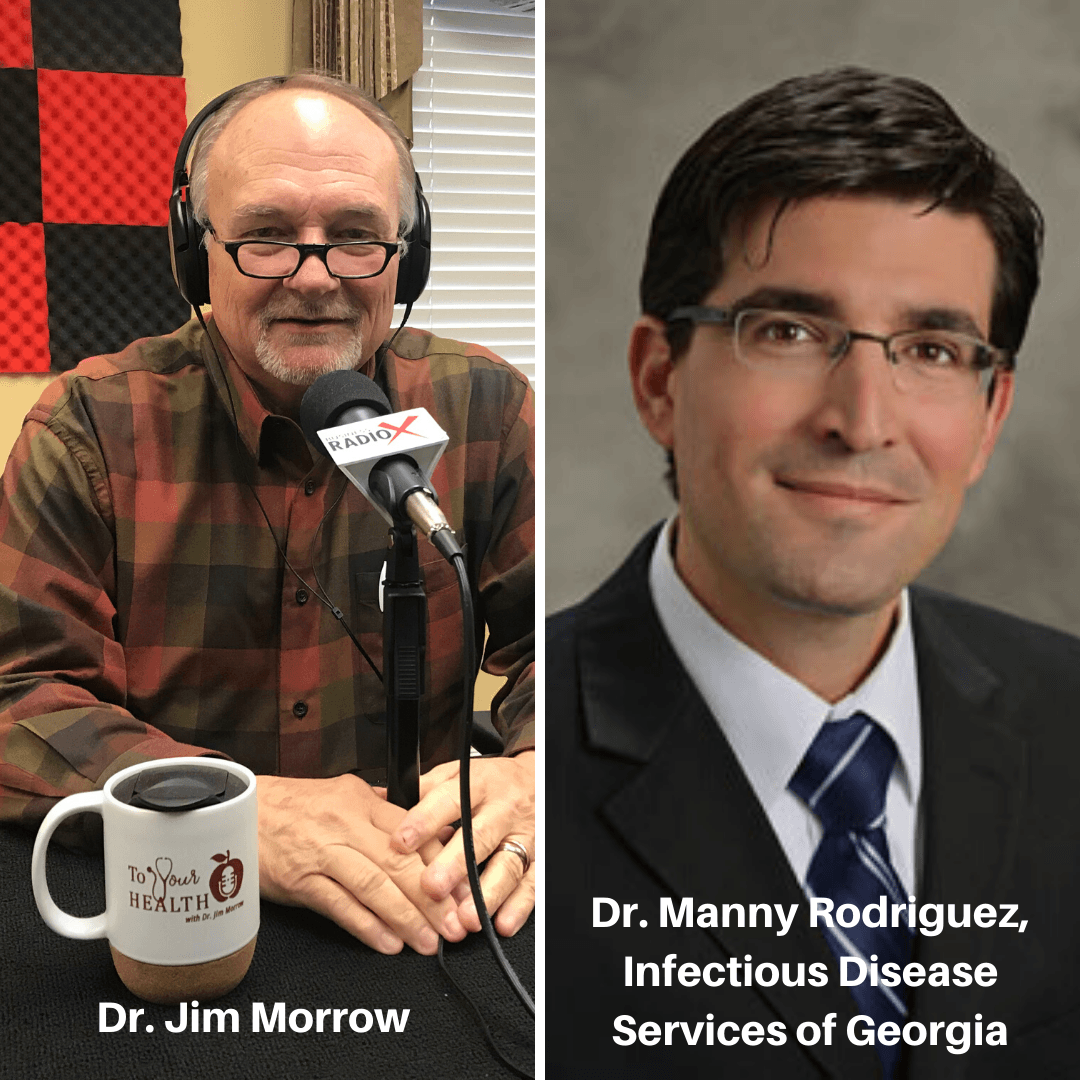
To Your Health With Dr. Jim Morrow: Episode 33, Covid-19 Hard Truths and Science, with Dr. Manny Rodriguez, Infectious Disease Services of Georgia

Dr. Morrow discusses some Covid-19 hard truths and science with Dr. Manny Rodriguez, a Cumming-based infectious disease specialist. Myths on wearing face masks, a second wave, school reopening in the fall, are just a few of the topics covered in this episode. “To Your Health” is brought to you by Morrow Family Medicine, which brings the CARE back to healthcare.

Dr. Manny Rodriguez, Infectious Disease Services of Georgia

Infectious Disease Services of Georgia
Dr. Manny Rodriguez, Infectious Disease Services of Georgia

Dr. Manuel D. Rodriguez received his Bachelors of Science degree in Psychobiology in 2000 from Florida Atlantic University. He continued on and received his Master’s degree in Biomedical Science from Barry University in 2002. In 2006, he obtained both his Doctor of Osteopathic Medicine and Master’s of Public Health from Nova Southeastern University in South Florida. After completing his Osteopathic internship at Palmetto General Hospital in Hialeah, Florida in 2007 he moved to Mobile, Alabama where he completed his residency at University of South Alabama in 2010 and stayed on as Chief Medical Resident for an additional year. In 2011, he and his family moved to Washington, DC where he completed his fellowship in Infectious Diseases at The George Washington University in 2013.

Throughout his training he has received numerous teaching awards, and since joining IDSGA has been asked to lecture on Infectious Disease topics at both local and state conferences. He is currently Board Certified in Infectious Disease and Internal Medicine and has professional affiliations with the Alpha Omega Alpha Medical Honor Society, the American College of Physicians where he serves as a member of the Council of Young Physicians, the American Osteopathic Association, and the Infectious Disease Society of America.

In his spare time, he enjoys cooking, reading, hiking and spending time with his family.

More information is available at the Infectious Disease Services of Georgia website.

Questions/Topics Discussed in this Episode:

  • Mitigation as opposed to complete shut-down
  • On re-opening, what do you anticipate as far as the almost inevitable bump in cases?
  • What might a “second wave” look like?
  • Masks and social distancing
  • Dr. Fauci seems to go against the grain, if you can believe what you see on social media and YouTube.
  • Hydroxychloroquine
  • Remdesivir
  • Antibody testing
  • Saliva for testing?
  • Mutations versus Strains
  • Man-made or a Lab Accident?
  • Could this have been prevented?
  • What do you predict for schools in the fall?
  • Touching on the issue of so many unknowns

About Morrow Family Medicine and Dr. Jim Morrow

Morrow Family Medicine is an award-winning, state-of-the-art family practice with offices in Cumming and Milton, Georgia. The practice combines healthcare information technology with old-fashioned care to provide the type of care that many are in search of today. Two physicians, three physician assistants and two nurse practitioners are supported by a knowledgeable and friendly staff to make your visit to Morrow Family Medicine one that will remind you of the way healthcare should be.  At Morrow Family Medicine, we like to say we are “bringing the care back to healthcare!”  Morrow Family Medicine has been named the “Best of Forsyth” in Family Medicine in all five years of the award, is a three-time consecutive winner of the “Best of North Atlanta” by readers of Appen Media, and the 2019 winner of “Best of Life” in North Fulton County.

Dr. Jim Morrow, Morrow Family Medicine, and Host of “To Your Health With Dr. Jim Morrow”

Dr. Jim Morrow is the founder and CEO of Morrow Family Medicine. He has been a trailblazer and evangelist in the area of healthcare information technology, was named Physician IT Leader of the Year by HIMSS, a HIMSS Davies Award Winner, the Cumming-Forsyth Chamber of Commerce Steve Bloom Award Winner as Entrepreneur of the Year and he received a Phoenix Award as Community Leader of the Year from the Metro Atlanta Chamber of Commerce.  He is married to Peggie Morrow and together they founded the Forsyth BYOT Benefit, a charity in Forsyth County to support students in need of technology and devices. They have two Goldendoodles, a gaggle of grandchildren and enjoy life on and around Lake Lanier.

Facebook: https://www.facebook.com/MorrowFamMed/

LinkedIn: https://www.linkedin.com/company/7788088/admin/

Twitter: https://twitter.com/toyourhealthMD

The complete show archive of “To Your Health with Dr. Jim Morrow” addresses a wide range of health and wellness topics, and can be found at www.toyourhealthradio.com.

Tagged With: antibody testing, COVID-19, Dr. Jim Morrow, hydroxychloroquine, infectious disease, Infectious Disease Services of Georgia, infectious diseases, Jim Morrow, masks, mitigation, Morrow Family Medicine, Remdesivir, saliva testing, second wave, social distancing, To Your Health, To Your Health With Dr. Jim Morrow

To Your Health With Dr. Jim Morrow:  Episode 32, Stress in a Pandemic with Dr. Brooke Jones, Fresh Start for the Mind, and a Covid-19 Update

May 13, 2020 by John Ray

stress in a pandemic
North Fulton Studio
To Your Health With Dr. Jim Morrow:  Episode 32, Stress in a Pandemic with Dr. Brooke Jones, Fresh Start for the Mind, and a Covid-19 Update
Loading
00:00 /
RSS Feed
Share
Link
Embed

Download file

Stress in a Pandemic
Dr. Jim Morrow, Morrow Family Medicine, and Dr. Brooke Jones, Fresh Start for the Mind

To Your Health With Dr. Jim Morrow:  Episode 32, Stress in a Pandemic with Dr. Brooke Jones and a Covid-19 Update

Dr. Morrow discusses dealing with stress in a pandemic with Dr. Brooke Jones, Fresh Start for the Mind. Dr. Morrow also shares a Covid-19 update, which includes a debunking of the “Plandemic” video and comments on the ineffectiveness of hydroxychloroquine.  “To Your Health” is brought to you by Morrow Family Medicine, which brings the CARE back to healthcare.

Dr. Brooke Jones, Fresh Start for the Mind

stress in a pandemic
Dr. Brooke Jones, Fresh Start for the Mind

In 2013, Dr. Brooke Jones branched out on her own to open a mental health practice, Fresh Start for the Mind. She wanted a practice that incorporated the mind, body, and spirit. Her love for psychological evaluations became evident in the Alpharetta and surrounding communities. As referrals grew, so did Fresh Start.

Fresh Start for the Mind is a comprehensive mental health practice that provides counseling, psychological evaluations, psychiatry and medication management, coaching, and nutrition support to children, adults, and families. Since its inception in 2013, Fresh Start has grown to over 30 staff members and has maintained a reputation for providing quality and heart-felt services. Fresh Start has three facilities and proudly serves patients in and around Suwanee, Stockbridge, and Canton, GA.

You can find out more at their website or call Fresh Start at 404-808-1161.

About Morrow Family Medicine and Dr. Jim Morrow

Morrow Family Medicine is an award-winning, state-of-the-art family practice with offices in Cumming and Milton, Georgia. The practice combines healthcare information technology with old-fashioned care to provide the type of care that many are in search of today. Two physicians, three physician assistants and two nurse practitioners are supported by a knowledgeable and friendly staff to make your visit to Morrow Family Medicine one that will remind you of the way healthcare should be.  At Morrow Family Medicine, we like to say we are “bringing the care back to healthcare!”  Morrow Family Medicine has been named the “Best of Forsyth” in Family Medicine in all five years of the award, is a three-time consecutive winner of the “Best of North Atlanta” by readers of Appen Media, and the 2019 winner of “Best of Life” in North Fulton County.

Dr. Jim Morrow, Morrow Family Medicine, and Host of “To Your Health With Dr. Jim Morrow”

Dr. Jim Morrow is the founder and CEO of Morrow Family Medicine. He has been a trailblazer and evangelist in the area of healthcare information technology, was named Physician IT Leader of the Year by HIMSS, a HIMSS Davies Award Winner, the Cumming-Forsyth Chamber of Commerce Steve Bloom Award Winner as Entrepreneur of the Year and he received a Phoenix Award as Community Leader of the Year from the Metro Atlanta Chamber of Commerce.  He is married to Peggie Morrow and together they founded the Forsyth BYOT Benefit, a charity in Forsyth County to support students in need of technology and devices. They have two Goldendoodles, a gaggle of grandchildren and enjoy life on and around Lake Lanier.

Facebook: https://www.facebook.com/MorrowFamMed/

LinkedIn: https://www.linkedin.com/company/7788088/admin/

Twitter: https://twitter.com/toyourhealthMD

The complete show archive of “To Your Health with Dr. Jim Morrow” addresses a wide range of health and wellness topics, and can be found at www.toyourhealthradio.com.

Dr. Morrow’s Show Notes

Coronavirus Update

  • Hydroxychloroquine has been shown not to be effective and in some cases harmful in Covid-19.
  • Patients are often much worse in the second week of the disease.
  • Total cases have started to plateau in the US, but with social distancing waning somewhat and states opening up, we will definitely see a bump in cases.
  • The healthcare system has been spared the overwhelming push that would have made all of this dramatically worse.
  • Masks:
    • Wear one anytime in public.
    • They protect others from you.
    • 44% of people in a NY study who had NO symptoms were found to be positive for having the disease at the time they had no symptoms.
  • Antibody Tests:
    • There are three antibodies that are tested for in most of these tests.
      • IgA, a respiratory antibody.  
        • One that is produced in response to a respiratory infection. As opposed to a stomach bug or what people insist on calling a “stomach flu”, even though that does not exist.
      • IgM 
        • one that you produce acutely as you are in the midst of an active infection.
      • IgG
        • One you make that is at the end of an infection and the one that lasts the longest, giving you some degree of immunity to an infection you have already had.
    • IgA and IgM can cross react with the coronaviruses that cause the common cold, mainly 229E and OC43.
    • IgG is specific for the type of virus that caused a particular infection, such as SARS-CoV-2.
    • So, if you get the antibody test, you are looking for a positive IgG antibody to know if you were infected with or exposed to this novel coronavirus.
    • We presume that this infers some degree of immunity but we really are not certain of that yet.
    • ACE inhibitors and ARBs: stay on them if you take them. They could actually benefit you
    • Aspirin: stay on it
    • Allergy meds: stay on them; Covid-19 does not cause sneezing. Period.
  • “Plandemic” video: so many people sent this to me.
    • It is complete bunk.
    • You need to understand that scientists are accustomed to saying “I don’t know”
      • but the public is accustomed to us having all the answers.
    • For the past 75 years, when it comes to infections and public health issues,
      • the public has come to expect medicine to know what’s what.
    • But this is a totally new virus.
      • It’s like the time of Louis Pasteur when scientists did not know everything,
      • or hardly anything compared to today.
    • Information that I learned two weeks ago is being proven wrong this week.
    • Social media and the public’s access to information of all kinds,
      • most of it unproven,
      • is making it difficult to sort out fact from fiction.
    • People have a need to believe something,
      • so when they see someone who sounds knowledgeable,
      • they want to believe it.
      • When it gives them an answer they want to believe it.
      • Well, don’t believe one word in that video. Not one.


Stress in a Pandemic

Outbreaks can be stressful

    • The outbreak of coronavirus disease 2019 (COVID-19) may be stressful for people. 
      • Fear and anxiety about a disease can be overwhelming and cause strong emotions in adults and children. 
  • Coping with stress in a pandemic will make you, the people you care about, and your community stronger.
  • Stress in a pandemic can include
    • Fear and worry about your own health and the health of your loved ones
    • Changes in sleep or eating patterns
    • Difficulty sleeping or concentrating
    • Worsening of chronic health problems
    • Worsening of mental health conditions
    • Increased use of alcohol, tobacco, or other drugs
  • Everyone reacts differently to stressful situations
    • How you respond to the outbreak can depend on 
      • your background,
      • the things that make you different from other people, 
      • and the community you live in.

Our Guest Today:

Brooke Jones,  Psychologist and Owner, Fresh Start for the Mind

Fresh Start for the Mind is a comprehensive mental health practice that provides counseling, psychological evaluations, psychiatry and medication management, coaching, and nutrition support to children, adults, and families.  Since it’s inception in 2013, Fresh Start has grown to over 30 staff members and has maintained a reputation for providing quality and heart-felt services.  Fresh Start has three facilities and proudly serves patients in and around Suwanee, Stockbridge, and Canton, GA.  

Question/Topics in this interview:

  • What have been some common reactions you’ve seen in response to COVID-19 pandemic?
  • Do you have any advice on how to help children cope with these changes?
  • What are some specific examples of self-care and how would you recommend our listeners make this apart of their routine?
  • How can I support a loved one, who may be directly or indirectly affected by COVID-19?
  • If I needed help with managing stress, anxiety, depression, or anger – weather it’s directly or indirectly related to COVID, or in general, where can I find help?
  • Do you have any advice on how to help children cope with these changes?
  • What are some specific examples of self-care and how would you recommend our listeners make this apart of their routine?
  • How can I support a loved one, who may be directly or indirectly affected by COVID-19?

Outbreaks can be stressful (cont’d)

  • People who may respond more strongly to stress in a pandemic include
    • Older people and people with chronic diseases who are at higher risk for severe illness from COVID-19
    • Children and teens
    • People who are helping with the response to COVID-19, like doctors, other health care providers, and first responders
    • People who have mental health conditions including problems with substance use
  • Take care of yourself and your community
    • Taking care of yourself, 
      • your friends, 
      • and your family can help you cope with stress. 
      • Helping others cope with their stress can also make your community stronger.
  • Ways to cope with stress
    • Take breaks from watching, 
    • reading, 
    • or listening to news stories, 
      • including social media. 
      • Hearing about the pandemic repeatedly can be upsetting.
  • Take care of your body.
    • Take deep breaths, stretch, or meditate
    • Try to eat healthy, well-balanced meals.
    • Exercise regularly, get plenty of sleep.
    • Avoid alcohol and drugs
    • Make time to unwind. Try to do some other activities you enjoy.
    • Connect with others. Talk with people you trust about your concerns and how you are feeling.

Tagged With: anxiety, COVID-19, Depression, Dr. Brooke Jones, Dr. Jim Morrow, Fresh Start for the Mind, hydroxychloroquine, Jim Morrow, mental health, Morrow Family Medicine, pandemic, Plandemic video, stress, stress in a pandemic, To Your Health, To Your Health With Dr. Jim Morrow

To Your Health With Dr. Jim Morrow: Episode 31, Telemedicine and Georgia Opens Up

April 23, 2020 by John Ray

telehealth
North Fulton Studio
To Your Health With Dr. Jim Morrow: Episode 31, Telemedicine and Georgia Opens Up
Loading
00:00 /
RSS Feed
Share
Link
Embed

Download file

telehealth
Dr. Jim Morrow, Host of “To Your Health”

To Your Health With Dr. Jim Morrow: Episode 31:  Telemedicine and Georgia Opens Up

Dr. Morrow offers his thoughts on Gov. Brian Kemp’s “opening” of Georgia, as well as a thorough discussion of telemedicine, its pros and cons, and how he is using telemedicine currently to treat patients at Morrow Family Medicine.  As always, Dr. Morrow responds to listener emails and feedback, including one from a disgruntled tinnitus sufferer. “To Your Health” is brought to you by Morrow Family Medicine, which brings the CARE back to healthcare.

About Morrow Family Medicine and Dr. Jim Morrow

Morrow Family Medicine is an award-winning, state-of-the-art family practice with offices in Cumming and Milton, Georgia. The practice combines healthcare information technology with old-fashioned care to provide the type of care that many are in search of today. Two physicians, three physician assistants and two nurse practitioners are supported by a knowledgeable and friendly staff to make your visit to Morrow Family Medicine one that will remind you of the way healthcare should be.  At Morrow Family Medicine, we like to say we are “bringing the care back to healthcare!”  Morrow Family Medicine has been named the “Best of Forsyth” in Family Medicine in all five years of the award, is a three-time consecutive winner of the “Best of North Atlanta” by readers of Appen Media, and the 2019 winner of “Best of Life” in North Fulton County.

Dr. Jim Morrow, Morrow Family Medicine, and Host of “To Your Health With Dr. Jim Morrow”

Dr. Jim Morrow is the founder and CEO of Morrow Family Medicine. He has been a trailblazer and evangelist in the area of healthcare information technology, was named Physician IT Leader of the Year by HIMSS, a HIMSS Davies Award Winner, the Cumming-Forsyth Chamber of Commerce Steve Bloom Award Winner as Entrepreneur of the Year and he received a Phoenix Award as Community Leader of the Year from the Metro Atlanta Chamber of Commerce.  He is married to Peggie Morrow and together they founded the Forsyth BYOT Benefit, a charity in Forsyth County to support students in need of technology and devices. They have two Goldendoodles, a gaggle of grandchildren and enjoy life on and around Lake Lanier.

Facebook: https://www.facebook.com/MorrowFamMed/

LinkedIn: https://www.linkedin.com/company/7788088/admin/

Twitter: https://twitter.com/toyourhealthMD

The complete show archive of “To Your Health with Dr. Jim Morrow” addresses a wide range of health and wellness topics, and can be found at www.toyourhealthradio.com.

telemedicine


Dr. Morrow’s Show Notes

Coronavirus Update


Worldwide cases: 2,561,915

Total Deaths: 177,200

Total Recovered: 679,819

Total Hospitalized in the US: 120,268

Hospitalized in Georgia: 3,779

Incidence rate: 198.89 per 100,000 persons

Antibody test not yet generally available and the tests have a cross reactivity with some of the common cold CVs.

The average number of people who become infected by an infectious person is declining in every state. See this at rt.live.


Telemedicine Facts

  • According to Healthcare Business & Technology,
    • Almost 75% of all doctor, urgent care, and ER visits “are either unnecessary or could be handled safely and effectively over the phone or video,”
  • MedCity Newsreports that 90% of healthcare executives say their organizations are developing or already have a telehealth application.
  • The majority of healthcare organizations are increasing or maintaining their telehealth investments this year.
  • According to the American Hospital Association, about 20% of Americans live in rural areas without easy access to primary care or specialist medical services.
  • A survey conducted by American Well found that 65% of consumers want to use telehealth
  • According to the American Hospital Association, more than three-fourths of hospitals are currently using or implementing telehealth.

Pre-Pandemic Situation

 Limited Medicare coverage impeded the expansion of telehealth services.

    • Current statute restricts most telehealth services to patients located in
      • rural areas and
      • in specific settings (such as a hospital or physician office),
      • covers only a limited number of services, and
      • allows only real-time, two-way video conference capabilities.
  • Changes needed include:
    • widespread elimination of geographic and setting locations requirements so patients outside of rural areas can benefit from telehealth;
    • expanding the types of technology that can be used, including remote monitoring; and
    • covering all services that are safe to provide, rather than a small list of approved services.
  • Additional research is needed to evaluate telehealth.
    • Research and experience under the Medicare program suggest that policymakers’ concerns about increased access to telehealth leading to increased spending may be overstated,
      • particularly when weighed against the potential benefits in quality, patient experience and efficiency.
      • However, there are insufficient studies on the cost-benefits of telehealth outside of a limited number of services.
    • Federal programs to expand broadband need to be simplified.
      • According to the FCC, 34 million Americans still lack access to adequate broadband.
      • And, there is a large digital divide, with almost 40 percent of those living in rural areas lacking access.
        • The FCC has a program that supports broadband adoption, but it is administratively burdensome and provides an insufficient level of subsidy for remote health care providers.
          • While the FCC has taken positive steps by increasing the subsidy, we need even greater federal investment in broadband access, particularly in rural areas.
        • More and better research is needed for other conditions and newer technologies, such as remote monitoring of patients.
      • Telehealth connects patients to vital health care services through
        • videoconferencing,
        • remote monitoring,
        • electronic consults
        • and wireless communications.
        • By increasing access to physicians and specialists,
          • telehealth helps ensure patients receive
            • the right care,
            • at the right place,
            • at the right time.
          • Currently, 76 percent of U.S. hospitals connect with patients and consulting practitioners at a distance through the use of video and other technology.
            • Almost every state Medicaid program has some form of coverage for telehealth services,
              • and private payers are embracing coverage for many telehealth services.
              • However, there are barriers to wide adoption of telehealth.
              • Medicare generally still limits coverage and payment for many telehealth services, lagging behind other payers.
              • The Medicare program recently expanded coverage for telehealth services for stroke patients and substance use treatment in response to statutory changes.
              • Medicare also expanded payments to clinicians for virtual check-ins.
                • While promising,
                  • these incremental steps are not sufficient.
                • In addition, limited access to adequate broadband services hampers the ability of some rural facilities to deploy telehealth.
                • The challenge of cross-state licensure also looms as a major issue.
                • Other policy and operational issues include credentialing and privileging,
                  • online prescribing,
                  • privacy and security
                  • and fraud and abuse.
                • The federal government needs to do more to increase the use of telehealth.

Telemedicine and Covid-19

  • Healthcare is seeing a surge of direct-to-consumer telemedicine providers
    • operating at a large scale
    • helping to provide care to patients who might be wondering if they need care after exhibiting potential symptoms associated with the novel coronavirus.
  • Simultaneously we’re also seeing a rapidly increasing need for on-demand acute care via telemedicine.
    • This includes ICU programs offering intensive care for the most critical patients.
      • However, tele-triage is exploding in terms of the number of use-cases that involves determining when a patient presents in the emergency department whether they need to be issued a bed or if they can be seen in another area within the hospital in order to keep the patient safe and to reduce potential exposures.
    • This helps to limit providers’ exposure to the virus and other infectious diseases.
  • If a hospital worker is exposed without adequate protection, they’d be put into self-quarantine for 14 days
    • Using acute telemedicine for tele-triage is helping keep staff in a low-risk category for infection
      • by completely eliminating exposure for those doctors or other hospital staff.
  • Unfortunately, providers and policymakers are playing catch-up with telehealth technologies right now
    • and are just beginning to recognize that they are essential solutions for keeping potentially infected individuals out of hospitals and doctors’ offices
    • As this public health crisis continues to escalate, however,
      • telemedicine is quickly gaining recognition as a critical tool to slow the spread of COVID-19
    • There are three primary roles for telehealth technologies during this crisis
      • The first:
        • to screen patients remotely rather than having them visit the practice or hospital.
        • They can be used to triage patients with cold and flu-like symptoms and to remotely care for those who don’t need medical intervention or could receive care at home.
        • By keeping potentially infected individuals out of hospitals and doctors’ offices, the healthcare system can lower the risk of transmission to other patients and healthcare staff.
      • Second:
        • To help provide routine care for patients with chronic diseases who are at high risk if exposed to the virus
      • And third:
        • Providers and their staff are not immune to infection and are at increased risk for contracting COVID-19 due to their continuous exposure to infected patients
          • Once tested and confirmed, these providers will be quarantined and become unavailable to the healthcare system just when it needs them most.

Limitations of Telehealth

  • Inability for most clinicians to fully examine a patient
    • The hardware exists to do this but it is expensive and has limitations
  • Limitations in broadband and device access
  • Laboratory testing not possible
  • In cases where patients are using on-demand telemedicine services that connect them with a random healthcare provider, care continuity suffers.
  • A patient’s primary care provider may not have access to records from those other visits and end up with an incomplete history for the patient.
    • Service provider shuffling increases the risk that a doctor won’t know a patient’s history or have notes about care routines.
  • Healthcare laws, reimbursement policies, and privacy protection rules struggle to keep up with this fast-growing industry.
    • As a healthcare provider, you want to promote best practices when approaching telemedicine.
  • While major developments have been made to telehealth reimbursement over the past couple years, it still remains a common stumbling block for providers interested in telemedicine.

The Bottom Line

  • Telehealth helps increase health care value and affordability.
    • Virtual care technology saves patients time and money,
      • reduces patient transfers,
      • emergency department and urgent care center visits,
      • and delivers savings to payers.
    • In addition, telehealth helps address physician burnout by reducing clinicians’ drive times and allowing more time for patients.

Tagged With: Dr. Jim Morrow, Gov. Brian Kemp, Jim Morrow, Morrow Family Medicine, teleHealth, telemedicine, tinnitus, To Your Health, To Your Health With Dr. Jim Morrow

Business RadioX ® Network


Our Most Recent Episode

CONNECT WITH US

  • Email
  • Facebook
  • LinkedIn
  • Twitter
  • YouTube

Our Mission

We help local business leaders get the word out about the important work they’re doing to serve their market, their community, and their profession.

We support and celebrate business by sharing positive business stories that traditional media ignores. Some media leans left. Some media leans right. We lean business.

Sponsor a Show

Build Relationships and Grow Your Business. Click here for more details.

Partner With Us

Discover More Here

Terms and Conditions
Privacy Policy

Connect with us

Want to keep up with the latest in pro-business news across the network? Follow us on social media for the latest stories!
  • Email
  • Facebook
  • Google+
  • LinkedIn
  • Twitter
  • YouTube

Business RadioX® Headquarters
1000 Abernathy Rd. NE
Building 400, Suite L-10
Sandy Springs, GA 30328

© 2025 Business RadioX ® · Rainmaker Platform

BRXStudioCoversLA

Wait! Don’t Miss an Episode of LA Business Radio

BRXStudioCoversDENVER

Wait! Don’t Miss an Episode of Denver Business Radio

BRXStudioCoversPENSACOLA

Wait! Don’t Miss an Episode of Pensacola Business Radio

BRXStudioCoversBIRMINGHAM

Wait! Don’t Miss an Episode of Birmingham Business Radio

BRXStudioCoversTALLAHASSEE

Wait! Don’t Miss an Episode of Tallahassee Business Radio

BRXStudioCoversRALEIGH

Wait! Don’t Miss an Episode of Raleigh Business Radio

BRXStudioCoversRICHMONDNoWhite

Wait! Don’t Miss an Episode of Richmond Business Radio

BRXStudioCoversNASHVILLENoWhite

Wait! Don’t Miss an Episode of Nashville Business Radio

BRXStudioCoversDETROIT

Wait! Don’t Miss an Episode of Detroit Business Radio

BRXStudioCoversSTLOUIS

Wait! Don’t Miss an Episode of St. Louis Business Radio

BRXStudioCoversCOLUMBUS-small

Wait! Don’t Miss an Episode of Columbus Business Radio

Coachthecoach-08-08

Wait! Don’t Miss an Episode of Coach the Coach

BRXStudioCoversBAYAREA

Wait! Don’t Miss an Episode of Bay Area Business Radio

BRXStudioCoversCHICAGO

Wait! Don’t Miss an Episode of Chicago Business Radio

Wait! Don’t Miss an Episode of Atlanta Business Radio