Business RadioX ®

  • Home
  • Business RadioX ® Communities
    • Southeast
      • Alabama
        • Birmingham
      • Florida
        • Orlando
        • Pensacola
        • South Florida
        • Tampa
        • Tallahassee
      • Georgia
        • Atlanta
        • Cherokee
        • Forsyth
        • Greater Perimeter
        • Gwinnett
        • North Fulton
        • North Georgia
        • Northeast Georgia
        • Rome
        • Savannah
      • Louisiana
        • New Orleans
      • North Carolina
        • Charlotte
        • Raleigh
      • Tennessee
        • Chattanooga
        • Nashville
      • Virginia
        • Richmond
    • South Central
      • Arkansas
        • Northwest Arkansas
    • Midwest
      • Illinois
        • Chicago
      • Michigan
        • Detroit
      • Minnesota
        • Minneapolis St. Paul
      • Missouri
        • St. Louis
      • Ohio
        • Cleveland
        • Columbus
        • Dayton
    • Southwest
      • Arizona
        • Phoenix
        • Tucson
        • Valley
      • Texas
        • Austin
        • Dallas
        • Houston
    • West
      • California
        • Bay Area
        • LA
        • Pasadena
      • Colorado
        • Denver
      • Hawaii
        • Oahu
  • FAQs
  • About Us
    • Our Mission
    • Our Audience
    • Why It Works
    • What People Are Saying
    • BRX in the News
  • Resources
    • BRX Pro Tips
    • B2B Marketing: The 4Rs
    • High Velocity Selling Habits
    • Why Most B2B Media Strategies Fail
    • 9 Reasons To Sponsor A Business RadioX ® Show
  • Partner With Us
  • Veteran Business RadioX ®

Building a Franchise Empire: Essential Insights for Emerging Brands

June 6, 2025 by angishields

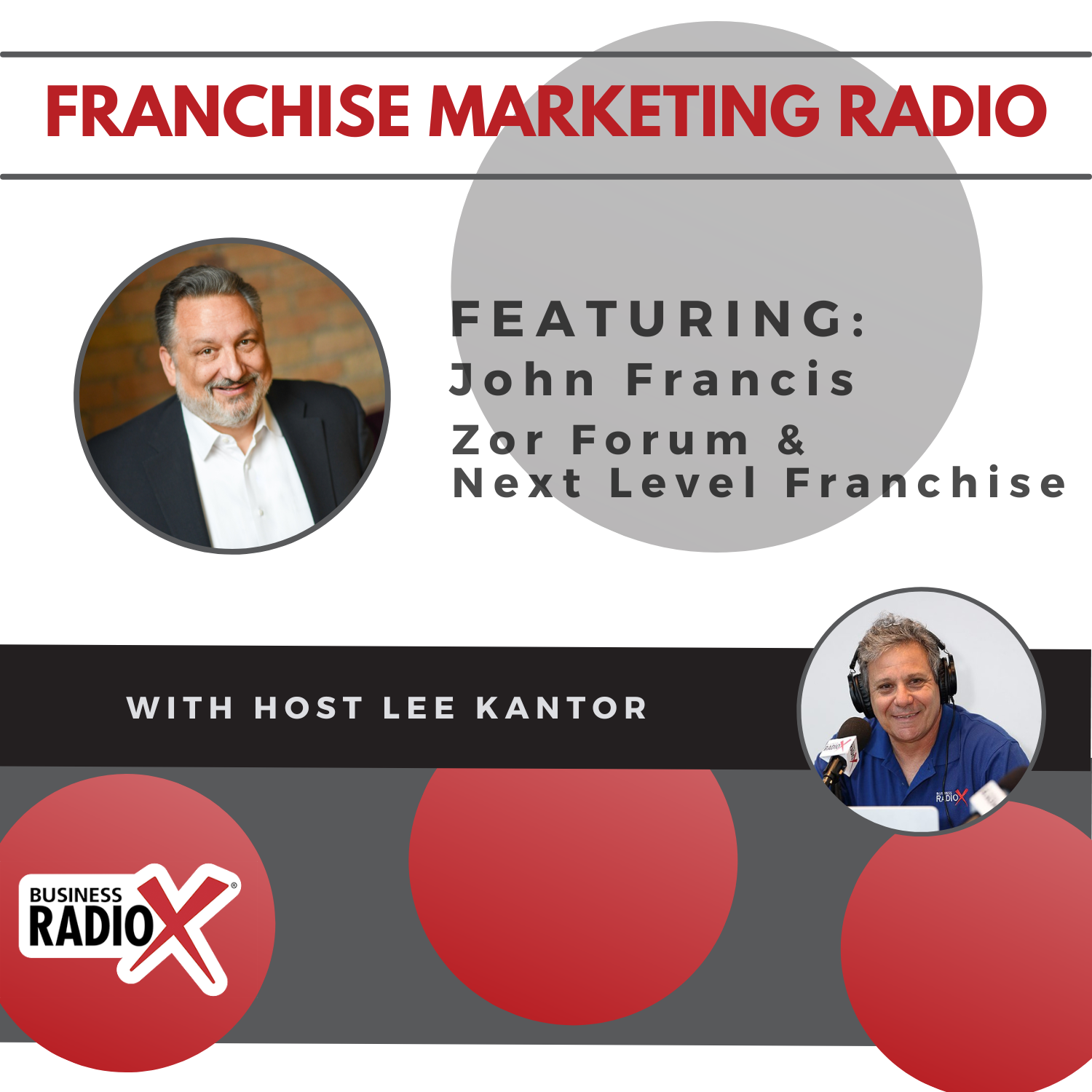
FMR-John-Francis-Feature
Franchise Marketing Radio
Building a Franchise Empire: Essential Insights for Emerging Brands
Loading
00:00 /
RSS Feed
Share
Link
Embed

Download file

In this episode of Franchise Marketing Radio, Lee Kantor interviews John Francis (Johnny Franchise), who shares his lifelong experience in franchising. Johnny discusses the industry’s evolution, key challenges for franchise owners, and the importance of selecting the right franchisees and building a strong foundation before scaling. He offers practical advice for emerging brands, emphasizing careful growth and effective management. As a consultant, Johnny helps franchises identify gaps and align business goals. The conversation highlights collaboration, strategic planning, and Johnny’s passion for supporting franchise success.

John-FrancisJohn Francis has a LIFETIME of experience in franchising. His exposure to franchising began when he was just a child in his family’s hair salon system, “The Barbers,” which was the 1,000-plus unit, publicly traded and international organization that franchised the brands Cost Cutters, City Looks and We Care Hair. He later joined the family business, playing a major role in the integration and merger of The Barbers into Regis Corporation in 1999.

With more than thirty years of hands-on experience in the franchise industry, John Francis has served as a franchisee, franchisor, investor and Board Member for organizations such as Sport Clips, Cost Cutters, Super Cuts, Inner Circle, Office Pride, Just Between Friends, Dream Maker Bath & Kitchen, Culligan Water, Big Frog T Shirts, DivaDance and the International Franchise Association.

Today, John shares his perspective and expertise as a ZorForum Moderator, Brand Consultant, Board Member, Director and Advisor and Speaker to help franchise systems and professionals “see what they don’t see” and achieve their highest levels of success. You can’t tell John a franchise situation he hasn’t lived or experienced – that experience will help your system! Next-Level-Franchise-logo
Connect with John on LinkedIn, X and Facebook.

Episode Highlights

  • Tips for Franchisors who get stuck or run into growth challenges after start up
  • Top Ten Tips for Franchisee Success
  • ZorForum groups for franchisors and leaders looking for advice

Transcript-iconThis transcript is machine transcribed by Sonix.


TRANSCRIPT

Intro: Coming to you live from the Business RadioX studio. It’s Franchise Marketing Radio.

Lee Kantor: Lee Kantor here. Another episode of Franchise Marketing Radio. And this is going to be a good one. Today on the show we have John Francis, better known as Johnny Franchise. He is with Zorforum and Next Level franchise. Welcome, Johnny.

John Francis: Yeah. Thank you Lee. Glad to be here.

Lee Kantor: Well, so excited to learn what you’re up to. Tell us about what you got going on. Sounds like a lot of stuff in the franchise world.

John Francis: Yeah, well, you know, I grew up in franchising. I’ve been in franchising literally my my whole life, my whole career. My my parents had a hair salon franchisor. My dad was a barber and franchise barbershops back in the 60s before I was even born. So I grew up thinking everything was a franchise and everybody worked for work for themselves, and everybody had 2 or 3 businesses because that’s what I grew up with. So I grew up as a franchisor in the salon business, and we built that business over a long time quite nicely. It was a big franchise or multiple brands, every state, multiple countries. Acquisitions international Nasdaq listed back in the 80s and 90s when things were crazy. My parents are in the IFA Hall of Fame, so I grew up in a great environment of franchising. We sold that business in 1999, so about 25 years ago we sold and we had just over a thousand units. So my folks were way ahead of the ahead of the curve, if you will. They were pioneers and leaders, and the things we did with our brand were were innovative and successful. We had a good run, and I worked really hard while I was there. And then I went on to do a few more brands of my own as a franchisor. As a franchisee. As an area developer. And what I learned, Lee, is I, I got I got trained really well when I was young. It was ingrained into me how to be a better franchisor. And so as I started doing my work and kind of doing my own thing after we sold the family business, I got really good at helping other franchise systems scale.

John Francis: You know, they figure out what’s holding them back, break through that, whatever it is, and then show them how to really grow and scale beyond just adding units, but adding staff and structure and accountability. So things really take off. So I’ve been doing this work for a long time, and I just love it when when people do what they’re supposed to do. Right. When franchising is done. Well, Lee, you know, everybody wins. The franchisor does their part, the franchisee does theirs, and the supplier firms do what they’re supposed to do. If everybody does what they’re supposed to do, working together, there’s nothing more powerful than a franchise system. It’s it’s wonderful. And, uh, I’ve seen it. I’ve lived it. I’ve helped other people get there, and, uh, I just want to help other people. So I’m a I’m a I used to be called a reluctant consultant because I really didn’t want to do any work, or I don’t really want to run anything. I don’t want to buy anything. I don’t want to. I don’t want to get involved, you know? But I want to make a difference. I want to make an impact. I want to help others. So Zorforum is a mastermind group. And then next level franchising is board work and coaching work. So I mean, that’s kind of a lot. But that’s that’s what I’m up to.

Lee Kantor: So how have you seen kind of franchising evolve over the decades? Um, I’m sure in the 60s and the 70s and 80s, when this, it was more in the beginning stages. Um, you know, the franchisee was a one off. Maybe they had some multiple locations within their community over time, but nowadays it seems like there’s more and more kind of portfolios of franchises, and people are looking at this more in a corporate manner rather than, I’m just going to have a nice livelihood for my family.

John Francis: Yeah. For sure. Lee, the the industry has changed a lot. I mean, I’ve been around it 50 years, I guess, but, uh, it’s, um, it’s become a lot more professional. Right. When I, when I was growing up, my dad, my mom, you know, we’d go to these conferences. It was founders, entrepreneurs, you know, they were all just trying to figure it out and get it done. And, you know, everybody was was doing what they could. But, uh, you know, things got better and smarter and, and more sophisticated. And then certainly private equity has changed, you know, and I would say raised the bar for a lot of folks to be, uh, you know, just high performers and better structures and better deals and more focused and, and just professionally managed businesses rather than, you know, founder led entrepreneur chaos. So I’ve seen a lot of change and, um, on both sides, the franchisor and the franchisees and frankly, the suppliers too. You know, technology has gone through leaps and bounds of innovation just like any other industry. It’s had a profound impact on franchising and how franchises are sold and how franchises are operated. And and the different tools and systems that we have today. I mean, we could only dream about some of this stuff, you know, back in the old days, but we got it done anyway. You know, franchising is loaded with entrepreneurs and they want to get things done and figure it out. So it’s it’s so much fun that way. But yeah, it’s definitely changed. I’d say it’s gotten better, more sophisticated moves a lot faster. Uh, but I think, you know and and now international I think is a tremendous opportunity. So I see franchising as just bigger and better than ever, really.

Lee Kantor: Now, uh, what kind of conversations are you having with franchisors? What are what are some of the things that are, um, kind of frustrating them that you’re able to help them work through.

John Francis: Yeah, I would say it’s, it’s the, the phases of growth as a franchisor, you know, when they’re new and early stage, they’ve got a lot to learn, and they’re just trying to grow as fast as they can and sell, sell, sell and open, open, open and you know, training and marketing and just chaos. They want to grow so fast. And then then they straighten that out. They get past that that chaos early emerging and then it’s growth mode. And they really got to be smart and careful with what they commit to and the people they hire and the spending. So handling those different phases then as they mature things kind of transition again, the leadership style might change a little bit. The the expectations of the team change a little bit. You go from a lot of generalists now maybe you have some specialists, you know, in the franchisor and franchisees get a little older, more sophisticated. They want different things and they they have expectations. Maybe you’re attracting a bigger, better, more qualified franchise operator. So they’re raising the expectations, you know. So then you go through another level of growth and a change internally of, you know, culture and management and leadership style and accountability. And I would say asset allocation. Right. Time and money. And a lot of times the founder is kind of gets in their own way.

John Francis: You know, they don’t intend to slow things down, but they they wind up becoming a bottleneck. A lot of times I’m coaching people on how to let go or how to how to let go with confidence. You know, how to put in systems and accountability and how to lead and not just manage. And, uh, you know, it’s just different growth curves for people and organizations. And I guess I’ve seen it enough that it’s easier for me to recognize from the outside, I can ask a bunch of questions and kind of assess where they are and start predicting their future, and that that usually freaks them out when I can tell them, I bet you’re dealing with this kind of problem or this kind of problem or or if you haven’t yet, you’re going to start dealing with this. And then they start, you know, their eyes kind of open up like, oh my God, you’ve you’ve been sitting in our meetings, haven’t you? You know. So it’s it’s just fun for me to, uh, to help people recognize that they can get past whatever is holding them back. They just need to figure it out. And I can help usually show them, you know, 3 or 4 different ways to do it. Sometimes, um, there’s more than one right answer, which makes it so much more fun.

Lee Kantor: Now, are you working primarily with B2C franchises, B2B? Um, what’s your sweet spot?

John Francis: Yeah. Really? Any any kind of franchisor, I guess. My, my, my history was retail, storefront, service based franchises. That’s that’s where I’ve spent the most time. Um, but I have clients that are restaurant concepts, um, B2B industrial sales. Commercial sales, uh, virtual, where there is no office and no mobile. You know, where it’s totally virtual. There’s a lot, of lot of interesting ways of getting things done these days. Yeah, I work with, you know, 10 to 15 different brands at any given time and probably another 5 or 10 that I’m, that I’m, uh, either into groups or, or serving on boards and things of that nature. So I get to see a lot of stuff and I get to ask a lot of questions. And, you know, my attitude is I just want to help where I can. Otherwise I want to get out of the way. Right? I’m not trying to hold anything back, but, uh, it’s great just to see how things are, um, are moving and people make decisions, you know, when they’re responsible and their owners, they’re motivated. And, um, you know, those are the best people for me. The ones that really want to get where they’re trying to go and they realize they need some help, you know, and, uh, and I think it’s a mature professional who’s, you know, who takes on a coach or takes on an advisor, or does these kind of things to take their business to that next level.

Lee Kantor: So walk me through what it’s like working with you. So you come into an organization that obviously is frustrated in something, or else they wouldn’t be contacting you. They’re either plateaued or maybe they’re going backwards, but they’re not moving fast enough. Whatever it is. They’re in a a point where they need some help and they’ve raised their hand and said, hey, Johnny, I need some help. Um, what is kind of the initial conversations look like? And then what are some of the systems you put in place to help them get to new levels?

John Francis: Yeah. Great question. Well, I think it starts with just really trying to understand the lay of the land and the cast of characters. I’ll ask a lot of questions about their team, you know, read through the PhD, figure out who’s doing what, why, where, when and how did everybody sort of get there? Uh, what’s the ownership structure? What’s the leadership structure? What’s the management structure? You know, those three things are really separate, even though sometimes it’s very much the same people. Um, and then, you know, asking questions around, you know, performance and budgeting and performance and results and accountability and really, is there any and, you know, planning and, uh, just things of that nature trying to see what they have or what they’ve done or what they’re capable of, and then really identifying what fits what’s missing and what can fill the gap. Um, there’s lots of different management techniques, lots of great resources, easy free stuff that’s out there if you just kind of know where to look and if you can identify the issue, you can usually give them 2 or 3 different ways to solve it. It’s a matter of what else is going on in there, you know, and and really the it starts with the ownership, you know. What are they trying to do? I like to say, you know, let’s create an owner’s plan first, and then let’s make the business plan serve the owner.

John Francis: So the business plan is important, but it comes after the owner’s plan. The owner’s plan is what do you want as the owner? What are you willing to give? What do you expect from the business? How much time and money do you want? And how much time or money will you give? Because it’s going to take a little bit of both. And you know, there’s some people that want to scale and grow and get to the point where they can sell it. Well, that’s that’s great. That’s one, one ambition. But what if you got to the point where you didn’t you didn’t have to sell it. You know, you could you could grow it and not run it, and you could own it and lead it but not manage it, you know, and separate those functions into different, uh, different management tools, ownership tools and leadership tools. So I work with boards. Uh, I work with, uh, systems like iOS and things of that nature. Uh, but there are lots of different approaches that might fit. Um, usually an organization really needs to go through sort of a reality check. And, uh, that’s kind of what I do by asking some, I would say, provocative questions to make people a little uncomfortable and then tease them with what could be, and then let them know that I can help them get there.

Lee Kantor: So let let’s talk about, um, emerging franchises. There are so many brands out there that are just getting started and they’re trying to, you know, grow as fast as possible. Is there any advice for that emerging franchise that maybe they only have a handful of locations just yet and they’re working on, um, you know, attracting that ideal franchisee and they’re working on, you know, having an offering that’s going to work in other environments other than their home environment. So do you have any advice for those emerging Franchise owners?

John Francis: Yeah for sure. The emerging ones are where, you know, everybody starts somewhere. And, um, there’s mostly there at the at the front end of the funnel. Right. It’s it’s crowded and it’s busy. And franchising is not for the meek, right? You should really know what you’re getting involved with. Stay committed. Right. Um, it takes time. It takes work. It doesn’t happen overnight. Even though some people make it look like it happens overnight. It really doesn’t. Uh, my best point of advice for those emerging brands is be selective. The people you bring into your organization are going to make a huge impact because there’s only a few of you, your corporate team, your your corporate staff, your vendors and suppliers. Uh, and then, of course, the franchisees. Right. The first few franchisees set the pace. So you bring in some really strong, high performers, you know, who are great people with great success pattern. You want those kind of winners because they’re going to help you improve the brand and make it even more powerful for the rest of them. But you get a couple of bad actors in the beginning, a bad operator or a bad employee, or even a bad vendor who doesn’t know what they’re doing or can’t see the the facts. You know, they’ll hold you back and they’ll create more drama and headaches. And, you know, they can prevent the good people from coming to you. So it’s all about people, and it’s all about being very selective in the beginning. Be careful and work hard to get the right folks in there. And then, you know, lead that brand.

John Francis: And, um, it takes a lot of time and money. Uh, most people run out of both. So be prepared, I guess. And what are you going to do when you run out of time and or money? Uh, then it’s again, it goes back to people and, um, you know, building that plan and building that business because, uh, I think a lot of the emerging brands underestimate the commitment it takes. It’s it’s, uh, it’s sadly common. I get I get to somebody who’s got, you know, a dozen or whatever, and they’re so far stretched out, they they are, you know, just hanging on by their fingertips. And they’re committed to their franchisees and they love their business and they love everything about it. And they probably have some great people, but, you know, they’re really at risk of just collapsing. And, uh, one small thing that would, you know, upset the apple cart. So then if that’s the case, I start looking for strength. How do we build some strength around this? How do we make it a little bit stronger, more stabilized before we grow and scale? Right. Usually you really got to have a strong base to build from. A lot of brands get way ahead of their skis in terms of development. They sell a bunch of contracts or they try and open a bunch of stores, and then they really don’t have the systems to support it, and things deteriorate quite fast. So I don’t know if that’s typical, but that’s the kind of thing I see a lot of.

Lee Kantor: Now, um, anything you’ve learned when it comes to attracting those right folks, those right franchisees. There are some do’s and don’ts when it comes to, um, you know, doing your biz dev.

John Francis: I think it’s it’s easy to say yes, because especially if you’re struggling to sell franchises and you need those fees, man, you want to say yes. Uh, so be disciplined, right. And spend time to get to know these people. Look at their application, talk to them on the phone, look at their application, talk to them on the phone right more than once. Validate, verify. Make sure you kind of know who they are. Do a background check. Do a credit check. Ask more questions, spend more time with them. Uh, I’m a big believer in the Discovery Day. Bring them in, spend some time. You know, they’re making a big commitment. You’re making a big commitment. You kind of want to know who they are and how they think. And what do they do when things go wrong? Because, you know, it’s been a long time since I sold a franchise. But one of my one of my points in the process was to say, look, uh, you know, this is a business and businesses are complex, and we involve a lot of people, things, things can go wrong. And and when they go wrong, you know, we like to make sure we’re committed to get them right.

John Francis: And we don’t we don’t need to fight things out unless, you know, that’s appropriate. We like to solve problems before we we start blaming each other and things of that nature, trying to see if they fit the culture by asking a lot of questions and just spending time with them. Take them to dinner, take them to lunch, you know, whatever. Get to know them as best you can, because the more you know them, the better decision you’ll make to either bring them into your brand or keep them out of your brand and hopefully the same with them. They’ll get a better vision or clarity around what’s expected as an operator or an employee or or whatever. They become part of your organization. You know you want them to make sure they’re going to fit right in and feel good about it and and align with the rest of the team. And, you know, have some clarity of expectations and and how to get things done. So take your time and get to know those people. That’s that’s the best advice I can give.

Lee Kantor: Now if somebody wants to learn more, have a more substantive conversation with you or somebody on the team, or become part of that XR forum community, what is the best coordinates to connect with you?

John Francis: Yeah, well, my nickname is Johnny Franchise, so, you know, that’s easy to find. Johnny franchise.com. Um, the forum has a website. It’s z o r f o r u m xr forum. Uh, and I’ve got links there from, from my site to, uh, I’m not hard to find. I’m on all the social media. I think, you know, most of the, most of the places you’d expect me to be. I live in the Twin Cities. Um. I’m available. You know, people can schedule, direct or just give me a call. Um, all that stuff is pretty easy to find. If I’m not talking to someone else, I’ll answer the phone, you know? So, uh, I love talking to folks, and I say I’m happy to share some ideas and learn more and see if I can help. And if I can, great. If not, I’ll try to point you in the right direction. You know, I, um, I really just want to be a good resource in the franchise industry. So it’s it’s fun for me to be able to do that.

Lee Kantor: Well, Johnny, thank you so much for sharing your story today. You’re doing such important work and we appreciate you.

John Francis: Yeah. Thank you. Lee, I appreciate the chance to tell my story and, uh, share some ideas with your audience, and I appreciate the chance to be here. Thank you.

Lee Kantor: All right. This is Lee Kantor. We’ll see you all next time on Franchise Marketing Radio.


 

Tagged With: John Francis, Johnny Franchise

John Francis With Next Level Franchise Inc.

August 13, 2021 by Jacob Lapera

Franchise Marketing Radio
John Francis With Next Level Franchise Inc.
Loading
00:00 /
RSS Feed
Share
Link
Embed

Download file

Brought To You By SeoSamba . . . Comprehensive, High Performing Marketing Solutions For Mature And Emerging Franchise Brands . . . To Supercharge Your Franchise Marketing, Go To seosamba.com.

francis-signature-optimized

johnfrancisJohn Francis, the CEO and Founder of Johnny Franchise, is not your average Franchise Advisor, Speaker, or Consultant. He has over 30 years of real-world, first-hand experience in franchising businesses, having been a Franchisor, Franchisee, and Supplier, with multiple brands. With more wins than losses, His goal is to help others achieve meaningful success that benefits everyone.

He helps franchisor executives and franchise owners reduce risks and improve results by providing level-headed expertise.

His approach is to take the time to get familiar and connect with his clients. He likes to know the situation and context and personalities involved in any business. He is known for being a good listener, and asking good questions, then offering thoughtful advice and typically a range of options for his clients to consider as possibilities. He likes to help other people do their job better, rather than doing the work for them – more of a coach or advisor.

Connect with John on Facebook, LinkedIn, and Twitter.

What You’ll Learn in This Episode

  • Working with franchise brands
  • Working with the franchisees

This transcript is machine transcribed by Sonix

TRANSCRIPT

Intro: [00:00:07] Welcome to Franchise Marketing Radio, brought to you by SEO Samba comprehensive high performing marketing solutions for mature and emerging franchise brands. To supercharge your franchise marketing, go to seosamba.com. That’s seosamba.com.

Lee Kantor: [00:00:32] Lee Kantor here, another episode of Franchise Marketing Radio, and this is going to be a fun one today, we have with us John Francis or as you may know him, Johnny franchise with next level franchise. Welcome, John.

John Francis: [00:00:46] Yeah, thank you. I’m good. Good to be here, Lee. I appreciate it. Thank you.

Lee Kantor: [00:00:50] Well, before we get too far into things, for those who don’t know, tell us a little bit about next level franchise. How are you serving folks?

John Francis: [00:00:58] Sure. Well, next level franchise is just me. I’m an independent consultant. I used to call myself a reluctant consultant, but I think since covid, I gave up the reluctant part of it and I’ve been a little more proactive and done a little more promotion of myself. But next level franchise is really who I am and what I like to do with clients. I work independently, usually as more of an advisor than than than a consultant in franchising. Consultants sometimes get confused with brokers or what I call matchmakers, people selling franchises. I don’t do that. I’ve done that work and it’s not my thing. So I’m more of an adviser sometimes called a coach. I oftentimes wind up on a board, a board of advisors or board of directors. That seems to be something I’ve got a niche for. And I just like to help people take their franchise business to the next level, whether it’s a franchise or who is growing fast or growing slower or struggling with some other challenge or a franchisee who is kind of stuck somehow or not seeing the results they expected, or we’re trying to get to the multiunit or multibrand or whatever it might be. And even suppliers I work with supplier companies who are trying to figure out how to how to do what they do better and get get into the franchise community, which, you know, there’s there’s a lot of different ways of doing things. And so I just try to help people when I think I can and I try to add value and and I’m pretty straightforward, no nonsense kind of guy in most cases. You know, I get to the point where it’s either not a fit or I don’t think I can help. And I’m glad to get out of the way and and try to use my network. I’ve got a great network and I’ve been around franchising forever. So if I can’t help you, I probably know someone who can. So I like to be a resource to to people.

Lee Kantor: [00:02:53] So and this show, we talk to a lot of franchise owners and a lot of emerging franchise owners as well. Can you maybe share a little advice for those folks who are trying to either, you know, kind of create that escape velocity for a new franchise to help them maybe not make some of the mistakes that you’ve seen being made over the years?

John Francis: [00:03:17] Well, you know, I could talk for hours on just that, but I’ll give you a couple of highlights. Obviously, we only have a few minutes. But so the fundamental truth in franchising is there are no new mistakes in franchise. I think someone I heard that recently and I think it’s good advice and everything that you’re going through as an emerging brand, a lot of other people have done the same thing and gone through the same kind of issues and challenges and frustrations. Now, things move a little faster these days than they did, say, 10 or 15 or 20 years ago. You know, technology has certainly accelerated a lot of things and changed a lot of dynamics, but a lot of the same issues are the same thing. I see them over and over and over. So so the advice there is don’t be afraid to ask for help. And whether it’s me or hundreds of other people out there who do want to help. You know, there’s lots of lots of places to go to get get the help. You don’t have to struggle alone. Franchising is kind of fun in that most people like to really share what’s worked for them because you’re not seen as a competitor. If I’ve got a tire, a tire franchise and you’ve got a dry cleaning franchise, we don’t see each other really as competitors, even though we’re we’re selling franchises, but it’s not the same. So a lot of the stuff and a lot of the experience in franchising is freely shared because, you know, when franchising does well, that that helps all of us. So it’s unique that way.

John Francis: [00:04:39] So don’t be afraid to get help, I guess, is number one and keep asking for help, because there are a lot of people out there with a lot of ideas and some may fit better than others at certain phases of your growth. So don’t be afraid to to build your network and surround yourself with other resources and people who might have good information to share. Number two is the most critical part is, you know, those first five franchisees in a brand really set the pace for the rest of them. And I know this is kind of a cliche, but those first few franchisees really, they can make or break your life in terms of level of frustration, you know, down the road. So be a selective as you can, be as careful as you can and make sure that those people are the right fit and the right people and properly qualified and have the resources. Sources and follow the system and do all the things they’re supposed to do, because if if your first few are successful, that will really set the pace for the rest of the brand. And if your first few really struggle, you’re going to have a lot of other challenges later on down the road. So you’ve got to be ready to franchise and then you’ve got to be prepared for the people factor, because that’s just the nature of franchising. It’s all relationships and people, and that means challenges. So be careful and seek for a lot of help. I don’t know if that may be too generic, but but those are what’s coming to mind right now.

Lee Kantor: [00:06:07] Now, how are you helping your clients kind of deal with this maybe once in a generation disruption of covid?

John Francis: [00:06:18] Very good question. And I’ll tell you, I see it in a variety of ways. For some brands, this covid thing has been wonderful. It’s actually helped them push them to do things differently and find a lot of efficiencies that they didn’t know they had. So a lot of cases, it’s it’s been good. In some of my clients, it’s been terrible and it’s really being shut down and forced to shut down. It had a huge economic impact. And, you know, a lot of other factors were impacted, just people’s attitudes and psyche and everything. So how are they dealing with it? I think it’s a matter of if you’re an established brand and you’ve got franchisees, if you survived it and you’re at the side now, we’re most optimistic. We’re mostly over the hard part of it. But the. You know, you have to have had adapted your brand and what is happening now is, is with what I’ve seen called the great resignation, a lot of people who are employees out there are sick and tired of working for somebody else. And usually that is a good indicator for franchise because those people want to take control of their situation and they’re more more interested in a franchise investment than some other kind of startup. And so generally, franchising, I believe, is picking up kind of everywhere I look, people are seeing leads and and success and the rebound is kind of happening.

John Francis: [00:07:38] So you should be seeing that. If you’re not seeing that, you should understand why and what what’s missing or what what needs to change. I’m seeing a lot of momentum out there right now. And one of my clients just this morning, we were talking and they’re having a record year. And this is a brand that was was affected negatively by a covid. But it’s come back and it’s come back well. And they did some things while they were down with covid. They retooled their development process and the franchise sales and everything around it. And they’re seeing record sales. It’s working. So they were they did the right things at the right time for the right reasons. And now it’s it’s starting to pay off. So so I guess the answer is with covid, it’s going to force some change, try to figure out where that change really is important and what can you do about it to turn it into an advantage for your brand and for your franchisees. If if you have them, you’ve got to take care of them first. I think that’s critical

Lee Kantor: [00:08:38] Now for the franchise owners that are going to market. Are you since you’ve been doing this for a minute, have you seen an evolution on how franchise owners, especially emerging franchise stores, attract franchisees? Has the methods of attracting franchisees changed dramatically throughout the years you’ve been doing this like or the same kind of things working like they were 10

John Francis: [00:09:04] Years ago changed? Well, yeah, I think society has changed. And so, of course, maybe it’s maybe I’m looking at it from too far of a term, too wide of a term. But I think people get in the business these days for a different reason and maybe with different expectations. And maybe it’s just the nature of the pace of things have certainly sped up, but. You know, a lot of people looking at franchises, part of part of the fun of of awarding or selling franchises is getting into their heads as to why. Why do you want to do this now? Why now? Why this brand? Why do you want to be a franchisee and having those kind of conversations? I’m hearing different answers in the old days, I guess, or in the past it was, well, I’m sick of my job or, you know, I inherited some money and I want to do something different or whatever their circumstances where now I see it as people have more just raw ambition. They want to do it because they think they’re they’re capable of doing it. They’re not motivated externally. Something didn’t happen to them. Now it’s something internal where they want to do it for themselves. So I think there’s maybe kind of a shift in motivation. And I think that’s real. I think it’s good, frankly, because those people, if they’re self starters and self-motivated, you know, they’re probably going to hopefully going to stick with it and make the commitment to be successful and do whatever it takes, which is better than something that changed that happened to you. And of course, life goes on. Things are going to change again, and maybe that changes your motivation. So I think if that answers the question, the motivation of the franchisee buyers has shifted a little bit. I think you still see a lot of things out there. But in a general sense, I see more people coming at it for their own reasons, internally motivated, which I think is probably a good thing.

Lee Kantor: [00:10:55] Now, are you seeing more? I call them kind of professional franchisees, ones who are like kind of building a portfolio of complementary brands and they really are kind of building empires rather than that person that may be retired and then says, OK, now I’m going to open this thing and then maybe it’ll grow to a couple more. Are you seeing kind of a shift in that type of person being attracted to franchising?

John Francis: [00:11:20] Yeah, I see it. I see a lot of stuff out there. I see a lot of people that that think it’s easier than it is. You know, they it looks easy on paper and it sounds easy when someone’s telling their story. I mean, I tell my story and it probably sounds easy, but it’s never easy. And so what I think what happens is I see a trend. I guess like everyone, the multiunit multibrand franchisees, they’re all over the place, especially in food categories. You know, that’s kind of common. But I see it in other industries and service and retail and even B2B models. But I think it’s it’s just never as easy as it looks. And I think the reality is a lot of people come at it. Maybe they read a book or they see a magazine or they hear somebody on some interview like this, I suppose, and they think, well, I’m going to go do that. And how hard can it be? I’ve already done this, so I should be able to do that. And I’m here to tell you it’s just not that easy. And I’m more comfortable, I guess, seeing people expand and go deeper into a particular brand. If you’re already got a unit and you like the company and you’re doing well with that business, I would say go deeper and add more units in the same brand. And even if it’s different geography, you’re more likely to have success than you are to switch and go to a separate brand, a second different concept, unless there’s some other strategic reason that I’m seeing more meaningful success when people stick with a particular brand and go deep into that brand.

John Francis: [00:12:53] I’d rather see you have 10 or 15 units in one brand. Even if they’re across three or four states, then you have three or four brands and have two or three or four of each one. You’re going to drive yourself nuts. I mean, I understand diversification and geographic and, you know, minimizing risk and all the rest and leveraging your infrastructure and all the same. But I see more success with people who stick with a particular brand than than going into the multibrand route. I mean, it just it’s a it’s another level of complexity when you add a different a different brand. So I see more of that. And I guess my my my frustration is that I think people come at underestimating the commitment, the time and the energy and the likelihood of success. I think they think it’s a lot easier, a lot faster and more likely they’re going to make it. And when they get to reality, it costs more, it takes longer and it’s much more difficult. And and they probably wish they wouldn’t have done that in the end. So I think it’s unusual when someone is successful at that level. And I wish most people would understand that it’s probably a risk. You shouldn’t really you know, you should very carefully consider those things before you do them.

Lee Kantor: [00:14:07] Now, can you share a story? You don’t have to name the brand name, but a franchise that you worked with that maybe were struggling, maybe explain where they were struggling and how you were able to come in and help take them to a new level.

John Francis: [00:14:21] Yeah, I can think of several, I guess let me think of one that’s maybe universal. Here’s a story about a brand that was this might be good for an emerging brand. I think, you know, there’s an awful lot of emerging brands out there, and I guess there always are. And that’s a good thing. I think there’s always room for another good one. Right. This brand was doing their thing and they were doing pretty well. The system was up and running and I think they were over one hundred units at the time. But it was a small unit level economics. So these are smaller businesses, but nice business, good people, good brand. They’re rolling along and we got inside of their stuff. And I came on as an advisor and started looking through things and ask them questions. And one of the first things we recognized is they did not have an ad fund, a brand advertising firm. And we’re going through their numbers and again, we’re allocating the resources and trying to figure out what’s where’s the where’s the bottleneck here? And I said, well, you’ve got an ad, where’s your ad fund? And they’re like, well, no, we don’t have one. And it became very clear that that was an opportunity that they just needed to pursue. They couldn’t ignore it anymore. I said, well, if you if you had an ad funded network like this and we kind of did a blueprint of how it might make a difference, and sure enough, it it made a huge difference for that brand. So they it was very difficult. This was not easy. It took a lot of planning, a lot of effort and a lot of, I’ll say politicking because, you know, you’re making a big change. Right? It was in the agreements, but nobody had really thought much about it.

John Francis: [00:15:57] So they very carefully rolled out an ad that fund. And I think it was like one percent or two percent or some kind of dollars. They came up with a formula that that seemed appropriate and reasonable. Anyway, a few years later, it has made a big impact on that brand. So, number one, the franchisees learned they could afford it. It really wasn’t it wasn’t any material impact to them. It created efficiency in their buying, which which everybody enjoyed. And it really streamlined the advertising campaigns and the quality of the materials and the systems that they could accommodate because now they had a budget they could plan for. And really what it did for that franchise is alleviated a lot of their cash flow issues because they were paying for staff and managing that and it just was a disaster. So adding the ad fund early in a brand. So the lesson is, I think if you’re out there and you’ve got maybe 20 or 30 units you’ve got in your agreement, we have the right to activate an ad funded if you have it yet. I would really consider it now. Do it before you wish you had done it. This brand had waited probably two or three years too late, and it was more difficult because they waited that long. They did it and it worked. But I think it would have been a little easier and it would have had a lot more benefit had they done that sort of on time, I would say earlier than than they had done so. So that’s one one good example that I think is applicable to a lot of startup early stage franchise orders.

Lee Kantor: [00:17:30] Now, you mentioned the variety of kind of places in the life cycle of a franchise where you insert yourself or where you can be useful. Is there a favorite place? Do you have a sweet spot? Do you prefer them to be brand new and not have kind of unlearned things? Or do you have prefer them to be kind of have a really kind of got over the hump?

John Francis: [00:17:50] I like it when they’re really in trouble. Frankly, the more complicated and I don’t want to say desperate, but I’ll just say motivated that the owners are. You know, when they really struggled, something went wrong here. We used to feel good about this. We used to have whatever momentum and growth and now we’re struggling. Now we have new competitors. Now we have different issues internally. You know, we’ve outgrown ourselves and we need a different approach. So I like honestly, I like to help brands that really have complicated problems because then it’s worth fixing. I can I can go in there and do my thing and they’ll pay for it because it’s it’s valuable when it I generally don’t engage one on one with early stage brands because they they can’t afford to pay anything. They’re already struggling to make ends meet. And I’m not a development sales guy, so I don’t need any kind of commission structure. I’m not interested in that. You know, I like to do my thing and really help them do their work. So sometimes I’ll work with early stage. I mean, I’ve got a few clients now that are early stage brands that are are trying to figure it out. But they you know, I guess they’ve impressed me enough that they’re willing to listen and do some of the things we we come up with. Right. If they’re not willing to implement new ideas, what’s the point of bringing them new ideas? So so I’ll work with really anybody when they’re ready to make changes. I guess the qualifier for me is, are they good people? They have integrity. They’re they’ve got you know, I I’m not going to bother with people that they don’t have integrity and then can they afford it in a meaningful way and not just the dollars, but can they do what we talk about doing? Because if they’re not going to bother and if I just keep bringing ideas and they keep rejecting them, then that’s no fun for anybody. I don’t need to waste my time or theirs, so. I guess I don’t know if that answers your question, but that’s that’s what I’m thinking about.

Lee Kantor: [00:19:47] Well, if there is a franchise or out there that is struggling and, you know, is frustrated, what is the best way to get a hold of you to have a more substantive conversation with you?

John Francis: [00:19:59] Yeah, thank you. My my website is Johnny franchise dot com. There are a lot of information there. I’ll throw out my phone number. I don’t mind. People call me all the time at six one two eight six eight zero seven four or five. I answer the phone when I’m available and if not, leave me a message. But I’ll talk to anyone for a few minutes and try to point them in the right direction. And I can ask questions to get people thinking really quickly. I’m pretty good at assessing the overall situation. If I think I can help, I’ll try. And if I don’t think I can help, I’ll generally give them two or three good ideas that might be a better fit. So find me on the website. I’m out all the social media and you know, I don’t mind a phone call or text or whatever. Whatever is easy, I guess. Don’t be afraid to reach out. I mean, this is this is I’ve discovered my purpose in life, I think is to help people get their franchise business right. I don’t want to own it. I don’t want to work there. I don’t want a job or I don’t need to buy anything. I don’t need to sell anything. I just like to help people get where they’re going.

Lee Kantor: [00:21:08] All right. Good stuff. Well, thank you so much for sharing your story today. You’re doing important work and we appreciate you.

John Francis: [00:21:14] Thank you, Lee. I appreciate the opportunity to share my story and share some ideas. I really do appreciate it. Thank you.

Lee Kantor: [00:21:21] All right. That was John Francis Johnny franchise dotcom. That’s Joe H and then Y franchise dot com. To learn more, this is Lee Kantor. We will see you all next time on Franchise Marketing Radio.

 

Tagged With: John Francis, Next Level Franchise

Business RadioX ® Network


Our Most Recent Episode

CONNECT WITH US

  • Email
  • Facebook
  • LinkedIn
  • Twitter
  • YouTube

Our Mission

We help local business leaders get the word out about the important work they’re doing to serve their market, their community, and their profession.

We support and celebrate business by sharing positive business stories that traditional media ignores. Some media leans left. Some media leans right. We lean business.

Sponsor a Show

Build Relationships and Grow Your Business. Click here for more details.

Partner With Us

Discover More Here

Terms and Conditions
Privacy Policy

Connect with us

Want to keep up with the latest in pro-business news across the network? Follow us on social media for the latest stories!
  • Email
  • Facebook
  • Google+
  • LinkedIn
  • Twitter
  • YouTube

Business RadioX® Headquarters
1000 Abernathy Rd. NE
Building 400, Suite L-10
Sandy Springs, GA 30328

© 2025 Business RadioX ® · Rainmaker Platform

BRXStudioCoversLA

Wait! Don’t Miss an Episode of LA Business Radio

BRXStudioCoversDENVER

Wait! Don’t Miss an Episode of Denver Business Radio

BRXStudioCoversPENSACOLA

Wait! Don’t Miss an Episode of Pensacola Business Radio

BRXStudioCoversBIRMINGHAM

Wait! Don’t Miss an Episode of Birmingham Business Radio

BRXStudioCoversTALLAHASSEE

Wait! Don’t Miss an Episode of Tallahassee Business Radio

BRXStudioCoversRALEIGH

Wait! Don’t Miss an Episode of Raleigh Business Radio

BRXStudioCoversRICHMONDNoWhite

Wait! Don’t Miss an Episode of Richmond Business Radio

BRXStudioCoversNASHVILLENoWhite

Wait! Don’t Miss an Episode of Nashville Business Radio

BRXStudioCoversDETROIT

Wait! Don’t Miss an Episode of Detroit Business Radio

BRXStudioCoversSTLOUIS

Wait! Don’t Miss an Episode of St. Louis Business Radio

BRXStudioCoversCOLUMBUS-small

Wait! Don’t Miss an Episode of Columbus Business Radio

Coachthecoach-08-08

Wait! Don’t Miss an Episode of Coach the Coach

BRXStudioCoversBAYAREA

Wait! Don’t Miss an Episode of Bay Area Business Radio

BRXStudioCoversCHICAGO

Wait! Don’t Miss an Episode of Chicago Business Radio

Wait! Don’t Miss an Episode of Atlanta Business Radio














