Business RadioX ®

  • Home
  • Business RadioX ® Communities
    • Southeast
      • Alabama
        • Birmingham
      • Florida
        • Orlando
        • Pensacola
        • South Florida
        • Tampa
        • Tallahassee
      • Georgia
        • Atlanta
        • Cherokee
        • Forsyth
        • Greater Perimeter
        • Gwinnett
        • North Fulton
        • North Georgia
        • Northeast Georgia
        • Rome
        • Savannah
      • Louisiana
        • New Orleans
      • North Carolina
        • Charlotte
        • Raleigh
      • Tennessee
        • Chattanooga
        • Nashville
      • Virginia
        • Richmond
    • South Central
      • Arkansas
        • Northwest Arkansas
    • Midwest
      • Illinois
        • Chicago
      • Michigan
        • Detroit
      • Minnesota
        • Minneapolis St. Paul
      • Missouri
        • St. Louis
      • Ohio
        • Cleveland
        • Columbus
        • Dayton
    • Southwest
      • Arizona
        • Phoenix
        • Tucson
        • Valley
      • Texas
        • Austin
        • Dallas
        • Houston
    • West
      • California
        • Bay Area
        • LA
        • Pasadena
      • Colorado
        • Denver
      • Hawaii
        • Oahu
  • FAQs
  • About Us
    • Our Mission
    • Our Audience
    • Why It Works
    • What People Are Saying
    • BRX in the News
  • Resources
    • BRX Pro Tips
    • B2B Marketing: The 4Rs
    • High Velocity Selling Habits
    • Why Most B2B Media Strategies Fail
    • 9 Reasons To Sponsor A Business RadioX ® Show
  • Partner With Us
  • Veteran Business RadioX ®

Jonathan Weathington With Shuckin’ Shack

September 2, 2022 by Jacob Lapera

Jonathan Weathington
Franchise Marketing Radio
Jonathan Weathington With Shuckin' Shack
Loading
00:00 /
RSS Feed
Share
Link
Embed

Download file

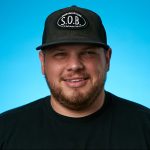
Shuckin ShackJonathan WeathingtonJonathan Weathington, CEO at Shuckin’ Shack.

As a Chief Executive Officer with a demonstrated history of working in the retail and restaurant industry, his desire focuses around bringing out the absolute best results in his teammates and co-workers. With a combination of analytical thinking, servant leadership, and true cultural dependency, they work together to achieve real results. A proven systems developer and implementer, as well an empiricist, his goal revolves around never losing status as a trusted advisor to colleagues and customers.

Connect with Jonathan on LinkedIn.

What You’ll Learn In This Episode

  • Unique Positioning and Bar Sales Make Shuckin’ Shack a Recession Shark
  • The brand’s outlook on scaling franchising efforts ahead of the recession

This transcript is machine transcribed by Sonix

TRANSCRIPT

Intro: [00:00:05] Coming to you live from the Business RadioX studio. It’s Franchise Marketing Radio brought to you by IDs, an award winning digital marketing agency that delivers integrated marketing solutions for franchisors, franchisees and franchise development teams. Learn why over 75 brands depend on ID’s team of dedicated marketers and client service professionals to deliver a strong ROI on their marketing investment. Go to ID’s franchise marketing for a complimentary digital audit and consultation Lee Kantor.

Lee Kantor: [00:00:44] Here, another episode of Franchise Marketing Radio and this is going to be a good one. Today on the show we have Jonathan Weathington with Shuckin’ Shack. Welcome, Jonathan.

Jonathan Weathington: [00:00:55] Hey, Lee. Thanks for having me on.

Lee Kantor: [00:00:56] Well, I’m so excited to be catching up with you. For those who don’t know, tell us a little bit about Shuckin’ Shack.

Jonathan Weathington: [00:01:02] Sure. So my very, very abbreviated elevator pitch, let’s say we’re going from floor one to floor two. My abbreviated elevator pitch is, if you like raw oysters and cold beer, you’re going to like us just fine. That’s that’s the very brief one. The 32nd one is we are a we’re we’re an oyster bar franchise founded on the Carolina coast in 2007. We’ve since expanded into five states, soon to be two more states by the end of this year. And we serve fresh seafood, exceptional, exceptional spirits, full service, bar, craft, beer, all of those things. Just a little bit of a little bit of a differentiator in the market aside from what you would get in a normal sports bar, your normal bar scene.

Lee Kantor: [00:01:43] Can you talk about the origin story? Like how did this come about?

Jonathan Weathington: [00:01:48] Sure. It’s and I actually just told this origin story last night, as it were, to to a group of folks asking me about the same things. You know, chug and check started as a place where people wanted to hang out. The founders I am not a founder of the brand and Matt Pickett and Sean Cook founded the brand in 2007, and it was in a sleepy beach town of Carolina Beach, North Carolina. And their goal was really to open a bar. They’re both in their twenties who doesn’t want to open a bar in their twenties? And I think they were a little surprised that it was so successful. And we talk about that all the time. Sean and I were just talking the other day about how things happen, right place, right time, and it just took off and open the second location in 2012 in downtown Wilmington. So all of a sudden we had a little bit of proof away from the coast, more than a central business district market. And then in 20 1314, looking for a third location and decided to go the route of franchising. That’s when they brought me on board. I was friends with them back when they opened the first initial, the first location. So we started franchising in 2014 and have been opening restaurants every year since.

Lee Kantor: [00:02:53] So what was your kind of background that you were the right fit to help them expand?

Jonathan Weathington: [00:02:58] You know, I like to think I like to think my biggest background fit was personality. Working with two founders, especially two founders that are very passionate about their business is it takes a certain person to do that in myself. Me personally, knowing them ahead of time certainly helped. So I think that was the biggest key to to our success and how we fit together thus far. However, my background, I have a really strong background in retail primarily of course, now restaurant and bar. But I’ve worked for some very, very large companies in the retail space, customer centric positions. I did a short stint in banking. I’ve done pretty much everything you can think of. My my work history is highly varied, but always very customer centric, always very focused on customer service. And so what I brought to them was, was I was able to use some of the experience and knowledge I had gained at some multibillion dollar companies and able to implement some of those systems, procedures and thought processes into the brand.

Lee Kantor: [00:04:01] So how did you kind of develop that avatar of the ideal franchisee?

Jonathan Weathington: [00:04:08] Yeah, it took a long time at first. Whenever you start franchising, there’s this moment of of it’s just this really nebulous, I would say three, six months, maybe. Sometimes it lasts a year. And you’re really just curious about who’s going to be attracted to your system? We went through that. I think every other brand also goes through that. However, over time, as we brought people into our system as franchise owners, we learned, Hey, we really like this quality in a person. We like that they’re outgoing. For instance, being outgoing, being primarily extroverted is a big deal within our own system. We’re in the hospitality industry, which means we have to have to be hospitable. And a part of being hospitable is is being extroverted and being outgoing and able to carry on a conversation and able to host people within your four walls and then making those connections outside of the four walls. So that was one of the things. And I think not only that, that’s not just trying to check and check, I think that’s very common in what you would see in other restaurant and bar franchises. But then beyond that, I think there’s a real there’s a real grit quality, for lack of a better term. Grit is is a big deal, especially when you’re talking about the restaurant industry as a whole. It is a difficult industry at times. Employee turnover can be high at times. And your you cannot get caught in the day to day grind of it and lose sight of what your overall goal is, which is to serve your customer base and make sure they come back. That’s all that really matters in the long run. And so those are two primary qualities that we look for in folks. And then, of course, over time, you develop what would be considered more soft skill learning, so more personality based things, and then, of course, hard skills, you know, is this does this person have basic financial responsibility? Do they understand basic accounting, at least to the extent of controlling food and labor costs and all of those items?

Lee Kantor: [00:06:01] So when you kind of identify those attributes for that avatar of the ideal franchisee, now that you do that and you have these qualities hard and soft skills, how do you then find this person? Like, you can’t just do a Google search for, you know, extroverts with grit. You know, you can’t.

Jonathan Weathington: [00:06:21] I wish you could that would that would that might put the CEO and pay per click out of business if you could Google search for four four people with grit and have extroverted personalities. We use a number of ways first the first and foremost way that we use and this is very common to systems our size is that we open healthy restaurants with happy owners. That’s it. Happy owners tell people about the experience that they’re happy that they’re having and they communicate that to interested parties that might also be interested in opening a restaurant and bar of their own. That is the first primary lead source. And then beyond that, we’re we’re seeking out digital channels as well. So search engine optimization, pay per click via Google and less so Bing. And then doing some social media ads. It’s really I think if you’re looking at it from an outsider’s view and thinking, Oh, that’s easy, you just run commercial ads and seeking people, it’s like hiring. Well, yes and no. Some of the aspects of it are like hiring and that you do put out, Hey, this is who we’re looking for. Do you have a desire to do this? Do you feel like you have this quality internally? But then on the other side of things, it’s a it’s a massive brand push as well. So you can’t put all of your eggs in one basket, so to speak. You have to participate in some franchise shows. You have to do all of the digital channels. Like I mentioned before, you have to have a strong presence on social media, including Facebook, Instagram and LinkedIn, and you’ve got to communicate that same message, which is the absolute most important thing that you can do. You’ve got to come with a cohesive message to the market so that regardless of who the listener is, that they’re seeing the same message throughout. And then their read on that message is These people have it together. They know what they’re talking about. They’re consistently saying these things and they’re also producing once the store gets open.

Lee Kantor: [00:08:11] So now as you expanded and they’re growing, how did you guys navigate the pandemic? How was your support system internally from corporate side as well as your franchisees that were kind of the boots on the ground there? Was there any changes that had to happen that are maybe now kind of silver linings that may be then now you’re doing business a little differently and attracting a slightly different group? Or was everything just kind of boldly forward and just keep doing what we’re doing?

Jonathan Weathington: [00:08:44] I think it was a little bit of both, and that’s that’s a total punt answer. But it is the truth. You know, looking at the pandemic as a lessons learned experiment at this point, we can look back at certain decisions that we made and very, very clearly say, yes, we definitely did that correctly. For example, we going into the pandemic and delivery seem to to reach a. Fever pitch. We sat down internally, we spoke with our franchisees. And the overall and overarching message was seafood typically doesn’t travel all that well. And with the delivery companies cut on on the items that we’re sending out the door, we would rather put our money into marketing and weather, put our money into marketing as a franchise marketing radio. We would rather put our money into direct to consumer marketing that says, if you like us, come to the curb and pick up your food. So that helped us control some of those costs. I mean, because if you’re looking at delivery companies as a whole, you’re talking 20 to 30% of whatever’s going out the door. It’s a loss leader. You’re losing money every time something walks out the door. And so we decided to turn that on its head and say, we’re willing to give up this money as food walks out the door. Let’s take that money, put it into a marketing budget. Let’s market to our customers that what we’re doing internally, when you’re allowed to come back, this is what we’re doing internally and we want you to come back safely and dine with us so that when you do want to escape your home, your compound, and you are choosing maybe to eat out once a week safely with your family or with a couple or whomever it may be that you will choose us.

Jonathan Weathington: [00:10:16] And then on top of that, hey, we’re going to be waiting for you at the curb. Seafood doesn’t travel directly. We’re not going to trust the delivery companies as a whole to deliver it effectively. But we know that if you come and you call us, we’ll have it to you and it’ll be hot by the time you get home. So we double down on those things. And that was that was a very, very critical decision. On our end. We decided that we weren’t going to be able to compete with pizza. We weren’t going to be able to compete with Chinese delivery or some of the other delivery options out there. And so we weren’t we didn’t put a ton of money or effort into that. So those are some of the pandemic lessons learned in that. And as a part of that, what helped us make that decision was, like you said, doubling down, continuing to forge forward in what we know and who we are. We’re very fortunate and that we know exactly who we are. And so we never had to question our direction in that. And it was enforcing when our franchise owners all reopened after COVID and have done extremely well moving out of COVID.

Lee Kantor: [00:11:13] So now the experience, obviously the seafood element is there. That’s part of your name. But the bar part is also an important component of a successful restaurant. Can you talk about how that’s going and maybe some innovation on that side?

Jonathan Weathington: [00:11:28] Sure. So the bar component is huge, about 30%. Our system average is 30% alcohol sales, which is which is pretty strong. If you look at casual dining as a whole, 30% is way up there. So we have doubled down on that over time for two reasons. Number one, it’s our true identity. So Chuck and Shaq, we talk about the early days, 27, 2008. Chuck and Jack was the dive bar that served great food. That’s how strong Shaq started. And if you remember from my initial conversation, initial storytelling, it was open because two 2020 somethings wanted to open a bar and have fun. And that was the whole impetus behind Shaq. We have maintained those routes. The bar always plays a focal point in all of our restaurants. It can be seen from the front door. We make it a part of the show, quote unquote, of what’s going on within the restaurant. It’s a big deal. So we’ve maintained that that’s the first reason. The second reason and why we continue to push that as a part of our advertising, as a part of our social media. And even when it comes to franchisee recruitment is because it’s profitable. The profitability behind your liquor sales and your beer sales, draft beer, bottled beer, liquor drinks, cocktails is higher than what you would see typically coming out of the kitchen. And so if we can do 30% of our business at the bar, we have a really, really strong profit center that helps us produce higher profits within the restaurants because it’s such a significant portion of our business.

Lee Kantor: [00:12:54] So what has been kind of the most rewarding part for you in the growth of Chuck and Jack.

Jonathan Weathington: [00:13:00] Seeing other people be successful? That’s it. I answer that question the same way every time is seeing other people be successful and ancillary as a part of that. Walking into any one of our locations across the country and seeing the same feelings that I had, because again, I’m not a founder that I had as my first customer experience, meaning I felt welcome. I felt like I belonged there. I’d only been there one time, but I was told to sit down. They’d be with me in just a second, having all of those feelings and seeing that imparted on the rest of our customer base and then getting to experience those things as well has been the most rewarding part to me. You know, and going back to to my first point, seeing the franchise owners be successful, that’s it. You know, we’re we’re in a results driven culture. We’re in a results driven company. And quite frankly, the franchisor doesn’t succeed unless the franchisees succeed. And the only way that happens is if they’re happy and they’re profitable. And we think that we have we think that we’ve been able to do that pretty well.

Lee Kantor: [00:13:58] So what’s next? What do you need more of and how can we help?

Jonathan Weathington: [00:14:02] I want to open healthy restaurants. That’s what we need more of is more healthy restaurants that. Said We could ask all the time, Hey, what’s your number? What are you guys looking at? When do you want to get out? You know? Of course, all those conversations lead in one direction. And my response is always, I want to open healthy units. That’s it. And I want good people to open those units, people that can participate in their community, their outgoing, they’re extroverted. They understand how to have a conversation. They have some of those hard skills that we discussed. And that’s that’s what we’re after. That’s what we want.

Lee Kantor: [00:14:32] So if somebody wants to learn more, have more substantive conversation with you or somebody on the team, where should they go?

Jonathan Weathington: [00:14:38] Sure. The easiest thing to do, if you are interested in a franchise with us, you can go to Chuck and Shack franchise. There is no G and Chuck and Chuck and check franchised dot com.

Lee Kantor: [00:14:48] All right. Well, Jonathan, thank you so much for sharing your story today. You’re doing important work and we appreciate you.

Jonathan Weathington: [00:14:53] Thanks. We appreciate it.

Lee Kantor: [00:14:55] All right. This is Lee Kantor will SEAL next time on franchise marketing radio.


Tagged With: Jonathan Weathington, Shuckin' Shack

Jonathan Weathington With Shuckin’ Shack

September 10, 2021 by Jacob Lapera

Franchise Marketing Radio
Jonathan Weathington With Shuckin' Shack
Loading
00:00 /
RSS Feed
Share
Link
Embed

Download file

Brought To You By SeoSamba . . . Comprehensive, High Performing Marketing Solutions For Mature And Emerging Franchise Brands . . . To Supercharge Your Franchise Marketing, Go To seosamba.com.

Jonathan Weathington joined Shuckin’ Shack in an official capacity in 2014 at the outset of franchising. Initially hired as VP of Franchise Development, he was promoted to CEO in November of 2014.

Prior to working for Shuckin’ Shack, Jonathan helped build the second Shuckin’ Shack in Historic Wilmington NC, and spent 14 years in the service and retail industry with companies such as VF and BB&T.

He holds a BA in Political Science and an MA in International Relations. At home, Jonathan enjoys spending time outdoors and hanging with his wife and two cats – Frank and Etta.

This transcript is machine transcribed by Sonix

TRANSCRIPT

Intro: [00:00:07] Welcome to Franchise Marketing Radio, brought to you by SEO Samba, Comprehensive, high performing marketing solutions for mature and emerging franchise brands to supercharge your franchise marketing. Go to SEOsamba.com. That’s SEOSamba.com.

Lee Kantor: [00:00:31] Lee Kantor here, another episode of Franchise Marketing Radio, and this is going to be a good one today on the show, we have Jonathan Wethington with Shukin’ Shack. Welcome, Jonathan.

Jonathan Weathington: [00:00:42] Hey, Lee, how are you doing?

Lee Kantor: [00:00:43] I am doing great. Before we get too far into things, tell us about Chuck and check How are you serving folks?

Jonathan Weathington: [00:00:50] Sure, I think we’re serving folks really well. We started in two thousand seven single unit and grew to a second unit in two thousand twelve and then started franchising in twenty fourteen. And and really, it’s our goal to just treat people well by serving them the best seafood and coldest drinks possible.

Lee Kantor: [00:01:06] Now what’s the kind of the origin story of the franchise? Did it start out as a mom and pop and then just organically grew into a franchise? Or did it set out to be a franchise from the beginning?

Jonathan Weathington: [00:01:18] It did not set out to be a franchise from the beginning. I think like most other restaurants, it really just set out to survive the first year from the beginning, and that was that was twenty seven. We were kind of headed into not a great place as far as macroeconomics are concerned across the nation, but just kind of started kicking butt and taking off and grew from there. And the partners. I was not a founder, but I knew the founders and I was around when the concept started and I saw it grow from just a single location. Mom and pop with two business partners and a 960 square foot location just grew every year. Started looking for a second location somewhere around late. Twenty ten or sorry, around late two thousand eight. And then things really started taking off. Finally opened a second location in twenty twelve. And then we’re in the process of looking for a third location and at that point decided to shift gears a little bit and focus a little more on franchise growth.

Lee Kantor: [00:02:18] Now, when you made that kind of switch to being a franchise group. Organizationally, how did that impact kind of your day to day because that’s a different real business, right running a franchise. Being a franchisor as opposed to, you know, running a franchise?

Jonathan Weathington: [00:02:36] It’s an extremely different business, you’re no longer just an operator, and I came in from the outside, though I knew the founders and I helped them build the second location. I was working for a couple of other companies at the time that they started franchising, and so I came in completely from the outside to help them specifically grow the franchising side. I had a rich history and, you know, processes and procedure and all of those things and kind of consolidating. I’d gotten a taste of really ultra ultra large business for some of the previous organizations I had worked with, and I knew that Chuck and Jack was scalable. But to answer your question directly, the partners, I think, found out and really knew coming into it that you’re no longer an operator of a single restaurant. It’s no longer your base. Goals are the same, which is to treat your customers exceptionally well, served great food and give people a good time. But how you get there on the franchising side is a little bit different because now you’re responsible for imparting that knowledge and training that within your own system to new franchisees coming in who may or may not have any familiarity whatsoever with your brand.

Lee Kantor: [00:03:44] Now, what does that ideal franchisee look like? Are they kind of that second act executive or are they the professional franchisee that is looking for another maybe a food concept to kind of round out of portfolio or the empire builder that’s going into a market and wants to take over the, you know, the the area?

Jonathan Weathington: [00:04:08] I think all of the above, I think that’s one of the beautiful things about franchising in general is that for us, at least for us, I can’t speak for every brand, but I’ve certainly had these conversations with other brands and that the diversity within their own franchise system is pretty great and that we do have folks in our system who are in empire building mode. I want to start with one, I want to build 10 and I want to do that over the next 10 or 12 years. And they have multiple units of multiple brands and they see us as as a long term investment. We also have a single unit franchise owners who are owner operators, and right now in our system, that’s our bread and butter. We love single unit owner operators. They tend to care about the business extremely well. Their numbers are typically even better than us as our company units, because let’s face it, they have to pay us royalties and marketing fees. And so there’s more of an incentive for them to run a little bit tighter ship. And, you know, they’re really invested within the community. And then on the other side, we have former military former military in our system. We have folks who have retired from their other careers and started the second career in this. So they come from all different directions. And I don’t think that’s just your main to check and check. I think that’s franchising as a whole. That’s one of the best parts about the industry and the sector overall.

Lee Kantor: [00:05:25] So in your system, what separates kind of the rock stars from the kind of average?

Jonathan Weathington: [00:05:31] How they treat people. That’s it. You know, we give people a great systems, we give them great products, we give them great marketing materials to reach their customers. We can drive customers in the door. That’s not an issue. It’s how they treat people. That’s what separates the rock stars from from the average folks. And again, that may not be just germane to us, but at the end of the day, when people come into a restaurant, they’ve already decided that they’re going to spend money there. It’s how you can make that money, have value to them. What is the worth like? How do they feel walking out of the doors? Would they, without hesitation, say yes, I will absolutely come back within the first few minutes of coming into their visit. And that’s it how they treat people and how invested they are within their local communities. That’s what separates the great from just the good.

Lee Kantor: [00:06:20] Now how does the organization help a franchisee when it comes to their people and their talent? What are you doing to help them kind of identify the right check and check employee and also keep them?

Jonathan Weathington: [00:06:37] Sure. So I think on our end, a lot of what we do, we don’t we don’t certainly hire for any of our franchisees or anything like that, but we encourage folks to hire for talent as opposed. I mean, sorry, we encourage folks to hire for personality as opposed to talent or as opposed to skill. We want people within our four walls who can speak to others just like you’re in someone’s living room. We desire folks who work for us to have a genuine sense of connection with other human beings. And quite frankly, the product doesn’t matter. We just happen to serve an exceptional product. And so that’s that’s one of the things that we teach is a part of our university training is how do you identify those kind of life skills that go beyond what you might find in a restaurant? And then as a part of our further training, once we actually get people in the doors and we’re training our employees, we kind of throw out all what we believe are a bunch of bad habits that a lot of other brands use that may work for them, but it doesn’t work for us. We don’t have greetings within our stores. We don’t wear name tags. We don’t do all the typical stuff that you might see in a franchise restaurant. And that’s because when we want, when people walk in the door, we want them to feel welcome. We want them to feel like they actually belong there, like it’s a place that they would go, hang out. I’m not going to come to your house and hope that you have a nametag on and hang out with me. That’s not what I’m after. And so for us, we kind of create that homegrown environment and we are teaching. And I say this very, very often, especially when we’re talking about bartenders and servers in front of the house employees. We’re not teaching them to do the certain things we are teaching them to read the room. We are teaching them to read other people and respond accordingly. And that’s one of the things that makes us extremely different from other brands.

Lee Kantor: [00:08:24] Now, during the pandemic, were you forced to kind of make some changes that maybe will have legs post-pandemic?

Jonathan Weathington: [00:08:33] Of course, yeah, I think we were we would be not telling you the truth entirely. We didn’t take a look at our entire system and say, What’s working, what’s not working, what’s not working? Let’s not put any time, effort and energy into it, and let’s focus on what’s working. That was a little bit more of our approach. We knew, practically speaking, when you’re talking about seafood and you’re talking about our brand. There’s not a whole lot of ubiquity on seafood and delivery. And so we knew that we could not compete with pizza or or some other concepts that may have a great delivery program because that’s what they’re known for. I mean, I order pizza at my own home, and we knew that we wouldn’t be able to compete with that and capture that customer. However, what we did know we could do is stay engaged with our customer base. And then when they were ready to come back or ready to order to go or pick something up, or they just wanted to get out of the house and drive up to the curb and pick something up from us, we were there and we tried to focus a lot of time, effort and energy on exactly that, which is engaging our customer base, making sure that they were there and that we were there for them. And then as time progressed, we were able to, depending upon, of course, the state and the municipality. We were able to develop some take home programs with taken boil kits and booze to go kits and those things. But I think the name of the game for the pandemic for us was just agility. No idea was stupid. Quite frankly, no idea was immediately swept under the table. We everything was on the table and we considered everything and adaptability and agility. Just pragmatism, I think, is perhaps the best way to encapsulate our approach to dealing with COVID and continuing to do it

Lee Kantor: [00:10:15] Now as we end this year and we move into next year. Are you targeting certain regions or is it kind of the whole country in play right now?

Jonathan Weathington: [00:10:27] I think a majority of the country, you know, 20, 20 was kind of our early twenty twenty one late twenty twenty was kind of the first time we started offering franchise opportunities for the right folks across the country. Prior to that, we had primarily been focused on the southeast U.S. east of the Mississippi, of course. We just wanted to have a little bit more market proof and markets outside of the Carolinas. And now that we have that and we’ve seen our restaurants grow and do exceptionally well, not only away from the coast but outside of the Carolinas. We’re at the stage in our development. We’ve got a lot of the right pieces on board internally. We’re partnered with the Great Development Group, Braintree Franchise Systems, franchise brands and we’re poised to grow as long as with the right people. And I think that matters more than anything else is that we would consider relationships and franchise partners in other states near or far. But you got to be the right fit in our system, and not everybody fits and that’s OK.

Lee Kantor: [00:11:32] Now, any advice for the emerging franchisor that’s out there, that’s listening on how to kind of get over the hump and get that escape velocity?

Jonathan Weathington: [00:11:44] Sure, I think the biggest thing is to have high brand confidence, and that sounds that sounds so silly and stupid, especially if you’re a founder of your own brand. But if you know your brand more than anyone else, which you should, is that continue to lean into that and continue to make sure that you depend upon that when you’re making decisions. And I think furthermore, just because someone hasn’t done something doesn’t mean that you can’t do it. And so I think that, you know, you have to determine obviously systems, procedures, all of those things, but lean on what you know. And that’s at the core DNA of what your brand is and what it has been and what’s gotten you there. Then maybe it’s not something you should you should sacrifice moving forward.

Lee Kantor: [00:12:30] Well, if there’s somebody out there that wants to learn more about the opportunity, what’s the website?

Jonathan Weathington: [00:12:35] Sure, it’s Chicken Shack franchise,

Lee Kantor: [00:12:38] And that’s chicken with no gee, right?

Jonathan Weathington: [00:12:41] No, gee, that’s right s s h youkai n Shack franchise.

Lee Kantor: [00:12:48] Well, Jonathan, thank you so much for sharing your story today. Thanks, Lee. All right, this is Lee Kantor, we’ll see you next time on Franchise Marketing Radio.

Tagged With: Jonathan Weathington, Shuckin' Shack

Business RadioX ® Network


Our Most Recent Episode

CONNECT WITH US

  • Email
  • Facebook
  • LinkedIn
  • Twitter
  • YouTube

Our Mission

We help local business leaders get the word out about the important work they’re doing to serve their market, their community, and their profession.

We support and celebrate business by sharing positive business stories that traditional media ignores. Some media leans left. Some media leans right. We lean business.

Sponsor a Show

Build Relationships and Grow Your Business. Click here for more details.

Partner With Us

Discover More Here

Terms and Conditions
Privacy Policy

Connect with us

Want to keep up with the latest in pro-business news across the network? Follow us on social media for the latest stories!
  • Email
  • Facebook
  • Google+
  • LinkedIn
  • Twitter
  • YouTube

Business RadioX® Headquarters
1000 Abernathy Rd. NE
Building 400, Suite L-10
Sandy Springs, GA 30328

© 2025 Business RadioX ® · Rainmaker Platform

BRXStudioCoversLA

Wait! Don’t Miss an Episode of LA Business Radio

BRXStudioCoversDENVER

Wait! Don’t Miss an Episode of Denver Business Radio

BRXStudioCoversPENSACOLA

Wait! Don’t Miss an Episode of Pensacola Business Radio

BRXStudioCoversBIRMINGHAM

Wait! Don’t Miss an Episode of Birmingham Business Radio

BRXStudioCoversTALLAHASSEE

Wait! Don’t Miss an Episode of Tallahassee Business Radio

BRXStudioCoversRALEIGH

Wait! Don’t Miss an Episode of Raleigh Business Radio

BRXStudioCoversRICHMONDNoWhite

Wait! Don’t Miss an Episode of Richmond Business Radio

BRXStudioCoversNASHVILLENoWhite

Wait! Don’t Miss an Episode of Nashville Business Radio

BRXStudioCoversDETROIT

Wait! Don’t Miss an Episode of Detroit Business Radio

BRXStudioCoversSTLOUIS

Wait! Don’t Miss an Episode of St. Louis Business Radio

BRXStudioCoversCOLUMBUS-small

Wait! Don’t Miss an Episode of Columbus Business Radio

Coachthecoach-08-08

Wait! Don’t Miss an Episode of Coach the Coach

BRXStudioCoversBAYAREA

Wait! Don’t Miss an Episode of Bay Area Business Radio

BRXStudioCoversCHICAGO

Wait! Don’t Miss an Episode of Chicago Business Radio

Wait! Don’t Miss an Episode of Atlanta Business Radio