Business RadioX ®

  • Home
  • Business RadioX ® Communities
    • Southeast
      • Alabama
        • Birmingham
      • Florida
        • Orlando
        • Pensacola
        • South Florida
        • Tampa
        • Tallahassee
      • Georgia
        • Atlanta
        • Cherokee
        • Forsyth
        • Greater Perimeter
        • Gwinnett
        • North Fulton
        • North Georgia
        • Northeast Georgia
        • Rome
        • Savannah
      • Louisiana
        • New Orleans
      • North Carolina
        • Charlotte
        • Raleigh
      • Tennessee
        • Chattanooga
        • Nashville
      • Virginia
        • Richmond
    • South Central
      • Arkansas
        • Northwest Arkansas
    • Midwest
      • Illinois
        • Chicago
      • Michigan
        • Detroit
      • Minnesota
        • Minneapolis St. Paul
      • Missouri
        • St. Louis
      • Ohio
        • Cleveland
        • Columbus
        • Dayton
    • Southwest
      • Arizona
        • Phoenix
        • Tucson
        • Valley
      • Texas
        • Austin
        • Dallas
        • Houston
    • West
      • California
        • Bay Area
        • LA
        • Pasadena
      • Colorado
        • Denver
      • Hawaii
        • Oahu
  • FAQs
  • About Us
    • Our Mission
    • Our Audience
    • Why It Works
    • What People Are Saying
    • BRX in the News
  • Resources
    • BRX Pro Tips
    • B2B Marketing: The 4Rs
    • High Velocity Selling Habits
    • Why Most B2B Media Strategies Fail
    • 9 Reasons To Sponsor A Business RadioX ® Show
  • Partner With Us
  • Veteran Business RadioX ®

Five Things You Need to Know About Dietary Supplements

November 10, 2021 by John Ray

Supplements
North Fulton Studio
Five Things You Need to Know About Dietary Supplements
Loading
00:00 /
RSS Feed
Share
Link
Embed

Download file

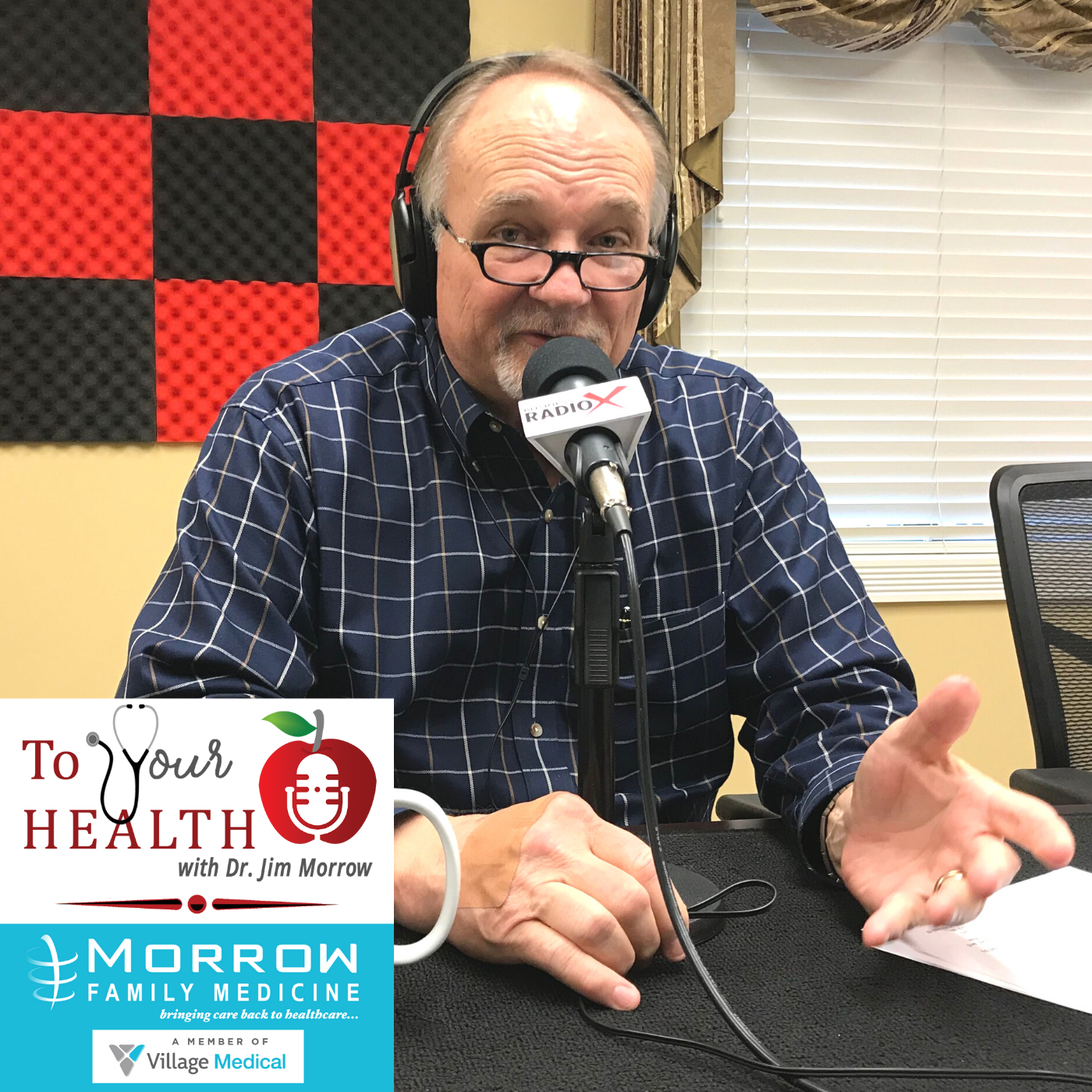
SupplementsFive Things You Need to Know About Dietary Supplements (Episode 64, To Your Health with Dr. Jim Morrow)

Dr. Morrow covers some of the myths about the Covid-19 vaccine and explains why they are not true. He also covers dietary supplements, the ones that work and those that don’t, the potential problems with them, the importance of a good diet and much more.  To Your Health is brought to you by Morrow Family Medicine, a Member of Village Medical, which brings the care back to healthcare.

About Morrow Family Medicine, A Member of Village Medical

Morrow Family Medicine, a Member of Village Medical, is an award-winning, state-of-the-art family practice with offices in Cumming and Milton, Georgia. The practice combines healthcare information technology with old-fashioned care to provide the type of care that many are in search of today. Two physicians, three physician assistants and two nurse practitioners are supported by a knowledgeable and friendly staff to make your visit to Morrow Family Medicine, A Member of Village Medical one that will remind you of the way healthcare should be.  At Morrow Family Medicine, a Member of Village Medical, we like to say we are “bringing the care back to healthcare!”  The practice has been named the “Best of Forsyth” in Family Medicine in all five years of the award, is a three-time consecutive winner of the “Best of North Atlanta” by readers of Appen Media, and the 2019 winner of “Best of Life” in North Fulton County.

Village Medical offers a comprehensive suite of primary care services including preventative care, treatment for illness and injury, and management of chronic conditions such as diabetes, congestive heart failure, chronic obstructive pulmonary disease (COPD) and kidney disease. Atlanta-area patients can learn more about the practice here.

Dr. Jim Morrow, Morrow Family Medicine, and Host of To Your Health with Dr. Jim Morrow

Covid-19 misconceptionsDr. Jim Morrow is the founder and CEO of Morrow Family Medicine. He has been a trailblazer and evangelist in healthcare information technology, was named Physician IT Leader of the Year by HIMSS, a HIMSS Davies Award Winner, the Cumming-Forsyth Chamber of Commerce Steve Bloom Award Winner as Entrepreneur of the Year and he received a Phoenix Award as Community Leader of the Year from the Metro Atlanta Chamber of Commerce.  He is married to Peggie Morrow and together they founded the Forsyth BYOT Benefit, a charity in Forsyth County to support students in need of technology and devices. They have two Goldendoodles, a gaggle of grandchildren and enjoy life on and around Lake Lanier.

Facebook: https://www.facebook.com/MorrowFamMed/

LinkedIn: https://www.linkedin.com/company/7788088/admin/

Twitter: https://twitter.com/toyourhealthMD

The complete show archive of To Your Health with Dr. Jim Morrow addresses a wide range of health and wellness topics and can be found at www.toyourhealthradio.com.

Dr. Morrow’s Show Notes

Covid-19 Vaccine Booster Update- Myths About the Vaccines 


·      Myth 1: You can delay routine vaccinations until the pandemic is over.

  • Routine childhood and adult vaccinations are an important part maintaining health.
  • Vaccines prevent additional disease outbreaks during the pandemic.

·      Myth 2: The COVID-19 vaccines were developed too fast to be safe.

  • The technology used to develop the mRNA COVID-19 vaccines is not new;
    • it has been extensively studied and used in cancer research.
    • Additionally, mRNA vaccines have been studied for other infections including Zika, Rabies, and CMV.
  • The other vaccine platform uses a weakened adenovirus, which has been studied extensively for other vaccines.
    • The clinical trials for the COVID-19 vaccines were done with the same rigor as all vaccine trials and the results have been reviewed and approved by multiple independent advisory panels.
    • The ability for the developers to be more efficient was due to increased collaboration, use of newer technology and funding due to the severity of the pandemic.

·      Myth 3: There weren’t enough participants in the clinical trials to say the vaccines are safe.

  • This is not true.
    • The currently authorized COVID-19 vaccines enrolled tens of thousands of participants, many of whom were followed for two months after receiving the second vaccine.
  • After authorization, the CDC, FDA, and other groups continue actively monitoring for safety concerns.
    • There have been a few cases of blood clots plus low platelet counts occurring after the Johnson & Johnson vaccine.
    • However, these are really rare (15 cases in 8 million doses) so the CDC continues to recommend the vaccine.

·      Myth 4: I’ve already had COVID-19, so I don’t need to get the vaccine.

  • It’s unclear how long a natural infection with COVID-19 provides immunity from the disease.
  • There are reports of individuals becoming reinfected, even after being ill with COVID-19.
  • Individuals who have had COVID-19 are encouraged to get vaccinated once they have recovered and symptoms are no longer present.

·      Myth 5: The COVID-19 vaccines will alter my DNA.

  • This is not possible.
    • Messenger RNA (mRNA) vaccines work in the cell’s cytoplasm and never enter the cell nucleus where the DNA, your genetic material, lives.
      • Like all mRNA, it is broken down quickly once it enters the cell and delivers the needed vaccine “message” to the cell’s machinery.
      • The virus spike protein is also rapidly broken down once there is no longer any mRNA.
    • The adenovirus platform uses DNA encoding the spike protein which does enter the nucleus.
      • However, it does not alter the cell’s DNA in anyway.

·      Myth 6: COVID-19 vaccines will make me infertile.

  • There is currently no evidence that COVID-19 vaccination causes any problems with pregnancy or getting pregnant.
  • In addition, there is no evidence that fertility problems result from any other vaccines.

·      Myth 7: COVID-19 vaccines were developed to deliver a microchip into my body.

  • There is not a microchip in the vaccines.
    • This rumor started after comments were made about digital vaccine records.
    • States maintain electronic immunization records to help people and their physicians know which vaccines they have received.
    • There are no electronic components in any of the vaccines.
  • The mRNA vaccines contain only mRNA, lipids (fat bubble), salts and other stabilizing agents, which are routinely used in other medicines.
  • The other vaccines contain the non-replicating adenovirus vector and stabilizing agents.

·      Myth 8: I don’t need to wear a mask after I’m vaccinated.

  • The COVID-19 vaccines protect you from getting seriously ill from COVID.
    • In July 2021, the CDC recommended masks for vaccinated people in certain areas of the U.S. to prevent the spread of the highly contagious Delta variant.
    • The Delta variant is highly contagious because it can replicate to high levels in the airways of infected people.
    • This means that vaccinated people may be able to transmit the Delta variant at a similar rate as unvaccinated people.
  • You may want to wear masks and physical distance indoors and in big crowds to be cautious.
  • This will also help protect people who can’t get vaccinated, like young children.


·      Myth 9: I only need one dose of the vaccine to be protected against COVID-19.

  • There is not enough data to support changing the recommendations on the COVID-19 vaccine schedule.
  • You should get two doses of the mRNA vaccines to get the best protection.

·      Myth 10: I have to pay for the vaccine.

  • Anyone living in the U.S. can get the COVID-19 vaccine for free, even if you’re not a citizen or you don’t have health insurance.

Five Things You Need to Know

About Dietary Supplements


The dietary supplement industry is huge, with billions of dollars in sales. Now a new study is suggesting that supplements are mostly useless: in a wide-ranging analysis, researchers from Johns Hopkins University determined that supplements did not increase lifespan or reduce heart disease. On the plus side, the supplements were also found to rarely cause meaningful harm. But supplements may have some unusual downsides.


1.   Supplements come in many forms.


·      Whether in

o   pill,

o   powder

o   or liquid form,

§  the goal of dietary supplements is often the same:

·      to supplement your diet to get enough nutrients and enhance health

·      They contain at least one dietary ingredient,

o   such as vitamins, minerals, herbs, botanicals, amino acids or enzymes.

o   Some of the most popular supplements come in a multivitamin (which can help you avoid taking a dozen pills each day),

o   but they can also be purchased as a standalone supplement.

·      The simplest common denominator?

o   They’re labeled as dietary supplements.

·       Some common dietary supplements include:

o   Calcium

o   Fish oil

o   Echinacea

o   Ginseng

o   Garlic

o   Vitamin D

o   St. John’s wort

o   Green tea


2.   Some supplements are effective,

while others are not

·      There’s a reason supplements are so popular:  sometimes, they work.

·      There is evidence that some supplements can benefit your overall well-being with little to no risk

·      Common supplements that may benefit your health include:

o   Vitamin B12, which can help keep nerve and blood cells healthy, make DNA and prevent anemia

o   Folic acid, which can reduce birth defects when taken by pregnant women

o   Vitamin D, which can strengthen bones and assist your immune system

o   Calcium, which can promote bone health

o   Vitamins C and E, which can prevent cell damage

o   Fish oil, which can support heart health

o   Vitamin A, which can slow down vision loss from age-related macular degeneration

o   Zinc, which can promote skin health and slow down vision loss from age-related macular degeneration

o   Melatonin, which can help counteract jet lag and help you sleep

However, despite the amount of research that’s been done on supplements

(since 1999, the National Institutes of Health has spent more than $2.4 billion studying vitamins and minerals),

§  scientific evidence isn’t completely clear.

§  Keep in mind:

·      Most studies suggest that multivitamins

o   won’t make you live longer,

o   won’t slow cognitive decline

o   and won’t lower your chances of disease,

§  such as heart disease,

§  cancer

§  or diabetes.

·      In fact, it’s illegal for companies to make claims that supplements will treat, diagnose, prevent or cure diseases

·      Also, the products you buy in stores or online may be different from those used in studies,

o   so studies may be misleading.

3.   Supplements aren’t always safe.

·      In most cases, multivitamins aren’t likely to pose any health risks.

o   Still, it’s important to be cautious when you put anything in your body.

·      Supplements may interact

o   with other medications you’re taking or pose risks if you have certain medical conditions,

§  such as liver disease, or are going to have surgery.

§  Some supplements also haven’t been tested

·      in pregnant women,

·      nursing mothers

·      or children,

·      and you may need to take extra precautions.

·      Also, federal regulations for dietary supplements are less strict than prescription drugs.

o   Some supplements may contain ingredients not listed on the label,

§  and these ingredients can be unsafe.

§  Certain products are marketed as dietary supplements

·      and actually contain prescription drugs within them —

o   drugs that are not allowed in dietary supplements.

·      Some supplements that may pose risks include:

o   Vitamin K,

§  which can reduce the effectiveness of blood thinners

o   Gingko,

§  which can increase blood thinning

o   St. John’s wort,

§  which can make some drugs, such as antidepressants and birth control, less effective

o   Herbal supplements comfrey and kava,

§  which can damage your liver

o   Beta-carotene and vitamin A,

§  which can increase the risk of lung cancer in smokers


4.  Speak with your healthcare provider

before taking any supplements.

·      The most important thing to remember is to be smart when choosing a supplement

o   Your first step should be discussing your options with your healthcare provider,

§  since a supplement’s effectiveness and safety may depend on your individual situation and health.

·      On top of that,

o   keep these simple tips in mind as you choose a supplement:

§  Take supplements as directed according to the label and your healthcare provider’s instructions.

§  Read the label,

·      including ingredients,

·      drug interactions,

·      and percent daily value (% DV).

·      Be wary of extreme claims,

o   such as “completely safe”

o   or “works better than (insert prescription drug).”

·      Remember that the term “natural” doesn’t necessarily equal “safe.”

·      Keep supplements stored properly and away from children.

·      Read about the potential dangers of weight-loss supplements


5. Nothing beats the nutrient power of a healthy diet.

·      No matter what your goal is when taking supplements,

o   one thing is certain:

§  They aren’t a replacement for a nutrient-dense, healthy diet.

·      Supplements are meant to be supplementary

o   meaning they enhance benefits already provided by eating a well-rounded diet

·      Supplements should never be used in place of real food.

o   Don’t underestimate what a nutrient-packed salad can do for you compared to a pill made in a factory.

·      Vitamins and minerals are essential to helping your body develop and function as it should.

o   While most people get all of what’s recommended by eating healthy,

§  others need a little extra nutrient boost.

§  That’s where supplements come in

·      providing you with the support your body needs to stay healthy.


credit to pennmedicine.org

Tagged With: Covid-19 Vaccine Booster, dietary supplements, Dr. Jim Morrow, medical myths, Morrow Family Medicine, Village Medical

Debunking Medical Myths – Episode 35, To Your Health With Dr. Jim Morrow

June 25, 2020 by John Ray

North Fulton Studio
North Fulton Studio
Debunking Medical Myths - Episode 35, To Your Health With Dr. Jim Morrow
Loading
00:00 /
RSS Feed
Share
Link
Embed

Download file

Dr. Jim Morrow, Morrow Family Medicine, and Host of “To Your Health With Dr. Jim Morrow”

To Your Health With Dr. Jim Morrow – Episode 35, Medical Myths

Vaccines cause the flu. We only use 10% of our brains. You’re more likely to get sick in cold weather. Dr. Morrow covers a number of medical beliefs we’ve picked up throughout life which we need to reconsider and discard. Listen in to find out what is true and what is a myth. (And we also celebrate Dr. Morrow’s birthday!) “To Your Health” is brought to you by Morrow Family Medicine, which brings the CARE back to healthcare.

About Morrow Family Medicine and Dr. Jim Morrow

Morrow Family Medicine is an award-winning, state-of-the-art family practice with offices in Cumming and Milton, Georgia. The practice combines healthcare information technology with old-fashioned care to provide the type of care that many are in search of today. Two physicians, three physician assistants and two nurse practitioners are supported by a knowledgeable and friendly staff to make your visit to Morrow Family Medicine one that will remind you of the way healthcare should be.  At Morrow Family Medicine, we like to say we are “bringing the care back to healthcare!”  Morrow Family Medicine has been named the “Best of Forsyth” in Family Medicine in all five years of the award, is a three-time consecutive winner of the “Best of North Atlanta” by readers of Appen Media, and the 2019 winner of “Best of Life” in North Fulton County.

Dr. Jim Morrow, Morrow Family Medicine, and Host of “To Your Health With Dr. Jim Morrow”

Covid-19 misconceptionsDr. Jim Morrow is the founder and CEO of Morrow Family Medicine. He has been a trailblazer and evangelist in the area of healthcare information technology, was named Physician IT Leader of the Year by HIMSS, a HIMSS Davies Award Winner, the Cumming-Forsyth Chamber of Commerce Steve Bloom Award Winner as Entrepreneur of the Year and he received a Phoenix Award as Community Leader of the Year from the Metro Atlanta Chamber of Commerce.  He is married to Peggie Morrow and together they founded the Forsyth BYOT Benefit, a charity in Forsyth County to support students in need of technology and devices. They have two Goldendoodles, a gaggle of grandchildren and enjoy life on and around Lake Lanier.

Facebook: https://www.facebook.com/MorrowFamMed/

LinkedIn: https://www.linkedin.com/company/7788088/admin/

Twitter: https://twitter.com/toyourhealthMD

The complete show archive of “To Your Health with Dr. Jim Morrow” addresses a wide range of health and wellness topics, and can be found at www.toyourhealthradio.com.

Dr. Morrow’s Show Notes

Debunking Medical Myths


  • Myth: Flagyl and Alcohol will make you sick
  • Just not the case. A study of college students showed that even when drunk, metronidazole did not make anyone sick. 
  • Myth: Medicine expires after a year
  • Just not the case. Just because a date has passed does not mean that the antibiotics you got a year ago turned to poison or suddenly stopped working. It just does not happen. 
  • The expiration actually refers to the fact that the prescription itself expires, not the medicine. 
  • any refills you have are no longer valid.


  • Myth: Vaccines can cause the flu (and autism).
  • Although the body can develop a low-grade fever in response to any vaccine, rumors that a flu shot can cause the flu are an outright lie 
  • The flu shot does contain dead flu viruses, but they are, well, dead. 
  • A dead virus cannot be resurrected to cause the flu  
  • As for vaccines causing autism, this myth was started in 1998 with an article in the journal The Lancet.  
  • In the study, the parents of eight (yes, only eight) children with autism said they believed their children acquired the condition after they received a vaccination against measles, mumps and rubella (the MMR vaccine).  
  • Since then, rumors have run rampant despite the results of many studies.  
  • For example, a 2002 study in The New England Journal of Medicine of 530,000 (yes, a whopping 530,000) children found no link between vaccinations and the risk of a child developing autism.


  • Myth: Supplements always make you healthier.

  • Vitamin supplements may be not only ineffectual but even dangerous, studies have shown.  
  • For example, a study published in 2016 showed that some older women who take calcium supplements may face an increased risk of dementia. 
  • And in a huge review of 20 years of supplement research published in 2015, researchers found that taking high doses of vitamins may be linked with an increased risk of cancer. 
  • Aside from these possible long-term risks, reports have suggested that supplements can cause damage in the short term too.  
  • A report published in 2016 found that a man in Pennsylvania who took Ayurvedic herbal supplement developed lead poisoning.  
  • Another report, also published in 2016, showed that a 4-year-old boy in England went to the ER after taking a slew of “natural” supplements, and developing vitamin D toxicity. 
  • The FDA does not require supplements to be regulated in the same way that drugs are, which can be a real problem.  
  • As a result, the safety of many supplements has not been rigorously studied.  
  • Furthermore, supplement bottles can sport unsubstantiated claims and even make errors in dosage recommendations, she said.


  • Myth: Cold weather makes you sick.

  • This myth is common around the world, but it is just not true.  
  • Studies have shown we may feel more cold symptoms — real or imaginary — when we are chilled (after all, a cold is called a “cold” for a reason),  
  • but the temperature itself does not make us more susceptible to viruses.  
  • This has been known since at least 1968, when a study in The New England Journal of Medicine showed what happened when researchers exposed chilly people to the rhinovirus (one cause of the common cold). 
  • It turned out that whether they were shivering in a frigid room or in an icy bath, people were no more likely to get sick after sniffing cold germs than they were at more comfortable temperatures. 
  • Cold air also does not make a difference in people’s recovery time from a cold. In fact, although the research is in its early stages, it is possible that being exposed to cold may even help your body in some way. 
  • However, it’s unclear how chilly conditions might affect the germs themselves.  
  • Research has shown that two common causes of colds — rhinoviruses and coronaviruses — may thrive at colder temperatures,  
  • and that the flu may spread most effectively under cold, dry conditions. 
  • Some scientists speculate that colds are more common in cooler months because people stay indoors more, interacting more closely with one another and giving germs more opportunities to spread.


  • Myth: We use only 10 percent of our brains.

  • Motivational speakers and other self-help gurus have been promoting this one since as early as 1907,  
  • as a way to encourage people to tap into some latent capacity, But these people were not basing the proclamation on sound science. 
  • Today, scientists can look at any brain scan, measuring activity at any given time, and have a big laugh at this myth. The idea lingers in popular culture because we want to think we haven’t reached our full potential.


  • Myth: Sugar turns kids into little monsters.

  • It can be hard to find a parent who does not believe this 
  • In one particularly clever study among a slew of studies finding sugar’s nil effect on unruliness,  
  • kids were given Kool-Aid sweetened with aspartame, a compound that contains no sugar.  
  • Researchers told half of the parents the Kool-Aid contained sugar, and told the other half the truth. 
  • The parents in the study who thought their kids were riding a sugar high reported their children were uncontrollable and overactive.  
  • But a sensor on the kids’ wrists that measured activity level said the opposite:  
  • The kids were actually acting subdued.  
  • The study was published in the Journal of Abnormal Child Psychology in 1994 
  • Sugar is often given at times when the rules are loosened and there are lots of other kids around, like birthday parties and holidays.


  • Myth: You need to stay awake if you’ve had a concussion.

  • Anyone who may have a concussion should seek medical attention,  
  • but the condition is rarely severe or life-threatening.  
  • Warnings that people need to stay awake after incurring a concussion most likely grew out of a misunderstanding about a particular type of head injury —  
  • one that involves brain bleeding and that causes people to have a “lucid period,” followed by a coma or even death.  
  • But this is very uncommon and doesn’t pertain to people with normal concussions 
  • If you’ve been evaluated by a doctor, and he has said that you have a mild regular concussion, you don’t need to worry that someone has to wake you up every hour.


  • Myth: Chewing gum stays in your stomach for 7 years.

  • Although it is true that many of the ingredients in gum —  
  • such as elastomers, resins and waxes —  
  • are indigestible, that does not mean they hang out in your guts for seven years.  
  • Plenty of what you eat — even things you are recommended to eat, such as fiber — is indigestible.  
  • But the digestive system is a robust piece of organic machinery, and anything it can’t absorb, it moves along.  
  • Despite the stickiness and strange consistency of gum, it passes right through your digestive tract.


  • Myth: Reading in the dark or sitting too close to the TV ruins your eyesight.

  • Dim light — or alternatively, staring into the multicolored tube at close range — can undoubtedly make your eyes work so hard they hurt.  
  • But there is no evidence that these practices cause long-term damage. 
  • The TV myth may have started in the 1960s, and at that time, it may have been true.  
  • Some early color TV sets emitted high amounts of radiation that could have caused eye damage,  
  • but this problem has long been remedied, and today’s TV and computer monitors are relatively safe 
  • If you or your child tend to sit so close to the computer or TV that it hurts the eyes, it may be a good idea to get checked for nearsightedness.  
  • However, sitting too close does not create a need for glasses even if getting glasses can remedy the habit. 
  • Myth: You should drink at least 8 glasses of water a day.

  • The eight-glasses-a-day myth likely started in 1945, when the Food and Nutrition Board of the National Research Council said adults should take in about 2.5 liters of water a day  
  • (equivalent to about eight glasses, or two-thirds of a gallon).  
  • Although most media outlets reported that as fact and stopped there,  
  • the council actually went on to explain that most of the 2.5 liters comes from food.  
  • the recommendation should be amended to the following: Drink or eat about eight glasses of fluid a day.


  • Myth: You should wait an hour after eating before you go swimming.

  • This myth has ruined many summer afternoons,  
  • forcing young and old to swelter in the heat while cool waters beckoned,  
  • all because they were careless enough to down a PB&J.  
  • Let the ban be lifted:  
  • There is no special reason not to swim after eating,
  • It’s true that any type of vigorous exercise can be uncomfortable (although not dangerous) after an overwhelming feast.  
  • But for most of us whose waterfront dining experience includes sand-dusted chips and soggy sandwiches, that is hardly a concern.  
  • And cramps can happen anytime, whether you’ve eaten or not.  
  • If you are swimming in waters so rough that a charley horse will mean the death of you, you should probably swim elsewhere. 


  • Myth: Fingernails and hair continue to grow after death.

  • This myth is actually just a misperception, and for many years, most physicians couldn’t disprove it, even though they couldn’t quite explain it. 
  • Here’s what really happens to your nails and hair after you die:  
  • As the body’s skin is drying out, soft tissue, especially skin, is retracting. 
  •  The nails appear much more prominent as the skin dries out.  
  • The same is true, but less obvious, with hair. As the skin is shrinking back, the hair looks more prominent or sticks up a bit.


  • Myth: Shaved hair grows back faster, coarser and darker.

  • Here’s a myth you can debunk yourself by paying attention to your own hair after shaving.  
  • You may notice that new hair grows in with a blunt edge on top.  
  • Over time, that blunt edge gets worn down, making it seem thicker than it really is.  
  • But why might recently shaved hairs seem darker than their nonshaved counterparts?  
  • It could be that those newly spouted hairs haven’t yet been bleached by the sun 
  • But if you don’t trust your own experimental skills, there’s other evidence that this myth isn’t reality.  
  • A clinical trial conducted in 1928 compared hair growth  in shaved patches to hair growth in unshaved patches. 


  • Myth: Eating turkey makes you drowsy.

  • Your excuse for taking a nap after dinner on Thanksgiving just went out the window.  
  • While turkey does contain a chemical called tryptophan that is known to cause drowsiness,  
  • your serving of Thanksgiving bird doesn’t contain any more of the chemical than a similar-size serving of chicken or beef 
  • So why do people feel so sleepy after a Thanksgiving feast?  
  • It could be the overall quantity of food you eat on this holiday that makes you drowsy.  
  • Those heaping mounds of carbohydrates on your plate (think dinner rolls and mashed potatoes),  
  • plus a few alcoholic beverages, will almost certainly make you feel tired.


  • Myth: Ulcers are caused by spicy food and stress.

  • If you think your ulcers are acting up because of the curry you ate last night for dinner, think again.  
  • Although doctors once believed that ulcers were caused by stress, lifestyle choices or spicy foods, they now know that most ulcers are actually caused by the bacterium Helicobacter pylori. 
  • Ulcers — sores that develop in the lining of the esophagus, stomach or the first part of the small intestine — can also be caused by certain medicines.  
  • Aspirin, NSAIDs and iron tablets are the most common culprits
  • Myth: Poinsettias are toxic.

  • Poinsettias aren’t toxic.  
  • The plants can make people sick,  
  • but there have been no definitive cases of a person dying from exposure to a poinsettia plant. 
  • In a paper published in the Southern Medical Journal in 1996, researchers reviewed 22,793 cases of poinsettia exposure that were reported to poison control centers over a seven-year period.  
  • They found that not one of those cases was fatal. The most severe reactions reported were stomachaches and cramping. 
  • The myth about poinsettias being toxic may have come from a case, reported in 1919, of a 2-year-old in Hawaii who allegedly died after ingesting parts of the plant, according to a 2012 article in the Western Journal of Emergency Medicine. But the child’s death was never confirmed, nor was the cause of death.
  • Myth: Chicken noodle soup cures … everything.

  • Everybody’s heard that chicken soup is supposedly the best cure for whatever ails you.  
  • But does this delicious food really help you get better when you’re sick? 
  • Unfortunately, no.  
  • The combination of hot broth and yummy veggies is more of a comfort than a cure 
  • However, some research suggests that chicken noodle soup may work well as a placebo.  
  • In other words, it may convince you that you’re getting better. 

[Source:  livescience.com]


Tagged With: flu, flu myths, health tips, medical myths, Morrow Family Medicine, To Your Health, To Your Health With Dr. Jim Morrow, vitamin supplements

Business RadioX ® Network


Our Most Recent Episode

CONNECT WITH US

  • Email
  • Facebook
  • LinkedIn
  • Twitter
  • YouTube

Our Mission

We help local business leaders get the word out about the important work they’re doing to serve their market, their community, and their profession.

We support and celebrate business by sharing positive business stories that traditional media ignores. Some media leans left. Some media leans right. We lean business.

Sponsor a Show

Build Relationships and Grow Your Business. Click here for more details.

Partner With Us

Discover More Here

Terms and Conditions
Privacy Policy

Connect with us

Want to keep up with the latest in pro-business news across the network? Follow us on social media for the latest stories!
  • Email
  • Facebook
  • Google+
  • LinkedIn
  • Twitter
  • YouTube

Business RadioX® Headquarters
1000 Abernathy Rd. NE
Building 400, Suite L-10
Sandy Springs, GA 30328

© 2025 Business RadioX ® · Rainmaker Platform

BRXStudioCoversLA

Wait! Don’t Miss an Episode of LA Business Radio

BRXStudioCoversDENVER

Wait! Don’t Miss an Episode of Denver Business Radio

BRXStudioCoversPENSACOLA

Wait! Don’t Miss an Episode of Pensacola Business Radio

BRXStudioCoversBIRMINGHAM

Wait! Don’t Miss an Episode of Birmingham Business Radio

BRXStudioCoversTALLAHASSEE

Wait! Don’t Miss an Episode of Tallahassee Business Radio

BRXStudioCoversRALEIGH

Wait! Don’t Miss an Episode of Raleigh Business Radio

BRXStudioCoversRICHMONDNoWhite

Wait! Don’t Miss an Episode of Richmond Business Radio

BRXStudioCoversNASHVILLENoWhite

Wait! Don’t Miss an Episode of Nashville Business Radio

BRXStudioCoversDETROIT

Wait! Don’t Miss an Episode of Detroit Business Radio

BRXStudioCoversSTLOUIS

Wait! Don’t Miss an Episode of St. Louis Business Radio

BRXStudioCoversCOLUMBUS-small

Wait! Don’t Miss an Episode of Columbus Business Radio

Coachthecoach-08-08

Wait! Don’t Miss an Episode of Coach the Coach

BRXStudioCoversBAYAREA

Wait! Don’t Miss an Episode of Bay Area Business Radio

BRXStudioCoversCHICAGO

Wait! Don’t Miss an Episode of Chicago Business Radio

Wait! Don’t Miss an Episode of Atlanta Business Radio