
Business RadioX ®

  • Home
  • Business RadioX ® Communities
    • Southeast
      • Alabama
        • Birmingham
      • Florida
        • Orlando
        • Pensacola
        • South Florida
        • Tampa
        • Tallahassee
      • Georgia
        • Atlanta
        • Cherokee
        • Forsyth
        • Greater Perimeter
        • Gwinnett
        • North Fulton
        • North Georgia
        • Northeast Georgia
        • Rome
        • Savannah
      • Louisiana
        • New Orleans
      • North Carolina
        • Charlotte
        • Raleigh
      • Tennessee
        • Chattanooga
        • Nashville
      • Virginia
        • Richmond
    • South Central
      • Arkansas
        • Northwest Arkansas
    • Midwest
      • Illinois
        • Chicago
      • Michigan
        • Detroit
      • Minnesota
        • Minneapolis St. Paul
      • Missouri
        • St. Louis
      • Ohio
        • Cleveland
        • Columbus
        • Dayton
    • Southwest
      • Arizona
        • Phoenix
        • Tucson
        • Valley
      • Texas
        • Austin
        • Dallas
        • Houston
    • West
      • California
        • Bay Area
        • LA
        • Pasadena
      • Colorado
        • Denver
      • Hawaii
        • Oahu
  • FAQs
  • About Us
    • Our Mission
    • Our Audience
    • Why It Works
    • What People Are Saying
    • BRX in the News
  • Resources
    • BRX Pro Tips
    • B2B Marketing: The 4Rs
    • High Velocity Selling Habits
    • Why Most B2B Media Strategies Fail
    • 9 Reasons To Sponsor A Business RadioX ® Show
  • Partner With Us
  • Veteran Business RadioX ®

Decision Vision Episode 25: Should I Enter a Business Plan Competition? – An Interview with Cory Hewett and Evan Jarecki, Gimme

July 25, 2019 by John Ray

Decision Vision
Decision Vision
Decision Vision Episode 25: Should I Enter a Business Plan Competition? - An Interview with Cory Hewett and Evan Jarecki, Gimme
Loading
00:00 /
RSS Feed
Share
Link
Embed

Download file

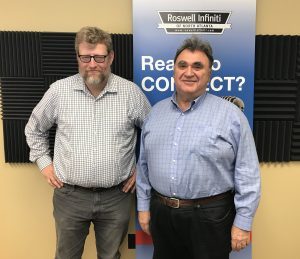
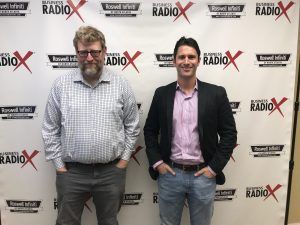
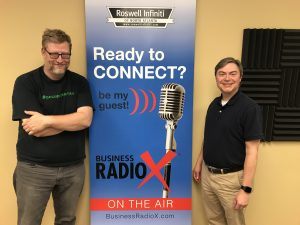
“Decision Vision” Host Mike Blake, and Evan Jarecki, and Cory Hewett with Gimme

Should I Enter a Business Plan Competition?

What’s the value of entering a business plan competition? Should I spend the time and effort necessary to win such a contest? What are the benefits to participating even if I don’t win? Cory Hewett and Evan Jarecki, co-founders of Gimme, answer these questions and more as they are interviewed by “Decision Vision” host Michael Blake.

Cory Hewett and Evan Jarecki, Co-Founders of Gimme
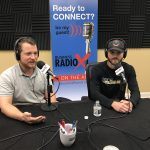
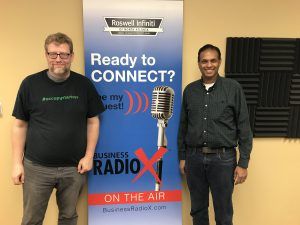
Cory Hewett and Evan Jarecki, Gimme

Cory Hewett and Evan Jarecki are the Co-Founders of Gimme. Gimme won the 2015 TAG Business Launch Competition conducted by the Technology Association of Georgia, Venture Atlanta, and the Metro Atlanta Chamber of Commerce.

Gimme transforms the way companies service micro markets, vending, and grocery by automatically identifying products, their placement, and inventory levels using computer vision verified by humans. Gimme’s software and wireless hardware eliminates errors and manual effort from warehouse staff and route drivers. Gimme empowers Route drivers to focus on delivering amazing customer experiences, and operators to focus on cash accountability, inventory tracking, and machine status data. Gimme’s solutions prevent stockouts, accelerate warehousing and restocking, and streamline product planning. For more information, visit http://www.vending.ai or connect with Gimme on Twitter.
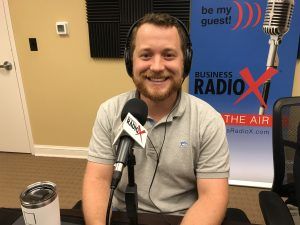
Cory Hewett
Evan Jarecki

Michael Blake, Brady Ware & Company

Mike Blake, Host of “Decision Vision”

Michael Blake is Host of the “Decision Vision” podcast series and a Director of Brady Ware & Company. Mike specializes in the valuation of intellectual property-driven firms, such as software firms, aerospace firms and professional services firms, most frequently in the capacity as a transaction advisor, helping clients obtain great outcomes from complex transaction opportunities. He is also a specialist in the appraisal of intellectual properties as stand-alone assets, such as software, trade secrets, and patents.

Mike has been a full-time business appraiser for 13 years with public accounting firms, boutique business appraisal firms, and an owner of his own firm. Prior to that, he spent 8 years in venture capital and investment banking, including transactions in the U.S., Israel, Russia, Ukraine, and Belarus.

Brady Ware & Company

Brady Ware & Company is a regional full-service accounting and advisory firm which helps businesses and entrepreneurs make visions a reality. Brady Ware services clients nationally from its offices in Alpharetta, GA; Columbus and Dayton, OH; and Richmond, IN. The firm is growth minded, committed to the regions in which they operate, and most importantly, they make significant investments in their people and service offerings to meet the changing financial needs of those they are privileged to serve. The firm is dedicated to providing results that make a difference for its clients.

Decision Vision Podcast Series

“Decision Vision” is a podcast covering topics and issues facing small business owners and connecting them with solutions from leading experts. This series is presented by Brady Ware & Company. If you are a decision maker for a small business, we’d love to hear from you. Contact us at decisionvision@bradyware.com and make sure to listen to every Thursday to the “Decision Vision” podcast. Past episodes of “Decision Vision” can be found here. “Decision Vision” is produced and broadcast by the North Fulton studio of Business RadioX®.

Visit Brady Ware & Company on social media:

LinkedIn:  https://www.linkedin.com/company/brady-ware/

Facebook: https://www.facebook.com/bradywareCPAs/

Twitter: https://twitter.com/BradyWare

Instagram: https://www.instagram.com/bradywarecompany/

Show Transcript

Intro: [00:00:02] Welcome to Decision Vision, a podcast series focusing on critical business decision, brought to you by Brady Ware & Company. Brady Ware a regional, full-service, accounting advisory firm that helps businesses and entrepreneurs make vision a reality.

Michael Blake: [00:00:21] And welcome to Decision Vision, a podcast giving you, the listener, clear vision to make great decisions. In each episode, we discuss the process of decision making on a different topic. Rather than making recommendations because everyone’s circumstances are different, we talk to subject matter experts about how they would recommend thinking about that decision.

Michael Blake: [00:00:39] My name is Mike Blake, and I’m your host for today’s program. I’m a Director at Brady Ware & Company, a full-service accounting firm based in Dayton, Ohio, with offices in Dayton;  Columbus, Ohio; Richmond, Indiana; and Alpharetta, Georgia, which is where we are recording today. Brady Ware is sponsoring this podcast. If you like this podcast, please subscribe on your favorite podcast aggregator and please also consider leaving a review of the podcast as well.

Michael Blake: [00:01:03] Our topic today is Should I Enter a Business Plan Contest? And this topic is is interesting, I think, really on the forefront of the minds of many people who are listening to this program because, if nothing else, the business plan pitch contest, if you will, has been made famous by ABC’s Shark Tank, a show which I still have not seen to this day, by the way. But I’m familiar with what it does.

Michael Blake: [00:01:31] And pretty much, every city with a venture community of any size has some kind of business plan competition in it. And in Georgia, we’ve had a number of them. Some have come and gone. Some have stayed for the long term. And there are national business plan contest as well. Sometimes, alumni groups of universities hold them. I know Georgetown University, my graduate alma mater, has them. Venture firms, sometimes, hold them as a way of generating deal flow. Business incubators often have them.

Michael Blake: [00:02:10] And to do one right, to be a participant, it is a time-consuming exercise. In fact, I’ve been assigned teams when I’ve coached and mentored them through the programs, and we’ll get one or two weeks into the process, and say, “You know what? I don’t have the time to do this. I’m out,” which is perfectly fine. Rather, you do that on week two than a week before you’re supposed to kind of finish the thing.

Michael Blake: [00:02:36] And so, I think it’s a fair question to say, why do you put yourself through that? Because the business plan contest has a fair amount of of time that you have to invest. Typically, a business plan contest sponsor will have a mentoring – excuse me – or training program that leads up to the podcast — I’m sorry, that leads up to the competition itself, where they want to make sure the teams are all prepared. And that requires some time.

Michael Blake: [00:03:04] And then, somewhere along the way, you have a bunch of people that have never met you, that you don’t know who they are. And the public forum, they’re going to ask you tough, invasive questions about your business, right? And it’s fair to say, who needs that? Well, why would I put myself through that? I might as well go on Shark Tank and are willing to do that in front of an audience, television audience of 30 million people, even though we know a lot of that stage is basically WWE for business, but anyway.

Michael Blake: [00:03:34] But I have a couple of people here who have not been through the WWE version. They have been through, at least, one business plan contest. And I had the privilege of being there, of being their coach, and they were successful enough to overcome my coaching and winning that contest, which was the TAG Business Launch Contest back in 2016 or 2017. I’m trying the year. I think it’s 2016 now.

Michael Blake: [00:04:01] And so, joining us are Cory Hewett and Evan Jarecki, who are co-founders of Gimme Vending. Gimme transforms the way companies service micro markets, vending, and grocery by automatically identifying products, their placement and inventory levels using computer vision verified by humans.  software and wireless hardware eliminate errors and manual effort from warehouse staff and root drivers. Gimme empowers route drivers to focus on delivering amazing customer experiences, and operators to focus on cash accountability, inventory tracking, and machine status data. Gimme solutions prevent stock outs, accelerate warehousing and restocking, and streamline product planning. For more information, visit www.vending.ai or connect with Gimme on Twitter, @gimmevend.

Michael Blake: [00:04:52] Cory and Evan both are graduates of Georgia Tech, and both worked at Gulfstream Aerospace before creating Gimme Vending. And maybe we’ll get some of that background in the interview today. But we have some work to do in terms of covering this topic. So, Cory and Evan, thanks for coming on the program.

Cory Hewett: [00:05:08] Hey, thank you, Mike. And good to see you again.

Evan Jarecki: [00:05:10] Thanks, Mike.

Michael Blake: [00:05:10] So you are looking well, and you’ve had some pretty good success since we last worked together closely. And I’m very happy for you. So, let’s go back to sort of what I think was was something of a turning point for you guys, but I don’t want to put words in your mouth. Talk about the business planning contest you won, sort of a high level. What was it? And why did you decide that you wanted to take part in it?

Evan Jarecki: [00:05:36] So, back when we were getting involved with just starting the business, we were trying to get more involved with the Atlantic community and learn what were ways that Gimme could continue to get exposure and who can we meet through that process. And the Technology Association of Georgia was one of those places that seemed like they were everywhere. The BusinessX — the business lunch competition.

Michael Blake: [00:06:06] That’s a good idea. BusinessX is going to do a lot of contests.

Evan Jarecki: [00:06:08] BusinessX contest, there you go.

Cory Hewett: [00:06:09] Business RadioX Launch Competition.

Evan Jarecki: [00:06:11] There we go.

Michael Blake: [00:06:11] So, if you want to have a business lunch competition through Business RadioX, just an email to info@businessradiox.com We’ll get right on that.

Evan Jarecki: [00:06:19] That’s right. No. It was when we decided to go for this competition, the business launch, we made it our total team effort. This was everything for us when we first got involved with the opportunity.

Cory Hewett: [00:06:36] Well, it’s certainly attractive to consider working on the business competition because it came with a quarter million dollars worth of prize money and services. $50,000 and nondilutive cash, that’s important to a startup that’s just getting off the ground. And then, another $200,000 in products and services that we’d be able to use to benefit the business as well.

Cory Hewett: [00:06:55] And like you mentioned before, we had to balance that against this idea that if we want to have a real business, at the end of the day, these types of things won’t give you a business. Great products, great customers, focusing on those two things is what build a business. The business competition, though, maybe gives you the fuel in the car to take you to where you need to go or, at least, maybe get you there a little quicker. So, the idea of cash, the idea of services, and the idea of credibility and some exposure within the Atlantic community, that could be very, very valuable.

Cory Hewett: [00:07:25] So, like Evan said, once we decided that we’re going to do it, we went all in that we were going to focus and put everything into it to maximize our probability of success to winning the competition.

Michael Blake: [00:07:37] So, get in, I forget how many companies. I think, at the outset, there are something like 30 companies. At what point did you start to think you might win? Or did you think you would win day one?

Cory Hewett: [00:07:52] I don’t think we thought we were going to win day one.

Evan Jarecki: [00:07:54] Right.

Cory Hewett: [00:07:54] We knew that we’re going to try really hard to become a winner in the program, but there were a lot of rounds. So, I remember the first round, Evan and I hadn’t really done an elevator pitch before or had to go on stage to pitch our business, but the one time when we were leaving Georgia Tech, and we pitched it to the community there. So, we hadn’t done it in a televised, or WWE setting, or even in front of just an audience of people that didn’t include, at least, a couple of friendlies.

Cory Hewett: [00:08:18] And so, the first round was a couple hundred businesses. And it was more of an informal dinner meet and greet where we had to talk to different investors and judges who were there. You had to go find them. They would write down how you were doing. And if you made an impression, they wrote your name down after you just gave them the cocktail hour elevator pitch of the business. Then, you got to make it past that 300-round to maybe the top 30 round.

Michael Blake: [00:08:42] I didn’t know that. That is wild.

Evan Jarecki: [00:08:43] Yes, it was a speed-dating around. Yeah.

Michael Blake: [00:08:45] That is wild.

Evan Jarecki: [00:08:46] A couple hundred.

Cory Hewett: [00:08:46] So, the couple of days leading up to it, and even in the car driving over there, I remember in the car driving over there, we took what we had written. We’re like, “It’s all wrong. We have to redo it. Let’s redo our elevator pitch.” And getting there and talking to judges. And you asked, did we know that we’re going to win? Our answer to that is no, but we tried hard.

Cory Hewett: [00:09:06] And it wasn’t until that very last night, that very final round, we still had no idea. It was all this effort for not or is it going to turn into something? And I remember the moment where we had made it to the top two, and it was me and Stanley Vergilis of another great company called Hux, and we came out there with a lot of theatrics. We had worked with the art department at the SCAD studio where we were presenting. We had sound. We had rented this very expensive high motion camera to capture our competitor’s product exploding. So, that happened on stage. We showed that big screen video of the product exploding. We came out high energy, high theater, and did the best possible pitch that we could while we were there. And Stanley came out with a very different approach.

Evan Jarecki: [00:09:55] Complete opposite.

Cory Hewett: [00:09:56] Complete opposite. And his performance was so strong that as soon as I left the stage and saw his, I felt good about what we had done. It was the best job we could do. But then, when I saw his and the radically different approach, up until the moment that they unveiled the check to say who won, it was not clear.

Evan Jarecki: [00:10:13] Right.

Michael Blake: [00:10:14] So, let let me follow up on that experience, even though it’s not in our script. But in the final four, you may remember, another company had gone on, and they had banked on video, and it failed.

Cory Hewett: [00:10:27] It failed.

Michael Blake: [00:10:27] Do remember that?

Cory Hewett: [00:10:28] The live.

Michael Blake: [00:10:28] Did that make you at all nervous about what was going to happen with you guys, or were you so tight, you didn’t even think of it. You just knew it’s going to work?

Cory Hewett: [00:10:36] No, we knew it was a risk. Another mentor of ours warned us, you never do live demos.

Evan Jarecki: [00:10:42] Yeah, I think it was through the coaching and the practice that had us try to maximize for a more guaranteed success with the presentation style. And so, that was one of those pieces, avoiding it.

Michael Blake: [00:10:54] And I think that’s a good lesson, though, is that mentors and coaches are just that, right. They’re not your boss. They’re not your mom. They’re not your board of directors. At the end of the day, it’s your company, right. And if you’re going to take a risk, you’re going to take a risk. And look, especially at that time, you’re in a risky business as a startup, right. So, I can see from a certain perspective, look, we’re already here, man. We’re already here. We’re already living with risk on a day-to-day basis. Why are we going to stop now, right?

Cory Hewett: [00:11:27] Right.

Evan Jarecki: [00:11:27] Yeah.

Michael Blake: [00:11:27] Is that as a fair way to kind of characterize it?

Evan Jarecki: [00:11:29] Oh, yeah.

Cory Hewett: [00:11:29] I think it’s a risk/reward thing. We knew that there was going to be risk. The more things that we introduce that we didn’t have total control over, like we avoided a live demo that relied on cellular connection because those can go down, and since we violated that rule, and it’s burned us. So, it’s a rule for a reason. If you rely on cellular and you do live demo, it could go poorly. So, we had made sure that everything that we were showing was, at least, local.

Cory Hewett: [00:11:52] And the reward for us is if it played correctly, and we tested it before in the theater to make sure that it would, but we knew that if we got it to play correctly, that the value that it would generate for the audience would hopefully help them get that emotional feeling of what we are trying to do in our space. And maybe it’s helpful for the audience.

Cory Hewett: [00:12:09] Before we got involved, the technology in our space was really, really old. And the people who were forced to use it had so much pent-up frustration that when they got to watch the competitor’s product explode, you could see them light up. And maybe, if we were back in the horse and buggy days, and you hated your buggy after a while, you got to watch it just get set on fire and replace with the car. You’d be like, “This is great.” And we knew that if we could create that emotional response for our audience, our customers, and if that appealed to the judges as well, then we thought it would be worth the risk of maybe the chance of a tech error.

Cory Hewett: [00:12:43] And I feel terrible for the guy that that tried to do the live demo, and it didn’t work for him, because, you know, they’re kind of like us. They’re working hard to make it work, and nobody wants their demo not to work.

Michael Blake: [00:12:56] And they were doing well up until that absolute up until that.

Evan Jarecki: [00:12:59] Absolutely.

Michael Blake: [00:12:59] Up until that point, right. They’re a very strong competitor.

Cory Hewett: [00:13:01] Yes.

Michael Blake: [00:13:03] Yeah. And that emotional component, I think, is really important on two levels. It is tried and true. It reminds me of the Macintosh commercial from years, and years, and years ago where they smashed a PC in the middle of a commercial, right. And the whole Macintosh value proposition was the PC is just designed to frustrate you, right, and the Macintosh is not right. But everybody wanted to take a sledgehammer to their PC. Every single person, except for maybe somebody working at Microsoft wanted to do that. And I think you sort of captured on that.

Michael Blake: [00:13:40] And then second, it seems to me, and tell me if you think I’m wrong, you can only educate an audience so much about your business, right. And preventing stock-outs and vending machines and, now, at the retail level, it’s a great business, right. But it’s not the kind of thing that you go to the Thanksgiving table and everybody gets all fired up. That’s not like you’ve paid the college-

Evan Jarecki: [00:14:00] Hey, Cory, how’s that inventory on the [crosstalk] going?

Michael Blake: [00:14:02] That’s right. You’re not making call of duty, right?

Cory Hewett: [00:14:04] Right, right.

Michael Blake: [00:14:06] But if you can connect on that emotional level, everybody gets it. And you don’t even have to be in the business. If you’ve just ever been frustrated by technology, or laser printing in work, your Wi-Fi crapped out, you get it, right. I think that’s what really helped.

Cory Hewett: [00:14:21] I think that one other special component that was — I think our secret sauce to the presentation was probably bringing a customer onstage. This was something a little bit later in the practicing and the presentation style where we actually were able to include our first customer as a part of the presentation midway through the numerous stages. But along the way, that set us apart and, we think, had led to some of the success and the understanding from the audience that this is a real opportunity. And this customer has helped us understand exactly what Gimme does.

Michael Blake: [00:15:01] I think that was very dramatic. I don’t think I’ve ever seen that done in a pitch before. And in the minds of those judges, whenever they’re looking at those companies, “Okay, it’s great what technology they have, Is there actually a market for it?” And the fact that you brought the market with you on the stage, I think, that won it for you frankly. I mean, the video was great, and I think that got you to the top two, But the customer, they’re saying, “Yeah, I’m buying this. It’s going to save my business,” how do you sort of say no to that? And I’m sure the other competitors are like, “We should have done that.” They look at their coaches like, “Why didn’t you tell us to do that?” So, other than that kind of the speed dating part, what part surprised you about the process, if anything?

Evan Jarecki: [00:15:54] I think the biggest surprise were the different changes that needed to be made throughout each round. Round one was speed dating with 300 companies. Very quick pitches. No presentation. Just you verbalizing it. Round two was a an eight-minute pitch. I think, it was.

Cory Hewett: [00:16:16] Eight minutes right before St. Patrick’s Day.

Evan Jarecki: [00:16:18] Right before — on St. Patrick’s Day, I think it was.

Cory Hewett: [00:16:20] On St. Patrick, that’s right. We were working that.

Evan Jarecki: [00:16:22] Yeah, exactly. That was an eight-minute pitch. And there was an audience involvement in that one. And then, it moved to a 20-minute pitch. And that was where we brought in the customer. And that was in front of the theater in the auditorium. And then, from there was the final four, which was a three-minute solo CEO/Founder pitch. It was changing and preparing for each of those, that was a big surprise for us, not just one.

Cory Hewett: [00:16:50] Each one was different.

Evan Jarecki: [00:16:51] Each was different.

Cory Hewett: [00:16:52] You had to make it through the screening round of each one. So, it required so much creativity.

Evan Jarecki: [00:16:56] Right.

Cory Hewett: [00:16:56] You couldn’t just use the same presentation. “Oh, we’ll just dress it up or make some tweaks.” It was brand new every single time to appeal to a different — within a different environment, different audience, different levels of theater and energy. At least, in our case, bring the customer on stage.

Evan Jarecki: [00:17:12] Right.

Cory Hewett: [00:17:12] So, each one required its own set of problem solving. The other thing that surprised me, not just the rounds, was, if you will, a little bit of the stress and the time consumption. So, we knew, with your help, you’re like, “Hey, I’d rather you quit right away than at the end,” I think we got the same advice back then too, “because this is going to be really tough.” So, we knew it’s going to be tough and time consuming. And when we got into it, it was tough and time consuming, and it still is a surprise how much we are spending in time.

Cory Hewett: [00:17:40] And then the stress, I remember the eight-minute on the St. Patrick’s Day. It stuck out to me because I got up there to start speaking, and young in your career with public speaking, I made it up to the stage. My tongue got so dry. I couldn’t form words. I’m just trying to make noises with this stick of sandpaper in my mouth, and I’m watching the timer go down. Just physically, I lacked the ability to speak properly and just trying to force my way through it.

Cory Hewett: [00:18:06] So, the stress was just a little bit surprising. And I think that you’ll get that on your entrepreneurship journey. No matter who you are or what the circumstances, you’ll go through that too. But that was a bit of a surprise.

Michael Blake: [00:18:19] Okay. And is there a part that you thought was the hardest to address? Was it the stress? Was that the hardest part, or the time you had to put in, or was there something else that stood out as a challenge of being a participant in something like this?

Evan Jarecki: [00:18:33] Well, I think Cory had mentioned this in the beginning was the focus of, as a business owner, putting everything into your customers and your product. And because of the time consumption, it was highly distracting towards being able to focus on product and on customers because there were days that would go by where the entire day was spent preparing for the next presentation, or just creating the slide deck, or whatever it might have been, and that can distract from the main goal. And sometimes, it would just be challenging to say that the purpose, why we’re in this competition is for customers, is for the business, and just kind of reassuring that. Even though you may not be developing or making that very next feature in the moment, that serves a very important purpose. So, just making sure that balance was maintained between both throughout the time.

Michael Blake: [00:19:28] I want to stop and highlight that because I think that’s very important and very instructive that if you walk into this process thinking that’s going to, kind of, be the side gig that you spend a couple hours a week, you’re not going to be very successful. You’ll probably be eliminated in the first round, certainly, and are unlikely to win.

Michael Blake: [00:19:47] And I didn’t realize, as you really took the perspective, this was not a side gig. This is part of executing your business, right. And the fact that you are willing to hold days off from the “core operations” of your business to pursue that exercise, I did not know that. And I think that if you’re listening to this, and you’re thinking about being in this kind of program, and you have designs of being successful, are you in a position to make that kind of commitment? Because if you aren’t, maybe this isn’t the right time to do it. So I think that’s a very important bullet.

Cory Hewett: [00:20:26] And that’s okay to do too.

Evan Jarecki: [00:20:28] Right.

Cory Hewett: [00:20:28] Through that exercise, we’ve become pretty selective-

Evan Jarecki: [00:20:31] Yes.

Cory Hewett: [00:20:31] … in what we choose to do because we can lose the competition and win at the business. But winning at the competition does not necessarily guarantee, in any way, that you’re going to win a business.

Evan Jarecki: [00:20:44] Right.

Cory Hewett: [00:20:44] So, you have to focus on the business first. And if you do take a day, or two days, or three days off for the competition, you have to keep in mind it’s, in many ways, a vanity. It doesn’t change your core business, it won’t make your customers happier necessarily, and your product won’t be any more mature, or better tested, or better evolved at the end of the process.

Michael Blake: [00:21:02] But you had a goal of starting to build a network and starting to get your name out there, right.

Evan Jarecki: [00:21:08] Exactly.

Michael Blake: [00:21:08] I think that was part of the justification that — I mean, yeah, you also want the money and the prize. We’ll get to that in a second, but you’re students at Georgia Tech at the time or recently graduated?

Evan Jarecki: [00:21:19] Myself, recently graduated.

Michael Blake: [00:21:24] Okay.

Cory Hewett: [00:21:24] Yeah, I appreciate the intro at the beginning, but I actually left with a couple of classes left my senior year to found this company.

Michael Blake: [00:21:30] I didn’t know that.

Cory Hewett: [00:21:31] So, I’m not a graduate of Georgia Tech.

Michael Blake: [00:21:32] The secret is out.

Cory Hewett: [00:21:33] I’m a, yeah, senior year drop out of Georgia Tech that left to pursue this. I went full time.

Michael Blake: [00:21:39] Well, you’re like a bunch of other loser dropouts like Mark Zuckerberg and Bill Gates. So, what did they ever do, right? Yeah, I’m sure they’ll be happy to have you back at your leisure. So, talk-

Cory Hewett: [00:21:54] You’re bringing up what — we had just left Georgia Tech, and with the value going to be that we could get more credibility in addition to the cash and services. And the answer was we had to be somewhat calculative. And we knew that as very junior members of the entrepreneurship community in Atlanta, we’d have to be willing to spend a little bit more time to get that exposure.

Cory Hewett: [00:22:15] And we knew that we were going to have to raise. We’re a company that has smart software, as well as hardware. So, we knew that raising money, fundraising would be on the horizon. And actually, the investment and the time within the pitch could be recycled just in benefiting the education to young entrepreneurs, and all the materials and presentations we’re preparing for these pitches could be recycled in the future outside of the competition as well. And actually, consolidating it, getting the mentor help, for instance, from you.

Cory Hewett: [00:22:44] And one of the things that you did that really helped us out was when you brought together that Shark Tank style, other community people-

Michael Blake: [00:22:50] Oh, yeah. I forgot about that

Evan Jarecki: [00:22:52] Right.

Cory Hewett: [00:22:52] I remember that so well because it gave us that raw, critical feedback that mom, and dad, and friends, and even people that you know in the community may not be willing to tell you, “That’s a terrible side. Oh, no, that I didn’t understand you at all. I would never invest in you.” I mean, you need that feedback. And you helped give it to us. So we were able to make the decision, not just hopefully we win some money, but even — we set out to do our best to win, but we knew even if we didn’t, we could recycle that effort and turn it into something positive for the business down the road.

Michael Blake: [00:23:25] I forgot about that. Even at that point, we’ve been working together for, I don’t know, about 10 weeks or so.

Cory Hewett: [00:23:30] Right.

Evan Jarecki: [00:23:31] Right.

Michael Blake: [00:23:31] And by that time, as a mentor, I’m starting to drink the Kool-Aid, which means that my ability to be that effective sounding board on myself was starting to become impaired, frankly. So, that probably is a good lesson that if you’re in a program and your, and your mentor isn’t setting that up, set that up for yourself, right, because.

Cory Hewett: [00:23:52] If your mentor is too nice, that’s a problem.

Michael Blake: [00:23:54] It can be, it can be. So, you received cash, and services, and prizes. I’ve heard people sort of kind of thumb their nose at $50,000 in cash, but 50 grand for a startup, actually, you can get a lot done with that.

Evan Jarecki: [00:24:10] Right.

Cory Hewett: [00:24:11] That actually really helped to one of our first full-time employee hires.

Michael Blake: [00:24:15] Really?

Cory Hewett: [00:24:15] We talked with contractors and part time. But you bring on that first FTE, you want to make sure that you don’t have a couple of weeks of salary in the bank. You want a couple months that you can play this.

Michael Blake: [00:24:24] You’re not laying off in three weeks.

Cory Hewett: [00:24:26] Right. “You’re hired. Oh, just kidding.” This is-

Michael Blake: [00:24:29] Thanks for everything. There’ll be no severance.

Cory Hewett: [00:24:30] So, the $50,000 cash made a difference to us because we are bootstrapping as hard as we could. As young entrepreneurs at the very beginning of their journey, you’re hustling, and you’re putting everything together that you can. And to bring that first person on board full time, that’s the difference it made for us, along with a couple other things.

Cory Hewett: [00:24:51] So, that’s what we saw in our mind. If we win this, we can earmark the funds to grow the team. And I don’t know if I’m skipping ahead on how you wanted us to talk about it.

Michael Blake: [00:25:02] Go ahead. Keep going.

Cory Hewett: [00:25:02] I’m speaking on chronologically, but that was a big moment for us. We did win the competition. That was a proud moment. And then, we immediately put up our first job ad for a full-time employee and and brought them on. And that was another huge victory. And that really helped the product and the customers. And so, it turned into something really positive for us.

Michael Blake: [00:25:26] And on the other side, you also won some services. I’ve always kind of wondered how much do the winners actually take advantage of the services? I think my firm offered business valuation, and somebody is offering legal services, accounting services, I don’t know, manicures, mani and ped. I have no idea. Did you find yourself taking advantage of those?

Cory Hewett: [00:25:48] We printed out that Excel spreadsheet, and we went down the list, and we contacted every single one, and we are going to extract 100% of the value that we could out of it.

Evan Jarecki: [00:25:57] Right.

Cory Hewett: [00:25:57] And it actually turned into some pretty neat relationships that we still have today. At the time, you were working for HA&W.

Michael Blake: [00:26:04] Yeah, Arpio now. Yeah.

Cory Hewett: [00:26:04] Right. We now continue to work with Aprio.

Michael Blake: [00:26:08] Good.

Cory Hewett: [00:26:08] We were able to work with a PR team called the Carabiner.

Evan Jarecki: [00:26:13] Yeah, we worked with Carabiner still to this day. And that was where we had been introduced to them was from the business launch competition.

Michael Blake: [00:26:20] So, you’re working with them. I’ll go ahead and give them some free ads. I’m a big fan of Peter Baron’s and Carabiner, so.

Cory Hewett: [00:26:25] So, we love working with them. And we wouldn’t have had that relationship without them participating and giving their services. And we were able to spread out the dollar amount, so it lasted us about a year of being able to work with Peter and his team to benefit the company. I mean, Evan, you’re still working with our account rep there pretty much daily, right?

Evan Jarecki: [00:26:45] Yeah. In a week-to-week basis, but participating in some of the things that we plan for on the day to day. Like most recently, one of the biggest events that we’ve done was a livestream product launch. This is something that Carabiner was heavily involved in and actually participated in person for some of the event planning. So, the introduction has been extremely valuable to the growth of our team and of our product.

Cory Hewett: [00:27:16] One of the services that really stood out was with the management psychology group and-

Michael Blake: [00:27:20] No kidding.

Cory Hewett: [00:27:21] Yeah. And it’s exactly what it sounds like. Evan and I probably wouldn’t have chosen to do this if we had to pay cash out of pocket to do this, but having gone through the experience, now, I see that there’s a lot of value in this, especially if you’re head hunting for a founder level role or an executive level role.

Cory Hewett: [00:27:37] But it was a two-day process, two half days where Evan and I went in, and they tested all parts of our psychology. They had quizzes for intelligence, et cetera, et cetera, to try to see how people would work together. And I don’t think we would have done it because we already knew — Evan and I already knew we worked well together because we were great together.

Cory Hewett: [00:27:55] But we went through the process, and it was so fascinating to have a broken down for why that was. And when we got the results back of this management psychology test, Evan and I at the core groups, the big categories, were highly, highly similar. But when they broke it down to the subgroups, the reason why and the little things that make people unique, he and I were extremely dissimilar.

Cory Hewett: [00:28:19] So, it was like we shared common big goals, but we had lots of compliments where I was weak, he was strong; where he was strong, I was weak. And it played really nicely to to see how that worked out. And we wouldn’t have got that either without the services. And that’s just an example to me that stands out. I still remember it today, like, “How do you work so well with Evan?” Like, ” Actually, it’s fascinating. I have a diagram that shows that.”

Evan Jarecki: [00:28:42] We kept it [crosstalk].

Michael Blake: [00:28:43] Those are my strengths.

Evan Jarecki: [00:28:43] And they’re really neat. I mean, yeah, it was very in-depth and something we’ve kept, and I think it hold — I mean the exact same thing holds true to this day. It’s very interesting. And, yeah, it was fun experience.

Michael Blake: [00:28:59] It’s weird how sometimes topics come together. Right after this one, we’re going to be recording a podcast about executive leadership basically from another kind of industrial psychology company. I may kind of bring that up with them and see kind of what their view is on those kinds of approaches. One thing that also struck me about when you guys won, you both have family there to think, right?

Evan Jarecki: [00:29:24] Yeah.

Cory Hewett: [00:29:25] Yes, yes.

Evan Jarecki: [00:29:25] And both the public pitches we had family.

Michael Blake: [00:29:28] You did, okay. And I’ve never asked you this question. It’s a little off topic. So, if you don’t want to answer, we’ll edit it out. But was there a sense of kind of validation? I don’t know if you have entrepreneurial families or not. If you don’t, sometimes, they’re kind of looking weary. You’ve got this great education. Why aren’t you going and getting a job? You’re Gulfstream. You could have had a great career there, six figures, right?  Was there any kind of validation, maybe, to family members that were worried about the risk you took that this is sort of an external validation that you guys are going to be okay and really onto something? Or am I playing Dr. Phil, and I should knock in the psychology business?

Cory Hewett: [00:30:15] I don’t know if Evan would share this necessarily.

Evan Jarecki: [00:30:19] Yeah.

Cory Hewett: [00:30:19] So, I hope you don’t mind if I do.

Evan Jarecki: [00:30:21] Yeah, yeah, go for it.

Cory Hewett: [00:30:21] But Evan did have the job lined up when he was graduating. So, he’d already accepted the job offer from Gulfstream. He had already selected his apartment. He was ready to go make that transition in his life when we started talking about Gimme. And my pitch to him is, “Hey. we should work a hundred a week. And we can’t pay each other any number of dollars probably the first year or so. And it would involve you not going down to Savannah, and you’d have to quit your job that you haven’t started yet. And maybe make sure that your parents are comfortable leaving you on health insurance and stuff a little longer. How does that sound?” And-

Michael Blake: [00:30:56] I guess it sounded all right.

Evan Jarecki: [00:30:58] Well, I think the way I describe it is that it unlocked a — I had some sort of limiter on where I thought a career — what I thought a career meant. And I don’t think I had ever considered entrepreneurship as a career path until there was an opportunity presented to me and, actually, think about what that could mean. And so, it just totally removed the limiter and said, “There is no reason not to take this opportunity,” is what it became. So, I just had to put the pieces together to make it work.

Cory Hewett: [00:31:31] So, I remember when Evan told me, “Yeah, I talked to my parents about it. They’re a little concerned, but they’re supportive. And they’re really good people. So, they were supportive, but I could tell that mom’s eyes got real big when she’s like, ‘Oh, he’s he’s quitting the Gulfstream job that he hasn’t started yet.'”

Michael Blake: [00:31:46] That’s nice.

Cory Hewett: [00:31:47] “What’s the new salary?”

Evan Jarecki: [00:31:48] “What’s the plan here?”

Cory Hewett: [00:31:48] “Oh, it’s nothing.” “Oh, good luck.” And she’s

Evan Jarecki: [00:31:53] Right, not another job that pays you. No, it was totally different.

Cory Hewett: [00:31:57] So, I remember for them, they were in the audience when we made it through that first round. And I don’t know, the look on their face. And my parents were there too, and I think they were proud. But I know for your parents, that was a first entrepreneurship, big endeavor that you’ve done, the big first external validation.

Evan Jarecki: [00:32:14] Yes, yes.

Cory Hewett: [00:32:15] You could just see the pride, and you could see a lot more confidence. Like, “Wow! Our son is not just ‘trying to be an entrepreneur’ but people believe in him too.” And the next thing happened on that final round, we didn’t just invite mom and dad. We invited grandma, grandpa. And then, we also invited a couple of our customers and a couple of the other people that have been rooting us along along the way. Evan, I know you took a valet job at the very beginning of Gimme-

Evan Jarecki: [00:32:41] Yes.

Cory Hewett: [00:32:41] … to pay the bills while we’re making the company work. Did you invite one of your top valet customers there, too?

Evan Jarecki: [00:32:47] Yeah, yeah. That may have been my first — actually, that experience is a big failure that turned into a really happy valet customer, if you will. I didn’t own. I just worked for the valet company, but there was an experience we had with just a car parking situation where I was able to diffuse the whole situation. I caused it, and I diffused it, and it became a really happy repeat customer. And they actually got involved with what we were working on at Gimme, and they participated in the TAG, the business lunch competition as well. So, we brought in, yeah, people from kind of everywhere during the first year’s journey.

Michael Blake: [00:33:30] I remember that. You had a lot of fans in that room. And when you won, it looked like kind of the end credits of, sort of, Family Feud. I mean, they swarmed the stage. And I thought they put you up on their shoulders. But it was great to see. Have you done anything like that since? Have you been in any other contests, or did you just retire after one championship?

Cory Hewett: [00:33:53] Quite like that. No, we haven’t been in any multi-round pitch kind of situations quite like that.

Evan Jarecki: [00:34:00] That’s true. That’s true.

Cory Hewett: [00:34:00] And most of it had to do with we extracted a lot of the value that we could. And like we mentioned, a lot of it was getting in front of the right people, in addition to cash and services, getting a name for ourselves in the Atlanta community. And thankfully, it helped us do that. So, now, I don’t know if the reward for doing that again would be as profound or pronounced for us. But we have competed in a couple other competitions since like-

Evan Jarecki: [00:34:22] Actually, the TAG Business Launch unlocked many opportunities in the area. We were invited to Venture Atlanta, one of the largest now that we’ve seen and participated in. And actually, it speaks to — this kicked off and falls in right in line with us as one of our core values. The number one is fiercely driven to win.

Cory Hewett: [00:34:49] That’s our top core value in the team.

Evan Jarecki: [00:34:51] That’s our top core value. And it’s related to customers, and it’s related to making sure that we are working for them. But it also does speak to the competitive nature of applying ourselves in these areas. So, we do participate in other contests and competitions. Recently, we won Best B2B Startup in Atlanta. There would be-

Cory Hewett: [00:35:14] We had a number of good competitors in that category.

Evan Jarecki: [00:35:15] [Crosstalk] is in that one. So. we’ve won, and we’ve lost, but we do participate. And when we do, we like to do a good job.

Cory Hewett: [00:35:25] I remember one of the ones that we lost actually right after the TAG Business Launch competition, we were kind of on a high feeling of, “Wow! If we set our minds to it-”

Evan Jarecki: [00:35:35] Like, how big can we take this thing? Where can we go with it?

Cory Hewett: [00:35:37] And our very next big thing that we applied for was actually the first season of Apples TV show called Planet of the Apps-

Evan Jarecki: [00:35:43] Right.

Cory Hewett: [00:35:44] … where they were going to look at software startup founders and how their journey is going. And we made it past the first round. And then, they unceremoniously dropped us and let us know that we didn’t make it past the second round. And so, yeah, we’re trying and failing. But we try to be selective, so that we continue to keep our top focus on products and customers. But like Evan said, we’ve just recently been named Atlanta’s Best B2B Startup. We were named recently as well to Atlanta’s 50 on Fire. We’re proud of that accomplishment. That was just a couple of weeks ago.

Cory Hewett: [00:36:15] Within the industry, our team as a whole has been named Pros to Know. And some of the individuals have been named, individually, the Pro to Know on separate years as well. Each one of our products, and we have three now, each one of our products has been named the number one product in vending the years that it has been released. So, we’re super proud of that as well. So, yeah, we’re trying, sometimes failing, but we’re continuing to try and apply that fiercely driven to win mentality.

Michael Blake: [00:36:43] Well, these are harder to win. It’s not like a basketball game. It’s more like a golf tournament, right. Basketball game, you have one opponent. That’s it, right. But you have to be in the field, right.

Evan Jarecki: [00:36:54] Right.

Michael Blake: [00:36:55] Even Tiger was in his heyday, right, only one 20% of his tournaments, right. And arguably the best that ever played. So, I think you’re doing all right.

Evan Jarecki: [00:37:07] Thank you.

Michael Blake: [00:37:07] I think you’re doing just fine. So, since the competition, tell us the story now. How are you guys doing? You, obviously, want a lot of awards award. You’re expanding. You guys able to pay yourselves now? You’re not [crosstalk]-

Cory Hewett: [00:37:23] I’m not at all free anymore.

Evan Jarecki: [00:37:25] Right.

Michael Blake: [00:37:25] You’re not working for free anymore. Good, good. You have the most up to date max, I assume.

Cory Hewett: [00:37:29] Yeah, we do. The tool kit we actually advertise as part of our recruiting tool, everyone gets a brand new Apple products to be able to get their job done well. So, yeah, we’re expanding. We have about 20 people on the team now. We’ve got great offices. This year, we’ve just added 401(k) to our suite of benefits.

Michael Blake: [00:37:50] Wow. Yeah, you’re really growing up.

Cory Hewett: [00:37:52] And I think that we have a team culture that has attracted serious top players. So, we’re really proud of that accomplishment. I know that maybe people don’t speak to those metrics first, but a team of people that we have to work with now is just incredible. When you work at, if you will, alone, and then you hire that first one, if you can surround yourself with other people who are willing to match that and just put in so much effort to help the business succeed, it’s something special. It’s a different feeling than when you first started the company. So, that would be my top metric of success is the team right now is just crushing it. And we’re so proud of them.

Cory Hewett: [00:38:27] Outside of the team as well, we’ve seen our products and services grow. We started with the one. We talked about, we exploded our competitors product. That’s how we started. That was one product. But now, we’ve seen it expand from just a field service tool to — you mentioned it at the very beginning. Now, we’re managing the products and their inventories for the entire warehouse, the schedules of the people that service. Our software has expanded.

Cory Hewett: [00:38:53] And then, earlier this year, we announced that we could handle not only an entire warehouse of inventory and field services, but we could do that through computer vision and a neural network training. And to see that start to take off has opened up our customer base from just vending operators to, now, vending operators, micro market operators, and people who deliver to grocery stores. And for the first time, that means that, now, some of our customers are publicly traded, and we’re just thrilled at the growth that we’ve seen even as recently as this year that’s taken us to a new level.

Michael Blake: [00:39:31] So, I’m curious, to get to that point, have you raised any outside money? Are you still just self-funded?

Cory Hewett: [00:39:37] We did raise money. After the TAG Business Launch competition, we raised an angel round. We’re able to include David Cummings and John Lally, which were introductions that were either directly or indirectly helped, actually, from the competition. That’s where we raised our first half million. And since then, we’ve added a couple other institutional and larger people on our cap table as well. So, today, we’ve raised just over $2 million. And then, we have our sightline to a couple more exciting things in the near future.

Michael Blake: [00:40:08] Very good. So, I promise I won’t keep you here too long. So I’m going to wrap it up. But if people are kind of thinking about getting into a competition of their own, they want to know if they should do it, or get some advice, can they contact you guys?

Evan Jarecki: [00:40:23] Yeah, absolutely. Best way to reach out to us is, first, through our website, www.vending.ai, and go to our team page there. You’ll see Cory and my own, our bios and profiles. And you can get connected with us there. We’ve actually love participating in the Atlantic community, especially as mentors, and volunteers, and programs we’ve been a part of in the past. And then, look, of course, for any individuals, one on one. Cory will give anyone’s slide presentation good judging, that’s for sure. And it’s worth it. Trust him with that one. He’s got a knack for it, so.

Michael Blake: [00:41:02] All right. Well, that’s going to wrap it up for today’s program. I’d like to thank Evan Jarecki and Cory Hewett of Gimme Vending so much for joining us and sharing their expertise with us.

Cory Hewett: [00:41:12] Thank you, Mike.

Evan Jarecki: [00:41:12] Thank you.

Michael Blake: [00:41:12] We’ll be exploring a new topic each week. So, please tune in so that when you’re faced with your next business decision, you have clear vision when making it. If you enjoy this podcast, please consider leaving a review through your favorite podcast aggregator. It helps people find us so that we can help them. Once again, this is Mike Blake. Our sponsor’s Brady Ware & Company. And this has been the Decision Vision Podcast.

Tagged With: Cory Hewett, Dayton accounting, Dayton business advisory, Dayton CPA, Dayton CPA firm, early stage startups, Evan Jarecki, Georgia Tech, Gimme, Gimme Vending, in-kind services, Metro Atlanta Chamber of Commerce, Michael Blake, Mike Blake, pitch competition, pitch contest, startup company, startup competition, startups, Technology Association of Georgia, Venture Atlanta

Decision Vision Episode 24: Should I Become an Angel Investor? – An Interview with Steve Walden, The Walden Associates

July 18, 2019 by John Ray

Decision Vision
Decision Vision
Decision Vision Episode 24: Should I Become an Angel Investor? - An Interview with Steve Walden, The Walden Associates
Loading
00:00 /
RSS Feed
Share
Link
Embed

Download file

“Decision Vision” Host Mike Blake and Stephen Walden, The Walden Associates

Should I Become an Angel Investor?

How do I learn to become a successful angel investor? What’s the involvement of an angel investor after writing a check? What distinguishes the angel investor community in Atlanta? Highly regarded angel investor Steve Walden answers these questions and more in a wide ranging conversation with Mike Blake, Host of “Decision Vision.”

 Steve Walden, The Walden Associates

Steve Walden, The Walden Associates

Steve Walden, The Walden Associates, is a long-time (15-plus-year) angel investor.  Prior to that he was a corporate executive in New York with Time Warner, Grey Advertising and IBM. At IBM he was Executive Director of a new division called Prodigy, which foreshadowed the interactive tools we use today.

He was brought to Atlanta by BellSouth (now AT&T) as a vice president, where he helped launch BellSouth.net (their interactive division) and other businesses.

At about the same time he also had a small interest in a startup company called Netsurfer. The company was failing and with the overstated confidence of a New Yorker he stepped in as CEO.  Fortunately, the company had a decent exit and Steve became hooked on the startup world.  Since then he has been the CEO or CFO of three other companies before turning angel investor, where he has supported many other startups.

Steve started as a journalist after training at Columbia and the University of Pennsylvania and practiced that profession early in his career.

Michael Blake, Brady Ware & Company

Mike Blake, Host of “Decision Vision”

Michael Blake is Host of the “Decision Vision” podcast series and a Director of Brady Ware & Company. Mike specializes in the valuation of intellectual property-driven firms, such as software firms, aerospace firms and professional services firms, most frequently in the capacity as a transaction advisor, helping clients obtain great outcomes from complex transaction opportunities. He is also a specialist in the appraisal of intellectual properties as stand-alone assets, such as software, trade secrets, and patents.

Mike has been a full-time business appraiser for 13 years with public accounting firms, boutique business appraisal firms, and an owner of his own firm. Prior to that, he spent 8 years in venture capital and investment banking, including transactions in the U.S., Israel, Russia, Ukraine, and Belarus.

Brady Ware & Company

Brady Ware & Company is a regional full-service accounting and advisory firm which helps businesses and entrepreneurs make visions a reality. Brady Ware services clients nationally from its offices in Alpharetta, GA; Columbus and Dayton, OH; and Richmond, IN. The firm is growth minded, committed to the regions in which they operate, and most importantly, they make significant investments in their people and service offerings to meet the changing financial needs of those they are privileged to serve. The firm is dedicated to providing results that make a difference for its clients.

Decision Vision Podcast Series

“Decision Vision” is a podcast covering topics and issues facing small business owners and connecting them with solutions from leading experts. This series is presented by Brady Ware & Company. If you are a decision maker for a small business, we’d love to hear from you. Contact us at decisionvision@bradyware.com and make sure to listen to every Thursday to the “Decision Vision” podcast. Past episodes of “Decision Vision” can be found here. “Decision Vision” is produced and broadcast by the North Fulton studio of Business RadioX®.

Visit Brady Ware & Company on social media:

LinkedIn:  https://www.linkedin.com/company/brady-ware/

Facebook: https://www.facebook.com/bradywareCPAs/

Twitter: https://twitter.com/BradyWare

Instagram: https://www.instagram.com/bradywarecompany/

Show Transcript

Intro: [00:00:02] Welcome to the Decision Vision, a podcast series focusing on critical business decisions, brought to you by Brady Ware & Company. Brady Ware is a regional, full-service, accounting and advisory firm that helps businesses and entrepreneurs make vision a reality.

Michael Blake: [00:00:20] And welcome to Decision Vision, a podcast giving you, the listener, clear vision to make great decisions. In each episode, we discuss the process of decision making on a different topic. Rather than making recommendations because everyone’s circumstances are different, we talk to subject matter experts about how they would recommend thinking about that decision.

Michael Blake: [00:00:38] My name is Mike Blake, and I’m your host for today’s program. I’m a Director at Brady Ware & Company, a full-service accounting firm based in Dayton, Ohio, with offices in Dayton; Columbus, Ohio; Richmond, Indiana; and Alpharetta, Georgia, which is where we are recording today. Brady Ware is sponsoring this podcast. If you like this podcast, please subscribe on your favorite podcast aggregator. And please also consider leaving a review of the podcast as well.

Michael Blake: [00:01:02] Our topic today is Should I Become an Angel Investor? And those of you who’ve listen to the program for a while know my background, know that I’m connected with the startup world. In some way, I’ve been for really my entire career. And the angel investing topic, I think, is of particular interest because as a person that’s that’s traveled a lot, has lived abroad, one thing that I think separates our society apart is this notion of entrepreneur as folk hero. And even if you kind of translate entrepreneur in other languages, and I’m not fluent in 180 of them, but the way the words are even constructed is there’s almost a certain amount of suspicion or confusion about somebody that’s an entrepreneur, right. It’s an undertaking. And even the word “under” has a somewhat negative connotation.

Michael Blake: [00:02:03] But the United States is a little bit different. Now, I’m not trying to go off Fox News Channel here, but the United States is different in the fact that we elevate entrepreneurs to a folk hero status. And one of the things that makes that go is a community of angel investors. And the word “angel” I think is very apt, except for the people that perhaps get turned down for funding by them. But an angel investor is somebody that is willing to put money pretty much everywhere, everyone else’s fears to tread, so to speak.

Michael Blake: [00:02:38] And they bridge that gap between friends, family, and fools. Some will tell you themselves, maybe they fall into the fools category. Sometimes, they are friends and family. But they bridge that gap from from money that is not financially motivated but just really goodwill-based capital and just wants to see you succeed on a personal level. And the wise guys is the institutional investor, a series A venture capitalist, and so forth that let’s face it, at the end of the day, they are in it for the money. If they’re not in it for the money, they aren’t in it very long.

Michael Blake: [00:03:15] And angel investors kind of fill that very important gap. And you’re probably more familiar with them by looking at watching Shark Tank, a show I’ve never actually seen, by the way. But I know how it works. And Mark Cuban and those folks position themselves as angel investors or fashion. And I suppose that’s fair. But the vast majority of angel investors are frankly very anonymous. Very few of them have websites, not active all that much in social media. That’s not in California.

Michael Blake: [00:03:44] But most of them really are. You probably have sat next to an angel investor at a Starbucks and never knew it. You’ve probably been behind one in line at the grocery store. You’ve probably been sitting next to one in the restaurant where half-a-million-dollar deal is being talked about. You probably never knew about it. And especially if you’re in Atlanta, where we very much have a low key, sort of, non-PR mentality for the most part.

Michael Blake: [00:04:09] And so, if you don’t know that space, if you haven’t sort of invested a lot of time as I have to kind of burrow in, you may not know a lot about it. So, I’m very excited about this particular program because I think it’s going to be an opportunity to shine a lot of light about what it means to be an angel investor. I think the world always can use more angel investors. And if you’re a high net worth individual, and you’re thinking about it, it’s probably very daunting because where do you start? It’s high risk. Are you just going to be a moron and lose all of your money, and you’re going to feel like you never should have gotten into it in the first place? Or is there a method to the madness where somebody can be successful?

Michael Blake: [00:04:48] And I’m not qualified to tell you that, but I have somebody across the table from me who is. And it is my absolute pleasure to introduce my friend and our guest, Steve Walden today of Walden Associates, a seed stage investment and entrepreneurial advisory firm. Steve is a longtime 15-plus year angel investor. And prior to that, he was a corporate executive in New York with Time Warner, Gray Advertising, and a little technology company called IBM.

Michael Blake: [00:05:17] At IBM, he is executive director of a new division they called Prodigy, which foreshadowed the interactive tools that we now use. He was brought to Atlanta by BellSouth, now AT&T, as Vice President where he helped launch BellSouth.net, their interactive division and other businesses. At about the same time, he had a small interest in a startup company called Net Surfer. The company was failing, and with the overstated confidence of a New Yorker, he stepped in as CEO. And by way, this is just in, he actually disclosed. He is actually a native Bostonian, but we’ll let him define himself however he wants.

Michael Blake: [00:05:50] Fortunately, the company had a decent exit, and Steve became hooked on the startup world. That is sort of the way it works. Since then, he has been the Chief Executive Officer, or Chief Financial Officer, or maybe both of three other companies before turning angel investor where he has supported many startups. Steve started as a journalist after training at Columbia and the University of Pennsylvania and practiced that early in his career. And we’ll talk a little bit about how that led to him becoming an angel investor and him succeeding, i.e. surviving for a long time as an angel investor. I think that’s a good definition of success. Steve, welcome to the program. Thanks so much for coming on.

Steve Walden: [00:06:28] Thank you, Mike. It’s a pleasure to be here.

Michael Blake: [00:06:30] So, with most my programs, I like to start with establishing a common vocabulary because we can very quickly get into all kinds of jargon that’s almost a separate language, and we can lose people very quickly. So, we try not to do that. The first question I want to kind of put out there is most people have heard of venture capitalists, not as many people have heard of angel investors. And I think those who have think that they’re the same thing. But there’s a little bit of a difference between the two, isn’t there?

Steve Walden: [00:06:58] There’s a huge difference between VCs and angel investors. For one thing, probably the most fundamental difference is the way they’re structured. VCs are limited partnerships that are purely financially motivated. They have usually limited partners who who provide the money for the group, so that the people who actually do the investing may not be the same as the ones who provided the money for it. And that means the people who are doing the investing have a responsibility to third parties to produce results. And anything that is going to denigrate that ability is something they are not interested in.

Michael Blake: [00:07:52] And so, in effect, a venture capitalist as a fund manager, right. Definitely not that much different from a hedge fund or even an index fund, right?

Steve Walden: [00:08:01] Exactly. He has limited partners who are his bosses.

Michael Blake: [00:08:06] Now, one of the things that that strikes me about venture capital, it’s something I’ve studied a lot in the last two years, is because of the nature of venture capital, right, venture capital funds typically have an expiration date, right?

Steve Walden: [00:08:22] Right.

Michael Blake: [00:08:22] They’ve got to return capital up to 10 years and often more quickly than when that money was actually put in. And that can kind of limit the kinds of deals that venture capitalists can do and how they manage it. At least, drive how they manage it, right?

Steve Walden: [00:08:36] Yeah, exactly. They’re under a tremendous amount of pressure, not just within that timeframe, but because they know they’re going to be doing a second fund at some point, usually, before the first one is completely over. And if they have lack luster results, it’s going to be very hard for them to stay in business.

Michael Blake: [00:08:58] Yes, it’s hard to go out to the market saying, “We’ve been substandard or mediocre the first time.”

Steve Walden: [00:09:03] Yes, but give us more money.

Michael Blake: [00:09:05] But give us more money, right. Especially when there’s no shortage of folks that are looking for money. But we’ll come back a little bit to that. So, you have a background as a journalist. And as I found out actually in radio, to some extent, which is why I have this natural sort of smooth jazz radio voice, how does that help you being be an angel investor, or are there even parallels between journalism and the practice of angel investing?

Steve Walden: [00:09:35] Well, there are certainly behavioral similarities. I’ve learned to listen hard, to ask a lot of questions, and to be pretty skeptical about the results, whatever they may be of the questions. And so, when I go into “interview” an entrepreneur, I pretty much know what I want to ask him or her. And I know the kind of answer that I will accept and will be prepared to bore in and pretty hard with a second question,  I don’t get the kind of answer that’s successful.

Michael Blake: [00:10:11] So that that follow up question, right. And do you find that list of questions has pretty much become standard over the years?

Steve Walden: [00:10:18] Well, yeah. I think as I get older and lazier, I don’t try to rethink the whole thing every time. So, there are certain answers I’m looking to obtain. And if I don’t get them, I’ll either cut the interview short or, mentally, to cut it short.

Michael Blake: [00:10:38] Okay, right. One way or the other.

Steve Walden: [00:10:40] Yeah.

Michael Blake: [00:10:40] You can check out physically or mentally that at some point, this is over. We’re done. We’re done here. So, can you be an angel investor part time and be successful, right? You’ve gotten to a point, I think, correct me if I’m wrong, but I think it’s fair to characterize you as a full-time professional angel investor. Can you do that successfully part time? Can you do it as a hobby, or do you have to just decide this is going to be your job?

Steve Walden: [00:11:07] Well, it depends upon the success or how you define success. There are a lot of angel investment groups to which you can be a member, and let others take the heavy lifting for due diligence and some of the other things that have to happen, or you can decide, just stay and do it all yourself. And that latter function is a lot more difficult and requires a lot more time.

Michael Blake: [00:11:40] So, I want to come back to that because I know you’ve been very active in angel groups around town. So, I think that’s an important resource. Where do investment opportunities come from? As I mentioned in the introduction, you guys, as a group, except for the California folks, are pretty low key, right? You don’t have a store front. Most of you don’t really even have a website, right. And I think that’s by design, but you can tell me if I’m wrong. So, how do people know how to find you? There’s no Walden Associates in the Yellow Pages or anything. So, how do these deals find you?

Steve Walden: [00:12:18] It’s all through networking. And the converse of the question you ask is, how do I find companies? And you don’t just walk down the street and, actually, I was going to say, have people hand you cards but these days, you do find people who do that. But by and large, what you do is you become embedded in the community, and people know you, and you will hear about good companies. And if you’re not too late, you will get in and try to get a piece of them.

Michael Blake: [00:12:54] Now, that’s an important point. I want to follow up on that because, I think, even though we’re not really directing this at fundraisers, I’ve got to take the opportunity. If you’re looking for funding, or even if you want to be a successful angel investor, I think there’s a temptation to say, “Well, I’ve got this pile of money that I’m sitting on,” right. Of course, people are going to come looking for it, right. And to a certain extent, that may be true, but if it’s not the right people that it’s not a very productive use of your time, right?

Steve Walden: [00:13:28] On both sides.

Michael Blake: [00:13:28] Right.

Steve Walden: [00:13:29] There are some angel investors and VCs who actually provide value to the business. And if you get in with them, they can find you the next level of funding. They will have marketing contacts. They will also help you with an exit. And similarly, if you stay active in the community, you’ll get referrals from companies that are looking for money in however worth putting money into.

Michael Blake: [00:14:03] And so, in that search and one of the keys them to being an angel investor, I think, one bullet point here is you have to be willing to ping actively. It’s really like selling anything else, but unless you’re in finance understanding the notion that you have to sell money is odd. But in many ways, selling money is one of the most competitive ideas out there.

Steve Walden: [00:14:28] It is, it is. And it’s just becoming more difficult right now because the nature of the economy is such that there are a lot of “angel investors” who are throwing money around, and that has raised valuation. So, that funding a company that is worth investing in at a decent valuation has become exceedingly difficult.

Michael Blake: [00:14:55] Oh, good. So, I’m glad you mentioned that. So, I’m going to go off the script a little bit because I think from the outside, you look at angel investing, and the end game is to have the next Facebook, right, or the have the next Uber, or to have the next whatever big exit that there’s going to be. Obviously, those are exceptions to the rule, right? But investing just for growth and growth alone, that’s probably not a winning strategy. There’s got to be a value in there, right?

Steve Walden: [00:15:26] Well, there are a lot of motivations for wanting to be in this. And certainly, you want your investment part to be to return more than you put into it. But there are a lot of other motivations as well. And most angel investors like to work with startup companies. Many have been entrepreneurs themselves. And this is sort of heresy, I’m less eager to or less expectant of showing huge profits than wanting to break even and help some entrepreneurs along the way. But then, I’m at a particular stage in my career, which is unusual for some of them and certainly unusual for a VC.

Michael Blake: [00:16:15] Right. And I think I think you’ve earned the luxury of having that choice because of the success you’ve had earlier. I think if you start out as an angel investor, unless you’re sitting on a very large pile of cash, you probably do need to have some financial success, so you can evolve into a non-financial goal set. Is that fair?

Steve Walden: [00:16:33] That’s absolutely true.

Michael Blake: [00:16:34] And getting back to value, value is important, not so much that — in my view, not because you might get ripped off or overpay but the higher the entry value, the higher the burden it is for the company to generate a return on the investment. The exit just — and so, for every dollar of higher entry valuation, the exit has to be $10 higher, right, to generate that kind of return. That’s my value, I think, for angles is so important, that multiplier effect.

Steve Walden: [00:17:07] Although, I will also say that the if there’s going to be a decent exit, I’m certainly willing to give a little bit of the high end away, but not for companies that are pre-profit and are still asking for $20 million valuation.

Michael Blake: [00:17:29] Okay. And, hopefully, I think we’ll come back to that. But going back to kind of the opportunities search, and you talked about it comes through your networks, and that you’re involved in angel groups. So, how many deals do you think you see in a particular, call it a month?

Steve Walden: [00:17:48] Well, it depends on what you see, What do I mean by see? I’m aware of maybe 30 per month. And of that 30, I will actively want to “see” maybe 6 or 10. And the other two-thirds, I just really don’t want to get deep into.

Michael Blake: [00:18:12] And see, I’m guessing as you’d like to see maybe an executive summary, perhaps meet the management team for a brief presentation or something like that, right?

Steve Walden: [00:18:21] Yeah, exactly.

Michael Blake: [00:18:22] And so, of that population in a given year, how many commitments, investment commitments do you think you’d make?

Steve Walden: [00:18:34] That is a very difficult answer for me to give you because it varies a lot. And, right now, please forgive me, entrepreneurs, but the quality of deals that I’m seeing and what they’re expecting is less amenable to want to invest in. What we need is – forgive this also – is a good recession to bring down the valuations of some of the it. I know, Mike, you do valuation as well. And the pre-revenue company that’s asking for $20 million as valuation is just not going to get invested no matter how good they are

Michael Blake: [00:19:14] At least, not in our market.

Steve Walden: [00:19:16] I was going to say no, not on the East Coast.

Michael Blake: [00:19:18] Yeah, yeah, yeah. We could have a whole different podcast of East versus West. You and I have had that conversation, but we need to focus on on this particular topic. But it’s fair to say that if you’re looking at 300, if you are aware 300 plus deals a year, and maybe you look carefully at a hundred, right, a realistic number of commitments in a given year can’t be more than two or three, right?

Steve Walden: [00:19:43] Correct.

Michael Blake: [00:19:43] Right. And it’s not just financial capacity, but I know you as a person, you’re not really, “Here’s a check. I’ll come see you in five years,” kind of guy, right?

Steve Walden: [00:19:55] That’s correct.

Michael Blake: [00:19:56] So, how involved do you get once you kind of write that check? And I know there’s a spectrum, but we have you in front of a microphone. So, for you, personally, Steve Walden, right, what kind of involvement do you have with the company after you write that check?

Steve Walden: [00:20:11] It depends on a lot of factors. Ideally, I’d like to be on the board or, at least, on the advisory board. And I’d like to be in their key meetings, and I’d like to be able to help with some advice, particularly in marketing, but as larger sources of funds share this market with us, I will happily take a side seat and let the larger funds become involved in that.

Michael Blake: [00:20:46] Okay.

Steve Walden: [00:20:47] For instance, the one of the companies that I recently exited from was called [Predictale]. And one of the reasons I like Predictale initially, not only did it have a great CEO, but it had a VC that came in right after us. And the VCs took over the board seats and took over the ability to make some of the larger decisions. And I was perfectly happy being in the lee of the VC and seeing this become a successful exit.

Michael Blake: [00:21:20] Now, essentially, you say that because I think the mindset about that has evolved over the last 10 years. I think 10 years ago, angel investors are much more wary about VC involvement. I think they’re aware that they were just sort of take over and try to be private equity as opposed to VC.

Steve Walden: [00:21:40] Yeah,.

Michael Blake: [00:21:40] I think they were worried about, frankly, being crammed down, which that’s a term that just means that you either continue investing or become deluded. But it sounds like, I think, I sense in the community, not just from you, but others, that thinking has evolved now that angels are more open to partnerships with VCs and see some value there.

Steve Walden: [00:22:02] Well, certainly in the Southeast, we’re kind of a friendly club, and nobody wants to be the skunk at that party. And so, I know many of the VCs, and many of them know me, and none of us wants to do anything that will hurt the other and jeopardize future deals. So, on the other hand, I would be very wary about somebody coming in from the West Coast and saying, “I have lots of money and let me get involved in this company.”

Michael Blake: [00:22:41] And why is that?

Steve Walden: [00:22:44] Well, they would cram me down. They would do all sorts of financial stuff. And some of it is, I hate to use the word unethical but, not by our standards, ethical.

Michael Blake: [00:23:00] They still like to throw elbows. How about that? They definitely will throw some elbows.

Steve Walden: [00:23:03] Yeah. And they don’t have to live with me after that; whereas, the local VCs do.

Michael Blake: [00:23:09] Interesting. And, also, I think because some of the California folks have more money to begin with, right, it is much more likely they’ll come in and say, “We will put $20 million in this. And you, Steve, would put in – throwing out a number – quarter of a million dollars,” right, what are you going to do, right? All of a sudden, you’re not that different from holding shares of Apple at that point if somebody already invested, right?

Steve Walden: [00:23:35] It’s exactly.

Michael Blake: [00:23:35] So, who needs it?

Steve Walden: [00:23:36] Right.

Michael Blake: [00:23:37] So, let’s say I’m thinking about becoming an angel investor, and presumably I’ve done well financially. I don’t think this is something that you should do if you’re not financially well off. There are even some regulations that if they don’t make it outright illegal, they strongly discourage it. I am thinking how I can ask this question without being overly intrusive. Among your peers, yeah, among your peers, what do you think the net worth level kind of gets to before they realistically start thinking about themselves becoming active angel investors?

Steve Walden: [00:24:12] Well, there are some regulations that you have to sign that you have a net worth over — and I’m trying to think of it. It recently changed.

Michael Blake: [00:24:21] Yes.

Steve Walden: [00:24:23] Is it $2 million?

Michael Blake: [00:24:24] No.

Michael Blake: [00:24:24] No. Well, there are two limits. One is net worth and the other is income. And it has to be either or. But I think what it comes down to is what else you’re doing. To me, my angel investing is almost a hobby, and I have given more of my money to more conventional investments. And I’ve others, including those who are advising me on the other investments, that this is my sandbox. I intend to put money into nonconventional companies, and I expect that much of that is going to be lost. Although one or two big hits will completely erase those losses. And so, I guess, what I’m saying is the long answer to your question is you shouldn’t invest more than you can afford to lose.

Michael Blake: [00:25:28] So, in that respect, really not that different from Vegas rules?

Steve Walden: [00:25:33] I like to think it’s a little bit better, but probably not.

Michael Blake: [00:25:37] Well, maybe not. I think that it is better, but at the end of the day, I think that if you — personally, I think it is equally unwise to invest your mortgage and angel investment as it is to invest in a crap table.

Steve Walden: [00:25:54] I would agree.

Michael Blake: [00:25:56] Okay. That’s what I mean by Vegas rules.

Steve Walden: [00:25:58] Yeah.

Michael Blake: [00:25:58] So, while you’re answering that question, I quickly looked it up. So, the rule 501 by the FCC says that to be an accredited investor,a n individual has to have a $200,000 annual income or a household of $300,000 and — sorry. Or an individual or individual joint net worth of a million dollars, excluding your primary residence.

Steve Walden: [00:26:22] Yeah.

Michael Blake: [00:26:23] So, it’s actually less than I thought.

Steve Walden: [00:26:24] Yeah, it is less than I thought too. But what you said is it’s an or, so that you really — if you have a little money tucked away, and you’re not making a huge income right now or vice versa, you can still be an investor. And I think the key is to realize not to put your last nickel into it because it is a risky investment. And if you invest the way I do, which is companies you know, companies you’ve done your own due diligence on, you have a little bit better return than the average investor. But it’s not good enough that I would risk my future or my family’s future on that. But it sure is a lot more fun. It’s partly investment and and partly entertainment.

Michael Blake: [00:27:19] So, talk a little about that. What do you find entertaining or stimulating about it?

Steve Walden: [00:27:23] The fact that I meet a ton of interesting entrepreneurs, some of which have become friends. And even if I don’t invest, I’ve learned from them. And hopefully, the advice that I provide is as valuable as the money I can provide. And hopefully, mutually, I can learn from them and they can learn from me. I get a tremendous amount of pleasure in knowing I’ve helped some good entrepreneurs with some great ideas.

Michael Blake: [00:28:03] So, moving a little bit, shifting topics or gears a little bit to bandwidth, angel investing is a time-consuming exercise. But, also, we both know that portfolio theory suggests that if you can build a portfolio of any investment, right, you have a chance to generate a higher risk adjusted return. Is building a portfolio of angel investments a realistic exercise or a realistic goal?

Steve Walden: [00:28:35] There are lots of ways you can invest. You can invest in part of an investment group. There are several good ones in town. Well, that’s becoming better again. You can do it as there are even some funds that do this. So, that I think that having a portfolio is a good thing to do from a risk protection perspective, but you don’t have to go out and do your own due diligence to every company you’re looking at.

Michael Blake: [00:29:10] And that cuts down on transaction costs, too, right, because-

Steve Walden: [00:29:13] Yeah, exactly.

Michael Blake: [00:29:14] …  that in itself can be very expensive. It is not hard to rack up $30,000 of legal accounting expertise fees, right?

Steve Walden: [00:29:23] Yeah, exactly. And most investment groups have a lawyer that they have, if not on staff, which is probably the wrong word, with whom they do business regularly, who adjusts what he charges for either out of friendship or because he has other goals.

Michael Blake: [00:29:43] Yeah, okay. So, do you remember the first angel deal you ever did?

Steve Walden: [00:29:49] Probably the first one I ever did with a company I ended up working for or running. It was-

Michael Blake: [00:29:55] That’s an interesting way to get a job.

Steve Walden: [00:29:56] Yeah. Well, actually, believe it or not, there are some angels who invest with the goal of becoming the CFO or taking some role within the company and for salary. I had no such goal. I was, at the time, working for BellSouth, kind of fat and happy on a corporate income. And there was a company that I had come to that I put a little bit of money into because I kind of liked them, and I liked what they were doing, and I like the, then, CEO. And I put money into the company just down the side. And the company was reaching the point of no return or diminishment to nonexistence. And so, I actually left my day job to take over as CEO.

Michael Blake: [00:30:49] Well, talk about doubling down.

Steve Walden: [00:30:51] I know.

Michael Blake: [00:30:51] You really believed in that company.

Steve Walden: [00:30:53] I did, I did. And fortunately, it was a semi good choice. The company never really turned huge amounts. It was never a 20x return. But I did get all my money back and had the entertainment, if I can use that word, of being involved in it. And it was such a good experience to do that that I said, “Gosh, I’m never going to go back to the corporate world again. In fact, this sure beats working.”

Michael Blake: [00:31:28] Is that the first company you ever ran as sort of the head honcho?

Steve Walden: [00:31:34] Yes, it was. And there I was, fresh from New York. I never run a company as the CEO before. And so, there, I was taking double risks, but I had gone to business school in addition to some other things, and figured I could make some decent decisions. And whether I had made decent decisions or not, I was, at least, lucky, which is probably the most important part of that.

Michael Blake: [00:32:03] Well, luck is not a business plan, but if it happens, well, we’ll take it.

Steve Walden: [00:32:06] We’ll take it every time.

Michael Blake: [00:32:09] So, is it fair to say that not every investment you’ve made has had a happy conclusion?

Steve Walden: [00:32:16] That’s correct. All of the papers and books say that probably one in eight is doing okay. I’ve got a little bit better track record than that. And I will be the first to say a lot of that is luck, but I think I also take more care for about what I invest in. And I’ve got a bunch of rules that I follow. And every time I’ve broken them, by the way, I’ve ended up losing money.

Michael Blake: [00:32:56] That’ll learn you.

Steve Walden: [00:32:57] That’ll earn me, right.

Michael Blake: [00:32:59] So, I’m curious. One thing I’ve observed about angel investors and what I advise people that are thinking about getting into that is investing in businesses that you really understand well on the way in. So, a frequent complaint about Atlanta is, why don’t we have kind of the e-commerce California kind of startups? And the reason why is because nobody here has come out of that world, right?

Steve Walden: [00:33:26] That’s correct. And we also don’t have many consumer companies that get funding here, a whole lot of limitations and a bunch of categories.

Michael Blake: [00:33:36] Yeah. But the things we do do well here in Atlanta – information security, payments processing – if you have enterprise software, if you have a good deal, you can get funded.

Steve Walden: [00:33:45] You absolutely can. And I’ve had entrepreneurs complain to me about nobody has any money here in Atlanta. And my answer to them is much like the one you said, if you have a good deal, it’ll get funded. Even if it’s not in the category that’s normally popular in Atlanta, you will get it funded if you can prove that or demonstrate that it’s a good investment.

Michael Blake: [00:34:10] So, Atlanta has money, just maybe not money for you.

Steve Walden: [00:34:13] Yeah, exactly. I don’t know how to say it, but it’s not me, it’s you.

Michael Blake: [00:34:19] So, when a deal goes bad, what’s that like as an angel investor? How do you react? How do you then have the confidence to not sort of take all your money off the table, and hide, and go back into investing in index funds, real estate, gold, whatever?

Steve Walden: [00:34:37] You actually asked several questions. Probably the most important is how you react to it. If you look at it as a business, and you expect to get five absolute flops for everyone that comes in well, then every time you fail, you can say, “Well, that’s one less I have to do before I get to my five.”

Michael Blake: [00:35:04] Next one up.

Steve Walden: [00:35:05] Right. There are degrees of failure. A one-to-one payback is sort of a failure, but a lot of people wouldn’t consider that. So, the object is to get the ratios working for you, get six or eight companies invested in, and hope that with your advice and your very wise selections, you’ll get money back and then some.

Michael Blake: [00:35:41] And kind of what I’m getting to is we’re both aware of the stories of novice investors that invest. Maybe they’ve invest a relatively modest amount. Call it $25,000 or $50,000, right. And entrepreneurs will tell you that they’re often the highest maintenance, right if they’re novice investors, Maybe it’s not fair to categorize that by the amount, but assume if they’re novice investors, right, they’ll be our trying to reach the CEO every week, two or three times every week. “What’s happening with my money?” which is is distracting, obviously. And if you have that kind of mindset, it probably means you’re really not ready to take that kind of risk. Is that a fair characterization?

Steve Walden: [00:36:31] Probably.

Michael Blake: [00:36:31] Yeah.

Steve Walden: [00:36:33] On the flip of that, however, is if you’re able to offer good advice, and you call the entrepreneur on a daily basis, and offer good advice each time because you’ve been there, done that, then the entrepreneurs should take your call happily.

Michael Blake: [00:36:51] And I know with you, one of the things that you prize very, very highly is coachability, right. Somebody who’s willing to listen, doesn’t think they have all the answers. When we’re, certainly, looking for money, we want to present ourselves a certain way. We want to present ourselves as having all the answers when we pitch. But in fact, that can actually be a counterproductive posture in the angel world, can’t that?

Steve Walden: [00:37:17] Absolutely. And in fact, I have a friend and colleague who was about to invest in a company, and he asked me to interview the CEO. And after 15 minutes with the CEO, I said, “What attracted you to him was that he seems to have all the answers. That, to me, is a disincentive to invest in him.” And the guy walked away from the investment. At least, I hope. We haven’t heard the final results yet, but I hope he has.

Michael Blake: [00:37:57] I’m sure he took your advice. We could be here a much longer time, but I want to be respectful of your time. Just a couple of last questions on the way out. One is, if somebody now has listened this, we haven’t scared them off, and I hope we’ve scared off a lot of people-

Steve Walden: [00:38:16] Sure.

Michael Blake: [00:38:16] … who think that’s how — but there’ll be a few that. “I’m in,” where can they go to learn more about this?

Steve Walden: [00:38:25] Charlie Paparelli, who is a long-term angel investor who talks to other angel investors too says the best way to learn how to be an angel investor is to write a check.

Michael Blake: [00:38:42] It sounds like Charlie.

Steve Walden: [00:38:43] Yeah, it does sound like Charlie. And there’s a lot of truth to that. There’s a lot of books that you can read about success rates and things to look for. But at the end of the day, jump into the fray, do it with a small amount of money, you can do it for $5000 or $10,000, and learn every day from what the company is doing and what your fellow investors are doing. Hopefully, you can join a group that does a lot of investing and can coach you a little bit on, not only the investment, but how to act as a share owner in a company. And as you get better at it, you’ll probably do much better with your second, and third, and fourth investments.

Michael Blake: [00:39:29] And just as a sneak preview to our listeners, Charlie Paparelli is actually recording a podcast with us next month. So, he’ll be on. And the topic will be, Should I Raise Angel Capital? And that’ll be published some time in August or early September.

Steve Walden: [00:39:43] Good.

Michael Blake: [00:39:44] So, I’m a huge fan of Charlie’s, and I love his blog too. It’s one of the few that I make sure that I do not mess up.

Steve Walden: [00:39:51] Yeah, I agree.

Michael Blake: [00:39:53] If people want to learn more about angel investing, can they contact you? Would you be willing to take a call or receive an email?

Steve Walden: [00:39:59] Sure, I’d be happy to. I’m probably a lot more reachable by email than by phone calls. You can-

Michael Blake: [00:40:09] So, what’s your email address?

Steve Walden: [00:40:10] For this, it would be swalden@thewaldenassociates.com.

Michael Blake: [00:40:20] Okay. So, that will do it. That’s going to wrap it up for today’s program. I’d like to thank Steve Walden so much for joining us and sharing his expertise with us today. We’ll be exploring a new topic each week, so please tune in, so that when you’re faced with your next business decision, you have clear vision when making it. If you enjoy this podcast, please consider leaving a review with your favorite podcast aggregator. It helps people find us, so that we can help them. Once again, this is Mike Blake. Our sponsor is Brady Ware & Company. And this has been the Decision Vision Podcast.

Tagged With: Dayton accounting, Dayton business advisory, Dayton CPA, Dayton CPA firm, Michael Blake, Mike Blake, Stephen Walden, Steve Walden, The Walden Associates, venture capital, venture capital investors, West Coast venture capital firms

Decision Vision Episode 23: Should I Export? – An Interview with Gene Plavnik, Heat Technologies, Inc.

July 11, 2019 by John Ray

Decision Vision
Decision Vision
Decision Vision Episode 23: Should I Export? - An Interview with Gene Plavnik, Heat Technologies, Inc.
Loading
00:00 /
RSS Feed
Share
Link
Embed

Download file

“Decision Vision” Host Mike Blake and Gene Plavnik

Should I Export?

What are the pitfalls of exporting to foreign markets? How do I develop international sales channels? How do I find distributors in other countries? Gene Plavnik of Heat Technologies, Inc. answers these questions and more in an interview with Michael Blake, Host of “Decision Vision.”

Gene Plavnik, Heat Technologies, Inc.

Gene Plavnik, Heat Technologies, Inc.

Gene Plavnik is the Founder and President of Heat Technologies, Inc. Gene has more than 25 years of experience in research, development and commercialization of various high efficiency, low emissions, energy technologies for a cross-section of industries: paper and film converting, printing, boilers and water heaters (HVAC), utilities, incineration, paper production, cement production, steelmaking, etc.

Gene holds an M.S. in Heat and Mass Transfer Engineering. He also hold 6 US and international patents relevant to the field of heat and mass transfer, drying, heat exchangers, boilers and water heaters.

Michael Blake, Brady Ware & Company

Mike Blake, Host of “Decision Vision”

Michael Blake is Host of the “Decision Vision” podcast series and a Director of Brady Ware & Company. Mike specializes in the valuation of intellectual property-driven firms, such as software firms, aerospace firms and professional services firms, most frequently in the capacity as a transaction advisor, helping clients obtain great outcomes from complex transaction opportunities. He is also a specialist in the appraisal of intellectual properties as stand-alone assets, such as software, trade secrets, and patents.

Mike has been a full-time business appraiser for 13 years with public accounting firms, boutique business appraisal firms, and an owner of his own firm. Prior to that, he spent 8 years in venture capital and investment banking, including transactions in the U.S., Israel, Russia, Ukraine, and Belarus.

Brady Ware & Company

Brady Ware & Company is a regional full-service accounting and advisory firm which helps businesses and entrepreneurs make visions a reality. Brady Ware services clients nationally from its offices in Alpharetta, GA; Columbus and Dayton, OH; and Richmond, IN. The firm is growth minded, committed to the regions in which they operate, and most importantly, they make significant investments in their people and service offerings to meet the changing financial needs of those they are privileged to serve. The firm is dedicated to providing results that make a difference for its clients.

Decision Vision Podcast Series

“Decision Vision” is a podcast covering topics and issues facing small business owners and connecting them with solutions from leading experts. This series is presented by Brady Ware & Company. If you are a decision maker for a small business, we’d love to hear from you. Contact us at decisionvision@bradyware.com and make sure to listen to every Thursday to the “Decision Vision” podcast. Past episodes of “Decision Vision” can be found here. “Decision Vision” is produced and broadcast by the North Fulton studio of Business RadioX®.

Visit Brady Ware & Company on social media:

LinkedIn:  https://www.linkedin.com/company/brady-ware/

Facebook: https://www.facebook.com/bradywareCPAs/

Twitter: https://twitter.com/BradyWare

Instagram: https://www.instagram.com/bradywarecompany/

Show Transcript

Intro: [00:00:01] Welcome to Decision Vision, a podcast series focusing on critical business decisions, brought to you by Brady Ware & Company. Brady Ware is a regional, full-service accounting and advisory firm that helps businesses and entrepreneurs make visions a reality.

Michael Blake: [00:00:20] And welcome to Decision Vision, a podcast giving you the listener clear vision to make great decisions. In each episode, we discuss the process of decision making on a different topic. But rather than making specific recommendations because everyone’s circumstances are different, we talk to subject matter experts about how they would recommend thinking about that decision.

Michael Blake: [00:00:38] My name is Mike Blake, and I’m your host for today’s program. I am a director at Brady Ware & Company, a full service accounting firm based in Dayton, Ohio with offices in Dayton; Columbus, Ohio; Richmond, Indiana; and Alpharetta, Georgia which is where we are recording today. Brady Ware is sponsoring this podcast. If you like this podcast, please subscribe with your favorite podcast aggregator and please also consider leaving a review of this podcast as well.

Michael Blake: [00:01:03] Today’s topic is about exporting, and should I export? And I think this is a very interesting topic because we’re bombarded with messaging all the time that we’re in a global economy, and in order to maximize the value of a business that we need to be sending our products abroad, we’d just be selling to different countries, need to be doing things internationally.

Michael Blake: [00:01:34] And, of course, to some extent, international business is sexy. I mean, who doesn’t like the opportunity maybe mix a little bit of business and pleasure going to Brussels, to Paris, or to Hong Kong. But the reality is once you take a look at doing business internationally and exporting, it’s not all that easy. There are all kinds of barriers that have to be overcome. And it turns out that selling into Rome, Italy is very different from selling into Rome, Georgia.

Michael Blake: [00:02:09] And I can’t think of no better person to help us walk through this topic than my dear friend, Gene Plavnik. Gene and I have been friends for I’m going to say going out about 15 years now. I think it’s about that long. I had no gray in my beard at the time. That’s how long ago it was, and I had one son at the time. And Gene is Founder and President of Heat Technologies Inc. He has more than 25 years of experience in research, development, commercialization of various high-efficiency, low-emissions energy technologies for a cross-section of industries, including paper and film converting, printing, boilers and water heaters, utilities incineration, paper production, cement production, and steel making.

Michael Blake: [00:03:01] He’s also originally from my adopted second hometown of Minsk Belarus. He holds a Master of Science in Heat and Mass Transfer Engineering. And Gene founded his company, excuse me, here in Atlanta in 1996. And the company specializes in the development of manufacturing and sales of next-generation commercial and industrial heat drying equipment for both industrial and advanced residential uses. They’re also working on additional technology projects including development of high-efficiency, water-based energy equipment for consumer and commercial applications. And they have several patents on technology both here and across the world. Gene, welcome to the program. Thank you so much for coming on.

Gene Plavnik: [00:03:50] You’re most welcome and thank you for inviting me.

Michael Blake: [00:03:54] So, you’re not a large company necessarily. When we think of companies that do business internationally, especially here in Atlanta, we think of Coca-Cola, we think of Arby’s, we think of Newell Rubbermaid, but you’re not as big as those companies, are you?

Gene Plavnik: [00:04:15] Not at all. We’re a small business concern, S-corporation formed in Atlanta. We have basically two design engineers. We have several contractors that help us to build our equipment here in Atlanta Metropolitan area. We have several electrical contractors that help us to build control systems. And we quality control our equipment, assemble it, quality control it, and sell it in the United States, North America, South America, worldwide.

Michael Blake: [00:04:56] And your global headquarters is just an office in your home, right?

Gene Plavnik: [00:05:01] That is correct.

Michael Blake: [00:05:03] So, what was the first country you started exporting to?

Gene Plavnik: [00:05:06] Germany.

Michael Blake: [00:05:08] And why was that? That’s interesting. I am going to come back to that one. You know why. Why Germany?

Gene Plavnik: [00:05:16] Germany is an engine of Europe. 41% of European GDP is manufactured in Germany. As a country, Germany managed to preserve its works with the global economy, to preserve its workforce. And, also, German culture is in the kind of a very susceptible to innovation. We all know from 15th-14th centuries how many inventions were formed and brought to the world by German inventors, by German explorers.

Gene Plavnik: [00:05:55] Another kind of attached to it was our technology is energy efficient. And energy efficiency, in general, in Europe is more acute, and important, and kind of a true requires attention, and also goes along with German culture. And I can give you later on an example how impressed I was with savings. So, every day, energy savings by ordinary German cities. And so, Germany was our first step. In general, in plain English, if you sell to Germans, then you can sell to the rest of Europe because they are very critical, very conservative customers, very skeptical customers, and very intelligent customers. So, if you can sell to intelligent, skeptical customer, he becomes your best advocate.

Michael Blake: [00:06:55] So, those are a good match that, obviously, Germany is renowned for their engineering. They appreciated and appreciate your engineering because you have some highly engineered, obviously patented, intellectual property there. And so, you knew that there would be a match. And as that driver of Europe, as you said, once you kind of get in Germany, into Germany, what a great reference customer, right? That’s got to be easier to sell to France and Italy and-

Gene Plavnik: [00:07:28] You are correct. You most likely will have a good — you’ll have a good reference, so that if people understand that you sell to Germany, then you can sell to anyone else or. at least, they know that there is installation, there is a reference. Even though that sometimes this reference is confidential, but I guess word of mouth, internet discussions within the industry will open the doors other group, other customers.

Michael Blake: [00:08:01] Now, how did you make that first sale? Did a German customer somehow find you? Did you go to a conference? Did you go door to door someplace in Berlin? I mean, how did you kind of connect with that first German customer?

Gene Plavnik: [00:08:17] You’re absolutely right. Once you make a decision to sell internationally, then you need to worry about distribution somehow. So what we did in our particular case, we went to a trade conference. At the time, it was 2011 in Chicago. And over there, we met a president of European, a similar association in Europe, who happened to have contact right there at the conference, a German-based company that sells here. So, we established the contact there. And after some negotiations, we established a sales agreement with this particular group, and we started selling through them.

Gene Plavnik: [00:09:04] And it’s interesting to note that there are two important strategic sales channels continuously occurred to us. Sales channel number one, it’s internet. We use Google Analytics to look at basically who was visiting our website. And the privacy law does not really allow you to see much but, sometimes, you can get a website name. And at that time, one German company was spending a lot of time on our website. So, that was one channel. We gave this name to our German friends. They approached appropriate parties here. They also need to — you need to select your sales channels appropriately.

Gene Plavnik: [00:09:56] It depends on what you sell, if you sell commodities or if you sell high-end equipment. So, if you start offering or start give representation to a company that sells commodity and ask him to sell high-end equipment while you have that equipment, nothing will happen out of it. So, again, to worry about distribution, you need to find the right agents, so to speak.

Michael Blake: [00:10:20] And in your mind, I mean is selling to a German customer different from selling to an American customer? You touched  on this a little bit, but it’s worth underlining.

Gene Plavnik: [00:10:32] Absolutely.

Michael Blake: [00:10:32] That must have meant that you hired a German distributor that understands the language of selling to Germans, right? It’s got to be different than selling to an American customer.

Gene Plavnik: [00:10:43] It is different, and it is critical. I would say to have appropriate representation, not only someone who understands how to sell technologically from engineering point of view or from industry point of view, but it’s important for someone to know the culture, to know industry culture. Even not like a general culture but industry culture in Germany is different than industry culture in the United States, so the sale is different.

Gene Plavnik: [00:11:19] And you learn as you go. So, you have to trust your partner. You have to spend a lot of time yourself in Germany because if you start selling internationally, your international company partners, whatever, customers, prospect, they want to see you. They want to know you exist. They want not to touch you but know that this is a real person. He is here. And I personally spent so much time in Germany. One of my customers said that he will not allow me to be in his office without German green card.

Michael Blake: [00:11:57] So, there’s also a number of formalities of exporting, of course – customs, freight, other kind of formalities. How do you handle those? Do you take care of those yourself? Is there a separate company you outsource that to? How do you work through that?

Gene Plavnik: [00:12:18] There are some things that one needs to do himself, whether it’s a big company or small company. But there are certain standards that are available or guidelines, I would say, that are available on the website of US Department of Commerce that explain to American companies willing to export its equipment or products what needs to be done. So, in our case, components of our equipment needs to become compliant with certain European standards. And there must be a list of these standards and signature of authorized persons. So, this needs to be done by us. There must be description of equipment with some photographs, also needs to be done by us. It needs to be kept. One file needs to be kept indefinitely at the company and one, as a file, will be with your local distributor in Germany. So, these things need to be done by the company itself.

Gene Plavnik: [00:13:31] The rest of it can be easily done by freight broker, custom broker, your choice. Typically, we select a company that takes care of that. We outsource, completely outsource boxes of freight going through customs, et cetera. We need to help the broker, and everyone needs to help its broker to identify the equipment in national harmonized industrial codes or commercial codes. So, if it’s a mineral water, it should be bottled mineral water in 7-1/2 to 50 milliliters bottles in glass, plastic and et cetera, et cetera.

Gene Plavnik: [00:14:13] In our case, it’s equipment for a specific dryer for printing industry or converting coating industry. This is a harmonized code. This is how much it weighed because the freighter will — you have to insure it. You cannot not to take insurance. So, you have the insurance and that helps your freight provider to appropriately insure the equipment or insure your product. Regardless, it’s a general requirement.

Gene Plavnik: [00:14:44] And then, you can get your quote in. Basically, paperwork is extremely important because your product can get stuck at the custom of destination. We had one case. When it was stuck without any reason in Italy, actually, it was basically in customs for several weeks simply because it was not properly commercially invoiced. One of the documents was not properly filed according to this particular country. So, your freight provider should be skilled and qualified to do that. I think it’s a wise decision to, actually, outsource these services and not to have this headache.

Michael Blake: [00:15:36] Now, you talked about insurance. Well, what kind of insurance? Is that insurance for your equipment and transit in case they were damaged? What kind of insurance are you talking about?

Gene Plavnik: [00:15:45] That’s exactly right. I’m talking about equipment insurance in transit until it reaches destination.

Michael Blake: [00:15:53] And what you make, these industrial dryers, they’re not the largest pieces of equipment in the world, but they’re also bigger than a laptop. So, do you find that you tend to ship more by sea or by air freight?

Gene Plavnik: [00:16:08] In our case, it’s always airfreight to customer.

Michael Blake: [00:16:11] It is? Okay.

Gene Plavnik: [00:16:11] It’s a customer based process. So, you always ask your customer, “How would you like it to be shipped?” And because our equipment are more or less compact, the difference between an airfreight and ocean freight is negligible. So, we offer customer these quotes, what would you like? Because customers, ultimately, is the one who pays for it. So, customer also can say “You know what, don’t worry about the freight. I have my own freighter. He will approach you. All you need to do is provide documentation he requests.” And it could be power of attorney, commercial invoice, some standard. Again, the best information we found was on the website of Department of Commerce, US Department of Commerce. So, once you address it, it’s more or less easy.

Michael Blake: [00:17:05] Okay. So, that’s interesting. So, when you designed your equipment, was that a deliberate feature to make sure it could be compact enough to ship by airfreight or was that just sort of a happy circumstance?

Gene Plavnik: [00:17:20] I would recommend to look into it. By accident, we never had any problems but, yes, there are restrictions by height, and by weight, by size of a container that will be taken by airfreight, or there are cargo planes and passenger planes. So, equipment that’s small enough, it can go into passenger planes. We just don’t know about it. But if equipment is of larger size, it can go to commercial plane. And it’s a different schedule, different delivery, a lot of different things.

Gene Plavnik: [00:17:54] We did ship by ocean, again, at the customer request. And the loading of our equipment on to container was a big deal. And we outsource it to the company who does it for a living. And I do recommend to do so because they will do proper loading, they will do proper — they properly secure equipments. Anything. It’s not specific to our industry. It just needs properly — done properly. And it makes a big difference when equipment is received at the port of destination if you ship it by ocean.

Michael Blake: [00:18:34] So, how many countries are you exporting to now?

Gene Plavnik: [00:18:38] Our main focus was E, and E is European Union. We have installations in Croatia, in Italy, in Germany. We have installation several in Italy actually. We have installation in Malaysia. And right now, we are looking into South Korea, Japan, and Singapore. I can tell you why. These countries respect intellectual property, which is intellectual property theft is a big deal. It’s a big threat, in general, to our economy. I’m not advocating anything. I’m giving you the reality of that. And that’s why we tend to stay away to developing countries such as India and China.

Michael Blake: [00:19:39] But let’s dive into that. You can talk about this at whatever comfort level that you have. But you actually just finished a large intellectual property dispute with a German company of all things, which is not what we would expect, right. The stereotype is, like you said, China, India, other developing countries, without the same legal background, are not as respectful of intellectual property. But of all the places you’ve been, Germany is a source of a big problem. Were you very surprised by that?

Gene Plavnik: [00:20:16] Shocked. It came as a shock because we would never imagine that we will be fighting this particular company, in general. And, again, it came out as this country respects intellectual property, and it’s a lengthy process. We were litigating this company by German law in Germany. And, apparently, we won the case because Germany, as a country is a country of law. It respects intellectual property. So, that’s why.

Michael Blake: [00:20:58] And that took what about two years?

Gene Plavnik: [00:20:59] Three.

Michael Blake: [00:21:01] Three years.

Gene Plavnik: [00:21:02] And it’s not over yet because, by law, in Germany, you lose, a party can file for appeal. And from one appeal to another appeal, but the first step is important. I was actually very much impressed that panel of judges in Germany decided to completely decide to rule the case in our favor. Absolute. There was no left and right.

Michael Blake: [00:21:27] So, even though the starting bad news was that your German partner proved to be unreliable at a country level, at least, you’re able to prevail even though you’re, in effect, the visiting team, right? And I don’t know that companies that go to China and other countries feel like that if they’re a foreign company in a legal process, they wouldn’t necessarily have confidence for being treated fairly. But clearly, you were.

Gene Plavnik: [00:21:58] Yeah, it was a customer actually. It was not a partner. It was a customer. Very reputable company on the outside. On the inside, some of the core industry, so-called, I would say partner, but some of the competitors, if I may say so, call them Chinese of Germany. So, unfortunately. But intellectual property is important; and therefore, the choice of your sales country where you plan to sell is also important because imagine what will happen in huge economy like China or India with unlimited resources and different perception of law.

Michael Blake: [00:22:48] Sure. So I’m curious. You’re born outside of the United States but you’ve been here for over 30 years, if I remember correctly. Do you think that your bicultural, your bilingual nature gives you an advantage in exporting because it gives you sort of a perspective? Maybe not all Americans necessarily have of how other cultures think how they address things.

Gene Plavnik: [00:23:18] No, I wouldn’t say so. It just, I guess, the nature of the beast. By nature, from being a very reserved and quiet boy, I became a fighter. And the only reason that you need to basically keep your fire, you need to keep your spirit high, you need to — don’t let be depressed. Don’t let yourself be overwhelmed by situation, get tough within the situation, and try to make right decisions along with your emotions. That’s lessons, actually, I learned in this country. So, I wouldn’t say that my foreign background somehow influenced. Actually, it’s more or less — for most people, it’s a fear, going outside and et cetera.

Gene Plavnik: [00:24:18] And I would highly recommend to all American companies, start looking outside of the country because very few American companies actually sell. And we have a lot to offer as a country, as in a level of our engineering. We just underestimate. I think our engineers, our industries, and its company underestimate the ability to sell worldwide.

Michael Blake: [00:24:45] Well, I think I’d like to drill down on that a little bit actually because I think the hardest part is getting started. So, in your case, if I understand the story correctly, you identified Germany as a likely customer. Maybe there’s little luck involved because you found out that they were scoping out your website. And so, you thought up on Google Analytics, right. But because you are paying attention to your website, which is, of course, your store front to the entire planet, right, you were able to identify a lead, right. And the hardest thing about businesses is finding that lead. But then, once you have that lead, I’m guessing, then, your first customer, the second one, the third one becomes so much easier because now you kind of have a foothold, you’ve learned some things, you’re generating money from abroad which means it’s easier to make that investment. Is that a fair way to describe it?

Gene Plavnik: [00:25:44] Yes, absolutely. Once you made your first sale, your confidence is up. You can give customer a discount for disclosing the name. Usually, it doesn’t come free. And you may have an agreement with the customer even to show non-compete to other industries because there are common issues – maintenance, energy usage, or reliability, service, and so forth, and so on. They are valid through cross cuts of equipment. You have to know secrets how something is made, but you can ask these questions and see your equipment in operation. So, yes, we’re still working on it. I mean, France is the next frontier. We don’t have anyone and anything in France but we’re working on it.

Michael Blake: [00:26:36] What do you think your first step will be to make that first sale in France? What is your strategy?

Gene Plavnik: [00:26:43] Same. We need to find the right company that would be interested in representing us and would be qualified to represent us. We change our distributors. We had — at some point, we had two personal or in a one big company in Switzerland, and we decided to discontinue the relationship. Why? Very simple reason. They were selling commodities. They were selling parts, inks, coatings, commodities. They were not selling the value-added equipment, and we transferred it to industry experts who became a sales expert because of the knowledge of the industry. And then, things change right in front of us.

Gene Plavnik: [00:27:33] We went through the steps. You need to be prepared to make tough decisions and stand by your words because if someone generates a lead or initiates a sale, and then you’ll fire him, and we give one year, for example, if it happens within a certain period of time, we pay him commission. Even we are not happy, et cetera, we don’t want any bad relationship. So, you need to act responsibly. You need to be tough, and you need to be noble. You need to hold your work. That will create your reputation.

Michael Blake: [00:28:06] And never cheat your sales people out of commission.

Gene Plavnik: [00:28:09] No.

Michael Blake: [00:28:10] Ever.

Gene Plavnik: [00:28:11] No, no, no. .

Michael Blake: [00:28:12] That’s a disaster.

Gene Plavnik: [00:28:13] That is a disaster.

Michael Blake: [00:28:14] So, do you think you’ll find this French distributor at a trade show maybe? Will you go to France and go to a trade and industry show? Or do you think you’ll find them on the internet? How do you think you’ll find something like that?

Gene Plavnik: [00:28:29] I will call a US Embassy in France and ask Dr. Sheikh to help. That’s basically will be my — we try to work with various channels like the Georgia Department of Economic Development to find anything. Unfortunately, it was all they desire. We didn’t get the response we want. And so, my plan is (A), I met some under the trade show in Germany, and he’s a potential customer. He is a user of a technology. So, I’ll call him and tell him, “Jean Pierre, I need your opinion. We need someone to represent us. Do you have a new one that you like in person?” Not necessarily he will sell you, but you would recommend. So, that’s what I would do. You need to know someone in the industry.

Gene Plavnik: [00:29:23] And the second is I believe that today with today’s administration attention to intellectual property and international trade. I think you can get better response if you approach US Embassy in a particular country where you sell. So, these are two channels that I’m planning to pursue.

Michael Blake: [00:29:45] I’m very glad you brought that up because I did want to ask you, of course, that the United States, as every country, would like to increase their exports, right. It’s obviously an economic driver. You mentioned the state level wasn’t all that helpful. You talked about contacting the embassy, which is interesting. I’m not trying to sell what I’ve thought about that. What about national programs, such as Exim Bank or things of that nature, have you found resources like that to be useful?

Gene Plavnik: [00:30:19] Yes, I believe that is useful even though we didn’t use it. We typically base our sales on cash as a secondary, as a letter of credit. So, we prefer cash. And because it’s a high-end, high-value equipment with high-end components in it, we want 90% of the price to be paid before we ship at any conditions. With Customs at 10, 20, 40 and we tell them that’s fine but we will not ship before 90. US overseas, anyway, we will not ship before 90.

Gene Plavnik: [00:30:57] And sometimes, excuse me, if 10% is a sizable chunk of money, if you wish, I would direct highly recommend to go to Exim and use Exim. Exim is a good program. It is kind of a somewhat slow program because there are set certain periods of time you need kind of six months need to expire, you need to approach your customer so many times. And so, then, Exim help you to reimburse some cost, et cetera. But I would recommend to a company that are different than us to use Exim Programs.

Michael Blake: [00:31:34] So, what are some of the key lessons that you’ve learned? What would you do differently knowing now if you had to do it all over again?

Gene Plavnik: [00:31:46] There was one little glitch in one of the sales in Indonesia. And I want to basically — we also sold with a 90 — well, it was LOC, letter of credit. The sale customer insisted, purely insisted, but there was 40% upon delivery, basically, after processing the customs. So, since it was Indonesia, not Germany, he had some connections, and took his chief financial officer to the port and grabbed the equipment before paying 40% of the price. So, letter of credit, you need to be careful. You need to proceed with caution on your sales. I’d probably deviate from the question. What was the question again?

Michael Blake: [00:32:41] Well, I think you’re answering it. So, I asked you about what’s a mistake you learned a lesson from?

Gene Plavnik: [00:32:46] If I would do it again, I would still insist, instead of a letter of credit, I would insist on cash terms. It depends on industry. That’s what we insist, and that’s what we prefer. I don’t know how it is done in different industries But in my point of view, try to get as much money before a customer — customer needs to see that your equipment are ready or your product is ready. At this point, try to get as much money as you can, not because you want to rip them off, it’s a fixed price, but if there is a conflict, then you have more leverage, you have more money left for the equipment or product that you manufacture, or acquire, then to resell, et cetera.

Michael Blake: [00:33:33] Well, as they say, possession is 9/10 of the law, right? That’s probably 9/10 of law for import export as well.

Gene Plavnik: [00:33:39] Yes, So, that’s correct.

Michael Blake: [00:33:42] Gene, this have been great. I’ve learned a lot. I know our listeners will learn a lot. If somebody wants to contact you, maybe find out more about exporting or even they just want to learn more about your equipment, how can they contact you?

Gene Plavnik: [00:33:54] Via our website. There is info, request for information. If they just put subject and provide with appropriate question in e-mail, we will be glad to respond.

Michael Blake: [00:34:08] That’s heattechnologiesinc.com?

Gene Plavnik: [00:34:08] At info@heattechnologiesinc.com.

Michael Blake: [00:34:13] All right. Very good. Well, that’s going to wrap it up for today’s program. I’d like to thank Gene Plavnik very much for joining us and sharing his expertise with us today. We’ll be exploring a new topic each week. So, please tune in, so that when you’re faced with your next business decision, you have clear vision when making it. If you enjoyed this podcast, please consider leaving a review with your favorite podcast aggregator. That helps people find us so that we can help them. Once again, this is Mike Blake. Our sponsor is Brady Ware & Company. And this has been the Decision Vision Podcast.

Tagged With: Dayton accounting, Dayton business advisory, Dayton CPA, Dayton CPA firm, doing business in Europe, doing business in Germany, exporting, exporting to Europe, exporting to Germany, France, Gene Plavnik, germany, Heat Technologies, Heat Technologies Inc., international distribution, international distributors, international sales channels, international shipping, international trade, Michael Blake, Mike Blake, opening a foreign market, patent infringement

Decision Vision Episode 22: Should I Set Up a Captive Insurance Company?, An Interview with Matthew Queen, Venture Captive Management

July 4, 2019 by John Ray

Decision Vision
Decision Vision
Decision Vision Episode 22: Should I Set Up a Captive Insurance Company?, An Interview with Matthew Queen, Venture Captive Management
Loading
00:00 /
RSS Feed
Share
Link
Embed

Download file

“Decision Vision” Host Mike Blake and Matthew Queen

Should I Set Up a Captive Insurance Company?

What is a captive insurance company? How can I use a captive insurance company both to manage my risks and control the cost of insuring those risks? In a conversation with “Decision Vision” host Michael Blake, Matthew Queen of Venture Captive Management answers these questions and much more.

Matthew Queen, Venture Captive Management

Matthew Queen, Venture Captive Management

Matthew Queen is the Chief Compliance Officer and General Counsel for Venture Capital Management. Venture Captive Management provides turnkey alternative risk financing services for middle market companies seeking greater control and profit in their risk funding solutions. The firm is a boutique provider of underwriting, accounting, claims management, and risk management. Solutions offered by VCM include the establishment and operation of single parent captives, group captives, association captives, risk retention groups, and managing general agencies. VCM manages insurance companies with three guiding principles: to provide asset protection for the beneficial owner, to control the process, and to provide profit to the beneficial owners. The captive is first and foremost designed to capture the underwriting profit that would normally stay with the standard commercial carrier under traditional insurance coverage.

Michael Blake, Brady Ware & Company

Mike Blake, Host of “Decision Vision”

Michael Blake is Host of the “Decision Vision” podcast series and a Director of Brady Ware & Company. Mike specializes in the valuation of intellectual property-driven firms, such as software firms, aerospace firms and professional services firms, most frequently in the capacity as a transaction advisor, helping clients obtain great outcomes from complex transaction opportunities. He is also a specialist in the appraisal of intellectual properties as stand-alone assets, such as software, trade secrets, and patents.

Mike has been a full-time business appraiser for 13 years with public accounting firms, boutique business appraisal firms, and an owner of his own firm. Prior to that, he spent 8 years in venture capital and investment banking, including transactions in the U.S., Israel, Russia, Ukraine, and Belarus.

Brady Ware & Company

Brady Ware & Company is a regional full-service accounting and advisory firm which helps businesses and entrepreneurs make visions a reality. Brady Ware services clients nationally from its offices in Alpharetta, GA; Columbus and Dayton, OH; and Richmond, IN. The firm is growth minded, committed to the regions in which they operate, and most importantly, they make significant investments in their people and service offerings to meet the changing financial needs of those they are privileged to serve. The firm is dedicated to providing results that make a difference for its clients.

Decision Vision Podcast Series

“Decision Vision” is a podcast covering topics and issues facing small business owners and connecting them with solutions from leading experts. This series is presented by Brady Ware & Company. If you are a decision maker for a small business, we’d love to hear from you. Contact us at decisionvision@bradyware.com and make sure to listen to every Thursday to the “Decision Vision” podcast. Past episodes of “Decision Vision” can be found here. “Decision Vision” is produced and broadcast by the North Fulton studio of Business RadioX®.

Visit Brady Ware & Company on social media:

LinkedIn:  https://www.linkedin.com/company/brady-ware/

Facebook: https://www.facebook.com/bradywareCPAs/

Twitter: https://twitter.com/BradyWare

Instagram: https://www.instagram.com/bradywarecompany/

Show Transcript

Intro: [00:00:05] Welcome to Decision Vision, a podcast series focusing on critical business decisions, brought to you by Brady Ware & Company. Brady Ware is a regional, full-service, accounting and advisory firm that helps businesses and entrepreneurs make visions a reality.

Michael Blake: [00:00:23] And welcome to Decision Vision, a podcast giving you, the listener, clear vision to make great decisions. In each episode, we discuss the process of decision making on a different topic. But rather making specific recommendations because everyone’s circumstances are different, we talk to subject matter experts about how they would recommend thinking about that decision.

Michael Blake: [00:00:42] My name is Mike Blake, and I am your host for today’s program. I’m a director at Brady Ware & Company, a full-service accounting firm based in Dayton, Ohio, with offices in Dayton; Columbus, Ohio; Richmond, Indiana; and Alpharetta, Georgia which is where we are recording today. Brady Ware is sponsoring this podcast. If you like this podcast, please subscribe on your favorite podcast aggregator, and please also consider leaving a review of the podcast as well.

Michael Blake: [00:01:07] And today’s topic is a topic about captive insurance companies, and should you have your own captive insurance program? And I’ve only started to run into this about five years ago when I worked for another accounting firm, and we happened to have a partner that kind of specialized in captives. And I didn’t really realize that if you want to, you can start your own insurance company. Now, it’s not as easy as doing that. It’s not like you just sort of go on Amazon.com, and click buy that insurance company, and you get started. It is a fairly complex process. And we’ve got an expert to talk about that today.

Michael Blake: [00:01:46] But it is under the right circumstances, something that companies, high-net worth individuals and investors may want to consider. It is complex. It certainly kind of goes up and down in terms of reputation. There are accounting firms and law firms that specialize in captive insurance programs. There are accounting firms and law firms that will not touch them with a 10-foot pole. So, you sort of see the gamut. And I think that’s what makes the — one of the things that makes this topic so interesting is because it’s hard to find folks that know what they’re talking about and are willing to talk about it.

Michael Blake: [00:02:30] So, with that, I’d like to introduce Matthew Queen, who is Chief Compliance Officer and General Counsel for a company called Venture Captive Management. He is responsible for regulatory compliance, program development, and claims management for captive insurance companies and risk retention groups. Prior to joining Venture Captive Management, Matthew developed his knowledge base by defending multinational corporations and state, federal and administrative courts, and provided state and local tax minimization strategies for Fortune 500 companies as a tax accountant at big four consulting firm. Matthew holds an undergraduate degree in business management from the Georgia Institute of Technology, a school that I flunked out of as a PhD candidate, and Advanced Degrees in Law and taxation from Georgia State University.

Michael Blake: [00:03:19] Venture Captive Management provides turnkey alternative risk financing services for middle market companies seeking greater control and profit in their risk funding solutions. The firm is a boutique provider of underwriting, accounting, claims management, and risk management. Solutions offered by Venture Captive Management include the establishment and operation of single parent captives, group captives, association captives, risk retention groups, and managing general agencies.

Michael Blake: [00:03:46] Venture Captive Management manages insurance companies with three guiding principles: to provide asset protection for the beneficial owner, to control the process, and to provide profit to the beneficial owners. The captive is first and foremost designed to capture the underwriting profit that would normally stay with a standard commercial carrier under traditional insurance coverage. Matthew, welcome to the program. Thanks for coming on.

Matthew Queen: [00:04:09] Thank you for having me.

Michael Blake: [00:04:11] So, as I like to do with many of my podcasts, I like to start with the vocabulary lesson because we can very quickly get into terms of art, and acronyms, and jargon that will lose the listener. So, let’s start with the basics. What is insurance, and where do captives fit within the insurance universe?

Matthew Queen: [00:04:34] Thank you very much, Captive insurance is really not as complicated as you think. So, you’ve got your checking and your savings account. Generally speaking, you want to spend the money in your checking account relatively soon. The savings account, you keep over here just in case. While the money put into your savings account is no different the money put into a captive insurance company, except, now, by funding our captive, we get a huge tax deduction for the premiums that we put in there.

Matthew Queen: [00:04:58] So, at its basic level, all I’m really doing is helping people to fund for risk. Now, the risks that you look at in a worker’s compensation, you’ve got health care benefits you’re providing for your employees, general, professional liability, those are all just various risks that you can fund with either traditional insurance where you pay premiums over to AIG, let’s say, or you can form your own captive and take all or a part of that risk. So, at the end of the day, it’s just a very tax-efficient way providing for risk management.

Matthew Queen: [00:05:30] So, one of the things that really is fun about what I do is that captive insurance exists at the frontier of insurance. Now, back when I was in my traditional defense, I never really got to go to the frontier. So, you get a case. Ssome plaintiff’s attorney is trying to beat you up for support, sort of, a slip and fall. You may find an exotic case that helps you win the case in some sort of a novel way but at no point are you going to the frontier of legal thought. That is not the case with captives because captives are, in a way, the zenith of risk financing. So, you’re taking on board underwriting, accounting. And even there within accounting, it’s not just gap. You need to have some knowledge of statutory accounting. You got to understand the claims process. You’ve got to understand how to talk in re-insurances. You’ve got to be able to go out there and lay out the risks. So, it really does bring in some novel theories.

Matthew Queen: [00:06:27] Consequently, we get to develop custom insurance products that can insure literally anything. So, my joke I tell people when they’re asking about captives is I can underwrite a ham sandwich. Not me personally, I’m a terrible underwriter. But what you would look at is any sort of a risk may be a good idea for a captive. So, why talk about the boring things? Let’s go straight to the fun stuff. So, for example, you’re now doing business in the UK, Japan, and America. And let’s assume things go south with Brexit and something wacky happens with the currency exchange rate between the dollar and begin-

Michael Blake: [00:07:04] That’s a good assumption, by the way.

Matthew Queen: [00:07:06] Yeah. So, what happens if the pound goes crazy? Can you insure against losses that would manifest as a result of doing cross-border transactions? The IRS is going to sit there and say, “No, no, no. That is nuts.” And this exact issue is that they have some guidance from the IRS where they’ve said, “We don’t like it,” but in 2015, they had a case called the RBI guarantee case where people were essentially insuring against the unexpected bad value of a fleet of cars. Long story short, it kind of looks like a put contract in the sense that you had a fleet of cars that are X when you bottom, expect to be Y at the end of five years. And if some foolish guy gets into an automobile accident, it’s worth much less than Y. They had captive pay out a claim, and the IRS said, “We don’t like that,” took it to tax court, got beaten up. Long story short, you can now ensure a financial interest. So, the currency exchange interest would be analogous to that.

Matthew Queen: [00:08:05] The reason I’m telling you this is only to just bust down the barriers right off the bat that when you’re dealing with captives, general liability, workers comp, all day long, no problem. But then, when you have like a supply chain risk, so you’re now an oil and gas company, and you’ve got some sort of an oddball issue with Venezuela 20 years ago, the IRS would say, “You cannot take a deduction for the premiums paid for supply chain risk. It’s just not an insurable event.” Over time, a lot of these middle market and large companies that have supply chain risks said, “We’re purchasing this in commercial markets. It’s being offered from Lloyd’s of London. We demand that we have the right to do this.” And that sorted itself out in courts. So, that’s where we are constantly. Where the market breaks down or the market is heading, consequently, I get to basically sit at the frontier and look just a little further than I was normally looking back when I was doing insurance defense.

Michael Blake: [00:09:02] And where that frontier is – just I want to make sure I’m absolutely clear – is that some entities are now basically setting up their own insurance companies, their captive, because they’re captive to that one particular company they serve, I assume, one customer, the customer that sets it up. Is that correct?

Matthew Queen: [00:09:25] Yeah, generally speaking. So, what you’re describing is a single parent captive insurance company. And that was developed by Fred Reiss in the mid-50’s. And he had a mining operation where he was unable to get normal insurance. So, he said, “To heck with it, I’ll just go directly to the re-insurers myself. I’ll take the first, let’s just say, quarter million dollars of each million dollar claim, and then I’ll place reinsurance above that.” That is the tried and shrewd method.

Matthew Queen: [00:09:48] And then, he went back and forth with the IRS trying to be able to deduct the premiums to finance that quarter million dollar layer in an reinsurance premium, but that was actually not much of an issue. That worked out really well. That was the creation of captive insurance. But he got laughed out of every single American domicile. And in order to make that fly, he had to go get an insurance license from Bermuda. That’s why captives are huge offshore. Bermuda looked at him, and they said, “This isn’t crazy. This is beyond anything we’ve looked at.”

Matthew Queen: [00:10:18] Now, when he showed up, he had a couple of million dollars to put into a captive insurance company. I mean, it was no different than just starting a new subsidiary company. General Motors wants to start Pontiac. It went ahead and put some capital to do that. So, this mining company said, “We’re just going to start an insurance company.” So, the IRS looked at this, and they said, “I doubt this is real. I mean, at the end of the day, I get that the parent company’s balance sheet is not going to be affected by your losses in this subsidiary. But come on, it’s all on the same economic family. So, if you’re paying premiums into your own little insurance company, how can you deduct that?”

Matthew Queen: [00:10:54] And that right there, we have described the first 60 years of captives. So, that’s a bit of an exaggeration. But in 2005, ’06, ’07, there was a pair of case called Rent-A-Center and Securities cases. The least you need to know about those cases is the IRS had been basically just losing ground inch by inch as larger or smaller and smaller companies start adopting captives for any number of risks. Automobile liability, you’ve got a fleet of cars, you’re probably going to be overpaying if you go to AIG. So, they brought in a captive expert, sit there and set him up with a self-insurance solution. The health care industry, they’re constantly having to deal with issues of medical malpractice and professional liability, so they started adopting it.

Matthew Queen: [00:11:41] And eventually, the IRS started conceding bit by bit like, “Well, maybe if you have 12 subsidiaries, and you’re paying us between that, but we’d never let you to insure the parent company because for whatever reason, that was not allowed.” It just became more complicated and more complicated to the point where the tax court said “Enough.” We look at this right here, this group of risks — and by the way, this is now the new rule for captives. We look at this group of risks, if in that group you can achieve the law of large numbers, such that we can accurately forecast within a standard deviation or two, the frequency of risks and the general severity, then we’re probably going to have an insurance situation. And that’s the debate right there. Do you have enough risk within your captive to actually have insurance?

Matthew Queen: [00:12:29] So, what I like about what we do is we focus on middle market companies that are in areas that are either uninsurable in some periods or lack capacity in the market. So, our company, about 80% of what we do is skilled nursing facilities and assisted living. At one point in the late 1990’s, the rate per bed was over $10,000 per bed for assisted living facilities. So, we created a risk retention group to, essentially, become a new insurance carrier focusing only on professional liability for ALS across the country. And I mean, that’s the model. You see a market breakdown. It’s just basic business 101. So, we created a solution that was accustomed to the market.

Michael Blake: [00:13:15] So, you mentioned awhile back that single parent captives are one type of captive. What are the other kinds? And kind of succinctly, what are the differences between them?

Matthew Queen: [00:13:27] Okay. So, the two big things that you want to think about are single parent group, group captives, and association captives. It’s kind of all in one bucket. So if you have a large company, you probably don’t necessarily need a group captive. You might be able to create your own captive on your own. And that’s really going to be a function of the type of risks that you have running through your company. So, if you have 5000 employees, probably don’t need to be in a group. But if you have like 100 employees, you may need to be in a group. And the simple reason is if one loss is going to basically eat up all the capital in your captive, I actually agree with the IRS, you don’t really have a captive.

Matthew Queen: [00:14:08] So, we can get into the differences between those but what I like about that association group and single parent captives is you can underwrite literally anything. So, all those nut job things I was saying in the beginning, totally fine. 100%, I will defend those to the end of time. Now, there is another form of captive. It’s called a risk retention group. We have a very large one, and it’s operating in 11 states. And I love this because it’s a huge trade-off. You can only write liability through a risk retention group, but you only have to get licensed in one state.

Matthew Queen: [00:14:45] So, I’m going to bring you up to date on something called the McCarran-Ferguson Act. So, in 1945, the Supreme Court was essentially overruled by Congress. So, in ’44, there’s a case called SouthEastern Underwriters where the Supreme Court determined that the business of insurance, like basically everything else, is subject to interstate commerce. Consequently, now, the federal government can regulate insurance. And the Departments of Insurance in 50 states went nuts. And with a surprisingly quick response, Congress passed the McCarran-Ferguson Act 1945, and that restored the power of insurance back to the states.

Matthew Queen: [00:15:25] Now, McCarran-Ferguson Act, you cannot overstate the power of this act. It not only restored the power of insurance back to the states, but it also did so by incorporating an understanding of due process that as it existed in the 1800s. So, not only is it the business of insurance, it’s state law, but it’s that ridiculously strong state law that you had back way before the Interstate Congress clause became a flexible part of the Constitution.

Matthew Queen: [00:15:53] And that’s relevant. I won’t explain why right now, but the least need to know is that when AIG, or CNA, or Chubb, if they want to enter into Georgia, they have to get on their knees and say, “Please let me in. Here’s the filing. Here’s the rates.” And the commissioner has the ability to sit there and say, “You know, I just don’t know how I feel about this.”  And that creates a significant amount of power in the insurance department. By the way, it doesn’t matter if AIG has got that exact policy rate and all the capitalization that you need up and running in 49 other states. The State of Georgia has the absolute right to say goodbye.

Matthew Queen: [00:16:31] Now, with the risk retention group, we have IRS domiciled in the District of Columbia. And because the Risk Retention Act was passed pursuant to federal law as one of the very few exceptions to McCarran-Ferguson, all I have to do is get chartered interstate. And chartered is just our legalistic way of saying you can’t stop me. So, I can march into Florida, Georgia, Alabama, Alaska, and I can write liability anywhere I want. It’s this huge loophole, and it allows us to undercut most of the carriers in the market because we’re just not as regulated. So, that’s what I love about the RRG. It’s like a curveball. But, again, I can’t underwrite a ham sandwich. It’s only liability. So, product liability, general liability, medical malpractice, all of those types of risks we can throw into an RRG, but property, no, no, no, no. Worker’s comp? Absolutely not. So, it’s just an interesting way of being able to add some value.

Michael Blake: [00:17:25] So, yeah. And it sounds like under the right circumstances, an organization may want to sponsor or be participant in one of these risk retention groups and may have their own separate captive entities as well, depending on what they want to insure.

Matthew Queen: [00:17:42] Yeah.

Michael Blake: [00:17:43] You have your own sort of portfolio, I guess.

Matthew Queen: [00:17:45] Yes. So a company like General Motors, they have their like multiple captive insurance companies. So, that would be your Fortune 1000 strategy. Most of your middle market companies, getting a captive up and running, it’s a sink of capital. So, you really do need to be in a situation where either you are best in class in what you do, and you don’t need to be paying as much in premium as you are, or you’ve got some sort of an unusual spot where the markets just can’t keep up.

Matthew Queen: [00:18:13] So, I mean, I’ll tell you an area in the market right now that if we could figure out how to underwrite a little bit better, we’d be able to become billionaires overnight. Coastal property anywhere is virtually uninsurable. I mean, it’s borderline uninsurable, and it’s industry non-specific. I don’t care if you’ve got a nuclear power plant, or an oil and gas facility, or a hotel, or anything in a REIT, the property rates are absolutely insane. That’s just because the past couple of years, the hurricanes have been really, really bad.

Matthew Queen: [00:18:43] Now, nobody’s come up with a solution for this quite yet because at the end of the day, there is some efficiency in the marketplace. Underwriters are doing the best that they can, but if we were able to sit there and use maybe insure tech to be able to get there and underwrite a little cheaper or get into a little bit better model of how the hurricanes are going to arise, then, yeah, we could roll out a captive tomorrow and bring in a whole bunch of different maybe hotels, for example, or municipalities, and basically custom write an insurance program.

Michael Blake: [00:19:12] That’s very interesting. So, I think, historically, one use of captives has been to insure risk that you couldn’t necessarily get out in the market. In the early days of my association with captives, I used to see cyber liability insurance because you couldn’t get it, or you couldn’t get in a conventional form. You see a lot of terrorism insurance as well. Are captives also being used to find kind of these holes in the market where you just cannot buy conventional insurance, or it’s just economically just not feasible to do it the normal way or the conventional way?

Matthew Queen: [00:19:53] Yeah. So, like the oil and gas industry, it has a huge loophole in its standard commercial general liability policy. The cyber risk for oil and gas is unusual, where if you can lean — I need an oil and gas expert here to walk me through it, but you can basically shut down safety valves in parts of the pipelines and turn these things into bombs remotely. Now, that’s a cyber liability, and it dovetails with terrorism, but it’s not going to be covered under property, and it probably wouldn’t be covered on your CGL. So, if that occurs-

Michael Blake: [00:20:25] CGL is what?

Matthew Queen: [00:20:25] Commercial general liability policy. So, you may be stuck with an uninsured exposure right there. And that, if you are covering an uninsured exposure, your broker and the underwriters, they should have caught that along the way. But what people don’t realize is that when you’re buying insurance, the insurance contract that you get is like a Tetris piece where each page or, really, each element of the contract is just put together. And each of the elements – let’s maybe just say we have 10 paragraphs over here that talk about the declarations and a couple more paragraphs over here that talk about the coverages and the exclusions, blah, blah, blah – that’s all been put together by teams of attorneys in different carriers that have worked together to come together with some sort of almost like Super Mario solution.

Matthew Queen: [00:21:10] And what I mean by Super Mario is in Super Mario Kart sense where he is kind of good at nothing but kind of okay at everything. That’s your standard ISO forms that you get. So, they have unintentionally some exposures in there that people just overlook because when you’re trying to say, “Oh, okay. Well, you’re a certain type of company over here, you need all of this form, basically paragraphs, that we’re just going to shove in there like little puzzle pieces, it just leads to some coverage gaps.”

Michael Blake: [00:21:37] So, you’ve hinted, and I know this is true, the IRS has — I don’t know if oppose is the right word, but certainly is looking at captives very carefully.

Matthew Queen: [00:21:50] Yeah.

Michael Blake: [00:21:50] Is that fair? So, in general, how is the IRS reacting to them now? Would you say that they’re — right now, would you say they’re more or less welcoming? They’re unwelcoming? Is it purely a case-by-case basis, and you have to kind of look at precedent and make your captive look like something else the IRS has already kind of let pass? How would you characterize that environment?

Matthew Queen: [00:22:13] The IRS’s relationship with captive insurance is like a guy’s relationship with his ex-wife’s new husband. I mean, it is never good, and they are tolerant only because kids are involved. And to lose the metaphor for a second, the IRS looked at the whole concept of self-insurance as a sham. I’m putting money from my checking account into my savings account. You shouldn’t get a tax deduction for that, but at the end of the day, if you’re saying that you can’t get a tax deduction for that, what you’ve really said is you don’t have the right to form an insurance company.

Matthew Queen: [00:22:47] Now, fundamentally speaking, that trumps all over the Constitution, and there’s no way that the IRS could have ever supported that if the defense attorneys that time had been smart enough to just key in on that. But what happened was they had some ill-prepared defense attorneys who just really didn’t understand what was going on back in the 50’s, 60’s and 70’s. It wasn’t until the late 80’s, specifically with a guy who won the Humana case, where they finally started to cobble together the elements of insurance. Now, insurance, as I hinted at before, it’s not a thing. Like when you go out and buy insurance, this is illusory. You’re really entering into a contract. And the concept of insurance is more of an emergent phenomena that exists when you have a couple of elements present.

Matthew Queen: [00:23:32] So, this phenomena was outlined in a long, long, long ago case called [Health Review of the Gears], where they had four elements you want to see. You want to have insurance in a commonly accepted sense. So, right off the bat, standard is kind of nebulous. They also have an insurable interest. You want have risk shifting in risk distribution. So, insurance in the commonly accepted sense is as follows. Let’s say everyone in a room puts money into a pot, and the last man standing gets all the money that’s left over in the pot. But if there’s anything that happens during the course of our lifetimes, we will take money from the pot to indemnify you. But that’s a Totten trust. That is not insurance. So, you have to have insurance in commonly accepted sense, which, generally speaking, is going to involve premiums to a third party that are underwritten appropriately, have an actuary that assesses their appropriate rate and amount of reserves that you need to pay the claims. That’s insurance in the commonly accepted sense.

Matthew Queen: [00:24:25] Then, you have to have an insurable interest. So, going right back to what I was saying in the beginning, the concept of an insurable interest could be a balance sheet item like the residual value of your fleet of cars, or it could be a fleet of workers to whom we owe coverage for worker’s comp. I mean, it could be anything that is a quantifiable loss.

Matthew Queen: [00:24:45] Then, you have the next element or elements, depending on how you look at it, risk shifting and risk distribution. I like to think of it very simply. Risk shifting is making sure that a loss on the captive insurance’s balance sheet does not travel up to the parent company. So, just capitalize that thing. How much you put in there? Whatever the actuary tells you to do. So, they say half a million bucks, there you go. Anything less than that, you’re wrong.

Matthew Queen: [00:25:10] Then, you’ve got risk distribution. And this is the one where we could just argue about angels dancing on the head of a pin. Nobody knows what risk distribution is. And if you hear differently, they’re lying. The IRS doesn’t know. The tax court certainly doesn’t know. And it’s never gone beyond tax court. So, everyone’s kind of up in the air. My personal thought is this. When I’m working with the actuaries, we can reasonably say that in the course of a year, based off of your lost history, you’re going to have X claims, you’re probably going to be okay because you’ve got enough different points of risk in there. So, how do you calculate that? Do you look at it just under your — we’ve got 500 employees in the worker’s comp policy. Is that risk distribution? Or what if we have a general professional liability policy with 500 beds that are insured plus 500 points? Now, do we have 1000 points of risk? Nobody knows.

Matthew Queen: [00:25:57] So there’s a lot of ways of creating this distribution with reinsurance, and I’m probably going way too far in underwriting, but that’s kind of the fun part of what we do. Like everything comes to us is a little puzzle, and it’s my job to say either you have a solution to your puzzle, or you know what, you maybe better serving commercial insurance.

Michael Blake: [00:26:14] So, can we boil it down to two or three things that can help a listener understand what are the gates that we need to think about as to whether or not they should seriously consider a captive insurance program?

Matthew Queen: [00:26:31] So, what I’m always looking for are people who are in high-risk industries. So, anyone who’s getting sued all the time should probably consider a captive. We’re in health care, and the doctors are getting sued all the time, skilled nursing facilities are getting sued all the time. Anything like that is a perfect candidate because 9 times out of 10, with a captive, you’re going to do just a little bit better risk management. And then we can select our own defense counsel. And then, rather than relying on the insurance companies’ hammer clause that just says “Fine, I’ll settle the whole thing for three quarters of a million bucks,” you work with your own defense counsel that says, “You know what, let’s push back, let’s punch him in the nose. And you know what? We may lose this thing, but I bet we won’t lose it for 750 grand.” And you can make that decision when you own the insurance company.

Matthew Queen: [00:27:16] So, that’s one area I look at. Others are just best in class. At the end of the day, there’s winners and losers in the insurance marketplace. And if you’re a loser, stick with commercial insurance. And what I defined by loser is if you are taking more money from the insurance companies than you’re paying in premiums, you probably won’t be insurable for long, but a captive would not be right for you. But there are people out there that are just better than the industry average in terms of the frequency of claims. Consequently, you are now a source of profit to your carrier of choice.

Michael Blake: [00:27:48] So, if you’re, in effect, a good driver, right-

Matthew Queen: [00:27:50] Yes.

Michael Blake: [00:27:51] … insuring yourself makes sense.

Matthew Queen: [00:27:53] Absolutely. And then, I guess the last area I would look at is just anyone who’s in a novel industry. So, we do get calls about once a month on cannabis and hemp. We haven’t really found a good way to do a captive in that situation. But that’s just an area where the market’s breaking down because the underwriters haven’t really figured out what those kind of risks look like. So, any sort of a new industry where you’ve got a lot of more unknowns than knowns, that may be a situation that may be a good fit for captives.

Michael Blake: [00:28:26] So, let’s say now that somebody has kind of heard enough, they say that, “I want to look into a captive,” what does it take to set one up? Because, first of all, is there a kind of a pile of cash you have to have available as a minimum to kind of see that captive, A? And then B, once you pass that threshold, what does that process look like from an expertise in time and expense perspective?

Matthew Queen: [00:28:54] So, the good news is that when you start the process, it’s no different than any other insurance submission. So, if you’ve ever had to go through that, you have to accumulate a couple of years of lost history. You guys sit there and send people in your current policies and the declarations page to see what’s currently being insured. Then, what I do is I take all that info, and I hand it off to the underwriting department. And then, they assess whether or not they think that they can put some layer of the risk within your captive.

Matthew Queen: [00:29:21] So, let’s assume, for the sake of argument, you’ve got some sort of a lender or maybe a landlord that requires you to have 1 million, 3 million commercial general liability limits. Well, you would never put a million bucks of exposure into your own captive. But guess what? Neither does AIG. That’s the joke. AIG, when they look at a risk, why even screw around with AIG? Space X, they have a captive insurance company and limits on their policy are $100, $300 million dollars a piece. And that’s because the FAA has something to say about that. When they were using AIG before, AIG only took like the first couple of million bucks of that claim. And then, they went to the reinsurance markets and said, “Who wants a piece of this?” And that’s a real skill set, by the way, learning how to layer those risks on the back end.

Michael Blake: [00:30:05] Sure.

Matthew Queen: [00:30:06] Now, the piece of paper there, it’s an AIG but that’s not true. At the end of the day, it was a village of insurance carriers all came together for this risk. Now, essentially, all you’re doing with the captive is just taking some layer of that. So, again, going back to the one mill, three mill example, maybe you take the first quarter million dollars because, right now, your capital is such that you can only really put like 100,000 or maybe 250,000 to a captive. Then, over time, theoretically, you don’t have too many clients because you’re a good operator. And instead of taking dividends out of your capital, you let it grow.

Matthew Queen: [00:30:42] Now, we’ve got half a million bucks of capital in the captive. And now, we can write a little bit more risk. We can take, instead of maybe first quarter million per claim, we take the first 350, and so on, and so forth. You expand vertically, and you capture more of that underwriting profit, and you basically cut out the reinsurers or the excess carriers along the way. And eventually, over time, may expand into another line of captive of insurance. So, maybe we started with professional liability. And then, we say, “Oh, man, I’m really getting beat up on health care. So, why don’t we put some benefits through there?” So then, that’s the way we model it. You always want to just start with the biggest problem that you’ve got, and then just slowly expand from there.

Michael Blake: [00:31:17] Okay. So, you figure out what you need to insure. Then, I guess, you figure out kind of what number of dollars makes sense to start that first layer of the insurance pool. And then, you got to arrange, in effect, a syndicate of reinsurers, right? And that’s what you guys do, at least, in part.

Matthew Queen: [00:31:36] Yeah. Yeah. So, I mean, I don’t pretend to know enough about captive insurance to actually do the accounting behind it. I’m not really an underwriter, but we have them on staff. And I think that’s really important. A captive manager should have someone on staff who can underwrite anything. And you need a really experienced accounting — either accounting expert or team, that can sit there and handle these things, because it’s not rocket science, but it’s just not normal accounting.

Michael Blake: [00:32:04] It isn’t, right? Statutory accounting is a little bit different. It’s not quite the same language as GAAP.

Matthew Queen: [00:32:10] That’s right. And whenever you’re dealing with a risk retention group, in particular, you have to be able to present things like that to the regulators. And then, you’ve also got to have somebody on staff that knows something about risk management, litigation, and somebody has to actually get the licenses. So, it really does take a team to actually make these things work. Some people can do it on their own.

Matthew Queen: [00:32:29] So, we were talking with a very, very large grocery store chain not too long ago, and they could just do it on their own. They have an accounting department, but we haven’t talked about that. I know for a fact, Amazon, they do not use a captive manager. They do it on their own. They have a whole risk management department. And within that, they just went out and purchased the best minds from Marsh, and Aon, and Willis, and they’re just doing it on their own. Most people do not have the resources to do that. So, that’s where people like us do really well. That’s why we’re middle market specialists.

Michael Blake: [00:33:04] So, in putting all these specialists together, it sounds like one of the things that you bring to the table is you can be a one-stop shop. And I think that’s fairly new. I’ve normally seen where a client has kind of had to go out, and get an account, and get a law firm, and get an underwriter, and kind of pull all those resources individually, and kind of put that puzzle together. But whether it’s through you or through somebody else, what kind of fees are we looking at or are we looking at fees? Maybe there’s a different structure. I’m just not — I don’t understand. But what is the cost of kind of putting together a — let’s call it a basic plain vanilla captive insurance program?

Matthew Queen: [00:33:46] Yeah, there’s no question about it, captives are not cheap, but they only get expensive when the time is right. So, when I look at a captive, I will look at your lost history. Look, first and foremost, if you can’t get me the right data, you’re not serious enough to even worry about. So, that’s one level of screening. But if someone goes through the process of saying, like, “Hey, I want to use a captive with this. Would you look at it?” I say, “Okay, all right, let’s get a good underwriting submission in.”.

Matthew Queen: [00:34:11] And then, when we look at the underwriting submission and if we can assess the true rate, not what you’re getting charged by the markets, but if your true rate is going to be favorable, and we look at the pro forma that we develop internally, we say kind of — with, then, let’s just say, many standard deviations, if we generally think we can earn a profit for you, that’s when we ask for a little bit of money to actually get off to the races. But by that point, we’re all on board with this thing is going to require for like quarter million in capital, maybe a half a million in capital, depending how much you want to insure. And then, our fees are going to be baked into that, just on the front end to get this thing up and running because we really do have to spend some time going off to reinsurers.

Matthew Queen: [00:34:52] For example, so you’ve got maybe a group captive. All of us are stronger than some of us. And we’ve determined that our little insurance company could probably serve the needs of Georgia. All right. So, maybe all the car dealers come together, and they have some sort of a policy that you have to self-insure the property they have that’s at risk from hail. That’s just one thing we saw in Texas. So then, you go to the reinsurers, and you sit there and say, “Well, any one of these guys, you’re just going to to take your crappy reinsurance policy, but I’ll bet you, you’ll like this aggregate amount of premiums so much that you’ll make a deal.”

Matthew Queen: [00:35:24] So, we’ll get something like a swing rated plan where if we have fewer claims than we expected, then the reinsurers owe us money at the end of the year. You will never get that deal on your own unless you’re absolutely enormous. That’s where group captives can work really well. But that’s not something that I can just wake up and say, “Hold on. Let me just go call my broker real quick.” No, that’s like a whole project that will probably require three to four weeks of work. And then, we go out, and we basically sell to reinsurers on just how much money they’re going to make because we’re just so safe.

Michael Blake: [00:35:52] It’s like putting to their co-op basically?

Matthew Queen: [00:35:53] 100%, yeah. So, there aren’t that many great captives out there. You don’t need that many. What we saw and what we like to laugh at are what I call the 831(b) enterprise risk captives. So, you’ll have like 14 lines of insurance, and it’ll be like one line of insurance will be for computer equipment, and you own like a laptop. So, the IRS looked at this, and they said, “Well, that doesn’t seem like insurance to us.” And it doesn’t to me, either. And that’s where you see some of these. There are some managers in the market who’ve kind of poisoned well a little bit because they were promoting that tax swing.

Matthew Queen: [00:36:27] So, in an 831(b)election, you don’t have to pay taxes on the gross revenues of your captive, just the investment income. So then, what happens is you can basically throw a bunch of premium into a captive, never pay taxes on it, and then dividend it back out, and live the high life. Well, the IRS woke up to that scandal because of the world’s stupidest captive manager. So, if you’re going to do a tax shelter, don’t tell anyone about it.

Michael Blake: [00:36:50] That’s right. The IRS understands there’s tax shelters out there but don’t trash talk about it. They really have a bad sense of humor about that.

Matthew Queen: [00:37:00] So, I was talking with a guy named Jay Atkinson, and he’s one of the early proponents of captives. And he told me the inside story of how the IRS got clued into the captive tax shelter. So, I won’t name who it was, but this poor guy, I mean, he made a very bad mistake. So, the IRS just lost the Securities in Renaissance cases, which were two enormous companies that got legitimate captive insurance companies together and beat the IRS so badly that it really raised the question as to whether or not the IRS still needed to have a captive insurance unit. So, obviously, that bureaucrats inside the IRS went to the Commissioner of Insurance and said, “I don’t think you need us anymore. So, why don’t you go ahead and give a severance package? We’ll go to private industry.” Obviously, that did not happen. So, what they were doing is they were looking for any reason.

Matthew Queen: [00:37:46] Now, back in those days, they had some sort of a conference that occurred once on the West Coast and once on the East Coast on a rotating basis. On the East Coast, in 2005, ’06 or ’07, somewhere in there, they located in Washington, DC. So, who shows up to the DC Captive Insurance conference? Every single guy who just gotten his butt kicked in this case. And then, this fool gets up there in front of the audience and says, “This 831(b) tax election is,” and I quote, “the best tax shelter in the history of the Internal Revenue Code.”

Matthew Queen: [00:38:16] So, then the IRS got real smart, and they just waited like a snake. And quite frankly, I think they got this right because there was a problem with these guys for a while crafting these. The insurance policies are written in crayon, and I don’t want to speak in a metaphor, I’ll tell you exactly what they’re doing wrong. You have this one manager, in particular, when her captive management blew up, I was looking at some of these policies, they were confusing claims made and occurrence-based language, which is a huge deal because under the current policy, your insurance covers you forever during that period of time. Under claims made, your insurance policy ends whenever you get a new insurance contract. So, if you don’t buy tale coverage to cover all that previous period of time, you could be uninsured, but if you combine that language into one policy like an idiot, a court’s going to say, “I have no idea what’s going on here. This is stupid.”.

Matthew Queen: [00:39:04] So, she was doing that among many other problematic things. So, the IRS found the world’s stupidest GAAP manager, and just ran them through the ringer, and then used that as an example to create the 831(b) election transaction of interest. So, that’s called Notice 2016-66. So, they waited over 10 years just looking. And when they finally found the right case to take to court, it was an overwhelming victory for the IRS. And then, they used that under Notice 2016-66 to essentially audit the entire industry. And this was right around the time I started with captives. So, I got real intimate with all my clients real quick because I essentially had to audit everyone right on my first day of work. And it was a tremendous gift, by the way. I mean it couldn’t have been timed better.

Michael Blake: [00:39:46] Sure.

Matthew Queen: [00:39:47] I mean, for me, selfishly speaking. But then, we then started to hear some rumors. Like the IRS had sent secret agents into — I can’t name the name of this guy but it was a huge Southwestern captive manager owned by a Fortune 500 company. And then, they were also sending agents in disguise down to Caribbean domicile, sit there and talk with captive managers and got them on record openly promoting tax shelters through the guise of insurance. And then, they brought another case called Reserve. I know you have two more that are in the hopper right now. And then, I checked the tax docket just the other day, there’s literally hundreds of cases against this one captive manager just waiting.

Matthew Queen: [00:40:28] It all started because one guy was foolish enough to sit there and just openly brag about running a tax shelter in front of the IRS. Now, it took him 10 years to get there, but for these captive managers who are promoting these slipshod insurance companies, their first problem is going to be with the IRS. Now, we’ve already seen the class actions start to pile up.

Michael Blake: [00:40:48] Right.

Matthew Queen: [00:40:49] And there’s this one. I guess it’s the same manager that’s sitting there, just got a hundred tax court cases against him, sat there and said to the plaintiff’s firm, “We are not going to toll the statute of limitations on this class action. The reason being is we don’t believe that you even have a class action because we have this arbitration agreement.” Unfortunately, for them, their defense counsel was a little, let’s just say, overzealous. He didn’t really understand that good plaintiffs firm can rip apart an arbitration agreement that’s already occurred. And now, in addition to having many hundreds of case against the IRS, you now have hundreds of really angry clients all banding against you. And I mean, it’s just falling apart. But to a certain extent, that was to our benefit because there are a number of actors that just kind of need to shrivel off the vine and find their way into the Maltese pension plans in the next tax shelter.

Michael Blake: [00:41:41] So, Matthew, this is obviously a very deep topic. We’ve already gone pretty deep. We could go many more layers deep, but we’ve got to wrap it up because of time. If somebody wants to reach out to you and learn more about this, maybe explore if becoming a captive sponsor is right for them, how can they do that?

Matthew Queen: [00:41:58] So, I work for Venture Captive Management, and we’re located at venturecaptive.com. My phone number is 770-255-4907. And you can reach me at mqueen@venturecaptive.com.

Michael Blake: [00:42:13] Well, that’s going to wrap it up for today’s program. I’d like to thank Matthew Queen so much for joining us and sharing his expertise with us. We’ll be exploring a new topic each week, so please tune in, so that when you’re faced with your next business decision, you have clear vision when making it. If you enjoy this podcast, please consider leaving a review with your favorite podcast aggregator. It helps people find us that we can help them. Once again, this is Mike Blake. Our sponsor is Brady Ware & Company. And this has been the Decision Vision Podcast.

Tagged With: Dayton accounting, Dayton business advisory, Dayton CPA, Dayton CPA firm, group captive, group captive insurance company, insurance against risk, insurance company, malpractice insurance, Matthew Queen, Michael Blake, Mike Blake, professional liability insurance, reinsurance, risk, risk distribution, risk retention group, self insurance, skilled nursing facilities, supply chain risk, Venture Captive Management

Decision Vision Episode 20: Am I Ready for Workplace Violence?, An Interview for Bruce Blythe, R3 Continuum

June 20, 2019 by John Ray

Decision Vision
Decision Vision
Decision Vision Episode 20: Am I Ready for Workplace Violence?, An Interview for Bruce Blythe, R3 Continuum
Loading
00:00 /
RSS Feed
Share
Link
Embed

Download file

Bruce Blythe, Chairman R3 Continuum

Am I Ready for Workplace Violence?

Workplace violence is a much more common phenomenon than some believe. What are the personality characteristics of someone who might initiate a workplace violence incident? How should you mitigate the risk of these incidents? Michael Blake, Host of the “Decision Vision” podcast, addresses these questions and more with workplace violence expert Bruce Blythe of R3 Continuum.

Bruce Blythe, R3 Continuum

Bruce Blythe is the Owner and Executive Chairman of R3 Continuum. R3 Continuum provides employers with integrated crisis readiness, crisis response, and employee return-to-work services. They have assisted hundreds of companies worldwide with crisis, workplace violence, and business continuity planning, training, and exercising. They also provide consultations worldwide for diffusing serious disputes, hostilities, and workplace violence threats. R3 also works with insurers and large employers in accelerating employee return-to-work for workers comp disability and nonoccupational injury claims through North America and Australia.

Bruce Blythe is recognized internationally as an crisis management expert. He has been personally involved in resolutions of crises such as such as the 1993 World Trade Center bombing, the September 11th terror attacks, mass murders at the US Postal Service, and the Oklahoma City and Boston Marathon bombings. He serves as a consultant to numerous Fortune 500 executives and managers in strategic crisis leadership preparedness and response. Widely regarded as a thought leader in the crisis management and business continuity industries, Bruce is author of Blindsided: A Manager’s Guide to Crisis Leadership. Bruce has served in the military police of the US Marine Corps, is a certified clinical psychologist, has been a consultant to the FBI in workplace violence and terrorism, and has appeared on numerous national media outlets.

Michael Blake, Brady Ware & Company

Mike Blake, Host of “Decision Vision”

Michael Blake is Host of the “Decision Vision” podcast series and a Director of Brady Ware & Company. Mike specializes in the valuation of intellectual property-driven firms, such as software firms, aerospace firms and professional services firms, most frequently in the capacity as a transaction advisor, helping clients obtain great outcomes from complex transaction opportunities. He is also a specialist in the appraisal of intellectual properties as stand-alone assets, such as software, trade secrets, and patents.

Mike has been a full-time business appraiser for 13 years with public accounting firms, boutique business appraisal firms, and an owner of his own firm. Prior to that, he spent 8 years in venture capital and investment banking, including transactions in the U.S., Israel, Russia, Ukraine, and Belarus.

Brady Ware & Company

Brady Ware & Company is a regional full-service accounting and advisory firm which helps businesses and entrepreneurs make visions a reality. Brady Ware services clients nationally from its offices in Alpharetta, GA; Columbus and Dayton, OH; and Richmond, IN. The firm is growth minded, committed to the regions in which they operate, and most importantly, they make significant investments in their people and service offerings to meet the changing financial needs of those they are privileged to serve. The firm is dedicated to providing results that make a difference for its clients.

Decision Vision Podcast Series

“Decision Vision” is a podcast covering topics and issues facing small business owners and connecting them with solutions from leading experts. This series is presented by Brady Ware & Company. If you are a decision maker for a small business, we’d love to hear from you. Contact us at decisionvision@bradyware.com and make sure to listen to every Thursday to the “Decision Vision” podcast. Past episodes of “Decision Vision” can be found here. “Decision Vision” is produced and broadcast by Business RadioX®.

Visit Brady Ware & Company on social media:

LinkedIn:  https://www.linkedin.com/company/brady-ware/

Facebook: https://www.facebook.com/bradywareCPAs/

Twitter: https://twitter.com/BradyWare

Instagram: https://www.instagram.com/bradywarecompany/

Show Transcript

Intro: [00:00:04] Welcome to Decision Vision, a podcast series focusing on critical business decisions. Brought to you by Brady Ware & Company. Brady Ware is a regional, full-service accounting and advisory firm that helps businesses and entrepreneurs make vision a reality.

Michael Blake: [00:00:23] And welcome back to another episode of Decision Vision, a podcast giving you, the listener, clear vision to make great decisions. In each episode, we discuss the process of decision making on a different topic. Rather than making recommendations because everyone’s circumstances are different, we talk to subject matter experts about how they would recommend thinking about that decision.

Michael Blake: [00:00:42] My name is Mike Blake, and I am your host for today’s program. I am a Director at Brady Ware & Company, a full-service accounting firm based in Dayton Ohio, with offices in Dayton; Columbus, Ohio; Richmond, Indiana; and Alpharetta, Georgia, which is where we are recording today. Brady Ware is sponsoring this podcast. If you like this podcast, please subscribe on your favorite podcast aggregator, and please also consider leaving a review of the podcast as well.

Michael Blake: [00:01:07] Today’s topic is violence in the workplace. And in preparing for this program, I did a little bit of research, and I was surprised to learn the statistics. According to the National Safety Council, assaults are the fourth leading cause of workplace deaths in the United States. In 2017, assaults resulted in 18,400 and 458 fatalities. And to me, that was a stunning number. And anybody listening to this podcast, we’ve heard of the catastrophic workplace incidents. Often, a disgruntled or terminated employee that comes back to the workplace with a gun and ends in tragedy.

Michael Blake: [00:01:58] But what I’ve learned in doing background research for the show and, also, thanks to my long and dear relationship with our guest whom I’ll introduced in a minute, this is a much more common phenomenon than I think most people realize. And maybe that’s good. Maybe if we realized how dangerous it can be to actually go to work, we wouldn’t want to go to work anymore. So, maybe that’s a good thing.

Michael Blake: [00:02:26] But thankfully there are people like our guest today that help people both prepare for these incidents, mitigate the risk of them happening, and the damage occurs that when they do, and also inevitably when somebody kind of falls through the cracks, picking up the pieces when it happens.

Michael Blake: [00:02:48] And so, to that end, it is my immense pleasure to introduce, again, might my dear friend and longtime client, Bruce Blythe, who is an internationally acclaimed crisis management expert. He is the Owner and Executive Chairman of R3 Continuum, that provides employers with integrated crisis readiness, crisis response, and employee return-to-work services.

Michael Blake: [00:03:12] They have assisted hundreds of companies worldwide with crisis, workplace violence, and business continuity planning, training, and exercising. They also provide consultations worldwide for diffusing serious disputes, hostilities, and workplace violence threats. On average, they respond onsite to 1300 international workplace crises of all sorts per month. Finally, they work with insurers and large employers in accelerating employee return-to-work for workers comp disability and nonoccupational injury claims through North America and Australia.

Michael Blake: [00:03:48] Mr. Blythe has been personally involved in crises such as — and by personally involved, meaning resolving them, such as the 1993 World Trade Center bombing, the September 11th terror attacks, mass murders at the US Postal Service, and the Oklahoma City and Boston Marathon bombings, commercial air crashes, rescue of kidnap-and-ransom hostages in Colombia and Ecuador, hurricanes, earthquakes, fires, floods, and reputational crises.

Michael Blake: [00:04:16] He serves as a consultant to numerous Fortune 500 executives and managers in strategic crisis leadership preparedness and response. Widely regarded as a thought leader in the crisis management and business continuity industries, Bruce is author of Blindsided: A Manager’s Guide to Crisis Leadership. A book, which I’ve read by the way, and I firmly recommend. He has served in the military police of the US Marine Corps is a certified clinical psychologist and has been a consultant to the FBI in workplace violence and terrorism.

Michael Blake: [00:04:48] Bruce appeared on NBC Today’s Show, CNN, ABC’s 20/20, CBS’ 48 Hours. Pretty much, if they ever talk about this subject, Bruce is the guy that they call. And I can tell you that when he speaks, he commands a pretty high fee for doing that. So, I appreciate him giving us a slight discount for coming on the program. I could go on and on, but I think you get the point. Bruce knows what he’s talking about. Bruce Blythe, thanks so much for coming on the program.

Bruce Blythe: [00:05:16] Well, you just made me nervous, Mike.

Michael Blake: [00:05:19] I doubt that. I know you too well. I very much doubt that. You and I have known each other since R1. It’s been a while since it got to R3 Continuum. But let’s start with a little bit of a vocabulary lesson for the audience. When we hear about workplace violence, what forms does that take? As I mentioned in the intro, we all have heard about the gunman coming to the workplace and shooting lots of people. Is that the most prevalent form or what other forms of workplace violence do you encounter and try to help mitigate or resolve?

Bruce Blythe: [00:06:04] Sure. Well, the shootings are the least prevalent actually. The most prevalent forms of workplace violence are things like verbal and nonverbal threats, threat of violence, intimidation, bullying. Some of the sexual harassment, or sexual assault, or sexual violation kind of issues where people feel threatened. Stalking is certainly one of those things. And sometimes, it’s with a vengeance. And other times, it’s what they call a [radamania] where somebody has an unrelenting attraction to — usually, it’s a male toward a female, and won’t let go, and they just keep stalking or whatever. And that could be both physically, as well as on social media, or e-mails, or whatever. Fights certainly play into that. Hostilities of all sorts.

Bruce Blythe: [00:06:59] Those are the things that are most likely to occur in the workplace. And many of those things, then, are precursors to more serious levels of violence. The good news is that most people make threats. Most people who are hostile do not come in with a gun. So, that’s the good news. The bad news is we don’t know which one of those people are going to be the ones that end up shooting. We have a hard time. There is no psychological test, or list in the newspaper, or whatever that tells us who’s going to be the shooter, if you will, in the workplace.

Michael Blake: [00:07:33] And to your point, it’s so much more common than I realized. I actually was in Salt Lake City last week for a conference. And as it turned out, I had a layover. Actually, the first time in my life, I had a flight canceled on me. I had to be shipped off to a hotel. And I was in the bar having a beverage. I happened to sit next down next to a lady who has a a company in California. And we got to talking a little bit. And she was on her way where she had just fired somebody at one of their offices, and that person shoved her, tried to choke her, and, ultimately, of course, had to be separate and escorted out of the building.

Michael Blake: [00:08:19] And she told me that’s something that’s happened to her multiple times. And my jaw just dropped. In spite of the conversations you and I have had, it’s happened to her so many times that she had almost a nonchalance about it, and I was stunned. How common is that where maybe there are some workplaces where things like events like this can be so common that you almost get numb to it?

Bruce Blythe: [00:08:47] Well, I don’t know that you’re actually numb to it. I would be surprised if she’s numb to it. She can be nonchalant all she wants, but the fact of the matter is that she’s been lucky enough that she survived these things and not been hurt. So, I think that, sometimes, when you just dodge a bullet enough times, you think, “From that, I won’t get it.” The good news is that most of the time, even people that are hostile, that have triggers, like being fired, or feeling unfairly treated, or whatever it may be, that they’ve got a grievance about. Most people don’t actually act out violently in a very severe manner.

Bruce Blythe: [00:09:22] So, there’s certainly some warning signs there. I would recommend to her that she take a look at what can she do to address those kinds of things to be ready. So, many times, it’s kind of, “Well, I hope they don’t get violent.” Then, they do, and it’s like, “Oh my gosh.” And they get out of it by the skin of their teeth. But there’s some things that you could do to set up the room and set up the entire thing about who’s there, and maybe even have security or a police officer that may be not visible or may be visible. It depends on how you want to do it. But to actually plan out the contingencies, I think, is a really good idea. And we hope people do that. And so, many times, we know, they don’t think about it. You don’t like to think about things like that being worse than what you’ve experienced before.

Michael Blake: [00:10:09] And to a point, I kind of want to finish off the vocabulary part because I know another part of the business that, at least, you’ve dealt with, this scenario that you’ve dealt with in the past, has been violence that occurs due to crime, like a convenience store robbery, something of that nature. That’s sort of a different animal, isn’t it?

Bruce Blythe: [00:10:31] Oh sure. And it’s really hard to stop those kinds of things. Now, retail, customer service jobs, certainly taxi drivers. Less the Uber and Lyft type drivers because the people are identified who go in. A taxi driver, it takes somebody that’s anonymous, and they don’t know who they’re picking up. Police, certainly, they’re in the line of fire a lot. And interestingly, a real hotbed for violence is in medical arenas. So, hospitals, certainly emergency rooms, that sort of thing. A lot of violence in those situations.

Michael Blake: [00:11:09] I read something about that. That, in fact, with health care facilities and even nursing home facilities, the violence tends to be fairly prevalent. What are the kind of the scenarios that kind of set people off to that degree in your experience?

Bruce Blythe: [00:11:25] Well, when we talk about somebody just coming from the public that’s anonymous that may or may not have anything to do with the workplace, then, certainly, there’s nothing you can do about that. If a workplace has a high percentage of women in the workplace, there is an increased likelihood of domestic violence coming into the workplace. It happens a lot that. It could happen to men with a strange female spouse, or girlfriend, or whatever, but that’s less likely. But in those situations where you know that the person — you know them, or you’ve got a relationship with them, typically, it helps to understand the violent mind.

Bruce Blythe: [00:12:09] I think this is a big piece of what’s missing because so many times, the naive organizations, when they have a threat, they think about, “All right. There are temporary restraining order. Let’s call the police and have them arrested. And let’s get some guards with guns or without guns, either way. Maybe some cameras as well.” And if you stop and think about it, a restraining order didn’t stop anybody that would likely create violence. You think of some show, the kid that shot all the people at the Virginia Tech. I mean, they talked about having a restraining order on him because there was a young coed that was feeling intimidated by him, but that wouldn’t stop him. I mean, to violate a restraining order is no big deal when, actually, what you’re doing out there is shooting people. So, those kinds of things aren’t really what’s going to stop them.

Bruce Blythe: [00:12:59] To understand the violent mind, there’s basically three things that we see a common mental pattern. It’s interesting how again, and again, and again, as we deal with threatening individuals, the same mental algorithm and the same mental patterns are there. What is it that sets them off?

Bruce Blythe: [00:13:16] Number one, they get ego problems, okay. And what I mean by that is they have extremely or profoundly low self-esteem. I’m not talking about the kind of insecurities we all have. I’m too short, or I way too much, or don’t like my hair. We all have that, okay. I’m talking about people that have profoundly low self-esteem. And then, they don’t get into self-acceptance, or they don’t deal with it. Instead, what they do is they try to feel superior to other people.

Bruce Blythe: [00:13:43] And then, it becomes very important that they must win. They must stay ahead of other people. And they have to keep blowing up that leaky balloon, that is their ego. And if anybody challenges them – that happens in traffic, when somebody gets cut off. I mean, just like you’re not going to do something that’s going to cause me any inconvenience. So, the ego is one piece of it. That ego, low self-esteem. So, one thing you’re going to do, of course, is build them up.

Bruce Blythe: [00:14:10] The second thing is they would need to feel heard and understood. So many times, and like with this woman that you met in Salt Lake, the issue here is that so many times, they don’t feel heard and understood. And because they feel cut off, what happens is, then, they resort to whatever they can, to even the score. And too many times, it’s hostility or violence. So, you want to let them feel heard and understood because they almost always feel like they need to be heard and understood. Even some show, this kid in Virginia Tech, had a mutism disorder, whatever. People said they never heard the guy talk. He was just painfully shy, apparently. But even he left a manifesto on a videotape in his room because he wanted to be heard even from the grave because he knew what he’s going to do.

Bruce Blythe: [00:14:58] The third thing. So, it’s ego, it’s feel heard and understood. And then, the third thing is they tend to feel unfairly treated. We all have a strong sense of right and wrong, and they tend to feel unfairly treated. So, what can we do to come up with a win/win? It doesn’t mean we’re going to give the person a job back when they got fired, but it maybe we’re not going to challenge their unemployment compensation, those kinds of things. We’re going to give you a neutral reference if you have somebody call us for when you’re looking for another job. Those are the kinds of things that can help you understand where they’re coming from, and it can help reduce the likelihood that they’re going to take that next step.

Michael Blake: [00:15:40] So, we talked about health care facilities, a little bit about taxicabs. Are there other kind of industries and types of workplaces that tend to be more prone to violence? For example, I work for a CPA firm. Do I need to be afraid walking in one day and get popped in the mouth, or what other kind of high-risk industries out there?

Bruce Blythe: [00:16:02] Well, it’s a little bit like swimming in the ocean. You hear about the shark attacks and go, “Oh my gosh. I’m not going in the ocean.” A lot of people are afraid to do that. The fact of the matter is, statistically, the odds are very, very low that you’re going to get attacked by a shark if you swim in the ocean. The same thing about going to work. The overwhelming odds are that you’re not going to have to worry, Mike, when you go into work, or anybody else, that the odds are that nothing’s going to happen to you from a from a shooting standpoint. There may be some hostilities, there maybe some uncomfortable situations, but the serious kinds of workplace violence are very unlikely.

Bruce Blythe: [00:16:39] But I think back of, what are the kinds of organizations that are most prone? Back in the ’90s, I was involved in helping the US Postal Service with their mass shooting, some multiple mass shootings. So, they had one after another in different locations.

Michael Blake: [00:16:55] I remember that one.

Bruce Blythe: [00:16:56] And while I, certainly, wasn’t the only architect of helping them come up with this solution, it was a multifaceted, one of the things that was most important that, actually, once they set up a workplace violence program, including a policy, training for supervisors’ procedures of threat, a notification system, all those different kinds of things, the US Postal Service went for eight years without another shooting. That was with 750,000 employees at the time. Huge employer.

Bruce Blythe: [00:17:26] So, what is it that increases the likelihood for like the Postal Service and other organizations? Usually, and probably the thing that helped the Postal Service the most, was the fact that the supervisors were promoted from being a letter carrier to supervisor with no training whatsoever on how to manage people, how to let them feel fairly treated, how to give them — feel cared for, that sort of thing, give them positive regard. So, in those toxic environments where a supervisor or management is hostile toward employees or the employees feel unfairly treated, there’s that word again, they don’t feel heard and understood, they feel disempowered, those are the kinds of places where you’re more likely to have somebody to well up, and here they come. So, I guess, I would stop right there with that.

Michael Blake: [00:18:22] Yeah. And let me ask you this because I can think of other — I’ll even say with my own industry. A lot of what you’re describing is frequent in the accounting industry. We tend to promote people based on the fact they’re really good at auditing financial statements, and writing out 1040 forms, but we don’t necessarily do a great job of training them to be managers, especially if we’re not in the national firms. And we have our busy season. So, people putting in 60-70 hours a week. And thank God, I’m hitting my head, which is made of wood, that to my knowledge in the history of our firm, we’ve never had a workplace violence incident or anything like that.

Michael Blake: [00:19:03] I wonder if another element is that maybe you also kind of feel trapped in your job that if you work for the Postal Service, we know the benefits they have. The skills may or may not transfer easily to a private organization. Seniority is just sort of everything that you don’t even necessarily have that as an escape valve necessarily that you can just say, “Take this job and shove it. I’m going to find another one.” Do you think that’s a factor as well?

Bruce Blythe: [00:19:29] Absolutely sure. And, again, if, in fact, the job is such that you feel like, “I just can’t get another job with this kind of benefits, or with the seniority I’ve got, And I got to start all over again, or I can’t make the kind of money I’m making here, so I’m stuck with it. But I’m really, really frustrated with the way I feel like I’m being treated.” Again, it goes into the ego issues that, “I feel like a marginalized. I feel like I’m not heard and understood,” or “I can talk to them, and there’s no action. I feel unfairly treated.” Those are the kinds of things where some people are going to well up.

Bruce Blythe: [00:20:06] Interestingly, the people that don’t say anything that’s well up many times are the ones who are going to come up with the serious finals versus the people who are verbal about it, and maybe make threats, or loud and boisterous. It doesn’t mean those kinds of people aren’t going to be violent someday, but it’s that cold calculating person that doesn’t say anything many times are the ones that may be the problem. So, you need to kind of draw them out.

Bruce Blythe: [00:20:35] One of the ways that we diffuse threatening situations, and we don’t get the easy ones. Somebody who’s got the guns, they showed the co-worker in the car, and in the trunk of the car, and this is what I’m going to use. I’m the supervisor, and that kind of thing. They maybe got a history of violence. They don’t call us on the easy ones. We get called on the hard ones. One of the approaches we take and dealing with these things is — there’s no psychological test, there’s no way to really know for sure who’s going to be violent and who’s not. So, one thing to try to do is get inside their head.

Bruce Blythe: [00:21:11] And the way to do that is to make contact with them. Mike, if you were a person that is making threats, you felt unfairly treated at work, maybe you got ,fired whatever, if I were to contact you maybe by phone or face-to-face, however we’d like to do it, as a neutral third party and say something to the effect of, “My name is Bruce Blythe. I’m a neutral third party that’s being called in by X, Y, Z management. And basically, they understand you may feel unfairly treated or have a concern with whatever’s going on. And so, what I’d like to do, my job is to hear and understand your side of this situation, knowing there’s two sides to every story. And my job will be to report that back to management to make sure that this situation is handled fairly.” Let me ask you a question now, like you’ve been asking me, how would you respond if if you had somebody contact you like that?

Michael Blake: [00:22:07] Oh. I mean, I you would like to think positively. And look, I’m a repressed Irish Catholic, and I’ll be the first to admit it. So, I don’t own a gun. They terrify me. But I do kind of have that personality of internalizing and sort of have the long fuse. And my teenager will tell you that when the long fuse sort of hits zero, it’s not something he wants to be around. So, I do think that that — I think that engagement makes a big difference. You just got to have that safety valve.

Bruce Blythe: [00:22:51] Well, what happens in real life, because we’ve done this just hundreds and hundreds of times with individuals as you think, well, here’s this guy calling, I don’t know who he is, or contacting me, and I don’t know who he is. And so, I wouldn’t talk to them. In reality, we can hardly get all that out, my little scenario I just gave you there, before they start talking. Sometimes, I say, “I don’t want to talk to you, but…” And then, they’re still talking 30 minutes later. We know they want to feel heard and understood. We know they want to feel fairly treated. We know that if we build them up and find some good things about him. I do everything I can to like these people when I’m dealing with them. People don’t like the anti-social, hostile person.

Bruce Blythe: [00:23:33] And so, here, we’re in a situation where we can actually let this person feel heard and understood, fairly treated. And they’re not going to get the job back if that’s what they’re after, but what we can do is maybe come up with a compromise. We can better assess where they’re coming from or what their intentions are. We can talk to them about alternatives. We can serve as a conduit of communication, so they feel empowered when we pass the word on to management. Of course, management has more information on how better to handle this situation. So, it’s just we understand what the violent mind; and therefore, we know how to deal with it and how to help companies deal with that as well.

Michael Blake: [00:24:14] So, I’d like to go back to the of the Postal Service example. I didn’t realize — I knew you’d worked on it. I didn’t realize you had that kind of impact. And it’s worth kind of refreshing that that — I mean the Postal Services issues were so bad that the American lexicon adopted the term going postal to describe somebody that had just flown off the handle basically. So, should every organization have a plan like that, or do large organizations need more in-detail plans, or smaller have maybe more sketchy ones or more kind of outline-oriented ones set that way? If I’m a business owner, and I’m listening to this conversation, how do I think about whether or not I needed to retain you or somebody like you to put something like that in place?

Bruce Blythe: [00:25:06] Well, okay. So, the Postal Service had what? Was it something like 15 mass shootings in different locations around their system? And once they came up with a comprehensive workplace violence program, the key component there was to train supervisors on how to manage people and how to do it in a caring, fair manner, and not quite so autocratic.

Bruce Blythe: [00:25:32] So, they went for eight years with 750,000 employees, and the one employee that broke the eight-year record was somebody that hadn’t been with the company for three years. She was living in another city, went back to Southern California three years later. She was known for howling at the moon, talking to the moon, filling up her car with gasoline naked. I could go down the list. This is a crazy lady, okay. So, it wasn’t really their fault that an ex-employee came in and did the shooting even eight years later. They had a very effective program. The proof’s in the pudding.

Bruce Blythe: [00:26:09] So, if I’m an employer, it’s like, “All right. Well, wait a minute. I got workplace violence, you know. It’s like, you know. All right. So, Bruce here is saying that just having a temporary restraining order, which isn’t necessarily going to work.” If I were to shoot somebody, a restraining order is not going to stop it. It may stop some people from getting together, which is going to cause fights, which may lead into other kinds of violence. So, I’m not saying they’re not effective, but they’re not an end all be all. Call the police. If I get arrested because I made a threat or because I am threatening, first of all, I may not have done enough that I’m going to get arrested. And police don’t like to even deal with these things. If somebody hadn’t done anything yet, then they’d want to go deal with things where somebody had done something. So, that’s not necessarily going to work.

Bruce Blythe: [00:26:55] And, of course, having guards there, most places don’t want to have guns there. So, a guard with a walkie talkie is not going to stop anybody nor is a camera that it really has an intent. So, what do you need to have as a healthy company that wants to address this issue? Basically, four things, I would recommend. Number one, you want to have a policy that is well-publicized about workplace violence. There’s a lot of really good workplace violence policies out there. And it’s pretty much down to an art and science now what ought to be included there. It’s different in different organizations but, certainly, getting access to a policy is something to be pretty easy if you want to just do it on the cheap.

Bruce Blythe: [00:27:38] The second thing then is threat notification system. A threat notification system is one where employees understand that if there is a threatening situation, what they can do — and it’s a gut level feeling. Many times, that gut level feeling is what tells you more than anything else. Yeah, they may make a threat. Yeah, they may act in intimidating. Yes, they may have a history of violence, which are all indicators, okay, that they may be violent, but it’s that gut level feeling that says, “This is a person, I think, could really do it.”

Bruce Blythe: [00:28:08] So, if you have a threat notification system that people will use where they feel comfortable doing it. I don’t want to report somebody if they’re going to say, “Well, Reese said you were making threats.” Now, I’m on the hit list. I don’t want to do that. So, a good policy threat notification system.

Bruce Blythe: [00:28:25] And, now, if they get notified, you better have a threat management team that’s trained, that has standardized guidelines, which is the fourth thing. But I guess we clump that all together – a well-trained threat management team that has standardized checklists on how to handle this thing beyond the restraining order and calling the police, but some guidelines on how do you diffuse these situations. What are best practices? Those are the things that you need to have at a bare minimum, I would say. A policy threat notification system, and then the threat management team with standardized guidelines.

Michael Blake: [00:29:01] Okay, good. So, we’ve talked a little bit about restraining orders. That’s come up a couple of times. And I agree with you, they don’t seem to be that effective. And I think one of the reasons that they’re not that effective is that a shooter seems intent on not coming out alive from that incident themselves. It seems, more often than not, they take their own lives, or they wind up not being apprehended alive. I’m guessing that’s also another reason the restraining order is not all that effective. You can’t enforce it when they’re dead. Is that a common pathology for the workplace shooter that they’re just planning on doing as much destruction as they can on the way out?

Bruce Blythe: [00:29:44] 40% of the time, according to the government statistics, yes. 40% of the time, people commit suicide to do this kind of thing. Half the time, the others that are still alive, police officers may kill them. So, the fact of the matter is, certainly, it’s a risky business. If you want to live for long, you don’t want to be a workplace shooter. But with that said, the fact of the matter is that it doesn’t really matter if they’re going to act out violently, and then decide to kill themselves or not. In any case, the fact of the matter is that they feel unfairly treated, they want to commit a vengeance or whatever, or, sometimes, they just want to feel significant. I think so many of these school shootings, these kids, they feel like a nobody, that they’re an outcast or whatever. In their minds, they would rather feel significant in a negative way, and even die out of it than to feel like a nobody. And, again, it’s related to ego, it’s related to feeling unfairly treated, it’s feeling like they’re not heard and understood, and here they come.

Michael Blake: [00:31:00] We’re talking to Bruce Blythe, who is the Chairman of R3 Continuum, one of the world’s leading experts on workplace violence. I want to be respectful of your time. I just have a couple more questions if you can hang in there.

Bruce Blythe: [00:31:14] Sure.

Michael Blake: [00:31:15] One is, of course, even with the best of intentions, workplace violence happens. How can you and how can a company help kind of pick up the pieces after a workplace violence incident? Where do you kind of — if that happens in my office, where do I kind of go from there?

Bruce Blythe: [00:31:36] Well, we respond, you mentioned, 1300 times. I think it’s up to 1600 times per month now to crisis situations of all sorts. One of the common entry points for us and the one of the common calls we get is for crisis counseling. And so, there’s a social expectation, I guess, in the workplace that if, in fact, something traumatic like this happens, employers are expected to respond with a caring response. And so many times, they don’t know what that is. An employer that doesn’t have a preparedness ready for this kind of thing, they’re going to say, “Our hearts go out to the families, blah, blah, blah.” It rings hollow at this point. So, instead, caring is not a feeling. It’s behavioral. And so, employees must feel like they’re cared for. And, certainly, bringing in crisis counselors who are specialists in this kind of arena is helpful.

Bruce Blythe: [00:32:40] One of the things that I remember, I keep going back to Virginia Tech. I guess, I’m stuck on that today. But there were so many counselors who were saying, “I can help. I can help. Here I am.” The biggest issue was keeping counselors away. So, you certainly want to have people that know what they’re doing, that are skilled at this. You don’t want a plastic surgeon doing your heart surgery. And the same kind of thing. Just because you’re a mental health professional, it doesn’t mean you know how to handle these situations. So, one thing is to address the needs of those people who have been victimized. And it’s not just of the employees that work. It might be the families, it might be the people that are in the hospitals that have been injured. Who knows what else?

Bruce Blythe: [00:33:21] The second thing is that management must be doing the right things as well. And so, a big piece of what we do is helping companies understand, the company management understand how do you show caring, how do you do the right things, how soon do you bring employees back, what you need to do before you bring them back to work, how do you show caring over time, and how do you assess people who may have delayed responses, that sort of thing. So, it really comes from preparedness. But at a minimum, if you’re not prepared, then to get somebody in there that has been there before that can help out.

Bruce Blythe: [00:34:04] Just one quick other point about this, and that is at Syracuse University, several years ago, did a study about what leaders and organizations are the best crisis managers. And one of the correlates they came up with was that those managers who had an outside neutral third party who could help out, that was trusted, okay, and that was not emotionally involved in this thing, that had an idea of how to handle this thing. It was most helpful because when you’re inside the crisis’ bubble, it’s really hard to see outside that bubble, and what’s going on, and what their perspectives are, and what you should be saying, and how you’re being perceived, and how to address this thing. It’s a whirlwind, and it’s unexpected, and it’s high consequence, and people are watching, go on down the list. It’s very difficult if you don’t have somebody on the outside just kind of help steer the direction for you to, at least, assist. Not to take over but to assist in good management and what to do.

Michael Blake: [00:35:08] Bruce, as often as a case, I could talk to three hours of this, and we still wouldn’t run out of material. But I know you got things to do, and you have one of 1600 incidents to respond to this month.

Bruce Blythe: [00:35:21] Not all. I can’t do them all. Thank you. I’ve got a good network, but thank you.

Michael Blake: [00:35:26] But how can people contact you for more information if they want to learn more about this topic or more about the kind of services you guys provide?

Bruce Blythe: [00:35:36] Well, R3 Continuum, I mean, just look them up online. A lot of times, people don’t know how to spell continuum, which is two Us in it. So, our web addresses are r3c.com, probably the best way to do it. Just contact us that way. All of our contact information is there at r3c.com.

Michael Blake: [00:35:57] Bruce, thank you so much. And the next time you’re in Atlanta, I owe you dinner.

Bruce Blythe: [00:36:01] Hey, that sounds good to me. I’m coming soon.

Michael Blake: [00:36:05] There, excellent. So, that’s going to wrap it up for today’s program. I’d like to thank Bruce Blythe so much for joining us and sharing his expertise with us. We’ll be exploring a new topic each week, so please tune in, so that when you’re faced with your next business decision, you have clear vision when making it. If you enjoy this podcast, please consider leaving a review with your favorite podcast aggregator. It helps people find us, so that we can help them. Once again, this is Mike Blake. Our sponsor’s Brady Ware & Company. And this has been the Decision Vision Podcast.
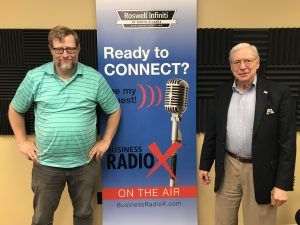

Tagged With: corporate finance, Dayton accounting, Dayton business advisory, Dayton CPA, Dayton CPA firm, domestic violence, employer violence, going postal, mezzanine debt, Michael Blake, Mike Blake, preventing workplace violence, R3 Continuum, restraining order, sexual harassment, temporary restraining order, threat management team, threat mitigation, threat notification system, violence in the workplace

Decision Vision Episode 19: How Should I Engage in Philanthropy?, An Interview with Chris Gabriel

June 13, 2019 by John Ray

Decision Vision
Decision Vision
Decision Vision Episode 19: How Should I Engage in Philanthropy?, An Interview with Chris Gabriel
Loading
00:00 /
RSS Feed
Share
Link
Embed

Download file

“Decision Vision” Host Mike Blake and Chris Gabriel

How Should I Engage in Philanthropy?

Most everyone would agree that it’s good to give back. But what’s the best way to give? Can giving become enabling or even toxic? Chris Gabriel has performed extensive research on philanthropy and individuals who are heavily philanthropic. He shares his insights with Host Mike Blake on this edition of “Decision Vision,” presented by Brady Ware.

Chris Gabriel, Age of Generosity, LLC and the Generosity Project

Chris Gabriel

Chris Gabriel runs a wealth management practice for a major investment firm. He also has more than 25 years of experience serving charitable organizations and their donors as a development director, as a nonprofit finance and fundraising consultant, and as a guide for successful charitable givers.  He has participated in the gift process from every vantage point as a staffer, board member, consultant, and financial advisor.

His process focuses on “philanthropic enabling” which seeks to maximize the value and benefits of charitable contributions for everyone involved. His mission is helping successful people to be even more generous and generous people to be even more successful.

Chris is an honors graduate of Yale College and earned his master’s degree from Oxford University. He also is the founder of Age of Generosity, LLC and of The Generosity Project, a nonprofit seeking to promote giving as an essential virtue of a life well lived. Chris is writing a set of books and building a giving consulting platform, both of which are scheduled to launch in 2020.

Michael Blake, Brady Ware & Company

Mike Blake, Host of “Decision Vision”

Michael Blake is Host of the “Decision Vision” podcast series and a Director of Brady Ware & Company. Mike specializes in the valuation of intellectual property-driven firms, such as software firms, aerospace firms and professional services firms, most frequently in the capacity as a transaction advisor, helping clients obtain great outcomes from complex transaction opportunities. He is also a specialist in the appraisal of intellectual properties as stand-alone assets, such as software, trade secrets, and patents.

Mike has been a full-time business appraiser for 13 years with public accounting firms, boutique business appraisal firms, and an owner of his own firm. Prior to that, he spent 8 years in venture capital and investment banking, including transactions in the U.S., Israel, Russia, Ukraine, and Belarus.

Brady Ware & Company

Brady Ware & Company is a regional full-service accounting and advisory firm which helps businesses and entrepreneurs make visions a reality. Brady Ware services clients nationally from its offices in Alpharetta, GA; Columbus and Dayton, OH; and Richmond, IN. The firm is growth minded, committed to the regions in which they operate, and most importantly, they make significant investments in their people and service offerings to meet the changing financial needs of those they are privileged to serve. The firm is dedicated to providing results that make a difference for its clients.

Decision Vision Podcast Series

“Decision Vision” is a podcast covering topics and issues facing small business owners and connecting them with solutions from leading experts. This series is presented by Brady Ware & Company. If you are a decision maker for a small business, we’d love to hear from you. Contact us at decisionvision@bradyware.com and make sure to listen to every Thursday to the “Decision Vision” podcast. Past episodes of “Decision Vision” can be found here. “Decision Vision” is produced and broadcast by Business RadioX®.

Visit Brady Ware & Company on social media:

LinkedIn:  https://www.linkedin.com/company/brady-ware/

Facebook: https://www.facebook.com/bradywareCPAs/

Twitter: https://twitter.com/BradyWare

Instagram: https://www.instagram.com/bradywarecompany/

Show Transcript

Intro: [00:00:01] Welcome to this Decision Vision, a podcast series focusing on critical business decisions, brought to you by Brady Ware & Company. Brady Ware is a regional, full-service, accounting and advisory that helps businesses and entrepreneurs make vision a reality.

Mike Blake: [00:00:20] And welcome back to Decision Vision, a podcast giving you, the listener, clear vision to make great decisions. In each episode, we discuss the process of making decision on a different topic. Rather than making recommendations because everyone’s circumstances are different, we talk to subject matter experts about how they would recommend thinking about that decision.

Mike Blake: [00:00:38] My name is Mike Blake, and I am your host for today’s program. I’m a Director at Brady Ware & Company, a full-service accounting firm based in Dayton, Ohio, with offices in Dayton; Columbus, Ohio; Richmond, Indiana; and Alpharetta, Georgia, which is where we are recording today. Brady Ware is sponsoring this podcast. If you like this podcast please subscribe on your favorite podcast aggregator, and please also consider leaving a review of the podcast as well.

Mike Blake: [00:01:02] And today, we’re going to be talking about philanthropy and, specifically, the decision as to whether or not you should engage in philanthropy or not engage in philanthropy. And in some respect, maybe that sounds like a loaded question. Of course, you should engage in philanthropy. We should all be interested in giving back to our communities, sending the elevator back down, whatever cliché you want to use. Who doesn’t like a good philanthropist? Who doesn’t like someone that’s going to be throwing $100 bills around or $1000 checks around, always going to be the life of the party? But when you get into philanthropy, it’s really not that simple. And philanthropy not done well can be not just not impactful but, in some cases, can actually be harmful.

Mike Blake: [00:01:51] One of the things I’ve done a lot of in the last few years, I’ve studied dynastic wealth, which means that wealth that has survived for a number of generations. And what a lot of people may not realize is that being rich actually is hard. It’s just hard in a different way. You have trouble paying your light bill, your cable bill, but then managing wealth responsibly is not easy, and it’s a skill set.

Mike Blake: [00:02:19] And there are wealthy families whose names that you would know – the Vanderbilt’s come to mind – that have literally philanthropies themselves into the ground. It’s that they’re very generous. And, of course, their names are on many buildings in New York. Their name is on Vanderbilt University and so forth. But as Anderson Cooper, who is a sixth generation Vanderbilt, has said, “There ain’t no trust fund waiting for me.” And 150 years ago, that would be unthinkable. And so, this is a complex topic that I hope as you, as the listeners, a little bit different than what we normally talk about, but one that I think is very important.

Mike Blake: [00:03:02] And joining us today is my very good friend, Chris Gabriel, and somebody who I’ve known for a number of years, longer than we would care to admit. Neither of us had gray hair, that’s how long we’ve known each other. And he’s been a student of philanthropy for as long as I have known him, and is starting to break out of his shell, and systematize the way that he shares his knowledge.

Mike Blake: [00:03:29] He runs a wealth management practice for a major investment firm that has more than 25 years of experience serving charitable organizations and their donors as a development director, as a nonprofit finance and fundraising consultant, and as a guide for successful charitable givers. He has participated in the gift process from every vantage point as a staff, or a board member consultant, and financial advisor.

Mike Blake: [00:03:52] His process focuses on philanthropic enabling, which seeks to maximize the value and benefits of charitable contributions for everyone involved. His mission is helping successful people to be even more generous and generous people to be even more successful.

Mike Blake: [00:04:07] Chris is an honors graduate of Yale College and earned his Master’s Degree from Oxford University. He is also the Founder of Age of Generosity LLC and the Generosity Project, a nonprofit seeking to promote giving as an essential virtue of a life well lived. Chris is writing a set of books and building a giving consulting platform, both of which are scheduled to launch in 2020. I’m going to hold you to that. Chris, thank you so much for coming on the program.

Chris Gabriel: [00:04:33] Thank you, Mike. It’s such a pleasure to be here.

Mike Blake: [00:04:36] So, what led you to start down the path of becoming an effective student of philanthropy.

Chris Gabriel: [00:04:44] Would you believe, midlife crisis?

Mike Blake: [00:04:47] I believe midlife crisis is responsible for a lot of things. I’ve seen people buy motorcycles, sports cars, and-

Chris Gabriel: [00:04:52] Yeah. It seemed more positive and less expensive than the proverbial red sports car. But in all seriousness, I was noodling over my career, and personal life, and other things that were important to me a few years back. And I was at that crossroads in life that the others have described as a transition from success to significance. And in thinking that through, I came to a realization of really four things that mattered to me – my spiritual life, my family and friends, my professional work, and my community service. And I wanted to be more deliberate and intentional about how to align those different forces together.

Chris Gabriel: [00:05:34] And in thinking that through, I recognized that the unifying thread through all those different areas and experiences at all stages of my life had been generosity, people who had been generous to me, generous acts that I had witnessed, or participated in, or benefited from. It really sparked a curiosity that’s led down a journey of getting to know more about the topic, talking with inspiring people, and really immersing myself in what I found to be a very worthwhile and enjoyable effort. So, that’s what brings us here this afternoon.

Mike Blake: [00:06:11] So, we’re in a society of greed is good. There’s a certain zeitgeist right now, I think, of sort of every person for themselves to a certain extent. And I won’t turn this into an NPR interview. I’ve already said zeitgeist. I don’t want to do that because that does sound like NPR. I don’t want to go in that direction. But in a culture that fosters and glorifies, really, self-reliance, and you earn what you get, you keep what you earn, et cetera, et cetera; in spite of all those kind of external forces, why do people give? And why do people give a lot?

Chris Gabriel: [00:06:54] Yeah, it’s a great question. And there’s a lot of different ways that you could approach it. I’ll start with what you might think of as an unusual source. So, Adam Smith is well-known as the protocapitalist, the founder of classical economics.

Mike Blake: [00:07:09] Of course.

Chris Gabriel: [00:07:09] He was actually a professor of moral philosophy. And while his very large difficult-to-read, coffee-table-sized book, Wealth of Nations, it gets most of the press. I think his best work is a much thinner volume called Theory of Moral Sentiments. And that book starts out by saying, essentially, as an observation of human nature and the human character, that there’s something about giving and altruism that just seems to be hardwired into who we are. These were his observations about the human condition. And we seemed to get pleasure from the success of others, and even more pleasure from participating in that success.

Chris Gabriel: [00:07:44] And it turns out, if you look across the spectrum of research on the topic, there’s almost unanimous agreement on that topic. One of the inspirations for my own understanding is a fellow by the name of James Doty, who is a Professor of Neurosurgery at Stanford. He also founded an organization called the Center for Compassion and Altruism Research and Education. The founding benefactor of which is the Dalai Lama, interesting friends.

Chris Gabriel: [00:08:14] And what Dr. Doty has realized in all of his work as a physician, so healing physical illness, there were bigger illnesses in play that were illnesses more of the spirit. And he felt compelled to travel down that path and see where it led. And what he discovered is a whole lot of research around the notion that giving is both psychologically and physiologically essential to health. It’s on par with exercise and your ideal body weight.

Chris Gabriel: [00:08:46] And there’s a whole system of physiological processes that relate to our sympathetic and parasympathetic nervous systems, if you want to get into the technical side of it. That mean that giving is rewarding to us in very selfish ways, and that our human evolution is designed to reward compassionate altruistic behavior.

Mike Blake: [00:09:09] So, it’s a dopamine rush at the end of the day, right?

Chris Gabriel: [00:09:12] Even as simple as in a smile. There’s a whole article in Psychology Today about how a simple smile triggers this whole cascade of effects, physiological effects in terms of neurotransmitters and activity in the brain. And not only does that benefit the person who receives the generous act of a smile, but it benefits the person who smiles as well, and there’s this virtuous cycle. So, again, even its most fundamental level, there’s something about generosity that’s worthwhile.

Mike Blake: [00:09:42] So, in your writings, I’ve had the privilege of seeing, I think before most people have, you linked giving with wisdom. Talk through that connection.

Chris Gabriel: [00:09:53] So, my working definition of wisdom is that it is — understanding that exists at the intersection of moral truth and practical experience. And there’s something about wisdom that really is fundamental to success in life. We live in a society that prizes knowledge and prizes achievement.

Chris Gabriel: [00:10:12] But the ancients may have one up on us here. They taught their children wisdom. They were concerned with helping them to make good decisions about how to live. And I think we missed out on a lot of that in terms of our education and a lot of our cultural milestones and markers. And generosity was at the center of that set of constant texts around successful living, whether you call that virtue, or wisdom, or anything else.

Chris Gabriel: [00:10:42] And what’s interesting, to connect Dr. Doty’s work and there are millions literally. If you Google generosity science, there’s over 38 million hits. There’s a ton of research done. And what that research suggests, essentially, is the guys in the white lab coats, the scientists, and the ladies in the white robes, the sages, all agree that this is something that’s meaningful and worthwhile.

Chris Gabriel: [00:11:06] If you want to use an example of how that type of wisdom intersects in real life, think of something really big and important that’s happened in our society in the course of the last couple of generations. Let’s think about the Civil Rights Movement. So, the Civil Rights Movement recognized that there was something unjust about racial inequality. And that sense of injustice drove people to organize around overcoming that great wrong in our society.

Chris Gabriel: [00:11:35] But at the same time, there was a sense of love that drove the behavior of the people that were protesting and advocating for change. And that love, which was generous on their part, really drove a constructive outcome from what might have been a very destructive set of forces in society. And there’s a wonderful sermon from Dr. Martin Luther King called Loving Your Enemies.

Mike Blake: [00:11:58] I’m familiar with that.

Chris Gabriel: [00:12:00] He preached in 1957 that summarizes this whole concept really brilliantly. And that, to me, is the definition of generosity and wisdom. It’s a good outcome. It’s a practical outcome. We improved society and humanity in the process, but it was really based on the sense of something fundamentally generous happening on the part of the people that were forwarding that change.

Mike Blake: [00:12:22] So, to that end, and I suspect this is not a random connection, you’ve developed something called the WISE Giving Framework. Can you walk us through it at high level? I mean, it’s a very detailed framework. So, we don’t have time but, at a high level, what is the WISE Framework?

Chris Gabriel: [00:12:39] Sure. And it’s a great question. So, you think about the nature of generosity, and the working title of one of the books I’m producing is called Transformational Generosity. And the idea of that transformation is that it’s this incredibly virtuous 360-degree cycle of positive change that happens when people give, and when they give wisely and well. And I think we’ll talk some more about what that means.

Chris Gabriel: [00:13:05] But the notion of constructive giving boils down to an appreciation of the internal benefits and the external benefits that are involved. And those benefits, again, if they’re done well produce positive change on the part of the giver, on the part of the receiver. And then, by extension is that effect ripples out into community and into society as a whole. You have all of these positive effects that are produced.

Chris Gabriel: [00:13:32] So, the WISE giving process, WISE is an acronym, and you know me well enough to know I’m a sucker for acronyms and alliteration.

Mike Blake: [00:13:38] Who doesn’t love a good acronym?

Chris Gabriel: [00:13:39] I can’t help myself. So WISE is well-grounded, inspired, satisfying, and effective. And those four components reflect that dynamic of internal and external benefits. Inspired and satisfying, things that relate to us and the benefits that we get from giving. Well-grounded and effective, looking outward to the beneficiaries of the giving and making sure that those gifts have the kind of impact that we want them to have. And so, the process aligns a set of different forces and factors together to help produce those good outcomes, back to the philanthropic enabling that you referenced at the outset.

Mike Blake: [00:14:16] So, I mean, why have a plan? It seems like one of the easiest thing is in the world to do is to just give money away, right?

Chris Gabriel: [00:14:23] Sure.

Mike Blake: [00:14:23] It’s not like nobody is going to take it. In most cases, you walk into, really, anything, it doesn’t have to be a nonprofit, “Hey, you want a thousand bucks?” “Sure.” So, why does there need to be a planning process around something that, at least, on a very fundamental level seems like a lot of the easiest thing in the world?

Chris Gabriel: [00:14:45] Yeah, it’s a great question. And on the one hand, you certainly don’t want to overthink it. There should be no paralysis by analysis when it comes to giving. But on the other hand, like every other aspect of life, better inputs lead to better outputs. And the more time and effort you put into a project or a decision, the more likely that there is going to be a good outcome for that decision.

Chris Gabriel: [00:15:05] I’ll give you a concrete example because I think it helps to illustrate the point. And it’s one of my favorites that I’ve come across in the generosity journey that I’ve been on. There is an entrepreneur in California, a Chinese-American named Kenneth Yang. And he’s founded a very successful tea company. And having gone back and forth to China for years in developing and promoting his business, he became very troubled by the plight of disabled Chinese orphans who are put in institutions, have very little in the way of support, and opportunities, and prospects. And this disturbed him.

Chris Gabriel: [00:15:42] And he reached a milestone in his life personally and professionally where he felt he needed to do something about that. And so, it became something of an existential crisis. Am I going to fold up my business, or sell it, or do something else? Am I going to dedicate myself full time to this effort about which I feel really passionate? Interwoven with all of that was, his favorite pastime was photography, really passionate, very capable photographer.

Chris Gabriel: [00:16:06] And so, as he’s thinking through all of these different issues and potential decisions, he seeks counsel from a wise guide. And the advice that he ends up getting and the conclusion that he arrives at is wonderfully powerful. He realized that his business was a platform and created its own opportunities.

Chris Gabriel: [00:16:26] And so, he started traveling back to China more intentionally and taking pictures of the smiling faces of the children that he was coming across in these different residences that he was going to visit. And then, he put those pictures on the packets of his tea, and described the circumstances by which the photos were taken, and the opportunity there was to support this great need that he had found. And he created a foundation to help serve that effort and raised millions of dollars which then got funneled back to the care of the children he was so concerned about.

Chris Gabriel: [00:16:58] So, he created this amazing dynamic. And I referenced the word power before one of my touchstones in this set of processes around giving is the idea of powerful giving, which is if you can imagine Venn Diagram, there’s opportunity, passion, and impact. And the things that we’re really passionate about, the things that we have an opportunity to pursue, and the pursuits that have the potential for impact. You align all those together, that’s really where the best giving happens. And I think Mr. Yang’s example is a great one.

Mike Blake: [00:17:28] So, I’d like to go off the script a little bit and follow up on something because I think you touched on something that is really important, which is the notion of a business as a platform. In my own work and study, as I’ve been studying dynastic wealth and sustain multigenerational wealth, one common theme I’ve noticed is that the business is the platform that supports that family and sustains it. And I think by extension, the business sustains giving because it’s the income generator.

Mike Blake: [00:18:02] And I’m curious if you think there’s a correlation between families that maintain kind of that family enterprise versus selling out, which is what the Vanderbilt stood, for example, made themselves more liquid, which means it’s easier to give your stuff away and screw it up, as opposed to having the platform business. Do you think there’s a connection between the ability to sustain philanthropy over the longer term if there’s that enterprise level engine, or am I just making this up, and I’m just sleep deprived on a Friday?

Chris Gabriel: [00:18:35] I think your intuition is correct. So, I work with a lot of entrepreneurs, and the goal is to help navigate through the various challenges and opportunities that they have when it comes to their businesses, and their families, and their communities. And giving can and should be at the center of that. And what’s interesting about giving, and we may talk more about this, but my work is focused not just on financial giving. That’s certainly an important piece of it, but there’s actually five types of giving.

Chris Gabriel: [00:19:05] There’s possessional giving, which is money and stuff. There is personal giving, which is time and talent. There is social giving, which is everything from hospitality and manners to civic duty. There is emotional giving, which starts to get more personal. It’s about connectivity, and vulnerability, and really being supportive of folks with whom you are close. And then, lastly, relational giving, which, in essence, is the sum of all the others. And that’s where the rubber meets the road in our lives.

Chris Gabriel: [00:19:30] We are defined, to a very large degree, by our relationships, and the quality of our life is determined by those relationships. And so, to get to an answer to your question, if you think about generosity across all those different dimensions, and then you look at what makes success in a family — and this is something that I’ve been thinking and working on a lot about lately with a colleague. We’ve been developing a set of constructs and processes around wealth and success.

Chris Gabriel: [00:19:56] And our appreciation has stemmed from the fact that wealth success has both a family and a financial component to it. And the family component’s really about relationships. And, of course, the financial component is about resources. And when you look at where success comes in — and by the way, success is almost unbelievably rare. The shirtsleeves-to-shirtsleeves phenomenon that we hear about is alive and well. 90% of wealthy families don’t make it past the third generation in terms of intact functioning family or finances.

Chris Gabriel: [00:20:32] And I think families that have businesses have a purpose, and a purpose that fosters relational connectivity and resource generation. And that is a great recipe for success, provided that the business is run well and provided that the relationships in the family survive the pressures of having the business. But I do think, in cases where I’ve seen where family wealth is sustained across generations — and I can think of several examples. One family, in particular, that’s into their sixth generation now and is still quite successful. There was a family business at the center of that.

Mike Blake: [00:21:04] And it underscores a fact that people don’t like to talk about, but there’s ample data to support this, the family unit is an economic unit. We don’t want to think about that necessarily, but economics does factor into that in many complicated ways.

Chris Gabriel: [00:21:23] Sure.

Mike Blake: [00:21:24] So, it’s hard to separate that. And, actually, that segues very nicely into my next question, which is, is it fair to categorize a will as a form of giving?

Chris Gabriel: [00:21:37] I think it is. Based on what I just shared, a will is a legal document that transfers assets. And, of course, it focuses on physical assets, possessions. But at the same time, it embeds values, and relationships, and other essential aspects of the family, and is a mechanism by which all of those different things are passed from one generation to another. So, certainly, families that do wealth transfer well and do legacy well have built into those mechanics. A lot of other elements that relate to values, and priorities, and purpose, and meaning.

Chris Gabriel: [00:22:18] And I had a friend, when I was describing some of this a few years back, who leaned back and thoughtfully said, “Well, what you’re really describing is operating at the intersection of money and meaning.” I said, “Yeah, that’s exactly right. I think I’m going to write that down. That’s really good.” And so, a will is a document that represents that, an intersection of money and meaning, and the values, and the relationships, and all the other aspects of the family. So, it is a form of giving. And then, that kind of estate planning, if it’s done wisely and well, I think can produce very good outcomes, or it can instill a lot of discord and division within a family if it’s not done well.

Mike Blake: [00:22:55] So, let’s talk about maybe potential, maybe downsides or pitfalls. What are some cases where giving can go bad, or what are the risks associated with giving?

Chris Gabriel: [00:23:13] That’s a great question. So, I’m a cheerleader for giving, and I think it’s good. And I’ve used the expression already, “If it’s done wisely and well.” In fact, Adam Smith makes this point later in the same book I referenced earlier. It, perhaps, is the human virtue of which there can be no excess if it’s done well. You can have too much of almost anything, but you can’t be too generous if you’re going about it the right way.

Chris Gabriel: [00:23:39] And so, what is the right way? If there is a formula, if we could reduce giving to a formula, I’d suggest it would be something along the lines of consider-it attitude, plus carrying action, equals a positive generous outcome. And so, where things go wrong is in those dynamics. If your attitude is not considerate, if your actions are not caring, and that’s two-way because there is a reciprocity in the giving dynamic. There is a giver and a receiver. And it’s a two-way process. And so, both the giver and receiver have responsibility in terms of what happens with the gift in the end.

Chris Gabriel: [00:24:13] And, in general, a poor attitude will lead towards a gift that doesn’t have the kind of meaning that it could have and benefit psychologically to either or both parties. And uncaring actions typically will lead to a result that suboptimal in terms of impact or, sort of, physical outcome. And there are lots of dynamics you can point to where those are real issues.

Chris Gabriel: [00:24:39] I’ll call your listeners’ attention to one particular book on this topic, which is really powerful. It’s by a local Atlantan, named Bob Lupton, and he wrote a book called Toxic Charity. And after decades spent assisting the poorest people in our community, he came to the conclusion that more harm than good was done out of a lot of well-meaning support, which robbed people of dignity and effective opportunity in the name of providing them with some kind of support. And a lot of times, that did more good for the people giving than people receiving. So, there is a lot of research out there on this topic.

Mike Blake: [00:25:14] So, that’s interesting. And it brings to mind something that I know you and I both wrestle with because we are both parents. And I have a teenager. Are either of your kids a teenager yet?

Chris Gabriel: [00:25:25] Yes.

Mike Blake: [00:25:25] Yes, okay. So-

Chris Gabriel: [00:25:26] Joyfully.

Mike Blake: [00:25:27] Yeah. So, that’s where most of my gray hair came from. And as parents, we are givers, right? And one of the things that I know you’re mindful of, and I’m mindful of, is where is the line between generosity and enabling, right? And enabling, actually, is a selfish act because what you’re really doing is you’re bribing somebody to make a problem staring you in the face to go away. That needs to be solved with some process that is much more difficult, right.

Mike Blake: [00:26:01] That, to me, strikes as very similar to that toxic charity that you’re describing where the road to hell is paved with the best of intentions, right? And there’s this line between charity and enabling. And even charities, if something’s not structured correctly, not just individuals, organizations, can be harmed with too much too fast, right?

Chris Gabriel: [00:26:30] Again, very thoughtful and insightful question. One of the great insights that I’ve taken away from all this work is positivity. And it relates very much to this point. There’s other research on this topic that I’m drawing on here that makes the point that if you look at what produces good outcomes in a charitable community development context, they almost always involve coming into this situation with a sense of positivity and optimism.

Chris Gabriel: [00:27:09] In other words, asking the question, “What is right here?” rather than “What is wrong?” If you’re showing up in this situation saying, “Everything here is horribly broken. You’re clearly terribly messed up. And I’m here to help you fix it,” that is a totally different dynamic than coming in and saying, “Thank you so much for the opportunity to be engaged with you. What is it that you want and need? And what is it that is going right in your life? And how can we help build on that?”

Chris Gabriel: [00:27:14] There’s a bunch of research that’s just come out of Harvard. Even in the most intractable problems that we have in the world, like systemic poverty, that point out that international aid efforts that focus on creating opportunity in a society have far greater success than ones that focus in on whatever the pathologies and difficulties are. So, to your question about parenthood, I’m totally guilty of exactly what you described, by the way, that-

Mike Blake: [00:28:01] We all are.

Chris Gabriel: [00:28:02] … enabling mindset because it’s just easier – let’s face it – to get that immediate issue out of the way because I’ve got other things to do. And I see myself, at times, robbing my kids of an opportunity to build their own sense of dignity, and self-confidence, and self-reliance just because it’s convenient for me at that particular moment. And I think we run into a lot of those same issues when we try to do good, and the most thoughtful people in that world are folks that recognize those challenges and look to approach their efforts in ways that get past them.

Mike Blake: [00:28:37] Now, I’m going to go off the script again because this topic begs kind of another question. And a very practical and unusual example, you may remember the ALS Ice Bucket Challenge-

Chris Gabriel: [00:28:51] Absolutely.

Mike Blake: [00:28:51] … of three or four years ago. And that raised roughly $120 million, which was something like what the ALS Association of United States raises over a 12-year period basically, right? And they were faced with an interesting problem that, all of a sudden, they had more money than they had the capacity to manage. And for them, it created a real problem because, (1), they received a lot of money, they have obviously a very important mission to battle that disease, and they’re extremely high profile. All right. Everybody knew what the ALS Ice Bucket. They didn’t even know what ALS was, right, people were dumping buckets of ice over their head. And I did it, but it was thoroughly physically traumatic.

Mike Blake: [00:29:40] But there’s need to be planning ideally on the side of the recipient too that if this windfall comes, right, we got to be prepared to use it and use it responsibly. Now, thankfully, the ALS Association, on the fly, I think, they figured it out and everything. I’ve read about them is that they handled it very well, what they have, and used it, put in endowments, they funded a lot of research. But even that’s a challenge, right? Even a firehose of generosity is still a firehose.

Chris Gabriel: [00:30:15] So, parenting comes to mind again, although I’ll use a business example first. Having been around a lot of businesses and entrepreneurs through the years, one of my observations is the number one cause of business failure is failure. And the number two cause is success. It is certainly possible to grow too fast to take on too much and to being unable to digest even good fortune. And charities are no different and, certainly, have those same kinds of risks.

Chris Gabriel: [00:30:48] And so, back to your question about planning, particularly, for people in society who have more in the way of resources and do have more in the way of potential impact, that set of responsibilities that goes along with that is really important because if you’re not careful about where you give your money and how you give it, then, again, you can end up messing up a good organization by being too generous, by giving it too much in a way that it’s not prepared and doesn’t have a good strategy or plan in place about how to manage it.

Chris Gabriel: [00:31:15] So, there is definitely a reciprocity that goes into good giving. Back to that concept of philanthropic enabling again, having a conversation and a real dialogue where everyone around the table is trying to achieve a positive outcome and figuring out what resources can be brought to bear, what challenges can those resources be applied towards, and what are the outcomes that we’re seeking, and what’s the strategy that’s in place to make that happen. That’s where you see the best giving.

Mike Blake: [00:31:40] Now, I want to shift gears a little bit. There’s a conversation that we had I think around corporate philanthropy and Warren Buffett. I call him Warren, He says, “Who the hell are you?” or “Why are you in my office?” But Warren Buffett has written about philanthropy at the corporate level, and whether or not it’s appropriate. And his position if you read his essays has been, “Look, it’s not my job to use this company as a platform to make any kind of social statement, or an economic statement, or a philosophical statement. My job is to build shareholder value, period, end of discussion.”

Mike Blake: [00:32:22] I’m curious if that’s something that’s ever kind of crossed your path in terms of the conversations you’ve had with your entrepreneurial clients. Where does that line — where do you think the optimal line is, or how do you how do you set that line between? As somebody of means, and you’re a steward of shareholder money, where do you think that line is in terms of supporting philanthropy through a corporate entity versus, “We’ll we’ll just declare a lot of dividends that people can give to whatever they want to”? Does that make any sense?

Chris Gabriel: [00:32:56] Oh, totally.

Mike Blake: [00:32:56] So, how do you kind of talk through that?

Chris Gabriel: [00:32:58] That’s a great question. And you’re illuminating a real debate. And it’s a debate between two different models of corporate purpose and structure. And there’s the shareholder model and there’s the stakeholder model. And the shareholder model is along the lines of what you described Mr. Buffett is advocating. And at the end of the day, it’s a simple job that we have as corporate stewards. It’s to make money. And what the owners of our companies do with that money is up to them.

Chris Gabriel: [00:33:24] The stakeholder model has a more complex view of corporate structure and behavior and recognizes that corporations are, in fact, engaged in various ways with various groups from owners, of course, but also employees, and managers, the communities in which they operate, society as a whole. And there’s an interplay potentially between those different elements that’s important to consider. And it fits into that framework better than it does the shareholder framework.

Chris Gabriel: [00:33:57] My personal view is while I’m as capitalist as they come or, at least, believe in the virtues and benefits of capitalism. I think, at least, there should be a balance, if not more of an appreciation for the stakeholder model. And I think it’s good business, as well as being something that’s an extension of values even.

Chris Gabriel: [00:34:22] From a legal standpoint, if you think about the way corporations are treated under the law, in areas like free speech, for instance. Corporations are imagined to be like people. And in the same way that people get all of the benefits that I had described earlier from generosity, companies can as well. And I think that thoughtful stewards of corporate resources can make good decisions about how to apply those in service to needs in their community, they can have a very positive impact on the company, as well as on the community.

Chris Gabriel: [00:34:48] However, I think you can go awry there as in other areas. And there are some trends right now that I think are not so constructive. And this is editorializing, but there are some institutional investors that are getting on their soapboxes and telling companies, “Not only do we want you to do all these things in the name of stakeholder value, but we want to tell you what you should be doing.” And that I find more troubling. So, there is a balance to strike, I would say. But it’s a great question in there. I don’t think there’s an easy answer or necessarily one that fits all enterprises. It’s certainly something that if I were in management, I would want to think through.

Mike Blake: [00:35:22] A great example of that is the Koch Brothers, right? Regardless of what you think of their political outlook, they are very clear that they’re in a certain social political camp, and they’re not afraid of using their wealth, their power, their enterprise to support that. And I think it’s an open question as to what impact that’s had on their business, right. To some people, I’m sure they’re cheering them right along, right. That’s great. What do the Koch Brothers sell? You sell carpet. Okay. I’m going to buy as much carpet as I possibly can.

Mike Blake: [00:35:58] But there are others that are strongly philosophically opposed to their political viewpoint, would prefer they be defeated rather than advanced. And it probably cost them some customers. And there’s probably no way or, at least, nobody’s really cared to take a look to see kind of what the net is, but we see examples of that struggle happening right in front of us in real time. And for us, as citizens — at least, for myself. I don’t want to lump you into this. As a citizen who is a voter, I’m not really all that interested in what Koch Brothers do or do not do per se, but it clearly has an impact. And I’m not a shareholder either.

Chris Gabriel: [00:36:44] Right.

Mike Blake: [00:36:44] Right? And it raises some very interesting questions about that web between individual philosophy enterprise and society that we’ll never solve.

Chris Gabriel: [00:36:57] And there are cynics out there that will argue that any giving by very wealthy donors is inherently suspect and corrupt. If you want to take it all the way into a Marxist framework. Marx believed that giving, in general, was immoral because it was the ill-gotten fruits of the proletariat labor that the bourgeoisie unjustly accumulated, and then doled back out to them. It was a form of oppression.

Chris Gabriel: [00:37:29] You actually prompted me to do this in one of our many conversations over libations. In the interest of really exploring the challenges to the giving paradigm, there is a section in in one of the books that will be coming out looking to the most intractable opponents of a generosity framework and, sort of, gauging the ideas that I’m developing and promoting against their philosophy, one of which is Marx.

Chris Gabriel: [00:38:03] At the one extreme end of the spectrum, to Marxist communitarianism, if you will. And at the other end of the spectrum is extreme individualism in the form of Ayn Rand. And I think they both get humanity and human nature wrong. And there’s something in between. Again, back to Adam Smith about us that just is naturally generous.

Chris Gabriel: [00:38:20] And so, applying that in the context that you described, I think it is interesting that many of the famous philanthropists distinguished between their businesses and their giving. And that trend has continued up to the present day with with folks like Bill Gates. And, again, a cynic might say that it’s not very difficult to give away vast amounts of money if you have vast amounts of money.

Chris Gabriel: [00:38:47] One friend with whom I had a conversation along these lines early on in my process just shook his head and said, “Look, this is really waste management. Let’s be honest. We give all these people all these accolades because they’re so generous. But in reality, they’d never spend a tiny fraction of the money they have. They could light it on fire, they could throw it in the ocean, or they could give it away. We applaud them for giving it away and maybe so, but it’s not any great sacrifice. And it’s really no act of nobility on their part.”

Chris Gabriel: [00:39:13] I don’t share that view entirely. In fact, a couple of the billionaires that I’ve interviewed have made the point, because I’ve asked them, “How would you rate the difficulty of giving money away versus making it?” and they’ve said, “It’s, in many respects, more difficult to give it away wisely and well than it is to make it in the first place.” And so, I think, you rightly point out that there’s a lot of complexity to this and a lot of challenges involved in giving in and being a responsible steward of the assets that you’ve been given.

Mike Blake: [00:39:44] So, you mentioned Bill Gates I want to. I want to address that because Bill Gates is such an interesting guy in that 20 years ago, for a lot of us, he was a laughing stock, even seen as a somewhat sinister figure because he was the guy that foisted Windows 98 on us, right. As if he was the guy who wrote the code. And he was the guy that was crushing this plucky little company in Cupertino called Apple. And they were so mean. And anything that was innovative, they’d buy up and crush. That was the narrative for Bill Gates, right?

Chris Gabriel: [00:40:24] And Lotus and my beloved Word Perfect-

Mike Blake: [00:40:27] There you go.

Chris Gabriel: [00:40:27] … all went the way of the dinosaur.

Mike Blake: [00:40:31] And if you’re a gamer, Halo, that was supposed to be a Mac-only platform. A lot of people blame the destruction of the Mac as a gaming platform on buying Bungie and Halo, right. right.

Mike Blake: [00:40:44] Fast forward now, I’m not sure I can name a more famous philanthropist of our time, right. And, really, in my own opinion, I think, deservedly, his reputation has been rehabilitated, and he’s successfully changed the narrative. And he’s come out – you know this, but the audience may not – that he’s basically pledged to give away 99% of his wealth. That is his mission is that before he and Melinda go to the great windows machine in the sky that they’re going to give away 99% of their wealth. And not only are they going to do that, but they are encouraging other billionaires – and Warren Buffett has signed on with this and a few others have – to also give away the bulk of their assets because, as your friend noted, what are you going to do with it? Are you going to build yourself a solid gold pyramid when you go or freeze your head like Walt Disney and hope you can be resuscitated? So, I’m curious in that. How does that movement mesh, or is it described at all by your WISE framework?

Chris Gabriel: [00:41:55] Yeah, it’s a great question. And part of what’s interesting about that, if you look into where that idea came from, it actually had very humble origins. And one of the things I’d like to overcome in my work is the misperception that generosity is narrowly defined as the province of only the very wealthy in terms of professional generosity, or only the saintly in terms of personal generosity. If I’m not Mother Teresa, then what good is what I do? What kind of impact is it going to have?

Chris Gabriel: [00:42:32] And as a case in point, if you actually look at the origins of the billionaires giving pledge, Gates himself credits an organization called Bolder Giving, which was a group started by a husband and wife that was designed to be a platform to celebrate extraordinary acts of generosity on the part of everyday, normal people like us. And they defined generosity in terms of time and talent, as well as treasure. And they found stories, and posted them, and celebrated them. And it grew into something of a mini movement. And there are school teachers, and college students, and retirees, and folks from all walks of life, every age and stage.

Chris Gabriel: [00:43:14] And Gates said that he read an account of this group and the work that they were doing, and that was the inspiration for him to say, “If I’m not doing at least as much as these folks, then shame on me.” And I think a lot of his peers felt the same once they were presented with the opportunity.

Chris Gabriel: [00:43:32] And back to the idea of generosity having its selfish benefits as well, David Rubenstein who founded the Carlyle Group, and is one of the billionaires I’ve interviewed, he’s so rich that he bought the — and so generous that he bought one of the few existing copies of the Magna Carta on a whim, so that he could donate it to America, and then built the building to put it in where it now resides in the National Archives. So, yeah, it’s nice if you can do that.

Chris Gabriel: [00:44:00] I asked him about the giving pledge, in particular, and he said he was already very much inclined along these lines and was doing the same thing, but was happy to sort of sign on as a public participant. But the point that he made was even more blunt. He said, “Look. if you’ve got several billion dollars, and you’re 70 years old, and you don’t know what you’re going to do with it, that’s not only a problem for society, that’s a problem for you. That is going to cause you a great deal of grief.” And back to the idea of family and wealth success, if you haven’t thought that clearly through, then you’re going to be creating a whole lot of heartache and headache for people that are close to you.

Mike Blake: [00:44:40] We’re running a little a little long, but there’s a couple more questions I’ve got to get in here because I feel like I won’t have done the topic justice. To that point that you just made, I mean, do some people think of wealth almost like a ticking time bomb that you got to do something with it? And particularly, maybe the longer you hang onto it, that’s when the ravens or the vultures in the family starts circling, and you see more agendas kind of pop up; whereas, if you’ve already said, “Hey, look, guys, this is already gone. Don’t worry about it.” Is that something you see, or is that something I’m just making up?

Chris Gabriel: [00:45:19] No, I think it’s very real. Look, money is a tool. It’s the meta tool. It’s the tools by which we acquire all other tools.

Mike Blake: [00:45:26] It’s a power tool.

Chris Gabriel: [00:45:27] It’s a power tool. So, it’s extraordinarily important. And it is central to our lives. And great spiritual and philosophical teachings focus on it for a reason. At the same time, like any other form of technology or tool, it can be used for good or bad. A hammer is great if I want to build a house. It’s not so good. If I hit you in the head with it. And money is the same way. And the way in which money is used for ill is when people prioritize it above other values and above other people. And that kind of corruption is easy to fall prey to. And you see that happen in families all the time and in other parts of our society.

Chris Gabriel: [00:46:07] So, these are very real challenges. And part of what I’ve discovered in the course of the research I’ve done, coming back again to this idea of wealth success, the common denominator among families that beat those odds and actually survive in terms of relationships and resources are families that are generous. And there are families that are generous both internally and externally. They treat each other well, and they treat the people around them well. And as an expression of that generosity, they are very active and committed to causes in their communities.

Chris Gabriel: [00:46:39] And so, there’s something very healthy about all of these forces and how they work together in people’s lives. That is one of the reasons why I’m such a tireless advocate for giving. I think it truly is an essential virtue of a life well lived, and it’s an antidote for much of what ails our society and our lives. And everyone, again, from the scientists to the sages draws the same conclusion.

Mike Blake: [00:47:06] Again, this is one of these topics we could easily open a bottle of 18-year-old and just sort of do this three hours or so.

Chris Gabriel: [00:47:14] Can we do that?

Mike Blake: [00:47:15] Oh, it’s tempting, but we can’t do that. We’ve got to be respectful of your time and that of others. If somebody within the earshot of this podcast would like to learn more about generosity, and how to structure it, and how to be generous in a way that is mutually beneficial and kind of meets that WISE framework, can they contact you to find out more?

Chris Gabriel: [00:47:42] Absolutely.

Mike Blake: [00:47:42] How do they do that?

Chris Gabriel: [00:47:43] I’d welcome any correspondence. In fact, I’m looking for great stories about generosity. I love being connected to people who are interested in being effectively generous and working with the types of charitable and nonprofit organizations to help them be more effective in engaging with their constituents and supporters.

Chris Gabriel: [00:48:03] As we’re preparing this platform of generosity to launch at some point, our public-facing side of that is not yet up, but I’d encourage people and welcome email correspondence to my personal email address, which is ccgabriel2@mindspring.com, flash from the past, and would love to hear from folks.

Chris Gabriel: [00:48:25] And for a final thought, since a lot of your listeners, I imagine, are successful executives, and entrepreneurs, and business people, or on a trajectory that’s going to lead them in that direction, I will put in a plug for effective use of community capital, and say from a very practical sense, the best giving gets done with appreciated assets. And those appreciated assets, if there are interests in a business that you own or help to start, are often the best ways.

Chris Gabriel: [00:48:55] And we get back to that idea of the three things that matter to an entrepreneur. It’s the business, it’s their family, and it’s their community, in many cases. And coming up with ways to balance all those out and, in essence, redirect community capital away from Uncle Sam and towards causes that you really care about, that’s one of my favorite things to do. So, if there’s any opportunity along those lines in the part of any of your listeners, I would love to hear from them.

Mike Blake: [00:49:18] All right. Well, I think that’s going to wrap it up for today’s program, a program that has ranged from Karl Marx to Adam Smith. You don’t see that every day, I’ll tell you that right now, and certainly not on this podcast. But I would like to thank Chris Gabriel so much for joining us and sharing his expertise with us. This has just been a heck of an intellectual exercise and a lot of information. I don’t think you can find anywhere else. So, thank you so much for joining us.

Chris Gabriel: [00:49:43] My pleasure. Thank you, Mike.

Mike Blake: [00:49:44] We’ll be exploring a new topic each week. So, please tune in, so that when you’re faced with your next business decision, you have clear vision when making it. If you enjoy this podcast, please consider leaving a review with your favorite podcast aggregator. It helps people find us, so that we can help them. Once again, this is Mike Blake. Our sponsor is Brady Ware & Company, and this has been the Decision Vision Podcast.


Tagged With: Corporate Philanthropy, Dayton accounting, Dayton business advisory, Dayton CPA, Dayton CPA firm, dopimine rush, emotional giving, financial giving, generosity, giving, giving back, giving to charities, Michael Blake, Mike Blake, personal giving, philanthrophy, philanthropists, planned giving, relational giving, responsible giving, social giving, The Generosity Project, Toxic Charity, Transformational Generosity

Decision Vision Episode 18: Should I close my business? – An Interview with Milas King

June 6, 2019 by John Ray

Decision Vision
Decision Vision
Decision Vision Episode 18: Should I close my business? – An Interview with Milas King
Loading
00:00 /
RSS Feed
Share
Link
Embed

Download file

“Decision Vision” Host Mike Blake and Milas King, Co-Founder and Co-Owner of Davinci’s Pizza

Should I close my business?

How do you come to this decision? What are the factors you should consider? What’s the right way to close a business such that you’ll be able to live to fight another day? In a frank conversation with “Decision Vision” Host Michael Blake, Milas King of Davinci’s Pizza answers these questions and more.

Milas King, Davinci’s Pizza

Milas King, Co-Founder and Co-Owner of Davinci’s Pizza

Milas King is the Co-Founder and Co-Owner of DaVinci’s Pizza, with locations in Midtown Atlanta, Smyrna, and Kennesaw, Georgia. Davinci’s Pizza is recognized for their made from scratch pizzas and other menu items, great service, and community involvement.

Milas is also the owner of an e-commerce company and a real estate development company.


Michael Blake, Brady Ware & Company

Mike Blake, Host of “Decision Vision”

Michael Blake is Host of the “Decision Vision” podcast series and a Director of Brady Ware & Company. Mike specializes in the valuation of intellectual property-driven firms, such as software firms, aerospace firms and professional services firms, most frequently in the capacity as a transaction advisor, helping clients obtain great outcomes from complex transaction opportunities. He is also a specialist in the appraisal of intellectual properties as stand-alone assets, such as software, trade secrets, and patents.

Mike has been a full-time business appraiser for 13 years with public accounting firms, boutique business appraisal firms, and an owner of his own firm. Prior to that, he spent 8 years in venture capital and investment banking, including transactions in the U.S., Israel, Russia, Ukraine, and Belarus.

Brady Ware & Company

Brady Ware & Company is a regional full-service accounting and advisory firm which helps businesses and entrepreneurs make visions a reality. Brady Ware services clients nationally from its offices in Alpharetta, GA; Columbus and Dayton, OH; and Richmond, IN. The firm is growth minded, committed to the regions in which they operate, and most importantly, they make significant investments in their people and service offerings to meet the changing financial needs of those they are privileged to serve. The firm is dedicated to providing results that make a difference for its clients.

Decision Vision Podcast Series

“Decision Vision” is a podcast covering topics and issues facing small business owners and connecting them with solutions from leading experts. This series is presented by Brady Ware & Company. If you are a decision maker for a small business, we’d love to hear from you. Contact us at decisionvision@bradyware.com and make sure to listen to every Thursday to the “Decision Vision” podcast. Past episodes of “Decision Vision” can be found here. “Decision Vision” is produced and broadcast by Business RadioX®.

Visit Brady Ware & Company on social media:

LinkedIn:  https://www.linkedin.com/company/brady-ware/

Facebook: https://www.facebook.com/bradywareCPAs/

Twitter: https://twitter.com/BradyWare

Instagram: https://www.instagram.com/bradywarecompany/

Show Transcript

Intro: [00:00:01] Welcome to Decision Vision, a podcast series focusing on critical business decisions, brought to you by Brady Ware & Company. Brady Ware is a regional full-service, accounting and advisory firm that helps businesses and entrepreneurs make vision a reality.

Michael Blake: [00:00:20] And welcome to another episode of Decision Vision, a podcast giving you, the listener, clear vision to make great decisions. In each episode, we’re discussing the process of making decision on a different topic. Rather than making recommendations because everyone’s circumstances are different, we will talk to subject matter experts about how they would recommend thinking about that decision.

Michael Blake: [00:00:38] My name is Mike Blake, and I am your host for today’s program. I’m a Director at Brady Ware & Company, a full-service accounting firm based in Dayton, Ohio, with offices in Dayton; Columbus, Ohio; Richmond, Indiana; and Alpharetta, Georgia, which is where we are recording today. Brady Ware is sponsoring this podcast. If you like this podcast, please subscribe on your favorite podcast aggregator, and please also consider leaving a review of the podcast as well.

Michael Blake: [00:01:03] And so, our topic today is, should you close your business? And I predict this topic is going to have a lot of interest because it’s kind of one of those topics nobody wants to talk about. When you’re an entrepreneur, particularly if you’re a first-time entrepreneur, you sort of have boundless optimism. The last thing you want to think about is the end of the road. You hope it never happens.

Michael Blake: [00:01:29] And talking to entrepreneurs about closing a business is like talking to your parents or your grandparents about their funeral arrangements. It’s about as pleasant and comfortable a conversation, and you’re about as enthusiastic engagement. But the fact of the matter is that not every business survives forever. In fact, most businesses don’t survive even a year or two. And sometimes, closing a business effectively and efficiency is as important as how you run the business because if you do it the wrong way the results can be very unpleasant and even disastrous. If you do it the right way, that often means that you, kind of, live to fight another day.

Michael Blake: [00:02:15] And I am delighted to invite Milas King on the program. Milas is a serial entrepreneur. And he’s usually on the other side of the microphone rather than being the target here of the interview. And I’m very grateful. And I hope our listeners are grateful because not everyone wants to talk about this kind of subject. Milas is willing to do it. I think it takes a lot of courage, It takes a lot of emotional maturity to do that because you do talk about some very tough subjects and will probably reliving some tough moments here. And I’m very grateful that Milas is willing to do that with us today.

Michael Blake: [00:02:56] Milas is co-founder of DaVinci’s Pizzeria, which is a small pizza chain with various locations around Atlanta. Founded in 2006 as an original concept, they built their brand on forgotten values in today’s distracted tech-driven society. I say this as I’m reading off of both a smartphone and an iPad. Be the neighborhood pizzeria of choice to the passionate commitment to food quality, guest experience, employee empowerment, and community advocacy is their motto. Milas, thank you so much for joining us today.

Milas King: [00:03:26] Okay. Thanks for having me.

Michael Blake: [00:03:28] So, you’ve got one business that we just talked about. You’re in the pizza business. Any other businesses? You’re not just a one-trick pony, are you?

Milas King: [00:03:39] Yeah, I have a couple of things. I have an e-commerce group in Scanner Society, and I just started a real estate company.

Michael Blake: [00:03:50] And I kind of wonder if you have — I’m going to go off the script for just a second. I promise I’ll come back to it. But that answer kind of begs the question. You’ve closed a couple of businesses in your career.

Milas King: [00:04:02] That’s correct.

Michael Blake: [00:04:03] Is the fact that you had to close a couple of businesses, do you think that drives the fact that you have multiple businesses now, or that’s sort of a diversification thing?

Milas King: [00:04:11] Sort of, because it’s like you put a couple of horses in the race and see which one you think you’re going to go all in on. Because that way, for me, it has worked out better. So, I didn’t have two to three years not doing anything else when I could have been — maybe something would have shown better promise in the beginning. So, yes, that is a part of it.

Michael Blake: [00:04:36] So, what kinds of businesses have you had and have had to close over the years?

Milas King: [00:04:42] The first one was my original passion, which was video production. So, I did a studio back in ’92. I had a building, employees, and then the DSLR came out. And what happened was all the corporate clients I used to get, they started going to the schools. And then, the schools, back then, you have to find a good film program. Now, everybody had a film program. So, you have this massive influx of every quarter, media, professionals coming out. And then the corporate people will just start going to these local colleges to get their things produced. And so, it really just dried up and kind of disrupted the business.

Michael Blake: [00:05:22] So, overnight, that technology made your business to something viable and, I hope, financially successful into something that was really going to be a struggle because, in effect, it democratized your skillset.

Milas King: [00:05:35] Absolutely. When I started, one of the major things I did was weddings. Wedding videos is a big one. All the studios can just go in on Craigslist and say, “I do your wedding video $400-$500.” And I used to get around two grand to do a wedding video. And there was a two-year span where the prices just cratered. And it got — I looked around at my numbers, this is year eight or nine of me doing over hundreds of weddings, and yet my sales were down. My network was better, my work was better, and my marketing was better, but sales were dropping. That’s when I knew it was the forest.

Michael Blake: [00:06:11] At some point, you can’t fight city hall, right?

Milas King: [00:06:13] Yes.

Michael Blake: [00:06:13] It doesn’t matter how good you are, at some point, it’s not going to happen. Now, what else? You’ve had at least one other business that was closed?

Milas King: [00:06:19] That was another pizza chain, Big Fella’s. That was before 9/11. And we try to compete in a space with our brand that wasn’t our strength. So, we were trying to use, for example, pizza-controlled pricing. Papa Johns was quality and Domino’s was service. And yet, we didn’t hang our hat on anything. We tried to compete with them all in that, and that really did the scene.

Michael Blake: [00:06:44] So, you learned there was a reason they all sort of picked their one thing.

Milas King: [00:06:48] Exactly.

Michael Blake: [00:06:50] It couldn’t be all things to all people.

Milas King: [00:06:52] Right.

Michael Blake: [00:06:52] So, I want to focus on that because you’re in business with my wife, and she told me something that you told her, that I’ve talked to dozens of people now, which I think is is extremely profound. I’m going to ask this in a different way because I want you to tell it. Your first pizza business was not successful. You, then, turned around and start another one. Why?

Milas King: [00:07:14] I told my partner, literally after we close, I told him, “We have to do it again.” I said, “Otherwise, everything we just learned is a waste.” And he looked at me. He was like, “Whatever, man.” He was not trying to hear what we just went through. And I just said, “We got to. All of these, we just learned. We would do everything differently. So, let’s do it differently.”

Michael Blake: [00:07:37] And that makes perfect sense because you literally just paid one of the most expensive tuitions you could possibly imagine, but without the benefit of student loans even.

Milas King: [00:07:46] Right.

Michael Blake: [00:07:46] We’ll probably get into this, right? But then, you’re right, you’ve just learned that maybe your execution may have been great, all the things are great, but the fundamental strategy was it couldn’t be all things to all people. You try it again, and then maybe you can have some success.

Milas King: [00:08:05] Yes.

Michael Blake: [00:08:05] And that’s not something that’s celebrated enough. Google is famous for the fail fast, and they celebrate failure, right? I think it’s because of that celebration of failure that makes them what they are is because failure is a fact of life, but as Bill Gates said, “Success is a lousy teacher.”

Milas King: [00:08:23] Right.

Michael Blake: [00:08:27] So, pick either one of the businesses, it doesn’t matter. How hard is it to come to that realization that, “This thing just got to stop. We’re at the end”?

Milas King: [00:08:39] Well, if you pay attention to your business and the data, you let the data lead you there. When you look at everything you had going for you, and if it all starts to move against you, and you look outside your company to see what other ones are experiencing, it’s easier to accept that you did what you could, and you might need to pivot to something else.

Michael Blake: [00:09:00] Interesting. So, you look at, I guess, in the photo and the video business, you saw it wasn’t just you that was really suffering, all your competitors couldn’t give their businesses away.

Milas King: [00:09:12] Absolutely. Like I used to do music videos. And with the iPhone all the artists are shooting their own. And they start trying to kind of use their name as a credit card. And the record labels used to pay for it. Then, they start taking it out of the artists. So, all that just collapsed, as an example.

Michael Blake: [00:09:31] And in some respect, I mean, it’s smart not to fight that. Is this even a part of my business that is now going away due to technology? And I lost one of my oldest clients, actually a 10-year client to that technology, right. But in the cold, hard light of day, I have to acknowledge that they’re probably making the better choice by going with the automated, right. And I’ve got to pivot and find something else useful to do as well.

Milas King: [00:09:59] Right.

Michael Blake: [00:10:00] Technology is just one thing that’s really hard to fight.

Milas King: [00:10:03] Yes.

Michael Blake: [00:10:03] So, you talked about data, and I know that you’re a big data guy. What are some of those data points that kind of say, “Well, this is not just a speed bump. This is a structural event”?

Milas King: [00:10:23] The video or the pizza?

Michael Blake: [00:10:24] Either one.

Milas King: [00:10:24] Okay. Or I can do both quickly.

Michael Blake: [00:10:27] or both.

Milas King: [00:10:27] In video, like I said, my network was stronger, my product was as good as it’s ever been, and my marketing was as good as it’s ever been, but the sales were dropping precipitously. And then, when I looked at the technology, and what the students were doing, and why it was dropping, then I knew. It was an easy solution. It wasn’t me. It’s like trying to sell pages now. It’s just something, no matter what your marketing is, you can’t sell pages.

Michael Blake: [00:10:53] Yeah.

Milas King: [00:10:54] So-

Michael Blake: [00:10:54] I’m expecting a call from 1986.

Milas King: [00:10:56] Right. Right. So, I knew, that one, we had to pivot. Currently, even though we rebooted in ’06 for DaVinci’s, the pizzeria, now, 13 years later, things have changed again. We have a lot of — perfect example. Labor costs are at a search level that was never there before. And I’ve said before, you can’t pay someone $20 an hour to take an order. Yes, they need that to live, but it’s just not there in food. It’s not efficient.

Michael Blake: [00:11:28] Right. You can’t sell $30 pizzas.

Milas King: [00:11:29] Right. Exactly.

Michael Blake: [00:11:31] Markets will not sustain that.

Milas King: [00:11:32] Right. And then another issue is the apps. The delivery services have wedged themselves more and more in between our customer. And so, we’re losing data and insight to our customers. For example, Uber Eats, they take 30% of the order and we have none of the data.

Michael Blake: [00:11:49] Now, I’ve heard about that cut and the fact that it’s — I read in The Wall Street Journal about four or six weeks ago, something like that, that these ordered services are being very disruptive in a different way, just making it harder to operate a business because businesses are operating a take-out business.

Milas King: [00:12:08] Yes.

Michael Blake: [00:12:09] Just different operationally than a sit-down, quick-service restaurant, right?

Milas King: [00:12:14] Correct.

Michael Blake: [00:12:14] But now, if you don’t have that, you’re dead because so many Americans now, culturally, they don’t want to come into the restaurant, right?

Milas King: [00:12:23] Right.

Michael Blake: [00:12:24] But it massively disrupts your operations. So, I’ve understood that part, and that I did not know it’s 30%, I mean, with margins of a restaurant. Not many restaurants make a 30% margin, period.

Milas King: [00:12:38] Right.

Michael Blake: [00:12:38] So, the economics have changed there. I never thought about the data. So, now, they’re also stealing the data from you.

Milas King: [00:12:45] Right.

Michael Blake: [00:12:46] And you don’t get any of that as a pastor.

Milas King: [00:12:48] Exactly.

Michael Blake: [00:12:48] So, you make less money. Your operations are less efficient.

Milas King: [00:12:53] Yes.

Michael Blake: [00:12:53] And you know less about your customers.

Milas King: [00:12:55] Exactly.

Michael Blake: [00:12:56] And you own less of the relationship.

Milas King: [00:12:57] Right.

Michael Blake: [00:12:57] Other than that it sounds like a great deal.

Milas King: [00:12:59] Right, right. And so, Uber or apps as a general, I’d say, two years ago was probably 1% to 2% of our revenue. It’s now 9%. So, it’s having an outsized impact on our margins.

Michael Blake: [00:13:12] And then, you’ve got to think about too, when you started in 2006, you started a restaurant thinking that you needed a certain footprint because you’re going to have traffic parking. In Buckhead, that ain’t easy either, right?

Milas King: [00:13:26] Right.

Michael Blake: [00:13:27] And now you’ve got, I’m guessing an asset mismatch.

Milas King: [00:13:32] Yes.

Michael Blake: [00:13:32] Right. If that’s really where it’s going, at some point, these pizza chains is just going to be a counter.

Milas King: [00:13:38] Right, exactly.

Michael Blake: [00:13:39] They’ll be just sitting, and that means less real estate costs, and maybe that’s how the business model ultimately works. But if you’re caught in the middle on a 10=year lease, God forbids you own the building.

Milas King: [00:13:48] Correct.

Michael Blake: [00:13:48] You can’t just sort of switch that on a dime, can you?

Milas King: [00:13:52] Right.

Michael Blake: [00:13:52] And that’s another example of technology coming in and you can’t fight it. You either going to adapt or you’re not.

Milas King: [00:14:02] Yeah. So, now we’ve covered labor. We’ve covered some logistics. Now, let’s talk about the actual transactional costs. Five to six years ago, people used cash. And so, the credit cards was as a mix less than a percent of your revenue. Now, we’re getting the full hit of that straight to margins 2% to 3% because everybody uses credit card.

Michael Blake: [00:14:23] I haven’t of thought of that either, but I can’t remember the last time I paid cash for a meal.

Milas King: [00:14:28] So, we do our own 400K in revenue per month. If you’re talking 3% of that, that is 12 grand right off the bottom line. That wasn’t there four or five years ago.

Michael Blake: [00:14:41] Yeah, yeah.

Milas King: [00:14:41] Now, 9% of app orders. So, now, we’re paying-

Michael Blake: [00:14:45] 36 grand out.

Milas King: [00:14:47] Exactly, exactly. And then, the labor costs are basically creeping up to $20 an hour. So, we feel like the walls are beginning to close in.

Michael Blake: [00:14:58] Yeah. So, I guess what’s going to happen then, you either got to raise your prices, and that’s either going to happen because you can raise the prices or you can wait it out while your customers go away, but then your competitors will either have to raise prices or shut down and sort of wait for that readjustment, or do you say, “You know what, it’s just time to cut our losses. Let’s get out early.”

Milas King: [00:15:23] It is because it’s becoming a scale game. So, for someone to pick up our restaurants would be a buyer who’s looking to really start scaling, and we just don’t have the capital. Because even today, these businesses are going to, “Let’s compete by seeing who can lose the money the longest. So, then we capture the market share, and then grow.”

Michael Blake: [00:15:44] Yeah. And I’ve likened that and you see that in the startup world all the time, right. The startup world, even Uber, and Lyft, and those guys, they’re not making any money, they’ve gone in public, but the startup world or if you’ve got a structural issue with your business, it’s almost like chemotherapy.

Milas King: [00:16:03] Right, yeah.

Michael Blake: [00:16:04] Chemotherapy is really just a race to see if the cancer dies before the patient does.

Milas King: [00:16:12] Right.

Michael Blake: [00:16:12] Right. And that’s exactly what you’re, kind of, describing if you try to stick it out, right. Does the other guy die first and then I’m-

Milas King: [00:16:20] Exactly.

Michael Blake: [00:16:20] … sort of there in a smaller market. And that’s not easy.

Milas King: [00:16:25] Right.

Michael Blake: [00:16:25] So, one of the things that strikes me about you – I know you a little bit – that I think it might differentiate you a little bit is, at least, with this round of businesses you’re in, you’re not overly emotional about them, are you?

Milas King: [00:16:41] Correct. Not anymore.

Michael Blake: [00:16:42] So, with your earlier businesses, were you? Were they kind of your baby and-

Milas King: [00:16:46] Yes, because you start to take it personal and say, “I failed. What did I do wrong? What could have I done differently?” And now, I have a more objective view. When you look at the data and just see, like when you know what would fix it, and then you know I don’t have the solution to do that, like the scale now. For DaVinci’s to continue to grow, we would need massive capital and try to get to scale. So, I know the solution. The question is, do I have it?

Michael Blake: [00:17:13] And was it those initial setbacks that taught you to be less emotional?

Milas King: [00:17:20] Yes.

Michael Blake: [00:17:20] And how does that help you now?

Milas King: [00:17:25] I can be more objective when I approach something, and I have a more foundational view before I even start. Before, it was just like, if we hustle hard enough, we’ll make it happen. Well, no, you need to check-

Michael Blake: [00:17:37] That’s what we’re taught.

Milas King: [00:17:38] Yeah. You need to check the boxes because, to me, it’s about percentage of success, right. So, if none of the boxes are checked, maybe you have a 5%. You check them all, maybe you have 80% chance of success. So, how many boxes can I check when I look at an idea to give me the most percentage for success?

Michael Blake: [00:17:55] Okay. So, in your previous, it was Big Fella’s, right?

Milas King: [00:18:00] Yes.

Michael Blake: [00:18:01] You had a business partner.

Milas King: [00:18:02] Yes.

Michael Blake: [00:18:03] Did you both agree, at the time, that it was time to close, or did one of you want to stick it out longer than the other? How did that dynamic work?

Milas King: [00:18:13] We both agreed at the same time.

Michael Blake: [00:18:14] Okay. So, you both have the same route.

Milas King: [00:18:15] Yes, yes. With Big Fella’s, we didn’t have a choice because we ran out of money. We just failed.

Michael Blake: [00:18:21] Okay. All right.

Milas King: [00:18:23] We just failed.

Michael Blake: [00:18:23] The decision was made for you.

Milas King: [00:18:24] Right. This one, it was definitely both of us. We’re high school friends. So, this was a lightning strike in that he’s been my partner in everything. We just work well together. So, this time, we looked at the same data and got the same conclusion.

Michael Blake: [00:18:41] Okay. So, I like to talk about that day you sort of run out of money. I have to imagine that’s a traumatic, panic-inducing experience. It would be for me.

Milas King: [00:18:53] It is like so. It’s almost like someone passing away. You really mourn. You feel like you let a lot of people down, even though you realize everybody will go and get jobs elsewhere, but it feels like they put their financial well-being, at least, at that moment in your hands, and you drop the ball. So, yeah.

Michael Blake: [00:19:15] So, when you ran out, I mean, were you able to at least make the last payroll?

Milas King: [00:19:23] Oh sure.

Michael Blake: [00:19:23] You were able to do that?

Milas King: [00:19:24] Right.

Michael Blake: [00:19:24] You were? Okay.

Milas King: [00:19:24] Well, it was an orderly shutdown.

Michael Blake: [00:19:27] Okay.

Milas King: [00:19:27] Yeah. It wasn’t just like they showed up in the doors like — no.

Michael Blake: [00:19:30] Okay, because sometimes that happens so.

Milas King: [00:19:31] Right, absolutely. No, we didn’t do that.

Michael Blake: [00:19:33] Okay. So, what was — As you approach that, you’re obviously a very organized guy, and you did this in an organized way. What were some of the kind of the key points of that to-do list when you realized we’re going to shut this thing down?

Milas King: [00:19:47] Start getting your receivables caught up and start paying for everything in cash, so you can really see where your cash flow is. Give the employees a heads up. We weren’t going to just — And a lot of them will appreciate that. They’ll work all the way through if you let them know everything ahead of time. You say, “Listen, we’re going to be closing down in the next 60 days.” And then, they’ll start looking for things. And they’ll even tell their next job, “I can’t start until this date.” So, those are types of things we did.

Michael Blake: [00:20:16] That’s a little counterintuitive. So, I think most people would say, “Don’t let anybody know you’re in trouble, right? That starts the death spiral. You just got to sort of do the cold turkey thing.” But in your experience, if you show people the loyalty to them, then they’ll show you the loyalty back.

Milas King: [00:20:34] Right, right. Yeah. At least, that’s how we felt.

Michael Blake: [00:20:37] Okay. And that was in both. So, obviously, you had employees for the videography business, and you did for the piece of business. You found that was roughly the same kind of experience?

Milas King: [00:20:48] Yes.

Michael Blake: [00:20:48] Okay.

Milas King: [00:20:49] And the funny thing is this time around DaVinci’s, a lot of our old employees have come back. We’ve got managers that worked with us 15 years ago. They were early 20s, Now, they’re 30 some working with us, been with us since we opened.

Michael Blake: [00:21:02] Right. And maybe they’ll be with you with the next thing too, right?

Milas King: [00:21:05] Yeah, it could be.

Michael Blake: [00:21:08] So, when you were seeing the handwriting on the wall, did you think about alternatives? Do you think about trying to sell, trying to merge, anything like that as a way to kind of save the business?

Milas King: [00:21:21] No, because maybe we could have or maybe not, but we looked at it as if it wasn’t worth anything.

Michael Blake: [00:21:28] Okay.

Milas King: [00:21:30] It didn’t even cross our mind why would someone buy this, it’s dying.

Michael Blake: [00:21:34] One of the things I remember from the Dot Com era, the first one in the late ’90s was that a lot of startups merge. And what they’re trying to do is merge their problems away. But at the end of the day, neither one of them had any customers.

Milas King: [00:21:49] Right.

Michael Blake: [00:21:50] So it didn’t matter. So, only people that really benefit from that were the accountants and attorneys to create those transaction documents, but it generally didn’t save those businesses.

Milas King: [00:21:59] Especially in the restaurant space, they’re everywhere. Restaurants everywhere. So, unless there’s something spectacular about yours to begin with, they might as well just start their own if yours is dying.

Michael Blake: [00:22:09] Right. Yeah, that’s true, right. Selling tickets to the Titanic is a tough sell, right, no matter how you slice it because you know how the movie ends.

Milas King: [00:22:20] Hey, you might turn it around.

Michael Blake: [00:22:24] So, did you have advisors helping you during this process of closing the businesses. And if so, how did they help you?

Milas King: [00:22:31] No. And that’s probably in experience. Maybe we should have, but no, we didn’t.

Michael Blake: [00:22:35] So, you went it alone.

Milas King: [00:22:36] Yes.

Michael Blake: [00:22:37] So, what did you learn from that process? Did you make any moves you’d like to have back, or did you kind of figured out any way?

Milas King: [00:22:45] From closing it down?

Michael Blake: [00:22:46] Yeah.

Milas King: [00:22:48] Keep your sales tax accurate.

Michael Blake: [00:22:49] Okay. The government has a very poor sense of humor about the sales tax.

Milas King: [00:22:53] Right, right. So, we did have a little bit of that. And the biggest thing I learned was leases, how you’re still responsible for those leases afterwards. And you’re like, “Well, I’m out a business.” Well, you still have six years on your lease.

Michael Blake: [00:23:06] You signed a personal guarantee.

Milas King: [00:23:08] Yes. So, that was one. We had to do some negotiations to settle those. So, that was a big one. That was — didn’t realize.

Michael Blake: [00:23:17] So, other than kind of the education, what are some of the other positives you take from closing businesses historically?

Milas King: [00:23:27] That my partner, Jason, was the right partner because it could have easily been finger-pointing, and it was his fault, and this, and that. It actually made our friendship stronger because we had failed together.

Michael Blake: [00:23:41] And what’s the nature of that business relationship? Are you the operational guy, and he tends to be more capital, or are you both really rolling up your sleeves, you’re both in the business day-to-day? What does that look like?

Milas King: [00:23:52] In the beginning, we were both operating. And then, the evening, I would market. And then, probably five or six years later, he went operations, and I went more training, marketing, talking to vendors. And, now, 10 years in, we both are sort of out of operations. He’s really dealing with vendors and just putting out fires every day at the restaurants. And myself is more of the marketing.

Michael Blake: [00:24:20] Okay. Now, one of the things I would think, for me, would be very difficult is, how do you decide whether or not the business is in trouble and can be turned around versus it’s just got to end?

Milas King: [00:24:37] For a restaurant, it was easier – And I had to speak in the restaurant space – is your cash flow. I would benchmark where our cash flow was trending, and what it would take to turn that around. And you can project out how much months and cash you have. And so, like the first time, that’s how we knew in 60 days, without trying to go into debt and do all these things, like let’s just end it because we don’t really see a solution. So, even here now, it’s just projecting out cash flow is our number one reason to see what we need to do if we’re in trouble.

Michael Blake: [00:25:10] So, having discipline with the numbers-

Milas King: [00:25:12] Yes.

Michael Blake: [00:25:12] … obviously is a big deal. The numbers, at some point, math is math.

Milas King: [00:25:16] Yes.

Michael Blake: [00:25:16] Right? Now, you said something there I kind of want to pursue a little bit. One option business owners have if they have some sort of convictions, you could borrow money to kind of cover the shortfall. Now, that’s something you chose not to do.

Milas King: [00:25:32] Correct.

Michael Blake: [00:25:33] Is that something you chose not to do on principle that if you had a business in trouble, you just would never borrow money to sustain it, and there’s nothing wrong with that, or is it because in those particular businesses, you did not see a path to victory, so why extend yourself?

Milas King: [00:25:49] That’s correct. If I see a solution, I will borrow because I have in other circumstances. But if I don’t see a path, I’m not going to make it worse by piling debt into it.

Michael Blake: [00:26:00] So, obviously, one theme that’s really emerging here is called self-awareness. It’s so critical.

Milas King: [00:26:09] Okay, yeah.

Michael Blake: [00:26:09] Because it sounds like, right?

Milas King: [00:26:11] Yeah.

Michael Blake: [00:26:11] That there are all kinds of reasons you don’t want to close a business, right? You can find a lot of excuses not to close it.

Milas King: [00:26:18] Yes, yes.

Michael Blake: [00:26:20] And people even lend you money when they probably shouldn’t to help you keep it open.

Milas King: [00:26:23] Yes, they call us now. And it’s like these mafia loans. But I’d give you an example of of little losses along the way. So, we’ve opened five locations. We only have three. So, we decided never let something kill the body, right. So, when we did our Roswell location, we quarantined it. We’re like, “Here’s the funds we’re dedicating to it. This is how much time it has to get off the ground. If it doesn’t, we close it,” because we’re not going to let it drag down the other restaurants. We spent years building trying to make, “This one’s got to work.” So, we did one in Roswell, it didn’t work. And we did one, Decatur. Decatur didn’t work. And they didn’t work for different reasons, but we quarantined them, so the company stayed healthy.

Michael Blake: [00:27:08] So, that’s an interesting strategy. And clearly, that worked for you to keep the core business going as long as it has, right?

Milas King: [00:27:16] Right.

Michael Blake: [00:27:20] And again, it sounds like you do embrace that Google philosophy of failing fast.

Milas King: [00:27:26] I guess, unwillingly, maybe, I guess so.

Michael Blake: [00:27:29] Well, okay, yes. It’s worked for them. So, it’s hard to argue with that kind of success. So-

Milas King: [00:27:35] I was going to finish that point. So, that taught us the power of saying no after that because your ego starts to be like, “Yeah, we could do it. We’ve got these three. Let’s just make it work.” And when they start not working, like we’ve had other location approaches like the Braves Stadium, they were a great company. Fuqua, I think that was it. Great company, it was great lease, everything for us to go in there, but we didn’t have the cash flow to sustain it. So, we had to tell them no. And we started doing it after the failure of Roswell and realized you just can’t brute force it. If the boxes aren’t checked, don’t do it.

Michael Blake: [00:28:13] I’m curious what your reaction will be to this. When entrepreneurs ask me for advice about their business, they’re struggling, I liken a business to Great Dane. The Great Dane will tell you what to do with the business and how well you’re doing. If the Great Dane is pulling you down the street, and you can’t keep up with it, it’s going to rip your shoulder off, right?

Milas King: [00:28:44] Right, okay.

Michael Blake: [00:28:45] That’s telling you about the business. That’s the signal that’s telling you to reinvest, to double down, right-

Milas King: [00:28:50] You have to.

Michael Blake: [00:28:50] … because you can’t catch your breath. If on the other hand, that great danger sits his butt down the sidewalk as like Marmaduke, and you’re yanking on the thing saying, “Please, please, would you please walk?” that’s a useful signal.

Milas King: [00:29:06] Got you.

Michael Blake: [00:29:06] The Marmaduke telling you something. We’ll bring it up because of copyright laws. The big Great Dane from a comic strip is telling you something that you need to be listening to. And, sometimes, you’re just never going to get that dog to move.

Milas King: [00:29:21] Right, I can see that. Yeah, yeah.

Michael Blake: [00:29:23] So, think back from when you closed either Big Fella’s or the video production company, think about the day after, what was that day like for you?

Milas King: [00:29:35] I guess the analogy would be like after a big race. So, you just did a decathlon or a marathon, and you’re exhausted, you’re regrouping, you just started thinking what’s the next step, and you got to take a little time to just let the fog clear. Otherwise, you might make a knee jerk reaction and do something, go in a bad direction just because-

Michael Blake: [00:29:56] Like a rebound relationship?

Milas King: [00:29:57] Right, exactly. Take some time. Yes, let it marinate. Not to be cliche, but do an autopsy of what happened. And that will give you things to, then, make sure of when you’re doing your next project to look into, “Well, here’s what caused us to fail before. Let’s answer this.”

Milas King: [00:30:18] For example, I can tell you like what having DaVinci’s. Here’s everything we fixed that now we’re 13 years in. So, the mistake we made the first time is we try to compete on price. So, what we did was pizza. So, what we said, “Let’s make all sizes.” So, their extra large is smaller than ours. Their extra large is 16, ours is 20. So, the all sizes gave us our price control back.

Milas King: [00:30:38] Domino’s was get to the door, speed of delivery. So, in a better product, we started par baking our dough almost like bread, and it makes a better product, so we could get to the door in 15 to 20 minutes. We could beat them by changing our process. Then, Papa Johns was easy because they sort of abandoned quality. Me and Jason both came up through Papa John’s.

Michael Blake: [00:30:57] Really?

Milas King: [00:30:59] Yeah. I was a manager there for about five years. Jason was even longer. And they used to fly us out to the tomatoes, and let us pick tomatoes, and they’re canned, and preserves, and all of that is gone. So, we decided to hang our hat on quality. And the thing about quality is just don’t add stuff to it. Just make it in its natural form. So, that’s what we did,

Milas King: [00:31:20] So, we addressed, what were the strengths of all three, and what would, not necessarily beat them, but judo, use our strength against them, and what wouldn’t hurt us. That’s everything we learned from the first time.

Michael Blake: [00:31:30] That’s just the over-complicating part. Pizza seems to me, to have the attraction, it’s got to be one of the easier foods to make. Is that fair or not?

Milas King: [00:31:40] No because-

Michael Blake: [00:31:40] Because I don’t know.

Milas King: [00:31:41] … you can make it a million different ways.

Michael Blake: [00:31:43] Yeah.

Milas King: [00:31:43] Yeah.

Michael Blake: [00:31:44] Okay.

Milas King: [00:31:44] So, to me, it’s hard to make it well, to make it — like, you’ll see the commercials made with whole mozzarella. Why isn’t it whole mozzarella? Ours is whole mozzarella. It’s like they’re putting oil and everything in there. We’re like, “Just use the cheese.”

Michael Blake: [00:32:02] Yeah. Maybe, I guess, that should be table stakes, right?What is the alternative?

Milas King: [00:32:08] Right.

Michael Blake: [00:32:09] Part mozzarella and part toxic-

Milas King: [00:32:11] Exactly. So, when you see that cheese stretching, that’s oil. Cheese shouldn’t do that.

Michael Blake: [00:32:18] I think, I’ll have hummus for lunch now instead of pizza. So, how long did it take for that fog to lift, right? You’re in that postmortem. You’ve run that race. You’re exhausted. How long did it take you then to say, “Okay. I think I’m ready to try something again”?

Milas King: [00:32:34] Actually, when you have — it’s kind of like when you’re ending a relationship. Sometimes, it’s over before it actually is. So, there’s a little bit of relief in it. And then, you have in the back of your mind. Being an entrepreneur, there’s something else I’ve been one to try. So, that’s when I started my video production studio. So, I went and sat down with my dad, put down a plan, and actually make an investment. I was going to pay a return on his investment and I’ve founded my studio.

Michael Blake: [00:33:00] And how long did that — I mean, was that days? Hours? Weeks?

Milas King: [00:33:05] A couple of weeks. It wasn’t long.

Michael Blake: [00:33:07] So, you weren’t — there wasn’t — you’re right on the runway. I mean, you were ready to-

Milas King: [00:33:08] Got bills to pay.

Michael Blake: [00:33:11] You got knocked out. You’re ready to get back up.

Milas King: [00:33:14] And even in sunsetting, I had set aside recent money because I knew that’s how I was going to get a job. If I didn’t try something else, I was preparing for that too.

Michael Blake: [00:33:22] Yeah. And I’d like to explore that point. So, one of the things you did was, in effect, you had that contingency plan. It wasn’t that you ran out of money that you spent your last dollar.

Milas King: [00:33:33] Right.

Michael Blake: [00:33:34] But you ran out of money in terms of what you were prepared to spend.

Milas King: [00:33:37] Exactly.

Michael Blake: [00:33:38] And you set, sort of, this point of no return-

Milas King: [00:33:41] Exactly.

Michael Blake: [00:33:41] …that you just weren’t going to go by.

Milas King: [00:33:42] Yeah.

Michael Blake: [00:33:43] And then, that empowered you, then, to have the dry powder to come back.

Milas King: [00:33:47] Exactly.

Michael Blake: [00:33:48] And, also, you’re not in a financial panic where you have to get a job.

Milas King: [00:33:51] Exactly.

Michael Blake: [00:33:52] So, you’re leaving yourself more choices, right. So, one thing I was advising a client of mine that’s in a dispute, and we’re trying to help them negotiate it is, if you’ve got a raccoon that you got to get rid of, and you got it cornered, you want to have two things. You want to have a club, and you want to have a hole in the wall for it to run out through other because, otherwise, it will not end well. And what you have, you made sure that you have that hole through the wall to run through, right?

Milas King: [00:34:24] Right.

Michael Blake: [00:34:24] Because if you didn’t have that, at some point, where there’s a point of no return, you start making irrational decisions.

Milas King: [00:34:30] Yes.

Michael Blake: [00:34:31] Right? And maybe you would’ve stuck with it longer than you should have because you wouldn’t have had an alternative?

Milas King: [00:34:35] One bad decision leads to another.

Michael Blake: [00:34:37] It does, it does. And there’s studies that talk about when people are in financial crisis, their effective IQ is reduced by 10% to 15%.

Milas King: [00:34:47] Okay.

Michael Blake: [00:34:48] So, staying out of that empowers you. Literally, your brain chemistry lets you make better decisions.

Milas King: [00:34:54] Yeah. I guess there’s a part of me that’s always kept me from going for broke. And it’s like, “We’ll go for it but not to broke. Just make sure if it’s going to work or not.”

Michael Blake: [00:35:03] And I think no serial entrepreneur has ever gone for broke. Got you.

Milas King: [00:35:10] Okay, makes sense. Okay.

Michael Blake: [00:35:10] That’s the definition of a one-time entrepreneur, one way or the other.

Milas King: [00:35:14] Got you.

Michael Blake: [00:35:16] So, what kind of expenses, when you’re — you generally can’t close a business for free, or maybe you can, you tell me. My impression is you can’t do that. Do you need to have some capital set aside to make sure that you can close the business in an orderly manner?

Milas King: [00:35:36] It depends how you set up your vendor relationships. If you have a lot of 14 day, 30-day terms, yes, because you got all that flow-through you got account for once you close. We pretty much ran pretty close to the day of operations. So, it is literally just the leases. Then, we’ve got deposits back. So, that was good too from utilities and everything else. So, we didn’t really run along receivables that we owed.

Michael Blake: [00:36:04] And you basically moved to a cash-base-

Milas King: [00:36:07] Exactly, yeah.

Michael Blake: [00:36:08] You didn’t pay for anything unless you had the cash to pay for it.

Milas King: [00:36:10] Right.

Michael Blake: [00:36:14] Any other key lessons that you can think of or maybe something that you might have done differently in closing either of these businesses?

Milas King: [00:36:25] Experience is the best teacher. So, looking back, there’s lots of things I know I should do. But at the time, you don’t know until afterwards, right. But I do tell other people that are looking to start their own businesses is expect to fail. That way, the pressure’s off. I said, you have, at least, experience. You’re in the weakest position ever. You’re going to put all that pressure on yourself. So, if anything, prepare yourself to try it again.

Michael Blake: [00:36:50] That’s interesting. It reminds me of what I think is the Samurai code. Nothing I’m an expert in Japanese history, but I think the Samurai code is samurai would go out to battle with the mentality they’re already dead.

Milas King: [00:37:03] Got you. Okay, yeah, I’ve heard that.

Michael Blake: [00:37:06] They had nothing to lose, right?

Milas King: [00:37:07] Yeah.

Michael Blake: [00:37:07] So, if you’re already dead, sure I’ll jump into the five other people with spears, and swords, and stuff. Why not, right?

Milas King: [00:37:14] And the other thing that I would advise is, for me, with that mentality, until I reach a certain point, I always just committed my own money. I see a lot of people, they use other people’s money. I’ve never been comfortable with that, right. And so, when I would go in expecting to fail, I just make sure I was the only one at risk.

Michael Blake: [00:37:32] I think that’s smart. You see a lot of — you see the use of an expression called friends, family, and fools that will fund startups, right. And at the outset, they say, “Look, I don’t care if I get money back. I’m just investing in you. I’d like you to be successful.” And sometimes, it turns out to be right. Sometimes, it’s not, right. And maybe your business is not doing as well as you thought. And I was kind of curious when I might be able to get some of my money back.

Milas King: [00:38:04] Right, right.

Michael Blake: [00:38:05] I thought you weren’t interested in that. Well, I got some expenses now.

Milas King: [00:38:09] It is funny you say that. You know how I funded DaVinci’s?

Michael Blake: [00:38:12] No.

Milas King: [00:38:12] I literally went to my dad, and I said, “Let me rent two credit cards from you. I’ll pay you $100 a month until I give them back to you balance free.” So, he lent me two credit cards. We bought some used equipment, and some stuff and Best Buy, and that’s how we started.

Michael Blake: [00:38:27] Is that right?

Milas King: [00:38:28] Yeah.

Michael Blake: [00:38:28] And you paid back every penny?

Milas King: [00:38:29] Yeah. Within like nine months, I gave him his card back.

Michael Blake: [00:38:32] And with all the other businesses, you paid all your vendors. Anybody that likes any credit, you paid back every penny, correct?

Milas King: [00:38:38] Yeah, yes.

Michael Blake: [00:38:38] And I think you’re proud of that.

Milas King: [00:38:41] Yeah.

Michael Blake: [00:38:41] As you should be. You didn’t walk away from anything, nobody hung anything. And if you ever need them again, they’ll be right there for you.

Milas King: [00:38:48] My dad has been there every time. When I did the studio, he loaned me $30,000. And when I was closing it, I converted his investment into a straight interest loan. So, over five years, I just made payments to close him out as I was closing the business out.

Michael Blake: [00:39:03] When you take money from family and friends, I mean, I don’t think I could do it either. I don’t have a suspension of guilt or responsibility.

Milas King: [00:39:16] Right.

Michael Blake: [00:39:16] And it would just make for some pretty awkward Thanksgiving conversations and Christmas conversations, right? “Pass the turkey. And by the way, how’s your business doing Asia?” Chirp, chirp.

Milas King: [00:39:28] Right. Like I’ve told you, I have entrepreneur’s credit. Some things work, some things didn’t. But your family and friends, they didn’t do a credit check when they gave you the money. So, they were always the first I paid.

Michael Blake: [00:39:38] Yeah. This has been great. I think our listeners are going to learn a ton. And, again, I’m so grateful for your willingness to come on and talk about this – the good, bad, and the ugly. Hopefully, you’ll never have to go through it again.

Milas King: [00:39:52] Right.

Michael Blake: [00:39:52] But, obviously, if you do, you obviously know what you’re doing. If somebody is kind of thinking about this, can they reach out to you, maybe shoot you an email-

Milas King: [00:39:59] Sure.

Michael Blake: [00:40:00] … or something and ask you about your experience with it because I think it would really help them.

Milas King: [00:40:04] Yeah, absolutely. You can reach me milas@davincisdelivers.com.

Michael Blake: [00:40:06] @davincisdelivers.com.

Milas King: [00:40:12] Yeah.

Michael Blake: [00:40:12] Okay. So, we’re adapting. Well, that’s great. Thank you so much. That’s going to wrap it up for today’s program. And I want to thank Miles so much for joining us and sharing his expertise with us.

Michael Blake: [00:40:22] We’ll be exploring a new topic each week. So, please tune in, so that when you’re faced with your next business decision, you have clear vision when making it. If you enjoy this podcast, please consider leaving a review with your favorite podcast aggregator. It helps people find us, so that we can help them. Once again, this is Mike Blake. Our sponsor’s Brady Ware & Company. And this has been the Decision Vision Podcast.

Tagged With: customer data, data driven decision, DaVinci's, Davinci's Pizza, Dayton accounting, Dayton business advisory, Dayton CPA, Dayton CPA firm, food delivery services, going out of business, Michael Blake, Mike Blake, Milas King, personal guarantee, pizza, pizza restaurant, Uber Eats

Decision Vision Episode 17: Should I buy a franchise? – An Interview with Anita Best

May 30, 2019 by John Ray

Decision Vision
Decision Vision
Decision Vision Episode 17: Should I buy a franchise? – An Interview with Anita Best
Loading
00:00 /
RSS Feed
Share
Link
Embed

Download file

Michael Blake, Host of “Decision Vision,” and Anita Best, President of Find Your Franchise, Inc.

Should I buy a franchise?

How do I decide on the best franchise? What’s the process of buying the right franchise? Why are true entrepreneurs not the best franchise owners? Anita Best of Find Your Franchise, Inc. answers these questions and more on this episode of “Decision Vision,” with Host Michael Blake.

Anita Best, Find Your Franchise, Inc.

Anita Best, President, Find Your Franchise, Inc.

Anita Best is the President of Find Your Franchise, Inc.  Anita has spent the last ten years consulting others who are considering owning a franchise. She is passionate about small business ownership and lifestyle independence. She specializes in helping people leverage their beliefs, attitudes and transferable skills into a franchise opportunity that will meet their financial and personal goals.

Anita has owned four franchises, including a Keller Williams franchise she opened as a managing partner. Through her stewardship, the business achieved profitability in year one and her office grew to over 125 agents in less than 3 years. Because of her inimitable business acumen and success in running the franchise, she was invited to join the business coaching program at KW, where she coached other business owners to reach their peak performance.

Michael Blake, Brady Ware & Company

Mike Blake, Host of “Decision Vision”

Michael Blake is Host of the “Decision Vision” podcast series and a Director of Brady Ware & Company. Mike specializes in the valuation of intellectual property-driven firms, such as software firms, aerospace firms and professional services firms, most frequently in the capacity as a transaction advisor, helping clients obtain great outcomes from complex transaction opportunities. He is also a specialist in the appraisal of intellectual properties as stand-alone assets, such as software, trade secrets, and patents.

Mike has been a full-time business appraiser for 13 years with public accounting firms, boutique business appraisal firms, and an owner of his own firm. Prior to that, he spent 8 years in venture capital and investment banking, including transactions in the U.S., Israel, Russia, Ukraine, and Belarus.

Brady Ware & Company

Brady Ware & Company is a regional full-service accounting and advisory firm which helps businesses and entrepreneurs make visions a reality. Brady Ware services clients nationally from its offices in Alpharetta, GA; Columbus and Dayton, OH; and Richmond, IN. The firm is growth minded, committed to the regions in which they operate, and most importantly, they make significant investments in their people and service offerings to meet the changing financial needs of those they are privileged to serve. The firm is dedicated to providing results that make a difference for its clients.

Decision Vision Podcast Series

“Decision Vision” is a podcast covering topics and issues facing small business owners and connecting them with solutions from leading experts. This series is presented by Brady Ware & Company. If you are a decision maker for a small business, we’d love to hear from you. Contact us at decisionvision@bradyware.com and make sure to listen to every Thursday to the “Decision Vision” podcast. Past episodes of “Decision Vision” can be found here. “Decision Vision” is produced and broadcast by Business RadioX®.

Visit Brady Ware & Company on social media:

LinkedIn:  https://www.linkedin.com/company/brady-ware/

Facebook: https://www.facebook.com/bradywareCPAs/

Twitter: https://twitter.com/BradyWare

Instagram: https://www.instagram.com/bradywarecompany/

Show Transcript

Intro: [00:00:01] Welcome to Decision Vision, a podcast series focusing on critical business decisions, brought to you by Brady Ware & Company. Brady Ware is a regional, full-service, accounting and advisory firm that helps businesses and entrepreneurs make visions a reality.

Michael Blake: [00:00:20] And welcome back to another episode of Decision Vision, a podcast giving you, the listener, clear vision to make great decisions. In each episode, we discuss the process of decision making on a different topic. Rather than making recommendations because everyone’s circumstances are different, we talk to subject matter experts about how they would recommend thinking about that decision.

Michael Blake: [00:00:38] Hi. My name is Mike Blake, and I’m your host for today’s program. I’m a Director at Brady Ware & Company, a full-service accounting firm based in Dayton, Ohio, with offices in Dayton; Columbus, Ohio; Richmond, Indiana; and Alpharetta, Georgia, which is where we are recording today. Brady Ware is sponsoring this podcast. If you like this podcast, please subscribe on your favorite podcast aggregator, and please also consider leaving a review of the podcast as well.

Michael Blake: [00:01:03] So, our topic for today is about franchising and, specifically, should you buy or maybe buy into a franchise? And this is a model for business that has just been exploding in the last couple of decades. And we’re going to be a good friend and expert come on and talk about this in a minute. But it’s a very exciting topic because entrepreneurship is becoming increasingly important. But not only that, entrepreneurship is changing.

Michael Blake: [00:01:33] Historically, when we think about entrepreneurs, especially in my generation as a Gen-Xer, we think about Silicon Valley, we think about Steve Jobs, we think about Mark Zuckerberg, we think about Jeff Bezos, and Elon Musk, and so forth. And they’re entrepreneurs. No doubt about it. Nothing wrong with what they did. But only one person, not everybody can kind of be a genius that’s going to start a business that literally changes how civilization works. And it’s not a stretch to say that those are the kinds of businesses that have done that.

Michael Blake: [00:02:13] There’s a lot of entrepreneurship that that occurs. It’s what I call kind of meat and potatoes businesses. They’re not sexy like the Silicon Valley kind of businesses, but all they do is they make money. And at the end of the day, businesses are supposed to do that. Companies like Uber and Pinterest that did IPOs, and they’re so under water, the next CEO’s going to be Aquaman. These businesses make money. There’s nothing wrong with them. And I think we’re going to see an even greater interest in franchising because we’re seeing a lot of people, kind of, in transition in their careers.

Michael Blake: [00:02:54] And for my part, I reached a point where I needed to stop being an employee sometime in my early 40s, a few years ago. And one of the things that people, then, might look at if you’re going to start a business, and you’re not going to go the venture capital route, is franchising. And it works very well for some people. And for other people, it doesn’t work as well. But that’s the nature of, really, any business. That’s not unique to franchising. But we’re going to talk today about how do you find out if franchising is the best fit for you, or, frankly, if it’s not a good fit for you, stay away from it, and do something else.

Michael Blake: [00:03:33] So, joining us today is my pal, Anita Best. Anita is the President of Find Your franchise Inc. She has owned four franchises herself and has spent the last 10 years consulting others who are considering owning a franchise. She is passionate – and that’s an understated passion with a capital P – about small business ownership and lifestyle independence. She specializes in helping people leverage their beliefs, attitudes, and transferable skills into a franchise opportunity that will meet their financial and personal goals. Anita, thanks for coming on the program.

Anita Best: [00:04:09] My pleasure, Michael. Thanks for asking me.

Michael Blake: [00:04:11] So, how’d you get into this business? You’ve been doing it for 10 years. What led you to this path that you’ve chosen?

Anita Best: [00:04:21] Like many things in life, it was really an accident. I sold real estate all through the ’90s. And when Keller Williams came to Atlanta, Keller Williams Real Estate, they were a younger company at the time, they were recruiting me. And through the course of those discussions, I had been selling real estate a long time, and the opportunity came up to buy into the Buckhead franchise when it was opening up. And so, I did became an investor in the franchise and was the managing partner for the first three years. So, I really started from the inside of the franchise business. Keller Williams has a very sophisticated coaching program that they recruited me into. So, I helped coach other Keller Williams franchise owners around the country on how to grow and build their franchise and be successful.

Anita Best: [00:05:11] A few years later, I did that for three years, built it into one of the top, at the time, one of the largest franchises in the country. And, now, I decided to take a little break. The coaching was very lucrative that I was doing with them. And so, I hired a new broker to run the office, retain my ownership, and move down to Florida to spend some great years with my parents. They were getting older. And looking back on it, that was a great decision.

Anita Best: [00:05:33] I decided to come back to Atlanta a few years later, and they wanted me back in the Keller Williams system. But it was a great job but a very difficult job. And I started thinking about the fact that I had been down in Florida for three years, and had not worked at the franchise even through ’08 and all that downturn, I still got a check every quarter. So, mailbox money was nice and decided that maybe buying another franchise would be a good thing to do.

Anita Best: [00:06:02] And so, in my research, looking at franchise opportunities, I came across a franchise broker and was really intrigued by that business model. So, again, I started researching that, in addition to looking at some franchises, and decided that with my coaching training and background, with my franchise ownership background, it was a perfect fit. So, I got some education, got some training, hung up a shingle, and the rest is history.

Michael Blake: [00:06:31] And how did you move from franchise, or do o you consider what you do now franchise brokerage or more of an advisory?

Anita Best: [00:06:39] I never felt like a broker. That’s a technical name for what I do. But almost, from the very beginning, my business was very consulting-based. I tell my clients that I am a a research assistant, a subject matter expert, and a coach. And I tell them right from the beginning, the majority the people that come to me, that are referred to me, my business is virtually all referral, don’t buy a franchise. They’re on a dual path. They’re looking at another corporate job. They’re in transition. But almost without exception, they refer people to me. So, my goal is to have them have a good experience, get educated, and not for them necessarily to buy a franchise. Although happily, I can say it does happen often enough.

Michael Blake: [00:07:27] Okay. So, when I broached the subject of franchise, and you’ve taught me a lot about franchise over the years that we’ve known each other, so now I can have an intelligent conversation for about eight minutes or so, and I said, “Well, people will come to me, and they’re in various kind of situations.” We’ll talk about that later in the interview. But the question I always get back or the reaction I always get back is, “Well, I can’t do a franchise I don’t want to be in the restaurant business. I hate food service. I don’t want to own a McDonald’s.” I mean, the franchise world is a lot more than food service now, isn’t it?

Anita Best: [00:08:00] Yeah. I’ve been, as you said, doing these 10 years, I’ve only sold two food franchises. I, typically, tend to talk people out of it just because I think there’s so many other incredible opportunities out there. Only about 20% of franchises are food. Franchising is just a business model. Most people don’t know but most of, if not many of, the Coca-Cola bottlers are franchises, traditional franchises. Your favorite sports team is a traditional franchise.

Anita Best: [00:08:28] I’ve challenged people to name an industry that I can’t find a franchise in. One time somebody said drones. And at the time, I didn’t have one. I have since found one in drones. There’s one that’s gone out of business in the marijuana business in states where it was legal there. They’re no longer around. But there’s franchise in everything – health care, technology, home services, education. Just about every industry you can think of, there would be a franchise, at least, relative to it.

Michael Blake: [00:08:57] Now, that one that went out of business, was that the drone business that went out of business or the marijuana that’s just going out of business.

Anita Best: [00:09:03] No, no. I think the drone business is doing well. It was the marijuana business.

Michael Blake: [00:09:06] I was just kind of wondering. Marijuana and flying drones may or may not be the best combination out there. Just sort of my gears kind of turning on that.

Anita Best: [00:09:18] [Crosstalk].

Michael Blake: [00:09:18] So, the Small Business Administration provides a list of franchise failure rates. Not all franchises are created equal. And they get a lot of — Frankly, I think, they get a lot of negative attention, sometimes undeserved. And I think it’s because nobody wants to read a story about a plane landing safely, right. But it’s always fun to beat on some franchisor that is taking too much money, whatever they’re doing, right. But I think the Small Business Administration has a list of the franchise failure rates as a function of where the SBA provides the financing to buy a franchise, and then what is the default rate. Have you seen that list? You think that’s a good thing for somebody to consult as they think about the kind of franchise or the specific franchise they might consider buying into?

Anita Best: [00:10:12] It might be a small data point, Michael. I’m very familiar with it. It’s the Coleman Report. The last one that I have the entire report of was from 2011. If a franchise sells a hundred franchises, and two of them use SBA, and one of those fail, it’s going to show up as a 50% failure rate on the SBA’s list.

Michael Blake: [00:10:38] True.

Anita Best: [00:10:38] So, you can extrapolate all kinds of crazy numbers that would come up. I think the Coleman Report is more effective to use from an industry perspective if you are to take all the restaurants out of the Coleman Report and see how many restaurants fail versus how many, let’s say, auto repair franchises fail, versus how many homecare franchises fail. You can come up with some data there that’s interesting from which industries may have higher failure rates, but there’s so many other things that go into it.

Anita Best: [00:11:09] And the simple fact that it’s, in my opinion, very few people use SBA loans. A small minority of my clients use SBA loans. They use everything from home equity, to commercial loans, to a lot of retirement funds. There’s government IRS-approved programs where you don’t have to pay penalties and interest on the money that you use if it’s done under very strict guidelines. So, I don’t see it as a strong indicator without having a lot of other information to look at as well.

Michael Blake: [00:11:41] Okay. So, maybe, it’s one piece of the whole conversation, but don’t make it your whole conversation.

Anita Best: [00:11:45] No. I typically don’t even look at it anymore.

Michael Blake: [00:11:49] Really?

Anita Best: [00:11:50] Yeah.

Michael Blake: [00:11:50] Okay.

Anita Best: [00:11:50] As I said, other than from an industry perspective, you can sort the list, if you buy the current list, which I’ll quit doing because I didn’t find it to be that important for me. You can sort it. And the perfect example is there’s one — I don’t want to mention the name. It might be too controversial.

Michael Blake: [00:12:08] Got it.

Anita Best: [00:12:08] But there’s a household name franchise that everyone would know that is very successful and has made many, many millionaires. And for 2000 to — I’m sorry, 2000 — yeah, 2000 to 2010, they showed a 20% SBA loan failure rate-

Michael Blake: [00:12:26] Ha.

Anita Best: [00:12:26] … which I find very difficult to believe. And even if some of the units failed, the operation didn’t fail. It failed for other reasons. And the franchisor took it back, ran it successfully, sold it to someone else. So, I think, it’s not one of the stronger tools to use.

Michael Blake: [00:12:45] Interesting, okay. So, somebody walks in the door or hit you by e-mail, and they say, “Anita, I’m interested in exploring franchises, types. What kind of franchise might be right for me?” what does that process look like.

Anita Best: [00:13:03] Yeah. A lot of it is a getting-to-know-you process. Personally, I have a business personality assessment that I use. It’s very similar to the DiSC Profile. You’re probably familiar with the DiSC Profile.

Michael Blake: [00:13:15] I am. I took one for my old job, and they said I was clinically insane.

Anita Best: [00:13:19] Yeah. Actually, those tests are not a good predictor of mental illness. So, I use that. By the way, I do see assessments more of a conversation tool, not a dictate. For example, like my DiSC Profile shows me all DI, low SC, which means that I would be terrible with details. And it’s more a matter of comfort. I don’t like details, but I use computer lists. Very disciplined with using my computer. Nothing ever falls through the cracks. If I had to sit in front spreadsheets all day long, I’d be miserable. So, we all have compensating factors for our natural personality styles, but it’s a great conversation piece for me to get to know people.

Anita Best: [00:14:05] And then, I also have a four-page candidate questionnaire that my clients tell me really helps them think through business ownership, and everything from B2B versus B2C, service versus product, number of employees they’d like to have, lots of questions like that, and a list of industries to rate which ones they have higher or lower interest in. And by going through that process, after I get that information back from my clients, we then have another conversation, I have more questions, they have more questions. I send them information to read. And then, I start doing my research based upon what they said. There’s no magic wand that comes out of that, like, poof, the perfect franchise with for them doesn’t pop out, but that getting-to-know-you process really helps me to refine things that would be good for them..

Anita Best: [00:14:55] And then, I’d been remiss. The economics is crucial. I’ve taught many people out of buying a franchise. Right now, I know a guy’s out of work. He’s maybe got $100,000, and he’s got four kids, and his wife doesn’t work, and he wants to buy a franchise. I go, “You need a job,” you know.

Michael Blake: [00:15:12] Yeah, good, yeah.

Anita Best: [00:15:13] Yeah. And-

Michael Blake: [00:15:13] That’s a sign of a great professional, by the way, that will look at somebody in an instant, like, “I’m going to talk myself out of work here, but this ain’t for you, man.”

Anita Best: [00:15:23] Yeah, but that’s okay. They send me business. They appreciate it.

Michael Blake: [00:15:25] Yeah, that’s right.

Anita Best: [00:15:25] So, that works out just fine. But both their current financial situation, how much money they need to make, their comfort level with it, obviously those, how much they have, and how much they need to make, and what their overhead is, have them look at all of those points and make sure that it makes sense. And, of course, there’s franchises you can buy for $50,000 without brick and mortar, that don’t have the high overhead, but as a general rule, it’s going to be more than that.

Michael Blake: [00:15:56] So, it sounds like you invest a lot of time, maybe as much or more, but you can correct me, on the personal match as opposed to just the raw economics of the franchise. Maybe there’s some — I’m sure there’s some very good franchises out there, franchise systems that enjoy consistent success, maybe they’re booming, they’re capturing a great trend, right. But is it fair to say that could be trumped if the personality match isn’t right, then, maybe you’d go with something that on the surface is financially a little less lucrative if it’s clearly a better personal match?

Anita Best: [00:16:35] It’s probably both.

Michael Blake: [00:16:37] Okay.

Anita Best: [00:16:40] A lot of people come to me wanting to do something they love. They love to play golf or they — well, let’s just use golf. If you look at most golf professionals, they’re out there hot and sweaty all day. They’re not making a lot of money. They don’t become golf pros. They become golf teachers. And it’s not necessarily doing what they like, and they don’t make a lot of money. Most people that are doing what they really love aren’t making a lot of money – artists, musicians. So, oftentimes, that kind of fit is not as important as finding something you can be passionate about delivering really well and loving what a day in the life is all about. That’s more, to me, what a great fit is. I’m not sure if I exactly answered your question there.

Michael Blake: [00:17:28] You did. No, you actually did.

Anita Best: [00:17:30] That, yeah.

Michael Blake: [00:17:30] Yes, you did. So, I mean, it sounds like it’s a pretty even — it actually sounds like a pretty complicated balancing act matching economics with personality.

Anita Best: [00:17:39] Yeah. Well, I spend probably half of my time looking at franchise opportunities, so that I have a mental inventory. I’ve got contracts with about 600 brands, but I have access to detailed data on over 2500 brands through a service I subscribe to. And I also have a mastermind group of a dozen top women. We call ourselves the Power Women Brokers, a dozen female brokers around the country. We have a once-a-month scheduled call. We have daily e-mails going back and forth where we share good concepts, bad concepts, clients we’re having trouble fitting. It’s a great support group because this kind of consulting can be very lonely. You spend a lot of time in front of a computer by yourself doing research.

Anita Best: [00:18:24] So, I’m reading about, learning about good brands in many different areas, many different price ranges, researching their success rates, it gives me a mental inventory of concepts. And then, when I have a client, and I learn a lot about them, the financial piece, really, is first. If the financial piece isn’t there, then it’s not a good fit.

Michael Blake: [00:18:48] The rest wouldn’t matter.

Anita Best: [00:18:48] Right. Then, it becomes something that they can get excited about, can see themselves executing on a daily basis. And so, therein lies the fit. And there’s no franchise that has 100% success right.

Michael Blake: [00:19:02] There’s no business that has 100% success rate.

Anita Best: [00:19:05] Yeah. I mean, I usually say there’s like a 33/33.33. When you look at franchises, you’re going to find 33% of the people that buy them that are miserable, and wish they hadn’t done it, and aren’t making enough money. You’re going to find that 33.3% in the middle that are out of their corporate job. They’re not killing it, but they’re happy. It’s improved their lifestyle. And then, you’re going to find that top third, hopefully, that are go-getters. They’re executing at a very, very high level. They’re exceeding their expectations from a financial perspective and from a lifestyle perspective.

Anita Best: [00:19:43] Oftentimes, I compare it to real estate. I was a real estate broker for three years. And before that, I sold real estate for 10 years. Talk about a revolving door. Probably 90% the people that get a real estate license a year later are not selling real estate. It doesn’t make real estate a bad business. It’s got to be the right fit, and you have to be passionate about it, and you have to execute. And franchise ownership is very, very similar.

Michael Blake: [00:20:04] So, that segues nicely, kind of, in the next question in that a franchise, and maybe even entrepreneurship, in general, is not for everybody, right. And thank God. If everybody in the world was an entrepreneur, it’d be chaos.

Anita Best: [00:20:16] Yeah

Michael Blake: [00:20:17] Nobody would ever take direction, and nine billion people going in different directions. But what’s kind of a profile where you kind of know pretty early in the process that somebody is not a good candidate to be a franchise owner? What are, kind of, the warning signs you frequently see?

Anita Best: [00:20:38] I’d like to come back to that in a second, but I just want to touch on entrepreneurship for a moment.

Michael Blake: [00:20:42] Yeah.

Anita Best: [00:20:42] I heard a great definition of entrepreneurship. It’s the Harvard Business School definition actually, and it says, “The pursuit of opportunity without regard to resources currently controlled.” When you’re buying a franchise, it has to be in regard to resources currently controlled or, at least, that’s my coaching on the subject. So, depending on your definition of entrepreneurs, I find that true entrepreneurs, by that definition, don’t make good franchisees.

Michael Blake: [00:21:13] Really?

Anita Best: [00:21:13] Because they want to do it their way.

Michael Blake: [00:21:15] Oh, but a franchise has — I mean, they have a playbook-

Anita Best: [00:21:18] They have a playbook.

Michael Blake: [00:21:19] … which you, more or less, have to follow exactly.

Anita Best: [00:21:21] Exactly. So, senior executives make great franchisees because even though they’ve got a lot of control, they have to execute. Even if they’re the president, they’ve got to execute according to the board’s control, or there’s lots of restrictions. There’s a budget that they have to follow. They’ve got a chief marketing officer that’s going to give them direction. So, senior executives make great franchisees typically. A true entrepreneur is going to want to do it his way or her way.

Michael Blake: [00:21:54] Right.

Anita Best: [00:21:54] And in my experience, the two reasons franchisees typically fail, one is under capitalization, which I’ll do everything I can to keep that from happening to somebody, at least, on the front end. And number two is not following the model. You’re buying a franchise because it’s a proven business model. Well, there are those that come in there and think they have a better way to do it. And that can be a recipe for disaster. Oftentimes, after the first year or two, after you’re executing according to the model, great. You got some good ideas, try them out. Talk to other franchisees in that system, see if they’ve tried it, if it’s worked or not. That’s called the franchise family.

Anita Best: [00:22:33] Most franchises they talk to each other, and so they can compare notes on that, so you’re less likely to make mistakes because there may be others that have already made those mistakes, or tried those things, or you might come up with a great way to make the brand better. Most franchise companies have, not board, but a board of franchisors awards that get together regularly and talk about new systems, new models, new ways to do things. So, you’ve kind of got that bigger brain working on your business with you.

Michael Blake: [00:23:06] All right. So, if you’re not a rule-follower, right, then being a franchise will be difficult. What else? Are there other kind of warning signs or features that you, kind of, flag somebody away from doing a franchise?

Anita Best: [00:23:19] Really, the capitalization piece. If you’re well-capitalized enough, and you want to be independent, and have more control over your life, and you’re willing to follow a model, which, by the way, many franchisors, in their process of taking someone through learning about their franchise, if people don’t show up for calls, or weren’t willing to follow the models, or don’t do “homework” that’s given to them – homework in quotation marks – they won’t want them as a franchisee because they have to report their success rate in their FTD every year. So, there. There you have it.

Michael Blake: [00:24:02] Okay.

Anita Best: [00:24:02] Yeah.

Michael Blake: [00:24:03] So, in terms of the capitalization, does that mean you’re basically talking about how much runway they have, so that the — not every business will just start making money hand over fist right away, right. Even a franchise most won’t. So, is there a rule of thumb in terms of how much runway you recommend somebody have before embarking on this?

Anita Best: [00:24:24] It depends. It depends on the brand.

Michael Blake: [00:24:26] Okay.

Anita Best: [00:24:27] If you’re doing a home-based franchise or something that can be run out of a small warehouse or a small office, you don’t need a lot of runway. And those typically cost less on the front end. Oftentimes, it can have a much higher long-term income potential. You got to be able to pay your bills. If you’re looking at investing in anything in a strip shopping center or real brick and mortar where you’ve got to sign a five-year lease, and you’ve got to pay employees, and you’ve got to have inventory, you need to have 18 months to two years runway, both working capital and personal living expenses. Some can ramp up much faster than that. But if it doesn’t, if you don’t execute as quickly as you think, or there’s a blip anywhere, that’ll take you down; whereas, if you’re working out of a warehouse or a small office, a lot less money is needed to have a much longer runway.

Michael Blake: [00:25:28] Okay.

Anita Best: [00:25:28] So, it depends on the concept and the type of franchise.

Michael Blake: [00:25:29] And some franchises are much more capital-intensive than others, like you just alluded to. If you have a highly service-based business where you, yourself, even could kind of show up and provide the service, that’s one thing. But if you’re going to do — I don’t know. If you’re going to do a hotel, for example, many of which are franchised, right?

Anita Best: [00:25:54] Right.

Michael Blake: [00:25:54] That’s millions of dollars potentially of upfront costs

Anita Best: [00:25:58] Yeah, and ongoing capital investment for sure.

Michael Blake: [00:26:00] Right, right, okay.

Anita Best: [00:26:02] Yeah.

Michael Blake: [00:26:03] So, I would imagine a lot of the people that come to you, they may have an interest in a franchise, but they haven’t necessarily been in that business before. Is that a deal breaker if somebody wants to get into health care, but they’ve never done health care, they don’t even know how to put a Band-Aid on? Does not preclude them from being in the business, or can they be trained up, or how does that dynamic work?

Anita Best: [00:26:33] The vast majority of people that I see buying franchises wind up in an industry that they are completely unrelated to. Now, there are some that having knowledge of that industry is helpful, but that’s part of the beauty of a franchise. It’s more your skillset, your desire, energy, and ability to execute. Feeling an affinity for the business, that is important. But in most cases, you don’t need to have a lot of experience in that industry. You have to have the skill set to execute the business model.

Michael Blake: [00:27:12] And in most these franchise systems, not only offer training, they’ll require you to participate and do well in the training before they’ll grant you the franchise, correct?

Anita Best: [00:27:25] Well, no. Actually not.

Michael Blake: [00:27:27] Okay.

Anita Best: [00:27:27] Most of them do have extensive training. And the research process with any franchise concept is typically going to take, at least, six weeks. They’ll have webinars. They’ll have different people in the company they want you to speak to. You’re going to want to be doing some research on your own. But I only have heard of one franchise over the years that actually allows you to go to training before you purchase the franchise because, I think, that would be kind of fraught with trouble for the franchisor because of insider knowledge and information to not let just anybody come-

Michael Blake: [00:28:02] Yeah, that makes sense.

Anita Best: [00:28:03] … to their franchise training.

Michael Blake: [00:28:05] There are trade secrets there.

Anita Best: [00:28:05] Right. But every franchise has training. Some of it is distance training. Some of it is you go off to them for a week or two weeks. I know many that have a two-week training program. Some of them, obviously, have required reading for you to do. Some of them send people into your territory. And most of them have some combination of those three. So, there is a lot of training once you sign on the dotted line and purchase your franchise.

Anita Best: [00:28:34] And there’s ongoing training to, varying degrees. Many franchisors have coaches that you talk to once a week, and you can call more often if you want to. Many of them have annual conventions where there’s a lot of training. A lot of them have weekly calls that all the franchisees can get on, and talk to each other, and compare notes, and share, or intranets where you can type in information. And another franchisee that has the answer will respond and jump on a call with them if you need more information. So, there’s lots of resources for ongoing support-

Michael Blake: [00:29:12] Got it.

Anita Best: [00:29:12] … in a good franchise model.

Michael Blake: [00:29:14] So, do you have a favorite success story of somebody that you’ve helped get into the franchising business?

Anita Best: [00:29:21] One of my favorites, and this is just about two years ago now, a female executive here, a Kettering member, a good friend of mine called me and said that her daughter was a meteorologist in Alabama, and they were married, and her husband was selling insurance, and she was looking for change, he was looking for a change of what I talked to them about franchise opportunities. Of course, that’s very flattering when somebody will trust you with their children.

Michael Blake: [00:29:47] Yeah.

Anita Best: [00:29:47] And so, I worked with them probably for five or six months. They purchased a franchise. It was a home modification franchise for seniors, a rather small warehouse. And they loved it. They’re so excited. They sent me these lovely notes. They were rookie of the year their first year. And when I see their mom, she’s so grateful. I mean, it’s just to see younger — must my candidates our senior executives just because that’s the world I’ve been living in. That’s rewarding too, but to have the children of a good friend achieve that level of success, and to see these young kids starting out on this entrepreneurial journey.

Anita Best: [00:30:29] And I think it’s great because most — and I use the entrepreneurial warden, but most people, they get into business for themselves, it’s usually not the last one. It usually turns into multiple streams of income. You’ve got the freedom to control your schedule. So, oftentimes, other opportunities present themselves or additional territories possibly with the concept that you’ve already are working within, or just other opportunities start to present themselves. So, it was really fun and exciting to see this young couple do that.

Michael Blake: [00:31:05] All right. So, we’re running out of time here. So, I think, the last question I want to ask you is, if someone wants to learn more about this kind of opportunity, this kind of direction for themselves, how can they best contact you? Can they contact you? And if so, how can they do that?

Anita Best: [00:31:21] Of course. Thank you, Michael. That would be very nice. They could send me an email at Anita@findyourfranchise.com, just like it sounds. They could call me 404-218-7808, or they could send me a text, and I’d be delighted to chat with them.

Michael Blake: [00:31:39] Okay. So, that’s going to wrap it up for today’s program. I’d like to, again, thank Anita so much for joining us and sharing her expertise with us today. We’ll be exploring a new topic each week. So, please tone in, so that when you’re faced with your next business decision, you have clear vision when making it. If you enjoy this podcast, please consider leaving a review through favorite podcast aggregator. It helps people find us, so that we can help them. Once again, this is Mike Blake. Our sponsor is Brady Ware & Company. And this has been the Decision Vision Podcast.

Tagged With: Dayton accounting, Dayton business advisory, Dayton CPA, Dayton CPA firm, Find Your Franchise, Find Your Franchise Inc., food service franchise, franchise brokerage, franchise coach, franchise compatibility, franchise consultant, Franchise Disclosure Document, franchise selection, Franchisee, franchisees, Franchising, Franchisor, home-based franchise, Keller Williams, Michael Blake, Mike Blake, transition out of corporate

Decision Vision Episode 16: Should I locate my business in an incubator or accelerator? – An Interview with Sanjay Parekh, Prototype Prime

May 23, 2019 by John Ray

Decision Vision
Decision Vision
Decision Vision Episode 16: Should I locate my business in an incubator or accelerator? – An Interview with Sanjay Parekh, Prototype Prime
Loading
00:00 /
RSS Feed
Share
Link
Embed

Download file

Michael Blake, Host of “Decision Vision,” and Sanjay Parekh, co-founder of Prototype Prime

Should I locate my business in an incubator or accelerator?

What’s the difference between an incubator and an accelerator? Should I locate my business in an incubator? What are the factors I should consider? On this episode of “Decision Vision,” Host Michael Blake speaks with Sanjay Parekh, co-founder of Prototype Prime, on these questions and more.

Sanjay Parekh, Prototype Prime

Sanjay Parekh, Prototype Prime

Sanjay Parekh is a co-founder of Prototype Prime. Prototype Prime is a 501(c)3 non-profit hardware & software startup incubator. Their mission is to provide startup companies with the support they need to launch and scale. Funded by the City of Peachtree Corners. Prototype Prime is a regional affiliate of the Advanced Technology Development Center (ATDC) at Georgia Tech, and is located just 30 minutes north of Atlanta.

Sanjay Sanjay a co-founder of Prototype Prime, a non-profit incubator and a serial technology entrepreneur. In addition to co-founding Prototype Prime, Sanjay is a co-founder of MailMosh, a startup focused on making email a better experience. He is also the co-host of Tech Talk Y’all, a self-proclaimed tech comedy podcast.

Previously Sanjay launched Startup Riot, a conference for startups which pioneered the three minute, four slide presentation format. Prior to founding Startup Riot, Sanjay was the founding CEO of Digital Envoy and the inventor of the company’s patented NetAcuity IP intelligence technology. At Digital Envoy, Sanjay led the company to raise $12 million in angel and venture funding. Digital Envoy was acquired by Landmark Communications in June 2007.

Sanjay holds an electrical engineering degree from the Georgia Institute of Technology and an MBA from Emory University’s Goizueta Business School.

Michael Blake, Brady Ware & Company

Mike Blake, Host of “Decision Vision”

Michael Blake is Host of the “Decision Vision” podcast series and a Director of Brady Ware & Company. Mike specializes in the valuation of intellectual property-driven firms, such as software firms, aerospace firms and professional services firms, most frequently in the capacity as a transaction advisor, helping clients obtain great outcomes from complex transaction opportunities. He is also a specialist in the appraisal of intellectual properties as stand-alone assets, such as software, trade secrets, and patents.

Mike has been a full-time business appraiser for 13 years with public accounting firms, boutique business appraisal firms, and an owner of his own firm. Prior to that, he spent 8 years in venture capital and investment banking, including transactions in the U.S., Israel, Russia, Ukraine, and Belarus.

Brady Ware & Company

Brady Ware & Company is a regional full-service accounting and advisory firm which helps businesses and entrepreneurs make visions a reality. Brady Ware services clients nationally from its offices in Alpharetta, GA; Columbus and Dayton, OH; and Richmond, IN. The firm is growth minded, committed to the regions in which they operate, and most importantly, they make significant investments in their people and service offerings to meet the changing financial needs of those they are privileged to serve. The firm is dedicated to providing results that make a difference for its clients.

Decision Vision Podcast Series

“Decision Vision” is a podcast covering topics and issues facing small business owners and connecting them with solutions from leading experts. This series is presented by Brady Ware & Company. If you are a decision maker for a small business, we’d love to hear from you. Contact us at decisionvision@bradyware.com and make sure to listen to every Thursday to the “Decision Vision” podcast. Past episodes of “Decision Vision” can be found here. “Decision Vision” is produced and broadcast by Business RadioX®.

Visit Brady Ware & Company on social media:

LinkedIn:  https://www.linkedin.com/company/brady-ware/

Facebook: https://www.facebook.com/bradywareCPAs/

Twitter: https://twitter.com/BradyWare

Instagram: https://www.instagram.com/bradywarecompany/

Show Transcript

Intro: [00:00:01] Welcome to Decision Vision, a podcast series focusing on critical business decisions, brought to you by Brady Ware & Company. Brady Ware is a regional, full-service, accounting and advisory firm that helps businesses and entrepreneurs make vision a reality.

Michael Blake: [00:00:20] And welcome back to another episode of Decision Vision, a podcast giving you, the listener, clear vision to make great decisions. In each episode, we discuss the process of decision making on a different topic. Rather than making recommendations because everyone’s circumstances are different, we talk to subject matter experts about how they would recommend thinking about that decision.

Michael Blake: [00:00:37] My name is Mike Blake, and I am your host for today’s program. I am a Director at Brady Ware & Company, a full-service accounting firm based in Dayton, Ohio, with offices in Dayton; Columbus, Ohio; Richmond, Indiana; and Alpharetta, Georgia, which is where we are recording today. Brady Ware is sponsoring this podcast. If you like this podcast, please subscribe on your favorite podcast aggregator, and please also consider leaving a review of the podcast as well.

Michael Blake: [00:01:03] So, today’s topic is about co-working spaces, accelerators, incubators, and there are probably three or four other names for these kinds of places that I’m not even familiar with yet. I can’t speak for the rest of the country, but they have popped up like dandelions all over Atlanta in the last five years. And even in my hometown of Chamblee that has, I think, a population of about 30,000 people, we have, at least, two co-working spaces, accelerators, of which I’m aware. And I happen to be a member of one of them. It’s a nice place to kind of hang out. It’s at the airport, and a place we’re allowed to have meetings. They do a good job.

Michael Blake: [00:01:42] But for the most, it’s very likely that if you can listen to this podcast, there is a co-working space, an accelerator, an incubator near you. And you might be kind of wondering, does it make sense for me to be in one of these places? What’s it all about? Why are they generating the interest and the buzz they are? Why are some of my competitors there? Why are a lot of startups there? And is it right for me, whether I’m a startup or a more mature company?8

Michael Blake: [00:02:11] And today, we are joined by my pal, Sanjay Parekh, who is one of the true OGs of the startup community here in the Atlanta area. Unlike me, who’s basically been one of the world’s ugliest cheerleaders for about 12 years or so, he has actually started companies, had exits, ran a very important organization called Startup Riot about the same time as we were doing Startup Lounge. And I’m proudly wearing one of the Startup Riot T-shirts here today. And Sanjay has been about as active as anybody for as long as anybody in the startup community.

Michael Blake: [00:02:50] And one of the hats that he is wearing at this point is he is co-founder of Prototype Prime. He is a serial technology entrepreneur. He’s currently founder of MailMosh, a startup focused on making e-mail a better experience. And maybe we’ll get some information about that. As I mentioned before, he’s co-founder of the startup — not really so much a startup anymore, but an accelerator – I guess. Sanjay will probably correct me – called Prototype Prime that is in the northern Atlanta Metro area, about three miles north of where I live.

Michael Blake: [00:03:21] He’s also the co-host of his own podcast called Tech Talk Y’all, a podcast covering technology with a Southern flair. And if you haven’t, I listened to a couple of episodes. If you’re into technology, and you want to understand the local, sort of, southern, the Southeastern startup scene, because it is different from other places in the country, you really ought to give it a listen.

Michael Blake: [00:03:41] Previously, Sanjay launched Startup Riot, a conference for startups, which pioneered the three-minute, four-slide presentation format. And that was an extremely important event. I think they got up to hundreds of attendees and was eventually holding these things downtown. And the thing I loved about it was that Sanjay was not afraid to use the vaudeville hook either. If you went 301, you are done. And think about pitches that if they drag, man, they are tedious. And Sanjay made sure that didn’t happen.

Michael Blake: [00:04:12] Prior to founding Startup Riot, he founded Founder Fables, an off-the-record conference for founders. He was also the founding CEO of a company called Digital Envoy, and the inventor of the company’s patented NetAcuity IP intelligence technology. At Digital Envoy, Sanjay led the company to raise $12 million in angel and venture funding. Digital Envoy was acquired by Landmark Communications in June 2007.

Michael Blake: [00:04:36] He holds an Electrical Engineering degree from Georgia Tech and an MBA from Emory University’s Goizueta Business School. And weren’t you on also one of those special European study grants? Was it called the MacArthur grant? I’m trying to remember.

Sanjay Parekh: [00:04:50] No. It was actually the Marshall Memorial Fellowship.

Michael Blake: [00:04:52] That’s what it is, okay.

Sanjay Parekh: [00:04:53] Yeah, yeah. So, that was in ’04, and it was a month-long trip. It’s a fantastic trip. They take Americans to Europe for a month, and Europeans come to the US for a month. And, really, it’s about building better transatlantic relations between. It’s really, kind of, a gift back to us. It’s from the German Marshall Fund of the United States. It’s a gift back to us from the people and government of Germany for the help that we gave them during the Marshall Plan post-World War 2.

Michael Blake: [00:05:17] I wonder if that program’s still going on today?

Sanjay Parekh: [00:05:20] It is, yeah.

Michael Blake: [00:05:21] Okay.

Sanjay Parekh: [00:05:21] And it’s still a pretty strong program because it’s an important thing. I think between Europeans and Americans, we need to understand each other better.

Michael Blake: [00:05:28] More than ever today, right?

Sanjay Parekh: [00:05:30] Yeah. And you realize as you travel that Europeans are different, right? You’ve got the Eastern European, versus Western, versus Southern. It’s all very different in their mentality. I had a very different experience based on the places I went to.

Michael Blake: [00:05:44] Yeah. As you know, I lived in Eastern Europe for a number of years.

Sanjay Parekh: [00:05:47] Yeah.

Michael Blake: [00:05:47] And that kind of experience does change you, I think.

Sanjay Parekh: [00:05:51] Yeah, absolutely.

Michael Blake: [00:05:52] And for me, that kind of experience led me to look at kind of what is the other person thinking.

Sanjay Parekh: [00:05:59] Right.

Michael Blake: [00:05:59] Not just sort of have my mouth open, which is what I normally would have done before I went over there. But instead, what is the other person’s viewpoint. And the best way to do that is to actually kind of be in that room, right.

Sanjay Parekh: [00:06:10] Right, exactly. And be receptive to the feedback and their perspective of what you’re doing. Like, we got railed on. I mean, if you can imagine 2004, and the things that we were doing, and what was going on in the world, we got kind of blamed for a bunch of stuff that we didn’t necessarily agree with, and because our country and our government was doing those things. And so, it was hard.

Michael Blake: [00:06:30] Yeah.

Sanjay Parekh: [00:06:30] I will say when we went to Poland, that was a nice respite from all of that because those Poles, they love us.

Michael Blake: [00:06:37] They do. They do. I’ve been to Poland a little bit. And you’re absolutely right. They roll out the red carpet.

Sanjay Parekh: [00:06:42] That is a great country for Americans. I really love my time there.

Michael Blake: [00:06:47] So, let’s jump in. So, we were talking, and I was talking in the intro about this advent of co-working, and accelerators, and incubators. And so, Prototype Prime was not the first in by any stretch of the imagination.

Sanjay Parekh: [00:07:05] Absolutely not, yeah.

Michael Blake: [00:07:05] So, you saw all these other co-working spaces, all these other — I’m just going to call them spaces because it just takes too long to go slash, slash, slash.

Sanjay Parekh: [00:07:15] Right.

Michael Blake: [00:07:16] Right. All these spaces, what made you think that we needed frankly another one? What’s the differentiator? What was the market need?

Sanjay Parekh: [00:07:23] Yeah. Well, so, for me, I definitely saw a need on the northern arc of Atlanta. There’s a lot of stuff going on inside the city, inside the perimeter, but not as much around the kind of northern arc. But honestly, I was not really looking to start one of these. I was on a panel that ATDC was doing probably about three years ago now.

Michael Blake: [00:07:43] That’s the Advanced Technology Development Center at Georgia Tech.

Sanjay Parekh: [00:07:46] Right. And our mutual friend, Jen Bennett, was running it then. She was GM. And they’d been asked by the City of Peachtree Corners to come up and do a panel to, kind of, figure out the appetite of doing an incubator there. And Jen was like, “I know you live up that way. Would you mind doing this?” And as most things, when somebody asks me to come and speak, I’m always happy to do it, with the caveat that they should know that, look, I’m going to tell you things that you’re probably not going to agree with or be happy about me saying, but it’s because that’s what I believe. You don’t have to listen to what I say. You don’t have to do what I have to say. It’s just that’s what I believe.

Sanjay Parekh: [00:08:21] And so, I did exactly that on this panel. And then, afterwards — and I laid it out. I told them like, “These are the things that are wrong here, and these are the things that you need to fix to make this all work.” The mayor’s wife, Debbie Mason, came up to me and said, “I love what you had to say. Let me introduce you to the Mayor.” Introduced to Mike Mason, who is still currently the mayor of Peachtree Corners. And we started this series of breakfast, and it was really just me unloading on him all the ideas that I had that he should go do.

Michael Blake: [00:08:48] That sounds like your dream conversation.

Sanjay Parekh: [00:08:50] Absolutely. Like, “Let me tell you everything you should do, and I’m not going to do any of it. You execute it, and I’m going to just cheer from the sidelines.” But by the end of that, he was basically going, he’s like, “Well, obviously, I want you.” And it wasn’t obvious to me. “Obviously, I want you to come in, and help with this thing, and help start it up.” And so, I actually have never told him yes. I told him no a bunch. I even went to his house and told him no because I was busy at Georgia Tech at that point. And somehow, still, I ended up managing to be involved with this thing and helping found it.

Sanjay Parekh: [00:09:21] So, that’s how that whole thing happened. And I’ll tell you, it’s been a great experience. The city — it’s a non-profit. Prototype Prime is a nonprofit, standalone. The city funds it. So, funds the budget every year. And they let me do a lot of crazy things. I believe a few things strongly about Atlanta that we’ve got great art, great music, great film, great startups, great corporates, great non-profits, but these things don’t talk to one another.

Sanjay Parekh: [00:09:44] And I think that’s a challenge in almost every city out there where you have got these great silos of stuff, but they don’t cross-pollinate. And so, if anybody is out there in another city, if you’re thinking about what you can do better for your city, it’s trying to figure out ways for that to happen, that cross-pollination happen.

Sanjay Parekh: [00:10:00] So, one of the things that I did is I engaged with Atlanta artist to come and do artwork on the walls, right. So, when we started, it was a depressing building. It was white walls everywhere, very echoey, nobody was there. And now, there’s a lot of artwork. People walk in and they feel the energy. They feel the vibe of the place. And it’s been great for us. That’s not the right answer for every place, but it was the right answer for us.

Michael Blake: [00:10:23] So, when you were telling the mayor of Prototype Prime and-

Sanjay Parekh: [00:10:28] Peachtree Corners.

Michael Blake: [00:10:30] Sorry, Peachtree Corners, what they needed to fix what, were some of the top three or four things you thought needed to be fixed and done differently?

Sanjay Parekh: [00:10:39] Yeah. One of my top things was, and still is, is transportation. So, we’re in Gwinnett County. We have MARTA. The closest MARTA stop is Doraville, which is maybe a 10 or 12-minute ride.

Michael Blake: [00:10:52] It’s closer to me in Chamblee than it is to you in Peachtree Corners.

Sanjay Parekh: [00:10:55] Right, exactly. Now here’s the thing. So, there is a Gwinnett County bus, that is in Tech Park, that will take you to Marta. So, I said it’s a 10 to 12-minute ride by car. It will take you over an hour on that bus.

Michael Blake: [00:11:07] And you just had a referendum, unfortunately, on joining MARTA. And it was surprisingly strongly defeated actually.

Sanjay Parekh: [00:11:15] Yeah. There’s a lot of discussion about that, and why that happened, and the timing of it, and all these kinds of things but-

Michael Blake: [00:11:20] Read the editorials in ajc.com for that.

Sanjay Parekh: [00:11:23] Right, exactly. But I think that will eventually change down the line because the makeup of Gwinnett County is changing. And it’s the largest county in the Metro area, and there’s so many jobs, there’s so many people commuting in and out of that county that if we’re going to actually fix and address the transportation issues across Metro Atlanta, it’s got to involve Gwinnett County and be a part of that puzzle.

Sanjay Parekh: [00:11:42] So, that was one of the major things that I told them that needs to be it. But the other parts were we’re really kind of being engaged with the startups and really helping out in a lot of stuff. So, one of the things that I asked them to do is something that passed in the City of Atlanta where we did this thing, or the City of Atlanta did this thing where the business licenses for early stage startups are waived for the first couple of years. And so, that’s an ordinance in the City of Atlanta.

Sanjay Parekh: [00:12:11] I think it’s absolutely great. I think all of the cities and municipalities in Metro Atlanta should pass the same exact thing. I asked the Mayor and the City Council of Peachtree Corners to pass that. They basically took the text of the City of Atlanta ordinance and passed it as well.

Sanjay Parekh: [00:12:24] So, that was one of those things like, okay, I understand you’re going to do this, and you’re going to put money behind it, but you’ve got to show more of that support than just, “Hey, we set up this thing, start companies, and have them be here,” right. It’s got to be that whole messaging. And a couple hundred dollars a year is really not going to change the calculus of a startup failing or succeeding, but it sends the message.

Sanjay Parekh: [00:12:46] And so, right along with that, having City Council folks and the Mayor in the space, around the space, just around, even if they’re not meeting with teams, it’s important because it sends that message that this is something that they care about, and this is something that they support.

Michael Blake: [00:13:01] Now, you mentioned the geography. And geography is important everywhere. But Atlanta has a strange geography. There’s this emotional barrier of our Ring Road 285.

Sanjay Parekh: [00:13:11] Right.

Michael Blake: [00:13:11] You feel like you need a passport to kind of cross over. I sold my company and joined a firm that’s up in Alpharetta. So, I live inside the perimeter now. I occasionally commute outside the perimeter. And the thing you don’t realize until you do it, and you probably do know this, I’m sure you know this, is that it’s actually very different communities. Like if I go to startup events in Buckhead, Midtown, the usual suspects, you know most of the people in the room.

Sanjay Parekh: [00:13:39] Yeah.

Michael Blake: [00:13:39] Alpharetta, I know two people in a room full of a hundred. And until you do that, you don’t realize how different those communities are, and how important that geographic segmentation is.

Sanjay Parekh: [00:13:51] Yeah. And that kind of goes back to that same idea of we need these things to cross-pollinate, right. As a metro city, we’re not going to continue to improve our startup community unless those communities are cross-pollinating, right. I mean, we should be able to go into an event in Alpharetta or wherever and know more than two people. That’s not good.

Michael Blake: [00:14:12] Yeah. And yeah, that’s right. So, you’re trying to fix this a little bit now with Prototype Prime. Other than the geographic location and the message you’re trying to send, what are some of the other differentiating features in your mind?

Sanjay Parekh: [00:14:26] Yeah. So, number one, it’s a nonprofit. So, my view on this was this is not something that is associated with me as a name. This is something that I’m building to be a long-term asset in the community. So, I often talk about as of this year, the 81-year plan. How do we get to the year 2100 with what we’re doing right now? I don’t really care about the next couple of years. I really care about Prototype Prime being around at the turn of the next century and still helping people.

Sanjay Parekh: [00:14:57] So, that is my focus. I have a concern about other facilities in and around town, and even across the US that are these for-profit places. I don’t really know that they’re going to be around at the turn of the next century. Is Prototype Prime going to be? I don’t know. I hope so. That’s what we’ve been building for. And that’s the message that I keep sending that we’re focused on the year 2100. So, we’re trying to make decisions that are based on the long-term, not on the short-term with the space.

Michael Blake: [00:15:25] And how do those kinds of decisions differ? How would a decision maybe you’re faced with, if you’re thinking of a five-year horizon versus a 2100 horizon, what’s the difference?

Sanjay Parekh: [00:15:38] Yeah. So, I think part of it is being a nonprofit. That builds in that idea that this is going to pass from hand to hand. It’s not going to start with a founder. And then, when they’re tired of it, it’s going to shut down. This is definitely going to live on.

Sanjay Parekh: [00:15:51] The other part of it is some of the moves that we’ve made. So, recently, we got granted $1.8 million by the Federal Government to buy the building that we’re in. We were leasing it from a landlord, which was not the city. We, now, own that building completely. So, 25,000 square feet owned by the organization. So, it has a home. It’s not going to go away from that home, or maybe down the road, it well when it sells that building and moves into another building.

Sanjay Parekh: [00:16:15] Alongside of that, we’ve been forging these partnerships. So, we’re building this advanced autonomous test track. So, a vehicle test track, 1.4-mile loop inside of Tech Park, where vehicle companies can come and test out their vehicles on this dedicated track that is dedicated, but it still interacts with the public. So, there’s that interaction. Alongside of that, Sprint is coming in and doing a 5G deployment inside of Tech Park, starting from our building. So, it’s called Curiosity Lab. And that’s an opportunity for this next stage of startups to be able to use next-generation communication technologies.

Sanjay Parekh: [00:16:50] So, it’s trying to build in all of these things that really create an excitement. And the fact that we’re in Tech Park, which used to be the hotbed of telecom, kind of, innovation in Atlanta that’s kind of gone away, but we’re trying to bring it all back. So, it’s not just telecom. It’s a bunch of other things. It’s vehicles, it’s software startups, it’s all of these things. And hopefully, they’ll graduate from our place, and then move close by, and so we can still be involved with them.

Michael Blake: [00:17:15] So, a common theme that I can hear from, at least, the Sprint and the car track exercise is that those are prototyping resources.

Sanjay Parekh: [00:17:23] Yeah. Essentially, yeah.

Michael Blake: [00:17:24] What do you know, Prototype Prime, prototyping resource.

Sanjay Parekh: [00:17:27] Right, Prime being the first place that you do your prototype, right. That’s your call.

Michael Blake: [00:17:30] Is that deliberate? Are there other prototyping resources as well, maker spaces, things of that nature?

Sanjay Parekh: [00:17:35] Yeah, exactly. So, we’re one of only two spaces – the other one being a TDC in Atlanta – that has a design and development lab. So, we’ve got a lab. We’ve got a handful of teams that use that lab. One of them has grown tremendously with us. Trellis started with two people. They’re now, I think, 16. And they build all their products in our lab. So, we’ve got 3D printers. We’ve got soldering stations. I mean, you name it, we’ve got it.

Michael Blake: [00:18:01] So, I want to come back to this 2100 description because I think that’s fascinating. So, I’m going off script a little bit. The typical space model is you help a company for some period of time.

Sanjay Parekh: [00:18:19] Yeah.

Michael Blake: [00:18:20] And then they “graduate”, right?

Sanjay Parekh: [00:18:22] Right.

Michael Blake: [00:18:22] You slash encourage them to leave, kick them out, whatever.

Sanjay Parekh: [00:18:25] Yeah, yeah.

Michael Blake: [00:18:27] Is the fact that you’re, kind of, designed for longevity from day one, does that mean that that part of the model changes too, or maybe you’d love it if a company stayed there for 10 years?

Sanjay Parekh: [00:18:37] Yeah. So, no. We don’t want companies to stay there for long term.

Michael Blake: [00:18:41] Okay.

Sanjay Parekh: [00:18:41] Really, the goal is to help them early, early stage when they’re just fledgling companies, get them to the point where they’re starting to scale. So, our three tag lines are dream it, build it, scale it. That’s what we help entrepreneurs do. So, dream it when they’re just starting out, figuring out what to do. Build it when they’re starting to build their company, and then when they’re starting to scale. But as they start to scale, that’s the time for them to get pushed out.

Michael Blake: [00:19:01] Okay.

Sanjay Parekh: [00:19:02] So, we actually had one team, that was our second team in. So, Trellis was our first team in, grew from two people to 16 now. Our second team in site grew from a single founder to, now, I think, it’s about 18 or 20 people. And they were actually getting to the size where I was starting to talk to them about it’s going to be time to leave soon. And the founder said, “Yeah, we’re not going to leave.” And I said, “”No, no. I’m not kidding. I’m serious that you guys are just getting too big.” And this was only when we had the downstairs. And so, they said, “No. We like it here too much. We don’t want to leave.”

Sanjay Parekh: [00:19:35] And so, with the upstairs, City Hall used to upstairs, and they left, that opened up the possibility for us to take over the upstairs. So, we ended up taking a third of the space upstairs dedicating it to them. And so, we have a different relationship with them now. But I think that was a one-off. I don’t think we’re going to do that again. When they leave in a couple of years, that space is probably going to get reclaimed and be just regular startup space that people are coming in, there for a little while.

Sanjay Parekh: [00:20:01] My plan has always been three to four years, at the most, that we would hold onto a team. We want teams to graduate from us, and then move on to the Atlanta Tech Village, Switch Yard, Flat Iron, Strongbox, Atlanta Tech Park — Park Tech — Tech Park Atlanta. Tech Park Atlanta.

Michael Blake: [00:20:20] Yeah.

Sanjay Parekh: [00:20:20] Yeah. I always get that confused, 22TechPark. Like any of those places. The Alpharetta. Any of those places. We really view ourselves as the early, early stage. And we’re going to help the companies get their feet under them and get going, so that they can graduate to these other places. And the other places don’t have to worry about the viability of those teams. They know that they’re going to come in. They know what they’re doing. They’re going to continue to grow. And they’ll probably, at some point, outgrow those spaces as well. But I think that’s good.

Sanjay Parekh: [00:20:49] And the reason why we view ourselves that way is that, again, to that 2100 view, this was an area that I saw was lacking, and all of those places that I mentioned are run by friends of mine. And I didn’t ever want to compete with friends of mine because we have so many challenges and every city has challenges. Like why try to compete over the same things over and over again. Figure out something new and something different. And that’s what we decided to do with Prototype Prime.

Michael Blake: [00:21:16] In that respect, it’s like Startup Riot and Startup Lounge all over again, right?

Sanjay Parekh: [00:21:19] Yeah. No, exactly.

Michael Blake: [00:21:19] We need to be careful that we weren’t marginalizing somebody else inadvertently.

Sanjay Parekh: [00:21:24] Right.

Michael Blake: [00:21:24] Because the goal for both of our organizations was put ourselves out of business-

Sanjay Parekh: [00:21:28] Yeah.

Michael Blake: [00:21:28] … which, thankfully, we did.

Sanjay Parekh: [00:21:29] Yeah. Exactly, yeah.

Michael Blake: [00:21:30] So-

Sanjay Parekh: [00:21:30] Although everybody still keeps telling me that they wish that Startup Riot would come back. And I tell them that that boat has sailed at this point.

Michael Blake: [00:21:37] I have to say the same thing about Startup Lounge.

Sanjay Parekh: [00:21:39] Yeah.

Michael Blake: [00:21:39] But everybody wishes it would come back, but they also wished that I would do it. And that’s not happening.

Sanjay Parekh: [00:21:44] Yeah. I say the same thing. I’m like, “Yeah, if you want to do it, I’m happy to give you all the stuff. I got stickers still. I would cheer you on.”

Michael Blake: [00:21:52] We’ll give you the nuclear launch codes to the website, everything.

Sanjay Parekh: [00:21:55] Exactly.

Michael Blake: [00:21:55] No, man, I got too much stuff going on.

Sanjay Parekh: [00:21:56] No, no, no, I’m too busy. I e-mailed 3000 people saying, “Who wants take it over?”

Michael Blake: [00:22:01] I remember that.

Sanjay Parekh: [00:22:01] Crickets.

Michael Blake: [00:22:03] I remember that. And that’s the evolution of the market.

Sanjay Parekh: [00:22:08] It is. And truth to be told, like you know this as well, events are hard to do. And I don’t blame anybody for not taking it up because it’s a painful exercise, and I don’t wish that on anybody.

Michael Blake: [00:22:19] Yeah. I mean, you got to love it. And neither of us got paid for it either.

Sanjay Parekh: [00:22:24] No, exactly. Yeah. Labor of love for both of them.

Michael Blake: [00:22:26] Definitely. So, where does Prototype Prime fit, in your mind? It doesn’t sound like it’s really co-working space. Is it an accelerator? Is it an incubator? Is it a hybrid? Is it something else? Maybe the distinction is not meaningful. What bucket would you put it into?

Sanjay Parekh: [00:22:45] So, we call ourselves an incubator. So, to me, an incubator is a place that helps companies like this but doesn’t put money in. To me, an accelerator is a place where you have a structured program, as well as money that’s going in as an investment.

Michael Blake: [00:22:59] Okay. So, GT Flashpoint, for example, was an accelerator.

Sanjay Parekh: [00:23:03] That’s an accelerator.

Michael Blake: [00:23:04] Because they had money in the wings kind of for-

Sanjay Parekh: [00:23:05] Absolutely, absolutely.

Michael Blake: [00:23:06] Okay.

Sanjay Parekh: [00:23:06] Yeah. And it might not be money that’s directly from the program, but it might be a side fund, which is what Flashpoint was. And I don’t know if that’s changed now. But Atlanta Tech Village, to me, is more of a co-working space than it is an incubator-

Michael Blake: [00:23:21] I agree.

Sanjay Parekh: [00:23:22] … or an accelerator. So, for us, an incubator is that we’re still pretty heavily involved with teams. So, we’re around, we’re meeting with teams. I was just there yesterday chitchatting with a handful of teams, talking about their problems, giving them ideas, things like that; whereas, in a co-working space you don’t necessarily have that.

Sanjay Parekh: [00:23:39] And all of these though, you do have the serendipity, the casual kind of interaction that ends up happening. You’re running into folks and you might find the aha solution to whatever problem you’ve been struggling with. So, that’s, I think, the benefit of doing any one of these. But as an incubator, I think we’re a little bit different. We don’t have a deadline that says, “You’ve got to get out by then.”

Michael Blake: [00:24:00] Right, okay. So, what kinds of companies do you think incubator — I’ll focus on incubator and accelerators. What kinds of companies you think do best in those kinds of environments?

Sanjay Parekh: [00:24:13] Yeah. So, for an accelerator, they usually have a target kind of market niche that they can help with. So, I would focus on that. Incubators are, often, the same way as well. So, we are a hardware and software incubator. We are not a lifestyle business incubator or anything else like that. So, if you’re starting up dry cleaning stores or barbershop, you should not come to Prototype Prime. We are not going to be able to help you. And it’s not that we don’t love you, it’s just that we don’t have the skills to help in that environment.

Michael Blake: [00:24:38] That’s not your thing.

Sanjay Parekh: [00:24:39] Yeah.

Michael Blake: [00:24:39] You don’t know anything about running a dry cleaning business.

Sanjay Parekh: [00:24:40] No, not at all. I have no idea. I don’t know the issues you’re going to face or anything else like that. Your best to go to a place where you’re served and helped by people that understand your space. So, that’s, I think, number one that you should think about.

Sanjay Parekh: [00:24:55] The other thing is that somebody that’s actually willing to be coachable and listen to feedback. All the feedback is not going to be dead-on accurate. You’ve got to figure out for yourself what’s right and wrong, but you’ve got to be, at least, open and willing to listen to it.

Sanjay Parekh: [00:25:10] And I’ll give you an example. I was interviewing an entrepreneur just not too long ago. So, we screen all the companies coming into Prototype Prime to make sure that, first of all, we’re a good fit for them, that we can help them with the things that they’re working on, but that they are also a good fit for us, that they’re going to be somebody that we want to have in the space, that makes sense, that we’re going to actually be able to help because they’re listening.

Sanjay Parekh: [00:25:31] This particular entrepreneur, I said something, they only had a handful of customers. and I said, “You know what? I think what you need to do is probably go out, and get some more customers first, and drive revenue before you start deciding to build custom products because I don’t know that you necessarily know what your customers want.” Well, this ticked off the entrepreneur, stood up halfway through the meeting. At that point, shook my hand, and said, “Well, thank you very much.” And stormed out of the meeting.

Sanjay Parekh: [00:25:56] That’s not the right personality. Even generally, if you’re gonna be an entrepreneur, you’ve got to have a thick skin. People are going to call your baby ugly. That’s just what it is. And so, you’ve got to have that conviction. You’ve got to have that understanding and that drive to be able to take it, and take that criticism, prove them wrong, but do it in a way that doesn’t burn bridges either. Like that entrepreneur, if he ever asked me for help, I’m going to be like, “Yeah, no.” Because I’m not going to introduce somebody like that to somebody I know and burn the bridge that I might have with them.

Michael Blake: [00:26:26] All right. I got to share this story with you.

Sanjay Parekh: [00:26:30] Yeah.

Michael Blake: [00:26:30] So, as you know, I’ve done office hours for a decade or so.

Sanjay Parekh: [00:26:34] Yeah, absolutely.

Michael Blake: [00:26:34] And years ago, a guy came and wanted my opinion on his business. In fact, I didn’t say it was even a baby, it’s more of like a wombat. I mean, they’re just so far off in left field. And he was upset, got up, left, and didn’t even paid his check. I wanted him to cover his check.

Sanjay Parekh: [00:26:54] Okay.

Michael Blake: [00:26:54] And then, about six months later, I got a handwritten note. And basically, he shut down his business. And he wrote me a note apologizing, had a $20 bill in it, cash, and said, “I’m so sorry. You were the one person who was honest with me. All my friends and family were cheerleading because they thought I was the supportive thing to do. They would have helped me more had they said my baby was really a wombat. And I wouldn’t waste all this time and money.” So, sometimes, you get that sort of delayed gratification, but for people that invest so much, it’s so hard for them to hear that.

Sanjay Parekh: [00:27:33] It is.

Michael Blake: [00:27:35] And maybe the first time somebody has ever said that to them.

Sanjay Parekh: [00:27:37] Right, absolutely. And I always try to be honest with entrepreneurs, and probably just like you, in a nice way.

Michael Blake: [00:27:43] Yeah.

Sanjay Parekh: [00:27:43] Right. We’re not going to do it ruthlessly, but-

Michael Blake: [00:27:46] We don’t go Simon Cowell on them.

Sanjay Parekh: [00:27:47] Exactly. But we try to do it in a way that is helpful to the entrepreneur because I agree with you. And this is why I always ask people when I do presentations or anything else, I want you to tell me what I did wrong. That’s all I care about. I don’t want to know how I did right because, obviously, I tried my best. I wouldn’t have come here and done anything if I wasn’t trying my best. So, I want you to tell me all the wrong things.

Sanjay Parekh: [00:28:10] And I think a lot of times, people need that permission from you to be able to tell you what you did wrong. But that’s generally what I do. That’s did on that panel for Peachtree Corners. I’m going to tell you what I think is wrong, like what you’re going to mess up on, and what you’re messing up on right now because that’s the only way to get better.

Michael Blake: [00:28:28] So, you’ve had a long entrepreneurial journey.

Sanjay Parekh: [00:28:32] I think you just called me old.

Michael Blake: [00:28:34] Nope. You called yourself old. You’ve had a long and storied entrepreneurial journey. And a lot of these places just did not exist back in ’07, ’08, and the ATL

Sanjay Parekh: [00:28:45] Yeah, yeah/

Michael Blake: [00:28:47] How would your journey have been different? Wouldn’t it have been different if there had been things like this available back when you were a pup?

Sanjay Parekh: [00:28:54] Yeah, I think it absolutely would’ve been different. I remember starting my first company. So, I came up with the idea for Digital Envoy in ’99, went full time in 2000. There, basically, was nobody as a mentor for me. There was nobody to learn from. Went to a few events that were technology-oriented around town, but they were basically wall-to-wall service providers just trying to sell me stuff. There was nobody trying to actually help.

Sanjay Parekh: [00:29:19] And so, I think, from kind of the capital of perspective, if there had been places like this, my costs would have been a lot less. I probably could have raised a lot less money, and been a lot more effective. But on the other side of it, I think I could have gotten to a point of solving things and getting the right answers quicker.

Sanjay Parekh: [00:29:39] I’ll give you an example. It’s kind of a minor example, but when we had our first office, me and my two co-founders, we’d never started a company before. This is the first -time starting a company. I was, at this point, 20 — having our first office, 25 years old, 26 years old, something like that. And a guy from the Better Business Bureau came in to sign us to operate. We’re like, “Oh, yeah. We’ll sign.” It was free. So, we’re like, “Yeah, sure. We can do that.” And so, he’s filling out the paperwork right there, and then he asked us – and we’d been in this office for a couple months at this point – “So, yeah. So, where’s your business license?” We’re like, “It must be in the mail. We haven’t got any yet. It’s in the mail. We’ll let you know that once we get it.”

Michael Blake: [00:30:19] Of course, you have business license

Sanjay Parekh: [00:30:21] Yeah. So, that very same day, our CFO ran to the City of Duluth and got our first business license because we didn’t know we needed one. Nobody tells you that. And look, it was a minor issue, even if we’d gotten caught and fined, it probably wouldn’t have been that outrageous. But, still, it’s those little things that just helped you along that process and speed you up in terms of making things happen that had we been in a space like that, we would have just not had to worry about some of those things. We wouldn’t have to worry about which accounting firm are we’re going to go with, or which law firm are we going to go with, or who do we use for X, Y, and Z, or how do we do benefits. Like all of that stuff would’ve been solved, and all that stuff is just the cruft garbage stuff that you have to do in starting a company, but it adds no value. It’s not the thing that you’re around for.

Michael Blake: [00:31:08] It’s like stock options valuations.

Sanjay Parekh: [00:31:09] Yeah. You’ve got to do it, but it doesn’t add any value.

Michael Blake: [00:31:15] No, it does not. I mean, it’s a distraction.

Sanjay Parekh: [00:31:17] It is, absolutely.

Michael Blake: [00:31:19] So, one last question. I know we got to get you out of here. I know you got some other stuff you got to do today, as you always do. But I want to ask you one other question, as a new — I don’t know that it’s a new concept but a new term called a colliding space. Have you heard that term before?

Sanjay Parekh: [00:31:33] I’ve heard that term people talk about. Yeah. Serendipity, collisions, and things like that. I don’t know exactly what a colliding space is and how that’s different from a co-working space, but I think all of us are essentially built for that.

Michael Blake: [00:31:47] Yeah.

Sanjay Parekh: [00:31:47] I was at Prototype Prime yesterday and randomly happened to see – you might know – CBQ, Charles Brian Quinn, with Greenzie, the robotic lawnmowing company.

Michael Blake: [00:31:56] I know of them, but don’t know him.

Sanjay Parekh: [00:31:58] Okay. So, CBQ has been around Atlanta for quite some time, and I was surprised to see him there. He was like, “Oh, yeah, we’re going to be doing some,” because we’ve got the autonomous advanced vehicle stuff. It’s like, “We’re going to be doing some autonomous lawn mowing alongside of all that.” I was like, “That’s kind of cool,” right.

Sanjay Parekh: [00:32:17] And having those random collisions. And then, I saw he was meeting with the Trellis team, which is monitoring water usage for farmers in their crop fields. And so, having those kind of serendipity, kind of collisions happening, I think, that’s a great thing. That’s a great thing for Atlanta. It’s a great thing for any city. And so, if governments are listening to this, anybody that’s in a municipality, if there’s one thing that you want to try to help do is create those collisions between people that are doing innovative stuff because you never know how they might be able to help one another.

Michael Blake: [00:32:49] So, we’re just about out of time, but we, obviously, can have a three-hour conversation on this, and then some. But if somebody wants to ask you a question, maybe follow up, can they reach out to you? And if so, how best can they contact you?

Sanjay Parekh: [00:33:02] Yeah. The best place always, for me, is on Twitter. So, I’m @Sanjay, that’s S-A-N-J-A-Y. I’m pretty responsive on Twitter. You can @ me, and my DMs are open, so you can private message me if it’s something you don’t want to plaster publicly on Twitter.

Michael Blake: [00:33:17] Okay. Well, very good. That’s going to wrap it up for today’s program. I’d like to thank Sanjay so much for joining us and sharing his expertise with us.

Michael Blake: [00:33:25] We’ll be exploring a new topic each week. So, please tune in, so that when you’re faced with your next business decision, you have clear decision when making it. If you enjoyed this podcast, please consider leaving a review through your favorite podcast aggregator. That helps people find us, so that we can help them. Once again, this is Mike Blake. Our sponsor’s Brady Ware & Company. And this has been the Decision Vision podcast.

Tagged With: coworking, Dayton accounting, Dayton business advisory, Dayton CPA, Dayton CPA firm, early stage startups, incubator, Michael Blake, Mike Blake, Non Profit, non-profit incubator, peachtree corners, startup accelerator, startup incubator, startups, Tech Park, Technology, vehicle test track

  • « Previous Page
  • 1
  • …
  • 8
  • 9
  • 10
  • 11
  • 12
  • Next Page »

Business RadioX ® Network


Our Most Recent Episode

CONNECT WITH US

  • Email
  • Facebook
  • LinkedIn
  • Twitter
  • YouTube

Our Mission

We help local business leaders get the word out about the important work they’re doing to serve their market, their community, and their profession.

We support and celebrate business by sharing positive business stories that traditional media ignores. Some media leans left. Some media leans right. We lean business.


Sponsor a Show

Build Relationships and Grow Your Business. Click here for more details.

Partner With Us

Discover More Here

Terms and Conditions
Privacy Policy

Connect with us

Want to keep up with the latest in pro-business news across the network? Follow us on social media for the latest stories!
  • Email
  • Facebook
  • Google+
  • LinkedIn
  • Twitter
  • YouTube

Business RadioX® Headquarters
1000 Abernathy Rd. NE
Building 400, Suite L-10
Sandy Springs, GA 30328

© 2025 Business RadioX ® · Rainmaker Platform

BRXStudioCoversLA

Wait! Don’t Miss an Episode of LA Business Radio

BRXStudioCoversDENVER

Wait! Don’t Miss an Episode of Denver Business Radio

BRXStudioCoversPENSACOLA

Wait! Don’t Miss an Episode of Pensacola Business Radio

BRXStudioCoversBIRMINGHAM

Wait! Don’t Miss an Episode of Birmingham Business Radio

BRXStudioCoversTALLAHASSEE

Wait! Don’t Miss an Episode of Tallahassee Business Radio

BRXStudioCoversRALEIGH

Wait! Don’t Miss an Episode of Raleigh Business Radio

BRXStudioCoversRICHMONDNoWhite

Wait! Don’t Miss an Episode of Richmond Business Radio

BRXStudioCoversNASHVILLENoWhite

Wait! Don’t Miss an Episode of Nashville Business Radio

BRXStudioCoversDETROIT

Wait! Don’t Miss an Episode of Detroit Business Radio

BRXStudioCoversSTLOUIS

Wait! Don’t Miss an Episode of St. Louis Business Radio

BRXStudioCoversCOLUMBUS-small

Wait! Don’t Miss an Episode of Columbus Business Radio

Coachthecoach-08-08

Wait! Don’t Miss an Episode of Coach the Coach

BRXStudioCoversBAYAREA

Wait! Don’t Miss an Episode of Bay Area Business Radio

BRXStudioCoversCHICAGO

Wait! Don’t Miss an Episode of Chicago Business Radio

Wait! Don’t Miss an Episode of Atlanta Business Radio