Business RadioX ®

  • Home
  • Business RadioX ® Communities
    • Southeast
      • Alabama
        • Birmingham
      • Florida
        • Orlando
        • Pensacola
        • South Florida
        • Tampa
        • Tallahassee
      • Georgia
        • Atlanta
        • Cherokee
        • Forsyth
        • Greater Perimeter
        • Gwinnett
        • North Fulton
        • North Georgia
        • Northeast Georgia
        • Rome
        • Savannah
      • Louisiana
        • New Orleans
      • North Carolina
        • Charlotte
        • Raleigh
      • Tennessee
        • Chattanooga
        • Nashville
      • Virginia
        • Richmond
    • South Central
      • Arkansas
        • Northwest Arkansas
    • Midwest
      • Illinois
        • Chicago
      • Michigan
        • Detroit
      • Minnesota
        • Minneapolis St. Paul
      • Missouri
        • St. Louis
      • Ohio
        • Cleveland
        • Columbus
        • Dayton
    • Southwest
      • Arizona
        • Phoenix
        • Tucson
        • Valley
      • Texas
        • Austin
        • Dallas
        • Houston
    • West
      • California
        • Bay Area
        • LA
        • Pasadena
      • Colorado
        • Denver
      • Hawaii
        • Oahu
  • FAQs
  • About Us
    • Our Mission
    • Our Audience
    • Why It Works
    • What People Are Saying
    • BRX in the News
  • Resources
    • BRX Pro Tips
    • B2B Marketing: The 4Rs
    • High Velocity Selling Habits
    • Why Most B2B Media Strategies Fail
    • 9 Reasons To Sponsor A Business RadioX ® Show
  • Partner With Us
  • Veteran Business RadioX ®

Decision Vision Episode 43: Should My Business Buy Real Estate? – An Interview with James Pitts, FRED – Fractional Real Estate Department

December 12, 2019 by John Ray

Decision Vision
Decision Vision
Decision Vision Episode 43: Should My Business Buy Real Estate? – An Interview with James Pitts, FRED - Fractional Real Estate Department
Loading
00:00 /
RSS Feed
Share
Link
Embed

Download file

should my business buy real estate?
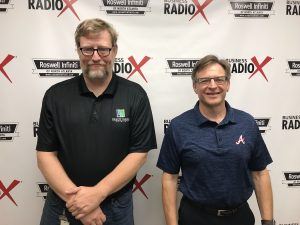
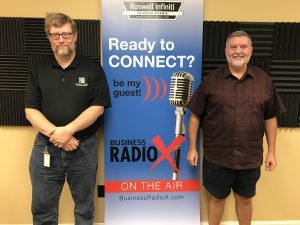
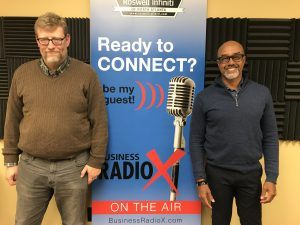
Mike Blake and James Pitts

Decision Vision Episode 43: Should My Business Buy Real Estate? – An Interview with James Pitts, FRED – Fractional Real Estate Department

Should I lease my real estate or buy? What are the factors to consider if I do buy? Answers to these questions and much more come from James Pitts, FRED – Fractional Real Estate Department, on this edition of “Decision Vision.” Mike Blake is the host of “Decision Vision,” presented by Brady Ware & Company.

James Pitts, FRED – Fractional Real Estate Department

James Pitts

James Pitts is the CEO of FRED – Fractional Real Estate Department. James is a 20 year corporate real estate professional with experience at Jones Lang Lasalle, Grubb & Ellis, Johnson Controls (JCI) Global Workplace Solutions, and Sheraton Hotels. Most notably, James worked as Solutions Development Director at JCI Global Workplace Solutions where he was responsible for the design of global and regional corporate real estate outsourcing solutions for companies such as Motorola, Barclays, HP, SunTrust Banks, HSBC with annual spends of $50M-$500M.

FRED – Fractional Real Estate Department is a corporate real estate services firm designed to serve middle market companies that don’t have a real estate department but need one. For most businesses, real estate is the second or third highest cost after people, and a lease or purchase of real estate can be one of the longest commitments a company makes. These strategic decisions have cost and business risk implications but are typically left to managers with non-real estate backgrounds and outside real estate brokers to handle. The FRED team is made up of former heads or managers of corporate real estate for Coca Cola, E&Y, Wells Fargo & AT&T with 30+ years of experience each. FRED doesn’t do real estate transactions; they provide analysis, strategy, and manage the client’s process and brokers on behalf of the business. They are paid on a project, cost savings or retainer basis and promise to provide trustworthy real estate expertise.

For more information, go to their website or email James directly.

Michael Blake, Brady Ware & Company

Mike Blake, Host of “Decision Vision”

Michael Blake is Host of the “Decision Vision” podcast series and a Director of Brady Ware & Company. Mike specializes in the valuation of intellectual property-driven firms, such as software firms, aerospace firms and professional services firms, most frequently in the capacity as a transaction advisor, helping clients obtain great outcomes from complex transaction opportunities. He is also a specialist in the appraisal of intellectual properties as stand-alone assets, such as software, trade secrets, and patents.

Mike has been a full-time business appraiser for 13 years with public accounting firms, boutique business appraisal firms, and an owner of his own firm. Prior to that, he spent 8 years in venture capital and investment banking, including transactions in the U.S., Israel, Russia, Ukraine, and Belarus.

Brady Ware & Company

Brady Ware & Company is a regional full-service accounting and advisory firm which helps businesses and entrepreneurs make visions a reality. Brady Ware services clients nationally from its offices in Alpharetta, GA; Columbus and Dayton, OH; and Richmond, IN. The firm is growth minded, committed to the regions in which they operate, and most importantly, they make significant investments in their people and service offerings to meet the changing financial needs of those they are privileged to serve. The firm is dedicated to providing results that make a difference for its clients.

Decision Vision Podcast Series

should my business buy real estate?“Decision Vision” is a podcast covering topics and issues facing small business owners and connecting them with solutions from leading experts. This series is presented by Brady Ware & Company. If you are a decision maker for a small business, we’d love to hear from you. Contact us at decisionvision@bradyware.com and make sure to listen to every Thursday to the “Decision Vision” podcast. Past episodes of “Decision Vision” can be found here. “Decision Vision” is produced and broadcast by the North Fulton studio of Business RadioX®.

Visit Brady Ware & Company on social media:

LinkedIn:  https://www.linkedin.com/company/brady-ware/

Facebook: https://www.facebook.com/bradywareCPAs/

Twitter: https://twitter.com/BradyWare

Instagram: https://www.instagram.com/bradywarecompany/

Show Transcript

Intro: [00:00:01] Welcome to Decision Vision, a podcast series focusing on critical business decisions brought to you by Brady Ware & Company. Brady Ware is a regional service accounting and advisory firm that helps businesses and entrepreneurs make visions a reality.

Michael Blake: [00:00:19] And welcome to Decision Vision, a podcast giving you, the listener, a clear vision to make great decisions. In each episode, we discuss the process of decision making on a different topic, rather than making recommendations because everyone’s circumstances are different. We talk to subject matter experts about how they would recommend thinking about that decision. My name is Mike Blake and I’m your host for today’s program.

Michael Blake: [00:00:40] I’m a director at Brady Ware & Company, a full-service accounting firm based in Dayton, Ohio, with offices in Dayton, Columbus, Ohio, Richmond, Indiana, and Alpharetta, Georgia, which is where we are recording today. Brady Ware is sponsoring this podcast. If you like this podcast, please subscribe in your favorite podcast aggregator and please consider leaving a review of the podcast as well.

Michael Blake: [00:01:02] Today, we’re going to talk about, should your business buy its real estate. And I’m prompted to this question because it comes up a lot. And interestingly enough, I’m actually seeing it come up more now with technology companies under the thesis that a technology company, by acquiring hard assets in some way, makes itself less risky in front of an investor and potentially, even a bank financing candidate.

Michael Blake: [00:01:35] Now, I’m not a real estate expert at all. In fact, I’m a disaster at Monopoly. Both my kids wiped me out. I think that’s because I’m a technology guy, by the way. Because I think in SAS terms, I’m always by the utilities and the railroads because there’s a more kind of recurring revenue as opposed to, you know, idiosyncratic by landing in a hotel in Boardwalk. But the problem is, and spoiler alert, if you do that in Monopoly, you basically die a slow death to your children who do a victory dance over you, by the way.

Michael Blake: [00:02:04] So, don’t be like me in Monopoly. But anyway, real estate is a different animal. And I get asked about real estate a lot because I’m in the appraisal business, but I’m in the business appraisal business. Again, I don’t know anything about real estate. We lucked out when we got a good deal on our house. I truly mean that with no sense of humility whatsoever, that is as factual an assessment as I can offer.

Michael Blake: [00:02:29] But, you know, especially in a market where you have loose credit, you have banks that very much want to lend. And frankly, you know, we are, especially in Atlanta, a real estate town. America’s a real estate society in terms of investment. The allure of buying real estate can have a very strong pull, but I’m not sure that that’s necessarily the right thing to do for many companies. And so, that’s what I want to talk about this day.

Michael Blake: [00:02:57] Because I’ll bet in the sound of my voice with someone who is listening to this podcast that somebody right now is looking at, they’re either looking at buying real estate or they’re going, “Why the heck did I buy that real estate? Now, I’ve got this albatross around my neck.” You know, “What made me do that and how do I get out of that?” And like I said, I’m not an expert on this. And for those of you who have been listeners to this podcast, you know that I know not a lot about much. And so, I bring in subject matter experts to help us figure that out. And helping us today is my friend James Pitts, who is CEO of Fractional Real Estate Development or FRED. That has-

James Pitts: [00:03:39] Fractional Real Estate Department.

Michael Blake: [00:03:40] Department, sorry. Department, FRED, a corporate real estate services firm designed to serve middle market companies that don’t have a real estate department, but need one. FRED’s team is made up of former heads and managers of corporate real estate for Coca-Cola, Ernst & Young, Wells Fargo, and AT&T with 30-plus years of experience in each. FRED doesn’t do real estate transactions but rather, they provide analysis, strategy, and manage the client’s process and brokers on behalf of the business. They get paid on a per project basis, cost savings or retainer, and provide real estate expertise that can be trusted.

Michael Blake: [00:04:18] Now, James himself has a 20-year corporate real estate professional with Jones Lang LaSalle, Grubb & Ellis, Johnson Controls Global Workplace Solutions, and Sheraton Hotels. Most notably, James worked as solutions development director at JCI Global Workplace Solutions, where he was responsible for the design of global and regional corporate real estate outsourcing solutions for companies such as Motorola, Barclays, HP, SunTrust Banks, and HSBC with annual spends of $50 million to $500 million. So, yeah, he’s an expert. James, thanks so much for coming on the program.

James Pitts: [00:04:54] Thanks, Mike.

Michael Blake: [00:04:54] And in spite of my botching the name, I think that the name itself is just awesome. FRED. And nobody’s ever called a Fred anymore, right? You don’t meet very many Freds, right? But it’s sort of just short and to the point and sounds very authoritative. Now, did you have Fred in mind and then, you built the words around it or did you just put those words in papers, “Hey, that spells Fred.”.

James Pitts: [00:05:17] The latter.

Michael Blake: [00:05:17] Is it really?

James Pitts: [00:05:19] Mm hmm.

Michael Blake: [00:05:19] So, my guess is both parts of your brain are working at that point and then, sort of put it down a piece of paper for you. So, well done. Frankly, it’s easier to remember than Brady Ware. So, you’ll get more mileage on this podcast than I will most likely. So, James, you’re obviously the resident expert on this, not just here, but just about any place you go. Why do companies want to buy real estate when they’re not in the business of real estate?

James Pitts: [00:05:45] Well, they typically want to buy it as an investment. Some see it as a hedge against risk. Some don’t like the idea of paying rent and they want to build equity. All valid points, but just not that simple.

Michael Blake: [00:05:58] And how compelling is that argument that real estate is an investment?

James Pitts: [00:06:04] Real estate in the nature of itself is an investment. The question is whether it’s a good investment, depends on the goals and the needs of the investor and what their alternative investment options are. It’s a good investment if the company doesn’t have a better alternative for investing its money. Also, a company has to ask itself if it’s in the real estate business or if it’s really going to be in its core business because real estate can really be a distraction to the core business.

James Pitts: [00:06:31] And I’d like to give you a quick example. We had a client that we worked with for years, lost contact with. They went out and bought their own real estate, built a building, overpaid for land, went through a business downturn, suddenly, couldn’t use all of the real estate. They were upside down in the building and the land that they bought. And they were trying to lease out the space and they had other businesses in their space. And the CEO literally said, “I can’t get any work done because I have all of these tenants.” So, suddenly, their core business was being distracted by the real estate business.

Michael Blake: [00:07:06] And, you know, I think that’s important because on the outside looking in, if you’re not in real estate, it must look easy, right? You buy a property, you own it. You just sit back and you let the income roll in or let the savings roll in. And then, at some point, you sort of dispose of it. But as a homeowner and not a very good one, by the way, it’s amazing I still have all of my fingers, frankly, owning real estate, even very basic real estate is an effort and there’s further costs in upkeep, right? So, that doesn’t go away just because now, you own a factory or a warehouse or an office building, right?

James Pitts: [00:07:46] Well, yes. And so, when the roof has a leak, that’s on you. When you have the HBC system go out, that’s now on the business. So, suddenly, instead of making a phone call, you’re managing that, paying for that, checking on that, and just dealing with that.

Michael Blake: [00:08:02] So, we talked a little bit about what are the reasons for wanting to own real estate. What conditions typically lead to a company finding that real estate ownership is beneficial to them? What does a company kind of look like that is a good candidate for that?

James Pitts: [00:08:19] Well, for example, you have a specialized use. So, maybe you need land or maybe you need a certain building that unless you own it, the landlord will not let you perform your operations at a core to your business. Let’s say there’s a specialized use of land or buildings that may require large capital outlay to construct. For instance, a movie studio with a purpose-built sound stages, water stage, back lots, et cetera, will want to own the real estate.

James Pitts: [00:08:49] We had a client from South Korea that needed to test its rubber treads on a proving ground. Imagine a Jeep obstacle course, three acres next door. Industrial buildings aren’t designed to have like a three-acre playground next door. So, they literally had to buy a building actually and then, buy the land next door, and build their proving ground. Otherwise, they wanted to lease. They didn’t want to get into the ownership. But because of their use, no one would let them do that.

Michael Blake: [00:09:24] Right. So, at some point, you got to be the person that gives yourself permission to do it, right?

James Pitts: [00:09:28] Exactly.

Michael Blake: [00:09:29] So, you have to own it in that case.

James Pitts: [00:09:29] Exactly.

Michael Blake: [00:09:30] Right? So, you know, in home ownership, there’s a rule of thumb, the basis, unless you’re going to be in the property for five, six years, don’t buy because by the time you factor in all the transaction costs and so forth, it just doesn’t make any sense, right? Keep on renting. Is there a similar rule of thumb time frame in the commercial business area?

James Pitts: [00:09:56] Well, real estate cycles are typically seven to 10 years long. If you want to talk about that cycle, you have declining prices, rents and construction, then that leads to absorption of excess supply, that leads to low vacancy, which leads to increasing prices and rents, which leads to accelerate new construction. At some point, as you go around the circle, you get to oversupply and then, you have high vacancies, which is typically when you want to buy at that lower end of the cycle. Right now, in Atlanta, we’re at the high end of the cycle. So, it’s really a landlord and sellers market. So, from a real estate cycle, if you’re going to be in it, at least seven to 10 years. And we’ll really talk about that probably and some of your other questions about the life cycle of a business as well.

Michael Blake: [00:10:44] So, I’m going to go off script a little bit, but I know it’s a question I want to get out and I think it’s going to be of a lot of interest, which is, you know, as you walk in as the Fractional Real Estate Department for your clients, how much of that work is taking over the management of their properties and how much of it is reversing buyer’s remorse and helping them kind of liquidate, you know, “What have I done?” And sort of get rid of that. How often do you encounter that latter scenario?

James Pitts: [00:11:14] We’re working with a client right now that the previous CEO leased three times as much space as they need. They are actually laying off people right now while they spend an extra $250,000 a year in excess real estate costs. So, sometimes, the first thing you have to do is come in and do an analysis and then, come back with a strategy of how do we fix what you’ve inherited. And the previous CEO signed an eleven-year lease, so they still have eight years of pain.

Michael Blake: [00:11:44] And so, I’ll continue off the script, but I’ve got to follow that question up. So, you know, in some cases, can you then lease that out to try to get a—you know, or sublease, or something like that?

James Pitts: [00:11:56] You can sublet it. You can sell it. You can try to work with the landlord to get out of it. The goal for FRED is to keep people from making these sorts of costly mistakes.

Michael Blake: [00:12:07] Yeah.

James Pitts: [00:12:07] And then, reduce the expense, increase EBITDA, and reduce risk. But what you find, and I used to manage some of the Fortune 500 real estate portfolios when I was at JLL, is that real estate’s the hidden dragon on earnings. And people just don’t realize it. And that even big companies make huge mistakes. And then, that gets multiplied across portfolios. And then, everyone says, “Well, why are we doing this?” “Well, because everyone else did it.” And that’s what it’s always been. We’ve been in this position, in this location for 20 years. And it doesn’t really match anything that the business is doing today.

Michael Blake: [00:12:41] And do you find that businesses may think they know more about real estate than they do because they’re good at the business, but real estate is just different animal? Like I said, I’m a business appraiser, but I’m not a real estate appraiser. Is real estate just fundamentally a different animal?

James Pitts: [00:12:55] Everyone other than you believes that because they bought a house that they’re a real estate mogul. So, they believe that they know a lot more about real estate. It’s something they don’t deal with every three to five years. And when you think about it, real estate is one of those commitments that a company makes that goes three to five years out. Most businesses can’t see that far. And who knows what your strategy or your operations or your sale is going to be in three to five years. And the real estate does not care.

Michael Blake: [00:13:21] No, it doesn’t, right? I’ve never seen the real estates, “Oh, man. I’m sorry”, you know.

James Pitts: [00:13:26] Yeah, the landlords-

Michael Blake: [00:13:27] We’ll just let you out.

James Pitts: [00:13:28] Oh, yeah. Yeah. “Sorry, you guys had a downtime.”

Michael Blake: [00:13:30] Have to reset.

James Pitts: [00:13:32] Yeah.

Michael Blake: [00:13:32] So, getting back to the primary conversation. So, we’re in a cheap money cycle right now. Feds just lowered interest rates three times in the last three or four months or so. How much should that be a factor in driving the real estate purchase decision? I mean, on some level, obviously financing is cheaper, but is it that simple or does that need to kind of be mixed in with some other considerations?

James Pitts: [00:14:00] So, great question. Depends on the cycle. Even before you get to that, you really have to look at, does a company have excess cash that it can’t really invest back in its operations? Are they stable? Like have they grown to the point where they aren’t going to outgrow the space that they buy? Because why buy it if you’re gonna outgrow it? Now, suddenly, you’re in the real estate business. And, you know, are you in some type of low-margin business where you get a greater return by putting your money in the real estate?

James Pitts: [00:14:32] But let’s talk about cheap money. So, the cheap money of the late 2007s and 2008s actually caused the real estate bubble. So, that led to that balloon. People who bought early in the cycle did well. People who came at the end with that cheap money and bought at the height of the cycle, like we are now, when prices were inflated, got hurt. After the crash, money tightened considerably and people with cash came back and bought things cheaply. Sold as the market was coming back up. And now, we’re back toward the top of market. So, I’d say that the cheap money is there, but it could lead you into bad decisions.

Michael Blake: [00:15:13] Yeah. So, the cheap money could be a sign, right, that maybe the timing is off. And again, I think that that requires a specific real estate expertise to really understand and read the market, right? Certainly, I can’t do it. So, now, there’s an argument out there that companies make that they want to own their real estate because it’s a hedge against risk. How do you respond to that? Is that often a reasonable argument or is that just somebody talking themselves into doing a real estate deal?

James Pitts: [00:15:44] The latter.

Michael Blake: [00:15:45] Is it?

James Pitts: [00:15:45] It could be. So, it depends on what risk you’re worried about, right? So, there’s investment risk and there’s business risk. So, if you have a basket of equities, fixed income, cash alternatives, alternative investments, and real estate, you are diversified. Real estate typically lacks business downturns by six to eight months. So, if there’s a general drop in the economy, then the real estate will eventually fill that. And if the company bought the high of the market, you can suddenly be under water with regards to the value of your property in which you paid for it.

James Pitts: [00:16:18] The mortgage payment is still the same. The company may have to downsize, but your costs are still the same for your real estate portfolio. And it’s hard to sell asset in the downturn as well. So, if you’re trying to use—real estate does follow business cycles. So, it’s not necessarily a risk against that. And you also have to say, “If buying real estate makes your business operations riskier, you shouldn’t do it.” But if you’re at a point where purchasing the real estate, you know, lessens risk or doesn’t impact your risk profile, then you can look at that as a separate investment.

Michael Blake: [00:16:53] And I think what you’re talking about is the operational risk-

James Pitts: [00:16:56] Exactly.

Michael Blake: [00:16:56] … of the company, right?

James Pitts: [00:16:57] And correct me if I’m wrong, but the way I interpret what you just said is that one of the dangers is a business can undertake gymnastics that they would not normally undertake in order to get into the real estate game just because there’s cheap money and they feel like that there’s sort of a momentary opportunity. That sounds like a path to trouble.

James Pitts: [00:17:20] We see it a lot where once people get into their brain, “I’d like to own something and build equity”, they will do unnatural things to accomplish that that may not be in the best interest of the business. So, for instance, we had a service company growing rapidly up to 60 people. They were leasing 2,600 square feet. People were literally on top of one another. The owner said, “I want to go out and buy something.” And we said, “Well, you’re still growing. So, let’s lease 13,000 square feet for five years. That gives you plenty of room to grow. And then, once you get to a point where you’re stable and you’re not growing, maybe that’s when you buy a specialized site for your business.” And I said, “Plus, you’re at the top of the cycle. So, why would you buy now? There’s no equity in it.”

Michael Blake: [00:18:07] Right. Buy high, sell low is not a successful business strategy for most, right?

James Pitts: [00:18:12] Exactly.

Michael Blake: [00:18:13] And, you know, that gets to something that I encounter a lot, which is, as you know, I do a fair bit of work in the emerging tech sector, right? And, you know, to me, buying a building when you think you’re going to grow, right? And tech companies grow rapidly. They don’t add two or three people, right? If they don’t catch fire, it doesn’t matter. But once they catch fire, they’re adding people at a hundred a time, right?

James Pitts: [00:18:37] Right.

Michael Blake: [00:18:37] I wouldn’t say you can’t, but, boy, it’s got to be hard just to buy your way out of that problem every time through.

James Pitts: [00:18:46] Exactly. It’s like buying a 15-year old boy a pair of $400 sneakers. Right. You’ll be out of them in two months.

Michael Blake: [00:18:54] Right. Right.

James Pitts: [00:18:56] So, why do it?

Michael Blake: [00:18:56] Right. Yeah. Now, that’s fair. That’s fair. So, let me ask this a little bit off script. But what about the lease-to-own deals? Do you see a lot of those? And if so, do they change the dynamic at all?

James Pitts: [00:19:12] Oh, lease-to-own. I don’t see a lot of that. Not at a corporate level. You see that more so in a residential level-

Michael Blake: [00:19:21] Okay.

James Pitts: [00:19:21] … who would do a lease-to-own. But now, some people may lease and they’ll have an option to purchase later.

Michael Blake: [00:19:28] Yeah.

James Pitts: [00:19:29] You know, if they think that they’re gonna really like the space. But you don’t see too many of those.

Michael Blake: [00:19:35] Okay. What are some of the hidden costs owning the real estate?

James Pitts: [00:19:40] Oh, so those are capital improvements that you weren’t expecting. If you’re in a building and you decide you don’t need all of it and you have a vacancy, so now, you’re inefficient. Maybe you did a floating rate loan or a swap loan and rates are changing on you, and they’re not going in your direction. We actually had a client that the rates right now, like if they were to sell the building that they’re in, they’d owe $200,000 versus if the rate stayed where they used to be, they’d get a check for $300,000 of repairs and maintenance.

James Pitts: [00:20:17] We did a project for a large nonprofit here in Atlanta that owned the building with very little debt. They had about $5 million in deferred maintenance on the property. They were trying to figure out what they would do with the building. They were in about half of it, in 40,000 square feet with three tenants. They weren’t getting any new tenants. And we did a study and looked at what their other costs were, including the maintenance people that they had on staff. And they didn’t realize all the hidden cost in it.

James Pitts: [00:20:47] And we ended up selling the building for them, reducing their space. They got $2 million above what the market was offering. And then, by reducing their space and making them more efficient, we save them $3 million on their lease. So, they were like, “How did you make leasing a building cheaper than owning a building and put $5 million in our pocket?” Like, you know, it was a lot of financial engineering. Just looking at—that the real estate didn’t match your needs, you know, financially or even their people.

Michael Blake: [00:21:18] Well, and that goes to knowing the real estate market, right? And knowing what the market will bear and kind of what the terms are, and, you know, being able to use that as a negotiation point, right?

James Pitts: [00:21:30] Mm hmm.

Michael Blake: [00:21:30] I mean, again, you know, real estate is one of those things, it bears repeating, it looks easy, but it ain’t.

James Pitts: [00:21:38] It is really not.

Michael Blake: [00:21:40] So, how much should an opportunity to acquire real estate is sort of like as a good deal? How much does that drive or should it drive the discussion? You know, maybe your building is just going to be sold. Maybe there’s an estate situation, divorce situation, like that, and the son has got to sell, so it’s going to—if you can kind of do the deal quickly, it’s going to go for below fair market or market value, how much should that play into that lease-versus-buy decision?

James Pitts: [00:22:13] And I think we have to make sure that if your core business is your priority, as long as you check all the boxes and purchasing the building does not impact your core business, which is really your bread winner, then you can consider it, if it’s a great deal. I mean, if it’s a deal that if, for some reason, you need to sell it or lease it out and you could lease out, say, maybe 70 percent and that would easily cover your mortgage, you should consider it. You know, but if it’s an arbitrage opportunity, you should consider it. If it’s a great deal, you should always consider that.

Michael Blake: [00:22:49] Okay. And what about the argument that real estate can be used as a way to diversify the assets of the company or sometimes, the assets of the owner that is not necessarily that clearly separated from the company because it’s sort of one of the same? How compelling is that argument?

James Pitts: [00:23:08] So, that can be a sticky wicket. It can also be a great strategy. Some owner, company owners purchase building and lease it back to the company, and let the company expense the rent payments while paying off the mortgage on the property, then the owner can personally tap the built up equity in the property without taxation. If the owner expects to sell the company, then they may have to unwind or restructure their intertwined real estate in their business to make it attractive to the buyer.

James Pitts: [00:23:38] We were talking to a private equity firm out in California and the owner sold—they bought a business, the owner sold it to them, and it was 150,000 square foot warehouse. They only need 50,000. He had them as part of the deal, signed a 10-year lease for 150,000. So, they were suddenly stuck with three times as much space as they needed. And they were lamenting that they didn’t make him unwind that. So, you have to be clear, if you’re trying to exit your business and you now have some real estate obligations, it could affect your valuation.

Michael Blake: [00:24:14] Now, we tussled on this a little bit before, but I want to make sure that we address this explicitly. How important is the decision whether or not you need to kind of build your own custom real estate? We talked about customizing a building that you own. But now, I want to kind of move kind of, you know, a step further. What about kind of building your own real estate versus buying something that may or may not suit you on the existing market? How often do you encounter that? Does that build versus buy change the business discussion at all?

James Pitts: [00:24:48] So, it can. If your movie studio is custom-built, then it’s really important to buy and build your own. Back to that one client of ours who built their own building, they bought the land too expensive. Right now, construction costs are really high in Atlanta. But they’ve done that in 2010. Much better deal, cheaper land, cheaper construction costs. So, what we found is that given the costs of construction right now with the steel tariffs and just the land costs, there’s a lot of existing buildings that you can buy that are actually cheaper than in building right now in this particular part of the cycle.

Michael Blake: [00:25:31] And-

James Pitts: [00:25:32] And it just depends on where you are in the cycle-

Michael Blake: [00:25:33] Sure.

James Pitts: [00:25:35] … basically.

Michael Blake: [00:25:35] Okay. And I guess to some extent, too, if you can actually find someone to build the building, right, at the top of the cycle-

James Pitts: [00:25:40] Right.

Michael Blake: [00:25:40] … it’s-

James Pitts: [00:25:41] Everybody’s busy. Right.

Michael Blake: [00:25:42] Everybody’s busy. Right. So, you don’t even get out of radar screen unless you have a big job to begin with.

James Pitts: [00:25:47] And for one of our South Korean clients, we actually did a study of, do you buy a building or do you build it? And it came out, it would be easier to buy a building, existing building, renovate it, and do what you needed to do next door than to just build from the ground up.

Michael Blake: [00:26:08] I wonder if there’s kind of a conceptual benefit there, too. You know, my parents built a house and the thing that I learned from that process, I’ll never build a house because it seems to me that if you’re trying to imagine a structure from the ground up, there’s just nothing there today. And then, a year from now or two years, you know, there’s going to be a building. Just seems like so many things can go wrong and there’s not going to be the way that you visualized or to make them the way that you visualize them is going to be prohibitively expensive along the way.

James Pitts: [00:26:42] Depends on where you are in the cycle.

Michael Blake: [00:26:43] Yeah.

James Pitts: [00:26:44] But you have architects for that.

Michael Blake: [00:26:45] Yeah.

James Pitts: [00:26:45] Architects and civil engineers, and they can deliver exactly what you want.

Michael Blake: [00:26:49] So, are there any rules of thumb around a company’s finances in terms of how much cash to have in the bank or how profitable they are or how, I don’t know, sort of reliable their profitability is that maybe goes into your calculus as to whether or not you advise a client to buy versus lease?

James Pitts: [00:27:08] So, in general, real estate as an investment, I’ve read somewhere, returns about 7 to 8 percent of the long-term as an investment. If the business return—if your margins on your business are 20 percent, and why wouldn’t you invest that in your business, if you still have the opportunity to grow? So, people get, “Oh, I want own real estate and I’m gonna build up equity.” But if you can put that money into your people, if you can leave the risk of ownership of real estate to a landlord so that if you shrink or grow, you can go elsewhere versus now, I have a building and I have to do the capital improvements. And I have to pay the taxes on it and if I grow or shrink, it stays the same. So, there’s a business risk there.

Michael Blake: [00:27:59] You know, I want to come back to that or stay on that, actually, because I think that’s a very important point. You know, many of the drivers I see for buying real estate lie in something else other than directly operationally imperative to the business, right? Sometimes is. And I think we’ve covered that. You know, rule number one is make sure that that decision is driven by the operational imperative-

James Pitts: [00:28:24] Right.

Michael Blake: [00:28:24] … not because of something else that you want to do. And, you know, there’s no law that says, if you have excess cash or even excess borrowing power that you have to buy real estate with it, right?

James Pitts: [00:28:36] Right.

Michael Blake: [00:28:36] Or if you want to buy real estate, you know, buy into a read, right? You can get real estate exposure that way.

James Pitts: [00:28:42] Or buy an actual investment property that’s not attached to your—if you have extra cash, maybe you go and buy another real building that has tenants in it.

Michael Blake: [00:28:54] Yeah.

James Pitts: [00:28:54] And you manage that as a separate investment. But now, you sort of linked your business to your real estate and they’re intertwined. Let’s say you have partners in your business, there’s three or four partners, and Ted decides to leave the company. And now, you know, you have to unwind the real estate side of it and the business side of it. And maybe Ted didn’t want to get out of the real estate side or, you know, you have to make sure all the interests are aligned on the real estate side as well.

Michael Blake: [00:29:22] So, one other question I want to ask as we move towards wrapping up here is, a company can accidentally acquire real estate through an acquisition, right? And although I’m confident in most cases, a company isn’t necessarily surprised that it owns real estate, but I think that I’ve certainly seen the case where the acquirer spend so much time performing due diligence in the company that they feel that the real estate is a sort of a side gig or a throw away or something. And then, all of a sudden, you wind up owning it and maybe they should have done due diligence on that or sometimes, you’re even forced to buy the real estate. The seller will not sell unless you take the whole thing, business and real estate. How often do you see that? And if you do see that a lot, in your mind, is that a complicating factor in the M&A process?

James Pitts: [00:30:15] I definitely think it’s a complicating factor. Part of what FRED services we offer to come in as a part of that M&A process is to look at the real estate and say, “Here are you trailing obligations from a real estate perspective and here’s how you need to account for that, because either you’re going to end up with some excess cost or some real estate that you don’t need, and maybe, you should make that a part of the negotiation” versus “You take this”, and suddenly, you basically paid the seller twice. And that you paid them for the business, you paid them for the real estate. Now, you take the loss on the real estate. And that’s not a choice that you make. You actually came there for the business.

Michael Blake: [00:30:56] So, if somebody wants to learn more about this process, they have a question about their own real estate decision they’re looking at, how can they contact you?

James Pitts: [00:31:05] Please feel free to e-mail me at james.pitts, P-I-T-T-S like in Pittsburgh, @fred, F-R-E-D,-solution.com. And love to hear from you.

Michael Blake: [00:31:19] All right. And that’s going to wrap it up for today’s program. I’d like to thank James Pitts so much for joining us and sharing his expertise with us and telling us about his company, FRED, Fractional Real Estate Department. We’ll be exploring a new topic each week. So, please tune in so that when you’re faced with your next business decision, you have clear vision when making it. If you enjoy these podcasts, please consider leaving a review with your favorite podcast aggregator. It helps people find us so that we can help them. Once again, this is Mike Blake, our sponsor is Brady Ware. And this has been the Decision Vision podcast.
Tagged With: CPa, CPA firm, Dayton accounting, Dayton business advisory, Dayton CPA, Dayton CPA firm, Decision Vision, diversification, diversification into real estate, Fractional Real Estate Department, FRED, hidden costs of real estate, lease to own, Michael Blake, Mike Blake, real estate

Decision Vision Episode 42: Should I Issue Equity to Employees? – An Interview with Scott Harris, Friend, Hudak & Harris

December 5, 2019 by John Ray

Should I Issue Equity to Employees?
Decision Vision
Decision Vision Episode 42: Should I Issue Equity to Employees? - An Interview with Scott Harris, Friend, Hudak & Harris
Loading
00:00 /
RSS Feed
Share
Link
Embed

Download file

Should I Issue Equity to Employees
Mike Blake and Scott Harris

Decision Vision Episode 42: Should I Issue Equity to Employees? – An Interview with Scott Harris, Friend, Hudak & Harris

Why should I even consider issuing stock to employees? If I do, what form of equity should I use? Business attorney Scott Harris answers these questions and much more as he speaks with host Mike Blake on this edition of “Decision Vision,” presented by Brady Ware & Company.

Scott Harris, Friend, Hudak & Harris

Should I Issue Equity to Employees?
Scott Harris

Scott Harris is a Partner with Friend, Hudak & Harris. Scott’s expertise is in business law. He concentrates his practice on corporate, transactional, licensing, intellectual property, merger and acquisition, joint venture, and finance law. By finding the right solutions to challenges and taking advantage of opportunities, Scott ensures that closely-held businesses and their owners grow and succeed.

Scott approaches his work differently. Rather than telling clients what they cannot do, he defines strategies to best accomplish their objectives. Instead of a detached legal assessor, Scott stands shoulder-to-shoulder as a client teammate. Based on solid judgment and decades of experience, he works to understand his clients’ businesses and provides them with successful alternatives.

Scott is admitted in Georgia and California. He has a B.A., cum laude, from Wake Forest University, and graduated from the Emory University School of Law with distinction.

For further information, go to the Friend, Hudak & Harris website or you can email Scott directly.

Michael Blake, Brady Ware & Company

Mike Blake, Host of “Decision Vision”

Michael Blake is Host of the “Decision Vision” podcast series and a Director of Brady Ware & Company. Mike specializes in the valuation of intellectual property-driven firms, such as software firms, aerospace firms and professional services firms, most frequently as a transaction advisor, helping clients obtain great outcomes from complex transaction opportunities. Mike is also a specialist in the appraisal of intellectual properties as stand-alone assets, such as software, trade secrets, and patents, and helps clients develop successful commercialization paths for such assets.

He has been a full-time business appraiser for 15 years with public accounting firms, boutique business appraisal firms, and as owner of his own firm. Prior to that, he spent 8 years in venture capital and investment banking, including transactions in the U.S., Israel, Russia, Ukraine, and Belarus.

Mike is very active in the Atlanta startup community. He is the co-founder of StartupLounge, a nonprofit that supports early stage technology entrepreneurs and investors, he teaches the technology valuation module in the Georgia Tech/Emory University TIGER program, and he has coached 6 teams to victory in various business plan competitions for a total of $350,000 in prize money and another entrepreneur who received funding through ABC’s Shark Tank.  He continues holding monthly office hours in Chamblee and Alpharetta.

Mike was named to the Atlanta Business Chronicle’s Top 40 Under 40 list in 2009 and is a graduate of the Leadership Atlanta Class of 2014.  Mike is also a semi-professional musician, playing keyboards and vocals for a classic rock cover band.

Brady Ware & Company

Brady Ware & Company is a regional full-service accounting and advisory firm which helps businesses and entrepreneurs make visions a reality. Brady Ware services clients nationally from its offices in Alpharetta, GA; Columbus and Dayton, OH; and Richmond, IN. The firm is growth minded, committed to the regions in which they operate, and most importantly, they make significant investments in their people and service offerings to meet the changing financial needs of those they are privileged to serve. The firm is dedicated to providing results that make a difference for its clients.

Decision Vision Podcast Series

“Decision Vision” is a podcast covering topics and issues facing small business owners and connecting them with solutions from leading experts. This series is presented by Brady Ware & Company. If you are a decision maker for a small business, we’d love to hear from you. Contact us at decisionvision@bradyware.com and make sure to listen to every Thursday to the “Decision Vision” podcast. Past episodes of “Decision Vision” can be found here. “Decision Vision” is produced and broadcast by the North Fulton studio of Business RadioX®.

Visit Brady Ware & Company on social media:

LinkedIn:  https://www.linkedin.com/company/brady-ware/

Facebook: https://www.facebook.com/bradywareCPAs/

Twitter: https://twitter.com/BradyWare

Instagram: https://www.instagram.com/bradywarecompany/

Show Transcript

Intro: [00:00:01] Welcome to Decision Vision, a podcast series focusing on critical business decisions brought to you by Brady Ware & Company. Brady Ware is a regional full-service accounting and advisory firm that helps businesses and entrepreneurs make visions a reality.

Michael Blake: [00:00:20] And welcome to Decision Vision, a podcast giving you, the listener, a clear vision to make great decisions. In each episode, we discuss the process of decision making on a different topic, rather than making recommendations because everyone’s circumstances are different. We talk to subject matter experts into how they would recommend thinking about that decision. My name is Mike Blake and I am your host for today’s podcast. I’m a director at Brady Ware & Company, a full-service accounting firm based in Dayton, Ohio, with offices in Dayton, Columbus, Ohio, Richmond, Indiana, and Alpharetta, Georgia, which is where we are recording today.

Michael Blake: [00:00:52] Brady Ware is sponsoring this podcast. If you like this podcast, please subscribe on your favorite podcast aggregator and please also consider leaving a review of the podcast, as well. The topic today is, should I consider issuing equity to employees? And I think there are few decisions in business that are of greater importance and greater depth. And I think many people make that decision with such care. Maybe they even become paralyzed and they don’t do something.

Michael Blake: [00:01:32] And I think, frankly, in other cases, particularly in the tech sphere, but not always that way, you kind of see that decision taken lightly. And, you know, there are people handing out stock and options, you know, more frequently than, you know, handing out replica phases at Comic-Con. And companies can sort of make or break themselves because when you invite someone to become a co-shareholder with you in your company, I think that that is about the most intimate relationship that there is in business.

Michael Blake: [00:02:06] Because once you make that commitment, like a marital divorce, that is not something that is easily done or undone by, you know, hitting control+Z and just trying to undo it. And, you know, I think in some cases, there’s a sense that in some businesses, again, in tech software, biotech, you have to make other people shareholders, you have to issue options or even give them stock or you’re just not going to go any place. There’s an expectation on the part of venture cap blushing and make plans to do that.

Michael Blake: [00:02:41] Others, you know, I think correctly assess this decision with a tremendous amount of caution. Because again, it’s not something that’s easy to do. And when a shareholder, even a relatively minor one kind of goes broken arrow on you, at a minimum, it is spiritually painful. And often, it is legally and financially painful as well. So, you know, a topic of this gravity deserves a guest of the high deal of gravitas.

Michael Blake: [00:03:17] And I can think of nobody better to invite to help us work through this than my pal, Scott Harris, who is a partner at Friend Hudak and Harris here in Atlanta, though he is joining us from their palatial and so far, thank God, safe Napa Valley office. Scott’s expertise is in business law and concentrates his practice on corporate transactional licensing, intellectual property, merger and acquisition, joint venture, and finance law.

Michael Blake: [00:03:45] He helps find the right solutions to challenges and taking advantage of opportunities. He ensures that closely held businesses and their owners grow and succeed, and approaches his work differently in that regard. And like our podcast actually, rather than just telling clients what they can and cannot do, he helps to find strategies to best accomplish their objectives. And as an aside, that’s what a good lawyer tells you.

Michael Blake: [00:04:08] That’s what a good lawyer is when they’re an adviser. They don’t just tell you what you can’t do but they lay out a menu of options of, you know, “Here’s what you could do and here’s what the cost benefits, risks, and potential returns are of doing so.” He stands shoulder-to-shoulder as a client teammate. And based on solid judgment, decades of experience, he works to understand his client’s businesses and provides them with successful alternatives.

Michael Blake: [00:04:35] He holds a bachelor’s degree, cum laude from Wake Forest University and his law degree with distinction from Emory University. During his off hours, Scott enjoys trail running and has a love for working with his hands restoring American muscle cars and making furniture. And, you know, I’ve known and worked with Scott for a long time and he’s a hell of an attorney and hell of a business advisor. Scott, welcome to the program. Thanks so much for coming on.

Scott Harris: [00:05:03] Well, thanks very much for including me, Mike. And thanks for that largely true introduction.

Michael Blake: [00:05:11] It’s the internet, doesn’t have to all be true. The rest, we had filled in by a Russian meme farm. So-

Scott Harris: [00:05:18] Well, thank you very much anyway.

Michael Blake: [00:05:20] Yeah. So, before I get into this, I have to ask you, what is the muscle car douceur?

Scott Harris: [00:05:28] Well, I’m between muscle cars, which is a sad situation. But the last three that I had were all Chrysler products back when Chrysler was American-owned. They were two ’71 Plymouth Cudas and a ’73 Dodge Charger that I really—was owned by my daughter, who followed in my footsteps of spending a lot of time and money underneath cars, as opposed to behind the wheel of cars. So, that’s been the trajectory so far.

Michael Blake: [00:06:12] Well, good for you. I have to come out there and get a ride with whatever the next muscle car is that’s coming down the line.

Scott Harris: [00:06:19] I’ll let you know.

Michael Blake: [00:06:20] Good. So, you know, you’ve worked with a lot of technology companies. I’ll bet you, there’s not a lot that you haven’t seen yet. But let’s start off with a very basic discussion here, because we want to help our listeners work through this question. You know, why do companies even consider issuing equity at all? I mean, it’s an enormous pain the neck. There’s some risk. Why would a company even want to approach that discussion at all?

Scott Harris: [00:06:49] Well, that is the threshold question and a good place for us to start. So, imagine yourself running a company and potential employees number 1, 2 and 3 come to you as we’ve experience out here as a bit of an archetype for technology companies. They’re very qualified people. They have long resumes and you need to make yourself stand out among other people vying for their skills. Your choices are, you could pay them a lot of money or being a startup, you may be a little bit cash-strapped, you may be self funding at this point, but you still would like to engage these people and attract them and retain them.

Scott Harris: [00:07:36] You know, how else do you do that if you can’t do it with money? Well, that’s when stock and what we call synthetic stock alternatives come in for employers. And the most and easiest to understand examples of stock are, “Hey, employee number 1, love you to come to work for me. I don’t have enough money to pay you your full salary. I’ll pay you some salary and I’ll just outright grant you X in equity of my company.” And X is a percentage or it could be a number of shares, but it’s a “chunk”. That’s an outright grant.

Scott Harris: [00:08:20] And you don’t have to do this inconsistently between them, but I’m just giving other illustrations. To employee B, you might say, “Look, in lieu of giving you a chunk of stock right now, I’d like to give you stock options or equity options to buy a set number of units of equity at a given time based on certain circumstances over a period.” The most obvious examples of those or just a typical example of those would be four-year options, vesting 25 percent of the total grant of exerciseable equity units, a quarter a year on each anniversary of the grant date.

Scott Harris: [00:09:15] So, you come to work for me today, that’s the same day that I give you these options. A year from now, you can buy 25 percent of the stock at a given price. Another year from now, you buy another 25 percent, et cetera, all the way to the fourth year. And the last example I’ll give you is something called synthetic equity. We’ll make that our third example of employee. And to that employee, we tell them, “Hey, look, I’d like you to come to work for me. I can’t afford to pay you the entire salary that you should demand somebody of your qualifications, but I’d like to give you”, let’s call them, “stock appreciation rights.”.

Scott Harris: [00:09:59] We could also call them phantom stock, but we’ll just use the general description of both of those. It’s not stock. You’re not going to end up with stock in my company, but you’re going to end up with the economic benefits of having that stock like the appreciation that you would see in stock price from today’s grant until when you exercise these or in the event the company is sold, we’re going to calculate what you get as compensation as a bonus based on the sale price of equity as if you own that equity.

Scott Harris: [00:10:38] And the benefit there to the company is you don’t actually have to deal with the headaches of issuing stock in the terms upon which it is held and having shareholder and/or member agreements, but the employee has a lot of the same economic benefits as if they were a shareholder without some of the downsides including a voting stake in the company. So, there are many ways to do it. I’ve just explained three different ways to do it.

Scott Harris: [00:11:07] What are the benefits of doing that? Well, to the employer, one of the primary benefits is in lieu of paying somebody cash, you’re giving them these bonuses that are basically in the form of stock or options or synthetic equity. You save cash. That’s a major benefit particularly to startup companies. There are other incentives as well. It causes employees often to think of their contributions to companies in terms of what does this do to entity valuation.

Scott Harris: [00:11:47] Is my contribution making the company more valuable or am I just getting a paycheck at the end of the day? Sometimes, the alignment in economic incentives between employers and employees is crucial for those companies getting off the ground. And it puts everybody largely on the same side of the company benefits and may benefit to part of the ledger as opposed to the tension between, you know, management, just labor.

Scott Harris: [00:12:20] Another plus for employers in using equity and equity-like compensation is the ability to attract people you might not otherwise be able to secure. Especially in today’s environment with 3 percent unemployment, it sure helps to have equity and equity kicker attraction to people that you’re looking to hire and/or maybe, you know, hire away from other engagements. At least, in the tech and in many other industries, it’s pretty much a standard.

Scott Harris: [00:12:59] And particularly with early stage companies and initial key employees, there are very few that operate without some sort of an equity incentive. And then, of course, the last—and I wouldn’t say it’s the last, but it’s the last one I’ll cover today. The last reason companies doing this is as compared with just giving somebody a paycheck twice a month or at the end of each month, when you have that equity compensation vests over a period of time, the ability to enjoy more of that benefit vests over a longer period of time, you tend to incentivize retention of employees.

Scott Harris: [00:13:41] “I’m not going to leave this week because at the end of the year, I’ve got a 25 percent vesting of my options that I would like to be entitled to. I’m going to hang out for a little bit longer.” And then, at the end of that year, somebody might say, “You know, I’ll stay on in another year because at the end of that year, I’ve got another chunk of this equity that’s going to vest with me”, as opposed to the paycheck that you just cashed and spent on your muscle car that week. So, those are some of the incentives for the employers.

Michael Blake: [00:14:19] Now, you know, the question I’m asked a lot and I’m sure you got a lot to when you’re talking about this is a concern about giving up control. You know, you mentioned three different approaches, equity, options, and synthetic equity. What are the different implications in terms of having to share control with the people to whom you are making those grants?

Scott Harris: [00:14:48] Well, let me try to be a little bit more concise in this answer than the previous answer that I gave. The difference between equity and non-equity or synthetic equity is technically speaking, the synthetic equity, it’s more of a bonus and it does not involve the issuing of stock or rights to purchase stock or equity. It’s really just a bonus that is tracked based on equity value. That’s the yardstick for it.

Scott Harris: [00:15:22] So, when you give it out, you’re not giving up voting control and there is no voting aspect to it. On the other hand, equity grants or options, those are either just the outright giving of stock or the outright giving of a right to buy stock in a future date based on certain conditions in any given price. If you give away too much of that, you could give away voting control of the company, but I’ve hardly ever seen that happen.

Scott Harris: [00:15:52] And that’s because there are many ways to deal with the loss of control as a result of granting equity-based options to employees. One is you just make sure you don’t give out enough of it to constitute a considerable percentage of voting equity. Another option is to give away non-voting equity, non-voting stock, or membership interest if you’re in an LLC. So, it can be done both ways. But generally speaking, it’s not a concern that you’re going to be giving up control in a properly constructed equity compensation plan.

Michael Blake: [00:16:37] Now, for purposes of our discussion, because I think that’s the nature of our listener base, companies that we’re covering are privately held probably on the smaller side. So, you know, if I’m an employee, why do I find these grants attractive? You know, it’s not like I can go on my E-Trade account and sell them. In fact, even if I could do that, in many cases, the grant agreements themselves put, you know, pretty heavy restrictions on the opportunity to sell. Why do employees find these instruments attractive in lieu of cash?

Scott Harris: [00:17:22] Well, the bottom line answer is economic upside. Nobody ever, at least that I’m aware, became a billionaire at Microsoft, Google, or Facebook based on salary alone. It was mostly because of the ability to process pay and the increase in value of the entity, AKA stock or options or synthetic equity. So, it has a quality all unto itself even though at the end of the day, it’s all dollars. Equity often is a multiple potential upside, rather than just typical bonuses or compensation. They can also have different—and I will caution this by saying you shouldn’t take any tax advice in the aggregate that is not based on a specific analysis of individual facts.

Scott Harris: [00:18:25] So, I will throw that out there as a caveat to anybody running off and doing something without proper advice. But generally speaking, equity can be taxed. But the upside of equity compensation is taxed at times differently than just straight cash compensation. Sometimes, it’s subject to capital gains, taxes which are at least federally and it’s generally a lower rate than in some states as well. So, it has a tax advantage to some employees over and above the same amount of just the general cash compensation. Those are just a couple of reasons.

Michael Blake: [00:19:11] Now, I associate these kinds of grants with some sort of technology company, though that just may be the myopic world in which I live. Do you see grants of this nature in other industries the same frequency, more frequency, less frequency? And if it’s more or less than tech, why do you think—or if a tech does indeed sort of lead in this regard, why do you think that is?

Scott Harris: [00:19:41] I guess I would say that, you know, these types of compensation arrangements can exist virtually in any company, in any field. They do tend to be—you know, they become so popularized as a result of tech that I think a lot of people think that they’re perhaps more prevalent in tech than other industries. I’ve seen them across, you know, many industries. But I think they have just become a standard particularly in tech, biotech, healthcare, you know, healthcare startup industries. And we tend to associate them as maybe being more prevalent, although I don’t have statistics on it.

Scott Harris: [00:20:30] So, the question is, do they fit with your business plan and what you want to do to incentivize your employees regardless of what company you’re in? I have clients in distribution businesses that have employee equity participation, got a lot of clients obviously in the tech and biotech sectors that do this almost all the time, invariably. But I can’t say that it is—I don’t have any specifics, although I would think that it is a practice that has become so standard in the tech industry and it had more of an effect on other industries as a result of that. I don’t have the numbers to back it up.

Michael Blake: [00:21:24] Okay. So, is there a relationship between companies issuing some form of equity to their employees and their later on capacity to raise money? For example, I’ve actually heard some time in some cases, there’s some VCs that require an option pull to be put in place that they just don’t believe they’ll ever be able to retain talent. Maybe there are instances where VCs don’t like a lot of options out there because they don’t want to have a big shareholder base. Do you think there’s a connection between sort of the capacity or attractiveness as a company to raise money and their activity or their propensity to issue equity in this regard?

Scott Harris: [00:22:16] I do. And I think it’s a direct and positive correlation, meaning that for the most part in my experience for my clients that I’ve dealt with and have had an exit in terms of a purchase by another entity, as you know, they’ve sold out, so to speak, in one form or another, either partially or wholly, I think acquirers like to retain the attributes of the business that have caused it to be successful in the past. One of the largest contributors of which is the employees. They tend to see equity compensation as the glue that holds a lot of, you know, talented people together and tends to make them loyal to giving it a single given entity.

Scott Harris: [00:23:04] So, I think it’s an attraction for a lot of companies that are acquired especially, you know, through venture funds. And of course, you see that because a lot of those funds give an incentive to employees that has previously held options in the company to either roll those existing options into the acquired company and/or to also be participants in stock plans with the employees in the acquired firm. So, it’s good as a retention pool and targets for acquirer owners and so much so that they use them themselves often once they’ve acquired those entities.

Michael Blake: [00:23:55] So, have you found that one format or another seems to be more popular with employees? And to remind, we’re talking about the choices between direct equity, synthetic, and options. Does one seem to be more popular than the others?

Scott Harris: [00:24:17] I think options are more prevalent and they have some attractions to employees. Employees tend to like to think they have some sort of voting control, if it is options for voting equity. It’s generally not enough to sway control one way or the other. Sometimes, they like it, but you can have options in both voting and unvoting shares. But I would say the advantage that options have is if done a certain way, they’re not taxable at the time of grant.

Scott Harris: [00:24:59] And imagine if you’re an employee not getting what you think you should be—the market might bear if you were just getting paid in cash alone, the last thing you want to do is get an option award and have to come out of pocket cash to pay the taxes on it when you’re really not getting that cash in this compensation anyway. It provides a cash flow pitch for the employee. So, options and some synthetic equity as well can provide upon grant a non-taxable event to the employee. They don’t have to come out of pocket money. And they can time when they exercise their option and when there might be a subsequent taxable event.

Scott Harris: [00:25:47] So, a grant of stock on the other hand while nice, they’re a little bit less prevalent. It’s nice to get a chunk of stock. The difficulty for the employee is that’s going to trigger a taxable event to them if the stock has value at the time it’s granted, which we would hope it does. And again, sometimes, that means—well, in all instances, that generally means that that’s going to come with a tax bill. That tends to be a disincentive for a lot of employees as I’ve seen it. Hence, the preference for options or synthetic equity that doesn’t have that tax bill that comes with receiving the grant before you’ve actually exercised everything.

Michael Blake: [00:26:37] Yeah, direct equity grant reminds me of the scenario in which somebody wins a car on a game show, right? You’re not really winning a car, you’re winning a discount to buy the car from the US government basically depending on what your tax rate is.

Scott Harris: [00:26:55] Exactly the same situation here. It’s the white elephant that you won but now, you have to pay taxes on.

Michael Blake: [00:27:03] Right. So, let’s say now that somebody is listening to this program and they’re thinking, “Okay. Well, I understand at a high level, you know, why it’s desirable to sort of spread some of the equity around and, you know, maybe we’ll do it in one format or another.” What do the administrative steps at a high level look like in order to actually execute an equity or equity-like instrument grant?

Scott Harris: [00:27:31] Okay. Well, they’re very similar for stock grants and options. Generally speaking, the company adopts an option plan or a grant plan. Then secondly, they issue individual option grants to individual employees, like employee A, B, and C in our previous example. And that allows those people the right to purchase a given number of units at a set price at a time in the future under certain conditions. And then, once those conditions are met, there’s an eligibility of vesting, so to speak, of ability to purchase those options.

Scott Harris: [00:28:20] And then, they may or may not be purchased, you know, at that time or later. But that’s kind of the way that the equity side of it works. The synthetic equity side of it, very similar. The company adopts a plan. It issues individual grants. They wait for the conditions for those grant’s exercise to occur. And then, the employee is entitled to a bonus typically without the need to pay for purchasing stock or equity, they’re entitled to that bonus payout when those conditions are met.

Michael Blake: [00:29:05] So, you know, another question that I see come up a lot is, in particular, if I was in issuing options or some sort of synthetic instrument, does that mean that my company has to have a certain corporate form, whether it’s a C corp, S corp, LLC, something else? You know, does that drive even whether it’s possible or does it change the mechanics of how such instruments might be issued?

Scott Harris: [00:29:36] No, it really doesn’t. We can make—the basic three flavors of entities that you see these days, especially small entities, when they’re starting out are corporations, whether they’re taxed as corporations or whether they’re taxed as partnerships. We separate those into the categories of C corps, taxed as corporations or sub-chapter S corporations that are more taxed like partnerships. And then, the other one is limited liability companies, LLCs. And long story short is both equity and synthetic equity grants can be done the same in each entity regardless of which one a company has at that time.

Michael Blake: [00:30:34] Okay.

Scott Harris: [00:30:34] So, the good news is we’re company form-agnostic.

Michael Blake: [00:30:40] So, certainly, Silicon Valley will appreciate that. So, I’m going to bring back a term that we don’t hear as much anymore interestingly of late, at least, I don’t, maybe you do, which is options backdating. And what is exactly options backdating and is it a bad thing? And if so, why?

Scott Harris: [00:31:04] Well, first of all, let’s get a little bit of background on what we’re talking about, so we can consider this question with a little bit more understanding of how it comes about. As I said before, an option grant is the ability to purchase equity at a later date at a specified price. Generally speaking, in order for those options not to be taxable to the employee at the time they’re granted, the specified purchase price has to be equal to or greater than the prevailing price of the same equity at the time of the option grant.

Scott Harris: [00:31:48] Now, let’s unpack that. That’s a whole lot of terms. Let’s look at it this way, if I grant you the right to buy for $50 a unit of equity that is on the day that I grant you that right worth $100, it’s really like me handing you a lot in 50-dollar per equity benefit. And that’s generally compensation to the employee and granting those types of options can also have tax consequences to the employer.

Scott Harris: [00:32:23] So, let’s talk about backdating an option. So, same situation, but I’m going to grant you this option to buy equities for $50. Today, let’s say the stock is worth $100. But six months ago, the stock was worth $50. If I backdate this option to you and date it six months ago and give you the right to buy stock that at that time of the backdated grant is worth $50 or $50, those tax situations that we talked about both for their employer and the employee do not exist in theory.

Scott Harris: [00:33:12] And therefore, the grants can be issued to you without those tax consequences. Well, that’s mostly true except for the parts that the backdating brings up other issues. And while backdating options is not, per se, illegal, it can be very problematic and it can bring taxes and other legal considerations and complications to this situation when it’s done. So, is it good? Is it bad? Well, people have different opinions on that.

Scott Harris: [00:33:48] Obviously, the executives receiving grants kind of like having that locked-in benefit to effectively have the right to buy something that is more valuable today for a price at a time when it was less valuable. The flip side of that is other shareholders say, “Hey, that’s kind of like taking money away from us”, the other shareholder, by giving somebody else the right to buy what today is more valuable. So, opinions vary. If it’s done, it needs to be done very carefully or it can raise a whole host of problems that you wouldn’t want to have.

Michael Blake: [00:34:27] Now, a term you and I both hear a lot and it’s a term that nobody likes, except for maybe some people like me, is the notion of what’s called a 409A valuation. And so, can you explain to my listeners what 409A kind of is and means in the context of a stock option or potentially, even a stock appreciation rights grant?

Scott Harris: [00:34:57] Well, I’m not sure I can, but I’ll do my best. It’s a very complicated concept. You need to figure out what it means to each individual based on the particulars of that person’s situation. But let’s try the 40,000 flip view. Section 409A is the section of the Internal Revenue Code that covers non-qualified deferred comp arrangements. So, those would be both options and synthetic equity or stock appreciation rights as an example, okay?

Scott Harris: [00:35:32] You either have a non-qualified deferred compensation plan under 409A that complies with 409A or it doesn’t comply. If it complies with 409A, you can avoid a lot of unfavorable tax consequences. If you don’t comply with 409A, you can be hit with a lot of punitive taxes that are really intended to be a disincentive to not qualify. So, what does it take to qualify or not qualify, generally speaking?

Scott Harris: [00:36:13] Well, one of these has to do with one of the factors that we talked about before, which was whether or not, whatever the exercise price is equal to or higher than the value of the equity on the date of grant. So, in other words, is there that locked-in gain or is there no locked-in gains? And therefore, no incentive to exercise the options on the day of grant even if you could. So, in situations where somebody issues their stock, their options, or their synthetic equity grant not in compliance with 409A as we talked about before, there could be a pretty considerable tax burden given to the company. So, you know, sure, the company-

Michael Blake: [00:37:17] And it’s the recipient too.

Scott Harris: [00:37:20] Well, into the recipient as well. That’s right. It’s a double whammy, it hits on both sides. So, the question, you know, may be, well, should we still issue these in spite of those disincentives? And all I can say is it’s the question that you need to deal with specifically under the conditions of your situation and those of the grantee, the party, the employee holding the option right because you wouldn’t want to step in anything. It could be expensive.

Michael Blake: [00:37:57] So, let’s say we’ve gone through the process of setting these things up administratively, we’ve got the tax aspect handled, we’re working with a good CPA firm and good law firm to get this thing handled. You know, what happens if an employee in spite of my best efforts to keep them and I’ve given them precious shares and options, you know, has the temerity to leave the company? What happens then, typically?

Scott Harris: [00:38:25] Well, again, it depends on the terms of their grants or their options or their synthetic equity. Some require that those be redeemed or exercised, the ones that are vested at the time of termination. Some give a period of time after termination for them to be exercised. Some would cause those rights to go away. So, it just depends on how the rights are constructed.

Michael Blake: [00:39:04] So the key there, I think the key takeaway is, you know, think of this problem at the start, don’t think of it when it actually happens because at the outset, you can and should kind of dictate what the outcome is if an employee leaves. In other words, there should really be no uncertainty if those agreements are drawn up and structured correctly.

Scott Harris: [00:39:29] Yes. And that’s why one of the first things that is done in constructing these plans is to draft and adopt the plan at the corporate level. And then, all of the awards granted under that plan or subject to it. And then, one of the terms that’s typical in those plans is what happens upon termination and the ability to exercise and whether those rights go away or not. Absolutely.

Michael Blake: [00:39:56] And it is at least 10 times harder and more expensive to change things afterwards than it is to do it the way you need it to be done at the outset, right?

Scott Harris: [00:40:07] You don’t even want to go there.

Michael Blake: [00:40:09] Right. You don’t even want to go there. Right. Exactly.

Scott Harris: [00:40:11] Yeah. Have a plan and follow your plan.

Michael Blake: [00:40:12] The only people benefit from that is you and me.

Scott Harris: [00:40:16] Well, as I say, have a plan and follow your plan.

Michael Blake: [00:40:21] There you go. So, you touched upon this before but I don’t think we gave a name to it. It’s an important concept that I think we make sure that the listener understands. And that is, you know, what is vesting and why is the notion of vesting typically part of the equity grant equation?

Scott Harris: [00:40:43] Retention is the one-word answer. The example of that was like the example I gave earlier, where somebody had one quarter of their entire grant able to be exercised at the end of each one year anniversary of their grant date, which may be their initial employee, the date or may be a different date. That gives me as an employee the incentive to keep chasing after that carrot to stay employed, to stay eligible to exercise those grants in the chunks that become vested, as opposed to just leaving the company, which typically terminates the ability for having any options to grant. So, it’s the carrot on the end of the ever extending stick. I get the first bite. After a year, maybe the second bite. After two years, three, and four or whatever the term of the vesting is.

Michael Blake: [00:41:51] Now, in my experience, typically—maybe typically is not the right word. But in my experience, much more often than not, the agreements that govern these equity grants have a provision that says something to the effect that if the employee leaves the company that, you know, they’ll either forfeit what they’ve got or they’ve got a sell back to the company in a fairly punitive rate. And in some cases, I think there’s a good term basis, if we fire you for cause, you do something, you know, really ass-headed, you get yourself put in jail or do something that’s going to hurt the company, right, then you might just forfeit them outright. Do you see things that are similar in your world as well?

Scott Harris: [00:42:38] Yes. Usually, the purpose of equity and equity-related compensation is to incentivize the behavior that you wanted in an employee that is valuable to the company. In the same respect, you’d like to disincentivize behavior that is harmful. One of the best ways to do that is to deal with the repurchase of either stock that’s already been bought as a result of the exercise of options or in the alternative, to terminate those options and the ability to participate and to exercise that behavior is not what the company wants to incentivize. So, yes.

Michael Blake: [00:43:26] Okay.

Scott Harris: [00:43:27] We see those and we see differences in prices depending on how parties might separate at the end of an employment term.

Michael Blake: [00:43:36] All right. We are getting close to our time limit and I know you’ve still got an afternoon of stuff you’ve got to do as we’re wrapping up here on the East Coast. But one of the last questions I have is what happens to these grants when the company is sold?

Scott Harris: [00:43:54] Okay. Well, we touched on this before.

Michael Blake: [00:43:57] Yeah.

Scott Harris: [00:44:00] And the answer is it depends on the plan. But typically speaking, one aspect of option grants vesting is pretty interesting and let’s cover that. Imagine the situation where, you know, you’re a four-year employee and you’re, you know, two years into your employment and in your vesting of your option, and they turn around and they sell the company. Well, generally speaking, absent any other provisions in the plan, you only got half of the stock that you were hoping to get and they sold a little “too early” for you to maximize your benefit.

Scott Harris: [00:44:44] And, you know, that may always weigh on you if you’re an employee when you’re worried about the company being sold. The way to alleviate that concern and something that many companies do is allow accelerated vesting of options in the event of certain dispositions of the company “selling out”. And the reason they do that obviously is to align the interests of the employee no matter where they are in their vesting schedule with the control group of shareholders. I get paid, you get paid, and you don’t have to continue to serve out your employment term.

Scott Harris: [00:45:31] Now, there could be exceptions to that. Some people that acquire companies would like options rolled in. They don’t want them to necessarily accelerate and allow an employee to, you know, cash out and walk away, and start, you know, buying their next yacht, and they want them to stick around. But generally speaking, the disposition of a company accelerates vesting so that an employee gets treated the same way with their full grants and ability to exercise those at the same time the company is part and essentially, participate in a shareholder in that disposition event just like the rest of the shareholders do.

Michael Blake: [00:46:15] All right. So, we’re running out the clock here. We’ve covered a lot of ground. There’s so much more to cover. We can’t do it justice, the scope of a 45-minute program. Maybe a 45-credit hour program, we could. But I think that this is going to give the listeners a pretty good idea at least of how to frame this discussion. If somebody would like to reach out to you to talk about this more, maybe they’re thinking about doing this with their own company and would like your help, what’s the best way for them to contact you?

Scott Harris: [00:46:49] Probably, the best way to contact me is email. My email address is sharris, no punctuation between that, spaces, underscores, dashes, anything, just sharris, all smooshed together, H-A-double R-I-S, @fh2, the letter F like Frank, the letter H like Harry, then Arabic number 2, looks like FH-squared, .com.

Michael Blake: [00:47:14] I love that domain name, by the way. I mean, I don’t think I know anybody else with a three-character domain name. That’s awesome. I got to hear the story of how you did that at some point. But, Scott, thank you so much for doing this. And, you know, I learned something and I know our listeners did too. It’s a very complex issue, but at least, this will give people a head start. That’s going to wrap it up for today’s program. I’d like to thank Scott Harris again so much for joining us and sharing his expertise with us today.

Michael Blake: [00:47:46] We’ll be exploring a new topic each week. So, please tune in so that when you’re faced with your next business decision, you have clear vision when making it. If you enjoy these podcasts, please consider leaving a review with your favorite podcasts aggregator. It helps people find us so that we can help them. Once again, this is Mike Blake. Our sponsor is Brady Ware & Company. And this has been the Decision Vision podcast.

Tagged With: CPa, CPA firm, Dayton accounting, Dayton business advisory, Dayton CPA, Dayton CPA firm, Decision Vision, Employee incentives, employee options, employee ownership, Friend Hudak Harris, issuing equity to employees, Michael Blake, Mike Blake, Scott Harris, stock grant, synthetic stock

Decision Vision Episode 41: Should I Sell My Company to an ESOP? – An Interview with Andre Schnabl, Tenor Capital Partners

November 21, 2019 by John Ray

Decision Vision
Decision Vision
Decision Vision Episode 41: Should I Sell My Company to an ESOP? - An Interview with Andre Schnabl, Tenor Capital Partners
Loading
00:00 /
RSS Feed
Share
Link
Embed

Download file

should I sell my company to an esop
Mike Blake and Andre Schnabl

Decision Vision Episode 41: Should I Sell My Company to an ESOP? – An Interview with Andre Schnabl, Tenor Capital Partners

Is selling my business to employees through an ESOP advisable? What kind of businesses are the best candidates to sell to an ESOP? In this edition of “Decision Vision,” host Mike Blake discusses this question with Andre Schnabl, Tenor Capital Partners. “Decision Vision” is presented by Brady Ware & Company.

Andre Schnabl, Tenor Capital Partners

Andre Schnabl

Tenor Capital Partners is financial advisory firm focused exclusively on the design and installation of Employee Stock Ownership Plans (ESOPs). These transactions use employee ownership as a platform for business owners to realize the value of their businesses through the sale to an ESOP.

Andre Schnabl is a managing partner of TCP and leads the firm’s debt placement practice. Prior to joining TCP, Andre retired as Managing Partner of the Atlanta office of Grant Thornton LLP in 2012. Prior to his retirement he held a variety of positions within the firm in the firm’s offices in Zimbabwe, Montreal, Canada and Atlanta. During his career, he has consulted with mid market companies on a variety of matters, including mergers and acquisitions, debt and equity financings including public offerings. Since joining Tenor in 2013, Andre has been advising companies and shareholders in business succession using ESOP’s, including shareholder advocacy, structuring and leading the financing raises. Andre has a Bachelor of Science degree in Chemistry and Geology from the University of London and is a CPA. He serves on a number of corporate and not-for-profit boards.

For more information, visit the Tenor Capital Partners website or call Andre directly at 404-372-2759.

Michael Blake, Brady Ware & Company

Mike Blake, Host of “Decision Vision”

Michael Blake is Host of the “Decision Vision” podcast series and a Director of Brady Ware & Company. Mike specializes in the valuation of intellectual property-driven firms, such as software firms, aerospace firms and professional services firms, most frequently in the capacity as a transaction advisor, helping clients obtain great outcomes from complex transaction opportunities. He is also a specialist in the appraisal of intellectual properties as stand-alone assets, such as software, trade secrets, and patents.

Mike has been a full-time business appraiser for 13 years with public accounting firms, boutique business appraisal firms, and an owner of his own firm. Prior to that, he spent 8 years in venture capital and investment banking, including transactions in the U.S., Israel, Russia, Ukraine, and Belarus.

Brady Ware & Company

Brady Ware & Company is a regional full-service accounting and advisory firm which helps businesses and entrepreneurs make visions a reality. Brady Ware services clients nationally from its offices in Alpharetta, GA; Columbus and Dayton, OH; and Richmond, IN. The firm is growth minded, committed to the regions in which they operate, and most importantly, they make significant investments in their people and service offerings to meet the changing financial needs of those they are privileged to serve. The firm is dedicated to providing results that make a difference for its clients.

Decision Vision Podcast Series

“Decision Vision” is a podcast covering topics and issues facing small business owners and connecting them with solutions from leading experts. This series is presented by Brady Ware & Company. If you are a decision maker for a small business, we’d love to hear from you. Contact us at decisionvision@bradyware.com and make sure to listen to every Thursday to the “Decision Vision” podcast. Past episodes of “Decision Vision” can be found here. “Decision Vision” is produced and broadcast by the North Fulton studio of Business RadioX®.

Visit Brady Ware & Company on social media:

LinkedIn:  https://www.linkedin.com/company/brady-ware/

Facebook: https://www.facebook.com/bradywareCPAs/

Twitter: https://twitter.com/BradyWare

Instagram: https://www.instagram.com/bradywarecompany/

Show Transcript

Intro: [00:00:02] Welcome to Decision Vision, a podcast series focusing on critical business decisions brought to you by Brady Ware & Company. Brady Ware is a regional full-service accounting and advisory firm that helps businesses and entrepreneurs make visions a reality.

Michael Blake: [00:00:20] And welcome to Decision Vision, a podcast giving you, the listener, a clear vision to make great decisions. In each episode, we discuss the process of decision making on a different topic, rather than making recommendations because everyone’s circumstances are different. We talk to subject matter experts about how they would recommend thinking about that decision. My name is Mike Blake and I’m your host for today’s program. I’m a director at Brady Ware & Company, a full-service accounting firm based in Dayton, Ohio, with offices in Dayton, Columbus, Ohio; Richmond, Indiana; and Alpharetta, Georgia, which is where we are recording today.

Michael Blake: [00:00:53] Brady Ware is sponsoring this podcast. If you like this podcast, please subscribe on your favorite podcast aggregator and please also consider leaving a review of the podcast as well. Our topic today is, should I consider an ESOP? An ESOP is an acronym for employee stock ownership program. And, you know, this is a topic that sort of comes and goes. You kind of see waves of ESOP’s popularity in the marketplace. And I don’t frankly know for it a crust or a nadir of waves right now.

Michael Blake: [00:01:31] But what I do know is that ESOPs are interesting. They are complicated. They can be accompanied by some risk, but I also am convinced, in certain circumstances, they are, flat out, the best way for an owner to exit their business. There are tax advantages to doing so. In some cases, the ESOP is in a position to pay more for a business than any other buyer. And also, there are business owners out there who have an interest in giving their employees an opportunity to share in the wealth that the business has created will generate.

Michael Blake: [00:02:18] And that may be in the ongoing role of the owner or even after the owner sort of drops off the keys and retires some place to Costa Rica. And, you know, I don’t know if this is still true, there’s not tricks have emerged since, but for a long time, I think the largest ESOP in United States was United Airlines. And for a long time, they are an employee-owned company, merged I think with Continental. I can’t keep track now. They’re just all, in the United States, making airlines anyway.

Michael Blake: [00:02:55] But, you know, it’s probably a topic that at least some of you have had arise either as a business owner or an advisory capacity. And once you start getting into regulations, the mechanics, it can be dizzying. And I am far from being an expert on this, as I am with just about every topic that we bring on the program, which is why we do the program. And so, instead of my trying to fumble my way through it, I have brought on my friend and colleague, Andre Schnabl, who is a principal and managing partner of Tenor Capital Partners, a financial advisory firm that is focused exclusively on the design installation of employee stock ownership plans.

Michael Blake: [00:03:38] Prior to joining TCP, Andre retired as managing partner of the Atlanta office of Grant Thornton in 2012. And we’ve known each other long before then. We were sort of friendly quasi-competitors. Prior to his retirement, he held a variety of positions within the firm and the firm’s offices in Zimbabwe, Montreal, Canada, and Atlanta. During his career, he has consulted with mid-market companies in a variety of matters including mergers and acquisitions, debt and equity financings, including public offerings.

Michael Blake: [00:04:10] Since joining Tenor in 2013, again, a very busy retired guy, Andre had been advising companies and shareholders in business succession using ESOPs, including shareholder advocacy, structuring, and even the financing raises. Andre is a bachelor of science in chemistry and geology from the University of London and is a CPA. I did not know that you’re a scientist. He serves on a number of corporate and not for profit boards. He has the passionate belief that the advancement of women into leadership positions is not only the right thing to do, but also a business paradigm. I strongly agree with that.

Michael Blake: [00:04:44] He partnered with Women in Technology to help create the Women of the Year Technology Awards that began 17 years ago. For those of you who are not in Atlanta, that is a big deal. I think it is one of the two or three most important awards ceremonies on the Atlanta tech sector calendar. And I did not know that you helped start that, so good for you. And thank you for doing that. Andre continues his unwavering support for diversity and has been a frequent guest speaker for corporations and associations on the critical importance of diversity within leadership ranks. Women in Technology recognized Andre’s contributions in this regard with their legacy award. Andre, thanks for coming on the program.

Andre Schnabl: [00:05:22] Thank you, Mike.

Michael Blake: [00:05:24] So, let’s start with very basic—this first question I ask in almost every interview, it’s probably the most important interview for which I’m asking this question so we can set the vocabulary. What is an ESOP?

Andre Schnabl: [00:05:37] The acronym literally means employee stock ownership plan. I would like to say that the acronym unfortunately connotes a number of different things for different people. And to some extent, maybe it’s the press that it’s received has been unfortunate. What an ESOP essentially does, it creates a platform for employee ownership. So, this is a mechanism by which a shareholder, a founder, somebody who basically has built a business, it’s time for them to consider a variety of options on how to exit. They can either take it public. They can sell to a competitor. They can sell to a supplier and/or other strategic buyer or they can sell to a financial buyer, such as private equity. They seldom think about this other potential exit strategy, which is selling to an ESOP. And therein I guess is the basis of this conversation.

Michael Blake: [00:06:44] I’m glad you brought that up because in my line of work dealing with many companies, I hear people use the term ESOP in connection with stock options, right? And they’re calling it employee stock option program. And it’s descriptive but factually incorrect, right? So, it’s important because those two things are about as different. In fact, later today, we’re recording a podcast on stock option programs, but that’s not what we’re talking today. So, we’re selling to an ESOP. When we say selling to an ESOP, I mean, what exactly is ESOP? I mean, we talked about, you said that it is a vehicle for employees to own a company or a portion of a company. Can you expand upon that in terms of what the mechanics of an ESOP actually are?

Andre Schnabl: [00:07:34] Yes. Basically, what happens is one creates a trust, an employee stock ownership trust, and you sell all of the shares of the business from the selling shareholders or a portion of the shares to that trust. Can be anything from 1 percent to 100 percent into the trust for the benefit of all of the employees. And so, over time, the trust releases those shares into employee accounts. A little bit like a company’s match on a 401(k) plan. And by releasing those shares into employee accounts, over the years, those employees enjoy the benefit of the equity appreciation of the company.

Andre Schnabl: [00:08:27] And on their retirement, they can essentially sell back those shares at fair market value and have created value for themselves. And on the sell side, here is a way for selling shareholders to sell their shares at full value. They’re not leaving anything on the table or be it that they are doing something wonderful for their employees, they’re going to get full value. And they get paid out over time and the employees ultimately get ownership over time.

Michael Blake: [00:08:59] And the thing that strikes me over the head about an ESOP, one of the things that makes it so unique, is the fact that, in effect, you create your own buyer, when you think about it, right? And that just struck me. When you say you create a trust, you are, in effect, creating a vehicle that is going to be the buyer of your own company.

Andre Schnabl: [00:09:23] That is-

Michael Blake: [00:09:23] I cannot think of any other scenario in which that exists.

Andre Schnabl: [00:09:26] Well, you’re absolutely right. And let’s just think about this. I cannot tell you how many times we get a knock on the door and get brought into a potential ESOP opportunity because the potential selling shareholders have been let down or disappointed or left at the altar by a third-party buyer. There is enormous transactional risk when you start talking to a third party about buying your company. You have risk about whether it’ll ever close. You have risk that the original promise of price is actually met. You have a lot of warranties and reps and escrow.

Michael Blake: [00:10:12] In fact, the price probably won’t be met.

Andre Schnabl: [00:10:14] I was-

Michael Blake: [00:10:14] If we’re really honest about it, chances are that LOI price ain’t going to get paid.

Andre Schnabl: [00:10:18] That is exactly correct. In a case where you’ve created your own buyer, nothing in the business from an operational standpoint changes, whatsoever. So, employees don’t get unsettled that anything negative is to happen and you know the deal terms before you pull the trigger. So, there is no transaction risk. There’s no integration risk. It’s not as if a third party now has to integrate the buy, the business that they’ve just bought into their own business. And as a result, the trustee is prepared to pay total and full value in spite of the fact that the employees get a wonderful benefit over time.

Michael Blake: [00:11:02] And, you know, that last part, I don’t know how relevant it is to the podcast but it does bear highlighting. And that one of the greatest gifts that you can give I think anybody is a functioning operating viable business, right? And I say that I do a lot of work with succession planning and I strongly encourage people, whatever they can, if they have a business that they can keep it in the family to do so and maybe that’ll be a—and we’ve had a topic on succession planning.

Michael Blake: [00:11:38] But anyway, you know, giving that same thing to employees, especially in a time where retirement is very uncertain, right? Depending on your ideology, you may or may not think that Social Security and Medicaid/Medicare are going to be out there in 30 years. I’m not going to go down that rabbit hole. But one thing we do know for certain is that most of us are going to live longer than we ever thought we would, right? And one of the best hedges against that is ownership of a viable going concern.

Andre Schnabl: [00:12:14] Absolutely correct. And in addition to having ownership in a viable concern, there is significant empirical research that supports the fact that employee ownership, as opposed to selling to a third party and in particular, selling to private equity, will in fact create a business that outperforms a business owned by private equity. Productivity, employment, wage rates all move in the wrong direction when purchased by private equity. And I don’t want to be disparaging about private equity. There is a wonderful place in our macroeconomic equation-

Michael Blake: [00:13:02] Sure.

Andre Schnabl: [00:13:02] … for private equity and capital formation. But one of the negatives is that private equity, in order to enhance returns, do things, sometimes, that are very much negative for the performance of that business and the experience of employees.

Michael Blake: [00:13:20] You know, it brings up an interesting point. I’m going to take a little sidebar here. One of the things I’ve been studying a lot is business holding periods and one of the things I’m learning is that basically, the longer you hold on to a business, the better it performs. In fact, there’s data suggest that at a 20-year threshold, the average stock has less risk than the typical bond over the same period. And that’s St. Louis Fed data. And the thing that has struck me about private equity, and this is where this is relevant to the ESOP, is that private equity has a structural problem and that it has a countdown, right? Private equity must sell in some period of time. Very few private equity funds have more than a 10-year vintage.

Michael Blake: [00:14:12] You’re starting to see some 20-year, but those are very much kind of unicorns, which means that depending at what point in the firms, the PE fund’s life cycle the company’s been bought, the holding period may be somewhere between three to seven years. And that creates distortions, as opposed to an ESOP, which is definitionally a long-term owner, a buy and hold structure. If you accept my premise that the time horizon is meaningful to the business outcome, by definition then, the ESOP is structured to build that better outcome not because they’re better, smarter, more noble better motivated, but simply because they have more time.

Andre Schnabl: [00:14:57] Well, I wonder if I could provide a specific data point-.

Michael Blake: [00:15:02] Please.

Andre Schnabl: [00:15:02] … that takes that broad conceptual observation and brings it down to earth. We happen to be in a bank building. I have done about 10 transactions with this bank. This bank has provided the senior debt on a leveraged ESOP transaction. I don’t know the total number of millions of dollars that those 10 transactions aggregate. But the lead ESOP lender for this bank gave me an interesting statistic a few months ago. If you can consider 10 borrowers because essentially, these 10 companies that shareholders sold their stock to a trust, the company borrowed money to pay off the selling shareholders.

Andre Schnabl: [00:16:00] And so, we’ve got 10 companies who are 10 borrowers of this very bank. Of those 10 loans, each quarter, the bank measures covenants. And so, they are acutely tuned into the performance of these 10 companies. One of these borrowers had a covenant breach in one quarter. And so, over the six years that I have been doing this with this particular bank, those ten companies, they have ten performing loans and they are performing not only in accordance with the prescribed documents, but in fact, in every case, they’ve accelerated the delivering process because of this structure that an ESOP provides.

Michael Blake: [00:16:48] So, ESOP sounds great. Why is not every company an ESOP? Should every company be an ESOP?

Andre Schnabl: [00:16:58] No. I think that we design each transaction based on the priorities and strategic objectives of the selling shareholders. And not every company is either performing at the level that one needs in order to accomplish those objectives or the balance sheet of the company may not be strong enough to support the structure that we design. The growth rates may not be appropriate. There may be a number of reasons that a particular business is either not ready or not suited to this particular exit strategy. So, I’m not saying that there are an enormous number of hurdles to jump over in order to be eligible, but there are companies that are far more suitable for this transaction than others. But what I can tell you, for those that do fit nicely into this model, there is nothing that comes close to competing with it.

Michael Blake: [00:18:06] So, let’s dig into that because I think that’s really kind of the main course of this interview. Profile for me the characteristics of a great ESOP candidate, please.

Andre Schnabl: [00:18:20] A great ESOP candidate is a business that employs at least 20, 25 employees, these are general guidelines, is profitable, has been around for several years, so that they are an attractive borrower to a bank. And finally, the value of the business tracks with the business’s ability to throw off cash. In other words, if we have a business that is worth $100 million but isn’t profitable or is worth $100 million and throws off $1 or $2 million dollars in cash, it’s probably not the best candidate for an ESOP. So, we are looking for businesses where the enterprise value of the business is tied very closely to the cash that it throws off.

Andre Schnabl: [00:19:21] Generally, in this market, valuation somewhere between five and 10 times EBITDA, those are the kinds of businesses that really fit very, very well into this ESOP model. I’ll give you an example of something that doesn’t fit. If you’ve got a software company that has built an enormous amount of intellectual property that it hasn’t yet monetized. In other words, it’s early in its market cycle. I don’t think that’s a good ESOP candidate. A business that is a multi-generational manufacturer of widgets that has been profitable, that has got a very strong balance sheet, a perfect example of a wonderful candidate for an ESOP exit.

Michael Blake: [00:20:10] And so, you touched on valuation, which, of course, is a topic near and dear to my heart. And I want to explore that just a little bit with you because what you’re highlighting that I think is very important here is that not all values are alike. And your example I think is very apt. For example, that software company, if I were to perform an appraisal, may very well exhibit a value of say $20 million, right? But the thing may very well be pre-revenue, certainly pre-profit. And the value of that company is derived primarily from a strategic fit for a, you know, potential strategic buyer.

Michael Blake: [00:20:54] Basically, Google, Microsoft, Oracle, Facebook decides that they just sort of have to have it. And there’s nothing wrong with that value but the thesis of that value is inconsistent with the thesis of the ESOP because in effect, that market-based value, this gets in so many interesting questions, I got to keep my mind on topic, that thesis of value is sort of the flipper value, right, as opposed to an ESOP where a cash-driven value implies, again, a buy and hold strategy. And it must be able to support and sustain a buy and hold investment and ownership thesis.

Andre Schnabl: [00:21:33] And that is all correct. There are two elements within it, most ESOP structures and ESOP design transactions. The one is that the selling shareholders get paid over time, but they want a down payment. That down payment generally represents somewhere between 30 and 50 percent of the entire value of the business. And where does that money come from? It comes from a lender. The lender may sell to a software company pre-revenue, but it’s unlikely to. They would love to lend to a business that is cash flowing.

Andre Schnabl: [00:22:17] And so, with the added tax benefits, banks love to lend to ESOPs and that money goes into the pockets of the selling shareholders. And then, the remainder of the selling price will come from the profitability of the business going forward so that the selling shareholders are paid out in total over, let’s say, a five to seven-year period. There are a number of bells and whistles that we haven’t touched upon here that make the transaction even more attractive to the selling shareholder than them getting full and fair value over a multi-year payout.

Michael Blake: [00:22:58] And I want to touch upon that. But before I forget, I want to clarify or bring one issue into the characteristics of an ESOP to your attention or for your comment really. And that is that although the ideal candidate, as you said and I agree with this, certainly that, you know, multigenerational manufacturing company, lots of fixed assets is an ideal candidate, you don’t necessarily have to be that to be a viable ESOP.

Michael Blake: [00:23:25] For example, there is a stereotype that architecture and engineering firms seem to make very good ESOP candidates. And they’re unlikely to—they don’t manufacture things, they’re a professional services firm. But for whatever reason, they seem to find ESOPs as, there seems to be a match there with ESOPs. A, is that true? And B, why do you suppose that is? And then, C, if you can remember all these questions, is can that be applied to other services firms, maybe even accounting firms?

Andre Schnabl: [00:23:56] First of all, it is true. Secondly, the reason is why are ESOPs attractive to professional services? Professional service firm’s primary driver of growth, in addition to market conditions, is the attraction and retention of talent. And ESOP provides a unique opportunity for a future employee to look at two offers and say in one situation, “I’m simply going to get a paycheck”, in the other situation, “I’m going to get the same paycheck plus ownership over time”, which is more attractive.

Andre Schnabl: [00:24:41] And so, ESOP-owned professional service firms have got competitive advantage in attracting and retaining talent, which is the lifeblood of professional services. Now, in terms of what kinds of professional service firms work, in our firm, Tenor Capital, we’ve done architects and engineers, we’ve done general construction, we’ve done intermediaries, and consultants, marketing consultants, for example. And as you may recall, we’ve done one for your firm.

Michael Blake: [00:25:19] Yeah.

Andre Schnabl: [00:25:19] And they were a professional services firm themselves. Whether this would work for an accounting firm or for a law firm for that matter, the answer is yes. But there’s certain regulatory hurdles that one has to consider when you consider a law firm or an accounting firm. Because the regulators of those professions generally require that the shareholder or a principal in an accounting firm is an accountant. In an ESOP, everybody, including support staff, including the person at the front desk who answers the phone will be a shareholder and one has to navigate the regulatory environment, which one certainly can do before one can actually execute an effective transaction for professional services.

Michael Blake: [00:26:18] Now, why are banks interested in lending to such ESOPs? Because the fixed assets are not going to be there, right? The traditional collateral, as we would think about it, is not there. How do banks get comfortable with that?

Andre Schnabl: [00:26:35] Well, the fixed assets are not there in professional services.

Michael Blake: [00:26:39] Right.

Andre Schnabl: [00:26:40] The fixed assets are certainly there for other kinds of ESOP transactions. Banks become comfortable because they lend on collateral, yes, but they also lend on cash flows. And an ESOP transaction, the cash flows are actually enhanced when the owner of a company is an ESOP compared to a traditional individual like you and me. Most smaller businesses in the United States are S corporations.

Andre Schnabl: [00:27:19] And that means that the company itself is not a tax-paying entity, but the shareholders that own the business are. In order for those shareholders to pay their tax liability each year, to make a distribution of cash to those shareholders. Well, if instead of those shareholders, you replace those shareholders with a tax-exempt trust, which is what an employee stock ownership trust is, then overnight, you are no longer required to make tax distributions to your shareholder because your shareholder has no tax liability.

Andre Schnabl: [00:27:58] So, all of a sudden, 100 cents on the dollar that you make, you keep and can be used to pay off the bank as opposed to only 60 cents on the dollar or 70 cents on the dollar. So, you have immediately enhanced the borrowing power of a company, which is obviously very attractive to a lender. And that is why they look at these things and enjoy the possibility of lending to an ESOP, even if it is a professional service firm that doesn’t have hard collateral.

Michael Blake: [00:28:33] Okay. So, let’s say by now, we’ve convinced some of our listeners that an ESOP is a viable vehicle. What’s involved in setting one of these programs up?

Andre Schnabl: [00:28:47] Well, we’ve talked about the formation of a buyer, which is the trust itself.

Michael Blake: [00:28:52] Right.

Andre Schnabl: [00:28:53] And one needs to obtain a trustee. Now, the company itself could nominate an executive to be a trustee. It’s not something that I would recommend, but it can be done. So, let’s assume that you follow my recommendation and get an independent trustee. So, you need a trust and you need an independent trustee. And on an ongoing basis, you need a third-party administrator, who is the person that does a lot of the day to day mechanics, so that an employee, when they want to see how many shares they have in their account, they need an annual statement.

Andre Schnabl: [00:29:38] That annual statement is produced by a third-party administrator. So, those individuals have to be put in place. And there is an annual cost associated with those individuals. The cost is very manageable. And I will say that quite frankly, this is more a misconception than reality that this is a complicated affair to set in place. There is certain costs for a small business, let’s say, worth $25 million and less, the average annual cost is somewhere around $50,000 for all of these activities combined.

Michael Blake: [00:30:25] So, pretty reasonable, right? That’s-

Andre Schnabl: [00:30:27] Pretty reasonable.

Michael Blake: [00:30:28] … a junior employee, basically. And one other feature that I want to bring up, a tip also is that an ESOP, when it’s formed, is typically accompanied by some form of third-party appraisal, right, which is, in effect, a fairness opinion. And the role of that exercise is basically, in effect, to prove to the bank that the asset they’re buying is worth what they’re lending against, I think. And second, I think it also has something to do with communicating to the shareholders now what it is they’re actually receiving, then there’s an ongoing need for that as well. Can you talk a little bit more about that?

Andre Schnabl: [00:31:08] Yes. I apologize that I didn’t bring up the valuation firm at the outset as to their annual running costs. But you’re absolutely right. The trustee that is essentially representing the trust as the buyer, from a legal standpoint, cannot pay more than fair value for the shares. And so, they get a valuation firm to give them a valuation to ensure that they don’t overpay for the business. On an annual basis, that valuation is updated so that the employees know the value of the number of shares that they hold in their account. So that when they retire, they know the value that they’re going to get for those shares, so that they can then take that cash and use it to put bread on the table. So, yes, a valuation is required for the transaction itself, the sale. And it is required on an annual basis to maintain, essentially, the efficacy of the plan.

Michael Blake: [00:32:13] And that valuation on an ongoing basis will also serve as the basis for setting the price at which shares will be repurchased or, in fact, redeemed, correct?

Andre Schnabl: [00:32:24] That is correct. Yes.

Michael Blake: [00:32:25] So, you know, it’s a big deal in my experience that the valuation part is among, if not the most expensive part of the ESOP.

Andre Schnabl: [00:32:36] Well, I can give you some numbers and you know this business better than I do. The cost associated with giving the trustee what they need, that fairness opinion is heavily dependent on the target company. Generally speaking, the larger the transaction, the more expensive the valuation. But also, the complexity of the valuation may be driven by the kind of business that the company is in. The valuation therefore can be anything from $25,000 up, depending on the size and complexity. However, we haven’t talked about all the savings associated with this transaction-

Michael Blake: [00:33:24] Yes.

Andre Schnabl: [00:33:25] … which generally funds all of these expenses. And without getting ahead of myself, when we get to that point, you will very quickly see that selling to an ESOP is less expensive than selling to a third-party.

Michael Blake: [00:33:39] Well, you know what, it’s Friday. Let’s go ahead and get ahead of ourselves. So-

Andre Schnabl: [00:33:43] All right.

Michael Blake: [00:33:43] … let’s talk about what those cost savings look like because they are significant, but they’re also a little bit complicated. So, let’s walk through that a little bit.

Andre Schnabl: [00:33:52] Okay. Well, essentially, an ESOP-owned company gets a unique set of tax deductions that no other entity gets. We’ve already talked about the fact that if it’s an S corp, you don’t even care what tax deductions you’ve got because the company is effectively a tax-exempt entity. But let’s assume that it’s a C corp, the C corp gets a tax deduction equal to 25 percent of its payroll over and above its payroll itself.

Michael Blake: [00:34:31] Wow.

Andre Schnabl: [00:34:31] So, essentially, they get a tax deduction which represents 125 percent of its payroll. So, if a company is a professional services firm, where its primary cost of delivery is salaries and compensation, you can imagine that it’s very easy to drive down your taxable income to zero when you’ve got that tax deduction which represents 125 percent of your primary cost. In manufacturing, same thing, labor cost is huge. So, you’ve got a huge tax deduction. So, what is the value associated with that 25 percent tax deduction? It usually exceeds the cost of that valuation that you were talking about. And so, effectively, it is a very tax-efficient and cost-efficient way of selling your business.

Michael Blake: [00:35:29] Now, do all employees participate in ESOP? Is there an option to exclude some employees either from the owner side or from the employee side, if they choose they don’t want to be a member?

Andre Schnabl: [00:35:40] No, there is no choice.

Michael Blake: [00:35:41] Okay.

Andre Schnabl: [00:35:41] This is a qualified plan and you cannot discriminate. Everybody has to participate. Now, their level of participation is dependent on their personal compensation. So, not everybody participates at the same level, but everybody is required to participate at some level.

Michael Blake: [00:36:04] Okay. So, one of the other features of an ESOP that makes it so different is that it is a government-regulated entity, right, by the Department of Labor, if I’m not mistaken, under ERISA from the 1970’s Employee Retirement Income Security Act, if I did that correctly.

Andre Schnabl: [00:36:25] Well done, Michael.

Michael Blake: [00:36:25] Oh boy. So, what are the implications of that external regulation? Do they add a level of risk? Do they interfere in the business? Is there a lot of activity of the Department of Labor as taking actions against companies? How do you see that environment?

Andre Schnabl: [00:36:45] And let us consider the Department of Labor as you might consider the IRS. As a company that is a taxpayer, you’re always subject to potential audit. And if you’ve been doing something that is untoward or potentially illegal or irresponsible, you may get sideways with the IRS. The same thing with the Department of Labor. The Department of Labor has the right to audit the filings that an ESOP is required to file every year. But in the event that that filing doesn’t raise any questions, you don’t hear from the Department of Labor. If you’ve been doing something a little strange or something that raises a number of questions, then it is true, you’re subject to a Department of Labor audit.

Andre Schnabl: [00:37:37] And if they believe that there is something that is being done that is inappropriate, you are potentially subject to legal risk as a result of that. So, I don’t consider the risks to be enhanced any more than somebody who doesn’t pay their taxes and they should. So, there have been court cases brought against trustees and selling shareholders as a result of litigation brought by employees and third parties, but that is infrequent. And when you look at the history, the chances of that happening is as remote as you being thrown into jail because you were a bad boy by the IRS.

Michael Blake: [00:38:26] Okay. And I actually could touch on one question that I want to make sure we get back to, which is the ongoing role of the trustee, right? And for our listeners, you know, that the trustee’s role in ESOP, as I understand, is that of a fiduciary, meaning that the trustee is there to represent the interests of the employees who are the participants in the ESOP. How involved or engaged is a trustee in the business of the ESOP? Do they effectively serve as a board member? Do they have veto rights over certain corporate actions? What does that role look like?

Andre Schnabl: [00:39:03] That’s a great question, Mike. And we get that question a lot from selling shareholders. The reality is that the selling shareholder, although they have sold a part of their company or potentially 100 percent of their company, they still control the board of directors. The trustee has absolutely no interest in being a board member or in running the board or participating in running the business.

Andre Schnabl: [00:39:32] They know as well as anybody that the people who built this business are the best people to run this business. Having said that, there are certain items where trustee approval is required and where a vote of the shares held in the trust is required. An example would be if an ESOP-owned company is approached by a third party to buy the business, then the board of directors has to consider whether that offer would be good for all the shareholders, which includes the employees who are represented by the trustee.

Andre Schnabl: [00:40:15] And so, in the sale of a business to a third party, the trustee needs to support the transaction. Generally, what would happen, the board would evaluate the transaction, would conclude that this is a deal that they’d like to do and then, they would approach the trustee and show why this is good for all shareholders and the trustee would sign off. But on all operating decisions and most strategic decisions, the trustee has absolutely no interest.

Andre Schnabl: [00:40:48] In the absence of something nefarious occurring, if the trustee became suspicious that, for example, the selling shareholders had granted a bonus or a distribution to themselves outside of the agreed upon deal terms, then the trustee would have a right to demand an explanation. But they are, quite frankly, from a practical standpoint, invisible other than once a year reviewing the annual valuation that we talked about previously.

Michael Blake: [00:41:31] Okay. So, we’re running out of time. We have time for a couple more questions. One question I want to make sure I get out there is how permanent is an ESOP? If I decide, you know, I have a company that decided, “Can we go do an ESOP?” But I’m concerned, maybe five years from now, maybe I don’t like the ESOP so much. Can an ESOP be canceled, terminated like a benefit plan sometimes is or once it’s there, is it pretty much there, carved in stone?

Andre Schnabl: [00:42:07] The answer is once you’ve decided to sell your business to an ESOP, they are now the owners. And in the event that you want to buy back your business, which is absolutely within your power, you need to cut a deal with now the seller who is the trustee. Just as selling to a third party needs a trustee approval, if you want to buy it back, you need trustee approval. So, it is cast in stone in the sense that you can’t just tear up the documents and pretend it never happened. But you can very much reverse it by buying it back or selling to a third party.

Andre Schnabl: [00:42:54] In fact, an ESOP-owned company is a wonderful vehicle for an intermediate step in a roll up. For example, if you were a professional services firm, sell it to an ESOP, you now have a tax-exempt entity that has a lot of cash and a very attractive platform to be a buyer for other professional service firms. So, you can build a business, you can grow your business through acquisitions before you decide to sell the entire shooting match to a third party. So, it is a wonderful way to build wealth and then, flip it out to a third party using an ESOP platform to accelerate that growth because you preserve cash because of the tax efficiency we talked about.

Michael Blake: [00:43:47] So, in effect, it’s really no different than if you have another shareholder in your company to say, “Hey, I’d like to buy your share.” “Okay. Let’s talk” or “I’m not interested.” Same kind of conversation.

Andre Schnabl: [00:43:57] That is correct. That is correct. There is one thing that we haven’t talked about and because we are getting to the end of our time that I want to bring up, that the selling shareholders, they sell their company for fair value. But there is also an opportunity for them to get an amount over and above fair value. And that sounds a little bit too good to be true. Let me tell you how that happens. Because selling shareholders are waiting for all of their money, they get compensated for that wait. And they get compensated by being issued warrants in the business.

Andre Schnabl: [00:44:39] And a warrant is the right to buy shares in the business at a price that is agreed upon. And so, as the business grows after you’ve sold the business, their warrant position becomes more and more valuable. That warrant position can be as much as 20 or 30 percent of the entire business. So, if you just think about this, if you’ve got a growing business, that 20 or 30 percent will grow in a business that is no longer paying taxes. Very often over a decade, that 20 or 30 percent is worth more than the entire business was worth the day you sold it. So, that warrant position should not be forgotten. It is something that is unique to these ESOPs.

Michael Blake: [00:45:31] I’m glad you brought that up because candidly, I did not know that. And you’re right. It does sound too good to be true. It sounds very much like, you know, you’re literally getting two bites of the apple.

Andre Schnabl: [00:45:43] That’s right. This is-

Michael Blake: [00:45:43] You sell your company but you still maintain a foothold in the company so you participate in the upside.

Andre Schnabl: [00:45:49] Absolutely. It is the second bite of the apple. But you’re financing a transaction that is for the benefit of employees, you deserve compensation and you get that compensation through the warrant position we’ve been talking about.

Michael Blake: [00:46:04] Well, we’ve covered a lot of ground here. And thank you, Andre, for helping us work through what is a very technical and complex topic, a lot of moving parts. I suspect a few listeners will find that they want to learn more about ESOPs to see if it’s right for their company. How can they reach you to learn more about this topic?

Andre Schnabl: [00:46:24] Well, my name is Andre Schnabl and my telephone number, 404-372-2759. And pay tenorcapital.com a visit on the web and you’ll see how to get a hold of us by email and you get to learn a little bit more about our firm.

Michael Blake: [00:46:44] Okay. Well, that’s going to wrap it up for today’s program. I’d like to thank Andre Schnabl so much for joining us and sharing his expertise with us. We’ll be exploring a new topic each week. So, please tune in so that when you’re faced with your next business decision, you have clear vision when making it. If you enjoy these podcasts, please consider leaving a review through your favorite podcasts aggregator. It helps people find us so that we can help them. Once again, this is Mike Blake. Our sponsor is Brady Ware & Company and this has been the Decision Vision podcast.

Tagged With: CPa, CPA firm, Dayton accounting, Dayton business advisory, Dayton CPA, Dayton CPA firm, Decision Vision, employee owned business, employee stock ownership plan, ERISA, ERISA Legal Compliance, ESOP, exit strategy, exit strategy planning, fairness opinion, Michael Blake, Mike Blake, private equity, professional services firms, renasant bank, Tenor Capital Partners, United Airlines, warrants

Decision Vision Episode 40: Should I Align My Business with a Cause? – An Interview with Mollye Rhea, For Momentum

November 15, 2019 by John Ray

Decision Vision
Decision Vision
Decision Vision Episode 40: Should I Align My Business with a Cause? - An Interview with Mollye Rhea, For Momentum
Loading
00:00 /
RSS Feed
Share
Link
Embed

Download file

Mike Blake and Mollye Rhea

Decision Vision Episode 40: Should I Align My Business with a Cause? – An Interview with Mollye Rhea, For Momentum

Does cause marketing really help my business? What factors should I consider in selecting a cause to align with? Answers to these questions and much more come from Mollye Rhea, For Momentum, on this edition of “Decision Vision.” Mike Blake is the host of “Decision Vision,” presented by Brady Ware & Company.

Mollye Rhea, For Momentum

For Momentum unites companies and brands with nonprofits in a way that benefits both organizations. Benefits include enhanced visibility, high-touch relationships with employees, customers and donors and significant social impact. Within the industry, this is referred to broadly as corporate social responsibility (CSR) or more concisely as cause marketing. At For Momentum®, they call these carefully designed partnerships strategic cause alliances.

Mollye Rhea

Founded in 2003 by corporate marketing and nonprofit executive Mollye Rhea, For Momentum has emerged as a leading cause marketing agency that helps companies and nonprofits prosper through partnership. Corporate Responsibility Magazine has recognized For Momentum as one of the top five cause marketing firms in the United States. Their work has been featured in the books Cause Marketing for Dummies and Corporate Social Responsibility: Doing the Most Good for Your Company and Your Cause as well as in numerous other industry publications.

While many factors set For Momentum apart from other cause marketing firms, these are the top five unique selling points (USPs) mentioned most often by their clients and industry experts. For Momentum is 100 percent focused on strategic cause alliances versus offering cause marketing as one service among many public relations, marketing and advertising options.

For Momentum’s accomplished cause marketing consultants possess a deep understanding of national/local dynamics—both corporate HQ/franchise and national nonprofit/chapter affiliate relationships.

For Momentum maintains a hiring criterion that each staff member has experience in both nonprofit and corporate environments, which equips them to provide valuable “translator” skills. Experience on both sides of the table allows them to link shared values and mutual challenges cohesively and meaningfully, leading to strategic, integrated cause marketing programs that achieve nonprofit mission objectives while delivering marketing, sales and PR benefits to the corporation.

No other cause marketing agency offers For Momentum’s proven system of identifying partnership prospects, conducting partner outreach and negotiating corporate partnerships. They customize each strategy and cultivate each pipeline for the specific client or project. With For Momentum, you won’t find cookie cutter plans, stale templates or impersonal outreach using the same tired list of prospects.

For Momentum provides a fresh, outsider perspective to help clients realize strategic priorities and adds a depth of experience and actionable plans that enable agencies, companies and nonprofits to meet their goals more quickly and efficiently.

For more information and to access resources mentioned in the show, go to the For Momentum website.

Michael Blake, Brady Ware & Company

Mike Blake, Host of “Decision Vision”

Michael Blake is Host of the “Decision Vision” podcast series and a Director of Brady Ware & Company. Mike specializes in the valuation of intellectual property-driven firms, such as software firms, aerospace firms and professional services firms, most frequently in the capacity as a transaction advisor, helping clients obtain great outcomes from complex transaction opportunities. He is also a specialist in the appraisal of intellectual properties as stand-alone assets, such as software, trade secrets, and patents.

Mike has been a full-time business appraiser for 13 years with public accounting firms, boutique business appraisal firms, and an owner of his own firm. Prior to that, he spent 8 years in venture capital and investment banking, including transactions in the U.S., Israel, Russia, Ukraine, and Belarus.

Brady Ware & Company

Brady Ware & Company is a regional full-service accounting and advisory firm which helps businesses and entrepreneurs make visions a reality. Brady Ware services clients nationally from its offices in Alpharetta, GA; Columbus and Dayton, OH; and Richmond, IN. The firm is growth minded, committed to the regions in which they operate, and most importantly, they make significant investments in their people and service offerings to meet the changing financial needs of those they are privileged to serve. The firm is dedicated to providing results that make a difference for its clients.

Decision Vision Podcast Series

“Decision Vision” is a podcast covering topics and issues facing small business owners and connecting them with solutions from leading experts. This series is presented by Brady Ware & Company. If you are a decision maker for a small business, we’d love to hear from you. Contact us at decisionvision@bradyware.com and make sure to listen to every Thursday to the “Decision Vision” podcast. Past episodes of “Decision Vision” can be found here. “Decision Vision” is produced and broadcast by the North Fulton studio of Business RadioX®.

Visit Brady Ware & Company on social media:

LinkedIn:  https://www.linkedin.com/company/brady-ware/

Facebook: https://www.facebook.com/bradywareCPAs/

Twitter: https://twitter.com/BradyWare

Instagram: https://www.instagram.com/bradywarecompany/

Show Transcript

Intro: [00:00:02] Welcome to Decision Vision, a podcast series focusing on critical business decisions brought to you by Brady Ware & Company. Brady Ware is a regional full-service accounting and advisory firm that helps businesses and entrepreneurs make visions a reality.

Michael Blake: [00:00:20] And welcome to the Decision Vision, a podcast giving you, the listener, clear vision to make great decisions. In each episode, we discuss the process of decision making on a different topic, rather than making recommendations because everyone’s circumstances are different. We talk to subject matter experts about how they would recommend thinking about that decision. My name is Mike Blake and I’m your host for today’s program.

Michael Blake: [00:00:41] I’m a Director at Brady Ware & Company, a full-service accounting firm based in Dayton, Ohio, with offices in Dayton; Columbus, Ohio; Richmond, Indiana; and Alpharetta, Georgia, which is where we are recording today. Brady Ware is sponsoring this podcast. If you like this podcast, please subscribe on your favorite podcast aggregator and please also consider leaving a review of the podcast as well.

Michael Blake: [00:01:02] So, our topic today is should my business align with a cause? And I was brought to thinking about this topic because it was in the late last year, early this year, I think it was late last year, you know, I observed Nike pretty much going all in with the Colin Kaepernick scenario with the NFL. And I’m not going to comment specifically on that matter, but I did make an observation on social media that, it struck me that if I were a shareholder of Nike, I would at least like to know in advance if a company in which I was invested was going to take a polarizing or potentially polarizing position like that.

Michael Blake: [00:01:52] And I think I was kind of motivated in that viewpoint by the fact that there was a pretty demonstrative response by what turned out to be a very small minority of customers. I know that the massive response is everything from burning shoes to tearing up sweatshirts and wherever it is else that Nike sells. And, you know, quite frankly, most people who looked at that on social media said, “Blake, you’re dead wrong.” And I said, “We’ll see.”.

Michael Blake: [00:02:28] And you know, to a couple of my friends’ credit, they actually went out and bought Nike stock. So I got to give them credit, they put their money where their mouth was. And, well, you can see the history for yourself. Nike is still around. They are doing fantastically. Their stock has never been at a higher level, I believe. I think they had one of their best years ever in terms of return on that stock.

Michael Blake: [00:02:51] And clearly, I was wrong about that. And I owned up on that on social media. Imagine that, somebody saying they were wrong on social media. But, you know, the facts are the facts. And as Bill Gates likes to say, “Success is a lousy teacher.” So I had a great teacher in failure there. But it led me to sort of think about, you know, what goes into the process of a Nike when they decide that they’re going to support, in their case, a polarizing cause?

Michael Blake: [00:03:18] Not all causes are polarizing. There are many cause we can all get behind, whether it’s the United States Olympic movement, whether it is fighting cancer, whether it is stopping human trafficking, right? Not every single cause that people believe in is a polarizing one. But nevertheless, there is also a viewpoint, and Warren Buffet, I think, would agree with us because he’s written about this, that, you know, it’s really not company’s business to engage in causes at all, that business should be in the business of generating return for its shareholders.

Michael Blake: [00:03:51] And if shareholders then want to take their returns and use that to support a cause, then they should do that. And that’s how the economics should work. And again, I’m not going to necessarily debate that directly, but I want to put that out there that that is a widely held view by a person who’s been pretty successful at this whole business thing. And so, that kind of sets the stage as a platform for today’s discussion, because my bringing this on social media showed me very clearly that there’s, you know, something more that I can understand.

Michael Blake: [00:04:22] And many of you who are in business may be thinking the same thing about, you know, is there an opportunity for me to align with a cause, an organization of some kind? Is that the right thing to do? How do I kind of figure that out? And I’m not qualified to talk about that, but I have somebody here in the studio who is very qualified to talk about that. And joining us today is Mollye Rhea, founder and president of For Momentum, a cause marketing agency here in Atlanta.

Michael Blake: [00:04:54] When Mollye founded For Momentum in 2003, she recognized that she was leading one of very few agencies that specialized in cause marketing. I think that’s still true today. Since then, as cause-related marketing and corporate social responsibility have grown to a $2.6-billion industry, For Momentum has grown into one of the leading cause marketing firms in the United States. And they’re doing fantastic.

Michael Blake: [00:05:18] Through work in nonprofit development, brand marketing, and cause marketing, Mollye has acquired a unique 360-degree perspective of what fosters success and strategic cause partnerships. In her over 25 years in the field, she has created and executed cause engagement and marketing programs, strategic fundraising campaigns and organizational development strategies with dozens of nonprofit organizations and hundreds of brands, including the American Cancer Society, Boys & Girls Clubs of America, Habitat for Humanity, International—InterContinental Hotels Group, Lane Bryant, and Novartis to name a few.

Michael Blake: [00:05:53] She is a graduate of the Leadership Atlanta Class of 2012. And by the way, that’s the second best class ever. You had to be an insider of Leadership Atlanta to get that joke, but I was class of 2014. And I did not know that about you. She sits on a bunch of nonprofit boards and holds a bachelor’s degree in economics and psychology from William & Mary. Mollye, thanks so much for coming on the program.

Mollye Rhea: [00:06:18] Well, thanks so much for having me, Michael. I’m excited to be here. And wow, what a provocative promotion you started the discussion with.

Michael Blake: [00:06:26] Well, yeah, you know, you got to do something attention-grabbing to get attention on social media, right?

Mollye Rhea: [00:06:31] Right.

Michael Blake: [00:06:32] And what’s nice about that is that I learned something and it made me think more about this topic. So, thanks for coming in to talk. I don’t think I’m the only person that’s thinking about this question, right? The fact that you have the thriving business you have, I think, is Exhibit A that this is a topic that’s of a lot of interests, but it’s not a cut and dried one. So, why don’t we dive into it? So, what I like to do with a podcast is to sort of set our vocabulary. When we talk about cause marketing, what does that mean?

Mollye Rhea: [00:07:05] Well, I’m really glad you started with that, because so many people, in my experience, come to that term with a different point of view. And so, I think it’s really important to lay that groundwork right from the get go. So, I’ve been doing this type of work for a very, very long time. And back in the olden days, it was called corporate relations or something like that. And it’s really the practice by which a company is supporting a nonprofit as a part of their business practices.

Mollye Rhea: [00:07:35] And I really encourage the listeners today to take a more open-minded viewpoint to realize that that can bring many different—that can come to life in many different ways. So, some of the terminology that you hear, you know, bandied about, you know, corporate relations, community relations, cause marketing, strategic philanthropy. But these days, a really popular term, which kind of plays off of the story you told is social impact marketing. And so, companies today are looking to really engage in generating impact into our society as a side part of their business, but as a primary part of their business as well.

Mollye Rhea: [00:08:18] So, some people think of cause marketing as, you know, I’m going to buy this bottle of water and 10 cents is going to go to a charity. That is one type of cause marketing. It’s a very specific type called commercial co-venture. And we can talk about that more later. But also, different types of cause marketing, I would argue, would be, you know, the Nike program that you talked about. Other campaigns, even in employee engagement these days, in terms of really getting your employees involved in making a difference on a social issue. So, it’s a very broad landscape that we’re talking about.

Michael Blake: [00:08:54] So a question comes up, and I apologize, I’m going off the script right away, but I think it’s—I just got to get your answer on this, because I think it’s so interesting. You know, in recent months, we’ve seen a number of companies pull back in terms of their willingness to sell firearms and firearm ammunition supplies, and so forth. Is that a kind of cause marketing in your mind?

Mollye Rhea: [00:09:21] In my mind, yes.

Michael Blake: [00:09:22] Okay.

Mollye Rhea: [00:09:22] I mean, I put those into the same landscape.

Michael Blake: [00:09:27] Okay.

Mollye Rhea: [00:09:27] Right? So, again, cause marketing itself might be one term within this landscape, but it’s the most commonly used term.

Michael Blake: [00:09:35] Okay.

Mollye Rhea: [00:09:35] So, I think, in fact, I was going to bring up that example based on what you said, you know, about the Colin Kaepernick Nike campaign. You know, there are a variety of societal issues where companies are starting to make a difference through their business decisions, whether to sell something. There’s a local firm called Kabbage that makes business loans and they will no longer loan to anybody who’s in ammunitions-

Michael Blake: [00:10:01] Oh, really? Okay.

Mollye Rhea: [00:10:03] … type of business.

Michael Blake: [00:10:03] Okay.

Mollye Rhea: [00:10:04] So, there’s things like that. So, I think those sorts of deep integrated business decisions are more of the recent trend we’re seeing in this landscape, but you do have to be very careful. And I want to say that I think that we can continue to use this Nike example as a grounding case study, if you will. They did lose a segment of their customers. You know, their overall numbers went up, but there was a segment, just like there was a strong segment who spoke out against it and burned-

Michael Blake: [00:10:34] Yeah.

Mollye Rhea: [00:10:35] … things. And then, there was, you know, on the other end, strong, you know, affiliation with it. You have to really understand your customer base and not make those decisions based on your personal opinions, but really take into account the community that you serve if you want to make sure that you aren’t having that, you know, the tail wag the dog, so to speak, you know.

Michael Blake: [00:10:57] Yeah. And that’s a great point that I think we’re going to get back to. But it does it does bear emphasizing that, you know, cause marketing for its own sake may or may not be a great thing, but it sounds like an integral part of that notion is make sure you understand who your target market is, right?

Mollye Rhea: [00:11:15] Right.

Michael Blake: [00:11:16] And it may not be necessarily the target market that I, as a CEO or board or a decision maker, chief marketing officer, thinks as the right cause, right?

Mollye Rhea: [00:11:25] Mm hmm. That’s right.

Michael Blake: [00:11:26] So, again, using the Nike sort of the platform for this discussion, there was some risk there, I think. That turned out well for Nike, great for them, right? But, you know, because of that risk, why should a company consider taking that risk in embarking on a cause marketing campaign?

Mollye Rhea: [00:11:47] Yeah. And you know what? I think I want to interject here a different example, because I don’t want the listener to think of that as the guiding light of an example-

Michael Blake: [00:11:57] Yeah, please.

Mollye Rhea: [00:11:57] … because it’s an extreme example.

Michael Blake: [00:11:59] Yeah, please.

Mollye Rhea: [00:12:00] So, you know, there are many, many ways that companies can support nonprofit’s, you know, strict sponsorship of events or activities, things like that. They can get behind a campaign that is going to raise funds or awareness for an issue that isn’t controversial. And it doesn’t change their business model, but it’s more of a programmatic way that they can support. So, let’s talk about some of those more standardized types of campaigns, because I don’t want the listener to be frightened that, oh, it’s got to be this big extreme-

Michael Blake: [00:12:33] Yeah, good.

Mollye Rhea: [00:12:33] … you know, thing. So, let’s talk about the business benefits of a company supporting a social impact or a nonprofit mission. You know, either space. Often, they’re very interlinked. There are clear and documented benefits to a company for this type of marketing behavior. And they are things like increased sales, heightened PR, heightened awareness of the company and positive awareness of a company. So, there are a lot of great business benefits. But what I also want listeners to know is that, you know, in the trends in this space, an increasingly important target audience is your employee base. Because today our unemployment rates are very, very low.

Mollye Rhea: [00:13:21] The cost of finding a good candidate and retaining a good employee are real cost that we have to be very careful about. And there’s a mounting amount of evidence that cause marketing or a company’s support of the local community is a positive differentiator for job selection. And that when employees join a company that they feel is doing good things in the community, they’re more likely to be engaged and they’re more likely to stay employed with that company. So, why should a company consider cause marketing? Lots of different reasons. It could be PR, it could be HR.

Michael Blake: [00:13:58] You know, and I want to underscore that point as well. You know, marketing, when many of us think of marketing, frankly, myself included, we think about an outward message, right? How do we get more customers? How do we get the customers we have to love us more, buy more from us, and so forth. But you’re right, there is a marketing element internally, right, to make your employees and your associates feel great about where they are. Because at the end of the day, raising salaries can only take you so far.

Mollye Rhea: [00:14:30] That’s right. Yeah. You know, part of the overall compensation package is psychic income, right? And so, you want to feel good about the work you’re doing and you want to feel good about the company that you’re working for. And this is becoming—you know, we hear a lot about millennials, you know, we’re starting to hear now more statistics from the Gen Z population.

Michael Blake: [00:14:51] Yeah.

Mollye Rhea: [00:14:53] But these younger cohorts are absolutely motivated by community impact. And so, you know, it’s becoming more and more important as companies want to attract those younger talent.

Michael Blake: [00:15:07] And that’s been something of an adaptation for Gen X’ers like myself, right? The Gen X’ers are the, I think, last of the kind of the old school workforce where just put your head down, getting your hours, do your thing, and, you know, get in and get out. And that’s an adaptation outlook that my generation has had to change, right? Because if we try to treat our workforce in a Gen X way, we’re not going to have a workforce very long or at least not one with which we’re very happy.

Mollye Rhea: [00:15:44] Mm hmm. I think that’s right.

Michael Blake: [00:15:45] So, it sounds like you’ve segued again very nicely into the next question, which is it sounds like there’s evidence that cause marketing does have a positive impact on company performance.

Mollye Rhea: [00:15:55] Absolutely. You know, there are an increasing number of studies out there. The most common are from an agency called Cone, C-O-N-E. And if readers are interested, you can certainly Google that and you will find all sorts of different studies on this topic. But I like to cite more resources than just the primary one, because I think sometimes we can get into a rut or a routine and I think their work is fantastic. I’m not dissing that at all.

Michael Blake: [00:16:23] Right.

Mollye Rhea: [00:16:24] I follow that. But, you know, we’ve been able to find many, many other sources of information that point to the validity of this notion. I also want to point out that there are increasing numbers of corporate associations focused on this topic. One of those is the Committee to Encourage Corporate Philanthropy, CECP. And they are a group of CEOs of large organizations that very much track the benefits of this type of investment, because this is not just a, you know, flash in the pan idea.

Mollye Rhea: [00:16:59] This is something they realized they have to pay a lot of attention to. And according to CECP, 87 percent of companies are now measuring and tracking societal outcomes and using that data to inform their program development. And 80 percent of those same corporate leaders think that, they believe, it is enhancing customer loyalty and 89 percent of them feel that it’s enhancing collective purpose amongst their employees.

Mollye Rhea: [00:17:27] So, those are just some of the types of statistics. I could go on and on. I don’t want to do that because probably, a lot of your listeners are driving. And I don’t want them to fall asleep. But, you know, on our website, at For Momentum, we have a variety of resources. We compile this type of research all the time because we’re in it, you know, 365. So, free downloadable tidbits are there if your listeners want to go and download those.

Michael Blake: [00:17:53] Well, yeah, perfect. It’s all about data nowadays. So, let’s shift gears in a little bit. So, let’s say that one of those driving listeners now is saying, “You know what, this cause marketing thing is something I ought to pay more attention to.” I think the next obvious question to my mind is, is my company a good fit for it, right? Is there a profile of a company that has a good or a best fit for cause marketing as opposed to maybe a company that isn’t as good with that?

Mollye Rhea: [00:18:22] Yes and no. I mean, I think that there are some companies that, you know, have an easier footprint into the community. So, like a retailer, you know, where they can really, you know, engage, “Would you like to add a dollar? Would you like to make a donation and get a bounce back coupon?” Things like that. They have a natural affinity. But what I like to say is that when you, whoever you are as a company, are looking at putting your toe in the water on this, think about what companies—or what nonprofits, rather, what social impact mission is going to advance your business and what is the right footprint for you.

Mollye Rhea: [00:18:59] So, if I am a local company based in Atlanta, Georgia and my footprint is 100 percent Atlanta, Georgia, I probably want to pick a comparative nonprofit that impacts that same geographic space. So, you know, I need to find someone who’s like-minded, like-sized, you know, and find the right match for me. So, I’m not, as my company is not going to compete with what Nike is doing.

Michael Blake: [00:19:28] Right.

Mollye Rhea: [00:19:29] Because I don’t have the same profile or footprint.

Michael Blake: [00:19:31] Right.

Mollye Rhea: [00:19:33] So, I really think it can be any type of company, but with the right connection to a cause that makes sense. And another thing I want to point out about that is that sometimes, companies fall into a natural rut, where they just want to pick something that they care about individually. So, you know, I’m going to support, you know, something that matters to me individually, but it has no tie to their brand, whatsoever.

Mollye Rhea: [00:19:58] That’s confusing to the consumer and confusing to the employees, frankly, because it needs to be a charitable choice that matches, I call it, the three-second rule. It’s like, “Oh, I understand why this restaurant is supporting hunger issues because they’re both about food”, you know, or something basic like that. But that can really enhance the validity of the campaign when there’s a natural fit between the brands.

Michael Blake: [00:20:23] It’s almost like a joke. The second you have to explain it, you’re done.

Mollye Rhea: [00:20:26] Right.

Michael Blake: [00:20:27] Right? The joke is just never going to have the impact.

Mollye Rhea: [00:20:30] That’s right.

Michael Blake: [00:20:31] So, one thing that kind of strikes me about cause marketing is that you’re trying to find a partner. You need a partner, probably, in some constraints. I guess you could have a completely unidirectional cause marketing campaign, but I don’t think that’s what you’re all about. What is the role of the partner, the nonprofit or philanthropic partner in the cause marketing relationship?

Mollye Rhea: [00:20:56] Yeah. So, actually, I want to go back and talk about what you’ve just said.

Michael Blake: [00:20:59] Okay.

Mollye Rhea: [00:21:00] Which is that, you know, it doesn’t make sense for it to be unidirectional, but in fact, that is one of the trends we’re seeing, which I am really sad about. You know, I think there are a lot of companies that have decided to do their own—they’ve picked their own issue and they’re going to create their own solution to it. You know, and some companies can do that. I mean, they have enough wherewithal to really, you know, go in there.

Mollye Rhea: [00:21:25] I’m a big proponent that if there is a nonprofit that is working in that issue space, find a way to work with them because it does help to bring multiple voices to an issue and not later get maybe accused of self-dealing or, you know, something that’s self-serving. There are many, many benefits that the nonprofit can bring to the partnership table. And you have to have a really robust business discussion about that. So, it’s really important to find a partner who is going to match your business objectives.

Mollye Rhea: [00:22:02] So, for example, the nonprofit partner brings, first of all, an expertise into the issue space that you are wanting to address. They live in this space 24/7, so they should be bringing some special expertise. With that comes connections with stakeholders and opinion leaders in the space. They bring a level of awareness, a level of authenticity. They can bring marketing benefits. They have followers and they may have social media following or they may have, you know, donors, constituents. So, they do have their own audience that they can bring to the marketing equation.

Michael Blake: [00:22:39] You know, that unilateral element brings to mind something that just came up in the news. Apple just announced they’re going to put, I think, $2 billion into building housing in Silicon Valley because California has a massive housing problem. Basically, their own employees cannot afford to live in the state.

Mollye Rhea: [00:22:57] Right.

Michael Blake: [00:22:58] Facebook is doing something similar. And what struck me about that was, you know, I don’t know that necessarily building houses is the answer. And I hope—it wasn’t clear from what I read that they’re partnering with anybody. But, you know, perhaps, they should be. I certainly hope that they are, because Apple is not in the multi-family real estate business, as far as I’m aware, right? And simply building houses may not be the issue, right?

Michael Blake: [00:23:28] In my view, I think the issue is most likely zoning or something of that nature that prevents homes from being built where they ought to be built. And it would be interesting to see how the Apple initiative unfolds, right? Because they’re clearly targeting a cause somewhat self-serving. But that’s okay, because there is a collateral good that’s coming out of it. But it would be interesting to see if that winds up being part of a partnership or not. Right now, it’s not clear.

Mollye Rhea: [00:23:55] Yeah. And I don’t know because I haven’t studied that particular topic. But I do know of many nonprofit players that could be excellent in that space. You know, I think it’s called Community Enterprise Partners that we did some work with few years ago, whose mission is to talk about the fact with the increasing amounts of rent in key cities and how people can’t afford to live in the places where we need them to.

Mollye Rhea: [00:24:19] So, they obviously are working in this space 24/7 and at least could bring thought leadership to that process. So, that’s a great example, Michael, where I hope that whatever the issue is, I think it’s imperative that companies look to others in the space to see what they can learn before they go running down a path, you know, without all the information available.

Michael Blake: [00:24:42] So, let’s say we go through some process, we identified that nonprofit partner, you know, what are some of the typical contributions a nonprofit partner makes to that relationship?

Mollye Rhea: [00:24:53] So, again, it depends on the nature of the relationship. It can be extremely directed. It could be that the company is funding a specific project of the nonprofit and they are literally delivering, you know, the project. But many times, nonprofits can bring—you know, as I was saying earlier, people are aware of the nonprofits, so they’re bringing awareness to the topic. They are bringing constituency. They are bringing, you know, increase. I’ll give you an example. So, one of our clients is Habitat for Humanity, and they do a program called Home is the Key. And they’re a variety of corporate partners that engage in that campaign.

Mollye Rhea: [00:25:35] And in that case, what Habitat is bringing to it is, you know, obviously, the expertise on the issue. But they are also bringing celebrities to the floor, right? So, the Property Brothers are celebrity spokespeople for this event. They are investing in a big PR campaign that then the companies receive the spotlight of as a part of that initiative. So, instead of building the whole program from scratch on the corporate shoulders, the corporate can engage in a program that the nonprofit is bringing to the marketplace. And they are tremendous amounts of marketing and sales benefits, you know.

Michael Blake: [00:26:11] Okay. So, often, the nonprofit brings their own infrastructure-

Mollye Rhea: [00:26:15] Yes.

Michael Blake: [00:26:15] … basically. And the benefit there is, yeah, you could do it unilaterally, but why are we reinventing the wheel, right?

Mollye Rhea: [00:26:21] Right.

Michael Blake: [00:26:22] And especially in that case, you know, they’ve got celebrities, which, you know, most companies want to line with and so forth. And it sounds like—and I appreciate that it sort of depends. You know, it could be as simple also as simply using, you know, doing co-branding logos, trademarks, things of that nature.

Mollye Rhea: [00:26:41] Absolutely.

Michael Blake: [00:26:41] So, as I understand it, there’s really a sort of a whole spectrum of the sky’s the limit. And of course, another function of that is going to be, you know, how big the nonprofit itself is, right?

Mollye Rhea: [00:26:50] Yes.

Michael Blake: [00:26:50] The united way can do more than, say, you know, the local Chamblee chapter of St. Vincent de Paul, which is a thrift store that, you know, helps people in poverty in the Chamblee area.

Mollye Rhea: [00:27:04] Yeah, but that’s a good example of if I am a company based in Chamblee, you know-

Michael Blake: [00:27:10] Yeah.

Mollye Rhea: [00:27:10] … St. Vincent de Paul is gonna be more attractive to me-

Michael Blake: [00:27:12] Yeah.

Mollye Rhea: [00:27:13] … because there is an authentic connection between my business and that nonprofit’s mission. So, just to kind of tie that back to what I was saying earlier about, you know, finding the right partner, don’t forget those local ones-

Michael Blake: [00:27:27] Yeah.

Mollye Rhea: [00:27:27] … if you’re a local company.

Michael Blake: [00:27:27] Is it hard to mix the for profit and nonprofit cultures? Are there any issues with them sort of having being able to talk the same language? Because there are probably cases where their goals are not 100 percent aligned all the time.

Mollye Rhea: [00:27:43] Yes, absolutely. 100 percent of the time, they are not 100 percent aligned.

Michael Blake: [00:27:48] Okay.

Mollye Rhea: [00:27:49] I can tell you that. They may come together for a common objective in, you know, a particular program or initiative. But it’s very important to take into account the respective needs of each of the partners and their business realities, their business resource mixes, their stakeholders and who they’re reporting to. I would say that you could make the same argument in any business to business relationship building. Whenever you bring two partners together, they’re going to have different goals and different missions. But I will say the nonprofit environment is more starkly different from a corporate environment, you know, just given the fact that it’s a nonprofit.

Mollye Rhea: [00:28:28] However, where you can really bridge that gap is by having very straightforward communication and collaborative planning and really authentic clear conversations. So, you know, Business A wants this set of benefits and the nonprofit needs be able to say, this is what I can do and this is what I can’t. And some of those are regulatory-related. You know, like, for example, a nonprofit can’t overly promote a corporate entity or it becomes unrelated business income tax. There are implications for EBIT. So, you know, the company needs to respect the nonprofit’s, you know, boundaries and vice versa.

Michael Blake: [00:29:08] Okay. And to that end, I believe that some companies will actually create a role inside the company for somebody to be their, in effect, cause marketing ambassador, their person that represents the company for the nonprofits with whom they cooperate. And I suspect that model can work well because then, that person is fluent in both languages, basically, if you will. Is that a necessity in your mind? Is that best practices? Can you live without it? Can you talk a little bit about, you know, how important that role is?

Mollye Rhea: [00:29:43] Yeah. So, I don’t think it needs to be someone’s full time job, but there needs to be someone who’s put in charge, if you will, of managing the relationships. And so, I guess I want to answer this in a couple of different way. So, it doesn’t have to be—you know, I don’t want to dissuade companies that can’t afford a full-time position because you can certainly do this. You can have effective partnerships without it being a full-time role.

Mollye Rhea: [00:30:08] In fact, some of the largest companies that we work with as customers only have a couple of people and they’re doing billions of dollars, sometimes, of good. So, you don’t have to have a full-time person to get engaged in cause. The other thing I want to say is that we’ve been doing a piece of research. We’ve now completed our third cycle of this research with corporate partnership decision makers. And, you know, in the trends and in the way that the landscape changes, there came a time where there was this individual who was responsible. And what we’re seeing now is that that’s not the case, that it’s actually a shared responsibility across many different departments.

Mollye Rhea: [00:30:50] And so, we asked the question in our research, who from your corporate structure is involved in the decision making? And we found marketing, PR, HR, Community Relations, C-suite and sometimes, a special committee. So, I think that the company needs to make those decisions about where the most natural fits are and don’t work in a silo. Recognize that you need to engage counterparts from all those departments that I just mentioned in your planning process or you will end up with a silo, and that’s not good.

Michael Blake: [00:31:24] Okay. So, I want to switch gears a little bit. What are some trends you’re seeing out there that are, for lack of a better term, hot in terms of cause marketing? What are some emerging things that a lot of companies are looking to do? Whether it’s practices, nature of the cause themselves. What are you seeing out there?

Mollye Rhea: [00:31:40] So, let’s go back to your first topic of the morning, which was the, you know, Colin Kaepernick, you know, taking on a social issue. That is a trend. It’s not for everyone. It’s for a select few of brands that have an avant-garde element to their brand personality. But increasingly, we are seeing some companies taking this very strong stance on a particular social impact issue. So, that is a trend. And we actually have some resources on that, if anyone’s interested. But sort of to the more broad-based approach, actually, a trend is that the United Nations came out with some sustainable development goals. And I think it was 18 different areas of impact, where, you know, United Nations members from around the globe identified 18 common areas that any country needs to be sustainable.

Mollye Rhea: [00:32:34] So, poverty, education, hunger, water, you know, et cetera, and health. And what I’m seeing is an increasing trend as that companies are identifying from these sustainable business goals, development goals from the United Nations, they’re identifying we’re going to impact, you know, area 2, 8, and 12, whatever their numbers are that they pick. And companies are starting to speak in lingo, in that lingo of, “Well, in, you know, goal 12, we’re making this, you know, headway, this much headway. So, it’s a way of really working collaboratively across different corporate segments towards mutually beneficial goals. Does that make sense?

Michael Blake: [00:33:19] Yeah.

Mollye Rhea: [00:33:19] And so, that’s a trend. And then, the other trend that I want to highlight sort of as a top three trend is the increasing incidence of digital. So, as our society becomes more and more digitally focused, we are seeing lots more partnership activations in the digital realm.

Michael Blake: [00:33:39] Okay. And actually, to that end, is there a risk to defy, embark on cause marketing? And, you know, I’m not doing it yet. Is there a risk of it being somehow disruptive to my existing conventional marketing efforts? I imagine there must be some integration issues because I think that’s the expertise that you lend. So, if that is true, can you talk about kind of what some of those challenges might be?

Mollye Rhea: [00:34:08] So, how cause could be disruptive to the rest of your business plan?

Michael Blake: [00:34:12] Yeah, or, you know, cause marketing is a different kind of marketing, just like digital marketing has become disruptive to more conventional analog methods, right? I guess I’m posing a hypothesis that cause marketing has the potential to be similarly disruptive because I think the way you have to go about, the skill sets required, the stakeholders are different, right? And so, I guess my question is, is it fair to characterize this cause marketing as somewhat disruptive? And if so, is that something that needs to be actively thought about, managed by a company that is thinking of pursuing it?

Mollye Rhea: [00:34:52] So, I guess where this takes my mindset, Michael, is to think about, you know, all good things in moderation, right? So, if you were to abandon, if a company was to abandon some of their traditional marketing methods toward strictly cause, I think they could lose themselves, frankly, in it, because they need to—it needs to be a piece of your overall communications or employment objectives, not the only thing you do.

Mollye Rhea: [00:35:22] So, that’s something that I think you have to like integrate it into a bigger plan as opposed to, like, for instance, if a company suddenly went 100 percent digital and forgot all their other kinds of marketing, those repercussions will be clear. I think anybody can understand that analogy. So, I’m saying the same thing would happen if you went too top-heavy in cause. And maybe I’m honestly just a little too close to it, but I don’t see it as a risk, in general.

Michael Blake: [00:35:53] Yeah.

Mollye Rhea: [00:35:53] Here’s another example of where it could be risky. It could’ve been risky with Nike. You know, if they don’t understand their audience or if they choose a cause activity that doesn’t resonate with their target audience. That could become disruptive because they’ve suddenly changed their brand personality, probably unintentionally.

Michael Blake: [00:36:15] Right. And another example, we’ve talked about Nike, but Gillette with their “Me too” ad about a-year-and-a-half ago, right? That had some ramifications as well. In some cases, somewhat stronger, I think.

Mollye Rhea: [00:36:26] If you’re thinking of the ad where it was like the gentleman that they were trying to encourage men to be, it wasn’t “Me too.”

Michael Blake: [00:36:37] Well, but they sort of aligned—okay, you’re the marketing expert.

Mollye Rhea: [00:36:42] Yeah.

Michael Blake: [00:36:42] I’m not. I’ve heard it referred to as that.

Mollye Rhea: [00:36:44] Yeah.

Michael Blake: [00:36:45] So if it’s not, then I stand corrected. But I’m referring to the ad where they try to redefine a sense of what it means to be a man.

Mollye Rhea: [00:36:54] Right.

Michael Blake: [00:36:55] Which is a different relationship with women, which is a different relationship with other men, which is different relationships with people who are vulnerable. And I think that—is that a fair characterization?

Mollye Rhea: [00:37:06] Well, you know, it’s interesting. I think that your perception of it is a great example of where it can get dangerous, right?

Michael Blake: [00:37:11] Okay.

Mollye Rhea: [00:37:12] Because the campaign, in its essence, was designed supposedly to educate men to make more responsible choices that consider other people’s feelings more, like, you know, the way they raise their sons or the way that they talk to women or whatever. That is a great example of a campaign that had a really positive and negative reaction in the marketplace. I think they’ve—I haven’t seen it lately, so I don’t know if they’ve withdrawn or gone back to the drawing board or exactly where they stand on that, but I don’t think they expected that big of a reaction on the negative side.

Michael Blake: [00:37:51] Right.

Mollye Rhea: [00:37:52] So, that’s a good example of really needing to understand your target audience. And if a portion of your target audience resonates with that, you know, that could be a strategic decision. It could have been a mistake. And I don’t know because I wasn’t involved. And so, I don’t know the inner workings.

Michael Blake: [00:38:09] Right.

Mollye Rhea: [00:38:10] But I’ll give you another example and I don’t feel comfortable saying who it is because it was a business-to-business conversation.

Michael Blake: [00:38:16] Yeah.

Mollye Rhea: [00:38:17] But it was a, again, company that targets men and they had decided to, in their own way, try to redefine how men relate to their emotions. This was, you know, the stance that this brand took was, “We’re going to teach men that it’s okay to be in touch with their emotions.” And they did some, you know, post-campaign research and their audience didn’t like it. Like, “Don’t tell me how I’m supposed to feel.” So, you really do need to understand your audience. And especially if you’re going for something that’s provocative or brand changing, potentially could have people have a different perception of your brand, those are good examples of where it can be very disruptive. So, what could they have done differently? They could have picked a—those are also cases where there was no cause. There was no nonprofit partner. They’re just stating like, you know-

Michael Blake: [00:39:15] I hadn’t thought about that. Yeah, that sounds exactly right.

Mollye Rhea: [00:39:18] So, if they wanted to generate something, maybe that would have been a good time to find a partner that has a mission that they could say we’re supporting their mission, not we are changing who we are.

Michael Blake: [00:39:29] Interesting. Okay. And to that point about picking partners, I would imagine not all partners are created equal, right? And even if you identify with the partner’s potential cause, they may not be the right partner for you, right?

Mollye Rhea: [00:39:46] That’s true.

Michael Blake: [00:39:48] And sometimes, there can be a size mismatch. You know, an interesting story, you know, one cause I paid some attention to is Lou Gehrig’s disease research, ALS Society—ALS Association. And, you know, as everybody knows, it had the ice bucket campaign, which I did, and boy, ice water’s cold.

Mollye Rhea: [00:40:12] Yeah.

Michael Blake: [00:40:13] But an interesting thing about that was that all of a sudden, the ALS Association of America came into a windfall, about $130 million. They just did not have the infrastructure-

Mollye Rhea: [00:40:23] Right.

Michael Blake: [00:40:25] … to manage that kind of cash, right? Their organization had to completely reorient to make sure that that money was used well, right, and wisely. Can that be an issue in the cause marketing space, too? Maybe there’s a size mismatch or just fundamental characteristics of certain nonprofits that may not make it a good partner, even if you agree with the cause?

Mollye Rhea: [00:40:49] Yeah. So, I just want to go back just to clarify for a moment about the wonderful, fabulous ice bucket challenge phenomenon.

Michael Blake: [00:40:56] Yeah.

Mollye Rhea: [00:40:58] That was not cause marketing.

Michael Blake: [00:40:59] I understand.

Mollye Rhea: [00:40:59] Okay, okay. I just want to make sure your listeners understand that that is an example of a movement that caught wind. And I think every nonprofit in the world dreams of having that problem-

Michael Blake: [00:41:11] True.

Mollye Rhea: [00:41:12] … of creating that magic in a bottle, you know, where they can create something. Another beautiful example of something that was a game changer was cystic fibrosis.

Michael Blake: [00:41:22] Yeah.

Mollye Rhea: [00:41:22] So, they literally invested in research and the research paid off. And so, they became a part-owner of a pharmaceutical product that serves cystic fibrosis. I might not be getting this 100 percent right.

Michael Blake: [00:41:37] I think that sounds right. I’ve read that.

Mollye Rhea: [00:41:39] And it created just a tremendous amount of income. So, I think it’s incumbent on the nonprofit board to be prepared with, “This is our plan and this is our plan if we grow this much and this is our plan if we grow that much”, you know, so that they are strategically staying aligned to their mission and bringing that to life. In terms of a cause program that just has taken off and changes the direction, I think—I can’t think of a real example.

Mollye Rhea: [00:42:07] But I can tell you that, you know, if the nonprofit or if the message of the campaign was focused on a tiny issue and then, you had too much funding and you couldn’t spend all that on the issue, I think it’s really important to make sure that the focus area is broad enough that you’re not going to get into that topic. So, it gives me the chance to say this, many times companies decide that they want to create impact on a particular subset of a bigger issue. And sometimes, it’s better just to help the broader issue and not get so singularly focused on this small little piece.

Michael Blake: [00:42:45] Sure. Yeah. Because even if, say, Coca-Cola decided there is hook of the firehose and dumped, you know, $10 million into that St. Vincent de Paul charity in Chamblee, right? They’d be overwhelmed.

Mollye Rhea: [00:42:58] Right.

Michael Blake: [00:42:58] Most likely. And it wouldn’t work very well for everybody. So-

Mollye Rhea: [00:43:02] Right.

Michael Blake: [00:43:02] … you know, pick not just the cause, there’s a bullet point I want to kind of tease out, I think we’re doing that, is that picking the partner for a match is just as important as picking the cause. Is that fair?

Mollye Rhea: [00:43:14] Picking the partner that is delivering into the mission space that you’re interested in?

Michael Blake: [00:43:21] Correct. That’s right.

Mollye Rhea: [00:43:21] Yes. Yes, I do agree with that. And an example that I wanted to share, you know, when you think about that, so let’s say that your organization, you know, one that many of us know is breast cancer, right?

Michael Blake: [00:43:33] Yeah.

Mollye Rhea: [00:43:33] So, lots of people want to support breast cancer. And, you know, you really need to do homework on your nonprofit partner because, you know, there’s one breast cancer organization that works, let’s say, on funding research. And there’s a different breast cancer organization whose mission is to serve people who currently are dealing with breast cancer and make it easier for them, make it—help them get to their doctor’s appointments or things like that. And yet, a third breast cancer organization is all about prevention messaging and warning signs and things like that. So, really look at what it is you’re trying to accomplish within the mission space and make sure that you’re finding the right partner who will help you with that particular goal.

Michael Blake: [00:44:11] All right.

Mollye Rhea: [00:44:12] Not all nonprofits focus on exactly the same things.

Michael Blake: [00:44:15] Yeah.

Mollye Rhea: [00:44:16] Even if they’re all about, say, breast cancer.

Michael Blake: [00:44:18] Yeah, that’s true. I mean, many of them are new ones and that the cause itself is so big that there are subsectors of that cause and effect.

Mollye Rhea: [00:44:26] That’s right.

Michael Blake: [00:44:27] Well, Mollye, we’re running out of time but this has been great, I’ve learned a lot. And if I’ve learned a lot, I’m confident at least some of our listeners have learned something. So, thank you for doing this. There’s a lot more we could talk about. I’ve only gotten through about half the questions I want to talk about today, but that’s a good thing. How can people contact you if they want to find out more about this and explore maybe this for their own business, their own nonprofit?

Mollye Rhea: [00:44:52] Okay, great. Well, so, you know, I have been working in this space for a very, very long time, so I’m hyper interested in it. And as a part of our return to the community, we conduct research every year into different factors of how to bring a cause partnership to life, what sorts of benefits can you seek and things like that. So, I would hope that some of your listeners might find it of interest to go to our website, to our resource page and download some of our free resources.

Mollye Rhea: [00:45:20] So, that’s For Momentum, formomentum.com/resources. If you have specific questions for us, there’s a Contact Us page. We’d love to hear from you. Be more than happy to help direct you to resources or point—answer questions, things like that. That’s just a part of our giving it back to the industry practices kind of things. But I do want to shout out to a couple of others in the cause landscape that I think produce excellent resources for the listeners. So Engage for Good is the association of people in this profession. And they do a fantastic job of constantly bringing, you know, information to light.

Mollye Rhea: [00:46:00] They have research resources, they have free webinars, they have newsletters for free that listeners can sign up for. And a third one that I would mention is a newsletter called Selfish Giving. And it’s produced by a guy out of Boston named Joe Waters, who’s a pal of mine. And he is really funny. And so, most of his, you know, articles have some entertainment flair to them as well, but really, really great examples. And he tends to focus a lot on small companies. So, you know, some of your listeners, if they’re not the Nikes of the world, but they’re a more moderate-sized company, they might find Joe’s content very realistic.

Michael Blake: [00:46:37] Very good. All right. Well, that’s going to wrap it up for today’s program. I’d like to thank Mollye Rhea so much for joining us and sharing her expertise with us. We’ll be exploring a new topic each week, so please tune in so that when you’re faced with your next business decision, you have clear vision when making it. If you enjoy these podcasts, please consider leaving a review with your favorite podcast aggregator. It helps people find us so that we can help them. Once again, this is Mike Blake. Our sponsor is Brady Ware & Company, and this has been the Decision Vision podcast.
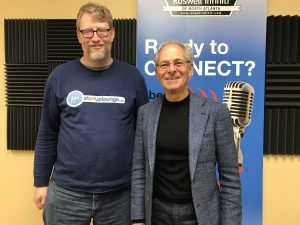
Tagged With: CPa, CPA firm, Dayton accounting, Dayton business advisory, Dayton CPA, Dayton CPA firm, Decision Vision, Employee Engagement, employee retention, Enterprise Community Partners, Facebook, For Momentum, Gen X, Habitat for Humanity, Michael Blake, Mike Blake, millennials, Mollye Rhea, Nike, Non-Profits, social impact, St. Vincent de Paul, sustainable development, United Nations

Decision Vision Episode 39: Should I Write a Book? – An Interview with Bea Wray, Michael Levin Writing Company

November 7, 2019 by John Ray

Decision Vision
Decision Vision
Decision Vision Episode 39: Should I Write a Book? – An Interview with Bea Wray, Michael Levin Writing Company
Loading
00:00 /
RSS Feed
Share
Link
Embed

Download file

Mike Blake and Bea Wray

Decision Vision Episode 39:  Should I Write a Book? – An Interview with Bea Wray, Michael Levin Writing Company

Are books still relevant? How do I get a book out of my head and down on paper? Should I self-publish? The answers to these questions and much more come from this interview with Bea Wray, Michael Levin Writing Company, “Decision Vision” is hosted by Mike Blake and presented by Brady Ware & Company.

Bea Wray, Michael Levin Writing Company

Bea Wray

An innovation expert, Bea Wray helps thought leaders share their stories, passions and knowledge as they invent, launch, and promote new products. As the former Chair of the Entrepreneurship Practice Group at Advantage Media Group, ForbesBooks, Bea further leveraged the wisdom and experience of these innovators through branding, visibility, and marketing efforts substantiated by the ForbesBooks brand name.

Bea is an innovator herself.  She successfully built and eventually sold SourceHarbor Inc.  Along the way, she expanded the company to serve thousands of clients internationally, and has consulted with hundreds of startups. Bea served as the Executive Director of The Creative Coast, a regional non-profit building the innovation economy in Savannah, Georgia where she hosted TEDxCreative Coast and the innovation conference known as GeekEnd. Her years of energy and effort are an immediate benefit to entrepreneurs across 26 countries and throughout the United States.

Bea’s upcoming book, titled What Harvard Taught Me, But My Kids Made Me Learn, is expected to arrive late in 2019. She is looking forward to sharing how her experiences as a mother of three taught her how to negotiate, communicate, and adapt in the business world.

Bea holds an MBA with Distinction from Harvard Business School, is a summa cum laude graduate of Emory University, and is one of South Carolina’s prestigious Liberty Fellows of the Aspen Global Leadership Network. She is a frequent keynote speaker on innovation, entrepreneurship and business growth, and an inspiring contributor to various publications, including Entrepreneur.com, The Grindstone, and The Savannah Morning News.

Michael Blake, Brady Ware & Company

Mike Blake, Host of “Decision Vision”

Michael Blake is Host of the “Decision Vision” podcast series and a Director of Brady Ware & Company. Mike specializes in the valuation of intellectual property-driven firms, such as software firms, aerospace firms and professional services firms, most frequently in the capacity as a transaction advisor, helping clients obtain great outcomes from complex transaction opportunities. He is also a specialist in the appraisal of intellectual properties as stand-alone assets, such as software, trade secrets, and patents.

Mike has been a full-time business appraiser for 13 years with public accounting firms, boutique business appraisal firms, and an owner of his own firm. Prior to that, he spent 8 years in venture capital and investment banking, including transactions in the U.S., Israel, Russia, Ukraine, and Belarus.

Brady Ware & Company

Brady Ware & Company is a regional full-service accounting and advisory firm which helps businesses and entrepreneurs make visions a reality. Brady Ware services clients nationally from its offices in Alpharetta, GA; Columbus and Dayton, OH; and Richmond, IN. The firm is growth minded, committed to the regions in which they operate, and most importantly, they make significant investments in their people and service offerings to meet the changing financial needs of those they are privileged to serve. The firm is dedicated to providing results that make a difference for its clients.

Decision Vision Podcast Series

“Decision Vision” is a podcast covering topics and issues facing small business owners and connecting them with solutions from leading experts. This series is presented by Brady Ware & Company. If you are a decision maker for a small business, we’d love to hear from you. Contact us at decisionvision@bradyware.com and make sure to listen to every Thursday to the “Decision Vision” podcast. Past episodes of “Decision Vision” can be found here. “Decision Vision” is produced and broadcast by the North Fulton studio of Business RadioX®.

Visit Brady Ware & Company on social media:

LinkedIn:  https://www.linkedin.com/company/brady-ware/

Facebook: https://www.facebook.com/bradywareCPAs/

Twitter: https://twitter.com/BradyWare

Instagram: https://www.instagram.com/bradywarecompany/

Show Transcript

Intro: [00:00:02] Welcome to Decision Vision, a podcast series focusing on critical business decisions, brought to you by Brady Ware & Company. Brady Ware is a regional, full-service accounting advisory that helps businesses and entrepreneurs make visions a reality.

Michael Blake: [00:00:20] And welcome to Decision Vision, a podcast giving you, the listener, clear vision to make great decisions. In each episode, we discuss the process of decision making on a different topic. Rather than making recommendations because everyone’s circumstances are different, we talk to subject matter experts about how they would recommend thinking about that decision.

Michael Blake: [00:00:38] My name is Mike Blake and I’m your host for today’s program. I’m a director at Brady Ware & Company, a full-service accounting firm based in Dayton, Ohio, with offices in Dayton; Columbus, Ohio; Richmond, Indiana; and Alpharetta, Georgia, which is where we’re recording today. Brady Ware is sponsoring this podcast. If you like this podcast, please subscribe in your favorite podcast aggregator. And please, also, consider leaving a review the of podcast as well.

Michael Blake: [00:01:02] Our topic today is, should I write a book? And this is a topic that is near and dear to my heart because books have become, in some respect, easier to write and circulate than ever before. And I do sort of have this secret desire to get about five or six books out, which surprises a lot of people because they’re a surprise and I learned I could read. But in point of fact, I think that there’s a voice in there that wants to put things down on either dead tree paper or virtual paper.

Michael Blake: [00:01:38] And I think a lot of people are thinking about that as well. And it may be people who are like me that are in the services area that wish to establish and reaffirm our reputations as subject matter experts to the market. It may be people that have an artistic bent and this is, you know, a book is in effect their canvas for self-expression. Or it could be somebody that simply feels like they have a story to tell or a lesson to teach. And a book is their way of of getting that lesson out to the world. That’s sort of their contribution to society. And we all know this proliferation of books out there under various names. They could be books, they could be e-books, they could be something else.

Michael Blake: [00:02:27] And, you know, I think that, you know, as we record today in 2019, this is a topic that really wouldn’t have even mattered 20 years ago. You know, the notion that somebody would just somehow write a book was a much larger undertaking because of the way the industry was structured, because of the way technology worked or didn’t work. And it’s just another one of those signs of the times that technology is enabling us all to put a voice out there in a way that, for good or bad, we simply were not able to.

Michael Blake: [00:03:06] And joining us today is my pal Bea Wray, who is with Michael Levin Writing Company with the awesome tag line, their books make their clients happy, famous, trusted and rich. You have a story to tell, a business case to make, a family history, to capture, your book as the ultimate leave behind on sales calls. And I agree with that. The best way to record the culture of the enterprise you’ve built and your legacy for your family.

Michael Blake: [00:03:31] Bea herself is an innovation expert. And she and I know each other from back in the days when Startup Lounge was active in Savannah, Georgia, and she was the director of—executive director of our partner organization Creative Coast there. And now she’s helping thought leaders share their stories, passions and knowledge as they invent, launch and promote new products. As the former chair of the Entrepreneurship Practice Group and Advantage Media Group, Forbes Books, Bea further leverage the wisdom and experience of those innovators through branding, visibility, marketing efforts substantiated by the Forbes Books brand name.

Michael Blake: [00:04:08] Bea is an innovator herself. She successfully built and eventually sold Source Harbor Incorporated. Along the way, she expanded that company to serve thousands of clients internationally and has consulted with hundreds of startups. She serves as the executive director of the Creative Coast, a regional nonprofit building the innovation community in Savannah, Georgia. By the way, one of those awesome cities anywhere. If you don’t—if you’ve never been there, go. If I can ever afford to retire there, that is where I’m going. She hosted TEDxCreative Coast and the Innovation Conference known as GeekEnd.

Michael Blake: [00:04:40] Her years of energy and effort are an immediate benefit to entrepreneurs across 26 countries and throughout the United States. She holds an MBA with Distinction from Harvard Business School and a summa cum laude graduate of Emory University and a bunch of other good things. And last but not least, I mean, we’ll get to this one. She has written her own book or is in the fit—in the process of putting her own finishing touches on that book. What Harvard taught me but my kids made me learn, which is expected to arrive in 2019. And I know she’s looking forward to sharing how her experiences as a mother of three taught her how to negotiate, communicate and adapt in the business world. And I think there’s a lot that I’m going to learn from that, too, as a father of two who I think already can negotiate better than I can. Bea Wray, thank you so much for being on the program.

Bea Wray: [00:05:30] I’m so happy to be here, Mike. This is wonderful.

Michael Blake: [00:05:33] So, let’s sort of get down to it. You know, normally I start these podcasts with a definition because we’re talking about a fairly technical topic. But I’m just going to go on a limb here and say everybody knows what a book is. So, why would I want to write a book? You know, I don’t have time to even read all the books that I would like to read. Why am I going to take that time and write one instead?

Bea Wray: [00:05:57] Well, the main reason is to—that people want to be known, loved, and trusted and businesses want to hire people that they know love and trust. And more and more businesses are deeper in whomever they’re working with. Whether it’s your accounting firm, your lawyer, even your orthodontist. You know, I helped an orthodontist write a book because he explains that the impact of straightening teeth on a child’s sleep and what was happening in sleep and the ability for that child to do better in school. So, I thought, orthodontia was all about just keeping your smile pretty. Well, it turns out that the fact that this doctor spends more time understanding the numerous impacts, he wrote a book about it.

Bea Wray: [00:06:53] And so, I guess what I’m trying to say is, you introduced the podcast, which was excellent by, you know, this was not something you could have done 20 years ago because technology was different and the distribution was different. That’s very true. I would argue that in addition, the knowledge base was different. And so, one of the reasons fewer and fewer people publish with a traditional publisher is because we are not all reading the same book. You just said yourself, there’s 10 or 12 books you would love to read. Those are probably not the 10 or 12 that are on my list.

Bea Wray: [00:07:35] It’s that we want more specific stories, more connected to our lives. I want to know not what is the most popular book in the country, but I want to relate to someone who’s more like me, who has insights about things that I need. And so, one of the reasons you might write a book is because you have a unique and special experience and perspective that can help some people, thousands of people, tens of thousands of people. Maybe not a few billion people. And yet helping thousands of people is actually a really great thing to do, and sharing your own thoughts in that way is a great endeavor.

Michael Blake: [00:08:23] So, you touched on something that I think I want to jump to, because if you’re—if you really haven’t looked at this and if you’re a people of a certain age such as myself, you think, oh, I need a book, I then need to, I guess, find a way for John Wiley and Sons or McGraw-Hill or, you know, somebody else that’s going to pick this thing up, is that necessarily the case anymore? Is that gateway or that barrier to entry still important?

Bea Wray: [00:08:55] It is not. And I’m a big fan of both of those companies. And working with a traditional publisher can be great and it might not work for you at all. And I have had the privilege of working with hundreds of authors. And what I find is that that industry continues to consolidate and to minimize in such a way that the services one would have gotten in the past, like marketing services are smaller and fewer. And so, it may not be a great experience if you, one, go down that route even if you’re successful. Then the distribution of the book may not be what you’re hoping for.

Bea Wray: [00:09:39] What also can happen is, you know, they’re in the business of selling books. Not in the business of selling you or your company or your idea, which can be great as long as your incentives are aligned with what you want with your book. And so, if they’re not aligned, what can happen is a very specific methodology that maybe it’s something you go over in your consulting practice. It’s a way you use as a business card. It’s what you start talking about and bringing people to your company. Make it watered down in the book that’s trying to be sold to a million people. And so, right off the get go, just the book you envision in your head, depending on what level of control you want, it may be better to self-publish or a hybrid publish than going the traditional route because you lose a lot of control. There’s a lot of talk about how you lose money. You get 40 cents on the book versus $10 on each book sold. But a big problem is, are you actually putting out there the book that is in your heart and mind and soul?

Michael Blake: [00:10:50] And you know, you touched on something there that I want to kind of break from the script a little bit and drill into because I think that’s an important point. You know, the business model of bookselling and the life model of the author may not very—may not be in alignment, right, to sell a book. If you’re going to really do it the way McGraw-Hill put on a bestseller list, that kind of becomes your job, doesn’t it? And maybe you don’t want that to become your job.

Bea Wray: [00:11:18] Absolutely. That’s exactly right. And you know, you mentioned me and my own book. And I’ll just use this as a very specific example. Is—I write not exclusively to women, but sometimes to women, because I’m a mom and I am a woman and I’m a business person. And what I have found is that, we as women, choose to belittle our own experiences in the home and outside of the corporate world, even though they’re very, very relevant to learning about how to deal with people and learning how to negotiate and all those things you said earlier. I never speak from a platform of corporations to conferences or in my book as a victim, or about those bad men who don’t treat me well enough, because that’s not something I think about.

Bea Wray: [00:12:14] However, there is a huge market for that. There is a lot—after the #MeTooMovement, there’s a lot of energy and there’s—I have actually been approached by traditional publishers, write the book in this way because there is a market for, if only men would pay a dollar and a dollar to men and women and the gender pay gap and all this whole language that—those are important factors and there are important things to fight for. But I’m going to fight it from the perspective I know which is I’m going to get better at raising my hand. I’m going to get better at taking risks. I’m going to be better at stepping forward. Not about saying I’m a victim.

Bea Wray: [00:12:55] And the point I’m trying to make here is I have personally been approached, hey, if you change your book to say something that wasn’t in your heart, mind and soul, we can sell it. That’s not been my personal choice. And I know 30 other people who’ve made a similar choice to me because what was more—if you’re going to go through the effort of writing a book, it is a long journey and it sticks with you a long time, my encouragement is make it a book you want it to be.

Michael Blake: [00:13:22] And you know, I would think the thing about a book even by today, it—still, if you compare it to other forms of communication, media, it—a book still has a permanency to it that even a blog doesn’t, a YouTube video, or a Facebook post, whatever, an Instagram, whatever it’s called, a gram, I don’t know. I’m not on histogram, you know, tweet, whatever. A book is still different in that regard, isn’t it, that once it’s out there, either on on dead tree paper or a virtual paper, at some point, I think most people would would have a need to be proud of that out there, because if you’re not, it ain’t going away.

Bea Wray: [00:14:08] Correct. And it is all about—I mean, I love that the word author is part of authority. It is all about establishing your authority. So, be clear on what authority you want to be establishing. Be clear on who you are on that paper because this is where you have your chance to shape it.

Michael Blake: [00:14:30] So, let’s do a close eye role play here. But what I’m really doing is I’m getting free consulting and other guys are giving you a podcast interview opportunity. But I’ve got a book and I’ve got several books in my head that I think I want to write. Do I just start writing? Do I do the Snoopy cartoon thing where I’m on my doghouse, the typewriter and say it was a dark and stormy night? Or how do you—what are the first steps toward that goal?

Bea Wray: [00:15:00] Well, that’s a great question. And you certainly can. Most people start to at least have an outline and a set. The kind of questions you’re thinking is, what is the book I want to write and for whom? And then why? I do recommend being I won’t say selfish but a little bit. Like know your purpose for writing the book because that will help you define your audience and your use. And it will certainly keep you motivated.

Bea Wray: [00:15:34] So, I’ve worked with people who are writing a book because they just hope that one of their grand kids will read it someday, that they don’t want to die without their story somewhere written down. And that’s what they’re going to do. Maybe it will get published in a place and all those people around the world will read it but it was really just about a legacy. That’s a great reason. I’ve helped people write books because their need is to drive business to their company. Now, those kinds of people may be selling $40 gene. Usually, they’re selling a complicated relational relationship kind of product. So, $150,000 on average. Way that leads to consulting, whether it’s for manufacturing or setting up of insurance captive or whatever, where their wisdom and knowledge and the sense to be trusted is so critical. You can’t have that across in a phone call. They want their ideas out and they want to be trusted. And that’s their way that they attract people to their company.

Bea Wray: [00:16:45] Some people want to launch a speaking career. Some people—so, understanding your why. I think it is really, really important before you go too far in writing your book. And then there’s the how. What I will say is I learned over time that the average entrepreneur take around three years to write his or her own book. And unfortunately, fewer than 40 percent of the entrepreneurs to start out on that personal endeavor finish. And that’s why people like the Michael Levin Writing Company exist, is people who are running their own company have—there’s so much at stake every two hours that they spend just writing, not working in the company. And so, it’s constantly the battle that’s most urgent thing and the book never gets done. And so, it becomes a very costly endeavor just an opportunity cost.

Michael Blake: [00:17:54] So, you know, you said another thing. You’re going to make us rip off the script, which is great, because I can do that with you because you’re smarter than I am, empirically. And that is that you say something that kind of runs against what a lot of us, I think almost everybody, is taught and as a hardwired way, which is cater to your audience, cater to your audience, cater to your audience. And while I think you’re acknowledging kind of the existence of the audience, at the end of the day, if you’re going to produce a book that you’re going to feel is worthwhile at the end, it’s really about what you want. It sounds like, correct me if I’m wrong, but what I’m hearing is that it’s really about what you want to put out there to the world. And then if people buy it, buy into and engage cause they’re great. But that’s just kind of the way that it’s got to go.

Bea Wray: [00:18:48] Yes. I mean, one of the first questions we ask people is who is this book for? And what are you going to do for them? And so, in why are they going to do what you want them to do? It may be that they—you want to motivate them to take better care of their health. Great. It may be that you want them to call you to take better care of their health. We don’t know. But one of the very first questions is who are you writing for? So, I do care about the audience.

Bea Wray: [00:19:21] But before that, you have an idea for the book. It really needs to be your idea that’s deep in your heart and your passion connected to the life that you are ready to lead as an author. And so, whether that’s a business person who has a book, whether that is a speaker who has a book, or whether that I’m a grandparent, I’m leaving a legacy that has a book. This book is becoming a part of who you are and you have to have a reason for wanting to write it. And that will help define your audience. And then you can start tailoring to that audience and you have to or otherwise it won’t be a good book. But I—what I don’t recommend is go out, survey the world, and see what book is missing.

Michael Blake: [00:20:12] Interesting, because I’ve actually heard exactly that advice given many times. So tell me more about that. Why? Why is that a bad idea?

Bea Wray: [00:20:23] Because we don’t live in—because, well, we’re going to think I’m an old fuddy duddy, but because we don’t want beaver cleaver on T.V. anymore is basically the reason. And let me explain that. So 40 years ago, you watch, you consume video television, the same—you and every other neighbor were watching the same thing as there were three channel. And we all watched the same thing. We consume information in a certain way. And my guess is you didn’t watch that last night. Am I right?

Michael Blake: [00:20:59] Yeah.

Bea Wray: [00:20:59] And you didn’t watch even the same thing as everyone on your street. And if you’re like most of America, you don’t even watch everything that was the same even if people in your home. So not only is it not consistent. Three options down the street. Most of us watching the same thing and talking about it. And as the water cooler the next day, we are self-selecting and sometimes is independently created content like YouTube videos, TedX Talk, and so on and so forth. So the way we consume information is so totally different than the way it was years ago. At that time, publishing of individual books had certain channels. We need so many mysteries, we need so many adventure stories, we need so many biographies. And we don’t have a recent biography of Abe Lincoln for 10-year-old. We needed to fill that.

Bea Wray: [00:21:56] That is not the way information is consumed today. It’s quite the opposite. We create whether video content or written content as a way of connecting with people. Who do we want to connect with? Is it based on our faith? Is it based on our geography? Is it based on our clients? And so, I want to write a book that helps me be who I want to be and connect with the people I want to connect with. I have a—I have an e-mail today from a friend who went to Harvard Business School who wrote a book about parenting and leveraging Harvard Business School, very, very similar in some ways as my book and not at all similar. And it will be used in the same way. But we became friends because our books were similar. But never did she think, oh, gosh, you’re writing on that topic, I can’t. Or did I think you’re writing on that topic, I can’t.

Michael Blake: [00:23:01] Yeah. And to some extent, right, it probably kind of reaffirms a factor you may be on to something.

Bea Wray: [00:23:07] Yes.

Michael Blake: [00:23:08] If one person, other person thinks it’s worth writing that book, that would tell me there’s 10,000 people that think it’s reading that book.

Bea Wray: [00:23:18] Exactly. But it wouldn’t be the case if there were only one spot on the network or only one spot in the McGraw-Hill sells for this type of book. But that’s not the way books are distributed, written especially today.

Michael Blake: [00:23:36] So—and this actually—this does circle back then to a question I actually had prepared to ask for today, which is, you know, given all of the media that bombards us and is available, you know, I mean, are books on their way out or are books still a real thing?

Bea Wray: [00:23:58] That’s so interesting because many times you also in this podcast talked about, you know, a paper book or an online book. And I believe that not only are books very much relevant today. Funny, I’m looking at a bookshelf right now suddenly filled with books. But I think paper books are still very relevant, even though I’m an audible fan. I listen to books often. And the reason is because they are a way of connecting with people.

Bea Wray: [00:24:30] So more and more people are writing books, more and more people are writing books to connect with their audience. It may not be a billion people. It may not even be 300,000 people. But writing a book—well, take the guy, for example, whose client is $150,000 every time he gets a client. This gentleman wrote a book, put it in the hands of fewer than a thousand people, and his business increased by $5 million in the first year because it didn’t take many people to learn, to know, love, and trust him. Does that make sense?

Michael Blake: [00:25:15] It does. And by the way, as an aside, I have stolen that phrase because I’m familiar with the phrase no like and trust. No love and trust is so much better. So kudos to you.

Bea Wray: [00:25:26] Well, thank you.

Michael Blake: [00:25:26] And if you hear lots of other people that are using that, it’s because I stole it from you and told everybody they can have it.

Bea Wray: [00:25:33] I appreciate that. I was told one time that, you know, the first time you borrow, you give credit. The second time, you know, oh, I was talking and so-and-so said. The next time you say, so and so taught me to say. The third time you forget about so-and-so altogether and you just know it.

Michael Blake: [00:25:52] That’s right. And by the fourth time, it just came to me one day. I don’t know where. But you’re welcome to borrow it if you want.

Bea Wray: [00:26:01] There you go.

Michael Blake: [00:26:01] Yeah. So I do think, you know, there is still some—there is still a mystique around a book. In spite of all the other media that, you know, compete for attention, I give books a lot because I recommend that people read a book and then to guilt them into reading and I’ll often buy it for them and send it to them. So they’ll at least lie to me the next time they see me and say they read it. But, you know, it is a very powerful calling card.

Michael Blake: [00:26:32] And I’ll share my own story. So years ago, I co-authored a book called Entrepreneurship Back to Basics, and it’s one long out of print. But I remember, I was applying for a job and they asked me for a writing sample. I say, okay, if I send you a copy of my book, right, just sort of hear a pin drop at the interview at that point. An extreme case, but still an anecdote of the impact that a book could make.

Bea Wray: [00:27:00] Totally fabulous. And you know, a lot of time it’s okay if someone doesn’t read the whole book. But one of the most powerful sales talk is to say, you know, hey, Michael, it was great to speak with you today. I really appreciated the questions you had on my marketing strategy. Please turn to page 26 in the book that I’ve enclosed.

Michael Blake: [00:27:23] Yeah. And of course, then there’s if you want the benefit of reading the book and I haven’t actually read it, you can just hire me.

Bea Wray: [00:27:31] Precisely.

Michael Blake: [00:27:34] So let’s say we’re well along the way to a book being written or maybe it’s even written. Is it as hard to get a book picked up by Amazon and distributed to Kindle or iBooks or something like that? Is it hard at all or can anybody just sort of do it? How, you know, what’s your assessment of that electronic distribution medium in terms of making it harder or easier to actually get a book out there?

Bea Wray: [00:28:01] Well, I think anybody can do it. Most people need help with how. So certainly making sure the book is a great quality. You know, you do want an excellent manuscript, well-written, but that’s not enough. You definitely have to have someone who’s helping you do the layout, make it look excellent. Pull out images and illustrations and even font type and book jackets. All of that matters.

Bea Wray: [00:28:30] And so, I’ve never met someone who can do all of that him or herself. You know, that usually takes a team who can get that done. And that’s where, you know, hybrid publisher and that’s where, you know, our company helps people find that right team at the Michael Levin Writing Company so that—because what people don’t want to do is finally get this book out of themselves. Finally have this manuscript and then say, now what, and still run into all of the hurdles that they were experiencing before, you know, they took the steps to get the book actually done. That said, you know, Amazon will put a book up, and so you don’t have to go to McGraw-Hill to have—to be a published author. And you still get—and you get to retain much more of the profits of the book, which is excellent.

Bea Wray: [00:29:27] But there’s still a science around how do you get it in the very category? How do you get the ISBN number? How do you make sure that it becomes an Amazon best-seller because Amazon does a great job of creating certain categories. And there’s a system around making sure enough people are voting for you at the time so that you can be a best-seller. And so, there—it’s not that hard. You just, you know—my husband will kill me for saying this. I don’t even change my oil in my car because I don’t know how to do that, right.

Michael Blake: [00:30:03] Right.

Bea Wray: [00:30:03] He does and he knows how to take the radiator out, too. And if he doesn’t, he’ll learn on YouTube. That’s not me. So my philosophy is get the people who are excellent at doing these things for you so that you can feel comfortable and go do the things that you’re excellent at.

Michael Blake: [00:30:25] So you mentioned in passing that assuming the book is finished at all, that it would take an entrepreneur roughly three years to complete a book. Is that reflective of best practices or is that reflective more of that? There have been a bunch of fits and starts and mistakes and restarts. And that’s not really an efficient path. And if you do it kind of the Bea Wray way that it doesn’t necessarily take a full presidential cycle to do that.

Bea Wray: [00:30:55] Now, I think the best practice is 90 to 120 days.

Michael Blake: [00:31:00] So good. Yeah. Because I’m not nearly that patient if I’m going to write my book. So, let’s walk through that. If you’re talking to somebody and they’re serious about writing a book, what—how does that time typically get allocated? Do somebody take 90 days off to write the book and they go to a, you know, a Nepalese monastery where they’re not going to be disturbed? Or do they take one or two days a week or they just sort of locked themselves in an office and do that? Or is it, you know, the method where somebody gets up at 4:00 in the morning and the first two and a half hours a day, they write? How does that typically work?

Bea Wray: [00:31:38] So, what I have experienced in the last few years, both with the Michael Levin Writing Company and the ghostwriting company and when I ran the Forbes book is that they realize they want to buy their—what they’re really doing as CEO of a company is buying his or her own time. They’re saying, I don’t want to delay fits and starts because there’s something about our brains that actually gets ourselves in the way of writing our own book because we want to be perfect. And writing is an imperfect endeavor. We have to get it out and then it needs to be edited and changed and moved around.

Bea Wray: [00:32:18] And so, most people who have not been trained as writers and have 10 years of history as a writer with things that are not emotionally connected to themselves, are not going to be the best at writing their own book. They’re going to be the best at speaking their own books. And so, what they typically do is say, I want to hire a partner to help me with this book. And then, the first thing that happens is there’s a 90-minute phone call where there’s a conversation about who’s the audience, why are you doing the book, and let’s work through what is the book, meaning the outline of the book in the book plan.

Bea Wray: [00:33:00] And then usually the writers will go back and take probably six to eight hours with that 90 minute, listening to it, just writing it, re-listening to it, reshaping it, understanding, doing some research and then deliver back. Sometimes a 10 to 12 fixed, detailed outline, sometimes with holes. This is the way I see the book. Here’s where I sit these stories. What do you think? And so, now we’re working off of a book plan. And from that book plan, sometimes weekly phone calls are scheduled, sometimes every other week, depending on the schedule of the book and whether there is sort of a launch of that. But we need this book to be done by X date. What are we aiming for in order to hopefully get the 90 to 120 days.

Bea Wray: [00:33:51] And oftentimes, the entire book is interviewed. And then the writer goes away and delivers factious the first three chapters, never the whole book. That’s too much to digest for the author. So, the ghostwriter will deliver back the first two or three chapters, are we—did I get the voice right? Are we on the right path? That’s the time to iterate and decide how to shape the next two-thirds of the book. And within 90 days, an excellent ghostwriter, ghostwriting team should be able to deliver to a CEO his or her book written in his or her voice about his or her story.

Michael Blake: [00:34:40] And so, you know, kind of working through that process. And it certainly makes sense to me if you’re retaining a ghostwriter. You know, you’re surely buying back that time. And by the way, I’ve got to assume being a ghostwriter is extremely hard because writing to capture someone else’s voice has—I know is excruciatingly difficult because I’ve tried to work with ghostwriters in just small articles. And it’s never worked very well. And I think it’s something that’s very hard to do. Meaning that if you find somebody like you guys that can do it, you know, that is a precious commodity.

Bea Wray: [00:35:23] I think so. I can’t not do it. So, let me be clear. But the Michael Levin Writing Company has written over 700 books in 25 years. And I’ve been tracking for the last five years, and what I find is there are people who can do it. And interestingly, I spent enough time with them that these actual ghostwriters will say it’s easier for me to write your books than my own because all of those emotional things like that are those blocks that get ourselves in the way, get in our, we put in our own way don’t happen.

Bea Wray: [00:36:07] But it is one reason why the calls are cheap recorded, is there’s a lot of time spent getting that voice correct. Getting even that like (inaudible) of stories correct.

Michael Blake: [00:36:22] So, you touched on something I think is an important definitional point and that is editing and proofreading. I don’t think those are necessarily the same thing. And if you agree with that, can you explain to our audience what the differences between those two steps?

Bea Wray: [00:36:39] Yeah. So, anything—you know, they’re closely related, but editing is this—is a little more thorough and has a little more power. So, there’s ghostwriting. There’s really an overseeing. So, Michael Levin actually does all the book planned and he does the overseeing as a whole company. But there’s dozens of ghostwriters who are very carefully, closely match specifically to the author, but they’re never going to do their editing themselves. And so, then, there’s an overall editor who’s paying attention to tying the written work back to the author,b Back to the transcripts, back to the plan.

Bea Wray: [00:37:24] And then the proofreading is more the very final, you know, fork it out the door.

Michael Blake: [00:37:35] Right. Make sure there are no glaring errors and so forth, as opposed to high level kind of structure elements, I’m guessing.

Bea Wray: [00:37:41] Exactly.

Michael Blake: [00:37:42] Okay.

Bea Wray: [00:37:42] Editing can be—proofreading is making sure what they’re perfect. Editing is making sure we have everything we need there and identifying what’s not there.

Michael Blake: [00:37:57] Yeah. Okay. So, we’ve touched on this next question a little bit, but I don’t want to skim over because I do think it’s important. What’s your opinion of e-books?

Bea Wray: [00:38:11] Well, I think a lot of people that have them need to have them. Personally as a parent driving me crazy that my kids almost only read e-books because they read them on their phone and then there goes the text message, it’s like an invitation for a distraction. So, I don’t think they’re going away but there is a lot lost. I also don’t think—I’m positive they’re not replacing paper books where you can highlight and send and give as a gift and wrap up in a way. That cannot be done as effectively in an e-book.

Michael Blake: [00:38:55] And in terms of impact on a reader, do you think there’s a difference? Do you think that maybe readers look at e-books—and I want to make a distinction. I don’t necessarily mean a formal analog book that also happens to have a Kindle variant, but I’m more referring to kind of the promotional e-books that you see out there and they’re often called an e-book and maybe they’re not even worthy of the name. They should be called something else. But, you know, maybe they’re 15, maybe they’re 50 or 80, 90 pages to be considered almost too short a book to publish in paper format. But you see kind of that genre of book that appears in a digital format. You know what I’m talking about?

Bea Wray: [00:39:36] Yeah, I know exactly what you’re talking about. And, you know, there are certain things that are seen to be shared and they are sort of too short that would never make it as a book that also has an electronic version. I hear what you’re saying. So, I tell people that some of those out, it’s definitely not my specialty and I don’t personally have a big desire, so I don’t know that I have enough experience to say, you know, to have an opinion about them. It makes sense to me that sometimes people have a shorter message to give and a 50 page e-book will get it done.

Michael Blake: [00:40:20] Okay. So, now, I’m curious on your view, and I think our listeners are curious, and it’s an off—it’s an awkward, almost insipid question, but I think it has to be asked and that is, you know, how easy or hard is it to actually produce a book that people are willing to pay for? And, you know, for most people, is that even a realistic or desirable goal?

Bea Wray: [00:40:55] Well, I think that the hardest part is digging deep in your heart. So, I’ve been involved with the publishing of hundreds of books and every one of them has met that bar. They are—some people are paying for them. What I’m not sure is that enough people are paying—the author is getting a million dollars. So, I am not a fan of published—I never say to someone go write a book, you’ll be a millionaire because it’s selling—making money, selling books is hard work. So, it depends. You know, you’re not going to get very far if your book is of bad quality and you can’t find some market who will pay for it.

Bea Wray: [00:41:48] Oftentimes, the way to get to that is you might give it away to other people, but it has to be excellent quality, has to have an excellent work, has to have a brief title, has to know the audience but that’s a big leap from, you know, I sold books at the back of a conference to I became a millionaire selling books. And I say a million dollars because it’s really not worth your time and effort. Probably you’re gonna get a $200,000 but there are easier ways to make a living.

Bea Wray: [00:42:22] And so, that is really hard. And I don’t think it’s about the quality of the book at that point. I think it’s about the quality and the dedication of your marketing and how many—did you run here to get on the radio station? And how many public speaking engagements are you doing and how did you work your way onto The Today Show?

Michael Blake: [00:42:45] So, it’s about the business of the book?

Bea Wray: [00:42:46] Most people don’t want to do all of that work because they don’t need to, that their book is making them a million dollars because it’s tied to a business that they’re doing or it’s tied to some other reason. So, they don’t go through the effort to get on The Today Show.

Michael Blake: [00:43:01] Right. And plus, I mean, it sounds like—I mean, that process, if you want your book itself to be that kind of income generator, the book itself becomes a business and it requires a substantial investment. You know, I don’t think you just sort of write at info@todayshownbc.com, whatever their domain is. Hey, can I come on. I’d really like you to interview me. You know that in itself is a huge financial investment.

Bea Wray: [00:43:27] I used to help software companies sell their software. And what we always said was no matter how great it is, you can’t just cut a hole in the side of the building and hope that people start driving up like Burger King.

Michael Blake: [00:43:40] Darn it.

Bea Wray: [00:43:42] It’s true with books.

Michael Blake: [00:43:44] So, we’re running out of time. Before we do, if it’s okay with you, I’d like to shift gears to your own upcoming book. It’s going to be released later this year. Are you self-publishing that or is that going for a formal publishing house?

Bea Wray: [00:43:57] I am actually self-publishing that and I’m really excited about it. We’re finally getting into the homestretch here.

Michael Blake: [00:44:05] And if it’s not a major state secret, what is the voice of that book and what is the idea that you just had to get out of yourself and into that book?

Bea Wray: [00:44:18] Thank you. So, I had the privilege. I called the company and I had the privilege of taking about six years off of corporate work to raise my children. And I actually did so on a (inaudible) island in South Carolina. Daufuskie Island. So basically it’s exactly next to heaven and it was a perfect experience. But when I went back to work, which was at the Creative Coast, which you’ve already mentioned, I’m terrified. Did I have any skills? What can I do? How could I help them? Could I even find a job? And it was even way worse when I did because then I thought of all the ways I would fail because I had been at home with my children for six years.

Bea Wray: [00:45:00] And what amazed me is I had floods of thank you note. Thank you for that introduction to the venture capitalist. Thank you for this great event that you put on. Thank you for the strategic consulting. And I kept wondering, what were we doing that was helping these people? And then I kept wondering specifically, where did I personally get this skill to help these 300 plus companies? And over and over and over, the answer to that last question was not that I got this skill because I had attended the Harvard Business School. It wasn’t that I got this skill because I had decades of experience as an entrepreneur. Over and over again, the ability that I had to connect people, make people feel comfortable at an event, set out a vision for where we were going I received because I was raising children. So I want to talk about it.

Michael Blake: [00:46:00] And what what is the—is there one lesson that stands out as to the most important or the most obvious that your children taught you?

Bea Wray: [00:46:16] There isn’t one. Well, there’s dozens of them. But I think the main—the overarching lesson is that business is done with people. So people skills matter. So a great way to get people feel—hone your people skills is to try to raise them in your home.

Michael Blake: [00:46:37] Very good.

Bea Wray: [00:46:38] The one to do I have that I hope people walk away with is we, both men and women, belittle on our LinkedIn profile anything to do with parenting. We treat it as like a black mark, especially people who have taken time off. We try to cover it up from our professional experience. And my invitation is to consider not feeling that. And if you consider saying, you know, here’s who I am as a whole person. It’s basically Sheryl Sandberg said, hey, your corporate—your career path is not a corporate ladder. It’s not linear. It’s a jungle gym. And what I’m trying to do with this book is to validate that parenting is a reasonable spot on that corporate jungle gym.

Michael Blake: [00:47:33] Well, I am going to hit you up for a signed copy of that book. I can certainly see where that would fit because you’re right, there’s not just people skills. I think, you know, modern parenting involves tremendous time management requirements. I think obviously there’s economics that are involved. There’s conflict resolution. There’s so many things that actually can take from that. I’ve never thought about that. But the more you talk about it, the more inherent sense it makes to me. So, like I said, I’m going to hit you up for an autographed copy of the book.

Bea Wray: [00:48:10] I can’t wait.

Michael Blake: [00:48:11] So we need to wrap up. I think this is the longest podcast we’ve actually done and this is number 37 or 38, something like that. So I’m not sure if congratulations are in order or not, but it is what it is. If people want to contact you about writing a book or or maybe just figuring out where, you know, what lessons their children should be teaching them, how can they best contact you?

Bea Wray: [00:48:36] So, my personal e-mail is bea, is my name. B like boy, @beawray.com.

Michael Blake: [00:48:47] Okay. And that’s gonna do it for today’s program. I’d like to thank Bea Wray so much for joining us and sharing her expertise with us. We’ll be exploring a new topic each week. So, please tune in, so that when you’re facing your next business decision, you have clear vision when making it. If you enjoy these podcasts, please consider leaving a review with your favorite podcast aggregator. It helps people find us, so that we can help them. Once again, this is Mike Blake. Our sponsor is Brady Ware & Company. And this has been the Decision Vision podcast.

Tagged With: connecting with an audience, CPa, CPA firm, Dayton accounting, Dayton business advisory, Dayton CPA, Dayton CPA firm, Decision Vision, Michael Blake, Mike Blake, Parenting, personal brand, personal branding

Decision Vision Episode 38: Should I Outsource My IT? – An Interview with Tony Rushin, Network 1 Consulting

October 31, 2019 by John Ray

Decision Vision
Decision Vision
Decision Vision Episode 38: Should I Outsource My IT? – An Interview with Tony Rushin, Network 1 Consulting
Loading
00:00 /
RSS Feed
Share
Link
Embed

Download file

Mike Blake and Tony Rushin

Decision Vision Episode 38:  Should I Outsource My IT? – An Interview with Tony Rushin, Network 1 Consulting

Will outsourcing my IT increase my cybersecurity? What’s a human firewall and how does a managed services provider help me with this aspect of my IT? In this episode of “Decision Vision,” host Mike Blake explores these questions and much more with Tony Rushin, Network 1 Consulting. “Decision Vision” is presented by Brady Ware & Company.

Tony Rushin, Network 1 Consulting

Tony Rushin

Tony Rushin is a Vice President, Sales & Marketing, with Network 1 Consulting.

Network 1 Consulting is a 21-year-old, IT Support company in Atlanta, GA. They become – or augment – the IT department for law firms, medical practices and real estate & construction companies. Their IT experts can fix computers, but what their clients value most are the industry-specific best practices we bring to their firms. This is especially important with technology, along with regulations and cyber threats, changing so rapidly. They take a proactive approach to helping our clients use technology to gain and keep their competitive advantage.

For more information, go to the Network 1 Consulting website, or contact Tony directly by email.

Michael Blake, Brady Ware & Company

Mike Blake, Host of “Decision Vision”

Michael Blake is Host of the “Decision Vision” podcast series and a Director of Brady Ware & Company. Mike specializes in the valuation of intellectual property-driven firms, such as software firms, aerospace firms and professional services firms, most frequently in the capacity as a transaction advisor, helping clients obtain great outcomes from complex transaction opportunities. He is also a specialist in the appraisal of intellectual properties as stand-alone assets, such as software, trade secrets, and patents.

Mike has been a full-time business appraiser for 13 years with public accounting firms, boutique business appraisal firms, and an owner of his own firm. Prior to that, he spent 8 years in venture capital and investment banking, including transactions in the U.S., Israel, Russia, Ukraine, and Belarus.

Brady Ware & Company

Brady Ware & Company is a regional full-service accounting and advisory firm which helps businesses and entrepreneurs make visions a reality. Brady Ware services clients nationally from its offices in Alpharetta, GA; Columbus and Dayton, OH; and Richmond, IN. The firm is growth minded, committed to the regions in which they operate, and most importantly, they make significant investments in their people and service offerings to meet the changing financial needs of those they are privileged to serve. The firm is dedicated to providing results that make a difference for its clients.

Decision Vision Podcast Series

“Decision Vision” is a podcast covering topics and issues facing small business owners and connecting them with solutions from leading experts. This series is presented by Brady Ware & Company. If you are a decision maker for a small business, we’d love to hear from you. Contact us at decisionvision@bradyware.com and make sure to listen to every Thursday to the “Decision Vision” podcast. Past episodes of “Decision Vision” can be found here. “Decision Vision” is produced and broadcast by the North Fulton studio of Business RadioX®.

Visit Brady Ware & Company on social media:

LinkedIn:  https://www.linkedin.com/company/brady-ware/

Facebook: https://www.facebook.com/bradywareCPAs/

Twitter: https://twitter.com/BradyWare

Instagram: https://www.instagram.com/bradywarecompany/

Show Transcript

Intro: [00:00:02] Welcome to Decision Vision, a podcast series focusing on critical business decisions, brought to you by Brady Ware & Company. Brady Ware is a regional, full-service accounting and advisory that helps businesses and entrepreneurs make visions a reality.

Michael Blake: [00:00:20] And welcome to Decision Vision, a podcast giving you, the listener, clear vision to make great decisions. In each episode, we discuss the process of decision making on a different topic. Rather than making recommendations because everyone’s circumstances are different, we talk to subject matter experts about how they would recommend thinking about that decision.

Michael Blake: [00:00:37] My name is Mike Blake, and I’m your host for today’s program. I’m a director at Brady Ware & Company, a full-service accounting firm based in Dayton, Ohio, with offices in Dayton; Columbus, Ohio; Richmond, Indiana; and Alpharetta, Georgia, which is where we are recording today. Brady Ware is sponsoring this podcast. If you like this podcast, please subscribe on your favorite podcast aggregator. And also, please, consider leaving a review of the podcast as well.

Michael Blake: [00:01:01] Our topic today is, should I outsource my IT or information technology functions? And you know, I think this is a question that companies wrestle with quite a lot. In fact, I know companies that kind of do the IT two-step where they’ll insource it, and then outsource it for a while then. And then, thrilled to kind of bring it back, and then send it out again. And, you know, it’s really sort of the Texas two-step information technology style. And, you know, having been a business owner myself, I had to face that decision.

Michael Blake: [00:01:32] Now, as an anecdote, when I had my firm for a while, Arpeggio Advisors, our family at that time had started out as a Windows platform family. And then, something like three weeks into my trying to launch my company where my blood pressure was at a fairly high level, all of a sudden, my wife’s computer crashes and my oldest son’s computer crashed. Basically a race time when they can’t do anything and we’ve got to figure it out. And I’ve spent an entire day getting them back up and running, which I eventually did. But I said I’m just never doing that again.

Michael Blake: [00:02:16] So, on Saturday, I don’t know if Apple salespeople work on commission or not. But whoever—if they did, they made a lot of money on me that day because that day all the PCs are out. Macs were in. Never had trouble since. And this is not meant to be an Apple infomercial. I mean I do actually still have Windows machines for some things, but it’s indicative of how IT can be disruptive to a business, even if you’re a sole practitioner or even if you’re a home based business. That when you—when you’re infrastructure doesn’t work well, it is a real pain in the neck. It’s one of those things. It’s kind of like an umpire in baseball. You don’t notice and necessarily they do great. But boy, when they fail, you notice the heck out of them.

Michael Blake: [00:03:02] And IT is like that one. When your technology fails you, I can tell you from my perspective, I feel betrayed when my technology does not work. So, I feel like, you know what? I’m doing my my job. Right. Why is Apple, why is Microsoft, why is whoever not sort of holding up their end of the bargain? And so, the IT function in a company in the 21st century is every bit as important, if not more important than sales, than an accounting product delivery. You know, it’s right up there. But I don’t think that there’s as much controversy or consternation on whether or not to to keep that function or to outsource it or maybe if there’s, you know, identify kind of where that inflection point is, where you should consider that—you should consider that decision.

Michael Blake: [00:03:59] And so, as is often the case, you know, I’m not qualified to advise you on how to make that decision. So, I’ve brought in somebody who is qualified to help you make that decision. And joining us today is my friend Tony Rushin, who is vice president of Network 1 Consulting. Spending 30 years in high technology sales and marketing from IBM to startups, Tony brings his broad experience and business development marketing in IT business strategy to Network 1’s leadership team clients and partners. His passion is to help people achieve greatness and however they define it. And by the way, if your Atlanta Braves fan, you will appreciate this. He does run it out when the ball is hit into the gap in the outfield. Unlike some of our players here.

Michael Blake: [00:04:38] Network 1 delivers I-T managed services exclusively to businesses in Metro Atlanta. Since 1998, Network 1 becomes or augments the IT department for companies. Network 1’s IT experts fix computers for what their clients really values, the industry best practices they bring to the firm. It’s especially important with technology, along with regulations and cyber threats, which are changing rapidly.

Michael Blake: [00:05:02] With over 30 employees, Network 1 has built a culture that attracts and retains network and desktop professionals who know their stuff and have an outstanding desk side. Man, that is not easy to do. They find a fixed root causes instead of putting a Band-Aid on issues. Network 1 delivers proactive planning, so their clients avoid problems and gain competitive advantage. They’re not just a cost function. Network 1 is a fractional chief information officer, a support desk network engineer and everything in between. Tony, welcome to the program.

Tony Rushin: [00:05:32] Well, glad to be here, Mike. Thank you.

Michael Blake: [00:05:34] So many of us encounter outsource support when we need to fix our computer in sort of a robot vacuum. Is outsourced IT support simply hiring day from India. What does that look like?

Tony Rushin: [00:05:49] Well, no offense today from India, but if that’s all outsourced, IT support would be, there wouldn’t be much outsourced IT. So, it’s much more than that. But, you know, it can be confined to that, too. It really runs the gamut as far as what companies need, and then what they go out and get.

Michael Blake: [00:06:08] So, you know, what if a company happens to have a lot of people who are relatively computer uncomfortable, does that change the equation? Not every company necessarily has or needs people who are power users at every desk, right? Does that at all impact the decision on whether or not you should keep that function in-house versus outsourcing it?

Tony Rushin: [00:06:29] Great question. We’ve got 120 clients around Metro Atlanta. And I would say most of the users we support are relatively uncomfortable with technology and yet they still have a job to do. And their threshold for when they need help is much lower than that, power user often. And some of those that are uncomfortable with technology are also in some form the rainmakers. It could be a salesperson. It could be a managing partner in a law firm. And so, we haven’t found any correlation to whether or not you outsource to the how comfortable or uncomfortable people are with technology.

Michael Blake: [00:07:15] So, let’s back up. I probably should have made this the first question but too late. But there’s a term people hear a lot and I’m not sure they understand what it means. What—when we say managed services, what does that mean?

Tony Rushin: [00:07:27] Yeah. Managed services. It can mean something different to different IT support companies. What it means for Network 1, and in general I think we’re aligned with the industry, it’s the ongoing and always up to date services that are delivered by your outsourced IT company. So, what does that mean? And not all outsourced IT is—includes managed services.

Tony Rushin: [00:07:53] But, for instance, basic security. Well, that’s antivirus. Well, making sure it’s the latest version and it’s on everyone’s desktop or laptop. Well, that kind of infers that desktops and laptops need to be monitored to make sure that the latest is on there. It could be advanced security suite that’s got more tools and solutions in there to protect and prevent bad guys from getting in, but also detecting them when they get in. It can be managing a firewall. So, it always has the latest firmware and software involved in the company that is being managed on behalf. Never has to worry about it, never has to buy the hardware, it just gets supplied. So, think of it as baked in.

Michael Blake: [00:08:40] And so, in effect, is it fair to kind of characterize managed services for the most part as just a turnkey solution to some IT operation that needs to happen?

Tony Rushin: [00:08:50] Yeah, great, great summary of it. Turnkey and but typically it’s also based on a menu. Hey, I need this, that and the other and I don’t need those other things.

Michael Blake: [00:08:59] Okay. So, I think—in fact, I know a question on a lot of business owners and executives minds. As you know, we both understand the importance of IT to an organization. Right. And when IT doesn’t work, an organization can stop dead. And we’ve seen, we’ve heard of those those things. How do you overcome as an executive this notion or the idea or the fear that if I don’t own my IT department, really own them, right, they’re employees and I can, I don’t know, yell at them or fire or throw rocks at them, whatever, right, that that just leaves me more vulnerable to a disaster?

Tony Rushin: [00:09:42] Yeah. You know, it’s great you do this podcast because you’re getting advisors in here that have some experience and yet some in your audience that own businesses will say, yeah, I hear that but I think I have a better way. And so, we don’t do too much to educate people. We let the marketplace educate them for them. What I mean by that is the common sense of one business owner might be, I need IT in-house and it could be going great because let’s say there are financial advisory company and they’ve got 15 people and they’ve got an IT guy. That’s good. He’s customer-oriented. He’s focused. He runs around. He helps fix issues. And then, he gets sick or he quits or he’s not so good and he’s spotty.

Tony Rushin: [00:10:36] That’s the education of the owner like, oh, wait a minute, he is who he is. And by the way, the dynamic of the marketplaces, if he is really good, and I say he because most of them are guys, then he won’t be satisfied forever at a 15 person financial advisory company. He’ll want colleagues. He’ll want more challenges, whatever it is. And so, if someone chooses to bring it in-house, it could work great. My guess is for a small size business, say under 50 employees, it will bite them in some way, in some form or fashion.

Michael Blake: [00:11:17] You bring up something I want to make sure that I talked about because I do think it’s important. You know what was not intended to create innuendo here, but I think size really does matter. Right? I mean, I think there’s a—is it fair to speculate on my part that there’s maybe a sweet spot where, you know, can an organization get so big that having outsourced IT just isn’t—at least entirely, is no longer practical and maybe even on the small end, right, outsourced IT may kind of even be overkill, right? If you only wanted two people and you know your way around a computer, maybe it should just kind of do that. Is that fair?

Tony Rushin: [00:11:57] It is fair. And I’ll talk in generalities because it’s different depending on the kind of business it is. Some are highly regulated. I use financial advisory as an example and some are less regulated for instance. In the marketplace over time—and Network 1’s 21 years old. I’ve been there almost 10 years. I’ve seen almost a physics of size and when they need certain IT support. And if you’re less than 10 employees or or less than 8, you can often get away with some kind of as needed IT support. So, the opposite of managed services. You simply pick up the phone and call somebody if you need their help, only when you have an issue. And sometimes that can be done internally if you got a smart guy. And hey, I’ll fix it for you, right.

Tony Rushin: [00:12:52] Sometime between 5 and 10 employees, if they’re doing it with a smart person in-house and they’re growing, they might say, hey, wait a minute, it’s better to have Sally get out there and get new clients than fix our computers, and she’s really good at getting new clients, for instance. And so, that’ll happen. And they’ll say, well, let’s get someone that can fix things when they break. Often at about that 10 employees standpoint up to say 50, they’ll say, hey, look, I need—it would be better if there was someone more proactive and all inclusive delivering these services, not just when my hair’s on fire. Because when my hair’s on fire, I need him here now. And you can always get him here now. Whereas if they’re fixing little things along the way, it can avoid the big thing.

Tony Rushin: [00:13:42] So, really, for companies less than 50 employees, but 10 to 50, we don’t find a lot of in-house IT people. They’re outsourcing everything. Somewhere between 50 and 100, typically, we see them get their first IT person and that can actually be worked really well with an outsourced firm. We love working with an internal IT person because no matter how good our support desk is and they’re really good, I mean, they get to every issue within on average, seven minutes.

Michael Blake: [00:14:16] Wow.

Tony Rushin: [00:14:16] But the person on site can beat that every time. Now, not if he’s helping Joe and Susie down the hall needs him at the same time.

Michael Blake: [00:14:26] Right. That just assumes a personal sort of waiting for the phone to ring and that phone lights up and all of a sudden-

Tony Rushin: [00:14:32] Yeah.

Michael Blake: [00:14:32] … you’re rushing up to that person, right?

Tony Rushin: [00:14:34] Yeah. But between that 50 and 100 people, they typically have a person onsite. And then, if they get to that issue where, hey, we have multiple people and you know, our IT guy can’t get to them all, they’ll often bring in someone like us and say, hey, look, is there a way we can streamline, so that they take what they can? But if it’s over their technology knowledge or if they’re flat out, you know, covered up with a couple different issues or you know what, the dang employee wants vacation once in a while, go figure, right. They’ll have a relationship with someone like us, a managed service company, and says, look, we want to escalate or we want to hand off whenever we need to. So, that’s about 50 to 100.

Tony Rushin: [00:15:19] And then, when you get multiple people in I.T., then they have colleagues, then they can internally go on vacation or go to a class and still have someone to back fill. And we find that typically when there’s more than 100 employees.

Michael Blake: [00:15:35] So, I think there’s an important point there that I want to make sure we highlight is that this choice may or may not necessarily be an either or. Right. It very well could be an and, right. You may have, you know, one IT resource that is captive. Right. But then some firm like yours might then be available to augment that. It could be as needed, it could be strategic, whatever. Right. So, maybe in some cases it’s a fault—you can have your cake and eat it, too.

Tony Rushin: [00:16:09] Yeah. Really, it ends up being managing the business risk and managing the ongoing productivity of the employees on a fundamental level. The business risk is I have one IT guy and he gets sick. He leaves, he goes on vacation, whatever. And, of course, Murphy says that’s when the bad things gonna happen. And you need help.

Michael Blake: [00:16:28] Absolutely.

Tony Rushin: [00:16:29] And if you wait till then to have this outsourced relationship, well, the company you bring in doesn’t know your system. And so, they’re doing the best they can. But at best, it’s triage learning the systems. Oh, was it documented? Oh, you don’t even know passwords. Well, then they’re hacking into your system.

Michael Blake: [00:16:48] Right. It’s like an emergency room visit.

Tony Rushin: [00:16:50] Exactly. Whereas if you do it when everything’s quiet, you’ve got your IT person, they’re part of the solution of bringing in the company. They’re actually even getting, hey, what’s my style? What’s the style of the person to work with? Do they work with me well? Then they’re part of the solution. And it works fine for when those emergencies come up.

Michael Blake: [00:17:12] So, you mentioned something else I want to make sure to underline, because I think one of the arguments somebody might have to maintain a captive IT resource is that notion that while I own most of the service, the response time is going to be instantaneous. Right. But, you know, that’s not necessarily the case. And if you work with the right partner, you may very well find that you get, you know, assuming it doesn’t necessarily need to be an onsite because most of these—most computer issues can be addressed remotely now that you aren’t necessarily making that sacrifice of responsiveness that you thought you might.

Tony Rushin: [00:17:47] Yeah, it all depends. It depends a lot on how customer service oriented is the person you hire. And, you know, people can be really good in interviews, and then you get what you get. But let’s say they’re great, you know, and they know their technology and they’re really customer service oriented. You still run into, oh, my gosh, the rainmaker’s on the road and his laptop failed and yet they’re addressing a server down issue in the other part of your company, they can’t do two things at once. But that’s part of the business dynamic. I think companies get there on their own, get their meaning. Oh, we need to augment the current person we have in site simply from enduring enough IT issues that, you know, the person can’t clone themselves.

Michael Blake: [00:18:36] So, I would have to imagine that you’re having many more conversations about cyber security now than you were, say, 10 years ago, 5 years ago, right. So, how does—how do concerns about cyber security impact that decision of outsourcing IT functions? On the one hand, I could see an argument that’s well, again, if I have this captive asset, I own it, it’s ostensibly a closed cycle that should be nominally more secure. On the other hand, maybe it’s by outsourcing your brain and expertise, you could not possibly afford to hire cause cyber security experts are—they’re as well paid as a senior software engineer, if not more, at this point. Where do you kind of fall in that? Where—how do you kind of look at that, that many decision within the decision process?

Tony Rushin: [00:19:27] Yeah, great question. I don’t think overall it really affects the fundamental of do I outsource or do I bring it, have it in-house. What it has done—and really we’ve seen the acceleration rapidly in the last three years, you know, where cyber security, it’s gone from reading about it in the newspaper like, oh, it happened to someone else, to people—oh, it happened in my company or my next door neighbor’s company and I know him personally and I think that’s what’s accelerated it.

Tony Rushin: [00:20:00] You kind of set it up really well with if it’s that single in-house person and you’re keeping them really busy, how much time do they have to do that proactive. Hey, what new solutions are in the marketplace that might protect us better? Do they have colleagues already in-house that they can pick up the phone and just have a brainstorm sounding board conversation about, hey, we got this bad malware, how did you guys prevent it? It’s hard to find that really tactically good computer broke, fix it fast, person. And have that same person be that strategic, always looking forward, hey, what’s on the horizon? What do the bad guys do and what do the good guys do and what solutions should I be looking at? Oh, I should bring it in and vet it and do a pilot on it. Oh, wait a minute, this guy’s computer broke. That’s where I have to spend my time. And that’s the reality of what that single shingle person is involved with. And so, it ends up driving more people, I think driving more outsourced I.T.’s conversations, whether you keep that internal person and if he’s good, you should or whether you simply want to outsource all of it.

Michael Blake: [00:21:15] So many companies now are also using cloud services or putting all their data up in the cloud, whether that’s One Drive, Dropbox, something like that. Does that impact a need to—does that impact at all kind of the decision as to whether or not you outsource versus keep in-house, given that by definition, when you’re putting your data in a cloud, you’re already taking a step to outsource anyway, right?

Tony Rushin: [00:21:41] Yeah. Yeah. And a lot of things that are bundled into that, you know, cloud solution are what a company like us would do if you had it running on a server internally, meaning the servers in that cloud solution if you picked a good one, right. Not one that’s really in someone’s basement, but, you know, Microsoft or, you know, Office 365 or something like-

Michael Blake: [00:22:10] Josvpn.com.

Tony Rushin: [00:22:12] Right. They’re going to have redundancy built in. They’re going to have backups built in. And they’re going to make sure that everything is designed in a way where the application is not going to go down. Or if it goes down, it’s gonna be minutes and, you know, like that, not two days. So, all of that is a real big step up where we find that people—I mean you still need—you still have users and you still have them. I mean, I’ll flip it around, ask you question. Do people still go to the wrong websites?

Michael Blake: [00:22:47] All the time.

Tony Rushin: [00:22:47] Do they still get tricked by that e-mail, that phishing e-mail, and they might click on something?

Michael Blake: [00:22:53] You better believe that.

Tony Rushin: [00:22:55] Do they still forget to run the updates when their computer says run these updates?

Michael Blake: [00:23:00] Especially with Windows, I think many people actively avoid it.

Tony Rushin: [00:23:04] Yeah, because then, you know, you got a reboot or hey, the update might cause a problem.

Michael Blake: [00:23:09] And takes a minute.

Tony Rushin: [00:23:10] Takes a minute. So, it’s the user issues that are still the same. In fact, maybe they’re more complicated because you’re not going to pick up the phone if Office 365’s not working right and call Microsoft and actually get a response.

Michael Blake: [00:23:23] Right. Not unless you’re a really big user.

Tony Rushin: [00:23:25] Right.

Michael Blake: [00:23:26] Or you’ve really paid for their Cadillac plan, which they will sell you. Right. But then are you really saving anything, right?

Tony Rushin: [00:23:31] Right.

Michael Blake: [00:23:32] You know, I want to go back to those questions you just asked because they’re so important. You know, speaking of spear phishing attack, a friend of mine who was a CFO fell prey to a spear phishing attack and lost her job.

Tony Rushin: [00:23:52] Wow.

Michael Blake: [00:23:52] Within two days, gone. Right. Now, I do not believe it was her fault. The organization had never trained her or anybody to recognize spearfishing. There are no policies, rules, procedures, right? Yes, there’s human error. But to me, that was human error that was set up by an organizational failure to be prepared. So, my question for you is, beyond kind of the nuts and bolts of of keeping a machine running and keeping software update and so forth, can an outsourced IT function, if it’s not you, maybe somebody else, also help kind of establish those rules, procedures, create awareness? Because the end of the day, you do still need your end users to be smart about this thing.

Tony Rushin: [00:24:37] Yeah, and it’s interesting. The biggest weakness in any network is still the human firewall.

Michael Blake: [00:24:44] Yeah.

Tony Rushin: [00:24:44] It’s that person. And you hit the nail on the head. Well, how do you make that human firewall more secure? It’s through education. It’s through training. It’s through—and not one time events. Right. It’s like, hey, security is important. And that’s the day that you hired him, and then you never talk about it again. Well, that doesn’t work.

Michael Blake: [00:25:06] Right. This isn’t sensitivity training. OK, just kidding, just kidding, hold your e-mails.

Tony Rushin: [00:25:11] Right. So, the—first of all, we, as the outsourced IT or any outsourced IT can influence the leadership of the company to take security seriously and make it part of their employee handbook, make it part of their regularly ongoing employee training. But at the end of the day, if they don’t—if the leadership doesn’t step up to lead it and say this is important and this is what we’re doing, we can only influence, right.

Tony Rushin: [00:25:51] But let’s say it is a company that they care. It’s like, look, I want this to care. Then, yeah, we can advise. Well, then here are the steps, the processes, the training that you should incorporate into your culture. And here’s the frequency at which you should do it. So, I think most companies that are like us and helping those smaller companies can at least advise, influence, give some examples of processes and procedures to put in place to raise up their security. And solutions are put in place. If they need—if they’re in a regulated industry and they need something more robust than you’ve got those paid as much as a software developer kind of people that are consultants to put whole company assessments in place around security, physical and online security and put, you know, really extensive processes and procedures in place.

Michael Blake: [00:26:53] I mean, that—yeah, and that security space has has evolved into sort of the neurosurgery, I think of the IT world. Partially because I’m glad about the regulations, because, you know, financial statement, audit rules are now directly addressing this. Right. Your data security. In my world now, you know, I am—although badly I am now asking customers, not customer, I’m asking clients, why appraise their business? What are they doing about data security? How many records do they have that are potentially exposed, right, to do business in Europe where GDPR becomes effective or in California where their roles become effective? Because I don’t think that if you’re—if you ignore that, you’re really missing a big potential risk, right?

Tony Rushin: [00:27:38] Yeah.

Michael Blake: [00:27:39] So—but it’s become so specialized that, you know, if you’re a generalist, you just can’t cover it, right. And if you’re really sensitive, if you’ve got high sensitivity, that maybe another IT function that needs to ultimately be outsourced and just part of the cost of doing business. Right?

Tony Rushin: [00:27:56] Yeah. And the good news is. When you look at the tools of the technology that’s available to also help protect and prevent and detect security breaches, in this day and age, they are very affordable for small businesses. And especially if they outsource because what they also get the benefit of, let’s say with us, is a 50 person company pays a 50 person price for whatever licenses they might get of Cisco umbrella that protects them way out on the Internet side, or Huntress Labs, which is a cool piece of software that doesn’t protect you. But it always scans to check and detect if something made it through because something’s going to get through no matter how good your protection is.

Tony Rushin: [00:28:51] Well, those things for a 50 person company might cost them, say, $40 per computer per month. Well, a company like us will buy 2000 nodes for all our clients, and then we’ll offer it to our clients for $10 a computer a month. Plus, by the way, you know, we’ll get an alert when something happens and we’ll dig into it. You don’t even have to know about it. So I wanted to bring in costs because it’s important. These solutions typically start with big companies. And then, over the years, more competition comes in or that same company will develop a price point that is very palatable for small businesses.

Michael Blake: [00:29:37] And interestingly enough, I see the same thing, but from a different angle. I see that also occurring because small companies, most of them at some point would like to be bought by a larger company. And I have seen deals get stopped dead or at least get dragged through the mud and prices go down because the larger acquirer that does have kind of “best practices”, I think they do. Right. And they’re reaching down into this small company that is farther behind. Right. And it’s like trying to buy a house and you realize you’ve got to put a million dollars to get up the code and the deal can fall apart.

Michael Blake: [00:30:18] So, you know, I think a best practice for many companies is to make your IT as best practice as you can afford if you want to be acquired, because an information officer will say, look, this is too risky.

Tony Rushin: [00:30:33] Right.

Michael Blake: [00:30:33] Either they’ve got to go through and get a real grown up IT audit and a clean bill of health from your national firm or it just doesn’t make sense. An Exhibit A was the Verizon Yahoo! deal. Right. I remember when Verizon bought Yahoo! a while ago. And in the middle of that deal, they discovered a breach and it shaved billions of dollars off the acquisition price. I mean that’s an extreme example, but it happens all the time.

Tony Rushin: [00:30:57] Yeah. And I want to play off that a couple different ways. And in your example, it doesn’t mean the small company has to spend big company money. I mean, at the end of the day, you have to be more secure than your neighbor, just like physical security with your house.

Michael Blake: [00:31:13] Run faster than the other guy when you’re running from there.

Tony Rushin: [00:31:16] Exactly. And so, no one’s asking them to, you know, spend what Yahoo! or Verizon spent. In fact, no matter how much they’re spending, they can’t keep themselves safe. So, if the bad guys want to get you, they’re going to get you. What you want to do is button down things, so when they knock on your door from a cyber standpoint, oh, no one’s home. Go to the next. I checked the windows, can’t get in and they quickly go to the next. And so, you don’t have to spend that kind of price. You just have to pay attention to it appropriately.

Tony Rushin: [00:31:51] And going back to outsourcing, if you’re a single small business, you may not know what’s available out there in your price point or what are best practices without overspending for a company that’s 40 people. Whereas a company like us has one hundred and twenty clients that are that size and we work in there all day. And by default then because we earn a living doing this, we understand what best practice is or what’s appropriate and what’s available for that sized company.

Michael Blake: [00:32:23] Now, correct me if I’m wrong. If I’m not mistaken, a lot of your clients are law firms and accounting firms.

Tony Rushin: [00:32:30] They’re law firms and financial advisors.

Michael Blake: [00:32:31] Financial advisors, okay.

Tony Rushin: [00:32:32] Yeah, not quite accounting firms.

Michael Blake: [00:32:34] So, is that because those kinds of firms tend to lend themselves better to outsourced IT than do others? And are there other kinds of firms that say, you know what, this kind of firm probably really needs to just have staff in-house?

Tony Rushin: [00:32:51] So, way back in our history, 21 years, our founder married an attorney and the daughter of an attorney. So, it’s not rocket science why we got law firms at the beginning. We got referred in by people that knew our-

Michael Blake: [00:33:05] Right. Fair enough.

Tony Rushin: [00:33:06] And then, we built enough reputation there for being good. We call it that side manner to be able to explain things to an attorney or their staff that wasn’t tech talk and to be empathetic and to be responsive. And so, we got more law firms and attorneys. So, truth be told. Now, are some better outsourced than others? No, pretty much we find across the board any business can benefit from it. The ones we found actually—I say any. The ones that don’t seem to be quite as good a fit is that technology company that part of their offering is delivered through technology that’s facing for their client.

Tony Rushin: [00:33:52] Think of Amazon when they were really little. Well, when they were really little, they’re structured the same way as they are now and their technology was really client facing. Click here and go on and order a book. Well, if you outsource the IT support for that, you may not—that’s a critical function to their business. Those critical functions or the family jewels, if you will, you typically want to have in-house. So, that’s not quite a fit. But any others, we haven’t seen the correlation.

Michael Blake: [00:34:29] So, what does—what are the economics of outsourcing IT typically look like? And what I mean by that in a more specific way is, is pricing typically done on a monthly retainer? Is it on a per incident basis, done on an hourly basis, some other basis? How does that typically work?

Tony Rushin: [00:34:53] Yeah. Well, the good news for that small business owner is it’s a highly competitive marketplace. In Metro Atlanta alone, there’s over 800 IT support companies.

Michael Blake: [00:35:07] Wow.

Tony Rushin: [00:35:07] Yeah.

Michael Blake: [00:35:08] I thought I had competition.

Tony Rushin: [00:35:09] That’s a real number. And now, granted, 780 of those 800 are one, two or three-man shops. But the good news is that business owner, you brought up examples, you know, is it on a monthly retained basis, is it per incident, is it this or that? The answer’s yes.

Michael Blake: [00:35:26] Got it.

Tony Rushin: [00:35:26] You can find a provider that works with any of those models.

Michael Blake: [00:35:31] And what about you guys? Is it—do you find that you kind of tailor your pricing to the particular needs and wants of that customer as while? Do you sort of have—or do you have kind of a more of a fixed model?

Tony Rushin: [00:35:44] It’s both. We have three different basic plans, and then we have these managed services that, oh, you don’t need the advance security suite in your environment. Okay, don’t get that. Or you don’t need the the backup and recovery with disaster recovery built into it or at least it’s not at your price point. Great, let’s not do that. So, it’s some of both smorgasbord and fixed plans.

Tony Rushin: [00:36:10] We, in particular, won’t take a client that merely wants to call us when their hair’s on fire. That’s the as needed only. However, we’ve been around Atlanta for 21 years. So, if we find someone or if someone’s referred to us and say this is the kind of plan I want, we’ll simply say, well, that doesn’t fit us but we know two people that are really good at that. And would you like their names. Yes, we would. All right. Go call them. We found—we—I’ve been there 10 years. And for the first three years of me being there, we tried to serve both kind of client and we found we simply couldn’t because our monthly retained clients are where we put all our resources. And then, that person with their hair on fire calls and it’s like, do we take this engineer off this client that pays us every month? No, of course, we don’t. And then, we’d never be responsive enough for the hair on fire guy.

Michael Blake: [00:37:00] Right. That makes sense. And it would be like working at, you know, at a car company. And they have this assembly line, that’s their model, and then all of a sudden the CEO wants a custom car built, right? It would break everybody. Right. You wouldn’t get a very good custom car and it would disrupt the entire assembly line, too. Tony, this has been great. We’re running out of time, so we’re gonna need to wrap up. But if somebody wants to contact you with questions about this decision, how can they do that?

Tony Rushin: [00:37:31] Yeah, a lot of ways to contact. It’s trushin, R-U-S-H-I-N, @network1consulting.com. And that’s the numeral 1. So, that’s long the first time you type it. You know, just put me in as a contact. You can find me on LinkedIn, Tony Rushin. We’ve got a website. You know, we do tweet and we do Facebook. Personally, I’m not on those too much cause our—I’m on LinkedIn mostly cause that’s where business people are.

Michael Blake: [00:37:56] Right.

Tony Rushin: [00:37:57] Yeah.

Michael Blake: [00:37:58] Well, good. Well, that’s going to wrap it up for today’s program. I’d like to thank Tony Rushin so much for joining us and sharing his expertise with us. We’ll be exploring a new topic each week. So, please tune in, so that when you’re faced with your next business decision, you have clear vision when making it. If you enjoy these podcasts, please consider leaving a review with your favorite podcast aggregator. It helps people find us, so that we can help them. Once again, this is Mike Blake. Our decision—our sponsor is Brady Ware & Company and this has been the Decision Vision podcast.
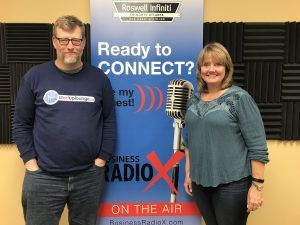
Tagged With: CPa, CPA firm, Dayton accounting, Dayton business advisory, Dayton CPA, Dayton CPA firm, Decision Vision, firewall, Information technology, information technology strategies, IT managed services, it outsourcing, managed IT services, managed IT support, Managed Service Provider, managed services, Michael Blake, Mike Blake, Network 1 Consulting, outsourced it, outsourced IT services, outsourcing IT, Tony Rushin

Decision Vision Episode 37: Should I Use an Offshore Software Developer? – An Interview with Dave Bernard, The Intellection Group

October 24, 2019 by John Ray

Decision Vision
Decision Vision
Decision Vision Episode 37: Should I Use an Offshore Software Developer? – An Interview with Dave Bernard, The Intellection Group
Loading
00:00 /
RSS Feed
Share
Link
Embed

Download file

Mike Blake and Dave Bernard

Decision Vision Episode 37:  Should I Use an Offshore Software Developer? – An Interview with Dave Bernard, The Intellection Group

What countries should I consider for offshore software development? How should I manage an offshore software development project? The answer to these questions and much more come in this in-depth, frank interview with Dave Bernard of The Intellection Group. “Decision Vision” is hosted by Mike Blake and is presented by Brady Ware & Company.

Dave Bernard, The Intellection Group

Dave Bernard

Dave Bernard is the CEO and Co-Founder of The Intellection Group. He is a serial entrepreneur, technologist, investor, inventor.

The Intellection Group specializes in rapidly building sophisticated, high-quality and innovative technology solutions that deliver breakthrough business results.

No matter where you are in the world, if your company or government agency is a market leader in your niche that requires highly-custom systems to maintain your leadership position and invent further marketplace advantages, they can help. The company’s specialty is complex (and often, award-winning) SaaS projects, and they’ve become well-known as the “vendor of last resort” for many of their clients.

The Intellection Group applies their versatile and deep technology and project management skills to solve problems in areas like developing database architectures that ensure effective data mining, integrated disparate information systems through service oriented architectures and loosely-coupled techniques, applying advanced techniques in data presentation, often an important selling point and differentiator, and rescuing complex technology projects that threaten to derail business plans.

The Intellection Group also has special expertise in emerging technologies, including voice recognition, text-to-speech, location services (GPS, RFID), natural language processing and search (supported by their patent portfolio.)

They like nothing better than for you to count on us to bring new and exciting ideas to the table that enable you to succeed in a tough and complex marketplace.

The Intellection Group delivers technology solutions which get results, like

  • A comprehensive portfolio management program for a world-leading private equity firm
  • A flexible data interchange application for one of the world’s largest vehicle transporters
  • A complex human resources system for a European defense ministry
  • A sales force productivity management system used by Microsoft, Symantec and Computer Associates
  • The most advanced online education delivery platform available.

The Intellection Group’s work has won awards such as the TAG (Technology Association of Georgia) Excalibur Award, the TAG Top 40 Most Innovative Company Award, and the Virginia Governor’s Technology Award.

To contact Dave, you can find him on LinkedIn or you can email him directly.

Michael Blake, Brady Ware & Company

Mike Blake, Host of “Decision Vision“

Michael Blake is Host of the “Decision Vision” podcast series and a Director of Brady Ware & Company. Mike specializes in the valuation of intellectual property-driven firms, such as software firms, aerospace firms and professional services firms, most frequently in the capacity as a transaction advisor, helping clients obtain great outcomes from complex transaction opportunities. He is also a specialist in the appraisal of intellectual properties as stand-alone assets, such as software, trade secrets, and patents.

Mike has been a full-time business appraiser for 13 years with public accounting firms, boutique business appraisal firms, and an owner of his own firm. Prior to that, he spent 8 years in venture capital and investment banking, including transactions in the U.S., Israel, Russia, Ukraine, and Belarus.

Brady Ware & Company

Brady Ware & Company is a regional full-service accounting and advisory firm which helps businesses and entrepreneurs make visions a reality. Brady Ware services clients nationally from its offices in Alpharetta, GA; Columbus and Dayton, OH; and Richmond, IN. The firm is growth minded, committed to the regions in which they operate, and most importantly, they make significant investments in their people and service offerings to meet the changing financial needs of those they are privileged to serve. The firm is dedicated to providing results that make a difference for its clients.

Decision Vision Podcast Series

“Decision Vision” is a podcast covering topics and issues facing small business owners and connecting them with solutions from leading experts. This series is presented by Brady Ware & Company. If you are a decision maker for a small business, we’d love to hear from you. Contact us at decisionvision@bradyware.com and make sure to listen to every Thursday to the “Decision Vision” podcast. Past episodes of “Decision Vision” can be found here. “Decision Vision” is produced and broadcast by the North Fulton studio of Business RadioX®.

Visit Brady Ware & Company on social media:

LinkedIn:  https://www.linkedin.com/company/brady-ware/

Facebook: https://www.facebook.com/bradywareCPAs/

Twitter: https://twitter.com/BradyWare

Instagram: https://www.instagram.com/bradywarecompany/

Show Transcript

Intro: [00:00:02] Welcome to Decision Vision, a podcast series focusing on critical business decisions, brought to you by Brady Ware & Company. Brady Ware is a regional, full-service accounting and advisory firm that helps businesses and entrepreneurs make vision a reality.

Michael Blake: [00:00:20] Welcome to Decision Vision, a podcast giving you, the listener, clear vision to make great decisions. In each episode, we discuss the process of decision making on a different topic. Rather than making recommendations because everyone’s circumstances are different, we talk to subject matter experts about how they would recommend thinking about that decision.

Michael Blake: [00:00:38] My name is Mike Blake, and I’m your host for today’s program. I’m a director at Brady Ware & Company, a full service accounting firm based in Dayton, Ohio, with offices in Dayton; Columbus, Ohio; Richmond, Indiana; and Alpharetta, Georgia, which is where we are recording today. Brady Ware is sponsoring this podcast. If you like this podcast, please subscribe on your favorite podcast aggregator. And please, also, consider leaving a review of the podcast as well.

Michael Blake: [00:01:02] Our topic today is, should I have software developed offshore? And for those of you who either know me in real life or have follow the podcast, and if you have followed the podcast, thank you very much for doing that. It’s a small but growing club I’m sure. You know that I have a background working with emerging technology companies, even matured technology companies. And in working with such companies, there are a few universal truths that I hear about how somebody is going to grow and scale their company. One, they say, well, we’re gonna have viral marketing and that’s a whole—that’s a different animal that we’ll tackle at some point. But if you know how to reliably produce viral marketing, you don’t need to raise money. Somebody will pay you $10 million a year to do it. But I digress.

Michael Blake: [00:01:59] Second is, all I need is three million dollars and this idea comes to fruition. And the third is we are going to develop software offshore. And we tend to think about this as if it’s something that is just very easily done and very easily executed because we are used to technology now being imported from overseas, whether it’s phones from Korea, whether it’s Macintosh’s or iPhones being made in Taiwan and China, whether it is Facebook memes coming from Volgograd. The fact of the matter is we have a lot of technology that comes from abroad. And of course, everybody is familiar with the meme of Steve from Wichita, who’s actually based over in Mumbai. And so, we’re used to having our technology come from someplace else.

Michael Blake: [00:02:50] And so, at a high level, it’s easy to kind of think about, well, we’ll just have our software developed abroad. These—you know, many of these countries have very strong educational systems and in particular,  very strong in producing engineers, scientists, mathematically oriented people. People are clearly very comfortable with computers. And by the way, you know the story goes that they basically work for peanuts or whatever the Indian equivalent of a peanut is.

Michael Blake: [00:03:20] And that’s fine as far as it goes. But when you sort of dig into it, you know, I’ve discovered that for every success story about well, we’re just going to offshore and outsource our software development, there are few stories that are not as successful. In fact, some of them are just outright tire fires. And so, it’s indicative, I think, of an important notion that software development abroad, really anywhere, but especially offshore doesn’t just happen just because you know that other companies have been able to do it.

Michael Blake: [00:03:55] And so, it’s a decision that needs to be worked through very carefully, because for most companies, getting your software done correctly, getting it done on time and now in a way that makes sure that you’ll have security back doors is not just a financial imperative, it is existential to the firm. And if you get that wrong, you just have no product. Not every firm can just sort of hit the reset button. So, OK, this didn’t work, let’s try it again a second or third time. And so, I think it’s important to kind of understand what exactly is involved in that.

Michael Blake: [00:04:27] And other than what I just told you, this is not a topic I know anything about, but fortunately I have a guy here in front of me who does know a lot about that and he’s going to tell us about it and share that knowledge with us. So, joining us today is Dave Bernard. Dave is a serial entrepreneur, technologist, inventor, and investor living in Atlanta, Georgia, an expert in new and emerging technologies.

Michael Blake: [00:04:48] Dave has co-founded several companies, including the Intellection Group, an innovative technology consulting group that has been recognized as one of Georgia’s most innovative companies. The Intellection Group specializes in building complex award winning-software as a service systems for both commercial and government entities in North America, Europe, and Africa. The Intellection Group specializes in rapidly building sophisticated, high-quality and innovative technology solutions that deliver breakthrough business results. They like nothing better than for you to count on them, to bring new and exciting ideas to the table that enable you to succeed in a tough and complex marketplace.

Michael Blake: [00:05:26] Dave has led and helped create award-winning complex software programs for organizations across many different industries, including healthcare, supply chain, insurance, retail, hospitality. You get the idea, all shapes and sizes from startup to multi-billion dollar enterprises. Dave has also founded a company called BeneVets providing technology solutions to veterans services organizations. Boy, did we ever need that. He’s also led the Intellection Group’s development of a patented technology architecture that unifies web development capabilities with voice recognition, text to speech, natural languages, radio frequency identification, and global positioning system technologies, deliverable to wireless, handheld, and desktop services. And his credentials go on and on but you get the idea. He’s pretty smart. He’s pretty accomplished. Dave, welcome to the program.

Dave Bernard: [00:06:19] Thanks, Mike. That’s quite, quite an intro. I’m really glad to be here, though. Going to have fun with this.

Michael Blake: [00:06:24] We’re going to have fun with this. And I know that we’re going to learn a lot because, you know, do you agree with me that I think you know, I think a lot of people are just sort of take for granted that offshore software development happens, right? And that’s not the case.

Dave Bernard: [00:06:38] They do. And, you know, there’s definitely what I would consider an almost mythology about it. And, you know, I tend to have a bit of a contrarian attitude about a lot of things. I’ve been in this business 40 years. I’ve seen a lot of best thing since sliced bread come and go. And so, I have an increasing skepticism about what that next best thing is.

Dave Bernard: [00:07:03] When we first started our company, our technology company, about 16 years ago, you know, you’re a new company, you want to control costs and make some money coming out of the gate. And I already had a large network of offshore people I have met at conferences over the years. And I just kind of flipped through my Rolodex and started calling some of these people overseas and we actually started establishing a nice little business doing that. And it has been—it has not been a better process. All along we’ve learned a lot through the school of hard knocks. And I’ll tell you, one of the biggest revelations for me in building this up has been that I thought software development is software development, no matter where it’s done, and that meaning that I didn’t think that there were cultural differences that would make a difference. I’ve found that to be diametrically opposite in practice, that cultural differences may matter a lot to how work is done and you have to account for that.

Michael Blake: [00:08:06] Good. So, let’s put a pin in that. So, we are going to get back to that. But speaking about kind of those cultural differences, in your mind and your experiences, you see it sitting here today. What are the countries right now that seem to attract the most interest in terms of being hosts of offshore development exercises?

Dave Bernard: [00:08:24] Yeah, it—I mean, everybody talks about South Asia, India, Pakistan, even Bangladesh. You have the Far East emerging as a very low cost area, Vietnam, Philippines in particular. The Philippines is very attractive because a lot of English speakers there. But there are also an entire half day ahead of you. So, that needs to be—I actually use a virtual assistant of the Philippines. So, I am acutely aware of that.

Dave Bernard: [00:08:52] Other areas that are up and coming, I think of Central America, South America, their values, because there tend to be in about the same time zone we’re in. And you also have to pull in Canada as a nearshore opportunity. But mostly Canada’s been positioning itself as QA technical support type of capability. So, that’s what you hear about. What we have found after going through the school of hard knocks on this is that Eastern Europe for us is the biggest bang for the buck. Best cultural fit. And just—there’s just a lot of stud developers over there.

Michael Blake: [00:09:28] Now, an important sort of nuance. When you say Eastern Europe, do you mean sort of all of the countries east of Germany or do you parse kind of central Europe that has Poland, Czech Republic versus Belarus, Ukraine, Russia? Does that make a difference?

Dave Bernard: [00:09:42] I would say Central and Eastern Europe.

Michael Blake: [00:09:44] OK.

Dave Bernard: [00:09:45] We’ve been—we have a ton of experience with Bulgaria, for example. And I’d like to highlight them because there’s a historical reason why there’s that way, but also a substantial experience in Poland and Belarus. And I know people who work with Serbs, Croats, Romanians, and Hungarians, and Czechs, and they’re all very, very good. It’s a very similar type of approach.

Michael Blake: [00:10:13] You know something about Bulgaria, they produce a ton of academic finance people and economists, for some reason more than any other country. When—you know, in my field, when somebody writes a really new and interesting paper that is super quantitative, like, you know, it takes me an hour and a half to get through the first page basically, Bulgaria seems to produce a lot of people like that. And I think that goes to the culture, right. For whatever reason, their culture, maybe their education system seems to skew towards that way.

Dave Bernard: [00:10:47] Yeah, there’s a very interesting wrinkle in Bulgaria that I did not discover till after I was working there for a few years. And that is that if you recall, the command economy that the Soviet Union ran in the Warsaw Pact, you had countries like Poland that were building aircraft. So, the Soviets would outsource a lot of their aircraft manufacturer to Poland in order for the economy to succeed. So, the Czechs and Hungarians built cars. The Bulgarians built computers. That’s what they did. They built software-

Michael Blake: [00:11:18] That’s right.

Dave Bernard: [00:11:19] … firmware and computers. They’re very well known for that. So, when you do that, your whole education ecosystem is built around that. So, that is still there. That disproportionate focus on the hardware and software side of things is tremendous there. And I think that part of that is informed—you know, a disproportionate amount of their population is in that business. And we just found tremendously talented people there.

Michael Blake: [00:11:48] That’s really interesting. And somewhere in the back of my mind, I was aware of that, but never made that connection until you made it for me. That explains. And I’ll pull the kimono back for just a second. One of my hobbies is retro computers. One of my prized possessions is an Apple IIGS. It actually works, souped up, et cetera, et cetera. But one of the—one thing that I do not have in my collection and I will not because that will be a major fight with my wife that I’m not going to have is a Pravetz computer, which was their knockoff of the Apple II, that their spies basically went into Cupertino, stole the diagram, stole everything, basically, and remade it. And if you look, you can find on eBay once in a while and it looks almost exactly like an Apple IIe, except Apple has been replaced with the Pravetz.

Dave Bernard: [00:12:40] Well, next time, I’ll go see if I dig one up for you.

Michael Blake: [00:12:42] Oh, boy, you do that. You’re my friend forever.

Dave Bernard: [00:12:44] But, you know, there’s one other really interesting thing about this and something that Bulgarians are immensely proud of. And that is the the person who invented the digital computer is widely regarded as a fellow named John Atanasoff out of, I believe, is Iowa State University. Well, at—his name is spelled Atanasoff with two Fs at the end. But I didn’t ever made the connection because I know a lot of Atanasoff in Bulgaria. And sure enough, he’s Bulgarian.

Michael Blake: [00:13:18] Is that right?

Dave Bernard: [00:13:19] And, in fact, when I made that connection, I asked—when I was in Soviet one time, I asked my team, do you know about this? “Oh, yeah. He’s one of our greatest heroes.” And they took me to a large statue in the middle of Soviet that has his figure on it. And I also had a little—another little antidote is that I was actually at a soccer game with my daughter, probably about 12 years ago and standing next to an old friend of mine who also had a daughter in the team. And I had mentioned—so, I must have been talking about going to Bulgaria. And she said, “Oh, my family’s Bulgarian.” Oh, really? No kidding. And she said, “Oh, by the way, my grandfather invented the digital computer.” And I was like, John Atanasoff? “Yeah, that was him.” And actually, a few years later, on his 100th birthday anniversary, they came over, found her, and brought her whole family over for 10 days random around the country and just celebrating his 100th anniversary. It was a big deal there. Big deal.

Michael Blake: [00:14:17] Well, good. So—and by the way, if you’re listening from the Bulgarian Embassy, the commercial attache, feel free to call up and sponsor our program. That’s fascinating. I did not know that. But, you know, getting back to the, you know, the current part of the question is that not all offshore hosts are the same, right? And it’s not just about cost structure but cultural. So, I’m curious. You said that Central and Eastern Europe for, at least for you, seem to have worked the best, maybe for your clients. Why is that?

Dave Bernard: [00:14:49] Yeah, there’s a very definite pattern there. When you’re in a small business like me, you know, I can’t afford to micromanage people. I need to have smart people, knowledge workers you can call them, that could run on their own, take initiative and go solve problems and think for themselves. Otherwise, it doesn’t scale, just doesn’t scale. So, with a lot of countries, there is actually a great cultural barrier to saying no to the boss, you know, or disagreeing with the boss at all. So, you—they’ll just say yes to you all day long, and then you’re just paying them all day long.

Dave Bernard: [00:15:29] With the Bulgarians and with many others in that part of the world, I found a pretty common theme is that they definitely will push back. I mean, it’s great to have those kind of—you know, they’re not tense conversations but they, you know, sharpening the steel. And we’ve had many times, many times when I’ve said for them to do something and they said, “Dave, that’s a really bad idea. And this is why.” And I said, oh, you’re right. Thank you for telling me. And I love that aspect of it with them.

Michael Blake: [00:16:01] And, you know, I’ve found something similar. As you know, I spent a lot of time in Belarus and Ukraine myself. And they are not shy. I mean, they’ve-

Dave Bernard: [00:16:10] They aren’t.

Michael Blake: [00:16:10] And for whatever reason, maybe it’s because for 70 years, they couldn’t say no. Now, they can’t say no fast enough, right. And you’re right, that is a good thing. You’d much rather have that than the passive aggressive, hey, we’ll take your money, right?

Dave Bernard: [00:16:23] Yes.

Michael Blake: [00:16:24] But then you don’t wind up with what you want. I’d much rather be told that I’m not doing the right thing upfront.

Dave Bernard: [00:16:30] And they do appreciate that directness, too. It’s part of their culture. So, if I’m direct with them, they’re direct with me, we all get along great and we get a lot done. So, that’s what—that’s really the big difference for me.

Michael Blake: [00:16:42] Interesting. Okay. So, the obvious driver to move development offshore is cost, at least perceived cost anyway. Are there other things you might want to consider? Is there a reason besides cost to consider offshore development?

Dave Bernard: [00:16:58] Yeah. I mean—and I hope I don’t upset too much of the audience but, you know, I’ve been just underwhelmed by the bang for the buck I get from onshore developers. There’s several problems with onshore developers and I just have chosen not to deal with them. One, I think is they’re grossly overpaid for what they do. And I’ve seen that firsthand with working with developers all over the world. The other thing is I think that even more important—and all these things are kind of tied together. Cost is an issue. Culture is an issue. Work ethic and attitude is an issue. But also there’s this kind of pattern in the U.S. where you job hop. You don’t like your job. You can make 10 bucks an hour or more over there or another 20 grand a year over there. You job hop. That just doesn’t happen. In my world, in Central and Eastern Europe.

Dave Bernard: [00:17:49] We have multiple examples where we’ve had the same small group of developers working on a project for 10, 12, 13 years. And when you have that kind of continuity on a project, all kinds of things happen that you don’t have to worry about. They tend to be a lot better at their work because they can work in the system. They make a lot fewer mistakes. That makes QA and testing a whole different ballgame. Responsiveness goes way through the roof. And I don’t have to have all these processes and plans for when they leave. So, we actually don’t even think about that. Because there’s so much continuity now, we don’t worry about it, you know. And that is so ingrained in the U.S. approach. If you really looked at all the processes and procedures that they put into U.S. based software development, the vast majority of is geared toward that guy walking out the door and screwing us.

Michael Blake: [00:18:46] You know, it’s—you know, actually, you bring up two things that I want to kind of highlight. One is that, yeah, the cost here is higher but it doesn’t sound like that in and of itself is problematic. What’s the value that you get for the cost?

Dave Bernard: [00:18:59] Yeah.

Michael Blake: [00:19:00] Right? You can live with the high cost if the value were there. But-

Dave Bernard: [00:19:03] Yes.

Michael Blake: [00:19:03] … the value was not there.

Dave Bernard: [00:19:05] And I would say too that, you know, we don’t pay the lowest rates that are out there.

Michael Blake: [00:19:09] Right.

Dave Bernard: [00:19:10] And there is a lot of academic work done on programmer productivity. If you look at DeMarco and Lyster and Ed Yordan and some of—and Steve McConnell, you’ll see a lot of academic work. And at the end of it is, is that there’s a wide range of talent in developer community. The difference between a mediocre developer and a top notch stud, it can be 7, 8, 9 10x. So, what we want to do is we want to find the 7 or 8x guy that we can pay 2x, 4. That’s a tremendous bargain. So, a lot of times the $10 and $15 an hour people take four times as long to do something. I could pay somebody $20 or $25 an hour and they do the work of five people. So, there’s a whole different mindset there. It’s economics. It’s math.

Michael Blake: [00:20:01] Yeah.

Dave Bernard: [00:20:01] You know, that’s what it boils down to.

Michael Blake: [00:20:02] And we’ll take a little bit of the finance side tour. As you know, one of the things I do a fair amount of is, is appraising software. Right. Internally developed software. And two of the factors that we consider that plugged directly into the quantitative models we use are how effective are the programmers and what is the turnover. And it’s fascinating because you would think not knowing, and I didn’t know this, not knowing the intricacies of that software development process. The knee jerk reaction would be, oh, turnover is gonna be lower here, especially if they’re kind of in-house people, right. I can pay him. I can keep him.

Michael Blake: [00:20:45] But that’s so not true it sounds like that, in fact, these offshore teams, for whatever reason and maybe that’s cultural, right, tend to stick around for prolonged periods of time. They’re actually more stable than even if you hire people in-house.

Dave Bernard: [00:20:59] They are. And there’s—I think there are some insight that I can add to that. I think software developers in general, having been one for 40 years myself, I think in general they’re a lot like doctors. They’re trained to practice a craft. And that’s what they want to do. They don’t want to run a business. They don’t want to have to deal with insurance companies. They don’t want to have to market themselves. Software developers not that much different. If you could create an environment for them where all they got to do is code and build stuff and be creative, they’re very happy.

Dave Bernard: [00:21:30] So, really our job in the Intellection Group is to find customers and give them work. And when we do that, we make them very happy and they’re not going to go anywhere because they’d be shooting themselves in the foot. I think the other thing we do, because of distance, it’s also very hard to—it’s harder to build relationships with people, even if you get Skype and e-mail and all that. We communicate with our guys constantly. But we also visit them on a regular basis, at least once a year. And we know their kids. We know we—visit their houses. We know their spouses. So, it’s a relationship that’s built on that personal side as well as the commercial side.

Michael Blake: [00:22:14] So you talked about the fact that you’ve found some folks that work really well and you’ve got long-term relationships. Let’s put ourselves in the seat of somebody now as thing on a map, you know, I should think about offshoring. How do you go about making an assessment as to whether or nothing would be a good fit? I mean, it can’t be as simple as finding resumes on Indeed.com or something, you know. And you’ve got the cultural, geographic, distance, how do you do that?

Dave Bernard: [00:22:43] You know, I mean getting introduced to them is probably the hardest part because there’s a lot of them out there to sift through. What I try to do is—and I rarely add new teams, although I did add some new teams the last couple of years in Krakow, in Minsk. And I actually went to visit them before I engaged with them, to see their offices, to see how they run their shops, you know, and look them in the eye. I mean, I—that’s worth the investment because I’m about to bet my company on these guys.

Dave Bernard: [00:23:14] The other thing we’ll do is to test them on some small projects that we don’t pay for. Okay. I learned that a long time ago. Find a 20 or 40 hour project that they’ll do. And almost all them will say, yeah, sure, we’ll be happy to do that. And what you really want to test there is not necessarily their coding ability, but I want to see how well and how they communicate and how responsive they are, because in our business has everything. Our clients want us to be responsive and communicate frequently. They don’t want unknowns. And that’s the same way I want to run my business. So that’s really what I’m looking for. If I see a lag in that, that’s a big red flag for me.

Michael Blake: [00:23:56] And that’s gonna be another differentiator between an offshore market here. I mean you try to get somebody local to take on a project of that scope to test out their capabilities, right.

Dave Bernard: [00:24:08] They’re not going to do it.

Michael Blake: [00:24:09] They’re not going to do it.

Dave Bernard: [00:24:09] Yeah.

Michael Blake: [00:24:10] Right. At best, they will not refuse with extreme prejudice.

Dave Bernard: [00:24:15] Yeah. And that’s part of that whole attitude thing.

Michael Blake: [00:24:18] Yeah.

Dave Bernard: [00:24:18] You know, I actually think there’s a tremendous desire to work with Americans in overseas markets.

Michael Blake: [00:24:25] I think so too.

Dave Bernard: [00:24:26] There’s a cache to that. That’s leverage for you. And if you treat them as equals—you know, the thing I used to hear all the time from some teams—I mean every time I visited, they tell me this. You know, we do work with some other U.S. companies but they don’t let us do cool stuff. You guys let us do stuff that people actually use. They also feel distrusted and disrespected in a lot of ways because oh, well, the Americans know best, but that’s not the case.

Dave Bernard: [00:24:52] And what we try to do, actually, because it’s good for business is to push everything down to the lowest level. We want them to do architecture. We want them to do database design. We want them to do documentation, so that they own the whole thing, and then they learn the business. So, again, that scales. If I get to tell them every little thing to do, that doesn’t scale. So, Mike, I got guys who know—I got guys in Soviet who know more about global private equity than most people in New York. You know, I’ve got people in Minsk who know more about sales, online sales and marketing than most people in California do. That’s because they’ve had to bury themselves in it, in the details and build it and they own it. So, I don’t have to tell them technical specs. I just say the customer wants a report that shows this, this, and this. Four or five sentences, they go build it. They know what to do.

Michael Blake: [00:25:44] So, that brings up another question or two later but the segue works here. It sounds like—and correct me if I’m wrong but it sounds like you’re an advocate of sending entire projects, not necessarily having the offshore developer work on a piece or a part of it and maybe keep it here. Sounds like you think just either you’re going to give them the project or not. Is that fair?

Dave Bernard: [00:26:06] That is fair. I mean the structure we have is we have onshore managers here, but really the delineation is in customer ownership. Who owns relationship? We own the relationship, the Intellection Group, with our customers. The developers rarely talk directly to our customers. We want to be that intermediary who want to own the relationship. And actually, quite frankly, the developers are very happy with that. They don’t wanna talk to customers.

Michael Blake: [00:26:32] I’m sure.

Dave Bernard: [00:26:34] They want to do their thing. So, that works out very, very well. So, we—that model is really important, I think. And that’s actually—I would say it’s our biggest problem is finding good onshore management. That is a—still an Achilles heel for us, because, again, you know, we’re dealing with people who are trying to run by an agile playbook or something like that. And I think if I just put all these processes in place, everything’s going to work. No, you’ve got to get engaged. You’ve got to talk these people everyday. You can’t just e-mail them, you got to get on Skype, look them in the eye. You got to be able to be flexible and move priorities around. These guys are good at that. Make use of it. You know, and I still have a difficulty finding people who will do that.

Michael Blake: [00:27:25] And I think that’s an important point because it’s different to manage an offshore team.

Dave Bernard: [00:27:32] It is.

Michael Blake: [00:27:32] Right. Even if you’ve had 15 years of experience that—pick a company, Cox Communications, right, managing their internal software development processes, it’s just a different skill set, a different animal managing an offshore team, isn’t it?

Dave Bernard: [00:27:48] It is. And we have—I have my own personal philosophy with the hundreds of projects I’ve been involved in in my career. Like agile is not fast enough. Two weeks grumps to me are awful. We drop code every day with our clients. You know, when you do that, you don’t have to give them a status report because the system is the status. It’s always built. It’s always running. It’s always up to date. You want to see where we are? Go look at the system. That’s where we are.

Dave Bernard: [00:28:18] And if you do that every day, mind share is preserved. okay, so that’s where we would hate for a developer to make a change. Wait for two weeks to deploy it. So, the customer tests it. He’s already forgotten after the third day what he did. Customers come back and said, “Oh, there’s something wrong with it.” I don’t know what I did back then. That’s how things really work. We would rather have that very tight velocity and much, much—it’s much better use of mind share for us. And that has worked for me in lots of projects.

Dave Bernard: [00:28:50] So, we call it, for want of a better term, call it super agile. And we’ve gotten that confirmed with some independent third parties who looked over our process and our code. And they—I was actually told by a European firm that just did a large code review, a multi-million line system we’ve been building for 10 or 12 years and they told us they’d never seen a more productive team. And I said, it’s really simple. We just—we deploy a lot and we still do 500 hours of work on that system every month, every single month. It’s never going to end. And so—and they couldn’t—they’ve never seen by with our velocity. But that to me is the only way to build this, to preserve mind share. It’s a knowledge worker business.

Michael Blake: [00:29:36] It’s—even in my field, it’s very hard to start, put down, pick up, down, pick up.

Dave Bernard: [00:29:44] Right.

Michael Blake: [00:29:45] It’s—the creativity gets lost, the time getting up to speed and so forth.

Dave Bernard: [00:29:53] And you know it intuitively, you know.

Michael Blake: [00:29:55] You do. I mean I—you know, I had—not in software, but I was set to be an expert witness in a case that I last touched about four years ago. And I assume the thing had settled. And then, all of a sudden, you know, the attorney e-mails and says, “Hey, this thing looks like it’s going to trial.” Let me see if I can find it. I wish I find can it. But, you know, you’re trying to kind of get back and step back for—you know, thankful it’s settled. So, nobody wanted to be in that case. But the notion of having something that’s sort of still like that, and then try to pick it up and try to do the same quality work that you were doing when you started, boy, that’s the exception rather than the rule, isn’t it?

Dave Bernard: [00:30:39] It is. And, you know, I would—and this discussion is about offshore development, but a lot of things I’m talking about apply to software development in general. And the point I want to make is that the reason we do offshore development is it actually makes some of the other stuff clearer and easier and more predictable to do in a lot of ways. So, that’s—its big advantage.

Michael Blake: [00:31:02] So, talking about kind of where you can get this done and you of all people appreciate this, because I know that there’s something that you’re very involved in studying, is the nature of security, right. There are countries out there that wish the United States ill. And candidly, they realize they cannot defeat us on a conventional battlefield. And so, their battlefield is cyberspace.

Michael Blake: [00:31:28] And there’s concern. And we’ve seen even with the current administration that, you know, we’re not necessarily letting other companies sort of have the run of the place from technology anymore. And I’m curious on, even if it’s not a particularly “sensitive project”, is that something you think about? If you think about, you know, a Russia, if you think about a China being a software developer for us. Maybe they’re not enemies but I’m not sure I’d say they’re friends either. Right. Is that something if you’re in the private sector, should give you pause?

Dave Bernard: [00:31:59] You know, I would say that we let economics drive us and talent. Talent and economics drive us where we’re gonna go. So, I have nothing against working with Russians or Chinese. There may be some other things that give me pause. So, I do pay attention to things like economic sanctions. And that’s a business risk. It’s a business risk if—you know, I was actually working in Bulgaria before the VAT was implemented there, and I had some concern about whether they were going to apply it to services. It turns out they didn’t because that would have changed our business model. That’s a 20 percent tax. So, it’s things like that more that are going to drive me.

Dave Bernard: [00:32:37] I—if you’re talking about intellectual property, I get that asked of me a lot. People will say, well, what if they go and steal our code? And my response to that is a question. What are they going to do with it? I mean, they don’t—by definition, they don’t like marketing or selling. So, they’ve got to have—they would have to package it up and figure out where the market is and go sell and build a business around it. They don’t have time for that. They don’t want to do it. And plus AB, as soon as I found out about it and I would, I’d kill—you know, I’d cut them off.

Michael Blake: [00:33:08] Right.

Dave Bernard: [00:33:08] So, that’s a disincentive. So, I think right now, can you completely bottle that up and make sure it doesn’t happen? No, you can’t. And even if you have NDAs and contracts, they’re worth your ability to defend them, which you want to do.

Michael Blake: [00:33:25] Right.

Dave Bernard: [00:33:26] It’s like a pattern-

Michael Blake: [00:33:26] Which is tough.

Dave Bernard: [00:33:27] So, if you’d not willing to defend it, why go do it? But in our case, we are—we focus on making a relationship very strong and making it a really symbiotic relationship that tends to keep those things at bay. And I’ve never had a problem with that. As far as national security types of aspects of this. Well, that has its own rules. And we have done cleared projects overseas under U.S. Army contract or NATO. And I do some pro bono work on the national security space anyway. So, I have a maybe an extra sensitivity to working with some of those places. And for me, there’s just so much work and so many good people that I can work with. Why risk working with people who are on the fringe? And I might consider right now in the current political climate and economic climate that Russia and China are kind of on the fringe.

Michael Blake: [00:34:20] Got it. So, switching gears a little bit. I’m curious in your experience, are there certain kinds of software applications that are better or worse suited to being developed offshore?

Dave Bernard: [00:34:36] You know, I was giving that some thought because I had your question ahead of time and I just couldn’t think of any pattern one way or the other.

Michael Blake: [00:34:44] Okay.

Dave Bernard: [00:34:44] The thing that I could think of the most was if you had a—an application that was such high availability that you needed to have 24/7 engineering support on it and that time zones might cause your problem with that. But other than that, we’ve already built systems used in tens of countries at a time 24/7 around the world and they were all built by the offshore guys. And you know, a lot of our customers in the beginning, they’ll say, well, you know, they’re not available after like 1:00 p.m. Eastern or something like that. And they actually fall into our pattern of following the sun. They love sending me stuff at 11 p.m. And when they get up in the morning, it’s done. So, actually, they’ve all adapted to our pace and our time zone and they actually understand it. You’re going to have a gap somewhere or by sleeps, right. So, all they do is they understand, hey, I can get stuff today late and it’s going to be done while I’m sleeping.

Michael Blake: [00:35:48] It’s interesting you said that. And sometimes I wonder if they sleep, because for a while, I’ve actually used an Indian contractor for my valuation practice. And, you know, it just astounded me. I would send something at 9:00 at night. That’s when I have a bunk bunch of my sort of technical work done and I’m getting a response in 30 minutes. I’m like, dude, you should—what? You should be asleep.

Dave Bernard: [00:36:11] I’ve had that same experience. I tell them the same thing, go to bed.

Michael Blake: [00:36:16] You know, you’re no use to me if you do it, you know, if you’re—but you’re right. They seem to adapt. They seem to be willing and enthusiastic to adapt their body clocks to match our time zone if necessary.

Dave Bernard: [00:36:27] And your customers adapt too.

Michael Blake: [00:36:30] Yeah.

Dave Bernard: [00:36:30] I mean, it’s all kind of the same thing you’ve got to do with them anyway, set expectations. This is the way it works and it’s very effective for them.

Michael Blake: [00:36:41] So, I’m going to show off a word here that our mutual friend, Scott Burkett, who is on podcast number two or three, I think-

Dave Bernard: [00:36:48] Oh, I know Scott.

Michael Blake: [00:36:48] … shared with me and that was technical debt. So, I did not know what that was until about six months ago. Anyway, it is—and for those who don’t know, as I did not six months ago, technical debt is basically the amount of rework you may have to do with a software package to get it done, so that it actually can be expanded upon as opposed to just getting it done in a rigid way to meet a deadline.

Dave Bernard: [00:37:15] Yes.

Michael Blake: [00:37:16] More or less. Right. Also sort of covering-

Dave Bernard: [00:37:18] That’s a good definition.

Michael Blake: [00:37:18] Also, covering obsolescence to a certain extent. Is there a greater risk or a lesser risk of accumulating technical debt when an offshore project is-

Dave Bernard: [00:37:28] The short answer is no, I don’t think so.

Michael Blake: [00:37:29] Okay.

Dave Bernard: [00:37:30] I mean developers—you know, a good developer knows the best way to implement any given task. Now, given that, I’ll just get on my soapbox a little bit about technical debt and I have a really good example, a counter example-

Michael Blake: [00:37:45] Got it.

Dave Bernard: [00:37:45] … for this. It’s actually a little bit of a surprise when I heard it. Like I said earlier, we had had a large system reviewed by European—it took months for them to do the review. Very thorough job. They looked at every bit of our code. And they came out and said, you know, you have a bunch of technical debt in your reports. And this is a system that had been around for a while. We’ve probably built 200 or 300 reports. We’d even retired like 20 of them. And they said you have a tremendous amount of code duplication among these reports. And I said, really? Because I don’t tell the developers how to write stuff. That’s their job.

Dave Bernard: [00:38:21] And I talked to developers and they had a very interesting story to tell me. They had followed my directive exactly. And what I directive to them was this customer is extremely sensitive to accuracy and risk in the code. They just don’t want bugs. So, they took that to heart. And basically the approach they took is whenever a new report request came, they went and found another report that was battle tested, coded and worked, copied the code and worked from that, the one that was closest to what they had to build. So, immediately, they were reducing the risk tremendously, increasing the likelihood of accuracy and reduce the amount of work they had to do. So, responsiveness went through the roof. Accuracy was still really good and risk was low. Exactly what the customer wanted and they’d been doing that for years. Okay.

Dave Bernard: [00:39:10] And so—but these guys who were reviewing said, oh, this has got to be fixed. I said, really? Okay. So, what’s my pitch to the customer here? I’ve got to go burn a whole bunch of time that you’re gonna pay for and I’m gonna refactor this code. So, now, I’ve just instituted a whole lot of risk and I get cussed. I get developers changing code. That’s risk. And then, at the end of the day, it’s all gonna be tested again, which is the bulk of work in software development. And so, at the end—and after all that’s done, then the customer’s got to verify it, which they’ve already done with the existing reports.

Dave Bernard: [00:39:46] And after all that’s done, they had the same thing they started with. So, how do I pitch that to them? And they said, “Oh, I see your point.” Because they were gonna make it a prominent part of their presentation to clients. I said you can do whatever you want but I know what they’re going to say. And so actually, it’s turned into—it was eye opening for me because I love—it was the genius creativity in my mind because the customer doesn’t care how it’s written. They just want it to work and make their business grow. And this is a customer who’s realize billions of dollars of return on this system.

Dave Bernard: [00:40:21] So that’s why there’s a lot of these little things, object-oriented programming, agile development, technical debt, QA processes, you know, test driven development. All this stuff is really to me, they’re red herrings. They’re distractions from serving the customer in the way that best does that. So, I have a similar contrarian attitude about testing as well based on experience. So, you know, I did tell the customer a little bit about this, said you may hear about it, I’m just telling you, just say no, you know, it doesn’t matter. So, that’s my my little soapbox on that.

Michael Blake: [00:41:02] All right. So, let-

Dave Bernard: [00:41:07] And oh, by the way, I would challenge anyone in the audience to counterpoint that. I would love to hear it.

Michael Blake: [00:41:11] Okay. Well, please do also, because the more you challenge something and write about the podcast, the better SVO it gets. So, light it up, everybody. It’s open season for trolls on offshore software development.

Dave Bernard: [00:41:25] There you go.

Michael Blake: [00:41:26] So, I want to ask this. I mean you’ve mentioned several countries in which you work. I’m curious if you’ve ever had different teams in different countries working on the same project or do you kind of allocate kind of one project per team?

Dave Bernard: [00:41:41] Yeah, as a general rule, it’s one team per project. I think it’s—you know, there was a book 50 more years ago by Fred Brooks, the guy who invented the 360 operating system for IBM called The Mythical Man-Month and is still in print. It’s a fabulous book. Every software developer should read it. Basically, one of his famous quotes in there, adding people to a late project makes it later. But his big thing was that  lines of communication expand exponentially as you add people. So. the Google approach is to keep teams very small because the lines of communication are very—are fewer. If you have three people, then you have—you know, I guess it’s a factorial, three factorial lines of communication. And if you add a fourth one, it goes up a lot.

Dave Bernard: [00:42:35] So, if I have to have multiple teams working in different parts of the system at the same time, I have to not only contend with communication, but I also have to contend with different styles and approaches. I have to contend with different velocities because there’s different talent in different places. It’s a nightmare, quite frankly. It’s really, I think, is uncontrollable. I think there are certain—there could be situations where the system can be built in very parallel pieces where you could probably get away with that. But I prefer actually for the mind share to be in one place and not in multiple places. It’s just—that’s just something I’ve not—I’ve found to work much better. And there’s an ownership issue, too, you know. These developers want to own their work. They want to have—it’s their baby. You know, it’s a creative process. It’s not engineering. It’s a craft. So, if you’ve split the craft up between two groups, who owns it? You know, they’ll bid—you get into finger pointing exercises. It becomes a blame game if something goes wrong.

Michael Blake: [00:43:39] Yeah. Okay. So, you’re obviously a big fan of offshore development. So, let me ask you a contrarian question. Are there cases where you have advised clients that offshore development may be not—may not be a great idea?

Dave Bernard: [00:43:57] I think if there—for—there are clients out there or people I’ve talked to who just can’t wrap their head around it. They don’t—it’s a trust issue when you boil it down. They just don’t trust what they can’t see. They want the person in their office. You know, you just can’t get around that. And I would tell them, then we’re not a good fit for you because we don’t work that way. You know, we can’t give you the economies and the performance and velocity of development in that environment because we’re committing to something when we quote our system. And we’re committing to it based on how we do it. You know, if you want to change that, then you got to get a different group of people. So, I think that’s probably the only real time I tell them it’s not going to work for you.

Michael Blake: [00:44:42] Okay.

Dave Bernard: [00:44:42] Other than that, because we tend to deliver very quickly on stuff, it’s almost like they’re there. You know, it just starts. And then, they forget that the person is not there because they’re seeing results. A lot of it is that trust, because I don’t see what’s happening, I don’t see a guy typing at a keyboard and come in at 8:00, leaving at 5:00. But if you see and results, then it doesn’t matter. They quickly get over that. That’s what I would say to them.

Michael Blake: [00:45:09] Okay. Well, Dave, we could easily go another hour on this but we’re running out of time. So, I think what I’d like to do is invite people if they want to learn more about this, if they’re thinking about this for their own companies, how can they contact you to maybe ask a question or two and follow up?

Dave Bernard: [00:45:24] You know, my e-mail address is, I’m always available, dbernard@intellectiongroup.com. You can easily find me on LinkedIn. I get a lot of people communicating with me on LinkedIn. Happy to do that. So, I’m not gonna give out my phone number over the podcast but I can be called too. Once you e-mail me, then you—I’ll allow you to call me.

Michael Blake: [00:45:48] Yeah, you’re not hard—and I mean phones are so 20th century anyway.

Dave Bernard: [00:45:52] My phone number is probably on several websites out there anyway.

Michael Blake: [00:45:54] Probably is.

Dave Bernard: [00:45:55] If you do a search, you’ll find me.

Michael Blake: [00:45:56] Probably is. Well, that’s going to wrap it up for today’s program. I’d like to thank Dave Bernard so much for joining us and sharing his expertise with us. We’ll be exploring a new topic each week. So, please tune in, so that when you’re faced with making your next business decision, you have clear vision when making it. If you enjoy these podcasts, please consider leaving a review with your favorite podcast aggregator. It helps people find us, so that we can help them. Once again, this is Mike Blake. Our sponsor is Brady Ware & Company. And this has been the Decision Vision podcast.

Tagged With: CPa, CPA firm, Dave Bernard, Dayton accounting, Dayton business advisory, Dayton CPA, Dayton CPA firm, Decision Vision, Eastern Europe, location services, Michael Blake, Mike Blake, natural language processing, offshore development, offshore software development, Software Developers, software development, Software Development project management, text-to-speech technology, The Intellection Group, voice recognition

Decision Vision Episode 36: How Do I Recession Proof My Business? – An Interview with Wes Gipe, Aileron

October 17, 2019 by John Ray

Decision Vision
Decision Vision
Decision Vision Episode 36: How Do I Recession Proof My Business? – An Interview with Wes Gipe, Aileron
Loading
00:00 /
RSS Feed
Share
Link
Embed

Download file

Host Mike Blake and Wes Gipe, Aileron

Decision Vision Episode 35:  How Do I Recession Proof My Business? – An Interview with Wes Gipe, Aileron

How do I manage my business so it’s able to withstand (and maybe even thrive in) a recession? In the edition of “Decision Vision,” host Mike Blake discusses this question with Wes Gipe of Aileron. “Decision Vision” is presented by Brady Ware & Company.

Wes Gipe, Aileron

Wes Gipe

Wes Gipe works with business owners and their teams as a trusted facilitator, business advisor and coach. Known for his enthusiasm and high-energy approach, Wes’s willingness to boldly approach tough issues and go the extra mile have gained him loyal clients who look to him for help with strategic planning, leadership and culture development, and conflict resolution.

Wes started his journey as an Aileron client in 2008. After applying Aileron’s Professional Management principles to build a self-managing company, he now spends much of his time helping other organizations—big and small—build a strategy that endures. Through this work, he has logged over 9,000 coaching hours with more than 500 individuals throughout North America and Europe. His work has been featured in Forbes as well as other national media outlets. Wes resides in Miami County, OH with his wife and three rambunctious boys.

For more information, go to the Aileron website.

Michael Blake, Brady Ware & Company

Mike Blake, Host of “Decision Vision”

Michael Blake is Host of the “Decision Vision” podcast series and a Director of Brady Ware & Company. Mike specializes in the valuation of intellectual property-driven firms, such as software firms, aerospace firms and professional services firms, most frequently in the capacity as a transaction advisor, helping clients obtain great outcomes from complex transaction opportunities. He is also a specialist in the appraisal of intellectual properties as stand-alone assets, such as software, trade secrets, and patents.

Mike has been a full-time business appraiser for 13 years with public accounting firms, boutique business appraisal firms, and an owner of his own firm. Prior to that, he spent 8 years in venture capital and investment banking, including transactions in the U.S., Israel, Russia, Ukraine, and Belarus.

Brady Ware & Company

Brady Ware & Company is a regional full-service accounting and advisory firm which helps businesses and entrepreneurs make visions a reality. Brady Ware services clients nationally from its offices in Alpharetta, GA; Columbus and Dayton, OH; and Richmond, IN. The firm is growth minded, committed to the regions in which they operate, and most importantly, they make significant investments in their people and service offerings to meet the changing financial needs of those they are privileged to serve. The firm is dedicated to providing results that make a difference for its clients.

Decision Vision Podcast Series

“Decision Vision” is a podcast covering topics and issues facing small business owners and connecting them with solutions from leading experts. This series is presented by Brady Ware & Company. If you are a decision maker for a small business, we’d love to hear from you. Contact us at decisionvision@bradyware.com and make sure to listen to every Thursday to the “Decision Vision” podcast. Past episodes of “Decision Vision” can be found here. “Decision Vision” is produced and broadcast by the North Fulton studio of Business RadioX®.

Visit Brady Ware & Company on social media:

LinkedIn:  https://www.linkedin.com/company/brady-ware/

Facebook: https://www.facebook.com/bradywareCPAs/

Twitter: https://twitter.com/BradyWare

Instagram: https://www.instagram.com/bradywarecompany/

Show Transcript

Intro: [00:00:02] Welcome to Decision Vision, a podcast series focusing on critical business decisions, brought to you by Brady Ware & Company. Brady Ware is a regional, full-service accounting and advisory firm that helps businesses and entrepreneurs make vision a reality.

Michael Blake: [00:00:21] And welcome to Decision Vision, the podcast giving you, the listener, clear vision to make great decisions. In each episode, we discuss the process of decision making on a different topic. Rather than making recommendations because everyone’s circumstances are different, we talk to subject matter experts about how they would recommend thinking about that decision.

Michael Blake: [00:00:38] My name is Mike Blake, and I’m your host for today’s podcast. I’m a director at Brady Ware & Company, a full-service accounting firm based in Dayton, Ohio, with offices in Dayton; Columbus, Ohio; Richmond, Indiana; and Alpharetta, Georgia, which is where we are recording today. Brady Ware is sponsoring this podcast. If you like this podcast, please subscribe in your favorite podcast aggregator. And please, also, consider leaving a review of the podcast as well.

Michael Blake: [00:01:03] So, our topic today is how can I recession proof my business? And, you know, in one respect, recession proofing sounds like the holy grail. It sounds like something that’s so great that it can’t possibly be done. I think we’re going to dispel that myth fairly quickly today. But you know that as business owners and business leaders, we are so involved in the day to day granular nature of our operations. And if you happen to be a business owner or a leader that truly can take a big picture view as often as you would like, congratulations. Let me know. I’d like to have you on the podcast. You can tell the rest of us how you do it.

Michael Blake: [00:01:44] But for most of us, you know where we’re—you know, for most of us, a week ahead of our calendars, the other side of our lives. And the fact of the matter is that our economy is not recession proof. Now, I think the data would show that our periods of expansion appear to be getting longer. And it’s unclear yet as to whether or not that means that when our recessions do happen, there’ll be that much more severe or if ’08, ’09 was simply an aberration.

Michael Blake: [00:02:14] But we do know that just as in gravity, whatever goes up must come down. And so, having a business that is able to weather a downturn that may be somewhat prolonged is an important way to establish that company’s value. Because if it’ s only viable during good times, then by definition, you know that your runway is finite. So, I think everybody is going to find this a fascinating and useful topic.

Michael Blake: [00:02:39] And joining us today to talk about this by phone is Wes Gipe of Aileron, a management consulting firm at Tipp City, Ohio. Wes works with business owners and their teams of trusted facilitator, business advisor and coach. Known for his enthusiasm and high energy approach, Wes’ willingness to boldly approach tough issues and go the extra mile have gained him loyal clients who look to him for help with strategic planning, leadership, and culture development, and conflict resolution.

Michael Blake: [00:03:07] Wes started his journey as an Aileron client in 2008. So, I guess he’s like Victor Kiam. He liked the Razor so much; he bought the company. After applying Aileron’s professional management principles to build a self-managing company, he now spends much of his time helping other organizations, big and small, build a strategy that endures through. Through this work, he has logged over 9000 coaching hours as one in 500 individuals throughout North America and Europe. His work has been featured in Forbes as well as other national media outlets. Wes resides in Miami County, Ohio with his wife and three rambunctious boys. Wes, welcome to the program. And rambunctious and boys sounds kind of redundant, doesn’t it?

Wes Gipe: [00:03:47] It does. It’s a loud house.

Michael Blake: [00:03:48] Loud house and probably with with increasingly unbreakable things.

Wes Gipe: [00:03:57] Indeed. Indeed. We just—we’ll have nice things sometime in the future.

Michael Blake: [00:04:02] So let’s jump into it and let’s talk about, you know, when you talk about a recession proof business, what does that mean? What—and is any business truly recession proof?

Wes Gipe: [00:04:16] Well, you know, a mentor of mine said that there’s no normal environment, only the one that you’re in and the one that you should be preparing for. So, I think there’s no one who looks up and says, gosh, my business is just totally recession proof. And if you do, I would suggest you take stock of where you really are. But there are those who do a good job of recognizing that things will not always be as they are today, whether they’re experiencing good times or challenging ones. And there is still work to be done if they are to adequately prepare for that next environment. I don’t think it’s as much about a destination as it is a continual awareness of the weaknesses and the strengths of the businesses and a reaction to that.

Michael Blake: [00:05:00] So, when a business owner thinks about, let’s call it being recession ready.

Wes Gipe: [00:05:06] Yeah.

Michael Blake: [00:05:06] Does that mean for most business owners, surviving a recession, just sort of making it to the next expansion limiting the damage of a recession or maybe even in some cases thriving in a recession?

Wes Gipe: [00:05:19] Yeah, it’s a great question because—and I think the answer is somewhat subjective. I think it depends, which is, of course, any consultant’s best answer, it depends. There are certainly-

Michael Blake: [00:05:32] Talking about business code.

Wes Gipe: [00:05:33] Right, yeah. And so—but what the observation I’ll make is there are certainly kinds of businesses that take harder hits than others when the economy changes. I mean, for example, the automotive market responds very different than the healthcare market, but both respond at the end of the day.

Wes Gipe: [00:05:52] And the good news is in that reality that all of your competitors that are in the same space as you are experiencing the exact same thing. You can’t control it. What you do control, though, is what you do while you wait for those external factors to recover. I think there’s always opportunity in a recession because everything goes on sale. People go on sale. Property goes on sale. Equipment goes on sale. Services go on sale. Nearly everything can be had at a discount and sometimes a huge discount. So, the question becomes, you know, what should we and can’t—what can we and should we buy now? What should we invest in that would be difficult or expensive to buy during the recovery?

Michael Blake: [00:06:32] So why aren’t all businesses making those kinds of plans? I mean why doesn’t every business kind of have that mentality?

Wes Gipe: [00:06:42] Well, I think it’s interesting. Well, the first thing I might point out that comes to mind is that some businesses actually boom with a recession. You know, we don’t necessarily think that way, but quick service restaurants, for example, what we might call fast food, they generally will see revenue growth during a recession because people are re-prioritizing their dollars. They have less disposable income. That sort of thing. So, I think, it depends. In some cases, things are pretty good when things are going well and they’re great when things go south.

Wes Gipe: [00:07:20] But I think while there are certainly outliers like that, I think those who endure the greatest harm from recession are those who acted as if the good times would last forever. If you know what I mean. The killer in a recession is not necessarily revenue decline, but it’s a failure to build a cost structure that’s able to scale down as a revenue declines without compromising the core competency of the business. Cutting fat but not muscle, if you will. And that kind of planning, I would point out, is far easier to do and is done with far more clarity when the economy is strong. Those are way to plan that way until we start to see the turn and we have the stress of revenue decline. We have the stress of those difficult conversations with our people and with our customers are far more susceptible to emotional and therefore far more risky decision making.

Michael Blake: [00:08:15] You know, essentially, you bring up McDonald’s. You know that’s a classic example of an economist would call so-called inferior good, that when the economy is doing badly, that the customers switch from whatever higher end restaurants, which they used to dine, you know, to a fast food kind of place. And interestingly, I credited the ’08, ’09 recession with launching the electric vehicle market, because back then the notion that you could drive without having to fill your car with gas, that was extremely attractive. And as we’ve emerged from that recession, you know, environmental concerns, whether you believe or not, they’ve not changed. But what has changed is now you know I was concerned about filling up your Ford F-150 with 25 bucks of gas or 25 gallons of gas.

Wes Gipe: [00:09:03] Yeah, yeah, it is fascinating to me as well, because I think we all see—to some degree we’re programmed to see the downside to something that the media and economists would paint a really negative light. I would go so far as to say that economists exist so that weatherman can be proud of their profession. I don’t think that they know anything more about where our economy going—is going than a business owner that’s got his or her head—ear to the ground and head—looking out ahead.

Wes Gipe: [00:09:38] But there is some truth to that. There are opportunities created. The truth that is perhaps not as obvious when it’s happening but no less true is that there are real opportunities created during recessions. You know, I focused earlier on the cost control and investment in things when they go on sale. But the other reality is that the business opportunities are created. Interestingly enough, my own journey in 2008, when 2008 hit, I had a mentor that came to me and said, you know, what you need to do here is spend while others are scared. And it was sort of a different take on Warren Buffet’s perspective in his letter to the shareholders some years ago, where we would do well to be cautious when others are greedy and greedy when others are cautious or something to that effect.

Wes Gipe: [00:10:34] And you know, what was interesting is we took that advice. And fortunately, in my case, we had a number of outsiders that were committed to being part of a board of advisors. And so, they helped me to maintain a focus on investing wisely during that time. And what was fascinating is that customer account grew. Consistently, revenue shrunk. And so you start looking at those numbers and most of this with any sort of rational thinking ability would say this is a terrible situation. But what was also true is people were spending emotionally. And so, there was pent up demand that was being created, particularly in the businesses that I was in that had to be released eventually. And so, that wave of revenue came but it didn’t come for two years after we spent the money, the time, and the effort on capturing those customers while they were being ignored by our competitors.

Michael Blake: [00:11:32] Well, yes, because when your competitors retrench, right, they’re leaving a vacuum in the market. And you know, you’re right. If you have kind of that dry powder, there’s tremendous opportunity to capture market share, to capture mind share, frankly, and also attract great talent because not just the employment, unemployment being higher, but also, you know, don’t you want to work for the company that’s on offense? Playing defense stinks is why we admire teams that do it. Playing offense and scoring is always more fun. So, if you’re playing offense in a defensive environment, you know I think that tends to attract aggressive, more successful business people.

Wes Gipe: [00:12:12] Yeah, I think that’s true. I think it’s also true, though, that it is very difficult to endure two years of that and just trust that the wind is going to come. And I think that’s where I found the outside board to be tremendously helpful. People that weren’t emotionally attached to the decision making, people that were older, wiser, had seen a few more cycles like that than I had, I think that’s what gave me the confidence to continue on when it seemed like we had done this for a really long time and I’m just trusting that this is all going to work out. But in the end, it does, because you’re caring for customers in a way that maybe your competitors can’t.

Michael Blake: [00:12:53] So, you know, let’s talk about the good old recession. It’s hard for me to believe it’s been over 10 years now since Lehman Brothers collapse.

Wes Gipe: [00:13:01] I know right.

Michael Blake: [00:13:01] Seems like two days ago. But it sounds like you’re of the mind that you know companies can position themselves to be successful even in a recession that was pretty profound. Not just financially but I think from a psyche perspective.

Wes Gipe: [00:13:18] Yeah. Yeah. So, I think they can. I think they can. There are certainly—now, what I don’t want to discount is there are certainly industries that just got decimated with that recession and through no fault of their own. I mean, the best laid plans and there were industries that just got hit so hard that it was very, very difficult, if not impossible, to recover. But those really, if you step back and look at the full picture of the economy, those were really, in my opinion, the exception rather than the rule. Most of the folks—there was a prediction made here at Aileron, interestingly enough, when we were in the throes of like I’ll say early ’09. And that was that we believed that there would be more companies actually fail on the upswing or in the recovery than did in the recession itself.

Wes Gipe: [00:14:11] And the reason for that thinking was that most people cut bone. They cut too far out of fear and out of emotional decision making. Or perhaps they cut just a little further than they should, failed to cast a vision, and the real talent and the best customers get nervous and leave. And that is—we saw some version of that come true. I won’t say that was universally true but we did see some version of that come true that we saw a lot of people, if not fail outright, really suffer. And I’ll say grow in fits and spurts as a result of having to rebuild core infrastructure before they could even think about scaling the business to take advantage of the recovery. So, I do think all that to today, I do think there’s a tremendous opportunity when the chips are down to think rationally and in an intellectually honest way about the business and look for opportunities.

Michael Blake: [00:15:11] You know what? One industry that comes to mind that really took it on the chin and serves I think as a missing object lesson is the legal industry.

Wes Gipe: [00:15:21] Yeah.

Michael Blake: [00:15:21] You know. For the first time that anybody can remember, firms on mass are not just cutting staff. They were cutting partners and even equity partners.

Wes Gipe: [00:15:31] Yeah, right. Yeah, long time. Yeah.

Michael Blake: [00:15:31] They certainly (inaudible) bone. And what’s happened since then is the fundamental business of law has changed in that, you know, now there’s a recognition that every lawyer who’s an equity partner must be a revenue generator in a profit center. If you’re not, you’re just never going to be a partner that’s going to be cut the next recession in the first place. So what they’ve done is although they’ve de-emphasize a technician and that’s been a tough pill to swallow for the technician because that work is becoming commoditized, the business of law itself is probably more resilient to the next recession because their model now is able to scale up and down much more easily than it did 10 years ago.

Wes Gipe: [00:16:16] Yeah, yeah. Well, and I think—I mean that’s sort of what I was referring to when I said that—when I made the comment about the issue not being declining revenue but the inability to scale cost with that change in revenue. And, you know, I think in law firms, that’s a labor heavy model. It’s a model that needed innovating. And what’s interesting, I was just sitting here thinking, as you were talking about the law space, I was thinking about Thomas Friedman in The World is Flat. I think that book was written in roughly 2000, something like that.

Wes Gipe: [00:16:55] And it’s interesting to me that it’s only now becoming really, really true. You know, we’ve now seen real examples of what he was positing back in 2000 that, you know, if you’re the middle accountant that never has any contact with customers, you’re in real danger of finding yourself outsourced versus if you’re in the business of relationship management or something that’s much more difficult to outsource to a nameless, faceless entity somewhere else in the world, that your job is not only going to be secure, it’s going to actually grow in value. And I think that’s what we saw in that industry and we’ve seen it in a lot of industries otherwise as well.

Michael Blake: [00:17:37] So let’s start talking at a more micro level. You know, in your experience, what are typically—what are companies typically lacking that makes them more recession vulnerable? And why do they need help from somebody like you to help them remediate those issues?

Wes Gipe: [00:17:56] Well, I often say, you know, [indiscernible], here is a client. And what I got at Aileron that I was unable to get anywhere else was the truth. The objective, they’re hard, harsh truth. Someone to look me in the eye and really challenge my thinking, not—of course accountants are good for this. Attorneys are good for this. But there are limits to the truth that they’re going to give you. And candidly, there are limits to what the scope of the sort of issues that they’re going to typically approach.

Wes Gipe: [00:18:38] And so what I got here at Aileron was not a replacement for any of those things but really someone to look me in the eye and help me think about my business and the decisions that I was making in an intellectually honest way. And I think those who are lacking something that makes it difficult to recession proof themselves, most often what I see is they lack the ability to be intellectually honest. They lie. And that only comes in my experience with an outsider that only has your best interests at heart. And so that’s what I got here. I’ve had this distinct memory of leaning against a post in the cafe, downers, coffee and snacks. And my business adviser sort of looked me in the eye and he said, how much money are you willing to spend to prove that you’re right?

Michael Blake: [00:19:37] That’s a question. That certainly puts your cards on the table kind of question, isn’t it?

Wes Gipe: [00:19:43] Oh, wow. Right. And I remember thinking after I considered running out of the building, what—where else could I get that? You know, they’re one of the precious, precious things that you learn. One of the things that you learn is very precious as a leader is those few people whom you deeply respect that are willing to look you in the eye and challenge the best of, even the best of your ideas. And some do it. You know, sometimes some do it in a very direct way. They call the baby ugly. Other cases, I’ve had situations where people were really good at pointing out all the pretty babies around mine and by virtue of that, letting me draw my own conclusions.

Wes Gipe: [00:20:30] And—but the net of it is it’s the truth, right. And you look at someone like Blockbuster, right. Man, I mean I would love to have been a fly on the wall in that boardroom, in the conversations that must have unfolded as that whole model was changing around them and they just doubled down on what they had already done.

Michael Blake: [00:20:58] That quote or that conversation reminds me one of my favorite quotes from an economist, John Maynard Keynes, who’s one of the architects of modern economics and was also, in his own right, one of the fathers of modern investment management as well. And he said that the market can remain irrational longer than you can stay solvent.

Wes Gipe: [00:21:21] Oh, that’s profound.

Michael Blake: [00:21:22] Isn’t it though?

Wes Gipe: [00:21:23] That’s just profound, right. And in—the other thing that’s true about that, what I love about that is there is always margin. Regardless of the economic reality, there is always margin where there is mystery. Always.

Michael Blake: [00:21:43] Yes.

Wes Gipe: [00:21:43] And yet what we tend to do when things get uncertain is to control the things we can and just hunker down and make ourselves unique just like everybody else. And so that’s profound. I haven’t heard that quote before but I love it.

Michael Blake: [00:22:00] Well, I wish I had said it, but all I can do is parrot it too. But—so when we look at recession proofing or making companies recession resilient, in your experience, is that more often involve making maybe a small number of massive changes or maybe a larger number of smaller changes? Or is there some other way to kind of think about the scope and depth of change that needs to occur in order to achieve that recession resistant property?

Wes Gipe: [00:22:32] Yeah, yeah, I think it is, again, I’ll use my favorite answer, it depends. I think it is somewhat situational. But in more cases than not, the big changes are simply changes that should have happened in most cases a long time ago. And the only reason they’re evident now is because we’ve got no choice. You know, sales growth causes—it covers a multitude of sins. And you want to—and so when that stops, particularly high growth, when that revenue curve inverts or leveled off plateaus, since they weren’t visible before become visible very quickly.

Wes Gipe: [00:23:19] Businesses that we’re in that we have no business being in, lines of business or customer relationships that are just plain unprofitable. Some of those are really big decisions like we got to get out of the line of business. Some of those are—or even perhaps part ways with a large client that we thought was more profitable than they were. Many of them, though, are small decisions. So, I would say the majority, the big decisions are just decisions that I have to make and should have, you know, a year, five years or maybe even longer ago. And they’re only now visible.

Wes Gipe: [00:23:57] But the things—and those have to happen to stop the bleeding, to keep the company solvent, that sort of thing. The path to recovery, though, often is a series of very small, intentional, low risk experiments, all of which, if coordinated appropriately, add up to meaningful and sustainable change.

Michael Blake: [00:24:20] So, it sounds like that, you know, for the most part, the changes a company makes are not sort of one-time fixes, but there are things that need to be consistent. I guess the way to best describe it would be of a structural nature.

Wes Gipe: [00:24:35] Yeah.

Michael Blake: [00:24:36] That’s superficial and cosmetic, but they’re really fundamental to how the company does businesses or even makes decisions.

Wes Gipe: [00:24:43] Yes, certainly. And I think the, you know, because you’ll get a couple of big wins. I mean, with any recession, things will stand out. Revenue curve inverts, things will stand out that have never—that haven’t stood out in the face of revenue, you know, significant revenue growth. But the things that, you know, those come and go pretty quickly and you get the win. The things that keep on giving are the things that make a $500 a month difference here, and $100 a month difference there, and $70. I mean many times, it’s really a lot of really, really small things that add up to monumental differences.

Wes Gipe: [00:25:24] And I think that’s hard to—it’s hard to remain disciplined in looking for those things when the world around is crumbling. And that, again, is where I would just really encourage people to think about, well, how can I surround myself with people who are not as emotionally attached to this thing as I am?

Michael Blake: [00:25:45] So, it’s sort of seeing sort of a psycho-graphic profile sort of coalesce here that, you know, being able to be cold and calculating is kind of critical to making the right decision in a high stress environment. So, I guess, in retrospect, it makes sense. But like so many things, when you’re, kind of, in the weeds, you don’t necessarily see the entire picture.

Wes Gipe: [00:26:08] Yeah. Yeah.

Michael Blake: [00:26:09] So are there businesses and certain kinds of industries that are easier to make recession proof than others? You know, for example, I would imagine the companies that have high operating leverage really would struggle because like you said, they just can’t scale the way that, ultimately, you’d like to. They’re kind of built—they’re built entirely to capture upside.

Wes Gipe: [00:26:32] Yeah. You know, it’s interesting. But even in those scenarios, there is substantial opportunity if you’re willing to step back and think logically and rationally and think about all right, where’s the margin? Where’s the mystery? And therefore, there’s got to be margin there. And how can I leverage that margin? Even if it’s something I’d rather not do in the long term, how can I leverage that margin to cover that high fixed cost if you are high capital cost, depreciation cost?

Wes Gipe: [00:27:00] What do I got to do to make it work to get through the other side of this thing? So, an example I might give you is I worked for a number of years with one of the largest egg producers in the world, 15, 16 million chickens, which is hard to even get your head around to begin with. And every one of these things lays an egg every 26 hours. Things you don’t think about unless you’re in this business, right? And so that’s 15 million eggs a day that come whether you want them or not. And 90—or excuse me. I think it’s a high 70 percent, 80 percent of the cost of that egg is in feed but yet you’ve got animals. It is a very complex industry and it is a feast and famine industry. You know, you’ll make a killing one year and then you’ll just lose your shorts for a couple of years. It’s an industry that takes a tremendous amount of resilience to be in.

Wes Gipe: [00:27:58] And so if you’ll recall, some number of years ago, we had the avian influenza epidemic and so bird flu hits. I mean, it’s something it’s—totally beyond your control. You can’t cover every pan. If you get 15 million chickens, you can’t physically enclose them. And so, duck flies by, goose flies by with AI, with avian influenza, lands in a flock, infects that flock. That flock comes into contact with the other flock. And pretty soon, you can find yourself in a situation, in this case, they lost half of their production in a series of very short period, around a couple of months. So, we go from, all of a sudden, 15, 16 million chickens to 8, right. So, we got all this incredible capital overhead.

Wes Gipe: [00:28:50] Now, you don’t just run down to the true value and say, hey, I’d like to order eight million, you know, layers. That’s just not how that works, right. So, all of a sudden, now, we’ve got rid of what we got in a safe way. We’ve got to sanitize all these environments. Now we’ve got to think about where do we get eight million birds and very quickly, because the bills keep coming, regardless of whether we have eggs to pay for them or not. And very, very, very difficult time.

Wes Gipe: [00:29:21] Fascinating. This leader at one of the best I’ve come into contact with just refused to see that as anything other than an inconvenience. And as a result, for a period of time, they actually became a government contractor that went to their egg, cleaned up their own mess, you know, euthanize the birds, turned them into actually, you know, product, either fertilizers, some other product that was actually salable. And they did so for their competitors.

Wes Gipe: [00:29:53] So while their competitors were freaking out over what are we going to do, they had pivoted. And was it pretty? No. Was it difficult? Absolutely. Was it stressful? It was ridiculously stressful. But you know what? They didn’t lay anybody off. And so, after they got over the hump, gotten, you know, they contracted with somebody to raise eight million more birds and got things cleaned up, they were back at it before their competitors were. So, they saw—again, they just refused to look at that as anything other than an inconvenience. It’s a factor. It’s not an excuse. And I think it’s that mindset, you know, that makes someone recession proof or recession resilient rather than any one thing that you can do.

Michael Blake: [00:30:40] So, you know, this segues nicely to the next question then, which is, I’m curious if you have a view, what’s harder about addressing or confronting a recession, knowing what to do or actually carrying it out?

Wes Gipe: [00:30:54] Yeah. Gosh. Yogi Bear, I love, gosh, I love that guy. If there’s somebody I could go back in history and beat, it would be—there’s a couple of people. I think him, Mark Twain, some other folks. But he famously quipped, you know, if you don’t know where you’re going, you’ll end up somewhere else. And so, I think they’re both hard. But if you don’t know what to do, chances are you’ll do something else. And the best time to decide what to do is not after the economy shift, it’s now. But I got to say, I think—I like to poke fun at economists, but I think there’s a fair consistency in the belief that the recession is not going to happen in the next three months.

Wes Gipe: [00:31:43] And I don’t think anybody believes it’s going to be on the order, the magnitude of 2008 barring some major world event or something to that effect. So, we’ve got some time. That’s the good news. And so, my incursion, we do something with that time. Don’t just sit here and think about it. You know, I think about even people like, oh, remember Captain Sully Sullenberger?

Michael Blake: [00:32:11] Sure.

Wes Gipe: [00:32:11] That guy saved 155 lives when he successfully landed a disabled plane on the Hudson. And I’ll guarantee you that he did not wait until that bird strike to start planning for the emergency. He already knew what to do. It’s just a matter of remaining calm and executing a plan. He had practiced that over and over and over and over. What are the chances that you lose two jet engines with some of the most reliable machines in the world that have ever been invented? You lose two of them that soon after takeoff, but nonetheless, remain disciplined. All right. No normal environment, there’s one I’m in, there’s one I should be preparing for. And he knew in that phase of flight that he should be preparing for that reality. So, he knew what to do. It’s just a matter of remaining calm executing the plan. And in keeping with that analogy, the best possible scenario if people listen to this podcast and don’t need it, right, they know what to do and they never even have to do it.

Michael Blake: [00:33:09] So, you know, I’m glad you brought up kind of this time because there’s a growing belief that a recession is likely between now and the end of next year. And so, you know, if that’s the case and let’s say I’m listening to this podcast and I’m convinced that A, recession proof is feasible and B, it’s something I should do. Is there enough time to do things and execute them for most businesses that, you know, can make a difference? Or do they kind of have to wait until the recession after that to really gain benefit?

Wes Gipe: [00:33:38] Oh, I absolutely think there’s plenty of time. And again, barring, you know, something major happening, some world event, or something that just wasn’t on the radar. I think there’s more than enough time, you know. And if you want to start to think that way, just take some real disciplined time, time that we would probably argue in this employment environment and just how hard it is to operate right now that we don’t have and model a scenario where you lose 20, 30, 40 percent of your revenue in a short time.

Wes Gipe: [00:34:10] Model that avian influenza, you know, your version of that avian influenza plan, could you survive? Would you still make money? If not, why not? And those questions are a great place to start, both to identify, as we were talking about earlier, you know, the big one hit things that might be really painful but, gosh, they provide a lot of, you know, a lot of benefit as well as you have a list of prioritized items that we would do. Again, all of which we might not enjoy, but build on those plans. Now, I think if you just model some sort of revenue correction that will reveal, start to reveal where you should start, I don’t think it has to be any more complicated than that.

Wes Gipe: [00:34:54] Because I will say—I’ll go there for just a second. I see people that get fixated and driven by fear. And I would just offer that that’s counterproductive. There’s these plans that I’m talking about, you know, as you build plans for what you might do in the case of emergency are, you know, a matter of a page or two or three maybe. We’re not talking about some, you know, a full execution manual or anything to that effect just because the reality around us is changing all the time. And so, if you try to make this too precise, chances are, you know, it will just end in frustration.

Michael Blake: [00:35:44] So let me ask this, just one or two more questions and we’ll let you get back to what you’re doing.

Wes Gipe: [00:35:50] Sure.

Michael Blake: [00:35:50] But can recessions offer kind of an—I guess we kind of talked about this a little bit, but I want to hit upon it because that fear that you talked about, I think is really important to master because I’ve read that people’s decision making, their effective IQ, decreases by as much as 30 percent when they’re in a state of fear, right, as they react to crisis. I don’t know if you read anything similar to that, but the benefit of having some sort of recession proofing is I think that it puts you in a place where more intelligent decision making can take place because your fear is kind of amped out a little bit. Does that make any sense to you or am I all whacked?

Wes Gipe: [00:36:33] No. No. I think I’ve read similar things. I hadn’t read that specific statistic, but it makes total sense given, you know, how I’ve seen some of the clients here. They don’t even respond to what I refer to as industry specific recessions that I’ve seen the last five or six years. And it is really interesting. The ability to think rationally is severely hampered by stress, uncertainty, fear, uncertainty, doubt.

Wes Gipe: [00:37:04] And that’s why I think there’s always opportunity. Shoot. We’ve got the bank coming at us. I happen to still remain a partner in the company that I founded back in 1997 and the bank recently said we’d like you to borrow some money and buy a business. And I said, you’ve got to be out of your mind. I mean, why on earth what—there are people demanding multiples as high as 50, 60, 70 percent higher than is even rational right now and you want me to borrow money from you likely based upon some sort of revenue model that makes absolutely no sense. Yes, you’re crazy.

Michael Blake: [00:37:50] What I’d rather do is—what conversations do we have—need to be having now so that when our financials don’t look as strong, when the outlook doesn’t look as rosy this year, as willing then to give me the money as you are now, what sort of indicators do you need to have from me to show you that we’re being responsible while we do have capital and access to capital so that you’ll trust that we’ll be as responsible or more so when the real opportunity exists?

Wes Gipe: [00:38:23] And so there are people around us making noise and all kinds of very candidly unhelpful—pushing us in unhelpful directions. And I think it comes down to, again, outside influence, whether it’s a board of advisors, whether it’s people that you rely on. And it can be people like your accountant—that aren’t—I mean, don’t discount that. You know, people that you may already be in conversations with. It’s just a matter of slowing down and asking them for real feedback, real and honest feedback, because that’s the intellectual honesty that will ultimately reveal the opportunities that exist.

Michael Blake: [00:39:05] Well, Wes, this has been great. And I realize that I’m probably one of your last to do things of the week here so I want to wrap up. But I do want to give some direction or some opportunity for our listeners to maybe follow up. If someone wants to talk to you about maybe making their business a bit more recession proof and have that conversation, what’s the best way for them to reach out to you?

Wes Gipe: [00:39:27] Yes. So, our website is www.aileron. That’s A-I-L-E-R-O-N.org, aileron.org. And if you just search discover session, we—actually business advisors or team members from our staff will actually sit down with a business owner and help explore where they are. And we’re not a fit for everyone but that’s the goal of that initial meeting. It’s just to sit down, ask a bunch of questions, learn about where they are, and connect them with anything here that they might find helpful. So, it’s been a delight and a pleasure to be a part of the program today. Thank you very much.

Michael Blake: [00:40:07] Well, thank you for coming on. And that’s going to wrap it up for today’s program. I’d like to thank Wes Gipe so much for joining us and sharing his expertise with us today. We’ll be exploring a new topic each week. So, please tune in so that when you’re faced with your next business decision, you have clear vision when making it. If you enjoy this podcast, please consider leaving a review of your favorite podcast aggregator. It helps people find us so that we can help them. Once again, this is Mike Blake. Our sponsor is Brady Ware & company. And this has been the Decision Vision podcast.

Tagged With: CPa, CPA firm, cutting expenses, Dayton accounting, Dayton business advisory, Dayton CPA, Dayton CPA firm, Decision Vision, economic recession, economic recovery, Michael Blake, Mike Blake, recession, recession proof, recession resistant, revenue decline, Wes Gipe

Decision Vision Episode 35: Should I Hire a Business Development Coach? – An Interview with Rod Burkert, Burkert Valuation Advisors

October 10, 2019 by John Ray

Decision Vision
Decision Vision
Decision Vision Episode 35: Should I Hire a Business Development Coach? – An Interview with Rod Burkert, Burkert Valuation Advisors
Loading
00:00 /
RSS Feed
Share
Link
Embed

Download file

Mike Blake and Rod Burkert

Decision Vision Episode 35: Should I Hire a Business Development Coach? – An Interview with Rod Burkert, Burkert Valuation Advisors

Why should I hire a business development coach? What are the most important aspects of marketing my professional services? In this interview with “Decision Vision” host Mike Blake, Rod Burkert of Burkert Valuation Advisors answers these questions and much more. “Decision Vision” is presented by Brady Ware & Company.

Rod Burkert, Burkert Valuation Advisors

Rod Burkert, CPA, CVA, and his wife, Amy Burkert, CPA, CFA, with their dogs Buster, left, and Ty, stand in front of the RV that serves as their mobile office and their home.

Rod Burkert is the Founder and President of Burkert Valuation Advisors.

In one way, shape, or form, Rod has performed valuations since the late 1980s. In July 2000, he started Burkert Valuation Advisors in Philadelphia where he ran a “traditional” valuation practice for 10 years that focused on tax purpose valuations for manufacturers and distributors.

Based on that experience, in 2013 Rod began coaching BVFLS (business valuation and forensic legal services) professionals to mentor them in the marketing and positioning skills they need.

In March 2010, he began traveling full time throughout the US and Canada in an RV with his wife and dogs. Today his mobile consulting firm includes his valuation practice and a coaching business, all of which he built by leveraging his professional network, social media, and hiring virtual assistants to make the available technology work for him.

For more information, you can email him directly, go to his website, or you can find him on LinkedIn.

Michael Blake, Brady Ware & Company

Mike Blake, Host of “Decision Vision”

Michael Blake is Host of the “Decision Vision” podcast series and a Director of Brady Ware & Company. Mike specializes in the valuation of intellectual property-driven firms, such as software firms, aerospace firms and professional services firms, most frequently in the capacity as a transaction advisor, helping clients obtain great outcomes from complex transaction opportunities. He is also a specialist in the appraisal of intellectual properties as stand-alone assets, such as software, trade secrets, and patents.

Mike has been a full-time business appraiser for 13 years with public accounting firms, boutique business appraisal firms, and an owner of his own firm. Prior to that, he spent 8 years in venture capital and investment banking, including transactions in the U.S., Israel, Russia, Ukraine, and Belarus.

Brady Ware & Company

Brady Ware & Company is a regional full-service accounting and advisory firm which helps businesses and entrepreneurs make visions a reality. Brady Ware services clients nationally from its offices in Alpharetta, GA; Columbus and Dayton, OH; and Richmond, IN. The firm is growth minded, committed to the regions in which they operate, and most importantly, they make significant investments in their people and service offerings to meet the changing financial needs of those they are privileged to serve. The firm is dedicated to providing results that make a difference for its clients.

Decision Vision Podcast Series

“Decision Vision” is a podcast covering topics and issues facing small business owners and connecting them with solutions from leading experts. This series is presented by Brady Ware & Company. If you are a decision maker for a small business, we’d love to hear from you. Contact us at decisionvision@bradyware.com and make sure to listen to every Thursday to the “Decision Vision” podcast. Past episodes of “Decision Vision” can be found here. “Decision Vision” is produced and broadcast by the North Fulton studio of Business RadioX®.

Visit Brady Ware & Company on social media:

LinkedIn:  https://www.linkedin.com/company/brady-ware/

Facebook: https://www.facebook.com/bradywareCPAs/

Twitter: https://twitter.com/BradyWare

Instagram: https://www.instagram.com/bradywarecompany/

Show Transcript

Intro: [00:00:02] Welcome to Decision Vision, a podcast series focusing on critical business decisions, brought to you by Brady Ware & Company. Brady Ware is a regional, full-service, accounting and advisory firm that helps businesses and entrepreneurs make vision a reality.

Michael Blake: [00:00:20] And welcome to Decision Vision, a podcast giving you, the listener, clear vision to make great decisions. In each episode, we discuss the process of decision making on a different topic. Rather than making recommendations because everyone’s circumstances are different, we talk to subject matter experts on how they would recommend thinking about that decision.

Michael Blake: [00:00:39] My name is Mike Blake, and I’m your host for today’s program. I’m a Director at Brady Ware & Company, a full-service accounting firm based in Dayton, Ohio, with offices in Dayton; Columbus, Ohio; Richmond, Indiana; and Alpharetta, Georgia, which is where we are recording today. Brady Ware is sponsoring this podcast. If you like this podcast, please subscribe on your favorite podcast aggregator, and please also consider leaving a review of the podcast as well.

Michael Blake: [00:01:03] So, our topic today is, should I hire a business development coach? And I’ve picked this topic because, as most of you know, I’m a shareholder inside an accounting firm. And one of the hard—one of the struggles that almost every accounting firm faces is, how do we motivate people to develop business? How do we train people to develop business? Because at the end of the day, in the 21st Century economy, it’s all well and good to be a great technician, but if all you have in a firm is technicians, it’s like trying to win a baseball game with great pitching only, you wind up having zero to zero. And you can’t win that way. So, you’ve got to have people and a culture that drives the ability to generate revenue. And the accounting industry, in particular, is not one that is necessarily known for its outgoing, gregarious nature. And so, that’s a particular area that that we focus on.

Michael Blake: [00:02:08] And, for me, as a leader of a valuation and strategic advisory practice, at least 70% of what I do has something to do with business development. And I can tell you that the things on the mind of our partners all the time is, how do we get people excited, and not just excited, but also trained to generate revenue? Because it’s not fair to send a bunch of kids out there, or sometimes not kids say, you know, “Go back, get us some business. Go get them.” That’s not going to produce an outcome, except for the occasional outlier. There needs to be an important support system for that.

Michael Blake: [00:02:46] And I say this is not somebody to whom sales necessarily comes naturally. When I started my career in investment banking, I was the clock guy. I was the guy they locked into a room, and shoved in front of a spreadsheet, and left them with the textbooks, and just made sure it never ever got in front of the client because that was my role. We had other people that were much more comfortable than I. And then, over a number of years, working with coaches, including Rod, for a time, I’ve managed to become slightly below average, which doesn’t sound a lot, except when you understand the disaster I was when I started. And, actually, it’s quite a long way.

Michael Blake: [00:03:25] And joining us today by phone is is Rod Burkert, who is, I think, the best in the business when it comes to this kind of topic in the business valuation arena. And I’m proud to say that I was actually a client of his when I had my own practice for a little bit under a year, and I fired him for the best reason possible, is that I was generating so much business, I could not handle all of it. I had to turn off basically. And I give him a lot of credit for that, as well as another coach sort of earlier in my career. And I can’t think of a better endorsement than that. And it happens to be true.

Michael Blake: [00:04:03] But Rod is the founder of Burkert Valuation Advisors, a business valuation and litigation support firm. His assignments focus primarily on income, gift, and estate matters, specializing in closely held companies and private investment partnerships. He also provides report, review, and project consulting services to assist attorneys and other practitioners with their engagements between 1996 and 2025. Rod was a member of an elite instructor for the National Association of Certified Valuation Analysts – just rolls off the tongue – Consultants Training Institute. Missing the classroom environment, he rejoined the NACVA’s teaching circuit in 2011, championing the subject of Report Writing, another topic near and dear to my heart.

Michael Blake: [00:04:42] He is a recipient of various instructor awards, including the Circle of Light and Instructor of the Year. He is a past chairman of NACVA’s executive advisory board and education board, and has been named one of NACVA’s outstanding members. He is also a regular contributing author to Business Valuation Update, the Value Examiner, and Financial Valuation and Litigation Expert. If you’re not in valuation, you don’t know what those are, but those are basically the Sports Illustrated of the Valuation World, the New York Times of the valuation world. Rod is leveraging social media to build a mobile valuation consulting practice, allowing him to travel full time in an RV throughout the United States and Canada with his wife, Amy, and their two dogs. And Rob, thank you for taking time off the road to talk to us today.

Rod Burkert: [00:05:26] Hey, thanks, Mike, for having me. I appreciate it. I—gosh, until you read my bio, I didn’t realize how much I’ve done, but it sure sounds like a lot, doesn’t it?

Michael Blake: [00:05:38] Well, as I tell people, one of the benefits I see for myself having gray in my beard and two arthritic ankles is, at least, when you look behind in the rearview mirror, there’s some interesting stuff.

Rod Burkert: [00:05:49] Exactly, exactly.

Michael Blake: [00:05:51] So, you started out, I think, as did I, as a practitioner, giving out the work. Why did you decide that you’re going to develop, if you will, this persona or this new vocation of practice development training?

Rod Burkert: [00:06:13] Well, one of the things that you said in the beginning kind of struck me as pretty close to home is back in the day, when I started doing valuations, if someone said to me, “Describe your ideal day,” I would have said, “Sitting in front of a computer building an Excel model to help a client accomplish some—you know, or solve a valuation problem.” So, I was very much the nerd sitting in front of a computer as well, but I had my own practice, and I had to bring in work in order to build those kinds of models.

Rod Burkert: [00:06:50] And so, I’m kind of an outgoing person. I don’t mind getting out there. And I actually found that the more I did it, the more I enjoyed it. And then, I turned 60. So, I’m 63 now, but when I turned 60, I’m thinking my health is really good, I’m having a great time, I’m not thinking about retiring, I’ve got a long road ahead of me, and I have an opportunity really to embark on a second career. And for me, that second career piggybacked on what I know and what I do best, which is doing business valuation work. But instead of doing the work, I’m actually, as you said, helping people get the work because there is a lot of information out there that’s of a very technical nature. It tells us how to do the work, but nobody tells us how to get the work.

Rod Burkert: [00:07:47] And the last piece of why I’m doing what I’m doing, as you mentioned in the introduction two days ago, my wife and I officially crossed 9.5 years that we have lived full time in our RV, traveling throughout the United States and Canada with our two dogs. There’s no home. There’s no storage facility. Everything is in the RV. And I want to give that RV equivalent experience to other people in our profession. So, I don’t expect everybody to think that they’re going to pull up stakes and live in an RV like Amy and I do. But rhetorically speaking, Michael, what is your RV equivalent experience? What is it that you would like to do in tandem or in parallel with the business valuation work that you do? And one of my—kind of one of my success stories is a client that I am working with, and he really had a previous life as a painter and an artist. And we’ve restructured her practice to give that life back to her again.

Michael Blake: [00:09:00] So-

Rod Burkert: [00:09:00] That’s why I’m doing this.

Michael Blake: [00:09:02] Okay. So, yeah. And obviously, you’re helping a lot of a lot of people with it. So, before we go, I’m going to define a term because what we’re going to be talking about here is business valuation because that just happens to be my world. But I want to emphasize that Rod, also, helps people that are in the forensic and litigation services area, which generally means expert witnesses. And that that’s not an area which I play in. I’m on record saying that’s not my strength, to put it mildly. But a lot of what Rod does is he works with professionals like that as well.

Michael Blake: [00:09:38] So, when I say business valuation, because I don’t want to say that entire mouthful each and every single time, just imagine to yourself out in the audience that we’re also talking about forensic and litigation services. So, with that in mind, the question then is, can anyone do this? Can literally anyone who decides that, for whatever reason, for career development, or for survival, because they’ve got to eat, and they’ve got this practice, can anyone develop a business valuation practice?

Rod Burkert: [00:10:11] I think, to an extent, the answer to that question is yes with a huge but caveat. And that caveat is simply this, it’s that you have to be willing to keep showing up to try new things and always keep moving forward. And I think that’s the problem with many people in our profession. They don’t have that dedication to the consistency and persistency that’s required for the marketing that you need to build a practice.

Rod Burkert: [00:10:46] So, one of my coaching clients coined a really cool term. He’s been accused by his friends and colleagues of dolphin marketing. And what is dolphin marketing? Well, dolphin marketing is when you need work because everything in the pipeline is done, you come up for air, you breach out of the water, you grab a few new clients, and then you disappear under water, and nobody hears from you again until you need more work. That’s dolphin marketing.

Rod Burkert: [00:11:18] Anyone in our industry who we might call an industry titan, the seasoned professional, will tell you that you need to be out there marketing, if not every day, at least every week. And I think, given some of the mentality in our profession, we don’t want to do that. We convince ourselves—to me, we convince ourselves, “I’m a person that was never good in math,” and I had convinced myself that I will never be good in math. When actually, it’s a learned skill like anything else that we do. You can learn to be good in math, and you can learn to be good in marketing and practice development if you don’t talk yourself out of it.

Michael Blake: [00:12:05] What you talk about resonates with me. A podcast to which I listen fairly frequently is the Rosen Institute. You might have heard of it.

Rod Burkert: [00:12:14] Oh, yes.

Michael Blake: [00:12:15] Yeah. I mean, Lee Rosen is very much a kindred spirit of yours, except he goes global. And one of the things he says is that almost any marketing activity you do will be successful as long as you stick with it, and you’re consistent.

Rod Burkert: [00:12:31] And yes, I agree with that. And related to that, Michael. You have to like it. I mean, one of the things is what works for others may not work for you. And what works for you may not work for others. But the important thing is to play to your strengths. I would never advise a coaching client that they need to be out there speaking constantly if they didn’t really like speaking, or writing, or doing videos, or anything like that. You have to pick a marketing skill that you are halfway good at, so that you can learn to get better and enjoy doing or else, you won’t stick with it. And that goes back to being consistent and persistent.

Michael Blake: [00:13:14] So, why isn’t just being a great technician good enough? I mean, the little voice in my head that says the world in America is a meritocracy. Tell us. And maybe this is a rationalization that the marketing and sales are just fluff, but I’m a professional of substance, and I’m really good at the business valuation, et cetera, world. Why is that not good enough?

Rod Burkert: [00:13:39] Yeah. I mean, I used to think being a technician would be good enough. And then, I read Dale Carnegie’s book, How to Win Friends and Influence People. That book was written back in the 1930s. So, 80 some years ago, Dale Carnegie had this observation about the finance, about the success of the people that he was coaching. And he says, basically, it’s by observation that if you look at anyone who has achieved some level of financial success, 15% of that success is due to technical skills, and 85% of it would be due to what we would call today people engineering skills, the soft skills like good listening, having empathy, being patient. That has—I think, many times, we gravitate to somebody who can capture our imagination and tell us what they can do for us without, actually, supplying the mathematical solution for what they can do for us.

Michael Blake: [00:14:56] Now, sales, for people who don’t do it, and for me, I surprisingly found to my to my astonishment, really, that I get a big endorphin rush from it, but not everybody does. And some people—I think a lot of people still look at sales with a certain amount of apprehension, even dread. And I’m sure it comes across people’s minds, “Maybe I could just hire a salesperson or maybe partner up with a salesperson.” Is that. Is that a model that could work for a small firm, or is that just sort of putting a Band-Aid on a gunshot wound?

Rod Burkert: [00:15:32] Well, there are firms out there, even in our business valuation space, that have a team of salespeople only. They do not do valuation, or forensic accounting, or litigation services work at all. They go out and their job is to sell the work. And they have built an incredibly successful practice. I think they are five or six offices. They’ve been around for like 80 years, and they have used that model to some success.

Rod Burkert: [00:16:09] Rhetorically speaking, though, if you’re the prospect, at that point, because you haven’t signed on, this isn’t a widget that we’re selling. We’re selling a solution to an acute problem that could be the death of a family member, and their interest in the business needs to be valued for estate tax purposes. It could be the sale of your business, something that you’ve built over the course of your lifetime. And now, it represents the largest asset that you own. When it comes to interviewing somebody that’s going to help you solve that problem, do you want to meet somebody who’s selling the solution or somebody who is going to be preparing this solution?

Rod Burkert: [00:16:56] So, I’m not saying that the sales model where you’re wanting to hire somebody to outsource the sales piece of your practice development won’t work. But I think where we really fail most often is the people that do the work that we do, we don’t put ourselves in the shoes of the client. And how would we feel if we were going to have our problems solved by a salesperson as opposed to a person that’s going to actually do the work?

Rod Burkert: [00:17:27] You go to a doctor, there’s no salesman selling you the procedure that you need to have performed. There is the doctor that’s telling you the what, the why, and the how that this procedure needs to be performed. And I think with a professional service like ours, to me, prospects and clients want to meet with the person that’s going to be doing the work, not the person that’s just going to be selling the work.

Michael Blake: [00:17:57] Now, one of the objections, I’m sure, you face, and I certainly see with somebody who is confronted with the need to develop a business development mentality and business development practice, if you will, is a lack of time. I don’t have time to sit. I don’t have time to do X, Y and Z. And I’m curious, I would imagine that—I know this for a fact, as I’ve been a client of yours, is that it’s not a free ride to kind of jump on board the Rod Burkert training and become a coaching client, is it? I mean, there’s a there’s a time commitment and not just inside of school, if you will, but outside as well to prepare and build those skills, and build those business development muscle, isn’t there?

Rod Burkert: [00:18:45] There is. And I think, a big factor in all of this in what you said, Michael, is really how—first of all, well, how successful of a practice do you want? What does success mean to you? Because there are some people, you and I both know them, that have a successful practice simply by sitting in their office and aggressively waiting for the phone to ring. That’s a term that I used in coaching with you. And they are perfectly happy with that. They’ll never make high six figures doing that or it would be unusual to think that they could, but if they’re making a low six figure billing revenue and however you want to look at it, that may be all they need, and they’re not going to invest time with a coach like me.

Rod Burkert: [00:19:38] And on the other hand, there are people who want more for different reasons. And they’re not just necessarily saying more income. I’m saying more time, more money, more freedom. You have to put some systems in place to realize those things. And that’s what I would like to think that my coaching helps people do, not just more money but more money with more time and more freedom to use that money to, again, have that RV-equivalent experience.

Michael Blake: [00:20:12] And one of the time investment required by a coaching client of yours, let’s say, in a given week? How many hours do they expect to invest in their education that’s being led by you?

Rod Burkert: [00:20:25] I would say that there is a ramp up. In the beginning, it may be a few hours a week tailoring down. I mean, there’s two things, if you can bear with me here, Michael. Number one is it depends on when you come to me, how much authority, how much awareness that you have because there are people in the profession that don’t do marketing per se. They’re not out there networking like we think that they might do. Their networking is speaking and writing. And so, for them, they’re not investing any time in marketing, again, per se. They’re just doing what they like to do, which is speaking and writing.

Rod Burkert: [00:21:07] The other part of what this is, of what I teach, is something that you should be doing anyhow to build your practice. Let me give you a great example. I’m at a speaking event, someone says to me, “I’m a tax person. I would love to get a valuation practice up and running. And I just don’t—but I just don’t have the time.” And I was kind of blunt, and that’s my style. And my first question out of my mouth was, how much television do you watch a week? And he was all proud of the fact that he was a Cubs fan, and that during baseball season, he’s watching every game somehow streaming on television. And I said, “So, to me, an average baseball game is like three hours a week, three hours a game. And you’re watching multiple games a week. And now, you want to tell me that you don’t have time for marketing.”

Rod Burkert: [00:22:02] So, that enters into it as well. Meaning, how badly do you want this? Do you just want to gripe about your situation, or do you actually want to take time from other activities that really don’t contribute any value to get you to where you say you want to end up, and invest it in coaching time, and learning how to market and build a practice?

Michael Blake: [00:22:30] I remember reading that story. You put it on your mailings, at least, once. And it’s—yeah, it is a great story. And television is one of styles, sort of, t sucks too. You don’t realize how much time has gone until you—sometimes, you do wake up, but you look up, and you say, “Oh, my gosh. My whole evening is gone. I could have written an entire article in the four hours I just spent watching that TV.”.

Rod Burkert: [00:22:57] Right.

Michael Blake: [00:23:00] So-

Rod Burkert: [00:23:00] And if I can say, one of the last things—well, one of the things that I teach people is how to automate certain processes. Now, I don’t have a sales system or anything like that. But given what I know, given what I can teach people about platforms like Facebook and LinkedIn, there is a way to automate your connection requests. There’s a way to automate your scripts and use conversations on LinkedIn Messenger or Facebook Messenger to make it seem like you’re actually having a conversation until you get to the point where you find out that the person really does want to buy from you whatever they’re buying, and you take that conversation offline, and have—and call them, reach out, and phone, and have them have that real discussion.

Rod Burkert: [00:23:51] But there’s a lot of automation that can go on at the front end that you don’t have to be sitting at your computer to do or it happens for you. You’ve got to invest the time to set the system up. But man, once it’s running, it really works.

Michael Blake: [00:24:09] So, what about the duration of an optimal coaching relationship?

Rod Burkert: [00:24:14] And I’m supposing some of them may not be true. So, I’m likely going to learn something, but contrast with, say, a therapist, where—and I think part of what you do is therapy, good therapy, but there are some people that have lifelong relationships, or certainly years or decades-long relationships with therapists, is there ever a point in a coaching program such as the one that you run where your clients graduate, or is this something that you think that it’s a long term, maybe ideally a semi-permanent commitment to that relationship?

Rod Burkert: [00:24:51] Yeah, good question. And tongue in cheek, I think you stay with a coach as long as the return on investment is greater than or equal to the investment. And I think what really pivots people here is that our average engagement could be anywhere from at the really low end if you’re competing on the basis of price, maybe you’re doing work for $5000. But our engagements could easily go up to $25,000, $30,000, $50,000. $100,000 if you’re doing litigation support work, and it’s a big case. I mean, that happens.

Rod Burkert: [00:25:29] So, if I can teach you something that helps you get those kinds of—that kind of case work at those kinds of fees, and let’s say my coaching is $10,000 for an entire year, or that’s what it comes out to, because it’s close to that, but I’m helping you get three, four, five engagements at a multiple of $10,000, or $15,000, or $20,000 that you would not have otherwise gotten as a result of the coaching. Why wouldn’t you stick with me or any other coach, for that matter, that can help you develop that kind of a return on your investment?

Michael Blake: [00:26:08] Well, okay. So, yeah. So, there you go. So, I’d like to jog down to that a little bit because we’ve talked about the skill set that you help your clients acquire. And that’s a big part of what you’re offering. But my sense, also, is that’s for some people, you’re also just offering an accountability partner, so that people do, in fact, stay engaged, they stay motivated, they stay on task. (A), is that a fair characterization? And (B), if you had to guess, in many cases, is that accountability contribution even of equal value to the technique and skills contribution that you make?

Rod Burkert: [00:26:52] Yeah, it’s interesting that you put it that way, Michael, because if you think about it, we know – we know what we need to do to be successful because what it takes to be a success in an industry like ours hasn’t changed in generations. Quite frankly, it hasn’t changed in centuries. You get known for what you know by a combination of speaking and writing. And perhaps, in this day and age, video or podcasting. So, you see, you know what you should be doing. So, one of the big reasons people come to me is that accountability because they know that we’re going to have twice monthly meetings, and I’m going to ask them what progress that they’ve made towards the goals that they set for themselves to have the practice that they say that they want to have.

Rod Burkert: [00:27:48] So, accountability is a big thing. It’s not like I can’t teach you some things about, for example, something has come out in the last couple of weeks that has really changed the game about how people should be using LinkedIn. I can teach you that, but it doesn’t take away from the fact that you know you should be using LinkedIn in some way, shape, or form to help build your practice. Now, are you going to do it? Are you going to set aside 10 or 15 minutes every morning and every afternoon to use it? Well, that’s where accountability comes in because you know, as a coaching client, you’re going to have to report back to me about what you did and didn’t do in the last two weeks.

Michael Blake: [00:28:35] So, you’re a big proponent of your clients making themselves visible experts. And it’s important to note, there are there other marketing opportunities or channels available if you choose to. But you’re very much on the visible expert train. Why exactly is that as opposed to other potential marketing channels or approaches?

Rod Burkert: [00:28:59] A great question. And I think the answer is simple. If you put yourself—if we’re—if we put ourselves in the client’s shoes when we have a problem, we want a visible expert to solve it. I mean, if there’s something going on in your family, in your household, in your home, and it needs to be—and by that, it could be a medical emergency, all the way down to a plumbing emergency, do you want to call somebody that nobody has never heard of to solve your problem, or do you want to call somebody that you know of, or that your friends can highly recommend because they know that that person can successfully solve your problem? And I think we would agree with the latter. I mean, we want somebody who has solved our problem multiple times successfully.

Rod Burkert: [00:29:51] And the way you do that is to have—first of all, you have to have the skills and knowledge. So, you have to be an expert. You have to have expertise. But no one’s going to know about your expertise, or your authority, or what you’re known for if you don’t get out there because we need to be where the buyers of our services are when they need us. And so, if you’re not out there constantly priming the pump with speaking engagements, writing articles, again, whatever is your strength, doing videos, how’s anybody going to know to call you?

Michael Blake: [00:30:30] Well, yeah. That’s true. And, of course, as a presupposition, and I think an important one, that you don’t want to be a commodity. One thing you could do is the alternative, is you could adopt sort of a Yellow Pages model, put yourself in directories. Believe it or not, I actually do a case. I get an email from appraisers.org. I never landed a client or even came close, but at any rate—and you can sort of go that route, but by making yourself a visible expert, you are elevating yourself and making yourself, I think, a much more obvious fit to solve that problem too, right?

Rod Burkert: [00:31:06] Right.

Michael Blake: [00:31:07] So-

Rod Burkert: [00:31:08] Exactly.

Michael Blake: [00:31:09] I want to switch gears a little bit and talk about the the the nature of the coaching relationship itself. Somebody is looking for a coach like you, and they may have a view as to what an outcome, desirable outcome would be. Can you talk about what are some—what are realistic expectations of a coaching relationship? I’ll just have you talked about you because I don’t want you to speak for all other coaches, but what are realistic expectations of a relationship with you? And maybe what might be some unrealistic expectations somebody might have in a relationship with you?

Rod Burkert: [00:31:47] Sure. You’ve heard the expression, “You can lead a horse to water,” right?. And I think the an example of an unrealistic expectation and a coaching relationship is that me imparting knowledge to you is going to solve your problem because information is dramatically different than implementation. And the coaching client in any field is going to have to take the information from the coach and implement it. So, I can give you what you need to do. I can tell you why it’s important that you do that. And as a coaching client, I will even show you how to go about doing it. So, I will give you the what, the why, and the how. But if you don’t do anything with it, if you don’t do the work, if you don’t implement it, your situation is not going to change.

Rod Burkert: [00:32:47] You just may—you may learn more, you may be more knowledgeable, but if you don’t do anything, nothing’s going to change. If you don’t get out there on LinkedIn, if you don’t get out there and write, if you don’t get out there and speak, even though, again, you know these are the things you should be doing, nothing’s going to change. And quite frankly, Michael, when I see that happening in a coaching relationship, I will terminate the relationship because I’m not—I don’t want to take people’s money. If I see that they’re not implementing, we have a come-to-Jesus conversation, and I give them a little bit of time after that, and if they’re not working it, then I’m not helping them.

Michael Blake: [00:33:28] And look, I think, to be perfectly candid, too, it’s a self-defense mechanism for you as well. And I know how you coach in groups. So, if a person is not engaging, it means they’re not contributing to the other people who are, sort of, in your study group, if you will. And also—and I fired clients for similar things where I don’t want a client paying me, not taking my advice, have it not worked out, and then run around telling everybody what a moron I am because they didn’t take my advice.

Rod Burkert: [00:34:02] Right, exactly. I mean, there’s there is something in your reputation that you want to preserve out of all this too.

Michael Blake: [00:34:08] I think absolutely. What you talk about reminds me of a running joke my wife and I have. So, years and years ago, I used to be a tournament chess player. And one thing that my wife could always count on was whenever I came home from a tournament, I’d come home with, at least, three chess books. And they looked great, and they make you sound so smart. But there’s a problem with chess books, and this is the spoiler alert. They’re really boring to read. And so-

Rod Burkert: [00:34:38] I can imagine.

Michael Blake: [00:34:38] Right? They’re just not a page turner. Even though I was, in my day, a pretty strong player, they’re not boring. They look great on the shelf. And at some point, I had to stop stop myself from buying them because only in the books did not magically create this energy field that made me a stronger chess player. They just took up space on my bookshelf and made free space in my bank account.

Rod Burkert: [00:35:07] God. Yeah. Again, the difference between information and implementation.

Michael Blake: [00:35:14] So, one issue practices have, and I face this in mine, not urgently, but it’s something I think about a lot is training kind of the next generation. Many practices, as you know, sort of have a patriarch at the top of the practice, right? It could be Chris Mercer, who I know you have a good relationship. It could be Shannon Proud. It could be Jim Hitchner. And then, they have people that are working for them and are professionals in their own right. And all of those people know what it takes to build a successful and valuable firm, that if it’s going to have value, better not be entirely dependent on one person doing all the rainmaking. Do you think there’s a role for coaching in some capacity to help address the problem or the challenge of raising the next generation of visible experts? And if so, do you have any idea of what that may look like?

Rod Burkert: [00:36:16] Yes and yes. I think, to get to the heart of your question, it sounds like, well, is there a problem in training the next generation? And I think you’ve got to look at it from the origin of marketing. I mean, again, we came into this profession, Michael, many, many years ago, where there was no expectation that we needed the market. We were going to be those technicians and succeed solely on that basis. And then, things got tough.  We started to realize that if we really did want to get anywhere, we needed to do marketing.

Rod Burkert: [00:36:55] Just as a quick aside, I had a managing partner and accounting firm come to me when I was running a valuation practice in an accounting firm, comes into my office one day and says, “Damn it. The problem that I’m having is I can always find people to do the work. You can’t find people who can get the work.” And so, I suddenly realized, that was like a big aha moment for me that if I wanted to get anywhere, I needed to get the work. And so, begrudgingly, my generation – again, I said I was 63 at the top of the podcast – I happen to be what I consider a baby boomer trapped in a millennial body, or, I’m sorry, I’m a millennial trapped in a baby boomer body, the other way around. But we’ve begrudgingly learned these things that we have to do to bring in more work. We have to network. We have to have lunches, and breakfasts, and coffees with attorneys. We have to do it this way.

Rod Burkert: [00:37:54] And that patriarch at the top of the firm is saying to the younger generation, “This is how you have to do it,” and it doesn’t work that way because generations change. And the patriarch grew up with a certain generation of colleagues and referral sources for which networking events, for example, worked for them. But I hate to even say the millennial generation because it sounds like we’re maligning them, but I don’t mean to, they’re growing up with a cohort of similar-minded people who saw the damage of being away from your family all the time create. So, going out and networking every night of the week is not something that you’re going to convince the millennials the right thing to do. They’ve grown up with all sorts of phone apps, and texting, and that is how they communicate with each other.

Rod Burkert: [00:38:54] And these millennials, if they’re professional service providers, they’re going to get work from attorney and CPA referral sources who are their own age, who grew up with the same technology, and have the same shared experience of wanting to be with family and wanting to do a good job. So, I think when there’s a breakdown between trying to train the younger generation, it’s because we’ve already approached the relationship that these people are lazy, and they spend too much time on their phones, and they don’t want to get out there, and we make them bad and wrong because we want them to do it our way.

Michael Blake: [00:39:37] Yeah. And darn it, we want them to pair the same horrible price we had to pay, regardless how much sense it makes.

Rod Burkert: [00:39:43] Exactly. I mean, think about it the other way around. What if patriarchal generation grew up with texting as a way to bring in new work, but the younger generation didn’t like that? They don’t like texting. They want to have real conversations with people. They want to go out and meet them in person. They want to go to networking events. Would we, the older generation, be yelling at millennials if they didn’t want to stop texting to get business, and instead wanted to go out and do networking events? Would we be yelling at them because they want to do networking and not rely on something more technology related?

Michael Blake: [00:40:23] Yeah, and I see that. I see that in my practice because, as you know, I do a lot of work in the tech space. So, my demographic tends to skew a little bit younger. And I’ve actually not met about half of my clients in person, and it doesn’t matter, right? Even if I did a site visit, I wouldn’t even see servers anymore. I would see a bunch of Macbooks, and iPads, and a couple of conference rooms. If, they might even be in a coworking space. But they’ll respond to a text, they’ll respond to a tweet. I can read some through Instagram. And as you have often said, in a way, that millennial generation has it right because if you think about the investment you have to make, meeting one person at a time, breakfast, lunch, drinks, whatever it is, right, in the time you spend doing that over the course of a month, you could have reached 100,000 people over social media.

Rod Burkert: [00:41:19] Several times. Several times over. That’s exactly right. And just try and say, “Hey, we don’t care so much.” What we’re really saying as the patriarch, we don’t care about the results as much as we care about your methodology.

Michael Blake: [00:41:38] Right.

Rod Burkert: [00:41:38] And I think that’s wrong.

Michael Blake: [00:41:39] Yeah. Clearly wrong, right? That is just—that’s no longer a business solution. That’s a psychological issue.

Rod Burkert: [00:41:47] Right.

Michael Blake: [00:41:48] So-

Rod Burkert: [00:41:49] Again, like you said, we want those people to pay the same price that we had to.

Michael Blake: [00:41:54] That’s right. So, you obviously coach this business valuation forensic area, I think, exclusively. Do these—could these principles—again, could these principles apply in other industries? Law? Digital marketing? Management consulting? Could they be applicable anywhere, or are they strictly useful only and in the field that we’ve chosen?

Rod Burkert: [00:42:21] I think that what I do is applicable to other fields, but  you know from working with me, I’m a big fan of niching. So, I’ve got this minimum viable audience of business appraisers. So, I would be violating my own philosophy of niching if I try to go out and proselytize about how to develop an accounting practice or a law practice. I just—I’m not saying it couldn’t work, but I don’t think I’d have any authority or credibility because I’ve never built an accounting practice, or I’ve never built a law practice, but what I have built a couple of times over different iterations is a business valuation practice. I know what my clients are up against. I know how things are changing because I still run a traditional valuation practice. And I think it gives me the authority and credibility to do and to talk about what I do for similarly situated professionals. I’d have no idea. I wouldn’t really know where an accountant is coming from. I mean, I sort of would, but you get what I’m trying to say.

Michael Blake: [00:43:32] Yeah, sure, sure. And to be clear, I’m not suggesting that you should diversify, but somebody who I—some—it is most likely that the vast majority of people listening to this discussion today have nothing to do or have no interest in the business valuation industry or profession, but they may be wondering, if I could find a coach with a similar approach in my industry, would that be viable? My own answer is it probably would. It’s just a matter of finding the right person who are similarly niche that understands kind of the industry-specific realities that have to intersect with the techniques.

Rod Burkert: [00:44:15] Number one, I would agree with what you said. And number two, I would also like to point out that I think you’d be really hard pressed, Mike, to identify anyone that has achieved any level of success in finance, in industry, in sports, any field of endeavor without a coach or mentor. People say, “Well, why do I need a coach?” And I’m like, “Hey, do you ever watch a basketball game?” “Yeah.” “What’s the objective of the game?” “Score more points than the other team.” “Do you think the five players out on the court know that that’s what the objective is?” “Yes.” “Well, then why did those five players need a coach? Why don’t they just go out and score more points than their opponent? They know what they have to do. They don’t need a coach. right?” And then, there’s a big pause.

Michael Blake: [00:45:07] I’m glad you brought that up because I think the reputation of the professional coach has evolved and elevated significantly, certainly, in the last 10 years. And I think, in particular, in the last four or five. And I think it’s elevated partially because I think coaches have become better, and the coaches themselves are people that are accomplished as opposed to 10 years ago, I seemed to encounter a lot of coaches that weren’t very successful in the actual field. So, those who can’t do teach kind of thing.

Michael Blake: [00:45:42] But I think, also, there’s a recognition that particularly in business development, and I know you don’t like the word sales, so I’m trying to avoid it, but business development, we don’t teach that anymore. And it used to be—you’re a little older than I am, but, certainly, in the baby boomer generation, in most professional services firms of any size, even the smaller ones, there was a notion that the senior people would impart their wisdom, their knowledge, and would participate in the management and development of that next generation of business developers.

Michael Blake: [00:46:16] Now, what I see is just everyone for themselves. They got to meet their billable hours goals. I think to a certain extent, they’re fearful the younger generation will come and take their jobs. They’re certainly not rewarded for developing new talent as much as most firms kind of give lip service to that. And that confluence has created, I think, an opportunity for people like you to fill a very real vacuum that, I think, has occurred and has generally been harmful to most professional services industries.

Rod Burkert: [00:46:50] Yeah, yes. I mean, you’re preaching to the choir. And I know this sounds self-serving, but I think a lot of people might be more willing to embrace a coach, but I think they look at it as a cost instead of an investment. And that goes back to, well, how long should they stay in the coaching relationship? Well, as long as you’re getting a return on your investment, it’s not a sunk cost. If you’re not getting a return on investment, you should find another coach or quit your existing coach, find another coach. But investing in your own personal development, I don’t know where else you should spend your money first if not spending it on or not investing it in your own personal growth.

Michael Blake: [00:47:37] I think there’s plenty of literature out there that is very clear that one of the best investments anybody can ever make is on themselves, right? And certainly, one of the best bets you can make is on yourself.

Rod Burkert: [00:47:47] Correct.

Michael Blake: [00:47:48] So, we’re winding down here, and I want to get you back to your beautiful weather and your scenery. But two more questions I like to ask. One is, can you think about kind of one of your favorite coaching success stories and tell us a little bit about that.

Rod Burkert: [00:48:07] Yeah, yeah, yes. And actually, I’m going to—more than one comes to mind, but let me tell you the one that had the most impact that I feel like I’ve had the most impact on somebody. My biggest success story was somebody who I coached out of business valuation, because one of the things that goes back to, “Well, why don’t we like marketing?”, we realize for this person, for this individual, that she did not really like—the reason she didn’t really want to do marketing is because she really didn’t like business valuations. And actually coached her out of the business valuation world. She went to work for her husband’s business and is, now, focusing on something that she realized that she really wanted to do, which was to become a writer. And so, she’s starting out selling detective stories on Amazon. And I’d like—from a personal standpoint, from my viewpoint, that is like my most successful story.

Rod Burkert: [00:49:17] From another client’s perspective, I have an older client, late 60s, early 70s, who came to me really drained. I mean, emotionally drained of the years of just doing one project after another. And we’ve turned things around. We’ve tried to get away from one-to-one client service. He’s created a one-to-many product that he’s selling—creating one time, selling to his industry niche, and they don’t want to say what it is, what his niche is, but it’s webinar related. And he’s making almost as much money from a one-to-many product, which takes him a couple of days, a month to create, as he was going out there trying to sell and do one-to-one client service engagements. And he’s got a whole new—he feels totally reinvigorated about his practice and the possibilities for his practice.

Michael Blake: [00:50:23] And I do think those are very important outcomes. And at first, I have a similar one. As you know, I do office hours a few times a month.

Rod Burkert: [00:50:32] I think it’s a great idea. Let me—I’m sorry, Michael, to interrupt you, but everybody thinks it’s got to be something so secret saucy, there’s a magic bullet, secret potion, silver bullet that is the answer to marketing. And the simple things that I see you do on LinkedIn, creating the hard candy is an example. Letting it be known that you’re going to be at a restaurant for a certain time, and anybody who shows up during that time, you’re going to help them. I think, sometimes, we get so lost in the trees, and we don’t see the forest. And then, it’s the simple things that if we did consistently and persistently, we wouldn’t even consider it marketing. We wouldn’t hate to do it because we think it’s—you hate going to lunch and having those open office hours? I don’t think so.

Michael Blake: [00:51:21] No, no. And you take one look at my waistline, you know I do not going to lunch and having those office hours. But one of my favorite stories of office hours was I’d call a successful failure like Apollo 13. I had office hours. And this was about eight to nine years ago. And a guy showed up, ran his pitch, his venture pitch by me, and said, “What do you think?” I said, “I think this thing has a lot of holes, and I think that you are risking years in your family’s finances on a very dubious proposition. And it’s most likely going to fail.” And he was so upset that he got up, walked away, stuck me with this bill, and called me a couple of names on the way out. He was not happy.

Michael Blake: [00:52:07] Six months later, I received a handwritten note from him thanking me through the fact that I told him something that his friends and family just didn’t have the heart to do and for having the courage to kind of tell him that he needed to do that. And he sent me $100 gift card hoping that was going to cover his tab, which is more than it did, but that was somebody I held by getting him out of something that just was not going to be successful. So, there’s no nothing wrong with that.

Michael Blake: [00:52:36] All right. So, I’m already going over time for both of us, but I want to make sure I get this last one. And that is, how can people contact you to learn more about business development coaching? And maybe if you’re not the right person because they’re not in business valuation, maybe elsewhere, how can they reach out to you?

Rod Burkert: [00:52:57] Well, I think just saying it over the phone, probably the easiest way is just if you know how to spell my name, you can find me on LinkedIn. I’m there a lot. That is my social media platform of choice. And so, you can message me on LinkedIn. I have a website that outlines pretty much who I am and what I do. And that website URL is rodburkert.com. And my email address piggybacks off of that. You can email me at rod@rodburkert.com.

Michael Blake: [00:53:31] All right. Well, thanks very much for that. And that’s going to wrap it up for today’s program. I’d like to thank Rod Burkert – B-U-R-K-E-R-T, so you know how to spell it – so much for joining us and sharing his expertise with us today. We’ll be exploring a new topic each week. So, please turn in so that when you’re faced with your next business decision, you have clear vision when making it. If you enjoy this podcast, please consider leaving a review with your favorite podcasts aggregator. It helps people find us, so that we can help them. Once again, this is Mike Blake. Our sponsor is Brady Ware & Company. And this has been the Decision Vision Podcast.

Tagged With: CPa, CPA firm, Dale Carnegie, Dayton accounting, Dayton business advisory, Dayton CPA, Dayton CPA firm, Decision Vision, dolphin marketing, forensics services, litigation services, marketing, marketing professional services, Michael Blake, Mike Blake, podcasting, professional services firms, professional services marketing, professional services sales, Rod Burkert, Sales, selling professional services, speaking, valuation services, video

  • « Previous Page
  • 1
  • …
  • 6
  • 7
  • 8
  • 9
  • 10
  • …
  • 12
  • Next Page »

Business RadioX ® Network


Our Most Recent Episode

CONNECT WITH US

  • Email
  • Facebook
  • LinkedIn
  • Twitter
  • YouTube

Our Mission

We help local business leaders get the word out about the important work they’re doing to serve their market, their community, and their profession.

We support and celebrate business by sharing positive business stories that traditional media ignores. Some media leans left. Some media leans right. We lean business.


Sponsor a Show

Build Relationships and Grow Your Business. Click here for more details.

Partner With Us

Discover More Here

Terms and Conditions
Privacy Policy

Connect with us

Want to keep up with the latest in pro-business news across the network? Follow us on social media for the latest stories!
  • Email
  • Facebook
  • Google+
  • LinkedIn
  • Twitter
  • YouTube

Business RadioX® Headquarters
1000 Abernathy Rd. NE
Building 400, Suite L-10
Sandy Springs, GA 30328

© 2025 Business RadioX ® · Rainmaker Platform

BRXStudioCoversLA

Wait! Don’t Miss an Episode of LA Business Radio

BRXStudioCoversDENVER

Wait! Don’t Miss an Episode of Denver Business Radio

BRXStudioCoversPENSACOLA

Wait! Don’t Miss an Episode of Pensacola Business Radio

BRXStudioCoversBIRMINGHAM

Wait! Don’t Miss an Episode of Birmingham Business Radio

BRXStudioCoversTALLAHASSEE

Wait! Don’t Miss an Episode of Tallahassee Business Radio

BRXStudioCoversRALEIGH

Wait! Don’t Miss an Episode of Raleigh Business Radio

BRXStudioCoversRICHMONDNoWhite

Wait! Don’t Miss an Episode of Richmond Business Radio

BRXStudioCoversNASHVILLENoWhite

Wait! Don’t Miss an Episode of Nashville Business Radio

BRXStudioCoversDETROIT

Wait! Don’t Miss an Episode of Detroit Business Radio

BRXStudioCoversSTLOUIS

Wait! Don’t Miss an Episode of St. Louis Business Radio

BRXStudioCoversCOLUMBUS-small

Wait! Don’t Miss an Episode of Columbus Business Radio

Coachthecoach-08-08

Wait! Don’t Miss an Episode of Coach the Coach

BRXStudioCoversBAYAREA

Wait! Don’t Miss an Episode of Bay Area Business Radio

BRXStudioCoversCHICAGO

Wait! Don’t Miss an Episode of Chicago Business Radio

Wait! Don’t Miss an Episode of Atlanta Business Radio