

 In this episode of Atlanta Business Radio, Lee Kantor speaks with Michele Ehler, Head of U.S. Talent at UCB, about how a strong purpose-driven culture can attract, develop, and retain exceptional talent. Michele shares how UCB’s commitment to improving the lives of patients shapes its hiring practices, employee development, and workplace culture. She also discusses the importance of continuous learning, responsible AI adoption, meaningful feedback, and building strong partnerships with universities to develop the workforce of the future.

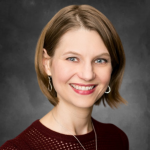 Michele Ehler is Country Lead for U.S. Talent at UCB, leading the Human Resource function.
Prior to leading U.S. Talent, she made an impact supporting the Global Epilepsy organization and U.S. Immunology team as a strategic Talent Partner. Michele was instrumental in ensuring the Immunology team was fully staffed, engaged, and ready to successfully launch BIMZELX in the U.S.
She completed a 3-year international assignment, working at UCB headquarters in Belgium, focusing on Learning Transformation. She has also supported Global Regulatory Affairs (GRA) and Global Clinical Science and Operations (GCSO) as a strategic Talent Partner. She began her career at UCB focusing on U.S. Learning and Development.
Prior to joining UCB in 2013, she worked in Talent Management for Target, including living in India, as well as leading Global Employee Surveys at The Dow Chemical Company. Michele is a veteran of the United States Navy, having served for 5-years on active duty, including a tour living in Italy.
She was named a Rising Star by the Healthcare Women’s Business Association (HBA) in 2015. She was recognized with an Ethical Leadership award by UCB in 2022.
She is a Certified Professional in Human Resources, through the Society for Human Resource Management (SHRM-CP).
She holds a Master of Science degree in Industrial/Organizational Psychology from the University of Wisconsin (Oshkosh, Wisconsin) and a Bachelor of Arts degree in Psychology from St. Mary’s College of Maryland (St. Mary’s City, Maryland).
Connect with Michele on LinkedIn.
What You’ll Learn In This Episode
- How a clear purpose can shape a strong workplace culture
- Why patient-focused values play a key role in attracting the right talent
- The importance of continuous learning and upskilling in a rapidly changing workplace
- How organizations can integrate AI while maintaining security and employee support
- Why learning agility and openness to feedback are signs of high-potential employees
- How timely, detailed, and empathetic feedback supports professional growth
- The value of university partnerships in building a future-ready workforce
- How creating a culture of care helps employees grow and thrive
 This transcript is machine transcribed by Sonix.
TRANSCRIPT
Intro: Broadcasting live from the Business RadioX Studio in Atlanta, Georgia. It’s time for Atlanta Business Radio, brought to you by My Global Presence, the award winning Atlanta public relations agency that elevates brands and non-profits through authentic storytelling and national media campaigns. Find them at my global presence.com. Now, here’s your host.
Lee Kantor: Lee Kantor here, another episode of Atlanta Business Radio. And this is going to be a good one. But before we get started, it’s important to recognize our sponsor, My Global Presence. If you want global visibility and meaningful impact, go to my global presence.com. Today on Atlanta Business Radio, we have the head of U.S. talent with UCB, Michele Ehler. Welcome.
Michele Ehler: Thanks, Lee. Happy to be here.
Lee Kantor: Well, I am excited to learn what you’re up to. For folks who aren’t familiar, can you share a little bit about UCB? How are you serving folks?
Michele Ehler: We are a pharmaceutical company that focuses on immunology and neurology, and we have a whole suite of solutions to help patients who are suffering from a wide variety of severe and rare diseases.
Lee Kantor: And this is a global company, correct?
Michele Ehler: We are. We’re actually based in Belgium. That’s our company headquarters. And our U.S. headquarters is based here in Smyrna, Georgia.
Lee Kantor: And do you know how that came about? Like, how did they choose Smyrna?
Michele Ehler: We’ve actually been in the US for almost 90 years. The Smyrna site was opened over 30 years ago. And the focus here, which is a little unusual compared to a lot of other US based pharma companies, was really to think about the talent pool that was available here in the Atlanta area. Really wanting to tap into some of those scientific innovations that happen from. Universities here. Graduates from some of those universities, and really wanting to have a presence in the southeast.
Lee Kantor: And during your time with UCB, you’ve worked in Belgium.
Michele Ehler: I actually have, yes. I had the incredible opportunity to move to Brussels for three years with my family and work at the headquarters.
Lee Kantor: So what is it like from a culture standpoint, being part of a global organization and you having kind of had a taste of of kind of both sides of the coin here?
Michele Ehler: I would say having worked in two countries for the same company, the UCB culture is the one that kind of supersedes the country culture. And what I mean by that is we’re so focused on patient value and so focused on helping people and their families and the people in their world that supersedes any country culture that might come into play.
Lee Kantor: And then how does it kind of impact when you’re looking for talent here in the US?
Michele Ehler: How does the culture piece play into that?
Lee Kantor: Well, just how does it. Yeah. Does it come into play like, are you looking for folks here that can fit in globally? Or do you do this kind of domestic talent search that, okay, these are Americans and this is who they are and that’s how they’re going to fit in.
Michele Ehler: Yeah. Interesting question, Lee. So I think partly it depends on the roles. The majority of our U.S. employee population is field based. We have about half of our employees that are out in the field interacting with healthcare providers. We have about a quarter of our population that’s in research and development, who regularly connects with our research and development people in different parts of the world. And then we also have a number of people that are, quote, more home office based who might be sitting here in our office and that may have the ability to connect more broadly with people in Brussels and in other parts of the world. So really kind of depends on the type of role that we’re hiring for in terms of what the mindset and the focus is. But number one is always patient focused and helping to improve the lives of people living with severe diseases.
Lee Kantor: Now, recently, UCB was awarded a top workplace award. Can you talk about, um, how that came about and what you attribute kind of the secret sauce is?
Michele Ehler: Yeah. I think there’s really three things, um, on, on why we were lucky enough to win this award. And it’s really special to me because this was based on employees telling us what they thought about our culture. It was totally from their perspective. And those three things have to do with our purpose, our culture, and our commitment actually to the Atlanta community. Um, first with purpose, employees really know that their work helps improve the lives of patients living with severe diseases. That is so important. Um, second, our culture, um, caring is probably the number one word will people will use to talk about our culture. Um, it’s a great place to work. We have really talented colleagues that get to work with super supportive leaders, lots of flexibility and opportunities to grow. And finally, just our commitment here in the Atlanta area since this award was specifically heard from our Atlanta based employees, as I’ve said, we’ve been here over 30 years, and we just recently announced a commitment to build a biomanufacturing facility in Gwinnett County. Um, which is amazing because that will add an additional 330 full time, highly skilled people once it’s up and running. And, um, so it’s really exciting to see our continued focus in the Atlanta area.
Lee Kantor: Now, you mentioned that, uh, talent acquisition was one of the reasons why you chose the metro Atlanta area. How do, how does UCB kind of, um, integrate itself into some of maybe the academic institutions we have around the city, do you do things in collaboration with them, or is there ways that you work together?
Michele Ehler: Yeah, we have connections with a lot of different universities in the area, and others were actually working to expand more broadly, particularly as we think, to build a workforce of the future for the manufacturing plant. So this is everything from Morehouse to Georgia Tech, UGA, um, we connect with them from everything from college fairs to let them know who we are, recruit active recruiting fairs, we talk to them about different curriculums they have and how we might want to, you know, invest in a slightly different curriculum for the types of skills we need for the future. So we anticipate a lot more of that to come as we continue to start to build out that manufacturing facility in Gwinnett County.
Lee Kantor: Yeah. Well, what I’m seeing from different organizations I’ve gotten to interview over the years, especially lately, is that there is a lot of companies that are looking to partner with the universities to kind of almost help them help their students become the right candidates and really inform their curriculum. Is that what you were talking about?
Michele Ehler: Yes, exactly. We’re looking to do a lot more of that. We know, particularly with AI and the future of that, particularly as it relates to everything from discovering new drugs to how you might be operating a manufacturing facility, particularly something as sensitive as bio manufacturing. We’re really looking at all those different things and how we can take advantage of these universities and not only the people they have graduating today, but the people that will enter those schools and graduate in the future that we’d love to hire.
Lee Kantor: So what does a day in the life of Michele look like? Like, do you spend your time recruiting, uh, new potential employees? Are you doing training and workshops for the employees that are already there? Like what’s a day look like for you?
Michell Ehler: That’s a good question, I laughed because no day is the same. So my role as head of talent, which is what we call human resources, is I support and lead all the different parts of HR from talent acquisition. As you said, our learning and development team, inclusion, team compensation, team operations, all those wonderful things that make an engine run. So my day is usually filled with meetings with our US leadership team, of which I’m a member, guiding the whole US business, and then just supporting the rest of the US talent team and really making sure that they have what they need to be successful, removing any roadblocks if I need to do that. Um, and then just first and foremost is just supporting our employees, right? And being there when someone needs someone to listen needs some support. Um, that trumps absolutely everything. It is all about people and caring for people. And so I tell everyone I interact with, don’t ever look at my calendar, just call me if you need something, just call me because people always come first.
Lee Kantor: Now, how do you advise your current employees to continue to upskill with technology moving as quickly as it is? How do you ensure that all of your people are continually getting ready for the next thing?
Michell Ehler: So many different ways. Lee. We have AI embedded in almost every system that people will work on from, you know, Microsoft systems, some of our more specific ones. It’s available, people can use it. We’ve got training constantly on how to create agents in AI and how to actually do your job better and quicker, um, through using those things. We have, um, digital innovation sessions that we do multiple times throughout the year to really bring people together to talk about how they’re using it and how others can learn from it. And just big picture. We have so many different learning opportunities. We have everything from, of course, leadership Ship developments, but really detailed skill building that people can do at any time through LinkedIn learning. Signing up for one of the classes that we offer, either virtually or in person. There’s just a plethora of ways that people can continue to grow.
Lee Kantor: Now, you mentioned, um, AI and how it’s so useful in your organization. I’ve interviewed a lot of folks who are struggling with kind of deploying AI in their organization. Is there any advice you would give them when it comes to integrating AI as part of kind of the workflow in an organization? Because to me, it seems like AI is it it’s kind of a blunt instrument in the sense that it means different things to different people. Like your HR people might use AI different than your technology, people who might use it different than your marketing, people who might use it different than, you know, the IT people. So how do you kind of define what AI is, and how do you allow each of the teams to use it in the manner that best suits them.
Michell Ehler: I think the first thing is just the safety and security of the network. And so for example, we have a completely closed AI system. We don’t want people using outside AI systems for anything because we want to keep all of our data confidential. I think that’s an important thing to mention. And we have that, which is wonderful. And we continue to expand the different AI tools that we have within that kind of protected network that we have. That’s obviously very important for anyone in HR, too, because of the sensitive nature of our data as well. But beyond that, it’s really more about getting groups of people together. Um, for example, we have AI coaches. And so I’ve signed up and done this myself a few times where I’ve said, look, I’m really trying to do something with AI and I’m not having a great, you know, solution here. Can you coach me through this? Can you teach me some things? And, you know, we’ll spend 30 to 60 minutes trying to brainstorm with you, teaching you how to do things. Um, and obviously that’s specific to what that person’s job is. Um, and of course, there’s lots of other trainings that we offer that are more specific to the type of area that they work in. So for example, we had a big meeting within talent last year and we really focused on how to do it within talent. And I know the same happens with marketing and other parts of the organization.
Lee Kantor: So now when you’re interviewing folks for a job at UCB, what kind of skills and qualities are you looking for for that ideal candidate?
Michell Ehler: It obviously really depends on the specific nature of the role. And we have so many different types, from sales representatives to pharmds, PhDs, medical degrees, etc. but the core I would say, and usually when my team gets involved to help with an interview process is we’re looking at a culture fit, we’re looking at someone who really has the same values that UCB has, which is really focusing on patient value above all else. Um, we’ve had a phrase for years that if ultimately what you’re doing doesn’t help a patient, then you need to stop it and try something else. So I think that’s probably the main theme of what we’re looking for is, is this someone who can thrive in an environment where we’re so focused on patient value that we ask it in every single meeting and everything we do, um, and have that be kind of our true north.
Lee Kantor: So what’s an example of how a candidate could, uh, show you that they value, you know, patient value is something that they can do or have done.
Michele Ehler: Usually it boils down to what their motivation is. Lee Um, and frequently people will share in interviews, someone in their life who has suffered from some sort of disease may not be a disease that we treat, but they’ve suffered in some way, whether that’s a family member, a friend, or even sometimes themselves. And they talk about why it matters to them to make a difference in people’s lives. That is just a very common theme that we hear in interviews of people who really want to make a difference in the world by the work that they do.
Lee Kantor: So now in the in your work in the life sciences, are you seeing are you do you have enough talent here? Like, are you is this something that you’re always hiring? Like you always have to kind of have your finger on the pulse of candidates.
Michell Ehler: Yes. We are not only always hiring, but we’re constantly growing, which has been really exciting. We have grown tremendously in the last few years, and obviously, we’re only going to continue to grow as we continue to focus on that manufacturing facility and expanding our headquarters here in Smyrna. And so for us, you know, it’s a combination of looking at the people who come from Georgia, who graduate from universities here, who may want to, you know, may have gone, moved away and done something else, but are really excited to get back to Georgia, get back to the Atlanta area. Um, we have a lot of that, um, you know, wherever we might find people, it’s usually people wanting to come for our culture and because they want to be in this part of the world as well.
Lee Kantor: And then when you’re working with somebody, is there a story you can share that maybe illustrates what it’s like to be part of the UCB culture and the organization is there. You don’t have to name the individual, but maybe share how they came to you and then you’ve seen them blossom through the years.
Michele Ehler: That’s a good question. Let me think for a minute about a great example. The good news is I have many to choose from without naming names. Okay. Um, I have been here over 13 years, Lee, so I’ve been able to see a lot of people grow in their careers. And I started in the learning department, so I got to see hundreds of people in my training classes the first few years I was here. And the fascinating thing is people will still tell me. And someone just told me last week, hey, remember ten years ago when you trained me in this class? And so one of those people who I won’t name went through one of our training courses on leadership development and was someone that we thought would have high potential. I’ve seen this person progress in many different roles throughout the organization, and it now leads one of our major teams here in the US. And what’s been inspiring about that is seeing someone go from, you know, 12 years ago, kind of entry level and now has had the support to grow their career and ultimately achieve their dream job and a job that really has an impact for us as an organization.
Lee Kantor: So you use the word high potential. What are some of the signs or signals you see in an individual that you kind of clock as, okay, this person’s a high potential?
Michele Ehler: I think there’s two key things. I think number one, learning agility. Somebody who really wants to constantly learn and grow and has the resiliency to do that, because growth doesn’t happen when everything’s wonderful. Growth happens when you have challenges and you have to overcome them. So I think that is absolutely key. And someone who’s got that internal drive to constantly be willing to learn more, do more, and achieve more. I think the other piece that’s super important is being open to feedback. You know, we have a really strong feedback culture at UCB and we have for well over a decade. Um, we say feedback is a gift that clear is kind. We talk about how everyone’s growth is improved, if you’re honest, and sometimes feedback is hard to hear. Sometimes it’s wonderful feedback and sometimes it’s painful feedback. But the ability to deliver feedback as well as receive it, process it, and decide if you want to do anything with that. Feedback is really, really important to people. Being a high potential in the organization because it doesn’t really matter what job you do. If you’ve got learning agility and the ability to give and receive and process feedback, you could really go anywhere.
Lee Kantor: Now, when you use the word feedback, Are you talking about kind of a coaching or mentoring, uh, program that you have installed in the organization that helps kind of facilitate that type of feedback in a safe environment?
Michele Ehler: We absolutely have that. But I’m actually speaking more towards the day to day. Um, everyone is encouraged to give direct feedback to anyone in the organization, not just manager to employee or employee to manager peers, people you work with. Cross-functionally. Um, anyone you might interact with to ideally, very quickly give them very detailed, constructive feedback on what went great or what might be improved. Even better if is sometimes what we say. So it’s really across everyone. Um, and when we say it’s part of our culture, that’s what we mean.
Lee Kantor: And then is that something they’re trained in early on and how to communicate that in a respectful, productive manner?
Michele Ehler: Yes, we do have that in our onboarding activities and every single leadership development class, as well as just general feedback courses. My team of talent partners or HR business partners as they’re sometimes heard of, we do feedback training throughout the year, every year, particularly if it’s people who are new to the organization so that everyone feels equipped with what they need to be able to do that well. And we role play with them if we need to.
Lee Kantor: Well, can you share? I mean, that would be a great piece of advice if you could share, um, how to give or receive feedback. Is there kind of a, an elevator pitch for around how to give and receive feedback?
Michele Ehler: The first I’ve already said, which is just timely. You can’t wait a week or a month or a year. Do as quick as possible because then people are better to receive it. Be as detailed as possible. Um, a lot of times I’ll say, is it something you can put on a video recording? Is it so obvious that you can put on a video recording? So you need to describe it in that level of detail so people really understand what was working or what wasn’t. And you need to be able to do it in a way that shows some care. You need to have that interpersonal. I’m doing this because I want you to improve tone instead of a very negative tone or a dismissive tone. You know, the how you give the feedback is more important than what you say.
Lee Kantor: So that to me requires a certain level of self-awareness and empathy. Is that part of what you’re screening for when you have a candidate or somebody working there that you’re looking for those kind of people with that kind of emotional intelligence?
Michele Ehler: Yeah, I think that’s an interesting way to put it. Um, we’re really looking for people who not only have the right motivation in terms of caring to make a difference in patients lives and their families, but want to have that same level of care to the people they work with and create that environment internally. So we don’t just want the impact externally. We want to treat our employees equally as important. And in order to do that, we need to create people and create those cultures through the people we hire. Um, by looking for those sorts of traits.
Lee Kantor: Well, it seems like it’s working. I mean, the recognition you’re getting, uh, the impact is real.
Michele Ehler: Yeah. We’re really excited. Um, you know, as I reflect back on some of the things, um, that were listed in the survey, one quote I want to share, Lee, is something that really gets back to, you know, kind of how we help people feel included. Um, and one of the quotes was, I generally can truly be my whole self at UCB for the first time in my career, UCB has the perfect mix of people, potential and collaboration to make me love it. And I think that kind of says it all because that’s coming from our people.
Lee Kantor: So where do you need more of how can we help you?
Michele Ehler: We need more people to learn about what we’re doing at UCB, to learn about the types of diseases that we’re treating, and really come here and make a difference and teach us things that maybe we aren’t even thinking about in terms of how we can make a difference in people’s lives.
Lee Kantor: So if somebody wants to connect with you or somebody on the team, is there a website? What’s the best way to connect?
Michele Ehler: Yeah, ucb.com is the main global website. And we also have a US site as well, ucb-us.com.
Lee Kantor: Good stuff. Well, Michele, thank you so much for sharing your story today. You’re doing such important work and we appreciate you.
Michele Ehler: Thanks for the opportunity, Lee.
Lee Kantor: All right. This Lee Kantor. We’ll see you all next time on Atlanta Business Radio.















