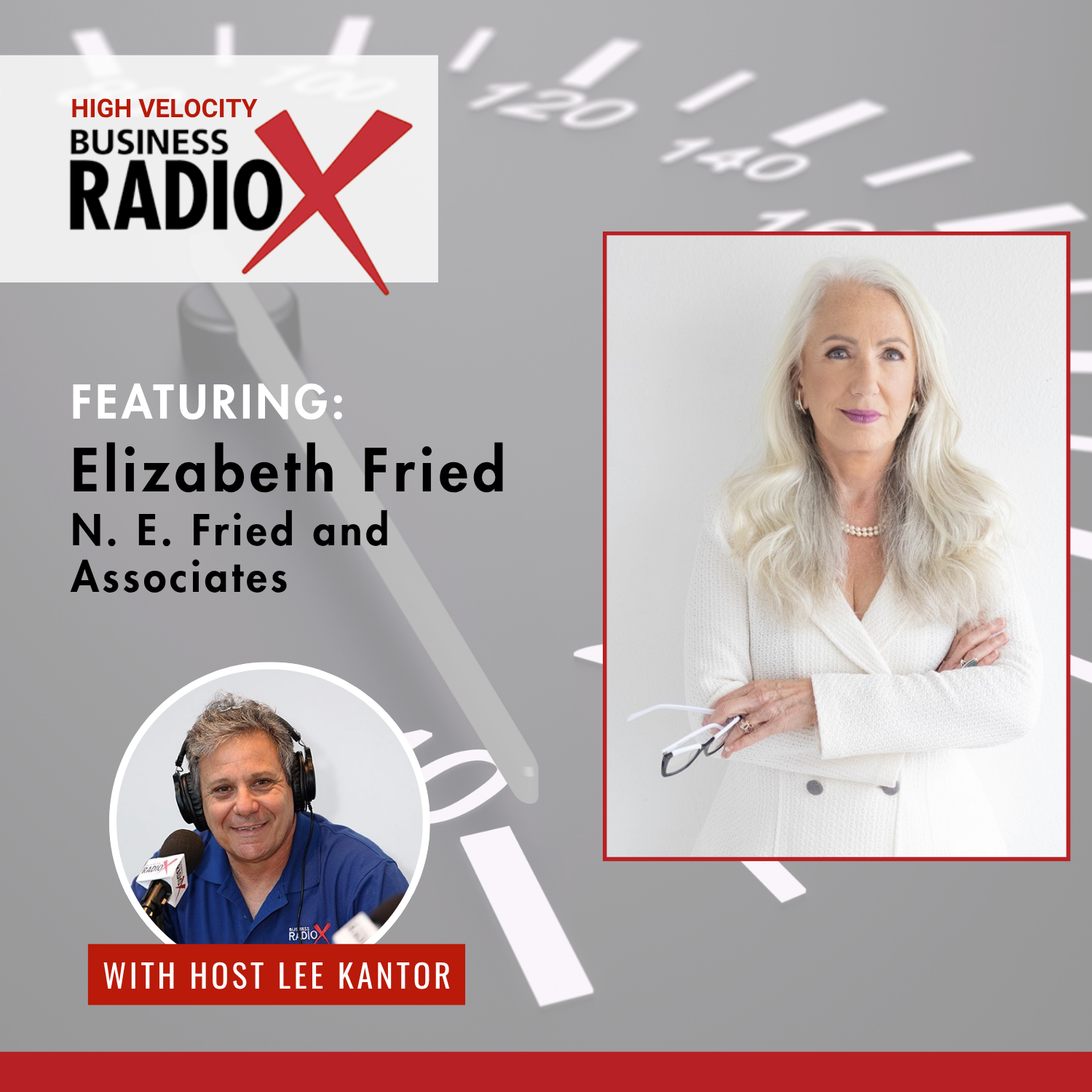

In this episode of High Velocity Radio, Lee Kantor interviews executive coach Elizabeth Fried of N.E. Fried & Associates about the power of strategic networking. Drawing from more than 40 years of coaching and compensation consulting, Elizabeth shares how she developed a practical networking framework while helping military personnel transition into civilian careers. She explains how intentional relationship-building, AI-powered research, and thoughtful follow-up can help professionals expand opportunities, strengthen connections, and achieve long-term career and business success.
 N. Elizabeth Fried, Ph.D. is an award-winning executive coach, author, and leadership advisor with more than 40 years of experience helping senior leaders, business owners, and professionals navigate complex decisions, career transitions, and high-stakes environments. Her business books distill decades of coaching experience into clear, actionable strategies that readers can apply immediately.
Today, she will be discussing her highly practical 30-page guide, Strategic Networking, and why effective networking is about far more than collecting business cards or working a room.
She will share practical strategies for building authentic, mutually beneficial relationships that create opportunities, deepen trust, and strengthen both personal and professional success.
Whether you’re pursuing a new career opportunity, navigating a transition, seeking greater influence within your organization, or growing your business, you’ll discover why strategic networking is one of the most powerful—and most misunderstood—tools for long-term success.
She will also discuss how today’s AI research tools can help professionals prepare more effectively for meetings, build stronger connections, and create greater value in every interaction.
In keeping with her philosophy of always giving back, Elizabeth volunteers as a coach for military special operations personnel transitioning to civilian careers.
Now in her “re-wirement years,” she continues to pursue new opportunities for learning, growth, and contribution while helping others navigate important life and career transitions.
Connect with Elizabeth on LinkedIn and Facebook.
What You’ll Learn In This Episode
- Building meaningful professional relationships through strategic networking.
- Using AI research to prepare for networking conversations with confidence.
- Focusing on long-term relationship building instead of immediate results.
- Asking thoughtful questions that create trust and authentic connections.
- Preparing for networking events with clear objectives and a practical plan.
- Following up consistently to stay memorable and strengthen professional relationships.
- Applying proven networking strategies to career growth, business development, and leadership opportunities.
 This transcript is machine transcribed by Sonix.
TRANSCRIPT
Intro: Broadcasting live from the Business RadioX Studios in Atlanta, Georgia. It’s time for High Velocity Radio.
Lee Kantor: Lee Kantor here another episode of High Velocity Radio and this is gonna be a good one. But before we get started, it’s important to recognize our sponsor, Business RadioX. If you’re a business coach who’s tired of being a best kept secret, set up a call with Stone Payton at bookstonephone.com to unlock your perpetual prospect pipeline. Today on the show, we have executive coach with N. E. Fried and Associates, Elizabeth Fried. Welcome.
Elizabeth Fried: Thank you. It’s good to be here.
Lee Kantor: Well, I am so excited to learn about your practice. Tell us about any Fried and Associates how you serving folks?
Elizabeth Fried: Well, actually, I essentially retired right now, but I served them for over 40 years and I keep trying to fully retire. My clients aren’t letting me.
Lee Kantor: Keep bringing you back. Yeah.
Elizabeth Fried: So what I wind up doing is pro bono coaching now for the military, for the, uh, an organization called the Honor Foundation. And we serve special operations military, the elite Navy Seals, Marine Raiders, Delta Force, Green Berets, Army Rangers, those types of folks, helping them to transition from the military to the civilian workforce. And prior to becoming an executive coach, I was a compensation consultant designing wage and salary programs. So there you need to understand jobs and how to price jobs for the marketplace. And then design basic bonus program sales compensation programs, short term bonus, long term bonus, executive comp type stuff. All of that led into my ultimately becoming an executive coach. Because when I talk with executives, I ask very serious business questions. When I’m talking with them, it’s just not light stuff. So I help them solve complex issues because usually that’s why they’re talking.
Lee Kantor: So how did you get involved with the military in that capacity? That sounds fascinating.
Elizabeth Fried: Well, as I was approaching retirement, I said, I want to volunteer. I want to do some type of service. And at the time, I was president of the San Diego Professional Coaches Alliance, and two young men walked in and I welcomed them and asked them what brought them there. And they said, well, we thought this was a good place to network. And I said, well, where are you from? And they told me about the Honor Foundation, and they gave me their business cards. I went online, I read about it, they said they were looking for coaches to help these men and women make this transition to the civilian workforce. Believe it or not, they were terrified. And all they know is the military. And to go into the civilian workforce. Is a whole other world. And very honestly, part of this program requires them to first identify what they want to do. Secondly, explore jobs, find out what their skill set is and how it translates to the civilian workforce. And then they need to explore jobs by doing networking. And I have to tell you, they would rather go into a firefight in Afghanistan than to have to talk to a stranger in the civilian workforce about a world they don’t know anything about. So my job was to help grease the skids and help them do that. And as a result, number one, my compensation background helped me look at their skill sets and tell them, here are some of the jobs that you would fit for.
Elizabeth Fried: And then also to help them prepare to have these networking meetings. They’re required to have these 50 cups of coffee. Now they’re virtual, most of them. Okay. Uh, but to help them do the exploration and talk to these people, know the right questions to ask how to connect and do that. And they were they just didn’t even know where to begin. So I created a protocol for them, spoke to them in their language. And I said, look, you got to look at this like it’s a mission and your mission is to accomplish 50 cups of coffee. The target will depend on the kinds of people you want to talk to. So I will give you a protocol about how to approach them, how to talk to them, what questions to ask. And the thing that’s important to understand is networking is not, uh, just about you. It is a reciprocal process and you need to build that connection first. So I created this protocol for them to make it easy for them. They understand, you know, this is an executable protocol. Then that’s their language. And I got to thinking about it and I said, you know what, what I developed for them could be applied to the general public. It could be applied to the kid that’s just graduating, getting ready to graduate college and wants to explore a job.
Elizabeth Fried: It could apply to the individual who works for an organization and wants to be more visual, so they can be seen so that they could be promoted. It can apply to somebody who wants to do career transition. It could be applied to a business person who wants to develop more leads, and all of these things will work. So I took this particular protocol, and I decided as soon as I came out, I got to thinking further because one of the things that people need to do when they network, the first and foremost thing is what is your objective? Why are you doing this? Are you doing it for career exploration? Are you doing it for visibility? Are you doing it for clients? Why? Once you understand why you’re doing it, it creates the roadmap for what you’re going to do next. So who do I need to talk to and what kind of questions do I need to ask them? Well, the who I need to talk to is important because sometimes you’re lucky enough to get a referral. Other times not. So what AI how that how I brought that into the picture. I decided to expand this protocol into a short 30 page e-book in which I then talk about the objectives, talk about, you know, you need to do some detective work first on the person you’re going to talk to, because it’s very important that you connect with them first so they feel comfortable enough to talk to you.
Elizabeth Fried: And how do you do that? Well, you have to be that detective. And AI allows you to do deep research on a person, on everything that’s publicly available for them. Saves you a ton of time. And so I created all the prompts that you need to ask AI to go through to create a deep research report for you. And one of the things about this is, you know, I say ask about their education, where they work, what their interests are. Did they do any writing? Did they do speeches? Do they belong to any organization? Find out. Also, do they have any legal issues? Because you want to make sure you’re talking to somebody that’s straight up, not someone shady. And it will also tell you how they prefer to be approached based on the research that AI does for you. So I include in this document a report on me, which basically says, well, when you approach Elizabeth, when you start to have a conversation, this is her interest. Don’t ask her about sports teams. She’s not a sports person. And make sure you are organized and that you don’t get overly verbose. You get to the point and the last thing you want to do is flatter her because she’ll see right through it. So it tells them exactly how to approach this person if the information is available.
Elizabeth Fried: And most of the time it is. And then I provide, depending on what the objective is, 5 to 7 questions that they can lead in with. I also tell them that before they do that, if they’ve done their research and let’s say somebody has is involved with habitat for humanity or with the Boy Scouts, you can say, gee, before I, um, arranged for our call, I did some research on you and I. I found out that you’re involved in the Boy Scouts. How interesting. Tell me how you first got involved. Were you in the Boy Scouts yourself? But it shows that you’re on the board. What kinds of things have you been involved with? And now you are talking about something that they’re interested in. Which brings to my point that when you are doing networking, it’s very important to be more interested than interesting. So you’ll spend a couple minutes setting the stage for this. And what that does from a neuroscience perspective is it creates the release of a hormone called oxytocin because of mirror neurons that take place, and that is the bonding hormone. And what that does is it helps people drop their defenses and be more open, and then they will be more likely to tell you what you need to know. Like, what do you like most about your job? What what have been the challenges? The very questions that I provide you with will be related to whatever your objective is.
Elizabeth Fried: And so that’s how that happened. This has been very this was very successful with the military that I used it for when I first started out. I didn’t have the AI piece to it. So now I’m getting a new guy in the fall, I’m going to give him this opportunity to use AI. So I’m curious to see how that’s going to work for him. But I will say I took my updated version of this, contacted my former graduates, and I said, I’d like you to review this. You know, we went through it when you graduated from the program, but I’d like you to take a look at this and give your input. So they one of the things that they told me was what they liked about it was that, you know, a lot of people spend 300 pages writing a book on networking circle in the runway before they get to the point. They said, what we liked is you just basically get to the point? And we like the AI piece. And as a matter of fact, I, we three people told me this. They applied it and were much more prepared for their next meeting. So it works. That’s the thing that’s important. And I’m going to use it with the next fellow. So I’m excited about that.
Lee Kantor: Now, getting into the nuts and bolts of, uh, strategic networking, especially in person. Now that a lot of, um, there’s a lot of opportunities for folks in their local community to go to networking or chamber events are there like, what’s a reasonable outcome, uh, to, for an in-person networking event? Because a lot of folks, I think, think it’s either, you know, I got to hand out 50 business cards or I’m going to, you know, get business right away. Like, like what’s a, um, like, how do you manage the expectations of a person going to a networking event?
Elizabeth Fried: Well, I think that’s a very good observation and good question. First of all, don’t expect something to happen instantly. Networking is a long term thinking, all right. And you are building a relationship. It’s not about going out and seeing how many cards you can pass out. And then just thinking you’re magically going to get leads. There’s a way of going about it by having an initial conversation with somebody. And let’s say you meet somebody at an event and you have a chat with them, you should have a couple of back pocket questions. So here’s how. Let’s say you’re at a chamber event and you meet somebody at the chamber event and you might say, gee, how long have you been. Are you a member of the chamber? And they may say, yes. How long have you been a member? What do you think has been the greatest value that you’ve gained from being a member of this group? Because I’m new here, and I want to know how I can, uh, make sure I can contribute as well as gain benefit from it. So now you’re talking about something you’re connected with, something about that you both have in common. So you start that conversation and then you might say, you know, I’ve really enjoyed talking with you. Could I have your business card or could I connect with you on LinkedIn so we might have a further conversation? I’m very interested in the fact that you do such and such and such and such.
Elizabeth Fried: So that’s the first step. It’s not the be all, end all. It is the first step because people have to when you’re networking with something, someone, people have a tendency and everybody knows this to buy from people they like and they trust. So they have to know that you are interested in them and B, that it’s reciprocal. The other thing is you need to keep notes on who you met and the back of the business card. When they give it to you, write a little note of something they told you because one of the things you want to do is you want to stay in touch with these people. So you meet somebody. They told you that they were a tennis fan or something like that, whatever it is that they told you, you make a note of that. Then it could be a couple of weeks later. Maybe you had that second conversation with them and you learned more. You keep notes. Then when you see an article or something that you think they might be interested in, you forward that article to them. And it shows that you listened, that you cared. And it is impressive if you do this. And I just did a podcast the other day where somebody said somebody was really good with them. They would touch base with them about every quarter and just say, hey, just checking in to see how you’re doing.
Elizabeth Fried: Um, and, uh, just a check in. When you get to that point with someone, it doesn’t have to be long. It just keeps you top of mind with that person. So I would say manage your expectations when you go to these networking events, do not expect to get a flurry of business to happen. It is the you have to think of the long game. And that brings up something else that I’m thinking about. I wrote an article about ten years ago that’s called the No Wallflower Rule. Many of us have gone to these networking events, and we have to go either for our company or for whatever reason, and we’re thinking, oh, I got to go and get through this for two hours. It’s kind of like, I got voluntold I need to be here, right? So what a lot of people do is they rush over to the appetizer table, they fill up their plate, and then they find a wall to lean against or someplace to sit down, or they might get caught up in their phone. Big mistake. So people say, well, but I don’t know anybody in the room. How do I just go up to strangers and just talk to them? I’m not comfortable with that. So my solution to that is mindset. You have to say, okay, you look at this event, you don’t know anyone there.
Elizabeth Fried: I want you to think about it. And this is your assignment. That is your party and you’re the host and your job is to make other people feel comfortable. It goes back to the whole be more interested than interesting. So you look around the room and you look for the lonely soul that was feeling like you just two minutes ago, and you go over there and you introduce yourself, say, hi, I’m Elizabeth Fried. I see, Joe, that you work for the such and such company. What brings you here to this event? Or let’s say it’s a conference. So I see you, you know, you’re you come to this conference. What um, sessions have you gone through that you have particularly enjoyed. Maybe you can give me a tip. If they do a second session, it might be worth going and going to and listening to. And you start this conversation with this person. This person is so happy that they don’t have to be alone and sitting there feeling like Mr. or Miss Lonely, and you’ve engaged them in a conversation. Now, the other side to that is they’re so happy. They’ve glommed on to you and you’ve got gotta move on. All right. So how do you do that? Graciously. Well, you can say, you know, I really enjoy talking to you. And I was wondering if we could have a further conversation.
Elizabeth Fried: Could I connect with you on LinkedIn or whatever? And could have we could continue this conversation. You get their business card and you gracefully exit at that time. Another thing you can do when you’re at these events is you talk to somebody and let’s say you do know some other people and you’ve met a new person. One of the things you might learn that they’re a sailor when you talk to them And then you say to them, you know, there’s someone here I think you would really enjoy talking to. And you walk them over to another person, you know, who is a sailor and you say, hi, Joe, I want to introduce you to check. Check has a 25 foot sloop that he sails on at the such and such harbor. I thought you might like to have a conversation. And then immediately the person you’re talking to that you introduce them to begins the conversation about sailing. And then you gracefully exit. They’re both happy you introduced them. You’ve done a good deed in this particular case, and now you move on to the next person. It is a very active involvement and I ought to say networking takes energy. If you are tired, you’re not going to have the energy. You got to get yourself psyched to do this because it takes energy. It truly does.
Lee Kantor: Now, when a person is going about that and like you said, you know, some people are introverts, some people are extroverts. And being strategic helps because then it puts a plan in action and gives you steps to take. So you’re not just kind of winging it there and you’re thrown into this kind of vortex of, of an area you’re not maybe not totally comfortable in, but do you recommend kind of doing pre-work, like to kind of get the lay of the land who are going to be some of the possible attendees. So I can kind of be prepared. So I’m just not having to wing stuff.
Elizabeth Fried: What an excellent point that you’re making, Lee. And you can use all the things that I outline in my book, Strategic Networking A Practical Playbook. If you go and you know you’re going to an event and you know who’s going to be there, go run those research reports, they’ll be easy for you to do because they don’t don’t take you any time. You just put you put the information into ChatGPT or wherever to run your report. And then you look at them and then you prepare. Then you seek out this person when you see them at this event, you already have your back pocket questions, right? Ready. And I think that’s an excellent suggestion. I did this once I was at it was actually one of these conferences for coaches where we were meeting people who bought our services. And so they gave us the, um for one one on the company that we were going to be meeting with. In that case, I was talking with training directors, people that hired executive coaches. So I did all my research ahead of time because they set up these 15 minute meetings with us, with each of these people that we were to meet. It wasn’t random, like a big networking event, but the concepts were the same. I prepared so that I can sound like I knew what I was talking about. I knew about the company. Um, and let’s say you’re getting ready to meet somebody and you find out that the company has recently merged or they’re releasing a new product. You might say, hey, I’m so glad to meet you. I read the news the other day that you were releasing a doing a relaunch of whatever, and it just makes you that much more interesting because you’re interested. So absolutely, I would say prepare whenever you can.
Lee Kantor: So now, um, you mentioned you’re trying to retire. Are you available for any opportunities with maybe groups like the military folks that you’re dealing with, where you can offer some counsel when it comes to stuff like that? Or are you just now just promoting the book or.
Elizabeth Fried: Well, that’s a good question. I’m promoting the book Primarily, I’m continuing to do my volunteer work, but part of my plan is to have fun. I’m I’m entitled to that. After having run my own company for over 40 years and contributing. And there are things that I want to travel and I want to do. So I will accept the following things. If it’s a speaking engagement that someone wants a one time thing, but a long term coaching engagement, I only accept one a year because I don’t want my schedule tied up anymore. I’m entitled to that, so I will. And, and here’s the other thing. And oh, how could I say it has to be an interesting engagement. I don’t want it to be some meat and potatoes engagement. I mean, something I’ve done a thousand times, if it’s interesting. And the other thing that I do, if I get people when they come to me and I listen to what their interests are, I can also match them up with an ideal coach as well. That’s another thing that I do. So I’m always willing to listen and to see what people need. But I myself have really limited my practice.
Lee Kantor: So if somebody wants to get a hold of the book, strategic networking, a practical playbook, where can they do that?
Elizabeth Fried: And an e-book. It’s an ebook. It’s like $8, 7.99. So really, and it’s short. You can read it in 15, 20 minutes. Um, it is available on Amazon in Kindle format. And if you put in the title of the book, you can find it. If you put in Elizabeth free, it will pop up. So that’s how you find it. And, um, you know, I think the biggest thing for me is I like to create products that can be used immediately. Right now you read it and you apply it. That’s my has always been my modus operandi. You know, not a lot of theoretical stuff, but what I do is based in theory. But then I give you the hands on practical way to use it to help you be more effective in your business.
Lee Kantor: So you can take action immediately. As you’re reading it, you could be taking action.
Elizabeth Fried: Right? I mean, I told you that the fellows that reviewed it for me, they said I used that. I did the AI thing, I got ready for a meeting. I was never so prepared for a meeting before. It was great. So that’s what they told me. So I know it works. So anything else about it works.
Lee Kantor: So the book’s available on Amazon. Do you have a website or LinkedIn? If somebody.
Elizabeth Fried: I have a website. My website is executive coaching firms. That’s with an f.com (executivecoachingfirms.com). And that talks about my coaching business. And there is a write up of the books. And I also had just written a series of children’s fantasy books. That was fun. I did that for fun, and because I’d always written business books before, I also have something on executive presence that’s an area of expertise in which I’ve done workshops and presentations, um, to help people make that transition, particularly if they have moved from, uh, middle management and they are moving to senior management, they need to up their game and how they come across.
Lee Kantor: Well, Elizabeth, thank you so much for sharing your story today, doing such important work. And we appreciate you.
Elizabeth Fried: Thank you. It was my pleasure.
Lee Kantor: All right. This is Lee Kantor. We’ll see you all next time on High Velocity Radio.















