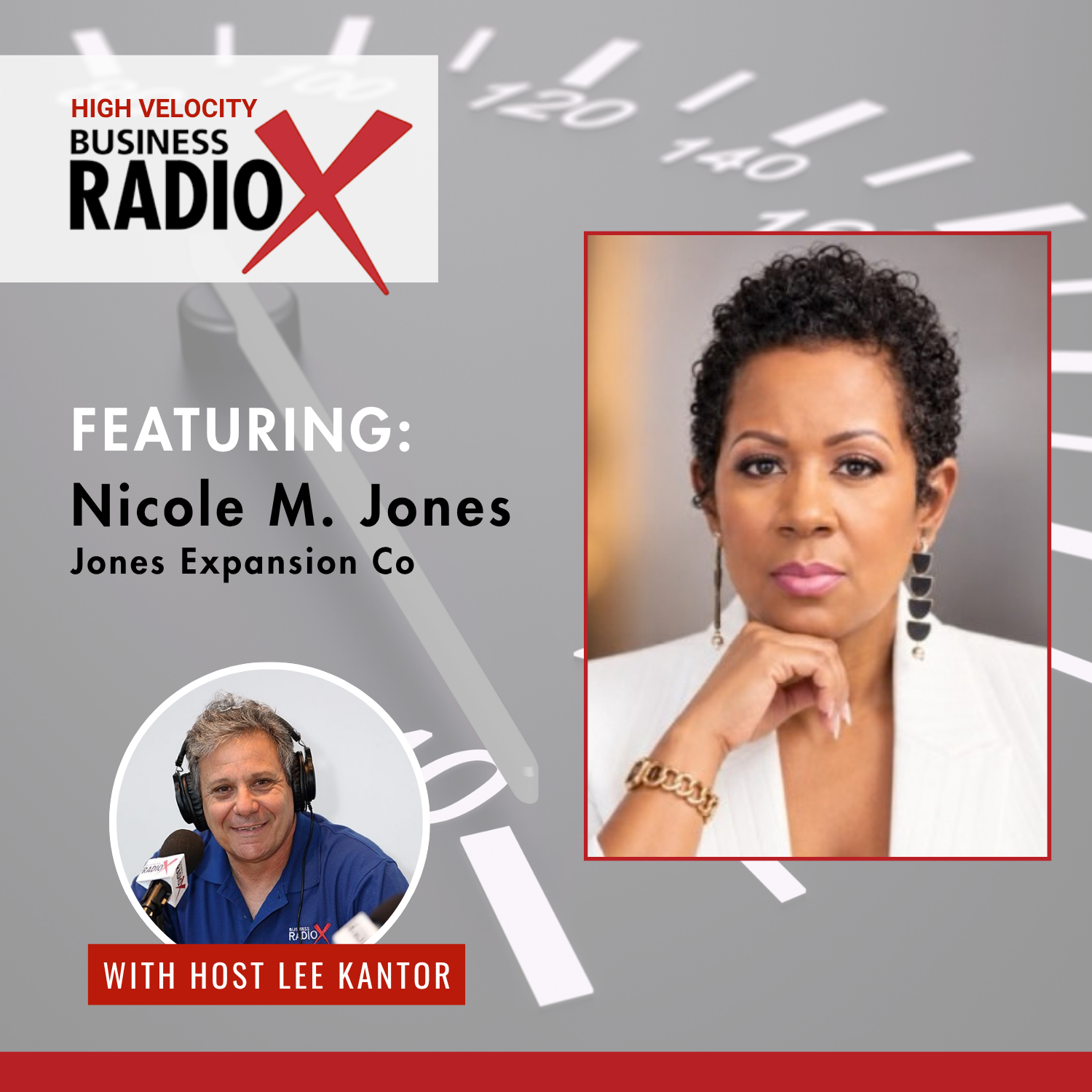

In this episode of High Velocity Radio, Lee Kantor interviews Nicole M. Jones, CEO of Jones Expansion Co., about helping professionals navigate career transitions, strengthen leadership skills, and unlock new opportunities. Drawing from 30 years of corporate experience and her journey into entrepreneurship, Nicole shares her Expansion Method, a four-phase approach focused on discovery, expansion, execution, and elevation. She discusses overcoming imposter syndrome, building confidence, empowering teams, and developing innovation strategies that drive business growth. Through coaching and strategic advisory, Nicole helps individuals and organizations expand their mindsets, recognize their potential, and confidently pursue what’s next.
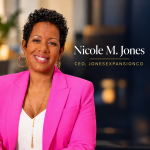 Nicole M. Jones is the founder of Jones Expansion Co and a former Fortune 100 leader turned executive coach and advisor. With nearly 30 years navigating global commercial and operational landscapes, she’s led through uncertainty at the highest levels of corporate complexity as an innovator, strategist, and business leader.
Today, Nicole works with leaders and professionals ready to turn career disruption or career acceleration into clarity and momentum. Through the Expansion Method™, her proprietary four-phase framework, she helps business professionals turn uncertainty into clarity, so they can lead with confidence and make a bigger impact.
Nicole is also the featured protagonist in the Harvard Business School case study, “Nicole M. Jones and The Hangar: Delta Air Lines’ Global Innovation Center,” taught globally as an example of how resilience and inclusive leadership redefine what’s possible.
She speaks to audiences on leadership expansion, high-performance mindset, and innovation culture.
Connect with Nicole on LinkedIn.
What You’ll Learn In This Episode
- Navigating Career Transitions: Building clarity and confidence when facing layoffs, burnout, career pivots, or new leadership responsibilities.
- Applying the Expansion Method: Using discovery, expansion, execution, and elevation to create meaningful and lasting professional growth.
- Overcoming Imposter Syndrome: Recognizing personal strengths, embracing new opportunities, and confidently contributing perspectives.
- Expanding Leadership Potential: Developing leadership skills, empowering teams, and building trust through greater autonomy.
- Building a Strong Professional Identity: Identifying transferable skills, core strengths, and opportunities beyond familiar career paths.
- Creating a Culture of Innovation: Establishing a clear vision, effective operating models, and collaboration across organizational teams.
- Turning Ideas into Business Growth: Developing strategic plans and business models that transform entrepreneurial ideas into actionable ventures.
- Embracing a Growth Mindset: Using adversity and challenges as opportunities to expand thinking, strengthen resilience, and create new possibilities.
 This transcript is machine transcribed by Sonix.
TRANSCRIPT
Intro: Broadcasting live from the Business RadioX Studios in Atlanta, Georgia. It’s time for High Velocity Radio.
Lee Kantor: Lee Kantor here another episode of High Velocity Radio and this is going to be a good one. But before we get started, it’s important to recognize our sponsor, Business RadioX. If you’re a coach or a consultant who is tired of selling and ready to lead by serving, set up a call with Stone Payton at bookstonephone.com to learn how to give local leaders a voice and become the premier connector in your market. Today on the show, we have the CEO with Jones Expansion Co, Nicole M Jones. Welcome.
Nicole M JOnes: Thank you so much, Lee. I am so happy to be here today.
Lee Kantor: Well, I am so excited to learn about what you’re up to. Tell us about Jones expansion company. How are you serving folks?
Nicole M JOnes: So this is an exciting time for me and for the business. I launched a company called Kaiko back in 2024. Uh. I’m sorry. Yeah. 2000. Yes. And, um, here I am two and a half years later, and I have rebranded to Jones Expansion Co. And the reason was because I felt like there was so much more that I could offer and my, my company could offer to those out there who are either navigating a career pivot, navigating a career transition, seeking leadership skills in their careers, feeling stuck or burnt out in their careers. Also, I work with founders, so entrepreneurs who have great ideas but maybe need some support on building their business model and their strategic plan. And so those are my two primary offerings, but I also do transformational speaking. And so when I speak to audiences, I not only do a presentation, but I really change how people leave the room with inspiration, new ideas, and empathy.
Lee Kantor: Now you chose to put expansion, the word expansion in in the name of your company. Can you talk about why that word was chosen and what that means to you?
Nicole M JOnes: Yes. So when I first became an entrepreneur a couple years ago, I was getting a lot of requests. It felt very transactional, right? It was help me find my next job because I’ve been laid off or help me take a look at my resume. And it felt very transactional. And truly what coaching can do is expand your mindset and your thinking. And so I personally have experienced a lot of adversity in my career and in my life, right? And so through those things, I always looked for the silver lining. I always looked for the glass is half full, not half empty. And so I think mindset is a big driver of your success. And in order to find the clarity through challenges, in order to build your confidence, your mindset has to shift. And to me, your mindset has to expand. And once you expand your mindset, then you expand your career and your focus and your future.
Lee Kantor: So what’s your backstory? How did you get involved in coaching? Were you coached yourself and then that kind of got you excited about it and then maybe making that a career? Or how did, how did you kind of learn about coaching?
Nicole M JOnes: So I spent 30 years in corporate America. Um, and near the end of that run, around 25 years in, I started thinking about what would come next. Like my second job or my second career. Um, and I knew that people came to me very often for mentoring, for advice. Uh, I wouldn’t call it coaching, but more like, be my mentor, be my sponsor. And so it was something that I loved doing, helping others and also something that was, you know, what I was known for. And so I took a course on the evenings and weekends at Emory Goizueta Business School for coaching. And so I received my coaching certificate in 2020. Um, I wanted to coach on the weekends, but my job was too demanding and family needs and things like that. And so I put it on the shelf. Um, but I was still doing it informally. And then when I left corporate in 2023, at the end of 2023, I dusted off my diploma, I applied for the certification, and I became a certified executive coach.
Lee Kantor: And then you were kind of off to the races at that point.
Nicole M JOnes: Off to the races at that point, and the first thing I had to do was really promote myself, because when I go into networking rooms and things like that, they always offered me or referenced me based on my last career in corporate. And I had to say, no, I am now an executive coach and I am I’m no longer in corporate America. I’m an entrepreneur. And so changing that mindset not only for the people who knew me, but also for myself. You know, I was coming from a place where I had 360 people on my team, and I had five immediate direct reports to it’s just me with no, no team, no employees and all of those things. So it was definitely a mindset shift going from corporate to entrepreneurship, but I wouldn’t change it for the world.
Lee Kantor: Now, the expansion method that you referred to earlier was that something that came about just gradually over time, or was this something that when you became an entrepreneur, you were like, okay, let me kind of write this all down and put it in some form that I can now productize.
Nicole M JOnes: Yeah. I will tell you that, um, I had to do some early soul searching when I started coaching because I would always get asked, well, what’s your specialty? You know, because the coaching market is pretty, you know, uh, flooded. It’s pretty, you know, complex and flooded. And so I started thinking about what is unique that I offer, um, versus maybe some other coaches and it’s really optimism and expansion. Um, the. And so how do I put what I know to be the right thing? Uh, into words so that others can learn from, uh, my training and coaching, but also my lived experiences. Um, and so that’s where the expansion method came. It’s like, let’s put some structure around how we work through your challenge to deliver something that’s better for your, what’s next?
Lee Kantor: Now when you’re going to market, does that help you kind of identify who is the right fit client for you? And it helps the, the potential client kind of understand, okay, this is for me or this isn’t for me.
Nicole M JOnes: Well, so the expansion method has only been announced by name. Uh, for the last, I would say seven days because I just did the announcement, uh, seven days ago. But yes, you know, I’ve been, I did some research on it. I did promote it with other people, and I think it is going to help really differentiate what I do. With coaching, strategic advisory, really all of the services that I provide now.
Lee Kantor: Are you okay with sharing a little bit about this, or is this something that’s still under wraps?
Nicole M JOnes: Oh no. So I’m happy to I’m happy to. So the expansion method, we always start with a discovery, right? So what’s worked well for you in the past. Where are your passions really building your identity? So as I talked about, um, you know, that transition that I made from corporate into entrepreneurship, I really had to think about, well, who am I? Because no longer can I use the logo and the name of that company that I was working for. So who is Nicole and what is she good at? What do people come to her for? Um, what are the patterns? Um, that she’s had in her career. And so really exposing deeply who the individual is and building that identity. And this is, um, this can be when you’re in a role, when you’re looking for a new role or when you’ve been laid off. Phase two is about expansion. So we design a leadership model for the next level. So everything is then okay. How do you take your top skills and strengths into the next level? And what I found is that most people kind of stay in the same swim lanes.
Nicole M JOnes: And my job is to expand that. So I had a person, a client come and, you know, she’s been a marketer for all of her career and she was in between jobs. And, um, we did the phase one exposed and learned that yes, marketing is the vessel that she delivers in, but she’s really a strategic builder. And so she could apply for roles outside of the marketing space. And so they expand method. Uh, phase two of the method really helps you understand, okay, these are this is the world of possibilities for me. Phase three is execute. So taking that model and actually going and applying for some jobs that are outside of your comfort zone and stretching your thinking and expanding your process to more industries and things like that, and really building the muscle to feel confident in executing this new vision. And then four is elevate, which is protect the gains, embed the changes that you’ve made and make it a long term like behavior. Make it permanent and celebrate the success of expanding yourself through the expansion method.
Lee Kantor: And then as you go through each of those kind of phases. Uh, is there activities and tools that you give your clients so that they can, you know, kind of bring out the most out of each one of those? Is it a progression so that you have to do them in order in order to do this? Or can you just kind of focus in on one of them?
Nicole M JOnes: Uh, that’s a great question. So we definitely, I have tools and processes and documents, uh, self-assessments, um, coaching assessments that I do for them along the journey. Uh, so for example, I don’t want to self, I don’t want to promote other brands, but there’s an assessment that I really like and it talks about your strengths and the things that are not, you’re not as strong at. And I love that assessment because it really, uh, helps me understand behind the scenes, like some strengths that people had no idea were theirs. I guess I can talk about it. It’s the Gallup strengthsfinder assessment. Um, and I just like it because it really. And so I coach from that first, like, did you know that you were this is this spot on or is it different? Um, but also just coaching on things like. Um, yes. And which is an improv thing, um, talking to people about, well, what would you do differently? Or what else can you think about regarding this problem? Or who else can you contact? Or you know, what would just asking really thought provoking questions along the way as well. And so yes, they end with deliverables, which are usually assessments, uh, forms, feedback, but then they also leave with, um, just more confidence in leadership.
Lee Kantor: How have you kind of figured out what is the trigger that gets someone to call Nicole? Like, is something happening? Like they didn’t get a promotion they thought they were going to get or they got laid off and now they don’t know what to do. Um, is there something that’s happening in your, your client’s life that is the, you know, the, okay, I better call, uh, Nicole and figure some stuff out here.
Nicole M JOnes: Um, and I break it into three. The number one is job career disruption. Either I decided to leave because I was burned out, or I was laid off or let go. That’s number one. Number two is, and a lot of times on number one, you’ve got people who’ve worked at the same company, you know, 15, 20 plus years. And so they don’t really know exactly where to go. There’s no resume updated. There’s no I don’t use LinkedIn because I didn’t need to use it. Et cetera. Uh, number two is someone who’s in a new job and it feels like a step up for them. And so there’s some fear and uncertainty around how to navigate a new, a new role at a new company when you don’t have sponsors and mentors and people around you. And so I can be that thought leader, the person kind of you can call and anything like, how should I navigate this upcoming meeting? I was, you know, charged to do this thing. Um, so that’s number two. And then number three is in my career, in my background, when I was at Delta Airlines, I was really involved in bringing the global innovation practice to life. And so people who know me from that era are now calling me to build innovation practice within their companies as well to help build the innovation practice within their company.
Lee Kantor: And then when you’re working with individuals, are they coming to you directly or are you kind of partnering with the company? And then they kind of deploy you when needed?
Nicole M JOnes: So primarily, thus far, it’s been one on one coming to me directly.
Lee Kantor: So they find you in a variety of ways. And then they’re like, hey, let me, you know, buy a package or something like that.
Nicole M JOnes: That’s correct. Yep. Social media, uh, LinkedIn, of course. Uh, referrals. Those are the primary ways I’m getting the one on ones. I definitely would like to do more corporate and enterprise coaching where you get, you know, 5 to 10 clients at a time. Uh, and I’m headed that way through some partnerships. Um, but yeah, that’s the ideal client for me is a business professional, whether you’re in a corporate role, you could be in healthcare, you could be in any of the things because we all struggle with some of the same things, right?
Lee Kantor: It’s industry agnostic, right? I wouldn’t I wouldn’t think it mattered what kind of industry it’s in. It’s just more you’re new to the role or you’re frustrated in the role.
Nicole M JOnes: Correct.
Lee Kantor: Correct. And then you’re also looking for kind of that corporate global innovation work, if that’s available.
Nicole M JOnes: Yes, yes. I’m featured in a Harvard Business School case study, uh, based on the innovation work that I led around Delta. I’m also featured in a book called Genius at Scale, uh, based on that innovation work. And so sometimes people will say, you know, I read your chapter in the book and I want to see what you can do to help.
Lee Kantor: And is that from. Are these companies typically starting a global innovation center from scratch? And they need help kind of just thinking it through? Or have they done it? They’re not satisfied with how it’s going.
Nicole M JOnes: What I’ve seen is a mix. So in some cases it’s you have employees who are doing like 10% innovation in their roles and they’re very siloed. There’s no collaboration. Uh, it’s not just, it’s not set up successfully for innovation. Um, and so they’re like, help me build the overall vision and structure and how we should be organized, the operating model. Um, everything that comes along with building a true innovation ecosystem within the company and then changing the culture as well. The other is maybe post-merger or post acquisition. You know, we have an innovation team over here. It’s very fragmented around the company. No one has a clear definition or vision of what it should be. Help us put some structure around that.
Lee Kantor: Are you working with kind of VCs and private equity when they because they’re obviously doing a lot of that kind of work, and they’re cobbling together different organizations with different strengths.
Nicole M JOnes: I would like to when I first started, I really wanted to work with startups, and then I realized they don’t have the capital to support coaching. And so I would love to work with venture capital firms. Um, and even like investors and say, um, I have worked with one investment group, um, based in Canada with a couple of entrepreneurs, but a lot of times, again, they, um, they’re focused on just their product and getting the funding and they’re not necessarily interested at that stage. So what I’ve learned from my practice anyway is that once they have a team in place and they have a lot more infrastructure under their belts, maybe 3 to 5 years and or more, that’s really where I can best support them.
Lee Kantor: Now, is there a story you can share that maybe illustrates what it’s like to work with you? Don’t name the individual or the organization, but maybe share the challenge they came to you with and how you were able to help them get to a new level.
Nicole M JOnes: Yes. So a little over a year ago. Someone came to me based on the Harvard Business School case study. She was taking an executive level course. The case study was taught in that course, and once she finished the course, she came to me and said, you know, I see what you did in that course, and I’d like to work with you. And so it started with her career, her primary day job. And it was. She was doing well in her job, but she also wanted more flexibility, more balance, and she needed to sort of grow her voice so that she could communicate what she needed and what she wanted in her career. And so also, she had a team of a pretty sizable team. And the culture for the company and the team was sort of more dictator style. And so they were always looking to her for direction. And so I coached her on empowering her team, right? Trusting her team and demonstrating, I trust you. I hired you for a reason. I hired you because you are good. You are smart, and you’ll figure it out. And so working with her team to ensure that, you know, take some of the stress off of her and then teaching her how to manage up and communicate and build her leadership skills. And so that went really well. We did that for about six months. And then she told me that she was building a business of her own on the side, and she had the idea, but she really didn’t have a business plan or a strategy, but she had some strategy know how. And so together, I was her thought partner in building that side business while also continuing to coach her on her core job. And so here we are a year later and the business has launched, and now she’s asking me to train her people on leadership, um, in the business, the people she’s hired to train them on leadership. So I feel so close to the business and so close to her in terms of the growth and the success. And so that’s one I’m really proud of.
Lee Kantor: Now, you’ve mentioned this a little bit about this. Um, but is there any advice you can share for a person that’s new to a role and then might be suffering from a. I mean, I think they call it imposter syndrome. That. And you had a good point where the where you mentioned the last example where you said they hired you because they believe you can do this or they wouldn’t have hired you so that, you know, you would think that intellectually that would be kind of that vote of confidence that says you’re not that you you are capable, that you’re not an imposter. But do you have any advice for the person out there that might be kind of having doubts about their ability to do the thing they were hired to do?
Nicole M JOnes: Yes. So, uh, I remember, and I use this example for people to understand that, you know, I’ve been through things just like you. And for me, it was I was the most junior person in a room. And I was invited to lead the meeting for this conversation. And so immediately I was scared, I was nervous, I was like, what do I need to do? And, um, I had this tendency at times to sit in the back row of, of the meetings. And a woman pulled me aside and said, you were invited to this meeting for a reason. We believe in you. We trust you. Take a seat at the table, sit with everyone else, bring your perspective. Um, and so that really changed my life, right? And so I take that advice because I see other people who have either imposter syndrome or fear, fear of rejection, fear, and all of these things. And it’s like you were hired into this role for a reason. And so you’re complaining about not getting direction from your leader. You’re complaining about, um, you don’t know what your leader thinks you should do, and that is probably something that your leader expects you to figure it out and manage up. So if you’re not getting a vision from them, right, get with your peers, the other your leaders, all of your direct reports. Let’s get together and let’s build this vision and go back to them. Manage up and say, this is how we should do it. And some people don’t have that level of confidence, but it’s what to me, it’s the expectation, especially at senior leadership levels, when you have a team of people. Um, and so I just try to talk to them about being assertive and being, um, like stepping up and expanding.
Lee Kantor: Expanding your own self-worth. Like you have to believe in yourself as much as the person who hired you, who’s putting money on the line investing in you. Um, that should say, okay, I can do this. And I’m going to, you know, speak up at the meeting and I’m going to tell you what I think because that’s what they’re paying you for. And if you’re not doing it, you’re kind of stealing from them. You’re taking their money and you’re not giving them all that you could be giving.
Nicole M JOnes: Yes, absolutely. Um, and some people just don’t, they don’t like autonomy. They don’t like not having direction. And so, um, I tend to thrive in autonomy. And so I help other leaders understand why that is so important to be okay with not having that direction and having to build it and create it. Because that is exactly what I did when I built the global innovation practice at Delta Airlines. Um, and I think what I, the reason I got there was because I saw people that sometimes believed in me more than I believed in myself. And I learned those lessons throughout the process.
Lee Kantor: Right? And now you’re trying to take those lessons and share them with other people to help them, you know, create that ripple effect, uh, that impacted you so, so greatly.
Nicole M JOnes: That is exactly what it is. Uh, and to me, that is the differentiator. Because if you’re in a corporate space, if you’re feeling microaggressions, if you’re feeling stuck or even burnt out, I’ve been there. And so now I have the coaching tools to help me communicate not only my experience, but turn it into thought provoking questions that help you understand the difference you can make by just changing your mindset.
Lee Kantor: Well, Nicole, thank you so much for sharing your story. You’re doing such important work and we really appreciate you. If somebody wants to connect with you, is there a website? What’s the best way to connect?
Nicole M JOnes: Yes. My website is jonesexpansion.com, jonesexpansion.com. And I am, uh, nicole@jonesexpansion.com.
Lee Kantor: Well, thank you again for sharing your story. It was great chatting with you today.
Nicole M JOnes: Thank you Lee. I enjoyed our conversation.
Lee Kantor: All right. This is Lee Kantor. We’ll see you all next time on High Velocity Radio.