
Workplace MVP: Nicole Roberts, Forta
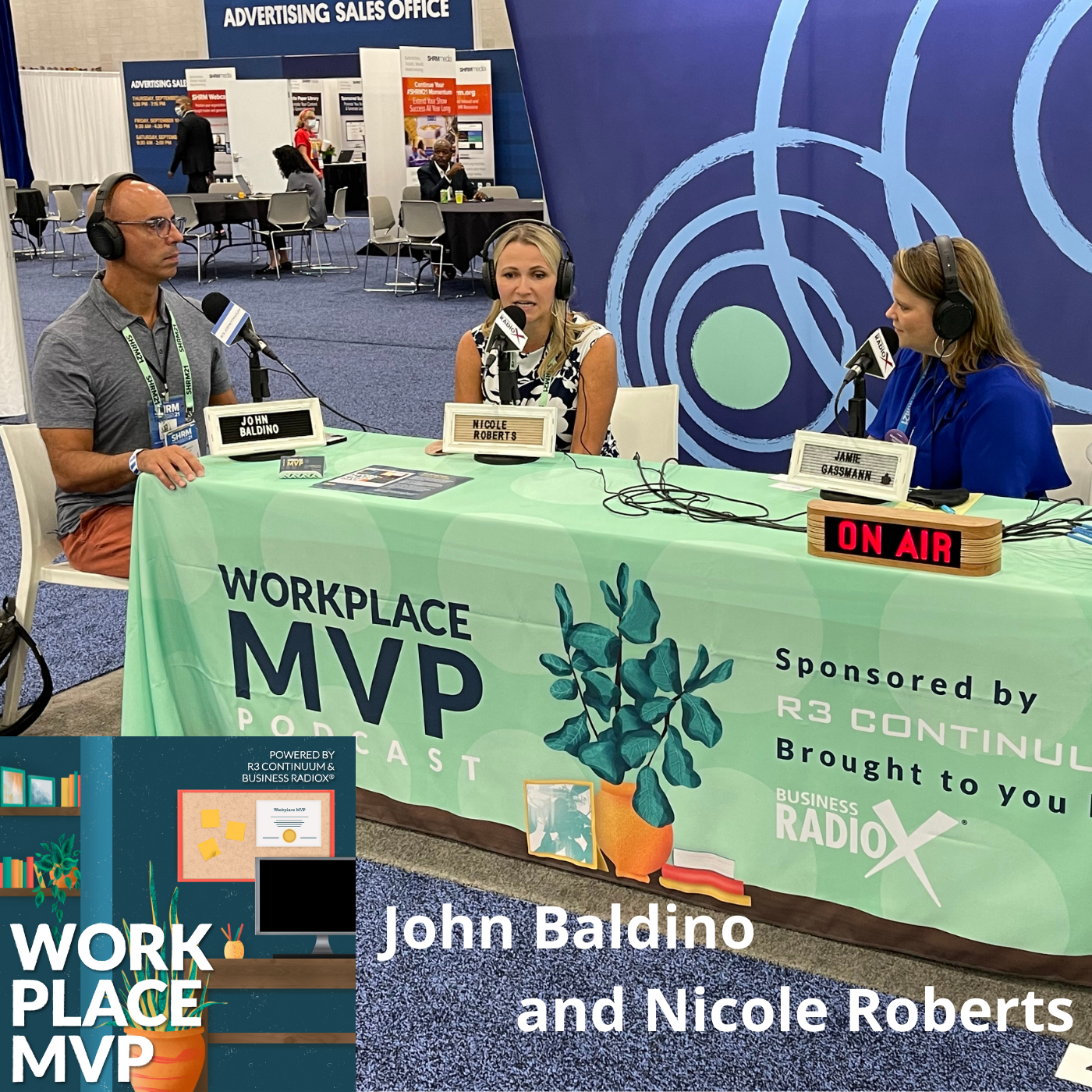
Nicole Roberts, Senior Vice President of People at Forta, joined Jamie Gassmann in an insightful conversation about the current work culture, including the phenomenon known as “quiet quitting,” the impact of remote work on workplace culture, indications of employee disengagement, how to handle exits with empathy, and much more.
Workplace MVP is underwritten and presented by R3 Continuum and produced by the Minneapolis-St.Paul Studio of Business RadioX®.
Forta
Forta is clearing the path to quality healthcare. Forta continuously improves the patient journey and delivers personalized care by applying AI and machine learning. The first care vertical Forta is improving is Autism ABA therapy. Care is difficult to access, and the delivery model must be reinvented to provide early access to families. 1 in 44 children [CDC, 2021] is diagnosed to be on the autism spectrum.
Forta has a team of driven, innovative, patient-focused individuals working together to reinvent the care and tools available to neurodiverse families.
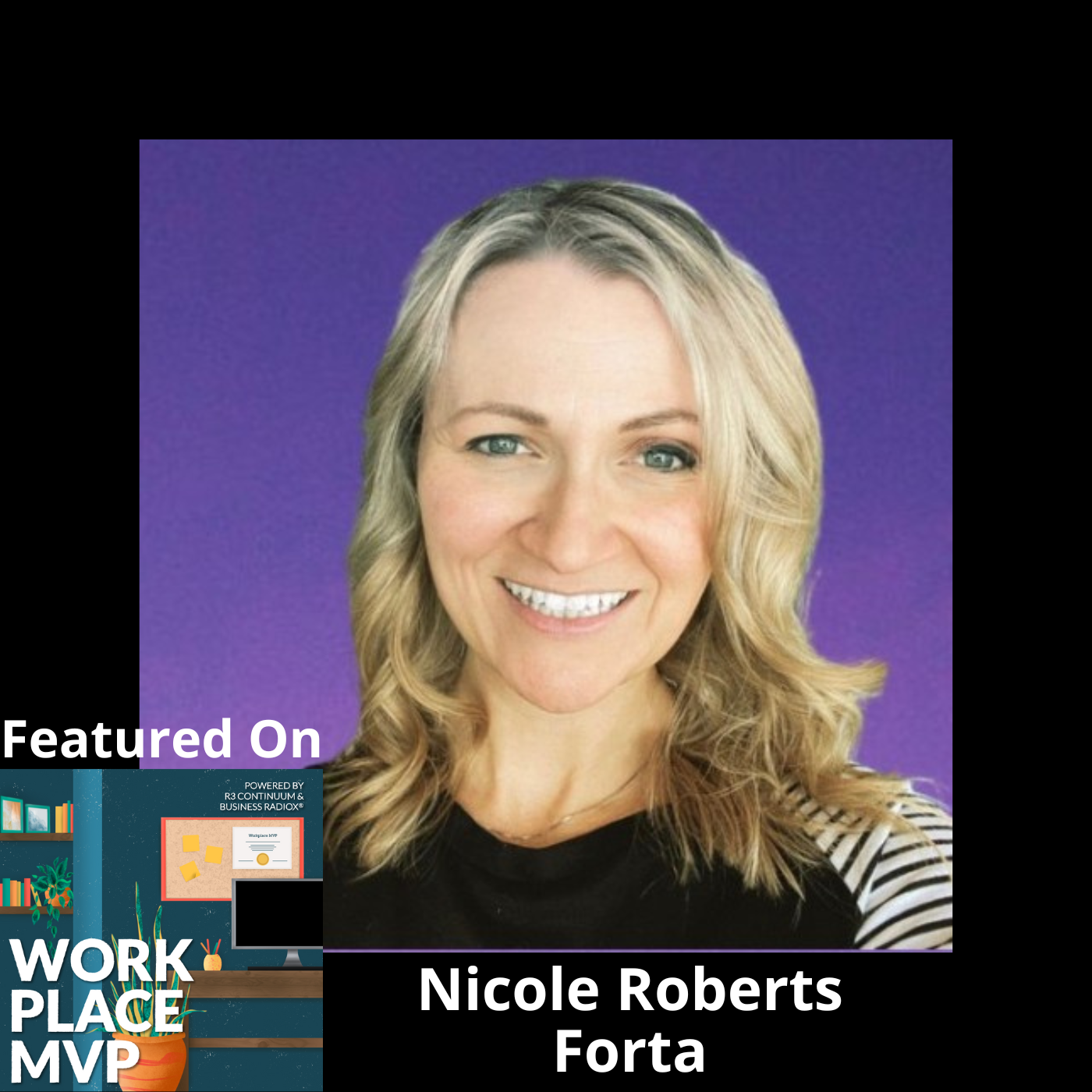
Nicole Roberts, Senior Vice President of People, Forta

Nicole is the Senior Vice President of People at Forta and is responsible for the overall people and culture strategy, fostering and strengthening a culture of collaboration, recognition, empowerment, and initiative. Nicole has a passion for service-first and people-first leadership – inspiring others to bring their best, most authentic selves to work each day.
She has extensive proven experience throughout Human Resources, specifically in the manufacturing, energy, telecommunications, and veterinary and behavioral health industries. Nicole’s expertise includes HR consulting, leadership, strategic workforce planning, building and developing high-performing teams, change management, recruitment and retention, and coaching.
Nicole is a proud member of the SHRM A-Team, and she is the former Social Media Director for the Ohio SHRM State Council and her local SHRM Chapter, GCHRA. She is a member of the SHRM Annual Conference and Exposition Influencer team. She is a contributing member of the Forbes HR Council, the 3Sixty Insights Global Executive Advisory Council, the Select Software Reviews Expert Council, and Moguls in HR.
About Workplace MVP
Every day, around the world, organizations of all sizes face disruptive events and situations. Within those workplaces are everyday heroes in human resources, risk management, security, business continuity, and the C-suite. They don’t call themselves heroes though. On the contrary, they simply show up every day, laboring for the well-being of employees in their care, readying the workplace for and planning responses to disruption. This show, Workplace MVP, confers on these heroes the designation they deserve, Workplace MVP (Most Valuable Professionals), and gives them the forum to tell their story. As you hear their experiences, you will learn first-hand, real-life approaches to readying the workplace, responses to crisis situations, and overcoming challenges of disruption. Visit our show archive here.
Workplace MVP Host Jamie Gassmann

In addition to serving as the host to the Workplace MVP podcast, Jamie Gassmann is the Director of Marketing at R3 Continuum (R3c). Collectively, she has more than fourteen years of marketing experience. Across her tenure, she has experience working in and with various industries including banking, real estate, retail, crisis management, insurance, business continuity, and more. She holds a Bachelor of Science Degree in Mass Communications with special interest in Advertising and Public Relations and a Master of Business Administration from Paseka School of Business, Minnesota State University.
R3 Continuum
R3 Continuum is a global leader in workplace behavioral health and security solutions. R3c helps ensure the psychological and physical safety of organizations and their people in today’s ever-changing and often unpredictable world. Through their continuum of tailored solutions, including evaluations, crisis response, executive optimization, protective services, and more, they help organizations maintain and cultivate a workplace of wellbeing so that their people can thrive. Learn more about R3c at www.r3c.com.
Company website | LinkedIn | Facebook | Twitter
TRANSCRIPT
Female: [00:00:03] Broadcasting from the studios of Business RadioX, it’s time for Workplace MVP, brought to you by R3 Continuum, a global leader in helping workplaces thrive during disruptive times. Now, here’s your host, Jamie Gassmann.
Jamie Gassmann: [00:00:20] Hi, everyone. You’re host Jamie Gassmann here and welcome to this episode of Workplace MVP. As we look at the current workforce of today, a common theme I am hearing from business leaders is that they are not the same as the workforce of yesterday. And realistically, that would be likely true of any timeframe.
But what makes now so different is the surge of change following the pandemic. Employees are looking for something more, particularly in how workplaces look at work-life balance, flexibility and schedules, the ability to work from anywhere, and the benefits offered for mental health, physical health and creative out-of-the-box benefits.
This shift is one that, for leaders caught flat footed, can lead to employees jumping ship to work for organizations that can offer the benefits they are looking for or the work lifestyle they want to have. Gone are the days of status quo and the classic this is how we have always done it. That approach impacts a lot of areas within your organization, your culture, employee happiness and satisfaction, and ultimately the success of your business.
Well, joining us today, we have a special guest, SHRM influencer and senior vice president of People — Senior Vice President of People for Florida, Nicole Roberts, who’s going to share her perspective on how employers can navigate the changes in today’s workforce, keeping them satisfied while driving needed business results and what are some of the watch outs you should consider? So, let’s get this conversation going. Welcome to the show, Nicole.
Nicole Roberts: [00:01:55] Good morning.
Jamie Gassmann: [00:01:56] I’m so excited to have you joining us. I know we’ve talked a couple of times at SHRM National. So, this is really exciting to have you on your own episode here at the show. So what —
Nicole Roberts: [00:02:06] [Inaudible]
Jamie Gassmann: [00:02:07] Yeah, absolutely. So, let’s just start out. Talk to us about your career journey. I know you just came on board with Forta. So, why don’t you share with our audience your career journey that you’ve taken from the beginning to where you’re at now?
Nicole Roberts: [00:02:21] Sure. So, I started my career in HR over 18 years ago. I was actually a dual major in finance and accounting and switched to HR. I started in benefits and then moved into roles that would further expand my skillset and challenge me, earning my PHR and my SHRM-CP along the way. I didn’t actually complete my bachelor’s degree until 2018. And I’m currently earning my Master’s in Management and Leadership, so I certainly don’t have a conventional path.
Leadership and culture is my passion. And I’ve been in a cycle of continuous improvement on how I show up as a leader and sharing that with others for about ten years now. Recently, I joined Forta, as you mentioned, as the Senior Vice President of People supporting a fully remote distributed workforce.
Jamie Gassmann: [00:03:15] Wow. Wow. And so, tell us a little bit about what Forta does and what they what they provide to their clients.
Nicole Roberts: [00:03:23] Sure. So, at Forta, we are reinventing how we deliver ABBA support so that families impacted by autism can get the care that they need without these months, year-long waitlists. One in forty-four children has been identified with autism spectrum disorder, according to the CDC.
And so, they are facing these — one, they get this diagnosis and there’s so much uncertainty. But then even in addition to that, they’re scrambling to find care and to find help and to find resources and to find support. And the waitlists are just insurmountable.
So, our ABA Parent Training course empowers families to work directly with BCDAs to deliver quality certified care. And we’re also improving the future of ABA experience for families by creating software and predictive algorithms that help clinicians work smarter with the latest and most effective care knowledge.
Our tech empowered care personalizes the child’s ABA therapy plan so that they can thrive. And it’s just really fascinating and exciting to be part of it.
Jamie Gassmann: [00:04:35] Yeah, I bet. That’s such a great opportunity to help families. And as a parent, I mean, my kids don’t have autism, but I just know when you need support for something, having a resource that you can lean on in a timely way is so important. That’s awesome. Great work.
Nicole Roberts: [00:04:51] Absolutely.
Jamie Gassmann: [00:04:52] So, let’s dive in. I wanted to start today’s conversation today talking about the shift in employee expectations and what you as an HR leader, what is your perspective and what have you been seeing from employers?
Nicole Roberts: [00:05:08] So, one thing that I love is seeing the partnership that people are seeking. You know, they’re not just, you know, oh, it’s a job and it is what it is. You know, that’s not what I’m seeing anymore.
Work isn’t just something that people do. They want to know that the companies that they join are investing in their growth and their development. They’re wanting to see career plans and be supported in furthering their skills and knowledge. At the same time, people do want that flexibility to have balance and be present with their friends and loved ones as well.
And from a leadership perspective, people want to know that they have support with clear direction, but also autonomy. They want to be trusted to do their best work and have clear expectations and deliverables that are realistic and that matter. And also, corporate social responsibility is huge. People want to know more about the company and where they stand on a myriad of issues. And with the technology and the access that we have today, they have the ability to get that information.
Jamie Gassmann: [00:06:17] Absolutely. I’ve seen it even in our own work environment, but that classic term you hear a lot of work is just work is not, you know, if you’re passionate about what you do, work is not just work. Work is a part of you. And so, it’s finding — I love that, finding that balance between your life and work, because if you’re passionate about it, consumes it too, and trying to drive your career success.
So yeah, definitely seeing some of that from what I’ve been hearing so that’s interesting. So following 2020, we started to experience what some are referring to as the great resignation. I’ve also — John Baldino called it the great re-shift. There’s a term for it that he was using that was like it’s like the shuffle, the great reshuffle.
And now in 2022, we’re starting to see what they’re calling the quiet quitting. And I kind of think that quiet quitting has probably been going on for a while now. They’ve just created a term for it. I don’t know that’s any different than an employee looking for something elsewhere. But what’s your perspective and your thoughts of what might be driving some of the shift in people really looking at work in a different lens?
Nicole Roberts: [00:07:33] So, you know, the great resignation was that bottled up mobility. And people who had already planned to leave their organization were already thinking of making a change, looking for a different job. They had a lot of uncertainty with everything, work, personal, their families, you name it. And also, companies held off on hiring because they have so much uncertainty or they were cutting back or just kind of holding still.
And so, when things opened up, you know, as John mentioned, people made moves. There was a reshuffle. And so, now that there’s this quiet quitting, I see this from a couple of perspectives. So, one, people are navigating a whole new world of work that includes an integration into their personal lives as well as their professional lives. And they may have been perpetuating that culture of exhaustion for so long that they just can’t sustain that any longer.
And now, it finally feels safe to breathe. So, the past two years have changed all of us in such a way that I don’t think we even fully realize yet. And people are trying to rebuild. They’re trying to nurture their mental health and really just survive in a lot of ways.
And so, we have a mental health crisis in this country and throughout the world. And many people just don’t have the energy to give 200 percent at work anymore. And we need to make it safe for them to feel that way and for them to not feel pressured in that way.
Then there’s also the aspect of people meeting expectations, which is honestly what we ask of people. I mean, we say, hey, don’t be upset if you didn’t meet expectations on your performance review. That’s what we’re asking of you because we’ve got this bell curve that we’re trying to make. And so, some people are going to get to meet expectations. but then we shame them if they’re just meeting expectations.
So, you know, we don’t need all of our teams to be full of people who are fighting like The Hunger Games for that next promotion. It’s okay to have people that are just rock steady. They get stuff done, they’re reliable, they do their job, and they don’t live to work. And that’s okay because there’s plenty of people that are like next in line for The Hunger Games that are going to make up for them.
And then we also have people who are fully remote. And they never see their manager. They never see their teams. And maybe those managers are not leading them well. They don’t communicate with them. They don’t set expectations and hold their teams accountable, and they don’t keep them engaged and dialed in to the culture and why they should care and why it matters and why their contributions are so important to the organization.
So for those people, they’re going to be more tempted to see if the grass is greener elsewhere. There’s plenty of companies lining up to compete for that talent and take those people off their hands. And the technology makes it so much easier to do it.
Jamie Gassmann: [00:10:47] You know, and you hit on something that’s really interesting where managers that might have been used to managing and being able to observe productivity and, you know, end results, you know, right inside the workplace. And then shifting over to being a manager that’s remote where you don’t have visibility. I mean, they could be out walking their dog all day long and you have no idea.
So, what are some of — what some suggestions that you have when somebody does have this remote work environment and they feel like they might be struggling to manage them effectively and they want to or even gauging, you know, are these people enjoying their job? What are some of the things they can watch for to kind of help be that leader that they want to show up as?
Nicole Roberts: [00:11:35] I mean, the number one thing is having a strong relationship with the people that report to you. I mean, I cannot emphasize strongly enough the importance of having weekly, regularly scheduled kept one-on-one meetings where, you know, your direct report goes first. They tell you about what’s going on and it’s safe to talk about work and life and kids and pets and, you know, aging parents and just, you know, whatever they want to talk about. And also, to ask for help on projects or to give a status update on something.
But that meeting should not ever be where we are on this. Where are we at on this? Where are we at on this? That’s a relationship focused meeting. If you don’t ever talk about work in that meeting, that’s even still a successful meeting. And when you can start to identify changes in people, if you’ve done the work ahead of time, you’ve built that strong relationship, you’ve built that trust, that’s when you can say, hey, you know what kind of noticed that you’re not participating as much in our teams chat or you used to be somebody who would be first to volunteer to champion a project or even co-sponsor it. And I’m not seeing that anymore.
Like, do you first of all, see that in yourself? And is there anything that’s driving that I can help you with? Because it may be, hey, I need to shift and focus on something in my personal life right now and I’ll get right back to that. Or there may be something else that’s going on that has nothing to do with you as the manager, with the team, with the organization, with how they feel about the company. Maybe they just need to rotate that priority list for a second and they need to know that they’re supported by their manager to be able to do that.
Jamie Gassmann: [00:13:30] Yeah, absolutely. Because there’s still a lot of personal stuff that people are navigating. So, with quiet quitting, what I’m hearing is that they’re still meeting expectations of their job and but while they’re searching for something new. And so, if you’ve got that employee who’s been going like 200 percent and now, they’ve scaled it back to like 100 percent, well, how is this really any different than before the pandemic and people doing that, then, you know, why is it getting a new term now? And what do you think is driving some of that?
Nicole Roberts: [00:14:04] So, I don’t think it’s new. I think it’s just different and I think it’s way more accessible. And I think that maybe people are paying attention more to it now just because it’s impacting their businesses more. So, it’s more visible. It’s more accessible for sure. I mean, whether you’re in an office or not, most interviewing is being done virtually.
And so, the time to go through a process is dramatically reduced. And you don’t have to take time off for an interview. You’re not driving anywhere. You’re not, you know, I mean, people can integrate this so much easier and so much more efficiently into their day. And it’s not a matter of, oh, I need to take a sick day and spend all this time half day interviewing with people. Like that’s just not the state of recruitment and interviewing and with this super high, competitive nature of talent right now.
And so, you know, if you aren’t keeping your teams engaged and we’re all competing for talent, I think that you’re going to see a lot more of this.
Jamie Gassmann: [00:15:13] Yeah, it’s just showing up a little bit different, just in the fact that it’s a lot more accessible to be able to. What I think too like with LinkedIn, you have more access to jobs across the country than ever before. And for some, that could mean a significant pay increase compared to what they’re getting in their current marketplace. So, it definitely is creating a lot more opportunity for people.
Nicole Roberts: [00:15:39] Well, and you know, to your point about improving your income potential and all that, I mean, with inflation, what it is, if your company didn’t do everything in their power to try to help offset that and some of them couldn’t. I mean, you know, I’m certainly not shaming businesses in their budgets. But there are companies out there that have certainly built that into their budget, and they are happy to attract your people away. And they’re maybe offering a full remote culture like we are. We have our pick of anywhere in the country, even international, that we can find talent. And I mean, that’s just — it is the state of what we’re dealing with. And companies need to be aware of that.
Jamie Gassmann: [00:16:26] And employees are demanding it in some cases. So, I know culture is a passion area for you as well. So, talk to me about how the great resignation or the quiet quitting can impact the culture of the workplace. Or is culture what is driving the employee to make that decision to quit?
Nicole Roberts: [00:16:45] So, all factors aside, such as, you know, I have some circumstance in my life where now I need to dramatically change my circumstances. People don’t leave cultures where they feel seen, supported, and appreciated. When someone says that they’re leaving for more money, better benefits, better opportunity, unless they were cold called and offered a job, that curiosity to look elsewhere did not happen overnight.
I can recall times in my own career and actually in speaking to other people and preparing for this when if you’re perfectly content and a recruiter contacts you, you say, “Hey, you know what? Thanks so much for thinking of me. I’m actually going to refer you to somebody else. But I’m not interested in making any moves right now. But, you know, feel free to keep me in mind in the future.”
People that see the impact that they’re making in the organization, that know that they are impacting the future, that they’re part of plans, that they have a plan, and they know what next steps are for them in their career, they’re not quiet quitting.
Jamie Gassmann: [00:16:45] Yeah. They’re content and happy with everything that they’re getting and don’t need to make that move. Yeah, absolutely. That’s great. Great, great points to call out for any leaders that might be listening in. So, what can leadership do to lessen the likelihood of quiet quitting, great resignation, of that happening within their actual own workplace?
Nicole Roberts: [00:18:18] So, this is kind of a passion project of mine right now, which is understanding that you need to put as much focus, if not more, into onboarding and acclimating somebody as you did in getting the person in the door and on the team. You need to get them from the beginning interwoven into your culture, dial into what they’re doing, understanding how important their role is.
Your work is not done when the person enters orientation. The organization has put trust in you to take care of this person and to help them do their best work. And it’s your responsibility to ensure that they acclimate in the organization, that they’re introduced to people that they’re going to be doing business with.
And for those people that may push back and say, I don’t really have time to meet your new hire, you don’t not have time to teach somebody new how to best do business with you. You’re teaching them right away, hey, this is how we do things in this area of the business, and this is how you can be most successful when it comes time for us to interact, and when I might need something from you or when you might need something from me. Like you don’t not have time for that.
Share company specific systems, processes. There are only gains to be made with getting someone dialed in, promoting your brand, and feeling like part of the team sooner, and then focus on communication, building the relationship, building trust, learning about their specific needs to do their best work.
You know, people need to be seen, supported, and appreciated. And it’s simple, but it’s not easy and it takes work. And you need to prioritize that. And then have other people cross-functionally check in with them and see how they can best help them succeed.
I mean, if you have a situation in the organization where maybe the manager changes, you don’t want to feel like you’re going to lose that entire team because all of their relationship and all of their connection to the organization is that manager. And if they leave, they’re either going to take their entire team with them or you’re going to start to see people resigning left and right.
So, get other people in the organization involved in them and make sure that they know who are additional people that they can reach out to for support and then get feedback and data from people.
How was your experience with us so far? Did the expectation match the reality? If not, why? What can we do better? Do you have the tools you need to be successful? Do you have the appropriate resources and training? What suggestions do you have for us?
You know, be curious and follow up on any action plan so that people know that you’re truly listening to them and you’re not just hearing them. If you send out a survey and you don’t do anything with it, it’ll be the last survey somebody takes.
And then if they do leave because they are not sworn to life to your organization, thank them for their contribution to the mission thus far. Wish them well. Ask them what’s exciting them about this new role or this new opportunity. What are they getting there that they couldn’t get here? Did they not even realize that they could have gotten that in your organization and you either didn’t communicate it well or they didn’t feel comfortable asking?
And then treat them with as much respect, care, compassion, and grace as possible in their exit. You know, it’s not only the right thing to do as a human and as a leader, but all those remaining team members are going to pay attention to how you treat people that give notice.
So, if you shame them, if you treat them like they’re not loyal to the organization and take it personally, you want people on your teams that are proud to be on the team based on how we treat people that are going to be moving on to another organization and proud of how we treat people at every stage in their journey.
We’re seeing a lot of boomerang employees. And how wonderful would it be to have that really amazing person want to come back because they have such a positive, lasting impression of your team and how you treated them.
Jamie Gassmann: [00:22:39] Absolutely. I mean, there’s always — you got to keep that bridge unburned because they might know somebody who say okay, I saw you worked there, what was your experience like? So, you never know who they might be connecting with in terms of future employees to or connections they might have.
So, we’re going to take a quick commercial break so, to hear from our sponsors. So, Workplace MVP is sponsored by R3 Continuum. R3 Continuum is a leading expert in providing behavioral health support to people and organizations facing disruption, violence, and critical incidents. Through their evidence-based interventions, specialized evaluations and tailored behavioral health programs, they promote individual and collective psychological safety and thriving. To learn how they can help your workplace make tomorrow better than today by helping your people thrive, visit R3C.com today.
So, now going into some additional questions, we’re continuing on with that culture and employee expectations. What, in your opinion, would be some common red flags that leaders should be watching out for that might signal an employee is quietly quitting?
Nicole Roberts: [00:23:52] So, one thing for sure is a lack of engagement, a declined interest in wanting to be part of projects. I mean, if you’re setting quarterly goals and let’s say you have three or four people on your team and you’re divvying up goals among the team. And you’ve got somebody who is not volunteering, who normally would who doesn’t seem to be interested in it, I mean, if you’re them and they’re thinking, well, I’m not going to be here for that, so I don’t want one, the team to be counting on me to take that through and to push that initiative forward. Those are some of those indicators.
And again, if you’ve built that trust, then in your one-on-one, you can be like, hey, you know something going on? Because I kind of noticed that normally you’re all about championing these projects and I just, you know, is there something else going on? Is somebody else asking you for something that you feel like you don’t have the time for? Or I really would love to see you be the person that drives this project. Like, what is there that’s going on either personally or professionally that’s interfering with that and how can I help?
Another thing for sure is people who were more engaged before, and you start to see that change, people who were maybe really, really quick to respond before and you’re starting to see a decline. I mean, it’s not just people that are in remote environments that can get distracted or that can feel like they’re not really, you know, kind of motivated and dialed in. I mean, that can happen when somebody is sitting in their office as well. And you have to notice those subtle nuances with people when that behavior starts to change.
Jamie Gassmann: [00:25:47] And I would imagine a manager who’s very involved in multiple place — I’m hearing a little bit of an echo. Hopefully it’s not coming through. But you know, who has created that safe environment where employees can feel, you know, safe to talk about their personal lives and, you know, create kind of almost that opportunity where they can be vulnerable and it’s okay. They would start to pick up on some of the cues that somebody might be — so, you know, going back to a point you made earlier. You know, having that manager that’s really engaged with both that kind of that some of the personal for what they want to share and then also that person’s professional growth, you know, really can play well into being able to pick up on some of those concern areas. Would you agree?
Nicole Roberts: [00:26:34] Yeah, for sure. I mean if someone starts to really see that kind of lack of engagement or lack of engagement and they are wanting to try to either reinvigorate the engagement or get that person kind of back on the team, I mean, you know, you’ve got to let people know that you’re paying attention, right?
If somebody is like, oh, man, my manager really noticed that I maybe not participating as much as I did before or maybe it doesn’t feel like my heart’s in it as much as it was before. I mean, that really says a lot to somebody like, hey, you are not just my manager, but you really care about me and you’re noticing differences with me. And you not only notice it, but you’re taking action too. And we have that trust built, right?
So, it doesn’t feel unsafe. If you’re asking me, I don’t feel like my job is on the line because you’re having a conversation with me about my performance, right? Because I mean, we see it all the time on social media and whatever where people are like, oh my gosh, this pit in my stomach. When my manager says they want to talk to me. Like that’s the same as like being the principal’s office, right? Like that’s that perspective and that’s that lack of trust.
And that I mean, you got work to do if you’re giving people that pit of despair when they want to talk to you. And if you’re doing regular one on ones, you don’t have to say like, hey, do you have a second? Can we talk? Because, you know, you’ve got scheduled time coming up, at least in the next set of days to have a conversation with somebody.
Jamie Gassmann: [00:28:12] Yeah, and that’s scheduled time is so important. You know, I travel occasionally, and I try to if you need me to reschedule it later in the week or if you need to get a hold of me for whatever reason while I’m on the road, I’m at your disposal, just let me know.
So, you kind of hit on this a little bit with my next question around how a leader can help to reengage the employee. And you touched on some ways that they can do that. But if you’ve got somebody who’s really checking out, is it worth it? I mean is it worth trying to bring them back in? I suppose it really would depend on the situation. But what are some of your thoughts around that that a leader should consider?
Nicole Roberts: [00:28:50] I think that it depends for sure. And of course, that’s like HR’s favorite answer, right? It depends. But it really does depend. I mean, you can tell when you’re having a conversation with somebody, if this is going to be somebody that you’re going to be able to reengage. Or I mean, if they’re already super excited about the next chapter, there’s nothing that you can say.
And we have to make sure that from a workforce planning perspective, all of those different aspects that have we cross-trained our teams, are we making sure that we’re not holding on to people simply because there’s nobody else to do the work? We want people who want to be there and don’t feel obligated to be there. And we want to have teams that are not going to be just overburdened if somebody leaves unexpectedly or planned, right.
And so, we need to make sure our recruiting processes are strong and that we have a really strong employer brand, so people want to come and join us and that it’s not going to take six months to fill that job because it’s really unfair to the rest of the people on the team. They’re trying to do their best work to be doing this, this job of this other person simply because we fail to plan.
Jamie Gassmann: [00:30:13] Yeah. And I mean, looking at kind of some then you talk a little bit about some of the common mistakes, but, you know, there might be reasons that an employee is trying to leave that an employer cannot feel. You know, there might be some things that they’re just really want for themselves.
And so when you’re looking at an employer who’s identifying that there might be somebody who’s on the verge of quitting or looking to make a move, what are some of the mistakes that they make when an employee is in that role that could be detrimental to maybe their reputation, of the organization, or cause the employee just to be like, well, I’m just going to resign without having anything in place because I’m done. What are some of the mistakes that that you’ve heard of?
Nicole Roberts: [00:30:54] So, the number one thing and I kind of touched on it a little bit earlier with my soapbox on treating people with respect and compassion is, you know, if somebody has made the decision that they are going to move on from your organization, don’t treat them like a pariah, like they are not personally out to sabotage your organization. And if they are, like you have way bigger problems to worry about than that, you know,
But if somebody gives notice, I mean, congratulate them, thank them for everything that they’ve done, ask them if they know anybody that would be a great fit for that role or hopefully you’ve worked some kind of informal or formal succession plan. There’s cross-training that’s going on. I mean, I always tell people that you should always know 50 percent of the job above you because you should always be prepared for that next promotional opportunity.
But if somebody gives notice, let them plan their transition. Let them tell the organization. The worst thing that I can see is when a company does not let somebody handle their own exit. And all of a sudden there’s this message that goes out says, so-and-so is no longer with the company. You have just triggered so much anxiety and fear and just unnecessary upheaval in your organization from either a personal perspective or it’s just a lack of EQ, right.
And now, you’ve got people in the organization that are like, oh my gosh, well, I thought that person was awesome and doing a great job. Like, are we going to have layoffs? And, you know, is this like the beginning of something? Or, oh my gosh, did something really crazy happen?
Like, was there — I mean, now all of these people that received this message, they’re not focused on your customers. They’re not focused on your services. They’re not focused on doing their best work. They are either panicked. They’re now going to answer those calls from the recruiters because they don’t know what the future holds for them.
Like if somebody is leaving because they have found another opportunity, let them share like, “Hey, company. I wanted to let you know I’m leaving in the next few weeks. It has been my privilege to support you during this time that I’ve been here. Thank you so much.” You know, I mean, just treat people with grace and dignity. I mean, it’s really not that hard. And that’s why I always say that like the strength of an organization and the success of an organization is going to rise and fall with the strength of their leadership. If you have people in positions that don’t understand the impact of their actions to the culture, I mean, you’re going to struggle.
Jamie Gassmann: [00:33:54] Yeah, that’s such great advice. And giving them that opportunity to kind of tell why they left, where they’re headed, you know, the opportunity that they’re seeking and give some reasoning behind it. Because I know those empty, they no longer work here, you’re going to fill with lack of information answers for yourself.
So, looking to the future, is it expected that the workforce was going to continue to stay consistent with what we’re seeing today? Or do you think that we’re going to go through even more changes of evolution in terms of how employees want to show up or the benefits they want from an employer?
Nicole Roberts: [00:34:35] I mean, I think that it’s always going to change and that’s what’s so exciting and wonderful about HR, right. I mean, if you look at even how it’s changed over — I mean, it was personnel, and then HR, and now people operations because we’re shifting from being this administrative support to being the people who are putting out fires and are solving problems to being the people who are partnering at the business level and looking at, hey, what’s the business trying to do? Okay, this is how people operations can help support that, right?
So, we have seen work change and really for the better. I mean, obviously, if you ask me. And I think it’s going to continue to change, and I’m really excited to see how that is. But what I love the most is that CEOs are embracing it. And there are world-class organizations that are out there helping businesses to relate better to your people and to get people dialed into your culture and to communicate and to engage.
And all of those things that used to be like the nice to haves. Like, oh, we’re going to try to put it in our budget this year to have a party or we’re going to try to, I mean like the fact that it’s not a one-time event anymore to get people together and to engage them is I’m so proud of us that we’ve gotten this far.
Jamie Gassmann: [00:36:06] Yeah. It’s actually a core focus of pretty much every workplace I’ve been at is how do we get people to know the rest of the organization, be involved, be a part of a team, you know, because really, I like to think of work as like the home away from home. Even though now, you know, in this remote work environment still, yeah, in my home. But we’re still interacting with them all day, our families, you know.
So, it’s just — and now it’s even more of an integration because, you know, I know my daughter is at school right now, but she’s notorious for being in the background of any call that I’m usually on. So, it’s kind of fun to see how some of those integrations and the kind of the acceptance of different things than what before the pandemic would have been like oh, no, no, no, that’s not okay. If a dog barked on a webinar, it was like, whoa, I’m so sorry. Now, it’s like, there’s my dog.
Nicole Roberts: [00:37:04] Your animal that has no regard for the fact that you’re on a call to stop doing what animals do. Oh, yeah, I’ll get right on that.
Jamie Gassmann: [00:37:17] Yeah.
Nicole Roberts: [00:37:17] Yeah. My all-time favorite makes my day is if I’m on a video call with somebody and a child interrupts, a spouse that has no idea they’re on a call interrupts, or a pet like makes my whole day, right? Because we get to, for just a second, relax. Remember that we’re human. I want to know. I want to meet the pet. I want to meet the child.
I want, you know, I know the names of all the people on my team. I know the names of their kids and their spouses and their pets. And we share — we have a Teams channel that is called fur to fur babies and we share pet pictures all the time. I mean –.
Jamie Gassmann: [00:37:57] Love it.
Nicole Roberts: [00:37:58] I mean people want to share to the extent that they’re comfortable with that they do have a life and they do have passions. I mean, if you look at TikTok and Instagram and the Reels and whatever, I guarantee you the number one thing people are looking at is kitties and puppies and some kind of furry thing and because it’s that welcoming rush, right. People love that and they want to connect on that too. And there’s absolutely nothing unprofessional about taking a minute to share in that humanity.
Jamie Gassmann: [00:38:29] Yeah. And you hit it when you said humanity. It makes us humans, not just workers. Like it gives us that connection into who they are as a person fully. And I think as a leader, it allows you to be a better leader because you can have more empathy, compassion. You understand their world a little bit more.
And you know, because the person you know, as a whole person, you’re then — you can see how they work. You start to kind of understand like how you can even better lead them and coach them because you can see their vulnerabilities. You can see where their confidence might be weakening and you can go, hey, no, you, I got you, you got this, you know.
So, I think there’s just so much that leaders have access to today that the leaders of before maybe didn’t. And, you know, but it’s okay now where before it might have been like, no, don’t ask them about their home life. Like just it’s all about work, you know. And I think that that shift is just such a great change that just helps us be better humans, but also better leaders.
So talking about our listeners and the leaders that might be kind of chiming in on this episode, you know, what piece of advice would you want to leave them with as it relates to ensuring that they’re creating that culture of employees who want to stay in the now and into the future?
Nicole Roberts: [00:39:54] So, the number one thing that I can say is invest time and resources into your people, find out what they’re interested in and what would help them do their best work. Ask people what they want to be involved with at work. I mean a lot of the times we can get siloed in our communication and even in our projects and have no idea that there’s something going on over here with this team that you can really add a lot of value to.
So, ask people what they want to be involved with at work. Ask people what they want to do more of or who they would want to learn from. One of the really amazing things about virtual environments and about the technology that we have is you can have a conversation with somebody who is not down the hall from you or is not directly part of your immediate team or even in a cross-functional team. And you can learn so much more from them and maybe get somebody a coach, if that’s possible. I’m seeing a huge surge in people wanting coaches to further their development.
You cannot ever overinvest in your people, that there’s never a downside to investing in your people. And I cannot think of any leader or manager that I’ve ever had that I was like, man, he just cared too much about me, you know? I mean, it’s like I have a thing on my phone that says you’ll never look back and think you spent too much time with your kids. You’ll never look back and think that you invested too much in your people either.
Jamie Gassmann: [00:41:24] Yeah, I love that. That’s a great, great advice to end the interview on. It’s wonderful. So, this obviously, great conversation. I’m sure our listeners are going to be taking away some great tips and information from you. So, if they wanted to get a hold of you, learn a little bit more, maybe ask a question about something you shared, how could they do that?
Nicole Roberts: [00:41:46] So, I am active on LinkedIn and Twitter professionally. I kind of saved Facebook and Instagram for my personal life. And so, @NRobertsHR, can’t get easier than that. And if you send me a note on LinkedIn, please, if you send me a connection, please send me a note with why you’re wanting to connect so that I have some source of context of where it’s coming from.
I am always happy to help. I am never too busy. I’m very busy, but I’m never too busy. But I need to be able to prioritize that time and also prioritize connections because we do get a lot of cold call, you know, people trying to sell us stuff. And I would love to listen to all of them. I just simply don’t have time.
Also, I have a blog that I’m not as active as I used to be, especially since working on my Masters, and that is HRwithoutego.com. But I was super engaged with it and writing all the time for a period of time. So, if you ever want some insight into my point of view, that’s a great place to go.
Jamie Gassmann: [00:42:54] Wonderful. Well, thank you again so much, Nicole, for being on our show. It’s been such a pleasure to have an opportunity to celebrate all the great work that you do and your expertise. And thank you so much for sharing all of your great advice with our listeners.
Nicole Roberts: [00:43:09] Thank you so much.
Jamie Gassmann: [00:43:10] So, we also want to thank our show’s sponsor R3 Continuum for supporting the Workplace MVP podcast. And to our listeners, thank you for tuning in. If you’ve not already done so, make sure to subscribe to subscribe so you get our most recent episodes and other great resources that we share on those feeds.
You can also follow our show on LinkedIn, Facebook and Twitter, @WorkplaceMVP. And if you are a Workplace MVP or you know someone who is, we want to hear from you. Email us at info@WorkplaceMVP.com. Thank you all for joining us and have a great rest of your day.
Female: [00:43:50] Thank you for joining us on Workplace MVP. R3 Continuum is a proud sponsor of this show and is delighted to celebrate most valuable professionals who work diligently to secure safe workplaces where employees can thrive.