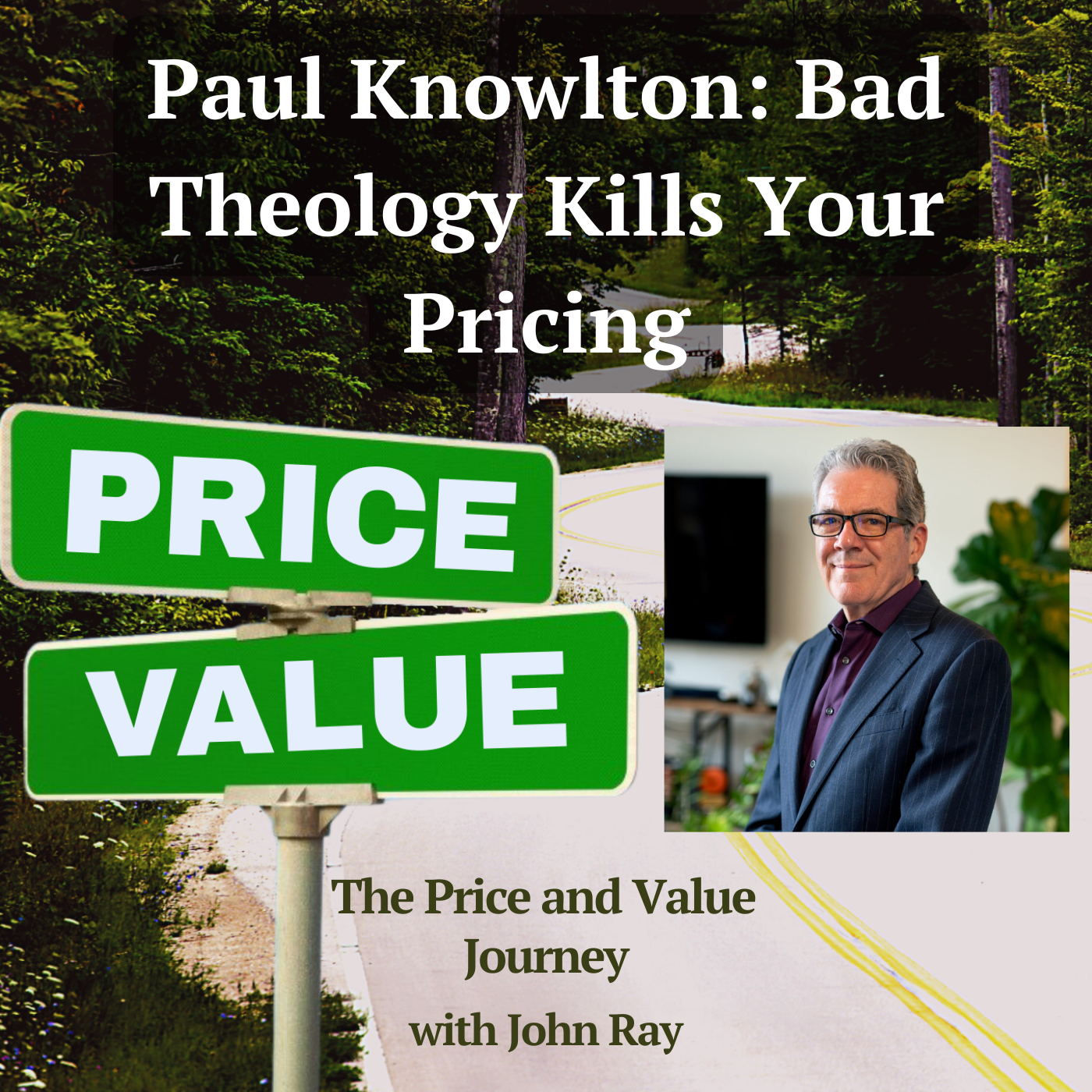

Paul Knowlton on Bad Theology, Plantation Economics You Practice on Yourself, and How Mars Built a Trillion-Dollar Legacy on Mutuality (The Price and Value Journey, Episode 160)
In Part 2 of a two-part conversation, Paul Knowlton, attorney and partner at Stanton Law in Atlanta and co-author of Better Capitalism: Jesus, Adam Smith, Ayn Rand, and MLK Jr. on Moving from Plantation to Partnership Economics, joins host John Ray on The Price and Value Journey podcast to explore the mindsets that kill sustainable pricing and what you can do about it.
Paul saw a tattoo on a pastor friend’s bicep that read “bad theology kills.” That phrase captures why so many professionals severely underprice themselves. Whether from explicit religious backgrounds, leftist political thinking, or just generational poverty stories, we carry beliefs that profit is evil, poverty is noble, and loving your neighbor means sacrificing yourself. Paul shares his painful story of starting a low bono law firm after selling his intellectual property boutique firm. He had to shut it down when his patient wife finally said they literally couldn’t afford his generosity. The lesson is that you cannot afford to be generous if you don’t have the resources to be generous.
This conversation covers the Mars candy company (family wealth of $1.7 trillion built on mutuality since the early 1900s), why practicing plantation economics on yourself means extracting your own time by not charging or not charging enough, the Rotary Four-Way Test Herbert J. Taylor created during the Great Depression to save a company from bankruptcy, and how to stay committed to mutual benefit when bad actors seem to be winning. Paul and John discuss firing bad clients, finding your herd of like-minded professionals, and why the economic system should serve humans rather than humans serving the economic system.
The Price and Value Journey is presented by John Ray and produced by North Fulton Business Radio, LLC, an affiliate of the Business RadioX® podcast network.
Key Takeaways You Can Use from This Episode
- Bad theology kills your pricing. Whether from religious background, political thinking, or generational poverty stories, many professionals believe profit is evil, poverty is noble, and loving your neighbor means only loving your neighbor. These beliefs lead to severe underpricing and unsustainable practices.
- You cannot afford to be generous if you don’t have the resources to be generous. Paul started a low bono law firm after selling his intellectual property boutique. His wife finally told him they literally couldn’t afford it and were heading toward bankruptcy. If you don’t engage your brain, your heart will lead you down the wrong path.
- Practicing plantation economics on yourself means extracting your own time by not charging or not charging enough for your services. Paul caught himself waving off payment from a client who stopped by with quick questions. The client insisted on paying because he needed someone with 20 or 30 years of skills to give him the fast answer.
- Mars candy company built $117 billion in family wealth on mutuality since the early 1900s. Their stated contract principle: they will not have contracts that are detrimental to the other party. Mars chocolates are not the cheapest option available, but consumers are willing to pay a higher price due to the perceived value and their comfort with the company.
- The Rotary Four-Way Test saved a company from bankruptcy during the Great Depression. Herbert J. Taylor wrote it as a way of doing business: Is it the truth? Is it fair? Will it build goodwill? Will it be beneficial to all concerned? This was the ethical framework that people adhered to before Milton Friedman’s 1970 article on shareholder value changed the business landscape.
- Bad actors get the headlines for a while but don’t last long-term. Your reputation is your most valuable asset. If you can be trusted in your work, your word-of-mouth reputation will feed your client base. It’s the long game, the marathon, not the sprint that matters.
Topics Discussed in this Episode
00:00 Introduction and Recap of Part One
01:10 Exploring Mutual Benefit in Professional Services
04:16 The Impact of Bad Theology on Pricing
05:12 Better Capitalism: Bridging Anti-Capitalism and Dog-Eat-Dog Capitalism
11:55 Mars Inc.: A Case Study in Mutuality
17:25 Practicing Plantation Economics on Yourself
24:26 The Importance of Community and Ethical Business Practices
32:33 Conclusion and Final Thoughts
Paul Knowlton

Paul Knowlton, JD, MDiv, is a pioneering Atlanta attorney, ethicist, and co-founder of the Institute for Better Capitalism, where he champions “partnership economics” as an antidote to exploitative “plantation economics.” Holding a JD from Georgia State University and an MDiv from Mercer University, he transitioned from forensic engineering at Georgia-Pacific to IP law, building a robust practice at firms like Kilpatrick Stockton, co-founding another serving Fortune 500 clients, and teaching as an adjunct professor. This foundation in business law informs his holistic critique of capitalism, blending legal acumen with theological insight to advocate for profitable, ethical systems.
Knowlton’s landmark 2021 book Better Capitalism: Jesus, Adam Smith, Ayn Rand, and MLK Jr. on Moving from Plantation to Partnership Economics, co-authored with Aaron Hedges, reinterprets economic giants to propose reforms in finance, corporations, government, and culture. Endorsed by figures like Walter Brueggemann and David Gushee for its data-driven, values-rich challenge to extremes like laissez-faire absolutism or socialism, the work has sparked dialogue via Cato Institute reviews and Amazon bestseller status. His legal background enables practical proposals, such as relieving sectors for mutual flourishing and making abstract ethics actionable for executives and policymakers.
Today, as Partner Emeritus at Stanton Law LLC, Knowlton integrates his capitalism vision into IP, business succession, nonprofit law, and coaching, while advancing the Institute’s mission through resources, testimonials, and calls for imagination and courage. His efforts—praised for originality by economists and theologians—aim to humanize markets, fostering common good without sacrificing innovation, as seen in his Ubercounsel practice and Georgia Bar wellness initiatives. This balanced legacy positions him as a unique voice at the nexus of law, faith, and economics.
John Ray, Host of The Price and Value Journey

John Ray is the host of The Price and Value Journey.
John owns Ray Business Advisors, a business advisory practice. John’s services include business coaching and advisory work, as well as advising solopreneurs and small professional services firms on their pricing. John is passionate about the power of pricing for business owners, as changing pricing is the fastest way to change the profitability of a business. His clients are professionals who are selling their expertise, such as attorneys, CPAs, accountants and bookkeepers, consultants, coaches, marketing professionals, and other professional services practitioners.
John is a podcast show host and the owner of North Fulton Business Radio, LLC, an affiliate of Business RadioX®. John and his team work with B2B professionals to create and conduct their podcast using The Generosity Mindset® Method: building and deepening relationships in a non-salesy way that translates into revenue for their business.
John is also the host of North Fulton Business Radio. With over 900 shows and having featured over 1,300 guests, North Fulton Business Radio is the longest-running podcast in the North Fulton area, covering business in its region like no one else.
John’s book, The Generosity Mindset: A Journey to Business Success by Raising Your Confidence, Value, and Prices
 John Ray is the author of the five-star rated book The Generosity Mindset: A Journey to Business Success by Raising Your Confidence, Value, and Prices, praised by readers for its practical insights on raising confidence, value, and prices.
If you are a professional services provider, your goal is to do transformative work for clients you love working with and get paid commensurate with the value you deliver to them. While negative mindsets can inhibit your growth, adopting a different mindset, The Generosity Mindset®, can replace those self-limiting beliefs. The Generosity Mindset enables you to diagnose and communicate the value you provide to clients, which allows you to price your services more effectively in order to receive a portion of that value.
Whether you’re a consultant, coach, marketing or branding professional, business advisor, attorney, CPA, or work in virtually any other professional services discipline, your content and technical expertise are not proprietary. What’s unique, though, is your experience and how you synthesize and deliver your knowledge. What’s special is your demeanor or the way you deal with your best-fit clients. What’s invaluable is how you deliver outstanding value by guiding people through massive changes in their personal lives and in their businesses that bring them to a place they never thought possible.
Your combination of these elements is unique in your industry. There lies your value, but it’s not the value you see. It’s the value your best-fit customers see in you.
If pricing your value feels uncomfortable or unfamiliar to you, this book will teach you why putting a price on the value your clients perceive and identify serves both them and you, and you’ll learn the factors involved in getting your price right.
The book is available at all major physical and online book retailers worldwide. Follow this link for further details.