Business RadioX ®

  • Home
  • Business RadioX ® Communities
    • Southeast
      • Alabama
        • Birmingham
      • Florida
        • Orlando
        • Pensacola
        • South Florida
        • Tampa
        • Tallahassee
      • Georgia
        • Atlanta
        • Cherokee
        • Forsyth
        • Greater Perimeter
        • Gwinnett
        • North Fulton
        • North Georgia
        • Northeast Georgia
        • Rome
        • Savannah
      • Louisiana
        • New Orleans
      • North Carolina
        • Charlotte
        • Raleigh
      • Tennessee
        • Chattanooga
        • Nashville
      • Virginia
        • Richmond
    • South Central
      • Arkansas
        • Northwest Arkansas
    • Midwest
      • Illinois
        • Chicago
      • Michigan
        • Detroit
      • Minnesota
        • Minneapolis St. Paul
      • Missouri
        • St. Louis
      • Ohio
        • Cleveland
        • Columbus
        • Dayton
    • Southwest
      • Arizona
        • Phoenix
        • Tucson
        • Valley
      • Texas
        • Austin
        • Dallas
        • Houston
    • West
      • California
        • Bay Area
        • LA
        • Pasadena
      • Colorado
        • Denver
      • Hawaii
        • Oahu
  • FAQs
  • About Us
    • Our Mission
    • Our Audience
    • Why It Works
    • What People Are Saying
    • BRX in the News
  • Resources
    • BRX Pro Tips
    • B2B Marketing: The 4Rs
    • High Velocity Selling Habits
    • Why Most B2B Media Strategies Fail
    • 9 Reasons To Sponsor A Business RadioX ® Show
  • Partner With Us
  • Veteran Business RadioX ®

Scale Your Business Without Compromising Happiness, with Doc Dockery, The Resolve Firm

April 17, 2024 by John Ray

Scale Your Business Without Compromising Happiness, with Doc Dockery, The Resolve Firm, on The Price and Value Journey with John Ray
North Fulton Studio
Scale Your Business Without Compromising Happiness, with Doc Dockery, The Resolve Firm
Loading
00:00 /
RSS Feed
Share
Link
Embed

Download file

Scale Your Business Without Compromising Happiness, with Doc Dockery, The Resolve Firm, on The Price and Value Journey with John Ray

Scale Your Business Without Compromising Happiness, with Doc Dockery, The Resolve Firm (The Price and Value Journey, Episode 108)

Dr. Terry “Doc” Dockery, a renowned expert in business scalability and the author of the Amazon number one bestseller, Leadership, Happiness, and Profit: 12 Steps to a High Performance Business, was host John Ray’s guest on this edition of The Price and Value Journey. The discussion centers on the critical role of happiness and personal fulfillment as you scale your business. Doc discusses sustainable business growth, emphasizing leadership development, achieving a balance between professional achievements and personal life, and the impact of positive psychology in the workplace. The conversation also covers the challenges of recruiting and retaining top talent, debunking the myth of a talent shortage, and the essential elements of feedback and trust in effective leadership. Moreover, they address specific hurdles service firms encounter during scaling, the value of skill development, and how to synchronize individual team member advancement with organizational goals.

The Price and Value Journey is presented by John Ray and produced by the North Fulton studio of Business RadioX®.
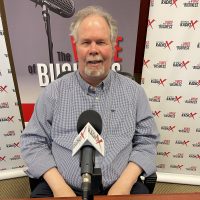
Dr. Terry “Doc” Dockery, Founder, The Resolve Firm

Dr. Terry "Doc" Dockery, The Resolve Firm
Dr. Terry “Doc” Dockery, The Resolve Firm

Dr. Terry “Doc” Dockery, a true maestro in the realms of business scaling and leadership development. With a career that spans decades, Doc stands out not only as a licensed business psychologist and founder of The Resolve Firm but also as a beacon of guidance for businesses ranging from small enterprises to Fortune 500 giants across the country, particularly in the Atlanta region. His unparalleled expertise in doubling revenues without the baggage of stress or risk has not only propelled companies to new heights but has also cultivated environments recognized nationally as “Best Places to Work.”

Doc’s insights have been crystallized in his Amazon #1 Bestseller, Leadership, Happiness, and Profit: 12 Steps to a High-Performance Business, offering a roadmap to success that balances professional achievement with personal fulfillment. A fervent advocate for maintaining family harmony amidst business success, he often shares, “There are a hundred ways to make money, but you’ve only got one family. It’s a shame to ruin your family relationships over making a buck.”

Beyond his professional prowess, Doc’s soulful side emerges through music—whether he’s playing and singing in a band or charmingly putting the “harm” in harmonica. Receiving the Lucille Award from B.B. King himself is his proudest moment as a professional musician.

As a happily married father of three grown children, Doc embodies the very essence of leading a harmonious life, blending passion, purpose, and play. Join us as we delve into the journey of a man who helps leaders navigate the intricate dance of business growth, family values, and musical escapades.

Website | LinkedIn

Topics Discussed in this Interview

00:00 Welcome to The Price and Value Journey with guest Dr. Terry “Doc” Dockery
00:25 Unveiling Doc Dockery: From Business Scaling to Harmonica Playing
03:15 The Essence of Happiness in Business and Life
06:16 Scaling Your Business: Insights and Strategies
08:12 Leadership and Self-Discovery: Key to Scaling Success
14:53 Effective Leadership: Balancing Consideration and Process
23:56 Navigating Team Conflicts and Leadership Dynamics
24:19 Parenting as a Metaphor for Leadership
25:38 The Essence of Trust in Leadership
26:51 Conflict Resolution and Family Business Challenges
27:36 Identifying and Hiring A-Players
30:53 Addressing the Talent Shortage Myth
35:12 Feedback: The Breakfast of Champions
37:52 Aligning Individual and Organizational Growth
42:06 Deciding to Scale Down
43:42 Closing Remarks and Contact Information

About The Price and Value Journey

The title of this show describes the journey all professional service providers are on:  building a services practice by seeking to convince the world of the value we offer, helping clients achieve the outcomes they desire, and trying to do all that at pricing that reflects the value we deliver.

If you feel like you’re working too hard for too little money in your solo or small firm practice, this show is for you. Even if you’re reasonably happy with your practice, you’ll hear ways to improve both your bottom line and the mindset you bring to your business.

The show is hosted and produced by John Ray and the North Fulton studio of Business RadioX®. The show can also be found on all the major podcast apps. The complete show archive is here.

John Ray, Host of The Price and Value Journey

John Ray, Author of The Generosity Mindset and Host of "The Price and Value Journey"
John Ray, Author of The Generosity Mindset and Host of The Price and Value Journey

John Ray is the host of The Price and Value Journey.

John owns Ray Business Advisors, a business advisory practice. John’s services include business coaching and advisory work, as well as advising solopreneurs and small professional services firms on their pricing. John is passionate about the power of pricing for business owners, as changing pricing is the fastest way to change the profitability of a business. His clients are professionals who are selling their expertise, such as attorneys, CPAs, accountants and bookkeepers, consultants, coaches, marketing professionals, and other professional services practitioners.

In his other business, John is a Show Host and Producer and owns the North Fulton (Georgia) studio of Business RadioX®. John and his team work with B2B professionals to create and conduct their own podcast using The Generosity Mindset™ Method:  building and deepening relationships in a non-salesy way that translates into revenue for their business.

John is also the host of North Fulton Business Radio. With over 750 shows and having featured over 1,200 guests, North Fulton Business Radio is the longest-running podcast in the North Fulton area, covering business in its region like no one else.

John’s Book, The Generosity Mindset: A Journey to Business Success by Raising Your Confidence, Value, and Prices
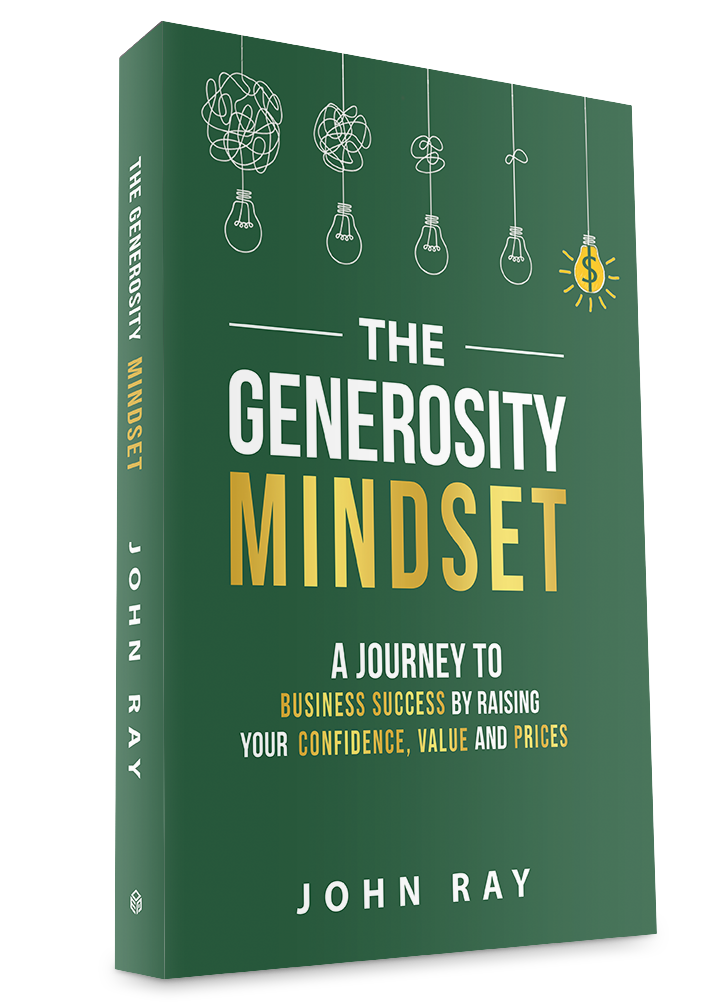
The Generosity Mindset, by John RayJohn is the #1 national best-selling author of The Generosity Mindset: A Journey to Business Success by Raising Your Confidence, Value, and Prices.

If you are a professional services provider, your goal is to do transformative work for clients you love working with and get paid commensurate with the value you deliver to those clients. While negative mindsets can inhibit your growth, adopting a different mindset, The Generosity Mindset™, can replace those self-limiting beliefs. The Generosity Mindset enables you to diagnose and communicate the value you deliver to clients and, in turn, more effectively price to receive a portion of that value.

Whether you’re a consultant, coach, marketing or branding professional, business advisor, attorney, CPA, or work in virtually any other professional services discipline, your content and technical expertise are not proprietary. What’s unique, though, is your experience and how you synthesize and deliver your knowledge. What’s special is your demeanor or the way you deal with your best-fit clients. What’s invaluable is how you deliver great value by guiding people through massive changes in their personal lives and in their businesses that bring them to a place they never thought possible.

The combination of all these elements is quite different for you compared to any other service provider in your industry. Therein lies your value, but it’s not the value you see. It’s the value your best-fit customers see in you.

If pricing your value feels uncomfortable or unfamiliar to you, this book will teach you why putting a price on the value your clients perceive and identify serves both them and you, and you’ll learn the factors involved in getting your price right.

The book is available at all major physical and online book retailers worldwide. Follow this link for further details.

Connect with John Ray:

Website | LinkedIn | Twitter

Business RadioX®:  LinkedIn | Twitter | Facebook | Instagram

Tagged With: Doc Dockery, happiness, John Ray, personal fulfillment, professional services, professional services firms, retaining talent, scale your business, scaling, talent shortage, Terry Doc Dockery, The Generosity Mindset, The Price and Value Journey

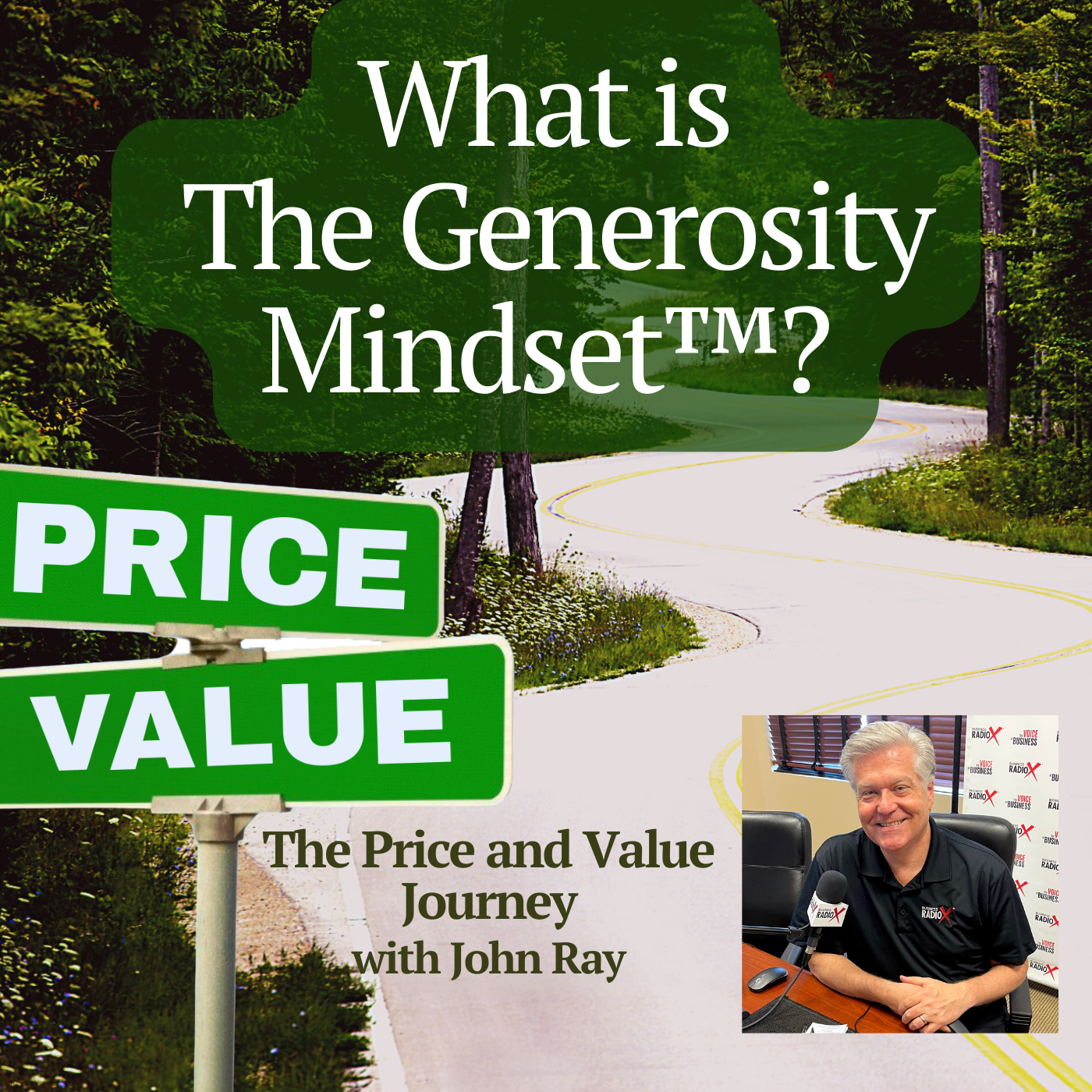
The Paradox of The Generosity Mindset™

March 25, 2024 by John Ray

The Paradox of The Generosity Mindset™, John Ray
North Fulton Studio
The Paradox of The Generosity Mindset™
Loading
00:00 /
RSS Feed
Share
Link
Embed

Download file

The Paradox of The Generosity Mindset™, John Ray

The Paradox of The Generosity Mindset™

John Ray discusses the seeming paradox of The Generosity Mindset™, noting that it’s easy to understand why some might think that achieving better pricing in your business and acting from a mindset of generosity might be at odds. Referencing ideas expressed in his book, The Generosity Mindset, John emphasizes how focusing on others’ needs leads to trust, goodwill, and building a reputation as a professional of value. He advocates for a business approach that balances generosity with financial health, enabling professionals to create sustainable businesses that contribute to their communities and to their own personal fulfillment.

This episode was adapted from the February 15, 2024 edition of John’s newsletter, The Price and Value Journey.

The Price and Value Journey is presented by John Ray and produced by the North Fulton studio of Business RadioX®.

Topics Discussed in this Episode

00:00 Welcome to the Price and Value Journey
00:07 The Counterintuitive Nature of Generosity in Pricing
00:34 The Paradox of Charging for Service
01:12 The Importance of Business Sustainability
02:16 Introducing the Generosity Mindset
03:11 The Power of Listening and Understanding
03:43 The Paradox and Power of Generosity
04:24 Creating a Virtuous Cycle of Trust and Prosperity
05:01 The Impact of Generosity on Professional Growth
05:31 Sustainability and Community Contribution
06:04 Conclusion and Invitation

About The Price and Value Journey

The title of this show describes the journey all professional services providers are on:  building a services practice by seeking to convince the world of the value we offer, helping clients achieve the outcomes they desire, and trying to do all that at pricing that reflects the value we deliver.

If you feel like you’re working too hard for too little money in your solo or small firm practice, this show is for you. Even if you’re reasonably happy with your practice, you’ll hear ways to improve both your bottom line and the mindset you bring to your business.

The show is hosted and produced by John Ray and the North Fulton studio of Business RadioX®. The show can also be found on all the major podcast apps. The complete show archive is here.

John Ray, Host of The Price and Value Journey

John Ray, Author of The Generosity Mindset and Host of "The Price and Value Journey"
John Ray, Author of The Generosity Mindset and Host of The Price and Value Journey

John Ray is the host of The Price and Value Journey.

John owns Ray Business Advisors, a business advisory practice. John’s services include business coaching and advisory work, as well as advising solopreneurs and small professional services firms on their pricing. John is passionate about the power of pricing for business owners, as changing pricing is the fastest way to change the profitability of a business. His clients are professionals who are selling their expertise, such as attorneys, CPAs, accountants and bookkeepers, consultants, coaches, marketing professionals, and other professional services practitioners.

In his other business, John is a Show Host and Producer and owns the North Fulton (Georgia) studio of Business RadioX®. John and his team work with B2B professionals to create and conduct their own podcast using The Generosity Mindset™ Method:  building and deepening relationships in a non-salesy way that translates into revenue for their business.

John is also the host of North Fulton Business Radio. With over 750 shows and having featured over 1,200 guests, North Fulton Business Radio is the longest-running podcast in the North Fulton area, covering business in its region like no one else.

John’s Book, The Generosity Mindset: A Journey to Business Success by Raising Your Confidence, Value, and Prices

The Generosity Mindset, by John RayJohn is the #1 National Bestselling Author of The Generosity Mindset: A Journey to Business Success by Raising Your Confidence, Value, and Prices.

If you are a professional services provider, your goal is to do transformative work for clients you love working with and get paid commensurate with the value you deliver to those clients. While negative mindsets can inhibit your growth, adopting a different mindset, The Generosity Mindset™, can replace those self-limiting beliefs. The Generosity Mindset enables you to diagnose and communicate the value you deliver to clients and, in turn, more effectively price to receive a portion of that value.

Whether you’re a consultant, coach, marketing or branding professional, business advisor, attorney, CPA, or work in virtually any other professional services discipline, your content and technical expertise are not proprietary. What’s unique, though, is your experience and how you synthesize and deliver your knowledge. What’s special is your demeanor or the way you deal with your best-fit clients. What’s invaluable is how you deliver great value by guiding people through massive changes in their personal lives and in their businesses that bring them to a place they never thought possible.

The combination of all these elements is quite different for you compared to any other service provider in your industry. Therein lies your value, but it’s not the value you see. It’s the value your best-fit customers see in you.

If pricing your value feels uncomfortable or unfamiliar to you, this book will teach you why putting a price on the value your clients perceive and identify serves both them and you, and you’ll learn the factors involved in getting your price right.

The book is available at all major physical and online book retailers worldwide. Follow this link for further details.
Connect with John Ray:

Website | LinkedIn | Twitter

Business RadioX®:  LinkedIn | Twitter | Facebook | Instagram

Tagged With: Author, John Ray, Price and Value Journey, pricing, professional services firms, professional services providers, The Generosity Mindset, The Price and Value Journey, value, value pricing

What is The Generosity Mindset™?

March 19, 2024 by John Ray

What is The Generosity Mindset™?
North Fulton Studio
What is The Generosity Mindset™?
Loading
00:00 /
RSS Feed
Share
Link
Embed

Download file

What is The Generosity Mindset™?

What is The Generosity Mindset™?

Host John Ray discusses how adopting what he calls The Generosity Mindset leads to better business development and pricing strategies and outcomes. This podcast episode revolves around his book The Generosity Mindset, which suggests that focusing on others’ needs and cultivating empathy, compassion, and collaboration leads to personal and business success. Ray critically examines negative self-defeating mindsets like imposter syndrome and scarcity mindset, proposing that success stems from a generous approach to client relationships and service. He argues that basing service pricing on the value that customers perceive rather than the service provider’s assessment of value improves client relationships, business growth, and pricing.

This episode was adapted from the November 16, 2023 edition of John’s newsletter, The Price and Value Journey.

The Price and Value Journey is presented by John Ray and produced by the North Fulton studio of Business RadioX®.

Topics Discussed in this Episode

00:00 Welcome to the Price and Value Journey
00:19 The Genesis of The Generosity Mindset
02:01 Exploring the Generosity Mindset
02:48 Applying the Generosity Mindset in Business
04:31 The Generosity Mindset: A Path to Better Pricing
06:45 The Irony and Impact of the Generosity Mindset
08:20 Introducing The Generosity Mindset Book
08:41 How to Connect and Learn More

About The Price and Value Journey

The title of this show describes the journey all professional services providers are on:  building a services practice by seeking to convince the world of the value we offer, helping clients achieve the outcomes they desire, and trying to do all that at pricing which reflects the value we deliver.

If you feel like you’re working too hard for too little money in your solo or small firm practice, this show is for you. Even if you’re reasonably happy with your practice, you’ll hear ways to improve both your bottom line as well as the mindset you bring to your business.

The show is hosted and produced by John Ray and the North Fulton studio of Business RadioX®. The show can also be found on all the major podcast apps. The complete show archive is here.

John Ray, Host of The Price and Value Journey

John Ray, Author of The Generosity Mindset and Host of "The Price and Value Journey"
John Ray, Author of The Generosity Mindset and Host of The Price and Value Journey

John Ray is the host of The Price and Value Journey.

John owns Ray Business Advisors, a business advisory practice. John’s services include business coaching and advisory work, as well as advising solopreneurs and small professional services firms on their pricing. John is passionate about the power of pricing for business owners, as changing pricing is the fastest way to change the profitability of a business. His clients are professionals who are selling their expertise, such as attorneys, CPAs, accountants and bookkeepers, consultants, coaches, marketing professionals, and other professional services practitioners.

In his other business, John is a Show Host and Producer and owns the North Fulton (Georgia) studio of Business RadioX®. John and his team work with B2B professionals to create and conduct their own podcast using The Generosity Mindset™ Method:  building and deepening relationships in a non-salesy way that translates into revenue for their business.

John is also the host of North Fulton Business Radio. With over 750 shows and having featured over 1,200 guests, North Fulton Business Radio is the longest-running podcast in the North Fulton area, covering business in its region like no one else.

John’s Book, The Generosity Mindset: A Journey to Business Success by Raising Your Confidence, Value, and Prices

The Generosity Mindset, by John RayJohn is the #1 National Bestselling Author of The Generosity Mindset: A Journey to Business Success by Raising Your Confidence, Value, and Prices.

If you are a professional services provider, your goal is to do transformative work for clients you love working with and get paid commensurate with the value you deliver to those clients. While negative mindsets can inhibit your growth, adopting a different mindset, The Generosity Mindset™, can replace those self-limiting beliefs. The Generosity Mindset enables you to diagnose and communicate the value you deliver to clients and, in turn, more effectively price to receive a portion of that value.

Whether you’re a consultant, coach, marketing or branding professional, business advisor, attorney, CPA, or work in virtually any other professional services discipline, your content and technical expertise are not proprietary. What’s unique, though, is your experience and how you synthesize and deliver your knowledge. What’s special is your demeanor or the way you deal with your best-fit clients. What’s invaluable is how you deliver great value by guiding people through massive changes in their personal lives and in their businesses that bring them to a place they never thought possible.

The combination of all these elements is quite different for you compared to any other service provider in your industry. Therein lies your value, but it’s not the value you see. It’s the value your best-fit customers see in you.

If pricing your value feels uncomfortable or unfamiliar to you, this book will teach you why putting a price on the value your clients perceive and identify serves both them and you, and you’ll learn the factors involved in getting your price right.

The book is available at all major physical and online book retailers worldwide. Follow this link for further details.
Connect with John Ray:

Website | LinkedIn | Twitter

Business RadioX®:  LinkedIn | Twitter | Facebook | Instagram

Tagged With: Author, John Ray, Price and Value Journey, professional services firms, professional services providers, The Generosity Mindset, The Price and Value Journey

Finding the Ain’t

April 8, 2022 by John Ray

Finding the Ain't
North Fulton Studio
Finding the Ain't
Loading
00:00 /
RSS Feed
Share
Link
Embed

Download file

Finding the Ain’t

A visit with one of my clients and a CPA we were interviewing led to “finding the ain’t.” The “ain’t” in this meeting was the intangible my client identified which attracted him to this CPA. A real-life lesson in how intangibles are what makes prospective clients lean in, not our certifications or experience. The Price and Value Journey is presented by John Ray and produced by the North Fulton studio of Business RadioX®.

TRANSCRIPT

John Ray: [00:00:00] Hello. I’m John Ray on the Price and Value Journey. In the work I do as an outside CFO for a few clients and as a business advisor, I rely on CPAs to handle the tax work for my clients because compliance work, like taxation, for example, is not my expertise.

John Ray: [00:00:21] Not long ago, I had a series of different meetings with a client and a few prospective CPAs. After we’d completed our interviews, I asked my client which one he preferred. And he told me his favorite. “Why did you like him?” I asked. He answered, “Because any man who says ain’t is a man I know I can talk to,” he said. That’s not exactly the answer I was expecting, but I wasn’t surprised either. I was expecting to hear an intangible, and the only question was which one or two of those intangibles might stand out for my client?

John Ray: [00:01:03] I expected to hear an intangible rationale for my clients’ selection because clients do not select professional services providers like CPAs, attorneys, bookkeepers, or coaches based on qualifications and expertise. No, they don’t really care what school you went to, unless, of course, you just happen to go to the same school they did and then they might care. But they don’t care that you’ve got a great website. They don’t really care about your certifications and in a lot of cases, they don’t even know what all those letters mean. Your certifications and mine are worthless.

John Ray: [00:01:45] Okay. Now, that’s a deliberate overstatement. Certifications and all of the education and work that we’ve put into becoming subject matter experts in our given field are vital but only to a point. They are just the tickets to get into the show. They don’t get you backstage in that client’s mind. What gets you backstage is to have a value conversation. And that’s what this particular CPA who got chosen did. He didn’t spend any valuable time covering all the things we already knew and had moved past. He didn’t talk about his qualifications or his certifications or whatnot. He asked a lot of why questions and then he shut up and listened. His use of the word ain’t wasn’t really the ultimate determinant for my client, of course. It was just a symbol that he could point to, which indicated for him that this professional understood his problems, hopes, fears, and dreams.

John Ray: [00:02:48] As professional services providers, our job is to be known as someone who understands and holds solutions to problems. But you already know that. What can be hard for us to internalize, though, is that clients come to believe that we have solutions because of intangibles, which often have nothing to do with how you and I end up solving their problems. There’s an ain’t with every client. Spend your time trying to find it.

John Ray: [00:03:22] I’m John Ray on the Price and Value Journey. Past episodes of this podcast can be found at pricevaluejourney.com. Or, you can email me if you’d like to connect directly, john@johnray.co. Thank you for joining me.


About The Price and Value Journey

The title of this show describes the journey all professional services providers are on:  building a services practice by seeking to convince the world of the value we offer, helping clients achieve the outcomes they desire and trying to do all that at pricing which reflects the value we deliver.

If you feel like you’re working too hard for too little money in your solo or small firm practice, this show is for you. Even if you’re reasonably happy with your practice, you’ll hear ways to improve both your bottom line as well as the mindset you bring to your business.

The show is produced by the North Fulton studio of Business RadioX® and can be found on all the major podcast apps. The complete show archive is here.

John Ray, Host of The Price and Value Journey

John Ray The Price and Value Journey
John Ray, Host of “The Price and Value Journey”

John Ray is the host of The Price and Value Journey.

John owns Ray Business Advisors, a business advisory practice. John’s services include advising solopreneur and small professional services firms on their pricing. John is passionate about the power of pricing for business owners, as changing pricing is the fastest way to change the profitability of a business. His clients are professionals who are selling their “grey matter,” such as attorneys, CPAs, accountants and bookkeepers, consultants, marketing professionals, and other professional services practitioners.

In his other business, John is a Studio Owner, Producer, and Show Host with Business RadioX®, and works with business owners who want to do their own podcast. As a veteran B2B services provider, John’s special sauce is coaching B2B professionals to use a podcast to build relationships in a non-salesy way which translate into revenue.

John is the host of North Fulton Business Radio, Minneapolis-St. Paul Business Radio, Nashville Business Radio, Alpharetta Tech Talk, and Business Leaders Radio. house shows which feature a wide range of business leaders and companies. John has hosted and/or produced over 1,100 podcast episodes.

Connect with John Ray:

Website | LinkedIn | Twitter

Business RadioX®:  LinkedIn | Twitter | Facebook | Instagram

Tagged With: certifications, customer discovery, experience, intangibles, John Ray, Price and Value Journey, pricing, professional services, professional services firms, professional services marketing, solopreneurs, value

When Is It Time to Fire a Client?

March 14, 2022 by John Ray

When is it Time to Fire a Client?
North Fulton Studio
When Is It Time to Fire a Client?
Loading
00:00 /
RSS Feed
Share
Link
Embed

Download file

When is it Time to Fire a Client?

When Is It Time to Fire a Client?

When is it time to fire a client? There are several factors to consider, and not all of them have to do with the client or whatever problems we think they’re causing for us and our practice. We must be honest:  some of the considerations on such a decision have to do with us. The Price and Value Journey is presented by John Ray and produced by the North Fulton studio of Business RadioX®.

TRANSCRIPT

John Ray: [00:00:00] Hello again. I’m John Ray on The Price and Value Journey. When is it time to fire a client? If you think the answer is never or you don’t want to address the question, that’s a sign of a problem in your professional services practice. Clients change and so do you. You must address these changes or your practice will get unwieldy or even unprofitable.

John Ray: [00:00:23] Here are a few factors you can use to determine whether a client should be invited to explore other options. First, unreasonable and repeated boundary violations. My personal favorite on this one is the guy who always called me on Sunday mornings because, according to him, that was the only quiet time he could talk. I told him bye-bye.

John Ray: [00:00:48] Two, change in their business. Maybe their business is changed in a way which makes them less of a fit for your practice. Now, this situation may be a positive for both of you. Both of you have grown in different directions, for example.

John Ray: [00:01:05] Three, change in your business. Because you’ve developed a special expertise, maybe you’ve decided to focus on left handed house painters, for example, and right handed window washers just aren’t a fit anymore. You’re doing both yourself and the client a favor by recognizing that the fit just isn’t there anymore.

John Ray: [00:01:28] Late payers. This one is self-explanatory, but it also raises the question of why you’re not billing and collecting in advance.

John Ray: [00:01:39] Number five, the shoe doesn’t fit anymore. You’ve grown to a point where those smaller clients aren’t a great fit and they can get better attention from another provider. Admit it, it’s better for the client and it’s better for you.

John Ray: [00:01:56] And then, finally, number six, you’ve just lost that loving feeling. Maybe the client has, too. It’s when you know in your gut that you’re just not in sync with your client. If you’re sensing it, the client is too.

John Ray: [00:02:12] These are a few factors. But here’s what I hope you’ll take away, that not all the reasons why we would disengage from a client have to do with the client themselves. Some of them, if we’re honest, have to do with us and how we’ve changed, and how it’s better for the client if we give them an opportunity to move on. It’s not just about us.

John Ray: [00:02:39] I’m John Ray on The Price and Value Journey. I’m honored that you joined me. And if you’d like to hear more of this series, go to pricevaluejourney.com to find the complete show archive or subscribe using your favorite podcast app. You can also email me directly, john@johnray.co. Thank you for joining me.


About The Price and Value Journey

The title of this show describes the journey all professional services providers are on:  building a services practice by seeking to convince the world of the value we offer, helping clients achieve the outcomes they desire and trying to do all that at pricing which reflects the value we deliver.

If you feel like you’re working too hard for too little money in your solo or small firm practice, this show is for you. Even if you’re reasonably happy with your practice, you’ll hear ways to improve both your bottom line as well as the mindset you bring to your business.

The show is produced by the North Fulton studio of Business RadioX® and can be found on all the major podcast apps. The complete show archive is here.

John Ray, Host of The Price and Value Journey

John Ray The Price and Value Journey
John Ray, Host of “The Price and Value Journey”

John Ray is the host of The Price and Value Journey.

John owns Ray Business Advisors, a business advisory practice. John’s services include advising solopreneur and small professional services firms on their pricing. John is passionate about the power of pricing for business owners, as changing pricing is the fastest way to change the profitability of a business. His clients are professionals who are selling their “grey matter,” such as attorneys, CPAs, accountants and bookkeepers, consultants, marketing professionals, and other professional services practitioners.

In his other business, John is a Studio Owner, Producer, and Show Host with Business RadioX®, and works with business owners who want to do their own podcast. As a veteran B2B services provider, John’s special sauce is coaching B2B professionals to use a podcast to build relationships in a non-salesy way which translate into revenue.

John is the host of North Fulton Business Radio, Minneapolis-St. Paul Business Radio, Nashville Business Radio, Alpharetta Tech Talk, and Business Leaders Radio. house shows which feature a wide range of business leaders and companies. John has hosted and/or produced over 1,100 podcast episodes.

Connect with John Ray:

Website | LinkedIn | Twitter

Business RadioX®:  LinkedIn | Twitter | Facebook | Instagram

Tagged With: fire a client, firing a client, John Ray, Price and Value Journey, pricing, professional services firms, professional services providers, solopreneurs, The Price and Value Journey, value

A Real-Life Example of How Hourly Pricing Hurts Your Bottom Line

March 9, 2022 by John Ray

how hourly pricing hurts your bottom line
North Fulton Studio
A Real-Life Example of How Hourly Pricing Hurts Your Bottom Line
Loading
00:00 /
RSS Feed
Share
Link
Embed

Download file

how hourly pricing hurts your bottom line

A Real-Life Example of How Hourly Pricing Hurts Your Bottom Line

Hourly pricing or pricing by any increment of time is one of the red flags of inadequate pricing for professional services providers. Here’s a real-life example from a coaching call which illustrates how hourly pricing hurts your bottom line. The Price and Value Journey is presented by John Ray and produced by the North Fulton studio of Business RadioX®.

TRANSCRIPT

John Ray: [00:00:00] Hello. I’m John Ray on The Price and Value Journey. One of the red flags for me of inadequate pricing for professional services providers is pricing by the hour. Now, it’s not that hard once you dig into the details of a particular project or situation to prove it.

John Ray: [00:00:19] Here’s an example. Recently, I spoke with a professional about her pricing, and it was a service with significant value for the niche that she and her firm work in. They have comprehensive experience as both employees and consultants to several different organizations in this niche. They can cite case studies in which she has delivered demonstrable, hard dollar results. Their work delivered high six and low seven figure results for these organizations.

John Ray: [00:00:55] Now, one suggestion that she had received was to price her service at $150 per hour. Her first impulse was to wonder whether that was “too much”. So, let’s go through the math of this, I suggested to her, “Let’s take the example you mentioned of that $1 million result. How many hours did you spend on that project?” Well, after we chatted a bit, she decided it was about 25 hours.

John Ray: [00:01:24] I suggested we assume 50 hours for purposes of this exercise. So, double the number of hours and that we assume $150 per hour. The reason I suggested we double the number of hours is just to address the what if the project takes more hours objection that commonly occurs in these situations. So, in this exercise, which is hypothetical, but it’s based on actual results that she delivered, this provider’s total revenue would have been $7,500. So, that’s 50 hours of the project times $150 per hour.

John Ray: [00:02:04] So, let’s go back in time, I told her, to the point where you were proposing this project to the client. What would their reaction have been if you said you could deliver a $1 million result and that your fee for doing so would be $25,000? What would happen if you went on to ask them what they’d do if you only delivered $500,000? Wouldn’t they still believe the investment in you and your service was worth it? You’re still giving them a 20 times return on their investment, which is one indicator that that $25,000 might not be a high enough price, by the way.

John Ray: [00:02:48] Just in the side here, don’t ignore the fact that we’re just measuring hard dollar outcome that the client receives. We’re not measuring the intangible benefits to the organization and its leaders, which this outcome would also deliver. Those intangibles have value as well.

John Ray: [00:03:08] Further, I told her, by pricing your service in this way, you’re using your price to deliver a marketing signal to the client. A signal that indicates quality, your experience, you deliver results. Those results are demonstrable and you’re worth the investment on their part.

John Ray: [00:03:27] The question with getting off the hourly hamster wheel doesn’t even start with you. So, you start with the problems the client is experiencing that you solve. The friction in their business and their life that you can remove. And the consequent value, both tangible and intangible, you’re able to deliver back to your client. You think in those terms and you price to receive a slice of that value which still gives the client a substantial ROI. And there’s just one example of why when you price by the hour, your price is too low.

John Ray: [00:04:08] I’m John Ray on The Price and Value Journey. If you’d like to hear additional episodes of this podcast series, go to pricevaluejourney.com. And, of course, you can subscribe in your favorite podcast app. And if you’d like to connect with me directly, you can send an email to john@johnray.co. Thank you for joining me.


About The Price and Value Journey

The title of this show describes the journey all professional services providers are on:  building a services practice by seeking to convince the world of the value we offer, helping clients achieve the outcomes they desire and trying to do all that at pricing which reflects the value we deliver.

If you feel like you’re working too hard for too little money in your solo or small firm practice, this show is for you. Even if you’re reasonably happy with your practice, you’ll hear ways to improve both your bottom line as well as the mindset you bring to your business.

The show is produced by the North Fulton studio of Business RadioX® and can be found on all the major podcast apps. The complete show archive is here.

John Ray, Host of The Price and Value Journey

John Ray The Price and Value Journey
John Ray, Host of “The Price and Value Journey”

John Ray is the host of The Price and Value Journey.

John owns Ray Business Advisors, a business advisory practice. John’s services include advising solopreneur and small professional services firms on their pricing. John is passionate about the power of pricing for business owners, as changing pricing is the fastest way to change the profitability of a business. His clients are professionals who are selling their “grey matter,” such as attorneys, CPAs, accountants and bookkeepers, consultants, marketing professionals, and other professional services practitioners.

In his other business, John is a Studio Owner, Producer, and Show Host with Business RadioX®, and works with business owners who want to do their own podcast. As a veteran B2B services provider, John’s special sauce is coaching B2B professionals to use a podcast to build relationships in a non-salesy way which translate into revenue.

John is the host of North Fulton Business Radio, Minneapolis-St. Paul Business Radio, Nashville Business Radio, Alpharetta Tech Talk, and Business Leaders Radio. house shows which feature a wide range of business leaders and companies. John has hosted and/or produced over 1,100 podcast episodes.

Connect with John Ray:

Website | LinkedIn | Twitter

Business RadioX®:  LinkedIn | Twitter | Facebook | Instagram

Tagged With: Coaching, coaching call, hourly pricing, John Ray, Price and Value Journey, pricing, pricing by time, professional services firms, professional services providers, solopreneurs, The Price and Value Journey, value

How a Higher Price Makes You More Competitive

March 4, 2022 by John Ray

Higher Price Makes You More Competitive
North Fulton Studio
How a Higher Price Makes You More Competitive
Loading
00:00 /
RSS Feed
Share
Link
Embed

Download file

Higher Price Makes You More Competitive

How a Higher Price Makes You More Competitive

As a professional services provider, don’t you have to lower your price to be more attractive to the marketplace? How does a higher price make you more competitive? Answers to these questions in this episode. The Price and Value Journey is presented by John Ray and produced by the North Fulton studio of Business RadioX®.

TRANSCRIPT

John Ray: [00:00:00] And hello again. I’m John Ray on the Price and Value Journey. How does a higher price make you more competitive? I was with the services provider the other day who I’ve had multiple visits with to talk about his pricing. “I raise my prices again,” he said. He went on to talk about the benefits he’d received from that move, including weeding out clients who aren’t a great fit. He also said it’s made me more competitive. Well, that comment raised my eyebrows as most entrepreneurs think higher prices make you less competitive, not more.

John Ray: [00:00:42] “How is higher pricing made you more competitive?” I asked him. “Well, it’s gotten me into larger companies,” he said. “The larger corporate clients I want to do business with see me as a serious player. They look at me and see me as a real company, which is what I am.”

John Ray: [00:01:01] If you’re a small business or solopreneur trying to break into the corporate market, pricing as a marketing signal becomes very important. The rationale keeping your price low because it’s easier for a corporate buyer to hire you is flat out wrong. Buyers inside corporations are invariably risk-averse. They fear missing the deliverable date on the project they’re working on. They fear the project getting screwed up by the vendor they hire, thereby incurring the wrath of not only their boss but the boss’s boss who comes down on both of them. Beyond looking incompetent, a bad decision could cost them a promotion or even their job.

John Ray: [00:01:45] This is one place where consultants, speakers, and other professional services providers get mixed up on what constitutes value. You’re so used to getting beat up by nickel-squeezing small business buyers that by the time you break into the corporate space, you don’t understand what’s valued. For a corporate buyer, there’s value in reliability in knowing the project will not just get done but will be done as agreed upon and completed on time.

John Ray: [00:02:17] Value comes in knowing a vendor has the resources to get and keep the project on track. There’s value in experience and reputation and consistency, evidenced in other corporate engagements successfully completed. By the way, it’s true for your best-fit clients among small businesses, too. The best ones, the ones you want to do business with don’t have time to penny-pinch. They’ve got big goals and they need vendors who can deliver. I’m not suggesting that price is unimportant. Price is always a consideration. Price, though, is just one factor as a risk-averse corporate buyer also weighs reliability, resources, experience, consistency, and reputation. It’s all these characteristics which make you competitive in the corporate market.

John Ray: [00:03:12] I’m John Ray on the Price and Value Journey. If you’d like to connect with me, go to johnray.co, or email me, john@johnray.co. Thanks for joining me.


About The Price and Value Journey

The title of this show describes the journey all professional services providers are on:  building a services practice by seeking to convince the world of the value we offer, helping clients achieve the outcomes they desire and trying to do all that at pricing which reflects the value we deliver.

If you feel like you’re working too hard for too little money in your solo or small firm practice, this show is for you. Even if you’re reasonably happy with your practice, you’ll hear ways to improve both your bottom line as well as the mindset you bring to your business.

The show is produced by the North Fulton studio of Business RadioX® and can be found on all the major podcast apps. The complete show archive is here.

John Ray, Host of The Price and Value Journey

John Ray The Price and Value Journey
John Ray, Host of “The Price and Value Journey”

John Ray is the host of The Price and Value Journey.

John owns Ray Business Advisors, a business advisory practice. John’s services include advising solopreneur and small professional services firms on their pricing. John is passionate about the power of pricing for business owners, as changing pricing is the fastest way to change the profitability of a business. His clients are professionals who are selling their “grey matter,” such as attorneys, CPAs, accountants and bookkeepers, consultants, marketing professionals, and other professional services practitioners.

In his other business, John is a Studio Owner, Producer, and Show Host with Business RadioX®, and works with business owners who want to do their own podcast. As a veteran B2B services provider, John’s special sauce is coaching B2B professionals to use a podcast to build relationships in a non-salesy way which translate into revenue.

John is the host of North Fulton Business Radio, Minneapolis-St. Paul Business Radio, Nashville Business Radio, Alpharetta Tech Talk, and Business Leaders Radio. house shows which feature a wide range of business leaders and companies. John has hosted and/or produced over 1,100 podcast episodes.

Connect with John Ray:

Website | LinkedIn | Twitter

Business RadioX®:  LinkedIn | Twitter | Facebook | Instagram


Tagged With: competitive, corporate, corporate market, higher price, John Ray, Price and Value Journey, pricing, professional services firms, professional services providers, solopreneurs, value

Michael Katz, Blue Penguin Development

July 23, 2021 by John Ray

Blue Penguin Development
Business Leaders Radio
Michael Katz, Blue Penguin Development
Loading
00:00 /
RSS Feed
Share
Link
Embed

Download file

Blue Penguin Development

Michael Katz, Blue Penguin Development

Michael Katz is an authority on email newsletter marketing for small professional services firms and solopreneurs.  Michael shared with host John Ray how he got into his work, the power of story, why email marketing still works, how to decide where to place your marketing emphasis, and much more. Business Leaders Radio is produced virtually from the Business RadioX® studios in Atlanta.

Michael Katz, Chief Penguin, Blue Penguin Development

Blue Penguin Development Inc is a marketing and advertising company based out of Hopkinton, Massachusetts.

An award-winning humorist and former corporate marketer, Blue Penguin founder and Chief Penguin, Michael Katz, specializes in helping professional service firms and solos develop effective email newsletters.Blue Penguin Development

Since launching Blue Penguin in 2000, Michael has been quoted in The Wall Street Journal, The New York Times, Business Week Online, Bloomberg TV, Forbes.com, Inc.com, USA Today, and other national and local media.

He is the author of four books and over the past 20 years has published more than 500 issues of “The Likeable Expert Gazette,” a twice-monthly email newsletter and podcast with 6,000 passionate subscribers in over 40 countries around the world.

Michael has an MBA from Boston University and a BA in Psychology from McGill University in Montreal. He is a past winner of the New England Press Association award for “Best Humor Columnist.”

Company website | LinkedIn

Questions/Topics Discussed in this Show

  • Why is having a niche so important?
  • What are some of the biggest mistakes professionals make in marketing themselves?
  • How can small business owners benefit from “storytelling” in their marketing?
  • With so many marketing/visibility options, it can feel overwhelming. How does a business owner decide where to put their energy?
  • How does one balance “making a personal connection” with not being seen as “unprofessional?”
  • Are email newsletters still effective marketing tools?

Business Leaders Radio is hosted by John Ray and produced virtually from the North Fulton studio of Business RadioX® in Alpharetta.  The show can be found on all the major podcast apps and a full archive can be found here.

Renasant Bank has humble roots, starting in 1904 as a $100,000 bank in a Lee County, Mississippi, bakery. Since then, Renasant has grown to become one of the Southeast’s strongest financial institutions with over $13 billion in assets and more than 190 banking, lending, wealth management and financial services offices in Mississippi, Alabama, Tennessee, Georgia and Florida. All of Renasant’s success stems from each of their banker’s commitment to investing in their communities as a way of better understanding the people they serve. At Renasant Bank, they understand you because they work and live alongside you every day.

Tagged With: Blue Penguin Development, Business Leaders Radio, email marketing, John Ray, marketing, Michael Katz, professional services firms, professional services marketing, Solopreneur

Decision Vision Episode 41: Should I Sell My Company to an ESOP? – An Interview with Andre Schnabl, Tenor Capital Partners

November 21, 2019 by John Ray

Decision Vision
Decision Vision
Decision Vision Episode 41: Should I Sell My Company to an ESOP? - An Interview with Andre Schnabl, Tenor Capital Partners
Loading
00:00 /
RSS Feed
Share
Link
Embed

Download file

should I sell my company to an esop
Mike Blake and Andre Schnabl

Decision Vision Episode 41: Should I Sell My Company to an ESOP? – An Interview with Andre Schnabl, Tenor Capital Partners

Is selling my business to employees through an ESOP advisable? What kind of businesses are the best candidates to sell to an ESOP? In this edition of “Decision Vision,” host Mike Blake discusses this question with Andre Schnabl, Tenor Capital Partners. “Decision Vision” is presented by Brady Ware & Company.

Andre Schnabl, Tenor Capital Partners

Andre Schnabl

Tenor Capital Partners is financial advisory firm focused exclusively on the design and installation of Employee Stock Ownership Plans (ESOPs). These transactions use employee ownership as a platform for business owners to realize the value of their businesses through the sale to an ESOP.

Andre Schnabl is a managing partner of TCP and leads the firm’s debt placement practice. Prior to joining TCP, Andre retired as Managing Partner of the Atlanta office of Grant Thornton LLP in 2012. Prior to his retirement he held a variety of positions within the firm in the firm’s offices in Zimbabwe, Montreal, Canada and Atlanta. During his career, he has consulted with mid market companies on a variety of matters, including mergers and acquisitions, debt and equity financings including public offerings. Since joining Tenor in 2013, Andre has been advising companies and shareholders in business succession using ESOP’s, including shareholder advocacy, structuring and leading the financing raises. Andre has a Bachelor of Science degree in Chemistry and Geology from the University of London and is a CPA. He serves on a number of corporate and not-for-profit boards.

For more information, visit the Tenor Capital Partners website or call Andre directly at 404-372-2759.

Michael Blake, Brady Ware & Company

Mike Blake, Host of “Decision Vision”

Michael Blake is Host of the “Decision Vision” podcast series and a Director of Brady Ware & Company. Mike specializes in the valuation of intellectual property-driven firms, such as software firms, aerospace firms and professional services firms, most frequently in the capacity as a transaction advisor, helping clients obtain great outcomes from complex transaction opportunities. He is also a specialist in the appraisal of intellectual properties as stand-alone assets, such as software, trade secrets, and patents.

Mike has been a full-time business appraiser for 13 years with public accounting firms, boutique business appraisal firms, and an owner of his own firm. Prior to that, he spent 8 years in venture capital and investment banking, including transactions in the U.S., Israel, Russia, Ukraine, and Belarus.

Brady Ware & Company

Brady Ware & Company is a regional full-service accounting and advisory firm which helps businesses and entrepreneurs make visions a reality. Brady Ware services clients nationally from its offices in Alpharetta, GA; Columbus and Dayton, OH; and Richmond, IN. The firm is growth minded, committed to the regions in which they operate, and most importantly, they make significant investments in their people and service offerings to meet the changing financial needs of those they are privileged to serve. The firm is dedicated to providing results that make a difference for its clients.

Decision Vision Podcast Series

“Decision Vision” is a podcast covering topics and issues facing small business owners and connecting them with solutions from leading experts. This series is presented by Brady Ware & Company. If you are a decision maker for a small business, we’d love to hear from you. Contact us at decisionvision@bradyware.com and make sure to listen to every Thursday to the “Decision Vision” podcast. Past episodes of “Decision Vision” can be found here. “Decision Vision” is produced and broadcast by the North Fulton studio of Business RadioX®.

Visit Brady Ware & Company on social media:

LinkedIn:  https://www.linkedin.com/company/brady-ware/

Facebook: https://www.facebook.com/bradywareCPAs/

Twitter: https://twitter.com/BradyWare

Instagram: https://www.instagram.com/bradywarecompany/

Show Transcript

Intro: [00:00:02] Welcome to Decision Vision, a podcast series focusing on critical business decisions brought to you by Brady Ware & Company. Brady Ware is a regional full-service accounting and advisory firm that helps businesses and entrepreneurs make visions a reality.

Michael Blake: [00:00:20] And welcome to Decision Vision, a podcast giving you, the listener, a clear vision to make great decisions. In each episode, we discuss the process of decision making on a different topic, rather than making recommendations because everyone’s circumstances are different. We talk to subject matter experts about how they would recommend thinking about that decision. My name is Mike Blake and I’m your host for today’s program. I’m a director at Brady Ware & Company, a full-service accounting firm based in Dayton, Ohio, with offices in Dayton, Columbus, Ohio; Richmond, Indiana; and Alpharetta, Georgia, which is where we are recording today.

Michael Blake: [00:00:53] Brady Ware is sponsoring this podcast. If you like this podcast, please subscribe on your favorite podcast aggregator and please also consider leaving a review of the podcast as well. Our topic today is, should I consider an ESOP? An ESOP is an acronym for employee stock ownership program. And, you know, this is a topic that sort of comes and goes. You kind of see waves of ESOP’s popularity in the marketplace. And I don’t frankly know for it a crust or a nadir of waves right now.

Michael Blake: [00:01:31] But what I do know is that ESOPs are interesting. They are complicated. They can be accompanied by some risk, but I also am convinced, in certain circumstances, they are, flat out, the best way for an owner to exit their business. There are tax advantages to doing so. In some cases, the ESOP is in a position to pay more for a business than any other buyer. And also, there are business owners out there who have an interest in giving their employees an opportunity to share in the wealth that the business has created will generate.

Michael Blake: [00:02:18] And that may be in the ongoing role of the owner or even after the owner sort of drops off the keys and retires some place to Costa Rica. And, you know, I don’t know if this is still true, there’s not tricks have emerged since, but for a long time, I think the largest ESOP in United States was United Airlines. And for a long time, they are an employee-owned company, merged I think with Continental. I can’t keep track now. They’re just all, in the United States, making airlines anyway.

Michael Blake: [00:02:55] But, you know, it’s probably a topic that at least some of you have had arise either as a business owner or an advisory capacity. And once you start getting into regulations, the mechanics, it can be dizzying. And I am far from being an expert on this, as I am with just about every topic that we bring on the program, which is why we do the program. And so, instead of my trying to fumble my way through it, I have brought on my friend and colleague, Andre Schnabl, who is a principal and managing partner of Tenor Capital Partners, a financial advisory firm that is focused exclusively on the design installation of employee stock ownership plans.

Michael Blake: [00:03:38] Prior to joining TCP, Andre retired as managing partner of the Atlanta office of Grant Thornton in 2012. And we’ve known each other long before then. We were sort of friendly quasi-competitors. Prior to his retirement, he held a variety of positions within the firm and the firm’s offices in Zimbabwe, Montreal, Canada, and Atlanta. During his career, he has consulted with mid-market companies in a variety of matters including mergers and acquisitions, debt and equity financings, including public offerings.

Michael Blake: [00:04:10] Since joining Tenor in 2013, again, a very busy retired guy, Andre had been advising companies and shareholders in business succession using ESOPs, including shareholder advocacy, structuring, and even the financing raises. Andre is a bachelor of science in chemistry and geology from the University of London and is a CPA. I did not know that you’re a scientist. He serves on a number of corporate and not for profit boards. He has the passionate belief that the advancement of women into leadership positions is not only the right thing to do, but also a business paradigm. I strongly agree with that.

Michael Blake: [00:04:44] He partnered with Women in Technology to help create the Women of the Year Technology Awards that began 17 years ago. For those of you who are not in Atlanta, that is a big deal. I think it is one of the two or three most important awards ceremonies on the Atlanta tech sector calendar. And I did not know that you helped start that, so good for you. And thank you for doing that. Andre continues his unwavering support for diversity and has been a frequent guest speaker for corporations and associations on the critical importance of diversity within leadership ranks. Women in Technology recognized Andre’s contributions in this regard with their legacy award. Andre, thanks for coming on the program.

Andre Schnabl: [00:05:22] Thank you, Mike.

Michael Blake: [00:05:24] So, let’s start with very basic—this first question I ask in almost every interview, it’s probably the most important interview for which I’m asking this question so we can set the vocabulary. What is an ESOP?

Andre Schnabl: [00:05:37] The acronym literally means employee stock ownership plan. I would like to say that the acronym unfortunately connotes a number of different things for different people. And to some extent, maybe it’s the press that it’s received has been unfortunate. What an ESOP essentially does, it creates a platform for employee ownership. So, this is a mechanism by which a shareholder, a founder, somebody who basically has built a business, it’s time for them to consider a variety of options on how to exit. They can either take it public. They can sell to a competitor. They can sell to a supplier and/or other strategic buyer or they can sell to a financial buyer, such as private equity. They seldom think about this other potential exit strategy, which is selling to an ESOP. And therein I guess is the basis of this conversation.

Michael Blake: [00:06:44] I’m glad you brought that up because in my line of work dealing with many companies, I hear people use the term ESOP in connection with stock options, right? And they’re calling it employee stock option program. And it’s descriptive but factually incorrect, right? So, it’s important because those two things are about as different. In fact, later today, we’re recording a podcast on stock option programs, but that’s not what we’re talking today. So, we’re selling to an ESOP. When we say selling to an ESOP, I mean, what exactly is ESOP? I mean, we talked about, you said that it is a vehicle for employees to own a company or a portion of a company. Can you expand upon that in terms of what the mechanics of an ESOP actually are?

Andre Schnabl: [00:07:34] Yes. Basically, what happens is one creates a trust, an employee stock ownership trust, and you sell all of the shares of the business from the selling shareholders or a portion of the shares to that trust. Can be anything from 1 percent to 100 percent into the trust for the benefit of all of the employees. And so, over time, the trust releases those shares into employee accounts. A little bit like a company’s match on a 401(k) plan. And by releasing those shares into employee accounts, over the years, those employees enjoy the benefit of the equity appreciation of the company.

Andre Schnabl: [00:08:27] And on their retirement, they can essentially sell back those shares at fair market value and have created value for themselves. And on the sell side, here is a way for selling shareholders to sell their shares at full value. They’re not leaving anything on the table or be it that they are doing something wonderful for their employees, they’re going to get full value. And they get paid out over time and the employees ultimately get ownership over time.

Michael Blake: [00:08:59] And the thing that strikes me over the head about an ESOP, one of the things that makes it so unique, is the fact that, in effect, you create your own buyer, when you think about it, right? And that just struck me. When you say you create a trust, you are, in effect, creating a vehicle that is going to be the buyer of your own company.

Andre Schnabl: [00:09:23] That is-

Michael Blake: [00:09:23] I cannot think of any other scenario in which that exists.

Andre Schnabl: [00:09:26] Well, you’re absolutely right. And let’s just think about this. I cannot tell you how many times we get a knock on the door and get brought into a potential ESOP opportunity because the potential selling shareholders have been let down or disappointed or left at the altar by a third-party buyer. There is enormous transactional risk when you start talking to a third party about buying your company. You have risk about whether it’ll ever close. You have risk that the original promise of price is actually met. You have a lot of warranties and reps and escrow.

Michael Blake: [00:10:12] In fact, the price probably won’t be met.

Andre Schnabl: [00:10:14] I was-

Michael Blake: [00:10:14] If we’re really honest about it, chances are that LOI price ain’t going to get paid.

Andre Schnabl: [00:10:18] That is exactly correct. In a case where you’ve created your own buyer, nothing in the business from an operational standpoint changes, whatsoever. So, employees don’t get unsettled that anything negative is to happen and you know the deal terms before you pull the trigger. So, there is no transaction risk. There’s no integration risk. It’s not as if a third party now has to integrate the buy, the business that they’ve just bought into their own business. And as a result, the trustee is prepared to pay total and full value in spite of the fact that the employees get a wonderful benefit over time.

Michael Blake: [00:11:02] And, you know, that last part, I don’t know how relevant it is to the podcast but it does bear highlighting. And that one of the greatest gifts that you can give I think anybody is a functioning operating viable business, right? And I say that I do a lot of work with succession planning and I strongly encourage people, whatever they can, if they have a business that they can keep it in the family to do so and maybe that’ll be a—and we’ve had a topic on succession planning.

Michael Blake: [00:11:38] But anyway, you know, giving that same thing to employees, especially in a time where retirement is very uncertain, right? Depending on your ideology, you may or may not think that Social Security and Medicaid/Medicare are going to be out there in 30 years. I’m not going to go down that rabbit hole. But one thing we do know for certain is that most of us are going to live longer than we ever thought we would, right? And one of the best hedges against that is ownership of a viable going concern.

Andre Schnabl: [00:12:14] Absolutely correct. And in addition to having ownership in a viable concern, there is significant empirical research that supports the fact that employee ownership, as opposed to selling to a third party and in particular, selling to private equity, will in fact create a business that outperforms a business owned by private equity. Productivity, employment, wage rates all move in the wrong direction when purchased by private equity. And I don’t want to be disparaging about private equity. There is a wonderful place in our macroeconomic equation-

Michael Blake: [00:13:02] Sure.

Andre Schnabl: [00:13:02] … for private equity and capital formation. But one of the negatives is that private equity, in order to enhance returns, do things, sometimes, that are very much negative for the performance of that business and the experience of employees.

Michael Blake: [00:13:20] You know, it brings up an interesting point. I’m going to take a little sidebar here. One of the things I’ve been studying a lot is business holding periods and one of the things I’m learning is that basically, the longer you hold on to a business, the better it performs. In fact, there’s data suggest that at a 20-year threshold, the average stock has less risk than the typical bond over the same period. And that’s St. Louis Fed data. And the thing that has struck me about private equity, and this is where this is relevant to the ESOP, is that private equity has a structural problem and that it has a countdown, right? Private equity must sell in some period of time. Very few private equity funds have more than a 10-year vintage.

Michael Blake: [00:14:12] You’re starting to see some 20-year, but those are very much kind of unicorns, which means that depending at what point in the firms, the PE fund’s life cycle the company’s been bought, the holding period may be somewhere between three to seven years. And that creates distortions, as opposed to an ESOP, which is definitionally a long-term owner, a buy and hold structure. If you accept my premise that the time horizon is meaningful to the business outcome, by definition then, the ESOP is structured to build that better outcome not because they’re better, smarter, more noble better motivated, but simply because they have more time.

Andre Schnabl: [00:14:57] Well, I wonder if I could provide a specific data point-.

Michael Blake: [00:15:02] Please.

Andre Schnabl: [00:15:02] … that takes that broad conceptual observation and brings it down to earth. We happen to be in a bank building. I have done about 10 transactions with this bank. This bank has provided the senior debt on a leveraged ESOP transaction. I don’t know the total number of millions of dollars that those 10 transactions aggregate. But the lead ESOP lender for this bank gave me an interesting statistic a few months ago. If you can consider 10 borrowers because essentially, these 10 companies that shareholders sold their stock to a trust, the company borrowed money to pay off the selling shareholders.

Andre Schnabl: [00:16:00] And so, we’ve got 10 companies who are 10 borrowers of this very bank. Of those 10 loans, each quarter, the bank measures covenants. And so, they are acutely tuned into the performance of these 10 companies. One of these borrowers had a covenant breach in one quarter. And so, over the six years that I have been doing this with this particular bank, those ten companies, they have ten performing loans and they are performing not only in accordance with the prescribed documents, but in fact, in every case, they’ve accelerated the delivering process because of this structure that an ESOP provides.

Michael Blake: [00:16:48] So, ESOP sounds great. Why is not every company an ESOP? Should every company be an ESOP?

Andre Schnabl: [00:16:58] No. I think that we design each transaction based on the priorities and strategic objectives of the selling shareholders. And not every company is either performing at the level that one needs in order to accomplish those objectives or the balance sheet of the company may not be strong enough to support the structure that we design. The growth rates may not be appropriate. There may be a number of reasons that a particular business is either not ready or not suited to this particular exit strategy. So, I’m not saying that there are an enormous number of hurdles to jump over in order to be eligible, but there are companies that are far more suitable for this transaction than others. But what I can tell you, for those that do fit nicely into this model, there is nothing that comes close to competing with it.

Michael Blake: [00:18:06] So, let’s dig into that because I think that’s really kind of the main course of this interview. Profile for me the characteristics of a great ESOP candidate, please.

Andre Schnabl: [00:18:20] A great ESOP candidate is a business that employs at least 20, 25 employees, these are general guidelines, is profitable, has been around for several years, so that they are an attractive borrower to a bank. And finally, the value of the business tracks with the business’s ability to throw off cash. In other words, if we have a business that is worth $100 million but isn’t profitable or is worth $100 million and throws off $1 or $2 million dollars in cash, it’s probably not the best candidate for an ESOP. So, we are looking for businesses where the enterprise value of the business is tied very closely to the cash that it throws off.

Andre Schnabl: [00:19:21] Generally, in this market, valuation somewhere between five and 10 times EBITDA, those are the kinds of businesses that really fit very, very well into this ESOP model. I’ll give you an example of something that doesn’t fit. If you’ve got a software company that has built an enormous amount of intellectual property that it hasn’t yet monetized. In other words, it’s early in its market cycle. I don’t think that’s a good ESOP candidate. A business that is a multi-generational manufacturer of widgets that has been profitable, that has got a very strong balance sheet, a perfect example of a wonderful candidate for an ESOP exit.

Michael Blake: [00:20:10] And so, you touched on valuation, which, of course, is a topic near and dear to my heart. And I want to explore that just a little bit with you because what you’re highlighting that I think is very important here is that not all values are alike. And your example I think is very apt. For example, that software company, if I were to perform an appraisal, may very well exhibit a value of say $20 million, right? But the thing may very well be pre-revenue, certainly pre-profit. And the value of that company is derived primarily from a strategic fit for a, you know, potential strategic buyer.

Michael Blake: [00:20:54] Basically, Google, Microsoft, Oracle, Facebook decides that they just sort of have to have it. And there’s nothing wrong with that value but the thesis of that value is inconsistent with the thesis of the ESOP because in effect, that market-based value, this gets in so many interesting questions, I got to keep my mind on topic, that thesis of value is sort of the flipper value, right, as opposed to an ESOP where a cash-driven value implies, again, a buy and hold strategy. And it must be able to support and sustain a buy and hold investment and ownership thesis.

Andre Schnabl: [00:21:33] And that is all correct. There are two elements within it, most ESOP structures and ESOP design transactions. The one is that the selling shareholders get paid over time, but they want a down payment. That down payment generally represents somewhere between 30 and 50 percent of the entire value of the business. And where does that money come from? It comes from a lender. The lender may sell to a software company pre-revenue, but it’s unlikely to. They would love to lend to a business that is cash flowing.

Andre Schnabl: [00:22:17] And so, with the added tax benefits, banks love to lend to ESOPs and that money goes into the pockets of the selling shareholders. And then, the remainder of the selling price will come from the profitability of the business going forward so that the selling shareholders are paid out in total over, let’s say, a five to seven-year period. There are a number of bells and whistles that we haven’t touched upon here that make the transaction even more attractive to the selling shareholder than them getting full and fair value over a multi-year payout.

Michael Blake: [00:22:58] And I want to touch upon that. But before I forget, I want to clarify or bring one issue into the characteristics of an ESOP to your attention or for your comment really. And that is that although the ideal candidate, as you said and I agree with this, certainly that, you know, multigenerational manufacturing company, lots of fixed assets is an ideal candidate, you don’t necessarily have to be that to be a viable ESOP.

Michael Blake: [00:23:25] For example, there is a stereotype that architecture and engineering firms seem to make very good ESOP candidates. And they’re unlikely to—they don’t manufacture things, they’re a professional services firm. But for whatever reason, they seem to find ESOPs as, there seems to be a match there with ESOPs. A, is that true? And B, why do you suppose that is? And then, C, if you can remember all these questions, is can that be applied to other services firms, maybe even accounting firms?

Andre Schnabl: [00:23:56] First of all, it is true. Secondly, the reason is why are ESOPs attractive to professional services? Professional service firm’s primary driver of growth, in addition to market conditions, is the attraction and retention of talent. And ESOP provides a unique opportunity for a future employee to look at two offers and say in one situation, “I’m simply going to get a paycheck”, in the other situation, “I’m going to get the same paycheck plus ownership over time”, which is more attractive.

Andre Schnabl: [00:24:41] And so, ESOP-owned professional service firms have got competitive advantage in attracting and retaining talent, which is the lifeblood of professional services. Now, in terms of what kinds of professional service firms work, in our firm, Tenor Capital, we’ve done architects and engineers, we’ve done general construction, we’ve done intermediaries, and consultants, marketing consultants, for example. And as you may recall, we’ve done one for your firm.

Michael Blake: [00:25:19] Yeah.

Andre Schnabl: [00:25:19] And they were a professional services firm themselves. Whether this would work for an accounting firm or for a law firm for that matter, the answer is yes. But there’s certain regulatory hurdles that one has to consider when you consider a law firm or an accounting firm. Because the regulators of those professions generally require that the shareholder or a principal in an accounting firm is an accountant. In an ESOP, everybody, including support staff, including the person at the front desk who answers the phone will be a shareholder and one has to navigate the regulatory environment, which one certainly can do before one can actually execute an effective transaction for professional services.

Michael Blake: [00:26:18] Now, why are banks interested in lending to such ESOPs? Because the fixed assets are not going to be there, right? The traditional collateral, as we would think about it, is not there. How do banks get comfortable with that?

Andre Schnabl: [00:26:35] Well, the fixed assets are not there in professional services.

Michael Blake: [00:26:39] Right.

Andre Schnabl: [00:26:40] The fixed assets are certainly there for other kinds of ESOP transactions. Banks become comfortable because they lend on collateral, yes, but they also lend on cash flows. And an ESOP transaction, the cash flows are actually enhanced when the owner of a company is an ESOP compared to a traditional individual like you and me. Most smaller businesses in the United States are S corporations.

Andre Schnabl: [00:27:19] And that means that the company itself is not a tax-paying entity, but the shareholders that own the business are. In order for those shareholders to pay their tax liability each year, to make a distribution of cash to those shareholders. Well, if instead of those shareholders, you replace those shareholders with a tax-exempt trust, which is what an employee stock ownership trust is, then overnight, you are no longer required to make tax distributions to your shareholder because your shareholder has no tax liability.

Andre Schnabl: [00:27:58] So, all of a sudden, 100 cents on the dollar that you make, you keep and can be used to pay off the bank as opposed to only 60 cents on the dollar or 70 cents on the dollar. So, you have immediately enhanced the borrowing power of a company, which is obviously very attractive to a lender. And that is why they look at these things and enjoy the possibility of lending to an ESOP, even if it is a professional service firm that doesn’t have hard collateral.

Michael Blake: [00:28:33] Okay. So, let’s say by now, we’ve convinced some of our listeners that an ESOP is a viable vehicle. What’s involved in setting one of these programs up?

Andre Schnabl: [00:28:47] Well, we’ve talked about the formation of a buyer, which is the trust itself.

Michael Blake: [00:28:52] Right.

Andre Schnabl: [00:28:53] And one needs to obtain a trustee. Now, the company itself could nominate an executive to be a trustee. It’s not something that I would recommend, but it can be done. So, let’s assume that you follow my recommendation and get an independent trustee. So, you need a trust and you need an independent trustee. And on an ongoing basis, you need a third-party administrator, who is the person that does a lot of the day to day mechanics, so that an employee, when they want to see how many shares they have in their account, they need an annual statement.

Andre Schnabl: [00:29:38] That annual statement is produced by a third-party administrator. So, those individuals have to be put in place. And there is an annual cost associated with those individuals. The cost is very manageable. And I will say that quite frankly, this is more a misconception than reality that this is a complicated affair to set in place. There is certain costs for a small business, let’s say, worth $25 million and less, the average annual cost is somewhere around $50,000 for all of these activities combined.

Michael Blake: [00:30:25] So, pretty reasonable, right? That’s-

Andre Schnabl: [00:30:27] Pretty reasonable.

Michael Blake: [00:30:28] … a junior employee, basically. And one other feature that I want to bring up, a tip also is that an ESOP, when it’s formed, is typically accompanied by some form of third-party appraisal, right, which is, in effect, a fairness opinion. And the role of that exercise is basically, in effect, to prove to the bank that the asset they’re buying is worth what they’re lending against, I think. And second, I think it also has something to do with communicating to the shareholders now what it is they’re actually receiving, then there’s an ongoing need for that as well. Can you talk a little bit more about that?

Andre Schnabl: [00:31:08] Yes. I apologize that I didn’t bring up the valuation firm at the outset as to their annual running costs. But you’re absolutely right. The trustee that is essentially representing the trust as the buyer, from a legal standpoint, cannot pay more than fair value for the shares. And so, they get a valuation firm to give them a valuation to ensure that they don’t overpay for the business. On an annual basis, that valuation is updated so that the employees know the value of the number of shares that they hold in their account. So that when they retire, they know the value that they’re going to get for those shares, so that they can then take that cash and use it to put bread on the table. So, yes, a valuation is required for the transaction itself, the sale. And it is required on an annual basis to maintain, essentially, the efficacy of the plan.

Michael Blake: [00:32:13] And that valuation on an ongoing basis will also serve as the basis for setting the price at which shares will be repurchased or, in fact, redeemed, correct?

Andre Schnabl: [00:32:24] That is correct. Yes.

Michael Blake: [00:32:25] So, you know, it’s a big deal in my experience that the valuation part is among, if not the most expensive part of the ESOP.

Andre Schnabl: [00:32:36] Well, I can give you some numbers and you know this business better than I do. The cost associated with giving the trustee what they need, that fairness opinion is heavily dependent on the target company. Generally speaking, the larger the transaction, the more expensive the valuation. But also, the complexity of the valuation may be driven by the kind of business that the company is in. The valuation therefore can be anything from $25,000 up, depending on the size and complexity. However, we haven’t talked about all the savings associated with this transaction-

Michael Blake: [00:33:24] Yes.

Andre Schnabl: [00:33:25] … which generally funds all of these expenses. And without getting ahead of myself, when we get to that point, you will very quickly see that selling to an ESOP is less expensive than selling to a third-party.

Michael Blake: [00:33:39] Well, you know what, it’s Friday. Let’s go ahead and get ahead of ourselves. So-

Andre Schnabl: [00:33:43] All right.

Michael Blake: [00:33:43] … let’s talk about what those cost savings look like because they are significant, but they’re also a little bit complicated. So, let’s walk through that a little bit.

Andre Schnabl: [00:33:52] Okay. Well, essentially, an ESOP-owned company gets a unique set of tax deductions that no other entity gets. We’ve already talked about the fact that if it’s an S corp, you don’t even care what tax deductions you’ve got because the company is effectively a tax-exempt entity. But let’s assume that it’s a C corp, the C corp gets a tax deduction equal to 25 percent of its payroll over and above its payroll itself.

Michael Blake: [00:34:31] Wow.

Andre Schnabl: [00:34:31] So, essentially, they get a tax deduction which represents 125 percent of its payroll. So, if a company is a professional services firm, where its primary cost of delivery is salaries and compensation, you can imagine that it’s very easy to drive down your taxable income to zero when you’ve got that tax deduction which represents 125 percent of your primary cost. In manufacturing, same thing, labor cost is huge. So, you’ve got a huge tax deduction. So, what is the value associated with that 25 percent tax deduction? It usually exceeds the cost of that valuation that you were talking about. And so, effectively, it is a very tax-efficient and cost-efficient way of selling your business.

Michael Blake: [00:35:29] Now, do all employees participate in ESOP? Is there an option to exclude some employees either from the owner side or from the employee side, if they choose they don’t want to be a member?

Andre Schnabl: [00:35:40] No, there is no choice.

Michael Blake: [00:35:41] Okay.

Andre Schnabl: [00:35:41] This is a qualified plan and you cannot discriminate. Everybody has to participate. Now, their level of participation is dependent on their personal compensation. So, not everybody participates at the same level, but everybody is required to participate at some level.

Michael Blake: [00:36:04] Okay. So, one of the other features of an ESOP that makes it so different is that it is a government-regulated entity, right, by the Department of Labor, if I’m not mistaken, under ERISA from the 1970’s Employee Retirement Income Security Act, if I did that correctly.

Andre Schnabl: [00:36:25] Well done, Michael.

Michael Blake: [00:36:25] Oh boy. So, what are the implications of that external regulation? Do they add a level of risk? Do they interfere in the business? Is there a lot of activity of the Department of Labor as taking actions against companies? How do you see that environment?

Andre Schnabl: [00:36:45] And let us consider the Department of Labor as you might consider the IRS. As a company that is a taxpayer, you’re always subject to potential audit. And if you’ve been doing something that is untoward or potentially illegal or irresponsible, you may get sideways with the IRS. The same thing with the Department of Labor. The Department of Labor has the right to audit the filings that an ESOP is required to file every year. But in the event that that filing doesn’t raise any questions, you don’t hear from the Department of Labor. If you’ve been doing something a little strange or something that raises a number of questions, then it is true, you’re subject to a Department of Labor audit.

Andre Schnabl: [00:37:37] And if they believe that there is something that is being done that is inappropriate, you are potentially subject to legal risk as a result of that. So, I don’t consider the risks to be enhanced any more than somebody who doesn’t pay their taxes and they should. So, there have been court cases brought against trustees and selling shareholders as a result of litigation brought by employees and third parties, but that is infrequent. And when you look at the history, the chances of that happening is as remote as you being thrown into jail because you were a bad boy by the IRS.

Michael Blake: [00:38:26] Okay. And I actually could touch on one question that I want to make sure we get back to, which is the ongoing role of the trustee, right? And for our listeners, you know, that the trustee’s role in ESOP, as I understand, is that of a fiduciary, meaning that the trustee is there to represent the interests of the employees who are the participants in the ESOP. How involved or engaged is a trustee in the business of the ESOP? Do they effectively serve as a board member? Do they have veto rights over certain corporate actions? What does that role look like?

Andre Schnabl: [00:39:03] That’s a great question, Mike. And we get that question a lot from selling shareholders. The reality is that the selling shareholder, although they have sold a part of their company or potentially 100 percent of their company, they still control the board of directors. The trustee has absolutely no interest in being a board member or in running the board or participating in running the business.

Andre Schnabl: [00:39:32] They know as well as anybody that the people who built this business are the best people to run this business. Having said that, there are certain items where trustee approval is required and where a vote of the shares held in the trust is required. An example would be if an ESOP-owned company is approached by a third party to buy the business, then the board of directors has to consider whether that offer would be good for all the shareholders, which includes the employees who are represented by the trustee.

Andre Schnabl: [00:40:15] And so, in the sale of a business to a third party, the trustee needs to support the transaction. Generally, what would happen, the board would evaluate the transaction, would conclude that this is a deal that they’d like to do and then, they would approach the trustee and show why this is good for all shareholders and the trustee would sign off. But on all operating decisions and most strategic decisions, the trustee has absolutely no interest.

Andre Schnabl: [00:40:48] In the absence of something nefarious occurring, if the trustee became suspicious that, for example, the selling shareholders had granted a bonus or a distribution to themselves outside of the agreed upon deal terms, then the trustee would have a right to demand an explanation. But they are, quite frankly, from a practical standpoint, invisible other than once a year reviewing the annual valuation that we talked about previously.

Michael Blake: [00:41:31] Okay. So, we’re running out of time. We have time for a couple more questions. One question I want to make sure I get out there is how permanent is an ESOP? If I decide, you know, I have a company that decided, “Can we go do an ESOP?” But I’m concerned, maybe five years from now, maybe I don’t like the ESOP so much. Can an ESOP be canceled, terminated like a benefit plan sometimes is or once it’s there, is it pretty much there, carved in stone?

Andre Schnabl: [00:42:07] The answer is once you’ve decided to sell your business to an ESOP, they are now the owners. And in the event that you want to buy back your business, which is absolutely within your power, you need to cut a deal with now the seller who is the trustee. Just as selling to a third party needs a trustee approval, if you want to buy it back, you need trustee approval. So, it is cast in stone in the sense that you can’t just tear up the documents and pretend it never happened. But you can very much reverse it by buying it back or selling to a third party.

Andre Schnabl: [00:42:54] In fact, an ESOP-owned company is a wonderful vehicle for an intermediate step in a roll up. For example, if you were a professional services firm, sell it to an ESOP, you now have a tax-exempt entity that has a lot of cash and a very attractive platform to be a buyer for other professional service firms. So, you can build a business, you can grow your business through acquisitions before you decide to sell the entire shooting match to a third party. So, it is a wonderful way to build wealth and then, flip it out to a third party using an ESOP platform to accelerate that growth because you preserve cash because of the tax efficiency we talked about.

Michael Blake: [00:43:47] So, in effect, it’s really no different than if you have another shareholder in your company to say, “Hey, I’d like to buy your share.” “Okay. Let’s talk” or “I’m not interested.” Same kind of conversation.

Andre Schnabl: [00:43:57] That is correct. That is correct. There is one thing that we haven’t talked about and because we are getting to the end of our time that I want to bring up, that the selling shareholders, they sell their company for fair value. But there is also an opportunity for them to get an amount over and above fair value. And that sounds a little bit too good to be true. Let me tell you how that happens. Because selling shareholders are waiting for all of their money, they get compensated for that wait. And they get compensated by being issued warrants in the business.

Andre Schnabl: [00:44:39] And a warrant is the right to buy shares in the business at a price that is agreed upon. And so, as the business grows after you’ve sold the business, their warrant position becomes more and more valuable. That warrant position can be as much as 20 or 30 percent of the entire business. So, if you just think about this, if you’ve got a growing business, that 20 or 30 percent will grow in a business that is no longer paying taxes. Very often over a decade, that 20 or 30 percent is worth more than the entire business was worth the day you sold it. So, that warrant position should not be forgotten. It is something that is unique to these ESOPs.

Michael Blake: [00:45:31] I’m glad you brought that up because candidly, I did not know that. And you’re right. It does sound too good to be true. It sounds very much like, you know, you’re literally getting two bites of the apple.

Andre Schnabl: [00:45:43] That’s right. This is-

Michael Blake: [00:45:43] You sell your company but you still maintain a foothold in the company so you participate in the upside.

Andre Schnabl: [00:45:49] Absolutely. It is the second bite of the apple. But you’re financing a transaction that is for the benefit of employees, you deserve compensation and you get that compensation through the warrant position we’ve been talking about.

Michael Blake: [00:46:04] Well, we’ve covered a lot of ground here. And thank you, Andre, for helping us work through what is a very technical and complex topic, a lot of moving parts. I suspect a few listeners will find that they want to learn more about ESOPs to see if it’s right for their company. How can they reach you to learn more about this topic?

Andre Schnabl: [00:46:24] Well, my name is Andre Schnabl and my telephone number, 404-372-2759. And pay tenorcapital.com a visit on the web and you’ll see how to get a hold of us by email and you get to learn a little bit more about our firm.

Michael Blake: [00:46:44] Okay. Well, that’s going to wrap it up for today’s program. I’d like to thank Andre Schnabl so much for joining us and sharing his expertise with us. We’ll be exploring a new topic each week. So, please tune in so that when you’re faced with your next business decision, you have clear vision when making it. If you enjoy these podcasts, please consider leaving a review through your favorite podcasts aggregator. It helps people find us so that we can help them. Once again, this is Mike Blake. Our sponsor is Brady Ware & Company and this has been the Decision Vision podcast.

Tagged With: CPa, CPA firm, Dayton accounting, Dayton business advisory, Dayton CPA, Dayton CPA firm, Decision Vision, employee owned business, employee stock ownership plan, ERISA, ERISA Legal Compliance, ESOP, exit strategy, exit strategy planning, fairness opinion, Michael Blake, Mike Blake, private equity, professional services firms, renasant bank, Tenor Capital Partners, United Airlines, warrants

  • 1
  • 2
  • Next Page »

Business RadioX ® Network


Our Most Recent Episode

CONNECT WITH US

  • Email
  • Facebook
  • LinkedIn
  • Twitter
  • YouTube

Our Mission

We help local business leaders get the word out about the important work they’re doing to serve their market, their community, and their profession.

We support and celebrate business by sharing positive business stories that traditional media ignores. Some media leans left. Some media leans right. We lean business.

Sponsor a Show

Build Relationships and Grow Your Business. Click here for more details.

Partner With Us

Discover More Here

Terms and Conditions
Privacy Policy

Connect with us

Want to keep up with the latest in pro-business news across the network? Follow us on social media for the latest stories!
  • Email
  • Facebook
  • Google+
  • LinkedIn
  • Twitter
  • YouTube

Business RadioX® Headquarters
1000 Abernathy Rd. NE
Building 400, Suite L-10
Sandy Springs, GA 30328

© 2025 Business RadioX ® · Rainmaker Platform

BRXStudioCoversLA

Wait! Don’t Miss an Episode of LA Business Radio

BRXStudioCoversDENVER

Wait! Don’t Miss an Episode of Denver Business Radio

BRXStudioCoversPENSACOLA

Wait! Don’t Miss an Episode of Pensacola Business Radio

BRXStudioCoversBIRMINGHAM

Wait! Don’t Miss an Episode of Birmingham Business Radio

BRXStudioCoversTALLAHASSEE

Wait! Don’t Miss an Episode of Tallahassee Business Radio

BRXStudioCoversRALEIGH

Wait! Don’t Miss an Episode of Raleigh Business Radio

BRXStudioCoversRICHMONDNoWhite

Wait! Don’t Miss an Episode of Richmond Business Radio

BRXStudioCoversNASHVILLENoWhite

Wait! Don’t Miss an Episode of Nashville Business Radio

BRXStudioCoversDETROIT

Wait! Don’t Miss an Episode of Detroit Business Radio

BRXStudioCoversSTLOUIS

Wait! Don’t Miss an Episode of St. Louis Business Radio

BRXStudioCoversCOLUMBUS-small

Wait! Don’t Miss an Episode of Columbus Business Radio

Coachthecoach-08-08

Wait! Don’t Miss an Episode of Coach the Coach

BRXStudioCoversBAYAREA

Wait! Don’t Miss an Episode of Bay Area Business Radio

BRXStudioCoversCHICAGO

Wait! Don’t Miss an Episode of Chicago Business Radio

Wait! Don’t Miss an Episode of Atlanta Business Radio