Business RadioX ®

  • Home
  • Business RadioX ® Communities
    • Southeast
      • Alabama
        • Birmingham
      • Florida
        • Orlando
        • Pensacola
        • South Florida
        • Tampa
        • Tallahassee
      • Georgia
        • Atlanta
        • Cherokee
        • Forsyth
        • Greater Perimeter
        • Gwinnett
        • North Fulton
        • North Georgia
        • Northeast Georgia
        • Rome
        • Savannah
      • Louisiana
        • New Orleans
      • North Carolina
        • Charlotte
        • Raleigh
      • Tennessee
        • Chattanooga
        • Nashville
      • Virginia
        • Richmond
    • South Central
      • Arkansas
        • Northwest Arkansas
    • Midwest
      • Illinois
        • Chicago
      • Michigan
        • Detroit
      • Minnesota
        • Minneapolis St. Paul
      • Missouri
        • St. Louis
      • Ohio
        • Cleveland
        • Columbus
        • Dayton
    • Southwest
      • Arizona
        • Phoenix
        • Tucson
        • Valley
      • Texas
        • Austin
        • Dallas
        • Houston
    • West
      • California
        • Bay Area
        • LA
        • Pasadena
      • Colorado
        • Denver
      • Hawaii
        • Oahu
  • FAQs
  • About Us
    • Our Mission
    • Our Audience
    • Why It Works
    • What People Are Saying
    • BRX in the News
  • Resources
    • BRX Pro Tips
    • B2B Marketing: The 4Rs
    • High Velocity Selling Habits
    • Why Most B2B Media Strategies Fail
    • 9 Reasons To Sponsor A Business RadioX ® Show
  • Partner With Us
  • Veteran Business RadioX ®

The Costs of Not Listening: An Interview with Christine Miles, EQuipt

April 12, 2023 by John Ray

Christine Miles
North Fulton Studio
The Costs of Not Listening: An Interview with Christine Miles, EQuipt
Loading
00:00 /
RSS Feed
Share
Link
Embed

Download file

Christine Miles

The Costs of Not Listening: An Interview with Christine Miles, EQuipt

Christine Miles, author of What Is It Costing You Not to Listen?  joined host John Ray to discuss the art and skill of listening. Christine described why she’s so passionate about listening, why listening must be learned, why professional services providers don’t actually listen, and the role of curiosity. Christine and John also discussed the six most powerful questions that get results, the steps on what she calls The Listening Path™, how to effectively use silence, and much more.

The Price and Value Journey is presented by John Ray and produced by the North Fulton studio of Business RadioX®.

EQuipt

EQuipt is a training and consulting company that helps organizations grow sales, develop people, and create cultures of understanding. The Listening Path™ is a transformational system on listening to understand, that has been taught at various Fortune 100 corporations, universities, law firms, and privately-held companies nationwide.

The Listening Path™ will help you Strengthen customer relationships, Increase in-person and virtual communication effectiveness, Reduce costs, Gain trust, Increase collaboration, Fuel productivity, Optimize client solutions, Develop a culture of empathy, Promote psychological safety, Shorten sales cycles, and Improve prospecting and sales efforts.

Website |LinkedIn | Facebook | Instagram | Twitter

Christine Miles, Founder and CEO, EQuipt

Christine Miles, Founder and CEO, EQuipt

Christine Miles is an author, professional keynote speaker, consultant, executive coach, thought leader, and entrepreneur. She is the Founder and CEO of EQuipt, a training and consulting company that helps leadership teams grow sales, develop people, and create cultures of understanding. She developed The Listening Path™, a transformational workshop on listening to understand, which has been taught at various Fortune 100 corporations, universities, law firms, and privately held companies.

She is the author of What Is It Costing You Not to Listen?
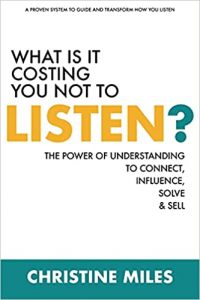
What Is It Costing You Not to Listen? will encourage you to examine how you are listening. You’ll discover that not only are many of the problems in your life due to not listening effectively, but listening helps to solve most problems. Christine Miles is a longtime expert in educating individuals and organizations on how to listen in ways that transform how they lead, sell, influence, and succeed in every aspect of life. Following the steps of her breakthrough Listening Path™ will provide you with a critical key to your success – understanding.

Through Christine’s game-changing approach to listening, you will learn to:

• Hear what is said and not said
• Identify your listening persona and realize when it is unhelpful
• Soothe your subconscious so you can listen differently
• Listen with intent to gather others’ stories
• Replace interfering direct questions with just six questions
• Mini-reflect to speed up the listening process without getting lost
• Affirm to create alignment, break down walls, and solve problems

In business, listening is good for the bottom line. It creates trust between coworkers so they can solve problems better, get things done, manage conflict, stay engaged, and empower one another. In personal relationships, listening is an act of love that communicates to people they are important to you.

LinkedIn

TRANSCRIPT

John Ray: [00:00:00] And hello again, I’m John Ray on the Price and Value Journey. And I’m delighted to welcome Christine Miles. Christine is an expert on the thing that us, professional services providers, probably have the biggest problem with, it’s listening.

John Ray: [00:00:20] Christine is an author. She’s a professional keynote speaker, consultant, executive coach, thought leader, entrepreneur. She’s done it all. She’s the founder and CEO of EQuipt. And through her company, she helps leadership teams, individuals – we’ll get into her precise work – gross sales, develop their people, all through helping improve their listening skills.

John Ray: [00:00:49] And, Christine, you’re already amazing. I’m just putting that out there because I’ve already, you know, gotten familiar with your work, which is why I wanted you to be on the Price and Value Journey. So, thank you for joining us.

Christine Miles: [00:01:04] Well, it’s my absolute pleasure. I’ll try to meet those very kind words.

John Ray: [00:01:10] Well, for way of introduction, what did I miss that people need to know about you and your work?

Christine Miles: [00:01:19] Yes. So, the work we do, the foundation of the house is really how to listen in – what we call – a transformational way. So, really listen to understand and to discover the meaning of the message, the insight in the conversation. And that is the foundation of the house. There’s a lot of aspects of communication we touch.

Christine Miles: [00:01:40] Listening really teaches you more than you think. It tells you a lot about how to tell versus how to understand. And it also builds what we call your emotional skills. So, when you learn to listen in a different way, you learn to listen to yourself, you learn to listen to others. And that’s the foundation of emotional intelligence, which is, you know, self-awareness and other awareness. And we know that that’s really what makes great companies great. That’s what makes good people really great at what they do or that is that EQ difference.

Christine Miles: [00:02:12] I always say, we’re throwing a ball and you’re chasing it to get in shape rather than just telling you to go for a run. So, there’s a lot of things that it elevates when you learn to listen differently.

John Ray: [00:02:23] One of the things that I find interesting about this topic, and every time I post about it like on LinkedIn or wherever, I get all these comments about, “Yeah. You’re so right, John. And, yeah, we’ve got to listen and so forth.” And we all agree that we’ve got to listen better. And then, here comes the person that’s got the cliche about two ears and one mouth and blah, blah, blah. So, talk about why. I mean, to me, this is lip service in a way, right?

Christine Miles: [00:02:57] It’s frustrating to me as well. But I try to remind myself it’s nobody’s fault and here’s why. Because we’re told to listen from a young age and we are very rarely taught. So, we do equate hearing with listening rather than listening, as you said in your intro, is a skill. It is in fact a skill. So, it’s not like walking where you just have your legs and then, without any problems, you learn to walk. You don’t learn to listen just because you have two ears. It is something that needs to be developed.

Christine Miles: [00:03:31] And so, the problem is nobody knows how really. The majority of us don’t know how. We don’t know what good looks like. We don’t know how to do it. Because we’ve been winging it and we think we’re better than we are sometimes. Or if we’re not as good as we think we should be, we don’t really know how to fix it.

John Ray: [00:03:48] Yeah. No, that makes sense. And it seems to me – and you’re the expert, so this is a question – we’re taught to have the answers, right? The kid in class, it’s like, “Oh. I’ve got the answer,” you know, with their hands raised. So, we’re taught to project, we’re taught to speak up, we’re castigated for not speaking up. And we’re never really taught listening.

Christine Miles: [00:04:21] And then, take that into business life, what do we tell employees? “Don’t come to their manager with problems. Come to them with solutions.” And I say, “No. Come to me with the root cause of the problem so that we can figure out the best solution.” But we’re expecting people to just have the right answers. And then, we’re solving a lot of problems that aren’t really the problem and wasting a lot of time and resources. And it does start very young.

Christine Miles: [00:04:47] It’s funny, we were at a school a few weeks ago piloting something, and I asked the teachers do they teach listening. And this is a private school in the Philadelphia area. They’re very well known and recognized. And the teachers try to teach it. And they said what happens is the kids, when the teacher asks a question, everybody raises their hand. And let’s just say little Johnny is the one that’s answering, all the other kids their hands are still up. And they go, “No, put your hands down while Johnny’s talking.” And I’m thinking, This is just 40 years later in a meeting where everybody wants to just talk, just waiting their turn.

Christine Miles: [00:05:22] So, while it’s the right idea, again, it’s behaviorally-based rather than brain-based. Because listening is really happening or not happening in our brains. And the brain is the greatest enemy of listening. So, unless we learn how to manage our subconscious brain that is in overdrive and telling us to do everything but listen, we’re just white knuckling our way through it. We’re waiting our turn, but we’re not really certain how to change it. And that leads us to wanting to provide answers to solve problems, because that’s what we’re trained to do. And then, it interferes with the most important part, which is let me understand before I try to solve.

John Ray: [00:06:03] I want to dig into that a little more, but before we do, I don’t want to get too far away from your work without asking you why you’re so passionate about this particular topic. You know, I’ve heard some of this story before, but I think it’s important for our listeners to hear it in full.

Christine Miles: [00:06:24] Well, I appreciate that. So, we all have a reason why we do what we do. We don’t always know what that reason is. My reason came to me pretty early in life because I learned to listen differently. I can remember as early as five when I had moments of, like, paying attention to things that were different. A big part of that was my mother. She had mental health issues that she came by very honestly. She had lost her mother from childbirth. Her mother died from childbirth. So, she was set up for a lot of pain.

Christine Miles: [00:06:58] And what I saw was a woman who was very warm and loving and charismatic. She lit up the room. But underneath the surface was this real dark pain that most people didn’t see. So, I learned to see that what’s happening on the surface isn’t happening below the surface. And that was part of my role in the family, is to understand that, attend to that. I mean, while there was burden in that, trust me, the therapist and I still talk about it. There was also a great gift, which was I learned to listen differently and understand things that most people didn’t understand at a very young age.

Christine Miles: [00:07:33] And that was obvious to me. It became more and more obvious over the years, but as early as high school. And anything I was succeeding in, it wasn’t because of my natural talents and abilities, whether that was on the athletic field or academically or anything I did in my career, it was because, fundamentally, I was able to listen in a different and more compelling way.

Christine Miles: [00:07:54] And then, as I studied psychology and I went into my career, I also saw that not listening was why families were failing, relationships were failing, businesses were failing, teams were failing, projects were failing. The very thing that made me succeed is often the threat to why things weren’t working.

Christine Miles: [00:08:12] And so, what I’ve done over the course of my career is try to help others learn to understand, and listen, and solve problems through understanding versus throwing resources at it or throwing more telling at it. And that’s evolved to really creating a common language and provide people the tools that calm that brain down – what I was taught as a kid, basically – and deconstruct it so that it could be replicated more simply and easily.

John Ray: [00:08:43] So, let’s get back to that. You mentioned the subconscious and how just the way we’re wired really holds us back when it comes to listening.

Christine Miles: [00:08:57] The subconscious brain is a super power. It’s emotional. We know now from the neuroscience that that’s how people buy. They buy emotionally. We know this as service consultants. We go in and they buy us before they buy what we do. That’s an emotional decision, which is also why listening is so, so very important when you go in as a professional services company.

Christine Miles: [00:09:24] But it’s also that, you know, our own brains are emotional, and so we want to make the sale. So, we go into a prospect, and what are we thinking about? We’re thinking about what do I need to say. How do I need to convince them. What do I have to offer them. And our emotional brains are in overdrive. We’re thinking about what we’re going to say, how we’re going to respond, how we’re going to advise them, all of the things that are the opposite of listening. And so, that’s one of the problems.

Christine Miles: [00:09:51] The second is, the more knowledge and experience you have, the more likely you are to not listen. Because you’ve seen the problem so many times, you know what the solution is and you build a solution to solve that problem. So, we tend to go in and start selling way too soon and problem solving way too soon.

John Ray: [00:10:09] Yeah. And we think we’re being helpful because we’re bringing our experience and knowledge to the table. That’s what clients want after all, right? And that’s not all they want, though. They want to be heard.

Christine Miles: [00:10:22] Well, sometimes the person rushing to the solve is the prospect. I told a story about this in my book. In 2007, I started my own executive coaching practice and I was in denial that I’d been in sales my entire career at this point. So, I’m out on my first sales call. It’s a pretty big meeting. And I’m sitting with the CEO and he says, “I want training for my executive team.” Well, I was in the training business for many years at this point, and I’m thinking, “Training for what?” Like, I had no idea what he wanted.

Christine Miles: [00:10:54] And so, I kept going, “Take me back. Tell me more.” And trying to lasso him back. And he’s like, “Well, can you just put a proposal together for me? And here’s a marketing packet that somebody else gave me.” And I was thinking, “Oh, crap. I don’t have this marketing packet. This is my first sales call.” And I just was like, “I don’t have that. Is that helpful to you?” He goes, “Well, not particularly.” And I go, “Okay.” But I had to keep lassoing him back because he wanted the solution, he wanted the answer.

Christine Miles: [00:11:23] So, sometimes it’s us and sometimes it’s them. And it’s a sales trap. I made a very big sale that day. And I still work with that CEO now at a second company that he started. And so, part of it was because I didn’t know what he needed. And my naivety even more so slowed me down to slow him down. And I really uncovered what the real need was rather than just throwing what he wanted me to throw at it, which is was right in my wheelhouse, but it wasn’t going to be helpful. So, it’s a big trap both what we do and what the prospect does. So, we have to be really careful and slow down to listen differently.

John Ray: [00:12:02] So, let’s talk about how we do that. You talk about the listening path. It’s on the wall behind you. I could see it. And what you mean by that are tools. You have to have tools in the tool kit, as it were. Right?

Christine Miles: [00:12:18] That’s right. So, the problem and the name of my book is called, What Is It Costing You Not To Listen? Because you can’t solve a problem you don’t know you have. And so, as we talked about, we’re set up not to know how to listen and know what good listening looks like. So, sometimes we have to first analyze what’s it costing us? How did we lost the sales? What’s happening to our relationship?

Christine Miles: [00:12:41] The solution is the listening path, and that’s the path to understanding. And the metaphor is you wouldn’t go hiking in the woods for three weeks backpacking without any tools or supplies in your backpack. And yet that’s exactly how we go into conversations. We go in unprepared to really know how to understand. And so, we provide those tools to keep you on the main path. Because when you’re listening, you’re always listening to a story. When you’re going in to talk to a client or a prospect, they’re telling you a story.

Christine Miles: [00:13:12] Here’s the problem. People are terrible storytellers. We are wired to listen to stories, to learn from stories. But we’re not wired to be great storytellers. There’s a few that have stood out in history that have made their mark, Lincoln being an example of that. But most of us really are terrible at it. So, because of being bad storytellers, we disorient the listener right off the bat. And if the listener doesn’t know where they are in the story, they’re going to struggle to figure out where to take the client, the prospect, or partner.

Christine Miles: [00:13:46] So, that’s part of what the tools do. They help you understand where you are in the story, how to stay on the main path, and how to be the guide to get the person to where you need them to go.

John Ray: [00:13:58] Now, you talk a lot about identifying your listening persona. Is that part of the listening path and part of success on that path?

Christine Miles: [00:14:10] It is. And so, one of the things – and I think this will resonate with you – is that we’re taught about listening is it’s really important to be curious and to ask really good questions. So, I have a team of executive coaches that are certified, and one of the things they go through is they go through how to ask really good questions when they’re trained. And the problem is, when you have to think of really good questions, what are you doing? You’re thinking rather than listening. And when you’re asking questions, that shapes the story because my questions are going to shape the story you tell.

Christine Miles: [00:14:46] So, there’s two listening personas when you’re on this listening path. One is The Curious Detective and one is The Defense Attorney. And think about it. Defense attorneys put people on the witness stand. They ask questions to shape the story that they need the person to tell to make their case.

Christine Miles: [00:15:03] Now, let’s take that into sales. You go in with your prospects or clients, you have an idea about how to help them. You go in and ask them very specific questions. And what are you doing? You’re shaping the story that they might tell you rather than getting the story, curiously letting it unfold so that you can drive value and uncover the real problems so that you can answer things that nobody else is answering. So, questions can force you into that defense attorney rather than the curious detective.

Christine Miles: [00:15:36] And one of the tools on the listening path is what we call the compass, which are the six most powerful questions. And, initially, when we teach people how to listen transformationally, these are the only questions you’re allowed to ask. Take all other questions off the table. And these six alone get you further than any specific diagnostic questions on the path.

John Ray: [00:16:00] Okay, So, you set it up here. Let’s talk about the six questions. I’m just going to say my personal favorite on there that I use is Tell me more.

Christine Miles: [00:16:11] You use that already? Yeah. So, tell me more.

John Ray: [00:16:15] Tell me more. Yeah.

Christine Miles: [00:16:16] Why does that work for you? Tell me more.

John Ray: [00:16:20] It works particularly when I don’t know what’s been said. And I don’t know, like, where that’s coming from, how to define what we’re talking about. I don’t want to say I don’t understand because I don’t want to crush somebody across the table from me. But that’s one that I use quite frequently.

Christine Miles: [00:16:46] And do they tell you more?

John Ray: [00:16:47] Oh, absolutely. Absolutely.

Christine Miles: [00:16:49] Isn’t that amazing. Tell me more begets they tell you more.

John Ray: [00:16:52] It always works. Yeah.

Christine Miles: [00:16:54] It always works. And so, I’ll run through the list so we can talk about any one of them if you like. So, I’m glad you’re already using that. And I’m not surprised you’re also doing a radio show. So, these are the most powerful questions journalists, interviewers, and therapists use, by the way, hostage negotiators.

Christine Miles: [00:17:13] So, it’s take me back to the beginning, tell me more, how does that make you feel, then what happened or what happened next, hm – which is the non-verbal prompt of tell me more, or it sounds like you feel. So, there’s two feeling questions and four situational questions all open-ended. You can use them as often as you like and in anywhere you like. And if you only use those questions when you’re talking with someone, you will not shape the story and more of the story will come out than you’ve ever gotten before.

Christine Miles: [00:17:47] Because you just said it, when I say tell me more, I don’t even have to admit that I don’t understand. They just tell me more and then more opens up and I get more of the story. See, ignorance is bliss. Whenever I’m confused or whenever I’m not clear, then I know I’m in the right space because that means they’re not being a good storyteller. And I better lens back to figure out what’s going on.

John Ray: [00:18:13] Yeah. And that takes some humility to get in that posture, right? I mean, because you can write these six questions down, you can memorize them, so forth – six responses, I mean. You can memorize them, what have you, but then you get in the heat of the moment and it goes out the window unless you’ve got the right mindset.

Christine Miles: [00:18:48] So, a couple things. It’s counter to all the training we’ve had because what we’re trained to do from a young age, not just in business, we are trained to show up and be smart, show that we’re smart, and questions are a way to show that we’re smart and that we know what we’re talking about and what we’re doing. So, it’s counterintuitive. So, it’s a bad habit, if you will.

Christine Miles: [00:19:14] And so, we have to unwind that. And the way you unwind that is first you have to have the right tool and then you have to have the right practice. So, several years ago now, we were doing a sales kickoff and the head of the organization got up to introduce us.

Christine Miles: [00:19:30] And he said he just heard a Navy SEAL speaking – because it was at a large company offsite. And the Navy SEAL said, “Look, most people think they’re going to rise to the level that they need to in a crisis based on adrenaline and all the things that are going off. You know, we’re going to lift the car off of somebody. We’re going to be the hero. When, in fact, what we rise to is the level of competence and training that we have in crisis.”

Christine Miles: [00:19:55] That’s why we practice as athletes. That’s why we practice whatever we’re doing, because you need to be able to do it under pressure. So, that’s why when you use these questions in real life all the time, then when you’re in that sales meeting or that client meeting, it’s more natural. You’ve already unwound kind of what you’ve been doing all these years.

Christine Miles: [00:20:17] We have people that take those questions, plop them down, we have mouse pads. They just set them down at the meeting to remind them. It also helps relax the brain. You don’t need to think about how you’re going to respond. You don’t need to worry about what you’re going to say next because the questions are a sedative for your subconscious so that that tool does the work for you.

John Ray: [00:20:39] I love that point. And I love the metaphor you use with it, that it’s a sedative. Because your subconscious is in overdrive and you don’t even necessarily know it. And you need to go ahead and inject that overdriven subconscious with a sedative, and you’ve given us the tools to do that.

Christine Miles: [00:21:05] Yeah. And the other thing is, if we take it back to the path metaphor, so you’re on the Appalachian Trail and you’re hiking and there’s a main path, but there’s also a lot of little side routes. And conversations are exactly that. There’s the main path and then there’s all these little side trails. What happens with very specific questions is we go off into the woods and we get lost often because we’re deep into an area we don’t need to be.

Christine Miles: [00:21:33] What those six questions do is they get you back to the main path, to the story. Because people, when you give them the room become a storyteller. This is how you become the guide as the listener. When you guide them on the main path, they’ll stay on the main path. If you take them down a side trail near a ravine, they’re going to fall off if they follow you.

Christine Miles: [00:21:57] So, the questions calm the brain and keep you on the main path to getting that story. And, really, once you get that, you know how to help them in a more compelling way than just giving them a solution. You drive value for your customers.

John Ray: [00:22:14] That’s a magic word for me, is value. My ears perk up when I hear that word, as it does for our listeners. But talk a little bit, if you will, about the reflecting. You talk about many reflections to speed up the listening process, and that concept is a little confusing to me, so talk about that.

Christine Miles: [00:22:50] Well, first of all, let me take a step back. So, great listening is about proficiency, how well you do it, and efficiency. So, I believe in both. People think I’m very patient. Don’t mistake my understanding for patience. I want to get things done really quickly. I want you to feel good about getting things done quickly. And I know how to help get that story out of you faster so we can get there more quickly.

Christine Miles: [00:23:20] It is a slow down to speed up, though. So, I learned this in sports. I chased any ball that would let me chase it. But field hockey was my sport of choice. And one of the things I learned is that if you could run down the field of speed – I was a defender and everybody was faster than me, everybody – I knew how to cut off the angle. Based on your pace, I could figure it out. If you took a pullback, if you took a little hitch step and then sped up again, I was done. I was done because I couldn’t change pace that way. Part of being in a conversation is you need to know how to change pace. When do I need to pull the ball back a little bit so then I could speed up again.

Christine Miles: [00:24:02] And when you do that, again, it changes the dynamics of the conversation. So, you’re getting into this reflecting tool. So, there’s six main tools on the listing path. And the first five are kind of the science and the sixth one is the art.

Christine Miles: [00:24:19] So, we talked about the compass as one of the tools. And really the map to the story is the main tool. Where am I in the woods? Where am I in the conversation? What’s the path to the story? That’s one of the tools.

Christine Miles: [00:24:33] And then, there’s something called the flashlight. And the flashlight is really when you’re hearing the story, once you think you’ve gotten it, how are you shining a light on what was said and highlighting what you heard. That’s what we call the flashlight. That’s a powerful thing. Tell me the story you just told me. I’m going to tell you the story you just told me, that’s the flashlight. Does that make sense?

John Ray: [00:24:56] Yeah. Yeah.

Christine Miles: [00:24:57] So, I’ll say the most powerful story you can tell someone is their own. There is nothing like a client or prospect talking to you for 30 minutes and you go, “Hold on. Before we go any further, let me make sure I understand.” And then, I tell you the story you just told me at a high level in 30 to 90 seconds. You’re going to feel like I really was paying attention. And you’re going to go, “Well, that’s right but that’s not quite right. Nope, you got me here but not here.” And there’s a different dialogue that opens up as a result of taking out that flashlight.

John Ray: [00:25:32] And this gets at where you talk about affirming to create alignment, break down walls, et cetera.

Christine Miles: [00:25:43] That’s right. So, the flashlight highlights the story. To affirm it, you have to make sure you didn’t contaminate the story. So, these two tools work hand in hand all the time. And by the way, these are the most underutilized tools. We tend to listen and say, “Yeah. I understand.” And when somebody says I understand to me, I never feel less understood.

John Ray: [00:26:10] In a way sometimes that can be insulting, too, right?

Christine Miles: [00:26:15] I don’t know what you understand. My question is really, “Tell me more. What do you understand? I want to hear this.” Because the words I understand do not convey understanding. Understanding is, “You know, John, what I hear is important to you and your listeners is how do you drive value in the sale? How do you make sure that your customers really feel listened to, understood, so that your solutions or your listener solutions can really be the game changing and you can make a big difference for your clients. Do I get you? Do I understand?” Probably closer, right?

Christine Miles: [00:26:50] So, we call that the water filter where affirming means let me make sure I didn’t contaminate your story by what’s going off in my brain. So, once I use that flashlight, shine a light on the story, I’m going to ask you and I’ll use these very specific words. I’m going to say, “Do I get you?” That’s a prompt to say do I get you and your story, not just the story, not just your situation, but do I get you as well as your situation.

John Ray: [00:27:25] Wow. I love that. That is powerful. And that’s a good segue, I’ve got a few specific situations maybe we can talk about that services providers run into. And one of those is when you’re trying to have a value conversation, how do you know when it’s time to pivot? You’re doing the best you can in trying to understand where that client sees value, both tangible and intangible value, how do you know when it’s time to pivot?

Christine Miles: [00:28:10] So, this is when you know it’s time to pivot. We call that earning the right. Have I earned the right to start to tell you what I think to sell you my solution? What happens is we tend to go forward right away. We come in offering the solution. Maybe our prospect or client says, “Tell me the solution.”

Christine Miles: [00:28:30] Here’s what always happened to me, I started my career, I have a background in psychology as a therapist. I was a home-based family therapist at 22. So, I went into people’s houses at 22, knocking on their doors saying, “I’m Christine. I’ll be your family therapist.” They pretty much had that look on their face, so it was terrifying. Fortunately, I was mentored and trained through a world renowned facility. I ultimately got certified.

John Ray: [00:28:58] But you were also brave, though. I mean, so you had courage to do that.

Christine Miles: [00:29:05] I did. I did. It’s really how I wanted to make a difference at the time. Here’s what’s fascinating, is that, I was the youngest person on my team. Most people were in their 30s – which seemed old at the time – and they had social work and experience. But I stood out more because I didn’t know anything and I went in and listened. And they said I had this uncanny ability to join – they called it joining – with the families. And all I did was go in and do the very things that I’m talking to you about.

Christine Miles: [00:29:40] That’s how I built credibility. I wasn’t going in and saying I know your situation. I was going in and saying tell me about your situation, tell me about your kids, tell me what’s going on, let me understand you. The therapist taught me how to do exactly what you’re talking about, which is how do you shift it then from understanding to telling? And that’s about earning the right. Most people go in and just start telling versus earning that right first.

Christine Miles: [00:30:08] So, the pivot happens after you use the flashlight in the water filter. So, you highlight. You shine a light on the story. You say, “Do I get you?” And one of three things is going to happen in that conversation. Your client is going to say, “Yeah. You get me.” Or they’re going to say, “You get me,” and they’re going to start telling you more.” Or they’re going to say, “Yes. You absolutely get me.”

Christine Miles: [00:30:34] So, the first one is what we call in the sales world an urban dictionary, where the client says yes but they really mean no. That happens all the time. Your spouses do that to you. Your friends do that to you. Your colleagues do that to you. You’re walking down the hall and you say, “Hey, how are you doing today, John?” And you’re like, “I’m great.” You just got the urban dictionary often because people aren’t always doing great. They’re going, “I’m not so great. I just had a fight with my wife or something’s going on.” But we don’t share that.

Christine Miles: [00:31:07] In our sales conversations, that happens all the time. We ask somebody, “Did I get you?” And they don’t tell you the truth. So, you got to watch for that. “You know what? I don’t know. That doesn’t sound like I really got you. Tell me more.” And once we’re certain and people will then go, “Well, as a matter of fact, what you missed was blah, blah, blah, blah, blah.” So, we have to challenge that moment where we hear the, “Yeah. I get you.”

Christine Miles: [00:31:38] Once we’ve affirmed and really solidly confirmed that we’ve affirmed right, then we can start to tell. Then, we can start to say, “You know what? Now that I really understand, let me tell you what I think. Is that okay?” And then, they’re ready to listen in a different way because you’ve already understood them.

John Ray: [00:32:00] Got it. Yeah. That’s very helpful. But you mentioned a live situation that fits this particular question, which is the client that wants to rush to what your solution is, and you’re trying to slow them down, you’re trying to use the tools that you teach. How do you slow down that freight train?

Christine Miles: [00:32:33] Well, you have to have an awareness, first of all. This is also what the tools do, when you know where you are in the story, you know where you need to go. So, there’s four milestones on the map, the path to understanding, there’s the beginning. It’s just like a movie. So, picture a movie now. There’s the beginning of the movie, there’s the struggle, there’s the tipping point, and there’s the new beginning or the ending.

Christine Miles: [00:33:01] So, as salespeople, as providers who want to be helpful, by the way, I believe most people go in because they want to be helpful. Yeah, we need to make money, but we want to help and make a difference. I might start at the tipping point, “I already know what your solution is. Let me tell you how to get you to the end or new beginning of your story.” Or our customer or prospect can do that, “I need help. I’m at a tipping point. Tell me what you would do if you were me. And take me to the new beginning.”

Christine Miles: [00:33:29] The way to do that is one of those compass questions is it’s click bait. I have help. I need a problem. If you don’t understand what the problem is and you haven’t spent some time, it is click bait.

Christine Miles: [00:33:40] You just went into a rabbit hole on your phone of all the things you shouldn’t be looking at because you clicked where the customer is, rather than saying, “Hold on a second. Let’s slow down. Take me back to where this started.” That’s where the compass gets you back to the beginning of the story, take me back.

Christine Miles: [00:33:58] And I’ll tell you again where I really profoundly learned this. So, being a therapist so young, by the time I was 28, I had a pretty decent amount of experience. Even though I was doing organizational work at the time, I always saw clients. And so, I say, “How do you want me to help?” And they go, “Well, I want you to help me solve this,” or my marriage, or this or that. And I go, “Okay, how would you like me to help? Well, just tell me what I should do. Tell me this.”

Christine Miles: [00:34:22] And debris on the wall, lots of experience and go, “Okay. Well, this is what I think you should do.” You know what they would do?

John Ray: [00:34:30] Tell me.

Christine Miles: [00:34:32] They’d argue. “I can’t do that. I can’t leave my husband. I can’t do that. I can’t this.” People don’t like to be told what to do even if they’re the ones telling you to tell them. It’s a sales trap. It’s a sales trap. So, even if you think you understand them at that moment, even if you think you know the answer, don’t fall for it. Don’t click bait.

Christine Miles: [00:34:57] Take a step back. Slow them down. Because getting giving them a no is how you also get them to yes. And if you force them to slow down, you’re forcing them to take a hitch step so that they can get down the field faster. We need to be the guide. When they say we need to control the conversation, kind of control it by talking rather than insisting that others talk so that we can listen and understand before we move forward to the new beginning.

John Ray: [00:35:27] So, let’s say we’ve got a situation where we’ve allowed a prospective client to become a client and we think there’s something hidden. This happens, like, all the time, right? Because just like you said, people don’t want to fess up. But those things that they don’t want to talk about may be the most important part of the engagement because you’ve got to understand those to be able to really solve their problems. So, how do you have that conversation after the fact?

Christine Miles: [00:36:11] So, there’s two things here. So, the first is – and I believe this is a big part of this problem – is that most times when we’re selling, we don’t ask people about their feelings. We do not ask, “How does that make you feel?” Because in business, we think that’s an intrusive question. When, in fact, it’s one of the most powerful things we can find out is how people are feeling. I’m undaunted by asking somebody how they feel because I started to do it when I was five. So, I’ve never not asked a CEO, a chairman of the board in any situation how they feel. It’s just part of my nomenclature. It needs to become part of ours. If you do that earlier, you won’t be in that situation as often. I can promise you that.

Christine Miles: [00:37:02] And there’s two questions on the compass, How does that make you feel and It sounds like you felt. So, we have to get over ourselves and realize we need to ask about the feelings. That will unlock a lot of what you’re talking about so you don’t find as many surprises.

Christine Miles: [00:37:16] The second thing is, let’s just say it happens anyway because there’s shame and there’s embarrassment sometimes with what’s going on. And we have to feel comfortable to talk about that. So, it’s never too late to go back. And I’ll give you another therapy story from back in the day that makes the sales point.

Christine Miles: [00:37:36] So, when I stopped working as a therapist fulltime, I went into the world of employee assistance programming and I was running the organizational development side of the business. As I said, I was always seeing clients, more the high profile ones. And I had a buyer from a home shopping network that we worked with that was in a pretty big job. We had eight sessions. So, they put her with me, you know, eight sessions to try to help her.

Christine Miles: [00:38:02] So, she came in and said, “I’m having marital problems. My husband’s laying on the couch. He doesn’t want to come in. I’m frustrated. I’m not happy.” And I said, “Well, your husband doesn’t come in. We can still work on the marriage even if you’re here.” And, boom, we went off. So, now, I’m already engaged with her as a client.

Christine Miles: [00:38:17] Guess what she told me on session four? On session four, she says to me, “I have something to tell you, Christine, that I didn’t tell you yet.” “Oh, okay. Well, have at it.” She said, “Well, I’m having an affair with our neighbor who’s our best friend. Like, we do everything together. My husband’s best friend and my best friend. And the husband and I are having an affair.”

Christine Miles: [00:38:42] I got four sessions in on eight sessions and went, “Oh, no.” [Inaudible]. No judgment. But that would have really been helpful for me to know in session one, right? Whose fault was that? It was mine because I didn’t dig enough what else is happening, take me back, tell me more. I went forward too much. I started solving too much.

Christine Miles: [00:39:03] But at that moment I just said, “All right. Take me back. Let’s go back. How did that start? Where did that begin? How is that impacting your marriage?” And then, we started over on the path because I missed a big part of the beginning of the movie. So, I had to go back to the beginning to understand how that was impacting, why that happened. So, it’s never too late to go back, but it’s important that we go back once we hear that.

John Ray: [00:39:30] Yeah. I love that. One final thing, just something that’s really tactical. How do you feel about the use of silence? So, for example, someone says, “That’s too expensive.” And you’re silent. And silence abhors a vacuum, or whatever that saying is. So, is that the way to respond? Or should we say tell me more? How do you feel about silence, I guess?

Christine Miles: [00:40:10] Well, again, my sales training was [inaudible] based on how I was trained as a therapist at 22. Because eventually I worked in-patient and we worked via one way mirrors. So, sometimes I had 20 people behind a mirror and a lead therapist calling in and saying, “You have to say this to the family.” Or in a very compelling story, one time they made me sit on my hands for an entire session because the family wasn’t talking. And I had to sit there and learn how to be silent until they started talking. And it’s powerful. There’s a quote that the CIA says, “Silence sucks the truth out.”

John Ray: [00:40:44] Oh, I like that.

Christine Miles: [00:40:46] Silence is a very powerful tool. It’s also a listening inhibitor. Because people are afraid of it. It’s uncomfortable. We tend to fill the space. So, it takes some practice to get good at knowing how and when to be silent. So, it takes a comfort level. So, it won’t be the most natural thing for those who aren’t comfortable with it. But if you can practice your way to success, that’s a very powerful tool as far as listening. Even when you’re not asking a bomb question like that, sometimes it’s just you stop talking and I don’t feel the need to ask you another. I just wait and then you’ll start talking more.

Christine Miles: [00:41:24] So, I feel it’s a very important tool. I also feel interrupting is a very important tool. It’s very important to be able to interrupt people. Most people don’t think that means you’re being a good listener, but it is one of the most powerful things you can do as a listener. The only way and only reason you’re allowed to understand is – pardon me – interrupt is to understand and not to tell.

Christine Miles: [00:41:49] So, John, I could interrupt you and say, “Hold on. Hold on. Let me make sure I get you.” And then, slow you down and interrupt for that because I think you’re getting lost deep in the woods. But if I interrupt to just start talking, totally different matter. Silence and interrupting are very, very important. If you’re not comfortable with silence, the tell me more, take me back, how does that make you feel are going to get you there as well.

John Ray: [00:42:19] Wow. This has been powerful. Christine Miles, you’re terrific. And thank you so much for the work you do and how you’re sharing it with the world. I want to make sure that we shoutout properly where folks can find you. Certainly, your book – which is one of my favorite book titles in a long time – What Is It Costing You Not To Listen? If that’s not a compelling title, I don’t know what is. But give everyone directions on how they can learn more about you and your work.

Christine Miles: [00:43:00] Sure. I appreciate the comment on the book title because I went against a lot of advice to title it that. Because, again, most people want to title it The Solution. And I’m like, “You can’t solve a problem you don’t know you have.” So, the book can be found on all the major outlets, Amazon. And in any form that you want it because I’ve learned people want their book the way they want it, audio, Kindle, hardback, softback.

Christine Miles: [00:43:27] They can find me @cmileslistens. My contact information is also in the book, by the way, and that includes my cell phone. And they can find us on EQuipt, that’s E-Q-U-I-P as in Paul-T as in Tom, -people.com.

John Ray: [00:43:43] Terrific. Christine Miles, thank you again for coming on. I appreciate you. And I know our listeners are going to just love this. So, thank you.

Christine Miles: [00:43:52] My pleasure. Thank you.

John Ray: [00:43:54] Absolutely. Hey, folks, just as we wrap it up, if you want to know more about this podcast series, you want to see the show archive, of course, you can go to your favorite podcast app, Price Value Journey would be the search term to be able to find this series on your favorite app. You can also go to pricevaluejourney.com and find the show archive there, a link to the show archive there.

John Ray: [00:44:20] You can also find information on my book that’s going to be released later this year called The Price and Value Journey – imagine that – The Price and Value –

Christine Miles: [00:44:30] Congratulations.

John Ray: [00:44:30] Yeah. The Price And Value Journey: Raising Your Confidence, Your Value, and Your Prices Using the Generosity Mindset Method. If you want to know more and get updates as they happen on that book and when it’s coming, you can sign up there.

John Ray: [00:44:48] So, for my guest, Christine Miles, I’m John Ray. Thank you again for joining us on The Price and Value Journey.


About The Price and Value Journey

The title of this show describes the journey all professional services providers are on:  building a services practice by seeking to convince the world of the value we offer, helping clients achieve the outcomes they desire, and trying to do all that at pricing which reflects the value we deliver.

If you feel like you’re working too hard for too little money in your solo or small firm practice, this show is for you. Even if you’re reasonably happy with your practice, you’ll hear ways to improve both your bottom line as well as the mindset you bring to your business.

The show is produced by the North Fulton studio of Business RadioX® and can be found on all the major podcast apps. The complete show archive is here.

John Ray, Host of The Price and Value Journey

John Ray The Price and Value Journey
John Ray, Host of “The Price and Value Journey”

John Ray is the host of The Price and Value Journey.

John owns Ray Business Advisors, a business advisory practice. John’s services include advising solopreneur and small professional services firms on their pricing. John is passionate about the power of pricing for business owners, as changing pricing is the fastest way to change the profitability of a business. His clients are professionals who are selling their “grey matter,” such as attorneys, CPAs, accountants and bookkeepers, consultants, marketing professionals, and other professional services practitioners.

In his other business, John is a Studio Owner, Producer, and Show Host with Business RadioX®, and works with business owners who want to do their own podcast. As a veteran B2B services provider, John’s special sauce is coaching B2B professionals to use a podcast to build relationships in a non-salesy way which translate into revenue.

John is the host of North Fulton Business Radio, Minneapolis-St. Paul Business Radio, Alpharetta Tech Talk, and Business Leaders Radio. house shows which feature a wide range of business leaders and companies. John has hosted and/or produced over 1,700 podcast episodes.

Coming in 2023:  A New Book!

John’s working on a book that will be released in 2023:  The Price and Value Journey: Raise Your Confidence, Your Value, and Your Prices Using The Generosity Mindset. The book covers topics like value and adopting a mindset of value, pricing your services more effectively, proposals, and essential elements of growing your business. For more information or to sign up to receive updates on the book release, go to pricevaluejourney.com.
Connect with John Ray:

Website | LinkedIn | Twitter

Business RadioX®:  LinkedIn | Twitter | Facebook | Instagram

Tagged With: Christine Miles, connect, emotional intelligence, EQquipt, influence, John Ray, listening, listening skills, Price and Value Journey, pricing, professional services, professional services providers, Sell, solopreneurs, Solve, The Listening Path, value, value pricing

ChatGPT for Professional Services Providers: An Interview with Isabella Bedoya, Fame Hackers

April 5, 2023 by John Ray

Fame Hackers
North Fulton Studio
ChatGPT for Professional Services Providers: An Interview with Isabella Bedoya, Fame Hackers
Loading
00:00 /
RSS Feed
Share
Link
Embed

Download file

Fame Hackers

ChatGPT for Professional Services Providers: An Interview with Isabella Bedoya, Fame Hackers

Fame Hackers Founder Isabella Bedoya joined host John Ray on The Price and Value Journey for an overview of ChatGPT and other AI Tools. Isabella shared the insights she had as she learned ChatGPT, results she has experienced on behalf of clients, making the best use of this tool in a professional services business, how it serves marketing and content creation needs, and much more.

Find Isabella’s AI Tools and ChatGPT prompts database mentioned in the interview here. Also mentioned in the interview:  a live workshop, “Master AI and ChatGPT For Your Business,” on April 12, 2023. More information and registration here.

The Price and Value Journey is presented by John Ray and produced by the North Fulton studio of Business RadioX®.

Fame Hackers

Fame Hackers is an AI-powered marketing agency which helps grow and monetize personal brands leveraging LinkedIn and YouTube. In addition, they assist in AI deployment for organizations who want to integrate AI into their operational workflows in order to make their teams more efficient, while saving on labor costs.

Find Isabella’s AI Tools and ChatGPT prompts database mentioned in the interview here. Also mentioned in the interview:  a live workshop, “Master AI and ChatGPT For Your Business,” on April 12, 2023. More information and registration here.

Company website | LinkedIn

Isabella Bedoya, Founder, Fame Hackers

Isabella Bedoya, Founder, Fame Hackers

Isabella Bedoya is founder of Fame Hackers, an AI-powered marketing agency. She has generated over 98M views on TikTok, Youtube, and Instagram leveraging short-form videos, UGC, and influencer marketing for Fortune 500 including Fortune Top 10 – Google & United HealthCare. Now she is building in public exploring the AI space and its advanced use cases to make our lives easier in business.

Fame Hackers is an artist accelerator that helps independent artists establish profitable and sustainable music careers so they can get paid doing what they love.

After working as an A&R for a label under Sony Music, Isabella now uses industry experience coupled with cutting-edge strategies to help musicians monetize their music careers, attract their loyal fan base, and reach the levels of success they desire.

During her time as an A&R she discovered that as long as an artist knows social media marketing and e-commerce strategies, they can create wildly profitable careers without signing record deals.

Shortly after, Isabella set off to learn digital marketing and invested close to six-figures in coaches and consultants to accelerate her knowledge and her growth.

In the meantime, she worked for an award-winning influencer marketing agency where she had the opportunity to work with multiple Fortune 500 brands including but not limited to Snap, Google, Bud Light, United Healthcare, and more. She also managed two TikTok accounts for Sony Music LATAM, and so much more!

Isabella has worked with many celebrities, influencers, and award-winning industry professionals over the past 6+ years, and has also helped independent artists become viral sensations.

Isabella has been invited to speak at the Musicians Institute, BoldTV, Ticker News, iHeartRadio, NBC, KCAA Radio, Beat The Clock Podcast, and published on Medium, Thrive Global, and many more.

LinkedIn

TRANSCRIPT

John Ray: [00:00:00] And hello again, everyone. I’m John Ray on the Price and Value Journey. Welcome. I’m delighted to welcome Isabella Bedoya. She is the founder of Fame Hackers. And Fame Hackers is an AI powered marketing agency that helps grow and monetize personal brands, leveraging both LinkedIn and YouTube. They assist in AI deployment for organizations who want to integrate AI into their operational workflows in order to make their teams more efficient and saving on labor costs. And I think part of that involves getting some clients along the way too, because I see that in your work as well. Isabella, thank you so much for joining us on the Price and Value Journey.

Isabella Bedoya: [00:00:47] Thank you so much for having me, John.

John Ray: [00:00:49] Yeah, It’s a pleasure. So let’s talk a little bit about you and your background first and how you got your journey and what’s taken your work in this direction.

Isabella Bedoya: [00:01:01] Sure. So I started in the marketing realm. I used to do influencer marketing campaigns, digital marketing. And in the process, you know, I started a coaching business, and I was helping other people do this for themselves. And earlier this year, even like towards the end of last year, I came across ChatGPT as the whole world, right, I think got released in November.

And that kind of made the big shift because at first, I kind of like dismissed it. I had used tools like, you know, Jasper and whatever. And so at first, I was like, okay, that’s cool. But then when I actually tested it to work on a client project, that just changed my life completely. Ever since then, I’ve been like obsessed with ChatGPT, with AI. It’s just one of those things I can’t stop talking about.

John Ray: [00:01:53] Well, I love that. I love that that’s the case because we need to talk to you. And folks need to hear from you about that work. So I’m curious about that project. You don’t have to mention names, of course, but just the nature of that project, the insights that came out of that for you and that gave you a sense of the power of ChatGPT and AI generally.

Isabella Bedoya: [00:02:21] Yes. I think for everyone, from what I’ve been understanding as I talk to people, everybody has that kind of like aha moment that it just clicks and all of a sudden, they become obsessed with it. And in my case, I was working on a digital marketing campaign for one of our clients who’s doing like a Taylor Swift giveaway. He’s giving like tickets away for a Taylor Swift concert.

So I had to come up with like the whole entire marketing plan. You know, how are we going to do this? How are we going to target what the videos are going to be about? Like all of the things that normally would have taken us about a week and like at least three people involved, I did the whole thing in like two hours from start to finish, sent in an email. Here’s what we’re going to do.

John Ray: [00:03:10] Wow. And so, but how did that happen, though? I mean, because you — I mean, you developed the insights along the way while you were working on this to be able to do all that?

Isabella Bedoya: [00:03:27] Yeah. So it’s basically like what it comes down to with ChatGPT, it’s about how good of a prompt you can write, the more precise. So prior to this, you know, using it for this client application in particular, I had already been playing around with it for like single use cases, like, you know, write that line of a book. Or every time I thought of like a possible use case, I would run to ChatGPT and try it and see what came out.

So when I did this whole marketing strategy for this particular project, like it was just basically a lot of just tweaking the prompt until I got the output that I wanted. And once I got that output, I was like, okay, I need to replicate that. I probably also Googled a little bit like, you know, what kind of, how to type the prompt. That’s very important. Also, like what to include in the prompt. But yeah, just kind of, you know, in the beginning I was just kind of like everything that was in my head, I was just putting it as a prompt. No real strategy and just seeing what came out.

John Ray: [00:04:33] Yeah. Yeah, that makes sense. So what’s been the — or maybe it’s too early to know, but what’s been the outcome of this marketing strategy outline that you put together?

Isabella Bedoya: [00:04:45] Yeah. So far, we’re just in the midst of it. Just started actually putting this maybe about two or three weeks ago, like actually putting the videos out. From what I saw, we still have to put the month one campaign report together still. But from what I did see, some of the videos did get some traction. I think there was one video that got like over 11,000 views.

And it was really interesting because it was the headlines generated from maybe little tweaks to make sure it’s not like super robotic, but the headlines that were generated from ChatGPT that we turned into TikTok videos.

John Ray: [00:05:23] Wow, that’s impressive. So you talked about the prompt being the key. That really knowing the instructions to give and how to give those are the key. This sounds a lot like the garbage in, garbage out thing. Right?

Isabella Bedoya: [00:05:46] Exactly.

John Ray: [00:05:46] Yeah. Yeah. So say more on that.

Isabella Bedoya: [00:05:50] Sure. So when you write a prompt, normally, like the first thing that you should start your prompt with is what do you actually want it to act as? So when you want like better outputs, for example instead of saying like write 10 hooks for a TikTok video, you would start by saying like, act as a social media strategist. We’re going to create a TikTok marketing plan, right? And then you just give it like direct, very precise, what you want it to come up with. And you could even tell the format, the output of how you want the information presented. Bullet points, in a table format, you can get really precise.

John Ray: [00:06:36] So the key is learning the prompts.

Isabella Bedoya: [00:06:41] Yeah. Well, not necessarily having to memorize them, but more so like at least being familiar with the structure, right? So it’s like, what role does it take or it has to like act into? What is the question? Or like, what is it that you actually want it to do for you? Creating some sort of format, giving it context, giving it guidelines of specifically what you want the AI to do.

And you could even add in like things like tone of voice or how many words you wanted to put out. You could give it like examples to say like, you know, this is an example, I want you to create something like this. So you can definitely like train it and guide it in your direction. But it should always be a little bit more of a, I want to say like more of a bulky prompt, because that way you can include a lot of information for the AI to be more specific.

John Ray: [00:07:44] So all this goes into that one search bar. I don’t know if that’s the term we’re talking, using here for ChatGPT, but that that bar, right, that you put it all in there and cut and paste it, whatever you want to do, you put it right in there.

Isabella Bedoya: [00:08:01] Yep.

John Ray: [00:08:01] And yeah. So what — a lot of the criticism, and I think it comes from a lot of people that have probably never been on it. But they read what other people criticize and they want to glom on to that, right, is they talk about AI being artificial. That’s an original thought. That it’s plain vanilla. And it has no tone of voice. So address those criticisms.

Isabella Bedoya: [00:08:40] Sure. Yes. I think what’s important, especially when you’re dealing with AI for content in this case, like as an example, it’s too generic. It’s very shallow. It lacks the human emotion, perspective, insights, all of that. So I think the first step is that people have to understand that just because they gave you a content idea, doesn’t mean that you have to copy and paste it into LinkedIn or whatever the case is.

You should still do your due diligence and like make sure that you’re optimizing the content to still sound like you. If anything, for content use case specifically, it’s more so just using it as an inspiration or a guideline of what’s something that you could talk about. But what would make your perspective refreshing for people to read is your unique experiences tied to that subject? So in content sense, I would use it more of a inspirational rather than just copy pasting.

John Ray: [00:09:41] Yeah. And that seems like pretty elementary to me. But I mean, you actually have to say that, you know, it’s just like plagiarism, right? I mean maybe it’s not the same kind of plagiarism, but copying and pasting never works, turns out real well, right? So are there some use cases that are better than others in your experience?

Isabella Bedoya: [00:10:14] So I mean it’s really mind blowing because even, for example, I had just last year, I did a sales training where I actually invested in coaching for sales training. And it was interesting because I tried it with ChatGPT and I was like let me see if ChaGPT can act as my sales coach. So I gave it a prompt, I told her to act as a sales coach, that we’re going to role play, we’re going to go through a discovery call, and then at the end provide me feedback. And I thought this was really interesting because I gave it like all the context, like, you’re the buyer, this is what you do.

So from a training perspective for companies, it’s mind blowing because if you can give specific instructions on how you want to be trained, this is saving so much time for companies of having to train their staff on whatever task they need to do because they can just be trained to AI. ChatGPT can pick up on the prompt and run through the exercise with you, and I thought that was very powerful. But I’m sorry, go ahead.

John Ray: [00:11:26] No. No, I didn’t say anything. But since you stopped, let me ask you a question about that specifically. Give an example out of that sales training where you had that live individual, I guess it was, that helped you. Give an example of maybe a specific part of that training that you got out of ChatGPT that you felt was just as robust as what you got from the human being.

Isabella Bedoya: [00:11:57] Sure. Well, what it was, was the one-on-one roleplay. Even though in the live course, there was a group thing and there was a lot of roleplay calls, and it was very efficient and effective. The cool thing about ChatGPT is that I didn’t have to wait for that call. I didn’t have to wait in line to raise my hand in the Zoom and say, can I go next? Right. It was in that sense, it was very effective.

In addition to that, it was like instant. It was like on my own time, and I got the feedback. I also was very precise with the prompts, so I told it like what style of sales conversation I wanted to have. And but now this is where it’s kind of like with a grain of salt because I knew what the correct process, I knew that the flow that was happening with ChatGPT was correct. Had I not known, I was just kind of leaving that to chance.

So I still think like this is where it’s important where AI is still very new to the whole world, that we’re still in that stage where it still relies on humans. And eventually, it’s going to be even more powerful. But as of right now, it still requires a human interaction with it.

John Ray: [00:13:12] Yeah. And that’s where I was going. I was going to ask you, like what — you obviously had the live sales training, and you must have found value in tha at that time, right? So but you knew, because of that training, you knew exactly kind of how, how to craft the prompt that you used in ChatGPT or the prompts that you used in ChaGPT.

Isabella Bedoya: [00:13:40] Yes.

John Ray: [00:13:40] Okay. So that’s really where the magic is, I suppose, in terms is really knowing what instructions to give. So what you put in doesn’t result in garbage out.

Isabella Bedoya: [00:13:56] Yeah. And it’s crazy because I saw an article on Bloomberg earlier this week that some companies are paying up to over 300,000 a year to be able to put in the right prompts into AI.

John Ray: [00:14:09] I saw that. And it suddenly made me think, Isabella may cancel my interview because she desn’t need to talk to me. But that was my first thought. Isabella. But let’s talk about you have developed an entire library of tools and use cases for ChatGPT. So let’s give everyone a sense of the breadth of that.

Isabella Bedoya: [00:14:46] Sure. Yeah. So this is something that just for like my own, it became like, for my own sake. And then it was like, wait, this is very helpful for everyone else because I had been using ChatGPT and all these like different creative ways. I started keeping track of the prompts that I was using, how I was getting like certain things. And then I said, you know what, let me actually compile a database. Let me just give it away to, initially it was to the LinkedIn community and it just kind of took off. So I was like, all right, well, everyone can have it. That’s not a problem.

It has a ton of prompts and I’m continuously adding. Every time I go in and create new prompts, I add them into the library so that you don’t have to memorize. You can just copy and paste it into ChatGPT. And in addition to that, there’s a lot of AI tools because it’s not just ChatGPT. There’s also, Google has Bard.

So in terms of like the ChatGPT sense, those are like the prompts. But there’s over I think in there we’ve compiled I think over 120 AI tools already, depending on, it’s crazy. You can even use it for like DEI, you can use it for HR, you can use it for sending emails. Like it’s really wild how fast the AI space is moving, and the products are coming out to make everyone’s lives easier.

John Ray: [00:16:12] Yeah, that’s what’s struck me about your library. That’s what it is, because it’s that robust. I mean, you’ve got all this library of all these prompts in all these different categories. Let’s talk about, well, let’s talk about HR. I mean, since you brought that up. So like you’ve got, for example, and I’m sitting here looking at it, folks, so you’ve got leadership and employee development, communication and collaboration, recognition and rewards, just to name three of them.

So and one of them talks about — let’s take recognition and rewards. So one of them talks about what steps you would take to provide employees with meaningful incentives and rewards. So how did you come up with that? Why did you come up with that? And how did you assess the quality of the results you got out of that particular prompt?

Isabella Bedoya: [00:17:19] Sure. So a lot of the building as of lately has been talking to professionals and asking them like what are the things that you normally think about or what are things that you normally have to like type up when you’re working or things like that. So it was a mixture of that. It was also a mixture of Googling what kind of questions HR professionals in this case would be asking themselves.

And that prompt in particular, that one is to just get the conversation flowing. But then as the conversation starts evolving with ChatGPT, you can then give it more commands. Like my company does this or we have this in place. What about, you know, so those prompts and in that case are more for like to interact back with ChatGPT until you get the customized answer for your organization.

John Ray: [00:18:14] It’s really a conversational funnel, it sounds like. I mean, you continue to funnel down the results until you get what you’re looking for.

Isabella Bedoya: [00:18:25] Yeah, exactly.

John Ray: [00:18:26] Yeah. Yeah. So one of the — well, again, I mean, and we’ll put the link in the show notes, but you’ve got Facebook related like ads and posts and whatnot. Same for LinkedIn graphic design. That one stood out to me because a lot of people don’t think, haven’t gotten turned on to that quite yet. In terms of, well, the Canva, for example. Why don’t you describe what’s going on there?

Isabella Bedoya: [00:19:13] Yes. When it comes to the graphic design side of things, it’s more of image to text. I mean, text to image. So crafting a prompt to get the image that you like. In addition to that, though, there’s also one thing that I use just for like for own purposes. And I was like, that’s actually very helpful. I asked it to help me with color psychology for branding and to provide the hex codes because obviously it’s a text, right? You’re going to get a text, you’re not going to get an image from ChatGPT.

And yeah, and it provided me the hex codes. And then I went on Canva and I put in all that information and I was just like that’s pretty cool. It also tells you kind of like how your branding should look like the elements, and all of that. So in that use case, it was really interesting. And again, it just speeds up the process that you would normally have to go in and do that research of the color psychology in that case, for example.

John Ray: [00:20:14] What about infographics? And this is another one, or your section is infographics or visuals. So that’s a situation where you’re putting in text and creating some sort of image out of that, right?

Isabella Bedoya: [00:20:32] Sure. You can ask for the text in that case. Like it’s just the — what ChatGPT will provide is the context, the content. So same with like Instagram, LinkedIn, Carousels, it will provide the content for you, but then you still have to do that manual piece of fitting it into the infographic.

John Ray: [00:20:49] Right, right. And it sounds like though that that step may not be far away from being eliminated at some point. All this is going to get stitched together, right? That —

Isabella Bedoya: [00:21:07] That will be amazing.

John Ray: [00:21:07] Yeah, that will be.

Isabella Bedoya: [00:21:09] Infographics in particular.

John Ray: [00:21:10] Yeah. That will move the cheese for a lot of people, that’s for sure. So let’s — I want to talk about how you’ve developed, how this works for you. I mean, you talked about how you’ve developed all these prompts. You’re pretty jazzed up about it, obviously, and really been going after it with intention. I love the way you describe how you’ve talked to various people in various industries to do that. Yeah, that’s, I would think an essential part of this. But talk about how you’re monetizing this work on your behalf. And at the end, folks, I want to give some shout outs to some opportunities that Isabella has for you to learn, but go ahead, Isabella.

Isabella Bedoya: [00:22:04] For sure. So it’s really interesting because it kind of in a sense, the idea behind it was we’re going to create this whole community around AI, ChatGPT, specifically for like business use cases. Just because I was so excited about how much impact it had on my own marketing agency. And it’s interesting because it’s kind of like a dual thing. The more attention that we get on LinkedIn, the more people want to learn more about the marketing agency. But there’s also a new side of things that people are asking more about specific prompt engineering for their companies, SOP developments and stuff like that.

So it’s really interesting. If anything, it’s just continuing to help us grow our business and adding this new leg. And also, in terms of like the monetization, it’s also brands. We’re starting to have some AI brands approach us and say like, hey, can we, you know, pay you to put this on the database?

And that’s kind of how I pictured — that was kind of like the strategy behind why I was giving the database for free to help the community as a whole, but then monetize it through brand partnerships and UGC. And just because I come from that background, I thought that was like the most beneficial. So that way it can be super valuable to the community as well.

John Ray: [00:23:33] Yeah. So let’s let’s talk directly to services providers. So our consultants, our attorneys, our accountants, what have you out there that they’ve got a practice to run, they’ve got their own discipline, whatever that is. And of course they’ve got all that goes into that, whether it’s marketing or running their back office or whatever. So where do you suggest someone that fits that category start with the capabilities of ChatGPT because it’s so overwhelming. It’s like a fire hose.

Isabella Bedoya: [00:24:15] Yes, the best suggestion is to start with one department at a time. So if you have like your marketing team. Or just the other day, I was helping one of my cousins who does work with like a finance company and they’re starting this whole like in-house underwriting department. So we were just creating like underwriting SOPs for the underwriters.

So it really just depends on like what your, I would say like the most, maybe like the most challenging in terms of time. Start there because if you can optimize that to be easier with AI, not just ChatGPT but any AI tool, if you can make that deployment easier for the flow of things, then that’s going to be like, first of all, a huge pain point that’s been lifted in your company and then start working towards the other departments.

John Ray: [00:25:13] And so you’re talking about what part of your company you’re spending way too much time on in terms of a process flow? Is that what you’re saying?

Isabella Bedoya: [00:25:26] Yeah. Like, for example, like for us, a lot of the time that we were spending on was on the actual research of like market research, SEO, audience persona. That was like the biggest thing that took us forever to do all the research and create ideal audiences. And not just from our point of view, but also from like our clients. That’s always like such a challenging question Who’s your target audience? What are the pain points?

And with ChatGPT, just asking it like I want to create an audience persona for someone that would buy something like this. Include pain points, include desires, include buying behaviors, include specific brand names that they buy from you. Get all of that in like a minute.

Speaker3: [00:26:16] All I can do is laugh at that. I mean, that’s amazing to me. But again, see, what happens is people hear that and immediately their trust factor goes like way down. Right? I mean, they think, how can you trust results that you get in a minute.

Isabella Bedoya: [00:26:35] Yeah. And not just the trust factor, but also like I’ve seen people kind of go through like an existential crisis of like, why am I even here? Like everything I’ve worked for, I no longer –I’m being replaced by a machine. But this is one of those things that I really believe that humans are still very essential in the process. I think it’s just going to be a matter of — I kind of have this perspective on it where, sorry about that.

John Ray: [00:27:07] That’s okay.

Isabella Bedoya: [00:27:08] I have this perspective of how, when we used to do, you know, Microsoft Word, we had to learn Microsoft Word. Especially I was in school, so I didn’t really have to like go through that. But I remember like my grandparents, my parents, they all had to learn this new technology if they wanted to be either more effective at their job or get a raise or stuff like that. And I think that’s kind of what’s happening with AI, where if you don’t adapt, it’s going to be one of those things that you’re going to be replaced by someone that has adapted.

It’s just a skill. It’s an added skill to add to your resume and it makes you super powerful and super, you know, it gives you a lot of leverage within your company. The way that I see it is if you alone as a marketing, let’s say as a marketer, right? You alone as a marketer, you have to then hire a copywriter, a funnel builder, a web designer, a graphic designer. But with AI, you have your own team of experts. So now the company can have, like you become a powerhouse for the company, and that allows you to also ask for raises and be way more valuable.

And the same for like the actual owners of these organizations, the owners of service firms. If you have AI in your processes, you get results for clients a lot faster or you get client service delivery faster, which means that your clients are going to be super happy and they’re going to see results faster, they’re going to stick with you versus the person that’s still doing market research for three weeks. It’s just one of those things that it makes you more competitive.

John Ray: [00:28:44] Yeah, that makes sense. Do you worry about or have you confronted this, the fact that you can get results so quickly that the client across the table looks at you and says, well, I don’t know that I ought to pay a tremendous price for this because it’s so “easy”, right?

Isabella Bedoya: [00:29:09] So that’s where you price in the value. Right. In the positioning.

John Ray: [00:29:13] Thank you for that.

Isabella Bedoya: [00:29:13] It’s the same thing as like, do you remember that graphic of a carpenter that there’s like a nail on the wall and then the carpenter’s like, yeah, I’ll charge you like $100 for that. And the other person’s like, I’ll charge you hourly. And the person is just like, why would I pay you $100 for that? And it’s because I have the specialized skill to be able to know where to put the nail on the wall to not cause any issues.

And that’s exactly the positioning and the branding that service firms, attorneys, that’s kind of like what you need to align yourself with. I’ve had some people on LinkedIn comment on my post saying specifically for attorneys that they’re doing like cross-examination questions within minutes. And it’s really wild. It’s really wild.

John Ray: [00:30:09] Well, yeah. And again, it gets back to prompts, right? So I mean, you can get very specific about the prompts. And I mean, in that case, you can put some sort of like profile of that individual. You may, if that individual is a public figure, you may actually put their name in there, right?

Isabella Bedoya: [00:30:32] Yeah, yeah. If they’re celebrities, I know that you can do like write it in the tone of voice of Kevin Hart, for example. It will be a humorous output. So yeah, you can definitely insert celebrities. And if they’re not that well known, ChatGPT will just say, like, you know as a language model, I don’t really know who that is. And it’s okay. You just can keep trying and it’s not going to explode or anything that.

John Ray: [00:31:03] Yeah. And again, it’s, I guess the visual that comes to my mind is the funnel. I mean, you keep funneling down until you get through prompts, until you get the results that you’re looking for.

Isabella Bedoya: [00:31:19] Yeah, even for funnel. Like speaking of funnels. Even for funnels, we had a client that we helped do a virtual event like a boot camp. And the same thing, normally the boot camp set up would have taken me about two or three weeks to put the emails together, to put the funnel together, the promotion materials, everything. And in like two or three days, we had the whole thing up and running, launched.

It’s really, speed is what it does. Of course, I still have to go through the answers and like modify it to actually make sense and sound like a human. But that’s why it’s not 100 percent replacing you, it’s just making your life a whole lot easier. And then you just have to go in and do the tweaks.

John Ray: [00:32:03] So let’s talk about the results that I think some have commented on, where there’s inherent bias, where there’s ethical issues, that kind of thing. Talk about filtering the results to filter that kind of stuff out.

Isabella Bedoya: [00:32:23] Yeah. So that’s one of those things that we kind of have to like keep in mind that it’s all learning from somewhere. So it will naturally tend to sway one way or the other. But for like things in particular, like business use cases, it’s not necessarily — I mean, maybe if you’re in like legal where it can get a little political. But for like traditional use cases like customer service, marketing, sales, that kind of thing, it’s not really like that impactful in that sense. If you do want it to be a little bit more inclusive, you can say like act as a DEI, act as a head of DEI and make this paragraph more inclusive or whatever the case is.

But I think for like the typical business case, at least so far, I haven’t encountered too much of how it could be biased. But again, it depends on the prompts. It depends on the prompts. Like if you’re coming from like a certain angle, you just have to say that. You could also tell it to be like a devil’s advocate. Like using that word, that’s a command. Be a devil’s advocate about this. You can say, what was the other one? Analogous. Like to give you an analogous response. So you can kind of like get it to — when you get a response, you can kind of tweak it so that it actually shows you both sides. But it just comes down to the prompts not taking the first, you know, the word for it.

John Ray: [00:34:08] So let’s talk about ChatGPT versus Google and Google’s Bard. Talk about if you’ve dived in to both and what kind of conclusions do you have about both?

Isabella Bedoya: [00:34:28] Sure. Yes. I did start using Bard. I think you still have to be on a wait list. But yeah, I did start using Bard and it’s just very new that so far I think ChatGPT has been giving better answers. From what I understand, though, Bard has access to the internet like it actually has access to like, real time data, whereas ChatGPT 3.5 is all the way through the end of 2021 and ChatGPT 4 which just released, that, from my understanding it was as a random number, but just kind of paint the picture.

I think it’s like 100 billion data points, whereas in ChatGPT 4, it’s like this massive, like in the trillions of the amount of data that it actually is pulling from. So ChatGPT 4 is massive. The prompts and the output that you can get from ChatGPT 4 is also a lot better than ChatGPT 3.

But Bard, when I tried it, it was still too generic. Like I asked it to do the same market audience prompt and it was just very generic, like pick a target audience, pick your social channels. And it’s like, that’s not what I was asking, you know?

John Ray: [00:35:50] Right. Yeah, it was very high level results.

Isabella Bedoya: [00:35:56] Yeah.

John Ray: [00:35:56] Got it.

Isabella Bedoya: [00:35:57] Yeah, exactly.

John Ray: [00:35:58] And do you recommend at this point, and I mean, look, we’re in March 31st as we do this interview and who knows what’s going to happen just two months from now. But you’ve got to be a paid subscriber to ChatGPT to get version four, right?

Isabella Bedoya: [00:36:18] Yes.

John Ray: [00:36:19] So do you recommend that the average person out there be a paid subscriber or the results that they get from version 4 that much better than 3.5?

Isabella Bedoya: [00:36:31] Yeah, this is a really good question. I have the paid version, but I have the paid version because I started just using it every day in my daily activities that around noon, it would just start crashing because everybody — it would just be an influx of people. So it would be really slow and start crashing. So when you upgrade, it’s like $20 a month, it’s not anything crazy. And that meant that I didn’t have that lag time.

In the process, of course, then I got access to ChatGPT 4. For the average person though, I think ChatGPT 3.5 is fine. It’s something that the downside right now with ChatGPT 4 is that you can only use 25 prompts in three hours. So they have a limit because it’s new. They’re rolling it out. It’s probably a lot more technology on the back end.

So whereas on ChatGPT 3, you don’t have that limit. And also ChatGPT 4 is slower, so you can just see it like type and it takes forever. Whereas version 3.5, it’s very fast. Like you just see it like sip through. So if you do decide to upgrade, I would upgrade based more on like the speed of the usage and not having that limit. But it doesn’t hurt to try ChatGPT 4. It’s way more powerful.

John Ray: [00:38:01] Yeah. Yeah, that makes sense to me. Well, I mean, I’m a paid subscriber, just for that very reason. So for $20 a month, why not? So let’s — I want to, as we kind of wrap up here, I want to make sure we talk about you and kind of the services that you offer, Isabella. And you’ve got a workshop coming up that I noticed. So you’ve given us a lot of great information. Let’s give you a chance to talk about how folks can connect with you and learn more from you.

Isabella Bedoya: [00:38:47] Thank you. Yes. Best way to connect right now is on LinkedIn. Like my name on there is Isabella Bedoya. And other ways to connect with me, I also have the AI database library and a Slack channel inside of that database, which we’ll probably link it at the end of the video, right, in the show notes. And yes, I do have the workshop coming up. It’s on April 12th at noon Eastern. So 12 to 2 p.m. it’s a two-hour workshop.

And the purpose of that workshop is to actually go through business use cases, you know, how to actually monetize it, discover a little bit more on like the different roles and the different operational workflows that you could create with it. So it will be very interactive. And also since it’s live, it’s not necessarily like this it’ll be live in the sense also of we get to interact with it. So if anyone has any like prompts that they want to see or any things that they actually want to talk through, we can, there’s time for that.

John Ray: [00:39:56] That’s terrific. Isabella Bedoya. Folks, she is with Fame Hackers. That’s her firm. And just in general, ChatGPT aside, talk about your work at Fame Hackers. Let’s get that out there as well, Isabella.

Isabella Bedoya: [00:40:17] Sure. Yes. Our Fame Hackers, we help with building personal brands. And a lot of the things that we do is short film video marketing, creating monetization strategies like virtual events or whatever the case is. And in addition, excuse me, in addition, this is where AI is amazing because we have figured out ways to integrate AI into like the video editing. So the videos are super fast and super high quality too, and very engaging following all the engagement tactics that short film video creators use.

So that’s essentially what we help with. I have worked with organizations as well with like just their marketing strategies. But right now, like I mentioned, we’re having this whole influx of people asking us to help them with their AI SOPs internally. So that’s in a nutshell essentially like what we do.

John Ray: [00:41:15] Yeah. I am sure you have been busy. And congratulations on that. I love stories like this where someone with your ingenuity is taking advantage of an opportunity in the market, which you obviously have done. So congratulations on that and your success.

Isabella Bedoya: [00:41:34] Thank you.

John Ray: [00:41:35] Yeah. And thanks for sharing your time with us. But one more time just to make sure people have the information on how they can connect with you.

Isabella Bedoya: [00:41:46] Yeah. On LinkedIn. My name is Isabella Bedoya. And I think the handle is Izzword, I-Z-Z-W-O-R-D.

Speaker3: [00:41:57] Terrific. Isabella Bedoya with Fame Hackers. Isabella, this has been enlightening, fun, and I’m sure for some scary. But I think it all adds up to something good. And I really appreciate you taking the time to come on.

Isabella Bedoya: [00:42:15] Of course. No, thank you. And if anyone has any questions or want to chat further, feel free to reach out. And thank you so much, John, for having me here.

John Ray: [00:42:24] Absolutely. Thank you. I appreciate you. And folks, just a quick reminder, if you want more information on this series, this podcast series, go to PriceValueJourney.com. You can find the show page or the show archive there. And of course, you can also find that on your favorite podcast app pretty easily. If you want to find it there, you can also sign up to receive updates on my book that’s coming out later this year called The Price and Value Journey Raising Your Confidence, Your value, and Your Prices using the Generosity Mindset method. And if you’d like to send me a note directly, please do so. John@John+Ray.ceo, thank you again for joining us. Thanks again to Isabella Bedoya for joining us on this episode of The Price and Value Journey.


About The Price and Value Journey

The title of this show describes the journey all professional services providers are on:  building a services practice by seeking to convince the world of the value we offer, helping clients achieve the outcomes they desire, and trying to do all that at pricing which reflects the value we deliver.

If you feel like you’re working too hard for too little money in your solo or small firm practice, this show is for you. Even if you’re reasonably happy with your practice, you’ll hear ways to improve both your bottom line as well as the mindset you bring to your business.

The show is produced by the North Fulton studio of Business RadioX® and can be found on all the major podcast apps. The complete show archive is here.

John Ray, Host of The Price and Value Journey

John Ray The Price and Value Journey
John Ray, Host of “The Price and Value Journey”

John Ray is the host of The Price and Value Journey.

John owns Ray Business Advisors, a business advisory practice. John’s services include advising solopreneur and small professional services firms on their pricing. John is passionate about the power of pricing for business owners, as changing pricing is the fastest way to change the profitability of a business. His clients are professionals who are selling their “grey matter,” such as attorneys, CPAs, accountants and bookkeepers, consultants, marketing professionals, and other professional services practitioners.

In his other business, John is a Studio Owner, Producer, and Show Host with Business RadioX®, and works with business owners who want to do their own podcast. As a veteran B2B services provider, John’s special sauce is coaching B2B professionals to use a podcast to build relationships in a non-salesy way which translate into revenue.

John is the host of North Fulton Business Radio, Minneapolis-St. Paul Business Radio, Alpharetta Tech Talk, and Business Leaders Radio. house shows which feature a wide range of business leaders and companies. John has hosted and/or produced over 1,700 podcast episodes.

Coming in 2023:  A New Book!

John’s working on a book that will be released in 2023:  The Price and Value Journey: Raise Your Confidence, Your Value, and Your Prices Using The Generosity Mindset. The book covers topics like value and adopting a mindset of value, pricing your services more effectively, proposals, and essential elements of growing your business. For more information or to sign up to receive updates on the book release, go to pricevaluejourney.com.
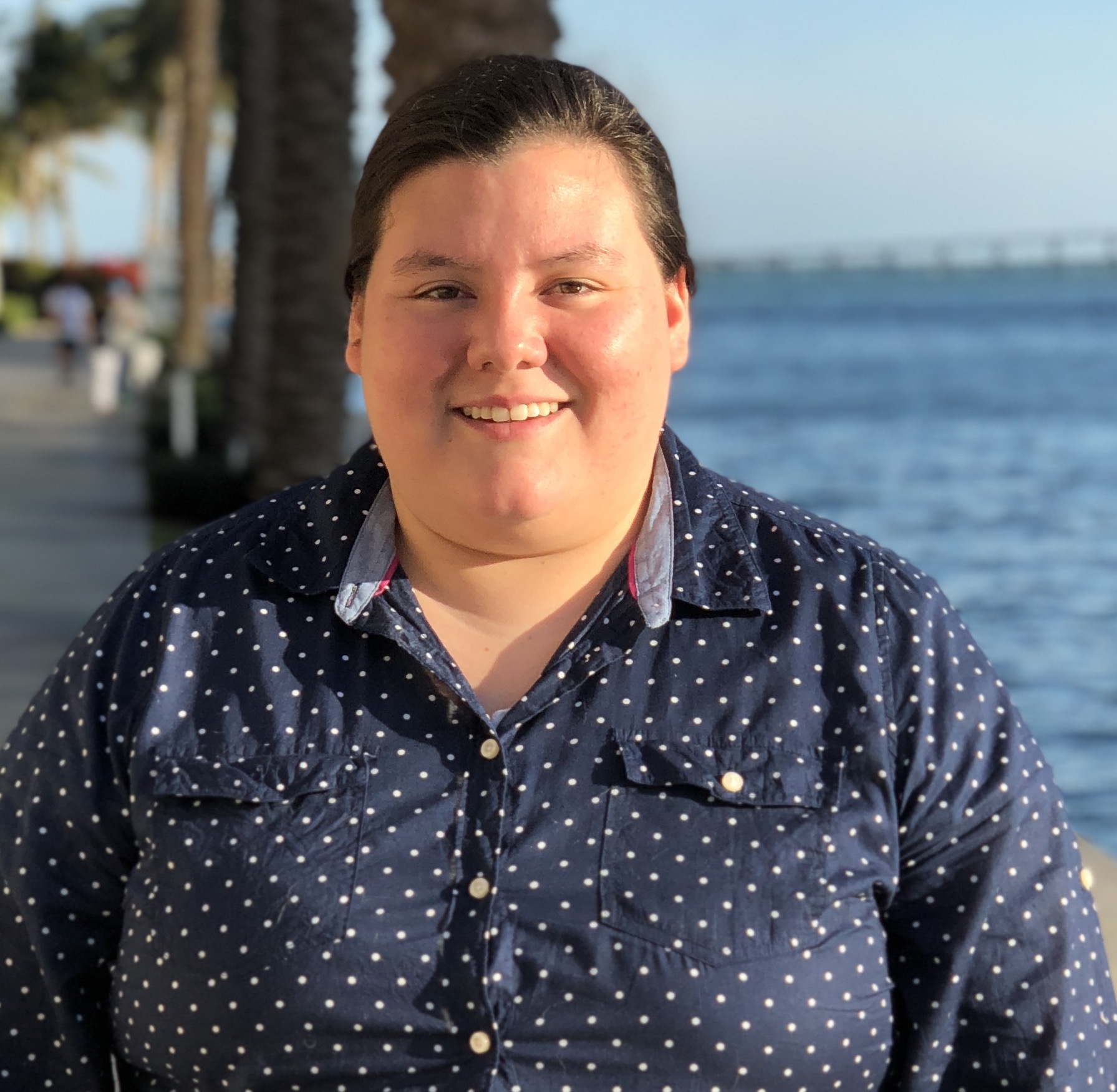
Connect with John Ray:

Website | LinkedIn | Twitter

Business RadioX®:  LinkedIn | Twitter | Facebook | Instagram

Tagged With: AI, artificial intelligence, ChatGPT, Fame Hackers, Human Resources, Isabella Bedoya, John Ray, Price and Value Journey, pricing, professional services, professional services providers, solopreneurs, value, value pricing

Effective Copywriting for Professional Services: An Interview with Gloria Russell, Russell Resources, LLC

March 29, 2023 by John Ray

Effective Copywriting
North Fulton Studio
Effective Copywriting for Professional Services: An Interview with Gloria Russell, Russell Resources, LLC
Loading
00:00 /
RSS Feed
Share
Link
Embed

Download file

Effective Copywriting

Effective Copywriting for Professional Services: An Interview with Gloria Russell, Russell Resources, LLC

Copywriter Gloria Russell joined host John Ray to discuss the elements of effective copywriting for professional services providers. Gloria talked about the problem of services providers talking too much about themselves, uncovering their unique brilliance, the rise of AI and what it means for copywriting, why reading makes for better copywriting, and much more.

The Price and Value Journey is presented by John Ray and produced by the North Fulton studio of Business RadioX®.

Russell Resources

How you show up and serve your clients is more important now than ever.

At Russell Resources and writer.mn, they help U.S. business owners who are bogged down with ineffective website content and unclear marketing messages.

They know that you would like to finally feel confident that you are sending the right message to the right audience. They understand that successful messaging must authentically resonate with your ideal clients. With their marketing and writing expertise, they would love to talk with you about helping you attract more of your ideal clients to increase revenue and profit.

Russell Resources can help you extend your reach, so it delivers value to you and your clients. They provide the strategic, client-focused, written content that sends your unique message to those you most love to serve.

Website | LinkedIn | Instagram

Gloria Russell, Founder and Lead Copywriter, Russell Resources LLC

Gloria Russell, Founder and Lead Copywriter, Russell Resources LLC

Nine years ago, Gloria Russell launched Russell Resources LLC to help entrepreneurs upgrade their marketing strategy and copywriting. She works with service-based businesses to gain clarity on their preferred markets, ideal clients, and services that provide in-demand solutions. Her compelling content enhances visibility, credibility, and marketability by reaching the right audience through engaging topics on websites, blogs, and LinkedIn posts.

After a lengthy corporate career, Gloria now enjoys working with clients across the country from her office in west central Minnesota. She treasures all the special times with her children and grandchildren who live out of state. Her son, Ryan, and family live in Virginia, and Michigan is home to her daughter, Odessa, and family.

Gloria enjoys travel, music, adventure or mystery books and movies, home improvement projects, and the cheery sound of birds chirping.

LinkedIn

TRANSCRIPT

John Ray: [00:00:00] And hello again, folks. I’m John Ray on The Price and Value Journey. And I’m delighted to welcome my friend Gloria Russell. Gloria is based in Minnesota, but she works all over the country and she works with a number of different verticals, you might say, performing copywriting services, giving them copywriting that they need for their website. It might be for brochures or social media posts or maybe LinkedIn or what have you.

But I’ve known Gloria for a while now and I really love her work. I love her perspective. And I thought she would be a great person to talk to about effective copywriting for professional services firms. Gloria, thank you so much for joining me.

Gloria Russell: [00:00:50] Thank you so much. It’s a pleasure. Thank you for the invitation.

John Ray: [00:00:54] Absolutely. So I didn’t do your background justice because you’ve done so much great work. But I’m going to turn it over to you and tell the listeners a little bit more about your background and how you became a copywriter.

Gloria Russell: [00:01:15] Well, I think, John, it actually started kind of a young age, at least for the writing part of it. When I was a young girl, I used to actually rip pictures out of a magazine and then I’d write my own story. I had quite the imagination. And I’m a reader and I think readers make good writers a lot of time. And it’s probably just because you have that exposure to the written word and the spelling and word usage, just all of that. And of course, you love the impact and the adventure. But I do feel like readers oftentimes make good writers.

And so that’s kind of how I began. I used to like to write. I always been a reader. But if you fast forward to my corporate career, there I had a variety of responsibilities. But part of it was I wrote internal and external communications. And for some of them I was the author, but for others I was writing for other people. It might have been the owner of the company, the VPs, the CEO, the C-suite, whomever.

And so I learned, and I feel like some of it might have been a little bit of a natural tendency. But I learned through years of practice how to write in the voice of many different people. And it was really fun for me. So I enjoyed that a lot.

John Ray: [00:02:49] You said something there I want to follow up on. You talk about the connection between reading and writing. Talk about how important it is to read in order to develop your writing skills.

Gloria Russell: [00:03:06] I think it is, most definitely, because and I think that’s one of those things that really helps. When you read, and I’ve got the whole bookshelf, when you read, you really see how stories develop. You see different styles of writing, but you can also recognize the good patterns and even just the words and the spelling and all of that. I’m one that finds the mistakes in books. And I’m always thrilled when I read a book and there are no mistakes, but I think it is important.

It’s kind of funny, John, because in my corporate days when I did a lot of writing, I didn’t call myself a copywriter. Even though I certainly was, but that was just one of my many duties. And I didn’t call myself a copywriter. It wasn’t until I decided to leave the corporate campus and start my own business that I realized, oh, now I’m a copywriter.

Because what I was trying to do, I wanted to help business owners with their copywriting, with their content, with how they projected themselves. And that’s what they told me they needed the most. So the things I love to do, that’s what I decided. And I do love it because it offers me a lot of freedom and flexibility at this stage of my career. But now I indeed do call myself a copywriter because that’s what I do all the time. So I’ve owned up to it now.

John Ray: [00:04:45] Okay. Well, I want to talk about that term for just a second, because the term itself, I understand why you use it because that’s what people are looking for. So you have to call yourself that, right? But the writing itself is the task, and you do so much more than that. And really, and this is true for any good copywriter, right? I mean, it does not start with the writing. It starts with something bigger than that. Talk more about that.

Gloria Russell: [00:05:20] Yeah, absolutely. Well, so there is the writing thing, and that’s the part where I say I kind of came by that early and came by that honestly. But when I talk about the content, really, it’s the marketing. And sometimes people don’t know that’s what they need and they’re asking for the writing, which is definitely the product. But a lot of times, it’s the marketing and they don’t quite understand that.

So when clients come to me, typically what they’ll say is they need the content, they need the writing, but they don’t have time, they don’t know how to write, they can’t write. Some of them just say it would be torture. So they want something professional, something that’s really going to serve them well, represent them well, but they’re not sure how to provide that for themselves.

So a lot of times, even I do use the word copywriting because you need to, but a lot of times I use the term marketing content. So I’ll say I write marketing content, or I create marketing content. And I think sometimes people understand that a little bit better.

John Ray: [00:06:33] You know, I think I’m qualified to judge a bad copywriter from a good one because I’ve had bad ones and I’ve had good ones, and that means you. And I think the difference is the copywriters that play into people’s point of view, right? I mean, and I think your talent, it seems to me, is giving professional services providers and other companies you work with a point of view makeover that it’s not about them and what they do per se.

Gloria Russell: [00:07:14] This is so true. I think what you need to do and what people want, sometimes they’re just not really able to express it. But really, we need to uncover their unique brilliance and how they’re different and how they relate to the client. Because in the writing and in the copy that people are going to read, it needs to be all about the client.

There are many different types of copywriters. There are some and they are professionals as well. But there are some that will write for a particular industry, and they will maybe create companies that will create a website and the copy that goes with it, and they sell that same thing to everyone in that niche or all the same.

So there’s really no way to differentiate when you see that. And if that’s something that works for you and that’s what you need, that’s great. You have to know what your objectives are and what your goals are. For me, I like to provide original content. And so that means I really need to get to know the business and who their ideal clients are.

John Ray: [00:08:22] Yeah. And I guess this also comes around to a lot of professional services providers have, they’ve gotten trained too. Right? I mean, they’ve done a lot of writing along the way, particularly attorney’s verticals like that. Right? They’ve done a lot of that. So. If you’re a good writer, why do you need to hire a copywriter?

Gloria Russell: [00:08:55] Well, there’s usually two reasons. People will come to me, and they’ll say, I am a good writer. And they are, but they don’t have time. They absolutely do not have the time. And that’s not where they want to focus their energy. But most of them are good, they’re good writers, but they don’t really understand the marketing side of it. And you need to really love the outcome.

So once you have new content, say for your website, your blogs, your LinkedIn profile, bios, whatever it is, you want to feel really good about that and proud of it because I feel really bad when people say, yeah, I wrote it but it doesn’t really do the company justice. It doesn’t really help me. People aren’t attracted to it.

And the whole thing is you need to speak to the clients. You need to show what’s in it for them and you need to do it pretty quickly. So I think a lot of times the real reason is it’s just a matter of the marketing side of it. People have trouble talking about their own, talking about themselves or their own business a lot of times.

John Ray: [00:10:06] Well, my sense of it is they talk too much about themselves. So maybe they’re too good at talking about themselves as opposed to talking about what’s going on in the heads of the potential client that they have, right?

Gloria Russell: [00:10:20] Right. Well, that’s absolutely true. And that’s one of the things that I see as probably the biggest, well, I would say undoubtedly the biggest mistake that people make when they write their own content. And a lot of people will do that, especially when they’re starting out. But they talk too much about themselves and too much about the company and we do this and we do that.

But the truth is, when someone comes to your website or looks at some marketing materials, whatever it is, they want to know what’s in it for them. And people don’t have a very long attention span anymore. I don’t either. So they want to see it and they want to see it quickly. So you really need to talk about the client and what’s in it for them. That’s what gains you the outcome that you’re really looking for.

John Ray: [00:11:11] Well, let’s talk about the, I guess, the piece of this that involves how you work with a client and how you get to that point. So dig into that for us. Take us through what that looks like for you as you unpack all that with a client.

Gloria Russell: [00:11:33] Well, when there’s a new client, the first thing always is to get to know them. So I will spend time with them to really understand what drives them their why, why are they in it? I’d like to know about their business, the mission, the vision, what they’re hoping to achieve. And so we have some discussions on that. Some of them will go pretty deep to see what’s it all about. I want to know what’s important to them.

But the second thing we’ll talk about is who is their ideal client? Who are they really looking for? Who do they want to serve? And those are the people that we want to attract because we want them to fall in love with you so that you can serve more of those type of people. So we discuss all of that with an understanding of what their goals are and who they’re really going to be basically a hero to. And then we decide what needs attention and where we can show the client some love. So it might be their website, it might be their LinkedIn, it might be blogs. Sometimes it’s video, video scripting, case studies, whatever they need. But you need to start with those elements first.

John Ray: [00:12:49] Do you find that you discover more about the clients of a service provider than maybe they knew themselves?

Gloria Russell: [00:12:59] It happens sometimes. Yeah. The interesting thing is when I talk with business owners, most of them know a lot about their business and what their goals are and what they’re trying to achieve, who they want to serve. Some of them are very clear on who their preferred clients are and who they can really make a difference for. But some of them are not so clear, especially if they’re a little earlier on in their business.

Or during the pandemic, a lot of people change their focus or do a little bit of a switch and they might have added services or just they’re doing their work differently. They might even be looking for a different set of clients. So we would talk about that. And sometimes we need to have a little bit more discussion on that to really understand who it is they’re looking for. Because until I know who those clients are that they really want to serve, I can’t write for them. I need to know who they are so that I can write directly to them, and it will speak to them and resonate with them.

John Ray: [00:14:11] Yeah, that makes sense, Gloria. Now, so you go through — and I know this from working with you. You go through a pretty extensive interview process, right? And you record that interview, so you have access to that later, right?

So I guess what are the big — are there surprises that come out of that? I’m just curious if your clients sometimes have epiphanies about their own business that maybe they didn’t fully appreciate? And just because you’re an independent third party and looking for their special sauce that you find things they didn’t know they had.

Gloria Russell: [00:15:01] This is true. It does happen sometimes. And it turns out to be a delightful journey for the business owner, I feel. And they’ll say, oh my gosh. And sometimes I think they’re a little bit worried about it, like, well, it will be too overwhelming, depending on where they are at. It depends really on how deep we go into that and how much we have to do.

But typically, at the end, they’ll just say, oh my gosh, I learned so much and I’ve narrowed things down and I have much more clarity now. And they realize that actually the exercise was fun. And so, I really love that because I don’t want anybody feeling nervous about it or like it’s going to be too much work. But you do have to ask the right questions so that you can uncover the essence of their business goals and what they’re really trying to accomplish.

John Ray: [00:15:57] Yeah, that makes sense. So what are the services businesses that you find maybe the most challenging to write for and why?

Gloria Russell: [00:16:13] That one’s pretty easy for me. And every copywriter might have a different answer. But for me, the most challenging are legal and financial. And it doesn’t mean that I don’t write for them. I do. I will write things like ads. I’ll do their LinkedIn profiles to make sure it really represents them well. I will do some website content, or it could be blogs or posts.

What I won’t do is I won’t do white papers or something that really gets deep into the topic. And the reason is I’m not the expert on the legal and the financial. That’s not my main focus. And there are a lot of things in those industries that you can’t say or certain ways you can’t say it. There are certain words you can’t use. And so, I just avoid that. And if there is someone who needs that type and that depth of copy for legal or financial, I refer them to someone who only works with that group.

John Ray: [00:17:23] Okay, cool. So let’s say we’ve got some someone listening to this, and they’ve decided, okay, I give up, I’m going to hire my own copywriter. So one question that I get a lot from people is I don’t know how to judge. I don’t know how to judge who’s a good fit for me and who’s not, because it all kind of sounds the same to me when I go to their website or what have you. So how do you counsel someone on how to make a good selection of a copywriter for their business?

Gloria Russell: [00:18:03] Well, I think there are ways that you can go about that. And first thing I would do is you have to have an idea of what you need. But you can go to the copywriters, look for their LinkedIn. And when you look at their LinkedIn profile, you can gain a little bit of an idea of who they are, what they do, what it might be like to work with them. And you can see a little bit about their style.

The other thing you can do is you can look at their recommendations and that will tell you something I think that’s valuable. And the LinkedIn recommendations are awesome. You can see who said what. You can even see the date that it was posted. So I think that’s really good. You can also go to their website and just see how they wrote their own website and who they seem to be speaking to, that kind of thing.

So I think those two. And then if it seems like something that speaks to you, you can ask for a conversation. I’m sure that any copywriter would be very happy to have a chat and you can decide if it’s a good fit.

John Ray: [00:19:22] Yeah. Okay. So I want to get to the topic of the day, which is AI and ChatGPT and Google has Bard coming out. Well, it’s already out right now, but talk about just how you view AI and copywriting and your ability to do what you do.

Gloria Russell: [00:19:52] Yes. It certainly is the topic of the day, isn’t it?

John Ray: [00:19:55] Oh, yeah.

Gloria Russell: [00:19:57] For me, I love technology, so I don’t think of AI or any kind of techno innovative happenings as any kind of a threat. If you think about over the years, all the technology changes we’ve had, it’s exciting and we have capabilities now that we never had before. And this is another thing. I mean, it’s ever-evolving and it will continue to evolve.

I know there are people who aren’t as fond of technology. Probably they think, oh, now we have to learn another thing. Or some people just don’t like change. And so that impacts how people feel about things. I’m one of those that really embraces change and technology. I mean, as long as it can do something for me that might be productive, it’s great. So change doesn’t bother me.

I mean, even in my personal life, John, I, like a lot of people don’t like to move and I have moved many times. For me, that’s just an adventure. I don’t have to clean my closets. I can just move. And I kind of take that same perspective with technology. And I think AI can really help a lot of business owners and it can help a lot of career professionals in many ways that might not have been available to them before. And it will keep getting better.

I’ve seen a lot of my clients use AI effectively for writing emails. Some of them, especially if they’re a little concerned about how to structure the sentence or which words to use, they find it very valuable. I’ve seen others use AI as they start projects, maybe to outline something or to gain some other ideas. That is another benefit.

And then of course, there are some people who are using AI to write their posts in their blogs and their eBooks and all of that. And it’s amazing if you just watch it unfold, it’s just like, oh my gosh, look at this, it’s amazing to just see it happen so quickly.

But here’s the caution. And this is my view, but here’s the caution. This is like anything, I believe the output is only as good as the input. And so to use it well, you really need to spend some time with it and improve the questions you ask, and you need to know when to use it and basically create a strategy.

John Ray: [00:22:35] Yeah. There’s something beguiling about getting the results as quickly as you get them. And what I mean by that is it’s kind of like if you, well, I’m dating myself. Probably not you, but I’m dating me. So, I mean, when, I guess it was VisiCalc, came out and the old spreadsheet software and because everything was so well organized and so forth, I mean, you maybe took a little bit of a, had more confidence in the results than you should. Right. Just because of the way the output looked. Right. And it strikes me that something like ChatGPT is very similar.

Gloria Russell: [00:23:28] Yes. Yes, I think so. I don’t believe for a minute that it would replace humans for exceptional copywriting, but it can help speed up the process a little bit if really learn how to use it to your benefit. And on the other hand, I’ve had clients come to me in the last weeks saying they don’t want to use AI for their content because they don’t feel that it gives the personality, or it doesn’t add to their branding, and it just doesn’t pull it all together. So that’s why they would like for me to do it so that they know that that’s they’ll get the outcome that they want.

But the whole thing is fascinating. And I think the other caution that I would have is it’s like anything else, it’s not perfect. And so when you use ChatGPT or the others, it will create content that can sometimes be inaccurate and there can be mistakes. It’s like any software actually even if — well, it’s because I know I guess. But if I use the grammar software, I can see it make mistakes or I can see it use a word that changes the meaning basically of what I want to say. And it’s not going to be a good thing for me.

So you have to be aware that all the information might not necessarily be accurate and some of it might be a little bit biased. So you have to, when you’re using it, I feel like you need to, in the end, really make it your own and edit it. Make sure that it has the proper content, grammar, tone and flow that you’re looking for. In other words, what you really want is something original, not strictly machine generated.

John Ray: [00:25:21] Right. Yeah. And so do you use ChatGPT or its equivalents? Do you use AI yourself?

Gloria Russell: [00:25:33] I do to a point. I do to a point. But I certainly don’t write my clients content with ChatGPT. No.

John Ray: [00:25:45] Okay.

Gloria Russell: [00:25:46] N-O.

John Ray: [00:25:47] So I got it. So are you using it for like research, outlining, prompts, or that kind of thing? Is that the extent of your usage?

Gloria Russell: [00:25:57] Pretty much. I would say, honestly, I’m using it just to see what it can do.

John Ray: [00:26:02] Okay. Okay.

Gloria Russell: [00:26:03] Really, I feel like we’re really at the beginning stages of this. And so I use it to see what it can do, but it does not replace the original content for me at all. So, but it’s very interesting. It’s fascinating.

John Ray: [00:26:20] Yeah, for sure. So let’s talk about tone and getting someone’s voice because I can hear someone saying it’s a valid point. That may be a problem with ChatGPT, but how do I get a copywriter that gets my tone and my voice, right, that makes it sound like me? So how do you accomplish that?

Gloria Russell: [00:26:50] Well, I don’t know that there’s really a class I could teach on that one. But again, I feel a little bit like I had maybe a little bit of a natural tendency there, but also probably just because I’ve done it for so long. That was part of my corporate work. And again, you need to really know your client and you need to know who you’re speaking to. So that’s the key to it right there, I think.

And it’s very important to have those conversations with the client, to understand their personality and their brand, what they’re trying to accomplish, their focus. And in working with them over time, if that changes, then you have those discussions again. But if you’re working with someone for the first time, like I will look at what has been created before and I’ll ask them how they feel about it. Sometimes they’re really happy with it, sometimes they’re not. They understand that that did not represent them the way they wanted. And so we talk about those kinds of things. But I think if you ask the right questions, you can really understand better who they are and how they would speak to their client.

The other part is knowing the client and how would they speak to those marvelous clients that they love to serve, and how do those clients want to be spoken to, what do they want to know? And again, you don’t want to use too much technical jargon or acronyms. You don’t want to get too technical. So there’s a lot to it, but it’s really fun. And I just am thrilled when I hear the comments that people say, oh, I don’t know how you can write so that it sounds like I wrote it, but you do a great job. And that really makes me feel good.

John Ray: [00:28:46] Yeah. And that really gets over the objection I think a lot of people have toward hiring a copywriter in general, right. And they put this in a category. They kick the can down the road because that’s what they’re afraid of and they’re waiting for a time they’ll be able to do it themselves. And they never get to that point, right?

Gloria Russell: [00:29:07] Yeah, it’s true. I have had a few, not many, but a few say, well, I don’t know that you could write my content because you don’t totally understand my business. Well, we have conversations so that I can understand enough. And I think what helps me too is that I have that corporate background and I was involved always from the strategy all the way through to the implementation.

So I do understand business and that probably helps me too. But sometimes it’s maybe better not to know all the details because you can write then in a way that more people will understand rather than when you’re really in the thick of it and you’re getting a little bit too detailed or too technical. It’s interesting.

John Ray: [00:29:54] Yeah. Sometimes knowing too much makes you a captive of all that, right?

Gloria Russell: [00:29:58] Yeah.

John Ray: [00:29:59] Yeah, yeah. Yeah, that makes perfect sense to me. Gloria, this has been great. And I can’t imagine that there aren’t some folks that would like to know more about you and your services. So can we give them your contact information and allow them to get in touch with you?

Gloria Russell: [00:30:18] Absolutely. Thank you so much. So they could Google Gloria Russell copywriter and they would find my LinkedIn and my website for Russell Resources. That’s one way. But I have a shortcut. The shortcut is you can just Google writer.mn. I’m based in Minnesota, so the MN is easy to remember. So writer.mn goes directly to my Russell Resources website.

John Ray: [00:30:44] Terrific. And you were again, work with clients really all over the place. You may be in Minnesota, but in terms of your clients, you’re all over the place.

Gloria Russell: [00:30:54] All over the country. I don’t do international anymore, but all over the country.

John Ray: [00:30:59] There you go. Gloria Russell. Gloria, this has been great. Thank you so much for joining me and our listeners and talking about your work and the copywriting profession. Thank you so much.

Gloria Russell: [00:31:14] Thank you so much. I appreciate it. It’s a pleasure.

John Ray: [00:31:18] Hey, folks, just a quick reminder that you can find the show archive for this series at pricevaluejourney.com, as well as your favorite podcast app. So whichever makes the most sense to you, just search pricevalujourney.com or go to pricevaluejourney.com or search Price Value Journey and you’ll find it.

Also, if you go to pricevaluejourney.com, you can find updates on my upcoming book. It’s called The Price and Value Journey, Raising Your Confidence, Your Value and Your Prices Using the Generosity Mindset Method. Be out later this year in 2023. So for my guest, Gloria Russell, I’m John Ray. Join me next time on The Price and Value Journey.


About The Price and Value Journey

The title of this show describes the journey all professional services providers are on:  building a services practice by seeking to convince the world of the value we offer, helping clients achieve the outcomes they desire, and trying to do all that at pricing which reflects the value we deliver.

If you feel like you’re working too hard for too little money in your solo or small firm practice, this show is for you. Even if you’re reasonably happy with your practice, you’ll hear ways to improve both your bottom line as well as the mindset you bring to your business.

The show is produced by the North Fulton studio of Business RadioX® and can be found on all the major podcast apps. The complete show archive is here.

John Ray, Host of The Price and Value Journey

John Ray The Price and Value Journey
John Ray, Host of “The Price and Value Journey”

John Ray is the host of The Price and Value Journey.

John owns Ray Business Advisors, a business advisory practice. John’s services include advising solopreneur and small professional services firms on their pricing. John is passionate about the power of pricing for business owners, as changing pricing is the fastest way to change the profitability of a business. His clients are professionals who are selling their “grey matter,” such as attorneys, CPAs, accountants and bookkeepers, consultants, marketing professionals, and other professional services practitioners.

In his other business, John is a Studio Owner, Producer, and Show Host with Business RadioX®, and works with business owners who want to do their own podcast. As a veteran B2B services provider, John’s special sauce is coaching B2B professionals to use a podcast to build relationships in a non-salesy way which translate into revenue.

John is the host of North Fulton Business Radio, Minneapolis-St. Paul Business Radio, Alpharetta Tech Talk, and Business Leaders Radio. house shows which feature a wide range of business leaders and companies. John has hosted and/or produced over 1,700 podcast episodes.

Coming in 2023:  A New Book!

John’s working on a book that will be released in 2023:  The Price and Value Journey: Raise Your Confidence, Your Value, and Your Prices Using The Generosity Mindset. The book covers topics like value and adopting a mindset of value, pricing your services more effectively, proposals, and essential elements of growing your business. For more information or to sign up to receive updates on the book release, go to pricevaluejourney.com.
Connect with John Ray:

Website | LinkedIn | Twitter

Business RadioX®:  LinkedIn | Twitter | Facebook | Instagram

Tagged With: AI, artificial intelligence, business writing, ChatGPT, copywriting, Entrepreneurs, Gloria Russell, John Ray, Price and Value Journey, Price Value Journey, pricing, professional services, professional services providers, Russell Resources, solopreneurs, value, value pricing, Write.mn

Thriving After Trauma: An Interview with Karen Nowicki, Phoenix Business RadioX® and Deep Impact Leadership Coaching & Consulting

February 23, 2023 by John Ray

Karen Nowicki
North Fulton Studio
Thriving After Trauma: An Interview with Karen Nowicki, Phoenix Business RadioX® and Deep Impact Leadership Coaching & Consulting
Loading
00:00 /
RSS Feed
Share
Link
Embed

Download file

Karen Nowicki

Thriving After Trauma: An Interview with Karen Nowicki, Phoenix Business RadioX® and Deep Impact Leadership Coaching & Consulting

What do you do when trauma hits you without warning? How do you recover personally? How do you hold it together for the clients you work for in your services practice? How do you get to a point where you can thrive again? Karen Nowicki, Phoenix Business RadioX® and Deep Impact Leadership Coaching & Consulting, joined host John Ray to discuss the trauma of her husband’s suicide attempt, what she did to cope with her own mental health challenges that followed, her decision to share her journey in detail, how she managed her two businesses through those difficult times, and much more.

The Price and Value Journey is presented by John Ray and produced by the North Fulton studio of Business RadioX®.

Phoenix Business RadioX®

Since 2017, Phoenix Business RadioX® has successfully launched, promoted, and produced over 1500 podcast episodes covering topics from BioScience Careers to High Tech Lending …and just about everything in between.

Website | LinkedIn | Facebook | Instagram

Karen Nowicki, Owner, iNudge LLC, Phoenix Business RadioX® and Deep Impact Leadership Coaching & Consulting

Karen Nowicki, Owner, iNudge LLC, Phoenix Business RadioX® and Deep Impact Leadership Coaching & Consulting

Karen Nowicki is the Owner of iNudge LLC, the parent company to Phoenix Business RadioX and Deep Impact Leadership Coaching & Consulting.

Executive Leaders and Business Owners hire Karen to accelerate their intrapersonal / interpersonal relationships and harness the power of a growth mindset.

Karen has spent over 30 years in corporate, small business and educational leadership roles and for the past 10 years has held an impressive private client list that includes c-suite leaders in a variety of industries, including: technology, medical, higher education, hospitality, and finance.

Karen is an impeccably trained Integration Coach with certifications in communications, facilitative leadership, mindfulness, trauma integration, tao healing, talent management, and strategic planning.

LinkedIn

TRANSCRIPT

John Ray: [00:00:04] And hello, everyone. I’m John Ray on The Price and Value Journey. And I am delighted to welcome Karen Nowicki. Karen is with Phoenix Business RadioX and Deep Impact Leadership Coaching and Consulting. And just a way of introducing Karen, what do you do if, not only in your professional services practice but in your life, trauma comes right out of the blue and drops right in your lap? And how do you hold it together and recover? And that’s what we’re going to be talking with Karen about today.

John Ray: [00:00:40] Karen is a successful author, speaker. She has her own coaching practice, as I mentioned. The name of that practice is Deep Impact Leadership Coaching and Consulting. Karen’s been an expert guest on regional television and radio shows. She’s a regular contributor to many print and online magazines, blogs for both business and education. And where I intersect with her proudly is that she and I are colleagues in the Business RadioX Network, and Karen’s the much smarter studio partner than I am, but she runs the Phoenix Business RadioX Studio. And Karen Nowicki, it’s just a pleasure to have this time to chat.

Karen Nowicki: [00:01:29] I’m excited to spend time with you, John. It’s usually a quick text or a phone call, how are you doing this, what’s going on here, between either one of us. And we have yet to ever meet in-person, but we’ve got to change that in 2023.

John Ray: [00:01:42] I look forward to that. Yeah. I want to correct that. So, let’s put that on our list for 2023. I like that.

Karen Nowicki: [00:01:52] Did I say ’23, too, I think? I meant 2023. If I said ’22, I can’t keep up.

John Ray: [00:01:58] Well, let’s get each other the right year. I’m not sure I said the right one. But I gave a little bit of an overview of you and your work. But like me, you have two different professional services businesses, so give everyone a little bit of an overview of that work.

Karen Nowicki: [00:02:16] Sure. Again, thank you for having me be with you and your listeners today or viewers. I have been referred to, for years, as the ultimate problem solver and solution finder. For the past 24 years, I’ve acquired advanced training and certifications in executive leadership, trauma integration, Tao Healing, and then organizational and personal development.

Karen Nowicki: [00:02:40] And it just made sense that while I was running my coaching practice – which you’ve mentioned a little bit – almost six years ago to open Phoenix Business RadioX and run that alongside it. And I’ll talk about why that was so important in a moment.

Karen Nowicki: [00:02:54] My greatest strength is the ability to help people understand what they need, what they want, and how to have that come together on a consistent and daily basis. Most of the time, it’s telling people and showing them how to get out of their own way. And I know the business of business as well as the business of people. And so, let’s face it, in any business, we’re always dealing with people.

Karen Nowicki: [00:03:19] And so, it just made sense, Business RadioX was a wreath on my door and an opportunity for me to kind of elevate my exposure as a leader when it comes to personal and professional development. And I haven’t ever looked back and regretted the decision. It’s been hard to run both businesses at times, especially these last couple of years. But I’m doing it and I’ve got the right team to help me now.

John Ray: [00:03:45] Yeah. That’s terrific. I’m curious for you – and we’ve talked a little bit about this, but for our listeners – why later on Business RadioX specifically, and that work among all the other things you could have done next to your coaching practice?

Karen Nowicki: [00:04:03] It’s a great question. I think it’s an important one for you and I when we encourage people to take on podcasting or B2B radio in their businesses, because not everybody understands why at Business RadioX we do the things that we do it or the way we do it.

Karen Nowicki: [00:04:18] So, six years ago I had sold a business, and it gave me the leverage to hire a coach and think about how do I want the next layer of my career to be. And, also at the same time, gave me the leverage to open an auto mechanic shop for my then husband. So, I went to my coach and I said I continue to work with professionals. These were attorneys, doctors, successful entrepreneurs and business owners, typically highly visible in their industries and was coaching them at a very soulful, personal, and professional level. And yet they weren’t referring me like other people were, the general laypeople.

Karen Nowicki: [00:04:58] And I knew that I was making a huge difference in their lives because I was always the one they were texting saying, “Thank you. I finally solved that problem at work. I finally hired the right teammate. My husband or my wife and I are getting along better. I had you sit on my shoulder when I had those conversations.” Like, all that acknowledgement told me that they were stepping into their life and leadership in an incredible way and I got to be the catalyst and the help to kind of either nudge or shove them into that depending on what they needed. And yet they weren’t referring to me.

Karen Nowicki: [00:05:32] And so, my coach said, “Well, go ask them. These are people that you’ve gotten to know and they really care about you. And clearly, you’re making a difference.” Their feedback to me, John, was, “Well, why would I tell anybody you’re my best kept secret. Like, you’re my secret weapon.” And they weren’t interested in telling me.

Karen Nowicki: [00:05:47] And that was difficult for me to hear because at that time my coaching practice was referral only, which is a mistake, but it’s how I built it. I didn’t understand marketing and advertising nor did I want to do it. And I really have never liked the sales part of things.

Karen Nowicki: [00:06:06] And so, my coach challenged me to maybe consider a podcast. And at first I thought that was an awful idea. I quickly, within two hours of research, came across Business RadioX. And I could just tell that they were or we are doing things differently. It’s about the story and shine the spotlight on someone else. So, I thought, I can do that.

Karen Nowicki: [00:06:28] And within a week, was in Atlanta visiting with Stone and Lee, following them around and paying attention to what they’re doing. And by the time I flew home about four days later, I had made the decision to open Phoenix Business RadioX so that I could show up among our leaders in the Metro Phoenix area, have conversations about what’s important to them, their industries, their verticals, their decisions, their initiatives. And in exchange, have an opportunity to get to know them at a really deep level. And then, in turn, be able to say, “Here’s what I do outside of Business RadioX. If you know anybody who’s struggling with personal growth or professional development or leadership or finances, whatever it is, have them have a conversation with me.”

John Ray: [00:07:13] You know, it’s amazing what you can do with a mic, isn’t it? I mean, that’s terrific. Well, I want to get right into your story, Karen, or the reason we’re doing this show in terms of the trauma that hit you and your now former husband, Mike. I want you to share whatever piece of that you want to share and how you want to share that story.

Karen Nowicki: [00:07:38] Yeah. It’s not an easy conversation to share and it’s also not very easy for people to listen to. Back in 2019, my then husband attempted suicide and survived gunshot wound through his head. It was a total surprise to me. We closed his auto shop and we unraveled the mystery of how did this all happened while he was lying in the trauma intensive care unit for the first month of his recovery. I came to see that there was addiction and gambling and just really a lot of mental health challenges that weren’t as evident as they were. We had been together for 15 years, the love of my life.

Karen Nowicki: [00:08:27] And I struggled to get up everyday. I struggled to help our then 12 year old kind of make his way through it. I have two older kids as well who very much loved and cared for Mike and they were trying to make sense out of it. They were living out of the house, already adults.

Karen Nowicki: [00:08:45] And being so visible in our community already because I have had Business RadioX up and running for then almost two-and-a-half years, and the way in which I show up in social media even before this, is kind of I’m visible, here are the situations, the struggles, the challenges that I go through, I decided that I was going to tell the story while it was happening.

Karen Nowicki: [00:09:10] That was, I’ll say, a divine download. I woke up one morning and what was on my heart and in my head was you will tell this story as it’s happening. And I thought, “Oh. You can’t ask me to do that.” I was in trauma. I was in crisis. I wanted to just pull the sheets over my head and just disappear. And yet the next thought that I heard was, “I’ve prepared you your whole life for this.” And I thought, “Well, that’s a crappy way. Why would that ever be part of my story?” Because I pride myself on knowing people so well, and helping people, and getting really clear about soulful self-reliance and deep impact leadership, how could I end up with a partner who went to bed with me every night, that was the love of my life, end up wanting to take his own life?

Karen Nowicki: [00:09:59] So, long story short, Mike and I are no longer together. He wasn’t willing to or wasn’t capable of, I think is more more appropriate to say, to do the work it required to be a healthy whole unit between he and I and then, of course, our son. And it just made more sense safety-wise, mentally, physically, emotionally for Ivan and I to be on our own. I do know that he is now with his family in a different state. They’ve chosen not to have anything to do with us, which is heartbreaking. And at the same time, I continue to recover from that, all the while keeping both businesses open and being very vocal about my own mental health journey throughout this chaos and trauma and that of my sons.

John Ray: [00:10:46] Wow. A lot there. Let’s talk about the processing, the idea that all this was going on with your life partner and you had no idea. I mean, in terms of just the mental health struggles and then the financial issues and other issues that you talked about that were going on, how did you process just getting hit by this out of the blue?

Karen Nowicki: [00:11:16] I would like to say people will tell me that I processed it really well. And my first reaction is, “No. No. I didn’t.” When we fall into trauma or chaos, we go into the fight, flight, or freeze, or fawn mode and we’re now using a different part of our brain just for survival. So, a lot of it really, John, is a blur. Even though I was writing daily on our CaringBridge page and then, of course, on social media, it was really a therapeutic opportunity for me to try to make sense out of everything.

Karen Nowicki: [00:11:47] Mike and I were both building our businesses at the same time. Phoenix Business RadioX was brand new, so is his auto shop. And one business alone for a family is difficult in those early startup days, you and I both know that, let alone two. So, while I felt like we were grounded and corrected – excuse me – grounded and connected, he had his set of challenges and expenses and I had mine. And so, I knew he wasn’t feeling well physically. I was oblivious to – because he wasn’t willing to share it – what was going on mentally.

Karen Nowicki: [00:12:21] And I think that’s the most important call out here for our listeners and our viewers. Not everybody, one, knows when they’re struggling mental health-wise. And even if they do, there’s so much stigma and so much fear about saying to somebody I am not well, I am not doing well and I need help. Like, for Suicide Prevention Month and even just mental health awareness, we always say I’m there for you, be on the lookout for clues and that sort of stuff.

Karen Nowicki: [00:12:53] And I will tell you, I think we are very good at hiding that stuff, which is part of why I’ve told my story so vocally and so visibly, because my story is no longer Mike’s story, nor was it even when it was happening. I had to deal with my own mental health. And so, I just got really good about asking for help and being very candid, “I feel like crap right now” or “I don’t even know which way is up.”

Karen Nowicki: [00:13:20] And always continue to have faith. I said to you earlier today before we got on the interview that the universe always has my back. And I believe that for all of us. If we can hold on to hope, we can get through anything. And I always knew that at some point beyond that threshold of chaos and craziness and be, fortunately, where I am today, even though the fog has just finally lifted the last couple of months.

John Ray: [00:13:44] Well, I want to dive into that a little more, the universe has my back. What are the beliefs that underlie that statement that you have?

Karen Nowicki: [00:13:55] For me, it’s faith-based. I don’t attend a church any longer. I grew up Catholic and have always been a very soulful, spiritual person, very led by a belief in a higher power. And even though life has proven to give me challenge after challenge, business and career, and marriages, and even challenges with kids, and health, and all that stuff, I continue to give that over to a higher power. And when I say the universe has got my back, I don’t know that it matters what faith we have or if we have any faith as long as we believe that there is something better on the other side of a challenge.

Karen Nowicki: [00:14:37] And so, every time I have a challenge, small, medium, or large, I just know where’s the growth, where can I learn more about me, learn more about me and how I show up in the world that I can take into this next iteration of where I’m going after, this stuff is behind me.

John Ray: [00:14:56] So, when all this happened with Mike, you decided pretty quickly that your response needed to be journaling, sharing what you had. And we’re not talking about private journaling. I mean, we’re talking, really, about online journaling. You can explain more about what I mean by that. But what was the genesis of that decision for you?

Karen Nowicki: [00:15:21] Again, I will tell you that it wasn’t my decision. I know that might sound crazy. But in my meditation practice and the way in which I just am very soulfully self-reliant, I listen very deeply to what my soul needs and how I’m supposed to show up in the world. So, I know that gets a little bit woo, but there you go. So, very early on within three or four days, again, I woke up and I just knew that I was being called from a higher place to journal and share publicly what was going on for me. And it was a survival mode.

Karen Nowicki: [00:16:04] My son said it recently that it was a way for me to survive and thrive versus a way for me to story tell and get attention. It doesn’t fit with everybody’s narrative. You know, there’s a handful of people, my family included, thinks I did it for attention and did it just to further my career. If that were that, I literally would have kept the sheet over my head, put a padlock on the door, and said, “I’m done. I’m out.”

Karen Nowicki: [00:16:30] And so, I asked three friends to read every entry that I wrote for CaringBridge – that, again, was repeated on social media – so that they could look at it through three layers. One, am I taking care of myself in this? Are you reading it to where you can hear that this really is me trying to find my way through the chaos and make understanding of what’s happening to the degree that I can?

Karen Nowicki: [00:16:53] Two, is it being respectful of Mike and his family and his journey? Because at the time, while I wanted us to be together forever, that was the plan, I never would have guessed that it would not have turned out that way. And yet I knew that at some point he would likely be in a position to be aware that I told the story as it was happening. So, was I respectful to him and his family and his journey? And then, the third piece was, if there could be a nugget for other people who are watching and listening and reading, is that opportunity there for someone to have a takeaway?

Karen Nowicki: [00:17:21] So, all, but I think one journal over the course of probably nine months journal entries, was there ever a sentence that came back? And my very best friend, Julie, came back and said, “This is the only sentence that I’m not sure where you’re coming from on this. It sounds more like ego than anything else. Can you reword it or pull it out?” And with that, I did. That was the only time. The rest of the time it was, “Oh, my gosh. Karen, this is what I’m getting from it and I know this is going to make a difference. And I can hear you getting better and healing as you go through this.”

Karen Nowicki: [00:17:49] So, less of a decision, John, and more of a calling. Which, I think, again, our viewers and our listeners for this particular show, if they’re entrepreneurs and business owners, even solopreneurs, we don’t come into our businesses lightly. We come into it, I think, oftentimes, because we have a calling to do something that’s bigger than us.

John Ray: [00:18:12] Right. Yeah, for sure. Now, this is the part of the story that I’m not sure that I’ve heard before, that you had three trusted friends that knew you quite well, that they sound checked it, I guess maybe is the word, right? They sound checked to make sure that the Karen they knew was speaking.

Karen Nowicki: [00:18:37] Yeah. And this was well before any of the immediate family started attacking and wanting to manage what I was saying and would rather have me be quiet. I just knew that I was fairly visible in our community anyway already. I’d already talked about post-partum depression when my kids were younger, and changing careers, and what is it like to be fairly visible and that sort of stuff, getting older, those kinds of things, even body image and those choices, and how I can grow to love myself more.

Karen Nowicki: [00:19:18] So, knowing that I had already been through all that and sharing in that way, I knew I needed to have people, not fact check, but just sound check and make sure that I was doing it from a place of, first, caring for myself; second, being respectful of Mike and his journey, wherever that would take him; and third, can people hear it from a place of what’s in it for me.

Karen Nowicki: [00:19:39] And it’s proven to be one of the most amazing things I’ve ever done. I hear, still, from people three years later how much I’ve changed their life or the lives of their loved ones. I would say, and I think only firefighters and medical professionals get to say this, I know there are at least eight people whose lives I’ve helped save because they either read or someone read to them the accounting of what I was going through as a dear casualty of somebody who wanted to leave this earth before their time.

John Ray: [00:20:15] I would love it, Karen, if you would share one of those as an example. You know, obviously, we’re not going to mention names or anything like that, any identifiers. But if you could just share an example of one of those stories.

Karen Nowicki: [00:20:30] I can. So, we’re here in Arizona. I had a high school friend reach out through Facebook and mentioned that she was going to be in town – this has been, oh, probably a-year-and-a-half ago – and would I be open to coffee. And we don’t know each other well. We see each other at reunions and, of course, on social media, thumbs up, or a little like this, like that. And I said, I’d love that. And so, I waited at the coffee shop for her to arrive maybe three or four minutes early. And as she’s walking from the parking lot, we smiled at each other.

Karen Nowicki: [00:21:00] And as she’s getting closer, I watch her face change and she starts to get teary eyed. And I was not prepared for that. We gave each other a big hug and she said, “I’m so grateful that you’re sitting down and meeting with me. I need to tell you how much you’ve impacted my life and the life of my fiancé.”

Karen Nowicki: [00:21:18] Now, we’re not spring chickens. We’re celebrating our 40th high school reunion this year, so we’re in our late 50s. And so, this is somebody that I knew as a young girl and have seen at reunions. And she’s in a relationship now. I believe they’re engaged, maybe even married now, a couple of years after we met over coffee.

Karen Nowicki: [00:21:39] And she said that her then partner was struggling with mental health, depression, suicidal ideation. And as she read what I was sharing, being his beloved partner, it was ripping her apart that that could be her and she didn’t know how to handle it. He was unwilling at the time to get professional help. And so, she started reading these entries to him aloud. And I don’t know how soon, but I think within four or five entries, he ended up agreeing to go get professional help by himself and also couples counseling for the two of them.

Karen Nowicki: [00:22:16] And she said I just knew that the anguish and the difficulty that I was sitting in, not having a clue what happened, not having known how to help, and having a partner who refused to get help until it was too late, and even now not getting the help, she just knew that she had to share that. So, I hope that’s kind of the example that you’re looking for.

John Ray: [00:22:43] Wow. That’s tremendous. And there’s no telling what has happened without you even knowing about it. And this is just what you know about in terms of the people that you have impacted by sharing your story so truly authentically.

Karen Nowicki: [00:23:03] Yes. There was no other choice. And now it’s interesting, again, I’m beyond it. We have not been married for over a-year-and-a-half now. And I want to continue to be a beacon of light for people, and it has to be authentic. So, I’m just kind of looking for what’s happening in my life that I can continue sharing.

Karen Nowicki: [00:23:26] You alluded to this, there was catastrophic financial loss that I was not even aware of had already taken place. And so, even though I’m 58 years old, it’s like I’m 23 years old, starting over again and keeping both businesses afloat. I’m so grateful for the community providing some financial support when we were in the midst of the chaos. I have a very dear friend who recently invested in my business so that I could get to the next level with teammates and that sort of thing.

Karen Nowicki: [00:23:55] And, yeah, I feel very grateful that I’ve been willing to get out of my own way and also share that part of the story to help other business owners and individuals who, again, sometimes we think that we’re the only person. I always say, people think that they’re terminally unique. And we’re not. We’re all looking for validation that we’re okay, and that we’re enough, and that we can contribute in some way. We’re all designed fairly similarly, whether we’re an introvert or an extrovert or anywhere in between, we just want to know that we’re here for a reason.

John Ray: [00:24:31] Since you brought up introvert and extrovert, we were talking about this before we came on, you know, the typical listener of this series is a solo and small professional services practitioner, most of whom are introverts as a general proposition. And I can hear the introverts saying, “I can’t believe that Karen shared what she shared.” What do you say to somebody that is thinking that and thinking I’m a private person and there’s no way I could do what you’ve done, Karen?

Karen Nowicki: [00:25:12] Well, stay private. I realized that that is one of my unique – I don’t know what it is – call it a curse or a blessing. One of the unique gifts that I bring to this world is the ability to tell people how I’m feeling as it’s happening. And not everybody can do that publicly.

Karen Nowicki: [00:25:32] However, it’s important to share your story with someone. And when people are fortunate to be in relationships, marriages, or long term friendships where they can really show up authentically as who they are and let someone know when they’re struggling and challenged and they’ve got the right support structure, that’s great.

John Ray: [00:26:16] And I don’t want to make this into something that’s a little crass like personal brand, but I think people hear that and they hear authenticity and showing up. But there’s showing up as – I’ll call it – the made up you. They’re showing up as the Real you. And I mean the capital R, Real you. That’s what you did.

Karen Nowicki: [00:26:58] Yeah. And there’s a way to do that, no matter who you are. This is not about airing your dirty laundry, just to do that, right? Just speaking authentically from a place of some of the challenges, whether it be business, or raising children, or moving to a new location, or the next level in your business, whether you’re introvert or extrovert, I don’t think that matters. As leaders, we’re called to show up authentically and everyone has their own pace and cadence for that.

Karen Nowicki: [00:27:30] That’s one of the neatest things that you and I can offer with Business RadioX, our story matters. And people want to hear what we’ve been through, what challenges do we have, what hurdles did we have to overcome, when did you think you’re going to quit and give up, and what got you through that to to be where you are today, what’s the next challenge that you’re faced with right now going into 2023. Those answers can be from the cuff and they can be from the heart.

Karen Nowicki: [00:27:57] And I think that’s one of the greatest things that Business RadioX has to offer people and with the work that you do, John, with your clients. People need to get out of their own way, myself included. So, I have coaches and guides. When it comes to sales, when it comes to marketing and advertising – I mentioned that early on – those are areas that I’m not well-equipped at and good at. And yet I show up because I’m listening and I’m learning and I’m paying attention to the people who do it better than I can. And they’re helping me learn how to do it for me in a way that it feels real and authentic to me.

John Ray: [00:28:33] So, let’s talk briefly, if we can, just the whole idea of you obviously had to hold yourself together, your relationships together, your children as they navigated this trauma that came out of the blue for them as well. But let’s talk about your businesses and just how you held it together. Because you’ve got to show up for clients and you’re a coach and you’ve got to bring something for that client that’s sitting in front of you with their own issues that may have nothing to do with what you’re dealing with. How did you do that?

Karen Nowicki: [00:29:23] I’m grateful that I had a couple different income streams. So, I think that’s important when we look at it from that perspective of we’re relying only on one avenue of income and it’s solely dependent on us, we’re in trouble. I was fortunate that I could very quickly hire someone to run the studio for me. And with very little direction, she took it over for me. So, that part of my business was handled.

Karen Nowicki: [00:29:49] I did step away from the intimate coaching for a little bit of time because I was no good for anybody, so being able to admit when I needed to step away. And, again, grateful that I had this other business running so that there was still the income.

Karen Nowicki: [00:30:07] As far as working with clients, both here at Business RadioX and in my coaching practice, I had already built enough strong enough relationships just in caring for people deeply and giving them permission to care for me back. That when I was ready to come back into the field full force, I could simply make those calls and send an email and say, “Hey, listen, I’m ready. Here’s the kind of clients that I enjoy working with. If you’re ready to come back and work with me, I’d love that. If not, if you’ll be a referral source for me.”

Karen Nowicki: [00:30:36] So, I think the theme for both of my businesses is when we care deeply for people and we allow people to care deeply for us, the universe works on our behalf. Things will come our way when we know that we are really a force for good.

John Ray: [00:30:53] You know, it strikes me as I’m listening to you talk, Karen, and again, I’m getting back to just what you decided to share. I mean, you did that as your own personal source of healing. It strikes me how generous that is, because you could have kept all that to yourself. You could have written what you wrote, pass it along to your three close friends, let them look at it, and just deep sixed it and kept it private. But there was a mission to what you were doing, and it was an act of pure generosity, it seems like to me, because you were willing to take whatever came your way in terms of the consequences of doing that, which, for you, were severe.

Karen Nowicki: [00:31:49] That’s very sweet of you to say. I don’t think I’ve ever heard anybody refer to it as generous, so thank you. It makes me a little overwhelmed.

Karen Nowicki: [00:32:00] It was a survival mechanism. It’s not something I wanted to do. I wanted to be like the rest of the world on social media and who’s visible and just the highlight reel. And, unfortunately, I didn’t get to share that. So, it was a survival technique. It was the only one that I had available to me. And I just listened.

Karen Nowicki: [00:32:26] And I think when we’re being called to do anything in our life, business or personally, and we have that – I’ll call it – nagging voice in the back of our head – mine sometimes sounds like a nag, a nag or a nudge – I’ve just learned in my life that it’s that voice and that nudge or that nag that’s constantly humming in the background that I’ve got to pay attention to. And, again, I have to just trust that I’m going to find my way through why it is that we do the things that we’re called to do.

Karen Nowicki: [00:32:57] And I love that you’ve shared that it felt generous. It makes me feel very hopeful and appreciative that you’re paying attention.

John Ray: [00:33:06] Well, thank you. Well, see, there’s a difference, to me, between help and trying to help people. Because sometimes help has strengths, right? I mean, it can come back in ways that maybe we don’t acknowledge, but it comes back in ways to benefit us. But when you’re doing what you were doing, knowing that you likely would suffer in some way from it, and you did, then that really gets beyond help into generosity, and that’s why I say that.

Karen Nowicki: [00:33:39] And my Business RadioX family or our Business RadioX family was there for me every step of the way, all of you. And we were fairly new in relationship. I’d only had the studio, I want to say, for – what? – a-year-and-a-half, maybe two years, and, again, at a great distance. I’m way over here in the Southwest and you guys are all in the Atlanta area. We’ve grown a lot since then as a team. And I never felt like there was a time that I couldn’t pick up the phone or text or email and say I need some help. And I didn’t have to rely on that very often. But when I did, everybody rose to the occasion.

Karen Nowicki: [00:34:16] Which, again, for our listeners, for this particular group of people who might be interested in a conversation like this, even though you are a solopreneur and you are at the helm, bring people in your life, invite people in your life, the coach, the guide, the mentor, possibly a partner, certainly your clients and your customers – find the win-win-win for everybody – all the stakeholders. So that, again, it’s a richer and more viable experience and it will have legs.

John Ray: [00:34:48] Yeah, for sure. And, really, one aspect of what you’re talking about is digging the well before you’re thirsty. I mean, you had that support structure before this happened. And when it happened, you were ready, you had prepared.

Karen Nowicki: [00:35:06] I have a friend who just had a 20 pound tumor removed from her stomach. We’re hoping that it’s not cancer. It doesn’t look like it’s going to be. And I just went and visited her on Sunday. Also, a business owner, a longtime solopreneur. And now she has a team of 20 people on her team, which is amazing. And she said just that, John, “I had no idea how the community and people in my life would respond when I needed help and I was laid up. And I’m so grateful that I built a business that didn’t rely just on me. That I got smart a couple of years ago and started building it so that more stakeholders could benefit in profit and we could help more people.”

Karen Nowicki: [00:35:46] And very different situation for me, but she said the exact same thing, “I am so overwhelmed by the amount of love and support and outpouring for people just being a champion of me. I can’t help but wonder why.” And we both laughed at each other and said, “Well, it’s because you show up that way for other people and that’s truly who you are.” So, yes, I love the way that you put that.

John Ray: [00:36:08] Yeah. Yeah. Wow. Shoutout to her and her healing, for sure. So, one of the things that has stood out to me recently, speaking of things we post on social media, is you’ve been using this hashtag I want to know about, so it’s #traumainformedworkplace. Now, what do you mean by that? What does that term mean? And is that looking ahead toward trauma that might occur? Is it looking backward? What are we talking about there, Karen?

Karen Nowicki: [00:36:43] So, it’s not my term. I didn’t make it up. A lot of people use it, especially now that COVID has been something that’s really knocked us all off of our A-game. And I come at trauma informed workplaces a little bit different. A lot of folks will go into companies, enterprises, medium size, small businesses, public education, wherever, and they will have hour long talks, sometimes half-day seminars, even three or four days, certification programs around how to be aware of where trauma might be impacting the way we show up in our life and businesses. That’s all well and fine. I would say that’s layer one. Let’s be aware that trauma is part of what’s happening in the background all the time.

Karen Nowicki: [00:37:34] So, the angry executive or the pissed off client or the employee who doesn’t show up for work day after day or they’re there but they’re not really high functioning, it’s likely that something traumatic has happened either recently or from the past that they haven’t dealt with. And in the work that I do with clients, I help people get the shock out of their body in a variety of different ways. But the body keeps score, and if we don’t clear the shock out of our body, it will inform our decisions. And we’re still in fight, flight, or freeze, or fawn mode. And fawn is maybe a new word for a lot of people. Fawn is an over caregiver and I’m taking care of everything but myself – that would be fawning – and kind of grappling for the attention and needing the visibility.

Karen Nowicki: [00:38:23] So, layer one is let’s just be aware of what trauma is, how it impacts our brain, and how it shows up in conflict. And let’s make sure that as a trauma informed workplace, we have a way to handle that and deal with that culture-wise and team-wise. That’s all well and fine.

Karen Nowicki: [00:38:39] And then, this next layer that I work with, with individuals and business owners that come to my practice and work with me, it’s let’s have you heal your trauma and re-integrate it so that your decisions, the way you show up in your marriage, your friendships, your business, your leadership, the way in which you work with your stakeholders, you’re standing in the present moment with all your faculties about you. You’re aware that you have a past, some of it may have been kind of sucky, some of it may have been great. But the decisions you’re making today are in alignment with who you are today. And you’re not having to look over your shoulder out of reaction or response.

Karen Nowicki: [00:39:16] Now, it’s a long winded answer, but there’s a lot to trauma, and I think we’re finally starting to have conversations about it so that we can be there at a higher level for each other, and most importantly for ourselves.

John Ray: [00:39:30] Yeah. And that shows up differently, as you said, for each of us. And the question is having conversation and being open about that and creating an environment where people can be open.

Karen Nowicki: [00:39:43] Safe, right? And we’re talking about trials. There’s personal trauma. There’s also historical trauma. There’s legacy trauma, familial, family trauma. And we all carry a little bit of that with us without even knowing it. So, we’ve got to come to better understand how does that come and show up in our communication or our lack of communication, and how can we have compassion, respect, and autonomy with each other.

John Ray: [00:40:11] So, Karen, you’ve been really generous with your time, and you’re busy, you got a lot going on.

Karen Nowicki: [00:40:18] My producer just walked by the window and was going to come in and get ready for our show, and he’s like, “Whoops. I can’t go in there yet.”

John Ray: [00:40:24] He’s like, “Hey, we got other things to do here.” But before we let you go, though, I would love it if maybe you could share one final takeaway. You know, as listeners absorb your story, what should they hold on to from your story that could help them in their personal lives and in their business lives?

Karen Nowicki: [00:40:49] So, we heard a couple of times that phrase, a couple of times, and you just said it to me as you’re kind of handing this for my final word, everybody’s story matters. Therefore, your story — like you’re lacking or you deficit, those are just stories that you tell yourself that you can change your story. Our stories and our past matter, and they don’t have to fully define us. So, take care of yourself, mental health, physical health, self-care, all of that is not underrated.

Karen Nowicki: [00:41:22] And it’s not just going to a spa once a month or getting your manicure, pedicure, or going to see your chiropractor, once a year checkup. It is daily practices that help you become the best version of you, so that when you look in the mirror everyday, you like the person that you see looking back at you. And that filters into every aspect of your life, most particularly those of us who are solopreneurs and entrepreneurs and business owners, we’ve got to get that together or we’re going to find ourselves struggling when it comes to financial wellbeing and the success of our businesses.

John Ray: [00:41:57] And, folks, if you need help with that, I know a coach that can help you. So, that gets us to the most important question, maybe, which is how folks can get in touch with you, Karen, that would like to know more maybe about your coaching practice, but just maybe they’ve got to download their own trauma around suicide.

Karen Nowicki: [00:42:20] Absolutely. I would love to help even if just a conversation. If we’re not a right fit for each other, I can refer you to other people. I do see people here in-person in the Metro Phoenix area. And I also have just as many clients – actually, maybe even more – that we do FaceTime or Zoom from the comfort of their office or their home. So, happy to be of support.

Karen Nowicki: [00:42:39] I am on LinkedIn, Karen Nowicki or Phoenix Business RadioX. I am just now finally working on a website for Deep Impact Leadership. So, the best way to reach out to me right now is through LinkedIn. Or my email address is karennowicki2007@gmail.com if you want to reach out personally. Or reach out to John and he’ll direct you to me, and we’ll have a conversation, just a discovery and see where I can best support you if I am the right person for that.

John Ray: [00:43:08] Terrific. Karen Nowicki, wow, I’m just honored to have you as a friend. And thank you so much for your great work and how you are helping people in such a generous way. Thank you.

Karen Nowicki: [00:43:23] You’re welcome, John. Thank you for letting me share this time with you.

John Ray: [00:43:26] Absolutely. Hey, folks, just a quick reminder as we wrap up here, pricevaluejourney.com is where you can find out more on this series, you can find the link to the show archive. And you can also sign up to get more information on my upcoming book coming out this summer called The Price and Value Journey – ironically enough – Raising Your Confidence, Your Value, and Your Pricing Using The Generosity Mindset Method. So, if you want to know more about that, you can sign up for updates on when that’s coming. And with that, thanks again to Karen Nowicki for joining us. I’m John Ray on The Price and Value Journey.


About The Price and Value Journey

The title of this show describes the journey all professional services providers are on:  building a services practice by seeking to convince the world of the value we offer, helping clients achieve the outcomes they desire, and trying to do all that at pricing which reflects the value we deliver.

If you feel like you’re working too hard for too little money in your solo or small firm practice, this show is for you. Even if you’re reasonably happy with your practice, you’ll hear ways to improve both your bottom line as well as the mindset you bring to your business.

The show is produced by the North Fulton studio of Business RadioX® and can be found on all the major podcast apps. The complete show archive is here.

John Ray, Host of The Price and Value Journey

John Ray The Price and Value Journey
John Ray, Host of “The Price and Value Journey”

John Ray is the host of The Price and Value Journey.

John owns Ray Business Advisors, a business advisory practice. John’s services include advising solopreneur and small professional services firms on their pricing. John is passionate about the power of pricing for business owners, as changing pricing is the fastest way to change the profitability of a business. His clients are professionals who are selling their “grey matter,” such as attorneys, CPAs, accountants and bookkeepers, consultants, marketing professionals, and other professional services practitioners.

In his other business, John is a Studio Owner, Producer, and Show Host with Business RadioX®, and works with business owners who want to do their own podcast. As a veteran B2B services provider, John’s special sauce is coaching B2B professionals to use a podcast to build relationships in a non-salesy way which translate into revenue.

John is the host of North Fulton Business Radio, Minneapolis-St. Paul Business Radio, Alpharetta Tech Talk, and Business Leaders Radio. house shows which feature a wide range of business leaders and companies. John has hosted and/or produced over 1,700 podcast episodes.

Coming in 2023:  A New Book!

John’s working on a book that will be released in 2023:  The Price and Value Journey: Raise Your Confidence, Your Value, and Your Prices Using The Generosity Mindset. The book covers topics like value and adopting a mindset of value, pricing your services more effectively, proposals, and essential elements of growing your business. For more information or to sign up to receive updates on the book release, go to pricevaluejourney.com.
Connect with John Ray:

Website | LinkedIn | Twitter

Business RadioX®:  LinkedIn | Twitter | Facebook | Instagram

Tagged With: coach, Deep Impact Leadership Coaching & Consulting, executive coach, iNudge LLC, John Ray, Karen Nowicki, Phoenix Business RadioX, Price and Value Journey, pricing, professional services, professional services providers, solopreneurs, Suicide, suicide awareness, surviving trauma, thriving after trauma, trauma, value, value pricing

Don’t Fill In the Blanks

February 20, 2023 by John Ray

Don't Fill In the Blanks
North Fulton Studio
Don’t Fill In the Blanks
Loading
00:00 /
RSS Feed
Share
Link
Embed

Download file

Don't Fill In the BlanksDon’t Fill In the Blanks

Having a thorough value conversation helps you craft the right solutions for a potential client. Don’t fill in the blanks or make assumptions about what a client values. It’s in the best interest of the client (and, by extension, you) to exercise patience and ask questions.

The Price and Value Journey is presented by John Ray and produced by the North Fulton studio of Business RadioX®.

TRANSCRIPT

John Ray: [00:00:00] Hello, I’m John Ray on The Price and Value Journey. When I interview a guest on the podcast that I host, my last question is always the same. I ask guests for their best contact information, whether it’s a website, social media channel, maybe a phone number, so that listeners interested in their services or their products know the best way to connect. Normally, that’s not a problem for my guest, even the most nervous ones. And then, there’s the guest who surprises you.

John Ray: [00:00:33] On one show, I had a guest who was the development director for a national chain, opening a location in the Alpharetta area where I live. He was on the show to promote a new location opening in the area. The whole interview was a bit painful. I couldn’t tell whether this guy was nervous or just a man of few words. At certain points, I felt like I was in a verbal struggle to wrest answers out of his mouth.

John Ray: [00:01:03] When we mercifully got to the end of the interview, I breathed a sigh of relief and asked my usual last question. He gave the website followed by silence. The website was for the national chain, not the local location about to open. I waited for a moment. I expected him to at least give a local phone number or something, anything which might make it easy for customers in the area to connect with this one new outlet he was promoting out of a large national chain. But that’s not what happened. It was just the website then crickets.

John Ray: [00:01:44] Well, trying to help out and fill in what I thought was a significant void, I looked at my show notes and I said, “Oh, and I see the phone number for those that would like to call is,” and I gave the phone number. “That’s my cell phone number,” he monotoned. Well, we edited that little snippet out later.

John Ray: [00:02:06] As professional services providers in conversations with our clients, sometimes we get anxious when we’re attempting to conduct a good value conversation to diagnose their needs, and hopes, and desires. We’re striving to make sure the client is a great fit for our practice and price based on the value that we deliver.

John Ray: [00:02:27] And sometimes we have a client who is reticent or maybe they’re busy. They think they already know what they want. And they believe that some of the questions you ask aren’t relevant or you’re just making conversation. They react by shutting down or trying to pivot the conversation to your solutions.

John Ray: [00:02:47] Instead of exercising a bit more patience or engaging the client from another direction which might yield the answers we’re looking for, we end our value conversation and move on. That’s a mistake. Instead of assuming I had the correct phone number, I should have asked my guest, “Do you have a phone number that our listeners here in the area can call for more information?” Instead of doing that, I made an assumption. I filled in the blank and I was dead wrong.

John Ray: [00:03:19] If you haven’t had a deep enough value conversation with a client, later on, when you’re crafting options to put in a proposal, you’ll make conjectures, some of which may be half right, some of which may be just flat out dead wrong. You’ll end up proposing solutions which may not fit the needs of the client, and you might lose a great engagement. You also might end up with a client who’s a bad fit for your practice. You might end up mispricing the engagement. There are a lot of bad things that can happen.

John Ray: [00:03:54] So, slow down and be patient. Always conduct a thorough value conversation. Don’t fill in the blanks.

John Ray: [00:04:04] I’m John Ray on The Price and Value Journey. If you go to pricevaluejourney.com, you can sign up to receive updates on my upcoming book that will be released in the summer of 2023. It’s called The Price and Value Journey: Raising Your Confidence, Your Value and Your Prices Using the Generosity Mindset Method. You can also find a link to the show archive of this series and, of course, you can find the podcast on all the major podcast apps as well. If you’d like to connect with me directly, you can feel free to email me at john@johnray.co. Thank you for joining me.


About The Price and Value Journey

The title of this show describes the journey all professional services providers are on:  building a services practice by seeking to convince the world of the value we offer, helping clients achieve the outcomes they desire, and trying to do all that at pricing which reflects the value we deliver.

If you feel like you’re working too hard for too little money in your solo or small firm practice, this show is for you. Even if you’re reasonably happy with your practice, you’ll hear ways to improve both your bottom line as well as the mindset you bring to your business.

The show is produced by the North Fulton studio of Business RadioX® and can be found on all the major podcast apps. The complete show archive is here.

John Ray, Host of The Price and Value Journey

John Ray The Price and Value Journey
John Ray, Host of “The Price and Value Journey”

John Ray is the host of The Price and Value Journey.

John owns Ray Business Advisors, a business advisory practice. John’s services include advising solopreneur and small professional services firms on their pricing. John is passionate about the power of pricing for business owners, as changing pricing is the fastest way to change the profitability of a business. His clients are professionals who are selling their “grey matter,” such as attorneys, CPAs, accountants and bookkeepers, consultants, marketing professionals, and other professional services practitioners.

In his other business, John is a Studio Owner, Producer, and Show Host with Business RadioX®, and works with business owners who want to do their own podcast. As a veteran B2B services provider, John’s special sauce is coaching B2B professionals to use a podcast to build relationships in a non-salesy way which translates into revenue.

John is the host of North Fulton Business Radio, Minneapolis-St. Paul Business Radio, Alpharetta Tech Talk, and Business Leaders Radio. house shows which feature a wide range of business leaders and companies. John has hosted and/or produced over 1,700 podcast episodes.

Coming in 2023:  A New Book!

John’s working on a book that will be released in 2023:  The Price and Value Journey: Raise Your Confidence, Your Value, and Your Prices Using The Generosity Mindset. The book covers topics like value and adopting a mindset of value, pricing your services more effectively, proposals, and essential elements of growing your business. For more information or to sign up to receive updates on the book release, go to pricevaluejourney.com.

Connect with John Ray:

Website | LinkedIn | Twitter

Business RadioX®:  LinkedIn | Twitter | Facebook | Instagram

Tagged With: ask questions, client, fill in the blanks, John Ray, Price and Value Journey, pricing, professional services, professional services providers, solopreneurs, value, value pricing

Selfie

February 6, 2023 by John Ray

Selfie
North Fulton Studio
Selfie
Loading
00:00 /
RSS Feed
Share
Link
Embed

Download file

Selfie

Selfie

Complaining about getting “what you’re worth” is the pricing version of taking a selfie. When you focus on creating value for clients, and you value price your services relative to that value, you’ll get paid “what you’re worth.”

The Price and Value Journey is presented by John Ray and produced by the North Fulton studio of Business RadioX®.

TRANSCRIPT

John Ray: [00:00:00] Hello. I’m John Ray on The Price and Value Journey. James Clear, who’s the author of Atomic Habits, said, “The more time you spend complaining about what you deserve, the less time you have to focus on what you can create. Focus on what you can control.”

John Ray: [00:00:21] Well, I ran across this quote in Clear’s newsletter – which I highly recommend, by the way – and it made me think of a Price and Value version of the same quote. Try this on for size, “The more time you spend complaining about not getting paid what you’re worth, the less time you have to focus on the value you can create for others. Focus on the value you can create for your prospects and your clients.”

John Ray: [00:00:51] When someone tells me they want to get paid what they’re worth, it’s the pricing version of a selfie. They often miss the key point. It’s not about them and what they think they’re worth. Clients perceive their value on their own. Sure, you can influence client’s perception of the value that you offer, but clients alone have the ultimate decision on whether the value they perceive that they’re receiving exceeds the price you are asking. If so, they buy. If not, they don’t.

John Ray: [00:01:27] So, focus on what you can control. Identifying ways to deliver value and then dishing it out. Now, if you maintain that perspective, here’s the delicious irony I’ve found that you’ll get, if delivering value is your constant focus, you’ll have a lot less to worry about when it comes to getting paid what you think you’re worth.

John Ray: [00:01:54] I’m John Ray on The Price and Value Journey. If you go to pricevaluejourney.com, you can find a link to the show archive of this podcast series. You can also find this series on your favorite podcast app, and I’d be honored if you’d subscribe to the show, if you haven’t yet already done so.

John Ray: [00:02:14] You can also receive updates on my upcoming book. It’s called The Price and Value Journey: Raising Your Confidence, Your Value, and Your Prices Using the Generosity Mindset. The release date is September 2023. I’m looking forward to getting that out. You can again sign up for updates there at pricevaluejourney.com. You can also email me directly, john@johnray.co. Thank you for joining me.


About The Price and Value Journey

The title of this show describes the journey all professional services providers are on:  building a services practice by seeking to convince the world of the value we offer, helping clients achieve the outcomes they desire, and trying to do all that at pricing which reflects the value we deliver.

If you feel like you’re working too hard for too little money in your solo or small firm practice, this show is for you. Even if you’re reasonably happy with your practice, you’ll hear ways to improve both your bottom line as well as the mindset you bring to your business.

The show is produced by the North Fulton studio of Business RadioX® and can be found on all the major podcast apps. The complete show archive is here.

John Ray, Host of The Price and Value Journey

John Ray The Price and Value Journey
John Ray, Host of “The Price and Value Journey”

John Ray is the host of The Price and Value Journey.

John owns Ray Business Advisors, a business advisory practice. John’s services include advising solopreneur and small professional services firms on their pricing. John is passionate about the power of pricing for business owners, as changing pricing is the fastest way to change the profitability of a business. His clients are professionals who are selling their “grey matter,” such as attorneys, CPAs, accountants and bookkeepers, consultants, marketing professionals, and other professional services practitioners.

In his other business, John is a Studio Owner, Producer, and Show Host with Business RadioX®, and works with business owners who want to do their own podcast. As a veteran B2B services provider, John’s special sauce is coaching B2B professionals to use a podcast to build relationships in a non-salesy way which translates into revenue.

John is the host of North Fulton Business Radio, Minneapolis-St. Paul Business Radio, Alpharetta Tech Talk, and Business Leaders Radio. house shows which feature a wide range of business leaders and companies. John has hosted and/or produced over 1,700 podcast episodes.

Coming in 2023:  A New Book!

John’s working on a book that will be released in 2023:  The Price and Value Journey: Raise Your Confidence, Your Value, and Your Prices Using The Generosity Mindset. The book covers topics like value and adopting a mindset of value, pricing your services more effectively, proposals, and essential elements of growing your business. For more information or to sign up to receive updates on the book release, go to pricevaluejourney.com.

Connect with John Ray:

Website | LinkedIn | Twitter

Business RadioX®:  LinkedIn | Twitter | Facebook | Instagram

Tagged With: create value, John Ray, Price and Value Journey, pricing, professional services, professional services providers, selfie, solopreneurs, value, value pricing, what you're worth

A Simple Three Question Test on Whether Your Business Needs a Podcast

February 3, 2023 by John Ray

A Simple Three Question Test on Whether Your Business Needs a Podcast
North Fulton Studio
A Simple Three Question Test on Whether Your Business Needs a Podcast
Loading
00:00 /
RSS Feed
Share
Link
Embed

Download file

A Simple Three Question Test on Whether Your Business Needs a Podcast

A Simple Three Question Test on Whether Your Business Needs a Podcast

Does your professional services business need a podcast? In most cases, after you take this simple three question test, the answer will be “yes.”

The Price and Value Journey is presented by John Ray and produced by the North Fulton studio of Business RadioX®.

TRANSCRIPT

John Ray: [00:00:01] Hello. I’m John Ray on The Price and Value Journey. There’s a lot involved in not just starting, but maintaining a successful podcast. Before you take the leap, it’s important, as with any other marketing tactic, to do your homework and not make an impulsive decision.

John Ray: [00:00:20] Here are three questions to use as a guide. If you answer yes to all three of these questions, you probably need a podcast for your business. Question one, Do you answer yes to the question of your business being a high ticket B2B professional services practice?

John Ray: [00:00:41] The primary way of a high ticket B2B professional services provider builds their business is through relationships. There’s a direct correlation between the growth and high quality relationships that a solo or small professional services firm experiences in the overall growth in the business itself.

John Ray: [00:01:02] Properly executed, a podcast can deepen existing connections and open the door for brand new relationships in a low key and elegant manner. There’s a profound difference between using interruption marketing or social media to sell your service versus shining the light on someone else, allowing them to talk about themselves and their business, and giving them a piece of content they can point to with pride and use in their own marketing.

John Ray: [00:01:34] Question number two, Do you answer yes to the question of whether clients for your business or your vertical do a lot of research before they buy?

John Ray: [00:01:45] The more complex and higher priced the service or product, the more likely it is that a prospective client will do a lot of research to understand the source and depth of their issues, and develop an understanding of what to look for in the ideal services provider to solve those problems.

John Ray: [00:02:05] For example, a business owner with a complicated business or personal tax return who is also looking for business advisory services is highly likely to do extensive research on a services provider even if that professional has been referred by a trusted third party. A podcast builds authority and allows someone to get to know you in a way that a blog or a website simply cannot match.

John Ray: [00:02:35] Question three, Do you answer yes to the question of is your perceived authority an important aspect of your marketing?

John Ray: [00:02:46] A high quality, consistent podcast allows you to showcase your expertise in a direct and engaging way. The consistency of a podcast over time builds trust as well. Trust, which only deepens as the library of back episodes grows. Further, as a former local broadcast news anchor once said to me, Whoever is behind the mic in the middle of a city, in his case, or a particular group or industry is viewed as a figure of authority in that city or in that group or industry. If you own the mic, he said, then you’re at the center of it all.

John Ray: [00:03:31] So, if the answer to all three of these questions is yes, then I think you should give serious and thoughtful consideration to launching your own podcast.

John Ray: [00:03:44] I’m John Ray on the Price and Value Journey. If you go to pricevaluejourney.com, you can find a link to get updates on my upcoming book to be released in the summer of 2023. The name of the book is The Price and Value Journey: Raising Your Confidence, Your Value, and Your Prices Using The Generosity Mindset Method.

John Ray: [00:04:08] If you have not subscribed to the show on your favorite podcast app, I’d be honored if you would do so. And, obviously, you can find the show by searching Price Value Journey on your favorite podcast app. And you can find the show archives there as well. If you’d like to connect with me directly, feel free, john@johnray.co. Thank you for joining me.


About The Price and Value Journey

The title of this show describes the journey all professional services providers are on:  building a services practice by seeking to convince the world of the value we offer, helping clients achieve the outcomes they desire, and trying to do all that at pricing which reflects the value we deliver.

If you feel like you’re working too hard for too little money in your solo or small firm practice, this show is for you. Even if you’re reasonably happy with your practice, you’ll hear ways to improve both your bottom line as well as the mindset you bring to your business.

The show is produced by the North Fulton studio of Business RadioX® and can be found on all the major podcast apps. The complete show archive is here.

John Ray, Host of The Price and Value Journey

John Ray The Price and Value Journey
John Ray, Host of “The Price and Value Journey”

John Ray is the host of The Price and Value Journey.

John owns Ray Business Advisors, a business advisory practice. John’s services include advising solopreneur and small professional services firms on their pricing. John is passionate about the power of pricing for business owners, as changing pricing is the fastest way to change the profitability of a business. His clients are professionals who are selling their “grey matter,” such as attorneys, CPAs, accountants and bookkeepers, consultants, marketing professionals, and other professional services practitioners.

In his other business, John is a Studio Owner, Producer, and Show Host with Business RadioX®, and works with business owners who want to do their own podcast. As a veteran B2B services provider, John’s special sauce is coaching B2B professionals to use a podcast to build relationships in a non-salesy way which translates into revenue.

John is the host of North Fulton Business Radio, Minneapolis-St. Paul Business Radio, Alpharetta Tech Talk, and Business Leaders Radio. house shows which feature a wide range of business leaders and companies. John has hosted and/or produced over 1,700 podcast episodes.

Coming in 2023:  A New Book!

John’s working on a book that will be released in 2023:  The Price and Value Journey: Raise Your Confidence, Your Value, and Your Prices Using The Generosity Mindset. The book covers topics like value and adopting a mindset of value, pricing your services more effectively, proposals, and essential elements of growing your business. For more information or to sign up to receive updates on the book release, go to pricevaluejourney.com.
Connect with John Ray:

Website | LinkedIn | Twitter

Business RadioX®:  LinkedIn | Twitter | Facebook | Instagram

Tagged With: attorney podcast, b2b podcasting, John Ray, podcast, podcasting, podcasting for professional services, Price and Value Journey, pricing, professional services, professional services providers, solopreneurs, value, value pricing

Value Selling: An Interview with Mike Wilkinson, Axia Value Solutions

February 1, 2023 by John Ray

Mike Wilkinson
North Fulton Studio
Value Selling: An Interview with Mike Wilkinson, Axia Value Solutions
Loading
00:00 /
RSS Feed
Share
Link
Embed

Download file

Mike Wilkinson

Value Selling: An Interview with Mike Wilkinson, Axia Value Solutions

The two terms solo and small professional services providers may dislike the most are “sales” and “business development.” If that describes you, then yes, you’ll want to understand the concept of value selling by listening to this episode.

Mike Wilkinson, The Value Selling Expert and Founder of Axia Value Solutions, joined host John Ray to define value selling, why it isn’t more widely practiced, how value selling makes business development conversations easier and improves your ability to defend your pricing, why introverts may have an advantage in employing value selling, why not employing value selling might actually be unethical, and much more.

The Price and Value Journey is presented by John Ray and produced by the North Fulton studio of Business RadioX®.

Axia Value Solutions

At Axia Value Solutions they focus on value!

If you:

  • Tend to discount too much or struggle to defend your prices
  • Have product first rather than customer first sales conversations
  • Lose business even when you know you have the best solution
  • …or many other issues

…then understanding value and what it means to your customers is going to be a big part of addressing these.

Value is defined by your customer, not by you.  If you want to sell your value effectively – and get paid for it – you have to understand your customers, in detail.  The Value Sales Process will help ensure you approach the sale in a structured way and transform your approach.

Understanding customer value aspirations will help you differentiate, price and communicate your offer more powerfully and effectively.

Company website | LinkedIn

Mike Wilkinson, The Value Selling Expert, Founder, Axia Value Solutions

Mike Wilkinson, The Value Selling Expert, Founder, Axia Value Solutions

Mike has been an independent consultant since 1988. His passion revolves around value, especially Value-based selling. Mike is the “Price Getter”, working with sales teams and helping them discover new ways of learning and communicating value, so that money isn’t left on the table, and you are rewarded for the value you deliver.

He has worked with organizations of all sizes, helping them maximize the effectiveness of their sales efforts, both in terms of sales process and skills.

Mike has delivered training all over the world, speaking regularly at conferences, seminars and meetings with business audiences throughout the UK, Europe, UAE, Dubai, Saudi Arabia, USA, Singapore and Australia.

He has also published three bestselling books on value and is member of the Institute of Sales and Marketing Management, the Professional Speakers Association (PSA) and the Global Speakers Federation.

LinkedIn

TRANSCRIPT

John Ray: [00:00:00] And hello again, everyone. I’m John Ray on The Price and Value Journey. And I’m delighted today to welcome Mike Wilkinson with us. Mike is with Axia Value, and he’s been an independent consultant since 1988. And his passion revolves around something I happen to love, value and, especially, value based selling.

John Ray: [00:00:24] Mike is the “Price Getter” – I love that term. He works with sales teams and helps them discover new ways of learning and communicating value so that money isn’t left on the table and that you are rewarded for the value you deliver. He works with organizations of all sizes and trains all over the world. I think the only continent he hasn’t been on to do sales training must be Antarctica based on that bio, but we’ll ask Mike about that. And he’s also published three bestselling books on value. Mike Wilkinson, Axia Value, thank you so much for joining us.

Mike Wilkinson: [00:01:04] John, it’s a pleasure. It’s good to be with you.

John Ray: [00:01:06] It’s great to have you on. Let’s get straight to it. What is value selling? How do you describe that?

Mike Wilkinson: [00:01:17] I think at its simplest, value selling really is an approach that aims to quantify the value of your solution to a customer in economic terms, and really highlighting the advantages of what you do when compared with competing alternatives. That’s the way I look at it. So, it’s simply about economically demonstrating your value to the customer for your solution.

John Ray: [00:01:45] So, what was the light bulb moment for you and your journey when you realized that this was really the way to go when it comes to sales and business development?

Mike Wilkinson: [00:01:58] Well, I think there are a whole host of things that go around value selling. And I think perhaps the most important is that value selling, it has to be a collaborative effort between you and your customer. It’s not something you do at the customer. It’s something you do with them. And that, I think, was particularly important.

Mike Wilkinson: [00:02:17] Because I was going on that sales journey and I was doing some training, and the lightbulb really went off in a conference in Copenhagen. And I was talking at this conference with a group of about 120 salespeople. And the night before, we were all having dinner, and they’re all from the same company. And every single person I spoke to when I asked them what it was they sold, they told me they sold value, “We sell fantastic value.” And I thought this lot have all been brainwashed. And I thought that that’s just amazing.

Mike Wilkinson: [00:02:51] So, the next day, in the morning for my first session, I scrapped completely what I was going to do. This is a classic example of planning well, but scrap what it’s going to do. I said, “Guys, last night I was really surprised to hear everybody told me that value was what you were delivering. So, what I would like you to do for me is tell me what value is. So, what I want from you is an Oxford English Dictionary definition beginning with the words value is. So, value is what?”

Mike Wilkinson: [00:03:23] And there were about ten tables, and I charged each table with coming up with a definition of value written on a card that I could then read out to everybody, and we would determine which was the best or we’d amalgamate them all together.

Mike Wilkinson: [00:03:38] And the interesting thing was, I think to start with, given that they’d all tell me they sold value and that was what they did, was the difficulty they were having in articulating just what value was. It was extraordinary. It took probably between 20 minutes and a-half-an-hour to get all of the cards back. And I decided I just take the cards and I’d read them all out one after the other, and we’d see how it went. And that’s what I started to do.

Mike Wilkinson: [00:04:06] And the thing that struck me straight away was that they were all different. I mean, clearly there were similarities, but they were all different. And then, I got to a card, which is about fifth or six in this pack, and I turned it over and I looked at it, and I thought, “This is absolutely ridiculous. I can’t read this out.” But I thought, “Well, I’d better have a go.” And it had four words on it. This is 20 minutes to 30 minutes work, four words, and two of them were the ones I’d given them which is value is.

Mike Wilkinson: [00:04:38] So, I read it out and I said, “We’ve got this definition, and it is value is a mystery.” Wow. But the more I thought about it, the more I began to realize that that is absolutely exactly what value is. And our job as salespeople is to solve the value mystery. Because the reality is everybody defines value in a different way. So, until we understand how the customer we are talking to defines value, to all intents and purposes, it is a mystery.

Mike Wilkinson: [00:05:20] So, our absolutely number one task is to solve that value mystery, and that is how I got into value. I thought, I’ve cracked it. That’s it. So, the job is done. Solve the value mystery. But I very quickly realized that the job was anything but done. And it was very much the start of a fairly complicated but enjoyable journey. So, there you go, that’s how I got involved.

John Ray: [00:05:49] I love that. Because a lot of the folks that listen to this series are real left brained. They got what they want, left brained data-driven answers. And that’s not always the case with value. It can be part of it, but not always the case. Right?

Mike Wilkinson: [00:06:10] Well, I think for anybody who’s sort of data-driven, I say to the guys who come on the programs that I run, is, if you think about value selling as a problem solving exercise, the starting point is you have to understand the problem. You cannot wander around with a solution in search of a problem. What you need to do is to understand the problem and then tailor your solution to address it.

Mike Wilkinson: [00:06:36] And for the vast majority of people that I speak to and the vast majority of salespeople particularly, that is an absolutely extraordinary transformation. Intellectually, they buy into a recognition that they need to understand what the problem is first. But practically, they do exactly the opposite. And they lead with product first conversations with customers.

John Ray: [00:07:01] Now, related to what you just said, I want to tie that to what you and I talked about before we came on, which is that – unless we’ve lost them all, all the listeners that I have that are solo and small professional services firms. I’m not even sure they hit download when they saw the term selling because a lot of them don’t like that word. And as I mentioned to you, business development comes in a close second to the word they don’t like – what you’re suggesting is forget selling, forget business development. If you just think of it as value problem solving, maybe that’s the way that you ought to think about this, Mr. or Ms. Professional Services Person.

Mike Wilkinson: [00:07:52] I mean, I think it depends how you define selling. And even dealing with the corporate clients that I deal with, I still find a lot of people do not like to be called salespeople. I don’t understand it, because whether you’re a small business person or you’re a corporate, you stand or fail by your ability to generate leads and convert them. And that, in my book, is selling. But call it whatever you want.

Mike Wilkinson: [00:08:19] I think if you look at it as helping your customers make good buying decisions, that’s what you’re trying to help them to do. And to do that, you have to understand them. You can’t help anybody to improve what they’re doing if you don’t understand what it is they are trying to do. So, I think it is an important thing.

Mike Wilkinson: [00:08:38] And I think we also talked about this difference between that sort of slightly more introverted and that extroverted approach. And I actually think introverts have an advantage. I think particularly with value selling, they have an advantage, because introverts tend to listen. They tend to take things that a little bit more slowly. They tend to be, I think, a little bit more data-driven. They are better at problem solving. Whereas, us, extroverts, tend to go blundering in rather over excitedly and just want to get to the end. We’re just desperate to get to the end.

Mike Wilkinson: [00:09:14] The reality often is that it’s the old tortoise and the hare story, isn’t it? You know, the extroverts screaming off into the distance, whereas the tortoise is just gently coming along behind and gets to the finish line first. That’s likely anyone.

John Ray: [00:09:30] No, it makes perfect sense. And it’s not just patience, but I think in general – we’re making generalities here, folks. So, let’s acknowledge that – extroverts, a lot of them are people pleasers. So, maybe they don’t want to get to what some of the real problems are that they may think that person across the table from them really doesn’t want to talk about. Does that make sense?

Mike Wilkinson: [00:10:01] I think it does make sense. And I think as good value sellers, we have to be challenging as well. You have to make the customer think. If you actually dedicate yourself to helping your customer improve their business and making good business decisions for themselves, you have to challenge them and make sure that they’ve gone through that intellectual process themselves to get to a point where they recognize the problem, they recognize the scale of the problem, and the need to address it, and then you help them to actually come up with a solution that’s effective.

John Ray: [00:10:37] So, when I was referring to data-driven – I want to dive into that a little more for folks, and this gets back to value being a mystery – I think a lot of people understand that value has definable outcomes and that that can be captured with data. But value is also full of intangibles that can’t really necessarily immediately be captured as value – be captured in that, I mean.

Mike Wilkinson: [00:11:14] Yeah. Absolutely right.

John Ray: [00:11:15] Does that make sense?

Mike Wilkinson: [00:11:17] It makes perfect sense. It actually really picks up on the discovery that I made after I’d discovered that value is a mystery and our job was to solve the value mystery. That was my eureka moment. It didn’t take long to realize that actually you needed something else.

Mike Wilkinson: [00:11:34] And what you need is a framework to think about value, because it’s quite difficult to sort of put your finger on what the constituent elements of value are. So, we came up with this concept called the value triad. And the value triad identifies three key areas of value.

Mike Wilkinson: [00:11:57] And as I go through this, John, if your listeners want to think about how this applies in their business, it might well be quite helpful from their point of view, because I think there are some questions we have to ask ourselves.

Mike Wilkinson: [00:12:12] And let me just very quickly explain the value triad. The three elements of the value triad are revenue or performance gain, cost reduction, and emotional contributions. So, those are the three component elements of value.

Mike Wilkinson: [00:12:24] So, if we start with revenue gain or performance improvement, the question you need to ask yourself is how does what you do help your customers improve their revenue. And you should make a list of those things. You should clearly identify how you think what you do helps your customers improve their performance or improve their revenue. Because we need to know that in advance.

Mike Wilkinson: [00:12:53] Logically, the next bit, the cost reduction bit, the question is the same, how does what you do help your customer to reduce their costs. And to pick up on what you were saying, John, those two are objective. They’re measurable. You can put a number on them, and you should. Because it’s much more persuasive to say to somebody, “I can help you improve your revenue by $50,000 a year and reduce your cost,” by whatever it might be. Rather than just say, “Well, we can help you improve your revenue.” Because most customers want to know by how much and by when, because that’s a lot more persuasive. And anyway, anybody can make airy fairy promises.

Mike Wilkinson: [00:13:40] So, those are the two very tangible elements of value, revenue gain, and cost reduction. The bit that you you referred to is we had a real struggle coming up with a name for this, but we finally settled on emotional contribution. I’m still not entirely sure why, but it’s worked really well. And they are the intangible things, the subjective things. They are things like trust, credibility, the quality of the relationship, the removal of risk, your brand value, their desire to want to do business with you personally rather than somebody else.

Mike Wilkinson: [00:14:13] And I was thinking about this only the other day, and I’m thinking about what it is that people buy, the intangible element that people buy. I think, more than anything else is peace of mind. And I really think people buy peace of mind. They don’t want to buy hassle. They don’t want to buy risk, or difficulty, or things that are hard to use. They want peace of mind. When I make a decision to buy from you, I want it to be a great decision and I want to not have to worry about it now. Now, that the decision is made, I just want it to happen.

Mike Wilkinson: [00:14:50] So, that’s it. That was the value triad. Revenue gain, so how does what you do help you improve your customers revenue; cost reduction, how can you help them to reduce their costs; the emotional contribution, how can you just make them feel really good about doing business with you.

John Ray: [00:15:06] All that sounds great. I’m a solo, small professional services firm owner. I’ve never had sales training. I’m used to talking about what I do, but not necessarily digging into value. So, give me some tips on how I can start this journey.

Mike Wilkinson: [00:15:36] Right. It’s interesting. You and I also spoke well, I have to admit, guys, the vast majority of my client base are corporates. So, people say to me, “How can you actually relate to what solopreneurs have to do?” And I say, “Well, because I’m one of those more so. I am what my business. I have to do all of these things myself. I relate, absolutely.”

Mike Wilkinson: [00:16:03] And I think the thing that you said right at the outset is the heart of the problem. We’re really good at talking about what we do. But actually what we’re not really good at very often is talking about what the customer wants done. And that’s the starting point, you have to understand the problem before you deliver the solution. And you have to build value in the need to have that solution delivered. And I think for many of us, that’s the difficulty.

Mike Wilkinson: [00:16:33] I think the tips that I give to people really are, don’t get hung up on it. When you meet a customer for the first time, all you should be thinking about is, I’m going to have a chat. Even if it’s not physically happening, but metaphorically, I’m going to sit down with a cup of coffee over the table from somebody and we’re going to have a chat.

Mike Wilkinson: [00:16:53] And what you are going to do as the SME, the small business, is you are going to show genuine interest and curiosity in understanding your potential customer’s business. And you are not going to talk about you. The focus is entirely on the customer and their business. Because it won’t have happened to them very often, because most people will go in and just talk about their products. So, it would be refreshing for them to have somebody to talk to where they can actually share that sort of information.

Mike Wilkinson: [00:17:30] And as you take them on that conversation or journey, if you like, clearly, there’s a structured process that you can utilize to do that because we know where we’re trying to get them to. We’re trying to get them to a point where they recognize that they have a problem or an issue that is big enough to need to be addressed.

Mike Wilkinson: [00:17:53] Because I think one of the problems with lots of businesses is I don’t know any business that doesn’t have lots and lots of problems. I mean, every business has problems and issues. But the vast majority of them are simply not important enough to do anything about. You just learn to live with them. You find ways of working around them. Well, you want to make sure that the problems that you can solve are the ones that your customer considers to be important enough to actually take action on. So, part of our conversation when we’re taking on that journey is to get them to a point where they recognize that.

John Ray: [00:18:33] And that may not be immediate. I mean, we’ve got to be comfortable in the idea that if we’re really genuinely trying to problem solve and help that customer, do what’s right for that client sitting in front of us that we’ve had this chat with, that may involve saying I’m not the answer for your problem today.

Mike Wilkinson: [00:18:57] I think that’s absolutely right, the last thing. It’s tough, isn’t it, that we’re in a time where, frankly, any business looks reasonably attractive for a lot of people. And it’s quite hard turning stuff down. But I think the starting point for all of this is to recognize that not every opportunity is a good opportunity for you. Some opportunities can cause more trouble than they’re worth. So, I think it’s quite key.

Mike Wilkinson: [00:19:27] And, again, you don’t want to sell – I use the word sell advisedly in this context, John – you don’t want to be selling things to people where you know in your heart of hearts it’s not the right solution for them.

John Ray: [00:19:44] Or you’ve had to talk yourself into it that it’s the right solution and you’re reading from right to left when it comes to the revenue to your firm.

Mike Wilkinson: [00:19:56] Yeah. I think that’s right. I mean, I’ve got so many sort of stories of people turning down business opportunities. But then, over time, the right opportunity comes along. And this is about building business over the long term, I think, for most of us. We’re not in the business of one off sales. We’re in the business of selling today and, hopefully, building on that relationship and selling more in the future. You don’t do that by selling them things that don’t really address the issues that they’re facing.

John Ray: [00:20:30] There’s a difference, I think, Mike – and correct me if you think I’m wrong, because I’m often wrong, so correct me – it seems to me between that prospective client who maybe didn’t get referred to us with something in mind that they want versus that referral or however it came, however that client got to the point they’re sitting in front of us, where they’ve got something in mind of what they want. And what they want may not be what they need. But we’re so anxious as services providers to get to the sale, if I can still use that word, to get to the engagement agreement that maybe we short circuit the value conversation. Does that make sense?

Mike Wilkinson: [00:21:35] It makes perfect sense. And it’s a big mistake. Well, for two reasons. First of all, if you short circuit the value conversation, you’ve failed to take advantage of the opportunity to build value into your solution. And secondly, you are absolutely right, just because somebody comes to you and says “I need a,” it doesn’t mean that is actually what they need. They need it given their perception of the problem. But they are probably not experts in the particular area that your people or your audience is.

Mike Wilkinson: [00:22:11] So, whenever somebody comes to me and says I need sales training, for example, the first thing I want to know is, why do you think that? What is the problem that you think sales training is going to solve for you? So, I think it’s always very valuable to take a step back and just make sure that not only they understand what their motivation is behind thinking that this is the solution, but that we understand it as well.

John Ray: [00:22:41] And when we short circuit that conversation, it seems to me what gets short changed is the emotional side, right? Because that’s really what takes the longest part of the conversation to really dive in and get to.

Mike Wilkinson: [00:22:59] I think you’re right. And I think the interesting thing about value selling, and another reason why I find it a really useful way to go, is that, if you do not have, if you failed to build a relationship with the customer, they will not give you the information that you need to help to come up with the best solution for them and deliver the best value.

Mike Wilkinson: [00:23:22] Value selling is based upon a collaborative relationship. I think it is anyway. If they won’t collaborate with you, if they won’t share with you the challenges and the issues that they got, then it’s going to be very hard to really deliver the best possible value that we could.

John Ray: [00:23:41] So, how do you keep yourself from short circuiting, I guess, number one? And number two is, how do you keep a prospective client patient when you’re trying to get into the emotional responses they’re going to have to the solution you’re potentially going to give them? Because they call up wanting that thing, whatever that thing is, and they kind of want to get you to that, because they’re in a hurry and they want to get there. So, mentally, how do you keep yourself on task, I guess, is the question.

Mike Wilkinson: [00:24:24] It’s funny, actually, you should say that, because frequently salespeople will say to me, What’s the one piece of advice that you give me to really improve? And I say, over the years, I’ve come up with all sorts of things. But I’m now at a stage where the one piece of advice I give to sellers is slow down. Slow down. It is not a race. Your job is to come up with the best possible solution for your customer. Do not race to the end with your solution. Take the time to understand what it is.

Mike Wilkinson: [00:25:06] I mean, if you don’t slow down, you’re not listening. If you’re not listening, you’re not really understanding what is going on. One of the key skills is the ability to summarize back to your customer your understanding of their situation. So, you’ve had this conversation, so you can say to the customer at the end of it, or you should say, “If I understand you correctly, John, the main issues you’re facing at the moment are this and this. And the impact of failing to address them at the moment is this on the business. Have I got that right?” “Yeah.”

Mike Wilkinson: [00:25:41] So, we’ve agreed that if we could really solve that problem, there’d be some real value to you. So, are you committed now to doing something about it? Because the one thing I want more than anything else is commitment. Because what I don’t want is to be wasting my time.

Mike Wilkinson: [00:25:59] The other thing is send me a proposal. For people to say, “Well, send me a proposal.” Well, what for? No. No. Because very often, the send me a proposal is to get rid of you or to just get a benchmark price in place. You know, it’s too easy to be taken down rabbit holes by customers. So, I want to get a customer to a point where they’re committed to doing something. Because otherwise, I’m just wasting my time, money, and effort in pursuing lost causes. None of us can afford that time.

John Ray: [00:26:36] That’s for sure. We don’t have time for that. Mike Wilkinson is with us folks. His firm is Axia Value. And he’s an expert on value based selling. And we have to say that pricing is part of this. I mean, if you’re selling by value – or I’ll give a nod to my folks that don’t like to sell – if you’re talking about value, it’s easier to price, right?

Mike Wilkinson: [00:27:08] Yeah. It’s easier to price. It’s easier to defend your prices. I’m sure some of the people who are listening probably operate off a price list. And the problem that they have is that they are under constant downward pricing pressure so that they will go in and they’ll do the job, they’ll come up with the solution. The customer say, “Well, how much is that?” They’ll tell them. They say, “Flipping neck. I’m sure you can do something about that. You must be able to shave a few dollars off that.”

Mike Wilkinson: [00:27:38] And the problem is that most of us operate under what I call a discount default. And that is, the minute we get put under any price pressure, the first thing we do is to drop our prices. And our customers know that. They know. I talk to procurement and buyers all the time, and I’ve never come across one who will not say to a supplier, You’re too expensive. And the answer is not because you’re too expensive. It’s because – sorry about that, John. It’s not because you’re too expensive. It’s because they just know from experience that virtually every time they say that, they get a discount. So, they’re not going to not tell you you’re too expensive.

Mike Wilkinson: [00:28:25] But it takes a lot of confidence when somebody says to you, “How much is that?” And you say to them, “It’s $10.” And they say, “That’s too expensive,” for you to look them in the eye and say, “No, it isn’t.” If you actually look at the value that we deliver, as we’ve just discussed, what it is you are going to gain as a result of our solution, I go as far as to say that probably $10 is not quite expensive enough.

Mike Wilkinson: [00:28:51] Now, bizarrely – and I have tested this out with lots and lots of people. And there’s one guy in particular after we’d been doing this for some time, he said to me, “You know, I have learnt something quite extraordinary.” He said that you really do need to have real confidence in doing this. But for the first time, when customers have said to me I’m too expensive, I’ve looked them in the eye and said, No, I’m not. When you think about the value that we’ve just discussed that we are going to deliver for you, we are most positively not too expensive at $10. And he said, in probably 80 to 90 percent of cases, they’ve nodded and said, “Yeah. Okay.” Because they were trying it on.

Mike Wilkinson: [00:29:34] And I said to him, I said, “Well, have you ever lost any business by that?” He said, “Yes, I have. To be honest, I have lost some business. He said, “But I can almost guarantee that the business I have lost has been the lower quality business, the people who were always going to be a pain to deal with. And in 90 percent of those cases, within six months, they’ve come back to me.”

John Ray: [00:29:56] The ones that really wanted to come back, have come back.

Mike Wilkinson: [00:30:01] Guys, we underestimate our value. If you’ve done a really good job of understanding what it is that is valuable for your customers and you’ve demonstrated how you can deliver that value, then you should be rewarded for that value. But I speak to SMEs too often who say, “Well, we can’t put our prices up.” And I say, “Well, hang on a minute. Let’s just take a step back. Is your solution a good solution?” “Yes, it is.” “Is it every bit as good as or if not better than your competitors?” “Yes, it is.” “And is your price therefore higher than your competitors?” “No, it isn’t.” “Why isn’t it? If your solution is better than your competitor’s solution, why isn’t your price higher?” “Well, because if we charge more, we’d lose the business.” “How do you know?”

Mike Wilkinson: [00:30:51] It comes down to confidence. And I think we communicate confidence in a variety of ways. But your body language alone will tell the customer whether they’re in for a discount or not. Because for most of us, the one thing we don’t want to have to talk about is price. And the minute that price comes up as a subject of discussion, our body language changes. That confidence of talking about our product disappears now, because we’re now asked to talk about something that, frankly, is just a little distasteful. But it all starts to go wrong. I’ve sat in meetings with people and the customer has said, “What’s the price?” And the sales guy has actually started by apologizing.

John Ray: [00:31:33] Oh, dear.

Mike Wilkinson: [00:31:34] You have got to be proud of your prices. If you truly believe that your solution is a great solution, delivers loads of value for your customer, why on earth shouldn’t you be proud of the price that you charge? Because you should be rewarded for the things that you’re doing.

Mike Wilkinson: [00:31:58] I mean, my sort of strapline about the value challenge, the value challenge for me is about understanding, communicating, and delivering outstanding customer value and getting paid for it. And it’s the I’m getting paid for it bit at the end that is so important. And I just find that when I talk to SMEs, particularly small businesses, they underestimate the value that they deliver. And you will always underestimate the value that you deliver if you fail to understand the value that your customer is looking for.

John Ray: [00:32:35] Well, let’s talk specifically to this group here of professional services providers. They’re essentially pricing bullets between their ears. I mean, that’s their factory floor. They’re not pricing the product. And in their case, they’re working for themselves in their own business, they can’t point upward to the corporate suite and say, “Well, it’s those fools that set this price. I didn’t have anything to do with it.” They’re pricing themselves, essentially. And so, how do you have that confidence when that conversation turns toward pricing, how do you steal yourself for that point and how do you develop that over time?

Mike Wilkinson: [00:33:23] I think it goes back to what we’ve been saying before, John, if you go in with a product first approach, where you go in and you start to talk to your customer about your wonderful products and services, you’ve failed to build the value that you’re going to use in defending your prices.

Mike Wilkinson: [00:33:41] If you go in and you talk to your customer about the challenges, the issues, the opportunities that they’re facing, what the value of those is to them, and the conversation is absolutely customer first, then you build a foundation upon which you can put your price. But if you fail to do that, it’s a lot more difficult.

Mike Wilkinson: [00:34:04] So, for me, value pricing is dependent, as you said, on value selling. It’s the value bit at the front that’s really important. And you said earlier that I build myself as the price getter. And it’s when I had my partner before he retired, our business had two parts to it. It had the pricing bit and the selling bit. And we always said that the pricing bit is the price setting bit. And my bit was the price getting bit, because you set your prices, but you’ve got to get them. And that was pretty much it.

John Ray: [00:34:41] Yeah. No. And it’s all well and good to say “I want to get what I’m worth,” but you really cannot do that without some touchstone on how that gets measured that the client will understand. That’s the key point, right?

Mike Wilkinson: [00:35:00] Yes. Absolutely right. And we all know that we don’t operate in a vacuum. You do need to understand what the sort of general market place position is in terms of pricing for what you do. But that does not mean that you have to be at it. You know, if the market price is $10 and you’re delivering more value than the majority of the $10 suppliers, then you should be charging 11 or 12. And you can defend it by demonstrating you are delivering more value to the customer than the cheaper people are doing.

Mike Wilkinson: [00:35:38] We’re too easily dragged into price battles where we don’t need to be. And I don’t, in any way, want to undermine the difficulty or it isn’t an easy option. But to give away your hard earned time and cash simply because we fail to understand and communicate our value effectively is a shame.

John Ray: [00:36:04] I want to switch to a different objection that I hear, and it relates to pricing and professional services providers. And I hear the objection to value pricing. And by definition, extension value selling. That, I don’t want to charge different prices to my clients because I’m taking advantage of them when I do that.

Mike Wilkinson: [00:36:40] I mean, I have heard this a lot. But, actually, I don’t believe that to be the case. The whole concept behind value selling for me is to understand the value that the customer is looking for, deliver as much of that as I possibly can, and get rewarded appropriately for the value that I am delivering.

Mike Wilkinson: [00:37:02] And every customer is different. The reason value is a mystery is that what value means to each customer, and indeed to the people within the customer is different for all of them. And so, if you’re dealing with the finance director or the finance VP, his perception will be different to the ops people, to the sales folks, to the marketing folks. They all have a different perspective of value.

Mike Wilkinson: [00:37:28] So, as long as you are understanding and delivering outstanding value to them, you should be rewarded appropriately. Sometimes people say, “Well, yeah, we’d much rather operate off a straight price list because that way it’s fair to everybody.” It is fair to everybody. Everybody except you. And that is the point, you want to do a great job for your customers.

Mike Wilkinson: [00:37:54] A larger client in the telecoms business, we went and we were doing some work for them. And they were concerned about value. And when they explained to us what they did and the value that they delivered to their customers, which was absolutely huge, they were simply not getting rewarded for it at all.

Mike Wilkinson: [00:38:20] And it’s a mindset thing. I can understand why people think it is fairer to charge everybody exactly the same thing. First of all, everybody isn’t exactly the same. Their value aspirations are all different. And it’s fair to everybody except you. You’re the one person who is not being rewarded for the value that you’re delivering.

John Ray: [00:38:42] I want to ask you a third rail question. This is one that may get some folks fired up. Is it unethical – I use that word deliberately – not to sell based on value?

Mike Wilkinson: [00:39:00] It’s a very interesting thought. I think because the nature of value selling is that it is collaborative, I think it is a much more effective way of approaching the whole sales conversation. Now, realistically, depending upon the nature of your business and the nature of your clients, you won’t necessarily be able to sell on value to all of them.

Mike Wilkinson: [00:39:25] I mean, you may have some clients who are totally transactional. They don’t want a conversation. They want a bolt, a widget, or whatever it is. They just want to pick the phone up, place the order, done, finished with. They don’t want a conversation about it. But there are other customers who really would value a detailed conversation with you because you are the expert in your field, and I want your help and advice to make sure that the decisions that I make are good ones. And I think in that context, the value selling, it’s unethical not to do it. Because potentially you are going to allow your customer to make business decisions which are not as good as they could have been had you made them collaboratively.

John Ray: [00:40:09] I love that point. I want to throw in just a quick question here as our time goes down, because you deal with corporate clients – you know, our solo and small professional services folks don’t always get this situation, but sometimes they do – requests for proposals. How do you advise folks to deal with an RFP?

Mike Wilkinson: [00:40:45] All right. Yes. It’s a really interesting question. And first of all, I think if I’m a small business, is the RFP coming from a customer that is, if you like, in my target area. Is it somebody that I’ve spoken to already? If I’ve not ever had a conversation with them and an RFP arrives out of the blue, generally speaking, your best approach is to not ignore it, but to write back.

Mike Wilkinson: [00:41:15] I would always write back and I say, “Look, thank you very much indeed for the opportunity for this. But right now, I just don’t feel I understand enough about you and your business to be able to respond effectively. If you want to have a conversation with me, I’m happy to do that.” But other than that, I respectfully decline the opportunity to respond. Because otherwise, you’re just going to waste your time. You’ll be used for benchmarking. They’ll look at your price, compare it with the incumbent, smack them over the head a bit until they drop their price, and you’ve got nothing out of it at all. So, that’s my first bit of advice.

Mike Wilkinson: [00:41:51] If it’s one of those requests for proposals, which is templated, if you like, and you have to do each of the steps one by one. Again, if you know nothing more about the customer, I’d be very cautious. Somebody once said to me that an RFP is a brilliant opportunity for your customer to demonstrate a complete lack of understanding of the potential solutions that you can provide them with are a lot better than what they’re asking for.

Mike Wilkinson: [00:42:20] Often, RFP is a sort of built by committee and they reflect that. The other thing is, often, you’ll see in an RFP, you look at it and you can see your competitors fingerprints all over it. It’s quite obviously written for the benefit of somebody else, and you’re just being used as the benchmark.

Mike Wilkinson: [00:42:44] I had a time some time ago and he had huge numbers. It was a logistics business. Their business was driven by RFPs. And I said to him, “How many of the RFPs that you get do you respond to?” And he looked at me as if I’d gone mad. And he said, “Well, all of them, obviously.” And I said, “Goodness. That must take an incredible amount of time.” He said, “It does. It does.” And I said, “Well, how many of these are you winning? What percentage do you win?” He said, “Well, I don’t know, around 15 percent.”

Mike Wilkinson: [00:43:14] So, I said, “So, 85 percent of the proposals you do, which are taking you an awful lot of time to put together, you’re not winning.” “That’s right,” he said. I said, “Well, if we call that 85 percent your new 100 percent, what percentage of those did you know you had no chance of winning before you even began?” And without even batting an eyelid, he said, “Oh, at least half of them.” I said, “So, why on earth are you responding to them?” And the answer is a classic, he said, “Because if we don’t respond to them, we definitely won’t win them.”

John Ray: [00:43:50] That’s some circular reasoning there.

Mike Wilkinson: [00:43:52] It’s mental reasoning. And it’s mental because what it means is that for those pieces of business that you do want to win, you don’t have the resources available to invest in it because you’re spending so much time responding to opportunities you’re never going to win. Crazy.

John Ray: [00:44:12] Yeah. I’m going to have to take a cold drink of water after listening to that story. Wow. Speaking of stories, though, before we let you go, Mike – and thank you for your time today. This has been terrific – I’d like to give you a chance to talk about you and the value that you bring. If you could share maybe a success story or two that illustrates the great value that you provide, talk about yourself for just a second.

Mike Wilkinson: [00:44:43] You know, I think of all the things that you’ve asked me to talk about, I always find that’s the most difficult of all. I think, because over the years I’ve become so obsessed with talking customer first rather than product first, that I think I’ve trained myself to do what I try to encourage other people to do more than anything else. I think the biggest successes I have is when I’ve worked with people.

Mike Wilkinson: [00:45:09] And I think I mentioned to you before, intellectually, people buy into the fact that they should be talking customer first rather than product first. But as you take them on that journey and they start to practice it and they start to see what happens when they do, one of the biggest things that started I’ve had people ring me up and say, “I am amazed at the opportunities that have suddenly become available.” And I said, “Yeah. But they were always there. It was just that you’d never had the conversation with the customer to discover them.” And that is just fantastic.

Mike Wilkinson: [00:45:41] The telecoms business was a classic. I hate to imagine how much more money they are making as a result of just a couple of very simple conversations that we had. I should definitely have been paid on the basis of value delivered there, shouldn’t I? I didn’t value price that particularly.

John Ray: [00:46:04] Well, you know what? Actually, thank you for that. That’s actually a great point because we’re all on a journey, right? I mean, there’s no formula here that we’re trying mysteriously trying to find in some urn in a cave in Peru. I mean, this is a constant, you can call it battle, you can call it journey, you can call it whatever, to try to get to what value is and how to price relative to that value.

Mike Wilkinson: [00:46:32] I think it’s a journey, John. And I think there is a process. I mean, I have a value sales process that I teach and the training that I do. And it’s born out of a desire to simplify the complex, not complicate the simple so that the steps are really easy.

Mike Wilkinson: [00:46:49] So, the first step of the process is to quantify the opportunities, qualify the opportunities. So, the question is, where do you get your leads from because your business stands or falls through your ability to generate quality leads and convert them into business. You know, without that, nothing is going to happen. And it doesn’t matter how much we dislike talking about selling, at some point or another, somebody’s going to bring the business in. Maybe the dirty end of it, but that’s got to be done.

Mike Wilkinson: [00:47:21] So, qualify your opportunities. Because you only want to be working with opportunities that answer two questions for me. Number one, do we want it? In other words, is it attractive to us? Can we make money out of it? Are they going to be good folk to work with? That’s question one. And number two is, realistically, can we win it? So, that’s all you want to know? Do we want this business and can we win it? If the answer to that is yes, now we start to invest some time and effort in winning it.

Mike Wilkinson: [00:47:51] And the first bit is value discovery. It is having that conversation with the customer to solve the value mystery. What are the challenges that they’re facing? What’s the impact of those on their business? What will be the value to them of addressing those problems? And are they now permitted, as you’ve taken them on that conversational journey, to doing something about it?

Mike Wilkinson: [00:48:14] And the point, again, I would make is that, that part of the conversation is not about you. It’s about them. Once they said, “Yeah. I can really see that there’s something we should be doing about that,” then you move into value demonstration. And this is the point at which you begin to explain to them how you can address the issues that you’ve identified. But this is a conversation. It is not a presentation.

Mike Wilkinson: [00:48:39] You want to take them on a journey where you point out how you’re going to address the issues they’ve identified and you say to them, “Can you see how how this works? Can you see how that happens? How do you feel if you had this in your business right now?” Value demonstration.

Mike Wilkinson: [00:48:54] Then, once they’ve committed to it, the value demonstration, they said, “Yeah, let’s do it.” You’ve done that negotiation where you’ve been proud of your price and they’ve come on board. Now, you’re into value delivery. And value delivery really, especially for new business, is the point at which the relationship really begins because they’ve never had any experience of dealing with you up to now. Now, they’re going to learn about what it’s really like to do business with you. So, value delivery is important.

Mike Wilkinson: [00:49:22] And then, for me now, the next step, the final step, is value development, where you develop the relationship, you make the relationship deeper, you cross sell, you upsell, you build for the future. So, that’s it.

Mike Wilkinson: [00:49:35] So, qualify the opportunity, value discovery, value demonstration, value delivery, and value development. Five steps. Simple relatively.

John Ray: [00:49:46] Yeah. And, again, to bring back the journey theme, it’s practice, right? I mean, you keep after it and it yields results.

Mike Wilkinson: [00:49:59] I can absolutely guarantee, John, that the guys who come on the programs, we do practice this, we do role plays, we do all the things you’d expect us to do. And they then go away and I say to them, you know, meet up again in a week or so’s time. And they say, Yeah, we went straight back into doing what we’d always done. And now that we know better, we are really working on changing. It is a transformation for many of them, just moving away from talking about yourself and your products first.

John Ray: [00:50:33] Yeah. Wow. Mike Wilkinson, folks, Axia Value. Mike, I could go on, but I want to be respectful of your time, and you got some folks you need to go help sell better on value.

Mike Wilkinson: [00:50:47] In fairness, everybody, John knows exactly why I’ve got to go.

John Ray: [00:50:55] Speaking of value, there’s a lot of value coming after this show here. But we’ll just leave that between you to be back. But before I let you go, I want to have you give directions on how our listeners can find out more about you and the great work that you do.

Mike Wilkinson: [00:51:14] I think probably the easiest way is obviously my website, which is www.axia, A-X-I-A, axiavalue.com. I’ve got a whole host of stuff on YouTube, lots of videos on YouTube. If anybody wants to take a look at those, that will take you through the whole of the process. Anybody wants to link in with me on LinkedIn, again, a lot on my LinkedIn profile. I post every day something on value. So, yeah, there are loads of ways. And if anybody wants to go completely mad and drop me a line, you can get me at mw, Mike Wilkinson, mw@axiavalue.com.

John Ray: [00:51:54] Yeah. I’m endorsing the LinkedIn. That’s where I found you, Mike. And you always post great content, so thank you for that.

Mike Wilkinson: [00:52:03] Well, we connected there, didn’t we, John?

John Ray: [00:52:05] That’s exactly right.

Mike Wilkinson: [00:52:07] That just shows you there is some value in it.

John Ray: [00:52:11] There’s value in LinkedIn. Some days, I wonder. But in this case, there was. And I’m grateful to you, Mike, for coming on and thank you for the great work you do. Keep it up.

Mike Wilkinson: [00:52:23] Well, thank you for the opportunity, John. I’ve enjoyed it.

John Ray: [00:52:26] Yeah. it’s been fun. Thank you. And folks, again, I’m John Ray, and I’m on the Price and Value Journey just like you are. And if you’d like to check out our complete archive of episodes in this series, go to pricevaluejourney.com and you can find a show archive there. You can also find the show on your favorite podcast app, so just search for Price Value Journey and you’ll find the series there. And I’d be honored if you’d subscribe and share the show if you heard something here.

John Ray: [00:52:56] And I can’t imagine you haven’t gotten a lot of value out of hearing what Mike had to say. If you’ve heard something here that you think would make sense for a colleague, please send it on, share the show. I’d appreciate that. And, also, you’ll find at that link, pricevaluejourney.com, a place to sign up to get updates on the book I have coming out called The Price and Value Journey: How to Raise Your Confidence, Your Value, and Your Prices Using the Generosity Mindset. So, if that’s something you’re interested in, you can sign up there.

John Ray: [00:53:32] Once again, thank you to Mike Wilkinson from Axia Value. And I’m John Ray. Join us next time on The Price and Value Journey.

About The Price and Value Journey

The title of this show describes the journey all professional services providers are on:  building a services practice by seeking to convince the world of the value we offer, helping clients achieve the outcomes they desire, and trying to do all that at pricing which reflects the value we deliver.

If you feel like you’re working too hard for too little money in your solo or small firm practice, this show is for you. Even if you’re reasonably happy with your practice, you’ll hear ways to improve both your bottom line as well as the mindset you bring to your business.

The show is produced by the North Fulton studio of Business RadioX® and can be found on all the major podcast apps. The complete show archive is here.

John Ray, Host of The Price and Value Journey

John Ray The Price and Value Journey
John Ray, Host of “The Price and Value Journey”

John Ray is the host of The Price and Value Journey.

John owns Ray Business Advisors, a business advisory practice. John’s services include advising solopreneur and small professional services firms on their pricing. John is passionate about the power of pricing for business owners, as changing pricing is the fastest way to change the profitability of a business. His clients are professionals who are selling their “grey matter,” such as attorneys, CPAs, accountants and bookkeepers, consultants, marketing professionals, and other professional services practitioners.

In his other business, John is a Studio Owner, Producer, and Show Host with Business RadioX®, and works with business owners who want to do their own podcast. As a veteran B2B services provider, John’s special sauce is coaching B2B professionals to use a podcast to build relationships in a non-salesy way which translate into revenue.

John is the host of North Fulton Business Radio, Minneapolis-St. Paul Business Radio, Alpharetta Tech Talk, and Business Leaders Radio. house shows which feature a wide range of business leaders and companies. John has hosted and/or produced over 1,700 podcast episodes.

Coming in 2023:  A New Book!

John’s working on a book that will be released in 2023:  The Price and Value Journey: Raise Your Confidence, Your Value, and Your Prices Using The Generosity Mindset. The book covers topics like value and adopting a mindset of value, pricing your services more effectively, proposals, and essential elements of growing your business. For more information or to sign up to receive updates on the book release, go to pricevaluejourney.com.
Connect with John Ray:

Website | LinkedIn | Twitter

Business RadioX®:  LinkedIn | Twitter | Facebook | Instagram

Tagged With: Axia Value, customer value, introverts, John Ray, Mike Wilkinson, Price and Value Journey, pricing, professional services, professional services providers, Sales, selling for introverts, solopreneurs, The Value Selling Expert, unethical, value, value pricing, value selling

Please Don’t Look in the Closet

January 30, 2023 by John Ray

closet
North Fulton Studio
Please Don't Look in the Closet
Loading
00:00 /
RSS Feed
Share
Link
Embed

Download file

closet

Please Don’t Look in the Closet

To be effective in your professional services practice, it’s vital to understand what’s in the “closet” for each of your clients and prospects, and to offer a response free of judgment.

The Price and Value Journey is presented by John Ray and produced by the North Fulton studio of Business RadioX®.

TRANSCRIPT

John Ray: [00:00:00] I’m John Ray on The Price and Value Journey. Have you ever been a guest in someone’s home maybe for a holiday party and asked for the location of the bathroom? Has the response included not only the directions, but a “just don’t look in the closet” response with a chuckle? Well, what your host is thinking at that moment might be a bit more frantic. Please, please, whatever you do, please don’t open that closet door.

John Ray: [00:00:29] Professional services providers, prospects, and clients invariably have a messy closet, if you will. That’s my term for what’s underneath, what the world doesn’t see. That’s particularly true for do it yourselfers that are coming in from out of the cold. It could be they’ve been practicing law without a license, using Google to produce legal agreements, for example. Or that their accounting system of choice involves a Nike shoe box. For coaches, the problem is particularly acute, because getting into the closet, that mess of emotional and mindset baggage a client has been carrying around is the whole point of coaching.

John Ray: [00:01:14] To be effective in your practice, it’s vital to understand where the closets of your clients and prospects are located, and to know what those closets contain. As you engage with a prospect, their closets, if you will, are your competitors. That prospect sitting in front of you has deliberately put themselves in an emotionally vulnerable position. It might have taken them years, literally, to get over the embarrassment and shame they’re feeling such that they are willing to engage an outside provider. The only reason they’ve called you is that the pain emanating from the closet is so bad that they just can’t take it anymore.

John Ray: [00:01:59] Part of your trust equation with that prospect and even after that prospect becomes a client involves giving them comfort that you’re not going to judge. And that no matter how disordered the closet may be, you’ve seen it so many times that it’s not a big deal at all. And these closet exist for our clients, even after they become clients, because they don’t share everything the moment they hire us. There are some things that they just don’t want to get into.

John Ray: [00:02:29] It’s something like what my primary care doctor once told me during an examination. He said, “I’ve seen so many versions of what you’ve got everyday so don’t worry.” What he actually said was a bit more colorful and funny and, therefore, helped me relax. It was a marked contrast with some doctors I visited who acted like they were working on a cadaver. Further, it’s quite likely that the prospect became your client without all the closet doors being opened.

John Ray: [00:03:02] If that client feels safe to share and isn’t worried about judgement, then as the engagement proceeds, they’ll share. And you’ll have the ability to serve them much more effectively, which means deliver more value than you would have otherwise. Our jobs as services professionals is to allow our clients to breathe, relax, and not worry about judgment. If we’re successful in this regard, we’re delivering priceless value.

John Ray: [00:03:33] I’m John Ray on The Price and Value Journey. If you go to pricevaluejourney.com, you can find two things. One is the show archive of this series, as well as a link to get details on a book I have coming out in 2023, The Price Value Journey: Raise Your Confidence, Your Value, and Your Prices to Grow Your Business Using The Generosity Mindset. If you’d like to send me an email, please feel free to do so, john@johnray.co. Thank you for joining me.


About The Price and Value Journey

The title of this show describes the journey all professional services providers are on:  building a services practice by seeking to convince the world of the value we offer, helping clients achieve the outcomes they desire, and trying to do all that at pricing which reflects the value we deliver.

If you feel like you’re working too hard for too little money in your solo or small firm practice, this show is for you. Even if you’re reasonably happy with your practice, you’ll hear ways to improve both your bottom line as well as the mindset you bring to your business.

The show is produced by the North Fulton studio of Business RadioX® and can be found on all the major podcast apps. The complete show archive is here.

John Ray, Host of The Price and Value Journey

John Ray The Price and Value Journey
John Ray, Host of “The Price and Value Journey”

John Ray is the host of The Price and Value Journey.

John owns Ray Business Advisors, a business advisory practice. John’s services include advising solopreneur and small professional services firms on their pricing. John is passionate about the power of pricing for business owners, as changing pricing is the fastest way to change the profitability of a business. His clients are professionals who are selling their “grey matter,” such as attorneys, CPAs, accountants and bookkeepers, consultants, marketing professionals, and other professional services practitioners.

In his other business, John is a Studio Owner, Producer, and Show Host with Business RadioX®, and works with business owners who want to do their own podcast. As a veteran B2B services provider, John’s special sauce is coaching B2B professionals to use a podcast to build relationships in a non-salesy way which translate into revenue.

John is the host of North Fulton Business Radio, Minneapolis-St. Paul Business Radio, Alpharetta Tech Talk, and Business Leaders Radio. house shows which feature a wide range of business leaders and companies. John has hosted and/or produced over 1,700 podcast episodes.

Coming in 2023:  A New Book!

John’s working on a book that will be released in 2023:  The Price and Value Journey: Raise Your Confidence, Your Value, and Your Prices Using The Generosity Mindset. The book covers topics like value and adopting a mindset of value, pricing your services more effectively, proposals, and essential elements of growing your business. For more information or to sign up to receive updates on the book release, go to pricevaluejourney.com.

Connect with John Ray:

Website | LinkedIn | Twitter

Business RadioX®:  LinkedIn | Twitter | Facebook | Instagram

Tagged With: closet, John Ray, Price and Value Journey, pricing, professional services, professional services providers, solopreneurs, value, value pricing

  • « Previous Page
  • 1
  • 2
  • 3
  • 4
  • 5
  • …
  • 12
  • Next Page »

Business RadioX ® Network


Our Most Recent Episode

CONNECT WITH US

  • Email
  • Facebook
  • LinkedIn
  • Twitter
  • YouTube

Our Mission

We help local business leaders get the word out about the important work they’re doing to serve their market, their community, and their profession.

We support and celebrate business by sharing positive business stories that traditional media ignores. Some media leans left. Some media leans right. We lean business.

Sponsor a Show

Build Relationships and Grow Your Business. Click here for more details.

Partner With Us

Discover More Here

Terms and Conditions
Privacy Policy

Connect with us

Want to keep up with the latest in pro-business news across the network? Follow us on social media for the latest stories!
  • Email
  • Facebook
  • Google+
  • LinkedIn
  • Twitter
  • YouTube

Business RadioX® Headquarters
1000 Abernathy Rd. NE
Building 400, Suite L-10
Sandy Springs, GA 30328

© 2025 Business RadioX ® · Rainmaker Platform

BRXStudioCoversLA

Wait! Don’t Miss an Episode of LA Business Radio

BRXStudioCoversDENVER

Wait! Don’t Miss an Episode of Denver Business Radio

BRXStudioCoversPENSACOLA

Wait! Don’t Miss an Episode of Pensacola Business Radio

BRXStudioCoversBIRMINGHAM

Wait! Don’t Miss an Episode of Birmingham Business Radio

BRXStudioCoversTALLAHASSEE

Wait! Don’t Miss an Episode of Tallahassee Business Radio

BRXStudioCoversRALEIGH

Wait! Don’t Miss an Episode of Raleigh Business Radio

BRXStudioCoversRICHMONDNoWhite

Wait! Don’t Miss an Episode of Richmond Business Radio

BRXStudioCoversNASHVILLENoWhite

Wait! Don’t Miss an Episode of Nashville Business Radio

BRXStudioCoversDETROIT

Wait! Don’t Miss an Episode of Detroit Business Radio

BRXStudioCoversSTLOUIS

Wait! Don’t Miss an Episode of St. Louis Business Radio

BRXStudioCoversCOLUMBUS-small

Wait! Don’t Miss an Episode of Columbus Business Radio

Coachthecoach-08-08

Wait! Don’t Miss an Episode of Coach the Coach

BRXStudioCoversBAYAREA

Wait! Don’t Miss an Episode of Bay Area Business Radio

BRXStudioCoversCHICAGO

Wait! Don’t Miss an Episode of Chicago Business Radio

Wait! Don’t Miss an Episode of Atlanta Business Radio