Business RadioX ®

  • Home
  • Business RadioX ® Communities
    • Southeast
      • Alabama
        • Birmingham
      • Florida
        • Orlando
        • Pensacola
        • South Florida
        • Tampa
        • Tallahassee
      • Georgia
        • Atlanta
        • Cherokee
        • Forsyth
        • Greater Perimeter
        • Gwinnett
        • North Fulton
        • North Georgia
        • Northeast Georgia
        • Rome
        • Savannah
      • Louisiana
        • New Orleans
      • North Carolina
        • Charlotte
        • Raleigh
      • Tennessee
        • Chattanooga
        • Nashville
      • Virginia
        • Richmond
    • South Central
      • Arkansas
        • Northwest Arkansas
    • Midwest
      • Illinois
        • Chicago
      • Michigan
        • Detroit
      • Minnesota
        • Minneapolis St. Paul
      • Missouri
        • St. Louis
      • Ohio
        • Cleveland
        • Columbus
        • Dayton
    • Southwest
      • Arizona
        • Phoenix
        • Tucson
        • Valley
      • Texas
        • Austin
        • Dallas
        • Houston
    • West
      • California
        • Bay Area
        • LA
        • Pasadena
      • Colorado
        • Denver
      • Hawaii
        • Oahu
  • FAQs
  • About Us
    • Our Mission
    • Our Audience
    • Why It Works
    • What People Are Saying
    • BRX in the News
  • Resources
    • BRX Pro Tips
    • B2B Marketing: The 4Rs
    • High Velocity Selling Habits
    • Why Most B2B Media Strategies Fail
    • 9 Reasons To Sponsor A Business RadioX ® Show
  • Partner With Us
  • Veteran Business RadioX ®

The R3 Continuum Playbook: Reducing the Stigma: Ways Leaders Can Support Employee Mental Health

March 3, 2022 by John Ray

employee mental health
Minneapolis St. Paul Studio
The R3 Continuum Playbook: Reducing the Stigma: Ways Leaders Can Support Employee Mental Health
Loading
00:00 /
RSS Feed
Share
Link
Embed

Download file

employee mental health

The R3 Continuum Playbook: Reducing the Stigma: Ways Leaders Can Support Employee Mental Health

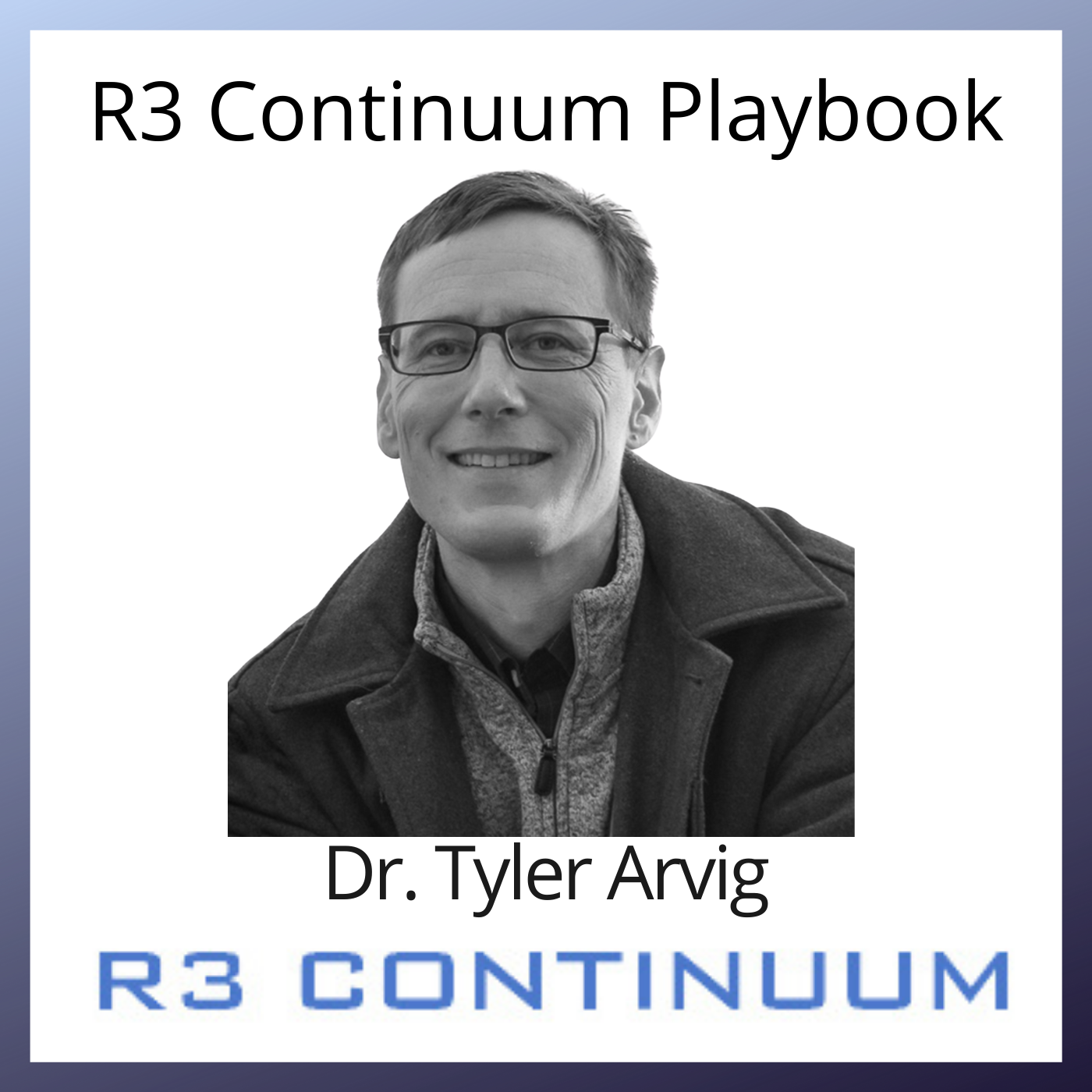
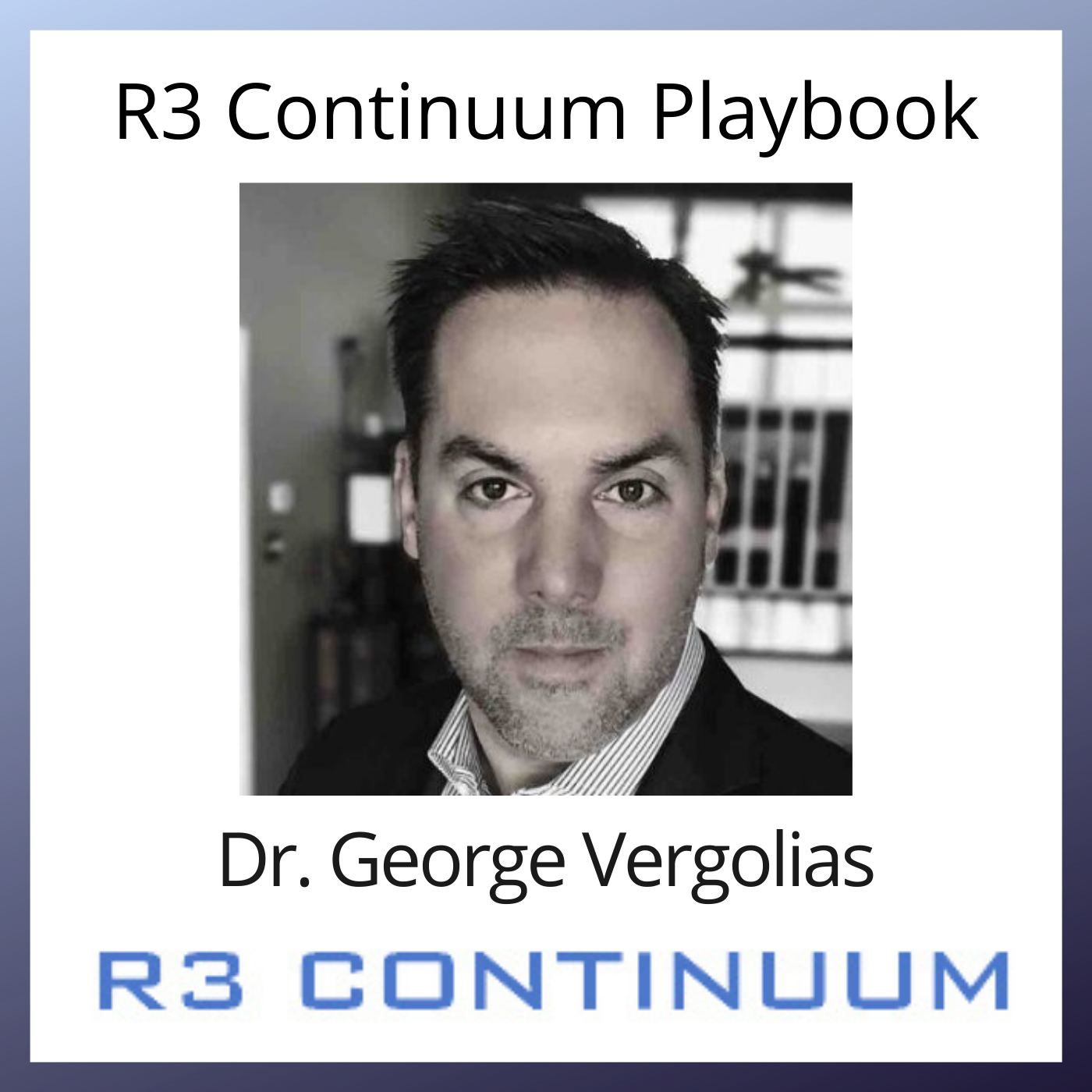
In a recent webinar featuring Dr. Tyler Arvig, Associate Medical Director at R3 Continuum, Dr. Arvig addressed a variety of questions on employee mental health, and how leaders can make it easier for employees to request and receive behavioral health support. Dr. Arvig mentioned not only better communication, but more personal and honest conversation with employees, making modeling self-awareness and vulnerability a priority, being creative in balancing the needs of the organization with the needs of the employees, knowing when to pull in experts, and much more.

The full webinar can be found here. The R3 Continuum Playbook is presented by R3 Continuum and is produced by the Minneapolis-St.Paul Studio of Business RadioX®. R3 Continuum is the underwriter of Workplace MVP, the show which celebrates heroes in the workplace.

TRANSCRIPT

Intro: [00:00:00] Broadcasting from the Business RadioX Studios, here is your R3 Continuum Playbook. Brought to you by Workplace MVP sponsor, R3 Continuum, a global leader in workplace behavioral health, crisis, and security solutions.

Shane McNally: [00:00:14] Hi, there. My name is Shane McNally, marketing specialist for R3 Continuum. On this episode of the R3 Continuum Playbook, we are featuring a segment from a recent webinar that was done with R3 Continuum’s Associate Medical Director, Dr. Tyler Arvig.

Shane McNally: [00:00:28] The webinar was titled Reducing Stigma, Ways Leaders Can Support Employee Mental Health. And it looked into the current workplace climate, what and what employees are currently feeling, ways that leaders can start to notice if their employees may be struggling, what leaders can do to help reduce the stigma of mental health in their organization and resources available to them.

Shane McNally: [00:00:48] During the webinar, we asked our audience the question of what issues are you seeing in those around you right now. And the top three responses were anxiety, work-life imbalance, and changes in productivity. What we can gather from this is that many folks are noticing their employees or colleagues struggling, but may not know how to handle it. In this excerpt from the webinar, Dr. Tyler Arvid gives advice to leaders on what they can do to support their employees and what they should be doing to help their employees that are struggling.

Tyler Arvig: [00:01:17] So, here’s, again, these aren’t in any particular order. The first thing you can do in your organization is, make behavioral health a priority and employee health a priority not just at the H.R. level or at the wellness committee level, but at the very top, you know, your C-suite folks, your president. You know, them indicating, you know, we have a business to run and we have things to do but we care about you too. And, you know, checking me in and showing that it’s something that’s not just on paper. Like the previous slide, 96% of the companies [inaudible] H.R. policy. Most still don’t feel supported. And, we often look for H.R. to be that support and that they should be and that’s wonderful and we want them to do that. But we also want our leaders, people that hired us, that support us, that run our businesses to say, “Hey, this is a priority for us, too.”

Tyler Arvig: [00:02:23] The second point, engaging your employees, we already talked about. But, really, you know, how do you communicate with them? Don’t just do it in emails. You call them. You call them for no reason. You check in with them. Are you – are you keeping them in the fold, or are they just off on an island doing their own thing?

Tyler Arvig: [00:02:42] Modeling strength and vulnerability is a bit of what I talked about before, which is – there is no – saying the great thing about this is a bad choice of words. But, you know, with COVID-19 being what it is, there’s no us in them here. Right? We’re all experiencing these things, whether we’re at a management level or the entry-level or somewhere in the middle. We’re all experiencing those stressors and those challenges, and those things. So being able to be a little bit transparent with your folks not overly so and not over disclosing or, you know, laying out your every personal problem you ever had at their doorstep.

Tyler Arvig: [00:03:31] But, again, I’m struggling with my kid. Like, you know, last year when there was distance learning for a lot of us and a lot of our kids were struggling. Yeah. And you get parents that maybe they’re not as productive because they’re trying to help their kids in school, like, not fail. And it’s a problem, and chances are you felt that too. Share it. So, really, you know, kind of joining with your folks. And also, showing some strength in terms of, you know, effective ways to manage things. You know, they might be looking to you for some level of leadership and modeling in trying to do that.

Tyler Arvig: [00:04:11] The communication I think we’ve already addressed. But, really, it’s – the important part here is your communication is two-way. It’s not just I’m dictating to you what is. It should be a dialogue. “Hey, what do you guys think would be helpful for this problem?” And then, sharing back and forth, having an open conversation. Most really good ideas and organizations don’t come from someone at the very top that dictates something and then commands people to do it. It usually starts organically at the lower level and then gets adopted at the higher levels.

Tyler Arvig: [00:04:50] Same thing when it comes to employee health and organizational health. Make sure there’s an open dialogue there. Show some creativity when it comes to things you can alter. There are things that we can’t alter [inaudible] workday or work environment or work tasks. But there are things that we can. “I got to go pick my kid up for half an hour. You know, I can adjust my schedule or, you know, tweak.” Those kinds of things. Do it. Thinking through not, you know, did you serve your nine to five and punch in and punch out for your lunch break, but did you meet the needs of the organization?

Tyler Arvig: [00:04:50] You know, Jane mentioned earlier everyone is always fearful at the beginning that, well, what if we send everyone home, they work from home and no one is productive? And, really, that fear in our organization, at least in most organizations, didn’t come true. It turns out giving people flexibility and some creativity and changing some things actually made things more likely to get done more effectively.

Tyler Arvig: [00:05:53] You know, know your lane. And, by this, I mean, you know, we can all be better supporting our people. But you’re going to get to a point where you’re like, “This is above my pay grade. This is outside of my wheelhouse. I don’t know.” And, that’s when you want to consult with an expert. I mean, our company does this for a living. It’s what we do, right? It’s our thing. And, it’s because we realize that some of these challenges, there are a lot of them you can do on your own and you can manage on your own. But if it gets to be a bigger challenge, you’re better off trying to pull in an expert who can really give you the guidance of what you need and when you need it.

Tyler Arvig: [00:06:42] The last piece I’m going to mention here is it’s really more of a self-reflective piece. If I’m going to be a leader and I’m going to lead my folks, I need to have a good understanding of myself and what my own vulnerabilities are. Right? So, I think we’ve all found, over the course of the past couple of years and most of our lives if we’ve been leaders for long enough, there’s stuff we’re not very good at. And there are things we’re good at and there are things that we really struggle with. If I don’t have a good sense of this isn’t a strength of mine and I can’t adjust for that, I’m going to struggle to really effectively lead other people. If I don’t have a sense of, you know, what my own pain points are in my personal life, I’m not going to recognize it when I see it in my people.

Tyler Arvig: [00:07:33] So, part of, you know, being a coach or a mentor or a leader or a manager to other people is being able to look internally and go, “How am I doing? What are my strengths and weaknesses? What do I need to work on?” There’s a lot of rich material there that a lot of us haven’t had to sit and think about or deal with. But when do we do, when we try and figure some of that stuff out, we actually get much more effective in what we’re doing for our organization. So, yeah.

Shane McNally: [00:08:12] I loved your point about with be creative. You know, that’s one thing from working from home is. So, you know, for me, it’s like if I’m stumped on creating something, you know I’m having just a tough time, and I can just get up and go out to the living room and go play with my cat for like five minutes and all of a sudden I come back and it’s like, “Oh, I got up. I moved.” You know, it’s a little just different than having to take a walk down the hall or go grab a cup of coffee. It’s a little bit – you know, gives me a little bit more, I don’t know, I don’t know the word, happiness, I guess if that makes sense. So, I thought that was a good point there.

Tyler Arvig: [00:08:48] All right. So, if you have an employee who is struggling, again we’ve already talked about this, ask. You know, be inquisitive in an appropriate way. You know, if you have a good relationship, they’re going to be open. And if you have someone you consider [inaudible], try and connect them with some help. I would say start with your human resources department, know what resources your company has for folks. Maybe you have different programs, different opportunities, maybe even having an understanding of what the different benefits are that people might have, be [inaudible], be that health insurance or employee assistance or whatever it is.

Tyler Arvig: [00:09:35] One of the things people that often need help, often struggle with, is they don’t know where to go or what to do, and so they just don’t do it. So, it’s our responsibility but also kind of our honor to be able to say, “Hey, you’re struggling and here, here are some things I think can help.” And help them. Don’t just say, “Oh, go talk to H.R.” You know, maybe have a conversation and maybe, you know, facilitate it. Do something a little bit more active to get them help.

Tyler Arvig: [00:10:06] And then, you know, directing resources kind of falls within that as well. But, you know, there are a lot of resources out there right now, a lot of the resources, even in private mental health treatment. You know, now telemedicine is not only a thing. It’s been a thing for a long time. It’s becoming the norm. I can see a psychiatrist or a therapist or whoever without leaving my desk. It’s much easier to get access to some of those things than it used to be. So, you know, you have apps on your smartphone, that kind of thing.

Tyler Arvig: [00:10:43] So, there are lots of resources out there. It’s not your job to know what all those are, but do know what’s available to your people and be able to talk to those a little bit. Because, again, a lot of our people are struggling. And if we can do anything we can do to help get them the help they need at that moment, it’s going to help them.

Tyler Arvig: [00:11:07] And by the way, there’s a real business element to this that I think it’s missed, and that is all these things like asking how you’re doing and directing the resources and doing a warm handoff on some of these things. These are things that will ingratiate your employees to your organization in a way that other organizations that don’t do that kind of stuff. Don’t – you know, to them, you’re just – you know, those organizations might be just a paycheck if you can take those extra steps in these cases. You know, even if you don’t pay the highest or even if you make them work a few extra hours, they’re going to do that because you care about them as people. And one of the things with, you know, people talk about the great resignation, it’s not just about pay. I mean, you might leave for a bigger paycheck. You might leave for, you know, personal reasons. A lot of it is, my employer doesn’t care about me. My manager doesn’t care about me. I was struggling and they said they didn’t care. If I’m struggling, [inaudible], it doesn’t mean I won’t leave, but the odds of me leaving are much lower if I feel like I’m in a place where I should be and you value me as a person. So, just things to be aware of.

Shane McNally: [00:12:31] This information is extremely important for leaders, but it’s also good for people at any level in a company. While the best support for an organization starts at the top, it’s important to know how to assist someone that may be struggling.

Shane McNally: [00:12:43] Looking for more information on how you can begin implementing a more supportive behavioral health program for your employees? R3 Continuum can help. Learn more about R3 Continuum services and contact us at www.r3c.com or email us directly at info@r3c.com.


Show Underwriter

R3 Continuum (R3c) is a global leader in workplace behavioral health and security solutions. R3c helps ensure the psychological and physical safety of organizations and their people in today’s ever-changing and often unpredictable world. Through their continuum of tailored solutions, including evaluations, crisis response, executive optimization, protective services, and more, they help organizations maintain and cultivate a workplace of wellbeing so that their people can thrive. Learn more about R3c at www.r3c.com.

R3 Continuum is the underwriter of Workplace MVP, a show which celebrates the everyday heroes–Workplace Most Valuable Professionals–in human resources, risk management, security, business continuity, and the C-suite who resolutely labor for the well-being of employees in their care, readying the workplace for and planning responses to disruption.

Connect with R3 Continuum:  Website | LinkedIn | Facebook | Twitter
Tagged With: anxiety, behavioral health, Dr. Tyler Arvig, employee mental health, employees, HR, R3 Continuum, R3 Continuum Playbook, Workplace MVP, workplace wellness

The R3 Continuum Playbook: Should I Start a Mental Wellness Program at My Company? – An Interview with Dr. George Vergolias, R3 Continuum on the Decision Vision Podcast

February 24, 2022 by John Ray

R3 Continuum
Minneapolis St. Paul Studio
The R3 Continuum Playbook: Should I Start a Mental Wellness Program at My Company? - An Interview with Dr. George Vergolias, R3 Continuum on the Decision Vision Podcast
Loading
00:00 /
RSS Feed
Share
Link
Embed

Download file

R3 Continuum

The R3 Continuum Playbook: Should I Start a Mental Wellness Program at My Company? – An Interview with Dr. George Vergolias, R3 Continuum on the Decision Vision Podcast

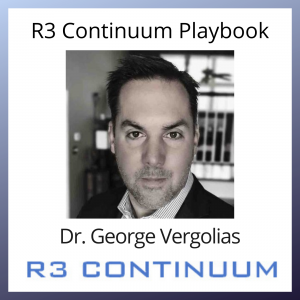
Dr. George Vergolias, Medical Director at R3 Continuum, was a guest on the Decision Vision podcast, hosted by Mike Blake, discussing whether an organization should start a mental wellness program. In this insightful episode, Dr. Vergolias laid out the considerations and issues involved, best practices for meeting the needs of people’s emotional and psychological health, the rise of telehealth, the potential returns of such programs, the characteristics of a successful program, and much more.

The show archive of the Decision Vision podcast can be found here. The R3 Continuum Playbook is presented by R3 Continuum and is produced by the Minneapolis-St.Paul Studio of Business RadioX®. R3 Continuum is the underwriter of Workplace MVP, the show which celebrates heroes in the workplace.

TRANSCRIPT

Intro: Broadcasting from the Business RadioX studios, here is your R3 Continuum Playbook. Brought to you by Workplace MVP sponsor R3 Continuum, a global leader in workplace behavioral health, crisis and security solutions.

Shane McNally: Hi, there. My name is Shane McNally, marketing specialist for R3 Continuum. This week’s R3 Continuum Playbook is going to be a bit different. We’re really excited to share that R3 Continuum Medical Director, Dr. George Vergolias, was recently a guest on the Decision Vision podcast. Dr. Vergolias had a conversation with Mike Blake from Brady Ware & Company, where they discussed mental wellness programs, and if it’s worth considering the implementation of one at your organization. They also discussed best practices for supporting emotional and psychological health, the rise of telehealth and what it takes to create and implement a mental wellness program successfully. Here’s the full conversation between Mike Blake and Dr. George Vergolias.

Mike Blake: Dr. Vergolias, welcome to the program.

George Vergolias: Thank you, Mike. It is a pleasure to be here.

Mike Blake: So, let’s start from the basics because I think people could define this differently depending on their context. How do you define mental wellness?

George Vergolias: So, the World Health Organization has, I think, a very usable and approachable definition. They define it as a state of wellbeing in which the individual in his or her own abilities can cope with the normal stresses of life. They can work productively and fruitfully. And they can make a contribution to their society. I kind of simplified that a little bit, and I like talking about mental wellness as a synergy between emotional, psychological, physical, and spiritual ways of being in the world that allow us to thrive.

Mike Blake: So, you’ve been doing this a long time, obviously, you have a lot of expertise in this field. When people think about or consider implementing a mental wellness program, what does that look like? Most of us know what a physical wellness program looks like. It could be gym memberships, and it could be walks, it could be stretching at your desk, not sitting for too long, all kinds of things of that nature, healthy snacks in the break room. But I’m not sure all that familiar with what a mental wellness program looks like. So, what, in your mind, does that look like? And maybe you can share some best practices with us?

George Vergolias: Sure. Really, it is a program that is designed at the highest level around meeting the needs of people’s emotional and psychological health. I mean, that’s kind of built into the definition. So, what does that mean in terms of best practice or what should you consider if you’re a leader at an organization? There’s a number of things that I’d recommend.

George Vergolias: And the first is, it has to be catered to your organization’s needs and to your organization’s culture. I’m not a fan of a one size fits all. There are different pain points. There are different needs, different industries, different companies, different cultures. And even in the same company, you might have different regions of the world or of the country in the U.S. that have different needs. So, it has to be catered to your needs and culture. It has to be collaborative both internally amongst various departments, as well as with outside vendors that can provide additional resources that you, as the organization, may not be an expert at.

George Vergolias: Leaders and managers need to be invested, engaged, and accountable at the highest level. I think a good example of this, which also shows some vulnerability, is Sheryl Sandberg from Facebook. Strong advocate of a mental health program, came out with her book a number of years ago, Lean In, and really was very open about her own experiences and her own vulnerabilities.

George Vergolias: That really sets a tone for employees. You want the employees to be engaged and you want their input to be part of the process of developing a program. You need to have a clear rollout and a communication plan. You need to leverage technology to support the initiative. On this front, remember, technology is a tool, it’s not the goal.

George Vergolias: I think what has happened in recent years is there have been some technology driven giants that have come on the scene that have wonderful apps and they have wonderful engagement in terms of the technology side. But they don’t necessarily have the best throughput in terms of impacting functional or behavioral change.

George Vergolias: And two more things I’d recommend. Consider a plan for anticipated barriers. Given your unique needs and culture, what are the things that you might hit roadblocks on and anticipate that ahead of time. And lastly, you want to address a menu of offerings in that service plan. Ideally, it shouldn’t be just psycho-educational trainings, or just peer support, or just access to the EAP, or access to mental health services. One size doesn’t fit all, and you really want a range of those things as you’re applying these programs.

Mike Blake: So, an argument might be that employees have it pretty good right now. And I’m not saying I’m saying this, but I have heard this argument, and you probably have too. Employees have not had as much power as they have right now – in my lifetime, for sure – to kind of pick and choose where they want to work, how they want to work. Many of them are working home. And for baby boomers and some Gen Xers, that seems kind of cushy, frankly.

Mike Blake: And so, that leads to the question, you know, is this question of a mental wellness program relevant to organizations that now have large numbers of people working from home? Can a company even put something in place to help them? Because with people working at home now that each have their own individual environments, now their each individual needs that are no longer kind of collectivized by an organization, they’re so diffused and so diverse now. Does that take a mental wellness program off the table? Are there things that companies can do to promote mental wellness, even if you have a largely remote workforce?

George Vergolias: It’s a great question, Mike. And my answer is, it absolutely does not take it off the table. In an interesting way, it heightens the need. Let me throw out some details for you. In March of 2021, the Microsoft Work Trends report was published. And what they came out with is a number of interesting findings, and I’m just going to throw a few out just to anchor this discussion. Compared to 2020, as they went into 2021, they saw a 100 percent increase in the use of Microsoft Teams. The average meeting was extended by ten minutes.

George Vergolias: There was an increase of 45 percent more chats being sent at random times of the day. And one of the difficulties we were finding is you always had to be on camera. So, if you were on camera, it’s really interesting that people don’t realize is if you’re in a board meeting or just a conference meeting at your workplace, you can see the speaker or your boss, and you can see if they’re paying attention to you. So, you can divert your gaze. You could take a sip of water. You can scratch your nose. You can do a million things.

George Vergolias: What’s so odd is when you’re on a Zoom meeting with eight people, you don’t know who’s looking at you at that exact moment. And so, there’s this sense of you always need to be on. You always need to be completely focused. That’s mentally exhausting. And so, there’s these realities of working remote that has really been difficult.

George Vergolias: What we’ve also seen is – this is really a fascinating study – the increased number of emails delivered in February of 2021 versus February of 2020 based on this same study, it increased in the U.S. 40.6 billion more emails were sent. So, what’s interesting is when you think of chat and you think of email, think of the disruptive nature. At any moment in the day, these things can come in and interfere with your work productivity, with your focus.

George Vergolias: And it’s like the real exhaustion. Eighty percent of employees say that they’re more productive through 2020 and through 2021, but 60 percent feel they’re overworked, and 40 percent feel exhausted. And leaders tend to be out of touch. A study from about three or four months ago by Deloitte showed that 61 percent of leaders say that they’re thriving, but only 38 percent of employees say that they’re thriving.

George Vergolias: So, the point with all of this is although that remote environment early on seemed really nice, “I could pick my kids up. I could eat lunch in my own, you know – I could wear my gym bottoms if I’m not showing, you know -” all of these things are wonderful. This sense of merging my home-personal life and my work life and not having clear boundaries with all the things I’ve already mentioned really resulted in a great deal of emotional exhaustion.

George Vergolias: And so, now, more than ever, the creative but problematic issue is, how do we engage employees in a remote work environment in a way that still meets those needs, that meets those behavioral and cognitive and psychological needs. So, it’s definitely needed and it’s a big challenge.

Mike Blake: The Zoom thing is interesting, and you’re right, it is exhausting. It is exhausting to be on camera. I think we all now have a greater appreciation for how hard it is for people who are on TV or the movies as a living. And I think, also, you become so aware because you see yourself often. If you haven’t turned off your own sort of picture that creates a self-consciousness that, I think, is also draining.

George Vergolias: You know what’s interesting, Mike, if I could just interject. What we’ve done at R3 Continuum – which I love this idea. It wasn’t my idea. I think our ops director came up with this because she read an article – is we tacitly or explicitly gave permission for people to go off camera, whether it’s because their kids are screaming in the background, or their dogs barking, or maybe they didn’t clean up, some of our folks were doing these calls from their bedrooms. There’s a number of reasons why you would want to do that. But that really gave permission for people to say as long as you’re still focused within reason as you normally would be in the office, you can go off camera if you need a relief.

Mike Blake: Yeah. And, also, I wonder, you know, I’ve heard that some people are more focused when they can be also a little distracted. You know what I mean? They’re doodling or something, right? But being on camera where you just sort of have to lock your eyes into the camera and you can’t do that, I think that’s also very stressful for people. And turning off the cameras is a really good idea.

George Vergolias: Yeah. Absolutely. Absolutely.

Mike Blake: So, speaking of boundaries, here’s a question I want to ask. Are there any limits or are there boundaries in terms of how realistic it is to expect a mental wellness program to perform in terms of addressing potential sources of mental unwellness? Are there certain things that a corporate mental wellness program can or can’t do despite your best of intentions throwing all the resources at it that you want? Or is anything on the table? Could a well-constructed, well-funded mental wellness program achieve almost anything you want?

George Vergolias: I don’t think it can achieve anything you want. I think what it can do, it can really help prevent a host of developing issues, like anxiety, depression, substance abuse, even suicidal ideation. It can’t fully prevent those. But what it can do is help catch those upstream when they’re developing, and then get people to the proper resources, be they formal clinical treatments, or what we call more organic supportive resources, like peer support, mindfulness programs, psycho-educational training, things of that nature. That could be really helpful.

George Vergolias: And by doing that, the upside is that can impact morale. It could impact productivity, which has a bottom line impact on businesses. And most importantly, it can impact cultural cohesion and cultural engagement. It impacts talent retention, all of those.

George Vergolias: There are some limits, though. So, some things I think it cannot really do is, if somebody has a moderate to severe mental health problem, they probably need formal clinical treatment. They need to be referred to proper treatment providers that can address that either through psychotherapy and/or medications. It’s important to know that it can’t do all of that.

George Vergolias: The other thing I don’t think it can do fully without a separate approach is we see that there’s a host. And we certainly have seen in ’20 and ’21 a host of cultural tensions that emerge at the workplace, be they related to political, ethnic, racial, gender, regional differences. The big two that we’ve been involved in a great deal are the collective response to the murder of George Floyd and the demonstrations, and those demonstrations that then turned into riots. And then, of course, mask mandates and vaccine mandates.

George Vergolias: These are really tough hot points that all the way wellness program can raise the emotional IQ of your employees. And they can alleviate how that tension manifests. If you want to address those kind of cultural issues, you need to address them head on and in some different ways. A wellness program can complement that process very well. But it is not in in it of itself going to take those cultural issues away or off the table.

Mike Blake: And I’m glad you brought that up because it leads into a question I wanted to make sure to cover, and I’ll bet you encountered this. What if the company itself is the source of the mental and wellness? The new word in everybody’s lexicon now is toxic. And there are toxic people, there are toxic workplaces. I think that social media has amplified toxicity in a profound and pervasive way. And as a company reflects on or considers putting in a mental wellness program, is it possible they’re going to find that they’ve seen the enemy, and it is us. That they may be actually self-defeating because they’re the cause of the mental unwellness to begin with?

George Vergolias: One hundred percent, I agree with that. It can be very counterproductive. And I said this earlier, but it’s important to just say it again, it’s really important to know thyself as an organization, to know your culture, know your employees, know your leaders, know your pain points.

George Vergolias: It’s interesting, Mike, the image that comes to mind is imagine you spend $10,000 to landscape your backyard. The landscaper comes in, does wonderful works for weeks and does great. It looks like a Zen garden when they leave. And then, for the next six months, you don’t do anything. You don’t water, you don’t mulch, you don’t weed. What happens? It falls in complete disarray.

George Vergolias: We have seen some companies who do a pretty good launch of a wellness program, or they partner with groups like R3 or others, and we do a really good launch working in tandem with them, but they’re not dealing with their cultural toxicity. And that just undermines the foundation on which all of that is based. What’s really interesting when you think of a physical wellness, bring in massage therapists, have a dietician come in, there’s a number of other ways you can do that. In part, you need to be engaged in that process for it to be beneficial. But there’s physical benefits that one can get without necessarily voluntarily being engaged in the process.

George Vergolias: When you think of mental wellness, the recipient has to have buy in. They have to believe in it and they have to do the work. And if you don’t have a culture of trust, if you have a culture of stigmatization against feeling vulnerable or admitting that you have mental health challenges, the best program in the world just isn’t going to take off. So, it’s a really poignant question that you raise.

Mike Blake: So, in point of fact, this may be something that might be considered hand in hand with a leadership and cultural evaluation. Because it seems to me this is a real double-edged sword of a mental wellness program is that, if you put that in, you may find things out about your organization that you don’t necessarily love.

Mike Blake: I can easily see a scenario in which you put in a mental wellness program, let’s say, you have a telemental health consultations. And then, an employee says, “Yeah. I’m not the underperformer. My boss is really toxic. I’m quitting.” I mean, that’s a very real possible outcome, right?

George Vergolias: That’s absolutely right.

Mike Blake: And I kind of even wonder if before you put in a mental wellness program, you may want to do some sort of self-evaluation to make sure that, again, you’re not the one causing the mental unwellness in the first place.

George Vergolias: I think that’s very important. And that’s why that engagement, all the way from top to bottom, of getting input, certainly, from leadership – that’s important – middle management, all the way down to your frontline employees is critical, so you can understand what those insights are. And it’s critical to do it in a way, I recommend doing that in an anonymous way so that people can feel more comfortable being open and there won’t be backlash on their job. Because what you really want is you don’t necessarily want people to fall in line in that step of the process. You want really honest and candid, almost gut punch data so you can take a really good appraisal of where are we as a company, and what are the pain points that we need to solve along those lines? I totally agree with that.

Mike Blake: So, you’ve done this for a long time and, of course, you’re right in the middle of it with coronavirus, are you able in any way to measure kind of the ROI of putting programs like this? And what have you seen in terms of improved company performance, bottom line-wise, for companies that have successfully implemented mental wellness programs?

George Vergolias: Yes. Again, great question. And it’s something that if you go back five years and certainly ten years ago, there was some studies that showed ROI, but I don’t think they were nearly as well developed. What we’re seeing just in the last two years is what I’d refer to as an explosion of studies looking at what is the ROI, not only in terms of human impact, but also in terms of bottom line.

George Vergolias: And the ultimate conclusion – I’ll give you a quick data point from a Canadian study that was done recently – you have to make a business case for the benefit as well at some point to get that buy in. So, what’s interesting is Deloitte did a study – now, this was November of 2019. So, what’s interesting here is that was actually at the frontend or just before the pandemic – and they were looking at a wellness program across ten different large companies in Canada.

George Vergolias: And what they found going in, they estimated that ten percent of those employees across that sample size had depression. And the annual cost of depression – and this is in the U.S. – is $31 to 51 billion in terms of lost productivity, absenteeism, presenteeism, and so on.

George Vergolias: And what we know is the World Economic Forum estimates that the cost globally is going to be six trillion and that’s for mental health problems globally, the business loss or the cost of decreased productivity. What’s interesting is when they did this study and they looked at productivity, they looked at engagement of employees, they looked at talent acquisition and overall throughput of work, they found that after three years, there was a 60 percent ROI on dollar spent. And after four plus years, four or five six years, that ROI went up 118 percent. And that’s based on the productivity, and the output, and the creative inventive-ism, if you will, or ingenuity that people were bringing to the table.

George Vergolias: Because the hard reality is, if you have a burned out, exhausted, anxious, depressed core group in your workforce, they’re not being innovative, they’re not being collaborative. They are getting by day-by-day and they’re not pushing the envelope from a business perspective. That’s not the talent you want. Well, you want that talent, but you want that talent to be more at a place of wellness and thriving is what I meant by that.

Mike Blake: So, one question that comes to mind and probably may come to mind with some of our listeners is that, we’re reading all over the place that this is a great time to be a therapist or a psychologist or psychiatrist. You know, most doctors, they’re not even taking new patients right now. You can’t get a consult. How do companies kind of address that or not let that stand in the way of providing resources to their employees?

George Vergolias: So, first, that’s an absolute harsh reality right now. And what’s interesting as a side note, in my work with my Telepsych company, we’ve been doing telehealth for almost 19 years. And up until the pandemic, we struggled with a lot of hospitals getting them to really adopt a telemental health approach. As you said earlier, Mike, as soon as COVID hit, it was like overnight that acceleration adoption just accelerated.

George Vergolias: So, an upside is that there are a lot more options of access to therapists, psychiatrists, social workers, psychologists, and so on via telemental health. And those definitely should be explored. If you are a company, or an HR director, or a company leader, and you are not open to telemental health options, you are really missing out on a wonderful opportunity to expand the reach of resources to your employees. And very soon you’re really falling behind. So, that’s one point.

George Vergolias: The difficulty, though, is I would say that corporations, companies, particularly HR directors, I think they really need to demand and expect their EAPs to continue to build those networks in a way that can meet their client’s needs. They’re paying for services, and it’s important that those networks be developed, be they incite or onsite evaluations and treatment or telemental health services.

George Vergolias: So, that’s one thing I would recommend that if you have an EAP in place, really have dialogue with them about what are the options that you’re offering and how are you shoring up those service gaps. I think that’s really important.

Mike Blake: Now, aside from direct consultations with therapists, what are some other examples of features of wellness programs that companies can put in place, or offerings, if you will?

George Vergolias: Yeah. Certainly. Certainly. So, what we tend to see in those that are most successful is we tend to see an array of offerings. So, these can include psycho-educational resources. Many of those are online trainings, various videos, how to manage conflict at home, how to handle marital conflict, how to handle conflict with your teenage child, managing anxiety, navigating through a panic attack. Again, I could go on. There could be hundreds of topics.

George Vergolias: We actually have a software program that we’ve developed that has well over 100 different modules on mental health and mental wellness that people can choose. And get a quick three to five minute kind of video on either educating them on the nature of the condition of the symptoms or helping them navigate and understand how to navigate those symptoms. There’s a lot of programs out there that do that.

George Vergolias: Another would be, these programs really should also have a factor of peer support and empowering a culture of support and, what I call, empowering a culture of vulnerability, where it destigmatizes mental health, it allows people to feel like they have support, and it allows people to feel safe to reach out and say I need some help. It’s important to have a clear communication plan and roll out the program. We see good programs where half the employees don’t even understand the program exists or understand how the program can benefit them.

George Vergolias: Beyond that, emotional and physical health education, adoption, and integration into the culture, self-help or mindfulness initiatives, peer support, disruptive event management is something R3 does a great deal of across the U.S. and globally. Helping people adjust to traumatic or disruptive events that occur at the workplace. Early intervention support, whether it’s destigmatizing campaigns, mental health first aid, all of these other things that we provide.

George Vergolias: And then, at some point, helping people identify when do you need more formal clinical treatment, mental health treatment, and then linking people to resources so they can access that.

George Vergolias: One last thing I’ll add that I don’t think is explored enough is developing access to what I call organic community resources. I mean, it used to be, and for some of us it still is. It used to be where you can go to your church, you can go to your local clubs, you can go to your local neighborhood groups, ethnic groups, whatever it may be, and you can still get a lot of support. Now, we have a culture by which many of us move around state by state. We are more disjointed than we were pre-COVID. And it’s harder to access some of those more natural supports or organic supports. So, I think that’s another thing that programs should consider as well.

Mike Blake: Now, what about things that are really sort of – I want to get a little bit granular with you if that’s okay – like encouraging meditation or meditation training, breathing exercises. A big one might be, for example, trying to organize some kind of group events, whether in-person or remotely. Because, you know, one of the downsides for many people for remote working is loneliness and isolation.

George Vergolias: Now, not for me, I’m an extreme introvert. So, you know, my wife is not concerned about me cheating on her. Her biggest concern is that I’m going to be picked for the Mars mission because I’m like, “You’re going to put me in a tin can by myself for three years? I’m in.” But, unfortunately, they don’t want fat old people on the mission, so there’s no danger of that. But the point is that sort of these other programs that just try to be a little bit kind of interventional. I guess my question is, are they used with any effectiveness in the workplace alongside the other things that you’re describing?

George Vergolias: I think they are. I think what’s really interesting is mindfulness and meditation programs, including just apps. There’s a proliferation of apps that talk about this as well. The value that they have shown over time, over the last five plus years, has really been astounding in terms of people just being more mindful, more aware of what they’re feeling, more aware of developing conflicts or symptoms over time.

George Vergolias: And I think that has been a huge development forward. Now, this is hard to measure, but I believe anecdotally and based on 20-some years of experience, it has been a huge benefit in helping people stem off more severe development of, not only interpersonal conflict, but other symptoms, developing more severe symptoms of depression or anxiety.

George Vergolias: I also feel it has a counter. These things not only prevent things from getting bad. They help us do better. They help us perform better. They help us have more meaningful relationships. They help us have more happiness and moments of gratitude in our life. So, I think that those are very powerful aspects to a program without doubt.

Mike Blake: So, how expensive are these programs? I understand that it depends on how kind of deep you want to go. I’m sure there are Cadillac programs and there are cheaper programs. But let’s say relative to a conventional healthcare physical health program, are mental wellness programs or should companies expect to spend roughly as much, or more than, or less than whatever they’re spending on their physical health programs?

George Vergolias: That’s a tough one to answer. I’ve got some insights that I’ll offer. Please take these with a certain degree of flexibility. I have to say that, of course, it’ll vary by scope and size. We work with companies that want to roll out a mindfulness meditation program that can be really focused and relatively inexpensive, depending on the nature of what they want to do. We’ve had companies that want to roll out an app that’s already well developed on the App Store or on the Android Store, and they just want some communication around benefits of using it. That can be really kind of low budget, relatively speaking, and still can have some value.

George Vergolias: And then, there’s companies that want to offer a full menu of all the things I already talked about in terms of the full comprehensive menu. So, that will depend a great deal. The key, I think, is identifying the needs and the pain points of your organization and then prioritizing what is it that you want to impact first. And realize that even the biggest, best programs out there with the most resource laden companies that make billions of dollars a year, none of them do all of this that we’re talking about today, Mike. None of them do all of it.

George Vergolias: You know the the old saying, “How do you eat an elephant? One bite at a time.” So, start with where do you think your biggest pain points are? What do you think you’re going to get the best buy in from employees all the way up to leadership? And start with that. It might be a psycho-educational training library. It might be a mindfulness program. It might be just offering peer support groups so people can talk about what they’re struggling with pertinent to remote work or work from home.

George Vergolias: Interestingly, at R3, we offered a parenting support interface, kind of a peer support for parents, including some resources. And what we did is we actually sent those parents a three month subscription to Tinker Crate. And I don’t know if you know what Tinker Crate is, but it’s like a little kit developmentally appropriate for different ages. They could put together different types of little engines or little mechanized things, and it’s kind of a nice, scientific-based project that they can do.

George Vergolias: Well, what we had is we had a whole bunch of our single workers say, “What about us? We’re still struggling. And in a way, we’re struggling more because I’m home alone in an apartment. I don’t have a wife, a husband, or two kids.” And so, it made us really think, “Darn. We really missed that.” And so, we pivoted and we offered other support resources.

George Vergolias: But that’s what I would say, it’s really hard to come up with a price tag because the scope could vary greatly. What I will say, I would not expect it to cost as much as the physical wellness.

Mike Blake: So, I have a view – and you tell me if I’m full of it or not – but I think one thing that mental and physical wellness programs have in common is that, in the right circumstance, you can get a lot of bang for the buck with a very minimal investment. Those Tinker Crates, I think, is a great example. It might cost you $20 per month per employee, maybe. But that can make a huge difference. If that keeps an employee happier, more stable, more actualized for a couple of weeks after that, boy, what a great investment.

George Vergolias: I can’t agree more. You know what’s it’s interesting, Mike? I think of those times in my life where I’m having a really rough day and I’m checking out at the grocery store. And the person at the register clerk or the cash register says, “Boy, I really like your haircut,” or, “I love that shirt”. I’m not feeling like the Dalai Lama. Like, I’m not absolutely at the zenith of my happiness as a result. But it just lifts me enough to feel like, “Well, that was kind of nice.” And that then sets in motion a trajectory of incremental steps throughout the rest of the day or the night where I keep improving on that.

George Vergolias: I call those emotional strokes. Small emotional scopes that give you that uplift, that just give you that feeling of I’m not alone, these other people or these leaders get it, they understand what I’m dealing with. And this was just a nice little small blessing for me today. Those make a big difference. They really do.

Mike Blake: I’m talking with Dr. George Vergolias. And the topic is, Should I start a mental wellness program at my company? We’re running out of time, unfortunately, so I only have time for a couple more questions. But what I do want to make sure we get out there is, what are best practices for companies to measure whether their wellness programs are working or doing the job they’re being asked to do?

George Vergolias: So, certainly, what I would say is, you have to start by being very clear on what are you trying to achieve. Absolutely. You need to know that. What are you trying to achieve? What are the goals? And then, operationalizing those in a way that you can measure them. And what I tend to do is I tend to put it into two buckets.

George Vergolias: One is satisfaction, because you want your employees and your leaders to have engagement in the program. And often, in its highest form, it’s a satisfaction type question or a series of questions. How’s the program working? Do you feel you’re getting better? Do you feel it meets your needs and so on?

George Vergolias: By the way, a lot of companies stop there. And some people may not agree with me, but I’m a big fan that satisfaction doesn’t always indicate outcome or functional benefit. I could be very happy with a therapist and I’m still not getting better. And one of the reasons I’m happy with a therapist is they’re not challenging me to get better. Think of a physical therapist or think of a personal trainer that doesn’t piss you off occasionally or get you angry, that’s not a very good physical therapist and that’s not a very good personal trainer.

George Vergolias: So, what you also need to measure is what are the behavioral functional changes that are occurring over time? And from a business perspective, what is the productivity or the impact on the business that is promoting the business forward? It could be increased team collaboration. It could be a measure of increased innovative ideas. It could be increased operational efficiency.

George Vergolias: There’s a number of ways companies can define that. But that’s what I would say that you need to answer both of those buckets, satisfaction and then – what I call – functional outcome. And that has two types, the behavioral and kind of functional aspect of the individual and then the business functional improvement that you’re seeing as a result. That’s how I would structure that.

Mike Blake: Yeah. And it occurs to me, I’ll bet you there are KPIs that can be structured around this. You know, for example, it could be productivity, it could be turnover, it could be tenure, in some cases, even your pay scale. You have to pay people more to work for you just because you’re not all that pleasant to work with.

George Vergolias: Absolutely.

Mike Blake: George, this has been a great conversation. I’ve got about ten more questions I love to ask, but we’re running out of time.

George Vergolias: I understand.

Mike Blake: I’m sure that there are questions that our listeners would have liked me to cover that we didn’t or would have liked us to cover in more depth. If they’d like to follow up with you on some of these issues, can they do so? And if so, what’s the best way to do that?

George Vergolias: Absolutely. So, you can do so by emailing me at George, G-E-O-R-G-E, .vergolias, V as in Victor-E-R-G-O-L-I-A-S, @r3c.com. Or my office line, feel free to give me a call, area code 952-641-0645, and I’d be happy to engage.

Mike Blake: That’s going to wrap it up for today’s program. I’d like to thank Dr. George Vergolias so much for sharing his expertise with us.

Shane McNally: What an educational and important podcast episode. If you’re a small business owner, make sure you check out Mike Blake and the Decision Vision podcast, where Mike covers topics and issues small business owners are facing and talks with experts about solutions for those issues. If you’d like more information on mental wellness programs or are looking for different strategies to offer the best support and resources for your employees, R3 Continuum can help. Learn about our R3 Continuum Services and contact us at www.r3c.com or email us directly at info@r3c.com

Show Underwriter

R3 Continuum (R3c) is a global leader in workplace behavioral health and security solutions. R3c helps ensure the psychological and physical safety of organizations and their people in today’s ever-changing and often unpredictable world. Through their continuum of tailored solutions, including evaluations, crisis response, executive optimization, protective services, and more, they help organizations maintain and cultivate a workplace of wellbeing so that their people can thrive. Learn more about R3c at www.r3c.com.

R3 Continuum is the underwriter of Workplace MVP, a show which celebrates the everyday heroes–Workplace Most Valuable Professionals–in human resources, risk management, security, business continuity, and the C-suite who resolutely labor for the well-being of employees in their care, readying the workplace for and planning responses to disruption.

Connect with R3 Continuum:  Website | LinkedIn | Facebook | Twitter
Tagged With: Decision Vision podcast, Dr. George Vergolias, Mental Wellness Program, Mike Blake, R3 Continuum Playbook, workplace mental health, Workplace MVP

  • « Previous Page
  • 1
  • 2

Business RadioX ® Network


Our Most Recent Episode

CONNECT WITH US

  • Email
  • Facebook
  • LinkedIn
  • Twitter
  • YouTube

Our Mission

We help local business leaders get the word out about the important work they’re doing to serve their market, their community, and their profession.

We support and celebrate business by sharing positive business stories that traditional media ignores. Some media leans left. Some media leans right. We lean business.

Sponsor a Show

Build Relationships and Grow Your Business. Click here for more details.

Partner With Us

Discover More Here

Terms and Conditions
Privacy Policy

Connect with us

Want to keep up with the latest in pro-business news across the network? Follow us on social media for the latest stories!
  • Email
  • Facebook
  • Google+
  • LinkedIn
  • Twitter
  • YouTube

Business RadioX® Headquarters
1000 Abernathy Rd. NE
Building 400, Suite L-10
Sandy Springs, GA 30328

© 2025 Business RadioX ® · Rainmaker Platform

BRXStudioCoversLA

Wait! Don’t Miss an Episode of LA Business Radio

BRXStudioCoversDENVER

Wait! Don’t Miss an Episode of Denver Business Radio

BRXStudioCoversPENSACOLA

Wait! Don’t Miss an Episode of Pensacola Business Radio

BRXStudioCoversBIRMINGHAM

Wait! Don’t Miss an Episode of Birmingham Business Radio

BRXStudioCoversTALLAHASSEE

Wait! Don’t Miss an Episode of Tallahassee Business Radio

BRXStudioCoversRALEIGH

Wait! Don’t Miss an Episode of Raleigh Business Radio

BRXStudioCoversRICHMONDNoWhite

Wait! Don’t Miss an Episode of Richmond Business Radio

BRXStudioCoversNASHVILLENoWhite

Wait! Don’t Miss an Episode of Nashville Business Radio

BRXStudioCoversDETROIT

Wait! Don’t Miss an Episode of Detroit Business Radio

BRXStudioCoversSTLOUIS

Wait! Don’t Miss an Episode of St. Louis Business Radio

BRXStudioCoversCOLUMBUS-small

Wait! Don’t Miss an Episode of Columbus Business Radio

Coachthecoach-08-08

Wait! Don’t Miss an Episode of Coach the Coach

BRXStudioCoversBAYAREA

Wait! Don’t Miss an Episode of Bay Area Business Radio

BRXStudioCoversCHICAGO

Wait! Don’t Miss an Episode of Chicago Business Radio

Wait! Don’t Miss an Episode of Atlanta Business Radio














