Business RadioX ®

  • Home
  • Business RadioX ® Communities
    • Southeast
      • Alabama
        • Birmingham
      • Florida
        • Orlando
        • Pensacola
        • South Florida
        • Tampa
        • Tallahassee
      • Georgia
        • Atlanta
        • Cherokee
        • Forsyth
        • Greater Perimeter
        • Gwinnett
        • North Fulton
        • North Georgia
        • Northeast Georgia
        • Rome
        • Savannah
      • Louisiana
        • New Orleans
      • North Carolina
        • Charlotte
        • Raleigh
      • Tennessee
        • Chattanooga
        • Nashville
      • Virginia
        • Richmond
    • South Central
      • Arkansas
        • Northwest Arkansas
    • Midwest
      • Illinois
        • Chicago
      • Michigan
        • Detroit
      • Minnesota
        • Minneapolis St. Paul
      • Missouri
        • St. Louis
      • Ohio
        • Cleveland
        • Columbus
        • Dayton
    • Southwest
      • Arizona
        • Phoenix
        • Tucson
        • Valley
      • Texas
        • Austin
        • Dallas
        • Houston
    • West
      • California
        • Bay Area
        • LA
        • Pasadena
      • Colorado
        • Denver
      • Hawaii
        • Oahu
  • FAQs
  • About Us
    • Our Mission
    • Our Audience
    • Why It Works
    • What People Are Saying
    • BRX in the News
  • Resources
    • BRX Pro Tips
    • B2B Marketing: The 4Rs
    • High Velocity Selling Habits
    • Why Most B2B Media Strategies Fail
    • 9 Reasons To Sponsor A Business RadioX ® Show
  • Partner With Us
  • Veteran Business RadioX ®

Workplace MVP: Whitney Hoffman-Bennett, CallRail

June 9, 2022 by John Ray

CallRail
Minneapolis St. Paul Studio
Workplace MVP: Whitney Hoffman-Bennett, CallRail
Loading
00:00 /
RSS Feed
Share
Link
Embed

Download file

CallRail

Workplace MVP: Whitney Hoffman-Bennett, CallRail

In this episode of Workplace MVP, host Jamie Gassmann and guest Whitney Hoffman-Bennett, VP of Talent and Culture at CallRail, looked at unlimited PTO as CallRail has implemented it and what their experience has been. How do you structure it and how do you manage misuse? Whitney discussed how CallRail came to establish unlimited PTO, the “guardrails” they implemented with it, how the employees responded and adjusted to it, the need for leaders to model it, variations on the idea such as a sabbatical program, planning for future growth, and much more.

Workplace MVP is underwritten and presented by R3 Continuum and produced by the Minneapolis-St.Paul Studio of Business RadioX®.

CallRail

CallRail is a lead intelligence platform that makes it easy for businesses of all sizes to turn more leads into better customers.

Serving more than 200,000 businesses and integrating with leading marketing and sales software, CallRail’s marketing analytics and business communications solutions deliver real-time insights that help customers market with confidence.

Company website | LinkedIn | Facebook

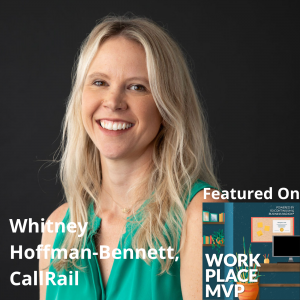
Whitney Hoffman-Bennett, PHR, SHRM-CP, Vice President of Talent & Culture, CallRail

Whitney Hoffman-Bennett, PHR, SHRM-CP, Vice President of Talent & Culture, CallRail

Whitney Hoffman-Bennett is the VP of Talent & Culture at CallRail. With a decade of experience in human resources and a specialty in rapidly growing SaaS start-ups, Whitney expertly balances the needs of employees with the needs of the business.

She is passionate about fostering a culture where people are excited about the work they do and the team they’re working with. Prior to CallRail, she gained experience at Ingenious Med, Vocalocity, and LPL Financial.

Whitney earned a Bachelor of Arts in marketing at Kennesaw State University.

LinkedIn

About Workplace MVP

Every day, around the world, organizations of all sizes face disruptive events and situations. Within those workplaces are everyday heroes in human resources, risk management, security, business continuity, and the C-suite. They don’t call themselves heroes though. On the contrary, they simply show up every day, laboring for the well-being of employees in their care, readying the workplace for and planning responses to disruption. This show, Workplace MVP, confers on these heroes the designation they deserve, Workplace MVP (Most Valuable Professionals), and gives them the forum to tell their story. As you hear their experiences, you will learn first-hand, real-life approaches to readying the workplace, responses to crisis situations, and overcoming challenges of disruption. Visit our show archive here.

Workplace MVP Host Jamie Gassmann

Jamie Gassmann, Host, “Workplace MVP”

In addition to serving as the host to the Workplace MVP podcast, Jamie Gassmann is the Director of Marketing at R3 Continuum (R3c). Collectively, she has more than fourteen years of marketing experience. Across her tenure, she has experience working in and with various industries including banking, real estate, retail, crisis management, insurance, business continuity, and more. She holds a Bachelor of Science Degree in Mass Communications with special interest in Advertising and Public Relations and a Master of Business Administration from Paseka School of Business, Minnesota State University.

R3 Continuum

R3 Continuum is a global leader in workplace behavioral health and security solutions. R3c helps ensure the psychological and physical safety of organizations and their people in today’s ever-changing and often unpredictable world. Through their continuum of tailored solutions, including evaluations, crisis response, executive optimization, protective services, and more, they help organizations maintain and cultivate a workplace of wellbeing so that their people can thrive. Learn more about R3c at www.r3c.com.

Company website | LinkedIn | Facebook | Twitter

TRANSCRIPT

Intro: [00:00:04] Broadcasting from the Business RadioX studios, it’s time for Workplace MVP. Workplace MVP is brought to you by our R3 Continuum, a global leader in workplace behavioral health and security solutions. Now, here’s your host, Jamie Gassmann.

Jamie Gassmann: [00:00:26] Hi, everyone. Your host, Jamie Gassmann here. And welcome to this episode of Workplace MVP. The option of unlimited paid time off or PTO is a forward-thinking benefit that some industries and employers have begun adopting. According to Metlife’s 2019 US Employee Benefit Trends Study that interviewed 2675 full-time employees, 72% expressed interest in receiving unlimited paid time off. Some organizational leadership feel this approach is more of a marketing ploy for recruitment efforts; while others, including our guest today, see this as a way to ensure employees are taking their much needed mental wellness breaks.

When thinking of the option of incorporating an unlimited PTO program, I think it naturally presents concerns of overuse of time off and under use of time off. So, kind of a mixed variety. So, what are the benefits to incorporating this type of PTO benefit into your organization? And what are the watchouts and key learnings to be aware of? Well, joining us today to share her experience with us and navigating an unlimited PTO benefit, among other forward-thinking benefits, is Workplace MVP and Vice President of Talent and Culture of CallRail, Whitney Hoffman-Bennett. Welcome to the show, Whitney.

Whitney Hoffman-Bennett: [00:01:47] Thanks, Jamie. Happy to be here.

Jamie Gassmann: [00:01:49] So, let’s start off with you sharing with me and our audience your career journey to date and becoming the Vice President of Talent and Culture at CallRail.

Whitney Hoffman-Bennett: [00:02:00] So, it’s funny. I actually started my career in sales, which is important later. Quickly learned that sales could not do it. Like some people think HR is stressful. I feel like I can handle the people stress all day long, but the stress of restarting quota every month, not for me. So, I left where I was doing sales. It was actually a startup. So, I did learn a lot about startups there and moved to another country — not another country, another company where I actually was in an admin position, saw a need for HR. And the great thing about startups is they said, “Okay, let’s do that and I’m going to support you to do it.”

And I got my PHR and my other certifications, grew to be director there, and stayed there for about eight years. And then, someone at my sales job actually reached out to me and said, “Hey, I’m at this new company. They need HR. Are you interested?” So, full circle moment. And I joined CallRail in 2018 as the Director of Talent and Culture, their first director of talent and culture. And within a year, had been promoted to Vice President and I have been here for four years now.

Jamie Gassmann: [00:03:12] Wonderful. It’s interesting. A lot of the HR professionals that I speak with on this show, and in other conferences, and other locations that I get the opportunity to connect, they have similar stories of falling kind of into the work. So, it’s great. It’s interesting to hear that you kind of have a similar story and, you know, finding that passion, and being able to support the people within your organization. It’s very cool. So, tell me a little bit about what CallRail does, just to kind of give some background to our audience on what the organization serves.

Whitney Hoffman-Bennett: [00:03:47] Yeah. So, we are a marketing attribution software that makes it easy for businesses of all sizes to turn more leads into better customers. We serve more than 200,000 businesses, and we integrate with marketing and sales software. And our marketing, analytics and business communication solutions delivers those real-time insights that help our customers market with confidence.

Jamie Gassmann: [00:04:13] Great. And I know, in looking at the unlimited PTO program and us talking before, this was a program that was already in place when you started at CallRail. So, talk to me about some of the concerns that you identified early on with the program when you joined CallRail, you know, about what they were experiencing, that you were like, “Ooh, we need to correct that.” So, tell me a little bit more about that.

Whitney Hoffman-Bennett: [00:04:36] It’s funny because the place I was previous to CallRail, our CFO kept saying, “Maybe we should do unlimited PTO.” And I was like, “That doesn’t work. We can’t do that. People will take advantage.” And then, I got to CallRail, and I was like, “Whoa! Unlimited PTO. Let’s see what this is about,” because it was already in place. And what’s funny is our CEO actually posted an internal blog, and it was a tweet that said “Name a scam.” And the response was unlimited PTO. And so, he posted that to say, “Let’s be real. Let’s talk about this. What’s working? What’s not working?” And we gave employees the option to give us feedback, what were they seeing, what did they like, what did they not like? And then from that, he and I got together and kind of made changes from the policy based on the feedback from our employees.

Jamie Gassmann: [00:05:28] Yeah, because you had kind of a mix going on. If I recall from our conversation that some were taking it, some were not taking it, some are abusing it. I mean, you just kind of had kind of a mix all over the place. Is that pretty accurate?

Whitney Hoffman-Bennett: [00:05:42] It was definitely a mix. It was difficult for our customer-facing teams to figure out when could they actually go on PTO because they had to hit their numbers. If they were on sales, if they were in support, they had to be able to serve our customers. And then, people really didn’t know what does this mean? Like, how much can I take off? And what if I’m sick? Or What if I have a baby? Like, there was so many things that were muddying the waters that we really need to segment things in order for it to be successful.

Jamie Gassmann: [00:06:09] Yeah. So, when looking at that surveying and kind of pulling the company to hear from your employees, what were some of like — you kinda mentioned guardrails. What did they share with you that they — from that polling, what did you discover?

Whitney Hoffman-Bennett: [00:06:24] So, a lot of employees were saying that they worked really hard, and it’s not that they felt like they couldn’t take time off, but they just didn’t. They didn’t think about it. Or they’d make a couple of long weekends, but that’s all they take off. And so, we had said, “Would it be helpful if we required some sort of minimum?” And they were like, “Yes, that would be very helpful. If it was out there as a statement, it would feel like it was something we had to do,” so to speak. We wanted to make very sure to separate mental wellness from taking PTO. If you’re sick physically or mentally, don’t worry about your PTO. Within that, let’s focus on sick time, other time, keep that separate. So, that was something that was really important. And then, I think sharing the average that people were taking. So, you knew. Like just because this is an average doesn’t mean this is how much you have to take, but it gives you a good guide of this is what other people around you are doing, so you could try to be equitable in that.

Jamie Gassmann: [00:07:22] Yeah, because I would imagine there’s probably some employees that feel bad taking PTO. I know, sometimes, I’ve seen that in my management career where the employee’s like, “I’m really sorry, but I need to request some time off,” and it’s like, “Well, that’s your benefit. I want you to take time off, so never feel sorry about it.” So, I think that’s — I’m sure the truth — that’s probably the same within your organization, those employees going, “Oh, well, that’s good. The average is that. So, I won’t be going any more than what other people are doing.”

Whitney Hoffman-Bennett: [00:07:49] Yeah. And I think even like when I interviewed for my role at CallRail, I interviewed with the CFO, and I was like, “What’s your paternity/maternity policy? Like, what do you do for family leave?” And he actually he was like, “I don’t know, but we have unlimited PTO.” And in my head I was like, “That’s a nightmare. Like, you can’t — then, I’ll just never come back.” So, you have to clarify what that looks like. And that was another thing we said too. We’re like, “It’s not actually unlimited. If you are gone for six months, you’re probably not going to have a job anymore.” Like you can’t just leave for an indeterminate amount of time.

Jamie Gassmann: [00:08:25] Right. So, looking at, you know, the feedback from the employees, kind of some of the key learnings, you know, what kind of edits did you make to the program that you haven’t already shared that helped it to be improved? But then also, how did you communicate that to the employees? And then, ultimately, how did that enhance their utilization of PTO and kind of changes that they made?

Whitney Hoffman-Bennett: [00:08:48] So, we did say call out very plainly, sick time is not vacation. And this was in 2018-2019. So, we’re like, “If you’re sick, stay at home.” Well, everyone stays home. But if you’re sick, stay at home. If you’re really sick, stay at home and don’t work. Like there’s no prize for being hard core and taking the rest of us down with you. Do not do that. And we do call out in our employee handbook now, if you are sick, if you are grieving, if there are things going on, you can be gone for two consecutive weeks before we need to talk about other types of leave. And that’s just for like one instance, two weeks. You can also, if you need a long weekend because you have a cold, that’s separate from those two weeks. So calling that out.

We did call that everyone should take, at least, one continuous week of vacation a year. Do this. You can’t recharge in a long weekend. Take a full week off a year. Another thing we said that I think a lot of people don’t think about when they are developing unlimited PTO is that three-day weekends can be very low impact if you do your part. Don’t disappear and leave your team hanging, but a well-executed three day weekend should never take a project off schedule. Nobody should work 10 to 12-hour days consistently. But if you want a free three-day weekend or personal day, give it a shot for four days, go hard Monday through Thursday, and then go take your long weekend. And you can do that multiple times without it being super disruptive.

Another thing was don’t expect people to check the calendar. We, before I came, did not have HRIS. So, along with this, I implemented an HRIS, and we told people, “You got to start putting it in.” Like it’s approved, but you got to put it in. I don’t know. And honestly, with everything, what we say is just be cool, so we don’t have to make a ton of rules and policy this to death. Like everyone here is an adult. We hire you to be an adult, get your work done, take your vacations, live your life.

And then, I think the final thing is just one of our cultural statements is turn it off. And so, we made it very clear, if you’re on vacation, disconnect, stop checking slack, set an out of office and don’t check your email. If our world is truly on fire, someone will know how to get in touch with you. Beyond that, go have fun.

Jamie Gassmann: [00:11:19] Yeah, that is so important. I see a lot of people, you know, “Oh, I’m going to be on vacation,” and the next thing you know, you’ve got emails rolling in from them. You know, you’re on PTO, be on PTO. It’s kind of one of my rules. I always let my staff know I’m accessible if you need me, but I’m not going to be actively checking, so.

Whitney Hoffman-Bennett: [00:11:37] And I think that’s important as a leader to model that, so other people do it. My out-of-office typically says, “I am practicing our culture value of turn it off. I’m spending an uninterrupted time with my family. Reach out to these people. I will get back to you next week.”

Jamie Gassmann: [00:11:54] Yeah, I think that’s so important, especially now. I mean, I think, you know, you kind of mentioned COVID where, you know, people aren’t coming into work sick. That was something I actually mentioned to a coworker. I’m like, “Well, gone are the days of coming in hacking up a storm and thinking that you’re going to get through your week like that.”

Whitney Hoffman-Bennett: [00:12:12] Can you imagine?

Jamie Gassmann: [00:12:12] It’s not happening anymore.

Whitney Hoffman-Bennett: [00:12:14] We used to do that all the time. And it’s okay

Jamie Gassmann: [00:12:16] Oh my, gosh, yes. You’re at work with a fever. Just, you know, making it work. Yeah. Doesn’t happen anymore. Interesting. So, you know, in looking at this, I mean, I love that, you know, you’ve created kind of this environment where you’re allowing them to be adults, and be respectful with each other, and mindful of each other from a culture perspective, but how do you manage misuse of PTO or the challenge of balancing between the employees? Or do you not have concerns of that where they’re respecting kind of that boundary, if you will? Talk to me about that.

Whitney Hoffman-Bennett: [00:12:51] Yeah. I don’t have a ton of concerns about it. I know I said it before, and it sounded like I was joking, but we really do with most of our policies or things. It’s like, “Can you just be cool? Just be cool.” I will say we did call out, you know, plan early and often. If you’re going to be out for a week, please plan it a month or two in advance. If you’re going to be out for two weeks or more, your team and manager should know this several months in advance. So, it’s more like letting people know, so it wasn’t last minute, “Oh, I forgot. I’m going to be gone for two weeks.”

Be respectful. That’s another one of our value statements is respect everyone. So, in that vein, make sure people are prepared. I will say for our customer-facing teams, we did have to do a little bit more for them, so there would be enough people to manage the incoming calls from our customers. But beyond that, if managers come to me and say, “Hey, it feels like this person’s taking too much PTO,” I remind them of what the average is that we’ve said that people take. And if it is beyond that, remind them, say, “Hey, the average is this. You’re sitting a little bit more above this. Do you know what it’s looking like for the rest of the year and your vacation?” And just have a conversation with them about it.

Jamie Gassmann: [00:14:03] Just to make sure there isn’t too much misuse, that somebody isn’t pulling their weight on a project or within an area. So, looking at it from the sick time, I know you kind of mentioned, and I remember, you know, I’ve worked in corporate America long enough where there were the times of, you know, here’s how many sick days you have a year and here’s how many PTO days you have. You know, now, a lot of organizations have gone to combining that. Thinking of sick time, you know, how are you balancing that? Because I know you mentioned it’s not part of PTO. Do you track it or is it just something that leaders have to keep an eye on? You know, what are — how do you manage that different than the PTO part?

Whitney Hoffman-Bennett: [00:14:45] So, that’s an interesting one. I think most employees know the two weeks. And if they know it’s going to go beyond that, they reach out to us and say, “Hey, let’s talk about leave.” That’s why I think it’s also important to have other benefits like short-term disability, or long-term disability, or family leaves. So, if people have those bigger life things they need to take care of, they have other options once they’ve exhausted that two continuous weeks. And nine times out of ten, we can work with people, and we’re like, “Okay, like your two weeks is up. But realistically right now, what can you do? Is it part-time? Is it just one day a week? Is it maybe not on calls, but you’re able to get other work done?” And then, we’re able to figure out something.

Jamie Gassmann: [00:15:28] So, for the employees, just curiosity, in terms of this unlimited PTO, have they made commentary around like enjoying the fact that they don’t really have to track it, like, as tight and closely as some other organizations might have to if they had like, you know, you have a bank of hours and this is what you get to use? You know, what kind of feedback do you get on that or what does the overall kind of, you know, I don’t know if it’s structure, like, you know, structure, but how do they feel about it?

Whitney Hoffman-Bennett: [00:16:00] I think there’s two camps. It’s people that come from other tech companies and are like, “Well, of course, you have unlimited PTO.” Like, that’s table stakes for them because they come from other tech companies. And then, we have people who have never had unlimited PTO and are used to kind of having to negotiate PTO as part of their offer. And we’re like, “No, no, you don’t have to do that. Like, we’re good.” I think the fact that we have the guidelines help people a lot because it lays out expectations very clearly. Know when they can take it, when they can’t take it. And then I think for the customer-facing teams, we have given them the tools that they need for them to really take time off. And those are the teams that question it the most, like customer support and sales are like, “No, but really how much time off can I take?” And we have levers in place, so they can enjoy the same thing that everyone else can.

Jamie Gassmann: [00:16:52] Yeah, absolutely. Because, you know, having coverage for those customers is so important.

Whitney Hoffman-Bennett: [00:16:56] Yes.

Jamie Gassmann: [00:16:56] So, looking at mental wellness overall with employees, and obviously we all see taking time off and PTO as kind of a way for self-care, and you mentioned requiring that full week, which I think is such an interesting — I just love that idea because you’re right when you say a long weekend doesn’t really give you that time to check out fully. So, I love that culture statement that you’ve coined, you know, the turn-it-off time. So, how do you see this helping the overall health of your organization? You know, are you seeing a good impact on that? You know, what does retention levels look like? You know, what are kind of some of the measurements you’re seeing in terms of this being helpful overall?

Whitney Hoffman-Bennett: [00:17:39] I will say, as far as like the sick time and the mental wellness, we are a company that is very open and transparent about mental wellness, mental health, how important it is. It’s Mental Health Awareness Month now, May is, and we have four weeks of different things every week reminding people to take care of themselves. And we’re focusing on it holistically. Last week was financial week or financial health. This week is burnout and how to deal with stress. Like there’s different things every-

So, in addition to PTO, we’re giving people the tools that they need internally. And I think a combination of all that really helps with engagement and also retention, because all of that can be done in a hybrid environment. And so, even if you’re not in the office, you’re still getting the benefits of everything that someone in the office is getting with the different programming. And I think it’s a one time — one thing to have unlimited PTO, but then it’s another thing for leaders to model it. And for us as a company to talk about PTO and for us as a company to talk about mental wellness. So, I don’t necessarily know that it’s successful if you just throw it up and say, “Yeah, it’s unlimited. Do what you want.” Those are the places that are going to have to policy something to death.

Jamie Gassmann: [00:18:55] Yeah. So, it’s a component of kind of an overall structured approach.

Whitney Hoffman-Bennett: [00:19:01] Yeah.

Jamie Gassmann: [00:19:01] Which is great. And I love when you mentioned the leaders having to model it. I mean, that’s so true in so many different areas of business and kind of self-care, and as vulnerability and, you know, open communication that’s — I mean the leadership has to be such a great demonstrator of that, where employees then can model and follow that behavior. Very cool.

So, we’re going to take a moment and hear from our show sponsors. So, Workplace MVP is sponsored by R3 Continuum. R3 Continuum is a global leader in empowering leaders to effectively support and help their employees thrive during disruptive times through their tailored workplace behavioral health support, disruption response and recovery, and violence mitigation solutions. They can help you create a work environment where your employees can feel psychologically and physically safe. To learn more, visit r3c.com today.

So, shifting gears a little bit. Another area that you as a leader are passionate about and another forward-thinking benefit that you’ve put into motion is family leave benefits for all. Can you tell our listeners about your program, and how you’ve implemented that, and what that all entails.

Whitney Hoffman-Bennett: [00:20:15] For sure. So, this is something that, personally, to me, means so much. I have three young children, and people getting time to bond with children, regardless of how they come into your family, is so important. And I remember when I worked at my previous job, I was at a meeting with people internally, people externally, and they were like, Well, it’s fine for women to have time off, but men don’t need that.” Like it’s, “Men don’t need that.” And it was kind of hand-waving. They’re fine. And I was like, “I had a C-section. I couldn’t, like, function well. I couldn’t pick up my baby on my own. Like I needed my husband there and it was important for us.” And so, I am seeing that companies are starting to change. I think society is a little bit starting to realize that it’s just not all on women.

And something that’s really important to CallRail is being an inclusive environment and making sure that our benefits mirror that. So, we give you 12 weeks paid of family leave regardless of how a child comes in. So, if you adopt, if you foster, if you give birth. And this is for people that identify as men and women. So, everyone gets it. And then, we also let you have — you come back, you transition back. So, for those first four weeks, you’re paid full time, but you work part time. So, you only work three days a week. You have two days where you’re not working, so you can figure out what new normal looks like with this child in your life and you going back to work, and you can really ease in, so you don’t feel that pressure to immediately be a fully functioning human again.

Jamie Gassmann: [00:21:51] Yeah, that’s so amazing. I have two children myself, and I still remember home on leave with the second one, you know, and having both of them there, and my husband leaving to go to work, and being like, “Oh my, gosh. So overwhelming.”

Whitney Hoffman-Bennett: [00:22:05] It’s impossible. I felt that way leaving the hospital. Like, “Are you-”

Jamie Gassmann: [00:22:05] Yeah.

Whitney Hoffman-Bennett: [00:22:05] I came in here with no children, and you’re just giving me a baby, and saying, “Goodbye.” Like, what?

Jamie Gassmann: [00:22:14] Yeah. Actually, this is funny because I’m all about transparency. I actually asked the nurse if I had to now change the diapers in the hospital because I was so exhausted. And she looked at me like I was crazy going, “Yes, you do.” That was like, “Oh! Oh my God, I’m so tired.”

Whitney Hoffman-Bennett: [00:22:30] But how do I feed this-

Jamie Gassmann: [00:22:32] Yes.

Whitney Hoffman-Bennett: [00:22:32] And when do I sleep? And what do I do? No one tells you.

Jamie Gassmann: [00:22:35] No, no. There isn’t like a handbook, as my mom always tells me, so. But I love that the benefits for the husband or the dad as well, because I think that that allows them to be able to have that presence within that, you know, early time of the infant. And I think that’s a really important shift that you’re starting to see in some work environments.

So, looking at your program, I know you mentioned the easing back into work. You know, looking at back at it when coming back from work, I know I just came back full time, and just that transition, to your point, you’re so tired and still trying to navigate all of that, how does that help your employees as they transition back? What have you seen, you know, by having this type of kind of an easing back in? You know, kind of talk a little bit about some of the experience you’ve seen with that.

Whitney Hoffman-Bennett: [00:23:29] Yeah, there was probably a month or two ago, I ran into a colleague who had just come back, and she was on her transition month. And she teared up and was like, “It’s just, I’ve done this before and not have the transition. And it’s so impactful because I don’t necessarily have to send my baby to daycare. I can figure out something else for those three days.” So, she has another full month at home. “And I can feel like I’m doing something for myself,” because she is someone who really likes her job. So, she’s like, “I can feel like I’m doing something for myself, but then I can still go home and spend those two more full days.”

And I think even for me personally, because I have had one baby here at CallRail, and the transition back, it was so overwhelming to come back in and try to catch up. You’re so much more tired than you realize. So, just having those two additional days to not have to use your brain a ton, and be able to just focus on you and your baby and continue to bond is super meaningful. I think, of course we could give more time off and America, as a society, should give more time off, but I would almost rather have that transition because either way, you’re going right back into the fire.

Jamie Gassmann: [00:24:39] Yeah, absolutely. No, I can see that being just, you know, so beneficial, and just looking back in the past on when I transitioned back in years ago. So, looking at other benefits, I mean, you’re really a forward-thinking organization and adopting some of these benefits that other organizations have maybe looked at but haven’t actually moved forward on, there’s another one that you’re looking at implementing or kind of observing you shared that I think was really interesting. You kind of mentioned in our conversation, you know, exploring, you know, doing a sabbatical type program within your organization. What might that look like or, you know, what have you seen other organizations do that present some of the benefits to implementing that within your work environment?

Whitney Hoffman-Bennett: [00:25:25] Yeah, this is something that I would love to implement. I feel like I have to preface this if any of our employees are listening, nothing has been approved yet. This is just in my head, but I do see more and more companies doing a sabbatical program. And if you think about unlimited PTO, sure, it’s unlimited, but you can’t necessarily walk away from your job for six weeks in this unlimited PTO without a ton of planning. And then, also, I’m sure a lot of people would be like, “Well, you have, you know, 12 weeks off when you get a baby. Isn’t that a vacation?” No, no, it is not. No, it is not. But when is any other time that you can take a substantial amount of time off? It doesn’t exist.

And so, I think giving people six weeks off, giving them some kind of stipend to do something during that time, and then being able to really just turn it off. I would also love to marry this, and now I’m getting really big here, but if we could do some kind of program where before the person leaves on sabbatical, there’s someone else shadowing them, and then they take over pieces of their job while they’re gone, and then they can learn a new skill. They can see if they like it or don’t like it. So, marrying it with career growth, and then the other person gets to go away, and their stuff is handled, like that is my ideal state.

Jamie Gassmann: [00:26:49] Yeah.

Whitney Hoffman-Bennett: [00:26:50] Nothing has been approved. Can I say that?

Jamie Gassmann: [00:26:51] No, it’s kind of just – it’s forward thinking and just kind of looking at possibilities. I mean, there’s other –like educational industry is known for the sabbatical programs, right? And allowing, you know, a teacher to go and learn or study abroad a different trade or different, you know, something around the education that they’re looking, they’re inspired by, you know. And it allows somebody to kind of grow as an individual. And I imagine it could benefit the organization depending on what it is that they do.

And I love that mirroring it with career growth opportunity, where somebody can step into the shoes of somebody else for a moment to kind of, you know, expand their horizons. It’s very interesting. And again, forward thinking, but very kind of visionary, right?

Whitney Hoffman-Bennett: [00:27:39] Yes.

Jamie Gassmann: [00:27:39] I just think it was fun to talk about because it just shows that, you know, you’ve got the unlimited PTO, you’ve implemented this great family leave benefit for all, regardless of how the child came into their life. So, it just shows that you’re constantly thinking of ways that you can kind of expand that horizon of benefits for employees, which I think is wonderful. So, looking at like a leader, so let’s just say that there’s a leader looking to incorporate an unlimited PTO program into their organization, what advice would you give to them for where they should start, how do they do that? You know, what are some of your thoughts around where would you guide them to doing that?

Whitney Hoffman-Bennett: [00:28:19] It’s funny because I shared at the top, I was at a company before that wanted to do unlimited PTO and I said no. And the reason I said no was because of the culture. I didn’t think it would work. And not that the culture was bad. It just wasn’t a culture that I think could sustain unlimited PTO. I don’t think there was that foundation of trust with a lot of employees. So, that’s the most paramount is what does the culture look like, and do you think your culture can handle this? You can still have a very generous PTO policy without making it unlimited, and everyone can be happy. So, culture, I think, is the most important thing.

And then, thinkin of — thinking future state. Okay, maybe we’re 50 employees now. When we’re 200 employees, what are some of the roadblocks that might come up? And what are the guardrails we need to put in place now? Because it’s much easier to build it as you intend to be instead of piecemealing it until you get there.

Jamie Gassmann: [00:29:17] Yeah, very good. I mean, it brought me to a question of like, you know, is it a right fit for everyone? And you kind of answered that by saying you really have to look at the culture of the organization, and is it going to be a right fit? That’s kind of your first step. And then, looking at, like, implementing the family leave program that you’ve put in place, how would you advise somebody looking to explore that? What should they do first?

Whitney Hoffman-Bennett: [00:29:43] Yeah, and this is honestly something I could talk about all day long because I think we should have much more leave than we do. For employers that are concerned, like, “Oh my God, I can’t lose them for 12 weeks. What am I going to do?”, they are going to be more loyal to you and want to stay at your organization if you take care of them during that time in their life. So, I think that’s the first, like, mental thing to get over because people are like, “Oh my God, they can’t leave.” Well, what if they leave forever because you don’t take care of them? So, I think that’s important.

And then, also, making sure it is equitable. Not everybody’s going to take it. And that’s just a function of where we are, but it should be available for everyone. And I think that is really important because a lot of companies talk about equity and diversity, but when you look through their policies, they’re not equitable to the full organization. And so, making sure that again, if it’s within your culture, it fits with what you’re saying. And also, like, really leave people alone when they’re on leave. Don’t bother them.

Jamie Gassmann: [00:30:51] Yeah, don’t call them to ask them a question about a project that they’re going to be doing when they come back?

Whitney Hoffman-Bennett: [00:30:56] No.

Jamie Gassmann: [00:30:57] No, no. That’s really interesting because you bring up a good point. You know, I’ve heard that in a couple of my other episodes, you know, and one that we did a talking about second chance hiring. And you know, sometimes, you know, putting some of these initiatives in place. Yeah, there might be that concern of, “Well, gosh, if they use the whole time, then what?” But to your point of that, loyalty is so important. I mean, you know, not every employer offers this type of support. So, you, as an employer, being kind of forward thinking, and offering it, and giving them that flexibility, they’re not going to forget that. And you’re right, they’ll come back a lot more appreciative, especially during that trying time. Sure.

Whitney Hoffman-Bennett: [00:31:36] Yeah. And I think it’s important when you look at hiring as well, in general, I don’t think we should be so judgmental of resume gaps. But if you get parents and there’s a resume gap, maybe we don’t be so judgmental about because let’s think about what the policies were or what their options were when they had that baby. So, I think it’s, like, just a big picture thing that people need to be more cognizant of.

Jamie Gassmann: [00:31:58] Yeah, I mean, you might see those resume gaps as people come back into the workplace after the COVID resignations we’ve seen where they had no choice but to stay home-

Whitney Hoffman-Bennett: [00:32:09] They had no choice

Jamie Gassmann: [00:32:09] … to take care of the kiddos and help them with their schooling. So, yeah, that’s an interesting point because I’m sure we’ll start to see some of that transition in a few years where there really is a gap on their resume, but it comes back down to that. So interesting. Any other advice you would want to leave our listeners with as it relates to these programs or things that they should be looking forward to, you know, for better up-and-coming kind of new approaches that, you know, why they should explore them if they haven’t already?

Whitney Hoffman-Bennett: [00:32:45] I think if you’re hesitant about any of these policies, it’s more like look internally and determine the why, and then maybe solve for that before you put the policies in place. But it is — I mean, it’s 2022. We’re coming out of, hopefully, a pandemic. The way we work is changing, and companies have to meet employees where they are, or they won’t be able to retain people. So, I think that’s just really important. You hired adults; treat them like. adults.

Jamie Gassmann: [00:33:15] Yeah. No, great advice. So great conversation. So, if our listeners wanted to get a hold of you to get more information, or ask questions, or kind of learn from you a little bit more around how you’ve been able to manage these programs, how can they do that?

Whitney Hoffman-Bennett: [00:33:33] I am on LinkedIn at Whitney Bennett PHR. And so, people can reach out there. Yeah. And I’m happy to talk about any of these things. Obviously, I have a lot of opinions about them.

Jamie Gassmann: [00:33:44] Lots of passion, which is great. No, that’s — it’s you know — and they’re new for some organizations. So, I think, you know, it’s learning and kind of exploring them. So, I love that you shared that with us. So, thank you so much for being on our show, and for letting us celebrate you, and sharing, you know, your great advice and kind of key learnings with our listeners.

Whitney Hoffman-Bennett: [00:34:04] Thank you so much. It was fun.

Jamie Gassmann: [00:34:06] Yeah. So, we also want to thank our show sponsor, R3 Continuum, for supporting the Workplace MVP podcast. And to our listeners, thank you for tuning in. If you’ve not already done so, make sure to subscribe, so you get our most recent episodes and other resources. You can also follow our show on LinkedIn, Facebook and Twitter at Workplace MVP. If you are a Workplace MVP or you know someone who is, we want to know. Email us at info@workplace-mvp.com. Thank you so much for joining us and have a great rest of your day.


Tagged With: CallRail, family leave, hybrid work, Jamie Gassmann, R3 Continuum, remote work, sick leave, unlimited PTO, vacation, Whitney Hoffman-Bennett, Workplace MVP

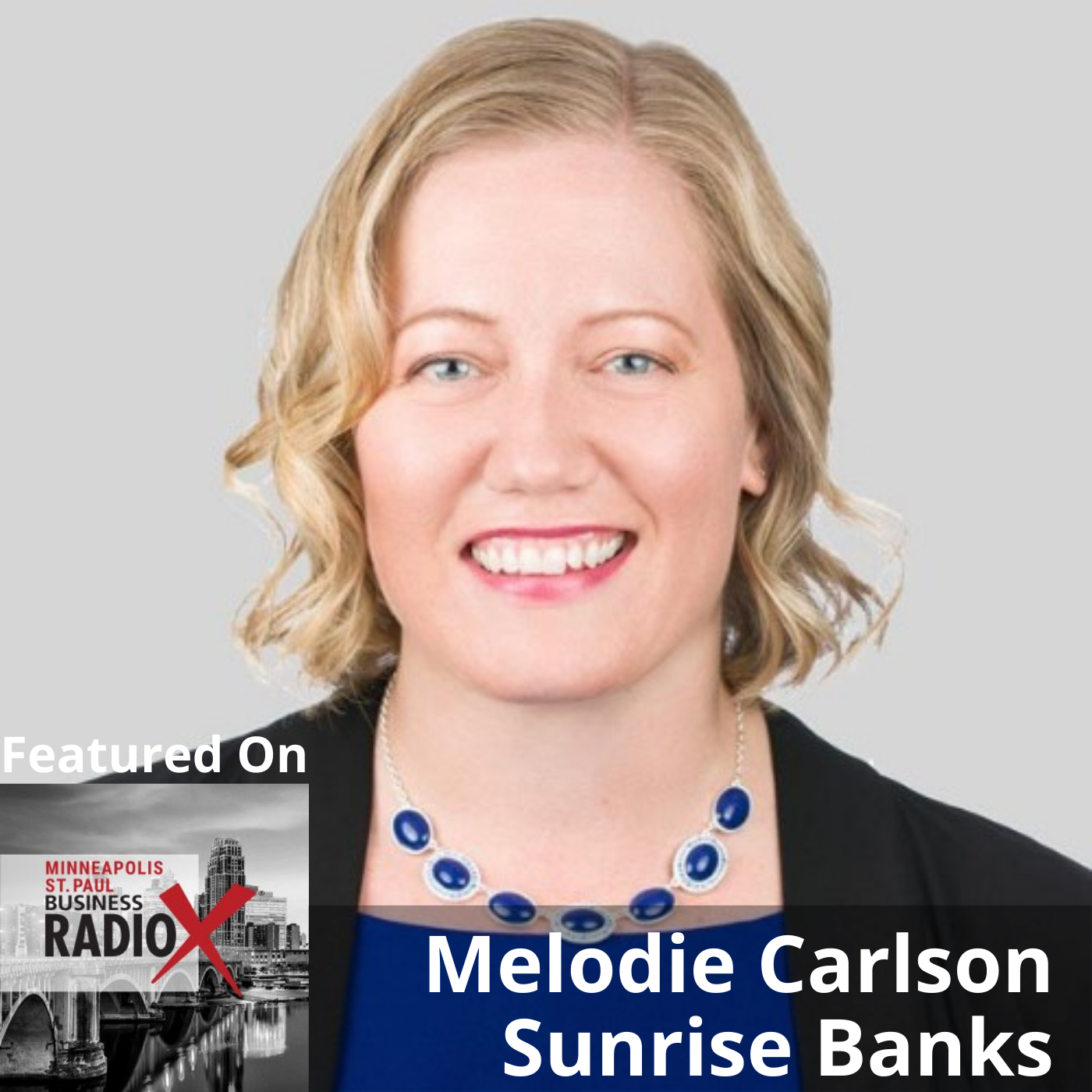
Melodie Carlson, Sunrise Banks

February 21, 2022 by John Ray

Sunrise Banks
Minneapolis St. Paul Business Radio
Melodie Carlson, Sunrise Banks
Loading
00:00 /
RSS Feed
Share
Link
Embed

Download file

Sunrise Banks

Melodie Carlson, Sunrise Banks (Minneapolis-St. Paul Business Radio, Episode 33)

Melodie Carlson, Chief Operating Officer for Sunrise Banks, reflected with host John Ray on the company’s human resources philosophies and practices, and how they have aided in the growth and development of the company. Melodie talked about flexibility in dealing with employees, how Sunrise managed the shift to remote work during the pandemic, employee communication, trusting employees and avoiding micro-management, her advice for work-from-home teams, and much more. Minneapolis-St. Paul Business Radio is produced virtually by the Minneapolis St. Paul studio of Business RadioX®.

Sunrise Banks

Sunrise Banks is a community bank headquartered in St. Paul, Minn. The bank offers traditional banking services while also partnering with fintechs to expand its reach nationally and across the globe. Sunrise is a certified B Corporation, a Community Development Financial Institution and a member of the Global Alliance for Banking on Values.

Company website | LinkedIn | Facebook

Melodie Carlson, COO, Sunrise Banks

Melodie Carlson, COO, Sunrise Banks

Melodie Carlson is Sunrise Banks’ Chief Operating Officer. Melodie’s role has evolved during her tenure at Sunrise and she has led many teams during her time with the bank. She currently leads the deposit operations, executive admin, facilities, fintech client relationships, fintech operations, human resources, internal audit, and retail banking departments.

Prior to joining Sunrise in 2015, Melodie spent 14 years at Target Corporation taking on additional responsibilities and leading teams in the internal audit, accounts payable, and payroll departments.

She started her career in public accounting at what is now called CliftonLarsonAllen (CLA), where she audited financial institutions and employee benefit plans.

 LinkedIn 

Questions and Topics Discussed in this Episode

  • How to communicate with employees while working from home.
  • 3 Steps to a Happy and Productive WFH Team
  • The benefit of one-on-one meetings with staff.
  • How to keep employees productive without micromanaging.
  • PPP loans and the mission of Sunrise Banks

Minneapolis-St. Paul Business Radio is hosted by John Ray and produced virtually from the Minneapolis St. Paul studio of Business RadioX® .  You can find the full archive of shows by following this link. The show is available on all the major podcast apps, including Apple Podcasts, Spotify, Google, Amazon, iHeart Radio, Stitcher, TuneIn, and others.
Tagged With: b corporation, Employee Engagement, employees, HR, Human Resources, Melodie Carlson, Minneapolis St Paul Business Radio, PPP loans, remote work, Sunrise Banks

Knowing Your People as People and Building Diverse Teams E16

October 28, 2021 by Karen

Knowing Your People as People and Building Diverse Teams
Phoenix Business Radio
Knowing Your People as People and Building Diverse Teams E16
Loading
00:00 /
RSS Feed
Share
Link
Embed

Download file

Knowing Your People as People and Building Diverse Teams
Knowing Your People as People and Building Diverse Teams E16

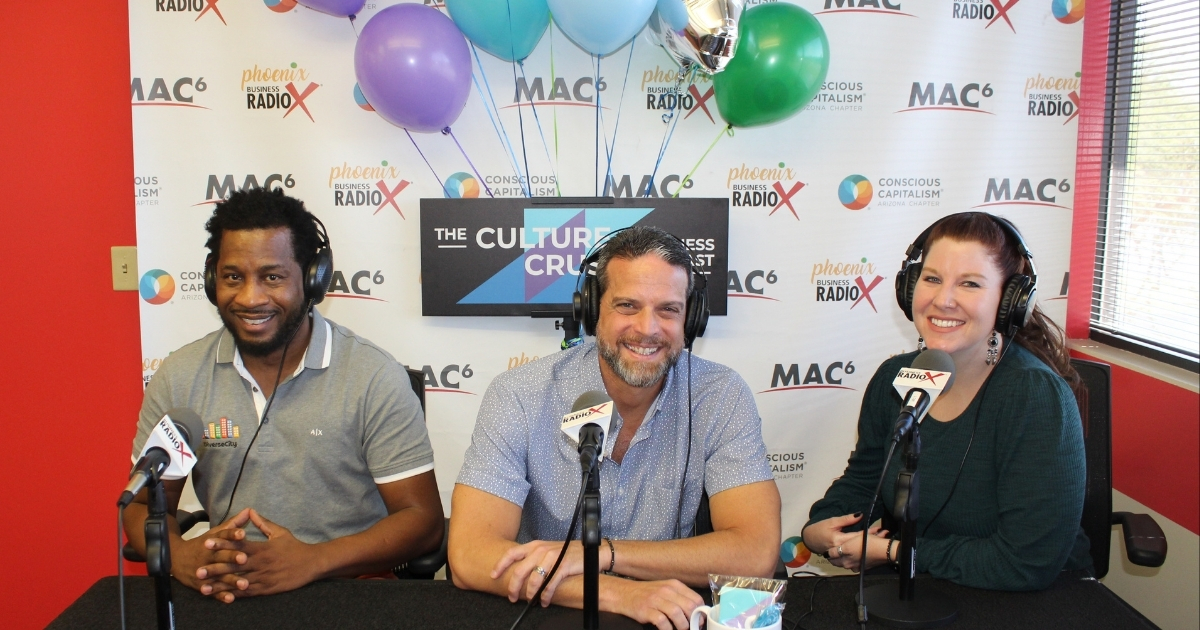
This was such a great show, with two wonderful guests, to round out the first year of the Culture Crush Business Podcast. This first year has been a blast and we have plans to grow even more this year.

It was so great to have Darren Thompson from DiverseCity and Brian Mohr with anthym on the show this month. We are thankful for their honesty and openness to discuss the real things that really grow company culture.

The show also reached some very honest and real discussions surrounding company culture when it comes to diversity and inclusion and supporting your people as real people with feelings. This show was also lighthearted and fun, with momma Maples (Kindra’s mom Connie) in the studio as well.

Company culture is deeper than just the values on the wall that people align with though. It is important to understand the others that you are working with as more than just what their job is. Who are they? We spend the majority of our days with the people that we work with, so why not understand them on a deeper level. It is also extremely important to understand the importance of diverse teams and making sure that everyone truly feels included and accepted.

Once your company has been able to include diverse teammates and see them as people with feelings, then they can grow the culture of the company even further.

There were so many great tidbits in this show, that people will definitely want to take a listen.

  • Leaders get the teams they deserve
  • Culture is the way and how things get done
  • People simply want to be
  • Once you have the taste of a company with a good culture you just can’t go back.

If you are a company that is trying to take your company culture to the next level, then you need to listen to the show. This podcast is for all leaders. Brian and Darren give examples, tips, and reasoning for the ways that they are helping to grow company culture. Both gentlemen are supporting companies in their journeys to grow company culture.

DiverseCity is a mobile technology designed to help engage and sustain DEI initiatives.

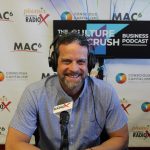
Darren-Thompson-Phoenix-Business-RadioXDarren Thompson is VP of Marketing at DiverseCity, a technology platform dedicated to supporting and managing diversity, equity and inclusion education. In addition, he is also the Founder of POKR, a Digital Business Development and Marketing Firm. DiverseCity-logo

Darren attended undergraduate studies at The University of Arizona, and launched his career in education. He eventually branched out into Sales & Business Development Consulting and now has a diverse client base to include his favorite: Start-ups.

Today, Darren is devoted to building his own tech-based start up and currently resides in sunny Phoenix, Arizona near his identical twin brother. He is an avid traveler, musician, chess player and remains committed to working with young entrepreneurs to help them achieve their goals.

Follow DiverseCity on LinkedIn.

anthym-logo-for-light-background

Thriving organizations recognize that their level of future success will be a direct result of a highly connected and engaged team working together to create value and impact for those they serve. Connection and engagement can’t be dictated or mandated, and it doesn’t happen by accident; it’s the result of a deliberate focus on fostering a deep sense of belonging, inclusion, and trust within the culture.

The anthym experience harnesses the power of personal storytelling to knock down artificial walls and shine a bright light on the depth and breadth of authentic human connection that exists within every team. By leveraging the universal accessibility and time machine-like power of music, anthym sparks a new level of curiosity and opens the door for a heightened level of conversation leading to unparalleled levels of connection and trust.

anthym is the leading team building technology platform for remote, distributed, and hybrid teams.

Brian-Mohr-Phoenix-Business-RadioXBrian Mohr’s career is a learning-based journey with an intense focus on people, purpose, values, culture, and leadership. Brian has had amazing entrepreneurial and leadership experiences at Jobing.com, P.F. Chang’s China Bistro, Y Scouts and Conscious Capitalism Arizona. Today, Brian is channeling his experiences and energy into helping organizations build cohesive teams in the rapidly accelerating distributed workplace through his new company, Anthym.

Brian is on the national Board of Directors of Conscious Capitalism, Inc., he is a Board member and President Emeritus of the Arizona Chapter of Conscious Capitalism, a member of the Board of Directors of the Better Business Bureau of the Pacific Southwest, a TEDx speaker, and the co-author of “Hiring on Purpose – How the Y Scouts Method is Revolutionizing the Search for Leaders”.

Brian’s most important and cherished responsibilities are being the lucky father to his 2 daughters, Taylor and Riley, and the proud husband to his wife, Jackie. In his spare time, you’ll find Brian practicing guitar and catching a live music concert every chance he can get.

Connect with Brian on LinkedIn, Facebook, Twitter and Instagram.

About Culture Crush

Culture Crush is officially relaunched! We are thankful to Debra Caron who launched and hosted the show originally. Culture Crush is back with a new host but the same focus- highlighting what makes a great company culture and how it affects the overall success of a company.CultaureCrushKindraBanner2

Culture is not just a tag word to be thrown around. It is not something you throw in job descriptions to draw people to applying for jobs within a company.

According to Marcus Buckingham and Ashely Goodall in their book Nine Lies About Work, “Culture is the tenants of how we behave. It’s like a family creed. This is how we operate and treat each other in the family.”

On this long form podcast we will highlight companies local to Arizona and beyond that are crushing it with great culture!

We will talk with company leaders to learn about real-life experiences, tips, and best practices for creating a healthy work environment where employees are finding joy and satisfaction in their work while also striving and growing within the company.

About the Host

ABHOUTHOSTHEADSHOTKindra Maples is your new host taking the lead on the relaunch of Culture Crush! She is spartan racer, past animal trainer, previous magician’s assistant, and has a weakness for Oreo cookie shakes. Her journey working with people actually started working with animals as a teenager (don’t worry we won’t go that far back for her bio).

She worked for over 15 years in the zoo industry working with animals and the public. Her passion of working with animals shifted into working with people in education, operations and leadership roles. From there her passion of leadership and helping people develop has continued to grow.

Then came the opportunity for relaunching the Culture Crush Podcast and she jumped on it. Leadership, growth, and strong company cultures are all areas that Kindra is interested in diving into further.

Shout Outs

We want to thank a few people for their behind the scenes effort in helping this relaunch to come to life. James Johnson with Tailored Penguin Media Company LLC.– It is a small, but powerful video production company with a goal to deliver the very best by articulating the vision of your brand in a visually creative way. Gordon Murray with Flash PhotoVideo, LLC. -Flash Gordon has been photographing since high school and evolving since then with new products that will equip, encourage, engage, and enable. Renee Blundon with Renee Blundon Design – She is not only one of the best free divers (that’s not how she helped with the podcast) but she is great with graphics design and taking the direction for the vision that you have while also adding creative ideas to bring to your vision to life.

These are just a few of the folks that supported the relaunch of the podcast. If you would like to be part of the Culture Crush team or would like to support underwriting the show- please reach out: culturecrushpodcast@gmail.com

Tagged With: connection, corporate storytelling, Culture, DEI, dei training, diversity, equity, hybrid teams, inclusion, remote work, sense of belonging, storytelling, team building, team connection, trust

Workplace MVP: Cynthia Milota, Ware Malcomb, and Kate Lister, Global Workplace Analytics

October 21, 2021 by John Ray

Ware Malcomb
Minneapolis St. Paul Studio
Workplace MVP: Cynthia Milota, Ware Malcomb, and Kate Lister, Global Workplace Analytics
Loading
00:00 /
RSS Feed
Share
Link
Embed

Download file

Ware MalcombWorkplace MVP:  Cynthia Milota, Ware Malcomb, and Kate Lister, Global Workplace Analytics

While many companies adapted to a fully remote work model last year, shifting to a hybrid, in-person/remote workplace this year raises many questions. Creating equitable arrangements among employees and bottom-line implications are just two of the considerations. Cynthia Milota, Ware Malcomb, and Kate Lister, Global Workplace Analytics, joined host Jamie Gassmann to outline issues employers must address, potential solutions, the responsibility of leaders, and much more. Workplace MVP is underwritten and presented by R3 Continuum and produced by the Minneapolis-St.Paul Studio of Business RadioX®.

Ware Malcomb

Established in 1972, Ware Malcomb is a contemporary and expanding full-service design firm providing professional architecture, planning, interior design, civil engineering, branding, and building measurement services to corporate, commercial/residential developers and public/institutional clients throughout the world. With office locations throughout the United States, Canada and Mexico, the firm specializes in the design of commercial office, corporate, industrial, science & technology, healthcare, retail, auto, public/institutional facilities and renovation projects. Ware Malcomb is recognized as an Inc. 5000 fastest-growing private company and a Hot Firm by Zweig Group. The firm is also ranked among the top 15 architecture/engineering firms in Engineering News-Record’s Top 500 Design Firms and the top 25 interior design firms in Interior Design magazine’s Top 100 Giants.

Company website

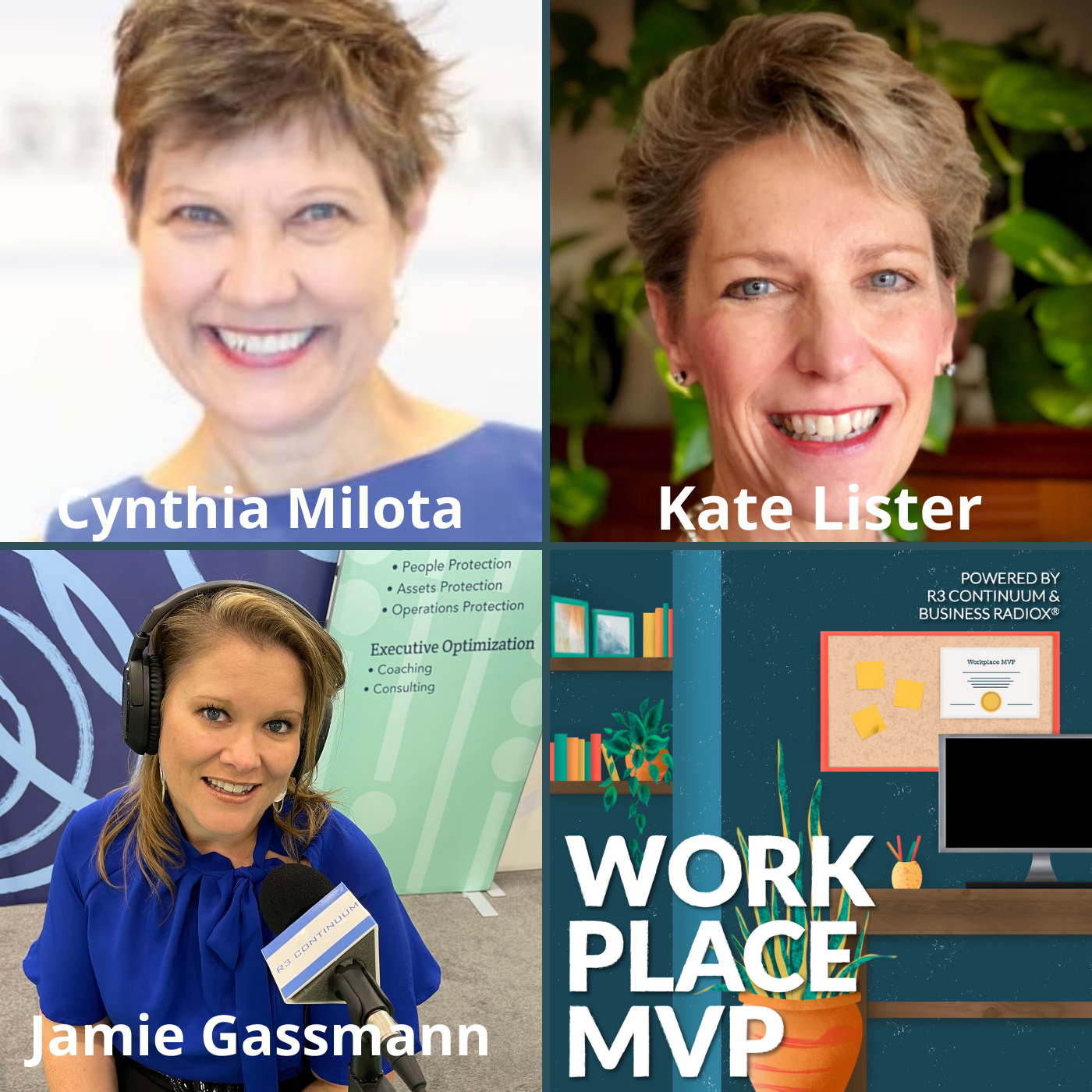
Cynthia Milota, Director of Workplace Strategy & Change Management, Ware Malcomb

Cynthia Milota, Director of Workplace Strategy & Change Management, Ware Malcomb

Cynthia is the Director of Workplace Strategy & Change Management for the architecture firm, Ware Malcomb. Her practice focuses on employees and experience-based work environments.  She partners with clients to formulate their unique objectives: mindful of wellness, culture, talent strategy and success measures. She has held roles as the consultant and as the workplace strategist for a Fortune 500 financial services firm. She has published and presented her research at academic and professional conferences, held adjunct faculty positions, served on juries and editorial review teams.

LinkedIn

Global Workplace Analytics

Global Workplace Analytics (GWA) is a research-based consulting organization that helps employers and communities create and communicate the people, planet, and profit business case for strategies that involve workplace flexibility, mobile work, telecommuting, activity-based working, hoteling, well-being, and more.

In partnership with a handful of global product and service organizations, GWA provides on-call research and develops custom ROI calculators, white papers, e-books, and other authoritative content.

GWA’s specialties include: Workplace Strategy, ROI Analyses, Consulting, Writing, Stakeholder Engagement, Speaking, Research, Advocacy, Remote Work, Telework, Telecommuting, Activity-Based Working, Hoteling, Well-Being, Infographics, Marketing, Publicity, and more.

Company website

Kate Lister, President, Global Workplace Analytics

 Kate Lister, President, Global Workplace Analytics

Kate Lister is a recognized thought leader on trends that are changing the who, what, when, where, and how of work. She is president of Global Workplace Analytics, a research-based consulting firm that has been helping communities and organizations optimize the employer, employee, and environmental outcomes of flexible and distributed workplace strategies for nearly two decades.

Kate has written or co-authored five business books including, the U.S. chapter of “Telework in the 21st Century” (Edward Elgar, 2019), a multi-country peer-reviewed study on remote work. She is a trusted source of insights about the future of work for news outlets including the New York Times, Washington Post, Wall Street Journal, Newsweek, and dozens of others.

As a recognized thought leader, Kate was one of only three witnesses invited to testify before a U.S. Senate committee regarding the potential for remote work in government once the pandemic ends.

LinkedIn

R3 Continuum

R3 Continuum is a global leader in workplace behavioral health and security solutions. R3c helps ensure the psychological and physical safety of organizations and their people in today’s ever-changing and often unpredictable world. Through their continuum of tailored solutions, including evaluations, crisis response, executive optimization, protective services, and more, they help organizations maintain and cultivate a workplace of wellbeing so that their people can thrive. Learn more about R3c at www.r3c.com.

Company website | LinkedIn | Facebook | Twitter

About Workplace MVP

Every day, around the world, organizations of all sizes face disruptive events and situations. Within those workplaces are everyday heroes in human resources, risk management, security, business continuity, and the C-suite. They don’t call themselves heroes though. On the contrary, they simply show up every day, laboring for the well-being of employees in their care, readying the workplace for and planning responses to disruption. This show, Workplace MVP, confers on these heroes the designation they deserve, Workplace MVP (Most Valuable Professionals), and gives them the forum to tell their story. As you hear their experiences, you will learn first-hand, real life approaches to readying the workplace, responses to crisis situations, and overcoming challenges of disruption. Visit our show archive here.

Workplace MVP Host Jamie Gassmann

In addition to serving as the host to the Workplace MVP podcast, Jamie Gassmann is the Director of Marketing at R3 Continuum (R3c). Collectively, she has more than fourteen years of marketing experience. Across her tenure, she has experience working in and with various industries including banking, real estate, retail, crisis management, insurance, business continuity, and more. She holds a Bachelor of Science Degree in Mass Communications with special interest in Advertising and Public Relations and a Master of Business Administration from Paseka School of Business, Minnesota State University.

TRANSCRIPT

Intro: [00:00:03] Broadcasting from the Business RadioX Studios, it’s time for Workplace MVP. Workplace MVP is brought to you by R3 Continuum, a global leader in workplace behavioral health and security solutions. Now, here’s your host, Jamie Gassmann.

Jamie Gassmann: [00:00:24] Hi, everyone. Your host, Jamie Gassmann, here, and welcome to this episode of Workplace MVP.

Jamie Gassmann: [00:00:30] Making decisions on how flexible and accommodating a workplace is willing to be with remote or hybrid work is not a new decision that is exclusive to the COVID-19 pandemic. What the pandemic has done is made that decision even easier or more complex for organizations. Easier in that they discovered over the last year that their workforce can remain productive and thrive in a remote work environment, which is something that may have been an underlying concern pre-COVID. And, for others, they may be looking at organizationally leadership wanting something different than what their employees are wanting. And, how do you strike the balance? How can you approach this decision strategically with the best interests of everyone involved? Is there really a balance here and how can you obtain that?

Jamie Gassmann: [00:01:23] And, with us today to share their expertise and educated thoughts on the return-to-office opportunities and challenges, our SHRM 2021 presenters and Workplace MVP’s Cynthia Milota, Director of Workplace Strategy of Ware Malcomb, and Kate Lister, President of Global Workplace Analytics. Welcome to the show, Cynthia and Kate.

Cynthia Milota: [00:01:45] Great to be here.

Jamie Gassmann: [00:01:48] So, we’re going to go ahead and get started with our first Workplace MVP, Cynthia Milota, Director of Workplace Strategy of Ware Malcomb. Hi, Cynthia.

Cynthia Milota: [00:01:58] Hey, Jamie. Thanks for having me.

Jamie Gassmann: [00:02:00] So, let’s start out with you walking us through your career journey.

Cynthia Milota: [00:02:06] Well, I studied undergraduate in interior design in Cincinnati, and really the first half of my career I spent in corporate office planning and design. But after graduate school, my focus really shifted to strategy and change. I worked as a global strategy for a strategist for a financial services firm. And, now at Ware Malcomb, I lead the strategy and change practice where we’re really helping our clients navigate what’s best for their people and for the business. And, luckily, those two things generally align.

Jamie Gassmann: [00:02:34] Great. And so, can you share a little bit with our listeners about Ware Malcomb and what they’re known for?

Cynthia Milota: [00:02:41] Well, Ware Malcomb is an architecture and design firm with 800 people, and we have some 20 offices around North America. Our interiors practice specializes in workplace, which is the arena I’m in, as well as health care, science and tech, and retail. And, our architecture team is known for their industrial and their cold storage building types.

Jamie Gassmann: [00:02:59] Great. And so, in your opinion, looking at this last year with the COVID-19 pandemic and how it’s impacted workplaces, why is it an important time now for workplaces to be exploring new ways of working?

Cynthia Milota: [00:03:14] Well, I’m not the first to say that COVID has accelerated what was really already underway for the past decade. Many, many pre-COVID studies indicated that people wanted the choice and flexibility to work from home, even if only on occasion.

Cynthia Milota: [00:03:27] The fact that business really carried on without much disruption during this global lockdown was really the litmus test that executive leadership needed. COVID primed that pump for change and really an acknowledgement that many knowledge workers and many knowledge work jobs could be really accomplished, you know, outside of the office. So, we’re really encouraging our clients to keep this momentum of change going and really explore what’s next specific to their organization.

Jamie Gassmann: [00:03:55] And, you know, so in looking at your clients and kind of the recommendations, what should they be considering as they explore these new ways of working?

Cynthia Milota: [00:04:05] Well, let’s start by saying, let’s not underestimate the power of choice, not only for where to work, but when to work. More and more, we’re seeing our clients are setting up something called the core hours of operation, where you have to be available between certain times of the day but then they allow flexibility outside of those core hours.

Cynthia Milota: [00:04:24] We’re really working also on the equitability of the experience in and out of the office, fighting things like presence bias or gender inequality. Women want to work from home 50% more than men. No surprise. Yet, we know that out of sight can be damaging to career advancement. So, we’re asking and working with our clients to examine their culture to not penalize or stigmatize remote workers.

Cynthia Milota: [00:04:48] We’re also looking at planning for teams to be in the office, not just individuals, thinking about what’s the setting for people to do their best work. It might not always be in the office, but when it is in the office, we want to make sure that the workplace is really a destination. It’s memorable. Because right now the office is competing with all those amenities and conveniences of home and in your home neighborhood.

Jamie Gassmann: [00:05:10] Well, and a lot of workers are almost demanding that opportunity to have that choice. So, it really is putting, kind of, employers under a little bit of pressure to make a decision and really almost make a decision in favor of those employees to some degree.

Jamie Gassmann: [00:05:26] So, you know, when you talk about the employee experience, you mentioned that it’s important. Can you talk us through what makes that so important? What is it and what should employers really be thinking about when they’re looking at that employee experience?

Cynthia Milota: [00:05:44] Well, we would like to take the broad view of employee experience, and really, it’s essentially how people think and feel about their work journey, their interaction with their organization. It’s no surprise people cost ten times more than real estate. So, how can companies provide the best employee experience for, really, their most important asset?

Cynthia Milota: [00:05:44] In many studies, Gallup has made the notion of engagement famous but other aspects of employee experience include authenticity, optimism, purpose, and meaning. We know the younger generations are super interested in that, social connections and belonging. Employee experience is going to be especially important because of this phrase they’re calling the great resignation.

Cynthia Milota: [00:06:27] You know, Microsoft’s 2021 Work Trend Index indicated that about 40% of the global workforce is considering leaving their employees. So, employers need to look at employees as individuals with different likes, different needs, preferences and really gather insights and turn that into action. It’s not going to be a one-size-fits-all solution.

Jamie Gassmann: [00:06:48] So, what are some approaches that they can do to gain those insights? I mean, I know obviously that they can take a survey. Aut are there other ways that they can engage that employee in, you know, establishing transparency so they feel comfortable sharing with their employer their preferences?

Cynthia Milota: [00:07:05] Right. And, of course, there’s lots of ambiguity and uncertainty going on right now. So, the [inaudible] of employee sentiment are continuing to shift. But if we fall back on that old adage, you know, if you can’t measure it, you can’t improve it. Let’s just go out and collect some data and just start building a database.

Cynthia Milota: [00:07:20] So, you’re right, it’s everything from employee surveys to badge data who are really coming into the office, all manners of interviews and focus groups. It’s really been a bit more challenging gathering some of that data from the home workforce. But mobile tools are one way that we’re using. People might answer questions using their phones, or they may take some photographs.

Cynthia Milota: [00:07:45] But in any of these data gathering techniques, we’re really careful to set expectations with the stakeholders, right? You kind of ask the right questions. You don’t ask what you want but you ask what you need to do your job. And, I guess the most important thing is to be sure that you’re reporting back. There’s nothing more damaging to a change initiative than taking a survey and then never hearing anything about the results.

Cynthia Milota: [00:08:06] And, the last thing I’d like to say is that we’re doing lots of pilot plans to help them road test what some of these recommendations are. And, this level of transparency has really helped answer that question. How is this going to impact me, an employee, in these pilots? Employees have a firsthand ability to have some skin in the game by proactively commenting. And so, that’s been a super positive way.

Jamie Gassmann: [00:08:30] Yeah. If you want to influence the change, you got to speak up, right?

Cynthia Milota: [00:08:34] Exactly, exactly.

Jamie Gassmann: [00:08:36] So, in looking at new ways of working, you know, you mentioned this on a previous call that there’s been some environmental impacts as a result of more people staying at home, you know. What are some of the things that you’re seeing good or bad from that?

Cynthia Milota: [00:08:54] Sure. Well, the obvious positive environmental impact is that we’re driving less. You don’t need a study to understand that. And, obviously, we’re reducing greenhouse gas emissions and the consumption of fossil fuels. In 2020, the offsets for the reduction of the greenhouse gas emissions translated into planting 91 million trees just for that year. So, it’s pretty formidable. But we’re also printing less to the tune of 247 trillion sheets of paper, less paper printed in 2020. Or, you could just look at your procurement records for all the paper plates and the napkins and the plastic silverware that didn’t get purchased during COVID, right, and all that stuff never found its way to a landfill. So, that’s all good.

Cynthia Milota: [00:09:35] As for energy consumption, right, when you’re at home, you automatically turn off the bathroom light. But when you’re at the office, most of the time, right, you can’t do that. There’s been a really nice study done by Sun Microsystems found that the energy consumption was nearly twice as high at the office as compared to at home.

Cynthia Milota: [00:09:52] So, you know, not surprisingly, buildings account for 40% of CO2 emissions, and so, the fewer buildings that we have, the less emissions that we have and certainly the fewer buildings that we’re building and occupying. So, from an environmental standpoint, hybrid work is all good.

Jamie Gassmann: [00:10:09] Yeah. So, it sounds like, you know, from comparing the environmental to looking at the workplace experience to looking at just that great resignation, how do you find ways to keep the employees, you know, engaged in at your worksite, employers need to be looking at more than just productivity levels and getting things done. They need to be looking at a bigger picture, correct?

Cynthia Milota: [00:10:35] Absolutely. I mean, all of those are just pieces to a larger puzzle. And, you really have to look at what makes sense for your organization, what makes sense for your employees. You know, don’t get roped into the benchmarking [inaudible], you know, other companies and organizations are doing this or that but what makes sense for you, not what makes sense for someone else.

Jamie Gassmann: [00:10:57] Yeah, absolutely. Great feedback and advice there. So, now, we’re going to just shift gears to our next Workplace MVP, Kate Lister, President of Global Workplace Analytics. Welcome, Kate.

Kate Lister: [00:11:11] It’s great to be here. And, boy, Cynthia, great job. You said everything I would have said.

Jamie Gassmann: [00:11:17] Great minds think alike, right?

Cynthia Milota: [00:11:22] Great, right.

Jamie Gassmann: [00:11:23] Yeah. So, Kate, talk us through your background and your career journey.

Kate Lister: [00:11:28] Sure. Well, I started out as a banker, and I think that that really shaped how I look at the world, or maybe that’s why I became a banker, to begin with, you know, nature and nurture. But it also gave me the language of the C-suite, the language of talking to executives in terms.

Kate Lister: [00:11:46] I’ve run a number of businesses. I wrote three boring business books and kind of stumbled into this business almost two decades ago. After writing the last book, it was a consumer title on remote work, and when I’d first gone to John Wiley & Sons and proposed a title on remote work, I wanted it to be a business title. And, they said, “No, we don’t think that’ll be of any interest to anybody.”

Kate Lister: [00:12:12] But it was in doing the research for that book that I realized that nobody had made the business case to the C-suite for remote work. And, the more I looked at it, it wasn’t just about remote work that really H.R. and corporate real estate weren’t talking to the C-suite in terms that they understood. They needed a way to quantify what the expenditures on things like remote work or flexibility or health and wellness. What did that – what would that really do for the company and what would it do for the bottom line? You know, what’s in it for me?

Jamie Gassmann: [00:12:49] Great. And, Global Workplace Analytics, what type of services do you provide to them?

Kate Lister: [00:12:57] Well, things have shifted a bit in the last two years. As I said, I’ve been working in pushing that remote work rock uphill for about 20 years and it really has been a lot of that. And then, in the last two years, it’s kind of been chasing me down the other side.

Kate Lister: [00:13:15] So, working with large companies, 3000 employees, and over to, well, from the beginning of the pandemic, you know, just surviving, figuring out what technologies we need, figuring out how are we going to do this kind of triage almost through the last year of just making work work. And then, in 2021, hear more about, okay, now that we’ve done this, now that we’ve learned some lessons, what are we going to take forward? How are we going to operate going forward? What have we learned? What’s worked? What hasn’t worked? How do we get the best of both and then bring them into the office or not? You know, who do we want to return to the office? When are we going to do it? And, that’s kind of, like, the very right now question.

Kate Lister: [00:14:08] Last week it was vaccinations, but then the president answered that one. So, this week it’s return-to-office. Most of my clients had set a return-to-office date of January, and then that got moved out to September, then that got moved out to July and then that got moved out to September and then October. And, now most of them are really in the throes of deciding whether or not that’s going to move to beginning of next year.

Jamie Gassmann: [00:14:35] Wow. Yeah. Constant changes over this last year for sure in navigating that. So, you know, in talking about your clients, what, from your perspective, is keeping them up at night these days, if you will?

Kate Lister: [00:14:50] Yeah. As I said, it’s kind of a moving target. But really a lot of them, as Cynthia said, have now gotten over the question of will my people be working? You know, can they be productive? Can we continue to be profitable? And, this has been historically the way it’s worked. Once a manager has had the opportunity to work remotely themselves, then they’re much more accepting to it.

Kate Lister: [00:15:19] So, we’ve gotten over one really big hurdle for the most part. It’s still out there. We’re still making the business case, but it’s become a whole lot easier. And, you know, I guess what’s keeping them up at night, they’re thinking about all that empty real estate. They’re thinking about those big buildings that they’ve been paying for the last year and a half, almost two years, and practically nobody’s in them. So, what are we going to do about that going forward?

Jamie Gassmann: [00:15:52] Yeah, I suppose. Have any of your clients made decisions on that? I’ve been thinking the same question with, you know, thinking of some of the skyscrapers in my area and going, “Oh my goodness, they’ve got to be sitting empty.”

Kate Lister: [00:16:03] Yeah, yeah. All have decided that they’re going to go to some form of hybrid, that it’s going to be much more extensive use of remote work going forward. But they’re taking their time on the decision about getting rid of real estate, I mean, unless there’s, you know, a lease coming up this year that they have to make a decision on.

Kate Lister: [00:16:25] They understand that what people say and what they do is often very different. What people say they want and what they actually do is often very different. So, while 80% of the workforce now says they want to work from home at least one day a week, are they going to really? The ones that say they are going to come into the office. The 20% that say they want to be all in the office or at least largely in the office, are they going to come in the office? How are teams going to collaborate? How are we going to deal with some of the hybrid issues that Cynthia talked about?

Kate Lister: [00:17:05] So, really, taking kind of a wait-and-see attitude about, do we need to? Can we get rid of – excuse me. Can we get rid of real estate? Should we get rid of real estate? Do we need to restructure our real estate? Most are realizing that, you know, home is going to be the place for focus work and office is going to be the place for collaborative work and for community and for socializing.

Kate Lister: [00:17:31] But that’s not the way offices were built. Offices were built with primarily, you know, I’d say, probably in the 70-30, 80-20, the high number for heads-down work and then the other for social so that pendulum may swing and that may mean that we need to reconstruct those office spaces. A lot of my clients also are looking at the potential to go to hoteling where employees don’t have an assigned seat at the office. They reserve a space on their iPhone or on their desktop when they come in, or there are drop-in spaces when they come in. As Cynthia said, these were all trends that were happening before the pandemic. But now there’s this acceleration. Some of my companies even sent all of their employees’ stuff home last year. They just cleared out the offices, got rid of it, with the intent of perhaps moving to this hoteling approach.

Jamie Gassmann: [00:18:33] Interesting. So, in terms of, like, how they would prepare for that, you know, and thinking, I mean, obviously, they keep, you know, a number of your clients, you mentioned, are extending their return-to-office date. You know, what are some of the things that might be happening in the background in terms of preparing for that date? Because I know it’s probably feeling like a moving target, but eventually it’s going to stick and it’s going to be one that now it’s implementing that return to office. So, how do they get ready for that?

Kate Lister: [00:19:02] It’s kind of been just – it’s been a bit of a breather for me thinking that we might actually get to wait until the beginning of next year because we have just been rushing through the change process when companies, I mean, I’ve got one client that accelerated a program that probably we would have done prior to the pandemic but what probably would have rolled out over six months to a year, maybe even more, and we had to accelerate it into eight weeks. So, you know, it was a bit of a crunch and everybody’s kind of in that bit of a panic to meet that next deadline.

Kate Lister: [00:19:38] One of the things that I think has really been maybe a silver lining is that it has lofted this whole conversation about people and place to the C-suite. Before the pandemic, companies were either allowing remote work, kind of on an ad hoc basis. You know, we’ll let Jamie do it. We’ll let Cynthia do it. But not really in any formal way. And, either that or they were deploying it tactically kind of as a solution to the problem du jour.

Kate Lister: [00:20:09] So, if the problem was trying to reduce your costs, then real estate handled it and then they were running the show. If it was about attracting and retaining talent, then that went through H.R. and they were running the show, but they didn’t really talk to each other.

Kate Lister: [00:20:24] And, now that we’ve got the C-suite involved and they’re saying, no, we see this not tactically. We see this as a new way, a new strategy for working in the future. All of those functional areas are coming together. So, one of the things that you know we do as soon as we get into an organization is to form that cross-functional team that includes H.R., I.T., real estate, but also marketing, sustainability, risk management, finance. They all have to be at the table. Everybody has a stake in this, and it’s only when they’re talking together are we going to get the sort of optimal solutions.

Kate Lister: [00:21:02] So, as Cynthia said, you know, we’re looking at the across cross-functional teams at leadership readiness. So, we’re doing interviews with the leaders and seeing where they sit. You know, how open are they? How ready are they? Because, if the leaders don’t buy in, and we’ve known this for decades, it’s just not going to happen. I mean, they can’t just talk the talk even. They’ve got to walk the walk. They’ve got to live the vision.

Kate Lister: [00:21:36] For the employees, we are typically deploying a company-wide survey and getting higher participation than companies have ever seen in their employee surveys because this is something that they are really passionate about. I mean, we’ve been getting as high as 90% participation in surveys. In one company, they actually did a contest to see which group would get the highest and they were going to get an extra day off, which was cool.

Jamie Gassmann: [00:22:02] A great incentive.

Kate Lister: [00:22:04] Yeah, exactly if this group won. And, they came in with 100%. They got 100% of their people to participate. Then, we go in and we actually get talking to the people. We sit them down in focus groups. We ask them, what’s working? What isn’t working? What training do you need? What training does your manager need? Do you want to come back? How often do you want to come back? So, that we have a kind of a read on the whole organization, and with that we recommend a strategy and put together policies and put together change management and communications to keep employees informed and involve them in decisions, to be part of the decisions. And, you know, going forward than looking at how will they actually use the space. And, you know, that’ll be the next step.

Jamie Gassmann: [00:22:56] Interesting. Yeah, I’ve spoken to other business leaders and there is definitely power in involving those employees into some of that decision-making. You know you get it almost like instant buy-in if you will.

Kate Lister: [00:23:12] It’s being done with you and not at you. And, unfortunately, most organizations don’t share the findings of their surveys with the employees, and that’s terribly frustrating.

Kate Lister: [00:23:25] Another thing that I’m seeing companies do that is just a huge mistake is failure to communicate. At first, for the first six months, they were doing town halls. They were doing, you know, weekly conversations with the CEO. They were really on it. But that’s kind of gone by the wayside in 2021 for the most part, and it’s really showing. You just can’t leave that ambiguity out there of, am I going to come back? When am I going to come back? Are you going to force me into the office?

Kate Lister: [00:23:55] And, It’s not until the CEOs start seeing the people leave, you know, because they don’t. If they can jump to something where they know they’re going to have the flexibility they want when they have an answer, then they’re going to do that. I mean, even if CEOs don’t have the answer, it’s just critical that they say, “Hey, look, we don’t have the answer, but these are the things that we’re looking at. And, here’s, you know, here’s what, here’s how we’re trying to make those decisions. You know, bear with us.”

Jamie Gassmann: [00:24:26] Yeah, interesting. So, in looking at, you know, hybrid versus remote, you had indicated previously in a conversation we had earlier that hybrid is harder than remote. Can you talk me through what makes it that much more harder?

Kate Lister: [00:24:45] Sure. I guess. Let’s take meetings as an example. We’re all these same squares on the screen. You know, it’s become very egalitarian. It’s even become more empathetic because you’re seeing the CEO in kind of their home setting with their dog on their lap or their kids running through the background or whatever. And, it’s kind of brought us together on an even playing field.

Kate Lister: [00:25:13] Now, we go to hybrid and we’ve got 10 people sitting in a conference room and 10 people or three people that are not there. I’ll actually give you an example. I was just wrapping up an engagement with a 65,000-person manufacturing company and we’d gone all through those things that I talked to you about the change management, training, and all that. And, I was presenting to the board of directors what our findings were, you know, kind of closing out the engagement. And, 12 of them were in the conference room and I was not. And, at the end of the meeting, I said, okay, I think we should rate this meeting. Everybody gets to rate this meeting, but I go first. I’m going to give it a three. And, here’s why. You were all in the room. You all could all see each other, but none of you had your laptops open so I couldn’t see you. I couldn’t see your faces. I couldn’t see how you were responding to what I was saying. I mean, I was talking for 40 minutes. You only had one screen in the conference room and all you could see were my slides, so you couldn’t see my face, you know. You couldn’t see me gesticulating. You couldn’t see when I wanted to say something.

Kate Lister: [00:26:26] In fact, there was a question that was asked that I had an answer to. And, I couldn’t get a word in edgewise. I wound up texting the CEO or the chairman and say, “Hey, you know, I’d like to answer that question.” And then, he brought me into the conversation. You all took a break for five minutes and you turned off the sound. I got excluded there.

Kate Lister: [00:26:52] And, you know, it was just an altogether bad experience for me. The room went a little silent for a minute, and then one of the directors said, “You know what? Didn’t we just go through a consulting engagement that told us how to have better hybrid meetings? And, I think we talked about all these things.” And, we all had a good laugh about it.

Kate Lister: [00:27:13] But, I mean, it just demonstrates how intentional it has to be. This is not something that comes naturally. Inclusiveness, including the people that are not in the room, and that’s just in meetings. The bigger issue goes to, am I going to be passed over for promotion if I’m a remote worker or if I’m a possible remote worker? And, am I going to get the same salary or compensation? Am I going to get the same projects if I don’t walk down the hall and see Jamie, and say, “Jamie, oh, you’re just the person I need to see.”

Kate Lister: [00:27:47] So, all of those things make it very difficult to be hybrid. You know, we were doing it before. Sure. I mean, people were working outside the office. We’re global organizations. We’re talking across the world, but not to this extent. And so, we just have to be very, very intentional when we go back of keeping that in mind that we all are, you know, one organization and we need to treat one another as such.

Jamie Gassmann: [00:28:16] Yeah, interesting. And, some of those things that you described, did that meeting happen pre-COVID? But it wasn’t unlike, to your point, the scale of the number of individuals that we would be working through that. Now, it’s you’re on mute, unmute your –

Kate Lister: [00:28:29] Exactly.

Jamie Gassmann: [00:28:30] And, it happens at least two or three people in a call, you know, every day, right?

Kate Lister: [00:28:34] You know, doughnuts. We don’t get any doughnuts here at home. You’ve got that wonderful plate of doughnuts in the middle of the table. I want a doughnut.

Jamie Gassmann: [00:28:43] That’s the truth. You’re like, really? Oh, I’ll go heat up my, you know, my lunch meal while you guys eat, you know, the nice, fresh stuff that just came in.

Jamie Gassmann: [00:28:52] And, if you had, so, speaking of like, you know, talking to that C-suite and some of the CEOs and chairmen, I’ve seen in some articles where there’s some that are just really, you know, hard-set on, their people are going to come back into the office. This is going to be the model. But then we’ve got this, you know, the people that are speaking and saying, that’s not what we want. How do you talk to that CEO? How do you convince them to have more of this open mindset into either a hybrid or a remote working environment?

Kate Lister: [00:29:31] Well, my natural instinct is to just slap him or her. But I can’t do that because I wouldn’t get very good reviews. So, I go back to the business case. It’s got to be, you know, what’s in it for them.

Kate Lister: [00:29:46] Typically, there are two things that that person’s worried about. It’s a control thing. You know, they want to feel like they have some control over the organization. I picture the supervisor standing on the balcony, looking down over his minions, all working on the factory floor, and we still sort of have that mindset even after almost two years of doing that. So, it’s kind of getting to those fears. What is it that this person is afraid of?

Kate Lister: [00:30:17] Another thing that I’ve seen and there have been some very public cases of this, CEO just lives in their own world. They in fact believe that everybody wants to come back. They believe that everybody is like them, and it’s not until you show them the numbers.

Kate Lister: [00:30:36] I won’t mention the name, but a very large company of CEO came out and said, “No, we’re all going back to work. This is just the worst thing, this remote work thing. We’re all going back to work.” I happen to have the person, head of H.R., on a podcast that I was doing the next day. And, before we got on, I said, “Am I allowed to ask you about this? Because, you know, here you are talking about workplace flexibility, but your CEO just said no way.” And, she said, “Yeah, well, we had a bit of a conversation about that.” And, truly, he did not realize. He thought everybody was like him and wanted to be back in the office. And, when they showed him the surveys, you know, he was just blown away. He had no idea.

Kate Lister: [00:31:22] So, sometimes it’s really just, you know, bringing them back to reality. And, you know, if they don’t, and showing them what’s there is to lose and what there is to lose is good people and what that means is a real hit to their bottom line. And, that’s the language of the C-suite.

Jamie Gassmann: [00:31:45] Yeah, interesting. Yeah. And, a lot of them probably don’t because they may be not as in the thick of the day-to-day as much or kind of in the details to see what some of the people in their organization are actually feeling and thinking at that time, you know.

Jamie Gassmann: [00:32:01] And, looking at, you know, we talk a lot about the productivity and the inclusiveness and engagement. Let’s talk a little bit about innovation and the remote work environment. Do you feel from your opinion that being in a remote or hybrid setting will impact or hurt innovation?

Kate Lister: [00:32:23] I try not to speak from opinion. I speak from research, and the research just does not prove that face-to-face improves innovation, has any impact on innovation. The New York Times, just maybe two or three weeks ago, had a large article that says there is no proof, and I’ve been saying that for years. But now the New York Times said it. So, that’s great.

Kate Lister: [00:32:52] There are two parts to innovation. First is creativity and the second is innovation. So, creative concept. People are most creative when they’re in private. You know, think about when you’re at your most creative, in the shower, in the car, when you’re walking in the woods. And so, even in all of the surveys that we’re doing, people are saying that they’re more creative working at home. Innovation often, you know, that means taking that creative thought [inaudible].

Kate Lister: [00:33:27] It’s often done in groups. So, there are two parts to it, but not necessarily. There are a lot of lone inventors, and it doesn’t necessarily mean face-to-face interaction with groups. Innovation is really founded on trust. It’s do you trust the people that you’re working with enough to throw out a crazy idea and not feel like you’re going to be told that’s a crazy idea. That’s what’s really fundamentally needed with a team. And, once they’ve got that trust, once they have that trust bond, they can do it remotely, just as easy as they can in person.

Jamie Gassmann: [00:34:08] Great. So, we’re going to take a word from our sponsor. Workplace MVP is sponsored by R3 Continuum. R3 Continuum is a global leader in providing expert, reliable, responsive, and tailored behavioral health, crisis, and security solutions to promote workplace well-being and performance in the face of an ever-changing and often unpredictable world. Learn more about how our R3 Continuum can tailor a solution for your organization’s unique challenges by visiting www.r3c.com today.

Jamie Gassmann: [00:34:41] So, now, I’m going to bring Cynthia back into the conversation, and I have some questions for the two of you. Starting out with as workplaces move to making decisions on their new work approach, how can they make the business case from a financial perspective that supports their decision? And so, let’s start with you, Cynthia. Can you talk us through kind of your thoughts on that?

Cynthia Milota: [00:35:05] Well, I’m going to start with a couple no-brainers that are really easy to start, and then we’ll let Kate talk about some of the great financial measurement tools that she offers. But I’m sure you’ve been a part of many conversations about work-from-home stipends. And, as employees are really sort of settling in for the long run on this home-office gig, they’re looking to upgrade. No one wants to be sitting at the dining room table anymore, and there’s been lots of, lots of studies about all the success that people are having, depending on where they’re working. So, clearly, we need to upgrade where we’re sitting at home.

Cynthia Milota: [00:35:40] So, we like to talk about the idea of monitors and a good ergonomic chair at home. That’s sort of the low-hanging fruit that a lot of these work-from-home stipends talk about. So, if you just take a break-even approach regarding providing dual monitors, assuming each one costs a hundred bucks, they have a three-year lifespan. If the monitor saves someone 95 minutes a year, which translates into 23 seconds a day, it’s worth the investment. So, we really are advising our clients. And, I know at the beginning of the pandemic, many people brought their monitors home from the office, and now some of those monitors are being recalled. Folks are asking them to bring them back, but we’re advising our clients just to allow folks to have monitors at home.

Cynthia Milota: [00:36:27] The second thing is the idea of a chair. So, if you look at, put it in the context of a workman’s comp. That an average workman’s comp claim is $28,000. So, if you assume a chair is $500, it has a five-year life, you could purchase 1400 chairs if you avoided one workman’s comp claim. Like, the math is definitely there. So, when we also – I think there’s also sort of a sustainable circularity thing, right? We don’t want people buying chairs, you know 100-dollar chairs from the office supply store, which are just going to break and go into the landfill. But we want to get higher quality, good products so that it withstands the test of time.

Cynthia Milota: [00:37:15] So, employers that do provide some significant or/and significant work-from-home stipends I think really are going to help the planet as well as their workforce. But Kate, I’m going to let you talk about some of the financial tools, measurement tools that you guys are doing with clients.

Kate Lister: [00:37:32] Yeah. This is where we really got started emerging. The banker in me came out, trying to figure out what the bottom-line impact of remote work is. About 12 years ago, maybe more, we came up with a remote work savings calculator. We called it the Telework Savings Calculator at the time that shows a typical employer can save about $11,000 per halftime remote worker per year. And, that is a combination of increased productivity, reduced turnover, reduced absenteeism, and reduced real estate costs, also the continuity of operations being able to operate in the event of a disaster. And, in our standard model, it included one day a year, like one snow day a year, that people would be able to work other if they weren’t able to get to the office. Never did we consider putting in 700 whatever days.

Kate Lister: [00:38:35] Just imagine what dent on global productivity if we hadn’t been able to make this transition. And, that calculator, about six years ago, the federal government came to me and they were responding to an inquiry from Congress who wanted to justify the amount of money that the government was saving in their telework program. And, they were asked to find tools that could help them do that. So, they asked and I gave them a peek behind the curtain of what’s behind the calculator. We’ve got 125 variables and 600 calculations, and they went back to Congress and said that it was comprehensive and thoroughly researched.

Kate Lister: [00:39:20] So, that was a very good endorsement for us. It’s available free on our website. It has been for, as I say, more than a decade. So, companies can quantify their own impact, not just on the employer but on the employee who typically saves 11 days a year when half-time remote work, the time they would have otherwise spent commuting and typically saves between three and $5000. And, it also calculates the environmental impact, as we talked about earlier.

Jamie Gassmann: [00:39:54] Interesting. And, you know, when you think of the ergonomics, I can give a personal testament. I was sitting at my kitchen table and I’m a runner and I started to have really weird leg cramps and I switched to my ergonomically, you know, I brought my chair from my office, actually rolled it out the elevator and took it home, and the leg cramp stopped. So, there is definitely something behind having an appropriate chair when you’re sitting for the amount of time that we sit for work.

Jamie Gassmann: [00:40:26] So, it’s really interesting to hear some of the financial savings that these organizations can have just by simply these easy modifications that can help those employees at home, especially now that it’s become a lot more of a long term solution as opposed to the short term solution that it was probably back in March of last year for a lot of these organizations. And, I know, we’ll put that link to Kate’s financial tool on our page, on the Business RadioX page, as well as on the Workplace MVP page, so our listeners can access that.

Jamie Gassmann: [00:41:04] So, looking at the benefits to hybrid remote work and back office, you know, what are your thoughts around the benefits of each of those that employers should be considering?

Kate Lister: [00:41:19] It’s funny. For years, the conversation has been polar. People, particularly in the media, it’s you know, “Oh, remote work, it’s going to ruin the world,” and, “Oh, nobody likes the office.” It’s both. One’s good for one thing, one’s good for another thing. So, the best of both is to allow people the flexibility to work at home some of the time if they want to and there’s about 15-20% of the population that typically does not want to and to come to the office for the kinds of things that are better done in person.

Kate Lister: [00:41:58] One of the things we learned from a number of the surveys during the pandemic was that people felt they could collaborate just as easily, just the same remotely as they did in the office. But they preferred doing it in the office so, you know, we can get it done. We can have our meetings, but we would really prefer to be in person. So, it’s really just taking the best of both.

Jamie Gassmann: [00:42:23] Great. How about from your perspective, Cynthia?

Cynthia Milota: [00:42:30] I think our clients are understanding this is a unique opportunity to embrace hybrid. You’re right, we’ll talk a little bit more. We have talked about the difference between the C-suites perspective and the average employee’s perspective, but we are encouraging and I would say, by and large, they understand that they’re at a unique time right now and they’re moving forward.

Jamie Gassmann: [00:42:55] Interesting. So, as an organization, you know, if they have differences to what you just kind of alluded to, Cynthia, you know that work environment preference between senior leadership, you know, and what they’re looking for versus what the employers are looking for, how can they approach it and find a balance between both sides that really benefits the entire organization? So, we’ll start with you, Cynthia.

Cynthia Milota: [00:43:23] Yeah. Well, I guess I’d like to pick up on something that Kate said. Let’s go back to the data, right? Perhaps some executives have a command and control thing going on. Perhaps they’re in their walnut row and they don’t see it, but we’ve done a few executive listening sessions, which are a really great start, right. It’s almost – and that has sort of opened the eyes, as we’ve said before. And, I think every H.R. person on the planet now is telling their C-suite, 40% of the workforce is considering changing jobs added at the cost of between one and three times your salary to replace every position, depending on the nature of the job. Employees are really emboldened. They have the upper hand to have their voice being heard. And, I think most of the C-suite is getting it. So, I don’t know, Kate, if you want to add anything to my perspective.

Kate Lister: [00:44:20] Yeah. I mean, it also opens the opportunity for a whole new talent pool, you know. I’ve got a law firm that I’m working with right now and finding top law talent is really difficult. The law firms are poaching one another like crazy.

Kate Lister: [00:44:38] But, now, they don’t have to limit themselves to somebody that’s near their San Francisco office or their Philadelphia office, or whatever it is. They can hire somebody from all over the world. They can also hire a better opportunity to hire disabled military spouses, people living in rural areas that, you know, didn’t always have the opportunity for these kinds of jobs. So, it really does, not only stop people from leaving but opens up the talent pool so much more.

Jamie Gassmann: [00:45:15] Yeah. Did you ever [inaudible] you wanted to add to that?

Cynthia Milota: [00:45:18] No, I’m good.

Jamie Gassmann: [00:45:18] Oh, okay. Yeah. No, I would agree. I mean, that’s kind of – in a previous episode, we were talking about that, you know, how, really, there are no boundaries anymore to where you can obtain your employees when you have that remote work environment. So, it really does open up the prospects of different candidates that they could have across, you know, not just the U.S. but really the globe. And, you know, and I love the point you made about military spouses and others that maybe wouldn’t have had that flexibility before and now being able to give that opportunity to have a career themselves where previously they maybe wouldn’t have been able to. So, that’s a great point to make on that.

Kate Lister: [00:46:01] I also typically show them a spreadsheet of what their competitors are doing. A little peer pressure never hurts and not just their direct competitors, you know, so that if I’m talking to an insurance company, I’m not just showing them what other insurance companies are doing but what tech companies are doing, because the people that they’re trying to hire these days are getting, you know, have to be more and more tech-savvy and jobs are getting more and more tech-oriented. So, they’re not just competing with the guy across the street. They’re competing with Silicon Valley and some of those other places, too.

Jamie Gassmann: [00:46:41] Yeah. Very interesting. I bet that’s a very effective approach to show kind of that kind of data. So, looking at our listeners, what can they do today? What are some simple approaches that can make a difference with their workforce and with the organization?

Kate Lister: [00:47:00] For me, the word sludge comes to mind. Get rid of the sludge. There are so many things that we do that keep us from doing our best work, not the least of which is doing stuff that we’re not good at or that we don’t like. You know, I’m waiting for the day when I’m doing a PowerPoint presentation and my keyboard starts to jiggle and it says, you know, you’re not very good at this. Did you know we have 10 contractors that are already vetted that are better at doing this than you are? And, by the way, do you know that Joe, you know over in the other department, just did a presentation on this? Maybe you should talk to Joe.

Kate Lister: [00:47:33] That’s not something they can do immediately, but it is something that’s coming, kind of the disaggregation of work so that we can all work on what we’re best at. But just the little things, the meetings, and how stressful meetings are, and how much of the day they occupy. Start to think about. Does everybody really need to be here at this meeting? Does it have to be a meeting at all? I’ve got one executive who said, “If there’s more than nine people in a meeting, it shouldn’t be a meeting. It should be something that I record and they can listen to.”

Kate Lister: [00:48:06] One of the things that all remote companies, you know, companies that are all remote get right is using asynchronous versus synchronous behaviors. And, this is something that the companies that Cynthia and I are working with are just learning.

Kate Lister: [00:48:22] So, you don’t always have to have a meeting. Maybe you just need to send a memo. Maybe you only need a few people in that meeting and you can record it and other people can listen at another time. Maybe they’re in a different time zone. They don’t have to get up at 4:00 in the morning to be a part of this meeting. When to use chat, when to use email, when to use Slack, and when, you know how to use those tools so that we’re more efficient in how we work.

Kate Lister: [00:48:51] I’m looking at – and this is also a time for looking at every process and every practice. I think one of the stressors out there right now is that we’re trying to work in new ways, using old processes, practices, and technologies. And, it just drives me batty when I hear somebody say we need to replicate the water cooler. It’s like, who said the water cooler was that great to begin with? First of all, it excludes everybody who’s not at the water cooler. So, you know, we need to use technologies to do things better, not to replicate things that were broken to begin with. Like, people always talk about, “Oh, it’s been really hard onboarding during the pandemic.” Excuse me, 60% of people quit in the first two years, and half of them quit in the first six months. So, let’s not say that onboarding was working that great before the pandemic. Let’s find out, let’s figure out a better way to do things.

Kate Lister: [00:49:46] And, you know, even for just some very, very simple tips. When you’re having a hybrid meeting, everybody has to have their cameras on. Assign somebody in the room to somebody that’s out of the room, kind of a buddy system, so that they can chat back and forth if one person feels like they aren’t being heard. Call on every person. Use polls instead of, you know, hands up and that kind of thing.

Kate Lister: [00:50:17] One of the things that we’ve learned during the pandemic is that introverts are performing better. I’m an introvert and, you know, I don’t think as quickly as extroverts. You know, when I’m in a meeting, you know, people are blurting out their thoughts and their answers to questions. I take time. I think about it after we get off the meeting. And, that means that we’re not hearing a lot of voices and I think there are opportunities that we can exploit in what we’ve learned over the last couple of years that can really bring more equality to the voices in the room and make sure that everybody’s heard.

Jamie Gassmann: [00:50:58] Great. That’s great feedback. I love that. Cynthia, how about you?

Cynthia Milota: [00:51:03] I guess I would go back to the employee experience and I would go at it from two perspectives. One is the stakeholders. I know many of our clients are engaging their stakeholders, but it seems like many that you [inaudible] are not. Leadership has made some plan and they’re going to send a bunch of memos and say, this is how we’re going to do it.

Cynthia Milota: [00:51:25] So, for sure, it’s more complicated. For sure, it’s fraught with more complexities. But the more we have stakeholders involved, the better that’s going to help, the bigger change, whatever it ends up being. So, that’s the first thing.

Cynthia Milota: [00:51:25] And then, I guess the second thing is don’t stop collecting data, right? Don’t stop, you know, even once. You know, in my world, we do something called the post-occupancy evaluation, which is like, you did it like three months after people moved in and then you close that off, and then you’re done with it. Really, we’re seeing continuously collected data whether it be pulse study, pulse surveys. Now, technologically, there’s a tremendous amount of data, everything from badge data to utilization data and I know we’re not doing that much because we’re not in the office much. But once we’re back, I think data informing decisions is going to be the future of what’s happening, and I think we can’t, again, have that data without communicating to our stakeholders what it is that we’re learning and how that’s going to potentially impact and let them have a seat at the table. So, that’s where I’d like to leave it.

Jamie Gassmann: [00:52:37] Fantastic. Great advice and thoughts to leave our audience with. So, if any of our listeners wanted to get a hold of you. And, I’ll start with Cynthia, how can they do that?

Cynthia Milota: [00:52:49] Well, I’m on LinkedIn, so search me on LinkedIn. My email’s on there and my company is Ware Malcomb. If you go to the Ware Malcomb website, you can get my phone number and my email that way too.

Jamie Gassmann: [00:53:01] Great. And, how about you, Kate?

Kate Lister: [00:53:03] I’m there on LinkedIn, as well. I’d be happy to link in with anyone. You can message me. You can also email me at kate@globalworkplaceanalytics.com. And, we have probably a dozen white papers on our website that say things more elegantly than I do in person, so you could just download them there.

Jamie Gassmann: [00:53:27] They’re fantastic. Well, thank you both so much for letting us celebrate you. I’m sure your presentation at SHRM went really well and was well-received, and thank you for sharing your stories and your great advice with our listeners. And, we appreciate you and we’re sure that your organization and your staff do as well. So, thank you so much for being a part of our show. We also – yeah, thank you.

Jamie Gassmann: [00:53:52] We also want to thank our show sponsor, R3 Continuum, for supporting the Workplace MVP podcast. And, to our listeners, thank you for tuning in. If you’ve not already done so, make sure to subscribe so that you get our most recent episodes and other resources. You can also follow our show on LinkedIn, Facebook, and Twitter at Workplace MVP. And, if you are Workplace MVP or know someone who is, please let us know. Email us at info@workplace- mvp.com. Thank you all for joining us and have a great rest of your day.


Tagged With: Cynthia Milota, Global Workplace Analytics, hybrid work, Jamie Gassmann, Kate Lister, R3 Continuum, remote work, remote workers, Ware Malcomb, Workplace MVP

Spicy Learning – A Culture Conversation with Journeyage and YellowBird E11

May 27, 2021 by Karen

Spicy-Learning-A-Culture-Conversation-with-Journeyage-and-YellowBird-feature
Phoenix Business Radio
Spicy Learning - A Culture Conversation with Journeyage and YellowBird E11
Loading
00:00 /
RSS Feed
Share
Link
Embed

Download file

Spicy-Learning-A-Culture-Conversation-with-Journeyage-and-YellowBird-E10

Spicy Learning – A Culture Conversation with Journeyage and YellowBird E11

The Culture Crush Business Podcast is a podcast that we hope is for all listeners. With that being said, this is great episode to listen to if you are leading a company or working for a company that is trying to build their company culture into the onboarding and training for employees. Culture starts at the very beginning and Journeyage is helping to make that possible.

This is also a great episode for those company leaders and employees to listen to if they are wanting to find a few new tips for adding “spice” to their company culture. We want to help companies build their company culture while also showcasing the companies that have a great company culture. There are not many companies out there where you can show up to work on your first day dressed as the Easter Bunny (wink wink…. You should just listen to the show) but we are here to showcase them to the community.

This was an episode with Michael Zalle from YellowBird. Kindra, the Culture Crush Podcast host, and Michael were both attending the Behind the Mic event with PBRX and ended up in the same breakout room. After the connection and conversations, Kindra now works on the YellowBird team. Yay relationship building with PBRX!!!

yellowbird-logo-light

YellowBird is an online marketplace that simply and easily connects Environmental Health and Safety Professionals with businesses on-demand. Their vetting process ensures the deep roster of nationwide professionals are interviewed, background checked, insured, and certified so they are ready to perform when needed.

YellowBird uses technology to save companies 25% and match professionals with projects 15X faster than traditional consultants or staffing agencies.

Michael-Zalle-Phoenix-Business-RadioXMichael Zalle is the Founder and CEO of YellowBird. As a career tech entrepreneur, Board member and advisor, he has a passion for making a difference through finding ‘the better way’ to solve big problems through tech. He’s responsible for creating and building new concepts and companies, resulting in multiple successful exits over a 25-year career.

He attended San Francisco State University and Pepperdine University with a focus on Business Management. Michael enjoys traveling with his wife of 20 years and two awesome kids.

He engages in a variety of outdoor sports including golf and tennis; he ranks himself an incredibly average golfer and perhaps even worse tennis player, but remembers a day when he was competitive at both.

Follow YellowBird on LinkedIn, Facebook, Twitter and Instagram.

Journeyage-LogoWithMapCentered-BlackonTransparent

Journeyage is an enterprise training solution for onboarding remote employees. We believe that one-size training doesn’t fit all, but one platform can! People have unique personalities, roles, locations, backgrounds, preferences, and possibilities. Use our robust personalization features to simply—and automatically—tailor what every employee experiences in the training you deliver to them.

Lisa-Glenn-Nobles-Phoenix-Business-RadioX50’s housewife by interest and intersectional feminist by passion, Lisa Glenn Nobles is just as likely to be whipping up strawberry jalapeno preserves as crafting a Diversity, Equity, Inclusion, and Belonging action plan for Journeyage.

Her professional passions include building systems, creating strong cultures that value humans over profits, and making Slack a fun place to be. When she’s not working on operations at Journeyage, she can just as likely be found:

  • Hiking in the Phoenix Mountain Preserve
  • Binge-watching Queer Eye while having a good cry
  • Planning her next international trip (South America, Japan, Kazakhstan and New Zealand are on the short list)
  • Hanging out with her husband throwing the ball to labrador Clarence or cuddling with ragdoll cat Honey

Lisa came to Journeyage after a journey through the nonprofit, operations, and education sectors, finding her true home at Journeyage (where she gets to do all those things!). She volunteers regularly with ConstellateAZ, a local nonprofit dedicated to getting high risk youth involved in entrepreneurship. If you’d like to share a recipe or an idea for generosity initiatives, Lisa can be found on Twitter and LinkedIn, and by email.

Follow Journeyage on LinkedIn, Facebook, Twitter and Instagram.

About Culture Crush

Culture Crush is officially relaunched! We are thankful to Debra Caron who launched and hosted the show originally. Culture Crush is back with a new host but the same focus- highlighting what makes a great company culture and how it affects the overall success of a company.CultaureCrushKindraBanner2

Culture is not just a tag word to be thrown around. It is not something you throw in job descriptions to draw people to applying for jobs within a company.

According to Marcus Buckingham and Ashely Goodall in their book Nine Lies About Work, “Culture is the tenants of how we behave. It’s like a family creed. This is how we operate and treat each other in the family.”

On this long form podcast we will highlight companies local to Arizona and beyond that are crushing it with great culture!

We will talk with company leaders to learn about real-life experiences, tips, and best practices for creating a healthy work environment where employees are finding joy and satisfaction in their work while also striving and growing within the company.

About the Host

ABHOUTHOSTHEADSHOTKindra Maples is your new host taking the lead on the relaunch of Culture Crush! She is spartan racer, past animal trainer, previous magician’s assistant, and has a weakness for Oreo cookie shakes. Her journey working with people actually started working with animals as a teenager (don’t worry we won’t go that far back for her bio).

She worked for over 15 years in the zoo industry working with animals and the public. Her passion of working with animals shifted into working with people in education, operations and leadership roles. From there her passion of leadership and helping people develop has continued to grow.

Then came the opportunity for relaunching the Culture Crush Podcast and she jumped on it. Leadership, growth, and strong company cultures are all areas that Kindra is interested in diving into further.

Shout Outs

We want to thank a few people for their behind the scenes effort in helping this relaunch to come to life. James Johnson with Tailored Penguin Media Company LLC.– It is a small, but powerful video production company with a goal to deliver the very best by articulating the vision of your brand in a visually creative way. Gordon Murray with Flash PhotoVideo, LLC. -Flash Gordon has been photographing since high school and evolving since then with new products that will equip, encourage, engage, and enable. Renee Blundon with Renee Blundon Design – She is not only one of the best free divers (that’s not how she helped with the podcast) but she is great with graphics design and taking the direction for the vision that you have while also adding creative ideas to bring to your vision to life.

These are just a few of the folks that supported the relaunch of the podcast. If you would like to be part of the Culture Crush team or would like to support underwriting the show- please reach out: culturecrushpodcast@gmail.com

About Our Sponsor

For 23 years Catholic Education Arizona has helped serve underserved children with $268 million in scholarships. Catholic High Schools have a 99.4% graduation rate and 97% move on to higherCatholic-Educaton-Arizona-logo  education or military service.

Participating partners like APS, BBVA, and Grand Canyon University receive a dollar-for-dollar Arizona State Tax Credit. The corporate partners enjoy helping our future work force, Building the Arizona community and future leaders!

The partners also enjoy promotion in Catholic Education Arizona’s newsletter, social media channels and podcast! For more information, call 602-218-6542 or visit www.ceaz.org – they are changing lives one scholarship at a time!

Tagged With: COVID EHS Consulting, EHS Construction, EHS Construction safety, EHS Consulting Services, EHS Services, enterprise training solutions, lms, onboarding, remote employees, remote work, training

The R3 Continuum Playbook: Considerations for Returning to the Office After Remote Work

April 29, 2021 by John Ray

returning to the office
Minneapolis St. Paul Studio
The R3 Continuum Playbook: Considerations for Returning to the Office After Remote Work
Loading
00:00 /
RSS Feed
Share
Link
Embed

Download file

Return to Workplace

The R3 Continuum Playbook:  Considerations for Returning to the Office After Remote Work

Dr. Tyler Arvig of R3 Continuum detailed considerations involved in returning to the office after a long season of remote work, including adjusting to a commute again. He also addressed issues of physical safety, productivity, and how business leaders can support their employees. The R3 Continuum Playbook is presented by R3 Continuum and is produced by the Minneapolis-St.Paul Studio of Business RadioX®. R3 Continuum is the underwriter of Workplace MVP, the show which celebrates heroes in the workplace.

TRANSCRIPT

Intro: [00:00:00] Broadcasting from the Business RadioX Studios, here is your R3 Continuum Playbook. Brought to you by Workplace MVP sponsor, R3 Continuum, a global leader in workplace behavioral health crisis and security solutions.

Tyler Arvig: [00:00:13] Hello. I’m Dr. Tyler Arvig, the Associate Medical Director for R3 Continuum. And today, I’m going to discuss an issue we’re all thinking about, which is, bringing workers back to the office after an extended period of time working from home.

Tyler Arvig: [00:00:31] As the world has now normalized work-from-home, returning to the office actually might seem quite far and involves more challenges than we might have anticipated. As with near everything over the past several months, the simplest things can be the hardest to manage. This includes the seemingly uncomplex task of going back to the office. People have become accustomed to working from home with everything that that entails, including spending more time with family, not having to commute, having more flexible work hours, and being in a more casual environment. The routine act of going to the office now takes more time and mental energy.

Tyler Arvig: [00:01:19] As we see some employers opting to allow continued and potentially indefinite remote work for some or all of their workforce, other employers are making the decision to bring everyone back in-house while they’re related to financial considerations, concerns about productivity, outward appearances, or belief that team work is best done on an individual and in-person basis.

Tyler Arvig: [00:01:47] The decision to bring people back to the office was likely not an easy one and required much planning, both from human resources and executive leadership. The decision to bring people back into the office will cut both ways. It will be unpopular for employees who had thrived in a work-from-home environment. For others, however, they may relish the opportunity for human interaction, personal collaboration, and a return to routine.

Tyler Arvig: [00:02:20] There are some things you can expect in bringing people back to the office and advance knowledge of these things will help to make the transition more successful. Business leaders who take a more proactive approach to supporting their employees are going to be the most successful in the return to the office process. Let’s dive into some key areas that we need to be proactively addressed with your employees.

Tyler Arvig: [00:02:51] Perhaps the most obvious issue to be addressed is one of physical safety. We bring people back to the office at this point because the prevalence of COVID-19 has decreased in the population and vaccines are more widely available. With that said, COVID-19 is still present in relatively high numbers, and vaccine access, particularly for younger adults, continues to be a bit of a challenge. Furthermore, fears over variants of COVID-19 still exist. For these reasons, returning to the office will feel differently than it has in the past. The use of personal protective equipment, distancing measures, and other things are likely to be required, at least in the near term.

Tyler Arvig: [00:03:39] As a leader, part of this is going to mean providing extra measures of support as people navigate anxiety. Welcoming people back in a unique way is one way to make the transition a bit easier. It is not just another day at the office, acknowledge that. And provide something enjoyable or meaningful as people return. Frequent communication is another way to ease the transition. Communication is key in this process, so communicate often and in personal ways to help employees feel valued and safe as this process unfolds.

Tyler Arvig: [00:04:20] It is reasonable to anticipate some decreased productivity, at least at first. The same way you might have seen this when folks started working from home, you’re also likely to see this as they return to the office. Anxiety, as we just discussed, may contribute to that decrease in productivity. Working with the use of personal protective equipment and with physical distancing also might decrease productivity, at least temporarily. And personal relationships and conversations, which may have been limited over the past year, may also contribute to that decrease in productivity.

Tyler Arvig: [00:05:02] While it might seem counterintuitive to communicate to folks about the likely blip in their productivity, it also shows understanding of the unique circumstance they’re in. Being supportive in helping people to re-find their rhythm of productivity should be done as well. People will find their way back to their previous level of productivity in short order if we do the right things.

Tyler Arvig: [00:05:30] We also cannot discount further complicating factors for office work that have been silent over the past year, such as reintroduction of the commute, re-establishing child care, and re-establishing other routines that, frankly, we haven’t had to do over the past year. Adjusting to this will take some time. And to the extent that minor flexibilities are available to employees who are returning to the worksite, this could be incredibly helpful, both personally and from a work productivity standpoint. Returning to the office in a less rigid manner is likely to make the experience more successful.

Tyler Arvig: [00:06:12] Lastly, it is important to have resources available to employees who need additional support. One solution R3 Continuum offers is wellness outreach, which reaches out to employees proactively to provide support in the return to work transition process. It may also mean leaning on your EAP for additional support. Or implementing other programs that help your employees adapt to the changes in their work life.

Tyler Arvig: [00:06:41] As always, R3 Continuum is here to help you navigate the challenges of bringing people back into the office, whether consulting with your management team, providing direct employee support, or providing customized trainings. We have the tools and resources you need to be successful. You can find more information on our website, www.r3c.com. Or you can email us at info@r3c.com. My colleagues and I are always available to consult on this or a variety of other employee and organizational wellbeing initiatives. Thank you.


Show Underwriter

R3 Continuum (R3c) is the underwriter of Workplace MVP, a show which celebrates the everyday heroes–Workplace Most Valuable Professionals–in human resources, risk management, security, business continuity, and the C-suite who resolutely labor for the well-being of employees in their care, readying the workplace for and planning responses to disruption.

R3 Continuum is a global leader in workplace behavioral health and security solutions. R3c helps ensure the psychological and physical safety of organizations and their people in today’s ever-changing and often unpredictable world. Through their continuum of tailored solutions, including evaluations, crisis response, executive optimization, protective services, and more, they help organizations maintain and cultivate a workplace of wellbeing so that their people can thrive. Learn more about R3c at www.r3c.com.

Connect with R3 Continuum:  Website | LinkedIn | Facebook | Twitter

Tagged With: COVID-19, R3 Continuum, remote work, return to office, Return to Work, returning to the office, Tyler Arvig, workplace

The Future of Remote Work, with Kaleem Clarkson, Blend Me, Inc.

March 2, 2021 by John Ray

Remote Work
North Fulton Business Radio
The Future of Remote Work, with Kaleem Clarkson, Blend Me, Inc.
Loading
00:00 /
RSS Feed
Share
Link
Embed

Download file

Remote Work

The Future of Remote Work with Kaleem Clarkson, Blend Me, Inc. (North Fulton Business Radio, Episode 331)

In a fascinating and timely interview with host John Ray, Kaleem Clarkson of Blend Me, Inc. discusses the remote work experience, why issues of trust and responsibility weigh heavily on both employers and employers, the tension between companies and employees which will exist as the pandemic eases, and much more. “North Fulton Business Radio” is produced virtually from the North Fulton studio of Business RadioX® in Alpharetta.

Blend Me, Inc.

Founded in 2013, Blend Me, Inc. helps location-independent startups and small businesses improve the remote employee experience, from onboarding to offboarding. By taking a collaborative approach we assist clients with the journey each remote employee takes by being a member of your organization. Our solutions and services range from Onboarding Strategy and Design, Inclusion and Diversity, Employee Research and Engagement, Internal Marketing, and Communications.Remote work

Kaleem Clarkson, COO, Blend Me, Inc.

Kaleem is a husband, father, remote work advocate, people operations professional, and speaker. He is the Chief Operating Officer of Blend Me, Inc a remote employee experience consultancy that helps startups and small businesses onboard, engage and retain their remote teams. With nearly 20 years of strategic operations and event planning experience, he helps leadership implement people operations solutions that increase productivity and engagement for both internal and external stakeholders.

Kaleem was born and raised in Bangor, Maine, the home of Stephen King. He graduated from Worcester State University and was recently featured in Harvard Business Review and named one of the top 15 Remote Work Advocates and Leaders by All American Speakers Bureau.

Kaleem currently resides in Atlanta, Georgia with his family. When he is not working, you can find him mountain biking on the trails of Georgia with his headphones, blasting a little hard rock music.

Company Website | Personal LinkedIn | Company LinkedIn | Personal Twitter

Questions and Topics in this Interview:

  • Why did you start Blend Me, Inc ?
  • What is the remote employee, work from home experience?
  • Why issues of trust and responsibility are so important
  • What is the future of remote work?
  • The tension between employer and employee remote work expectations after the pandemic eases
  • Why are some companies going to require people to come back to the office?
  • What are the biggest challenges companies are facing with remote work?

North Fulton Business Radio” is hosted by John Ray and produced virtually from the North Fulton studio of Business RadioX® in Alpharetta. You can find the full archive of shows by following this link. The show is available on all the major podcast apps, including Apple Podcasts, Spotify, Google, Amazon, iHeart Radio, Stitcher, TuneIn, and others.

Renasant Bank has humble roots, starting in 1904 as a $100,000 bank in a Lee County, Mississippi, bakery. Since then, Renasant has grown to become one of the Southeast’s strongest financial institutions with over $13 billion in assets and more than 190 banking, lending, wealth management and financial services offices in Mississippi, Alabama, Tennessee, Georgia and Florida. All of Renasant’s success stems from each of their banker’s commitment to investing in their communities as a way of better understanding the people they serve. At Renasant Bank, they understand you because they work and live alongside you every day.
Tagged With: Blend Me, Kaleem Clarkson, remote work, remote workforce, work from home

Essie Escobedo, Office Angels

December 17, 2020 by John Ray

Essie Escobedo
North Fulton Business Radio
Essie Escobedo, Office Angels
Loading
00:00 /
RSS Feed
Share
Link
Embed

Download file

Essie Escobedo, Office Angels (North Fulton Business Radio, Episode 314)

Essie Escobedo of Office Angels joins host John Ray to discuss why she formed her now twenty year old company and how she helps small business owners with outsourced administrative, bookkeeping, marketing, and other services.  “North Fulton Business Radio” is produced virtually from the North Fulton studio of Business RadioX® in Alpharetta.

Essie Escobedo, Chief Executive Angel, Office Angels

Essie EscobedoEssie launched Office Angels in 2001 after a 20+ year career as a small business owner, serving as Owner and Chief Financial Officer of two corporations which she co-founded. Essie served on the Board of Directors of the National Association of Women Business Owners (NAWBO), the Atlanta Women’s Network (AWN), and currently serves on the Advisory Boards of Professional Women’s Information Network (ProWIN) and Access to Capital for Entrepreneurs (ACE). She mentors on how to start and run a successful business, and volunteers with the Georgia Consortium for Personal Financial Literacy and with The Edge Connection.

Essie holds a Bachelor of Science degree in Physics from The American University and has been an Adjunct Professor of Business at Lanier Technical College.

Company website

LinkedIn

Questions/Topics Discussed in this Show

  • When and why did you start Office Angels?
  • How is Office Angels different from a traditional staffing agency?
  • What kinds of services does Office Angels provide?
  • How does the process work?
  • How does one know when his/she is ready to work with Office Angels?
  • How does one evaluate the cost/benefit of working with Office Angels?
  • What has changed at Office Angels since the pandemic started?
  • Do you think the acceptance of remote work will continue after COVID-19?
  • How are your small business owners changing the way they do business?

North Fulton Business Radio is hosted by John Ray and produced virtually from the North Fulton studio of Business RadioX® in Alpharetta. You can find the full archive of shows by following this link. The show can be found on all the major podcast apps by searching “North Fulton Business Radio.”

Renasant Bank has humble roots, starting in 1904 as a $100,000 bank in a Lee County, Mississippi, bakery. Since then, Renasant has grown to become one of the Southeast’s strongest financial institutions with over $13 billion in assets and more than 190 banking, lending, wealth management and financial services offices in Mississippi, Alabama, Tennessee, Georgia and Florida. All of Renasant’s success stems from each of their banker’s commitment to investing in their communities as a way of better understanding the people they serve. At Renasant Bank, they understand you because they work and live alongside you every day.

Tagged With: Essie Escobedo, Office Angels, outsourced administrative services, outsourced bookkeeping, remote work, Virtual Assistants

  • « Previous Page
  • 1
  • 2

Business RadioX ® Network


Our Most Recent Episode

CONNECT WITH US

  • Email
  • Facebook
  • LinkedIn
  • Twitter
  • YouTube

Our Mission

We help local business leaders get the word out about the important work they’re doing to serve their market, their community, and their profession.

We support and celebrate business by sharing positive business stories that traditional media ignores. Some media leans left. Some media leans right. We lean business.

Sponsor a Show

Build Relationships and Grow Your Business. Click here for more details.

Partner With Us

Discover More Here

Terms and Conditions
Privacy Policy

Connect with us

Want to keep up with the latest in pro-business news across the network? Follow us on social media for the latest stories!
  • Email
  • Facebook
  • Google+
  • LinkedIn
  • Twitter
  • YouTube

Business RadioX® Headquarters
1000 Abernathy Rd. NE
Building 400, Suite L-10
Sandy Springs, GA 30328

© 2025 Business RadioX ® · Rainmaker Platform

BRXStudioCoversLA

Wait! Don’t Miss an Episode of LA Business Radio

BRXStudioCoversDENVER

Wait! Don’t Miss an Episode of Denver Business Radio

BRXStudioCoversPENSACOLA

Wait! Don’t Miss an Episode of Pensacola Business Radio

BRXStudioCoversBIRMINGHAM

Wait! Don’t Miss an Episode of Birmingham Business Radio

BRXStudioCoversTALLAHASSEE

Wait! Don’t Miss an Episode of Tallahassee Business Radio

BRXStudioCoversRALEIGH

Wait! Don’t Miss an Episode of Raleigh Business Radio

BRXStudioCoversRICHMONDNoWhite

Wait! Don’t Miss an Episode of Richmond Business Radio

BRXStudioCoversNASHVILLENoWhite

Wait! Don’t Miss an Episode of Nashville Business Radio

BRXStudioCoversDETROIT

Wait! Don’t Miss an Episode of Detroit Business Radio

BRXStudioCoversSTLOUIS

Wait! Don’t Miss an Episode of St. Louis Business Radio

BRXStudioCoversCOLUMBUS-small

Wait! Don’t Miss an Episode of Columbus Business Radio

Coachthecoach-08-08

Wait! Don’t Miss an Episode of Coach the Coach

BRXStudioCoversBAYAREA

Wait! Don’t Miss an Episode of Bay Area Business Radio

BRXStudioCoversCHICAGO

Wait! Don’t Miss an Episode of Chicago Business Radio

Wait! Don’t Miss an Episode of Atlanta Business Radio