Business RadioX ®

  • Home
  • Business RadioX ® Communities
    • Southeast
      • Alabama
        • Birmingham
      • Florida
        • Orlando
        • Pensacola
        • South Florida
        • Tampa
        • Tallahassee
      • Georgia
        • Atlanta
        • Cherokee
        • Forsyth
        • Greater Perimeter
        • Gwinnett
        • North Fulton
        • North Georgia
        • Northeast Georgia
        • Rome
        • Savannah
      • Louisiana
        • New Orleans
      • North Carolina
        • Charlotte
        • Raleigh
      • Tennessee
        • Chattanooga
        • Nashville
      • Virginia
        • Richmond
    • South Central
      • Arkansas
        • Northwest Arkansas
    • Midwest
      • Illinois
        • Chicago
      • Michigan
        • Detroit
      • Minnesota
        • Minneapolis St. Paul
      • Missouri
        • St. Louis
      • Ohio
        • Cleveland
        • Columbus
        • Dayton
    • Southwest
      • Arizona
        • Phoenix
        • Tucson
        • Valley
      • Texas
        • Austin
        • Dallas
        • Houston
    • West
      • California
        • Bay Area
        • LA
        • Pasadena
      • Colorado
        • Denver
      • Hawaii
        • Oahu
  • FAQs
  • About Us
    • Our Mission
    • Our Audience
    • Why It Works
    • What People Are Saying
    • BRX in the News
  • Resources
    • BRX Pro Tips
    • B2B Marketing: The 4Rs
    • High Velocity Selling Habits
    • Why Most B2B Media Strategies Fail
    • 9 Reasons To Sponsor A Business RadioX ® Show
  • Partner With Us
  • Veteran Business RadioX ®

The Importance of Mental Health Programs and “Banning the Box” When it Comes to Company Culture E18

January 11, 2022 by Karen

E18The-Importance-of-Mental-Health-Programs-and-Banning-the-Box-When-it-Comes-to-Company-Culture-feature
Phoenix Business Radio
The Importance of Mental Health Programs and "Banning the Box" When it Comes to Company Culture E18
Loading
00:00 /
RSS Feed
Share
Link
Embed

Download file

The-Importance-of-Mental-Health-Programs-and-Banning-the-Box-When-it-Comes-to-Company-Culture

The Importance of Mental Health Programs and “Banning the Box” When it Comes to Company Culture E18

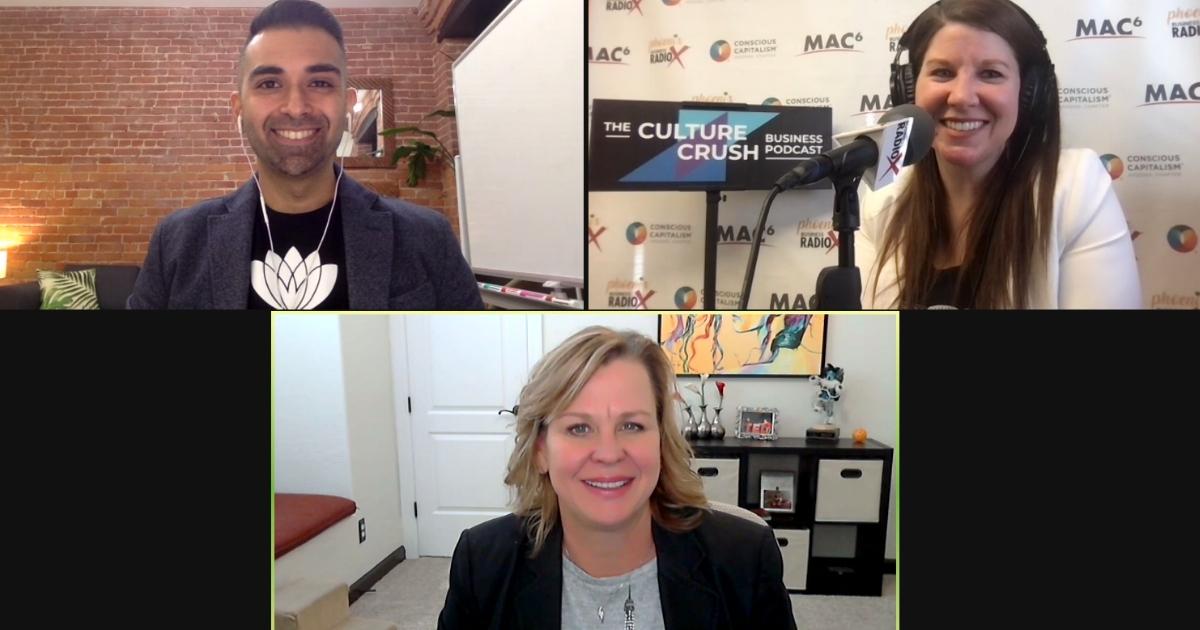
We knew going into it, that this show was going to be impactul, and it was exactly that. Both Brad and Michelle have amazing backgrounds that have led them to where they are today. When you listen to the podcast, be ready to pull out a map to track Brad’s amazing background and upbringing, and then you’ll be astonished to hear the longevity and growth that Michelle has had with Televerde.

These two have the passion for supporting the growth of purpose driven companies in two areas that overlap through the entire conversation. The topics of mental health programs and supporting the growth opportunities for incarcerated women were the strong threads through the conversation.

While talking about growing a purpose driven business it is important to also mention the importance of profit at that level as well. People, purpose, and profit can all thrive and grow at the same strong level. This is a principle that both Michelle and Kindra are familiar with through their work and alignment with Conscious Capitalism.

This podcast is a great one for leaders to listen to. It is important to hear and understand the need for mental health programs to support employees. This is not a new topic but a topic that companies are not familiar with talking about, and they need to get over it. When it comes to the topic of diversity and inclusion, then the conversation of hiring previously incarcerated men and women in the workplace should be part of the conversation or companies are not truly hiring in a fully inclusive manner. CultureMindfulFlagshipLogoforwhitebackground

This conversation was deep, honest, passionate, eye opening, and important to share.

In the words of Brad’s amazing late mother, “ The well being of everyone is dependent on the well being of everyone.”

Culture Mindful is a workforce culture nurture and growth mindset coaching platform. Their future of work digital platform is designed upon proven methods to boost workforce performance, mental well-being, build team resiliency and nurture inspired teams.

Brad-Kewalramani-Phoenix-Business-RadioXv2Brad Kewalramani is the Founder of Culture Mindful. He has a professional background in Talent, Culture & Employee Experience.

He spent the first decade of his career in the recruitment and staffing agency space, was then headhunted for a leadership role in the home owner association management space, and most recently moved in to the space of office coffee services because he was fascinated to learn that companies justify the spend of money on coffee and snacks for culture.

He is now on a mission to assist organizations cultivate culture mindful workplaces that supports performance and mental well-being.

Connect with Brad on LinkedIn and follow Culture Mindful on Instagram.

Michelle-Cirocco-Phoenix-Business-RadioXMichelle Cirocco is Chief Social Responsibility Officer for Televerde and the Executive Director of Televerde Foundation. She joined Televerde in 1999 and has held several leadership positions including Chief Marketing Officer.

Michelle was recently named one of the World-Changing Women in Conscious Business by Conscious Company magazine. Her journey of transformation was also featured by Forbes in a two-part interview. Michelle is a strong customer champion with a tireless commitment to using business as a force for good.

Michelle earned her MBA from Arizona State University where she also serves as an Advisory Board Member for the Center for Services Leadership. She holds multiple certifications from SiriusDecisions. Michelle is an avid TED fan and organized and hosted TEDxPerryvilleCorrectional, the first TEDx to be held in an Arizona prison. The event looked behind the curtain of incarceration to show the potential that exists in providing second chances.

Michelle dedicates a significant amount of her free time giving back to her local community by volunteering for the Phoenix Rescue Mission and Athena International. She is a member of the National Association of Female Executives and MBA Women International.

Connect with Michelle on LinkedIn and Twitter, and follow Televerde on LinkedIn, Facebook, Twitter and Instagram and the Televerde Foundation on LinkedIn, Facebook, Twitter and Instagram.

About Culture Crush

Culture Crush is officially relaunched! We are thankful to Debra Caron who launched and hosted the show originally. Culture Crush is back with a new host but the same focus- highlighting what makes a great company culture and how it affects the overall success of a company.CultaureCrushKindraBanner2

Culture is not just a tag word to be thrown around. It is not something you throw in job descriptions to draw people to applying for jobs within a company.

According to Marcus Buckingham and Ashely Goodall in their book Nine Lies About Work, “Culture is the tenants of how we behave. It’s like a family creed. This is how we operate and treat each other in the family.”

On this long form podcast we will highlight companies local to Arizona and beyond that are crushing it with great culture!

We will talk with company leaders to learn about real-life experiences, tips, and best practices for creating a healthy work environment where employees are finding joy and satisfaction in their work while also striving and growing within the company.

About the Host

ABHOUTHOSTHEADSHOTKindra Maples is your new host taking the lead on the relaunch of Culture Crush! She is spartan racer, past animal trainer, previous magician’s assistant, and has a weakness for Oreo cookie shakes. Her journey working with people actually started working with animals as a teenager (don’t worry we won’t go that far back for her bio).

She worked for over 15 years in the zoo industry working with animals and the public. Her passion of working with animals shifted into working with people in education, operations and leadership roles. From there her passion of leadership and helping people develop has continued to grow.

Then came the opportunity for relaunching the Culture Crush Podcast and she jumped on it. Leadership, growth, and strong company cultures are all areas that Kindra is interested in diving into further.

Shout Outs

We want to thank a few people for their behind the scenes effort in helping this relaunch to come to life. James Johnson with Tailored Penguin Media Company LLC.– It is a small, but powerful video production company with a goal to deliver the very best by articulating the vision of your brand in a visually creative way. Gordon Murray with Flash PhotoVideo, LLC. -Flash Gordon has been photographing since high school and evolving since then with new products that will equip, encourage, engage, and enable. Renee Blundon with Renee Blundon Design – She is not only one of the best free divers (that’s not how she helped with the podcast) but she is great with graphics design and taking the direction for the vision that you have while also adding creative ideas to bring to your vision to life.

These are just a few of the folks that supported the relaunch of the podcast. If you would like to be part of the Culture Crush team or would like to support underwriting the show- please reach out: culturecrushpodcast@gmail.com
Tagged With: demand generation, Employee Mental Well-Being, inside sales, second chance hiring, second chances, talent retention, Workforce Culture, Workforce Performance, workplace culture

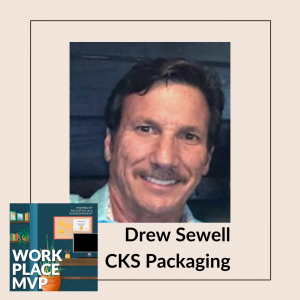
Workplace MVP: Drew Sewell, CKS Packaging

August 26, 2021 by John Ray

CKS Packaging
Minneapolis St. Paul Studio
Workplace MVP: Drew Sewell, CKS Packaging
Loading
00:00 /
RSS Feed
Share
Link
Embed

Download file

CKS Packaging

Workplace MVP: Drew Sewell, CKS Packaging

Drew Sewell, COO of CKS Packaging, experienced a compelling call to confront the sources of the problems of drug dealing, prostitution, and crime affecting the area near his company’s Atlanta headquarters. That calling led to the successful development of second chance hiring program for formerly incarcerated individuals at CKS Packaging, and a non-profit which serves hunger and other needs in the community. Drew joined host Jamie Gassmann to share his inspiring story and offer advice to other companies contemplating their own second chance hiring program. Workplace MVP is underwritten and presented by R3 Continuum and produced by the Minneapolis-St.Paul Studio of Business RadioX®.

CKS Packaging

CKS Packaging is a privately owned manufacturer and supplier of rigid plastic packaging with 24 locations in the United States, headquartered in Atlanta.

CKS Packaging’s business is the marketing, sales, and manufacturing of quality plastic containers utilizing environmentally friendly raw materials, maintaining high ethical standards honoring the covenant to support Christian-based ministries from the profits generated through the business.

CKS provides containers for a variety of consumer goods and industrial products including: Food Beverage Health and Beauty Personal Care Automotive Medical Chemicals and Solutions With over 50 years of experience in the plastics manufacturing business, CKS Packaging has acquired the product design and technical expertise that has made us the industry leader for innovative and cost-effective solutions for most any packaging and branding solutions.

They have been chosen to provide products for: Beverage Companies, Food Packaging Companies, Dairies, Fast Food Chains, Food Service Industry, Grocery Stores, Home Improvement Stores, Automotive Supply Stores, and Cosmetics Companies.

CKS Packaging, Inc. is a family-owned plastic container manufacturing company with its home office headquartered in Atlanta Georgia. CKS stands for Charles K. Sewell, who has become a legend in the plastic container blow-molding arena. He began in the plastic business in the mid-1960s. He was honored to be named the first recipient of the Society of Plastic Engineers Lifetime Achievement Award. is an industry leader in custom bottle design.

CKS Packaging introduced the Second Chance Program in 2016 with the goal of hiring people who otherwise might struggle to find employment. Specifically, the program focuses on hiring previously incarcerated people, homeless individuals, and people recovering from drug addictions. To recruit candidates to this program, CKS Packaging partners with community organizations for referrals. Since the inception of the program, hundreds of people have been hired successfully. Employees have moved up in the company or found better positions elsewhere.

Additionally, many Second Chance employees have escaped the cycles of poverty, crime, and addiction. CKS Packaging has also been positively impacted since they now have a loyal, hard-working group of employees who otherwise would not have been found. Since people who previously were incarcerated or relied on social support programs now have employment and some financial independence, taxpayers also end up paying less to help these individuals.

Company website | LinkedIn

Drew Sewell, Chief Operations Officer, CKS Packaging

CKS Packaging
Drew Sewell, Chief Operations Officer, CKS Packaging

Drew Sewell is Chief Operations Officer for CKS Packaging, a family-owned plastic bottle manufacturer. His father founded the company in 1985. CKS Packaging is headquartered in southwest Atlanta, Georgia.

One day years ago, while on his way back from a customer visit, he was stopped by the traffic light at the intersection of Fulton Industrial and the westbound exit ramp of I-20.

Little did he know that a chance sighting of a young teenage girl about the same age as his own daughter, alone and bewildered on the streets of southwest Atlanta would have such an impact on his life over the next six years.

Drew didn’t know what to do or how he could help, but he did have an overwhelming calling directing him to take care of her. He immediately turned his truck around to seek her out. Unfortunately, she had gone on her way by the time he returned to the corner where she was standing. Drew searched for her asking if anyone knew her or where he could find her. He never found that young person, but he committed in his heart to do whatever he could to seek out those less fortunate in the community and give them the reassurance that they had not been forgotten, that they were children of God, and that God did care for them.

Today Drew Sewell serves not only as COO of CKS Packaging, but as the guiding light for Maximum Impact Love, a 501c3 ministry that has enriched the lives of more than 50,000 people over the past six years. Not only has Maximum Impact Love served the community, but CKS Packaging’s Second Chance Program draws from the community they serve as well as recently released former incarcerated individuals.

CKS Social Responsibility | LinkedIn

R3 Continuum

R3 Continuum is a global leader in workplace behavioral health and security solutions. R3c helps ensure the psychological and physical safety of organizations and their people in today’s ever-changing and often unpredictable world. Through their continuum of tailored solutions, including evaluations, crisis response, executive optimization, protective services, and more, they help organizations maintain and cultivate a workplace of wellbeing so that their people can thrive. Learn more about R3c at www.r3c.com.

Company website | LinkedIn | Facebook | Twitter

About Workplace MVP

Every day, around the world, organizations of all sizes face disruptive events and situations. Within those workplaces are everyday heroes in human resources, risk management, security, business continuity, and the C-suite. They don’t call themselves heroes though. On the contrary, they simply show up every day, laboring for the well-being of employees in their care, readying the workplace for and planning responses to disruption. This show, Workplace MVP, confers on these heroes the designation they deserve, Workplace MVP (Most Valuable Professionals), and gives them the forum to tell their story. As you hear their experiences, you will learn first-hand, real life approaches to readying the workplace, responses to crisis situations, and overcoming challenges of disruption. Visit our show archive here.

Workplace MVP Host Jamie Gassmann

In addition to serving as the host to the Workplace MVP podcast, Jamie Gassmann is the Director of Marketing at R3 Continuum (R3c). Collectively, she has more than fourteen years of marketing experience. Across her tenure, she has experience working in and with various industries including banking, real estate, retail, crisis management, insurance, business continuity, and more. She holds a Bachelor of Science Degree in Mass Communications with special interest in Advertising and Public Relations and a Master of Business Administration from Paseka School of Business, Minnesota State University.
TRANSCRIPT

Intro: [00:00:04] Broadcasting from the Business RadioX studios, it’s time for Workplace MVP. Workplace MVP is brought to you by R3 Continuum, a global leader in workplace behavioral health crisis and security solutions. Now here’s your host, Jamie Gassman.

Jamie Gassman: [00:00:32] Hi, everyone. Your host, Jamie Gassman, here. And welcome to this episode of Workplace MVP. In a recent Sherm.org blog post, they shared that US prisons and jails released nearly 700,000 men and women into society every year. They also noted that approximately 70 million people have a criminal record, one third of working-age US adults. When these individuals are released into society, they are then tasked with finding work, so that they can support themselves, their families and start to live a new life post-incarceration. Additionally, there are a number of people out there who have lost their way and fallen into behavior that is damaging to themselves, their families and their community.

Jamie Gassman: [00:01:15] How did these individuals and those looking to have a second chance find an employer who is willing to accept an individual as a candidate regardless of their past? Looking at today’s job market struggles with a shortage of workers, is there a benefit to employers to consider implementing Second Chance Programs as a way to augment their hiring approach? How can giving back to these individuals help the organization, community, and the employee?

Jamie Gassman: [00:01:41] With us today to share how implementing a Second Chance Program has benefited their organization, its people and the community is Workplace MVP Drew Sewell, Chief Operations Officer for CKS packaging. Welcome to the show, Drew.

Drew Sewell: [00:01:58] Thank you, Jamie. It’s good to be here today.

Jamie Gassman: [00:02:01] We’re happy to have you. And so, let’s just start off with you telling me a little bit about yourself and your career journey. And then, we’ll get into talking about CKS Packaging in just a moment.

Drew Sewell: [00:02:12] Okay. So, CKS Packaging is my family business. My dad is Charles King Sewell. And King is his mother’s maiden name. But he founded the company in 1985. And once upon a time, back in the early days of 1963, he started Sewell Plastics. His company made the first plastic milk jug in the southeast United States, and then the first two-liter Coke bottle in the world, and it kind of put us on the map and put us all across the country, 25 locations. He sold that and started over with CKS Packaging. He wasn’t able to buy his name back. And so, he was looking to get in in a small way, just five days a week, one shift.

Drew Sewell: [00:03:07] But because so many people were loyal to us, the customers, and we were a good supplier, that scene went out the window, and we needed more and more people. But today, we’re $600 million in sales, and we have 3000 employees in 27 locations across the United States. But he made a commitment, and I don’t want to scare people away when they hear a religious commitment, but he made a faith-based adjustment and said, “I’m going to tithe the profits of the company.” And when he did, things just went crazy for us. You can’t outgive God. So, we’ve just exploded over the years.

Jamie Gassman: [00:03:51] Wonderful, and you’ve grown to be global supplier and you know all of your locations and various different states across the U.S. So it’s it’s amazing to see that growth that you guys have built up. So now looking at the Second Chance program for your organization, so there’s a different there’s a lot of different reasons why an employer decides to put a second chance program in place. Some it is a method for just expanding their candidate pool, and for others, it’s a way to give back to the community and help people for six packaging. What were some of the driving factors in creating the Second Chance program?

Drew Sewell: [00:04:28] Where we are, our company is our headquarters is about 10 miles from Atlanta. And in nineteen ninety six, when the Olympics came to Atlanta, we they tried to push prostitution and drugs and crime basically out of Atlanta, and they pushed it out 10, 15 miles. And so that’s where we encountered it on the boulevard where we are a mile from. Our office was a number one hotel for drug and prostitution in the United States. And that was led to do something about it, because it was, you know, here we are, a big successful company. But the neighborhood was run down and scary. I mean, they would carjack you steal things. You know, if you had a landlord that ran out of gas and you left it by the street to go get the gas can, the land more was stolen before you could even blink an eye. It was just terrible. So we decided that we would go into the neighborhood and do a day of outreach. And we were doing free food, clothes, health care, haircuts. We painted the ladies nails. We had moonwalks, ladd’s popcorn, cotton candy, snow cone, all that was just to draw the people in. And then we offered to pray with them and it changed hundreds of lives.

Drew Sewell: [00:05:50] But what I found out was when that day was over with you did the crime came back, everything was still still the same, even though twenty five prostitutes left the street the first time we ever did it. That was 15 years ago. So I went and I talked to the people that were there, homeless, etc. if you will, get off the streets and go into a drug drug rehab or some kind of rehab for whatever lifestyle you’re leading, after one year, I will hire you to come to work for me. And I had a lot of takers and it took a while, but it got going off the ground. And what I found out was those that are incarcerated, one of the ministry partners we support on a monthly basis from our tyre’s is Prison Fellowship Ministries. Prison Fellowship as a pipeline to seek is to help supply us with good workers. So these people have made a mistake in their lives. And they paid for that mistake, but they had that blemish that nobody wants to hire them. But in today’s environment, so hard to find somebody to go to work for you. And you really have some very talented people that have made that mistake pay for the mistake, and now they can’t get a job.

Drew Sewell: [00:07:09] So we decided, you know what, let’s give them a shot. And that was about six years ago. And today, you know, you go through the numbers just like hiring other people. But we’ve got one hundred and eighty nine, what we call second chance workers at six is and they have been with us, you know, two, three years, and they’re moving up the ranks. It’s it’s amazing. They have mechanical ability. When you make plastic bottles, you have a lot of production equipment that needs to be worked on, needs to be kept up. These big keep running so you can be profitable. And these guys and ladies are filling in the blanks for us. And they are so grateful to have a second chance that they will never leave us. And we’re a family business anyway. And we treat our people. They’re our greatest asset. We treat them like family. When I walk through the plant, I know it’s not the thing to say or do, but I hug them. You know, I love them except for the grace of God. There go where they would be. Me would be them. And I just have compassion for them. And in our whole company is a family oriented that way.

Jamie Gassman: [00:08:21] Amazing, so looking at that program now, you said you’ve had it for about six years now. How would you say, you know, obviously from an organizational perspective, this kind of giving you a pipeline to some really able and willing workers, but how has it impacted the community and some of those individuals? Have they benefited from the program?

Drew Sewell: [00:08:41] It’s it’s totally changed their lives. I mean, if you if you don’t have a job, what are you going to end up doing if you come out of the prison system? Are you going to go back on the street corner and hang out with your buddies? And the next thing you know, you’re doing drugs again and you don’t have money. So you have to support that habit. You steal or you break in, you rob whatever you have to do. And so by changing their lives, I mean, now they have homes, apartments, they have jobs, they have benefits. I mean, it’s just it’s a total life changer for them.

Jamie Gassman: [00:09:14] Wonderful. And, you know, when we talked earlier, you shared with me, you know, that you’ve had some success stories where somebody has come in on the Second Chance program and really risen into some leadership ranks and in some roles. Can you share with our listeners some of the success stories that you’ve you’ve experienced from this, where somebody climbed your corporate ladder, basically?

Drew Sewell: [00:09:35] Right. So we we have a couple of regional quality managers. We have shift supervisors at several plants that are second chances. And it’s you know, it’s it’s it’s no different from any other pool of applicants that would be coming to your company to fill out an application. They all have, you know, credentials that they bring. Some a lot of them have college degrees. You know, they just they they make bad choices, but they paid for it. And, you know, we give a second chance. I mean, I probably had 100 chances myself, so, you know, thank goodness.

Jamie Gassman: [00:10:16] Yeah. Wonderful. So obviously we’ve talked a little bit about the benefits, but were there any challenges that you experienced or have experienced in implementing a program like this?

Drew Sewell: [00:10:26] Yeah. You know, it’s everybody that I meet. I mean, if I go out on the street into a crowd of homeless, drug addicted, you know, prostitutes or whatever, the first thing is, is, you know, what do you pay? All that us in is breaking the habits that they’ve got without going through something. So it’s kind of a forced rehab when they go when they get locked up in the prison, because, you know, they just can’t get the drugs anymore or whatever their choice it is. And so. That’s the hardest part is just getting them off of that, so but me still. And if you go into a rehab for a year, even if they don’t go through the prison system is still the second chance for them. And, you know, it’s usually the programs or you pay it will. We’re not going to pay for somebody to go through it if they’re willing to apply themselves and go into one that doesn’t cost anything. But the the rehab program uses their labor, their job that they go to every day after they’ve been cleaned up as a money to to keep it rolling.

Drew Sewell: [00:11:39] So, you know, they have nothing to lose. And if they’ll do, it is great or they come straight out of prison and nobody’s going to hire. I mean, think about it. Have you committed a foul on these on everybody’s application? Yeah. You if you lie, they’re going to find out, you know, because you do the background check and you say that that guy, he’s not working for me or she’s not they’re not even honest on their application. You know, what else are they going to lie about? So, you know, we just take that one off and just say, look, we go to the local halfway houses, if you will. I mean, there’s there’s a lot of organizations out there that that that’s what they do. They specialize and they bring in the it’s a transitional home. Out of the prison, back to the, you know, the the the work force environment. And they had to have a job before they leave. And so we’re just that the person we were. Yeah, and it’s just they’re so loyal when they walk through a wall for you. They absolutely love us.

Jamie Gassman: [00:12:50] That’s amazing, and I imagine at that time, especially the ones that are coming straight out of prison in those halfway houses, you know, that might be their opportunity for reflecting on why, you know, that that time where they don’t want to go back, you know, they’re committed to themselves to not go back, and they’re not being influenced by anything else in their environments that might bring them down the path that they were on before they went into incarceration. So that’s got to be really good opportunity in a time that you can capture their attention to working at six packaging and getting them on the kind of that right path to take a little bit more of a successful life.

Drew Sewell: [00:13:29] Wonderful. They’re very grateful. Trust me. And they they won’t let you down. They don’t want to go back.

Jamie Gassman: [00:13:38] Yeah, I can imagine that that is, you know, they’re coming off of the, you know, depending on how long they were incarcerated for. You know, that’s got to be that great opportunity to just kind of they can see an opportunity from that. Maybe they didn’t have presented to them before. I can imagine there’s some anxiety that they feel, you know, when they come out of prison, like trying to figure out how am I going to, you know, fulfill the obligations that I’m expected to do, whether they’re on parole or if they’re on, you know, other kind of conditions that they need to adhere to as part of being released. Do you you tend to see that where you kind of almost like our that breath of fresh air for them or that relief to that tension that they might be having.

Drew Sewell: [00:14:18] If most people are just they want somebody to validate them. They want to find somebody that believes in them. And if you you know, I mean, every family I mean, think about it. You get somebody in your family. I’ve got some in my family that is going on the wrong way with drugs or some kind of crime that they committed. They were at the wrong place at the right time. And so they just need somebody to believe in them. And people have been telling them all their life that you’re worthless, you’ll never amount to anything. You’re no good, you don’t have an education, don’t have a college degree. You’ll never get ahead. And then they come see us and they find out that we’re just real people. You know, like I said earlier, except for the grace of God there. Go on. I mean, I’m a family member. I’m a CEO, but you know, very easily I could be the guy in jail back in the day before they had video cameras. You know, every time on everybody’s phone, you know, they’d have the phones. No. One, fortunately for me, when I was a youngster, because that was a hell, you know, I’ll be honest with you. And so that’s probably why I relate to them, except for the grace of God. I could be, you know, an inmate myself or doing some crazy stuff. But anyway, it’s neither here or there. But you just have to believe in them and get them believing in themselves and change your life.

Jamie Gassman: [00:15:44] They’re human, treating them like a human, giving them that opportunity. So how can other companies, you know, whose culture is a little bit more diffuse than a closely held business like a family business like your own, how could they integrate a similar initiative like this into their company?

Drew Sewell: [00:16:01] Well, I would I would say that they could go to the the halfway houses. There’s there’s big pools. I mean, there’s there’s places that that have hundreds of just release formerly incarcerated people that need to transition back into society. And they have a unique skill set. They could go to the it is it is hard to get people to really believe that you want to do this. Number one, they’re not used to that. So you have to go and sell yourself and your company. But at the same time, you can ask for a unique skill set. Maybe it’s somebody that’s got skills. You know, I was looking for mechanics. Anybody that could work on their card has changed their or changed their own sparkplugs. You don’t do that anymore. But people that can. Those are the kind of people you know to you change your tire if it’s flat or you go triple A, whatever. So we were looking for people that were mechanically inclined. But you can any skill set you’re looking for, you’ll find talent is amazing. But you could just say, look, filter out. You know, it’s like going on the computer and filter out this skill set that’s all out war in the war going on zip recruiter and saying, I want this person and they’ll they’ll look it over for you and they’ll and you can go and address the group of people that are inmate that are trying to get out. And you can tell them what you’re looking for and basically sell yourself and your company. Don’t matter if you’re privately held like or you’re a public company. You just have to have the desire to do it. And I promise you, they’ll be the best employees that you’ve ever had because they don’t want to let you down because you believed in them. You gave them that second chance and they’ll do anything for you if you treat them right. Give an honest day’s pay.

Jamie Gassman: [00:18:00] So we’re going to just take a moment to hear word from our sponsor, workplace MVP is sponsored by our three continuum. Aa3 Continuum is a global leader in providing expert, reliable, responsive and tailored behavioral health crisis and security solutions to promote workplace well-being and performance in the face of an ever changing and often unpredictable world. Learn more about how ar3 Continuum can tailor a solution for your organization’s unique challenges by visiting ar3 Secombe today. So now I’d like to talk a little bit about maximum impact love. That’s your mission that you’ve set up, which I think you touched on that a little bit when you talked about that event you helped in your community. So in addition to your Second Chance program, you also establish mission impacts, love or maximum impact Luxx. Sorry, and that’s a mission based nonprofit that’s helped to enrich the lives of and this is the number that I believe I wrote down from our previous conversation with 50000 people over the past six years. So can you walk us through the work that this nonprofit does with the community? And I believe from what you’ve talked about, that’s also a source for where you get some of the second chance. You know, program candidates as well. But can you share a little bit about what you’ve done? And I know this is more concentrated in the Atlanta area, but can you talk a little bit about it?

Drew Sewell: [00:19:26] Okay, so so first of all, I was arrested at a red light on Fulton Industrial Boulevard in Atlanta, Georgia. With a prostitute. Through my windshield by the Holy Spirit. So, as I said, at a red light and I watched a little girl go across the street in front of me, she was caught up in prostitution. And my daughters at the time this is 15 years ago, that that six but 15 years we’ve been doing this got maximum impact, because I watched her go across the street in front of me. That was really. Impressed upon my heart, except for the grace of God, there goes your daughters. If you have got two daughters and at the time they were 12 and 14 years old, and this girl could have been they could have been bookends for this little girl that was walking across the street in prostitution. And it really broke my heart. And I began to cry. And at the same time, I felt the Lord speaking to me saying, what are you going to do about it? In. You know, I don’t know what you do, but every day I get up and pray and say, Lord, here I am, send me let me be a man after your own heart and. Here I am. What am I going to do about it? I don’t know what I can possibly do about that. So the light turned green and I quickly took off from a spot and I got about a thousand yards away.

Drew Sewell: [00:20:57] And I felt the Lord, the Holy Spirit, the spiritual boy, saying to me, what are you going to do about it? And I knew I couldn’t outrun it. So I pulled off in the first parking lot, not looking where I was, but I was at Starship Enterprise, which is an adult toy and video store. There was a liquor store. There was two strip clubs. And I just had my head on my steering wheel and was crying and saying, what can I do about that? Because I was sugar. He said, There goes your daughters. Except for the grace of God to go to your daughter. So, I mean, it just it really impacted me. That’s why I at maximum impact, I had a maximum impact from the Lord. And we make a maximum impact. So I said, I don’t know what I can do. What do you want me to do? And I felt like you said, go find the girl. Well, I went back and looked for the next two hours and I never did find her. But what also turned out to be the number one hotel for drugs and prostitution in the United States, and it’s a mile and a quarter from my corporate office right at Six Flags. Twenty ten miles outside of Atlanta. And I just saw a prostitute come out, get in company vehicles and go on.

Drew Sewell: [00:22:12] I saw drug runners come over to the car beside me and get up and say, I’ll take the money, go get drugs, bring them back. And and as soon as the kids say kids, they were teenagers would pull out another mom and dad’s sedan or a minivan would pull in and they would get the same thing. So out of all of that, I’m convinced today that that girl did exist, that she was just an angel to get my attention to do something about the neighborhood. And as I said, there failed him prior to that. I want you to do a day of outreach and prayer. And I knew what prayer was, but I had no idea what outrage was. So I went back and said we were a you were a Kurbanov company. We tied our profit to the company ACOTA at the time. We had twenty five or so ministries that we supported, above all canned. One of them was prison fellowship. One of them is. Is Heggie Institute, there’s just a lot of them that we did, and I called them all together and said, hey, this is what happened. What I do, what is outreach? And they started shared with me. You need to go in and do a day of of of feeding and clothing. And I’m talking about the homeless population. There was pretty serious. There was 40 or 50 a day just standing around, sleeping in wherever, you know, you see it all over the country.

Drew Sewell: [00:23:40] So anyway, I want you to play live music. I want you to feed them a hot meal. Would you give them clean, fresh clothes and socks and underwear? Would you to give them a haircut or you’d you take a before and after picture of what they looked like before in the shower or trucks there and stuff. And we did. And they looked like all new people took a picture before and after and gave it to them. And they were just amazed. A lot of them never had a picture of themselves in their life. But what happened was all of these people, I said, look, if you go into a rehab, you can’t quit drinking. You’ve been out here on the streets for 15 years. Somehow you’ve been out prostituting your body for 10 years after I met them and got to know them. And they knew they could trust me. They shared everything with me. So how about you go into rehab? It doesn’t cost you anything, but you have to stay for a year if you’ll stay for one year. I’m confident that you’ll be changed. From your vices and no to that, you’ll be ready to come to work. And I’ll give you a job, I promise you I have to go on third shift. And we were twenty four, six. So six days a week, 24 hours a day.

Drew Sewell: [00:24:53] We’re off on Sundays to let them go to church or do whatever they want do with that day of rest. But the point is, is they went in, they started coming out, and then people then they would go with me back down to the street and say, look, you remember how you look, how good he’s doing. If you were to go on at the same time, you’d be working, you’d be as good as him. OK, I want to go now. I want to go now. I mean, there’s a whole lot of I can talk all I want to. But, you know, the example was somebody they knew there was that I’d lifted up and said, hey, look at this from the stage while we played out of loud music. They’d give a testimony was out here with you. I was curled up in prostitution. I’ve got a job. I’ve got benefits. I’ve been reunited with my family, blah, blah, blah, you know, and it’s all good. And these people, these real what he says he’ll do, he’ll back it up. And he’s he’s honored everything that he said he would do. If you’ll just do what he wants you to do. So there you go. That’s how we started it. And it turned into we needed more people and we thought, well, you know what? Why don’t we go see somebody that is, you know, one of these halfway houses and talk to them? And I did and said, we want anybody.

Drew Sewell: [00:26:13] I want I want a mechanically inclined person, because that’s what we were looking for. You can’t find enough people today that can that are really good with their hands and their mind. So if they haven’t committed capital murder, armed robbery, you know, rape, kidnapping, then I’ll take them. And we have and we’ve got 189 of those. And every one of them has the same opportunity. And we were you know, we make plastic bottles, so somebody has to pack them at the end of the line. Somebody has to uniti palletized. Somebody has to drive a forklift. Somebody has to put them in the warehouse. Somebody has to take them out of stock and load a truck. And there’s just a lot of opportunity. Somebody has to make the machines work. So it works out. There’s, you know, especially today’s environment with the government wanting to pay these stimulus checks, but make it more money to stay home. Where are you getting your people from? You know, we haven’t had the shirt. There were an essential business. And we have grown in the last two years from four hundred billion in sales to over 600 million in sales because we have it starved. And all these companies that did stuff. We got a lot of their business. And so anyway. Hope that answered your question.

Jamie Gassman: [00:27:30] Yeah. No, it just it’s you know, I asked I was sharing that with the listeners. I had to share that with the listeners, because it’s just amazing the you know, the community outreach that’s tied to that and that giving back to not just giving a second chance opportunity for somebody to work, but also giving try. Yeah. Yeah. It’s kind of today’s today’s work environment. But you’re also giving back to their families. You’re giving back to the community. And it’s also continuing to that you’ve got this opportunity for those who are willing to put in the effort to participate. So now I know that this you shared with me that this nonprofit has received some some pretty incredible awards. I know Fulton County declared it April 15th, Maximum Impact Loveday. And you also shared that you’re being honored with the humanitarian award. And I believe you said it was on September 11. So how how does that feel? And, you know, what was some of the premise behind this sonor?

Drew Sewell: [00:28:37] Well, so so out of the necessity I was doing or we were doing, I say, oh, there’s so many people that actually volunteer. A lot of people don’t know what they can do. So if your company is looking for a good cause, you know, go find something, go out in your community and see where the need is and then go volunteer. Maybe it’s to cut some people’s grass, clean up the trash, you know, whatever it happens to be here. But but anyway, out of that, that need you. I mean, there’s just so many people that want to want to pitch in and do something. But I lost my train of thought there for a second. So I apologize. But ask the question again for sure.

Jamie Gassman: [00:29:24] So just how it does it make you feel receiving or, you know, receiving these honors and some of the premise behind them honoring you with it?

Drew Sewell: [00:29:32] That’s where I was going. And, you know, I’m no I’m nobody I’m just a humble guy. Honestly, that has a lot of good people. Sometimes I feel like the Pied Piper because I turn around and people are following me because I lead from the front. I go out into the community and do it. I’ve had policemen say, are you crazy? You can’t do that. I don’t come out here unless I have my arm around. And he’s talking about his bulletproof vest, but I have the full armor of God only, so I don’t worry about that. But the main thing is, is you just find a good cause and people will take notice. So we have to have a a black gentleman that was it fell asleep at a Wendy’s drive in in Atlanta, downtown Atlanta, and he had been drinking. And you you probably know the story. They called the police. They got him out of his car. He overpowered the police, took on Taser shot, shouted at him, and they they killed him. And so the the the consensus was is back when people were burning everything down, they burned down the windows. And it was terrible. And I just couldn’t you know, I couldn’t sleep. What can I do to help? And I came up with this idea, and I know it was divine. But but because what we do have started to say earlier, we were doing three events a year, we found out that, hey, that’s great for those three days.

Drew Sewell: [00:31:09] But what about the rest of the year? So we started Maximum Impact Love and opened up of a warehouse where people can come and get groceries every day, Monday through Friday. And then we have people come in and volunteer and we pack the boxes, we go to the food bank and we buy the stuff and our profits of the company. We tied one of the recipients is me and maximum impact. So. We’ve got a 13000 square foot office. We were allowed people to come and get groceries every day of the week and then Covid here. And then so what are you going to do? How are we going to continue to do this? People still need the food, but they got Covid now. You don’t want to get your people infected. So how do you do it? We put a sign out front said don’t get out of your car call. We’ll bring the boxes out. You pop your trunk, we’ll put it in there. We’ll pray for you through the window if you need, and then you can be on your way into the same thing happened with the. With the Windies deal, the guy got killed there. What am I going to do? And I felt like the Lord told me to. Put the Atlanta Police and Fire Department out there up front.

Drew Sewell: [00:32:22] You said everything. So we did 10 different events where we gave away 400 boxes of groceries each. So over 4000 boxes of groceries and at ten different events around Atlanta, 10 different locations in people. And we put signs out free groceries today. And we did all the work, set it up, and the policemen in their uniforms and the firemen and their uniforms, put them into drugs, talk to them. Got all the credit. I don’t care about that. We just wanted to mend the community. And so it worked. And that’s where we got the proclamation and they got it. William Andrews flew all day, which is my full name. But the point is, is maximum impact. Love is not me. It’s the people behind the scenes that really make it happen. And so it’s been worthwhile. And that’s what’s going to happen with this. On 9/11, they’re going to give it a humanitarian award. And as is not me. So many people yesterday we had a big fundraising golf tournament. We had two hundred and twenty golfers in 27 holes, had to foursomes on each hole, and they can’t wait to give the money. And because they know what we do and it’s real and it works. And those are the kind of things you can do in your community, whether you’re a for profit or a, you know, a public company or a privately held company.

Jamie Gassman: [00:33:58] Wonderful. So now I if there were three things that if you that you wanted leaders to be aware of about the rewards that an organization and employer can get by giving back to the community and giving me a second chance, you know, opportunities for for people, what would be three things that you would want to leave these leaders with?

Drew Sewell: [00:34:22] Well, everybody wants to be somebody and they want somebody to believe in them. And these second chances really need somebody to believe in a rent. Imagine yourself in a six by six cell and you’ve got somebody in there every day with you to either negative or they’re they they have a distorted view of reality. And you just been fear negatives all day long. When you do get out, you get around more people like that. They need somebody that believes in them. They can say, look, I know you’ve made a mistake, but here I’ll give you a chance. There’s one, too, is. Be real. You know, you don’t have to have the pedigree, you don’t have to have the the MBA, the doctorate or all of that degree. But what are you really doing to make a difference? In the world period in other people’s lives. And just treat them like people. Except for the grace of God, there go use of. So those are three things.

Jamie Gassman: [00:35:35] Well, that so looking out over your career, if you were able to identify one thing that you’re most proud of. What would that be?

Drew Sewell: [00:35:46] Hmm. Well. I would that I would just say that, you know. They’re correct. Kerry, God, wherever I go. I mean, I’ve go out on the production floor and treat people like real people. Say hello to Garland by name. I made a in this deal goes on. I took a picture of every person that was that worked in any one of my plants. And at one time I had four plants and there were four hundred people that I knew, every one of them to name. How in the world could I ever know their names would take a picture of them? The thumbnail picture put it on to a board in in the front office. And before I went out on the floor, only any one shift, I would pick two or three people and I’d memorize their name and I’d go out there and purposely look for them and just tell them, hey, Jamie, it sure is good to see you today. Is there anything that I can pray for you about? And, you know, they just being hey, knows my name and yes or maybe not, but if they say it’s, you know, maybe you don’t feel like you can do this. But I got tired of people saying, well, you pray for me. And as soon as I and I say, yeah, as soon as I walk away and forget about it. But as I started, I felt convicted. So I started praying with them on the spot. It’s kind of uncomfortable at first. So you close your eyes and people are looking at you. They might not even be looking at you, but you feel like it is. And then if you pray for them, it really makes a difference. Then somebody will go out and say, hey, I saw him praying. Right? What was that all about? And then next time you go through, they’ll ask you to. And it’s it’s just a snowball effect. And it teaches people that you really care. They don’t care how much you know, until they know how much you care. You can’t really let them understand how much you really believe in them.

Jamie Gassman: [00:37:47] Oh, that’s amazing. So for our listeners, if they wanted to get a hold of you and be able to kind of seek additional information about how you you’ve been able to create your second, you know, you’re successful is the second chance program or have questions about the mission maximum impact love? How would they get a hold of you?

Drew Sewell: [00:38:07] Well, I would say go on our website at WW dot c k s packaging dot com. And then just click on there and you’ll see a little at the bottom of one of the pages, it’ll say Social Responsibility, click on that, it’ll have my story, it’ll have my email address, it’ll have my personal cell phone. I don’t you can call me on my cell phone and I’ll be glad to call you back. That’s how Ray called me. And we ended up doing this to begin with. But anyway, just be accessible if you’re real. I mean, it’s hard because you’ll get some calls from some people, but anyway, it’s worth every minute of it.

Jamie Gassman: [00:38:54] Wonderful. Well, I, I, I, I found your story inspiring and the work that you’re doing amazing. And I hope our listeners do, too. So thank you so much, Drew, for letting us celebrate you and all of your great accomplishments and for sharing your stories. The great advice for our listeners. We appreciate you and I’m sure your organization and staff do as well. We also want to thank our show sponsor, our three on for supporting the workplace MVP podcast. And to our listeners, thank you for tuning in. If you have not already done so, make sure to subscribe so you get our most recent episodes and other resources. You can also follow our show on LinkedIn, Facebook and Twitter at workplace MVP. If you are a workplace MVP or know someone who is, we want to know about them. Email us at info at Workplace Dasch MBP dot com. Thank you all for joining us and have a great rest of your day.


Tagged With: CKS Packaging, Drew Sewell, Jamie Gassmann, Maximum Impact Love, R3 Continuum, second chance hiring, Second Chance Program

Decision Vision Episode 116:  Should I Hire Ex-Offenders? – An Interview with Jeff Korzenik, author of Untapped Talent

May 13, 2021 by John Ray

Untapped Talent
Decision Vision
Decision Vision Episode 116:  Should I Hire Ex-Offenders? - An Interview with Jeff Korzenik, author of Untapped Talent
Loading
00:00 /
RSS Feed
Share
Link
Embed

Download file

Untapped Talent

Decision Vision Episode 116:  Should I Hire Ex-Offenders? – An Interview with Jeff Korzenik, author of Untapped Talent

As an economist examining factors contributing to labor shortages, Jeff Korzenik singled out a particularly large demographic:  the 19 million unemployed people with criminal records. He joined host Mike Blake to discuss how “second chance” hiring among this untapped talent pool can give businesses competitive advantages, factors for business owners to consider with second chance hiring, and much more. Decision Vision is presented by Brady Ware & Company.

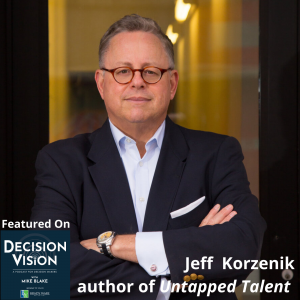
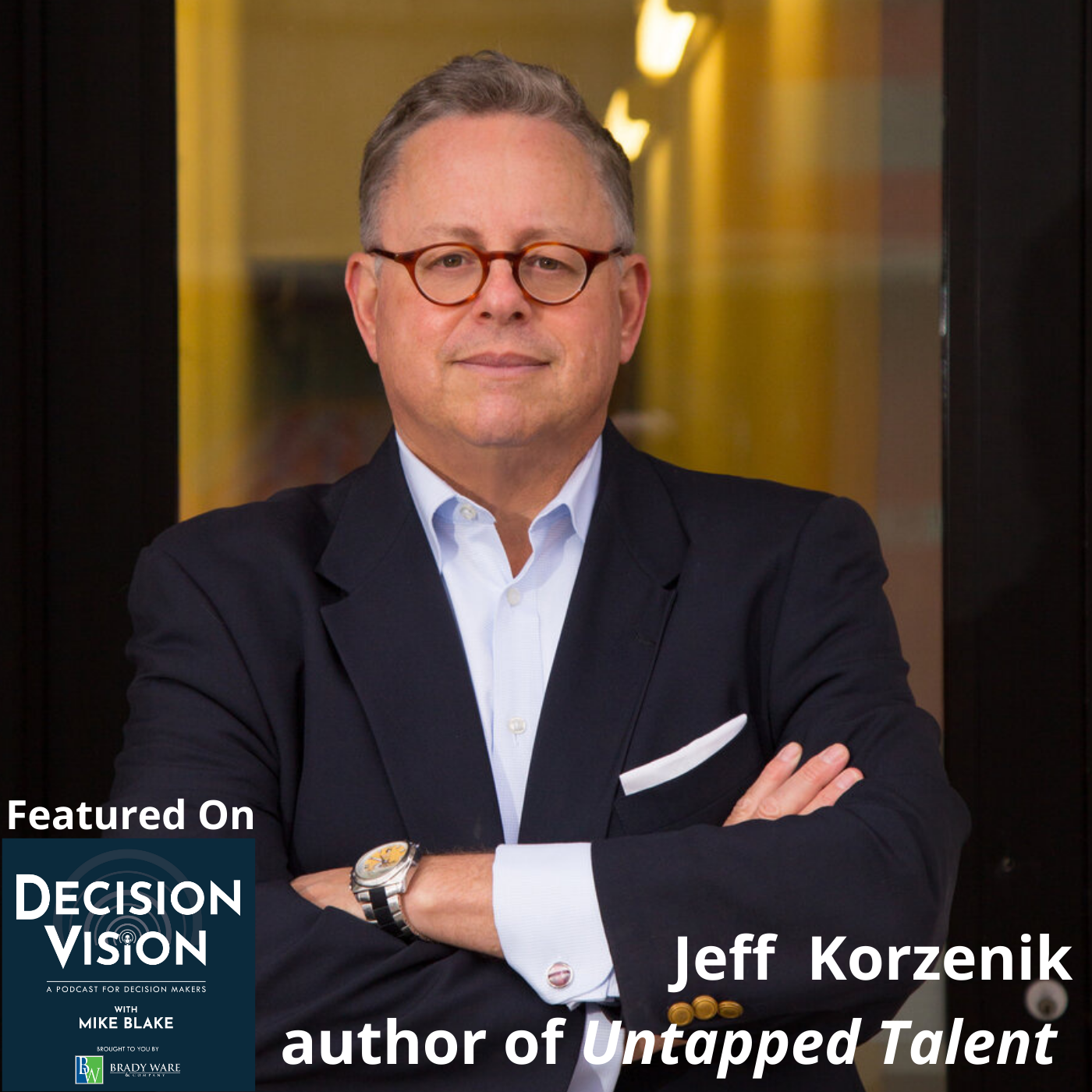
Jeff Korzenik, Chief Investment Strategist and author of Untapped Talent

Jeff Korzenik, Author of “Untapped Talent”

Jeff Korzenik is Chief Investment Strategist for one of the nation’s largest banks where he is responsible for the investment strategy and allocation of over $40 billion in assets. A regular guest on CNBC, Fox Business News, and Bloomberg T.V., his insights into the economy, markets, manufacturing, and the workforce are frequently cited in the financial and business press. His writings on economics and public policy have been published in Barron’s, Forbes, CNN, the Chicago Tribune, and other outlets. In recognition of his work on the interaction of the criminal justice system and labor markets, Jeff was elected to membership in the Council of Criminal Justice.Untapped Talent

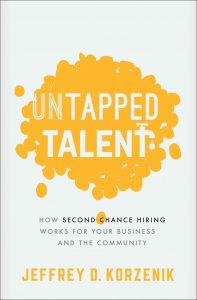
Jeff is the author of Untapped Talent: How Second Chance Hiring Works for Your Business and the Community (HarperCollins Leadership, April 2021), which shares the business case and best practices for hiring people with criminal records.

The book – the first and only work of its kind – shows that such “second chance” hiring, done right, delivers a loyal and engaged workforce.  Korzenik shows why companies will be challenged by multi-decade labor shortages but can gain a significant competitive advantage by developing talent pipelines from marginalized workers. While this is business, not charity, Untapped Talent argues that the path to a safer, more just America must be paved by the business community.

Website | LinkedIn

Mike Blake, Brady Ware & Company

Mike Blake, Host of the “Decision Vision” podcast series

Michael Blake is the host of the Decision Vision podcast series and a Director of Brady Ware & Company. Mike specializes in the valuation of intellectual property-driven firms, such as software firms, aerospace firms, and professional services firms, most frequently in the capacity as a transaction advisor, helping clients obtain great outcomes from complex transaction opportunities. He is also a specialist in the appraisal of intellectual properties as stand-alone assets, such as software, trade secrets, and patents.

Mike has been a full-time business appraiser for 13 years with public accounting firms, boutique business appraisal firms, and an owner of his own firm. Prior to that, he spent 8 years in venture capital and investment banking, including transactions in the U.S., Israel, Russia, Ukraine, and Belarus.

Brady Ware & Company

Brady Ware & Company is a regional full-service accounting and advisory firm which helps businesses and entrepreneurs make visions a reality. Brady Ware services clients nationally from its offices in Alpharetta, GA; Columbus and Dayton, OH; and Richmond, IN. The firm is growth-minded, committed to the regions in which they operate, and most importantly, they make significant investments in their people and service offerings to meet the changing financial needs of those they are privileged to serve. The firm is dedicated to providing results that make a difference for its clients.

Decision Vision Podcast Series

Decision Vision is a podcast covering topics and issues facing small business owners and connecting them with solutions from leading experts. This series is presented by Brady Ware & Company. If you are a decision-maker for a small business, we’d love to hear from you. Contact us at decisionvision@bradyware.com and make sure to listen to every Thursday to the Decision Vision podcast.

Past episodes of Decision Vision can be found at decisionvisionpodcast.com. Decision Vision is produced and broadcast by the North Fulton studio of Business RadioX®.

Connect with Brady Ware & Company:

Website | LinkedIn | Facebook | Twitter | Instagram

TRANSCRIPT

Intro: [00:00:01] Welcome to Decision Vision, a podcast series focusing on critical business decisions. Brought to you by Brady Ware & Company. Brady Ware is a regional full service accounting and advisory firm that helps businesses and entrepreneurs make visions a reality.

Mike Blake: [00:00:20] Welcome to Decision Vision, a podcast giving you, the listener, clear vision to make great decisions. In each episode, we discuss the process of decision making on a different topic from the business owners’ or executives’ perspective. We aren’t necessarily telling you what to do, but we can put you in a position to make an informed decision on your own and understand when you might need help along the way.

Mike Blake: [00:00:39] My name is Mike Blake, and I’m your host for today’s program. I’m a director at Brady Ware & Company, a full service accounting firm based in Dayton, Ohio, with offices in Dayton; Columbus, Ohio; Richmond, Indiana; and Alpharetta, Georgia. Brady Ware is sponsoring this podcast, which is being recorded in Atlanta per social distancing protocols. If you’d like to engage with me on social media with my Chart of the Day and other content, I’m on LinkedIn as myself and @unblakeable on Facebook, Twitter, Clubhouse, and Instagram. If you like this podcast, please subscribe on your favorite podcast aggregator, and please consider leaving a review of the podcast as well.

Mike Blake: [00:01:13] Today’s topic is, Should I hire former convicts? And when this topic was suggested to me, I thought it was a really cool topic. And it’s only dumb luck that I think it happens to be more timely now than it might be at other times that we have seen. I do not proclaim to be an expert in the criminal justice system. I’ve never served time. I’ve never been in a criminal matter or anything. But, you know, I have become familiar with the criminal justice system, I’ve toured the Atlanta City Jail. I’ve done ride-alongs and things of that nature, so I’ve seen some of it in action. I know some people who have worked both as prosecutors and public defenders.

Mike Blake: [00:02:03] And, you know, it’s a massive system and massive apparatus of justice. And, you know, in particular when you tour a jail or you do ride-alongs, you see a side of humanity that most of us don’t see. I think, frankly, we try hard not to see. None of us want to necessarily. Very few of us want to live in an area where crime is simply an everyday ho-hum occurrence. But for good or ill, crime is a fact of life. And the United States per capita, I think, has one of the largest and most extensive prison systems, certainly of any democratic society.

Mike Blake: [00:02:45] And a couple of data points, I think, jumped out. Almost one in three people in the U.S. has a criminal record of some kind, according to USA Today. That number shocked me. And data that I’ve seen shows that roughly 27 percent unemployment rate among former convicts. Actually, I’m kind of surprised it’s that low. I thought it might have been higher.

Mike Blake: [00:03:09] But now, here on May 11, 2021, we’re faced with a scenario that I have not encountered in my lifetime. And I don’t know that we’ve ever encountered really since before the baby boom, maybe World War II, which is, we have a labor shortage. We have widespread complaints in industry and among many industries that they simply cannot hire enough people, that there are mismatches between jobs desired, jobs being offered. People are simply deciding not to return to work because of their fear of exposure to coronavirus, particularly in high consumer touch industries.

Mike Blake: [00:03:52] And I think also based on things that I’ve read and anecdotally, I think some people are re-evaluating the cost of having a second income in the house. I think many families are reevaluating, saying, “You know, it’s really not worth it. Maybe we’ll have a lesser material standard of living in exchange for a life that we just think is better.” And I’m not going to sit and argue which is good and which is bad, but I think it’s undeniable that that’s happening. I don’t think that’s a very easy argument to sustain.

Mike Blake: [00:04:27] And so, this topic becomes timely because the questions really put to us now, can we, as a society, afford to marginalize large groups of labor? Can we afford to simply have millions, potentially, of able bodied men and women sitting this out when our economy desperately needs to get those people in the workforce? And by the way – and I’m sure our guest will talk about this at length on command of the data – there is something to the notion that, you know, idle hands are the devil’s playground. And one of the best ways that I understand you can prevent recidivism is simply to provide gainful employment to people once they exit the criminal justice system.

Mike Blake: [00:05:20] And so, given the fact I just think it’s a neat topic. It’s a neat social topic. And the fact that, now, we have this unusual confluence of factors creating, at least in my lifetime, a unique labor economy, I think it’s a very timely topic. And I hope that you’ll find it interesting. And I think we’re all going to learn something that we didn’t expect to learn.

Mike Blake: [00:05:44] And joining us is Jeff Korzenik, who is Chief Investment Strategist for one of the nation’s largest banks, where he is responsible for the investment strategy and allocation of over $40 billion in assets. A regular guest on CNBC, Fox Business News, and Bloomberg T.V. – I’m amazed they let you on all three of those at once, maybe we’ll get into that – his insights into the economy, markets, manufacturing, and the workforce are frequently cited in the financial and business press. His writings on economics and public policy have been published in Barron’s, Forbes, CNN, the Chicago Tribune, and other outlets.

Mike Blake: [00:06:19] In recognition of his work on the interaction of the criminal justice system and labor markets, Jeff was elected to membership in the Council of Criminal Justice. Jeff is the author of Untapped Talent: How Second Chance Hiring Works for Your Business and the Community, published by Harper Collins Leadership April 2021. So, it’s a brand new book with that brand new book smell. And it shares the business case and best practices for hiring people with criminal records. Jeffrey Korzenik, welcome to the program.

Jeffrey Korzenik: [00:06:47] Thanks so much, Mike. Great to be here.

Mike Blake: [00:06:49] So, I had a bunch of questions prepared, but I’m going to go off the script right away, because as I kind of learn about your bio and learn about you, the question that really jumps out is, why is this subject interesting to you? Why have you made this a big part of your life? Going through your background, there’s not an obvious connection. So, I’m curious, how have you made this your thing?

Jeffrey Korzenik: [00:07:12] You know, there are two answers to that. The straightforward answer is around 2013, 2014 the big topic among economists was the dropping out, the slowing of labor force participation rates, the decline in labor force participation rates. We couldn’t grow our workforce. And that’s one of the real pillars of economic growth. So, that’s one of the reasons we grew so poorly out of ’08, ’09.

Jeffrey Korzenik: [00:07:36] And I took it a step further and not merely observed this decline in labor force participation rate, I asked why. And I quickly came to the conclusion that the numbers the data told you that it was social ills that were hurting us in a way we’d never seen, at least in post-World War II America, long term unemployment, the opioid epidemic, and the incarceration recidivism cycle. So, it became very much part of my job, which is advising businesses and clients on economic trends. And then, I stumbled into some employers that had made it their practice to go into these marginalized groups, figure out how to bring them in, and bring them in successfully. So, that’s the straightforward answer.

Jeffrey Korzenik: [00:08:15] The deeper answer, I think, goes back to my childhood. Every family has someone who does the heavy lifting in their family. For me, it was my dad. Son of immigrants, raised absolutely dirt poor, enlisted in World War II at age 17, used the GI Bill which covered four years. So, he doubled up on classes and ended up, in four years, degrees from Harvard undergrad and Harvard Law, but never forgot his roots. And he would do these errands, which were really just excuses to visit the neighborhood.

Jeffrey Korzenik: [00:08:45] And when I was 10 or 12, something like that, I went with him on one. We stopped. He introduced me to a friend. He talked with him at length. He owned a junk shop or something. And as we walked away, my dad remarked that this gentleman had been in prison. And of course, I asked for what. And the answer, my dad told me, he was there for murder, a crime of passion. And my father said something that has just stuck with me forever. He said, “He’s done his time.” So, I think it’s combined with the economic necessity of looking at this issue, but with this sense that people who have served their sentence do deserve a second chance or at least can earn the right to that second chance.

Mike Blake: [00:09:23] Yeah. It gets into a much larger issue that I think we’re wrestling with now as a broader society. And we talked about things like student debt, for example. And I understand these things are not equivalent, but I do think there’s a parallel. Does one bad decision or even a series of bad decisions, should that be the driver to effectively ruin somebody’s life? And at what point is that justice or at what point is that serving a true social good? And so, that question fascinates me, I think, and that’s probably why I think this conversation fascinates me, because I do think there’s a parallel.

Mike Blake: [00:10:03] So, let me sort of cut to the chase. What’s your argument? Let’s take a real world example. We’ve got restaurants right now that cannot stay open as much as they like to because they simply do not have staff. Talk to me like I’m a restaurant owner or a general manager. Make the case to me that I should consider hiring somebody with a criminal record.

Jeffrey Korzenik: [00:10:27] Sure. The starting point is to recognize that my argument for business owners is purely an economic argument. I do not touch the ethical case. That’s for us as individuals to decide. But the labor shortage that you’re observing today is only going to get worse. We’ve got the baby boomers leaving the labor market on average for the next decade at 10,000 people a day are retiring. Baby boomers are retiring. The millennials are all in. And birth rates peaked in 1990. So, we just don’t have the people.

Jeffrey Korzenik: [00:10:59] So, the answer is to look where you haven’t looked before. And I guess the basic question is, why would you want to exclude the 19 million Americans who have a felony conviction and the millions more who have a misdemeanor? It’s not a case of saying all of them are employable. It’s saying that this is a very big pool that other business leaders have found or business pioneers have found can be tapped very successfully to get not just adequate employees, but actually highly engaged and loyal employees.

Mike Blake: [00:11:32] So, I want to geek out with you a little bit, sort of amateur economist on my end to economist on your end. And that is, can you also kind of make the case that because of the nature of somebody who has a criminal record as being, let’s call it, an apparent asset or stigmatized asset, for lack of a better term. In theory, economics would tell us just by drawing out the supply and demand curves that you ought to be able to get more or less the same quality of work but at a lower price, because you’re just in a different place on the demand curve.

Jeffrey Korzenik: [00:12:12] You know, what you find is, if those employers who have pursued this labor force as the cheapest labor force, it tends not to work that well. That doesn’t maximize it. It’s all about getting the right employee. And I think most business owners would share that sentiment. It’s not about getting the cheapest. It’s about getting the one that’s the best fit for the job.

Jeffrey Korzenik: [00:12:34] But what I would say is that, the model that I talk about that works requires two processes. One, how do you identify who’s ready to work? And two, how do you equip them to thrive? And that model would work anywhere. That model would work for people coming out of Harvard Business School. But the difference is, everyone from Harvard Business School was picked over already. This is truly this untapped talent pool. And so, that’s why it’s so effective. It may not be effective ten years from now, but it’s effective today because you have such a diverse group. Given the numbers, you can find some fabulous, fabulous employees and really good people in there who’ve just made a mistake.

Mike Blake: [00:13:14] So, I want to come back to that, because I think that’s a deep topic that I want to spend some time on. But before we get to that, are there any kind of programs that offer incentives for businesses to hire people out of the prison system?

Jeffrey Korzenik: [00:13:30] There are, and these are administered at the state level. The most commonly known one is the Work Opportunity Tax Credit, which provides some subsidies for employers. Again, I go back to, there are employers out there – I call this in my book, I refer to this as the disposable employee model – who are really just in it for cheap employees and where the wages are subsidized. But the model that really maximizes the economic opportunity is one that does tap those tax credits, but use it to help with training and support features. And that’s where you really maximize it. Generally, payroll companies can help. That’s a good way to access this. Almost any payroll company is familiar with this and can help with the administration.

Mike Blake: [00:14:15] So, I would have to imagine, I haven’t really been in the scenario myself. But I have to imagine that one of the biggest fears, if not the biggest, for a potential employer considering this kind of move is, how do you get comfortable with somebody that you know has a track record of doing one or more bad things and they’ve paid their debt to society, but they could incur another debt, right?

Jeffrey Korzenik: [00:14:42] Absolutely.

Mike Blake: [00:14:45] How do you address that fear or what advice do you give to business owners and hiring managers to address that fear in order to manage that risk, if you will?

Jeffrey Korzenik: [00:14:54] My advice is, don’t go it alone. There are many non-profit and some government partners that you can use that as long as you vet these partners appropriately and set the right expectations, they have time to build relationships sometimes even before release from prison, many times after release from prison, or there are many people with felonies who never served a prison term. But they can help you, as the employer, identify who’s truly ready. So, it’s essentially just another kind of referral network, but one that is largely based on character, where you’re asking them to identify who’s got the character to do this right.

Mike Blake: [00:15:35] And are those organizations easily identifiable? Can you find them through Department of Labor or Google them?

Jeffrey Korzenik: [00:15:41] Yes. So, around the country are these American job centers. There’s a website career, onestop.org, that helps you locate the ones in your area. That would be a starting point. I give many other suggestions in the book. But there’s national organizations, like Goodwill, that have active reentry programs. But very often it might be the local church. So, you have to invest some time in researching who’s the right partner for you and your business.

Mike Blake: [00:16:10] Okay. Now, I’m curious, in that support system, that information network, do prisons or jails themselves, or does the criminal justice system itself, provide any information? For example, if I’m a hiring manager, could I ask information about how well-behaved that prisoner was or how well they engaged in their rehabilitation programs? Did they overcome alcoholism, drug use, things of that nature? Is that information available from the prison system?

Jeffrey Korzenik: [00:16:41] There are absolutely ways to do that. Usually, where I’ve seen that done most commonly is places that have already built a relationship with facilities and have kind of a developmental partnership going on.

Mike Blake: [00:16:55] I’m curious – I have my own view on this, but I’m curious as to your view because you had more conversations like this – you know, are prison managers, I guess, wardens, executives, are they engaged as well? I mean, do they seem like they really want to help the prisoners reenter?

Jeffrey Korzenik: [00:17:14] There is no single answer. It varies very much between states, and even between facilities, and even between professionals and facilities. I would say that there has been a very strong movement towards prison officials recognizing that they’re job is not just to lock people up, but a broader sense of pushing for public safety, which means successful reentry. So, it is getting there. Some states and some facilities are fantastic at it, but it’s not uniform.

Mike Blake: [00:17:47] And have you noticed if there’s any distinction between privately run prisons versus state run prisons in terms of whether they seem to do a better job or worse job with preparing convicts for reentry?

Jeffrey Korzenik: [00:18:02] You know, there’s so few private prisons. It’s roughly seven percent, I think, of the prison population is in private prisons. But I don’t think that there is a particular distinction. Those contracts, you get what you pay for. So, the economists would call this a monopsony, where you have one buyer, the state, and several providers. And so, in those cases, the buyer, the state, really gets to dictate the terms. So, I think some of the folks of these private prison companies have told me, if a state approached them and wanted to do a performance based contract where the performance was based on better outcomes, they’d absolutely do that. So, I don’t think there’s a better or worse in terms of those outcomes.

Mike Blake: [00:18:53] And just as an aside, you get a gold star for using the word monopsony. I love that word. You don’t hear it very often outside of economic circles. So, that’s going to be one of the best of 2021 clips for the podcast.

Mike Blake: [00:19:10] A theory I have is, I wonder if the prison experience can actually lead to someone becoming a better employee than maybe they had been prior to entry. Not many prisoners, many convicts, had jobs. They may very well have committed their crime on the job. In your experience or in what you studied, does being in prison somehow with the regimentation or something, can that make somebody a better employee?

Jeffrey Korzenik: [00:19:44] It can in several odd ways. For one, criminologists have long noted that people age out of crime. And so, as the father of young men who were once teenagers, if I could have locked them up for ten years until their brains matured, it sounds pretty appealing. And there’s a little bit of a sense of a lot of mistakes that get people into trouble with the law are really mistakes made by young men. The prison system is disproportionately young men who have very poor judgment about risk, and delayed gratification, and things like that, that get them into trouble.

Jeffrey Korzenik: [00:20:24] So, there’s a sense that just time can help. But it can be wake up calls for people. I think we’ve all, in our lives, had times where we stumbled – presumably not in a criminal way – and not lived up to who we would like to be ourselves. And people of character, including some people, make criminal mistakes, pick themselves up, and are determined to be better people and live up to their aspirations.

Jeffrey Korzenik: [00:20:56] And then, finally, you realize that so many people who go into prison, particularly, again, young men, just had a very limited view of the world and didn’t know what’s out there and how to think. And some good prison programs really help with some virtue based training. And sometimes prison ministries have turned people’s lives around. And sometimes it stops the cycle of addiction. I’ve had several friends of mine who are formerly incarcerated tell me that prison saved their life because it broke their cycle of addiction.

Mike Blake: [00:21:31] And to that point, I wonder also, you know, years ago, I toured the Atlanta City Jail with a program in Atlanta. And, you know, one of the things that struck me – many things struck me – was how many of the inmates clearly had some sort of mental illness. And it’s almost too tempting to turn the show into on a mental illness show, but we’re not going to do that. But I think we both know that there’s a lot of mental illness that’s in the prison system. And, you know, it seems like there are opportunities for people to get treated for that as well that can help them.

Jeffrey Korzenik: [00:22:14] Yeah. You recognize that a lot of people who have committed crimes were victims of crimes. That doesn’t really change the need to have a criminal justice system. But it’s an important perspective because you realize that a lot of people had childhood trauma, trauma later in life, and that impacts how they think and that can drive criminal behavior. The challenge becomes, this is a group that’s very hard to advocate for in budget circles. Mental health treatment costs money and is a use of resources. And it’s very hard, I think, for our policymakers to say, “Here are people who have messed up, maybe hurt people, damaged property, we’re going to provide them with free resources.” It’s a good investment. But it’s something that is very hard to advocate for politically.

Mike Blake: [00:23:08] Yeah. I mean, it is hard to get people excited about trying to take care of those that have, in some way, been deemed to harm society, especially because it’s not like we have unlimited resources.

Mike Blake: [00:23:28] I’m going to change gears a little bit. To me, in my simple minded way, I think of offenders as being violent versus nonviolent. And I would speculate those have different risk profiles. They may even have different skill profiles. You know, you actually have to be pretty smart to steal millions of dollars of money from a corporation over time. There’s some skills to do that. So, my question is, does the discussion change about hiring somebody with a criminal record if that criminal record is violent versus non-violent?

Jeffrey Korzenik: [00:24:07] You certainly want to hire people who are non-violent, but that doesn’t mean you exclude people who are convicted of a violent crime. And what you recognize is that, very often, people who were convicted of violent crimes – which is actually the plurality of people in the prison system, it’s not quite over half – if you look at property crime, drug crime, and violent crime, more are in for violent crime than those other two categories. But when you dig into it, you realize a lot of that is mistakes of youth, being in the wrong place at the wrong time, sometimes its connection to the drug industry, illicit drug industry.

Jeffrey Korzenik: [00:24:54] You know, a friend of mine who has 500 second chance employees in the Philadelphia area, he said most of these guys are in the drug business. If you’re in the drug business, you’re protecting your inventory. If you’re protecting your inventory, that means having a gun. And young men with tempers and hormones and all that with guns present is a really bad recipe.

Jeffrey Korzenik: [00:25:18] So, people who’ve been convicted of violent crimes, very often, were not innately violent people. Wrong place, wrong time, bar fights, under the influence of drugs or alcohol, immature. And they tend to have served longer sentences, which means when they come out, they tend to have had more time to reflect. They tend to have aged out of crime. So, you know, one of the reasons we’ve had such little success in reentry is because every employer’s first instinct is, “Oh, I just want to talk to people drug crimes”, because that’s not violent. And very often it’s people, they are still young, still sometimes addicted.

Jeffrey Korzenik: [00:25:57] In general – you shouldn’t use generalities in your decision making – the better bet is actually one time violent offenders is usually a much better bet statistically. That being said, it all boils down to an individual assessment. Look at the person as a person. Look at the very specific circumstances of the criminal act.

Mike Blake: [00:26:24] That is really interesting, so I just learned something today. And that makes a lot of sense to me. You know, a violent act could just be a one time outburst. And you do it, you pay for it, you’re done. But, as we know, a lot of people never fully shake addiction. And addiction is just so thoroughly malevolent that the track record of shaking it, even under the best of circumstances, is problematic.

Mike Blake: [00:27:06] So, I’m curious, have you been exposed to or studied any data that measures the performance of ex-convicts as employees? Do they tend to do worse, better, about the same as their cohort with their peers with no criminal record? What does that look like?

Jeffrey Korzenik: [00:27:28] So, it gets down to the model of employment. If you ask someone who’s done a disposable employee model, maybe a fast food restaurant where they’re just after the tax credit. The people stay six months, nine months, and they’re not very selective. They’re just after the cheap labor solution. They’re not great, but they’re cheap. But if you look at the models that really maximize the economic opportunity, where there’s a selection process and the support process, that’s where you see the data really shines.

Jeffrey Korzenik: [00:28:01] And there are two large scale studies, one done by the Johns Hopkins Hospital system, when they released the data at the time they had 500 second chance hires. The other was, interestingly, the U.S. Military. The Military study was actually done outside the military, at UMass Amherst. University of Massachusetts Amherst professor who used Freedom of Information Act to get performance statistics from people who had gotten felony waivers to enlist. Both studies show the same thing. People with records selected right and supported appropriately are not just employees, they’re actually superior employees, and they tend to be more loyal and more engaged. And you can see that along any number of metrics.

Jeffrey Korzenik: [00:28:48] There aren’t a lot of studies out there. There are more coming. I know one done by another company that I spoke to the people who did the study. Again, all the studies affirm this, but it’s a matter of putting the right model in place.

Mike Blake: [00:29:03] So, accepting the fact that the studies so far are limited more in the pipeline, but the ones you’re citing seemed to be pretty positive. Why do you think that is? What is it? Is it simply motivation or is it something else that –

Jeffrey Korzenik: [00:29:18] It’s very much motivation. People who have had criminal justice interaction know that when they’re given an opportunity, it’s a rare thing. So, they tend to be very grateful for it. And, again, we go down back to that analogy in our lives, when you stumble and you pick yourself up, you’re more determined than ever. So, it’s a combination of determination to rebuild a life. And, also, to appreciation, which translates to loyalty and low turnover rates. And it may also be low turnover for the wrong reason. People don’t have the mobility to go to other firms and so they stay in place. But either way, it benefits the employer.

Mike Blake: [00:30:05] And I’m curious about one thing. You know, we hear the stories every once in a while, somebody while in prison obtains a law degree, or a Ph.D., or something like that. You know, I don’t know if those are the exception to the rule, they seem to me like they might be exceptional. But from a broader sense, are there skills that people pick up in prison, maybe either hard or soft skills that make them better employees coming out than they might have been going in?

Jeffrey Korzenik: [00:30:32] I’m a skeptic of that. You know, I hear they’re more entrepreneurial, which may be true. I think it’s not so much hard skills as a matter of character. The term that I constantly hear applied to second chance employees is, they have grit. They can navigate risk. They can bounce back. So, those are the things that – I think from the standpoint of many employers – is even more attractive than a single skill.

Mike Blake: [00:31:03] That’s interesting. And I probably finished the book, Grit by Angela Duckworth, earlier this year. And that’s interesting that I would not have expected that answer necessarily, because my understanding or my impression from what I’ve seen about the prison system is that, in order to maintain kind of basic order that the prison staff needs to establish themselves kind of as the alphas. Because they’re outnumbered hundreds to one in some cases. They’re not allowed to carry firearms inside the facility, et cetera.

Mike Blake: [00:31:41] And from what I’ve seen, in order to establish that, there really is a psychological assault to compel a prisoner basically to understand their place, for lack of a better term. Which, to me, it sounds like that would be something that would be kind of anti-grit. But what you’re describing sounds that, you know, the fact that they’re coming out with more grit, to me, is a little counterintuitive. But I mean, it’s encouraging because that clearly is such a better for life.

Jeffrey Korzenik: [00:32:08] I think some of it has to do with the reentry process. I spend some time in the book educating prospective employers about all the hurdles that someone coming out of prison has to go through, you know, housing, documentation, learning some basic electronic skills. You know, they might have gone in before cell phones were around or smartphones were around. And when you think about all the things you have to overcome just to be ready to apply for a job, and along the way face rejection after rejection, not just for jobs, but often for housing, the people who you get to at the other end, those are the ones with grit. So, perhaps they didn’t develop it in prison, but they sure as heck developed it along on the pathway out, at least the ones who are to the point of being ready to work.

Mike Blake: [00:33:01] So, we touched on the notion of due diligence at the start of the conversation, I’d like to circle back to that. From practical experience, if somebody listening on this podcast is considering – and I like your terms. I’m going to try to remember to adopt it – a second chance hire, what are red flags that someone should be aware of?

Jeffrey Korzenik: [00:33:25] Sure. I mean, repeat offenses and a sense, particularly with regard to addiction, that someone is not ready would be important. You do as an employer have the right to ask questions. And I think you get a sense of who owns this in their life and takes responsibility for this. You get to ask all sorts of questions about what would make this different. And so, I think there’s a process, and particularly if you rely on experienced outside partners, that they can handle a lot of this, getting rid of the red flags for you.

Jeffrey Korzenik: [00:34:01] But there’s a whole host of things you want to check for. Is emotional management an issue? Is work ethic, work experience? Addiction has been dealt with or traumas have been dealt with? How are they thinking? And these are things that good in-prison programming can help with, a tremendous amount of post-prison programs helping this as well. So, that’s why I always think you want a partnership with someone who can really attest to the character of the person.

Mike Blake: [00:34:33] Navigating that sounds very complex and with information coming from a lot of sources, so I can certainly see that in that case. Having a partner, especially if it’s a nonprofit, I presume that means those services are generally free or very inexpensive.

Jeffrey Korzenik: [00:34:48] Yes. And, you know, it is a responsibility of a business owner. If this is your talent pipeline of good people, you should be supporting that nonprofit, too. And a lot of these businesses do that in various ways. But, ultimately, it’s an investment and it’s a worthwhile investment. There are also, I should mention, temp staffing agencies that focus on this. And so, they do (A) a part of the vetting, but (B) as an employer, you can do a temp to hire. And a lot of programs use that.

Jeffrey Korzenik: [00:35:22] Tempt to hire has drawbacks, normally, in a tight labor market. Because the best candidates in temp to hire get snatched up right away or don’t need to go that route. But, again, this is an untapped resource, so the negatives of temp to hire for other populations aren’t negatives here.

Mike Blake: [00:35:43] Is there a particular success story of a second chance employee that you can think of maybe you can tell the audience about that can wet their appetite, at least, for what could be if they go this route?

Jeffrey Korzenik: [00:35:56] You know, there are so many stories, but I always like to share the one that I made the case study chapter of my book. My book is filled with actual business owners that have done this and some of the outcomes they’ve had. But I focus in particular on a company in Lebanon, Ohio, called JBM Packaging. And I chose them because they didn’t come to this for any kind of ethical reason – I mean, very ethical ownership. But they did it for a traditional reason, they couldn’t find talent. And they tried other pools. And that’s how they came to this.

Jeffrey Korzenik: [00:36:33] And it’s a second generation family business. They set up what they call their Fair Chance Hiring Program. And, ultimately, more than 20 percent of their 150 employees/associates are second chance, or fair chance in their terminology. It has solved their labor problem. They’ve expanded the program. They even found one of their former employees had gotten into trouble, was in the Ohio Prison system. They petitioned the prison authorities to have him transferred to another facility where they could install a folding machine. That’s part of what they do. And so, they have an in-prison training program. They pay a training stipend. Any product coming out of there, they recycle. They don’t want any question about whether they’re conducting prison labor or not. And they’ve got a pipeline now, not just of entry level, but of trained talent coming out with a former employee as the trainer.

Mike Blake: [00:37:29] Talk about a vertical integration. That’s a great story. And how long has that program been going on, do you know?

Jeffrey Korzenik: [00:37:38] About three, four years. A breakthrough moment for them was hiring a life coach that’s for their employees. And it’s not just a matter of making sure there are support resources. A lot of people who come out of these situations, life situations in prison, don’t even know how to tap resources. They just don’t know how to navigate these things. So, it’s very helpful. They’ve had a tremendous success with this program. And, ultimately, transformed the whole company. They’re now very involved in other areas of innovation, not just innovation and hiring, but innovation and packaging. Moving from plastics to paper packaging, for instance. So, it’s transformed the company in very, very positive ways.

Mike Blake: [00:38:27] In your experience or based on what you’ve seen, are there certain industries or maybe kinds of companies that lend themselves better to hiring second chance employees than others?

Jeffrey Korzenik: [00:38:38] You know, I think, again, I go back to the size of this talent pool and there could be a fit for just about every industry. That being said, manufacturing has been the easier fit. And it’s the easier fit because manufacturing roles typically aren’t customer facing. So, some of the reputational concerns or fears that employers might have aren’t an issue. People aren’t handling the money. So, you don’t have those issues. And they tend to be middle skill jobs, things you can train for that don’t require a college degree, and pay a pretty good wage. And so, that’s also helps people sustain this. So, the biggest successes I’ve seen have tended to be manufacturing, but it is not because it doesn’t work well in other industries.

Mike Blake: [00:39:24] So, are there best practices that have evolved in terms of onboarding a second chance employee? And I would have to imagine that needs to be treated or ought to be treated a little bit differently than your conventional garden variety employee. And if so, can you share kind of some tips in that regard?

Jeffrey Korzenik: [00:39:44] I think it’s a recognition that you need a little bit more flexibility because you don’t know what you don’t know. I’ll give you an example. CKS Packaging, another big packaging company based in Atlanta, but they’re in maybe a dozen other locations around the country. They started the program and like most goods manufacturing companies, they had a no show, no call, no job rule. And when they started this, they found that, an otherwise very good second chance employee didn’t show up and didn’t call.

Jeffrey Korzenik: [00:40:17] And the initial response, the H.R. person was, “Okay. We’ll terminate them.” And Lloyd Martin, the executive who led this program, said, “You know, I think we need to find out more.” And so, they went to visit him because they had helped the employee, helped him establish some housing, knocked on the door, and he was there. They said, “Why weren’t you in work?” And he said, “Well, I’m sick. You don’t want me to come in when I’m sick, do you? And I can put on a coat and I can come.” They said, “No. No. You did the right thing. Why didn’t you call?” And the gentleman said, “Mr. Lloyd, I don’t have a phone. I don’t have any friends with phones. In fact, I don’t really have any friends.” And that person is still there several years later.

Jeffrey Korzenik: [00:40:56] And that kind of flexibility and need to understand that there’s a lack of mentorship. Other areas of flexibility that can come up are things like policies that allow people to go visit parole officers or, better yet, create a space within the facility, especially if you have multiple employees who are on parole where parole officers can come to the facility and not disrupt the work day. Those are the kind of things that come up.

Mike Blake: [00:41:22] This borders on a legal question, but I’ll ask it anyway. If you want to beg off, you’re welcome to do so. But in your mind, do other employees have a right to know if a new hire, someone who they’ll be working next to and with, has a criminal record?

Jeffrey Korzenik: [00:41:38] No. No more than you have a right to know another employee’s medications or medical history. The reality is, in this day and age, companies that have second chance programs, I think people probably go on Google and see what they can find. But there is no employer/employee right to that kind of information.

Mike Blake: [00:42:00] We are talking to Jeffrey Korzenik, and the topic is, Should I hire former convicts? So, you know, we talked about onboarding, but then you started to touch upon this, and I do want to dig into it because I think this could really be interesting. People that are second chance employees, do they need to be managed, led, trained differently than somebody that does not have that prison experience in their background? And if so, what are some best practices to kind of get the most out of those people?

Jeffrey Korzenik: [00:42:32] You know, I don’t think necessarily. But you do need support networks for other things. If you’ve hired the person ready to turn their life around, you’ve got all sorts of great motivation and character. But it tends to be other things that get in the way. And those tend to be transportation, housing, just not knowing what they don’t know. One company that I’ve worked with, Cascade Engineering, makes available for their supervisors a poverty simulation, which I think is a great way to help sensitize supervisors to the challenges of being deeply poor. And that often characterizes this group.

Jeffrey Korzenik: [00:43:14] But, again, you know, it’s 19 million people, you might have someone who’s ten years out of incarceration, successfully rebuilt their life, who furthered their education. That’s just another employee. And it doesn’t need any special consideration other than the opportunity.

Mike Blake: [00:43:30] Heck, you may hire somebody that stole $10 billion, the feds only found nine. So, you know, they could be loaded and they’re just drawing something out of the Cayman Islands. So, you can’t necessarily make assumptions. But I love that. I’m going to Google that to see if there’s something like that out there. That poverty simulator, I think, is so important because as I studied decision making, one of the things I’ve learned is that being in poverty on average lowers one’s functional IQ by 10 to 15 percent. Simply by virtue of the fact that you’re in constant existential – not existential spiritual, but existential living and your family to live, that you become effectively 10 to 15 percent dumber on average. Which means some people become 40 percent dumber on average.

Jeffrey Korzenik: [00:44:23] And understanding that an environment does cause people to be less than their best selves and may make lousy decisions, I think, creates empathy and helps you understand where the employee is coming from. And, therefore, for example, that employee that didn’t have a phone. You got to take the time to check.

Jeffrey Korzenik: [00:44:49] I managed many people over the years – this was a reach – but I had something like 50 direct reports in this insane set up years ago. And it’s our responsibility as business people/managers to foster the growth of our employees. Give them pathways to being the best employee they can be. And that does require a sensitivity to where they’re starting from and giving them some runway to succeed.

Mike Blake: [00:45:21] A couple more questions before we let you go, we’ve talked a lot about the case for companies to give people that second chance, make that second chance higher. Can you think of a profile of a hiring manager or a company that maybe shouldn’t try to go down that path? Who’s a bad fit on the hiring side for the second chance employee?

Jeffrey Korzenik: [00:45:43] I don’t think there’s any real answer to that other than to note it’s a matter of commitment and recognition that this is an investment and will require a change of processes. So, it doesn’t matter the industry. But if you are just in transient and just not willing to make change and commit to this, it’s not going to work. It is important, though, that many businesses do have regulatory restrictions. I work for a bank, we are restricted in who we can hire. Defense contractors are another great example of that. But I always tell employers, check the specifics. Because, in general, people tend to think all doors are closed when it’s just some doors.

Mike Blake: [00:46:32] Yeah. You know, I’m kind of thinking, unfortunately, even in 2021, there are employers that treat labor in a way that I don’t agree with. They treat them as quasi-disposable. And you’ve kind of hinted upon this, but I’d like to underline it because I think it’s an important point. It sounds like what you’re saying is, if you’re trying to hire second chance employees because you just think you’re getting a great deal – and by a great deal, I’m going to use just an inflammatory term – getting slave or quasi-slave labor, that’s not going to work out well. Do something else.

Jeffrey Korzenik: [00:47:09] And it’s not going to work for the company in the long term because we’re coming into a new environment. We have never seen a labor shortage – and you referred to this earlier, Mike – of the likes that we are entering into and it’s going to persist for years and probably decades. And so, business models that assume there was this unending supply of cheap labor aren’t going to work anymore.

Mike Blake: [00:47:34] And, you know, you pointed something out that I kind of knew in the back of my mind, but I didn’t put together until now or until this discussion. I want to thank you for that. This is not new. This is simply an accelerating trend that we’ve seen since, at least, 2010, if not earlier. And it’s because of simple demographics. You know, we ain’t making people as quickly as we’re losing people in the labor force, basically. And since immigration, no matter what side of the issue you’re on, it’s a hot mess. That’s not going to come to our rescue.

Jeffrey Korzenik: [00:48:12] Well, and this declining birth rates and fertility is a global phenomenon, too. So, among developed countries, there’s only one country that has a fertility rate above even the replacement rate of its population, and that’s Israel. And there aren’t enough Israelis to go around for the world labor needs.

Mike Blake: [00:48:31] No. Their country is seven million, there’s only so much they can do. Jeffrey, this has been a fun conversation and very informative. And you have such great command of the subject matter. If somebody wants to contact you with a follow up question or maybe they want to talk about something that we didn’t get to, how can people contact you for more information?

Jeffrey Korzenik: [00:48:51] Sure. I have a contact form on my website. My website is jeffkorzenik.com. I do my best, I have gotten a lot busier with the book’s launch, but I do try to get back to people. Again, jeffkorzenik.com, which means you have to be able to spell Korzenik, K-O-R-Z-E-N-I-K. I’m the only Jeff Korzenik on the planet, so if you can spell the last name, you can find me.

Mike Blake: [00:49:14] All right. Well, that’s going to wrap it up for today’s program. I’d like to thank Jeff Korzenik so much for joining us and sharing his expertise with us. We’ll be exploring a new topic each week, so please tune in so that when you’re faced with the next business decision, you have clear vision when making it. If you enjoy these podcasts, please consider leaving a review with your favorite podcast aggregator. It helps people find us that we can help them.If you like to engage with me on social media, with my Chart of the Day and other content, I’m on LinkedIn as myself and @unblakeable on Facebook, Twitter, Clubhouse, and Instagram. Once again, this is Mike Blake. Our sponsor is Brady Ware & Company. And this has been the Decision Vision podcast.


Tagged With: Jeff Korzenik, labor shortage, second chance hiring, talent acquisition, Untapped Talent

Business RadioX ® Network


Our Most Recent Episode

CONNECT WITH US

  • Email
  • Facebook
  • LinkedIn
  • Twitter
  • YouTube

Our Mission

We help local business leaders get the word out about the important work they’re doing to serve their market, their community, and their profession.

We support and celebrate business by sharing positive business stories that traditional media ignores. Some media leans left. Some media leans right. We lean business.

Sponsor a Show

Build Relationships and Grow Your Business. Click here for more details.

Partner With Us

Discover More Here

Terms and Conditions
Privacy Policy

Connect with us

Want to keep up with the latest in pro-business news across the network? Follow us on social media for the latest stories!
  • Email
  • Facebook
  • Google+
  • LinkedIn
  • Twitter
  • YouTube

Business RadioX® Headquarters
1000 Abernathy Rd. NE
Building 400, Suite L-10
Sandy Springs, GA 30328

© 2025 Business RadioX ® · Rainmaker Platform

BRXStudioCoversLA

Wait! Don’t Miss an Episode of LA Business Radio

BRXStudioCoversDENVER

Wait! Don’t Miss an Episode of Denver Business Radio

BRXStudioCoversPENSACOLA

Wait! Don’t Miss an Episode of Pensacola Business Radio

BRXStudioCoversBIRMINGHAM

Wait! Don’t Miss an Episode of Birmingham Business Radio

BRXStudioCoversTALLAHASSEE

Wait! Don’t Miss an Episode of Tallahassee Business Radio

BRXStudioCoversRALEIGH

Wait! Don’t Miss an Episode of Raleigh Business Radio

BRXStudioCoversRICHMONDNoWhite

Wait! Don’t Miss an Episode of Richmond Business Radio

BRXStudioCoversNASHVILLENoWhite

Wait! Don’t Miss an Episode of Nashville Business Radio

BRXStudioCoversDETROIT

Wait! Don’t Miss an Episode of Detroit Business Radio

BRXStudioCoversSTLOUIS

Wait! Don’t Miss an Episode of St. Louis Business Radio

BRXStudioCoversCOLUMBUS-small

Wait! Don’t Miss an Episode of Columbus Business Radio

Coachthecoach-08-08

Wait! Don’t Miss an Episode of Coach the Coach

BRXStudioCoversBAYAREA

Wait! Don’t Miss an Episode of Bay Area Business Radio

BRXStudioCoversCHICAGO

Wait! Don’t Miss an Episode of Chicago Business Radio

Wait! Don’t Miss an Episode of Atlanta Business Radio