Business RadioX ®

  • Home
  • Business RadioX ® Communities
    • Southeast
      • Alabama
        • Birmingham
      • Florida
        • Orlando
        • Pensacola
        • South Florida
        • Tampa
        • Tallahassee
      • Georgia
        • Atlanta
        • Cherokee
        • Forsyth
        • Greater Perimeter
        • Gwinnett
        • North Fulton
        • North Georgia
        • Northeast Georgia
        • Rome
        • Savannah
      • Louisiana
        • New Orleans
      • North Carolina
        • Charlotte
        • Raleigh
      • Tennessee
        • Chattanooga
        • Nashville
      • Virginia
        • Richmond
    • South Central
      • Arkansas
        • Northwest Arkansas
    • Midwest
      • Illinois
        • Chicago
      • Michigan
        • Detroit
      • Minnesota
        • Minneapolis St. Paul
      • Missouri
        • St. Louis
      • Ohio
        • Cleveland
        • Columbus
        • Dayton
    • Southwest
      • Arizona
        • Phoenix
        • Tucson
        • Valley
      • Texas
        • Austin
        • Dallas
        • Houston
    • West
      • California
        • Bay Area
        • LA
        • Pasadena
      • Colorado
        • Denver
      • Hawaii
        • Oahu
  • FAQs
  • About Us
    • Our Mission
    • Our Audience
    • Why It Works
    • What People Are Saying
    • BRX in the News
  • Resources
    • BRX Pro Tips
    • B2B Marketing: The 4Rs
    • High Velocity Selling Habits
    • Why Most B2B Media Strategies Fail
    • 9 Reasons To Sponsor A Business RadioX ® Show
  • Partner With Us
  • Veteran Business RadioX ®

Empowering Small Business Owners: Tax Strategies and Philanthropic Opportunities

February 29, 2024 by Karen

Empowering-Small-Business-Owners-Tax-Strategies-and-Philanthropic-Opportunities-feature
Phoenix Business Radio
Empowering Small Business Owners: Tax Strategies and Philanthropic Opportunities
Loading
00:00 /
RSS Feed
Share
Link
Embed

Download file

Empowering-Small-Business-Owners-Tax-Strategies-and-Philanthropic-Opportunities

Empowering Small Business Owners: Tax Strategies and Philanthropic Opportunities

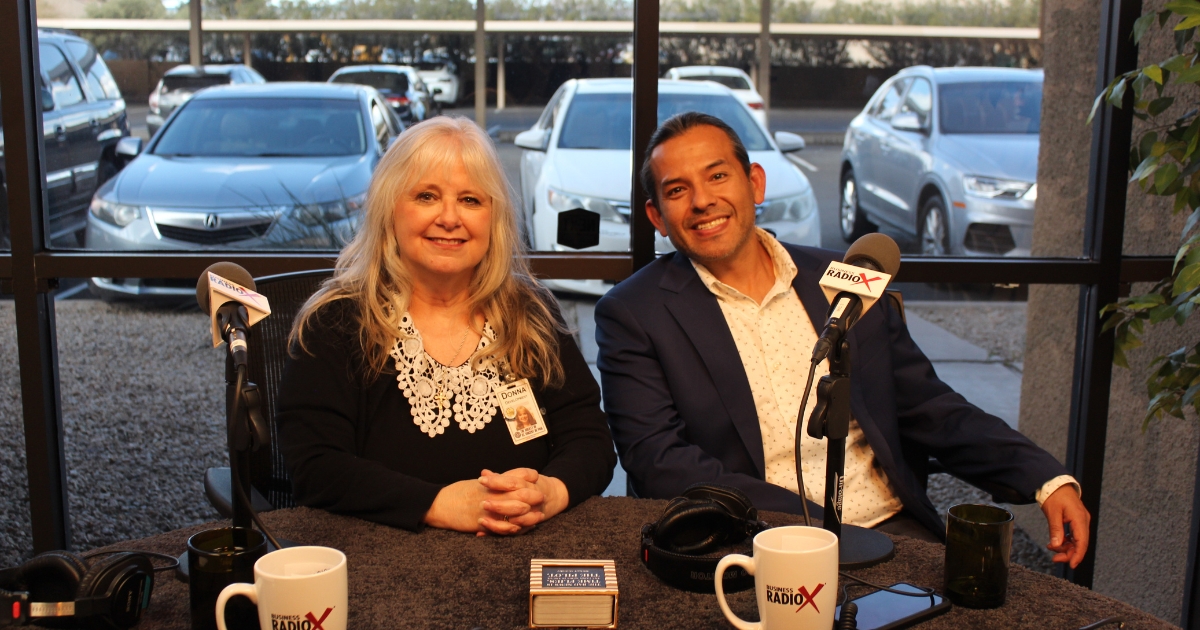
In this engaging podcast, Karen Nowicki discusses proactive tax planning and charitable contributions for small business owners with Aldo Aprile, a CPA, and Donna Rodgers from the Society of Saint Vincent de Paul. Aldo emphasizes the importance of year-round tax advice and planning for small business owners, including Arizona tax credits, while Donna sheds light on the community-centric mission of Saint Vincent de Paul, urging listeners to contribute and get involved. The conversation touches on financial literacy, personal passions, and the significance of fostering connections for positive impacts in both personal and professional realms.

Get inspired by Aldo and Donna’s stories of personal passion and community involvement, and learn how you can make a positive impact through financial planning and charitable giving.
Aprile - Diferentes Formatos

Aprile CPA: Your boutique accounting partner dedicated to boosting your profits and slashing your taxes.

Aldo-Aprile-Phoenix-Business-RadioAldo Aprile, an ASU grad who’s been in the CPA game since 2004 (yes, that long), has a knack for turning financial gibberish into plain English.

He’s the go-to for business owners who’d rather not use their financial statements as just coffee coasters.

Follow Aprile CPA on LinkedIn, Facebook and Instagram.

SVDPlogohorizontalblack

St. Vincent de Paul – Phoenix provides services in Central and Northern Arizona to feed, clothe, house and heal those in need. Its mission is twofold–to help people who are struggling and to provide an opportunity for people to help others.

Programs and services include charity dining rooms, food boxes, a medical and dental clinic, housing, homelessness response and prevention, and thrift stores across the valley.

In addition to serving those in need, St. Vincent de Paul believes that strong community engagement and meaningful service opportunities create a stronger and more vibrant community for all.
Donna-Rodgers-Phoenix-Business-RadioDonna Rodgers worked 23 years in the legal field during which she was a paralegal as well as assisting attorneys with educating the public on legal issues, specifically elder law and estate planning.

After serving on boards of several nonprofits, including those focused on helping seniors and those experiencing food insecurity, she felt true fulfillment in helping others in need and made the decision to change careers. She has worked in the nonprofit field since 2006 with the last nearly 11 years at St. Vincent de Paul.

Follow St. Vincent de Paul on LinkedIn, Facebook, X and Instagram.

Tagged With: accountant, Arizona Charitable Tax Credit, business taxes, CPa, Human Services, Nonprofit, tax planning, tax savings, Working-Poor Tax Credit

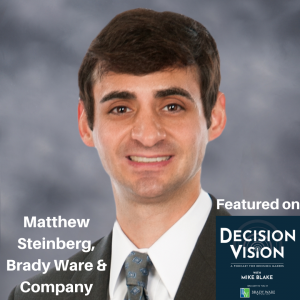
Decision Vision Episode 96:  Should I Take an Home Office Deduction? – An Interview with Matthew Steinberg, Brady Ware & Company

December 17, 2020 by John Ray

home office deduction
Decision Vision
Decision Vision Episode 96:  Should I Take an Home Office Deduction? - An Interview with Matthew Steinberg, Brady Ware & Company
Loading
00:00 /
RSS Feed
Share
Link
Embed

Download file

home office deduction

Decision Vision Episode 96:  Should I Take a Home Office Deduction? – An Interview with Matthew Steinberg, Brady Ware & Company

The question of a home office deduction has suddenly come up in 2020 with so many more individuals working from home. Brady Ware Tax Manager Matthew Steinberg joins Host Mike Blake to discuss the eligibility factors for a home office deduction, how it is calculated, and more. “Decision Vision” is presented by Brady Ware & Company.

Matthew Steinberg, Brady Ware & Company

Matthew Steinberg specializes in tax and business advisory services, with an emphasis in tax compliance. He also has experience in a variety of areas, including high net-worth individuals, trusts and estates, private foundations, and tax planning. He has over eight years of experience in public accounting and focuses on providing high quality service to his clients.

Matthew is a licensed CPA in the state of Georgia. He is an active member of the America Institute of Certified Public Accountants and the Georgia Society of Certified Public Accountants. In addition to daily responsibilities, he serves as one of the firm’s liaisons at Tech Alpharetta, providing business support and tax advice to start-up technology companies.

He is also involved with the firm’s recruiting efforts at universities, and he attends on-campus events to meet with current students and discuss the opportunities a career in accounting can provide. Matthew is also an active member in his community and volunteers with the nonprofit organization All About Cats.

Mike Blake, Brady Ware & Company

Mike Blake, Host of the “Decision Vision” podcast series

Michael Blake is the host of the “Decision Vision” podcast series and a Director of Brady Ware & Company. Mike specializes in the valuation of intellectual property-driven firms, such as software firms, aerospace firms, and professional services firms, most frequently in the capacity as a transaction advisor, helping clients obtain great outcomes from complex transaction opportunities. He is also a specialist in the appraisal of intellectual properties as stand-alone assets, such as software, trade secrets, and patents.

Mike has been a full-time business appraiser for 13 years with public accounting firms, boutique business appraisal firms, and an owner of his own firm. Prior to that, he spent 8 years in venture capital and investment banking, including transactions in the U.S., Israel, Russia, Ukraine, and Belarus.

Brady Ware & Company

Brady Ware & Company is a regional full-service accounting and advisory firm which helps businesses and entrepreneurs make visions a reality. Brady Ware services clients nationally from its offices in Alpharetta, GA; Columbus and Dayton, OH; and Richmond, IN. The firm is growth-minded, committed to the regions in which they operate, and most importantly, they make significant investments in their people and service offerings to meet the changing financial needs of those they are privileged to serve. The firm is dedicated to providing results that make a difference for its clients.

Decision Vision Podcast Series

“Decision Vision” is a podcast covering topics and issues facing small business owners and connecting them with solutions from leading experts. This series is presented by Brady Ware & Company. If you are a decision-maker for a small business, we’d love to hear from you. Contact us at decisionvision@bradyware.com and make sure to listen to every Thursday to the “Decision Vision” podcast.

Past episodes of “Decision Vision” can be found at decisionvisionpodcast.com. “Decision Vision” is produced and broadcast by the North Fulton studio of Business RadioX®.

Visit Brady Ware & Company on social media:

LinkedIn:  https://www.linkedin.com/company/brady-ware/

Facebook: https://www.facebook.com/bradywareCPAs/

Twitter: https://twitter.com/BradyWare

Instagram: https://www.instagram.com/bradywarecompany/

Show Transcript

Intro: [00:00:01] Welcome to Decision Vision, a podcast series focusing on critical business decisions. Brought to you by Brady Ware & Company. Brady Ware is a regional full-service accounting and advisory firm that helps businesses and entrepreneurs make visions a reality.

Mike Blake: [00:00:20] Welcome to Decision Vision, a podcast giving you, the listener, clear vision to make great decisions. In each episode, we will discuss the process of decision making on a different topic from the business owners’ or executives’ perspective. We aren’t necessarily telling you what to do, but we can put you in a position to make an informed decision on your own and understand when you might need help along the way.

Mike Blake: [00:00:41] My name is Mike Blake, and I’m your host for today’s program. I’m a director at Brady Ware & Company, a full service accounting firm based in Dayton, Ohio, with offices in Dayton; Columbus, Ohio; Richmond, Indiana; and Alpharetta, Georgia. Brady Ware is sponsoring this podcast, which is being recorded in Atlanta per social distancing protocols. If you like this podcast, please subscribe on your favorite podcast aggregator and please consider leaving a review of the podcast as well.

Mike Blake: [00:01:07] So, today’s topic is different from what we normally do. If you’re a regular listener of the podcast, you know that although this podcast is being supported by a public accounting firm, we don’t often talk about accounting specific topics. And I don’t think I have to explain why. In fact, I think it may have been more than a-year-and-a -half since we did the last one. But there’s a topic that’s particularly topical that I want to make sure we cover. And we need to make sure that we cover it before the end of the year, because if we wait until after the end of the year, there may be some issues that may be too late for you to take action with.

Mike Blake: [00:01:57] And so, that topic is, Should I or can I deduct my home office expenses from my taxes? So, spoiler alert, the pandemic happened. A lot of us were sent packing. I mean, some of us are still in the office, but a lot of us have been sent home. And we’ve basically been told by our bosses that, you know, you can work anywhere you want, but you can’t work here. And that has created all kinds of challenges, as are well-known. There’s the general upheaval of simply working in a new environment. You’re probably, at least, initially, you were working in a setup that wasn’t geared towards work. You may not have the infrastructure that you had at the office.

Mike Blake: [00:02:44] And we had Jason Jones on a while back to talk about kind of the decisions that go around working from home and how to meet some of the challenges. And even a little bit of insight as to what the post-coronavirus real estate and office market may look like, if there’s a post-coronavirus. This may be something we live with. We’ll just have to figure that out.

Mike Blake: [00:03:05] But a question that I hear asked a lot – and I think if you’re not asking about it, you should – is, you know, now, that I’m working from home, are there any tax benefits to my doing so? I’m investing in resources and equipment and supplies. I, otherwise, would not have done unless I had been basically compelled to do so, whether it’s by the company, or a localized stay at home order, or some other force that required you to do that.

Mike Blake: [00:03:40] And as you guys know, I’m not a CPA. I’m not an account. The last thing I will do is give accounting advice or tax advice. The second last thing anybody else should do is take my advice if I offer it. So, what I’ve done here is, we’ve brought on an expert on the topic to help us kind of work through that. And there are really kind of a couple of, you know, key questions. One, can you deduct it at all? And number two, should you deduct it? And what I mean by that is, when you get into kind of high level taxes, there are deductions that you’re allowed to take and the IRS looks at, “It’s okay. That’s a deduction.” There are other deductions you take and the IRS looks at it and say, “Wait a second. We need to take a closer look at this here.” And so, you know, not everybody necessarily takes every deduction that is available to them because they don’t necessarily want to have the additional scrutiny on their finances, on their taxes. So, we’re going to talk a little bit about that balancing act to the extent that it plays out here.

Mike Blake: [00:04:51] And so, joining us is our very own Matthew Steinberg, who’s a manager at Brady Ware out of the Alpharetta office. Matthew specializes in tax and business advisory services with an emphasis on tax compliance. He also has experience in a variety of areas, including high net worth individuals, trusts and estates, private foundations, and tax planning. He has over eight years of experience in public accounting and focuses on providing high quality service to his clients. Matthew is a licensed certified public accountant in the State of Georgia. He’s an active member of the American Institute of Certified Public Accountant and the Georgia Society of Certified Public Accountants.

Mike Blake: [00:05:29] In addition to daily responsibilities, he serves as one of the firm’s liaisons of Tech Alpharetta, providing business support and tax advice to startup technology companies. Matthew is also involved with the firm’s recruiting efforts at universities, and he attends on campus events to meet with current students and discuss the opportunities a career in accounting can provide. Matthew is also an active member in his community and volunteers at the non-profit organization, All About Cats. I presume that’s not about the play. Matthew Steinberg, welcome to the program.

Matthew Steinberg: [00:05:58] Yes, it’s not about the play. Thank you for having me, Mike. A pleasure to be on here. You did mention the cat thing. I have a cat, literally, sitting next to me. One of the benefits from working from home, our animals get to enjoy us most of the day now instead of just a third or two thirds of the day, because our home is our office now. And it’s great that we are talking about that today.

Mike Blake: [00:06:22] Well, they do get to enjoy us. And I have two cats as well. I’m convinced they also mess with us, that they know when they don’t want us on the desk, when we don’t want them on the camera. And that’s exactly when they feel like they need to be there.

Matthew Steinberg: [00:06:37] Well, I hope my cat doesn’t walk over and step on the power button while we’re doing this, because that would just cause all kinds of issues.

Mike Blake: [00:06:45] So, Matthew, let’s jump in. You know, who is eligible for writing off a home office or workspace? Can employees do so or only the self-employed? Or is it more complicated than that?

Matthew Steinberg: [00:07:00] That’s a great question. So, currently, the way the tax laws are written, the only people who are really eligible for these deductions anymore are going to be people who are self-employed. The tax law was changed at the end of 2017 with the Tax Cuts and Jobs Act, which eliminated the ability for W2 employees, like you and me, to be able to deduct those expenses. And they were limited as an itemized deduction. I won’t get into the detail, but the IRS and Congress did away with that at the end of 2017, implemented in ’18. So, right now, the only people who are really eligible are those who can consider themselves self-employed or maybe they are partners in a partnership or something to that extent. Those are the people who are going to be eligible, not W2 employees.

Mike Blake: [00:07:54] Okay. And that part of the TCJA really didn’t get a lot of publicity, I don’t think. I think they’re much higher profile elements to that bill, that law. And probably we may not even be thinking about it all that much except for the fact that we have coronavirus.

Matthew Steinberg: [00:08:16] That’s right. Yeah. You know, it wasn’t really something that was being utilized that much, even by W2 employees. It’s always been a bigger bang for your buck and benefit for the self-employed individual. But there were certain people who did qualify. So, you’re exactly right that it wasn’t really publicized like some of the other items that were in that tax bill.

Mike Blake: [00:08:40] Okay. So, first decision point here, are you an employee? If yes, the answer is you’re not going to be eligible. So, I’m going to save you the rest of the 45 minutes, you could probably turn us off and go listen to something else. Listen to other fine podcasts at a podcast aggregator near you. Now, for the rest of us that are self-employed or, I guess, are in a less conventional job market, maybe you’re in a partnership and so forth, are there requirements out there for making a home office deduction? In other words, you know, a lot of IRS rules, as I understand it, have certain tests that will help you determine whether or not you are, in fact, eligible for that deduction. Is there a test of that kind for deducting home office expenses?

Matthew Steinberg: [00:09:33] Yeah. I mean, it’s a pretty standard tests in terms of it’s pretty black and white, which, you know, not a lot of items are with the IRS. Do you have a dedicated space in your home? Or, not necessarily in your home. Do you have a dedicated space that you’re using to operate your business? If the answer to that is yes, then you look to the next step, are you regularly using that space? And, say, you have two offices, say, you have a main office and then you have an office in your home, you are allowed a deduction or a potential for a deduction, even if you have two offices, as long as you can substantiate that you regularly use your home office as a place of business. So, those are pretty much the two generic standards in order to see if you would even qualify and then you move on to the next step at that point.

Mike Blake: [00:10:24] So, you said something I want to pause on. You said substantiate, what in the IRS would constitute sufficient substantiation that that space is indeed a workspace and not something else?

Matthew Steinberg: [00:10:42] I mean, that’s a good question. I mean, you know, the IRS is not going to come and knock on your door and say, “Hey, let me see your home office.” Unless you’re under some complete audit and they’re examining certain things like that. But you just need to be able to prove, you know, “Here’s my house. Here’s a room I have for it.” You don’t necessarily need a blueprint of the space. But all of that, in terms of substantiating and providing sufficient data or information related if you qualify, you know, that’s something you just need to feel comfortable about. If you have a space in your house, you have a room that you say, “Okay. This is where I do my office.” Or, “This is dedicated to it.” If the IRS ever came knocking on my door, which they don’t typically do, if they did, here’s the space and there’s the proof. That’s pretty much the basics behind it.

Mike Blake: [00:11:40] So, assuming you’re in a non-audit situation, you know, do you basically just say, “Hey, look. Our house is 2,000 square feet. We’re using 500 for the office.” And, therefore, you just sort of multiply it by your rent or by, I guess, your mortgage or something, maybe your depreciation and that’s it. And then, you might be asked to do more if the IRS decides to fly you and ask questions.

Matthew Steinberg: [00:12:07] That’s right. Yes. You’re getting into the detail. So, for example, say, your house is 2,000 square feet, like you said, and, say, your home office is 400 square feet. So, quick math, that’s 20 percent. So, if you’re thinking about expenses and things like that, getting into the depreciation, where you’re deducting part of your value of your home as an expense for your business, you’re going to take the percentage that’s related to your home office and things like that. We can get into the expenses and what are considered write-offs. You know, you mentioned mortgage interest and, I think, maybe real estate taxes, a percentage of that could be deductible against your business expenses if you’re a self-employed individual or a home office deduction. So, those are all very good points that you made.

Mike Blake: [00:12:54] What about job search expenses? You know, I haven’t looked at this because, fortunately, I have not been in a job search. But, historically, job search expenses have been something that one can write-off. If you have a dedicated space for your job search, a home office, could that potentially be a write-off opportunity as well?

Matthew Steinberg: [00:13:18] So, that’s a good question you asked. The job search expenses, those kind of went away with the TCJA, especially if it’s for, like, searching for a job, for an employment where you would be a wage worker. Those would fall under the two percent miscellaneous itemized deductions on Schedule A. But you do bring up a good point, say, you’re working for gigs and you’re an independent contractor, and you have a home office space. And you’re spending time searching for opportunities to get jobs, not necessarily employment jobs, but jobs where you get paid out of a 1099 or as a miscellaneous contractor. Then, you could qualify and substantiate some of those expenses related to a home office. But if it’s for job fulfillment related to getting a full time employment position where you’re paid a salary every week or every other week, then that wouldn’t qualify. So, it goes back to what we started with at the beginning, if it’s related to self-employment versus being a wage employee.

Mike Blake: [00:14:17] Okay. Now, for some of us, like me, the workspace is a part of the home. In my case, it’s sort of semi-detached. It’s part of the building, but you have to leave and then come back in, which is great. It means that barrier to entry means I don’t get bothered as much. But, you know, some people might have a garage, or a bar, and a workshop, a shed that’s actually a secondary freestanding structure. Does the concept or the approach to deduction change if it’s a freestanding structure? Does that make it easier, harder, no difference?

Matthew Steinberg: [00:14:57] Yeah. That’s a good point. You know, if you can designate a space that maybe isn’t part of your home, maybe it’s a separate space and you can assign value to that potentially, then it wouldn’t necessarily make it more complicated to compute the deduction. It would just be a different sort of calculation. But you’d still be eligible if you had a detached garage or a barn or shed you’re using that isn’t part of the house, that one unit of the house, you’d still be eligible for the deduction as long as you are regularly using it and conducting business there. So, that would qualify.

Mike Blake: [00:15:35] Okay. I actually know somebody who built a shed, a so-called she shed, on their backyard. And I know that that is exclusively for office use. If you do that, does the way deductions work, does that work any differently? Do you then, basically, have to depreciate the house? Is that how that works? Or can you deduct it all in the first year as an expense? Do you have any insight into how something like that might work?

Matthew Steinberg: [00:16:05] Sure. So, if you build, we’ll call it, a she shed – I don’t know what the use is – but if it’s for a business purpose and you’re generating income regularly from the use of that shed, potentially. Say, it cost them $30,000 to build it, you can easily compute that number because you had to come out of pocket for that amount. You sound like you have to break it out of anything or segregate it.

Matthew Steinberg: [00:16:33] In terms of deducting it, you could not expense it all in year one because it qualifies under the real property statute. So, if it’s being used for business, it would be depreciated over a long period of time. Thirty-nine years is the typical standard of life for a standalone building that’s used for commercial reasons. So, if it costs you 30,000 and you divide that by 39, it’s going to take you a pretty long time to realize that fact. So, it’s a slow process, but, you know, 100 percent of that would be related to the business because that’s what it’s there for.

Mike Blake: [00:17:12] Okay. Now, I want to switch gears a little bit. We’ve talked a lot about the real estate itself, but, of course, it takes more than a building to be an effective workspace. What about furniture? If I buy a Herman Miller chair, buy the snazzy microphone that I’m now working with at home for the podcast, can I deduct that as well? Does that work the same? Is it different? How does that work?

Matthew Steinberg: [00:17:42] So, it’s a little different. So, the answer is yes, you can deduct it. Say, you have an office and you decide to buy two chairs for clients to come sit, and each chair is $1,000. So, you spend $2,000 on chairs that are directly related to your home office. So, you would be able to accelerate those deductions because they’re called personal property. And they qualify under a different statute where you can accelerate the depreciation significantly faster. Then, you would be able to get immediate expensing or a deduction for something like furniture, chairs, computers, things like that. As long as it falls under, what we call, the de minimis threshold, which is set at 2,500 by the Internal Revenue Service.

Matthew Steinberg: [00:18:29] If you start purchasing pieces of property that are $5,000, $6,000, then you need to look into how we would depreciate things like that. But, currently, under the law, those would all qualify for something, we call, bonus depreciation, which right now is 100 percent. Meaning, you would get to expense it immediately under the bonus depreciation statute. So, I mean, you are in a good position in terms of if you need to purchase things like file cabinets, furniture, things like that, that are easily movable, those will qualify for that immediate depreciation or expensing.

Mike Blake: [00:19:07] Okay. I need to go back to the real estate part, because I almost forgot one question that’s really important. What about improvements to existing real estate? For example, I read an article in The Wall Street Journal, I’m going to say, about a month, maybe six weeks ago, where there is a host, I think, on Fox Sports, who basically converted one of his rooms into a home studio with different lighting, different paint, because apparently that works better on camera, soundproof and sound modification, all that kind of stuff. Can home improvements such as those potentially be a tax deduction opportunity as well?

Matthew Steinberg: [00:19:48] Yes. They can as long as it’s for conducting the business. So, if you go out and add a pool to your house, that’s not going to qualify for a business use of home. Unless you can prove that that pool somehow add to some sort of value or it’s related to your business. I mean, if you’re providing swimming lessons, sure. But for the example that you are providing, for the guy or the girl, instead of –

Mike Blake: [00:20:16] It’s a guy, it turned out.

Matthew Steinberg: [00:20:18] A guy. Okay. He had set up an in-home studio for his profession. Those improvements would qualify to be deducted as part of the business use of home deduction. And they are interior improvements more than likely. So, they would probably qualify for something we call a qualified improvement property, where you would get an accelerated benefit or deduction for it. So, that is something where you would be able to get a benefit. Now, if you’re just doing improvements all around the house and making repairs and painting rooms, that’s not going to necessarily qualify because it’s not related to the actual office space you’re using. Let’s say you paint the whole house, sure, you could allocate part of the cost to the office. But you couldn’t deduct your bedrooms and things like that where you’re just updating it and putting crown molding, and things like that. If you try to do something like that, you’re going to draw some attention from the Internal Revenue Service and increase your audit risk.

Mike Blake: [00:21:16] Now, can you write-off or potentially deduct services such as internet access, or even a portion of utilities, or maybe something else, you know, some other service you might buy for your home to work from home that you wouldn’t have if you didn’t need to do that?

Matthew Steinberg: [00:21:35] Yes. There’s something we call indirect and direct expenses. So, there are certain expenses that you’re going to have in your home, whether or not you have an office. You know, power bill, water bill, probably internet and cable, you’re going to have those things. So, we spoke briefly earlier about the square footage of a home and what is designated as the office space. So, we used 400 feet as the square feet of the office space and we used 2,000 for the total, so that was 20 percent. So, say, you have a $1,000 and we’ll call it $1,000 a month in power bills, and water bill, and cable bill. Twenty percent of that, we can designate or allocate to the home office. So, you get a $200 reduction, because 1,000 times 20 percent is $200.

Matthew Steinberg: [00:22:24] Now, there are other expenses that are more direct. Even though you’re using 20 percent of the house as an office, you have other expenses that are 100 percent. So, say, you buy or you pay for a website that’s only related to the office or to your business. Well, that’s going to be 100 percent deduction for the business. So, it’s not going to be like you have to allocate it to your house or things like that. Say, you have postage and things that you’re paying out of pocket that are only related to the business that are coming out of your businesses use of home, things like that are going to be 100 percent direct expenses, even though you only have 20 percent of the house as the office. So, you always need to be deciphering what’s a direct expense, which you get 100 percent benefit for, versus what’s an indirect expense, which you’re only getting a 20 percent benefit for because it’s allocated along the whole house.

Mike Blake: [00:23:18] Okay. Now, what about equipment such as computers, webcams, microphones, printers, things of that nature? Can that also potentially be written off?

Matthew Steinberg: [00:23:32] Yeah. So, those would all qualify as direct expenses for the business or the business use of home. So, you know, say, you need to get a webcam, say, it’s $500, that could be immediate write-off. Computer, printers, all those items would all qualify in the business use of home to reduce your business income and get you a lower taxable income and pay less taxes. So, those are all great ideas and, you know, they would all add to your benefit of having a home office and they’re all great to have.

Mike Blake: [00:24:12] Now, I’ve heard in the past that computers can be tricky and the IRS, at least, at one point, used to pay those extensive scrutiny because a lot of people kind of mix a computers personal use and – sorry – business use. So, if you have games on your computer, unless you’re a game developer, I guess, or game tester, that might be problematic. Was that the case or is that still the case now?

Matthew Steinberg: [00:24:47] You know, it’s a good point. You could say the same thing about cell phone usage. We have cell phones and, you know, do we deduct 100 percent of the cell phone bill? Or do you take 75 percent is business, 25 percent is personal? It’s a fine line. With the computers, the IRS really hasn’t released in recent years, you know, come down hard on taxpayers for buying a laptop and then deducting it all for business purposes, even though you may be using it slightly for personal, for de minimis reasons. You could technically say, if you want to be super conservative, you could allocate your usage of it and only deduct certain amount of it. But for the most part and for most of my clients, they’re going to be deducting those laptops primarily for business, more like maybe allocating those items.

Mike Blake: [00:25:52] Okay. So, I think there’s something on a tax return called a standard home office deduction. Am I right about that? And if so, how does that work?

Matthew Steinberg: [00:26:03] So, I think you’re referring to, maybe, the simplified method potentially. So, most most taxpayers, if they’re self-employed, will file something called a Schedule C, profit or loss report, to show their income and expenses, determine what their amount is that’s subject to taxes and self-employment taxes. And on that form, at the bottom, there’s a schedule called Form 8829 which is where you calculate your business use of home deduction. And that’s where you would calculate all the expenses related to your home, the direct and indirect expenses. And then, you would also be able to calculate the depreciation on the business use percentage of the home.

Matthew Steinberg: [00:26:47] Now, the IRS came out, several years ago, and put something out called a simplified method computation. And the reason they did this is, there were so many people taking a business use of home that it was just too much for the IRS to monitor. So, so many people were doing it. So, they said we’re going to give you something called a safe harbor limitation. And what it means by safe harbor is, if you take this deduction, you are free and clear. The IRS will not look at you and audit you. You can take this amount as a ceiling amount. You can deduct it and you are free and clear. You have no audit risk. It’s called a safe harbor deduction under the simplified method. And the way it works is, for every square foot that you had attributed to home office, you would get a $5 deduction. And it was maxed out at 300 square feet. And it hasn’t changed in the last year. So, the most you could get for a deduction was $300 times five square feet, which is 1,500 bucks.

Matthew Steinberg: [00:27:48] So, the IRS just gave you that as being a self-employed person. You don’t have to give them any information. You don’t have to put any data down. They’ll just give you a $1,500 deduction annually. They’re not going to ask you any questions. You just get it. So, that was put in place maybe five, six years ago. And the amount hasn’t been adjusted for inflation or anything like that. It’s kind of stayed at 1,500. And that has been what a lot of taxpayers have used, because sometimes that $1,500 simplified deduction is actually higher than what they would get if they computed an actual deduction. And you can choose and pick which one you want to do every year. You don’t have to stick with one and keep it going annually. If the actual costs and deductions of the home office are better, you can go to that. But there’s a risk there, because the IRS isn’t giving you that safe harbor. So, it’s always nice to do a comparison analysis. And that’s always why you want to get a good CPA to take a look at that for you.

Mike Blake: [00:28:47] Of course.

Matthew Steinberg: [00:28:47] I’m trying to sell a little bit here.

Mike Blake: [00:28:52] Yes. I did not know that it worked that way. Now, what if your space and equipment have dual purposes, right? As we record this, my office also doubles as my game room. Does that impact deductability? And is that as simple as just saying this room, say, 50 percent is for office and 50 percent is not? Or does it get more complicated than that?

Matthew Steinberg: [00:29:18] Well, you know, if you go and look at the regs, the IRS regulations and the black and white, it says in there that the space that you’re using is supposed to be dedicated and focused to the business. If you have a mixed use space or purpose for the space, then it’s not really designated for the use of the business. So, can you break it out and, say, maybe part of that space, maybe, there’s 500 square feet basement, and 250 is business and 250 is personal or just not related to the business. And the reason they do that is they don’t want you to create an office space that’s 2,000 square feet and really inflate your deduction by getting a lot more depreciation and really pumping up what your expense would be in order to reduce your taxable income.

Matthew Steinberg: [00:30:12] So, it’s pretty clear in the regs about the space and what should be used and what shouldn’t be used as a deduction in determining the square footage and what you can depreciate. That’s really, I guess, where it comes down to. And, also, if you have those indirect expenses, they don’t want you to be allocating more of the utility expenses and things that are more personal in nature to the business if they aren’t really qualifying. So, you have to kind of be careful about those things. You don’t want to overdo it. That’s what I would recommend to my client if they were asking these questions. You know, you don’t want to get too aggressive because then you start causing other issues.

Mike Blake: [00:30:51] Right. As they say down here, “Pigs get fat and hogs get slaughtered,” right?

Matthew Steinberg: [00:30:57] Yeah. That’s the saying I’ve heard quite a bunch.

Mike Blake: [00:31:06] You know, if you wanted to keep documentation, you know, we both know people that they just want to document everything. They just want to assume they’re going to be audited and be ready. You know, if you’re advising a client that were just dead set. And it sounds like you don’t really need to do this. But, of course, documentation is never a bad idea. If somebody listening just wanted to, if nothing else, to satisfy their own anxiety or to do things to document their home office or proactively substantiate, if you will, what kinds of things do you suggest they do?

Matthew Steinberg: [00:31:42] Well, I mean, you would want to maintain a file and you’d want to keep a separate books and records for the expenses that are related to the home office. You’d like to have spreadsheets set up where you can, at least, show on an annual basis that you’re breaking out the expenses or allocating them to the personal side of the home and on the business side of the home. You may even want to take a picture of your office space and just put it into the file that you have, whether it’s an electronic file or you’re still maintaining paper folders, because I still know people that do both.

Matthew Steinberg: [00:32:14] So, you know, if you want to really substantiate your case that you have a legitimate home office, those are the things you want to do. You’d want to keep a copy of your settlement statement from the house because that’s showing the value of the home. Because that’s what you’re going to be depreciating, a percentage of that, so you want to have all these kind of things in your file. The settlement statement, a spreadsheet allocating expenses properly, copies of the real estate document, copy of the real estate tax annually, copies of your mortgage interest statement, because all of these things are being allocated. I mean, if you want to maintain copies of your monthly bills from power companies, cable bills, water bills, anything related that could substantially be related to your business use of home office deduction, all those things you’d want in your file, if you’re just dead set on maintaining a perfect file.

Mike Blake: [00:33:07] We are speaking with Matthew Steinberg of Brady Ware & Company, and the subject today is, Can I or should I deduct my home office expenses from my tax return? Matthew, a couple more questions before we let you go and go back to helping clients. One question I have is, if you have a home and you’ve used it as a home office and then you sell it, are there any specific tax implications on the capital gains or anything else you can think of that you need to be aware of as you prepare to sell that property?

Matthew Steinberg: [00:33:45] So, that’s a good question. You posed a simple question that’s actually complicated, but I’ll do my best to answer it. So, first off, let me state that there is a rule out there that allows for your principal residency if you lived in it for two of the last five years, where you can get, what we call, exclusion of the gain up to 250,000 if you’re single and 500,000 if you’re married, filing jointly. So, what that means is, if you lived in the home for the last two years and you sell it for a million dollars, and your basis was half a million – obviously, two years, you double the value of your home, that’s great – but $500,000 of that is tax free. So, you wouldn’t pay any tax on your stuff. Or report the transaction to the IRS, but you don’t pay any tax on it. And it’s excluded from income tax or capital gains tax.

Matthew Steinberg: [00:34:39] So, getting back to your question, if you depreciate part of the property as a business use of home, is any of that recaptured as income tax? And the way that works is, say, you have depreciated $20,000 – what is called $20,000 – you are entitled to what we call an ordinary income tax deduction at that point, because it reduced your ordinary income by $20,000. So, ordinary income tax rates are higher than capital gains tax rate. So, now, we’re getting into a whole bunch of tax mumbo jumbo here, so I hope I don’t want to lose anybody.

Matthew Steinberg: [00:35:20] But at $20,000, you were able to get a deduction for ordinary rates. So, when you go to sell the home, that gets taxed at capital gain rates. So, the exclusion only allows you an exclusion for capital gains, not the ordinary component. So, when you sell the home, you would have to recapture, potentially, part of the business use depreciation when you sell the property, which would be taxed ordinary rate. So, 500,000 minus 20 would be 480, which was the original gain, 480 would be tax free. And then, you’d be subject to tax on $20,000 ordinary. So, there is a potential tax exposure if you do take actual expenses for a business use at home annually and depreciate it. So, you do need to be aware of that as a tax payer and as a self-employed individual who’s using a business use of home, that there could potentially be a consequence, a tax consequence or a tax liability, from selling a primary home that was used for business purposes at least a percentage of it. So, that is out there. If you have those issues, I would recommend a CPA to help you with that. It is complicated.

Mike Blake: [00:36:27] Yeah. We’ve probably only scratched the surface, too.

Matthew Steinberg: [00:36:31] Yeah. Yeah. That’s as basic as I can make it. That sounded complicated when I was listening to myself.

Mike Blake: [00:36:39] So, I’ve heard in the past – I don’t know if this is true or not, so I’d like you to either substantiate or debunk a myth – does putting in a home office deduction substantially increase the probability of an audit? Is that a flag the IRS kind of picks out and picks on?

Matthew Steinberg: [00:36:59] Well, let me first start with the percentage of individuals being audited has been decreasing every year for the last 20 or 30 years. The IRS is understaffed and they just can’t keep up with the volume of returns. So, let me put that out there, audit risk is already pretty low to begin with. I’m not telling you to go out there and do everything possible to make your return super aggressive and get all the benefits. I would never recommend anything like that. We want you to file a tax return correctly. We don’t want you to pay more tax than you need to pay. You pay the minimum tax which you’re required to pay.

Mike Blake: [00:37:37] Yeah. Of course.

Matthew Steinberg: [00:37:38] Every time you take a position on a return or you’re doing things that aren’t standard, you’re increasing your risk for audit. Now, I mean, I will go back and say that the IRS did implement what we call the safe harbor, which we talked about for a few minutes earlier, where you get that automatic 1,500 deduction based on 300 square foot, which is the cap. And if you do that, they’re not going to audit you. They’re going to stay away from you. But if you have a significant percentage of your home being used for a business deduction, you’re increasing your risk.

Matthew Steinberg: [00:38:14] If you have a 5,000 square foot house and you’re saying 2,500 of it is a home office, then you’re just putting yourself out there and drawing all kinds of red flags. Will you get audited? Maybe. I’ve got clients who’ve done everything right. They say for the last 40 years, and they’re just more audit prone and they get no changes. They don’t have any note. IRS comes in, spends years looking at their returns, and nothing happens. Other clients are a little more on the aggressive side in doing it that way forever. And they’ve never been looked at once. So, how lucky do you feel? I don’t want to say that. But, you know, it’s just some clients are unluckier than others and they do everything perfect. And other ones are taking some positions that may be are more aggressive, not necessarily wrong, but they’re just taking more aggressive positions and certain things and they never get looked at. So, does it increase your audit risk? The simple answer, yes. Will you be looked at? Who knows? I mean, it’s a mystery.

Mike Blake: [00:39:16] Yeah. I mean, there is a significantly random element. You know, in my opinion as a non-CPA, you know, the best defense against audit risk is just doing the right thing. Your number may just come up. I mean, there are some things, I think, that do flag audits. You know, estate, and gift tax issues, donations, those things seem to flag audits more. You know, the IRS will look for, in my experience, just what appear to be outsized deductions. And I think that’s automated, basically. But there is just sort of a random element, right? And your number just comes up and, you know, the best defense against an IRS audit is just don’t give them anything to audit.

Matthew Steinberg: [00:40:03] That’s right. You make a good point. The IRS has – you know, most of the returns are now electronically filed and they run it through a computer system, and they have the formulas in there and algorithms. Say, if you have $200,000 as income and you donate $200,000, that’s going to flag something. Like, how are you giving away all your money? Little things like that doesn’t necessarily trigger an audit, but it triggers potentially a notice or at least someone to review it. So, there are all those things in play. And the IRS system is getting more sophisticated on an annual basis as they computerized more and more of this and more returns get electronically filed.

Matthew Steinberg: [00:40:38] So, you make a good point that there are certain things that trigger notice and red flags and things to that extent. But, you know, there’s also the human element and, you know, is your number going to be up? And, obviously, the best offense is not the best defense, right? Is what they say? Or best defense is not the best offense? One of those.

Mike Blake: [00:40:59] One of those two. Well, Matthew, it’s been a good informative conversation. I’ve learned some things. I know our listeners will be learning some things, too, that they’ll either take back to their own CPA or maybe they’ll even take it back to you, which should be a good decision – speaking of decisions. But if people have more questions about this, how can they best contact you for more information?

Matthew Steinberg: [00:41:23] Sure. So, my name is Matthew Steinberg. My email address, msteinberg, S-T-E-I-N-B-E-R-G, @bradyware.com. You can also reach me at my cell phone – yeah, I’m giving my cell phone number – 678-468-1083. Since we’re not in the office as much anymore, it’s harder to reach me on the office line, so that is my cell phone number. So, please feel comfortable to reach out to me either via email or via my cell phone if you have additional questions. I would love to help you and be an adviser to you, if possible.

Mike Blake: [00:41:59] Well, Matthew, thank you. This is good stuff. And I have a feeling this could be one of those podcasts that people will be pausing and rewinding and taking notes. That’s going to wrap it up for today’s program. I’d like to thank Matthew Steinberg so much for joining us and sharing his expertise with us.

Mike Blake: [00:42:15] We’ll be exploring a new topic each week, so please tune in so that when you’re faced with your next executive decision, you have clear vision when making it. If you enjoy these podcasts, please consider leaving a review with your favorite podcast aggregator. It helps people find us that we can help them. Once again, this is Mike Blake. Our sponsor is Brady Ware & Company. And this has been the Decision Vision podcast.

Tagged With: Brady Ware, Brady Ware & Company, home office deduction, income tax planning, Matthew Steinberg, Michael Blake, Mike Blake, tax manager, tax savings

Saving Real Money with R&D Tax Credits, with Tommy Zavieh, Frazier & Deeter

April 28, 2020 by John Ray

Tommy Zavieh
North Fulton Business Radio
Saving Real Money with R&D Tax Credits, with Tommy Zavieh, Frazier & Deeter
Loading
00:00 /
RSS Feed
Share
Link
Embed

Download file

Tommy Zavieh
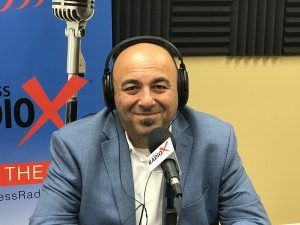
Tommy Zavieh, National Practice Leader for R&D Tax Credits, Frazier & Deeter

Thomas Zavieh, National Practice Leader, R&D Tax Credits, Frazier & Deeter (North Fulton Business Radio, Episode 224)

Here’s an opportunity to get some real money back on taxes, which most small and medium-sized businesses don’t pay any attention to:  R&D tax credits. A wide variety of business in various industries are eligible for these credits, but only about 40% of business investment eligible for allowable R&D tax credits are claimed on tax filings. Tommy Zavieh, National Practice Leader for R&D Tax Credits, Frazier & Deeter, joined the show to discuss this opportunity in detail. The host of “North Fulton Business Radio” is John Ray and the show is produced virtually by the North Fulton studio of Business RadioX® in Alpharetta.

Thomas Zavieh, National Practice Leader, R&D Tax Credits, Frazier & Deeter

Tommy Zavieh
Tommy Zavieh

Tommy Zavieh is the National Practice Leader, R&D Tax Credits for Frazier & Deeter. Tommy started his career as an engineer. When he became a CPA, he joined a Big Four firm in their national practice. Tommy is uniquely qualified to help his clients through his engineering, US and overseas R&D tax expertise. In short, Tommy effectively communicates with both a company’s Engineering and Tax/Finance departments, breaking down the language barriers and providing the most efficient service.

Tommy has over 20 years of professional consulting experience serving clients ranging from start-ups to “Fortune 10” corporations. He has extensive experience in addressing complex business and specialty tax needs (R&D Tax Credit, Section 199 (DPAD), Meals & Entertainment (M&E), Cost Segregation) for a variety of organizations, including automotive, bio-sciences, consumer products, financial services, medical device, oil/gas, manufacturing, pharmaceutical, and technology (software and hardware). He has helped his clients receive more than $1 Billion in credits and deductions and successfully defended his client’s claim when audited.

To get in touch with Tommy, you can email him directly or call (404) 573-4514.

Questions and Topics in this Interview:

  • Tommy’s background
  • the Forgiveness Optimizer, a propriety tool of Frazier & Deeter which helps track PPP loan use of proceeds
  • saving companies money with R&D tax credits
  • wide range of industries, from mining to breweries to financial services, whose activities qualify them for R&D tax credits
  • three year lookback
  • R&D tax credits are a highly specialized and complex part of the tax code

Show Transcript

Intro: [00:00:05] From the Business RadioX Studios inside Renasant Bank, the bank that specializes in understanding you, it’s time for North Fulton Business Radio.

John Ray: [00:00:19] And hello again everyone. Welcome to another edition of North Fulton Business Radio. I’m John Ray, and we are coming to you from our virtual business RadioX studio. No, we’re not inside Renasant Bank, but we still love the folks there and the good work that they do. We’ve got a great guest today, and  we’re going to be talking about saving money, not just a small amount of money, but a lot of money with R&D tax credits. We’ve got Tommy Zavieh. And Tommy is a national practice leader with Frazier & Deeter, a well-known regional accounting firm here in Atlanta.

John Ray: [00:01:01] But before we get to Tommy again, I just want to remind folks that the bank branches at Renasant are closed to just walking in. You’ve got to go call and make an appointment. And they’re happy to see you, but you’d need to make an appointment ahead of time. The drive-throughs are open, so feel free to take advantage of those. But they’ve done an awesome job with some of this PPP loans and some of that work. I know that firsthand. So, check them out, give them a call, be in touch with your Renasant banker, or go to renasantbank.com for the latest. Renasant Bank, understanding you. Member FDIC.

John Ray: [00:01:43] And now, I know I got your attention with this idea of saving money. And Tommy Zavieh from Frazier & Deeter is gonna guide us through that, and we’ll get to that in a minute, Tommy. But welcome. And before we get into what you do and how you help folks, tell us about you.

Tommy Zavieh: [00:01:59] Hi. And thank you for having me on. I appreciate it.

John Ray: [00:02:01] Sure.

Tommy Zavieh: [00:02:01] And all your listeners out there, look, I know these are difficult times, and we’re all trying to figure things out. But hopefully, today’s discussion will give you some ideas of what are the different areas that you can look at to save some cash. A little bit about me, I have had a long career of different subjects that I’ve done. So, I used to be an engineer turned CPA. And that helps me really understand the business of my clients. What is it they do from the engineering geeky side, and as well as the CPA tax side of things. That led me to work with the Big Four where I was in New York, California, and moved overseas to do specifically research and development credits. And lately, the last place that I was at, I was at KPMG leading their Southeast practice before joining Frazier & Deeter.

John Ray: [00:02:59] Awesome. So, Frazier & Deeter, let’s get into that. We know that firm very well. Highly regarded firm. Why did you leave KPMG, another highly regarded firm?

Tommy Zavieh: [00:03:11] Yeah. It’s one of those opportunities. I had known Frazier & Deeter for many years and a very well-respected firm that has gone from being a regional firm to a national firm to, now, we’re international. We have offices all the way west to Las Vegas and across the pond in UK and London. We have an office there as well. And in their growth, they were looking to have somebody come and lead this practice, and it was an opportunity that I couldn’t pass up at the time that it became available.

John Ray: [00:03:46] Yeah, I said regional. And thank you for pointing that out in a nice way, the way you did, because Frazier & Deeter is truly a national and international firm now, particularly, with the London office and all the work around the world that you do. So, congratulations to you and your firm on that growth. So, you’re the national practice leader, Tommy, for research and development. What does that mean? What does it mean to clients?

Tommy Zavieh: [00:04:14] Yeah, that’s just a pretty title. What I love about what I do is I get to go and really see firsthand and sometimes, quite frankly, before the consumers see what wonderful job the businesses that are doing in this country. I get to talk to the C-level suite folks and really get to understand the business. And then, my passion is really get to talk to the engineers who are developing the wonderful products that we all use, whether it’s in the technology sector, software, manufacturers in this country, or oil, gas, mining. I’ve been very lucky in my career that I’ve gotten to see so many different areas that the businesses in the US, what is it that they do, how they do it, see it firsthand before anybody else gets to play with it. I’ve had the chance to look at it and see it firsthand.

John Ray: [00:05:20] That’s awesome. And I’m envious, by the way. That’s a nice place to be to see all that innovation in the future, really and, particularly, in a time like this where people are getting all kind of down, really, about what’s going on currently and with good reason, but there’s a lot of hope in the future. And you see that.

Tommy Zavieh: [00:05:45] Yeah. And when you asked me earlier why did I join Frazier & Deeter, I think the other part of it that I want to really highlight is because the kind of clients that we have, that middle-market client. I get to not just shake the owner’s hand, but I get to talk to all the workers. And as wonderful as the opportunity that I had working at the Big Four and really seeing some of the larger companies out there, I think what it came down to for me is being helpful to the middle market in our country, walking to the plants, and talking to the workers, seeing what they do, and the impact that we can have with the small work that we do but that cash savings that we have for our clients that helps them keep the doors open for a few more months or for a few more years, or the investment they need to make in new and better equipment. I had a chance to go into a mine in Kentucky and got to see firsthand how coal is being brought out. And I went deep, deep into the mine. So, those are the kind of experiences that I don’t know where else in the CPA firm you can experience having those experiences.

John Ray: [00:07:10] Yeah, for sure, for sure. Folks, if you just joined us, we’re speaking with Tommy Zavieh. And Tommy is a national practice leader for R&D at Frazier & Deeter. Now, Tommy, I want to get further into the R&D part of what you do with clients in a second, but one of the things you’re really involved with with the firm right now is the PPP and really the aftermath of PPP, something called the forgiveness optimizer. Talk about that, and talk about the importance of this tool.

Tommy Zavieh: [00:07:43] Yes. So, thank you so much for asking that question. And today’s discussion, the topic, if there’s anything you’re going to walk away from this, that’s probably cash savings. So, this is one of the other areas that you probably looked at and applied for the Payroll Protection Program. And that application process was hectic. You had to quickly do it. We all know that the money run out. And so, now that you’ve gone through the application process, hopefully that you got approved. And now that the moneys are coming in, what do you do?

Tommy Zavieh: [00:08:14] And there’s two parts to it. One is, what do you do with that money to make sure that you reach the level or get it forgiven if that’s the goal because at the end of the day, even if it doesn’t, it is very cheap money. It is 1%. So, it is very helpful. But say, your goal is to get it forgiven, what do you need to do to do that? And then, the last part of it is the banks need to certify that you used the proceeds properly and the levels at which you can get it forgiven.

Tommy Zavieh: [00:08:47] And that’s where at Frazier & Deeter, we have a team dedicated to this program who have delved into the technical aspects of it. And quite frankly, some of it is still unknown. Guidance has not been issued. So, that’s what our team has done. And we will help the applicant who has applied for the loan to optimize it. So, have you reached the 75%? What happens if you’ve lost a headcount? Have you replaced that headcount? What if you try to save cash in these times? And who do you pay? Who do you reduce their income?

Tommy Zavieh: [00:09:26] For example, if I’m a business owner, and I make more than $100,000, and I’ve got five employees underneath me, and I’m trying to save cash, do I not pay myself, and then give some bonuses to my employees? Would that be helpful or not? Do I stay above the 65%? And then, we also help you certify the way you use the proceeds. Then, when you go to the bank and you give them your documentation, the substantiation, we will certify that you’ve used the loan proceeds properly, so that the banks can process that quickly and get it forgiven.

John Ray: [00:10:08] Now, you briefly mentioned the 75%. Well, for folks that aren’t familiar with that threshold, what is that?

Tommy Zavieh: [00:10:17] Yeah. So, you have to use 75% of the loan proceeds towards your payroll. And then, the other 25% have to go towards eligible cost, such as renting, utilities, a mortgage. If you don’t reach the 75%, and this is one of the big areas that guidance has not been issued, will a portion of your loan get forgiven or none of it? So, what if you reach 74.5%?

John Ray: [00:10:52] Oh, boy.

Tommy Zavieh: [00:10:53] By half a percent, did you just lose the entire forgiveness or a portion of it? And again, guidance hasn’t been issued. We know that each bank will make their own determination. But if you plan ahead and you know what your expenses are or you think what your expenses are, then, hopefully, you’ll know what percentage you’re going to reach. If not, be on top of it, which we can help you with, obviously, our tools, but make sure you reach that 75%. That is something that if you’re close to it, you don’t want to miss out.

John Ray: [00:11:31] This is where the accounting industry in your CPA, if you’ve got a good CPA – if you don’t have a good one, call Frazier & Deeter – but if the CPA industry is going to be extraordinarily helpful, this is where they shine when it comes to this kind of issue in dealing with the IRS and dealing with forgiveness later.

Tommy Zavieh: [00:11:56] Yeah. Look, I think many CPAs and many companies will help you out in that loan application process. They are well-versed in it, and they’re doing a terrific job.

John Ray: [00:12:07] It sounds like you’ve kind of gone the extra mile, though, in terms of having a tool that’s really easy for people to access and use. And congratulations on that.

Tommy Zavieh: [00:12:19] Well, thank you. There are a lot of calculators out there, but we have yet to see anyone that has the optimizer portion of it. And we’ve had many sessions with a variety of banks, including Renasant Bank, who’ve told us this is extremely helpful to their applicants, and they are letting them know that we have it available to help them up.

John Ray: [00:12:42] Cool. Awesome stuff from Tommy Zavieh. And Tommy is the national practice leader for R&D with Frazier & Deeter, an international accounting firm and an advisory firm, business advisory firm headquartered here in Atlanta. Tommy, let’s get into the R&D aspect of what you do. You save companies real dollars. Talk about that.

Tommy Zavieh: [00:13:13] Yeah, look. So, I’ll give you a little bit of statistics. I think everybody likes some numbers. Out of the latest that’s available to us, R&D is a little over $13 billion industry. And that is made up of 70% manufacturers. And then, the other 30% is technology firms and others who are doing R&D. I know you would have thought, “Okay. Well, software technology would make up the majority of it.” No, manufacturers are. But if you’re a biopharmaceutical, if you are in the health care industry, if you are oil, gas, mining, you’re doing R&D. As long as you are taking something, and you’re improving on it, and making something new, you’re probably doing R&D. But the problem is that only about 30% to 40% of the companies take advantage of this. The rest of them are not.

John Ray: [00:14:14] So, can we stop there for just a second? That’s really important because I think companies hear, or executives, business owners hear the term R&D and they think like technology, right?  And so, if I’m not technology, I’m not doing R&D.

Tommy Zavieh: [00:14:32] Correct. So, look. Like I said at the beginning, I introduced myself, I said I was an engineer. And I feel that I still think like an engineer. And I certainly have a definition as an engineer what research and development is. But the way that the tax code, the way Congress when they passed this law decades ago, the way they defined R&D is a little bit different. And as long as you meet the definitions of research and development, then your activities qualify. So, many companies either have never heard of it or if they’ve heard of it, they either they don’t apply, it does not apply to them, or that they’re not spending enough money to warrant an R&D study.

Tommy Zavieh: [00:15:12] So, the part that I really love about my job is education, going out there and educating companies about R&D and how it would apply to what they’re doing. And take your bank, Renasant Bank, Renasant Bank is performing R&D, especially with the security stuff that they have to deal with, the online banking. You have to put in security systems into place to make sure that nobody gets in and, for example, take money out of my account. All those security procedures, all of that research and development goes into it. So, it’s not just the big banks that are doing it. You’re a credit union, you’re a regional bank, you’re performing R&D.

Tommy Zavieh: [00:16:02] Take our businesses in North Fulton, the manufacturers, the makers of widgets or you are in the food industry, we have very, very large fortune companies here in Atlanta. And they’re experimenting with food and how to make it taste better, how to make it last longer, how they keep it on the shelves longer, food science, that’s an area that gets often overlooked. I mean, the easy stuff, “Yes. I make the latest and greatest and nobody never seen,” but that’s not how the definition goes.

John Ray: [00:16:45] So, by definition, Tommy, what we figured out, you said 30%, only about 30% of companies are eligible for this tax credit use it. By definition, most of the people listening to this show on tax credits don’t use it and need needed. So, let’s get into it. How can they leverage R&D tax credits? And how do you help with that?

Tommy Zavieh: [00:17:10] Yeah. So, the beautiful thing is that a few years ago in 2016, the R&D credit became permanent in the tax code. It used to get renewed every two years. And in that, they added something for startup companies to be able to utilize it. So, let’s take a broad scope. You’re a company that’s doing R&D, and it’s a credit. The credit is a deduction of your tax liability dollar for dollar. So, first, you got to ask yourself, am I a taxpayer? If you’re a taxpayer, then, yes, this is very helpful, whether at the federal level or at the state level. Now, if you’re not a taxpayer, then why do you care about R&D? You can care about it for several reasons. One, let’s say you are trying to purchase another company. Well, those credits could mean something to you. And if that company has never done R&D credit, then you could be sitting on potentially huge cash savings for yourself. What about yourself? If you’re looking to be purchased, then you want to make sure you get top dollar for your company, and you got to have that R&D in there. And then, finally, if you’re considered a startup company, startup companies considered less than five years of $5 million in revenue, if you are in that category, then you can offset your payroll taxes with the R&D credit. That’s real cash savings.

John Ray: [00:18:34] Oh, wow!

Tommy Zavieh: [00:18:34] As a startup, obviously, cash is important to me. And we have tremendous amount of companies here in the Atlanta region who are part of either the startup community, or the incubators, or the accelerators, and they’ve had their series A funding that they’ve raised. Using the R&D credit saves them cash. And so, I would highly recommend that they talk to their CPA, and the CPA firm should have a specialist in this area. And let me tell you why. This isn’t just a plug for myself, but it really is. You want to use a specialist because this is an area that gets audited. And when it gets audited if you don’t have the proper documentation, not only can all of the credits get denied, but then there could be some potential penalties and fines associated with it. So, just like you go to your general practitioner doctor, your GP, they have a wealth of knowledge and they are fantastic at what they do. But if there’s an issue with your heart, they’re going to send you out to a specialist because you need that specialist to take a look at it. And this is an area that you definitely want to go to a specialist to take a look at your R&D credit.

John Ray: [00:19:47] I was gonna ask you about that. So, it sounds like this is not an area of focus for the typical CPA that’s focused on tax work.

Tommy Zavieh: [00:20:05] No, it’s not. And not every CPA knows everything in the tax code. And if you ever seen the tax code, you see have big and cumbersome it is. And we cannot know every aspect of of the tax law. I mean, I don’t know every aspect of the tax law. I’ve just decided to specialize myself in this one area, and it happens to be just one code section out of the many code section that we have, but it’s the second hardest code section that exists besides Subchapter K, which is your partnership. And so, it is easy to Google it, find the form, look at the instructions, and say, “Oh, I can do this on my own,” whether you’re the company or a CPA that says, “I can save my clients some money. I don’t need to go get a specialist.” The problem becomes when you get audited. Getting the right documentation, creating the right nexus, having that engineering report, being able to have the right activities in there, that’s where the complication comes in.

John Ray: [00:21:12] So, I want to dig into that a little deeper, Tommy, but let’s get clear on the industries that you work in because you mentioned several industries again that may not have thought when they heard R&D that they qualified but they really probably do. So, talk a little more specifically about some of the companies and industries that you work with.

Tommy Zavieh: [00:21:41] Yeah. So, I started out in New York. So, some of the largest clients that I had are financial services industry, whether it was your big banks, investment banks, or hedge funds because I spend a tremendous amount of money on modeling and figuring out how those models work. And automated and speed becomes an issue, not only just security like we talked about on the software side, but the speed of how things get processed. From there, I moved to California where, pretty much, a lot of the companies that you’re using today, and the clients are using today, and those who are listening using today, I’ve done their R&D. And then I got a chance to go to Australia where I did a lot of mining and wineries. Believe it or not-

John Ray: [00:22:31] Wow!

Tommy Zavieh: [00:22:31] … wineries and brewing companies do R&D.

John Ray: [00:22:31] Really?

Tommy Zavieh: [00:22:36] Yes. So, let’s delve into that because I think it’s an interesting one because not everybody hears about it. So, wineries, you have to think about how they’re growing the grape. There’s so much science that goes into how in the area, the region of the world they are, with the ground that they have, with the soil that they have, with the type of grapes that they have that they produce the best for the wine they’re trying to make, what do they put in that soil, and how how many times they have to check it to make sure they’re at the right levels. And then, they get the grape out. And then, now, they have to process that grape. How do you get it to the level that you want it to get the best wine? I mean, I can probably make vinegar, but I can’t make wine. So, how do you make the top shelf wine that they’re trying to make? And then, if you don’t, then what do you do? What do you do with that wine?

Tommy Zavieh: [00:23:30] Some of the local breweries that we have here in Atlanta, they’re performing R&D because they got certain raw materials that they have and trying to reach a certain type of a new flavor of beer profile they’re trying to reach. What if they don’t succeed at it? Many times, they don’t. That’s why you’ve got brewmasters who spend decades crafting  what they do. So, there’s there’s R&D in so many variety of industries that will take up a lot of time.

Tommy Zavieh: [00:24:06] So, let me let me say, who doesn’t do R&D? Typically, your service providers such as myself, a CPA firm, is not going to be doing R&D or law firms, unless they’re investing in technology they’re developing themselves. So, for your listeners out there, look at it this way. If you are making something that you haven’t made before, whether it’s software or something that’s a widget, you’re improving on it, and it could be performance, quality, reliability of that product, functionality of that product, if you’re in software, the speed of that product making it faster or better, then you’re more than likely doing R&D. So, reach out to your CPA firm, reach out to a specialist, and a lot of us perform this at a no cost to our clients, and we’ll take a look at it and see if you’re eligible for it.

John Ray: [00:25:05] Folks, we’re speaking with Tommy Zavieh. And he is national practice leader for R&D with Frazier & Deeter. So, Tommy, you got my attention. I need to look at this. I’m a business owner. I need to look at this for my business. How do I get started? What do I do?

Tommy Zavieh: [00:25:24] I think the first thing that you do is find yourself a good specialist in this area. If you don’t know where to start, start with your CPA firm. If you don’t have a CPA who knows this area, just go to www.frazierdeeter.com, and look under tax, and you’ll find our services, and I’ll be happy to take your questions. So, shameless plug for myself but-

John Ray: [00:25:51] That’s OK. That’s what we’re here for. But what do I need to bring you, right? What do I need to bring you? I’ll give you a call. What are you gonna ask me for? What kind of records do I need to produce? What kind of questions are you gonna ask me?

Tommy Zavieh: [00:26:07] Look, we try to make this thing as easy as possible at the beginning. So, we’re just gonna have a conversation. We’ll have a 15-minute conversation. And having done this for a couple of decades now, you get pretty good at it as to what you really need to ask for.

John Ray: [00:26:22] Gotcha.

Tommy Zavieh: [00:26:22] So, within a 15-minute conversation, I’ll know whether you’re performing R&D or not. And then, from there, then I’ll probably have another conversation with your equivalent chief technology officer or whoever it is that person who is leading the efforts on your product development. And then, from there, we’ll probably know how much an estimate of your R&D credit will be. And then, that’s when you can make a decision on whether you want to move ahead with this study or not. So, probably, you’ll look at about an hour of your time and somebody on your team’s time investment at the beginning.

John Ray: [00:27:03] Big ROI in that, Tommy.

Tommy Zavieh: [00:27:07] I think so. I mean, look, so far in 20 years that I’ve done this, about $1.6 billion of credits that I’ve done by myself for my clients. So, it’s not small numbers. These are big numbers. The reason why I’m on here on your show and talking to North Fulton community is that there are so many companies out there that could be taking advantage of this, and I’d love for them to know about it, so they can go after it.

John Ray: [00:27:38] Sure. Now, there’s a nice little thing here that I read in the show notes is that there’s a three-year lookback.

Tommy Zavieh: [00:27:46] Potentially more.

John Ray: [00:27:49] Oh, really?

Tommy Zavieh: [00:27:50] So, we all know that our tax returns are open for three years. So, you file your personal return, you don’t look and get audited for the next three years, so hang on to your records. We recommend seven years longer than that. But there is definitely a three-year lookback, but potentially more. So, it depends on how your business did, what are the different areas of your return that are may still be open to us that we can have a lookback. But technically, if you have been a C corp that has been in losses, I can go back 20 years, and look at that R&D, and say, “Well, before all this happened, many companies were having a stellar year, and they were having record years. So, maybe this year and next year, you’re going to be a taxpayer, so you’re looking at, ‘Okay. What do I need to do to minimize my taxes?'” Well, if you’ve been doing R&D for 20 years, you could have brought it forward to this year or next year and have gotten rid of your tax liability as an example. Yes, we have a minimum three-year lookback, but potentially more.

John Ray: [00:28:53] Wow, that’s big time. When people think back on the taxes they paid in previous years and getting a credit against all that they’ve already paid, that’s got to get folks’ attention. I would think.

Tommy Zavieh: [00:29:08] Real cash savings.

John Ray: [00:29:10] Yeah, for sure. So, is this something that you file at any time, or do you have to wait until filing time for your annual tax return, or how does that work?

Tommy Zavieh: [00:29:23] Yeah, that’s a great question. So, the work can get done at any time, but it will go on your tax return when your tax return gets filed. So, we just passed the 4/15 deadline that got extended to July 15, but those taxpayers are going to be filing in July 15. If you want to file it on time on that return, this is the time to take a look at it. So, I would highly recommend that you think about it whether you want to put on that return. Otherwise, you would have to go and amend your return.

John Ray: [00:29:57] Let me make sure I’ve got this clear. So, this sounds like a kind of a once-in-several-years opportunity here because the deadlines have been pushed back for filing your return that you’ve got some time here that, ordinarily, the deadline would have passed for you to be able to take a look at this like right now and put whatever your findings are, put that into this year’s return.

Tommy Zavieh: [00:30:26] Yeah. So, let me make sure that I’m clear with it with your listeners.

John Ray: [00:30:31] Right. And clear up what I just said. They need to hear you, not my explanation of it. So, go ahead.

Tommy Zavieh: [00:30:38] I joke a lot with my colleagues at work that it’s only one code section, so how could it be so complicated? It really is complicated.

John Ray: [00:30:47] Sure.

Tommy Zavieh: [00:30:48] But let me see if I can simplify the complicated part of it. As long as the statute of limitations is open, you can take advantage of the R&D credit and put on your return, but it would have to be amended. Okay?

John Ray: [00:31:00] Okay.

Tommy Zavieh: [00:31:00] So, that part of it, I think, it’s clear. The uniqueness that we have today is because the tax deadline got extended. And what’s even more unique is that 2016 tax year, that we would have all filed in 2017, that filing period, that statute of limitation would have ended on either March 15 or April 15. That’s the uniqueness that we have that we’ve never had before is that statute of limitation has been extended. So, that year is still open to us.

John Ray: [00:31:33] Oh, wow!

Tommy Zavieh: [00:31:35] So, that’s the opportunity here that if you did a lot of R&D in 2016, and you didn’t know about it, had this been normal times, that statute of limitation would have been closed, and we wouldn’t be able to go back and claim those credits. But now, you can.

John Ray: [00:31:55] Let’s just let that hang there for a bit. That’s pretty awesome news for folks that need to hear it, I think. So, that’s awesome. Tommy Zavieh with Frazier & Deeter. So, I think I need to let you tell people how to get in touch with you because this is some stuff people need to absorb and get in front of the expert like you to get your help. So, let everybody know how they can contact you, Tommy.

Tommy Zavieh: [00:32:27] Sure. So, you can go on to Frazier & Deeter’s website, www.frazierdeeter.com. And then, underneath tax, we have a specific service line, research and development. Go in there, and you can contact us that way, or you can reach me directly on my email at Frazier & Deeter. That’s tommy.zavieh@frazierdeeter.com. Those are the most simplest way.

John Ray: [00:32:52] Sounds like a plan. Tommy Zavieh with Frazier & Deeter. It’s been a pleasure. Thanks for being with us.

Tommy Zavieh: [00:32:58] Thank you for having me on your show.

John Ray: [00:33:00] Yeah, it’s great. So, folks, just a reminder that if you need some help that involves maybe administrative task or bookkeeping, you probably need some bookkeeping help for some of the issues that Tommy mentioned, so you can get your book straight to give your CPA. I’ve got an answer for you that involves picking up the phone and calling Essie Escobedo at Office Angels. They’re not a temp agency or placement firm. They match your business support needs with angels who fly in with talent and experience that’s necessary to help you maintain and grow your business. It’s your terms and your timeline. They lend a hand when needed. And they fly off when the job is done. So, give Essie a call at 770-442-9246. She is awesome. I use her, and she and her angels are truly angelic.

John Ray: [00:33:56] So, folks, just a another little, I’ll say, shameless plug for ourselves, if you want to find our show, you will find it on any of the major podcast apps out there. And that would be Apple. Google, Stitcher, TuneIn, Spotify, Overcast, iHeart Radio, YouTube. We’re on all of them. So, check us out or go to northfultonbusinessradio.com. That’s real quick. And you can find all our shows there with business leaders we’ve had over the years. Now, four years, 220 plus shows with great business leaders like Tommy. You can find our show archive there. Also, connect with us on LinkedIn, Twitter, or Facebook, North Fulton BRX on all those social media platforms. So, for my guest, Tommy Zavieh, I’m John Ray. Join us next time here on North Fulton Business Radio.


North Fulton Business Radio” is produced virtually from the North Fulton studio of Business RadioX® in Alpharetta. You can find the full archive of shows by following this link. The show is available on all the major podcast apps, including Apple Podcasts, Spotify, Google, iHeart Radio, Stitcher, TuneIn, and others.

Renasant Bank has humble roots, starting in 1904 as a $100,000 bank in a Lee County, Mississippi, bakery. Since then, Renasant has grown to become one of the Southeast’s strongest financial institutions with over $13 billion in assets and more than 190 banking, lending, wealth management and financial services offices in Mississippi, Alabama, Tennessee, Georgia and Florida. All of Renasant’s success stems from each of their banker’s commitment to investing in their communities as a way of better understanding the people they serve. At Renasant Bank, they understand you because they work and live alongside you every day.

Tagged With: Frazier Deeter, John Ray, North Fulton Business Radio, PPP, PPP loan forgiveness, R&D tax credits, research & development tax credits, research and development, tax credits, tax savings, three year lookback, Tommy Zavieh

Business RadioX ® Network


Our Most Recent Episode

CONNECT WITH US

  • Email
  • Facebook
  • LinkedIn
  • Twitter
  • YouTube

Our Mission

We help local business leaders get the word out about the important work they’re doing to serve their market, their community, and their profession.

We support and celebrate business by sharing positive business stories that traditional media ignores. Some media leans left. Some media leans right. We lean business.

Sponsor a Show

Build Relationships and Grow Your Business. Click here for more details.

Partner With Us

Discover More Here

Terms and Conditions
Privacy Policy

Connect with us

Want to keep up with the latest in pro-business news across the network? Follow us on social media for the latest stories!
  • Email
  • Facebook
  • Google+
  • LinkedIn
  • Twitter
  • YouTube

Business RadioX® Headquarters
1000 Abernathy Rd. NE
Building 400, Suite L-10
Sandy Springs, GA 30328

© 2025 Business RadioX ® · Rainmaker Platform

BRXStudioCoversLA

Wait! Don’t Miss an Episode of LA Business Radio

BRXStudioCoversDENVER

Wait! Don’t Miss an Episode of Denver Business Radio

BRXStudioCoversPENSACOLA

Wait! Don’t Miss an Episode of Pensacola Business Radio

BRXStudioCoversBIRMINGHAM

Wait! Don’t Miss an Episode of Birmingham Business Radio

BRXStudioCoversTALLAHASSEE

Wait! Don’t Miss an Episode of Tallahassee Business Radio

BRXStudioCoversRALEIGH

Wait! Don’t Miss an Episode of Raleigh Business Radio

BRXStudioCoversRICHMONDNoWhite

Wait! Don’t Miss an Episode of Richmond Business Radio

BRXStudioCoversNASHVILLENoWhite

Wait! Don’t Miss an Episode of Nashville Business Radio

BRXStudioCoversDETROIT

Wait! Don’t Miss an Episode of Detroit Business Radio

BRXStudioCoversSTLOUIS

Wait! Don’t Miss an Episode of St. Louis Business Radio

BRXStudioCoversCOLUMBUS-small

Wait! Don’t Miss an Episode of Columbus Business Radio

Coachthecoach-08-08

Wait! Don’t Miss an Episode of Coach the Coach

BRXStudioCoversBAYAREA

Wait! Don’t Miss an Episode of Bay Area Business Radio

BRXStudioCoversCHICAGO

Wait! Don’t Miss an Episode of Chicago Business Radio

Wait! Don’t Miss an Episode of Atlanta Business Radio