
Business RadioX ®

  • Home
  • Business RadioX ® Communities
    • Southeast
      • Alabama
        • Birmingham
      • Florida
        • Orlando
        • Pensacola
        • South Florida
        • Tampa
        • Tallahassee
      • Georgia
        • Atlanta
        • Cherokee
        • Forsyth
        • Greater Perimeter
        • Gwinnett
        • North Fulton
        • North Georgia
        • Northeast Georgia
        • Rome
        • Savannah
      • Louisiana
        • New Orleans
      • North Carolina
        • Charlotte
        • Raleigh
      • Tennessee
        • Chattanooga
        • Nashville
      • Virginia
        • Richmond
    • South Central
      • Arkansas
        • Northwest Arkansas
    • Midwest
      • Illinois
        • Chicago
      • Michigan
        • Detroit
      • Minnesota
        • Minneapolis St. Paul
      • Missouri
        • St. Louis
      • Ohio
        • Cleveland
        • Columbus
        • Dayton
    • Southwest
      • Arizona
        • Phoenix
        • Tucson
        • Valley
      • Texas
        • Austin
        • Dallas
        • Houston
    • West
      • California
        • Bay Area
        • LA
        • Pasadena
      • Colorado
        • Denver
      • Hawaii
        • Oahu
  • FAQs
  • About Us
    • Our Mission
    • Our Audience
    • Why It Works
    • What People Are Saying
    • BRX in the News
  • Resources
    • BRX Pro Tips
    • B2B Marketing: The 4Rs
    • High Velocity Selling Habits
    • Why Most B2B Media Strategies Fail
    • 9 Reasons To Sponsor A Business RadioX ® Show
  • Partner With Us
  • Veteran Business RadioX ®

Jacqui Chew, TEDxAtlanta

May 12, 2023 by John Ray

Jacqui Chew, TEDxAtlanta
North Fulton Business Radio
Jacqui Chew, TEDxAtlanta
Loading
00:00 /
RSS Feed
Share
Link
Embed

Download file

Jacqui Chew, TEDxAtlanta

Jacqui Chew, TEDxAtlanta (North Fulton Business Radio, Episode 660)

Jacqui Chew, distinguished speaker, TED Talker, and President of TEDxAtlanta, joined host John Ray on this episode of North Fulton Business Radio. She discussed this year’s theme for TEDxAtlanta, “WE RISE,” a few of the dynamic speakers and topics which will be offered, why you should come to the live event versus watching on YouTube, how TEDxAtlanta operates as a community-driven project, and much more.

TEDxAtlanta 2023: WE RISE will be presented on May 19, 2023, at the Rialto Center for the Arts. For further information and tickets, go to the TEDxAtlanta website.

North Fulton Business Radio is broadcast from the North Fulton studio of Business RadioX® inside Renasant Bank in Alpharetta.

TEDxAtlanta

TEDxAtlanta is an initiative of Ideas into Action, a Georgia-registered nonprofit founded on the belief in the power of ideas to build stronger communities. It is one of 3000+ local TED affiliates across the globe and its license holder Jacqui Chew is widely recognized in the global TEDx community as a pioneer organizer.

Originally operating under the TEDxPeachtree name, the founding team produced one of the first 26 TEDx events in the world in 2009!

In 2018, TEDxPeachtree rebranded to TEDxAtlanta and continues to organize the largest, and longest-running TEDx event in Georgia and beyond.

Website | LinkedIn | Facebook | Instagram | Twitter
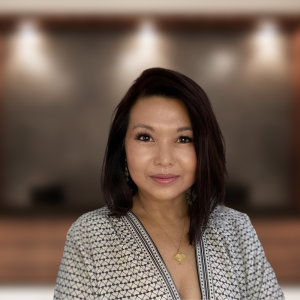
Jacqui Chew, President, TEDxAtlanta

Jacqui Chew, President, TEDxAtlanta

Jacqui Chew operates at the intersection of technology, innovation, and impact. She is a TED Talker and actively speaks on community-building, mental health, culture, and inclusion. Her work has been recognized by Spelman College and the Technology Association of Georgia. In 2019, Jacqui was named to the 25 Most Influential Asian Americans list by Georgia Asian Times.

Today, she leads iFusion Consulting, a strategy and storytelling firm for high-growth startups and innovation-forward enterprises. The firm’s work has led to more than $100M in venture funding raised, multiple successful launches, and exits. Jacqui has personally coached dozens of TEDx speakers with a special focus on executives from the STEM and life sciences industries. She is the licensee of TEDxAtlanta, the largest TED affiliate in Georgia. TEDxAtlanta talks have garnered 33 million views and counting.

LinkedIn | Twitter

Questions and Topics in this Interview:

  • What’s the theme for TEDxAtlanta this year?
  • How is attending a live event different from watching the talks on YouTube?
  • How does TEDxAtlanta stay a community-driven project?
  • What does the future look like for TEDxAtlanta and Ideas into Action?

North Fulton Business Radio is hosted by John Ray and broadcast and produced from the North Fulton studio of Business RadioX® inside Renasant Bank in Alpharetta. You can find the full archive of shows by following this link. The show is available on all the major podcast apps, including Apple Podcasts, Spotify, Google, Amazon, iHeart Radio, Stitcher, TuneIn, and others.

RenasantBank


Renasant Bank has humble roots, starting in 1904 as a $100,000 bank in a Lee County, Mississippi, bakery. Since then, Renasant has become one of the Southeast’s strongest financial institutions with over $13 billion in assets and more than 190 banking, lending, wealth management, and financial services offices in Mississippi, Alabama, Tennessee, Georgia, and Florida. All of Renasant’s success stems from each of their banker’s commitment to investing in their communities as a way of better understanding the people they serve. At Renasant Bank, they understand you because they work and live alongside you every day.

Since 2000, Office Angels® has been restoring joy to the life of small business owners, enabling them to focus on what they do best. At the same time, we honor and support at-home experts who wish to continue working on an as-needed basis. Not a temp firm or a placement service, Office Angels matches a business owner’s support needs with Angels who have the talent and experience necessary to handle work that is essential to creating and maintaining a successful small business. Need help with administrative tasks, bookkeeping, marketing, presentations, workshops, speaking engagements, and more? Visit us at https://officeangels.us/.


Tagged With: jacqui chew, John Ray, North Fulton Business Radio X, North Fulton Radio, Office Angels, renasant bank, TED, TED Talker, TEDx, TEDxAtlanta

Bipolar Disorder in the Workplace, with Jacqui Chew, iFusion, and Colton Mulligan, FoxFuel Creative

July 15, 2021 by John Ray

Mental Health
Minneapolis St. Paul Studio
Bipolar Disorder in the Workplace, with Jacqui Chew, iFusion, and Colton Mulligan, FoxFuel Creative
Loading
00:00 /
RSS Feed
Share
Link
Embed

Download file

Mental Health

Workplace MVP:  Bipolar Disorder in the Workplace, with Jacqui Chew, iFusion, and Colton Mulligan, FoxFuel Creative

On this edition of Workplace MVP, Jacqui Chew, iFusion, and Colton Mulligan, FoxFuel Creative, each share their stories on working with a bipolar disorder with host Jamie Gassmann. Jacqui and Colton discuss how leaders can foster psychological safety in the workplace so that employees can be open about their mental health. It’s essential listening for HR and other workplace leaders. Workplace MVP is underwritten and presented by R3 Continuum and produced by the Minneapolis-St.Paul Studio of Business RadioX®.

Jacqui Chew, Managing Director, iFusion, and Licensee, Curator at TEDxAtlanta

Mental Health
Jackie Chew, Managing Partner, iFusion, TEDxAtlanta

iFusion is a storytelling consultancy that deploys the power of narrative design to create brand stories for companies and social impact initiatives that resonate and inspire action.

Jacqui works at the intersection of storytelling, innovation and business. She deploys the power of narrative design in reframing an organization’s brand story for resonance and to inspire action.

Described as a “Lara Croft of Problem-solving,” Jacqui is a seasoned business operator with a passion for building inclusive teams, and working cross-functionally to bring disparate groups together toward a common goal.

As the curator and licensee of TEDxAtlanta, Jacqui is always on the lookout for change-makers and innovations that are solving for the challenges of today and those just around the corner. Under her leadership, first of TEDxPeachtree from 2009 to 2018 and presently of TEDxAtlanta, Atlanta has grown in recognition within the global TEDx community as an innovation hub for technology, healthcare and social impact initiatives.

She is resourceful, tenacious and well networked in the Atlanta business, social impact and technology communities.

Website | LinkedIn | Jacqui’s TEDx video | Brain Babel

Colton Mulligan, CEO, FoxFuel Creative

Colton Mulligan, CEO, FoxFuel Creative

FoxFuel Creative produces effective outcomes for brands and people through design, content, and technology. The company helps consumer goods and products, healthcare, music and entertainment, finance, and real estate brands speak genuinely and effectively to their audience.

Their specialties include brand and marketing strategy, consumer insights, content development, creative ideation and execution, advertising concepts, and website development.

At FoxFuel, Colton Mulligan serves as CEO and is responsible for client relationships, guiding the discovery process through brand strategy into early creative concepting.

With 15+ years of branding and marketing experience, Colton has worked to develop brand and marketing strategies for TSA Pre-Check, Hilton Hotels/Home2Suites, Ben Folds, Fiesta Grande, Chip and Joanna Gaines, Pinnacle Bank, HarperCollins, Narus Health, Lifepoint, HCA, and Community Health Systems.

He also speaks at various events on Digital Marketing, Healthcare Marketing, Entrepreneurship, and the relationship between mental health and creativity. He lives in Nashville with his lovely wife Aly, and Goldendoodle JT.

Company website | LinkedIn

R3 Continuum

R3 Continuum is a global leader in workplace behavioral health and security solutions. R3c helps ensure the psychological and physical safety of organizations and their people in today’s ever-changing and often unpredictable world. Through their continuum of tailored solutions, including evaluations, crisis response, executive optimization, protective services, and more, they help organizations maintain and cultivate a workplace of wellbeing so that their people can thrive. Learn more about R3c at www.r3c.com.

Company website | LinkedIn | Facebook | Twitter

About Workplace MVP

Every day, around the world, organizations of all sizes face disruptive events and situations. Within those workplaces are everyday heroes in human resources, risk management, security, business continuity, and the C-suite. They don’t call themselves heroes though. On the contrary, they simply show up every day, laboring for the well-being of employees in their care, readying the workplace for and planning responses to disruption. This show, Workplace MVP, confers on these heroes the designation they deserve, Workplace MVP (Most Valuable Professionals), and gives them the forum to tell their story. As you hear their experiences, you will learn first-hand, real life approaches to readying the workplace, responses to crisis situations, and overcoming challenges of disruption. Visit our show archive here.

Workplace MVP Host Jamie Gassmann

In addition to serving as the host to the Workplace MVP podcast, Jamie Gassmann is the Director of Marketing at R3 Continuum (R3c). Collectively, she has more than fourteen years of marketing experience. Across her tenure, she has experience working in and with various industries including banking, real estate, retail, crisis management, insurance, business continuity, and more. She holds a Bachelor of Science Degree in Mass Communications with special interest in Advertising and Public Relations and a Master of Business Administration from Paseka School of Business, Minnesota State University.
TRANSCRIPT

Intro: [00:00:04] Broadcasting from the Business RadioX Studios, it’s time for Workplace MVP. Workplace MVP is brought to you by R3 Continuum, a global leader in workplace behavioral health and security solutions. Now, here’s your host, Jamie Gassmann.
Jamie Gassmann: [00:00:25] Hi, everyone. Your host, Jamie Gassmann, here. And welcome to this episode of Workplace MVP. According to a recent study performed by Mental Health America, only five percent of employees surveyed indicated that they strongly agree that their employer provides a safe environment for employees who live with mental illness.

Jamie Gassmann: [00:00:44] With the increased availability of workplace resources and tools for ensuring the psychological safety of their employees, along with the increase in conversations globally about reducing the stigma of mental health, particularly in the workplace, this stat seems to indicate that there’s still a level of discomfort with employees being open and honest with their employers about their mental health in a large majority of workplaces.

Jamie Gassmann: [00:01:08] Which leads to the question of how can leaders within organizations help their employees to feel psychologically safe and to create work environments that invite open dialogue about how employees are truly feeling. Are there ways to create an environment that invites vulnerability, creates a feeling of safety for being open and honest with leadership, breaking down those walls of fear that so many employees are likely still having?

Jamie Gassmann: [00:01:33] Well, today, we have two wonderful MVP’s that will share from their perspective, personal experiences and approaches for how organizational leadership can create a psychologically safe work environment. And with that, the benefits it can have on the employee, leader, and organization overall. With us is Colton Mulligan, CEO of FoxFuel Creative, and Jacqui Chew, Entrepreneur and Mental Health Advocate. Welcome to the show, Jacqui and Colton.

Jacqui Chew: [00:02:03] Thanks for having us.

Colton Mulligan: [00:02:04] Glad to be here.

Jamie Gassmann: [00:02:06] So, we’ll start off with our first Workplace MVP, who is Jacqui Chew, Entrepreneur and Mental Health Advocate. Share with us, Jacqui, a bit about your background and how you came to be a mental health advocate.

Jacqui Chew: [00:02:20] Thank you, Jamie, for having me. I have been on this journey since being diagnosed in 2005, it’s been a long time. And so, I was diagnosed at a time where mental health/mental illness was not discussed. There was still a heavy, heavy stigma around it. For the first few years, I’ve lived in silence, and in fear, and in shame with what I had. I was diagnosed with bipolar disorder in 2005.

Jacqui Chew: [00:03:03] And at the time, I owned my own business. I had a marketing consultancy. And my main clientele were and they still are high growth startups that are either angel backed or venture capital backed. And those cultures tend to have a very hard charging, high performance base type culture. And I didn’t realize it at the time, but those are definitely stressors. They are conditions that exacerbate my illness.

Jacqui Chew: [00:03:49] So, today, though, happily after years of psychotherapy and I continue my treatment protocol, I am managing my condition quite a bit better. And here I am.

Jamie Gassmann: [00:04:06] Great. Yeah. Great to hear kind of some personal experience that you’ve worked through. So, from your perspective, taking that personal experience into account, when you look at the stat that only five percent of employees strongly agree that their workplace is a safe environment for those with a mental illness. What are your thoughts on that?

Jacqui Chew: [00:04:27] You know, sadly, the stigma behind mental health and just the dialogue around it, I mean, there’s still such shame. I recently had a conversation, actually, just a-week-and-a-half ago with a young professional who was very concerning. She had an anxiety, she felt anxious, she had already been diagnosed with depression, and she was very, very afraid of losing her job. And there were so many stresses going on with her job that it sort of exacerbated her symptoms and she had no one to talk to.

Jacqui Chew: [00:05:16] And her situation is really very common. It’s still really difficult to talk about, say, your depression, or your bipolar disorder, or your recent manic episode, and how it’s affecting your job to your supervisors, your managers, because there’s this fear that, “Oh, my gosh. I don’t want to tell my manager about it, but yet I know I’m not performing to my usual level. And I know I’m going to be evaluated. My quarterly MBOs are coming up.” And all of this just builds and it’s a cumulative effect that just exacerbates all the symptoms of someone with bipolar disorder or depression.

Jacqui Chew: [00:06:09] And it is very common, unfortunately. And it’s quite unfortunate, with COVID and the isolation that we have all had to go through, of being alone, of being locked down, even for those of us who don’t have a chemical brain imbalance, there are many everyday folks who are being diagnosed with clinical depression. So, this sort of thing is more and more common.

Jacqui Chew: [00:06:46] But, unfortunately, the sense of safety that we can talk about it at work, just as we could talk about our blood pressure or our heart condition, or how we’re doing better now because our blood pressure is better, because we’re taking better care of ourselves, we’re exercising, and so on and so forth. We can talk about that but, yet, we still can’t talk about our mental wellness or the lack thereof. And that’s a real issue.

Jacqui Chew: [00:07:14] And that’s what that five percent statistic is all about, is, there is so much misinformation, disinformation, and misconception around mental illness. And workplaces, I don’t believe are doing enough to bring their managers and their supervisors to detect symptoms or signs of distress in an employee, which is unfortunate.

Jamie Gassmann: [00:07:49] Yeah. And, you know, you bring up a good point about kind of leaders doing enough. And when we connected previously, you mentioned that it was important that leaders educate themselves on mental illness. Can you talk a little bit about how that would be helpful in a work environment? And particularly on some of the things that you brought up, like with rising diagnoses from the COVID, working remote last year, how would that education be able to help these leaders to create more of an open environment for their employees?

Jacqui Chew: [00:08:27] That’s a really good question. I think, you know, this pandemic has really created an interesting dynamic, because depression or diagnosis of depression and anxiety is so widespread now that the managers themselves are being diagnosed. And so, not only are the folks who are individual contributors who may have been diagnosed prior to the pandemic, but the managers who may be fine prior to that, but because of the pandemic – depression being one of the effects or anxiety being one of the after effects of the lockdown – they’re being diagnosed.

Jacqui Chew: [00:09:13] I think that it has increased the sensitivity to want to understand. Because when you are a manager and you are all of a sudden diagnosed with something that you do not have to think about or not have to even be basically be educated on, you, all of a sudden, are faced with a whole range of symptoms yourself and you’re getting the treatment protocols and et cetera, et cetera. And I think that makes you more empathetic to folks at the workplace, to the people that you manage, the people on your team.

Jacqui Chew: [00:09:58] And, I mean, perhaps this is rather Pollyanna-ish of me, but I would hope that this would make leaders, managers, supervisors more empathetic and more sensitive to the signs and the symptoms because they themselves are going through treatment. They themselves are wrestling with the many challenges that come their way as someone who had been diagnosed with depression or bipolar disorder or anxiety disorder.

Jacqui Chew: [00:10:29] So, I truly believe that people in that power dynamic who are themselves going through treatment and are being educated because they have to be are going to be leading the way at work in creating a safer workplace, if you would, for these kinds of issues to be discussed. Just as you would discuss teamwork and team collaboration, you think about your work team is your support team for the project. Well, part of that support system could be key members that are understanding the person who is perhaps not having a good day, not having a good week, and being more empathetic and understanding about that.

Jamie Gassmann: [00:11:27] And I suppose with a leader who has their own diagnosis, they can be a lot more open with their team as well, which can create some of that breakdown, some of that vulnerability, or create that environment to be more vulnerable, and allow people to feel like they can be more open and bring things to their leader that maybe they wouldn’t have before because there’s a level of understanding. Would you agree with that?

Jacqui Chew: [00:11:54] Yes. Absolutely. There’s a heightened awareness, I believe, because more and more people are getting their diagnosis. They’re being diagnosed. And so, that is, certainly, I think, raising the level of conversation around mental illness.

Jamie Gassmann: [00:12:13] So, you also shared in that previous conversation that we had that it was important that a leader not assume that every person with a mood disorder is going to have the same cognitive disability. Can you talk through the impacts that that could have if an employer just assumed that it was like a one size fits all with the diagnosis and why they should be looking at it more kind of on an individual basis?

Jacqui Chew: [00:12:39] Certainly. So, it’s not a project, but we actually know more about space and getting into space or extra space than we know about the way the brain works, unfortunately. Two people could be diagnosed with bipolar disorder – there are two versions, bipolar 1 and bipolar 2. And they could both be diagnosed with bipolar disorder 2, but they could exhibit very, very different symptoms. And the severity could be very, very different as well.

Jacqui Chew: [00:13:29] So, for myself, I am the bipolar 1, that is my diagnosis. But, generally, I’m really high performing. I can perform at a very high level so long as I get my sleep and I am eating well and exercising, I am fine. But then, there are others who have a really tough time managing the symptoms, even with the exercise and the diet and the sleep. And so, it affects people very differently. And, once again, I’m not a doctor, but I do know that this is a chemical imbalance in the brain that causes at least bipolar disorder. And it affects people very differently because everyone’s physiology is just a little different.

Jacqui Chew: [00:14:31] And so, for a manager to assume that, say, if two people on their team have, say, anxiety disorders or depression, that they are going to be the same way, they’re going to have the same symptoms, and such, would just be, really, sort of a bad assumption. And it could lead to very inaccurate type of assessment of a person’s performance, or a person’s behavior, or attitude, or things like that.

Jamie Gassmann: [00:15:07] And we’re talking a lot about, you know, creating that open dialogue and showing that empathy to employees who may have a mental health diagnosis. There’s going to be probably some listeners going, “Yeah. But we can’t ask those questions. We’ve got regulations we have to follow. There’s certain H.R. rules that are applied here. We can’t discuss their medical condition.” So, from your perspective, how can a leader show support for their employee that has been open about their mental illness without violating those H.R. rules and regulations so that they can show that empathy, create that open environment, but do so in a way where they’re not putting that employer at risk?

Jacqui Chew: [00:15:53] Sure. That’s always a tricky scenario. As a manager, what I had done is, when someone is struggling, say, at work, just as a rule of thumb, regardless of their diagnosis, regardless of whether they’ve been diagnosed or they’ve disclosed, I basically say, “Hey, it seems like you’re really having a tough day. How about taking a long weekend?” So, sometimes just being human and being empathetic to someone who’s clearly having a tough day or a tough week, and we all have those regardless of whether we’ve been diagnosed or not. Just letting them know that they’re allowed, that they can take a day off, take a weekend, take a long weekend.

Jacqui Chew: [00:16:59] The other thing is, you know, most companies – the companies that I’ve been a part of – have as part of the healthcare benefits, employees have access to talk therapies as part of the package. And so, for instance, if someone has disclosed that they’ve just lost a close family member, it’s really, really common for someone with a traumatic life experience to experience clinical depression, I mean, that is a trigger or a known trigger. And so, for something like that, I mean, there’s no H.R. rule – you wouldn’t be violating any rule to say, “Hey, we have available this particular benefit. And I just want to make sure that you are aware that it’s available to you should you need it.” And that is a caring and a responsible thing for a leader or a manager to do.

Jamie Gassmann: [00:18:11] And that also is a great way to show that empathy and that support. And through education and understanding, what might be a trigger for that employee helps you to be able to spot that when you need to pull some of those other approaches that could be helpful in that moment without bringing up the actual diagnosis. That’s great feedback and approaches to use.

Jamie Gassmann: [00:18:37] So, looking at your career, what is something that you would say you were just most proud of within your career overall?

Jacqui Chew: [00:18:48] Gosh. Well, apart from the obvious, since I work with startups, it’s always fantastic when the startups that I work with thrive – more than survive but thrive – and they grow and they scale. But, actually, this might sound a little strange, but I am most proud of feeling empowered and strong enough to fire asshole clients. I have no asshole rule – and I’m not sure if I’m supposed to say that on a podcast, but I’m sure y’all can bleep that out.

Jacqui Chew: [00:19:32] But I think drawing boundaries, and having boundaries, and learning to identify as someone with a bipolar disorder diagnosis, working with all kinds of personalities is a trigger. Certain kinds of behaviors are triggers. And certain kinds of situations that these types of personalities tend to create are stressors. And over time, they can bring on some very, very severe episodes for me. And I had that happen. And so, I have essentially a no asshole rule. Whereby, there are certain types of personalities that I will not work with. And if a client exhibits those behaviors and continues to exhibit those behaviors, despite my conversation with them, I just won’t work with them anymore. And I see it as self-preservation.

Jamie Gassmann: [00:20:45] And it probably took you a little bit to get there, but I could see where that could be a really proud moment for yourself to have that empowerment and strength to be able to say what you’re willing to put up with or put yourself through. So, great example. So, if our listeners wanted to connect with you, what is the best way for them to do that?

Jacqui Chew: [00:21:10] So, you can reach me at jacquichew.com, that’s an easy way. And I have started a community driven organization called Brain Babel, B-A-B-E-L. It’s in its infancy. So, I’m on Instagram as Brain Babel, so that is where I’ll be sharing tips and I’ll be sharing the latest research and trends sort of demystified and in layman’s terms for caregivers as well as folks who are dealing with mental illness, and as well as parents who are taking care of children who’ve been diagnosed with a variety of mood disorders.

Jamie Gassmann: [00:22:04] Great. So, we’re now going to move to our next Workplace MVP, so joining us is Colton Mulligan. He’s the CEO of FoxFuel Creative. Colton, can you share a little background with us in how you came to be the CEO of FoxFuel?

Colton Mulligan: [00:22:22] Sure thing. In 2014, I was working at another agency with two people that had basically become my best friends. We looked around and realized there was an opportunity to leave the agency because we were the ones effectively managing half of the agency on the creative services marketing side. So, we went to the owners of the business and we want to buy out our non-compete contracts, start our own agency, and ask some clients to go with us. They said okay, and threw out a number that was way more than the three of us had. So, I took a second mortgage out of my house. I cleaned out my investments. I borrowed money from my grandmother, doctor friend, and dad, and the partners all scraped money together.

Colton Mulligan: [00:23:06] And so, we bought out our contracts, and on January 1st, 2015, we started FoxFuel Creative in my basement. And, yeah, that was the beginning of it. So, I was the CEO and I had two business partners that manage the digital side and then also the creative side of the business. And that same month, I was diagnosed with type 1 bipolar disorder.

Jamie Gassmann: [00:23:27] Was it difficult to get that diagnosis in that first month? Or did it answer questions? Or how did you feel in that moment?

Colton Mulligan: [00:23:41] I mean, it definitely answered a lot of questions. And kind of in my little story there, I skipped past a lot of the events of 2014 that led me to that point. But, yeah, I think it was relieving. Almost exactly one year prior, I’d been diagnosed with generalized anxiety disorder, ADHD, and major depressive disorder. Bipolar is commonly misdiagnosed in the first or second pass. So, it was definitely relieving.

Colton Mulligan: [00:24:06] It was a fun dinner with my two partners when I was like, “Hey, update. I know we just formed an LLC and bought a whole bunch of money and we’re starting this new thing. Update, I’ve got bipolar disorder.” I mean, my two business partners, unbelievably supportive, said, “Hey, you know, understanding the symptoms kind of tracks out with your manic energy and all that stuff.” I was pretty good at hiding the downside. But it’s damn near impossible to hide the upside, the energy, just all the passion that comes with that.

Jamie Gassmann: [00:24:36] And it’s great that they took it very much with open arms and probably helped to answer some questions that they had as well. And just love that support that they provided to you from the story that you’ve told me or that I have seen on some of the documentaries that you’ve done. So, from your perspective, why do so many employees still lack a feeling of psychological safety in their work environment?

Colton Mulligan: [00:25:03] I think it’s probably a couple of factors. Thing one, is probably, like, it’s just awkward for most people. And, you know, we’re not a super corporate environment. But thing two, I would assume that there’s all these gray areas within ADA compliance and H.R. regulations and, “Oh, no. Once they disclosed, is there a whole bunch of new protocols I have to have?” So, I would almost say there’s one, like, the lack of clarity for a lot of professionals in the H.R. space what you’re supposed to do.

Colton Mulligan: [00:25:33] And then, there’s also, like, the personal side of it. It’s just, you know, among just humans in general, it’s a weighty thing a lot of folks just aren’t prepared for. Like, how do I go through that conversation saying something beyond, “Oh, I’m so sorry. Let me know how I can help and I’ll pray for you.” Outside of those two things, most people are just like, “I don’t know what to say.”

Jamie Gassmann: [00:25:55] So, if you were in that situation, like, what would you have them say? From your perspective, like with your two partners, if you could have the ideal response from somebody, what would that sound like?

Colton Mulligan: [00:26:15] I mean, that’s an interesting question and it’s one that I get asked commonly. Like, I wind up doing a lot of coffees and meet ups with folks where they just ask, “Hey, my brother got diagnosed, or I have this employee, or whatever, what should I do?” And there’s an odd way to say it, which is like, if you don’t have a framework or sandbox or an ongoing conversation/relationship with that person where you have regular check ins on headspace or a depth in your relationship, you’re kind of behind the eight ball on that. So, you can start fostering that.

Colton Mulligan: [00:26:49] But like with our employees, I’m in a comfortable space, like, I’ve had employees disclose to me, “Hey, Colton. I want to let you know I’m trying a new antidepressant.” “Hey, I’m going back to my therapist. I haven’t seen him in three years, but I’m going through some stuff personally, et cetera.” Fortunately, we already have a regular cadence and rhythm where as part of our check ins on their career goals and stuff like that. There’s space where they go, “I just want to know, like as you enter this week -” it’s like Monday, Tuesday “- what’s your headspace? Are you a five? Are you an eight? What’s going on?” And that provides the employee the space where like I’m not saying, “Hey, do you have a recent mental health diagnosis? Quick question. Just wanted to throw that out there.”

Colton Mulligan: [00:27:26] But it gives them the opportunity to share what they want, and they don’t have to. I can read between the lines. But I know, hey, there are five this week and that gives me space to I don’t have to ask personal questions, but I can say, “Hey, what do you need from me?” Rather than saying, “Hey, let me know if you need anything.” That’s a really crap answer. A really great answer is, “What do you need from me? Can I be like a support and kind of a listening ear right now? Do you want to talk through some of your brain space? And maybe I can help sort priorities and share from my own experience. Hey, I know when I’m overwhelmed. Or if I feel anxious or if I do whatever, I know and I just speak from personal experience.”

Colton Mulligan: [00:28:04] Sometimes if I just talk through what I got to do the day or this week, I can kind of figure out what’s important and what I should focus on, you know. And, normally, I can try and share in that way. It’s not always perfect. But for me, personally, I love it when somebody gives me the options, “Do you need advice right now? I’m happy to help. But likewise, I can be a sounding board.” Or, “Let’s just sort through what you got going on.” I love that.

Jamie Gassmann: [00:28:26] Yeah. A little bit more, probably, natural feeling and kind of true response in that regard as opposed to just kind of, “Oh, can I help you with something or let me know?” I think it’s probably like a default maybe that they don’t know what to say, so they go to that.

Jamie Gassmann: [00:28:43] So, at FoxFuel – and you were kind of getting to this, too – you have a great approach to ensuring that your employees feel psychologically safe. Can you share how you have created a culture that welcomes vulnerability and openness? And I know you kind of touched on it a little bit, but you have, like, a specific meeting that you’re doing with your team and individuals each week and doing different approaches. So, can you kind of dive into that a little bit and share kind of some of those approaches that you’ve done?

Colton Mulligan: [00:29:13] One hundred percent. I just feel the need to disclose upfront, I am not an H.R. professional. And don’t get me wrong, there are probably past employees or people, like, “Colton was terrible at this. I can’t believe you’re talking about culture.” I like to think that over time we’ve cultivated, it’s by no means perfect.

Colton Mulligan: [00:29:29] But at least I feel better when I explain this by talking about the fact that we’ve been around seven years, and in year four, maybe five, our longest running employee that have been with us from the beginning, like, we were on a road trip and we were talking about something that came up. She was like, “You’re a really crap manager.” And she was great. She was just like, “I’ve been looking for a mentor and I had all the stuff. And you were clear that you don’t like to micromanage or manage. You just want to lead, which was great for a while, but like, we need more.”

Colton Mulligan: [00:29:57] And so, then from that, we went to StrengthsFinder conferences and I read The One Minute Manager and It’s The Manager from StrengthsFinder and Gallup and all them. And we went to emotional intelligence workshops and we had a consultant come through, so all of that. And then, I would find the threads that I noticed a lot of different areas picked up on. And one of those was a very personal check in that went hand in hand with the other times you check in with employees.

Colton Mulligan: [00:30:26] And so, as part of that, a regular cadence we have now that, at least, I think it bears fruit. Every Tuesday with my team, we manage accounts and we would normally say, “Hey, what are you looking at this week? What do you need to prioritize, like professional things?” And then, there’s always a question in there that said, “Hey, you know, how ever much you want to share with your headspace, what’s going on with you now?” And that has created a space that has helped me, I like to think, as a manager because someone can say, “I had a really rough conversation with my mom this weekend and I do not feel real confident just being honest going into this week.”

Colton Mulligan: [00:31:02] And that would let me take pause throughout the week if we left a client meeting, or there was feedback I had to share, or I realized, “Man, this person needs a win.” And I’m not always great about praising folks. And so, that would always give me a prompt, it’s like, “This week I’ve got to look for something to let a Cathy or a Lauren, you know, let them really feel accomplished and celebrated by the team.” I’m making up these names real quick because I want to scrub it. So, we’ve never employed a Cathy, but I’m just throwing these things out there.

Jamie Gassmann: [00:31:32] And I love your share of that, which is why I brought it up, because I think you touched on a little bit of what Jacqui was sharing earlier in the show about the human side of that employee leader relationship. You know, you’re really getting to know those employees at a level that they feel comfortable being able to come to you with what they might be going through and vice versa. You’re able to pick up on maybe some of those cues. I think it was just such a great example of just a tactic that’s clearly worked for you in your leadership style.

Jamie Gassmann: [00:32:06] And so, we talked a little bit about the focus internally on supporting employee wellbeing and trying to, you know, be aware of when they might need that when or when they might need that little bit of extra support. You also shared an example where FoxFuel helped its clients to do the same, I think it was regarding over the last year with COVID. Can you share that example with the audience about what you did and kind of some of the unique approaches that you took that kind of bared fruit for them?

Colton Mulligan: [00:32:43] We have a healthcare client across, basically, 22 counties. They’ve got 10,000 or 11,000 employees. They’ve got ten hospitals. And when COVID hit, you can imagine how slammed all these hospitals were. You’re terrified. You have no idea how deadly this disease is. Yet they’ve got to show up to work. They’ve got to wear all this new equipment. There are pieces of their facility that are locked down and taped over with plaster. It was terrifying. And on top of that, you have a staffing shortage, and those that are showing up are overworked, they’re working a long time. Like, you want to talk about an incredibly negative impact on culture. And then, you know, with the economy tanks and people are then worried about their jobs. And this company did so much to try and help.

Colton Mulligan: [00:33:36] So, during that time, what was great, we’d spun up a video series because a lot of these employees don’t check email, et cetera. But we tried to make a really accessible way where every week we would release one of two kinds of videos. One, a video from leadership. So, from the CEO that was looking and speaking directly to all of his employees, not with, like, platitudes, but just saying, “I appreciate you. I appreciate the effort that you’re putting in.” And we would get him on the video to name specific things, “I know at home, you’re dealing with kids trying to do, you know, virtual learning. And I know that it’s scary.” And I think he was just very honest in just saying, “I appreciate so much what you’re doing in the impact on patients.”

Colton Mulligan: [00:34:27] So, we did that and we would produce these videos, put them out via email, put them on Facebook, all that stuff. And then, likewise, just inspiring stories. So, we would come through and don all the PPE equipment. And I would interview folks off camera and we would try to highlight the inspiring stories of what was going on. So, folks of, like, excellent care that was happening, people that had best friends on their team that they still got to show up to work with. So, I don’t like to think that it was silver lining everything. It was just reminders of what you do matters and hearing from leadership that I appreciate what you’re doing and what you’re going through.

Jamie Gassmann: [00:35:03] Yeah. It’s a great example. And sometimes those little reminders can go such a long way. So, in your opinion, what are some ways that organizations can better connect with their employees? And are there some out of the box or alternative approaches you feel can make a difference in helping to better connect with employees? Because you mentioned email, that is tough, I think, in any organization. If you think of the mass amount of email that most employees get, you know, there’s got to be different approaches that a leader can consider when trying to get important communication. Like, “Here’s where support is accessible to you.” Or, you know, “Here’s a quick update on how this person did this really well.” But just that other ways of being able to connect.

Colton Mulligan: [00:35:49] People connect via story, that’s something true long before companies and technology and all the stuff, right? And that’s what FoxFuel tries to lean into with our clients or whatever. Hey, there’s email, but, now more than ever with our clients, I try to focus on the fact that story is your driver. And whether you are trying to get your employee to feel something or your prospect or client or whatever it is, I now don’t think of email or Facebook or anything as the solution. I think of it is like the medium or the conduit where you can take these stories. So, whether they’re written stories or whatever, and we’re pushing video just because it’s accessible. By and large in any community you’re in now, you got your phone, you’re surrounded by screens.

Colton Mulligan: [00:36:33] So, if you can move to video, you can tell someone a story that will actually move them with everything that you can do there in two to three minutes versus a five page blog. And it’s very accessible. And like what you guys are doing here with podcasts and stuff, making it accessible where it doesn’t interrupt their day. So, that’s thing one that I would say things that folks can do.

Colton Mulligan: [00:36:55] And then, the second thing is a much longer burn, but it’s just investing, I think, in the management styles of your folks. The leaders are the ones that really hold the power at signaling what is psychologically safe. And so, for me, I like to think that our team feels more comfortable when they hear me say, “It’s a five. And I’m not going to go into it, but, you know, I had this fight or this incident.” Or, “I had this thing.” Or, “I’m low energy this week.” And things like that signal that it’s A-OK for you to share the same, thing one, encouraging folks to do that.

Colton Mulligan: [00:37:33] And then, thing two, is just equipping everybody with common language, I think. So, we’ve used all kinds of stuff. But, you know, the common language that we’ve used is things like radical candor or letting people use an Enneagram or StrengthFinder or Myers-Briggs. All of that just gives people common language where they can admit, “Hey, one of my strengths is not presenting. One of my strengths is not working in data.” And then, it gives people some more psychological safety that they can own what they’re bad at and then share that with a manager, so they don’t have to pretend to be a jack of all trades without a weakness. And displaying and naming weakness is like the definition of vulnerability, which creates psychological safety.

Jamie Gassmann: [00:38:20] Great. And so, similar to what I asked Jacqui, what is something that when you look at your career, what are you most proud of?

Colton Mulligan: [00:38:34] I’ll try to rattle off because Jacqui gave a great answer and I loved it. And so, I didn’t want to, like, say, “Yeah. Me too.” But to go through some real quick because I’m trying to think about this, but we just had most recently a recent thing, like, we had an employee that just left because, you know, she’s ready for the next chapter in her career and we’re excited for her. And when she left, she cried in telling clients in meetings about it. She cried in her exit interview and all that stuff. Because what she wants to do professionally is great and managing teams like that. Like, FoxFuel kind of has an intentional angle to stay a small entrepreneurial group of 9, 10, 11 folks.

Colton Mulligan: [00:39:14] But what was great was in the exit interview and some words that we exchanged via email, et cetera, she talked about she went through a rough time in her life and she said, “I came in and I am leaving FoxFuel an entirely different person, how confident I am, my approach to life, my approach to relationships, standing up for myself.” To me, there’s a lot of stuff you can look back.

Colton Mulligan: [00:39:34] But when I think about the kinds of impact that we have on folks, I like the idea that people won’t say, “Oh, yeah. I was an AE at FoxFuel and then I did this.” But on the inside, I love to think that we have folks come through our doors that may be with us for a couple of years or however long – you know, don’t get me wrong, you got your ups and downs. And I’m far from a perfect manager. I’m probably a crap manager on some days – that someone that leaves overall and says, “Man, it was a time where I felt supported and I grew personally in that time,” that means the world to me.

Jamie Gassmann: [00:40:08] That’s a great example. It’s always great that you know that you had that positive mark on somebody’s life and career. So, if our listeners wanted to connect with you, what’s the best way for them to do that?

Colton Mulligan: [00:40:20] You can email me, colton@foxfuelcreative.com, or hit me up on LinkedIn, or whatever. Or if you go to our website, foxfuelcreative.com, there’s a thing that’s going to pop up and say, “Hey, quit snooping. Grab drinks with Colton,” or something like that. So, yeah, any of those.

Jamie Gassmann: [00:40:35] Great. So, now, we’re going to hear a word from our sponsor. Workplace MVP is sponsored by R3 Continuum. R3 Continuum is a global leader in providing expert, reliable, responsive, and tailored behavioral health crisis and security solutions to promote workplace wellbeing and performance in the face of an ever changing and often unpredictable world. Learn more about how R3 Continuum can tailor a solution for your organization’s unique challenges by visiting our r3c.com today.

Jamie Gassmann: [00:41:06] So, now, I’m going to bring both of our MVP’s together and ask some questions to the both of you. So, the first question is, how can leaders create a work environment that is psychologically safe? Now, I know you both have touched on a few different components of that. But if there was one particular way, what would you say? And let’s go ahead and start with you, Colton.

Colton Mulligan: [00:41:31] I’d go back to what I said before, hands down, leaders can find spaces to (A) make it clear that they can share their vulnerabilities and share their headspace. And then, (2) create the regular rhythm of an ongoing conversation. Not like, “Hey, can I check in on your mental health diagnosis.” But instead, “Hey, can you share with me, like, what’s your headspace like this week? How confident do you feel? I’d love to talk about that to see how I can support you.”

Jamie Gassmann: [00:41:58] Perfect. And how about you, Jacqui?

Jacqui Chew: [00:42:00] Sure. There are, believe it or not, H.R. modules now, where – and I’m forgetting the name of it, gosh – basically, it incorporates this sentiment aspect of performance of work, sort of a touch base, if you would. And so, I agree with Colton this idea of a cadence, so that if you’ve established a cadence of meetings where the discussion is around the work as well as sentiment, so, how are you feeling, how are you feeling about work, about your work, it’s more accessible than, to Colton’s point, “how’s your mental health”.

Jacqui Chew: [00:42:56] And so, there are actually sort of like – gosh, I forget. Gosh. I was actually a part of an organization that had this that was quite interesting because it was a weekly check in. And as a manager, we check in with each member of my team every week where, as part, they would complete a module or web module that basically says what their five priorities were or their four priorities were for the week, how they felt about themselves and their priorities. And then, we would talk about it.

Jacqui Chew: [00:43:37] So, there was this confluence of the work as well as the self. And I thought that was really helpful and useful to them because, say, if they had a bad week, they could talk about it from the perspective of these were things that I didn’t think that I felt that I did very well at all. I had a couple of nights where my baby was crying or kept me up all night or whatever. So, it just allowed for more human conversation to happen in a corporate environment.

Jacqui Chew: [00:44:19] Now, Colton, your wonderful because you have a workplace that is accessible, it’s friendly, it’s safe. In a large organization of even 50 or 100 people, when you start having department heads and when there is a talent organization, when there’s an employee handbook – that’s basically my litmus test. When a company has an employee handbook, then, I think, that managing and leading becomes a little less human and a little more robotic. But it doesn’t have to be so. And I think and I hope that we will, as a workplace, as businesses, be more like yours, Colton, than the large sort of thousand person corporations that are out there.

Colton Mulligan: [00:45:22] Thank you very much. That’s very sweet. I don’t know that all my employees would say that, but I like to think so. So, that’s great.

Jamie Gassmann: [00:45:31] So, looking at these employers and kind of to your point, it’s almost like what you’re saying, Jacqui, when the employer gets a little bit bigger, they almost have to be more intentional about making that a cultural priority with their organization. As opposed to, you know, like it has to be kind of embedded in their handbook of how they’re going to approach that.

Jamie Gassmann: [00:45:53] So, if you were looking at employers, what do you want them to know when it comes to mental health with their employees? Like, what would be kind of, you know, the message you would want them to be aware of? If they haven’t educated themselves, if they’re being told by an employee they have this diagnosis, what message would you send to them?

Jacqui Chew: [00:46:15] Gosh. Be less afraid of litigation and more concerned about the person. I didn’t mean to rhyme, that was not intentional. But large companies, they’re about risk mitigation. I mean, I hate to say this, but every H.R. department that I’ve come into contact with has been about risk mitigation, and liability, and managing liability. At the end of the day, we are people, we are humans. And if we led and managed by just being human with compassion and empathy, I truly believe that those activities, those behaviors will naturally fall into place. It’s the humane thing to do.

Jacqui Chew: [00:47:15] If you see someone in distress, what do you do? You want to help. What makes being at the workplace any different? Well, it’s the fear of a lawsuit. So, I truly believe that if corporations can slowly retreat from this fear of litigation mindset and more of a compassion mindset of a positive versus subtractive mindset, I think we we will see more healthy workplaces. We will see healthier employees all around.

Jamie Gassmann: [00:47:55] How about you, Colton?

Colton Mulligan: [00:47:58] I’d lean into one of the things that Jacqui said, I would say a very clear and intentional investment into emotional intelligence, that umbrella. She used the word empathy, which, to me, is the largest thing more than finding just the right curriculum or mental health check in, et cetera. Investing in that at the individual level is the ongoing effort to keep finding the resources and things and spot the small elements.

Colton Mulligan: [00:48:24] To give an example, I spun up a small group that I ran for seven years on mental health where folks would get together. And there were ridiculous things I realized now that H.R. was rolling out all these wellness programs and things. And I realized that for those with eating disorders, all of the wellness campaigns right now that healthcare companies push that do weight loss challenges and stuff, are ridiculously triggering. Where you manage as a team, and you’re losing weight and pounds, and the language, and the things that are celebrated, there’s no real clear curriculum that would do that. That’s a checklist.

Colton Mulligan: [00:48:56] The biggest thing is if you invest in emotional intelligence, your team and your folks, it’s the ability to dynamically look at things in an ongoing way and exercise a greater degree of empathy, which, to me, is the solve more so than a book everybody reads together, whatever. It’s a continual emotional intelligence improvement.

Jamie Gassmann: [00:49:16] Those are both great points. I hadn’t even thought about that with the weight loss challenge, and you see that quite often, especially after The Biggest Loser came out. The biggest loser challenge is everywhere. That’s very interesting.

Jacqui Chew: [00:49:27] Sorry, Jamie. I do want to add – I completely forgot and they’re so important – there’s another whole group of people or population, they would be Founders of Color. So, startup Founders of Color faced a whole new layer of stressors, especially when they are raising funds. There was trauma for Founders of Color when they’re raising funds. This may not be the case this year or the last, maybe, two years, but I can tell you, so we have a startup circle, sort of a wellness circle where founders – primarily Founders of Color – would come together to talk about more of their personal and health issues.

Jacqui Chew: [00:50:26] But what services often is, it’s the microaggressions that happen on a daily basis when they’re raising funds from primarily non-person-of-color venture capitalists. And the questions are different, the tone is different, the assumptions that these venture capitalists make are different.

Jacqui Chew: [00:51:03] I’ll give you an example. There is this now prominent African-American female founder of a startup that also has a social group, social good sort of mission. And one of her investors actually said to her thinking that he was being so nice, he said, “Wow. I’m really glad I listened to my wife who suggested that I invested in your startup to ensure that we were being inclusive. I’m so glad that your startup is doing so well and I just wasn’t expecting the return.” I’m paraphrasing. But that is the microaggression and it caused her to doubt herself. Like, “Did my startup get funded because it was a good idea and we have a strong team and there’s a business here? Or did we get funded because I’m Black?” And so, that’s the good story.

Jacqui Chew: [00:52:19] But the bad story, this happened at TechCrunch. TechCrunch, they used to have twice a year this huge confab where they would have a startup alley of sorts. And the founders, a whole bunch of Black founders that I know of who’s ever been to those wherein the investors were primarily non-African-American, non-persons-of-color would actually physically avoid the booths of this Founders of Color. And there’s no reason for this, except for it is pure discrimination and this is what they have to deal with.

Jacqui Chew: [00:53:08] So, we, in these conversations in the support circles – we call them – I mean, these are the additional stressors that Founders of Color go through that are quite different. And to exacerbate the issue there, the percentage of psychologists/psychiatrists who look like them, a very small percentage, which is difficult as well. So, that is one of those little known challenges and issues that still plague sort of the mental health specter and category.

Jamie Gassmann: [00:53:49] So, it sounds like there could be a lot of different kind of triggering events and different things that might lead to some of those mental health concerns in all varieties of different businesses, whether startup or – it’s a very interesting point.

Jamie Gassmann: [00:54:04] So, if you were going to leave one advice on the table for a leader who’s listened to this podcast that you want them to just take with them – and if they do something with it, fantastic – but if there’s just one thing that you could leave that would help to make a difference in their work environment – and we’ll start with Colton – what would that be? What would that one piece of advice that you want to leave to that leader?

Colton Mulligan: [00:54:30] No pressure, right? What’s the one way to improve mental health in your thousand person organization? I am torn between, like, the one that’s really tactical and easy is, just go create your cost center line item, whatever for emotional intelligence training, is thing one. The other thing that’s harder is, just the idea of encouraging vulnerability between your leaders and those that they’re supporting.

Jamie Gassmann: [00:55:02] Great. And how about you, Jacqui, if there was one piece of advice?

Jacqui Chew: [00:55:06] Sure. It was a thing that I had my husband do. So, I figured if it’s good enough for him, it’s good enough for the rest of us. Pick up Mental Health for Dummies, the book. Get educated.

Jamie Gassmann: [00:55:23] Yeah. Get educated. I love it. So, thank you both for being on the show, for sharing your personal experiences, sharing approaches you’ve used, your expertise around this topic, and for letting us celebrate you by being on the show. And we really appreciate the advice and suggestions you left the listeners. We appreciate you, and I’m sure your organizations, and staff, and co-workers, and friends, and everyone else involved into your lives do, too.

Jamie Gassmann: [00:55:55] We also want to thank our show sponsor, R3 Continuum, for supporting the Workplace MVP podcast. And to our listeners, thank you for tuning in. If you’ve not already done so, make sure to subscribe so you get our most recent episodes and other resources. You can also follow our show on LinkedIn, Facebook, and Twitter at Workplace MVP. If you are a workplace MVP or know someone who is, we want to know, email us at info@workplace-mvp.com. Thank you all for joining us and have a great rest of your day.


Tagged With: Bipolar disorder, Brain Babel, Colton Mulligan, FoxFuel Creative, iFusion, jacqui chew, Jamie Gassmann, mental health, Nashville, R3 Continuum, TEDxAtlanta, workplace mental health, Workplace MVP

Decision Vision Episode 113: Should I Disclose My Mental Illness? – An Interview with Jacqui Chew, iFusion and TEDxAtlanta

April 22, 2021 by John Ray

Jacqui Chew
Decision Vision
Decision Vision Episode 113: Should I Disclose My Mental Illness? - An Interview with Jacqui Chew, iFusion and TEDxAtlanta
Loading
00:00 /
RSS Feed
Share
Link
Embed

Download file

Jacqui Chew

Decision Vision Episode 113:  Should I Disclose My Mental Illness? – An Interview with Jacqui Chew, iFusion and TEDxAtlanta

Diagnosed with bipolar disorder in 2005, Jacqui Chew seeks to normalize the conversation around mental illness. In a candid and open conversation with host Mike Blake, Jacqui discussed the journey to her diagnosis and how she’s learned to manage it. She also offered advice to HR directors and the rest of us who are approached by an employee or friend who discloses their mental illness. “Decision Vision” is presented by Brady Ware & Company.

Jacqui Chew, iFusion and TEDxAtlanta

Jacqui Chew is an award-winning marketing and business executive with more than two decades of experience delivering creative, data-driven strategies for venture-backed, high-growth companies. A proven positioning expert, brand builder, and innovation thought-leader with P/L experience, her programs contribute to MQL growth.

A creative problem solver and convener, Jacqui believes in the potential for ideas to change the world. As licensee of TEDxAtlanta, one of the largest TED affiliates in the region, she galvanizes a team of volunteers to produce the annual TEDxAtlanta show. Under her leadership, tickets for nine of the 11 sold out weeks before. This must-attend event has become the platform for tomorrow’s leaders playing host to renowned bioethicist Paul Root Wolpe, hunger eradication entrepreneur Jasmine Crowe, and Ryan Gravel, the “father” of the Atlanta Beltline.

Jacqui served as senior vice president of marketing at Avertium, an award-winning cybersecurity firm founded from a three-company roll-up. She led brand marketing, demand generation, social media, PR, sales enablement, analytics, marketing operations, and communications. During her tenure, Jacqui spearheaded the company’s successful repositioning, messaging and rebranding and, its CRM/marketing automation platform integration. She also worked cross-functionally to support the acquisition of a fourth company during this period.

Previously, as CMO-in-residence at the Advanced Technology Development Center at Georgia Tech (ATDC), a globally ranked business incubator, she worked with the 170+ companies to develop their go-to-market and product strategy. During her tenure, she also developed and taught the incubator’s first strategic marketing curriculum.

Prior to ATDC, Jacqui founded iFusion, a fractional CMO consultancy for high-growth venture-backed companies. Primary client projects: positioning, messaging, customer journey mapping, marketing plan development and marketing and sales alignment. The company led the launch of more than two dozen companies/products and contributed to $100+m in funds raised.

Jacqui served in executive marketing roles at PeopleSoft (acq by Oracle), Stonesoft (acq by McAfee now Intel), Silverpop(acq by IBM) and worked, on the agency side, with IBM Global Services, The Weather Channel, KontrolFreek, MessageGears, Preparis, Venture Atlanta, EarthLink and eBay.

Website | LinkedIn | Jacqui’s TEDx Video

Mike Blake, Brady Ware & Company

Mike Blake, Host of the “Decision Vision” podcast series

Michael Blake is the host of the “Decision Vision” podcast series and a Director of Brady Ware & Company. Mike specializes in the valuation of intellectual property-driven firms, such as software firms, aerospace firms, and professional services firms, most frequently in the capacity as a transaction advisor, helping clients obtain great outcomes from complex transaction opportunities. He is also a specialist in the appraisal of intellectual properties as stand-alone assets, such as software, trade secrets, and patents.

Mike has been a full-time business appraiser for 13 years with public accounting firms, boutique business appraisal firms, and an owner of his own firm. Prior to that, he spent 8 years in venture capital and investment banking, including transactions in the U.S., Israel, Russia, Ukraine, and Belarus.

Brady Ware & Company

Brady Ware & Company is a regional full-service accounting and advisory firm which helps businesses and entrepreneurs make visions a reality. Brady Ware services clients nationally from its offices in Alpharetta, GA; Columbus and Dayton, OH; and Richmond, IN. The firm is growth-minded, committed to the regions in which they operate, and most importantly, they make significant investments in their people and service offerings to meet the changing financial needs of those they are privileged to serve. The firm is dedicated to providing results that make a difference for its clients.

Decision Vision Podcast Series

“Decision Vision” is a podcast covering topics and issues facing small business owners and connecting them with solutions from leading experts. This series is presented by Brady Ware & Company. If you are a decision-maker for a small business, we’d love to hear from you. Contact us at decisionvision@bradyware.com and make sure to listen to every Thursday to the “Decision Vision” podcast.

Past episodes of “Decision Vision” can be found at decisionvisionpodcast.com. “Decision Vision” is produced and broadcast by the North Fulton studio of Business RadioX®.

Connect with Brady Ware & Company:

Website | LinkedIn | Facebook | Twitter | Instagram

TRANSCRIPT

Intro: [00:00:02] Welcome to Decision Vision, a podcast series focusing on critical business decisions. Brought to you by Brady Ware & Company. Brady Ware is a regional full-service accounting and advisory firm that helps businesses and entrepreneurs make visions a reality.

Mike Blake: [00:00:21] Welcome to Decision Vision, a podcast giving you, the listener, clear vision to make great decisions. In each episode, we discuss the process of decision making on a different topic from the business owners’ or executives’ perspective. We aren’t necessarily telling you what to do, but we can put you in a position to make an informed decision on your own and understand when you might need help along the way.

Mike Blake: [00:00:40] My name is Mike Blake and I’m your host for today’s program. I’m a Director at Brady Ware & Company, a full service accounting firm based in Dayton, Ohio, with offices in Dayton; Columbus, Ohio; Richmond, Indiana; and Alpharetta, Georgia. Brady Ware is sponsoring this podcast, which is being recorded in Atlanta per social distancing protocols. If you would like to engage with me on social media with my Chart of the Day and other content, I’m on LinkedIn as myself, and @unblakeable on Facebook, Twitter, Clubhouse, and Instagram. If you like this podcast, please subscribe on your favorite podcast aggregator, and please consider leaving a review of the podcast as well.

Mike Blake: [00:01:15] Today’s topic is, Should I be open about my mental illness? One in five U.S. adults report that they suffer with some sort of mental illness, and an estimated two-and-a-half percent of U.S. adults experience bipolar disorder at some point in their lifetimes, 7.1. percent of U.S. adults are characterized as having major depression. And these are numbers that go back to 2019. And in case you haven’t heard, most of us had kind of a rough year in 2020. We had a combination of a once in a century global pandemic. We had unprecedented, massive social upheaval. And in some places in the country, we had murder hornets.

Mike Blake: [00:01:59] And, you know, for a lot of us, it’s been a rough ride, a lot rougher than usual. And most of us, I’m sure, have heard, many have read, and seen many stories of the mental toll that the pandemic has taken on many of us, ranging from job loss to being cooped up at home, to having to take on home roles that we were not prepared for. For example, I am the world’s lousiest Spanish teacher for home schooling our son, which is not necessarily our plan. We can only hope we can order a Taco Bell because I think that’s the only thing I’m qualifying him to do. But his ten, he might grow out of it.

Mike Blake: [00:02:39] And, you know, you think about mental illness, and I’m hoping that kind of one good thing that comes out of the pandemic is, I hope it makes us more aware of mental illness and it kind of give it its due. You know, years ago, I served on the board of a nonprofit called Care and Counseling Center of Georgia, whose mission was to provide mental health care services to low income folks. And they did a really good job of it in spite of my being on the board.

Mike Blake: [00:03:13] But one of the things you learn about mental health and mental – you will actually learn about two things. Number one is, your mental health is still sort of taken a backseat to so-called physical health. And, you know, you grow up and you talk about people who are either tough or they’re not tough. And some people of faith will claim that that makes them impervious to any kind of mental illness and so forth. Even to the point where, you know, it wasn’t that long ago, I think a lot of people thought that mental illness was a choice.

Mike Blake: [00:03:51] And secondly, I think people are understanding now that not only does it need to be destigmatize, but the thing on mental health is that if you don’t have mental health, a lot of bad downstream things happen. They can happen at the micro level where it impacts your job, it impacts your personal relationships, it impacts your ability to be a fully engaged, fully actualized member of society, fully actualized person. And in very extreme cases, particularly the United States where gun ownership is plentiful, mental illness that is either undiagnosed, untreated, unmonitored, simply not paying enough attention to, can have, frankly, catastrophic results.

Mike Blake: [00:04:38] And I can’t help but wonder how different might our world be if we gave, frankly, mental illnesses its due. And I think now as we are entering this this trans-pandemic phase where, you know, many of us are becoming vaccinated and we’re starting to kind of wrestle with returning to work, we’re wrestling with returning to restaurants, going back to baseball games, and so forth. And, you know, the mental health issues aren’t going away. In fact, you could argue that there are more mental health issues that are going to be created by sending people back to the office.

Mike Blake: [00:05:18] And I think and I hope that one thing is abundantly clear that, you know, mental health simply cannot be ignored anymore. It’s not the moral thing to do. And I would argue it’s not the business correct thing to do. Because if you have even a small business of 25 people, statistically speaking, five of those people are really struggling with a diagnosable disorder. And one of them probably has something akin to bipolar disorder. And they’ve just done a very good job of hiding it or we’ve done a very good job of not seeing it.

Mike Blake: [00:05:57] And so, therefore, I wanted to cover this topic. It’s not an easy topic. I’m certainly not a physician, but I think it’s so important. I think we have to equip ourselves. Statistically speaking, again, there are thousands of listeners listening to this that are struggling with this question. And then, for people like me, who at least I don’t believe that I have a diagnosable mental illness, others may disagree, but I don’t believe that I do.

Mike Blake: [00:06:22] But I do want to make sure that every resource is available in my network and my company – of which I’m a shareholder – that if there are folks – again, statistically speaking, there are a number of people – that are struggling with mental illness of some kind that we, as a company, do the right thing. That we are compassionate, that we are accommodating, and that we stand up for them, and we don’t abandon them. We don’t try to force them into the shadows. And so, I hope that that thesis makes sense to use as we kind of go through, I think, what is a very challenging and necessary topic.

Mike Blake: [00:07:01] And joining us today to help us talk about this is Jacqui Chew. Jacqui works at the intersection of storytelling, innovation, and business. And I’ve known her for a long time. In fact, I took over her office once. She deploys the power of narrative design and reframing an organization’s brand story for resonance and to inspire action. Described as the Lara Croft of problem solving, Jacqui is a seasoned business operator with a passion for building inclusive teams and working cross-functionally to bring disparate groups together towards a common goal.

Mike Blake: [00:07:33] As the curator and licensee of TEDxAtlanta, Jacqui is always on the lookout for change makers and innovations that are solving for the challenges of today and those just around the corner. Under her leadership, first of TEDxPeachtree from 2009 to 2018 and presently of TEDxAtlanta, Atlanta has grown in recognition within the global TEDx community as an innovation hub for technology, health care, and social impact initiatives. And I’m a big fan of TEDx. I watch three to four TEDx videos a week. And I’ve watched Jacqui’s video as well, we’ll refer to that in our conversation. Jacqui is resourceful, tenacious, and well-networked in the Atlanta business, social impact, and technology communities. Jacqui Chew, welcome to the program.

Jacqui Chew: [00:08:16] Thank you for having me, Mike.

Mike Blake: [00:08:21] So, Jacqui, I brought you on because you’ve chosen to hold yourself out there as a person that has bipolar disorder and has figured out how to navigate life with that particular disorder. So, you know, I’ve read about bipolar disorder. Thank God I don’t have it. I don’t have a family member that has it. I have a couple of friends that have. But explain to the audience in your kind of best terms, how would you describe bipolar disorder to somebody?

Jacqui Chew: [00:08:54] So, first of all, I would call it a mood disorder, because the symptoms manifests itself in extremes in mood changes. And this isn’t to be confused with a person who is “moody.” But mood changes from the standpoint of severe depression to the point where you would lose interest in what you normally enjoy. Or you have a really severe depressive episode would be if you are unable to sleep and you find yourself crying uncontrollably at absolutely nothing, severe fatigue. So, these are severe manifestations of depression. So, there’s that aspect of it.

Jacqui Chew: [00:09:50] At the worst in terms of depression, the worst manifestation of a symptom on the depression side is suicide, thoughts of self-harm and, in some cases, self-harm. So, that’s that part of it. The other side of the equation or the other end of the pendulum is mania and manic episode. So, mania is generally characterized as severe anger to the point of violence. So, for instance, this individual that I know from our support group sessions, when he is in mania, he specifically does not drive. He actually specifically has stopped driving because there are certain types of traffic situations that trigger the symptoms and cause him to act out in violence.

Jacqui Chew: [00:10:59] Other expected symptoms of mania is excessive shopping. You know, maxing out your credit cards. And then, yet another is hypersexuality, which can be really, really hard. Now, I’m not a doctor. These are sort of observations and sharings over the years since – gosh – I’ve been going to support group sessions and since 2005. So, over the years, these are some of the experiences that my fellow attendees have shared with the group. And so, these are some of the symptoms. It’s generally two opposite extremes experienced by an individual, and each of those extremes could be experienced by the person for a couple hours, a couple of weeks.

Jacqui Chew: [00:11:59] I’ll give you an example. There was a point in time when I wasn’t diagnosed, which I remember staying up for three days and going through a complete cleaning of my house. Now, I did end up with a very clean condo, but I didn’t realize at the time that I was experiencing mania and that I wasn’t able to sleep. I was hyperactive. There was just a lot of energy. And I was probably a lot blown up. I was testier and quicker to anger than normal. And this went on for a couple weeks, as I recall. Now, looking back after my diagnosis in 2005, I recognized through my therapy sessions that these moments in time or periods in my life that I had dismissed as just me being the eccentric me that I am were actually symptoms. I was experiencing episodes. That was a very long explanation.

Mike Blake: [00:13:13] Well, I think it deserves it. And for the audience listening at home, too, I think bipolar disorder until recently was more commonly known as manic depressive disorder. Correct?

Jacqui Chew: [00:13:26] Yes. Correct.

Mike Blake: [00:13:27] That’s sort of the new or maybe that’s the clinical. I’m not sure why the name change. But if it sounds like manic depressive disorder, the answer is, yeah, because it is. So, you know, I watched your video and you described a time which I guess is 15, 16 years ago when you kind of came to a crisis point effectively where you sought specific medical attention, and I want to come to that.

Mike Blake: [00:13:56] But before I get to that particular moment, I’m curious, before you got to that moment, was there a gradual kind of trail of breadcrumbs, if you will, of increasingly frequent or severe symptoms that led you to that point where, “Man, this is not right. This is not what most human beings have to go through.” Or as is the case with something like schizophrenia, did one day all of a sudden or in a very short period of time, you simply became bipolar. Does it work one of the two ways? Did you have one of those two experiences?

Jacqui Chew: [00:14:34] I can’t speak for, you know, my peers. But I can tell you, for me, I had no idea that anything was wrong with me. That period of time of three days where I stayed up and cleaned my loft, I think that was back in 2004. And I wasn’t diagnosed until towards the end of January of 2005. And the reason why I know this is because – and I talk about this in my TED talk – it was an evening, I was watching Jeopardy, and then I was prompt while I was watching Jeopardy, which is not something that you would normally do. Though, I didn’t think very much of it, actually, which is kind of strange in and of itself now in hindsight.

Jacqui Chew: [00:15:30] And the next day going into work, I found myself, essentially, just staring at a document for a very long time. It didn’t seem like a very long time, but it turned out to be a very long time and then realizing that I wasn’t processing any of the words that I was looking at. And that was when it was like a stroke of panic. It was a surge of panic where I knew something was wrong, I didn’t know what was wrong. So, I called my regular doctor and it was an emergency. I called him and I explained what had happened. I didn’t explain the night before and the crime, but I just explained to him that I really couldn’t understand anything that I was reading.

Jacqui Chew: [00:16:27] He was clearly concerned and he gave me the names of three doctors and phone numbers. Now, that in and of itself was a little strange because I could write numbers and read numbers, but I couldn’t really write the names of the doctors and read it back to myself. I don’t really know how to explain that. So, I had to remember, so I, essentially, just remembered the first name and wrote down the first number, because that’s all that I could process at the time. And so, I was very fortunate.

Jacqui Chew: [00:17:06] Now, I called that particular doctor, that psychiatrist. Now, he couldn’t see me for a-month-and-a-half. I mean, that kind of tells you, 2005, our health care system was just not geared toward helping people with mental health challenges. So, unless, of course, had I said to my doctor that I thought about killing myself, I had thoughts of self-harm, that would have been a whole different ball of wax.

Mike Blake: [00:17:38] Right. You have to move to the front of the line at that point.

Jacqui Chew: [00:17:40] Pretty much. And there’s another story about that. I’ll explain that in a second. So, there wasn’t a slot in time for six weeks. I made the appointment. I wrote down the date. And then, I was very fortunate because a few days later the office called me. The doctor’s office called me and said, “Hey, we have a cancellation. Would you like to come in? Are you available to come in?” And I did. So, that was super fortunate for me because, at that point in time, I was starting to hallucinate. And I knew I was hallucinating because there’s no way that I was hanging off of the rafters on my loft with a noose around my neck. I knew that wasn’t happening. So, I knew I was hallucinating. So, that began my journey until today. That was how it all began.

Mike Blake: [00:18:48] So, when you were first diagnosed, did you feel that you had to hide your condition? Did you feel like you sort of had to tell the whole world? Did it not make an impact if you felt like it’s just like being told I have arthritis? How did you kind of emotionally react to that?

Jacqui Chew: [00:19:12] Well, so you have to remember, this is 2005, before people could talk about these things, before it was normal. I mean, ADHD in your kid was something to be ashamed of, still, at the time. Or people would talk about their kids in [inaudible] like, “Oh, my child has autism.” Just none of this was okay to talk about. And so, I’m thinking about becoming an evangelist or raising awareness. I wasn’t. I had no idea, first of all, what this is all about.

Jacqui Chew: [00:19:56] First of all, I wasn’t diagnosed with bipolar disorder. My original diagnosis was schizophrenia. Which, you know, there are similarities in symptoms. I mean, the fact that I was seeing myself hanging from the rafters and I was hearing voices, that is classic schizophrenia symptoms. So, I was diagnosed that way and I was prescribed medication for that. And along with going into therapy with my psychiatrist, he also recommended that I go to a support group on a regular basis. So, I didn’t know that it was a lifelong condition. That there is no cure. I had no clue. And it was one of those, like, eye for an eye. So, if I take my meds, I do all the things that my doctor wanted me to do, I’m going to be okay. All of this will stop. And I can just move on. So, this is 2005, and I did.

Jacqui Chew: [00:21:15] And then, for the longest time, I just assumed that I was fine. [Inaudible]. Now, we did find out six weeks later or two months later that the schizophrenic diagnosis was incorrect. It was bipolar disorder because my hallucinations receded once I was putting into place some of the sleep hygiene, the official term. Like, taking the television out of your bedroom. By the way, you cannot or should not, no one should be watching television and go to sleep. It’s really bad for you. I can’t tell you the science behind it, it was explained to me, I forget. But it’s really bad.

Jacqui Chew: [00:22:03] And so, just practicing good sleep hygiene, getting eight hours of sleep, ensuring that it’s deep REM restful sleep. Those were the measures that I took. When I went back to my sixth week visit, it was hallucinations that got away. Some of the other symptoms still persisted. And he was able to give me a correct diagnosis of bipolar disorder and then we went from there. So, I was in no way thinking about telling people. It was more about getting well. How do I get well? How do I ensure that I can cognitively process reading works?

Jacqui Chew: [00:22:55] I’m a knowledge worker. It’s what I do for a living. I’m a writer. I tell stories. I read messaging. I help entrepreneurs with their positioning. And if I’m unable to be on my game from a cognitive function point of view, then I don’t have a way to be self-sufficient. It’s Maslow’s Hierarchy of Needs. You first have to take care of your bare essentials. And because I was living on my own, my family is still 10,000 miles away. I essentially was my own person, my own provider, and I had to take care of myself. So, that was the sole focus.

Jacqui Chew: [00:23:46] I have to tell you that this erroneous notion that bipolar can be cured. And after a period of time, I can just go back to doing all the things that I used to do. You know, that’s not even good for me, was a really bad thing and catastrophic because I had a relapse and a really severe episode of 15 months starting February-ish of 2008. And I didn’t come out of it until July, August of 2009.

Mike Blake: [00:24:20] And, you know, that’s something I think is very underappreciated, maybe unappreciated, about mental illness. I’m not a doctor either, but I’m not aware of any mental illness that is considered curable. I’ve never heard a psychiatrist say, “I cured somebody of X or Y.” Right now with the current state of the art science, it’s all about treatment and management. Right? Again, unless there’s a radical shift in technology, it ain’t going away. And if you’re afflicted in some way like that, then it’s just going to be your companion.

Jacqui Chew: [00:25:01] Right. Well, you know, it’s amazing. We know we have gone so far or come so far in terms of technological advancements. Advancements in all kinds of areas. But scientists are still somewhat mystified by the brain and how it works. They do know that it’s a chemical imbalance. It is truly a chemical imbalance. They’re not entirely sure what causes it altogether. They know that some types of bipolar disorder, and there are four types. Some types are triggered by damage to the hippocampus part of the brain. Some of it has to do with the neurotransmitters not firing the right way. So, there’s not a lot of clarity.

Jacqui Chew: [00:26:10] And then, of course, there’s environmental factors as well. There are theories that it’s genetic – actually, it’s not a theory. They’ve done experiments with twins and they’ve seen that mood disorders, there’s a genetic underpinning to mood disorders. And environmental factors like stress or death in family or substance abuse, those factors could trigger symptoms.

Mike Blake: [00:26:50] So, yes. I want to kind of seize on that a little bit, grab a hold of that for a little bit, because you mentioned in your video that you had to implement a certain rule. Because there’s one certain work trigger that you highlighted. So, I was wondering if you could talk about that and has it worked?

Jacqui Chew: [00:27:10] You are referring, like, to the no asshole rule.

Mike Blake: [00:27:15] I am indeed. Thanks for coming on the podcast anyway. I hope you’re alright.

Jacqui Chew: [00:27:23] You know, I think so. So, in mood disorders, like for me, there are stressors and there are triggers. So, stressors are conditions that kind of exacerbate that gives me a heightened sense of stress – hence, stressors – which then triggers a certain emotion. Triggers are, literally like for me – I can’t speak for the rest of my peers here – there are certain behavior, certain personality types, and, sometimes, in some cases certain phrases that trigger me to anger, to behave in a certain way that I have no control over. And they also trigger such an overwhelming sense of doubt and fear and shame, even, that I have no control over. It’s completely irrational and I have no control over it.

Jacqui Chew: [00:28:38] And so, the no asshole rule has everything to do with a certain kind of personality that, unfortunately, is quite persistent in the technology, I dare say, in this –

Mike Blake: [00:28:54] There’s no shortage of assholes. Yeah. Yeah.

Jacqui Chew: [00:28:59] Yes.

Mike Blake: [00:28:59] And we make more.

Jacqui Chew: [00:29:01] So, when I say asshole, what I mean is there are certain traits. Like, people who always demand more and they move the goalpost. I think we’ve all experienced coworkers or managers like that, who they demand without ever providing positive reinforcement. And when a certain goal had been attained, instead of taking a moment to acknowledge or appreciate, they move the goalpost just a little bit further. And for me, that sort of personality is a trigger for me. And so, I’ve tried very, very hard to steer away from working with people like that. And in many cases, I’ve had to develop coping mechanisms. So, you hear that a lot if you come to my group support sessions. We talk about coping mechanisms.

Mike Blake: [00:30:25] I’m sure you do.

Jacqui Chew: [00:30:26] And just techniques to moderate the impact of certain kinds of behavior that trigger us. Because in many cases, in the workplace, you can’t always remove yourself from personalities like that. You just have to find ways of reducing and minimizing the exposure to personalities like that.

Mike Blake: [00:30:53] So, I’d like to talk about that because I think that’s a very important subject and starts to intersect with the business part of it, if you will. And what I’d like to ask about that, first of all is this, is that, given that you know these things about yourself, do you entirely take it upon yourself to minimize your exposure to these triggers? Or do you kind of try to work with the people that you’re involved with and say, “Hey, look. You know, I sort of have this thing going on and these four things are really not good. And I’d like to try to avoid those in this environment as much.” can you have conversations like that? Am I just sort of off the reservation?

Jacqui Chew: [00:31:45] If I care enough about the person and respect the person enough, quite honestly, Mike, I’ll take the trouble to do that. Because honestly – let me give you an analogy and perhaps this would become clear. If someone is being abusive or discriminatory toward me, it is not my responsibility to tell them that they are and to teach them some other way. I don’t think it’s my responsibility. And I don’t want to carry that burden. That’s me personally. I know other people would.

Jacqui Chew: [00:32:25] However, if I care and I respect the person enough, and want to continue to have a relationship with that person, an ongoing sustainable relationship with that person, then I would because I want a sustainable ongoing relationship. Then, the amount of investment that I would have to make that the outcome warrants the investment. Because it’s a big investment. It is very difficult. So, first of all, that person has to have some semblance of empathy.

Mike Blake: [00:33:04] Yeah. That it’s a nonstarter, right?

Jacqui Chew: [00:33:08] Correct. One of the primary reasons why assholes are assholes, Mike, is because they lack empathy and self-awareness. And I, in my years, have come to the conclusion that some people just can’t help themselves. And who am I to help them stop being an asshole? So, I’m just going to work with them as best as the situation calls for it to get the job done, to accomplish the goal, and move on. That’s how I feel. That’s my coping mechanism. It would take too much energy for me to manage my disorder and try to change these people.

Jacqui Chew: [00:34:00] The situation is quite different if a person is exhibiting these behavior traits, these less desirable behavior traits, but has some semblance of empathy. They just don’t know it. They don’t know what they’re doing. But if they did, if I thought that if they did know what they were doing, and it’s the impact of their behavior on others that they would consider a different way. If I detected that and I wanted a sustainable relationship with these people, I would make the investment.

Jacqui Chew: [00:34:39] And yes, I would absolutely say, “Look -” and I would train it to the standpoint of I have a mood disorder. And that, too, is a very self-centric thing and that’s just not my style. I would make the standpoint of, “Look, when you say these kinds of things in this sort of a situation, you may not mean it this way.” But let me tell you how it’s being perceived. And if this is not the way you want it to be perceived, then let’s find a better way of articulating your thoughts. And that’s how I do it.

Mike Blake: [00:35:20] So, beyond this particular approach, which is a very sort of – let’s call it – individualized or even a non-scalable approach, because that’s been focused to one person at a time. And I think that’s part of where the ROI equation comes in that you’re describing. Are there other things that you need to do to kind of protect yourself? For example, I would imagine because you said that a good sleep schedule is essential to managing your condition. To me, that says it would be very difficult for you to be in a culture that thrives on the all-nighter. It sounds like that’s something that could be not only suboptimal, but potentially even dangerous for you.

Jacqui Chew: [00:36:05] Yes. And, actually, when I violate my no asshole rule and I allow myself to be consumed by let’s work an all-nighter type of culture is when I get into trouble. I literally get myself very sick. And so, yes, there’s a measure of protection that I have to put around my boundaries. So, this is where boundaries come in. And people without the bipolar disorder have boundaries.

Jacqui Chew: [00:36:41] Now, what is really interesting, I think, in my situation that I think is worth noting for your listeners who may find themselves in a similar situation is, I am naturally a high performance, hard charging individual. That is my nature.

Mike Blake: [00:37:04] Yeah. I’ve seen it.

Jacqui Chew: [00:37:04] Unfortunately, my nature is hurtful to my condition. So, I have to fight my default and learn a new default. And so, what I’ve done is learning a new default – perhaps, old dogs can’t learn new tricks, as the saying goes. Learning a new default has proven to be too difficult. So, what I’ve done is I’ve created extensions to the default. So, it’s like home improvement. I’ve added extensions and caveats to the default where, yes, when it is absolutely necessary, I will work the 80 hour week. But I will not work the 80 hour week, I would work for a week, maybe two, at most. And then, I have to go back to a 40, 50 hour week, which is a normal week for me. Or I take a mental health game – you hear people say that all the time – where you take a Friday and you just switch it up.

Jacqui Chew: [00:38:18] Now, I have learned as a coping mechanism to turn off my phone and go off grid one day out of every weekend. You have Saturday, you have Sunday, so I either pick a Saturday or Sunday – usually it’s a Sunday – where I completely go off grid and I do not check phone, emails, nothing. So, it’s kind of like an electronic detox or digital detox.

Mike Blake: [00:38:51] Well, you know, I mean, a lot of the things you’re describing sound like they’re probably pretty useful for people that aren’t fighting bipolar disorder, frankly. I can tell you something, I’ve started to become very mindful of my own sleep schedule, because when you can operate in short sleep, it’s a blessing and a curse. It’s a blessing because it allows you to to do more. But for me, Parkinson’s Law just takes over. And all it does, it allows me to outwork my mistakes. And that’s not really an optimal place to be anyway. So, you know, the way you described these sort of parameters in a way that I think are consistent with kind of best practices for mental maintenance anyway.

Jacqui Chew: [00:39:39] Indeed. So, many of the measures that I’ve taken, anyone and everyone, really, should take regardless of what sort of a workspace they’re on, it really doesn’t matter. And so, I’ll be very specific. If you have a television in your bedroom, remove it. This is probably the hardest one for most people, because a lot of people I know have televisions in their bedrooms. It’s terrible. Eight hours of sleep? Now, some people need eight. I need six hours of sleep. Six good hours of sleep is sufficient for me. It’s the quality sleep more than the quantity of sleep.

Jacqui Chew: [00:40:31] So, for me to process problems, I need to be doing something else. So, this is the other thing about corporate America is, it’s not always forgiving about extracurricular activities. There are some cultures that they don’t condone a person, an employee, having nonprofit work or volunteer work or anything like that, when they want you and all of you and all of your time.

Jacqui Chew: [00:41:06] So, I stay away from cultures like that because that is not how I operate ultimately. My optimal goal is the ability to problem solve at work, but I’m on problem solving whilst I’m doing other things, other activities that are not work related, like organizing TEDxAtlanta. That actually is invigorating. It’s a very renewing process of organizing that endeavor. And it helps me process the other kind of work problems that I have, the revenue generating problems that I have that I’m helping to overcome and add value to. That is my mode.

Jacqui Chew: [00:41:47] So, I think people have to find what works for them. I’m describing what actually works for me in this instance. The whole sleep hygiene thing, absolutely, that works for everybody. That applies to everybody. The hours, that’s individualized. Everyone has a sweet spot. And then, finally – gosh – a lot of what happens that may not be obvious is that people with bipolar disorder, when there is an episode and there’s a true multi-week, multi-month episode of depression, what it does is, it also completely obliterates your self-confidence. And one of the ways to rebuild self-confidence is to do volunteer work.

Jacqui Chew: [00:42:43] So, when I experienced the very long episode from February 2008 to 2009, July, August, was the way I slowly came back to the world, so to speak, was beyond the talk therapy, beyond the medication, beyond the group support sessions every two weeks, every month. I also began to volunteer at, actually, St. Vincent de Paul in this case, where something as simple as stocking shelves at the food bank. So, rebuilding a sense of confidence is really, really important in the recovery process as well. And engaging in activities that reinforce your sense of self when you’re not in an episode, when things are being managed, when your condition is being managed is also very important.

Mike Blake: [00:43:58] So, one question I want to make sure to get to is – and I’m curious about this for myself, because as a manager, as a leader, I may encounter this – if somebody that were in my charge were to approach me and sort of close the door and just say, “Hey, look. I’ve got this issue. I’ve got this issue of bipolar disorder. And I just want to let you know about it, because some things you may not expect to happen, might happen. Or I may have specific needs, I need help manage it.” What’s the best way for me to react to that? Should I react to it? Do I hit them off to H.R.? I mean, how can I engage constructively in that conversation?

Jacqui Chew: [00:44:50] Well, that’s a tough one, Mike, because you’re now wandering into labor laws and H.R., all of that. That’s the difference. So, I’ll tell you how I react in the past to team members who come to me whose work performance had visibly, obviously fallen off. And I’ve had this composition, I initiated a conversation. And then, they told me that there has been a series of deaths in the family and they were just not feeling well. It’s months apart. So, first of all, regardless of what your H.R. policy is about this, I think it’s important to just listen. Sometimes the best action is no action. And sometimes the person may just want to be heard.

Jacqui Chew: [00:45:50] People have to consider that. I mean, there may not be an action necessarily. The person, they just want to be heard. Because it’s very lonely when you’re experiencing symptoms. You feel like you’re the only one in the world feeling it when it’s not true. But your brain is telling you that you’re the only one. So, just being an ear and not committing to anything, not saying anything, and just understanding and showing kindness and empathy, that sometimes can be enough.

Mike Blake: [00:46:34] I really like that. And, you know, it reminds me actually of a quote from Art of War that suggests that one of the hardest things to do but the best thing to do is simply nothing. I’m paraphrasing. It’s really, one of the hardest things to do in battle is wait. But, you know, it translates very well there that sometimes the best thing to do is just nothing. And for somebody like me who prefers to be proactive and, frankly, would like to help, if somebody comes to me with something like that, my first instinct is how can I help? Even though I am patently unqualified to help somebody. I don’t have that condition. I’ll have medical training. You know, I read what I read on the Internet, half of which is probably wrong. But I think that’s a really good piece of advice. I really do. And it’s surprisingly hard.

Jacqui Chew: [00:47:32] Yes, it is. So, being heard is often times the best answer for the person across the table who is sharing something that is very difficult for them to share. Making sure that they feel heard is possibly the best gift that you can give them as manager. Now, I think, though, the situation would be different if you are sensing that they could possibly hurt themselves. It could be in that state. You never know. So, first of all, you never know. But if you even have a glimmer of that, then it’s time to have a conversation with your H.R. to better understand all the different angles.

Mike Blake: [00:48:32] We’re talking with Jacqui Chew, and the topic is, Should I be open about my mental illness? And that conversation is adjacent to something that I started a conversation in our company, about, three years ago – not long after I joined, actually. And this is in the wake of the Ohio State scandal where one coach was abusing his wife, and other coaches knew, and apparently didn’t do anything. Certainly, not enough to kind of intervene in that. And the question I ask and still ask – because there’s really no great answer – is, as an employer, as a leader, if I hear something like that in my firm, what are my obligations, both ethical and legal? What are my constraints, both ethical and legal? And I think what you just described is actually quite adjacent to that.

Mike Blake: [00:49:32] So, we need to wrap up here. We could do this for a lot longer, but we have limited time. I want to be respectful of the rest of your day. But I am curious about about one thing, you know, in the 15, 16 years that you’ve struggled with this and have become an advocate for awareness, do you think that as a society we’ve gotten better at acknowledging the importance, severity, and impact of mental illness?

Jacqui Chew: [00:50:03] Unequivocally, yes. And it’s been accelerated by the onset of COVID. Ironically, COVID has affected such a large swath of the population in terms of the social distancing and isolation having such a profound impact on a person’s psyche and for many people. That it has given those of us who were diagnosed before, who have diagnosed condition, it’s given us a broader audience. There’s more empathy. There’s less likelihood of the other person, saying, “Oh, it’s all in your head.”

Mike Blake: [00:50:51] Right. It’s a stupid thing to say.

Jacqui Chew: [00:50:57] Well, people say it.

Mike Blake: [00:50:59] There’s no shortage of stupid things for people to say. But go on.

Jacqui Chew: [00:50:59] There you go. Or this notion that, if you take a pill, if you take a series of pills, and you go to your doctor, you’ll be fine. Because the pandemic has affected so many people in so many different ways that there’s a really good chance if you talk to your neighbors, they know someone in their family or they know someone in their second ring of peers or friends and associates who’ve been affected by the pandemic from a mental health point of view.

Jacqui Chew: [00:51:37] So, my point is, mental health issues are more prevalent as a result of the pandemic. And, therefore, the conversation around it is just more mainstream. COVID has mainstreamed mental health, and the challenges, and the symptoms, and the problems. And there’s a distinct level volume of conversation that’s happening on social media, on Clubhouse, and on Twitter.

Jacqui Chew: [00:52:14] I mean, even at Ted, I spent my lunch time listening and watching a whole panel of iconic TED speakers as part of this thing that Ted puts together. And Monica Lewinsky was there. She’s a huge advocate for mental health and normalizing the conversation around mental health. She shares my vision and my wish that – gosh – I wish that it could be a dinner table conversation, just like diabetes. Like, talking about how’s your dad’s diabetes coming along? How’s he managing it? Is he exercising? I wish we could talk about how’s your brother’s mood disorder coming along? Is he getting his weekly needs? I mean, I would love to see that happen. And I think we are closer. We’re not there, but we’re closer because of the pandemic.

Mike Blake: [00:53:10] I think that’s a great place to put a pin in this and wrap it up. And maybe we’ll do a part two at some point. I only got through about half the questions, but that’s fine. How can people contact you for more information about this, maybe just to share their journey or get your advice?

Jacqui Chew: [00:53:28] Sure. So, I’m active on Facebook. It’s just Jacqui Chew. I’m also active on LinkedIn, also Jacqui Chew. And I have a website, jacquichew.com.

Mike Blake: [00:53:39] Yeah. As you can tell, Jacqui is not an introvert. She is not hard to find. And that’s going to wrap it up for today’s program. I like to thank Jacqui so much for joining us and sharing her expertise with us. And on a side note, frankly, just for having the courage to be this advocate, I am confident that it has helped a lot of people over the way. And I’m equally confident is going to help at least a few listeners to this program.

Mike Blake: [00:54:05] We’ll be exploring a new topic each week, so please tune in so that when you’re faced with your next business decision, you have clear vision when making it. If you enjoy these podcasts, please consider leaving a review with your favorite podcast aggregator. It helps people find us that we can help them. If you like to engage with me on social media, with my Chart of the Day and other content, I’m on LinkedIn as myself and @unblakeable on Facebook, Twitter, Clubhouse, and Instagram. Once again, this is Mike Blake. Our sponsor is Brady Ware & Company. And this has been the Decision Vision podcast.


Tagged With: atdc, Bipolar disorder, Brady Ware, Brady Ware & Company, iFusion, iFusion Marketing, jacqui chew, Mental Illness, Mental illness stigma, Michael Blake, Mike Blake, schizophrenia, TEDxAtlanta

Business RadioX ® Network


Our Most Recent Episode

CONNECT WITH US

  • Email
  • Facebook
  • LinkedIn
  • Twitter
  • YouTube

Our Mission

We help local business leaders get the word out about the important work they’re doing to serve their market, their community, and their profession.

We support and celebrate business by sharing positive business stories that traditional media ignores. Some media leans left. Some media leans right. We lean business.

Sponsor a Show

Build Relationships and Grow Your Business. Click here for more details.

Partner With Us

Discover More Here

Terms and Conditions
Privacy Policy

Connect with us

Want to keep up with the latest in pro-business news across the network? Follow us on social media for the latest stories!
  • Email
  • Facebook
  • Google+
  • LinkedIn
  • Twitter
  • YouTube

Business RadioX® Headquarters
1000 Abernathy Rd. NE
Building 400, Suite L-10
Sandy Springs, GA 30328

© 2025 Business RadioX ® · Rainmaker Platform

BRXStudioCoversLA

Wait! Don’t Miss an Episode of LA Business Radio

BRXStudioCoversDENVER

Wait! Don’t Miss an Episode of Denver Business Radio

BRXStudioCoversPENSACOLA

Wait! Don’t Miss an Episode of Pensacola Business Radio

BRXStudioCoversBIRMINGHAM

Wait! Don’t Miss an Episode of Birmingham Business Radio

BRXStudioCoversTALLAHASSEE

Wait! Don’t Miss an Episode of Tallahassee Business Radio

BRXStudioCoversRALEIGH

Wait! Don’t Miss an Episode of Raleigh Business Radio

BRXStudioCoversRICHMONDNoWhite

Wait! Don’t Miss an Episode of Richmond Business Radio

BRXStudioCoversNASHVILLENoWhite

Wait! Don’t Miss an Episode of Nashville Business Radio

BRXStudioCoversDETROIT

Wait! Don’t Miss an Episode of Detroit Business Radio

BRXStudioCoversSTLOUIS

Wait! Don’t Miss an Episode of St. Louis Business Radio

BRXStudioCoversCOLUMBUS-small

Wait! Don’t Miss an Episode of Columbus Business Radio

Coachthecoach-08-08

Wait! Don’t Miss an Episode of Coach the Coach

BRXStudioCoversBAYAREA

Wait! Don’t Miss an Episode of Bay Area Business Radio

BRXStudioCoversCHICAGO

Wait! Don’t Miss an Episode of Chicago Business Radio

Wait! Don’t Miss an Episode of Atlanta Business Radio