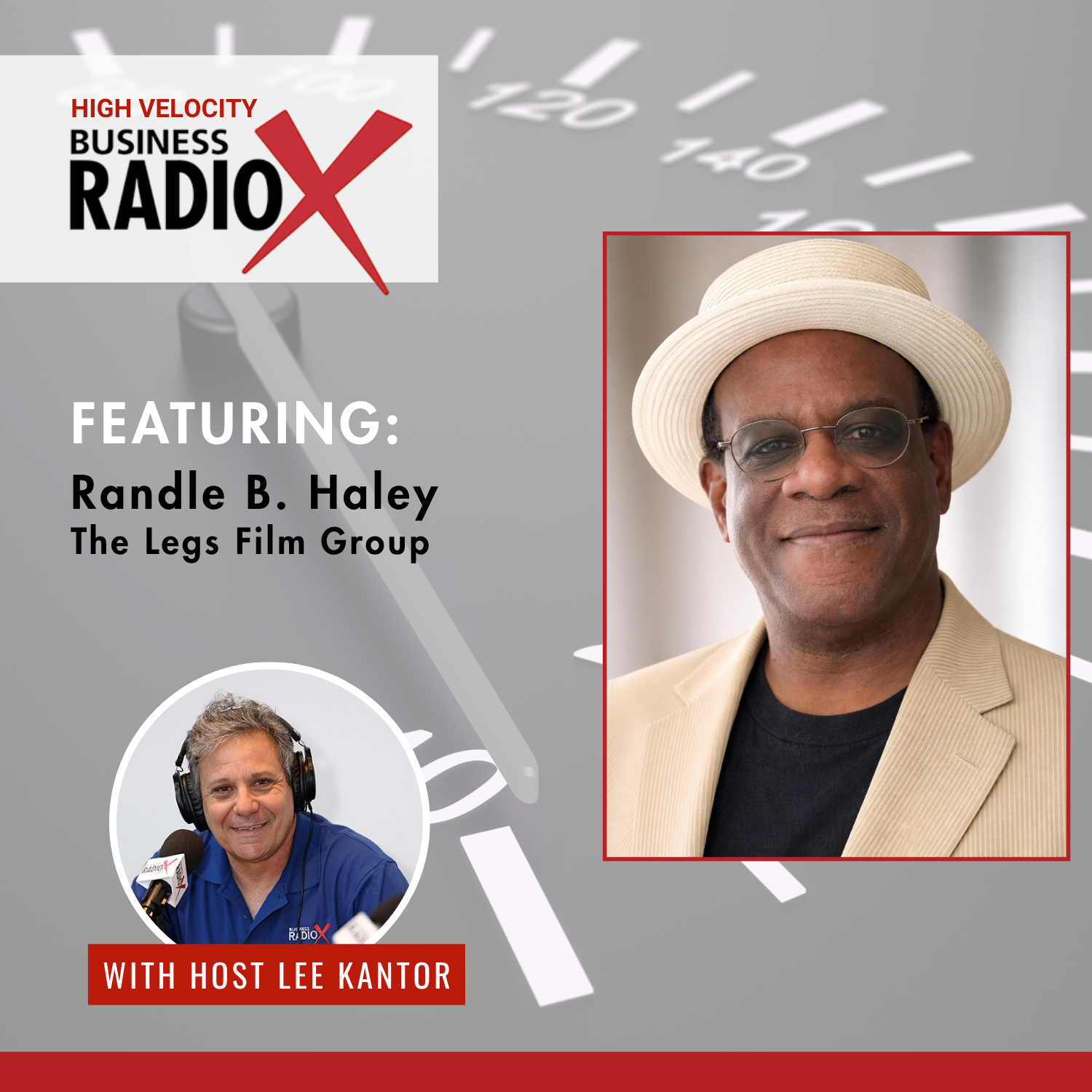

In this episode of High Velocity Radio, Lee Kantor interviews Randle B. Haley of the Legs Film Group. Randle shares his journey from journalist and attorney to screenwriter and independent filmmaker, discussing how persistence, technology, and meaningful industry connections helped him bring his stories to life. He explores the development of End of the Line, a fictional series set in an urban hospice environment that highlights the human stories behind end-of-life care. Randle also discusses the collaborative nature of filmmaking, building production teams, navigating funding and distribution, and the importance of taking initiative rather than waiting for opportunities. Through his experiences, he highlights the value of learning by doing, protecting intellectual property, and putting yourself in the way of success.

 Randle B. Haley is an attorney, writer, and executive producer with extensive experience in historical documentation and creative storytelling.
He wrote and co-directed a documentary film chronicling the life of the late Pennsylvania Supreme Court Chief Justice Robert N.C. Nix Jr., the first African American to serve as a justice and chief justice of that court.
In the scripted space, he is the creator, writer, and executive producer of the award-winning television series “End of the Line.” The series pilot is currently available for streaming on Tubi, while a second episode, serving as a potential alternate pilot, is in the final stages of post-production.
He also wrote and executive-produced “Cum Laude,” a short film that earned five awards and was featured at the Newark International Film Festival. It is currently streaming on Fawesome-TV.
Beyond his film and television work, he is the author of the novel “The Secrets of Darlene Dalton” and the founder of Tools 4 Writing Success, an interactive website and teaching forum designed to support and educate creative writers.
What You’ll Learn In This Episode
- The journey from legal writing and journalism to independent filmmaking.
- The importance of persistence, continuous learning, and improving through experience.
- The role of technology in making independent film production more accessible.
- The development of End of the Line and its focus on life, hospice care, and human connection.
- The value of collaboration between screenwriters, directors, actors, and production crews.
- Strategies for building relationships and finding opportunities within the film industry.
- The challenges of self-funding creative projects and transitioning toward investor-backed production.
- The importance of intellectual property protection and understanding film distribution.
- The power of taking initiative and creating opportunities instead of waiting to be chosen.
 This transcript is machine transcribed by Sonix.
TRANSCRIPT
Intro: Broadcasting live from the Business RadioX Studios in Atlanta, Georgia. It’s time for High Velocity Radio.
Lee Kantor: Lee Kantor here. Another episode of High Velocity Radio and this is gonna be a good one. Today on this show, we have Randle Haley and he is with the Legs Film Group. Welcome.
Randle B Haley: Hi, how are you, Lee?
Lee Kantor: I am doing well. I am so excited to learn about your company. Tell us about the Legs Film Group. How are you serving folks?
Randle B Haley: Well, it started back in like 2016. Really. I had a film script called legs and, you know, we sought to produce it at the time. I mean, a script is still out there. We we did a trailer for it, but we didn’t really have the money to produce a full length script at the time. So I just incorporated that name and just, hey, this sounds cool. So let’s just call it the Leg group. So I got, um, I got registered with the state of Pennsylvania where I live. And that’s how that came about. So I used that, uh, LLC in production of most not all of the films I have for right now that I’ve done. Uh, three of them have been through legs. The most recent one, uh, short phone call wedding night has not been. And so, so that’s how we came. That’s how it came about.
Lee Kantor: So have you always been a filmmaker? Can you tell us a little bit about your backstory?
Randle B Haley: Actually, no. I, uh, started out being a journalist and then of course, I took a year off, and then I went to a couple years off and I went to law school. So I am a lawyer. That’s what I’ve done most of my career. Uh, still, still, you know, happy doing it. But I, I’m, I’ve kind of dovetailed off from that into I’ve been, I’ve been writing scripts. I had a produced documentary film actually, back in the late 90s, uh, about, um, uh, Chief Justice Robert N.C. Nix, who was the first African American on the Pennsylvania Supreme Court and said that he has since passed, but we wanted to get that on PBS. We thought it was good enough that things didn’t turn out for that. But I was writing scripts. I was actually writing fiction. Um, I guess my first rough script was like a 94. Then I started writing fiction scripts, and one was actually a quarterfinalist in the set in Philadelphia screenplay competition. But the president of the barristers, which is the local African American division of the National Bar Association, said, hey, you know, um, Louis Messiah had been tapped to do the Nix video on Louis Messiah is like an Emmy Award winning documentarian here in Philadelphia. He’s really good. But he had another project and he said, well, we got three months to do. Um, he dropped off and you think you could do the documentary on Chief Justice Nixon? Like three, three and a half months. And I said, I’ll give it a shot. So it worked out. So. So I’ve been writing scripts. You know, I wrote actually a novel that I did pod print on demand in 2003. And actually it was 2002. But I’ve been writing scripts and it was up until 2016 that I said, let me just try, you know, you know, tech technology has changed. I had a little bit more money and I said, let me try and do something on my own. So that’s kind of, um, kind of how I got to where I am. Uh.
Lee Kantor: So, so when you’re growing as a writer and it’s, um, you know, the idea, you know, I assume you hadn’t written a script before you, you written things, you’ve been a writer and a creative for a long time. Did you like have a mentor or somebody showing you, okay, this is the format of a script or did you read some books? Like how did you translate kind of writing to kind of the the nuts and bolts of, of writing a script for a film.
Randle B Haley: You mentioned it’s interesting you mention that because actually I was writing, um, you know, I was in law school and in college, I wrote on the school newspapers, but, you know, I wasn’t, you know, my grades weren’t high enough to get on the law review, which you have to be like top of your class, get on law review. But I did write a law review article, article after Law School 91 that was published in the Commerce Clearinghouse Labor Law Journal. So I was proud of that. But I was like, and then I wrote another one for the Pennsylvania Bar Journal, and it was just, um, it was just like, oh, it’s so difficult. It’s so, you know, because you have to cite and I don’t know if you’ve had any, any connection or experience with legal writing, but it’s very technical. And every, every word, every sentence has to be proved, proven by citations. I said, oh, let me try this fiction thing. And that was like a 94. So there was a fellow named Wendell Williams, who was actually a friend of mine. They’re now married. Uh, Mavis, uh, she is a lawyer. She came down and I met her at a continuing legal education conference about, um, I think it was property and, um, trademark rights, copyright and trademark rights. And I met her and she said, oh, my, my, my boyfriend’s having a, um, uh, a cast party for this film he did called Murder Magic. So we went up and I met him and I kind of stayed in touch with Wendell a little bit. And I had him look at my first script.
Randle B Haley: My first script wasn’t in scripts for me. So I can’t read this because it’s not it’s not in script form. So that’s when I learned to, to put things in script form. Um, I wasn’t even using like the final draft and stuff. I tried it and I couldn’t get the computer thing to work. So I was actually like tab tab tabbing and like doing it manually, but making them in script form. And I did that for a number of years until like, I guess the early 20 tens, I finally got final draft and so I was putting them in script form. But I guess you say early mentor might have been Wendell. Um, but I kind of just went to, uh, I went to a lot of workshops, I read books, I read Sid Fields, uh, I read Paddy Chayefsky, who has a really good, excellent screenwriting book. Um, there were some others. Then I went to some workshops. I flew out to California to Red lion. They had a three day workshop and it was a 95 early 95. And then I, there was some work local workshops here in Philadelphia. And then I went out to the Maui Writers Conference in 97. That was a biggie. That was a lot of fun. Met Ron Howard and, uh, uh, met, um, Carl Bernstein, you know, Woodward and Bernstein. Really nice guy. Um, a number of people out there. So that was really good. So I was just kind of learned my way. I didn’t go to film school. I just learned by doing reading scripts and working on my craft, trying to get better and better.
Lee Kantor: Now, how did you keep, um, stay motivated with, um, like you mentioned that a lot of your early stuff didn’t kind of make it, I guess you had some wins early, but you know, the, the mouse has to get the cheese sometimes to keep, you know, playing in the maze. So were you getting enough, um, you know, kind of accolades from your peers to keep going or like, what kept you so driven to just keep hammering away at this?
Randle B Haley: I guess so to some degree. Um, you know, my mom was encouraging. She really was the person who really got me into fiction even since like, like junior high and high school. Um, she was always reading books and she would always give me her books when she was done. And she was fascinated by the fiction thing. So I got encouragement from her. My dad passed in 2001 and she passed in 2017. Um, but um, just people I know, friends, they said, oh, that’s interesting. I interesting. I haven’t read scripts and you know, they, they, you know, they can critique it. And, um, I just knew I just kept following and just like saying, ah, I didn’t get discouraged. I mean, yeah, you could get discouraged to some degree, but I just said, okay, this is a mistake. I need to correct in this next script. I need to tighten this up, this up, this up. I kept going over time.
Lee Kantor: Um, and you were, and you were kind of raising the stakes, though over time you went from a screenwriter to a filmmaker. So now it’s one thing to spend your just time typing on a computer, but now you’re investing money and resources to create something that’s tangible. So how did you get the confidence to say, okay, not only am I going to write the script, I am going to fund the production of this thing in my head.
Randle B Haley: Well, I think a lot of it is because of technology. Um, you know, like I said, one of the, again, I always stayed active. I went to actually playwrights and screenwriting, um, when they would do like, um, in hand reads. I don’t know if you know about that. They’ll get the actors and they’ll just have the script in hand and they’ll read it and you’ll get an idea of the script. So you go there and do dramaturg ING and, uh, looking at, you know, seeing what the comments were and whatnot. Um, and then there was a fellow named Mike lemon who passed, unfortunately, he was, uh, casting director here. Did, uh, he did the cast, I guess he cast it or did some casting for Philadelphia, the film with, um, with.
Lee Kantor: Denzel Washington.
Randle B Haley: And, um, oh.
Lee Kantor: Tom Hanks was Tom Hanks.
Randle B Haley: Yeah, that was a great movie. Um, and, um, uh, he did, I think 12 monkeys. So he’s a big time thing. So what he did was he started, and I guess he was doing it to look for talent, but he had like a little screenwriting workshop that he had that every Sunday, like at 6:00, I think it was like one start out one. Once a month, I think every third or fourth Sunday we would go down to the studios and they would have. He would pick a script and there would be a table read, and we would all listen to the table read and blah, blah, blah, blah. So it got so popular. They were doing it like twice a month. So I had a script, the one that I told you was a quarterfinalist in the City of Philadelphia film competition. I had mine read and I said, hey, Mike, could we film it? Um, he had a camera. I said, yeah, sure. I filmed the screen, you know, in hand reading and, and so, you know, and I still have that on my little personal YouTube channel. But there was a guy there and I forgot his name is a really good guy. And he back then produced, he actually did a film a short, I think it was like a 15, 20 minute film. And this was like in, I would say the late 90s. It was in the late 90s. And, you know, it was expensive. I was like, oh, I was, you know, wow. Do your own thing. And I was really impressed by this fellow, and I wish I had stayed in touch with him.
Randle B Haley: But what happened is, um, toward the late like us, fast forward two decades to like the mid two, 2000 teens. Um, um, I met some people, including a fellow named, uh, Nakia Dillard, uh, who was a, was a SAG member. I went to a SAG meeting in 2016 and just got the idea from him and others that the technology was at the stage that maybe I could afford to do it. And so I said, I first saw with this film called Dying to Sell. That again was this old script, um, that had done well. Uh oh no, it wasn’t that one, but this was when we did legs. So I said, let’s try legs. And I came up with this script about legs. Um, and I said, let’s try doing a trailer. So we did a trailer. I mean, it cost money, but you know, we got guys together. We did a trailer. I said, ah, but, uh, you know, we couldn’t do the full film, but I guess I just got the idea that now I said, maybe I can pull the funds together to to to do in SAG terms, ultra low budget, uh, filmmaking. So, so, um, um, in 2020, um, I had the idea of doing this, uh, TV program about a urban hospice, um, different kind of thing, uh, called end of the line. I called it end of the line. Um, and we filmed, like I said, well, let’s do the opening scene that we could do that. And maybe if I got more money, we could film the whole thing.
Randle B Haley: So we did the opening scene showed people, I said, oh, that looks interesting. So then we ended up pulling together, pulling the money together, and we filmed a 53 minute, uh, it turned out to be 53 minute. We’re calling it a pilot. Um, in November of 2020. Um, you know, we had to go through editing. Then we had to do pick up scenes. We had to like pick up and, you know, change a couple scenes because they didn’t work out. And so it was done by 2022. And it actually in early 2023, we got distribution. I was really aggregator, but we got it on Tubi and it’s on Tubi now. Um, so, um, we were happy about that. And I said, well, we can do this. So since that time, we’ve done the second episode of, of end of the line, which actually could end up being our alternate pilot. It’s a little bit better quality and it’s a little longer. Um, but we’re looking for distribution of that and, um, seeing, I guess we’re marketing it as a standalone. Lee. Um, that could spin into, um, to a series, I guess in a kind of a rough parallel that I can think of is like, I don’t know if you remember when Seinfeld came in, um, they, I didn’t see it then, but they marketed it as like a standalone and it was so popular that I guess two years later they were actually able to get it to a series. So we’re kind of thinking along those lines. So that’s what we’re doing right now with with end of the line.
Lee Kantor: And so end of the line is, is not a documentary.
Randle B Haley: That’s a oh no, no, no. Dandelion is, is, is, is fiction is a narrative is a narrative piece.
Lee Kantor: That you wrote, like your involvement was writing it.
Randle B Haley: I wrote it, I wrote the script.
Randle B Haley: I wrote both scripts. Uh, I wrote the Bible. You know, we have like six. Well, uh, counting the one that’s on Tubi, the one that we’ve just finished, we wrapped on that we’re trying to market. Uh, and I have four more scripts, uh, that are complete. Um, so it could be a mini series.
Lee Kantor: So you have a, is there a story arc around the six episodes so far? Or is it each one standalone.
Randle B Haley: Story arc is.
Randle B Haley: Um, the, the, the director, uh, is an African American male. He’s a single father. His, his wife walked out on him. He still can’t quite figure it out. Um, he got, he was addicted to hallucinogens. Um. He doesn’t, he hasn’t quite figured. Is that the reason why she left or did she turn to that? Did he turn to it after she left? Um, but kind of the arc is, um um uh. Oh gosh, I can’t. Oh, I guess it’s Proverbs. Um, uh, is it, uh, 17, 18, 21. The idea of death and life are in the power of the tongue. And those who believe it, um, will bear the fruits thereof. I’m kind of watching that. But the idea is that in urban hospice, um, you know, you have down and out people, a lot of people who have not been discouraged, you know, they’re dying, of course, which is what hospice is. But he realizes that in certain cases that, um, maybe it’s the power of the tongue can help them encourage them to feel better about themselves, better about life, and maybe be able to overcome the illness that they have and maybe live a long a bit longer life. Um, which is kind of crossing the line between palliative care and hospice. They’re very much the same. But palliative does have kind of a, an aspect, which I’ve done a lot of research on, um, that, um, that they can have, um, curative, uh, aspect to it. But generally it’s generally speaking, it’s comforting those who are close to death and, um, um, pursuant to the Medicare rules, um, uh, if, if your doctor has diagnosed you to, to live six months or less, um, you can get, um, I guess federal funding, uh, federal money through Medicare to, to do hospice. So, um, so he’s, he’s, so it’s kind of focusing on, on his life, his being the director, but also interacting with the patients, kind of like in like what you see in the medical type shows. Kind of. I’ll use a rough like a Gray’s Anatomy perhaps, or this show called doc. And, um.
Lee Kantor: But it takes place in a hospice environment, which is unique. Like there’s not a lot. I don’t think I’ve ever seen anything take place in that environment. And just educating the, the public about hospice is a gift. Uh, I think, I don’t think enough people know about hospice and really take advantage of, of what it can offer a family.
Randle B Haley: Yeah.
Randle B Haley: I mean, you know, I mean, I had a family member who went through it and actually I use the term graduated because, you know, they actually outlived these six, uh, six month period and actually lived a couple years after that.
Lee Kantor: Right. Yeah. It just, uh, from my understanding, I had my parents and my wife’s parents both had hospice care at the end. And, um, it’s, it just means that they’re not going to do anything really heroic to save you. They’re it, you know, you’re just kind of riding out the end. And, um, but it is a lot of it helps the families quite a bit in terms of helping them, uh, with just caregiving and just educating them on, on how it’s going to go. It’s just a gift to the families.
Randle B Haley: Right. And, you know, um, Lee, what we’re trying to do is really focusing a lot. Again, we focus on the issues of, you know, of, of Roy Roy Downs, who is the director, but also of, of the nurses, their lives and their interaction with, with the, with the patients at the, uh, at the hospice. And what we say is our catch phrase is kind of it’s not a story about death. It’s a story about life. Uh, and there are different stories about everybody has their own story about, you know, how they got to where they are. Are they depressed about their life? Do they feel good or are they at a good place in their life? Are there conflicts that they have to resolve with family members or people there, conflicts within. So we look at these kinds of stories. I can tell you one of the storylines that we have for us, the the second episode slash, um, um, uh, alternate pilot is that, uh, a brother has his sister who’s dying of hospice, but he just trusts going to hospice. I’m dying. She’s dying of cancer. But, um, the people that we call, it’s called the Sunrise Clinic. Our clinic, um, are trying to reach out, um, to get her, get him to get her to hospice, but he distrusts hospice.
Randle B Haley: And again, little research done that, um, African Americans, uh, often not always, but in many cases do not trust the medical care system. Um, um, based upon, I guess, historical aspects, you can talk about the Tuskegee experience, uh, experiment, um, the Henrietta Lacks. So experiment and like, well, wait, are we are we, you know, our loved ones going to get comfort in hospice or are they going to be experimented? And they look at the medical care system and, um, and they a lot of times people in the African American community, I mean, others, I’m sure it’s not just African American, but, um, look more to the spiritual side of life and death. And like, you know, I’m, you know, my loved one is going home and the good Lord calls them home and we can do it here better at home than in some medical facility. So that’s an issue that we, you know, we fictionalized and came up with. And so, and my brother’s like violently opposed to having his sister go to hospice. And that’s kind of played out. So, so those are the kind of stories that, you know, that we’re dealing with. But like I said, it’s more of a story about life than it is about death.
Lee Kantor: Now, how did you, um, kind of build the team? You got to put this all together because making a film is not a usually a solo venture.
Randle B Haley: Oh gosh, no it’s not. Um, you have to have a good team. Um, I worked with a fellow who is our casting director, who’s a really good guy, a guy named Nakia Dillard who actually runs an acting school here called, uh, it’s it’s actually his name Nakia, spelled backwards. So it’s like a Ken act, but we pronounce it I can act, and it focuses on getting opportunities for people in the Philadelphia area, particularly inner city Philadelphia. The chance that at film, TV and stage opportunities that they might not get. So I, I met him, like I said, I met him at a SAG meeting way like in 2016. And, um, uh, and he’s been the casting director in both projects and he’s reached out, you know, and, and helped me find various crews, uh, directors, um, you know, um, gaffers sound people. Um, you know, PA, all those kind of people. So when we had one crew that did the, um, the pilot that’s on Tubi right now. Uh, there’s another fellow who came in who also did editing, um, uh, for the second one.
Randle B Haley: So, and then there’s a third crew that I did had to do the two shorts. Um, which one was very, you know, the first episode of, um, you know, won an award, the, the young film award, uh, our short, um, which again is totally different, uh, won a number of awards. So there’s actually been three directors I’ve worked with and, you know, the directors have their own crew pretty much. So, um, people who they like, you know, they’re used to working with assistant directors and, you know, and so yeah, it’s an experience. But yeah, you, you, you kind of, if you put yourself out there and talk to people and, you know, um, get to know different people, you can, you can come up with a crew. And I guess you you kind of feel them out. They feel you out. And you’d have to have a working relationship, as I say. And many people said the film business and TV business, it’s a it’s a relationship business. So, um, yeah, so that’s, that’s how I got to where I am now.
Lee Kantor: Now when you write the, the treatment for it and you’re ready to, um, put it, you know, and actually make a film. How do you like who, whose vision is it? Is it you as the writer’s vision that’s getting on the screen? Or is it now when you hand it off to the director, is it now the director’s vision?
Randle B Haley: Well, it’s a collaborative, it’s a collaborative, um, piece. Okay. I come up with, you know, like I said, when you write a script, um, you’re really writing the blueprint. Um, you know, you’re writing the dialog, obviously you’re working on pacing and things like that, but you hand it over, but it’s, it’s, it’s a piece of paper with words on it, um, in script form. Um, and, you know, like I said, it’s, it’s kind of like you say your blueprints per house. Well, after you have blueprints for a house that doesn’t build the house, right? You got to get a, you got to get a builder. Um, maybe you get an architect or for, for a particular type, right? So I would say like the director is more kind of like the architect of it. Okay. How does it feel? You know, the, the style, the music, the sound. I mean, I, I as executive producer for like, I consider a television show. I mean, I give my input, um, as, as, as writer and executive producer, I know it’s a little bit different for film. Um, uh, film is more of a director’s medium and a lot of times they’ll tell, they don’t even want the screen. They don’t even want the screenwriter on the set. So, um, but the director has a lot of power and, you know, I defer a lot to my directors because again, um, at the time I’m learning a little bit, but right now, I mean, I don’t have a knowledge of like cameras, like, you know, like now what? They were in 4K. Now they’re in six K, the red, the black magic. I mean, I know these, these, you know, camera types and stuff, but you know, I let them handle the operating, you know, the scenes, you know, do you want to do an over the shoulder shot? You want to do close ups. That’s in the hands of the director. So it’s definitely a collaborative, um, um, experience. And I very much respect and appreciate having them here.
Lee Kantor: So how do you kind of balance that as an executive producer? I’m sure that means you’re involved in the financing of the project. How do you kind of way the math of this for, you know, uh, I don’t want to say it’s opposed, but it’s, it has to be kind of working together with the art of this. How do you like, are you thinking about, okay, if we don’t get this distribution, then maybe we have to cut back here. Like, how do you kind of balance the art and the commerce of filmmaking.
Randle B Haley: That’s a tough that’s a good question. Um, right now, like I said, uh, I’ve told people right now, um, at least aside from maybe doing a couple of, I’ll call them vanity projects, like short films. Like I said, the first short we did was 17 minutes and won a lot of awards. I think this 30 minute or sexy 33 when you count the credits. This one we did called Wedding Night. I think it’s going to win a number of awards. I’m counting on it. Um, um, at this point, my out of the pocket film filmmaking has come to an end. Uh, it’s got to be more OPM. It’s got to be more investors. Um, and we’re looking, I’m looking at a, a thriller, uh, an African American, uh, led, female led thriller that I have a script for. And, you know, we’re kind of looking to, to market that, but that’s something different. But that’s something that, you know, you have to get the investors, you have to, you know, line everything up and and we’re working on that. Um, but for mine, uh, the ones that I’ve done. Yeah. And I’m considered ultra low budget and per se, at least it was under 300, 000 might have changed. Um, uh, for a particular film. Um, yeah, I mean, I write the script, I pretty much write it and see it through to conclusion through editing the final edits. Um, and I’m involved, you know, I stay involved with it. Like I said, I want to give deference. I want, you know, like I said, I don’t want, I don’t want to step on the toes of my, my director. Um, I want the director to get input and sometimes his assistant director, you know, a lot of times we will do Zoom calls and we’ll look at, you know, the rough cut and, and I’m open to ideas. So it’s more collaborative. But, you know, I, I mean, I do have the final say.
Lee Kantor: And then so you got to the point though, that you’re, you were self-funding like I interview a lot of startups in business and at some point they, they move from, okay, I’m funding it because I believe in the project. And then it gets to the point where I’m not going to fund it anymore. I’m going to get other people’s money to help me do this. It sounds like you’re at that kind of point of inflection now.
Randle B Haley: I think I am right. Yeah, I am. Lee. Um, because, you know, I think again, I am not a finished product. I will tell people, um, I think I’ve gotten pretty good at screenwriting, but I can always learn and I can, you know, I can do better. I mean, I’ve been knocking my knocking around this for like three decades now. Um, but, um, um, um, yeah, I, I, I, I got to the point and I think, like I said, the big key is technology. I mean, now people can edit on their computers, right?
Lee Kantor: You can make a whole phone, uh, film with your phone now your phone.
Randle B Haley: Yeah, yeah. What was that? The Blair Witch Project, I think was done or I don’t know if that was done on a phone, but it was done really cheaply. And I mean, they made like tens and hundreds of millions of dollars on it. Um, yeah, you can do, you can shoot a film on your phone. Um, now of course you see, um, on, on, on, on the internet and on social media, these things called verticals, right? Where basically you turn the camera on, you know, on its side and you have a vertical, um, film, you know, um, the longest I’ve seen of those are like 20 some odd minutes there tend to be shorter. Um, but that’s the hot new thing. I haven’t gotten into verticals yet, but um, um, but I, I really like got to the point where it was like, okay, I can do this. And of course, it’s a learning process too. Lee. I mean, I had to learn, I, when I first, it was really something. My mom was sick and I was back in Ohio and back Cleveland, Ohio, where I’m from. I went back there and I was taking care of her. Um, when she, you know, when my brother came and kind of relieved me or whatever, I was going down to Cleveland State University, I went to, um, like the communication school and actually went to their board and, and actually connected with a student who did a rough, um, uh, very, very rough, uh, uh, trailer of the film. We were going to try and do, um, and that was based upon the novel I had done. And it was really, you know, I mean, she was just in school and it wasn’t really very good, but it was, it was, it was a start. And so, you know, like I say, you learn from.
Lee Kantor: From, from doing, but you learn from doing.
Randle B Haley: Yeah, you learn from doing. And, and that’s what happened. So I learned more and more and I understood how to pull together a team. And like I say, um, talking to Nakia Dillard was really a godsend because, I mean, he knew a lot of, he knows a lot of people in Philadelphia. Um, I mean, anybody who’s in film in Philadelphia, they know. So he said, I can talk to this director, I can talk to this person, I can get these actors, blah, blah, blah, blah. He has an acting school. So, um, so yeah, you got to meet, you got to get out there and meet the right people. And that’s what happened with me. So like I said, I got more confidence that I could do this. Um, I’m in a master class, which I’m still in this master class. It’s a nationwide master class. Um, um, and um, lady’s name is Angela White. She’s very good. Um and um and she, you know, we have, in fact, we have a class tonight, um we meet every week, sometimes twice a week, but usually just once a week they’ll have in um different writers, actors, um, executive producers and, and then um most years, um, she’ll sponsor us going to a couple of, um, actually film festivals like Sundance.
Randle B Haley: So I went to my first Sundance wow, last, uh, in January and I really loved it. I mean, and I made connections out there with actually one of the connections I’m really working with now. Um, but she goes to, uh, American Black Film Festival Abff and, um, really active in that. So that’s helped me. And I remember Angela said, you know, if you really want to control your scripts, you got to do it yourself. And that kind of struck with me, stuck with me. So it’s like, yeah, okay, can I pull these funds together? And it’s not easy and credit cards and, you know, home equity loans and all kinds of stuff, pulling money out, retirement funds and all that to try and pull it together. And, um, I was able to do it. Um, and like I said, the technology and connection. So it just kind of came together for me. I guess that’s the easy answer.
Lee Kantor: Lee well, it came together because you weren’t waiting. You were actively pursuing this and you were immersing yourself in the ecosystem. And then all of a sudden, that’s when these serendipitous connections appeared, you weren’t in your house. You know, waiting for the world to come to you. You immerse yourself in the community, and then you and your message and story resonated with people, and they wanted to be part of it.
Randle B Haley: Well, and I mean, again, and isn’t this true of any endeavor really? I mean, you wouldn’t got to why you wouldn’t have gotten to where you were if you just sat back and waited for people, you know, hey, this angel’s going to come and help me now.
Lee Kantor: I’m, I’m gonna choose yourself person. I I’m a big believer in choose yourself. I don’t like waiting. I don’t want to be picked.
Randle B Haley: Right, right. And, and, you know, and I kind of that was kind of drilled into me, you know, by people I know by my mom in particular. You got to go out there. And one of the things I learned is, um, um, those who, who have success, you have to put your yourself in the way of success. You’ve got to do things. And, uh, Woody Allen, I. I haven’t read his book, but have been quoted to me many times that Woody Allen in his book said that 80% of success is just showing up. And so just showing up is what going to workshops, going to film festivals, meeting people, meeting people in the business, um, meeting people, getting out to a Sundance. And I can’t emphasize how much I love Sundance. Um, it was just such an experience. We were only out there five, five days or four nights with our group. Um, we, we rented it. They rented Airbnb and it’s so beautiful in the Rockies. They’re actually moving from Park City to Boulder. Um, this next year, um, outside of Denver. So it’s still, but it’s still going to be the same people. And you know, Sundance is like, they’re really classy, um, big operation and they’re, you know, again, per Robert Redford, who we lost last year, um, we’re champions of independent film. Um, and you go out there and people, the one thing people are so friendly out there and they’re like, when they meet you, they want to know about your business. And everybody’s about business at Sundance. So going to those kinds of functions and going and doing that is putting yourself out there, putting yourself in the way of success.
Lee Kantor: So if somebody wants to connect with you, learn more about your work or some of the productions you’re working on, including end of the line, what is the their website? What’s the best way to kind of connect with you and your team?
Randle B Haley: We have a website. Um, and I shame on me. I don’t have the connection to it. Um, you can look for my name. Um, and you look for end of the line. I mean, you can Google it. It’s up there now. I should have that didn’t do my homework. I’ll be on that one.
Lee Kantor: Um, but the legs film group, if you Google the legs film group or you Google end of the line.
Randle B Haley: Legs film group. Yeah, legs film group should get you there. God, I’m not going to waste your time in Google it now, but, um, lakes home group, end of the line. Um, but I think Lakes film group is probably the best way to get there. Right.
Lee Kantor: Um, and your name is Randle B Haley. If they Google that RANDLE and Haley’s HALEY. Any of that will get them closer to you and.
Randle B Haley: Get them closer to me. That’ll get them, um, to the website. I should have had that. And, um.
Lee Kantor: But you’re and if they, I’m sure there’s, it’s a short list of Randle B Haley attorney filmmakers. So I’m sure that that combination, they’re going to be able to find you.
Randle B Haley: Yes, yes, yes. Um, I just pulled it up. So yeah. Look for lakes film group. Oh, yeah. Yeah, yeah. If you do like film group that takes you there. I just, I just googled it. Lee. I thought I was going to do it, but I did it. Yeah. Legs. If you just Google lakes Film Group. It’ll take you to the website, right?
Lee Kantor: Legs film group.com will get you up to all things.
Randle B Haley: Randle Haley and yeah, and you don’t even have to do.com if you go to if you go to Google. I just did legs film group boom bam right there. All right. Legs not.com.
Lee Kantor: Well congrats.
Randle B Haley: Do my homework.
Lee Kantor: But I pulled it out. You pulled it out.
Randle B Haley: Well that’s a good question. I’m glad you asked it. So. Yeah.
Lee Kantor: Well, thank you so much for sharing your story today. You’re doing such important work and we appreciate you.
Randle B Haley: Well, I appreciate the opportunity and it was great talking to you. And, um, it’s really an experience. And as an African American filmmaker, um, I’m proud of the fact that more African Americans are getting out there and putting their stuff up and, and, you know, and, you know, Hollywood hasn’t always been closed. It’s been kind of a closed door at times, but it’s opening up and it’s not even Hollywood so much. You know, there’s so much in Atlanta now, thanks to Tyler Perry and his people doing great work down there and just a lot of independent folks. Philadelphia is a great, great place, a lot of creative people. And, you know, we’re down the road from New York, new Jersey. So yeah.
Lee Kantor: Yeah. And especially now that distribution on the internet is possible, it’s possible to get your work out there, uh, you know, getting eyes on it. It’s another story, but you can definitely create something and put it out there fairly inexpensively today.
Randle B Haley: You can, but it’s really important that one of the keys for this business is distribution. That is really key. And you gotta and there’s all kinds of distribution, you know, they’re predator distribution distributors who will, if you sign the bad contract, they can actually almost take your property away from you. And the key is, um, your intellectual property, your IP you have to have. And that’s why you should really get a good lawyer. And I’m, I’m doing that myself. Um, I’m a lawyer, but like I said, you know, like they say, if you, uh, a lawyer who represents himself has got an idiot for a client. And I don’t do I mean, I dibble dabble in entertainment, but I wouldn’t represent myself. Um, in this business. You got to get somebody really good. You got to get it good advertising people. And I have some good people I’m working with now, um, people that you got to know, get with people who really have done it and know what they’re doing.
Lee Kantor: Good stuff. Well, thank you again for sharing your story. Um, and congratulations on all the momentum and best of luck in the future.
Randle B Haley: Thanks so much, Lee. Thanks for the opportunity and it was great talking to you.
Lee Kantor: All right, this is Lee Kantor. We’ll see you all next time on High Velocity Radio.















