Business RadioX ®

  • Home
  • Business RadioX ® Communities
    • Southeast
      • Alabama
        • Birmingham
      • Florida
        • Orlando
        • Pensacola
        • South Florida
        • Tampa
        • Tallahassee
      • Georgia
        • Atlanta
        • Cherokee
        • Forsyth
        • Greater Perimeter
        • Gwinnett
        • North Fulton
        • North Georgia
        • Northeast Georgia
        • Rome
        • Savannah
      • Louisiana
        • New Orleans
      • North Carolina
        • Charlotte
        • Raleigh
      • Tennessee
        • Chattanooga
        • Nashville
      • Virginia
        • Richmond
    • South Central
      • Arkansas
        • Northwest Arkansas
    • Midwest
      • Illinois
        • Chicago
      • Michigan
        • Detroit
      • Minnesota
        • Minneapolis St. Paul
      • Missouri
        • St. Louis
      • Ohio
        • Cleveland
        • Columbus
        • Dayton
    • Southwest
      • Arizona
        • Phoenix
        • Tucson
        • Valley
      • Texas
        • Austin
        • Dallas
        • Houston
    • West
      • California
        • Bay Area
        • LA
        • Pasadena
      • Colorado
        • Denver
      • Hawaii
        • Oahu
  • FAQs
  • About Us
    • Our Mission
    • Our Audience
    • Why It Works
    • What People Are Saying
    • BRX in the News
  • Resources
    • BRX Pro Tips
    • B2B Marketing: The 4Rs
    • High Velocity Selling Habits
    • Why Most B2B Media Strategies Fail
    • 9 Reasons To Sponsor A Business RadioX ® Show
  • Partner With Us
  • Veteran Business RadioX ®

Selling a Digital Kidney

January 27, 2023 by John Ray

Selling a Digital Kidney
North Fulton Studio
Selling a Digital Kidney
Loading
00:00 /
RSS Feed
Share
Link
Embed

Download file

Selling a Digital Kidney

Selling a Digital Kidney

Pricing an online coaching session–or anything else, for that matter–can turn into the equivalent of selling a digital kidney when that pricing exudes whiffs of desperation. Always remember that prices can act as marketing signals.

The Price and Value Journey is presented by John Ray and produced by the North Fulton studio of Business RadioX®.

TRANSCRIPT

John Ray: [00:00:00] Hello. I’m John Ray on The Price and Value Journey. Some time ago, I noticed a solopreneur services provider offering access to their expertise in a live online session. Given the value of what they claim to offer in this session, from my perspective anyway, I would have expected a three-figure price easily. The price, it was $99. It got worse, though. For a limited time, the offer claimed, seats were available for half that price. Well, my perception of the value they were offering collapsed completely.

John Ray: [00:00:40] Why is that? Well, price is an indicator of value in the minds of buyers, particularly in the absence of any other marketing signal. That price can signal quality or is, as in this case, mediocrity. We’ve all made some version of this mistake. I sure have, anyway, early on in my career. We think that cutting prices attracts buyers. When, in fact, it often repels them. When the gap between price and what’s promised is gapingly wide, it often screams too good to be true, or there’s a catch, or something’s not right here.

John Ray: [00:01:21] Most especially if you’re a solopreneur early on in your practice, one of those something is not right signals that you must be very careful to avoid is the whiff of desperation. Looking like you badly need revenue, any revenue, just to stay alive. Even if you didn’t intend it that way, you might be signaling that you’re selling a digital kidney.

John Ray: [00:01:47] Maybe this individual was trying to attract prospects into their funnel. If so, it’s illustrative of how solopreneurs and smaller firms get tripped up by digital marketing whiz bang. When, in fact, all they need to move the needle for their business is a handful of new or deepened relationships which turn into revenue.

John Ray: [00:02:09] This person might have been better off if they’d handled the limitation a little differently. One idea is limiting the number of seats available at that super low price and holding to that limit even after it’s met. Even with that change, though, the negative signals of poor pricing remain.

John Ray: [00:02:31] I’m John Ray on The Price and Value Journey. If you’d like more information on this podcast, a link to our show archive, or also information on a book I have coming out in 2023 – the book is called The Price and Value Journey: Raise Your Confidence, Your Value, and Your Prices to Grow Your Business Using the Generosity Mindset – if you’d like information on any of the above, you can go to pricevaluejourney.com, and you’re also welcome to email me directly, john@johnray.co. Thank you for joining me.


About The Price and Value Journey

The title of this show describes the journey all professional services providers are on:  building a services practice by seeking to convince the world of the value we offer, helping clients achieve the outcomes they desire, and trying to do all that at pricing which reflects the value we deliver.

If you feel like you’re working too hard for too little money in your solo or small firm practice, this show is for you. Even if you’re reasonably happy with your practice, you’ll hear ways to improve both your bottom line as well as the mindset you bring to your business.

The show is produced by the North Fulton studio of Business RadioX® and can be found on all the major podcast apps. The complete show archive is here.

John Ray, Host of The Price and Value Journey

John Ray The Price and Value Journey
John Ray, Host of “The Price and Value Journey”

John Ray is the host of The Price and Value Journey.

John owns Ray Business Advisors, a business advisory practice. John’s services include advising solopreneur and small professional services firms on their pricing. John is passionate about the power of pricing for business owners, as changing pricing is the fastest way to change the profitability of a business. His clients are professionals who are selling their “grey matter,” such as attorneys, CPAs, accountants and bookkeepers, consultants, marketing professionals, and other professional services practitioners.

In his other business, John is a Studio Owner, Producer, and Show Host with Business RadioX®, and works with business owners who want to do their own podcast. As a veteran B2B services provider, John’s special sauce is coaching B2B professionals to use a podcast to build relationships in a non-salesy way which translate into revenue.

John is the host of North Fulton Business Radio, Minneapolis-St. Paul Business Radio, Alpharetta Tech Talk, and Business Leaders Radio. house shows which feature a wide range of business leaders and companies. John has hosted and/or produced over 1,700 podcast episodes.

Coming in 2023:  A New Book!

John’s working on a book that will be released in 2023:  The Price and Value Journey: Raise Your Confidence, Your Value, and Your Prices to Grow Your Business Using The Generosity Mindset. The book covers topics like value and adopting a mindset of value, pricing your services more effectively, proposals, and essential elements of growing your business. For more information or to sign up to receive updates on the book release, go to pricevaluejourney.com.

Connect with John Ray:

Website | LinkedIn | Twitter

Business RadioX®:  LinkedIn | Twitter | Facebook | Instagram

Tagged With: digital, digital marketing course, John Ray, marketing signals, Price and Value Journey, pricing, professional services, professional services providers, Solopreneur, solopreneurs, value, value pricing

The Value of a Smile

January 25, 2023 by John Ray

The Value of a Smile
North Fulton Studio
The Value of a Smile
Loading
00:00 /
RSS Feed
Share
Link
Embed

Download file

The Value of a Smile

The Value of a Smile

The value of a smile is priceless, as revealed by a visit to the orthodontist. It’s a story which reminds us that focusing on client outcomes is what brings smiles to their faces.

The Price and Value Journey is presented by John Ray and produced by the North Fulton studio of Business RadioX®.

TRANSCRIPT

John Ray: [00:00:00] Hello. I’m John Ray on The Price and Value Journey. The value of a smile. The best thing that’s happened to orthodontics in the last several years, I think, is technology which allows the practitioner to give their patient a picture of what their own teeth will look like when the treatment is finished. This technology puts the patient focus not only on the tangible outcome, which is what clients are interested in, but what that outcome will feel like, which is entirely intangible.

John Ray: [00:00:35] I remember vividly when my son as a teenager was sitting in the chair at the orthodontist’s office absorbing the news of how long those braces would be on his teeth. But then, he saw a photo of what his teeth were going to look like once the braces came off. At that point, there was no turning back. He had no hesitation. Not only was the sale made, but if I had been asked, I would have probably been open to accepting a price increase right there on the spot because of the joy I saw in my son’s face.

John Ray: [00:01:13] Are you giving prospects a picture of what their life will look like as you implement their recommendations? Are you having conversations with your clients which remind them in a nice way what a mess they were in before you intervened? Or what junk they don’t have to deal with now because of their engagement with you? Visions of pleasing outcomes bring client smiles, and they also bring better pricing for your work.

John Ray: [00:01:43] I’m John Ray on The Price and Value Journey. News for 2023, I have a book coming out called The Price and Value Journey: Raise Your Confidence, Your Value, and Your Prices to Grow Your Business Using the Generosity Mindset. If you’d like to sign up to receive updates on when the book is released, you can go to pricevaluejourney.com. When you follow that link, you’ll also find information on this podcast, which is also available on all the major podcast apps. If you’d like to email me directly, feel free to do so, john@johnray.co. Thank you for joining me.


About The Price and Value Journey

The title of this show describes the journey all professional services providers are on:  building a services practice by seeking to convince the world of the value we offer, helping clients achieve the outcomes they desire, and trying to do all that at pricing which reflects the value we deliver.

If you feel like you’re working too hard for too little money in your solo or small firm practice, this show is for you. Even if you’re reasonably happy with your practice, you’ll hear ways to improve both your bottom line as well as the mindset you bring to your business.

The show is produced by the North Fulton studio of Business RadioX® and can be found on all the major podcast apps. The complete show archive is here.

John Ray, Host of The Price and Value Journey

John Ray The Price and Value Journey
John Ray, Host of “The Price and Value Journey”

John Ray is the host of The Price and Value Journey.

John owns Ray Business Advisors, a business advisory practice. John’s services include advising solopreneur and small professional services firms on their pricing. John is passionate about the power of pricing for business owners, as changing pricing is the fastest way to change the profitability of a business. His clients are professionals who are selling their “grey matter,” such as attorneys, CPAs, accountants and bookkeepers, consultants, marketing professionals, and other professional services practitioners.

In his other business, John is a Studio Owner, Producer, and Show Host with Business RadioX®, and works with business owners who want to do their own podcast. As a veteran B2B services provider, John’s special sauce is coaching B2B professionals to use a podcast to build relationships in a non-salesy way which translate into revenue.

John is the host of North Fulton Business Radio, Minneapolis-St. Paul Business Radio, Alpharetta Tech Talk, and Business Leaders Radio. house shows which feature a wide range of business leaders and companies. John has hosted and/or produced over 1,700 podcast episodes.

Coming in 2023:  A New Book!

John’s working on a book that will be released in 2023:  The Price and Value Journey: Raise Your Confidence, Your Value, and Your Prices to Grow Your Business Using The Generosity Mindset. The book covers topics like value and adopting a mindset of value, pricing your services more effectively, proposals, and essential elements of growing your business. For more information or to sign up to receive updates on the book release, go to pricevaluejourney.com.
Connect with John Ray:

Website | LinkedIn | Twitter

Business RadioX®:  LinkedIn | Twitter | Facebook | Instagram

Tagged With: client outcomes, John Ray, orthodontics, orthodontist, Price and Value Journey, pricing, professional services, professional services providers, smiles, solopreneurs, value, value pricing

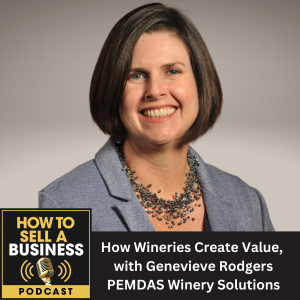
How Wineries Create Value, with Genevieve Rodgers, PEMDAS Winery Solutions

January 24, 2023 by John Ray

PEMDAS Solutions
How to Sell a Business
How Wineries Create Value, with Genevieve Rodgers, PEMDAS Winery Solutions
Loading
00:00 /
RSS Feed
Share
Link
Embed

Download file

PEMDAS Solutions

How Wineries Create Value, with Genevieve Rodgers, PEMDAS Winery Solutions (How To Sell a Business Podcast, Episode 8)

Award-winning winemaker, consultant, engineer, and professed math geek Genevieve Rodgers of PEMDAS Winery Solutions joined host Ed Mysogland on this episode of How To Sell a Business Podcast. Genevieve gave an overview of the major roles in a winery business, the key elements that impact the winery’s success (it’s not just about the wine), how wineries get financing, what questions buyers should be asking, how a winery creates value, risk management, and much more.

How To Sell a Business Podcast is produced and broadcast by the North Fulton Studio of Business RadioX® in Atlanta.

PEMDAS Winery Solutions

PEMDAS Solutions offers winery consulting solutions to meet clients needs. Services include: winery business development, design, winemaking consulting, financial forecasting, winery business education and project management.

With over twenty years of experience in the wine industry, PEMDAS Solutions has the knowledge and experience that helps clients create and grow successful businesses in the wine and spirits industry. PEMDAS has worked with wineries, vineyards, cideries and spirits producers from startups to existing businesses.

Their clients are small (less than 1,000 cases) to mid-size (500,000 cases) and span the globe. If you are looking for someone who has experience working in all aspects of this exciting industry, PEMDAS Solutions can help.

Company website | LinkedIn | Facebook | Instagram | Twitter

Genevieve Rodgers, Owner, PEMDAS Winery Solutions

Genevieve Rodgers, Owner, PEMDAS Winery Solutions

Genevieve Rodgers, owner of PEMDAS Winery Solutions, a winery and business consulting company in the US, has over twenty years of experience in winemaking and start-up winery business consulting. Genevieve brought her engineering and business management background to Sonoma, California in 1997 to help start her family’s winery. She went on to manage the estate vineyard, produce award winning wine and start her own winery before adding winery business consulting to her repertoire.

Genevieve has experience in all aspects of the wine business from vineyard design to sales and marketing and is an award winning winemaker with experience making wines from over a dozen grape varieties. She is fortunate to help people all over the world realize their winery business dreams.

Genevieve holds a Bachelors of Science in Mechanical Engineering from the University of California at Davis, a Masters in Business Administration from Chapman University, California, USA and an advanced, Level 3, Certification in Wine from the Wine & Spirits Education Trust.

LinkedIn

Ed Mysogland, Host of How To Sell a Business Podcast

Ed Mysogland, Host of “How To Sell a Business”

The How To Sell a Business Podcast combines 30 years of exit planning, valuation, and exit execution working with business owners. Ed Mysogland has a mission and vision to help business owners understand the value of their business and what makes it salable. Most of the small business owner’s net worth is locked in the company; to unlock it, a business owner has to sell it. Unfortunately, the odds are against business owners that they won’t be able to sell their companies because they don’t know what creates a saleable asset.

Ed interviews battle-tested experts who help business owners prepare, build, preserve, and one-day transfer value with the sale of the business for maximum value.

How To Sell a Business Podcast is produced virtually from the North Fulton studio of Business RadioX® in Alpharetta.  The show can be found on all the major podcast apps and a full archive can be found here.

Ed is the Managing Partner of Indiana Business Advisors. He guides the development of the organization, its knowledge strategy, and the IBA initiative, which is to continue to be Indiana’s premier business brokerage by bringing investment-banker-caliber of transactional advisory services to small and mid-sized businesses. Over the last 29 years, Ed has been appraising and providing pre-sale consulting services for small and medium-size privately-held businesses as part of the brokerage process. He has worked with entrepreneurs of every pedigree and offers a unique insight into consulting with them toward a successful outcome.

Connect with Ed: LinkedIn | Twitter | Facebook

TRANSCRIPT

Intro: [00:00:00] Business owners likely will have only one shot to sell a business. Most don’t understand what drives value and how buyers look at a business. Until now. Welcome to the How to Sell a Business Podcast, where, every week, we talk to the subject matter experts, advisors, and those around the deal table about how to sell at maximum value. Every business will go to sell one day. It’s only a matter of when. We’re glad you’re here. The podcast starts now.

Ed Mysogland: [00:00:35] On today’s episode, I had the opportunity to visit with Genevieve Rodgers of PEMDAS Winery Solutions. And, boy, I can’t even begin to tell you everything that we learned during her episode. It went a little bit longer and she was so generous with her time. But she’s a winery consultant, and if you just Google her name, you will find that she is everywhere.

Ed Mysogland: [00:01:03] So, she’s an MBA. She’s an engineer by trade. She’s also a Level 3 of the Wine and Spirit Education Trust. She does all kinds of work as far as strategic planning, company or winery positioning. And she was just such a wealth of knowledge. And I guess the reason I really wanted to have her on was, number one, I don’t know anything about wineries. We’ve sold a few in the last, probably, five, ten years, but they were difficult sales.

Ed Mysogland: [00:01:40] And believe it or not, there are a lot of wineries throughout the country, and those business owners, at some point, will want to sell. So, the rough rule of thumb is that it takes one to two years to sell a winery. And I wanted to learn where’s the risk in the winery, how to mitigate that risk, and then how to effectively transfer those businesses. And she did not disappoint. She was, like I said, so generous with her time and such a wealth of knowledge. So, I hope you enjoy my conversation with Genevieve Rodgers of PEMDAS Winery Solutions.

Ed Mysogland: [00:02:22] I’m your host, Ed Mysogland. On this podcast, I interview buyers, sellers, and advisors about what creates value in a business and then how that business is effectively sold at a premium value, because sellers and business owners now understand what creates values in their company. So, on today’s show, you have no idea how excited I am to visit with Genevieve Rodgers from PEMDAS Winery Solutions.

Ed Mysogland: [00:02:53] And I am such a novice at anything wine related. I have a buddy of mine, John Baker, that always makes me look good as far as wine selection. So, I’m fortunate to have somebody in my corner, but now I’m going to get a lot smarter because I got Genevieve. So, Genevieve, welcome to the show.

Genevieve Rodgers: [00:03:14] Thank you, Ed. I am pleased to be here.

Ed Mysogland: [00:03:18] So, tell me about PEMDAS Winery Solutions. I haven’t seen any business named PEMDAS, but I know what it means. So, tell me about it.

Genevieve Rodgers: [00:03:30] Well, that’s why I picked it. And I’m an engineer by my original training and so sort of a math geek. So, when I started this business, I really wanted to help people work through how to start a winery, how to run a winery, how to have a winery in an organized manner. And so, being a math geek, I came to PEMDAS, which is how you, in an organized method, solve a mathematical equation.

Ed Mysogland: [00:04:09] You know what? That makes total sense. That’s a great way to look at how your practice is. I wouldn’t have guessed it, but, you know, I always just figured you were just messing with acronyms. But there was substantially more thought that went into it and that’s awesome.

Genevieve Rodgers: [00:04:28] Probably too much thought, but yes, yes. And it’s interesting to me, there’s people who are in certain groups that see PEMDAS and say, “Oh, I know what that is. Isn’t that math?” And people who look at me and say, “What is that? I have no idea,” which I think is really interesting. But since I like math, it works for me.

Ed Mysogland: [00:04:58] I get it. So, you’re based out of Oregon, right?

Genevieve Rodgers: [00:05:02] Well, that’s where my home is. But my clients are all over the United States and I have some international clients. So, I do a lot of my work from home office, a lot of my work over the internet with clients, things that can be shared electronically. And then, I do winemaking consulting onsite for clients, and so then I travel and I’ll be at the winery.

Ed Mysogland: [00:05:34] Well, awesome. So, I’ll apologize in advance for some of the silly questions that I’m certain I’m going to ask that probably would be rudimentary to folks like you. So, I appreciate the latitude. But the first thing that I guess we should talk about is that there’s differences in wineries. Like you were talking about, case thresholds, there’s the larger operations versus the smaller operations. And I think the people that listen to this podcast are probably more geared to the smaller side because there are some substantial differences, right, other than volume?

Genevieve Rodgers: [00:06:20] There are some really big differences and it’s almost like being in two different industries. And people can think about it in the difference between your local hardware store and Home Depot. And that’s kind of where the winery is. So, you have some really, really big players in the United States and across the world that make millions of cases of wine. But most of the wineries in the world, most of the wineries in the United States, are making less than 5,000 cases of wine annually.

Genevieve Rodgers: [00:06:58] So, what you see in the stores, and if you’re going to grocery stores, you’re seeing primarily the big wineries, really big million cases annually of wineries. And then, you might see some local wineries that are smaller scale. And you might see some wineries that are kind of mid-size that make specific products to specific value that they’re big enough to be picked up through distribution and sold across across the nation.

Genevieve Rodgers: [00:07:35] But the majority of wineries are really fairly small, under 10,000 cases. And wineries that are family-owned, they’re small. So, the cost basis is very, very different and the way they sell wine is very different. Because their cost base is so different than selling through the distribution market, it’s taking their margin and cutting it at least in half. So, that becomes a real boundary for small wineries, is like, when I have a higher cost basis, am I going to be able to sell it at half or just sell it to a distribution? So, it sets up almost two different industries.

Ed Mysogland: [00:08:43] Yeah. So, that explains a little bit about why you see all of these small operations having – what’s the best way to put it? – onsite – I don’t want to say tourism type winery, but it seems as though that is more so why they do it because that’s how they get the distribution as opposed to going through your normal distribution chain, right?

Genevieve Rodgers: [00:09:17] That’s correct. And, really, if you look at the sales distribution for small wineries, and you look at averages, and you look at wineries that are doing well, they should be selling 85 plus percent of their sales directly to the consumer. So, you’re either doing it through your tasting room, you’re doing it through your wine club, you’re doing it through your website. That’s your direct to consumer market.

Genevieve Rodgers: [00:09:53] And for small wineries, like if you’re under 20,000 cases, the vast majority of your sales should be through those markets. So then, you need a tasting room, somewhere where you connect with customers. If you’re a huge winery, there’s not a whole lot of value in that for you.

Ed Mysogland: [00:10:17] I get it. That totally makes sense. One of the things, I guess, can you take me from cradle to grave? So, we start with grapes and then we end with a bottle of wine in the consumer’s hand. I mean, what is the mechanics of all of that from a high level? You don’t have to get too far in the weeds. But I know you work with startups.

Genevieve Rodgers: [00:10:42] I do. I do work for a startups. So, I like to say that there’s three different types of people in a winery. The first type of person is a farmer. So, you’re going to grow grapes. And grapes are a perennial. They’re a lot more like having an orchard than other other types of fruit, because you’ll plant and you’ll plant for the next 25 years. That plant is going to grow for 25 years, if not more. So, it’s a real dedication to the land, to that crop, to those individual plants.

Genevieve Rodgers: [00:11:21] And you want a good winery that has its own grapes. You don’t have to, but a good winery that has its own grapes is growing grapes that work with that climate and those soils, and that produce a wine that customers like. And you have to do all of those things. So, grapes are kind of a weed. They’ll grow anywhere. But what you need is you need a grape that will grow well, that will give you volume and quality in which to make a product that people are going to like at the price point that you need to sell it for. You have to do all of those.

Ed Mysogland: [00:12:06] Can I ask you a question? Can I ask you about the grapes?

Genevieve Rodgers: [00:12:12] Sure.

Ed Mysogland: [00:12:12] So, if I’m a farmer, does the winery owner, if I don’t own the farmland, do I get exclusivity? Is that how it works? Or if I’m a farmer, I’m going to sell it to anybody that needs my grapes?

Genevieve Rodgers: [00:12:34] You know, most wineries have contracts with farmers. It a little bit depends on the area that you’re in and the ability to get grapes. If you’re a farmer and you are growing grapes really well, you should look for contracts that are long term and you build a relationship. And that’s really what a winery wants, too, because the winemaker wants consistency and they want to be able to direct the grape growing practices. And so, for that, you need a relationship.

Ed Mysogland: [00:13:18] So, the winery that contracts with the farmer, they have control over certain aspects of the farming other than just the product?

Genevieve Rodgers: [00:13:33] You know, it’s by contract. And so, everything is a little bit different. Sometimes wineries will have long term contracts, and then it makes sense for those two organizations to work together and farm in a certain manner. And then, wineries will often get to a point where they’ll be growing or where the volume that they’re getting from one farm isn’t enough because of the year, and they buy, basically, on the spot market. And then, you’re just getting whatever someone grew.

Ed Mysogland: [00:14:14] I see. All right. So, first thing you said is three parts. We had farmers. What’s our second part?

Genevieve Rodgers: [00:14:20] The second part is the winemaker. So, the winemaker is this person who has a really high attention to detail, is somewhere between a scientist and an artist. They make the wine. And I like to say, a good winemaker is a little bit OCD. There’s a lot of attention to how the wine is made on a daily, hourly basis. And you want someone who’s really methodical.

Genevieve Rodgers: [00:14:53] And so, that person is going to bridge the two parts. They will direct some of the growing to get the raw product that meets their quality standards and their chemistry that they’re looking for. And then, they work with the sales, which is the third person, to make the wine that’s going to match what’s being sold.

Genevieve Rodgers: [00:15:23] So, the winemaker is going to get the grapes in. They process it through the harvest. You ferment it. There’s different processes during fermentation. And then, you press it and you put it into tanks or barrels to age it, and then you bottle it. And bottling then goes to this third person who is the sales management person.

Ed Mysogland: [00:15:54] Got it. So, on the scientist or the chemist, how hard is it to find somebody that does that? Is that just somebody you hire or is that typically the owner?

Genevieve Rodgers: [00:16:10] Yes. For small wineries, it is typically the owner. And the owner either has that background – and I see a lot of first time owners that have backgrounds in engineering. So, the owner either has that background or they go out and get that.

Ed Mysogland: [00:16:37] How do you get it?

Genevieve Rodgers: [00:16:38] Well, there are programs around the country that teach winemaking to adults who have already graduated. So, Cornell has a program, Penn State has a program, University of California, Davis has a program, San Luis Obispo. There’s a whole bunch of programs around the country where you can take online or in-person classes as a professional already. And you get a certification.

Ed Mysogland: [00:17:12] Finish your thought.

Genevieve Rodgers: [00:17:13] You get a certification in winemaking.

Ed Mysogland: [00:17:17] And that gives you enough knowledge to produce a commercial grade wine, huh? I wouldn’t have known that.

Genevieve Rodgers: [00:17:29] Yeah. And you can go the route. I mean, that’s sort of the route I took. I have an engineering degree. I have an MBA. When my family started a winery, nobody had ever made wine. And so, I took classes. I became the winemaker with my engineering degree and my MBA. And I took classes and I worked with a couple of consultants, and so I was learning. The consultant would say, “Do this today,” and I would go and do that. But then, I was learning at the same time.

Genevieve Rodgers: [00:18:09] So, you can do both. You can do one or the other. It really depends on your temperament and how much work you want to put into it. Because there is a lot that you need to know to make wine well. Or you can hire someone.

Ed Mysogland: [00:18:27] Well, and that’s what I was getting at, is that it seems like the astute wine people in my life, they are always talking about different things about the wine. And so, when we’re talking about chemistry and stuff, I’m sitting here going, “Okay. How do I learn this online in order to be able to produce something in a manner that is attractive to the consumer?” You know what I mean? But I mean, it makes sense. So, you worked with somebody and that’s probably what other people can do.

Genevieve Rodgers: [00:19:13] And it’s one of the things that I do, is, I come to wineries and I train people to take over my job, basically. And while I’m not there, they’re doing the work. We’re talking, I’m saying do this, they do that. But they’re also learning intensely on why this is happening so that they can then take over.

Ed Mysogland: [00:19:38] Yeah. I thought it was so much more about tasting and tailoring it based on kind of a palate that you were going for.

Genevieve Rodgers: [00:19:52] It is. It is too. So, that’s why I said that it’s science and art. Because you can’t do it straight on the chemistry. So, wine is made usually during fermentation. It’s really when the wine is made. And that’s a couple of weeks. So, if I’m making wine and I’m at a winery, I will taste every single tank, barrel, lot in the winery at least once a day, if not twice a day, if not three times a day. And then, I will make changes to how the fermentation is going based on those tastes. So, you do have to do both.

Genevieve Rodgers: [00:20:50] And you also have to understand, if I want a product that tastes a certain way at the end after it’s aged, what do I need to do now during fermentation in order to get that? And that’s something that you have to have the mind for it, but you also have to have some experience doing it.

Ed Mysogland: [00:21:15] I get it. All right. So, you had talked on the third part, which is the sales. So, what is at this level? I mean, what is the optimum route to maximum value? I think we’ve established that probably you don’t want to go to a distributor because you don’t have the volume to accommodate that. So, it sounds to me that it’s direct to consumer, and the ways – if I heard you right – was your tasting room, events, and online. Those are the three or areas did I miss any?

Genevieve Rodgers: [00:21:54] And wine club, which is actually the backbone. So, if someone has a winery or starting a winery, the most important thing that they can do is determine what experience they are creating their wine. That is by far the most important thing that a winery can do to be successful, is, what experience do I want people to have when they visit, when they come to my winery and come to an event, when they taste my wine at home, when they come to my website, what do I want them to feel? What am I creating for them?

Genevieve Rodgers: [00:22:43] Because people who love wine and get into the industry, I think that it’s all about the wine. Because that’s what’s been important to them while they’ve been drinking wine, it’s about the wine. This wine is fantastic because of this criteria. But that’s not actually how wine is sold. Wine is sold based on the experience that people have, and the wine is integral. But it’s not always the most important, but it is integral. So, that’s the first thing that people should do.

Genevieve Rodgers: [00:23:23] And if they have a winery and they’re thinking “I would like to sell this at some point,” they need to nail that down, what am I creating? And then, figure out, is that what I think I’m creating or what I’m actually creating? Because those two things can be different. And then, does everything match? Is the experience I’m trying to create, does that match the wine that I’m selling? Does it match the prices that I’m selling it at? Does the label match? How about the packaging? How about my website? And when people call me on the phone, is it all consistent?

Ed Mysogland: [00:24:11] But when you’re sub-20,000 cases – is it cases?

Genevieve Rodgers: [00:24:18] Cases.

Ed Mysogland: [00:24:18] Cases. So, I mean I follow what you’re saying. What I’m trying to reconcile with is, can they create that brand consistency that you’re talking about? And, again, it’s back to the wine. You know, so you have a great product, so how do I make everything downstream tied together? You know what I mean? And I’m certain that’s the trick in your industry is, if they knew, you wouldn’t have a job.

Genevieve Rodgers: [00:25:11] That is true. And this is where I get myself out of the job, I teach people how to do this. So, you start first with the experience and what do you want people to have. So, there’s a winery in Napa called Opus One. And I use it because lots of people know it. They make a single wine. One wine a year. Period. And they tell you this is a singular wine. It’s part of their vision statement. A singular wine that transcends generations, that’s their vision statement. So, that’s what they do.

Genevieve Rodgers: [00:25:56] So, if you imagine in your head, “Okay. Well, what does that look like?” The place is going to be something you remember. You’re going to look at that building, “Oh. That’s it. That looks like an imagé to wine. That looks like a wine museum where the best wines would be stored. Then, your price is going to match that. So, that’s not a $20 bottle of wine. That’s a $300, $400 bottle of wine. So, they do a really good job. And that’s why I use them is because everything matches.

Genevieve Rodgers: [00:26:41] But it doesn’t have to be the best of the best. You can have a place where families come and they have a great time together. Well, what does that look like for a wine? It’s going to be a lower price point. You’re going to have a bigger breath of wine. Some of it will probably be sweeter off-dry if you’re going to have whites and reds. That’s kind of how you progress through this.

Ed Mysogland: [00:27:10] I get it. And I think that’s where business owners get themselves in trouble, is, they’re looking at volume rather than playing the long game and get the experience down, and the money and the profit will follow. That totally makes sense.

Genevieve Rodgers: [00:27:29] And part of the thing is something that you kind of maybe didn’t realize you were alluding to at the beginning. Most consumers don’t really know a lot about wine. Like, you are not unusual. Most consumers don’t know a lot about wine. They like what they like. They’ve tasted the wine. It tastes good to them. That’s what they know.

Genevieve Rodgers: [00:27:55] And so, when you think about it in that manner, it’s really not as much about the wine itself, because people don’t know a lot about the wine. What they know is that they had a good time. Everybody enjoyed themselves. Or someone that they know recommended this, they probably drank it together. And so, wine, especially for small wineries – and this is hard because I’m a winemaker – you really need to get out of this idea that it’s all about the wine, because it’s not.

Ed Mysogland: [00:28:42] Okay. No, that’s great advice. So, we were talking about the farmers earlier, I mean, we’ve got some pretty funky weather going on these days, you know, because one of the things you were talking about when we talked last was how important it is to kind of foresee what is the outlook for the region. And I guess as a business owner, I value companies all the time. And one of the tendency is, what does the future look like for this particular investment? And I’m looking at a winemaker and they’re trying to forecast what the farmland and the farmer and the climate looks like down the road. So, how do you do that? And how do you pivot if it goes back?

Genevieve Rodgers: [00:29:54] So, you know, one of the benefits for winemaking is, like I said, grapes are kind of like a weed. They will do well in a climate range. But you do want to target the varieties that is going to do better in your climate range. And there’s a lot of them. And part of it is, if you’re in the United States, you go to your extension program, which works with agricultural and farms, and you say to them, “What’s brewing in my state?” And you work to make sure that the land is going to be good for grapes and that you pick the right grapes for it.

Genevieve Rodgers: [00:30:54] And then, there is some looking forward, and it depends on how much risk you want to take. If you plant a grape right now, you’ll get a good crop in five years. The climate is probably not going to change substantially in that five years to make this grape nonviable. It’s still going to be viable. It will still be viable in ten years.

Genevieve Rodgers: [00:31:21] There might be a grape that’s kind of on the edge of your climate that you may take a risk on and say, “I’m going to plant that now because I can see what’s been happening with the climate in my region, and this is going to be really good in ten years.” That’s a risk, and it depends on how risk-averse you are.

Ed Mysogland: [00:31:54] You know, we were talking and it was a question I was going to ask that little down the road was, you know, especially in selling wineries, you’re talking one, two years to sell it, to find the right buyer and to sell it. And then, on top of it, trying to see into the crystal ball what my crops are going to look like or what my grapes are going to look like, you know, 5, 10, 15 years down the road. And I guess my question is, do I lock-in the farmer? Do contracts go out that far? Or are they one year and then one year renewable? You know what I mean?

Genevieve Rodgers: [00:32:36] Contracts are all over the map. And contracts in the Midwest are very different than contracts in California, where 85 percent of the wine in the United States –. So, what is common is a multi-year contract that is more like four or five years or one year renewable contract.

Genevieve Rodgers: [00:33:00] And the contracts are with the business, but there’s a lot of contracts that are really with the owners. So, if you’re purchasing a winery that doesn’t have its own grapes, you want to talk to their grape sources and get a feel for do I want to work with these people, are they going to give me the quality that I need, are they going to give me the volume that I need so I can be consistent and have a consistent cash flow.

Ed Mysogland: [00:33:36] So, if I’m a buyer and you’re a seller, and I meet your farmer and I like him or her and we kind of get along, why wouldn’t they want to do business with me? I mean, is it all economic?

Genevieve Rodgers: [00:33:58] No, it’s not. It’s not all economic. No, it’s not.

Ed Mysogland: [00:33:58] Because we were talking about this the other day about goodwill.

Genevieve Rodgers: [00:34:02] And, you know, it’s hard for me to answer that question because I’ve seen vineyard owners that say, “I want a five year contract and let’s write out how we’re going to value the crop so that it’s reasonable for everyone. I want to do that. And I want you to take all of my crops. Like, everything I grow, I want you to take.” And then, I’ve seen some growers who say, “I want five buyers every year. I don’t want one buyer because I don’t trust that they’re going to do right by me every year.”

Genevieve Rodgers: [00:34:44] And so, it’s very individual. And part of it also depends on where you’re located. And what experience those growers have makes a big difference too. And when I say experience, I mean experience working with wineries.

Ed Mysogland: [00:35:06] Yeah. Yeah. I follow you. Well, like I said, it’s one of those things of – boy – everything is sizing up risk and the prospect of losing your supplier. I guess my question then becomes, does the farmer have the leverage over the business owner or the winemaker? Who has leverage in that —

Genevieve Rodgers: [00:35:41] It depends on the scarcity, really. If you’re the only grower, then you’re the only grower, you’re the only game in town. If you’re one of 50, then it doesn’t. So, that’s where it really starts to make a difference. And then, it’s personality. You’re working with people and it’s getting a good mix that people work together.

Ed Mysogland: [00:36:08] Okay. So, what do typical owners look like these days? What’s an owner of a winery?

Genevieve Rodgers: [00:36:15] For a small winery, it’s all over the map. If I look at my clients, I have clients who started wineries who are retired, they made money. And one gentleman who is just opening a winery in New Jersey said, “You know, Genevieve, I spent my career making money and doing things for other people. Now, I want to do something for me. This is for me.” So, that is one group.

Genevieve Rodgers: [00:36:58] Another group is, I get a lot of people who are younger than I am – I mean, I guess at my age a lot of people are younger than I am – they’re in their 20s and 30s, and some of them have legacy farms in their family. And so, now they’re going to turn a legacy farm that is growing corn or soybeans or something else and change the way that farm works.

Genevieve Rodgers: [00:37:36] And then, it’s all over the map. Usually, it’s people who have liked wine and who want to do something different, and they want to do something that they’re going to love. And that’s really important if you’re going to buy a winery, because people who buy wineries, unless you’re buying it for someone else to run, it will become your life. There’s really not an in-between. So, you want to love it.

Ed Mysogland: [00:38:11] I get it. So, it strikes me that the avatar of somebody that wants to get into this business is a high net worth individual that is either on one side of the scale, meaning they’re at retirement age looking for kind of the next chapter of their life, or they’re on the younger side and they’re trying to set the world on fire but yet they have the net worth to pour into something like this. Is that true or not?

Genevieve Rodgers: [00:38:53] I think that’s true for the most part. I find that the people who are younger, who are starting this, they’re really bootstrapping it. But they don’t have to purchase the land. And so, that makes a huge difference in how much money and capital you need to start over. And you can do that. But I think you’re right, for the most part you’re going to be looking at people who have equity and have money to spend or have equity and have a group behind them that has the capital.

Ed Mysogland: [00:39:36] I get it. So, I know you just alluded to private investment. I mean, do these things get financed through conventional means, like through the SBA or through conventional banks? Are you familiar with that? And I know I’m kind of jumping all over here, but I’m just kind of curious to see how that works.

Genevieve Rodgers: [00:40:07] The bigger startup wineries do get with commercial banks and conventional loans. For smaller wineries, it’s harder. You really have to make the case. And it is one of the things that I do. So, I create ten year financial forecasts that you can take to a bank. But you have to take it to a bank who understands what’s going on. Because this is not something that you can just turn around the next year. This is a long term project.

Genevieve Rodgers: [00:40:50] So, startup wineries do not make money the first year or the second year. And they start getting to the block on an annual basis in their third or fourth year. But it does take five, six, seven, eight years to actually get truly profitable where you’ve paid back your loans and all of your capital, and now you’re actually making money.

Ed Mysogland: [00:41:32] Now, are those capital sources exclusive to the industry? I mean, my point is I’m certain there’s a lot of people that are probably listening saying, “You know what? If I get a buyer, I’m going to call Genevieve because she knows where the capital is. I have lenders that specialize or understand this industry and the risk profile.” You got those people?

Genevieve Rodgers: [00:41:54] Let me just say, it’s not my forte. But, yes, there are. A lot of them are in California or they’re ag based banks. You can qualify for SBA loans. It’s sort of a hard sell, but you can do it. And I’ve worked with the SBA.

Genevieve Rodgers: [00:42:31] And you probably have had this experience, when someone’s trying to get funding for a project, if you’re buying a winery, first, you’re looking at their cash flows. Do they have positive cash flows for years, not just this year? But do they have a history of positive cash flows? That goes a long way to a lender saying, “Yeah. I’ll lend that to you,” because they’re looking at their years of positive cash flow. If you’re starting up, that’s a more difficult sell.

Ed Mysogland: [00:43:12] Yeah. Sure. It always is. I get it. I’m bumping up on time. Do you have time for a few more questions?

Genevieve Rodgers: [00:43:26] I do.

Ed Mysogland: [00:43:26] All right. So, on the coronavirus, how did that affect the smaller business? Did it affect the supply chain as much as it did for a lot of the larger wineries or not?

Genevieve Rodgers: [00:43:43] It did. It did affect the supply chain. For smaller wineries, primarily at the end of making wine, which is bottling. Small wineries have and continue to have a very difficult time getting bottles. And that’s been a problem. Yes. And it’s been a really, really substantial problem that is ongoing, because what is happening in the Ukraine is affecting the cost of energy in Europe, where a lot of the bottles are made. And bottle making is high energy usage. And so, not only are costs going up, the supply is going down.

Ed Mysogland: [00:44:34] I had no idea.

Genevieve Rodgers: [00:44:35] That’s been the biggest as far as supply chain that’s hit the industry is in bottles. The pandemic affected the industry differently in that it closed a lot of tasting rooms and the ability for people to come in to your tasting room. And so, wineries had to pivot. And the wineries that did well did pivot. They kept in touch with all their consumers. They worked their wine club. They worked online sales and classes and meet the winemaker. They did all that. And the industry in the United States actually grew through the pandemic.

Ed Mysogland: [00:45:26] Yeah. And that totally makes sense. And as you know, one of my questions was, as restaurant usage is declining, the consumer usage is growing. And based on what you were saying on the areas where you create value through the tasting room, through online, and through the wine club, the pandemic for the smaller wineries, if you played it right, probably, it did pretty good for you. That your margins actually probably improved, right?

Genevieve Rodgers: [00:46:15] The small wineries that had a wine club, to start with, and built consumer loyalty, and built interactions with their consumers over the years before the pandemic, they were able to leverage that and continue to give real value to their customers who stayed with them. And not only did they stay with them, but they bought more wine. And their cost basis then went down because they didn’t have an employee in a tasting room and have to staff that. Now, they’re staffing someone shipping wine and moving wine as opposed to tasting them.

Genevieve Rodgers: [00:47:02] So, the wineries that did that really well, they made out, because now all of that infrastructure is still good. It’s still viable. People still buy wine over the internet. They still want that interaction. So, if I’m a winery buyer, show me how you did during the pandemic. What is your wine club like now? How are your interactions? Because those have real values.

Ed Mysogland: [00:47:42] But, conversely, if I’m the buyer and I’m saying, “Oh, you didn’t capitalize on the wine club, you didn’t capitalize on online,” from a buyer standpoint, am I not sitting there saying, “Wow. I have a tremendous opportunity to take advantage of something you didn’t?” Or has that ship already passed?

Genevieve Rodgers: [00:48:03] It has not. That opportunity is always there. And, really, from a buyer point of view, what you would do is you would look – and I say – wine club is based on the brand. The value of the wine club is how you value the brand. And so, if they haven’t done that, then the value of the brand – which is what we call this goodwill amorphous value that we put on when we’re selling something – declines. And most likely you’re going to come out with a new brand and do something else. So, yeah, it does give you that opportunity but your starting point, though, is then lower from a sales perspective.

Ed Mysogland: [00:49:01] Right. Right. But if I’m the seller, maybe I wasn’t aware of what to do. But, nevertheless, that’s where the value is. And you talked about this a little bit when we originally talked was, the goodwill component tends to erode very quickly. Meaning that you’ve got inventory, you’ve got the equipment, and now you have what we’re talking about is goodwill. And then, goodwill separates into personal goodwill or the branding. And then, you have corporate goodwill is the earnings that you can forecast.

Ed Mysogland: [00:49:54] So, where I was going with this is, I’m curious to know if you’re coaching a seller, how do I sell that I have that goodwill? Because the equipment is what it is. How do I demonstrate that I do have the goodwill? So, I’m certain it’s mailing list, wine club. But how am I going to withstand the scrutiny of a buyer? How would you coach in that scenario?

Genevieve Rodgers: [00:50:37] So, the goodwill you’re looking at a couple of things. One, you’re looking at the wine club, which is an annual income that is really easy to forecast and put a value on. So, that’s a big piece and that’s probably going to be a significant portion where you say, “Look. I’ve got this value because I have a wine club and it’s this size.”

Genevieve Rodgers: [00:51:12] Another thing that you’re going to look at is how many people walk through your door. And if you’re going to sell your winery, you should be counting those people and literally tallying every single person who walks through your door.

Genevieve Rodgers: [00:51:28] Because there’s lots of potential sale. And as a winery consultant, I can tell you what that potential sale is. There’s a real value — many people walk through your door. You may take advantage of it or you may not. But I think that’s a piece of the goodwill. And that has to do partly with your location, partly with your marketing, how you’re branded, how people know you.

Genevieve Rodgers: [00:52:00] So, those would be the two biggest things that I would say maximize your value of those two things because you can really sell those and those have that goodwill value.

Ed Mysogland: [00:52:21] Again, what do buyers look like? I mean, I know we said here’s what a seller looks like. We’re on both sides of the spectrum. So, buyers these days, is it the same avatar? I guess the first question is, are you seeing wineries sell? And two, who’s doing the buying?

Genevieve Rodgers: [00:52:50] So, small wineries, the reality is most small wineries don’t actually sell well. And you talked about this, like, it takes a couple of years. Most small wineries don’t actually sell well and most of them just close.

Ed Mysogland: [00:53:09] Because of what?

Genevieve Rodgers: [00:53:12] They don’t have these cash flows. Either they don’t know how or they were not able to, for whatever reason, they don’t have this. And so, their winery brand doesn’t have a lot of value. Now, their property has value. The buildings have value. Their equipment may or may not have value.

Genevieve Rodgers: [00:53:41] I was asked today by someone who’s starting a winery and he says, “Well, how long do I keep this?” And I told him, I said, “Well, I can hear your children in the background, they’re the ones who will replace this equipment that you’re buying.” That’s the lifespan of equipment. And his children were young.

Genevieve Rodgers: [00:54:03] So, we were talking about what does this person look like? One, most wineries don’t sell. That’s just the reality. Most wineries close. The wineries that sell are selling to someone who wants this as a lifestyle, because it is a lifestyle. You may be selling it to someone who has made money, who has been a real high achiever, like a lawyer or a surgeon or someone who’s been in construction or building and they’ve done something for a long period of time. They have equity and they have capital. Now, they want to do something for them. And that’s the kind of lifestyle that they want to lead. Those really are the buyers.

Ed Mysogland: [00:55:03] Okay. Back to the sellers, though, and I have two questions that kind of go hand in hand. If I’m a business owner, can you coach me into making my winery a marketable asset to a buyer? And if so, how long does it take? And then, I guess the third question is, how do I work with someone like you? It seems to me like you’re going lots of places. How do we work together as a seller?

Genevieve Rodgers: [00:55:41] If you’re a seller and you want to sell your winery, it’s a long term process, unless your winery is sale ready.

Ed Mysogland: [00:55:59] So, what does that mean? Tell me what that means.

Genevieve Rodgers: [00:55:59] So, if you’re sale ready, you have years of cash flow that are positive, that are consistent. You can show that you have put in money to keeping up your equipment, to training your staff, to your facility. You have been doing ongoing maintenance and everything is in real working order. You’ve got those two things from just a straight production business side.

Genevieve Rodgers: [00:56:34] The next thing that you need to have is you need to have wine, that is – what we call in the industry – clean. It needs to be good wine. And so, it needs to be free of faults. Because faults are a winemaking problem that make the wine not taste good to consumers. Also, wine that has faults has no value to a buyer. So, if I’ve got a whole bunch of wine and tank, but that wine has faults, that wine has no value to a seller. It’s bad inventory. So, I would work with you to fix that, but that takes one to two vintages minimum because you have to get through that wine. So, you do those things and then work to build your wine club.

Ed Mysogland: [00:57:29] What is vintage? Sorry about that.

Genevieve Rodgers: [00:57:34] Okay. Grapes are harvested one time of year in the United States. We put the vintage, which is the year that you see on the bottle, is based on when we picked those grapes. So, right now, the vintage that is in tanks at people’s wineries is 2022. But what you’re seeing coming out in the marketplace would be 2021 and ’20. So, it takes a while.

Ed Mysogland: [00:58:11] Okay. That makes sense. Got it. Thanks.

Genevieve Rodgers: [00:58:12] So, if you want to get there, you’ve got to get through a couple of vintages, which is years, to get sale ready.

Ed Mysogland: [00:58:23] Okay. So, I need a couple of years with you to get sale ready. And during that time, you’re going to work on faults. You’re going to work on how to improve cash flow and how to shore up the online, the wine club, and tasting at this level. Okay.

Genevieve Rodgers: [00:58:41] It depends on what people need, but some of it I come onsite. So, I would come onsite and we’d taste for all your wine, every single thing you have. And we would talk about what’s going on, where you need to go, and how you get there. And then, some of it is one hour sessions where we talk on the phone and you say, “Okay, Genevieve. This is what I’ve been doing. This is where I am.” And I say, “Okay. Well, here’s your next steps. Like, this is where you need to concentrate. What questions do you have? How can I help you understand?” And then, as the winery owner, you then have to execute.

Ed Mysogland: [00:59:30] Got it. And I always kind of conclude every podcast with, you know, what is the one piece of advice that you would give that would have the most impact on somebody’s business? And I’m assuming it’s preparing, but I may be wrong.

Genevieve Rodgers: [00:59:48] If you want to go into this industry or you’re in this industry, if you’ve got a winery, you want to start a winery, the most important thing that you can do is fully understand, write down and encompass what is the experience you’re creating. How are you creating it with every single thing you do? In this industry, that is going to be the most impactful for your business and the wine industry.

Ed Mysogland: [01:00:27] Awesome. So, number one, how do people connect with you? And number two, how does your process work? How do I work with Genevieve?

Genevieve Rodgers: [01:00:38] So, the best way is my website, winery.consulting is my website. Or if you go to Google and you type in winery consultant, I’m at the top of the list. That is the easiest way to find me. And then, you go on my contact page and it sends me an email and says, “Genevieve, here’s what I’ve got, let’s connect.” And then, we set up a one hour phone call or video conference.

Genevieve Rodgers: [01:01:11] Usually one hour works and people say, like, “This is what I need.” And we’ll decide, like, am I the right person for you? Because it’s important to me that we get the right fit, and then we go forward. And it depends on what you need. Sometimes people need hourly work, sometimes they need me onsite for a day, two days, a week. I’m flexible in that. And then, we go from there.

Ed Mysogland: [01:01:45] Yeah. So, you scope the work and this is what I need. And you scope it, this is kind of the mechanics and the deliverables, and you go from there.

Genevieve Rodgers: [01:01:55] That’s my background, too, so that’s exactly what I do. It’s like,
here’s my deliverables, here’s my — this is how much it costs. That’s what I do.

Ed Mysogland: [01:02:10] I get you. Well, Genevieve, I’m telling you, we’re probably bumping up into 80 episodes, and normally I’m fairly versed at a lot of the things that I’m talking about. But you enlighten me so much about how this world works. And my buddy, John, he’s our wine guy. You know, you were talking about the experience. He’s the guy. No one knows what to drink other than him and he hooks us up every time. And so, I’m so grateful that you have now given me something to talk to him about, because this is awesome.

Ed Mysogland: [01:02:59] And I’m certain that our listeners have learned a lot because what a unique business. Everybody drinks a lot of wine, and to learn how this is made and the mechanics behind it, I hope we’ll find some some people that are willing to give it a go and get into this industry. So, thanks for all your time. I know we went long and I’m certainly grateful that you were willing to take a couple extra minutes with me.

Genevieve Rodgers: [01:03:29] Well, it was a pleasure. It was a pleasure talking with you. And since I love what I do and I love the industry that I’m in, it’s really easy to talk about it.

Ed Mysogland: [01:03:43] Yeah. Well, you made it super easy for someone like me to understand it. And if I can understand it, others will too. So, everything about you will be in the show notes. So, those of you listening, don’t hesitate to look to the show notes, because everything that we’ve talked about and more will be there. All right. Well, Genevieve, thank you so much. And I am so happy that we finally got together.

Genevieve Rodgers: [01:04:15] It was a pleasure, Ed. I’m very happy to be on your show. And it was fun.

Ed Mysogland: [01:04:24] Right on.

Outro: [01:04:27] Thank you for joining us today on the How to Sell Your Business Podcast. If you want more episodes packed with strategies to help sell your business for the maximum value, visit howtosellabusinesspodcast.com for tips and best practices to make your exit life changing. Better yet, subscribe now so you never miss future episodes. This program is copyrighted by Myso, Inc. All rights reserved.


Tagged With: business consultant, business owner, business valuation, Ed Mysogland, How to Sell a Business, How to Sell a Business Podcast, PEMDAS Winery Solution, start-up winery, transfer value, value, vineyard, wine farmer, wine industry, winemaker, winery, winery business, winery owner

Altruism and Business Ownership

January 23, 2023 by John Ray

Altruism and Business Ownership
North Fulton Studio
Altruism and Business Ownership
Loading
00:00 /
RSS Feed
Share
Link
Embed

Download file

Altruism and Business OwnershipAltruism and Business Ownership

Entrepreneurs today want a purpose in their business which goes beyond just making money. Reminding clients of that purpose is a vital way we are often called, as advisors, to deliver value to them.

The Price and Value Journey is presented by John Ray and produced by the North Fulton studio of Business RadioX®.

TRANSCRIPT

John Ray: [00:00:00] Hello. I’m John Ray on the Price and Value Journey. I recently ran across a quote from the Dalai Lama who said, “Idealistic as it may sound, altruism should be the driving force in business, not just competition and a desire for wealth”. Well, the Dalai Lama was in many ways kind and maybe even cute to some people. But what does he know about business? Quite a lot. I think if this quote attributed to him is accurate.

Let’s think about what altruism means. One definition I found calls altruistic behavior, a desire to benefit someone other than oneself for that person’s sake. Some will read that definition and claim that fulfilling such a desire is impossible in business. Those people would be flat out wrong. They’ve either never run a small business, not spent much time around business owners, or their experience in business is scarred by knowing the worst possible examples of business owners. In the latter case, the ones who are almost sociopathic in their disregard for others.

I work with and regularly talk with a wide variety of small and medium sized business owners. I have that privilege because of the pricing and other business advisory work that I do. And I also regularly interview a wide variety of guests as part of my work in the North Fulton Studio of Business RadioX. Between the guests I’ve interviewed myself and the guests of the shows we produce, we’ve had over 2000 business owners and leaders over the past almost seven years and counting.

So, my sample size is quite large, you might say. And I’m no wide eyed, idealistic novice either. These business owners span a wide variety of demographic categories. Some have always lived a life of entrepreneurship, and others started their businesses later in life after a career in corporate. One thing I have found over the years is that the overwhelming preponderance of business owners I’ve encountered have a purpose for their business, which goes well beyond the profit and loss statement.

There’s a bigger idea in mind. Maybe they’ve got a cause that’s important to them they want to contribute to. They’ve got some difference they want to make in their community. It could be rooted in their faith. Sometimes they want to establish a charitable legacy which lives on after they’re gone. For some, they’re simply motivated to be of service to everyone they meet, and that service just happens to be found in their business. They see themselves as servants to their employees, clients, vendors, and their community.

I was with a client recently and we were heads down together on several pressing issues. At one point, the conversation shifted toward purpose in his business. He restated that purpose. One I’d heard many times before and one that’s larger than himself. And he observed that if that purpose wasn’t the objective, then dealing with the problems we were talking about just wasn’t worth it. In a recent interview that I did with a personal injury attorney, he talked about the practice of law and his fundamental desire to help people. If it’s all about money, he said, you’ll never be satisfied with your business.

I see and hear altruism in small and medium sized business owners all the time. This theme is just part of the world that we live in today. People want purpose in their business or they don’t want to be in that enterprise. Here’s the thing, though. A business doesn’t have to get exceptionally large to start having a complex set of issues. If you’re a solo or small firm professional services provider, you work with a variety of small and medium sized business owners who are dragged down by the day-to-day problems and just the plain old crap that’s involved in running a business. All those issues can obscure the larger goals or make them seem far away.

Sometimes your job is simply to help your clients raise their vision, to remind them of why they’re dealing with all the junk they have on their plate. You don’t necessarily have to deliver brilliant insights or solve all their problems. You just need to bring back that vision of service they had when they got into business. When you reinvigorate their spirit by reminding them of what’s behind today’s clouds in their business, you are offering tremendous value. And that’s an honorable calling that you have as a professional services provider.

I’m John Ray on the Price and Value Journey. If you’d like to know about this series and some of the work that I do, you can go to pricevaluejourney.com. You’ll find there a link back to the show archive of this series. And if you’re not already subscriber on your favorite podcast app, I’d be honored if you would do that. You can find the series on all the major podcast apps. When you go to pricevaluejourney.com, you can find a link where you can sign up to receive more information on my upcoming book, which is called The Price and Value Journey, Raise Your Confidence, Your Value and Your Prices to Grow Your Business Using the Generosity Mindset. If you’d like to email me directly, you can do so at John@johnray.co. Thank you for joining me.


About The Price and Value Journey

The title of this show describes the journey all professional services providers are on:  building a services practice by seeking to convince the world of the value we offer, helping clients achieve the outcomes they desire, and trying to do all that at pricing which reflects the value we deliver.

If you feel like you’re working too hard for too little money in your solo or small firm practice, this show is for you. Even if you’re reasonably happy with your practice, you’ll hear ways to improve both your bottom line as well as the mindset you bring to your business.

The show is produced by the North Fulton studio of Business RadioX® and can be found on all the major podcast apps. The complete show archive is here.

John Ray, Host of The Price and Value Journey

John Ray The Price and Value Journey
John Ray, Host of “The Price and Value Journey”

John Ray is the host of The Price and Value Journey.

John owns Ray Business Advisors, a business advisory practice. John’s services include advising solopreneur and small professional services firms on their pricing. John is passionate about the power of pricing for business owners, as changing pricing is the fastest way to change the profitability of a business. His clients are professionals who are selling their “grey matter,” such as attorneys, CPAs, accountants and bookkeepers, consultants, marketing professionals, and other professional services practitioners.

In his other business, John is a Studio Owner, Producer, and Show Host with Business RadioX®, and works with business owners who want to do their own podcast. As a veteran B2B services provider, John’s special sauce is coaching B2B professionals to use a podcast to build relationships in a non-salesy way which translate into revenue.

John is the host of North Fulton Business Radio, Minneapolis-St. Paul Business Radio, Alpharetta Tech Talk, and Business Leaders Radio. house shows which feature a wide range of business leaders and companies. John has hosted and/or produced over 1,700 podcast episodes.

Coming in 2023:  A New Book!

John’s working on a book that will be released in 2023:  The Price and Value Journey: Raise Your Confidence, Your Value, and Your Prices to Grow Your Business Using The Generosity Mindset. The book covers topics like value and adopting a mindset of value, pricing your services more effectively, proposals, and essential elements of growing your business. For more information, contact John below.

Connect with John Ray:

Website | LinkedIn | Twitter

Business RadioX®:  LinkedIn | Twitter | Facebook | Instagram

Tagged With: altruism, business ownership, John Ray, Price and Value Journey, pricing, professional services, professional services providers, purpose, solopreneurs, value, value pricing

Plumber Pricing

January 20, 2023 by John Ray

Plumber Pricing
North Fulton Studio
Plumber Pricing
Loading
00:00 /
RSS Feed
Share
Link
Embed

Download file

Plumber PricingPlumber Pricing

Professional services providers, the speed with which you execute an engagement is a feature and should be priced as one. A recent experience I had with a plumber illustrates the point.

The Price and Value Journey is presented by John Ray and produced by the North Fulton studio of Business RadioX®.

TRANSCRIPT

John Ray: [00:00:00] Hello. I’m John Ray on the Price and Value Journey. In my last episode of this series, I talked about my recent superb experience with the plumber, using that story to make the point that how we show up is an intangible value to our clients. This plumber came to our house on a Friday night a few hours after I called him to diagnose the problem. After doing that, he said he could be back the next morning on a Saturday to perform the necessary repairs. Unfortunately for him, though, my experience with this plumber was further elevated by his pricing. What do I mean by that? Well, even though he delivered his service so quickly and efficiently, his price was well below the estimate I received from another plumber who I could never get to show up.

Even with offering the intangibles of both reliability and speed of service, this five-star plumber didn’t price his service to reflect the client perceived value of those intangibles. Professional services providers, the speed with which you execute an engagement is a feature and should be priced as one. Bookkeepers for example, when you’re producing financials by the 15th of every month, that should be priced at a premium relative to engagements which call for the end of the month. Yet so many bookkeepers I’ve run into price all their clients at their same hourly rate, which highlights just one of the many problems with hourly pricing but that’s another subject.

Here’s another example. At year end, some professionals like attorneys or business valuation experts will have clients who, with little or no warning, come walking in with a project which needs to be completed by December 31st. Price the needed velocity. When confronted with a premium price, such clients will make their own determination as to how important that year in closing is and therefore how much they value your project and the outcome you deliver. Speed is value, price it.

I’m John Ray on the Price and Value Journey. Go to pricevaluejourney.com to learn more about my work, including a link to the show archive of this series, which you can also subscribe to on your favorite podcast app. And I’d be honored if you would do that, if you’re not already a subscriber. When you go to pricevaluejourney.com, you can also sign up to receive updates on my new book coming out in 2023. The title of the book is The Price and Value Journey, Raise Your Confidence, Your Value and Your Prices to Grow Your Business Using the Generosity Mindset. If you’d like to email me directly, feel free, John@JohnRay.co. Thank you for joining me.


About The Price and Value Journey

The title of this show describes the journey all professional services providers are on:  building a services practice by seeking to convince the world of the value we offer, helping clients achieve the outcomes they desire, and trying to do all that at pricing which reflects the value we deliver.

If you feel like you’re working too hard for too little money in your solo or small firm practice, this show is for you. Even if you’re reasonably happy with your practice, you’ll hear ways to improve both your bottom line as well as the mindset you bring to your business.

The show is produced by the North Fulton studio of Business RadioX® and can be found on all the major podcast apps. The complete show archive is here.

John Ray, Host of The Price and Value Journey

John Ray The Price and Value Journey
John Ray, Host of “The Price and Value Journey”

John Ray is the host of The Price and Value Journey.

John owns Ray Business Advisors, a business advisory practice. John’s services include advising solopreneur and small professional services firms on their pricing. John is passionate about the power of pricing for business owners, as changing pricing is the fastest way to change the profitability of a business. His clients are professionals who are selling their “grey matter,” such as attorneys, CPAs, accountants and bookkeepers, consultants, marketing professionals, and other professional services practitioners.

In his other business, John is a Studio Owner, Producer, and Show Host with Business RadioX®, and works with business owners who want to do their own podcast. As a veteran B2B services provider, John’s special sauce is coaching B2B professionals to use a podcast to build relationships in a non-salesy way which translate into revenue.

John is the host of North Fulton Business Radio, Minneapolis-St. Paul Business Radio, Alpharetta Tech Talk, and Business Leaders Radio. house shows which feature a wide range of business leaders and companies. John has hosted and/or produced over 1,700 podcast episodes.

Coming in 2023:  A New Book!

John’s working on a book that will be released in 2023:  The Price and Value Journey: Raise Your Confidence, Your Value, and Your Prices to Grow Your Business Using The Generosity Mindset. The book covers topics like value and adopting a mindset of value, pricing your services more effectively, proposals, and essential elements of growing your business. For more information, contact John below.

Connect with John Ray:

Website | LinkedIn | Twitter

Business RadioX®:  LinkedIn | Twitter | Facebook | Instagram

Tagged With: intangibles, ohn Ray, plumber, Price and Value Journey, pricing, professional services, professional services providers, reliability, solopreneurs, SPEED, value, value pricing

The Value of Showing Up

January 18, 2023 by John Ray

The Value of Showing Up
North Fulton Studio
The Value of Showing Up
Loading
00:00 /
RSS Feed
Share
Link
Embed

Download file

The Value of Showing UpThe Value of Showing Up

“I’m a great plumber because I show up.” My recent experience with a plumber illustrates the high intangible value clients often place on just showing up.

The Price and Value Journey is presented by John Ray and produced by the North Fulton studio of Business RadioX®.

TRANSCRIPT

John Ray: [00:00:00] Hello. I’m John Ray on the Price and Value Journey. The value of showing up. Recently, we had a leak in our basement, which was coming from a crack in the main water line from the street. We got a recommendation for a plumber. I called the guy, and he came out that day to check out the problem. “Give me a couple of days and I’ll get you an estimate”, he said. Well, that didn’t seem like a big weight, particularly as long as it takes to get home services help these days. The leak was minor and manageable, until it wasn’t. Days went by as I chased this plumber for an estimate and a time that he could come fix the problem. Finally, I got an estimate, but then I couldn’t get him to come and follow up on the work so I just gave up.

I got another recommendation. And after talking to this guy, he came out that very evening on a Friday night, mind you, diagnose the problem, proposed a solution, named his price, and said he could get going at 10 a.m. the next morning. That’s Saturday. Needless to say, he got hired. And the next morning, after finishing the work and preparing to leave, I told him he was a great plumber. “I’m a great plumber because I show up”, he said.

Well, I’m not offering you a searing new insight to say that showing up is one of the table stakes of having a business. But here’s the larger point, how you show up, whether early, late or not at all, is an intangible, one of thousands that are deciding factors on whether you get engaged. As my new plumber implied in his comment, he gets hired because of an intangible which has nothing to do with his proficiency at plumbing. When I hired him, I didn’t ask him what plumbing school he attended, his certifications, or experience. It didn’t matter to me because his expertise was assumed. I’d received a recommendation from someone I trusted. The referral was what gave him the opportunity for my business and intangible is what got him hired.

For professional services providers, it’s the same for you. Word of mouth and referrals may be the wellspring of your practice, but intangibles are what you scoop up the water with. Yes, cultivate the clients who refer you and cultivate your strategic referral partners. But you’ll be even more informed about why you’re closing business if you’ll make it a practice of asking your clients early in the engagement a question somewhat like this. What was the tipping point that made you decide to hire me? Ask questions like this and you’ll discover the intangibles which gets you hired.

I’m John Ray on the Price and Value Journey. Past episodes of this series can be found at pricevaluejourney.com or on your favorite podcast app. And if you go to a pricevaluejourney.com, you can sign up to get notification of my new book and updates on my new book as they come out. It’s coming out in 2023 and the book is called The Price and Value Journey, Raise Your Confidence, Your Value, And Your Prices to Grow Your Business Using the Generosity Mindset. You’re also welcome to email me directly, John@JohnRay.co. Thank you for joining me.


About The Price and Value Journey

The title of this show describes the journey all professional services providers are on:  building a services practice by seeking to convince the world of the value we offer, helping clients achieve the outcomes they desire, and trying to do all that at pricing which reflects the value we deliver.

If you feel like you’re working too hard for too little money in your solo or small firm practice, this show is for you. Even if you’re reasonably happy with your practice, you’ll hear ways to improve both your bottom line as well as the mindset you bring to your business.

The show is produced by the North Fulton studio of Business RadioX® and can be found on all the major podcast apps. The complete show archive is here.

John Ray, Host of The Price and Value Journey

John Ray The Price and Value Journey
John Ray, Host of “The Price and Value Journey”

John Ray is the host of The Price and Value Journey.

John owns Ray Business Advisors, a business advisory practice. John’s services include advising solopreneur and small professional services firms on their pricing. John is passionate about the power of pricing for business owners, as changing pricing is the fastest way to change the profitability of a business. His clients are professionals who are selling their “grey matter,” such as attorneys, CPAs, accountants and bookkeepers, consultants, marketing professionals, and other professional services practitioners.

In his other business, John is a Studio Owner, Producer, and Show Host with Business RadioX®, and works with business owners who want to do their own podcast. As a veteran B2B services provider, John’s special sauce is coaching B2B professionals to use a podcast to build relationships in a non-salesy way which translate into revenue.

John is the host of North Fulton Business Radio, Minneapolis-St. Paul Business Radio, Alpharetta Tech Talk, and Business Leaders Radio. house shows which feature a wide range of business leaders and companies. John has hosted and/or produced over 1,700 podcast episodes.

Coming in 2023:  A New Book!

John’s working on a book that will be released in 2023:  The Price and Value Journey: Raise Your Confidence, Your Value, and Your Prices to Grow Your Business Using The Generosity Mindset. The book covers topics like value and adopting a mindset of value, pricing your services more effectively, proposals, and essential elements of growing your business. For more information, contact John below.

Connect with John Ray:

Website | LinkedIn | Twitter

Business RadioX®:  LinkedIn | Twitter | Facebook | Instagram

Tagged With: intangibles, John Ray, plumber, Price and Value Journey, pricing, professional services, professional services providers, referral partners, showing up, solopreneurs, the value of showing up, value, value pricing, word of mouth

Tax Issues to be Aware of When Selling Your Business, with Roman Basi, The Center for Financial, Legal, and Tax Planning, Inc.

January 17, 2023 by John Ray

Roman Basi
How to Sell a Business
Tax Issues to be Aware of When Selling Your Business, with Roman Basi, The Center for Financial, Legal, and Tax Planning, Inc.
Loading
00:00 /
RSS Feed
Share
Link
Embed

Download file

Roman Basi

Tax Issues to be Aware of When Selling Your Business, with Roman Basi, The Center for Financial, Legal, and Tax Planning, Inc. (How To Sell a Business Podcast, Episode 7)

Noted business attorney and CPA Roman Basi joined host Ed Mysogland on this edition of the How to Sell a Business Podcast to discuss tax considerations when selling your business. Roman discussed some myths involving taxation in a business sale, when to use a 338(h)(10) election, which recategorizes a stock purchase as an asset purchase, tax-free reorganizations and the circumstances in which they’re used in the sale of the business, and much more.

How To Sell a Business Podcast is produced and broadcast by the North Fulton Studio of Business RadioX® in Atlanta.

The Center for Financial, Legal, and Tax Planning, Inc

The Center for Financial, Legal & Tax Planning, Inc. has offices in Illinois and Florida with satellite offices around the United States.

They initiate and develop ongoing relationships with national and regional trade associations, closely-held/family-owned companies, and individuals. Their work follows through the entire project; they analyze each situation, make recommendations, and implement them.

The Center provides a completely unbiased approach to solutions for their clients. Core competency is Business Valuation, Succession Planning, Tax Planning, and Buying and Selling closely held companies.

Company website | LinkedIn | Facebook | YouTube

Roman Basi, President, The Center for Financial, Legal, and Tax Planning, Inc.

Roman Basi, President, The Center for Financial, Legal, and Tax Planning, Inc.

Roman Basi is the current President of The Center for Financial, Legal & Tax Planning, Inc. Roman is an Attorney, a CPA, a Managing Real Estate Broker, Title Insurance Agent, and an instrument rated private pilot.

Roman is also one of the Tax Course Instructors for the Internal Revenue Service’s Annual Filing Season Program for Tax Return Preparers throughout the United States.

Roman is admitted to practice in Illinois, Florida, Arizona, Missouri, Federal District Court of Illinois Southern District, the United State Court of Appeals for the 7th Circuit, and Roman is also admitted to practice in the United States Supreme Court being sworn into the highest court in the summer of 2015 in front of all 9 Supreme Court justices.

LinkedIn

Ed Mysogland, Host of How To Sell a Business Podcast

Ed Mysogland, Host of “How To Sell a Business”

The How To Sell a Business Podcast combines 30 years of exit planning, valuation, and exit execution working with business owners. Ed Mysogland has a mission and vision to help business owners understand the value of their business and what makes it salable. Most of the small business owner’s net worth is locked in the company; to unlock it, a business owner has to sell it. Unfortunately, the odds are against business owners that they won’t be able to sell their companies because they don’t know what creates a saleable asset.

Ed interviews battle-tested experts who help business owners prepare, build, preserve, and one-day transfer value with the sale of the business for maximum value.

How To Sell a Business Podcast is produced virtually from the North Fulton studio of Business RadioX® in Alpharetta.  The show can be found on all the major podcast apps and a full archive can be found here.

Ed is the Managing Partner of Indiana Business Advisors. He guides the development of the organization, its knowledge strategy, and the IBA initiative, which is to continue to be Indiana’s premier business brokerage by bringing investment-banker-caliber of transactional advisory services to small and mid-sized businesses. Over the last 29 years, Ed has been appraising and providing pre-sale consulting services for small and medium-size privately-held businesses as part of the brokerage process. He has worked with entrepreneurs of every pedigree and offers a unique insight into consulting with them toward a successful outcome.

Connect with Ed: LinkedIn | Twitter | Facebook

TRANSCRIPT

Male: [00:00:00] Business owners likely will have only one shot to sell a business. Most don’t understand what drives value and how buyers look at a business, until now. Welcome to the How to Sell a Business podcast where every week we talk to the subject matter experts, advisors and those around the deal table about how to sell at maximum value. Every business will go to sell one day. It’s only a matter of when. We’re glad you’re here. The podcast starts now.

Ed Mysogland: [00:00:36] On today’s podcast, I got a chance to interview Roman Basi. And Roman is the president of the Center for Financial, Legal and Tax Planning. And I’ve heard him speak, oh, it’s got to be at least five times over my career at different M&A conferences. And he is one of the most sought-after sessions. Any time you go to visit or anytime you go to see him, the room is filled, and he doesn’t disappoint on this episode either. It will be hard pressed for any business owner not to have received some value from this.

So Roman is, like I said, their practice is, I see them as deal making. They help all of the deal makers make better deals for their clients. And he, like I said, he is a sought-after speaker. He goes across the country back and forth, talking about how to maximize the value. His core competencies are business valuation, succession planning, tax planning and buying and selling a business. And like I said, he was so generous with his time, as well as all the rapid-fire answers to my questions. And I am not a tax guy but boy, he sure educated me. So, I hope you enjoy my conversation with Roman Basi.

On today’s show, I’m excited to welcome Roman Basi of Basi Basi & Associates. I should point out today that this is not legal or tax or accounting advice. Roman’s been kind enough to come on the show. He’s not your accountant or attorney yet. So, seek your own counsel regarding any kind of advice we may give. So, Roman, welcome to the show.

Roman Basi: [00:02:49] Thanks, Ed. Thanks for having.

Ed Mysogland: [00:02:50] Like I was saying before we started, I’m a super fan. Whenever I go to these conventions, I don’t get the opportunity to ask the questions that I’ve been meaning to. You know, I take my notes, but everybody seems to lunge forward, and I don’t want to say rock star status. But in the deal making world, you have one heck of a reputation on helping sellers really maximize the value or the proceeds of their sales. So, I guess where I’d like to start is it seems as though you do have a little bit of a niche with the sell side advisors. Can you talk a little bit about how you got into that?

Roman Basi: [00:03:40] We do. And that’s an interesting question. I don’t get that question very often. But, you know, my father started our company back in the late eighties, early nineties. And he was a professor at Southern Illinois University and Penn State University, and I joined him in 1997. And he started doing a lot of research and writing about small businesses in the United States. And companies started to call him wanting advice and information on what to do when they sold or when they created a succession plan or when they just didn’t know what to do. And we have a niche because like my father, I’m an attorney and a CPA. Now, he also has a PhD in economics. However, I am also a real estate broker and a title insurance agent. So, our niche comes in because when we represent a small business in the United States, and I say small business but that’s defined as anything less than $50 Million in assets or less.

Ed Mysogland: [00:04:36] Got it.

Roman Basi: [00:04:37] So, the majority of privately held companies are small privately owned companies. And when we get involved in these, they see us as, oh, you are our legal counsel, our accounting counsel, our financial counsel, our real estate counsel. And that’s what makes up a company besides human resources and employees and insurance and things like that. So. We’ve kind of are a one stop shop with the exception of the brokering or the M&A guidance piece, where we look to gentlemen like you, where that is where most of our referral base comes from is brokers and advisors like yourself. But outside of that, it’s a one stop shop and that’s what created our niche over all these years.

Ed Mysogland: [00:05:17] Well, and it’s funny and it truly is a niche because you’re a fixture. It’s funny that the conferences that I attend, you always have either the house is full for your session or it’s full, and there’s some folks standing around. And it really is, I’ve learned an awful lot about things that even though I’ve been in the business for 30 years, you’ve shared a number of things that have helped a lot of our clients. So, let me start off with every business owner knows that you can sell business with the assets, or you can sell the stock. Every seller wants to sell the stock, and we know that. So, I guess from a high level, can you kind of give the lay of the land for stock in asset sales?

Roman Basi: [00:06:13] Yeah. I mean from a very high-level speaking right, a seller is generally going to say to me, to you, well, I heard it’s best to sell our stock because we’re going to get capital gain treatment on the sale of our stock, which capital gains rates are traditionally lower than your ordinary income tax rates. An asset sale, they’re going to tell us, well, I heard that’s going to be mostly ordinary income tax to me if I sell the assets of my business.

And those are generally speaking the two ways to sell a business. Are we selling the assets on the balance sheet and nothing else? Or are we selling the stock of the company, which is selling everything, everything that’s on the balance sheet and everything that’s not on the balance sheet is a stock sale. And those are the two high level ways to look at those. There are hybrid methods that are becoming more used now, considerably more used now over the last couple of years, where you combine the elements of an asset sale and a stock sale, believe it or not. And for a lot of sellers listening today, they may be saying what, there’s a way to do both and there is a way to do both? And there’s reasons sometimes to do both.

Ed Mysogland: [00:07:28] Well, let’s just dive in. I know I had it on my list to talk about. Let’s just go and talk to hybrids. I mean, you got the momentum.

Roman Basi: [00:07:36] Yeah. So, one of the hybrids that we see a lot of is with an S Corporation, with a flow through entity, and it’s the section that we have is 338 transaction, 338(h)(10) transaction. And what that is in general is selling the stock of a company for legal purposes and selling the assets of the company for tax purposes. Now, why do we need that to happen in some cases? Because the buyer is going to essentially get the stock of the business. So, they may be getting certain licenses or certain contracts or certain royalty agreements that are very, very difficult to transfer.

I’m going to give you a prime example of one that I did, and it was a whitewater rafting company in Colorado. Now, imagine a whitewater rafting company that have got these large rafts, hundreds of them. Each one of them has a federal license on them that they can be on that federal waterway.

Ed Mysogland: [00:08:39] I didn’t know that.

Roman Basi: [00:08:40] How difficult it is to obtain a federal license like that. So, a buyer wanting to buy that company is not going to be able to buy the asset, buy the raft, and then apply for a license with the federal government. It would take years. So, we use a 338(h)(10), which what that does is the buyer gets the stock of the business, so they own the raft, and they own the license. But a buyer also wants a stepped-up basis in the raft, like they were buying it as an asset only.

And so, in this particular transaction, they get a stepped-up basis in the asset, yet they bought the stock of the company and now the buyer can redepreciate the raft. That’s why you see a 338(h)(10). A lot of the times with medical practices. I’m even involved right now potentially in the sale of a very, very large designer company that has royalty agreements associated with it. And we are looking at a 338(h)(10) for that transaction.

So, now from a seller side, as we know, as you said, my niche is sellers, even though we do represent buyers, my real niche, 75 percent of our deals, if not a little bit more, are for sellers. What happens with a seller? Well, a seller has some potential negative taxation to a 338(h)(10). And in the typical transaction, we will do an analysis. We will do what we call our tax minimization analysis, and we will show the seller what the negative tax treatment or if there is a negative to a 338 is. And traditionally, the purchase price should be grossed up by the buyer to account for that negative taxation to the seller because the buyer is getting the benefit of the stepped-up basis of that raft. So, that’s a 338(h)(10), again, high level for you.

Ed Mysogland: [00:10:39] Yeah, so the biggest reason to deploy a 338 is predominantly to assign contracts, right? Contracts, licensure.

Roman Basi: [00:10:52] That’s right.

Ed Mysogland: [00:10:53] So, the–

Roman Basi: [00:10:56] Also think about this. I don’t mean to cut you off.

Ed Mysogland: [00:10:58] No, we’re good.

Roman Basi: [00:10:58] It’s not about a company that has a lot of vehicles, or a lot of equipment and the buyer doesn’t want to have to transfer title to all of those and pay sales tax and use taxes and transfer taxes and relicensing fees. So, this is more useful in more companies than what we even think about. And we see 338s done with companies with lots of equipment because they avoid all of that relicensing.

Ed Mysogland: [00:11:25] Well, and we’re seeing even without the licensure issue, it seems as though the whole motivation is a tax treatment. It doesn’t matter. I mean, are you seeing that, too, or am I imagining things?

Roman Basi: [00:11:41] The whole motivation is the buyer gets that tax treatment. They get that step up in basis. They get to re-depreciate the assets, and yet they don’t have to recreate an entire corporation structure. It’s there for them.

Ed Mysogland: [00:11:54] So why don’t more people do it? Why isn’t that just totally the main way of transferring businesses?

Roman Basi: [00:12:04] It’s a complicated tax analysis and that’s why. Most accountants are not familiar with it. They don’t want to analyze it. They just think it’s too complicated to kind of deal with. A seller is dealing with so many other things in their mind going to market. Complicating it with a 338 can be very difficult if the seller is not educated. I’ll give you this one too. I represented a behavioral health clinic, and I told them from the very beginning this smells like it’s going to be a 338. It smells like it’s going to be a 338. We get the 60-page asset agreement two weeks prior to closing. And sure enough, what’s in there, the 338 clause. That’s why these things don’t have traction, because sellers are not educated, buyers throw them in at the last minute from their legal or tax counsel and it blows things up.

Ed Mysogland: [00:12:50] Yeah. Well, like I said, it just seems as though, Google has educated a lot of sellers, wrong or otherwise. And again, they show up wearing the t-shirt that says I want a 338. And it just doesn’t always go that way, you know.

Roman Basi: [00:13:15] You are absolutely right. We had a seller contact us about a year ago and the seller’s email or reference said, well, I’ve been hearing that I want a 338. I’m like, why does a seller want a 338? Blew my mind. I’m like, that’s for buyers, it’s not for sellers.

Ed Mysogland: [00:13:35] Right. And that’s what I’m saying. It’s funny you say that because we’re seeing it a lot. And again, Google’s a blessing and a curse. We do a lot of — well, I’m certain you do a lot more of it but straightening people’s assumptions out on what they want. One of the things I wanted to ask you about is the different levels of deals, like what is — it seems as though your microbusinesses, look, this is going to be traditional assets, let’s just leave it at that. But where are the thresholds that you’re seeing complexity layered on?

Roman Basi: [00:14:28] So, you got your main street transactions, which are generally what, a million dollars or less, although that number is getting stretched these days because of inflation. And we don’t see too much complexity in the main street deal. Main street deals are generally asset deals straight up or stock deal. Although you get to the higher end of that Main Street deal, you will see some complexity. Now, you get anywhere above a million dollar deal, you see complexity, you see issues.

Give you another example. I got a call the other day from an attorney, from a broker in Arizona. He has a business he’s selling that an attorney owns. However, she happens to be in labor. This just happened last week and she’s physically in labor on the day they want to analyze the purchase agreement. It’s about a $3 Million deal. So, I’m looking at this purchase agreement, and when you say complexity, I look immediately at the tax issues when I look at a purchase agreement. And the first thing I saw on this deal, on a $3 million deal, was a $500,000 allocation to a non-compete. Folks, that’s ordinary income to a seller. I’ve never in my 25-year career seen a $500,000 allocation to a non-compete and I do deals 20 million, 50 million, 60 million, a hundred million. I have never seen that number.

So, you start to see those issues, those complex concepts. And non-compete is not complex, but the tax allocation can be and the negotiation for it can be. And that was a $3 million deal. By reducing that down to a hundred thousand dollars, which is still unrealistic, that saved the client $80,000 in taxes. Well worth my couple of hours of looking at that purchase agreement for her while she’s sitting delivering her baby. So, you see that complexity kind of kick in once you get above that million-dollar range or when there’s potentially real estate involved, because then we have some issues we can flex with from a tax perspective so.

Ed Mysogland: [00:16:33] Well, from an allocation of purchase price, well, we’ll go down there. And the funny thing is one thing that you said way, well, a long time ago, you take that allocation, the furniture fixtures and equipment, take it to book. I mean, you’ve saved a massive amount of taxes. And I’ve used that. That’s in the letter when we counter, if we’re at a stalemate. No, because of you. I guess can you talk a little bit about the allocation of purchase price. And if I just heard that allocation of the non-compete or something, they’re saying, well, why is that a problem? I mean we just negotiated this out, they think it’s a, I don’t want to say a game, but this is a negotiation and we’re kind of moving our pieces around. Can you talk about the ramifications of making really poor judgments on that 8594?

Roman Basi: [00:17:37] And that’s the problem. In early on in a transaction and a seller is negotiating with a buyer, they don’t necessarily, don’t often necessarily, think about the tax ramification. They’re just seeing that high dollar they’re going to get for the company. And that’s where the mistake comes in because how is the allocation being crafted? Who’s in charge of it? And like you just said, what’s the framework you’re going to utilize maybe in your letter of intent? Is it book value to the assets that are on my book? Sellers, if we’re using book value and that’s what’s on your balance sheet, you are not paying taxes on book value. That is your tax-free basis that you can return to yourself. Everything above that, up to the original cost of the item is going to be depreciation recapture, which is traditionally ordinary income. But there are some categories around depreciation recapture. Everything above its original cost, which is rare in an asset sale, is going to be capital gain.

Now, Ed mentions 8594, you mentioned 8594, that’s the IRS form that should be completed at a closing. Keep in mind, that form is not signed by either party. Either party can, if it’s not discussed and it’s not part of the deal, and I’m going to give you an example. It just happened a week ago and I blew my lid. But that 8594, a buyer’s 8594 doesn’t have to match a seller’s. And that’s how we report the allocation to the Internal Revenue Service. You are telling the Internal Revenue Service what seven categories of assets you allocated to in the deal and how much you allocated and how much the fair market value is. The IRS wants to see, are you allocating more or less than it’s fair market value? Folks, you’ve got to be really, really careful.

Here’s my example. We sold a janitorial cleaning company. This was like an under $2 million deal. We had the allocation set in the asset purchase agreement and we used a personal goodwill agreement. The document said each party will file an 8594 after closing in accordance with this allocation. Two months go by, last week happens, we get an email from the buyer. I don’t have any docket. I didn’t represent the buyer. I don’t have any documents. I don’t know what our allocation is. I need all this information. The seller is trying to cut their costs. Did not want to have us respond very much. We were unaware there was this communication going back and forth.

The seller sends the buyer the fair market value of all the assets the buyer bought. That was not our agreed allocation. I immediately jumped in, sent them all proof of the documents, mostly showing book value. I hope to God they don’t have a dispute now because now the buyer can say, well, why is the fair market value so much higher than what we allocated, and I want this. I hope to God they don’t bother. So, sellers, you got to be so careful with the information that is given to the parties, LOI, during due diligence, during purchase agreements and after a closing.

Ed Mysogland: [00:21:02] So, one of the things that has always struck me is why doesn’t the 8594 get signed? You would think of all the documents that the taxable structure, you would think that the service would demand that, you know.

Roman Basi: [00:21:25] Interesting. Because it’s a form. So, a lot of IRS forms don’t get signed. They just get attached to our returns. And the history behind the form says that the parties don’t have to agree, that the parties technically don’t have to agree, and they can file whatever they want. And if they file differently, the IRS has the right to audit them and determine what fair market value is. So, that’s why, maybe they try to avoid the fact that if they required signatures back in the day, parties may never have agreed, and no one would have signed. I don’t know. That’s a great question because I don’t know the answer to it. But that’s the history of it and that’s what people don’t know, is that you actually don’t have to agree but I don’t recommend that. And of course, you don’t either. We recommend everybody agreeing.

Ed Mysogland: [00:22:13] Well, the funny thing is in all my years, I’ve never heard of the service coming back on on that. Have you ever bumped into that?

Roman Basi: [00:22:23] Yeah. The only way — we never ran into it. Again, because look, when sellers use people like you, people like us, they’re generally protecting themselves from those questions of audit. But what the IRS would do is they would recharacterize the allocation and say, well, you can’t put this on goodwill, you’ve got to put this on the assets. And if they audited a transaction, that’s what they would be looking for is a recharacterization of the allocation. And then your client would get a tax bill. You may not ever hear about it. I may not ever hear about it, but it may be happening out there to our clients.

Ed Mysogland: [00:22:56] I got them. So, you had talked about C-Corps. And years ago, I saw more and more of them, not so much these days. But nevertheless, I think it would be remiss not to talk about the QSBS, you know.

Roman Basi: [00:23:13] Yeah, that’s a great topic for sellers out there and for buyers out there. When I represent a buyer or I represent someone going into business, we help them incorporate their companies, we’re going to talk to them about section 1202 of the code. This is for potentially buyers of stock, also for sellers of stock. 1202 is called qualified small business stock. It is stock of a C-Corporation which is a non-flow through entity. If you have stock of a C-Corporation under code section 1202 depending upon when you created the company, when you were issued the stock, how long you held the stock for, you can possibly sell the stock of your company and not pay tax on the gain whatsoever. It is a gain exclusion under section 1202.

Now, you’re right, we didn’t see a lot of C-Corporations after the tax code was passed in the eighties with the creation of subchapter S, which is where S-Corporations come from. However, in 2017, with the Tax Cuts and Jobs Act, when the C-Corporation rate was dropped down to 21 percent, all of a sudden, we saw some conversions to C-Corporations and some incorporation of C-Corporations. And now what I see because of the knowledge of 1202 is we convert some companies that were never a C, we convert them from an S to a C. And then if that company holds on to that stock for five years now, we can sell that stock tax-free. This is wonderful for internal transactions, succession plans, sales to a key employee, sometimes sales to a competitor or someone knowledgeable in the market that is okay buying the stock of the business. So, 1202s are extremely advantageous.

Ed Mysogland: [00:25:14] So, the lookback period for the conversion is five years?

Roman Basi: [00:25:21] The holding. We call it a holding period. You’ve got to hold that stock for five years to be eligible for the exclusion of the game.

Ed Mysogland: [00:25:29] I got it. So, for planning purposes, and I mean, what’s the likelihood that’s going to change, the tax codes? I mean, granted, crystal ball, but what’s the likely that that’s going to change?

Roman Basi: [00:25:39] The 1202 has changed over the years. In fact, let me explain that. I had it in front of me a minute ago. Let me find my, oh, here it is. Here’s my QSBS chart. It’s changed a little bit. So, I don’t think 1202 will ever go away, but it does change. So, if the shares were acquired after September 27th, 2010, it’s a hundred percent exclusion. If the shares were acquired between February of ’09 and September of 2010, it’s a 75 percent exclusion. If the shares were acquired before ’09, it’s a 50 percent exclusion. So, my answer to that question is 1202 is here to stay but the exclusion rates can change with legislation.

Ed Mysogland: [00:26:26] So, in my notes here, I wanted to talk about the 1202g which has something — and I have no idea what this, I’ve never even heard of this, that there is something that the QSBS works for pass-through entities.

Roman Basi: [00:26:43] It does. So a pass-through entity like an S-Corporation, a 1202g can work for S-Corporation, which is otherwise known as a pass-through. You’ve got to be careful though. You cannot transfer during the holding period. That stock cannot be transferred to a partnership or another type of vehicle. So, 1202g, got to be very careful with. We’re just now starting to see some potential transactions and some legislation around 1202g. So, it’ll be interesting to see how that kind of fans out now that we’re seeing more of those.

Ed Mysogland: [00:27:23] Yeah, because we’re talking to a lot of sellers that are sitting here saying, all right, you know, the next couple of years are probably going to be a little bit bumpy. It might be time to retrench and kind of get our plans back in order. And, you know, there’s still time to have a great exit. Does it make more sense to do the restructure and the five-year hold or do the 1202g if you’re an S-Corp?

Roman Basi: [00:27:50] It’s one of the things that we will look at because one thing we say about C-Corporations and a lot of people don’t understand this, that a C-Corporation, you know, you have this 21 percent tax rate, but are you really paying company taxes ever in your C-Corporation or are you withdrawing the profits via salary, bonuses, however you’re withdrawing them. You’re not paying those taxes anyway. So, sometimes it’s more advantageous for us to make the conversion because their tax rate is less if they do leave profits in the company as opposed to an S-Corporation subjecting yourself to the scrutiny of 1202g and then paying a higher tax rate while you’re operating the S-Corporation. So, those are some of the things we look at when we say, is it better to do a 1202g hold on to my S-Corp stock and face a little bit additional scrutiny? Or should I go a 1202 route straight up C-Corporation, run the company. If I have profits in there, I’m only paying tax at 21 percent flat rate anyway. So, those are the analyses that we look at.

Ed Mysogland: [00:28:50] I got it. In one of the sessions I set, I went back to my notes, and I saw a tax -free reorganization. But I, for the life of me, I can’t remember what in the world that was. What is that?

Roman Basi: [00:29:06] So tax-free reorganizations are, so in a nutshell and a high-level overview of that, because they work in certain industries and it’s when a seller is going to retain equity essentially in the new company. That’s when a tax-free reorg of an S-Corp can work.

Ed Mysogland: [00:29:30] I got it. I got it.

Roman Basi: [00:29:30] And we form a new company to hold the stock of the target company buying the new company’s stock. So, the old company — you’ve got to be careful because in general, majority of the sellers that I deal with in the industries I deal with, about 80 to 90 percent of the time, they’re selling out in whole and they’re not taking an equity piece. So, the reorgs are not a possibility for them. However, if you’re a seller and you’re listening to the podcast today and you’re thinking of, yeah, I’m going to sell out, but I’m going to keep a 20 percent interest in my business. Okay. If you’re an S-Corporation, you are a potential candidate for an F reorganization. We see a ton of this in the insurance industry. And we saw more than I’ve ever seen in my life in 2021 in the insurance industry. We call them roll ups where they’re rolling the company up into a new company. But you, the seller, are taking an equity piece in the new company. So, that’s when the reorgs are a possibility. If you’ve got a seller that’s going to sell out in full, that’s not an option.

Ed Mysogland: [00:30:36] Yeah, I got it. So, I’m looking at, I guess like rapid-fire questions. There’s different scenarios that we’re seeing a lot of. You know, sell into a kid, sell into a key employee. We’re seeing more and more ESOP. ESOPs are getting more prevalent and then selling to a competitor in a strategic. I’m just kind of curious to know like, you know, here, if I’m selling to my kid, here’s the top three things you need to keep in mind. If I’m selling to my employee, this is the top three things you need to keep in mind. So, how about can you kind of run through those scenarios?

Roman Basi: [00:31:19] Yeah. And you know what we start with when we look at that for a client is we, again, we like to do what we call our tax minimization analysis. We are showing them the effects of the three different, yeah, are you selling to a family member, are you selling to an employee, are you selling to an outside competitor? And what are the ways that we do that and how does that look for you and what’s your taxation there? And we show our clients down to the penny what they’re going to receive on these.

And let’s just break them down. If you’re going to sell to a family member or a child, typically we’re going to structure that as a stock redemption, where typically 99 percent of the time, I’m going to structure it as a stock redemption, which is where you are using the profits of the business to pay yourself the seller over time for your stock. So, what we will do with the child is we will give them one share, or they will buy a share with a bonus that we give them, and then we redeem all of the owner’s share. So, you, the owner, get capital gain treatment on anything above your basis. You have a little bit of interest income on that because there’s a note given to you for a certain period of time, 10 years, 15 years, 20 years, whatever it may be. The child, on the other hand, is running the company. They’re paying your note. They don’t get a deduction for the note, but they get a deduction for the interest expense. It’s a very clean, easy transaction with a child.

With an employee, it’s about 50-50. Because here’s the difference. If we do a redemption, the person within the company who’s helping, who’s paying the note for you, they’re not getting any basis in their stock. So, if they go to sell their stock down the road, they have no basis. It’s all going to be capital gain. So, sometimes an employee would rather say, no, I want to buy the stock under a stock purchase agreement and I’m going to go get a loan or I’m just going to bonus myself out money. And then what’s that employee doing? They’re building their tax-free basis for down the road if they ever sell the stock. But again, remember, we might sell assets down the road, so all that stock talk goes out the window. So, we like — those are two of the primary ways to deal with an employee or a child. And then, of course, you’ve got some other mechanisms as well.

And you talk about ESOPs. I think ESOPs are extremely beneficial when, and I represent some companies that have ESOPs. The benefit to ESOPs is maybe you don’t have a successor in place, and you’ve got just a core group of employees been there forever and you want them to own a piece of the company, if not all of it, in the future. That’s when an ESOP is the best way to go. The negative to an ESOP is the company has to be valued every year. There’s costs associated with an ESOP. So, now you’re dealing with a valuation of the company every year. And all of a sudden, you should be cleaning up your books and records to avoid all of the seller discretionary expenses so that they’re not part of that valuation each year, or you just muddy the water. They’re good in certain circumstances.

Ed Mysogland: [00:34:38] Right. So, I mean, how far in advance do you plan this kind of stuff?

Roman Basi: [00:34:44] Man, you know, the ideal answer is between three to five years out. Ideally, if someone talks to me and they’re three to five years out, it’s just beautiful. It gives us time to first of all, you know, and as you see on my credentials, I’m a CPA. We are a full-service accounting firm. Number one, clean up the financials, get your books and records right. And I know there’s probably going to be people listening to the podcast that are like, good God, Roman’s right. Clean up your books. It’s going to take a while. And we do it for a lot of companies. We get in there, make sure your books and records are right, because how many companies have a set of books on their computer they’re running, and their accountant is doing all the backend cleanup at the end of the year on their set of books. Yet, the company set of books are still not right.

And how many times you sell a business, and they don’t want us talking to their accountant, they don’t want their accountant to know. So, now all of a sudden, we’re dealing with a messy set of books. So, three to five years out, start cleaning them up. Seller discretionary expenses that you can really start to cut down over that time period is extremely beneficial. You don’t want to get into these arguments with potential buyers of where’s this income coming from or where’s these expenses coming from? And you don’t want to have to explain all of that. So, that’s ideally what’s in now. In reality, most sellers are cleaning up the books within a couple of months of listing the company or after listing the company to be realistic.

Ed Mysogland: [00:36:19] Right? You’re right.

Roman Basi: [00:36:21] So, they don’t love it. But hey, you guys are all giving me more work when I got to clean up books for three years, so that’s okay.

Ed Mysogland: [00:36:28] So, what — one of the things I really enjoyed was when you kind of did your little crystal ball, this is where the puck is heading in the next few years. I mean, what’s your thoughts on that?

Roman Basi: [00:36:45] Well, we’re in desperate need of new tax legislation. We had some major tax legislation during COVID, which was completely separate from the 2017 Tax Cuts and Jobs Act, which was probably one of the largest ones in every year in the history of my career. I’m assuming my father’s as well. We always get tax legislation at the end of the year and now it’s just been nonexistent for the past year or two. So, we’re due. We know we’re due for a rewrite of the code. I don’t see of course with, of course we follow the elections, we follow what’s happening in Congress. We don’t see much changing now over the next year or two because of the division in Congress. So, the next election cycle in two years will be extremely, extremely crucial.

Now, crystal ball speaking as inflation hits us, it continues to hit a little bit. As interest rates go up, valuations of companies go down and it is in an inverse relationship. So, we still have at least one, maybe two interest rate increases. So, valuations of companies on an interest rate perspective are going to come down. If I’m an investor and I want to make a certain dollar for my company and interest rates go up, I have to pay less for my company. It’s a very simple concept. So, that’s something we have to look for, for the next six-month cycle is we are going to have some pressure, downward pressure on the valuation of companies. Set all this real estate stuff aside, some states are having still good times, some states are not having good times. That’s what’s going to come for us in the next six months.

From a tax legislation perspective, there’s some work to do because we know the flat C-Corporates been with us a while. I don’t think that’s going to stick much longer. I think we’ll see a graduated rate come back into play. And then, of course, we’ll have a rework of the individual tax rates. And normally, look back in history, when we start to have depression type times, we will get some tax incentives. So, we’re going to start to see some of those things come back again. Maybe some bonus depreciation or tax legislation, things of that nature, we will see that maybe by the end of 2023, 2024. Let’s see where this recession may take us.

Ed Mysogland: [00:39:06] Yeah. So as working with, especially everybody is talking about baby boomers. And I mean, that’s nothing new. I think everybody, they try to time the market and I’m not certain right now is the best time to time the market. I know that’s a silly thing for a deal guy to say, but I’m trying to figure out, if I’m a buyer, I’m trying to look out for five-year payback of my investment. If I’m a buyer, am I aggressively looking to buy, especially if I have access to, I don’t know, say cheaper capital, but I’m trying to reconcile the two together on when is the optimal time to sell? Like if I’m 70 years old and poor health, I may not want to wait this thing out.

Roman Basi: [00:40:06] Right.

Ed Mysogland: [00:40:07] But if I’m in good health and I’m rocking along, well, it might be a time to do some planning. And I guess I want your thoughts on that before we go.

Roman Basi: [00:40:18] Good point because in the last year to two years, we’ve seen some of the most activity we’ve ever seen in our careers. We know that. We know that selling was off the chart. And I’ll tell this from what I see and I see deals every day. I get two to three calls a day for new transactions and that is no lie. This morning, actually last night at about 10:00 at night, I had a $14 million offer come in on a company from overseas buying a US based company. Folks, it’s every day. So, the market is still as hot as it was.

However, and I tell my wife this, a lot of my closings are being stretched out. We’re not seeing the fire closings that we were seeing at the end of the year last year. Everybody wanted to get done before the election, before there’s potential new tax changes. We didn’t have that rush this year. It’s still a good time to be thinking about selling your company. It’s still a very good time. Fine, interest rates have increased a little bit. It really hasn’t put them out of anybody’s financing capabilities, to be honest. Now, we get a year down the road and we’re into a, which we’ve been in a recession technically for a while, over a year actually, but we get another year down the road in this economy, and we might see, it may not be the best time to be honest. And it also is industry dependent.

Ed Mysogland: [00:41:43] Sure.

Roman Basi: [00:41:44] I’m doing a lot of transactions in the automobile industry right now. There’s a lot of activity going on because honestly, the concept is the same from — the comment is the same from all of them in the auto industry. The older owner dealers are very scared of the new models that were created during COVID for auto sales across the country, and they are selling out. So, if you are in an auto industry segment, your industry is extremely active and now is the time. You will miss your window if you don’t do something now. And I’ve had buyers that wanted to get in the industry, slow down their deals because of where interest rates are and the worry about what’s happening with that industry. So, if you’re a seller of a business, you’ve got to really know the pulse of your industry. Is it changing? If it’s changing, does that influence your decision to market your company now rather than later?

Ed Mysogland: [00:42:44] Oh, that was a great point. Well, my friend, I want to be sensitive to our time. My last question is the same for everybody. And I think I have an idea of what it’s going to be. But nevertheless, I’ll ask it. What’s the one piece of advice that you would give our listeners that would have the most immediate impact on their business?

Roman Basi: [00:43:05] Prepare. I am an Eagle Scout. That’s not on my designations there but the motto of an Eagle Scout is to be prepared. And I can’t tell you that enough. Be prepared. There’s a lot that goes into those two words but the more you prepare, the better this whole process will be.

Ed Mysogland: [00:43:29] You know what, and I’m with you. I wish, you know, being in the exit planning space and all the associations that I belong to, I assumed at some point someone would commission some empirical data that by being prepared, this is the premium I got from my business, or this is, I increase the likelihood of selling it by this. But you would think that that would be, I don’t want to say common sense, but to me that’s probably the most valuable information for a business owner on why you should prepare. But anyway, we’ll get there. So, my friend, what’s the best way we can keep in touch or get in touch with you?

Roman Basi: [00:44:12] Oh, that’s great. Yeah. To get in touch with us, our website is taxplanning.com. Our phone number is 618-997-3436. Or they can always, anyone can shoot me an email. It gets immediately seen by me and whether I respond or one of my staff responds and it’s rbasi@taxplanning.com. We’re on Facebook. We blog twice a week on Facebook, on our Facebook page. So, pretty easy to find. And our website really drives you to everywhere you need to go.

Ed Mysogland: [00:44:42] And we’ll make sure that we have every place that you are featured in the show notes. So, my friend, you know I’ve always enjoyed listening to you at the associations and you certainly knocked it out of the park on this one. I appreciate your time.

Roman Basi: [00:44:59] Thanks, Ed. Thanks for having me. I very much appreciated it as well. See you at the next conference.

Ed Mysogland: [00:45:04] Right on. Thanks, Roman.

Male: [00:45:06] Thank you for joining us today on the How to Sell Your Business podcast. If you want more episodes packed with strategies to help sell your business for the maximum value, visit HowtosellaBusinesspodcast.com for tips and best practices to make your exit life changing. Better yet, subscribe now so you never miss future episodes. This program is copyrighted by Myso Inc. All rights reserved.


Tagged With: business owner, business taxes, business value, Ed Msyogland, family owned company, How to Sell a Business Podcast, Roman Basi, stock, succession planniing, tax planning, taxation, The Center for Financial Legal and Tax Planning, valuation, value

Do What Makes Your Heart Sing

January 16, 2023 by John Ray

Do What Makes Your Heart Sing
North Fulton Studio
Do What Makes Your Heart Sing
Loading
00:00 /
RSS Feed
Share
Link
Embed

Download file

Do What Makes Your Heart SingDo What Makes Your Heart Sing

Do what makes your heart sing. Using this idea as a touchstone to build your business will guide you in choosing clients and, most importantly, providing value.

The Price and Value Journey is presented by John Ray and produced by the North Fulton studio of Business RadioX®.

About The Price and Value Journey

The title of this show describes the journey all professional services providers are on:  building a services practice by seeking to convince the world of the value we offer, helping clients achieve the outcomes they desire, and trying to do all that at pricing which reflects the value we deliver.

If you feel like you’re working too hard for too little money in your solo or small firm practice, this show is for you. Even if you’re reasonably happy with your practice, you’ll hear ways to improve both your bottom line as well as the mindset you bring to your business.

The show is produced by the North Fulton studio of Business RadioX® and can be found on all the major podcast apps. The complete show archive is here.

John Ray, Host of The Price and Value Journey

John Ray The Price and Value Journey
John Ray, Host of “The Price and Value Journey”

John Ray is the host of The Price and Value Journey.

John owns Ray Business Advisors, a business advisory practice. John’s services include advising solopreneur and small professional services firms on their pricing. John is passionate about the power of pricing for business owners, as changing pricing is the fastest way to change the profitability of a business. His clients are professionals who are selling their “grey matter,” such as attorneys, CPAs, accountants and bookkeepers, consultants, marketing professionals, and other professional services practitioners.

In his other business, John is a Studio Owner, Producer, and Show Host with Business RadioX®, and works with business owners who want to do their own podcast. As a veteran B2B services provider, John’s special sauce is coaching B2B professionals to use a podcast to build relationships in a non-salesy way which translate into revenue.

John is the host of North Fulton Business Radio, Minneapolis-St. Paul Business Radio, Alpharetta Tech Talk, and Business Leaders Radio. house shows which feature a wide range of business leaders and companies. John has hosted and/or produced over 1,700 podcast episodes.

Coming in 2023:  A New Book!

John’s working on a book that will be released in 2023:  The Price and Value Journey: Raise Your Confidence, Your Value, and Your Prices to Grow Your Business Using The Generosity Mindset. The book covers topics like value and adopting a mindset of value, pricing your services more effectively, proposals, and essential elements of growing your business. For more information, contact John below.

Connect with John Ray:

Website | LinkedIn | Twitter

Business RadioX®:  LinkedIn | Twitter | Facebook | Instagram

TRANSCRIPT

John Ray: [00:00:02] Hello. I’m John Ray on The Price and Value Journey. Years ago, I was having lunch with a close friend of mine, a person who I consider to be on my unofficial board of directors, you might say. I was seeking his advice on one of those fork in the road decisions I had to make. And I can’t remember exactly what it was, but I remember vividly the guidance he gave me. Do what makes your heart sing, he said.

John Ray: [00:00:33] I thought of this moment recently as I interviewed a friend of mine, Becky Berry, who’s a terrific career coach, mostly for women, and she talked about wanting to get her clients into a role for which they’d be able to sigh with delight at the end of each day. What a beautiful phrase and what a beautiful idea.

John Ray: [00:00:58] Whichever of these metaphors resonate with you, or maybe you have one of your own, use one as a touchstone as you build your practice. If thinking about a meeting with a client makes your heart sing, then that client is the right one for you. If the thought of that meeting makes your heart sound like my five year old grandson banging on the piano, then it’s time to reassess and do something about it. And it might not be that client’s fault, by the way. It might be yours for having taken them on to begin with.

John Ray: [00:01:33] Let’s expand the lens a bit wider. As solo and small firm professional services providers, we are sometimes captivated and maybe imprisoned by the idea of scaling our business into thousands of customers generating millions of dollars in revenue. Maybe “you see everyone else doing it” and you feel pangs of inadequacy over where you are in your journey. And by the way, “which you’ve blown up into everyone else” is actually a small minority.

John Ray: [00:02:07] A lot of those people you envy, you’ve confused their social media presence with striking graphics, cool videos, and lots of likes with their revenue. And those aren’t the same things. You put the big firm in your rear view mirror because you don’t want to be saddled with difficult clients with corporate demands which are ruining your life. You went out on your own because you wanted to do the work you love. You want to go all out for clients you adore sprinkling value all over them. They in turn love you back because of the transforming work you do for them.

John Ray: [00:02:48] Now, that you’ve made the jump, why are you doing anything other than what makes your heart sing? Why are you in client relationships which make you unhappy? And, incidentally, the client might be secretly miserable as well. Maybe you’re taking on business which isn’t a great fit because you have some artificially inflated notion of where you should be in your headlong quest to scale your business.

John Ray: [00:03:17] Let me say this very plainly. There’s nothing wrong with a so-called lifestyle business. Don’t be shamed into thinking otherwise. Anyone who looks down on your lifestyle business – which is a term I’m not really crazy about – is a jerk, frankly. And you don’t need to be listening to them. There’s nothing wrong with chasing big goals and scaling your business. That’s perfectly honorable. If that’s what makes your heart sing, go with it.

John Ray: [00:03:48] Wherever you are in your own unique journey, don’t forget that the most effective way to scale your business is to change your pricing. This is not my opinion. It’s an accounting fact. It works for lifestyle businesses and for businesses wanting to scale. If you make addressing your pricing a regular part of your management practice, you’ll have a business which makes your heart sing.

John Ray: [00:04:16] I’m John Ray on The Price and Value Journey. Past episodes of this series can be found at pricevaluejourney.com. And if you’re not already a subscriber on your favorite podcast app, I would be honored if you would subscribe there as well. Hey, big news for 2023, I’ve got a book coming out. The title of the book is The Price and Value Journey: Raise Your Confidence, Your Value, and Your Prices to Grow Your Business Using the Generosity Mindset. If you’d like to know more about the book and when it will be released, you’re welcome to email me directly, john@johnray.co. Thank you for joining me.
 

Tagged With: clients you love, do what you love, John Ray, Price and Value Journey, pricing, professional services, professional services providers, scaling your business, solopreneurs, value, value pricing, what makes. your heart sing

Counting the Steps Along the Way

January 13, 2023 by John Ray

Counting the Steps Along the Way
North Fulton Studio
Counting the Steps Along the Way
Loading
00:00 /
RSS Feed
Share
Link
Embed

Download file

Counting the Steps Along the WayCounting the Steps Along the Way

Counting the steps along the way by celebrating your firm’s milestones is not only rewarding, but also a trust builder for your business.

The Price and Value Journey is presented by John Ray and produced by the North Fulton studio of Business RadioX®.

About The Price and Value Journey

The title of this show describes the journey all professional services providers are on:  building a services practice by seeking to convince the world of the value we offer, helping clients achieve the outcomes they desire, and trying to do all that at pricing which reflects the value we deliver.

If you feel like you’re working too hard for too little money in your solo or small firm practice, this show is for you. Even if you’re reasonably happy with your practice, you’ll hear ways to improve both your bottom line as well as the mindset you bring to your business.

The show is produced by the North Fulton studio of Business RadioX® and can be found on all the major podcast apps. The complete show archive is here.

John Ray, Host of The Price and Value Journey

John Ray The Price and Value Journey
John Ray, Host of “The Price and Value Journey”

John Ray is the host of The Price and Value Journey.

John owns Ray Business Advisors, a business advisory practice. John’s services include advising solopreneur and small professional services firms on their pricing. John is passionate about the power of pricing for business owners, as changing pricing is the fastest way to change the profitability of a business. His clients are professionals who are selling their “grey matter,” such as attorneys, CPAs, accountants and bookkeepers, consultants, marketing professionals, and other professional services practitioners.

In his other business, John is a Studio Owner, Producer, and Show Host with Business RadioX®, and works with business owners who want to do their own podcast. As a veteran B2B services provider, John’s special sauce is coaching B2B professionals to use a podcast to build relationships in a non-salesy way which translate into revenue.

John is the host of North Fulton Business Radio, Minneapolis-St. Paul Business Radio, Alpharetta Tech Talk, and Business Leaders Radio. house shows which feature a wide range of business leaders and companies. John has hosted and/or produced over 1,700 podcast episodes.

Coming in 2023:  A New Book!

John’s working on a book that will be released in 2023:  The Price and Value Journey: Raise Your Confidence, Your Value, and Your Prices to Grow Your Business Using The Generosity Mindset. The book covers topics like value and adopting a mindset of value, pricing your services more effectively, proposals, and essential elements of growing your business. For more information, contact John below.

Connect with John Ray:

Website | LinkedIn | Twitter

Business RadioX®:  LinkedIn | Twitter | Facebook | Instagram

TRANSCRIPT

John Ray: [00:00:03] Hello. I’m John Ray on The Price and Value Journey. I just recorded show number 600 for North Fulton Business Radio, one of the shows that I host. And you know what? I’m pretty excited about this milestone. Celebrating the big achievements like a five, ten, or twenty year anniversary is not just appropriate. I think it’s mandatory because those milestones are remarkable both for you and your team.

John Ray: [00:00:38] But celebrating the grind, the day after day struggle is fitting as well. B2C companies do this a lot. Mcdonald’s comes to mind with their signs that say billions and billions served. But I don’t see too much of that from professional services providers. You know, it’s a win just to show up every day, to keep plugging away, to keep delivering.

John Ray: [00:01:03] If you’re not counting those steps along the way, you’re missing moments in which you can give your team members pats on the back. You’ve lost an opportunity to thank those who have supported you along the way. You’re passing up times you can take a pause yourself and say, “Wow. It’s been quite a journey.”

John Ray: [00:01:23] Further, you’re missing out on a trust builder with prospective clients. When I’m speaking with a prospective client, I’m able to tell them that I’ve hosted or produced somewhere around 1,700, 1,800 podcast episodes and counting. I’m communicating without having to say it explicitly that my team has seen it all, the good, the bad, the ugly, and the beautiful. And we bring all that experience and knowledge to the table when we work on their show.

John Ray: [00:01:56] If you’re a website developer, what would it mean to a prospective client to say how many websites you’ve built? If you’re a family law attorney, the number of cases you’ve closed. If you’re a social media marketer, the number of social media posts you’ve made. Or a videographer, hours of video footage you’ve released. If you’re an outsource H.R. professional, the number of employees you’ve been responsible for. Sure, you’re signaling that you’re an experienced professional, but you’re also communicating that you’re reliable and that you show up day after day confronting challenges and grinding it out. Count the steps in your journey and celebrate them.

John Ray: [00:02:46] And speaking of celebrating, I have to celebrate my team that helped me get to those 600 episodes for North Fulton Business Radio. So, thank you, Arlia Hoffman, Mildred Denis, Angi Shields, and Heather Bellew. I appreciate all of you. You’re terrific.

John Ray: [00:03:06] Hey, this is John Ray, again, on The Price and Value Journey. Past episodes of this series can be found at pricevaluejourney.com. And I would be honored if you would subscribe to the show on your favorite podcast app. And, also, hey, I’ve got big news for the new year ahead, I’ve got a new book coming out, The Price and Value Journey: Raise Your Confidence, Your Value, and Your Prices to Grow Your Business Using the Generosity Mindset. If you’d like to know more, you can email me at john@johnray.co. Thank you for joining me.
 

Tagged With: credibility, John Ray, milestones, Price and Value Journey, pricing, professional services, professional services providers, solopreneurs, teamwork, trust, trust building, value, value pricing

  • « Previous Page
  • 1
  • 2
  • 3
  • 4
  • 5
  • 6
  • …
  • 13
  • Next Page »

Business RadioX ® Network


Our Most Recent Episode

CONNECT WITH US

  • Email
  • Facebook
  • LinkedIn
  • Twitter
  • YouTube

Our Mission

We help local business leaders get the word out about the important work they’re doing to serve their market, their community, and their profession.

We support and celebrate business by sharing positive business stories that traditional media ignores. Some media leans left. Some media leans right. We lean business.

Sponsor a Show

Build Relationships and Grow Your Business. Click here for more details.

Partner With Us

Discover More Here

Terms and Conditions
Privacy Policy

Connect with us

Want to keep up with the latest in pro-business news across the network? Follow us on social media for the latest stories!
  • Email
  • Facebook
  • Google+
  • LinkedIn
  • Twitter
  • YouTube

Business RadioX® Headquarters
1000 Abernathy Rd. NE
Building 400, Suite L-10
Sandy Springs, GA 30328

© 2025 Business RadioX ® · Rainmaker Platform

BRXStudioCoversLA

Wait! Don’t Miss an Episode of LA Business Radio

BRXStudioCoversDENVER

Wait! Don’t Miss an Episode of Denver Business Radio

BRXStudioCoversPENSACOLA

Wait! Don’t Miss an Episode of Pensacola Business Radio

BRXStudioCoversBIRMINGHAM

Wait! Don’t Miss an Episode of Birmingham Business Radio

BRXStudioCoversTALLAHASSEE

Wait! Don’t Miss an Episode of Tallahassee Business Radio

BRXStudioCoversRALEIGH

Wait! Don’t Miss an Episode of Raleigh Business Radio

BRXStudioCoversRICHMONDNoWhite

Wait! Don’t Miss an Episode of Richmond Business Radio

BRXStudioCoversNASHVILLENoWhite

Wait! Don’t Miss an Episode of Nashville Business Radio

BRXStudioCoversDETROIT

Wait! Don’t Miss an Episode of Detroit Business Radio

BRXStudioCoversSTLOUIS

Wait! Don’t Miss an Episode of St. Louis Business Radio

BRXStudioCoversCOLUMBUS-small

Wait! Don’t Miss an Episode of Columbus Business Radio

Coachthecoach-08-08

Wait! Don’t Miss an Episode of Coach the Coach

BRXStudioCoversBAYAREA

Wait! Don’t Miss an Episode of Bay Area Business Radio

BRXStudioCoversCHICAGO

Wait! Don’t Miss an Episode of Chicago Business Radio

Wait! Don’t Miss an Episode of Atlanta Business Radio