Business RadioX ®

  • Home
  • Business RadioX ® Communities
    • Southeast
      • Alabama
        • Birmingham
      • Florida
        • Orlando
        • Pensacola
        • South Florida
        • Tampa
        • Tallahassee
      • Georgia
        • Atlanta
        • Cherokee
        • Forsyth
        • Greater Perimeter
        • Gwinnett
        • North Fulton
        • North Georgia
        • Northeast Georgia
        • Rome
        • Savannah
      • Louisiana
        • New Orleans
      • North Carolina
        • Charlotte
        • Raleigh
      • Tennessee
        • Chattanooga
        • Nashville
      • Virginia
        • Richmond
    • South Central
      • Arkansas
        • Northwest Arkansas
    • Midwest
      • Illinois
        • Chicago
      • Michigan
        • Detroit
      • Minnesota
        • Minneapolis St. Paul
      • Missouri
        • St. Louis
      • Ohio
        • Cleveland
        • Columbus
        • Dayton
    • Southwest
      • Arizona
        • Phoenix
        • Tucson
        • Valley
      • Texas
        • Austin
        • Dallas
        • Houston
    • West
      • California
        • Bay Area
        • LA
        • Pasadena
      • Colorado
        • Denver
      • Hawaii
        • Oahu
  • FAQs
  • About Us
    • Our Mission
    • Our Audience
    • Why It Works
    • What People Are Saying
    • BRX in the News
  • Resources
    • BRX Pro Tips
    • B2B Marketing: The 4Rs
    • High Velocity Selling Habits
    • Why Most B2B Media Strategies Fail
    • 9 Reasons To Sponsor A Business RadioX ® Show
  • Partner With Us
  • Veteran Business RadioX ®

Ramping Up to Attend the WBEC-West 21st Annual Procurement and Awards Conference with Angela Garmon

September 5, 2024 by angishields

WIM-Angela-Garmon-Feature
Women in Motion
Ramping Up to Attend the WBEC-West 21st Annual Procurement and Awards Conference with Angela Garmon
Loading
00:00 /
RSS Feed
Share
Link
Embed

Download file

In this episode of Women in Motion, host Lee Kantor talks with Angela Garmon from ARG Coaching & Consulting Group. Angela discusses her firm’s focus on change management and the importance of networking, particularly at conferences like the upcoming WBEC-West regional event. She shares strategies for maximizing conference benefits, such as researching attendees, building relationships, and setting realistic expectations. Angela highlights the collaborative spirit of WBEC-West and the value of personal connections. The episode emphasizes the significance of preparation and follow-up in fostering meaningful business relationships and long-term success.

ARG-Coaching-and-Consulting-logo

Angela-GarmonAngela Garmon is an award-winning business owner and philanthropist, who has been recognized as a Top 100 Women to Know across America in the Spring 2022 issue of Know Magazine and amongst the 19 Top Leaders Who Are Making a Real Difference in the Valley in the December 2022 issue of InBusiness magazine.

She is the Founder and CEO of ARG Coaching & Consulting Group LLC, a strategic change management consulting firm that supports diverse teams nationwide as they conquer change and cultivate results.

Connect with Angela on LinkedIn and Facebook.

Music Provided by M PATH MUSIC

Transcript-iconThis transcript is machine transcribed by Sonix


TRANSCRIPT

Intro: Broadcasting live from the Business RadioX Studios, it’s time for Women In Motion. Brought to you by WBEC-West. Join forces. Succeed together. Now, here’s your host.

Lee Kantor: Lee Kantor here, another episode of Women In Motion and this is going to be a good one. But before we get started, it’s important to recognize our sponsor, WBEC-West. Without them, we couldn’t be sharing these important stories. Today on Women In Motion, we have Angela Garmon and she is with ARG Coaching & Consulting Group. Welcome.

Angela Garmon: Thank you so much, Lee. It’s good to be back on the show again.

Lee Kantor: Well, I’m excited to get caught up with you. For folks who aren’t familiar, can you tell us a little bit about ARG?

Angela Garmon: Yeah, of course. So, ARG Coaching & Consulting Group is a change management consulting firm. We support diverse leaders across the nation as they conquer, change, and cultivate results. Our primary focus areas are leadership development, strategic planning. We do some DEI and organizational assessments as well as coaching.

Lee Kantor: Now, for folks who aren’t kind of familiar with the terminology, can you kind of explain the difference between coaching and consulting?

Angela Garmon: Oh, yeah. So, coaching, ultimately, is the opportunity to support leaders or individuals as a whole as they’re navigating through change. So, we use it as a tool to bring out what’s within them to the surface. And so, for example, we don’t tell you in coaching we believe that you have everything within you to make the right decisions and to get the outcomes that you want. Whereas, consulting, you’re hiring me specifically to give you more guidance in a particular situation. So, we might even come up with solutions for you as we’re consulting with you. But coaching, we believe that it’s up to you. So, we just ask the right questions that’s going to draw the answers that are within you out.

Lee Kantor: So, it’s one of those things where you’re trying to help the individual if you’re coaching them, help them kind of self-discover the solution that you believe is within them. And consulting, they might hire you to solve a problem on their behalf.

Angela Garmon: Yeah, simply put.

Lee Kantor: Now, can you talk a little bit about why it was important for your firm to get involved with WBEC-West?

Angela Garmon: You know, I joined WBEC-West, I want to say, in 2019, and essentially I was struggling with connecting with corporate buyers. I didn’t really know how to get into that corporate sector. And, for me, WBEC-West has been instrumental to my business growth by introducing me – my company focus specifically in the utility space, construction space, as well as government, and so WBEC-West was instrumental in introducing me or making those connections. And so, now, instead of hard calling or hard selling, now I build relationships intentionally through WBEC-West conferences or their events to actually drive and build my pipeline for business.

Lee Kantor: And speaking of conference, there’s an upcoming conference. Can you talk a little bit about that?

Angela Garmon: Yeah. So, WBEC-West Regional Conference is coming up in September. So, I hope you ladies out there are ready to join us. And so, this is our annual conference. This year, I think it’s going to be in Vegas, and so super excited.

Angela Garmon: So, when you say we’re going to dive in right now, Lee, did you want me to just talk through just some tips that I have for some conference goers or did you —

Lee Kantor: Yeah. Well, I mean, I want to talk about it in its totality. So, first, for people who have never been, can you give them an overview of what happens at a conference?

Angela Garmon: Oh, yeah. So, expect there to be a lot of potential collaborators, a lot of potential clients, but also a lot of information for you to grow and scale your business. When I go to one of the WBEC-West Conference, I also expect to have a lot of fun because they do a lot of building and connecting exercises that really drives relationships.

Angela Garmon: Our last conference, we actually made guacamole. And at every single table, there’s typically a corporate representative and so you have the opportunity not only to get familiar with your fellow WBEs, but you can also connect with a corporate buyer. So, last year we made guacamole with corporate buyers and we were able to connect over food. And then, we had conversations around business, around family, and specifically around how can we support each other as fellow WBEs as well. So, that’s just one little snippet of some of the fun things that they do there to drive connections.

Angela Garmon: Additionally, there’s intentional times for networking to where you can really connect with other WBEs to talk about your business, to understand their business, and to really find out how you can support each other. The one thing that I most love about my fellow WBEs is that everyone that’s there, regardless of whether we have a very similar title or very similar field of interest, we look to support each other. Very seldom in the WBEC community do you see each other as competition. And so, there’s just this camaraderie that is built amongst the women that are in attendance.

Angela Garmon: And not only that, when I think about our particular region, our corporate representatives are really there to help nurture our business. And so, the regional conference is just an opportunity for us to get together, to connect and to really develop out our business and our continued strategies to connect with others that are in the room.

Lee Kantor: And for folks who don’t know this, but I’m sure anybody listening probably knows this, the 21st Annual Procurement Conference is in Las Vegas and Henderson, Nevada, and it’s September 17th through 19th at the Westin Lake Spa and Resort.

Lee Kantor: Can you talk about why it was important for you, not only did you become part of the community, but you got involved in a WBE Forum. It sounds like you don’t just join groups to join them and just have it in the background. You kind of immersed yourself in there to try to wring out as much value as possible when you kind of go into a group. So, can you talk about that journey?

Angela Garmon: Yeah, of course. So, again, getting my certification in, I want to say, 2019 – I’m pretty sure that was the year – but getting my certification, again, one of the best decisions that I could have made. One thing that some people might struggle with is they think that the certification is automatically going to get them a contract. So, if you’re defining the value of your WBEC certification on the contingency of getting a contract, I would definitely encourage you to think differently about the certification process, because I think that it is a tool that you could use to build out your business.

Angela Garmon: And getting involved, to your point, Lee, is one of those ways that has really helped me to not only build out business from a revenue perspective, but it’s also helped me to build out my reputation as a leader within our community. It’s helped me to build out my platform as a coach, because people actually see you differently when they see you in a position. And from a volunteering perspective, when they see you volunteering, when they see you in leadership, they actually see that you want to make a difference.

Angela Garmon: And for me, as I started out my business, I didn’t really, again, know how to connect, and so now I use spaces like the forum to actually support other WBEs that are coming into WBEC-West to understand how they could leverage this certification to be a better business owner, to be a better leader, and to also be a better volunteer. And by being active in the WBEC-West community, it just strengthens me all the way around.

Angela Garmon: So, for anybody that is interested, or maybe you haven’t gotten your certification, or maybe you just got your certification, or maybe you’re thinking about leaving because you haven’t gotten a contract, or you don’t know how to utilize it, I would say get involved because there are so many other opportunities that it opens up. There are so many different programs that you can also gain for free that’s focused on business development that you don’t have to pay for. And so, there’s so many different tools and resources that WBEC-West offers. And getting involved and tapped into the community opens up many more experiences that you can experience as a fellow WBE.

Lee Kantor: Yeah. And one of the best ways is to really kind of leverage this conference that’s coming up. Now, let’s talk about kind of tips on how to get the most out of the conference. Like is this a conference that you would just kind of wing it, just show up on day one and just go, “Oh. Let me kind of just figure stuff out”? Or is this something that you’re planning weeks ahead of time, you know, targeting certain people and having some strategy to not only interact with certain people, but also have some means to follow up with them after the event?

Angela Garmon: Yeah, that’s a great question. So, definitely prepare, Lee. I go into every single conference prepared. So, the biggest tip, the first tip that I would give to anyone is, first and foremost, research who is going to be in the room. So, WBEC-West does a really good job at sharing who’s going to attend the conference. And so, if you’ve registered, make sure that you also update your profile. And when you go into the system to update your profile, you can also see everyone, all of the other attendances – attendees – excuse me. And then, you can also see all of the corporations that will be in attendance and who’s sponsoring the event. So, you’ll have a really good idea of who’s going to be in a room.

Angela Garmon: Typically, what I do is I identify who I want to work with, who are my ideal clients. So, again, because I focus on utility and construction and government, then I always go to those spaces first. Another thing I do is I look and see who are current clients that I’ve either supported, who I’m currently supporting, or I’ve supported in the past, and I use the conference as an opportunity to reconnect with them, to catch up with them, and to understand what’s going on with them, specifically in their organization, what changes.

Angela Garmon: So, I look for words that are very specific to my keyword search. So, what changes are going on, what’s going on from a DEI perspective, or whatever your specific industry is and whatever your keywords are. I definitely would have those conversations and pull those keywords into the conversations to really understand what is going on with their respective corporations, so that we can have those deeper conversations.

Angela Garmon: And then, I also learned even though I might be so prepared, I might have a list of all of the organizations that I want to connect with, I also learned to be open to new opportunities. Because if you just get so laser-focused on specific contacts or specific organizations, and maybe they’re there but they’re bombarded – I remember my first conference I went to, I didn’t necessarily have a contingency plan or a backup plan, but that’s when I really learned to be open and I started having conversations with companies that I hadn’t never considered and that led me to new business as well. So, don’t just be so laser-focused on what you came to accomplish, also be open to new opportunities that present itself.

Angela Garmon: And then, make sure that you follow up. I think that a lot of WBEs come into the conference, it can be extremely overwhelming, and so make sure that you take plenty of notes and make sure that you follow up without being too – what’s the word that I’m looking for? – without bombarding them with too much information after the conference is over.

Lee Kantor: Now, how do you interact with fellow WBEs, because there’s always opportunities to collaborate?

Angela Garmon: Yes. So, you know, one of the very first events that I joined when I joined WBEC-West was their Platinum Supplier Program. Ladies, if you have not taken the Platinum Supplier Program, then let me encourage you to register for that as soon as you see it open. But that program actually connected me with other WBEs, and I still have relationships, very strong relationships with them. When I attended my first WBEC-West Regional conference, that’s where I deepened the connection from the people that I went through the Platinum Supplier Program.

Angela Garmon: And there’s a fellow WBE, Inside Out Learning, that I’ve connected with over the past years, and I’ve been a tier two supplier for them. And so, don’t be afraid to collaborate, build out those relationships and those connections with your fellow WBEs, because as you’re looking to build performance for your organization, and they might already have those contracts and act as a prime for some of those larger entities, you could also build out your strategy by going after tier two opportunities with other WBEs that have prime.

Angela Garmon: So, that is a great tip as well, when you go into the conference, connect with other WBEs that do what you do that might already have those connections, and they might be looking to build out their team, and you can do some tier two work for them. So, that’s a great point that you bring in, Lee.

Lee Kantor: Now, how do you measure success? Because you go to one of these conferences or even if when you joined WBEC-West and get certified, it seems like the law of large numbers is going to come into play. “There’s so many people here, I can’t help but get a contract just by being here.” And that’s not necessarily so. So, how do you kind of manage your expectations or how would a new person manage their expectations but set reasonable goals that are kind of achievable? I wouldn’t imagine you’re going to walk out with lots of contracts at the end of this conference, but you might start making inroads and start building the relationships that could lead towards a contract at some point.

Angela Garmon: Yeah. So, earlier you talked a bit about value, and so this to me is, again, a conversation on value and how do you measure success. And so, for me, I always think about business in a couple of different ways. You look at revenue but you also look at pipeline. So, when I think about the conferences, I think about how can I build my pipeline for the future? So, even if I don’t walk away from this with a specific contract, I’m walking away with connections that are going to lead to close contracts.

Angela Garmon: And so, one of my best or favorite memories about going to a conference, I went to one of the national conferences, and so on a national level, you probably have about 3,000 or more people, whereas on a regional level, you might have up to 500 odd people. She keeps it small intentionally so that she can drive those connections and really make an impact for the WBEs, which is one reason why I appreciate the regional.

Angela Garmon: But when I went to my first regional conference, it was extremely overwhelming. To your point, there’s thousands of people there and just trying to figure out how do I make it through my list? And the last day I was there, I had almost given up. I didn’t want to attend the roundtable discussions. I had went to one earlier and I just kind of felt deflated when I left that table. And I kept pushing myself and I sat down at the next table and it was actually with Cox.

Angela Garmon: And when I had this conversation, I started to listen to the representative speak about what they do, and she had mentioned the SBLA program that they they put on annually. And I was like, “Hey, I attended that. And thank you so much because that particular program was such a foundational program for me in business,” and that was a way that I was able to connect with them. And that actually led to future conversations and future contracts.

Angela Garmon: And so, the same things happen on a regional level as well. I have stories like that, you know, just going to the regional conference where it’s just when you’re feeling overwhelmed or you’re feeling like you just want to give up, if you just keep pushing through.

Angela Garmon: So, to your point, how do you define success? I define success by being able to make meaningful connections that will ultimately lead me to close business. And that’s what I believe WBEC-West does. It helps me make those meaningful connections, and that’s how I measure success is that I’m walking away with meaningful connections, whether that’s a WBE or whether that’s a corporation or a program that I’ve attended, and now I can have future conversations around how I can continue to develop out my business and business growth.

Lee Kantor: So, they are to focus in on at this conference is relationships not necessarily revenue.

Angela Garmon: Correct. Correct. And if you focus in on the relationships, I can guarantee you that they’re going to lead to revenue.

Lee Kantor: Well, Angela, thank you so much for sharing all this great advice and information. If folks want to learn more about ARG Coaching & Consulting Group, where should they go?

Angela Garmon: They can find me at argccgroup.com.

Lee Kantor: And how can they spot you at the conference? I’m sure you’re looking to meet some new folks at the conference as well. Where are you going to be hanging out mostly?

Angela Garmon: You know what? I will be all over the place. Chances are the Arizona Forum will have an opportunity to host an event. But what they typically do is they’ll introduce the forum leaders, probably in Vegas first, and then they’ll introduce all the rest of them across, I want to say, we have eight different states, and so they’ll introduce all of us. So, when you hear my name being called, feel free to come up to me and say hello and we can set aside some time just to chat as well.

Lee Kantor: Well, Angela, thank you again for sharing your story. You’re doing such important work and we appreciate you.

Angela Garmon: Thank you, Lee. It’s been a pleasure.

Lee Kantor: All right. This Lee Kantor. We’ll see you all next time on Women In Motion.
 

Tagged With: ARG Coaching & Consulting Group LLC, WBEC-West

LGBTQ Business Ownership, Advocacy, and Overcoming Cultural Barriers

June 11, 2024 by angishields

WIM-Dana-Arnett-Feature
Women in Motion
LGBTQ Business Ownership, Advocacy, and Overcoming Cultural Barriers
Loading
00:00 /
RSS Feed
Share
Link
Embed

Download file

In this episode of Women in Motion, Lee Kantor discusses the importance of supporting LGBTQ women business owners and advocacy with guests Dana Arnett of Wicked Bionic and Lance Dorsey of Sony Pictures. They explore the significance of LGBTQ representation in business, the role of culturally relevant marketing, and the value of authentic engagement with diverse communities. They both share personal experiences and the benefits of allyship, mentorship, and networks in their careers.

Dana-ArnettDana Arnett is dedicated to navigating cultural differences and believes that human connection is the only way to overcome cultural barriers. After 30 years working in the entertainment industry, where she delivered more than 6,000 television shows to global audiences, Dana gained a deep awareness and personal understanding of the psychological effects due to industry discrimination.

Ultimately, she retired from the entertainment industry in 2013 to build an agency whose foundation promotes equity and inclusion internally and externally. Now, as the CEO and co-founder of Wicked Bionic, along with her business partner, brilliant strategist Carlos Sapene, lead a full-service multicultural marketing and advertising agency based in Los Angeles. Since 2015, they’ve connected millions of diverse consumers to life-changing products, services, and initiatives, working in the private and public sectors.

Wicked Bionic thrives on the magic of its multicultural, multigenerational team, enriching its services to clients and each other. As a SBE, WBE, LGBTBE,and DOBE-certified agency, they’re committed to partnering with other diverse businesses. Dana’s love for connection is sparked by these collaborations, particularly when working with like-minded, high-quality business owners who enjoy having fun along the way.

In addition to her professional role, Dana is actively involved in the community, serving as the outgoing chair of Los Angeles Forum for WBEC-West, on the National Forum for WBENC, and a board member for Los Angeles’ Fulfillment Fund – a 40-year non-profit dedicated to helping under-resourced high school students access college. Dana is currently attending an executive program for diverse businesses at Tuck School of Business at Dartmouth.

From delivering television shows to leading a business, Dana’s career path has been a surprise,even to her. She loves her life and feels blessed that her work has been recognized with notable awards, including for two consecutive years being awarded WBEC-West’s Class 2 Supplier of the Year and San Diego Gas & Electric’s LGBTQ+ Supplier of the Year in 2021.

Beyond work, Dana loves traveling, especially to Italy, but as a native Angeleno, LA is home, where she lives with her partnerof 17 years, Suzanne, and their awesome rescue dog, Lucca.

Connect with Dana on LinkedIn.

Lance-Dorsey-SonyLance Dorsey began his civilian career in supplier diversity as veteran business relationship manager with McKesson. In that role, he fulfilled the company’s federal contract objectives and increased veteran vendor engagement by more than 40%.

In his subsequent promotions with McKesson, he has continuously drawn upon his experience in the United States Air Force. This enables him to lead with a clear mind and to focus on the ultimate goal.

In his current position, Lance directs diversity of vendors, and create KPIs to track performance. He manages a department budget of more than $3M and drives the company’s diversity and inclusion initiatives across talent acquisition, employee engagement and development, and strategic sourcing.

*The views and opinions expressed by Lance Dorsey are his own.

Connect with Lance on LinkedIn.

Music Provided by M PATH MUSIC

Transcript-iconThis transcript is machine transcribed by Sonix


TRANSCRIPT

Intro: Broadcasting live from the Business RadioX studios. It’s time for Women in Motion. Brought to you by WBEC West. Join forces. Succeed together. Now here’s your host.

Lee Kantor: Lee Kantor here, another episode of Women in Motion and this is going to be a good one. But before we get started, it’s important to recognize our sponsor, WBEC West. Without them, we couldn’t be sharing these important stories. The topic for this show is supporting LGBTQ women, business owners and advocacy. We have two folks here on the show. We have Lance Dorsey from Sony and Dana Arnett from Wicked Bionic. Welcome.

Dana Arnett: Thank you.

Lee Kantor: So let’s start with Lance. Lance, tell us about your work at Sony.

Lance Dorsey: Thank you. Lee. Hello, everyone. My name is Lance Dorsey. I’m the director of global responsible sourcing at Sony Pictures. For those not familiar with responsible sourcing, essentially what it does is it has a dual lens of sourcing, looking at the diversity of the supply chain, but also looking at the sustainability of the supply chain. I’ve been with Sony. It’ll be three years in September, but no stranger to the work of procurement or supplier diversity. I’ve been in procurement, I think, about 21 years now and supplier diversity for 13. So it is definitely a passion of mine and something that I enjoy doing. Uh, and you mentioned the sponsor for today’s episode. I’m also proud to be the vice chair of the corporate advisory board for Weatherquest.

Lee Kantor: And Dana, can you tell us a little bit about your work at Wicked Bionic?

Dana Arnett: Absolutely, Lee. It’s an honor to be with you. Lance. My name is Dana Arnett, and I’m co-owner and co-founder of Wicked Bionic. And we are a multicultural marketing and advertising agency, and we are the diverse suppliers that Lance supports in his work all these years. We are a woman owned, um, LGBT owned small business in California, and we really primarily focus on helping businesses that are struggling with getting visibility and and activity with a target audience. So we develop that audience and we bring do paid media campaigns to help them succeed. And I too, have been serving for, I think it was three years as the chair of the Los Angeles Forum for Wiebach West. So big supporter and lover of Wiebach West.

Lee Kantor: So as we get into this, why don’t we kick it off with maybe a macro question why is LGBTQ representation advocacy important in the business world? Why is that something that we should be spending time even talking about today? So one of you want to jump in there.

Lance Dorsey: And start our please? Thank you. I think and speaking of someone who’s part of the LGBTQ community beyond sort of the political unrest that we see in the very targeted policies that are seeking to strip away the rights of this community. From a business perspective, it’s so important to support the LGBTQ community because of the inherent diversity within the community. People within the LGBT community are not linear. They’re not one thing, you know. So in addition to being someone who identifies as a gay man, you might have someone who also identifies as a Latin American or someone who identifies as Asian American. I might have people that identify as someone with a disability, or identify as someone who served the country and is now a veteran. I think that inherent diversity within the community and of itself makes businesses better. And why does it make businesses better? It brings fresh perspectives to the table. It helps keep companies out of trouble. I’m sure Dana can speak to some of her clients from a marketing perspective, who may have had campaigns that they wanted to send out, and she was able to put the lens of diversity onto the campaign and say, this is the direction that we need to go to make sure that your message is clear and understood and is authentic and not offensive to any particular community. And, Dana, I saw you shaking your head. Yes. So I was.

Dana Arnett: Going to say, you know, the heart of what we do is culturally relevant marketing. We say, right. And and I don’t think it is that we’ve come across as spending dollars on let’s just go to people out there because we call that fishing in the ocean. When our job is to fish in the lake where the fish are. And by by that, I mean, you know, within the LGBTQ community, which I wanted to give our listeners a great stat that I just looked up to make sure it was current. But the 2024 buying power of the LGBTQ community in the United States alone is nearly 1.4 trillion. So marketing, product services and having businesses, um, you know, and us being able to recommend this is a viable, important, necessary offense, uh, um, opportunity to reach people that that matter not just by me, but also, you know, to your point, Lance, you know, we develop messaging that resonates within the community. We don’t want our our clients to feel like they’re they’re outside talking to. And because, hey, we all know everybody can can smell somebody that’s not being authentic, right. That’s just marketing to for a dollar. So we want to make sure we’re coming from inside the community and talking that way.

Lee Kantor: So when you’re talking authentically a representing and advocating for this community, what are some of the marketing techniques you use to do that?

Dana Arnett: Well, I think the thing that is the most, um, necessary for us and why our campaigns are, are successful is because we spend a lot of time and energy on, on research data, finding out we don’t just guess just because I’m in the community and my business partner is in the community, we don’t just guess, right, we need to find out where who we’re trying to reach, what, um, what their involvement is. Because every city, county, state, everybody is different. We’re all people. So they’re different, right? And their needs and wants and and uh, and influence is different. So for us finding um, and understanding the, the particular community that we’re targeting and what they need and how they receive messaging. Well, right. Um, sometimes we’ll use influencers within the community that are already speaking the language of the community and that are respected or interesting. Um, and then and then finding we also, you know, I get very technical here, Lance, but getting, uh, into the subsets of what, um, what age and the demographic and exactly who who they are. And are we speaking to aging communities? Are we speaking to younger? You know, every message is different. So it’s really us understanding that. That’s right. It works for us. Because then when we launch the campaign, we’re not worried at all, right? We’re comfortable that we’re reaching the right audience.

Lee Kantor: And then when you’re working, I mean.

Lance Dorsey: Oh, sorry. Go ahead. I just wanted to say, Danny, you touched on something very interesting. So you talk about the subcultures within the LGBT community or the Intersectionalities. Had you heard of Silver Pride before?

Dana Arnett: I have not.

Lance Dorsey: Yeah. So this is something that I just learned about this. This, uh, weekend. I was talking to someone else in the industry, um, who, uh, puts on events, and he was talking about doing an event for Silver Pride. And silver pride is the aging community within the LGBT community that their idea of going to a pride festival, their idea of fun is very different from, you know, no doubt.

Speaker5: No doubt. Yeah.

Lance Dorsey: So so, you know, they’re putting on this event that is very targeted and it’s called Silver Pride and apparently it’s catching on. Um, you know, uh, and I think it’s something that by the grace of God, if we continue to age well, we they’re listen, we might be like, hey, you know, Dane, are you going to Silver Pride this year? We’ll be going together.

Speaker5: And our our hair.

Dana Arnett: Will be silver.

Lance Dorsey: Yes, absolutely.

Speaker5: I love it. I’ll look that up.

Dana Arnett: But oh, I love it because we do a lot of advertising for local clients in the LA pride. And you know, and we hope pride and all that stuff. So that’s great I will look that up. Thank you for that.

Lance Dorsey: It’s amazing.

Lee Kantor: Now how do you work with your clients. Because are they coming to you with a certain outcome they desire, or are they just asking for general advice because they want to serve that community? Like, can you talk maybe, uh, Lance, from an enterprise level and then Dana, from the marketing kind of lens, how you all would work together, because it seems like sometimes you don’t know what you don’t know. So. How does that work?

Lance Dorsey: Yeah, and that’s a big thing, right? Uh, people made, uh, what? Coffee for years before the paper filter was invented by a German woman. Housewife. Look it up. True. True story. Um, that made the process easier. And so for us, um, it’s, um, about partnering with, you know, uh, companies like Dana, you say, you know, we’re going to release a film, um, that tells the authentic story of, you know, uh, LGBT, uh, people within the community. We want to make sure that we partner with the marketing firm that can help us reach the target audience. And because we put so much time and attention to telling the story authentically, we want to make sure that it’s marketed authentically as well. And as Dana mentioned, um, you know, if this is, um, a story, uh, centered around women of color, you know, do we look at, uh, black beauty brands? Do we look at, um, different television shows or radio that market specifically to that community? But but doing so, again, in an authentic way. Um, and I, you know, Dana can speak to, I’m sure some of the, the work that corporates have brought her to reach targeted audiences.

Dana Arnett: Yeah. I think more than, uh, more than anything people will say, you know, sometimes brands are aware that who they need to reach where their gap is. Right. And so they’ll say, we really need to reach Hispanics. And, you know, they have a you know, I think it’s a nearly $2 trillion buying power as well. Right. So really understanding that, um, general marketing, as I said, does it doesn’t necessarily, uh, isn’t the best use of your dollars, but they come to us and they’ll say we get a lot of wanting to reach communities. Right. So and communities more on the, the local level or maybe the state of California. And they want to reach different, but they know, as is most of the United States, that there’s certainly in California incredible diversity in markets and who the people are and who we want to reach. So we would never just do one campaign. So the same with, um, an LGBTQ is included in that. So taking taking a look at each of the um, sometimes they ask for a recommendation or they have an idea of who they want to reach. And when we do the research for what they’re selling or what initiative they might have out there, it’s not the market that is the best suited to receive the information. Again, getting back to research, you know, really understanding who we want to reach. And then what we do is we we break down our segments and we break down our budgets and we, um, dive into the community and we start, um, appealing at the from the inside out. And like Lance said, you know, working with the company like Sony, you know, you’d be carrying, uh, carrying whatever, um, initiative that they have out to the public really targeting exactly who they want to reach with exactly the message they want to reach.

Lee Kantor: But like you just mentioned, um. With the the group of older. Um, what was it? What were they called? Silver.

Speaker5: Silver pride.

Lee Kantor: Silver pride, silver pride. So that was something that was happening, but it wasn’t really on either of your radars until recently. How do some of those communities kind of bubble up? Is it just kind of organic, just kind of living out there? And then you see, oh, there’s this thing here. We should start paying attention to it. Like it seems like, you know, from the grassroots, a lot of things happen first and then, you know, eventually the corporates see it.

Lance Dorsey: Yeah, I think it’s, it’s, it’s indicative of, uh, so I can say for me it was very organic. I mean, happened in a telephone con or. Excuse me, in a conversation with a colleague at another company. Um, but it’s it’s sort of indicative of the the business. Um. Enterprise of itself. It’s recognizing a need and then solutioning that need, right. Dana. Recognizing the need for authentic marketing, uh, and diversity. And, you know, again, instead of, uh, I love that analogy, Dana, of instead of fishing in the ocean, fishing in the lake, because it is very targeted. And that’s where you have that concentration. And so, I mean, I don’t know the history of, of, uh, Silver Pride is definitely something I’m going to look up, but I can, you know, assume from this that there was, uh, a contingent of individuals that attended an event and felt that, you know, their particular needs or specific needs weren’t being met and decided to conduct an offshoot of of that event that was more, um, welcoming or felt more authentic to their experience. Um, I think that’s also why, you see, um, there’s black pride.

Lance Dorsey: You know, I grew up in the, uh, DC, Maryland, Virginia area DMV, uh, and there was always, uh, you know, the, uh, pride, the big. The separate black pride. And it was because, um, there were certain venues that would not make themselves available, uh, to, uh, black members of the LGBT community to, uh, have pride events. And so it was a need to a keto solution. This let me find a business that is more open, accepting, um, that’s more inclusive and then host events there. And so, um, again, I don’t think it’s and the one thing I do want to underscore is I think these specific like silver pride and black pride and the various different prides that happen, I don’t think the intent is to be exclusionary. I think it’s recognizing that there’s a subset of that culture that doesn’t feel seen, or that their needs are being met, and then finding something specifically for them, a safe space. Um, I don’t think if if Dana and I went to Silver Pride that we would be turned away is what I’m saying.

Speaker5: Because it’s a welcoming.

Dana Arnett: Community. Yes, yes, but.

Lance Dorsey: Very welcoming community. But recognizing that that event is a silver pride event. And the biggest thing is making sure it’s a safe space for those individuals within our community to make sure that their needs are met.

Dana Arnett: And you said it too, you know. You know, it sounds horrible to say this is a business that we don’t know everything, but, you know, here is identically. Right? I mean, hearing it organically because we could search all the type of types of pride events or events out there for the LGBTQ community. And we can go through Google and we can go through all of our research channels. But the fact of the matter is, is, you know, then we’d have to vet are they real? Are they, are they are they positive? Right. Are they conscious? Is it something we would replace. We would want to put our clients right. So everything has that. And I think when you hear at that beautiful organic level that you did and then you shared it with me, that’s the way the magic happens, because then we can see. And I think to your point, it’s not, um, it’s that, you know, we all want to feel welcomed and connected, and I don’t have, um, there’s certain, you know, people that are not in my circle. Nothing wrong with them, but they have their own circle. So I think that that piece of I love that they, um, that they broke off the older, um, generations broke off in some way because that, again, feels inclusive. And you said it perfectly in the beginning, Lance. The older generation is not sitting on the floats. They’re not sitting on the floor. I don’t know, but really, maybe. But you know, they’re not sitting on the floats, right?

Lance Dorsey: Yeah. I can tell you, someone who has sat in a flow or sat on the floor or stood on a float in a doll stand sucking exhaust for two hours, um, it was a true test of my pride. I was happy to be there. It was. It was great energy. But I was like, oh my goodness. Like no one prepared me for this. I need a.

Speaker5: Gas. Oh, it must have.

Dana Arnett: Oh, well, I would love to see that photo. That’s all I’ll say. You have some. Great. You have some great outfits there, Lance.

Lee Kantor: Um, I what I was trying to get at bringing up the silver pride is the fact that if you’re an enterprise corporation that isn’t kind of leaning into this level of diversity and helping, um, you know, helping people be seen and helping their voices be heard. How do you do that without hiring a firm like like yours, Dana? Like like you have to have somebody that’s in there in order to help identify this stuff because like you mentioned, it’s probably not going to bubble up in there, just normal day to day life, because that’s not where they are.

Dana Arnett: Right. And Lance, I think in your in your organization I’m understanding you correctly. I mean that is your like you’re Sony you know and you’re you you know who’s important out there right. You know who’s important out there. And like you said an LGBTQ documentary would be important to you know, we wouldn’t have to make that up.

Lance Dorsey: Yeah. I think the other thing is, you know, Dana, I know that you’re well connected. Uh, you’re part of a lot of organizations well known and respected within the Southern California business community and elsewhere. Um, I think it’s just that. Right? Having these conversations, um, sharing knowledge, sharing best practices. Um, I don’t know that it would, uh, for me, I mean, my learning about silver pride wasn’t facilitated by my needing to market, uh, to elder generations, you know, some some sort of content or film. Uh, it was just having an authentic conversation about pride, you know, that that’s coming up, um, how we authentically engage, uh, not only, um, our, our individuals within our company, our colleagues and peers, but how do we also interact with the community and let them know that this is is not just a June thing for Sony Pictures? Um, and so, uh, you know, just just those types of conversations outside of there being a specific business need. Um, now, with this knowledge, I think there is an opportunity to apply a business lens to this. But again, how do you do that in an authentic way that shows that you care and support, um, this, this company and that you’re not or excuse me, uh, this, this group and that you’re not attempting to exploit them? I think that’s where you would definitely need someone like Dana to come in, um, and sort of have an ideation session about what that would look like, um, and then make sure that it’s also sustainable. Um, because that’s the other challenge, right? That if you do something really big in June and then, you know, in August, people are like, where did they go? Uh.

Speaker5: That that is not good.

Dana Arnett: Yes. Agreed. Agreed.

Speaker5: Lance, you know, the.

Dana Arnett: Thing about Sony, and if our listeners don’t know this thing about Sony’s, you have so many community initiatives that are just initiatives to help and integrate and support and get involved there. So there outside of marketing and, you know, and, you know, marketing a product. And it’s when I remember reading it a few years ago, what Sony was like, ah, that voice in the community. I mean, that’s powerful because as a recipient of that, that this incredible organization is, is, is cares about me. I mean that that in and of itself, I mean, you know, not from a marketing perspective, but that’s what what you and Sony do. It’s incredible.

Lance Dorsey: Yeah. And it’s it’s amazing. Um, there are so many wonderful organizations that the company supports. I’m frequently surprised and empowered and amazed by their engagement with the community. Uh, two weeks ago on the lot, they hosted the Easterseals Film Challenge. And this is an organization that advocates for disabled writers, actors and directors. Um, and just sitting in the auditorium on the Sony lot while they played their short films, just how inspirational it was. I mean, it was just. Amazing. I don’t know that anyone could sit in that room and then in the auditorium and then walk out and not feel great. Uh, about, um, life, community, um, seeing people with challenges and with, you know, grit, battle those adversities and follow their dreams to produce amazing content. I mean, it’s just I could speak forever about it, but I appreciate you saying that, Dana, because it is something that I think, um, not only Sony Pictures, but, uh, we employees take a lot of pride in.

Dana Arnett: Yes, I will say that. I was, uh, I just will tell you that I was at a, um, uh, I was invited to a supplier. Diversity. Was it a fair? Was it considered an affair?

Lance Dorsey: An expo?

Speaker5: Yeah. Yes, on.

Dana Arnett: The Sony lot. Um, on the grass. And, uh, I think there were maybe 30 of us, diverse suppliers and wicked Bionic set up their booth. And the joy of not even the other wonderful corporates that you brought in, but the joy of the employees coming up to the booth and talking and the pride of like, you could just feel it missed me. I worked on a lot for a little bit and it missed. I missed that feeling of community, that like a studio lot. But you also, you and your team brought together, brought us all together and elevated us. All right. Elevated us. Yeah. So many.

Lance Dorsey: I think what makes it special is the ability to be your authentic self. And that’s something that Sony, in my estimation, does a wonderful job of. I don’t have to compartmentalize. I don’t need to go too far into my history. But I’m a 13 year Air Force veteran. I served during Don’t Ask, Don’t Tell. I know all about having to compartmentalize the time that I wasted, having to think about how to communicate something and not give myself away, um, was just exhausting. And I think part of my joy of going to work now is not having to expend that energy and compartmentalize it and hiding. I can just be myself, and it makes me a better employee and a better person. Um, and I think that’s the joy that I see emulated in other people who also get to be their authentic selves when they come into the Sony lot.

Dana Arnett: You said, you know, I have said this many times, and I say it again because we’re working with the Oregon Department of Veterans on Veterans suicide there. And I also hear your service, Lance, really, it’s I’ve learned so much and chokes me up. Thank you for that. And I.

Speaker5: Appreciate that.

Dana Arnett: In your story. You know, that being your authentic self. I worked in television. I was a VP for the last ten years before I left this business, left to open my own business, and I couldn’t be right. I was married to a man and found somebody. And then it became this. And, you know, she’d send me flowers and I’d freak out because, like, oh, my God, they’re going to know because God knows they couldn’t be from my mother. But I was so, so protective.

Speaker5: Of.

Dana Arnett: Myself because these men in charge were that they were family men and they were not. This was the this was the it was the kind of person they made fun of behind the closed doors about, you.

Speaker5: Know, absolutely.

Dana Arnett: Not willing to be that. And, and when uh, when I left and, uh, quit that career, I said, I want to be in a place where I can be myself, all of myself, not just get all of myself. And opening my own business. Boy, in last ten years it has been I don’t even have to think about that stuff anymore. And in the people that I out in the world and partners and people like you, I don’t have to think about it. Isn’t that a freedom? Isn’t that a freedom?

Lance Dorsey: What’s interesting to me, especially in the business community, is how much. Pressure and weight was put on that. Aspect of my life. And then how freeing it is to realize that it doesn’t matter. Like it doesn’t matter. I’m still able to do my job, even do it better than I did before. Um, my engagements haven’t waned. I mean, it just didn’t matter. And it’s just a huge weight that’s lifted off. And I guess for anyone that’s listening, if you’re going through this, Dana and I can definitely relate to that. But to tell you that within the business community, once you find the right spot, the right job for yourself, it really doesn’t matter. Um, I think this is the first time that I’ve ever had a photo, uh, on my desk at work, uh, of someone that I was seeing and just just things like that that I guess other people don’t think about. That was a huge deal for me. I’m like, okay, well, what picture do I choose? What frame should I make it? Like a small right? Should I make it a small one that way? Like it’s just over here on the side or.

Speaker5: Um.

Lance Dorsey: Yeah, but then it didn’t matter.

Speaker5: It didn’t matter.

Dana Arnett: And I think to your point, and I think with diversity, you know, eventually. Right. Because I say, you know, it’s it’s a good thing and a bad thing that we have to segment people in order to market to them. Right. But it’s necessary now. But maybe if it’s a good thing, one day we won’t be segmenting people and we can just market to them, right?

Lance Dorsey: Yeah.

Lee Kantor: Now can we talk a little bit about, um, maybe start with you, Lance, from your lens, what could diverse firms do better to help you help them?

Lance Dorsey: Yeah. The the first one is definitely the self-identification. Um, we need to know that you’re out there. Uh, if you are certified through, you know, one of these affinity organizations like WebRTC or the Nglcc. Um, to, to either put that on your website or put that on your marketing materials just to let us know that that it’s that you’re out there. I know there’s a lot of apprehension for that because not all companies are as accepting. Uh, and there are some that might view that negatively. So it is a personal choice that you have to make. But the the biggest thing for us is to be able to identify that you are a diverse business, because that’s something that we’re looking for. I’ve shared this story before. Uh, and I’ll try to do the Cliff notes version, but, um, there was an company that I. Was employed by. Previously, we were part of an organization that advocated for diversity. We were asked to put together a video to talk about the great work we’re doing with Self-id and how we’re helping, you know, expand diversity. Um, we use our in-house comms, put the video together. The night of the event, the group that went before us, theirs was captioned, and they use large font for the people who were visually impaired and had captions for people that were hearing impaired.

Lance Dorsey: We had neither of those things. And so we were backstage scrambling to find someone to come out and sign during our video. Um, had we partnered with someone like Wicked Bionic or had we partnered with someone, um, who belonged to the disability community or was knowledgeable about that? They would have pointed that out to us. And I think it goes back to that not knowing what you don’t know. Right? Um. I know that kind of is a little off topic from your question about how can those businesses help us, but I guess that’s another way, right? Is is coming to us and saying, hey, listen, I saw this great thing that you did. There’s a way that you could make it better and make it more inclusive by doing this or including this, or have you considered this? I think all businesses or corporations are looking at ways that they can improve or make things better, uh, more accessible, uh, more engaging and inclusive, and having businesses come to us and help us solve those issues, I think is a huge way, um, that they can make themselves known and help us help them by helping us.

Dana Arnett: You said something funny because, um, you told me this story a long time ago. I think we were at one of the webcast events, Lance. And you said, uh, that a diverse supplier. So I think it was a woman owned business. And you said she she emailed us or called us and she saw a gap, maybe on your website or some saw a problem. And, you know, it sounded like it was something minor, but but she you’re like, oh, geez. You know, because I think that’s the open mind and it’s help us be better, all of us. Right? Help us be better at what we do. And you didn’t make that mistake on purpose. On purpose. But that accessibility, right. It is now a fumble. If you don’t, if you don’t do it right because it’s now known out there. So making everything ads and you know, and websites and everything else accessible. But I remember what you said about that woman and how you’ve continued right to give her business.

Lance Dorsey: We have. Yeah. She was amazing. Uh, what she called us out for was the font size on one of our websites. And, I mean, we looked at it and I was like, she’s right. This is an eye chart. This is all, um. And she helped us make that site more accessible. And then she looked at some of our other things that pointed, you know, out, uh, links that weren’t, you know, clicking into sites that were accessible and how we could make those things better. And it’s it’s amazing. I mean, it was again, uh, engagement that we didn’t think was necessary until someone pointed out to us and said, hey, you know what, you do need to fix this. And then we were like, fabulous, help us. Uh, and we were able to do that.

Dana Arnett: And the organic experience for a supplier. How wonderful is that?

Lance Dorsey: I love it, I love it again. Oh go ahead.

Lee Kantor: Sorry. I would like to get Dana’s perspective. Like what would you like to see from your lens on how enterprise, uh, can help you, you know, be found.

Dana Arnett: Um, well, I want to. I’d like to do it as a recommendation to any of our listeners. And I think what that’s about is, you know what Lance said? Visibility, right. And visibility in your certifications. I will say that as with all the certifications we have, that does not mean we are good at what we do. We have to be good at what we do. We have to bring high value first and then then companies like Lance’s looking for diverse suppliers. We’re still not going to get the job just because we’re a woman owned, LGBT owned business. We’re going to get access to more opportunities, is the way that I look at it. But we will not win because ultimately they need the best supplier for the job that they have. And, uh. For us. What I have seen is when I go to, um, organizations like we back West, like we bank the National Conference, like NLTK. And if you don’t know what any of these are, I’m sure that there will be resources on the web WBEC West website to learn more. But going to those conferences and meeting and my job here, I do business development is to be visible, to develop relationships with people. Lance and I have become good friends at these events. We share cards together and stuff. You know, it’s just become visible, become known because when your proposal crosses the desk or, you know, an email comes in, somebody’s going to look twice if they have a relationship with you. So I think there’s just a there’s just an organic way to develop relationships. And then, you know, there is the the simple, simple yet hard task of seeing what, what’s available going on individual websites, I mean, city, county, state. We’re doing that. You know, every other day the team’s looking for other opportunities in government, but with the private organizations as well, those relationships allow you the possibility to get invited to propose. So would you agree, Lance? It really is developing the relationships.

Lance Dorsey: Absolutely. I’m like, I’m over here shaking my head. Yes. Uh, to two things that you said. One in the in the 13 years that I’ve been in supplier diversity, no one has ever made a decision to award a contract to a diverse business solely because they are diverse. They had to have a quality product or service that meets the need or solution first, and then the fact that they’re diverse. Um, was again, an additional selling point to, uh, fresh perspective or unique perspective that could be a value add to the great service or product that we were already buying. Um, and then the second thing that you mentioned, I mean, Dana and I do share cars. We go to these events. We have shown up on the same plane before, and it’s like a mini reunion. I’m sure people are like, what’s going on with these two? Um, but it’s because Dana and I just to give you props for a moment. Um, Dana, you have this innate ability to just engage with people in a very genuine and authentic way. You’re just so real. And I love that about you. Um, our initial conversation, I was like, this is someone that I really like.

Lance Dorsey: I want to learn more about her and her business because you didn’t sell to me. You engage me as an individual. I can’t tell you the number of times I meet people. And they see my name, and they see, you know, who I work for, and they just go into their sales pitch. But at the end of the day, like, I’m still a person. Um, and so you make that human connection. We establish that friendship. You know, if I’m at the airport and I see you coming, I’m like, listen, you want to split a car with me? We’ll head out, but I will not. I will say there are other suppliers that I’d be like, well, I’ll see you there. And so I’m getting into my car because I don’t know them the way that I know you. And so I think that’s that’s so important. Um, what you just underscored there is again, that making that connection, um, with corporates, um, and now you’ve become someone that I know and I’m invested in you personally. And so I want to see you succeed. And so when those opportunities arise, I’m like, okay, would this be something that Dana would be a fit for?

Dana Arnett: You said such a good thing. And I’ll tell you, I’ve always been so compassionate. Um, that’s why I love, love you all that are fighting the good fight for us diverse businesses. But I’ve asked many of our mutual friends that are on the corporate side. You know what? What does it what does it? Because I see what happens. You go to a conference and especially for you, like you said, Lance, you’re Sony, you didn’t have to have a booth. You got 40 people thick and everybody pinches you and they.

Speaker5: They don’t think.

Dana Arnett: About the person behind them. And how are you to distinguish one of us from the other? How are you to go home and take, you know, and you’re not just going to one conference, you’re doing multiple days and then others. So it really is, you know, people come to conferences and expect engagement. Then, hey, Lance is going to actually give me a contract. That’s all I’m going to be working with. So I don’t understand that, because it’s so odd to me to think make that leap. But people are just want business, right? They just want they just want business. And so I did learn, um, like the journey. I think we did this at WebEx West last year. I did learn the journey that you and your counterparts at other companies have to go through to even stand up for me, if I am a viable person in your in your supply chain, it’s a lot. It’s a long, long journey. And that’s why I always, um, respect, um, first priority for me is just to, just to be friends. And, you know, not everybody clicks with everybody. But it’s fun and I bring joy. I get joy when I see you. So, you know, it’s just there’s a little tribe of us that it’s. It’s just a blast. So that’s what I look forward to.

Lance Dorsey: Likewise. And again, it’s yeah, I love that. It’s not about establishing these friendships where you have to be friends with everyone, but it’s establishing a connection. Um, on a human level, we’re all connected in some way, and it’s establishing what is that connection? Um, and I meet lots of marketing firms when I go to these events, but I’ve only met one Dana Arnett. Um, and so that that connection is there.

Speaker5: Thank you. Lance.

Lee Kantor: Now, how can allies or people that aren’t part of the community be better advocates and partners? Mm.

Lance Dorsey: That is the question. Did you or isn’t it? Go ahead Dana.

Dana Arnett: Oh thank you Lance. Oh, boy. The allies of partners. You know, I will say something that may or may not be the bigger picture that Lance might bring, but, uh, one of our goals as as a small business, uh, diverse business is to partner on projects, bring in other suppliers for us, right? Other diverse suppliers, LGBTQ suppliers, minority suppliers that can support our business. Right. That can ultimately bring more value to the client. So for us, we have an 8% goal that we will spend, you know, 8% of our revenue with other diverse businesses. So we team up to be, um, more equipped to serve as of at an even higher level. Um, and I think that’s for us when I say diverse allies or partners for us. That’s really the crux of our business, right? How we grow.

Lance Dorsey: Yeah. From a broader lens, um, allyship in and of itself is care concern, uh, about issues affecting marginalized groups that you’re not a part of. Um. And so I think that in and of itself is kind of looking at it from the lens of, okay, this doesn’t impact me, but why should I care? Um, and I think that speaks to if you are someone who doesn’t identify as someone within the LGBT community, why should I be advocating for these LGBT business owners? Well, that’s allyship, right? It’s it’s looking around. I mean, and it doesn’t take much. You can, you know, just go out to the internet or pick up a newspaper or turn on the news and you’ll see the impacts that are having, uh, that the LGBT community is experiencing right now. And it’s okay. How can I, through my place of allyship or privilege of not being impacted by these things, help support and uplift this group? Um, and that’s either personally or from a business perspective. Um, and from a business perspective, I mean, we see what the rewards are of that. You know, Dana mentioned the buying power of the LGBT community. Um, the fresh perspectives, um, that are brought to the table, the intersectionality that’s inherent within the diversity of the LGBT community that can make your business your product better by identifying things that might not be encompassing or inclusive enough to that community. Um, that can help you tap into those resources.

Dana Arnett: You said the beautiful heart of it all, which I think is at the long beyond our businesses or what we do. And I know that when I see allies in, um, a protest or in, you know, writing letters and support or speaking on our behalf and support that it almost it chokes me up. It’s like having something. Right. And I will say, you know, um, uh, you know, I was a straight person, I guess we could say, but, you know, married and all that stuff for, for most of my life. So when I was 45, I met my partner, um, I joined a minority. I had no idea what was like. I was white, privileged in a nice neighborhood in Los Angeles, like private schools. And I never even considered anything other than that. And I did not know that this would be different. And so had I known and been exposed to other groups, I, I would think I would have done I would have advocated. Right? I would have been like, oh, that’s not right, you know? So I think that that’s what chokes me up. Thank you for doing that on our behalf, you know.

Lance Dorsey: Absolutely. Yeah. And those experiences that. Give them insight, right? Uh, into something or an experience that they didn’t know that turns them into allies and advocates. Um, yeah. Uh, even as ugly and detrimental, some of those experiences are, um, like the murder of George Floyd. Um, like, uh. Oh, gosh, his name just went right out of my head. But the young man that was killed in Texas, um, and his parents started the foundation. It’ll come to me later. And I do apologize because they’re beautiful people. They were at Engelke a few years ago. Uh, his father spoke. Yeah. Um, is it Shepard? Last name? Shepard.

Lee Kantor: Yeah, I think so. Matthew Shepard.

Lance Dorsey: Matthew shepard, thank you so much. Yeah. Uh, his father spoke, and, I mean, just you talk about someone who’s forced into allyship, uh, under the most awful circumstances of losing a child. Um, but his words, I mean, he was so encouraging and uplifting and, um, he just in that moment in that auditorium became the father in the room saying the thing that maybe some of those individuals within the room never heard from their own father. Um, and to your point, Dana, it chokes you up because it it it. Changes your. Oh, gosh. Uh, the way you see yourself, your self-esteem, your your ability, it’s it’s.

Speaker5: It’s hard to describe. I’m not alone.

Lance Dorsey: I’m not alone. Yeah, yeah, it was it was just amazing. Um, and shout out to the Matthew Shepard Foundation. Absolutely.

Speaker5: Absolutely.

Lee Kantor: Now, are there any specific resources, networks or mentorship programs that have impacted you in your career that you could share?

Speaker5: I can see.

Dana Arnett: Oh, boy. How a lot. Um, I’m in a business development group for the last six years. Pinnacle Global Network and the, uh, the, uh, the woman that’s in charge of the whole organization is Alison Maslin. She’s very, very much involved with women owned businesses as one. And, um, gosh. And then, like we were talking about before the national, uh, National Association for Women Businesses, and I can’t give the whole WB and C, I don’t think anybody really cares about that. But WB, E and C, it’s a certifying organization along with Quebec West. So and then uh nglcc. There’s been so many um that like Lance of the beautiful thing that that can give you an opportunity to feel part of a tribe in support of your business. Right. Because we’re all looking for business opportunities and develop these great relationships and, and move and grow together. And that’s what I found in organizations is how am I best? Uh, I, you know, the Maya Angelou said something that I just was so moved. Um, I come in as one, but I stand as 10,000. And that’s how I feel about all these organizations of being a part of. It’s not, you know, you’re not by yourself.

Lance Dorsey: I think this is perfect because all I have to do is say ditto. Uh, and you have wonderful organizations like WebEx West. Jamie Lomax does an amazing job of emailing me and my direct supervisor, thanking me for the support whenever I go to an event, speak on their behalf or, uh, whenever, uh, you know, we’re engaged in the, uh, the conference. Um, she does that great job of follow up, but she’s also someone that I can rely on to, uh, if I need a referral. Um, if I need statistics, numbers, something, I can go and make a business case for. Why? We need to take a particular course of action. She’s someone that I can rely on to provide me that data. So from a business perspective, absolutely. The affinity groups, uh, are amazing.

Dana Arnett: And as the other side, this is a player side of what you said about Jamie Lomax, one of my favorite people. And she’s been so supportive of me in my business a couple of years ago, she said. Doo doo doo doo doo doo Go-Go’s. Like, yeah, we do. We do a lot more, but we do logos. And she connected me with Onchit at Disney and we won a yeah, the Dei team at Disney. So that was Jamie asking the right questions. And again, knowing somebody and developing a relationship. And Jamie is, uh, one and Doctor Pamela, one of the biggest promoters, you know, to help us all succeed.

Lee Kantor: Now, before we wrap, Dana, can you share maybe your ideal client and what they look like and who they are, and then the website, the best way to get Ahold of you?

Dana Arnett: I can. So my company is wicked bionic and we are wicked bionic.com. That’s bionic singular. And we our ideal client that I think is really basically the majority of the work that we do are businesses that struggle with visibility and engaging their target audiences, effectively finding and engaging them. And we help them create targeted marketing strategies that, um, that will, uh, connect, like we were saying, all saying earlier, connect with messaging that will will drive awareness or drive, uh, purchasing or drive, um, uh, engagement in some way. That’s what we’re that’s the kind of business that we work on where we really excel is, uh, marketing campaigns.

Lee Kantor: And, Lance, what’s the best way to connect with you or somebody on your team?

Lance Dorsey: Yeah. Uh, if you’re interested in partnering with Sony Pictures and your diverse owned business, and I think this is specifically targeted to the LGBTQ business community, but any diverse business, um, you can go to our website. It’s, uh, supplier dot Sony Pictures. Com is a great landing page. Uh, it has information about our responsible sourcing program, the types of things that we buy. There’s a link where you can, um, register in our repository, which I will tell you is decentralized. So it’s not just myself or my teammates log logging into that, uh, repository of suppliers. We make it accessible to our sourcing team, to our stakeholders, so that it’s a self-serve portal for them to go in and find and engage with those diverse suppliers. Um, you can also email myself or the team at responsible uh, underscore sourcing at spot Sony.com, which is also on the website.

Speaker5: Well, thank you. And I was going to.

Dana Arnett: Say I’m sorry is to contact us. We have a contact page at the end. We’ll fill out anything that gets to our team and we can respond.

Speaker5: Well thank you.

Lance Dorsey: Love your website, by the way.

Speaker5: Dana Lance.

Lee Kantor: Thank you both for sharing your story today. You’re both doing such important work and we appreciate you.

Lance Dorsey: Our pleasure or my pleasure? I don’t want to speak for you.

Dana Arnett: Speak for me, my friend. My pleasure. Well, nice to meet with you, Lance. And thank you, Lee, for hosting us.

Lee Kantor: All right. This is Lee Kantor for Women in Motion. We’ll see you all next time.


Tagged With: Sony, WBEC-West, Wicked Bionic

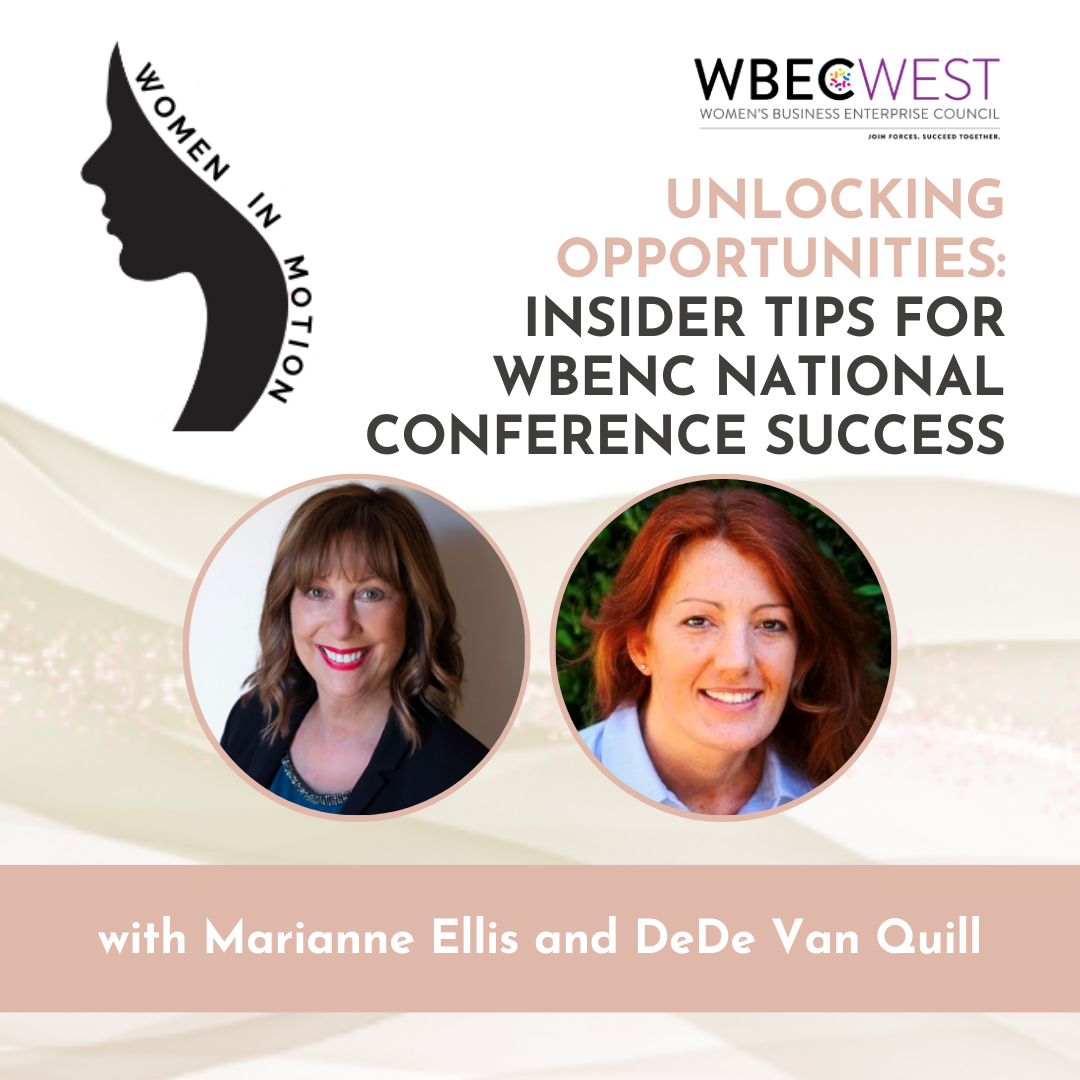
Unlocking Opportunities: Insider Tips for WBENC National Conference Success

January 30, 2024 by angishields

WIM-Feature-Marianne-DeDe
Women in Motion
Unlocking Opportunities: Insider Tips for WBENC National Conference Success
Loading
00:00 /
RSS Feed
Share
Link
Embed

Download file

In this episode of Women in Motion, Lee Kantor and Dr. Pamela Williamson host Marianne Ellis and DeDe Van Quill, both of whom have been national host committee representatives for the WBENC National Conference. Marianne, CEO of CEO Success Community, shares her past experiences and the strategic advantages of the conference for businesses looking to connect with Fortune 500 companies.

DeDe, owner of Image Projections West, discusses her current role and the positive impact the conference has had on her business. The conversation covers the importance of preparation, effective networking, and follow-up strategies for conference attendees. The speakers also touch on the value of workshops, the balance of business and enjoyment, and the support of women in business.

DeDe-Van-QuillDeDe Van Quill purchased a controlling interest in IPW in 2021. The company was struggling to recover from the huge blow delivered by the global pandemic.

When the country began to work from home, the toner cartridge industry was hit especially hard. Yet, even in a shrinking industry there is always room for growth.

With a combined 30 years of experience in the paper, packaging and toner industries, DeDe identified avenues for untapped potential within the industry.

In addition to running a small, International non-profit organization, she has been working on the development and implementation of a 10-year business plan, hatched collaboratively with her husband, to regrow and reinvigorate the U.S. toner remanufacturing industry via acquisitions and inter-industry collaborations.

IPW was a fantastic fit as part of this plan. Since purchasing the remaining shares of IPW in early 2022, from the last remaining founder, DeDe has been able to gain traction within the industry. As a result, IPW has been able to retain all of our employees as well as our beautiful, Denver, manufacturing facility and are now poised for dramatic growth!

Marianne-EllisMarianne Ellis is a renowned leader in advertising, marketing, business coaching, RFPs and business development for over 25 years, averaging over $100 million in new billing growth in less than 2 years for two different national advertising agencies, DDB Worldwide and Quigley-Simpson.

Marianne held EVP, SVP, COO level positions at network and independent national advertising agencies. Her award winning, successful advertising campaigns gained her acceptance to The Television Academy and she enjoys attending The Emmy’s.

Marianne has both sell side and buy side experience as a Senior Partner at External View Consulting where she ran RFP reviews for Fortune 500 companies.

Currently, Marianne is CEO of VEO Group, working for Fortune 500 companies, Women’s Business Enterprise National Council (WBENC) and WBENC Business Owners helping them grow their brand and their business. She is the author of WBENC 5 Secrets to Meeting Success, a Platinum Supplier Program Developer & Trainer as well as a past mentor Ambassador. VEO Group is a Certified Women’s Business Enterprise (WBENC).

To advocate for small diversity business owners, Marianne started CEO Success Community, a division of VEO Group, to grow companies from under $1million to $20million+Value in a membership based model.

With 95.8% of small diversity firms not breaking the $1 million-dollar mark, there is a tremendous need to provide coaching to help these firms reach the next level. Marianne is using her proven experience as a current business coach at SCE EDGE Program to help rising suppliers.

CEO Success Community offers two products: Sales Accelerator and Entrepreneurial Flight to $20million+ Value (vetted by Harvard, WPO-Women’s President Organization and co-creating with vNacelle) on our new tech innovation “The Everything Platform”.

Marianne is a graduate of UCLA Anderson MDE program and Startup School 2018-Silicon Valley run by Y Combinator (the Harvard of Startups) who has invested in Dropbox, Airbnb, Reddit, DoorDash, Weebly and more with a combined valuation of companies over $80B.

Proud to be the CEO Emeritus on UCLA Alpha Chi Housing Corporation, Member of Santa Clara Women100 Foundation, Saratoga Foothill Club, past Executive Board Member of YWCA GLA. A two-time graduate of UCLA, UCLA Anderson and UCLA BA.

Connect with Marianne on LinkedIn.

About our Co-Host

Pamela-Williamson-WBEC-WestDr. Pamela Williamson, President & CEO of WBEC-West,  is an exemplary, dedicated individual, and has extensive experience as a senior leader for over twenty years.
She has served as the CEO of SABA 7 a consulting firm, overseen quality control at a Psychiatric urgent care facility of a National Behavioral Health Care Organization where she served as Vice President and Deputy Director,and has served as the CEO of WBEC-West, since 2008.

Her extensive experience in developing and implementing innovative alliances with key stakeholders has enabled the organizations to reach new levels of growth and stability. Her ability to lead and empower staff members creates a strong team environment which filters throughout the entire organization.

She takes an active role in facilitating connections between corporations and women business enterprises and sees a promising future for WBENC Certified women-owned businesses.

Dr. Williamson holds a Doctorate in Healthcare Administration, a Master’s degrees in Business Administration, and bachelor degrees in both Psychology and Sociology.

Connect with Dr. Williamson on LinkedIn.

Music Provided by M PATH MUSIC

This transcript is machine transcribed by Sonix

TRANSCRIPT

Intro: [00:00:07] Broadcasting live from the Business RadioX studios. It’s time for Women in Motion. Brought to you by WBEC West. Join forces. Succeed together. Now here’s your host.

Lee Kantor: [00:00:26] Lee Kantor here with Dr. Pamela Williamson. Another episode of Women in Motion, and this is going to be a good one. It’s brought to you, as always, by WBEC West. And today’s topic is the current and past National Host committees of the WBENC National Conference are here to discuss what brought them to that role and what their businesses are. Dr. Pamela, you got quite a crowd today. Can you talk a little bit about them?

Dr. Pamela Williamson: [00:00:54] I can, Lee. Thank you for teeing it up. So last week we talked about the national conference and there were so many things to unpack. I thought I would bring two amazing women on the show today, both who have, one who was the past WBENC National Conference host committee rep for WBEC West. And the other is the current WBENC host committee rep for WBEC West. Try saying those two things.

Lee Kantor: [00:01:24] I know that’s a lot.

Dr. Pamela Williamson: [00:01:25] So I am so excited to have Marianne Ellis. She was last year’s rep for WBEC West. And we also have DeDe Van Quill, who is this year’s National Host Committee rep for WBEC West. So ladies, I’m going to ask each of you to start off by introducing yourselves and telling us a little bit about why you you chose to be a host committee representative for WBENC. And Marianne, let’s start with you as our past one.

Marianne Ellis: [00:01:55] Sure. Well, actually, I’m kind of sad going into, uh, Denver, the the WBENC West national trade show. I have to give up my crown and turn it over to DeDe. So I’m going to miss not being on the National Host Committee. It was an amazing experience. Uh, my introduction Marianne Ellis, CEO and co-founder of CEO Success Community. And this conference is perfect for us because our business is all about being the source for women and diversity business owners seeking contracts with fortune 500. So those are the buyers. Those are the individuals coming to conference to look for new suppliers that they can meet with, potentially invite to RFPs, potentially give them purchase orders. So this is a perfect trade show for our business and part of why it was created as background. I’m an expert in advertising, marketing and business coaching and RFPs. I’ve helped multiple business owners, so if you like to make money, close over $100 million in new billing growth in less than 18 months. So if you like money and you like it fast, I enjoy helping you. I also have a unique perspective. I’ve both been on the sell side where I was trying to win corporate contracts, as well as on the buy side, working with companies like Porsche 23, Andme, Panda Express, Brown-Forman, the liquor company in a $16 billion spend pool. I really this is my world and I love it. So that’s a little bit about the company. We do work for clients like we back west, so I’m very pleased to have them as a client as well as we bank uh C, PG and E, CDW and more. My last thing I would share with you or the listeners is I am thrilled to have been an Amazon number one best selling coauthor in a book, Women in Business Leading the Way, and a two time winner for WBE advocate of the year.

Marianne Ellis: [00:03:43] And WBENC back Westworld and also, um, went to the Emmys a week ago. So you can ask me who I met, and I can tell you about my green dress that malfunctioned, but that’s another time. Um, so going on to National Host Committee, it was a huge honor to do that. It was in Nashville. It was March of 2023, and I did it for three reasons. One, because I was thrilled to represent we back west. So there are 14 members on the host committee, and they represent the 14 regions of the United States. And together, this was the first time that we bank ever did this. They had one representative per region. And so I was thrilled to represent my region. We are the best in case anyone’s listening. Um, and then the second reason why I did it is visibility for the company. I think when you put your company out there in leadership positions like that, that is, it says a lot about your company, your willingness to volunteer, your willingness to help run a conference of this magnitude and size. I also did it because I wanted to create relationships across the country. I have clients from New York and Boston and Chicago. I do business consulting and coaching coast to coast now internationally. Um, but so I did that also to expand my geographic. And most of all, I did it because I just I just love WBEC West and I enjoy being a woman business owner in this group. So I will turn it over to Dede. Take my crown. Dede, you get it? Now it’s your turn. Enjoy Denver, but I’m here for you.

DeDe Van Quill: [00:05:21] Oh thank you so much. Oh my gosh, those are huge shoes to fill. Um, I don’t, uh I, I don’t even know where to start with that, but, uh, I will say I am, I am, I am, um, the owner and president of Image Projections West. We go by I w we are the largest remaining manufacturer. Remanufacturer of toner cartridges. Uh, left on US soil. Uh, everybody probably aware that manufacturing in the US, across all industries is being decimated, has been decimated and is going away. And our industry is no different. There used to be thousands of manufacturers in the US, and we are down to less than a dozen, and we are the largest remaining there is. There are others outside of the US, but I’m I’m proud to own the largest. I’m, um, really proud to be in manufacturing. There’s precious few women business owners in manufacturing or seem to be appearing, you know, out of the woodwork more and more, which I’m loving and I’m totally in support of that. Um, we attended for the first time in Nashville and it was such an amazing experience for us. The WBENC conference, uh, really opened our eyes to so many things. It, uh. I think we fed off the energy, the positive energy of everybody. There was really I I’ve been to a lot of conferences, you know, a lot of trade shows and really had never seen quite or felt quite so much positive energy on all fronts across the entire conference.

DeDe Van Quill: [00:07:00] It was really amazing for us as a group. Um, we had a great group with us, uh, just just for that alone. But we also were able to meet some clients that we, we hadn’t thought of as clients. We are business to business. We’re not retail. So it’s a little different for us. Um, but we really made some fabulous connections with with businesses we didn’t know existed. They didn’t know we existed. And I don’t think you can find that in a lot of other places, even other trade shows, because they’re usually so industry specific. So, um, that is really great for us. And I, when asked to serve on the host committee, was very excited to do so for the same reasons that Maryann did. It was it was, um, so great just to be a part and attend it, to be part of the planning committee and and hosting, especially in our own backyard. Our our facility is in Denver. This, uh, this coming conference will offer us the opportunity to give tours to some of our large customers that will be in attendance and some potential customers. We’ve never had that opportunity before, especially coming off of Covid. And lots of people still weren’t traveling. So. I just, um, though it’s just been really amazing to be involved with this group. I’ve been inspired by all the women serving on the conference panel.

Lee Kantor: [00:08:21] So now, DeDe, can you share a little bit about, um, like, what are some of the things that you’re doing in this role?

DeDe Van Quill: [00:08:31] So, um, other than, you know, um, PR and marketing, we are, um, helping to. Uh, get the word out about attending about the, the, um, the benefits that each business owner themselves can gain from just just simply attending, not even exhibiting. But, um, we are, um, offering mentorship to, to women who are just coming into the, the conference and, um.

Lee Kantor: [00:09:04] What are some of the things that you’re like hearing from the the people you’re talking to? Is this something that they aspire to go to at some point, and they just haven’t gotten around to it yet? Like, what are some of the things that they’re asking you?

DeDe Van Quill: [00:09:20] Uh, yes. So I’ve spoken to several women business owners, um, over the past couple months that, uh, hadn’t really even thought about attending because they didn’t know how they would go about, you know, setting up a booth and doing a trade show or what, what what it could accomplish for them, and just being able to share our experience from last year, being just an attendee and exhibitor, um, to now serve, serving on the host committee and getting all of the more detailed insight, information about really how much opportunity on so many different levels there is. It’s just, um, it’s been amazing to be able to share that. And I know that three of the women that I’ve spoken to have are, are now attending. When they had asked me about it, they hadn’t planned on attending.

Marianne Ellis: [00:10:06] One thing I can share with everyone that’s listening is having gone through being on National Host Committee and realizing this now. Um, it really begins. First you need to listen to your RPO leaders. So I began by listening to what doctor Pamela Williamson, what sort of her hopes and dreams, what her expectations were for the conference, because you are a representative of your region. So that’s sort of step one. If you’re on National Host Committee, step two is then you get to engage weekly with meetings with Webbank, which is the national organization. Pam Prince Isom, the CEO of the organization, is on these calls. You get a chance to meet her leadership team. And so you are there week after week. And so Deedee is going to feel this the build up. As the conference gets closer and closer, you’re hearing the decisions that are being made. You’re sharing information back because Pamela is also in with all the CEOs having their meetings. But this is now at the business owner, the WBE level. We’re sharing with all the regionals, um, reps and talking with Webbank leadership. Um, you’re also excited because you get to hear about the Webbank stars. So these are the featured business owners. So there’s a relationship between the stars and the host committee. I also learned a lot about leadership, just sitting on these calls and watching how these different National Host Committee members, you know, whether they were in DC or, you know, coming out of the South, you know, just their leadership style, how they were running things and what they were doing. Um, and then, of course, when you’re on site, you feel like the information booth. So, DeDe, prepare yourself. Someone’s going to say, yeah, we’re wondering why is it taking a while to get to lunch? And then they’re going to go, oh, well, ask DeDe. She’s on National Host Committee. So there were a lot of people that were pointing to me. That might be one part of the crown I might not miss. Um, but you really are a a concierge a bit when you’re there because you know a lot, and you can help a lot.

Lee Kantor: [00:12:10] Now, when you got into this, it sounds like Marianne, you were very strategic. Like you weren’t looking at this as, okay, I have this role. I’m going to obviously that’s table stakes to execute the role as defined. But to really wring out as much value as you can for WebEx West and yourself and your firm, you you seem to have looked at it very strategically. Can you share some of those strategic tips to really wring out the most value?

Marianne Ellis: [00:12:37] Let’s see. Do I really want to give away my secrets? Lee? I mean really? Okay, I’ll give it to you. Just to the listeners. Um. One. I made sure that we back west shined on every single one of the national calls. And I think it was really important because this Pamela, her leadership and Jamie Lomax and all the great team at we back west, you know, I was saying, and this is what we’re doing here, and I saw some of the other RPOs go, hmm, what a good idea. So I think one strategic thing that I felt was important was, you know, be a good senator, be a good Congress person, you know? So I felt like that was one sort of strategic move. And then for the company, I also wanted to make sure that the again, so I welcome everyone for going into Denver CEO Success community where booth number 1615. So write that down and come by and say hello. Um, I felt that I needed to do a good job articulating the company, what we did, how we could be of service to other business owners and other corporations. So both for who I was representing and then also having a secondary role for the company. So I felt like there was sort of two hats I was wearing.

Lee Kantor: [00:13:53] Is this helpful, DeDe?

DeDe Van Quill: [00:13:55] Oh. Tremendously helpful. Yes. And? And I’m taking notes.

Lee Kantor: [00:14:01] Now, obviously, um, protecting the brand of WBEC WEst and protecting your own brand is important. Um, what are maybe some of the benefits that, from the business owners perspective, that they may not it might not be obvious. Um, like, like you mentioned earlier, some people felt like, oh, if I have to have a booth in order to really get as much value as possible. But, um, I heard you say that just attending you can get a lot of value. So for the people who are just attending, um, any advice for them to wring out as much value as possible?

DeDe Van Quill: [00:14:37] And from my perspective, um, if if you’re attending, go with a plan. Um, but don’t be married to the plan. So go with a plan of who? Who are you looking to see and get, you know, really get in front of what is your goal when you get in front of them and be open to getting in front of people you hadn’t, or businesses you hadn’t thought of as maybe even in your demographic and and sharing with them. Because the more you share, the more connections you make, even organically, you can be connected through two other people that you spoke to, to your potentially next biggest client.

Dr. Pamela Williamson: [00:15:17] My question is, there are so many women business owners who are hesitant to go to the conference for their first time. You mentioned earlier that last year was your first conference. I’m curious if you have any advice for those people who are kind of on the fence about going or not going?

DeDe Van Quill: [00:15:38] Um, I would say I can’t imagine it not being a huge benefit to your business to attend and and to to go and exhibit or at least attend a I it again, just just feeding off the energy and and being around other women business owners gives you ideas and sparks creativity that you didn’t even know you had. But on top of that, um. It really is such a great. Um. I don’t even know how to put this cohesive. Function every. Event that I attended, it was everybody was there for the same reasons. And even if even if you were speaking to somebody who was like completely, you know, not. Within your realm of business knowledge. There was something to be gained just from those conversations and being around the energy and and picking other people’s brains for ideas, you just you can’t predict the connections you’re going to make and what that’s going to spark for your business.

Marianne Ellis: [00:16:46] I would say I was going to say going to this conference, I think is a game changer for your business. And I think you can go at multiple levels and I would say start slow, so attend, don’t Booth, then go to the next level. And Booth, you know there’s different levels of attending unless you’re ready to booth right out of the gate. Um, but I would say that what’s so important is this is a real opportunity to have conversations in a safe space. And what I mean by that is, I have a phrase in coaching that I use that’s called suspect versus prospect. Suspect is somebody that I think will do business with me. Prospect is somebody who will do business. Maybe not today. Maybe the buy cycle is two years out. But I think it’s important to have conversations about, you know, is this the right prospect for me? What are your minimum qualifications? Who’s your current incumbent? This is a chance for you to learn a lot and listen. There’s workshops. There’s other ways you can learn from. And I also think that this is a chance when you go to the different trade show booths, they’re going to tell you really quickly, are they going to grant you a capability meeting, move your company forward or not? So, you know, don’t worry about the yes and no. It’s sort of like the Harry Potter Sorting Hat. We need. You all fit into some house. We just need to figure out what the right house is, and we need to connect you so you’re not wasting your time and your money. The other thing I would say is, um, we back west and I’m not paid by Pamela does a great job, so nobody feels alone. They have a great group me app so that if someone wants to say, hey, I’m going to the Starbucks for coffee, join us, or hey, who wants to join me for dinner? Um, really? This group goes out of their way so that no one feels alone at this conference.

Lee Kantor: [00:18:39] DeDe, are you finding that is that, uh, maybe a fear that some people have that they’re going to be by themselves? They don’t know a lot of people, and they’re going to be overwhelmed because there are so many people that if you walk into that room, you feel like everybody knows everybody, and you may not know anybody. So is there an effort to, you know, help a person network and to meet some folks if they feel a little uncomfortable?

DeDe Van Quill: [00:19:03] Uh, definitely. And I will tell you, I was one of those people. I took a group of four with me to Nashville, and, um, I kind of always feel like that was always a wallflower, but, um. So I’m definitely. And, you know, I didn’t even know about the GroupMe app, so I’m, again, taking notes on that. That’s fabulous. Um, but we literally we were constantly having conversations. That’s how well-attended this conference is. We were constantly having conversations with people. You you were, um, making contacts. We we didn’t know any of the people in the booths or the attendees coming by our booth for the first two days. And we had lunch with with almost everybody in our section by the by the end of the conference, I people won’t let you feel alone. So don’t be worried about that because you won’t. You won’t get to be alone if you want to be so.

Lee Kantor: [00:19:57] Is there? Um, is there any, uh, tips, Marianne, maybe you can share on kind of maximizing your time with those enterprise level organizations to get the most out of that?

Marianne Ellis: [00:20:08] Well, the first thing I would say is, as a business owner going to conference, the whole conference organizes itself by industry group. So let me quickly for the listeners, say what those industry groups are, and then you can say, ah, that’s my those are my people. So they organize by automotive, chemical, energy, financial services, food and beverage, health care, insurance, manufacturing. Ding ding ding. There you go. DeDe manufacturing and construction, professional and technical services, retail and a few more. Travel, arts and entertainment is one group and utilities. So those are the groupings that they have for the workshops. That’s how they group all the booths together for the trade show. So all the utilities are together, all the automotives are together. So the first thing I would say is take a look and see. Where are most of your clients coming from right now? Who seems to gravitate towards your company? Who are the clients that you have? What industry are you servicing the most? And then the other tip I would give everyone is, if you’re listening, I don’t know when this airs, but we Back West does a great job, led by Jamie Lomax of a boot camp. And it’s not too late. There’s another boot boot camp session on the 1st of February. It’s all on the way Back West event website. And then I think there’s one more session, but it’s really important that you get some training before you go and that you create this plan that DeDe said. And the plan could be as simple as, what are the six companies you like to meet during the meet and greet session? There is a session on Thursday where there are round tables, and you get to pick six different corporations that you’d like to sit at their table.

Marianne Ellis: [00:21:55] There’ll be a couple of corporates and eight other WBS, and then they have 25 minute sessions where you get three minutes to introduce your company to that corporate. So at the very least, think about the six possible tables you’d like to sit at. And because like musical chairs they can fill up quickly. I always say have some extras, but pick those companies, pick those prospects, do your homework, know your company, how can you best serve, and then go and have some fun. Prepare materials. Prepare your capability statement. They may not want it, but it will give you an anchor point to speak from. Some people bring iPads you know, and speak to an iPad or others. Bring postcards that are smaller with their conference offer on it. So there’s all kinds of tips and tricks on how to do this. But I would just say, come be yourself and be open and take lots of notes and be sure to follow up. That would be the number one thing. Lee. Um, according to the National Sales Association, about 50% will go to this conference and do nothing when they get home. Don’t be that 50%. Please have a game plan for when you get back to follow up.

Dr. Pamela Williamson: [00:23:06] And Marianne, what I what I’d add is that when you talk or debrief with the corporation, or at least when I do, one of the top things that they say is people don’t follow up. They met someone great at the trade show floor. They gave them their card. They told them to give them a call and they never called them back, which is such a missed opportunity.

Marianne Ellis: [00:23:25] Yeah, it’s it at 50% is a big number. So you know what that says. Be the 50% that do.

Lee Kantor: [00:23:32] Now, how do you recommend following up. Because I know a lot of people, they go through these things. They meet a lot of people. And in their head they’re like, oh, well, I didn’t follow up right away. So now it’s weird. And they start, you know, kind of coming up with reasons not to follow up. And then days are going by. What’s an elegant way that you found to follow up if it, you know, you didn’t do it right away.

Marianne Ellis: [00:23:53] It’s never too late to follow up. One if you have a very strong product or service. Number two, I think that at the end of every conversation, discipline yourself and start practicing with your staff members before you go. Like, pretend like they’re a corporate that you want to meet with or a WBE you want to meet with in practice. But before you say goodbye, um, say I just want to confirm. Would you like me to follow up in a week, a month, six months? You know, what’s the cadence here for what you need and how? And I’ve been surprised about the how. Some have said Marianne, here’s my email address. Don’t use the info at da da da. Here’s my personal email address. You know, meaning personal company email address. Thank you. Others have said, you know what? My inbox, my email inbox is flooded. Let’s talk on LinkedIn messenger. I’ve closed contracts on LinkedIn messenger, as crazy as that sounds. And um, so I you need to listen and ask is my recommendation. Um, and really just it’s sort of. Like when you first meet a friend, you know, when do you want to get together for coffee again? And how do you want me to connect with you? So there’s multiple channels of what people want. Um, some people will actually give you their personal cell and say, text me when you send your email. I mean, that even sounds crazy, but it’s a it’s a range. And I think first and foremost ask.

Lee Kantor: [00:25:16] So you ask and you ask how? And then.

Marianne Ellis: [00:25:20] Yeah, ask and ask how did.

DeDe Van Quill: [00:25:24] Oh yeah, I totally agree. I, um, I also agree that, um, maybe even make the plan for follow up before you go to conference. So who’s going to be handling, um, what what segments or who’s going to be emailing, who’s going to be calling and divide the tasks up amongst your staff if you if you have that capability. Um, that worked really well for us last year. Um, we will do the same thing again this year. And, uh, I yeah, I can’t impress upon you enough to have a plan and be prepared, but just exactly like Marianne said.

Marianne Ellis: [00:25:58] Another way to look at it too is so some companies, they have their top ten or their top 20, depending on how many people they’re bringing to conference. That really impacts how many you can reach. But one business owner and CEO successfully said in Nashville, she made she had 38 meaningful conversations. And I thought, wow, now that’s that. That’s probably a pacesetter. But, um, there are a lot of people that say, if I have five conversations that will get me business 3 to 5, I’m thrilled. So you’re going to get a range of expectations and responses. But I would say talk to a lot, but really look for those key quality opportunities that are going to create relationships, that are going to create revenue.

Lee Kantor: [00:26:43] And it sounds like both of you agree that you just can’t go in there and think you’re going to wing this and just kind of wander around and hope you find the person with the golden ticket. You have to be strategic. You have to go in with a plan and have almost a list of people. These are the people that I would like to meet. These are the people that I must meet and then have some plan to follow up after you’ve met them.

Marianne Ellis: [00:27:07] I think that’s how you guys.

DeDe Van Quill: [00:27:10] Yeah, I totally concur. I do say though, if you’re one of those people who, like, cannot make a plan, I know one of those people and that it is also okay, especially if it’s your first time. Just go and wing it but go.

Lee Kantor: [00:27:25] Now, uh, DeDe, you mentioned going um recently for the first time. Was there something that struck you as wow, how did I not know about this or wow, I wish I would have done this before. Were there some moments that you were like, kind of just in awe of what the event is?

DeDe Van Quill: [00:27:44] Uh, absolutely. Um, one it is it is truly a major show. It is, it is a major. I I’ve attended some really big manufacturing, has some really big conferences, um, across the US, Canada and Mexico. And, and this would be considered a major show and, um, it they, they know what they’re doing. Um, I’ll say we but I again, first timer this year on the, on the host committee. They know what they’re doing. They they have planned it out super well for your success as an attendee, as an exhibitor, they they are setting this up so that everybody who comes will be successful. Um.

Lee Kantor: [00:28:23] Now, what about the just being in a room filled with women that are making things happen? Like, was that kind of inspiring for you?

DeDe Van Quill: [00:28:33] I personally totally fed off the energy in in each and every room and every event that I attended. I cannot tell you or name any other conference or trade show that I’ve ever been to that felt that way across the board and where I felt inspired and um, and sparked and incented to do more for my company and for others to help make connections for others that I met.

Marianne Ellis: [00:29:07] I loved listening how other business owners introduce their company, and that brought me a lot of joy. And it was really fun because there’s such a range of the way introductions happen. Um, some were very serious, some were with a smile, some were with a twist. And I think that there is a big part of this conference where you can be inspired, but if you open your ears, you can really listen and learn. And then there are some that are really experienced at trade shows and you can watch them. I call them the Barracudas. They hit that floor and they know exactly what they’re doing and they’re going for it. And then there are others that we’re still getting our sea legs or we’re still getting the train. We got to take the training wheels off a little more. But, um, you know, it’s very I think Deedee has the right word. It’s inspiring, you know, no matter what level you are in this. And then everyone is so kind. Especially when someone says, this is my first trade show. Everyone’s like, hug you. Okay, how can we help you? Who are you looking for? I mean, yeah, there’s some of us are competing against each other, but it really seems like that’s left at the door. There seems to be a real I don’t want to say sisterhood, but there seems to be a real spirit of. I guess it’s the webbank West Coast hook a sister up. I think that Jamie Lomax coined that phrase. It came from way back West. But there is a real spirit at the national trade show and I and it will be there in full force. I know it will in Denver.

Lee Kantor: [00:30:36] Now, we talked a lot about the networking and the business opportunities there. Um, and you mentioned kind of informal learning. What about the formal learning and the workshops and things like that? Did you find a lot of value in that?

Marianne Ellis: [00:30:51] I did, I take I always go to the workshops of the prospects I’m looking to do business with. So, um, I’ve done that’s.

Lee Kantor: [00:30:59] One of those pro tips that you just snuck in there.

Marianne Ellis: [00:31:02] And not only do you have a chance to, um, not only do you have a chance to learn more about the industry, but it’s timed nicely. So the workshops happen before the first round of trade show and before the second round of trade show, so that the first step is a workshop. So listen in and hear what your corporate prospects are saying are their pain points. What’s going on? I mean, obviously you’ve done your homework. You’ve looked at their websites, you’ve read their news, recent news before you go, but this is kind of your last check in. And then you can also quote what you just heard when you get to the trade show booth and talk about how you are part of the solution.

Lee Kantor: [00:31:42] Did you get that, DeDe? That was good stuff.

DeDe Van Quill: [00:31:45] Again. Writing notes. Oh, my gosh, I’m such a novice here, I just. I should have been picking Marianne’s brains for all these months now.

Marianne Ellis: [00:31:54] Oh, happy to help. Happy to help. I really love what I do, and so much of it comes from. And I’ve shared this story before. I would not have CEO success community had I not been working for another woman business owner. I was at the Baltimore conference. I was about to go into a matchmaker meeting with Pfizer. We wanted pharma business, and there was a woman crying on the couch, and I had a choice take the meeting with Pfizer or see what the crying woman wanted that went over to the crying woman. Her, um, her father had passed away, her mother was sick and she did not know how to do a trade show, and she certainly didn’t know how to do a matchmaker. And she had bombed hers, and she was ready to go home. And I said, no, no, no, don’t go home. Tell me about your company. So I’ll keep her information private. And a little cocktail napkin. I said, give me. We’re going to have three bullet points of what you could say about your company. And so I said three bullets and two cues, two questions. And we cleaned up her makeup. She went. And the next meeting she had with the corporate, she then had the corporate asked for a capability statement, which went on to a contract. And that’s how I pivoted into this business. So yay! Hahaha.

DeDe Van Quill: [00:33:02] Oh that’s tremendous.

Lee Kantor: [00:33:04] Now we talk a lot about the, um, the business part of this, but there’s still fun to, um, how do you kind of, um, make the fun business y or do you or do you separate and say, this is fun time and I’m not, you know, I’m not wearing my business leader hat.

Marianne Ellis: [00:33:21] Someone will throw a shoe at you. And I’m sure Pamela will agree and may want to speak to this. Um, you have got to know when to let it go. And at night, when everyone is tired and you know it’s going to be a roaring 20s night, and then there’s going to be ski lodge night, you’ve got to drop it. You know, that is not a selling opportunity. You’ve got to have fun and get to know people on a personal level. And if they ask you about your company, fine. But that’s social time and that’s fun time. And we’ve got plenty of hours on the trade show floor, plenty of hours at the meet and greet. I, you know, I’ve seen WBZ make mistakes chasing corporates in the bathrooms and, you know, stalking them. Just please, if you’re listening to this radio, please don’t do that. They’re human beings too.

Lee Kantor: [00:34:08] DeDe, is that your philosophy as well?

DeDe Van Quill: [00:34:11] Uh, yes. And I did notice that, um, in Nashville, the the functions, the after hours functions, they felt they felt they were filled with fun and had something for everyone. And it did not feel like a, you know, a corporate Christmas party even. It felt like, okay, this is time to let your hair down and and really relax and just talk to people, to talk to people.

Lee Kantor: [00:34:39] It’s all about the relationships. Right. And these are a variety of ways to build relationships with people. And there’s an appropriate way at certain times and, and not so appropriate way. So when you’re in that environment, you know, behave accordingly.

DeDe Van Quill: [00:34:54] Precisely.

Lee Kantor: [00:34:56] So, um, now, DeDe, uh, what could we all be doing to help you get more, uh, folks at this conference? What kind of help do you need from us?

DeDe Van Quill: [00:35:07] Well, I think, you know, I think just raising the awareness that it’s there, that it is it is a fabulous conference that really benefits everybody who goes attends exhibits. However they however they plan to be there. Um, but that it it. It will be, um, at least outlook changing for them. At the very least, it will change their outlook and their prospects to attend.

Lee Kantor: [00:35:33] And then, um, for your business IPP, what is that ideal client look like for you? And, um, how can we help you, um, meet more of them?

DeDe Van Quill: [00:35:43] Um, well, our ideal clients are, uh, redistributors of our product. And so we we actually have made connections through, uh, we bank at Nashville to some of them, but, um, just raising the awareness that there is a difference. And there is, uh, products like ours being remanufactured within the US and that they are more environmentally friendly because they’re not being shipped out of the country and rebrand being brought in and, and all of those great things. But that also, um, to look to support us manufacturers, um, across all industries.

Lee Kantor: [00:36:22] And Marianne, what can we help, uh, do to be helping you with CEO success community.

Marianne Ellis: [00:36:28] Mm. Okay. So there’s a corporate ask and then there is a CEO individual business owner ask. So for the CEO individual ask, I would say that, um, we are at CEO Success Community. We are on a mission. According to American Express, only 3%. The last time they did this study, um, only 3% of all women business owners get over a million. And that’s pretty small. And I think women business owners are pretty phenomenal. So part of what our coaching is, is about growth and accelerating to 20 million plus. And so I think any business owner that’s interested in growing or interested in talking to you and for the corporations, we have a lot of workshops and programs. We are absolutely thrilled that we were featured. Ceo Success Community was featured this year in the Billion dollar Roundtable Economic Global Report. For our RFP to the Win program, we are trying to help more diverse business owners, um, win and do better with RFPs. And we were sponsored by PG and E and featured by PG and E. So, um, if corporations would be willing to sponsor more business owners in our programs or business owners were interested, that’s a win win. But and and I would say at minimum come by booth 1615. If I can give you one piece of advice to help you at the conference, no charge, just to help. I’m there.

Lee Kantor: [00:37:52] And then, uh, the website.

Marianne Ellis: [00:37:55] Oh, um, CEO success community.com

Lee Kantor: [00:37:57] And your website?

DeDe Van Quill: [00:38:01] Uh, YP Usa.com good stuff.

Lee Kantor: [00:38:06] Pamela. Man, this was, uh, a lot of tips today.

Dr. Pamela Williamson: [00:38:12] It was a lot of tips.

Dr. Pamela Williamson: [00:38:13] I took a lot of notes. I hope everybody who’s listening also took some notes. But I think the one key thing for those people who haven’t attended a conference, just do it. Just go. Just experience it. Um, I loved what Marianne said around, you know, just start with a plan. And the plan doesn’t have to be complicated. It could just be as simple as, I’m going to meet three new people or three new corporations, or talk to five people. It doesn’t have to be a big, elaborate plan. But, you know, DeDe, I think you said it best when you said that if you attend, it will definitely change your outlook. So thank you guys both for joining us today.

Lee Kantor: [00:38:53] Yeah. And then so much for having us. And then the event is um, do we have the date and all that for the event somebody. Yes.

Dr. Pamela Williamson: [00:39:01] Uh, the conference this year for the Webbank National Conference, the theme is amplify. It is going to be at the Gaylord Rocky Resort and Convention Center in Denver, Colorado. It kicks off on March 19th and will end on March 20th 22nd. Just as a reminder, if you are part of the WebEx West family, we are having a pre event on March 18th, so I hope to see everyone there.

Lee Kantor: [00:39:26] Good stuff. Well, thank you all for sharing your story. You’re doing such important work and we all appreciate you.

Marianne Ellis: [00:39:34] Thanks for having us.

DeDe Van Quill: [00:39:36] Thank you.

Lee Kantor: [00:39:37] Alright, this is Lee Kantor for Doctor Pamela Pamela Williamson. We’ll see you all next time on Women in Motion.


Tagged With: IPW, VEO Group, WBEC-West

Women-Owned Businesses: Why Do They Matter?

June 7, 2023 by angishields

Women-Owned-Businesses-Why-Do-They-Matter-feature
Women in Motion
Women-Owned Businesses: Why Do They Matter?
Loading
00:00 /
RSS Feed
Share
Link
Embed

Download file

In this episode of Women in Motion, hosts Lee Kantor and Dr. Pamela Williamson talk with Vaughn M. Williams III, Principal Supplier Diversity Advisor for SoCal Gas Company, about their supplier diversity program and how they serve underserved groups, such as women-owned businesses. Vaughn shares advice for potential suppliers and tells a success story of a woman-owned business that he mentored and helped grow.

Marianne Ellis, CEO and Founder of CEO Success Community, also joins the conversation to discuss the importance of women-owned businesses and shares her own success story of coaching a woman-owned business to win a contract with a utility company. The show emphasizes the importance of investing in underserved groups and building relationships with corporations and fellow women-owned businesses.

Vaughn-WilliamsVaughn M. Williams III currently serves as the Principal Supplier Diversity Advisor for SoCalGas Company. In this capacity he is responsible for ensuring the advancement of small, minority and underrepresented businesses.

This position coincides with his passion of service and economic development. Previously he served as Category Manager for Southern California Gas Company (A Division of Sempra Energy), his responsibilities included management of all staff augmentation, contracts negotiation and management, fostering long-term client relationships in the areas of engineering, food services and Human Resources.

Prior to assuming this role, Vaughn worked as the On-Site Client Services Manager (Sempra Energy Utilities) under the auspices of AgileOne Vendor Management Solutions. He was responsible for the management and integrity of all data utilized under the Vendor Management Tool (Acceleration VMS).

While based in Los Angeles, the Sempra Energy Utilities Account covers all of Southern California to include San Diego and San Luis Obispo.

Connect with Vaughn on LinkedIn.

Marianne-EllisMarianne Ellis is the CEO/Co-Founder of CEO Success Community–the source for Women & Diversity Owned Businesses seeking Corporate Contracts with Fortune 500 companies. Our mission is to show CEOs the fastest path to increased revenue and growth.

We are a CEO Community membership offering the following business tracks: Get To The Buyer, RFP/Proposal To The Win, Business Innovation, Sales Accelerator, Virtual Conference Maximizer, Business Succession Planning and more. We are proud to have coached thousands of Diversity CEOs.

Major Corporations hire us to coach their Rising Suppliers like SCE, CDW and Martin Harris. Diversity Associations WBENC, WBEC-West, WBEC-Pacific, NAWBO, count on us to run their signature workshops sponsored by IBM, Bank of America, UPS, T-Mobile, Walmart, Accenture and more. CEO Success Community was built on a successful sales practice that averaged more than $100 million in new billing growth in less than 18 months.

We have both sell side and buy-side experience running Fortune 500 RFPs.Marianne is an Amazon #1 Best Selling Co-Author-Women In Business Leading The Way, Member of the Television Academy—annually attending The Emmy’s, Nominee LA Times Inspirational Women of the Year, Two-time Winner WBE Advocate of the Year, Community Impact Award and sought after speaker.  

Connect with Marianne on LinkedIn.

About our Co-Host

Pamela-Williamson-WBEC-WestDr. Pamela Williamson, President & CEO of WBEC-Westhttps://wbec-west.com/,  is an exemplary, dedicated individual, and has extensive experience as a senior leader for over twenty years.
She has served as the CEO of SABA 7 a consulting firm, overseen quality control at a Psychiatric urgent care facility of a National Behavioral Health Care Organization where she served as Vice President and Deputy Director,and has served as the CEO of WBEC-West, since 2008.

Her extensive experience in developing and implementing innovative alliances with key stakeholders has enabled the organizations to reach new levels of growth and stability. Her ability to lead and empower staff members creates a strong team environment which filters throughout the entire organization.

She takes an active role in facilitating connections between corporations and women business enterprises and sees a promising future for WBENC Certified women-owned businesses.

Dr. Williamson holds a Doctorate in Healthcare Administration, a Master’s degrees in Business Administration, and bachelor degrees in both Psychology and Sociology.

Connect with Dr. Williamson on LinkedIn.

Music Provided by M PATH MUSIC

This transcript is machine transcribed by Sonix

TRANSCRIPT

Intro: [00:00:07] Broadcasting live from the Business RadioX Studios. It’s time for Women in Motion. Brought to you by WBEC West. Join forces, Succeed Together. Now here’s your host.

Lee Kantor: [00:00:27] Lee Kantor here with Pamela Williamson. So excited to be kicking off this Women in Motion show. Welcome, Pamela.

Pamela Williamson: [00:00:36] Hi. Thank you. We’re excited to be here today.

Lee Kantor: [00:00:39] And who do we have today in the show?

Pamela Williamson: [00:00:42] Today we have two amazing guests. We have Vaughan M Williams III, who is currently the principal supplier, diversity advisor for SoCal Gas Company. And we have Marianne Ellis, who is the CEO and founder of CEO Success Community.

Lee Kantor: [00:00:58] Well, welcome, both of you. Let’s start the show off with Vaughn Vaughan. Tell us a little bit about SoCalGas Company, how you serving folks.

Vaughn M. Williams III: [00:01:07] So good morning. First and foremost, SoCalGas is one of the largest natural gas utilities in North America. And we are servicing folks in a variety of ways. But in my capacity, we are serving them through supplier diversity. We are working with individuals of many minority distincts, women, LGBTQ service, disabled veteran persons with disability and minorities in general, helping them to really understand the fundamentals of business, helping them to identify opportunities in business, specifically with SoCal Gas from everything from washing a window to building a pipeline throughout the Southern California Basin. And so we are really servicing them in many capacities to afford them the opportunity to create economic strength, to create development, to generate wealth, but most first, mostly to ensure that their business aptitude is such that they can compete with some of the largest companies in the world.

Lee Kantor: [00:02:12] Now, why is it so important to serve groups like women owned businesses and all those underserved groups that you mentioned? Why is it important to dedicate resources specifically to help them, you know, enter the ecosystem?

Vaughn M. Williams III: [00:02:27] Well, I think you hit it with the lead in, which is the underserved. If you look at statistical data across the nation, you’ll see that minorities in general are the most underserved in terms of business opportunity. They can get to the front door, but they can’t always get in or they can put the key in the door, but it may not turn. And my job and my goal is to make sure that that door opens, that that table is set for them to sit at and partake amongst those who they normally would not be able to. It’s important to me personally, as a minority and as an individual from an inner city community where opportunities were not at the forefront to make sure that people have that opportunity to grow and thrive. I always tell people, somebody gave me a hand up and it is my fiduciary and my community duty to ensure that I do the same for others.

Lee Kantor: [00:03:21] So what is some advice you can give a person that wants to work with SoCal Gas Company? What are some of the primary drivers of a successful supplier for you?

Vaughn M. Williams III: [00:03:32] So a successful supplier. One understands the business of socalgas. A successful supplier goes to our annual report on the SoCal Gas website, or they go to the California Public Utilities Commission and they review the projects that Socalgas has done will do and continues to do. They understand the framework, They understand procurement, they partake in the technical assistance and training programs that we offer, and they seek knowledge even when it’s not right in front of them. They ask for that mentorship, they ask for that development, they ask for that feedback, be it positive or negative, because it can only strengthen them in terms of their growth. They actually want to work with you and they bring something to the table. They bring certification to the table, they bring their knowledge, they bring innovation, they bring the tools necessary to take our company to the next level. Because let’s face it, we don’t know everything. But what we do know is that there are suppliers out there who have a wealth of knowledge and experience that can really take us to another plateau. And so a successful supplier for me does just that. They look within to understand what SoCal gas needs are and then they create a solution to some of those needs.

Lee Kantor: [00:04:49] Now, if there’s someone out there listening that thinks they might be a right fit, is it possible to connect with you or somebody on your team to, you know, have a back and forth and really discuss ways that you can work together? Or is this something that they have to come to the table already knowing everything?

Vaughn M. Williams III: [00:05:07] No. If you come to the table already knowing everything, my job is eliminated. To be honest with you, I would really like to have an opportunity to meet with the supplier, to nurture them, to groom them, to identify ways, to help them build capacity, to help them understand what areas of need we have and how they can fit. I would love the back and forth because I consider that mentoring, I consider that development, I consider that job shadowing and I consider that an opportunity to make an impact on them, introduce them to the right purchasers or buyers of goods and services within the company. But I also consider an opportunity to establish relationships that we normally don’t get an opportunity to develop with individuals of such caliber. And so, yes, I welcome that opportunity and I embrace it primarily because it allows me to help an individual grow.

Lee Kantor: [00:06:06] Is there a story you can share? Don’t name the name of the company or the individual, but maybe explain where they were coming from. And then after partnering with you, help how you help you achieve your objectives and help them grow as a business owner.

Vaughn M. Williams III: [00:06:21] Certainly I have several, but I will just go with a company that I met 13 years ago in a hotel lobby in downtown LA. It was a woman owned business and she ran into me and she says, You look familiar. What’s your name? And I told her my name and where I worked for. And she says, Yeah, I saw you at a conference a while ago and I’ve been wanting to talk to you because we provide a valuable service that you need. I said, Really? What’s that? She said, Well, we provide sleep. I said, Well, that’s pretty generic. Can you be more specific? Well, she couldn’t at the time, but she had enough courage to talk to me. So it brought it piqued my interest and we began to talk and develop. She went through several technical assistance workshops. She learned the fundamentals of business. She learned how to introduce her business to others, which we call an elevator pitch. So she finessed it. What I didn’t know at the time was that she knew nothing about business. She just had a product. And so over time, we got her to a point where she could compete for contract opportunities. I’ll be honest with you. The first two years I knew she wasn’t going to win because we were still developing her. But by year three, she was in the game. Year four, she obtained a contract. That contract was for $6 million, which is pretty much unheard of. Most people get a $75,000 contract their first time out the gate. But she nailed it. And all of the business owners or business units, rather, were so impressed, they said, we’re going to give her a chance. And they allowed her to purchase a majority of the fleet for one of our regions. So that to me was success, because she came to me. We met not knowing anything about each other. We developed a relationship. She was mentored. She was trained. She learned the business acumen. She understood SoCal socalgas culture and needs, and she became innovative in the way she approached solutions to that need.

Lee Kantor: [00:08:19] And that’s a great lesson for the listener. Patience is an important component here, right? Like you, even if you come to the table with certain skills, you it takes a while to build the trust and to build the expertise you need to serve that specific supplier that you’re looking for. Right? Like patience is an important component. This is not an ATM machine where you just put your card in and money comes out right.

Vaughn M. Williams III: [00:08:49] Patience is a virtue, and I had to learn that myself. And I’ll tell you why. Because my first few years at SoCal Gas, I too was in procurement, and I didn’t really understand why people of minority background weren’t getting opportunities knowing that they had the skills and expertise. But what I had to learn through the hard lessons of life was that sometimes the opportunity was not uniquely designed for a particular business. Sometimes the opportunities that are before you are not the ones that will really allow you to shine and succeed. And so with being patient, you land that right opportunity, you land something that’s going to allow you to nurture yourself, to create that economic stimulus for the community that you’re serving, and it’s going to allow you to sustain. What I also learned about patience is that when you have patience, you end up in situations that create long term opportunity. Sometimes when you’re just quick to draw or you want to jump right in, you miss out on a long term blessing.

Lee Kantor: [00:09:52] Now, how important is Quebec West and other associations like that as part of the ecosystem?

Vaughn M. Williams III: [00:10:00] So for me, the ecosystem would not be complete without the bequest of the world. Because they create those suppliers. They really take the time out to nurture those suppliers. They take the time out to identify the strengths and weaknesses of a supplier, and then they take the time out to create programs that prepare suppliers for success. They prepare women who are maybe on the cusp of doing something great, but they’re missing either the financial acumen or they’re missing the knowledge, or they’re even missing that proper business plan. We Beck West prepares them for those things so that when they come to me, they are a complete package. Without those organizations, I would spend my wheels just trying to get suppliers to even understand basic fundamentals like time management, accounting, preparation, capability statement. I mean, let’s face it, a lot of people can tell you what they do, but it’s a whole nother thing to have it put on paper or in print for others to see. We Beck West does all that for me, it’s an amazing partnership. And without people like that in my organization, I just don’t know that as supplier diversity professionals, we would have the bandwidth to create so many success stories.

Lee Kantor: [00:11:20] Now, can we talk a little bit about your procurement life cycle just to educate our listeners if they want to plug in and so they understand kind of the lay of the land?

Vaughn M. Williams III: [00:11:32] Absolutely. So our procurement life cycle is very unique. Some people tell you, Oh, just sign up on the portal. I don’t tell people to sign up on a portal because it could get lost in the abyss for our procurement life cycle. It starts with a sit down conversation with myself and others in Supplier Diversity. We then personally try to get you registered in our Ariba system by sending you an invite. We then take you on to meetings with the procurement agents and the business units. Then you’re invited to some bid opportunities, but not always, because sometimes there are some sole source opportunities or standalone opportunities. So with that, we help you to understand terms and conditions. We help you to negotiate the right terms for your company, and we also work with you to get the right payment terms from there. The contract itself is negotiated, it’s initiated and executed. After the contract is executed, then the fun begins because then we kind of mentor you and make sure that the mistakes that others have made you don’t make. If we see you going in the direction that you shouldn’t be, we kind of pull your coattail so that you are successful. From there, we make sure that your payments are submitted, your invoices are submitted on time, and then we make sure that if there are any errors that you know about it. Also, within the procurement life cycle, we have what’s called SRM supplier relationship management. That means that we work with you, the supplier, to cultivate a relationship that is tangible with the business unit. We have quarterly meetings where we have both sides to tell what they’re experiencing, what is the successes and what are the failures. And then we talk about solutions and then we have a go forward plan. This creates a full procurement life cycle as it allows you to go from cradle to grave in your contract opportunity, but it also allows you to stay within the cycle for future contract opportunities.

Lee Kantor: [00:13:29] So if somebody wants to connect with you or somebody on the team to learn more, what are the coordinates?

Vaughn M. Williams III: [00:13:35] The coordinates are for individuals who are already a part of Quebec West. My information is there, but for those who are just listening and wanting to to meet me, two things they can do. They can reach out to me via email at V williams@socalgas.com, or they can contact Dr. Pamela Williamson and her tremendous staff who work tirelessly to make sure that we remain in contact and to make sure that opportunities avail themselves. And so my personal recommendation is being a part of Quebec West because you get only not only the life cycle, but you get the exposure to people like me on a regular basis. And I talk to the Quebec West team very consistently, and so I know who’s for the company. I know what suppliers will make an impact, and I pretty much know which suppliers I need to work with on a more consistent basis. So I would say either option, but my preference is directly through Quebec West.

Marianne Ellis: [00:14:37] Well, this is Marianne. Before Vaughn signs off, I just want to do a big shout out and thank you to Vaughnn. I am a woman owned business and I have been part of and was hired by Dr. Pamela Williamson for her platinum supplier program that Vaughn just spoke of. I next year will be my 10th year of doing it. Von has showed up every year for a decade as one of the corporations, year after year, to listen to these newly certified women owned business owners, share their capability statements and do their 92nd pitch. So to both Pamela and Vaughn, I want to thank them both and please continue.

Lee Kantor: [00:15:15] Well, Vaughn, thank you so much for sharing your story today. You’re doing such important work and we appreciate you.

Vaughn M. Williams III: [00:15:22] It’s my esteemed pleasure. I appreciate the time and I look forward to future encounters with both you and the organization. Have a great day.

Lee Kantor: [00:15:30] All right. Well, next up, Marianne Ellis with CEO Success Community. Welcome, Marianne.

Marianne Ellis: [00:15:38] Hi. Thank you.

Lee Kantor: [00:15:39] Well, before we get too far into things, tell us about CEO success community, how you serving folks?

Marianne Ellis: [00:15:46] Well, first of all, I’ll tell you what I do, but I have to thank Dr. Pamela Williamson. I wouldn’t be in business if it wasn’t for her. So I’ll tell you what I do and then I’ll thank her again. So CEO Success community is the source for women and diversity owned businesses seeking corporate contracts with Fortune 500 companies. We help them make the connection and be prepared to go and pitch to a Vaughan Williams at SoCal Gas. So we have workshops like Get to the Buyer RFP proposal to the win business innovation, sales, accelerator, business, succession planning and more. We are so proud next year will be our 10th year working for Wiebach West. We also work for Webbank Pacific. We Bank National, we’ve been hired by Southern California Edison, PGA and CDW. So it has really been an honor to serve this community and my background has everything to do with being in sales and new business, helping companies close over $100 million in less than 18 months. And I was a buyer for for almost five years in a $16 billion spend pool. So I’ve been on Vons side. I’ve been on the small business owner side. I’ve never been on the association side like Dr. Pamela Williamson, but she runs an amazing organization now.

Lee Kantor: [00:17:14] Why do you think it’s important to have resources dedicated to serving women owned businesses? Why should organizations really invest in these underserved groups like they do?

Marianne Ellis: [00:17:28] Um, first, let’s go by the numbers. Women owned businesses in the United States represent 11.6 million firms. They employ 9 million people, and they generate 1.7 trillion in sales. So there is a very important economic reason. And then what? But what troubles me. So I’m going to do a little shout out to American Express. They did a state of the women owned business in 2019, and I’ve been begging them to update their study. They broke it out not just by women versus men, but they also broke it out in various components. And I think this is an area that needs to be examined. But by the number women business owners matter. The other point that I would make quickly, Lee, is since the start of the pandemic, women have become the leading drivers of business creation in the United States. So in 20 to 2020, 20 to 2021, women accounted for 49% of new business launches, compared to 42% for men, and that was up 28% since 2019. And that was a study done by Giusto and HR Software Company.

Lee Kantor: [00:18:40] Now, sadly, a lot of women owned businesses, while they exist and they’re growing and they’re launching, they’re not achieving kind of that million dollar RR, a level that some of the male owned companies are. Are the stats still that way? I know I read about this a while ago. Is that still the case? And if it is, what can be done to improve that?

Marianne Ellis: [00:19:06] Um, first of all, there’s a lot of mega women owned businesses, so I want to also congratulate all of those that are over 50 million and over 20 million. But yes, we do have a challenge right now. Again, according to American Express, only 4.2% of all women business owners have gone over the 1 million in annual sales. Mark, I think there are five areas, my areas, business coaching and business development. I’m really a growth coach machine and I think there are five things that women business owners need to do to accelerate up to a million. One is having a one page business plan, believe it or not, having a plan with metrics that you check quarter over quarter, year over year that will get you to grow investing and hiring. There is seems a bit of reluctance, a bit too conservative on hiring, investing smart. And we can also have quite a dialog about the struggle for capital. I also feel that the women business owners need to take more calculated risks and I really think they need strong advisors around them. So that’s maybe a bit broad, but I’ve probably coached over 3000 women and diverse business owners and these are the consistent things that I see that are missing, that if they were in place that would help them accelerate and grow to up and over a million.

Lee Kantor: [00:20:35] Do you find that at some level the women business leaders are just not dreaming big enough?

Marianne Ellis: [00:20:46] I have to really pause. I think women and I don’t like to do gender. I don’t like to paint people into corners. But there was a study recently done in the VC community and they were talking about why does 80% of the funding, VC funding, venture capital funding go to men? And one of them was the issue that women are too realistic on their projections. And so if you take that as an anchor point and you say that is realistic and pragmatic, they’re not exaggerating enough when they go out and ask for funding. So I don’t know if that’s a function of not dreaming big enough or just trying to be realists. Um, that’s a that’s a very hard question. I don’t want to paint women in a corner that way because there are some real big visionaries in our industry. I mean, I could name so many. I want to be careful not to name any company names, as you advised Von, but there are some extraordinary women business owners that can compete against the big companies and win. So I think perhaps they’re just they just need to stretch more and have the right advisors and take the right calculated next steps.

Lee Kantor: [00:22:08] Yeah, I’ve interviewed many women leaders and coaches and something that stuck with me about one that was a recruiter is when they were offering a woman a job. They would not they would kind of self-select out if it wasn’t an exact match, whereas a man sometimes will just take the job and say, I’ll figure it out when I get there.

Marianne Ellis: [00:22:32] That’s a very famous study. Lee That was done by HP many years ago, and there are so many studies in this area. I try to always anchor anything that I say and do, and that is actually correct. I think it was if men can do 60% of a job, they will go for it. Women feel they have to be able to do 120%. So I think this is, again, about being realistic, practical, pragmatic. And I think sometimes we just need to go for it a little bit more. And that, I think, is the role of having good advisors around the woman business owner also true for diversity business owners that they can do it with the right steps in place.

Lee Kantor: [00:23:16] So now is there any advice you can share other than, I guess, having a good partner with you or an advisor that’s kind of watching your back and helping you? But if a woman says, You know what, I want to kind of get into this corporate contracting world, is there some advice that you found is effective when entering that space and succeeding in that space?

Marianne Ellis: [00:23:41] I think in the area of corporate contracting, I think there’s I call it the three R’s. It’s relationships, reputation and being relentless. And the first R is no one’s going to buy from you until they know you and until they trust you. So there is a degree of relationship building that is very, very important. And, you know, I again, think about men in the golf course and how they build the relationships. You know, how can we parallel that so that relationship we have opportunities at. There’ll be a September event that Dr. Pamela Williamson will be hosting with Reebok West, I believe it’s going to be in Tucson, where she’s going to bring all these corporations together with the women business owners. So these are important times, whether it’s in a virtual event or an in-person event where we can build the relationships with these corporations. And then the second area is reputation in what are you doing as a business owner so that the the buyers know that you are best in class, that they know that you are innovating and that you’re worth the cost of change. We have to be realistic. Every corporation right now probably has a one, 2 or 3 suppliers in the area that we do business. What are we doing to communicate that We have innovated, We have a better solution. And I think Vaughn touched on some of that. And then the last area is relentlessness. Um, I found a study by the National Sales Institute that 80% of all sales are made between the fifth and 12th contact with a corporation. But most business owners give up after the third or the second. And I think you have to be relentlessly relevant, constantly providing information about how your company can serve SoCal Gas as an example, what you’ve done for other utility or gas companies, how you are delivering in the marketplace. And I think Vaughn said it can take 18 months, two years, three years, four years. You have to stay at it now.

Lee Kantor: [00:25:59] Pamela, can you share your take on how a woman owned business person can be successful in corporate contracting?

Pamela Williamson: [00:26:11] Yeah, I’m going to end up echoing a lot of what Marianne said, but I do think it takes some tenacity. And she is absolutely right that a lot of people give up after the second or third encounter, and you really have to go beyond that. I also think part of it is truly building authentic relationships. They need to get to know you. And and that echoes what Mary Ann said about are you worth the cost of change? Because corporations already have contracts in place. They have built trust in their existing supplier. So you’re coming in saying to them, I have a better product or service and I’m worth the cost of change. And not only am I worth the cost of change, I am also a sustainable change. So the hardest thing for a company to do is switch an existing supplier. So it is really important to be able to show up. Make sure that you show up reliably, consistently, and that you’re able to communicate what makes you better, quicker, faster. And are more effective.

Lee Kantor: [00:27:20] Is. Can either one of you share a story that kind of illustrates that, where somebody came out and and really made a mark for themselves where they hadn’t been doing this before, whether they were part of Quebec West or a story, Marianne, that you might have found from one of your coaching clients, were you able to help them kind of insert themselves and really get to a new level?

Marianne Ellis: [00:27:47] Um, I can share a recent story and then I know Pamela has so many because all the corporations look to Weboc West for referrals. And if anybody’s listening, please make sure that Dr. Pamela Williamson, Jamie Lomax, who is a wonderful vice president there, and her whole team, makes sure that if you are a small woman business owner and you’re certified with we back West, that they know about you because the corporations count on them. So I’m going to go to a supplier that was in the construction field and she was trying very hard to connect with the utility company. And she repeatedly showed up at the Platinum Supplier showcase that’s offered by Wiebach West. And finally, from repeatedly showing up, she received a capability presentation. And then you have to start to what I call go down the gantlet. So first you make a connection. Then this person connected at a networking event online, and then this person connected again at a networking event in person. And then they showed up. The next year, they took the platinum supplier course again and showcased and then they got asked to do a capability presentation. So again, this is the period of time because when they first presented that corporation already had a supplier that they were very happy with.

Marianne Ellis: [00:29:17] But over time, not only did this business owner build a relationship with supplier diversity, but also with the buyers in the business unit. So she had a friend who knew a friend who gave her an introduction. So when the time came for an RFP, she had to earn it the hard way. But we went through the process. She filled out the RFP. She was competitive on her pricing. I mean, there must have been 40 to 43 questions she had to answer, and she did all that. She scored in the top. Then she had to negotiate her terms and conditions. So I would call this Lee a journey. If you want to do corporate contracting, this is not a quick hit one and done. You are on a journey to build a relationship, to get known, to create. And also many times you need to know multiple individuals within that company supplier diversity procurement, the buying unit. So I would say it’s been a pleasure to watch so many of these women business owners win in corporate contracting, but it’s been a journey.

Lee Kantor: [00:30:31] And as part of your work kind of explaining and managing the expectations for your clients because it isn’t something that you just put your name on a list and wait your turn right? You have to make the investment in time and energy in showing up, like you said, probably take leadership positions in the different groups so that people get to know you and watch you so they can trust you.

Marianne Ellis: [00:30:54] So I would say absolutely. I mean, if anyone’s listening, when you are certified with Webrequest, you have the chance to join the forum. So they in each city, they have forum leadership. And that’s a great opportunity for corporations to see you and for you to showcase. We go to trade shows where we just got back from a big trade show in Nashville. There’ll be an opportunity also in September in Tucson, so there are lots of chances to increase your visibility and that important are of reputation. So I think there are opportunities out there. You have to grab them and take them. You cannot be invisible and passive.

Lee Kantor: [00:31:35] Now, what’s your backstory? How did you get involved in this line of work?

Marianne Ellis: [00:31:39] I. I never expected to be in this line of work, so I have to chuckle. I spent my first part of my career in advertising, which is why I get to go to the Emmys every year and wear an incredible dress. So I’m a member of the television academy, so I did commercials in the in that in that space, and I thought I was going to retire. So that was my first retirement. Um, I had a friend of mine who said, Hey, I have this certification, but I don’t know what to do with it. She was one of the largest women owned advertising agencies in the country. And so I left the big agency world and I helped her learn how to use her certification. And the first client was Allstate. And she bet that she said for years she’d been trying to get business from them. So I said, I bet you in three months I can do it. And I went to an event and I was meeting with Allstate and I was able to create a meeting opportunity for this company. But really, how I got into coaching has everything to do with a crying woman on the couch who didn’t know how to do a matchmaker meeting with a corporation.

Marianne Ellis: [00:32:47] And since I’d been in selling, I was able to show her how to do that. And she didn’t leave the trade show crying. Instead, she wound up getting a capability presentation which led to a contract. And because of that experience, we back Pacific said, Well, wait a minute, can you do matchmaker success? And suddenly I was doing webinars with Amgen and Disney on how to speak to corporations and how to pitch corporations. And so this was kind of a side job. At the same time, a friend of mine who had a buying consultancy said Marianne Porsche needs someone to help them by product placement. Would you like to go on the buy team? So I went on the buy side for four years while I was trying to help some diversity business owner. So it’s I’ve been a seller, I’ve been a buyer and I know how to coach, and here’s where I am today with CEO Success community. So it’s it’s been a journey for me. I never expected to be here, but I’m very grateful to be of service.

Lee Kantor: [00:33:53] And when you’re working with women owned business leaders, is there some mistakes you see them making maybe kind of over and over again where you’re like, here we go again?

Marianne Ellis: [00:34:05] Um, I think the mistakes that I see over and over again is going to go back to what Dr. Pamela Williamson just said. Not enough tenacity they need to really. Respectfully stay on it until they win a contract once again when they’ve made when, you know, we work very hard to make sure you target the right companies that you’re qualified for and that are that you can provide a service better than what they have right now. So I think the mistakes that I made, that I see time and time again is not being providing relevant information in a relentless way and and an impressive way. So just giving up too soon.

Lee Kantor: [00:34:47] Now, over the years you’ve been doing this, Is there been a story that has been kind of most rewarding where you saw that, hey, there, They’ve been working really hard. They’ve been trying really hard. Their efforts have really paid off. And not only will this impact them and their firm, but this is something that might even impact their community.

Marianne Ellis: [00:35:07] I see a lot of business owners giving back to the community, I mean, if that’s what you’re talking about. So a story of where I mean, a lot of these business owners, they help each other and that’s truly magical. So some of these business owners will get a big corporate contract. And then over time, when they I think it’s so I think Jamie Lomax came up with that phrase, hook a sister up. So a great story is where one business owner had a big automotive client and they were successfully working with them. And a fellow business owner said, I’ve always wanted to work for them. And at the right time and at the right moment, one business owner allowed another business owner to meet this big automotive client, do a capability presentation, and now they both work for this automotive client. So again, the relationships are both two ways with corporations are important and equally important. The relationships with your fellow women, business owners and diversity business owners.

Lee Kantor: [00:36:13] So is that your favorite part, like seeing somebody that you’ve worked with go on to great things, or is it, you know, is that as rewarding for yourself to individually get a new client?

Speaker6: [00:36:28] And what’s most.

[00:36:29] Exciting to me is when business owners win, it is so hard to win, and win comes in many ways. You can win by making a key strategic hire, and I see that you can win by getting capital funding for new machinery that you need or a new division. I get excited when I see them win. Just a capability meeting which done right will hopefully lead to a contract opportunity. So to me, there is so many ways to applaud the small business owner because it does take a journey and every step of the way. These are the decisions. One company since I’m hired by Southern California Edison is a business coach. It was really rewarding to watch the the business owner go from 12 employees to 500 and then sell their company.

Lee Kantor: [00:37:29] So what do you need more of? How can we help you?

Marianne Ellis: [00:37:34] Um, I to me right now, every opportunity that I have to help business owners, I’m grateful. I just most recently have been asked to help do more workshops. So, you know, being funded by major corporations for workshops and getting the word out. Um, the opportunity to continue to work for Dr. Pamela Williamson. I’m grateful. So to me, I would say if there’s a corporation that’s hearing this right now, there are a lot of business owners that can’t afford a business coach. And so if you can sponsor a small business owner for coaching, that would be a huge ask that I would make the business owners, they have so many things they need to pay for. So whether you sponsor the platinum supplier program through We West or you come to me as CEO success community and say, I want to sponsor a business owner in your program. Um, I say help a business, help a small business owner. That’s what I would like to ask for.

Lee Kantor: [00:38:41] Well, good stuff. Thank you so much for sharing your story. If somebody wants to connect with you or somebody on the team, what’s the best way to do that?

Marianne Ellis: [00:38:48] I think the best way to reach out to me because my inbox is constantly flooded. I am most responsive on LinkedIn. So for your listeners, if you go on LinkedIn and say, I, you know, I heard you with Lee and Dr. Pamela Williamson on Women in Motion or I heard you on the radio and then you go to instant message on LinkedIn. That’s the easiest way to reach me. I also have a website SEO SEO success community.com. Um, but I just again I want to thank Wiebach West. I wouldn’t have SEO success community without them.

Lee Kantor: [00:39:26] All right. Well, thank you, Mary, for sharing your story. You’re doing important work and we appreciate you.

Marianne Ellis: [00:39:31] Thank you.

Lee Kantor: [00:39:32] Pamela. This is a wrap for this episode of Women in Motion. What do we have to look forward to in future episodes?

Pamela Williamson: [00:39:41] So what we have to look forward to in future episodes is we have some more exciting WBE’S talking about how they are increasing the economic vitality in the communities they serve. We have corporations coming to talk with us a little bit about what they do and how they impact the ecosystem of women, business enterprises. And just a lot more stories, you know, stories. I think the sharing of stories help to motivate others to step outside of their comfort zone and to try a business or to at least pick up the phone and make a call to either a Mary Ann or to Webc West. And that’s what this is all about, just providing information and inspiration.

Lee Kantor: [00:40:26] Absolutely. And and it takes them taking action in order to make this all go. So we’re giving them the information and the education, but they have to take the action, definitely. Well, Pamela, thank you so much for allowing me to be part of this. This is Lee Kantor for Pamela Williamson. We will see you all next time on Women in Motion.

Tagged With: CEO Success Community, SoCalGas Company, WBEC-West

Woman-Owned E40

January 27, 2023 by Karen

Phoenix Business Radio
Woman-Owned E40
Loading
00:00 /
RSS Feed
Share
Link
Embed

Download file

E40-Woman-Owned

Woman-Owned E40

Are you a female business owner or is your business partner a woman? Have you ever considered getting certified as a woman-owned business? Do you work with your spouse and wonder how others manage their family-owned business?

If you answered yes, then check out this episode of Collaborative Connections Radio Show and Podcast. Dr. Pamela Williamson with WBEC West, Brandi Byers, co-owner of Arizona Automotive Equipment, and Lauri Erickson, Founder of The Project Pros shared stories, lessons learned, and more with host, Kelly Lorenzen.

They talked about everything from the journey to entrepreneurship to communication and connection, mixing family with business to how to obtain woman-owned certifications, and more.

Intrigued? Then check out this podcast episode sponsored by KLM Consulting, Marketing and Management.

WBEC-West-Logo-primarycolorweb

WBEC-West’s mission is to increase economic vitality in the communities we serve by advocating for procurement opportunities for Women Business Enterprise.
Delivering innovative educational programs and providing trusted and relevant certification programs.

Dr-Pamela-Williamson-Phoenix-Business-RadioDr. Pamela Williamson is the President and CEO of The Women’s Business Enterprise Council West. She works with Women Business Enterprises (WBEs) connecting them to opportunities with corporate America and each other through targeted networking, education, and certification.

She believes that she can contribute to the movement towards financial parity between women-owned businesses and their male counterparts by creating programs to enhance the growth and development of women entrepreneurs with the goal of building up successful women-owned businesses and a vibrant WBE ecosystem.

During her tenure at WBEC-West, the organization has launched multiple educational programs and has made almost one hundred thousand connections between WBEs and corporate America. Pamela holds a Doctorate in Business Administration, a Master’s degree in Organization Management, and bachelor’s degrees in both Psychology and Social Work.

She currently sits on the Women on Boards Advisory Committee, The Arizona Better Business Bureau. And, also serves as a Global Diversity & Inclusion Benchmarks Expert Panelist for The Centre for Global Inclusion.

Follow WBEC-West on LinkedIn, Facebook and Twitter.  Project-Pros-logo

Project Pros was inspired by one simple yet profound thought… What are the missing pieces holding small businesses back? The answer we came up with was skilled, reliable assistance. Hence, we constructed a dynamic team that our clients could benefit from while keeping overhead low.

In 2015, Lauri identified that there is a need in small businesses for extra administrative labor, without the time and expense of hiring an employee, onboarding them, and then once on payroll, having to manage them. They started The Project Pros as a team of talented administrative assistants that could accomplish the tasks and jobs needed to support their small business customers.

The Project Pros services include answering phones and scheduling appointments, bookkeeping, email management, HR administration, producing and filing title transfer documents, mobile notary, and much more. Whether a company needs 5 hours a month or 40 hours per week, Lauri and the team would like to talk about how they can support you and your company.

Lauri-Erickson-Phoenix-Business-RadioLauri Erickson’s inspiration and experience in various companies and positions gave her the executive-level expertise to understand where and how help was needed in business and led her to create, The Project Pros. Her background in human resources, bookkeeping, customer service, and sales gave her the insight to really understand what small businesses need.

Lauri’s success, is also in part, due to her 5 years of running a non-profit, which gave her other valuable perspectives that she can bring in support of her customers.

Lauri’s intention is to help build and grow small businesses. She does this by aligning herself with a team of like minded, highly talented, forward thinking, energetic, and supportive people who love what they do and our customers can sense it.

Work-life balance has always been a very important value to Lauri. She likes to spend time with her husband Todd, daughter Taylor, and their two rescue dogs, Sassy and Little Boy. Watching Taylor play sand volleyball, traveling, and doing projects around the house keeps Lauri well balanced.

Connect with Lauri on LinkedIn and follow The Project Pros on Facebook and Instagram.

Az-Auto-Equip-Mohawk-Southwest-min

Arizona Automotive Equipment, LLC, also known as Mohawk Automotive Lifts Southwest, started in 2004 by Mike and Karen Green. Their goal was to provide annual lift safety inspections and supply detailed inspection reports for customers to stay OSHA-compliant. After careful consideration, they decided to retire in 2021 and spend more time up north.

Enter, Jason and Brandi Byers, a husband and wife team committed to carrying on and improving upon the legacy created by Mike and Karen. Always encouraged to take risks and embrace opportunities by their families, Brandi and Jason tackled the opportunity to take ownership in January 2021.

“Our Mission is simple,” says Brandi. “We strive to be our customer’s trusted company in the automotive lift and equipment industry.”

Brandi-Byers-Phoenix-Business-RadioBrandi Byers had an interesting career being a high school business teacher, Project Manager, and Consultant. She has vivid childhood memories playing business owner in her parents basement.

Growing up, she was always curious about the entrepreneurs she admired in her family – her father and both her grandfathers.

Follow Arizona Automotive Equipment, LLC on Instagram.

About Collaborative Connections

Kelly Lorenzen started the “Collaborative Connections” show to bring her clients and favorite charities together to meet each other, connect and collaborate in life and business.collaborative-connections-Radio-Show-Podcast-logo1

She hopes to build a stronger community one show at a time.

About Our Sponsor

KLM is a one-stop support shop for small business owners who are starting, growing, or trying to sustain. Our purpose is to foster the growth and prosperity of small businesses in our community.

Entrepreneurs & small business owners come to KLM for support in all areas of business. KLM clients think of us as a concierge, business snuggy, another arm, or duplicate for the business owner; They call us when they need us. Business owners can continue to do what they love while having the support they need when they need it.klm-logo-small

About Your Host

Kelly-Lorenzen-on-Phoenix-Business-RadioXKelly Lorenzen, CEO of KLM, is an award-winning entrepreneur with over 15 years of business-ownership experience. She is also a certified project management professional.
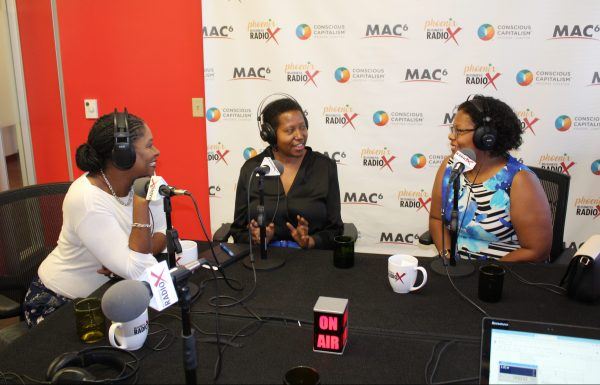

Kelly’s expertise is in business development, customer service, marketing, and sales.

Connect with Kelly on LinkedIn, and follow KLM Consulting on Facebook.

Tagged With: administrative help, Automotive Equipment, Bookkeeping, business owner, challenger, Hoists, Human Resources, Hunter, lift services, Lifts, Mohawk, phone answering service, project management, WBEC-West, WBENC certification, WBO certification, women business, women entrepreneurer

Angela Garmon with ARG Coaching and Consulting Kina Harding with The Harding Firm and Dr Pamela Williamson with WBEC-West

May 16, 2019 by Karen

Angela-Garmon-with-ARG-Coaching-and-Consulting-Kina-Harding-with-The-Harding-Firm-and-Dr-Pamela-Williamson-with-WBEC-West1
Phoenix Business Radio
Angela Garmon with ARG Coaching and Consulting Kina Harding with The Harding Firm and Dr Pamela Williamson with WBEC-West
Loading
00:00 /
RSS Feed
Share
Link
Embed

Download file

Angela-Garmon-with-ARG-Coaching-and-Consulting-Kina-Harding-with-The-Harding-Firm-and-Dr-Pamela-Williamson-with-WBEC-West

Angela Garmon with ARG Coaching and Consulting Kina Harding with The Harding Firm and Dr Pamela Williamson with WBEC-West

ARG Coaching & Consulting Group is a strategic consulting firm that assists leaders with effective change management. There are generally two contributing factors to poorly managed change, employee resistance and lack of management support. ARG-Coaching-and-Consulting

ARG provides proven solutions that bridge the gaps between the people and processes. Working with ARG builds team cohesion, enhance leadership effectiveness and improve organizational performance. ARG’s business partners conquer change and cultivate results.

Angela-Garmon-on-Phoenix-Business-RadioXAngela Garmon is a speaker, strategist, and a life enthusiast who has a passion for people. She uses her 20 years of business experience to assist others through their journeys. Prior to starting her business, she worked in finance and process improvement in some of the top resorts and hotels on the West Coast.

Angela holds multiple certifications and degrees, including a Six Sigma Green Belt certification. She uses both the Six Sigma methodology and the ARG Approach to assist her clients with increasing efficiencies in their organizations.

She will be sworn in as president of National Association of Women Business Owners Phoenix Chapter in June 2019. She is a visionary and looks forward to making a positive impact on the chapter that promotes future growth for the association as well as women business owners.

Connect with Angela on LinkedIn and follow ARG on Facebook and Instagram.

Harding-Logo

There are a couple of things that set The Harding Firm apart. We are committed to your outcome, principled in our approach, and focused on what matters most.

We also are flat fee. Flat fee does not mean cheap, but it allows you to begin with the end in mind. Our whole goal is to put you at “your next best foundation,” which is essentially preparing you for what comes next after we have addressed your legal family law matter.

We offer free consultations and we would love the opportunity to see if we can help you get through your situation. Visit https://www.hardingfirm.com/ or call 480.442.4142 today.

Kina-Harding-on-Phoenix-Business-RadioXKina Harding is an attorney who is dedicated to your family law affairs. Attorney Harding focuses on all of loves tragic side effects – divorce, custody, parenting time, child support, and grandparent’s rights.

She strives to be the best and continuously looks for educational opportunities to hone her skills as a successful communicator. She is a proud graduate of the Bar Leadership Institute (a program dedicated to helping lawyers hone their leadership skills), Ladder Down, Arizona State University’s Sparxx 2016 Class of Entrepreneurship and Innovation, and she is a recent graduate from Mesa Leadership 2019.

Attorney Harding attended American University, Pepperdine University School of Law. She is the President of the Arizona Black Bar and the president of the Women’s Ministry at Mount Calvary Baptist Church in Mesa. Kina Harding is an active member of the Kiwanis Downtown Mesa Club, where she was awarded Kiwanis Member of the year. Attorney Harding has been inducted into the “Top 40 under 40” Trial Attorneys. She has coined the motto, “Choices change lives. Choose wisely,” and she is glad to be here with us today.

Follow The Harding Firm on LinkedIn, Facebook, Twitter and Instagram.

Women-owned businesses make up the fastest-growing segment of the national and international business world. That’s just one reason why WBEC-West is dedicated to helping you navigate the certification process.

We want to assist you in realizing your business potential, help you build connections with leading corporations and provide you with new enterprise networking and development opportunities.  wbec-west-logo

WBEC-West is a regional partner of the Women’s Business Enterprise National Council (WBENC), a coalition of corporations, WBEs and regionally focused women’s business organizations.

As an affiliate organization, WBEC-West implements the certification standards of WBENC throughout Arizona, Colorado, Southern California, Utah, Wyoming, Nevada,Hawaii and Guam.

WBENC certification is nationally recognized and accepted by more than 10,000 major corporations. We also support corporations in their efforts to include WBENC Certified WBEs in their supplier diversity programs.

Pamela-Williamson-on-Phoenix-Business-RadioXIn her role as President & CEO, Dr. Pamela Williamson strives to facilitate mutually beneficial procurement opportunities for Women Business Enterprises and corporations on a local, national and global level.

Dr. Williamson has received the Women of Excellence Inspiration Award, The Achieving Your Purpose Award, The ABAOC National Community Advocate Person of the Year, TNVOC Community Partner of the Year, named Diversity Champion by the Phoenix Business Journal, was a recipient of the All-Star Luminary awards, the Minority Lifetime Achievement Award and inducted into the Nevada Women’s Hall of Fame. She was also recently featured on the cover of Diversity Professional Magazine.

Dr. Williamson Co-Authored the book Minority and Women Business Enterprise Certification – Levels Playing Field and Authored the books Diverse Supplier Conference Success Guide and How to Obtain and Maintain a Corporate Contract- 18 Actionable Tips.

Follow WBEC-West on LinkedIn, Twitter and Facebook.

Angela-Garmon-with-ARG-Coaching-and-Consulting-Kina-Harding-with-The-Harding-Firm-and-Dr-Pamela-Williamson-with-WBEC-West2

Tagged With: divorce attorney for men, Economic Development in Arizona, family law lawyer, Father's rights attorney, tough custody attorney in Arizona, WBEC-West, WBENC, WBEs, Women Business Enterprises, Women in business in Arizona, Women leading change

WINNING BUSINESS RADIO Pamela Williamson CEO WBEC-West

April 25, 2018 by Karen

LisaRehurekandPamelaWilliamsononBusinessRadioX1
Phoenix Business Radio
WINNING BUSINESS RADIO Pamela Williamson CEO WBEC-West
Loading
00:00 /
RSS Feed
Share
Link
Embed

Download file

LisaRehurekandPamelaWilliamsononBusinessRadioX

WINNING BUSINESS RADIO Pamela Williamson CEO WBEC-West

WBEC-West is a regional partner of the Women’s Business Enterprise National Council (WBENC), a coalition of corporations, WBEs and regionally focused women’s business organizations. As an affiliate organization, WBEC-West implements the certification standards of WBENC throughout Arizona, Colorado, Southern California, Utah, Wyoming,Hawaii and Guam. WBE certification is nationally recognized and accepted by more than 7500 major corporations. We also support corporations in their efforts to include WBEs in their supplier diversity programs.

DrPamelaWilliamsonwithWBEC-WestonPhoenixBusinessRadioXDr. Pamela Williamson has been in senior leadership for over 25 years including 3 years as CEO of SABA 7 a business consulting firm, 4 years as the Vice President of a National Behavioral Health Care Organization and 3 years as a Deputy Director overseeing the quality control of Psychiatric urgent care facilities. Dr. Williamson area of expertise lies within change management, and reorganization strategies.  Dr. Williamson has taken three organizations through reorganization process in which all organizations turned around fiscally and programmatically utilizing mission driven, customer focused servant leadership concepts which resulted in creating highly efficient sustainable environments. 

Dr. Williamson is currently the President and CEO of WBEC-West.  WBEC-West’s mission is to cultivate sustainable relationships between certified Women Business enterprises and Corporate America through certification, education, and targeted networking.  In her role as President she strives to facilitate mutually beneficial procurement opportunities for WBEs and corporations on both a local and national level.  Dr. Williamson holds a Doctorate in Healthcare Administration, a Masters in Business Administration, and Bachelor degrees in both social work and psychology.

Over the past few years Dr. Williamson has received the Women of Excellence Inspiration Award, The Achieving Your Purpose Award, The ABAOC National Community Advocate Person of the Year, TNVOC Community Partner of the Year, named Diversity Champion by the Phoenix Business Journal, was a recipient of the SRP All Star Luminary awards, the WCC of NV Minority Lifetime Achievement Award and inducted into the Nevada Women’s Hall of Fame.   

Dr.  Williamson Co-Authored the book Minority and Women Business Enterprise Certification Levels Playing Field.  She has also authored the books Diverse Supplier Conference Success Guide and How to Obtain and Maintain Corporate Contract- 18 Actionable Tips.

Dr. Williamson resides in Queen Creek Arizona with her husband Ben and two daughters Alexandria ages 17 and Skyler age 12.  

Follow WBEC-West on LinkedIn, Twitter and Facebook, and read their blog here.

LisaRehurekandPamelaWilliamsononBusinessRadioX2

ABOUT WINNING BUSINESS RADIO 

What sets a successful business apart from those that fail? 80% of new businesses will fail in the first 18 months, and that statistic is not okay. Winning Business Radio connects you with business owners who are winning at business, and gives you insight into their successes, their challenges, and their strategies for winning. Tune in for some amazing discussions!

ABOUT YOUR HOST

Lisa Rehurek, the #1 leading authority on winning RFP responses, is CEO and founder of Win The Business™, a Consultancy and RFP Support Services Firm that helps businesses increase their success rate in responding to government and corporate Requests for Proposal (RFP’s). Our multi-touch point system provides RFP support services, strategy, consulting, training and team development to companies who wish to improve their response process and outcomes. The thoroughness our team provides coupled with our direct and fun approach is what separates us from our competitors. We are also home of RFP University™, an online virtual training and resource platform designed to support a business’s RFP efforts for maximum success.

After 20 years in the corporate arena responding to hundreds of public sector RFPs, Lisa started her own business and now transfers that knowledge to her clients to help improve their win rates. Lisa keeps herself very busy with life as a business owner, speaker, trainer, author, and radio show host. As a seasoned speaker, Lisa loves to inspire audiences large and small with her engaging and practical speaking topics. She is the author of 7 books including her ebook, 101 Ways to Win More Proposals Now! and her upcoming book, Win the {Damn} Business!. She is also the creator of the STARR Proposal System™ which brings simplicity and efficiency to the overall response process.

Lisa is a member APMP (Association of Proposal Management Professionals) and is Membership and Program Chair for the Valley of the Sun chapter. She is also a WBENC-certified Women Business Enterprise (WBE). She holds certifications in numerous talent assessment tools including Certified Professional Behavior Analyst (CPBA), Certified Professional Driving Forces Analyst (CPDFA), Certified Professional Emotional Quotient Analyst (CPEQA), and Certified Professional TTI TriMetrix HD Analyst (CPHDA).

Connect with Lisa on LinkedIn, Twitter and Facebook.

Tagged With: DBE, Dr. Pamela Williamson, government contracting, Government Contracts, MBE, proposals, Request for proposal, Requests for Proposal, RFP, RFP’s, small diverse business, supplier diversity, WBE, WBEC-West

Business RadioX ® Network


Our Most Recent Episode

CONNECT WITH US

  • Email
  • Facebook
  • LinkedIn
  • Twitter
  • YouTube

Our Mission

We help local business leaders get the word out about the important work they’re doing to serve their market, their community, and their profession.

We support and celebrate business by sharing positive business stories that traditional media ignores. Some media leans left. Some media leans right. We lean business.

Sponsor a Show

Build Relationships and Grow Your Business. Click here for more details.

Partner With Us

Discover More Here

Terms and Conditions
Privacy Policy

Connect with us

Want to keep up with the latest in pro-business news across the network? Follow us on social media for the latest stories!
  • Email
  • Facebook
  • Google+
  • LinkedIn
  • Twitter
  • YouTube

Business RadioX® Headquarters
1000 Abernathy Rd. NE
Building 400, Suite L-10
Sandy Springs, GA 30328

© 2025 Business RadioX ® · Rainmaker Platform

BRXStudioCoversLA

Wait! Don’t Miss an Episode of LA Business Radio

BRXStudioCoversDENVER

Wait! Don’t Miss an Episode of Denver Business Radio

BRXStudioCoversPENSACOLA

Wait! Don’t Miss an Episode of Pensacola Business Radio

BRXStudioCoversBIRMINGHAM

Wait! Don’t Miss an Episode of Birmingham Business Radio

BRXStudioCoversTALLAHASSEE

Wait! Don’t Miss an Episode of Tallahassee Business Radio

BRXStudioCoversRALEIGH

Wait! Don’t Miss an Episode of Raleigh Business Radio

BRXStudioCoversRICHMONDNoWhite

Wait! Don’t Miss an Episode of Richmond Business Radio

BRXStudioCoversNASHVILLENoWhite

Wait! Don’t Miss an Episode of Nashville Business Radio

BRXStudioCoversDETROIT

Wait! Don’t Miss an Episode of Detroit Business Radio

BRXStudioCoversSTLOUIS

Wait! Don’t Miss an Episode of St. Louis Business Radio

BRXStudioCoversCOLUMBUS-small

Wait! Don’t Miss an Episode of Columbus Business Radio

Coachthecoach-08-08

Wait! Don’t Miss an Episode of Coach the Coach

BRXStudioCoversBAYAREA

Wait! Don’t Miss an Episode of Bay Area Business Radio

BRXStudioCoversCHICAGO

Wait! Don’t Miss an Episode of Chicago Business Radio

Wait! Don’t Miss an Episode of Atlanta Business Radio